
🔥 Would you like to save this?
Nobody hands you a certificate when your house becomes a home. There’s no checklist, no milestone moment where everything clicks into place. It happens quietly, in the way a room smells on a Sunday morning, in the groove worn into a couch cushion, in the fact that guests always seem to miss the last train. A happy home isn’t a design achievement or a renovation project. It’s a feeling that accumulates in the smallest, most overlooked details. Here are 37 signs yours already has it, and you might not have noticed until right now.
In order to come up with the very specific design ideas, we create most designs with the assistance of state-of-the-art AI interior design software. Also, assume links that take you off the site are affiliate links such as links to Amazon. this means we may earn a commission if you buy something.
37. The Room Everyone Gravitates To Without Being Asked
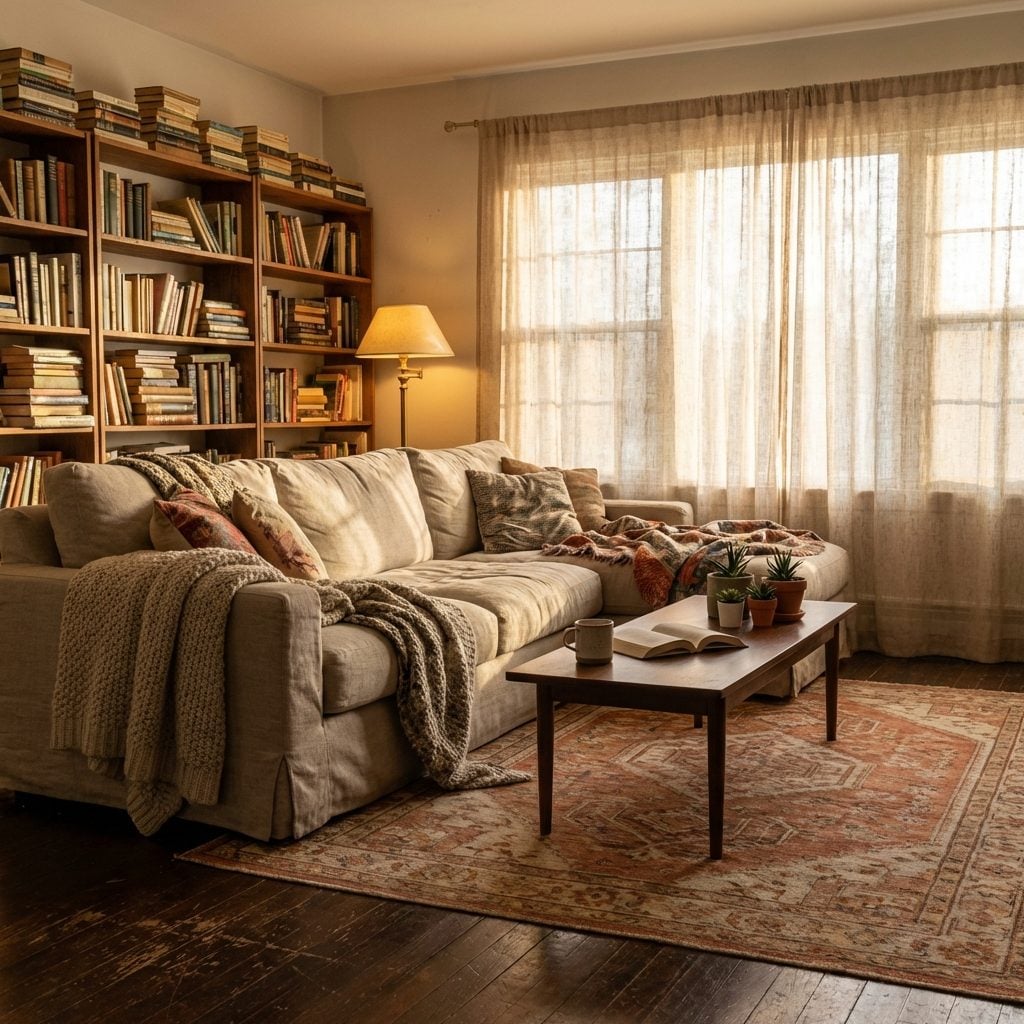
Every happy home has one. Nobody announces it, nobody plans it, but somehow the same room keeps filling up. The kitchen island where everyone hovers while dinner is being made. The den where the books are slightly crooked and the throw blanket has been re-folded a hundred times. This room didn’t happen by accident.
It works because it hits something instinctive: good light, the right temperature, furniture positioned so you can actually see everyone in it. A sectional sofa angled toward the center of a room instead of pushed flat against the wall makes a bigger difference than most people realize. That one room is doing more emotional labor for your household than any renovation ever could.
36. You’ve Stopped Apologizing for How Your House Looks
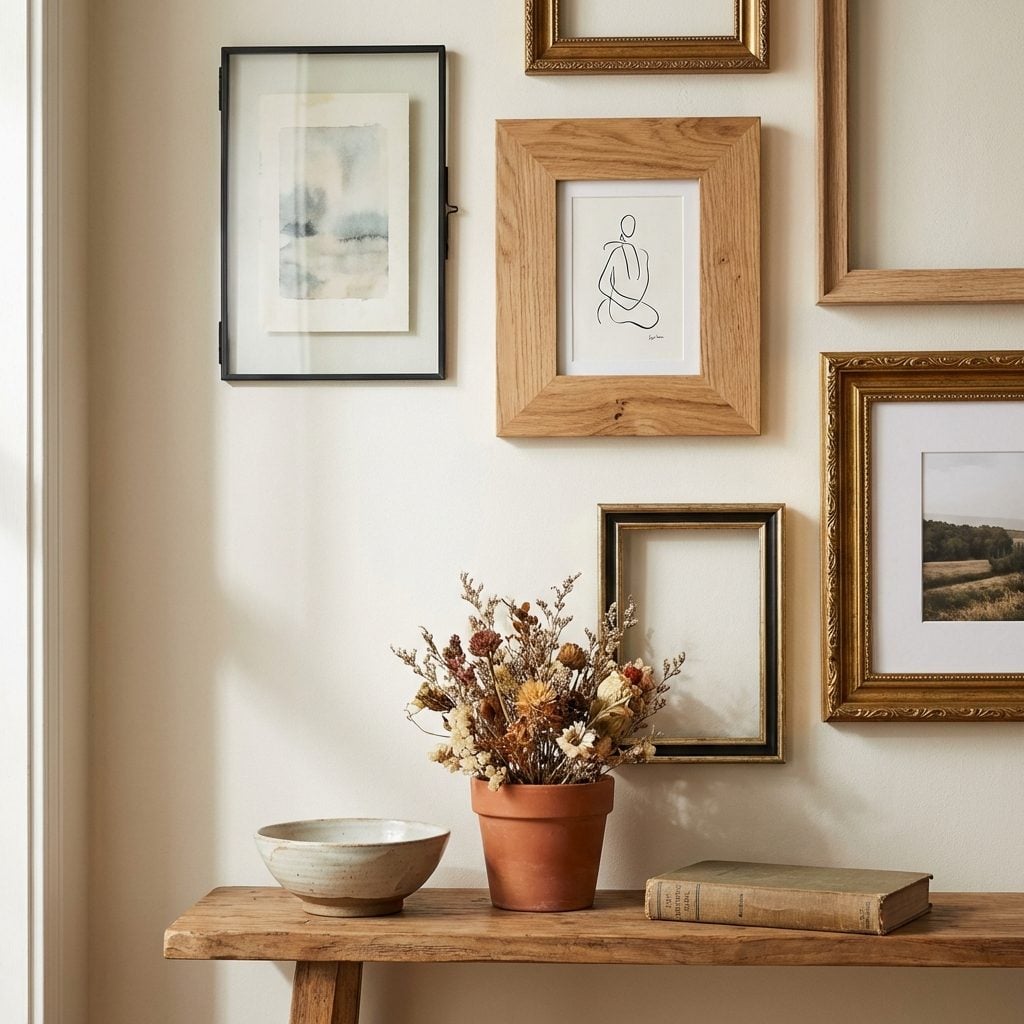
There’s a very specific kind of confidence that arrives when you stop saying “excuse the mess” every time someone walks through the door. It means the house reflects you, actually you, and you’ve made peace with that.
This shift isn’t about having a perfect home. It’s about ownership. The gallery wall that doesn’t quite line up. The vintage sideboard with the paint chip you never touched up. The collection of ceramic vases that your partner thinks is excessive. When you stop bracing for someone else’s judgment, that’s not complacency. That’s belonging.
35. Guests Always Stay Longer Than They Planned
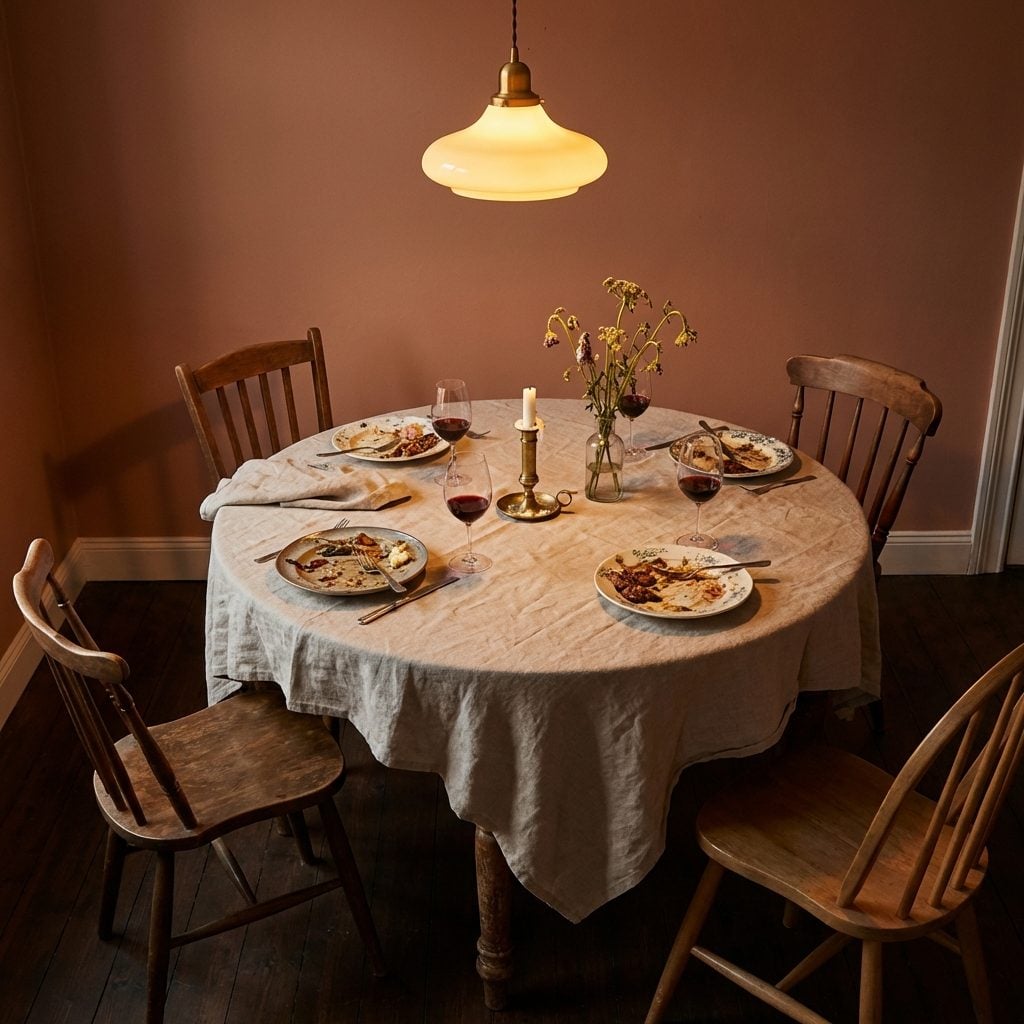
When dinner ends and nobody moves, that’s the sign. Chairs are pushed back slightly, wine glasses are nearly empty, and someone has started a new story anyway. The table hasn’t been cleared. Nobody is checking their phone.
This doesn’t happen in houses where people feel like they’re on display or where the furniture is too formal to get comfortable in. It happens where the lighting is low enough to relax but warm enough to actually see each other, where the seating is deep and the conversation flows without echo. A round dining table in particular tends to hold people longer, no head of the table, no hierarchy, everyone equally in the circle.
Your home being the kind of place people linger in is one of the quietest compliments a house can receive.
34. The Kitchen Smells Like Something, and That’s the Point
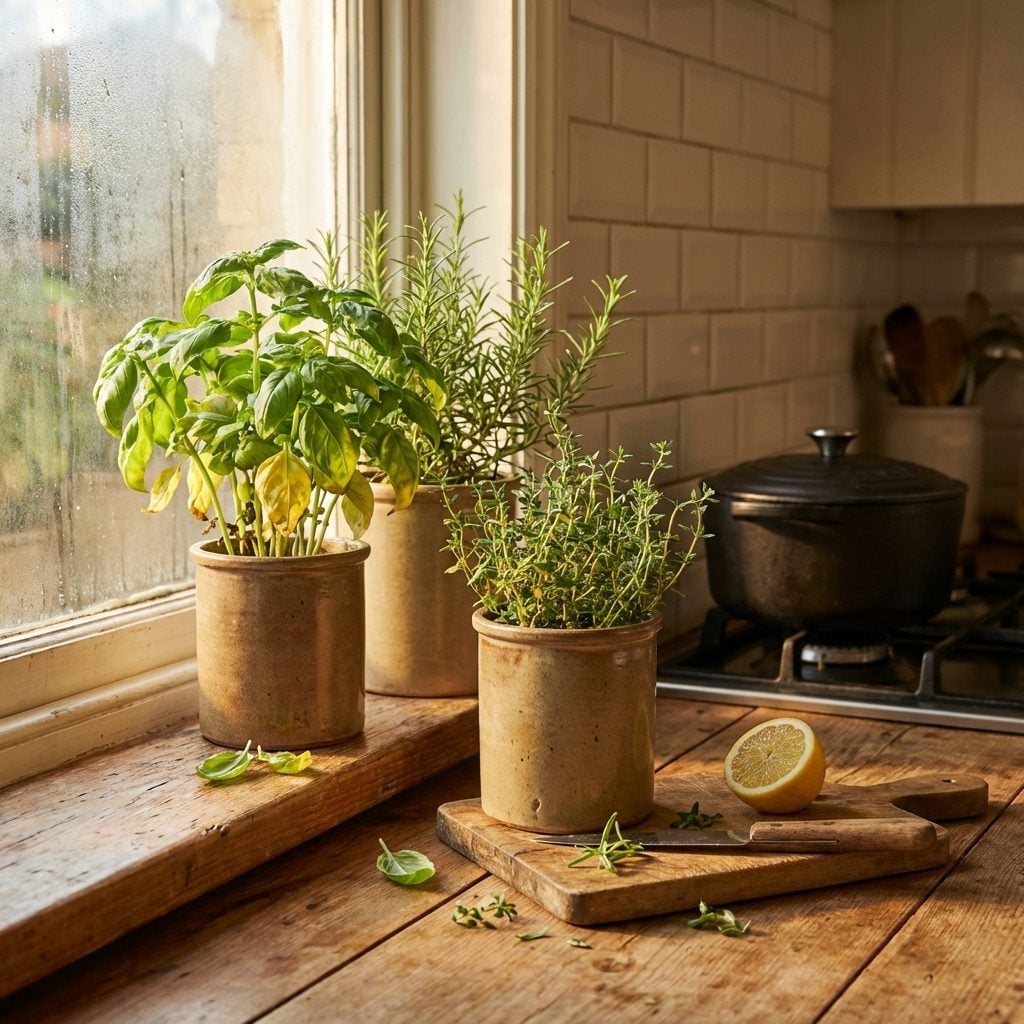
A house that smells like nothing is a house that hasn’t been lived in lately. The kitchens that anchor a home always have a scent layered in: coffee from the morning, garlic from last Tuesday, maybe something citrusy from the cutting board. It’s not always neat and it’s not always intentional, but it’s always present.
Scent is the fastest sense tied to memory and emotional safety. Neuroscience backs this up with a fairly striking stat: the olfactory bulb sits directly next to the hippocampus (the memory center) and the amygdala (the emotional center), which is why a smell can unlock a memory before you even consciously register it.
If your kitchen smells like your life, you’re doing it right. A bowl of citrus on the counter, a pot of something simmering, even fresh herbs in a ceramic herb pot on the windowsill: these aren’t decor. They’re daily anchors.
33. There’s a Spot in Your Home That Fixes a Bad Day
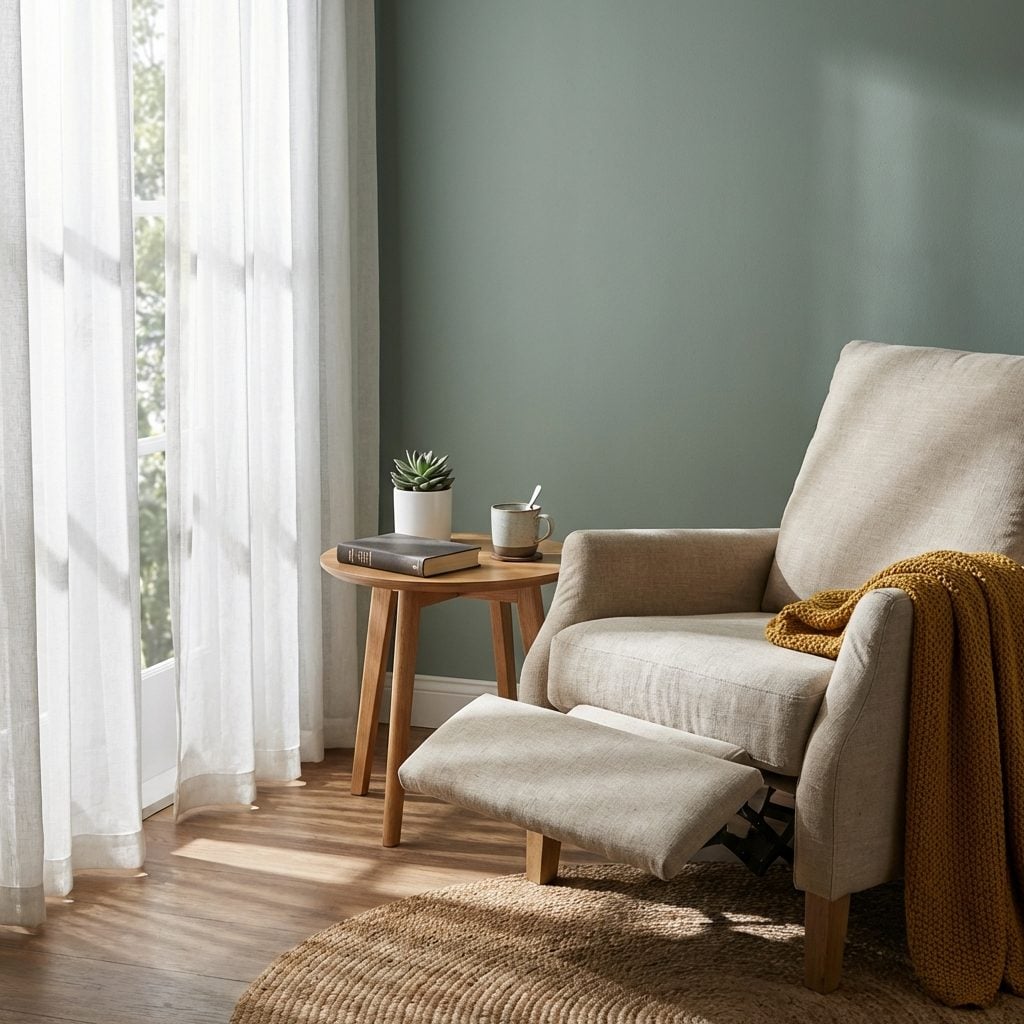
You know exactly where it is. The corner of the couch closest to the window. The reading chair in the bedroom that faces nothing important. The spot on the bathroom floor you’ve never actually sat on but you’ve considered it. Every person in a happy home can name their spot without thinking.
This isn’t about having the right furniture. It’s about having enough stillness built into your floor plan that you can actually locate yourself when you need to. A linen reading chair tucked into an unused corner, a window seat with a thin cushion over a radiator: small investments in deliberate pause are underrated features of a well-functioning home.
32. Your Kids (or Pets) Have Claimed the Best Seat in the House
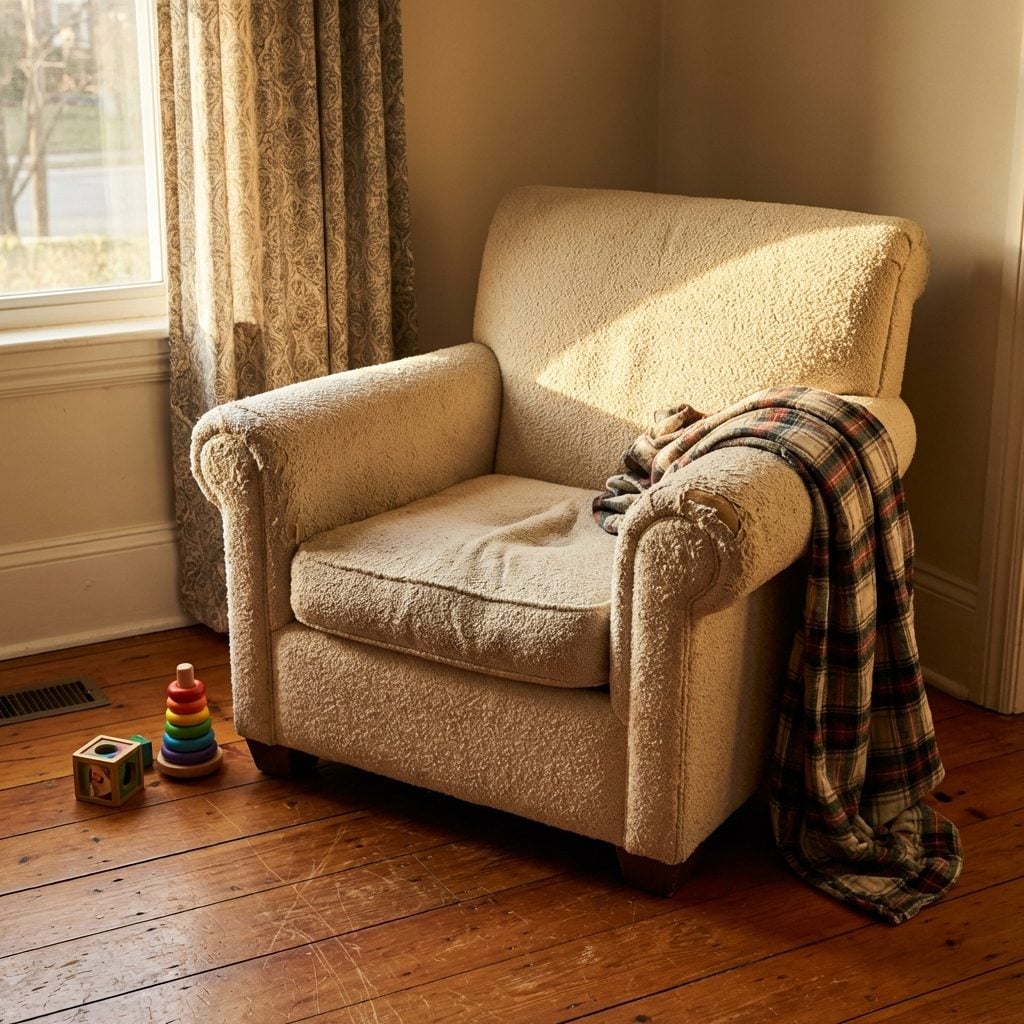
Here’s a reliable test: wherever the most physically comfortable seat in your home is, has it been taken over by someone who didn’t buy it? If yes, your home is working exactly as intended.
“The best seat in the house belongs to the one who uses it most.”
Children and animals operate entirely on instinct when it comes to comfort. They find the warmest patch of afternoon sun. They locate the softest cushion. They know before you do which chair has the best sightline to the room’s activity. If the prime real estate in your house has been colonized by someone shorter or furrier than you, take it as a compliment. You picked well.
31. The Mess Tells a Story You’re Actually Proud Of
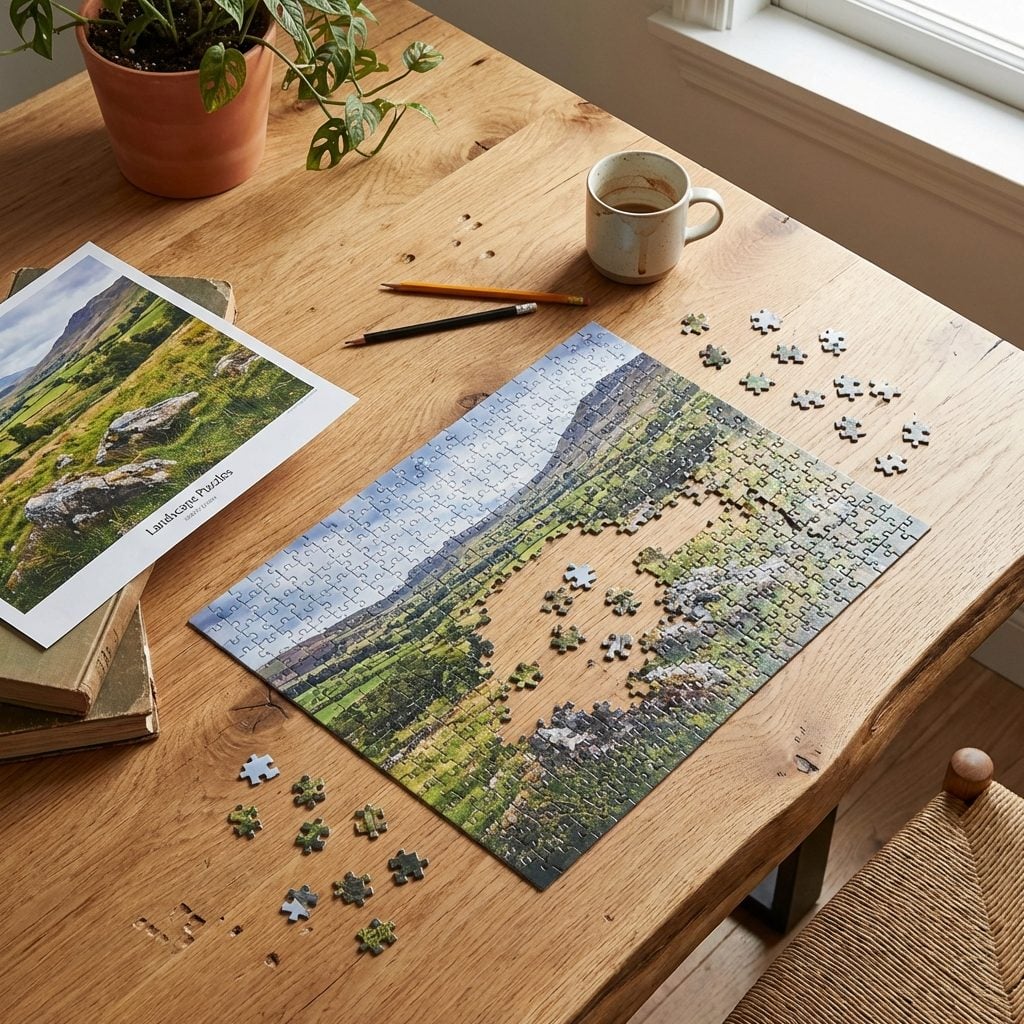
Not all mess is the same. There’s the kind that signals overwhelm (unopened mail stacked on every surface, bags still packed from a trip two weeks ago). And there’s the kind that signals a life in full motion: a half-finished puzzle on the dining table, a pile of library books, paint-stained drop cloth still folded near the wall from last weekend’s project.
The second kind of mess is something to pay attention to. It means you’re using your home as an actual base of operations for a life you’re actively living. Good home design makes room for both the tidy version and the in-progress version. Think open shelving that accommodates the current project, a large storage ottoman that closes quickly when needed, surfaces with enough depth to hold things in motion.
30. You Have a ‘Nothing’ Room, and It’s Your Favorite
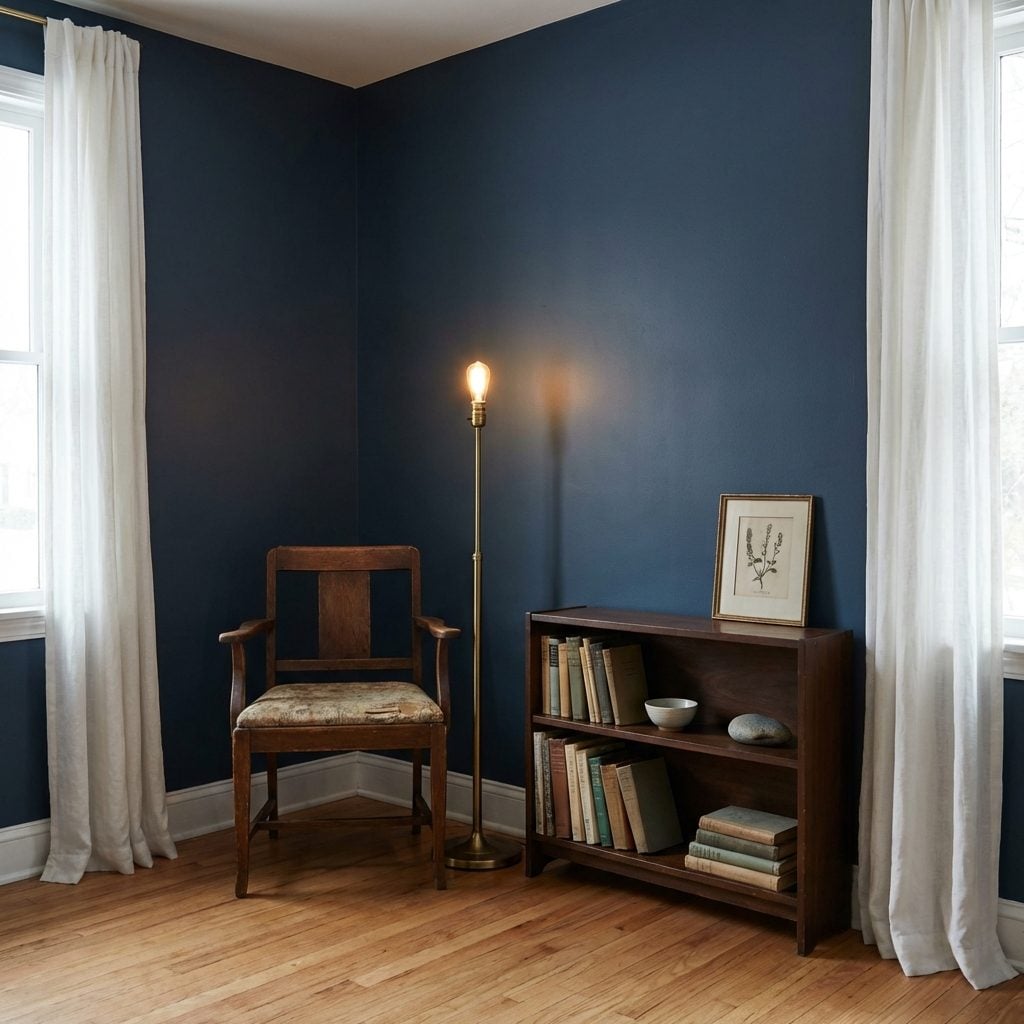
This is the room with no job. No TV, no home office setup, no dedicated function assigned to it at move-in. Maybe it became a reading room by accident. Maybe it’s just the room where the good lamp ended up and a secondhand chair followed, and now it’s the room you go to when you need to think.
Happy homes tend to have at least one space that was never optimized. Everywhere else serves a purpose. This room just exists for you. This aligns with a broader shift in home trends toward intentional flex spaces, rooms designed not around a function but around a feeling.
29. Natural Light Hits at Least One Spot Perfectly Every Single Day
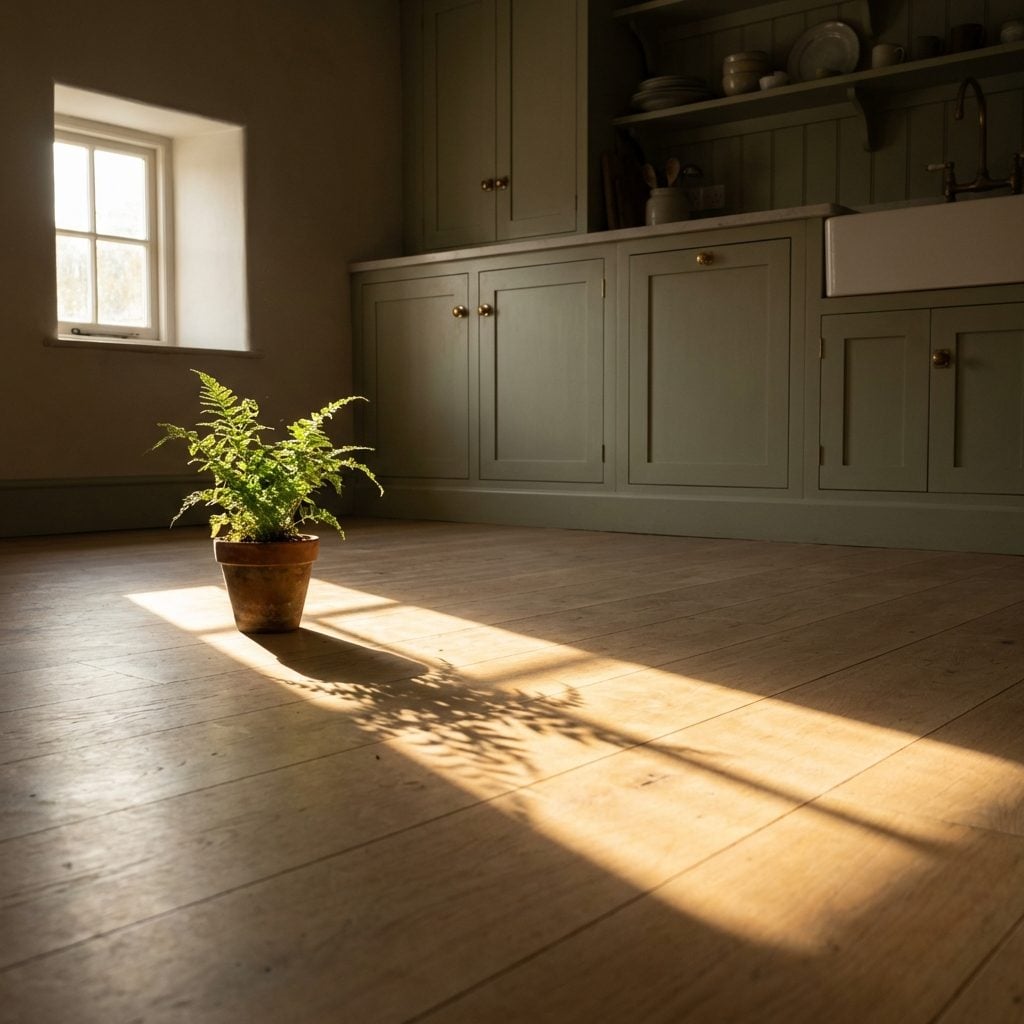
It might last twenty minutes. A band of sun crossing the kitchen floor at 9am. The bedroom wall catching late afternoon gold before it disappears behind the neighbor’s roof. That square of light on the hallway floor that only happens in summer.
You’ve noticed it. You probably rearrange around it without consciously deciding to. A plant moved to catch it. A chair repositioned toward it. The fact that you’ve noticed means your home is oriented toward something natural rather than away from it, and that orientation matters more to daily mood than most people give it credit for.
28. The Front Door Feels Like a Deep Exhale
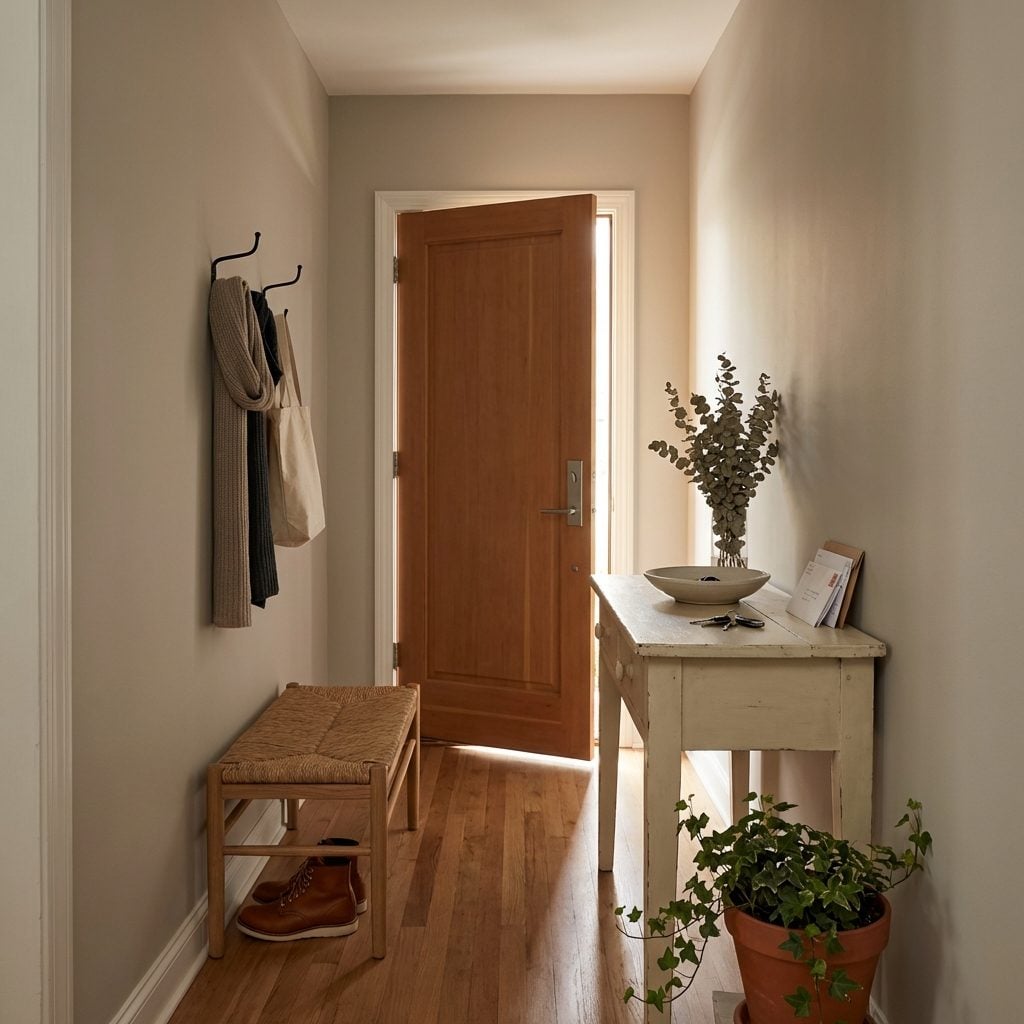
The transition from outside to inside is one of the most psychologically loaded moments in your day, and most homes handle it badly. A pile of shoes. An avalanche of coats. The immediate visual noise of everything that didn’t get put away. But in a happy home, crossing the threshold actually shifts something.
This doesn’t require a grand foyer. It requires a few deliberate decisions: a hook for the bag, a small bench for the shoes, a surface for keys, maybe a plant that’s thriving instead of struggling. The scent of the entryway matters too. A beeswax candle on a small entryway console, a diffuser, even dried botanicals in a bowl do real work here. The brain reads “home” faster than you’d think when the right cues are in place.
27. Someone Has a Drawer That’s Completely Theirs
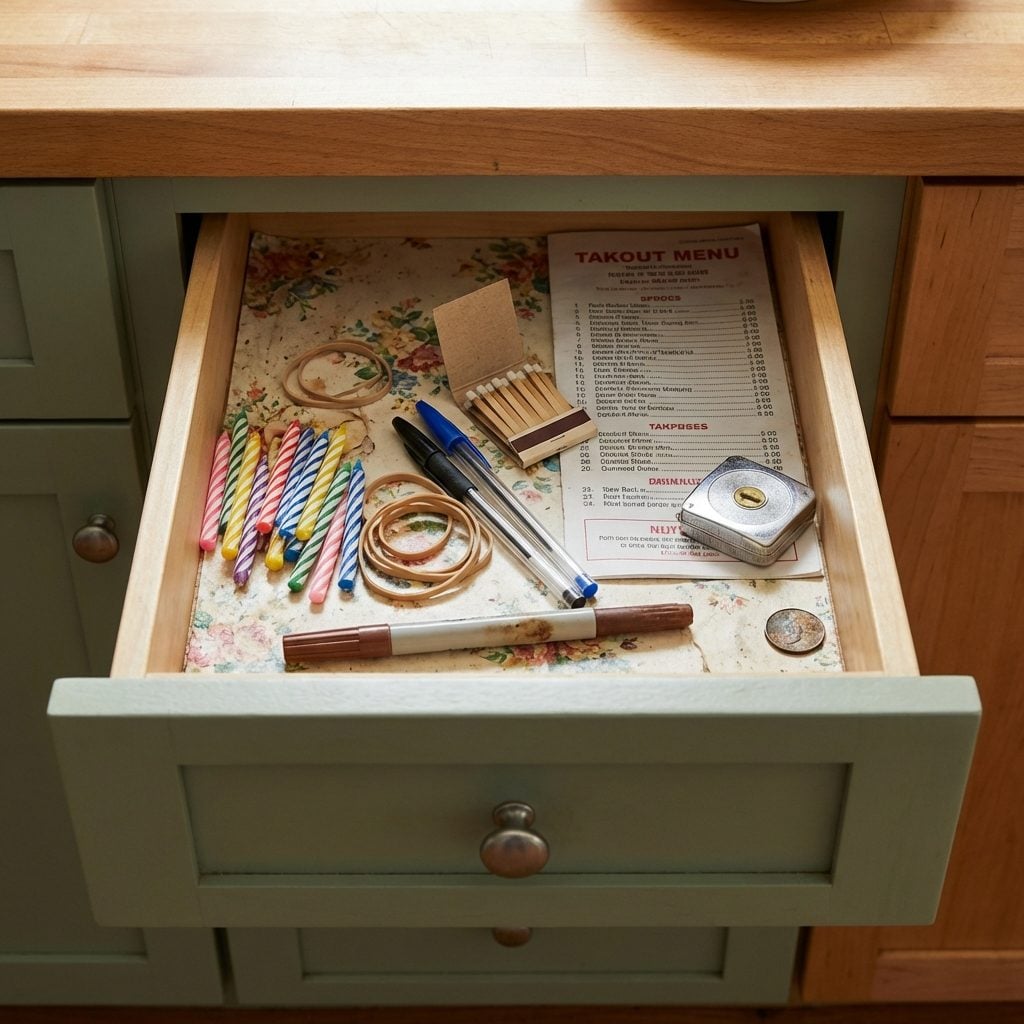
One person’s junk drawer is another person’s filing system. The drawer that holds the good scissors and the birthday candles and the rubber band collection and the four pens that actually work, that drawer is a form of household love language.
But this sign is really about something more specific: when individual members of a household each have space that’s theirs without explanation or permission, the home is functioning at a relational level. A child’s art drawer in the kitchen. A partner’s side table with their night reading and their specific hand cream. Your own bathroom shelf. A home that makes room for individual ownership inside shared space is a home that understands how people actually work.
The drawer doesn’t need to be organized. It just needs to exist.
26. You Own Things That Have No Purpose Except That You Love Them
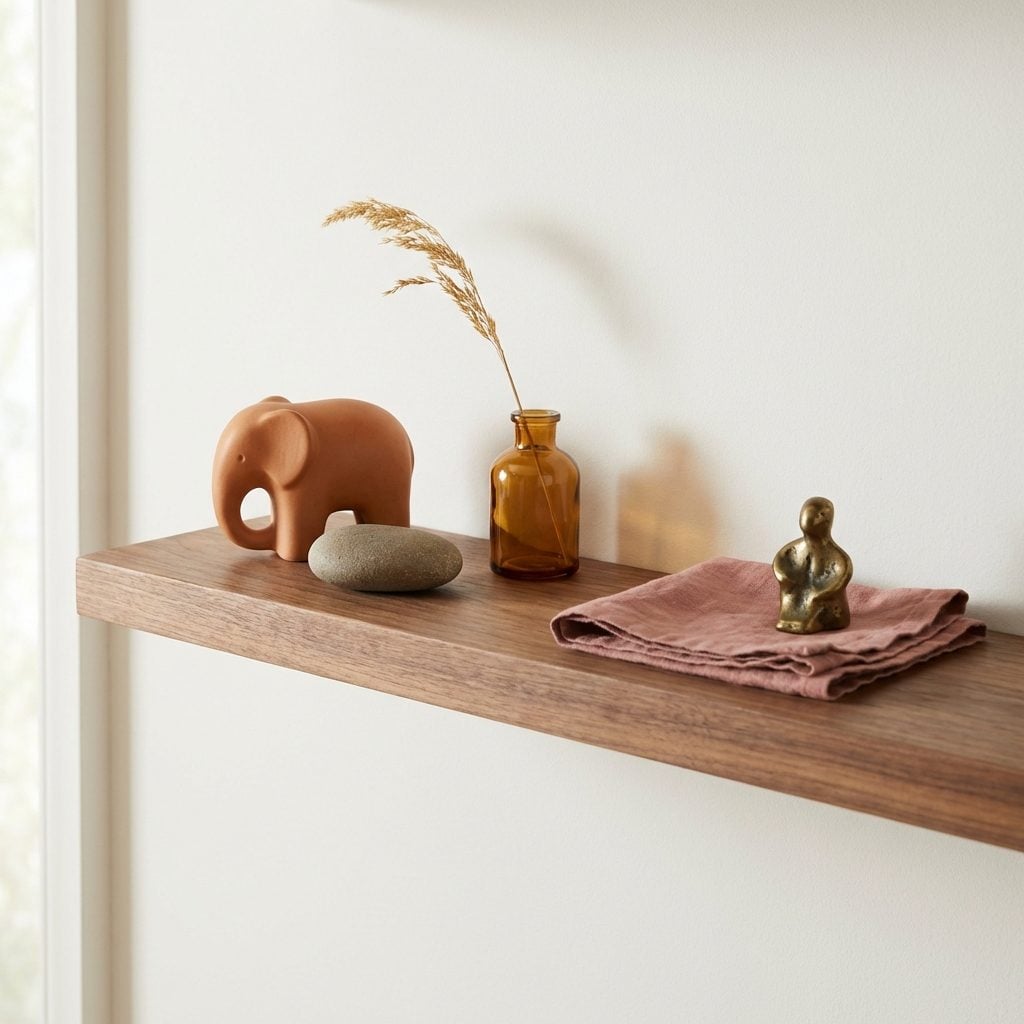
The small ceramic elephant from a market you visited once. The amber glass vase that doesn’t match anything but that you keep finding a place for. The smooth river stone on the bathroom shelf that does literally nothing.
Purely decorative objects that serve no function except to be there are a sign of a home that has moved past survival mode. Utility is important, but homes that stop at utility feel thin. The objects that carry memory, affection, or simple visual pleasure are the ones that make a house feel inhabited by a specific person rather than a generic occupant.
This is why two houses with the exact same floor plan can feel completely different the moment you step inside one of them. The irrational things you keep are often the most rational part of your home.
25. The Walls Remember Things, and You Actually Want to Look at Them
🔥 Would you like to save this?
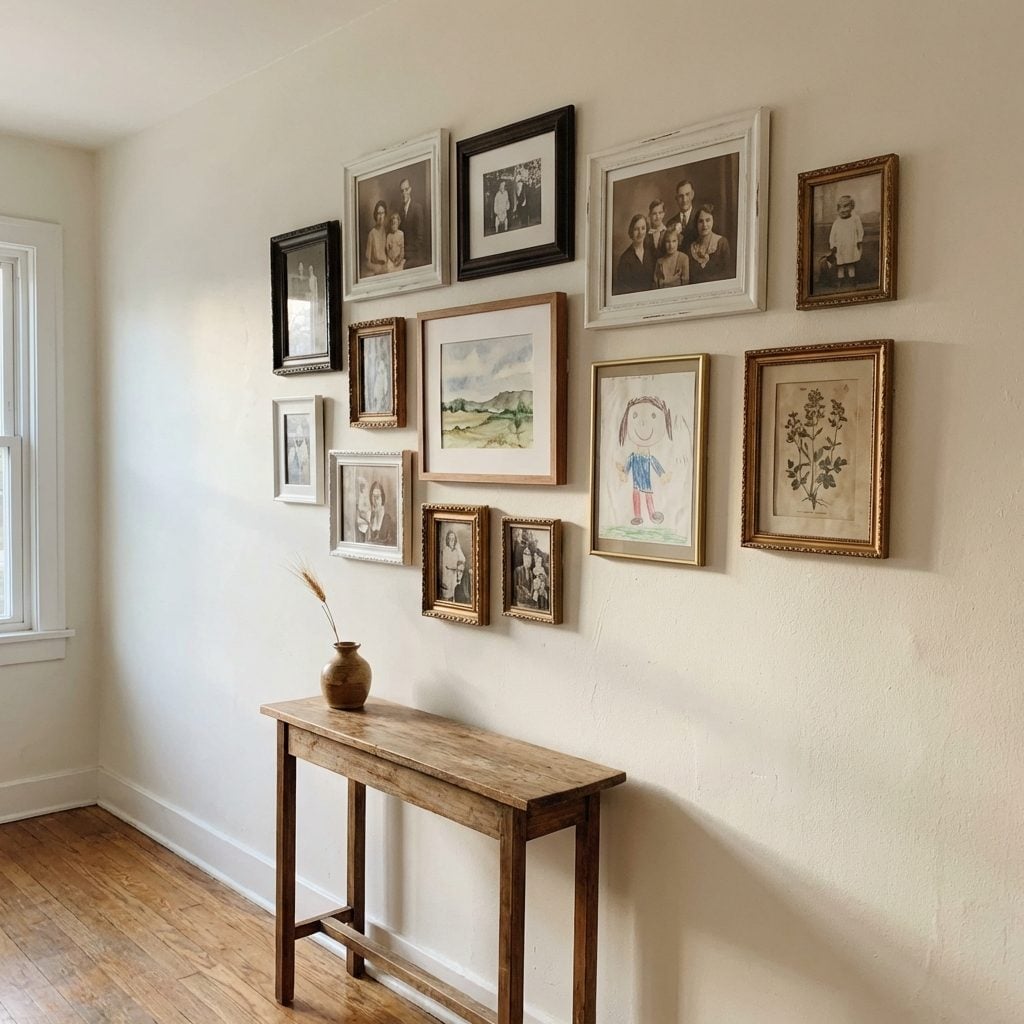
A happy home has walls that tell a story you’d never want to edit out. Not a gallery wall sourced from a single afternoon of online shopping, but the real kind: a watercolor from a weekend market, a photo printed slightly too dark, a child’s drawing that somehow made the cut. These things accumulate over years, not afternoons.
What’s interesting is that neuropsychologists call this “autobiographical anchoring”, surrounding yourself with visual cues from your own life actively reduces ambient stress. Your walls aren’t just decor. They’re doing quiet emotional work every time you walk past them. If you find yourself stopping to look at something on your wall and feeling something, that’s not sentimentality. That’s a sign your home is holding you.
24. Something Is Always Growing in Your House, and It’s Usually Thriving
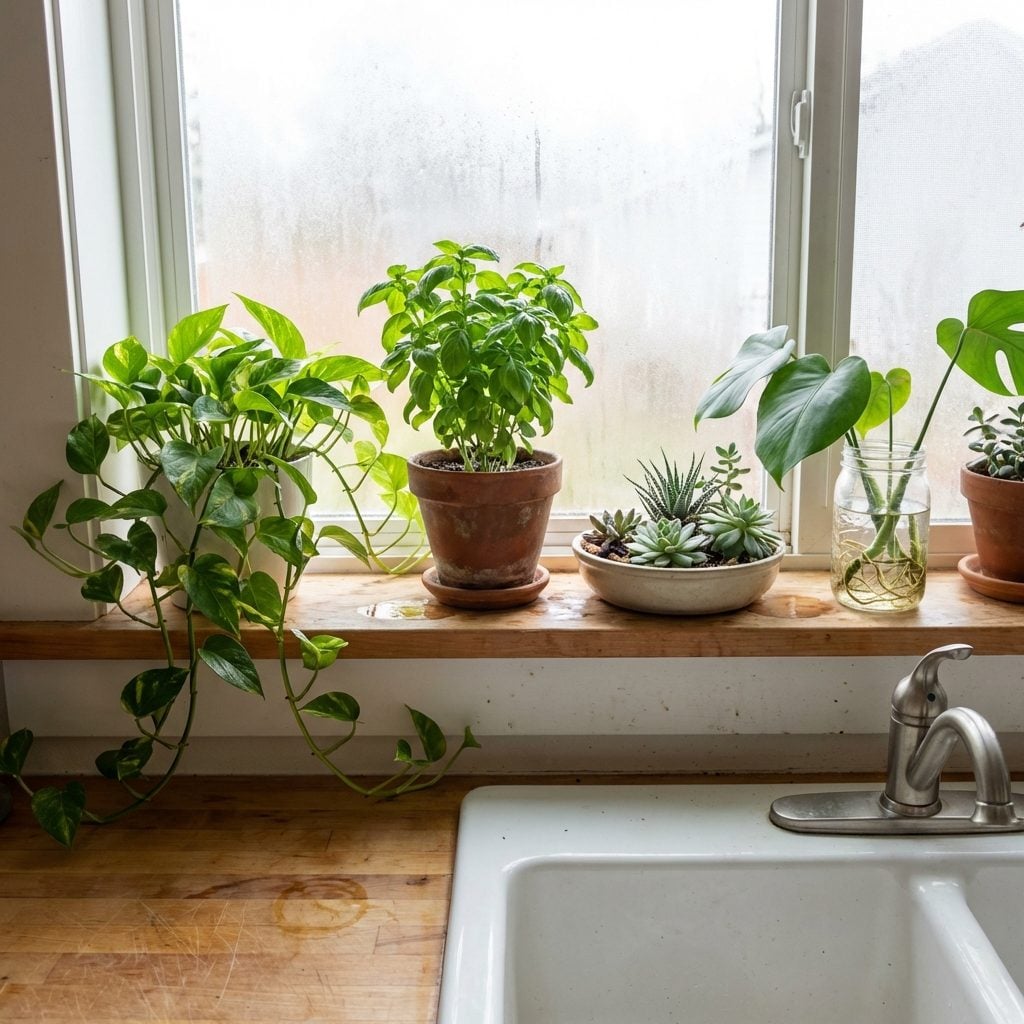
Plants in a happy home aren’t an aesthetic choice. They’re evidence of attention. The difference between a trailing pothos plant that’s been watered consistently for three years and one that gets watered in guilt spurts says more about a household than any interior design choice. When your plants are alive, actually alive, not just surviving, it signals a home where someone is paying attention to the living things inside it.
It also signals a slower pace. You can’t rush a plant. You notice when the light shifts in October, when a new leaf unfurls, when something is finally ready to be repotted. That kind of noticing is exactly what makes a home feel inhabited rather than just occupied.
23. Bedtime Has a Whole Ritual Here That Nobody Had to Write Down
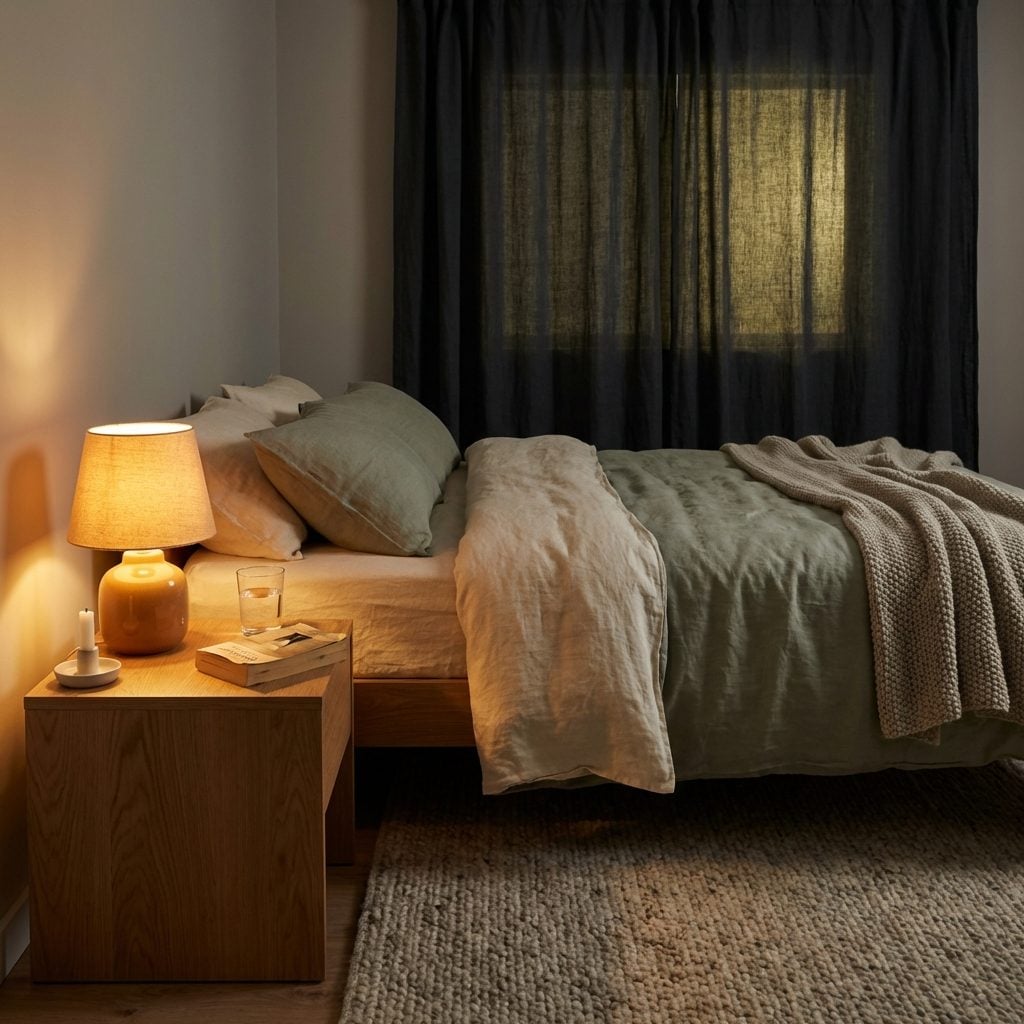
Happy homes develop bedtime rhythms organically. Nobody sat down and designed the sequence of events, the specific lamp that gets turned off last, the particular way the duvet gets folded back, the sound that signals it’s winding down. These rituals assemble themselves over years of living in a space and feeling safe enough to be consistent in it.
Researchers who study sleep environments note that sensory consistency at bedtime, the same low light, the same soft textures, the same ambient quiet, trains the nervous system to shift into rest. A home that has accumulated these rituals isn’t just comfortable. It’s physiologically supporting the people inside it.
Look for the small clues: a ceramic bedside lamp that always gets switched to low, a linen throw blanket folded the same way each morning, a glass of water that appears on the nightstand without thinking. These aren’t habits. They’re rituals. There’s a difference.
22. The Noise Level Is Exactly Right for Whoever Lives There
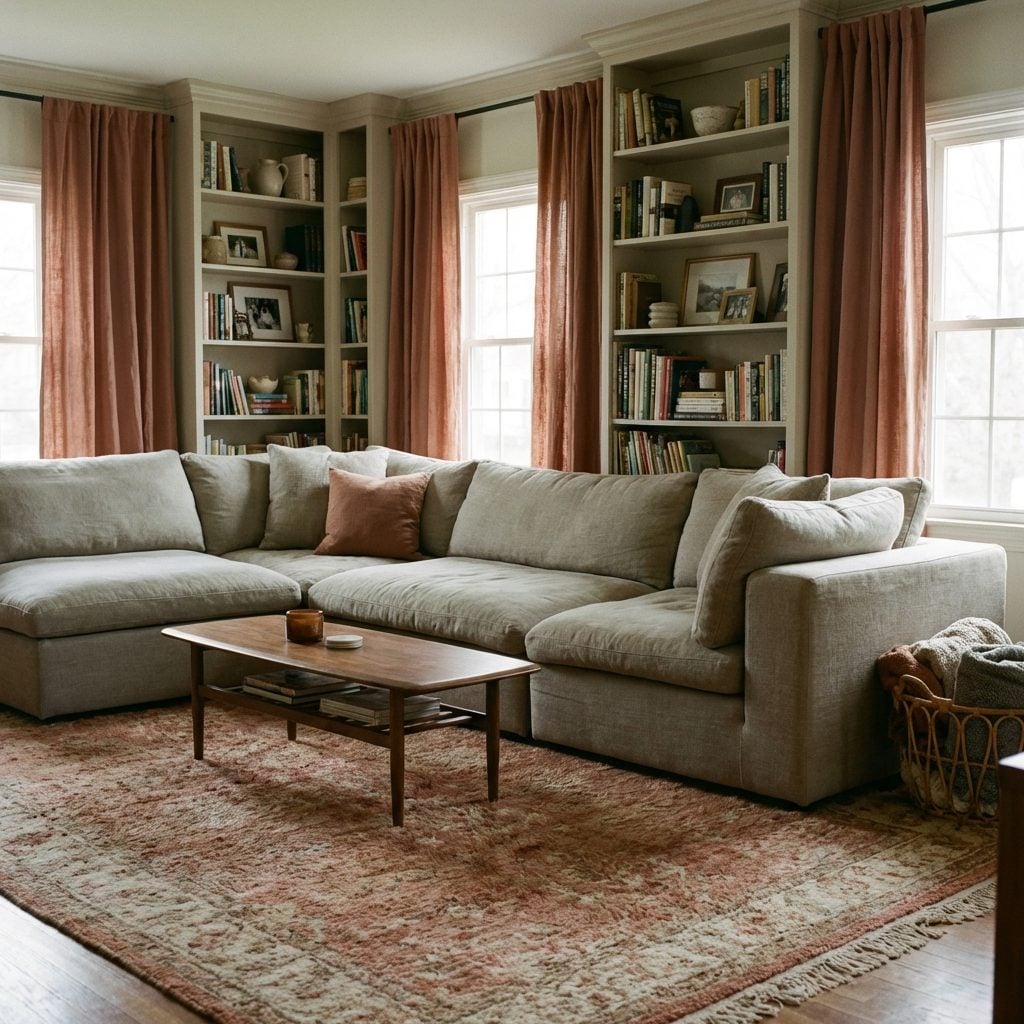
This one is easy to overlook because it’s about absence as much as presence. A home with one very quiet person should feel quietly settled, not eerily silent. A home with three kids and a rotating cast of neighborhood friends should feel loud in the right way, energetic, not frantic. The sign of a happy home isn’t a particular noise level. It’s the right one.
Acoustic comfort is a real and undervalued dimension of home happiness. Hard floors, sparse furniture, and bare walls bounce sound in ways that create low-level stress over time, even when you can’t pinpoint why you feel edgy. Soft furnishings, textiles, and bookshelves absorb sound and create the kind of warmth that you feel before you consciously register it.
21. You’ve Moved the Furniture Around Until One Day It Just Clicked
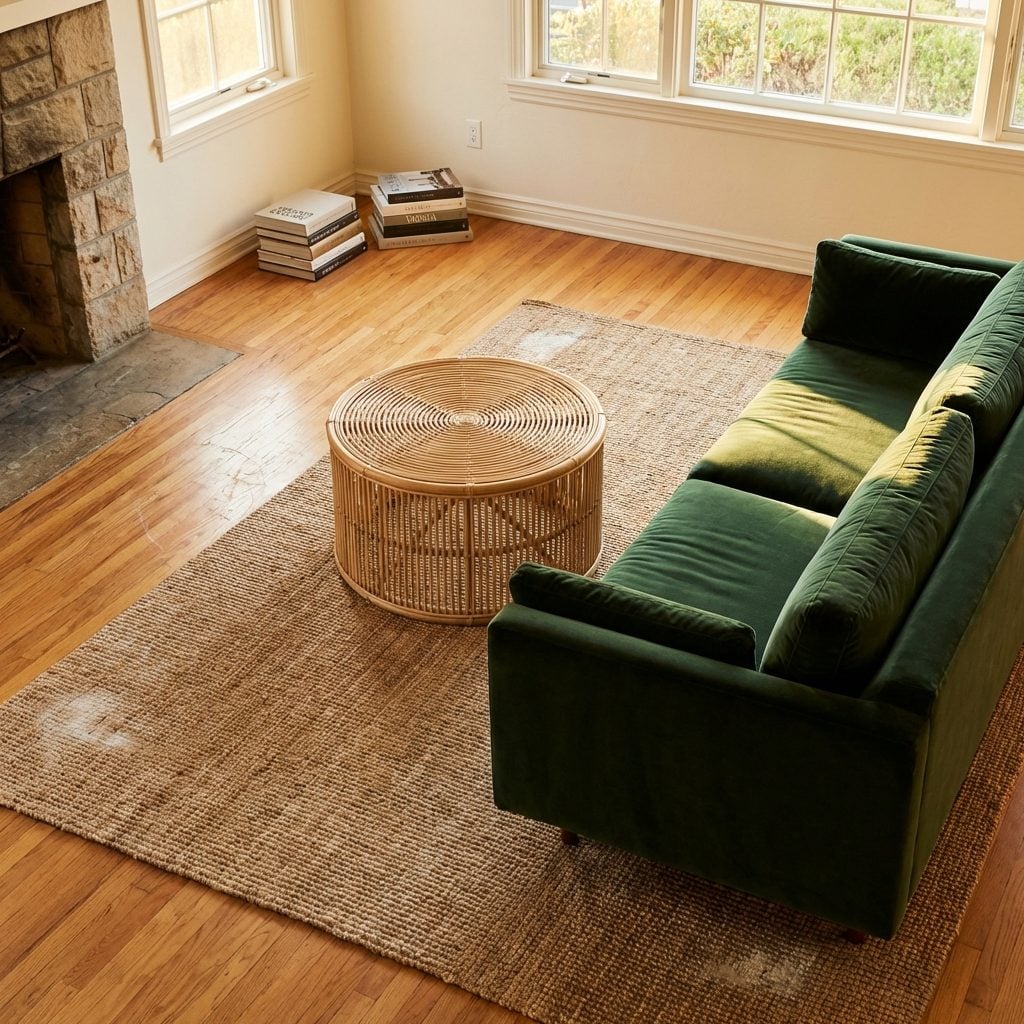
That furniture arrangement you’ve had for the past two years? You probably got there after at least three failed attempts. Moving a sofa at 10pm to see if the room feels better, then moving it back, then trying it at an angle, this is not indecisiveness. This is someone who cares enough about how a space feels to actually do something about it.
The homes that feel best are rarely the ones that were decorated once and left alone.
Happy homes show signs of ongoing problem-solving. Scratch marks on hardwood floors from furniture legs being scooted around. A rug that’s been repositioned enough times that you can see the ghost of where it used to sit. These are the signs of someone in conversation with their space, and that conversation, when it finally resolves into something that works, produces a kind of satisfaction that no amount of buying new things can replicate.
20. The Dining Table Is Doing at Least Five Jobs and Nobody Minds
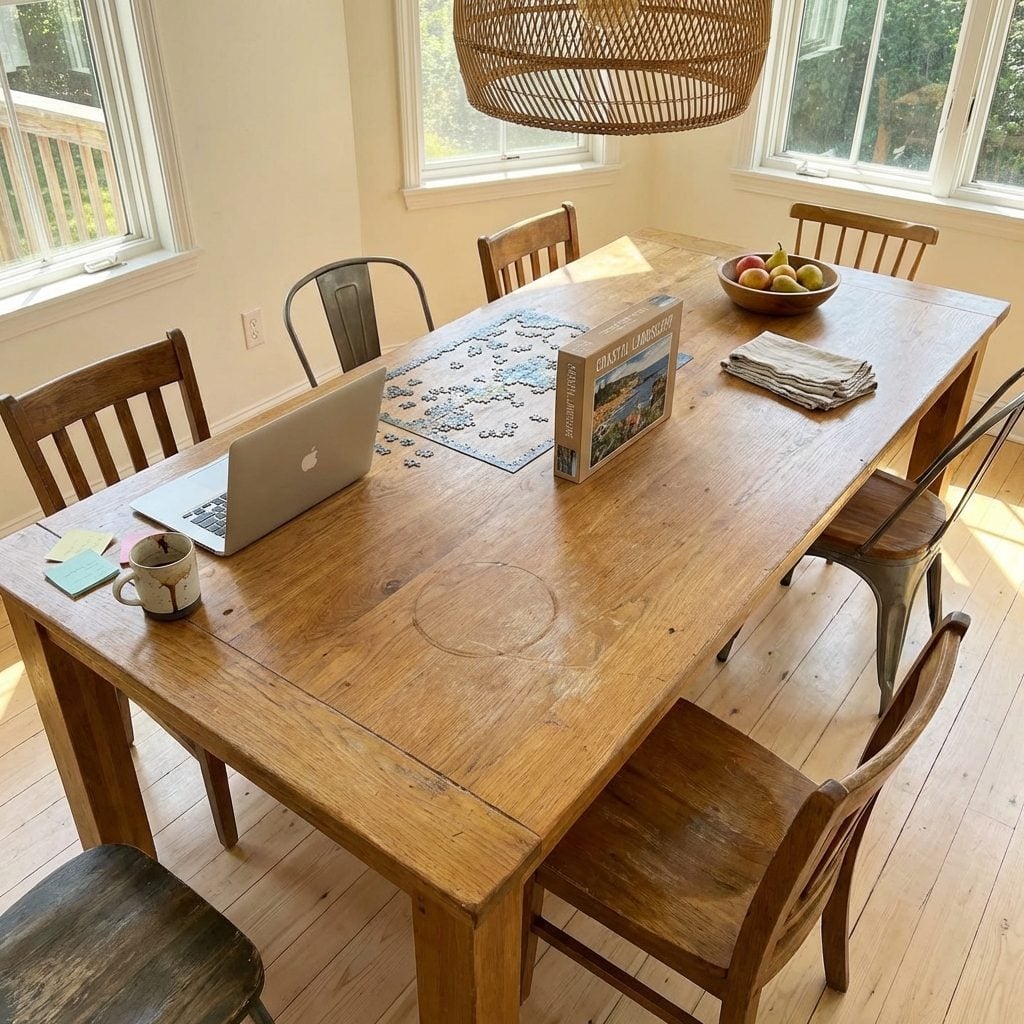
Homework. Puzzles. Saturday morning coffee and a laptop. The occasional impromptu card game. Folding laundry (we’re all doing it, let’s be honest). A truly happy home rarely has a dining table that exists only for meals, and that’s a good thing. A table in constant rotation is a table at the center of a household’s actual life, not its aspirational life.
This is the kind of home bar design-adjacent thinking that reframes function entirely: the best surfaces in a home earn their square footage by being adaptable. A solid oak dining table with a few rings from mugs and a scratch from a science project is more alive than a pristine one that only gets used on holidays.
19. Something in Your Home Has Been Broken, Repaired, and Kept on Purpose
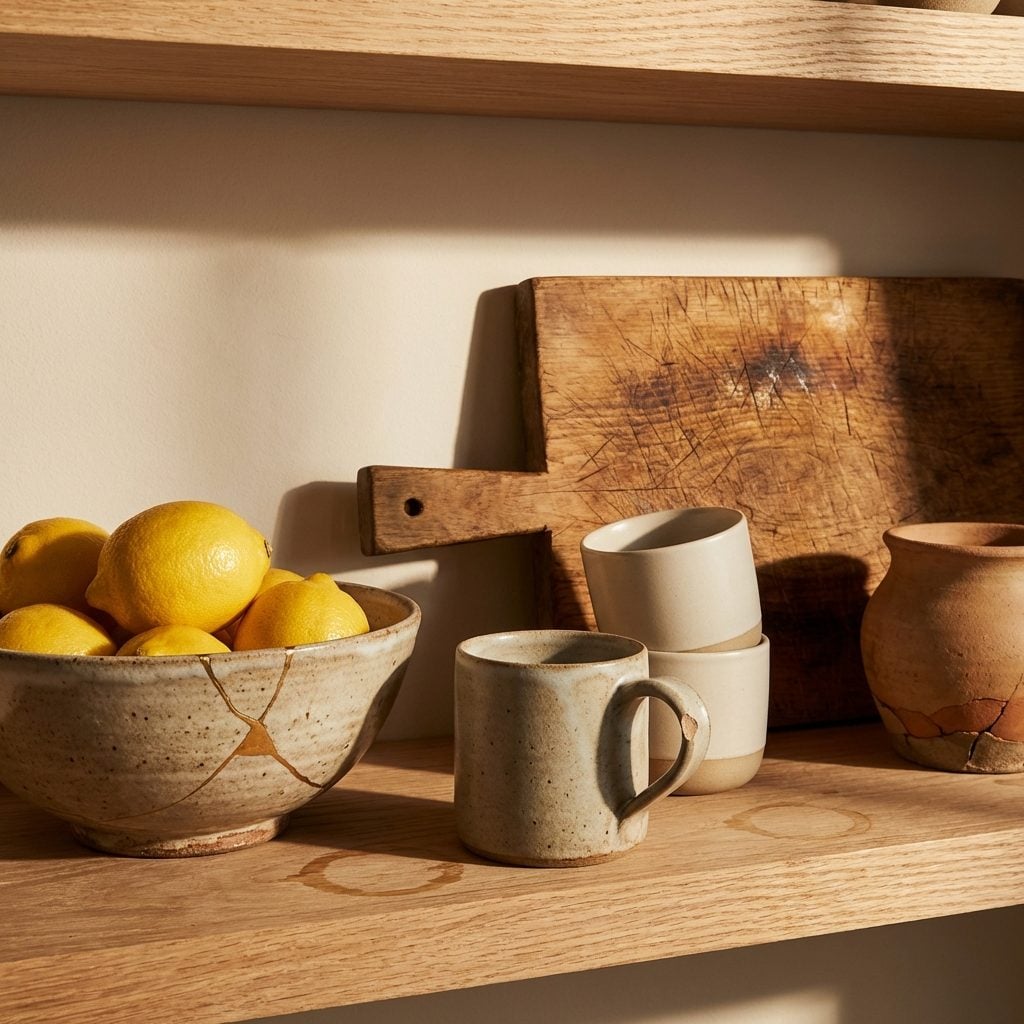
The Japanese art of kintsugi, repairing broken ceramics with gold lacquer, operates on the principle that breakage is part of an object’s history, not a reason to discard it. Happy homes practice an informal version of this all the time. The ceramic bowl with the repaired crack that still holds fruit. The chair with the re-glued leg that everyone knows about. The lamp that needed rewiring but was too right for the room to replace.
Keeping repaired things is an act of commitment to a home’s continuity. It says that the history of this space has value beyond surface perfection. And homes that operate this way tend to feel more honest, more layered, and more deeply inhabited than homes where everything is always new.
18. You Know Exactly Where Everything Is, Even When It Looks Like You Don’t
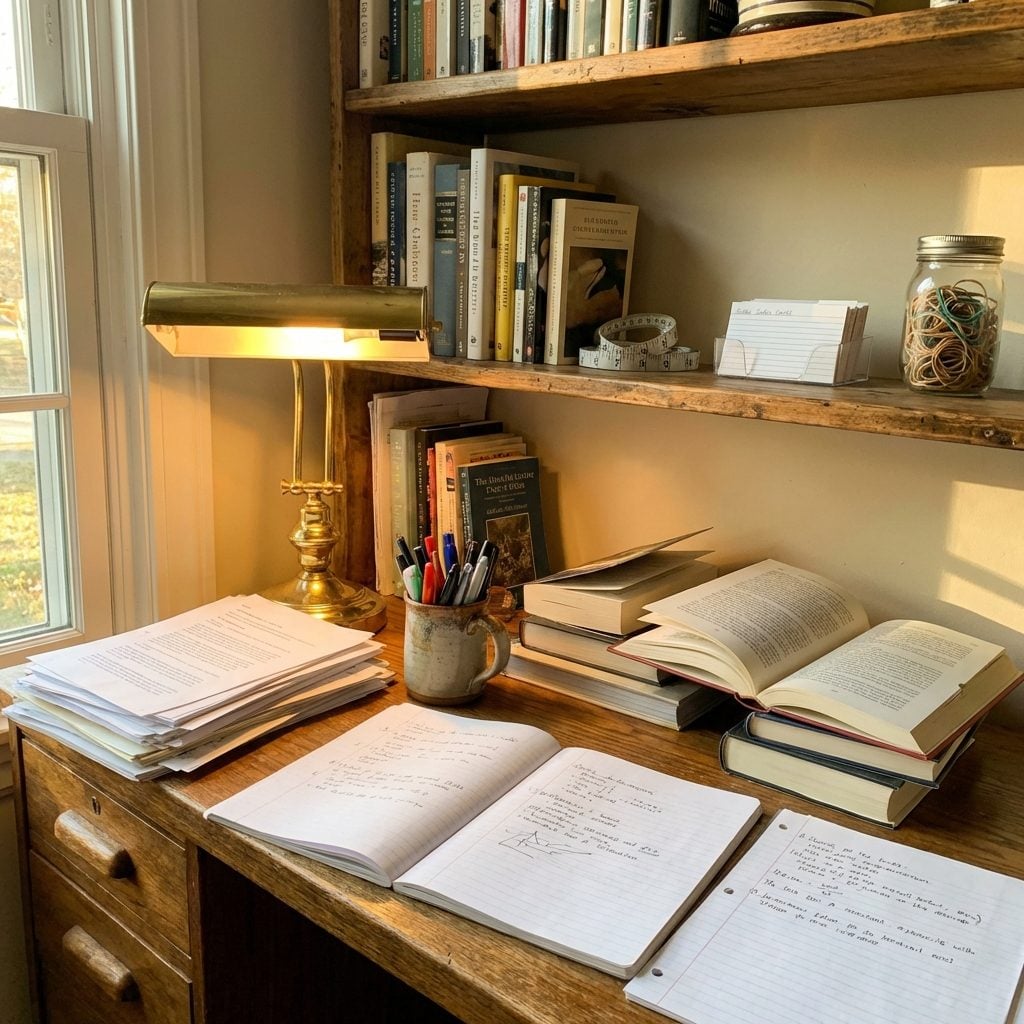
This is one of the most underrated signs on the list. From the outside, a happy home’s organizational system might look like comfortable chaos, books doubled up on shelves, a junk drawer that somehow always produces what you’re looking for, a kitchen counter with three things on it that don’t belong there. But ask the person who lives there where anything is, and they’ll tell you immediately.
That’s the distinction. Surface disorder that maps to inner order is a sign of a home that’s actually being used. It belongs to someone. The alternative, a house so tidied that its occupants can’t find anything without looking, because the system was designed to look good rather than function for real people, is a quiet form of domestic unhappiness.
17. Your Home Has a Scent That’s Unmistakably Its Own
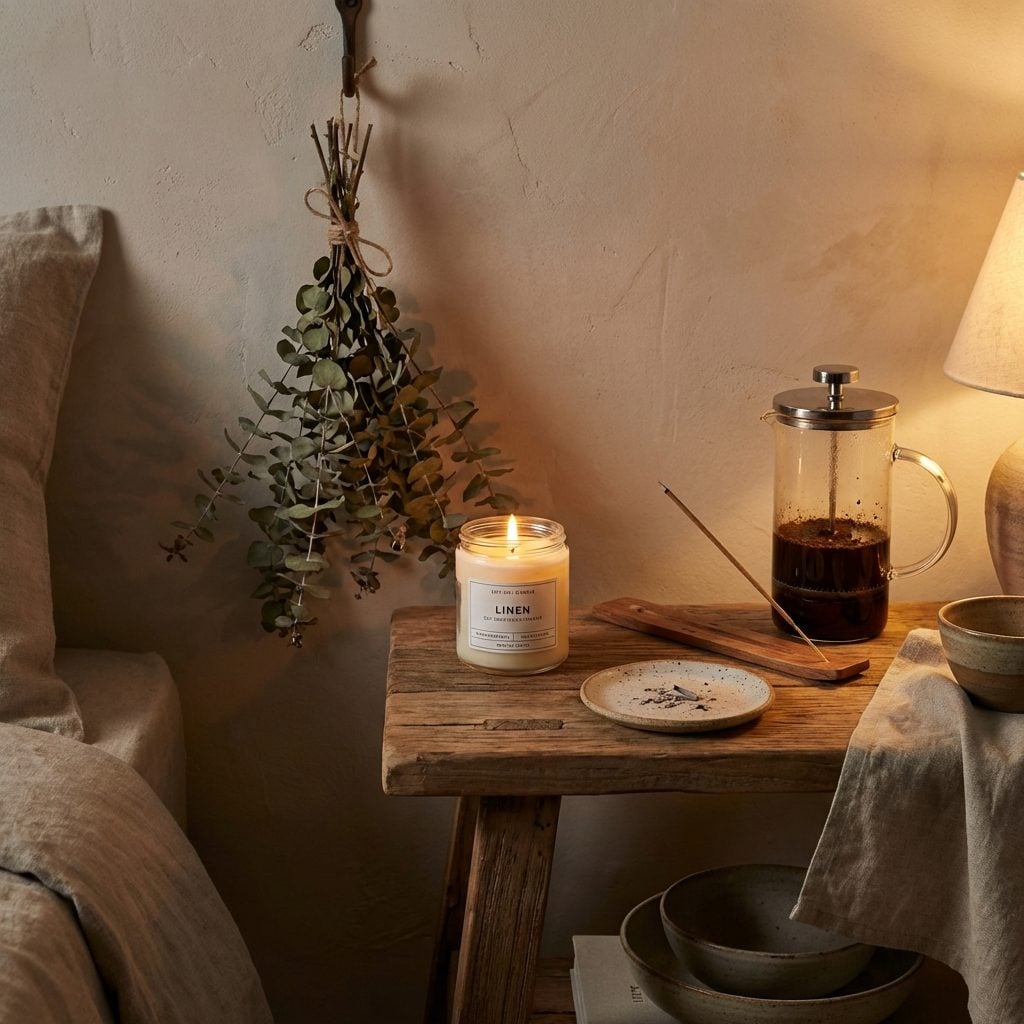
You can’t smell your own home. That’s the thing. You only notice it when you come back from somewhere else, from a trip, from a week away, from a long day, and it hits you in the doorway like a quiet signal that you’re somewhere that belongs to you. That specific combination of old wood and coffee and the candle you always burn and whatever was cooked last Tuesday.
Scent is the most memory-linked of all the senses, processed directly by the brain’s limbic system, the same region that handles emotion and long-term memory. A home with a distinct, recognizable scent isn’t just pleasant. It’s neurologically imprinted on the people who live there, which is part of why the smell of your childhood home can bring back an entire decade in an instant.
16. Mornings in This House Have a Rhythm That Nobody Had to Invent
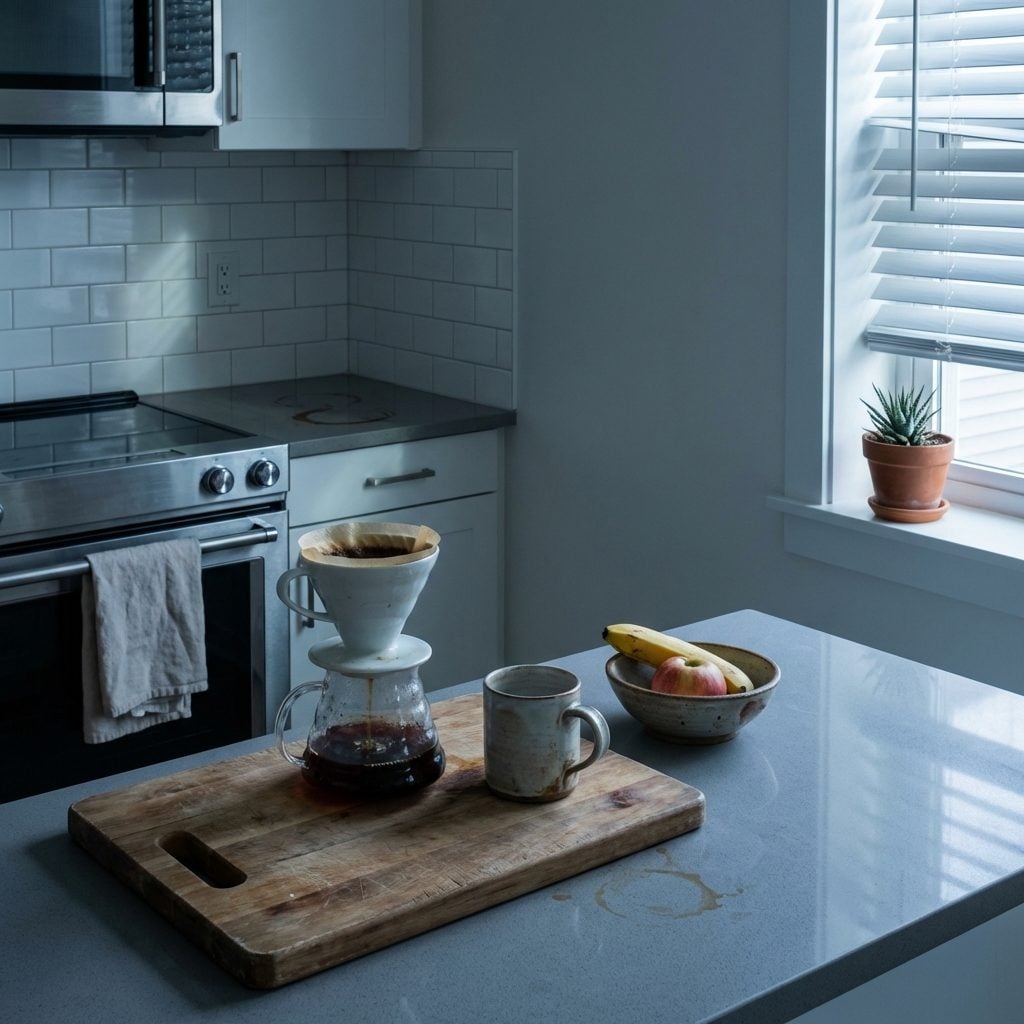
The morning routine of a happy home is one of its most invisible gifts. The kettle goes on in the same sequence. Someone opens the blinds in a particular order. The radio or the playlist or the particular silence settles in the same way it always does. None of this was planned. It accumulated, quietly, over the course of people sharing a space and finding their rhythm in it.
This is what psychologists who study domestic happiness refer to as “predictive comfort”, the low-grade reassurance that comes from knowing what the next hour looks like before it happens. It’s not routine for routine’s sake. It’s evidence that a home has been inhabited long enough and happily enough for its patterns to become second nature. You can spot it in the details: a ceramic pour-over coffee set left ready on the counter, the newspaper or phone in the same spot, the particular chair that always gets used first.
15. There’s a Corner That Belongs to You and Only You, and Everyone Knows It
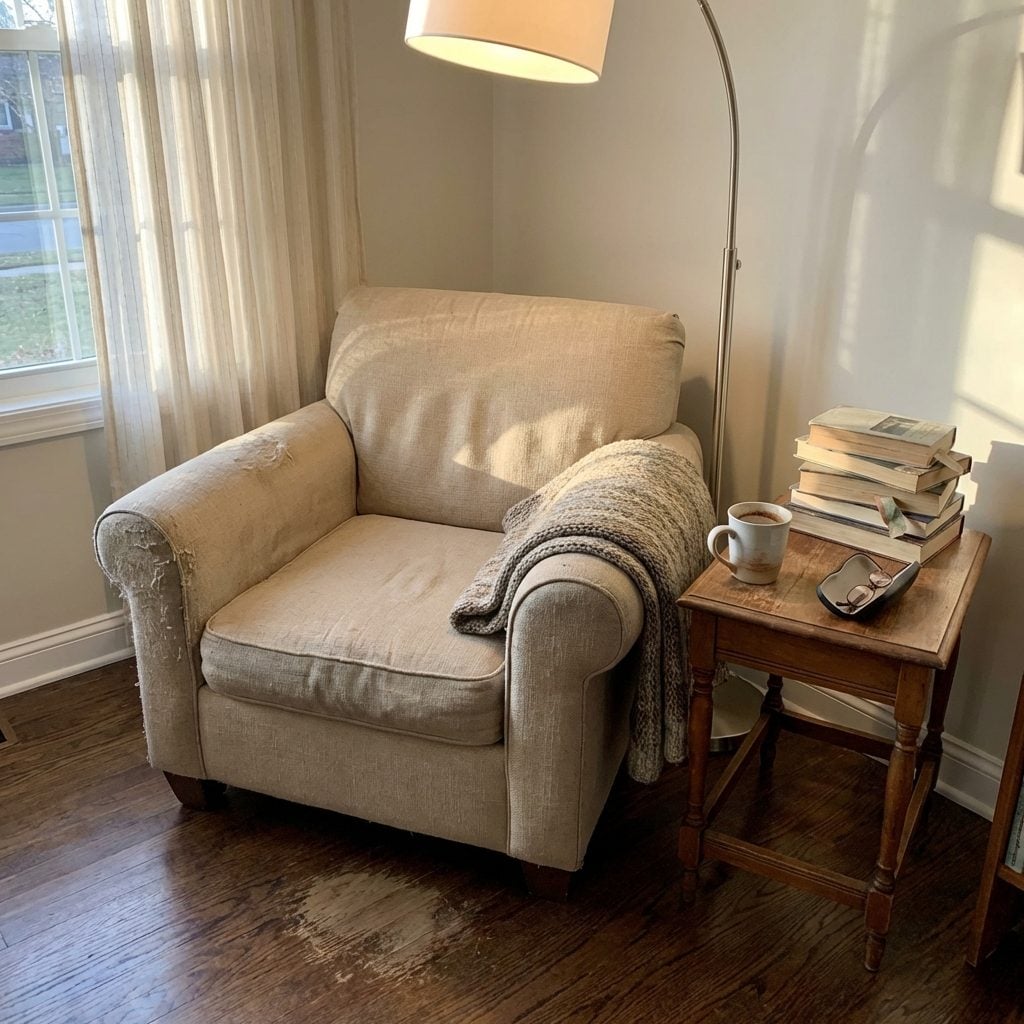
Every truly happy home has one. The specific armchair nobody else sits in. The window seat that’s accumulated exactly the right books and the right light at the right time of day. The corner of the sectional with the worn armrest where one person always lands. These spots are not assigned. They’re claimed, slowly, through repeated use, and the household simply adjusts its orbit around them.
Tracking contemporary home trends over the past few years reveals a growing design preoccupation with what architects call “refuge spaces”, small-scale zones within a home where one person can feel contained and private without being isolated. The reading nook that gets its own arc floor lamp. The linen reading chair angled toward the garden. These aren’t luxuries. According to environmental psychologists, they’re a basic human need.
14. Guests Take Their Shoes Off Without Being Asked, and It Feels Natural
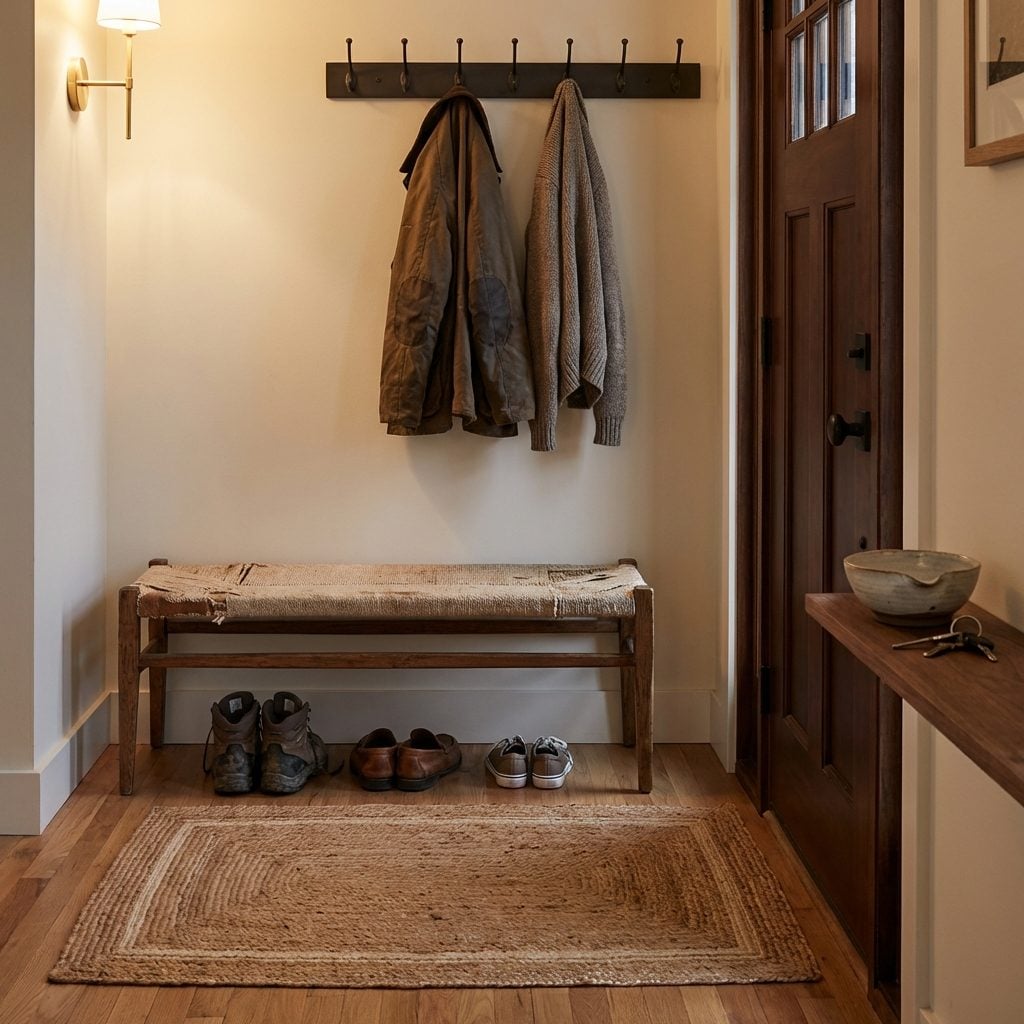
This is a small thing that says a large thing. When guests cross your threshold and automatically slip off their shoes, not because there’s a sign, not because you’ve asked, but because the space somehow signals that kind of respect and ease, it means your home has an atmosphere. One that communicates care without words.
There’s a simple material explanation for why this happens: homes with soft rugs near the entry, warm lighting, and a clear place to sit and remove shoes create a physical invitation to slow down. A natural fiber entryway rug, a low wooden entryway bench, and a basket for shoes do more behavioral work than any house rule. But the deeper reason is harder to manufacture: people sense when a home is genuinely cared for and instinctively want to honor it.
13. The Fridge Has More Magnets Than Empty Space
🔥 Would you like to save this?
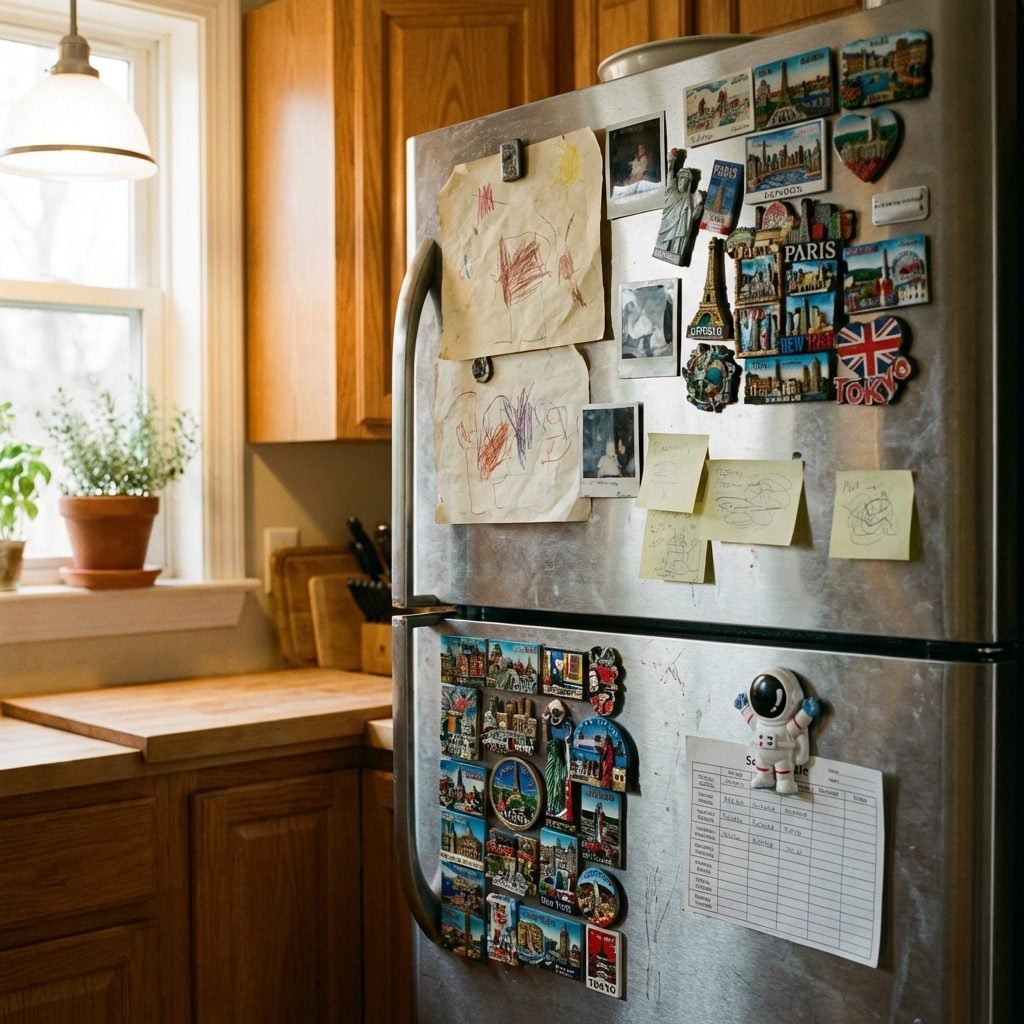
Somewhere between the school photo with the gap-toothed smile and the takeout menu from that Thai place three towns over, your fridge became a family archive. Vintage photo magnets and souvenir clips from road trips aren’t clutter, they’re a timeline. Every layer tells you something lived was worth keeping.
The psychology here is real: researchers consistently find that homes with personal mementos displayed prominently register higher on self-reported wellbeing scales. The fridge just happens to be the most democratic gallery in the house, everyone walks past it multiple times a day. When the stainless steel is barely visible beneath the layers, that’s not disorganization. That’s evidence of a life that keeps happening.
12. You’ve Stopped Buying Things to Fill Space and Started Buying Things to Add Meaning
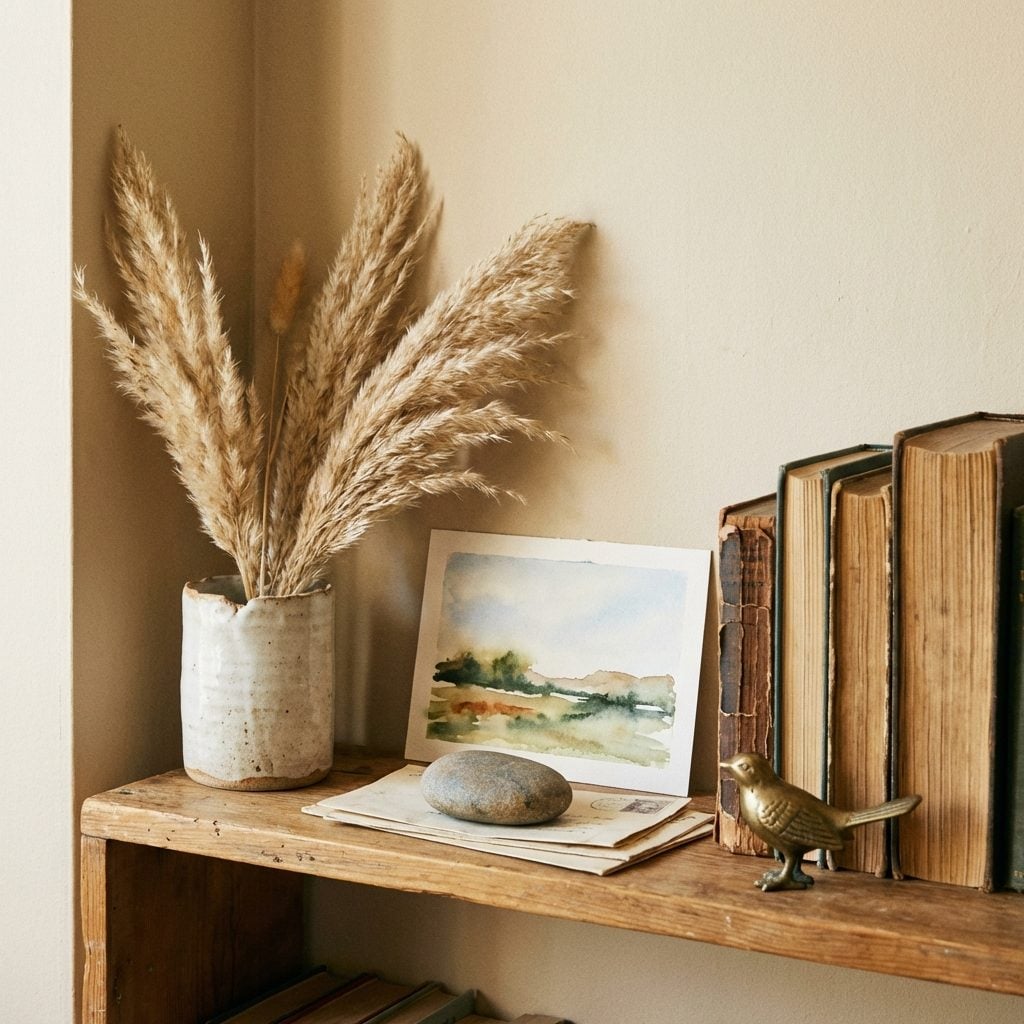
There’s a distinct shift that happens in a home that has found itself. You stop walking through a furniture store searching for something to fill a corner and start walking in knowing exactly what story you want to tell next.
Maybe it was the handmade ceramic vase you picked up at a farmers’ market because it reminded you of your grandmother’s kitchen. Maybe it was a vintage woven throw that matched nothing but felt right. Intentional buying like this is one of the clearest signs a home has moved past the decorating phase into something more personal, a place that reflects who you actually are, not who you thought you should be.
11. Disagreements Here Get Resolved Before Bed More Often Than Not
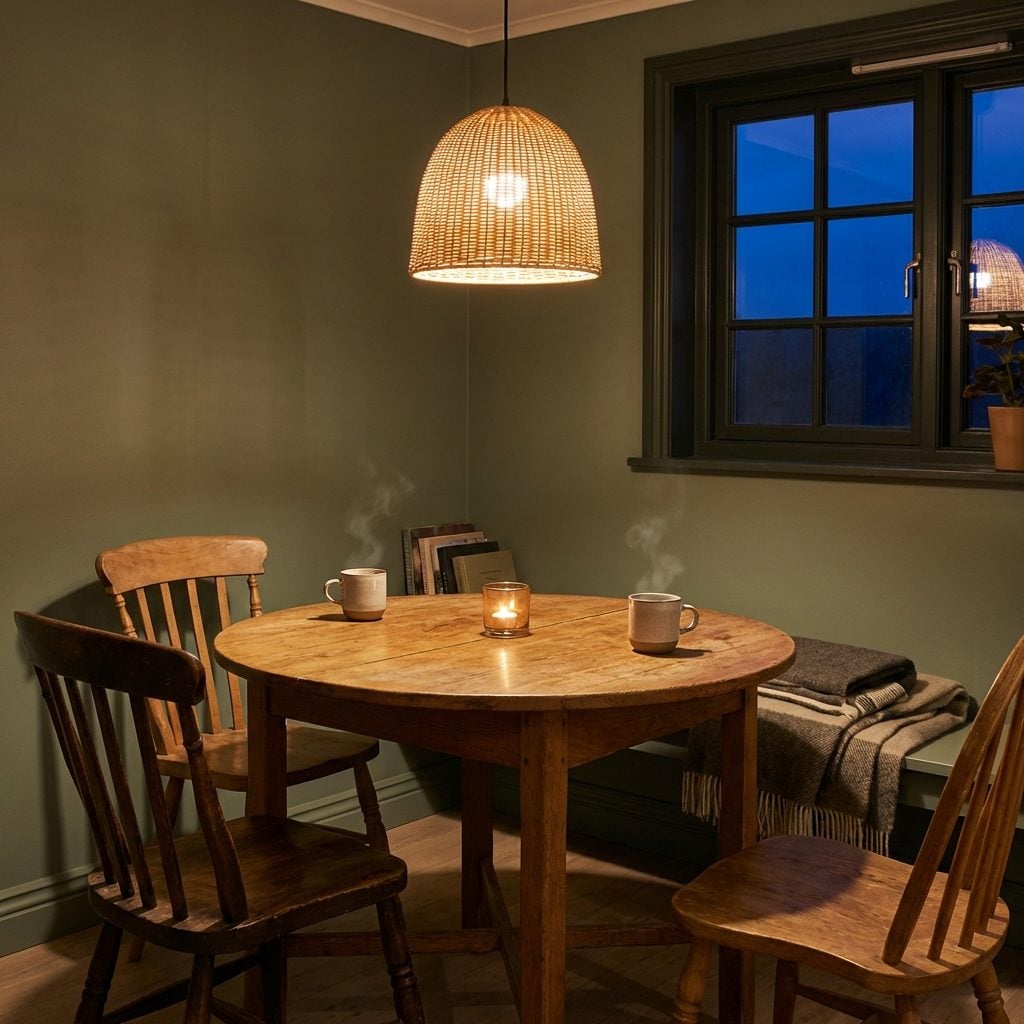
A happy home isn’t one without conflict. It’s one where the kitchen table has hosted hard conversations that ended with someone making tea. The physical space actually plays a role here, studies show that soft lighting, circular seating arrangements, and rooms without formal hierarchies (no one at the head of a table) lower defensiveness during disagreements.
If your living room feels like a place where things get worked through rather than worked around, the design itself may deserve some credit. A round oak dining table or low-profile sectional sofa that puts everyone at the same eye level, these aren’t just aesthetic choices. They quietly shift the emotional temperature of a room.
10. You’ve Given Rooms Permission to Evolve as Your Life Has
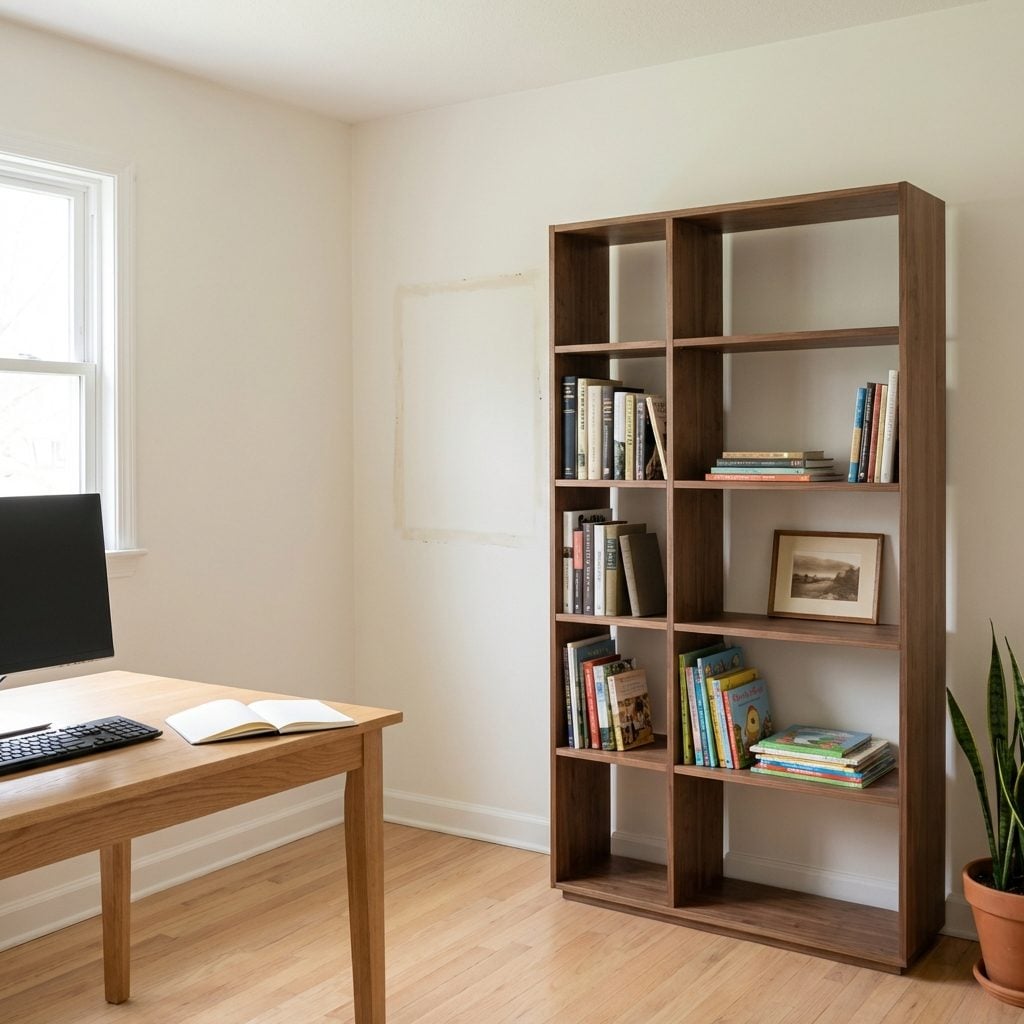
The guest room that became a nursery that became a home office that became something else entirely, this is what a happy home looks like from the inside. Rooms that have had multiple lives carry a kind of warmth that newly decorated spaces simply don’t. The layers accumulate: a scuff on the baseboard from a crib, a hook that once held a baby monitor, now holding a headset.
A room that has been loved through different seasons of life doesn’t need to be perfect. It just needs to feel honest.
This willingness to let a space change is rooted in something emotionally healthy: you’re not frozen in a version of yourself from five years ago. The home grows because you’ve grown. A modular walnut bookshelf reconfigured three times is worth more than one that’s never moved. That flexibility is a feature, not an afterthought.
9. Coming Home Still Feels Like the Best Part of the Day
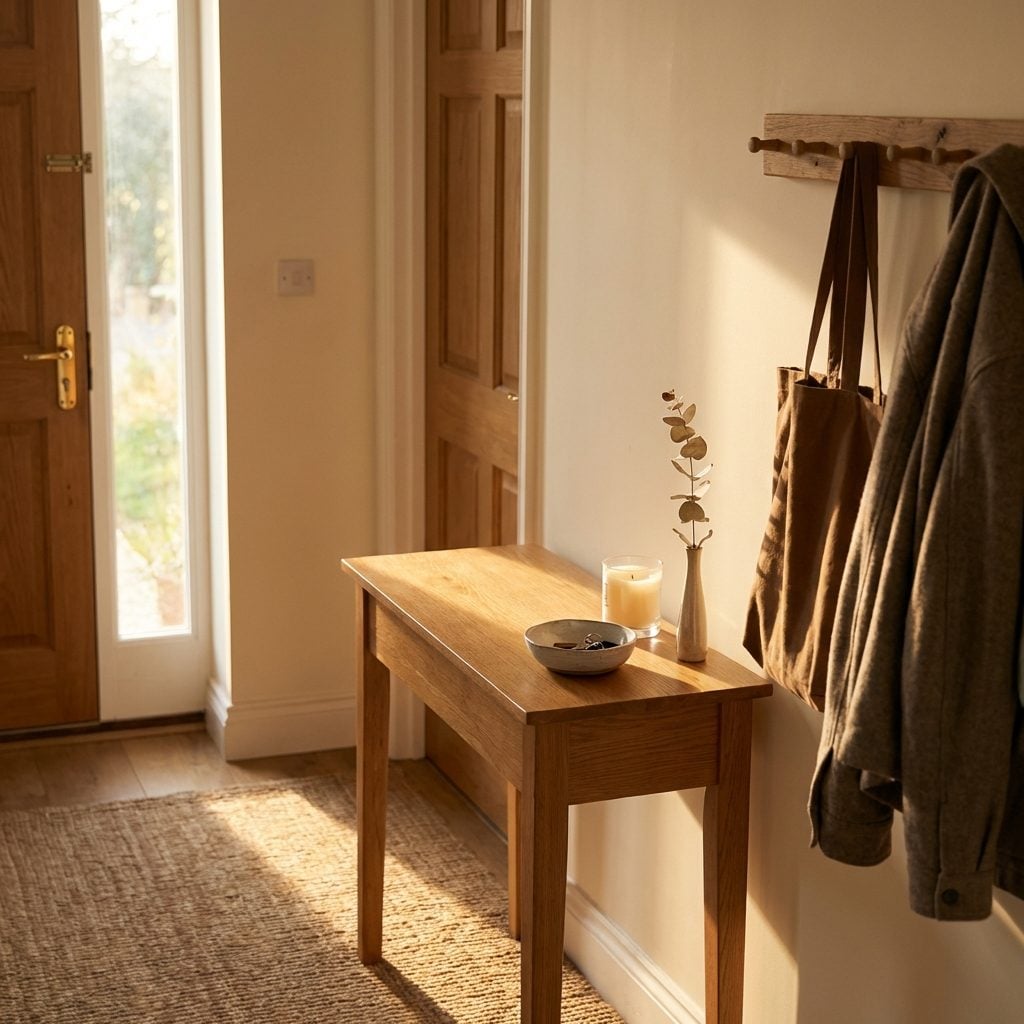
That specific exhale as the door closes behind you. The way the light looks when you walk in at 5:30 pm and the whole place smells faintly like the soy wax candle you burned that morning. It’s not dramatic, it’s just relief, comfort, and recognition all arriving at once.
When a home has this effect consistently, it’s because it’s been tuned to the people inside it. The temperature feels right. The lighting isn’t harsh. There’s somewhere obvious to put your keys and your bag without thinking. These are design decisions as much as emotional ones. A well-placed entryway console table and a wall hook that actually holds your coat, these small functional details are what make the transition from outside world to inside world feel like landing.
8. Laughter Carries Easily from One Room to Another
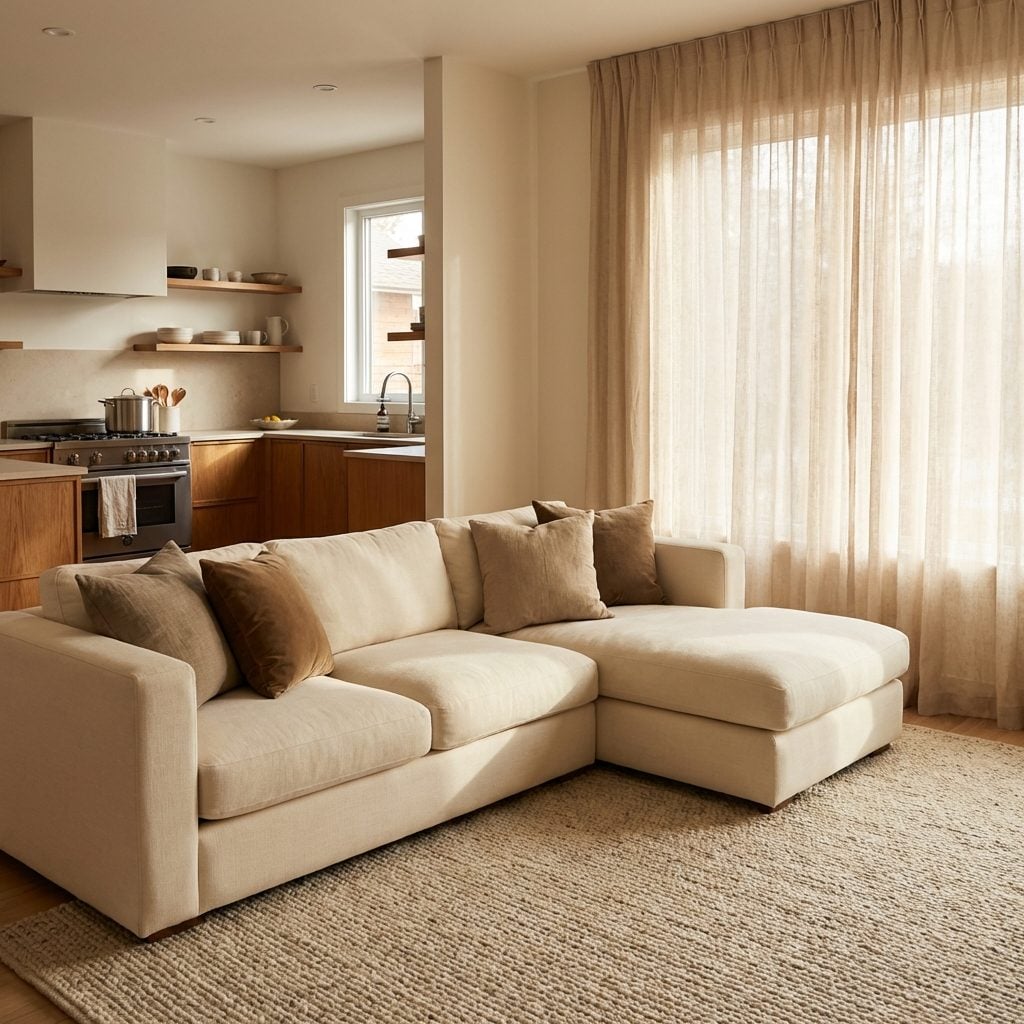
Open floor plans get a lot of credit for this, but the real reason laughter travels in a happy home has less to do with architecture and more to do with permission. Someone starts laughing in the kitchen and you hear it from the couch. It pulls you in without anyone calling for you.
Acoustically speaking, homes with softer surfaces, wool area rugs, upholstered furniture, linen curtains, don’t amplify sound harshly. Sound moves warmly rather than bouncing sharp and clinical off hard surfaces. The result is a home where voices carry without feeling intrusive, where a laugh from one end of the house feels like an invitation rather than an interruption.
7. The Couch Has Permanent ‘Favorite Spots’ Worn Into It
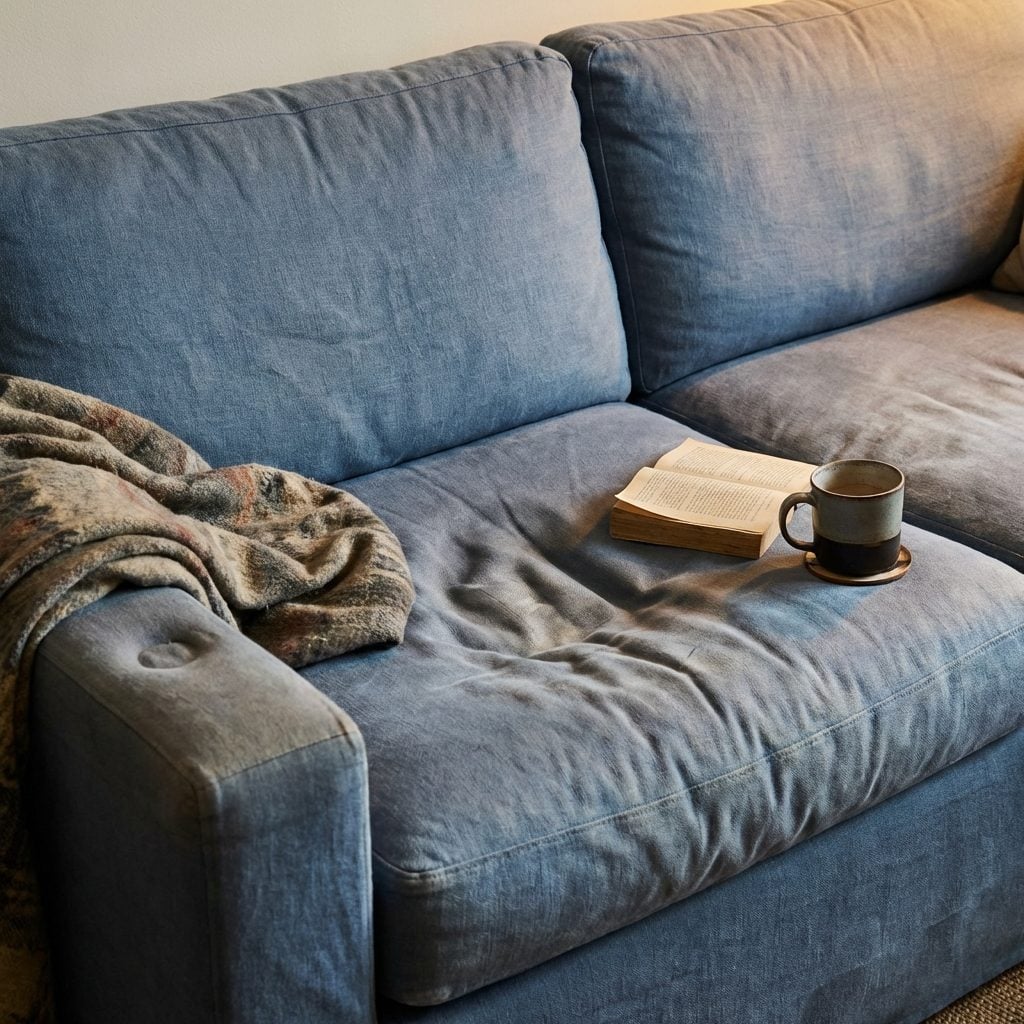
That slightly compressed cushion on the left side? That’s someone’s spot. It has been sat in hundreds of times, during movies, during bad days, during Sunday mornings with coffee and nowhere to be. The wear pattern on a well-used sofa is essentially a comfort heatmap of a family’s life together.
A deep-seat linen sofa that looks perfectly plush from every angle is fine. But a couch with dents and soft spots and one armrest that’s clearly been leaned on ten thousand times? That’s a couch that got chosen every single day. The velvet-upholstered loveseat in the corner with one cushion perpetually crooked, that’s where someone reads every evening without fail.
6. There’s Always Something Simmering, Food, Ideas, or Plans
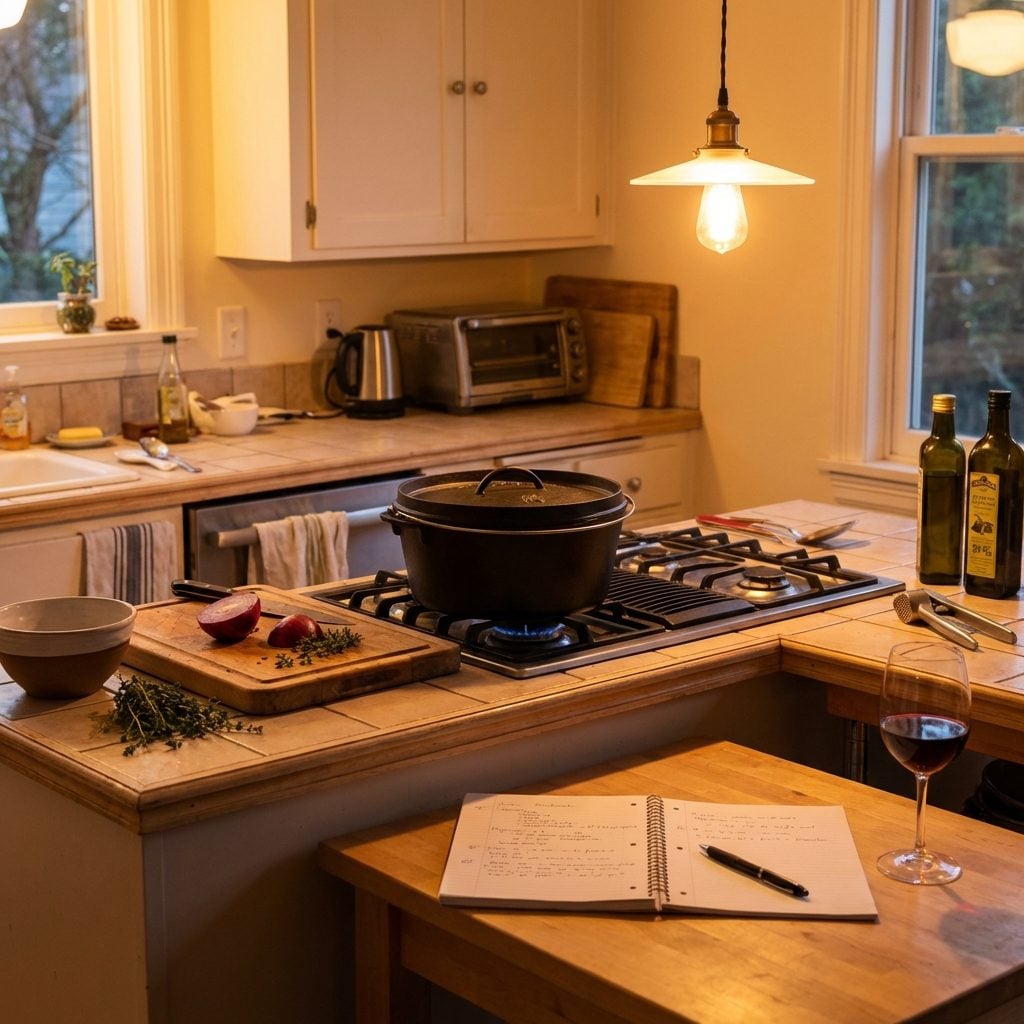
Some homes feel like they’re always in the middle of something. A pot on the stove, a notebook open on the table, a half-finished list of places to visit pinned to the wall. The common thread isn’t busyness, it’s forward motion. The house feels like a launchpad as much as a landing spot.
Kitchens in particularly happy homes tend to be functional in a way that invites use rather than preservation. A cast-iron dutch oven sitting permanently on the stove rather than stored away. A wooden cutting board with actual knife marks that lives on the counter. These aren’t staging choices. They’re signs that the kitchen gets used hard and loved for it.
5. You Don’t Notice the Clutter Until Someone Else Points It Out
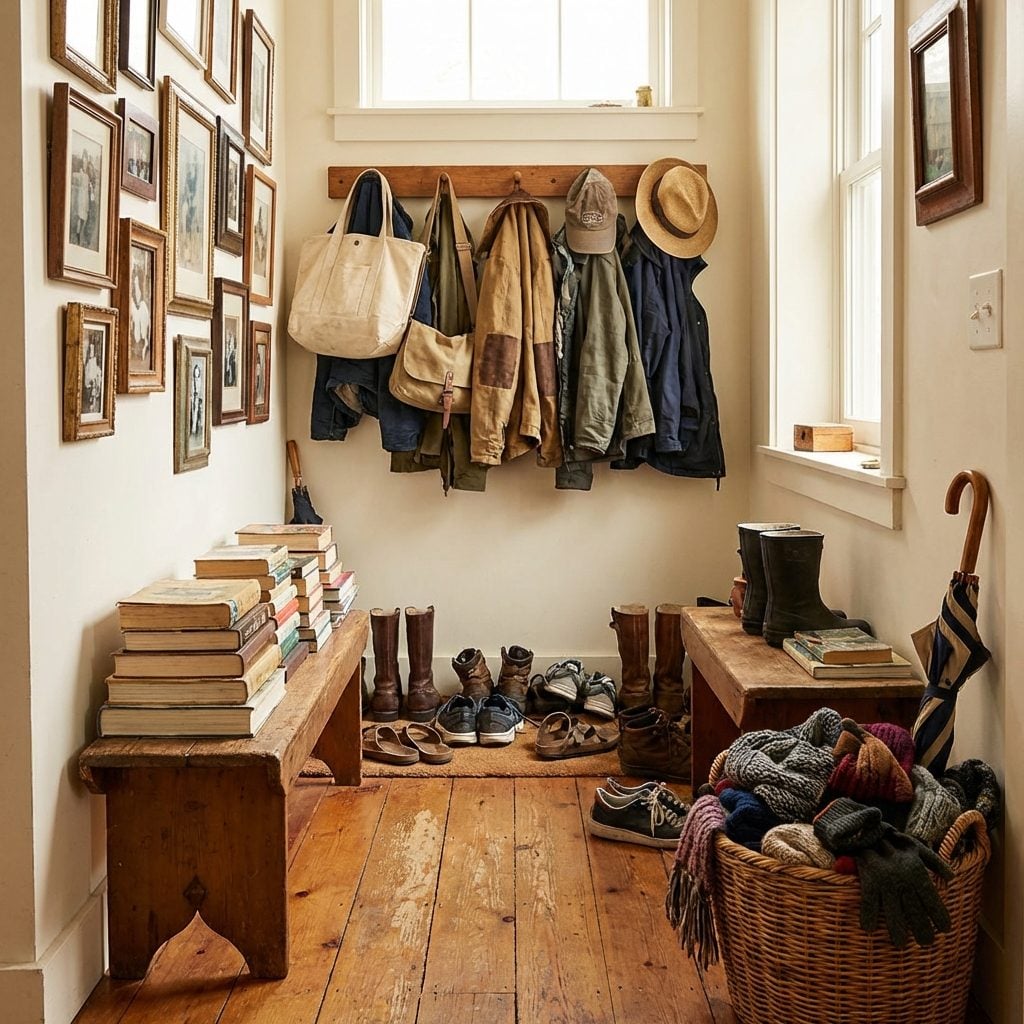
There’s a telling moment when a guest mentions the stack of books on the stairs or the collection of bags behind the front door, and your first instinct is confusion, because you genuinely stopped seeing it. That selective invisibility is actually a sign of deep comfort. Your nervous system has classified those items as safe, familiar, and non-threatening. It stopped logging them as clutter and started reading them as home.
4. It Feels Just as Good on a Quiet Tuesday as It Does on a Big Occasion
🔥 Would you like to save this?
Some homes are built for company. They’re magnificent when full of people, orchestrated lighting, food on every surface. But clear out the guests and they feel deflated, like a stage set after the show.
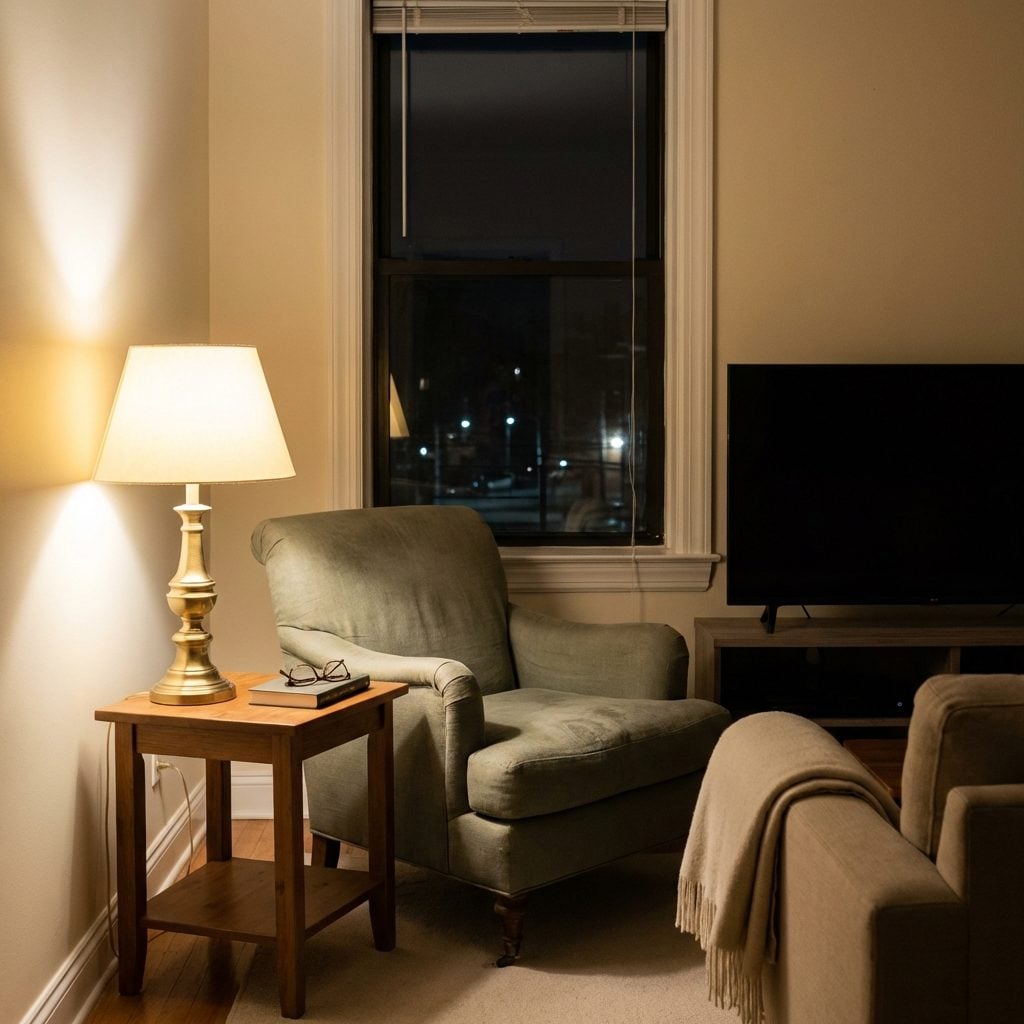
A happy home passes the Tuesday test. A regular weeknight, nothing on the calendar, dinner was fine and unremarkable, and the place still feels right. The brass table lamp in the corner does its small job. The linen-upholstered armchair by the window is exactly where you’d want it to be. There’s no performance needed. The house just works for you as much on an ordinary night as on a celebrated one, and that consistency is the rarest thing a home can offer.
3. The Guest Room Gets Used More Than You Expected
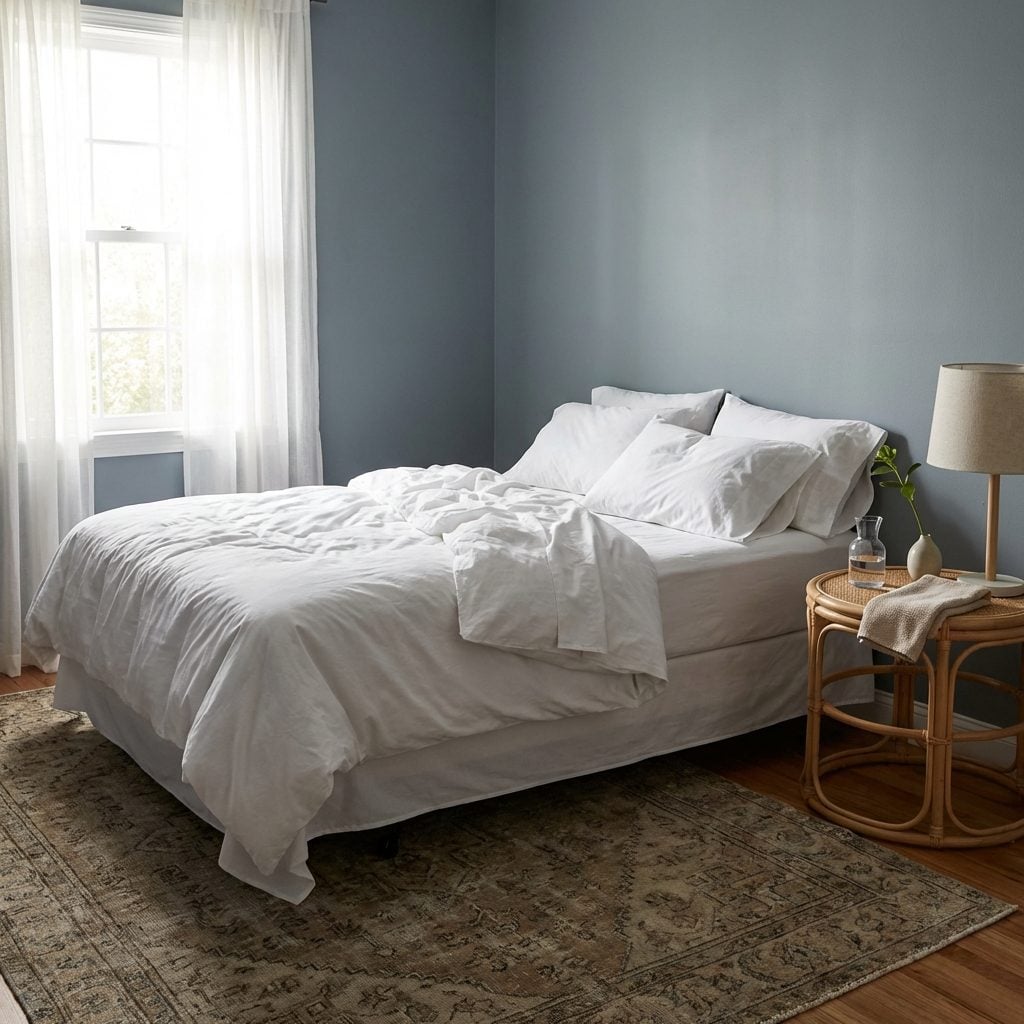
When you first set it up, you imagined it mostly empty, a just-in-case room, politely furnished and rarely touched. Then friends started staying longer. Family started booking visits further in advance. The room developed its own personality: a specific pillow arrangement, a woven rattan side table that migrated from another room, a cotton percale duvet cover that everyone compliments in the morning.
A guest room that gets used often is a quiet testament to the house itself. People return to places they felt good in. They don’t book second stays to spaces where they felt like an inconvenience. If the guest room has become a genuine destination, if people leave and immediately ask when they can come back, the house is doing something right that goes well beyond thread count.
2. You’ve Never Once Wished You Were Somewhere Else While Sitting in Your Favorite Spot
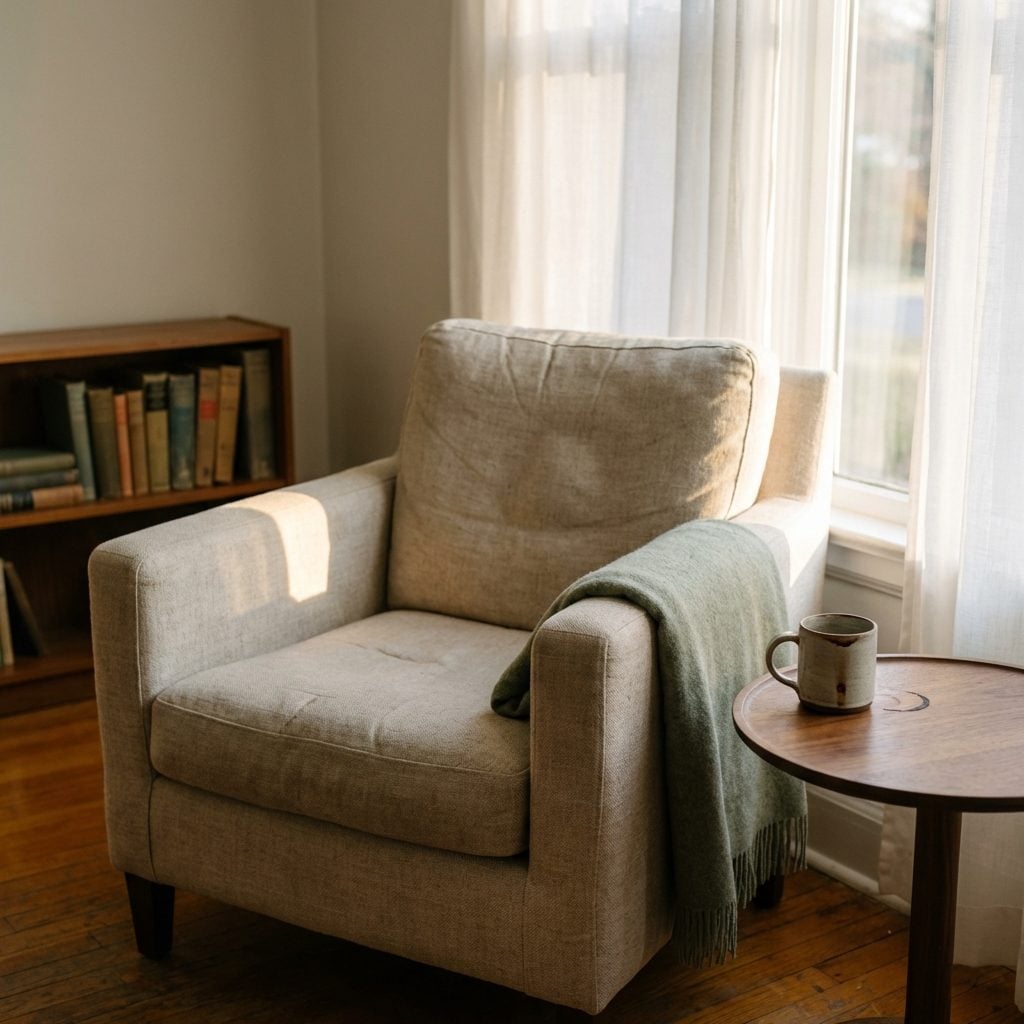
There’s a specific kind of contentment that doesn’t announce itself loudly. It just settles in. You sink into your favorite chair, maybe a linen armchair that’s been broken in exactly right, and at no point does your brain quietly suggest that you’d rather be at a café, a friend’s place, or anywhere else on earth. That stillness is rarer than people realize.
Most people spend their time at home half-present, mentally rehearsing where they’d rather be. The fact that you don’t? That’s not a small thing. It means your home has done the hardest job in design: it’s created a pocket of space that feels genuinely irreplaceable to you. No amount of home trends can manufacture that feeling. It has to be earned, layer by layer, object by object, until the room knows you as well as you know it.
1. Leaving Always Feels Like a Small Loss, Even When You’re Just Running Errands
Pay attention to the moment right before you walk out the door. Not when you’re late, not when you’re excited about where you’re going, just an ordinary Tuesday, keys in hand. If there’s even a flicker of reluctance, a brief pause where you register what you’re leaving behind, that’s a home doing its job at a level most spaces never reach.
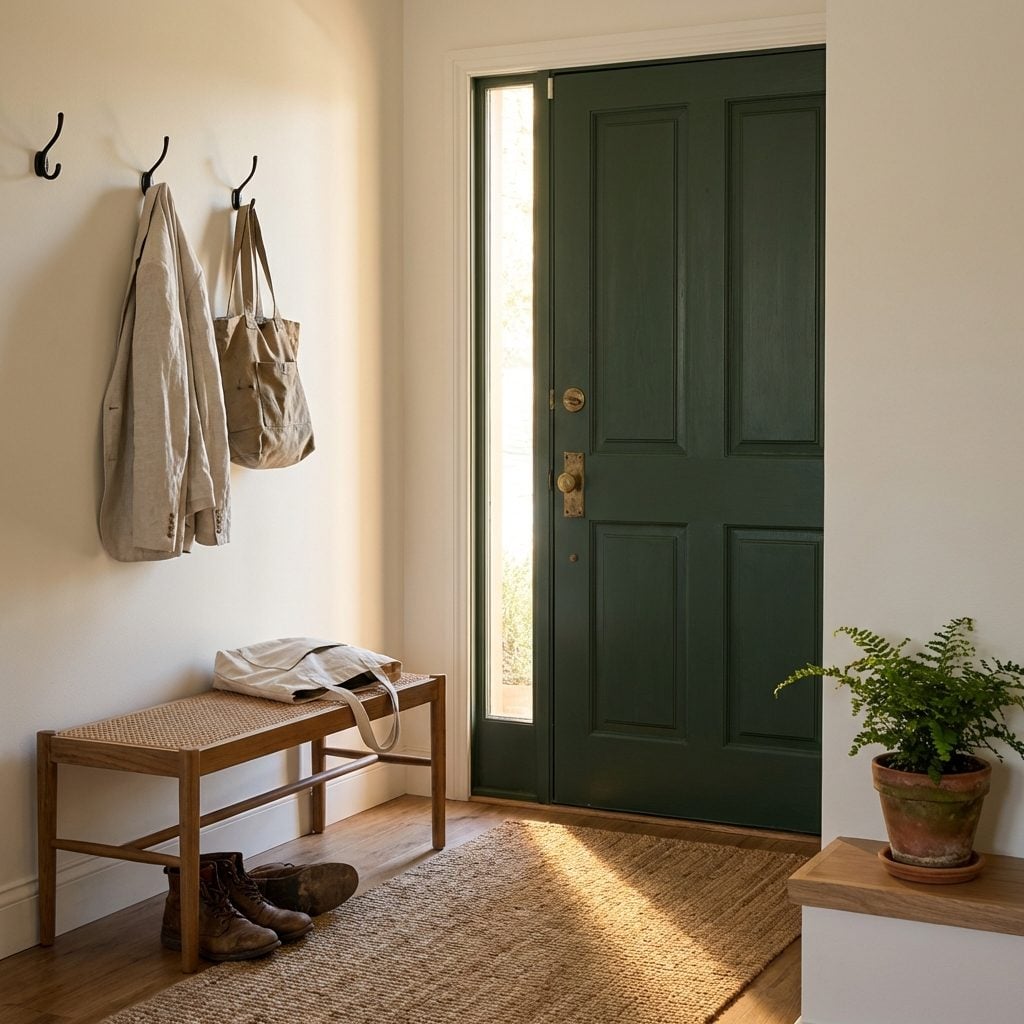
A entryway bench by the door. The particular quality of the light in the hallway at that hour. The smell of whatever’s in the kitchen. These micro-details form an invisible pull. Happy homes accumulate these sensory bookmarks until they become genuinely hard to walk away from, even temporarily.
It’s worth comparing this to how you feel leaving a hotel room, an office, or somewhere you merely tolerate. There’s no pull. No pause. The contrast tells you everything about what your home has quietly become.
“Home isn’t the building. It’s the specific feeling you notice is missing the second you step outside it.”