🔥 Would you like to save this?
There’s something about an old red barn that makes you want to gut it and start over. The bones are already there: soaring ceilings, massive timber framing, that wide-open footprint most modern builders can only dream of. But turning a 130-year-old agricultural structure into a place you’d actually want to live? That’s where things get interesting.
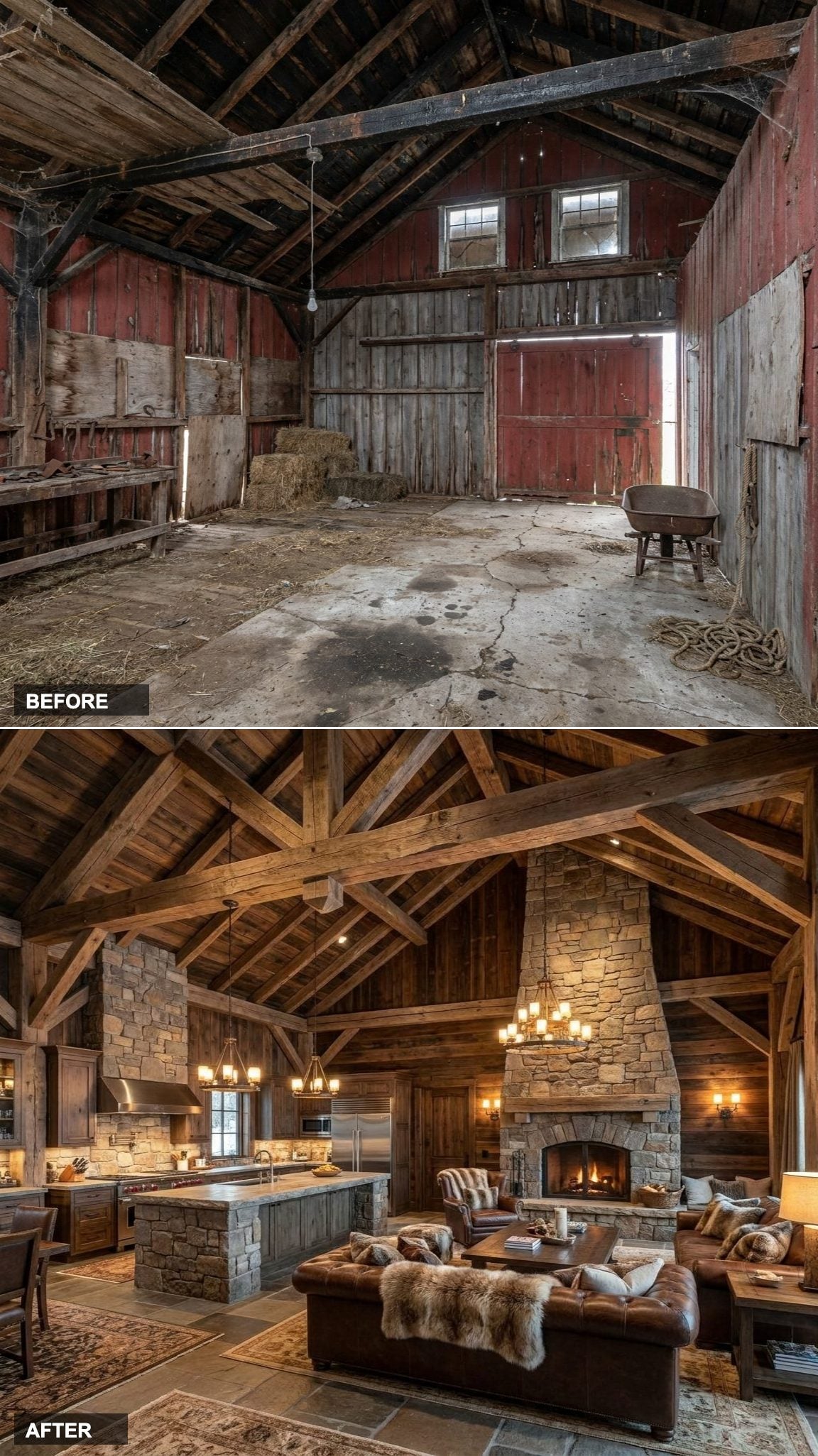
We took one dated barn interior, still clinging to its rough-hewn past with zero personality beyond “old,” and redesigned it 34 completely different ways. Some are moody and brooding. Others are bright enough to make you squint. A few made me reconsider my own kitchen. Every single one proves the same point: great bones deserve better than neglect.
In order to come up with the very specific design ideas, we create most designs with the assistance of state-of-the-art AI interior design software. Also, assume links that take you off the site are affiliate links such as links to Amazon. this means we may earn a commission if you buy something.
From Dusty Hayloft to Scandinavian Sanctuary in White Oak and Linen
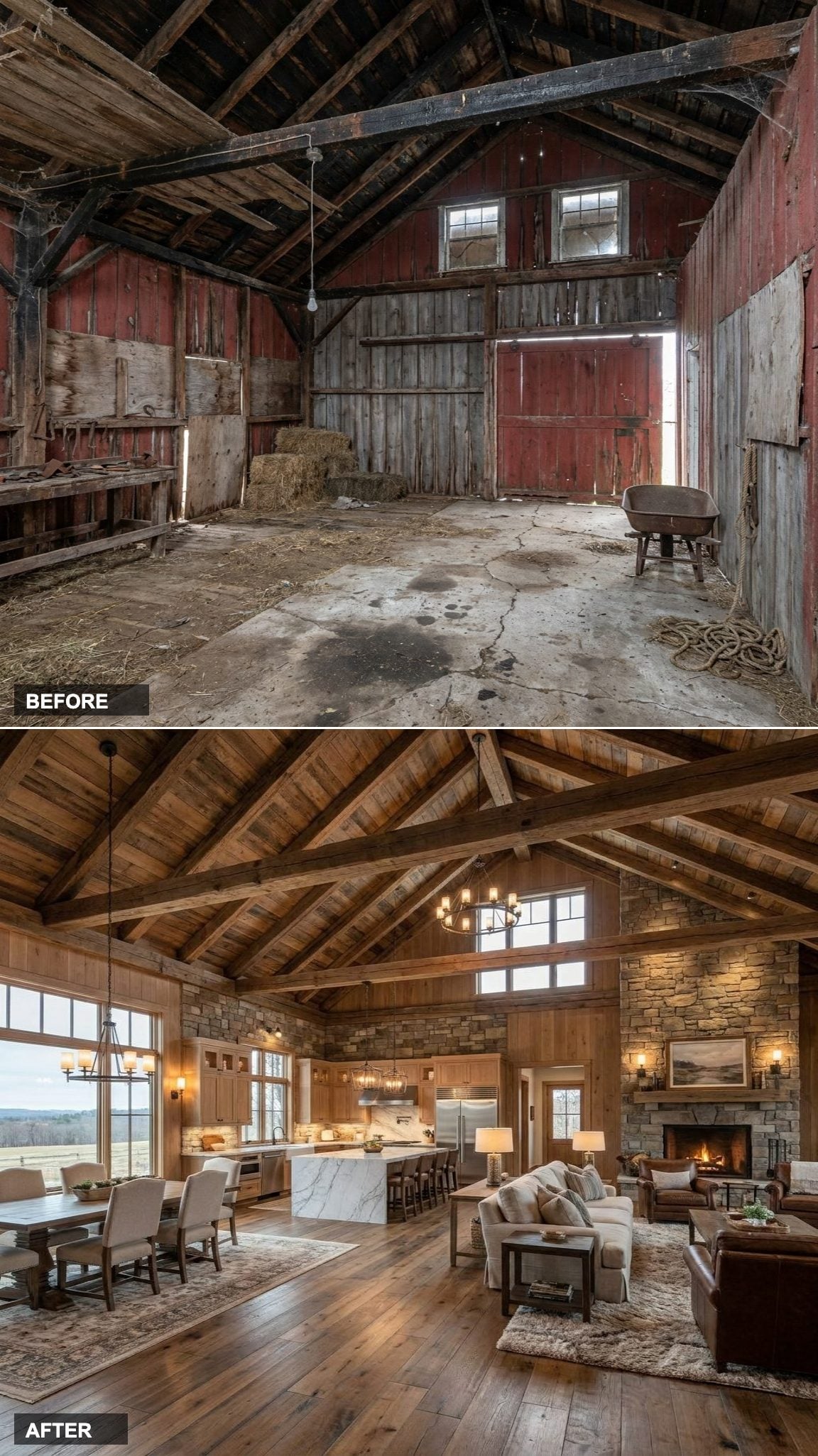
The original conversion’s biggest sin wasn’t the berber carpet or the brass fixtures. It was ignoring the bones. Those massive timber frames deserved to be the star, and this Scandinavian redesign finally lets them breathe.
Every surface pulls back to let the architecture speak: white oak flooring runs wall to wall, while linen slipcover sofas in warm ivory cluster around a low walnut coffee table. The kitchen gets matte white cabinetry with integrated pulls and a pale soapstone counter. A single woven pendant light drops from the peak of the vaulted ceiling. It’s quiet, deliberate, and deeply comfortable.
Industrial Noir with Blackened Steel, Concrete Floors, and Amber Glass
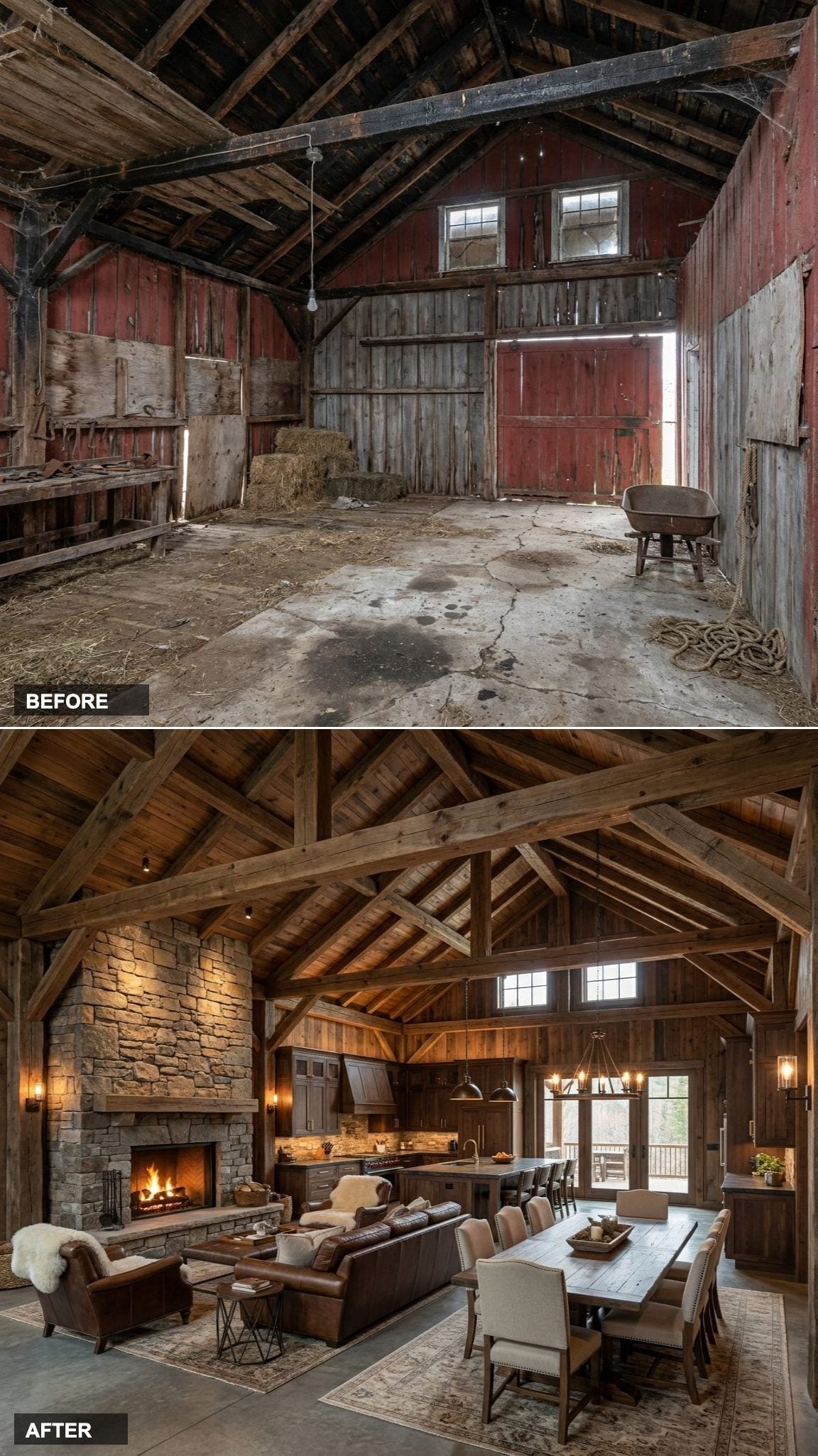
Sometimes the boldest move is leaning into darkness. Instead of fighting the barn’s cavernous proportions, this industrial concept fills the volume with moody intention. The timber framing gets stained nearly black with a penetrating oil finish, and polished concrete replaces that tragic carpet.
A massive black steel kitchen island anchors the space, while amber glass pendant lights in clusters of three throw warm pools across the concrete. The living zone features a deep charcoal leather sofa and a rough-cut reclaimed wood coffee table. It’s a space that feels like a very expensive whiskey tastes.
Sun-Bleached Provençal Farmhouse with Terracotta and Lavender Linen
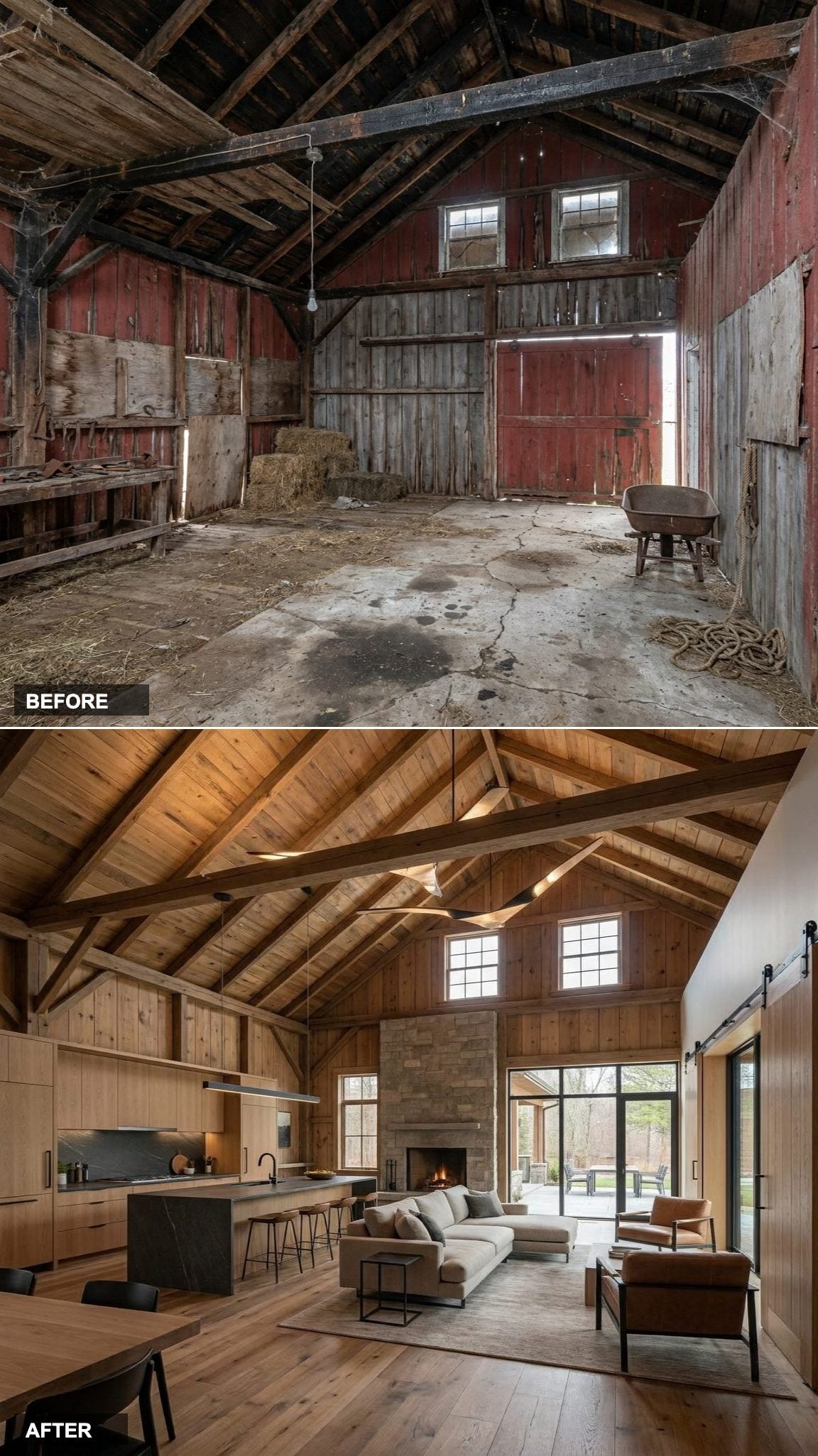
Here’s the thing about that original space: it had zero personality. No color story, no texture, just beige existing in beige. This Provençal concept is the antidote, and it works because it commits fully to one region’s palette without flinching.
Terracotta floor tiles in a warm, sun-faded orange run throughout. The walls get a hand-troweled lime wash in creamy white. Kitchen cabinets arrive in a muted sage green with brass cabinet knobs, and the living area centers on a deep sofa dressed in lavender linen throw pillows. A copper pot rack hangs above the island. There’s dried lavender in a stoneware pitcher on the counter, and I swear you can almost smell it through the screen.
Mid-Century Desert Modernism in Burnt Sienna and Walnut
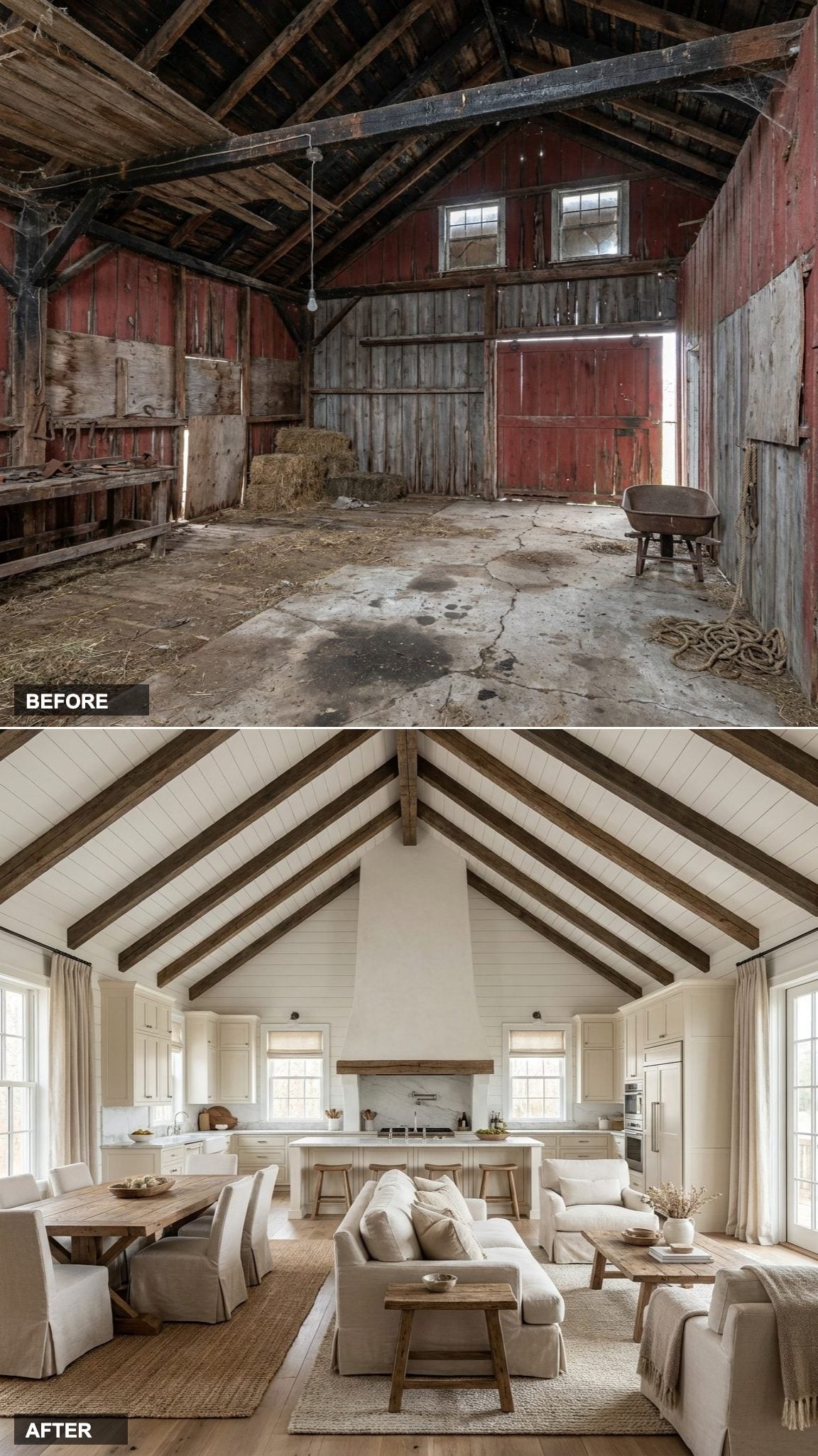
Forget everything you think about barns and modernism being incompatible. The angular geometry of those timber trusses is practically begging for a Palm Springs treatment.
This redesign paints the walls in a dusty burnt sienna that catches the light differently throughout the day. Walnut credenzas with tapered legs line the walls. The kitchen swaps to flat-front walnut cabinetry with a creamy quartz counter, and the seating area gets a low-slung cognac leather armchair flanked by ceramic table lamps in ochre. A large prickly pear cactus in a clay pot sits near the window. I got the mid-century bug about five years ago and I’m still not over it. This one reminds me why.
Wabi-Sabi Retreat with Raw Plaster, Limewash, and Japandi Ceramics
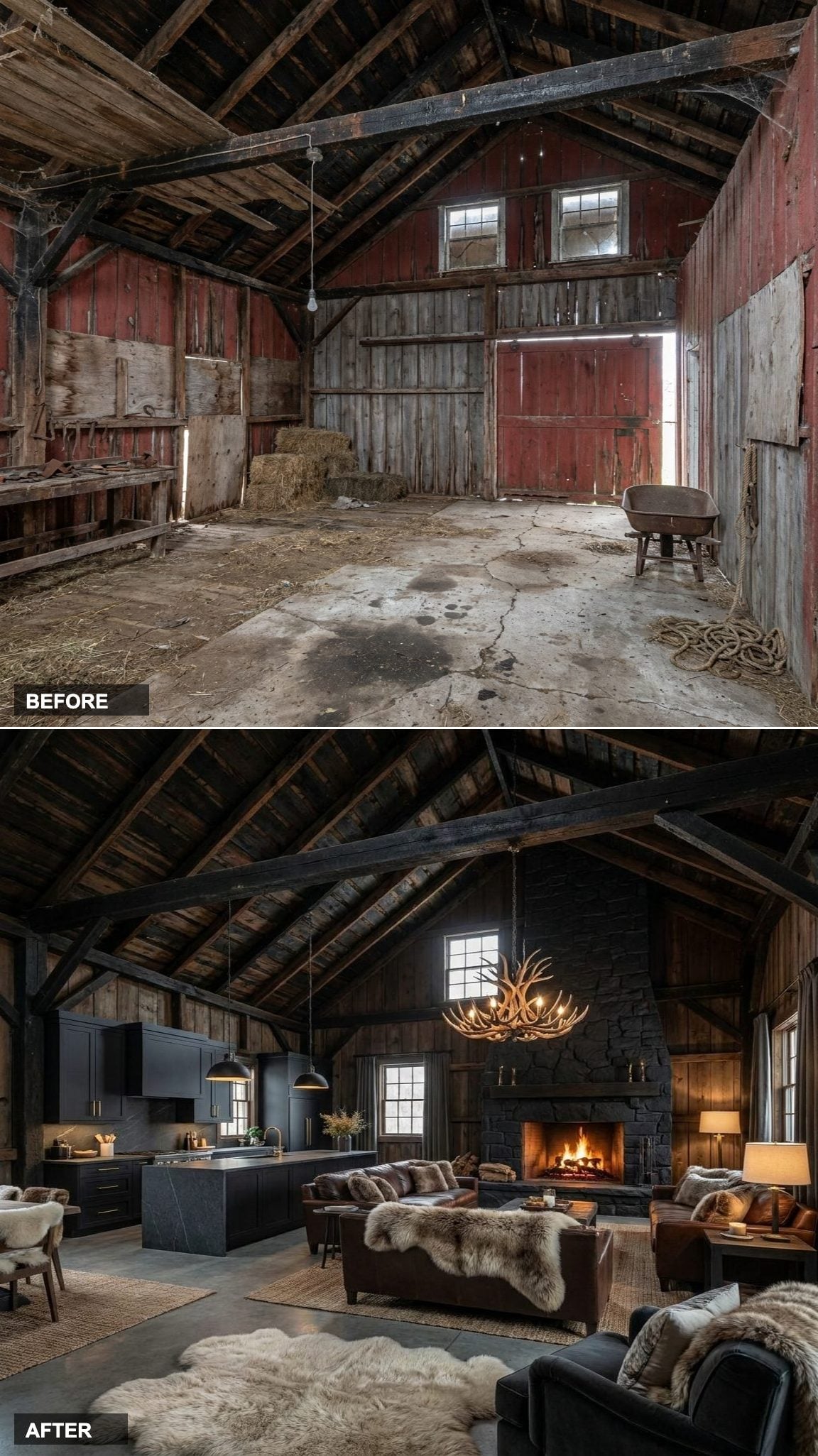
Strip it all back. That’s the whole philosophy here, and honestly, it’s the most dramatic change on this list precisely because it adds the least. The fluorescent lights, the vertical blinds, the particle board shelf: they were all trying too hard. This wabi-sabi approach replaces effort with restraint.
Walls get a raw limewash in pale mushroom. The floors are poured concrete with a matte seal, left imperfect. A single long reclaimed wood dining table runs through the center of the space with mismatched handmade ceramic bowls stacked at one end. The kitchen is almost invisible: handle-free cabinetry in the same mushroom tone, a raw concrete counter, and open shelving holding just a few pieces of handmade stoneware.
Emerald Art Deco Revival with Velvet, Marble, and Gold Leaf Accents
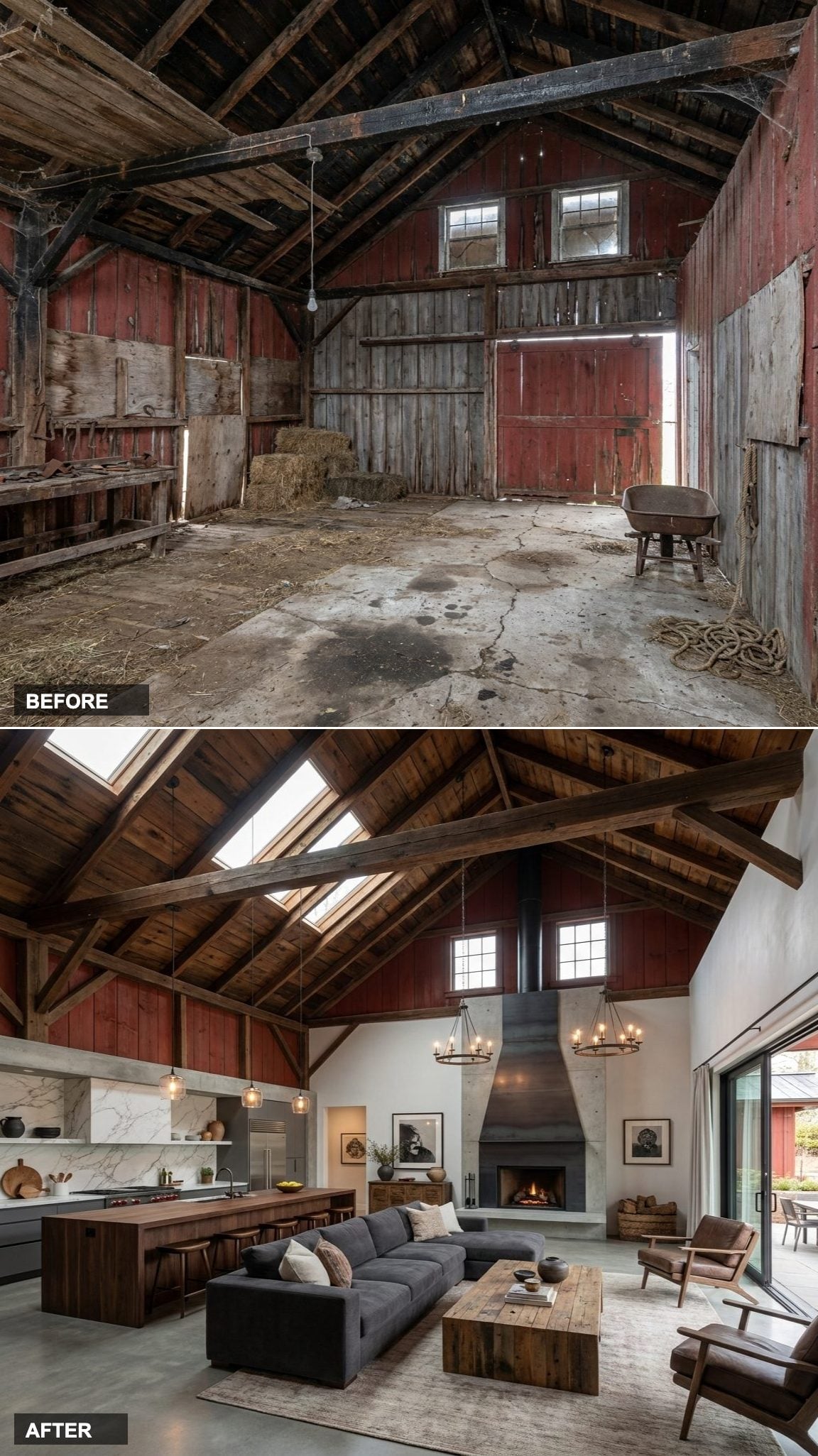
I’ll say it plainly: this is the most glamorous version of a barn I’ve ever seen, and it has no business working this well.
Deep emerald velvet covers a emerald velvet sofa with channel tufting. The kitchen features dark green lacquered cabinets with gold cabinet pulls and white marble countertops with dramatic grey veining. Gold leaf details catch light along a custom bar area. The floors get stained a rich espresso, and a pair of art deco wall sconces in polished brass flank a large round mirror. There’s a crystal decanter on the bar cart that probably cost more than the original barn’s entire kitchen. Following current home trends, this leans into maximalism without ever crossing into chaos.
Pacific Northwest Lodge with Douglas Fir, Wool Bouclé, and River Stone
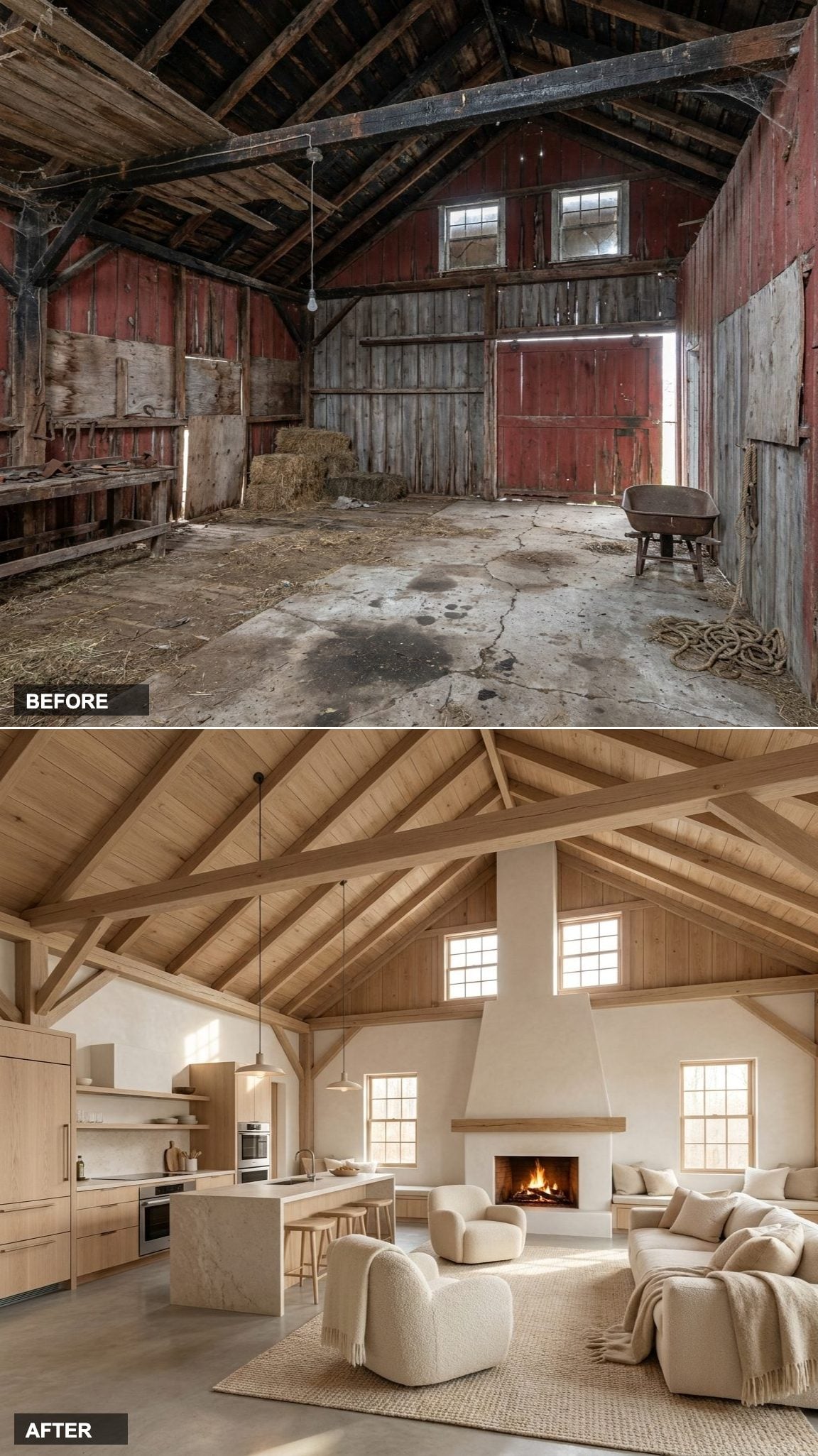
The original barn conversion committed a classic mistake: it covered up the very materials that gave the space its soul. This Pacific Northwest lodge concept does the opposite. Every design choice points back to the structure.
Douglas fir planks replace the drywall, left unsealed to age gracefully. A river stone accent wall rises behind the kitchen range, and the counters are honed black granite. The living zone features a massive cream bouclé sectional piled with wool plaid throw blankets in forest green and charcoal. There’s a stack of well-worn books on the coffee table and a ceramic mug that looks like it was just set down. This is the barn that makes you want to cancel your return flight.
Coastal Mediterranean in Whitewash, Blue Zellige, and Bleached Raffia
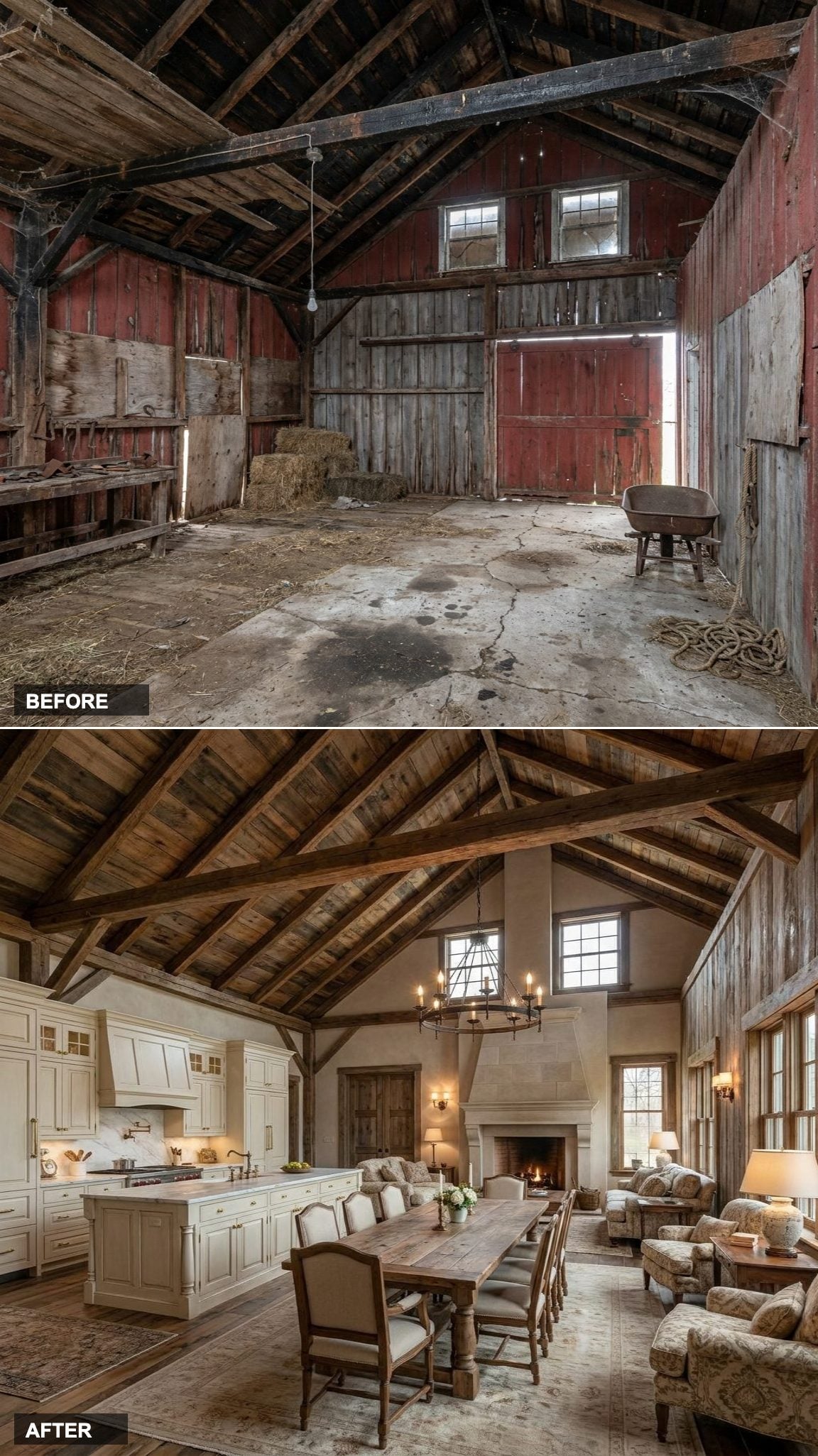
Blue zellige tile. That’s it. That’s the single move that makes this entire conversion sing.
A backsplash of hand-glazed blue zellige tile in varying ocean tones wraps the kitchen wall, giving the whole space a focal point it desperately needed. The rest plays supporting role: whitewashed timber framing, bleached raffia bar stools, sandy limestone floors, and linen curtains that move with the slightest draft. The living area keeps things spare with a low white sofa and a driftwood coffee table.
Moody British Library with Oxblood Leather, Dark Paneling, and Tartan
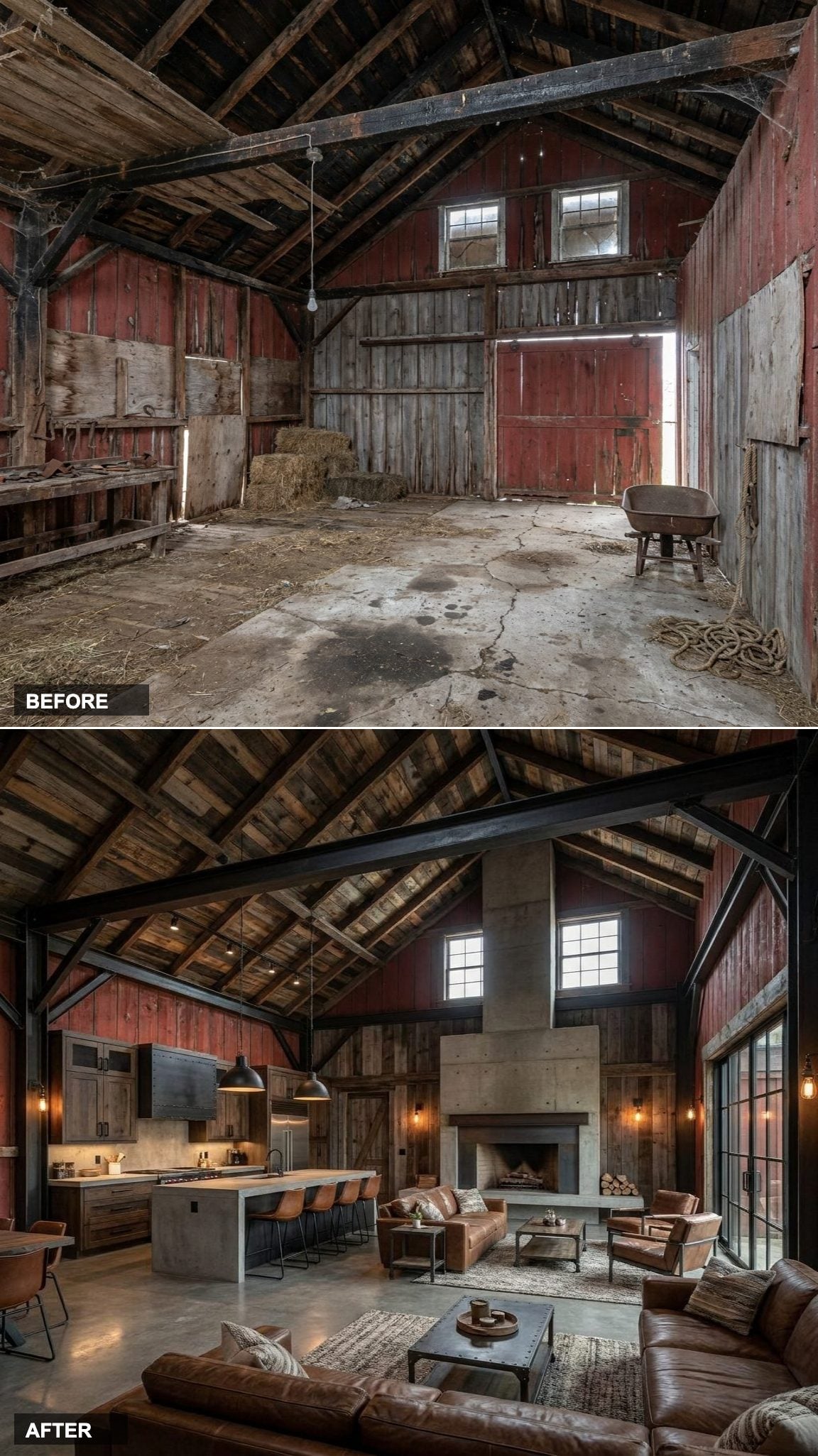
Converting a barn into a space that feels like a private London club is deeply unhinged, and I respect it completely.
Dark walnut paneling wraps the lower walls to wainscot height, with a deep navy limewash above. An oxblood leather Chesterfield sofa sits at the heart of it, facing a kitchen done in navy blue cabinetry with antique brass hardware. Open bookshelf styling fills the tall walls with leather-bound volumes and brass objects. A tartan wool throw drapes over an armchair arm. There’s a reading lamp angled just so, and a half-finished crossword on the side table. The whole thing smells like old paper and ambition.
Brutalist Warmth with Board-Formed Concrete, Corten Steel, and Beeswax
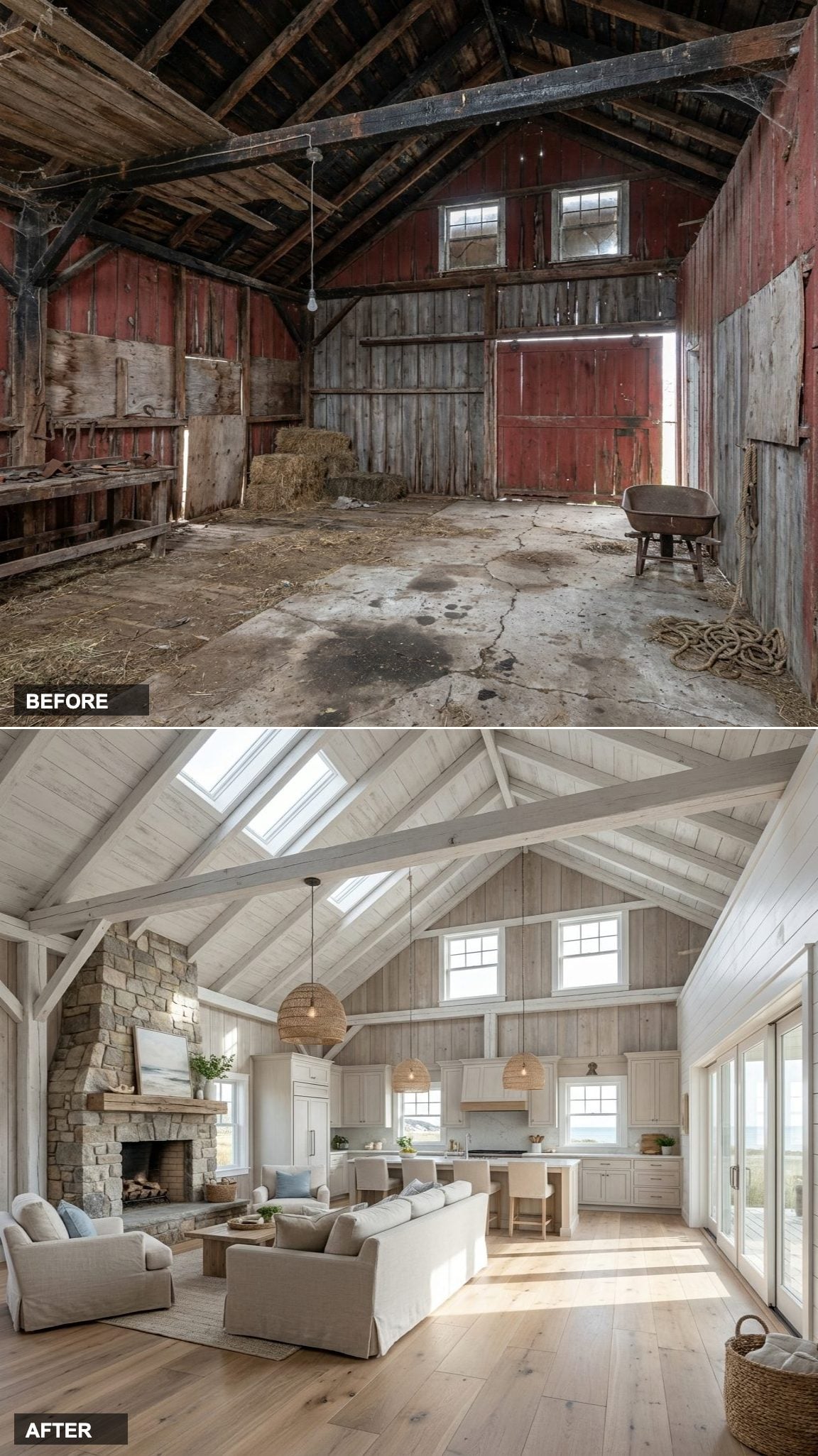
Brutalism in a barn sounds aggressive. But this version gets the balance right by pairing hard materials with organic warmth: beeswax-finished wood counters that you can actually smell, Corten steel pendant lights that rust to a living patina, and board-formed concrete accent walls whose wood grain impressions connect back to the original structure.
Bohemian Greenhouse with Hanging Plants, Rattan, and Moroccan Rugs
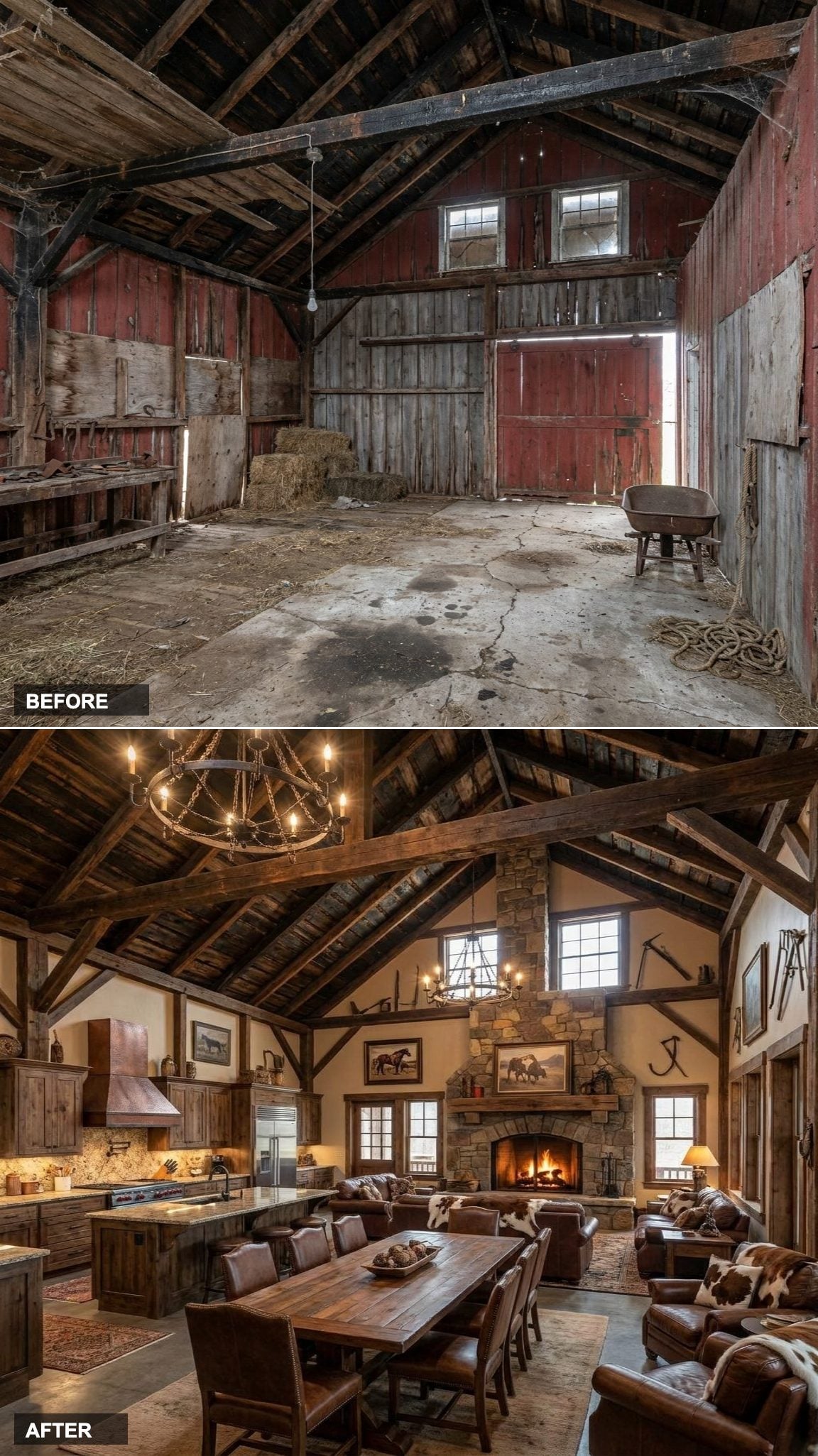
The original barn had all those tall windows cut into the walls and did absolutely nothing with them. Vertical blinds. On barn windows. I’m still processing that choice, and I’ve been looking at this photo for twenty minutes.
This bohemian greenhouse concept makes those windows the engine of the whole design. Hanging macramé planters cascade from the rafters at varying heights. A large Moroccan vintage rug in faded coral and indigo anchors the seating area. The kitchen stays simple: white open shelving, butcher block counters, and matte black fixtures. Rattan peacock chairs flank a low brass tray table.
It’s chaotic in the best way. Controlled chaos, if I’m being generous. But that’s exactly what the original space lacked: any sense of life happening inside it.
Monastic Minimalism in Limestone, Iron, and Undyed Wool
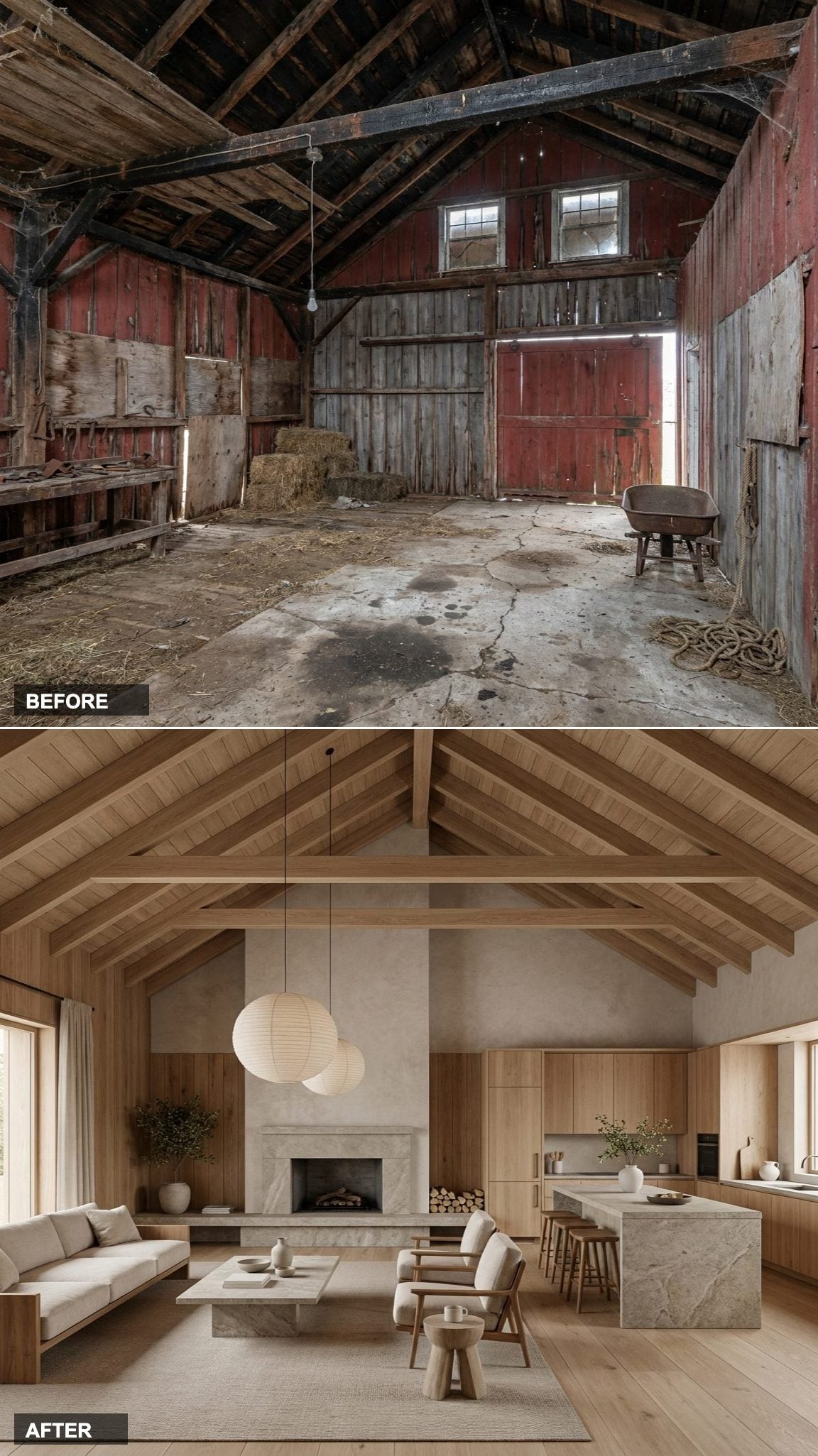
This is the version that asks: what if we just didn’t add much at all?
Honed limestone floor tiles in pale grey. Walls plastered smooth in a warm stone tone. The kitchen reduced to a single wall of integrated cabinetry in the same limestone shade, with iron pulls and a limestone counter. That’s really it for the kitchen. The living space is a long undyed wool bench against one wall, a single iron candle holder, and a rough linen curtain over the windows. The timber framing overhead does all the decorating.
I know minimalism can read as lazy, but this version is anything but. Every element costs real money because there’s nothing to hide behind. One wrong material and the whole thing collapses.
Provençal Farmhouse Poetry in Lavender Stone and Reclaimed Beams
🔥 Would you like to save this?
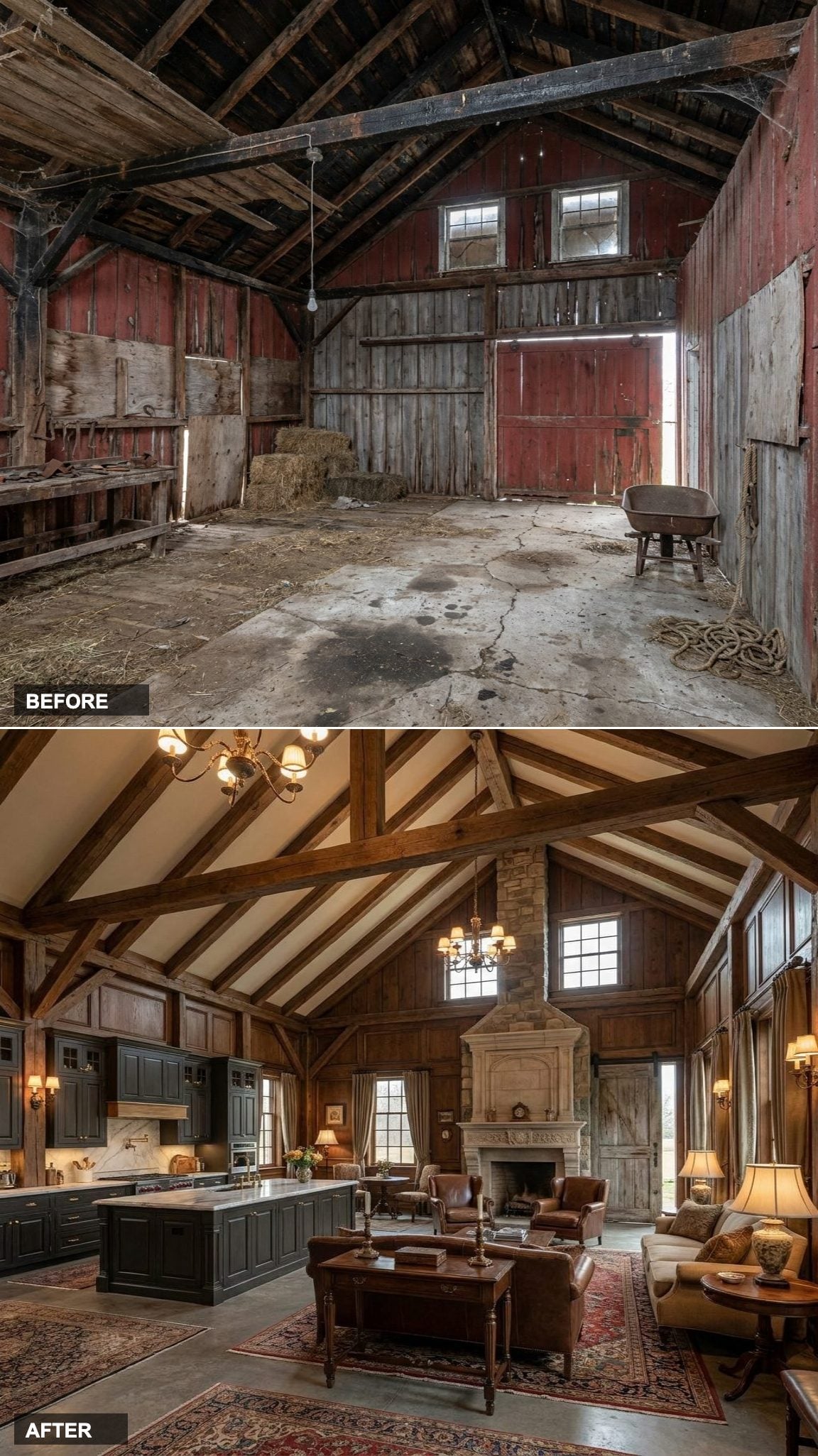
The original barn’s bones were begging for this. Those rough-hewn timbers overhead now anchor a French countryside palette of lavender linen curtains, creamy plaster walls, and floors laid in reclaimed terracotta tile that looks like it was pulled from a Provençal villa circa 1740.
A massive farmhouse dining table sits under a wrought iron chandelier that probably weighs more than I do. The kitchen zone features a copper range hood that’s already developing a patina, and honestly, the aging is the whole point. Dried herb bundles hang near open shelving stacked with mismatched French pottery.
Tokyo Penthouse Minimalism with Charcoal Concrete and Floating Walnut
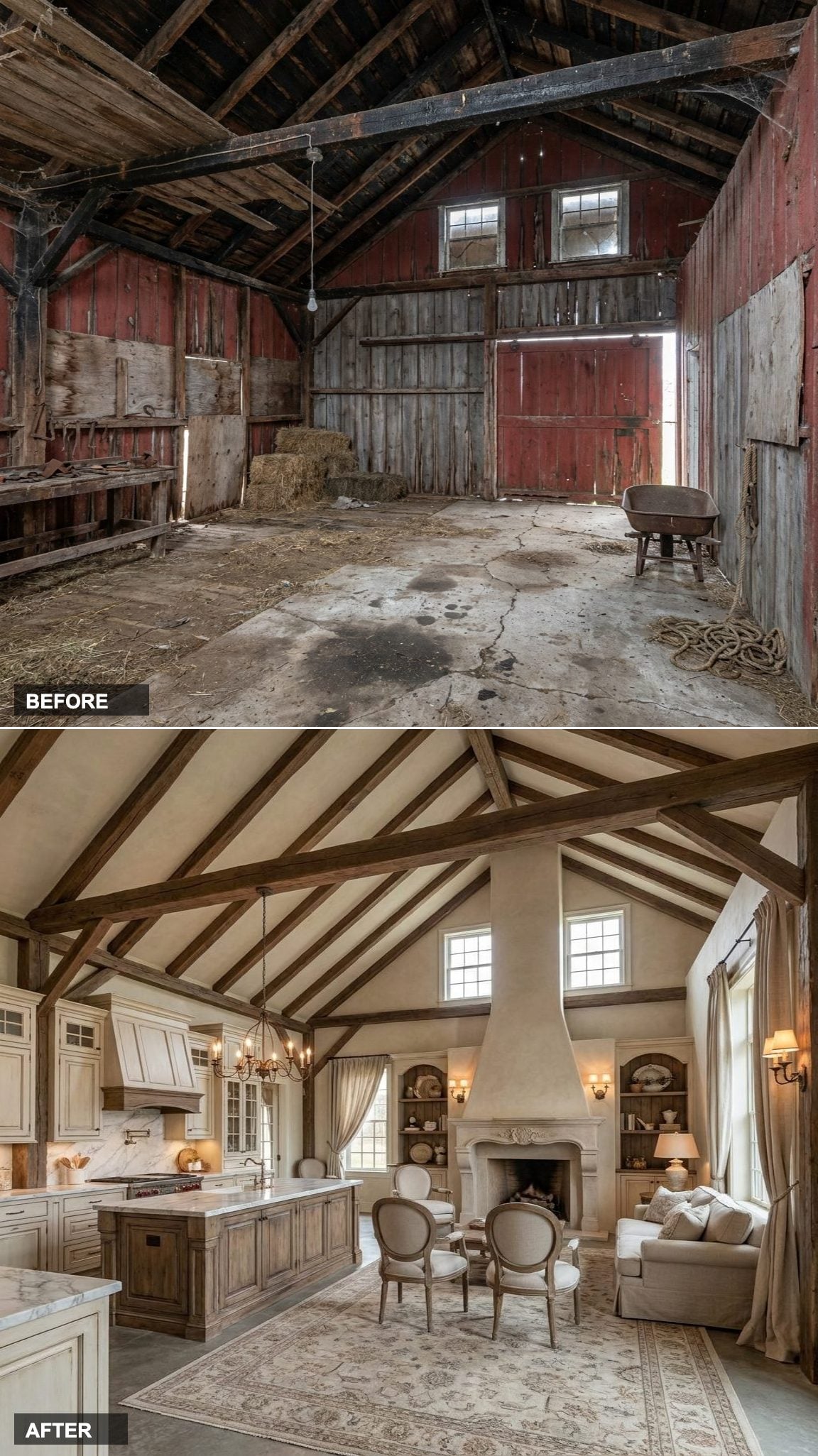
Strip everything away. That’s what this concept does, and it works because the barn’s soaring height finally gets to breathe. Polished charcoal concrete floors reflect the daylight streaming through dramatically enlarged window openings, while walnut floating shelves run along one wall in clean horizontal lines.
The kitchen is a single monolithic island in honed black granite, appliances integrated so completely they almost disappear. A paper pendant light by Noguchi hangs low over the dining area. One book sits on the coffee table. One branch in a ceramic vase. I used to think minimalism was lazy until I realized how hard it is to choose just one perfect thing.
Gilded Age Library Grandeur with Emerald Velvet and Mahogany Millwork
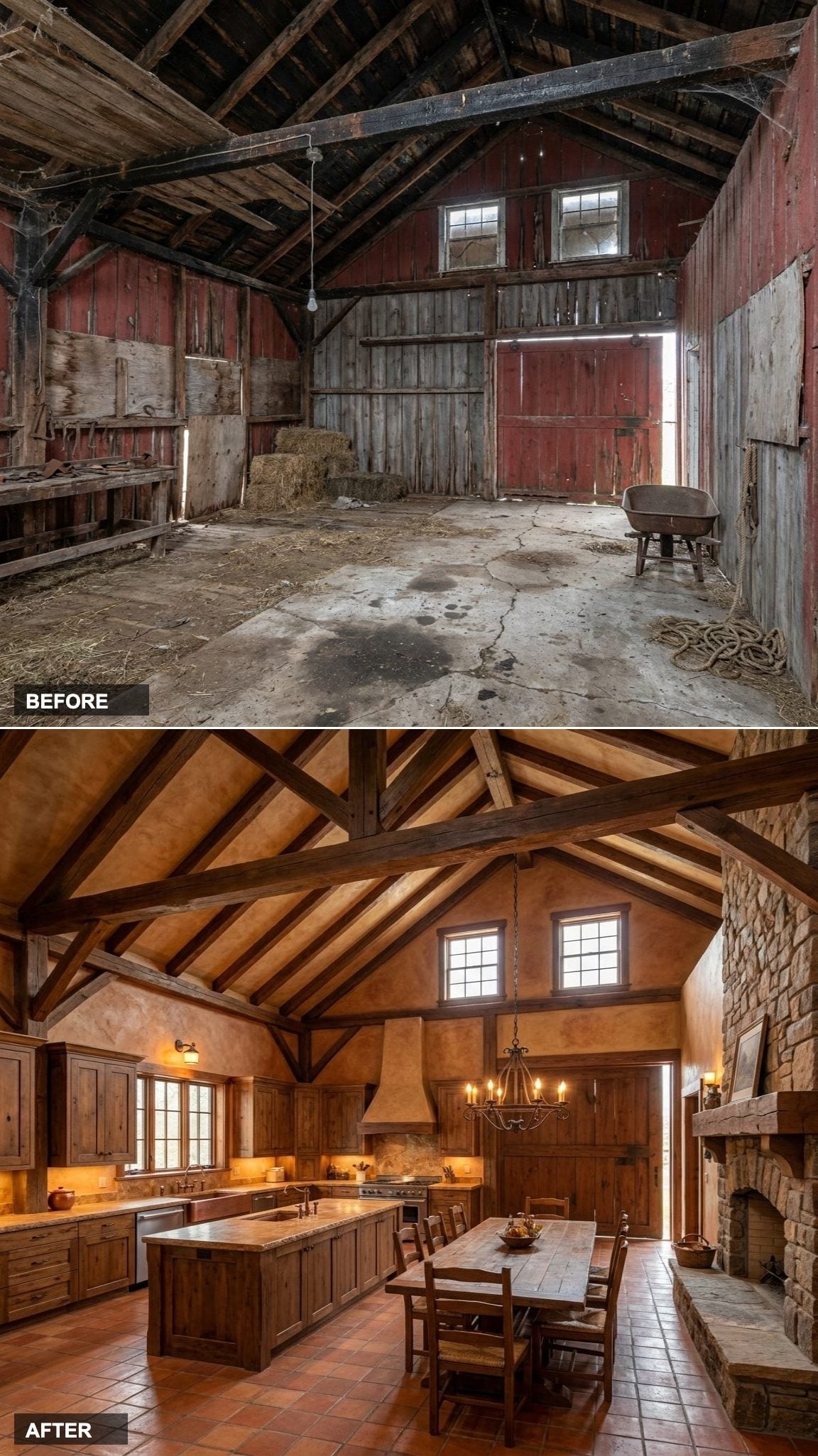
This one’s for the maximalists, and I’m not sorry about it. Deep emerald walls wrapped in mahogany wainscoting turn this barn into something that feels like a private members’ club from 1898. An emerald velvet sofa anchors the living zone, flanked by floor-to-ceiling bookshelves that could pass for an open bookshelf arrangement if those shelves weren’t packed three rows deep with leather-bound volumes.
Brass library sconces dot the walls. A mahogany bar cart holds crystal decanters near the kitchen, where dark green cabinetry with brass hardware keeps the mood rich and unbroken. A Persian rug the size of a small country ties it all together.
Desert Adobe Warmth with Terracotta Plaster and Raw Linen
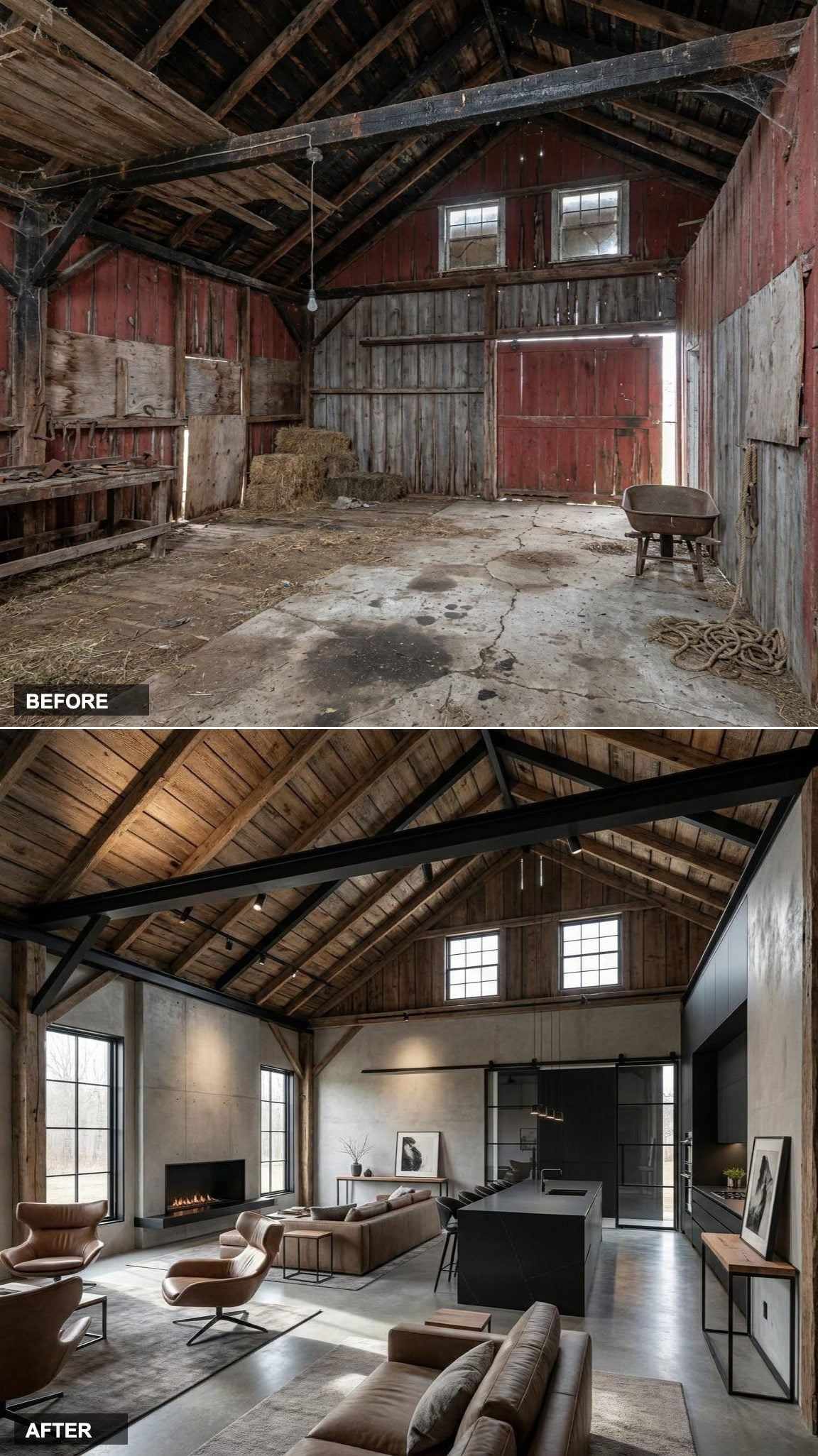
Terracotta plaster walls give the entire space a sun-baked warmth that makes you forget you’re standing in a barn. The color shifts from peach to clay depending on where the light hits, and that movement is the whole design in a nutshell.
Raw linen sofas in natural oatmeal sit low to the ground. Woven jute rugs layer the concrete floors. The kitchen uses open shelving in bleached pine, and the range hood is clad in the same terracotta plaster as the walls so it reads as sculpture rather than appliance. A few pieces of dried pampas grass in a clay vessel. No art on the walls because the walls are the art.
Moody Scottish Highland Lodge in Tartan Wool and Blackened Steel
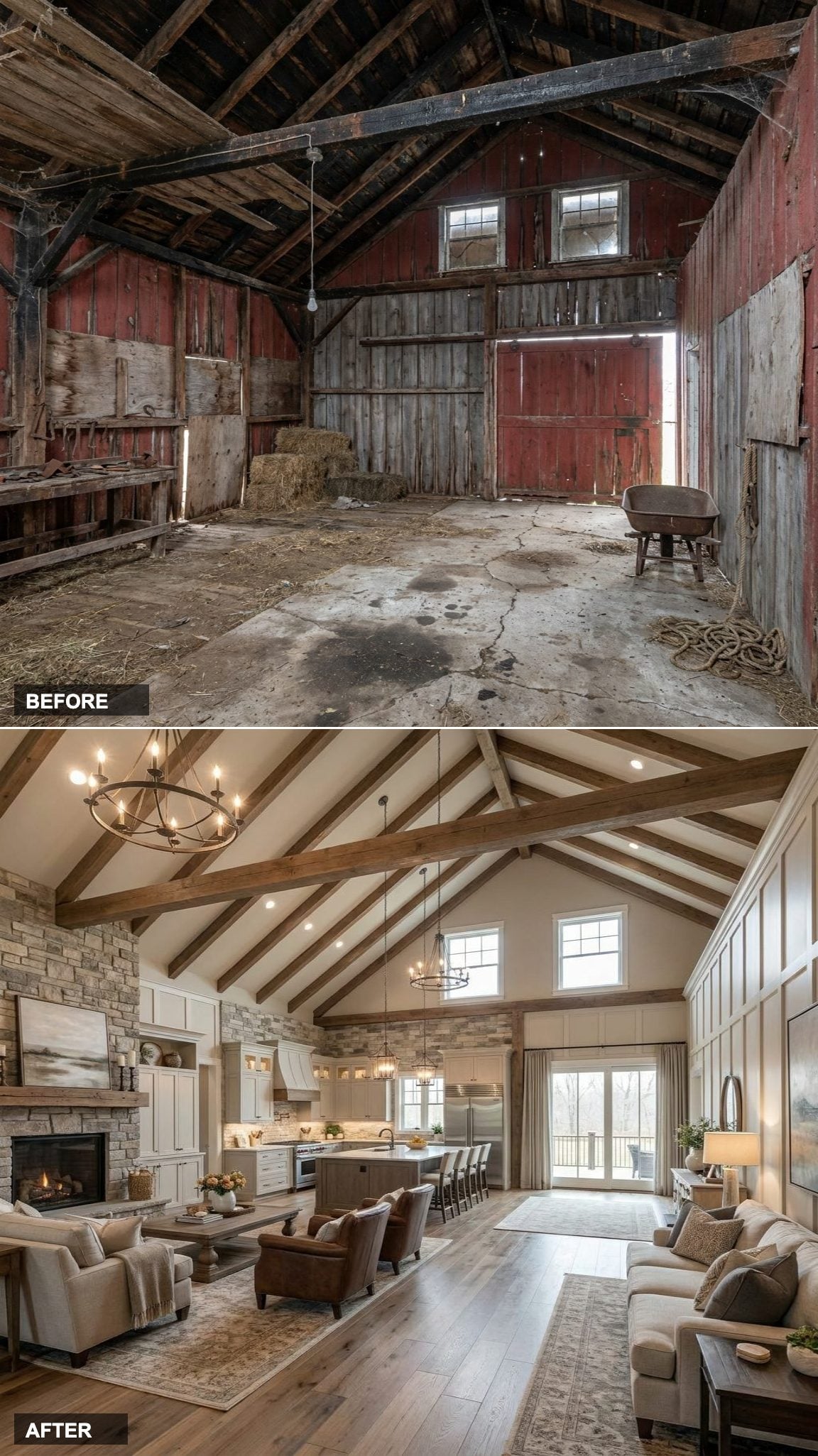
I’ll admit it: I didn’t think tartan could work at this scale without looking like a theme restaurant. I was wrong.
The trick is restraint. A single accent wall in deep tartan wool fabric (navy, forest green, oxblood) anchors the living area while the rest stays in blackened steel, rough stone, and dark-stained timber. The kitchen counters are absolute black granite, and the cabinetry is painted a blue so dark it reads as charcoal. A massive stone fireplace anchors the center of the space, the kind that throws heat you can feel from twenty feet away. Leather wingback chairs flank it, and a single-malt sits on the side table because of course it does.
Coastal Hamptons Elegance in Shiplap White and Driftwood Grey
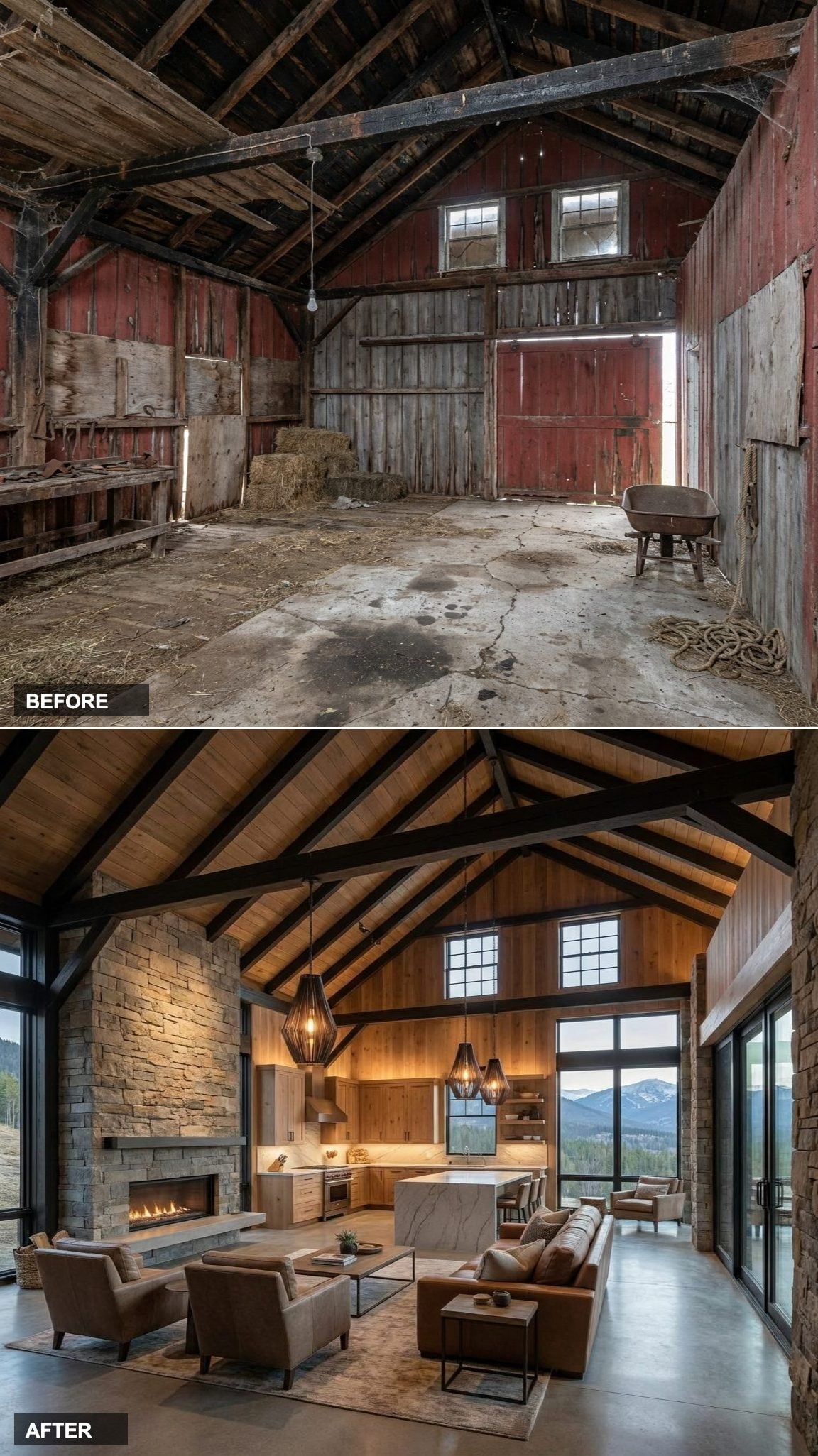
White shiplap on every surface. Before you roll your eyes (fair), hear me out: in a barn with this much vertical space, shiplap actually does something interesting. The horizontal lines compress the height just enough to make the room feel livable rather than cavernous, and the texture keeps it from reading as flat drywall.
The palette is strict: white, driftwood grey, and soft navy. A navy linen sectional faces a whitewashed brick fireplace surround. Kitchen cabinetry in the same white shiplap integrates a farmhouse sink and polished nickel bridge faucet. The latest home trends keep pushing coastal interiors darker and moodier, but there’s still a case for the classic bright version done well.
Bohemian Moroccan Riad with Zellige Tile and Brass Lanterns
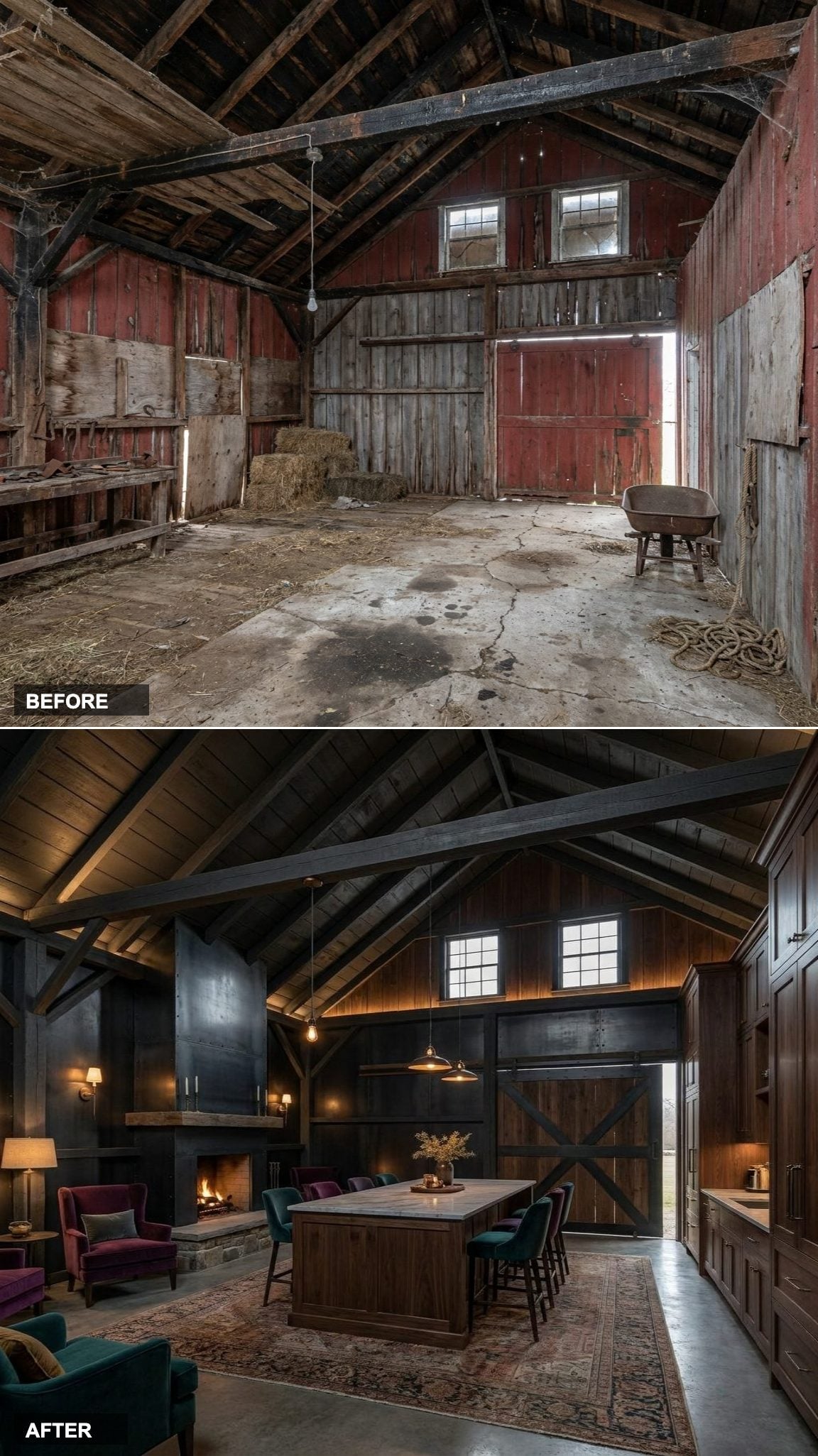
You walk in and the air feels different. That’s what good Moroccan-inspired design does: it activates senses beyond sight. Hand-cut zellige tile in deep teal covers the kitchen backsplash, each piece slightly irregular, catching light at different angles so the wall seems to shimmer. Brass Moroccan lanterns hang at staggered heights from the barn’s beams, casting star-shaped light patterns across plaster walls tinted a warm sand color.
Floor cushions and low daybeds replace conventional furniture. Layered kilim rugs in burnt orange, indigo, and saffron overlap across the concrete floor. The kitchen features arched niches instead of upper cabinets, with handmade ceramic bowls stacked inside.
Brutalist Gallery Space in Poured Concrete and Cor-Ten Steel
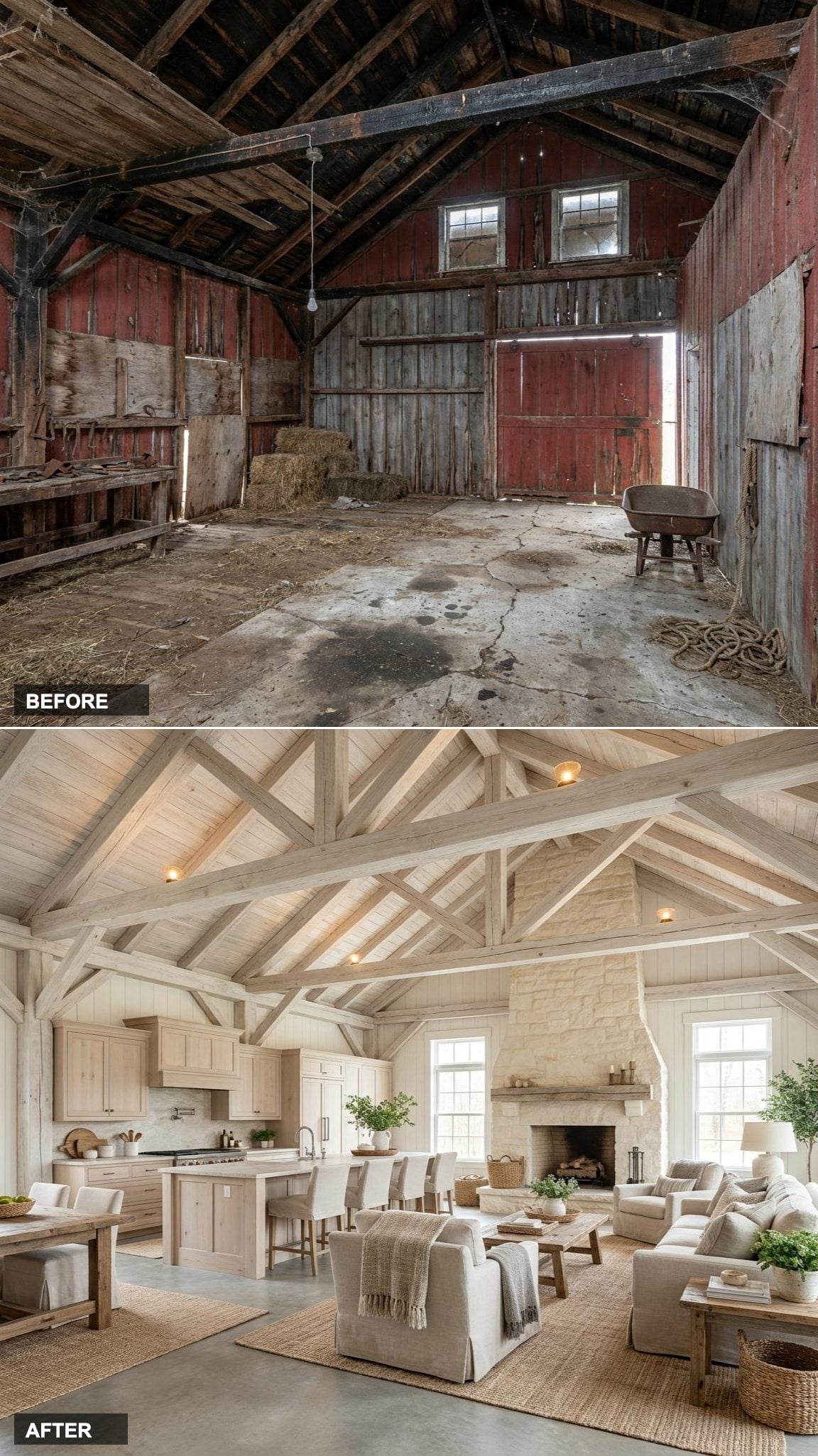
Not for everyone. Honestly, not even for most people. But that’s the point.
Poured concrete walls left with visible form marks replace the barn’s original siding on the interior. A Cor-Ten steel staircase with an intentional rust patina climbs to a loft. The kitchen is a concrete block, literally: counters, island, and range hood all cast from the same grey mix, broken only by a matte black faucet and the stainless commercial appliances. The living area has exactly one piece of furniture, a cognac leather daybed on a steel frame, positioned to face an oversized abstract painting that’s the only color in the entire space.
I used to think brutalism in residential settings was pretentious. Then I stood in a concrete room with 25-foot ceilings and understood why silence has a shape.
Tuscan Wine Country Warmth with Rough Limestone and Iron Candelabras
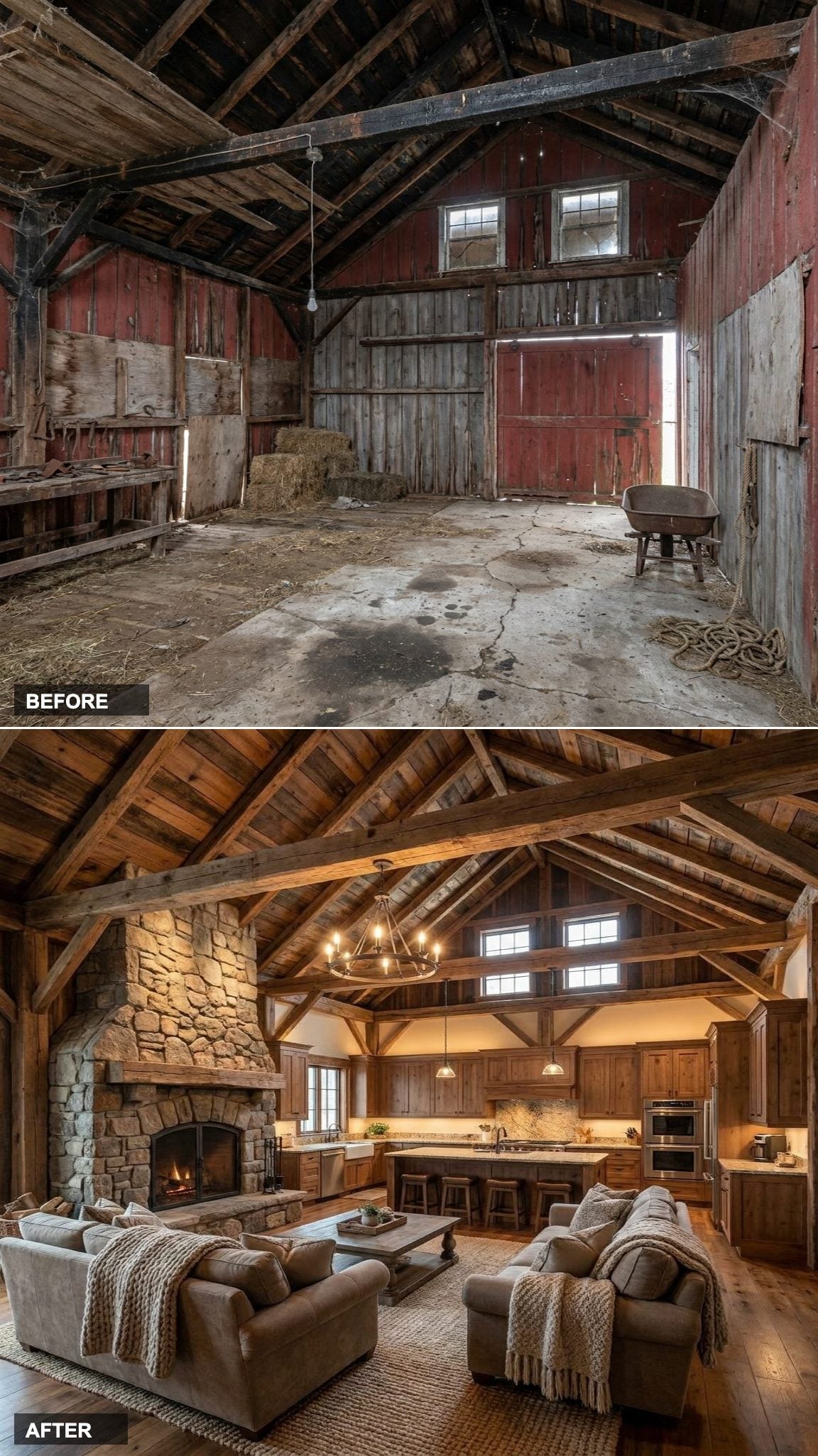
Rough-cut limestone walls, iron candelabras, a kitchen island topped in butcher block so thick it could have been a medieval chopping station. This is Tuscan done with conviction, not the watered-down Olive Garden version that plagued American suburbs in the early 2000s.
The difference? Restraint in color, generosity in texture. Walls stay in natural limestone and warm ivory plaster. Iron candelabra chandeliers hang from the original beams, which are left in their darkest natural stain. A terracotta floor tile in a herringbone pattern grounds everything. Wine bottles rest in a stone alcove near the kitchen. The whole space smells like it should smell like bread baking.
Retro Palm Springs Revival in Millennial Pink and Brass Starburst
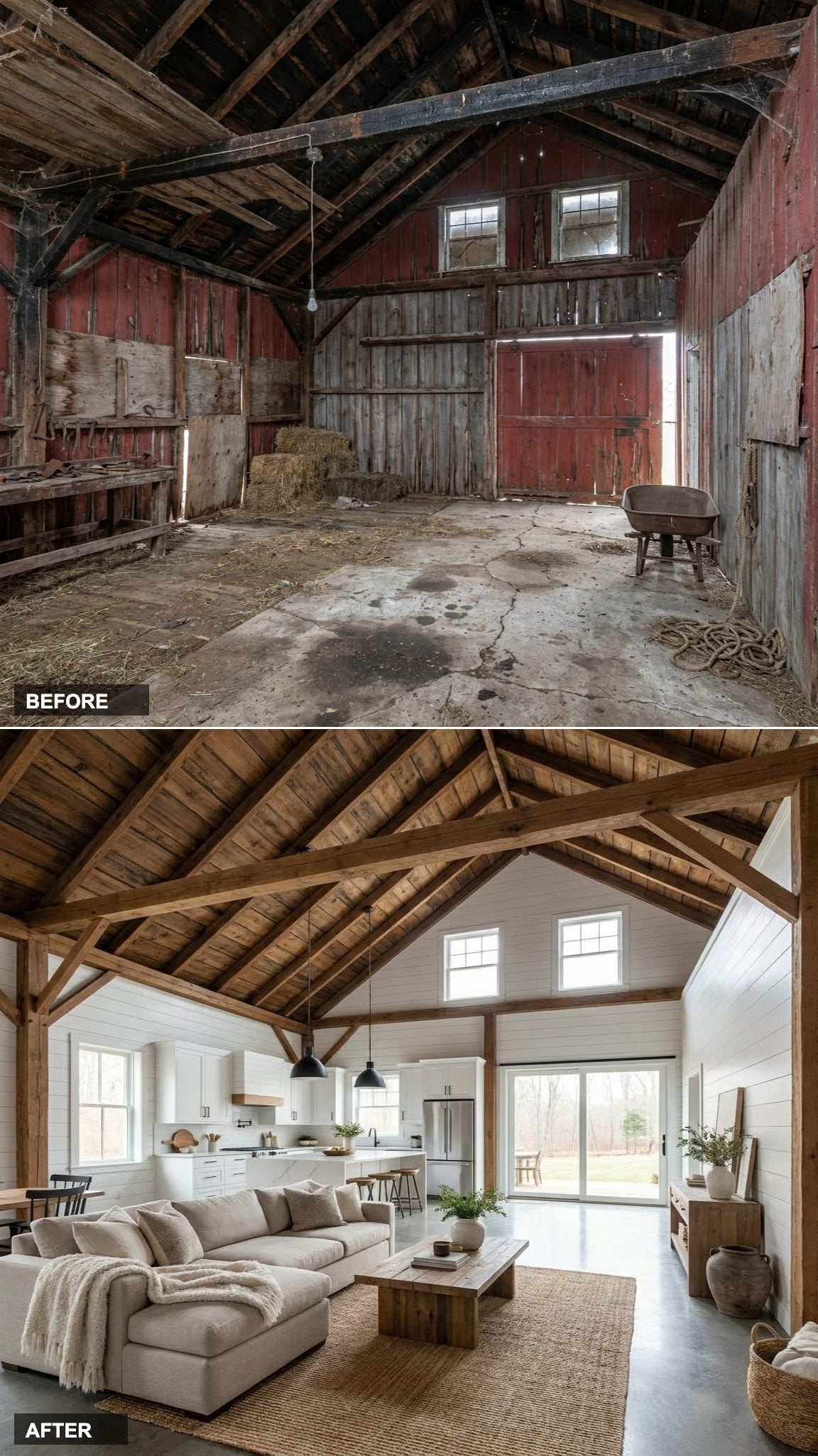
Here’s a confession: I spent years dismissing pink interiors. Then I saw what happens when you put millennial pink against original barn wood and brass starbursts, and I had to reconsider everything I thought I knew about color.
The pink velvet curved sofa is the obvious statement piece, but the real star is the brass starburst mirror above the fireplace that throws fractured reflections across the terrazzo floors. Kitchen cabinets in a slightly deeper rose with brass pulls. Terrazzo countertops in pink and white chips. A kidney-shaped coffee table in walnut. The appliances are matte white to keep them from fighting the palette. It shouldn’t work. It absolutely does.
Nordic Noir Drama in Charcoal Lime Wash and Smoked Oak
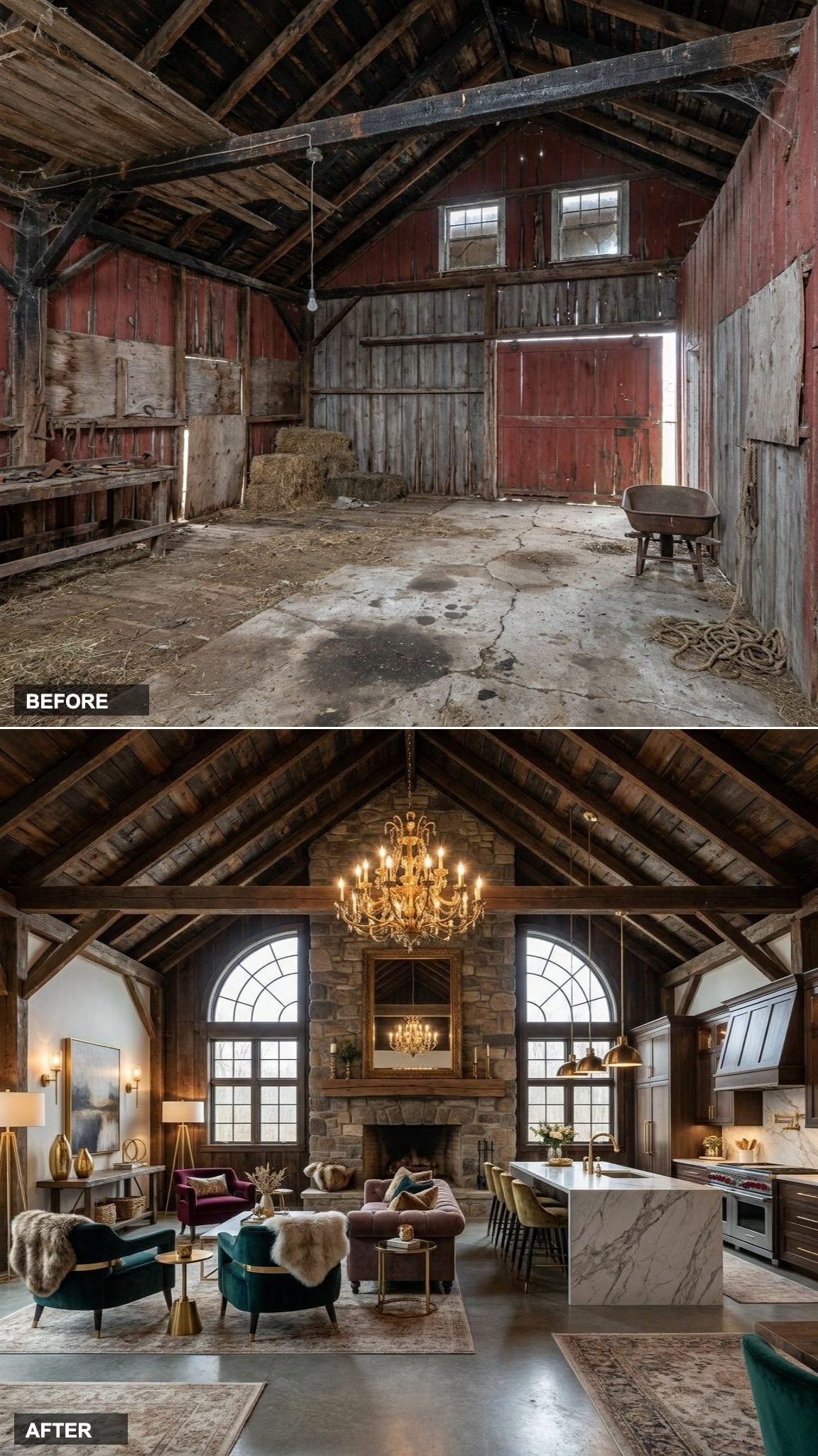
Dark Scandinavian design gets a bad rap for being cold. This version isn’t. The charcoal lime-wash walls have a chalky depth that absorbs light rather than reflecting it, creating pockets of shadow that shift throughout the day. Smoked oak floors run the full length of the space, their grain visible but muted, like a photograph with the contrast dialed down.
Furniture is spare but substantial: a charcoal bouclé sofa with visible oak legs, a dining table in the same smoked finish. The kitchen keeps things monochromatic with matte charcoal cabinetry and a honed black soapstone counter. One single pendant in smoked glass hangs over the island. A wool throw in dark grey drapes over the sofa arm. The whole thing feels like dusk.
1970s Conversation Pit Revival in Burnt Orange Corduroy and Smoked Glass
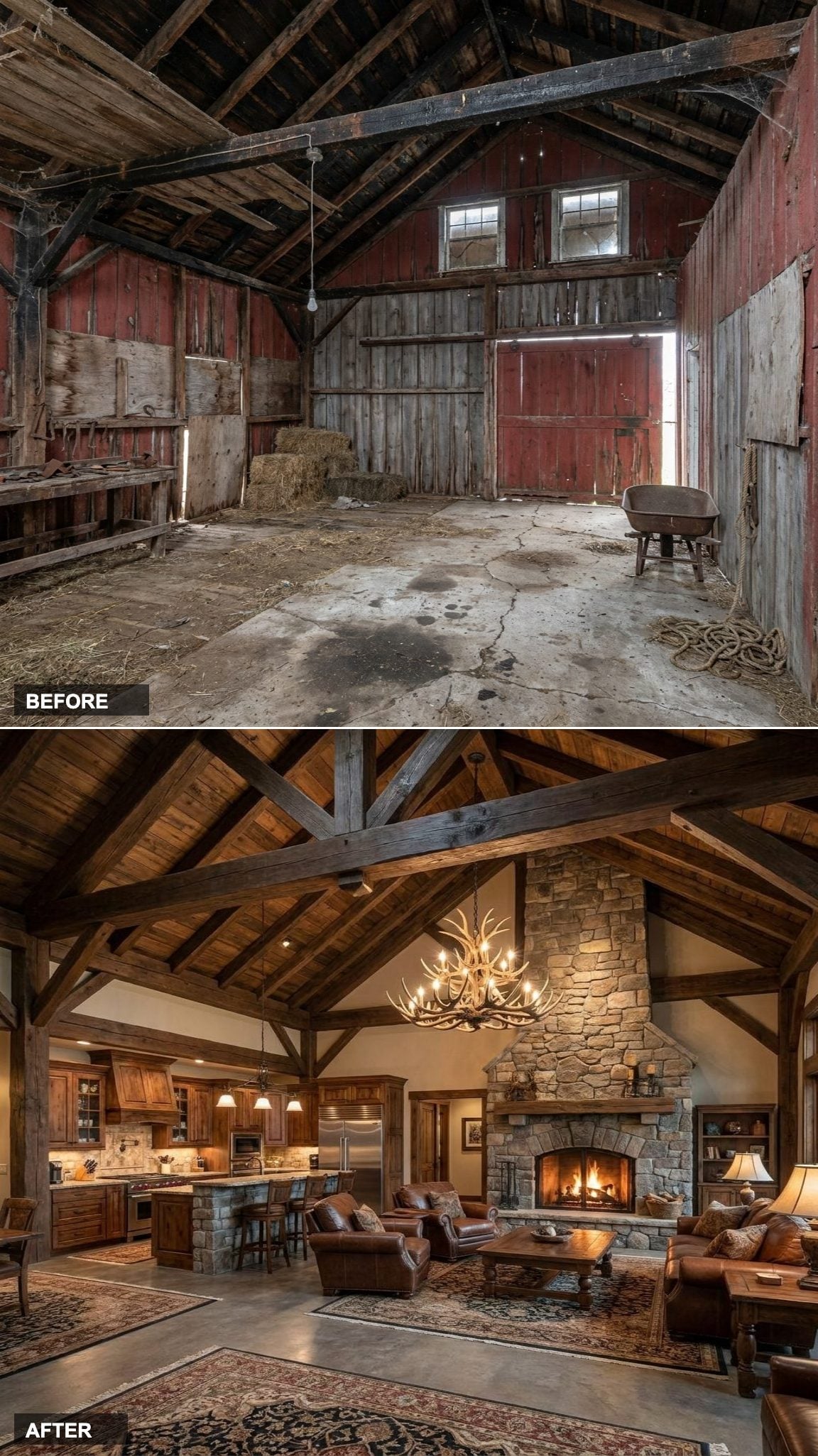
The sunken conversation pit is back, and a barn conversion is exactly where it belongs.
A stepped-down seating area carved into the barn’s floor holds a U-shaped banquette in burnt orange corduroy, surrounded by smoked glass coffee tables and shag carpet in deep rust. The kitchen behind it leans into the era: avocado-toned cabinetry (done right this time), walnut veneer panels, and a range hood in brushed copper. Open upper open cabinet designs in walnut display amber glassware and stoneware.
Macramé plant hangers hold trailing pothos near the windows. A turntable sits on a walnut credenza. The whole room vibrates at the frequency of a Fleetwood Mac album.
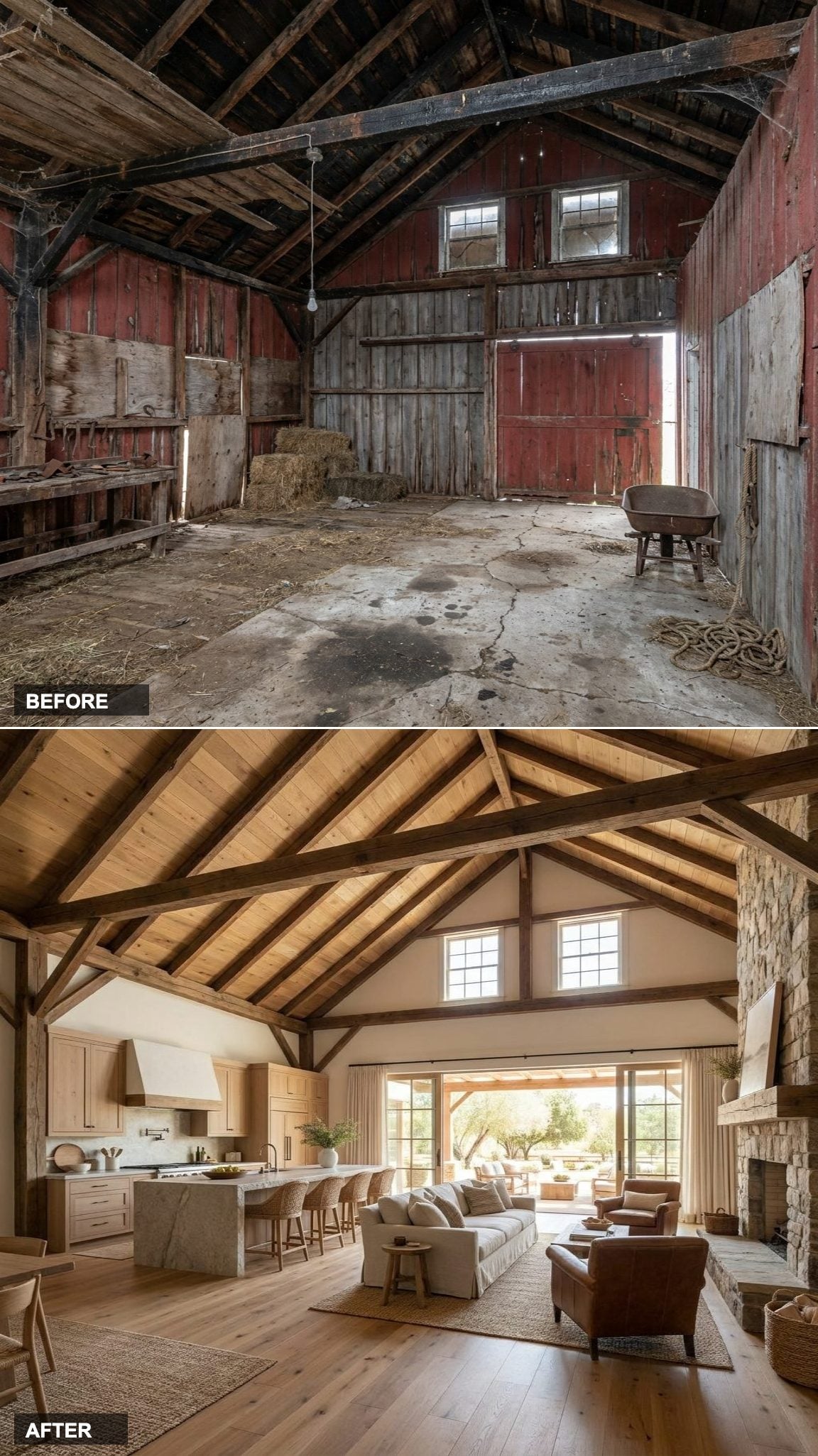
From Forgotten Hayloft to Provençal Lavender Retreat with Limestone Floors
🔥 Would you like to save this?
The single biggest crime in the before? Covering those original plank floors with beige berber. This Provençal redesign rips all that out and lets reclaimed limestone floor tiles do the talking. Soft lavender-grey walls pick up the natural patina of the restored timber framing, while a linen slipcovered sofa in warm ivory anchors a living area that finally feels intentional.
The kitchen wall trades those oak cabinets for hand-painted cream cabinetry with brushed nickel cup pulls, and a copper pot rack hangs from the original hay track rail. Suddenly that rail has a reason to exist.
Industrial Noir Loft with Blackened Steel Beams and Polished Concrete
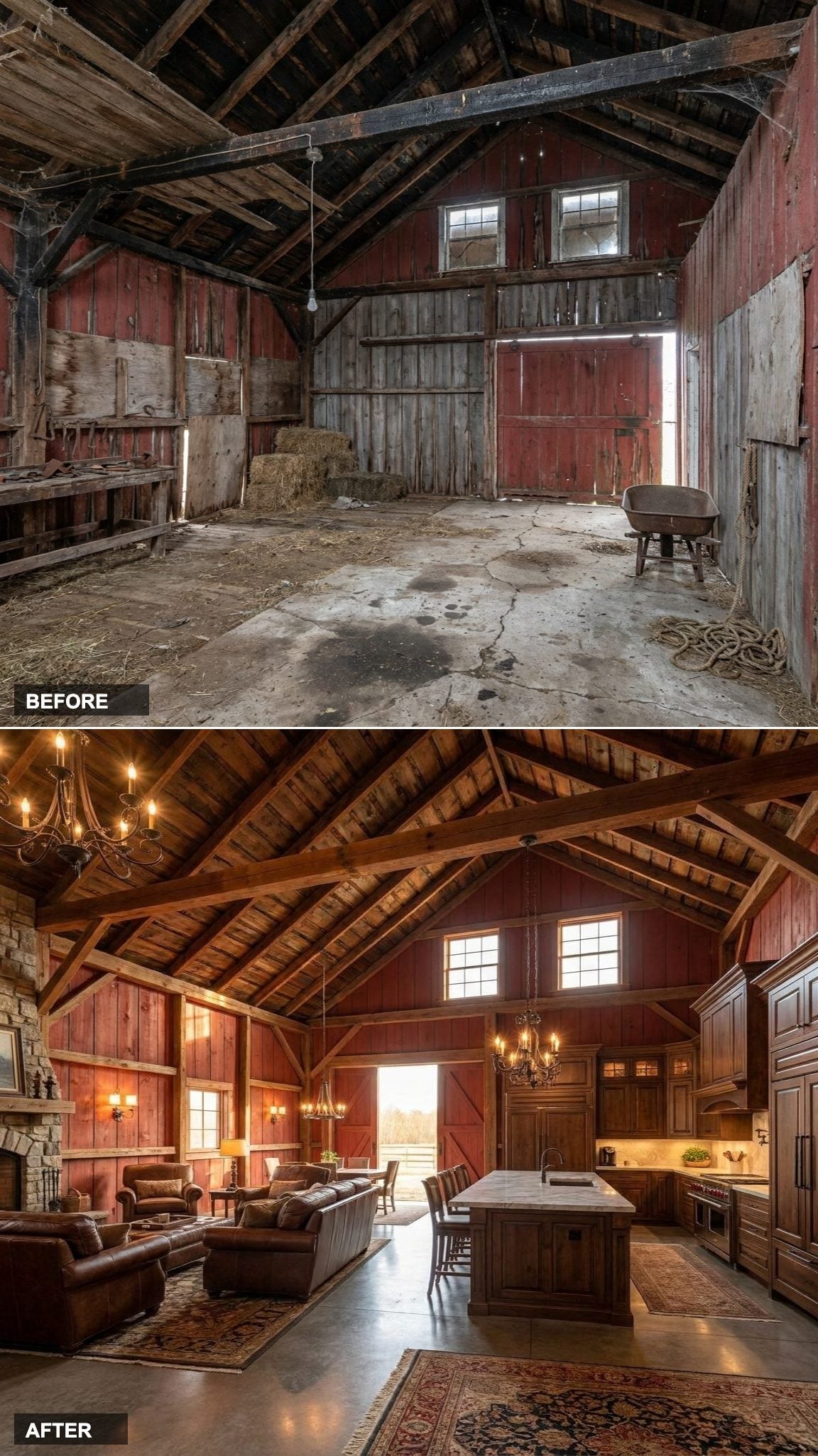
Sometimes the answer is to stop pretending a barn is a cottage and let it be what it actually is: a raw, structural, powerful space. This industrial noir conversion strips everything back to the bones, then polishes them.
Blackened steel plates wrap the original timber posts. The floor is poured concrete with a high-gloss finish that reflects the matte black pendant lights overhead. A dark leather Chesterfield sofa sits on a cowhide rug, and the kitchen features slab-front charcoal cabinetry with a black granite countertop. I’ll be honest: I used to think all-dark rooms were a mistake. This one changed my mind.
California Bohemian Warmth with Terracotta Tile and Macramé Details
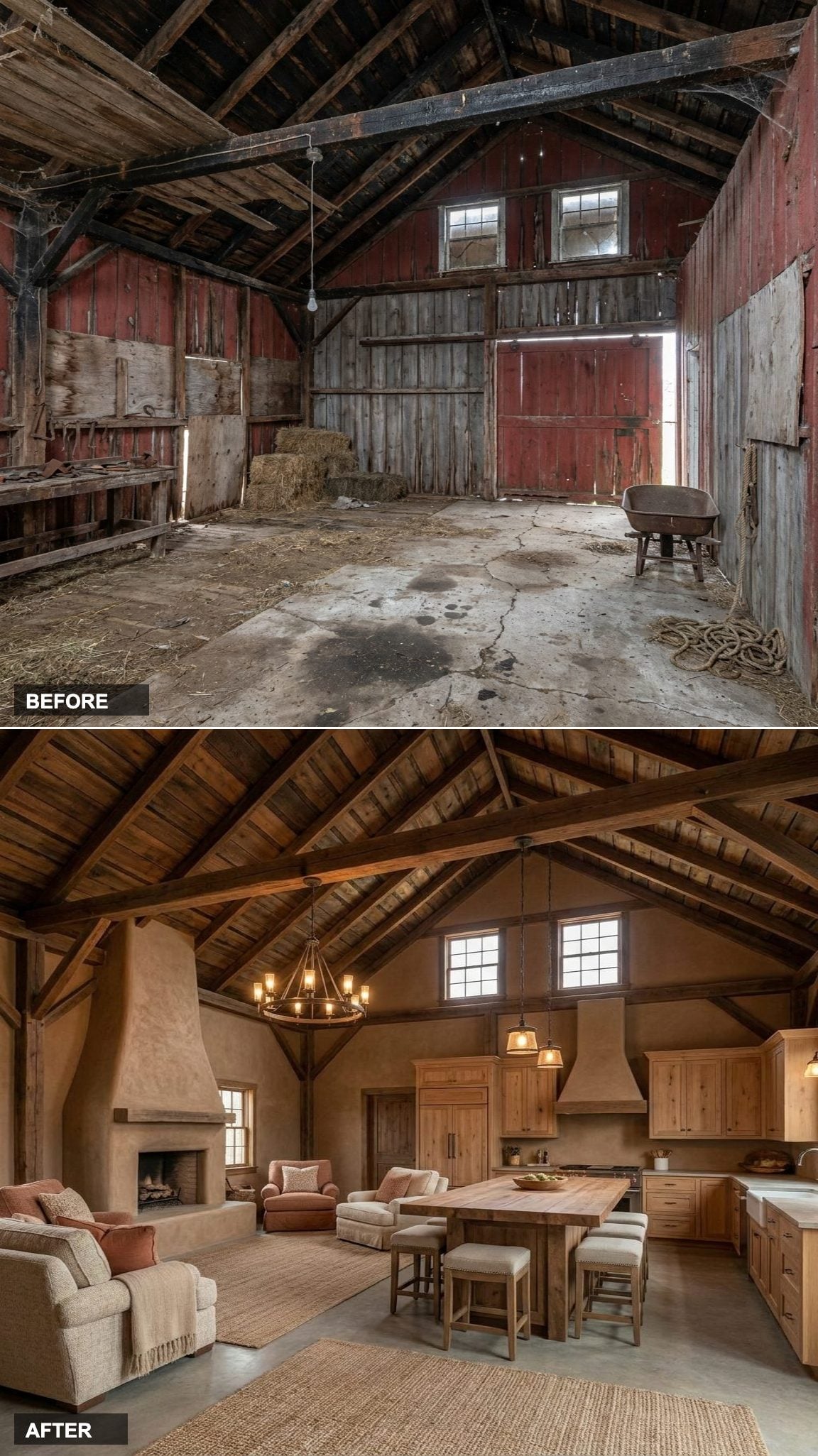
That sad floral sofa from the before photo? Replaced with a deep, low-slung cream bouclé sectional piled with kilim pillows. The whole space radiates a Venice Beach gallery vibe, with terracotta hexagon tiles running through the kitchen and living zones, tying everything together the way that old berber carpet never could.
Georgian Manor Grandeur with Hunter Green Paneling and Brass Sconces
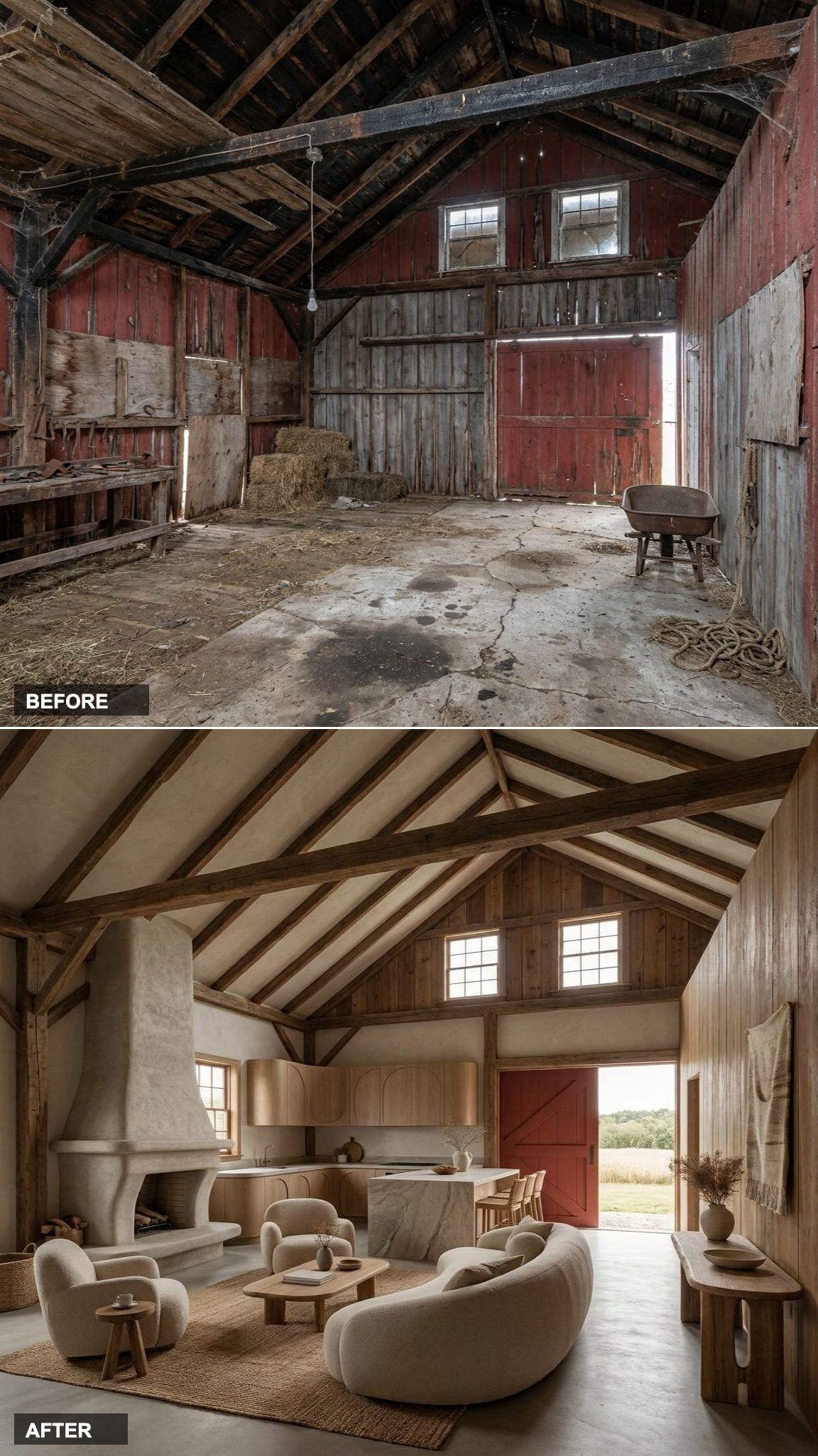
This is the version that makes guests forget they’re standing inside a barn. Floor-to-ceiling hunter green wall paneling wraps the space between timber posts, creating a library-like gravity that the original drywall patches could never achieve. The kitchen cabinets are the same deep green with unlacquered brass knobs that will patina over time, and a marble waterfall island serves as the dividing line between cooking and living zones.
Underfoot, wide-plank dark walnut floors replace the carpet. A pair of tufted wingback chairs in camel leather flank a fireplace that’s been inserted into the original barn wall. One detail I keep coming back to: the brass wall sconces mounted directly onto the timber posts. It’s such a small move, but it makes the old structure feel like it was always meant for this.
Desert Modernist Sanctuary in Raw Plaster and Burnt Sienna
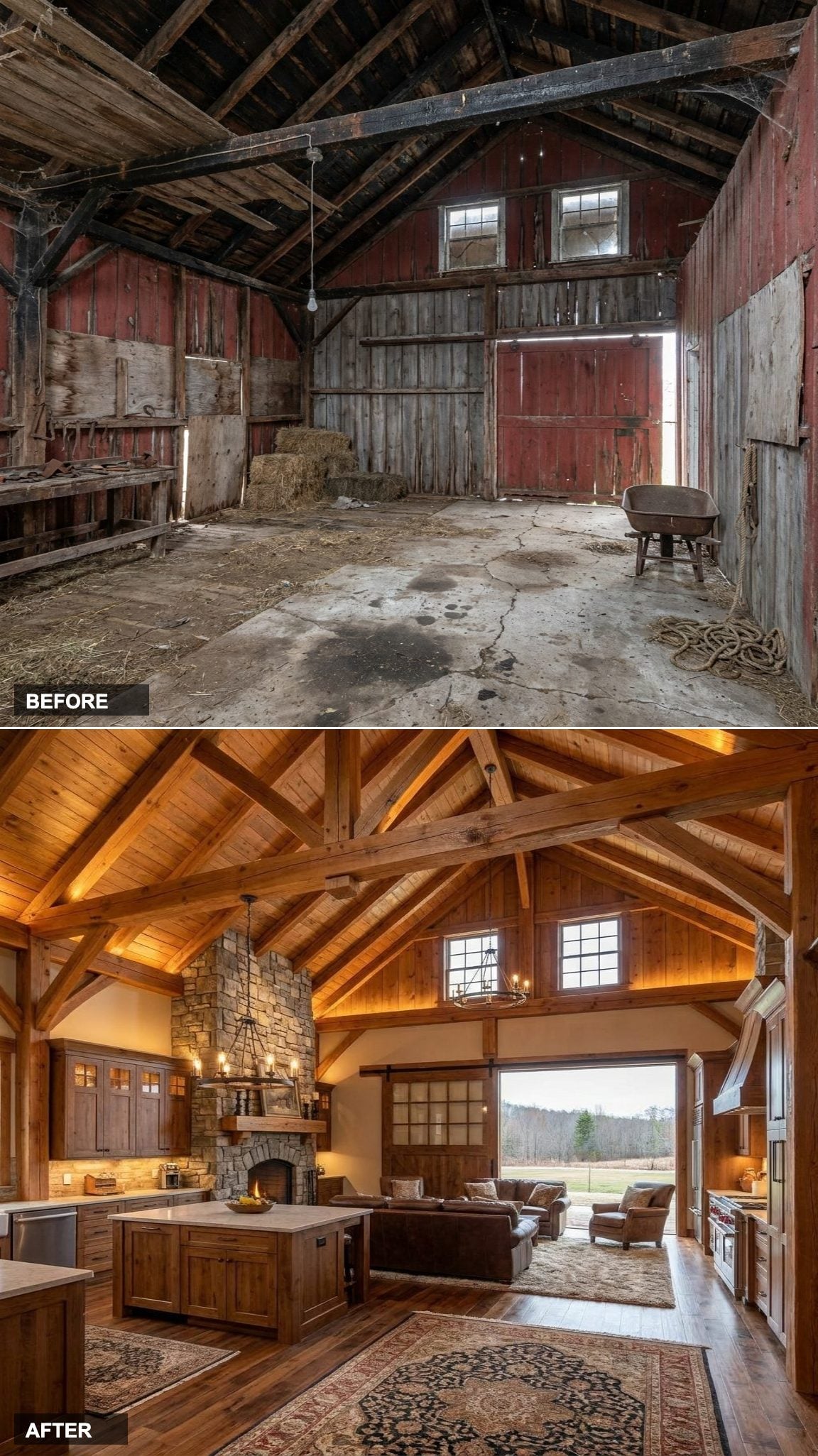
What I love about this version is its restraint. The palette is almost monochromatic: raw plaster walls in a warm sand tone, burnt sienna linen curtains, and the timber framing left completely natural. No paint. No stain. Just wood doing what wood does.
The kitchen is a single run of concrete-fronted cabinets with an integrated sink, and the living area centers on a sculptural travertine coffee table that costs more than most people’s entire renovation budget. I’m not going to pretend that’s practical. But the effect is undeniable.
Scandinavian Cabin Hygge with Whitewashed Boards and Sheepskin Layers
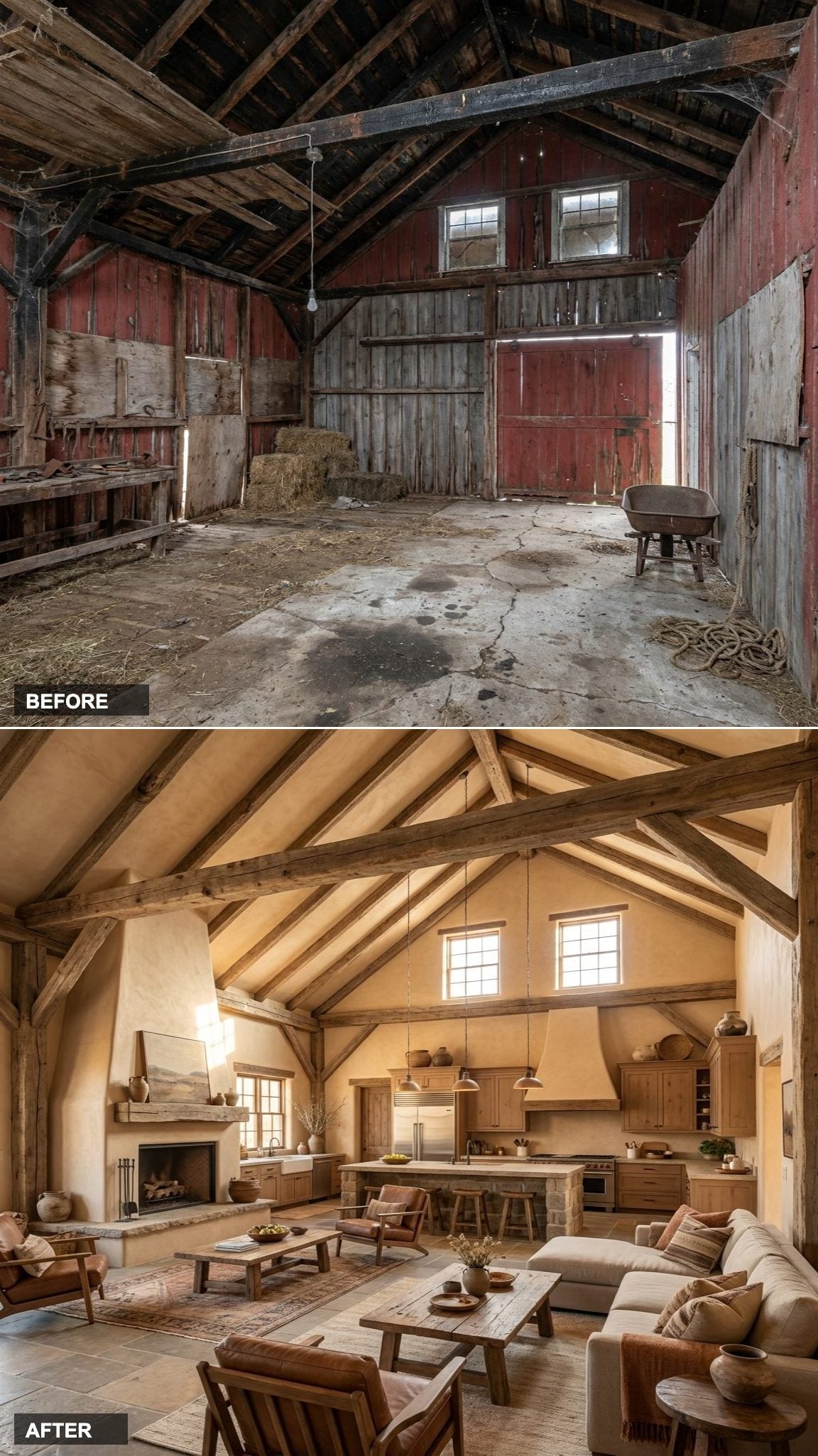
There’s something deeply satisfying about whitewashing old barn wood. You don’t erase the history; you just soften it. Every knot, every saw mark, every nail hole still shows through, but now the whole space breathes.
This Scandinavian conversion leans hard into that lightness. White oak plank flooring replaces the carpet, and the kitchen gets flat-panel birch cabinets with integrated handles. A sheepskin throw drapes over a minimal ash-frame sofa, and a stack of firewood sits in an iron log holder beside it. The space feels like a weekend you don’t want to end.
Art Deco Revival in Emerald Velvet and Fluted Walnut Panels
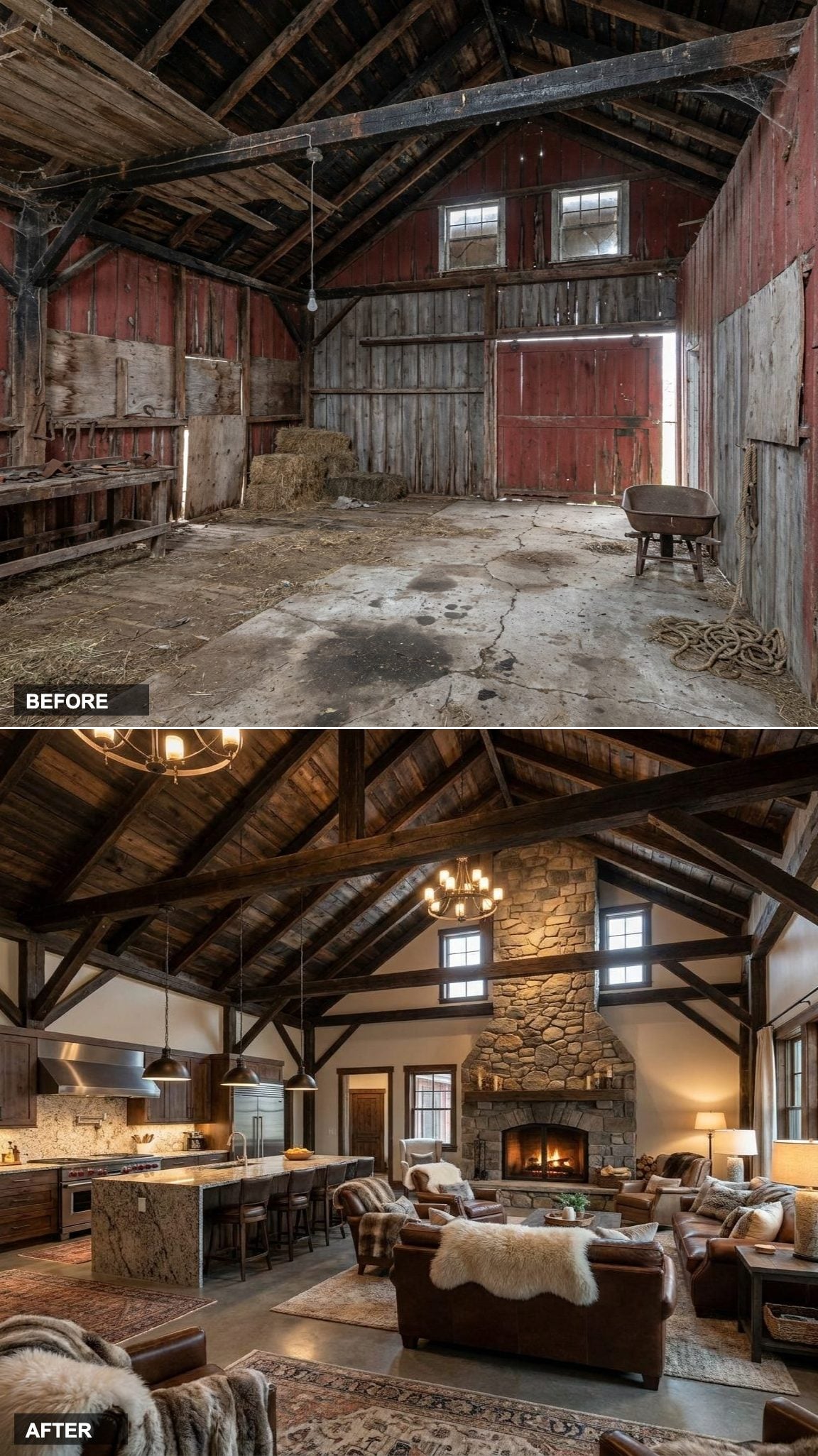
I’ve seen barn conversions try to be rustic. I’ve seen them try to be modern. This is the first one I’ve seen try to be glamorous, and it actually works.
Fluted walnut panels run vertically between the timber posts, creating a rhythm that makes the open space feel composed rather than cavernous. The living zone features a deep emerald velvet sofa with geometric gold throw pillows, and an arched bar cart gleams in the corner. Kitchen cabinets are high-gloss walnut with brass cabinet handles. The counter is a single slab of white-veined black marble. Current home trends keep circling back to Art Deco for a reason: it gives a room genuine personality without relying on clutter.
Wabi-Sabi Zen Den with Exposed Clay Walls and Charred Cedar Accents
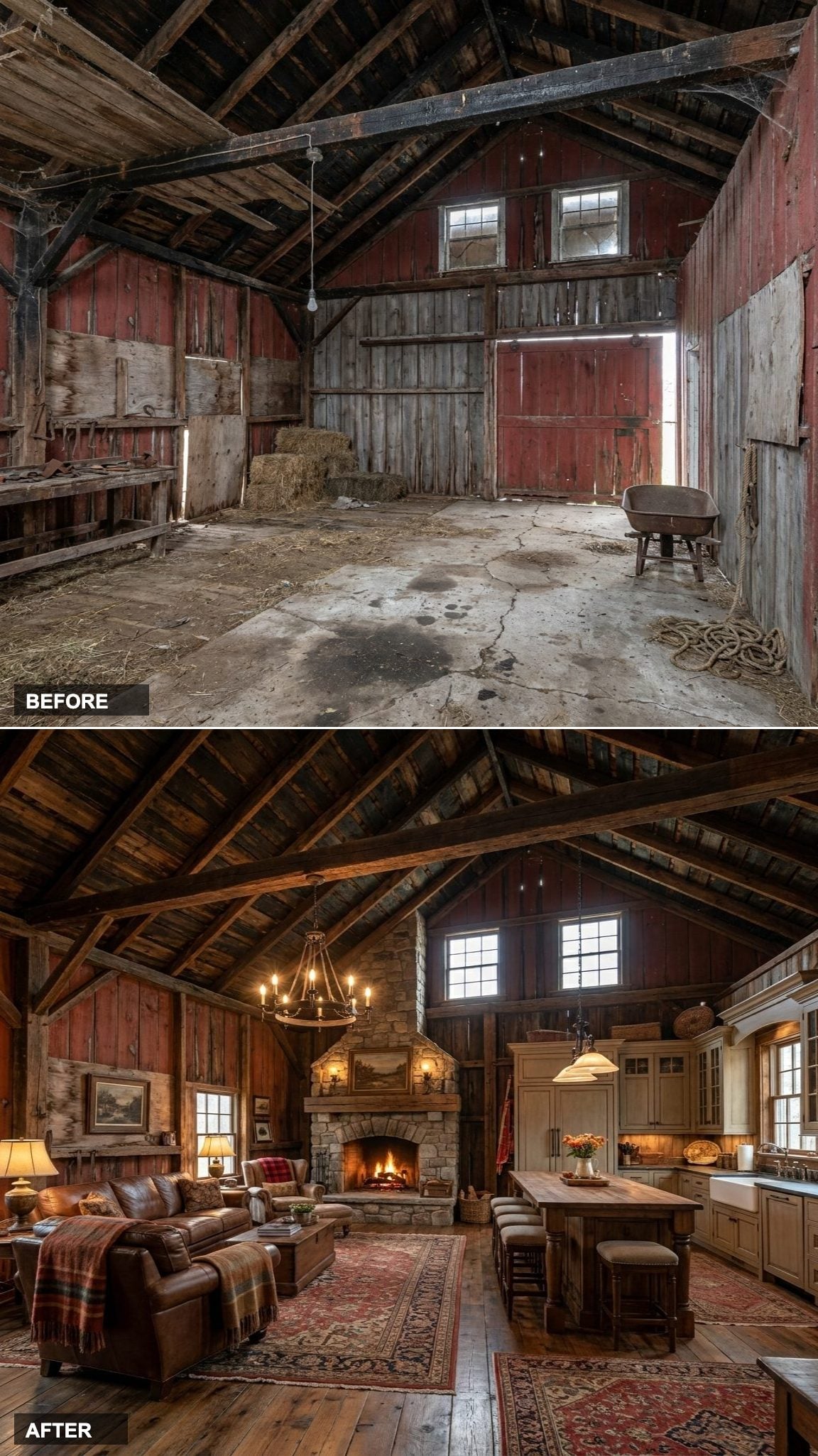
Here’s where you stop trying to make the barn perfect and start celebrating its imperfections on purpose. The Shou Sugi Ban (charred cedar) cladding on the kitchen wall looks like it belongs in a structure that’s seen 130 years of weather. Because it does.
Coastal New England Charm with Shiplap Walls and Navy Ticking Stripes
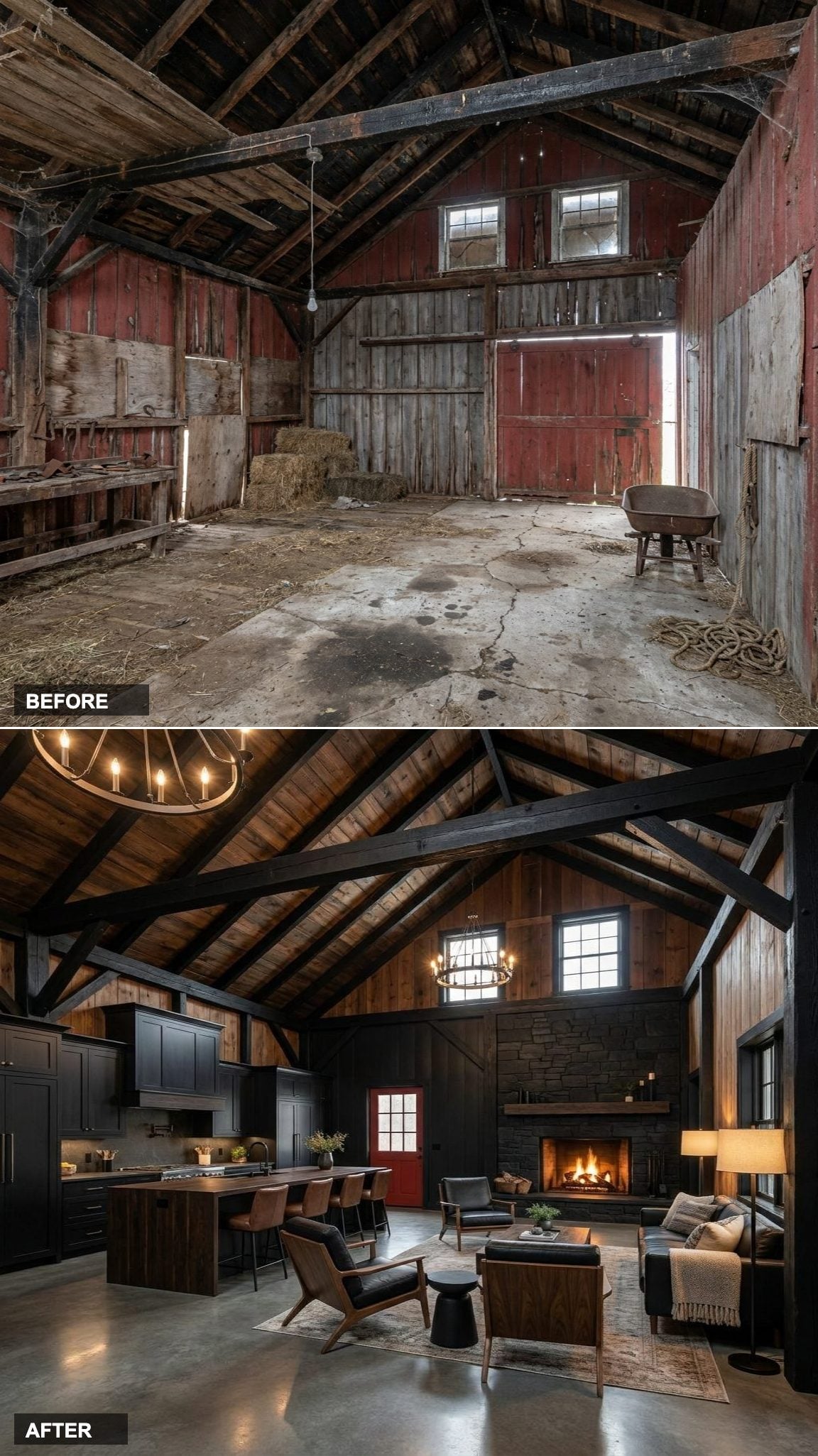
Shiplap gets a bad rap because every renovation show used it for about a decade straight. I get it. But inside a barn? With those massive timber posts creating natural breaks in the wall plane? This is actually where shiplap makes sense, because the boards follow the same horizontal language as the original barn siding.
The palette is classic coastal: crisp white walls, navy ticking stripe pillows on a slipcovered sofa, and rope-wrapped details on the light fixtures. An open bookshelf built between two posts holds sea glass in mason jars and a few well-loved paperbacks. The kitchen features white Shaker cabinets with a soapstone counter that will darken over the years. Nothing flashy, but it’s the kind of room where you could sit all afternoon listening to rain on the old tin roof sections overhead.
Tuscan Wine Cellar Warmth with Brick Archways and Iron Chandeliers
🔥 Would you like to save this?
The move that makes this whole design click is the addition of brick arch details framing the kitchen zone. They’re not structural. They’re purely decorative, built onto the existing openings between timber posts. But they completely change the spatial story from “barn with a kitchen” to something that feels like it’s been carved out of an Italian hillside.
Warm terra cotta floors, a wrought iron chandelier with candle-style bulbs, and kitchen cabinets in a muted olive finish with copper cabinet knobs complete the illusion. A red family room setup wouldn’t be out of place here, but the designers chose a deep burgundy leather armchair and a tufted ottoman instead, keeping the palette tight. There’s a wine rack built into the base of the island. Because of course there is.