🔥 Would you like to save this?
There was a specific smell to a 1980s front yard on a Saturday morning. Cut grass, WD-40, and something synthetic baking in the sun. The driveway was an event. The lawn was a statement. And the front door situation was deeply personal in a way nobody could fully explain. If you grew up in it, you remember every single detail. If you didn’t, buckle up, because some of this is going to require context.
29. Decorative Wooden Wagon Wheels Leaned Against the Garage or Flower Beds
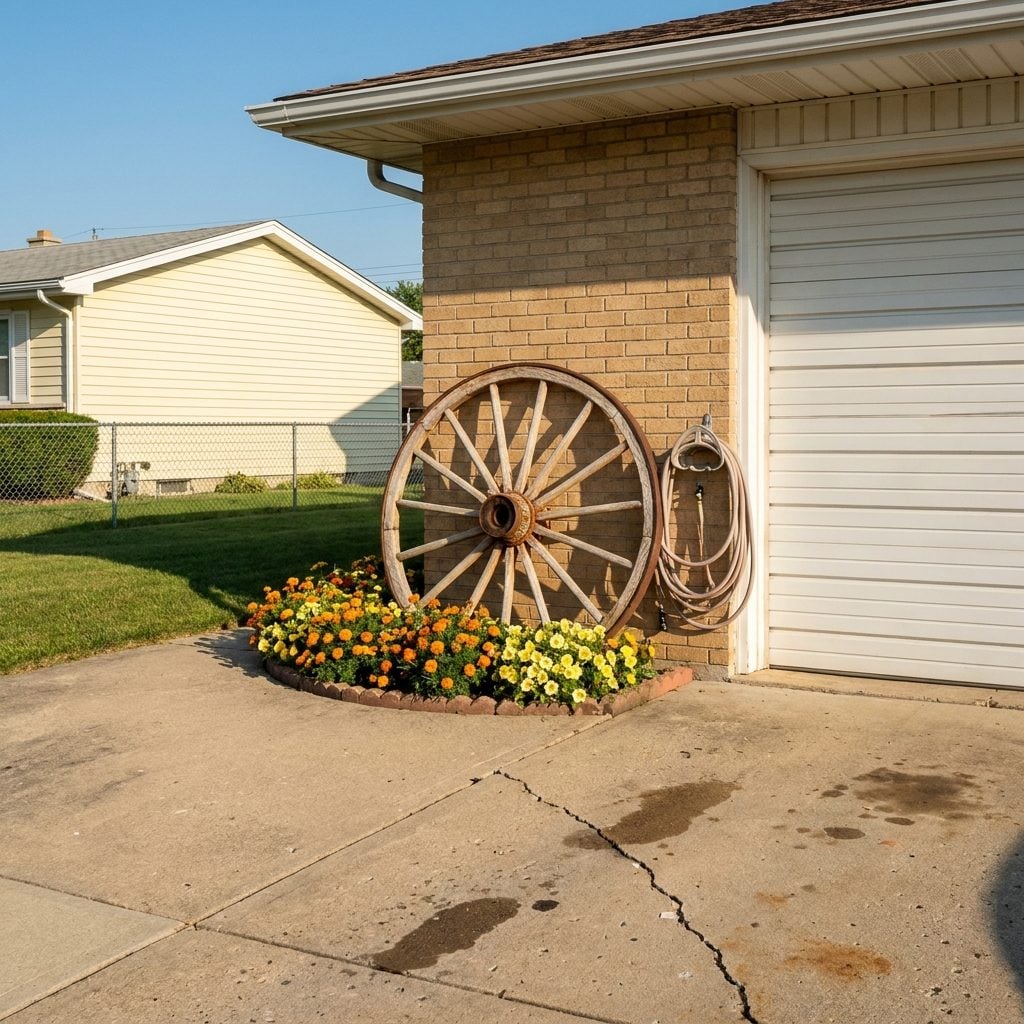
Nobody asked where the wagon wheel came from. It was just there one Saturday, leaned against the garage like a prop from a Western that never got made. Dad probably picked it up at a farm auction or a hardware store clearance bin, and Mom approved the placement after approximately forty-five minutes of debate about whether it should go near the roses or the marigolds.
In order to come up with the very specific design ideas, we create most designs with the assistance of state-of-the-art AI interior design software. Also, assume links that take you off the site are affiliate links such as links to Amazon. this means we may earn a commission if you buy something.
The thing is, it worked. In a completely inexplicable, very-specific-to-the-Reagan-era way, a giant wooden wheel sitting in a flower bed communicated something about the family inside. Rugged. Grounded. Possibly owned a riding mower. Most of them are gone now, rotted into the mulch or hauled off during estate sales, but spot one today and you’ll feel 1987 hit you like a screen door on a windy afternoon.
28. Concrete Goose Statues Dressed in Seasonal Outfits by Determined Suburban Moms
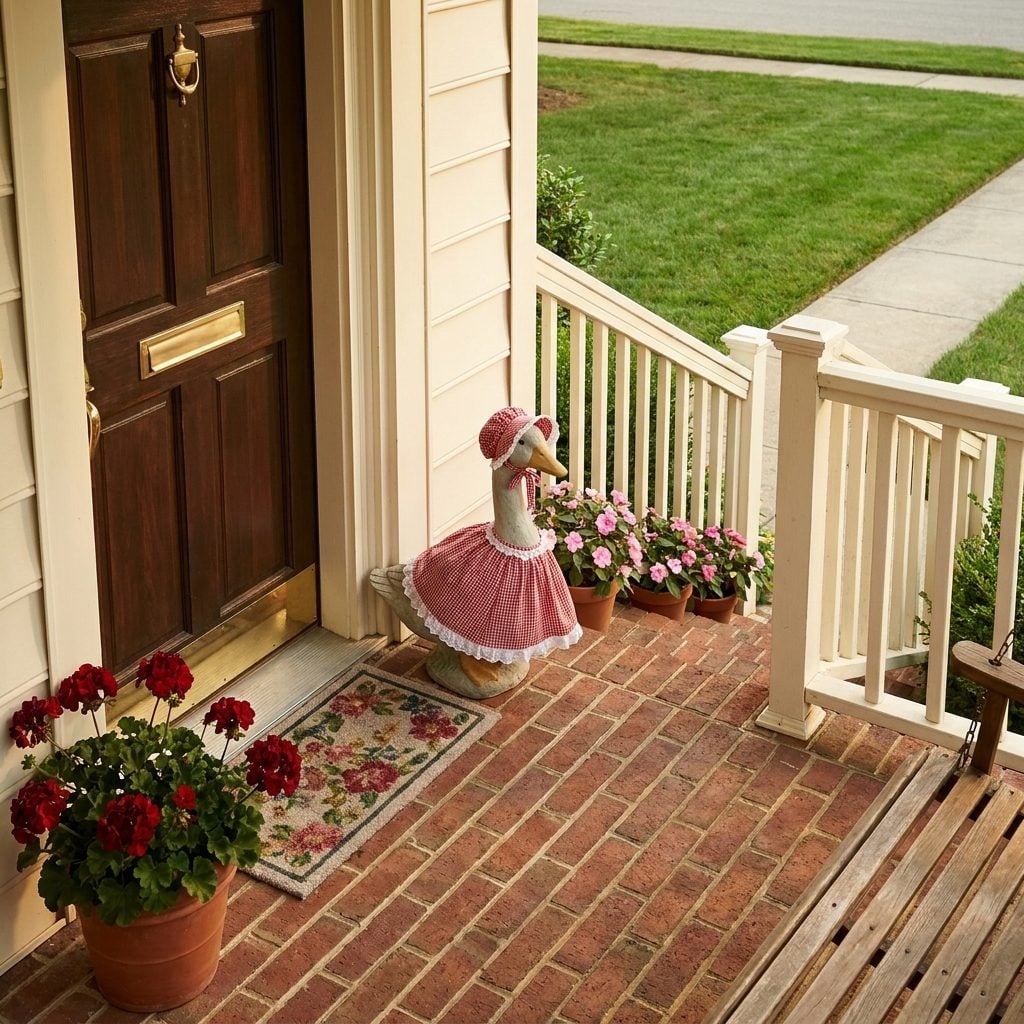
This is the one that genuinely baffles people under 30. Not the goose itself, the wardrobe. There were women in this country who maintained a full seasonal rotation of hand-sewn miniature outfits for a concrete bird on their porch, and they did it with the same commitment other people reserve for actual children.
Easter brought a bonnet and a tiny basket. Christmas meant a Santa hat and a felt coat trimmed with cotton batting. The Fourth of July involved a flag vest that had to have taken real time to make. Some geese had rain slickers. I’m not inventing any of this.
The concrete goose craze peaked somewhere around 1985-1991 and then quietly faded, which means if you grew up next to one of these houses, you knew exactly what month it was by checking the neighbor’s porch decor. More reliable than a calendar, honestly.
27. Chain-Link Fences Enclosing Front Lawns in Older Suburban Neighborhoods
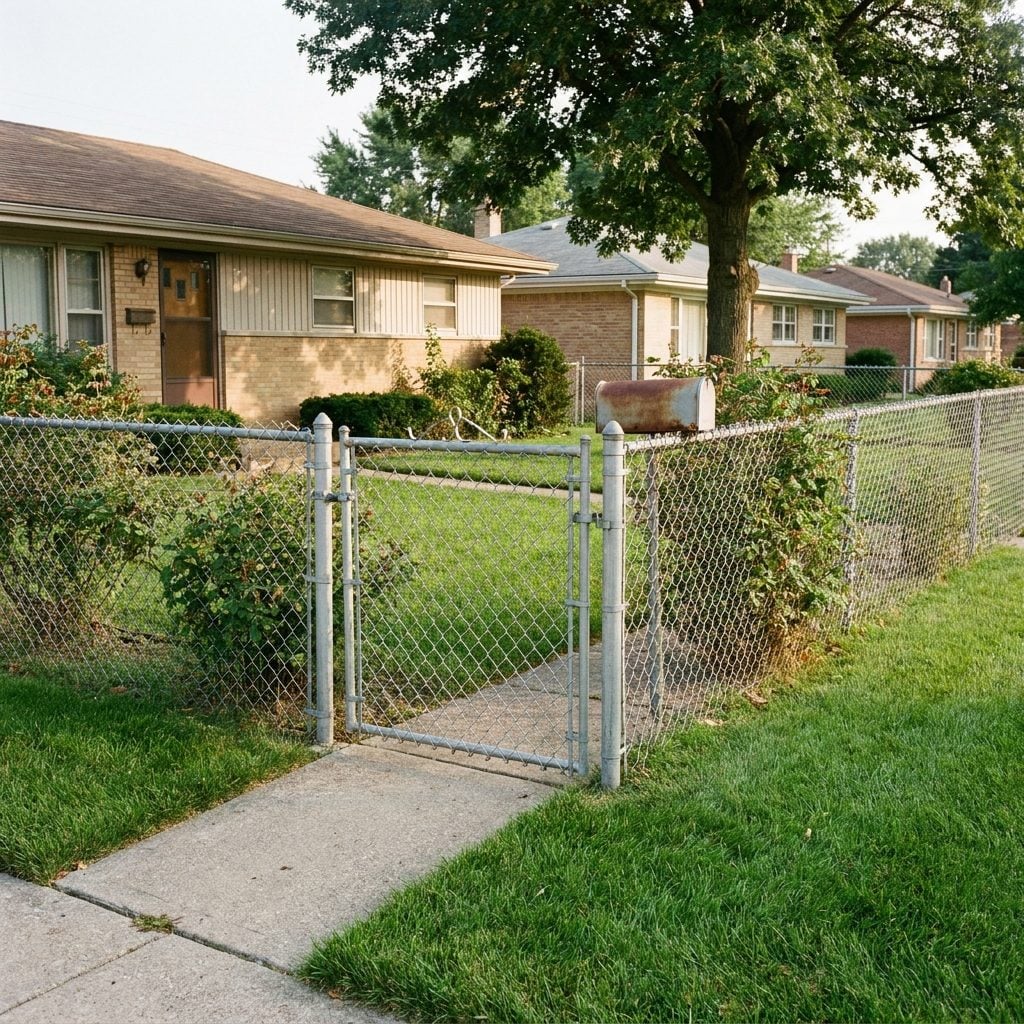
Chain-link fences in the front yard are pure geography. Spot one today and you can roughly date the neighborhood’s peak expansion, usually somewhere between the late 1950s and mid-1980s, when people still fenced their front lawns without worrying about what the HOA might say. (HOAs barely existed yet in most of these places. That’s a separate grief.)
The gate always had a spring on it that made a specific metallic whap when it closed. Kids learned early to hold it so it wouldn’t slam. Adults never did.
26. Large Satellite Dishes Planted in Yards Like Alien Communication Devices
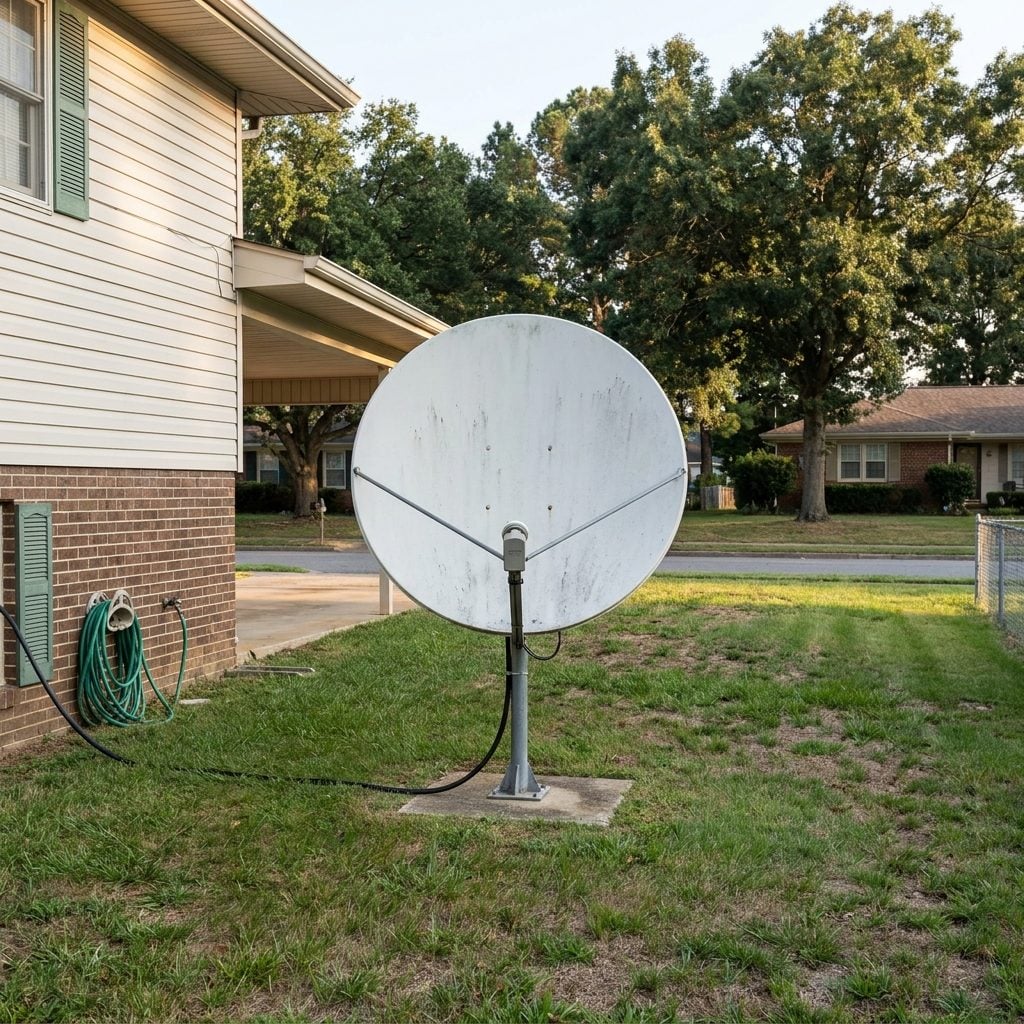
There is no casual way to have a ten-foot satellite dish in your front yard. You committed to it. You poured a concrete pad. You ran coaxial cable through a hole you drilled in the foundation. You explained to every neighbor what an LNB was, probably more than once.
The payoff was HBO, Showtime, and about 200 channels of scrambled scrambled signals your dad spent weekends trying to unlock with a pirate descrambler he found in the back of a magazine. Some families got pristine NFL games beaming in from the sky. Others got Spanish-language broadcasts and weather radar feeds. Everyone acted like the dish was worth it.
By 1990 the small 18-inch DirecTV dish started creeping in, and within a decade these yard monuments were gone. Finding one now, still standing in a rural property, is like seeing a dinosaur. A very large, white, aluminum dinosaur pointed at the sky.
25. Perfectly Edged Lawns Maintained With Near-Competitive Seriousness
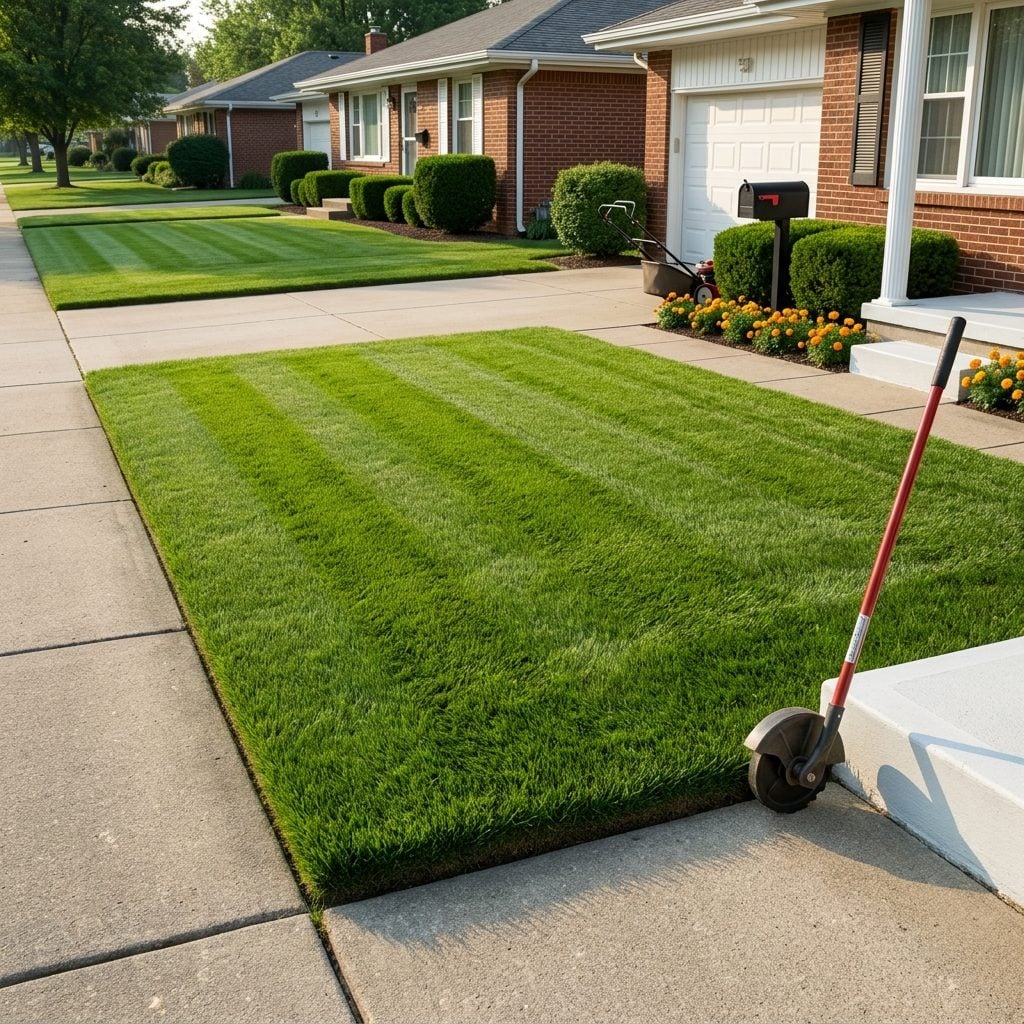
Saturday mornings had a sound. Edging. Specifically, the metal-on-concrete scrape of a manual wheel edger being pushed along the sidewalk by someone who had decided, absolutely and without negotiation, that a ragged grass border was not going to happen on his property.
This wasn’t about aesthetics in any conscious design sense. It was about standards. There were dads in the 1980s who edged their lawns with the same expression a surgeon wears in an operating room. You didn’t talk to them during. You didn’t walk on the lawn after.
“The edge of a man’s lawn is the edge of his character.” No one actually said this, but someone absolutely thought it.
If you want light front porch energy today, a clean lawn edge still delivers more curb appeal per effort than almost anything else you can do on a weekend. That part wasn’t wrong.
24. A Basketball Hoop Mounted Above the Garage With a Cracked Plywood Backboard
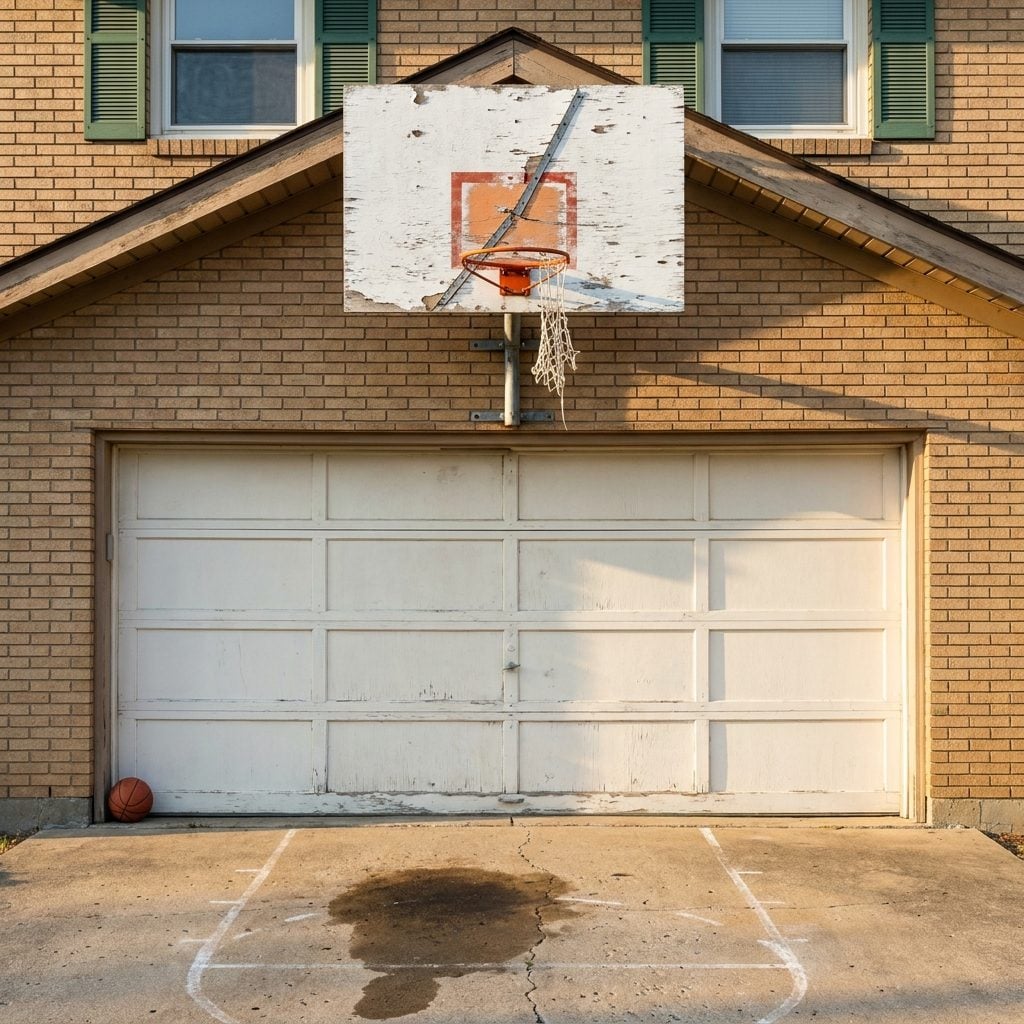
Every crack in that plywood had a story. The big diagonal one near the top right, that was from the winter the backboard iced over and somebody launched a half-court shot just to see what would happen. The smaller ones were just time, and summers, and a rim that was maybe two inches too low to be regulation but nobody had ever checked.
The net was always torn. Always. If you grew up shooting at a hoop like this, the sound you heard wasn’t a satisfying swish, it was a rattle of chain or the slap of loose nylon threads. Didn’t matter. You could shoot in the dark because you had memorized the exact arc required to clear the garage fascia on the left side.
23. Plastic Pink Flamingos Standing Proudly Beside Shrubs and Mulch Beds
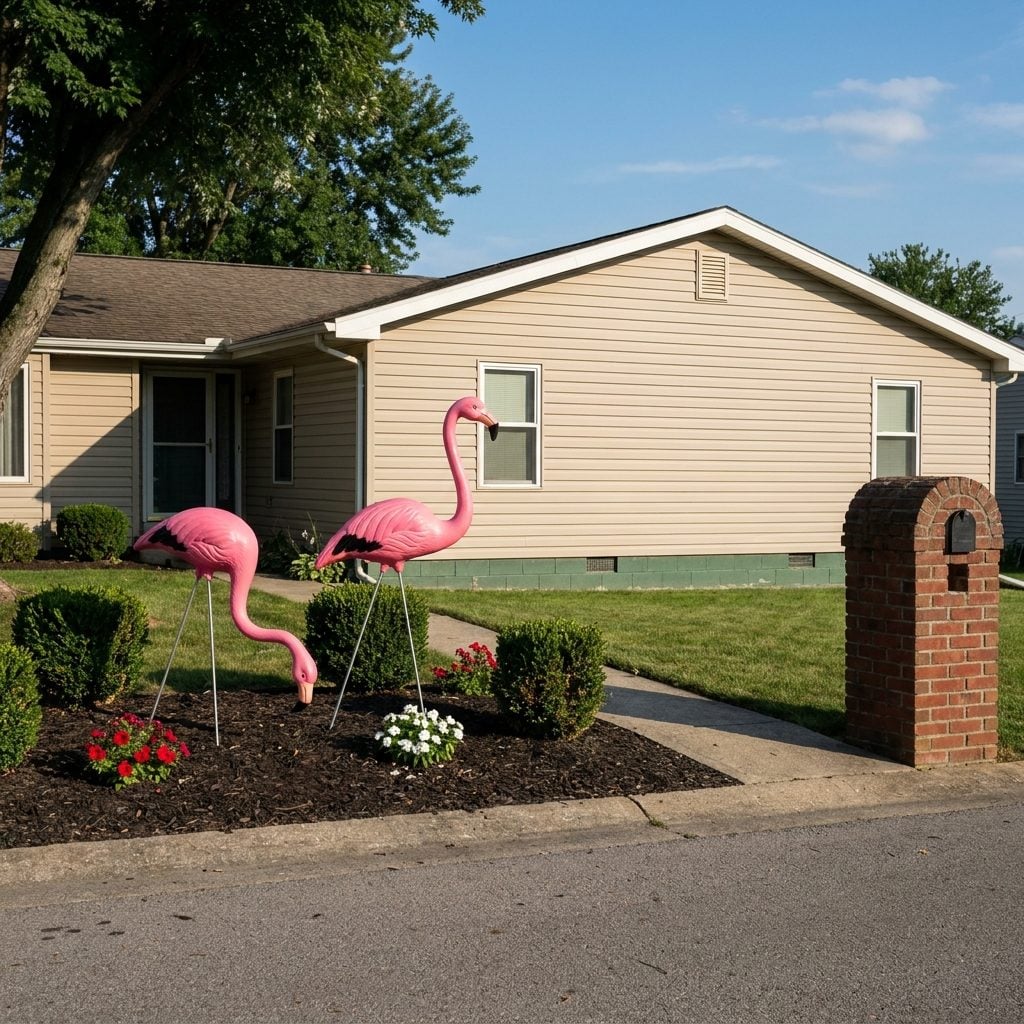
Don Featherstone designed the original pink flamingo for Union Products in 1957, but the 1980s suburban lawn was their true habitat. They stood in mulch beds across the country, proud, aggressively pink, utterly unbothered by anyone’s opinion.
People either committed fully or recoiled completely. There was no mild reaction to a pair of plastic flamingos in the front yard. The families who had them usually had two, because one flamingo alone reads as sad and two reads as a lifestyle choice.
The flamingo got ironic in the 1990s, became a kitsch symbol, showed up on novelty t-shirts. But in 1984, the woman who put them in her mulch bed wasn’t being ironic at all. She just liked them. That kind of confidence is genuinely hard to argue with.
22. Tiered Wooden Planter Boxes Overflowing With Petunias or Marigolds
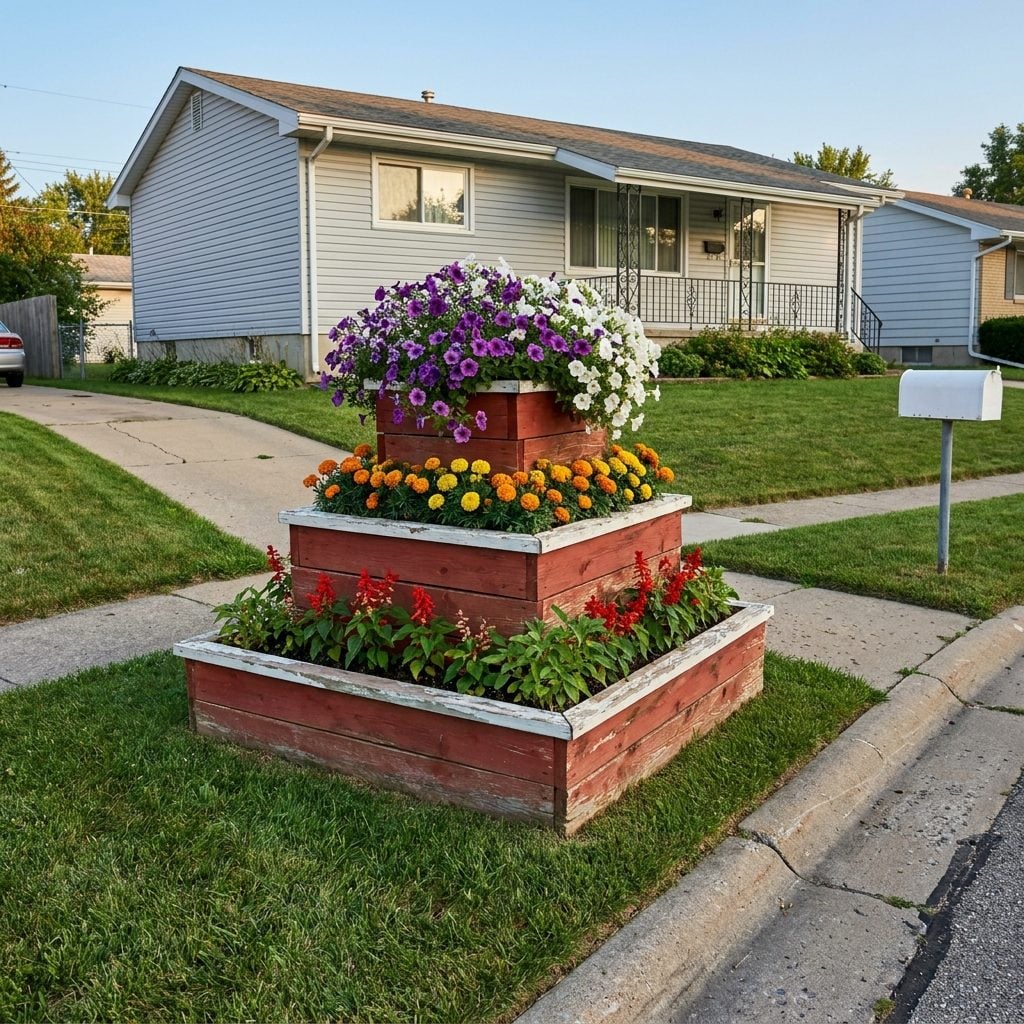
Whoever designed these tiered cedar planters understood one thing perfectly: more is more. You didn’t plant one kind of flower. You planted petunias AND marigolds AND salvia AND maybe some vinca vine trailing down the bottom edge, until the whole structure looked like it was actively trying to escape into the lawn.
They were usually built by someone’s dad from a plan in Better Homes and Gardens or a hardware store handout. The wood was almost always rough cedar, painted barn red or forest green, and it would start to grey and split within three seasons. Nobody cared. You just planted over it again.
21. The Station Wagon or Chevrolet Suburban That Just Lived in the Driveway
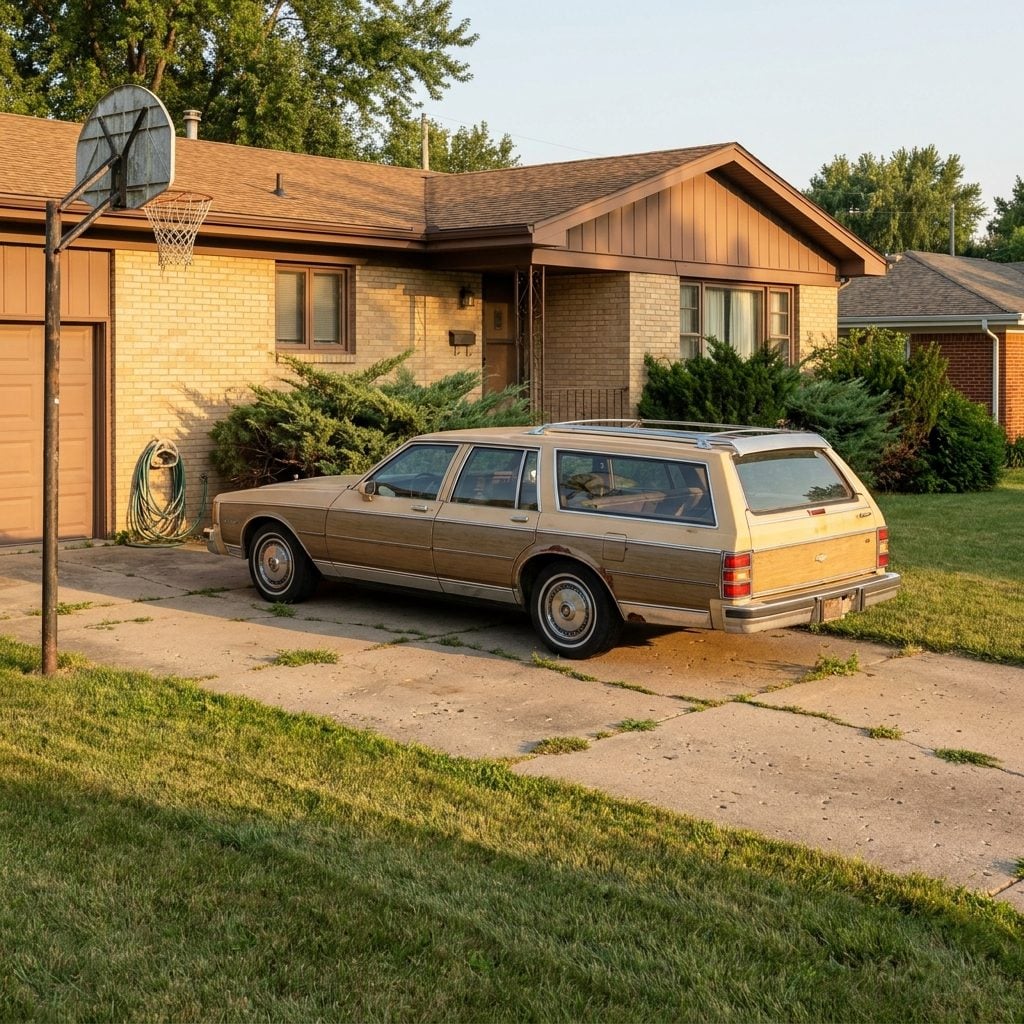
It wasn’t parked there temporarily. It was stationed there, like a monument. The wood-panel-sided station wagon or the boxy Chevrolet Suburban that occupied the driveway was less a vehicle and more a permanent feature of the landscape, right alongside the mailbox and the juniper bushes. You could identify half the families on the block by their cars before you even knew their last names.
These things were enormous. Cartoonishly so. A Suburban from 1984 took up so much driveway that the basketball hoop had to be relocated to a weird diagonal angle just to make room. The back end always had a faint whiff of soccer cleats and spilled Capri Sun. Nobody questioned it. That was just the front yard.
20. Black Iron Lamp Posts with Those Glowing Plastic Lantern Tops
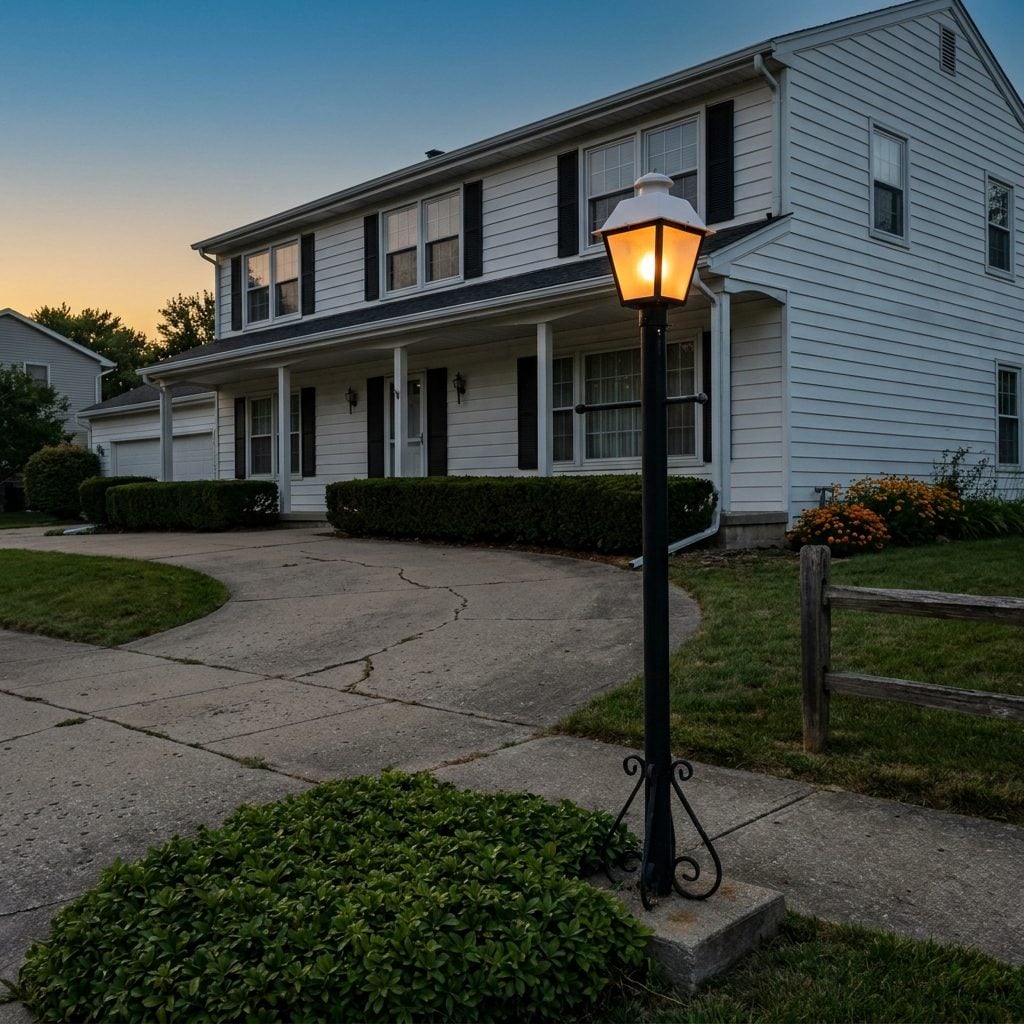
Every neighborhood had at least one street where every single house had one of these, as if there’d been a neighborhood association meeting and someone made a very decisive motion. The post itself was black painted aluminum pretending to be iron, and the top was a frosted plastic lantern that glowed this particular shade of yellowish-white that you can still picture perfectly if you grew up in the eighties.
They turned on automatically at dusk via a little photocell sensor, which felt genuinely futuristic at the time. By 2005, most of them had been yanked out and replaced with landscaping lights or just nothing at all. But for about fifteen years, this was the universal signal that a family took their curb appeal seriously.
19. The Curved Concrete Path with Aluminum Railings Leading Up to the Porch
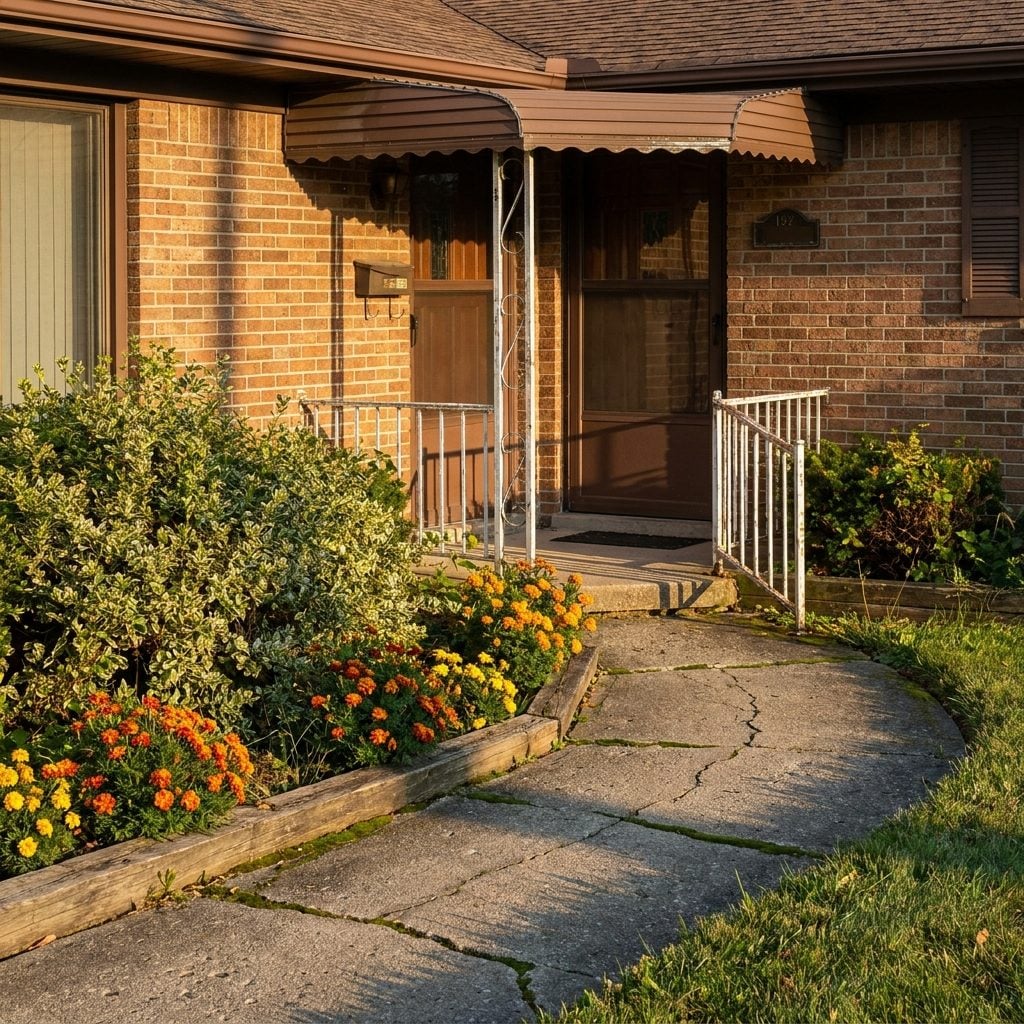
The curve was always very deliberate and slightly unnecessary, the front door was right there in a straight line, but the curved path said something about the homeowner. It said: we thought about this. The aluminum railing alongside it was cold to the touch in the morning and loose in its concrete footing by about 1987, wobbling slightly if you grabbed it, which every kid who visited absolutely did.
For light front porch setups, these aluminum railings were as standard as screen doors. They came in white or black, bent slightly over the years, and got repainted roughly once per decade whether they needed it or not. Nobody replaced them. They just became part of the house’s personality.
18. Massive Evergreen Shrubs Trimmed into Geometric Shapes Every Single Summer
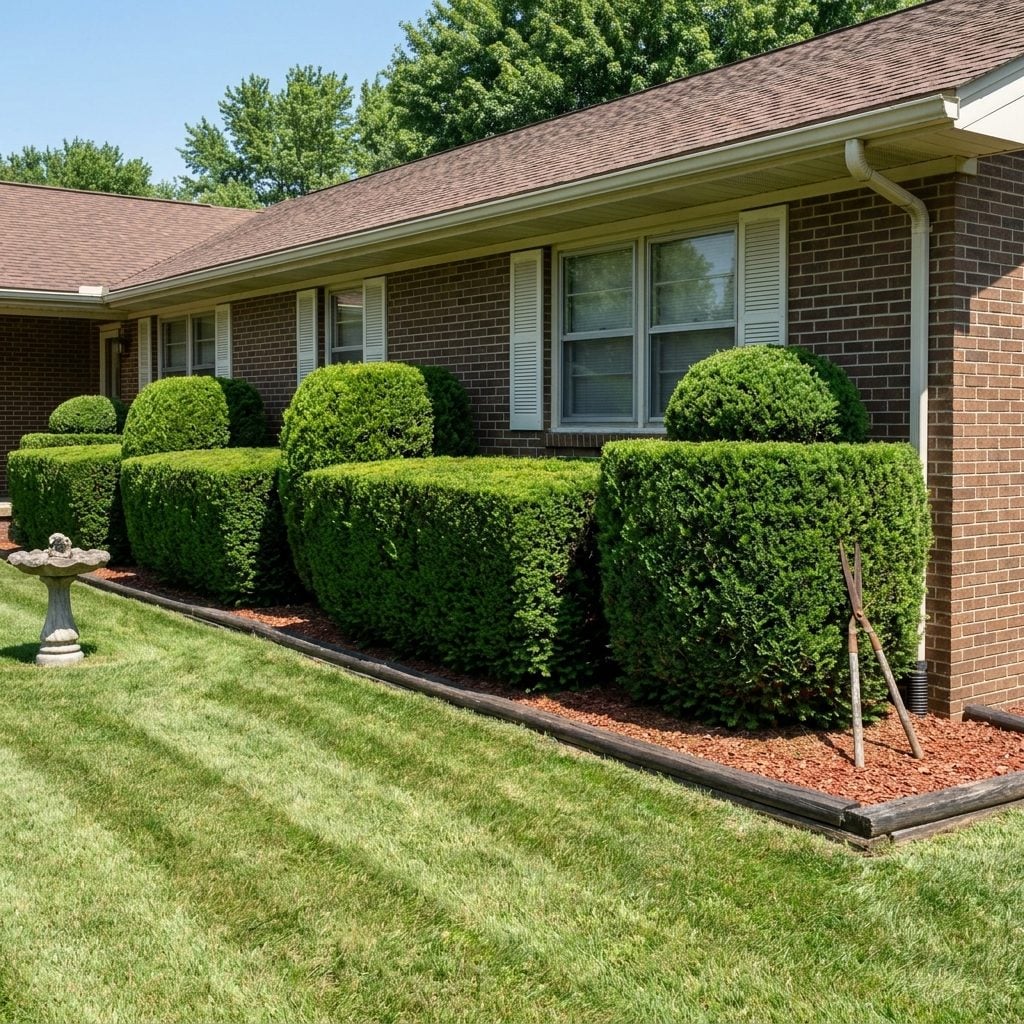
Junipers. Always junipers. Or arborvitae. Trimmed into shapes that were either rectangles, domes, or some combination of both, running the entire length of the house foundation like a very earnest green wall. They were planted small sometime in the early 1970s and by 1985 had achieved a kind of territorial mass that made the first-floor windows feel like portholes.
Every August, someone in the family came out with a pair of orange-handled hedge trimmers and spent an entire Saturday restoring the geometry. The clippings went in paper lawn bags. The shrubs looked spectacular for about three weeks, then started softening back into their natural ambitions.
They are still there at a lot of those houses. Just… much, much larger now.
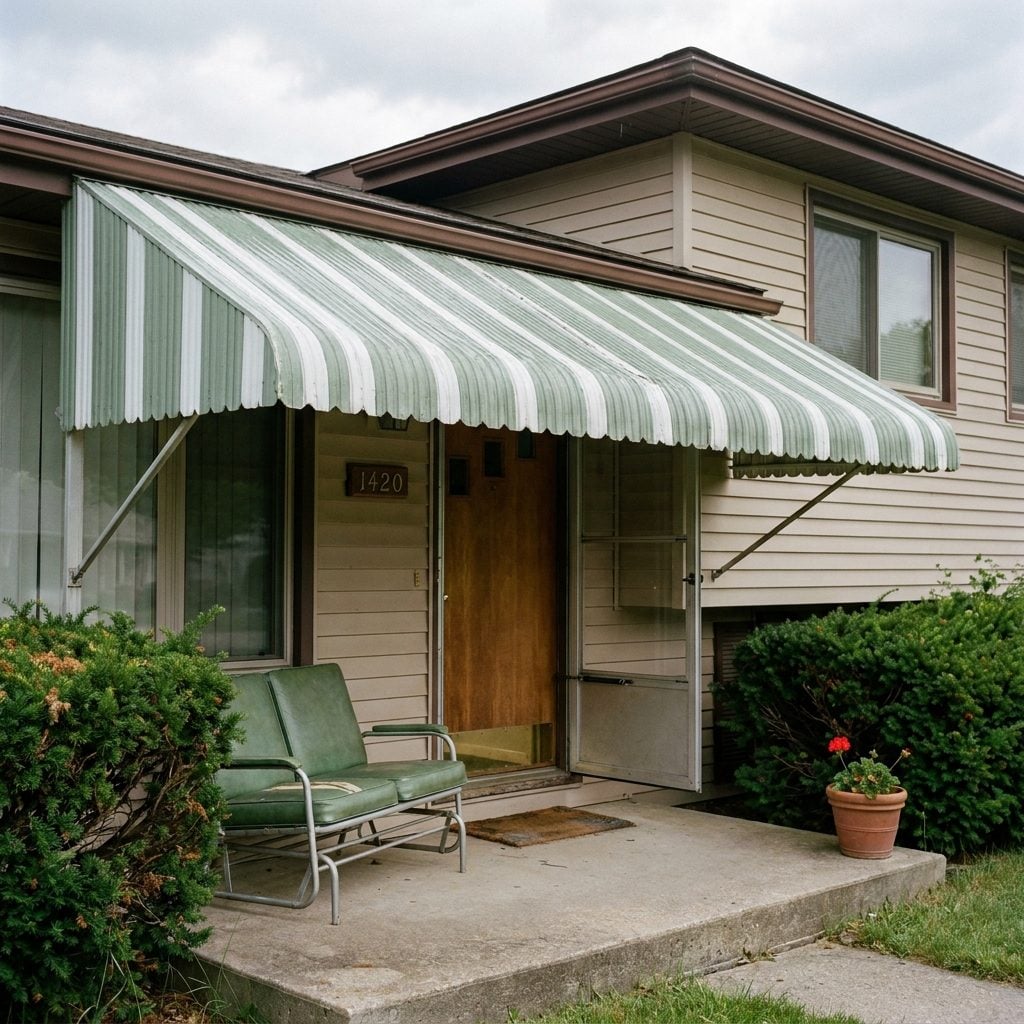
17. Porch Awnings in Green-and-White Striped Aluminum That Rattled When It Rained
🔥 Would you like to save this?
The sound it made when it rained was genuinely one of the great sounds of childhood, this rhythmic aluminum drumming that turned a front porch into the best seat in the house. Green and white. Always green and white. Occasionally burgundy and cream if the family was feeling adventurous.
These awnings kept the sun off the porch furniture, which was a metal glider with vinyl cushions that also came in green. The cushions cracked along the fold lines after a few seasons and nobody replaced them because the awning was still perfectly good. The whole setup was a system.
“The awning kept the sun off the porch furniture. The furniture lasted thirty years. The math was there the whole time.”
16. Mailbox Posts Decorated with Carved Family Names or Little Flower Boxes
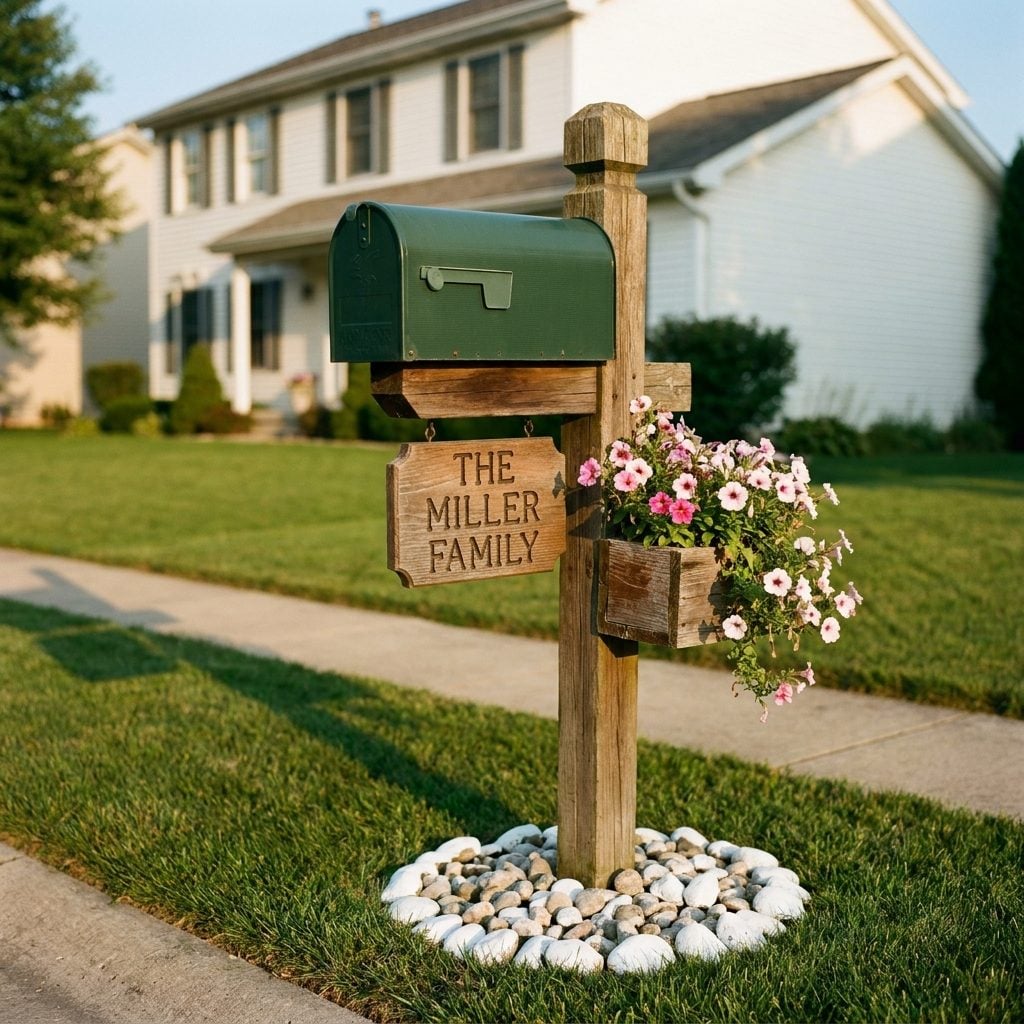
The carved name was always in a vaguely rustic font, routed right into the wood with a tool that someone’s dad either owned or borrowed from someone at work. “The Hendersons.” “The McKinley Family.” Sometimes just “McKINLEY” in all caps with a little decorative flourish underneath. This was a serious undertaking and everyone who passed it every day was meant to understand that.
The flower box below, planted with petunias every May, was the finishing touch. It required actual maintenance, which is what made it a statement. For home inspiration of the era, this mailbox setup was the front-yard equivalent of a firm handshake.
15. A Small Decorative Bridge Over a Dry Creek Bed That Served Absolutely No Purpose
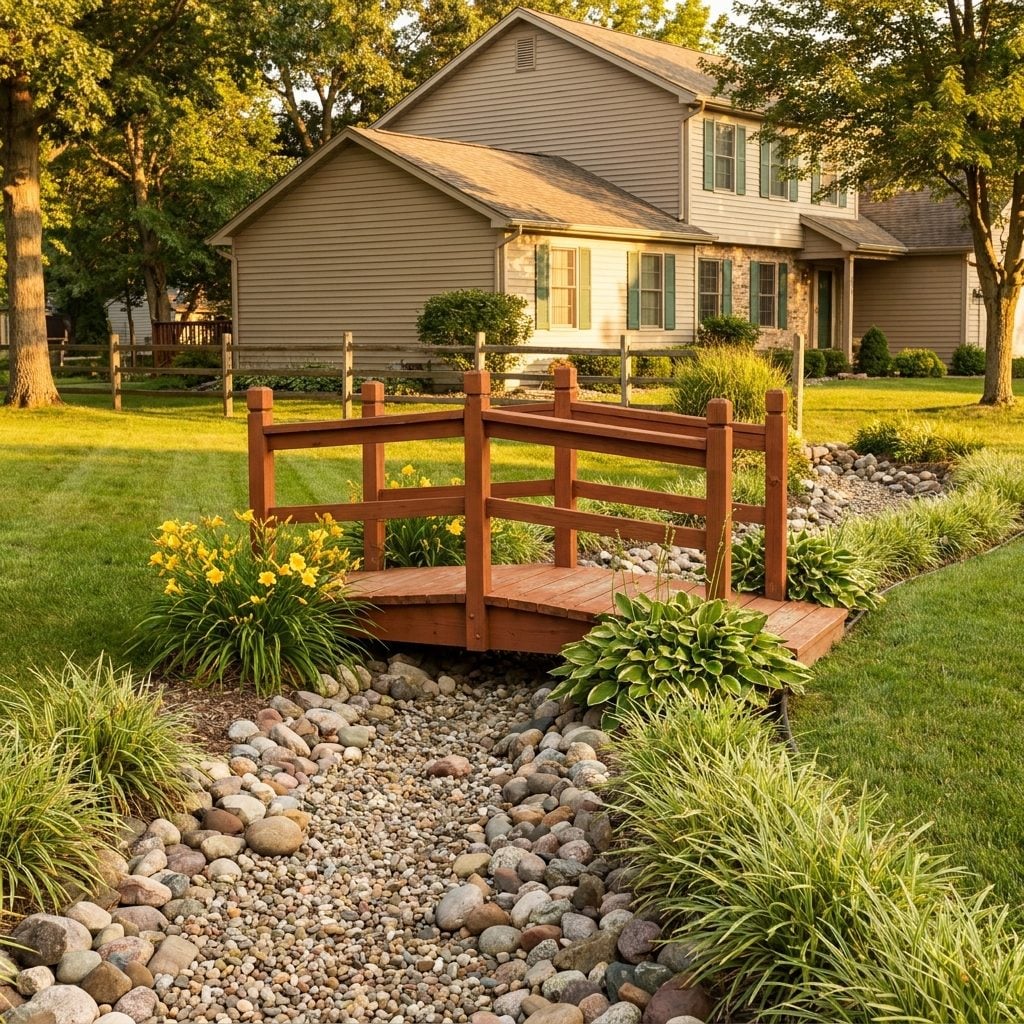
There was no water. There had never been water. The creek bed was entirely decorative, smooth river rocks arranged in a gentle curve across the front lawn, maybe eighteen inches deep, spanned by a small wooden bridge that you had to step UP onto and then step DOWN from over the course of about four feet of travel. The whole crossing added perhaps two seconds to the walk to the front door.
It was magnificent. Someone saw it in a gardening magazine around 1983 and committed fully. The hostas on either side were lush. The pea gravel was raked. The bridge had a little railing. Every neighbor who walked past it had an opinion, and approximately zero of those opinions discouraged anyone from building their own.
14. A Tire Swing Hanging from the Biggest Tree in the Yard
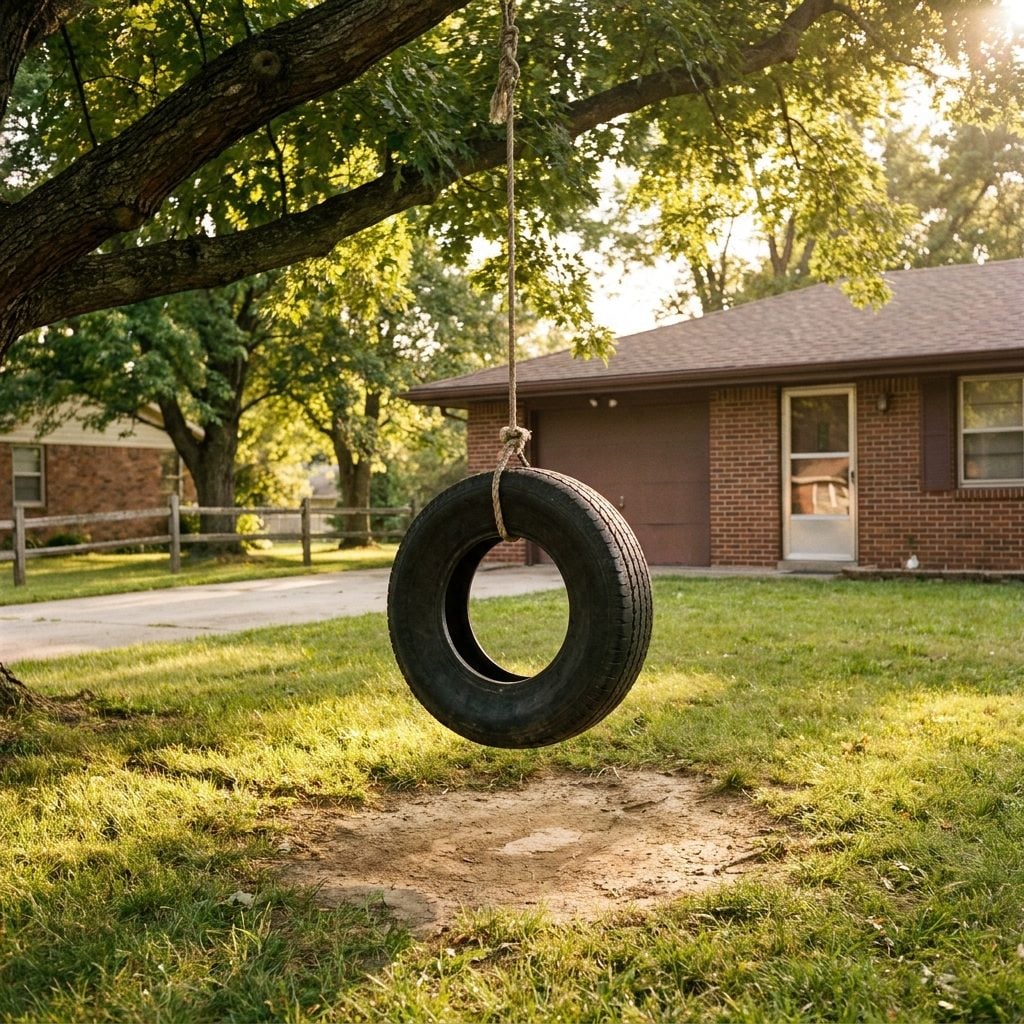
The tire was almost certainly a bias-ply from a car that no longer existed, hung on a rope that was last inspected never. It spun. It swung. It went sideways if you kicked off wrong against the tree trunk, and the knot at the top was wrapped in a way that looked authoritative but was actually just whoever’s dad had gotten up there on a ladder in 1981 and done his best.
That worn patch of bare earth directly underneath, smooth, bowl-shaped, packed hard, was the real artifact. That patch was years of feet dragging to slow down, years of neighborhood kids, years of summer afternoons. The tire itself was just the excuse. The bare ground was the record of everything that actually happened there.
13. The American Flag Mounted by the Front Door, Every Single Day of the Year
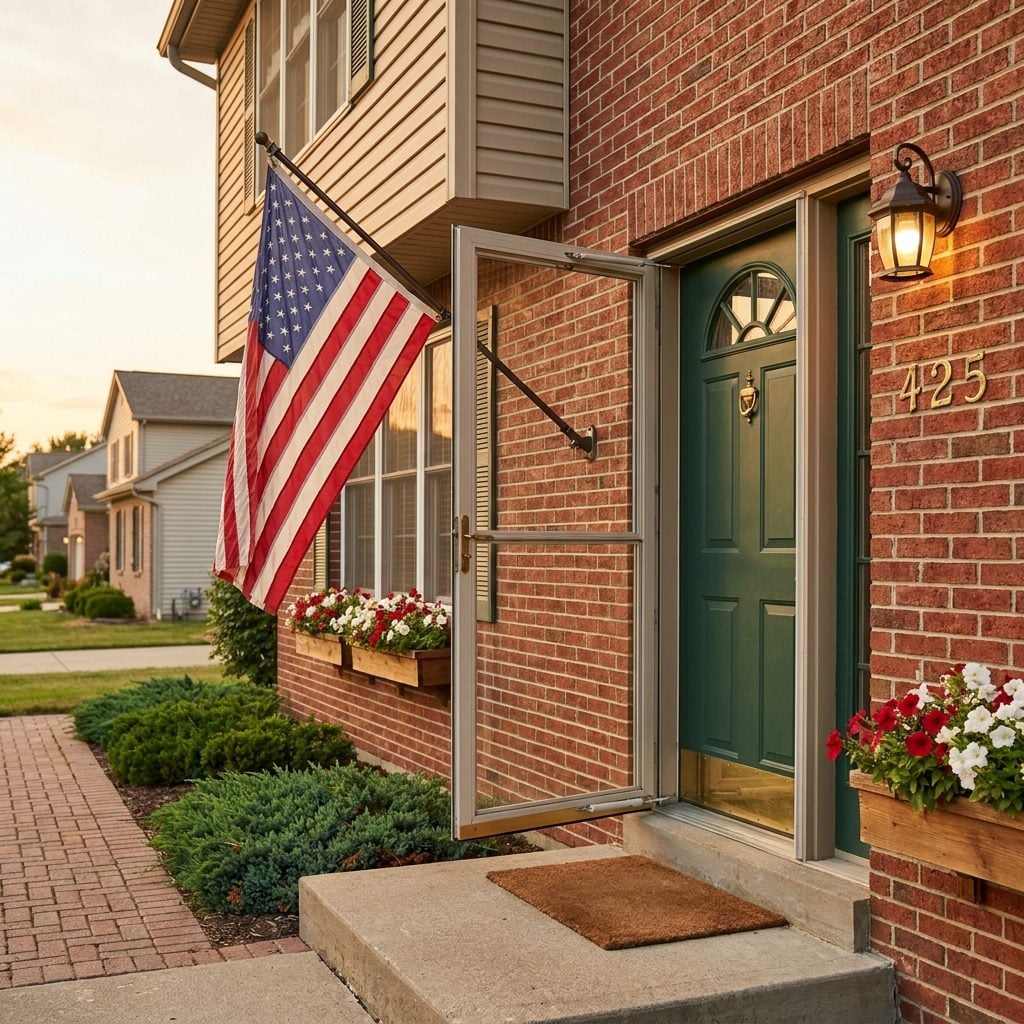
This wasn’t a Fourth of July thing. It wasn’t a post-9/11 thing. It was just Tuesday. Every house on the block had one of these flag brackets screwed permanently into the siding, and the flag went up in the morning if someone remembered and stayed up through February sleet if they didn’t. The flag got faded, frayed at the corners, occasionally shredded by a good thunderstorm. Nobody took it down.
The bracket was almost always brass, always slightly crooked after a few winters. At some point a neighborhood dad explained, with real authority, that a tattered flag was supposed to be retired via a formal ceremony. The flag stayed up for three more years anyway.
12. The Front-Yard Birdbath Nobody Actually Maintained (But Everyone Owned)
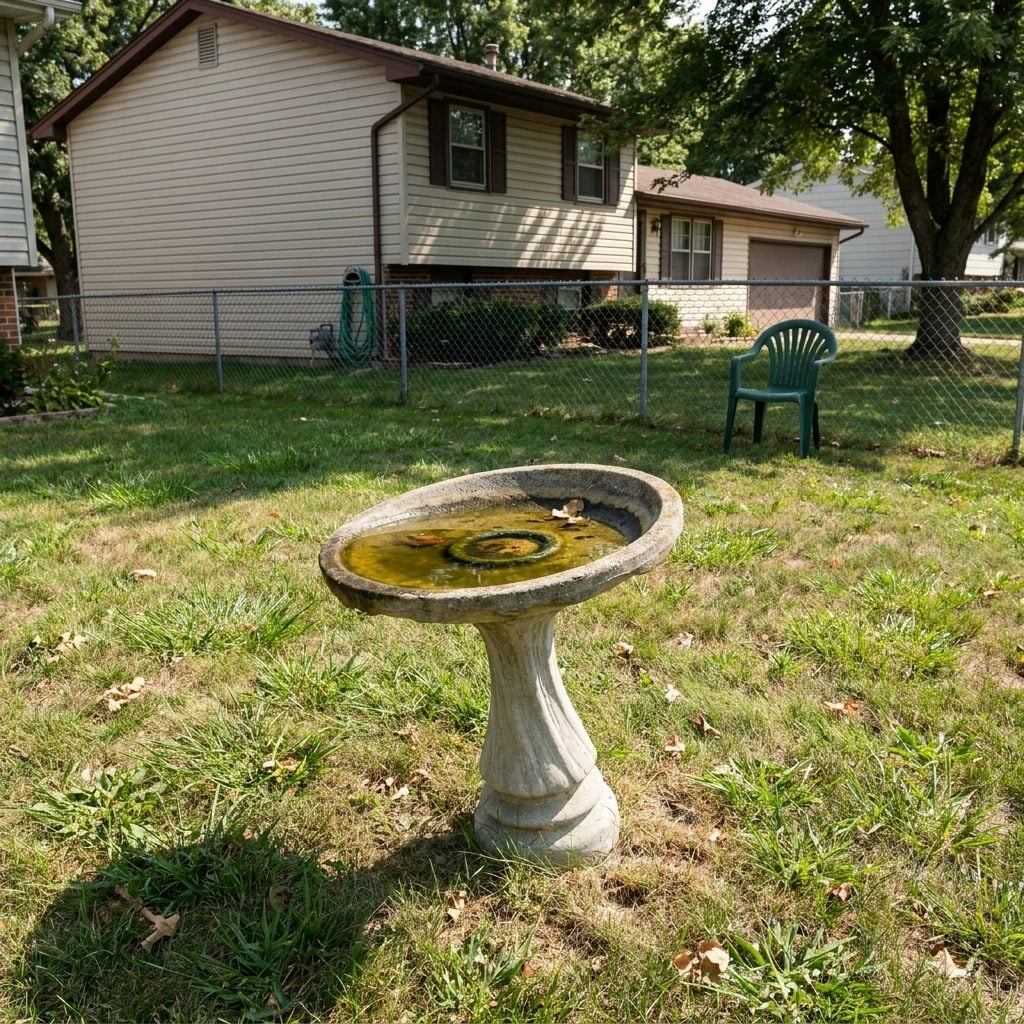
Decorative in theory, biological experiment in practice. The concrete birdbath appeared in front yards with real intention: someone was going to fill it with fresh water, watch the robins splash around, feel connected to nature. That lasted about one refilling.
By midsummer it was a standing-water situation, thick with algae around the rim and doing something genuinely alarming in the basin. The birds did come, actually, but mainly to look confused. Nobody removed the birdbath because that would mean admitting defeat, and also because it weighed approximately four hundred pounds and nobody could figure out how to get it to the curb.
11. The Concrete Lawn Jockey That Had Been There Longer Than Anyone Could Remember
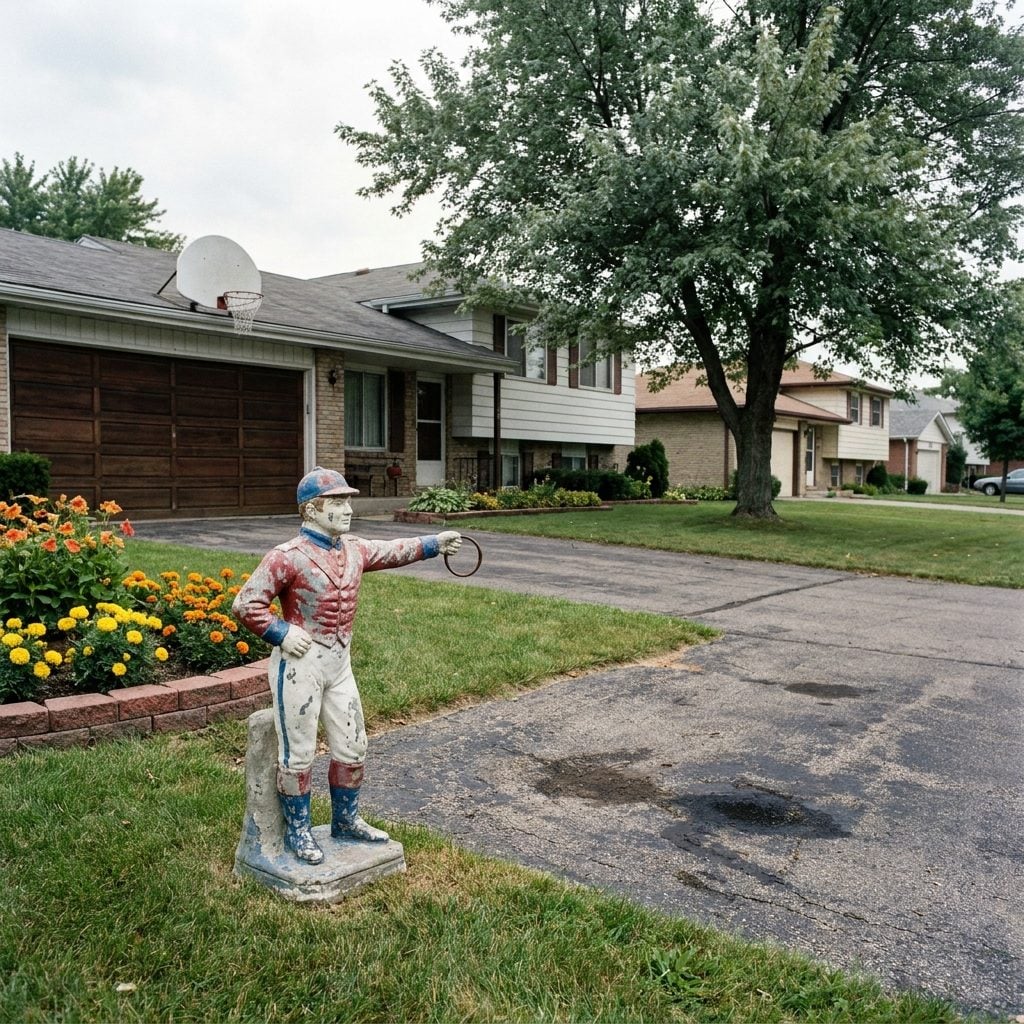
Every block had one, always in front of a house where the current owners had clearly not been the ones to install it. The paint was wrong, the concrete was cracked, and it had the particular quality of an object nobody knew what to do with. Not quite beloved enough to restore, not quite hateful enough (yet) to remove immediately.
By the late 1980s, the cultural conversation about these figures was starting to shift loudly in the direction of common sense. Some got quietly moved to backyards. Some got painted over with new colors that pleased nobody. A few lingered into the 1990s, chipping, fading, slowly becoming part of the landscaping whether anyone wanted them there or not.
10. The Driveway That Told You Exactly What Was Happening Under the Hood Every Weekend
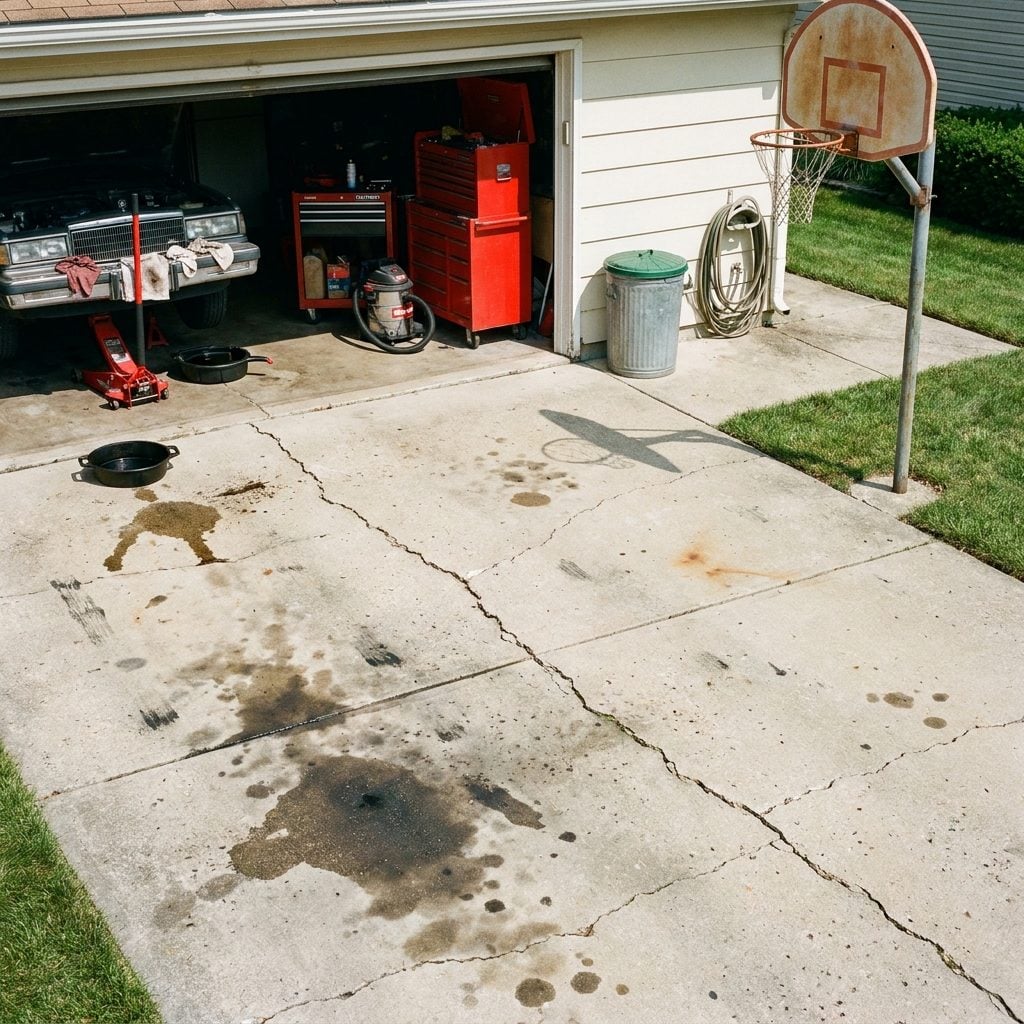
The oil spots were a record. One dark ring for every oil change. A smear near the right front wheel from that carburetor situation in 1986. A long drip trail where someone pulled out before the drain plug was fully replaced. The driveway read like a diary of every repair that happened because taking it to a shop cost money the family didn’t have.
Every suburban dad had a Craftsman socket set, a floor jack, and strong opinions about Quaker State versus Pennzoil. The driveway was his office. The fact that it looked like the floor of a Jiffy Lube was simply the cost of knowing what you were doing.
9. The Decorative White Rock Landscaping That Replaced an Entire Lawn (Regrettably)
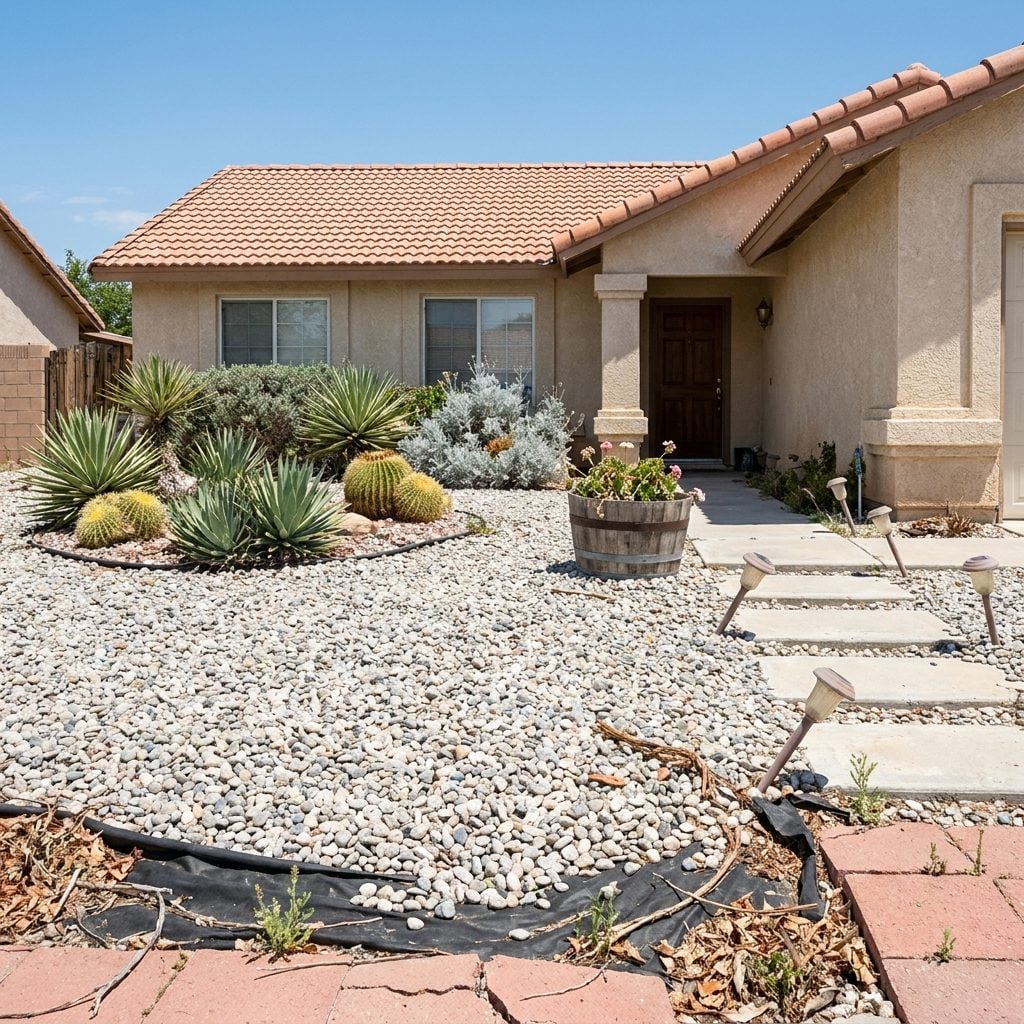
Someone sold the entire sunbelt on this idea at some point in the early 1980s, and that person has a lot to answer for. The pitch was logical: no mowing, no watering, no maintenance. What actually happened was a front yard that absorbed heat like a cast iron pan, scattered rocks across the sidewalk every time it rained, and collected blown leaves into corners where nothing could rake them out properly.
The weed barrier underneath was a lie. Weeds found their way through it within one growing season, and pulling them out of a rock bed is an act of pure stubbornness. Decades later, homeowners who inherited these yards have been digging out rock by hand, wheelbarrow load by wheelbarrow load, with expressions that suggest they’re not enjoying it.
8. The Tree Stump Nobody Removed, Turned Into a Flower Planter Out of Sheer Determination
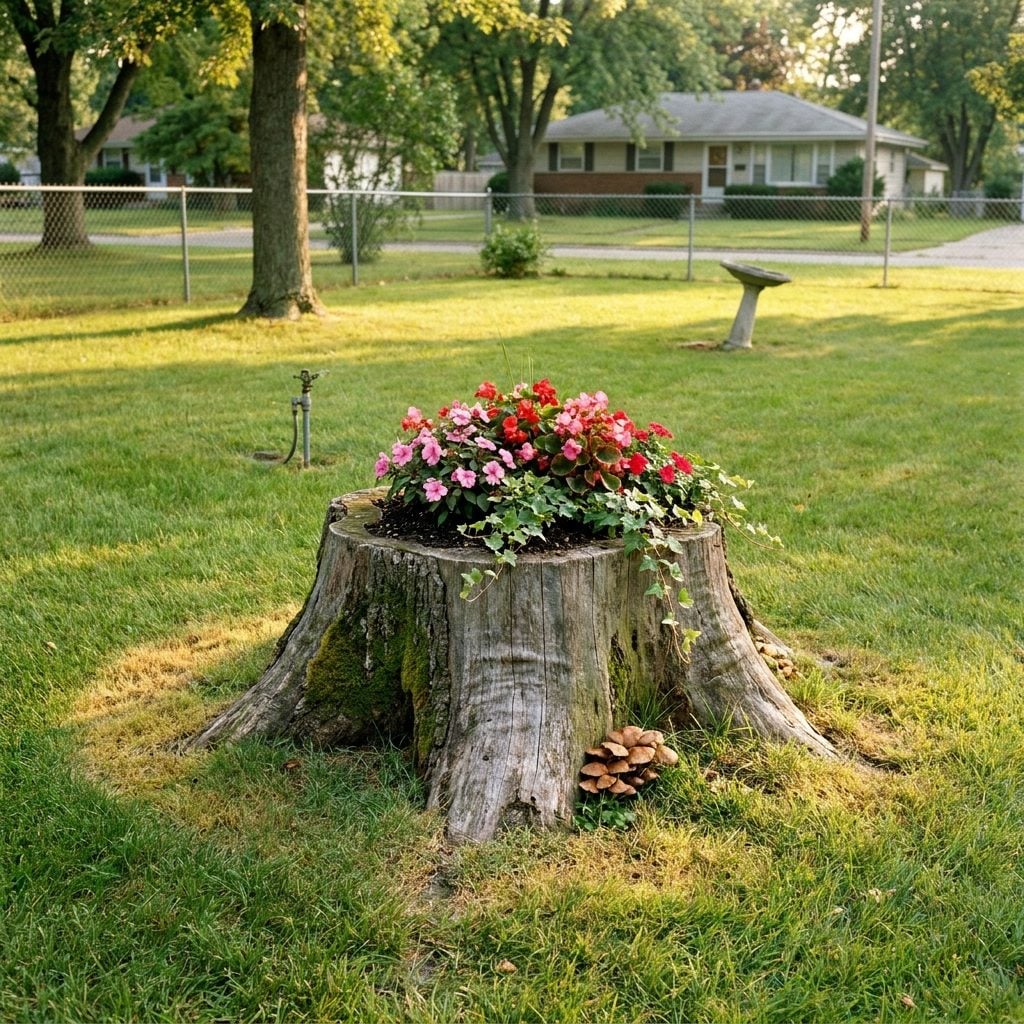
A storm took the tree. The stump removal quote was $300. Someone in the house said: absolutely not, we can make something of this.
And they did. The top got hollowed out with a combination of a drill, a chisel, and several weekends of furious determination. Potting soil went in. Impatiens went in. The result was genuinely charming in a folk-art kind of way, and it became the thing guests noticed first when they came up the walk. The stump rotted through eventually, around 1993 or so, and everyone was sad about it in a way that surprised them.
7. The First-Generation Solar Path Lights That Were More Hope Than Illumination
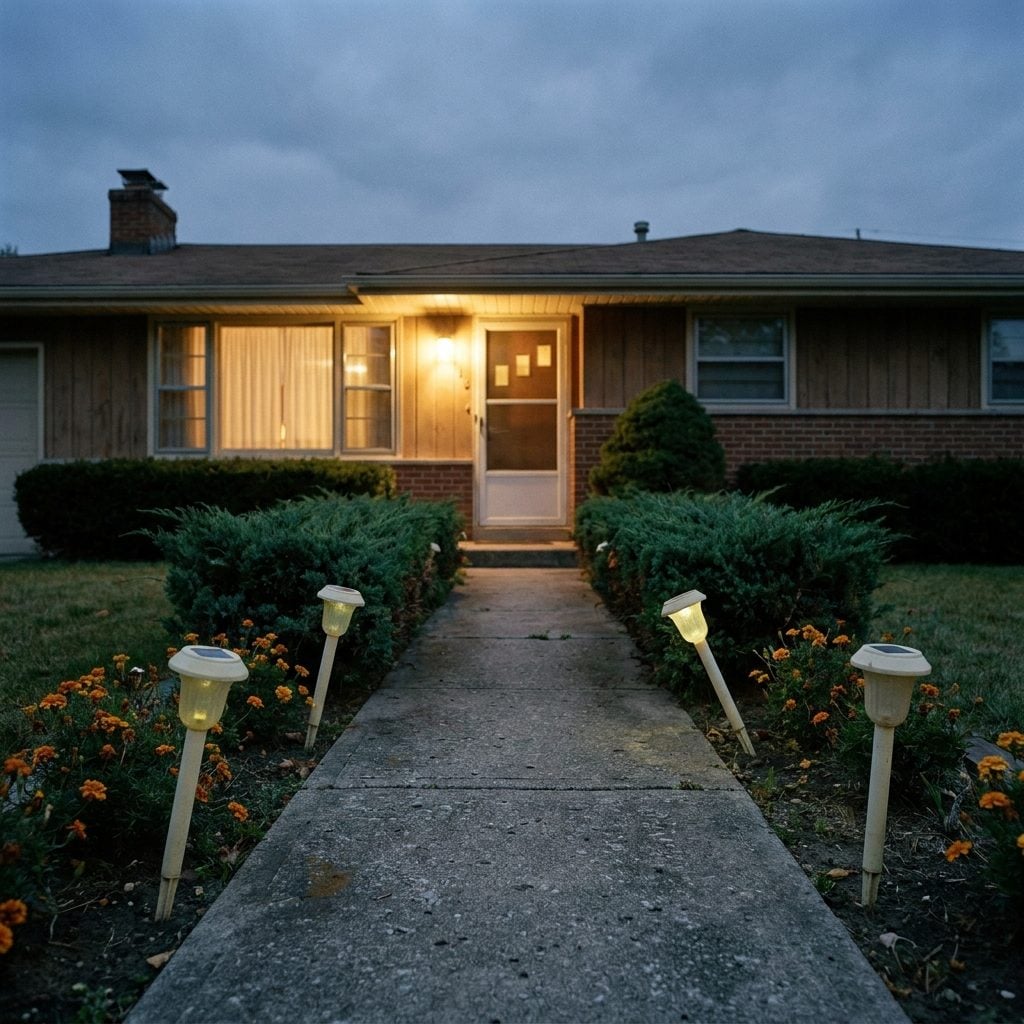
Late in the decade, these appeared in the gardening aisle at Kmart and Ames and immediately felt like the future. Solar-powered path lights with no wiring required. You just pushed them into the ground and the sun did the rest. In theory.
In practice, the batteries were terrible, the solar cells were smaller than a business card, and the output was roughly equivalent to a birthday candle. You could see them glowing if you were standing directly above them and there was no competing light source whatsoever. They made everyone feel like they were doing something progressive with energy, which was the real product being sold. Light front porch ideas have come a very long way since 1988.
6. The Wooden Half-Barrel Planter Overflowing with Red Geraniums by Every Front Door
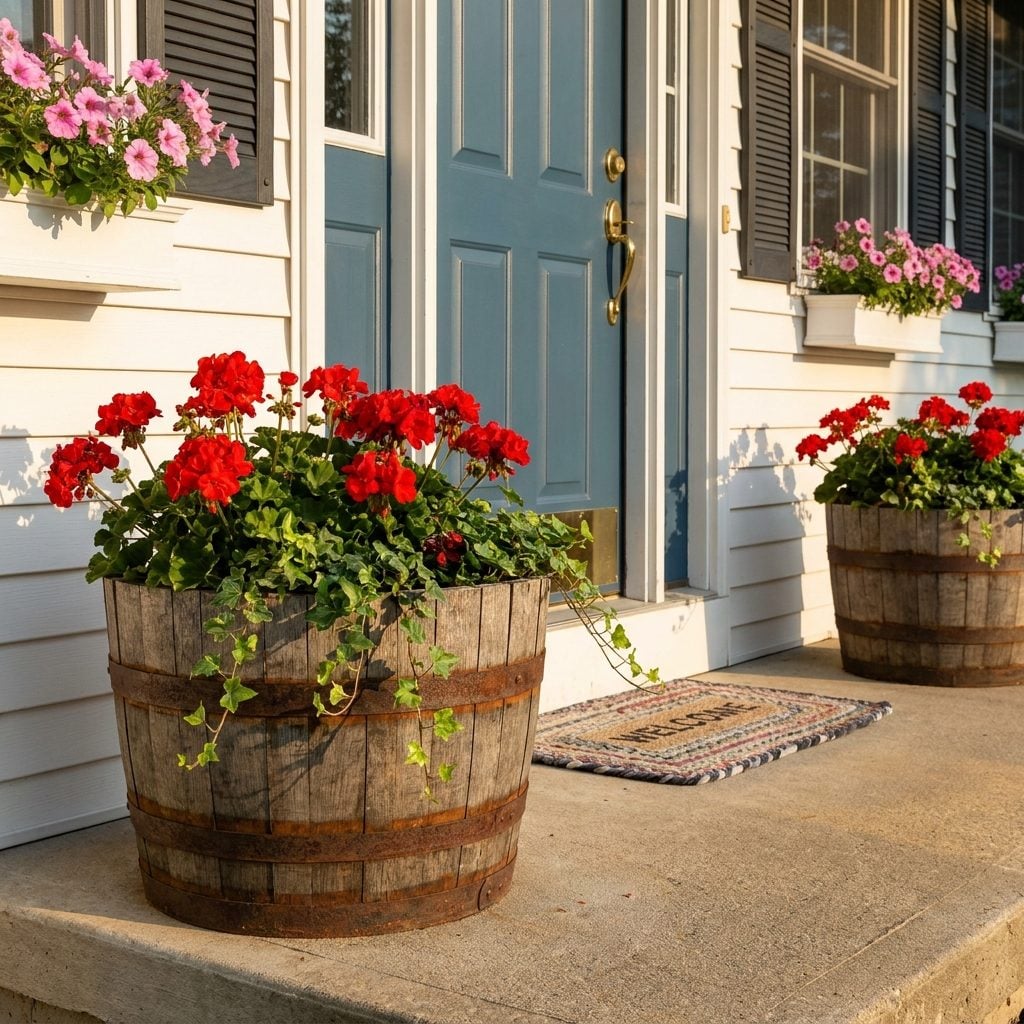
These were sold at every garden center, every hardware store, every roadside nursery in America, and they were always planted the same way: red geraniums in the center, maybe some trailing ivy around the edge, slightly too much soil packed in so the first heavy rain made mud splash up the siding. They arrived in pairs, flanking the front door like sentries, and they were the universal signal that the people inside took some pride in the place.
The barrel itself usually lasted about three years before the wood started to rot at the bottom. Replacement barrels were bought, geraniums were replanted, and the cycle continued unbroken through the entire decade. There was something genuinely welcoming about them, a warmth that more polished front yard home inspiration tends to overlook. The geraniums didn’t care about design trends. They just bloomed.
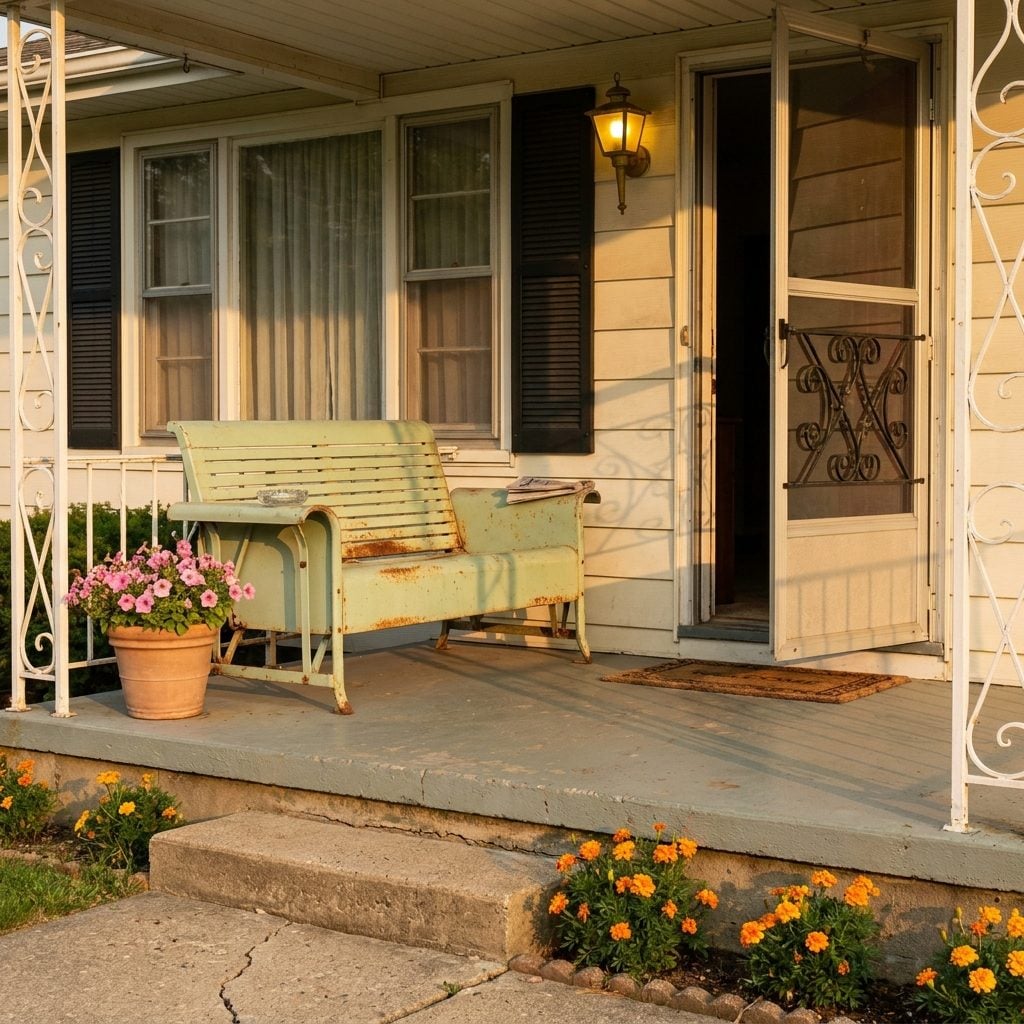
5. The Metal Glider Bench That Squeaked Like Clockwork on Every Front Porch
🔥 Would you like to save this?
You could hear it before you even turned the corner onto the block. That rhythmic squeak-groan, squeak-groan of a metal glider bench carrying across the evening air was as much a part of summer as the smell of cut grass. The joints never got oiled. That was just understood.
Every grandparent had one. Most parents had one. The paint was always slightly chipping at the armrests, and the slats left faint parallel impressions on the backs of your thighs if you sat long enough. You could push off with one foot and keep it rocking for what felt like forever. These things disappeared so quietly from front porches we barely noticed, replaced first by plastic Adirondacks and then by nothing at all, because we stopped sitting on front porches in the first place.
4. Address Numbers on Faux Wood Plaques: The Universal Sign You Had Arrived
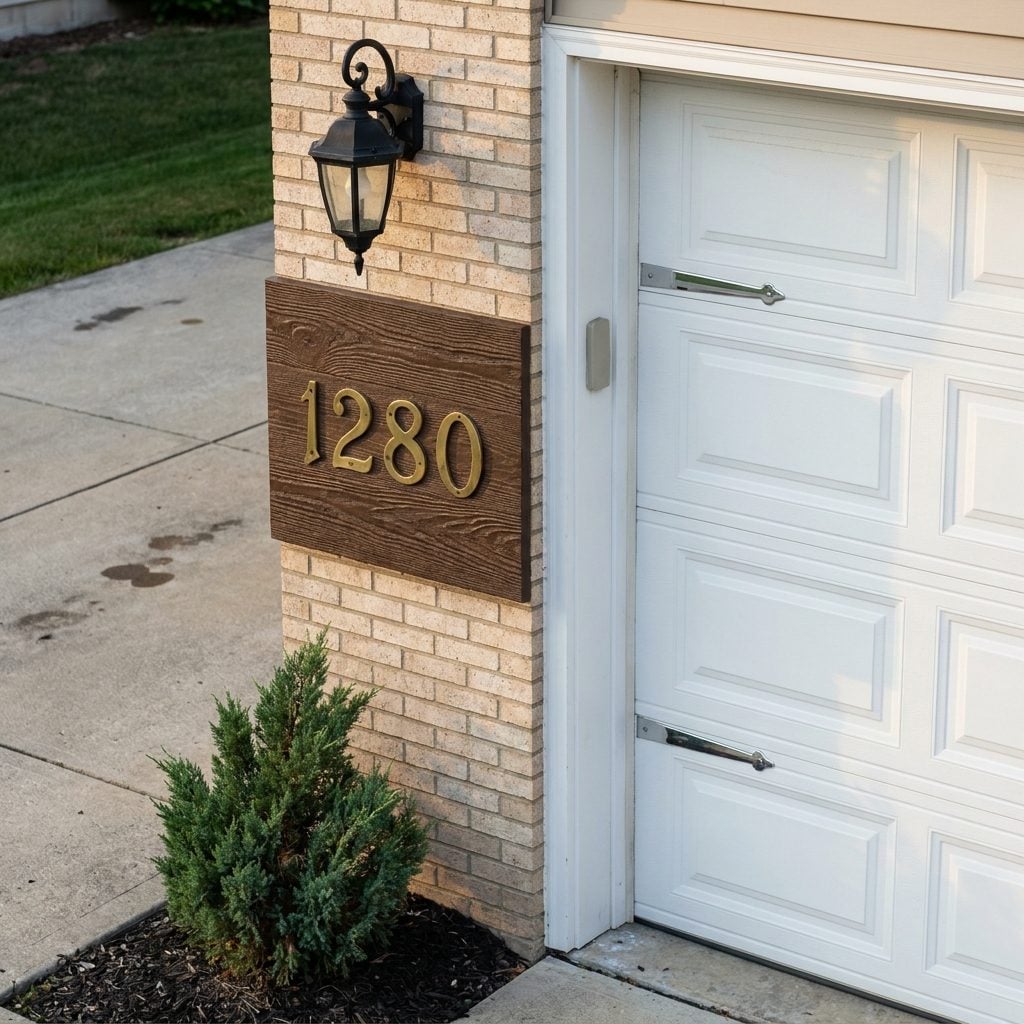
Nobody questioned these. A thin rectangle of pressed dark brown material with a fake wood grain that fooled absolutely no one, mounted next to the garage with two screws, and stuck with brass adhesive numbers that were almost always slightly crooked. It was the decorating equivalent of a firm handshake: functional, confident, not particularly elegant.
The faux wood plaque was everywhere from roughly 1975 to 1993. Hardware stores sold them next to the mailboxes and the address stakes for the lawn. Some families went with the oval version. A few splurged on routed real wood, which in hindsight was a significant upgrade nobody acknowledged. They just quietly vanished one decade, replaced by brushed nickel numbers screwed directly into stone veneers that cost four hundred dollars a square foot.
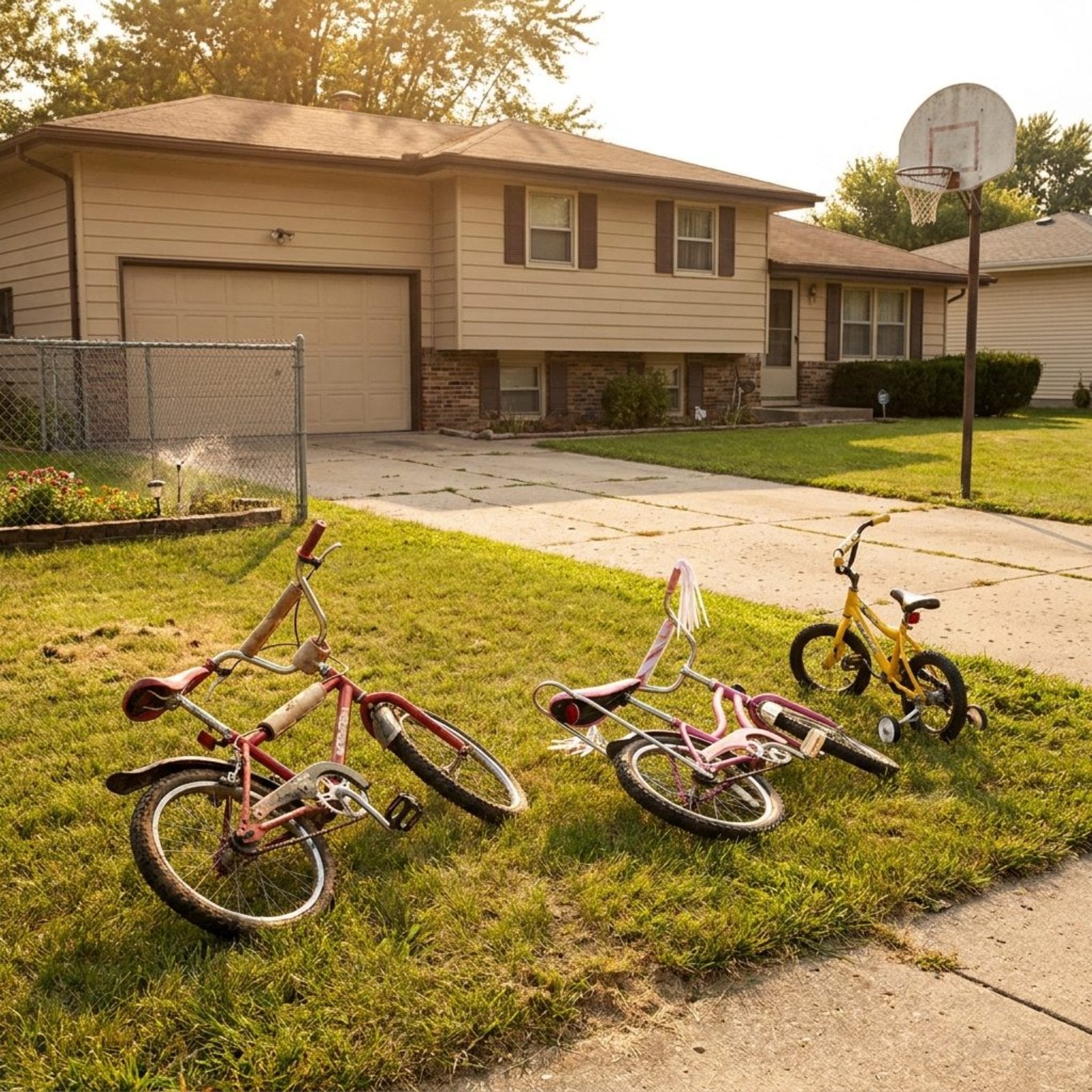
3. Bikes Dropped in the Grass at Noon, Not Touched Again Until the Streetlights Flicked On
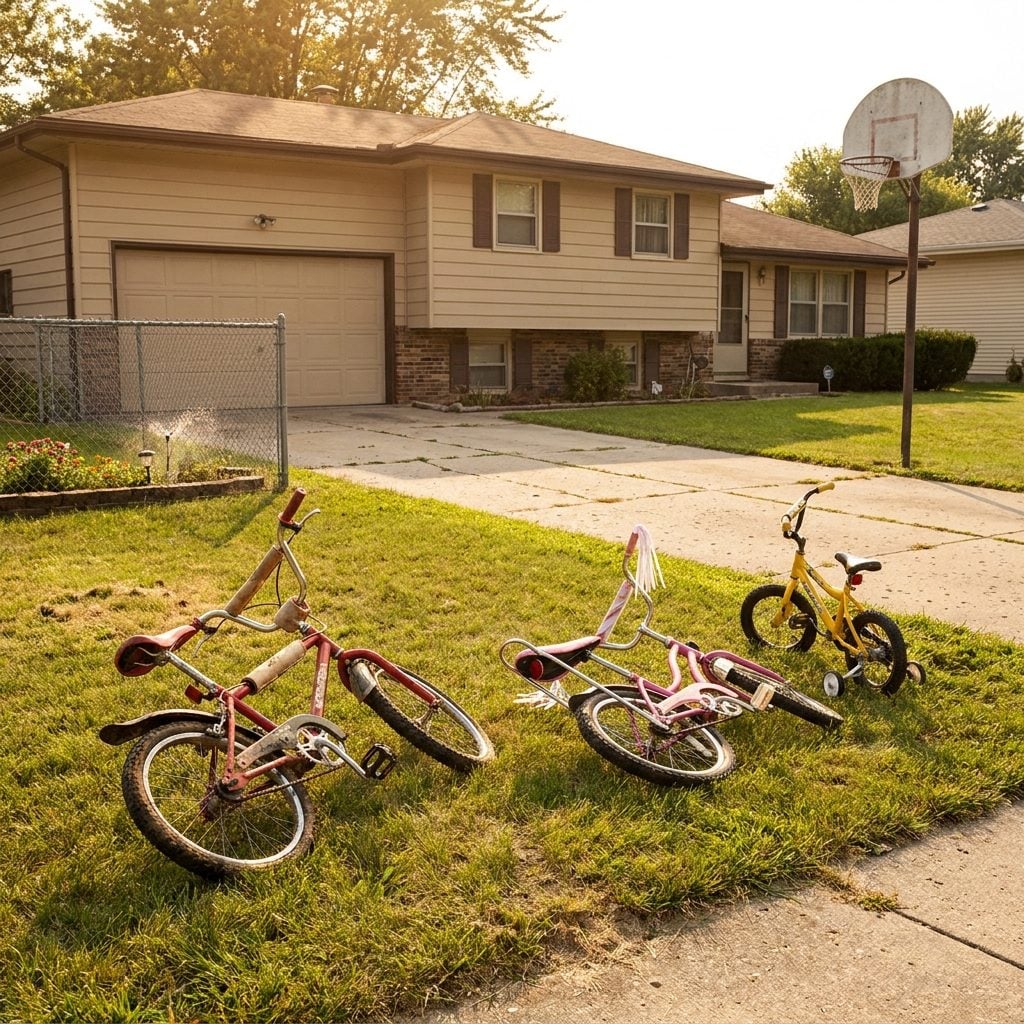
The bicycle on its side in the front yard was a social signal. It meant someone was home, someone was somewhere nearby, and if you needed them you could just yell. No texts, no location sharing, no scheduled playdates. The bike was the check-in system.
BMX frames with the foam pads on the crossbar. Banana seats with plastic streamers that got ratty by June. Training wheels left on longer than necessary because nobody wanted to admit it. They just lived on the lawn all summer, gathering dew in the mornings, occasionally getting run over by a parent backing out of the driveway. When the streetlights came on, everybody just knew. That was the rule and it required no enforcement.
2. The Neighborhood Dog Who Roamed Freely and Somehow Knew Everyone’s Name
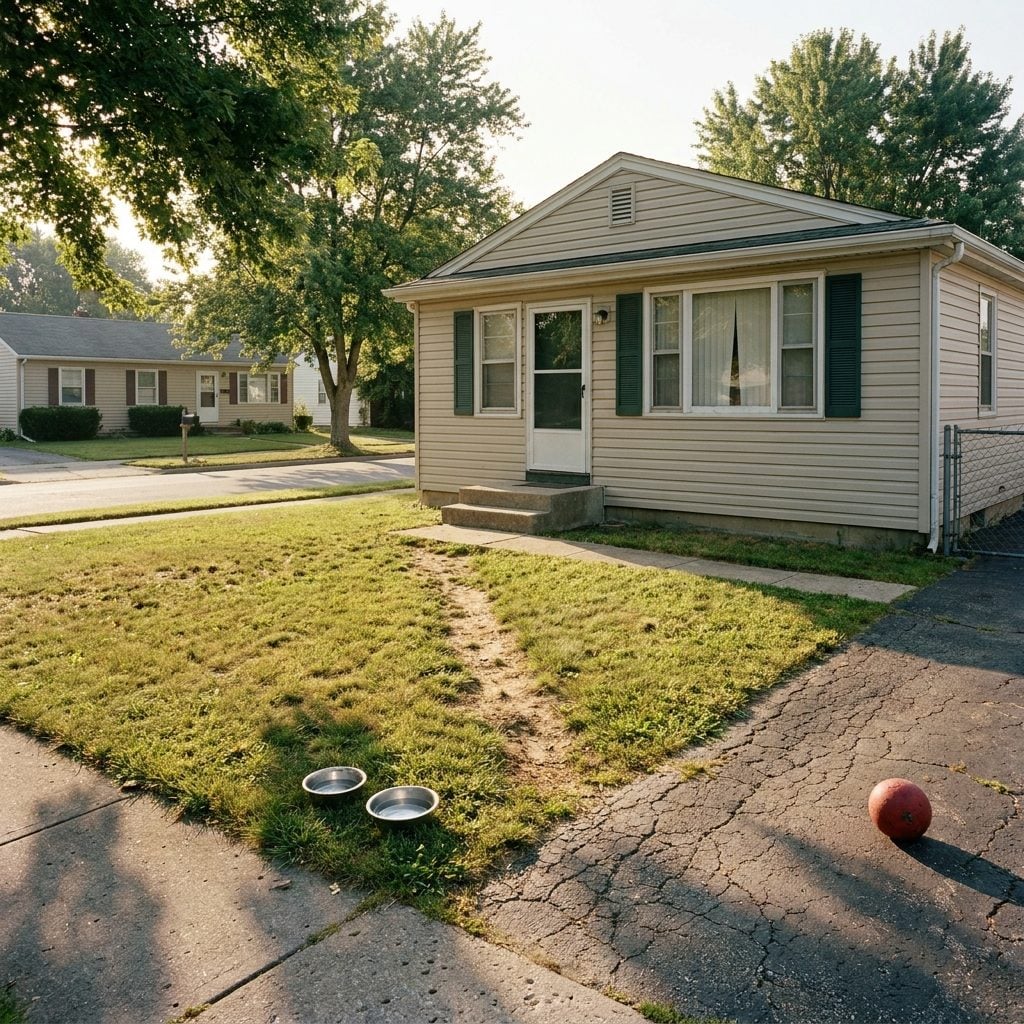
Every street had one. A golden retriever mix, or a beagle, or some indeterminate friendly creature that simply existed as a neighborhood resource. He had a name. Everyone knew it. Nobody knew exactly whose dog he technically was, though technically he belonged to the family in the tan house on the corner.
He showed up at cookouts. He trotted alongside kids on bikes for half a block before losing interest. He was never aggressive, never a problem, and if he got into someone’s garbage that was just between him and that family. The concept of a dog being contained at all times would have seemed neurotic in 1984. Leash laws existed on paper. The neighborhood dog operated above them, and everyone was fine with that arrangement.
1. The Wall of Foundation Shrubs So Dense the Windows Were Basically Decorative
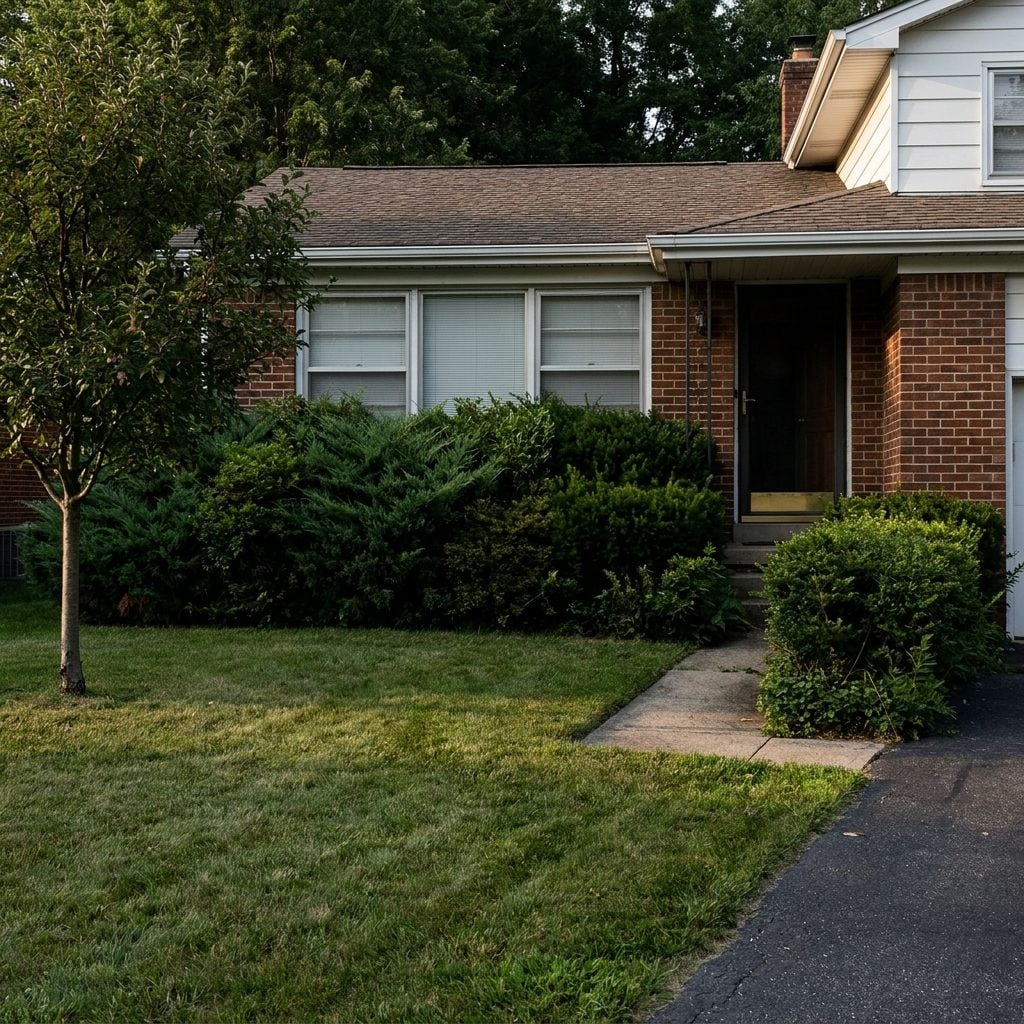
Junipers. Yews. That particular species of boxwood that grew exactly as fast as anyone hoped and then just kept going. The foundation shrubs of the 1980s were planted with conviction and then, for the most part, left to their own ambitions. By 1988, most of them had eaten the bottom third of the windows.
For home inspiration today, designers talk about layered plantings and negative space and letting a facade breathe. In 1983, the move was to cover the concrete foundation completely, create a green wall, and call it landscaping. The front door was often the only gap in the whole arrangement. These shrubs communicated a specific kind of domestic permanence: we planted these, we live here, we are not moving. The fact that you could no longer see inside from the street was just a bonus.