
Before You Buy Another “Japandi” Sofa, Paint Color or Pendant Light, Learn What Actually Makes the Style Work.
Japandi looks effortless when it is done right — which is exactly why it is so easy to get expensively wrong. This system gives you the design rules, exact paint direction, material choices, measurements, lighting guidance and room-by-room decisions behind the look.
- 60 lessons across 10 complete modules
- 300+ custom room designs showing the principles in action
- 30+ exact paint recommendations from major brands
- Room-by-room guidance for 8 major spaces
- 5 serious renovation and design planning tools
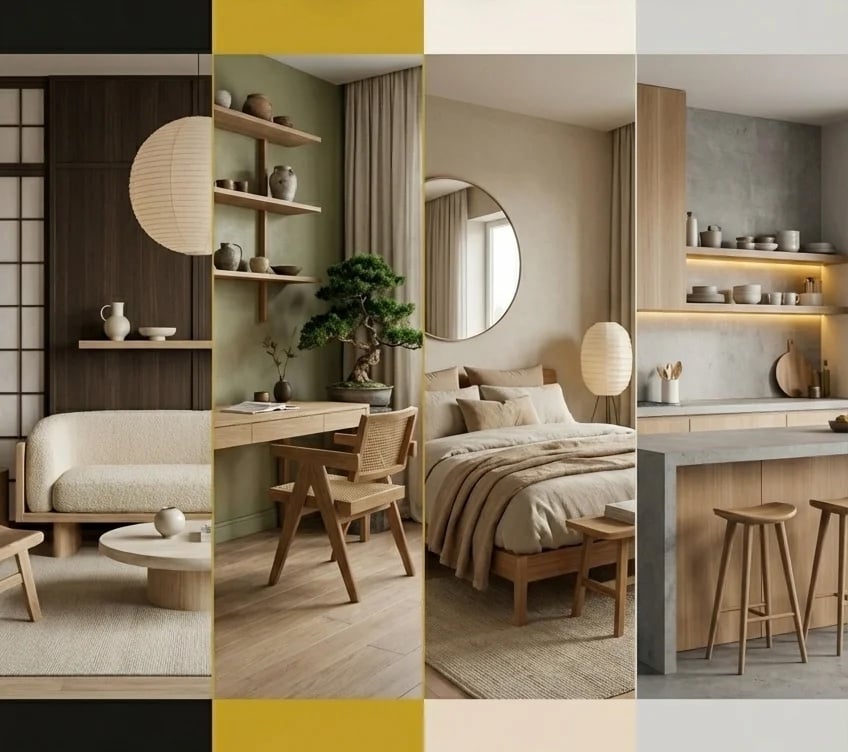
A Beige Sofa, Pale Wood and One Ceramic Vase Do Not Make a Japandi Room.
That is the problem. Japandi looks simple, so it is easy to assume it is simple to copy. You buy the low-profile sofa. Paint the walls warm white. Add oak, linen and a branch in a vase.
Then you stand back and wonder why the room feels flat, unfinished, generic — or more like a furniture showroom than the spaces you were trying to create.
The difference is in the decisions nobody puts in the Pinterest caption: proportion, negative space, undertones, visual weight, material hierarchy, lighting temperature, texture contrast, furniture height and knowing exactly when restraint has gone too far.
The Goal Is Not to Own More Japandi Things. It Is to Stop Making the Wrong Decisions.
A room can contain expensive furniture, beautiful stone, natural wood and designer lighting and still miss the look completely. Japandi depends on how those choices relate to one another.
Once you understand the system, you stop asking “Is this Japandi?” and start knowing whether a choice belongs in your room.
The Answers Are Inside. These Are the Questions That Make You Want Them.
We are not going to turn the sales page into the course. But if you are serious about getting this look right, these are the decisions that matter.
What is the one mistake that makes a minimalist room feel empty instead of expensive?
The fix has less to do with buying more and more to do with what the room is missing.
Which undertone can make an otherwise perfect warm-white room suddenly look dingy?
A tiny shift in temperature can change how every wood, textile and finish reads.
Why do some pale-wood kitchens look refined while others look builder-grade?
The wood itself is often not the problem.
Which common “Japandi” purchase can push a room straight into generic showroom territory?
It is one of the easiest things to buy — and one of the easiest things to get wrong.
What should you spend real money on — and where can a cheaper choice actually look better?
Japandi rewards hierarchy. Not every surface deserves the same budget.
Which lighting decision can wreck your paint, wood and fabric choices after sunset?
The room can look perfect at noon and completely wrong at 8 p.m.
How much empty space does a Japandi room need before restraint starts looking unfinished?
There is a point where editing becomes absence.
What makes black accents look architectural in one room and harsh in another?
The answer is not simply ‘use less black.’
Why do some neutral palettes feel rich while others feel like an apartment rental?
The difference often comes from contrast and material relationships, not price.
Which rug sizing mistake can make an otherwise sophisticated room look noticeably cheaper?
It changes the scale of the entire room in seconds.
What is the easiest way to tell whether a sofa is too bulky before you buy it?
One proportion matters more than the style name on the product page.
What makes natural wood tones cooperate instead of looking like five different furniture sets?
Matching everything is not the answer.
What should a Japandi kitchen absolutely not copy from a Japandi living room?
The same aesthetic needs different rules when the room has harder working surfaces.
Which finish combinations make a bathroom feel spa-like without turning it into a cliché?
The expensive finish is not automatically the sophisticated one.
What belongs on the walls — and what is better left completely alone?
Japandi wall restraint is much more specific than ‘hang less art.’
How do you make a bedroom feel warmer without piling on pillows, throws and decorative objects?
Comfort can come from choices that add almost no visual clutter.
What is the editing rule that tells you what to remove first when a room feels busy?
Not everything has equal visual weight.
How do you keep the entire house cohesive without making every room look cloned?
Consistency should live in the rules, not in repeating the same room eight times.
Which existing features should you work around instead of ripping out during a renovation?
Some ‘non-Japandi’ architecture is far easier to integrate than people assume.
What do you do when your house has low ceilings, builder-grade trim or awkward architecture?
The system is built for real homes, not blank-box renderings.
How do you combine Japanese restraint with Scandinavian warmth without drifting too far toward either one?
That balance is the whole point — and it is easy to lose.
Which paint colors sit in the right tonal territory — and how do you choose among them for your actual light?
The system includes specific named colors, but also teaches the decision behind them.
You Do Not Need Another Japandi Mood Board. You Need to Know Why the Room Works.
Once the rules make sense, every future paint chip, rug, sofa, cabinet finish and light fixture becomes easier to judge.
Three Steps From “I Like That Room” to “I Know How to Build It.”
Japandi becomes much easier when you stop treating it as a collection of products and start treating it as a decision system.
Understand the Rules
Learn the spatial, material, color and editing principles that make the aesthetic work.
Apply Them Room by Room
Use specific guidance for living rooms, kitchens, bedrooms, bathrooms, offices, entries, dining rooms and outdoor spaces.
Make Better Purchases
Take the system into paint stores, showrooms and renovation decisions so the next thing you buy actually belongs.
A Complete Japandi Design System. Not a Collection of Pretty Rooms.
The course is built to help you make decisions when real money, real dimensions and real rooms are involved.
Complete Japandi Design System
60 lessons across 10 modules that move from core principles into actual rooms and actual decisions.
300+ Custom Room Designs
See the principles applied visually instead of trying to translate abstract design language on your own.
30+ Exact Paint Recommendations
Specific colors from Farrow & Ball, Benjamin Moore and Sherwin-Williams, plus the logic for choosing among them.
Room-by-Room Design Briefs
Living room, dining room, kitchen, bedroom, bathroom, office, entry and outdoor guidance.
Lighting Rules
Bulb specifications, fixture choices, hanging heights and the lighting decisions that change how the whole palette reads.
Materials + Texture Hierarchy
How wood, stone, plaster, linen, metal and other finishes should relate so the room feels layered rather than busy.
Furniture + Proportion Guidance
Dimensions, scale and placement rules that help prevent the expensive pieces from being the wrong pieces.
Home Audit + Personal Brief
A framework for evaluating what you already own, what stays, what goes and what the room actually needs next.
One Wrong Rug, Light Fixture or Gallon of Premium Paint Can Cost More Than the Entire System.
The Japandi Home Design System is $27. If it helps you avoid one piece that is too bulky, one paint color that fights your flooring or one renovation choice you regret, it has already paid for itself.
Get the Japandi System — $27 →5 Serious Planning Tools for the Part Where Inspiration Turns Into Spending Money.
The astrology system gives you the design direction. These tools help stop the actual project from becoming chaos.
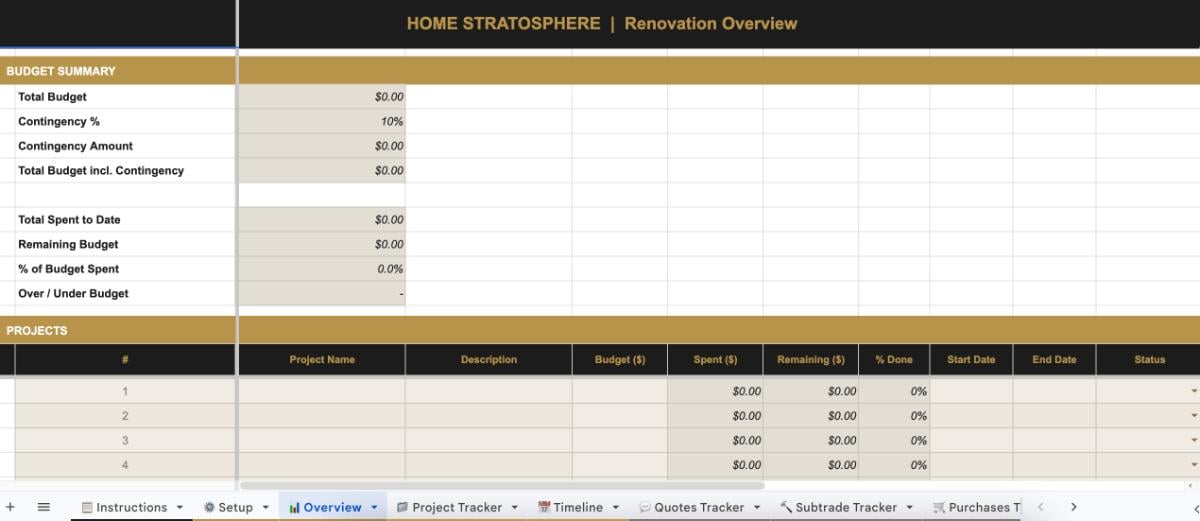
RenoRevolution Home Renovation Planner
Budget dashboard, project tracker, Gantt timeline, contractor quotes and paint log in one connected sheet.
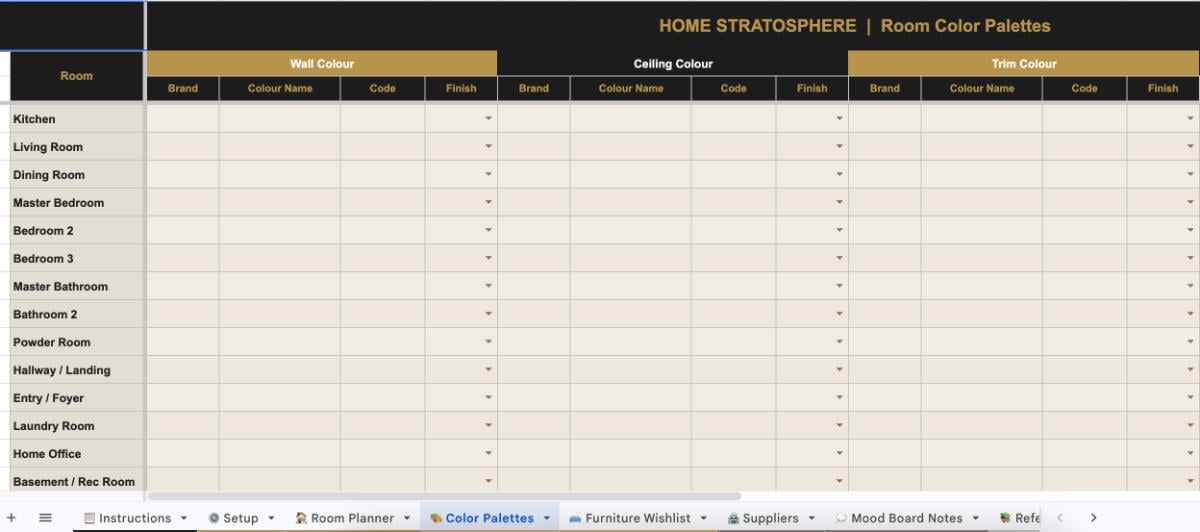
Room-by-Room Design Planner
Track dimensions, flooring, palette, furniture, suppliers, wishlist items and budget for every room.
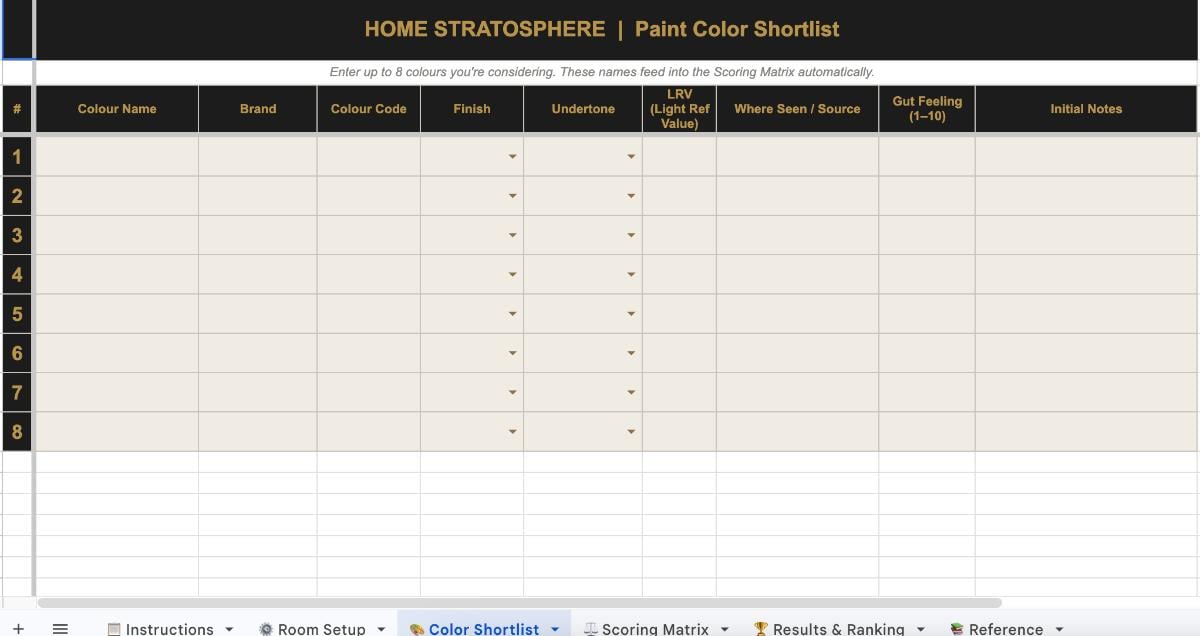
Paint Color Decision Matrix
Compare up to eight colors against weighted criteria so a wall of nearly identical samples stops running the project.
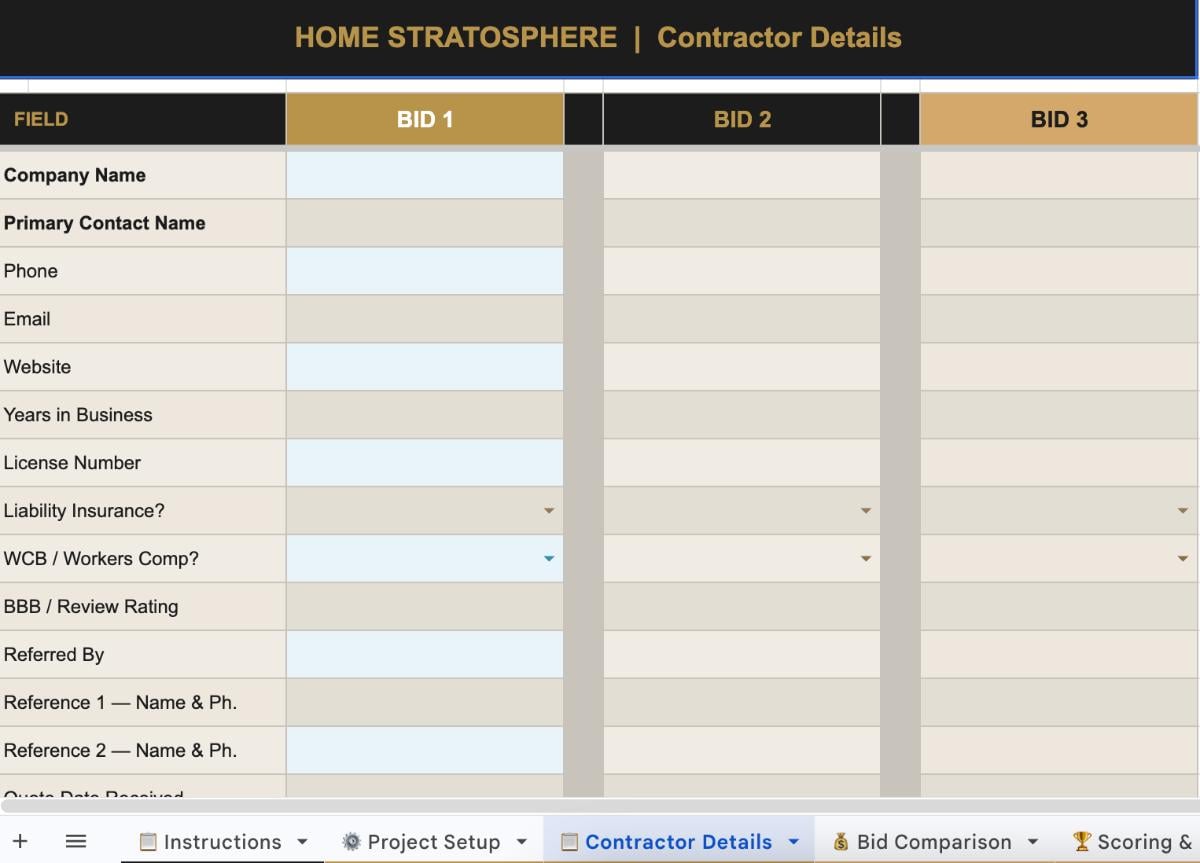
Contractor Bid Comparison Sheet
Compare three bids line by line, flag large price differences and score contractors against weighted criteria.
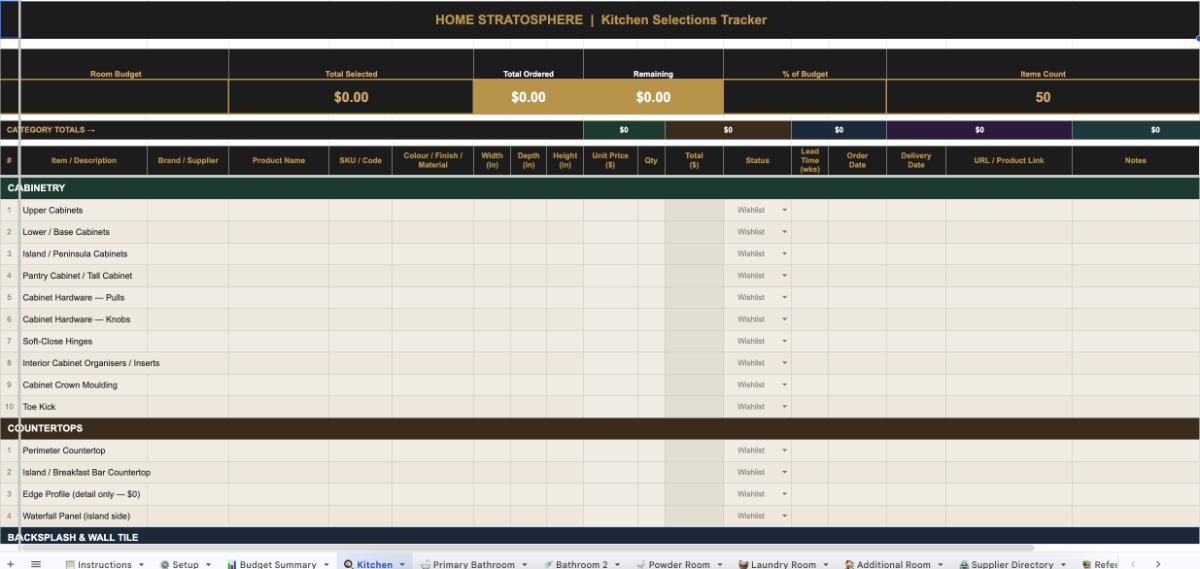
Kitchen & Bathroom Selections Tracker
Keep finishes, fixtures, fittings, costs and installation status together so the renovation does not become a scavenger hunt.
If You Are About to Spend Money on a Room You Want to Look Japandi, Read This First.
- You keep saving Japandi rooms but cannot reproduce the same feeling at home
- You are about to buy furniture, paint, flooring, lighting, cabinets or finishes
- You want minimalism without making the house bland, sterile or generic
- You are tired of buying one “right” thing at a time and still ending up with a room that does not come together
- You want actual measurements, paint guidance, material rules and room briefs instead of another inspiration board
- You would rather spend $27 before the expensive decisions than regret one of them afterward
- You want maximalist rooms packed with pattern, ornament and decorative objects
- You only want a shopping list and have no interest in understanding why a room works
- You are looking for a professional design certification rather than a practical home design system

Built for People Who Are Tired of Guessing.
Jon Dykstra is the founder of Home Stratosphere and a former owner of an interior design firm. Home Stratosphere has spent years publishing home-design content at scale.
This course is designed to turn a style people love looking at into a system they can actually use in their own homes.
The Japandi Home Design System
Learn the rules before the room gets expensive.
- 60 lessons across 10 modules
- 300+ custom Japandi room designs
- 30+ exact paint recommendations
- Room-by-room guidance for 8 major spaces
- Lighting, materials, furniture and proportion rules
- Home audit + personal Japandi design brief
- 5 renovation and design planning tools
- 14-day money-back guarantee
Questions
No. The course starts with the underlying principles and builds toward practical room decisions. It is designed for homeowners, renovators and design-curious readers.
No. The point is not to imitate a Japanese interior. The system uses Japandi principles in the architecture and rooms you already have, including older homes, low ceilings and builder-grade spaces.
No. The named paints give you precise reference points, but the course also explains the undertones and tonal logic so you can translate the direction to other brands.
Yes. Many high-impact changes involve editing, layout, lighting, rugs, textiles and window treatments rather than permanent renovation.
They are included with enrollment and linked inside the course as Google Sheets you can copy and use.
You have 14 days to go through the material and decide whether it is useful to you. If it is not, email us for a refund.
Everything is delivered through Teachable and is available immediately on desktop, tablet or phone. It is designed to work both as a course and as a reference when you are making a specific design decision.
Stop Collecting Japandi Inspiration. Start Knowing What to Do.
The next sofa, paint color, rug, light fixture, cabinet finish or renovation decision can move your home closer to the look you want — or make the room harder to fix. Learn the system before you make the expensive choice.
Get the Japandi System — $27 →This system was developed with AI-assisted research and writing with human editorial oversight. Room imagery may include AI-generated examples used to illustrate design principles. © Home Stratosphere. All rights reserved.