
Before You Spend Another Dollar Making Your Home Look “Expensive,” Learn What Actually Makes a Room Feel Expensive.
The homes that look effortlessly expensive are not filled with more luxury products. They are built on better decisions — proportion, materials, lighting, color, restraint, architecture and knowing exactly where money matters. This system teaches you those decisions for every room in your home.
- 75 lessons across 11 complete modules
- 300+ custom room designs showing the principles in action
- Exact paint guidance from Farrow & Ball, Benjamin Moore and Sherwin-Williams
- Room-by-room design briefs for 12 distinct spaces
- 5 professional renovation and design planning tools
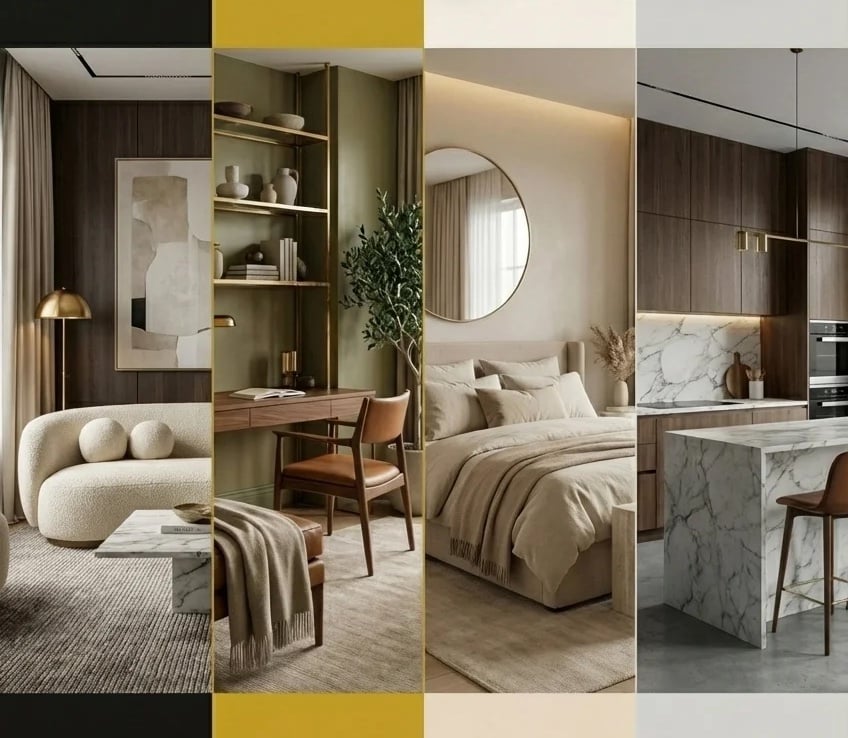
A Room Can Contain Beautiful, Expensive Things and Still Look Cheaper Than It Should.
That is what makes this style so frustrating. You can buy the marble table. The linen sofa. The wool rug. The brass light fixture. The designer faucet. Every piece can be good on its own.
And the room can still feel off.
The homes that look established, layered and expensive are usually doing dozens of small things differently: the finish on the floor, the height of the curtains, the temperature of the bulbs, the undertone of the paint, the amount of contrast, the scale of the furniture, the material hierarchy and what the room deliberately refuses to show off.
Once you see those decisions, expensive-looking rooms stop feeling mysterious.
The Goal Is Not to Make Your Home Look Rich. It Is to Make Every Decision Look Intentional.
That is why some rooms with enormous budgets look overdone while some far less expensive rooms look extraordinarily refined. Money helps. Judgment matters more.
The Quiet Luxury Home Design System gives you the judgment framework: what deserves attention, what should recede, where natural materials matter, how lighting changes perceived quality, when architecture should lead, and when the smartest move is to remove something rather than add another purchase.
The Tiny Decisions That Separate “Nice House” From “Why Does This Look So Expensive?”
These are the questions inside the system. We are deliberately not giving you the answers here.
What is the first thing that makes a room look expensive before anyone notices the furniture?
It is usually already built into the room — or missing from it.
Which neutral paint mistake can make thousands of dollars of furniture look worse?
The wrong undertone can fight every wood, stone and textile in the room.
What makes one beige room look sophisticated and another look builder-grade?
The answer is not simply choosing a more expensive beige.
Which flooring finish can make an otherwise beautiful home look noticeably cheaper?
The species matters less than many homeowners assume.
Why do some natural-stone rooms look timeless while others look like a showroom?
Stone can add depth or overwhelm the entire material hierarchy.
What is the fastest way to tell whether a material will age beautifully or just look dated?
There is a simple quality distinction most product pages never explain.
Which curtain mistake makes a room look less expensive the second you walk in?
It has more to do with installation than fabric price.
What makes a sofa look custom even when it is not?
Scale and proportion can do more than a designer label.
Why can matching furniture make a room look cheaper?
Too much coordination can erase the sense that a room evolved over time.
Which lighting temperature makes expensive finishes look better after sunset?
The wrong bulb can flatten wood, stone, brass and paint in one move.
How many lighting layers should a polished living room actually have?
One beautiful fixture is almost never enough.
What makes brass look refined instead of trendy?
The finish, placement and surrounding materials matter more than the metal itself.
Which three material categories most often sabotage this look?
They can make even a high-budget room feel synthetic.
Where should you spend more — and where is spending more almost pointless?
The system is far more selective about splurges than most design advice.
What should a luxury-looking kitchen never try too hard to display?
Some of the most expensive-looking kitchens hide more than they show.
What makes a bathroom feel like a high-end hotel without copying a hotel bathroom?
The answer is in repetition, lighting and material restraint.
What is the one decision that matters most in a primary bedroom?
It is not the bedding.
How do you make a hallway feel expensive when there is almost nothing in it?
Transitional spaces reveal whether the whole house has a real design system.
What makes a powder room the perfect place to break one of the main rules?
Small rooms can carry intensity the rest of the house cannot.
Why do some homes look ‘newly decorated’ while others look established?
The difference often comes from how age, patina and imperfection are handled.
Which zero-cost changes can make a room look better before you buy anything?
Some of the strongest corrections involve editing and repositioning.
How do you make builder-grade architecture feel more substantial without a full remodel?
A few interventions create far more visual weight than others.
Which millwork upgrade creates the biggest perceived jump in quality?
Not all trim work earns back the visual attention it costs.
How do you keep a neutral room from becoming flat?
The palette is only one layer of the system.
What makes a library or home office feel established instead of staged?
The room needs a different hierarchy than a living room.
Which outdoor choices make the house itself look more expensive?
The design system does not stop at the front door.
How do you choose among Old Money American, European, Contemporary New Quiet, Warm Organic and Residential Hotel?
They share principles, but they should not produce the same room.
What is the one-page design brief that can stop random purchases before they happen?
Once the rules are written down, shopping becomes much easier.
How can AI visualization help you test a room before spending money?
The course includes prompt vocabulary designed specifically for this style.
What should you fix first if you have only $500 to spend?
The highest-impact answer is often not the thing you are currently shopping for.
$27 Is Less Than One Cabinet Pull in Some Homes. Learn the System Before the Expensive Decisions.
If it changes one paint choice, one rug size, one light fixture, one furniture purchase or one renovation decision, the course can pay for itself immediately.
Three Steps From “I Know What I Like” to “I Know Why It Works.”
Good taste helps. A repeatable decision system is what lets you use it consistently.
Learn the Principles
Understand the seven governing principles, material hierarchy, palette architecture, lighting standards and common misconceptions.
Apply Them Room by Room
Use specific design briefs for 12 spaces instead of trying to force one aesthetic formula onto the entire house.
Spend With More Confidence
Take the system into paint stores, furniture showrooms, contractor meetings and renovation decisions before the money is gone.
A Complete Design Education for Making a Home Look Far More Expensive Than a Shopping List Ever Could.
This is not a gallery of aspirational rooms. It is the system behind the decisions that make them work.
The Complete Quiet Luxury System
75 lessons across 11 modules covering the style from first principles through actual room decisions.
Seven Governing Principles
The core rules that hold the aesthetic together so you are not decorating from random inspiration images.
300+ Custom Room Designs
See the principles applied visually across real room types and design expressions.
Exact Paint Architecture
Named colors from Farrow & Ball, Benjamin Moore and Sherwin-Williams, assigned by room and light condition.
Material Hierarchy
Specific guidance for stone, wood, linen, cashmere, leather and warm metals, including quality and finish criteria.
12 Room-by-Room Briefs
Living room, dining room, kitchen, primary bedroom, bathroom, office, library, guest room, powder room, outdoor areas, hallways and service rooms.
Complete Lighting Module
2700K and 90+ CRI standards, layering principles and a room-by-room lighting plan.
Budget Transformation Module
Eight lessons on zero-cost and lower-cost interventions plus a three-year phased transformation plan.
Five Style Expressions
Old Money American, European, Contemporary New Quiet, Warm Organic and Residential Hotel — with a process for identifying yours.
Whole-Home Audit
A framework for deciding what stays, what goes and what should be fixed before another purchase.
AI Visualization Lesson
Specific prompt vocabulary for testing this design direction before committing to real-world changes.
5 Planning Tools
Renovation, room planning, paint decisions, contractor bids and kitchen/bath selections in ready-to-use Google Sheets.
$27 Before the Next $5,000, $25,000 or $100,000 You Spend on Your Home.
A single faucet can cost more. So can a pendant light. So can the delivery fee on a sofa you later hate. Learn what makes the room work before you keep paying to experiment.
Get the Complete System — $27 →5 Serious Planning Tools for the Part Where Inspiration Turns Into Spending Money.
The astrology system gives you the design direction. These tools help stop the actual project from becoming chaos.
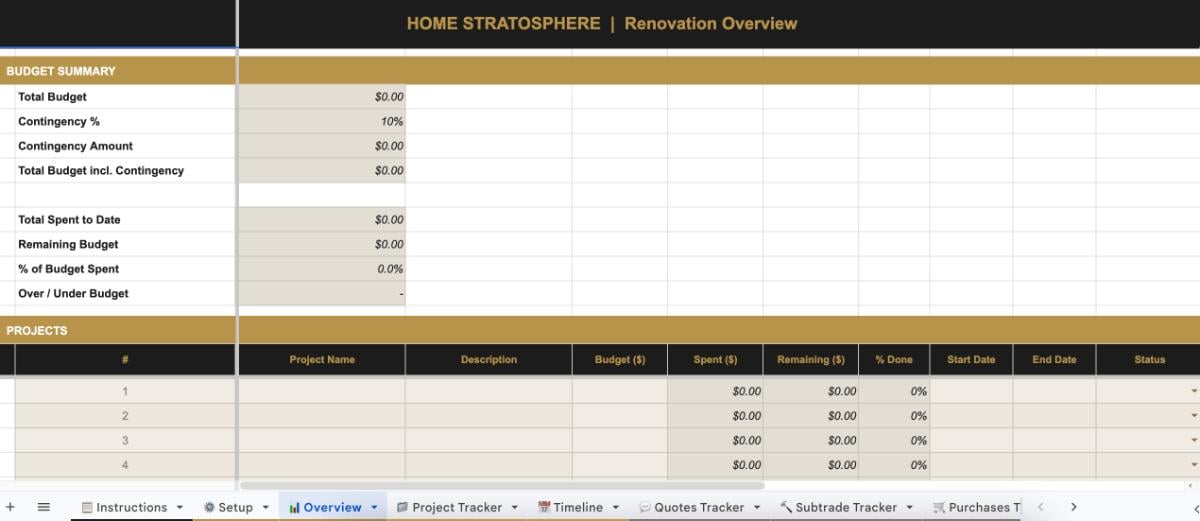
RenoRevolution Home Renovation Planner
Budget dashboard, project tracker, Gantt timeline, contractor quotes and paint log in one connected sheet.
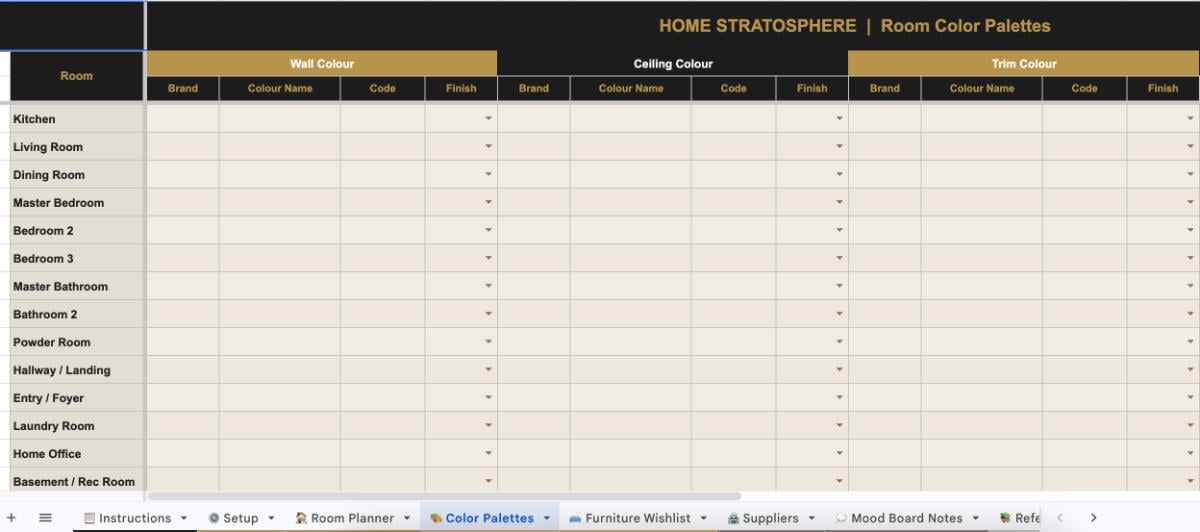
Room-by-Room Design Planner
Track dimensions, flooring, palette, furniture, suppliers, wishlist items and budget for every room.
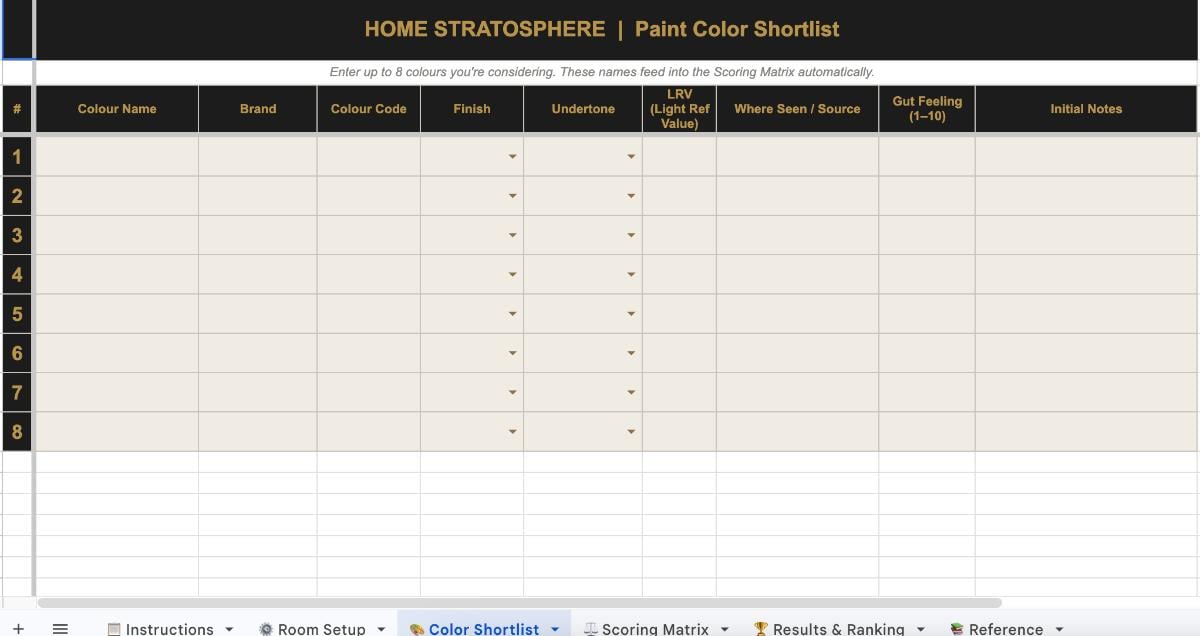
Paint Color Decision Matrix
Compare up to eight colors against weighted criteria so a wall of nearly identical samples stops running the project.
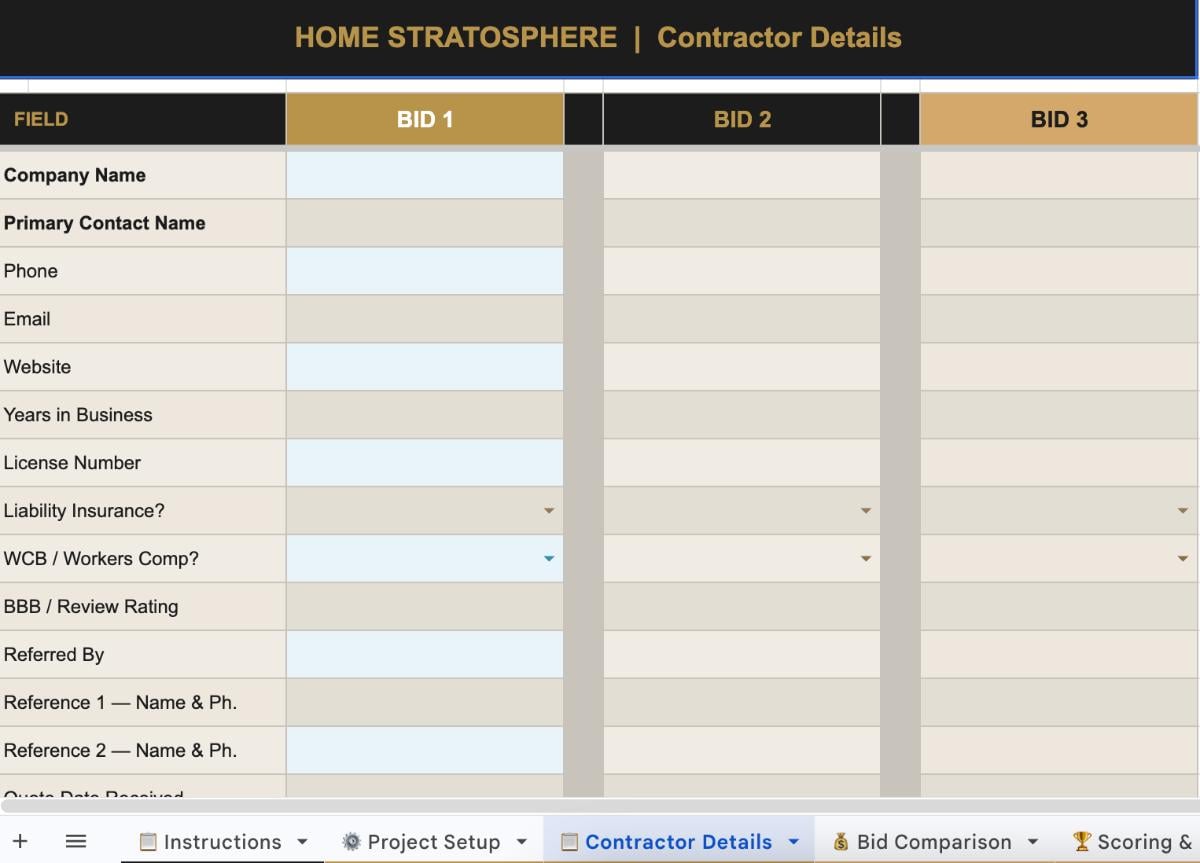
Contractor Bid Comparison Sheet
Compare three bids line by line, flag large price differences and score contractors against weighted criteria.
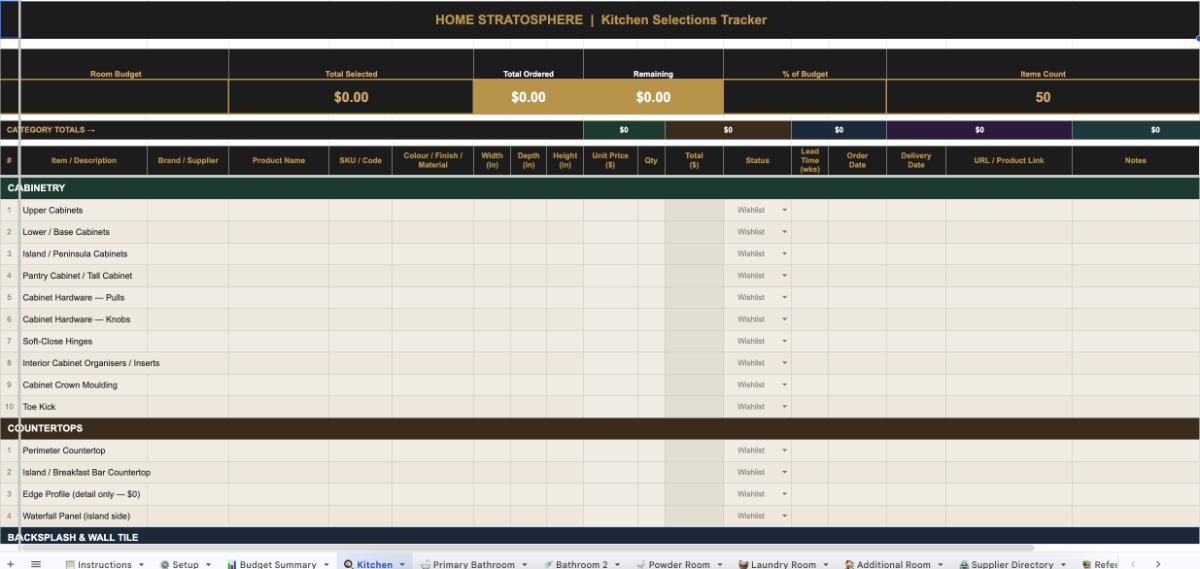
Kitchen & Bathroom Selections Tracker
Keep finishes, fixtures, fittings, costs and installation status together so the renovation does not become a scavenger hunt.
This Is for Homeowners Who Want Their House to Feel More Expensive, More Cohesive and Less Trend-Chased.
- You recognize an expensive-looking room instantly but cannot always explain why it works
- You have spent real money on your home and still feel that something is missing
- You are planning a renovation and want to avoid expensive choices that fight each other
- You want a sophisticated home without chasing every new design trend
- You want to know where spending more matters — and where it absolutely does not
- You want exact paint, material, lighting and room-by-room guidance instead of vague inspiration
- You want a system you can keep using for every future room and every future home
- You want a one-click shopping list of products to copy exactly
- You want heavily maximalist, highly patterned rooms where visual abundance is the main goal
- You are looking for professional accreditation rather than practical homeowner guidance

Built for Homeowners Who Are Tired of Paying to Learn by Trial and Error.
Jon Dykstra is the founder of Home Stratosphere and a former owner of an interior design firm. Home Stratosphere has spent years publishing home-design content at scale.
The Quiet Luxury Home Design System was built around one idea: the principles behind sophisticated interiors can be taught. They do not have to remain designer instinct, showroom mystique or something you only recognize after somebody else has already done it.
The Quiet Luxury Home Design System
Learn the decisions behind expensive-looking rooms before making the expensive decisions.
- 75 lessons across 11 complete modules
- Seven governing design principles + the major misconceptions corrected
- 300+ custom room designs
- Exact paint guidance by room and lighting condition
- Material hierarchy for stone, wood, linen, leather, cashmere and warm metals
- Room-by-room briefs for 12 distinct spaces
- Complete lighting module with 2700K / 90+ CRI standards and layering
- Eight-lesson budget transformation module
- Five style-expression profiles
- Whole-home audit + phased transformation plan
- AI visualization lesson with style-specific prompt vocabulary
- 5 professional Google Sheet planning tools
Questions
No. The system is written for homeowners who care about design but do not have formal training. It starts with the principles and then shows how to apply them.
No. The course includes an eight-lesson budget transformation module covering zero-cost changes, lower-cost interventions and a three-year phased plan.
Yes. The system specifically addresses ordinary architecture, including standard ceilings, builder finishes and ways to add visual weight without rebuilding the entire house.
No. The whole-home audit is designed to start with what you already own. The system prioritizes editing and correction before new purchases.
A designer can make decisions for one project. This course teaches you the framework behind those decisions so you can keep using it in future rooms, renovations and homes.
They are included with enrollment and linked inside the course as Google Sheets you can copy and use.
You have 14 days to use the course and decide whether it is right for you. If it is not, email us for a complete refund.
Everything is delivered through Teachable and is available immediately on desktop, tablet or phone.
Your Home Is Probably Not One More Expensive Purchase Away. It Is One Better System Away.
The next sofa, paint color, floor finish, light fixture, curtain, countertop or renovation decision can make the entire house feel more considered — or become another expensive thing you eventually replace. Learn the system first.
Get the Quiet Luxury System — $27 →This system was developed with AI-assisted research and writing with human editorial oversight. Room imagery may include AI-generated examples used to illustrate design principles. © Home Stratosphere. All rights reserved.