🔥 Would you like to save this?
A circular driveway can make a front yard feel like an arrival or a parking lot. The difference usually comes down to about three design decisions. Most homeowners who install one are after the same thing: a sense of occasion without the formality of a gated estate. Done well, a circular drive pulls visitors in, frames the house, and gives the yard a natural focal point. Done poorly, it just eats up green space and leaves the front of the house looking like a hotel drop-off zone. The designs trending right now suggest people are finally figuring out which choices actually work. The 31 examples ahead cover a wide range of approaches, from landscaped center islands to minimalist paver loops, so there’s a clear sense of what separates the ones worth copying from the ones worth avoiding.
In order to come up with the very specific design ideas, we create most designs with the assistance of state-of-the-art AI interior design software. Also, assume links that take you off the site are affiliate links such as links to Amazon. this means we may earn a commission if you buy something.
31. Waterfront Living Starts at the Curb — This Circular Entry Proves It
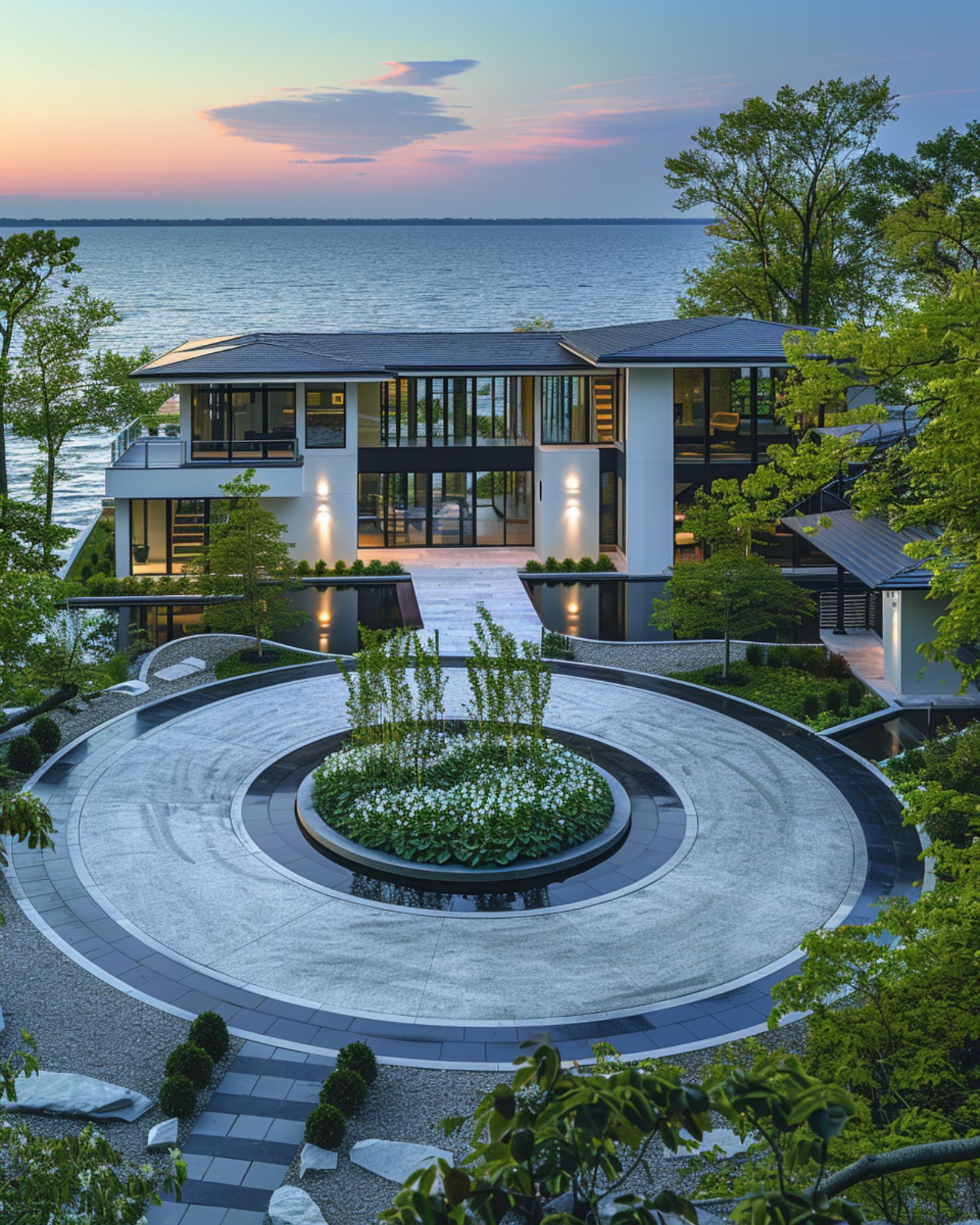
Concentric rings of gray granite pavers form a dramatic motor court centered on a raised planting island of white blooms and upright ornamental grasses. The pattern draws the eye forward like a slow exhale, pulling visitors from street level all the way to the house’s white stucco facade and its floor-to-ceiling black-framed glazing.
At dusk, wall-mounted uplights cast warm pools against the entry columns, and the water beyond catches the last pink light of the sky. It’s a lot to take in from one vantage point. The circular driveway here isn’t decorative filler; it’s doing real compositional work, anchoring a two-story modern home that would otherwise feel adrift between the tree canopy and the open water behind it.
30. Cedar Shingle Charm Gets a Circular Cobblestone Crown
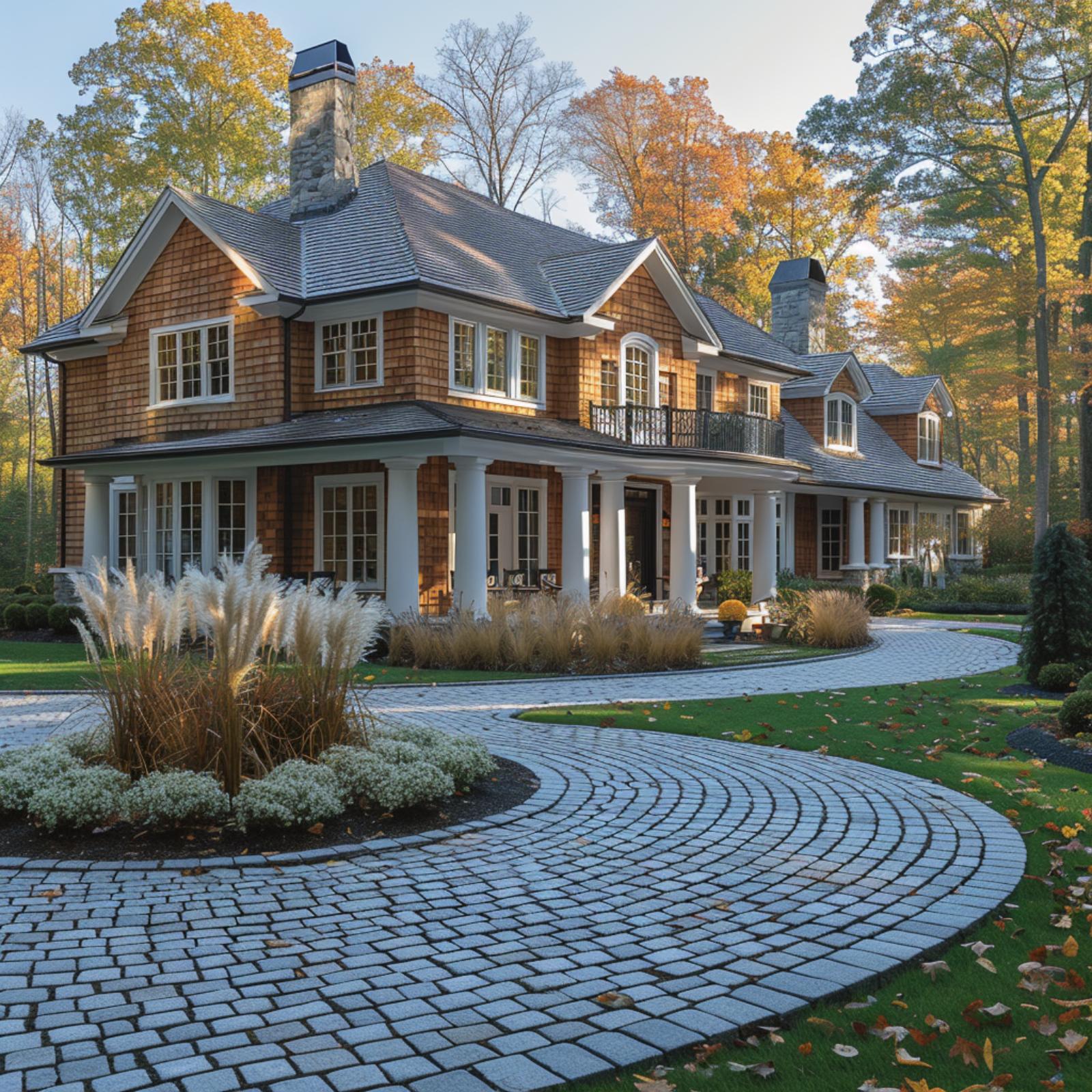
Gray granite cobblestones laid in a fan pattern carry the eye straight to white classical columns and a cedar shingle facade that’s gone warm amber in the afternoon light. The planted island anchors the curve with ornamental grasses and low white blooms. It’s grounded without feeling formal.
29. Live Oaks, Spanish Moss, and a Circular Entry That Earns Every Inch
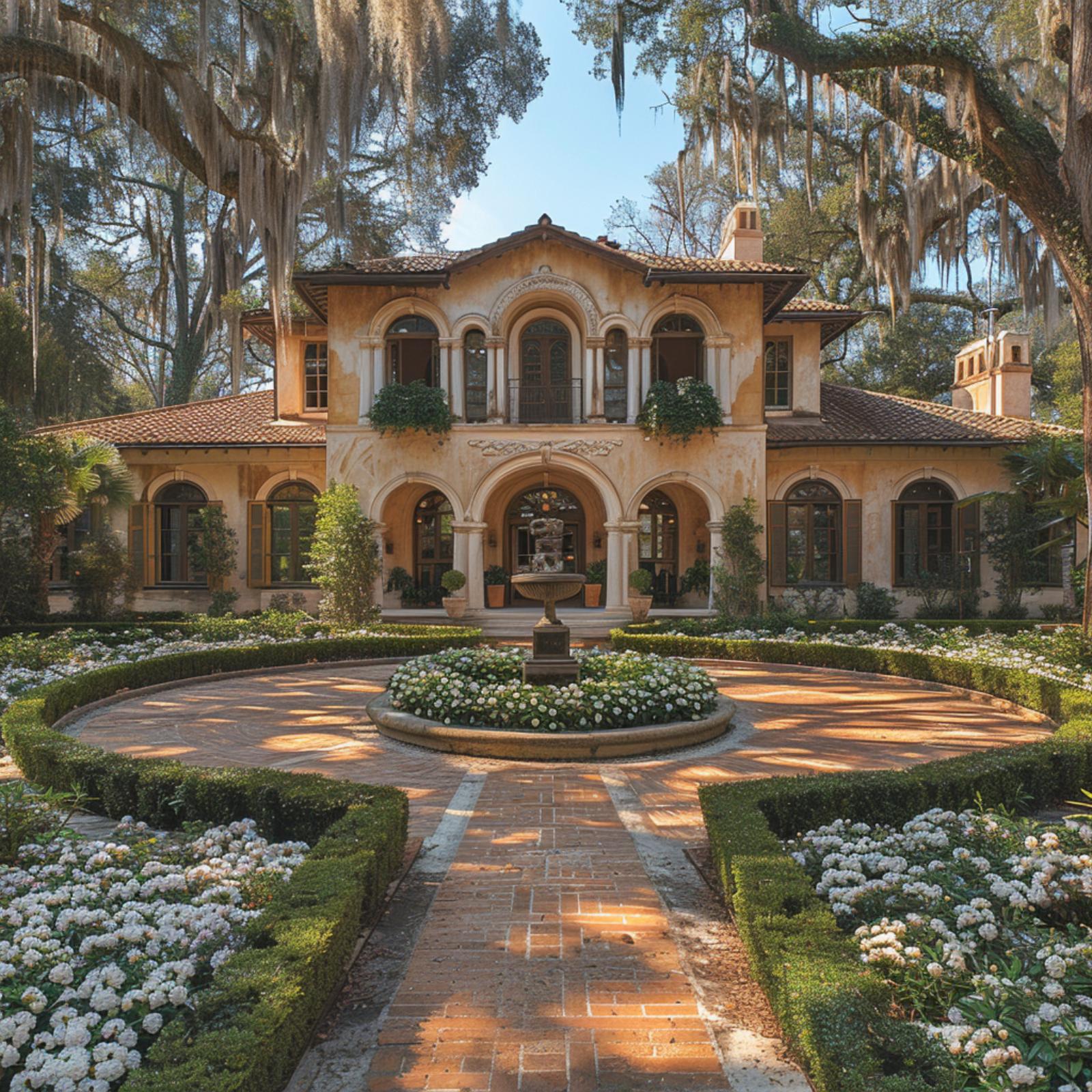
Draped in Spanish moss and filtered afternoon light, this Mediterranean villa uses a brick paver roundabout centered on a stone fountain ringed with white flowering shrubs. The formal parterre hedging keeps it structured without feeling stiff.
28. Cherry Blossoms and Herringbone Brick — Southern Grandeur Finds Its Driveway
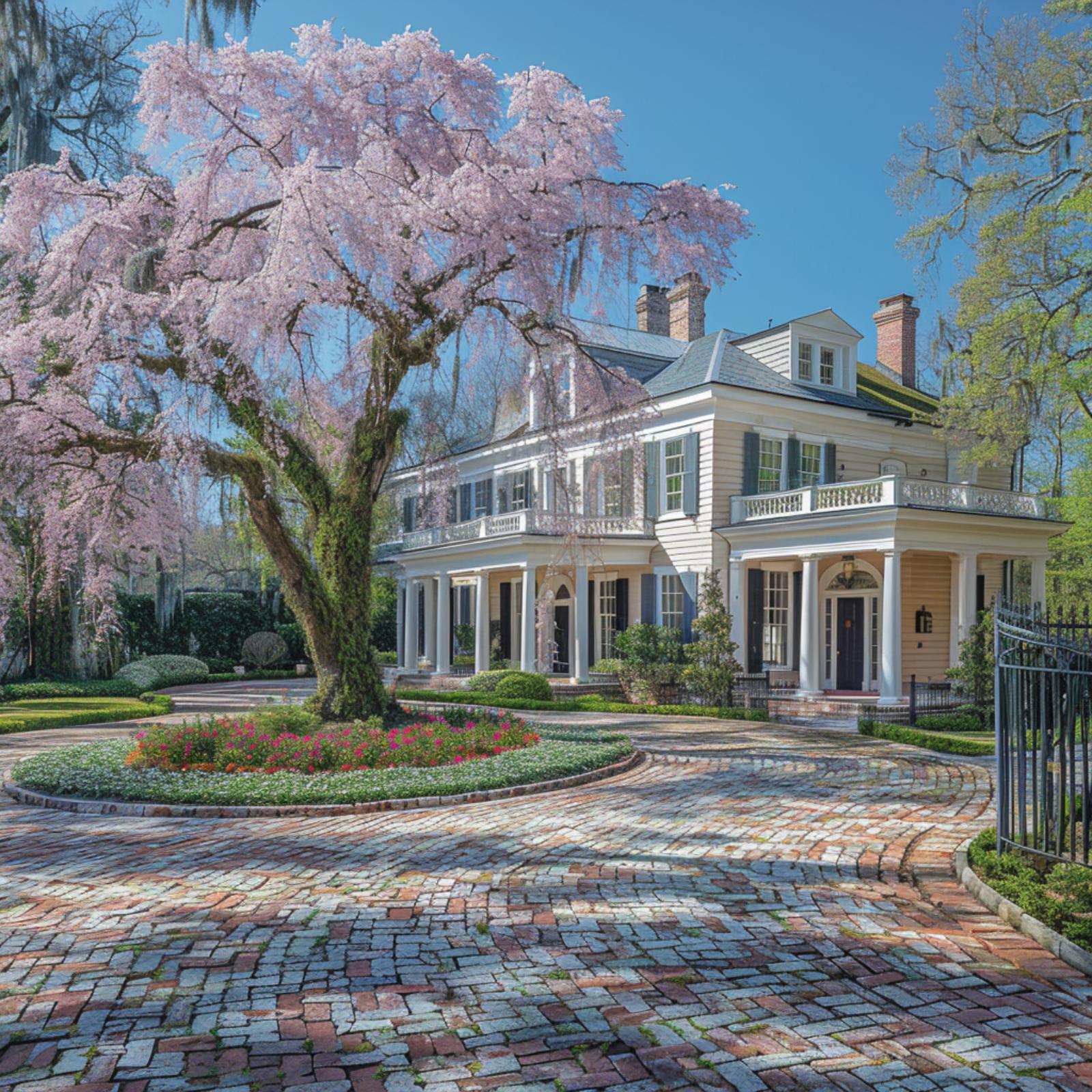
Pink blooms from a weeping cherry dominate the forecourt, pulling the eye away from the mansion’s white columns long enough to appreciate the circular island planted with ground cover and bright annuals below. The herringbone-patterned brick driveway does the real structural work here, anchoring a layout that could easily feel formal but doesn’t.
- Herringbone brick laid in alternating red and gray tones adds pattern without extra materials
- The planted island breaks the driveway’s scale so the entry reads as garden-first, house-second
- Dark shutters and matching front doors give the facade enough contrast to hold its own against the blossoms
27. Red Brick, White Columns, and One Weeping Cherry That Steals the Show
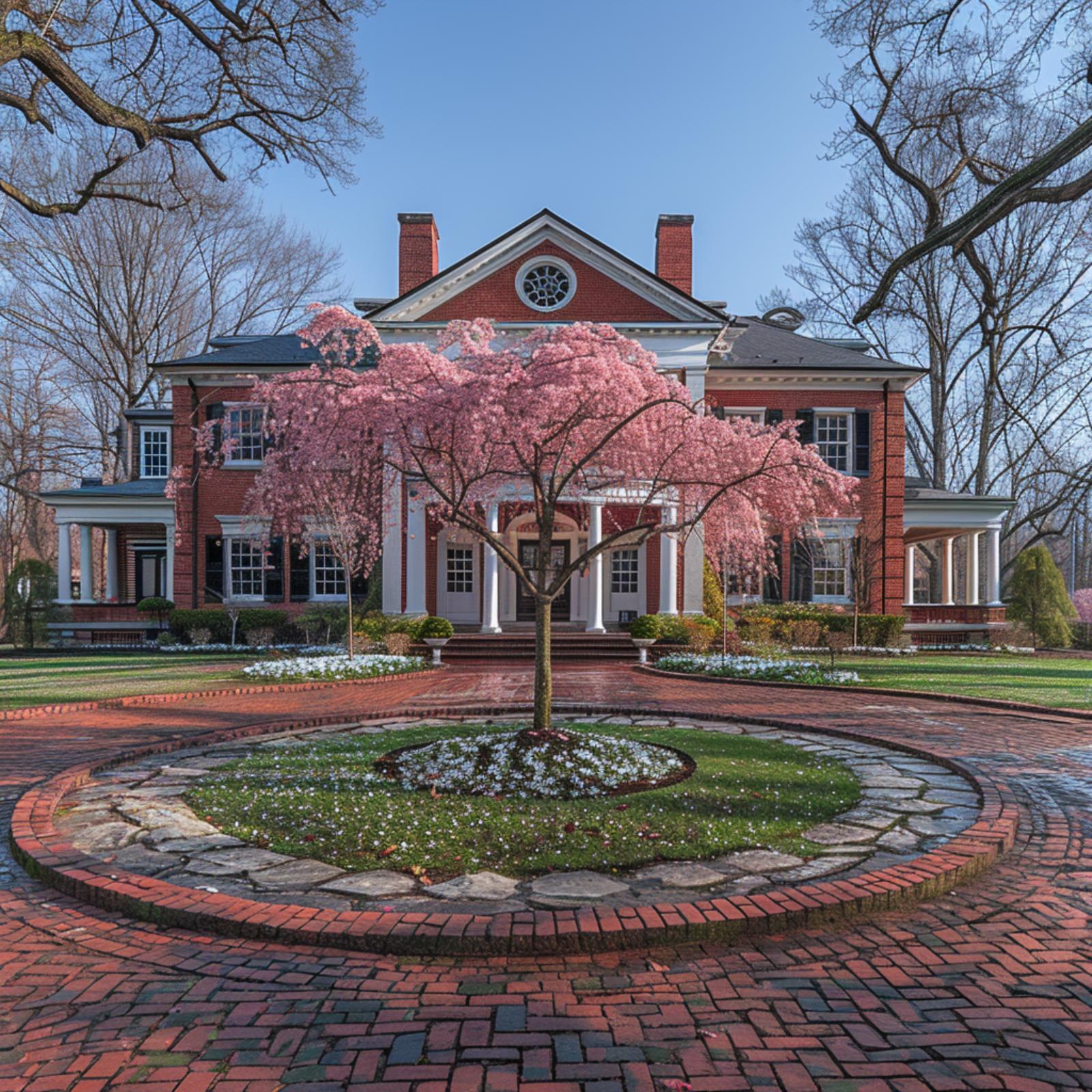
Herringbone brick fans out from a circular center island edged in irregular flagstone, with white flowering ground cover planted at the base of a weeping cherry in full pink bloom. Behind it, the Georgian facade reads like a textbook: red brick, white pilasters, a pedimented roofline with an oculus window, and symmetrical portico columns framing the front entry. It’s the kind of driveway that earns its formality.
Herringbone brick fans out from a circular center island edged in irregular flagstone, with white flowering ground cover planted at the base of a weeping cherry in full pink bloom.
26. Shingle Style Gets Serious With Cobblestone, Ornamental Grasses, and Autumn Color
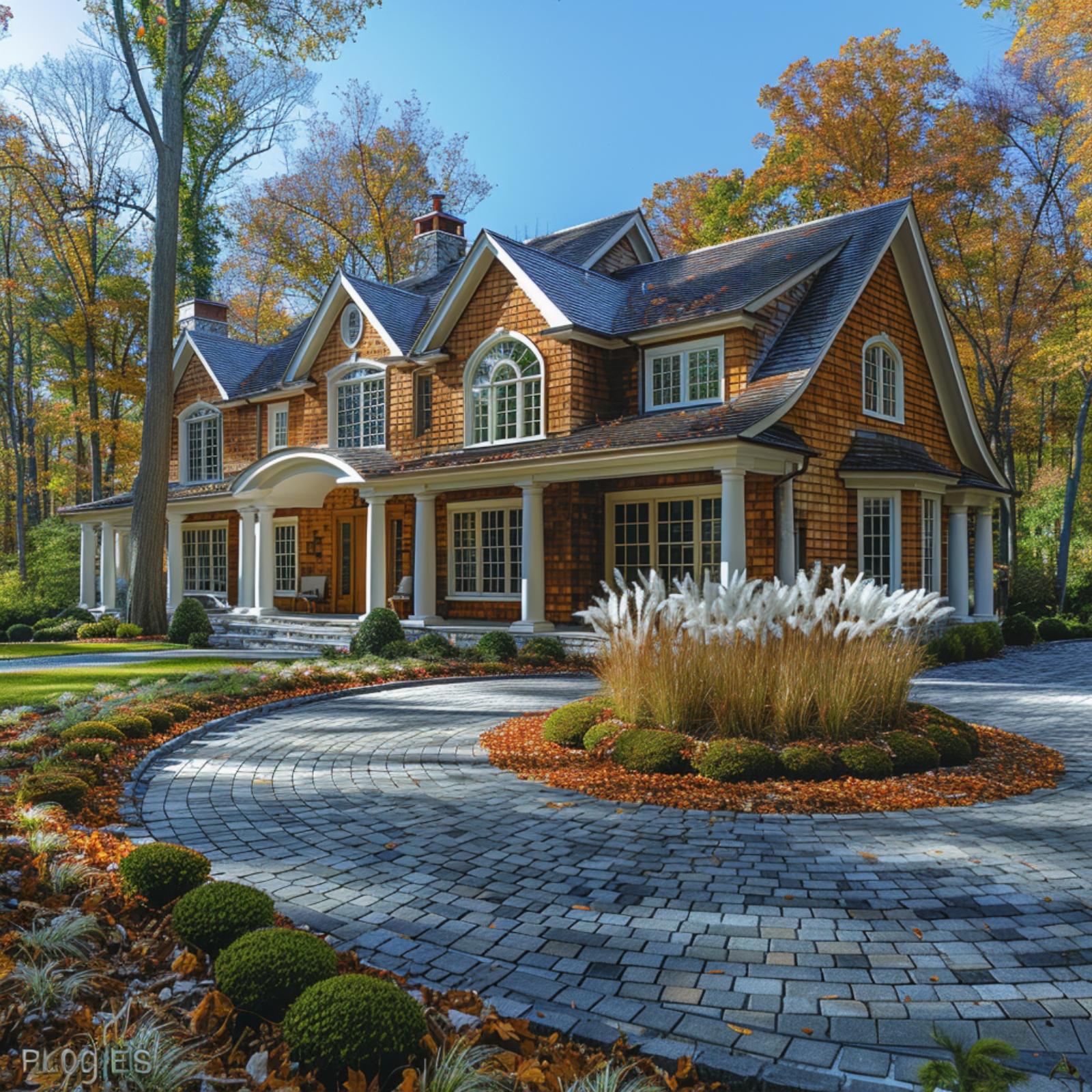
Cedar shingles aged to a warm amber wrap this two-story home from roofline to foundation, broken up by white pilasters and arched window surrounds that keep the facade from feeling too heavy. The circular cobblestone driveway commands the front yard with a center island planted in ornamental grasses gone silver and round-clipped boxwoods edged in fallen leaves.
Fall does a lot of work here. The trees behind the house are mid-turn, and that orange canopy mirrors the shingles closely enough that the whole composition feels deliberate.
Editor’s Note: The center island planting is worth studying. Tall ornamental grasses provide vertical contrast against the low boxwood mounds, and that pairing keeps the island readable from a moving car rather than blurring into a single green mass. It’s a low-maintenance solution that photographs well in every season except deep winter.
25. Spanish Colonial Courtyard Entry With a Fountain That Actually Earns Its Square Footage
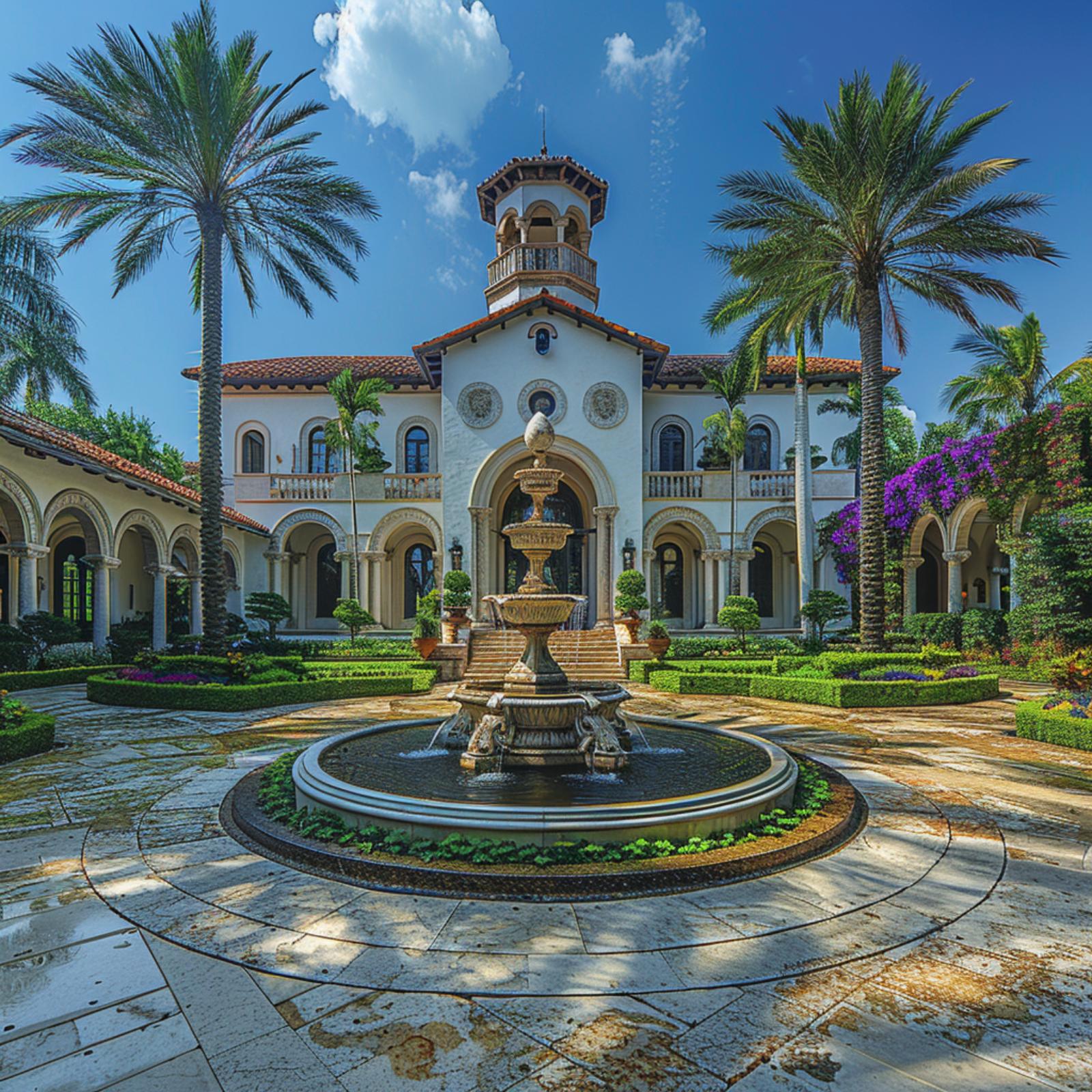
White stucco walls, terracotta roof tiles, and arched colonnades on both wings frame a motor court that reads less like a driveway and more like a European estate entrance. The tiered stone fountain at center is the load-bearing visual element here. Everything else, the clipped boxwood parterres, the potted topiaries flanking the stairs, the bougainvillea spilling purple along the right colonnade, orients around it.
Tall palms pull the eye upward toward the belvedere tower, which keeps the facade from feeling flat. The wet pavers suggest a recent rain, and honestly, the reflections make the courtyard look even better for it. Symmetry does most of the work, but it’s the small asymmetries, like that burst of purple bloom against the white stucco, that keep it from feeling rigid.
Did You Know: Circular motor courts in Mediterranean and Spanish Colonial designs have roots in Renaissance villa planning, where the round forecourt was meant to slow arrival and signal transition from public road to private residence. That deliberate sense of pause is still what separates a well-designed circular entry from one that simply adds square footage. A central fountain anchors that pause with sound as much as form.
24. River Rock Roundabout Meets Mountain Modern in One Unforgettable Entry Court
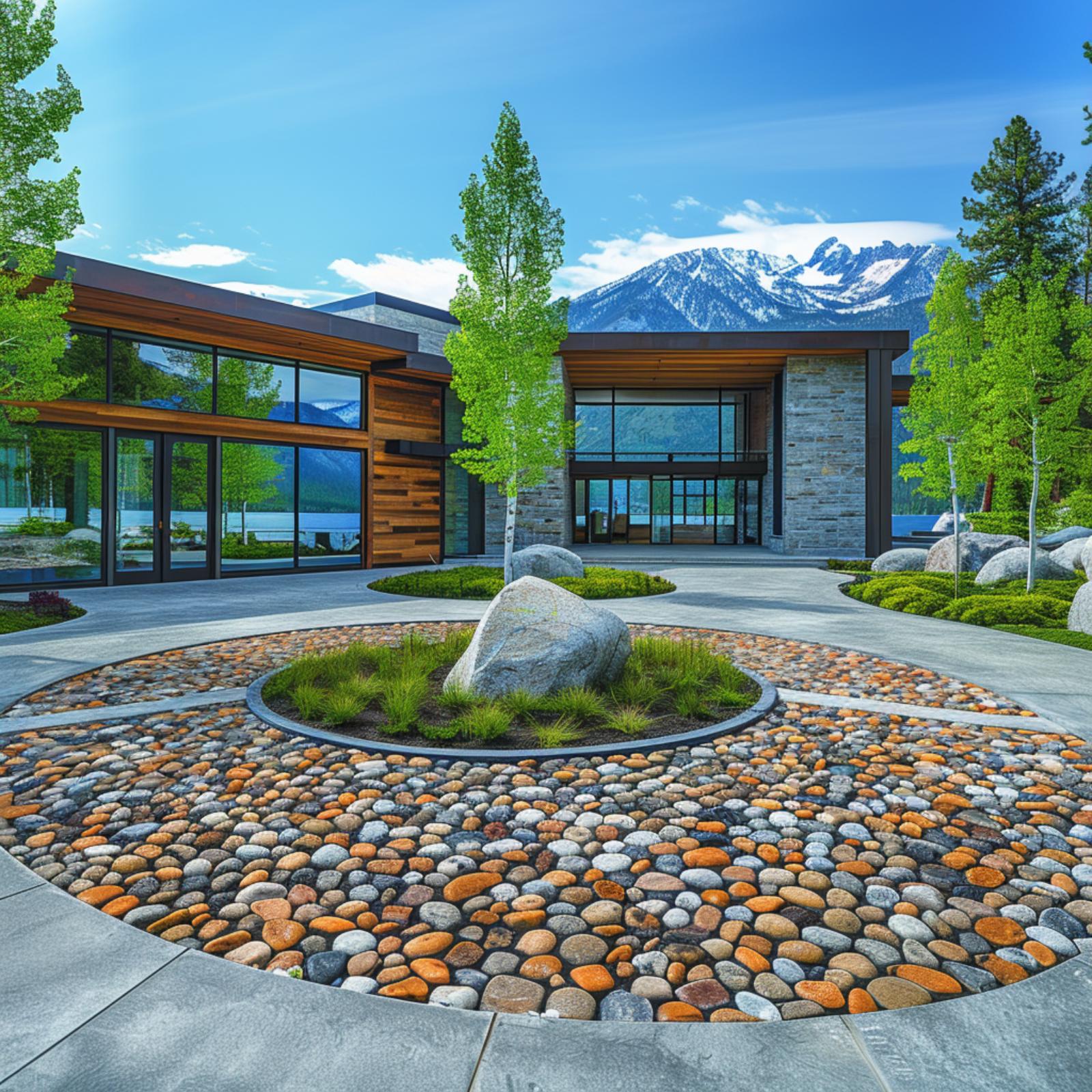
Rounded river pebbles in orange, rust, and slate gray fill a circular inset framed by smooth concrete banding, and that contrast between the rough aggregate and the clean-edged surround does a lot of the design work here. A single granite boulder anchors the center island, paired with ornamental grass clumps that soften it without competing. Behind the entry court, the home mixes stacked stone cladding with horizontal cedar siding and floor-to-ceiling glazing, pulling the snow-capped peaks directly into the facade.
By The Numbers: River rock and pebble installations drain naturally and can reduce surface runoff compared to sealed concrete, making them a practical choice in mountain regions with significant snowmelt. Homes near alpine lakes increasingly use native stone sourced locally to reduce material transport costs and blend with the surrounding geology.
23. Japanese Maple, Tall Pines, and a Concrete Motor Court Worth Every Square Foot
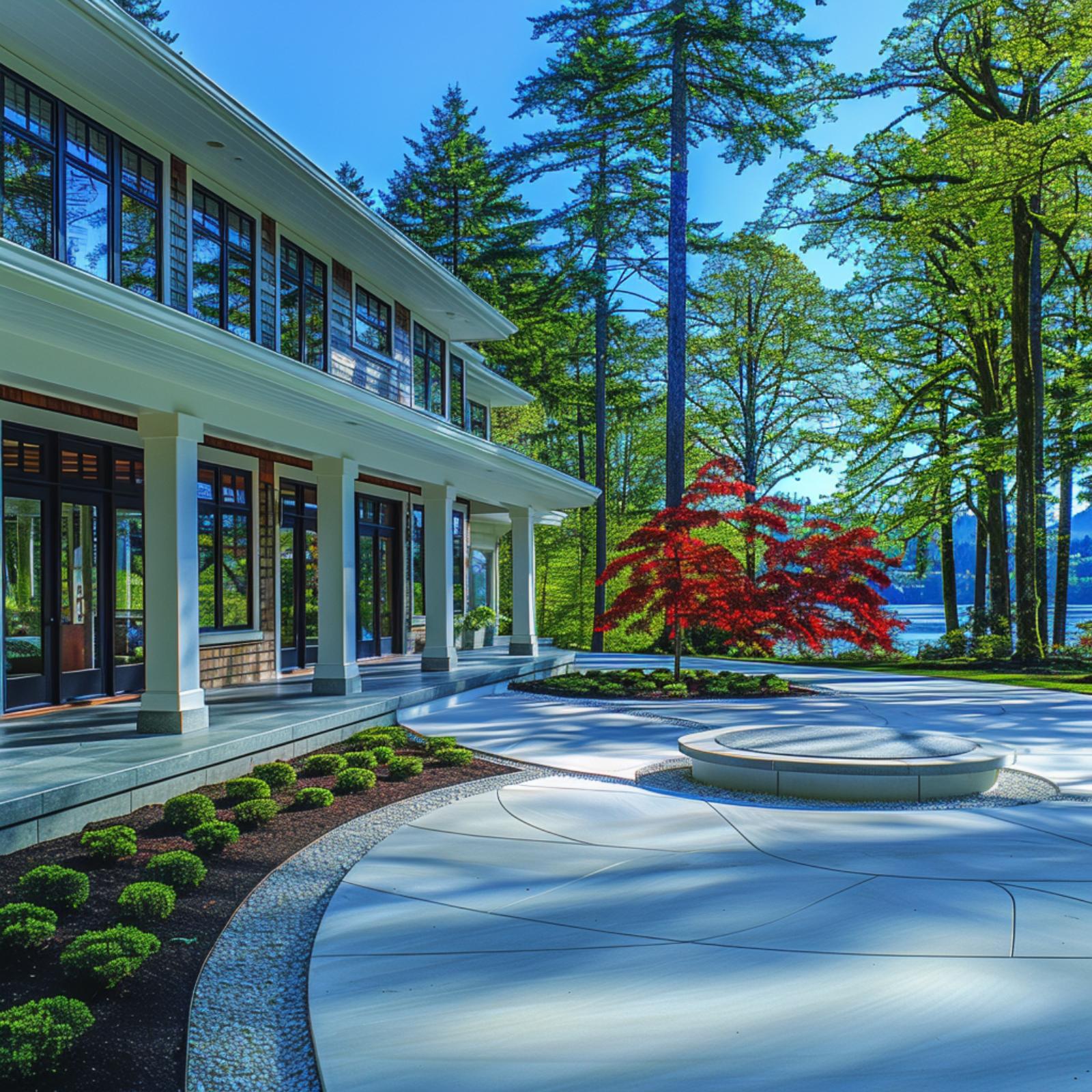
Smooth poured concrete sweeps through this entry in broad arcs, with subtle score lines that break up the expanse without adding visual noise. A circular planting island at the center keeps the geometry grounded. The real focal point, though, is a Japanese maple in full red leaf, holding its own against a backdrop of towering Douglas firs.
Beyond the driveway, the house earns attention too. Black-framed windows run the full length of the upper story, and cedar shingle cladding warms what could otherwise read as too formal. Clipped boxwood mounds line the covered porch in tidy rows, a contrast to the wildness of the tree canopy beyond.
Why It Works: Smooth broom-finished or troweled concrete, when scored into arcs or curves, can follow a circular layout without the cost or installation complexity of unit pavers. A single specimen tree planted off-center from the island, rather than centered on it, draws the eye through the entry rather than stopping it cold.
Stone and concrete have carried this series far, but cobblestone takes on a different character entirely at altitude.
22. Cobblestone Spirals and Snow-Capped Views — Lake Tahoe Entry Done Right
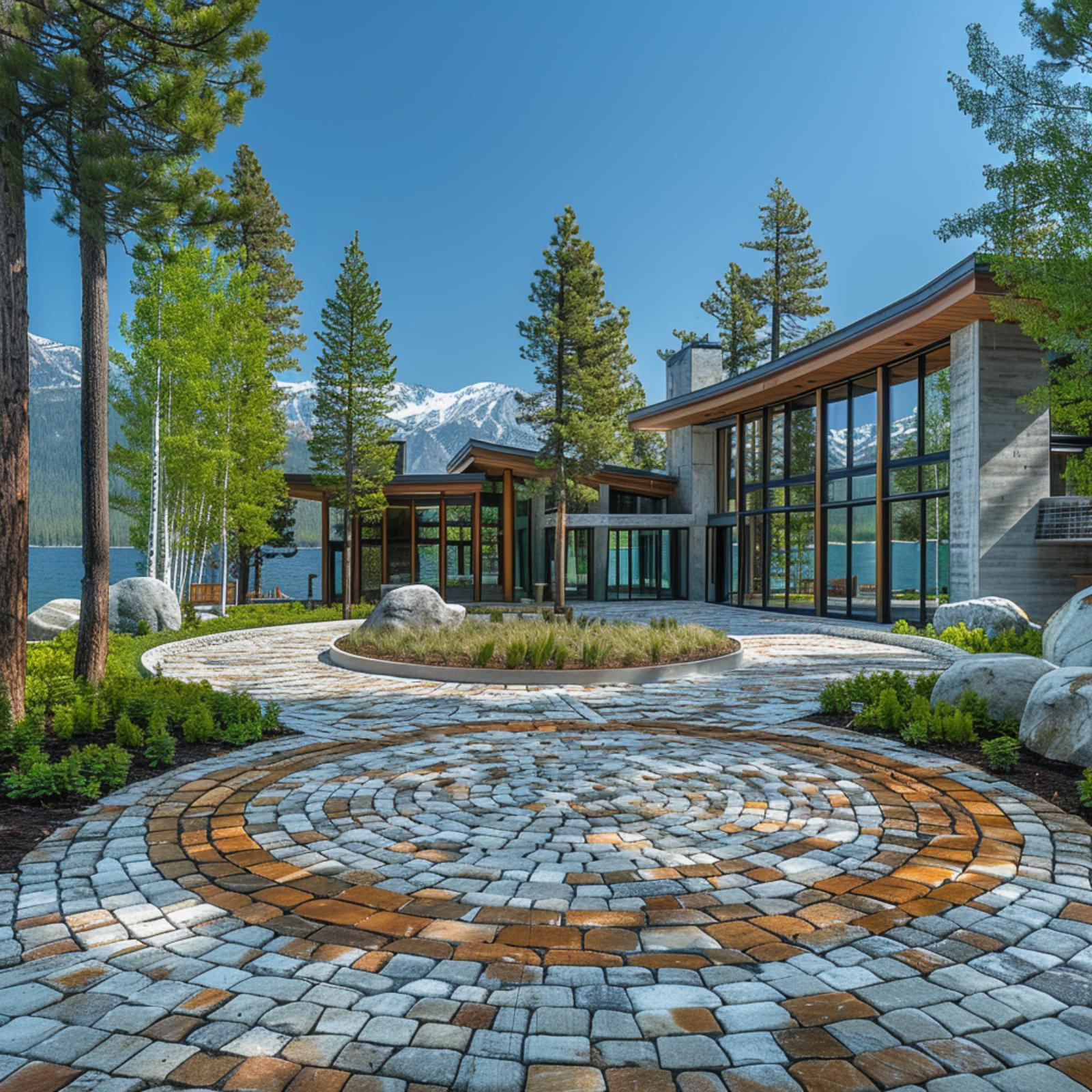
Pale blue-gray granite cobblestones fan outward in concentric arcs, interrupted by bands of warm rust-brown stone that pull the eye toward the front entry. It’s a two-tone pattern that feels intentional without feeling fussy, and the wet-stone finish tells you this driveway gets real weather.
The house itself sits behind a circular island planted with ornamental grasses and low native shrubs, grounded by a single boulder that reads as sculpture. Floor-to-ceiling steel-framed glazing dominates the right wing, and the exposed board-formed concrete walls keep the whole composition from tipping into resort-brochure territory. Tall pines do the rest of the work.
21. Dark Wood, Stone Columns, and a Circular Paver Court That Commands Attention
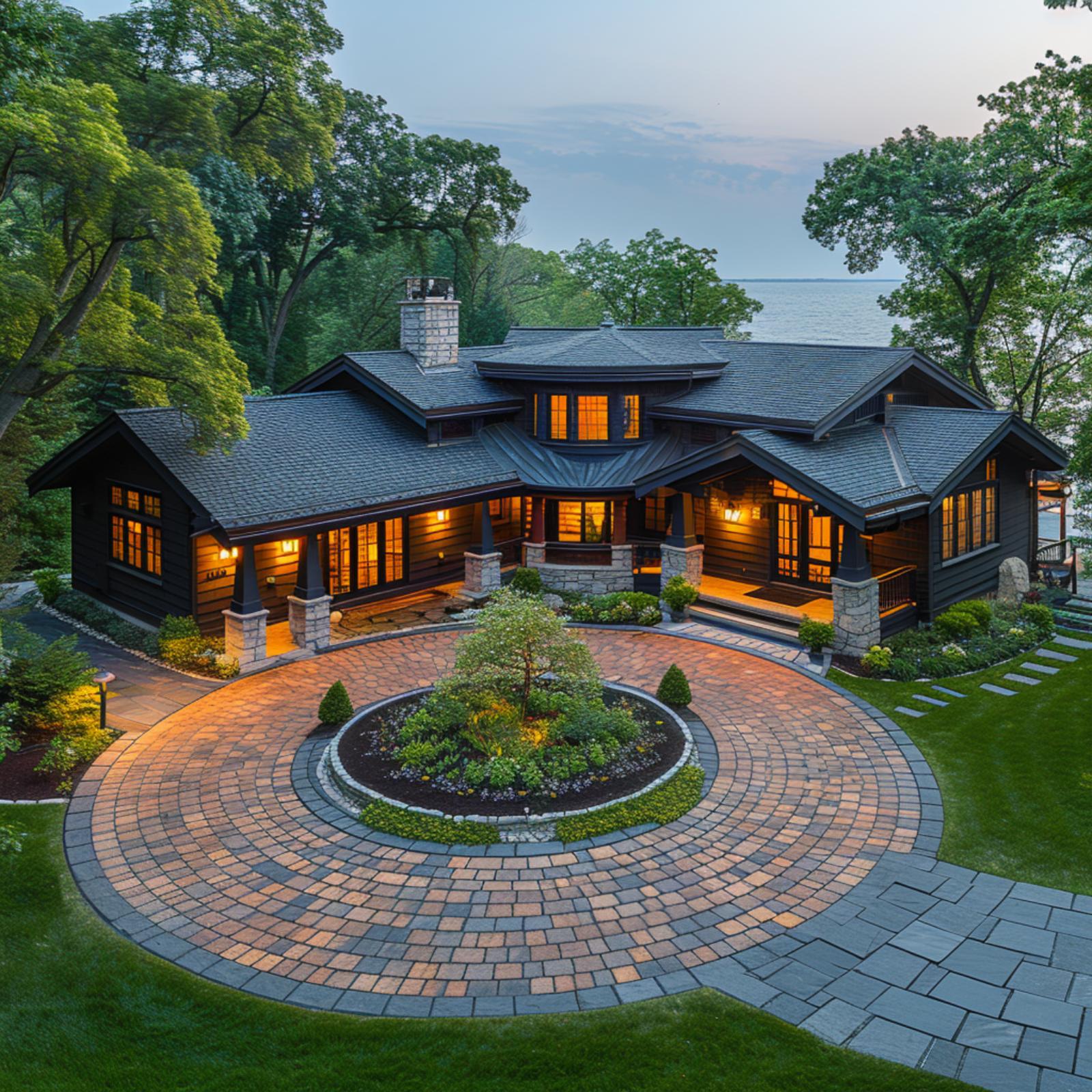
Few entries pull off “lakeside retreat” and “architectural statement” at the same time, but this one does.
The circular driveway here is built from two distinct paver materials: warm-toned brick-pattern pavers laid in concentric arcs at the center, ringed by a cooler gray stone border that grounds the whole composition. That contrast isn’t decorative fussiness. It marks the boundary clearly so the eye knows exactly where to land. The center island keeps things restrained, with low boxwood rounds flanking a single specimen tree, and the dark mulch bed makes the planting read crisply against the stone.
The house itself is clad in dark board-and-batten siding with stone columns at the entry porch, and the warm amber glow from the interior windows does a lot of work at dusk. Stone chimneys, layered rooflines, and deep overhangs reinforce the craftsman character without overcomplicating the facade. A body of water is visible through the trees behind the house, which explains the placement entirely. Properties with rear water views benefit from a front entry that creates its own sense of arrival, so guests aren’t simply passing through on the way to something better.
20. Tudor Revival Grandeur, a Brick Roundabout, and Topiary That Earns Its Place
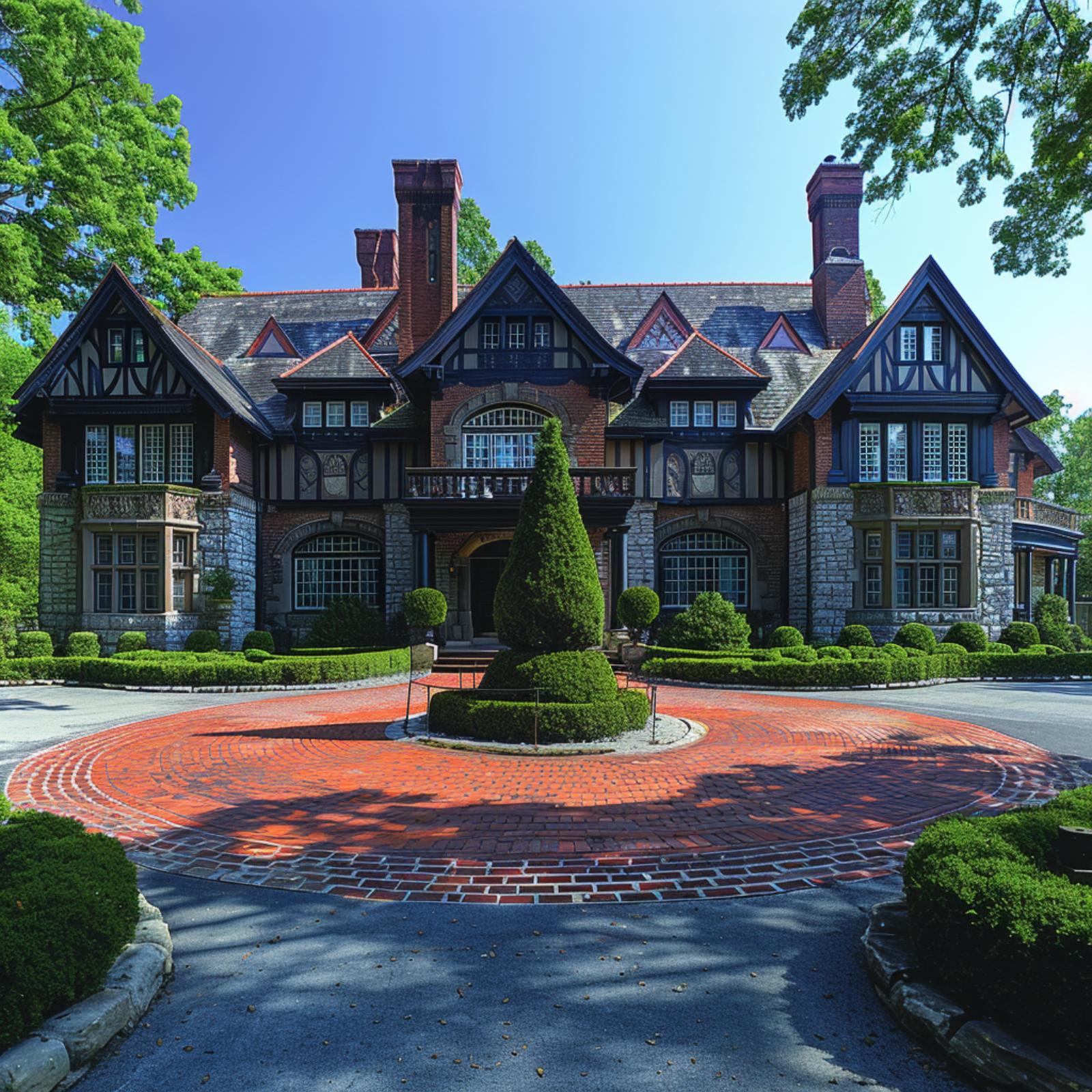
Few entries announce their intentions as clearly as this one. The circular driveway is laid in concentric rings of red brick, and that pattern draws the eye straight to a conical topiary centerpiece flanked by clipped boxwood globes. It’s deliberate, almost formal, and it works precisely because the house demands it.
Behind the roundabout, the Tudor Revival facade combines red brick with stone quoins, half-timbered gables, and a slate roof that reads nearly charcoal against the blue sky. The arched entry portal sits dead center, framed by matching arched windows on either side. That symmetry is what justifies the circular layout out front. Deviate from it, and the whole composition falls apart.
Ask Yourself: Before committing to a formal circular layout, look hard at your home’s facade and ask whether it has a true central focal point worth framing. A roundabout amplifies symmetry when it exists, but it can expose imbalance when it doesn’t.
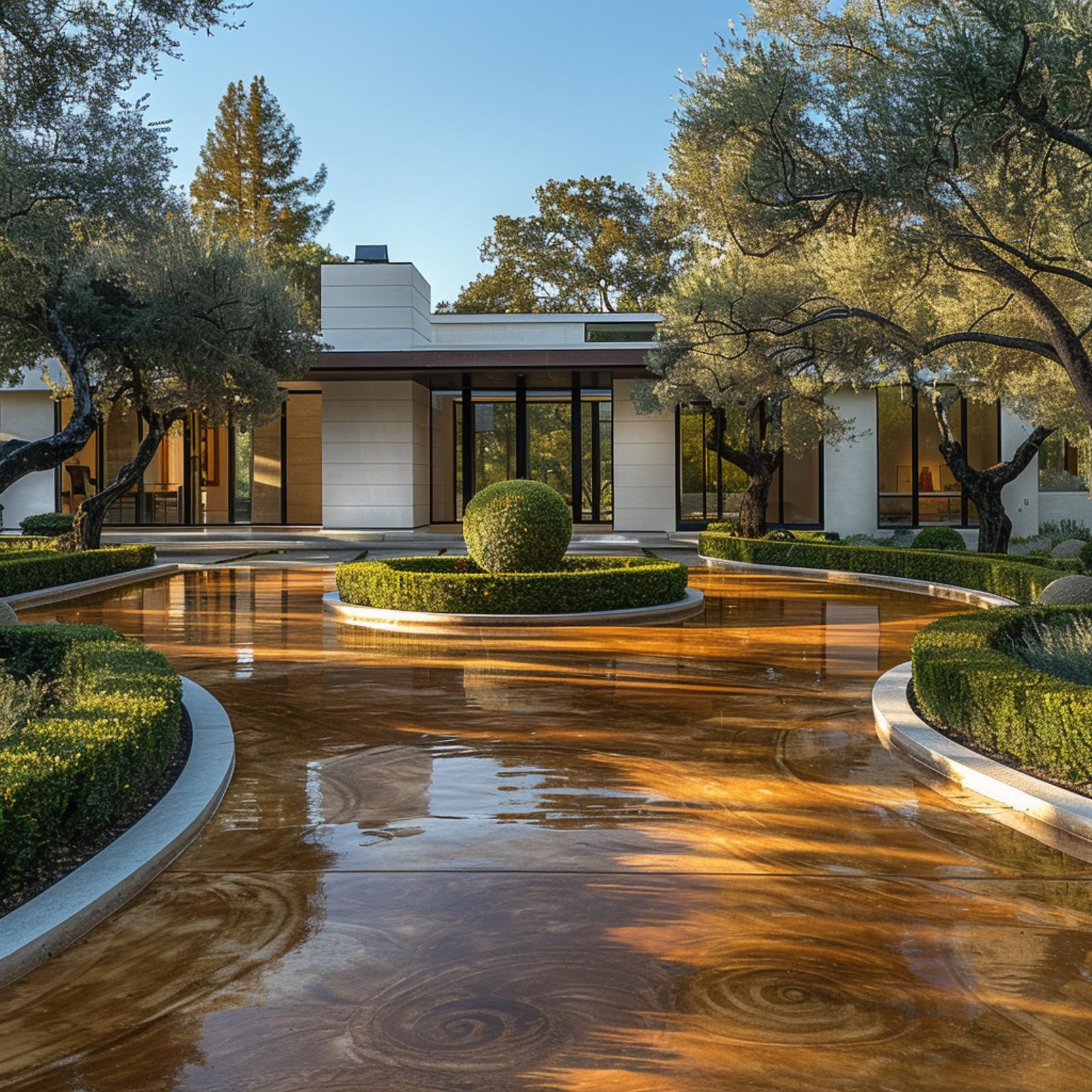
19. Olive Trees, Polished Concrete, and a Roundabout That Knows Exactly What It’s Doing
🔥 Would you like to save this?
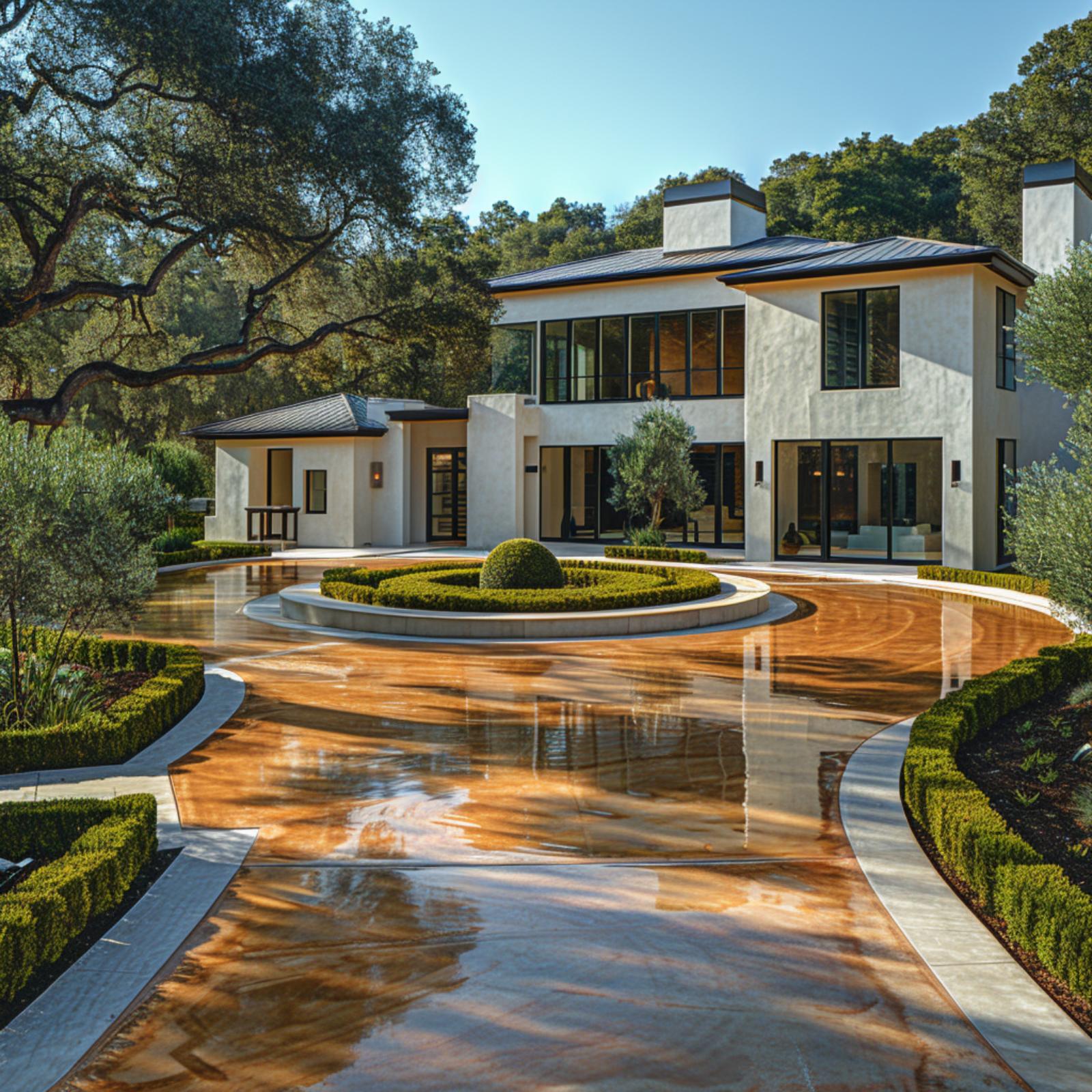
Mature olive trees frame this entry with the kind of presence you can’t install on a timeline. They’re not decorative afterthoughts. The circular driveway is finished in what appears to be acid-stained concrete, its amber and tobacco tones catching afternoon light so vividly the surface almost reads as wet. Swirling grain patterns in the stain give it movement without effort.
At the center island, tightly clipped boxwood spheres and low hedges create a composition that’s calm without being cold. The house behind it is flat-roofed and white-paneled, with floor-to-ceiling black-framed glass that pulls the surrounding greenery inward. That contrast between the warm driveway and the cool, precise facade is what keeps the whole entry from feeling like it belongs to only one design era.
In The Details: Acid staining is a chemical reaction with the concrete itself, not a surface coating, which means the color won’t peel or chip the way paint or sealant can. The swirling pattern visible here comes from how the acid migrates across the slab, making every installation genuinely one of a kind. It’s one of the few driveway finishes that actually improves with character over time.
18. Lavender Borders, Gravel Arcs, and a Bird of Paradise That Refuses to Be Ignored
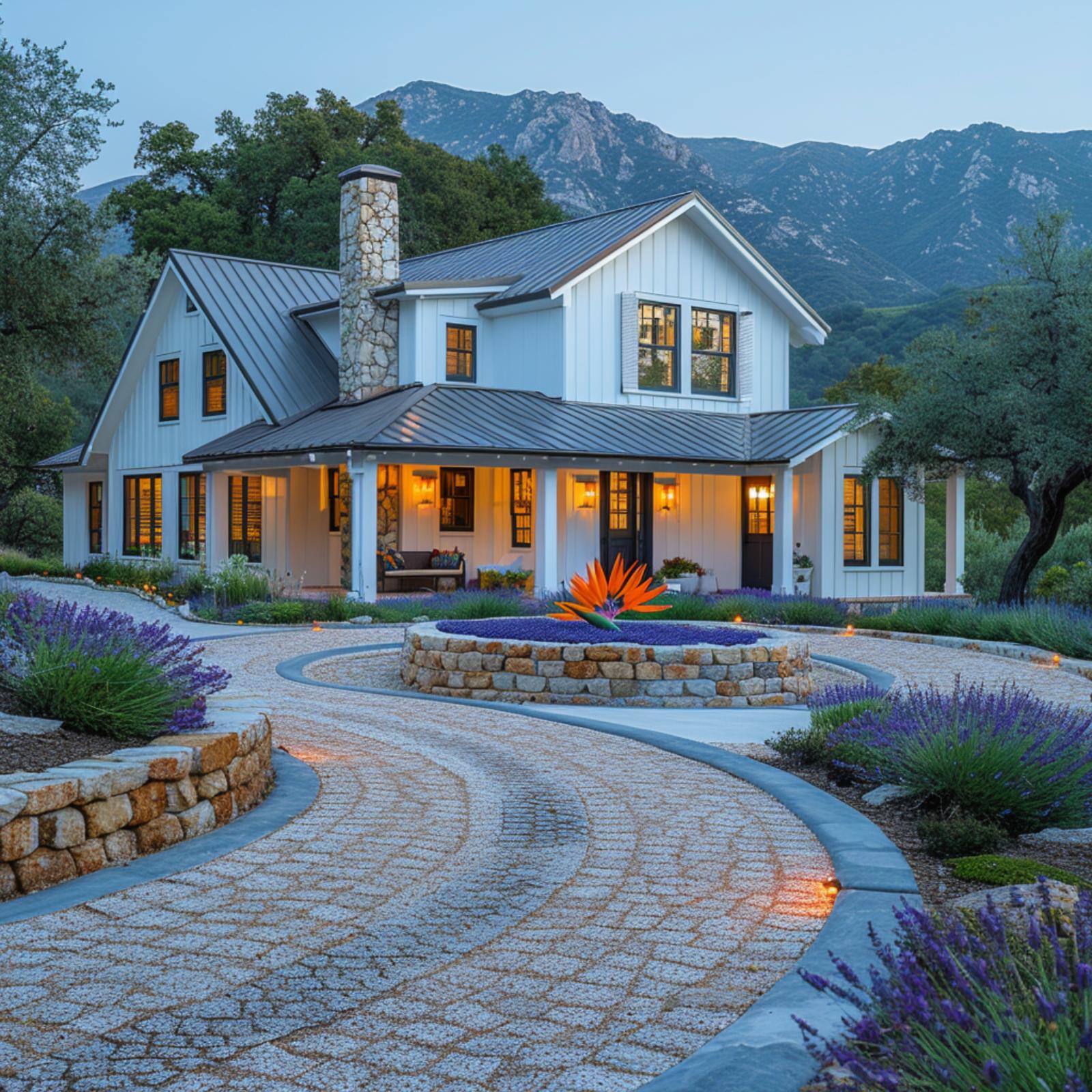
Pale gravel paved in a subtle diamond pattern forms the circular drive, edged with slate-blue concrete curbing that keeps the geometry clean without feeling rigid. Lavender crowds both sides in dense purple rows, and the stone retaining walls along the left rise in warm honey tones that read almost golden at dusk. Small ground-level lights dot the borders, already glowing in this early-evening shot.
The raised center island is the real decision here. Stone-coursed walls hold a tight planting of deep violet ground cover, and one bird of paradise pushes up from the middle in full orange bloom. It shouldn’t work with the white board-and-batten farmhouse behind it. But it does.
Worth Knowing: Gravel driveways with permeable paver bases allow rainwater to filter through rather than sheet off toward storm drains, which can matter considerably in drought-prone regions like coastal California. Unlike sealed asphalt, gravel surfaces also stay cooler underfoot in summer heat. The trade-off is periodic regrading as material migrates with traffic over time.
17. Fog-Swept Coastline, Stone Walls, and a Cobblestone Circle That Feels Like It Grew There
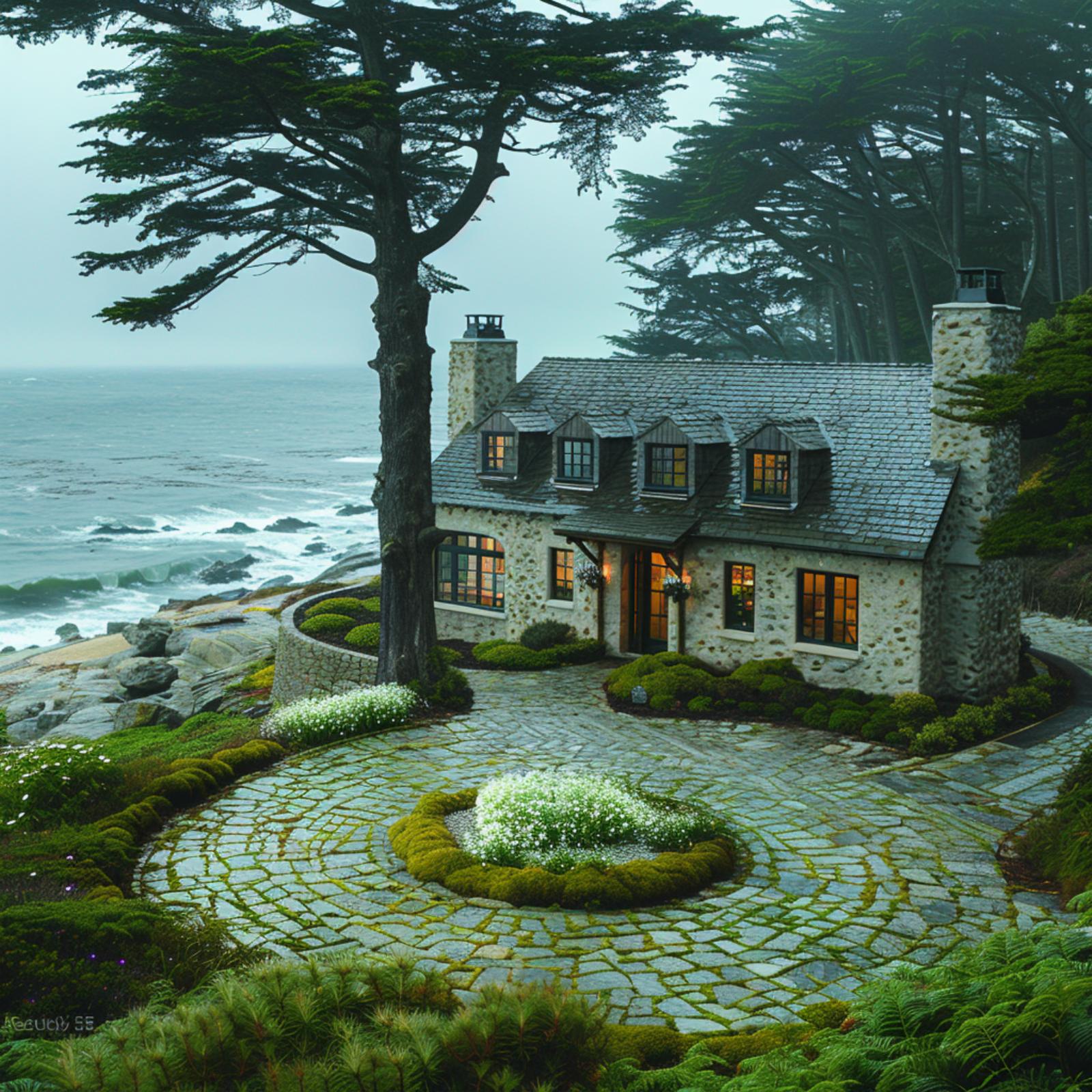
Mossy cobblestones laid in a broad circular pattern anchor a front court where the center island holds a single mound of white-flowering groundcover. It’s quiet. It works.
Fun Fact: Slate roof tiles, like those visible here, are among the longest-lasting roofing materials available, with some installations remaining intact for well over a century. Their natural variation in tone means no two slate roofs ever look identical, which suits a stone cottage far better than uniform asphalt shingles ever could.
16. Marble Concentric Circles, Floor-to-Ceiling Glass, and Autumn Trees That Do Half the Work
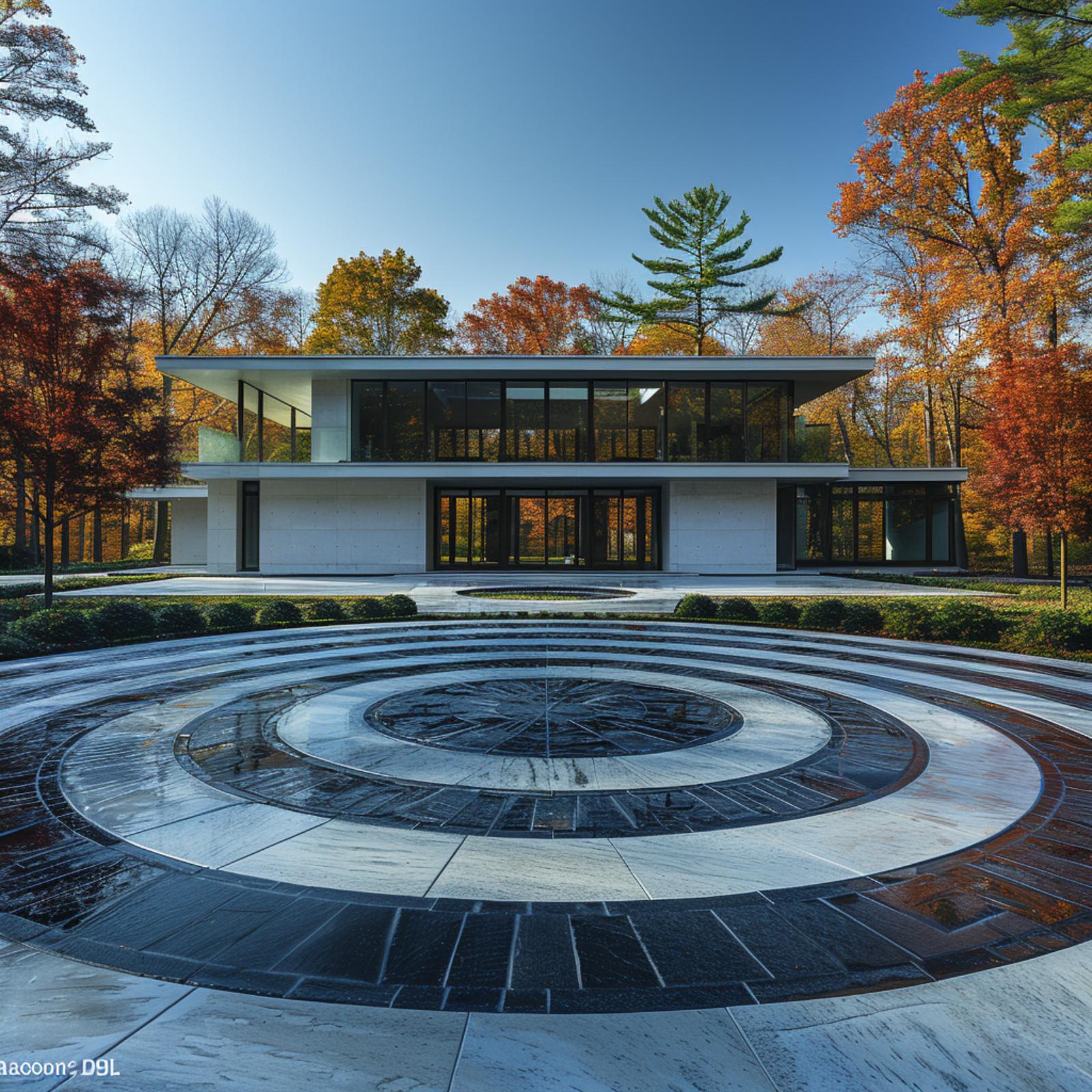
Dark granite and light marble alternate in concentric rings at the center of this motor court, and that pattern doesn’t read as decorative excess. It reads as intentional geometry that pulls the eye straight toward the entry. The flat roof, black-framed glass walls, and white concrete facade keep the architecture spare enough that the circular paving can carry real visual weight.
Autumn foliage surrounds the whole composition, and the color contrast between orange-red canopy and the cool stone surface is hard to engineer on purpose. It just happens when the planting plan is patient enough to let mature trees do their job.
Why the Concentric Ring Pattern Works Beyond the Surface
Concentric circle paving in contrasting stone colors isn’t purely decorative. The alternating light and dark rings create a subtle optical pull toward the center, which reinforces the sense of arrival before a visitor ever reaches the front door. From an installation standpoint, using two materials with different reflectivity levels also means the pattern remains legible even when the surface is wet, which this photograph actually demonstrates well. Stone selection matters here: materials with similar hardness ratings should be paired to ensure they wear at the same rate over time.
15. Prairie Modern, an Ancient Oak, and Concentric Stone Rings That Hold Everything Together
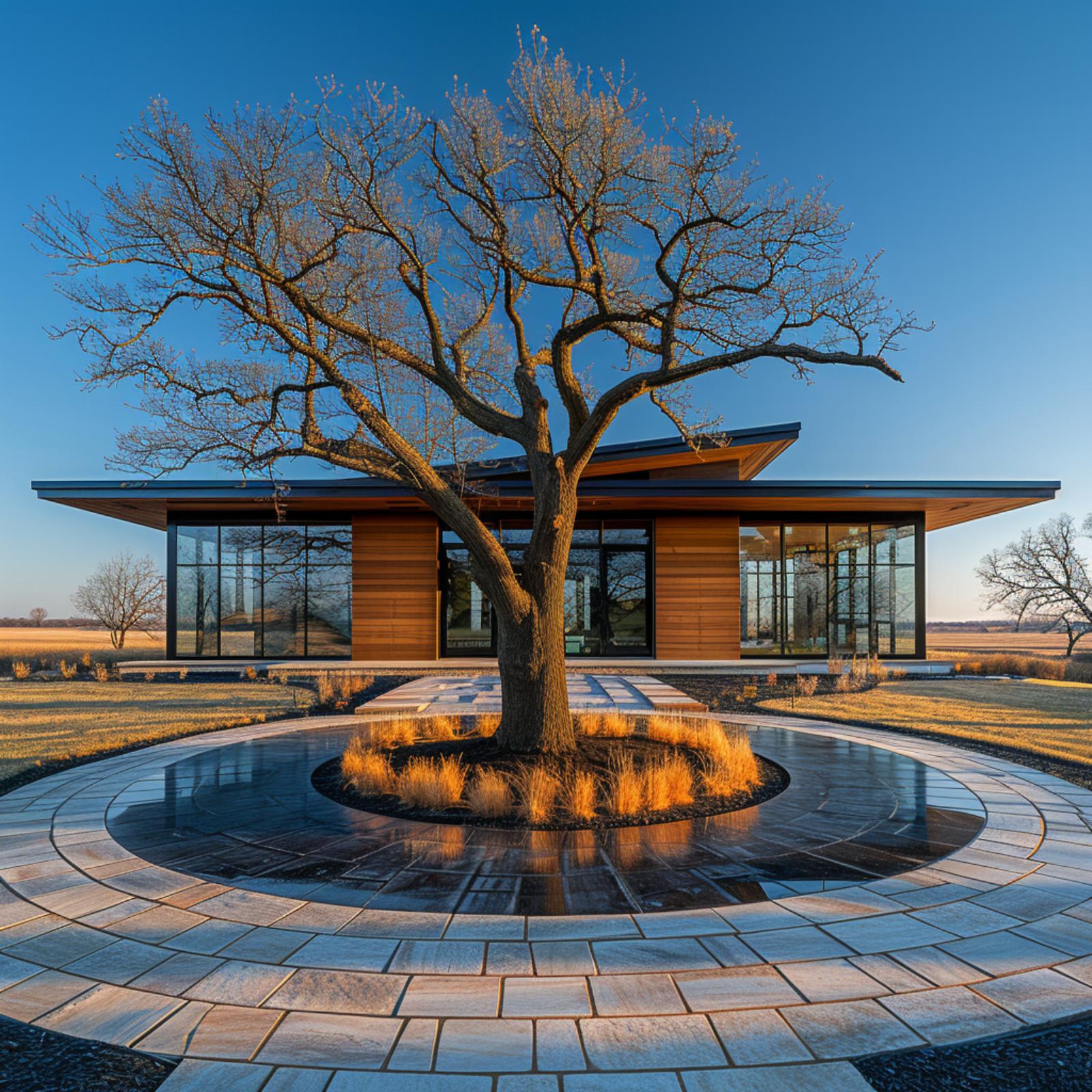
Horizontal cedar cladding, floor-to-ceiling steel-framed glass, and a low-pitched roof with a sharp overhang give this structure a distinctly Midwestern Prairie Modern identity. The tree at center does the heavy lifting. It’s a mature bur oak judging by the branching pattern, and the circular stone island built around its base uses warm-toned ornamental grasses that catch the late-afternoon light beautifully against the dark mulch ring.
The driveway itself is laid in concentric arcs of large-format stone pavers, polished enough to hold a faint reflection. That wet-mirror quality at golden hour is probably accidental, but it works.
Pro Tip: Circular driveways built around existing trees need special attention below grade. Standard compacted gravel sub-bases can suffocate root systems over time, so pervious paver installations with minimal compaction over the root zone are worth the extra planning. Talk to a certified arborist before any excavation begins within the tree’s drip line.
14. Lakefront Luxury, Concentric Reflection Pools, and a Roundabout That Earns Every Inch
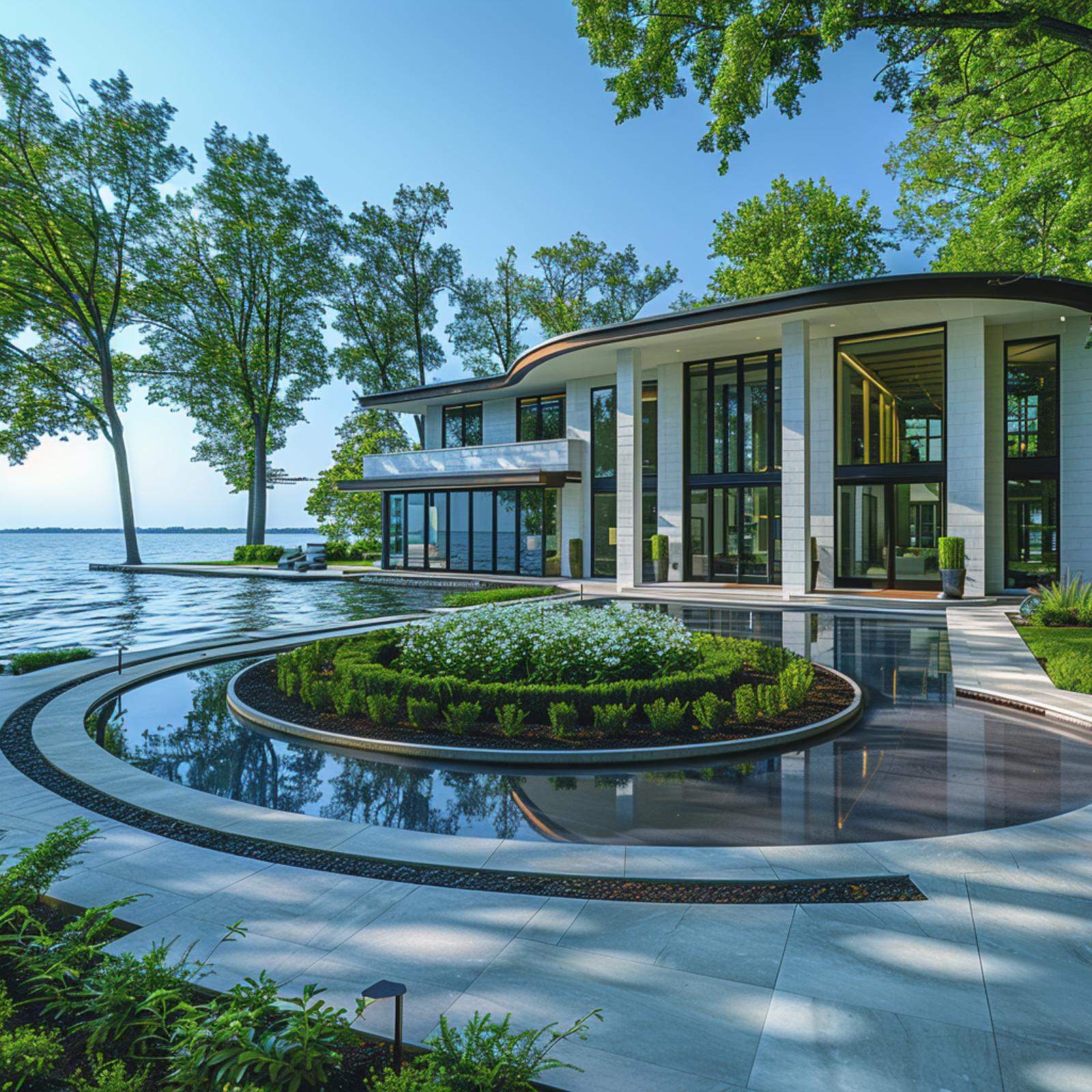
White shiplap cladding wraps a curved facade with floor-to-ceiling black-framed glass, and the roundabout at its center is a genuine design decision. Two concentric rings of still water surround a planted island of boxwood and white flowering groundcover, all laid in large-format gray stone pavers. It works because the circular water feature echoes the arc of the roofline above it. Don’t underestimate that kind of formal geometry on a lakefront property where horizontal water views already dominate.
13. Carmel Cottage, Cypress Canopy, and a Cobblestone Court That Earns Its Quiet
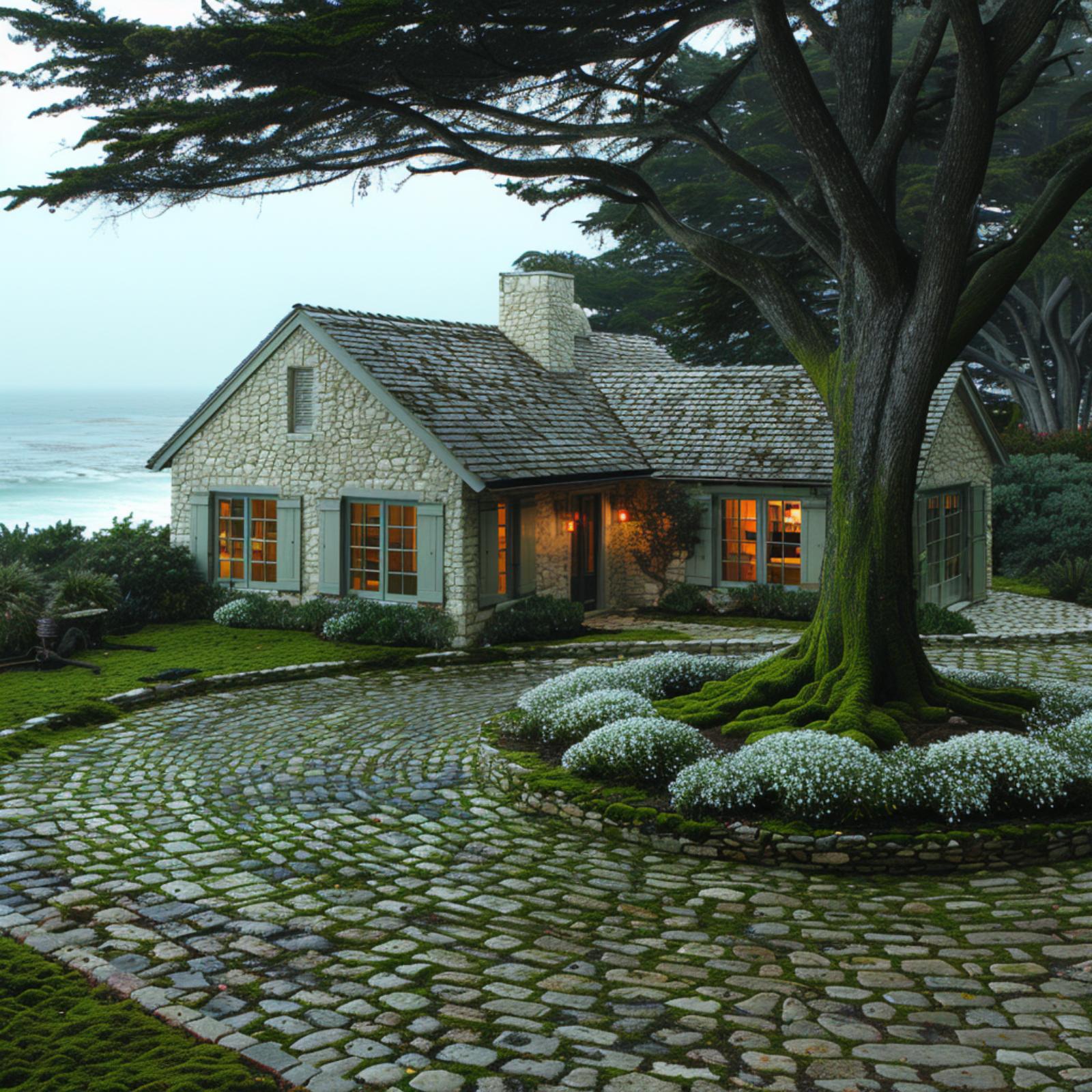
Moss-filled joints between the cobblestones give this circular court its character. Rainwater settles into those gaps rather than pooling on the surface, and over time that moisture is exactly what keeps the moss alive and the joints looking intentional rather than neglected.
Stone walls, cedar-shake roofing, and sage shutters work together without competing. The center island keeps things simple: a low stone ring, white-flowering groundcover, and one large cypress anchoring the whole arrangement. Warm light spilling from the French doors does more for curb appeal at dusk than any fixture could.
12. Ski Run Views, Rusted Concrete Arcs, and Ornamental Grasses That Actually Earn the Space
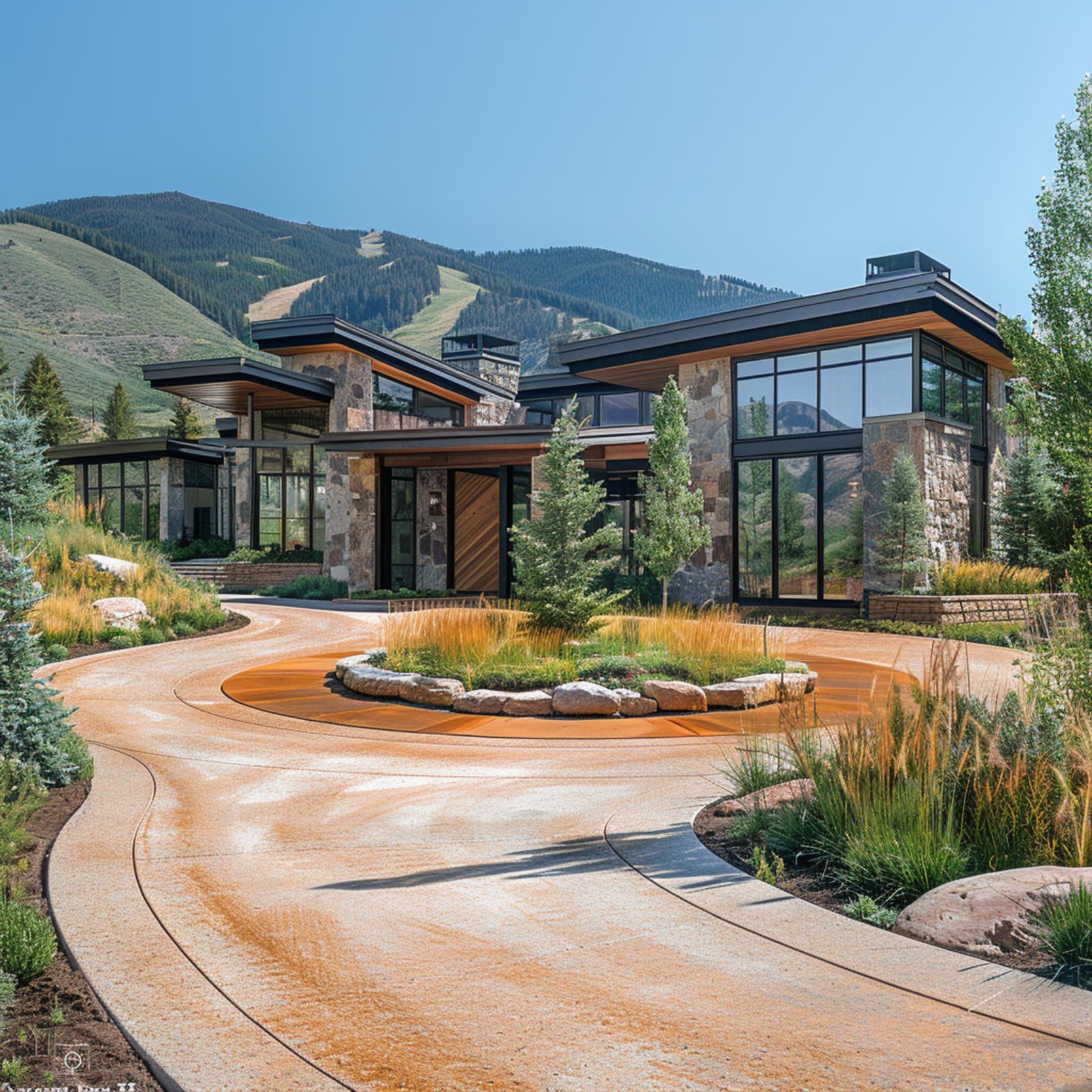
Acid-stained concrete in a deep terra cotta tone sweeps through a circular motor court ringed by native grasses and boulder edging, with the mountain ski runs visible directly behind the roofline. Stone columns anchor the facade. It works because the driveway color echoes the stonework without trying too hard.
11. Bluestone Pavers, a Century Oak, and Warm Cedar Cladding That Pulls It All Forward
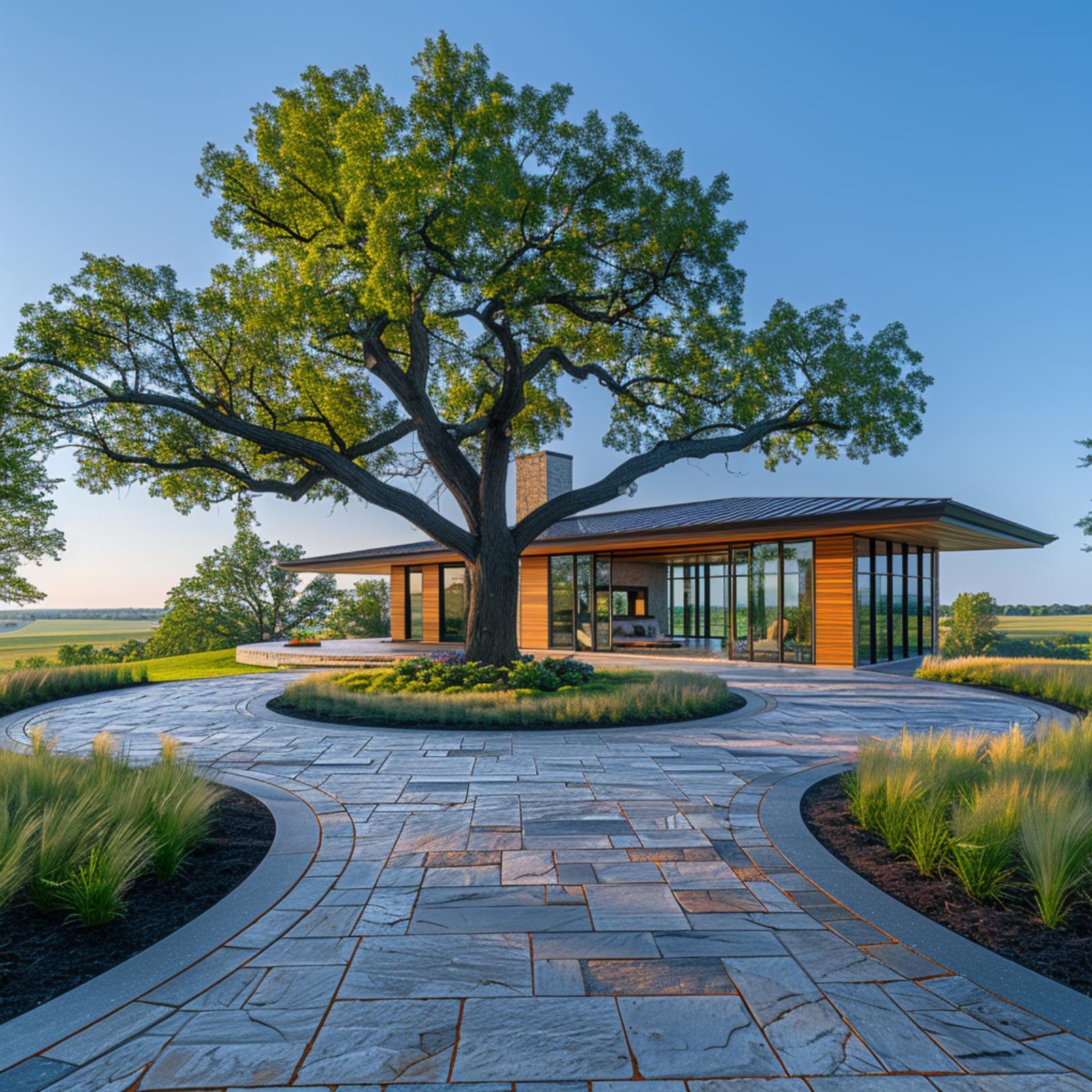
Flagstone cut in irregular polygons and laid in a sweeping arc defines the approach here, with the bluestone’s cool gray tones doing quiet work against the warm cedar siding behind it. The circular island preserves the oak’s root zone rather than competing with it, ringed by ornamental grasses that soften what could’ve been a hard edge. Low and wide, the structure reads modern without being cold.
10. Spanish Colonial Grandeur, Iron Gates, and a Roundabout That Frames the Whole Arrival
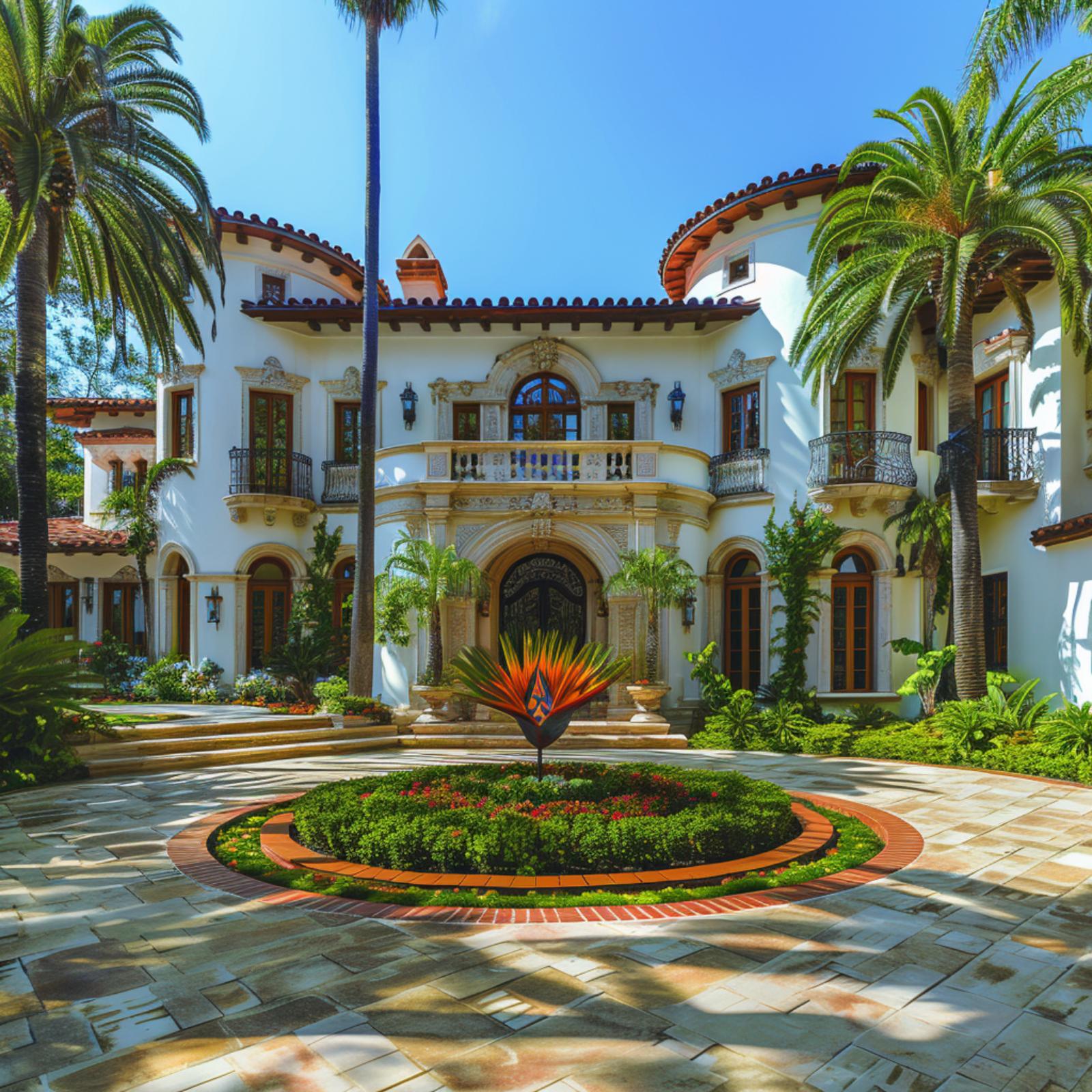
Red terra cotta roof tiles, wrought iron balconies, and ornate limestone detailing around the entry arch give this facade more architectural weight than most circular driveways ever have to work with. The roundabout rises to meet it. Brick edging in a warm sienna circles a low boxwood planting anchored by a single bird of paradise sculpture at center, its orange and blue form holding the eye exactly where the designers wanted it.
Stone pavers in a staggered, irregular pattern cover the motor court without competing with the facade’s formality. That restraint is smart. When the architecture is this decorated, the ground plane needs to stay quiet, and it does.
9. Stucco Walls, a Topiary Roundabout, and Polished Concrete That Reflects Everything
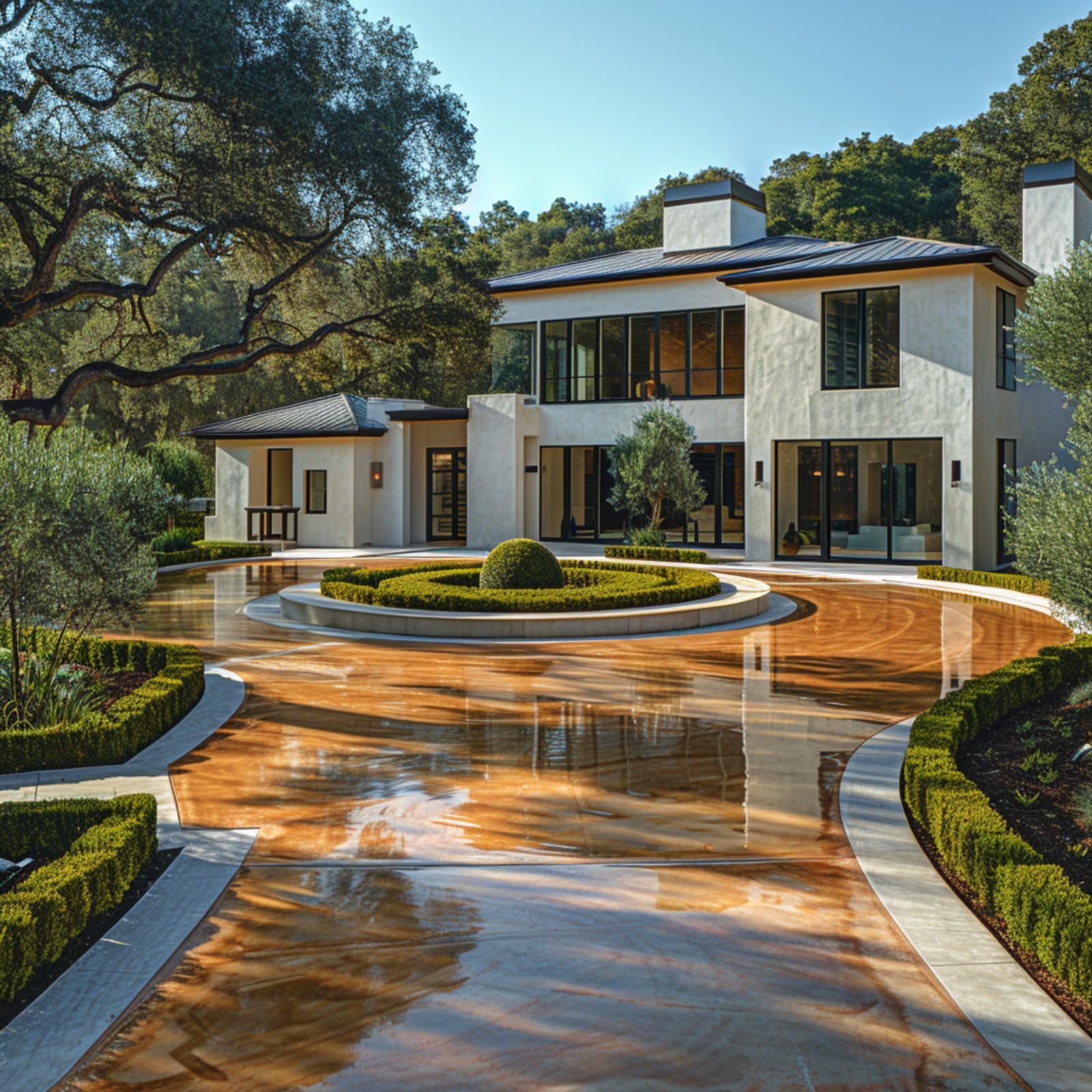
Few circular driveways earn the center island the way this one does. Clipped boxwood hemispheres ring a single olive tree in a raised concrete planter, and the geometry is tight enough that nothing feels accidental. The driveway surface itself is the real conversation starter: a warm amber-toned polished concrete that throws mirror reflections of the surrounding oaks.
That finish reads almost like scored resin under certain light. Paired against the white stucco exterior and dark metal window frames, it keeps the palette from going cold. Black-framed sliding doors span the ground floor, pulling the interior warmth forward. It works because the driveway doesn’t just lead somewhere. It gives the arrival its own moment.
8. Rocky Mountain Modern, a Circular Gravel Island, and Stone That Means Business
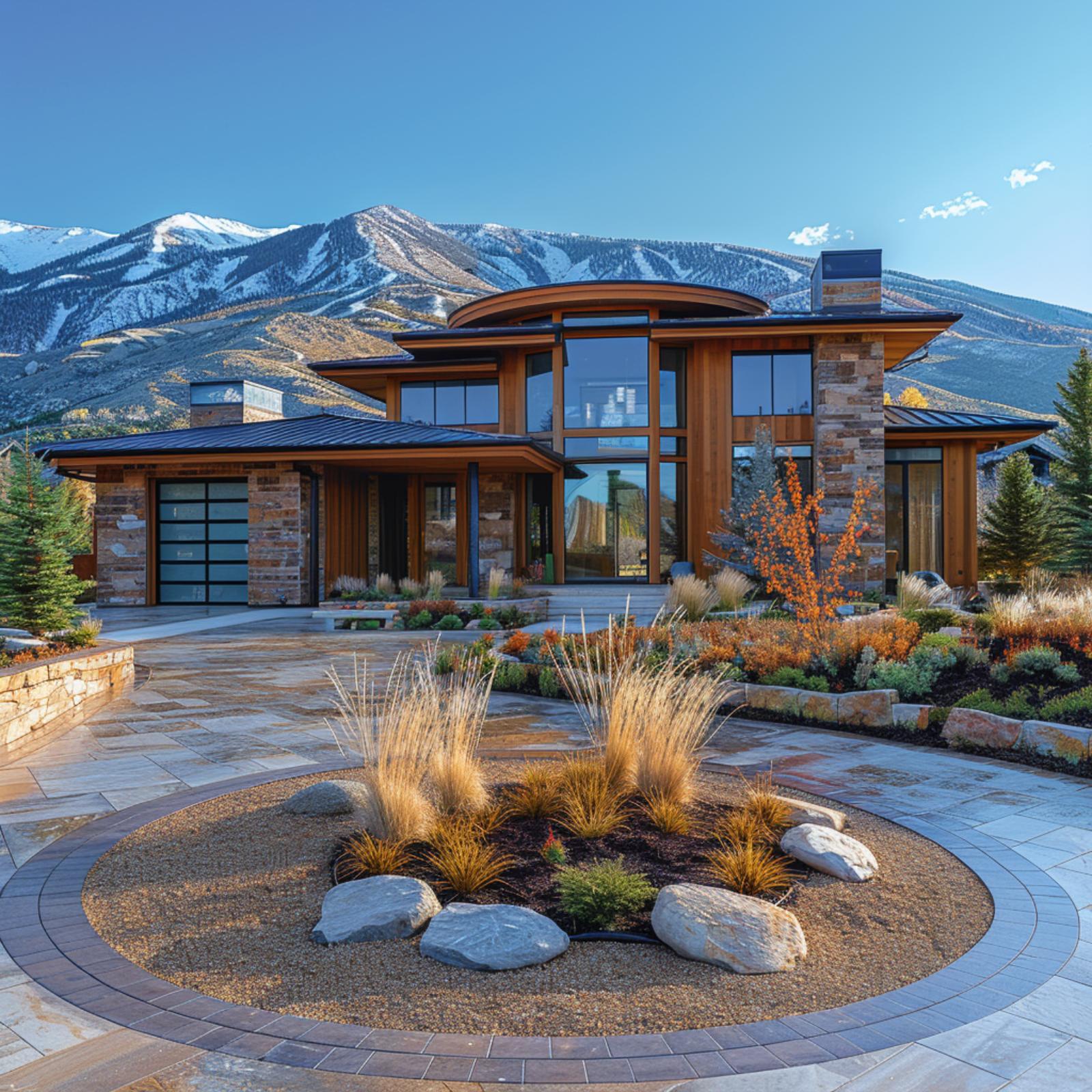
Stacked ledger stone runs floor to roofline here, and the warm cedar cladding between panels keeps it from reading cold. The circular island in the foreground does something smart: boulders anchor the outer ring, ornamental grasses rise through the center, and nothing about it looks planted yesterday. That lived-in quality is hard to fake.
7. Gold Stucco, Gnarled Olive Trees, and a Brick Roundabout Built for a Slow Arrival
🔥 Would you like to save this?
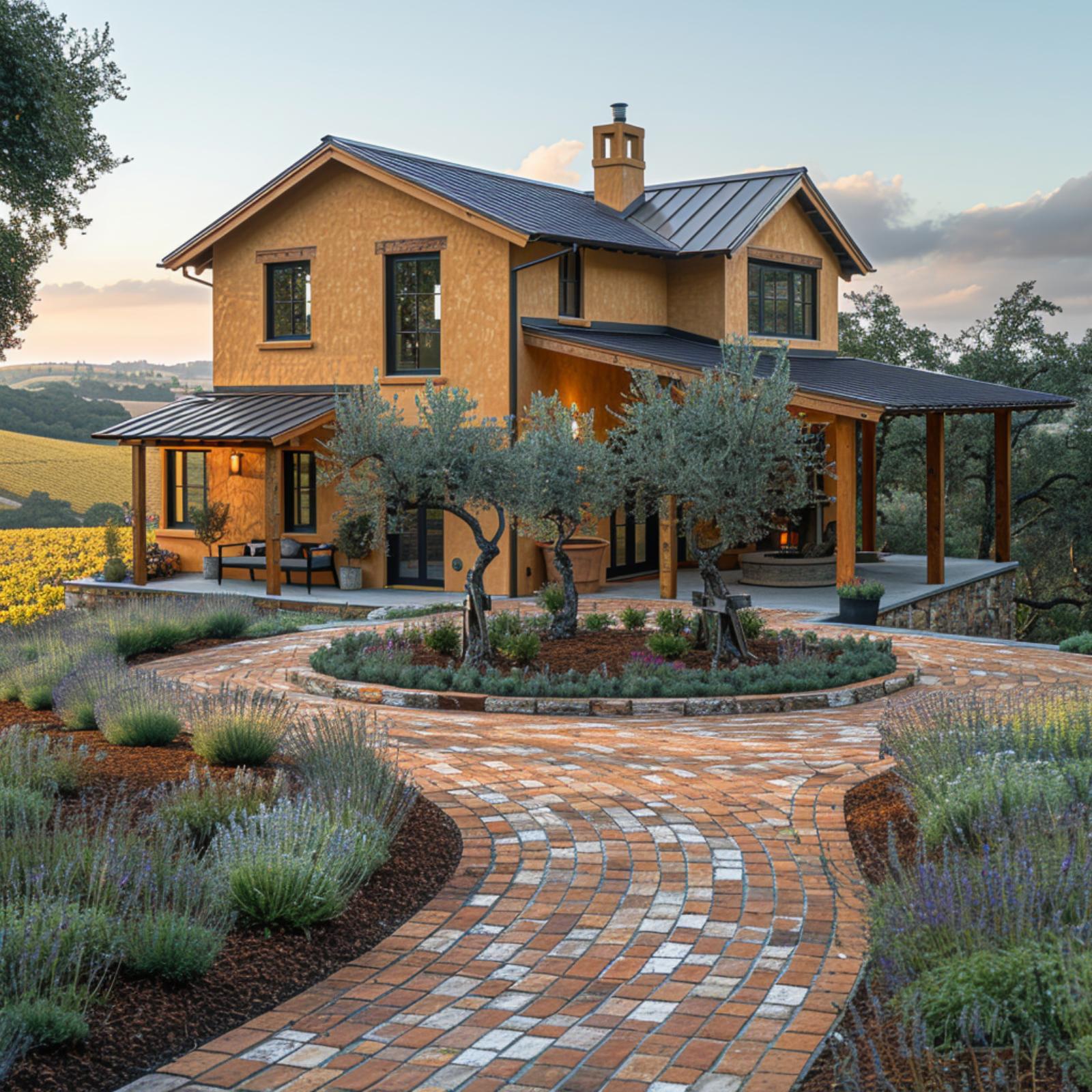
Warm ochre stucco catches the late-afternoon light in a way that makes the terracotta-and-cream brick driveway feel like a natural extension of the house rather than a separate project. The roundabout’s center island plants two mature olive trees alongside low herbs and lavender, and that pairing does something a single specimen tree rarely can: it fills vertical and horizontal space at once.
Covered timber porches flank both sides of the facade, grounding the two-story form without competing with it. Olive trees are slow growers, so if you’re starting from scratch, sourcing mature specimens is worth the cost. The vineyard rolling out behind the property doesn’t hurt either.
6. Palm-Lined Entry, Topiary Roundabout, and Limestone Paving That Commands Attention
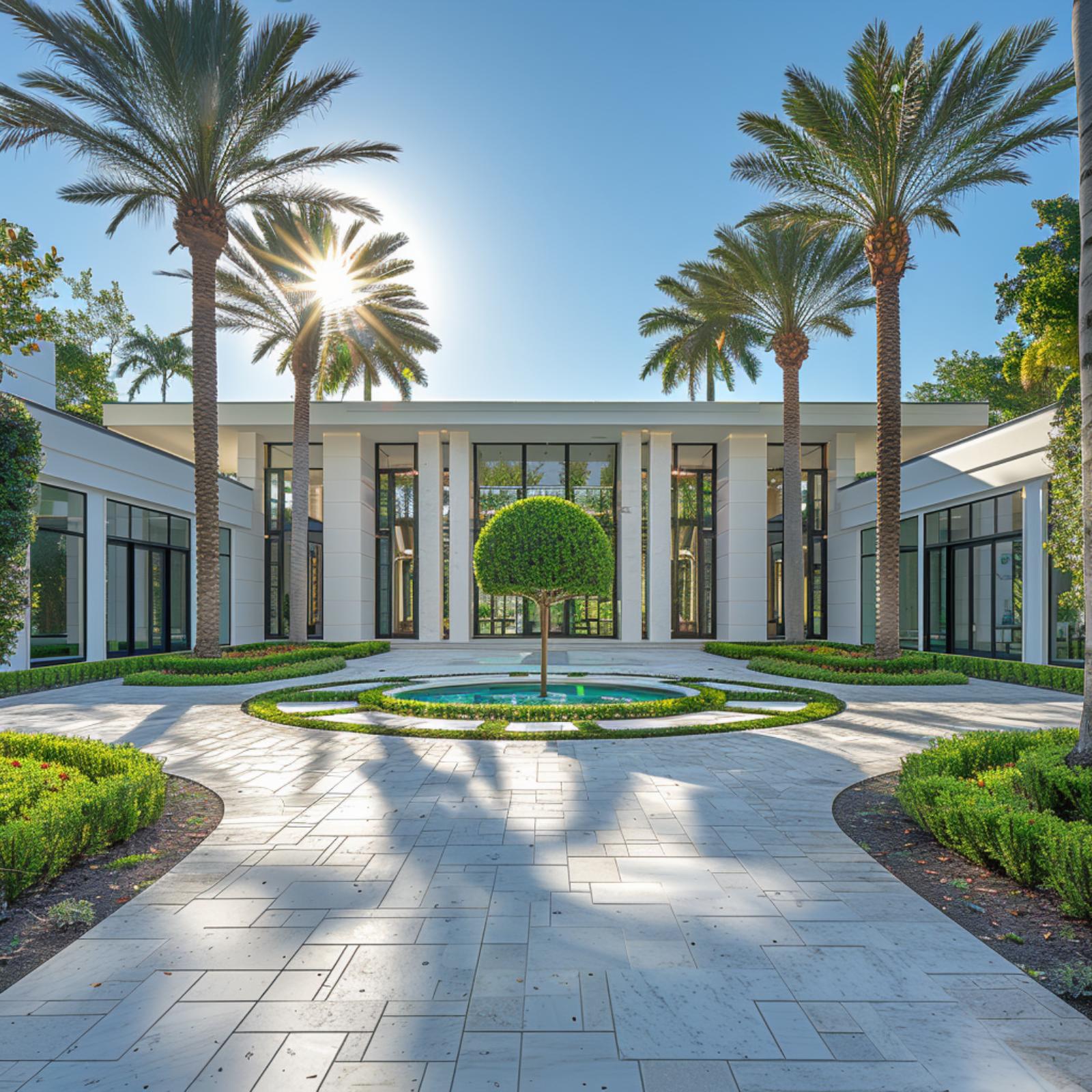
Tall date palms frame a motor court paved in large-format limestone tiles, their light gray surface catching sun shadows from the canopy above. At center, a circular pond surrounds a single clipped topiary standard, its spherical crown sitting at eye level from the entry. That one tree does a lot of work.
5. Pacific Northwest Modern, a Japanese Maple Roundabout, and Glass That Glows After Dark
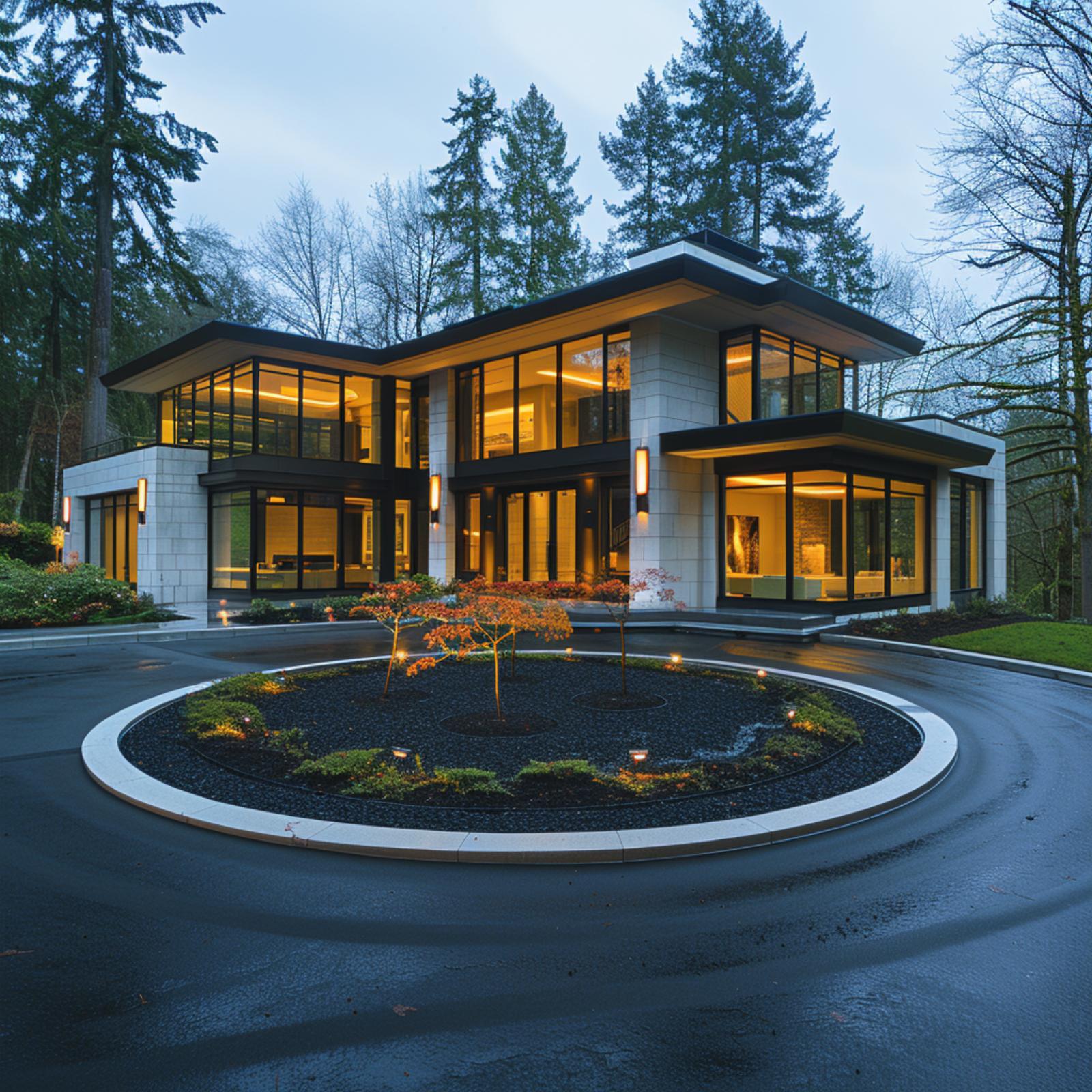
Black-framed floor-to-ceiling windows wrap the upper and lower levels, and at dusk the warm interior light spills out in a way that makes the house look lit from within. The circular island does real work here: black gravel ground cover, low groundcover plantings, and a Japanese maple centered just off-symmetry give the roundabout enough visual weight to hold the eye without competing with the facade. It earns the drama.
4. Shingle-Style Towers, a Slate Roundabout, and Coastal Gardens That Hold Their Ground
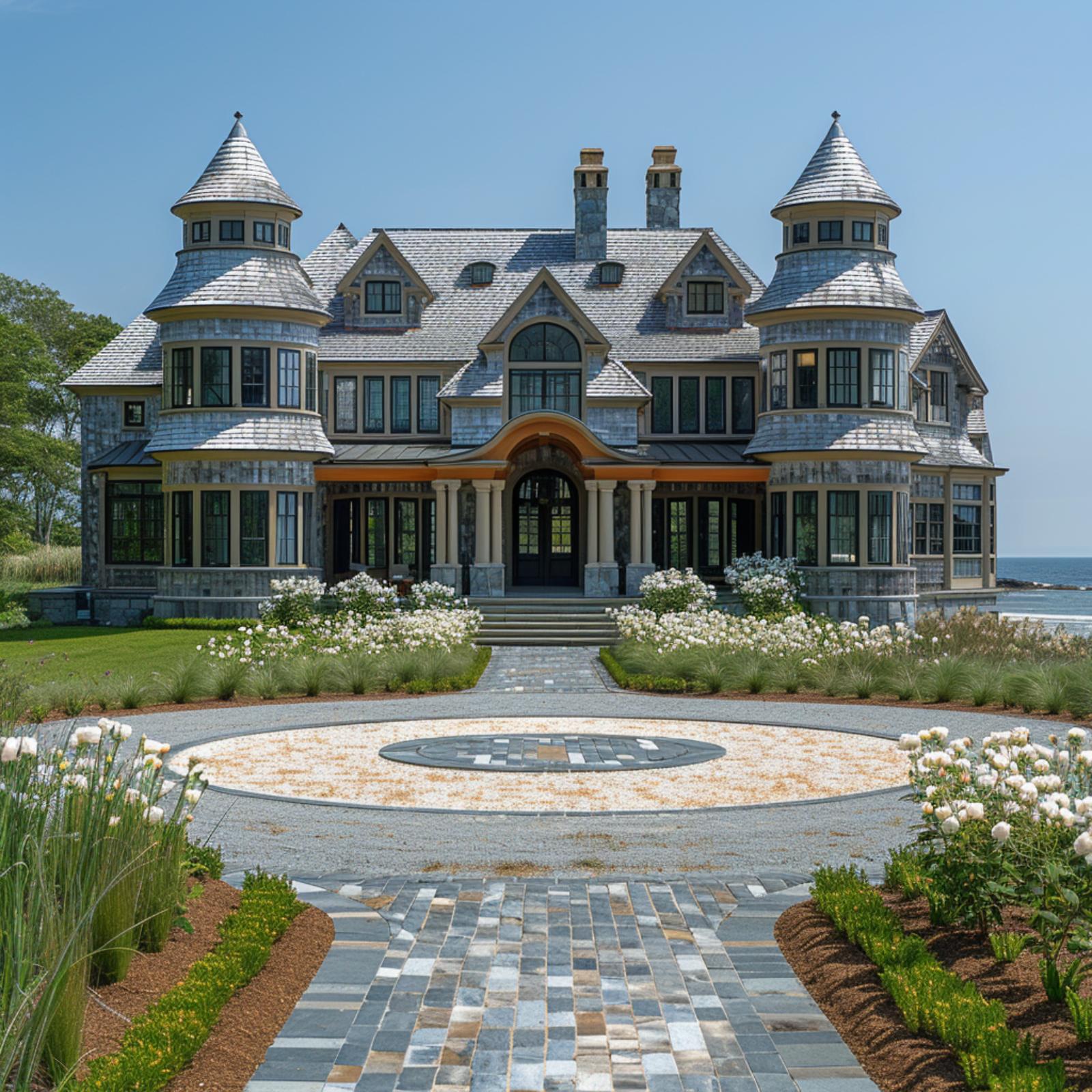
Cedar shingles weathered to silver cover nearly every surface of this sprawling coastal home, and the consistency of that finish is what makes the two flanking turrets read as architecture rather than decoration. The circular motor court pairs a bluestone-patterned brick path with a gravel center medallion, and that combination handles the scale of the facade without demanding too much attention on its own.
Circular driveways on symmetrical homes like this one benefit from a centered entry path that locks the geometry together visually. Here, the stone walkway runs straight from the roundabout to the arched portico, and white flowering plantings on both sides soften what could have felt like a formal parade route. It works because the house earns the symmetry.
3. Adobe Walls, Barrel Cactus Borders, and a Roundabout Built for the Desert Sun
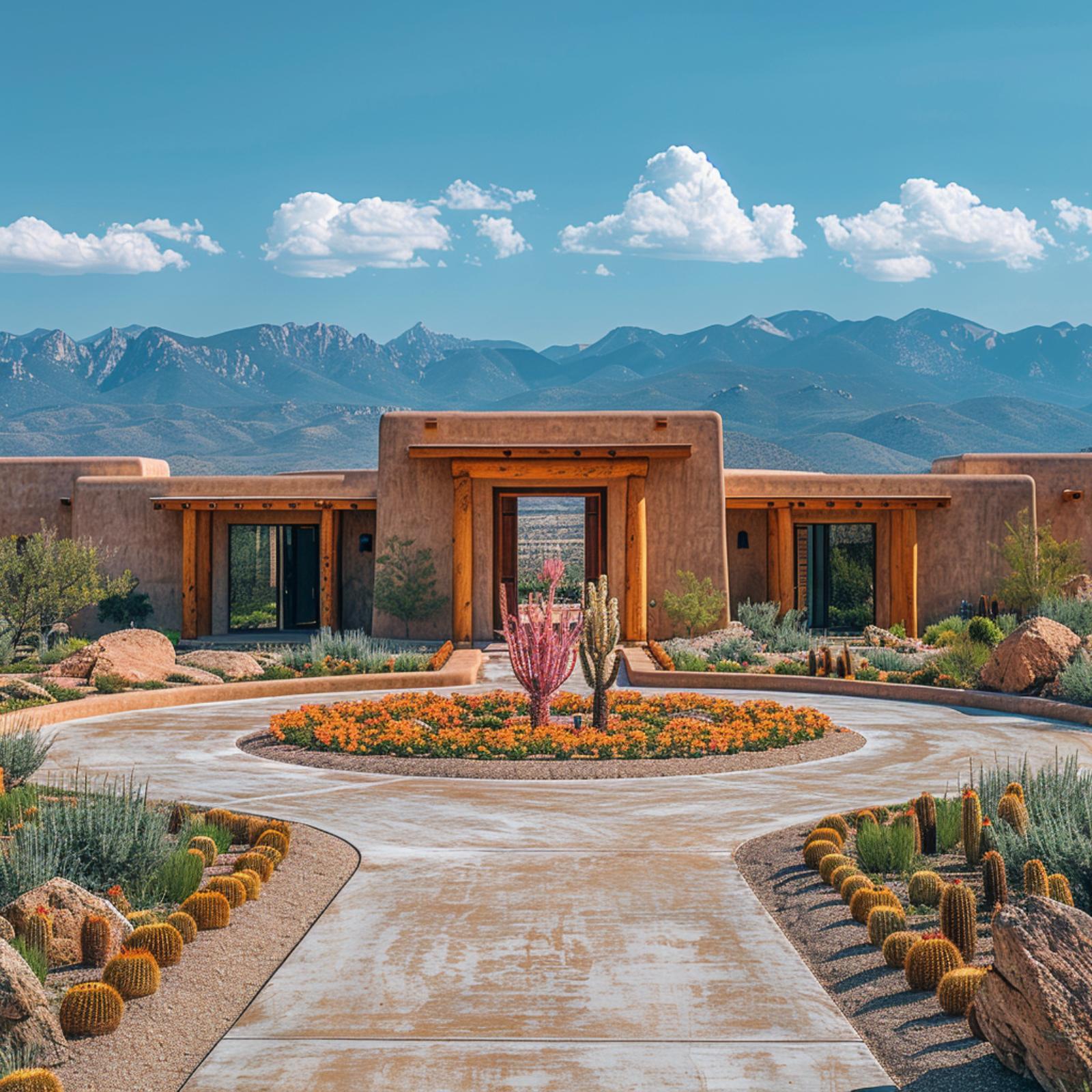
Pueblo Revival architecture earns its place here. The adobe walls carry that particular warm ochre that only comes from real stucco over mass, and the wood columns framing the entry portal are thick enough to read as structural, not decorative. A circular center island planted with orange blooms and a single columnar cactus anchors the motor court without competing with the facade behind it.
Barrel cacti line both sides of the approach in tight, evenly spaced rows. It’s a surprisingly formal move for a desert planting scheme, and it works because the rounded forms echo the motor court’s own geometry. Mountain ranges frame the background, but it’s the portal opening cut straight through the building that makes this entry feel generous rather than imposing.
2. Olive Trees, a Reflecting Entry Court, and Geometry That Actually Earns Formal
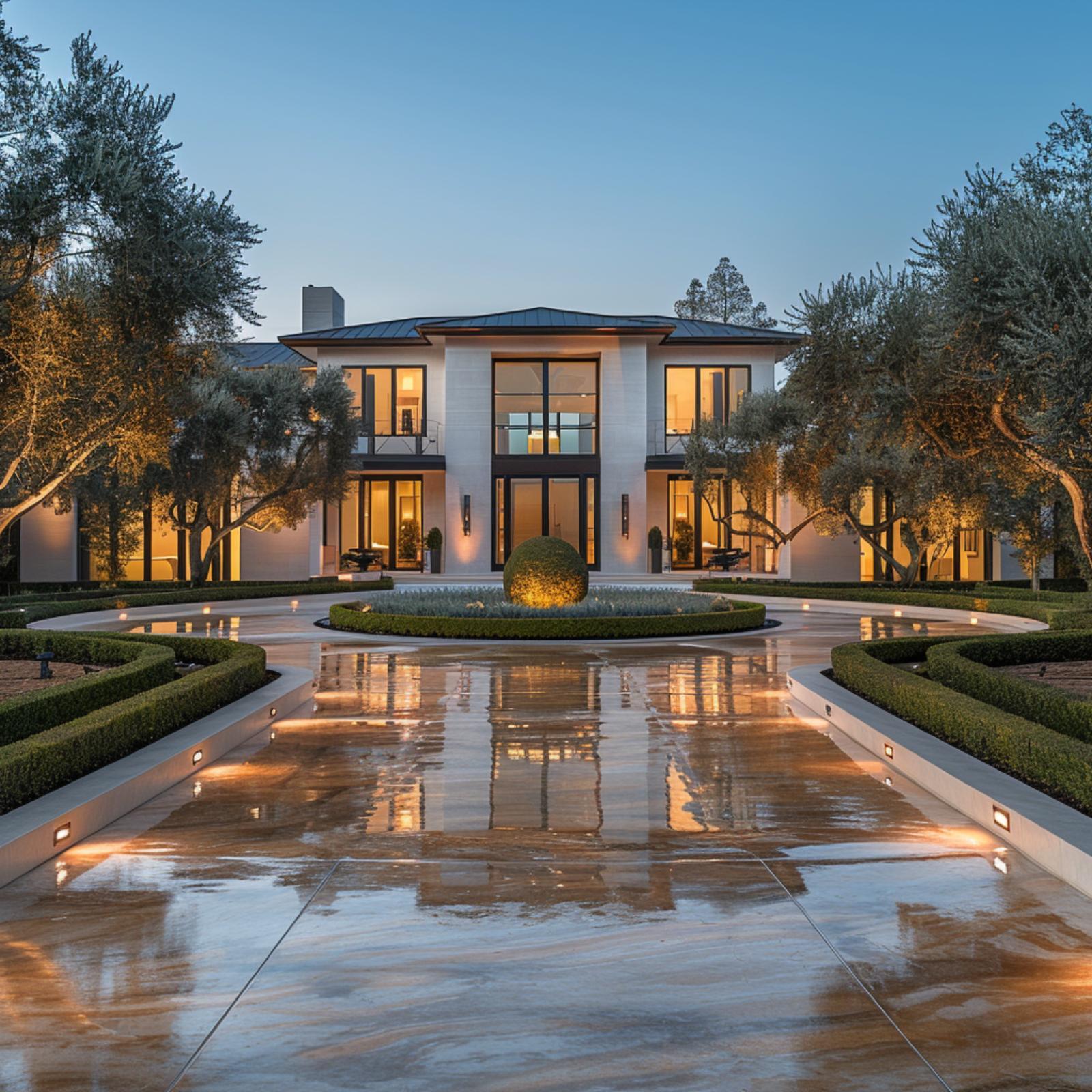
Symmetry this deliberate doesn’t happen by accident. Two rows of mature olive trees flank a central reflecting pool that runs from the forecourt straight to a clipped boxwood roundabout, and the whole composition locks onto the home’s entry like a sight line pulled taut. Flush ground lights embedded in the concrete edges trace the pool’s geometry after dark, turning the approach into something you slow down for.
The house itself is white plaster with dark metal window framing and a standing-seam roof, and those two-story glass panels at the center glow amber at dusk. What makes it work isn’t the scale. It’s that the roundabout’s spherical topiary lands at exactly the right height to anchor the view without competing with the facade behind it.
1. Polished Black Granite, Saguaro Silhouettes, and a Desert Forecourt That Demands Patience
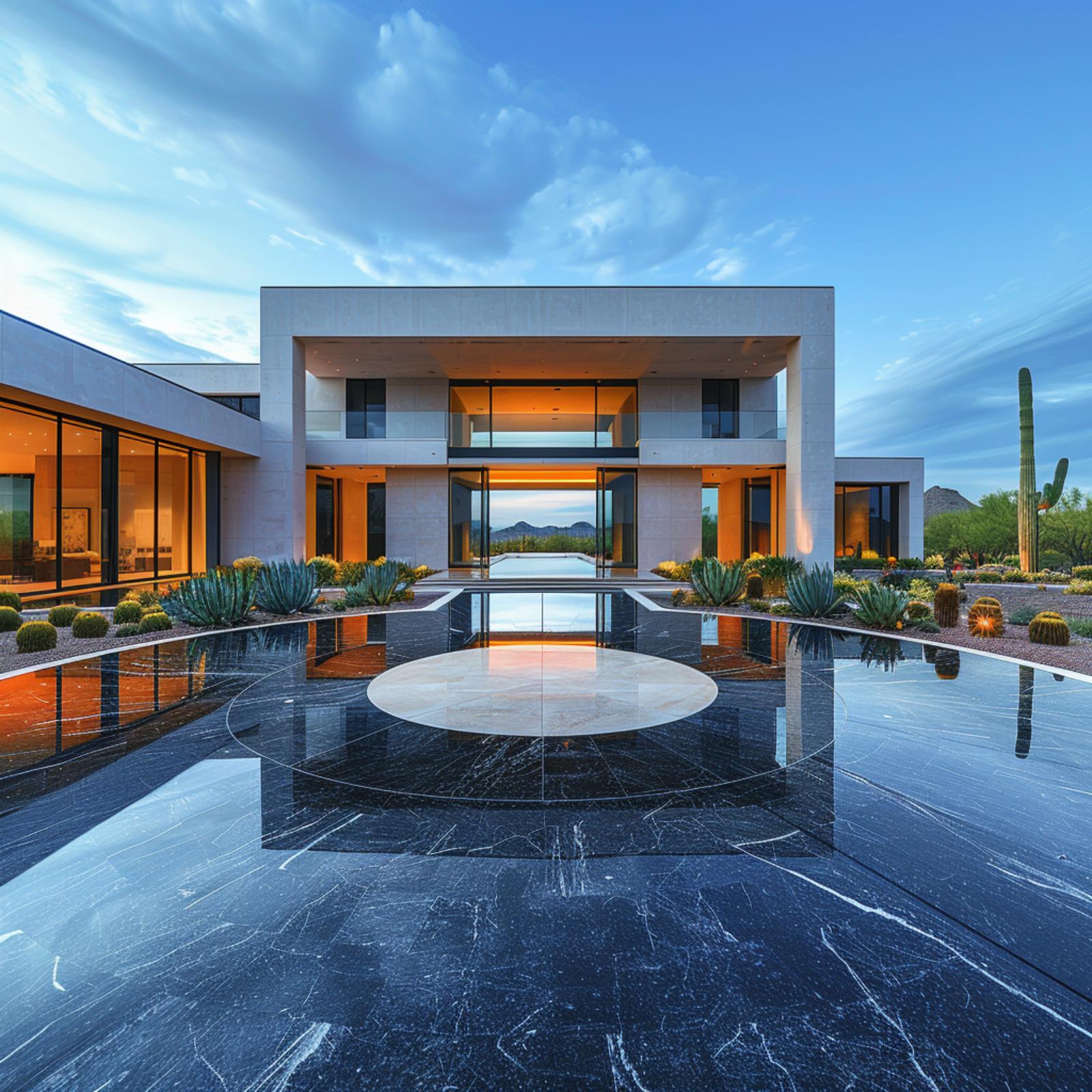
Polished black granite covers the entire motor court in large-format slabs, and the reflectivity is doing real work here. At dusk, the house’s warm amber soffit lighting doubles in the stone, and the circular cream inlay reads almost like a compass rose from above.
The architecture is flat-roofed and sand-toned, with floor-to-ceiling black-framed glass opening the facade straight through to a mountain view beyond. Agave, barrel cactus, and globe-shaped succulents replace lawn entirely. That plant palette isn’t decorative restraint for its own sake. In desert climates, it’s also the difference between a driveway that survives triple-digit summers and one that doesn’t.