🔥 Would you like to save this?
The smell of lighter fluid and charcoal on a Saturday afternoon. Aluminum chair legs scraping across loose pebbles. A screen door slamming shut behind someone carrying a sweating pitcher of Kool-Aid. The 1970s backyard wasn’t designed by anyone with a landscaping degree — it was assembled over time, piece by mismatched piece, and all of it somehow worked. These details were practically universal, stretching across subdivisions from Ohio to Oregon, and every single one will hit you right in the chest.
27. The Gravel Patio with Aluminum Lawn Chairs That Announced Every Movement
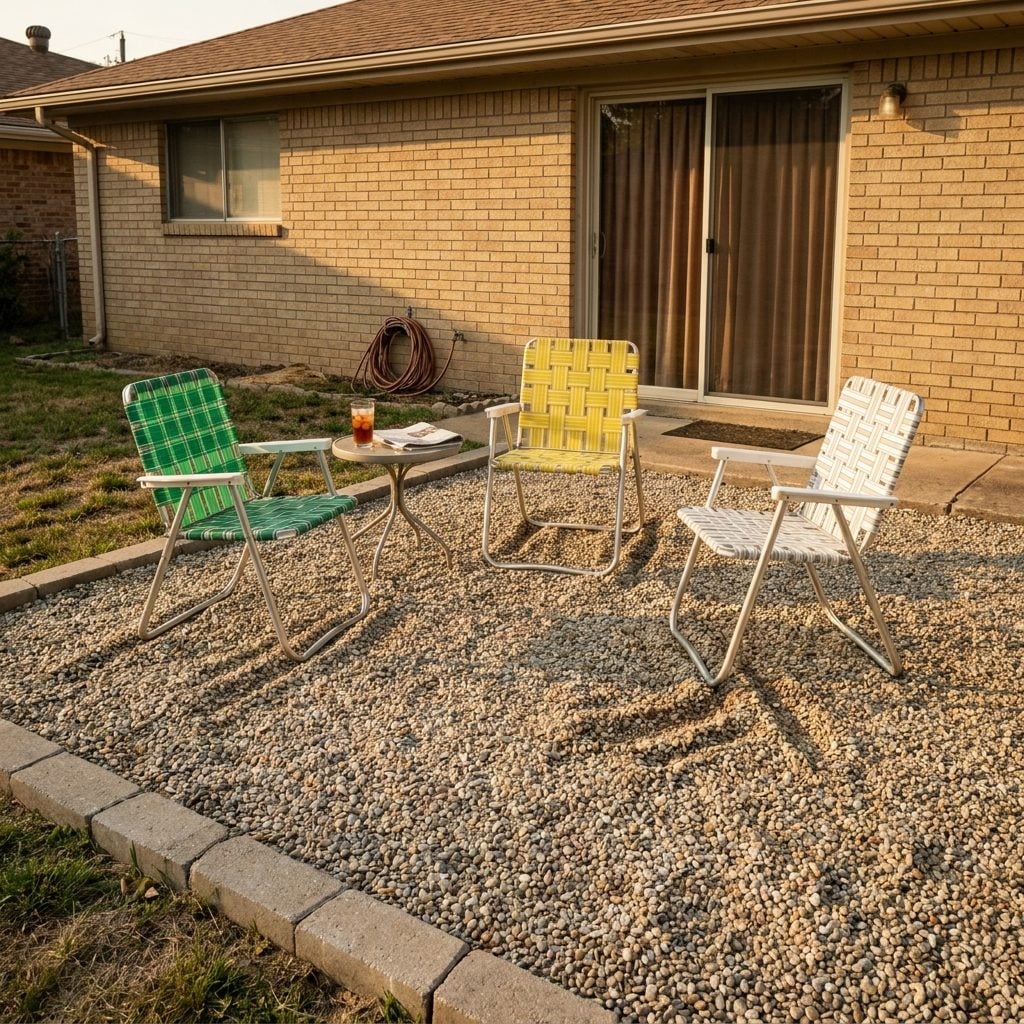
That sound. Every time someone shifted their weight or reached for a drink, those aluminum legs let out a grinding, scraping shriek against the loose pebbles — the soundtrack of every summer evening, and nobody even flinched anymore. The gravel itself was never really “installed” so much as dumped: a truckload of pea gravel spread over packed dirt, maybe some landscape timbers at the edges if Dad was feeling ambitious that weekend.
In order to come up with the very specific design ideas, we create most designs with the assistance of state-of-the-art AI interior design software. Also, assume links that take you off the site are affiliate links such as links to Amazon. this means we may earn a commission if you buy something.
The aluminum lawn chairs with their woven plastic webbing came in packs from Sears or K-Mart. By the second summer, the webbing always sagged so badly you’d sit down and your rear end would sink four inches lower than intended. Gravel stuck to bare feet, got kicked into the grass, and migrated into the house no matter how aggressively someone swept. A losing battle, every single week.
What Our Readers Say
- Gravel has slipped down the list since the seventies: when our readers pick a walkway today, pavers win with 51% of votes, while gravel trails at 21%.
From Home Stratosphere reader polls and votes.
26. The Rusty Charcoal Grill That Never Once Moved from Its Spot
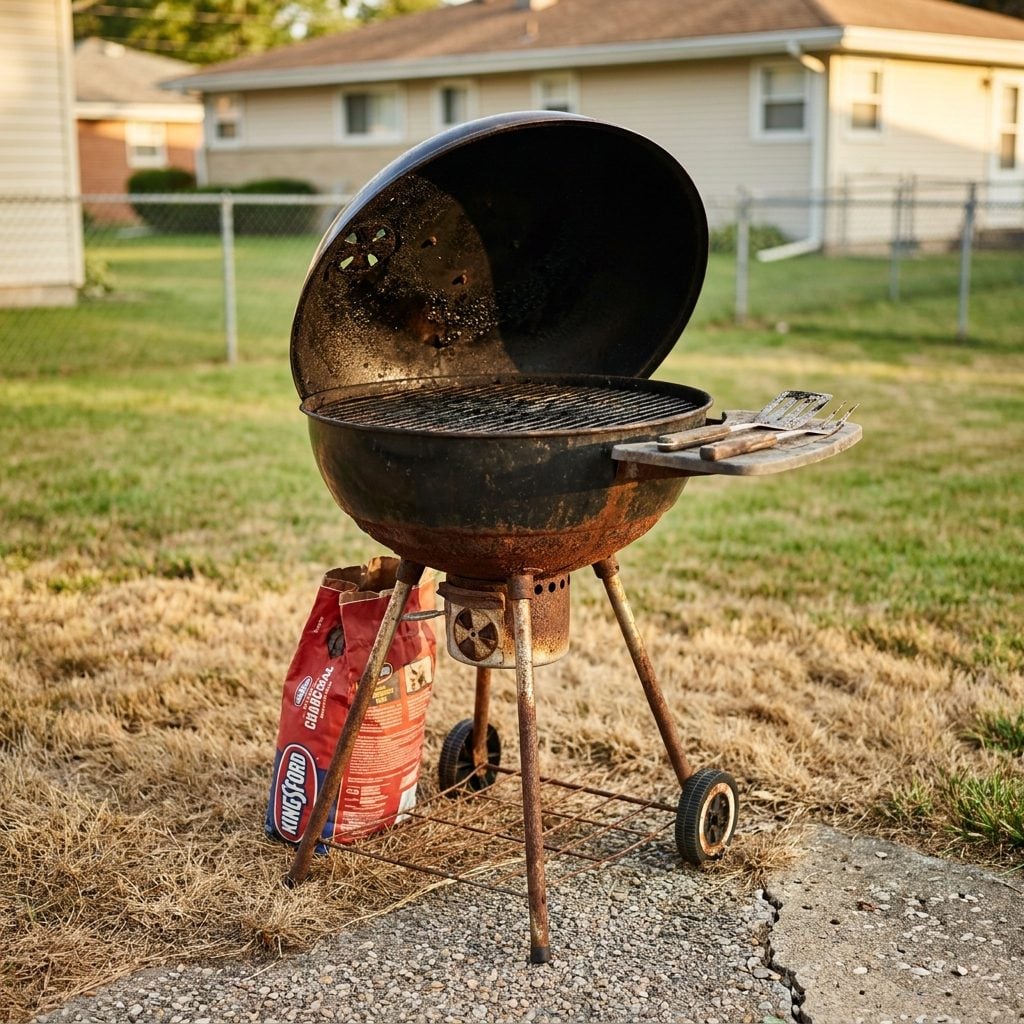
It had been sitting in that exact spot since the Ford administration. Beneath it, a perfect circle of dead, grey earth — a little monument to neglect. Nobody moved it. Nobody cleaned it, not really. Dad might scrape the grate with a wire brush before cooking, and that was the full extent of sanitation. Less an appliance, more a permanent yard fixture, like a boulder.
Lighter fluid went on heavy. Eyebrows were singed. Burgers were cooked until they could double as hockey pucks, charred beyond recognition but served with absolute pride. And the whole neighborhood knew when someone was grilling because that haze of Kingsford smoke drifted through every open window three houses down.
25. A Clothesline Stretching Across the Yard with Sheets Snapping Like Sails
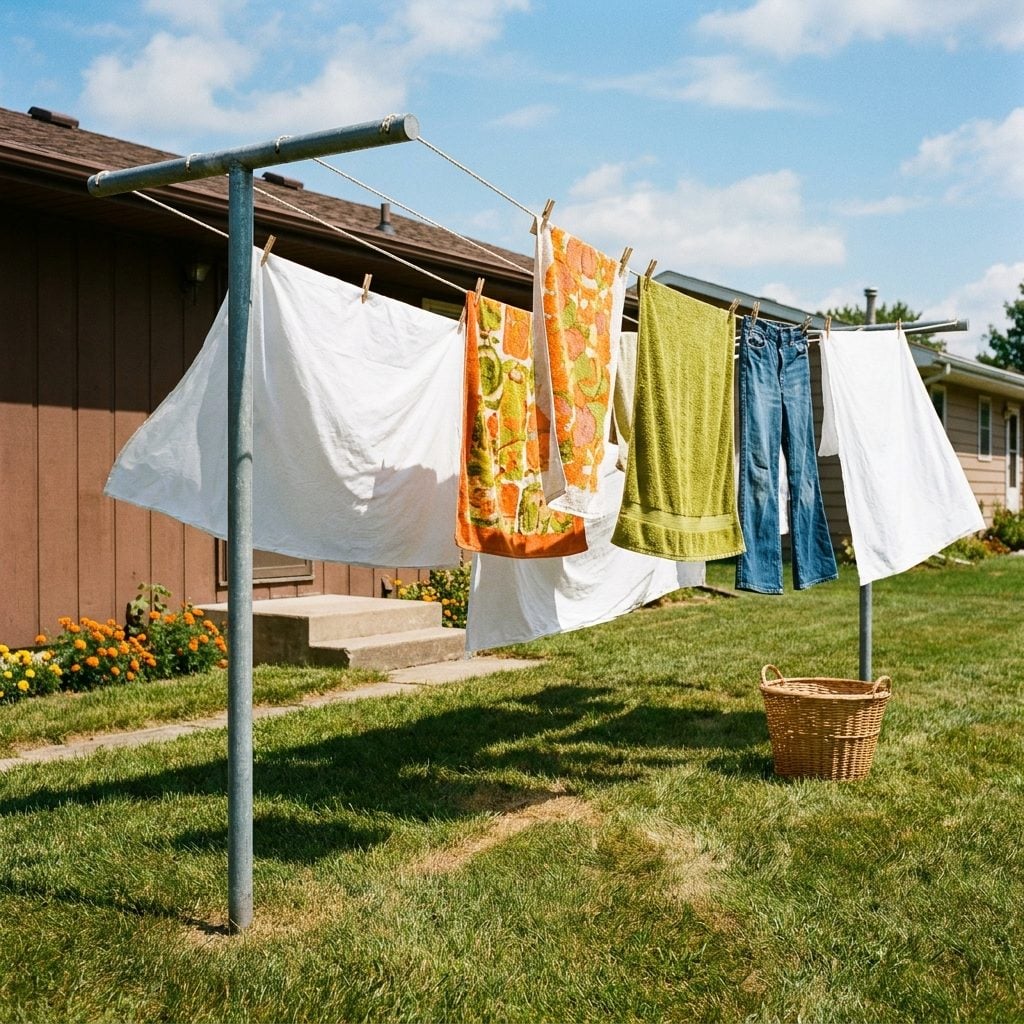
Before the dryer became the default, this was Tuesday. And Thursday. T-shaped metal poles with cotton rope lines stretched across the yard like rigging, and when the wind caught a king-size sheet just right, it cracked loud enough to make the dog flinch.
Wooden clothespins lived in a canvas bag hung from the line itself, sun-bleached and slightly splintered. Every mom had her own hanging system. Towels together, sheets on the outside lines where the wind hit hardest, socks paired on the same pin to save time folding. Walking through a corridor of sun-dried sheets on a July afternoon — the cotton warm and smelling like cut grass and open air — was a sensory experience no dryer sheet has ever come close to replicating. Not even the expensive ones.
24. The Giant Rotary TV Antenna Mounted to the Roof Like a Metal Tree
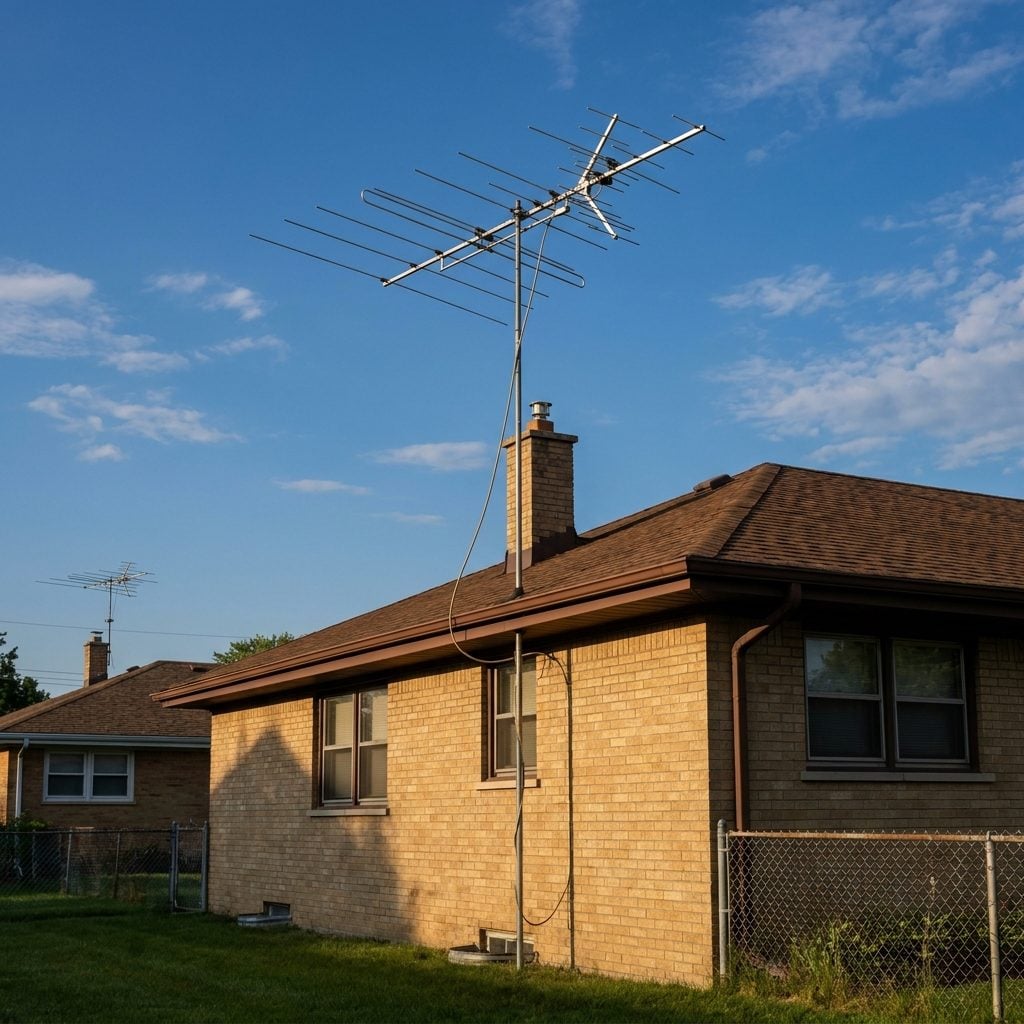
Every house on the block had one — a skeletal aluminum fishbone jutting up from the roofline like the house was trying to signal another planet. The rotary antenna could be turned using a control box sitting on top of the TV, a clunky dial that made a grinding mechanical sound as the antenna slowly pivoted overhead.
From the backyard, you could watch it rotate. Kids found this fascinating for about ten seconds. Real drama came during storms, when the wind would catch it and the picture inside dissolved into static. Inevitably, someone’s dad ended up on the roof adjusting it by hand while someone else yelled from the living room: “Better! No, go back! You passed it!” This could go on for twenty minutes. The dad on the roof always came down irritated. Always.
23. The Concrete Birdbath Slowly Turning Green from Years of Cheerful Neglect
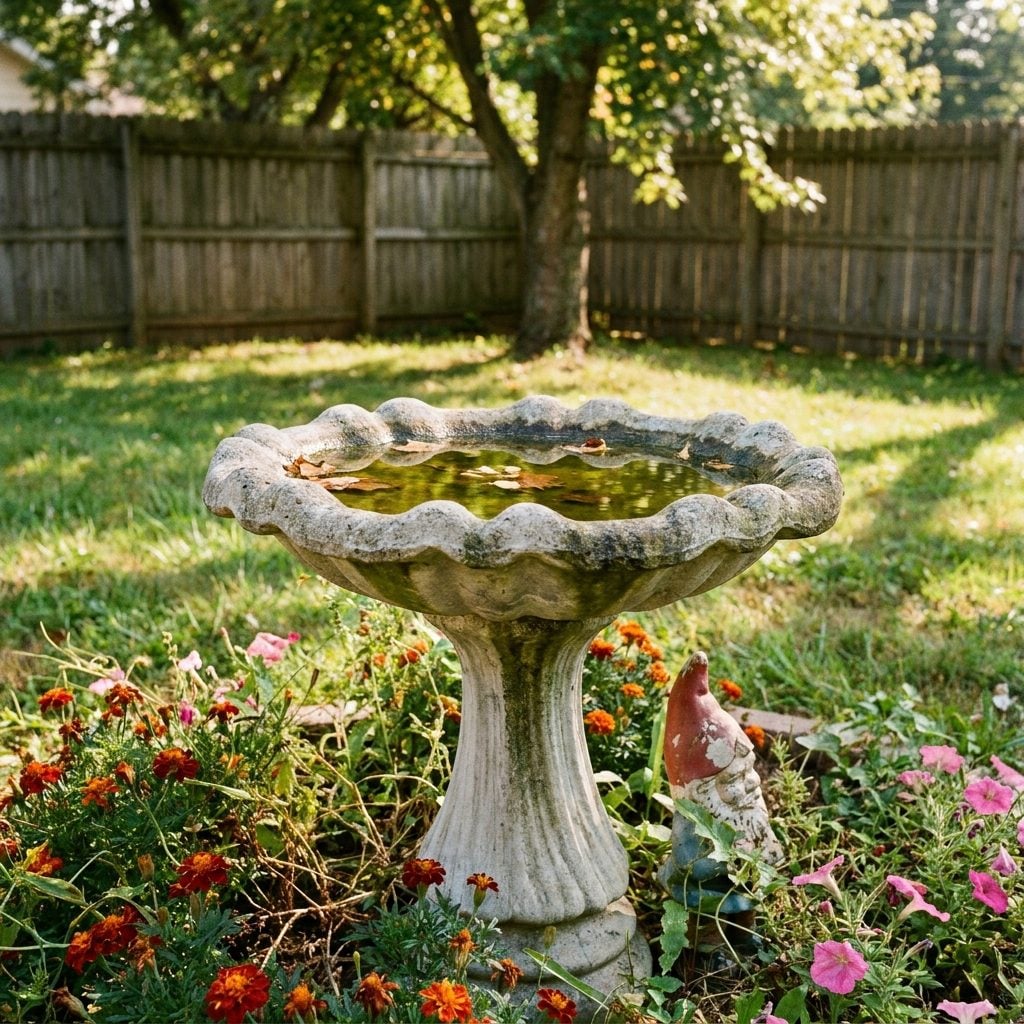
Nobody cleaned it. I say this with absolute confidence because I never once, in my entire childhood, witnessed a single person scrub a birdbath. It arrived from the garden center looking like a Grecian artifact — smooth grey concrete, scalloped rim — and within one season it was a swamp monument.
Green algae crept up from the waterline. Leaves collected in the bowl and decomposed into sludge. The water turned the color of something you’d find behind a strip mall loading dock. And yet there it stood, year after year, in the flower bed next to the marigolds, radiating a certain kind of home character specific to the era. Its purpose was almost entirely decorative — a small concrete announcement that said: we have a yard and we’re doing something with it. Whether the birds agreed was never really the point.
22. The Chain-Link Fence That Defined Every Property Line Without Apology
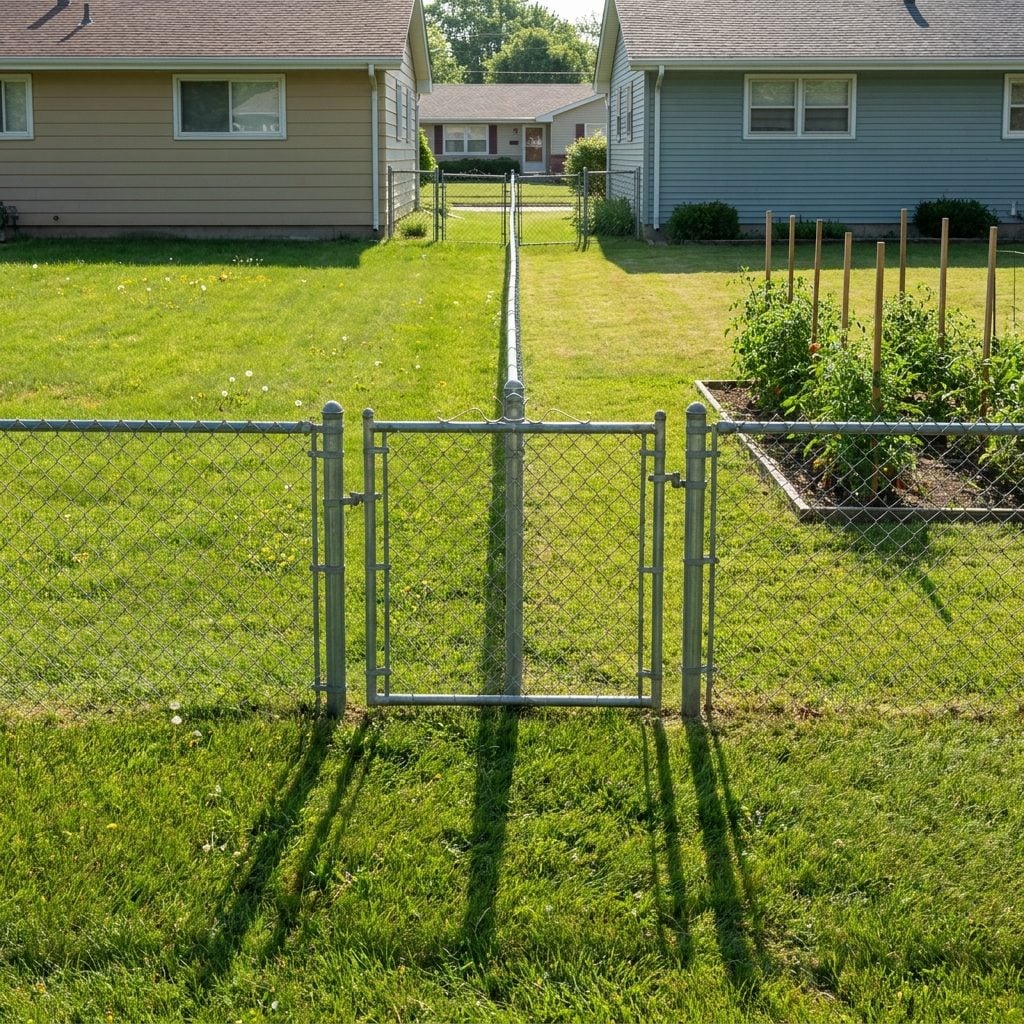
Privacy fences were for rich people. Everybody else got chain-link, and honestly, nobody seemed to mind much. Those galvanized steel diamonds running along every property line in every subdivision were as universal as sidewalks — they didn’t block anything. Not sound, not sight, not the neighbor’s dog that kept getting into the tomatoes. More of a symbolic boundary, a polite suggestion of “your side, my side” that everyone respected anyway.
21. A Metal Swing Set with Seats Hot Enough to Brand You by Afternoon
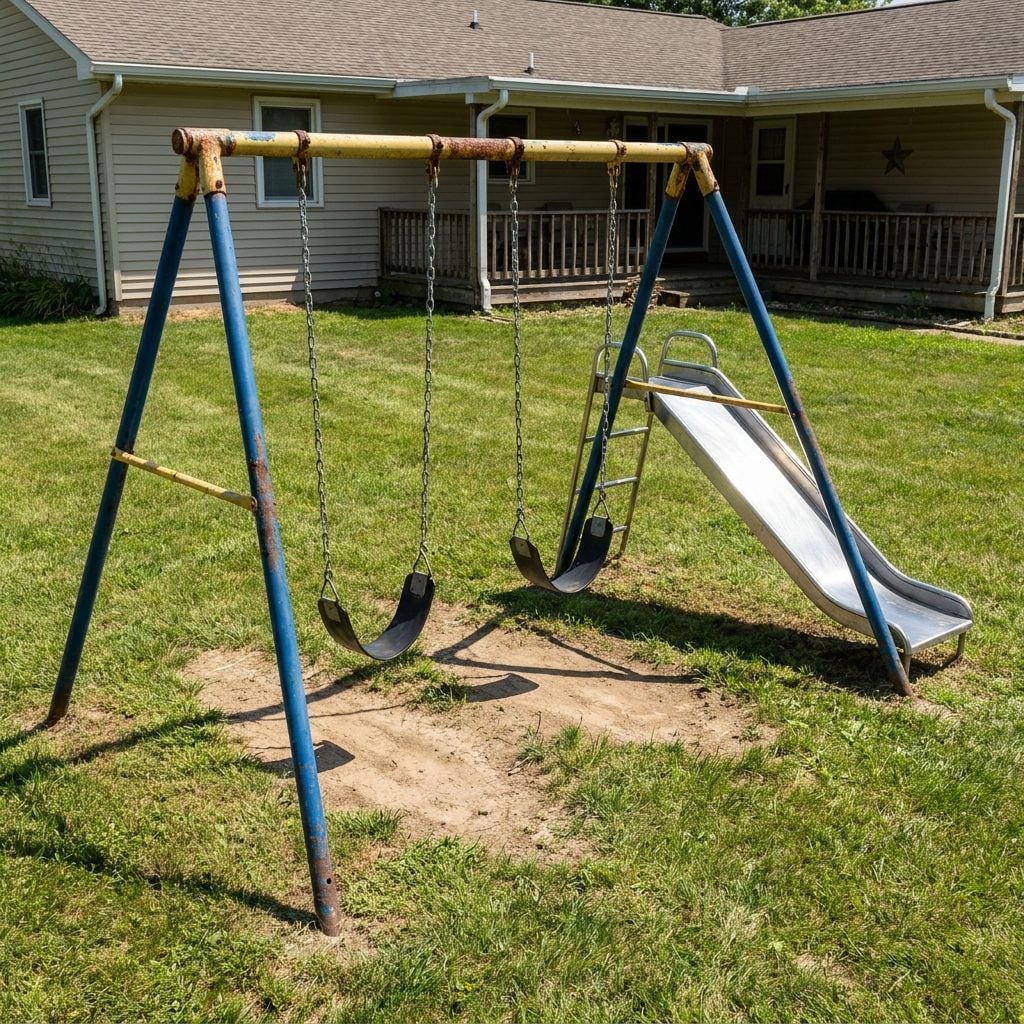
You learned fast, or you learned with second-degree burns on the backs of your thighs. That metal slide by 2 PM in July was a solar-powered griddle. The black rubber swing seats absorbed heat like it was their entire purpose in life. And the chains? Bare hands on sun-baked steel left marks you could still see at dinner.
The whole structure was a marvel of optimistic construction — tubular steel legs held together with bolts that loosened over time, so the frame would rock and lurch with each pump. On a really good swing, the back legs lifted completely off the ground. This was considered normal. Nobody called anyone. The worn dirt crescents beneath each seat, smooth and hard-packed from thousands of dragging sneakers, were the most honest record of how a childhood actually got spent.
20. The Above-Ground Pool Surrounded by Splintering Wood Decking
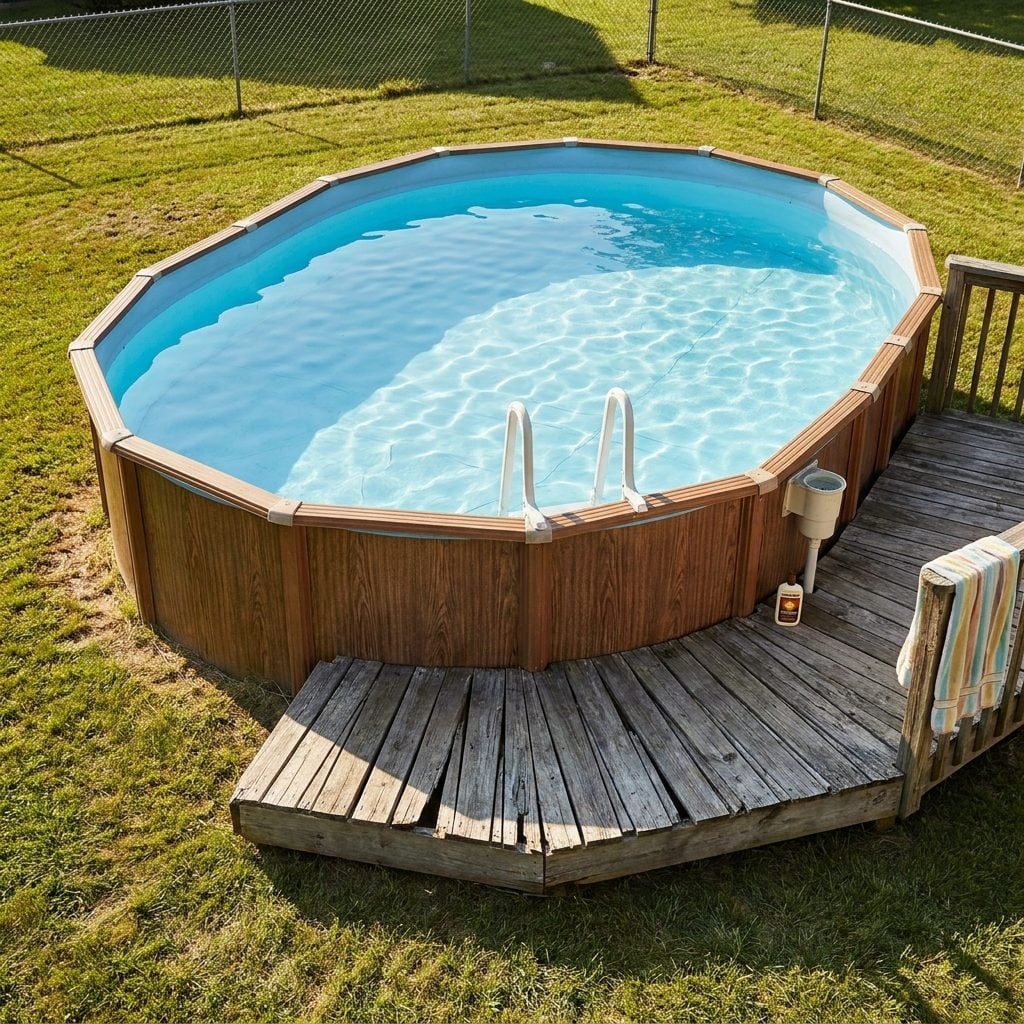
The crown jewel of the neighborhood. Whoever had the above-ground pool was royalty from Memorial Day to Labor Day, and every kid within a four-block radius suddenly became their best friend.
The pool itself was a corrugated steel wall with a blue vinyl liner, usually kidney-shaped or oval, standing about four feet above the lawn. But the real adventure? The deck. Dad built it himself over two weekends with pressure-treated lumber, a Skil saw, and a dangerous amount of confidence. Within a year, the boards had warped, split, and started growing splinters that could qualify as surgical instruments. Walking barefoot across that deck required genuine courage — you learned to shuffle instead of step, a survival adaptation unique to this specific era of backyard renovation ambition. The pool filter ran constantly and still couldn’t keep up. Nobody cared.
19. The Dark-Stained Picnic Table Covered in Cigarette Burns and Carved Initials
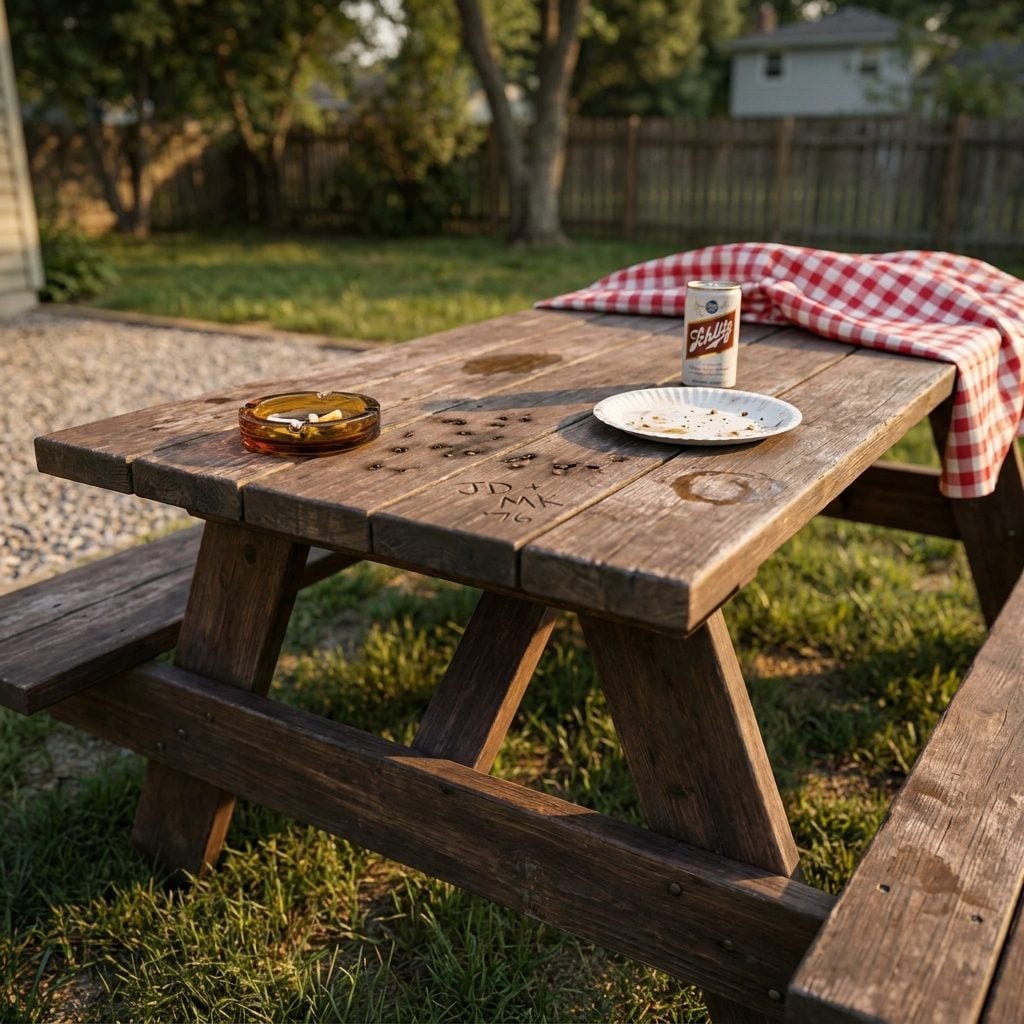
Every flat surface told a story, and this one had about fifteen years’ worth layered into the grain. The wooden picnic table was the command center of every backyard gathering — stained dark brown with something from a can that needed reapplication every spring but actually got it maybe every third year.
Cigarette burns formed a constellation across the tabletop. Somebody’s teenage kid had carved initials into the bench seat with a pocketknife. Can rings overlapped in clusters. And the thing weighed so much it sat in the same spot on the lawn, slowly sinking into the earth, for the entire decade. A vinyl tablecloth with elastic corners came out for company. The rest of the time? Bare wood, splinters, and the permanent smell of woodsmoke and spilled beer baked into the surface by August sun. That table was more diary than furniture.
18. The Hammock Between Two Trees That Nobody Fully Trusted
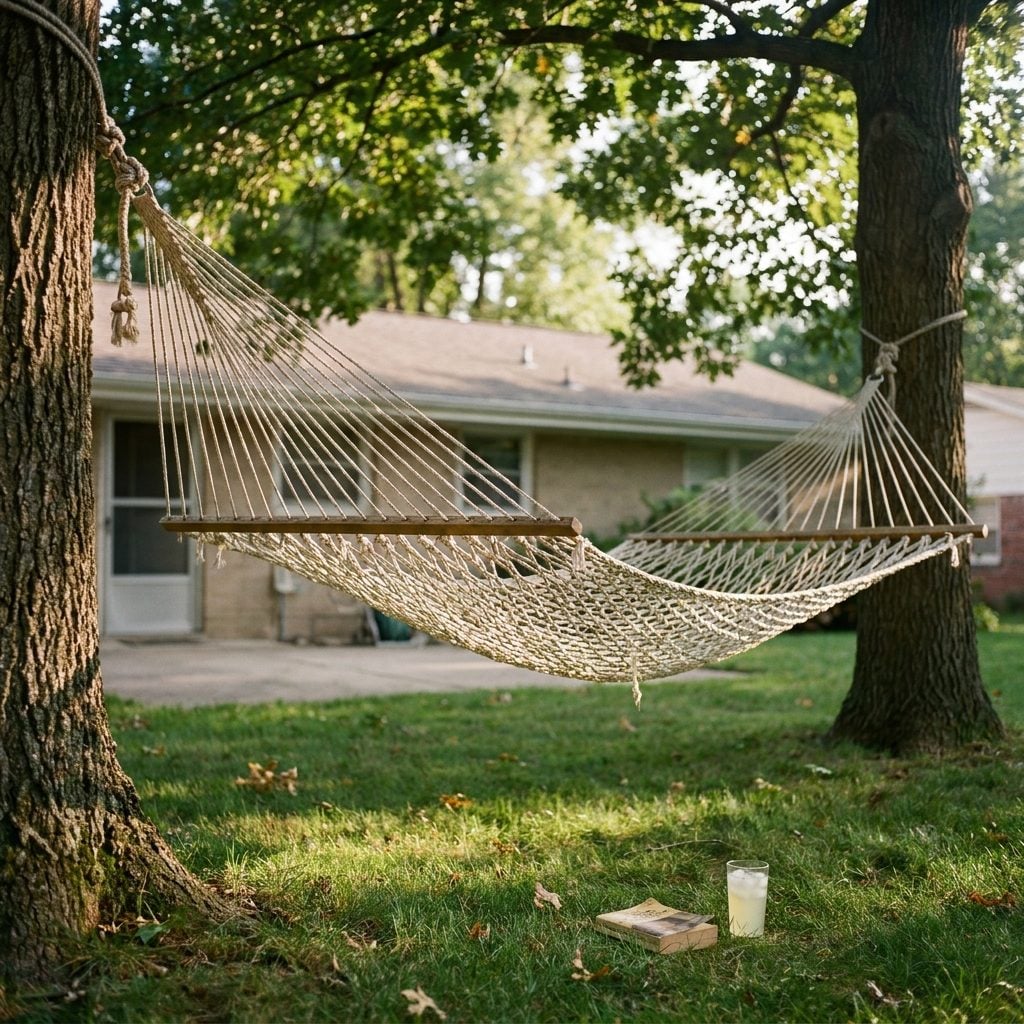
Getting in was a negotiation with physics. Getting comfortable was a minor miracle. And staying in for more than twenty minutes required a faith in knot-tying that most of us simply did not possess.
The cotton rope hammock, strung between two backyard trees with knots that looked increasingly suspect each summer, was the aspirational centerpiece of 1970s relaxation. In theory: a gentle sway under dappled shade, a paperback novel, a cold drink. In practice, a slow-motion wrestling match. You’d roll in from the side, spend half a minute trying not to flip, finally settle into a cocoon shape that made reading impossible, then lie there rigid, listening to the rope creak against bark, wondering if this was the summer it finally gave out.
The ropes left diamond-shaped imprints on every patch of exposed skin. Spreader bars cracked. And somehow, despite all evidence, it hung there for years — because taking it down meant admitting the whole thing was a mistake. Nobody in the 1970s admitted that about anything in their backyard. That would violate some unspoken suburban code.
17. The Dog House Made from Leftover Plywood and Roofing Shingles
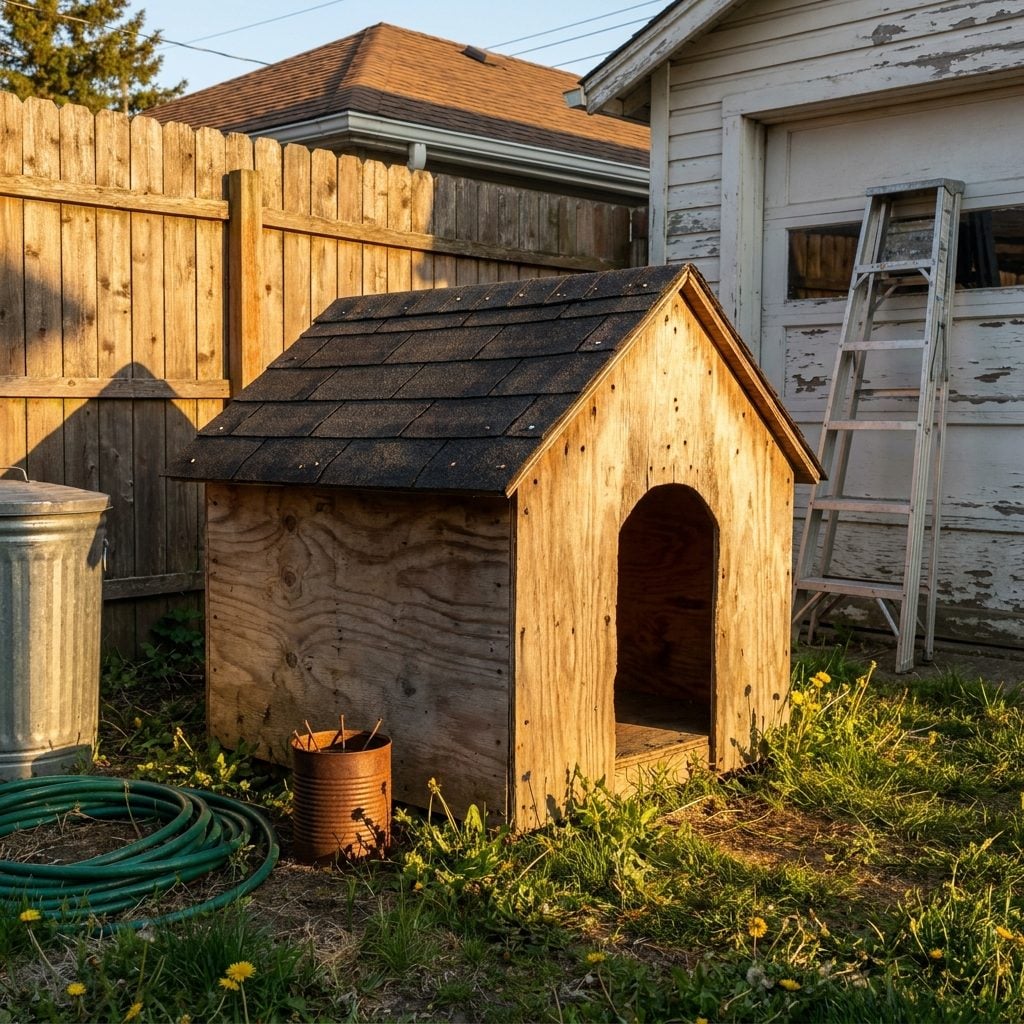
Nobody hired a contractor for this. Dad built it on a Saturday afternoon with whatever was left over from the carport project, and it showed — the roof pitch never matched the house it was supposed to complement, one side was always taller than the other, and the doorway was cut freehand with a jigsaw in a way that broadcast that fact to anyone who glanced at it.
But it stood there for a decade, through rain and snow and a dog who preferred sleeping under the porch anyway. Shingles curled at the edges. The plywood went grey. Every few years, someone would say “we should really replace that thing” without ever doing it.
16. That Patchy Lawn Worn Thin from Constant Neighborhood Football Games
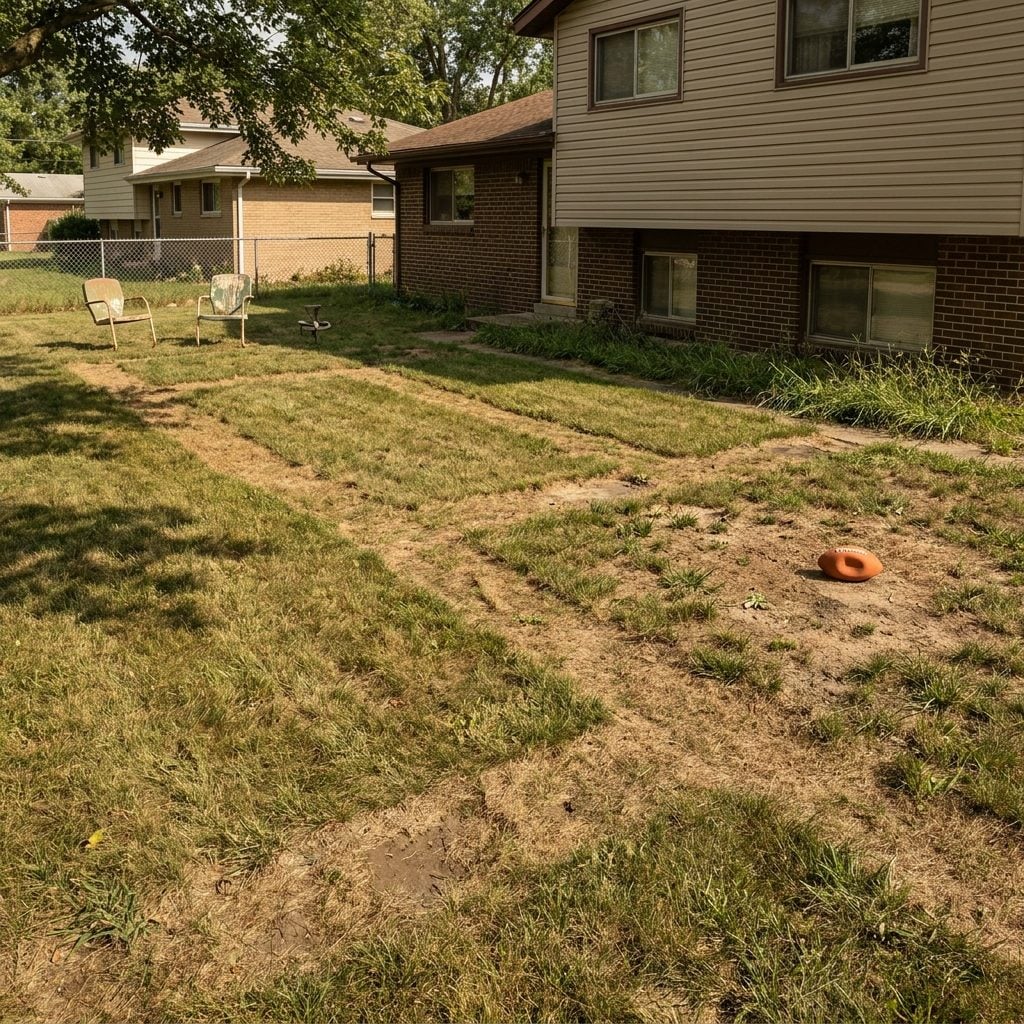
Every neighborhood had one yard that absorbed the punishment so the others didn’t have to. By August, the grass between the two imaginary end zones was just gone — bare dirt, packed hard as concrete, with a permanent skid mark where someone always dove for the catch.
The homeowner either didn’t care or had given up caring, which amounted to the same thing. Reseeding happened every fall. By the following July? Dirt again. That yard was the center of the known universe for every kid within three blocks, and its lawn paid for it season after season.
15. A Citronella Candle Battling Mosquitoes with Limited Success
🔥 Would you like to save this?
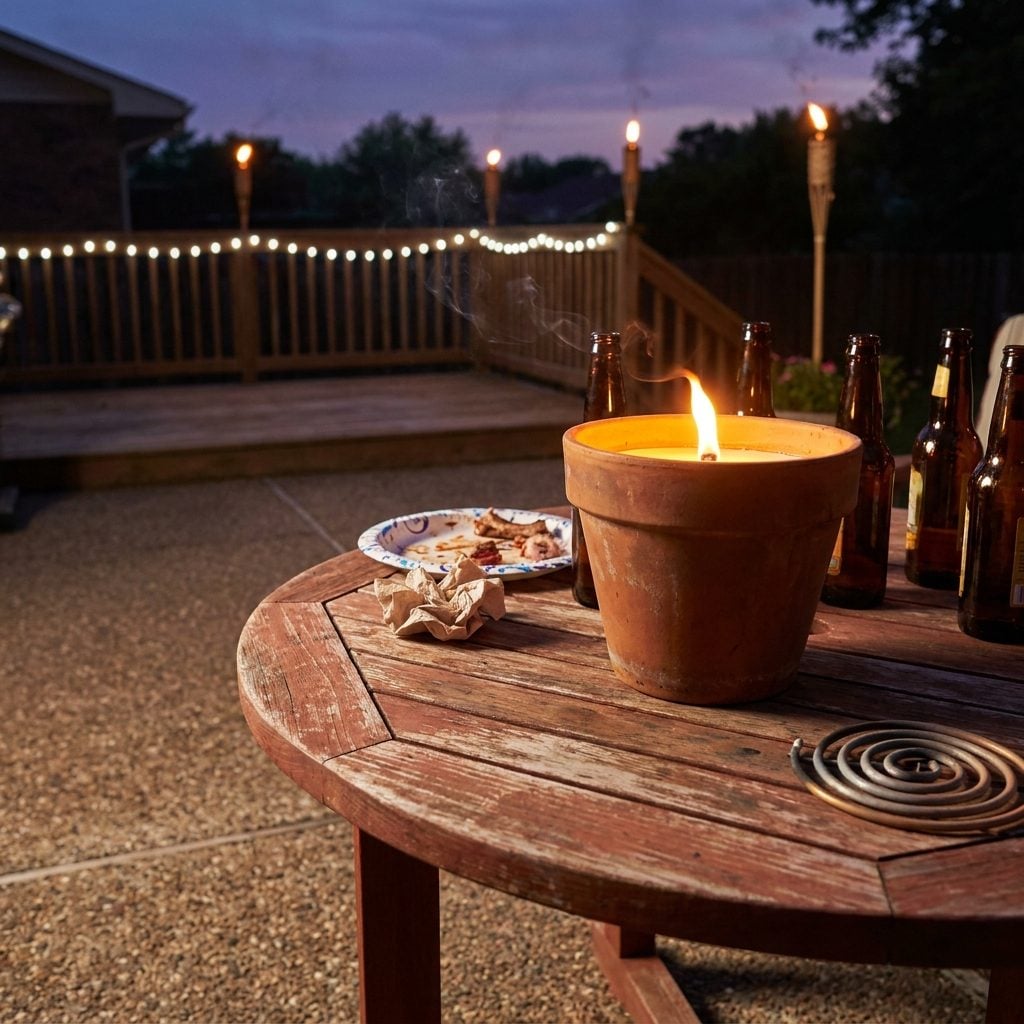
That waxy, vaguely medicinal lemon scent drifting across the patio — the smoke smelled like summer itself. Meanwhile, mosquitoes continued doing exactly what they planned to do anyway.
Everyone bought them. Everyone lit them. Everyone still got bitten. The candle was more ritual than repellent, a yellow-green beacon of optimism sitting in its little terracotta bucket, promising protection it had no ability to deliver. By midsummer you’d find two or three scattered across the deck, each burned down to a shallow pool of solidified wax with a drowned moth in it. I’m convinced they existed purely to give adults something to fuss with while ignoring the kids.
14. The Avocado-Green Lawn Chair Folded Awkwardly Against the Garage Wall
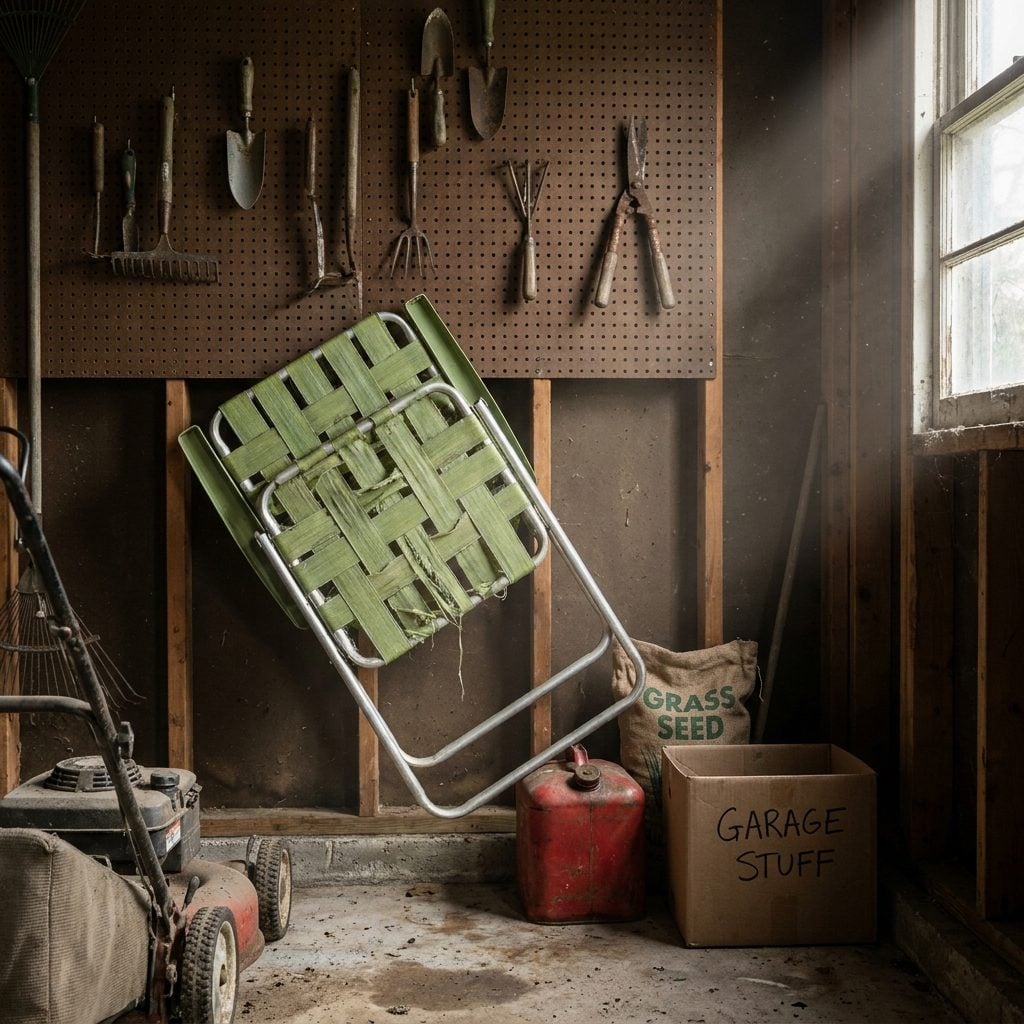
It never folded properly — worth stating up front. The aluminum frame had a hinge mechanism that pinched fingers and a locking position that existed only in theory, so it leaned against the garage wall at a steep angle, one leg always slipping, ready to clatter to the concrete floor at 2 AM and scare the entire household awake.
The avocado-green webbing told you everything about the decade. That color was inescapable. Refrigerator, bathroom tile, shag carpet — and now here, stretched across an aluminum frame in the garage, bleached to a paler shade where the sun hit it through the window. You couldn’t outrun avocado green in the seventies. It found you.
13. A Giant Satellite Dish Beginning to Appear in Upscale Neighborhoods Late in the Decade
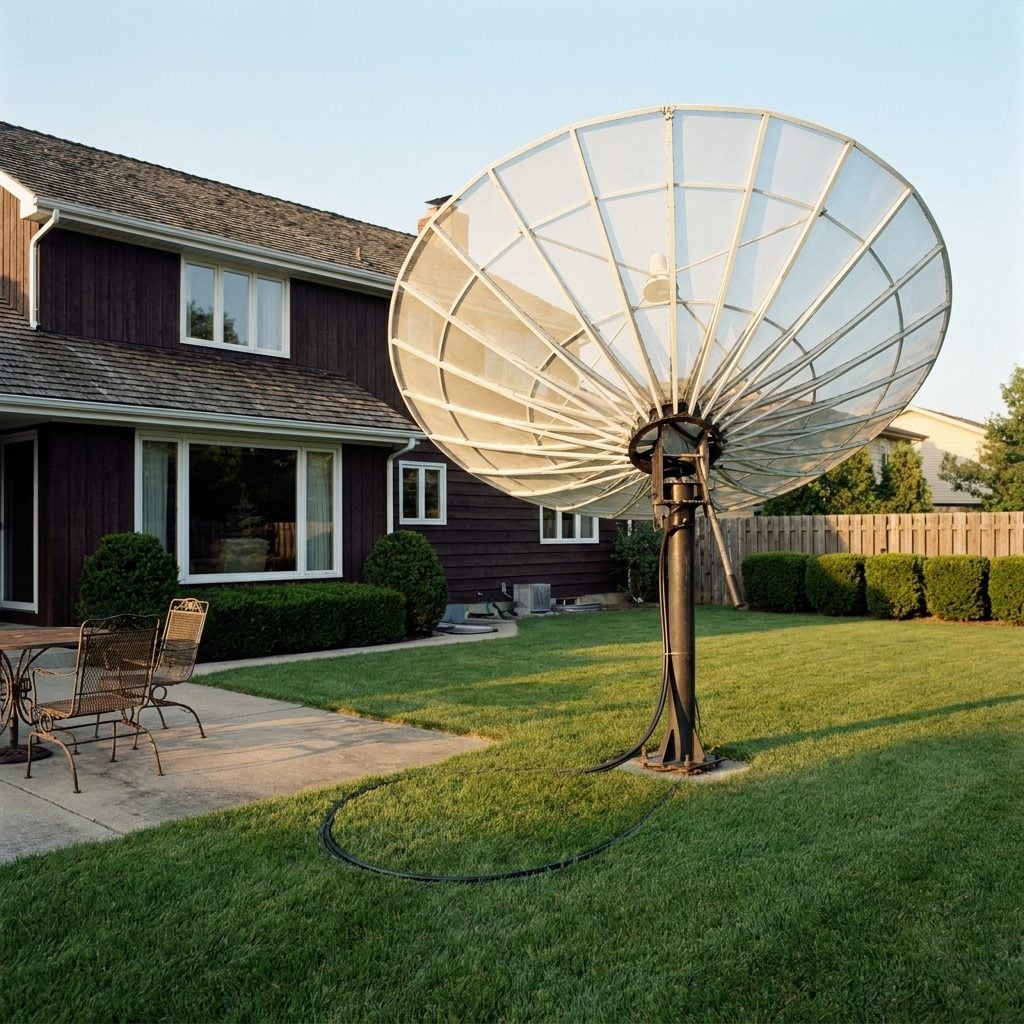
Ten feet of white fiberglass mesh mounted on a steel pole in the backyard. Looked like NASA had set up a field office next to the swing set.
These started appearing around 1978 and 1979 in neighborhoods where people had money and a deep commitment to television. The dish cost more than a used car. Installation meant pouring a concrete pad and running cable that looked industrial. But the owner could suddenly pull in stations from across the continent, and that was enough to justify the eyesore.
Neighbors had opinions. HOAs, where they existed, had bigger ones. Still, the satellite dish functioned as a status symbol disguised as an appliance — the 1970s equivalent of owning the first color TV on the block a decade earlier. For those browsing home inspiration from this era, the dish is proof that Americans have always been willing to sacrifice yard aesthetics for entertainment without a second thought.
12. The Metal Glider Bench Squeaking Rhythmically on the Patio
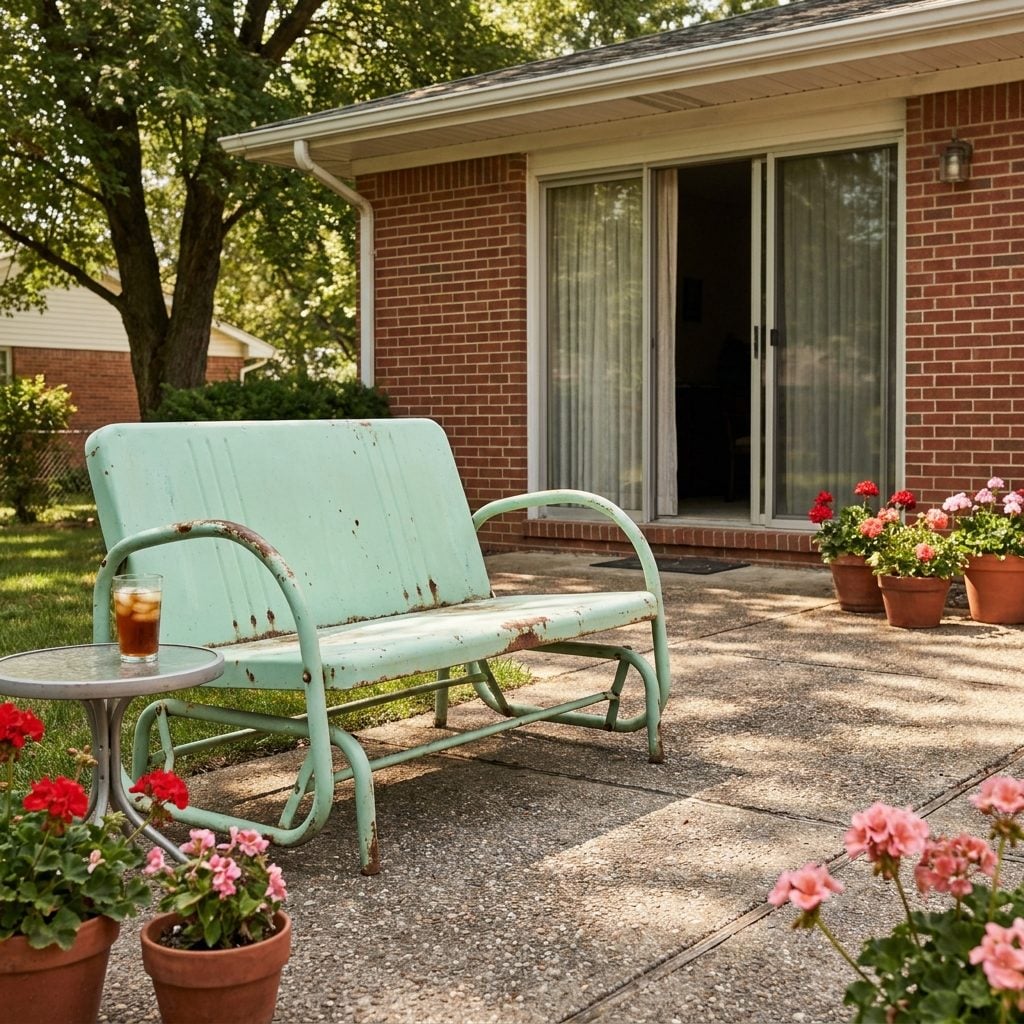
That rhythmic squeak was the soundtrack of every summer evening. Back and forth, metal on metal, a metronome set to the tempo of doing absolutely nothing. The vintage metal glider bench lived on the patio and never budged from its spot — the concrete underneath was scuffed pale from years of the same arc.
WD-40 could quiet it for a week. Then the squeak returned, and honestly, nobody minded. It was comforting. The kind of background noise that meant someone was out there keeping watch while the kids played and the sprinklers ran. You could hear it through the screen door from anywhere in the house.
11. A Garden Hose Left Baking in the Sun Until the First Blast of Water Felt Volcanic
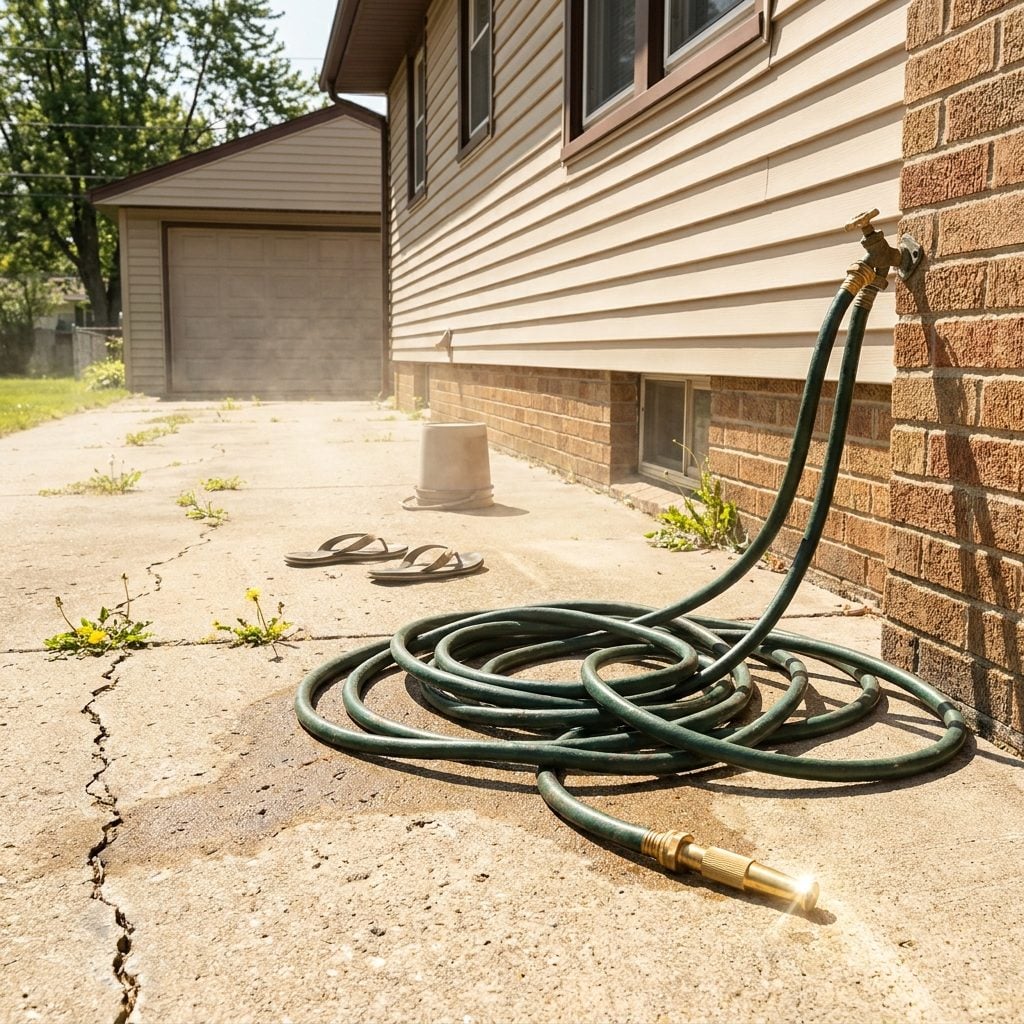
Fifty feet of dark green rubber sitting on hot concrete for six hours. The water trapped inside reached temperatures that could reasonably be described as hostile — you’d turn the spigot, squeeze the nozzle, and get a ten-second blast that felt like it came straight from a geyser. Kids screamed. Adults yelped and aimed at the grass until it cooled down.
Nobody ever brought the hose inside or coiled it in the shade. Too logical. It lived on the driveway, baking, a daily ambush waiting to happen.
10. A Tire Swing Hanging from the Biggest Tree in the Yard
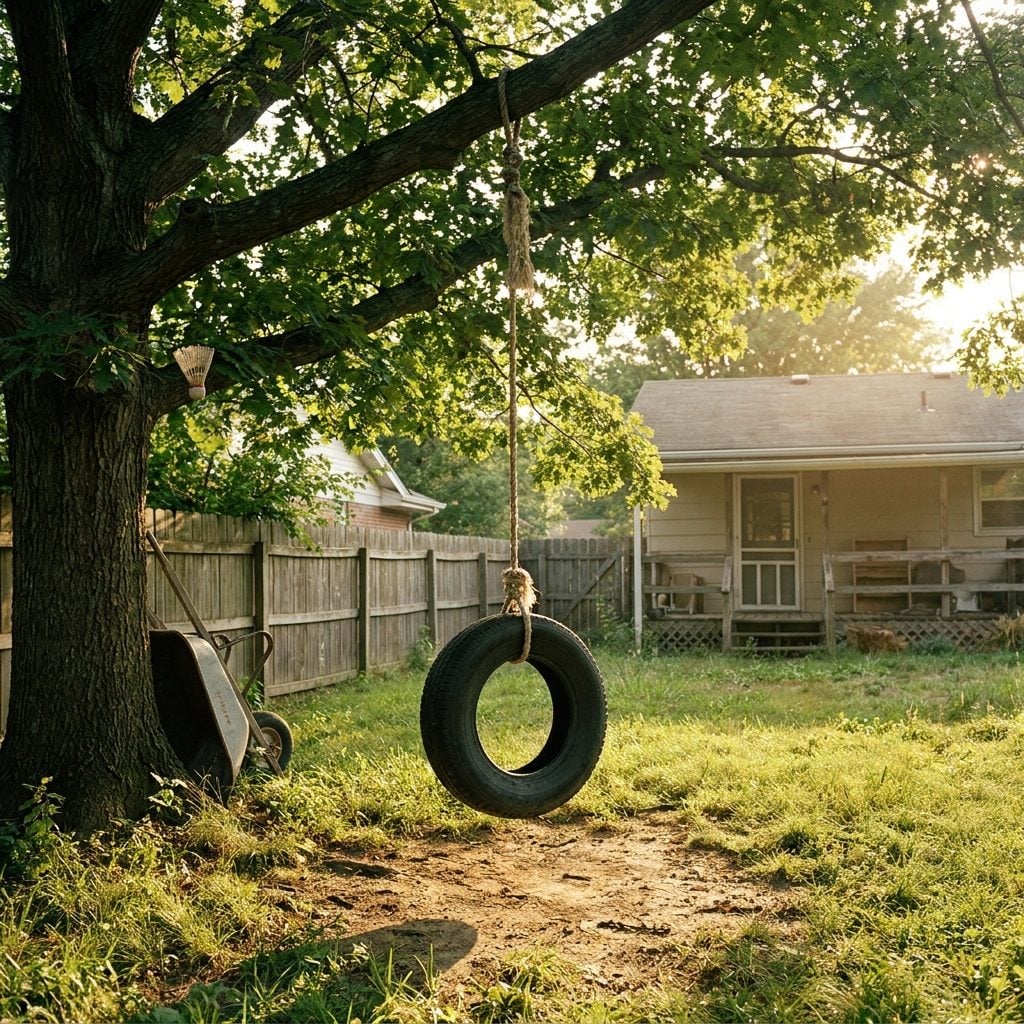
The bare dirt circle underneath was the yard’s permanent scar — grass never stood a chance because feet dragged through that same patch a thousand times a day, every day, from April through October. Ground packed so hard you could bounce a ball off it.
The tire itself collected rainwater that sat for days, breeding mosquitoes and smelling like hot rubber and stagnant pond. Nobody cared. The rope was usually some thick hemp or nylon cord that Dad swore was rated for the weight but had clearly never been tested against three kids hanging on simultaneously. Which they always did.
Something about a tire swing pulled every kid in a two-block radius into your yard within minutes. Forget the telephone — this was the original neighborhood signal.
9. Plastic Pink Flamingos Standing Proudly Near the Flower Beds
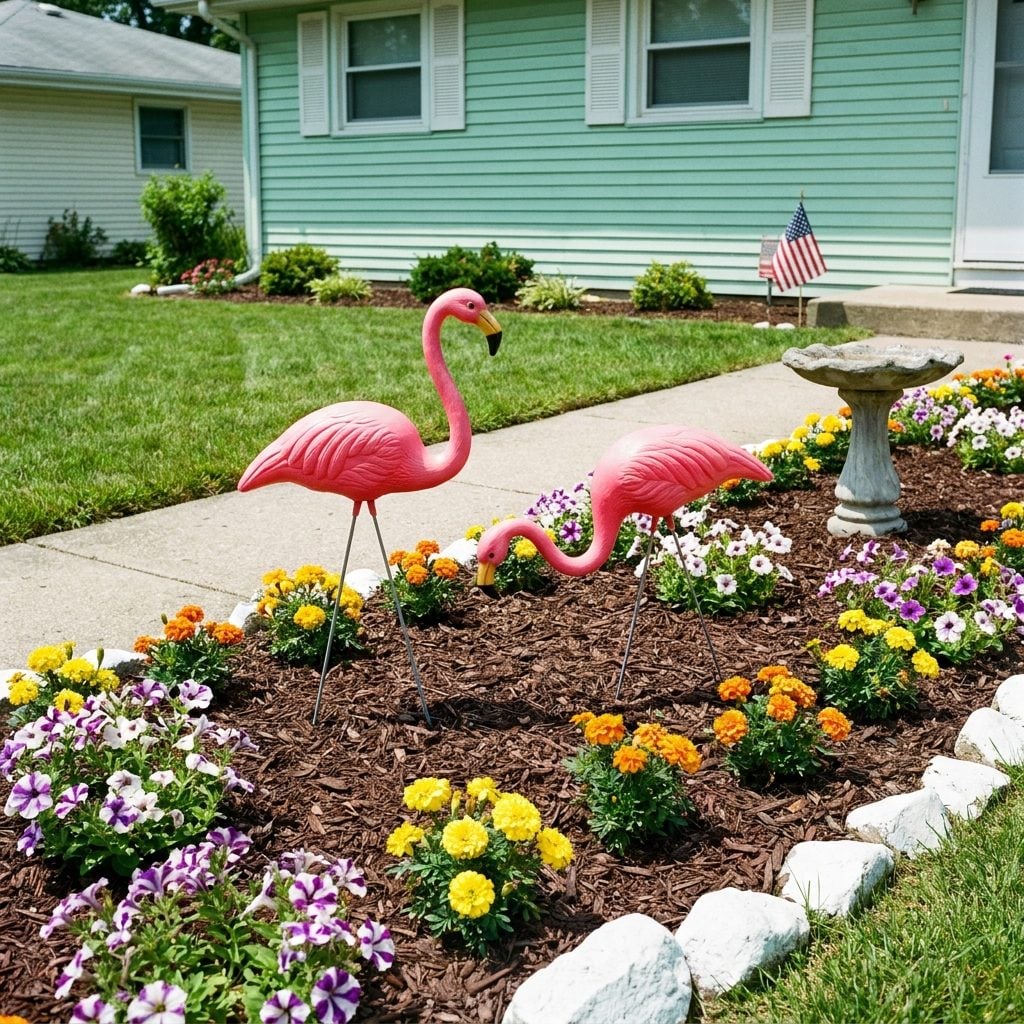
Don Featherstone designed them in 1957, but the 1970s is when they conquered every subdivision in America. A couple bucks a pair. Thin metal legs that bent if you looked at them wrong. A shade of pink found nowhere in the natural world.
They stood among the marigolds like sentries — perpetually feeding or perpetually looking up, depending on which way you jammed them in. They faded to sickly salmon by September. The lawn mower nicked them. Wind knocked them flat. They always returned.
Were they ironic? Were they sincere? That question didn’t exist yet. In the 1970s, you just put flamingos in your yard because they were fun and cheap. The whole irony-vs-kitsch debate came decades later, long after the flamingos had already won.
8. A Cooler Full of Tab, Fresca, or Schlitz Packed with Melting Ice
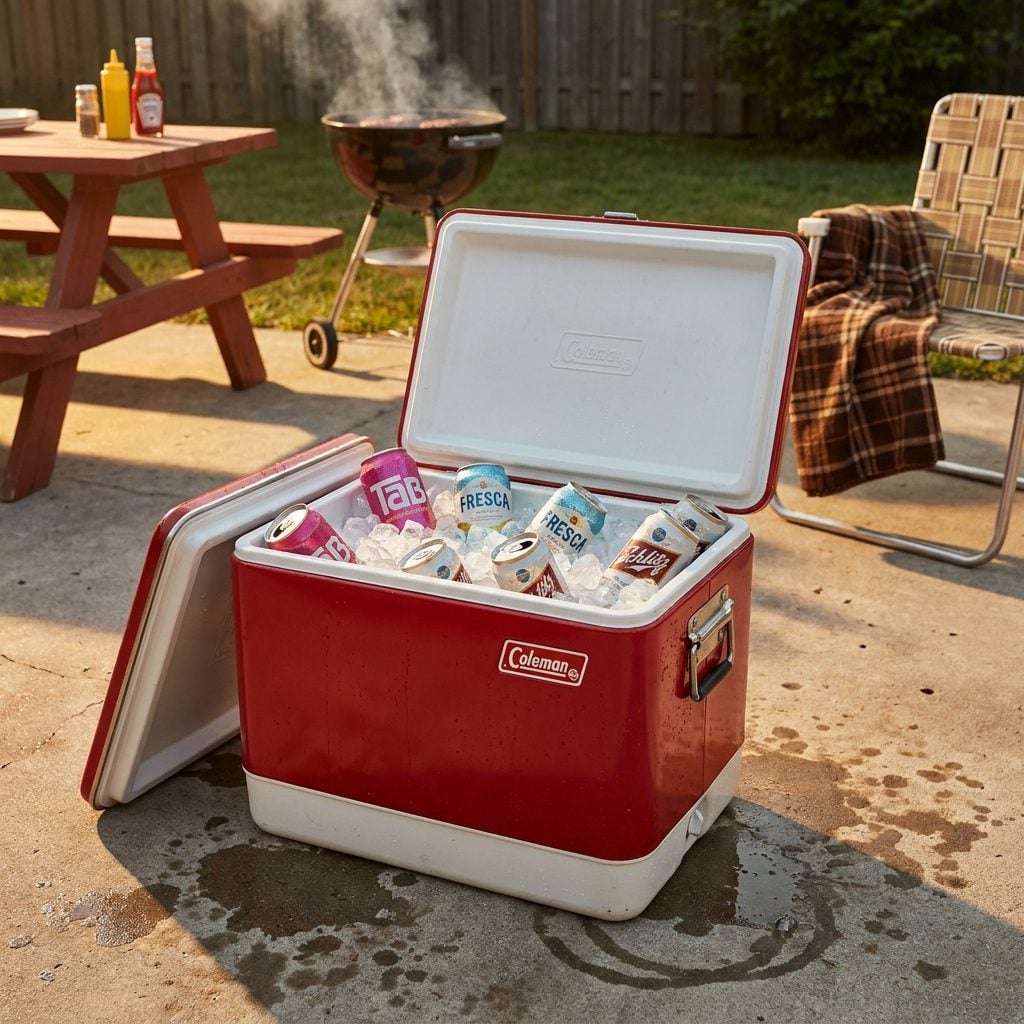
You reached into that cooler and your hand went numb. The ice had been melting since noon, so by late afternoon it was more cold soup than ice chest — you fished around blind for whatever was left while cans bobbed and clinked against each other. The pull tabs came off in your hand and you dropped them right back in the water, where they joined a growing collection from every cookout that summer.
Tab for the women watching their weight. Fresca for the women who wanted something that tasted marginally better. Schlitz for every man within arm’s reach. The red Coleman cooler was the social hub of every backyard party, more important than the grill. People orbited it. Conversations happened over it. By evening, it was just a tub of lukewarm water with three orphaned Frescas nobody wanted.
7. The Stack of Aluminum TV Trays That Made Every Backyard Dinner Feel Like a Picnic
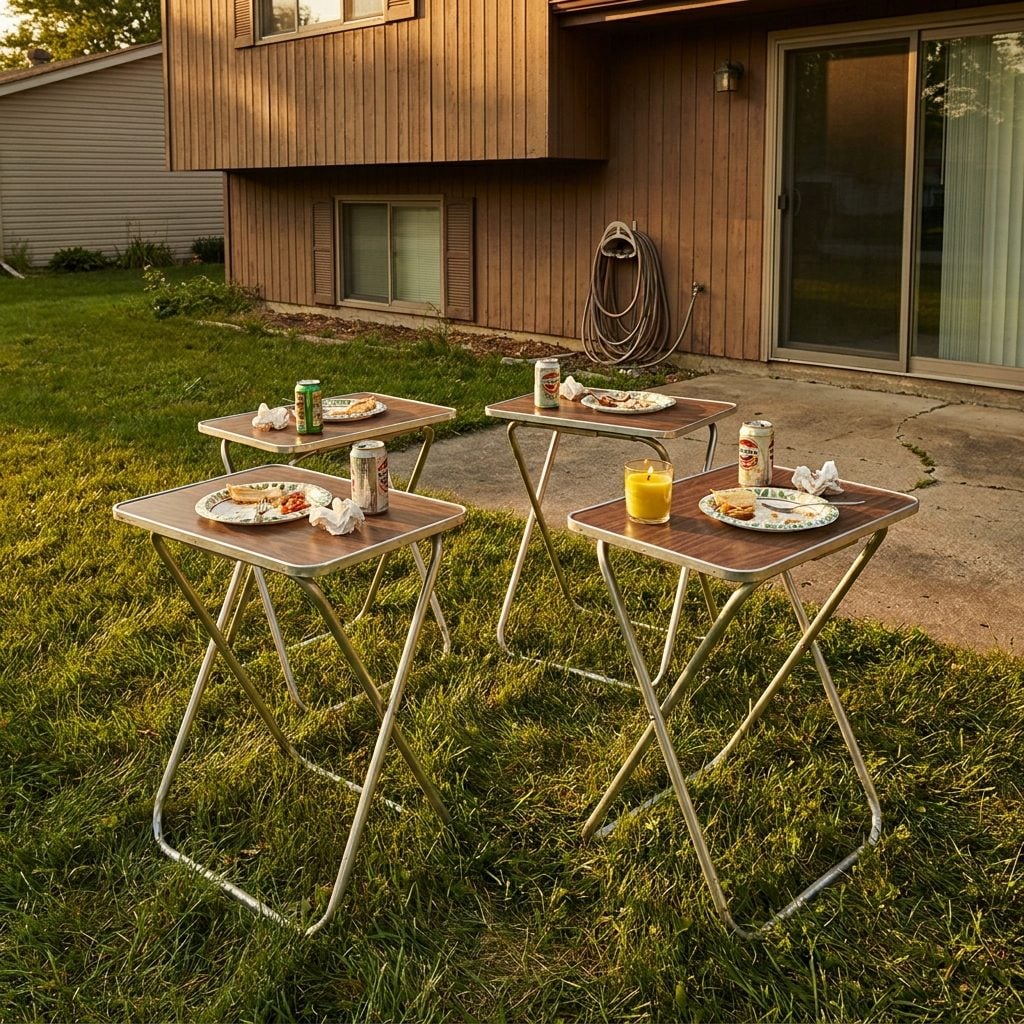
That metallic screech when you unfolded the legs — everyone knew it. These aluminum TV trays with their fake woodgrain tops spent most of the year leaning against the basement wall, but come summer they migrated outside in a wobbly stack of four or six, carried under one arm like oversized playing cards.
Nobody called it “al fresco dining.” You ate outside because it was hot and the kitchen was small. The trays tilted on uneven grass, your Kool-Aid slid toward the edge, and you learned to eat fast before the mosquitoes found your plate. Paper plates only — these things couldn’t support actual dishware without folding like a lawn chair in a windstorm.
6. The Woodpile Stacked Against the Side of the House Like a Permanent Fixture
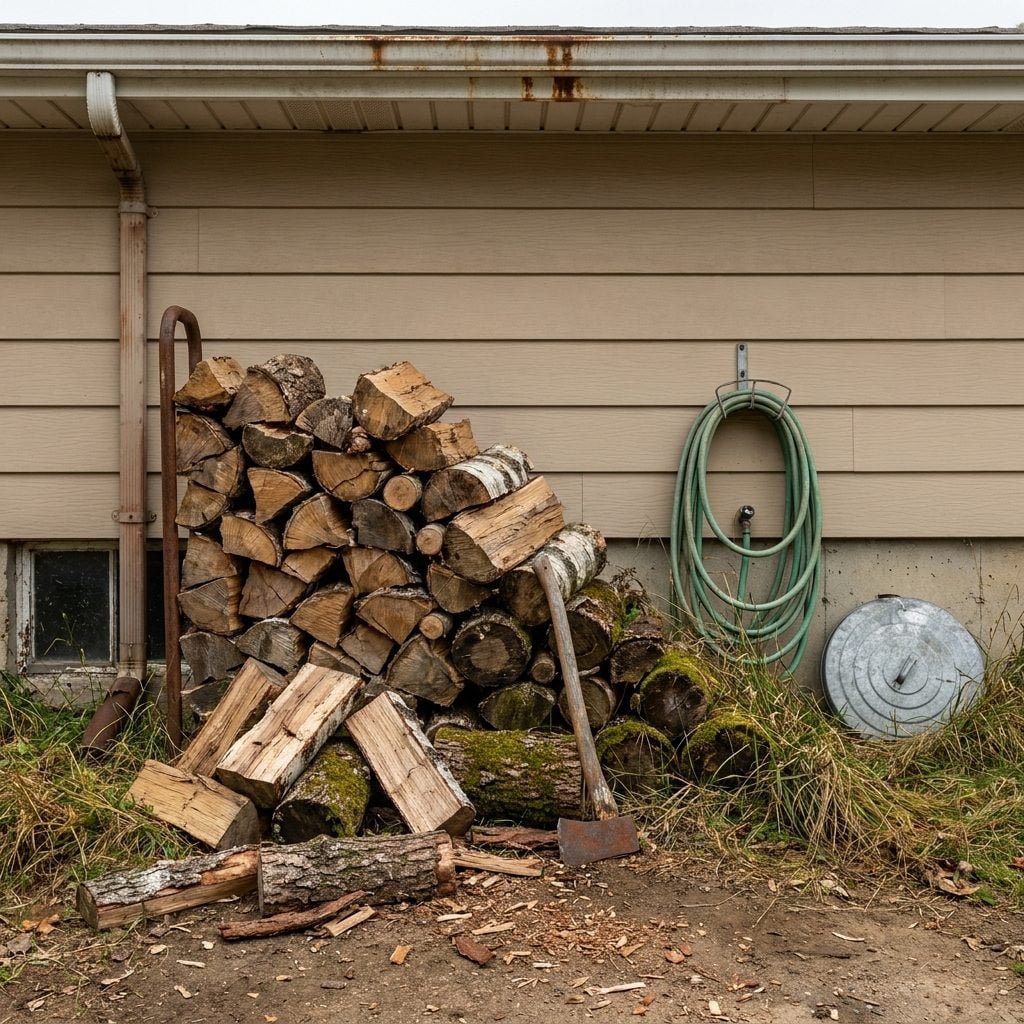
Every dad had opinions about how to stack it. Bark side up or bark side down? Criss-crossed for airflow or straight rows for neatness? The woodpile was a personality test disguised as a chore, and nobody ever admitted they’d copied the neighbor’s method.
It lived against the side of the house year-round, collecting spiders and earwigs and the occasional garter snake that would send someone screaming across the yard. Half the wood was for the basement stove. The other half was optimistically earmarked for backyard fires that happened maybe three times a summer, if that. Meanwhile the bottom layer had been sitting there so long it was basically composting — soft, damp, crumbling into the dirt. Nobody moved it. That was just the woodpile’s permanent address now, and the moss had signed the lease.
5. A Screened-In Porch Cluttered With Old Wicker Furniture and Yesterday’s Newspaper
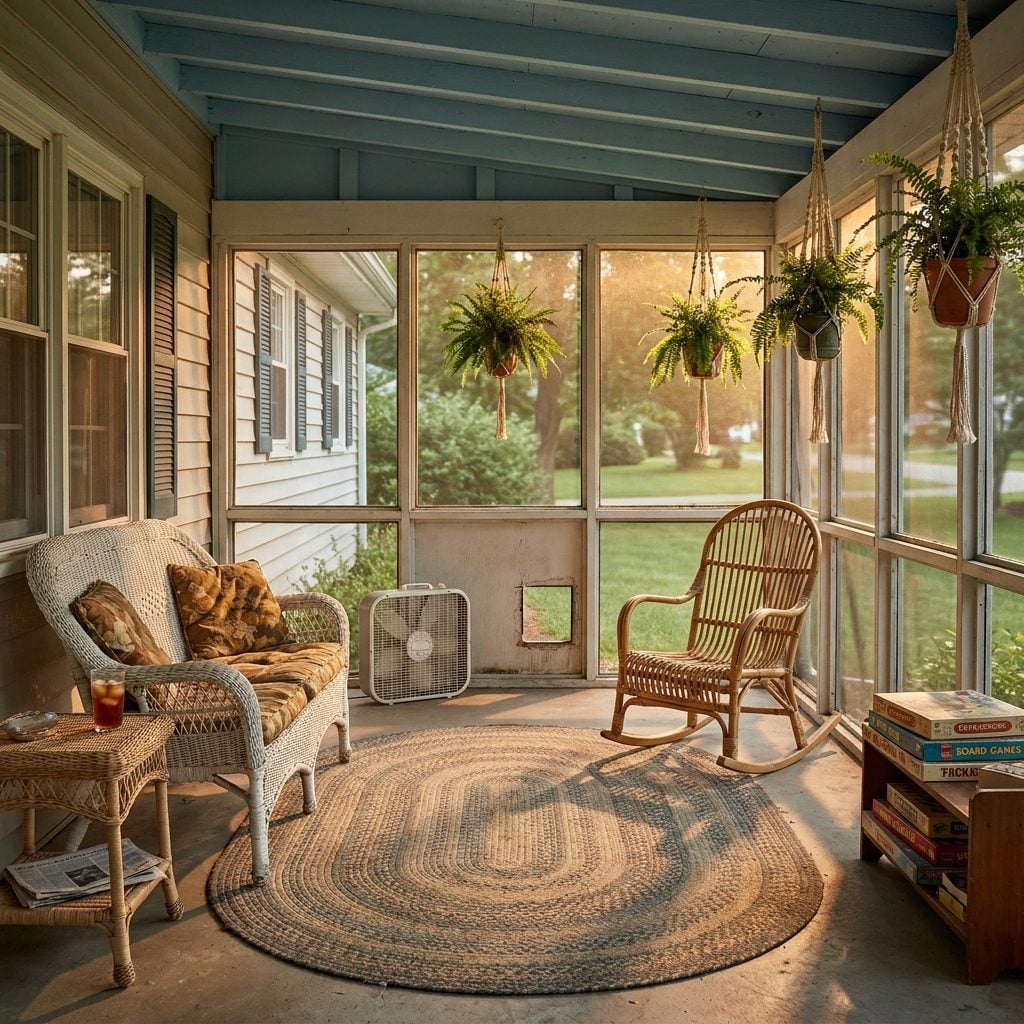
Where furniture went to retire. The wicker loveseat from the living room’s 1963 makeover. A rocker with one arm slightly loose. Cushions so flat they were decorative suggestions at best. Nobody cared, because the screened-in porch had exactly one job: give you somewhere to sit where the bugs couldn’t reach you.
A box fan hummed in the corner while sections of the newspaper drifted across the concrete floor. If your family had a country back porch like this, you spent entire July evenings out there doing absolutely nothing, and it was perfect. That screen door — the spring-loaded slam it made announced every arrival and departure like a starter pistol. You could track who was coming and going from the other side of the house just by the sound.
Porches still win hearts today, though the screened box has given way to something bigger: 60% of our readers would pick a wraparound porch, twice the share choosing a full front one.
4. The Railroad-Tie Sandbox That Belonged to the Neighborhood Cats After Dark
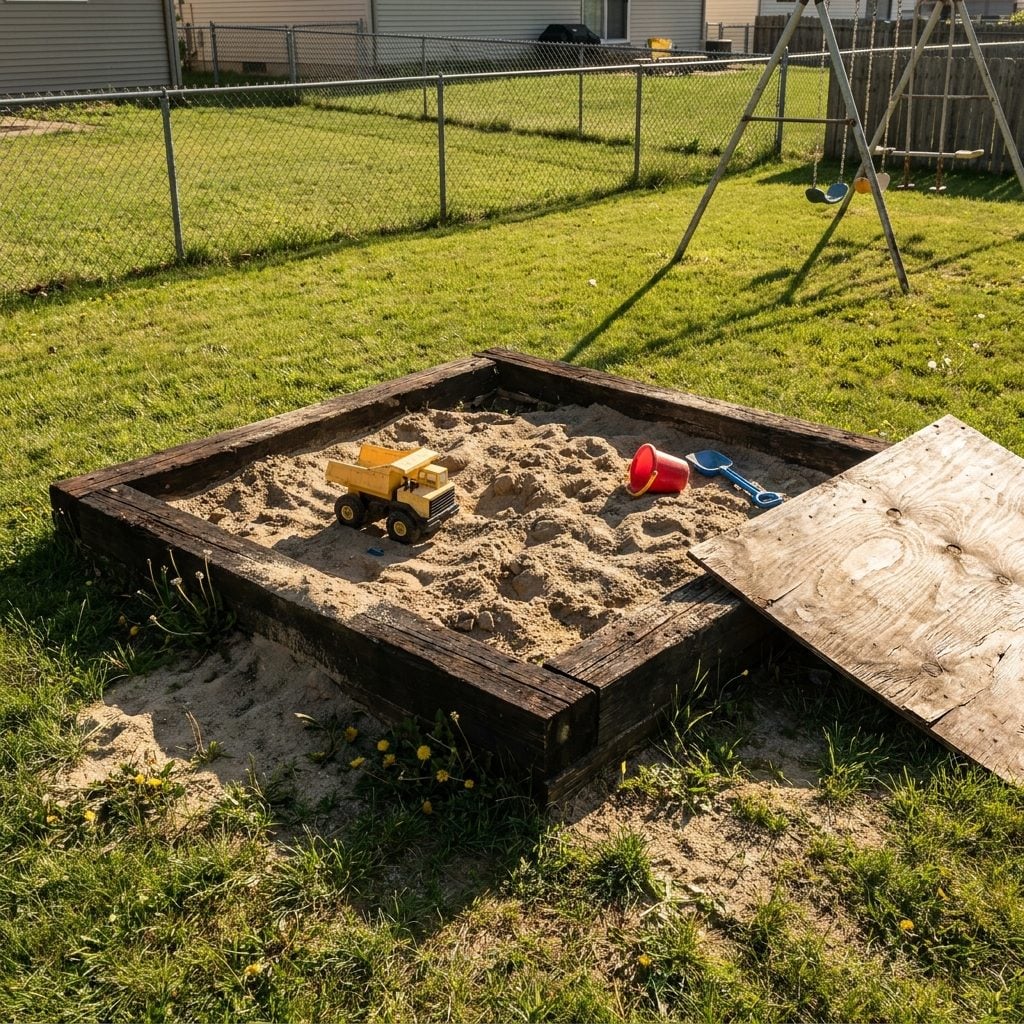
Those railroad ties weighed a ton, smelled like creosote on hot days, and gave you splinters through your shorts if you sat on the edge. Every kid in the neighborhood played in this sandbox. So did every cat, which parents acknowledged with a shrug rather than a solution.
The plywood “cover” was supposed to keep animals out overnight. Never once got placed back on. By August the sand was more dirt than sand, studded with lost action figures and bottle caps and the occasional earthworm making a slow escape across the surface. Your mom would tell you to wash your hands before coming inside. Given what you’d actually been sitting in, that felt like a wildly insufficient countermeasure.
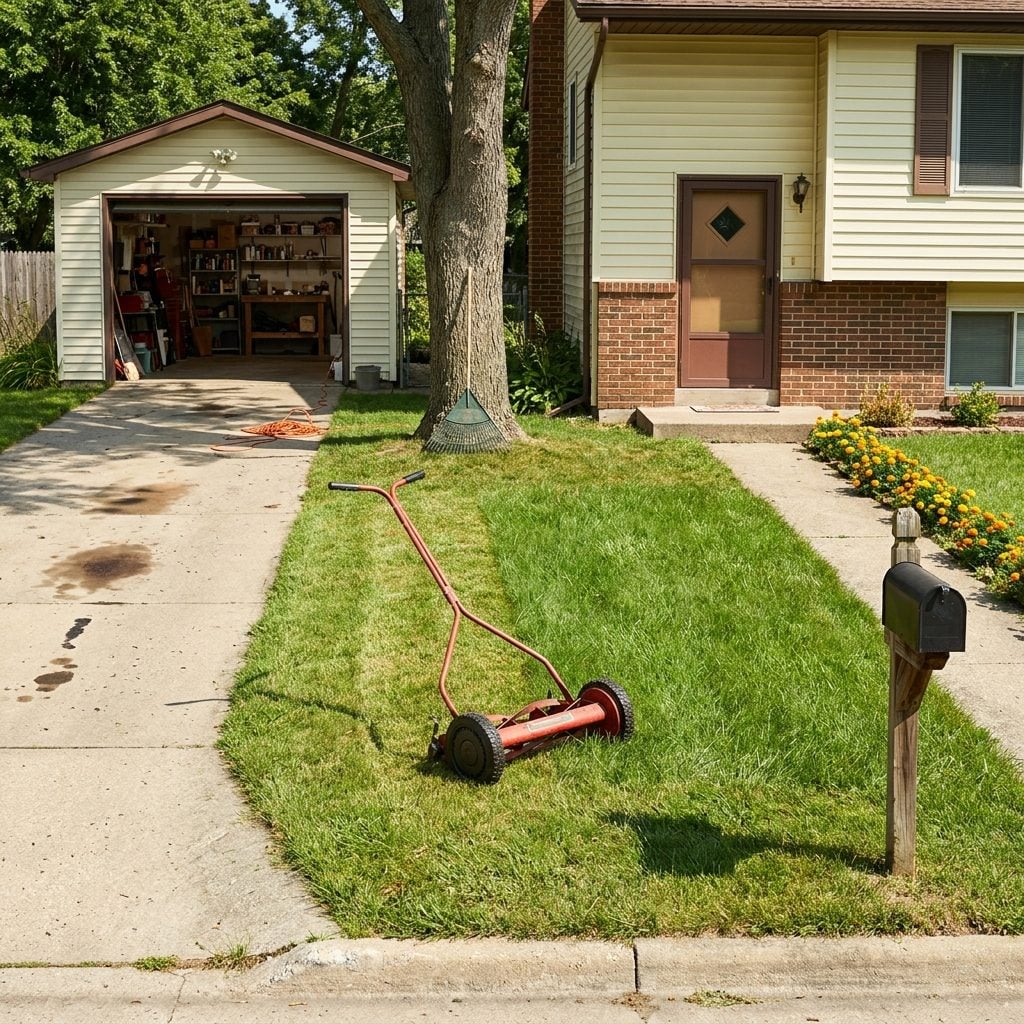
3. A Lawn Mower Parked Right There in the Open Yard Because Nobody Locked Up Anything
🔥 Would you like to save this?
Dad mowed half the lawn, got called inside for a phone call, and the mower just sat there. In the front yard. For the rest of the afternoon. Sometimes overnight.
Bikes in the driveway. Sprinklers left out. Garden tools leaning against trees. The 1970s backyard operated on an honor system that seems almost fictional now. I’m not saying theft didn’t exist — I’m saying nobody in the neighborhood worried about someone walking off with a Craftsman push mower. Garage door stayed open all day. House door unlocked too, half the time. It was a different calculus of risk, and honestly, it held together for a remarkably long stretch.
2. The Tiki Torch Perimeter That Made Every Cookout Feel Like a Budget Luau
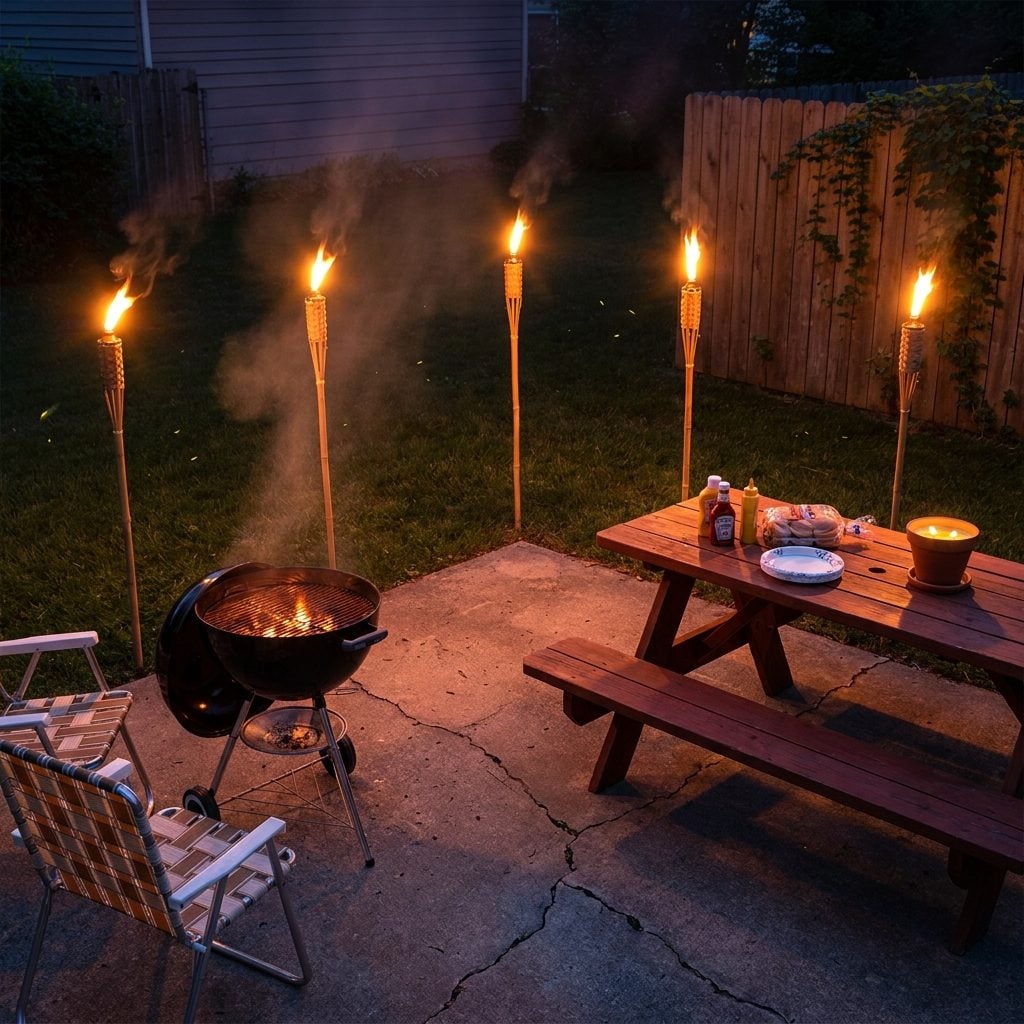
Citronella and bamboo. The official scent of suburban summer evenings from about 1972 onward. The bamboo tiki torches came in a bundle from the hardware store, and Dad planted them around the patio in a semicircle that said “we are festive” while simultaneously conceding “we are losing a war against mosquitoes.”
They tilted. Always. One leaned so far over by July it was basically a fire hazard posing as a party decoration. The fuel cans lived under the sink next to the Drano, which felt perfectly normal at the time — a sentence that could apply to half of 1970s domestic life. But the light they threw? Genuinely lovely. Warm, flickering amber that turned even a cracked concrete slab into something resembling those backyard renovation spreads in the magazines nobody could actually afford. For about ninety minutes each evening, before the fuel ran low and the bugs regrouped, the yard looked like somewhere you’d want to linger.
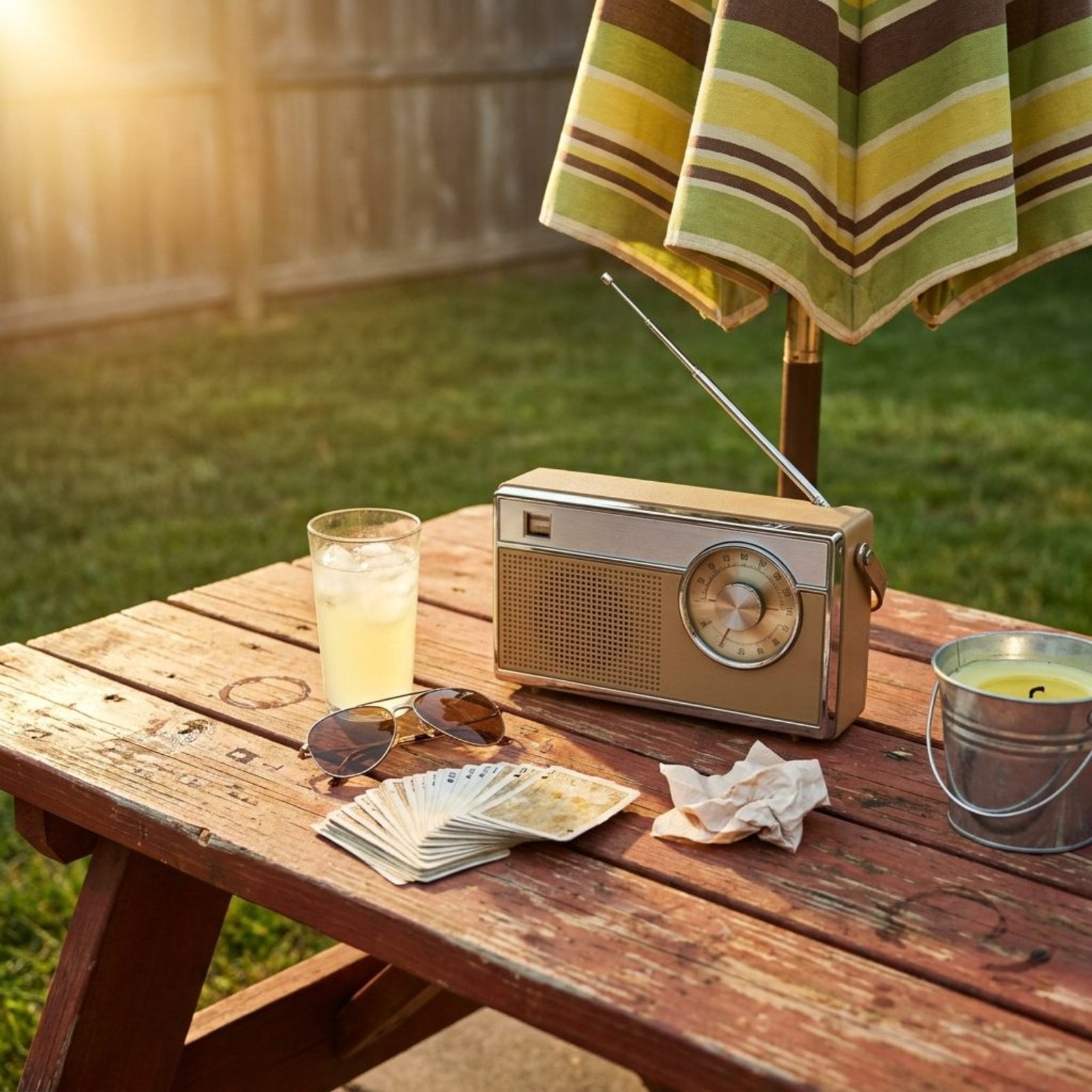
1. A Transistor Radio Playing AM Hits From Somewhere Near the Patio Table
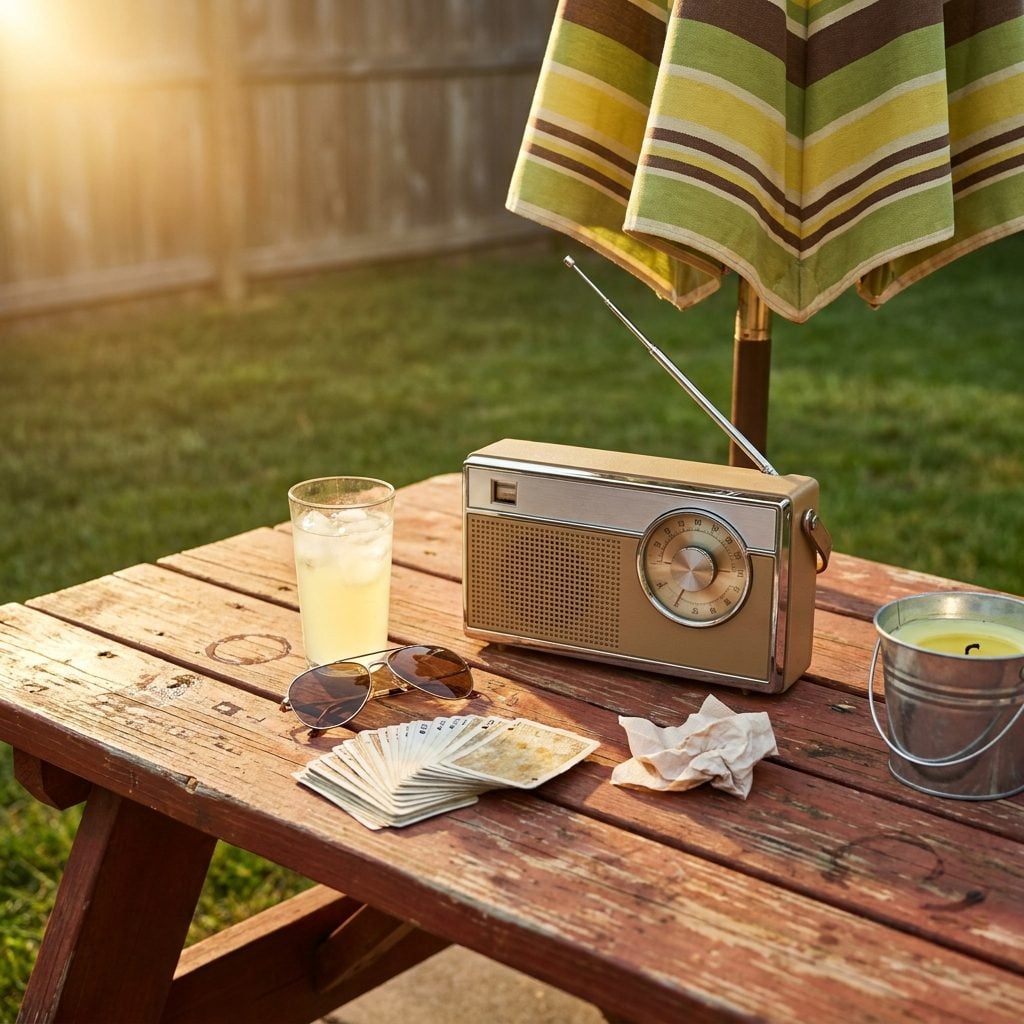
You never saw anyone carry it outside. It was just there, like it had migrated on its own — a little transistor radio in tan plastic and chrome, antenna bent at an optimistic angle, pulling in AM stations through a speaker that made every song sound like it was being broadcast from inside a coffee can.
The Carpenters. Three Dog Night. Glen Campbell. Whatever the local station happened to be playing came through with just enough static to feel like background texture rather than actual music. Nobody changed the station. Nobody turned it off. It played until the batteries faded or someone remembered to grab it before the sprinklers kicked on.
That tinny, half-heard sound defined the ambient noise of a 1970s backyard more than conversation did, more than the neighbor’s dog, more than anything. Not silence. Just radio. Always radio. And if you’ve heard it, you know exactly what I mean — that particular frequency of summer.