🔥 Would you like to save this?
Open shelving looks incredible in design magazines. In real kitchens, it’s a different story. The same trend that photographs so beautifully in styled shoots tends to fall flat once it’s actually installed, lived with, and looked at every single day. The problem isn’t always the execution, it’s that open shelving has a fundamental tension between how it’s supposed to look and how kitchens actually function. Before you rip out your upper cabinets, see what it really looks like.
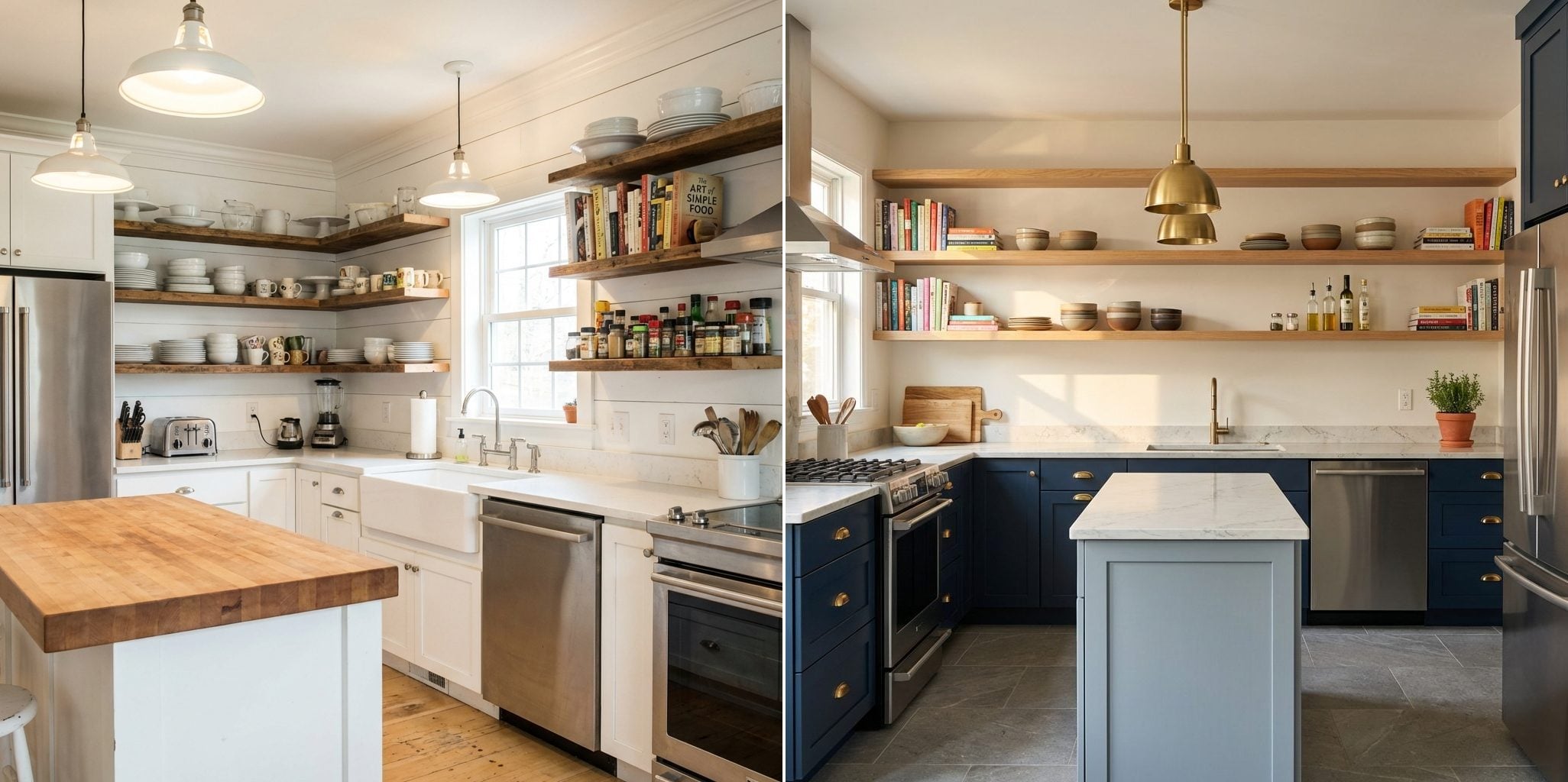
28. The White Farmhouse Kitchen Where Open Shelves Swallowed the Whole Wall
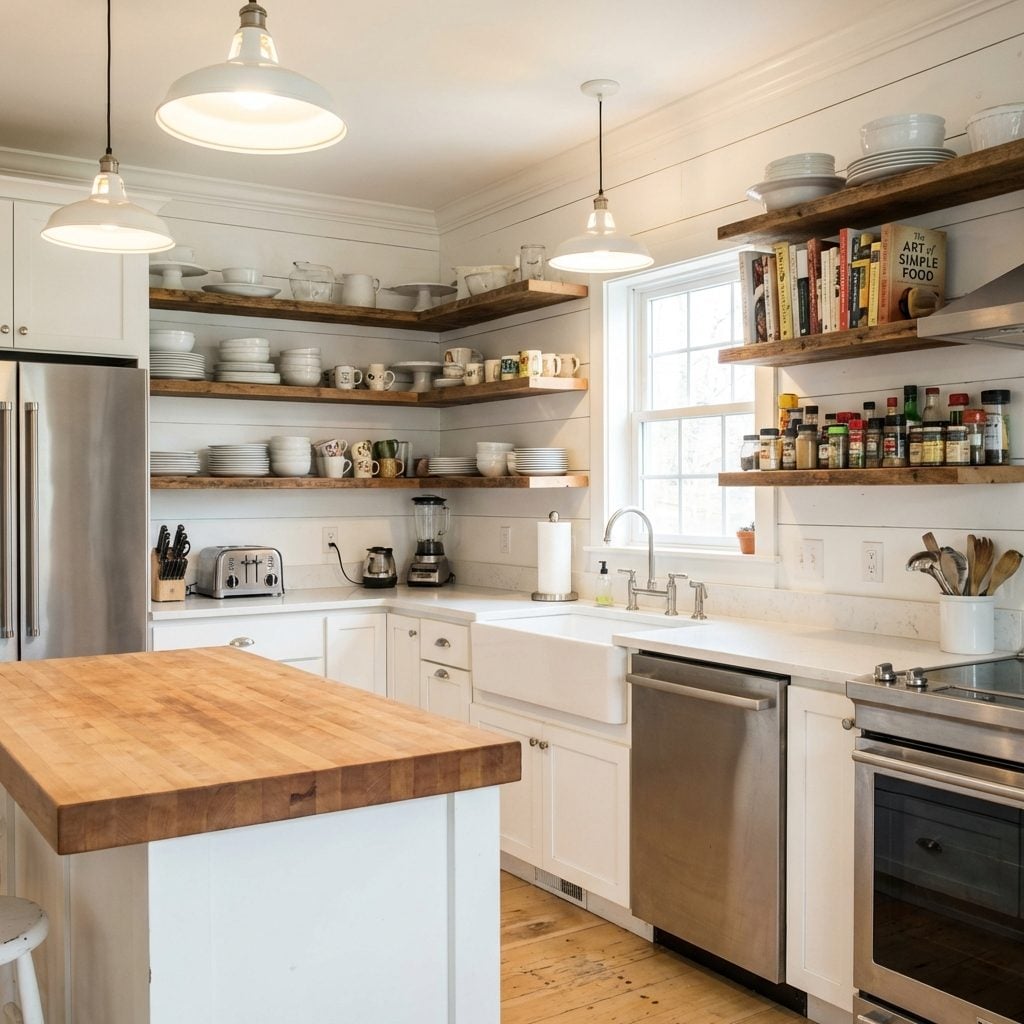
The shiplap is charming. The apron sink is lovely. But those open shelves running floor-to-ceiling on the back wall? They’ve turned a functional kitchen into a storage display that demands constant attention. Every mismatched mug, every cereal box facing the wrong way, every inch of visible clutter pulls focus from what should be a cohesive, restful space.
In order to come up with the very specific design ideas, we create most designs with the assistance of state-of-the-art AI interior design software. Also, assume links that take you off the site are affiliate links such as links to Amazon. this means we may earn a commission if you buy something.
Closed upper cabinets would have let the farmhouse apron sink and the shiplap wall do their job as design stars. Instead, the shelves are working overtime as both storage and decor, and they’re not quite pulling off either role.
27. A Navy Blue Kitchen That Almost Nailed It, But the Open Shelves Broke the Spell
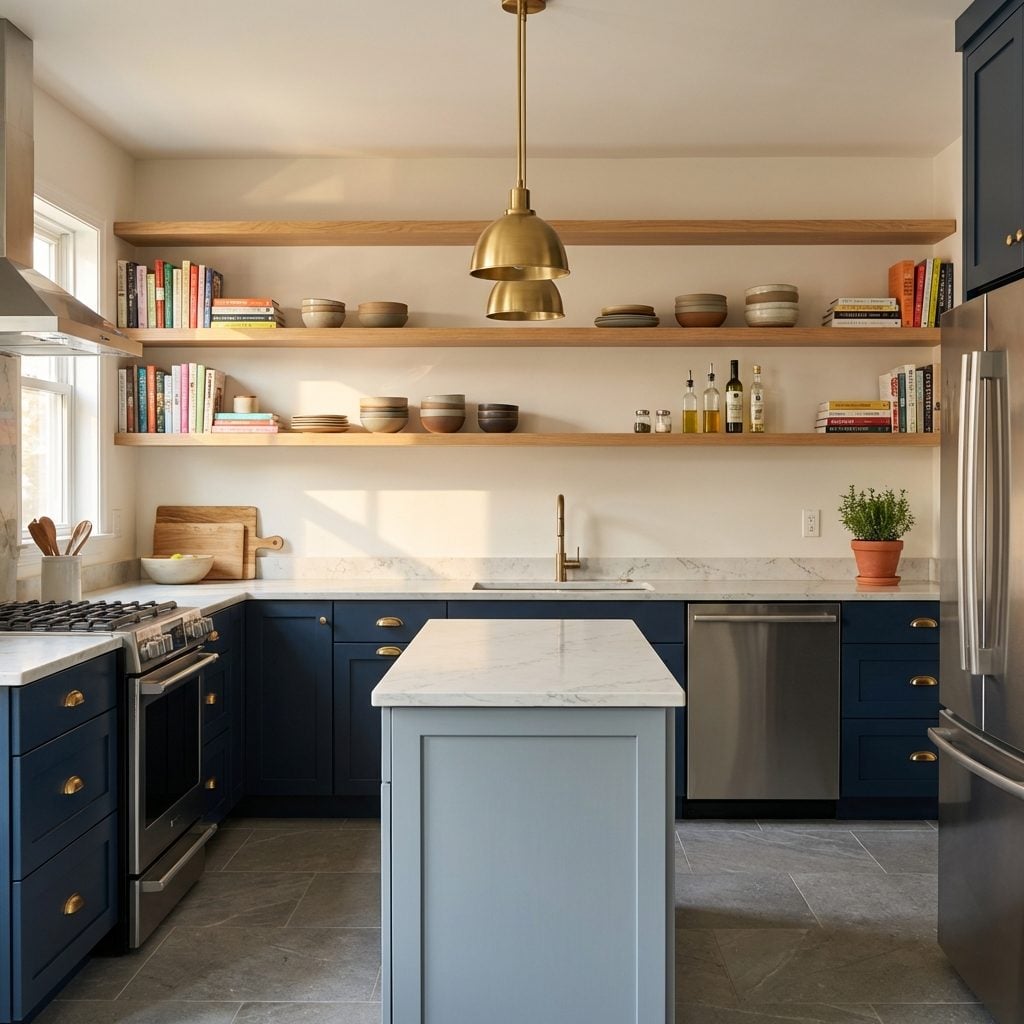
Navy blue lower cabinets, brass hardware, marble-look countertops: this kitchen had everything going for it. Then came the open upper shelves in light oak, and suddenly the design story has too many narrators.
The oak shelves read as an afterthought against the bold navy base. They’re not wrong exactly, just disconnected. The items on display, a mix of cookbooks, olive oil bottles, and stacked bowls in three different styles, lack the visual discipline the rest of the kitchen earns. Closed navy or brass cabinet hardware uppers would have let the lower cabinetry own the room.
What Our Readers Say
- Asked which cabinet colour they would pick for their kitchen, 44% of our readers chose sage, ahead of natural wood at 23%, white at 18% and navy at 14%.
- For dark cabinets, Home Stratosphere readers were split almost evenly between navy and forest green, a real coin toss, with black trailing at 18%.
From Home Stratosphere reader polls and votes.
26. The Greige Minimalist Kitchen Where Open Shelving Accidentally Created Visual Chaos
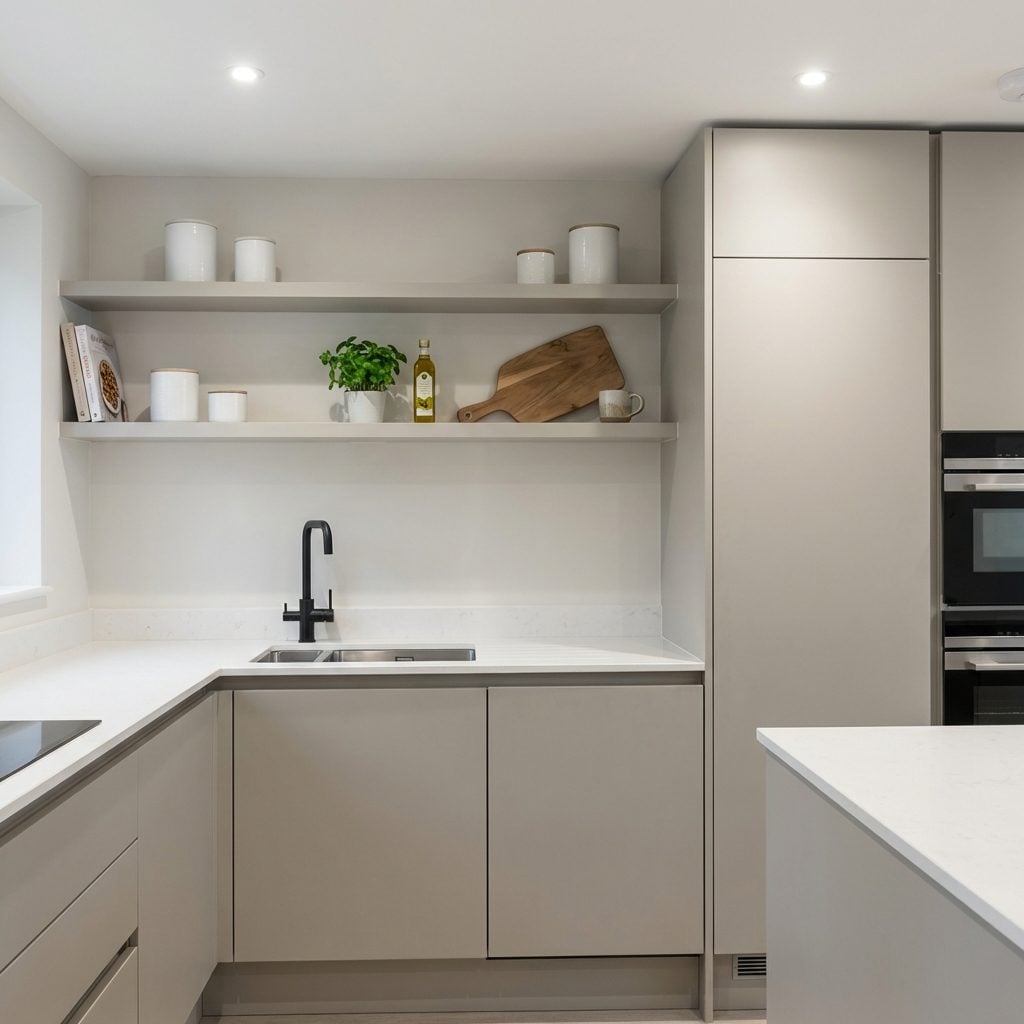
Minimalism is ruthless about one thing: anything that isn’t perfect is a distraction. This greige flat-front kitchen is trying so hard to be calm and considered. And then the open shelves arrive, and the minimalist dream starts to unravel one cereal box at a time.
The problem isn’t the shelves themselves. It’s that minimalist kitchens require everything stored on open shelves to be a prop, not an actual kitchen item. Real life keeps intruding. A bottle of dish soap creeps onto the lower shelf. A cutting board leans at the wrong angle. Suddenly your serene, magazine-ready kitchen looks like a kitchen that’s trying to look like a magazine kitchen.
25. Warm Terracotta Walls Meet Floating Shelves That Can’t Decide What They Want to Be
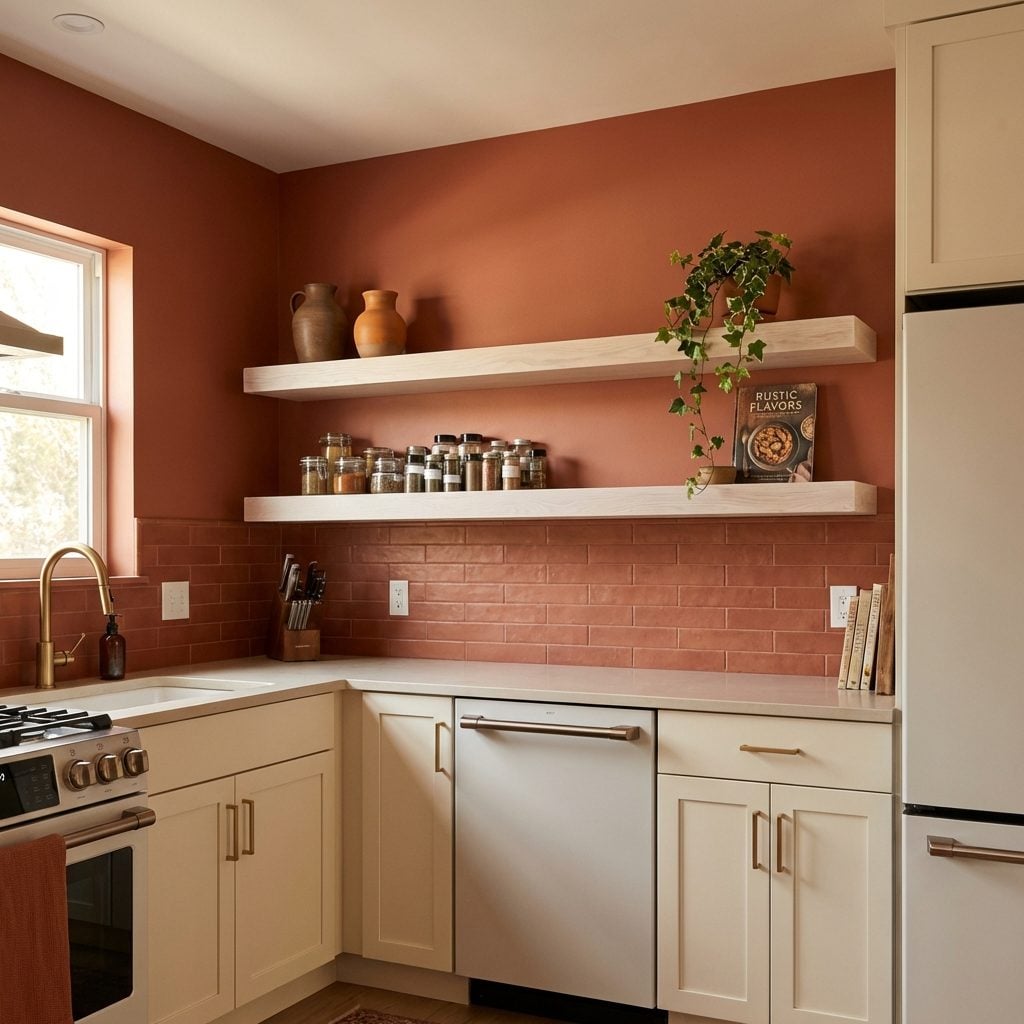
The terracotta is doing all the heavy lifting in this kitchen. The warm, earthy wall color creates a richness that most kitchens spend thousands trying to achieve through tile and finishes. But then someone installed two floating shelves in a pale bleached wood, and they sit on that beautiful wall looking slightly confused about their purpose.
The color contrast between bleached oak and terracotta isn’t quite warm enough to feel intentional and isn’t quite contrasting enough to feel bold. The items on the shelves, an assortment of spice jars, a few ceramic pieces, and a trailing pothos plant, are nice individually. Together, they just prevent you from appreciating the wall they’re mounted on.
24. The All-White Kitchen That Looked Perfect in the Showroom, Gritty in Real Life
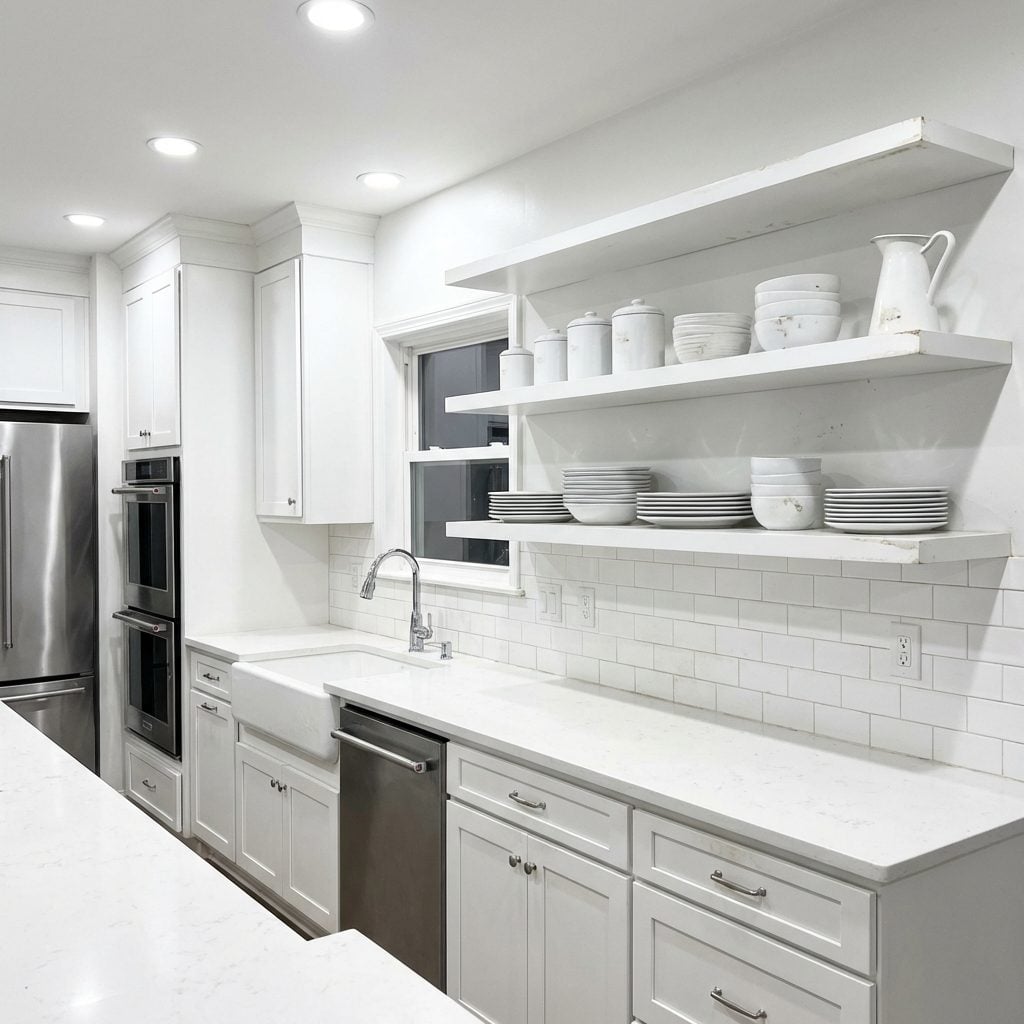
All-white kitchens are high-maintenance by definition, but add open shelving and you’ve doubled the upkeep without doubling the payoff. This kitchen is crisp and clean, but the open shelves above the counter catch grease haze from cooking, light dust from daily life, and the general entropy of a kitchen that actually gets used.
The items on the shelves, white dishes, white canisters, white bowls, are clearly an attempt to maintain the monochromatic serenity. But the shelf edges show faint grease fingerprints, the canisters have slight discoloration near the bases, and the whole section looks like it needs a wipe-down even in photos. Closed cabinets would have kept all that reality behind closed doors where it belongs.
23. A Moody Sage Green Kitchen Undermined by Shelves That Can’t Commit to the Mood
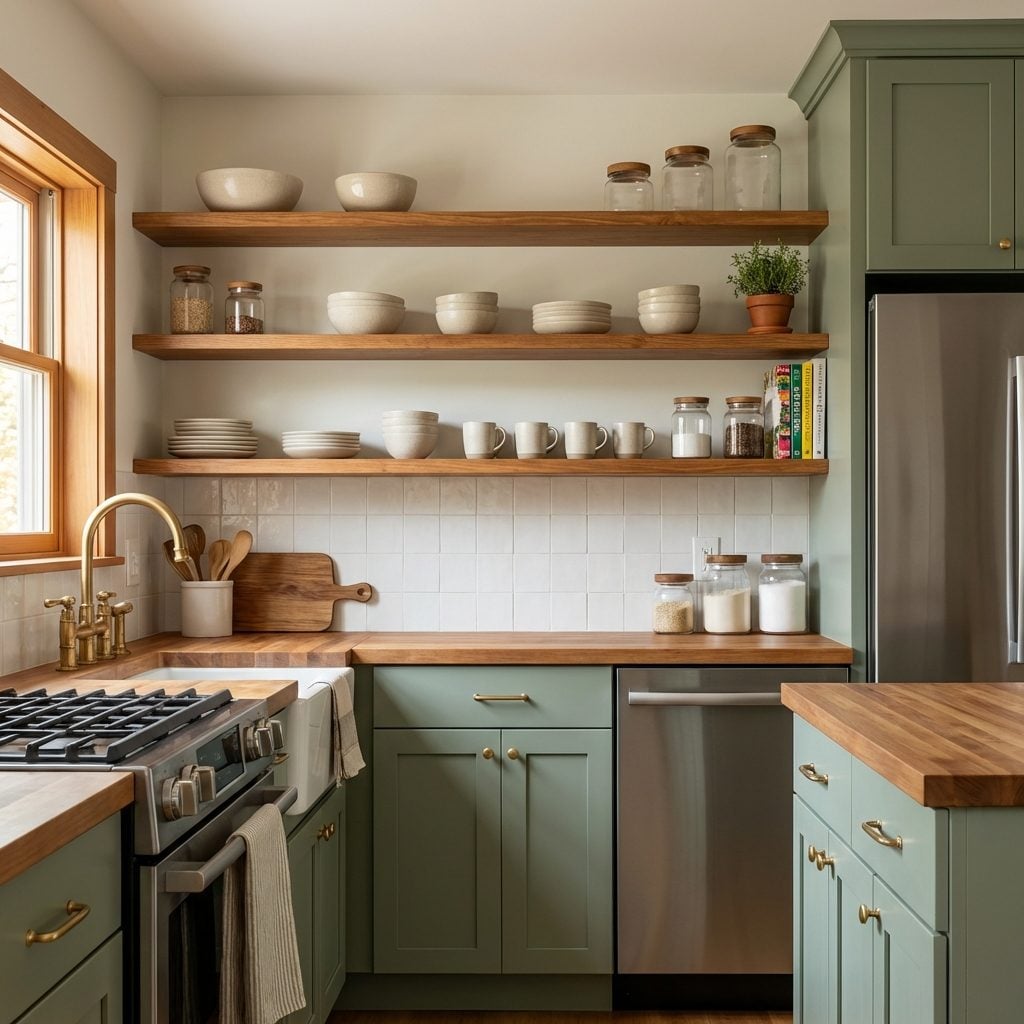
Sage green cabinets have earned their popularity. They carry just enough color to feel distinctive without the commitment of a full saturated hue. This kitchen gets the cabinet color right, the unlacquered brass hardware right, and the butcher block countertops right. Then the open shelves show up in a standard stained pine that reads as neither warm nor considered next to the carefully chosen sage.
The shelves hold a well-intentioned mix: linen-colored ceramics, a few vintage-looking jars, a small plant. It’s a decent attempt. But the pine shelf color and the variety of items on display create a slightly cluttered horizontal band across the kitchen, interrupting what would otherwise be a calm, resolved color story from floor to ceiling.
Sage has strong support among our readers too: when we asked which green they would want for cabinets, 78% chose sage over deep green or teal.
22. Coastal Blue and White Kitchen With Shelves That Make Maintenance Feel Like a Second Job
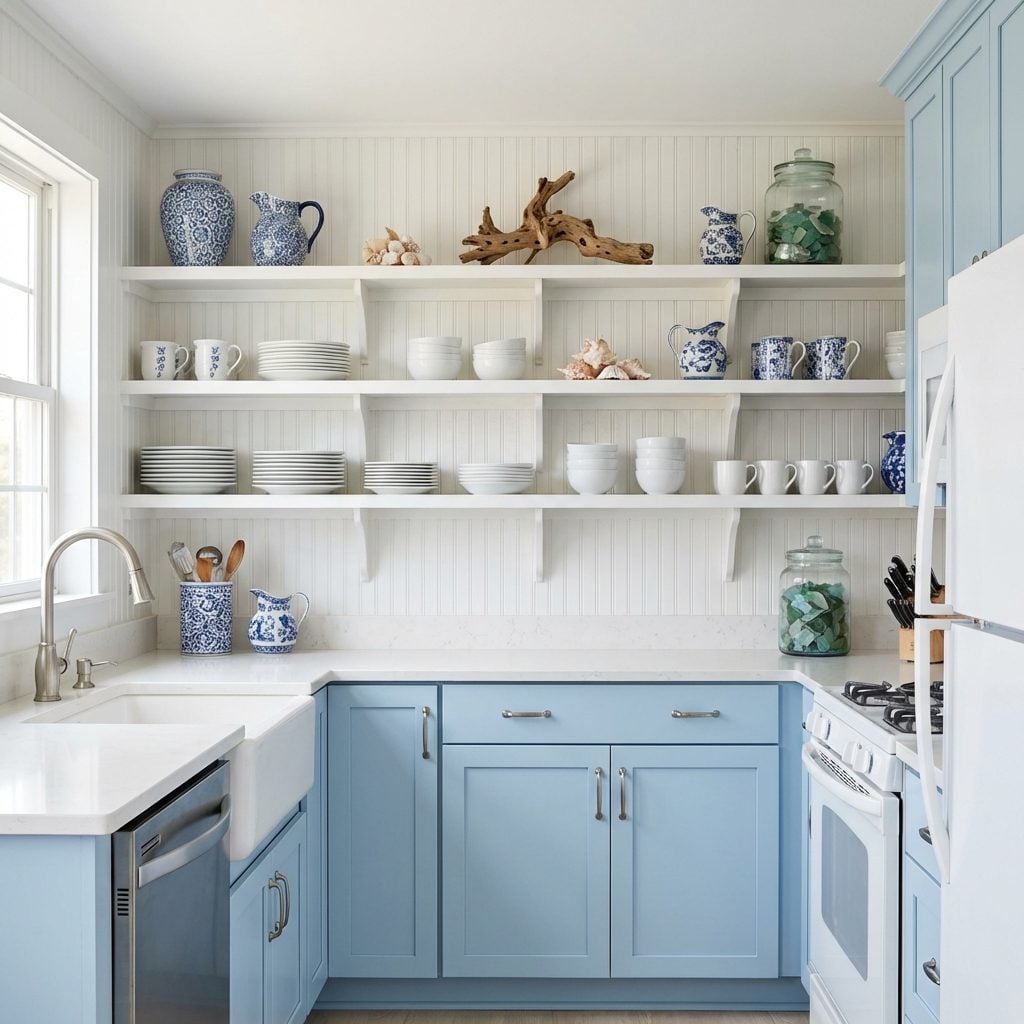
Salt air, white walls, blue accents, and open shelving: the coastal kitchen formula sounds so easy. This kitchen has cheerful powder blue lower cabinets, white beadboard on the walls, and bright natural light pouring in from a nearby window. It’s genuinely pleasant in here.
The open shelves installed above the counter are styled with white dishes, blue-and-white pottery, shells, and small driftwood pieces. It looks like a photo shoot, which means it looks like work. Coastal kitchens near actual water collect salt haze, humidity, and dust faster than inland kitchens. Every item on those shelves needs regular cleaning. And the more items on display, the more time you’re spending wiping pottery instead of enjoying your view.
21. Dark Walnut and Black Kitchen Where Open Shelves Make the Space Feel Smaller
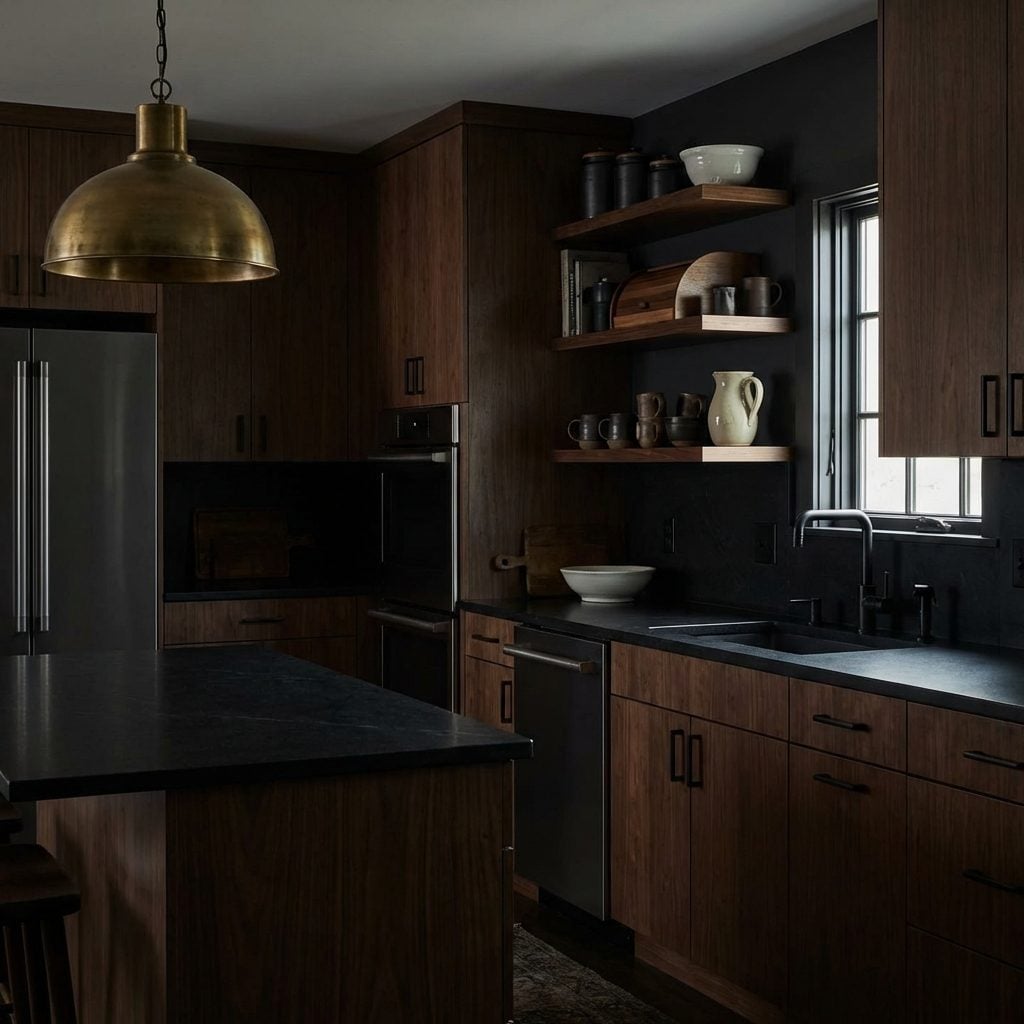
Dark kitchens are a design commitment that pays off in moodiness and drama. Dark walnut cabinets, matte black fixtures, and a black countertop create a kitchen that feels sophisticated and intentional. The mistake here is placing open walnut shelves on the last remaining stretch of lighter wall, thinking they’d add warmth.
Instead, the shelves load more visual weight onto an already dense color scheme. The items on display, dark canisters, a wooden bread box, dark ceramic mugs, blend into the walnut and disappear. The lighter items (a cream pitcher, a white bowl) create small spots of contrast that make the shelving look patchy rather than polished. In dark kitchens, closed storage is almost always the smarter call.
20. The Transitional Kitchen Where Open Shelving Created a Style Identity Crisis
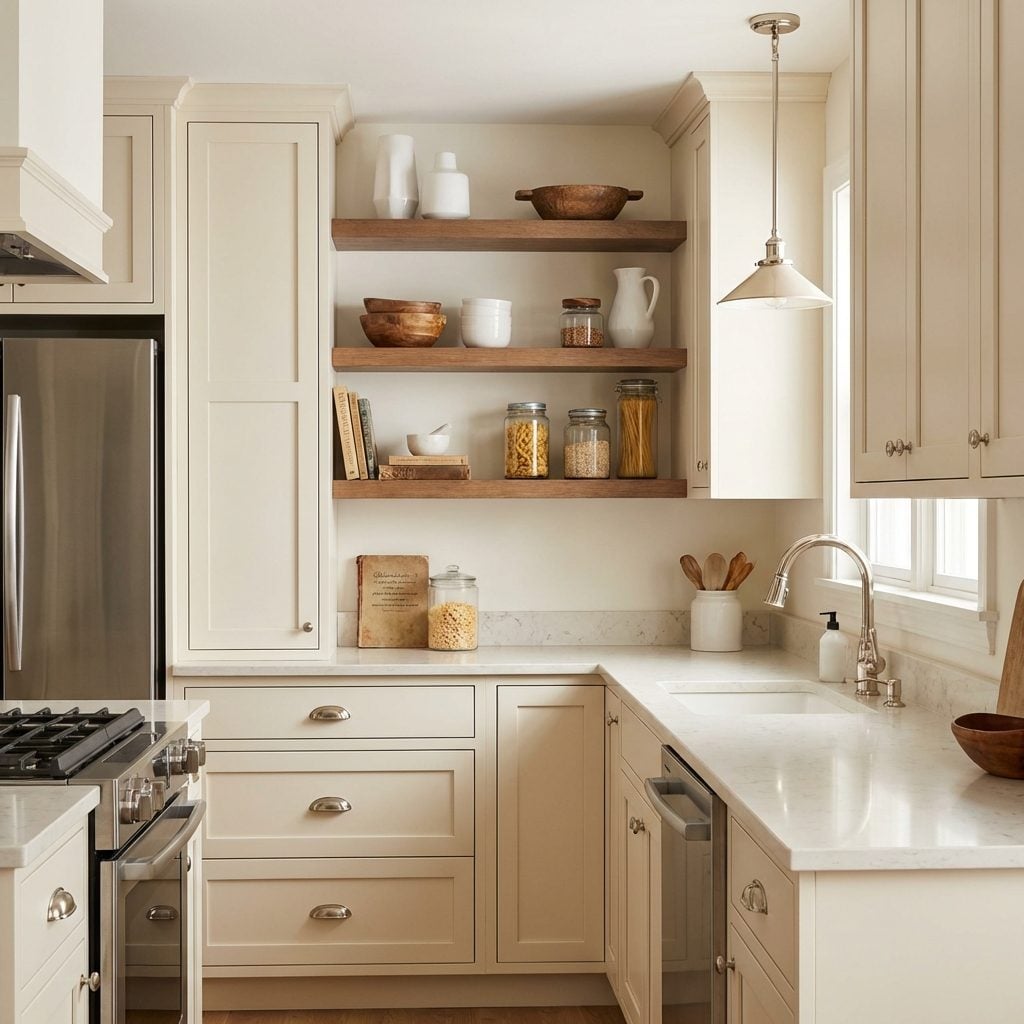
Transitional kitchens are supposed to blend traditional warmth with contemporary restraint. This one does a competent job with its inset cabinet doors, quartz counters, and polished nickel hardware. Then a section of open shelving was added to one wall, styled with a mix of modern white ceramics, a few rustic wooden pieces, and some vintage-looking glass canisters.
The problem is that open shelves in a transitional kitchen force you to constantly choose between modern and traditional display styles. And most people end up choosing both, which means choosing neither. The shelf styling undercuts the overall sophistication the cabinetry was building toward.
19. Light Oak Scandi Kitchen Derailed by the One Wall of Open Shelving That Holds Everything
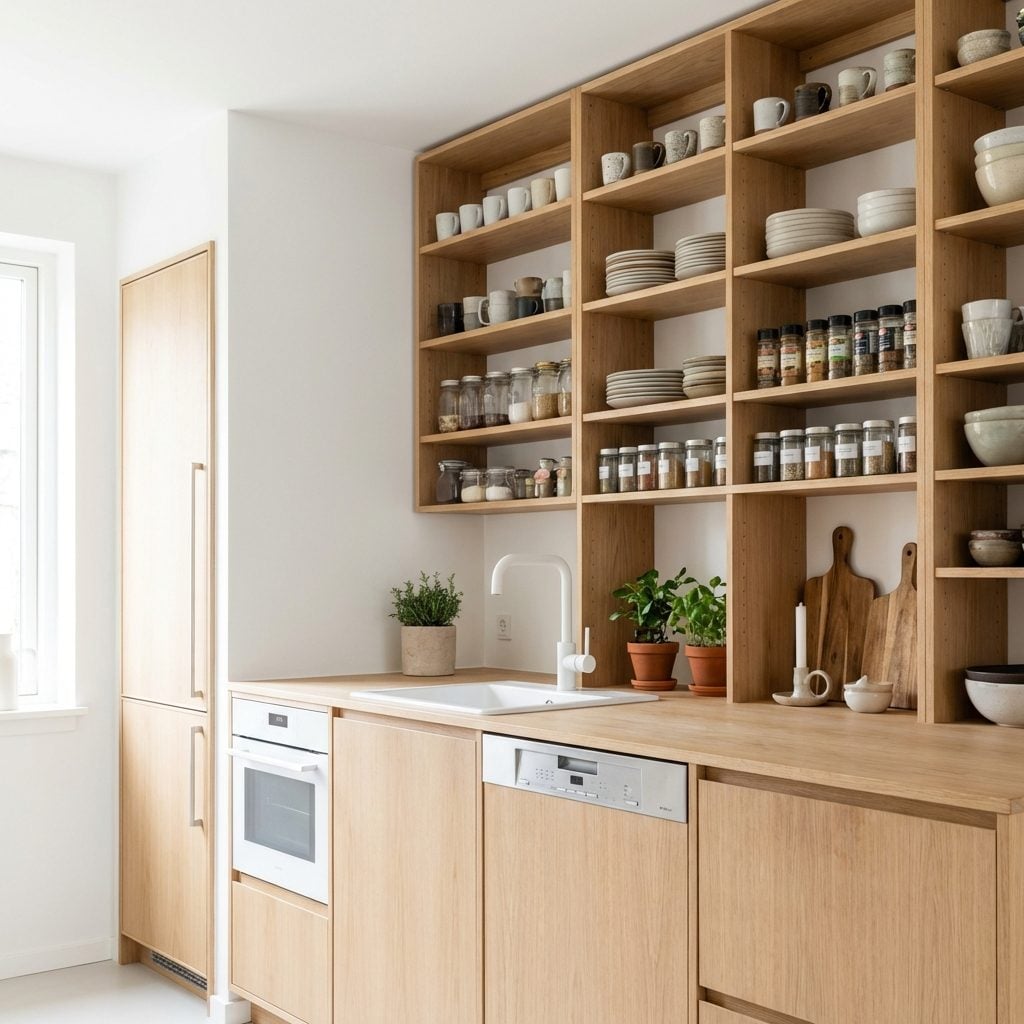
Scandinavian kitchens work because of what they leave out. Light wood, white walls, functional simplicity, and nothing unnecessary. This kitchen has beautiful light oak flat-front cabinets, clean white walls, and a simple layout that moves well. Then one entire wall became an open shelf system holding, by count, approximately forty separate objects.
Cups. Plates. Cutting boards. Spice jars. A ceramic plant pot. Three different sizes of bowls. Two plants. A candle. This is what happens when open shelving replaces closed storage rather than supplementing it: the minimalist kitchen becomes a maximalist display case, and the light oak and white palette is suddenly buried under stuff.
A kitchen like this needs open dresser-style restraint: fewer categories, more breathing room. The bones of this kitchen are genuinely good. The shelves just need to close.
18. Classic White and Wood Galley Kitchen Where the Open Shelves Narrowed an Already Tight Space
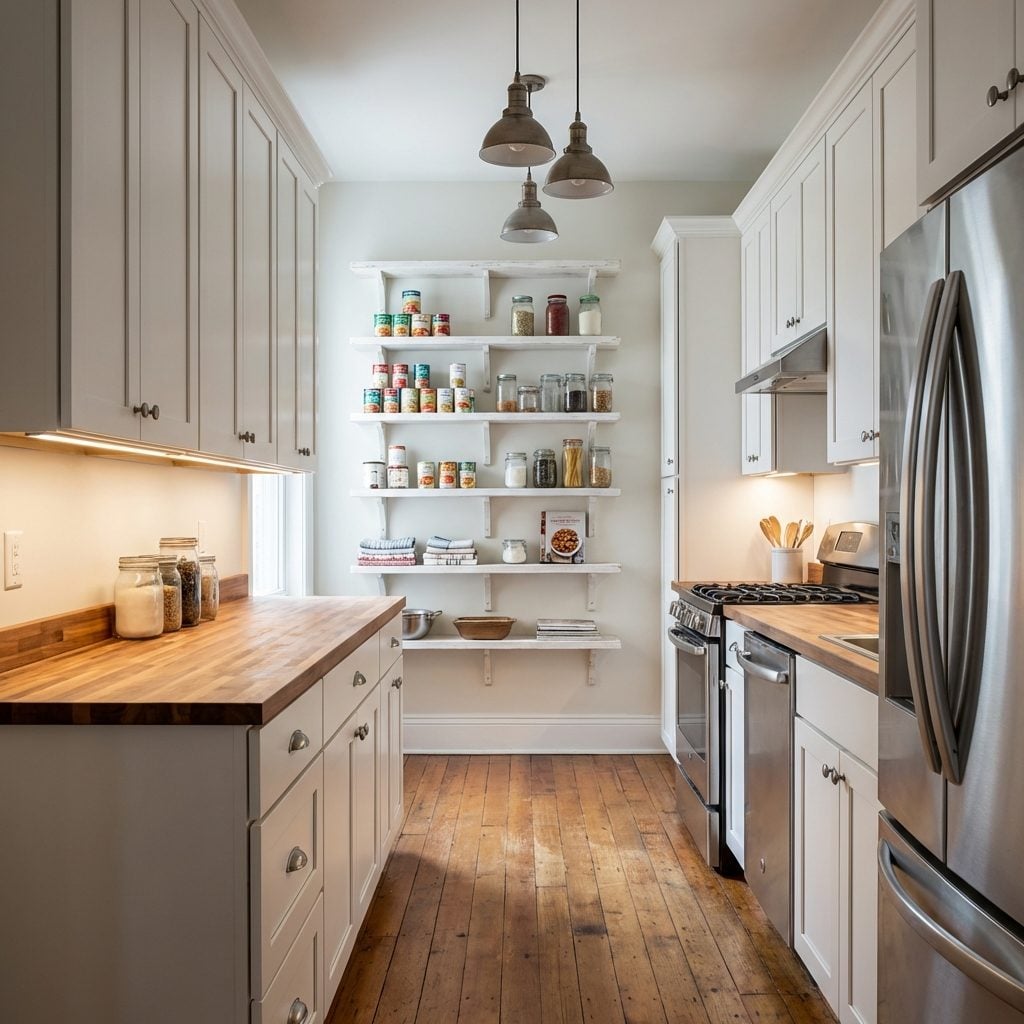
Galley kitchens are already working against themselves spatially. The whole design challenge is making a corridor feel like a kitchen rather than a hallway with appliances. This galley is doing most things right: white cabinets, warm wood accents, adequate lighting. But the open shelves installed on the short end wall of the galley are projecting into the visual field of the corridor, and it makes the whole kitchen feel like it got shorter and tighter just by existing.
Floating shelves visually advance toward you in a narrow space. They hold your eye at the end of the corridor rather than letting the space read as deep. The items on those shelves, a jumble of pantry items and display pieces, create a wall of visual noise exactly where you need breathing room the most.
17. The White Shaker Kitchen Where Open Shelving Turns Every Meal Into a Chore
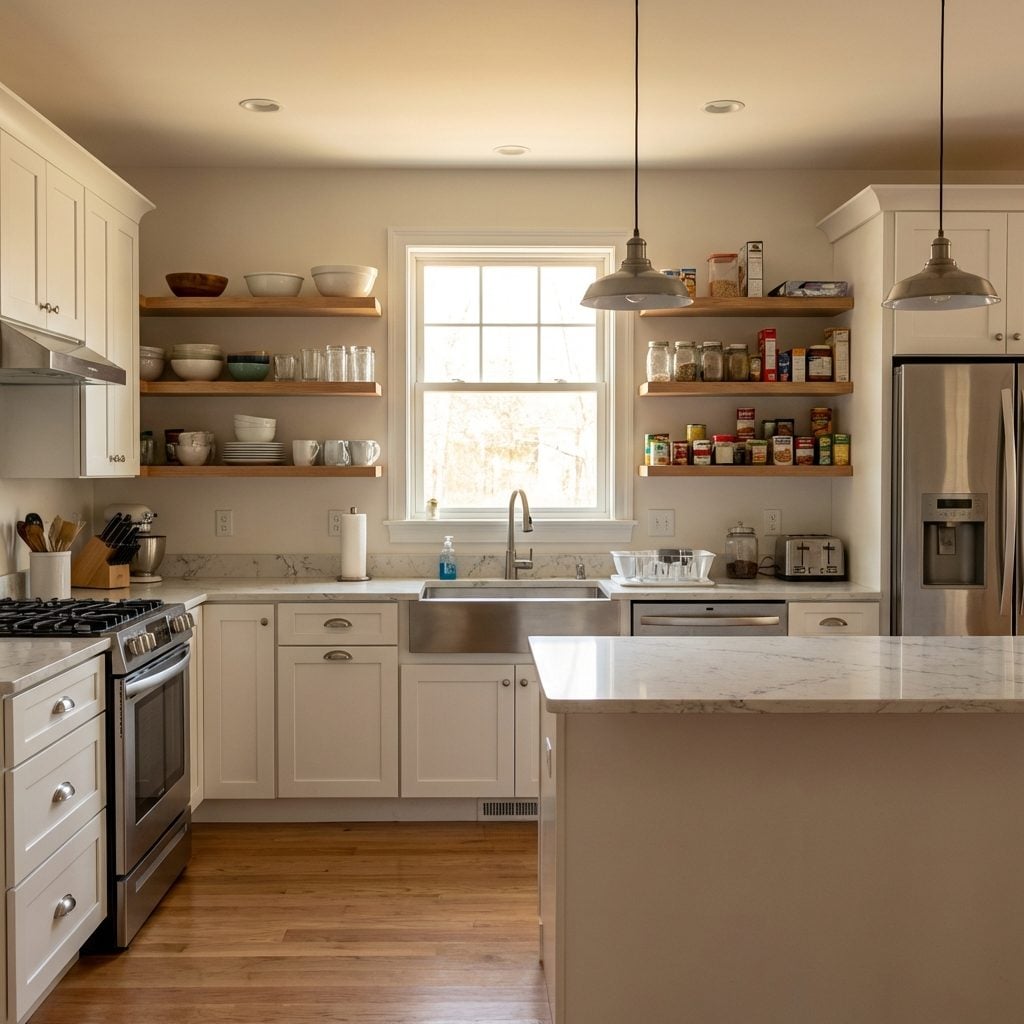
White shaker cabinets are already a safe, predictable choice, and adding open shelving to the mix doesn’t save it. What you get instead is a kitchen where every mismatched mug and half-empty box of cereal is permanently on display. The white shaker cabinet doors that were removed in favor of shelves now exist as a gap in the design rather than an intentional statement.
Closed uppers would have given this kitchen the clean, finished look its layout actually calls for. Instead, the open shelves read as unfinished, a project that ran out of budget or conviction halfway through.
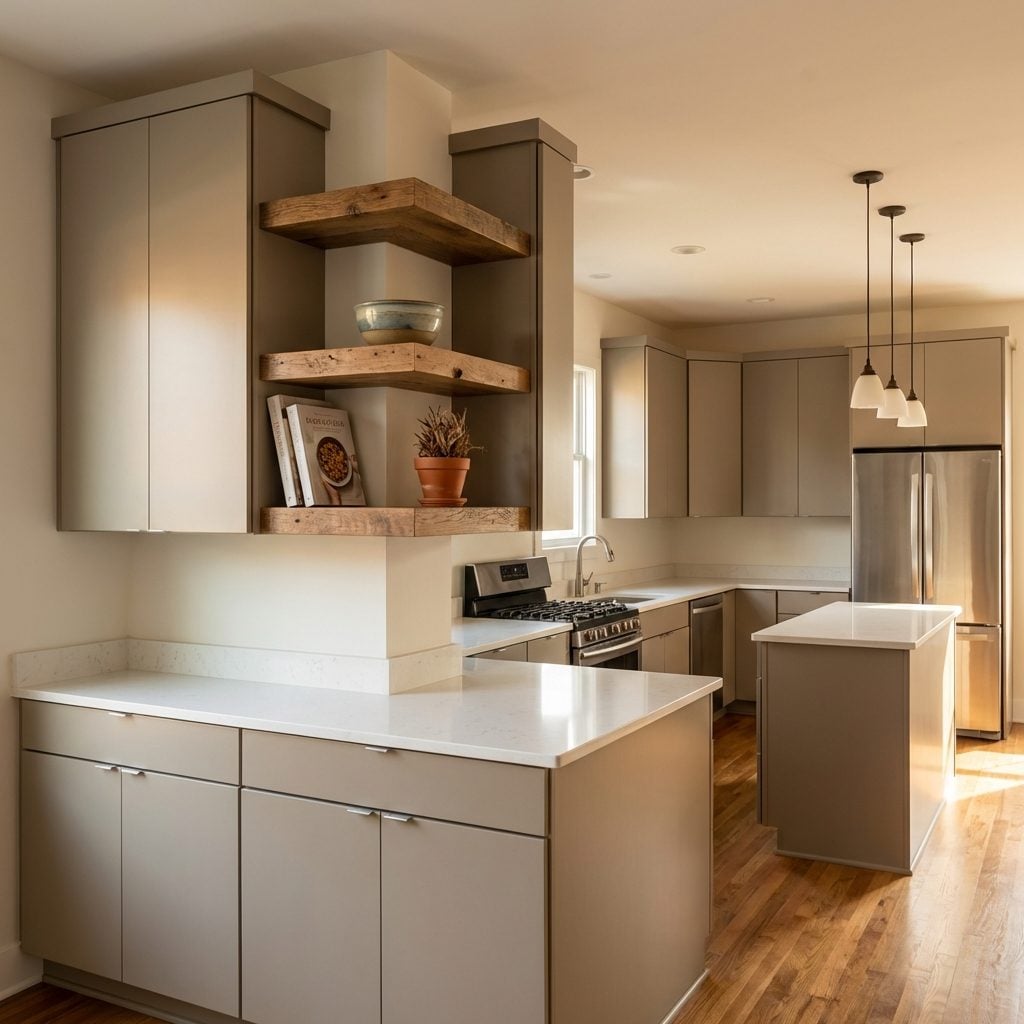
16. Warm Greige Cabinets With Open Corner Shelves That Just Gather Dust
🔥 Would you like to save this?
Corner open shelves sound like a clever use of dead space. In practice, they become the kitchen’s blind spot, literally and decoratively. Items placed in corners are hard to reach, easy to forget, and almost impossible to style in a way that looks intentional from the main sightline.
This greige kitchen is genuinely well-done in almost every other respect. The greige cabinets are warm and sophisticated, the quartz countertop is clean. But those corner shelves sit in the sightline like an afterthought, holding a ceramic bowl, a plant that’s slightly too small, and what appears to be a cookbook that hasn’t been opened in months.
15. Two-Tone Navy and Wood Kitchen Where the Open Shelf Breaks the Color Story
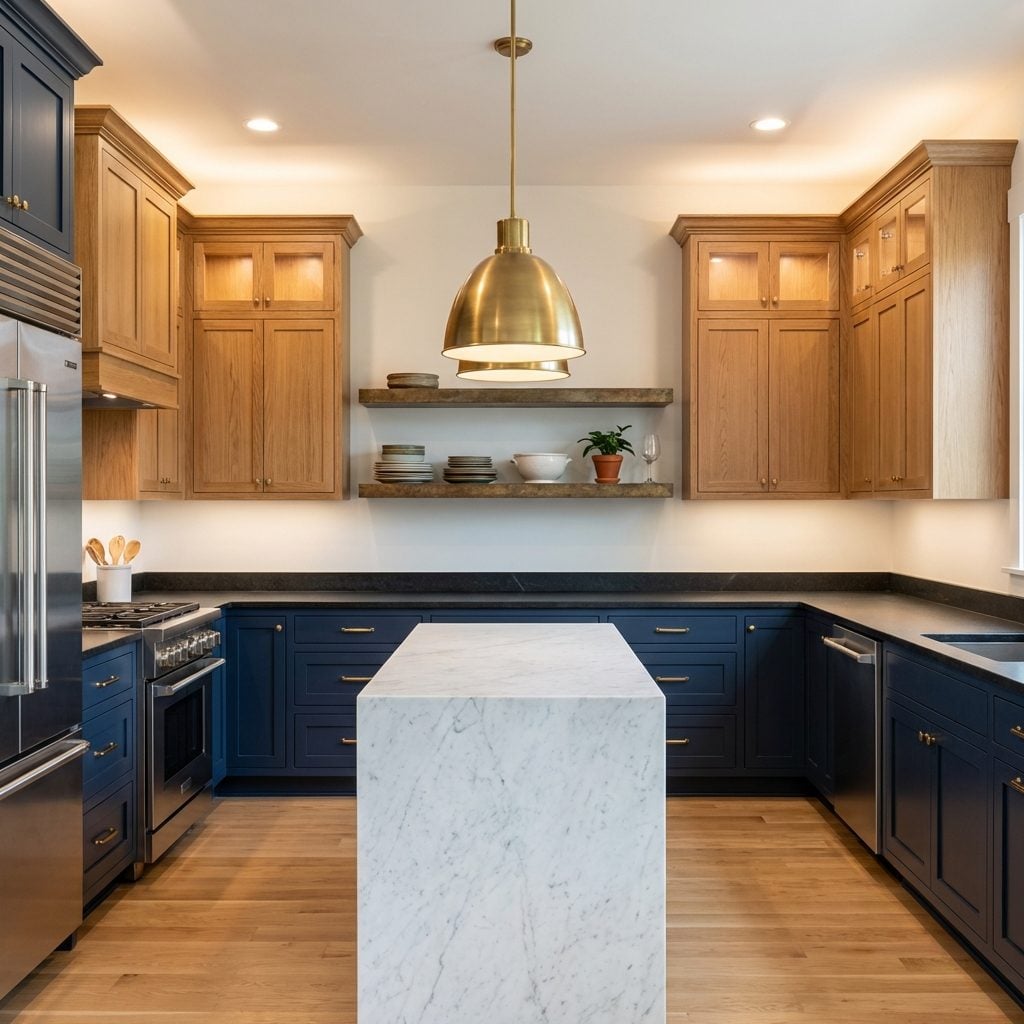
Two-tone kitchens are one of the more confident design moves you can make. Navy lower cabinets against natural wood uppers create depth and warmth. So it’s genuinely frustrating when a single run of open shelving interrupts that story with a floating plank that belongs to neither zone.
The shelf sits between the wood-toned upper cabinets and the navy lower cabinets holding a collection of items that don’t relate to either finish. A brass pendant light above the island almost saves it, but the eye keeps returning to the shelf like a smudge on an otherwise clean painting.
14. Farmhouse Kitchen With Open Shelves That Make the Whole Room Feel Smaller
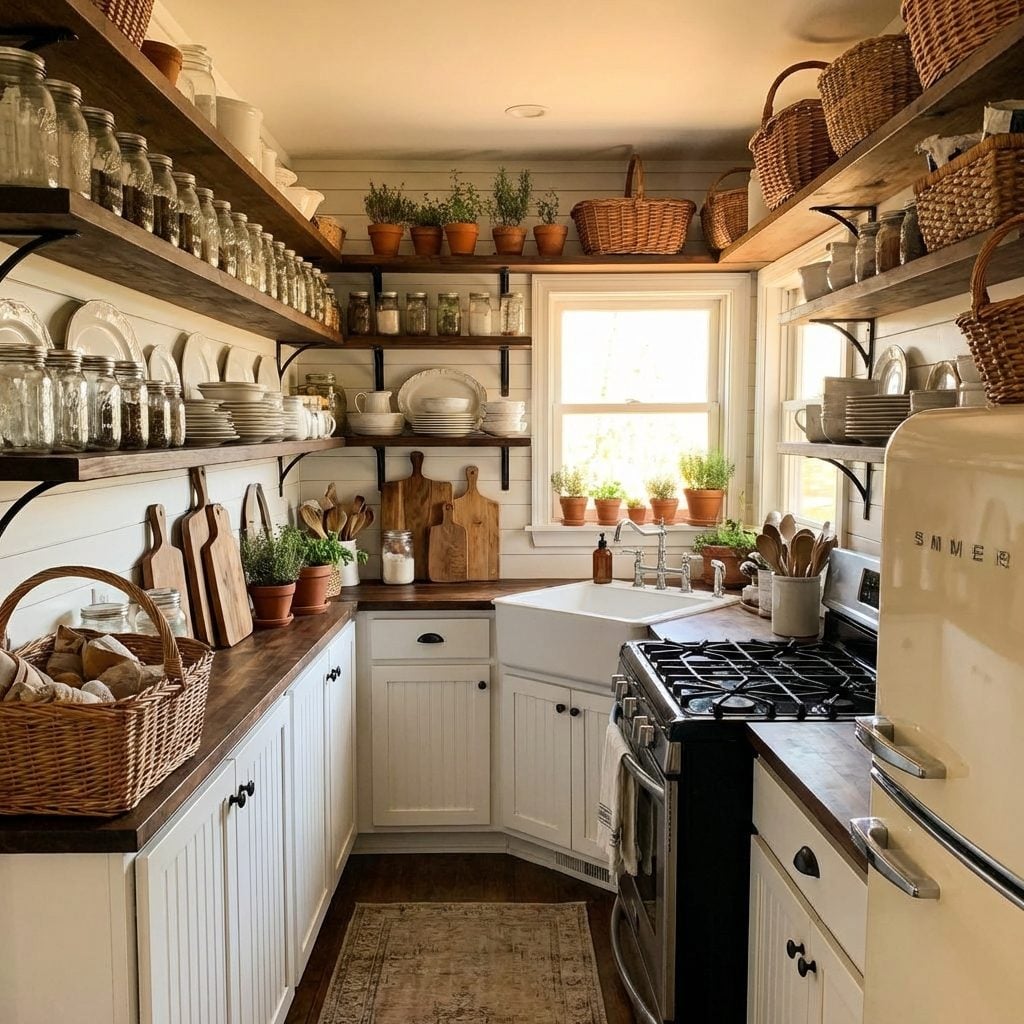
The farmhouse kitchen aesthetic relies on a specific kind of visual breathing room: apron sinks, shiplap walls, and airy layouts that feel unpretentious and spacious. Open shelves loaded with mason jars, cutting boards, and ironstone platters sound like they belong here. They do, in theory.
But in a galley-style farmhouse kitchen without much square footage, the shelves compress the visual space significantly. Instead of airy, the room feels cramped. The eye has to process too many objects at once. Closed uppers painted in the same creamy white as the walls would have pushed the walls back and made this kitchen feel twice as large.
13. Sleek Black Kitchen Where Open Shelves Undercut the Whole Drama
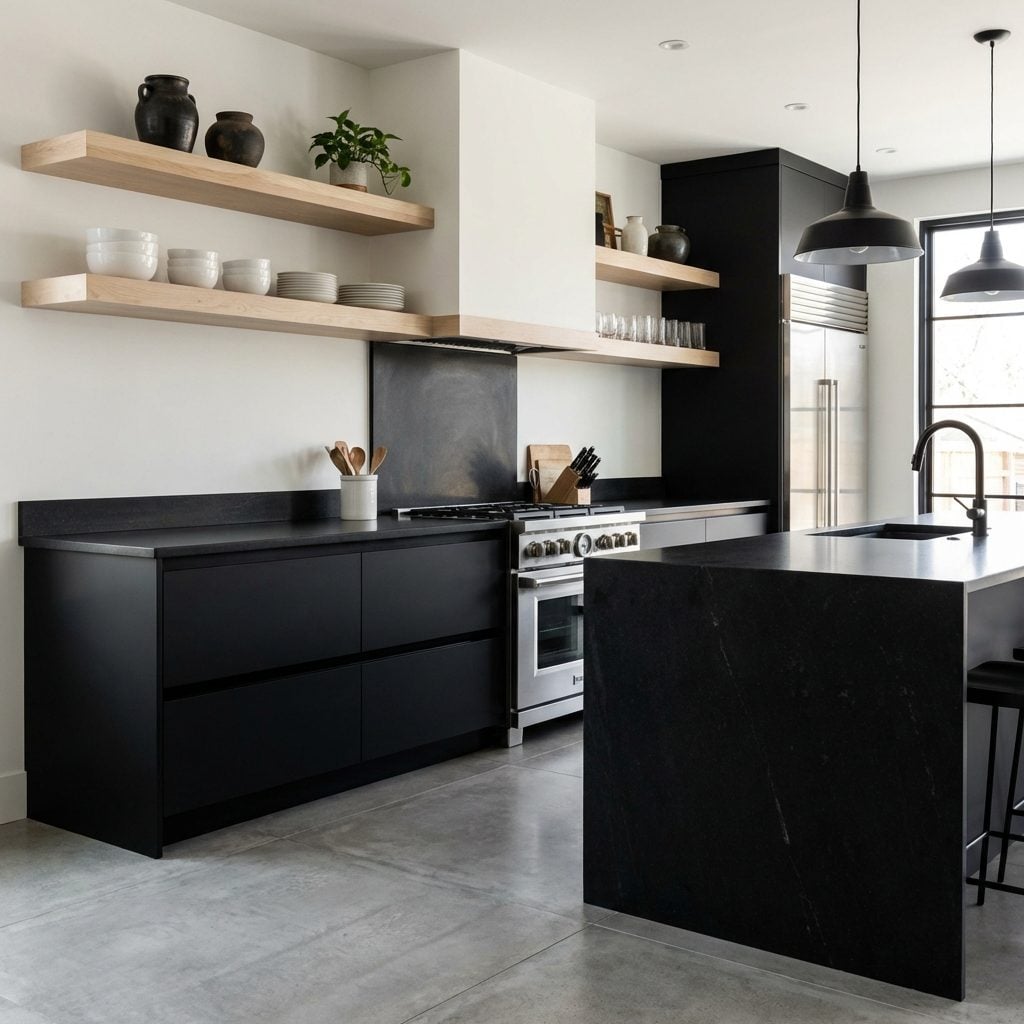
Black kitchens earn their boldness through continuity. The power of an all-black kitchen is that there are no interruptions, no visual breaks, just one deeply committed statement. Open shelves punch a hole in that logic.
The pale wood floating shelves in this kitchen were meant to lighten the space, but they end up looking like they belong in a different kitchen entirely. The black flat-front cabinets below look intentional and sharp. The shelves above look borrowed. A run of black upper cabinets with integrated pulls would have made this kitchen genuinely dramatic. Instead, it looks like the design ran out of nerve halfway up the wall.
Not everyone is sold on the all-black look either: in our reader votes, black-dominant kitchens got hearts 49% of the time, versus 62% for the other kitchen images in the same articles.
12. Sage Green Kitchen With Open Shelves That Can’t Decide What They Want to Be
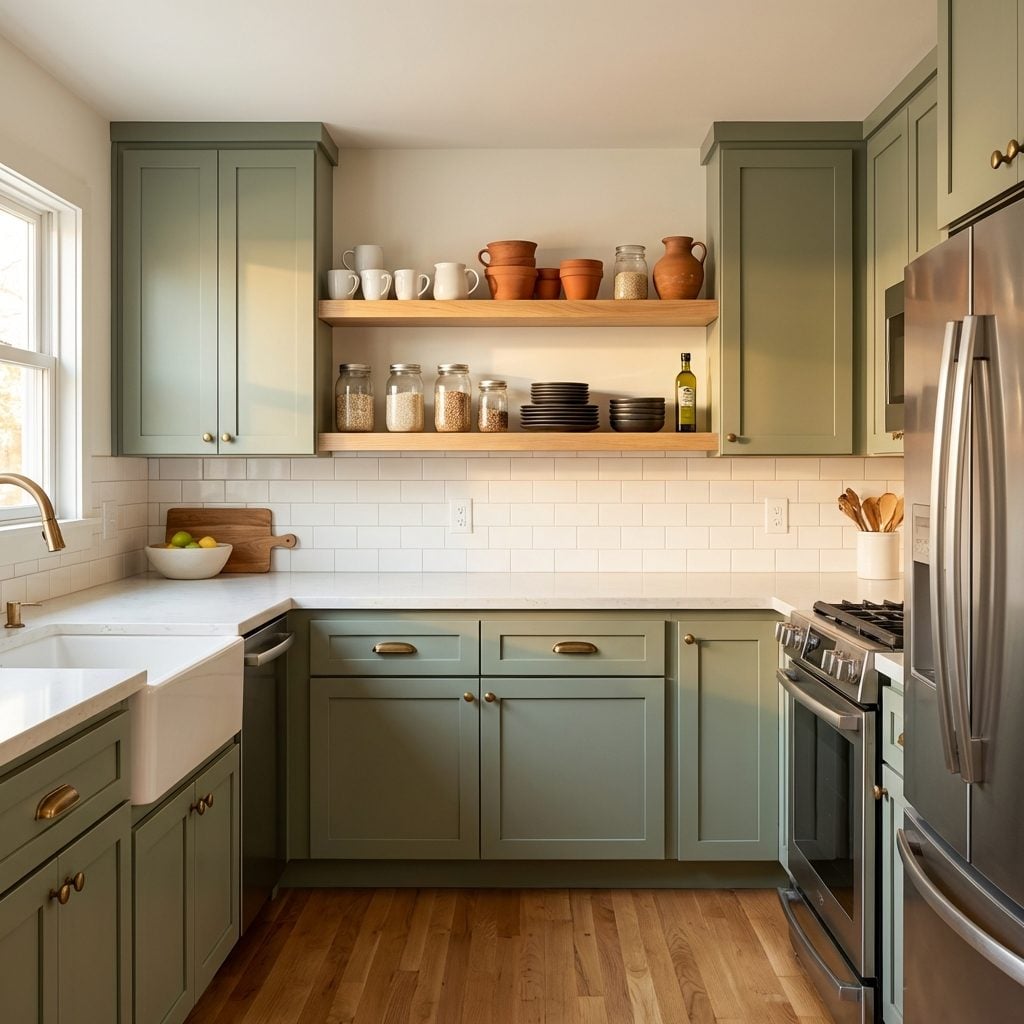
Sage green kitchens have become one of the most reliably satisfying color choices in the last few years, and for good reason. The color sits in a comfortable zone between earthy and sophisticated. But the open shelves in this kitchen are working against the palette rather than with it.
Crammed between two runs of sage green cabinets, the shelves hold items in every color from white to terracotta to clear glass, none of which have been grouped with any real intention. The effect is a kitchen that almost commits to a look but stops itself at the last moment. Closed uppers in the same sage would have locked this design in and made the color choice feel deliberate from floor to ceiling.
The best color choices in kitchens only land when the architecture supports them. Open shelves rarely do.
11. Open Shelves in a High-Gloss White Kitchen That Show Every Fingerprint and Gap
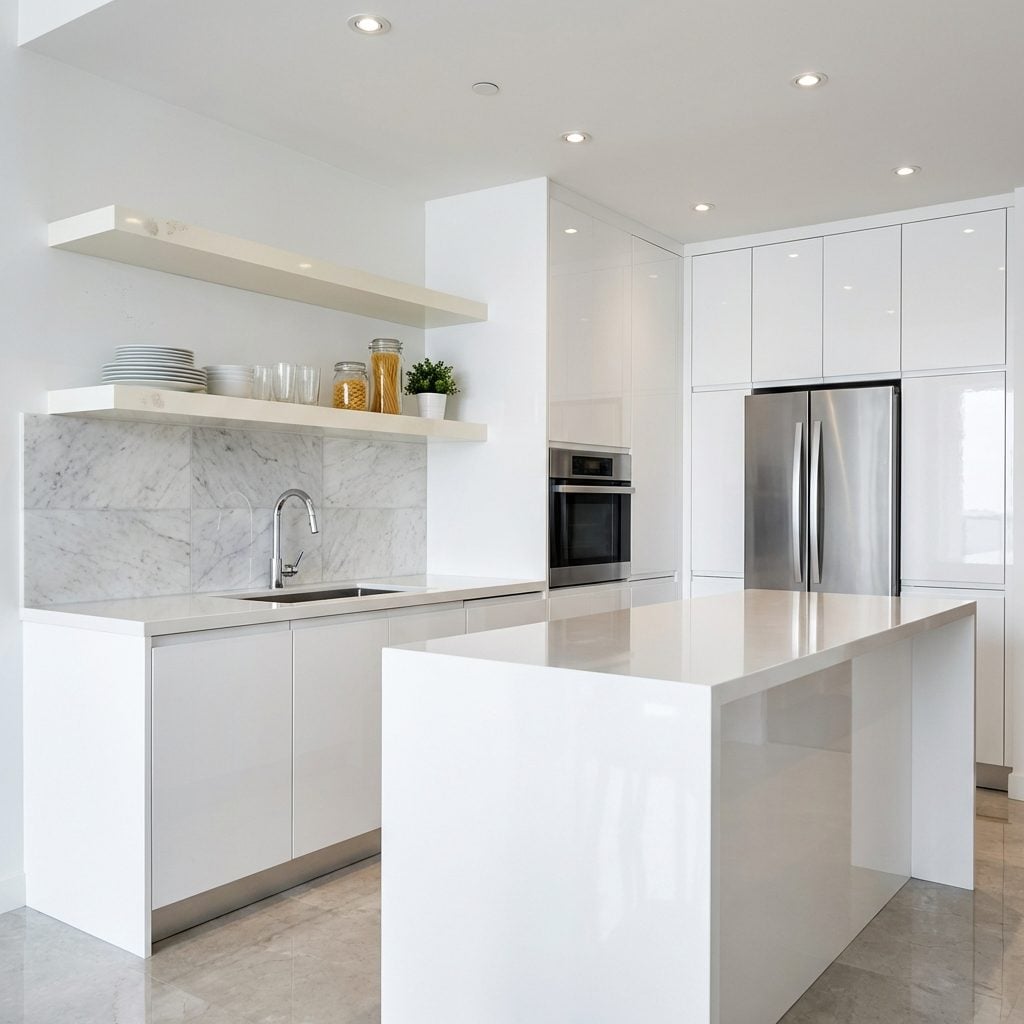
High-gloss white kitchens are demanding by nature. They require clean lines and pristine surfaces to deliver the look they promise. Open shelving and high-gloss finishes are about as compatible as linen upholstery and a muddy dog.
Every item on these shelves casts a small shadow, leaves a faint outline of grease or dust, and draws attention to the fact that the wall behind them isn’t quite the same brilliant white as the cabinet fronts. The high-gloss cabinets below are sharp and precise. The shelves above feel permanently slightly off, no matter how recently they were cleaned.
10. Warm Walnut Kitchen Where Open Shelving Looks More Like Forgot-to-Install Cabinets
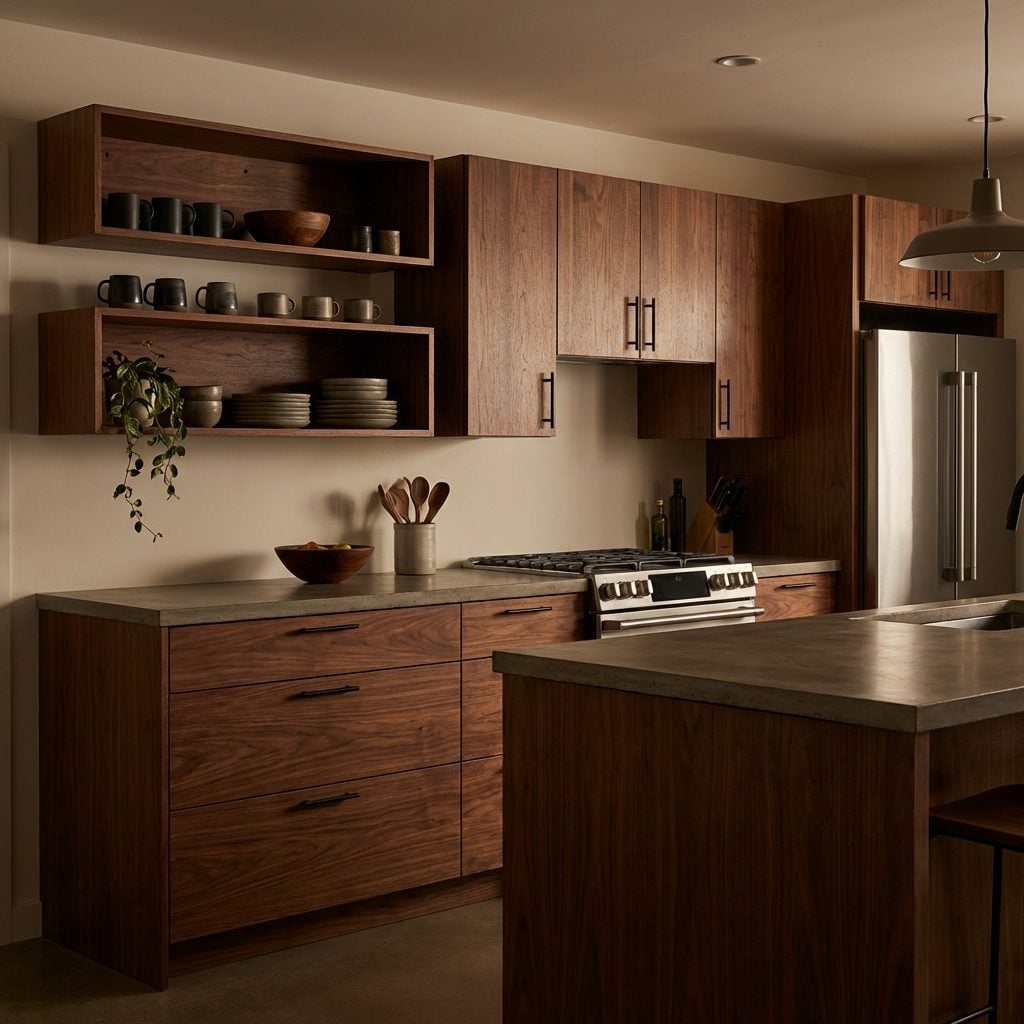
Walnut kitchens are rich without trying too hard. The deep brown grain does most of the design work on its own, and the best versions of this kitchen style let the wood speak and keep everything else quiet. Open shelves in the same walnut should, in theory, continue that logic.
They don’t. The problem is that walnut open shelves look less like a design choice and more like the cabinet doors were simply never added. The walnut cabinets with their closed doors look finished and intentional. The open shelves beside them look like a job site photo taken before the installation was complete.
9. Open Shelves Over the Range That Belong in a Fire Safety Warning
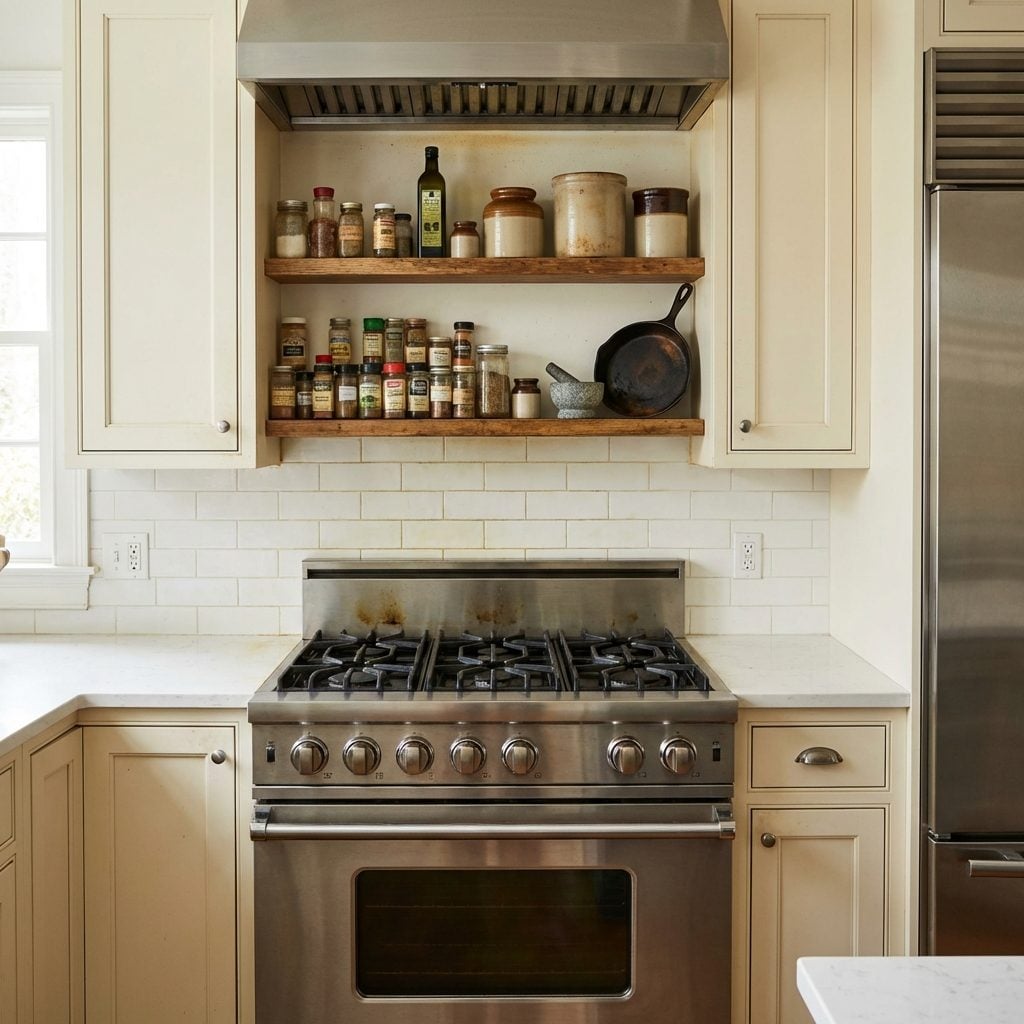
Range-adjacent open shelves make a specific kind of design promise: accessible spices, beautiful bottles of olive oil, copper pots hanging nearby. It’s a look pulled straight from a Tuscan cooking show. The reality tends to be greasier.
In this kitchen, the shelves directly above the gas range hold a collection of spice jars, a bottle of oil, some ceramic crocks, and a cast iron skillet. Every single item is coated in the invisible film that cooking produces over months. The items look duller than they should, the shelf itself has a faint yellow tinge, and the whole vignette reads as high-maintenance rather than charming. A proper range hood with closed storage flanking it would have been both smarter and cleaner-looking.
8. Coastal Blue Kitchen Where Open Shelves Tip It Into Gift Shop Territory
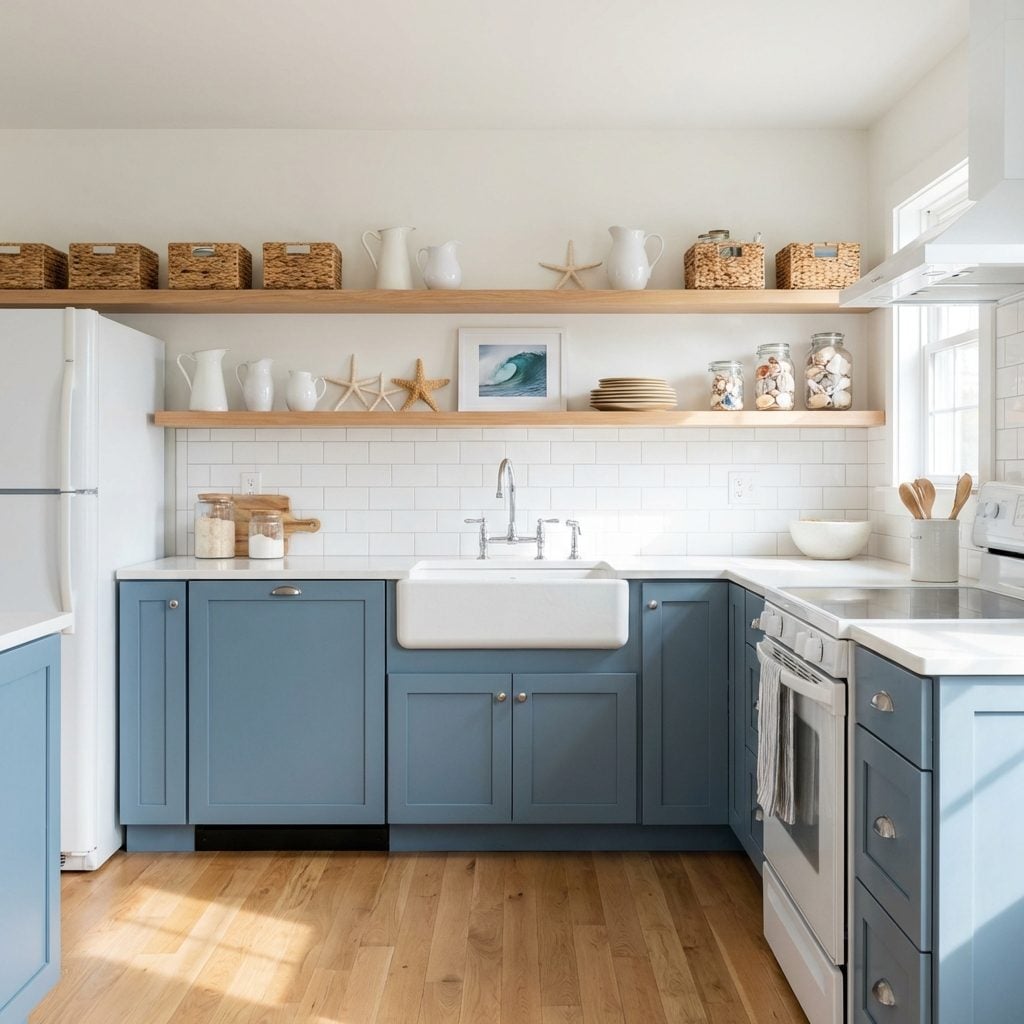
Coastal kitchen design walks a very fine line. Done right, it reads as relaxed, sun-bleached, and genuinely livable. Done slightly wrong, and you’re inside a beach house souvenir shop.
The open shelves in this kitchen are where the design tips over that line. The coastal blue cabinets are actually a great color choice. But the shelves above are styled with a collection of starfish, white ceramic jugs, woven baskets, shells, and a framed print of a wave. There’s too much going on with no visual hierarchy, and the shelf styling reinforces the theme so aggressively that the kitchen stops feeling like someone’s home. Closed uppers in a crisp white or the same blue would have kept the coastal feeling without the decorative overload.
7. Minimalist Kitchen Where Open Shelves Are the One Thing That Ruins the Minimalism
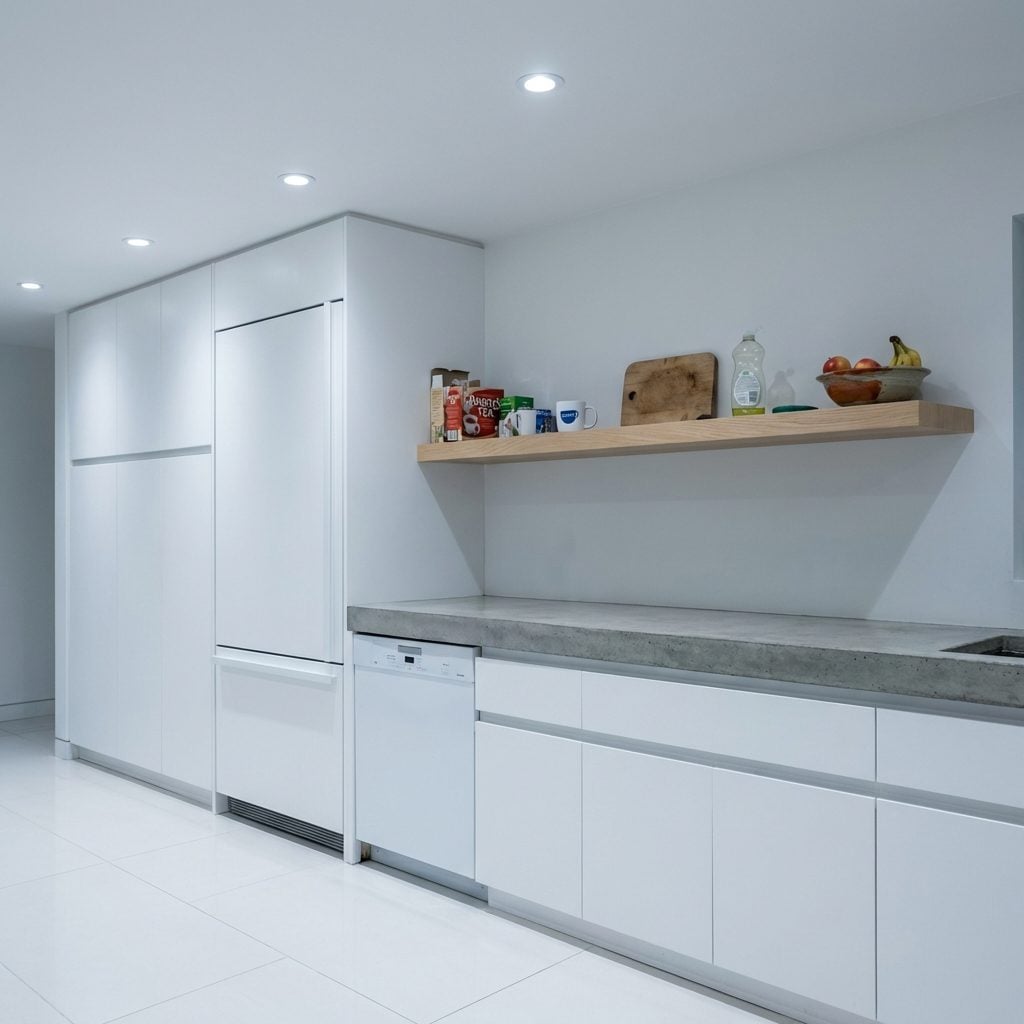
Minimalism in a kitchen is harder to execute than it looks. Every item earns its place or it doesn’t belong. Closed cabinetry is fundamental to the style because it hides everything that doesn’t meet the visual standard.
- Open shelves in a minimalist kitchen require every single item to be display-worthy, all the time.
- Most households can’t maintain that standard through an actual week of cooking.
- The result is a kitchen that looks like it’s failing at the one thing it was designed to do.
This kitchen has all the right bones: flat-front white flat-front cabinets, a concrete countertop, integrated appliances. But the open shelves hold a mix of everyday objects that would disappear behind doors and look unremarkable in the open. The tension between the minimalist intent and the shelf reality is the defining visual of this kitchen.
6. Dark Moody Kitchen Where Open Shelves Let the Light Graveyard Begin
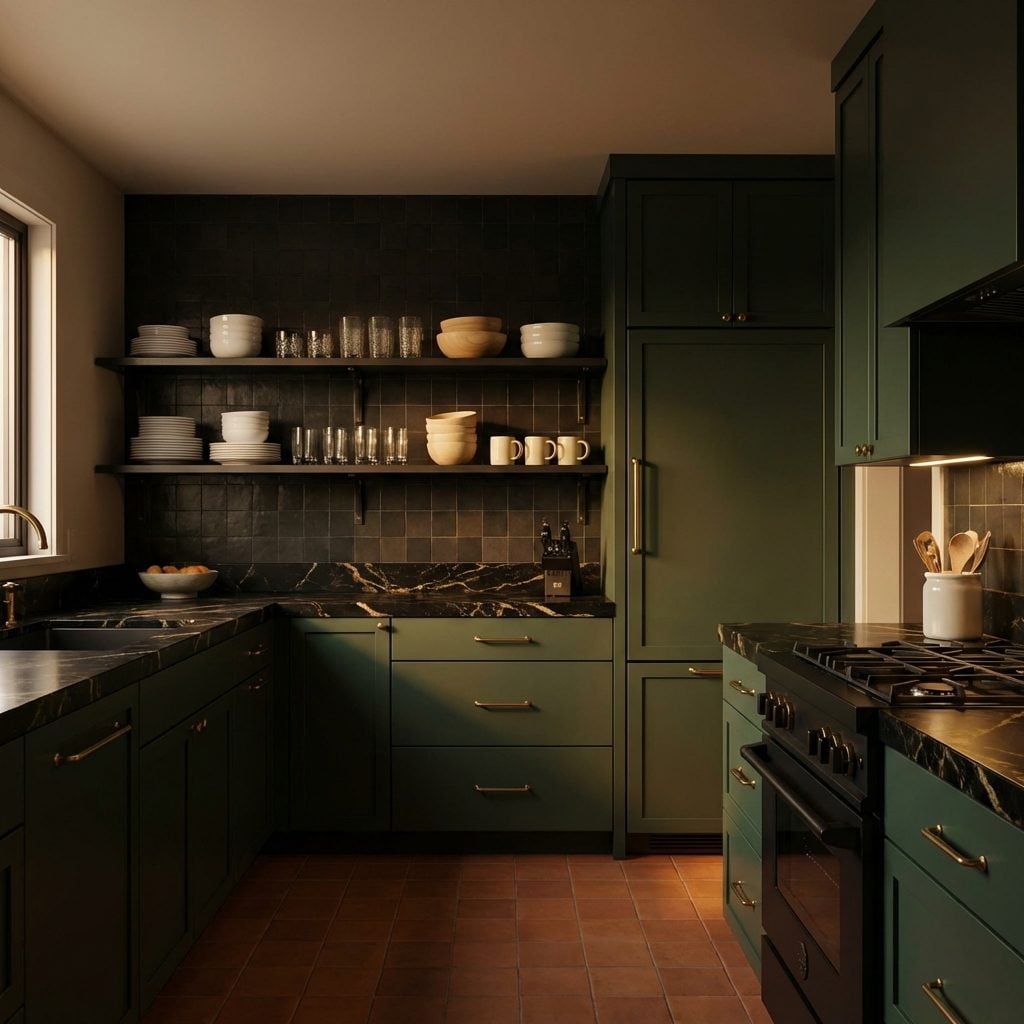
Dark kitchens absorb light by design. Forest green, charcoal, near-black blues, they’re chosen specifically for their depth and the atmosphere that depth creates. Every decision in a dark kitchen should protect and enhance that moodiness. Open shelving, in almost every case, works against it.
The shelves in this kitchen collect light in patches, create bright spots of white dishes and glass against the dark cabinet faces, and produce the visual equivalent of someone turning the overhead lights on during a candlelit dinner. The forest green cabinets are genuinely rich and considered. The black marble countertop is doing its job. But the open shelves, loaded with white and clear objects, break the tonal spell the kitchen was carefully casting.
5. The Scandinavian Kitchen Where Open Shelving Makes Everything Look Unfinished
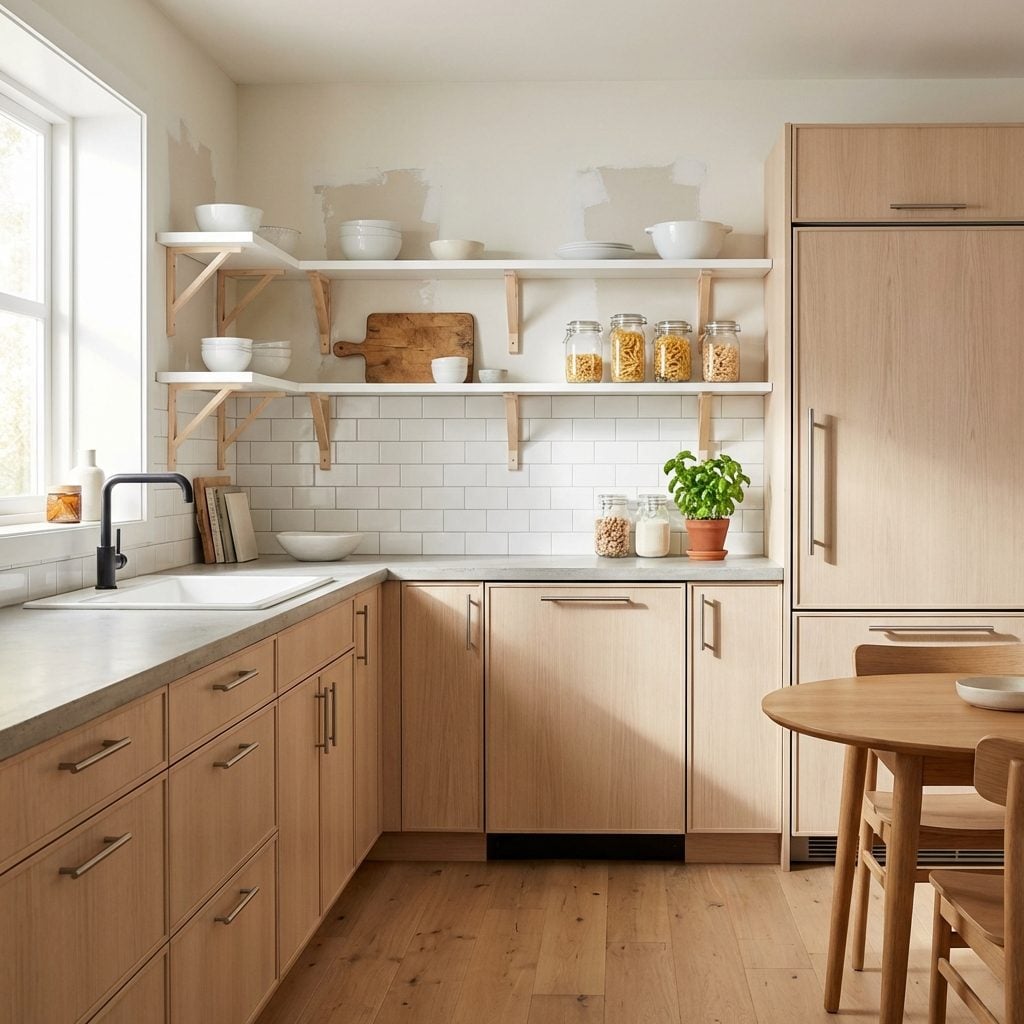
Scandinavian design is built on the idea that simplicity looks intentional. Open shelving, though, has a way of working against that principle in the most subtle way: the shelves themselves become part of the visual noise instead of receding into the background. The white-painted brackets and pale birch boards here are nice enough, but your eye keeps skipping between the bowls, the cutting boards, and the gap where a cabinet door would have hidden everything.
Regular upper cabinets with flat-front doors in the same matte white would give this kitchen the clean, unbroken wall plane that Scandinavian interiors actually depend on. The shelves are doing a lot of work and not quite pulling it off.
4. A Farmhouse Kitchen With Floating Shelves That Feel More Cluttered Than Cozy
🔥 Would you like to save this?
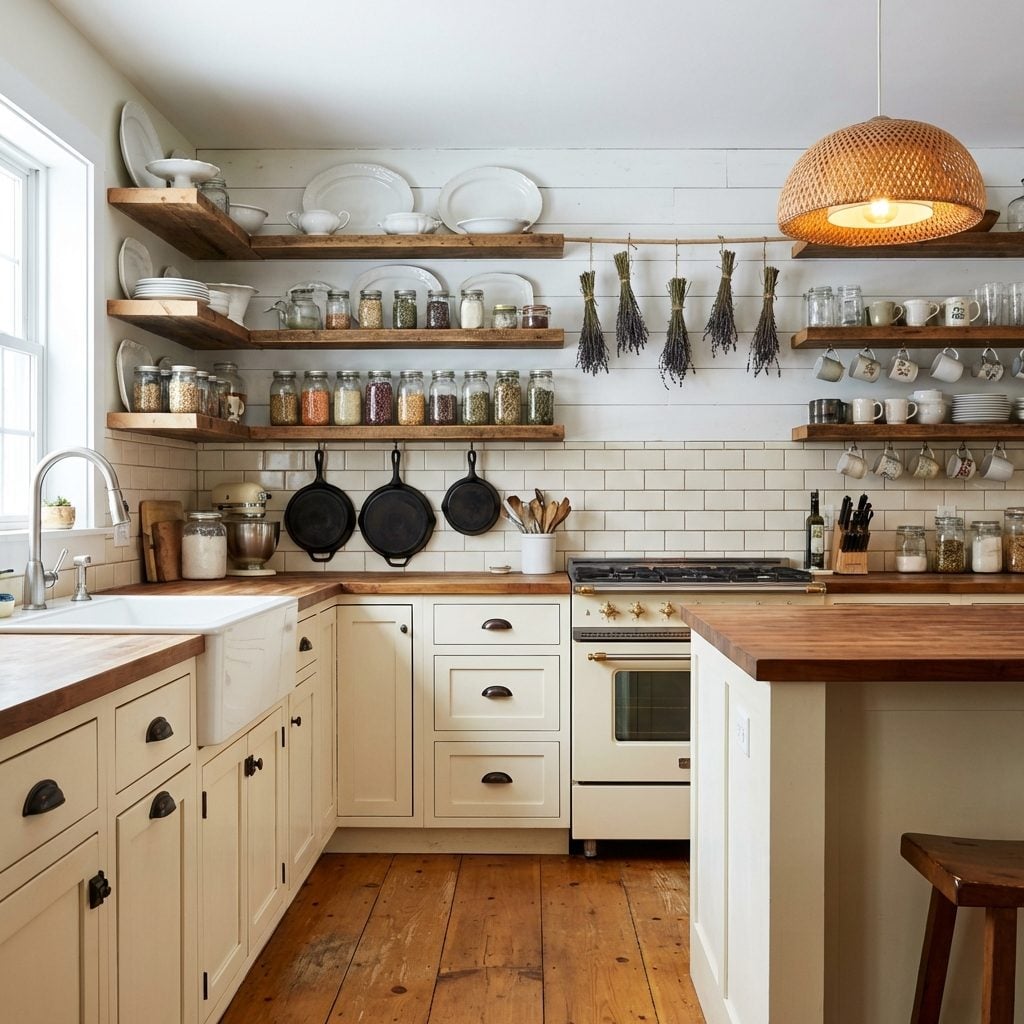
The farmhouse kitchen is supposed to feel warm and collected. And to be fair, this one has all the right bones: shiplap, a farmhouse sink, and warm cream cabinetry. But the open shelves above the range are where the fantasy runs into reality.
Stacked ironstone platters, a row of mason jars, some dried lavender, and three cast iron skillets hanging from hooks, it reads more like a storage problem than a design choice. Closed upper cabinets would have kept the warmth of the lower cabinetry without asking every single plate and jar to justify its existence on display. The visual rest that cabinet doors provide turns out to be exactly what this style needs.
3. Bold Navy Cabinets Where the Open Shelving Dilutes a Strong Color Story
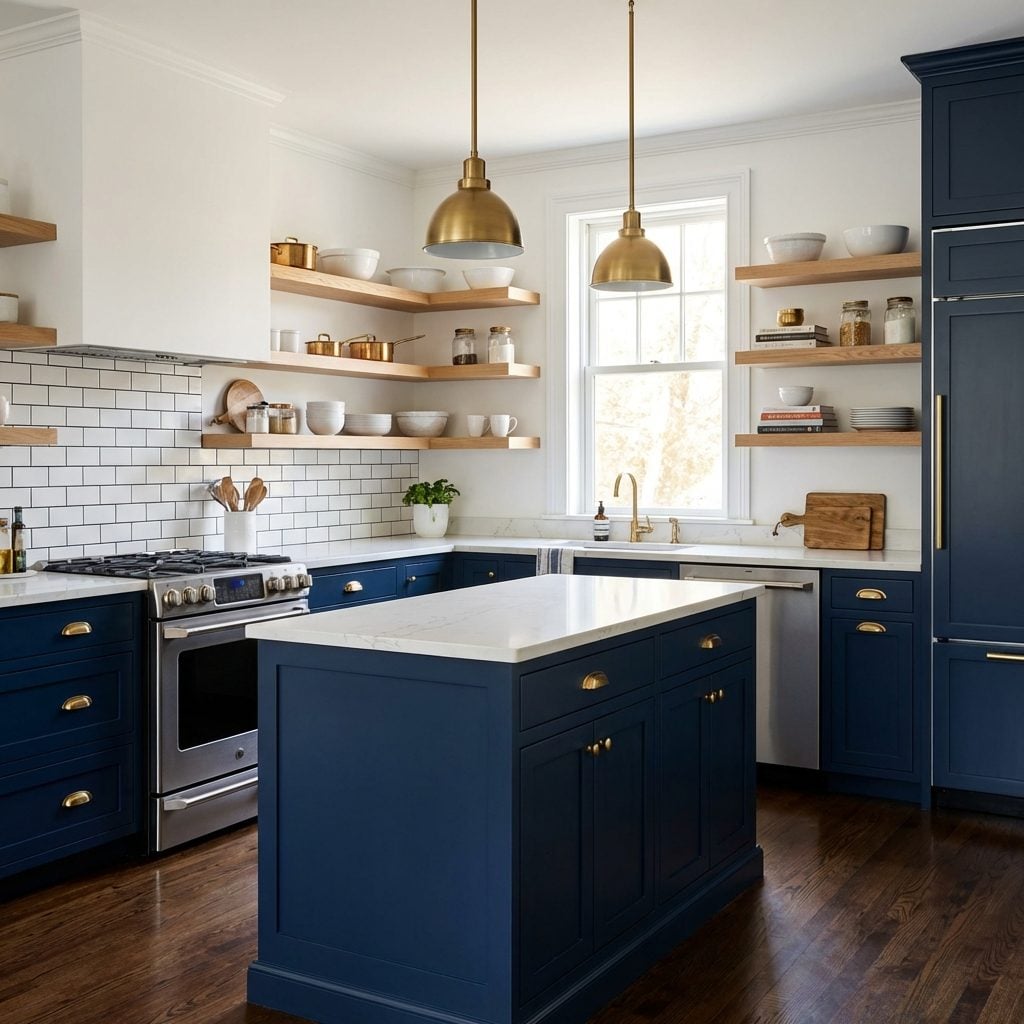
A navy kitchen is a commitment, and a good one. Deep cabinet color works because it creates a singular, confident presence on the lower half of the room. The problem with the open shelves above is that they interrupt that confidence. Natural wood shelving brackets and a collection of mismatched white and cream ceramics against the white upper wall create a broken visual rhythm: bold below, tentative above.
The upper wall reads as an afterthought rather than a continuation of the design intent. Closed navy upper cabinets carrying the color all the way up would have made this kitchen feel deliberate from floor to ceiling. Right now it feels like someone got halfway through a decision and stopped.
2. The All-White Kitchen Where Open Shelves Introduce Every Shade of Beige and Bone
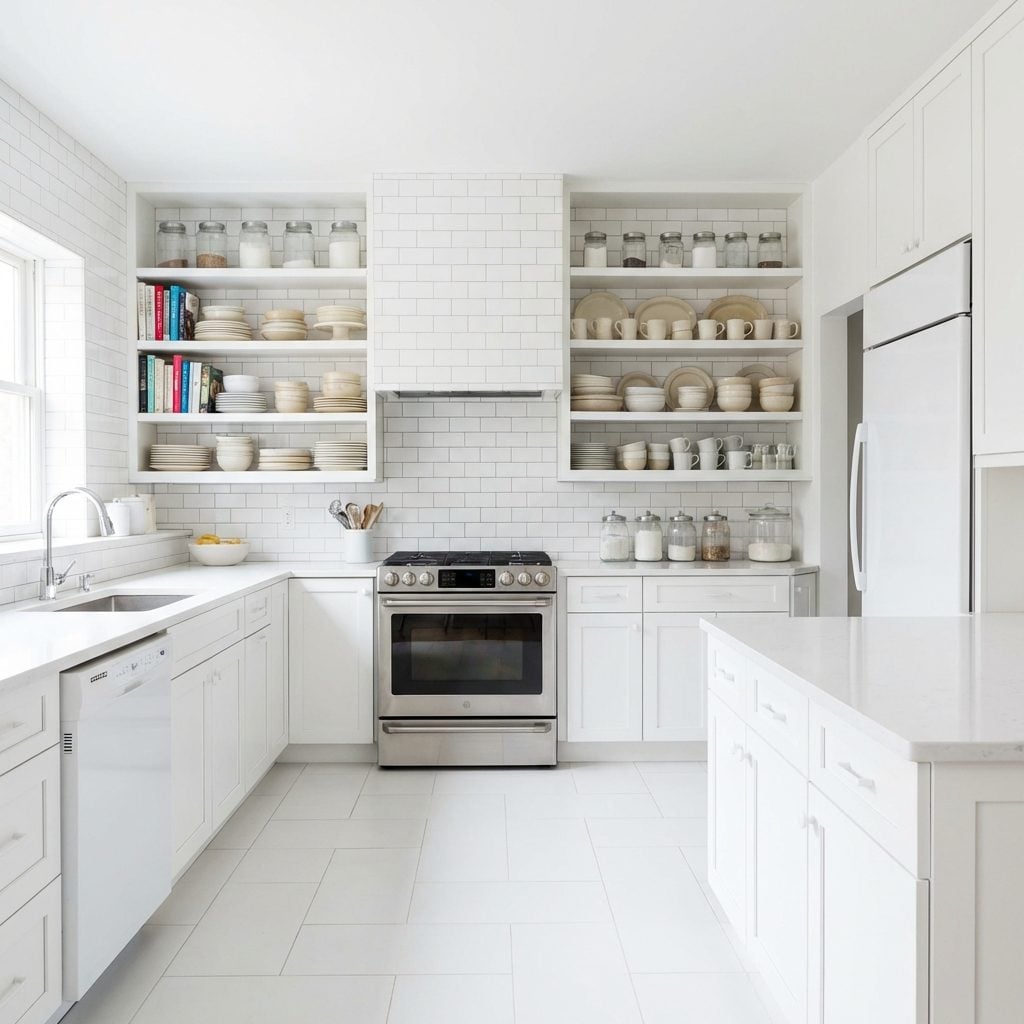
An all-white kitchen is supposed to feel precise and bright. Open shelving has a particular way of undermining that intention because no matter how carefully you select your dishes, they will not all be the same white. The ceramic plates are cream, the mixing bowls are bone, the cookbooks have spines in four different colors, and the glass jars have metal lids that catch the light differently than everything else.
You end up with a shelf that looks like a white concept interrupted by reality. Closed cabinetry hides this completely and lets the kitchen read as the clean, quiet space it was meant to be. The open dresser principle applies here, exposure doesn’t always mean beautiful.
1. Moody Green Cabinets With Open Shelving That Can’t Commit to Either Aesthetic
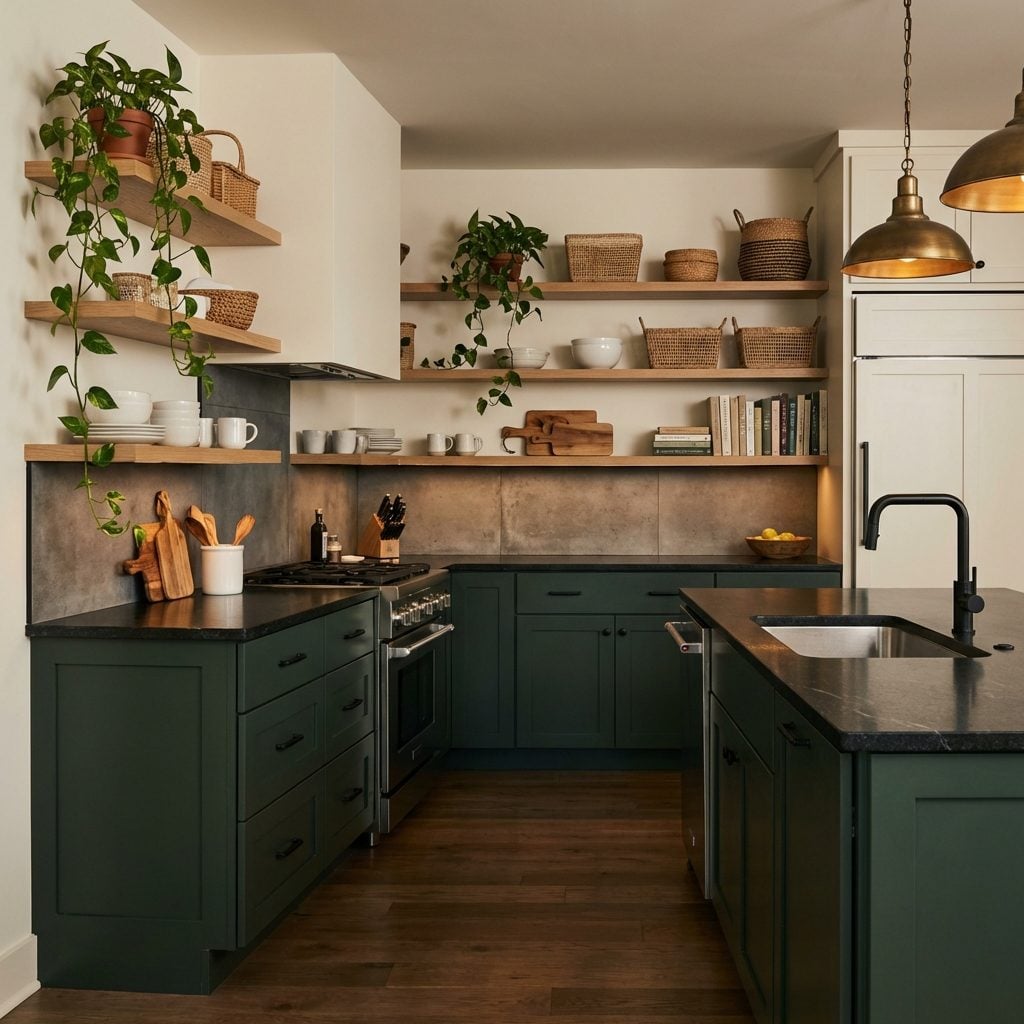
Forest green cabinetry is having a real moment, and for good reason, it brings depth and a quiet drama that white kitchens simply can’t replicate. But when open shelves in a light, natural wood finish are layered above those dark green lower cabinets, the two halves of the kitchen end up speaking entirely different design languages.
The lower half says: considered, moody, and a little dramatic. The upper half says: Etsy shop, 2019. The wood shelf brackets and the curated-but-chaotic arrangement of plants, ceramics, and woven baskets pull the eye in too many directions.
Closed upper cabinets in the same forest green would have carried the drama all the way up and given this kitchen the considered feel it was clearly reaching for.