🔥 Would you like to save this?
Bare white walls, one sad throw pillow, and a coffee table with nothing on it. Minimalism has had its moment, but plenty of homeowners are quietly over it. These 37 before and after living room redesigns are for the people who want real warmth: rooms that feel collected, layered, and genuinely comfortable without tipping into clutter. Think deep sofas, textured walls, wood beams, bookshelves that actually hold books. Each transformation starts from the same forgettable builder-grade baseline and lands somewhere completely different, but every single one feels lived-in, intentional, and impossibly cozy.
37. Flat Oak and Popcorn Ceiling Blues to Rustic French Provincial Warmth
Watch the transformation👇
In order to come up with the very specific design ideas, we create most designs with the assistance of state-of-the-art AI interior design software. Also, assume links that take you off the site are affiliate links such as links to Amazon. this means we may earn a commission if you buy something.
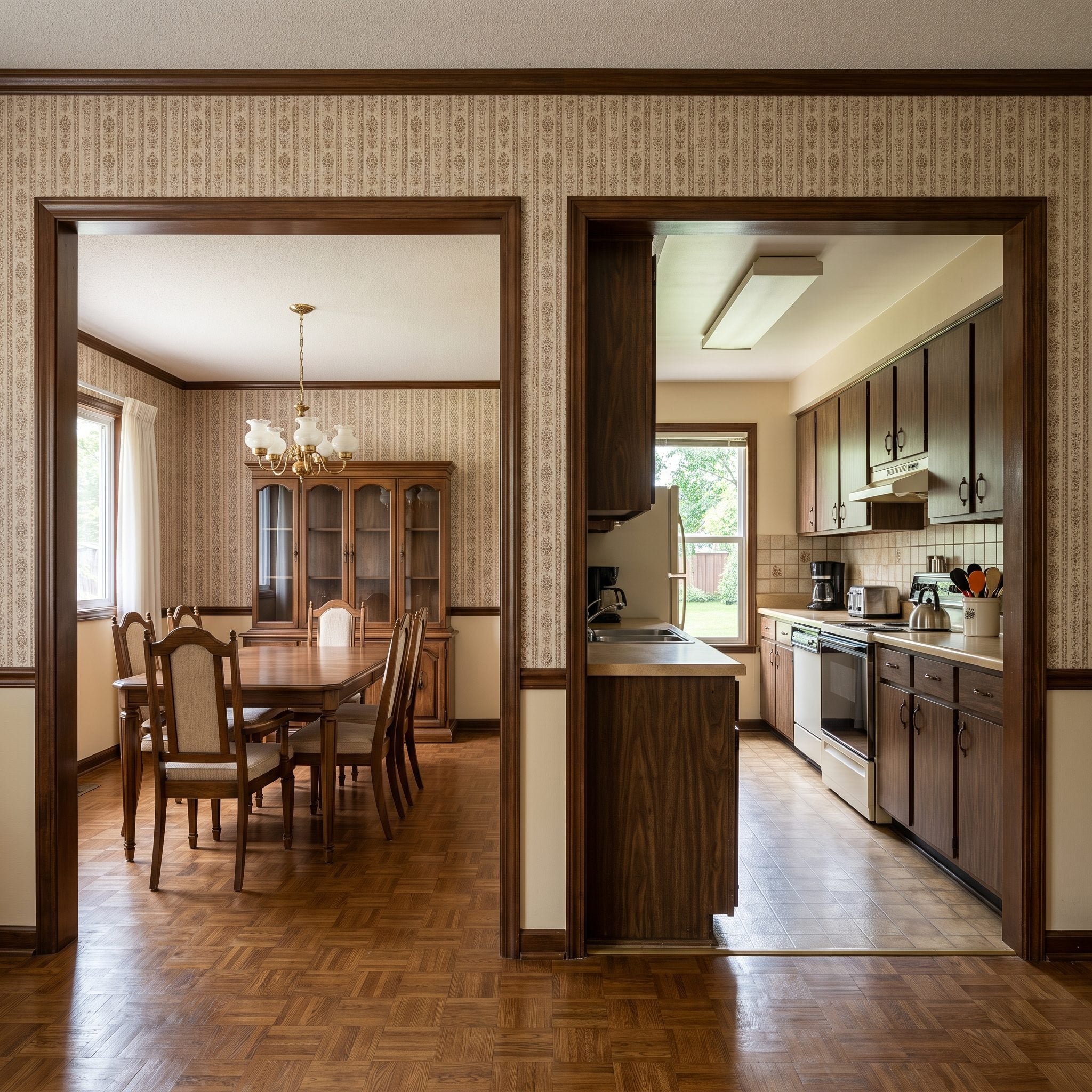
Honey oak trim is the design equivalent of white noise, it’s everywhere and registers as nothing. Painting it out in a soft greige and layering in a linen slipcovered sofa with mismatched throw cushions shifts the whole register from builder-spec to something that looks like it was assembled over years, not an afternoon at a big-box store.
The popcorn ceiling, scraped and skimmed smooth, then washed in warm white, quietly doubles the perceived height of the room. Sometimes the most impactful change is the one nobody notices consciously.
36. Builder Grade Blah to Cozy Scandinavian Cabin with Real Texture
Texture is the secret language of comfort. The before room speaks only in smooth, forgettable surfaces, laminate, Berber, flat paint. Introducing a chunky knit wool throw, a sheepskin rug, and raw linen upholstery tells a completely different story, one about warmth, tactility, and real material life. Pale birch wood tones and a deep slate accent wall do the structural work, but it’s the textiles that close the deal.
35. Tired Taupe and Brass Fixtures to Dark Romantic Maximalist Done Right
There’s a version of maximalism that reads as chaos, and then there’s this: every surface doing its job, nothing accidental. Deep plum walls anchor an emerald velvet sofa, which in turn makes the antique gold mirror above it read as intentional rather than inherited. The key is repetition, every piece shares at least one color or material with something else in the room, so the layering feels composed rather than cluttered.
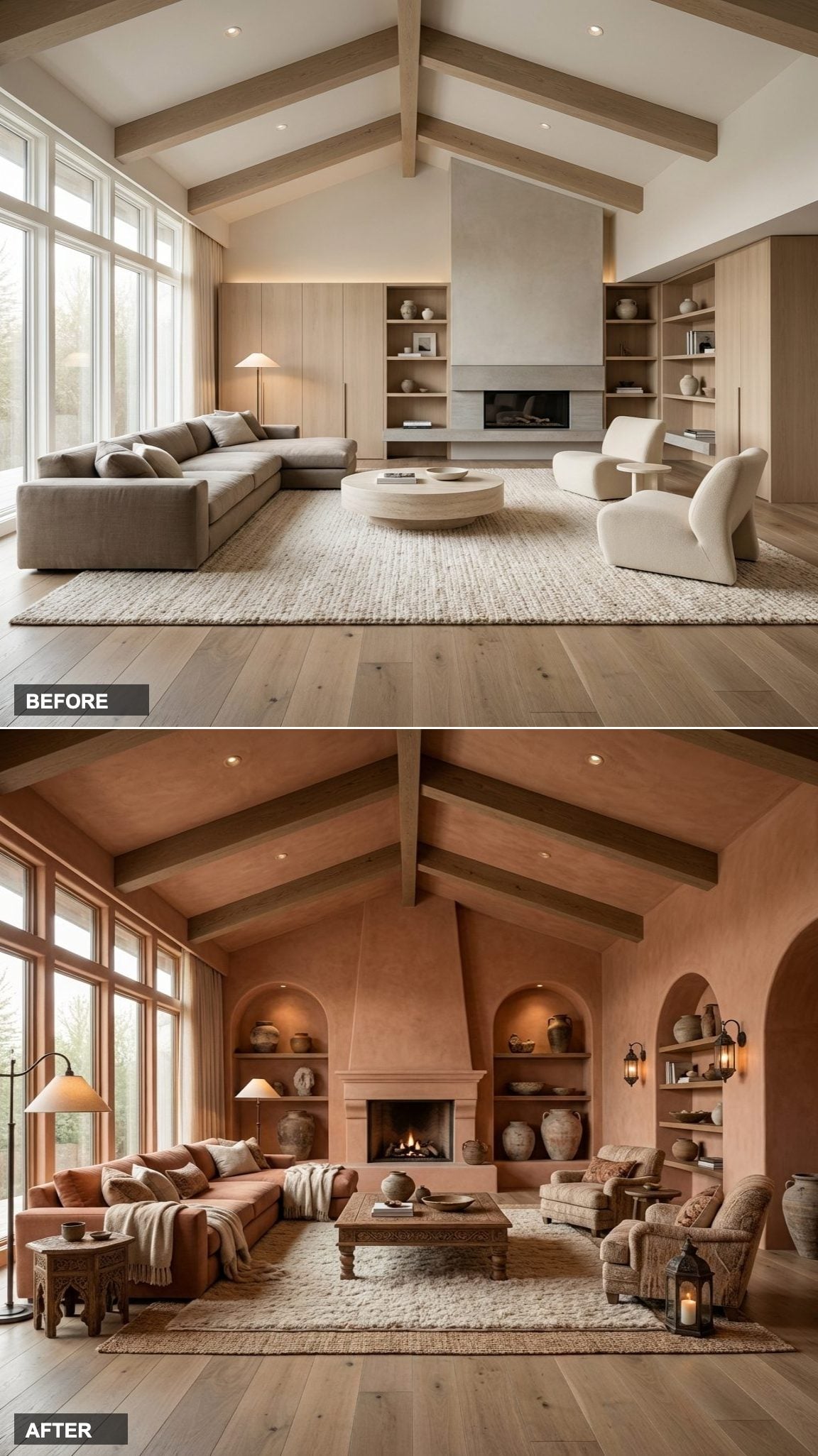
34. The Laminate Living Room That Became a Warm Tuscan Farmhouse
Terracotta doesn’t have to mean a 1980s southwestern moment, in this version, it reads as Umbrian hillside. The original room’s worst offense was its ceiling fan, broadcasting “rental unit” from twelve feet up. Gone. Replaced with a hand-hammered iron chandelier that casts the kind of light that makes everyone in the room look like they’re dining well.
Rough plaster walls in a warm ochre, a terracotta ceramic lamp, and a jute rug layered under a worn kilim do the rest. This is what happens when a room stops trying to be neutral.
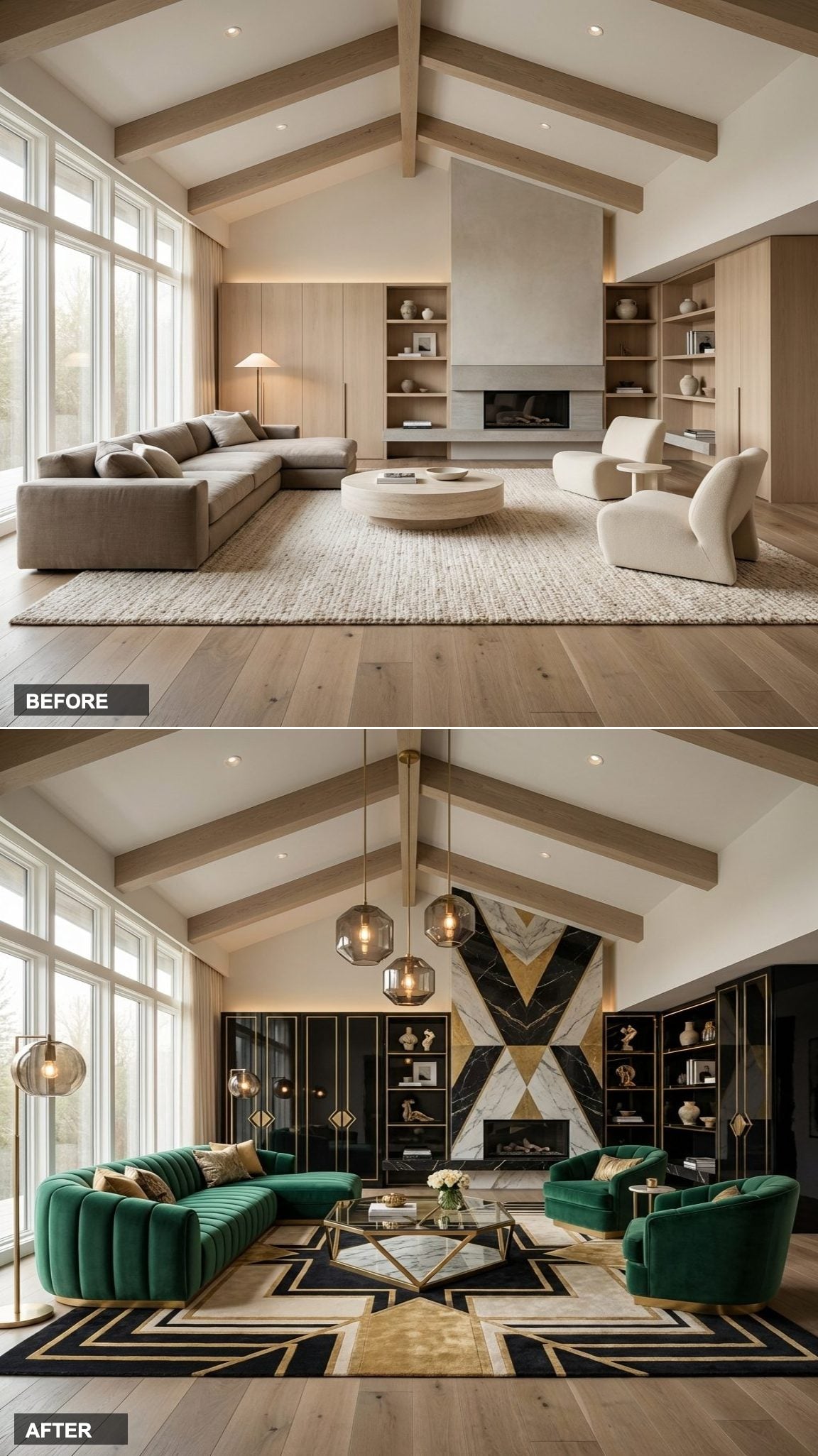
33. Cream Carpet and Vertical Blinds to Sophisticated Art Deco Jewel Box
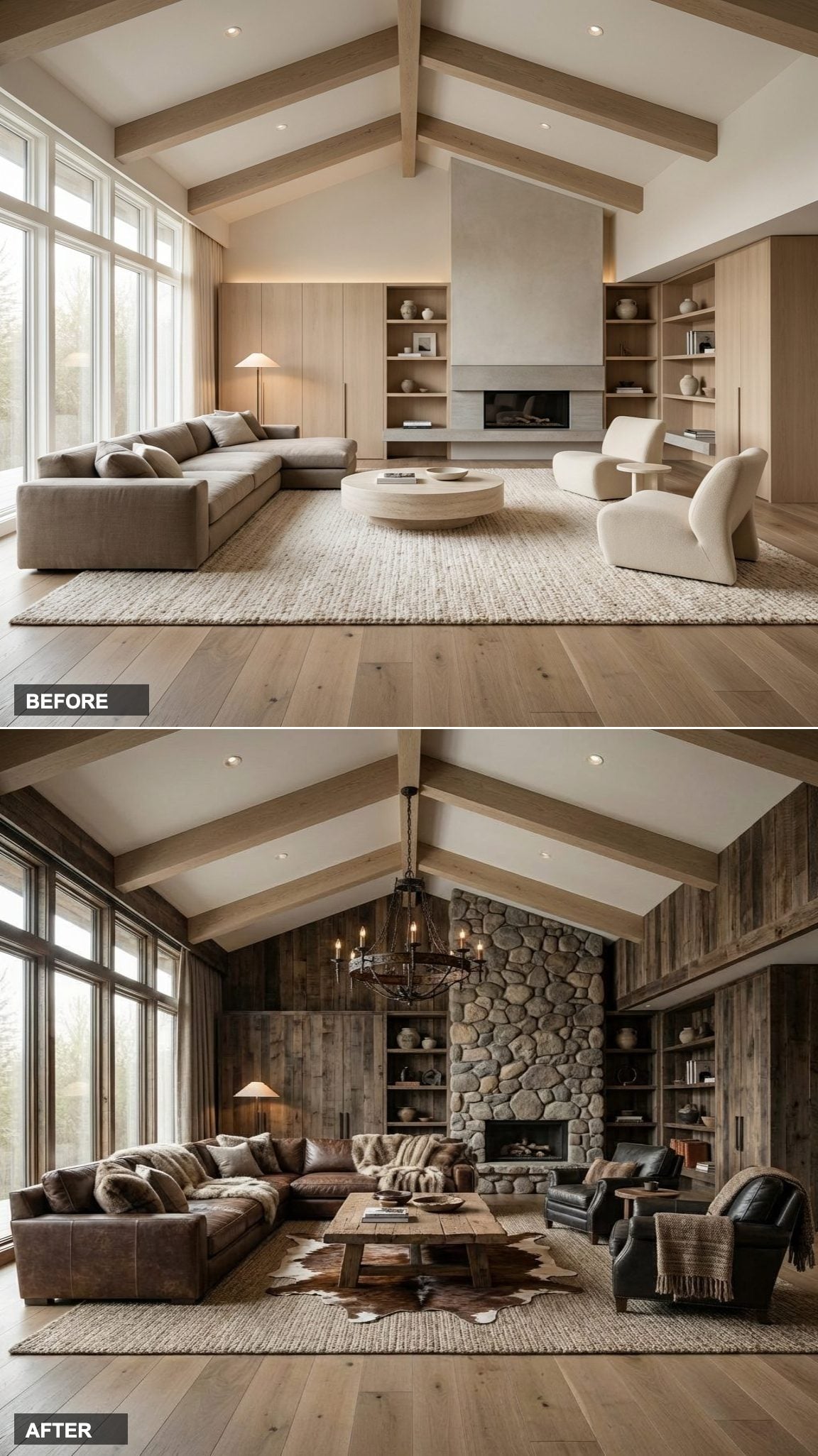
- The wall treatment: Deep teal grasscloth wallpaper replaced flat cream paint, instantly adding the kind of quiet texture that reads differently at every hour of the day.
- The lighting pivot: A sculptural art deco brass chandelier over the seating area replaced the drum shade ceiling light and became the room’s focal point.
- The furniture edit: A velvet curved sofa in champagne replaced the boxy sectional, the curved silhouette alone made the room feel designed, not assembled.
Three changes, completely different room. The carpet stayed, covered under a bold geometric wool rug in black and gold.
32. Sad Builder Carpet to Deeply Layered Bohemian Study in Earth Tones
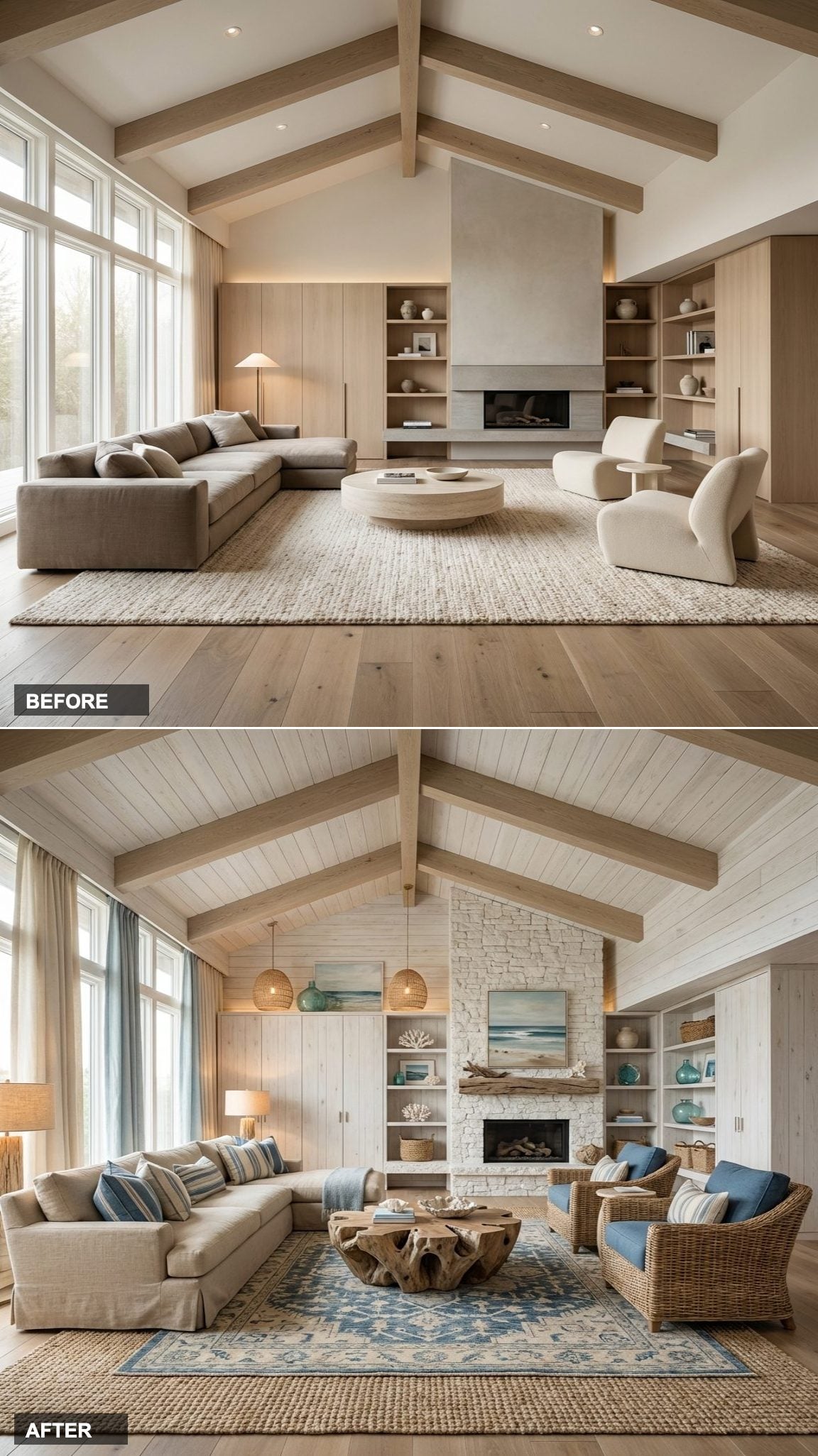
This is not maximalism, it’s archaeology. Each layer of textile and object reads like it arrived at a different time, from a different place, which is exactly what gives a room this character. A Moroccan leather pouf beside a low rattan coffee table, a layered stack of vintage-style rugs in burnt sienna and cream, shelves holding actual objects with actual histories.
The before room’s biggest problem wasn’t the carpet or the color, it was the complete absence of narrative. This redesign gives the room something to say.
31. From Forgettable Flex Room to a Rich Jewel-Toned Sitting Room
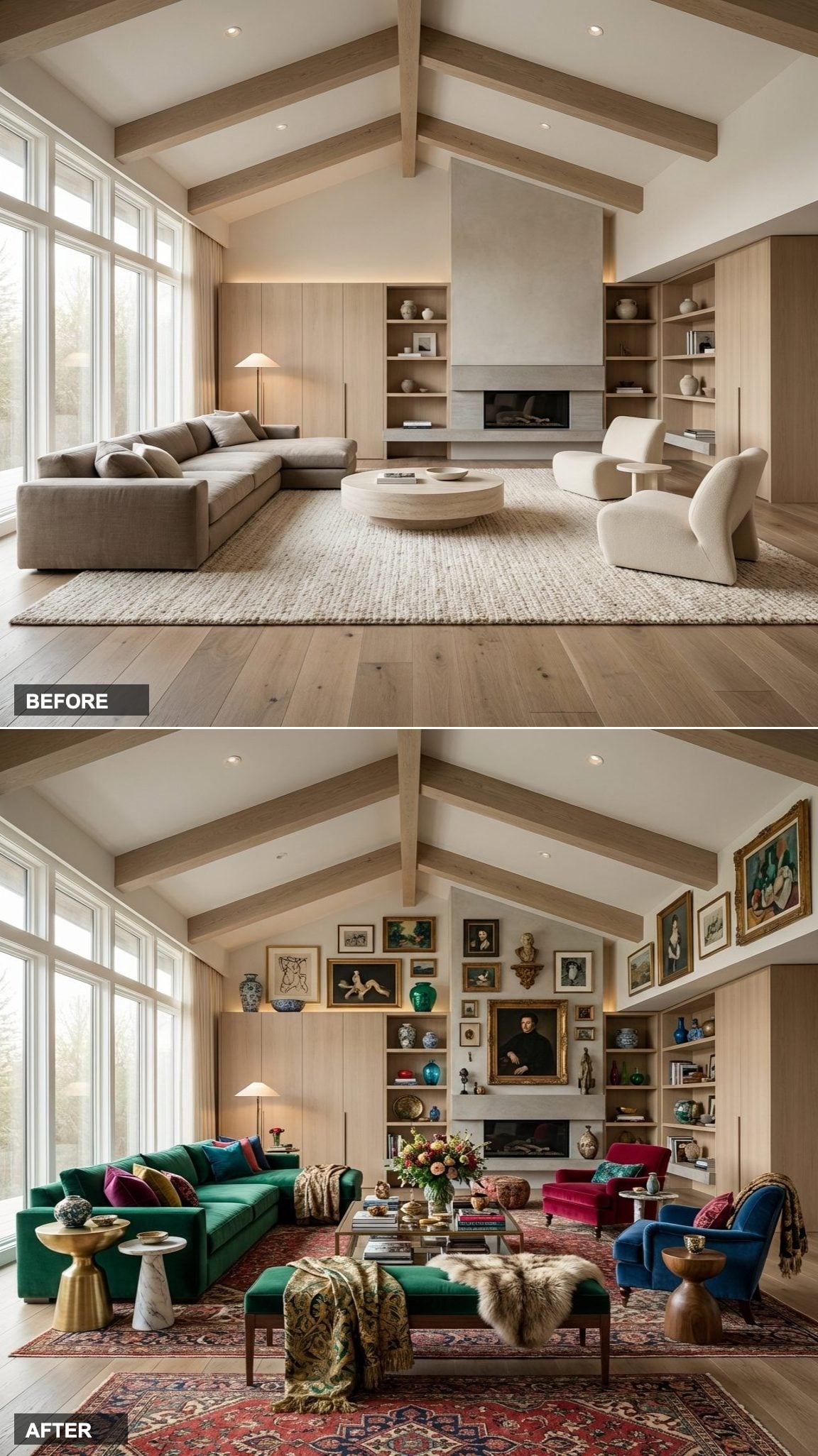
Sapphire blue walls are doing most of the heavy lifting here. That one color decision recontextualizes every other material in the room, the brass hardware reads antique rather than cheap, the cream upholstery looks intentional rather than cautious, and even the original window trim, now painted out in the same deep blue, reads as architectural detail rather than builder afterthought. For anyone wrestling with their living room design, color commitment is almost always the move that separates a good room from a forgettable one.
30. Popcorn Ceiling and Sad Sectional to a Warm Nordic-Japanese Sitting Room
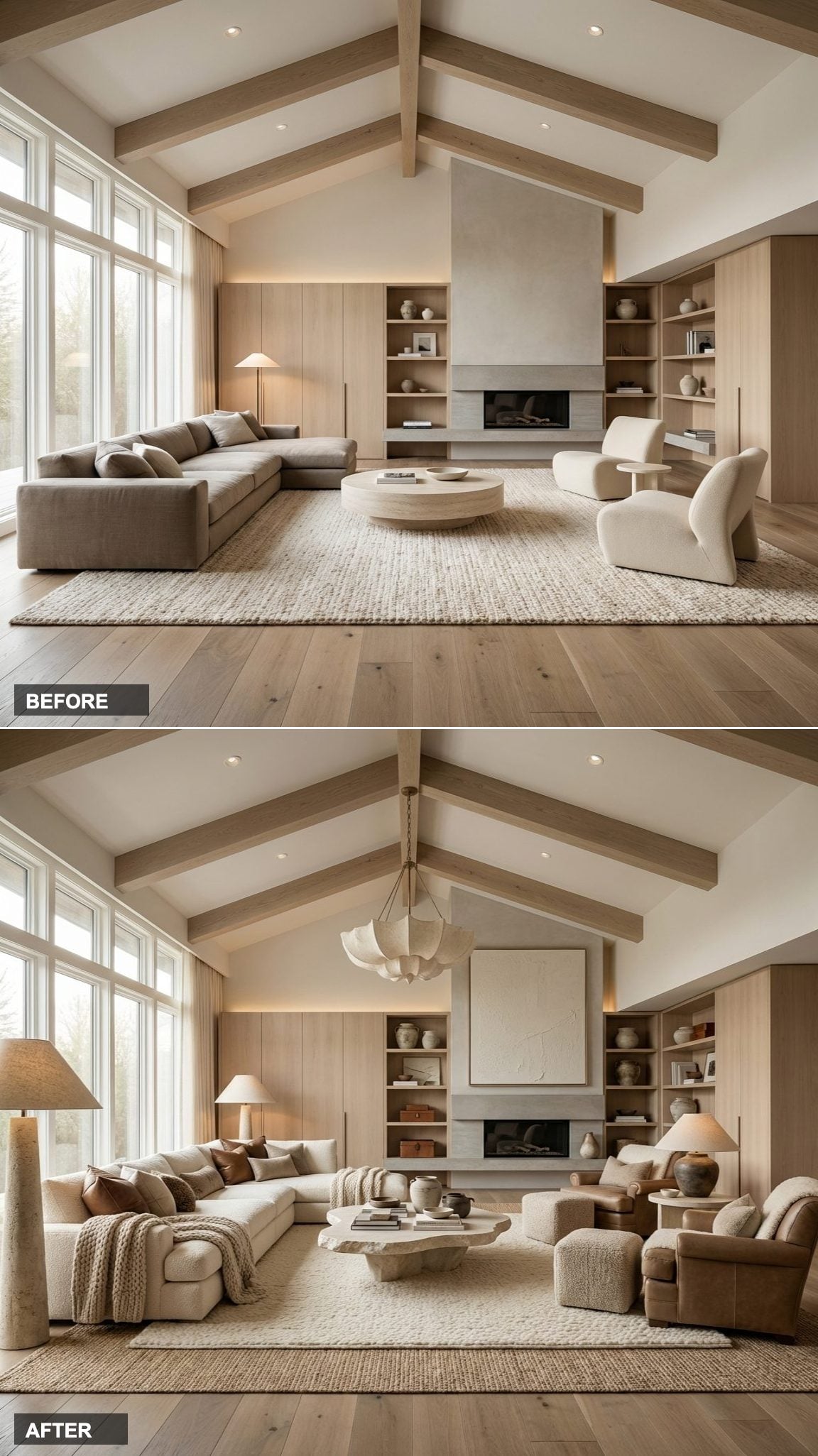
The thing about japandi studio design is that it only reads as cold when the materials aren’t warm enough. Here, pale ash wood, linen floor cushions, and a washi paper pendant light introduce the restrained Japanese sensibility while the undyed wool throws and organic linen sofa cover add the Nordic body heat that keeps it from tipping into sterile.
The popcorn ceiling, now scraped smooth and painted a creamy warm white, stops fighting for attention and lets the carefully placed objects breathe.
29. Dark Brown Carpet and Outdated Valances to a Proper English Country Sitting Room
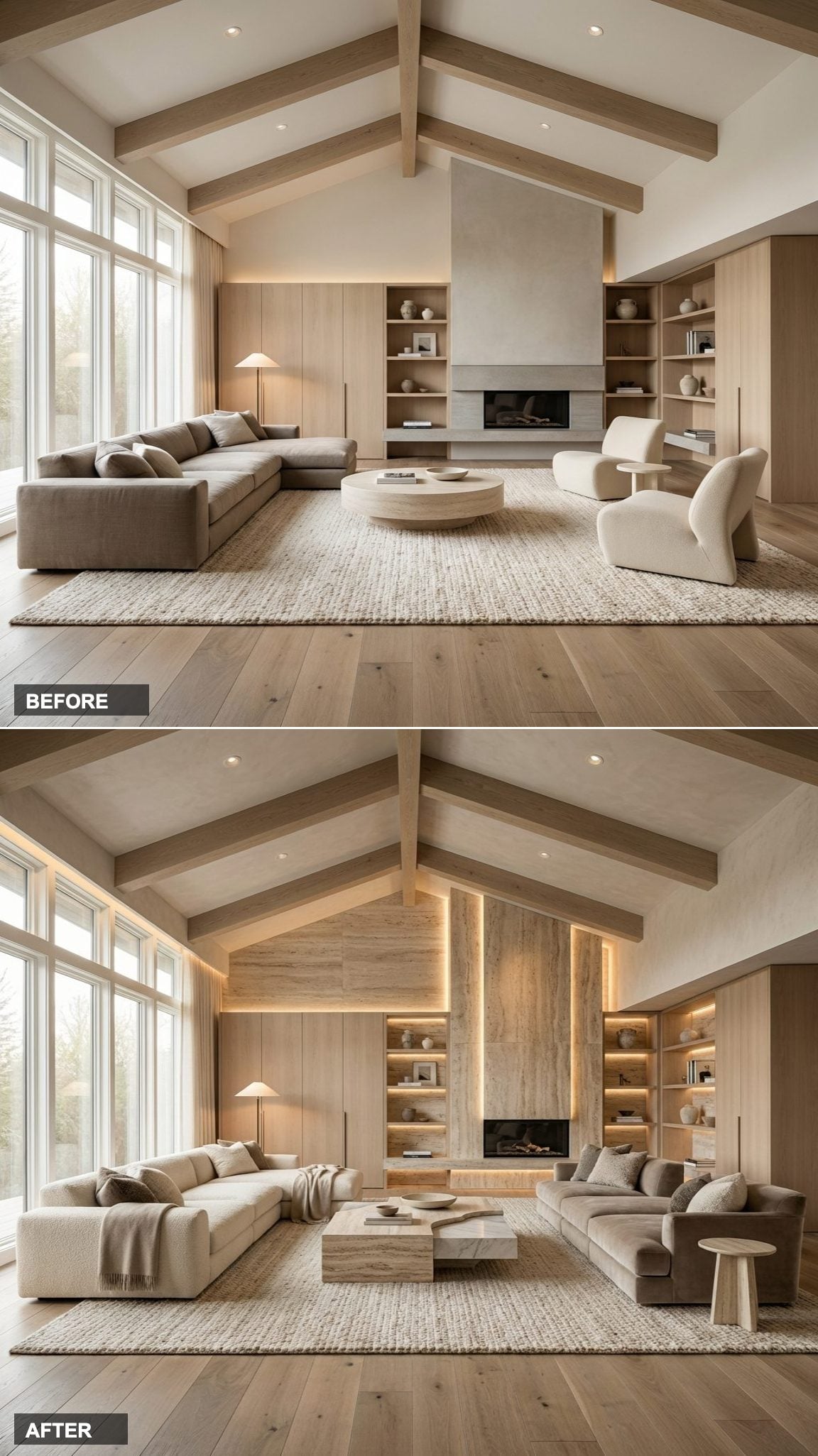
Chintz gets a bad reputation, but used correctly, confined to one pair of drapes rather than upholstering every surface, it reads as charming rather than overwhelming. The chintz floral drapes here anchor the entire color palette: the dusty rose in the print pulled out into a rose velvet armchair, the faded green into a linen sofa, the navy into scatter cushions.
The original dark brown carpet stayed, but a large antique-style wool rug in faded florals covers most of it. The room now looks like it belongs to someone with a grandmother’s house worth aspiring to.
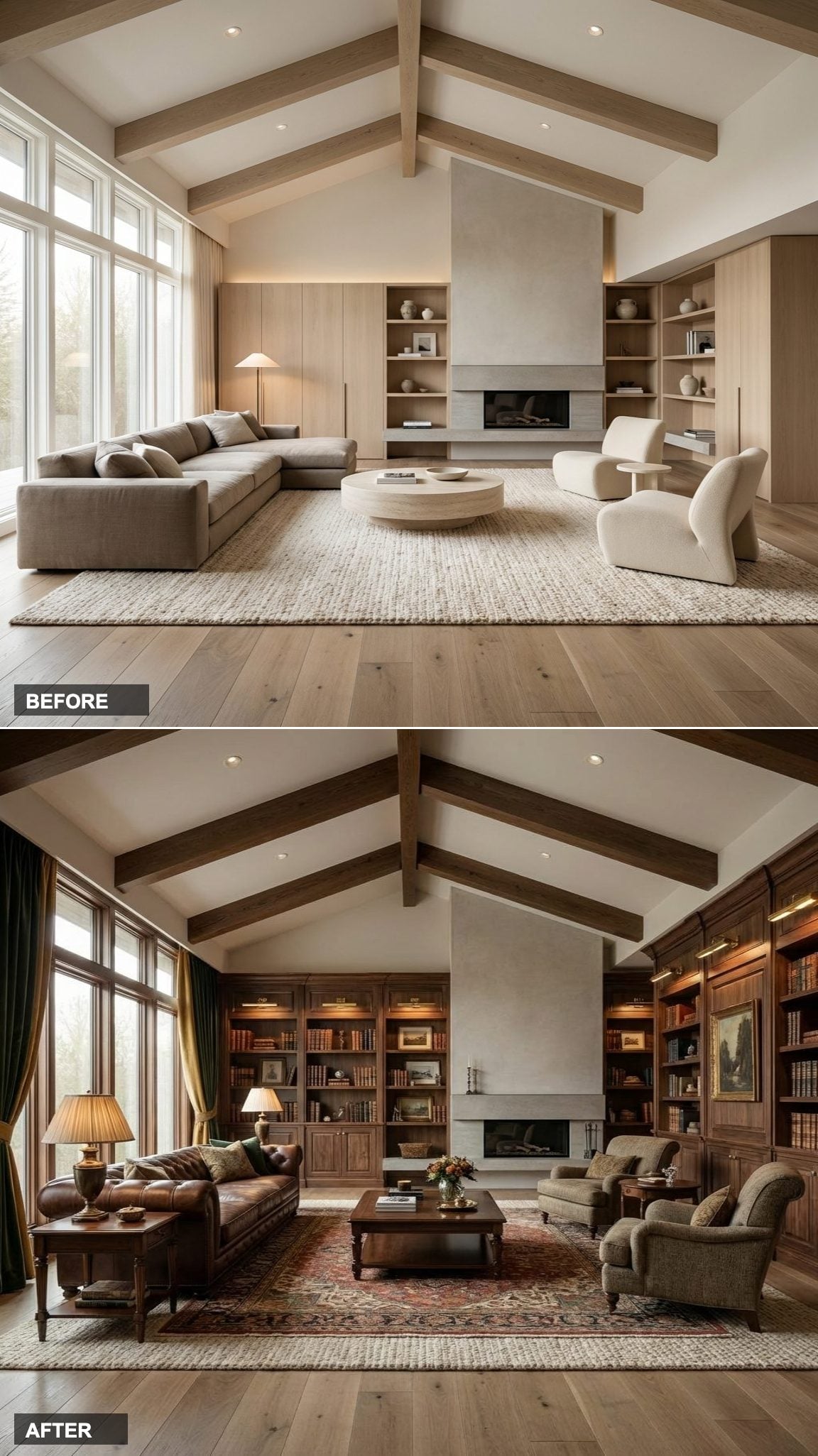
28. The Beige Living Room That Learned to Actually Commit
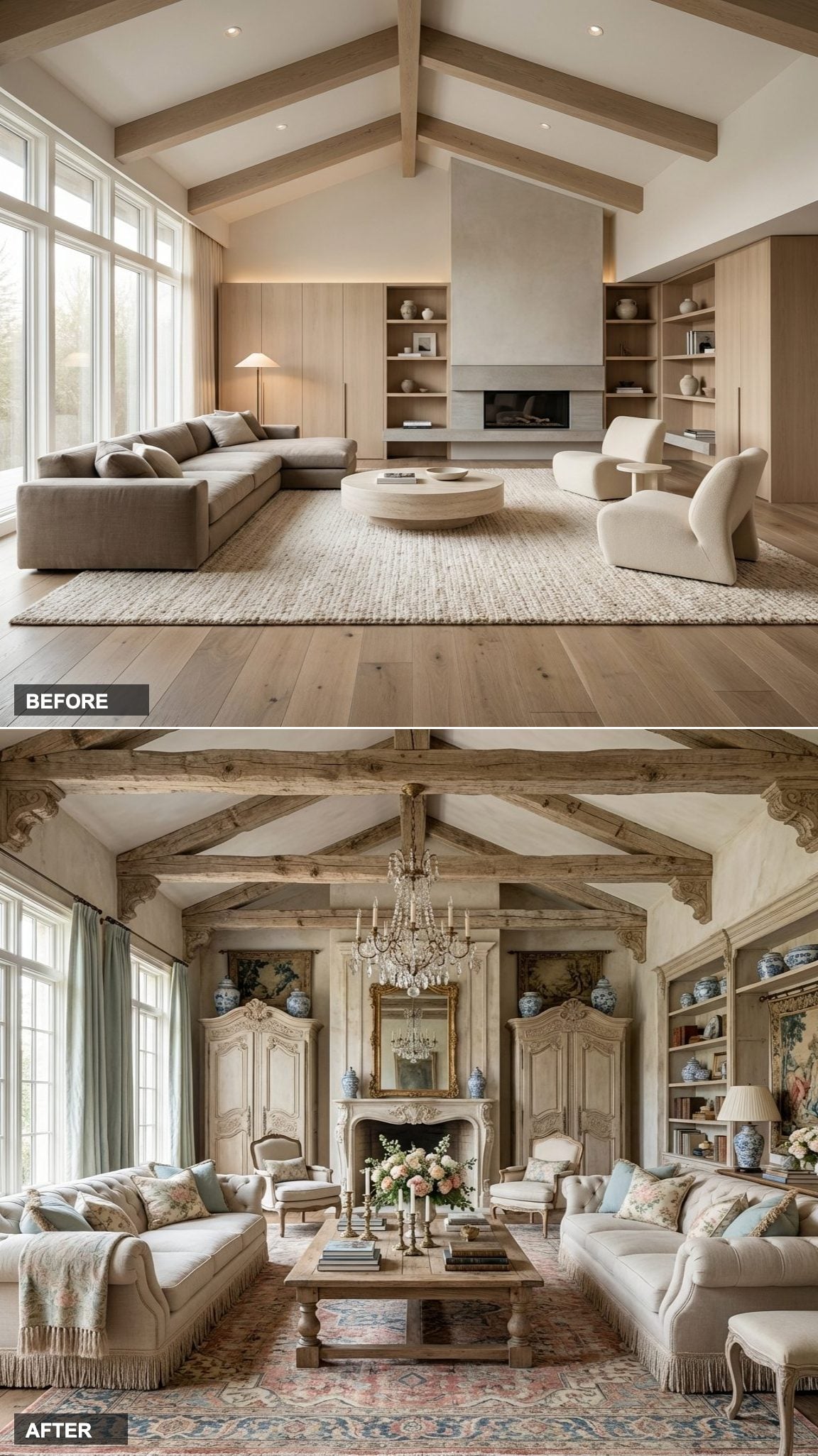
Every element of this before room made a safe choice, and the cumulative effect of all those safe choices was a room that felt like waiting in a dentist’s office. The fix wasn’t adding more stuff, it was adding weight. A dark walnut bookcase floor to ceiling on one wall. A sofa in cognac leather rather than beige fabric. A vintage Persian rug in jewel tones anchoring the seating area.
This is the neutral media room argument inverted: some rooms need to stop performing neutrality and just pick a side.
27. Rental-Unit Beige to a Properly Cozy Cottage Living Room Worth Coming Home To
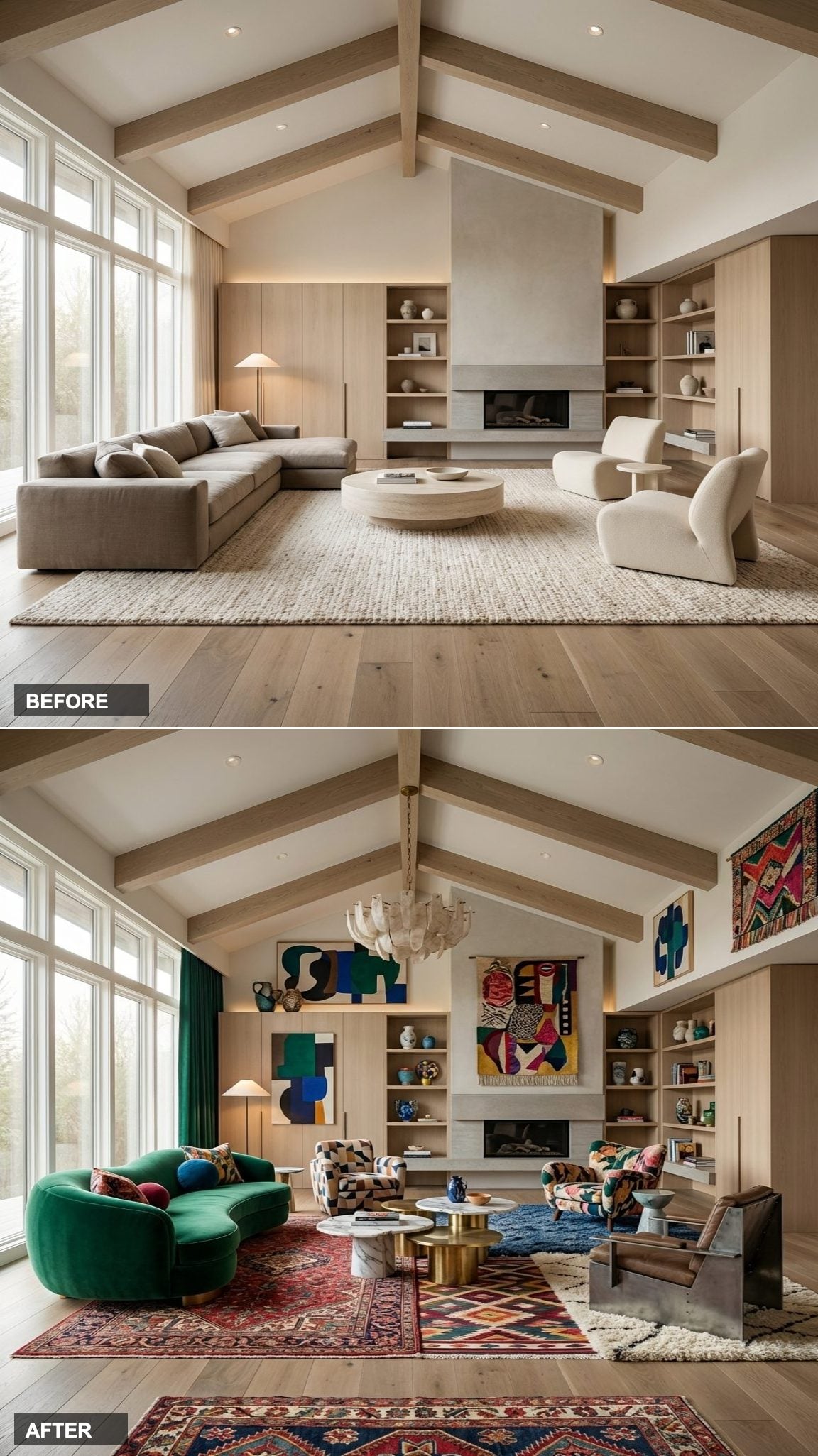
The before room has the particular sadness of a space that nobody ever decided to make their own, the furniture positioned correctly, the walls clean, the carpet vacuumed, but not a single personal decision visible anywhere in the room. The cottage version fixes this by understanding that coziness is cumulative: a painted wood fireplace surround (even a non-functional one), a stack of books on the upholstered window seat, mismatched cushions in complementary florals, a low-wattage table lamp casting a circle of warm light.
No single element is expensive. The whole picture, though, is genuinely inviting in a way the original room never stood a chance of being.
26. From Carpet and Ceiling Fan to Cozy French Countryside Retreat
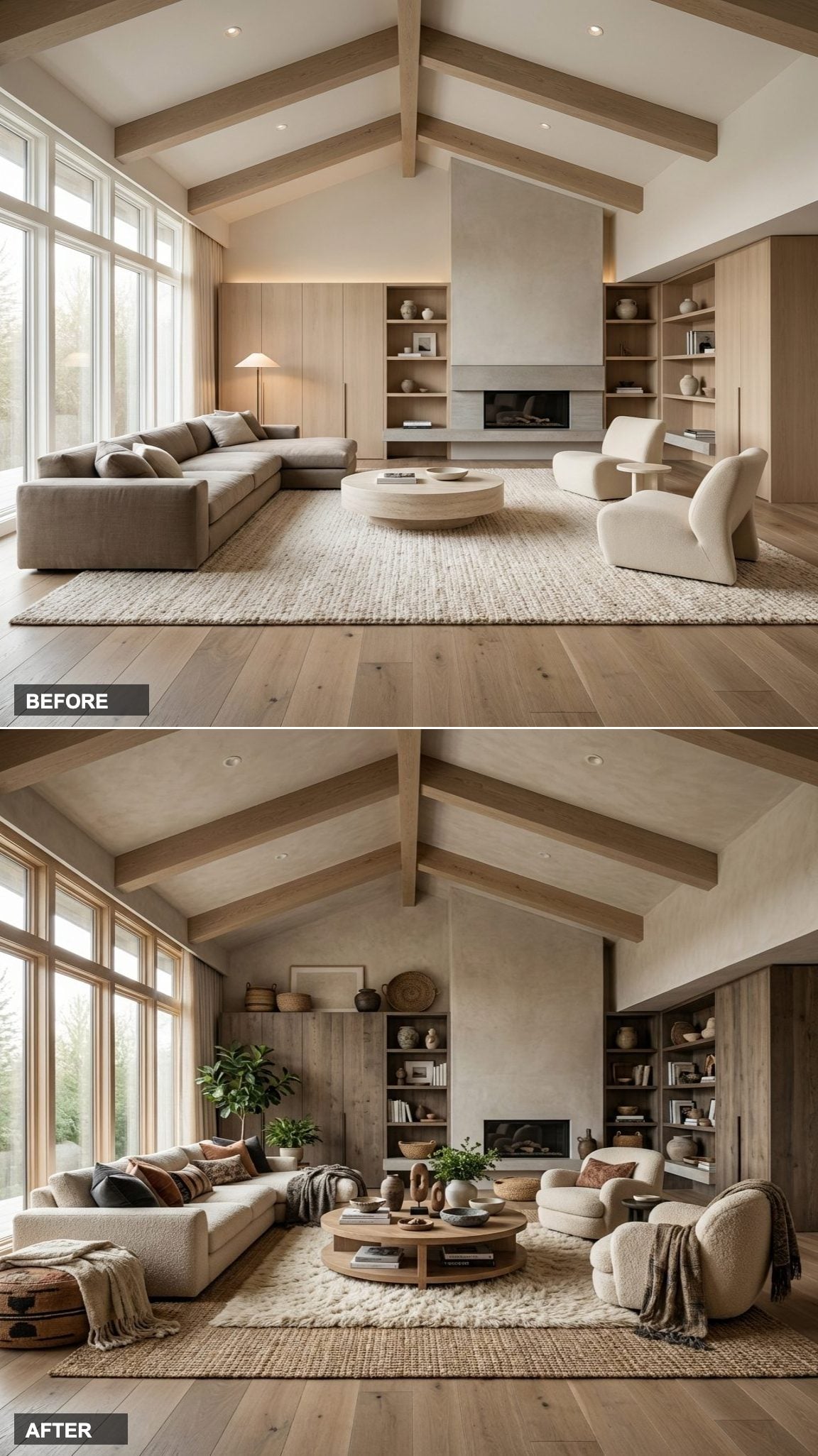
Flat berber carpet and a wobbling ceiling fan are two of the most reliable ways to drain a room of all personality. The fix here wasn’t dramatic, aged oak flooring replaced the carpet, a wrought iron chandelier took the fan’s place, and the walls got a warm stone wash in faded ochre.
The result feels like a farmhouse outside Lyon that someone actually lives in, a stack of dog-eared paperbacks on the side table, a linen throw draped just slightly off-center. Perfectly imperfect. The kind of room where you sit down and don’t check your phone for an hour.
25. From Forgettable Beige Box to Deep Jewel-Toned Moroccan Lounge
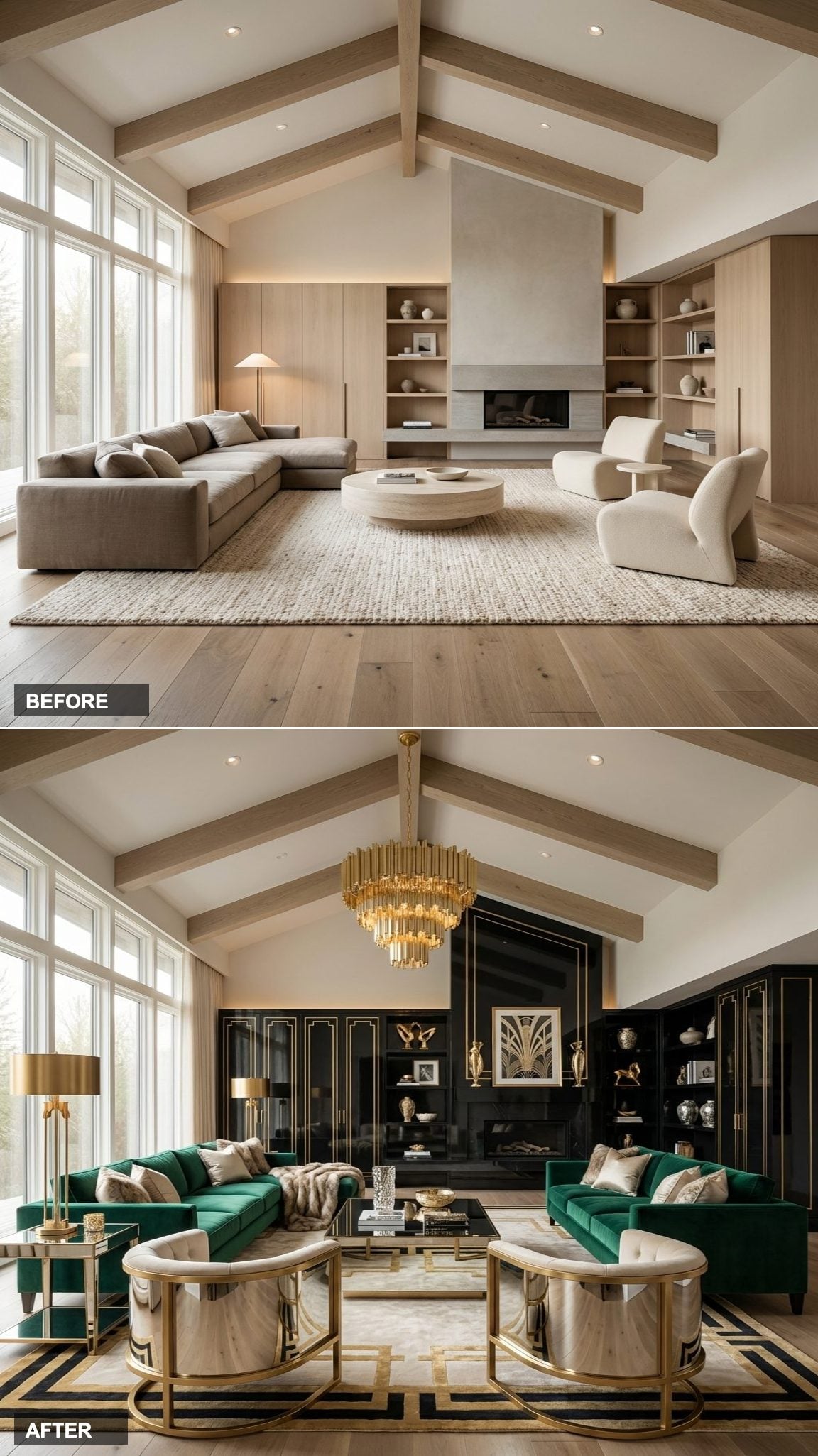
🔥 Would you like to save this?
Some rooms need a single bold decision, and here it was paint. Replacing the washed-out cream walls with a deep Persian blue immediately shifted the room’s entire emotional register. Suddenly every piece of brass hardware in the space looked intentional instead of dated.
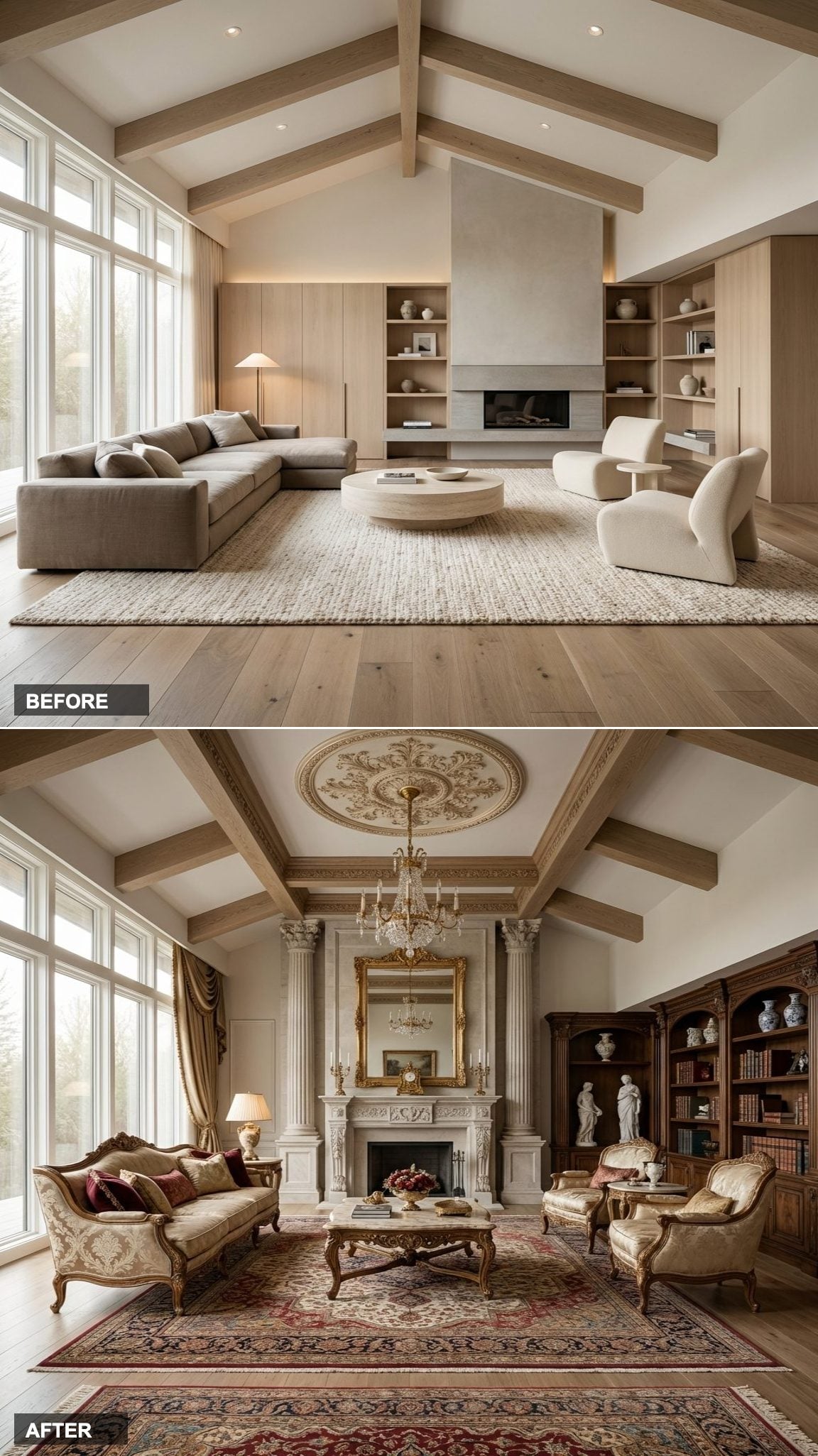
24. From Beige Microfiber and Vertical Blinds to Moody English Library
There’s a specific kind of quiet that settles into a room lined with books. This transformation chased exactly that: floor-to-ceiling built-in shelves in deep hunter green, a leather Chesterfield in cognac, and velvet drapes in midnight blue that finally buried those vertical blinds.
The ceiling got a coffered treatment in off-white, which added architectural weight without a full renovation. For anyone curious about how layered living room design builds this kind of mood, it almost always comes down to vertical mass and multiple light sources working together.
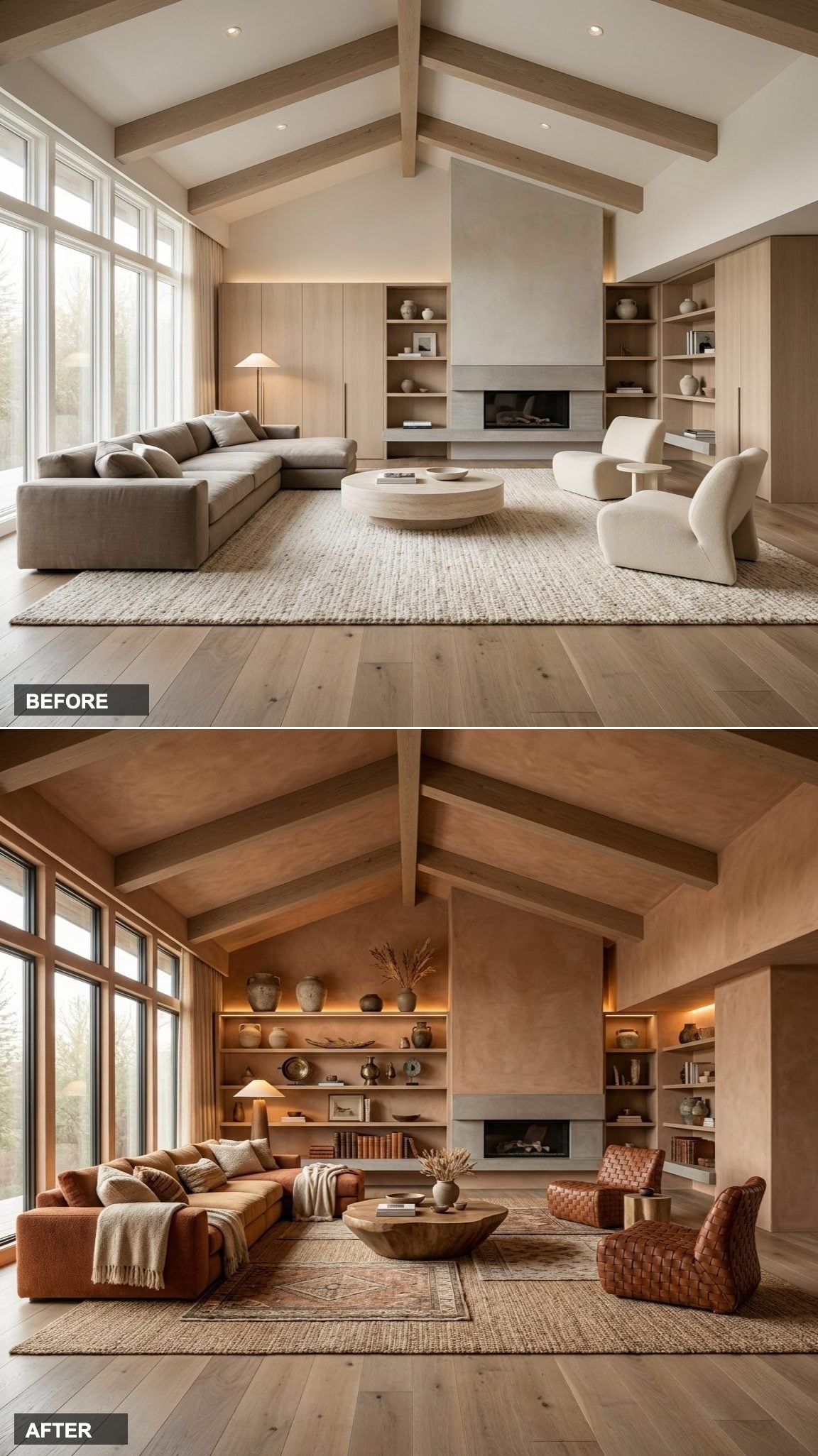
23. From Builder-Grade Box to Warm Tuscan Villa Sitting Room
Rustic Italian design has an uncanny ability to feel both ancient and incredibly livable. This version swapped the original berber carpet for terracotta tile, brought in a terracotta tile floor, and layered a hand-loomed kilim rug over the top for softness underfoot.
22. From Overstuffed Microfiber to Cozy Alpine Chalet Living Room
Wood does something emotionally specific that no paint color can replicate. This transformation went full alpine: tongue-and-groove pine paneling on a single accent wall, a stone fireplace surround installed where the entertainment unit once sat, and a buffalo check wool throw over a low-profile sectional in charcoal tweed.
- Pine paneling adds grain and warmth without a full wood floor investment
- Layered wool textiles create the acoustic softness that makes a room feel tucked-in
- A stone fireplace becomes the room’s anchor point, giving every other piece something to respond to
21. From White Walls and Pressed Wood to Rich Arts and Crafts Bungalow
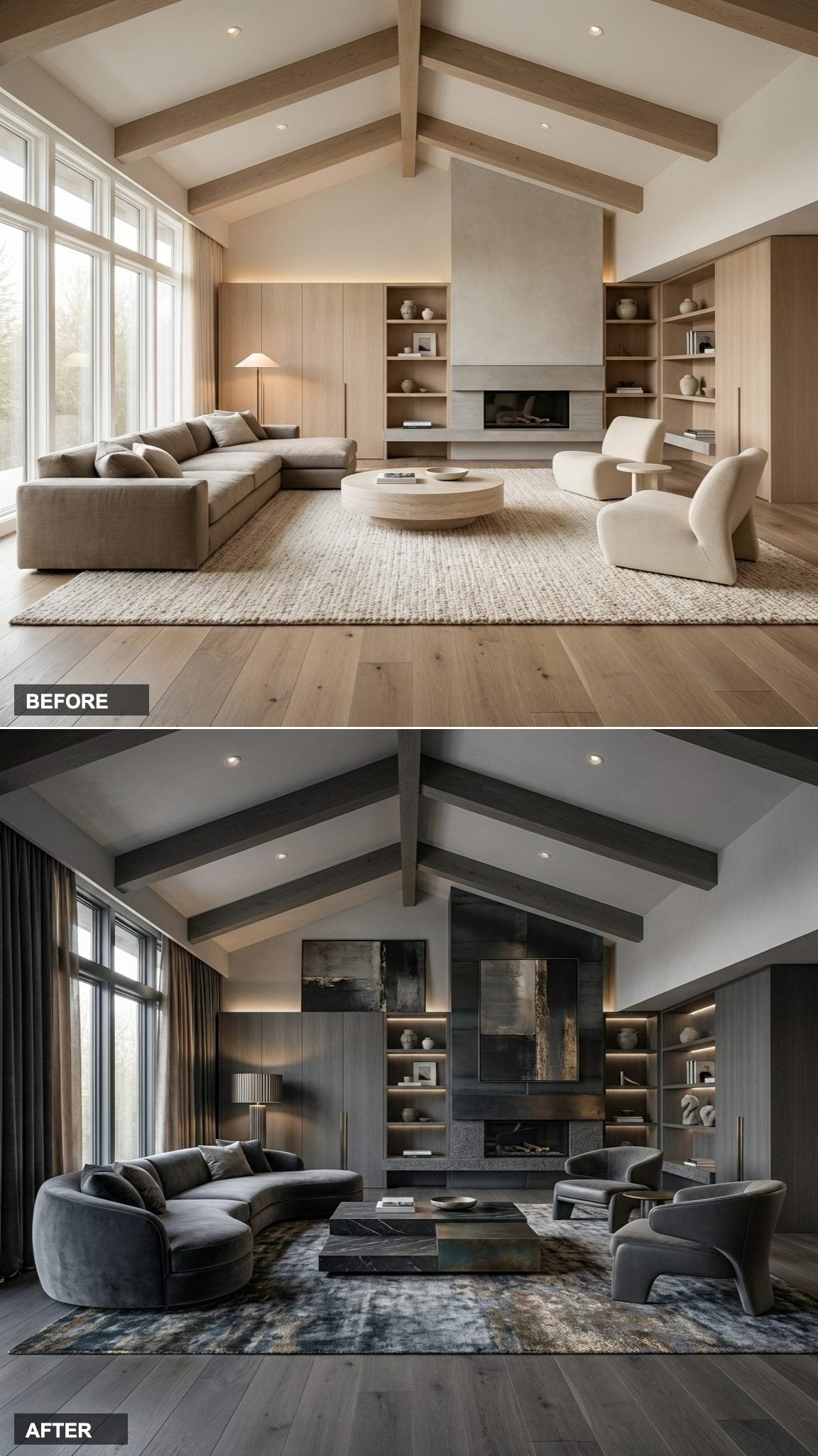
The Arts and Crafts movement was built on a single argument: that handmade objects and honest materials are worth more than factory convenience. This redesign makes that case quietly but with conviction, using craftsman oak trim, a stained glass table lamp, and olive green walls that feel pulled from a 1910 catalog.
20. From Vertical Blinds to Layered Maximalist-Adjacent Grandmillennial Parlor
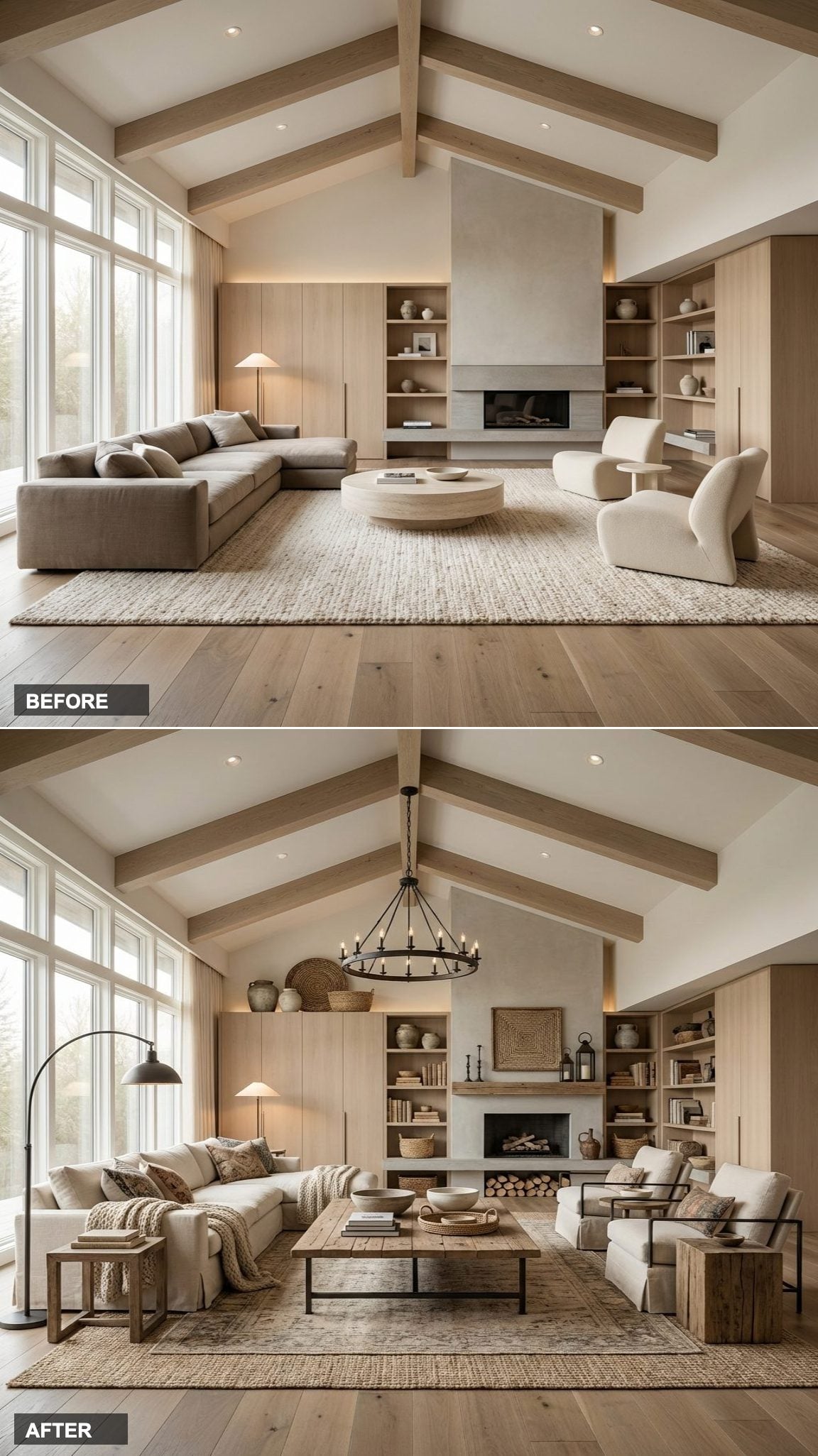
The grandmillennial aesthetic is having a cultural moment for a reason, it gives people permission to love chintz again. This redesign brings in chintz floral drapes floor to ceiling, a tufted velvet sofa in blush, and a gallery wall of oil portraits in gilded frames. The whole thing reads collected and personal rather than decorated.
19. From Pressed-Wood Furniture to Plush Hollywood Regency Sitting Room

Hollywood Regency is the design equivalent of putting on something you’d never normally wear and discovering it’s actually you. This version is restrained enough to live in comfortably: a velvet sofa in deep emerald, a mirrored console along one wall, and lacquered side tables in glossy black. Nothing minimalist about it, but nothing cluttered either.
For anyone drawn to ultra luxury living but allergic to the cold sterility that often comes with it, this is the middle path. High gloss, warm color, and actual comfort can share the same room.
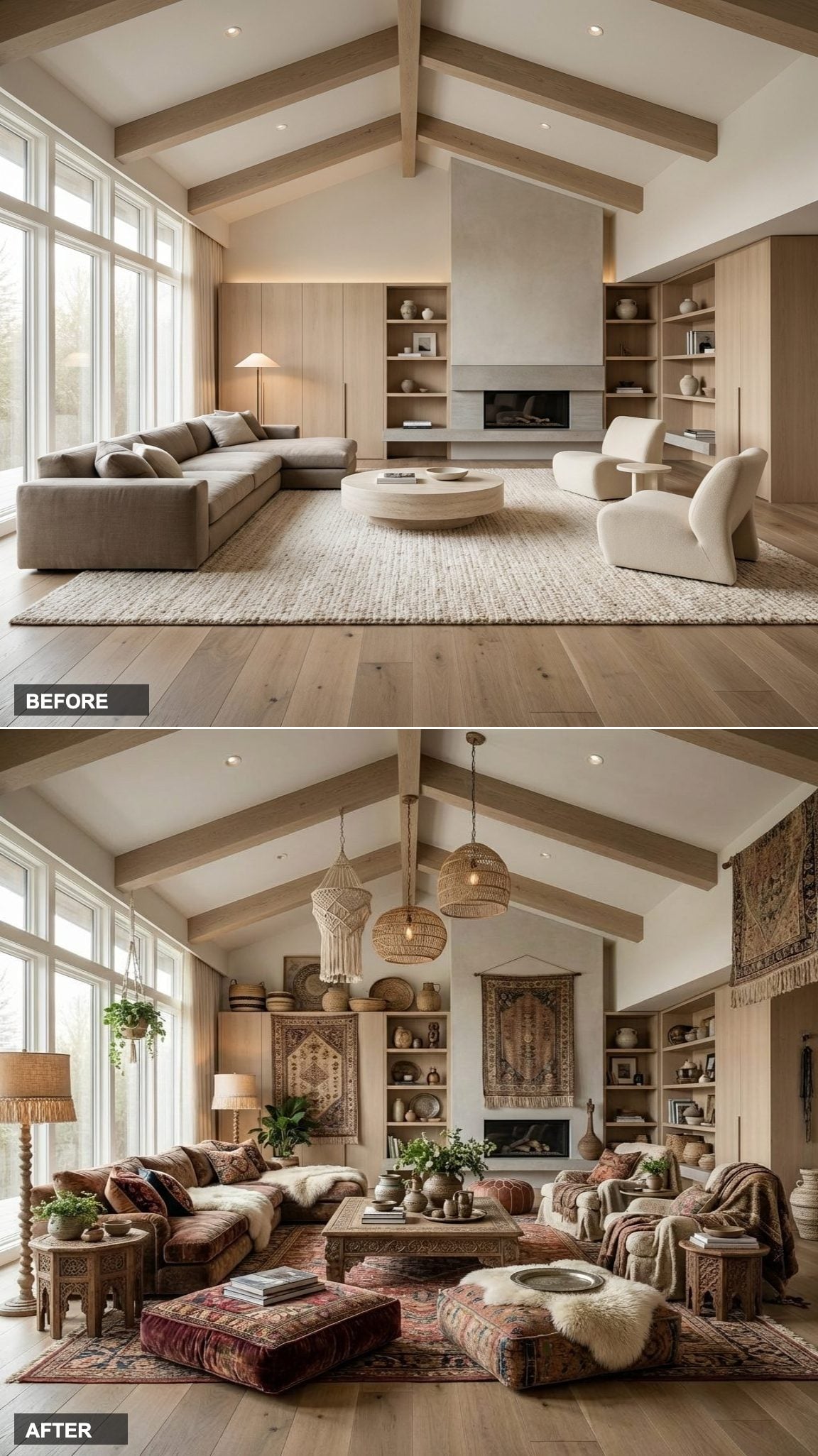
18. From Beige Everything to a Warm Bohemian Living Room That Feels Genuinely Lived In

Bohemian design done well isn’t about throwing things at a wall. It’s about accumulation that feels personal, a macrame wall hanging next to framed concert posters, a rattan pendant light over a low linen sectional, plants in every corner doing the work that no paint color could.
17. From Brass Floor Lamp to a Sophisticated Transitional Room With Real Staying Power
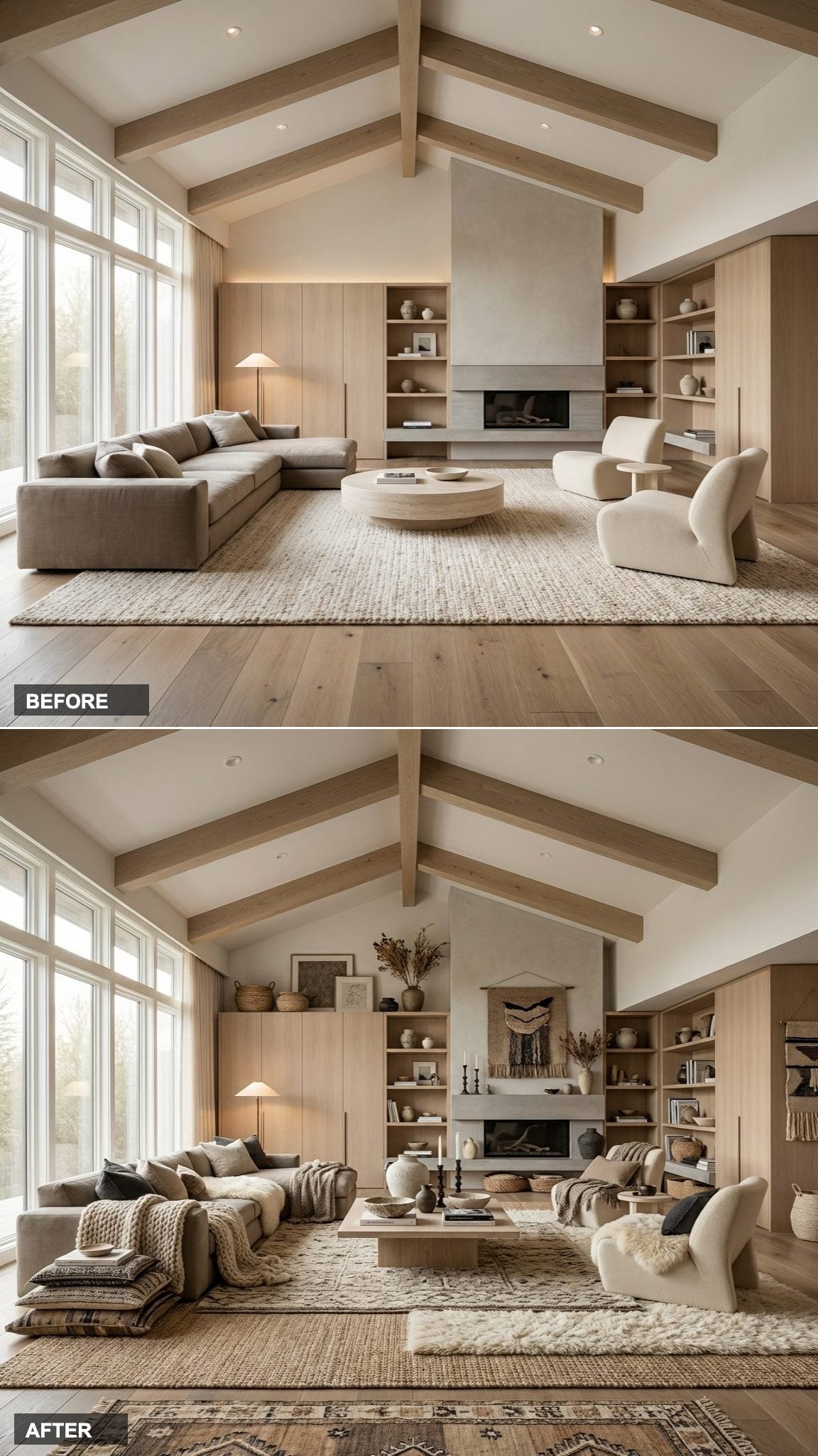
Transitional design gets underestimated because it sounds compromise. But a room that pulls off true transitional styling is a harder design achievement than going full traditional or fully contemporary.
This version pairs a rolled-arm linen sofa in warm greige with a mid-century walnut side table, a herringbone oak floor, and Roman shades in a soft sage stripe. The mix of periods creates tension that keeps the eye moving. It’s the kind of transitional pantry design-adjacent thinking that works just as well in a living room as anywhere else in the house.
16. From Flat White Walls to a Moody Sage and Terracotta Earthy Retreat

Sage and terracotta is a combination that shouldn’t work as well as it does. Green and orange sit across from each other on the color wheel, which means the tension between them is real, but warm, not jarring. This redesign uses sage green as the wall color, then lets terracotta do its work in the terracotta velvet armchairs and a geometric tile surround on the fireplace.
15. From Entertainment Unit and Beige Carpet to a Scandinavian-Influenced Cozy Room With Soul
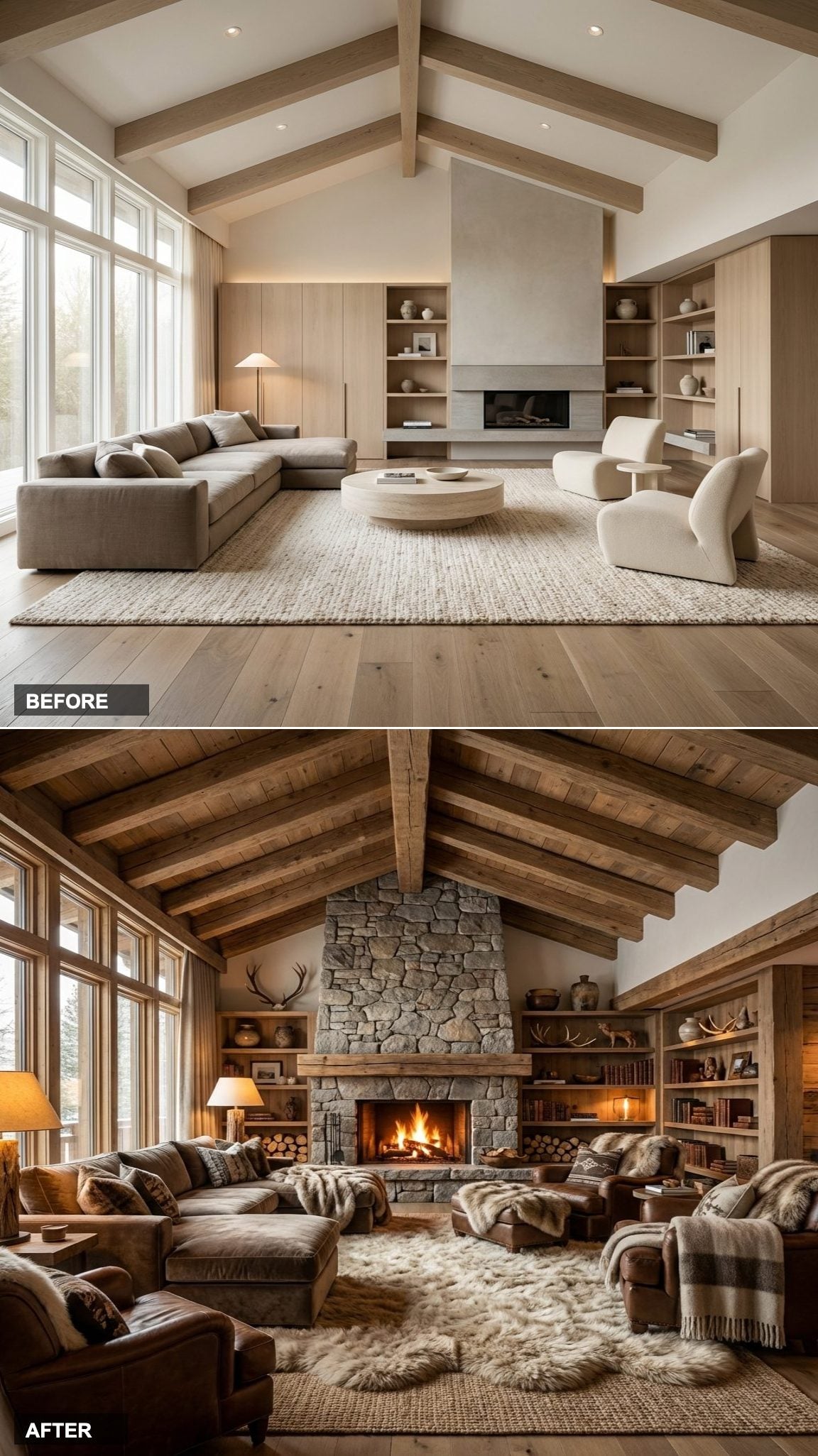
Pure Scandinavian design often tips into the cold. The version shown here takes the structural discipline of Nordic interiors, clean lines, pale wood, negative space, and layers enough warmth back in to make it genuinely inviting.
A sheepskin armchair next to a birchwood floor lamp, a chunky knit wool throw, and a low pale oak coffee table with a single ceramic bowl, this is the kind of room that takes clear design cues from a japandi studio design but applies them to a full living space without losing the human warmth that makes either style worth living in.
14. From Beige Limbo to Velvet-Clad Victorian Revival
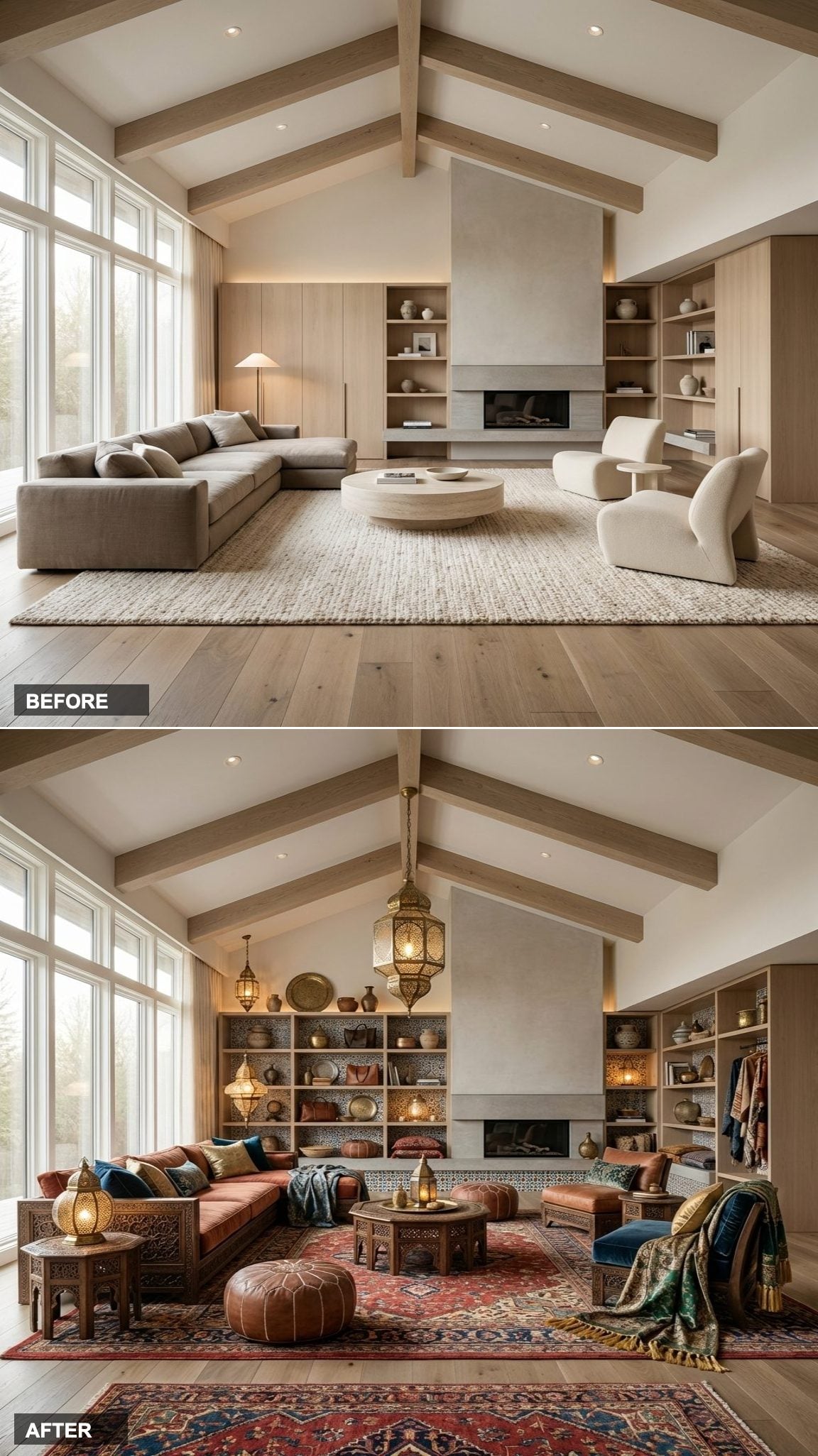
The original room’s fatal flaw wasn’t any single element, it was the complete absence of commitment. Beige walls, beige carpet, beige furniture. Nothing anchored the eye anywhere. The Victorian revival fix works precisely because it stakes a claim: jewel-toned velvet sofa, deeply patterned area rug, and picture-rail molding painted in contrast. Suddenly the room has a center of gravity.
The genius move here is layering periods rather than replicating one era wholesale. A antique brass floor lamp next to a modern throw makes the whole thing feel collected rather than costumed.
13. From Flat and Forgettable to Warm Tuscan Farmhouse
🔥 Would you like to save this?
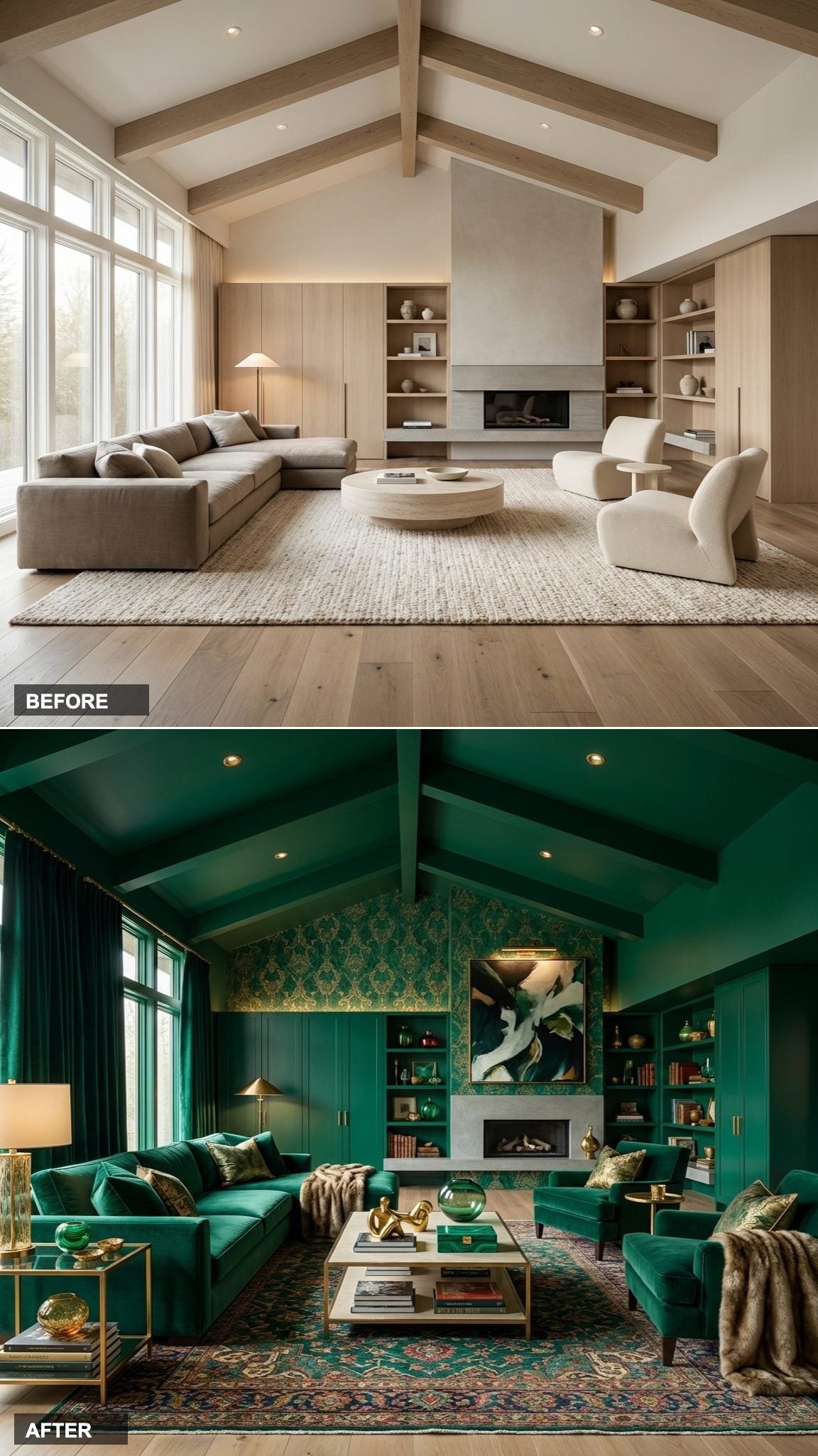
Terracotta is having a serious moment in interior design, and this transformation shows exactly why it earns its place. The before room had the personality of a waiting room, functional, inoffensive, impossible to remember ten minutes after leaving. Replacing flat white walls with a warm terracotta plaster finish does more psychological work than any single furniture purchase could.
Three things lock this look in place:
- A natural jute area rug grounds the warm tones without competing
- Exposed wooden ceiling beams (painted rather than stained for softness) add architectural weight
- Linen curtains in aged ivory keep the light soft instead of harsh
12. From Carpet Chaos to Moody English Library Lounge

Dark walls don’t shrink a room, they define it. This is the misconception that keeps so many living rooms stranded in the beige zone forever. The English library treatment swaps the Berber carpet for aged oak herringbone floors and coats the walls in a smoky slate green that makes the cognac leather club chairs look like they belong in a Mayfair townhouse.
11. From Builder Grade Bland to Art Nouveau Sage Sanctuary
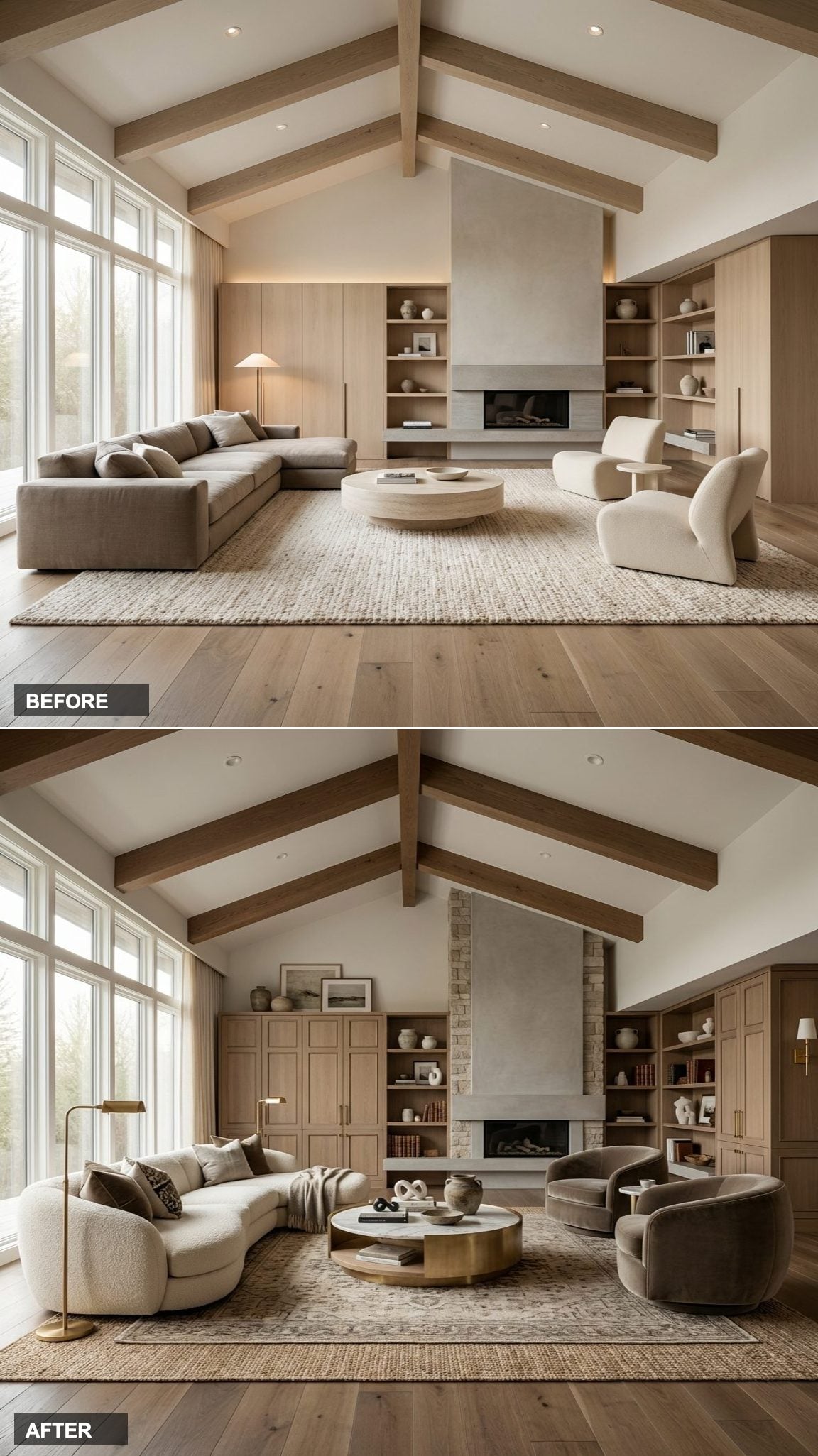
Art Nouveau is one of the most underused styles in residential interiors, which is a shame because it does something no other decorating approach quite manages: it makes organic forms feel architectural. The sinuous curves of an art nouveau arched mirror above the fireplace immediately replace the flat brass rectangle that was there before, and the visual shift is seismic.
Sage green walls with subtle botanical wallpaper on a single accent wall, a sage green curved sofa, and a rattan pendant light overhead bring the outside in without a single plant needing to do the heavy lifting.
10. From Sad Microfiber to Cozy Scandinavian Hygge Haven
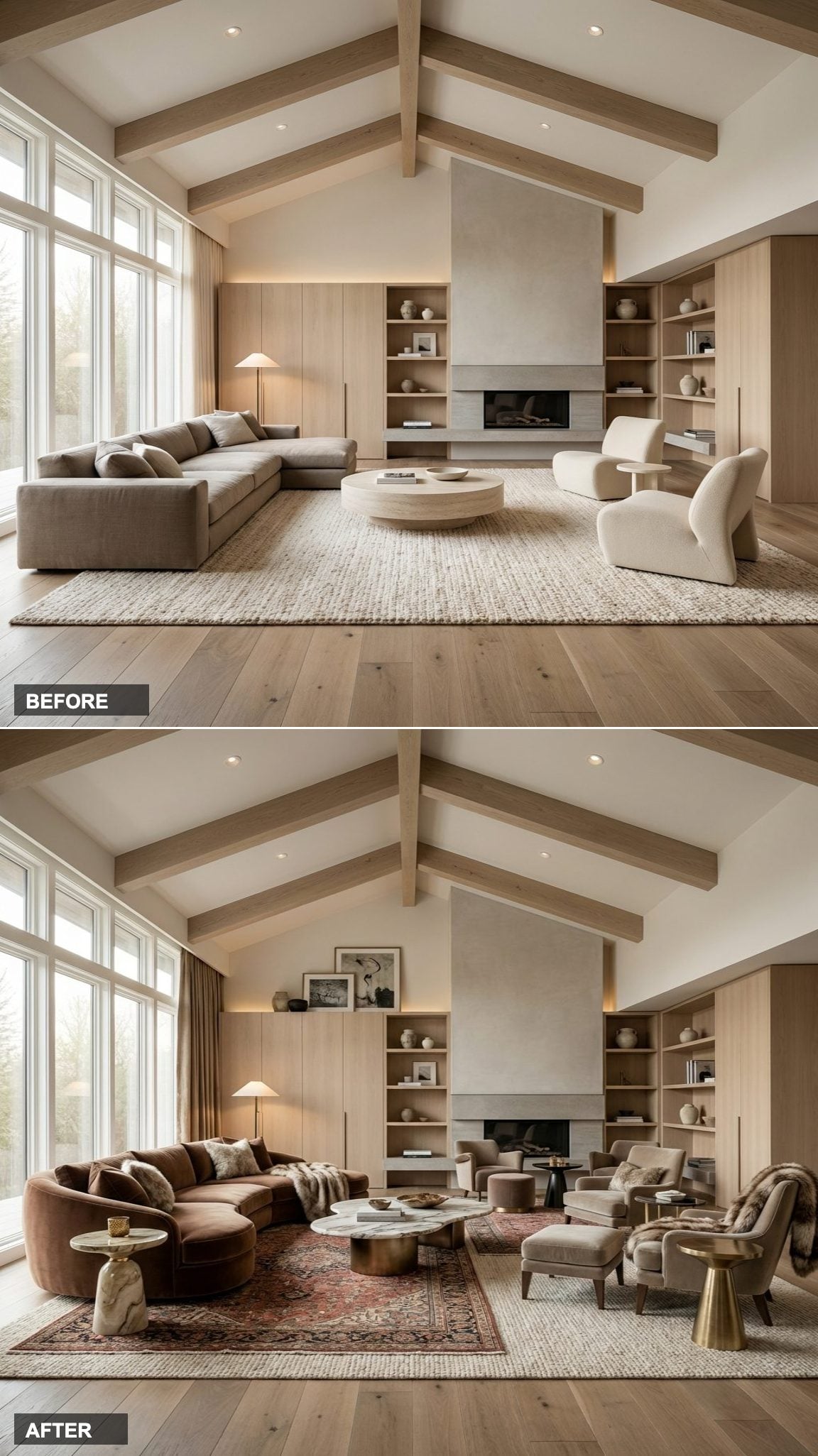
Hygge isn’t just a word people use on Pinterest, it’s a specific set of design decisions that add up to a room you physically don’t want to leave. In this transformation, the single most powerful change is swapping the flat, wall-hugging sofa configuration for a deeper, more generous sectional in warm oatmeal boucle pulled away from the walls into the center of the room. It signals that this space is for staying, not just sitting.
9. From Vertical Blinds to Bohemian Maximalist Dream (With Restraint)
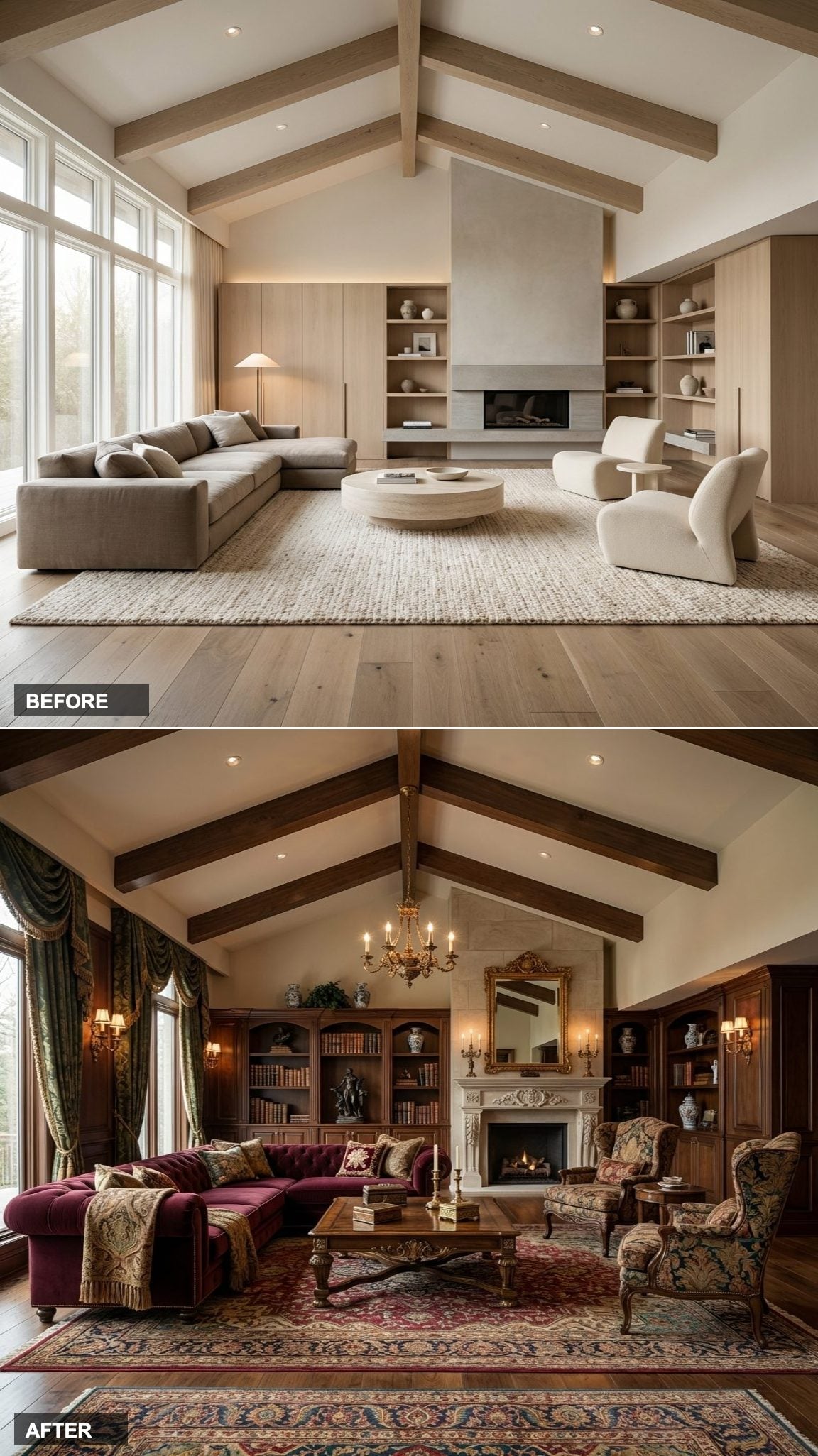
“The difference between bohemian and chaotic is editing. Keep the layers, lose the clutter.”
This is a rare version of boho that actually looks intentional. The vertical blinds come down entirely, replaced by floor-to-ceiling macrame panels that filter light without blocking it. A moroccan leather pouf replaces the second loveseat, freeing up visual breathing room that makes the rest of the layering feel curated rather than crowded. The indigo block print area rug does the real anchoring work.
8. From Torchiere Dread to Glamorous Old Hollywood Lounge
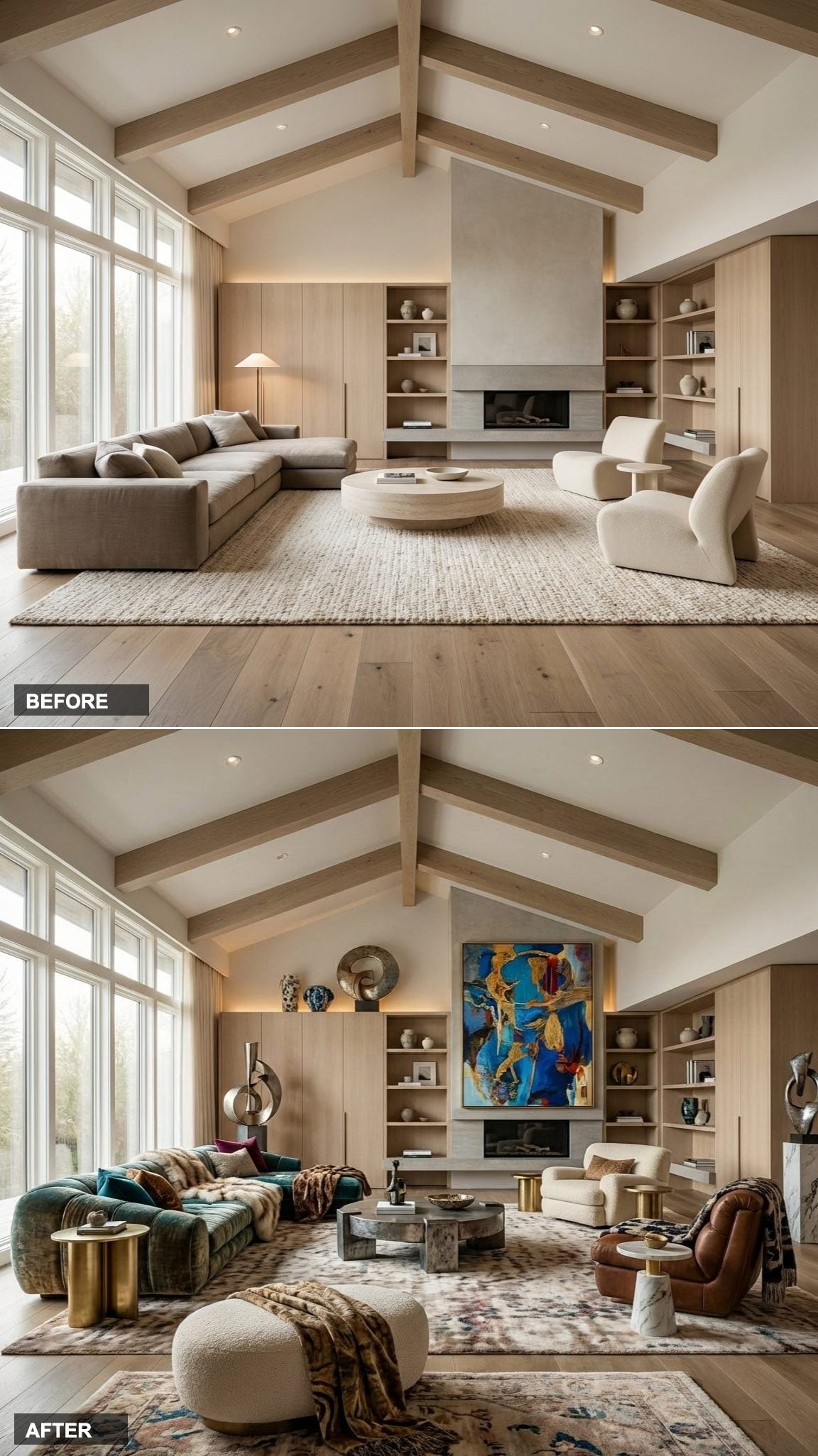
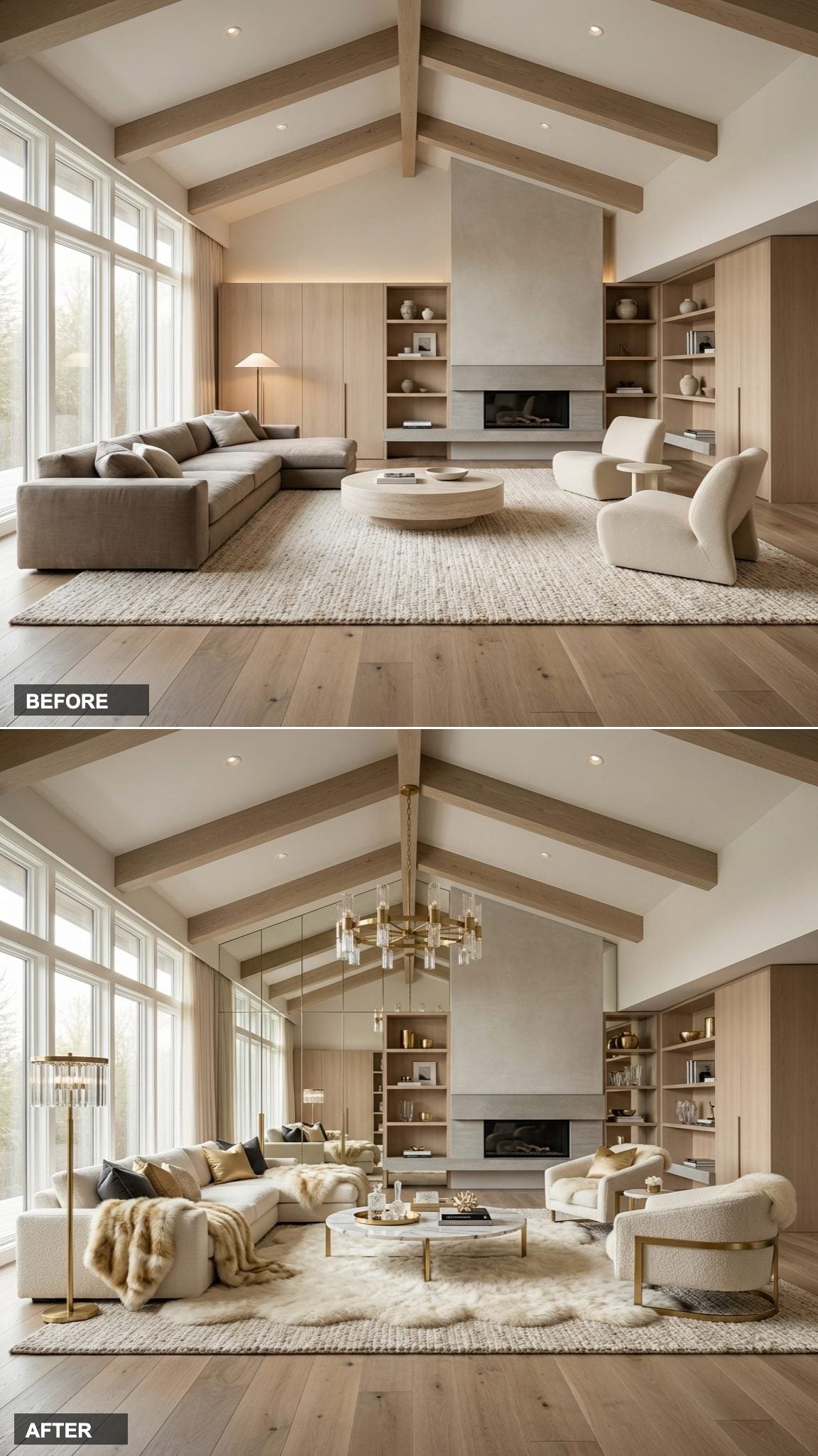
Old Hollywood glamour gets dismissed as too theatrical for everyday living, but this transformation proves that the formula scales down beautifully when the palette is controlled. Black lacquer accents, a champagne velvet sofa, and a single crystal chandelier replacing that punishing brass ceiling fan do most of the work here.
The key restraint is keeping the walls a deep warm ivory rather than going full charcoal. It keeps the room feeling like a 1940s film set rather than a nightclub. Anyone interested in ultra luxury living will recognize these instincts immediately.
7. From Forgettable to French Country Warmth
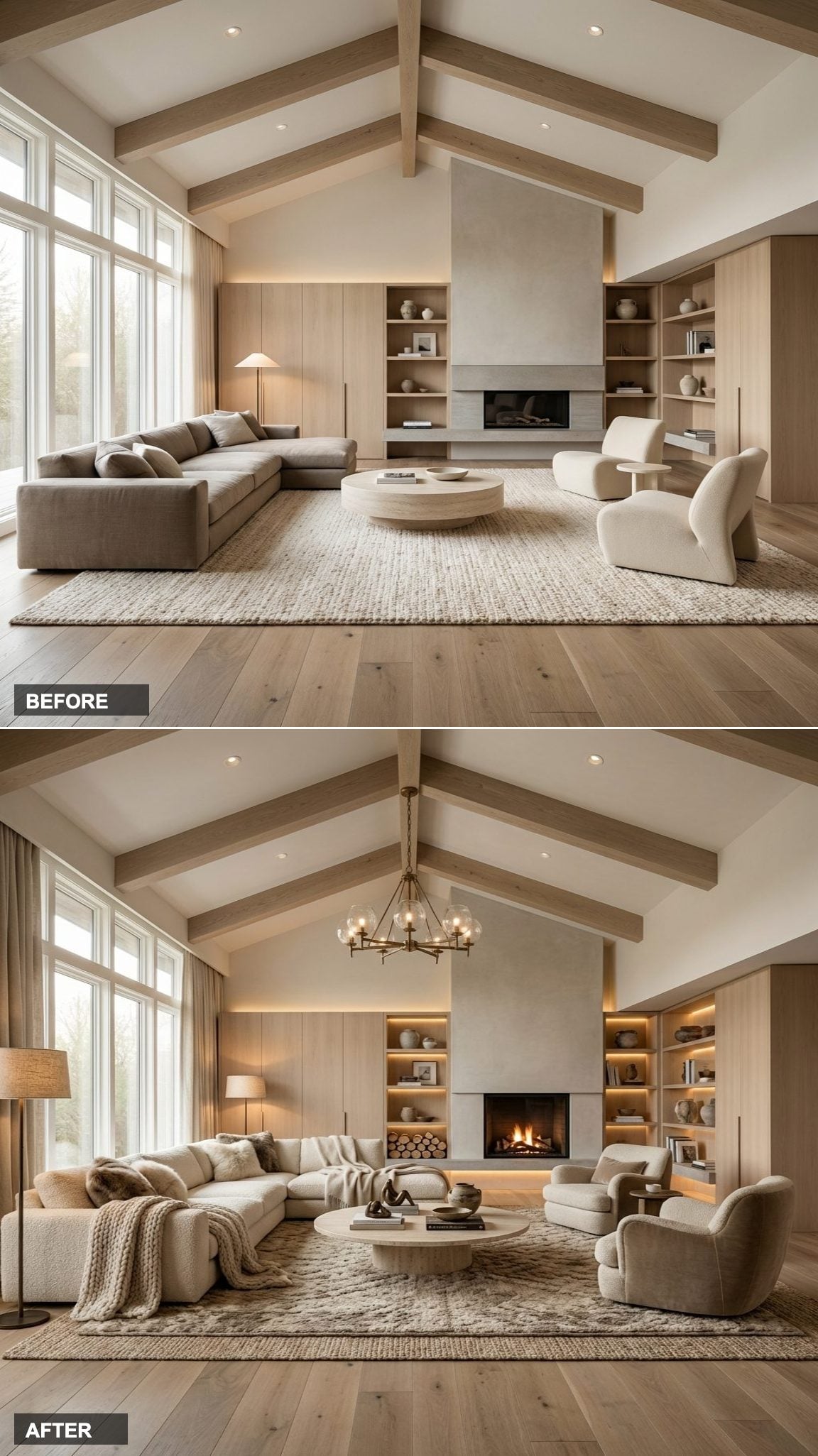
French country is not the same as shabby chic, and this distinction matters enormously. Where shabby chic embraces deliberate distress, French country is about effortless patina, the difference between something that looks worn and something that looks loved. A linen slipcovered sofa in washed flax instantly reads as the latter.
6. From Brass Ceiling Fan Nightmare to Japandi-Adjacent Warmth
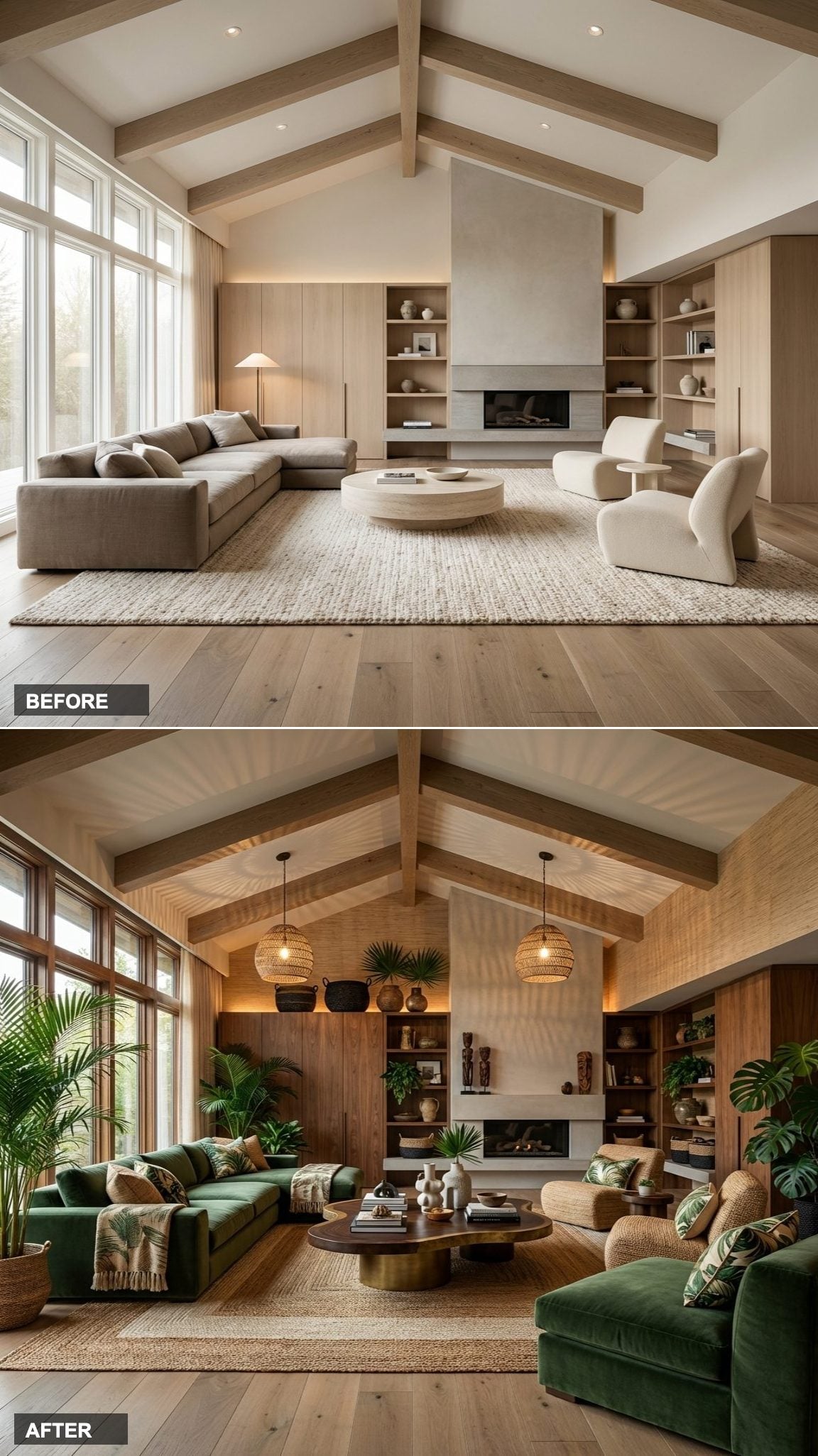
Japandi gets labeled minimalist constantly, but done with warmth it’s anything but cold. This version leans into the Nordic half of the equation: a walnut-framed low profile sofa in warm cream, a washi paper pendant light replacing the ceiling fan entirely, and a wall of warm sand plaster finish that makes the room feel handcrafted rather than built.
For anyone exploring a japandi studio design approach, this living room demonstrates how the style expands beautifully beyond the bedroom.
5. From Honey Oak Entertainment Center to Rustic Mountain Lodge
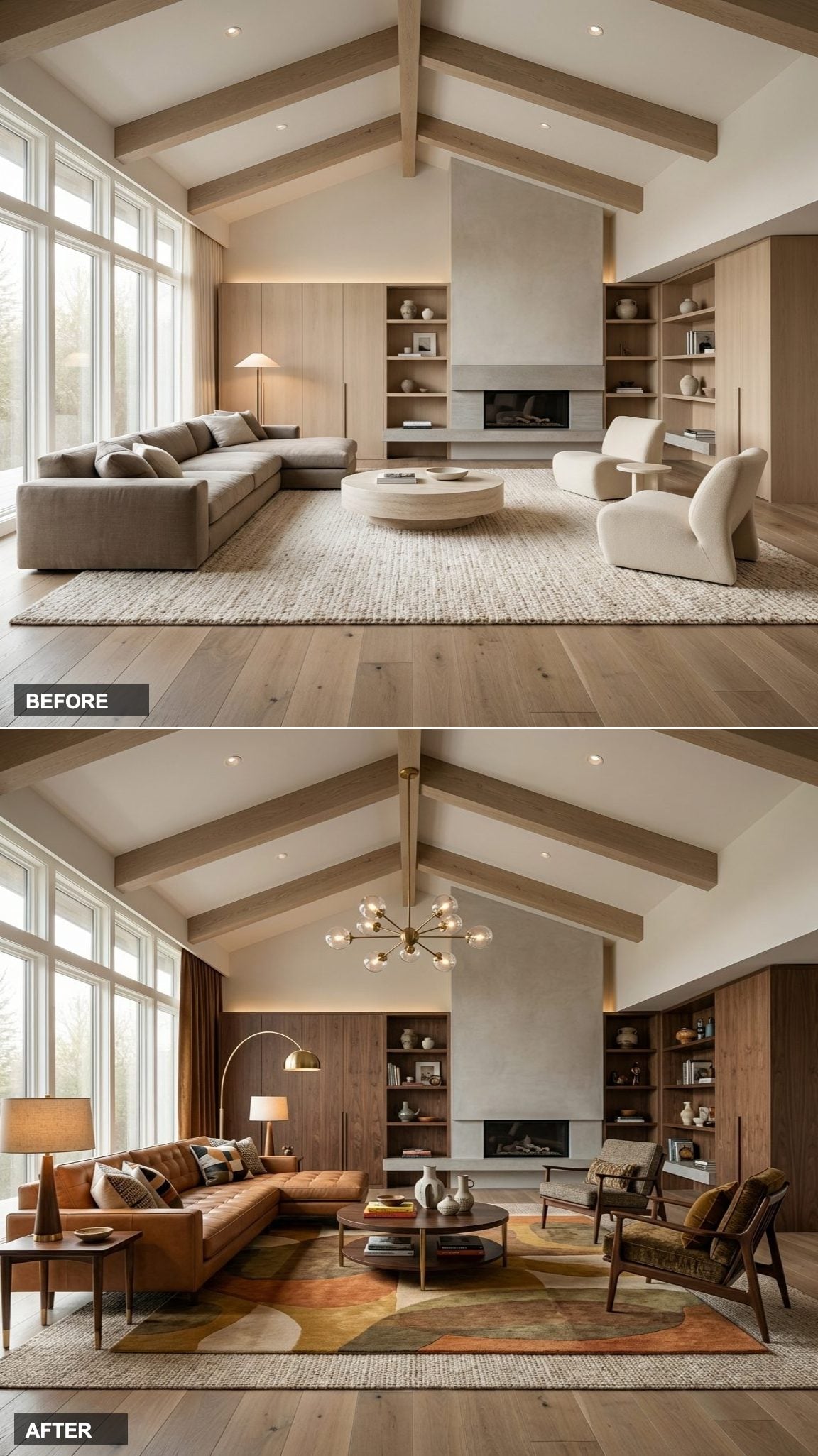
There’s a version of mountain lodge that’s all antlers and flannel plaid, and then there’s this: restrained, contemporary, and genuinely cozy. Dark charcoal walls, wide-plank pine floors, and a floor-to-ceiling stacked stone fireplace replacing the builder-tile original create a sense of structural drama the original room never had.
The entertainment center disappears entirely. In its place, a reclaimed wood floating shelf holds a flat-screen TV that reads as part of the wall rather than dominating it. Two oversized plaid throw blankets draped across a sectional nail the cozy without tipping into kitsch.
4. From Tan Microfiber to Sophisticated Dark Academia
🔥 Would you like to save this?
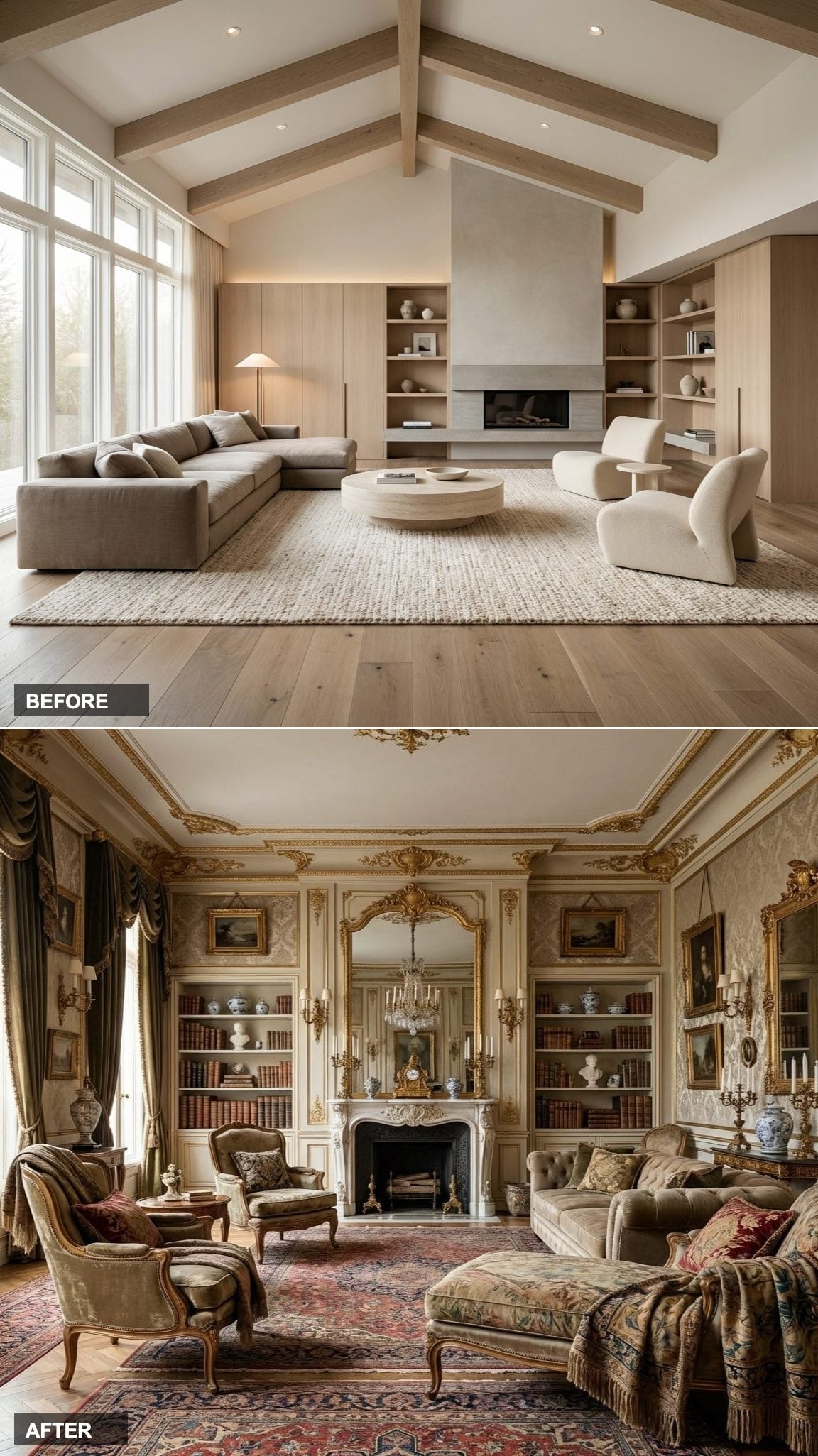
Dark academia as a living room style is less about aesthetics and more about atmosphere. The goal is a room that makes you want to sit in it for hours with a book and a glass of something warm. Deep walnut-stained built-ins floor to ceiling, a dark green Chesterfield sofa, and a brass arc floor lamp positioned for reading do exactly that. The living room design quiz will tell you if this aesthetic matches your actual lifestyle, but honestly, the answer is usually yes.
3. From Berber Carpet Beige to Richly Layered Global Collector
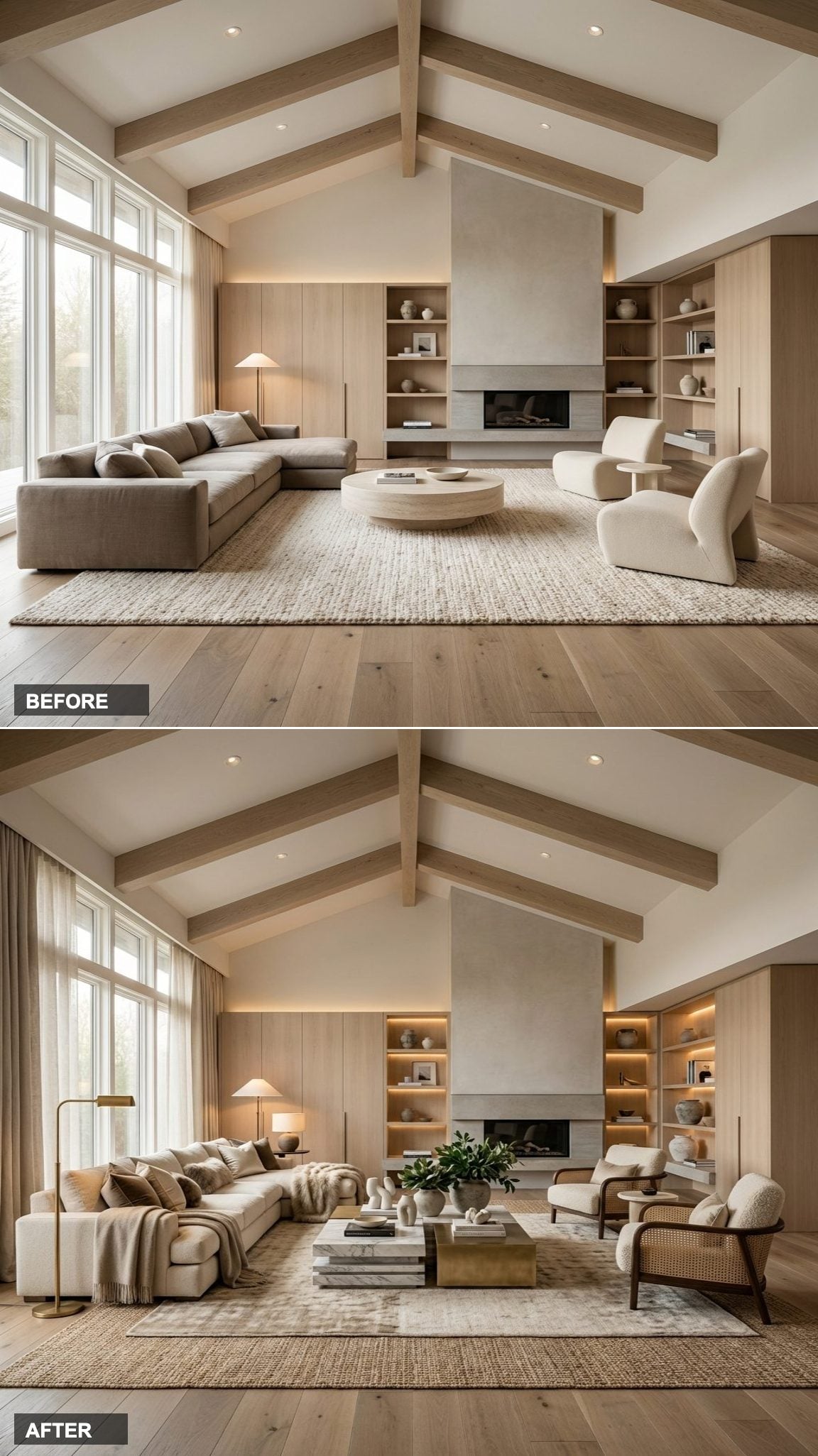
The global collector aesthetic is one of the most personality-forward styles in residential design, and it’s almost impossible to pull off in a room that looks like it was assembled from a single showroom floor. This transformation requires items that look genuinely sourced from different places and times: a turkish kilim area rug, a carved wooden side table from a different tradition entirely, and gallery walls that mix oil paintings with framed textiles.
What separates this from visual noise is color discipline. Every piece pulls from the same warm spectrum, saffron, rust, deep teal, and warm ivory, so the room feels well-traveled rather than thrifted at random.
2. From Beige Builder Box to Warm Bibliophile Retreat
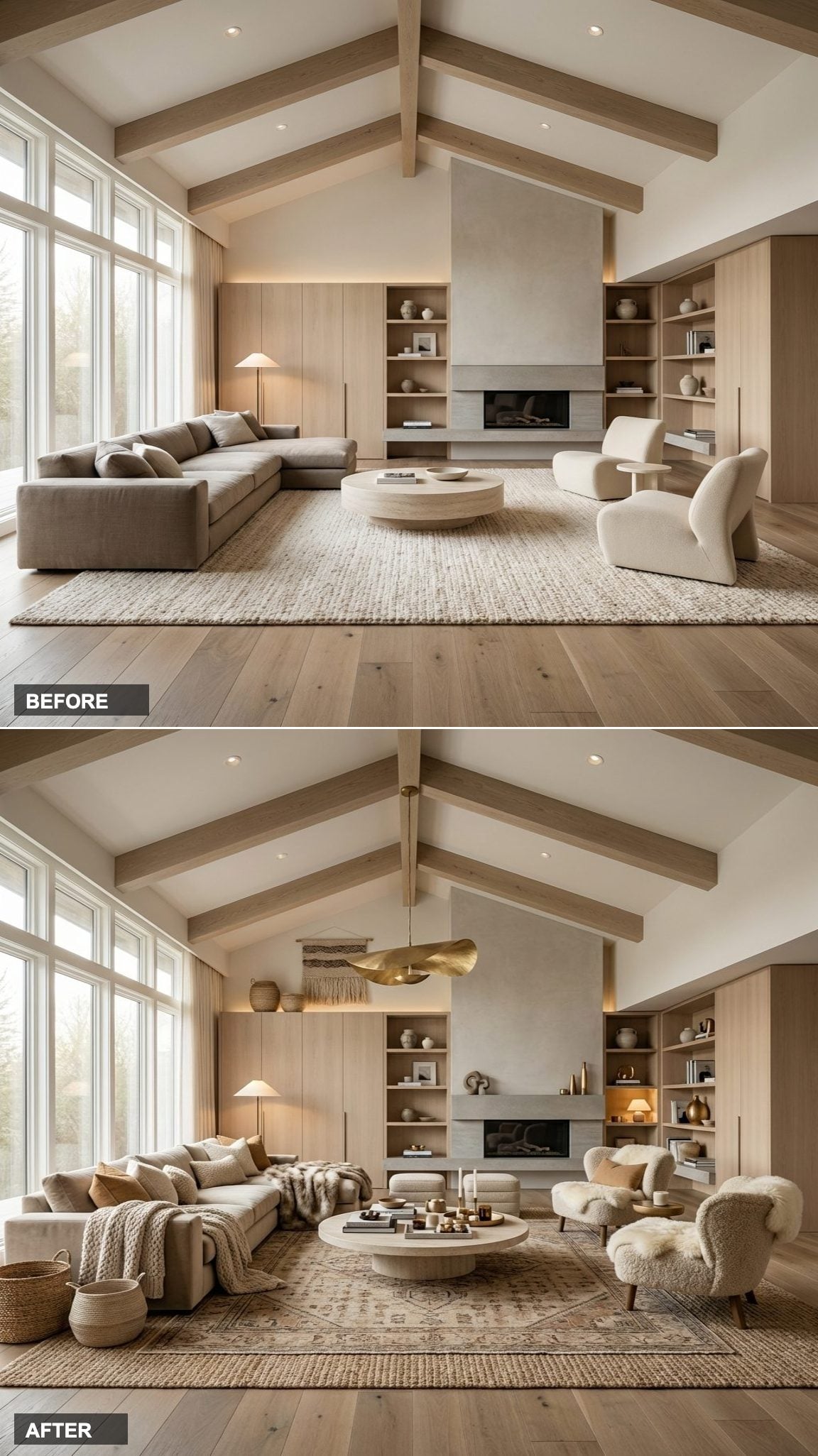
The real crime in the before wasn’t the color, it was the total absence of texture. Flat walls, flat carpet, flat ceiling: everything sat on the same visual plane, which is why the room felt like a waiting area rather than a home. The fix here started with warm chestnut bookshelves flanking the fireplace, suddenly there’s depth, weight, and something to actually look at.
Layered wool throws, a cognac leather armchair, and a deep burgundy area rug do the rest. This is the kind of ultra luxury living that never reads cold, it reads like someone actually lives here and loves it.
1. From Flat and Forgettable to Moody Velvet Salon

Dusty rose velvet and forest green shouldn’t work together, and then they absolutely do. This transformation leans hard into jewel tones, which is the fastest route away from builder-grade beige without veering into chaos. The forest green velvet sofa becomes the room’s anchor, and everything else, a antique brass table lamp, gallery wall in mismatched gilded frames, dusty rose velvet cushions, orbits it naturally.
- Jewel tones absorb light differently than pastels, which makes rooms feel intimate without going dark.
- A gallery wall of mismatched frames adds a collected, over-time quality that no single large print can replicate.
- Mixing velvet with brass creates warmth that reads as lived-in, not decorator-fresh.
This is the kind of living room design that makes guests linger. Not because it’s showy, but because it’s genuinely comfortable to be inside it.