🔥 Would you like to save this?
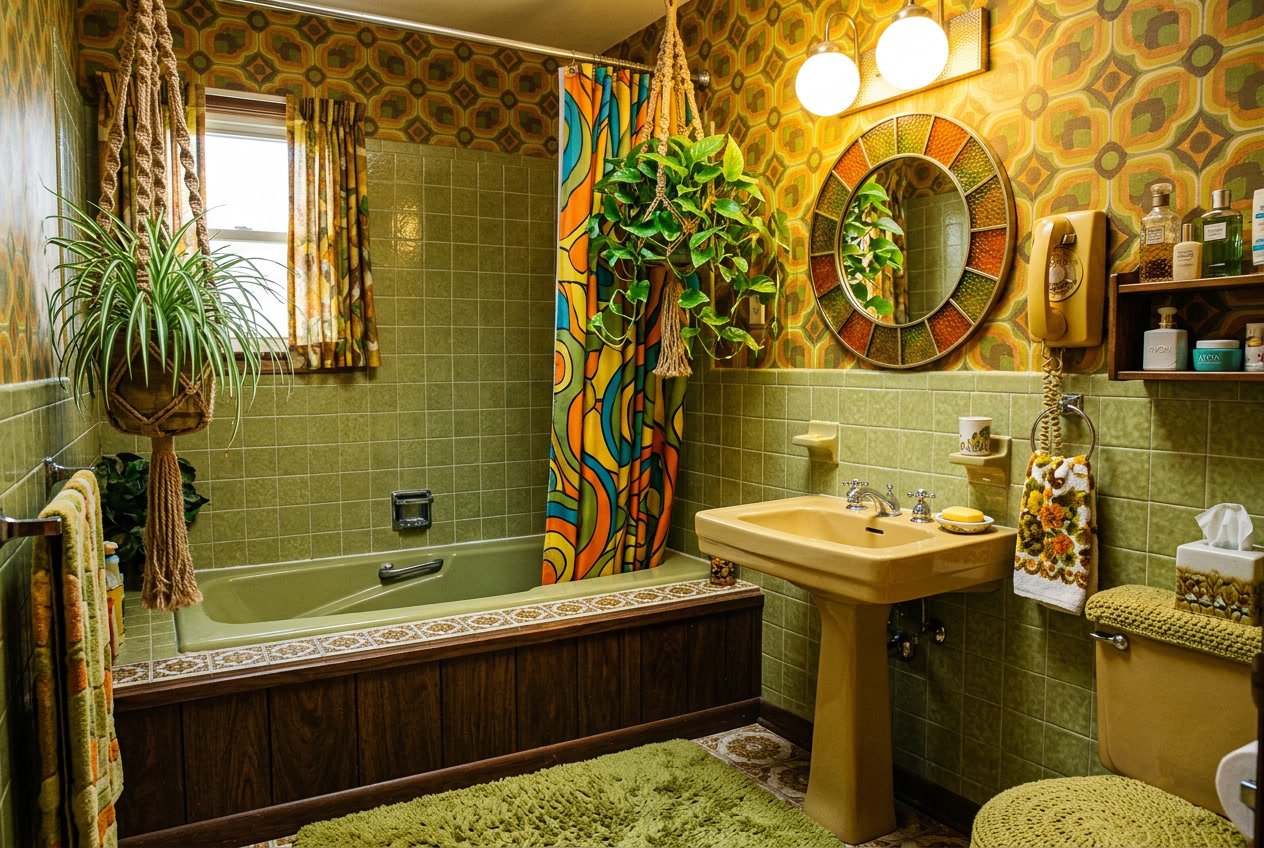
The 1970s brought a wild burst of creativity and color to American homes, and bathrooms were right in the thick of it. Homeowners dove into bold design choices that mixed practicality with personality—sometimes in ways that still raise eyebrows today. Think sunken tubs, harvest gold sinks, shag carpeting, and wood-paneled walls. 70s bathrooms were all about experimenting and showing off a bit of flair.
In order to come up with the very specific design ideas, we create most designs with the assistance of state-of-the-art AI interior design software. Also, assume links that take you off the site are affiliate links such as links to Amazon. this means we may earn a commission if you buy something.
If you remember the era or have ever taken on a renovation in an older home, you’ve probably run across some of these memorable features. Bathrooms stopped being just practical, turning instead into spaces where people could let loose with vibrant colors, oddball materials, and loud patterns. These details made 70s bathrooms pretty unforgettable, for better or worse.
This list of 33 bathroom elements will take you on a tour through the accessories, fixtures, and design quirks that really set the decade apart. You’ll spot earth-toned tiles, novelty items, and those unmistakable architectural touches that turned the average bathroom into a groovy, time-stamped snapshot of American style.
33. Ceramic toothbrush holder with avocado motif
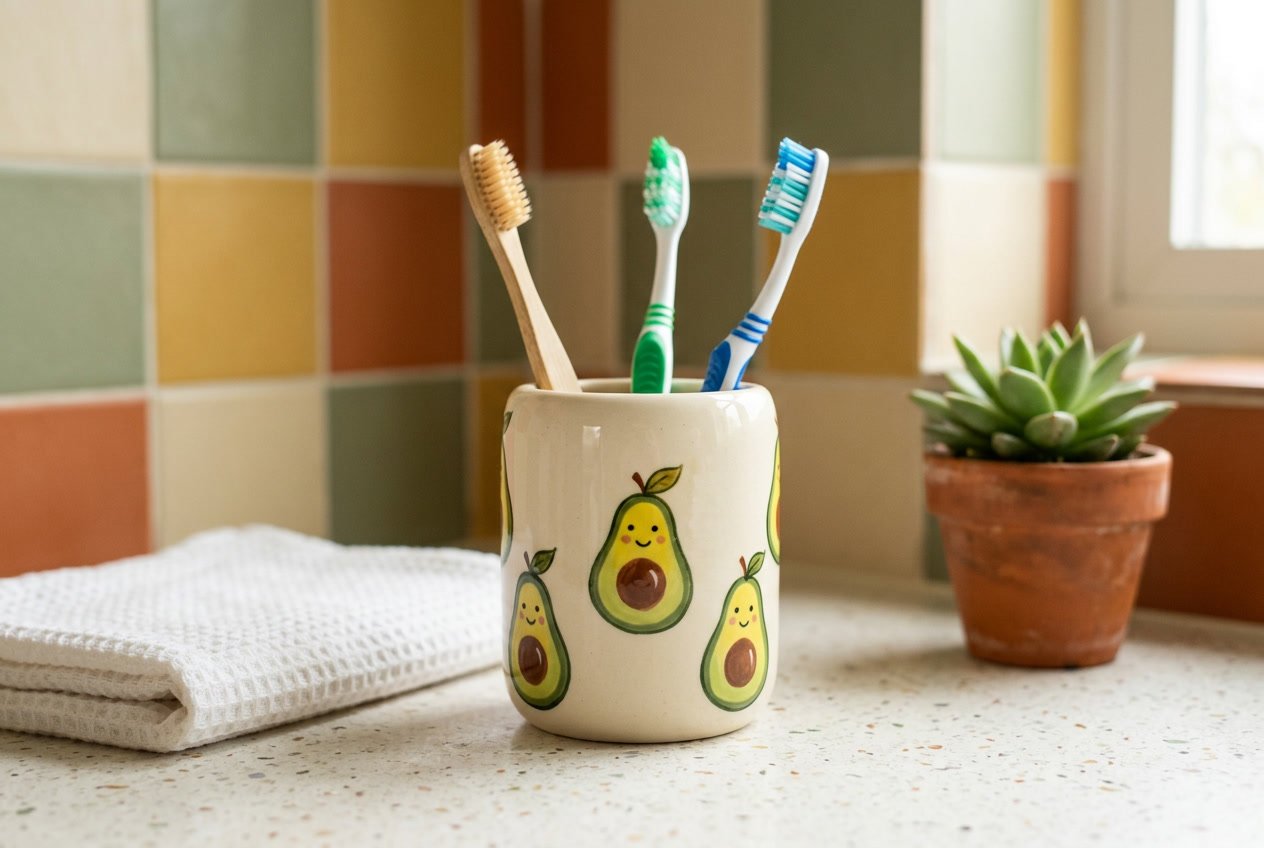
The avocado motif on bathroom accessories really became a calling card for 1970s decor. You’d see this trendy fruit everywhere—towels, shower curtains, you name it—but those ceramic toothbrush holders brought the theme right onto your countertop.
Designers got creative, painting halved avocados with that unmistakable green and brown. Some went realistic, others leaned into cartoonish vibes, and a few pieces even mixed in multiple avocado halves for a playful look.
These holders weren’t just for show. They added a punch of personality and kept your toothbrushes in check. The ceramic build made them sturdy, and the glossy glaze meant you could wipe them clean without much fuss.
A lot of families went all-in, matching their avocado toothbrush holders to other bathroom accessories in the same green. This shade played so well with the earth tones everywhere else in the house. Maybe you paired yours with towels, soap dishes, or even a toilet seat in that same unmistakable hue.
It’s funny to think about now, but food-themed bathroom decor was all the rage. Avocados felt a bit exotic and even a little fancy back then. Having them in your bathroom? That meant you were tuned into the latest trends, or at least trying to be.
Most holders just sat on the counter, roomy enough for a handful of toothbrushes. Some even had separate sections or little cups for organizing. Since many were handmade, no two were exactly alike—each one had its own quirks and charm.
32. Round bubble glass ceiling fixture (opalescent)
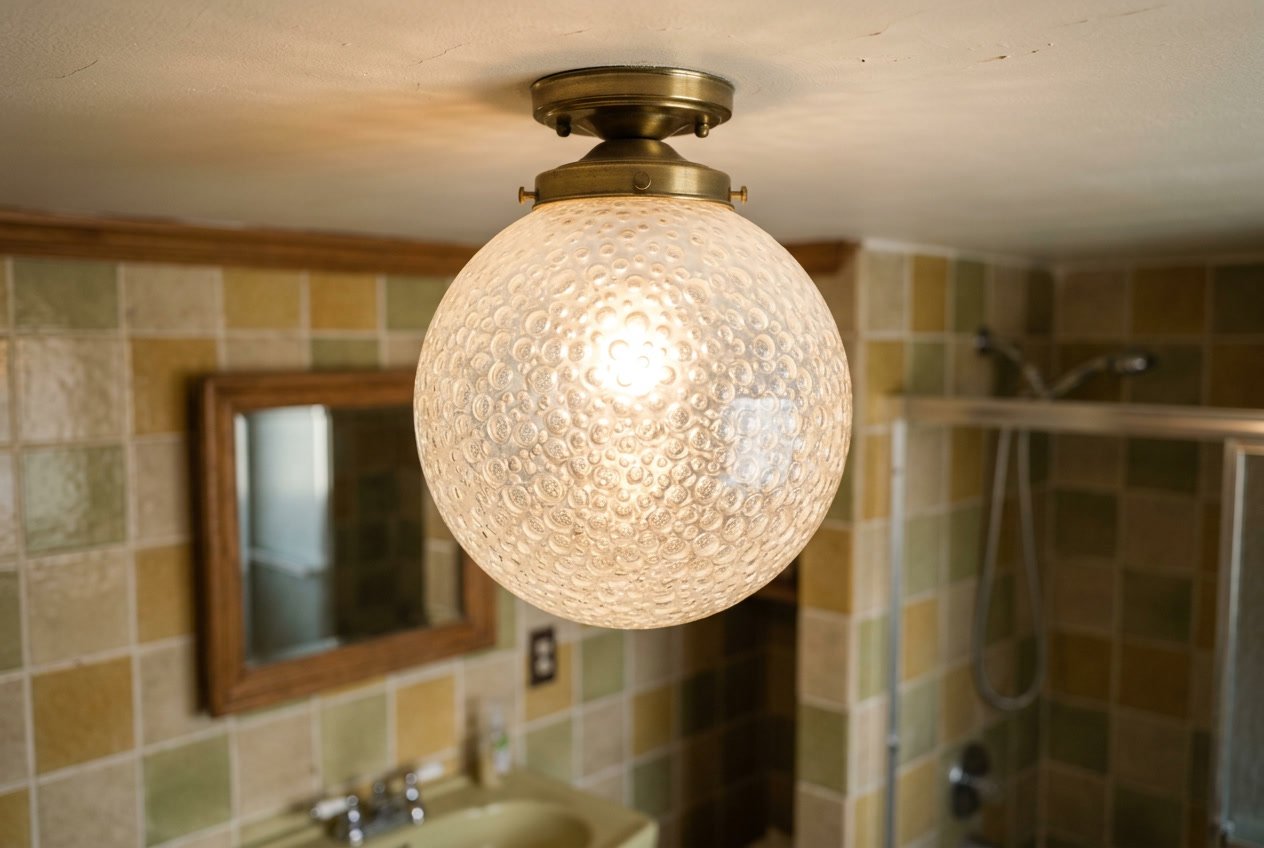
Step into a 1970s bathroom and you’d probably spot a round bubble glass ceiling fixture overhead, sending a soft, milky glow across the room. These lights had textured glass packed with tiny bubbles, giving them an opalescent look that gently scattered the light.
That bubble glass wasn’t just for looks—it actually softened the light, making it easier on your eyes for things like shaving or putting on makeup.
Most of these fixtures kept things simple, hugging the ceiling in a tidy round shape, usually about 10 to 14 inches wide. You’d see them with chrome, brass, or white metal bases, matching up with the rest of the bathroom’s hardware.
Manufacturers made the opalescent effect by trapping air bubbles in the glass, so every light had its own unique pattern. When you flipped the switch, the bubbles glowed with a cozy, inviting warmth—modern, but not cold.
These became favorites because they meshed with the decade’s move toward simpler, cleaner bathroom looks. They swapped out old, fussy fixtures for something more streamlined. You could put them in powder rooms or tiny bathrooms where space was tight.
The bubble glass craze didn’t stop at the ceiling, either. Plenty of homes had matching sconces or vanity lights with the same bubbly glass for a coordinated vibe.
31. Chrome-plated telephone handset on vanity (novelty accessory)
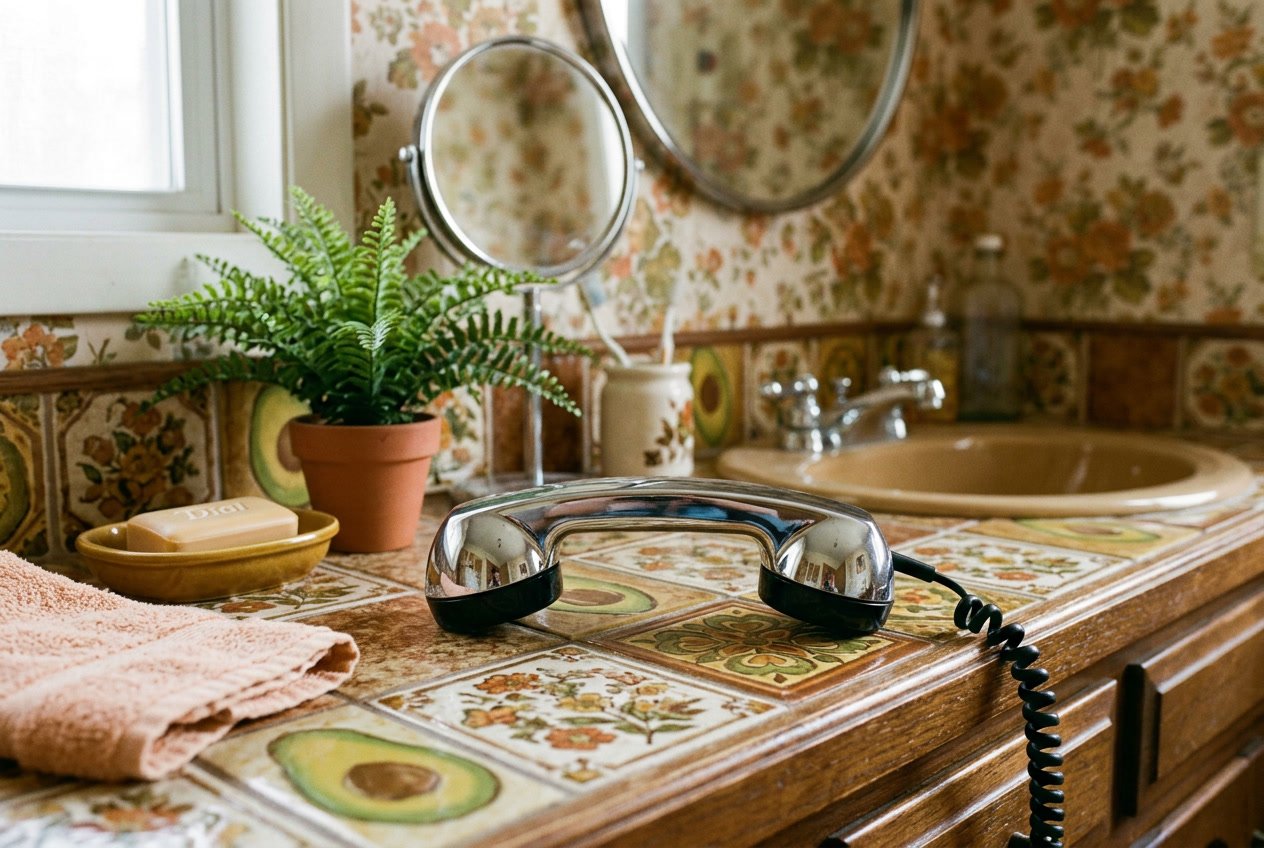
Back in the 70s, if you really wanted to show off, you put a telephone right in the bathroom—often within arm’s reach of the tub or toilet. That was peak luxury and convenience.
Chrome-plated novelty phones started popping up on vanities, matching all the other shiny chrome fixtures—faucets, towel bars, you name it. The reflective finish fit right in with the decade’s love of metallics.
Manufacturers got playful, making phones in classic rotary styles or even stranger shapes. The chrome finish made even a basic phone feel a bit fancier.
Having a phone on your bathroom vanity meant you never missed a call. You could chat with friends while you got ready or just lounge in the bath. This was well before cordless phones or cell phones made it easy to talk anywhere.
It’s kind of wild, but the trend showed just how much folks wanted to stay connected—even in the bathroom. A bathroom phone was practical, sure, but it also said, “Hey, my home’s got the latest and greatest.”
These novelty phones usually had super-long, coiled cords that stretched across the bathroom, so you could move around without getting tangled up. The cord kept things flexible but still looked tidy on the vanity or wall.
30. Retro mosaic sink basin in muted earth tones
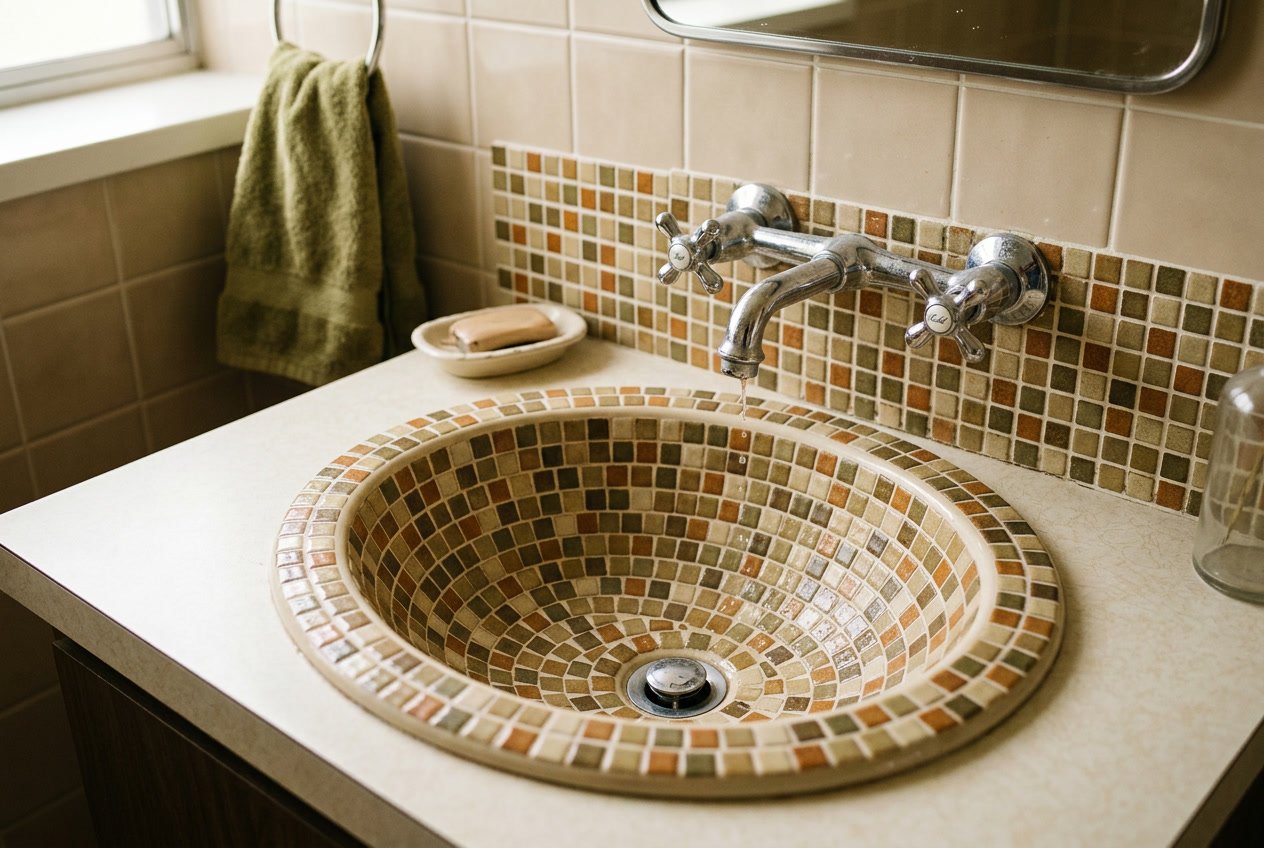
If you wanted your 1970s bathroom to stand out, a mosaic sink basin was a solid bet. These sinks had tiny tiles arranged in patterns—sometimes just simple shapes, other times more elaborate designs.
The colors? Always those classic earth tones: browns, beiges, olive greens, muted terracottas. The natural shades gave the bathroom a mellow, calming vibe.
Usually, the tiles were ceramic or porcelain, and since each one was set by hand, no two sinks looked exactly alike. Your guests would definitely notice.
These basins came in all sorts of setups—wall-mounted, pedestal, or freestanding on a countertop. You had options, depending on your bathroom’s layout.
Installing them took a bit more effort than a regular sink. You had to seal the mosaic surface carefully so water wouldn’t seep in, and cleaning required a gentle touch so you wouldn’t mess up the grout.
Mosaic sinks cost more than basic porcelain models, but families often thought the extra style was worth it. The earthy colors blended right in with the wood cabinets and natural materials that made 70s bathrooms so distinct.
29. Large-format black grout on white subway tile feature wall
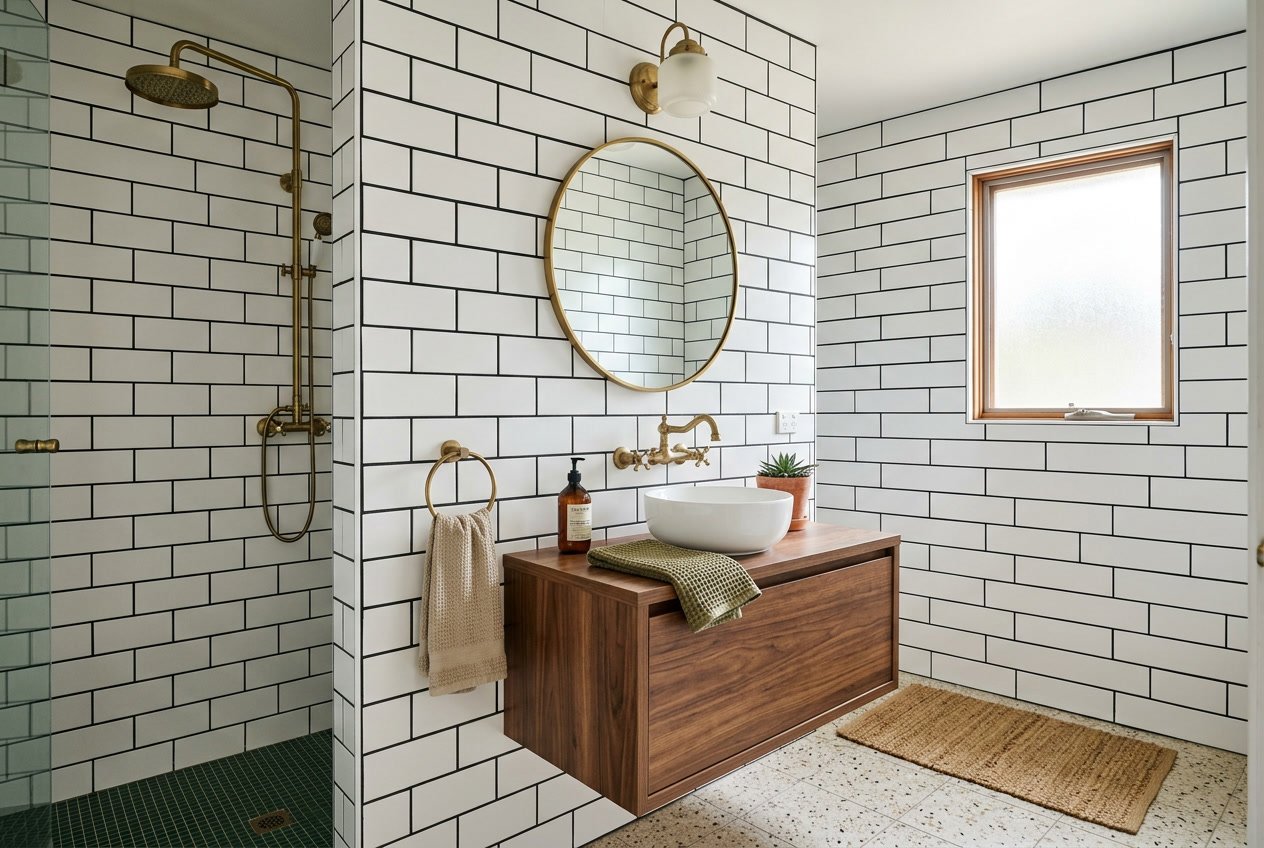
When you picture a 1970s bathroom, you probably think avocado green and shag carpets. But before those took over, white subway tile with thick black grout started turning heads in American homes.
This look marked a shift toward treating the bathroom as a canvas, not just a utility room. The black grout made plain white tiles pop, grabbing your attention as soon as you walked in.
Homeowners usually put these feature walls in showers or behind vanities. The bold contrast between the tiles and grout created a grid pattern that made even the simplest space feel more interesting.
The tiles themselves were bigger than the classic subway size, giving the room a slightly more modern edge while keeping that timeless rectangular shape.
Black grout needed a bit more upkeep than the usual white or gray—you had to seal it often to keep it from staining. Still, plenty of people decided it was worth the hassle for the dramatic effect.
This style worked in both tiny powder rooms and sprawling master baths. The strong lines made smaller spaces feel a little larger, and in bigger bathrooms, the feature wall became an anchor for the whole design.
Pairing these walls with chrome fixtures and simple accessories let the tilework shine. Some folks tossed in colorful towels or bath mats to soften up the black and white scheme.
28. Built-in wall niches for soap and shampoo tiles
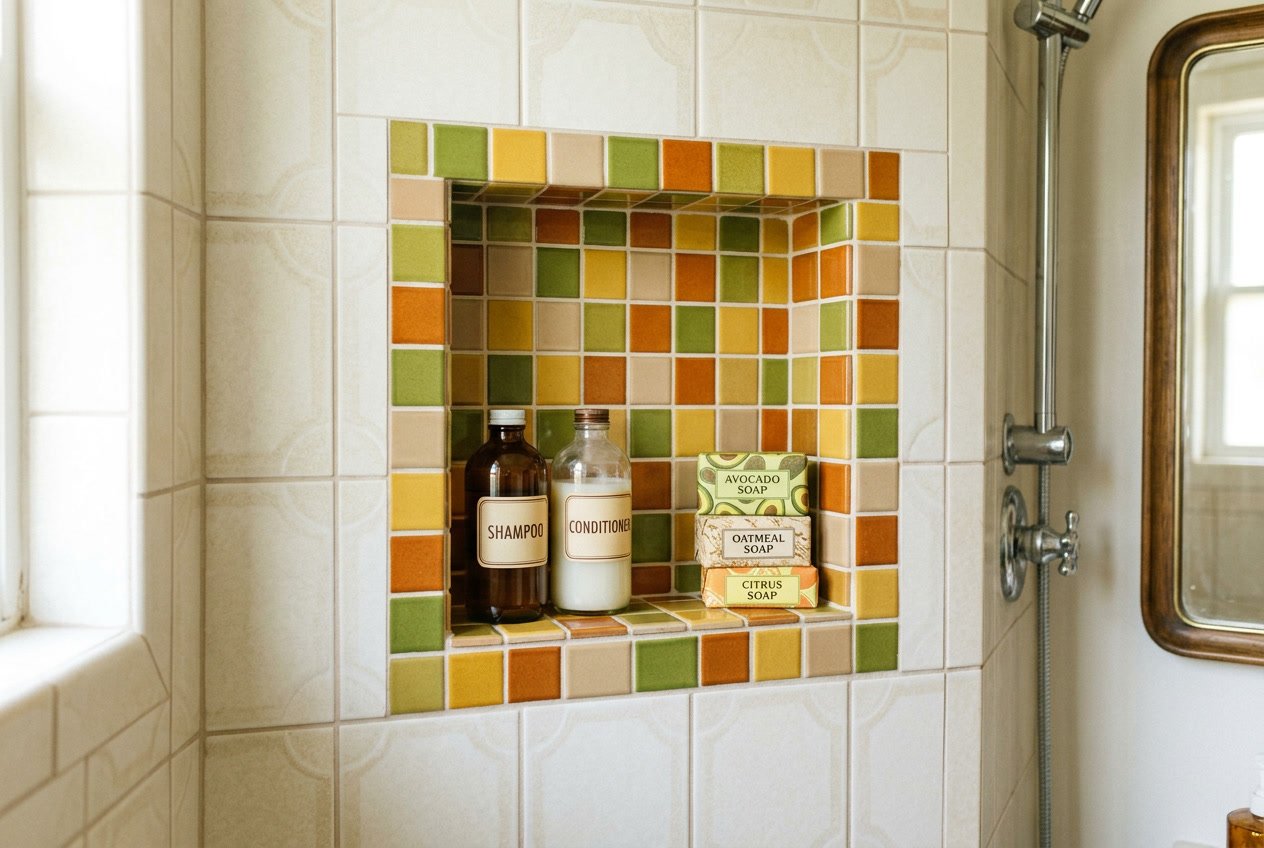
Built-in wall niches started popping up in 1970s bathrooms as a smarter way to store things. These shelves, recessed right into the shower wall, held soap bars, shampoo bottles, and all the other stuff you’d otherwise trip over.
Usually, people lined the niches with the same ceramic tile as the rest of the shower, so everything looked seamless. Most kept to square or rectangular shapes—simple and easy to install.
You’d find niches tucked into corners or centered on the main shower wall. They kept the floor clear and made cleaning less of a chore.
The size of these shelves depended on what you needed and how much wall space you had. Some bathrooms had a single, small niche; others went bigger, with two or three at different heights. If you had a big family, you probably opted for more space to stash everyone’s stuff.
Installing a tiled niche took some planning. You had to waterproof the opening so moisture didn’t sneak into the wall, and you needed to finish the tile edges carefully so there weren’t any sharp bits.
These built-in spots felt like a big step up from old-school metal soap dishes or those wire caddies. They gave bathrooms a custom, finished look, and by the end of the decade, builders were including them as almost standard in new homes.
27. Dark-stained built-in vanity stool with vinyl seat
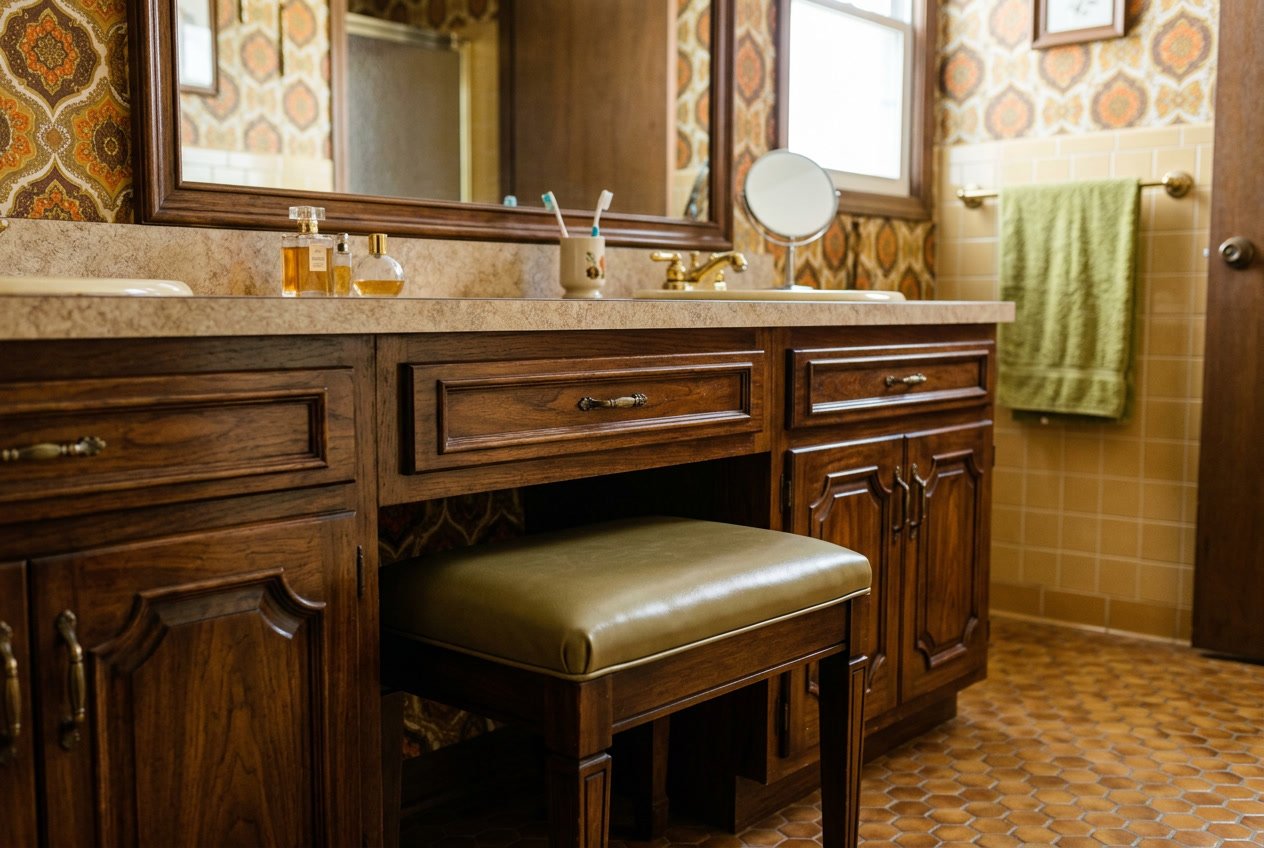
Back in the 1970s, a built-in vanity stool tucked under the bathroom counter was a pretty common sight. It saved space and gave you a comfy spot to sit while you got ready—kind of a little luxury for everyday routines.
The stools usually had a dark wood finish, often cherry or walnut, matching the wood-grain cabinetry that was everywhere back then. The rich stain gave bathrooms a polished, almost formal vibe.
Instead of fabric, the seat was nearly always vinyl—usually black or brown. Vinyl just made sense: you could wipe up makeup spills or stray hair products without worry, and it held up to daily use.
Most stools had a round, padded seat that swiveled all the way around, so you could spin from the mirror to the counter without standing up. That little bit of padding made getting ready in the morning a lot more comfortable, honestly.
Since they were built in, these stools attached right to the vanity or the wall. You couldn’t drag them around, but they never got in the way either—just tucked under the counter when you didn’t need them.
They showed up a lot in master baths with long vanities, usually at one end, almost like a mini dressing table. The bathroom started to feel a bit more like a personal grooming space, not just a utilitarian room.
Vinyl held up pretty well, though after years, it might crack or peel. The surface stayed cool, which wasn’t always pleasant in winter, but the convenience and built-in look really made these stools a standout feature in 1970s homes.
26. Brass and wood combination towel ladder
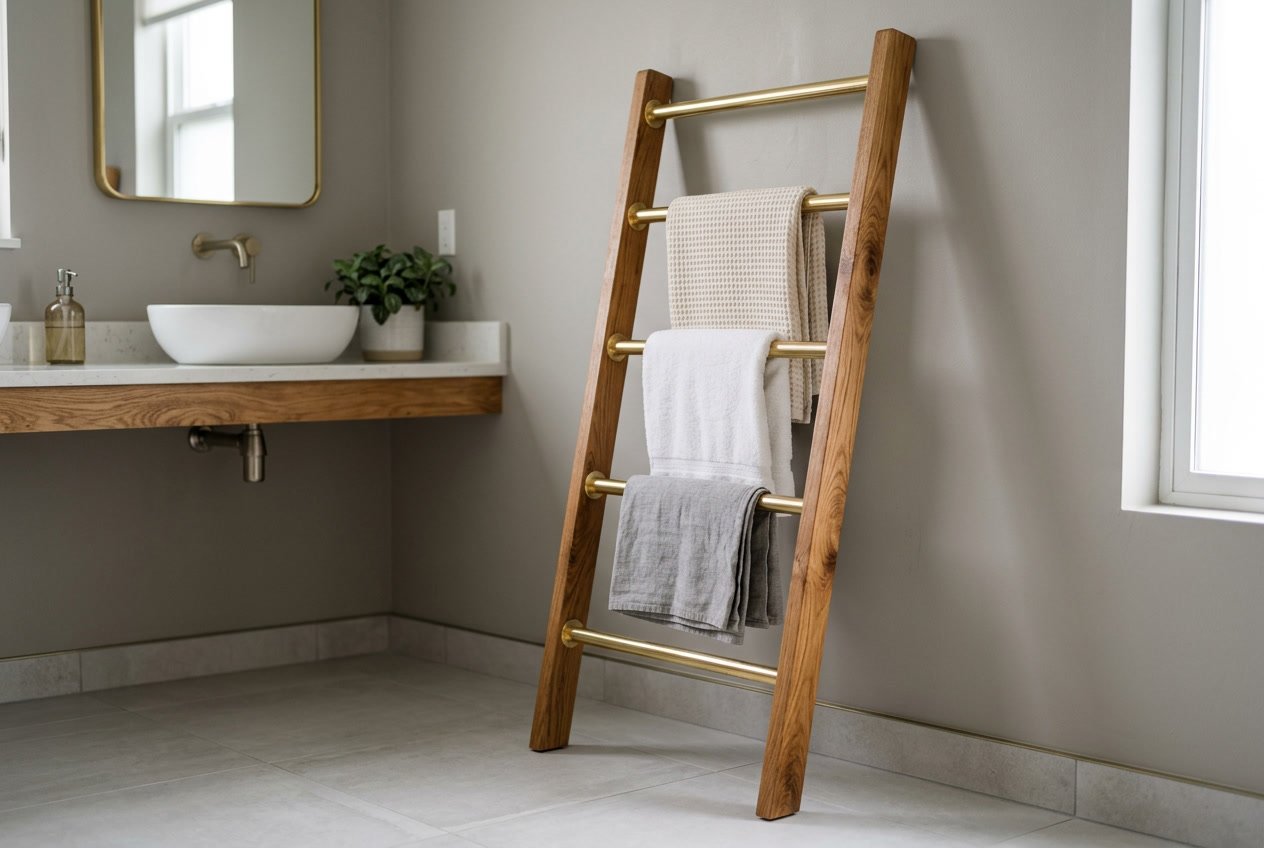
If you grew up in the ’70s, you probably saw towel ladders propped against bathroom walls. They mixed warm wood with shiny brass, making for a storage solution that actually looked pretty stylish.
The ladder gave you a few rungs to hang towels at different heights. That way, everyone had their own spot—no more fighting over a single towel bar.
Brass hardware brought a little gleam to the natural wood. Usually, you’d see brass on the ends, connectors, or as decorative brackets. That blend of metal and wood fit right in with the decade’s love of earthy-meets-glam materials.
You could just lean these ladders against the wall, no tools needed, which made them perfect for rentals or apartments. Some versions let you anchor them if you wanted, but honestly, most people didn’t bother.
The rustic look paired well with other wood accents like vanities and medicine cabinets. Towel ladders often matched or at least coordinated with the rest of the bathroom. People put them in guest baths or powder rooms, too, just to liven up a plain wall.
And hey, they weren’t just for towels. Bathrobes, washcloths, even the odd magazine sometimes found a home on the lower rungs.
25. Low-flow push-button toilet introduced during energy crisis
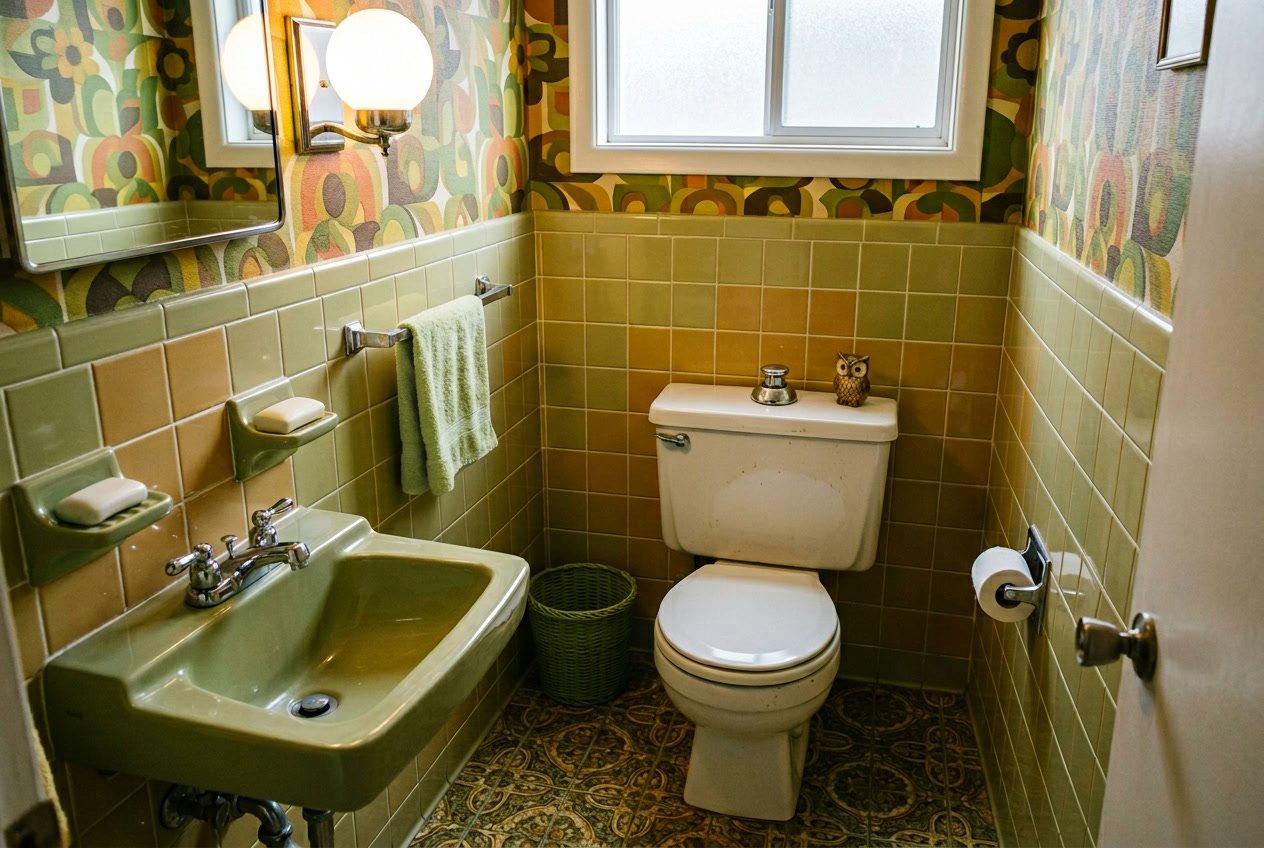
The 1970s energy crisis really changed how people thought about saving water at home. Suddenly, conserving water mattered as much as saving electricity or gas—even in the bathroom.
Push-button toilets weren’t brand new, but the low-flow versions started popping up in American homes around this time. They had two buttons: one for liquid waste (using less water), and one for solids (a bit more water). It was a simple idea, but pretty clever.
Before that, toilets used a whopping 5 to 7 gallons per flush. The new models aimed for about 3.5 gallons, which was a big step down. Not perfect, but better than before.
The push-button setup let you decide how much water to use each time. You got a choice, instead of just one-size-fits-all flushing.
Some folks didn’t trust the new toilets at first. There were complaints about clogs or needing to flush twice, which kind of defeated the purpose. But the idea behind them was solid, and they marked a shift toward more eco-conscious home design.
As the decade went on, manufacturers improved the flushing mechanisms. Bathrooms started to feel like part of the solution to the country’s resource problems, not just another place to waste water.
24. Brass towel rail with ceramic finials
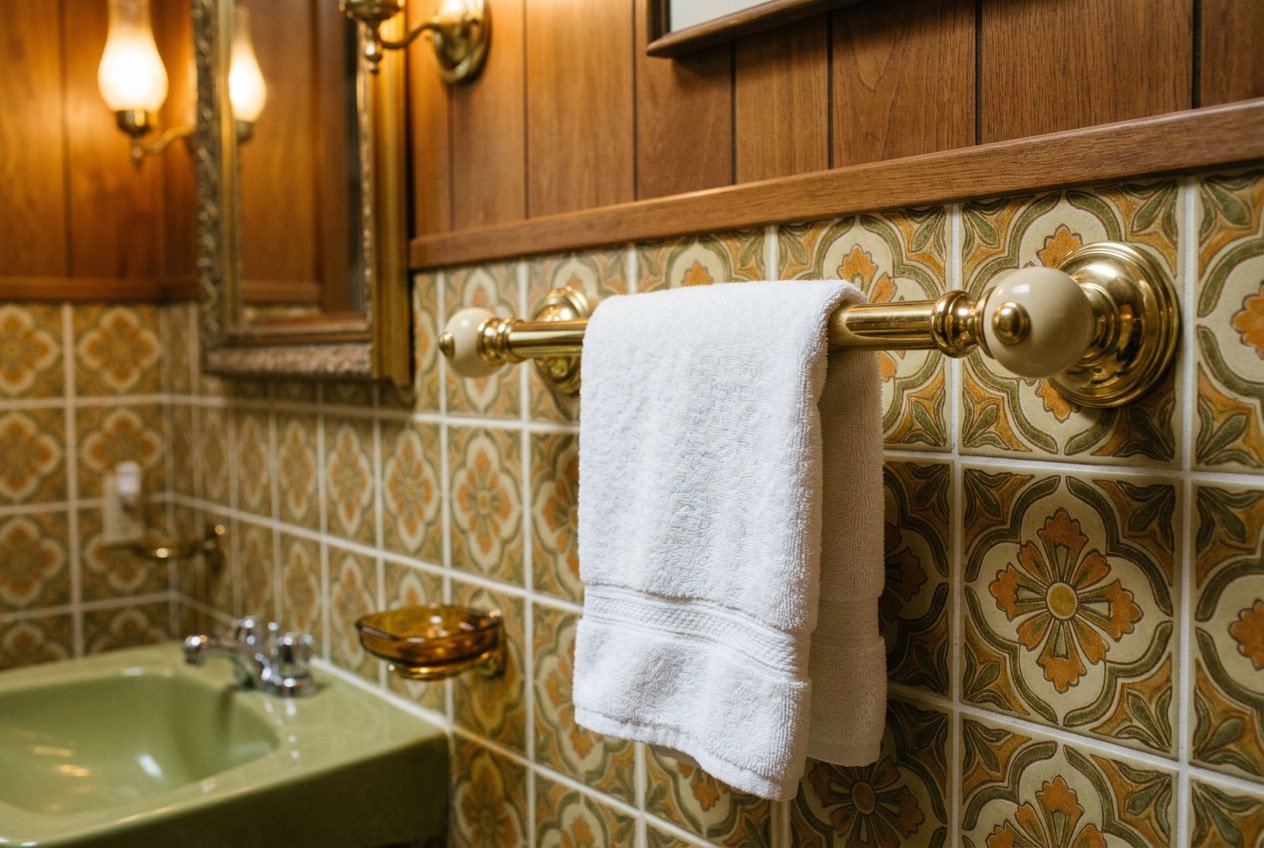
Chances are, your 1970s bathroom had a brass towel rail with ceramic finials. The combo of warm brass and colorful ceramic ends was everywhere back then.
The ceramic bits came in all sorts of colors—turquoise and cobalt blue were especially trendy. Sometimes you’d see white, cream, or even little floral patterns on the ceramic details.
These towel bars worked well and looked good. The brass finish tied in with other fixtures like faucets and lights, while the ceramic ends gave them a bit of personality.
You could get them as single or double bars, mounted straight to the wall. Some had fancy brass scrollwork alongside the ceramic touches, if you wanted to go all out.
The mix of brass and ceramic summed up the decade’s love of blending textures. Brass brought durability and a bit of shine, while the ceramic added color and a handcrafted feel.
They fit right in with the bold 1970s palette—brass looked great next to harvest gold, avocado green, or burnt orange. The ceramic ends either matched the rest of your bathroom or stood out as a pop of color.
23. Orange and brown concentric circle shower curtain
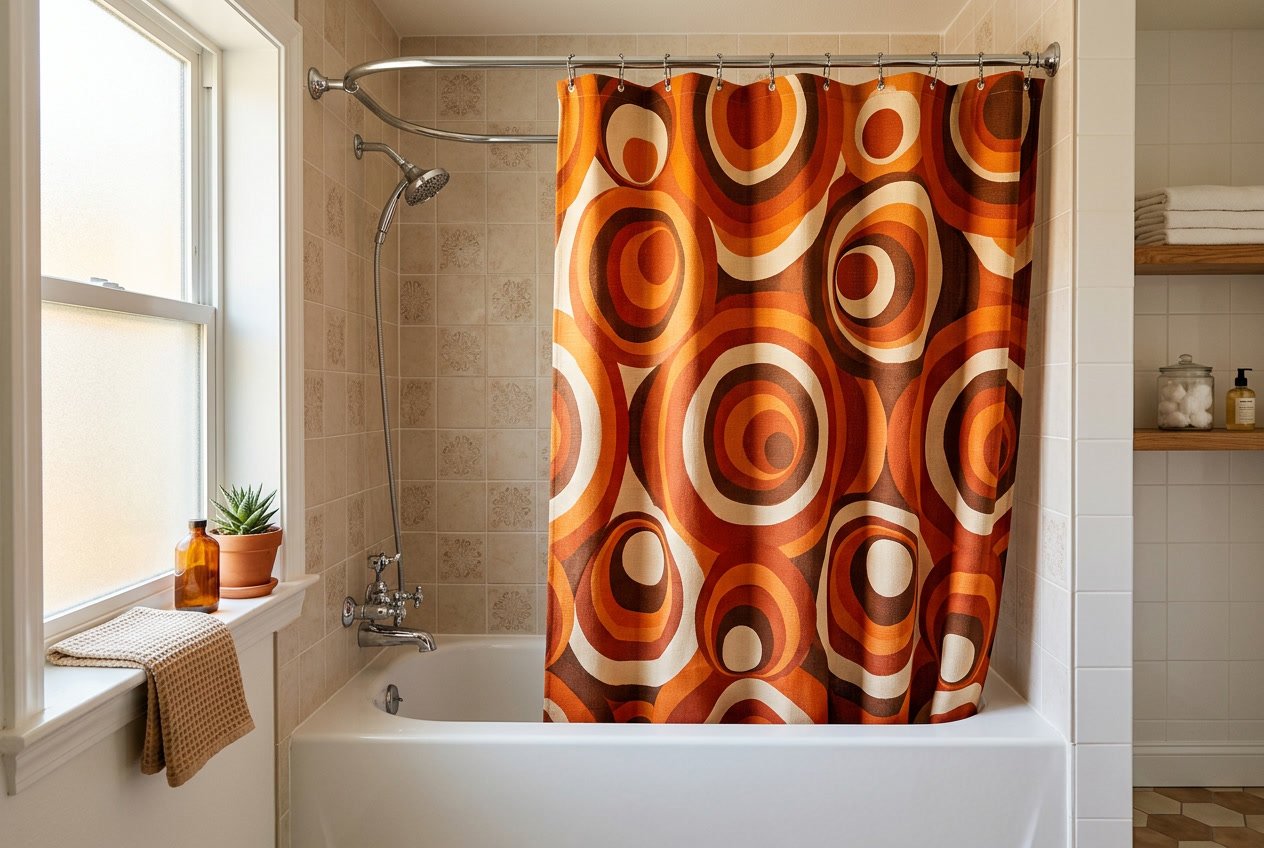
Walk into a 1970s bathroom and chances are you’d spot a shower curtain covered in orange and brown concentric circles. Not just plain circles—these were bold, layered rings that drew your eye right away.
Orange and brown was the color combo of the decade. It showed up on everything: appliances, couches, and, of course, shower curtains. The look was both earthy and a bit wild.
The concentric circle pattern fit perfectly with the decade’s geometric obsession. Some curtains kept the circles neat and orderly, while others scattered them in a more playful way. Sometimes they were ovals, sometimes perfectly round.
Most were polyester, which made sense—waterproof, quick to dry, and those bright colors didn’t fade after a few washes. The fabric held up and kept the orange and brown looking sharp.
If you wanted a matching look, you could get bath mats and towels in the same colors. A lot of people went all in, decking out the whole bathroom in orange and brown. The curtains popped against neutral tile—white, beige, or tan worked best.
Honestly, these curtains showed off the fun, experimental side of ’70s style. People just hung them up and didn’t worry about whether the pattern was too bold. Why not?
22. Cultured marble vanity sink with molded backsplash
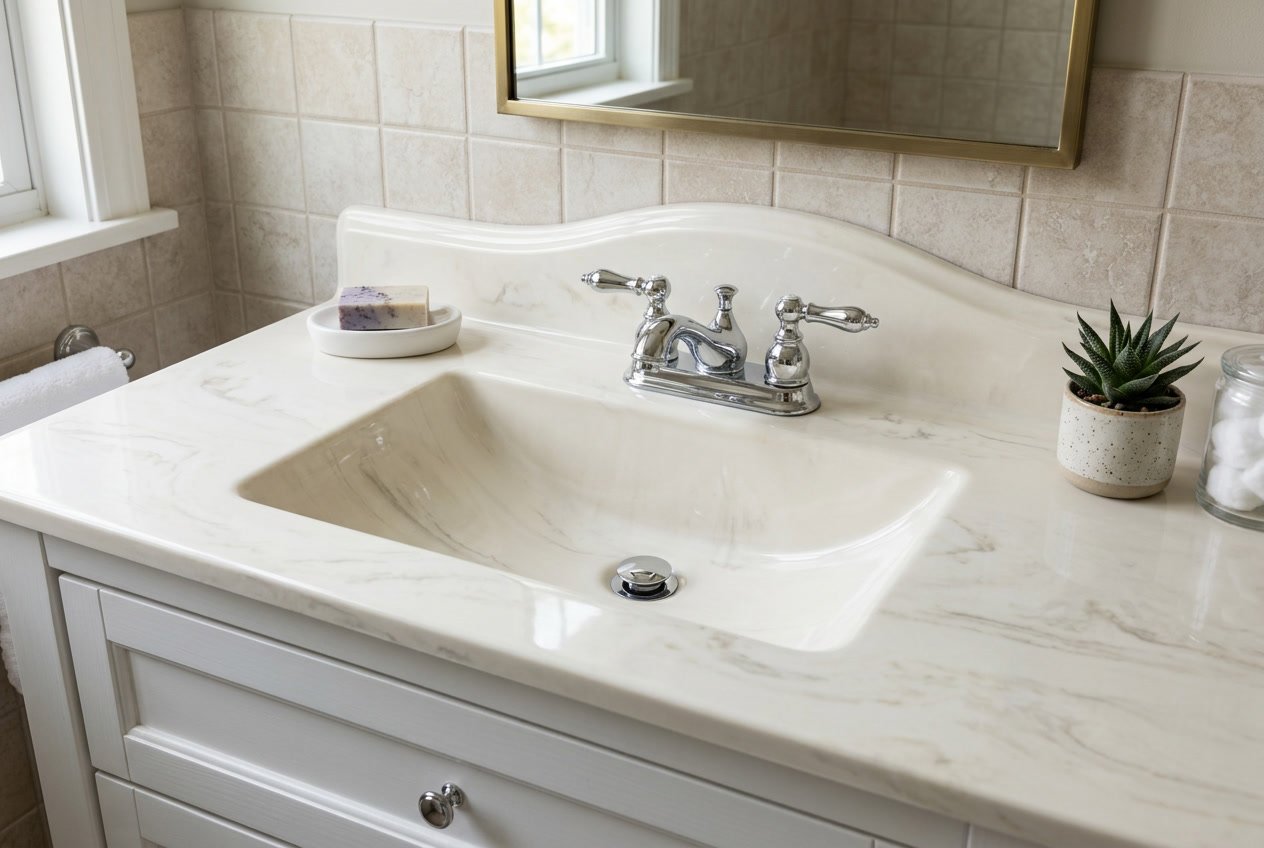
Cultured marble hit its stride in the 1970s. Despite the name, it wasn’t real marble—just crushed limestone mixed with resin to mimic the look, for a fraction of the price.
The one-piece sink, counter, and backsplash changed bathroom design. No seams, no cracks, just a single molded unit that made cleaning a breeze. No grout lines meant less scrubbing and no mildew hiding in the corners.
By the mid-1970s, these vanities showed up everywhere. Cleaning was just a wipe-down job, and installation went quickly since you weren’t piecing together separate parts.
The backsplash curved up in one smooth sweep, usually about four inches high, so water splashes never hit the wall. It made brushing your teeth or washing your face a little less messy.
Colors ranged from classic white to bold shades like avocado green and harvest gold. Some patterns tried to look like real marble, with swirly veins, while others just went for solid, bright colors.
The sink bowl was oval and blended right into the counter—no lip, no seams. Everything felt smooth, and the faucet holes came pre-drilled, which saved time during installation.
Cultured marble felt a bit warmer to the touch than real stone. It resisted stains and most cleaners, and if you scratched it, you could usually buff it out with some fine sandpaper.
Builders loved it because it was cheaper and lighter than real stone, and it made bathrooms look a lot fancier than the price tag suggested.
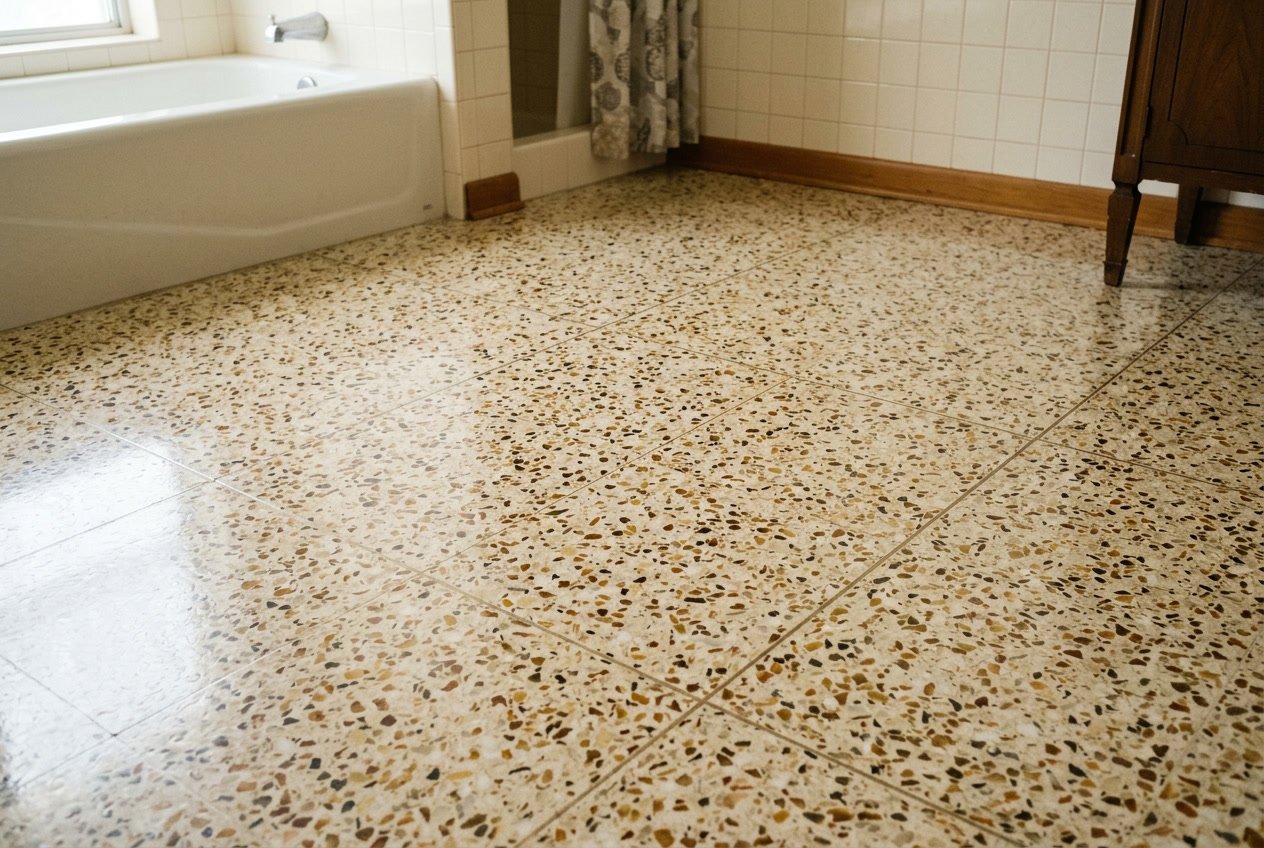
21. Terrazzo-style tiles with flecks of brown and gold
🔥 Would you like to save this?
Terrazzo flooring had a real moment in 1970s bathrooms, making the jump from schools and government buildings into homes. These tiles mixed little chips of marble, quartz, or glass into cement or resin, creating a speckled pattern that was interesting but not too loud.
Brown and gold ruled the color palette for terrazzo back then. Those warm tones matched the avocado and harvest gold fixtures that everyone seemed to have. The flecks caught the light and added a subtle bit of sparkle to an otherwise practical material.
You’d usually find terrazzo in standard 12×12 tiles, which made installation pretty straightforward. The matte finish helped prevent slips—always a plus in a bathroom. People picked terrazzo because it was tough and could handle lots of foot traffic without looking worn out.
The speckled look wasn’t just for show—it hid dirt, water spots, and soap scum better than plain tiles. That meant less time scrubbing floors, which nobody complained about.
Terrazzo tiles played nicely with the bold bathroom colors of the decade. Brown and gold flecks worked with orange towels, wood cabinets, and brass fixtures. Sometimes you’d see white or cream chips mixed in for a little extra depth.
Installing terrazzo made a bathroom feel custom and a bit upscale, but without a huge price tag. The patterns ranged from subtle to dramatic, so you could pick how much statement you wanted your floor to make.
20. Freestanding pedestal soap dish with scalloped edge
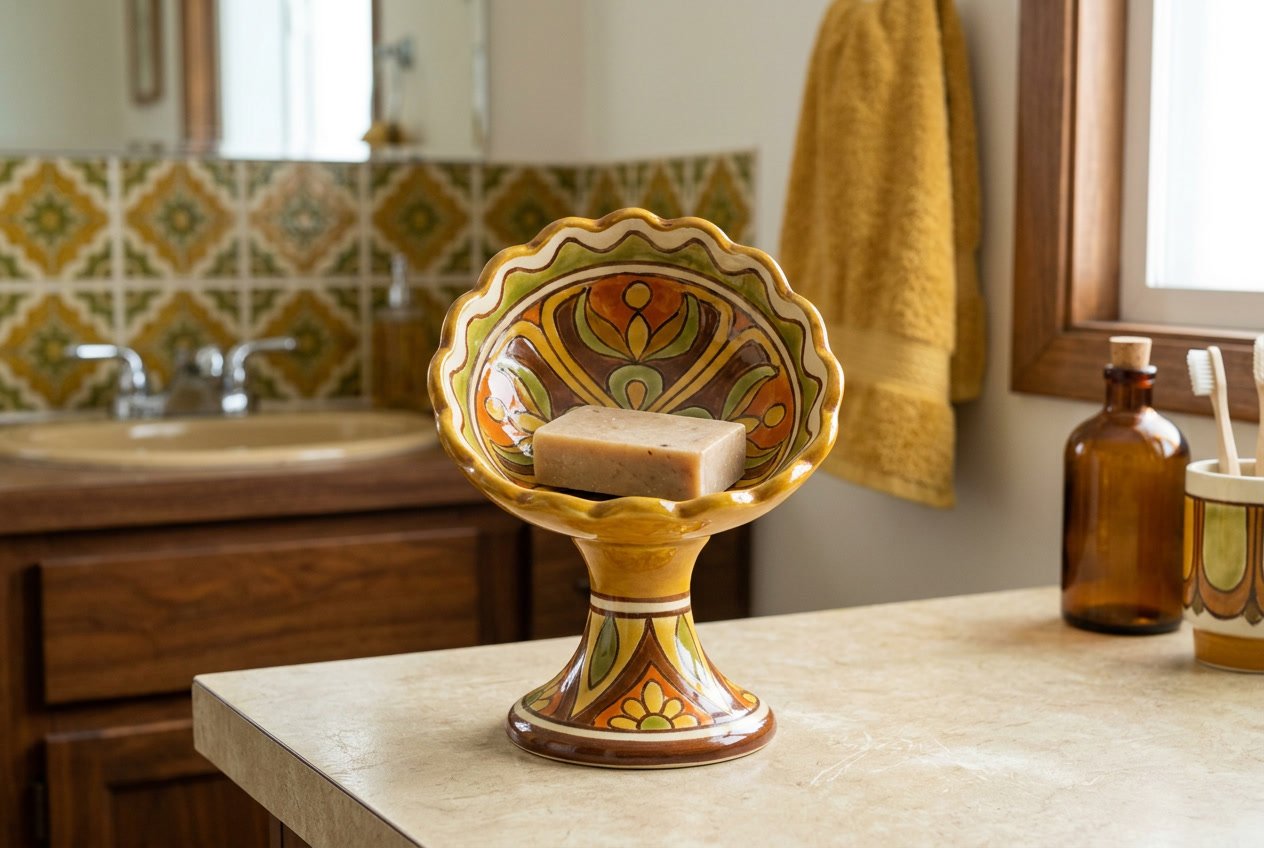
Back in the 1970s, a bathroom just didn’t feel finished without a freestanding pedestal soap dish perched on the counter or vanity. These little decorative stands lifted your bar soap up off the surface—practical, sure, but also a bit of a style statement.
Those scalloped edges? Super popular. The wavy, almost shell-like curves made the dish look a lot fancier than a plain circle or square. There was a touch of Art Deco in there, too, since that style was having a comeback at the time.
Most were made from brass, porcelain, or ceramic. Brass ones aged into a cozy patina that people seemed to love, while porcelain and ceramic dishes often came in colors to match your bathroom—think avocado green or harvest gold. The shallow bowl sat on a narrow stem, lifting it a few inches up. That bit of height let air move around your soap, so it didn’t get all mushy. Some had little drain holes, which definitely helped the bar last longer.
You could grab these at any decent home goods or bathroom fixture store. Big brands like American Standard made sturdy versions that stuck around for years. They usually measured about four or five inches across—big enough for a regular soap bar, but not so big they took over your counter.
19. Integrated medicine cabinet with mirrored sliding doors
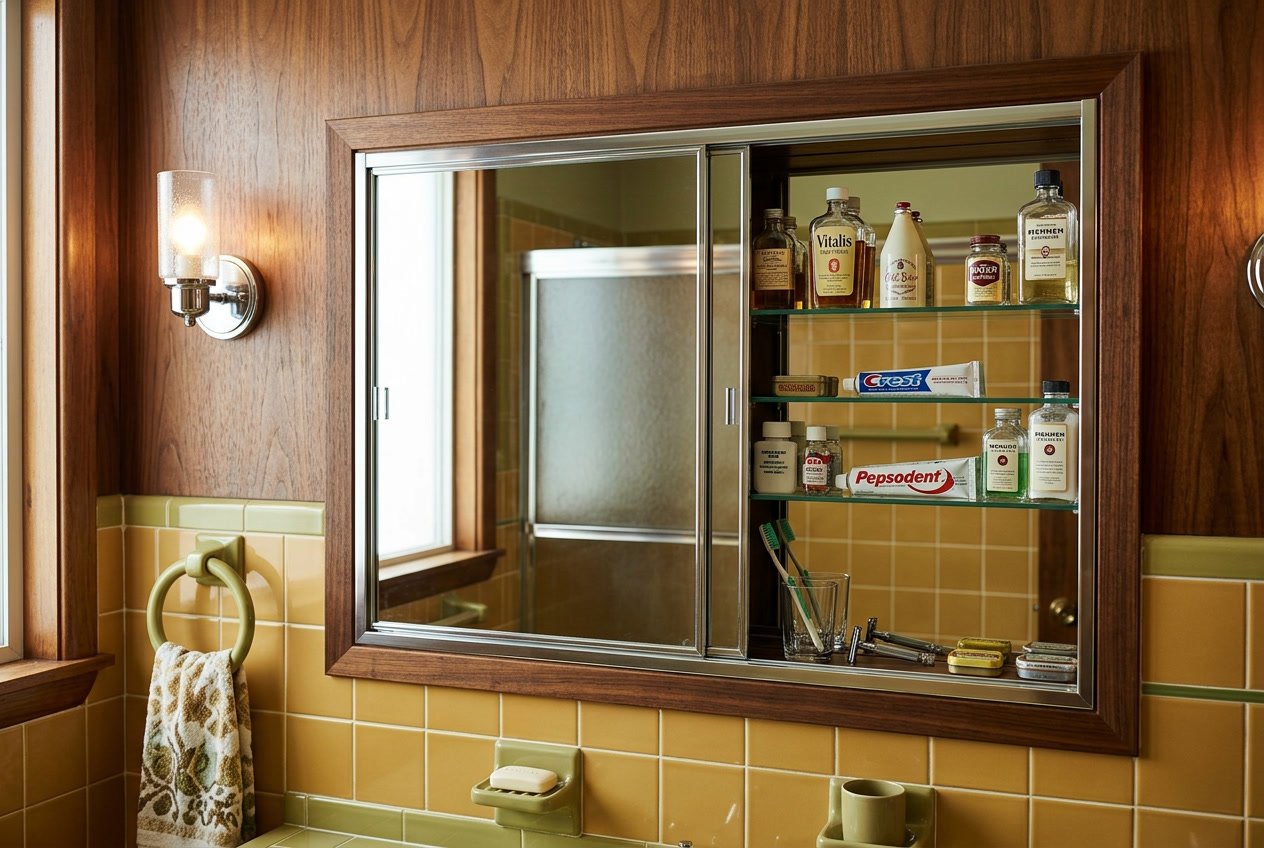
In the 1970s, medicine cabinets were built right into the wall instead of just hanging on top. That flush look? People thought it was super sleek, and honestly, it did make bathrooms feel a bit more modern.
Sliding mirror doors made these cabinets practical for tight spaces. No swinging doors to bump into—just a gentle slide along the track, and you had your toothpaste or aspirin in hand. The mirrors doubled as your main vanity mirror, which was handy and saved wall space.
Most had metal frames in finishes like chrome, brass, or bronze, so you could easily match them to your towel bars or faucets. Inside, you’d usually find a couple of adjustable shelves, either glass or metal. These cabinets were about 16 to 24 inches wide and 4 to 5 inches deep—not huge, but enough for the basics. Some wider models had three sliding doors instead of two.
Builders put these in almost every new bathroom during the decade. The recessed design kept things looking clean and modern, which was pretty much the vibe everyone wanted back then.
18. Bold geometric wallpaper in olive and rust tones
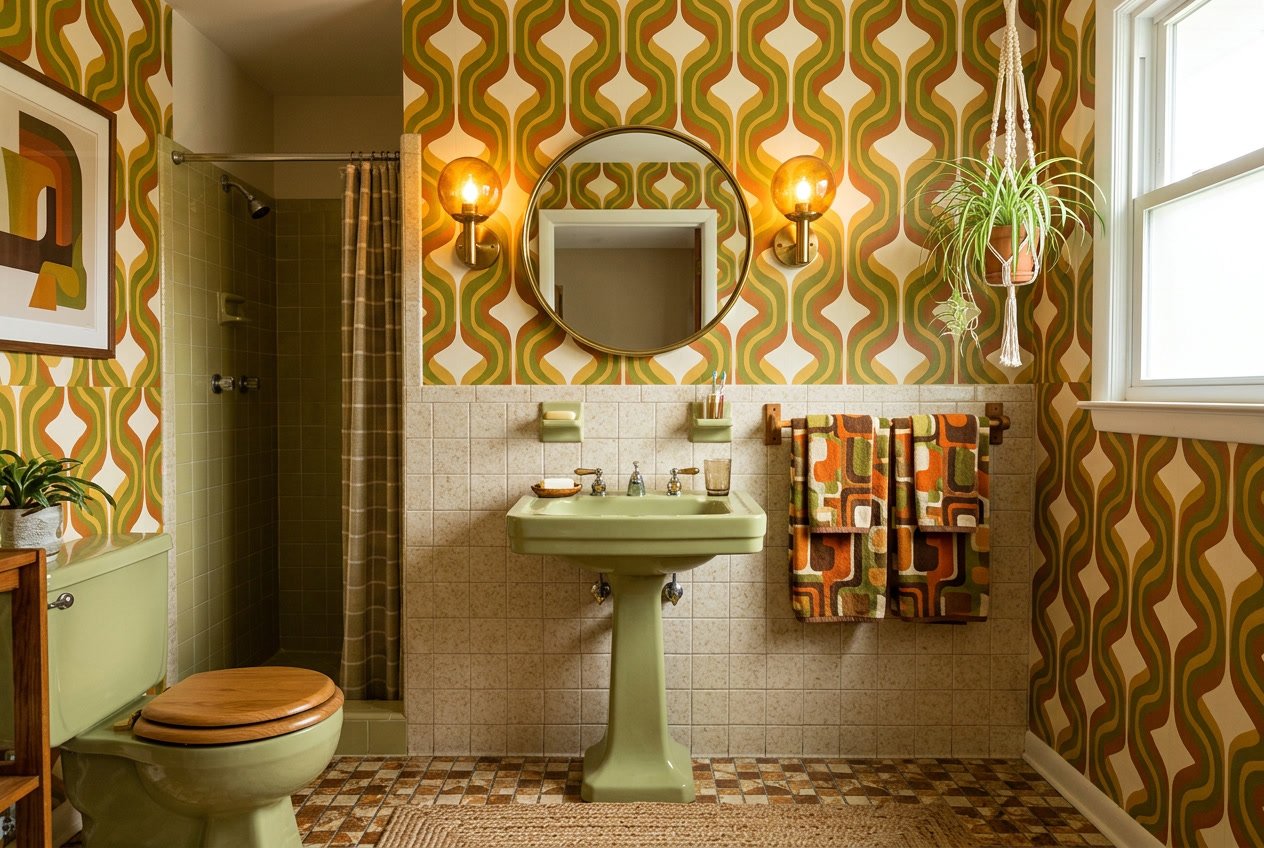
Geometric wallpaper was everywhere in 1970s bathrooms—especially in those classic olive green and rust orange combos. You’d spot these earthy tones in house after house, turning ordinary bathrooms into wild, colorful showcases.
Designs ranged from simple circles and hexagons to overlapping shapes that sometimes looked a bit dizzying (in a good way). Diamonds, zigzags, hypnotic abstracts—people really leaned into the modern, break-the-rules look.
Vinyl wallpaper was the go-to for bathrooms since it could handle steam and wiped clean pretty easily. That glossy finish also bounced light around, which helped brighten up even the smallest spaces. You could go all-in and paper every wall, or just pick one as an accent if you weren’t feeling quite so bold. Lots of folks matched their wallpaper to rust towels, olive bath mats, or funky shower curtains.
Pretty much everyone had at least one bathroom with geometric wallpaper back then. It was a real sign of the times—bold, expressive, and not afraid to take a few risks with color and pattern.
17. Macramé hanging plant holder near window
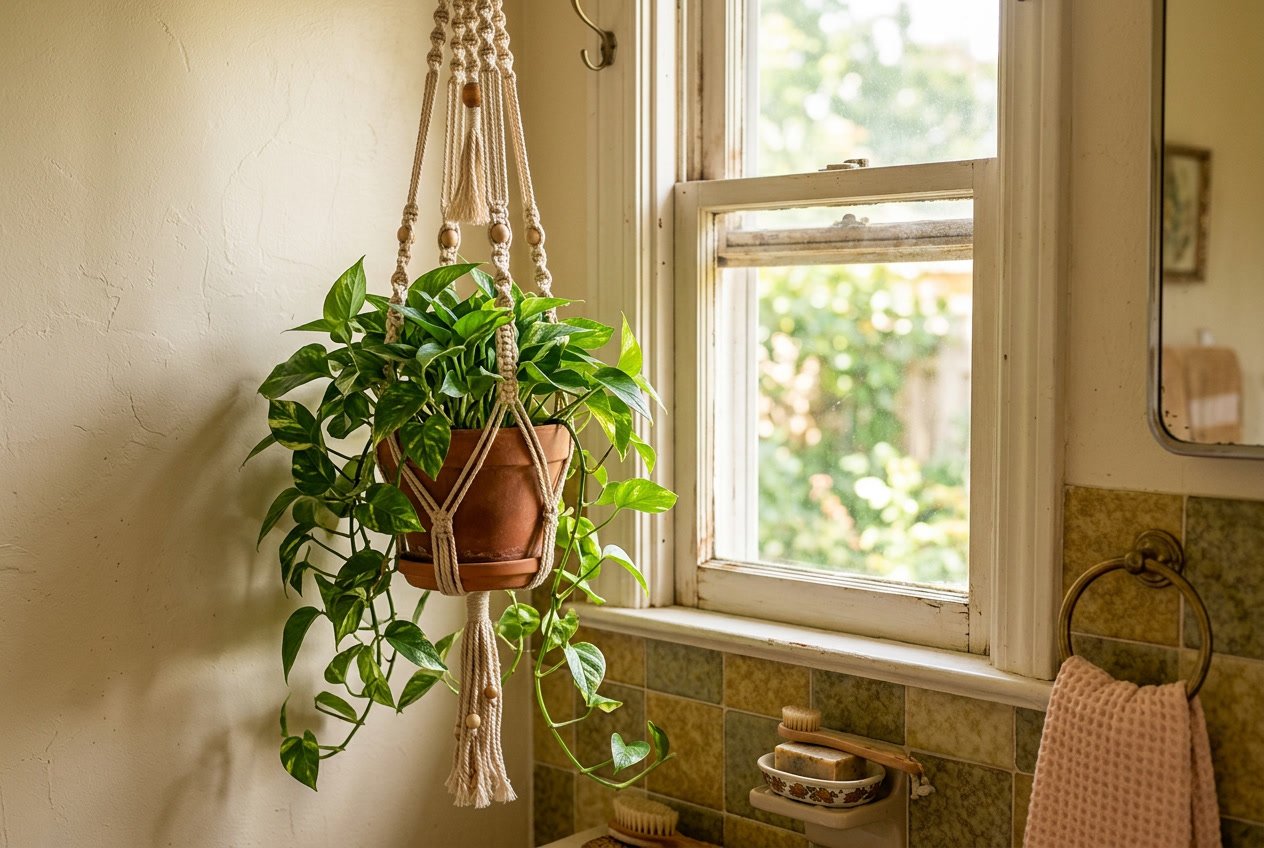
If you didn’t have a macramé plant hanger by your bathroom window in the 1970s, were you even trying? These knotted rope holders popped up everywhere, adding a splash of boho style—even in the smallest bathrooms.
The window was the sweet spot. Your spider plants and ferns could soak up sunlight, and the steamy air kept them thriving. Most hangers used cotton cord in neutral shades—cream, tan, brown. You could buy them at the store, but honestly, a lot of people just made their own. The basic knots weren’t hard to learn, and it was a fun afternoon project.
Some hangers were simple, just enough to cradle a pot. Others got pretty elaborate, with beads, shells, or wooden rings woven in. Pothos, philodendrons, and English ivy were the favorites—they loved the humidity and their trailing vines made the space feel relaxed and alive.
Hanging plants by the window also gave you a bit of privacy, kind of like a living curtain. A clever little trick, really.
16. Sunburst clock or starburst mirror above vanity
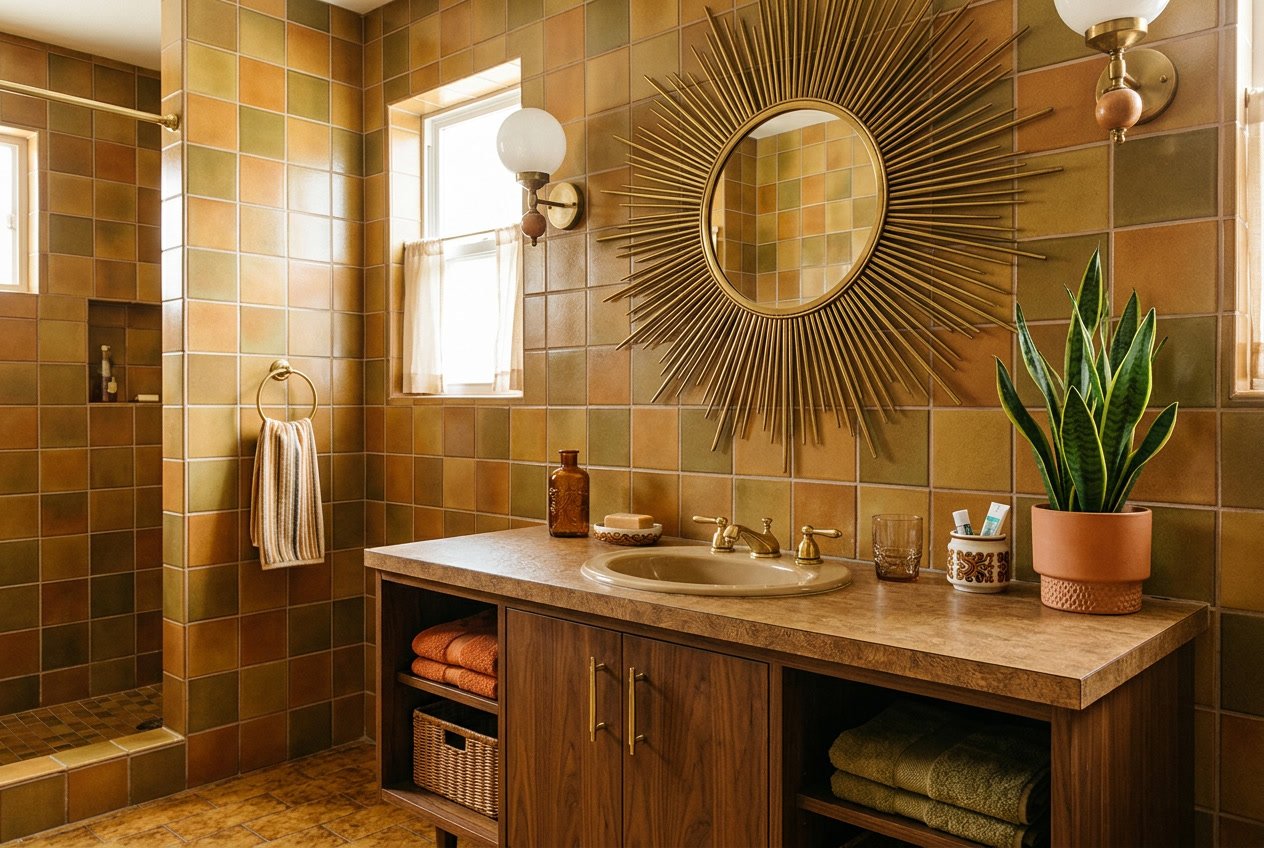
Above the vanity, nothing grabbed attention quite like a sunburst clock or starburst mirror in the 1970s. The usual round mirrors started taking a backseat to these dramatic, spiky designs—rays of metal shooting out from a central point. Honestly, they looked pretty cool.
Some folks went for the clock version, mixing function with flair. Others just wanted the mirror, all about the look. Gold or brass finishes dominated, blending right in with the harvest gold and avocado green fixtures that seemed to be everywhere. Those shiny surfaces also bounced a bit more light around, which helped in cramped bathrooms.
The size depended on your space—smaller ones fit powder rooms, while big, bold starbursts made a real statement in larger bathrooms. Installation was usually simple, just a hook or two, and you were done. They fit right in with the mid-century modern and retro styles that ruled the decade.
15. Cone-shaped pendant light with amber glass
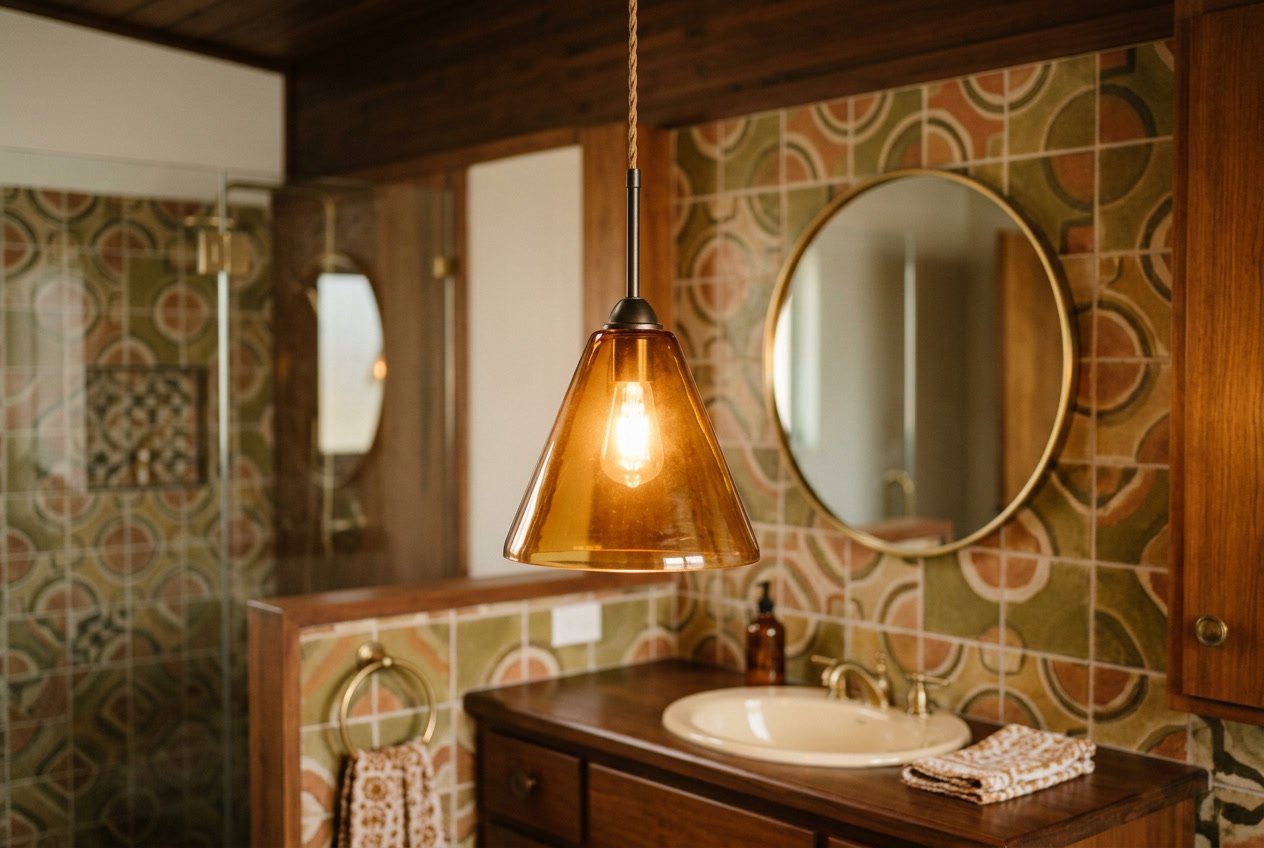
Step into a 1970s bathroom and you’d probably spot a cone-shaped pendant light with warm amber glass hanging overhead. These replaced the old-school vanity strip lights and brought a much cozier vibe to the room.
The amber glass gave off a soft, golden glow—way less harsh than bright white bulbs. You could find pendants in all sorts of amber shades, from pale honey to deep brown. The cone shape aimed the light down, and the colored glass softened it even more.
Brass or bronze hardware was the norm, matching all the other metallic touches around the bathroom. Sometimes you’d see one pendant over a small vanity, sometimes two or three in a row for bigger spaces. Textured glass versions were everywhere, too, scattering the light and adding a little extra visual interest.
This kind of lighting felt warmer and more flattering—nobody missed the cold, clinical look of fluorescent bulbs. Your reflection in the mirror even looked a bit kinder under that golden glow.
14. Tiled half-wall with contrasting grout (black on white)
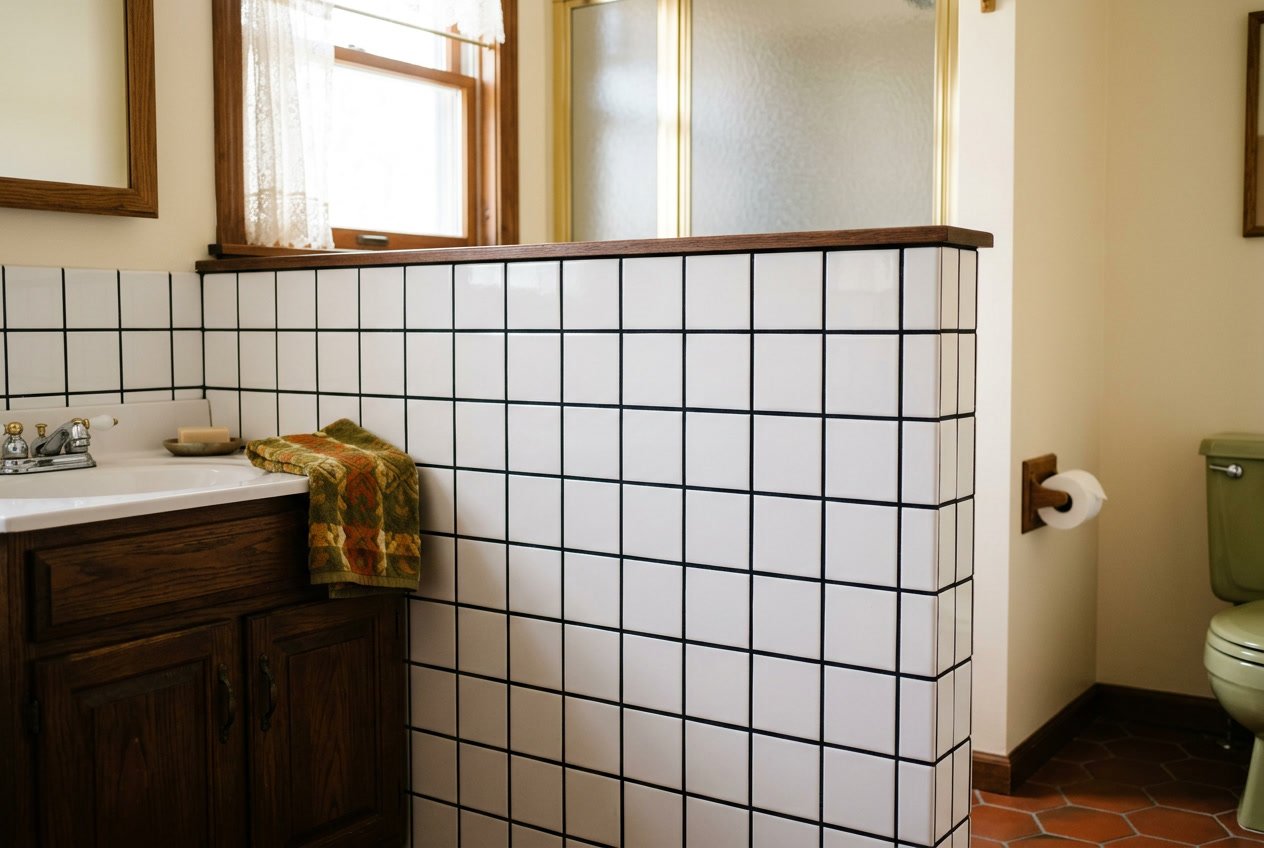
White tiles with black grout—yep, that was a big 1970s bathroom trend. It gave the room some punch without needing wild colors or patterns everywhere.
The half-wall style meant you only tiled up to about waist height, saving money and making cleanup easier where it mattered most. The top half usually got a coat of paint in a color that played well with the rest of the room.
Black grout made each tile pop, creating a bold grid that stood out way more than the old white-on-white look. Even small bathrooms felt more designed and intentional with this contrast. Subway tiles were the go-to, but some people experimented with square tiles for a different feel.
One big perk: dark grout hid dirt and soap scum a lot better than white grout. Less scrubbing, less worry—who wouldn’t want that? You’d see this style in all kinds of homes, from modest ranches to fancier places. It was accessible, affordable, and just worked.
13. Round porthole mirror with brass trim
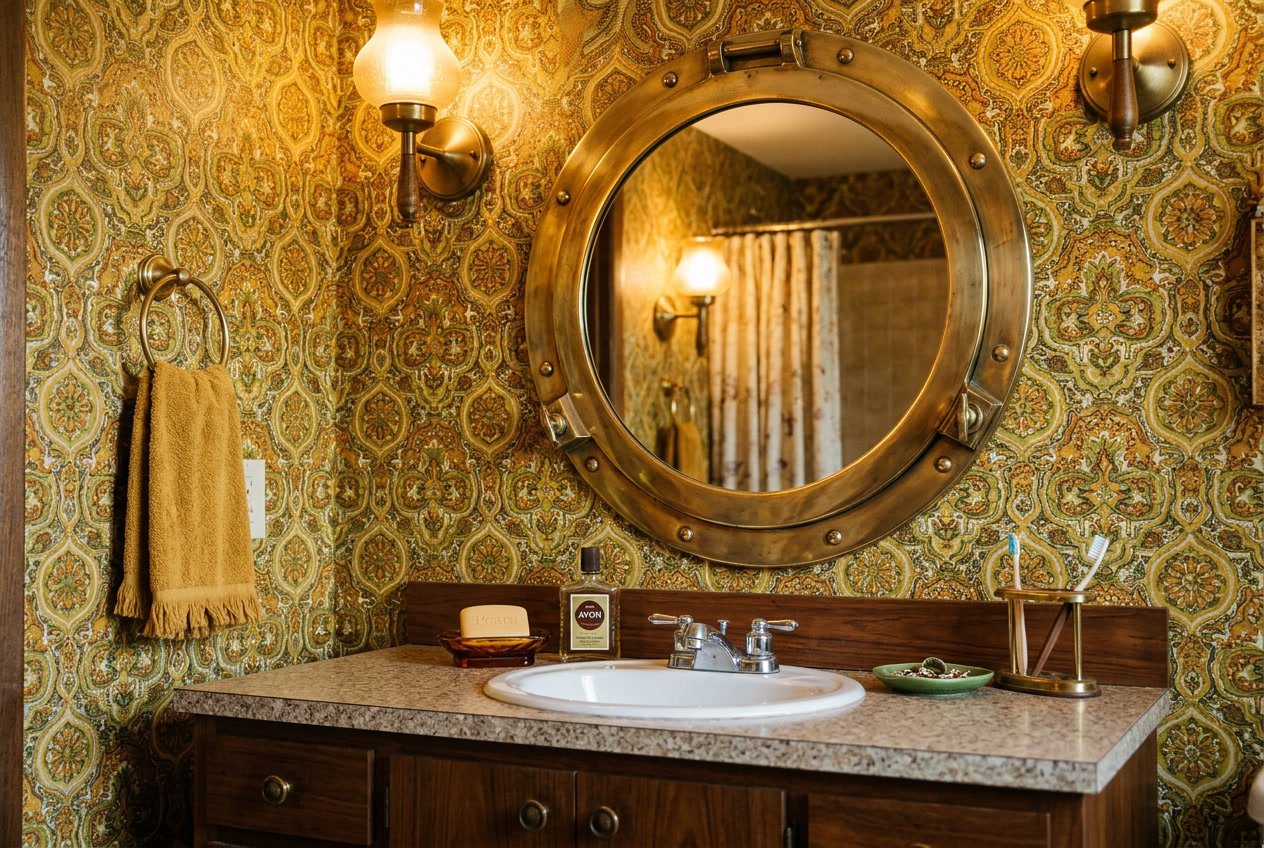
Nautical themes made a splash in 1970s bathroom design. Round porthole mirrors with brass trim brought a bit of maritime flair into American homes back then.
These mirrors mimicked real ship portholes. The brass frames, usually polished, gave bathrooms a warm, golden glow. Some even had hinges so you could open and close them, just like on an actual boat.
They came in a range of sizes to fit different bathroom spaces. The brass trim often had a raised edge or some decorative details for a more authentic vibe. Most folks hung them above sinks or on a feature wall.
This trend fit right in with the 1970s love of themed decorating. Coastal and nautical styles were all the rage, especially for bathrooms. You’d spot these mirrors in homes near the ocean, but honestly, they popped up even in the most landlocked states.
The brass finish needed regular polishing to keep its shine. Over time, though, the metal would develop a patina—and some people actually liked that aged look. It made the mirror feel more like a real maritime relic.
You could get these mirrors as authentic salvaged portholes or as new, mass-produced versions. The real deals were heavy and pricey, while the manufactured copies let more people get in on the trend without breaking the bank.
12. Raised platform bathtub with built-in seat
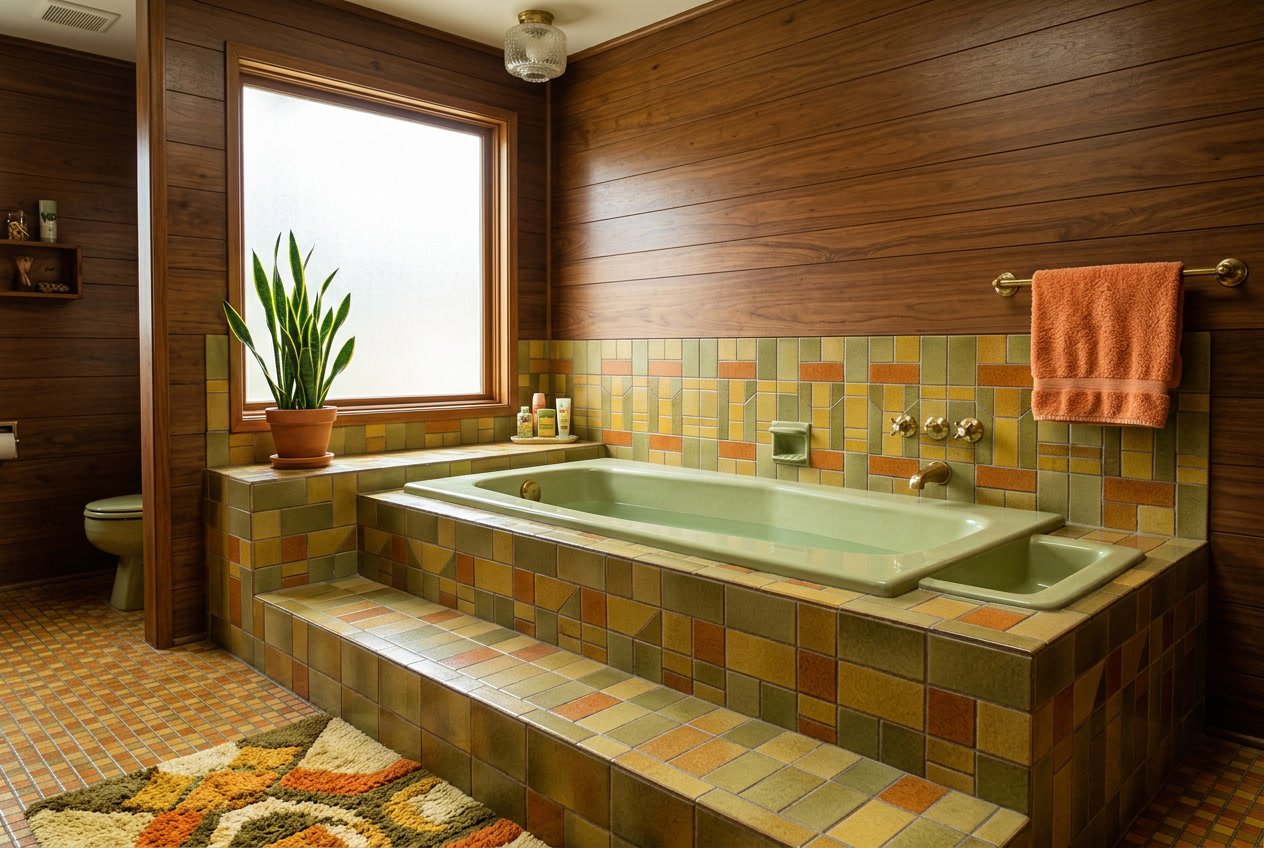
The raised platform bathtub really stood out in 1970s bathrooms. Instead of a standard tub tucked against the wall, people elevated their bathtubs on carpeted or tiled platforms—sometimes just a few inches, sometimes a couple of feet.
These platforms turned the tub into the main event. You’d step up and sink into a bath that felt more like a personal spa than a plain fixture.
Lots of these raised tubs had built-in seats along the rim or inside the tub. You could sit while bathing or use the ledge for candles, plants, or bath stuff. Some designs had wide edges that worked as extra seating, too.
Folks usually finished the platforms in the same materials as the rest of the bathroom. Ceramic tiles in avocado green, harvest gold, or chocolate brown were everywhere. Some even carpeted the platforms, which sounds odd now but was considered pretty fancy back then.
The raised design gave the tub area a sense of drama and made it feel like a separate relaxation zone. It was almost like carving out a mini spa at home.
Platform tubs needed more space than standard ones. They worked best in bigger bathrooms where the platform wouldn’t take over the whole room. The extra height meant you had to be careful climbing in and out, especially if things got slippery.
11. Colored acrylic molded shower stall (ginger/orange)
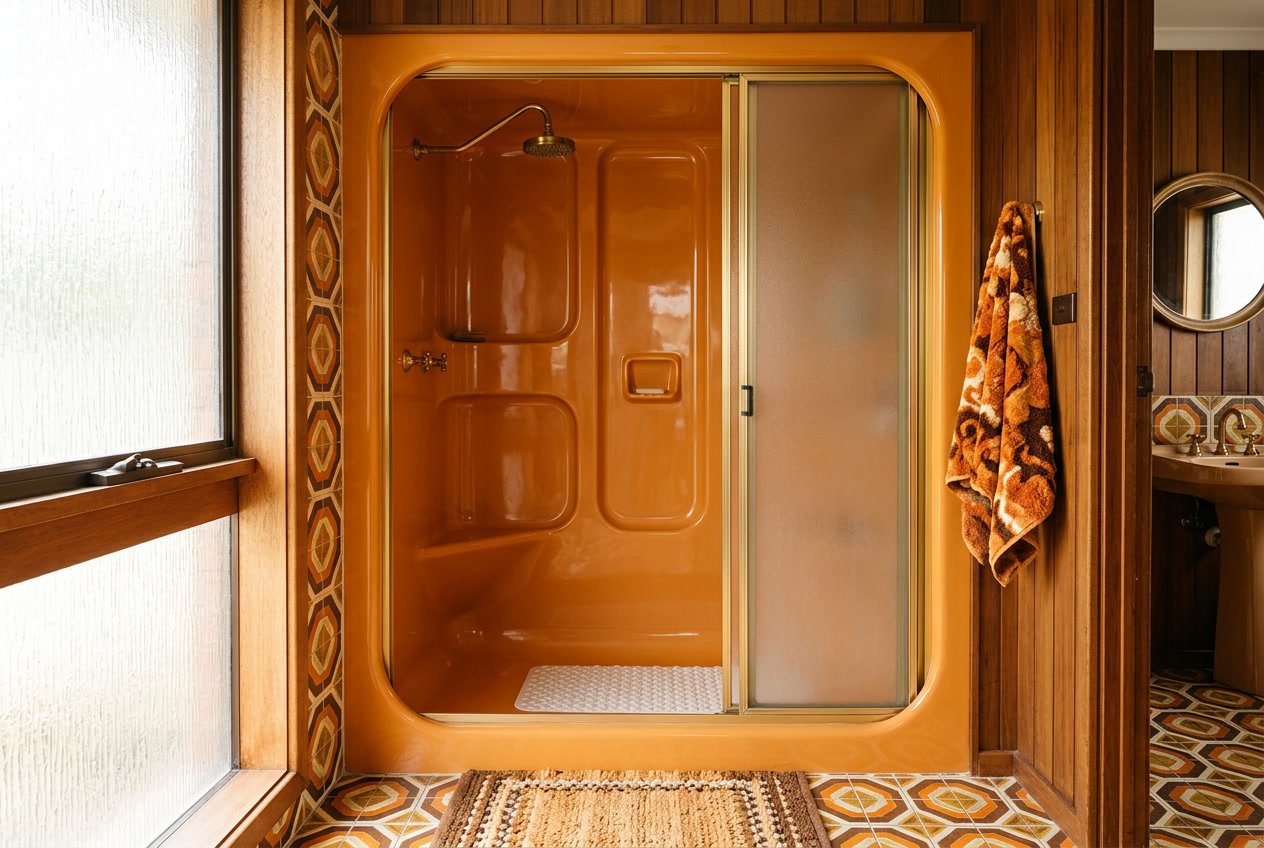
Walk into a 1970s bathroom and you might get hit with a bold ginger or orange acrylic shower stall. These one-piece molded units were all about easy installation and hassle-free cleaning.
The orange and ginger shades matched the earthy color palettes that ruled 70s design. You’d see everything from soft peach to deep burnt orange. They coordinated with harvest gold appliances and avocado bathroom fixtures, too.
Acrylic was the go-to material. It was lightweight, tough, and could be molded into a single seamless piece—walls and base all in one. That meant fewer places for water or mold to hide.
People loved how easy these showers were to maintain. The smooth acrylic surface wiped clean with basic cleaners. No grout to scrub, no tiny tiles to worry about.
The molded showers came in alcove and corner layouts for different bathrooms. Some had built-in soap dishes or shelves right in the walls. The texture often mimicked tile patterns, so you got the look without all the work.
Ginger and orange seemed modern and stylish at the time. They warmed up bathrooms without needing much extra decor. Sure, these colors feel dated now, but back then, they were both practical and on trend.
10. Brass waterfall sink faucet with cross handles
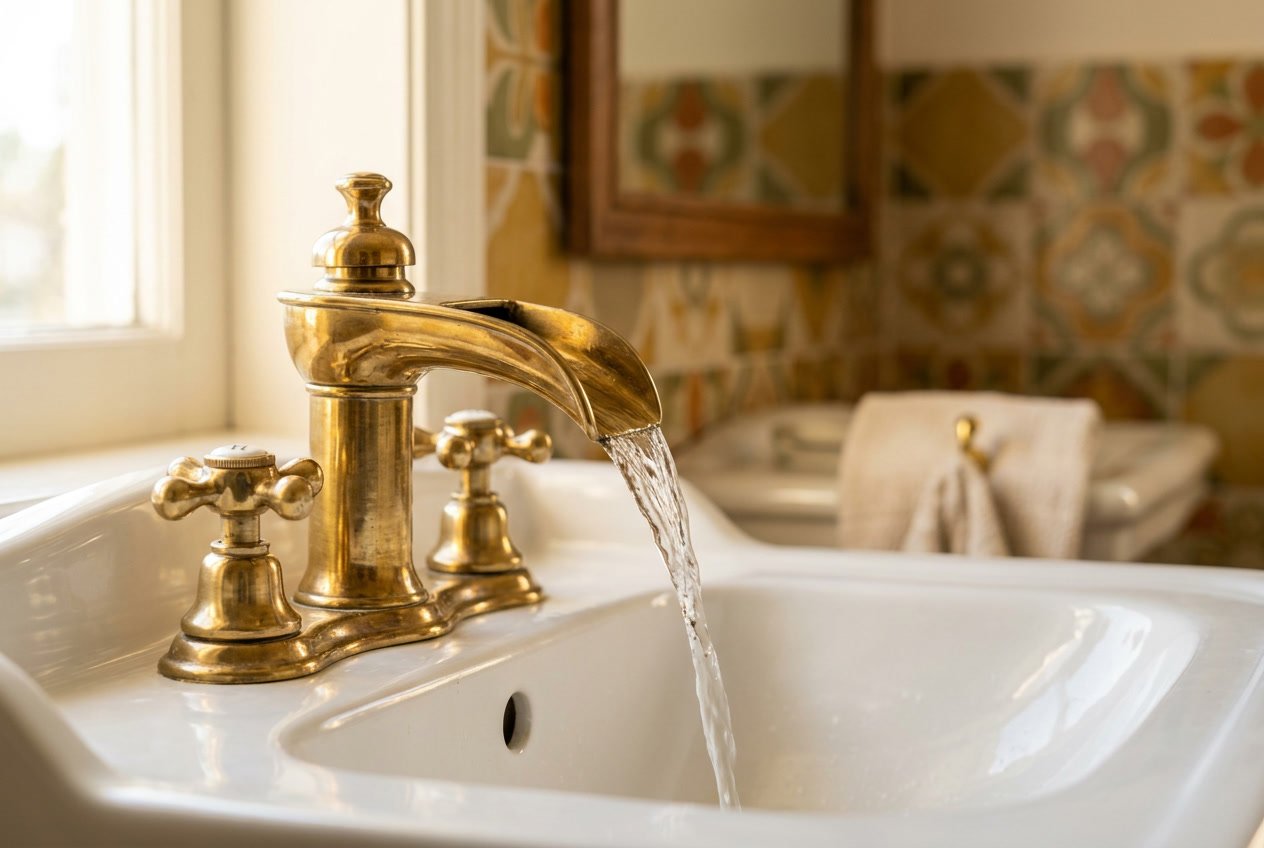
You’d spot brass waterfall faucets in plenty of upscale 1970s bathrooms. The wide spout sent water flowing out in a sheet, not a stream—it looked like a tiny waterfall pouring into your sink.
Brass was the favorite metal for these. Its warm, golden tone fit right in with the earthy 70s color schemes. Some faucets gleamed with a polished finish, while others went for a brushed, more understated vibe.
The cross handles really set the look. With their plus-sign shape, you’d twist them to adjust water flow and temperature. They felt a bit old-fashioned, in a good way, and stood out from the usual round knobs or levers.
Mixing the modern waterfall flow with classic cross handles gave bathrooms a unique blend of styles. It was both contemporary and a little bit nostalgic. The brass finish pulled everything together with that unmistakable 1970s warmth.
People usually put these faucets in master bathrooms or powder rooms. They made a statement and showed you cared about the details. Plus, the waterfall flow was gentler and quieter than traditional faucets—always a nice touch.
9. Frosted glass block shower wall
🔥 Would you like to save this?
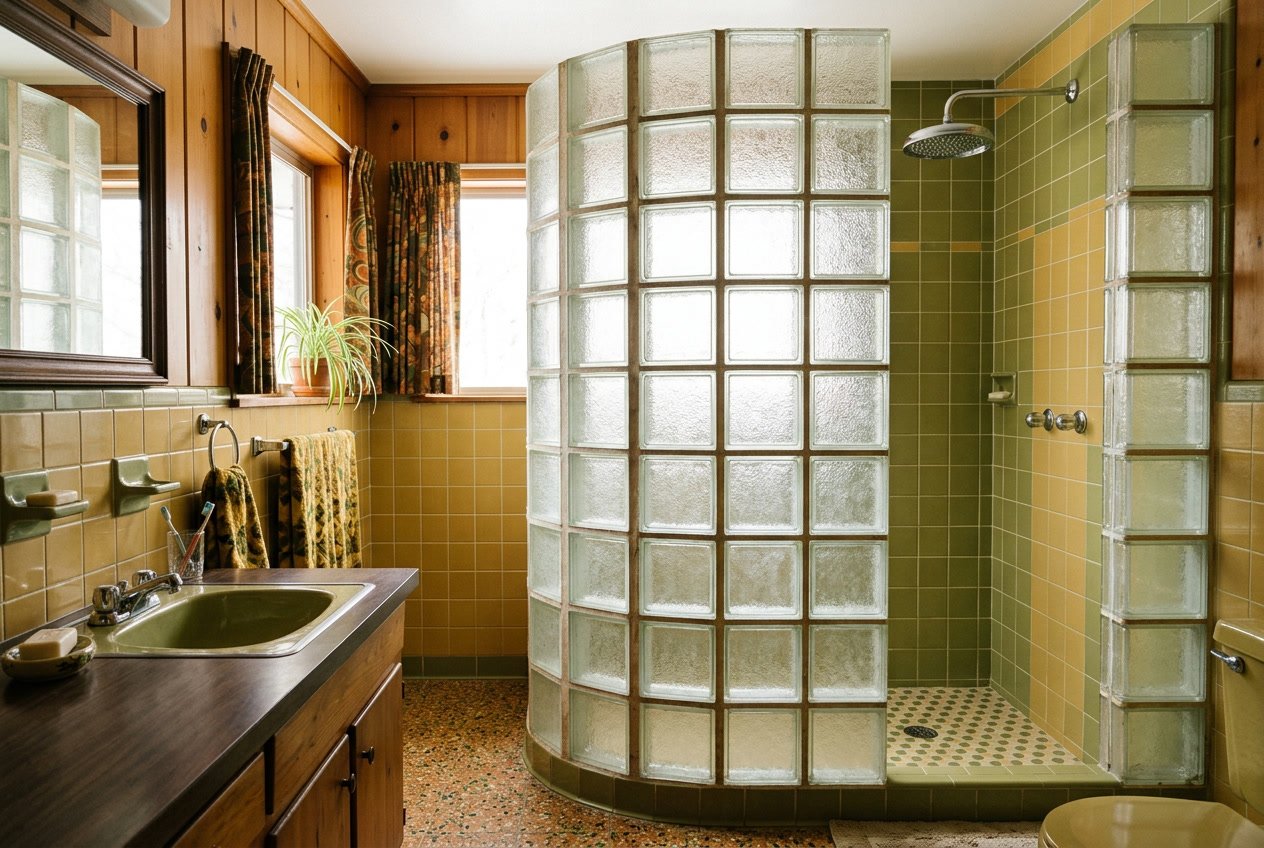
Glass block shower walls were a classic 1970s bathroom move. These thick, chunky blocks of translucent glass let light through but still kept your shower private.
The blocks came in all sorts of patterns and textures—wavy lines, bubbles, geometric shapes. Each one scattered light in its own way, so your bathroom felt different depending on the time of day.
To install a glass block wall, you’d set it into the bathroom’s structure with mortar, like bricks. That made them way sturdier than shower curtains or the thin glass doors that started showing up later.
The frosted blocks let in natural light without sacrificing privacy. If you had a window, sunlight could filter through and brighten up the shower. The result? A soft, glowing effect that made the whole space feel bigger and airier.
Lots of people used glass blocks to separate the shower from the toilet or sink. They worked as dividers that didn’t close off the room. You could see shapes and movement, but nothing too revealing.
Glass block walls fit right in with the 1970s obsession with texture and visual interest. They brought in a modern, almost industrial vibe, but still felt warm and welcoming. The way light played through the glass kept things interesting all day long.
These walls were built to last. Unlike curtains that needed replacing or thin glass that cracked, glass block walls stood up to years of use. The thick glass and solid build meant you rarely had to worry about repairs.
8. Floral or paisley vinyl wallpaper border
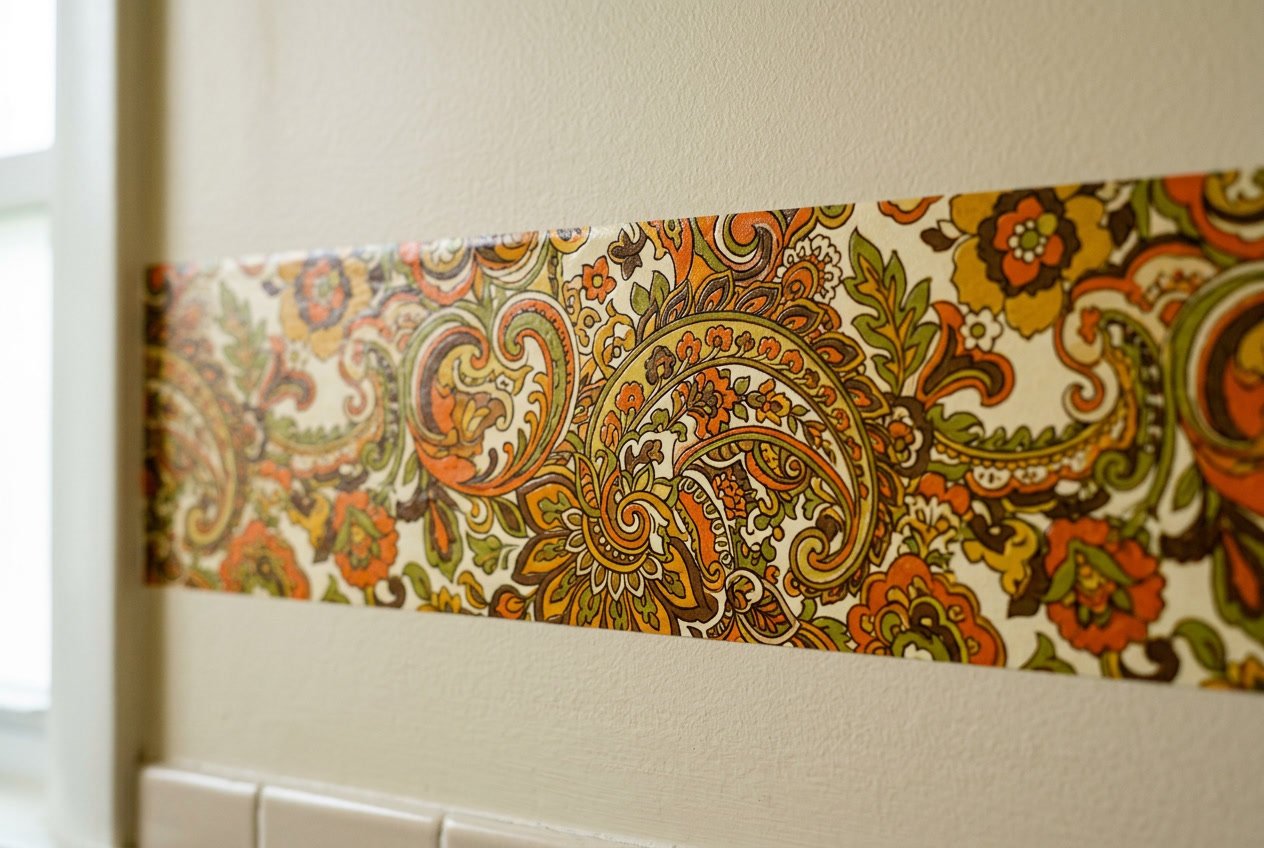
No 1970s bathroom felt finished without a wallpaper border running along the top or middle of the walls. These vinyl borders were made for humid bathrooms—practical and decorative at the same time.
Floral patterns were everywhere. Daisies, roses, and other blooms in harvest gold, avocado green, and burnt orange covered plenty of borders. The flowers often had a slightly psychedelic look, which just worked for the era.
Paisley patterns brought in a bohemian, exotic vibe. The teardrop shapes, packed with details, added interest without overwhelming the room. You’d see paisley in brown and orange, or sometimes purple and blue.
Vinyl was the smart choice—it resisted moisture and wiped clean with a damp cloth. You could stick these borders right onto painted walls or over old wallpaper for a quick refresh.
People put borders at chair rail height to break up big walls, or just under the ceiling. Some even layered multiple borders for extra flair. It let you get creative without committing to full-wall wallpaper.
Borders were a way to add pattern and personality without going all in. You got the visual pop of wallpaper, but most of your walls stayed a solid color—kind of the best of both worlds.
7. Wood-paneled bathroom walls in knotty pine
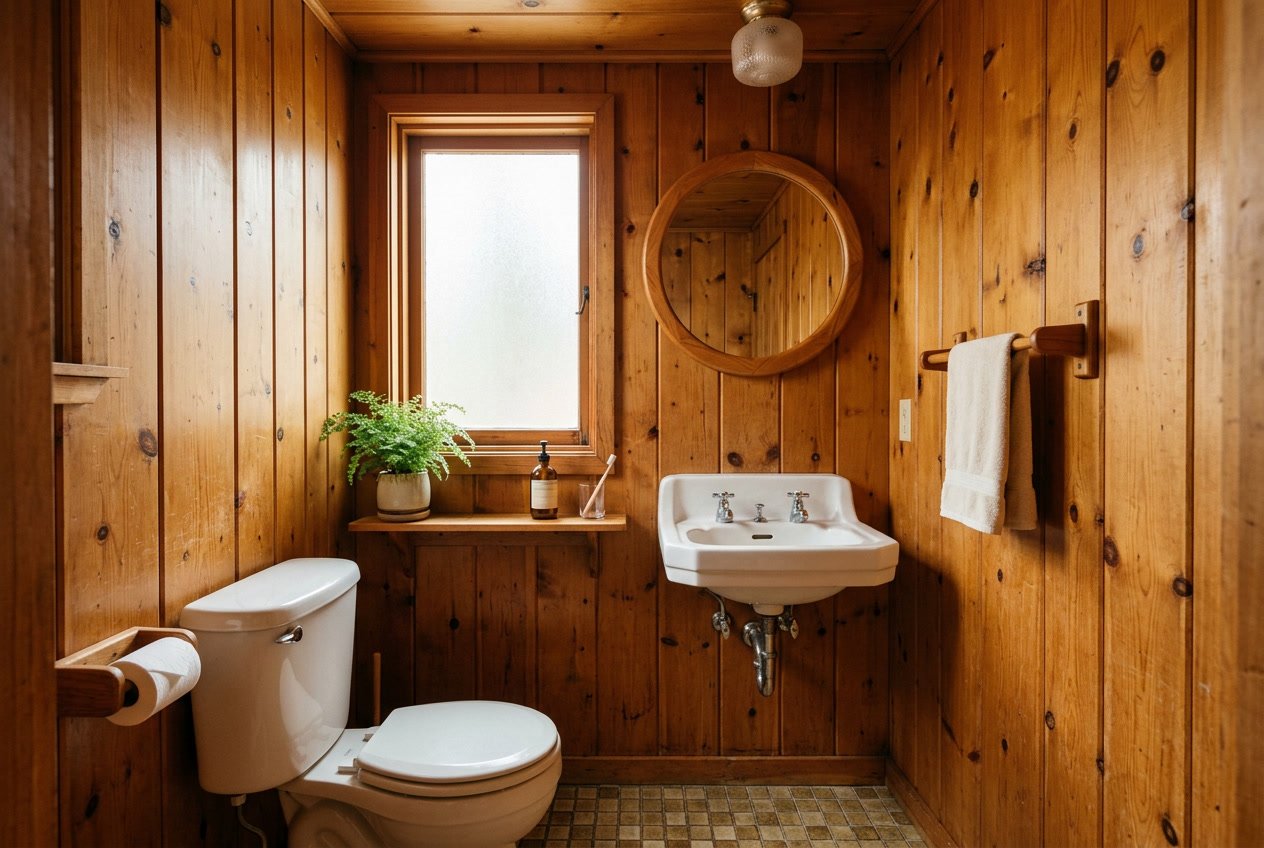
Knotty pine turned up in bathrooms everywhere during the 1970s. This wood paneling brought a warm, rustic vibe that really nailed the decade’s love of natural materials.
The dark knots scattered across the surface gave each panel its own personality. Unlike smoother woods, knotty pine had a lived-in charm that folks found appealing and approachable.
You’d see this paneling in all kinds of homes. It was cheaper than a lot of other options, so families on a budget snapped it up. Installation was straightforward enough that plenty of people did it themselves.
The panels made bathrooms feel a bit like a cabin retreat—cozy, not just utilitarian. That matched the era’s trend of bringing the outdoors in. Even if your bathroom didn’t have much natural light, the honey-colored wood warmed things up.
Most people ran knotty pine from floor to ceiling. To protect it from bathroom moisture, homeowners sealed the wood with varnish or polyurethane. That finish deepened the golden tones and gave the panels a little shine.
Knotty pine first caught on in the 1930s and 1960s, but it stuck around strong through the 70s. Chances are, someone you knew had at least one room covered in it. It’s one of those mid-century details that just lingered into the next decade.
6. Harvest gold pedestal sink with chrome legs
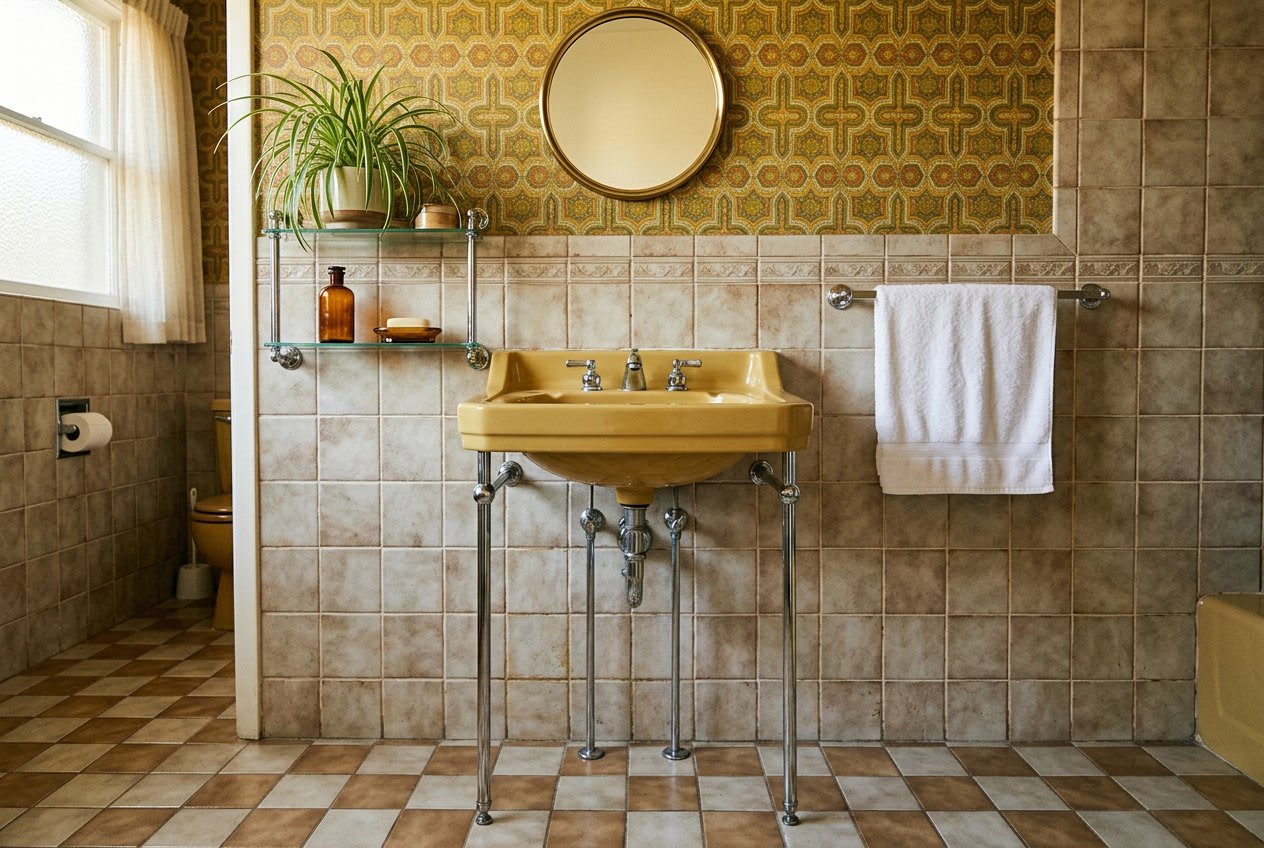
Harvest gold was everywhere in 1970s bathrooms. This warm, mustardy shade showed up on sinks, tubs, and even toilet seats. Pair it with shiny chrome legs on a pedestal sink, and you got a look people thought was modern and, honestly, kind of fancy back then.
The pedestal sink saved space, which helped in smaller bathrooms. Chrome legs weren’t just for show—they supported the sink and made the whole thing look lighter than those old, bulky vanities. That mix of golden porcelain with gleaming metal legs? Total 1970s signature style.
You’d spot these sinks in homes all over America. Big brands like Kohler and Ideal Standard cranked them out by the thousands. The harvest gold finish, usually made from vitreous china, resisted stains and held up surprisingly well over time.
Chrome legs came in all sorts of styles—some straight, some with curves, and a few with Art Deco details for extra flair. The metal finish matched the other bathroom bits: faucets, towel bars, you name it.
These sinks often came as part of a full set. If you really wanted to commit, you’d get a matching toilet and tub, maybe even some coordinating tile. That was the dream for a unified look.
Good luck finding one of these original harvest gold pedestal sinks with chrome legs today. Most got ripped out during later remodels as tastes changed. If you do come across one, it’s basically a vintage collectible now—perfect for anyone chasing that authentic ’70s vibe in their home.
5. Hexagonal mustard-yellow ceramic floor tiles
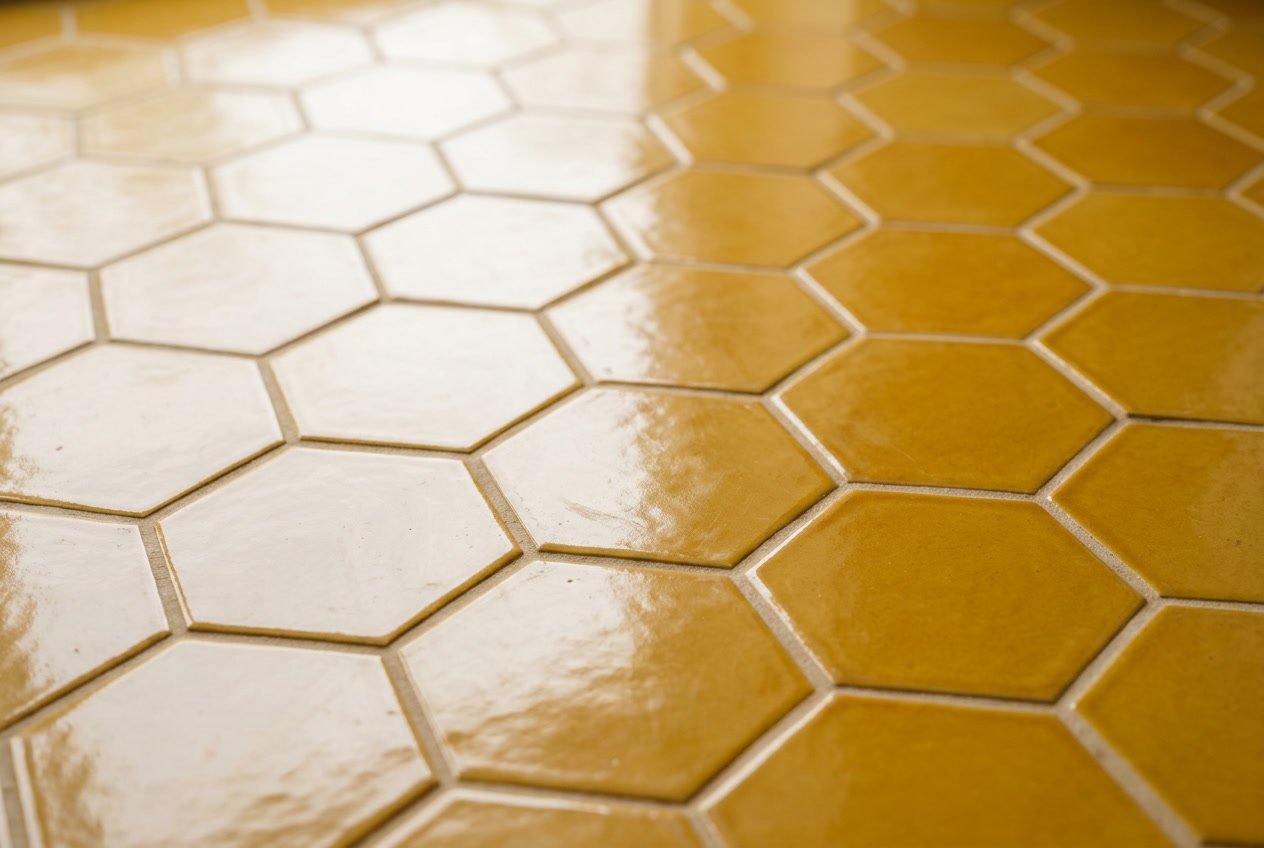
If you grew up in the 1970s, you probably remember stepping onto those hexagonal tiles in the bathroom. They showed up everywhere back then.
Mustard yellow was the standout. It fit right in with the earthy, cozy tones that made up ’70s style.
Hex tiles weren’t exactly new, though. They’d been around since the early 1900s, but the ’70s brought bold colors into the mix—mustard yellow, avocado green, harvest gold. Suddenly, old-school tile felt fresh again.
Bathrooms usually had these tiles laid out in a honeycomb pattern. Some folks mixed in other colors for custom designs. Sure, the small tiles took forever to install, but you could get pretty creative with the layout.
Ceramic was a practical choice. It handled water well and wiped clean with little effort. That glossy finish added a bit of shine, too.
Most of the time, you’d buy these tiles on mosaic sheets, which made installation a little less tedious than placing each hex by hand. Tile companies offered all sorts of colors in their collections.
All those tiny tiles gave the floor some texture, which meant less slipping when things got wet. Not a bad bonus, even if nobody talked about it much.
Plenty of vintage homes still have these hex tiles. Some people keep them for nostalgia, others rip them out. Funny enough, hex tiles are making a comeback in modern bathrooms—just with different colors, maybe less mustard.
4. Wall-to-wall shag carpeting around tub base
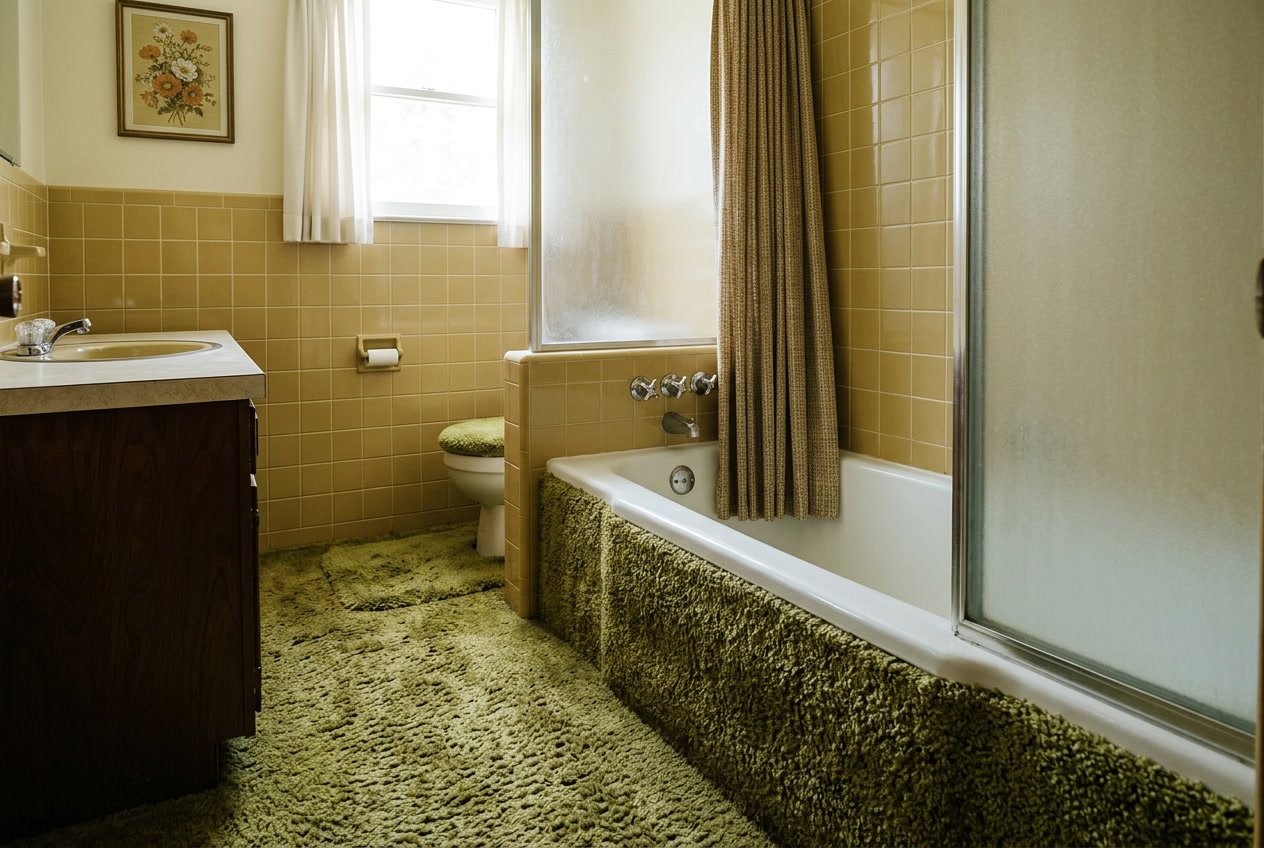
Back in the ’70s, people actually put thick shag carpeting right up to the edge of the tub. Wild, right? Plush fibers in harvest gold, avocado green, or burnt orange—same deep pile as the living room, just in the bathroom.
Stepping out of the shower onto warm, soft carpet felt pretty luxurious compared to cold tile. The texture made bathrooms feel cozier, almost spa-like.
The carpet would soak up water from wet feet and tub splashes. Most folks figured it would dry fast enough to stay fresh until the next use.
Some went all out and matched their bathroom carpet with fuzzy toilet lid covers and tank toppers. That was a real look—everything shag, everywhere.
Most of these carpets had a rubber or latex backing to help prevent slipping and to protect the floor from moisture.
But cleaning them? That was a nightmare. Vacuuming didn’t get all the moisture or soap gunk out of those deep fibers. Over time, the constant dampness led to musty smells and, yeah, mold. Not great.
By the 1980s, most people tore out their shag bathroom carpet and switched to tile or vinyl. Cozy or not, it just wasn’t worth the hassle.
3. Brown and orange marbled laminate vanity countertop
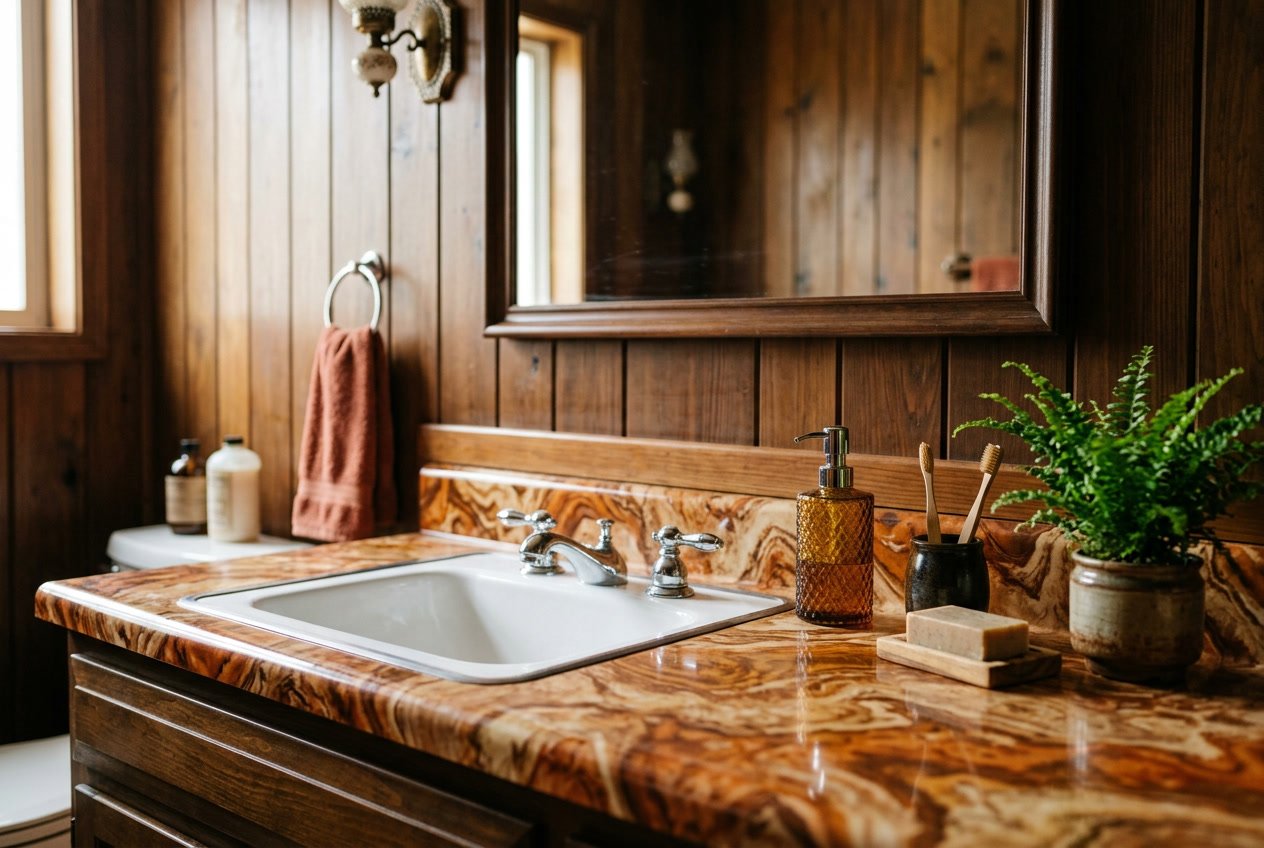
Walk into a 1970s bathroom, and chances are you’d spot a vanity countertop swirling with brown and orange. These marbled laminate counters were everywhere, pulling in those classic earthy tones that defined the decade.
Laminate made sense—it was cheap, and it could handle water and daily wear. Plus, the marbled pattern hid water spots and soap splashes better than a solid color. You didn’t have to wipe it down constantly to keep it looking halfway decent.
Brown and orange weren’t random. They fit right in with the natural, woodsy vibe of the era. Your countertop probably matched your harvest gold appliances and those wood-paneled walls, too.
The swirled look tried to mimic real marble or stone, but without the price tag. Laminate let you update your bathroom without blowing your budget.
Manufacturers sold these countertops in big sheets that installers could cut to fit any vanity. Some even had a molded backsplash built in. Usually, you’d get the countertop as part of a set with matching cabinets, tying the whole bathroom together in that unmistakable ’70s way.
2. Sunken tub with tile step-in platform
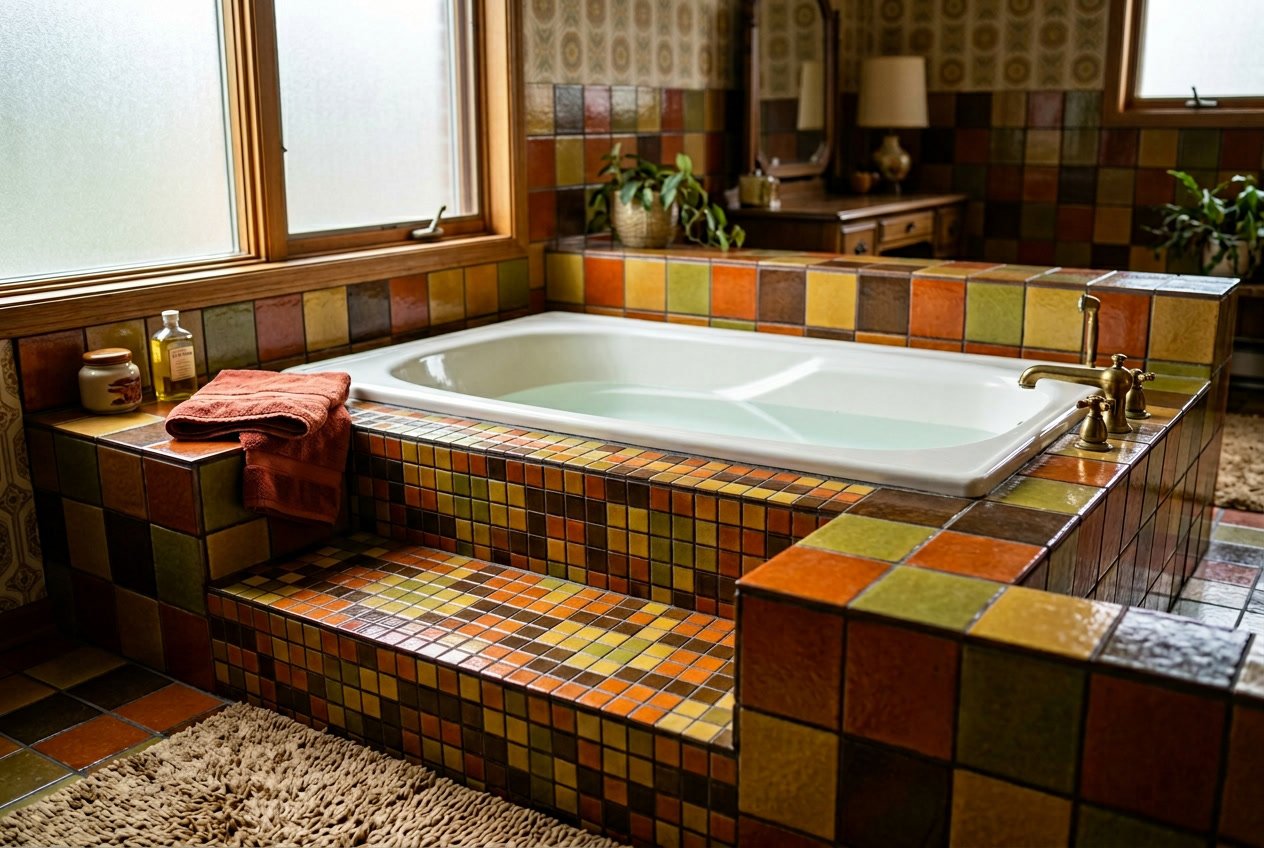
Sunken tubs were a big deal in the 1970s. Inspired by Roman baths, these tubs dropped right into the floor instead of sitting on top. The look felt modern, maybe even a bit glamorous.
Homeowners usually added tile step-in platforms around these tubs. The platforms made it safer to get in and out, and the tiles tied in with the rest of the bathroom’s style.
You’d see all sorts of setups—some with a single step, others with multiple levels leading down into the tub. Bold, colorful ceramic tiles covered the platforms, showing off that fearless ’70s design spirit.
The step-in platform wasn’t just for show. Without it, sunken tubs could be a tripping hazard. The raised edge made it obvious where the tub started.
Installing these things was no small job. You had to cut into the bathroom floor, waterproof everything, and build up the platform with care so water didn’t sneak underneath.
Sunken tubs with tiled platforms turned ordinary bathrooms into something that felt more like a home spa. Taking a bath suddenly felt like an event, not just a routine.
1. Avocado green fiberglass bathtub with integrated armrests
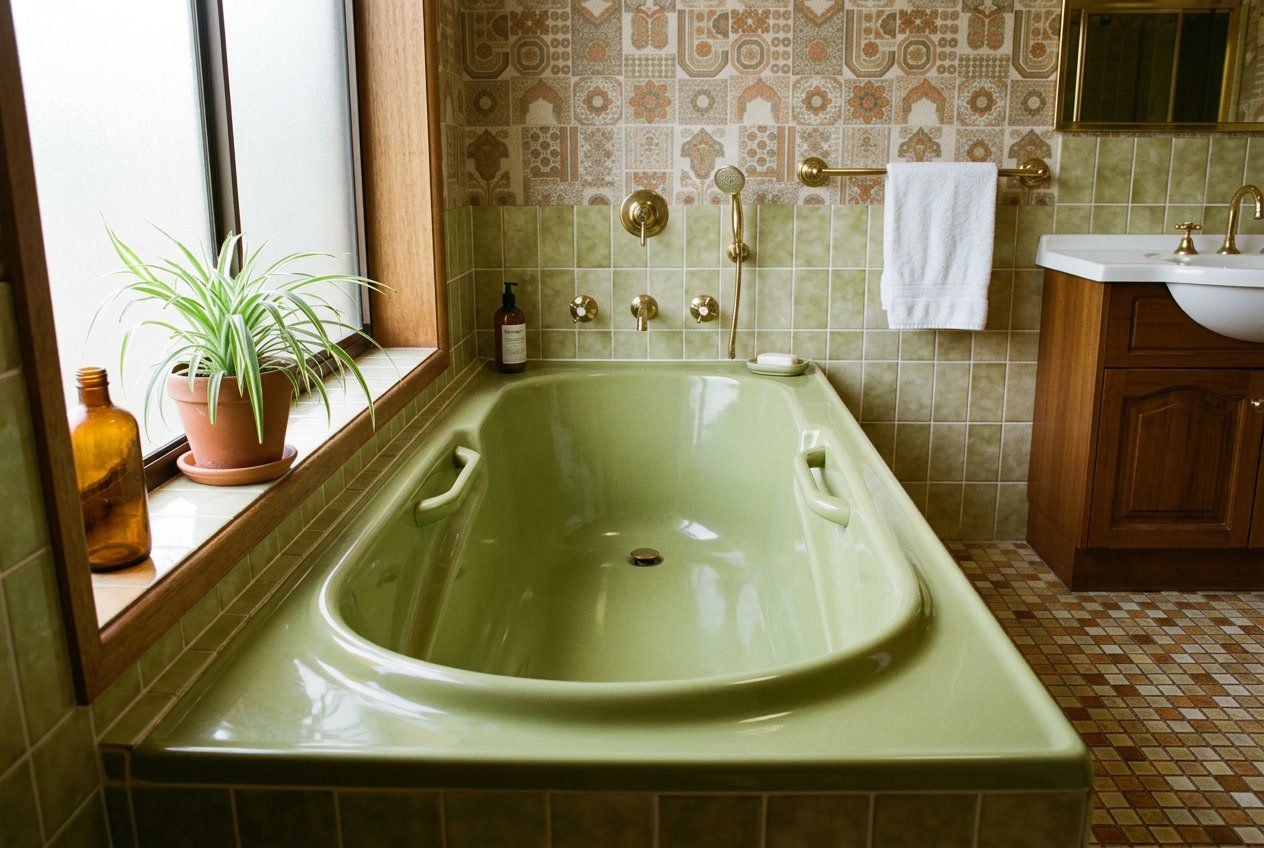
The avocado green bathtub—honestly, you can’t miss it—became a defining bathroom feature in the 1970s. This bold, leafy shade started popping up in American homes in the late ’60s and just stuck around for years.
Manufacturers loved fiberglass back then. It was light, cheap, and easy to shape into all sorts of designs. No wonder it took over the market.
Lots of these tubs had armrests molded right into the sides. You could lounge with your arms propped up or use them for a little extra help getting in and out. Kinda thoughtful, actually.
Your parents or grandparents might still talk about these tubs from their own childhood homes. The color was supposed to bring in that calming, nature-inspired vibe—like a little slice of the outdoors, but in your bathroom. Avocado green definitely tried to make the space feel more chill.
Usually, these tubs came as part of a matching set. People went all in: avocado toilet, sink, bathtub, sometimes even matching tiles. Some folks really embraced the look.
Fiberglass made these tubs practical for a lot of families. They cost less than the old cast iron or porcelain options, and you could install them without breaking your back. Lighter tubs just made life easier.
Find one in a house today and, honestly, it might still work fine. Fiberglass holds up surprisingly well if you take care of it. Some people even keep these vintage tubs on purpose now—for that retro, throwback style. Not for everyone, but there’s a certain charm to it, isn’t there?