🔥 Would you like to save this?
You can almost smell it if you try. That mix of furniture polish, cigarette smoke, and the faintly chemical sweetness of new wall-to-wall carpet. The television humming in its wooden cabinet. Late afternoon light pouring through the picture window onto a kidney-shaped coffee table nobody was allowed to put their feet on. The 1950s American living room wasn’t just a room. It was a statement of arrival, a declaration that you’d made it to the suburbs and you were staying.
Here are the 34 specific details that made it unmistakable.
In order to come up with the very specific design ideas, we create most designs with the assistance of state-of-the-art AI interior design software. Also, assume links that take you off the site are affiliate links such as links to Amazon. this means we may earn a commission if you buy something.
The Hi-Fi Stereo Console That Was Part Radio, Part Turntable, Part Living Room Altar
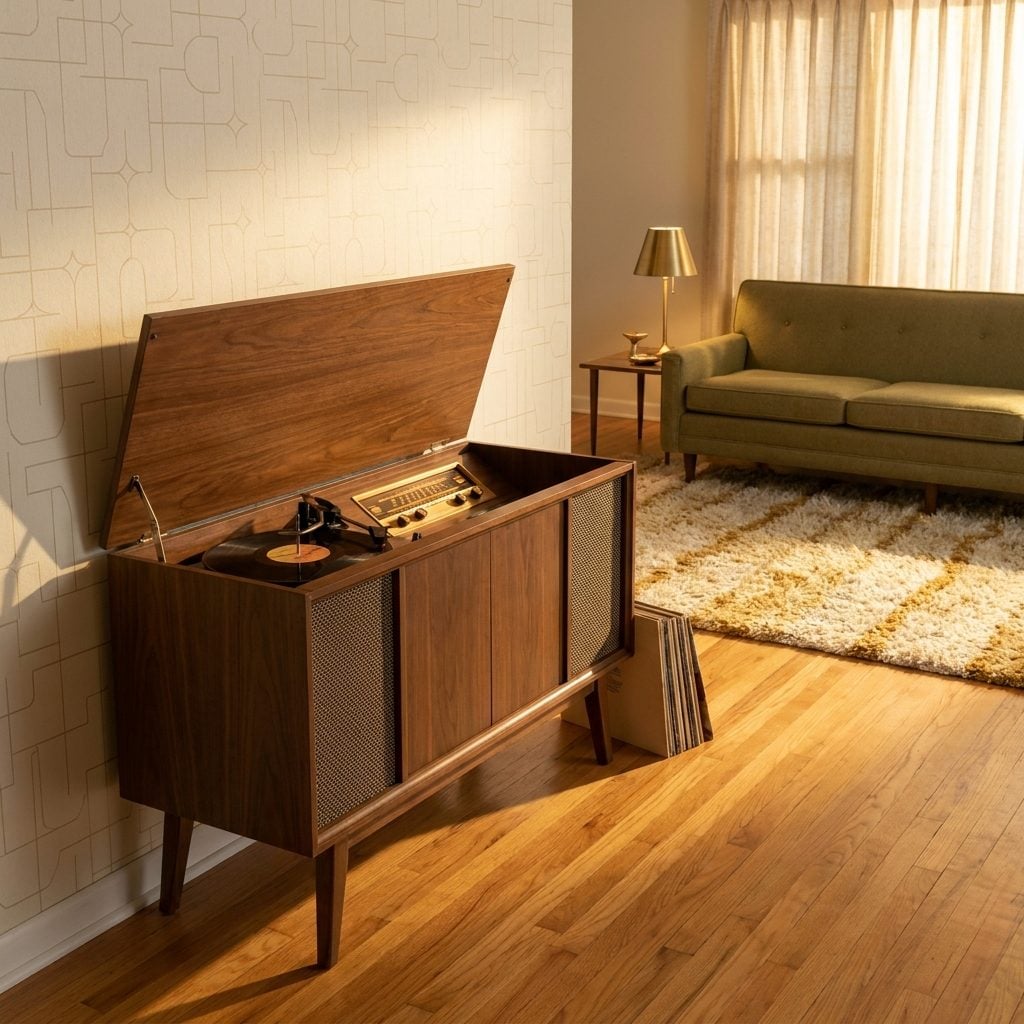
This was the single most expensive piece of furniture in many 1950s homes, and everyone treated it accordingly. The hi-fi console sat along the wall like a long, low sideboard, its lid lifting to reveal a turntable on one side and an AM/FM radio dial on the other. Built-in speakers hid behind fabric mesh panels. You could hear Sinatra’s breathing. You could hear the needle drop.
Kids were not allowed to touch it. That was the universal rule, enforced with a look that could stop traffic. Dad controlled the hi-fi. He’d slide a record from its sleeve with two fingers on the edges, lower the tone arm like a surgeon, and the whole room would go quiet for a second before the music started.
The Starburst Wall Clock With Brass Spokes That Made Every Wall Look Like It Was Exploding
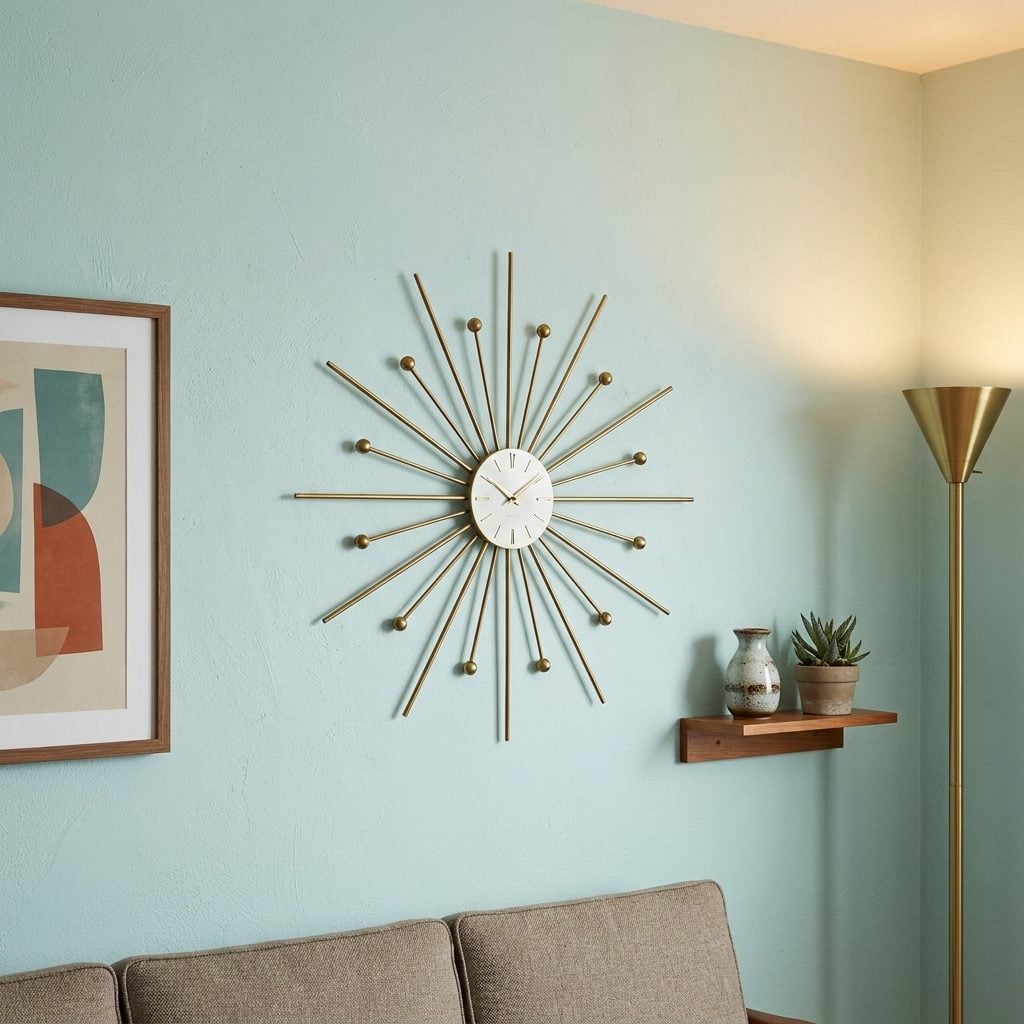
Half the diameter was just spikes. The actual clock face was maybe six inches across, but the brass or gold-toned rays shooting out in every direction made it two feet wide, sometimes three. It hung above the sofa or over the mantel, and it was always the first thing guests noticed because it looked like a tiny sun had been pinned to the drywall.
George Nelson’s designs for Howard Miller set the template, but the versions most families owned were department store knockoffs with thinner spokes and a louder tick. They ran on a single AA battery and lost about two minutes a week. Nobody cared. The point was never really telling time.
The Sunburst Mirror With Gilded Rays That Turned Every Hallway Into Versailles
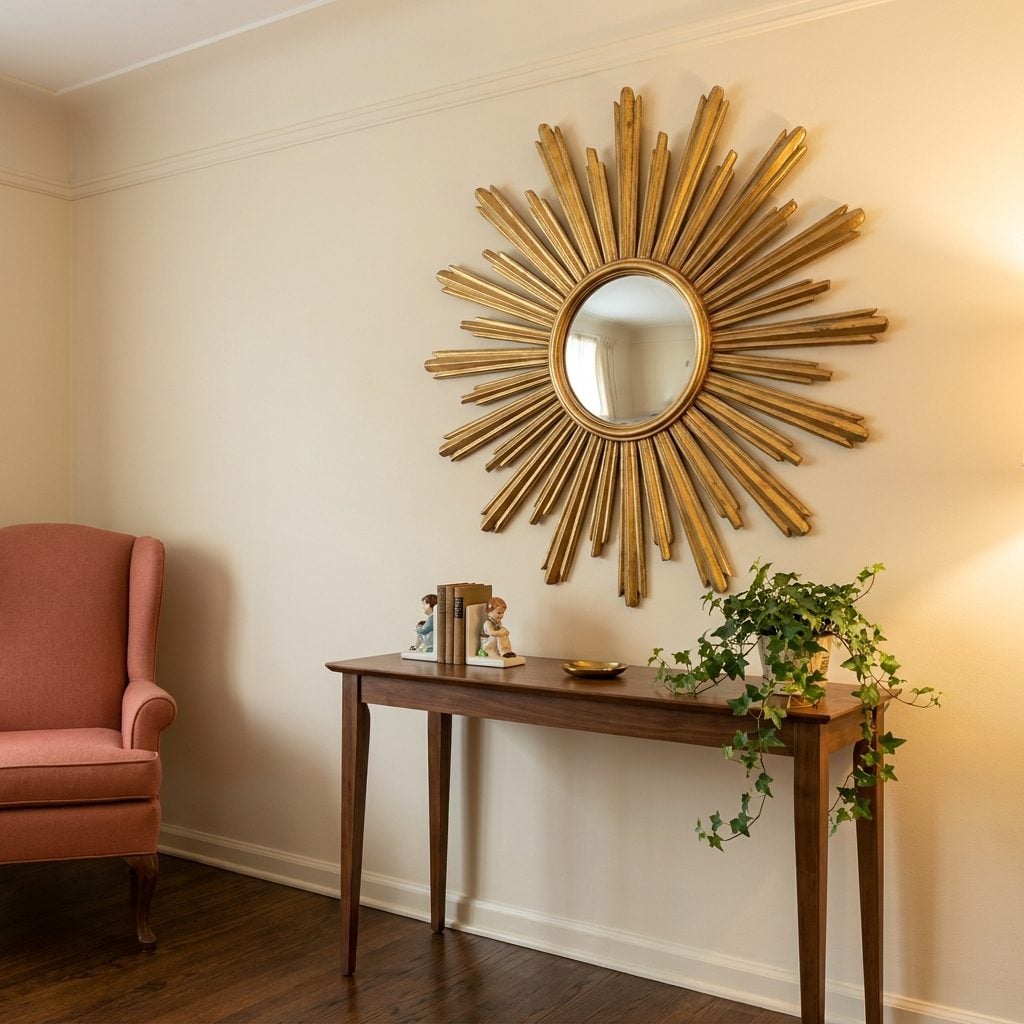
Somebody decided in the early 1950s that convex mirrors surrounded by gilded metal rays looked sophisticated, and within two years they were hanging in every other small living room from Connecticut to California. The mirror itself was usually convex, which meant it reflected a warped, fishbowl version of the room that made everything look slightly grander than it actually was. Maybe that was the point.
These ranged from dainty twelve-inch versions over a console table to genuinely enormous pieces that dominated an entire wall. The gilding was almost never real gold. It was plaster or resin, painted and then distressed to look antique. A few aggressive dustings and the tips of the rays started chipping, revealing white plaster underneath like tiny bones.
The Kidney-Shaped Coffee Table With Tapered Legs That Somehow Ended Up in Every Living Room
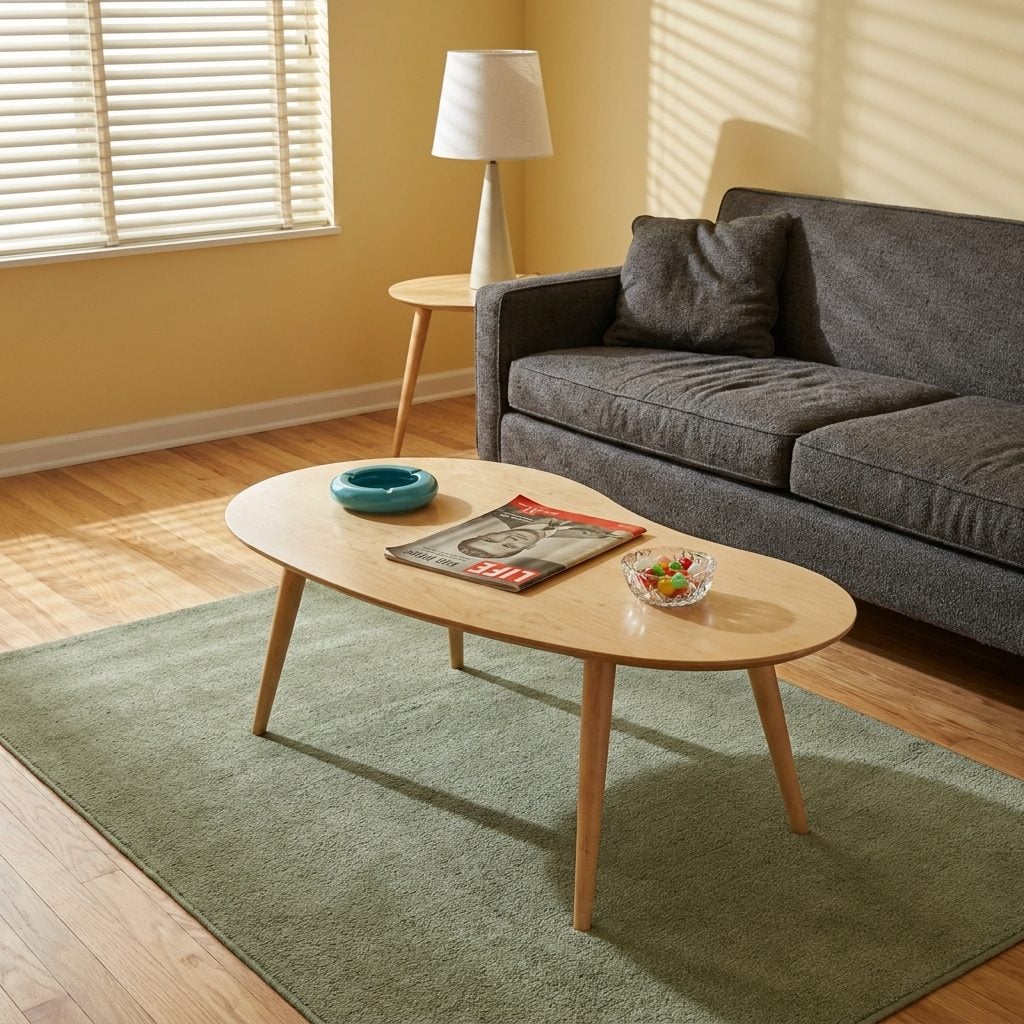
No one sat down and said, “I want a table shaped like an internal organ.” And yet here we all were. The kidney-shaped coffee table was the defining surface of 1950s casual living, its biomorphic curves borrowed from the free-form sculpture and amoeba shapes that artists like Noguchi had been exploring. The mass-market versions were laminate or light wood, usually blonde birch or maple, with three tapered legs splayed at optimistic angles.
It held a ceramic ashtray, a copy of Life magazine, and a candy dish that was never actually for guests. The curved shape meant you could walk around it without bruising your shins, which sounds like a small thing until you’ve lived with a rectangular table in a tight room.
The Low-Slung Sofa With Clean Lines That Made Sitting Down Feel Like the Future
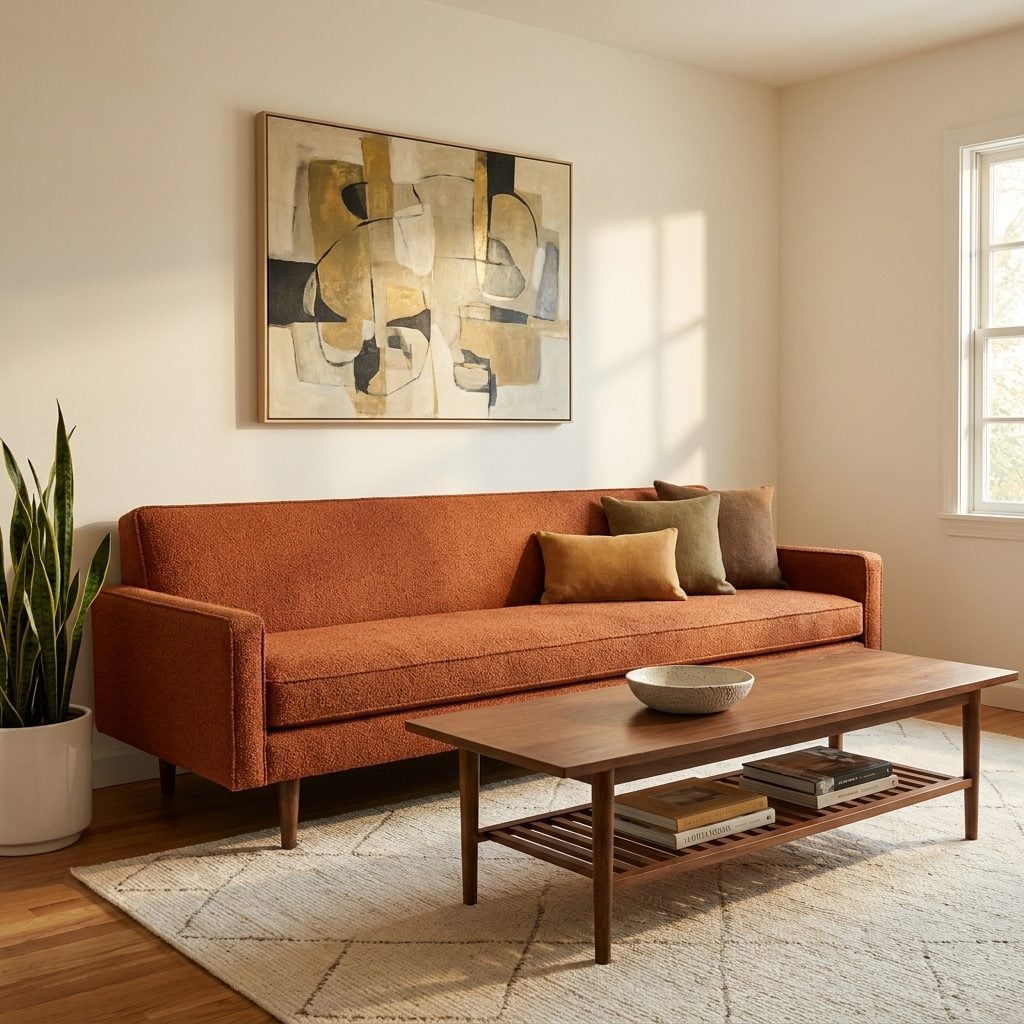
After decades of overstuffed cushions and heavy rolled arms, the 1950s sofa dropped about eight inches closer to the floor and lost half its bulk. The silhouette went horizontal. Arms got thin. Backs got low. The whole thing sat on visible legs, and suddenly the transitional living room had air underneath its furniture for the first time.
Upholstery ran toward nubby tweeds, textured bouclé, and tight weaves in colors like burnt orange, olive, and teal. These weren’t squishy sofas. You sat ON them more than you sank INTO them. Your posture was better. Your cocktail was closer to your face. The whole aesthetic implied that you were a person who read architecture magazines and had opinions about Scandinavia.
The Davenport Sofa With Tufted Upholstery and a Sleeper Hidden Inside Like a Secret
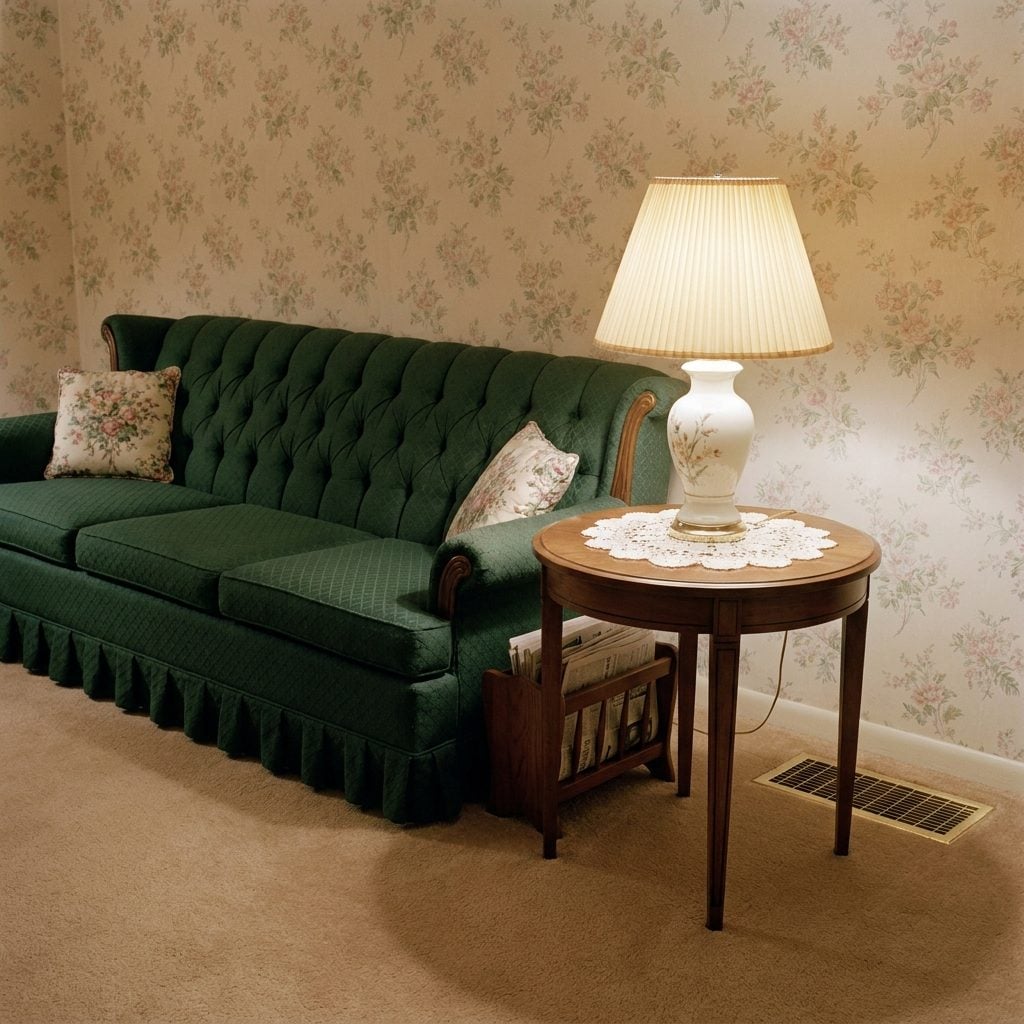
Your grandmother called every sofa a davenport. That was just the word. But the actual davenport of the 1950s was a specific thing: a tufted, somewhat formal sofa that, if you were lucky (or unlucky, depending on how you slept), folded out into a bed. The mechanism involved a metal frame that screeched like something dying when you pulled it out, and a mattress roughly one inch thick that smelled faintly of dust and mechanical grease.
During the day, it looked perfectly respectable. Diamond-tufted back, rounded arms, maybe a skirt that hid the legs. At night, when company stayed over, it became a torture device. The metal bar hit you right across the lower back. Every single time.
The Sectional Sofa Arranged Into a Conversation Pit (Before Anyone Called It That)
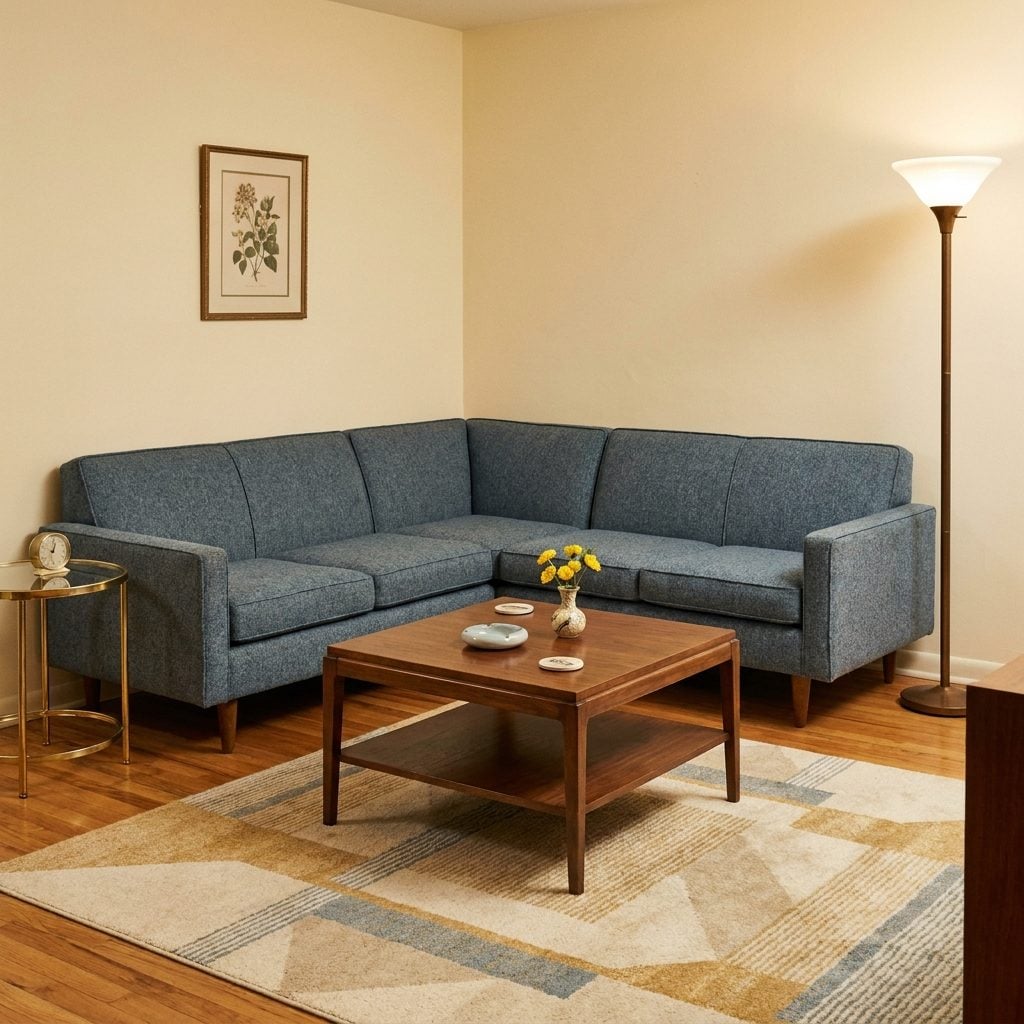
The sectional sofa was the 1950s answer to a question nobody had formally asked: what if furniture could make people actually face each other? Arranged in an L or a U, these modular pieces created what decorating magazines breathlessly called “conversation groupings.” The idea was that a properly arranged living room should encourage talking, not just parallel television watching.
A room designed for conversation was a room that assumed you had something to say.
Most sectionals came in three or four pieces, upholstered in a single fabric, usually a durable tweed or textured solid. You could rearrange them, at least in theory. In practice, once the pieces were pushed into their L-shape and the coffee table was centered, nothing moved again until the family relocated.
The Wingback Armchair Reupholstered in a Fabric Your Grandparents Would Never Have Chosen
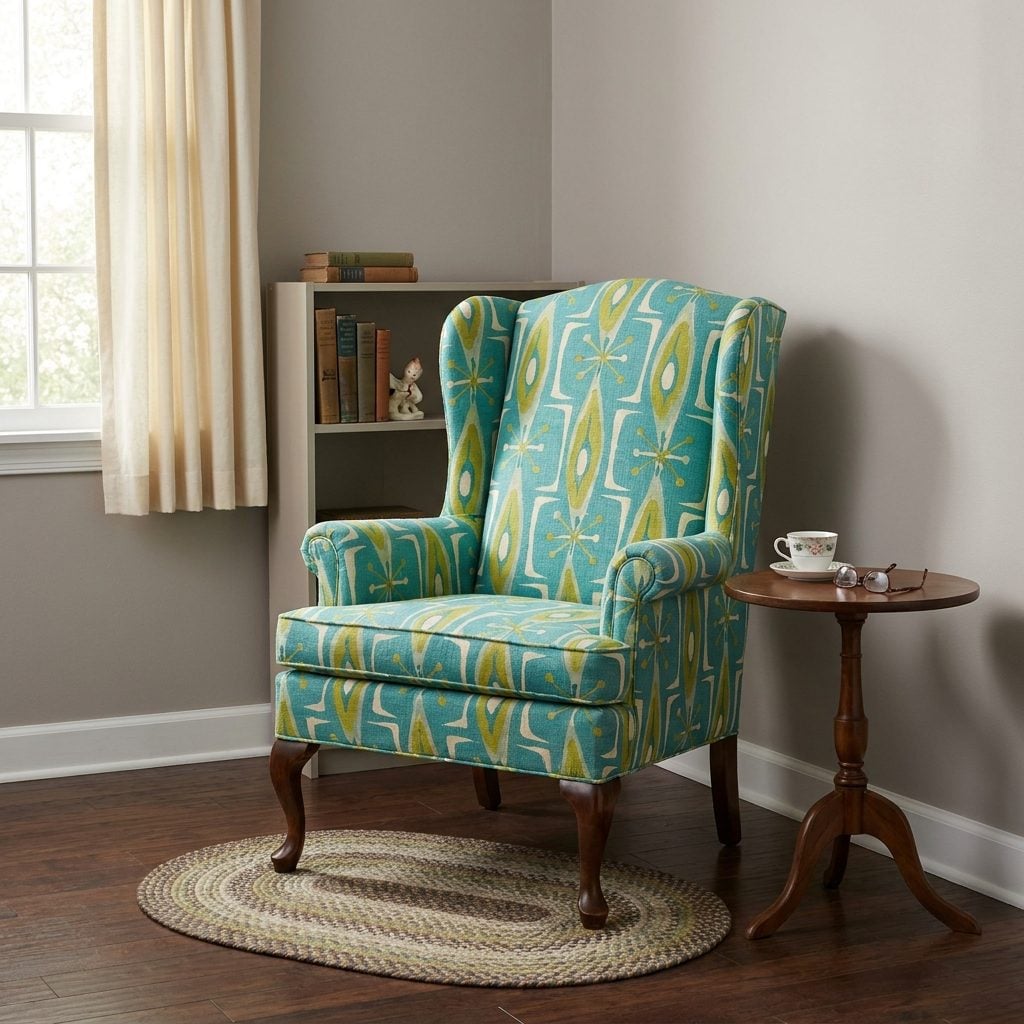
The wingback chair is three hundred years old. It was designed to block drafts in colonial homes. By the 1950s, nobody needed draft protection, but the shape persisted because it was comfortable and it looked like you came from money, even if you didn’t.
What changed was the fabric. Suddenly these stately old silhouettes were covered in atomic-print barkcloth, boomerang patterns, and abstract geometrics in chartreuse and turquoise. It was like putting a Hawaiian shirt on a banker. The contrast between the traditional form and the wild textile was the whole point, and it worked far better than it had any right to.
Upholstered Armchairs With Button Tufting or Channel Backs That Meant Someone Cared About Details
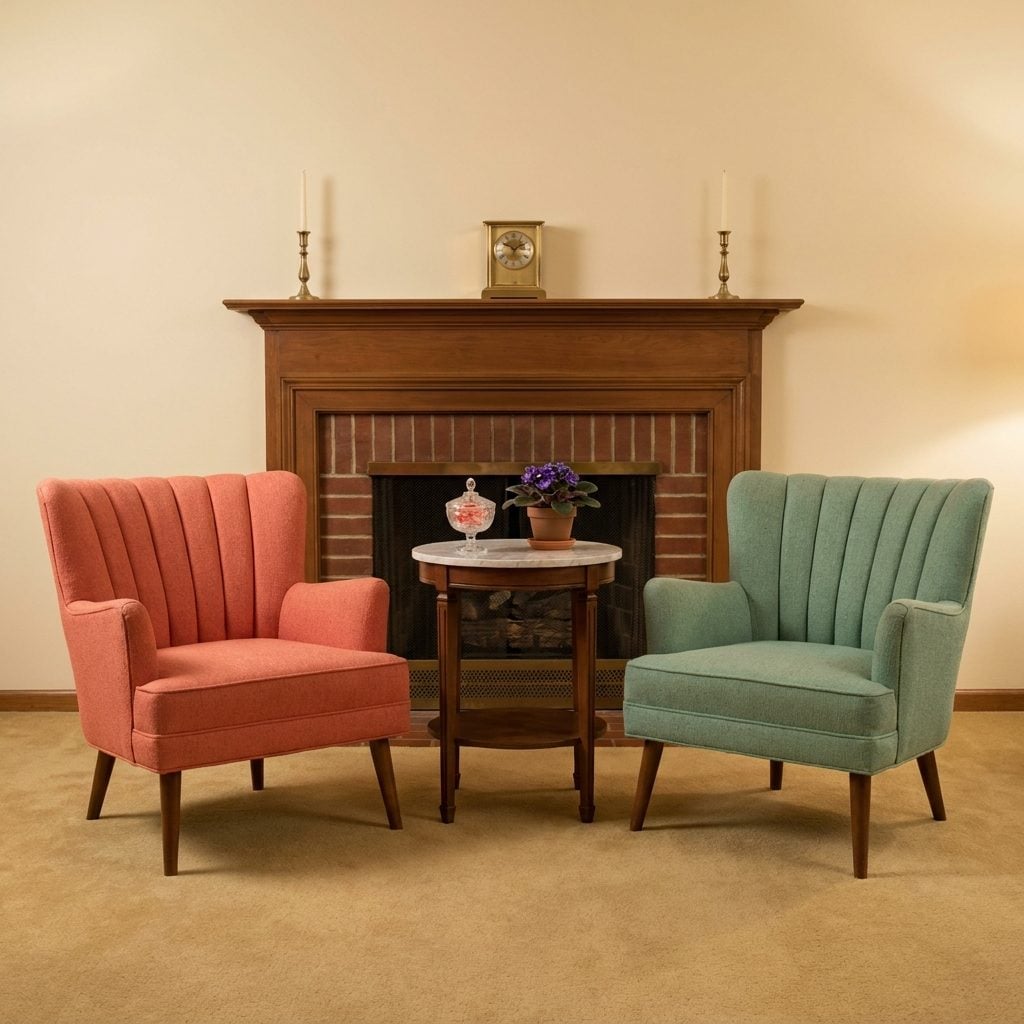
Button tufting wasn’t decoration. It was engineering. Each button pulled the fabric tight against the padding, preventing it from shifting or sagging. Channel backs did the same thing with vertical seams instead of buttons, creating those clean parallel ridges that caught the light and gave a chair visual depth even in a dull fabric.
The 1950s versions came in every color the decade could produce: coral, mauve, seafoam, butterscotch. You’d find a pair of them flanking a fireplace or positioned across from the sofa, always with a small table between them. They were the chairs where adults sat. Children got the floor.
Tapered Wooden Legs on Absolutely Everything, From the Sofa to the Side Table to the Planter
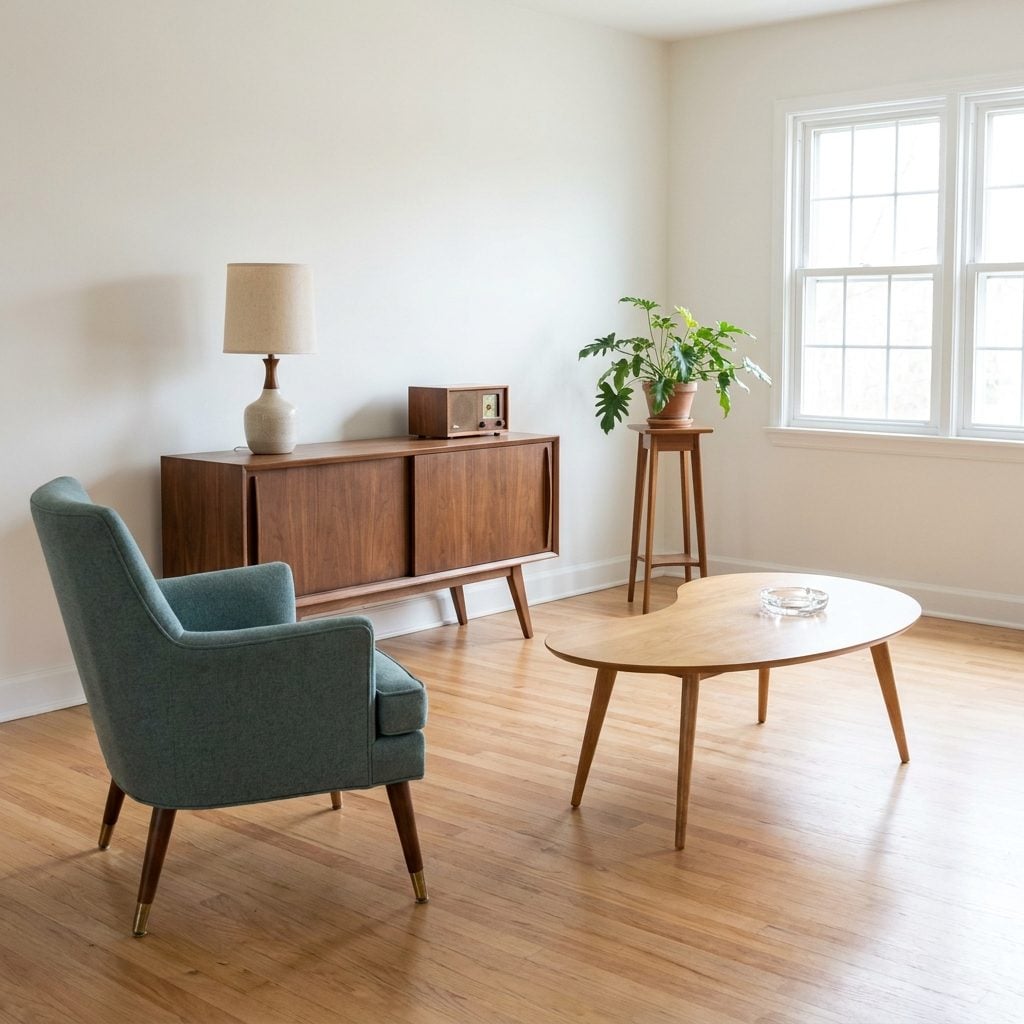
If it sat on the floor in the 1950s, it had tapered legs. Sofas, armchairs, coffee tables, end tables, credenzas, TV stands, plant stands. The legs angled outward slightly, narrowing as they went down, and they were almost always walnut or birch, sometimes with small brass ferrules at the tips. I got this wrong for years, assuming tapered legs were just an aesthetic choice. They weren’t, or at least not entirely.
The visible leg was a philosophical statement. Previous decades buried furniture on the floor with heavy bases, bun feet, and skirts. The 1950s lifted everything up, let air circulate underneath, and made rooms feel lighter. It also made vacuuming easier, which, given the decade’s obsession with homemaking efficiency, was probably not a coincidence.
Blonde Wood and Dark Walnut Living Together in the Same Room Like It Was Nothing
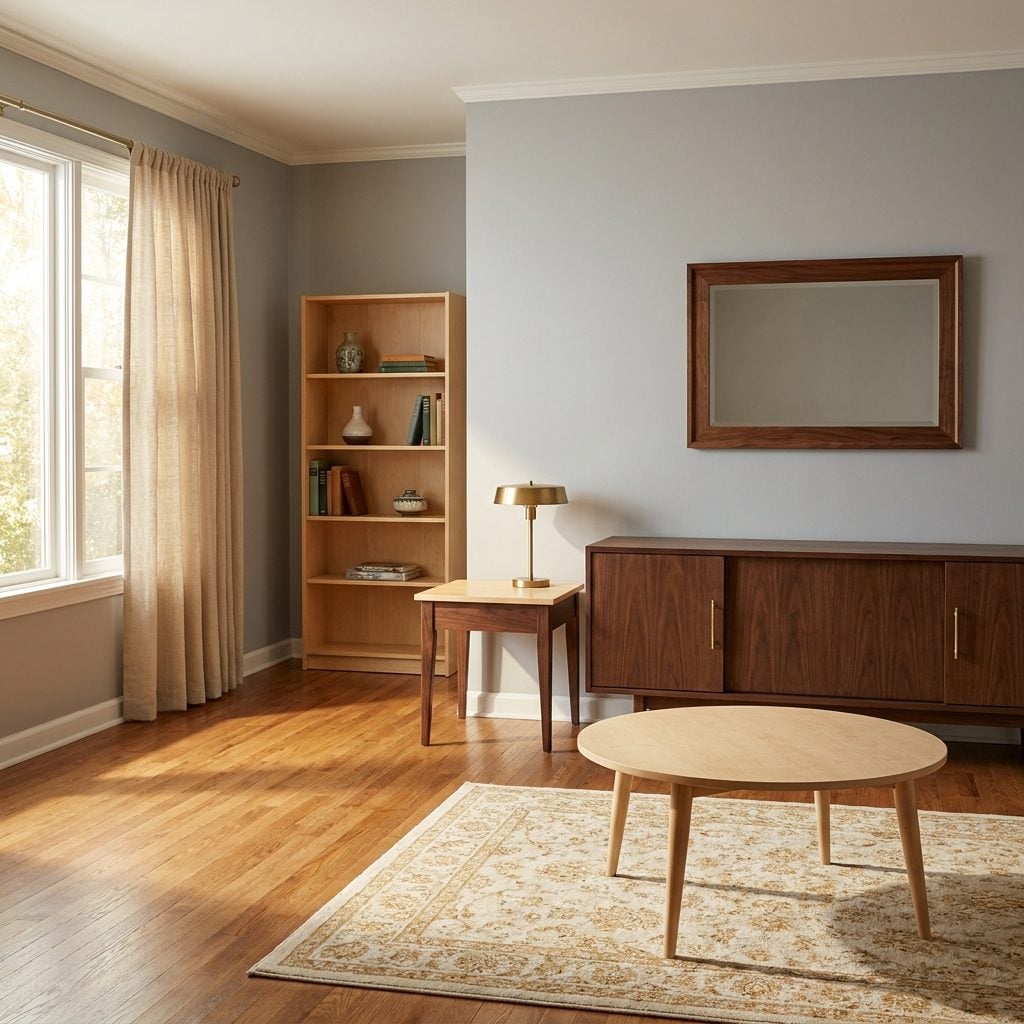
The 1950s pulled off a trick that sounds wrong on paper: mixing pale blonde wood (usually birch, maple, or ash) with deep, reddish-brown walnut, sometimes in the same room, sometimes in the same piece of furniture. A blonde birch coffee table next to a walnut credenza. A walnut-framed mirror above a blonde wood console. Two-tone end tables with blonde tops and walnut legs. It all worked because both finishes shared the same clean-lined mid-century forms.
Blonde wood had been fashionable since the late 1940s, partly inspired by Scandinavian imports, partly because it photographed well in the new home magazines. Walnut was the American classic, warm and serious. Together they gave a room tonal range without any contrast feeling forced.
Something about that pairing made a room feel complete, like hearing two instruments play the same melody in different keys. The blonde kept things light. The walnut kept things grounded. And the home trends of the era never quite found a better balance than that one.
The Formica-Topped Coffee Table With That Boomerang Pattern Nobody Questioned
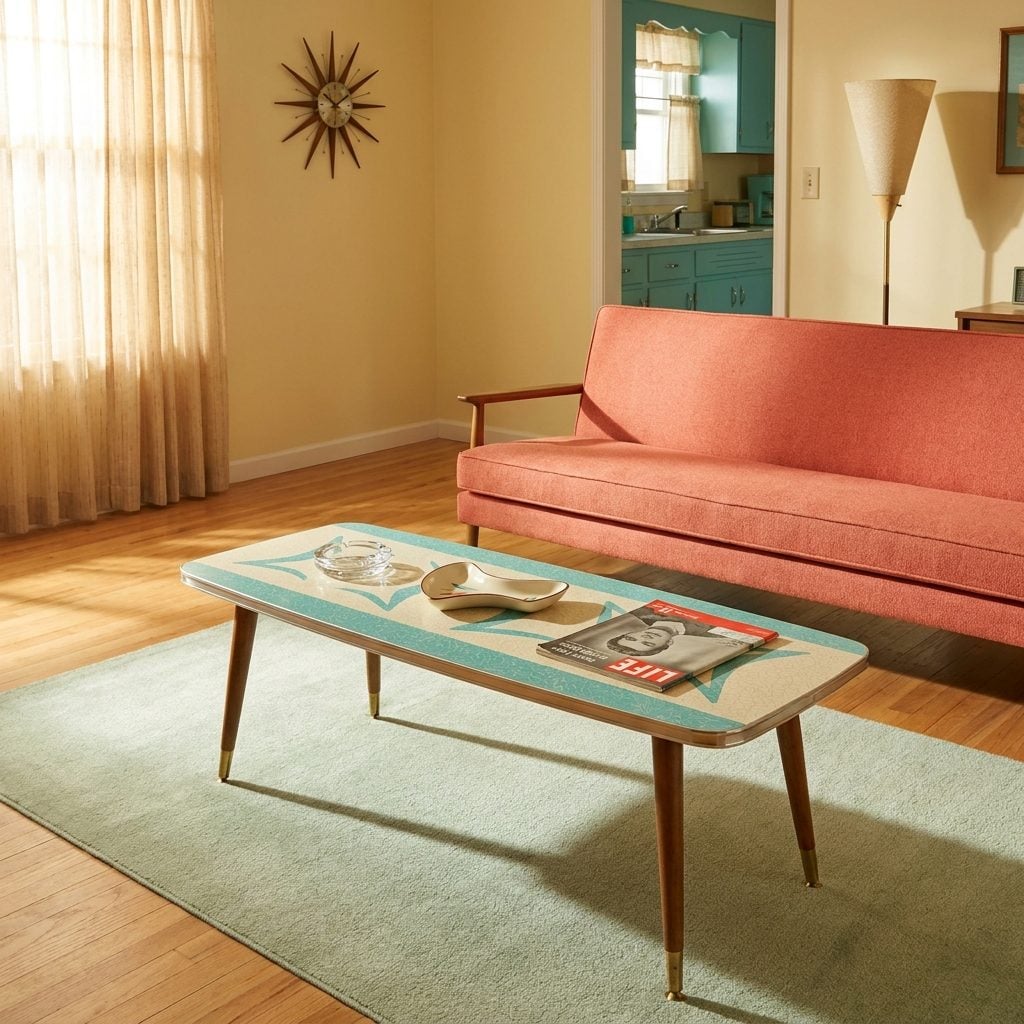
You could set a hot casserole dish right on it and nothing happened. That was the whole point. Formica in the 1950s wasn’t just a material, it was a lifestyle promise: indestructible, wipe-clean, modern. The boomerang pattern table showed up in turquoise, coral, and chartreuse, always with those tapered brass-tipped legs that wobbled a little if you leaned on the wrong corner.
The atomic and boomerang motifs were everywhere. Coffee tables, end tables, the kitchen dinette. Your mom probably wiped that surface down forty times a day with a damp cloth and it still looked factory-fresh in 1963. That resilience was genuinely impressive. Try doing that with a reclaimed wood slab.
Atomic-Print Upholstery That Turned Every Sofa Into a Science Experiment
🔥 Would you like to save this?
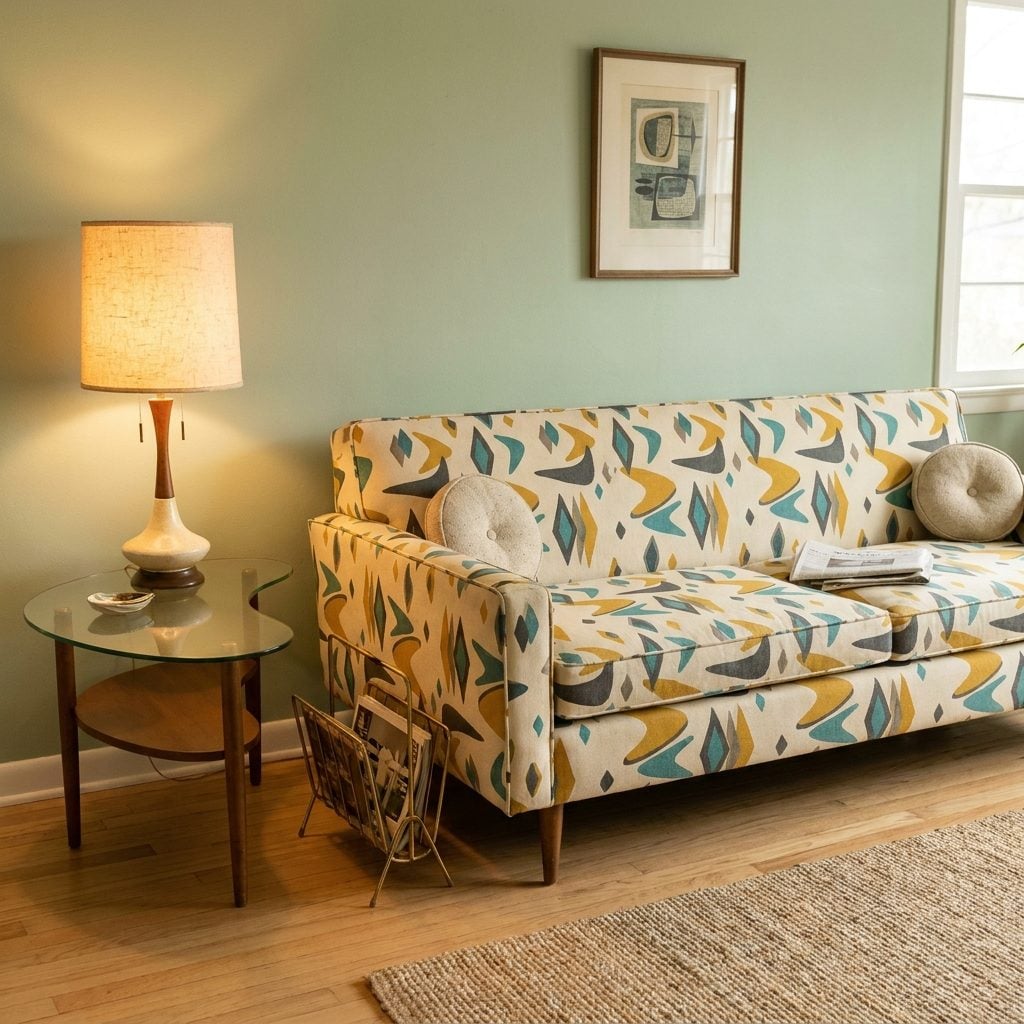
Diamonds, starbursts, floating orbs, amoeba shapes. The fabric on a 1950s sofa looked like someone had photographed a particle accelerator through a kaleidoscope and sent it to the textile mill. And we loved it. These weren’t subtle patterns. They announced themselves from across the room in mustard, teal, and burnt orange on a cream or charcoal ground.
The whole country was nuclear-obsessed, and that obsession landed squarely on your grandmother’s mid-century upholstered sofa. Every cushion carried the optimism of the atomic age. Sit on an atom. Rest your head against a boomerang. It made perfect sense at the time. Looking back, it’s wild how directly geopolitical anxiety filtered into throw pillow fabric.
The Vinyl Naugahyde Chair That Stuck to Your Bare Legs Every Single Summer
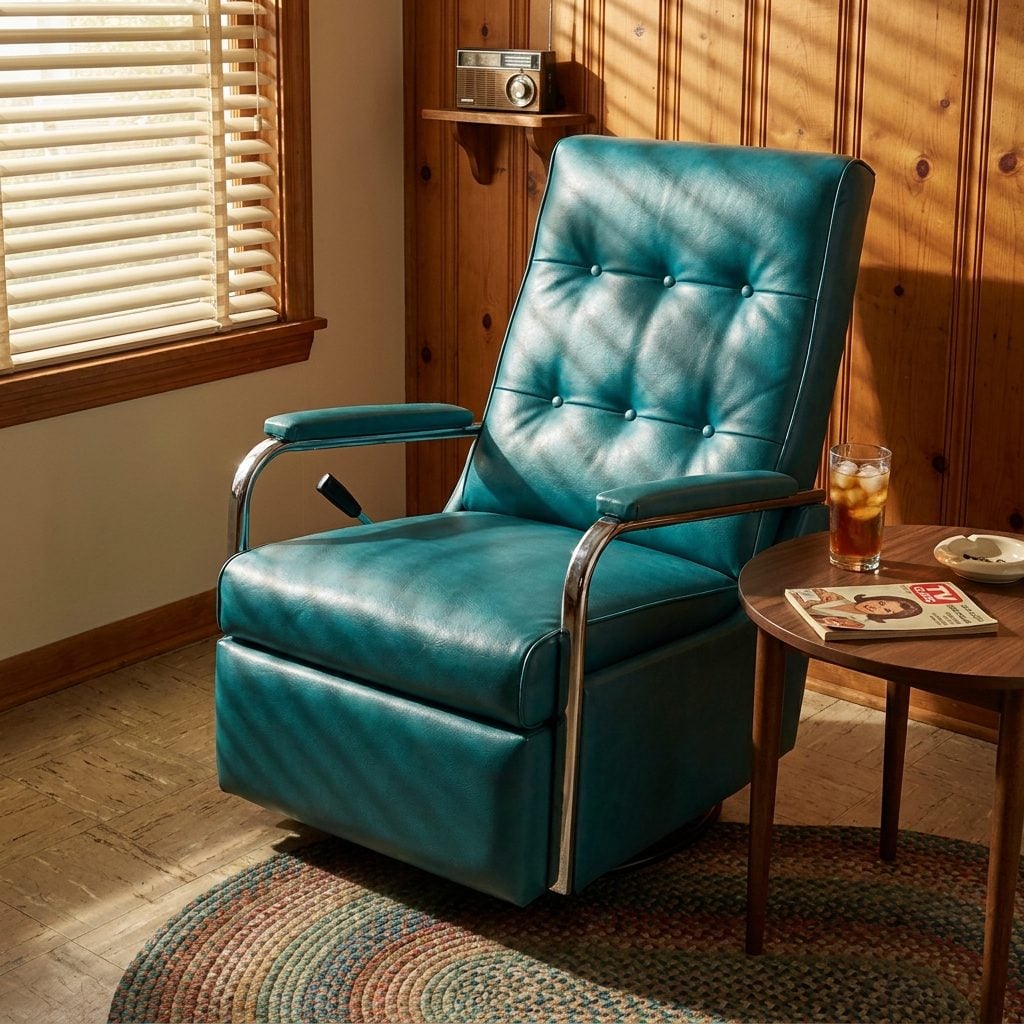
That sound. The slow, mortifying peel of skin separating from vinyl on a hot July afternoon. Every kid who wore shorts in a 1950s living room knows exactly what I’m talking about.
Naugahyde was marketed as the miracle of modern living. Spill-proof. Kid-proof. Dog-proof. It came in avocado, tangerine, and a particular shade of turquoise that existed nowhere in nature. Your dad’s vinyl recliner chair probably had little diamond-tufted buttons that left grid marks on your arm if you fell asleep watching Ed Sullivan. Comfortable? Debatable. Practical? Absolutely. My parents had one in rust orange that outlasted two sofas and a marriage.
Wall-to-Wall Broadloom Carpeting in Colors That Only Existed in the Fifties
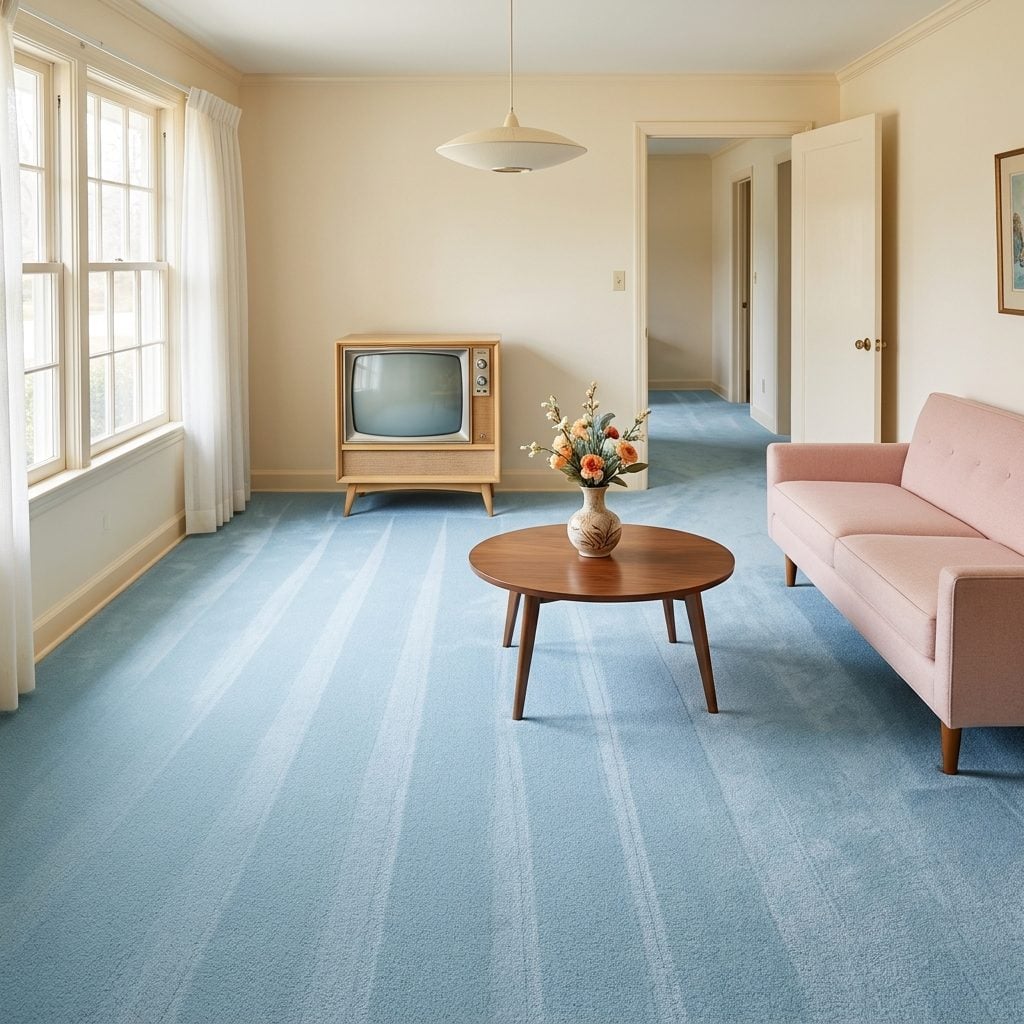
Mint green. Dusty rose. Powder blue. A very specific shade of mauve that had no business being on a floor but covered millions of them anyway. Wall-to-wall broadloom was the great equalizer of postwar suburbia. It said: we are settled, we are modern, we are done with bare floors and area rugs like our parents had.
The carpet went everywhere. Right up to the baseboards, under the radiator, sometimes into the hallway, sometimes into rooms that had no business being carpeted. It was thick enough that you could lose a marble in it and soft enough that kids did their homework lying face-down on it. The vacuum cleaner marks afterward were practically a form of folk art.
A small living room in particular benefited from the trick: one continuous color made the space feel bigger than it was.
Abstract Area Rugs That Looked Like Paintings Nobody Hung on the Wall
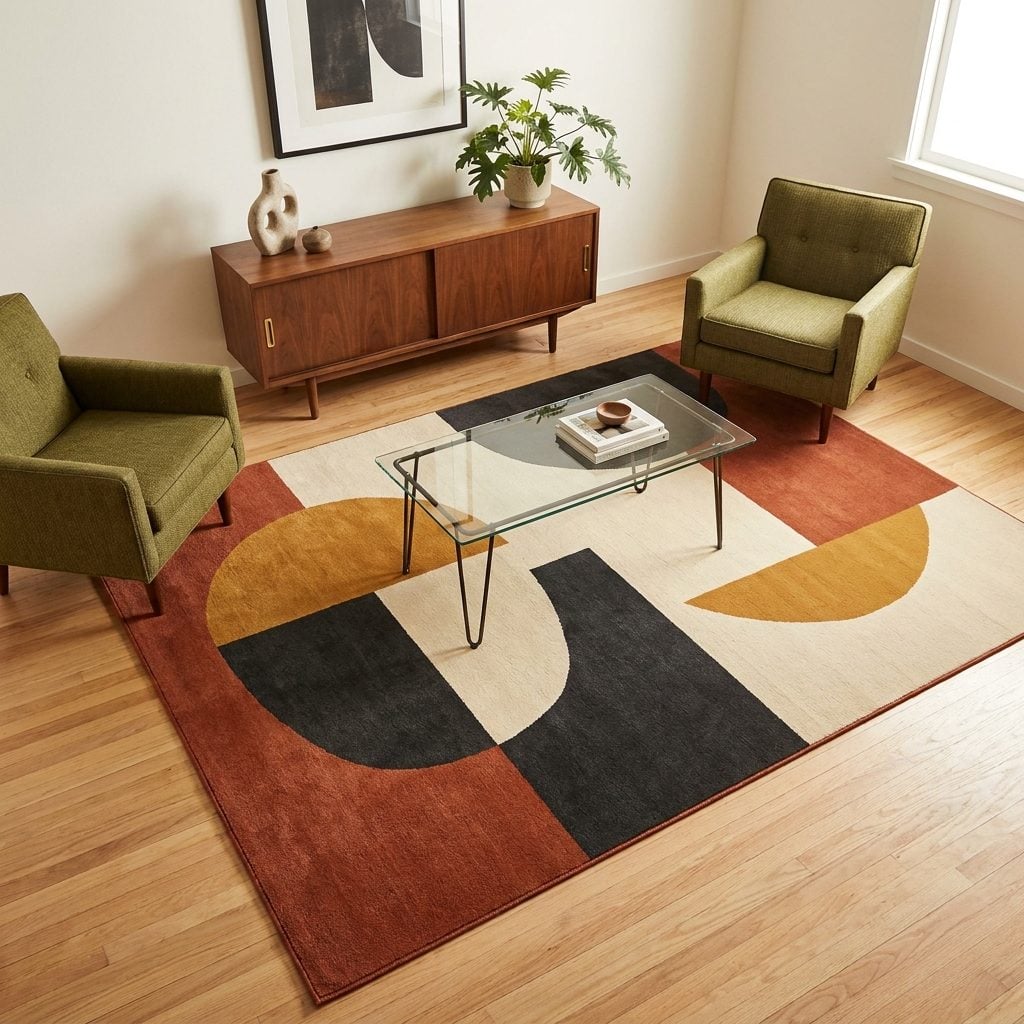
These weren’t your grandmother’s floral rugs. By the mid-fifties, area rugs had gone full modern art: biomorphic blobs in rust and cream, jagged geometric grids in black and gold, floating shapes that looked like something out of a Calder mobile. You walked on them. Your dog slept on them. They cost a week’s salary and they did more for the room than anything on the walls.
Placed over hardwood or even layered on top of the broadloom (a move that made zero practical sense but looked fantastic), a bold abstract geometric area rug anchored the whole conversation area. The patterns held up remarkably well to foot traffic, partly because the busy designs hid everything.
Barkcloth Drapes So Loud You Could Hear Them From the Driveway
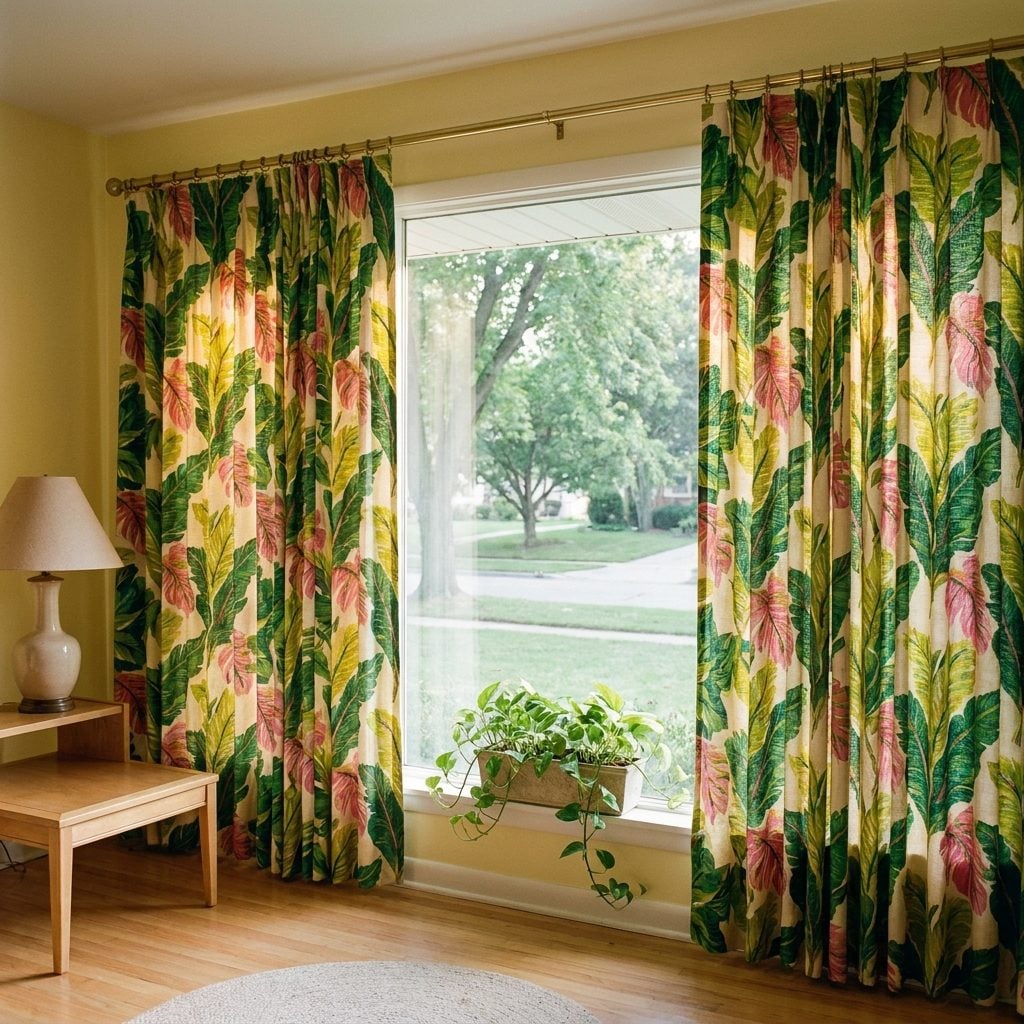
Oversized tropical leaves. Pineapples the size of your head. Abstract atomic starbursts in pink and chartreuse. Barkcloth drapes were the most aggressive decorating choice in the 1950s living room, and almost everyone made it.
The fabric itself had this thick, slightly nubby texture with a matte finish that absorbed light in a particular way. It hung heavy. It blocked the sun. It made the room feel enclosed and warm, like being inside a very stylish tent. The prints ranged from Hawaiian-inspired botanicals to pure space-age abstraction, and homemakers debated the merits of each pattern with the seriousness of art critics.
Pinch-pleated and hung on a traverse rod, those barkcloth vintage drapes framed every picture window in the subdivision. They’ve become genuinely collectible now. I’ve seen single panels sell for over a hundred dollars at estate sales.
Fiberglass Sheer Curtains That Promised the Future and Delivered Itchy Arms
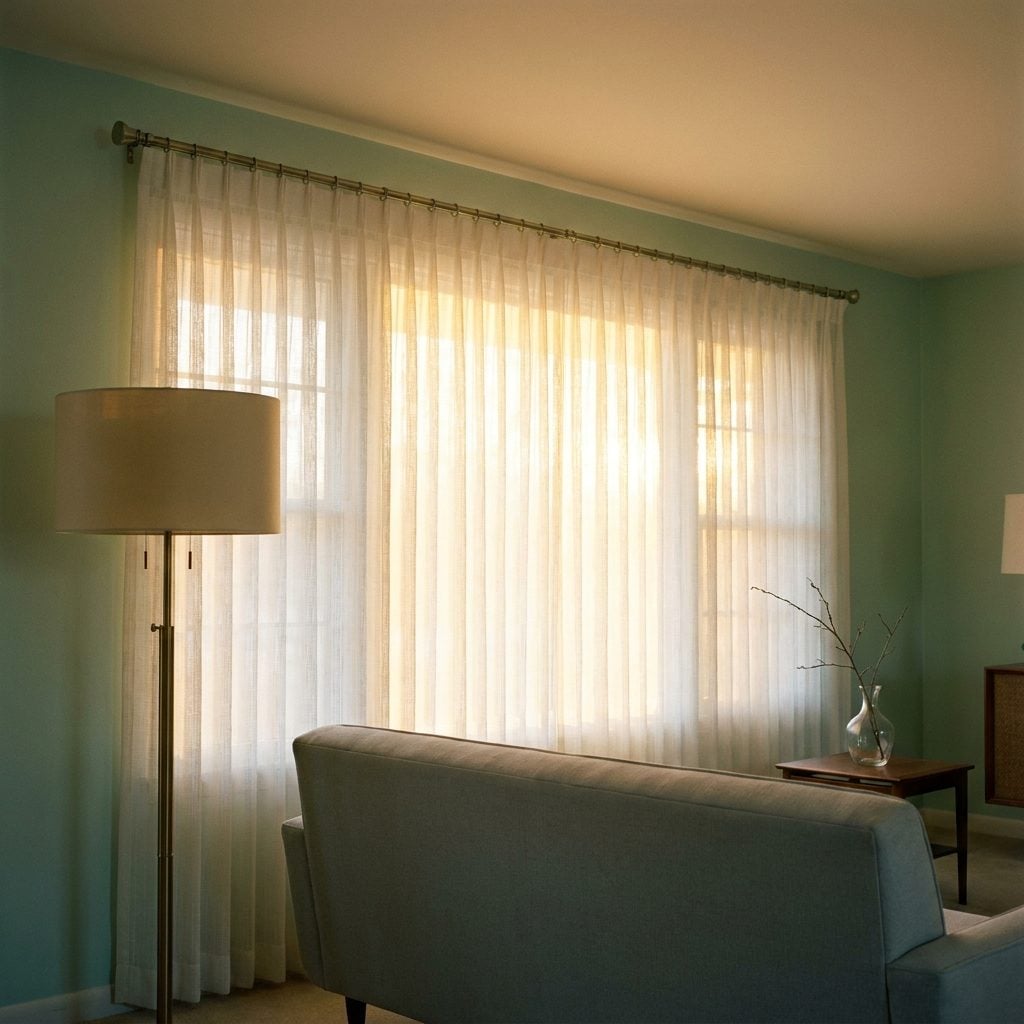
Drip-dry. Wrinkle-free. Never needs ironing. The advertising copy for fiberglass curtains sounded like a telegram from the year 2000. And the curtains did hold their shape, I’ll give them that. They hung perfectly straight with a crisp, slightly translucent glow that diffused sunlight into something magical.
The catch? Touch them with bare skin and you’d spend the rest of the afternoon scratching. Tiny glass fibers embedded in anything they contacted. Washing them in the family machine was a mistake you only made once, because every load of laundry afterward carried invisible splinters. But drawn across a picture window on a Tuesday afternoon, with the light coming through in that soft white haze? Nothing else looked quite like it.
Venetian Blinds in Every Window Because That’s Just What You Did
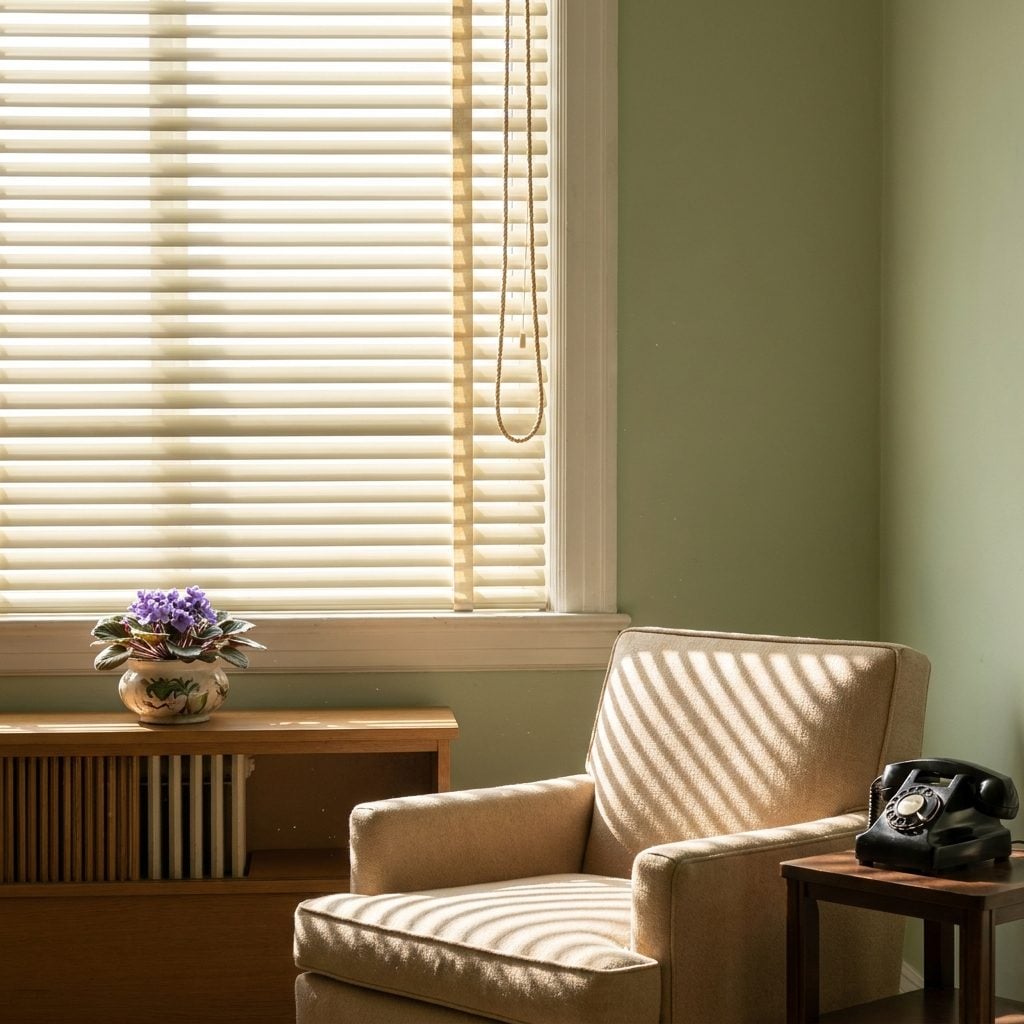
Aluminum slats. White or cream, sometimes pink, sometimes that strange postwar aqua. Every single window in the house. The Venetian blind was so universal in 1950s America that not having them would have been like not having a mailbox.
They clicked when you tilted them. They clattered when you raised them too fast. The cord system was an engineering puzzle that most adults pretended to understand and most children got tangled in at least once a month. Dusting them was a punishment. Your mom had a specific lamb’s wool duster or maybe one of those tong-shaped cleaners that never actually worked.
The Picture Window That Put Your Entire Life on Display for the Neighbors
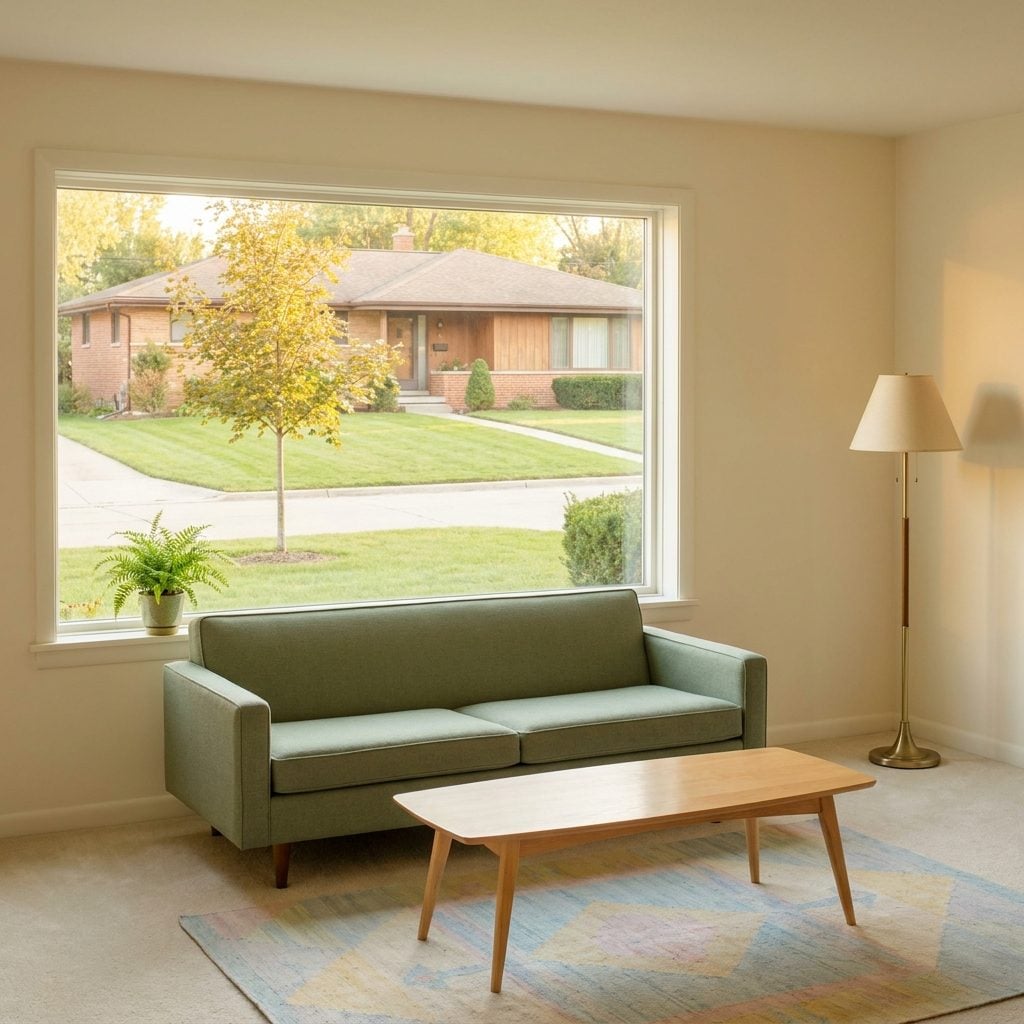
One enormous pane of glass, no mullions, no divisions. Just your living room, broadcast to the cul-de-sac like a television set the whole street could watch. The picture window was the signature architectural feature of postwar suburban homes, and it changed everything about how rooms were arranged. Furniture faced outward. The sofa went under it. The Christmas tree went in front of it.
It let in an absurd amount of light, which was the point. After the war, after the Depression, after all of it, Americans wanted their homes to feel open and connected to the world outside. A transitional living room today still borrows from that impulse. The picture window was optimism made architectural.
Of course, it also meant your neighbors could see whether you’d vacuumed. That was the unspoken trade-off nobody mentioned in the Levittown brochures.
The Brick or Fieldstone Fireplace That Took Up an Entire Wall and Meant Business
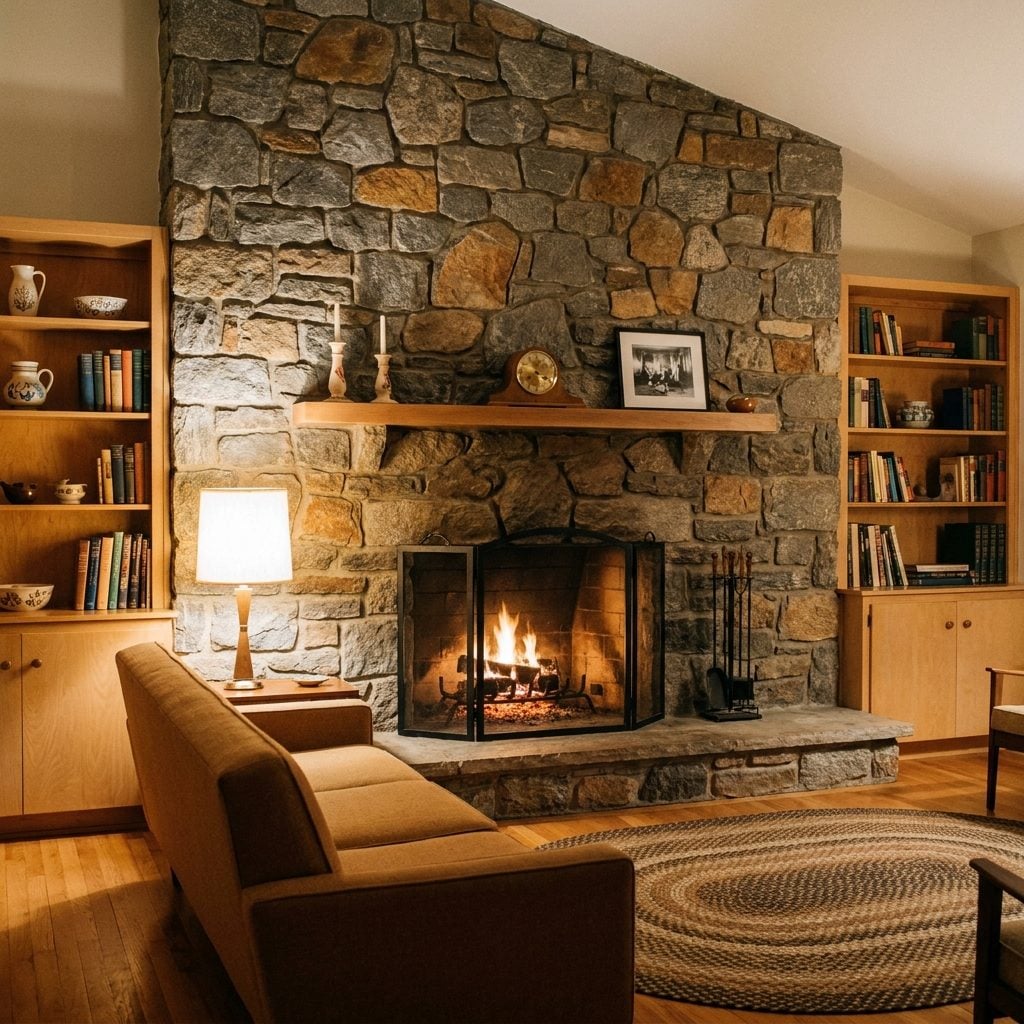
This wasn’t decorative. This was structural conviction. A floor-to-ceiling wall of brick or rough fieldstone, sometimes with a raised hearth you could sit on, sometimes with a copper hood, always with a mantel that became the most important six inches of display space in the house.
The fireplace wall was the living room’s anchor. Everything else orbited around it. The sofa faced it. The armchairs angled toward it. The TV sat near it but never quite competed with it. During the holidays, it held stockings and garland. The rest of the year, it held a clock, two candlesticks, and a framed family portrait in a brass frame.
Fieldstone versions had a rustic, almost lodge-like quality. Red brick ones felt solid and traditional. Either way, the stone or brick ran from floor to ceiling without apology. It weighed the room down in the best possible way. Something about that much raw material in a domestic space made everything feel permanent and safe.
The Console Television in a Wood Cabinet With Doors That Closed Like a Proper Piece of Furniture
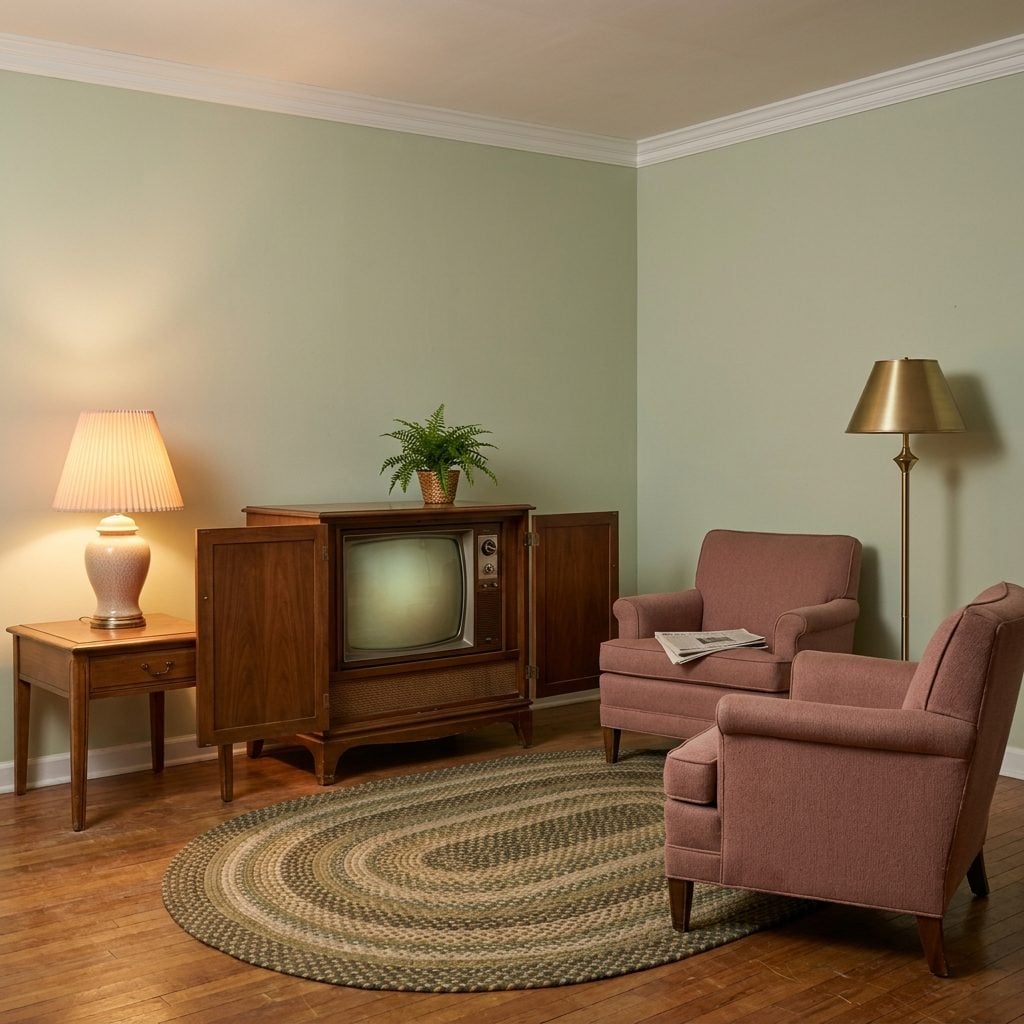
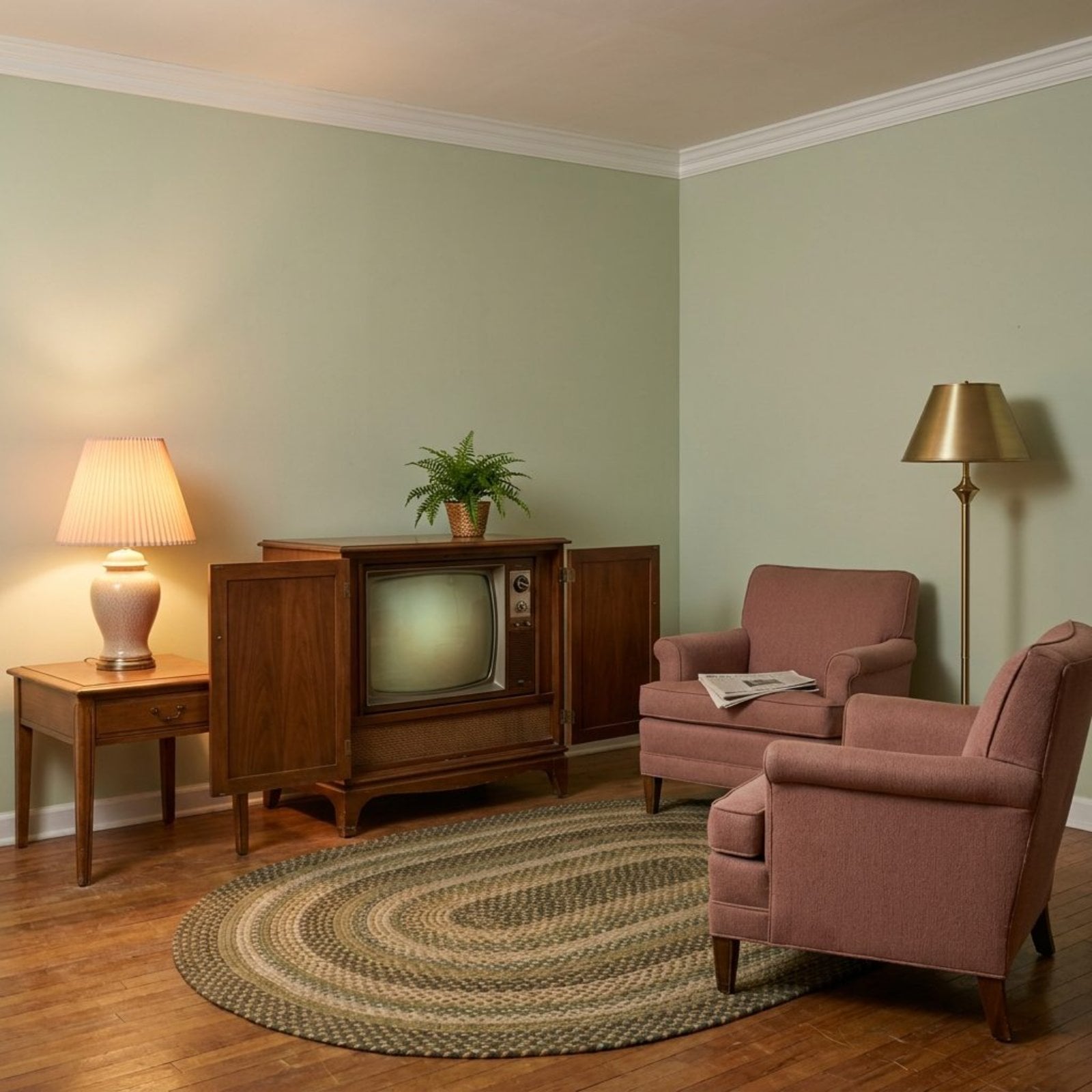
You didn’t watch TV in the 1950s. You opened the TV. Those cabinet doors swung wide like a credenza revealing state secrets, and when the night was over, you closed them again, as if the whole family hadn’t just spent three hours watching Milton Berle in the dark. The set itself took a full minute to warm up, the picture blooming slowly from a white dot in the center of the screen.
The cabinet was real wood, usually mahogany or walnut veneer, and it weighed roughly the same as a Buick. Nobody moved it once it was placed. The carpet underneath stayed permanently dented. Most families arranged the entire room around this one piece, angling every chair and sofa toward it like pews in a very small church.
Knotty Pine Paneling That Made Every Living Room Feel Like a Lodge (In a Good Way)
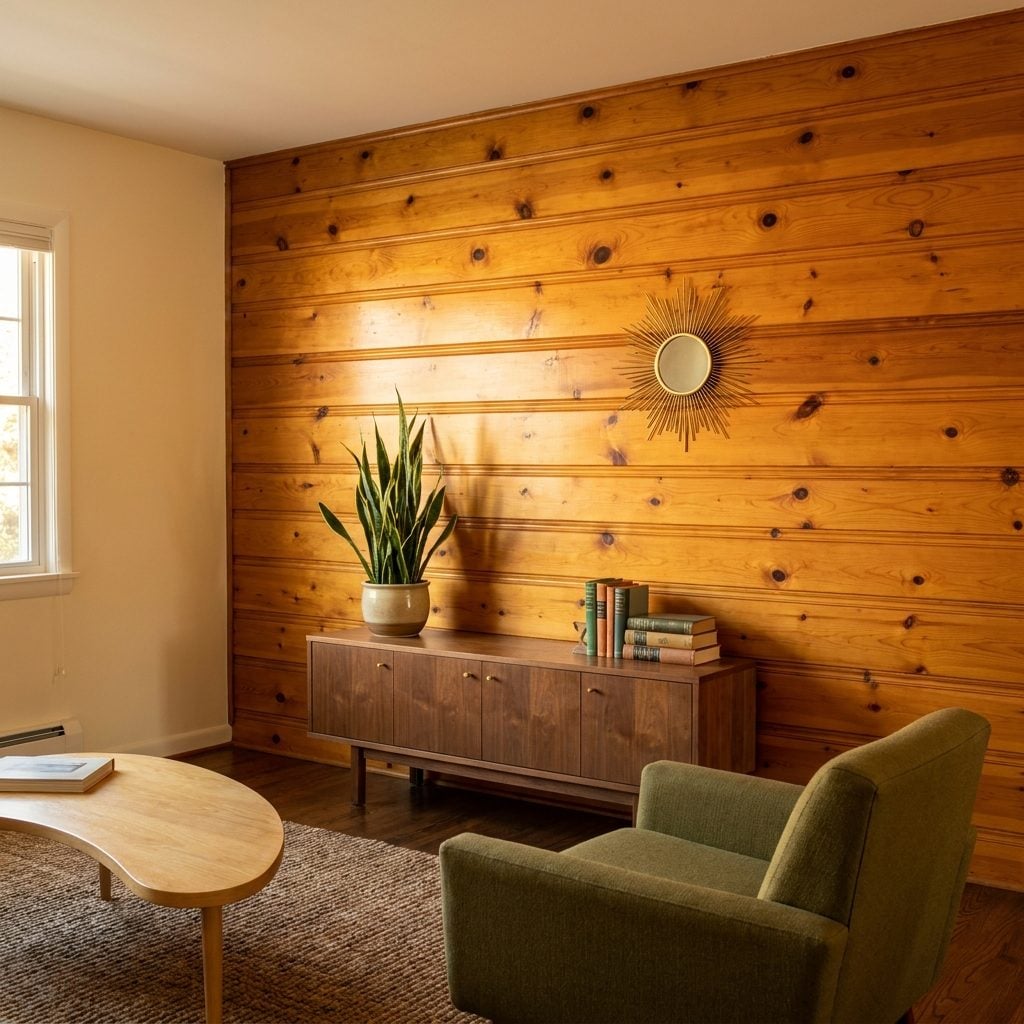
The knots were the whole point. Each one a dark eye staring out from honey-gold wood, giving the wall a character that drywall could never match. Knotty pine paneling in the 1950s wasn’t the cheap stuff that shows up in unfinished basements today. It was a real design choice, finished with a warm amber varnish that deepened over the years into something almost caramel-colored.
Usually it covered one wall, sometimes two. Rarely the whole room, unless the homeowner was really committed. It paired with everything: a mid-century walnut credenza, a stone fireplace, those pastel broadloom carpets. The wood absorbed sound and made the room feel smaller in a cozy, intentional way. Today a lot of design blogs would tell you to paint over it. I say those people are wrong. I will die on this hill.
Built-In Shelving That Held Everything You Owned and Wanted People to See
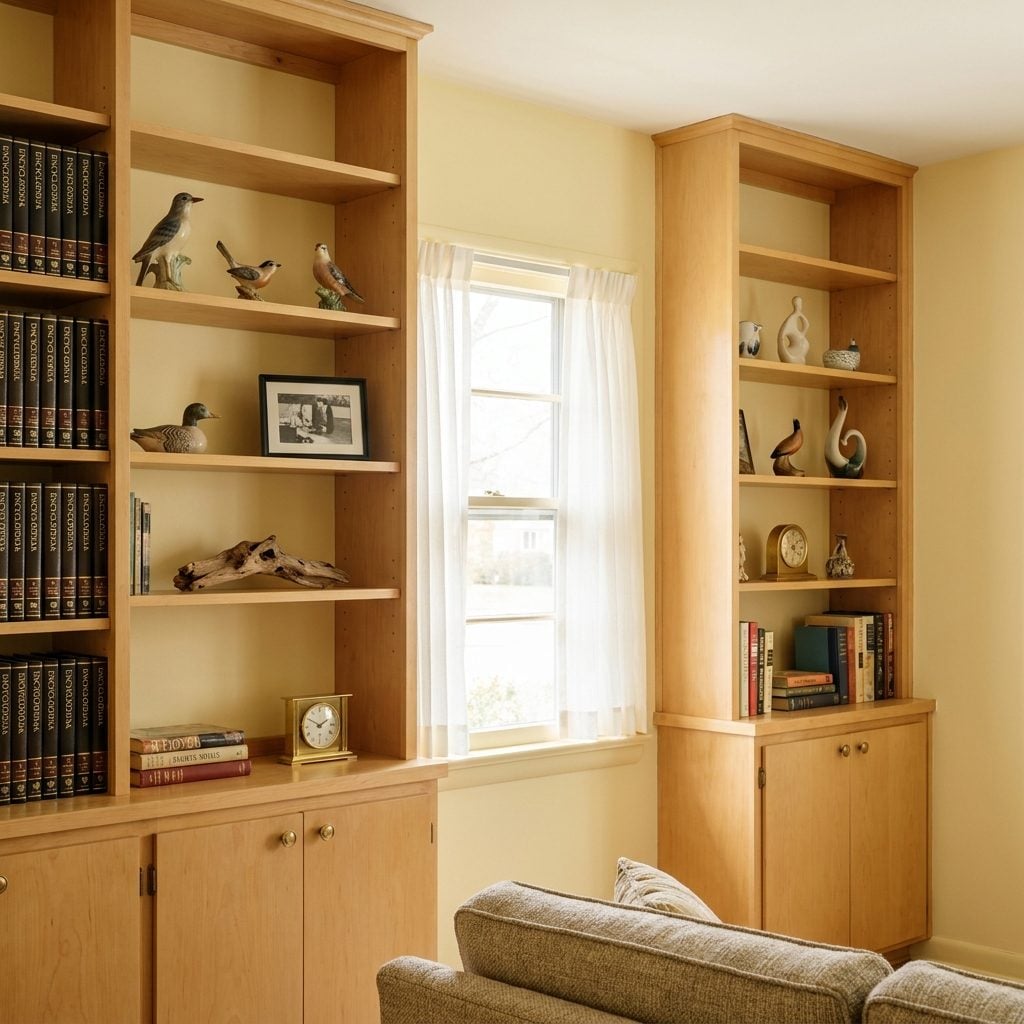
Flanking the fireplace, lining the den wall, wrapping around a corner. Built-in shelving in the 1950s was a status signal dressed up as storage. What you put on those shelves told your neighbors exactly who you were, or at least who you wanted them to think you were.
The arrangement was always deliberate: a set of encyclopedias (often the same Britannica set half the neighborhood had bought from the same door-to-door salesman), a few ceramic figurines, a framed photo tilted at an angle, maybe a small piece of driftwood from that one vacation. The shelves themselves were usually blonde wood or painted to match the wall, with simple clean lines.
The built-in shelf was a 1950s living room’s autobiography, told one ceramic bird at a time.
For homes with a range of home trends competing for attention, these shelves kept everything grounded. They gave the room structure. And honestly, the concept hasn’t changed much. We just swapped encyclopedias for coffee table books and ceramics for succulents.
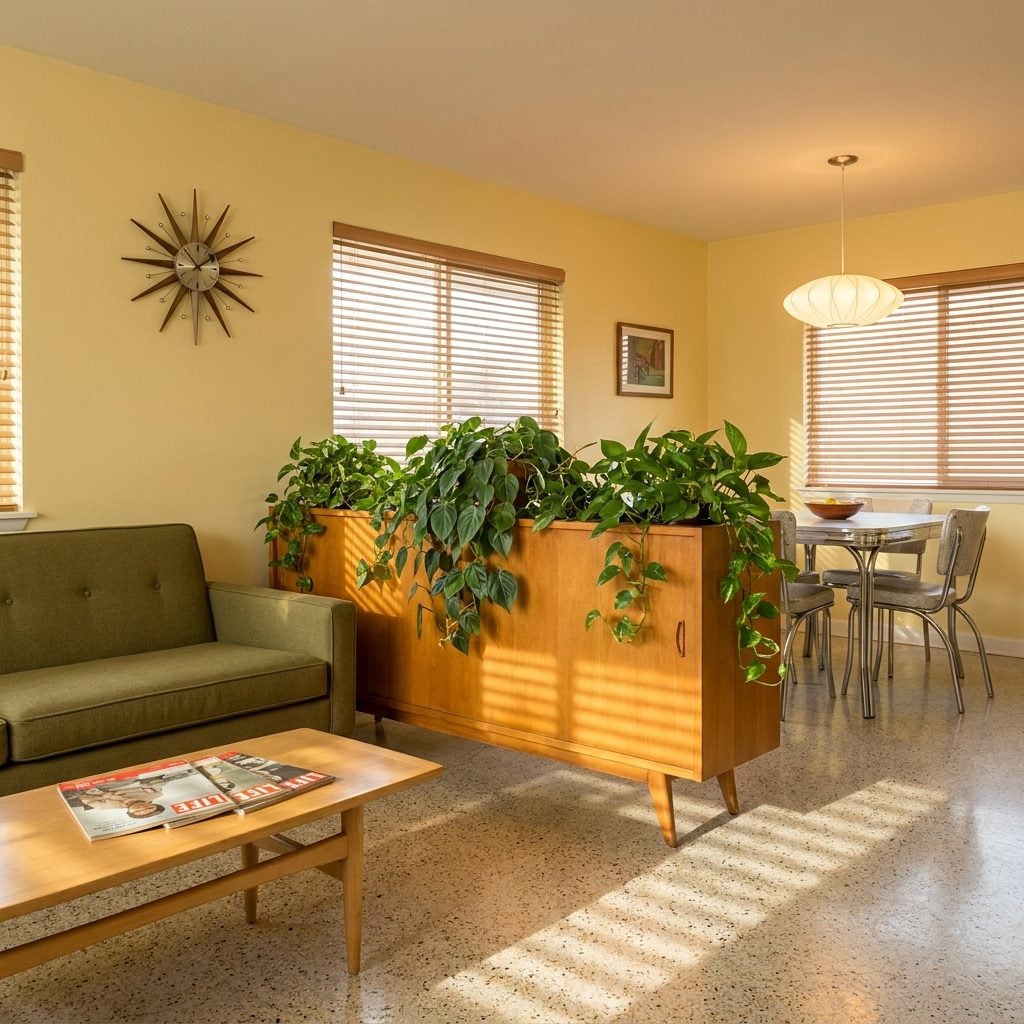
The Planter Room Divider Dripping with Philodendrons
🔥 Would you like to save this?
You didn’t walk into a 1950s living room so much as you crossed a border. That border was a low wooden or wrought iron planter box, about hip height, absolutely overflowing with trailing philodendrons and pothos that nobody seemed to water yet somehow never died.
This was the decade’s answer to an open floor plan before anyone used that term. The planter divided the living room from the dining area or entryway without blocking the sightlines Mom wanted for keeping an eye on everyone. The plants gave the space a lush, almost tropical feeling, and the planter itself doubled as a surface for setting down mail, keys, or a cocktail glass that left a ring nobody noticed until 1974.
That Wrought Iron Room Divider with All the Scrollwork
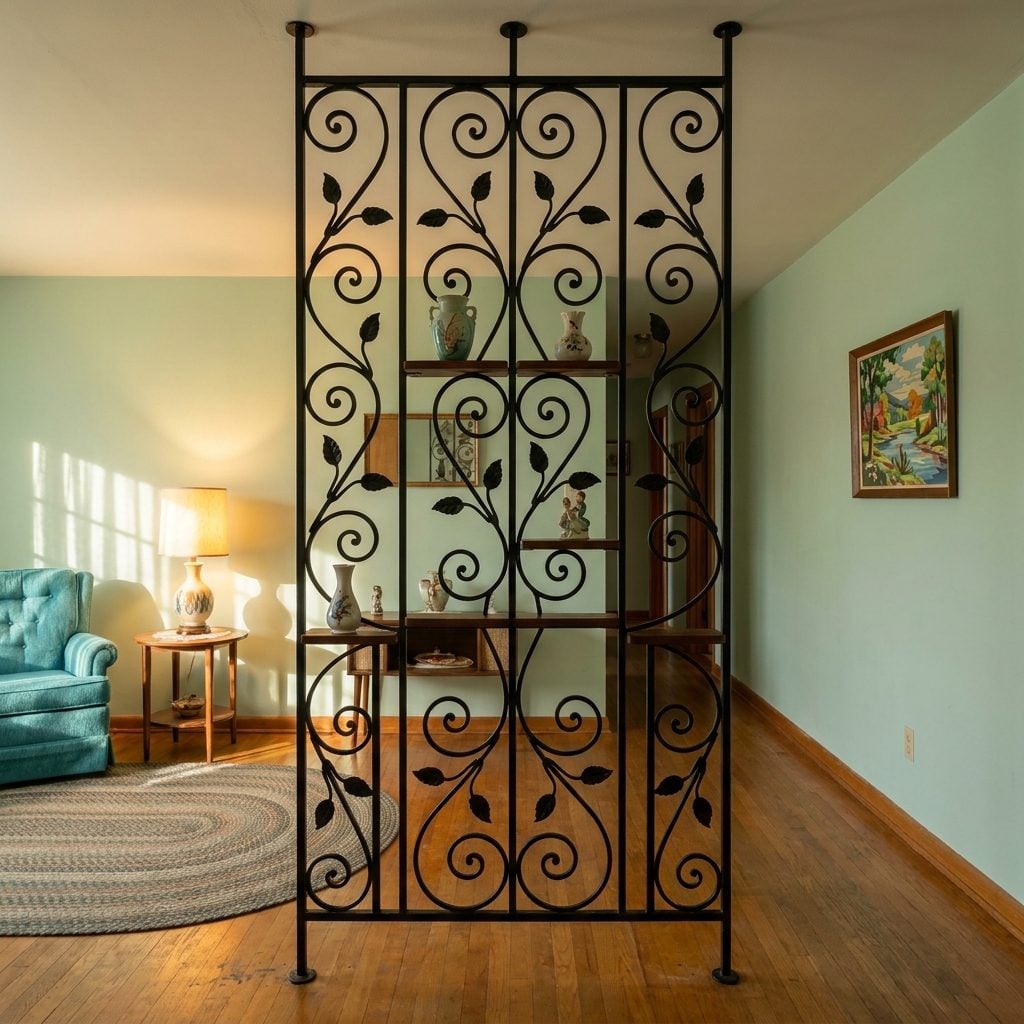
Every single one of these looked like it belonged in a Spanish courtyard, and somehow that was fine. Black wrought iron, twisted into curlicues and leaf shapes, standing floor-to-ceiling or mounted between two rooms like a decorative fence for your living room. Some had little shelves built in for knick-knacks. Some had planters attached. All of them collected dust in places you could never reach.
The scrollwork pattern varied from house to house, but the vibe was universal: fancy without being formal. It was the 1950s version of a transitional living room divider, something decorative enough to justify its existence but functional enough that Dad didn’t complain about the cost.
The Three-Way Tension Pole Lamp That Touched the Ceiling
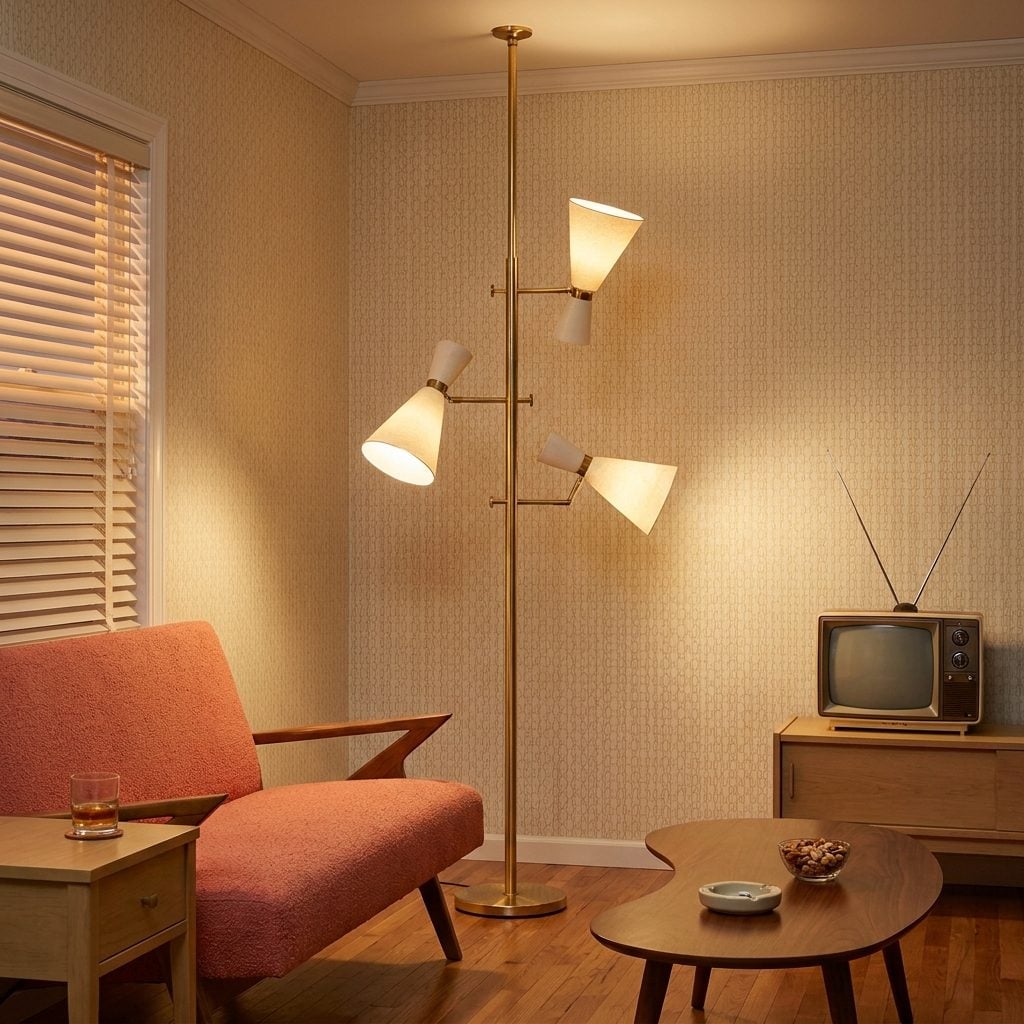
It went from floor to ceiling with nothing but spring tension and sheer ambition. The pole was brass or black enamel, and it had three cone-shaped shades you could swivel in any direction, each with its own switch. One pointed at the couch for reading. One aimed at the ceiling for ambient light. The third one? Honestly, the third one just pointed wherever it ended up when you last bumped into it.
These lamps needed zero floor space, which made them perfect for a small living room already packed with furniture. You wedged them into corners, next to sofas, between chairs. I’ve seen photos where one family had three of them in the same room, which feels excessive, but the fifties were not a decade of lighting restraint.
Table Lamps with Those Stiff Fiberglass Shades That Never Quite Looked Clean
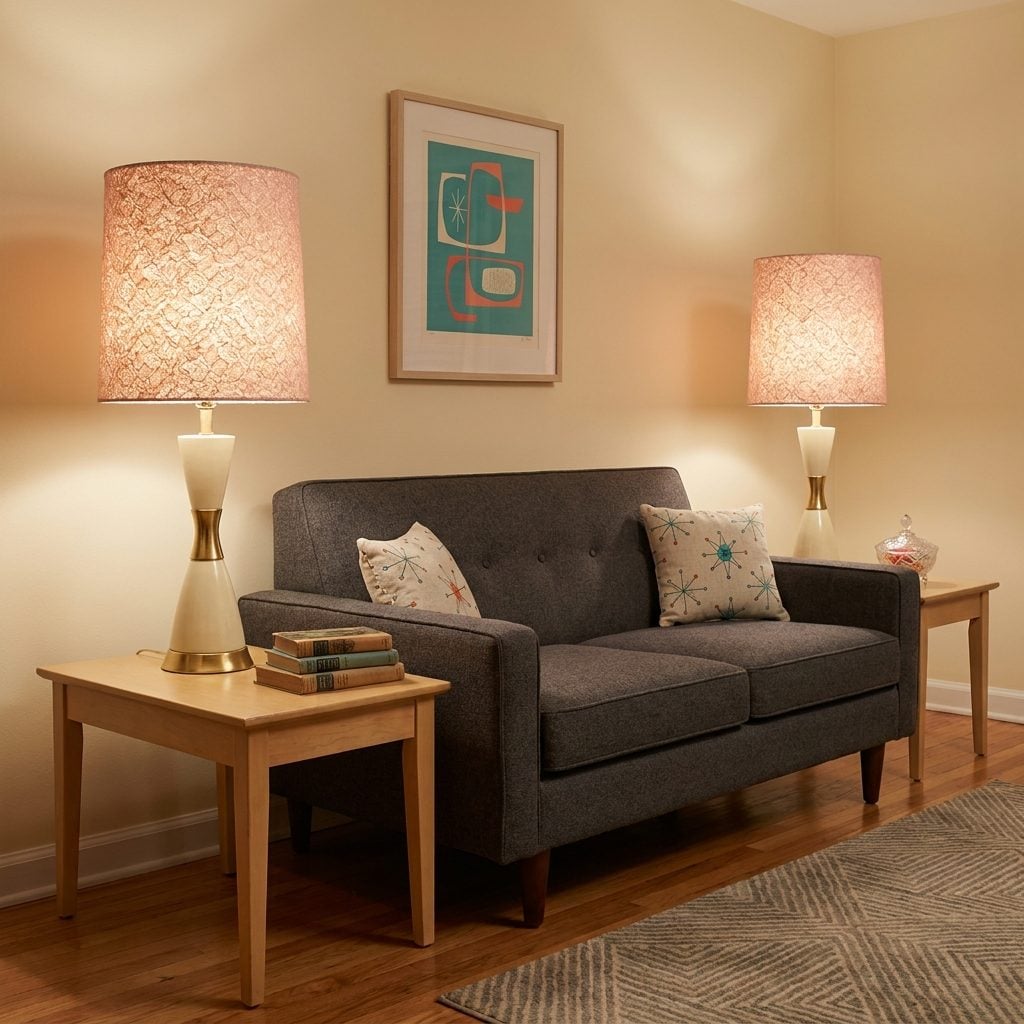
They came in pink, mint green, or a particular shade of pale gold that existed nowhere else in nature. The shades were fiberglass, slightly translucent, with a texture like starched lace pressed into resin. When the lamp was on, you could see every speck of dust trapped inside the material. When it was off, the shade still had a faint chemical smell if you got close enough.
The bases were ceramic, often in contrasting colors, shaped like anything from a simple urn to an abstract boomerang form. These vintage ceramic table lamps sat on every end table in America, always in pairs, because asymmetry was apparently a crime in 1955.
The Ceramic TV Lamp Shaped Like a Panther (or a Siamese Cat, or a Covered Wagon)
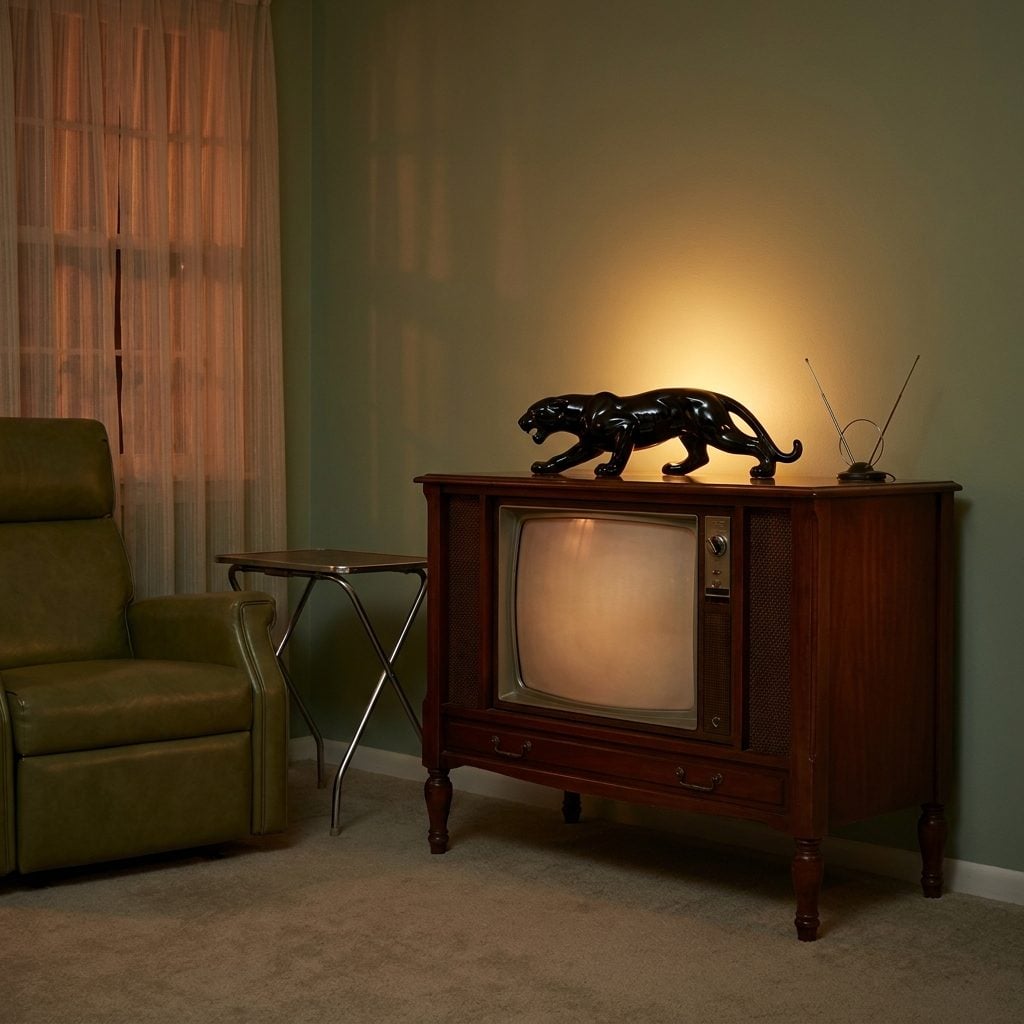
Perched on top of the television set, glowing softly from a hidden bulb, was something deeply weird that everybody owned. A ceramic panther in glossy black, mid-prowl. A pair of Siamese cats with jeweled eyes. A covered wagon heading west across your Zenith. A sailfish leaping over nothing. The shapes made no sense, and that was the entire point.
TV lamps existed because early television screens in dark rooms supposedly caused eye strain. The solution? A dim backlight. But instead of making a simple backlight, manufacturers made tiny ceramic sculptures with a 25-watt bulb tucked behind them. The soft glow washed up the wall and gave the room an amber warmth that, honestly, nothing has replicated since.
These disappeared almost completely by the mid-1960s, once TV screens got brighter and the eye strain panic faded. Now they sell for absurd prices at antique malls, which feels right for an object that was always more about style than science.
The Hurricane Lamp on the Side Table That Made Everything Feel Like a Holiday
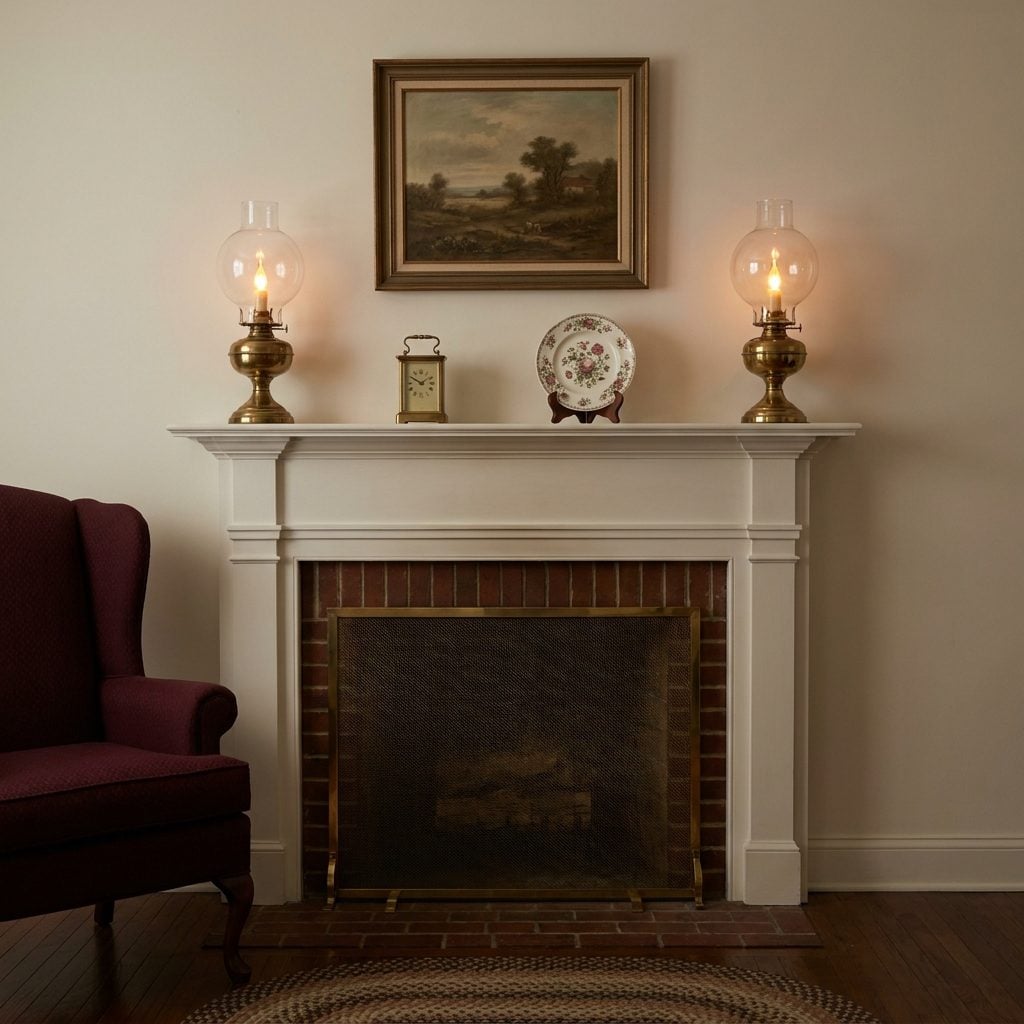
Glass globe. Brass or black metal base. Sometimes a real candle inside, sometimes an electric bulb shaped like a flame that flickered in a way that fooled nobody. The hurricane lamp sat on a side table or the mantel, and when it was lit, the whole room went soft.
There was something about this particular light source that made an ordinary Tuesday evening feel a little ceremonial. It was the lamp your grandmother turned on when company came over, the one that said “this is a real visit, not just someone dropping by.” The glass globes collected fingerprints and wax drips, and cleaning them was a chore everyone avoided.
The Wire Magazine Rack Stuffed with Life, Look, and the Saturday Evening Post
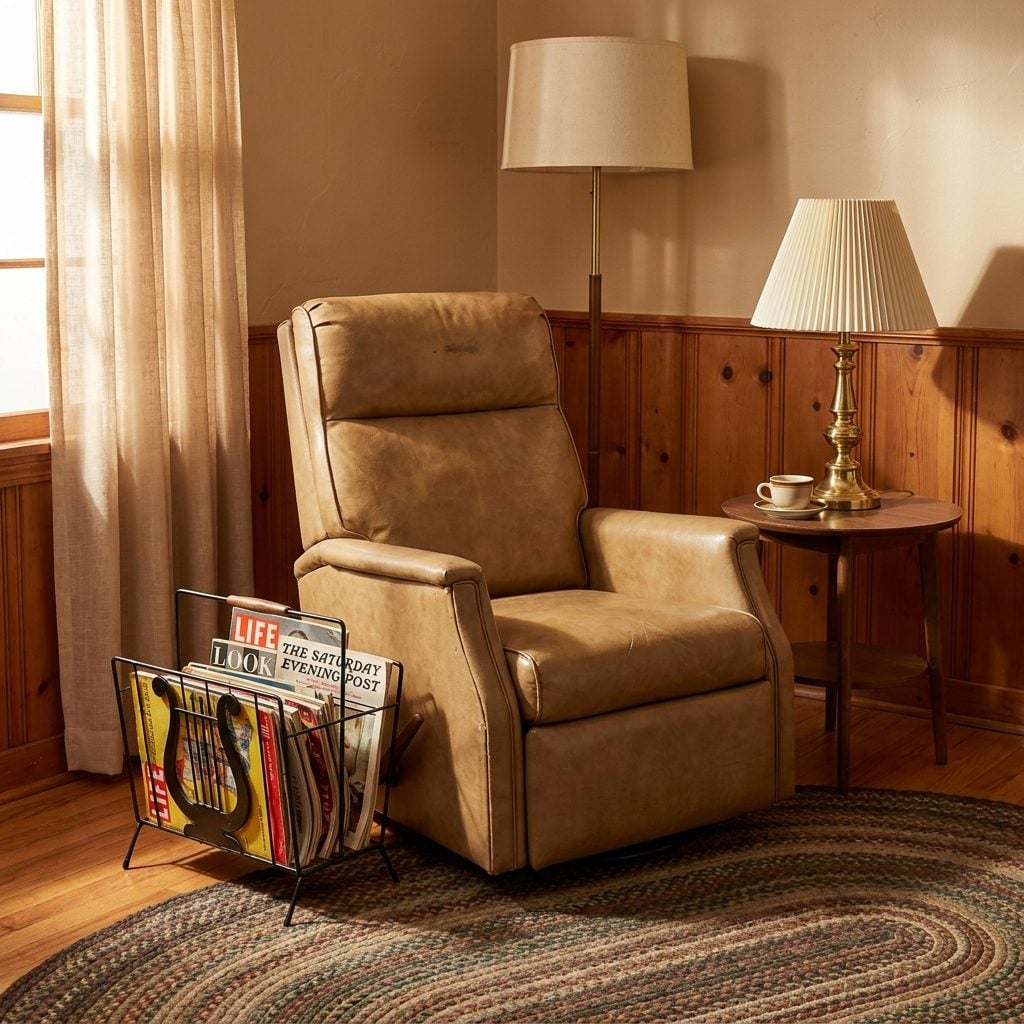
Black wire. Maybe brass-toned wire if the family was feeling fancy. Shaped like a lyre or a simple V, it sat next to Dad’s chair and it was always overstuffed. Life on top. Look underneath. The Saturday Evening Post wedged in sideways. A Reader’s Digest slipping out the bottom. Last month’s TV Guide that nobody threw away because someone might need it.
The wire magazine rack was really a portrait of one household’s reading habits, frozen in place, updated weekly. You could tell a lot about a family by what was in their rack. The house with National Geographic on top was a different house than the one with True Detective.
The Standing Ashtray in Chrome That Nobody Thought Twice About
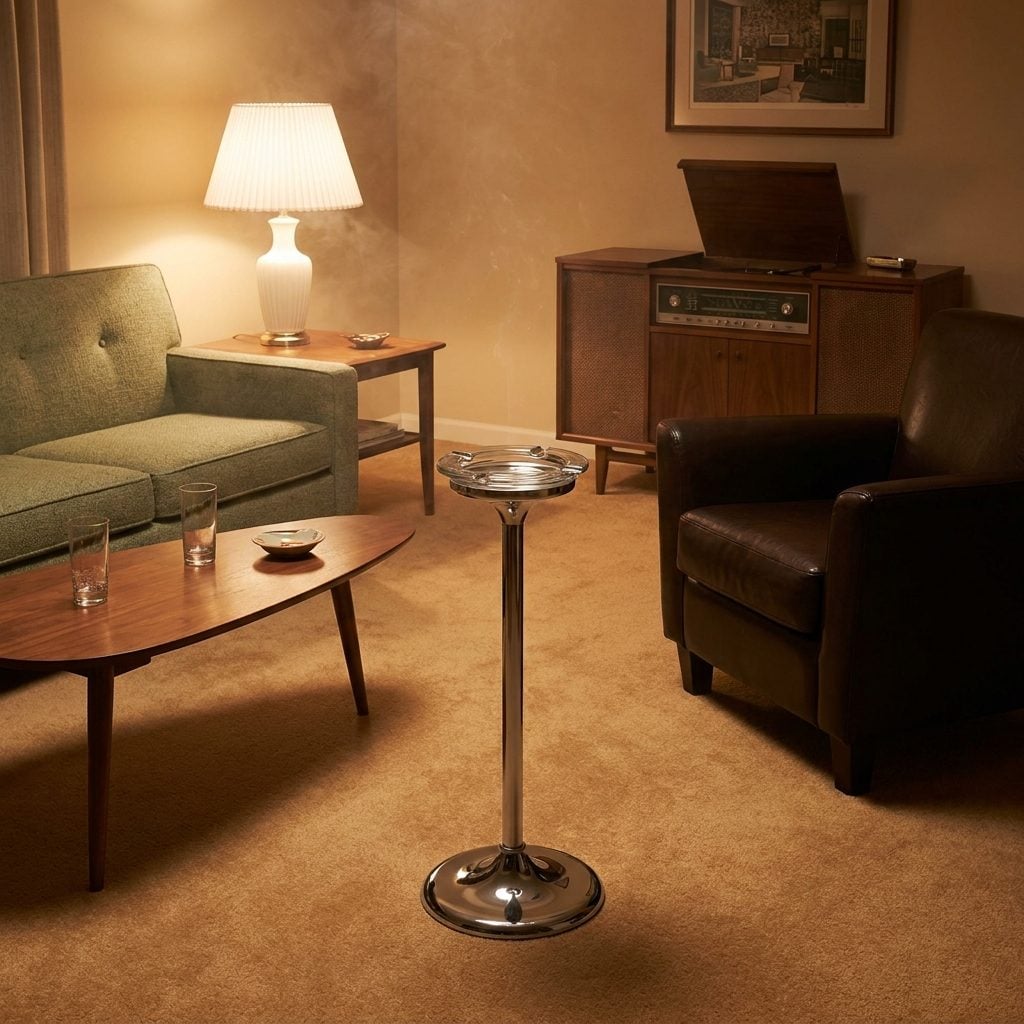
Right there, between the sofa and the armchair, within arm’s reach of anyone sitting down. A pedestal ashtray in polished chrome with a weighted base so it wouldn’t tip when you knocked into it heading to the kitchen for another drink. The tray on top was sometimes glass, sometimes metal, and it always had a couple of notches for resting a cigarette.
Every living room had at least one. Many had two or three, positioned around the room like furniture. They weren’t hidden. They weren’t apologetic. Smoking was just what people did in living rooms, and the chrome standing ashtray was as standard as a coffee table. The really nice ones had a push-button mechanism that swept the ashes into a hidden compartment below, which felt genuinely futuristic in 1956.
The Rotary Dial Phone Sitting on Its Own Little Gossip Bench
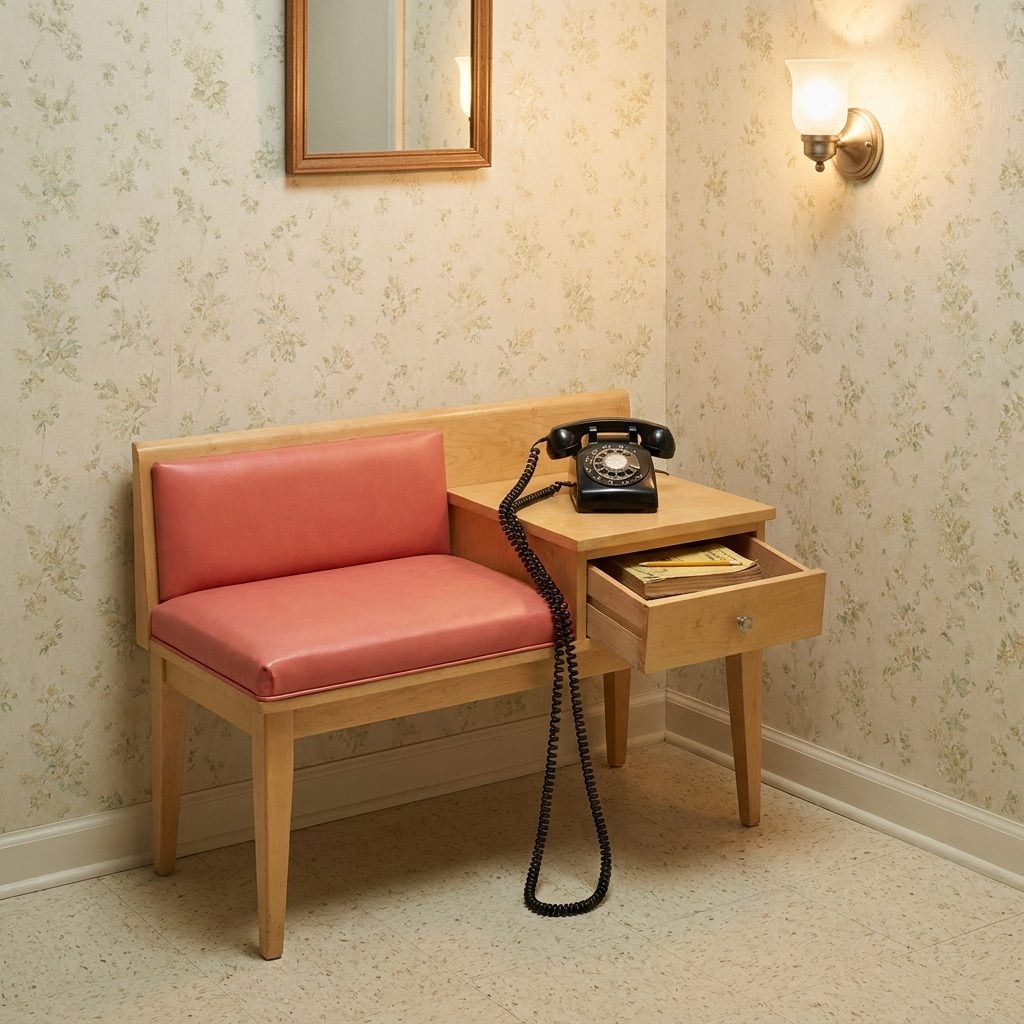
Half chair, half table. The gossip bench (also called a telephone table, but nobody called it that) was a small piece of furniture purpose-built for one activity: talking on the phone for a very long time. It had a seat on one side, a flat surface on the other for the telephone, and sometimes a tiny drawer underneath for the phone book and a pencil.
The rotary phone itself was black. Almost always black. Heavy as a brick, with a coiled cord that stretched just far enough to let you lean back in the seat but not far enough to reach the kitchen. The dial made that satisfying clicking return sound after each number, and a long-distance call felt like an event.
What made the gossip bench special wasn’t the phone. It was the fact that someone decided phone calls deserved their own furniture. A dedicated seat for the act of talking. That kind of single-purpose design feels almost luxurious now, in a world where we take calls standing in the grocery store parking lot.
Every Ceramic Figurine Your Mother Owned, Lined Up on the Mantel Like a Tiny Army
🔥 Would you like to save this?
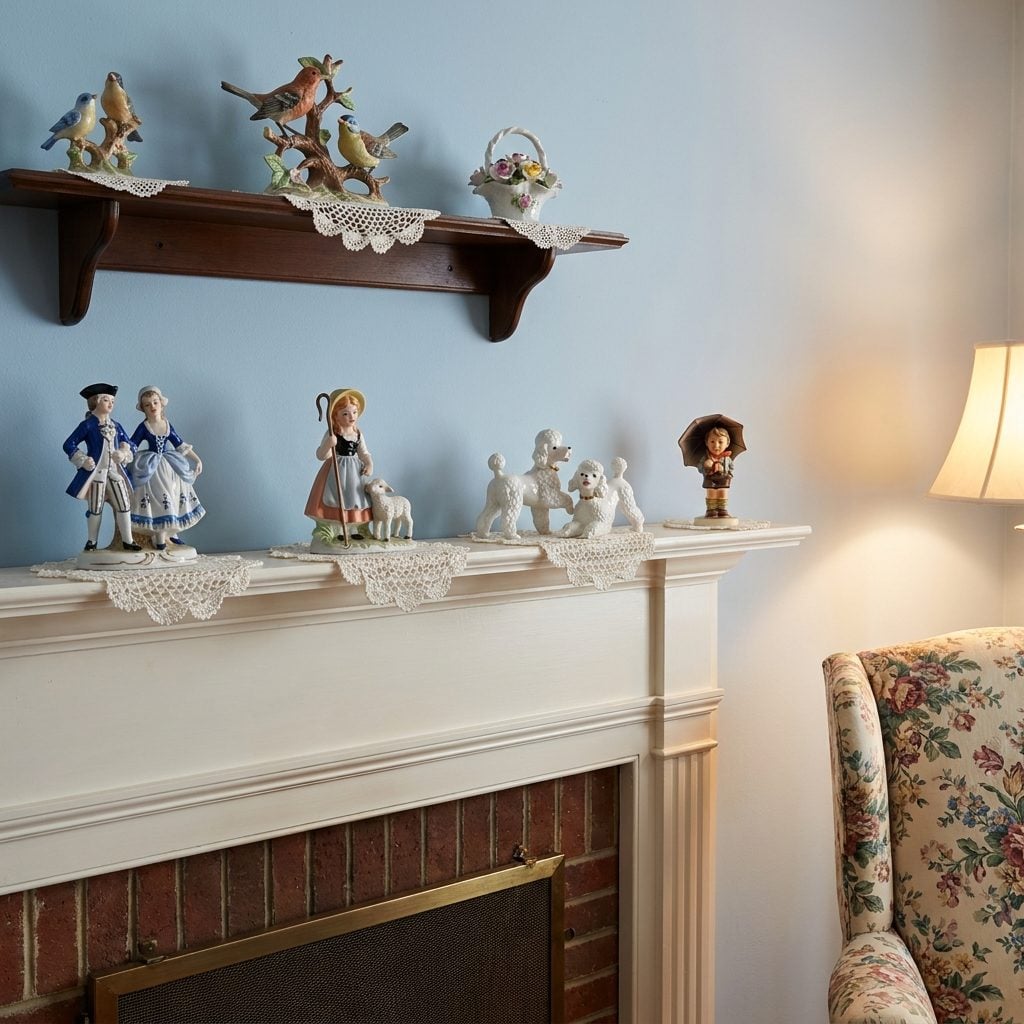
Shepherdesses. Poodles. Colonial couples frozen mid-dance. Birds on branches. A Hummel boy with a basket. They stood in rows on the mantel, on floating shelves, on top of the TV console, on every flat surface that wasn’t actively being used for something else. And they were never, ever to be touched.
These weren’t expensive, mostly. A few dollars each from the five-and-dime or a department store gift counter. But they were treated with a reverence that suggested otherwise. Each one had a specific spot, and if you moved one while dusting (or while being a curious seven-year-old), it was noticed immediately.
The figurines were strange little portraits of aspiration. Shepherdesses from a pastoral Europe nobody in suburban Ohio had visited. Colonial gentlemen from an era nobody actually remembered. They represented a kind of borrowed elegance, a shorthand for “this is a home where nice things live.” And honestly? Something about a shelf of ceramic animals and tiny people made a room feel finished in a way that a bare shelf never could.