🔥 Would you like to save this?
The grout was always a little uneven, and the floor tile had a coldness that shot straight through your socks at 6 a.m. But 1950s bathrooms smelled like Ivory soap and Aqua Net, and every single surface was some shade of pink or green that no one alive today would sign off on without a stiff drink first. These rooms were tiny, loud in color, and dead serious about matching everything to everything. Here are the details that made them gloriously, unapologetically nuts.
35. Pink Ceramic Bathtubs That Matched the Sink, the Toilet, and Your Grandmother’s Entire Personality
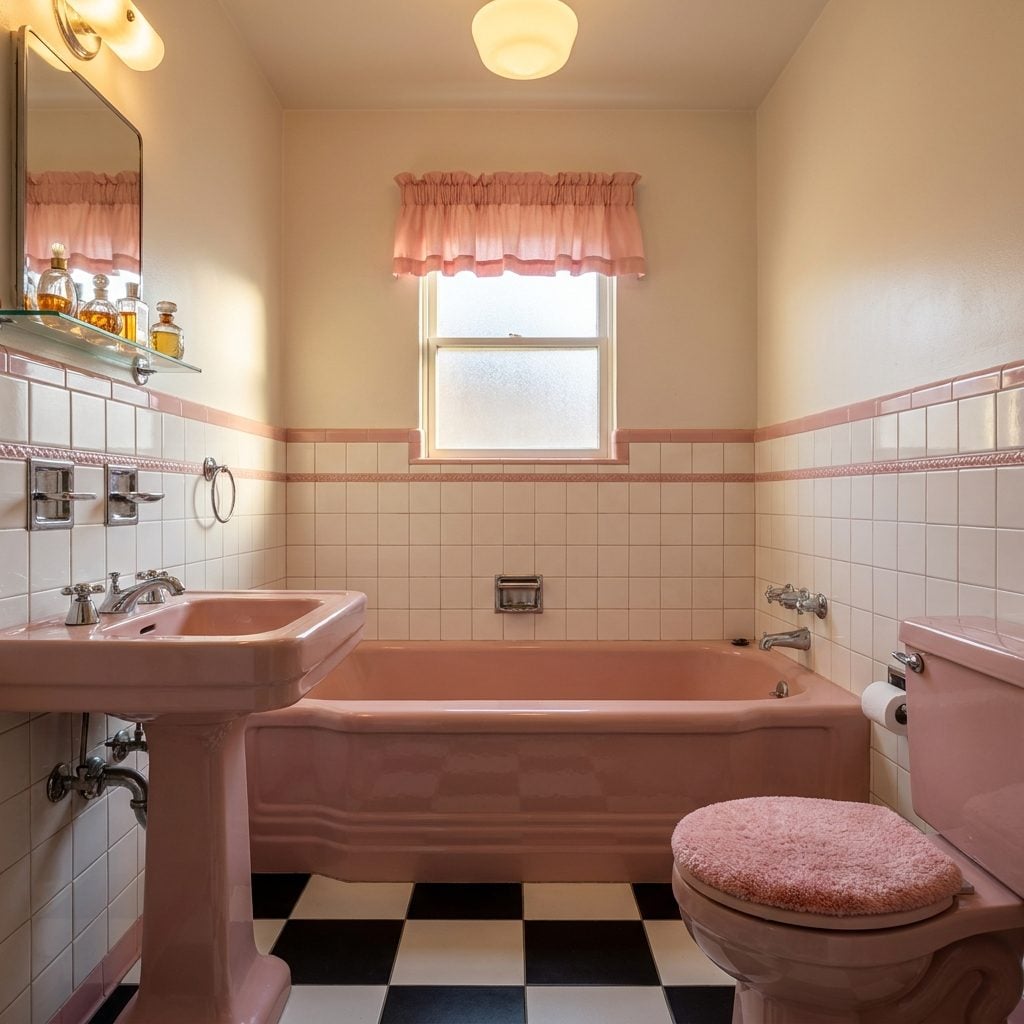
Not blush. Not salmon. Not coral. The pink of a 1950s bathroom suite was its own proprietary shade, somewhere between a flamingo and a stick of Bubblicious, and it came on everything. Bathtub, sink, toilet, all from the same factory run, all the exact same color down to the molecular level. Manufacturers like American Standard and Kohler treated color-matched fixtures the way luxury automakers treat paint: with obsessive, dead-serious precision.
In order to come up with the very specific design ideas, we create most designs with the assistance of state-of-the-art AI interior design software. Also, assume links that take you off the site are affiliate links such as links to Amazon. this means we may earn a commission if you buy something.
The commitment was total. You didn’t just pick a pink tub. You picked a pink life. The bath mat was pink. The soap dish was pink. The toilet paper was pink. If you’d told a 1950s homeowner that future bathrooms would be universally white, they’d have looked at you the way you’d look at someone painting their living room ceiling black.
34. Mint Green Tile Covering Exactly Half the Wall, Then Stopping Cold
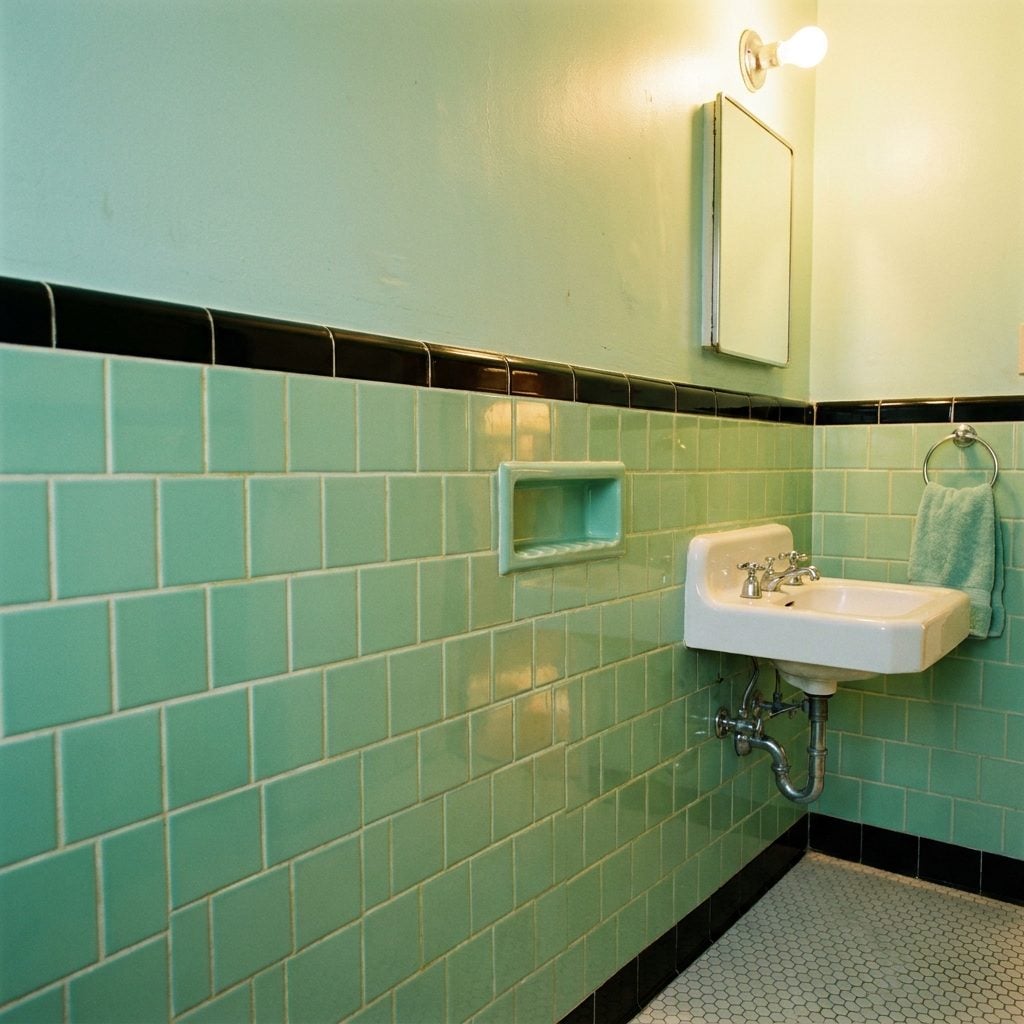
That hard horizontal line where glazed tile met painted plaster was one of the most distinctive features of mid-century bathrooms, and nobody questioned why the tile just… stopped. Forty-eight inches up, sometimes fifty-four if the installer was feeling ambitious, then nothing. Bare wall. Paint. As if the budget ran out mid-sentence.
The mint green itself was a specific shade: not sage, not emerald, not seafoam. Think hospital corridor crossed with a Bel Air dashboard. It had the glossy confidence of a material that expected to outlive everyone in the house. And honestly, it usually did. People have ripped out these tiles with sledgehammers and found them harder to remove than political opinions at Thanksgiving dinner.
33. Built-In Metal Toothbrush and Soap Holders Recessed Directly Into the Tile Wall
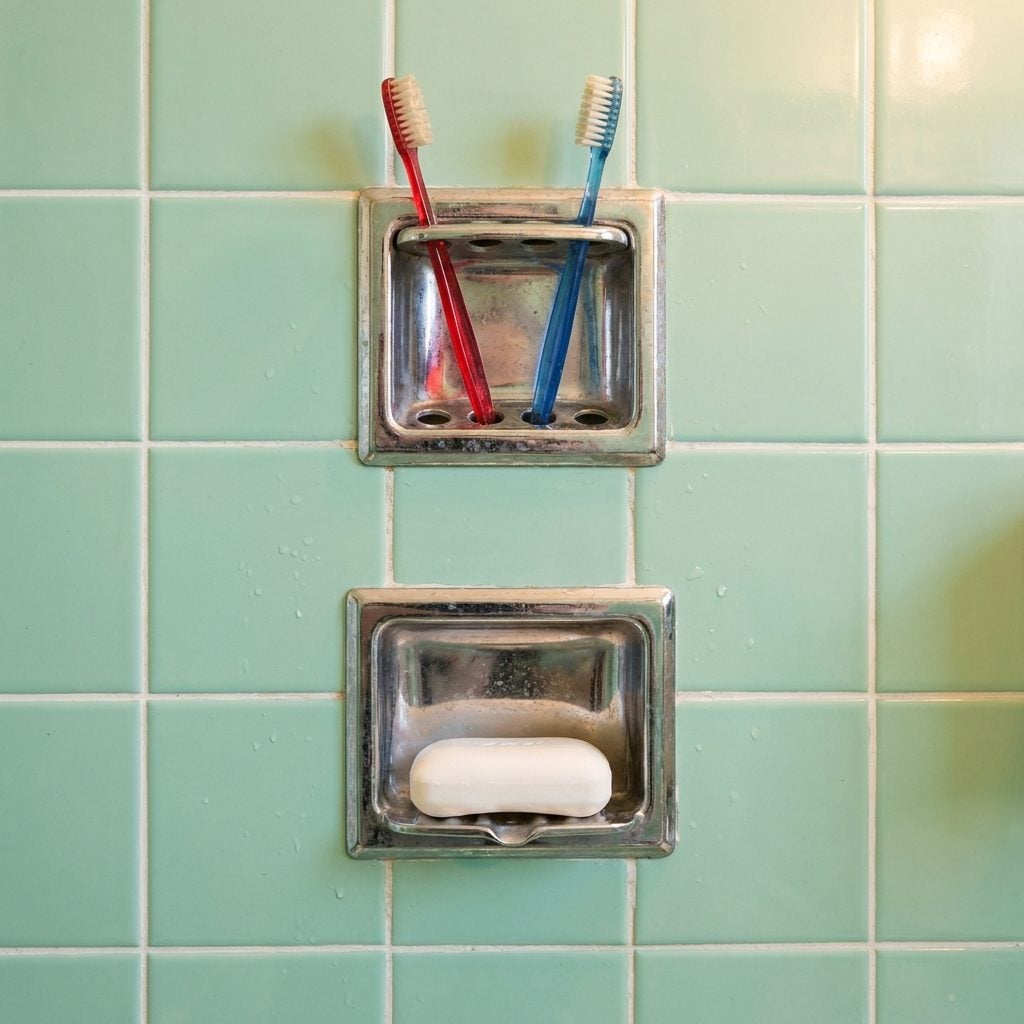
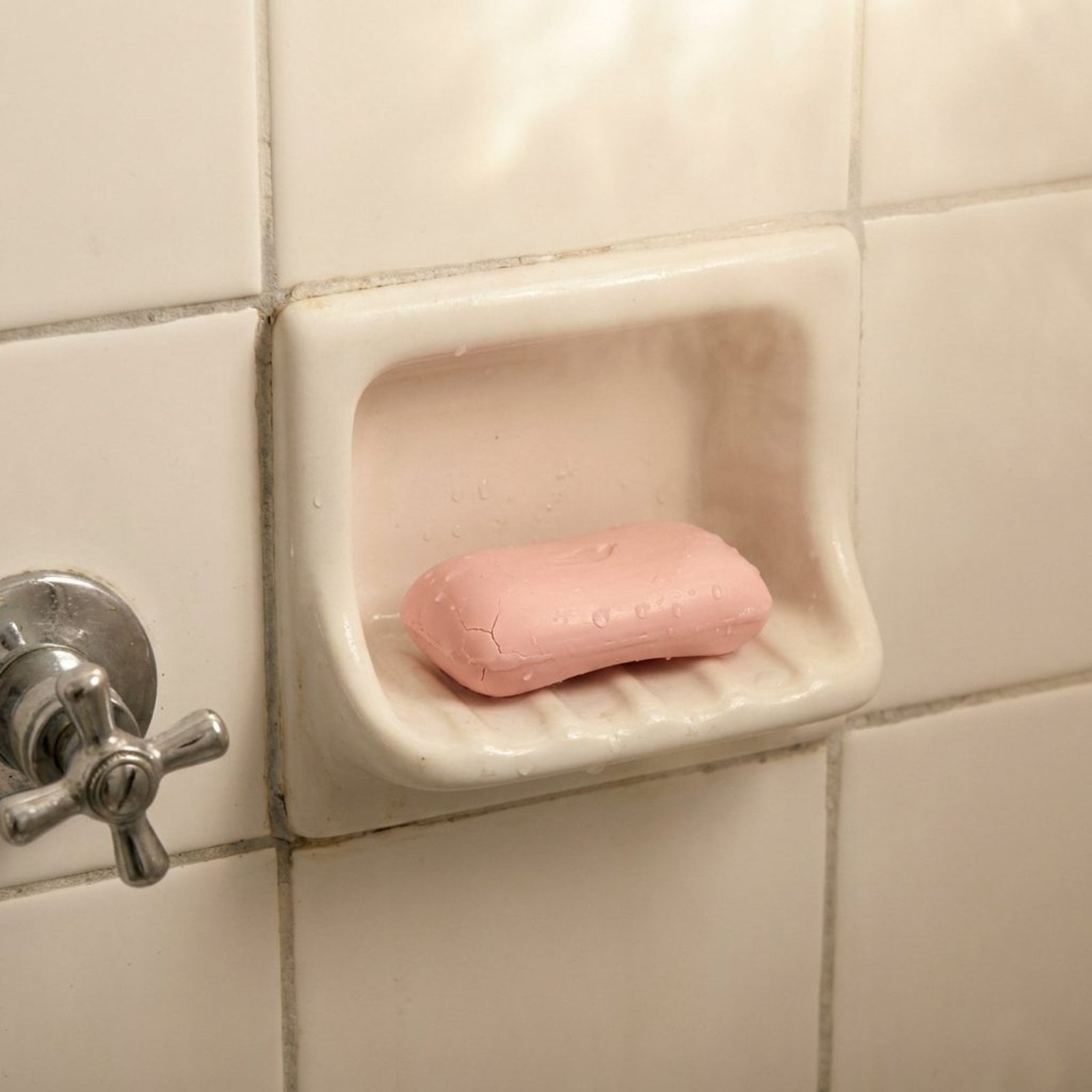
Whoever decided to build storage directly into the wall itself was operating on a level of commitment we’ve completely abandoned. These weren’t accessories. They were architecture. A chrome-framed rectangle, recessed into the tile during installation, permanently grouted in place. One for soap with a little drainage groove. One for toothbrushes with those four perfect holes that held exactly four toothbrush handles and nothing else on earth.
Removing them meant destroying the surrounding tile. So they stayed. Decades later, in houses that had been remodeled three times over, you’d still find a chrome soap holder hiding behind a vanity mirror, a ghost of someone else’s morning routine cemented into the wall.
32. Tiny Wall-Mounted Cup Dispensers That Held Five Paper Cups Nobody Ever Used
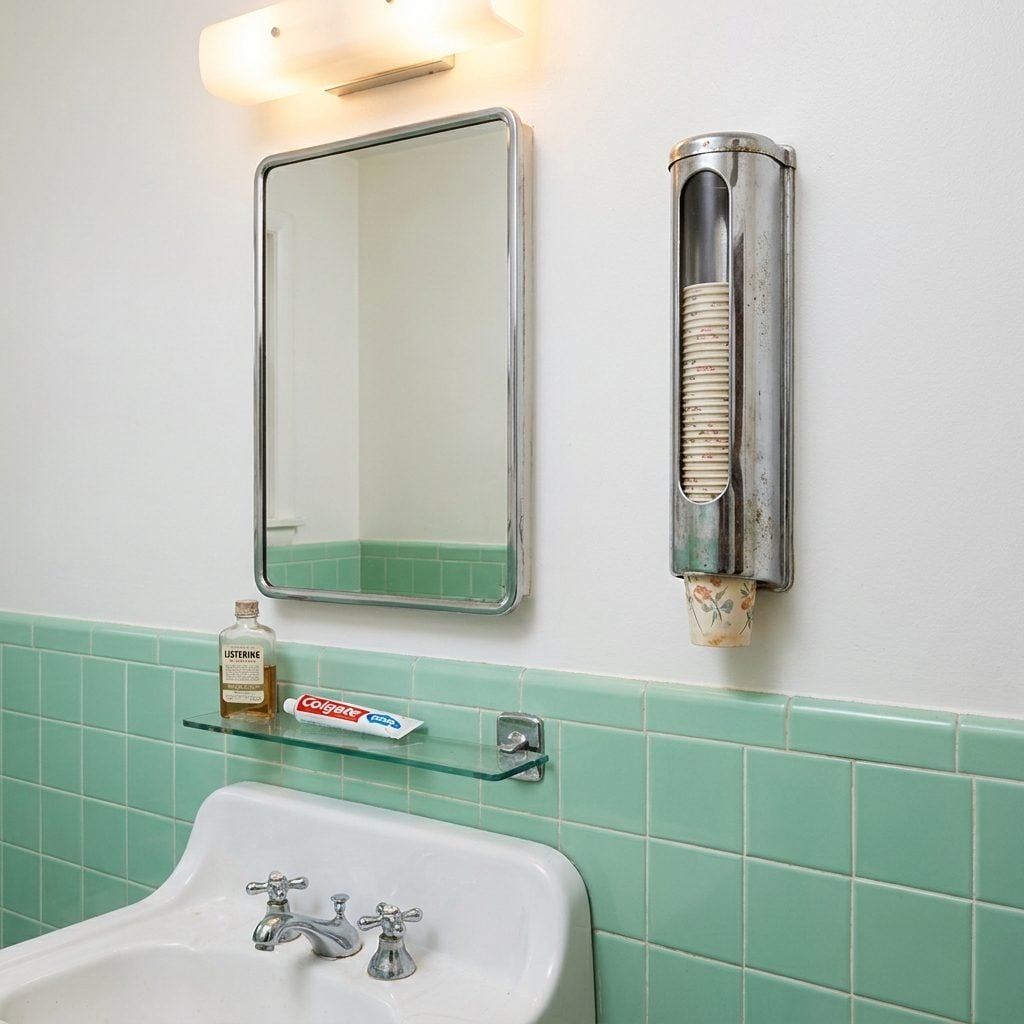
These things were everywhere and I’m still not entirely sure who was drinking water from a dispenser mounted two feet from the toilet. The concept was simple: a chrome bracket on the wall, a sleeve of small waxed paper cups (the kind you’d get at a dentist’s office), and the vague suggestion that guests might want to rinse after brushing.
In practice, the cups yellowed. The spring mechanism got sticky. The whole unit became decorative within six months. But it stayed on the wall for thirty years because removing it would’ve left two screw holes in the tile, and that was unacceptable.
31. Pastel-Colored Toilets Treated as a Genuine Design Statement
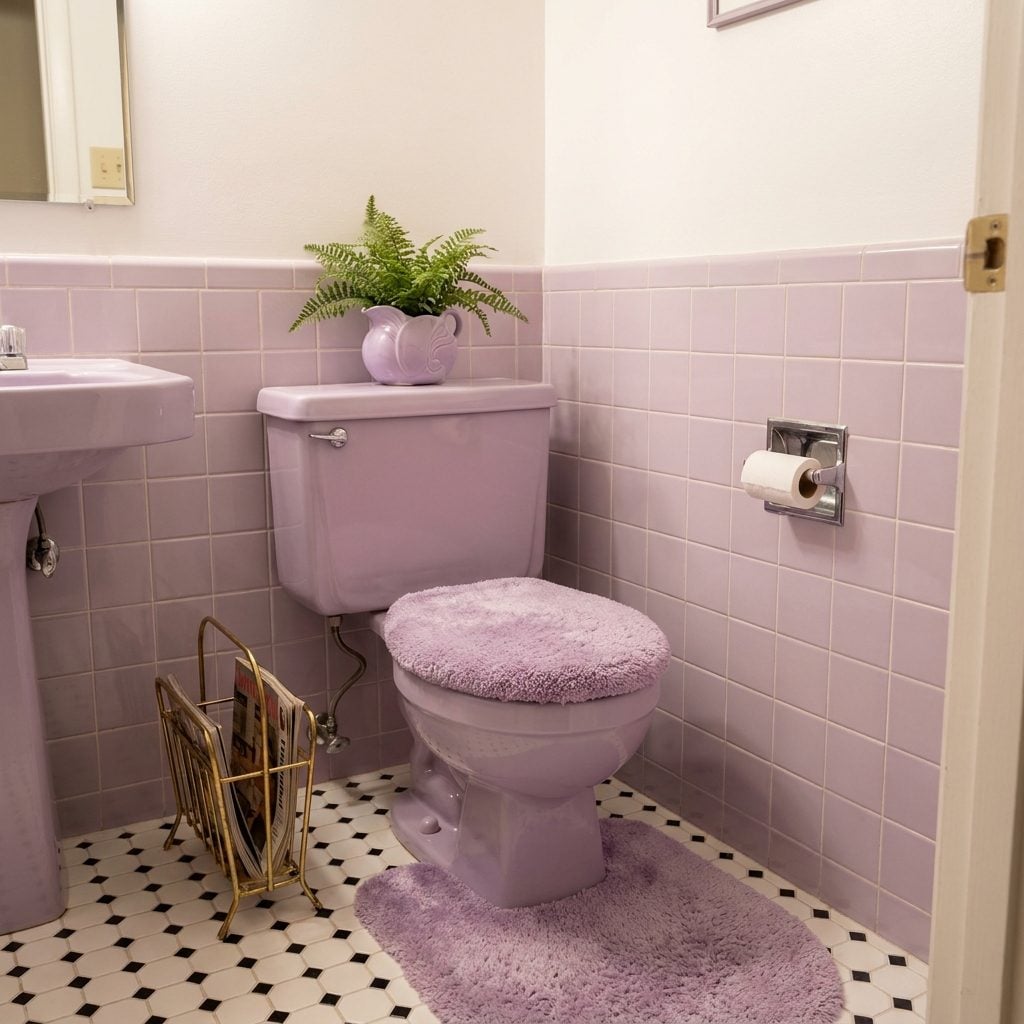
Lavender. Primrose yellow. Something called “Bermuda Coral.” The 1950s toilet was not a neutral background player. It was the headliner.
Modern bathrooms treat the toilet like an appliance: functional, invisible, preferably white. The 1950s treated it like a sofa. It had to coordinate. It had to make a statement. Kohler’s color catalog from this era reads like a paint deck for a beach resort, and homeowners browsed it with the same seriousness they brought to choosing a new car. A toilet in “Sun Valley Yellow” wasn’t weird. It was aspirational. Replacing a colored toilet with a white one today feels practical, but something genuinely playful died when we decided that the most-used fixture in the house didn’t deserve a personality.
30. Ashtrays Built Directly Into Bathroom Countertops Because Apparently We Smoked Everywhere
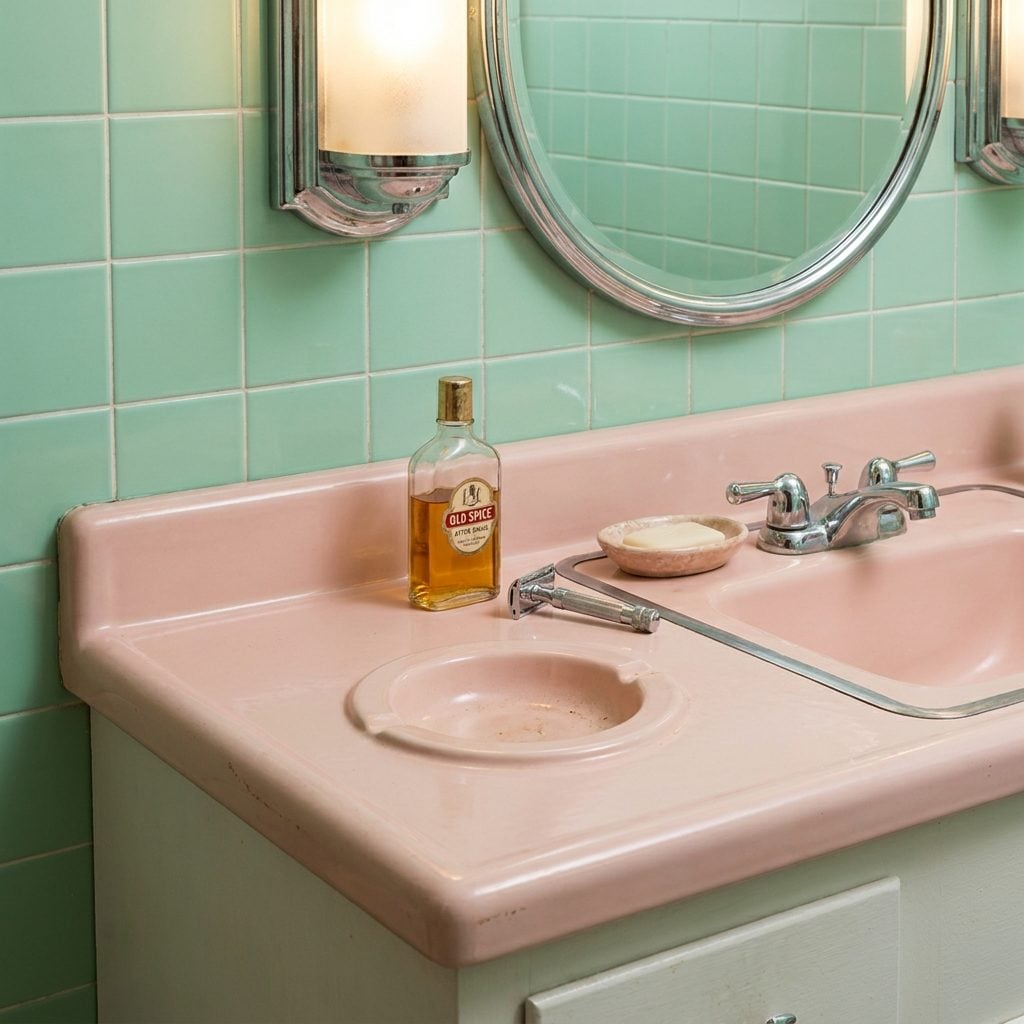
Just sitting there. Molded right into the ceramic countertop or built into the edge of the vanity, as permanent and unapologetic as the sink drain. A shallow bowl with a little cigarette groove, glazed to match the rest of the bathroom suite, designed for someone to light up while shaving or doing their hair or, honestly, just sitting there.
I say this not to judge but to note that someone at American Standard’s product design department sat in a meeting and said, “What if we put an ashtray next to the toothbrush holder?” and everyone in the room nodded. That’s the 1950s in one sentence.
29. Thick Black Tile Trim Outlining Every Surface Like Someone Was Drawing the Room in Marker
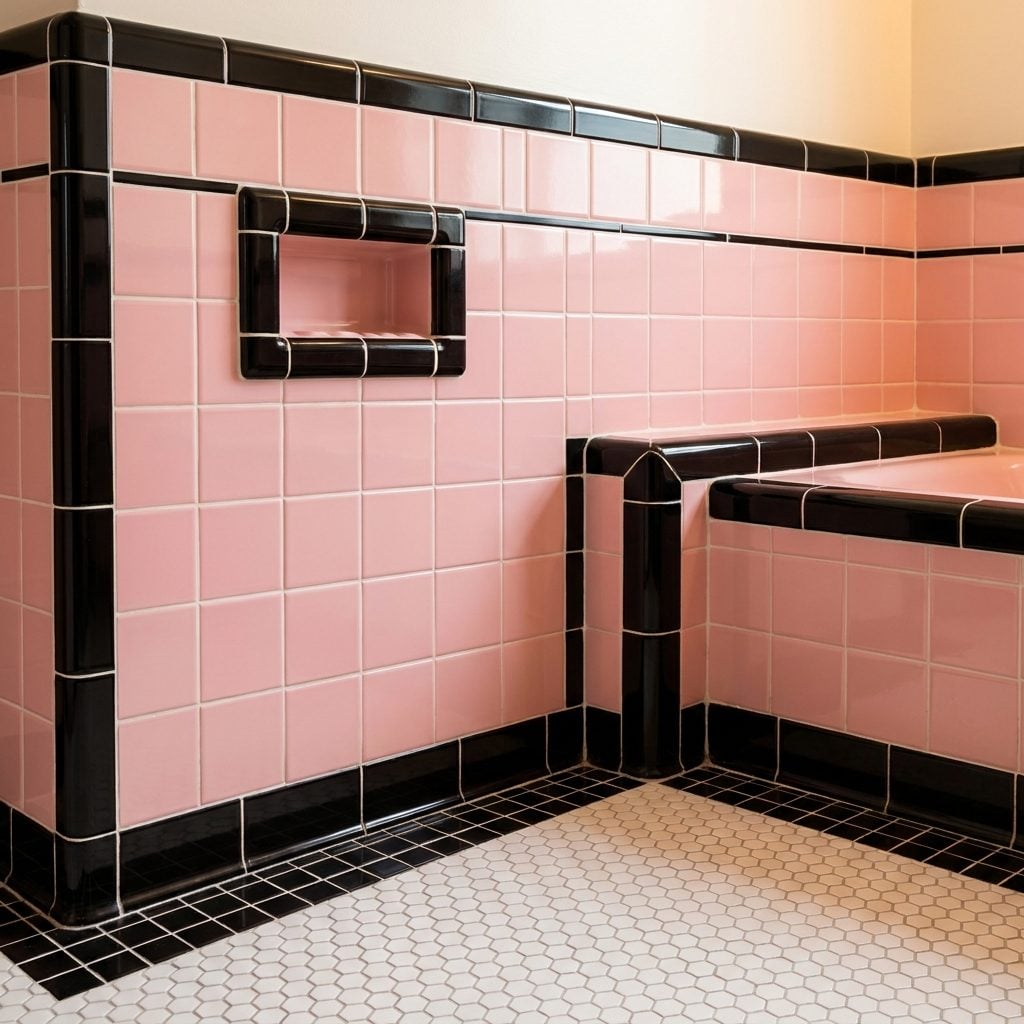
Every color transition got a black border. Every edge, every corner, every junction where tile met wall or tub or ceiling got outlined in thick, glossy black ceramic trim. Cap pieces. Cove bases. Quarter-rounds. The bathroom looked like a coloring book that someone had traced over with a Sharpie.
And it worked, honestly. The black trim gave those candy-colored rooms a crispness they wouldn’t have had otherwise. Without the outlines, a pink-and-mint bathroom risks looking like the inside of a gumball machine. With them, it looks intentional. Graphic. Almost modern, in a weird way.
Tile setters from this era knew things about trim profiles that most contractors today have never even heard of. The craftsmanship in those mitered black corners was quietly exceptional.
28. Medicine Cabinets With Razor Blade Disposal Slots That Dumped Blades Inside Your Walls Forever
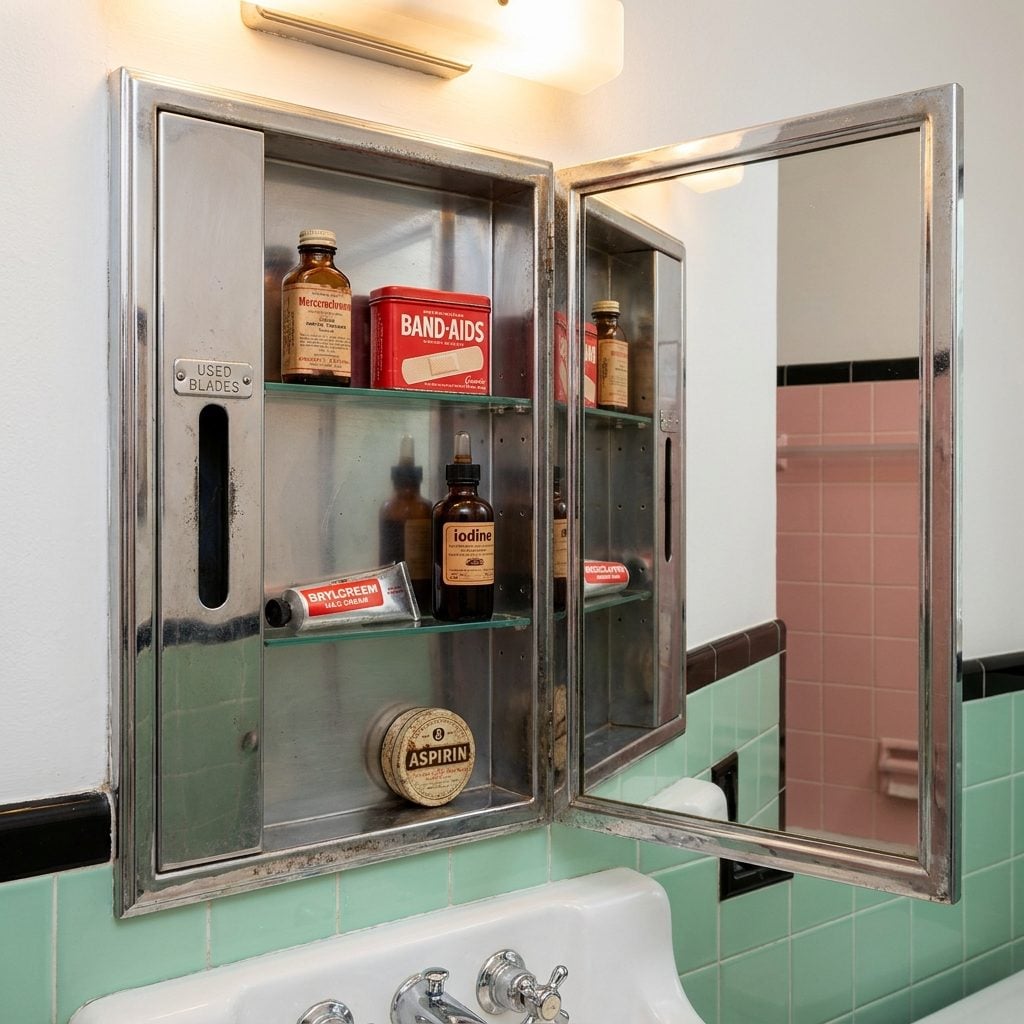
There’s a slot in the back of the cabinet. It goes nowhere. It goes into the wall.
That’s it. That’s the disposal system. You slid your used double-edge razor blade through a thin opening in the medicine cabinet’s metal backing, and it dropped into the wall cavity between the studs, where it joined a slowly growing pile of extremely sharp metal that would remain there until the end of time or the next renovation, whichever came first.
Contractors who’ve opened up walls in 1950s homes report finding hundreds, sometimes thousands, of rusted razor blades piled up like the world’s most dangerous archaeological dig. Nobody planned for retrieval. The wall was the trash can. It’s genuinely one of the most unhinged “solutions” in residential design history, and it was standard for decades.
27. Wall-Mounted Heat Lamps for Warming Up After Baths Like a Rotisserie Chicken
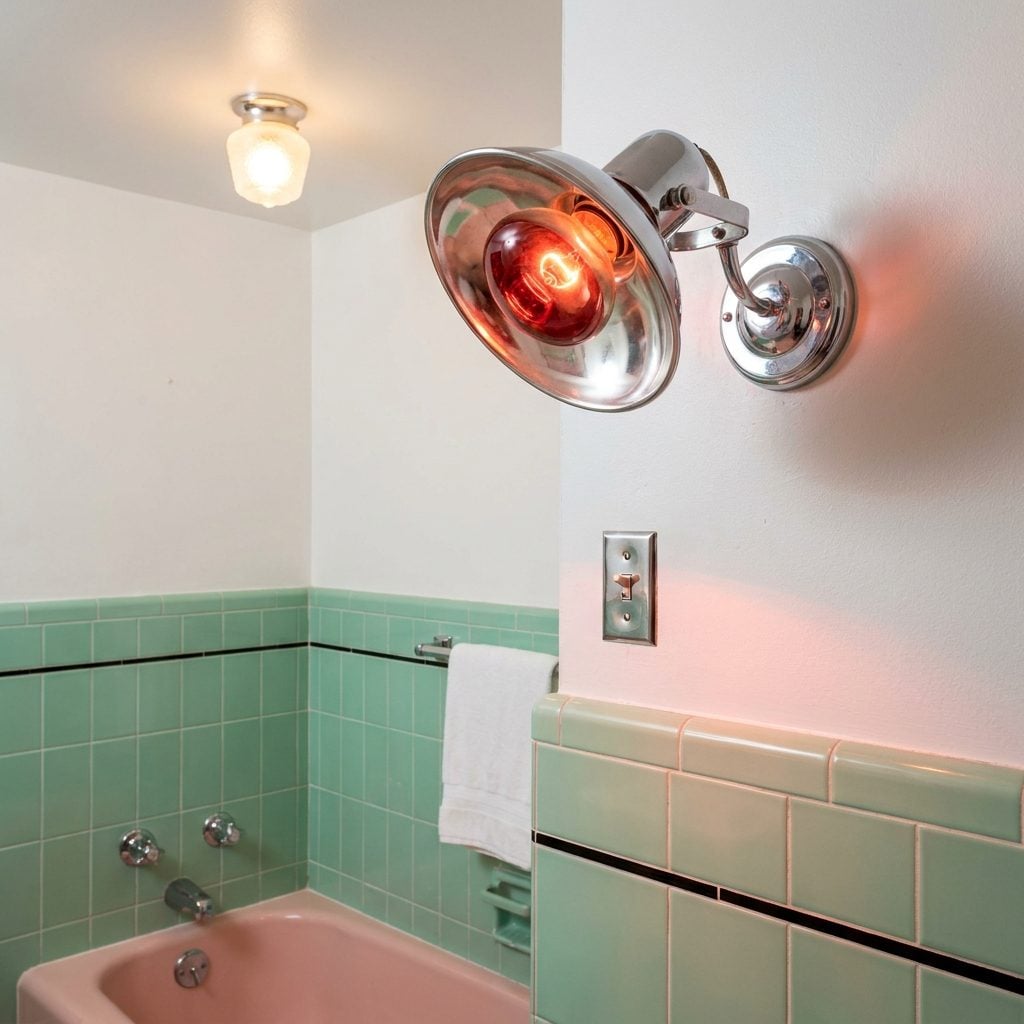
Before heated floors and towel warmers, the 1950s solution to post-bath chill was beautifully simple: screw a 250-watt infrared bulb into a chrome housing on the wall and blast yourself with radiant heat like you’re keeping a sandwich warm at a diner counter.
These lamps ran hot enough to feel slightly dangerous, which they absolutely were. The chrome housing got scorching. The bulb was a deep red that made the bathroom look like a developing darkroom. And the switch was always mounted at exactly the wrong height, so you’d fumble for it while dripping wet, half-blind from steam. But those thirty seconds of standing under that red glow after stepping out of the tub on a January morning? Genuinely one of the great small luxuries of domestic life. Modern victorian bathroom ideas have nothing on that raw, slightly unhinged warmth.
26. Floral Vinyl Shower Curtains With Ruffled Edges That Smelled Like a Pool Toy
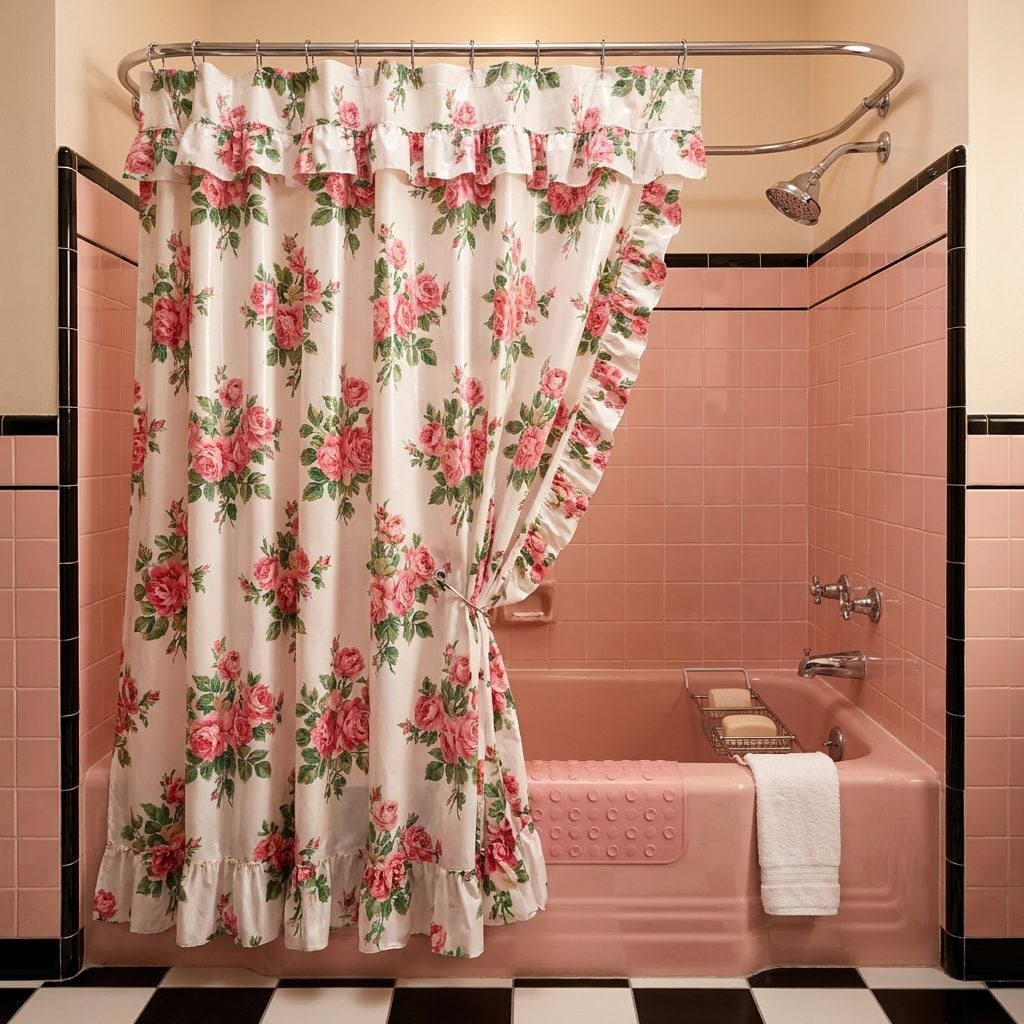
You could smell it before you saw it. That specific vinyl off-gas, sweet and chemical, like inflatable pool toys and brand-new shower sandals. The floral vinyl shower curtain was a non-negotiable fixture in virtually every 1950s bathroom, and it came with design choices that would make a modern textile designer need to sit down.
Cabbage roses. Enormous pink peonies. Sometimes tropical fish, for reasons no one has ever explained. And always, always, a ruffled edge along the top and bottom, as if the curtain were a prom dress for your bathtub. The floral shower curtain hung from chrome rings that screeched across the rod with a sound that announced every bathroom visit to the entire household.
Within a year, the vinyl developed a permanent curve at the bottom that no amount of straightening could fix. It stuck to your leg if you got too close. It yellowed. It cracked at the fold lines. And then someone bought a new one in the exact same pattern, because what else would you buy?
25. The Bathroom Scale That Lived on the Floor Like a Permanent Resident
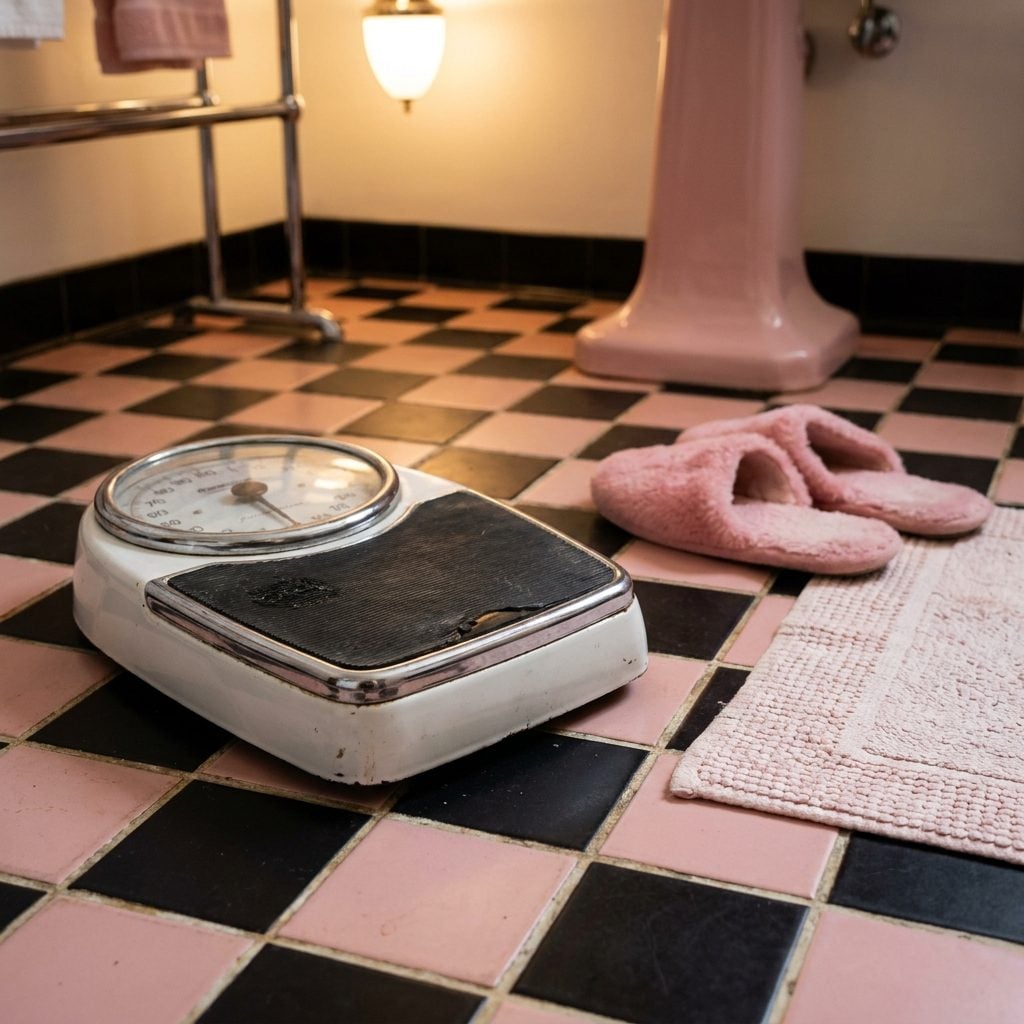
Nobody weighed themselves in the 1950s bathroom — they performed a daily ritual on that vintage bathroom scale, which never once got put away. It lived right there on the tile, usually between the sink and the tub, collecting a thin ring of dust underneath that nobody cleaned because moving it felt like rearranging the furniture.
These weren’t sleek digital things. Heavy, mechanical, with a dial that spun like a roulette wheel before landing somewhere in the neighborhood of your actual weight. The rubber mat on top always had a slight curl at the edges. And somehow, the scale’s permanent presence made it feel less like a health tool and more like a piece of the floor itself — just another tile, really, that happened to judge you.
24. The Shag Rug Hugging the Toilet Base Like It Was Cold
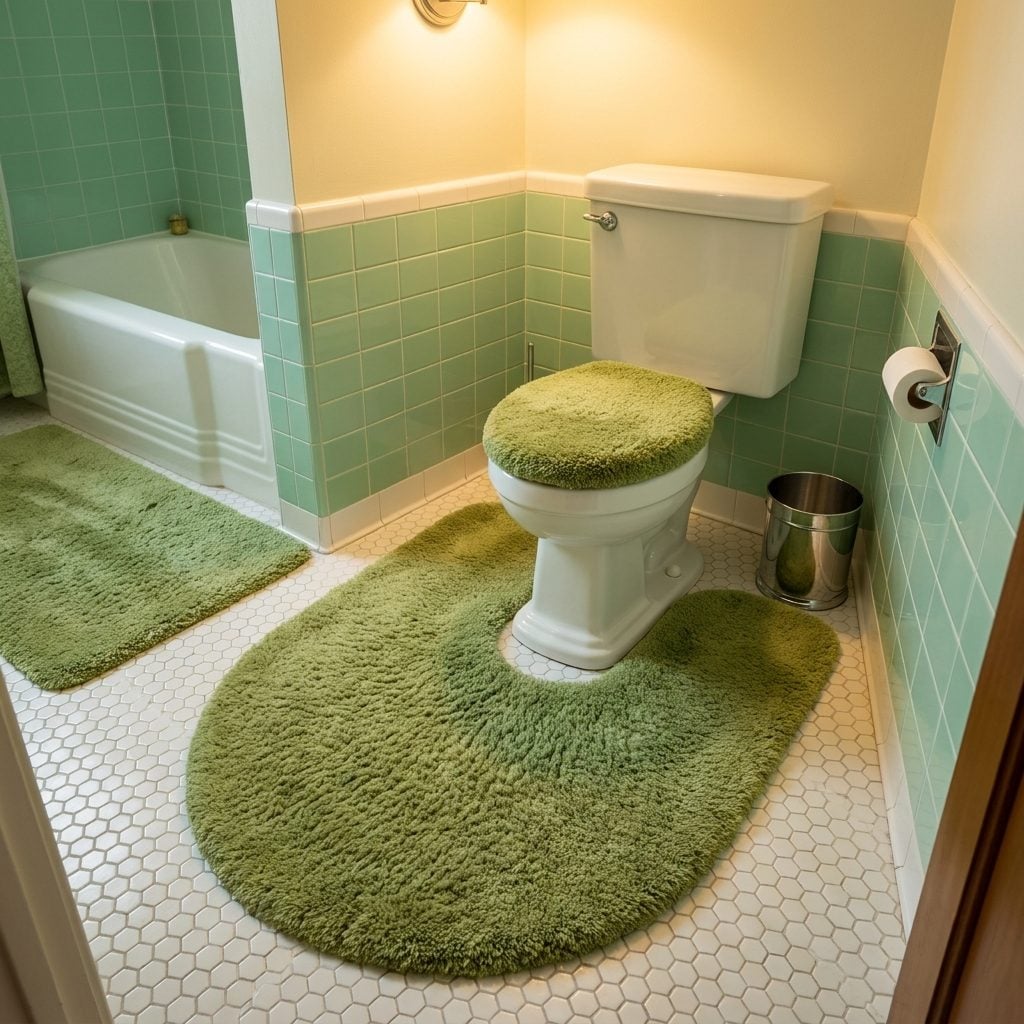
There is no way to explain this to a modern person without them flinching. A textile. Wrapped around the base of a toilet. Touching the floor. Absorbing whatever the floor was absorbing. And yet every bathroom had one — usually in avocado green or harvest gold, cut with that specific U-shaped notch so it could press right up against the porcelain like a devoted pet.
The logic, presumably, was that cold tile needed softening and bare porcelain looked incomplete. The reality was a rug that got washed maybe quarterly and spent its life in a splash zone. I say this knowing full well my grandmother’s bathroom had the complete three-piece set: toilet base rug, lid cover, and bath mat, all in coordinated pink chenille. We accepted it. Walked on it barefoot. Never once questioned the arrangement.
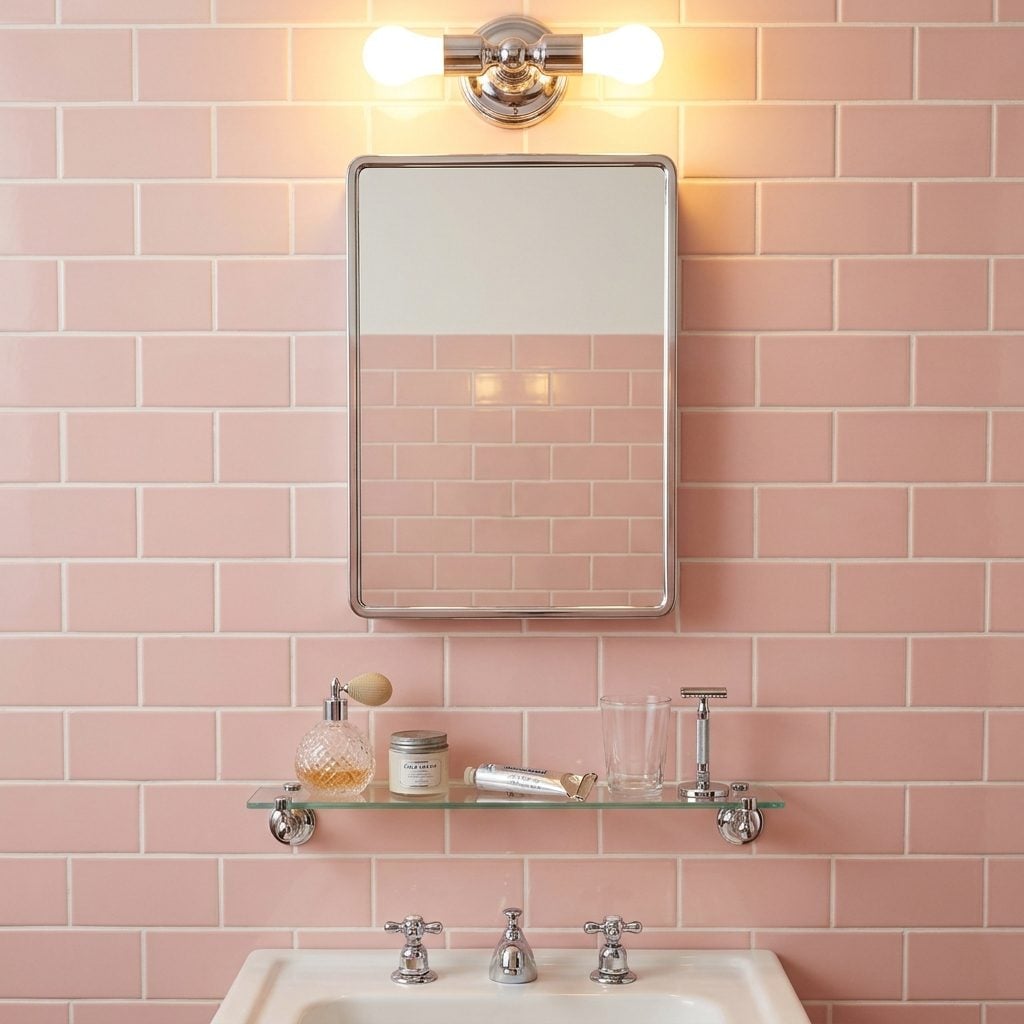
23. Glass Shelves Mounted Under the Medicine Cabinet Where Everything Could Fall and Shatter
🔥 Would you like to save this?
Glass on glass on glass — that was the design philosophy. A mirrored cabinet, and then below it, one or two clear glass shelves on little chrome brackets, holding everything fragile you owned in the most precarious arrangement imaginable.
Perfume bottles. A drinking glass for rinsing. Dad’s safety razor. A jar of Pond’s cold cream with the lid never quite screwed on tight. All of it perched on a transparent shelf roughly six inches deep, vibrating gently every time someone shut a door anywhere in the house. The shelves themselves were thin with slightly rounded edges that gave a false sense of security, which really just meant you’d bleed slightly less when one finally shattered in the sink at 2 a.m.
22. Toilet Paper Hiding Under a Crocheted Doll Like It Was Contraband
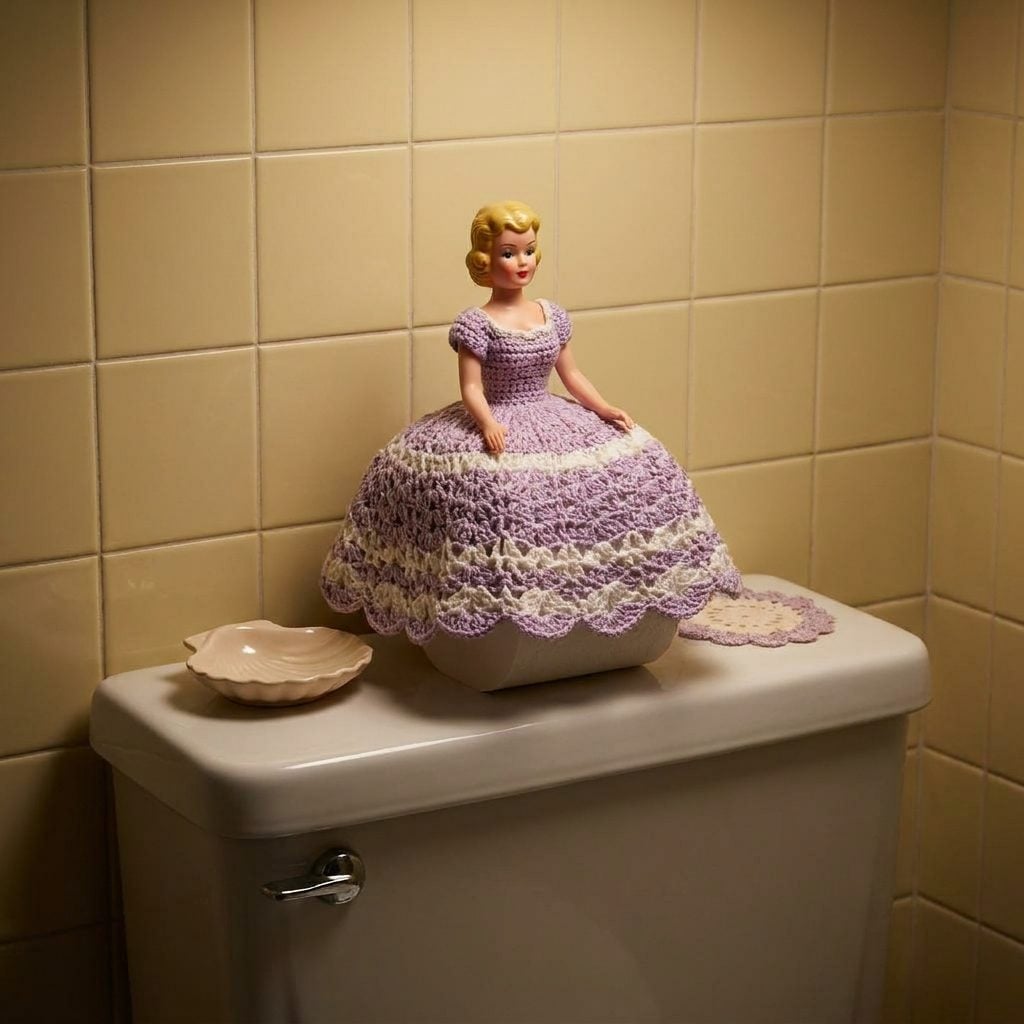
Why. Why did we decide that a roll of toilet paper needed to be disguised as a Victorian lady? This remains one of the great unsolved mysteries of mid-century domestic life. The crocheted doll cover had a plastic torso on top — usually some sort of Southern belle with painted-on eyelashes — and a massive crocheted skirt that concealed the roll underneath like classified material.
Every grandmother had one. Some people made them as gifts. Actual patterns ran in craft magazines, illustrated with step-by-step diagrams. The implication was that a visible roll of toilet paper was somehow indecent, but a doll with a voluminous yarn skirt perched on the back of the toilet? Perfectly normal. For years I assumed these were purely decorative. Wrong. That skirt hid a functional, accessible roll. You lifted the entire doll to get paper. Remarkable problem-solving for a problem that didn’t exist.
21. Powder Room Wallpaper Covered in Atoms, Boomerangs, and Space-Age Fever Dreams
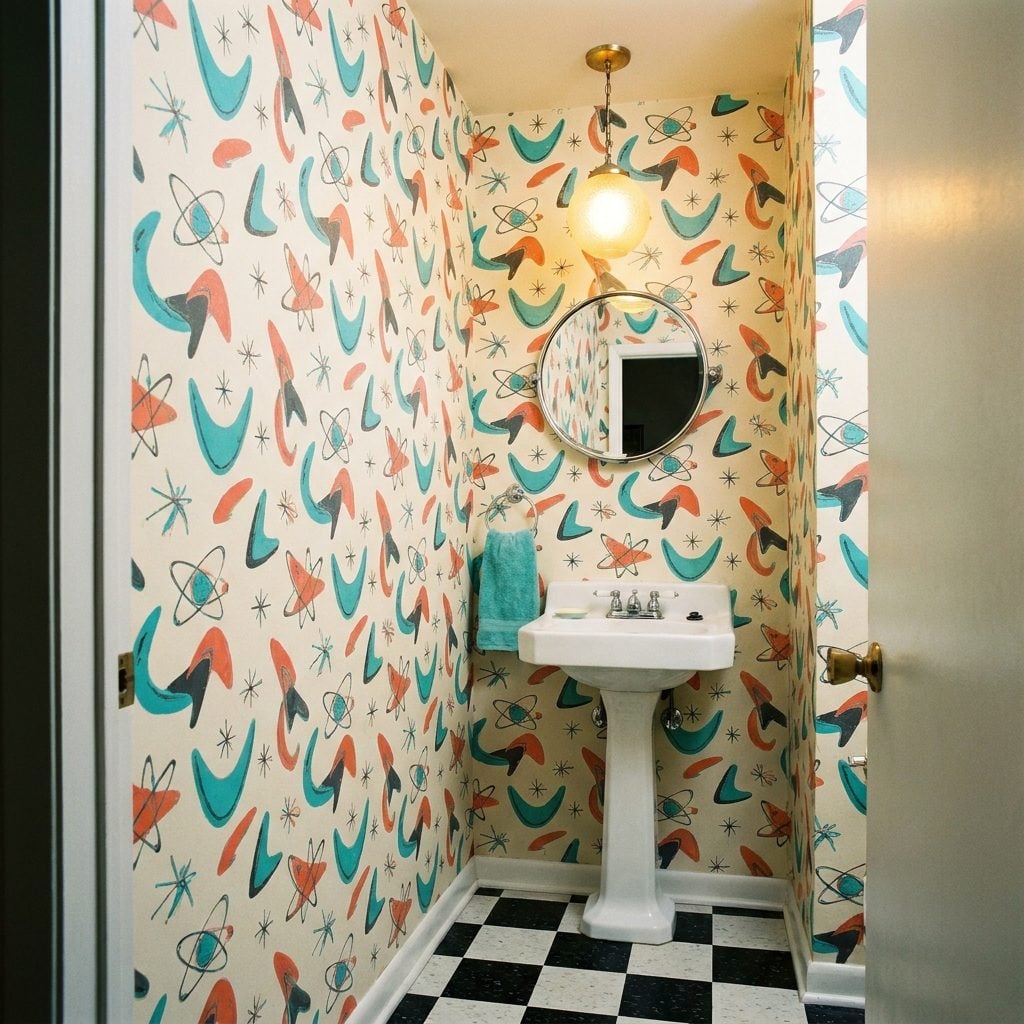
The powder room was where restraint went to die. Because it was small and guests-only, homeowners treated it like a laboratory for their wildest design impulses, and in the 1950s that meant wallpaper with patterns that looked like a physics textbook hallucinating. Boomerangs, starbursts, floating electrons, abstract squiggles that might have represented the future or might have just been what happened when a designer had too much coffee.
Turquoise and coral on cream. Charcoal and gold on mint. The patterns repeated aggressively, which meant in a tiny powder room you were surrounded by hundreds of atomic symbols while washing your hands. It was overwhelming. And honestly? Kind of great. That wallpaper committed to a mood in a way that today’s safe greige will never manage. You walked into one of those powder rooms and felt something. Even if that something was mild vertigo.
20. The Wicker Hamper That Pretended to Be a Side Table
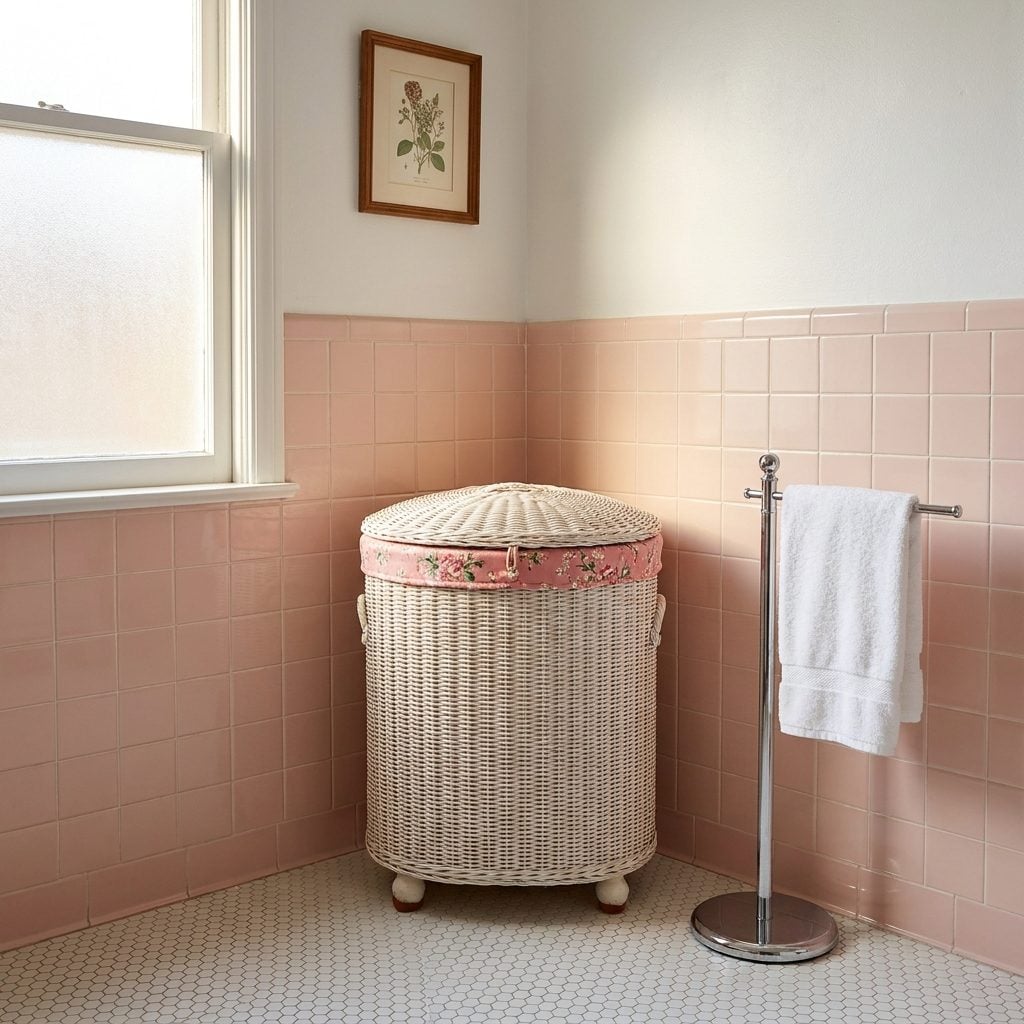
Dirty laundry had dignity in the 1950s. The standalone hamper wasn’t shoved in a closet or hidden behind a door — it sat right there in the bathroom, often with a padded fabric lid in a coordinating floral print, looking like it belonged at a garden party rather than collecting sweaty socks.
White-painted wicker was the classic choice. Some had little wooden feet. Some had brass hinges that squeaked when you lifted the top. The best ones had a removable cotton liner inside that your mother pulled out on laundry day with almost surgical precision. You were supposed to look at it and think “what a lovely accent piece.” Not “that’s where Dad’s undershirts go.” The whole aspiration was furniture-grade dignity for a laundry receptacle, and frankly, they pulled it off.
19. Metal Towel Bars Embedded Directly Into the Tile Like They Were Load-Bearing
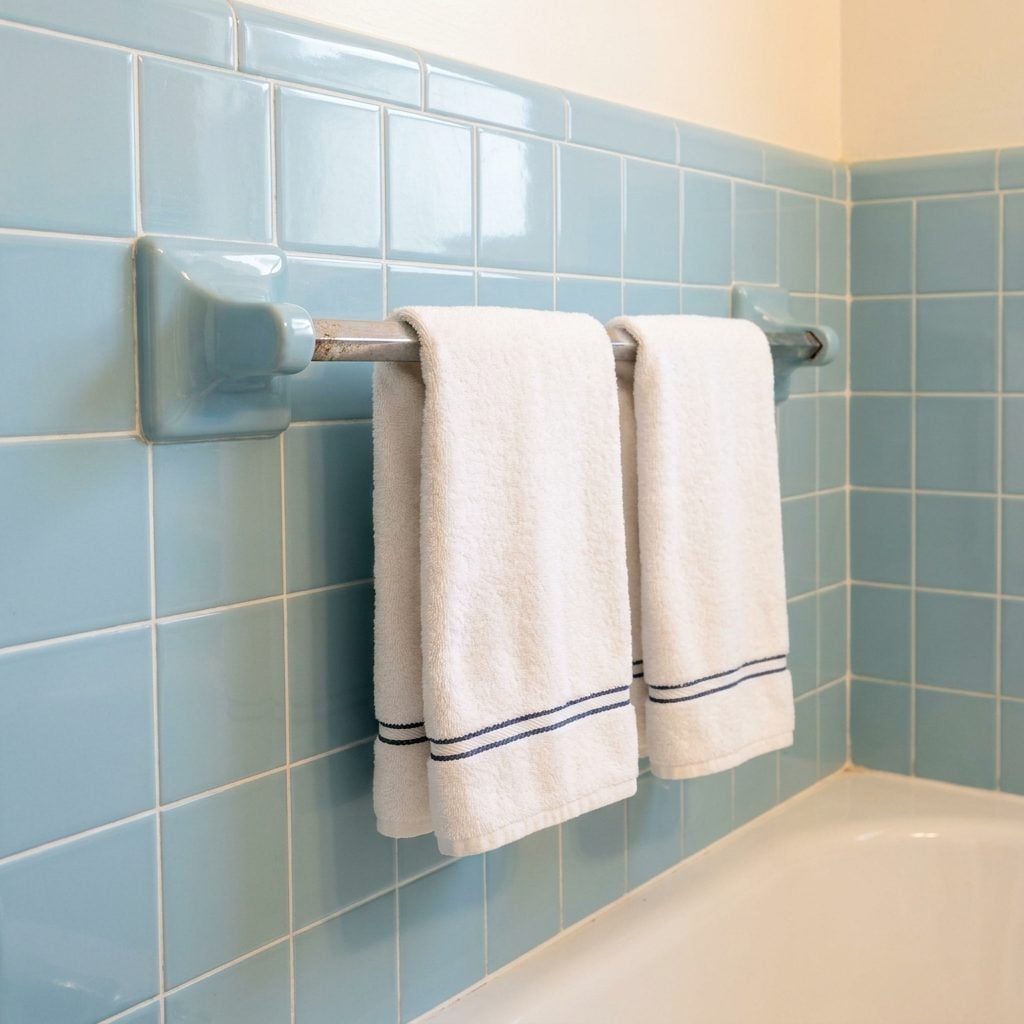
Modern towel bars are screwed into drywall and rip out if you look at them wrong. The 1950s version was installed during construction, embedded into the ceramic tile itself, and it was never coming out without taking half the wall with it.
The mounting brackets were recessed ceramic pieces that matched the surrounding tile, and the chrome bar slid between them. Permanent. Practically geological. If you wanted to move your towel bar six inches to the left in 1973, you were committing to a full bathroom renovation — demolition, retiling, the works. But there was something deeply satisfying about grabbing a towel off a bar that didn’t wobble or flex or threaten to abandon the wall. Those bars held. They held like they meant it.
18. Matching Tissue Box Covers and Toilet Lid Covers in Coordinated Fabric Sets
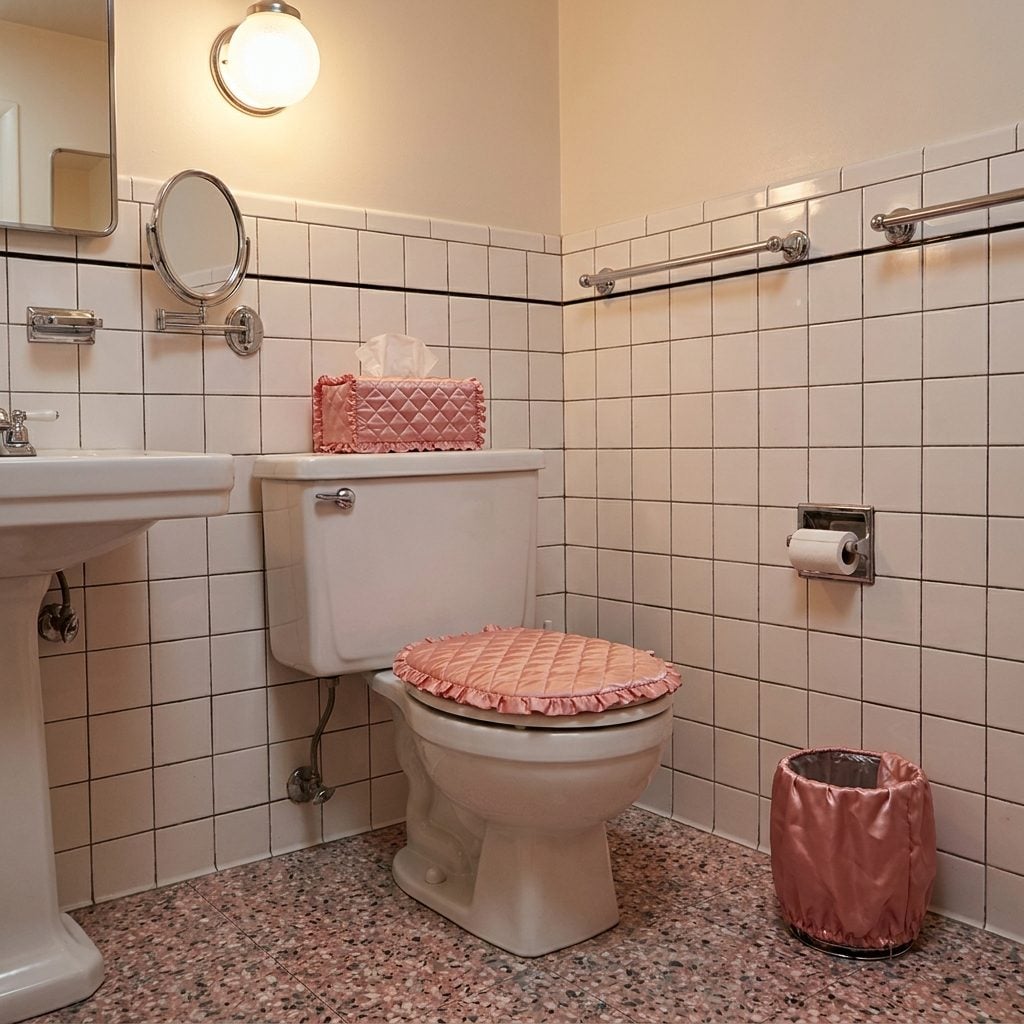
Coordination was a religion. If the toilet lid had a padded cover in quilted pink satin, the tissue box had a matching cover. And the wastebasket. And possibly the toilet paper holder. If a single element clashed, someone had failed at homemaking on a spiritual level.
These sets came in gift boxes and were given at bridal showers. Entire department store aisles were dedicated to bathroom “ensembles” in every color combination imaginable — and the tissue box cover alone is a concept that has basically vanished from modern life. When was the last time you saw a quilted satin rectangle sitting on top of a Kleenex box? Right. But in 1956, an uncovered tissue box carried roughly the same social weight as leaving your underwear on the kitchen counter.
17. Colored Toilet Paper That Matched the Towels, the Walls, and Your Entire Personality
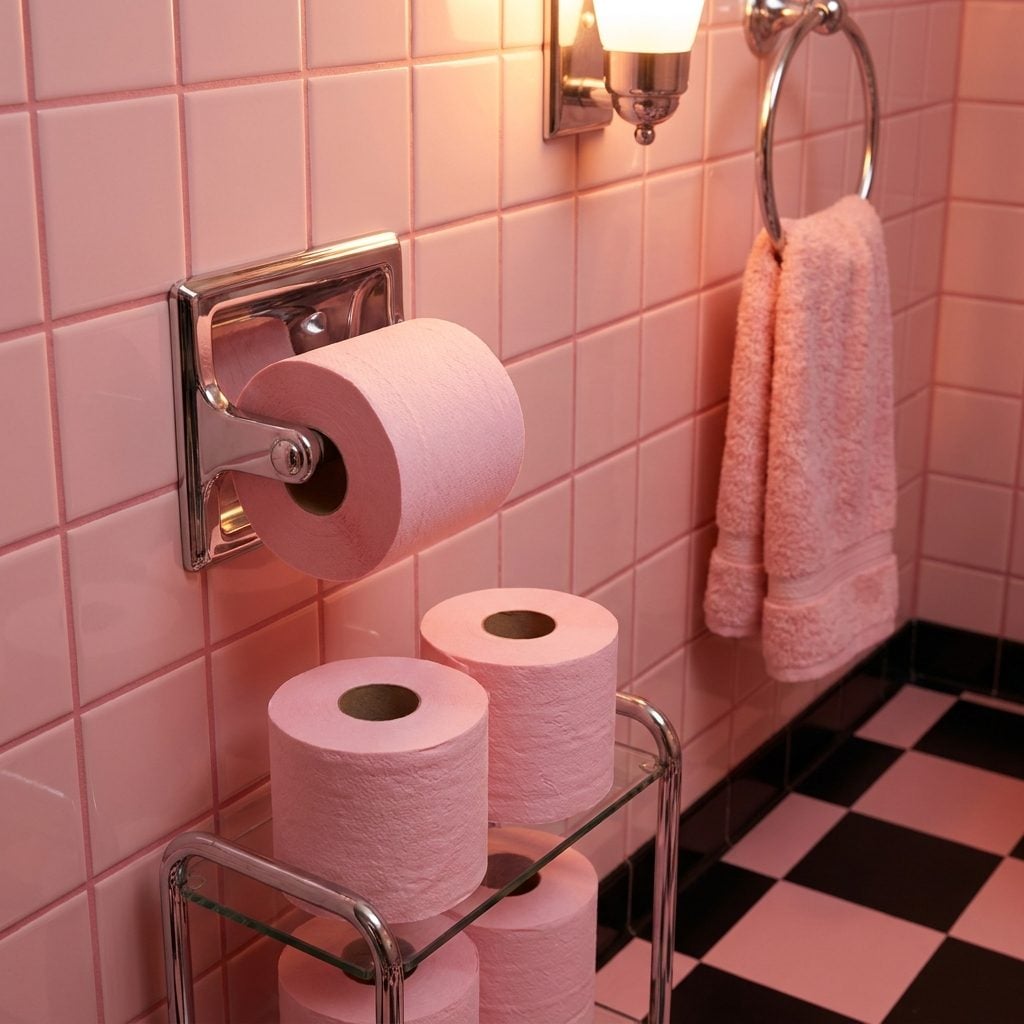
Pink toilet paper. Blue. Mint green, lavender, yellow, peach. For roughly three decades, toilet paper came in colors, and people bought it to match their bathrooms the way you’d match throw pillows to a sofa. Scott, Charmin, Northern — they all offered colored lines. Your blue bathroom ideas weren’t complete until even the toilet paper coordinated.
Manufacturers phased out the dyes in the 1980s over environmental and health concerns, plus production costs. But for a glorious stretch of the mid-century, you could buy a four-pack of lavender toilet paper at the A&P without anyone raising an eyebrow. The grocery aisle looked like an Easter display. There was something weirdly satisfying about that level of chromatic devotion — bonkers, sure, but also kind of aspirational in a way nobody talks about anymore.
16. Freestanding Pedestal Sinks With All Their Plumbing on Full Display
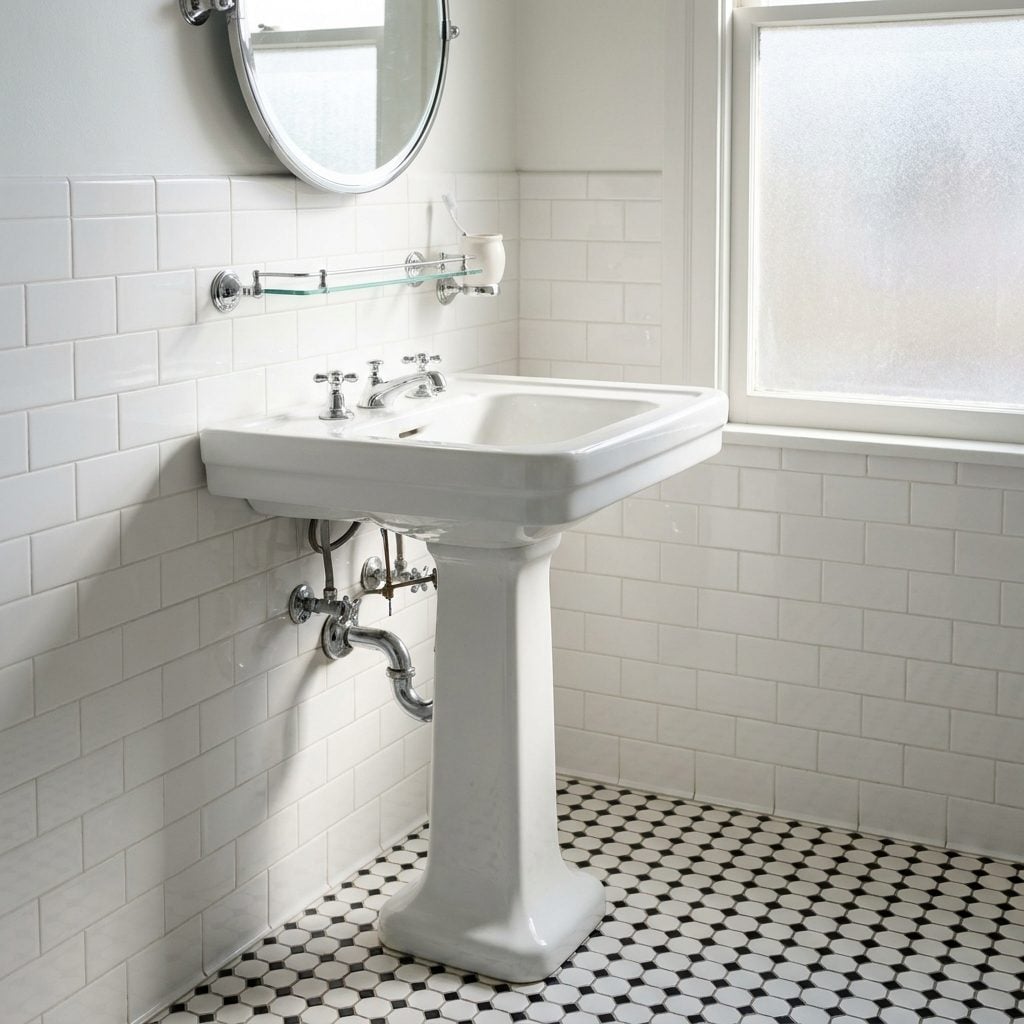
Zero storage. Not a cabinet, drawer, or shelf under that sink. Just a porcelain pedestal, two chrome pipes coming out of the wall, and a P-trap drain sitting there for all the world to see. Where did people keep things? How did they live? These are questions that haunt anyone who has ever tried to find space for a hair dryer in a small sitting room-sized bathroom.
But the white pedestal sink had a sculptural honesty that vanity cabinets completely obliterated. A basin on a column. One job. The exposed chrome plumbing underneath was considered perfectly acceptable — even attractive — and plumbers in the 1950s actually cared about how those pipes looked because everyone could see them.
The trade-off was brutal, though. Every bottle, tube, and toiletry that modern bathrooms hide behind cabinet doors had to live somewhere else: the medicine cabinet, a wall shelf, a small standalone table. It forced a kind of minimalism that wasn’t philosophical or trendy. Just the only option available, taken with surprising grace.
15. The Built-In Laundry Chute Hidden Behind a Tiny Cabinet Door in the Wall
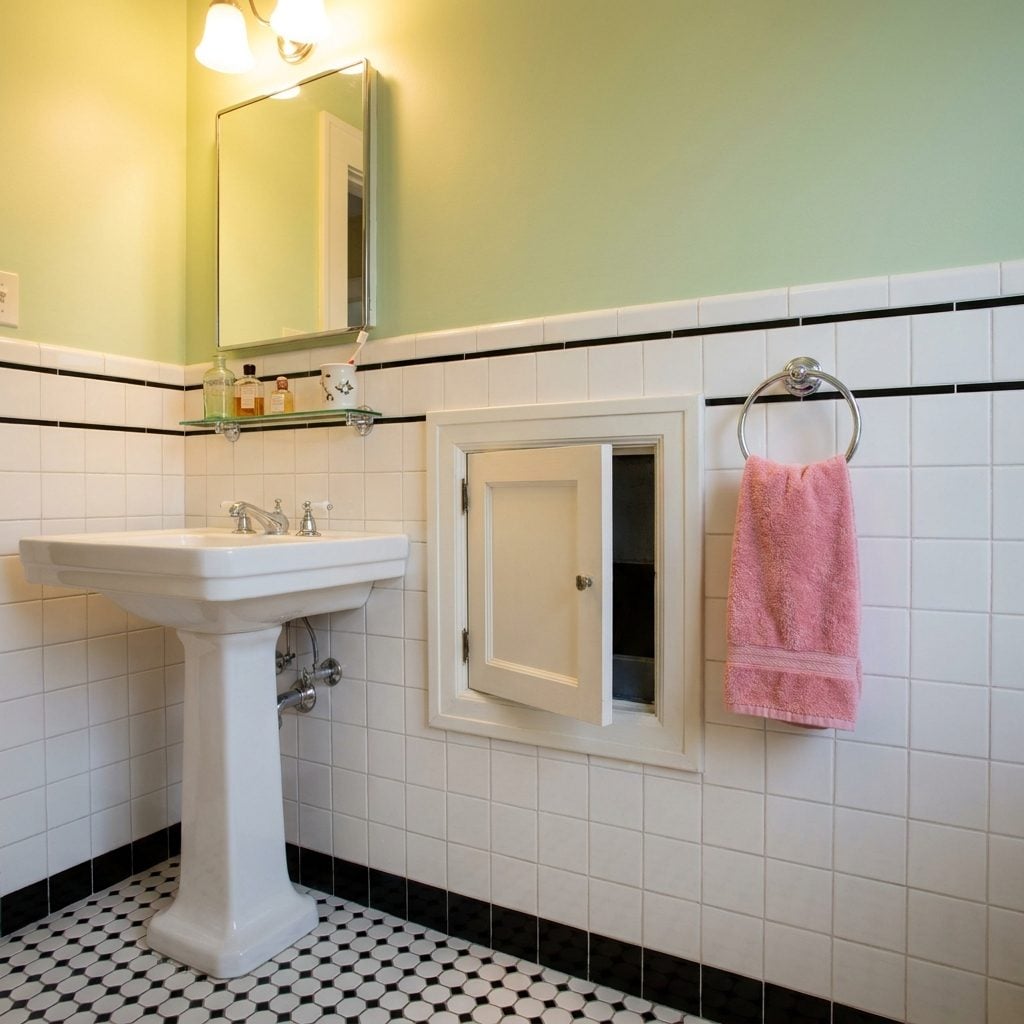
Open the wrong cabinet door in a 1950s bathroom and you’d find yourself staring into a dark shaft that dropped straight to the basement. That was the laundry chute. Dirty towels, washcloths, pajamas—everything just vanished down the wall like a magic trick.
The door itself was usually tiny, maybe a foot square, painted to match the wall, with a small chrome or porcelain knob identical to every other pull in the house. Kids loved it. More than one stuffed animal took the express route to the laundry room and never quite recovered.
Most postwar homes included these as standard features. Somewhere around the late 1970s, builders quietly stopped installing them—fire code concerns about open shafts between floors. A genuine loss.
14. Lace or Café Curtains Hanging in the Bathroom Window Like It Was a Parisian Bistro
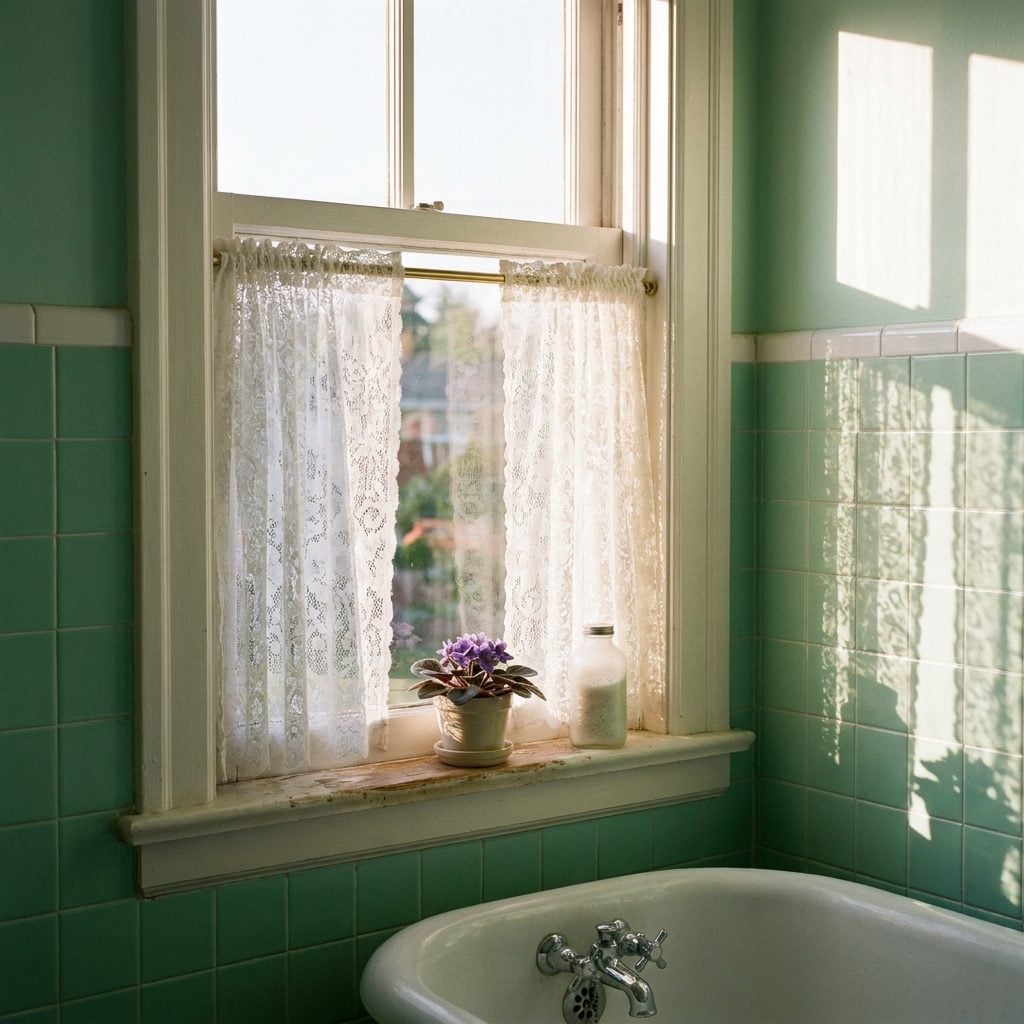
Fabric in a room where water hits every surface. Just sit with that for a second.
But there they were, in nearly every 1950s bathroom: white lace or café curtains on a thin brass rod, covering the lower half of the window, getting slowly damp and developing that faint musty smell nobody ever acknowledged. The pattern was usually something floral or geometric, and the fabric yellowed over the years in a way people just accepted as “the color of the curtains now.”
Privacy without sacrificing daylight—that was the logic. The execution was fabric that needed washing every few weeks in a room full of steam. Yet they looked genuinely lovely, that dappled light filtering through lace onto mint-green tile creating a softness a roller blind or frosted glass never quite replicated. Sometimes the impractical choice is still the right one.
13. Hard Bar Soap Dishes Attached Permanently to the Wall Tile
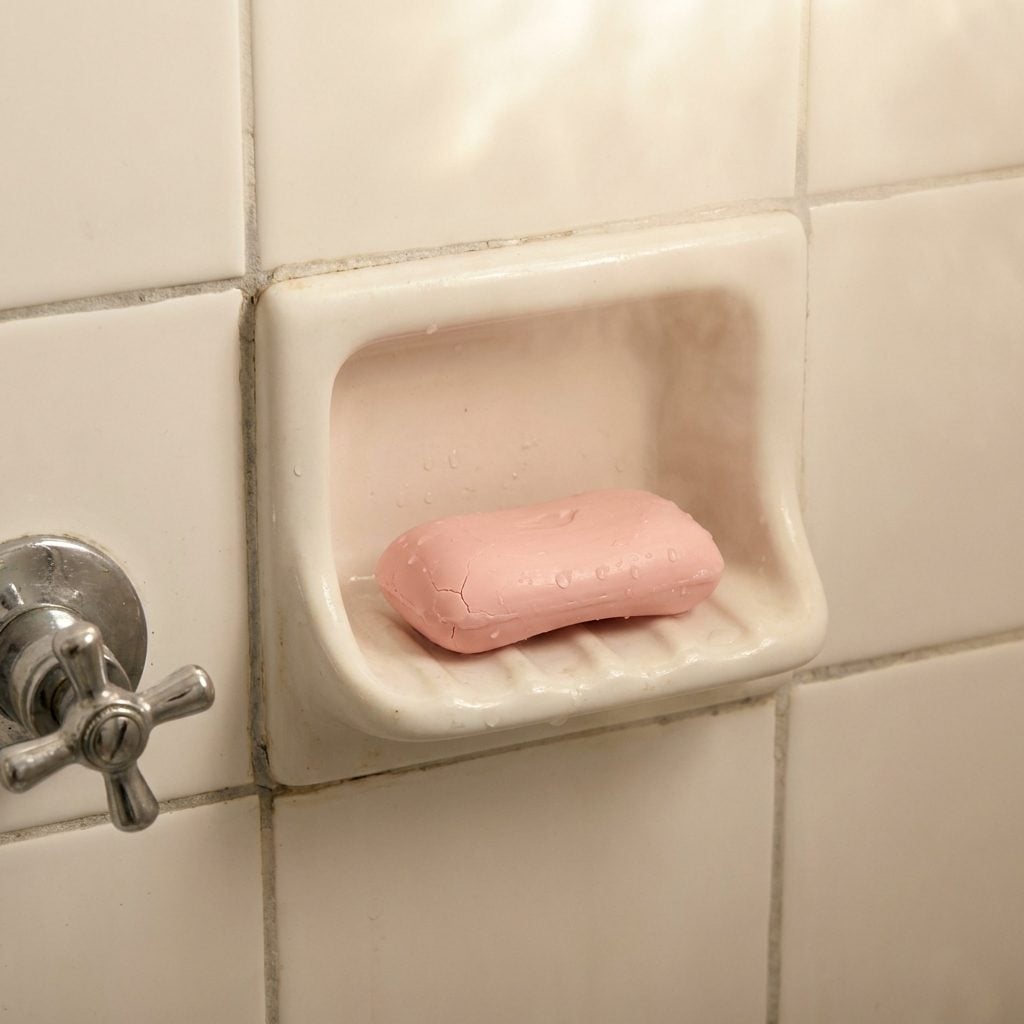
Permanent. Not a suction cup accessory. Not a wire rack that slid over the showerhead. A ceramic dish fired into the wall tile itself, as immovable as the bathtub.
Those little ridges were supposed to provide drainage. They drained nothing. The bar soap sat in its own puddle and slowly dissolved into a gelatinous layer that bonded to the ceramic like organic adhesive. Scraping that residue out was a chore nobody enjoyed and everybody postponed indefinitely.
12. Chrome Fixtures With Separate Hot and Cold Taps That Required a Physics Background
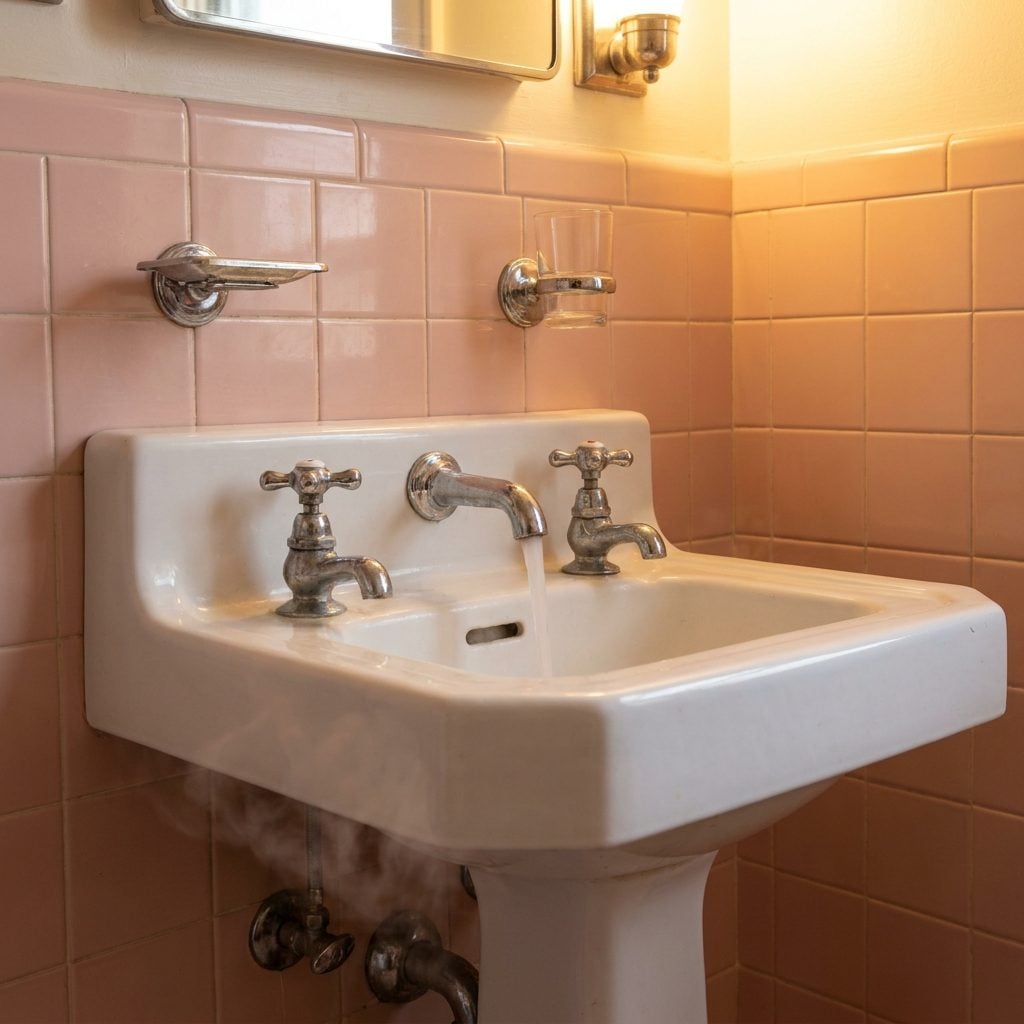
Two taps. One scalding. One freezing. One spout between them. Good luck.
The 1950s bathroom sink was a temperature mixing puzzle that everyone solved differently—some people ran both taps simultaneously and cupped their hands underneath, trying to catch the blended stream, while others filled the basin and washed their hands in standing water like it was a birdbath. Neither method was great. Single-handle mixer faucets existed by then, but most homes stuck with separate chrome cross-handle taps because that’s what the plumber installed and nobody questioned the plumber.
I genuinely think an entire generation just had slightly burned hands and never talked about it.
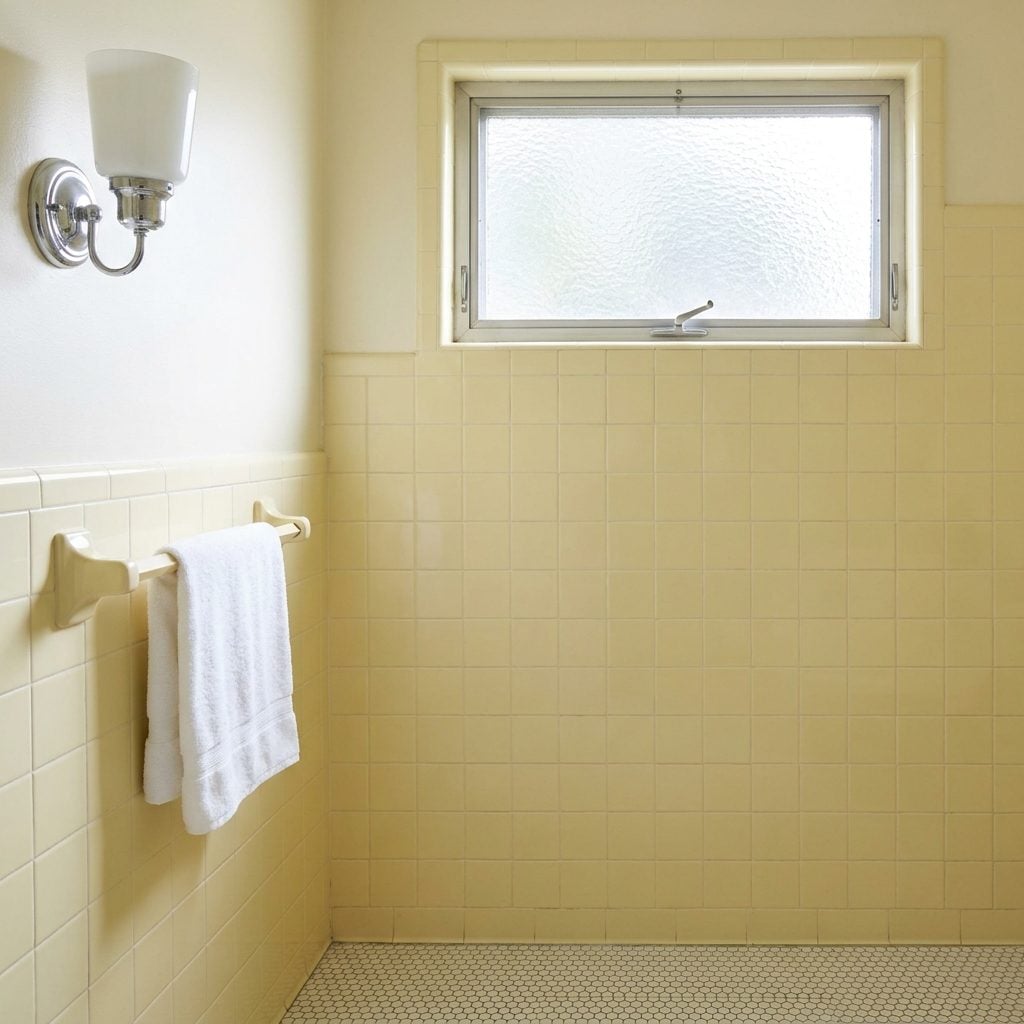
11. Tiny Frosted Bathroom Windows Positioned Absurdly High on the Wall
🔥 Would you like to save this?
You’d need a stepladder just to check if it was raining. These narrow frosted rectangles sat near the ceiling like afterthoughts—maybe eight inches tall and two feet wide—with a tiny crank handle nobody could reach without standing on the edge of the tub.
The frosted glass was usually rippled or textured, and it produced this gorgeous diffused glow that made every 1950s bathroom feel like it existed in permanent soft focus. Some earlier Victorian bathroom designs used similar high-placement strategies for privacy, but the 1950s version was smaller and blunter about it.
Privacy was the stated purpose. Ventilation was secondary, though cracking that window open in winter meant a blade of freezing air aimed directly at whoever was in the bathtub. Most people just left them sealed from November to March and accepted the condensation running down the tiles.
10. Hair Dryers Stored in Hard-Shell Beauty Cases Tucked Under the Sink
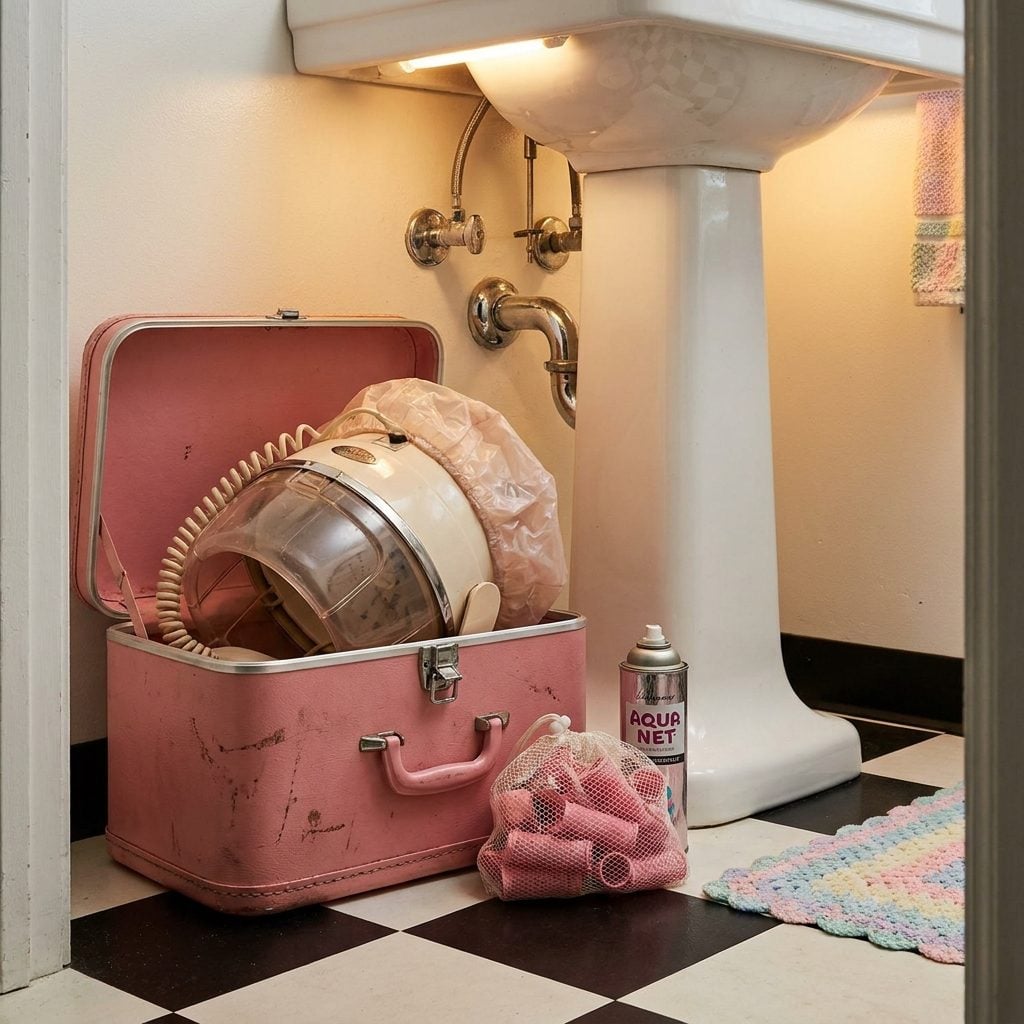
Not a blow dryer. A bonnet dryer—the kind with a flexible plastic cap attached to a hose attached to a motor unit the size of a lunchbox, all packed into a hard-shell case that weighed about six pounds and looked like miniature luggage. Schick, General Electric, and Sunbeam made these in powder pink, baby blue, and cream.
The ritual went like this: set your hair in curlers, pull on the bonnet, plug in the unit, and sit absolutely still while hot air slowly inflated the cap around your head like a medical device. The motor’s drone was loud enough to kill conversation. Whole Saturday mornings disappeared under those bonnets.
9. Wooden Toilet Seats Finished in So Much Glossy Varnish They Were Basically Mirrors
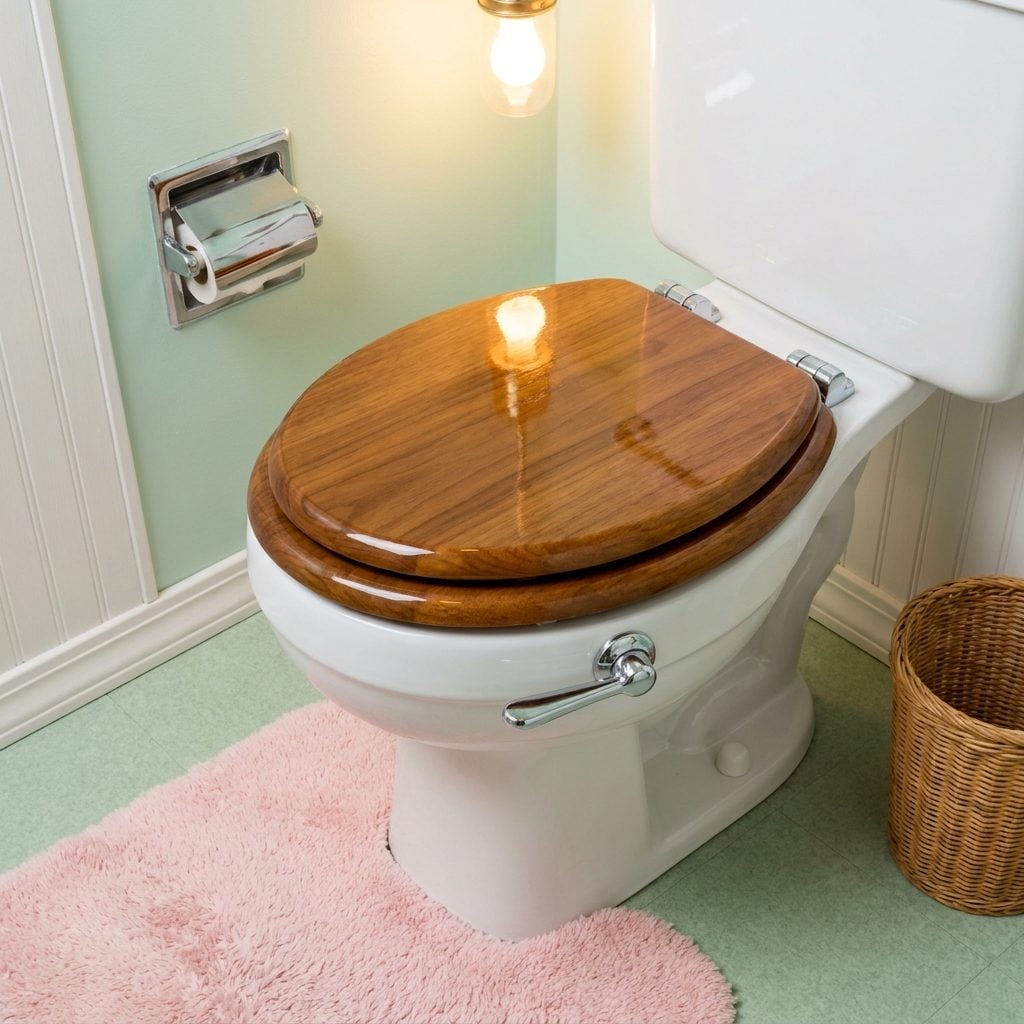
Cold in winter. Sticky in summer. Oddly handsome all year round, though nobody appreciated it at the time.
These wooden toilet seats were typically oak or birch, sanded smooth and coated in multiple layers of high-gloss polyurethane until they gleamed like bowling alley lanes—so thick you could almost see your reflection. Over time the finish cracked in hairline patterns, creating tiny crevices impossible to clean properly. That’s the detail everyone conveniently forgets when they get nostalgic.
Plastic seats replaced them because plastic was cheaper, lighter, and didn’t develop those cracks. But plastic never felt like actual furniture. There’s something to be said for a bathroom fixture with wood grain.
8. Bathtub Sliding Glass Doors Etched With Gold Floral Patterns
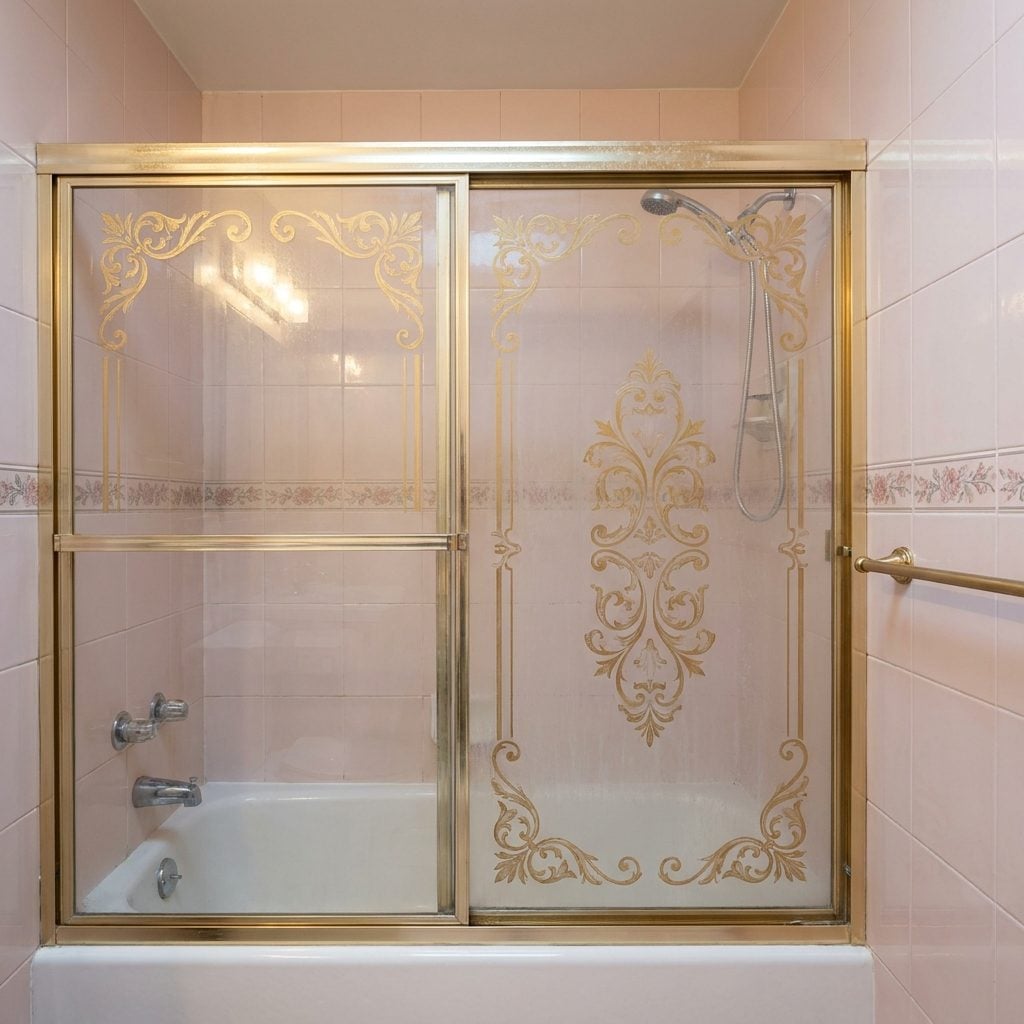
Shower curtains were for apartments. If you had a real house in the 1950s, you had sliding glass tub doors with an anodized aluminum frame in gold or brushed chrome, and the glass featured etched patterns ranging from tasteful frosted stripes to full baroque floral explosions that belonged in a Venetian hotel lobby.
The gold-patterned ones were particularly bold—swirling vines, roses, abstract starbursts, all rendered in metallic gold etching on tempered glass. Meanwhile the doors slid on a track that collected mildew with the dedication of a grad student running a long-term experiment, and the bottom rail required a toothbrush and bleach to maintain. Nobody maintained it.
Still. Stepping into a tub through those gold-etched doors felt like an event. Modern frameless glass enclosures are sleeker, sure, but they’ve got no swagger.
7. Decorative Seashell Soap Bars That Nobody Was Actually Allowed to Use
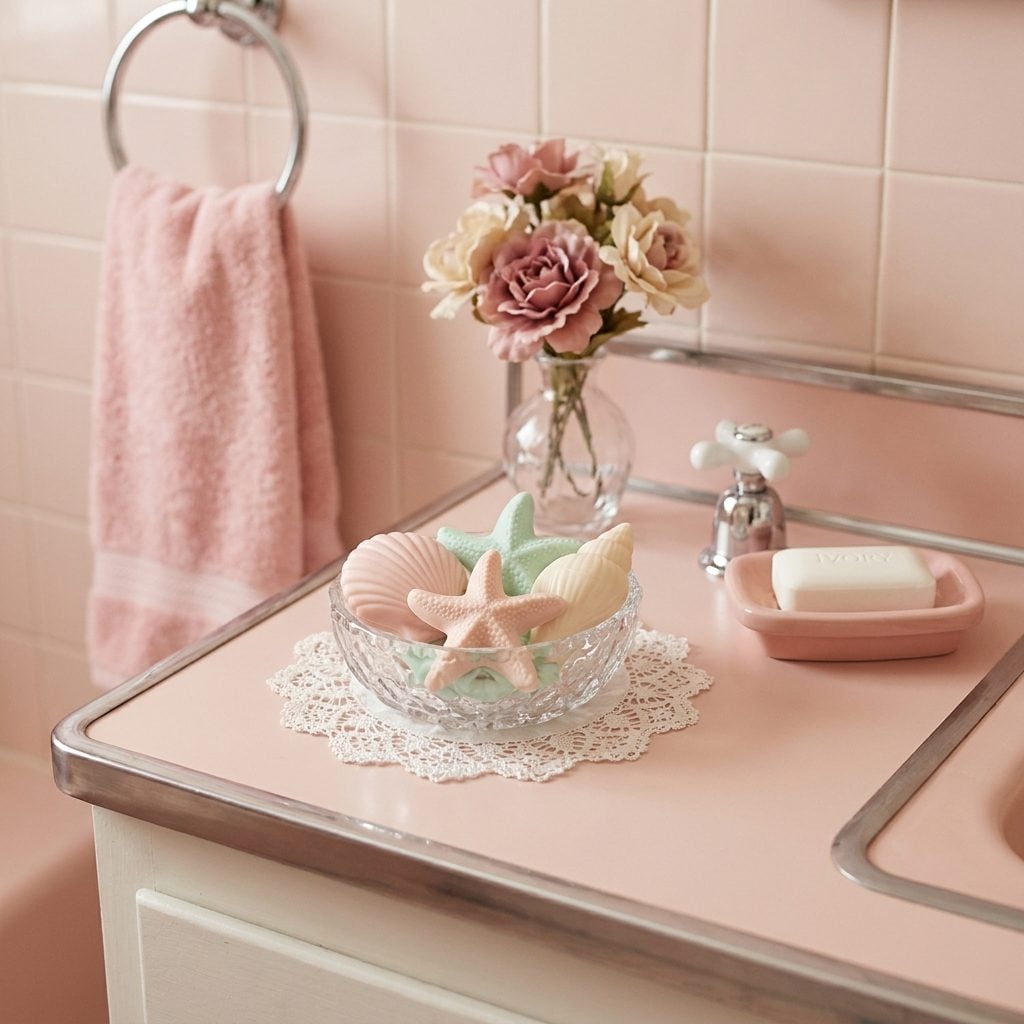
Touch them and face consequences.
Every guest bathroom had a small crystal dish or ceramic bowl holding a few pastel soap bars molded into seashells, roses, or scallops. Pink, mint, lavender, cream. They smelled faintly of something floral. They were never, under any circumstances, to be used for actual hand-washing—that’s what the regular Ivory bar sitting in the utilitarian dish by the faucet was for.
The decorative soaps were performance objects. They communicated that this household had standards, that guests were expected, that someone here cared enough to buy soap existing purely as sculpture. Over the years the soaps would develop a dusty film and lose their scent entirely, becoming small pastel fossils sitting there for a decade. Nobody threw them away. Nobody used them. They just persisted, doing their quiet work in perpetuity.
6. Pink or Turquoise Countertop Laminate With That Visible Metal Edging
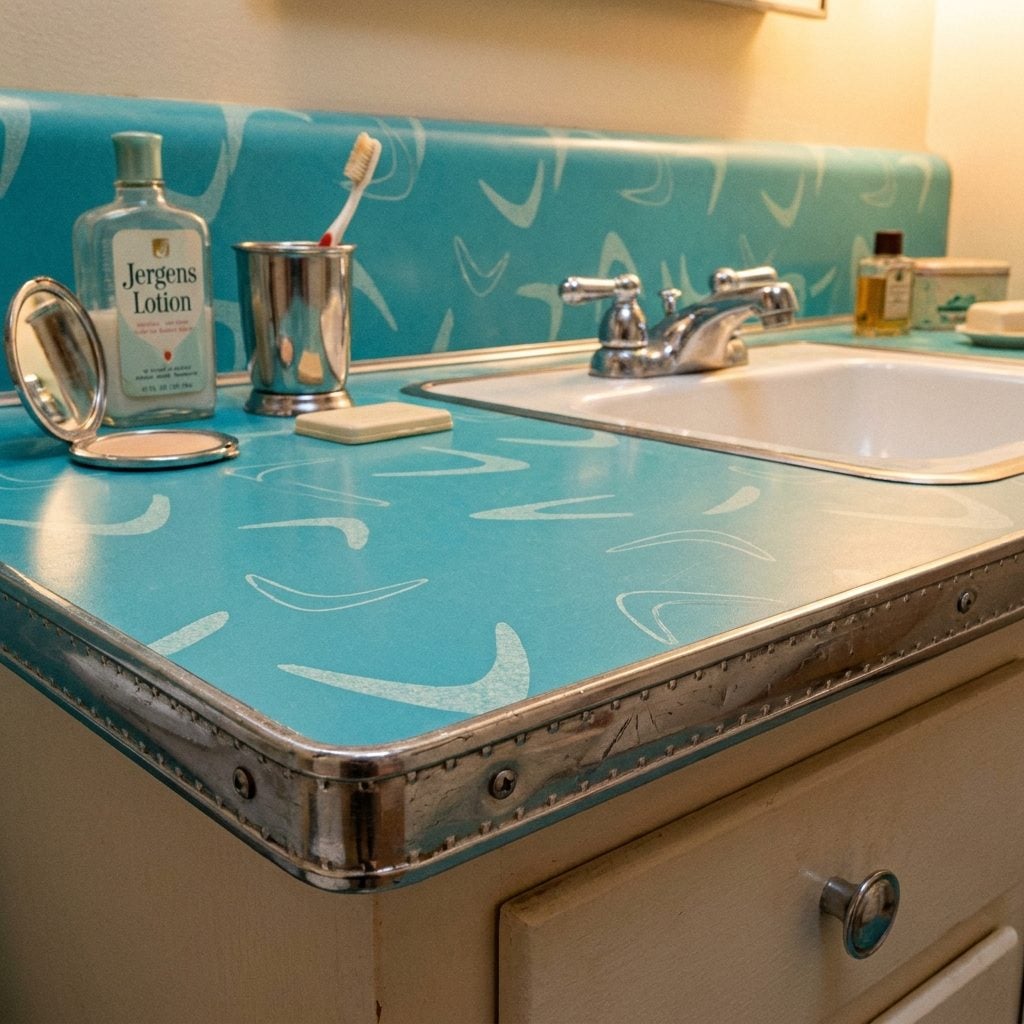
Formica in colors that no modern focus group would greenlight. Flamingo pink. Seafoam. Turquoise so saturated it practically hummed. And always that thin strip of chrome or aluminum running along the front edge where the laminate met the substrate, held in place by tiny screws or crimped over the edge like trim on a car bumper.
The metal edging did real work—it protected the laminate from chipping and water damage—while giving the whole counter a finished, almost automotive quality. Some of the best blue bathroom ideas today draw directly from this era’s fearless use of saturated color on surfaces that modern designers default to white or gray.
And the patterns. Boomerang prints, atomic starbursts, speckled confetti—laminate manufacturers in the 1950s treated bathroom counters like canvases. When these countertops get ripped out during renovations now, salvage dealers sometimes grab them. The good ones sell for real money, which would have baffled the original owners.
5. Wallpaper Installed Dangerously Close to Tubs and Sinks, Because Moisture Was Apparently Not a Concern
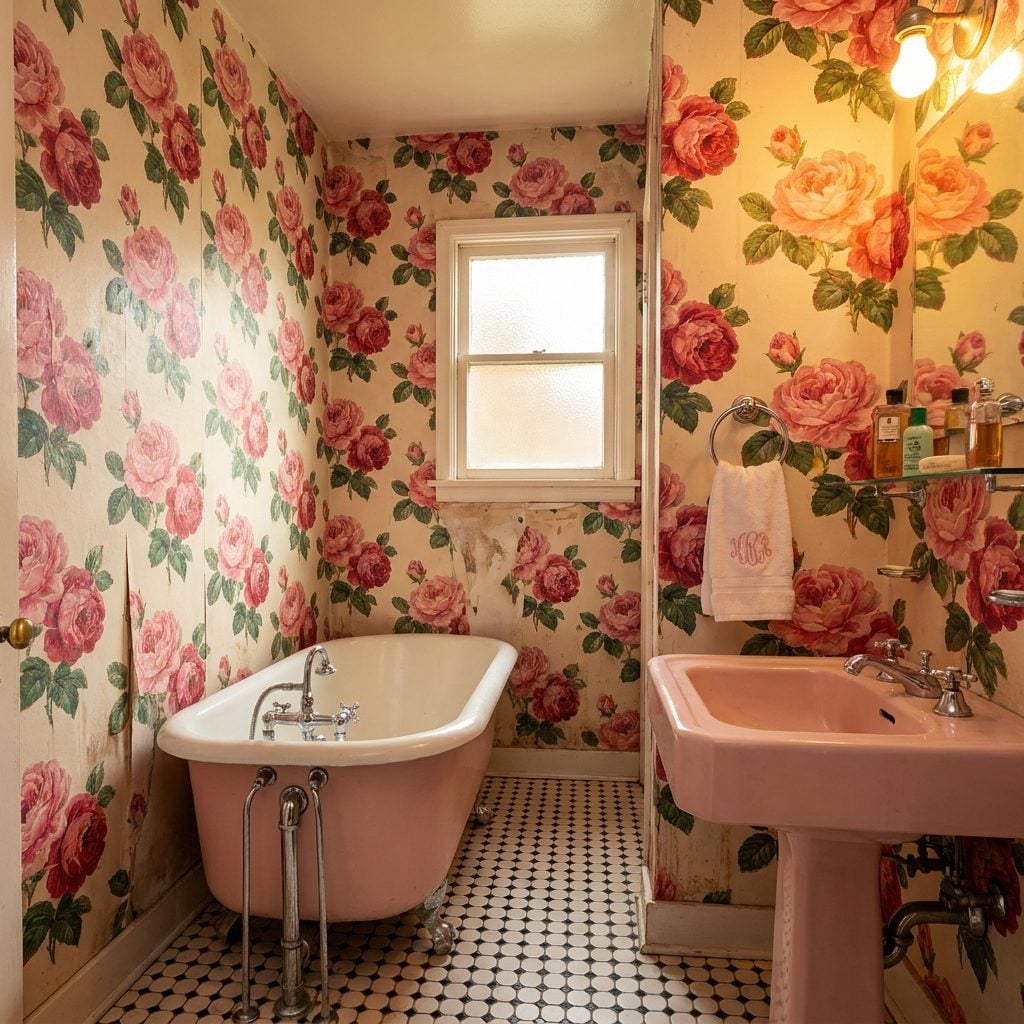
Floral wallpaper six inches from a running faucet. Cabbage roses practically licking the bathtub rim. The 1950s homeowner looked at a room that generated more steam than a laundromat and thought: you know what this needs? Delicate paper adhesive.
And it wasn’t subtle wallpaper, either — bold botanical prints, geometric lattice patterns, scenes of little Dutch windmills, all of it hung floor-to-ceiling with zero regard for humidity, condensation, or the laws of physics. Edges curled within months. Yellow-brown water stains crept in from the corners, seams peeled like sunburned skin, and nobody cared. When a section finally gave up and drooped away from the wall, someone just glued it back and moved on with their day.
The truly wild part? Tile existed. Perfectly functional, waterproof tile was available and affordable. But tile didn’t come in a pattern featuring tiny pink parasols, so wallpaper won.
4. Ceiling-Mounted Pull Cords for Light Fixtures That Swung Like Tiny Pendulums in the Dark
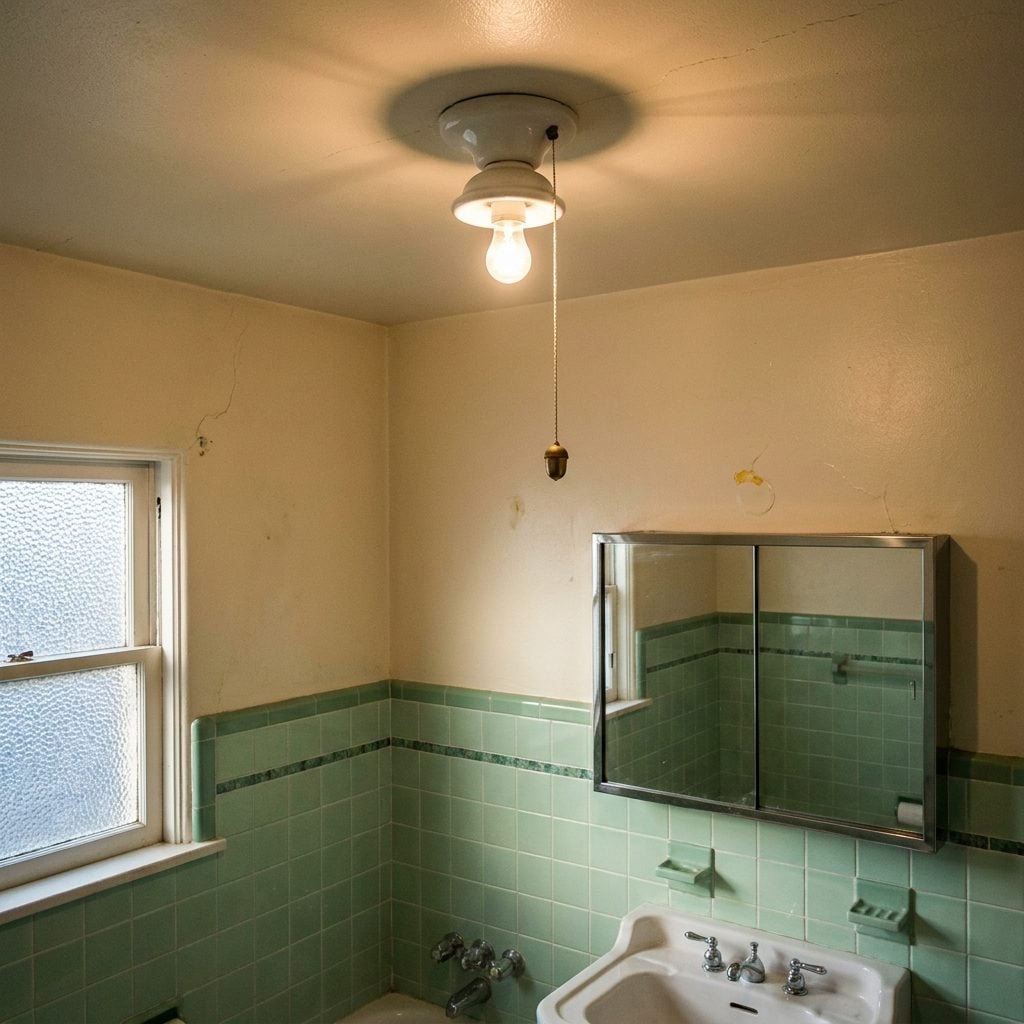
Finding the pull cord at 3 a.m. was a sport. Arms flailing overhead in total darkness, fingers brushing against nothing, then the cord, then losing it, then finally catching it with a yank that made the whole fixture rattle. The little acorn-shaped pull at the end — sometimes ceramic, sometimes brass, sometimes a knotted string because the original broke off in 1953 and nobody ever replaced it.
These cords existed because mounting a light switch on the wall near a wet bathroom was considered a genuine electrocution risk. Fair enough. But the solution bred its own hazard: a dangling string in a room full of slippery surfaces. That cord always hung at the worst possible height — too high for shorter family members, right at face level for taller ones. After you pulled it, the thing swung back and forth, tapping against the ceiling like a metronome counting down to absolutely nothing.
3. Built-In Ceramic Recessed Shelves Inside Shower Walls That Held Exactly One Bar of Soap
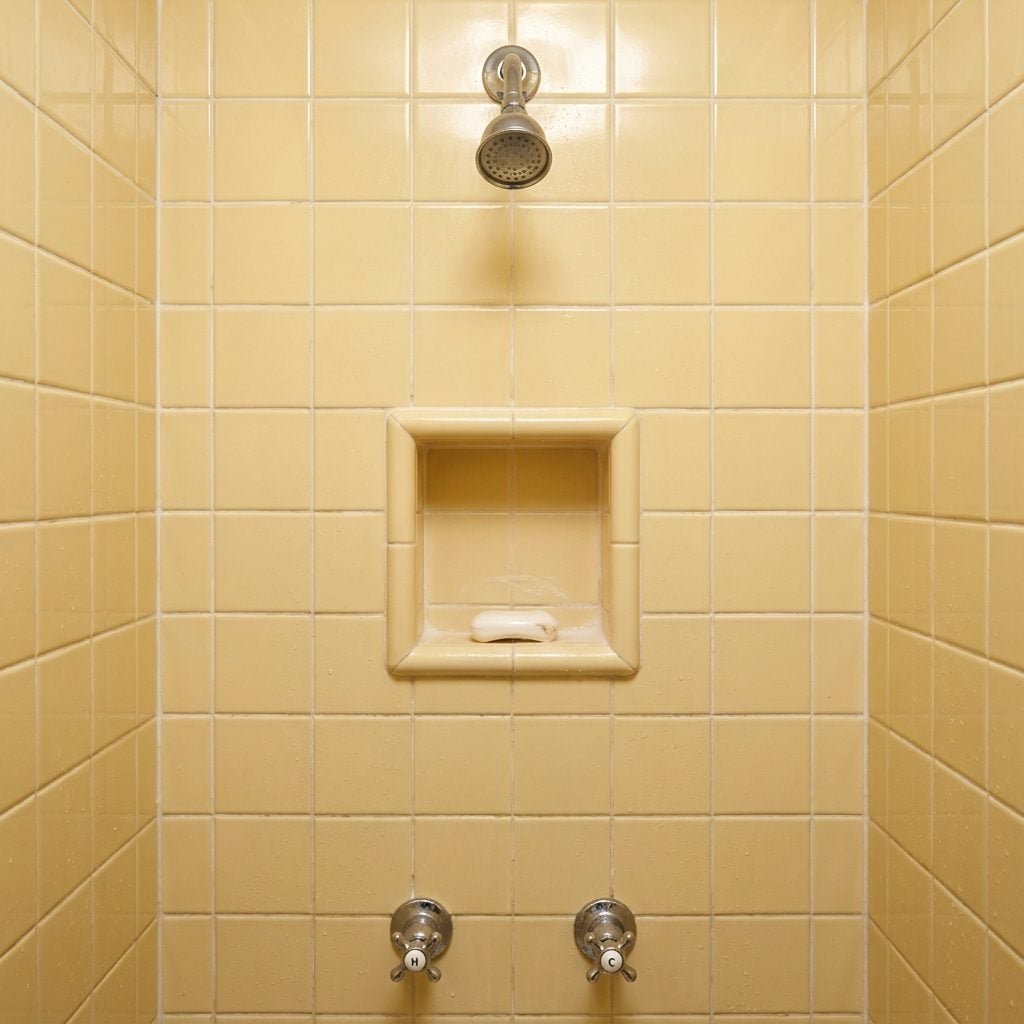
A rectangle carved into the tile. Maybe five inches wide, four tall. Just deep enough to cradle a single bar of Ivory soap that slowly dissolved into a gelatinous puddle by Thursday. That was your entire shower storage for the decade.
These recessed niches were tiled to match the surrounding wall — usually pink, seafoam, or butter yellow — and the craftsmanship was often gorgeous, with a slightly rounded lip and sometimes a subtle bullnose trim. But the proportions were absurd by modern standards. One shelf. Maybe two if the builder was feeling extravagant. Modern showers need room for seventeen bottles of product; the 1950s shower assumed you owned soap and possibly a washcloth. End of list.
And that soap dish at the bottom of the niche? Always slightly concave, supposedly designed to let water drain. Never worked. The soap just sat in a permanent shallow pool, growing that distinctive slimy film everyone pretended wasn’t there.
2. Standalone Cast-Iron Radiators That Heated the Bathroom and Burned Anyone Who Brushed Against Them
🔥 Would you like to save this?
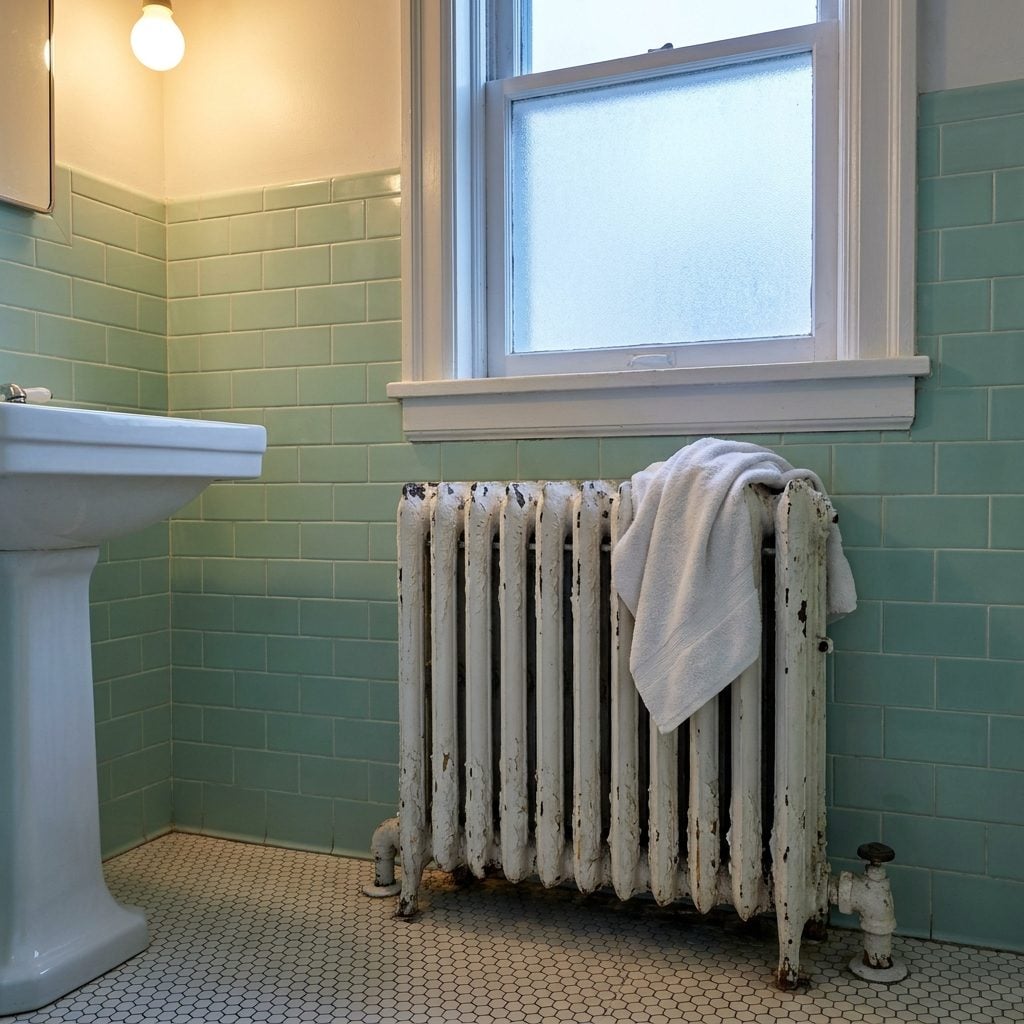
White-painted cast iron, ribbed like a mechanical accordion, tucked under the window or crammed against the wall in whatever space the plumber could find. Two temperatures: scalding or off.
Everyone had a burn story. A bare thigh grazing the metal getting out of the tub. A hand slapped against the fins while reaching for a towel. The hiss and tick of pipes expanding as steam pushed through on cold mornings — that was the soundtrack of winter, as familiar as the coffee percolator downstairs. You’d drape a towel over the radiator to warm it before your shower, which was genuinely one of the great small luxuries of mid-century life and also probably a fire hazard nobody acknowledged.
Paint on these things was always thick and slightly lumpy from decades of recoating, chips revealing layers underneath: cream over grey over silver over the original black. An archaeological record of every homeowner who’d lived there since installation. I’ve seen radiators with six or seven layers. Scraping one down is a strange kind of time travel.
1. Perfume Bottles and Talcum Powder Displayed Openly on Vanity Trays Like a Tiny Personal Museum
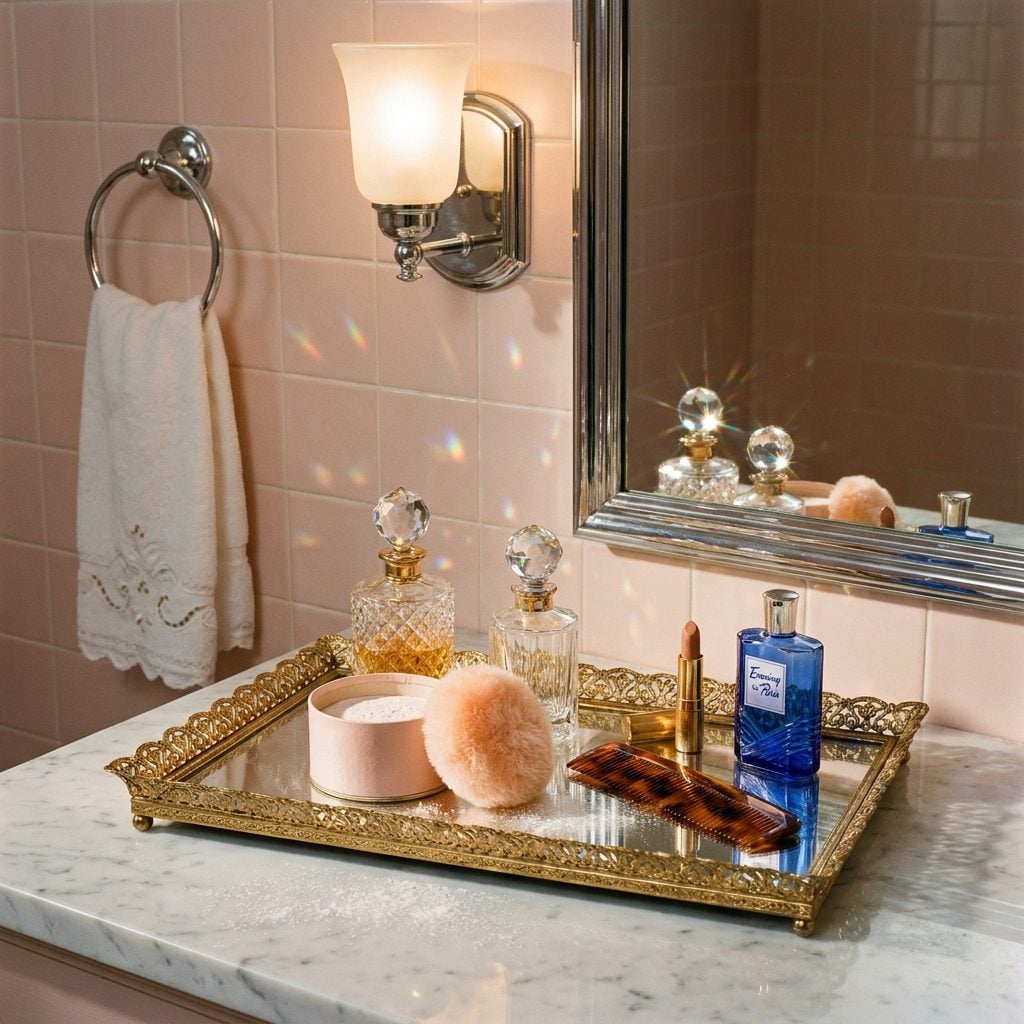
The mirrored vanity tray was a stage. Cut-glass perfume bottles with long tapered stoppers. A round cardboard canister of talcum powder with a pink puff. A tortoiseshell comb. A tube of lipstick standing upright. All arranged with the deliberate care of a small sitting room display — except this was the bathroom counter, three feet from the toilet.
Nothing was hidden. The medicine cabinet held the practical stuff: aspirin, Mercurochrome, a razor. But the vanity tray was aspirational. It declared, without any irony: I own nice things and I keep them where everyone can see them, including the plumber.
Talcum powder always left a fine white residue on the tray’s mirrored surface. The perfume bottles caught the light and threw little rainbows on the wall. Something about that arrangement — that small daily ritual of selecting a scent and dusting powder across a collarbone — made even a cramped postwar bathroom feel like it belonged to someone who refused to let practicality stamp out every last trace of glamour.