🔥 Would you like to save this?
Close your eyes and walk through the front door. There’s a console radio humming from the corner, the faint smell of wool carpet and cigarette smoke, and a sofa so overstuffed it practically pulls you in. The 1940s American living room wasn’t designed by a decorator, it was assembled over years, piece by careful piece, by people who valued comfort, propriety, and the quiet rituals of home. These 37 details will take you straight back.
36. Mohair Sofas in Burgundy, Forest Green, or Rust With Rolled Arms
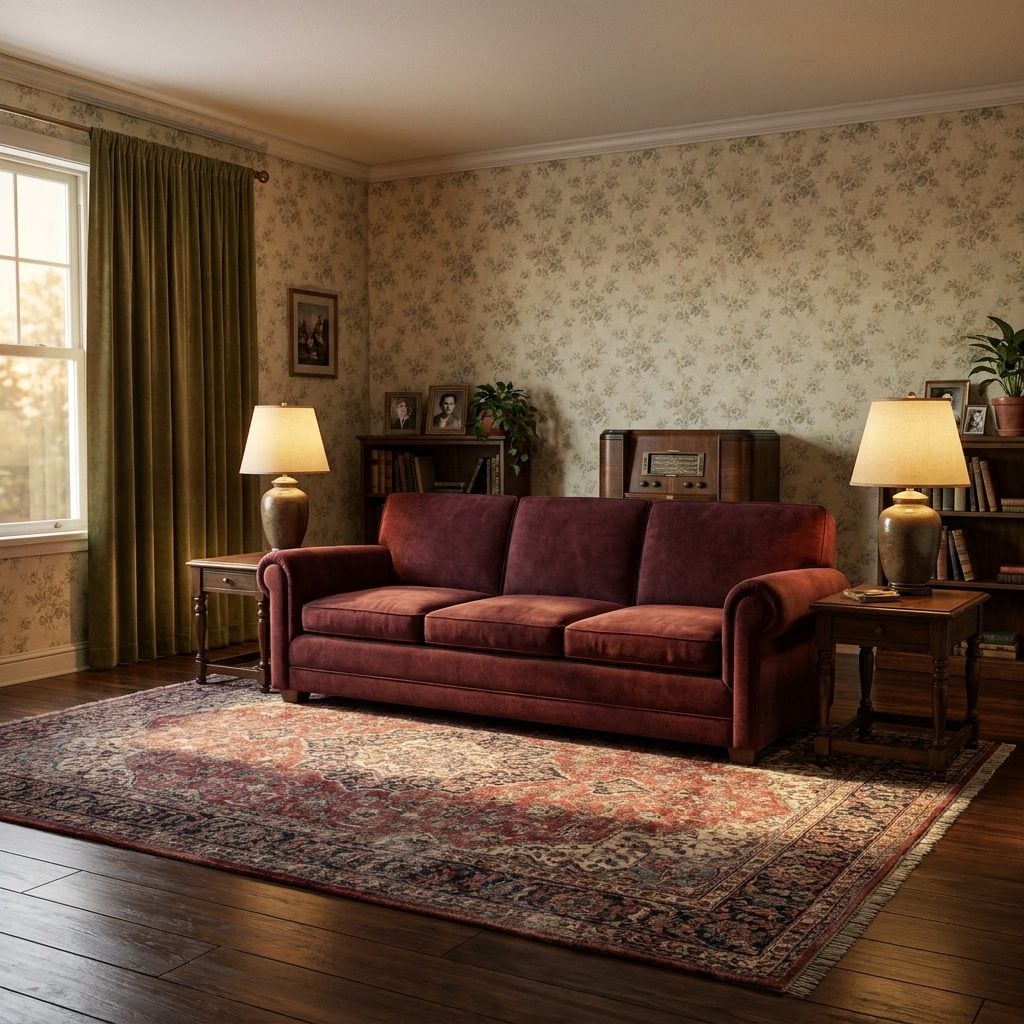
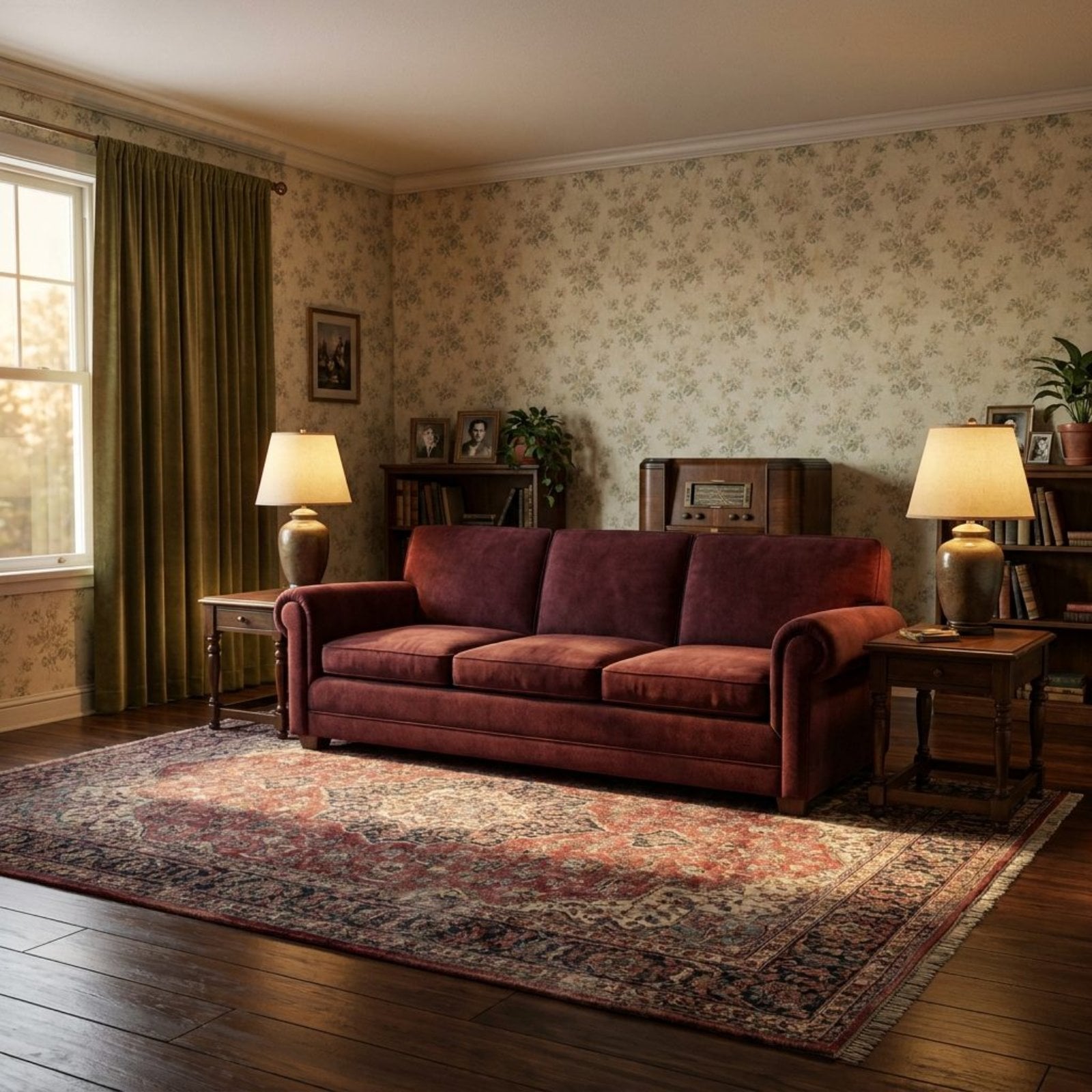
Run your hand across a 1940s mohair sofa and you understood immediately why people covered their furniture in plastic. That pile, soft one direction, bristly the other, was the tactile signature of the American living room before synthetic fabrics took over. Burgundy was the most common color, followed closely by a deep forest green that absorbed every lamp in the room.
In order to come up with the very specific design ideas, we create most designs with the assistance of state-of-the-art AI interior design software. Also, assume links that take you off the site are affiliate links such as links to Amazon. this means we may earn a commission if you buy something.
The rolled arms were non-negotiable. Wide, firm, slightly overstuffed at the curve. They functioned as armrests, pillow substitutes, and the preferred perch for anyone who didn’t want to commit to actually sitting down. The sofa anchored the room the way a hearth used to, and in a lot of homes, it basically did the same job.
35. Chenille Armchairs With Fringe Trim and Button Tufting
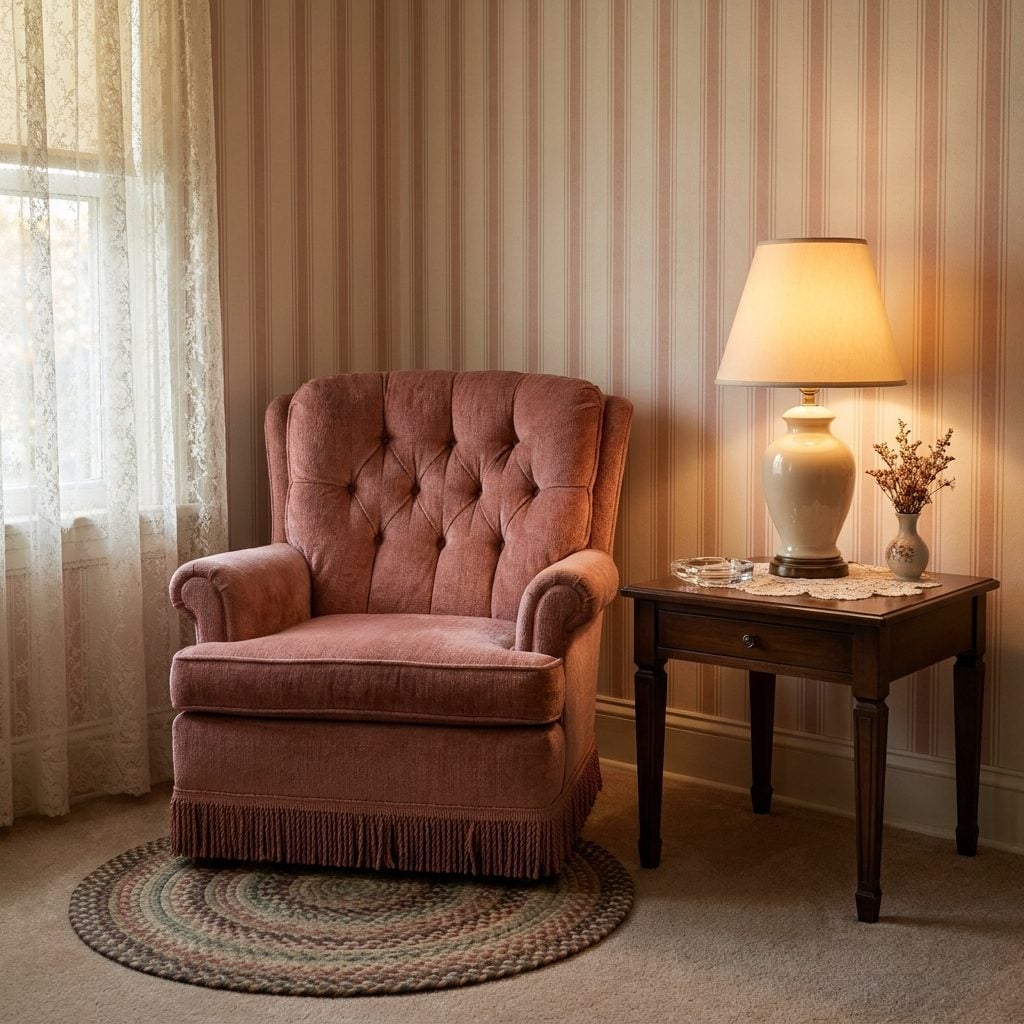
Chenille had a texture that was almost edible, dense, looped, soft in a way that felt excessive and completely correct at the same time. The armchairs in 1940s living rooms were often covered in it, in shades of dusty rose, peacock blue, or a particular shade of gold that doesn’t seem to exist anymore.
Button tufting pulled the fabric into diamond patterns across the back. The fringe along the bottom skirt grazed the floor and collected an impressive amount of dust, which is probably why fringe eventually disappeared from respectable furniture. But for a decade or so, it was the mark of a chair that took itself seriously.
34. The Matching Ottoman That Came With Every Armchair
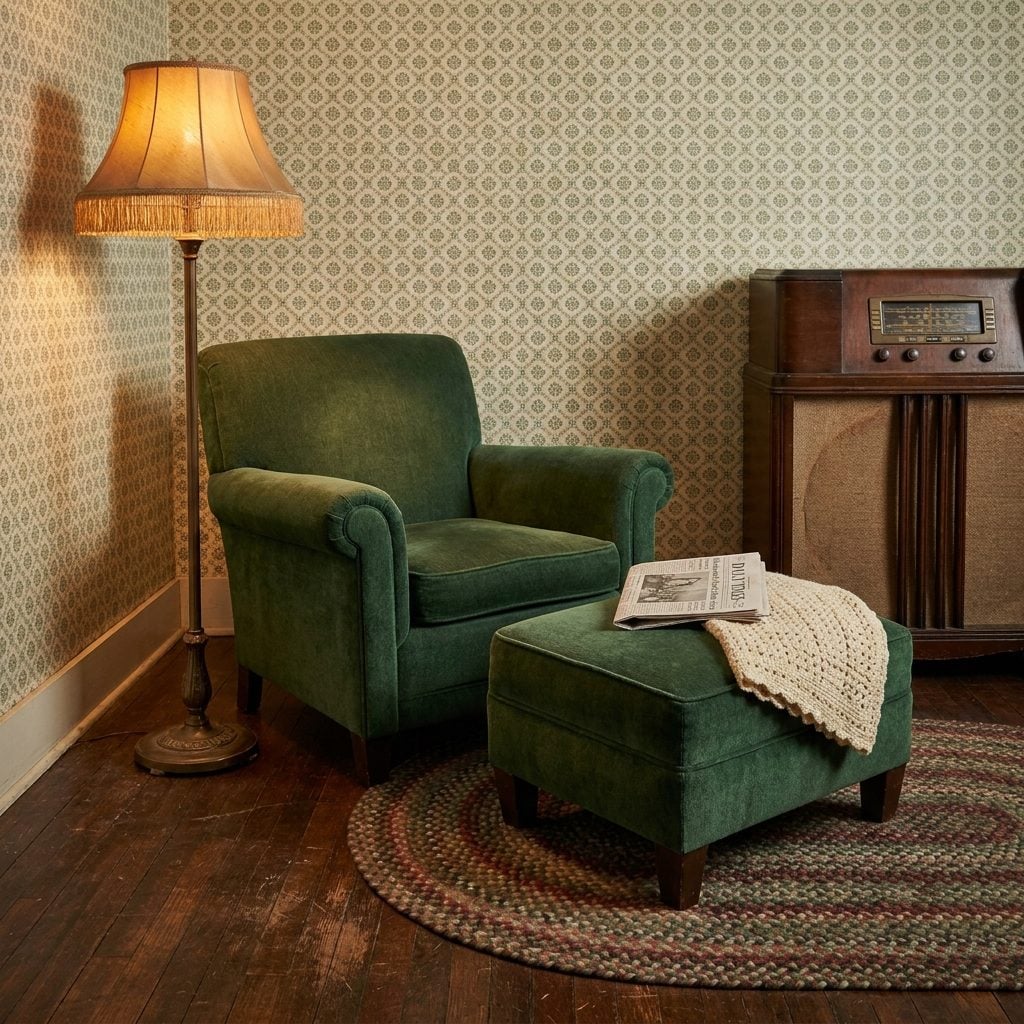
Nobody called it a footstool. It was the ottoman, and it arrived as a set with the armchair, upholstered in the same chenille or mohair, and it sat in front of that chair so reliably that the two pieces formed a kind of domestic solar system. The chair was the planet. The ottoman was its moon.
In practice, the ottoman held newspapers, served as a coffee table when the actual coffee table was occupied, functioned as extra seating when company came, and occasionally hosted a sleeping cat. Its role was whatever the moment required. The matching upholstery was more aspirational than practical, within two years, the ottoman always looked more worn than the chair.
33. Antimacassars Draped Over Chair Backs and Arms
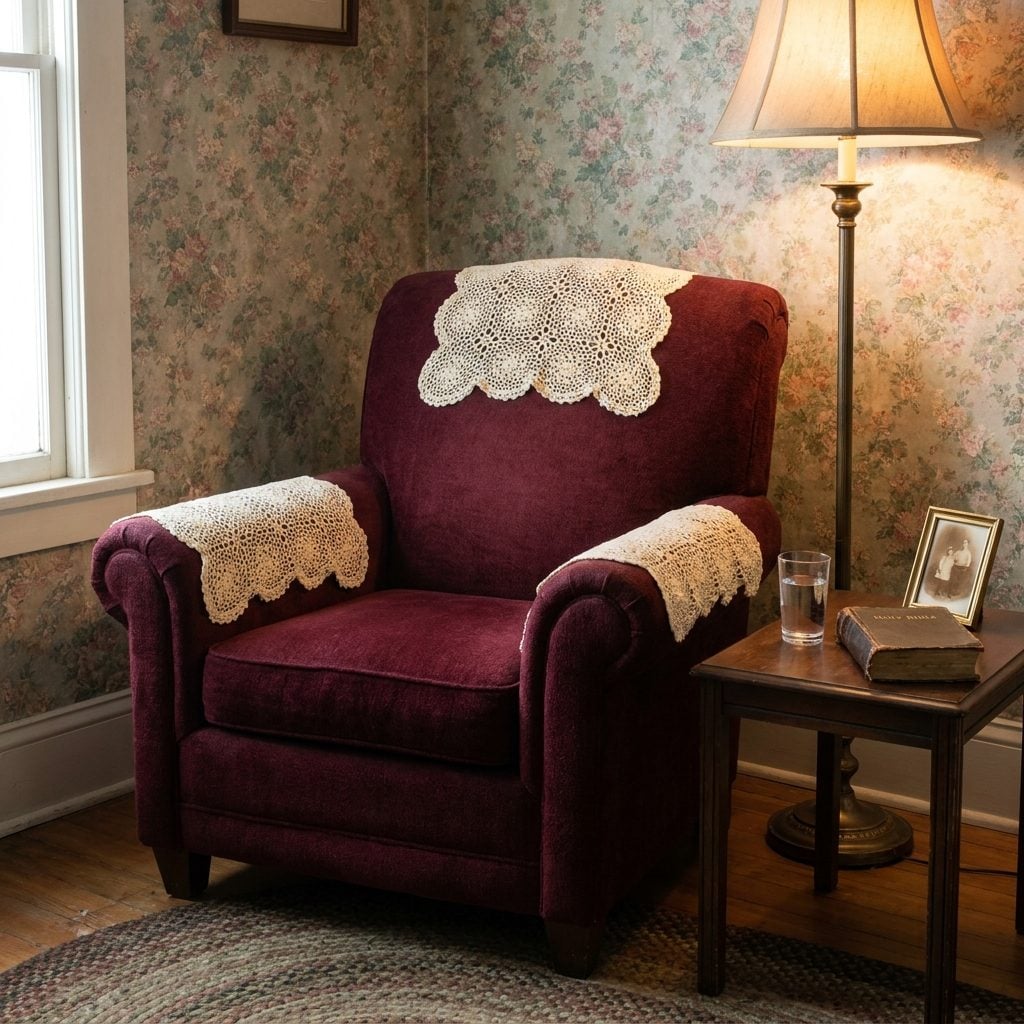
Every 1940s chair back had one: a small crocheted or embroidered cloth, usually white or ecru, pinned or simply draped over the top rail and the armrests. They were called antimacassars, named after the hair oil men used in the 19th century that left grease marks on upholstery. By the 1940s, hair oil was less of a crisis, but the cloths stayed. Grandmothers made them. Aunts gave them as gifts. They materialized on chairs the way cats materialize on warm surfaces.
The hand-crocheted ones had intricate edging and took weeks to finish. The embroidered ones showed tiny roses or bluebirds. Both collected like a textile archaeology project, layer by layer, over decades of family life.
32. Studio Couches and Daybeds That Did Double Duty
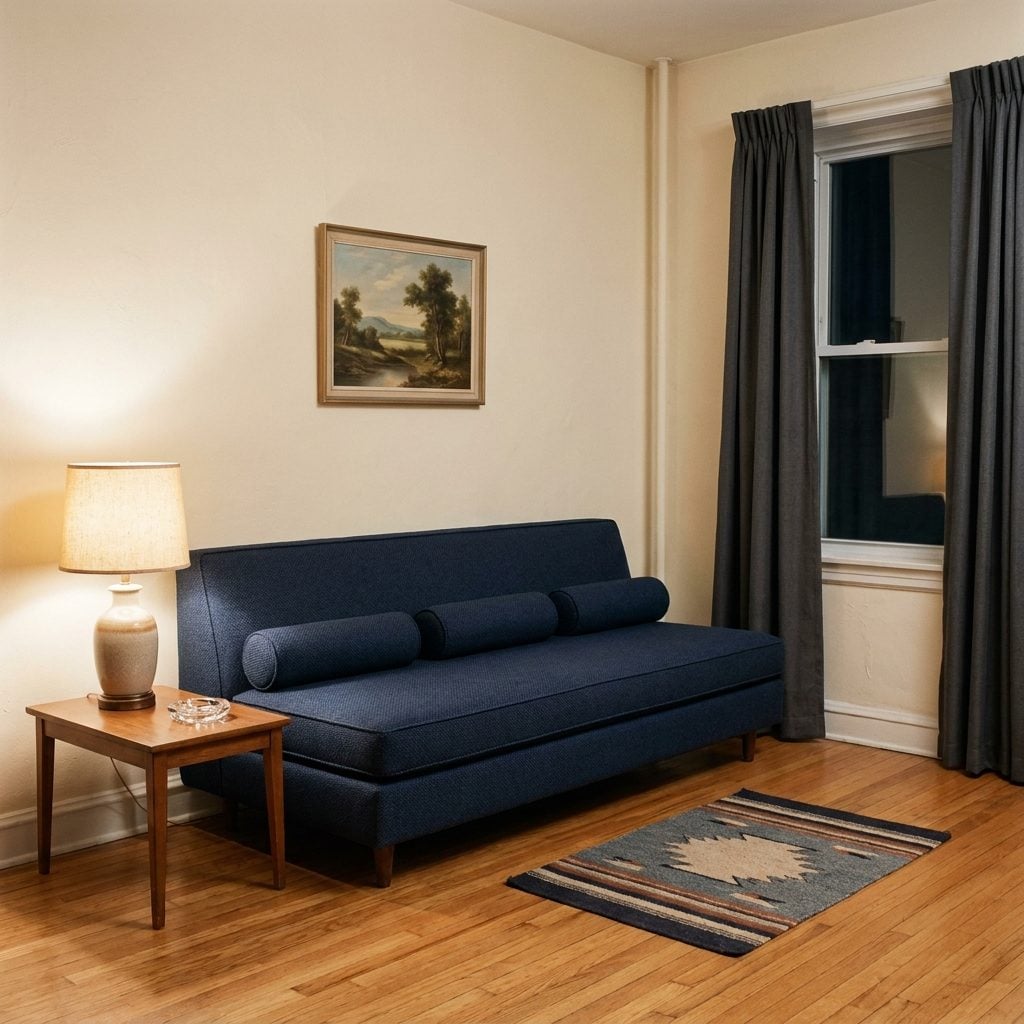
Before the pullout sofa became the standard solution for overnight guests, there was the studio couch: a narrow, firm piece of furniture with bolster cushions along the back that transformed from seating to sleeping surface with minimal effort and maximum inconvenience. It was the 1940s answer to the question nobody wanted to answer out loud, which was: we don’t have a guest room.
Studio couches showed up most often in apartments or in the homes of families that had recently moved from something larger. They were covered in the same heavy woven fabrics as proper sofas, just flatter, stiffer, and slightly more austere. The bolsters were usually heavy enough to use as weapons. A good set of living room makeovers from this era often started by replacing the studio couch with something that didn’t require explanation.
31. Overstuffed Seating Arranged Symmetrically Around a Central Table
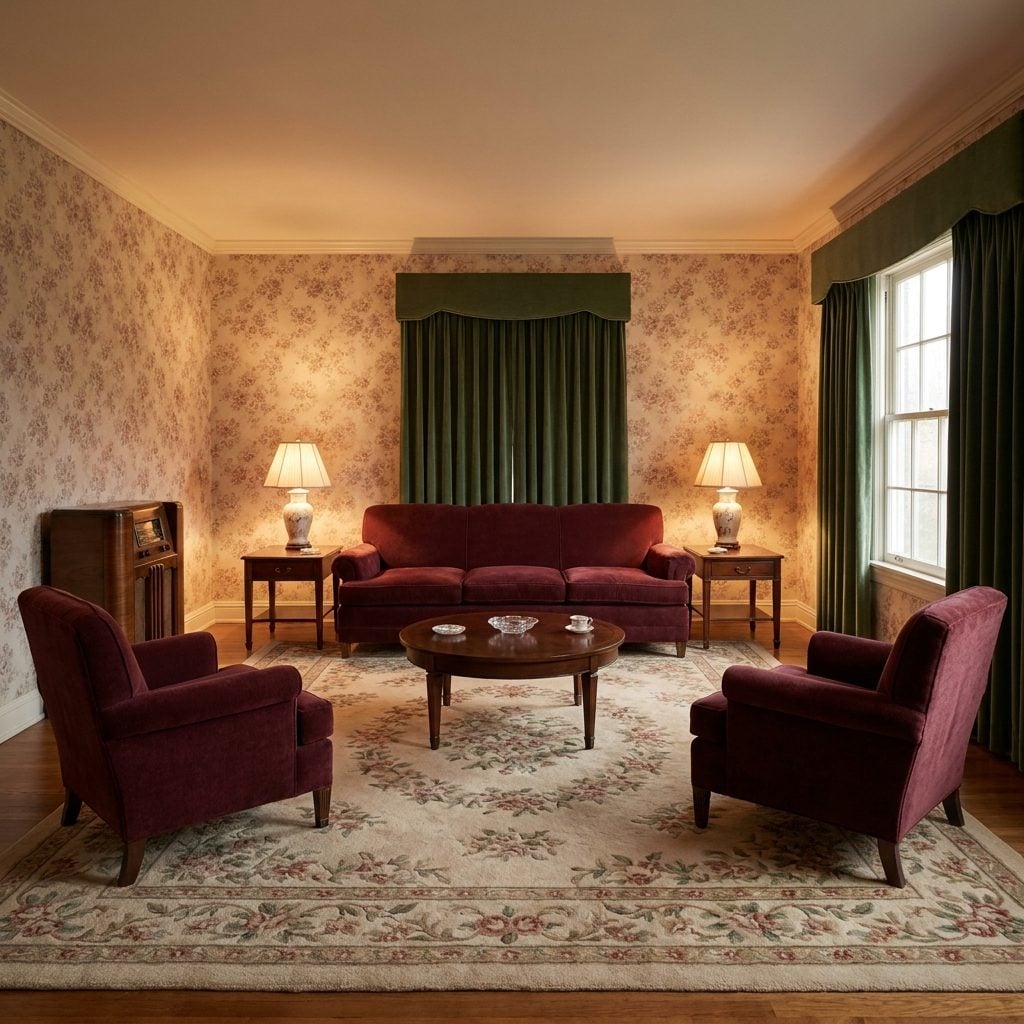
Symmetry was the organizing religion of the 1940s living room. Two chairs facing the sofa. A coffee table exactly centered between them. Lamps matched on either side. Everything balanced, everything answering to everything else. It wasn’t interior design so much as a statement about order, a domestic argument that chaos could be held at bay if the furniture was aligned correctly.
The central table was usually low and round or oval, and the seating around it was upholstered in variations of the same color family. The effect, especially in a craftsman living room with built-in shelving, was formal without being cold, a room that said company is welcome but expected to behave.
30. The Console Radio in Its Big Wooden Cabinet
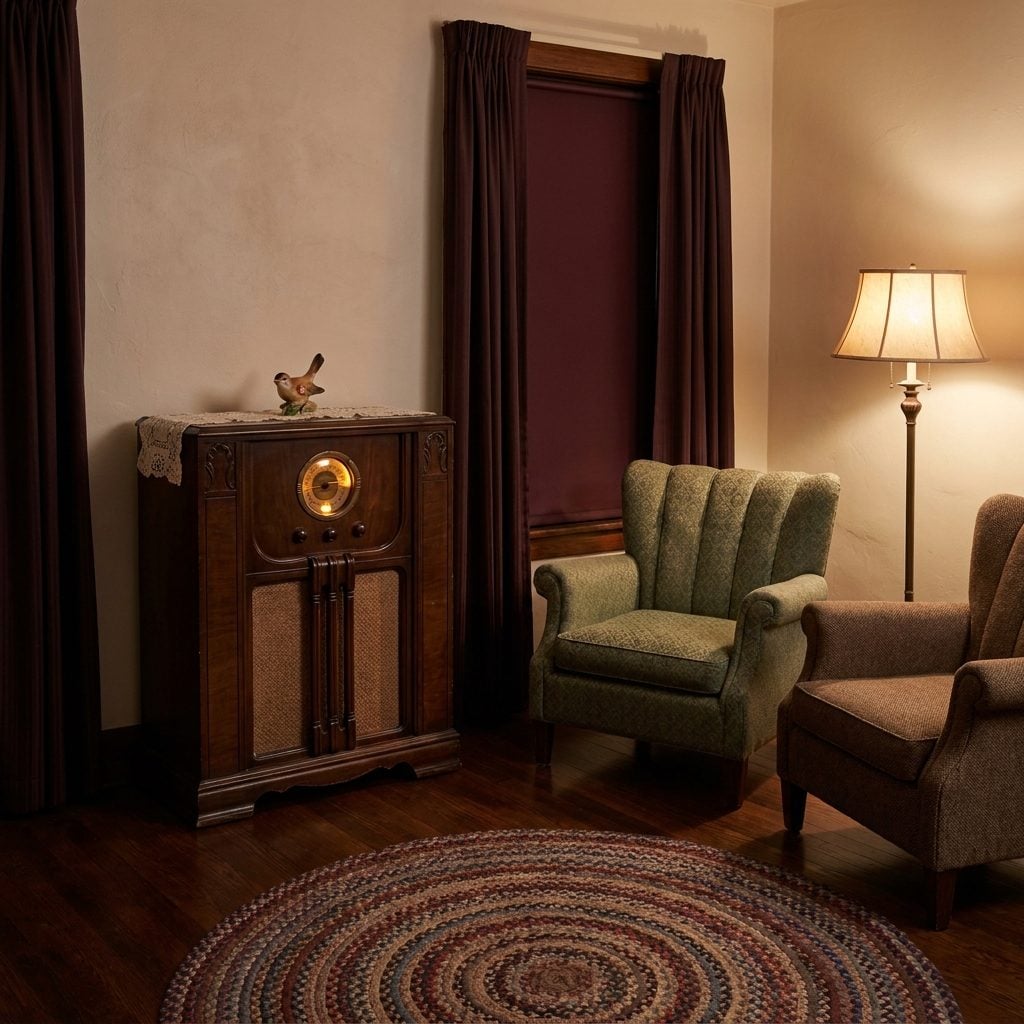
It took up the wall space of a small armoire and glowed amber from its tuning dial and you could hear it from the front porch. The console radio of the 1940s wasn’t a device, it was furniture, built with the same joinery and finish as a proper sideboard, meant to live in the living room permanently and look like it belonged there.
Families arranged their chairs to face it. Schedules were built around it. The news, Jack Benny, soap operas, and the war reports all came through that cloth-covered speaker grille. When television arrived and took the console radio’s place in the room’s hierarchy, the old radio often stayed, too beautiful and too heavy to move casually.
‘The console radio wasn’t something you listened to. It was something you sat in front of.’
29. Radio-Phonograph Combination Units Playing 78 RPM Records

The combo unit was the 1940s version of the all-in-one sound system, and it was the luxury item of the living room. A radio cabinet with a fold-open lid revealing a turntable inside. The 78 rpm records were thick, heavy, and prone to shattering if dropped, which made handling them feel like a ceremony.
Families who owned a radio-phonograph combination were the ones whose living room felt slightly more sophisticated than the neighbors’. You could have Tommy Dorsey or Glenn Miller or Billie Holiday filling the room on a Saturday evening. The record storage drawer built into the cabinet’s base held maybe thirty discs, each in a paper sleeve, usually arranged by someone who had a strong opinion about the right order.
28. Upright Pianos Topped With Lace Runners and Framed Family Photos
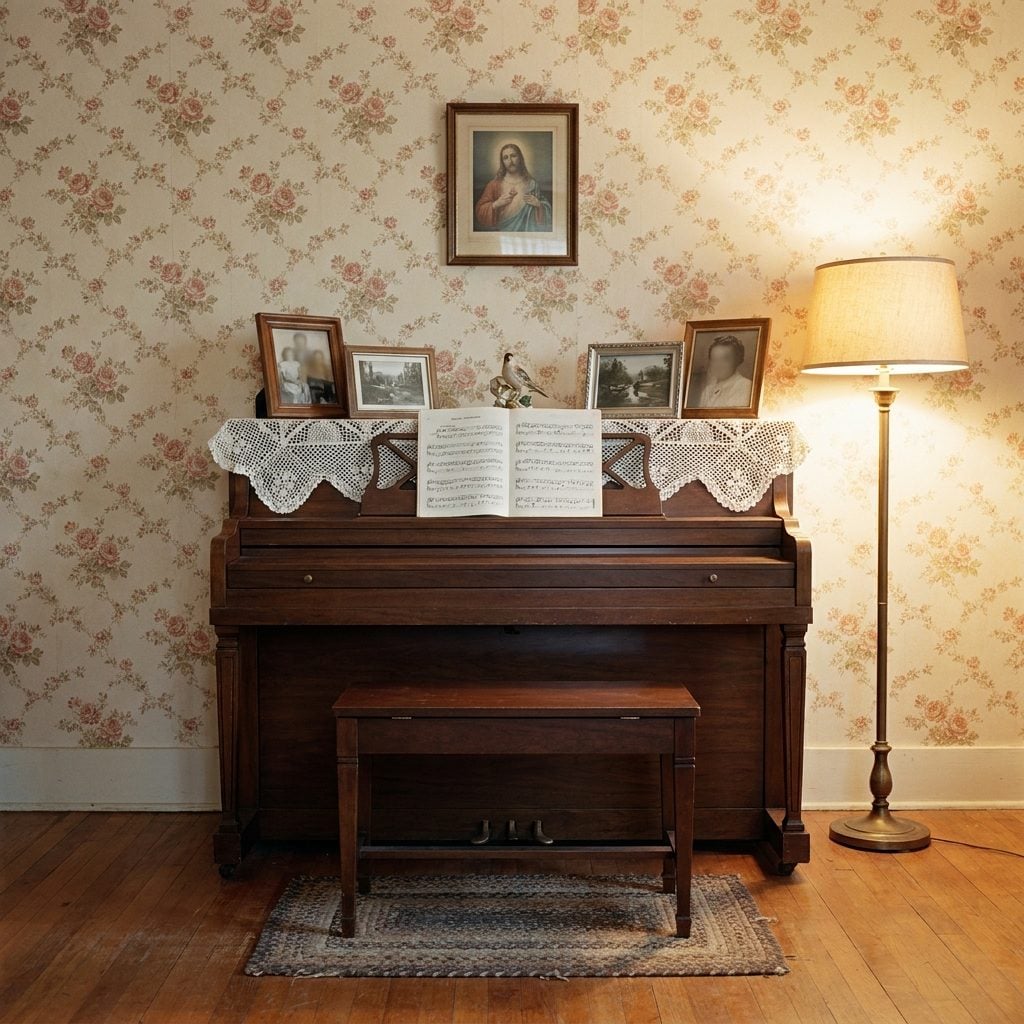
The upright piano was simultaneously a musical instrument, a photo gallery, and a flat surface that could hold anything requiring a ceremonial place in the room. The lace runner went across the top first, then the framed photos arranged in descending height, then the small ceramic figurines filling the gaps. The piano itself may not have been played regularly, but its top was managed with curatorial precision.
In homes where someone actually played, the sheet music lived in the bench seat below the keyboard, a hinged lid concealing decades of lessons, Sunday hymns, and popular songs learned from the radio. Certain kitchen details got the same obsessive care, but the piano top was the living room’s display case, the place where the family presented itself to itself.
27. Mahogany Coffee Tables With Cabriole Legs or a Glass Top Insert
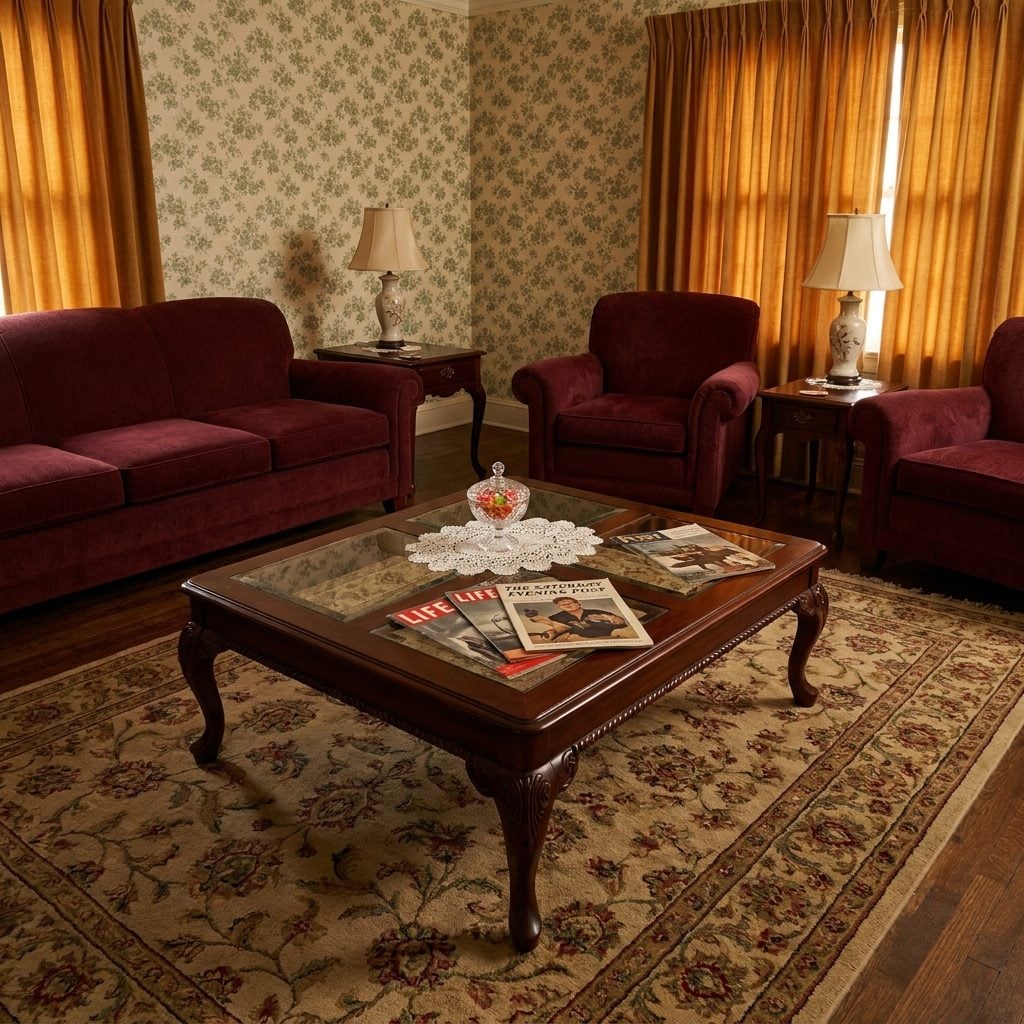
Dark mahogany with cabriole legs, the kind that curved out at the knee and tapered inward at the foot, was the coffee table style that showed up in living rooms that were trying to signal something about taste and permanence. The glass top version arrived slightly later in the decade, offering a flat, easy-to-clean surface while still showing off the decorative base beneath it.
Both styles appeared in homes that had recently upgraded from a smaller end table pulled into service as a coffee table. The new piece was taken seriously. It received a doily, a glass candy dish, and perhaps a small stack of magazines arranged just so. These kinds of walls or at least surface moments were how a family announced the living room was finished.
26. Lane Cedar Hope Chests Moonlighting as Coffee Tables or Benches
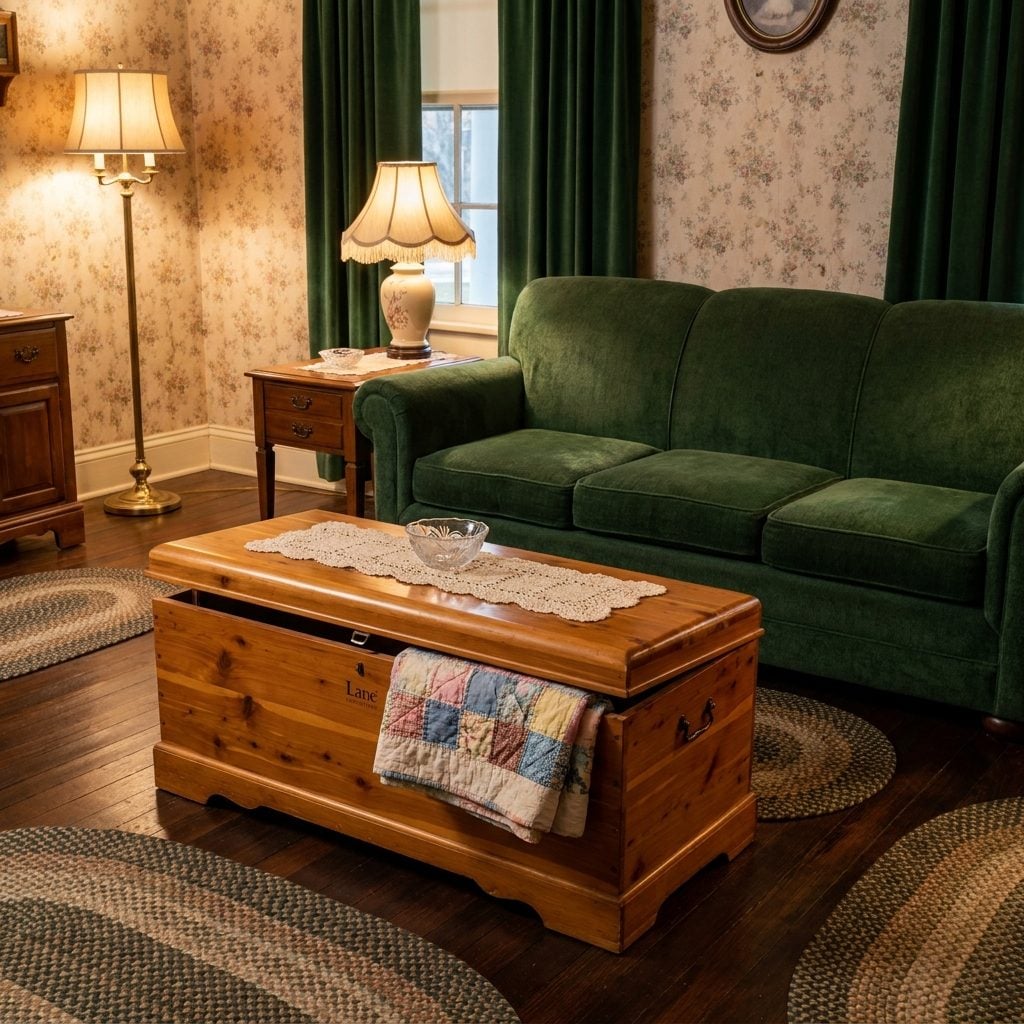
The Lane cedar chest was technically a storage piece for linens, quilts, and the accumulated domestic hopes of a young woman preparing for marriage. In practice, it was one of the most versatile pieces of furniture in the house. Flat top, solid construction, low enough to serve as a bench or a coffee table, it migrated naturally to the living room and stayed.
That cedar smell was unmistakable. Lift the lid and the whole room got a flash of it: sharp, dry, faintly medicinal. Inside: a wedding quilt someone’s grandmother made, extra wool blankets, baby clothes kept for sentimental reasons, and usually a few things that had no other logical home.
Lane marketed the hope chest aggressively to fathers of daughters throughout the 1940s. The company’s slogan was essentially: give your daughter a future. Many families had one. Many of those chests are still in use, still smelling exactly the same way.
25. End Tables Topped With Doilies and a Very Deliberate Arrangement of Decorative Accents
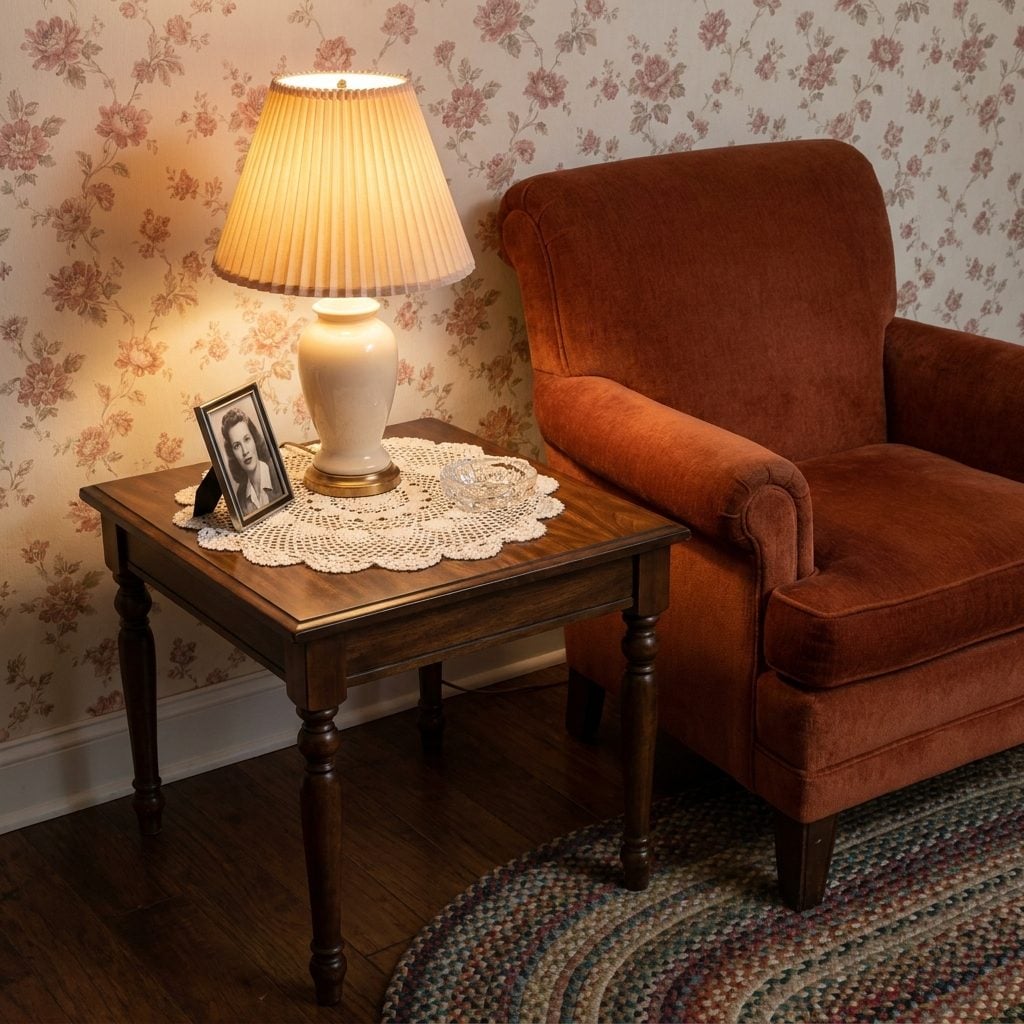
The end table was never just a surface. It was a stage. In a warm sitting room of the 1940s, the end table beside an armchair held a ceramic lamp, a hand-crocheted doily underneath it, a small glass ashtray, and often a framed photograph or a decorative figurine, the whole arrangement maintained with the same care applied to a church altar.
The doily was load-bearing in the decorative sense. Without it, the lamp just sat on wood. With it, the lamp was presented. The distinction mattered enormously to the women who managed these rooms, and looking back, the instinct was correct: the doily was the difference between a surface and a composition.
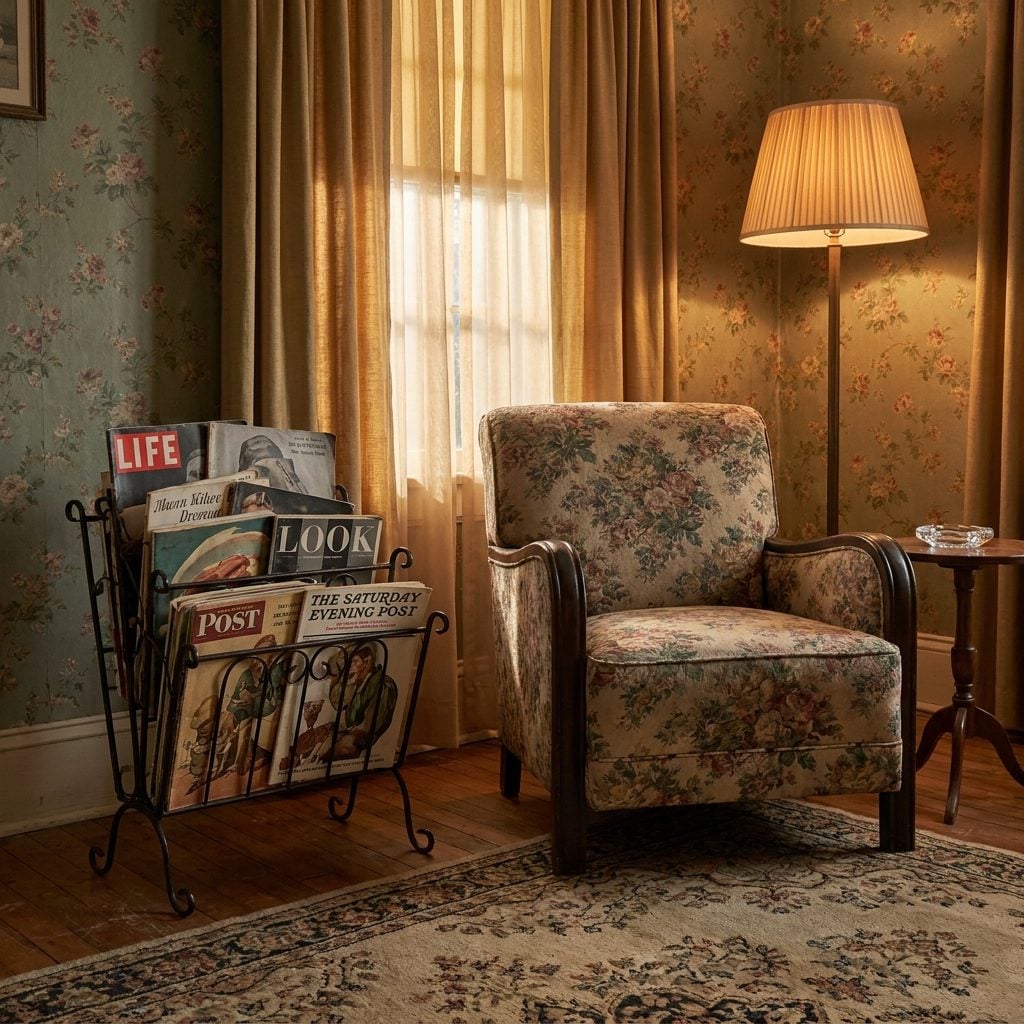
24. The Magazine Rack Stuffed With Life, Look, and The Saturday Evening Post
🔥 Would you like to save this?
It lived beside the armchair or tucked against the wall near the sofa, usually brass or painted wrought iron with a slight lean to it from years of being overfilled. Walls or at the end of the couch, these racks were never decorative by intent, they just became that way. The covers alone were a time capsule: Norman Rockwell illustrations, wartime headlines, movie stars in studio portraits.
Nobody subscribed to just one magazine. The rack held six. Some were three months old. Nobody threw them away.
23. Milk Glass Table Lamps With Those Pleated Fabric Shades
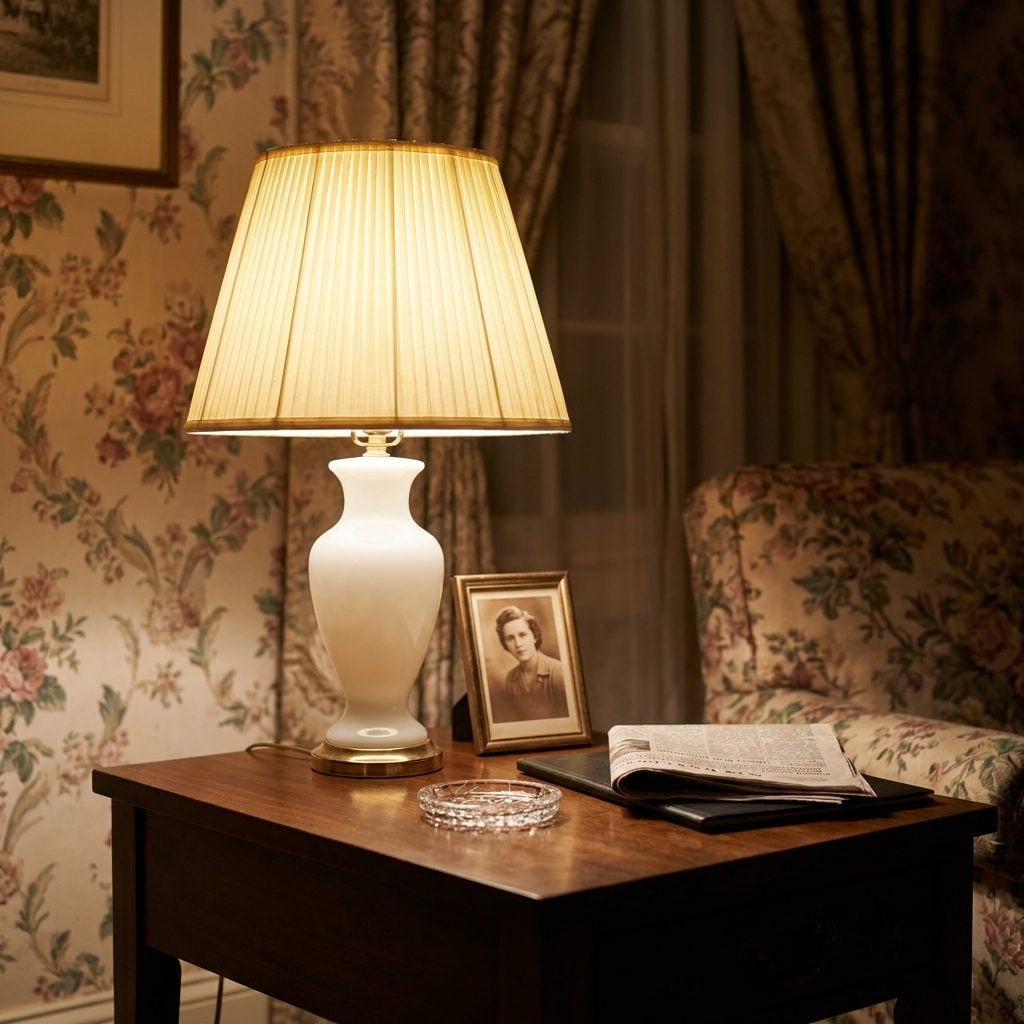
The shade was always pleated, cream or ivory silk or something that wanted to be silk, gathered into a ring at the top and bottom, slightly yellowed from years under a warm bulb. The base was milk glass: pure white, slightly translucent, shaped like a vase or a column or something vaguely Greek. These lamps were everywhere in the 1940s living room, usually sold in pairs, one for each end table flanking the sofa.
At night, they cast the room in the softest possible amber. Nothing overhead, just these two quiet pools of warm light. Something about that felt like safety.
22. The Trusty Floor Lamp Standing Guard in the Reading Corner
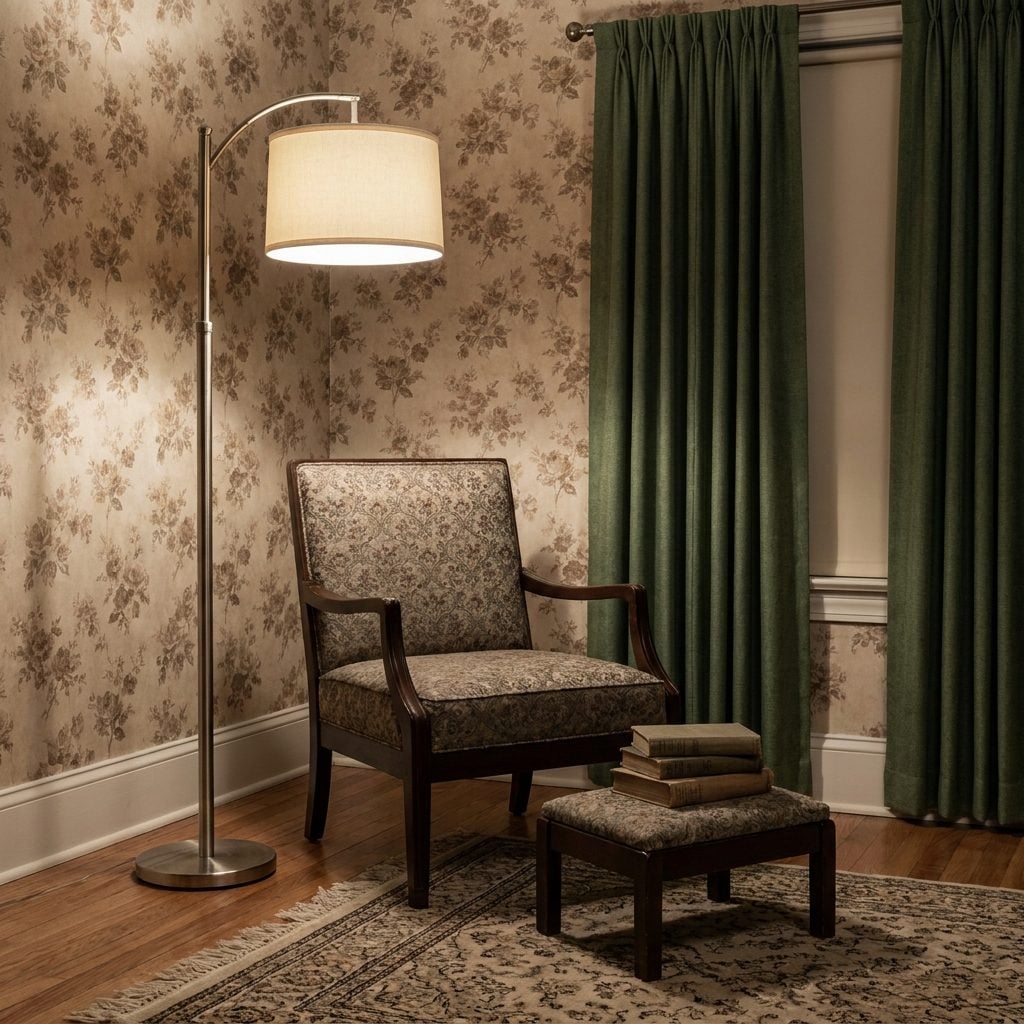
Simple is the operative word here. A slender metal pole, sometimes wood, sometimes painted black or brushed to look like it might be bronze, rising from a weighted base to a height just above the armchair beside it. The shade was usually a drum or a simple coolie shape in parchment or cream. No swing arm, no articulating neck, it just stood there and pointed light downward at whoever was reading.
Every 1940s living room had at least one. Often positioned in a corner so it could throw light into the room without casting shadows on the face. The craftsman living room of the era treated these floor lamps as functional anchors, not decorative statements, and somehow that restraint made them feel more permanent.
21. The Table Lighter and Cigarette Box Set Out Like They Were Jewelry
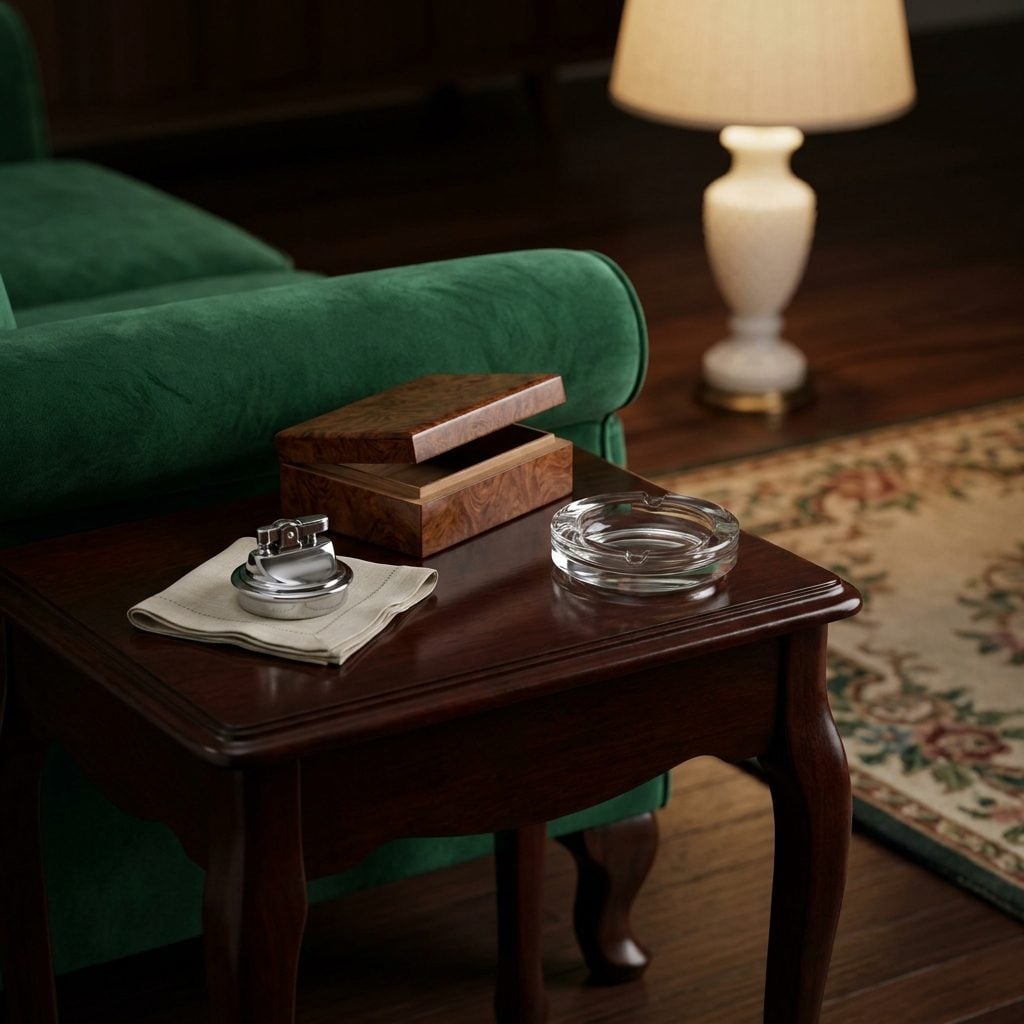
They were displayed. That’s the detail that gets you. A cigarette box, silver plate, chrome, or lacquered wood, sat open or closed on the side table like a centerpiece, flanked by a table lighter in brushed metal or enamel that was treated with the same care as a candlestick. Guests helped themselves. The host offered. This was a ritual.
Zippo made pocket lighters. But the table lighter was a whole different category of object, weighted, deliberate, the kind of thing that made a click when you set it down. Ronson was the big name. A vintage chrome table lighter on a side table said something about the household: that they had taste, and they had guests, and they took both seriously.
20. Bakelite Ashtrays in Swirling Marbled Tones
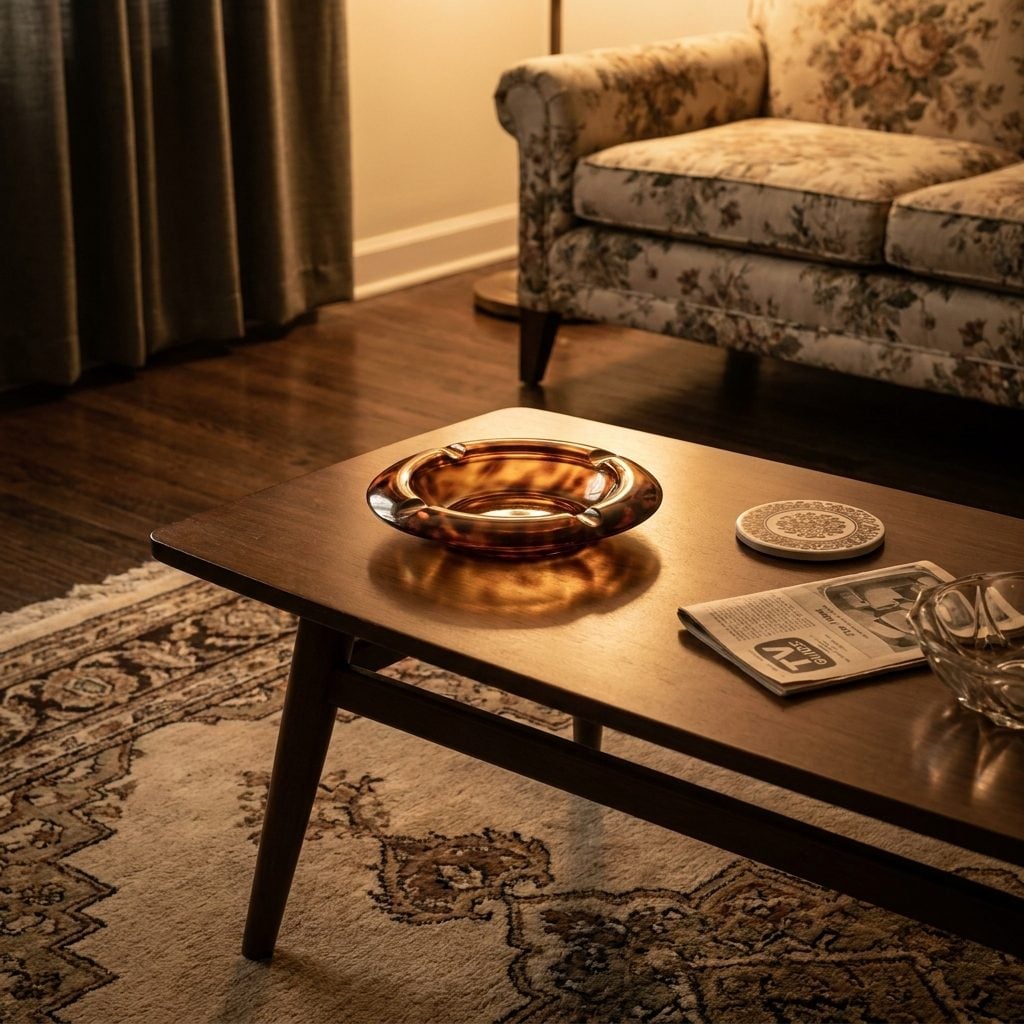
Bakelite ashtrays weren’t just functional, they were small sculptures. The marbling effect (tortoiseshell amber, deep swirling green, mottled brown-and-cream) came from the manufacturing process itself, not from any artistic intent, which is exactly what made each one slightly different from the next. They were heavy for their size. They made a satisfying sound when you set a lighter down in them.
You’d find them on the coffee table, the side table, sometimes two or three in the same room because everyone smoked and nobody thought twice about it. Today they show up at estate sales and on Etsy, purchased by people who just like the weight of them in their hands.
19. Fireplaces With Ceramic Tile Surrounds in Soft, Matte Colors
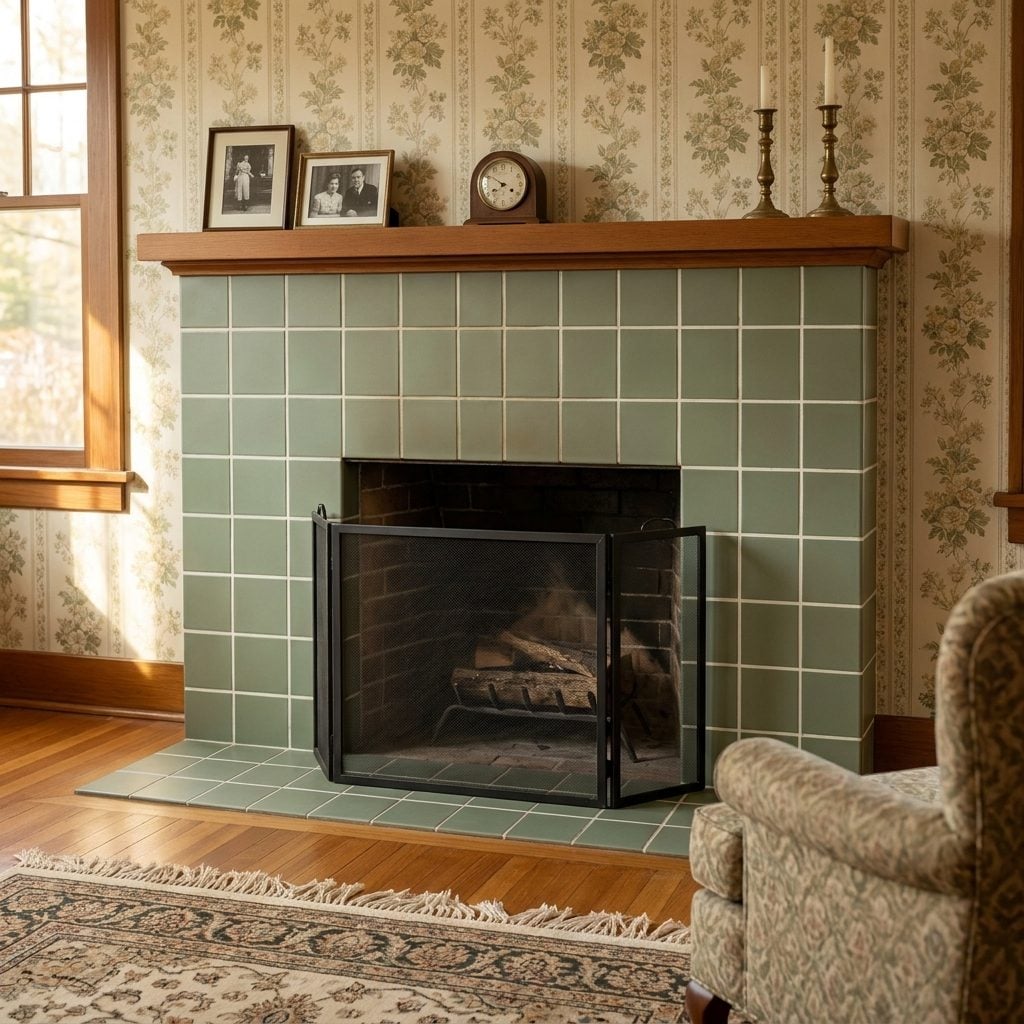
The fireplace was the room’s main event, and the surround told you everything about when the house was built. In the 1940s, the tile was often 4×4 ceramic in one of a handful of soft matte colors: cream, sage, dusty rose, a particular shade of grey-green that doesn’t seem to exist anymore. The tiles were set flush, grouted in white, with a simple rectangular border tile framing the firebox opening.
No ornate carving. No marble. Just clean, flat tile in a color that looked like it had been mixed with a little milk. The hearth itself was usually the same tile or a plain brick. A ceramic tile fireplace surround in this style reads now as quietly sophisticated, the kind of detail preservation architects fight to protect in older homes.
18. Wood Mantels Arranged With Framed Family Photographs Like a Formal Gallery
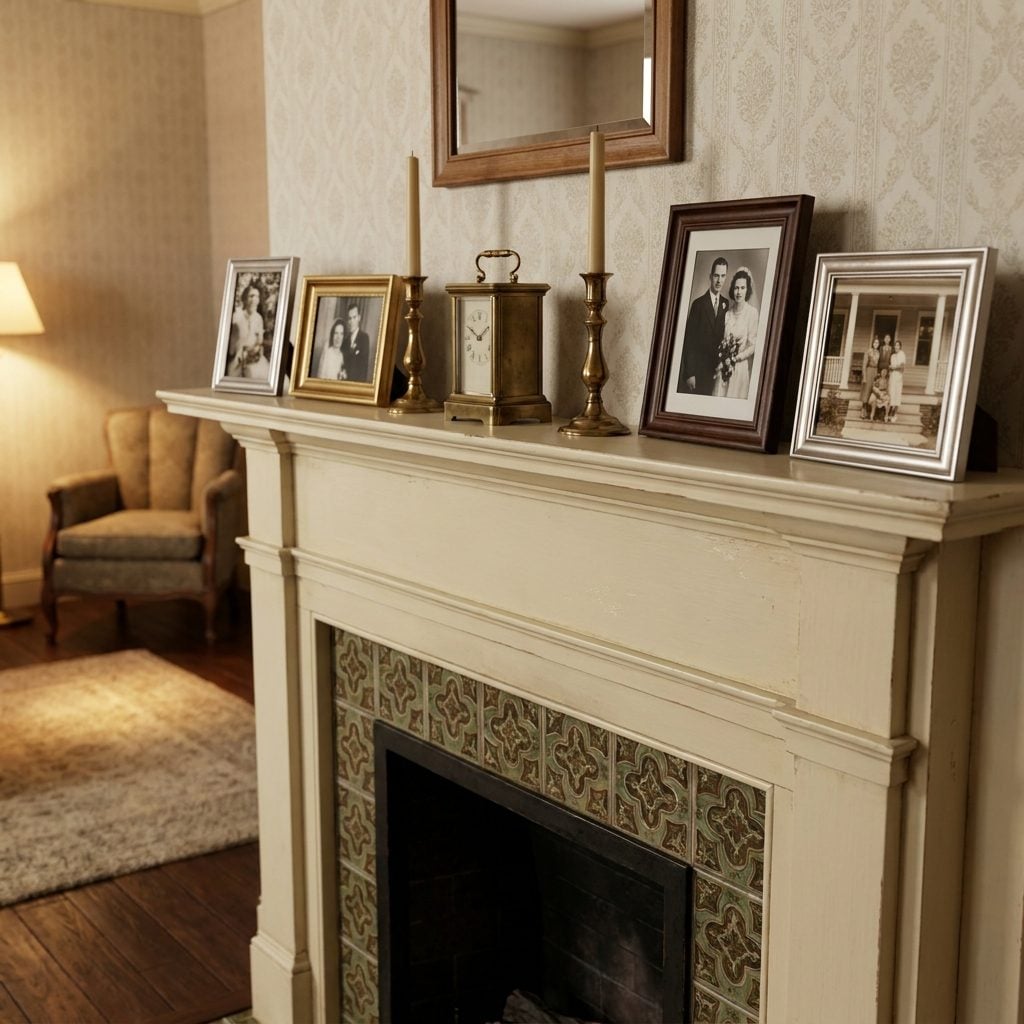
The mantel was the 1940s version of the family Facebook page.
Framed photographs lined up across the length of it, some standing, some propped, some in matching frames and some clearly grabbed from a drawer and set up on short notice when company was expected. School portraits, wedding photos, a military photograph in a simple gold frame. The arrangement was never quite symmetrical but always deliberate.
A small clock usually anchored the center. Maybe a pair of brass candlesticks or a ceramic figurine on each end. This was the kitchen details equivalent for the living room, the place where a family’s version of itself was on display, curated without anyone calling it that.
17. Built-In Bookcases Flanking the Fireplace Like They Were Always Meant to Be There
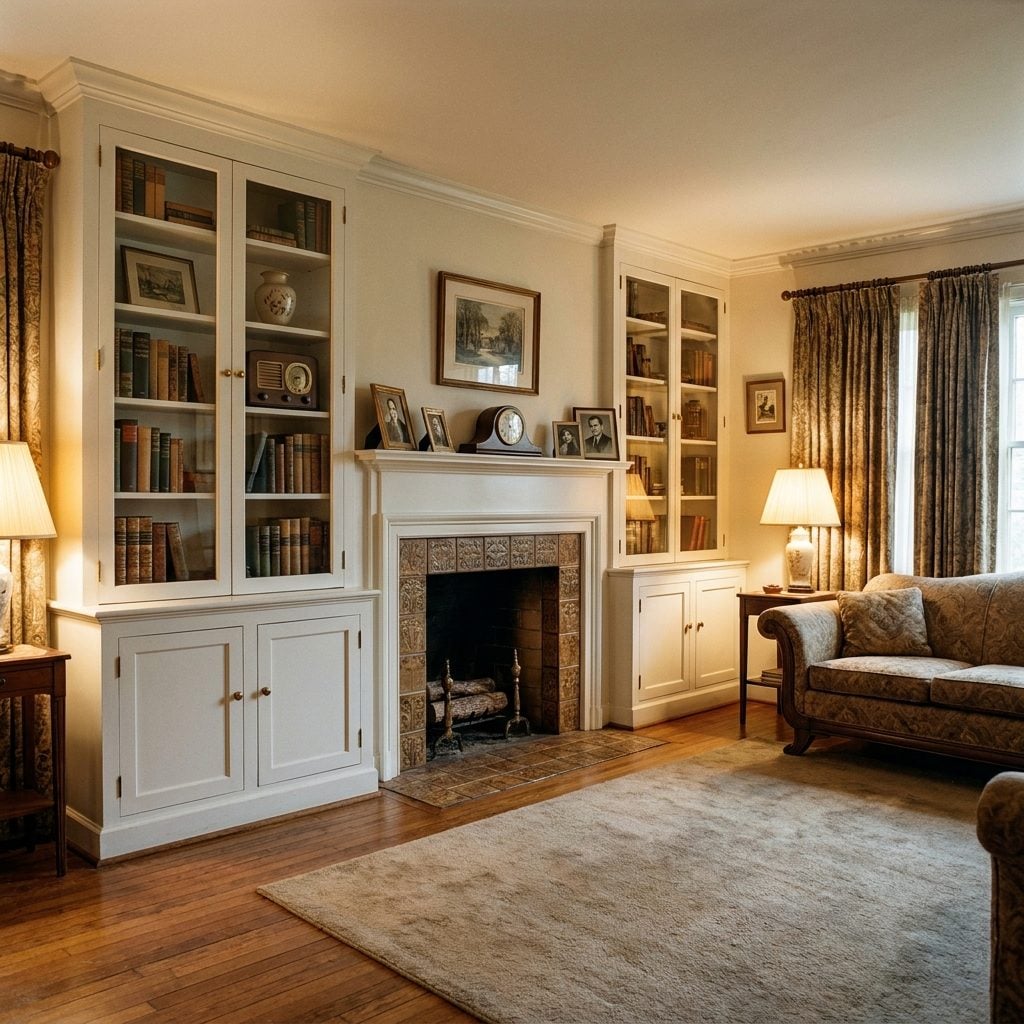
They were painted the same color as the trim, almost always white or cream, with simple panel doors on the lower cabinets and open shelves above. The shelves held books, yes, but also the radio, a small vase, a few decorative objects that didn’t have anywhere else to go. The whole arrangement made the fireplace feel like the center of the room in a way that no freestanding furniture could.
In a well-kept 1940s home, these built-ins were the closest thing to architectural luxury that most middle-class families had. They implied permanence. They said: this house was thought about. A preppy family room from that era almost always had these flanking built-ins, and honestly, the rooms that still have them are the ones that photograph best today.
16. The Freestanding Wooden Bookcase That Held Everything Except Just Books
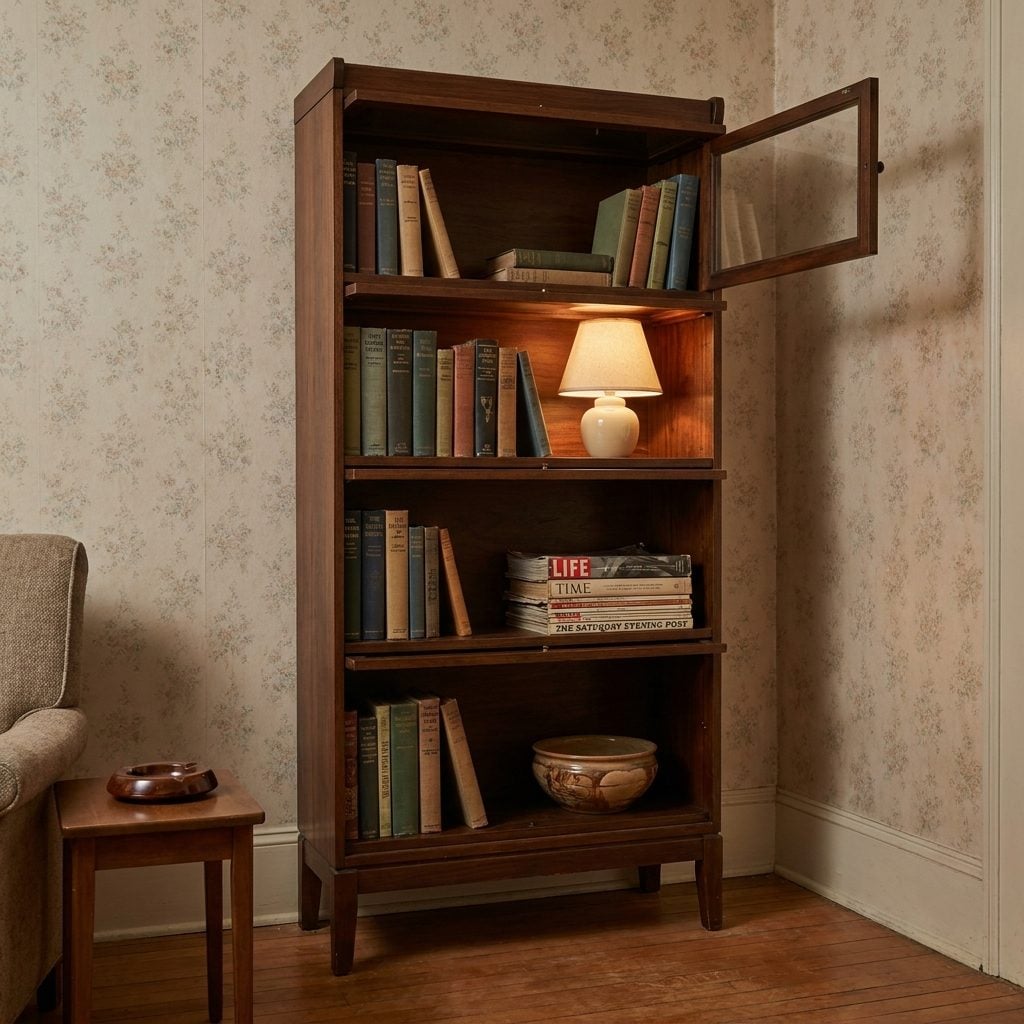
For homes without built-ins, there was the freestanding bookcase: four or five shelves of dark-stained oak or walnut, maybe with a glass-front door on the top section if the family had aspirations, usually without if they didn’t. It stood against a wall and gradually became a filing system for everything the house couldn’t otherwise contain.
Books on the top two shelves. Then a radio or a small lamp. Then magazines. Then a decorative bowl that still had its price sticker. Then, at the bottom, a row of things that were definitely going to be dealt with later. The warm sitting room of the 1940s used this piece less as furniture and more as evidence that people actually lived there, and that evidence is hard to fake.
15. Cabbage Rose Wallpaper in Colors That Somehow Worked Together
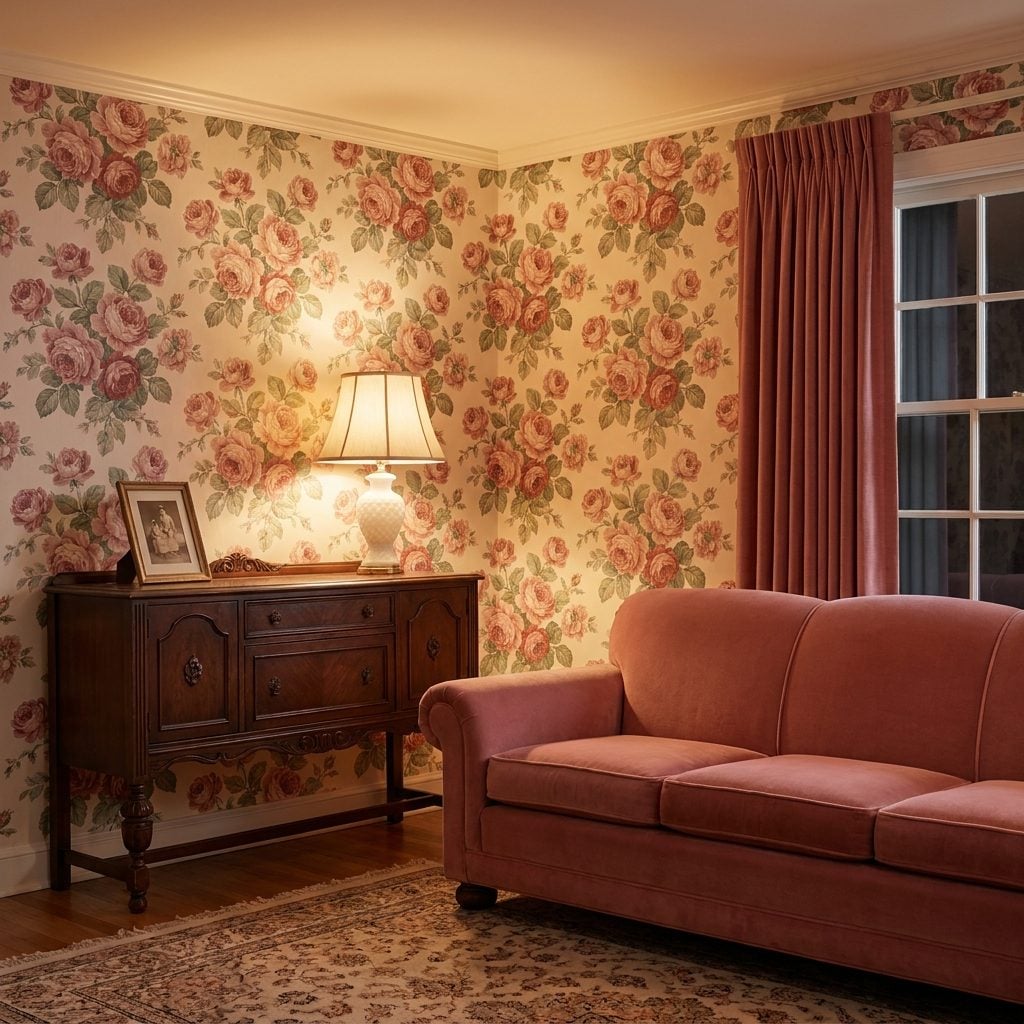
Big blooms. Overlapping petals. Soft backgrounds in cream or the palest blue-green, with roses printed in dusty pink, muted red, and sage. The scale was generous, these weren’t tiny ditsy florals. They were statement wallpaper before anyone called it that, and they covered every inch of the living room makeover-worthy walls of a million American homes from the late 1930s through the early 1950s.
The pattern repeat was long. Hanging it required patience. Seams were disguised by matching up the roses exactly, which took the kind of precision most people only mustered for formal occasions. Rooms with this wallpaper felt like the interior of a garden, close, warm, a little overwhelming in the best possible way.
14. Knotty Pine Paneling That Made Every Room Feel Like a Hunting Lodge
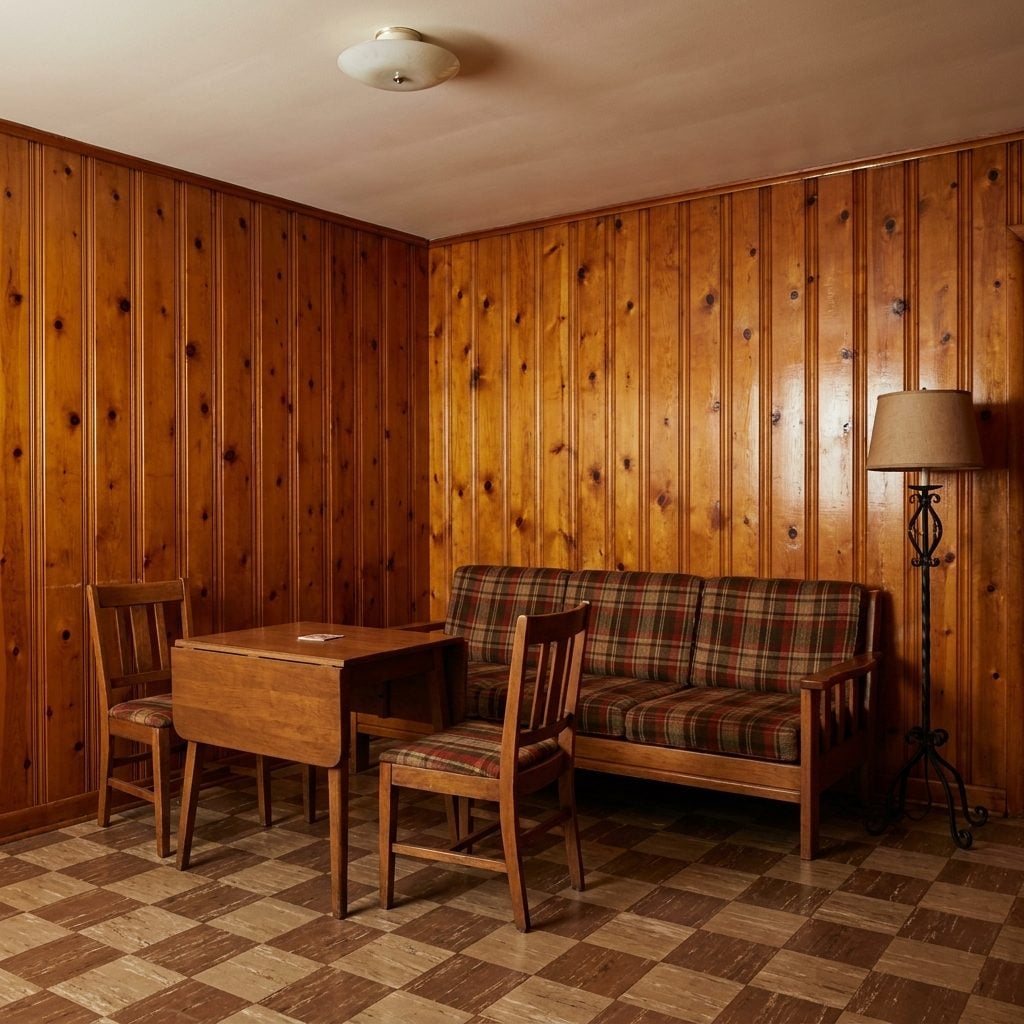
Usually in the basement or the back room, whatever the family called the space that wasn’t quite the living room. Knotty pine paneling arrived in the late 1930s as an affordable alternative to plaster walls and became the defining material of the American informal interior through the 1940s and into the 50s. The knots gave it personality. The grain gave it warmth. The varnish gave it a slight orange tint that deepened every year.
A room paneled in knotty pine had a particular smell: something between a cedar chest and a new pencil. Families used these rooms for card games, listening to the radio, and doing the things they didn’t want to do in the formal living room. The contemporary bonus room is essentially this room’s grandchild, same logic, different materials.
13. Crown Molding and Trim Details That Made Every Room Feel Finished
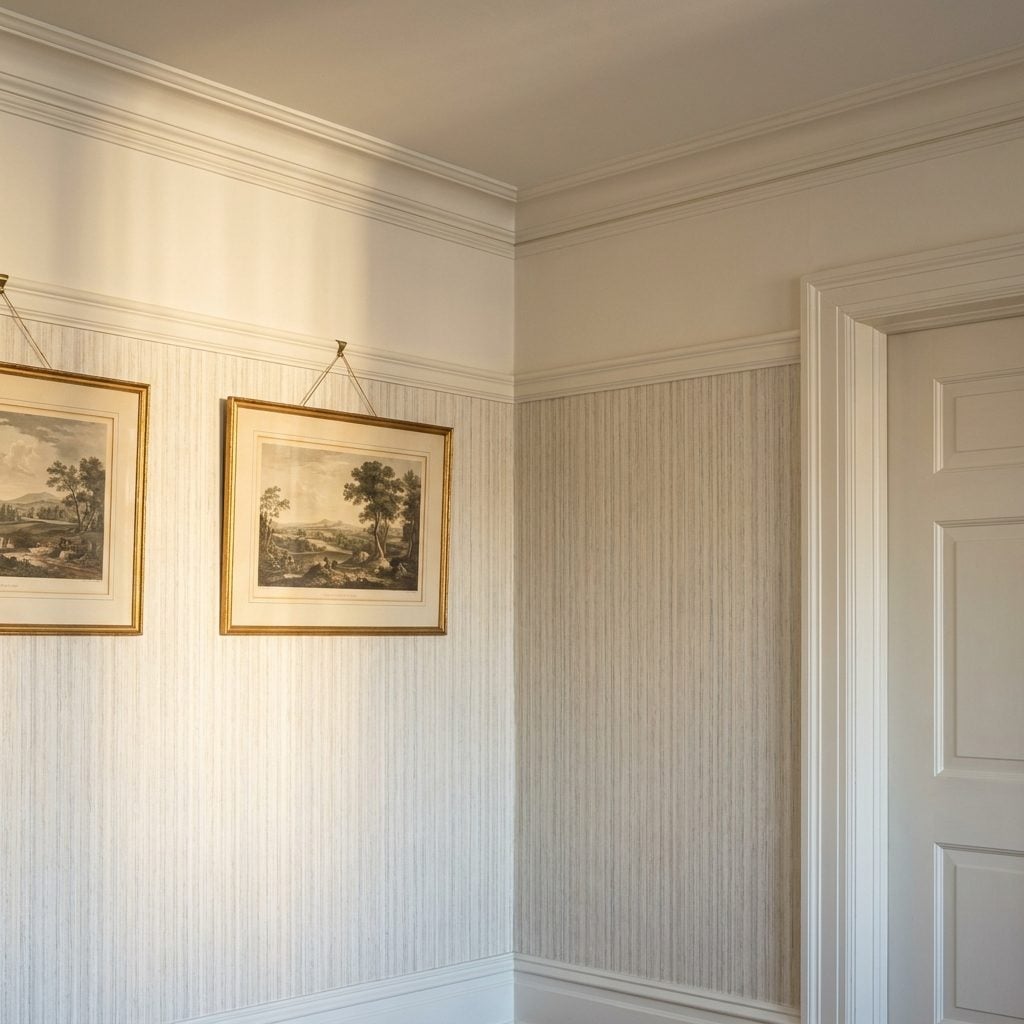
Pre-war homes were built with trim as a given. Not a luxury, not an upgrade, just what walls had where they met ceilings, where they met floors, where they framed a doorway. The crown molding in a 1940s living room was typically three to four inches of simple ogee or cove profile in painted wood, white or cream, running the full perimeter of the room without interruption.
Picture rail molding ran just below the crown in many homes, a horizontal groove or ledge designed specifically to hang framed artwork without nailing into the plaster. Some rooms had chair rail too. The trim package communicated something specific: that the room had been designed, not just built.
Post-war construction began stripping these details out in the name of speed and economy. Houses built in the early 1950s were already losing their molding profiles. What remained were rooms that felt, somehow, unfinished, even when everything in them was new. A living room makeover that adds back period-appropriate crown molding to a stripped room is always the detail that makes the before/after most dramatic.
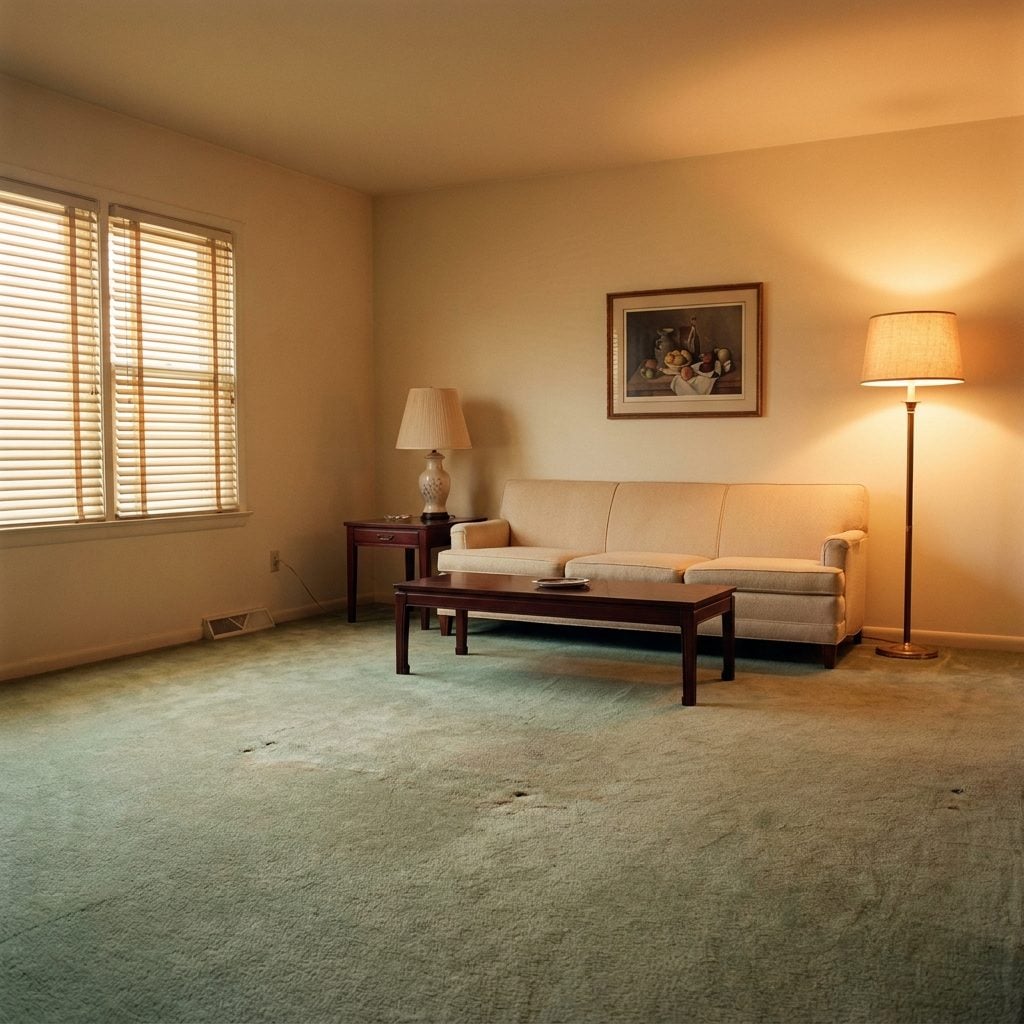
12. Wool Broadloom Carpeting in Dusty, Muted Solid Colors
🔥 Would you like to save this?
It was underfoot in practically every living room from Connecticut to California: wall-to-wall wool broadloom in shades that had no business being as soothing as they were. Sage green. Dusty rose. Warm taupe. Colors that don’t get names anymore because we stopped believing in them.
The wool pile was dense enough to hold a footprint and warm enough to soften the hardest room. Running a hand across it felt like touching something deliberate, something chosen with care. By the mid-1950s, synthetic fibers started crowding it out, but for one decade, broadloom wool was the foundation every living room was built on.
11. Braided Oval Rugs Layered Right Over Everything Else
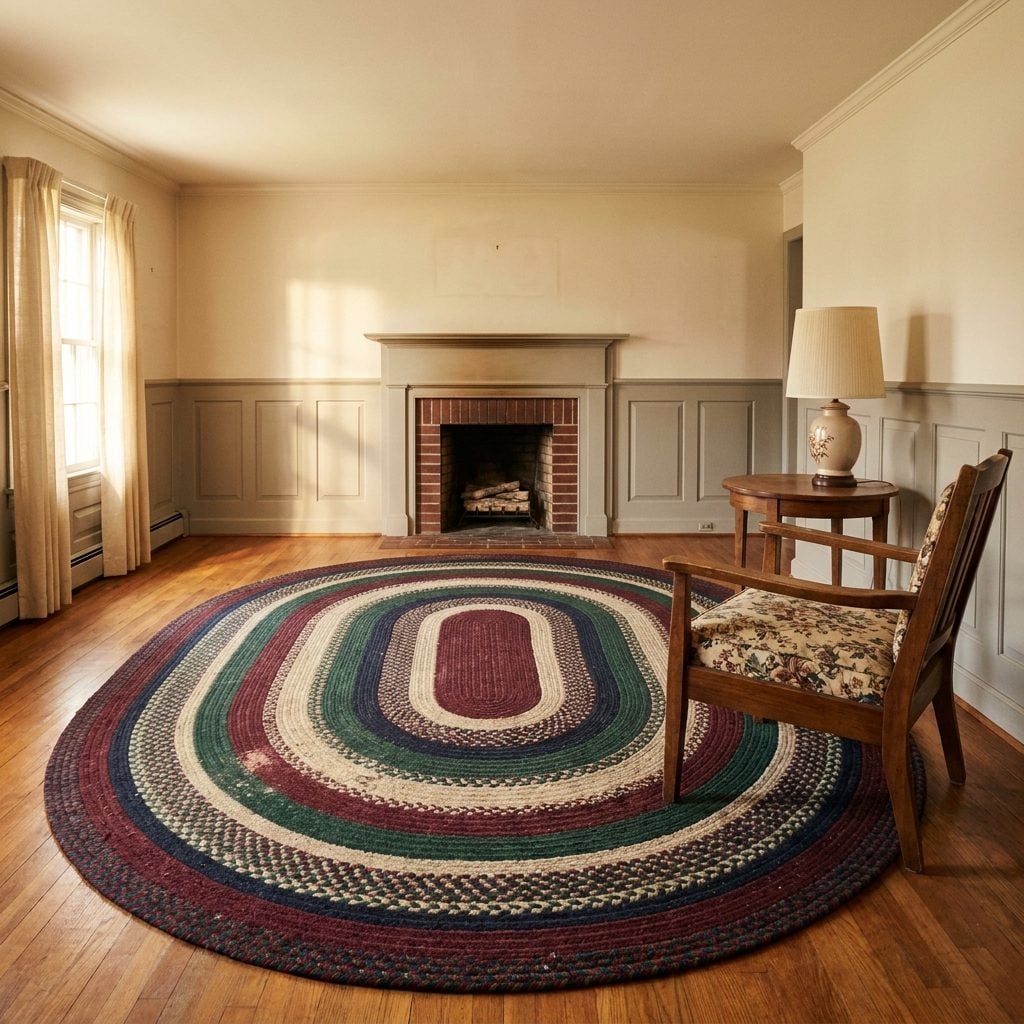
Someone’s grandmother made it, or someone’s aunt, or the women at the church hall made it as a fundraiser. Either way, a braided oval rug landed in the center of the living room and stayed there for thirty years.
The concentric rings of braided wool or cotton strips created a bulls-eye that anchored the seating arrangement, defined where the room actually lived. The colors were never quite intentional, whatever fabric scraps were on hand became the palette. Old coats. Worn dresses. A curtain panel that had given up. The rug was the room’s autobiography.
10. Hardwood Floors That Were Never Fully Covered, On Purpose
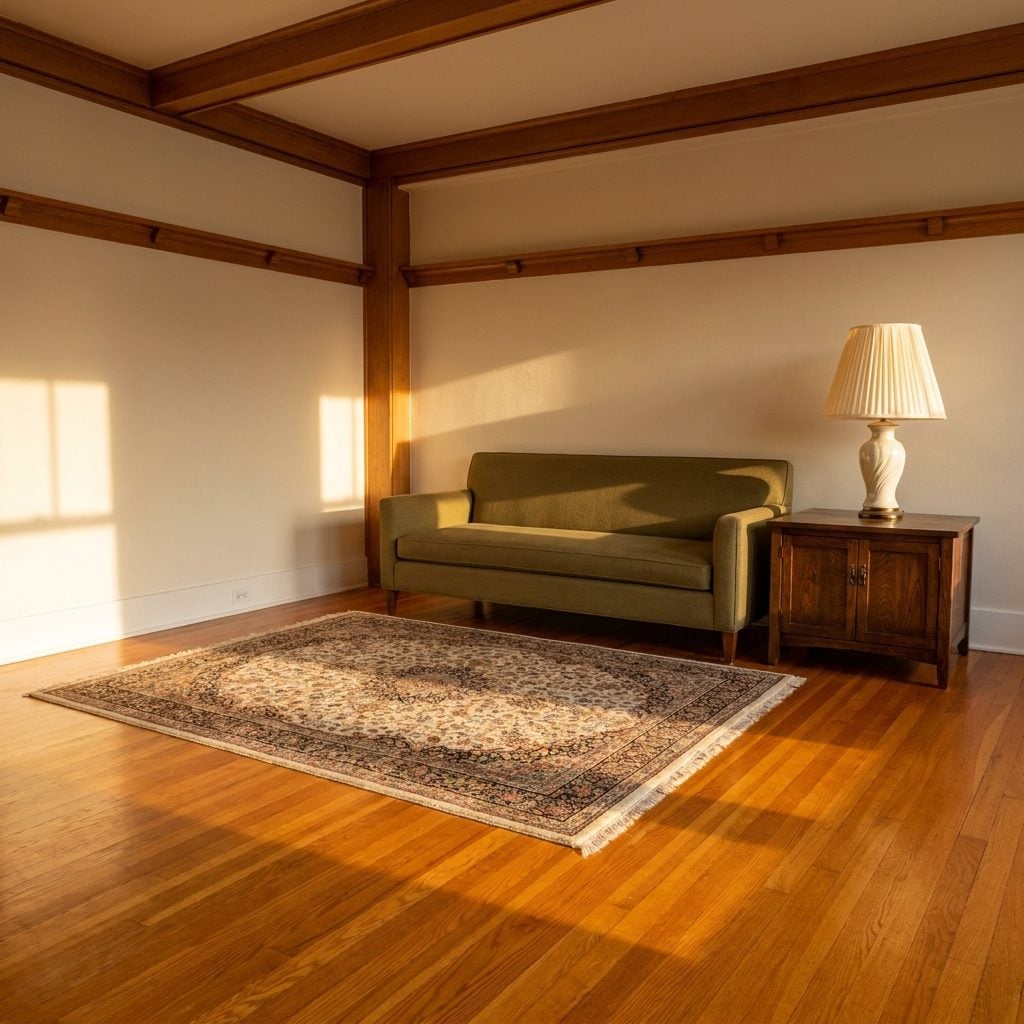
The border of hardwood showing around the edge of a rug was not an accident. That exposed oak or maple strip, usually four to eight inches wide around the room’s perimeter, was a design statement in an era that understood restraint.
Those floors were maintained with paste wax applied by hand and buffed with a weighted floor polisher that sounded like a small aircraft taking off. The wood glowed a deep amber under incandescent light. You knew exactly where every squeaky board was, and you navigated them without thinking.
9. Venetian Blinds Paired With Heavy Drapery, Always Both at Once
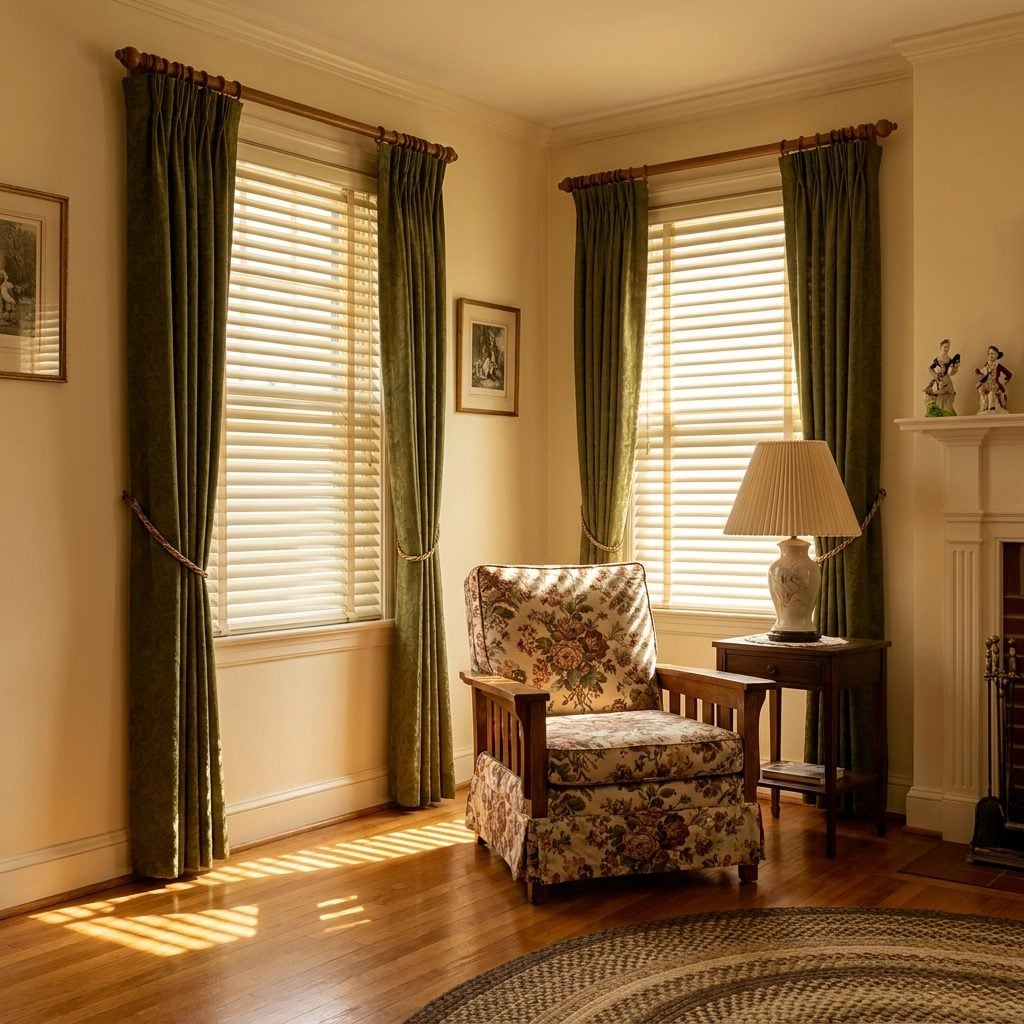
Nobody in the 1940s had to choose between Venetian blinds and drapes. They had both, and they used both, often simultaneously, in a layering approach that was as functional as it was visually dense.
The Venetian blinds were typically aluminum or wood slats in cream, ivory, or soft grey, adjusted by a woven cord pull that clicked satisfyingly through its track. The drapes hung on either side like sentinels. When afternoon light got too direct, you tilted the slats to a 45-degree angle that cast the room in a warm, slatted glow, like being inside a very comfortable cage. The look was less about decoration and more about total environmental control.
8. Blackout Curtains That Stayed Up Long After the War Ended
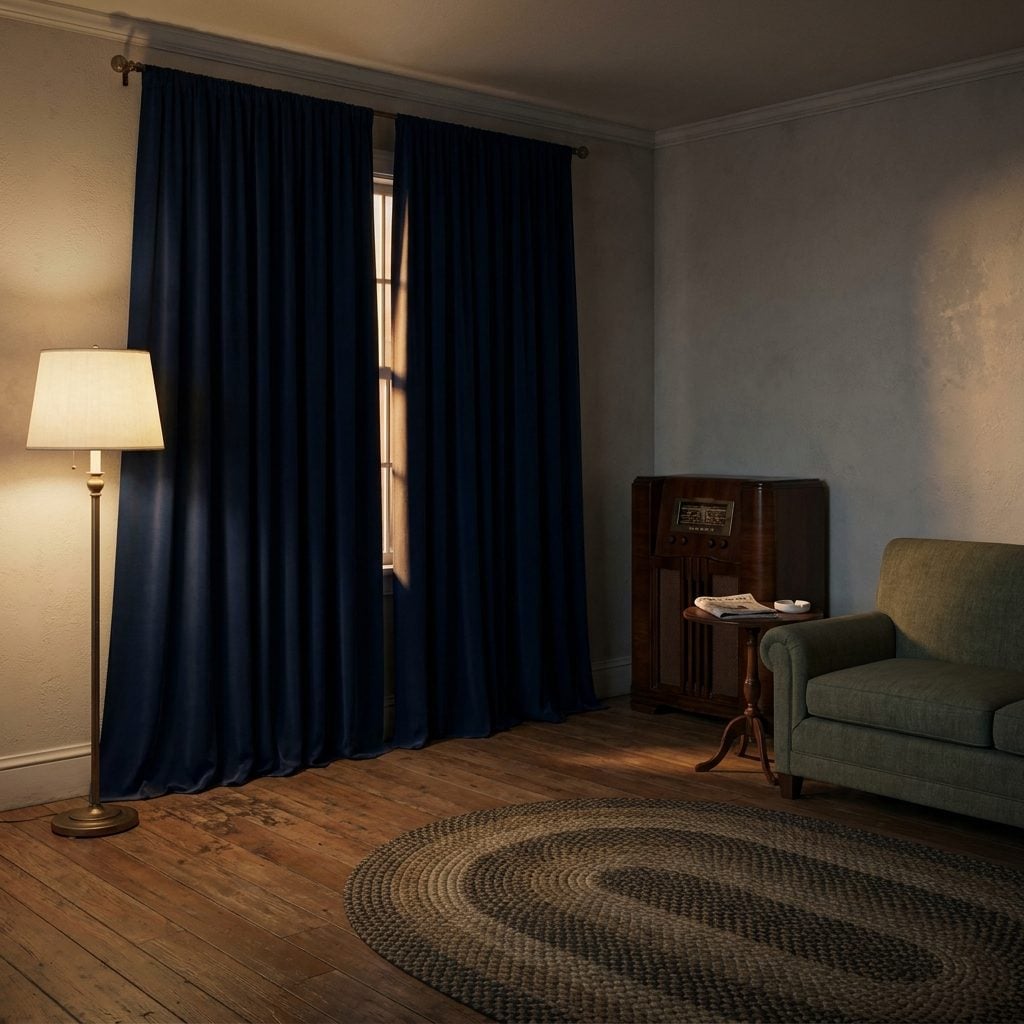
They came down in every room that faced the street, dense black or very dark navy curtain panels that blocked every trace of interior light from showing outside. Civil Defense required them. Neighbors enforced them. Air raid wardens checked.
What’s striking is how many families kept them up well into the late 1940s, even after VJ Day. Partly habit, partly thrift (good fabric didn’t get thrown away), partly something harder to name. Some rooms held onto their wartime blackout panels long enough that the children who grew up with them assumed that was simply what curtains looked like. The weight of the fabric, the way they pooled slightly on the floor, it was the texture of a particular kind of American anxiety that eventually, quietly, got folded up and put away.
7. Damask and Brocade Drapery With a Valance Across the Top
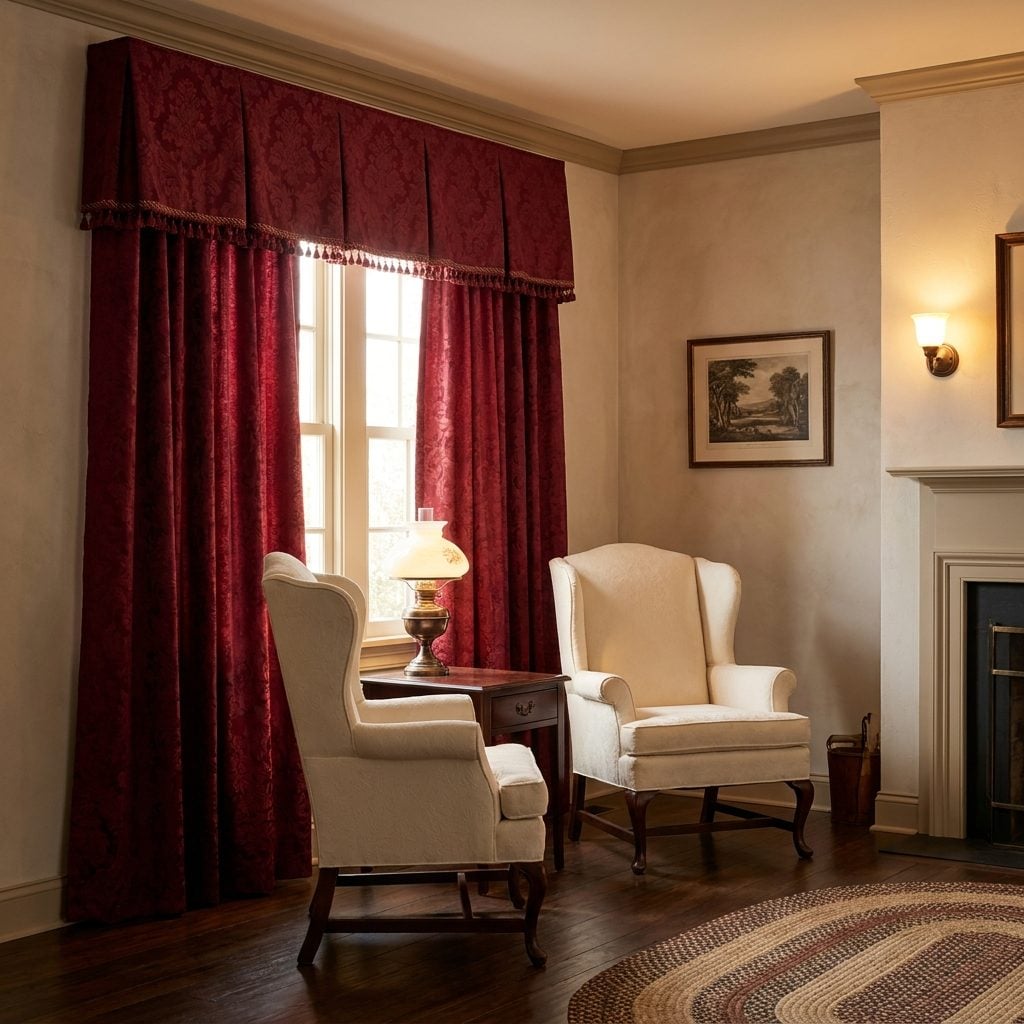
The valance was non-negotiable. Whether it was a stiff flat pelmet board, a gathered box-pleated strip, or a swag-and-tail arrangement that required actual architectural thinking, the top of the window got finished. Bare curtain rods were for rental apartments and people who hadn’t gotten around to it yet.
The fabric itself was often damask, a self-patterned weave where the pattern lived in the interplay of matte and sheen rather than in added color. Ivory on ivory. Gold on gold. Sometimes a deep wine brocade with a raised floral that you could trace with a fingertip. These drapes were weighted at the hem with small lead weights sewn into the lining so they fell in a perfect, unbroken line. Nobody does that anymore, and you can always tell.
6. Sheer Curtains That Lived Underneath the Real Curtains
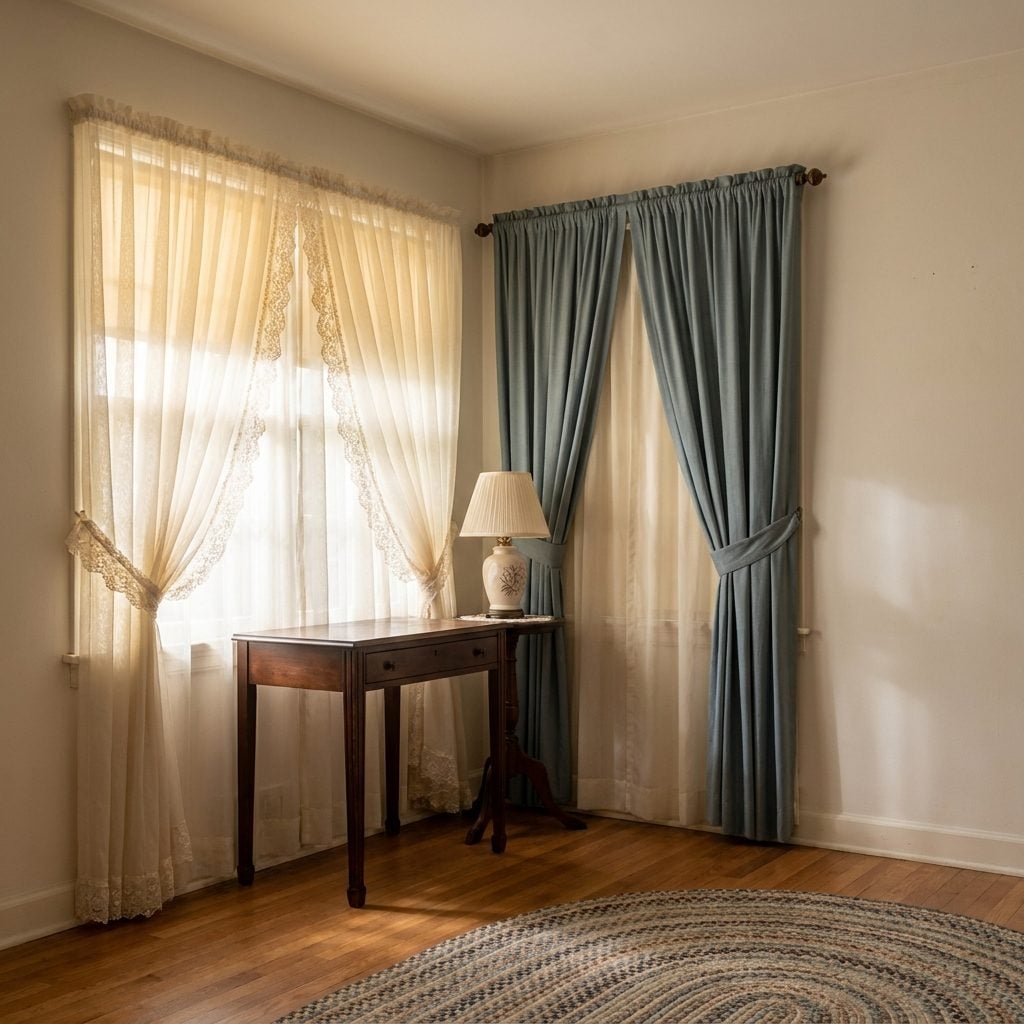
Every window had two layers. The sheers were always there, always white or ivory or the palest ecru, hanging straight from a secondary rod mounted closest to the glass. They filtered daylight into something diffuse and flattering, the 1940s equivalent of a ring light, in a way, though nobody would have described it like that.
The sheers were also a privacy tool, letting the household see out while obscuring the view in. A subtle social technology embedded in the walls or at every window of the living room. They were washed, starched, and re-hung with remarkable frequency. When they yellowed, and they always eventually yellowed, replacing them was considered basic housekeeping, not decorating.
5. Heywood-Wakefield Blonde Furniture With Those Signature Rounded Edges
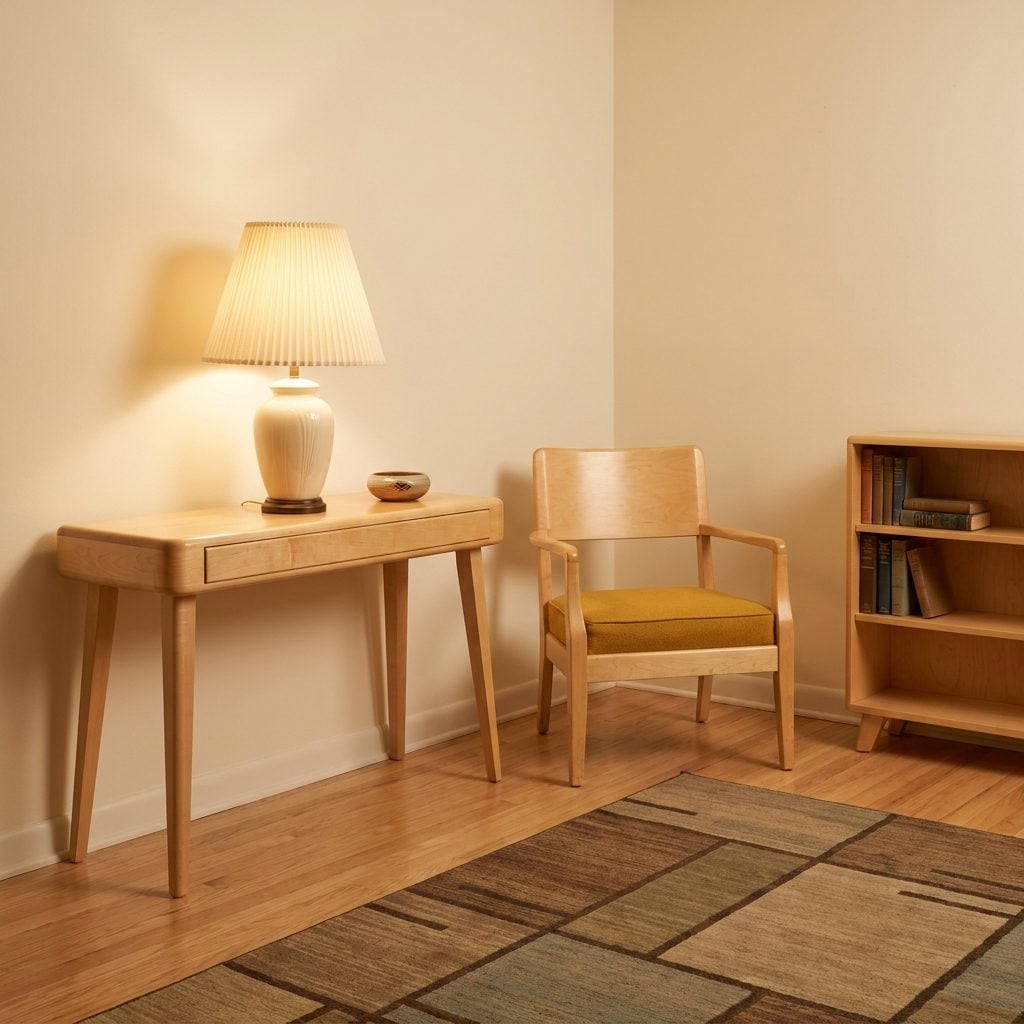
There was nothing aggressive about it. Every corner was rounded, every surface smooth, every leg tapered just so in that warm natural birch finish the company called “Champagne” or “Wheat.” Heywood-Wakefield furniture from the late 1930s through the early 1950s is one of the most recognizable design signatures of the American middle-class home, and it remains quietly influential in ways the design world doesn’t always credit.
The pieces were solid, practical, and genuinely modern-feeling without being intimidating. A Heywood-Wakefield sofa table or bookcase in the living room said: this family is forward-looking. Not flashy. Not pretentious. Just quietly aware that the world was changing and ready to meet it with comfortable, well-made furniture.
4. Currier and Ives Prints That Hung in Practically Every House in America
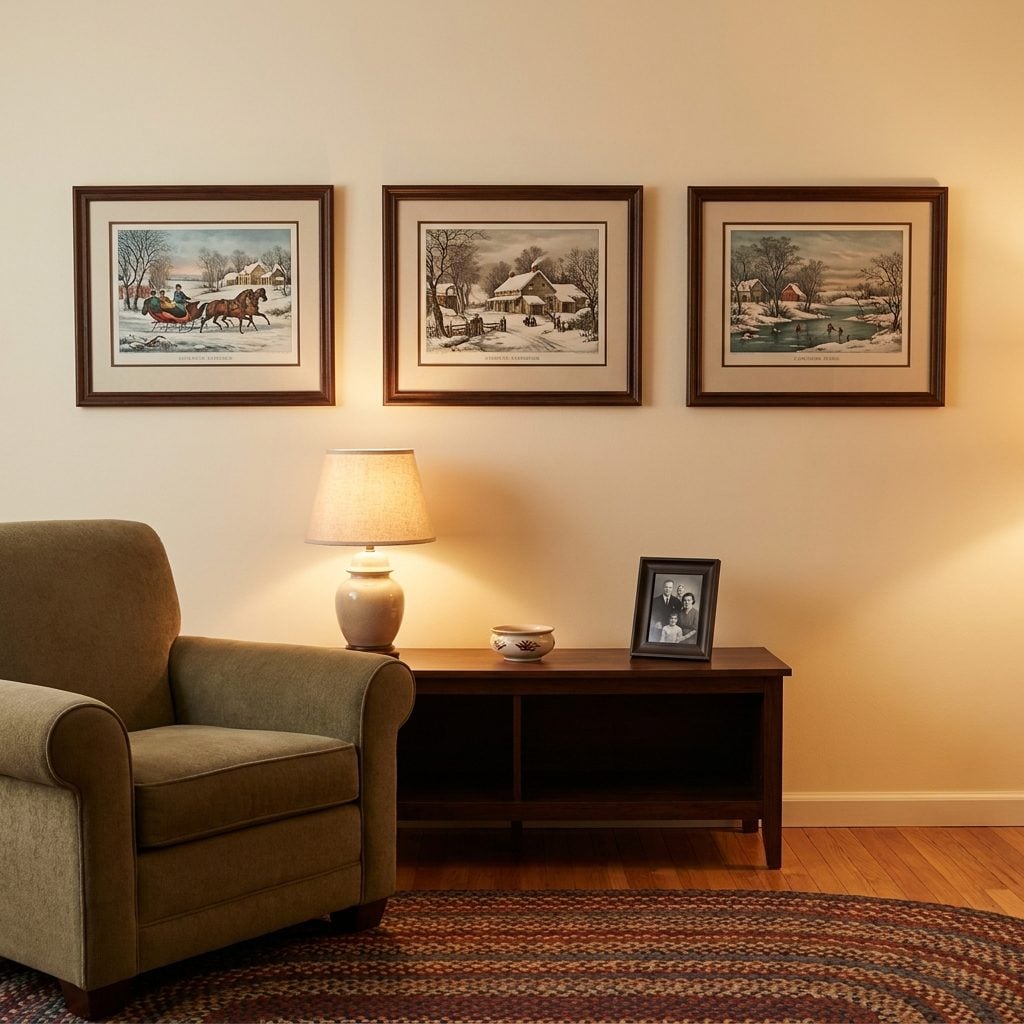
Ice-skating ponds. Horse-drawn sleighs. The old homestead in winter, smoke curling from the chimney. Currier and Ives reproductions showed up on living room kitchen details and parlor walls alike, usually framed in simple dark wood or thin gold-toned metal frames, hung in pairs or groups of three.
The originals were 19th-century lithographs, but by the 1940s, inexpensive reproduction prints were widely available through department stores, mail order catalogs, and five-and-dime shops. They appealed across class lines in a way few decorative items managed: sentimental, vaguely patriotic, safely non-controversial.
The interesting thing is what they communicated. In the middle of a global war and a rapidly changing world, hanging a print of a peaceful rural winter scene was an act of quiet longing for stability. Not nostalgia exactly. More like aspiration toward permanence.
3. Figurine Collections Arranged on Every Available Shelf Surface
🔥 Would you like to save this?
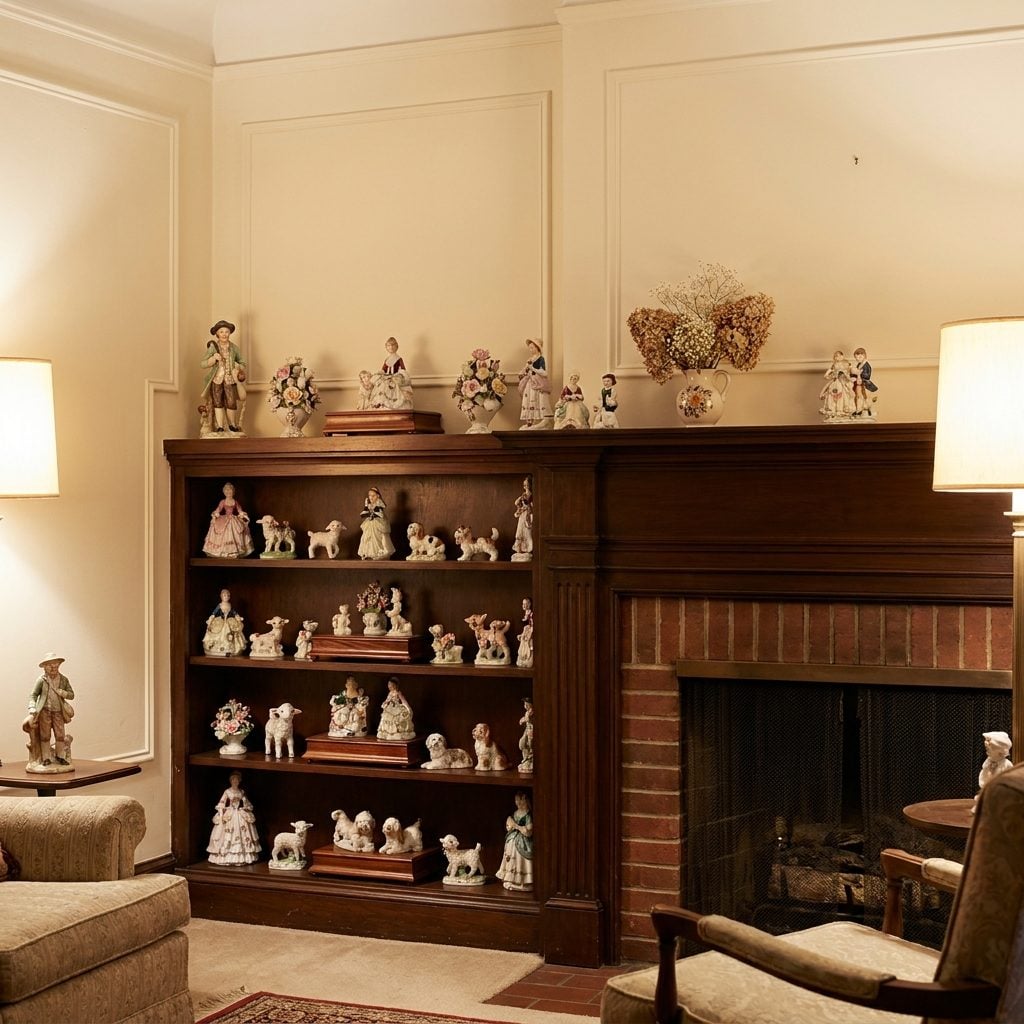
Occupied Japan porcelain. Royal Doulton ladies. Ceramic shepherdesses and their ceramic sheep. Bisque horses. Dresden-style florals. In the 1940s American living room, the figurine collection wasn’t a quirk, it was a category of interior design unto itself.
They lived on the mantelpiece, on the built-in shelves flanking the fireplace, on top of the radio cabinet, on the occasional table near the window. Arranged just so, dusted weekly, occasionally rearranged when something new came in as a gift. The collection was cumulative and biographical, each piece a record of a birthday, a visit, a thoughtful relative who knew what you collected.
2. Hobnail Glass: The Vases, the Candy Dishes, the Milk Glass Everything
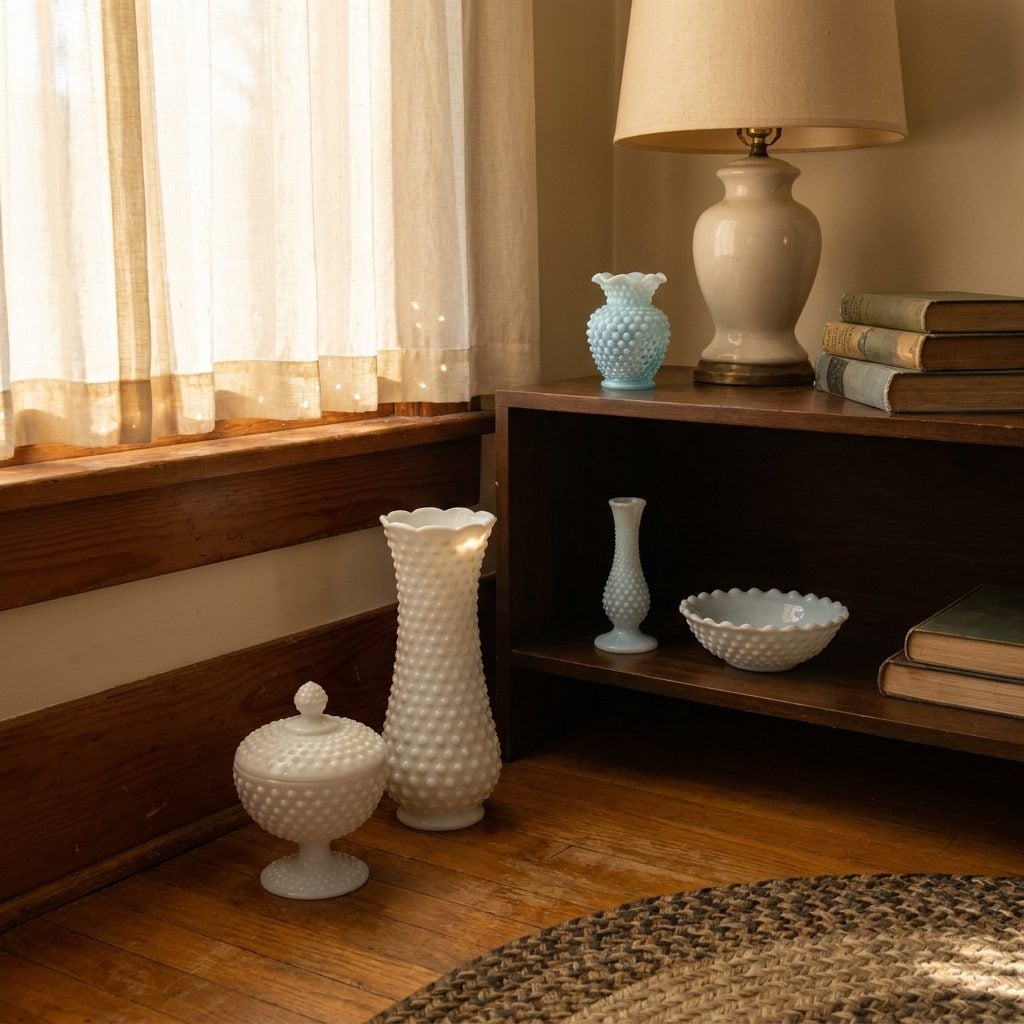
Those raised dot patterns pressed into the glass surface, hobnail, showed up in milk glass white, pale blue, and occasionally a soft dusty rose that sits in a particular corner of the color spectrum that belongs entirely to the 1940s. A hobnail milk glass vase on the windowsill. A hobnail candy dish on the coffee table with wrapped butterscotch candies inside that were never, ever actually eaten.
Fenton Art Glass produced some of the most recognizable pieces, though plenty of hobnail glass came from other American makers and from postwar imports. The texture caught light in a way that made even an empty vase look like it was doing something. Every home had at least three pieces. Most had considerably more, arranged on preppy family room shelves or windowsills where the afternoon light could catch them properly.
1. The Martha Washington Sewing Cabinet Stationed Beside the Good Chair
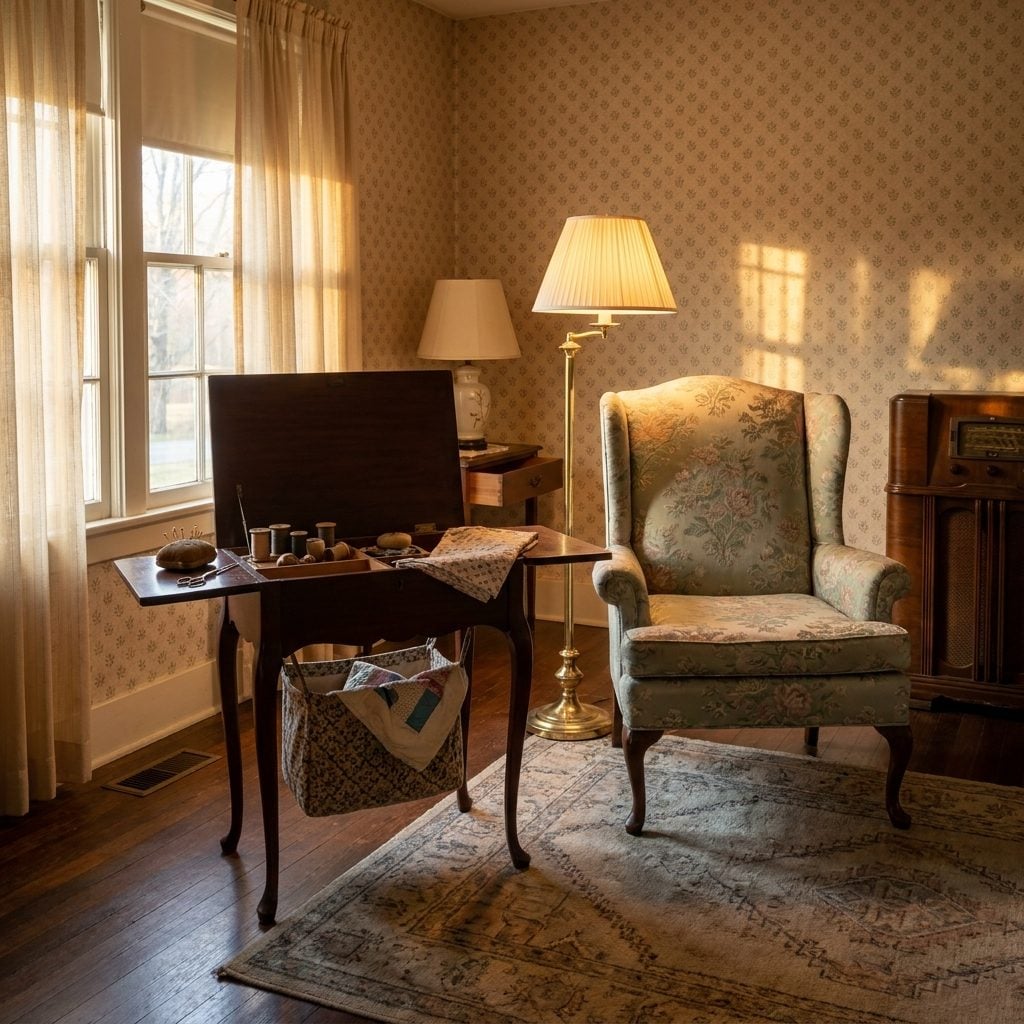
It sat at the right hand of the best chair in the room like a loyal attendant, small and serious, with its hinged lid thrown open to reveal a shallow tray of bobbins, needles, and a pair of blunt scissors on a ribbon. The Martha Washington sewing cabinet was as standard in a 1940s living room as a radio or a floor lamp. Mending wasn’t a chore you escaped to another room to do. It happened right there, in company, during the evening hours.
The cabinet itself was almost always dark-stained wood, often mahogany or walnut veneer, with slender cabriole legs and a fabric bag suspended in the lower frame where in-progress work lived. Some had a removable upper tray that lifted out to reveal the deeper storage below. These pieces showed up in craftsman living room settings and formal parlors alike. When television arrived in the next decade, the sewing cabinet just shifted a few inches to face the new screen. Nothing about the habit changed.