
🔥 Would you like to save this?
You finally finished the basement. The contractor left, the carpet is down, the wet bar is stocked, and everyone has their own zone. The kids have a playroom. Your spouse has a home office. You have your screen and your silence. On paper, it looks like a problem solved. In practice, something quietly shifted, and you can’t quite name it yet.
Here’s what nobody tells you at the tile showroom: the friction in most marriages isn’t a square footage problem. It’s a togetherness problem dressed up as one. Before you pull another permit, read this. The psychology of what a finished basement actually does to a family is far more complicated than any floor plan reveals.
In order to come up with the very specific design ideas, we create most designs with the assistance of state-of-the-art AI interior design software. Also, assume links that take you off the site are affiliate links such as links to Amazon. this means we may earn a commission if you buy something.
The Hidden Reason Couples Fight About Basement Renovations (It Has Nothing to Do With Money)
The budget fight is a decoy. Couples argue about the recessed lighting package, the wet bar vs. the home gym, the $4,000 sectional vs. the $900 one, and it feels like a money disagreement because money is the surface the conflict lands on. But a 2018 Psychology Today analysis by Dr. Roberta Satow makes a pointed observation: renovation conflicts are almost never about the concrete issue. They’re about the underlying dynamic, control, anxiety management, and who gets to author the shared environment you both have to live inside.
The basement, specifically, isn’t neutral. It’s a room that has no pre-existing function in most homes. It’s a blank slate, which means every decision about it is a values decision. One partner sees it as family space; the other sees it as personal refuge. One pictures Sunday afternoon movie nights with the kids; the other pictures finally having a room that belongs to them. Those two visions can’t fully coexist, and nobody says that out loud. Instead, they fight about the flooring.
The Psychological Trap Disguised as a ‘Man Cave’
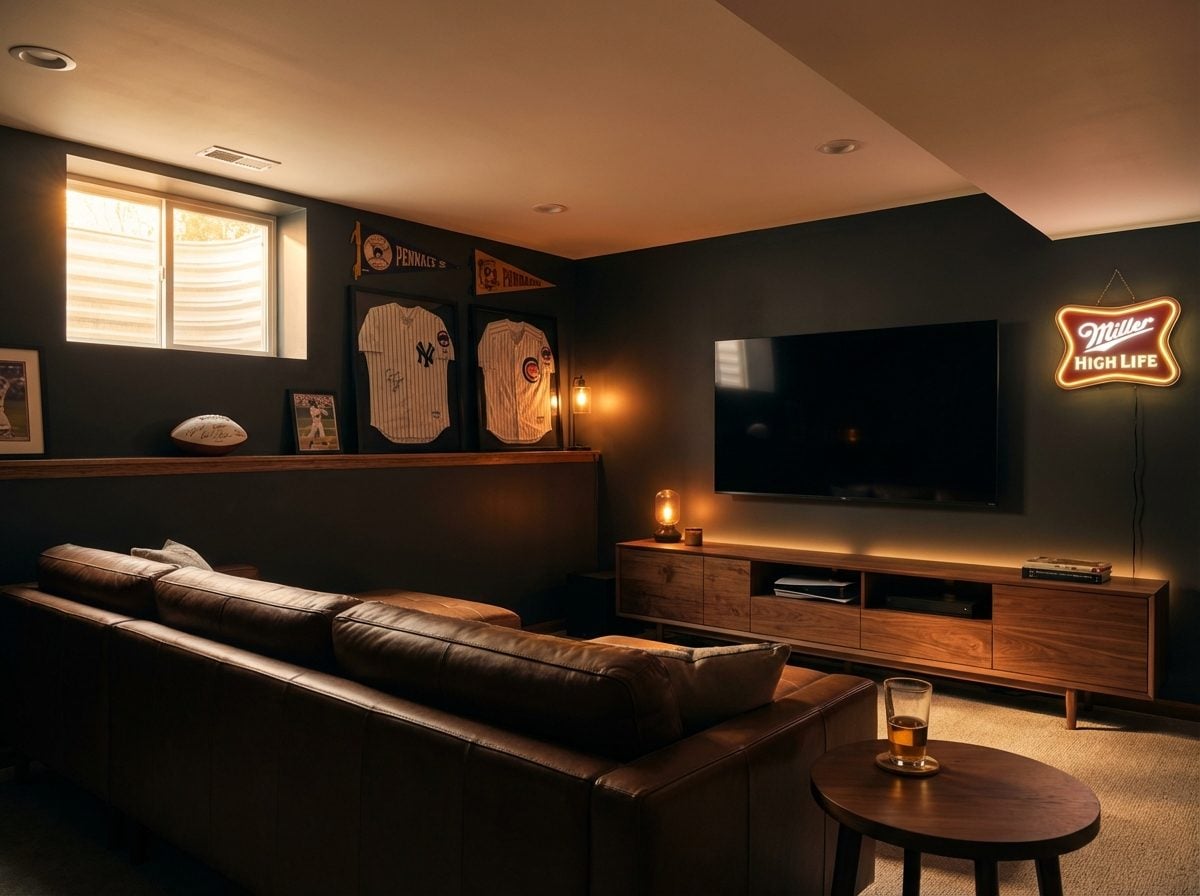
The man cave is sold as a harmless indulgence, a place for the game, the guitars, the vintage posters nobody else wants in the living room. And in its healthiest form, it is exactly that. But the psychology behind it is more layered than the marketing suggests.
A design psychology piece on the man cave phenomenon cites a 2010 University of Southern California study showing that men in their 30s and 40s experienced measurably lower cortisol levels during solo leisure time in their homes. Real. Documented. The stress relief is genuine. The trap isn’t the relief itself, it’s what happens when the relief becomes the primary coping strategy.
Relationship psychotherapist Mary Jo Rapini has argued that a man cave can strengthen a marriage precisely because it creates breathing room. But she’s also identified the inversion: when a man needs to build a separate space just to feel like himself, that need is telling you something about the rest of the house. If the only version of you that can relax is the version hiding in the basement, the basement isn’t solving the problem, it’s papering over it with drywall and a mini fridge.
Why Your Brain Mistakes Square Footage for Intimacy
You’ve felt it before: the relief of moving into a bigger place. More room, less friction. You stop bumping into each other in the hallway. You stop competing for the bathroom counter. The logic feels airtight, more space equals less stress equals a better relationship. Except the research quietly complicates that equation.
Decades of propinquity research, including the foundational Westgate Housing Studies conducted at MIT by Festinger, Schachter, and Back, consistently show that physical proximity is one of the strongest predictors of closeness. People who encounter each other more frequently, in shared spaces they can’t easily avoid, form stronger bonds. The friction isn’t the enemy. The friction is, in part, the mechanism.
Your brain conflates the relief of having more room with an improvement in the relationship. It’s a category error, one that a basement renovation can quietly reinforce. You feel better after the renovation not because you and your partner are closer, but because you’ve successfully reduced the number of moments you need to navigate each other. That’s a very different thing.
“Physical closeness had been doing more work than anyone realized.”, Psychology Town, on the MIT propinquity studies
The Retreat That Slowly Becomes an Escape Route
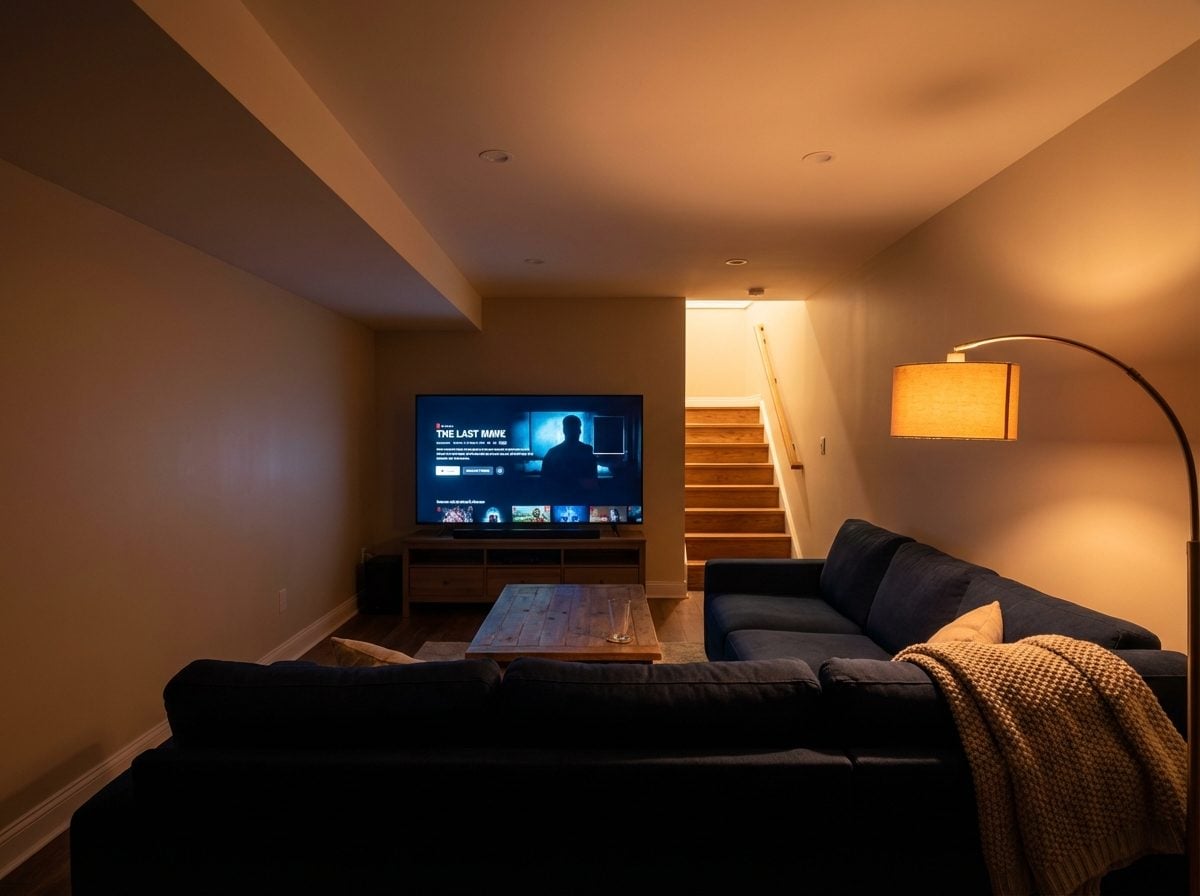
There’s a difference between a room you go to recharge and a room you go to avoid. From the outside, they look identical: a person heading downstairs with a drink and a remote. But the psychology underneath them is almost opposite.
Healthy solitude is autonomous, chosen freely, time-limited, and followed by a return. Research on solitude and daily well-being shows that time alone reduces loneliness and improves satisfaction when it’s genuinely chosen and when it doesn’t accumulate. The key phrase: when it doesn’t accumulate. A nightly three-hour disappearance into the basement isn’t solitude anymore. It’s a structural withdrawal from the relationship, one that has been made frictionless by renovation.
The renovation didn’t create the desire to withdraw. But it gave that desire a zip code. Before the finished basement, the discomfort of the house, the smallness, the shared TV, the togetherness that couldn’t be fully avoided, served as a low-level forcing function. You had to negotiate. You had to be in the same room sometimes. That built-in friction was doing relational work nobody noticed until it was gone.
What Separate Zones Do to a Family’s Nervous System Over Time
When a home is designed so that each family member can always be somewhere comfortable, always in their preferred zone, always at the right temperature and noise level, the nervous system is never asked to tolerate anyone else’s presence. That sounds generous. It isn’t, entirely.
Families that share space develop what environmental psychologists call a kind of ambient attunement, the background awareness of other people’s rhythms, moods, and needs that comes from simply being in the same room. You notice your partner is tense before they say a word. You know your kid is having a hard day because you saw their face at the kitchen table. This information flows constantly in shared space and is almost entirely blocked by separate zones.
Research measuring naturalistic proximity between caregivers and children found that the interactions most supportive of positive development occur in moments of close physical contact, not scheduled activity, not structured interaction, but simple presence. The family that routes everyone to their own floor doesn’t just lose togetherness. It loses the low-bandwidth emotional signal that keeps everyone regulated around each other.
The Renovation That Gives Everyone Permission to Stop Showing Up
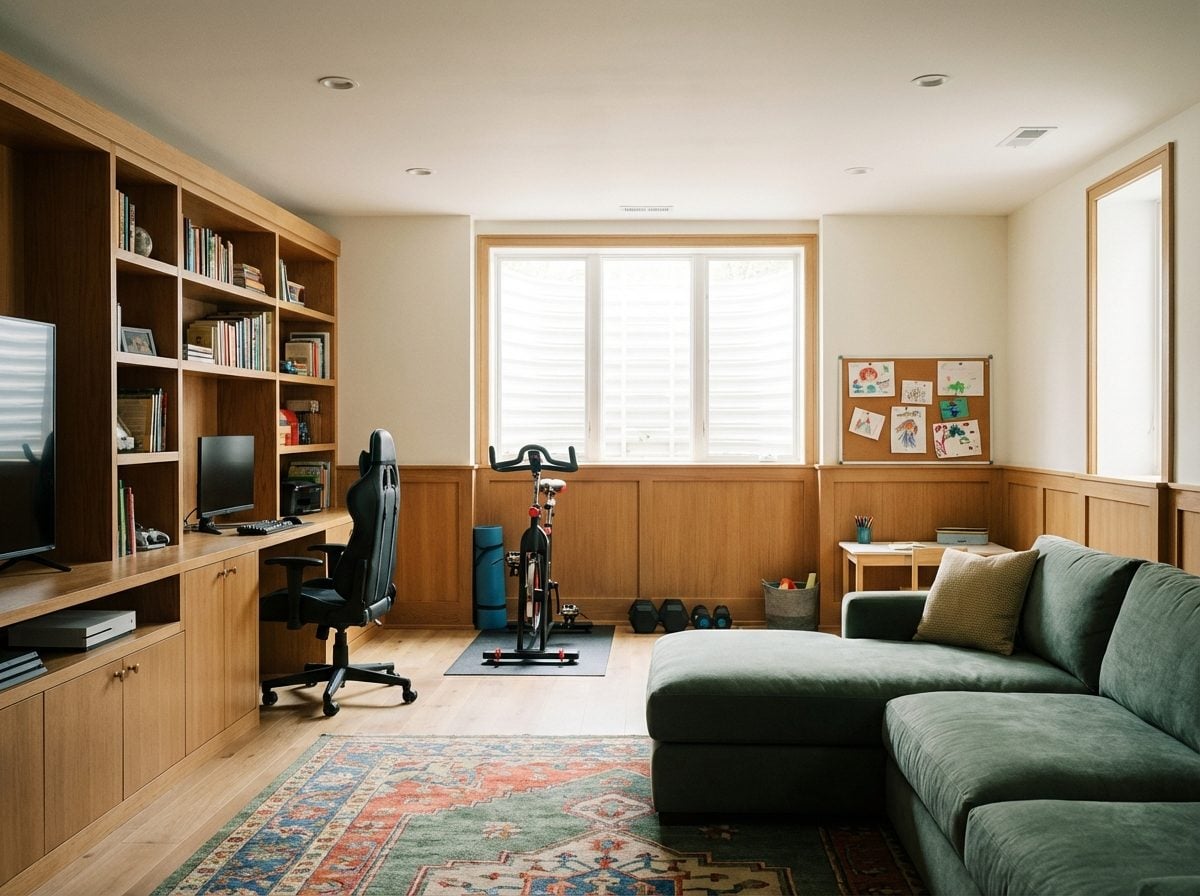
Here’s the mechanism nobody names during the planning phase: a finished basement with a teenager’s gaming setup, a partner’s home gym, and a kids’ homework lounge doesn’t just add square footage. It adds a reason not to be in the main living area. It makes absence the path of least resistance.
Families are held together not primarily by love, love is the reason you stay, but by structure. The structure of a shared dinner table. The structure of one TV that requires negotiation. The structure of a kitchen that everyone passes through. Remove the structure and you don’t automatically replace it with something better. You replace it with individual comfort, which is pleasant and slowly corrosive.
Research on physical proximity and family bonds makes a quiet observation: daily interactions facilitated by shared space create opportunities for communication, empathy, and understanding that don’t happen on schedule. They happen in passing. And a home where everyone has their own destination eliminates passing almost entirely.
Why ‘Finally Having My Own Space’ Feels Like Relief, And Then Doesn’t
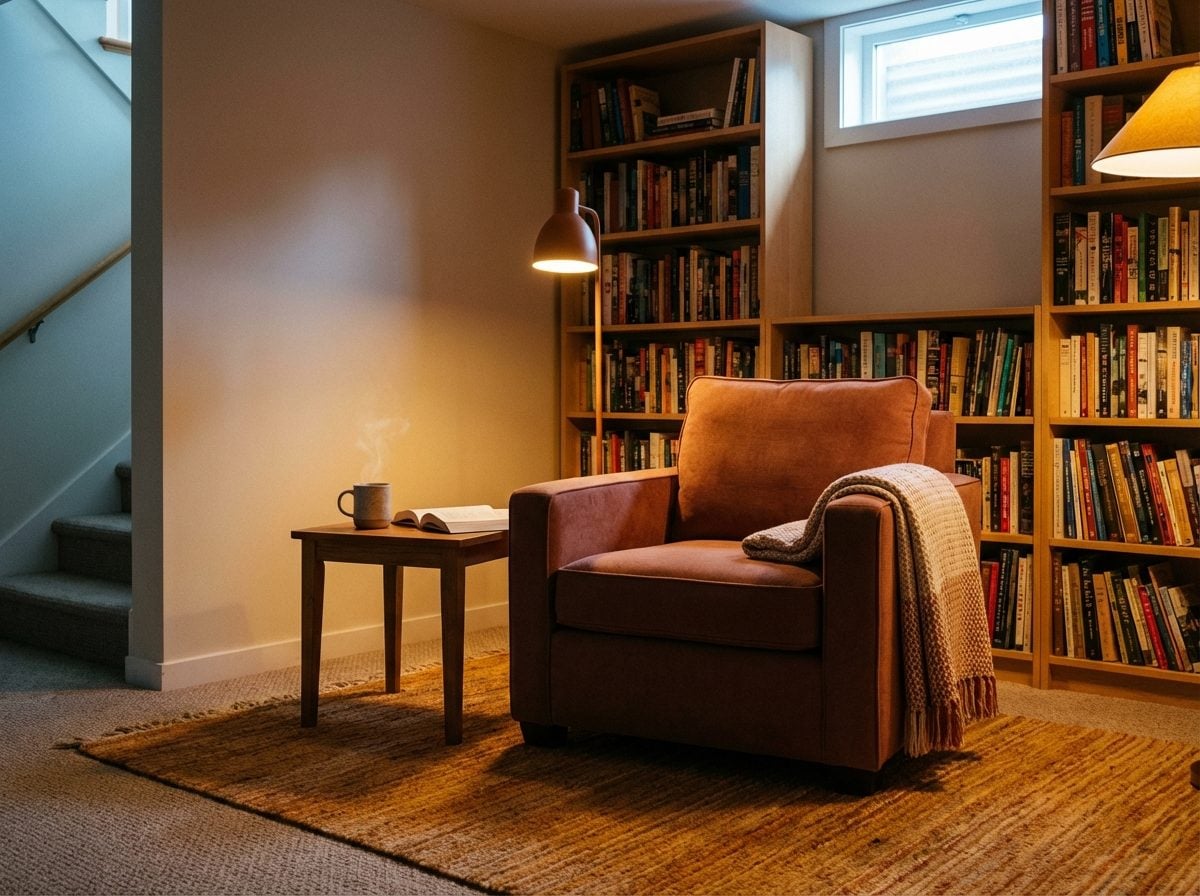
The feeling is real. You finish the basement, you put your reading chair down there, you close the door and you feel your shoulders drop for the first time in months. That physiological relief, the drop in cortisol, the loosening of the jaw, is documented and genuine. The space is giving you something your nervous system needed.
But relief and connection are not the same currency, and they don’t substitute for each other. a study in Psychoneuroendocrinology linking loneliness to elevated cortisol and stress responses found that chronic loneliness, even when it doesn’t feel dramatic, even when it’s the slow background hum of living parallel to someone rather than with them, consistently predicted elevated stress hormones the following morning. The relief of the private room doesn’t offset the accumulating cost of the disconnection it enables.
Six months into the newly finished basement, the relief starts to feel like something quieter and harder to name. The space is still yours. You still like it. But the relationship has shifted in some incremental way that’s difficult to trace back to any single decision, which is what makes this particular design choice so psychologically slippery. The renovation was the answer that worked, until it became part of the problem.
The Design Choice That Quietly Redraws the Emotional Map of Your Home
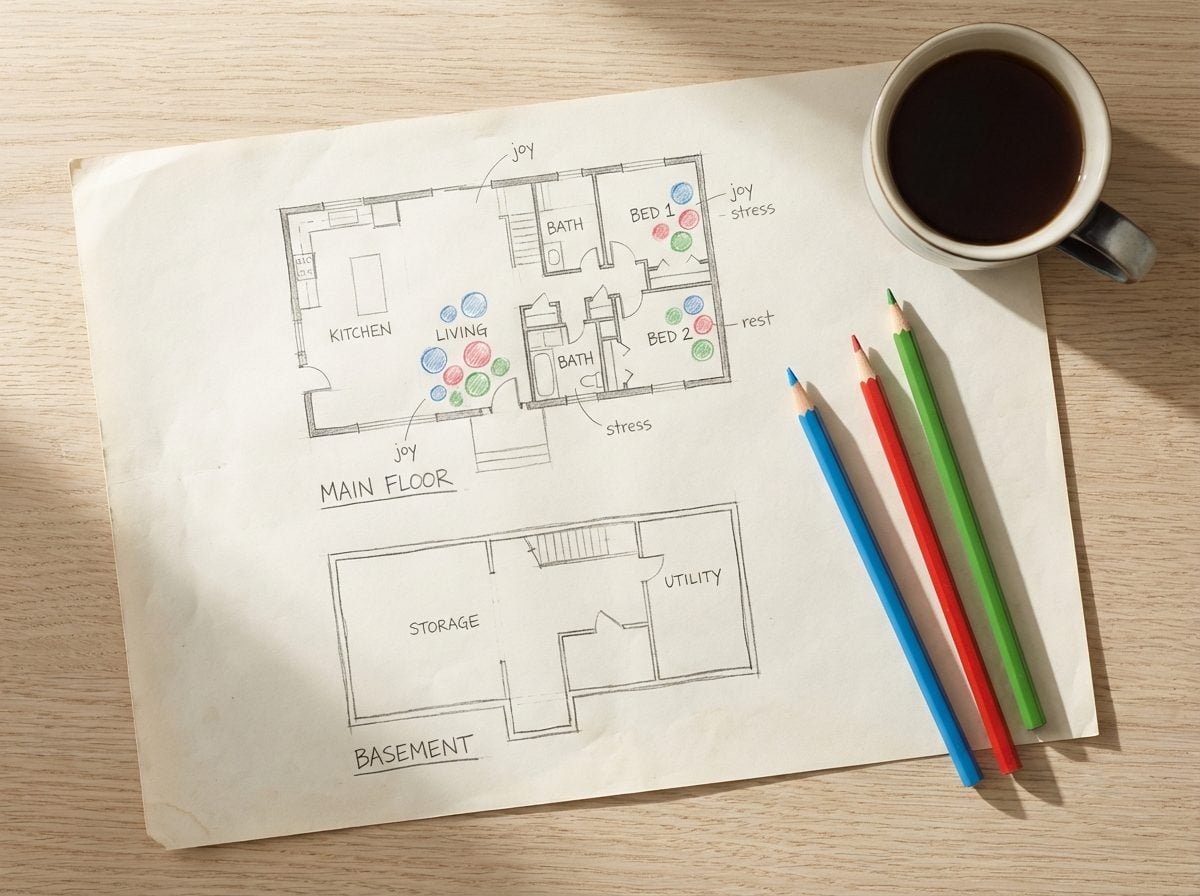
Therapists who work with couples and families sometimes use a technique called the Emotional Map of the Home. Pioneered by researcher Jacqui Gabb and later adapted for clinical use, the method asks family members to mark their floor plan with emoticon stickers, recording where in the house they feel happy, grumpy, loved, or anxious, and with whom. The patterns that emerge are almost always surprising. Certain rooms are consistently sites of warmth. Others are consistently sites of tension. And crucially, rooms that nobody uses together tend to drop off the emotional map entirely.
Add a finished basement to that map, and watch what happens over two or three years. The basement acquires its own emotional territory, someone’s calm, someone’s retreat. The main floor, now used less, starts to feel less charged with positive association. The kitchen that used to be a gathering spot becomes just a kitchen. The living room becomes a passthrough.
Home design doesn’t just reflect a family’s emotional life. It actively shapes it, room by room, over years of accumulated habit. The floor plan is not a neutral document.
What Proximity Science Says About Families Who Stop Bumping Into Each Other
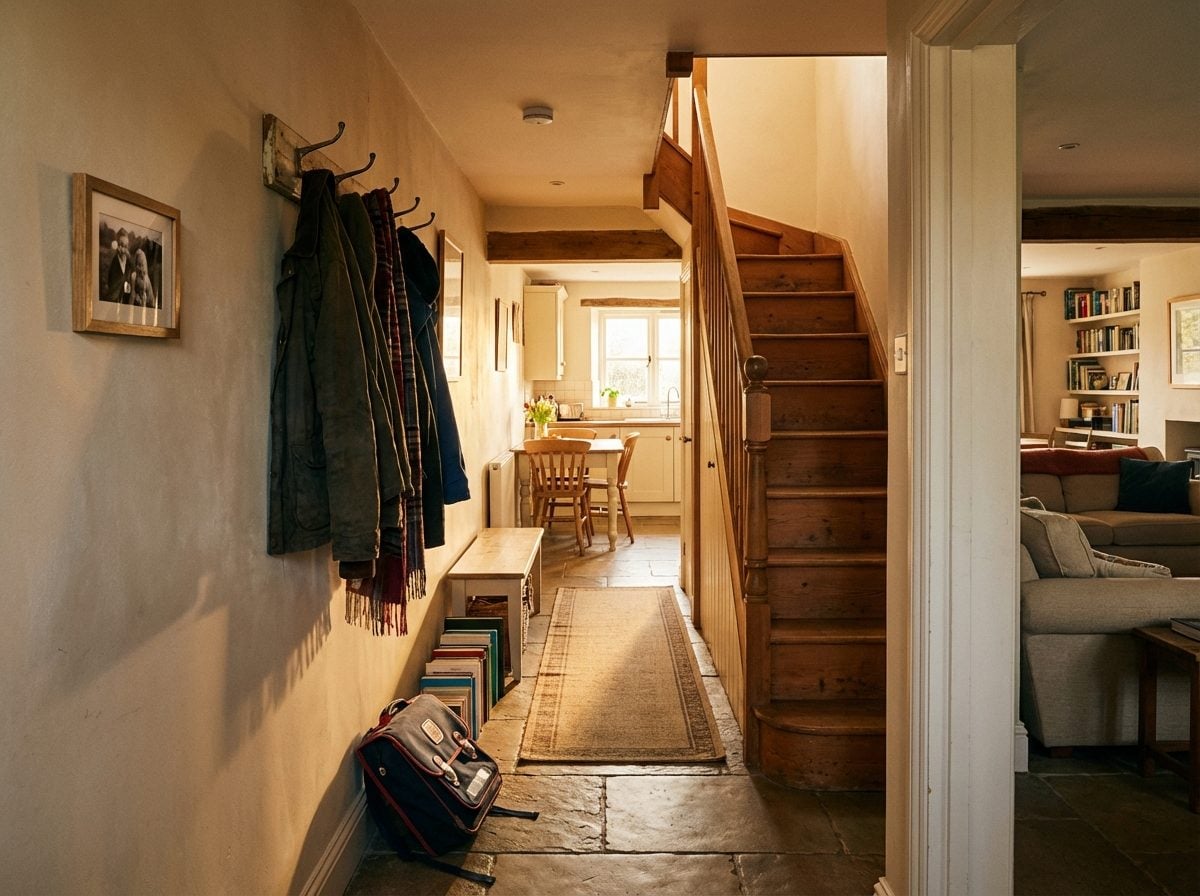
Leon Festinger, Stanley Schachter, and Kurt Back’s landmark Westgate Housing Studies, conducted at MIT in 1950 and still cited in social psychology today, found something counterintuitive: the single strongest predictor of friendship formation wasn’t personality compatibility or shared interests. It was physical proximity. Specifically, the distance between front doors. Residents who lived closer to the stairwell formed more relationships than those at the end of the hall. Not because they were better people, because they were encountered more often.
Apply that to your household. The family that routes each member to a separate floor stops bumping into each other. The spontaneous “how was your day?” that happens in a hallway doesn’t happen. The accidental overlap at the coffee machine disappears. These feel like small losses, and individually they are. But the propinquity research is clear: frequent encounters generate familiarity, familiarity generates comfort, and comfort lowers the barrier to deeper connection. Remove the frequency and you remove the raw material for intimacy.
Families don’t grow apart all at once. They grow apart in the accumulation of days when nobody had a reason to be in the same room.
The Psychological Cost of a Home That Has a Room for Every Mood
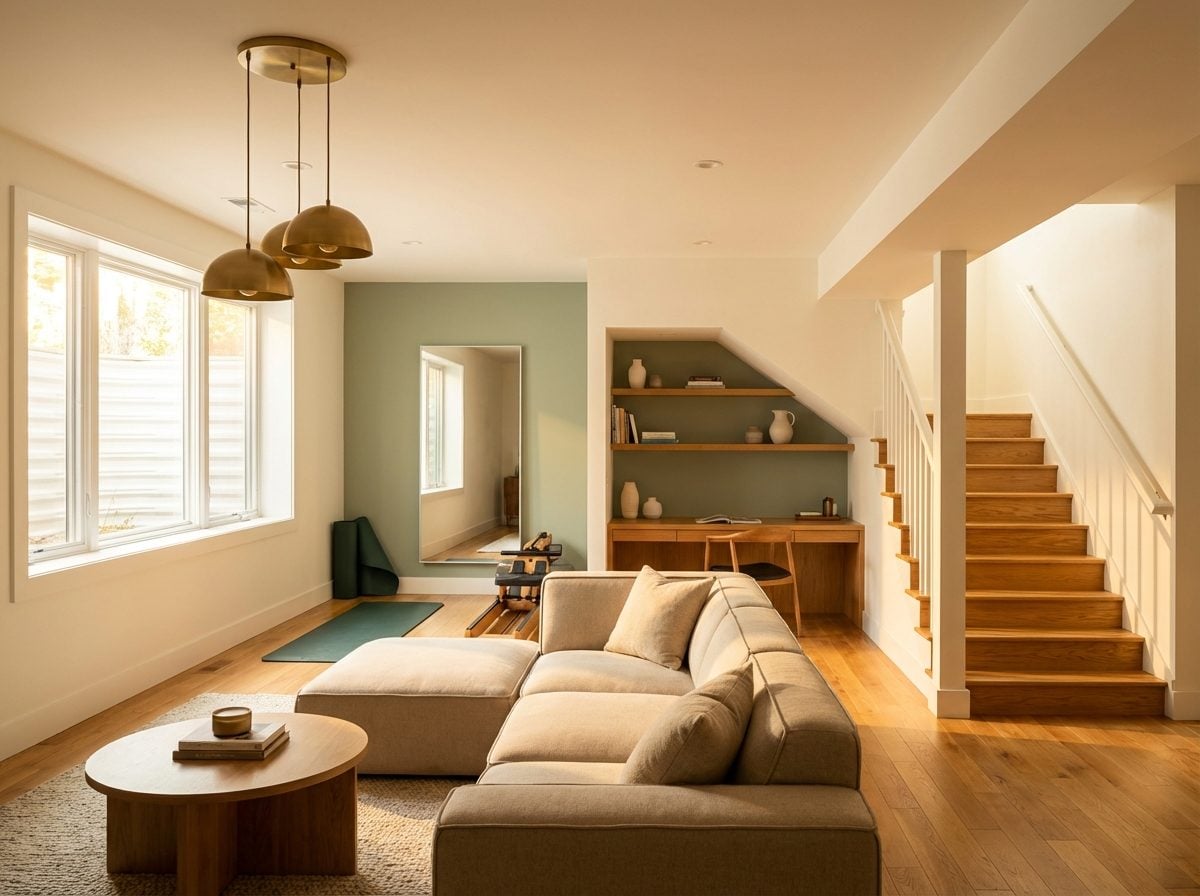
There’s a seductive logic to the fully optimized home. A room for focus, a room for movement, a room for loud, a room for quiet. Design philosophy has leaned into this hard, “zoning” is one of the most-cited concepts in contemporary residential architecture. And up to a point, it works. Excessive cognitive load, too much noise, too many competing sensory inputs, genuinely degrades mood and performance.
But there’s a subtler cost that accumulates when optimization is taken all the way to its conclusion. When every mood has its own room, you stop developing the capacity to tolerate other people’s moods. You stop negotiating. You stop asking your partner to turn the volume down and instead build them a room where the volume doesn’t matter. That feels kind. Over time, it functions like emotional avoidance with excellent lighting.
Research on how floor plans shape behavior and habit notes that thoughtful design reduces stress, but also notes that too much enclosure creates isolation and tension of a different kind. The fully compartmentalized home doesn’t create a family that communicates better. It creates a family that has simply stopped needing to.
The basement renovation is often the last room in this optimization sequence. And it deserves a harder question than “what do you want in there?” The harder question is: what are you willing to keep sharing?
Why the Basement Feels Like a Solution When It’s Actually a Symptom
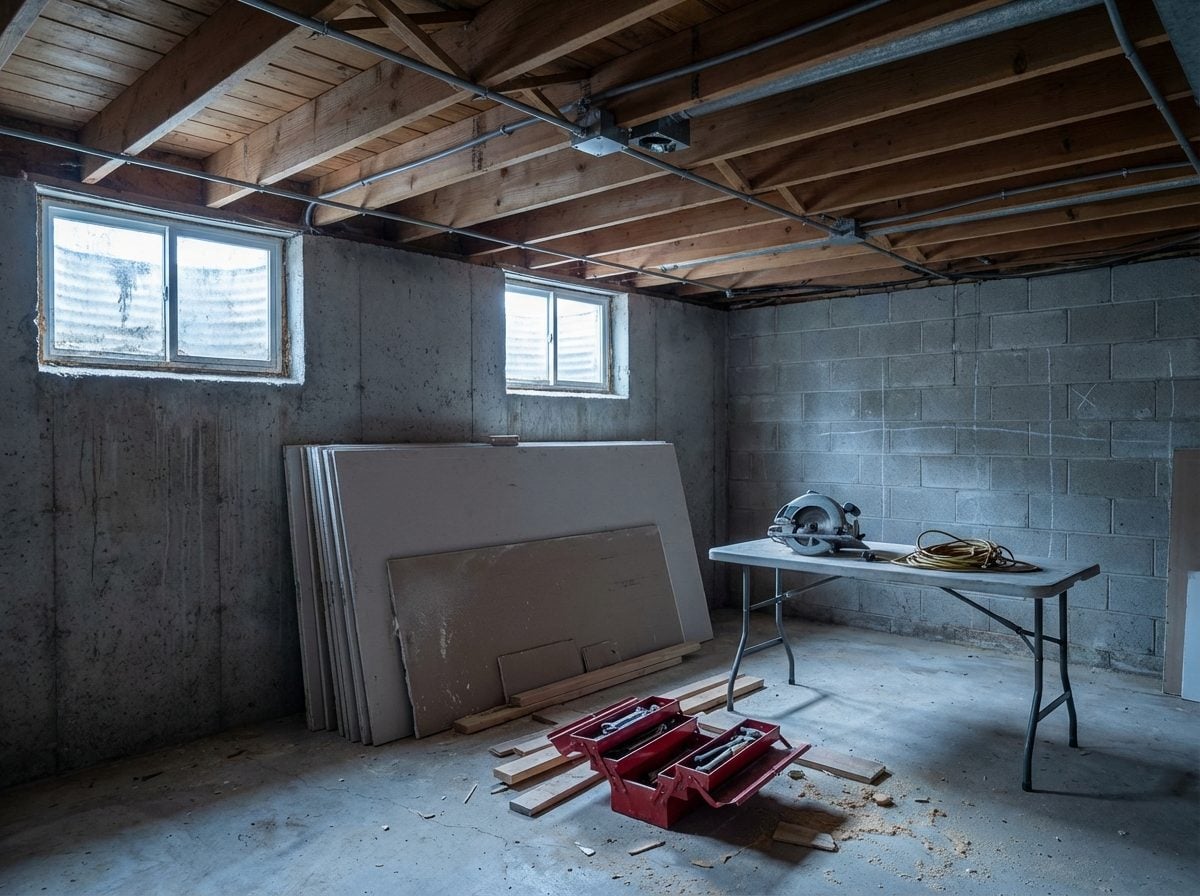
There is something deeply seductive about the idea of a renovation. You are doing something. Hammers are swinging, drywall is going up, and the chaos in the household, the arguments over screen time, the disconnected dinners, the two people who sleep beside each other but rarely look at each other anymore, briefly becomes invisible beneath all that productive noise. The project feels like forward motion.
But here is where it gets psychologically interesting. A 2013 Psychology Today article on avoidance coping explains how avoidance behaviors are frequently disguised as productivity. You are not procrastinating, you are renovating. You are not avoiding the harder conversation about what your family actually needs from its home, you are tiling the bathroom floor at 10pm. The action feels legitimate because it is physical, visible, and expensive. And the psychological relief it provides is real, at least temporarily.
The basement is the perfect symbol for this. Literally the lowest level of the home, historically the place where things get stored when you have no idea what to do with them. The decision to finish it nearly always arrives during a period of relational friction, the kids are getting older, everyone needs more space, the common areas feel crowded and tense. The spatial pressure is real. But the question worth sitting with is whether the tension in the house is actually about square footage, or whether the square footage is just the part you feel confident enough to fix.
The Intimacy Threshold Your Floor Plan Has Already Crossed
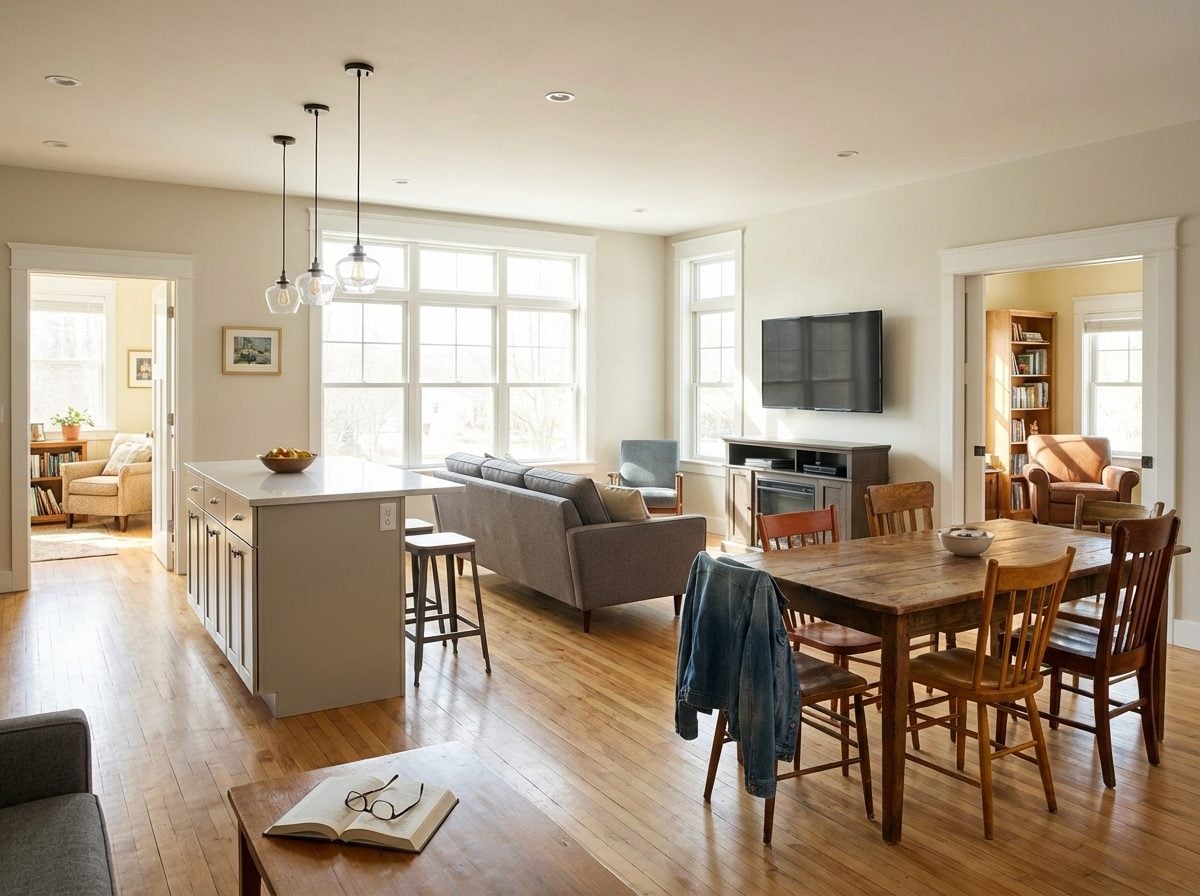
Architect Christopher Alexander spent decades arguing that the physical design of a home shapes the emotional life inside it. His observation: the challenge is to design domains of intimacy, not just close quarters. Closeness and intimacy are not the same thing, and a floor plan that maximizes one can quietly dismantle the other.
Think about what happens when a home has what designers call “enough room to retreat.” Everyone has their zone. The kitchen, the bedroom, the living room, and now, the basement. Research in residential design psychology has shown that homes shape behavior, routines, and the specific patterns through which couples resolve conflict and show affection. The wrong layout magnifies tension. But here is the complication: the “right” layout for individual comfort is not always the same as the right layout for relational health.
There is a threshold in every floor plan, the moment when the house offers so many places to be that no one needs to negotiate shared space anymore. On the surface it sounds ideal. In practice, it removes friction. And friction, as counterintuitive as it sounds, is part of how couples stay relevant to each other.
What Happens to Marriages When ‘Together’ Requires a Scheduled Plan
🔥 Would you like to save this?
There is a version of togetherness that feels suspiciously like a Google Calendar event. Tuesday night: family dinner. Friday: date night. Every other Sunday: do something fun together. The intention is right. The structure is not nothing. But when connection requires this much scaffolding, it is worth asking what changed.
According to a 2021 study in PLOS ONE examining time use and relationship quality in intimate partnerships, couples who spend a larger proportion of their shared time simply talking, not in structured activities, but in low-stakes, spontaneous conversation, report significantly greater satisfaction, closeness, and perceived relationship quality. The mundane overlap of two people sharing the same space turns out to be protective. It is not the grand gestures. It is the accidental three minutes in the kitchen while one of you is making coffee.
A finished basement accelerates the retreat from this kind of incidental contact. Everyone now has a place to go that is sufficiently comfortable to stay in for hours. The kids are down there. One partner is in the home office. The other is in the bedroom watching something. The house is full. The family is together. And no one is, in any meaningful sense, together at all.
The Bottom Line
The basement isn’t the problem, it’s the blueprint of the problem, built in drywall and recessed lighting. What you’re actually renovating is a reason not to need each other, and no square footage has ever fixed that. Before you pull the next permit, ask yourself honestly: are you building something together, or building somewhere to go instead?