🔥 Would you like to save this?
The smell of fresh paint and sawdust. The dramatic reveal. That specific shade of greige that somehow colonized every suburb from Phoenix to Portland. Before HGTV became background noise in every waiting room and living room in America, most people renovated their kitchens maybe once in thirty years, and nobody stood in their bathroom whispering the words “spa-like retreat.”
Strip away decades of Chip and Joanna, the Property Brothers, and a thousand house-flipping shows, and American homes would look wildly, almost unrecognizably different. Here’s how.
In order to come up with the very specific design ideas, we create most designs with the assistance of state-of-the-art AI interior design software. Also, assume links that take you off the site are affiliate links such as links to Amazon. this means we may earn a commission if you buy something.
31. More Homes Would Still Have Formal Dining Rooms That Actually Got Used Regularly
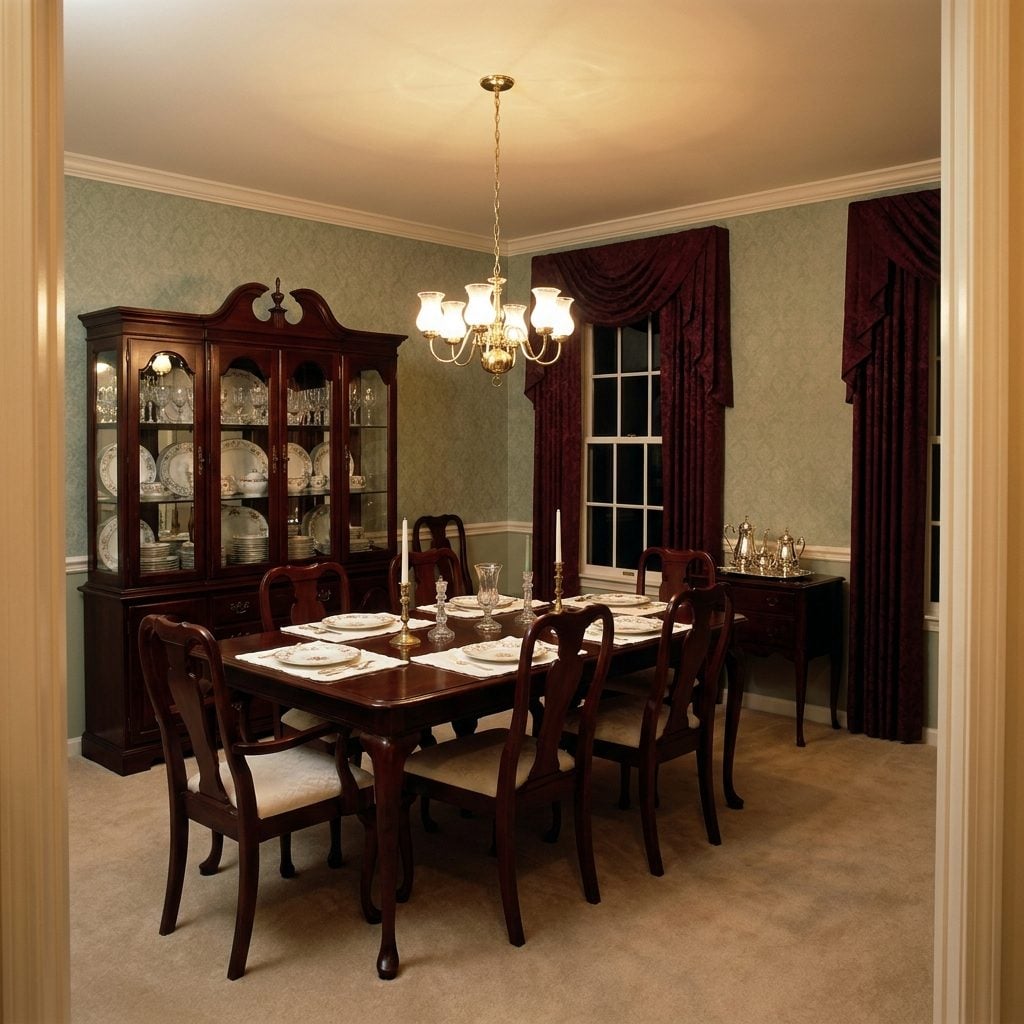
Sunday dinner at six, and the good plates came out. That room with the china hutch and the chandelier nobody ever dusted properly wasn’t decoration — it was infrastructure. Families ate there weekly, sometimes nightly if company was expected, and converting it into a “flex space” or knocking down its walls would have seemed borderline disrespectful.
HGTV taught a generation that formal dining rooms were wasted square footage. Show after show framed them as stuffy relics ripe for demolition. But before that messaging hit critical mass, these rooms anchored the house. They had a purpose and a rhythm. There was a seat that was always Dad’s.
Now most new construction doesn’t even include one. The kitchen is where everyone gathers, we’re told, and that’s fine. But something about a room with a door you could close, a table set with intention, and chairs that matched felt like a household taking itself seriously.
30. Honey Oak Kitchen Cabinets Might Never Have Disappeared So Quickly
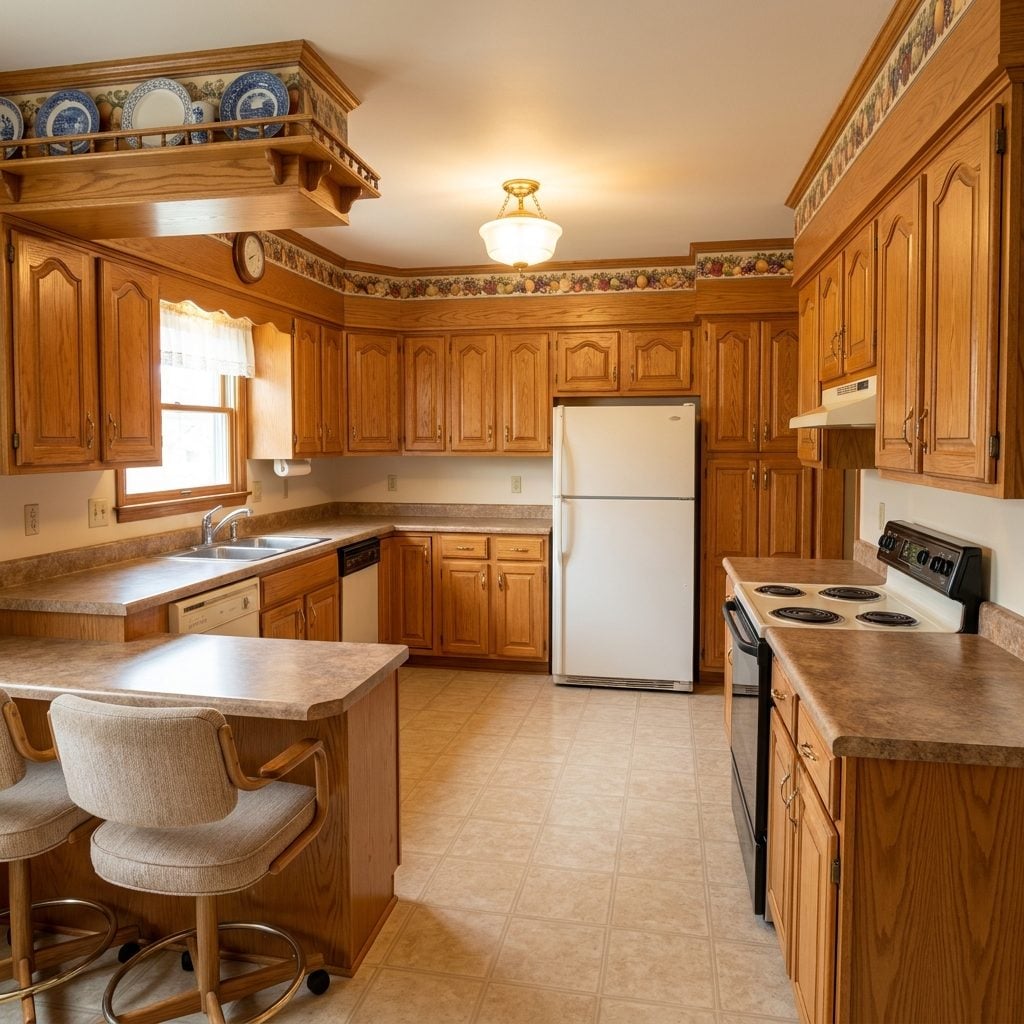
Those golden cathedral-arch cabinets were everywhere. Every subdivision built between 1988 and 2003, every starter home, every split-level in the Midwest. And honestly? They were fine — solid wood, decent construction, a warm tone that made kitchens feel like kitchens rather than surgical suites. Nobody looked at them and thought “problem.”
Then HGTV declared war. Painting over oak became a whole genre of content: white, gray, navy, anything to smother that golden warmth. The message was relentless. Oak equals outdated. Millions of perfectly functional cabinets got primed and rolled in a single decade, and without that constant televised drumbeat, I genuinely think honey oak would have aged into quiet respectability the way knotty pine eventually did. It just needed twenty more years that television wouldn’t give it.
29. Granite Countertops May Not Have Become a Near-National Obsession in the 2000s
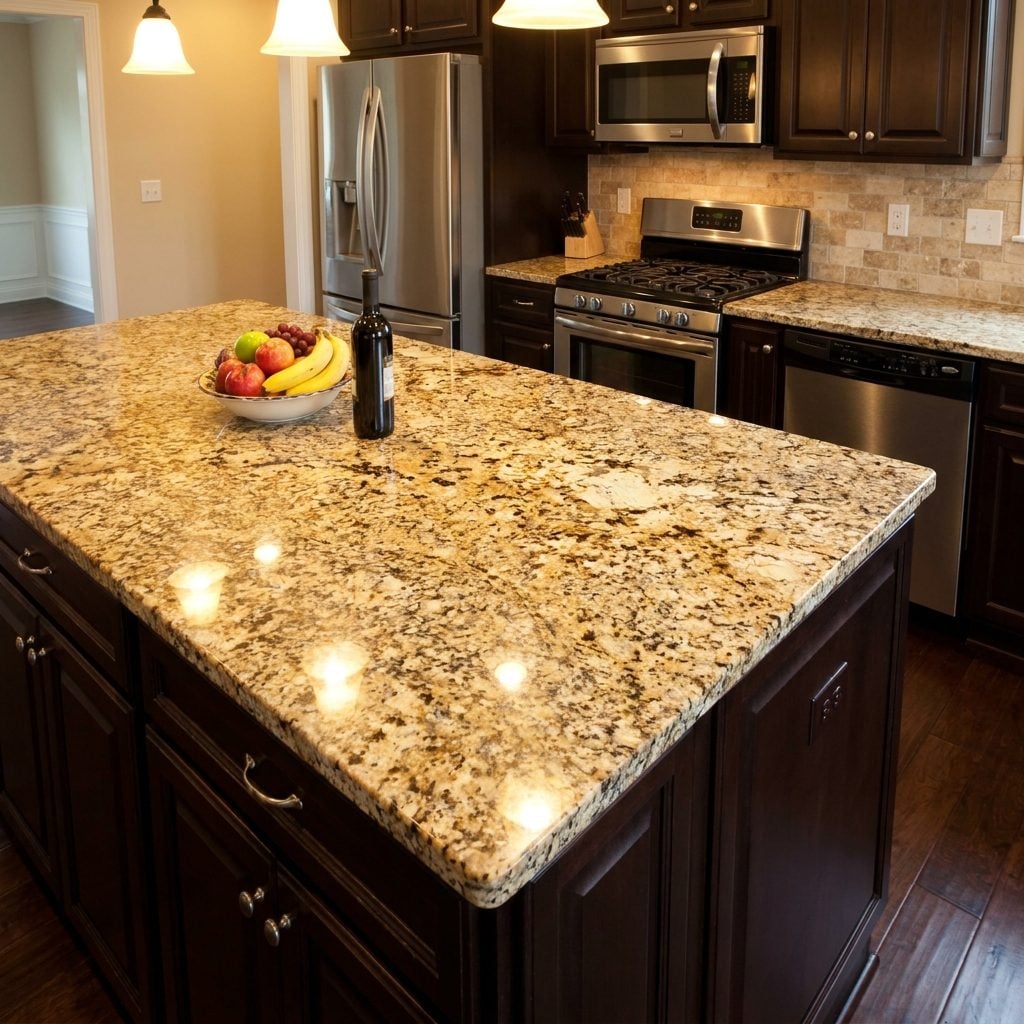
Granite wasn’t a countertop material in the 2000s. It was a personality trait. “We’re putting in granite” carried the same gravity as announcing a pregnancy, and the obsession didn’t materialize from nowhere.
HGTV’s renovation shows made granite the universal shorthand for an upgraded kitchen — every episode, every reveal, every real estate agent on camera pointing at it like a trophy. Santa Cecilia, Uba Tuba, Giallo Ornamental. People learned slab names the way they learned car models. The material went from high-end architectural choice to suburban requirement in about five years, a pace that magazines and word of mouth alone could never have produced.
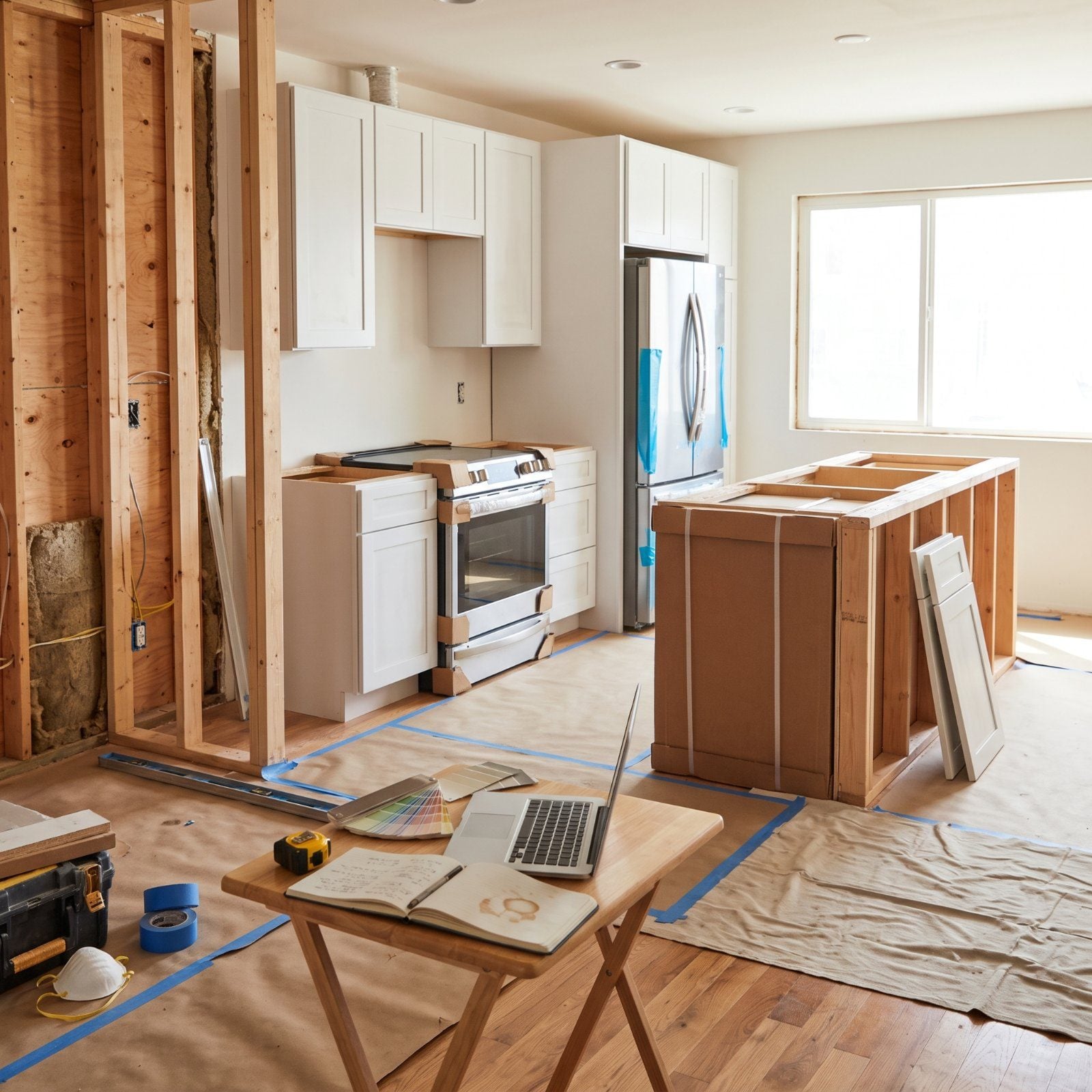
28. Far Fewer Homeowners Would Rip Out Walls Chasing Open-Concept Layouts
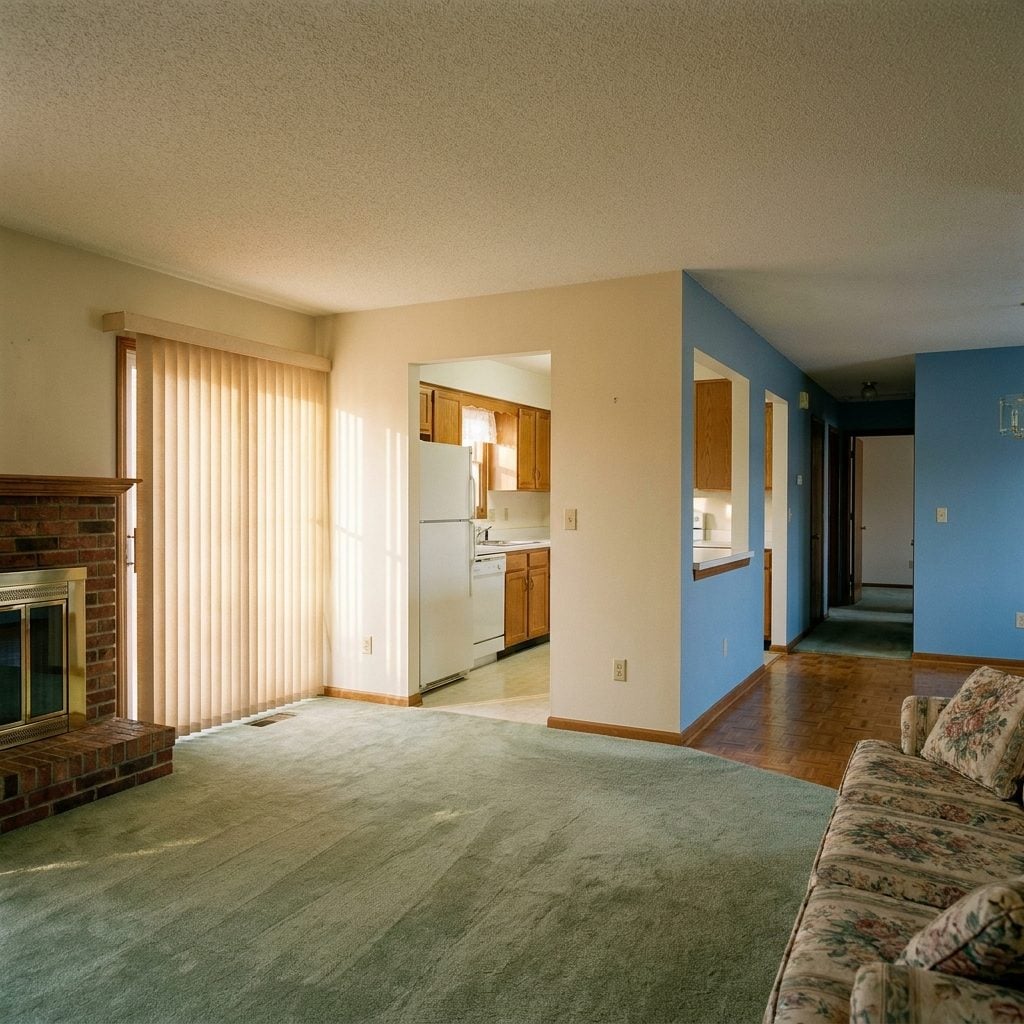
“Can we knock out this wall?” became the most-asked question in American home renovation. It didn’t happen organically. HGTV made open-concept a mantra, and every other episode featured someone swinging a sledgehammer into perfectly good drywall while the host grinned like they’d liberated a nation.
Before that cultural programming, rooms were rooms. They had walls and doors and purposes — the kitchen was for cooking, the living room for sitting, and the separation was the entire point because you could close a door on the dinner mess or hold a conversation without competing with the dishwasher. Without HGTV popularizing the open floor plan as the default aspiration, contractors would have fielded far fewer demolition requests. Plenty of those walls were load-bearing anyway, leading to expensive structural work that a lot of homeowners didn’t grasp until the invoice showed up.
I say this as someone who has stood in a kitchen staring at a sagging header beam that used to be a wall.
27. The Phrase “Good Bones” Would Mean Far Less to Everyday Homeowners
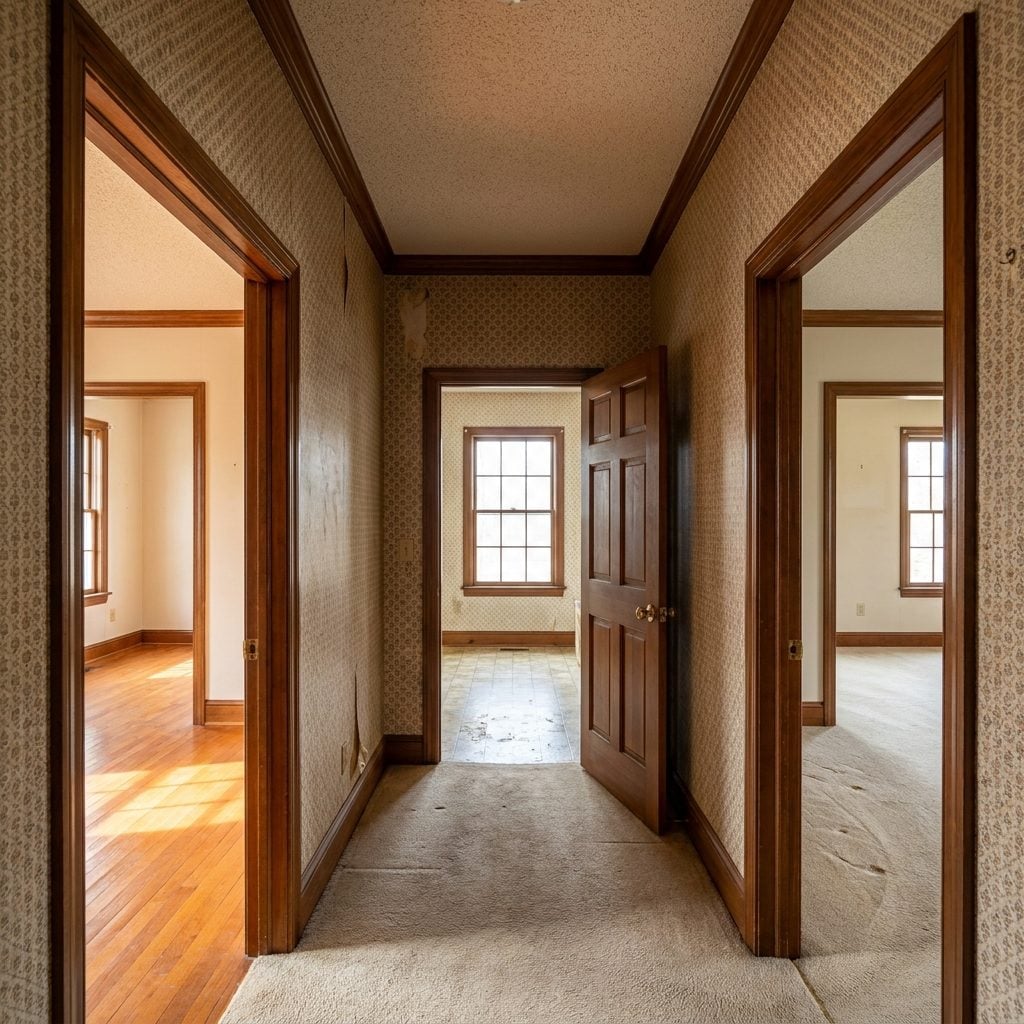
Before HGTV, “good bones” was something a contractor might say to another contractor — trade shorthand, not dinner party vocabulary. Regular homeowners didn’t walk through a house with peeling wallpaper and brass fixtures and announce, with television-trained confidence, that the place had potential hiding under the surface.
The shows taught millions of people to see past cosmetic finishes and evaluate structural quality, which is genuinely useful. But it bred a strange overconfidence too. People started wielding the phrase to justify purchases that were really just cheap houses with serious problems. Two words became a permission slip, and a lot of inspectors probably have stories about what happened next.
26. Entire Neighborhoods Would Still Proudly Display Heavy Tuscan-Style Interiors From the Early 2000s
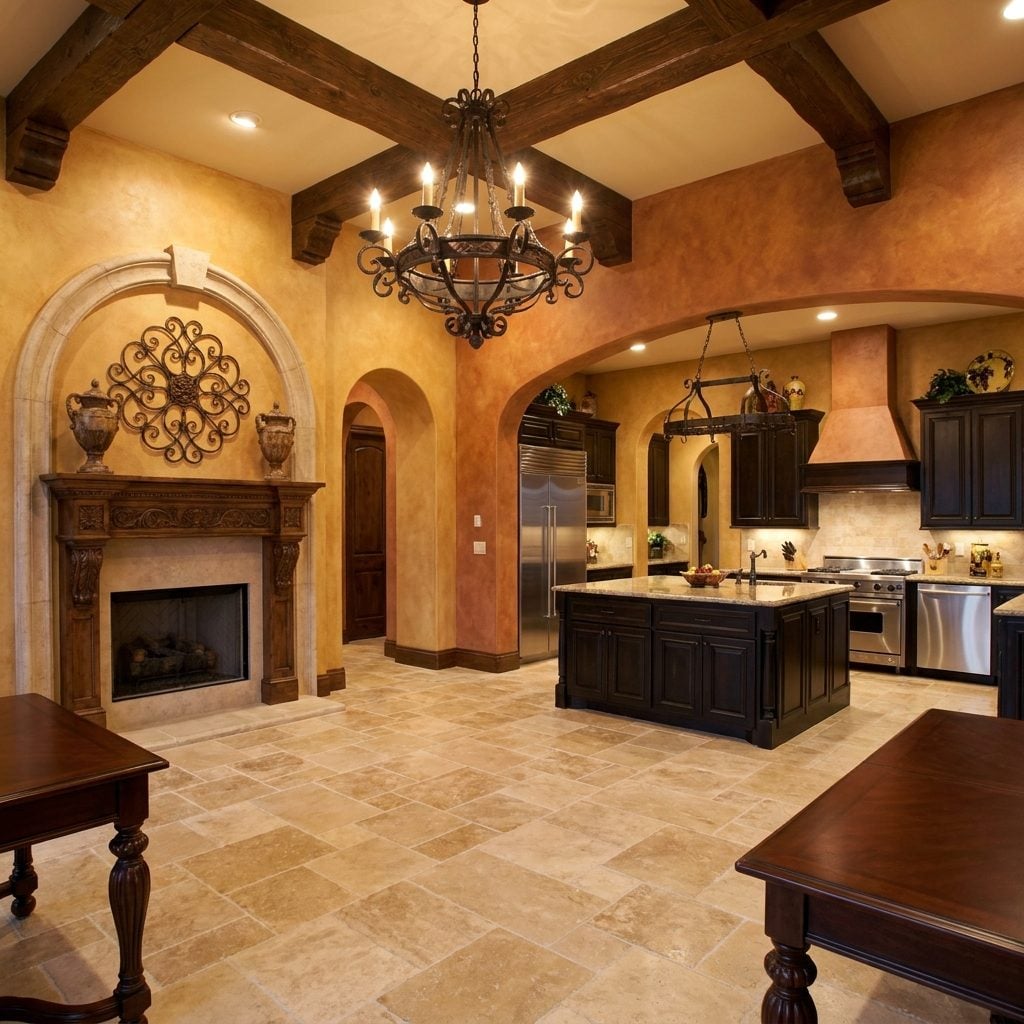
The faux-painted terracotta walls. The wrought iron everything. Those massive decorative urns that served no purpose except to signal a Pottery Barn trip circa 2003. Tuscan style hit American suburbs like a weather event — entire developments from Scottsdale to suburban Atlanta adopted it as a collective identity.
HGTV didn’t start the trend, but it absolutely accelerated the backlash. As the network’s taste pivoted toward clean lines, lighter palettes, and farmhouse minimalism, those heavy Mediterranean interiors went from aspirational to cringe-inducing in about three years. Without that televised verdict, homeowners would have kept their wrought iron chandeliers and sponge-painted walls far longer — the way people lived comfortably with colonial and country décor for decades before anyone on a screen told them it was wrong.
25. Shag Carpets in Basements and Dated Finishes Would Survive Longer Simply Because People Lived With Them
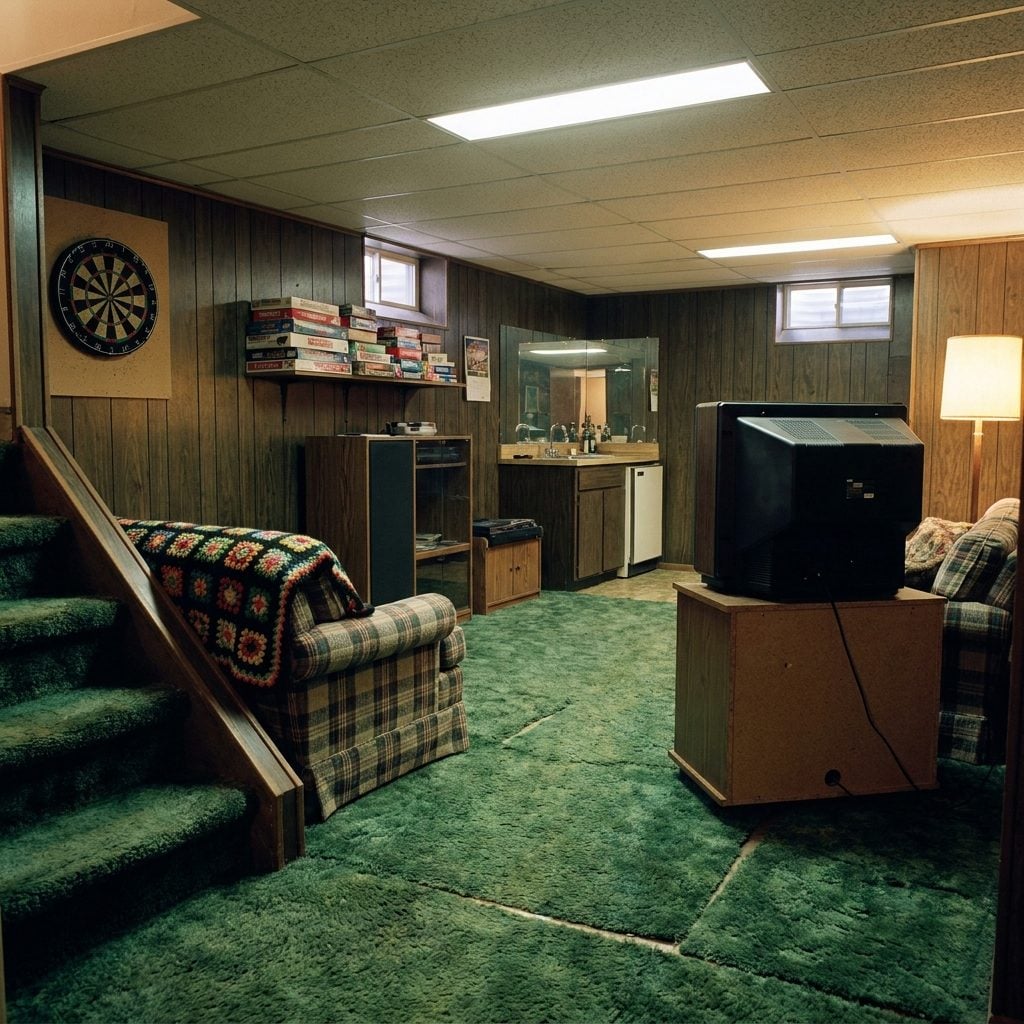
Nobody looked at their basement’s green shag carpet and thought it was a crisis until someone on television told them it was.
That’s the quiet truth about HGTV’s largest cultural contribution: it didn’t just show people what to want — it taught them what to be ashamed of. Before the network existed, people replaced things when they wore out. The carpet was ugly, sure, but it was warm underfoot and the kids played on it. The wood paneling was dark, but it hid scuff marks and didn’t need painting. These finishes survived because nobody was performing their home for an audience. HGTV introduced a constant low-grade anxiety about interiors. Suddenly “dated” wasn’t just a description. It was a verdict. Perfectly functional rooms became renovation projects overnight.
24. Kitchen Islands Would Be Smaller Because Fewer People Would View Kitchens as Entertainment Stages
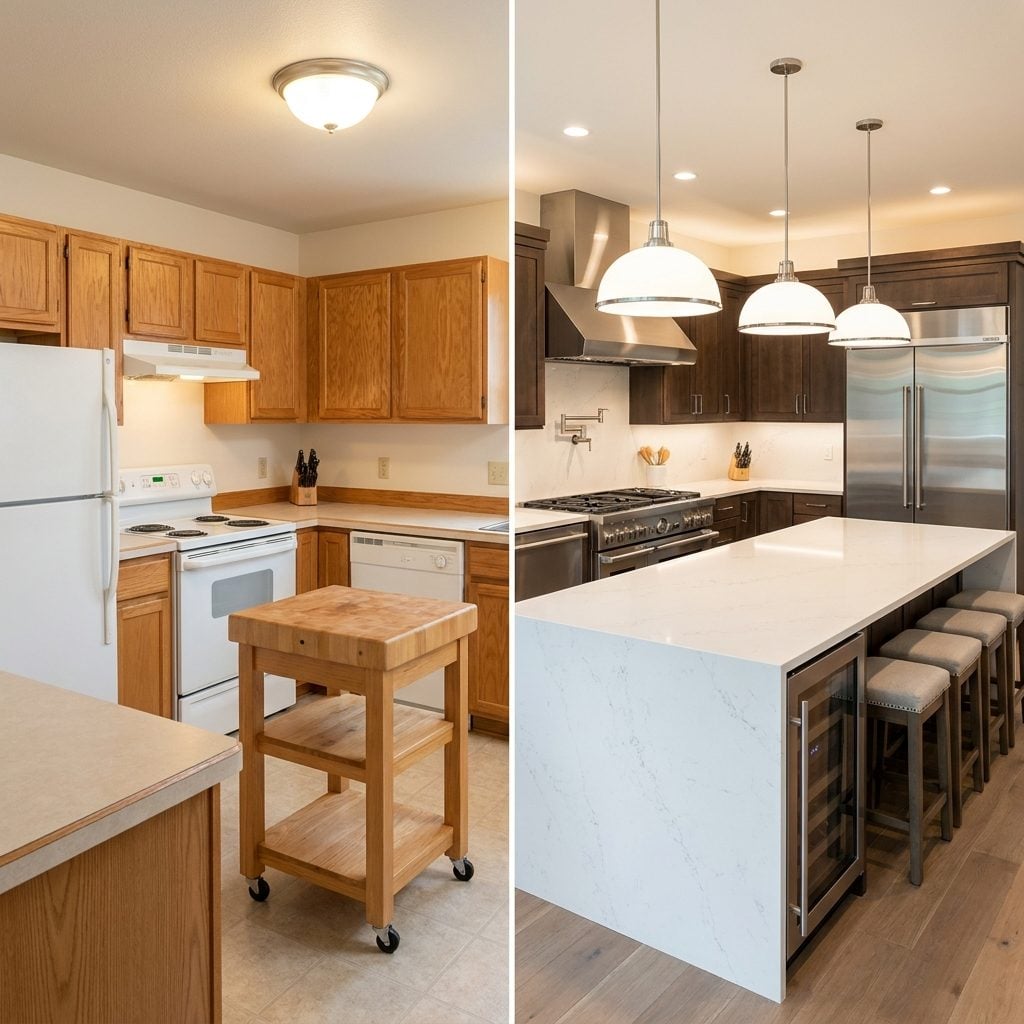
The kitchen island grew six sizes in twenty years, and television deserves most of the credit.
In the 1990s, a kitchen island was a small butcher block cart you rolled out of the way when you needed floor space. Functional. Humble. Maybe it had a towel bar on the side. Then HGTV recast the kitchen as the social nucleus of the home, and the island became a stage — it needed to seat six, required a waterfall edge, demanded its own plumbing and prep sink, got pendant lights, and wore enough quartz to pave a driveway. Without the cultural narrative that kitchens should double as living rooms, bars, and dining rooms simultaneously, most homeowners would still be cooking on normal-sized countertops. The mega-island is a direct product of treating cooking as a spectator sport.
23. Gray Everything Might Never Have Steamrolled American Interiors So Aggressively
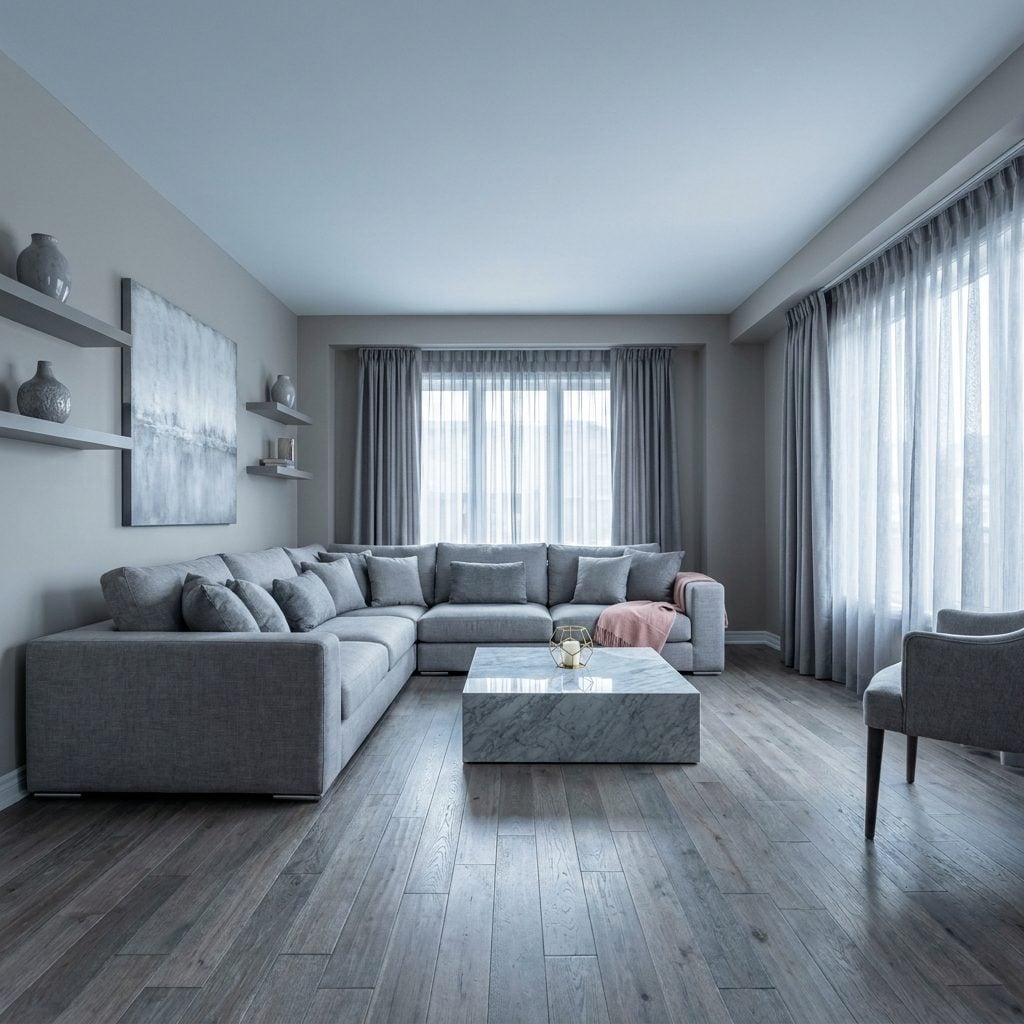
There was a period — roughly 2014 to 2020 — when you could walk into any freshly renovated American home and feel like you’d accidentally wandered inside a cloud. Gray floors. Gray walls. Gray cabinets. Gray furniture against gray paint with gray accessories perched on a gray shelf. No single designer caused this, but HGTV as a machine accelerated the gray-wash to a speed that no organic design evolution could have produced on its own.
Why gray? It photographs beautifully for television. It reads as modern to a broad audience. And it offends nobody, which is exactly what made it so effective on screen and so deadening in person. Without a network beaming gray rooms into millions of homes every night for a decade, regional color preferences would have held on much longer — the Southwest staying terracotta, New England staying navy, the South keeping its butter yellows. Instead, everybody got gray.
22. Millions Fewer Homeowners Would View Renovation Spending as an Investment Strategy
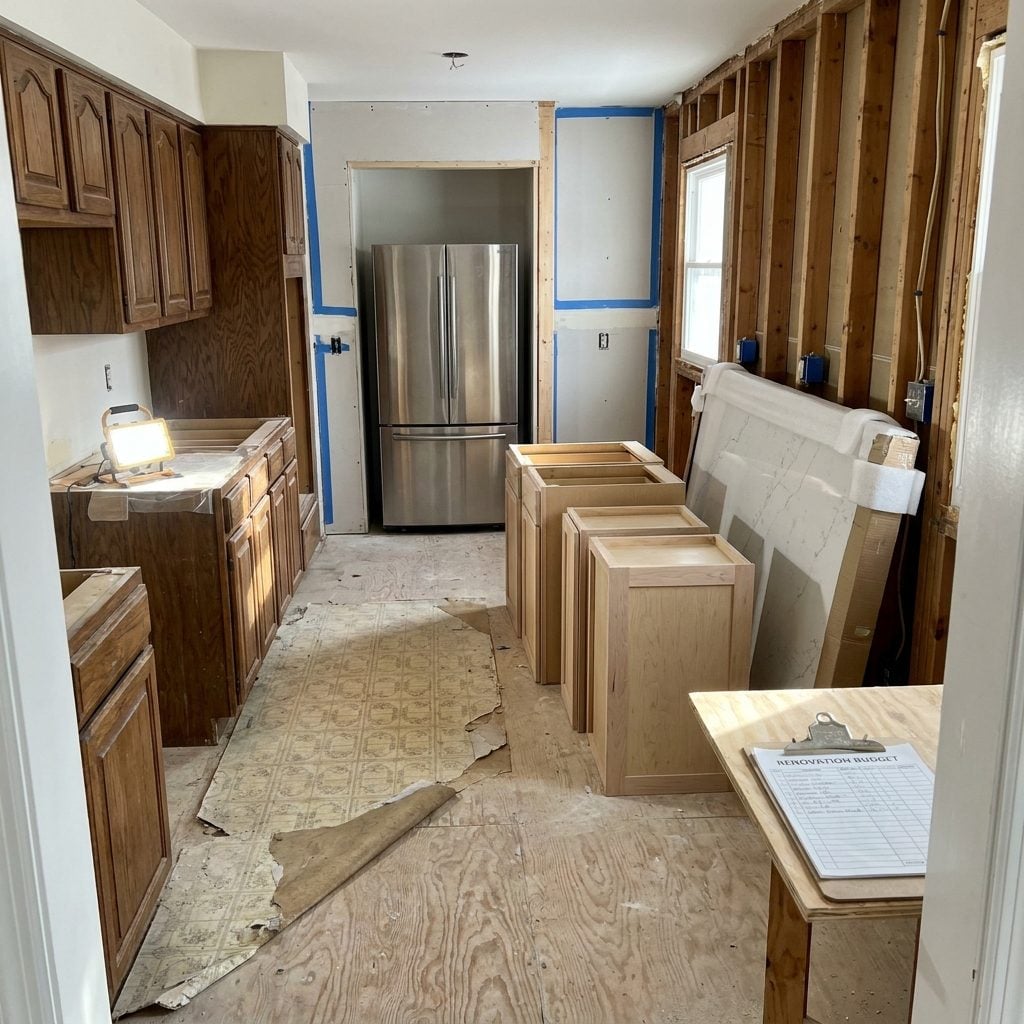
“You’ll get that money back when you sell.” This sentence, repeated across what feels like ten thousand episodes, fundamentally rewired how Americans think about their homes. Before the network existed, renovation was something you did because the roof leaked or the kitchen was genuinely falling apart. Maintenance. Grudging, practical, unglamorous. Nobody framed a new backsplash as a financial strategy.
HGTV turned every kitchen remodel into an ROI calculation. Suddenly people who had never cracked a balance sheet were confidently quoting return-on-investment figures for bathroom tile, and a whole class of homeowners spent enormous sums on kitchen renovations while genuinely believing they were being fiscally prudent.
The most expensive lie HGTV ever told was that spending money on your house is the same as saving money.
Most renovations recover well under what they cost at resale. The shows rarely mentioned that part. Without television framing every upgrade as an investment, more Americans might have just enjoyed their homes as places to live in — messy, imperfect, not optimized for some hypothetical future buyer — and kept a lot more money in the bank.
21. Contractors Might Actually Get to Finish a Sentence Before Hearing ‘I Saw This on TV…’
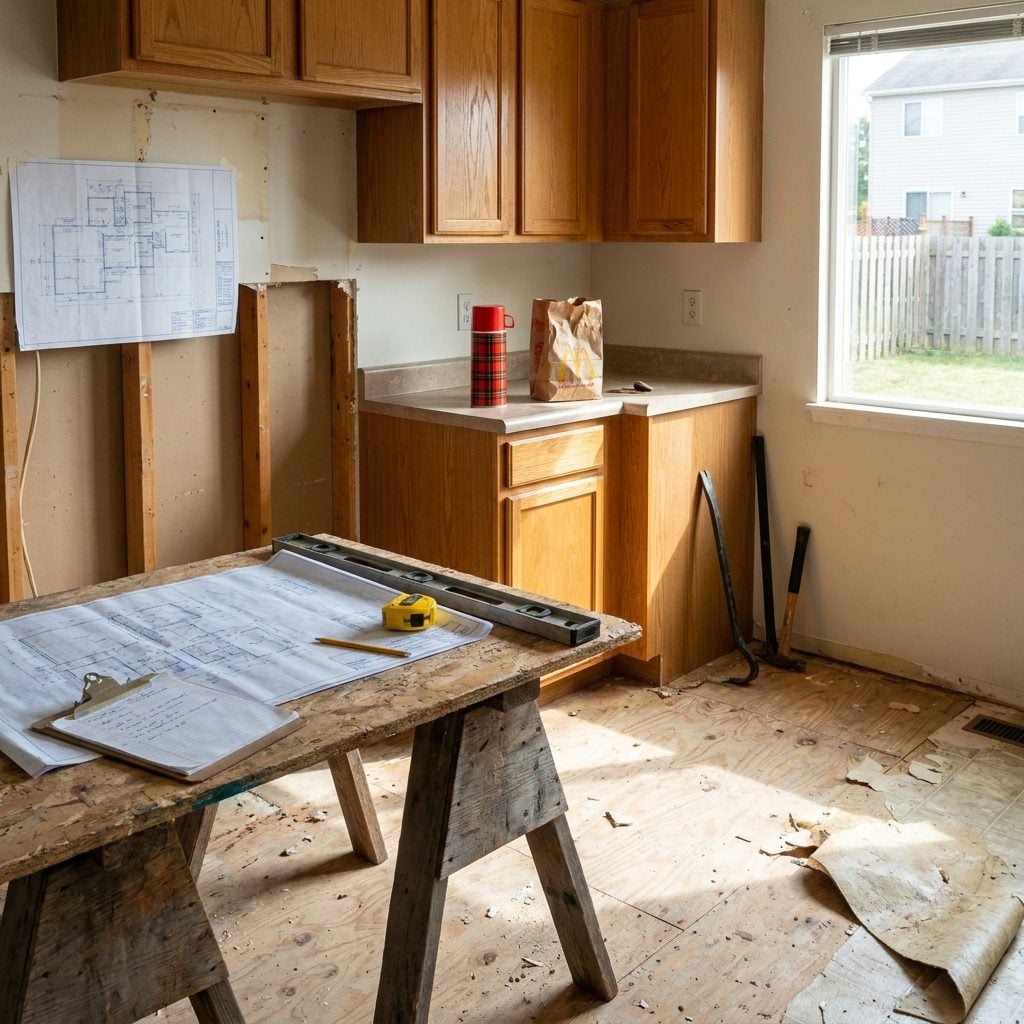
Every contractor in America has a version of this story. The client pulls out a phone, shows a screenshot from a Fixer Upper episode, and says, “I want exactly this, but for a third of the budget.” Without HGTV drilling the idea that every renovation unfolds in 44 minutes with a single dramatic reveal, homeowners might approach projects with actual curiosity instead of arriving at the first meeting with a fully formed Pinterest board and zero flexibility.
Contractors used to be trusted advisors. They’d walk a space, suggest what made sense for the structure, the climate, the budget. HGTV flipped that dynamic. Now they’re often cast as executors of someone else’s TV-inspired vision, negotiating between what a homeowner saw on screen and what physics, plumbing, and their checking account actually allow.
20. Quartz Countertops May Have Taken Another Decade to Dominate Every Kitchen in America
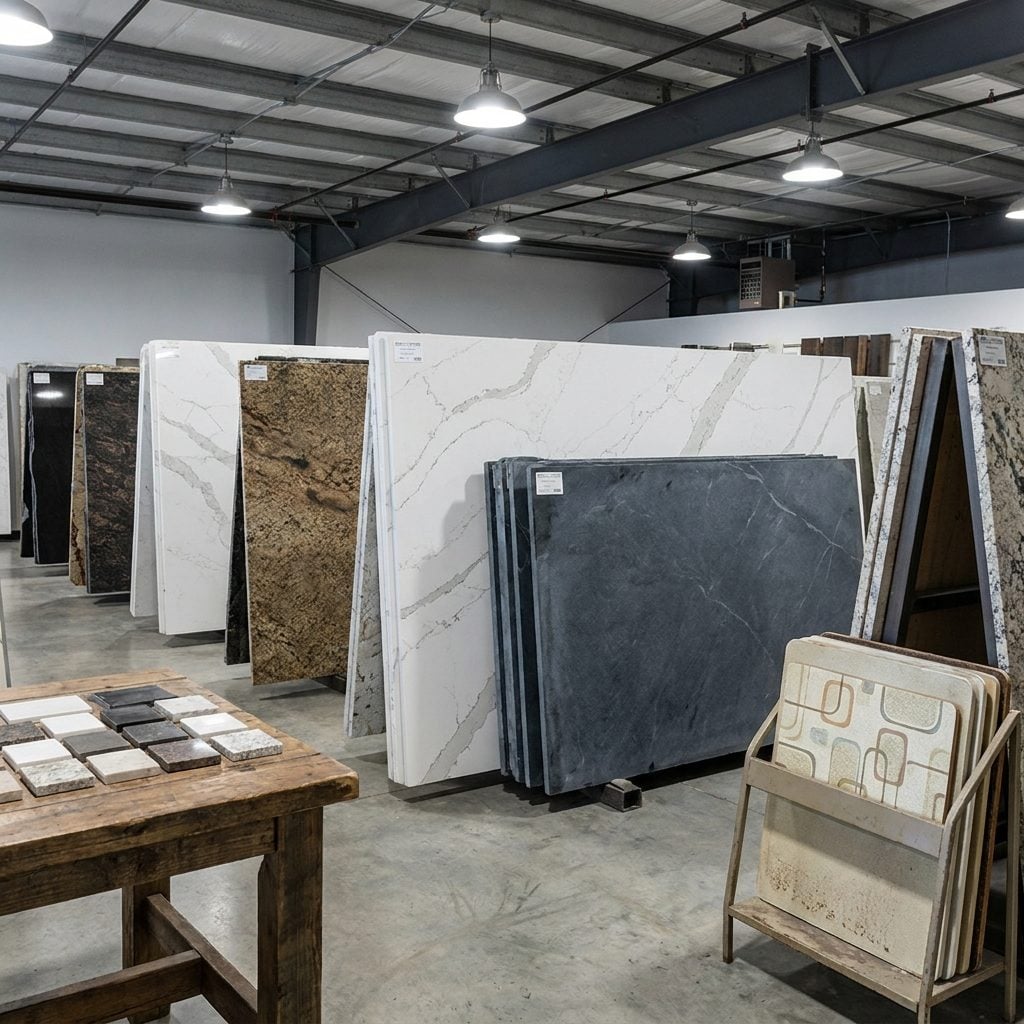
Granite was king for a solid stretch. Then HGTV hosts started consistently reaching for quartz on nearly every kitchen renovation, praising its low maintenance and uniform appearance. That repetition, episode after episode, season after season, functioned as the most effective advertising campaign the engineered stone industry never had to pay for.
Without that constant on-screen endorsement, quartz would have gained market share eventually. The product genuinely works well. But the speed of adoption? That was television. A white quartz countertop became shorthand for “updated kitchen” largely because viewers watched it installed hundreds of times before ever visiting a showroom.
Laminate and butcher block might have held their ground longer. Regional stone yards selling local granite and soapstone might have remained the default. The kitchen counter, which used to reflect geography and budget, became a national uniform.
19. White Subway Tile Might Never Have Become the Default Answer to Every Backsplash Question
🔥 Would you like to save this?
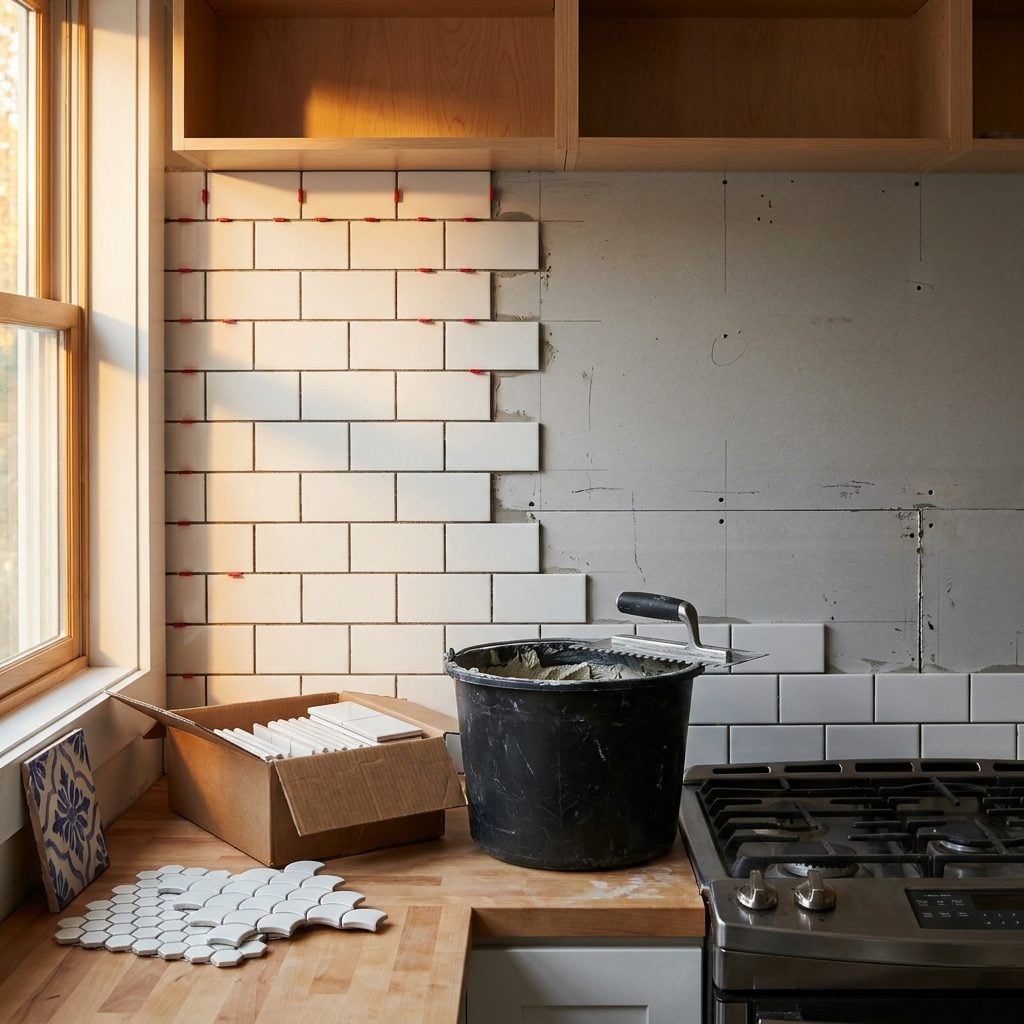
Subway tile existed for over a century before HGTV made it inescapable. It was a practical, affordable choice in early 1900s commercial kitchens and bathrooms. Functional. Unglamorous. Then television design shows discovered it could photograph cleanly on camera, cost almost nothing in materials, and read as “classic” to every demographic. It became the visual equivalent of a safe answer on a test.
Without HGTV’s relentless deployment of white subway tile in renovation after renovation, American kitchens and bathrooms might display far more variety. Regional tile traditions, hand-painted Mexican Talavera in the Southwest, penny rounds in Northeastern bungalows, plain painted walls in rural homes, could have persisted as the norm rather than getting bulldozed by a single trend broadcast coast to coast.
18. More Homes Would Still Have Upper Kitchen Cabinets Instead of Open Shelving Experiments
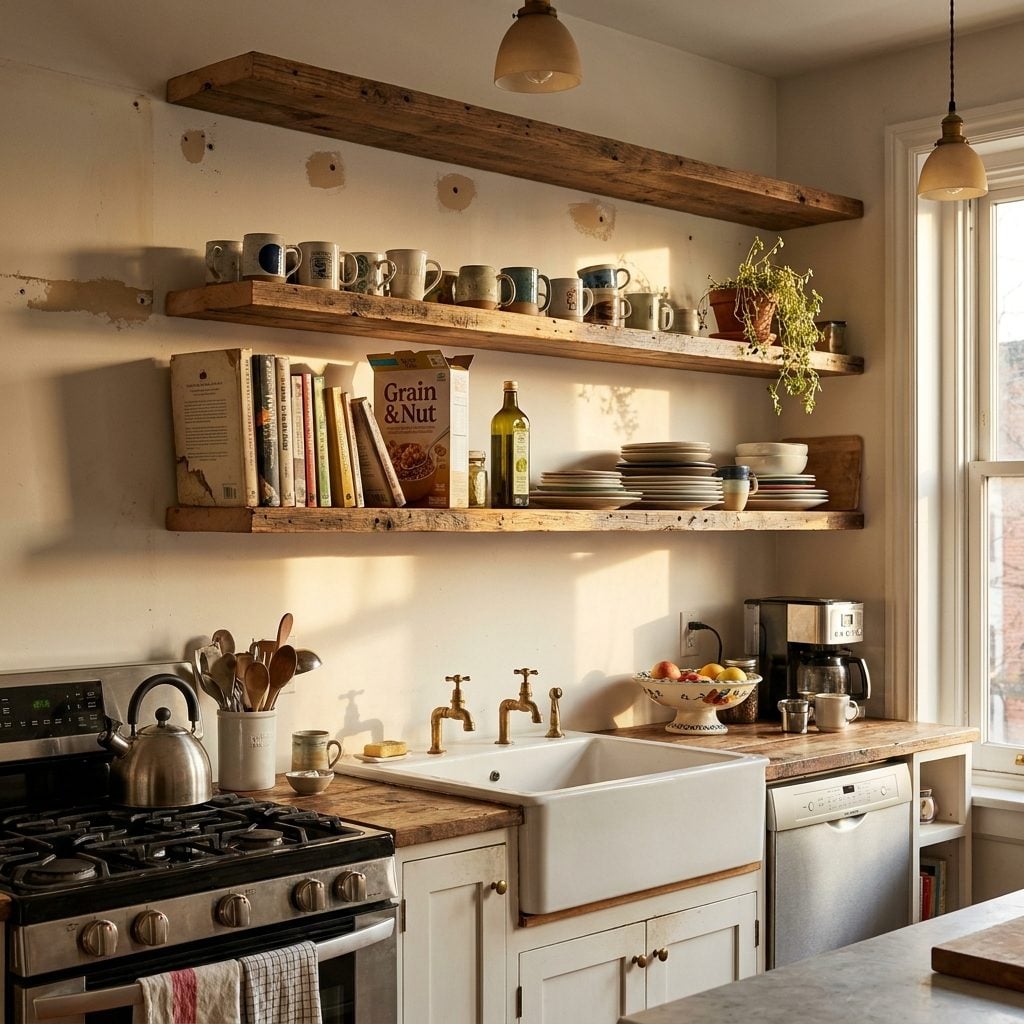
Open shelving looks incredible on television for exactly 44 minutes. It photographs well. It makes a small kitchen feel airy and intentional on a wide-angle lens. And then you have to live with it.
HGTV popularized the removal of perfectly good upper cabinets in favor of floating wooden shelves that display matching ceramic bowls and a single trailing pothos plant. In reality? Those shelves collect cooking grease, display your mismatched Tupperware lids, and force you to hand-wash everything because the dust never stops. Without TV showing us how “clean” and “modern” the look is, most homeowners would have kept their shaker upper cabinets and been happier for it. I say this as someone who tried open shelving for eighteen months and quietly reinstalled cabinet doors on a Saturday.
17. Farmhouse Sinks Would Still Be Found in Actual Farmhouses Instead of Every Suburban Subdivision
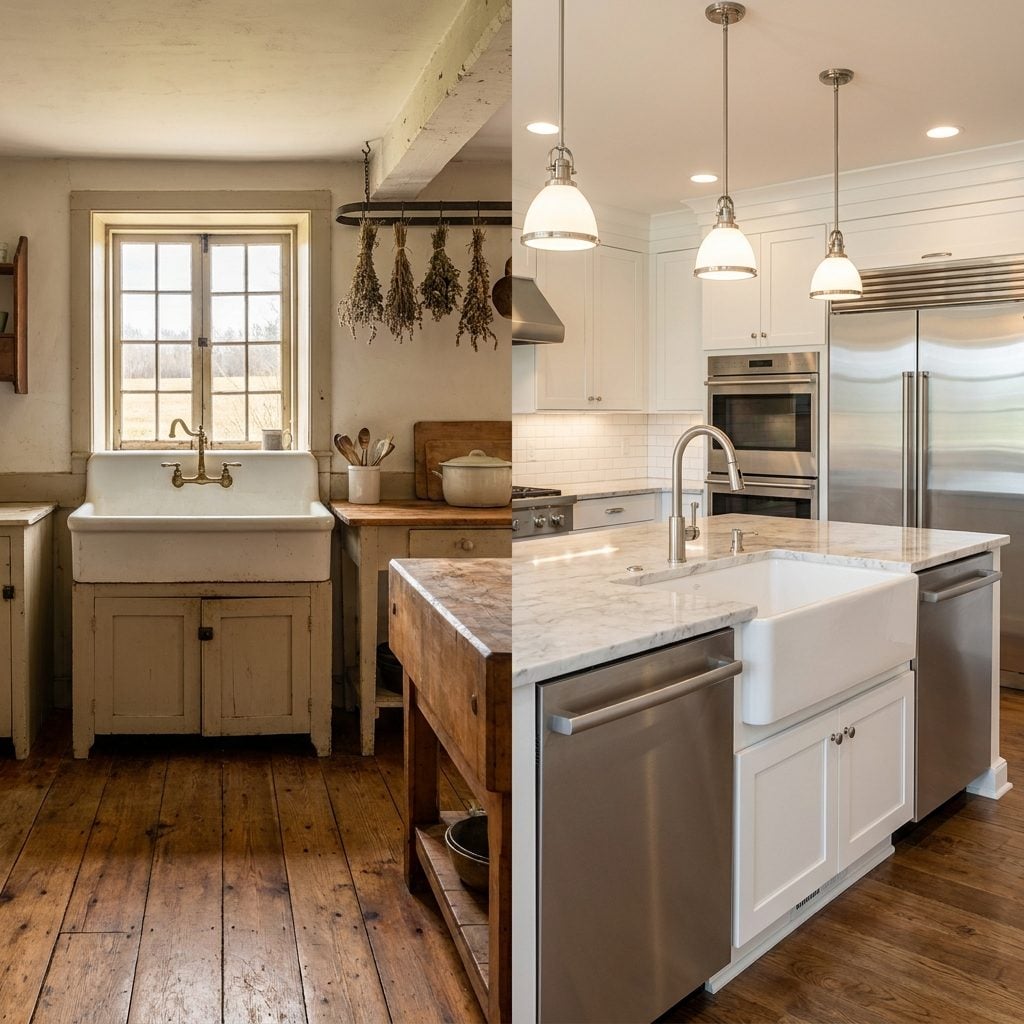
There’s something almost funny about a 3,200-square-foot house in a gated community outside of Dallas featuring an apron-front sink as if someone’s about to wash root vegetables they pulled from the back forty. White farmhouse sinks are genuinely useful. They’re deep, they’re wide, and they were designed for kitchens where work happened. But HGTV turned them into suburban status symbols, a visual shorthand for “I have taste” that got installed in kitchens where the most demanding task is rinsing a Starbucks cup.
Without television evangelizing the farmhouse aesthetic, these sinks would have stayed exactly where they belonged: in older homes, rural properties, and the occasional restoration project. Instead, they became mandatory. The kitchen is now one of the few rooms where a single TV network essentially dictated a plumbing fixture to millions of people.
16. People Might Feel Zero Pressure to Gut a Perfectly Functional Bathroom
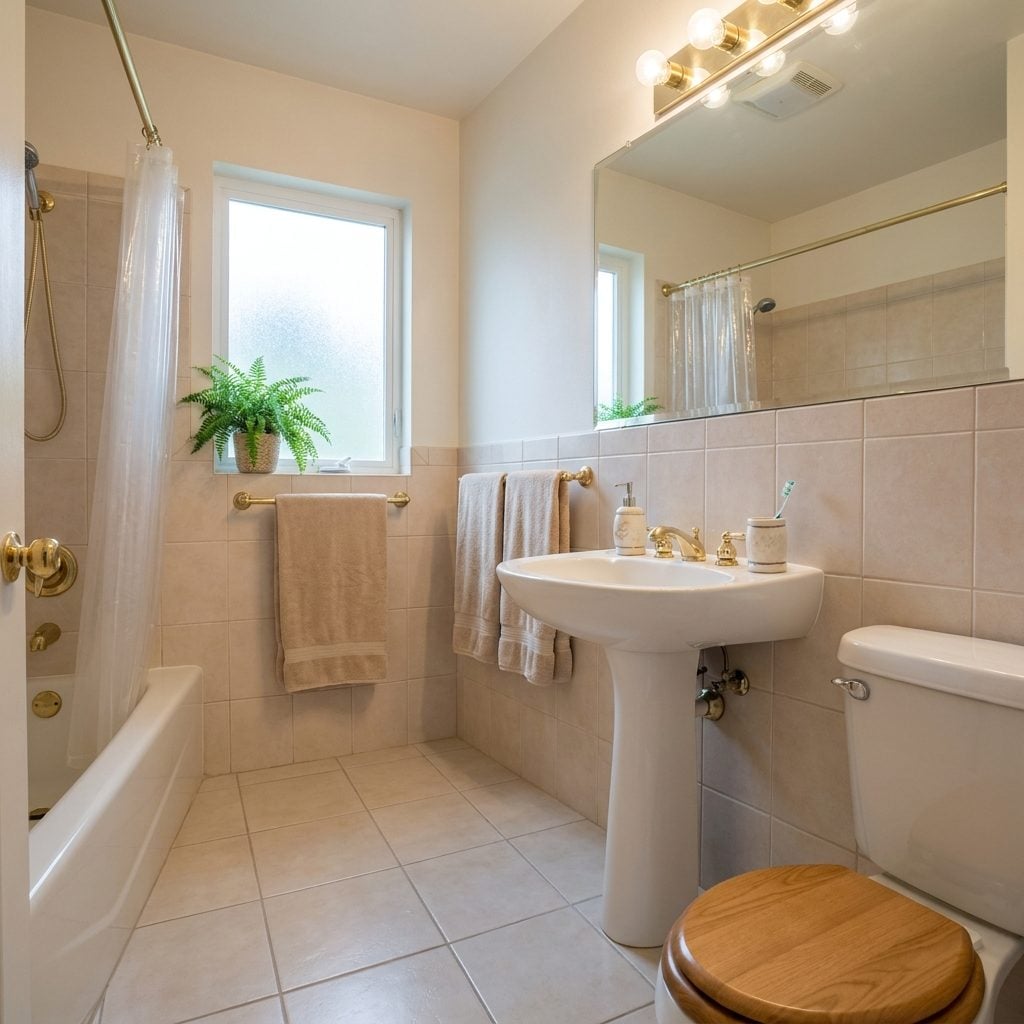
The bathroom works. The toilet flushes. The shower gets hot. The tile is clean, if a little dated. And yet, after watching enough episodes of any HGTV show, there’s a creeping feeling that this functional room is somehow failing. That beige is a moral deficiency. That a pedestal sink is an apology.
HGTV created an entire emotional framework around bathroom renovation that didn’t really exist before. Bathrooms used to be rooms you maintained. Now they’re rooms you’re supposed to feel something about. The phrase “spa-like” entered the residential vocabulary almost entirely through television, and it convinced millions of Americans that their perfectly adequate bathrooms needed to become retreats, sanctuaries, experiences.
Without that pressure, a lot of homeowners would have spent that $15,000 on, I don’t know, their kids’ college fund. Or a vacation. Or literally anything besides replacing a working bathtub with a freestanding tub that splashes water all over the floor.
15. Fewer Homeowners Would Believe Every Weekend Project Should Create ‘Instant Resale Value’
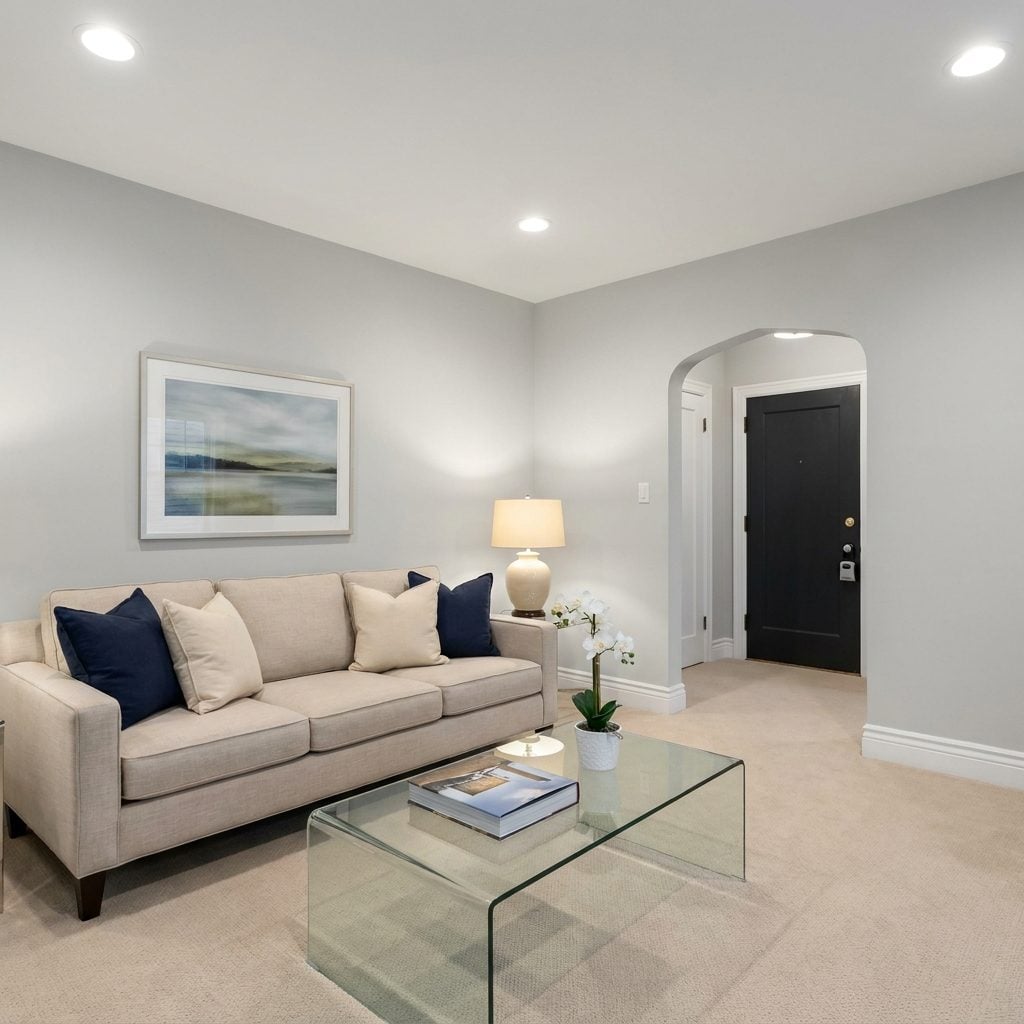
HGTV didn’t invent the concept of home equity, but it absolutely weaponized it. Before cable renovation shows, most people painted a room because they wanted a different color. They built a deck because they wanted to sit outside. The renovation existed for the person living in the house.
Television introduced a constant ROI calculation into every single home decision. “Will this add value?” became the first question instead of the last one, or instead of never being asked at all. Choosing a matte black cabinet hardware finish stopped being about personal preference and started being about what a hypothetical future buyer might think.
We stopped decorating for ourselves and started decorating for strangers who might buy our house someday.
Without HGTV, more Americans might have made choices based on what they actually liked. Wild concept.
14. ‘Builder-Grade’ Might Never Have Become an Insult That Regular Homeowners Casually Deploy
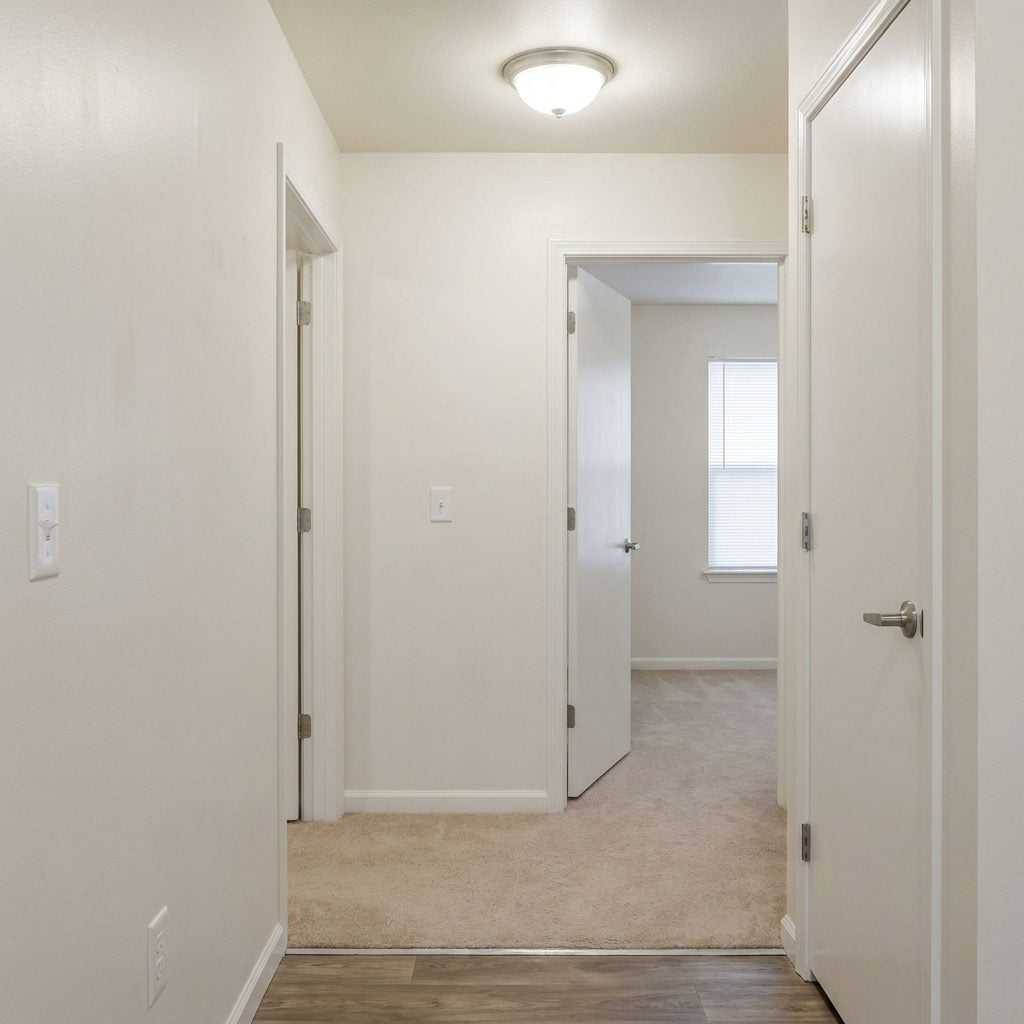
“Builder-grade” used to be a neutral term. It described the standard materials a home builder used: functional, code-compliant, cost-effective. The hollow-core doors closed. The brass doorknobs turned. The oak bathroom vanity held your toiletries. Nobody was ashamed of any of it.
HGTV hosts started using “builder-grade” the way food critics use “gas station sushi.” It became shorthand for everything wrong with a house, a term of disgust aimed at materials that were doing their job perfectly well. And homeowners absorbed that disdain. Suddenly people who’d lived happily with their flat-panel doors for fifteen years felt compelled to replace them.
13. Home Offices Might Have Evolved Organically Instead of Being the Last Room to Get Any Attention
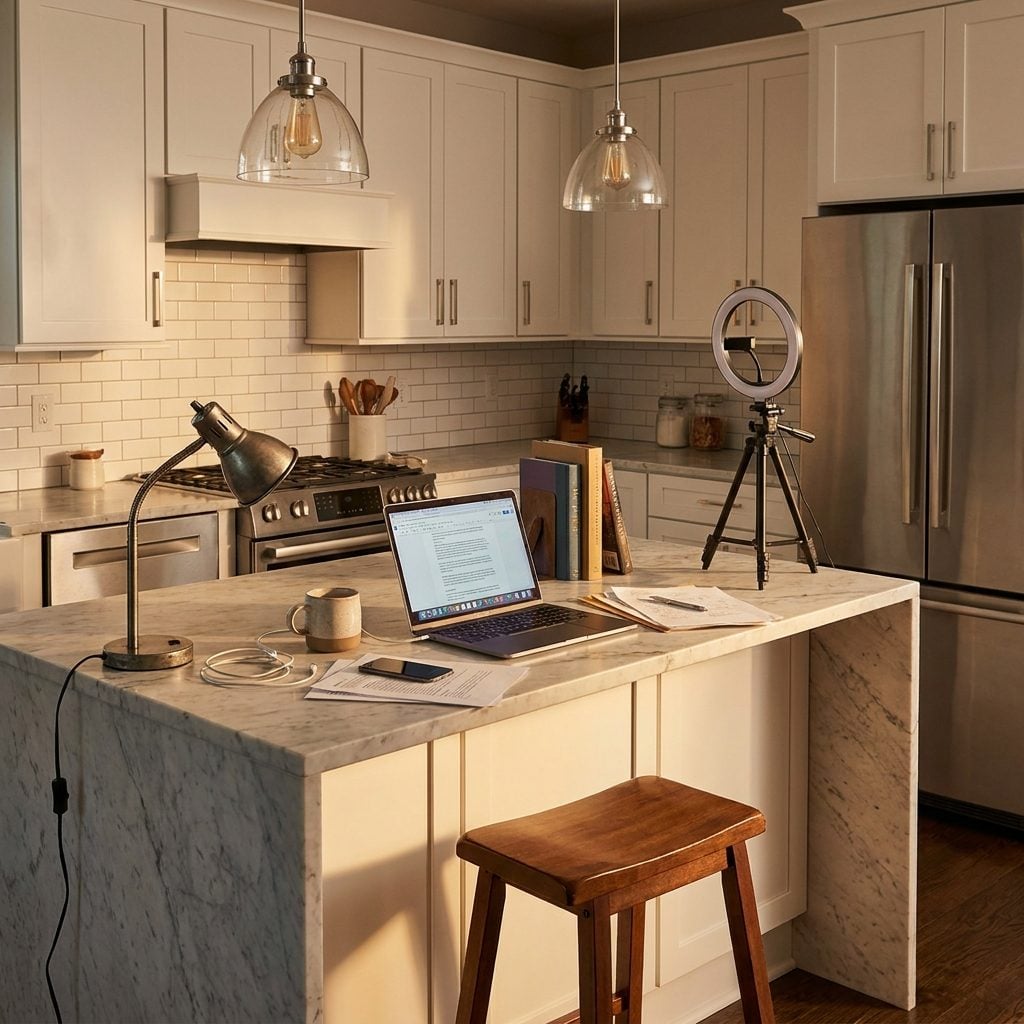
For twenty years, HGTV programming obsessed over kitchens, bathrooms, and outdoor entertaining spaces. The home office barely existed in the renovation universe. It was the room with the old computer desk from Office Depot, a filing cabinet, and whatever chair didn’t make the cut for the dining room. Nobody on television was ripping out walls to create a better workspace because workspace wasn’t dramatic enough for a reveal.
Then 2020 happened, and millions of people suddenly needed functional offices. The infrastructure of home bar design thinking that HGTV had cultivated for decades, wet bars, outdoor kitchens, wine fridges, turned out to be completely misaligned with what people actually needed. If television had spent even a fraction of its airtime on workspace design, the scramble might have been less painful.
Instead, we all bought Ring lights and shoved our laptops onto kitchen islands that HGTV told us to build for entertaining.
12. More American Homes Would Actually Look Like They Belong in Their Region
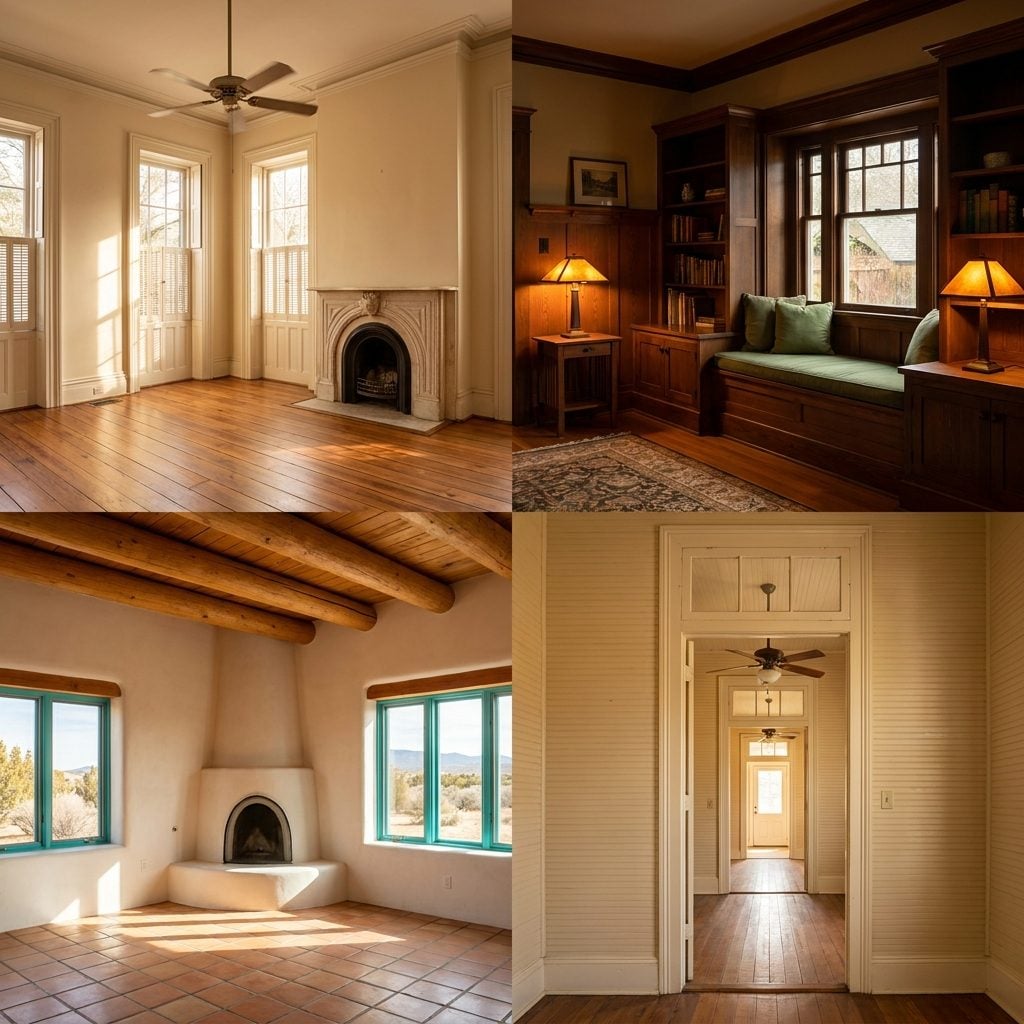
A house in Savannah used to look like a house in Savannah. Deep porches with ceiling fans, shuttered windows, rooms that breathed. A bungalow in Portland had built-in bookcases and Douglas fir floors and rooms scaled for grey-sky intimacy. Adobe homes in New Mexico had thick walls that stayed cool in the desert and kiva fireplaces that actually made sense. Regional architecture wasn’t a style choice. It was a response to place, climate, materials, and the people who lived there.
HGTV flattened all of that. The same white-and-grey palette, the same open floor plan, the same brushed gold pendant light over the same waterfall island started appearing in Phoenix and Philadelphia and Boise and Baton Rouge. Television created a national aesthetic that had no relationship to geography. For home inspiration, people stopped looking out their windows and started looking at their screens.
What Regional Design Actually Looked Like
The loss isn’t just aesthetic. Regional design encoded practical knowledge. Shotgun houses in New Orleans channeled airflow. Raised foundations in coastal Texas handled flooding. Deep eaves in the Pacific Northwest managed rain. When you replace regional intelligence with a televised national template, you don’t just lose character. You sometimes lose function.
11. Wallpaper Would Have Staged Its Comeback Years Earlier Without HGTV’s All-White Intervention
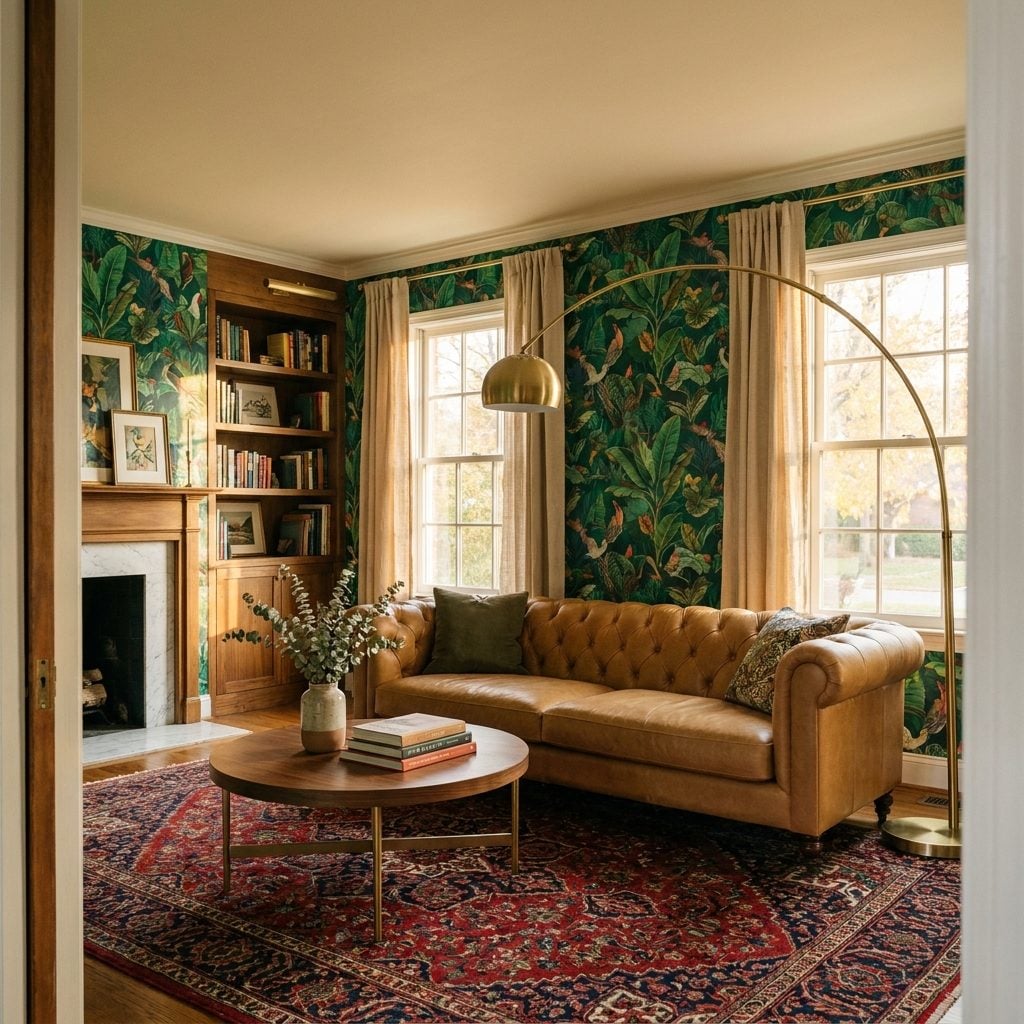
The paint-everything-white mandate that dominated HGTV programming through the 2010s didn’t just delay wallpaper’s return. It practically buried it. For nearly two decades, wallpaper was treated like a renovation sin, something to be steamed off and apologized for during every reveal episode. Designers on camera would literally gasp at floral prints like they’d discovered asbestos.
But wallpaper never actually stopped being interesting. European designers kept using it. High-end hotels never quit. The material itself got better, with peel-and-stick options and water-activated adhesives making installation almost foolproof. Without HGTV convincing an entire generation that pattern on walls equaled “dated,” American homeowners might have rediscovered bold prints a full decade sooner. Instead, we painted over perfectly good toile and damask to achieve that sterile, camera-ready blankness.
10. Ornate Brass Ceiling Fans Might Still Be Spinning in Every Den in America
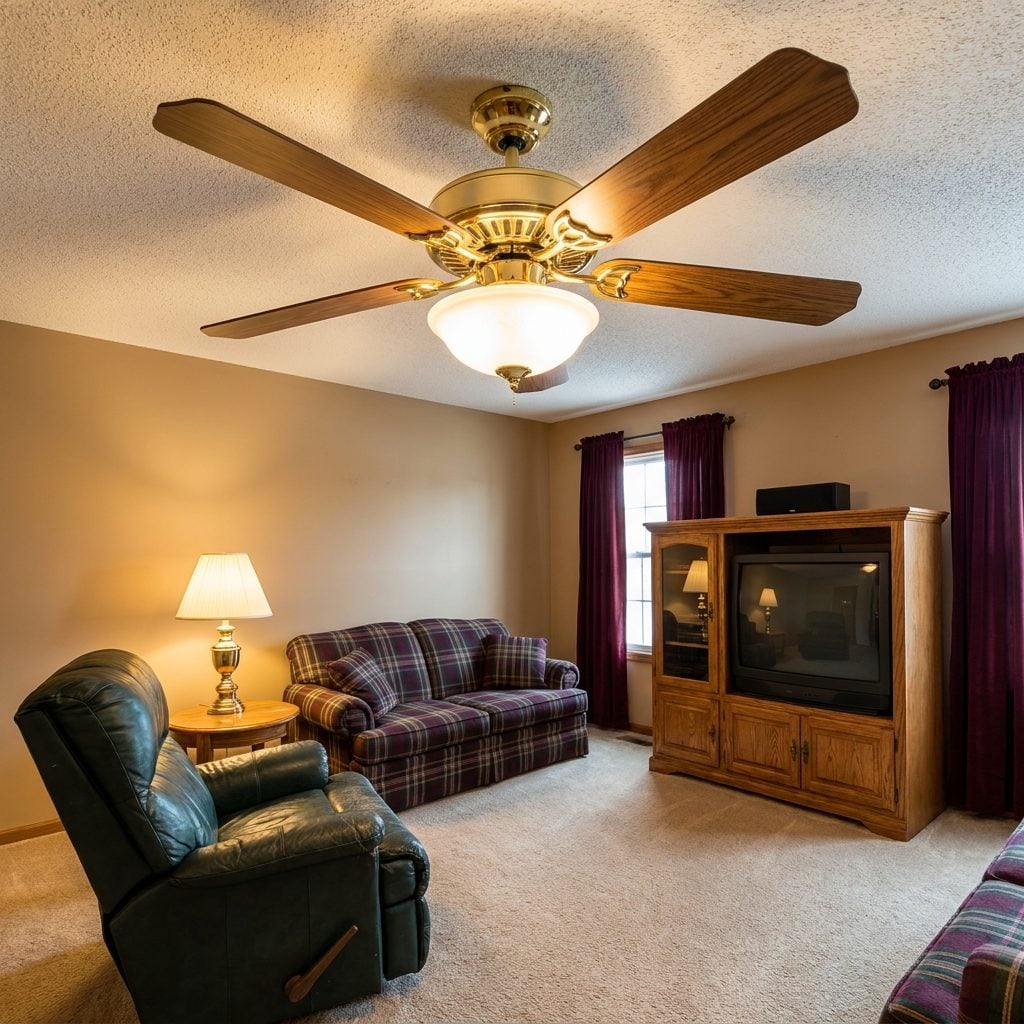
Those heavy, five-blade ceiling fans with polished brass motor housings and frosted glass light kits were everywhere in the late ’80s and ’90s. They hummed. They wobbled slightly if you ran them on high. And they worked.
HGTV didn’t kill them directly, but the network’s relentless focus on “updated” aesthetics turned brass into a punchline. Suddenly every renovation episode treated existing brass fixtures like evidence of poor taste rather than a material choice that had served homes well for a century. Brushed nickel and matte black replaced brass not because they performed better, but because they photographed as more “modern” on camera. Without that pressure, plenty of homeowners would have happily left their brass ceiling fans in place for another twenty years. And honestly? Those fans moved more air than most of the sleek replacements.
9. Nobody Would Know What a “Backsplash” Was, and “Shiplap” Would Still Just Mean Boat Lumber
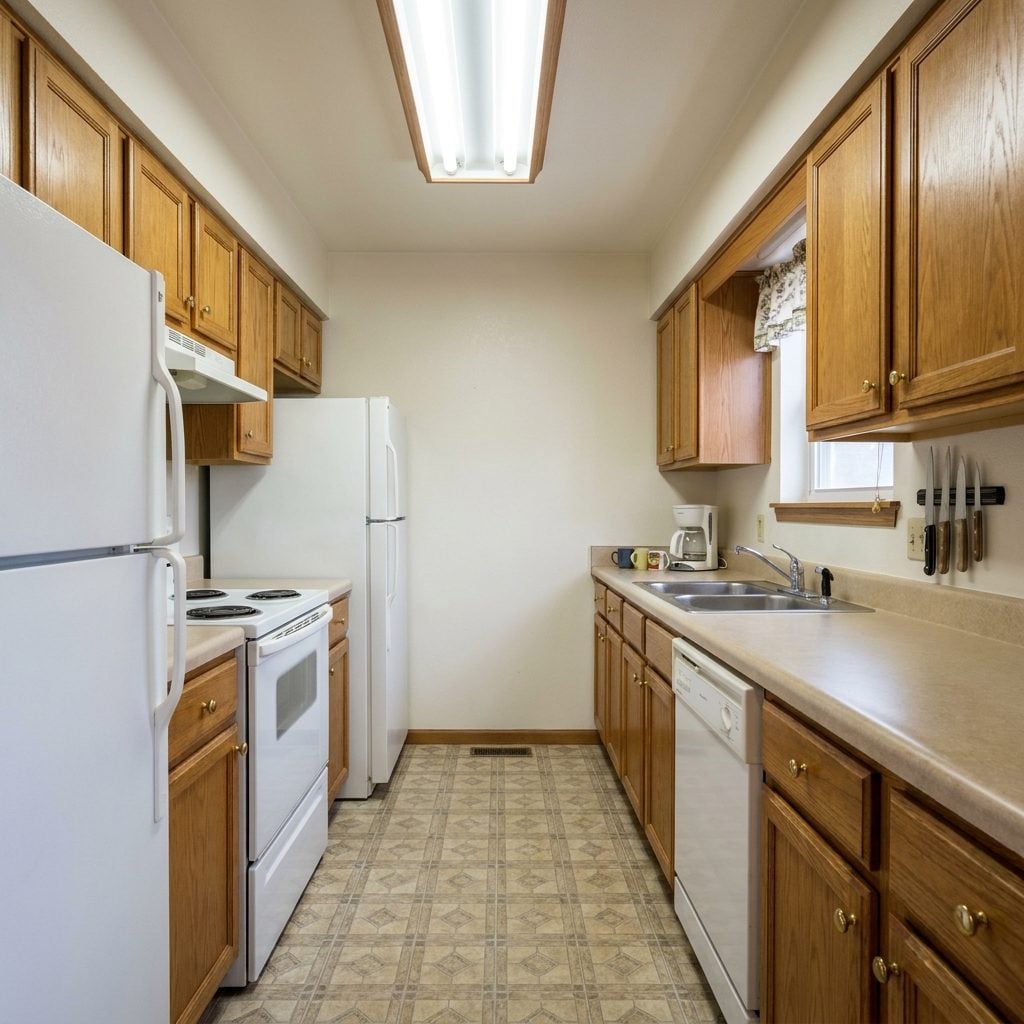
Before HGTV, regular people did not use the word “backsplash” in casual conversation. They said “the tile behind the stove” or, more likely, they said nothing at all because that four-inch strip of laminate matching the countertop wasn’t something anyone thought about. It just existed. It did its job. Nobody photographed it.
The network didn’t just popularize these terms. It turned them into consumer vocabulary that rewired how people evaluated their own homes. “Shiplap” went from a construction technique used in barns and boat hulls to a design personality trait, thanks almost entirely to one show. “Open shelving” became a position people took sides on, like politics. Without HGTV as a vocabulary engine, most homeowners would describe their kitchens in plain language: “We need new counters.” Not: “I’m thinking quartz with a waterfall edge and a herringbone backsplash.”
I’ll be honest, I catch myself using these words reflexively now, and it’s slightly embarrassing. We were all reprogrammed.
8. The TV Room Would Still Have a Door on It, and Nobody Would Apologize for That
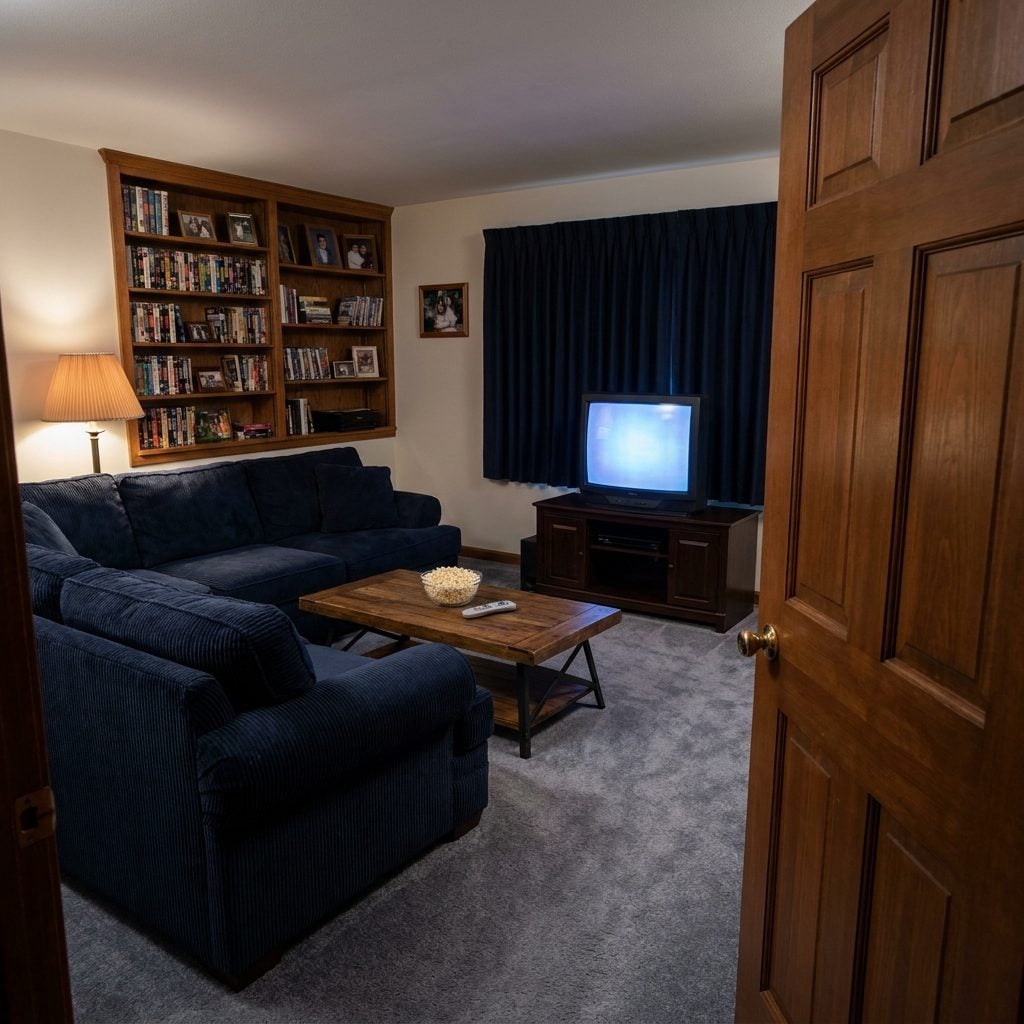
Enclosed television rooms had a logic that open-concept living has never fully replaced. You could watch a movie at actual volume. Someone could sleep in the next room. The kids could destroy the den while adults had coffee in a separate, intact kitchen. Walls did things.
HGTV’s demolition obsession, those gleeful sledgehammer moments where hosts knocked down load-bearing walls to audience applause, convinced millions of Americans that separation between rooms was a design flaw. The kitchen is now expected to flow into the living room, which flows into the dining area, which flows into a vague “gathering space” that’s basically one giant acoustically miserable room. Without the network normalizing this, more families would still have a proper TV room with four walls and a door that closes. And their houses would be quieter for it.
7. Curb Appeal Would Just Be Called “How the Front of Your House Looks” and Nobody Would Lose Sleep Over It
🔥 Would you like to save this?
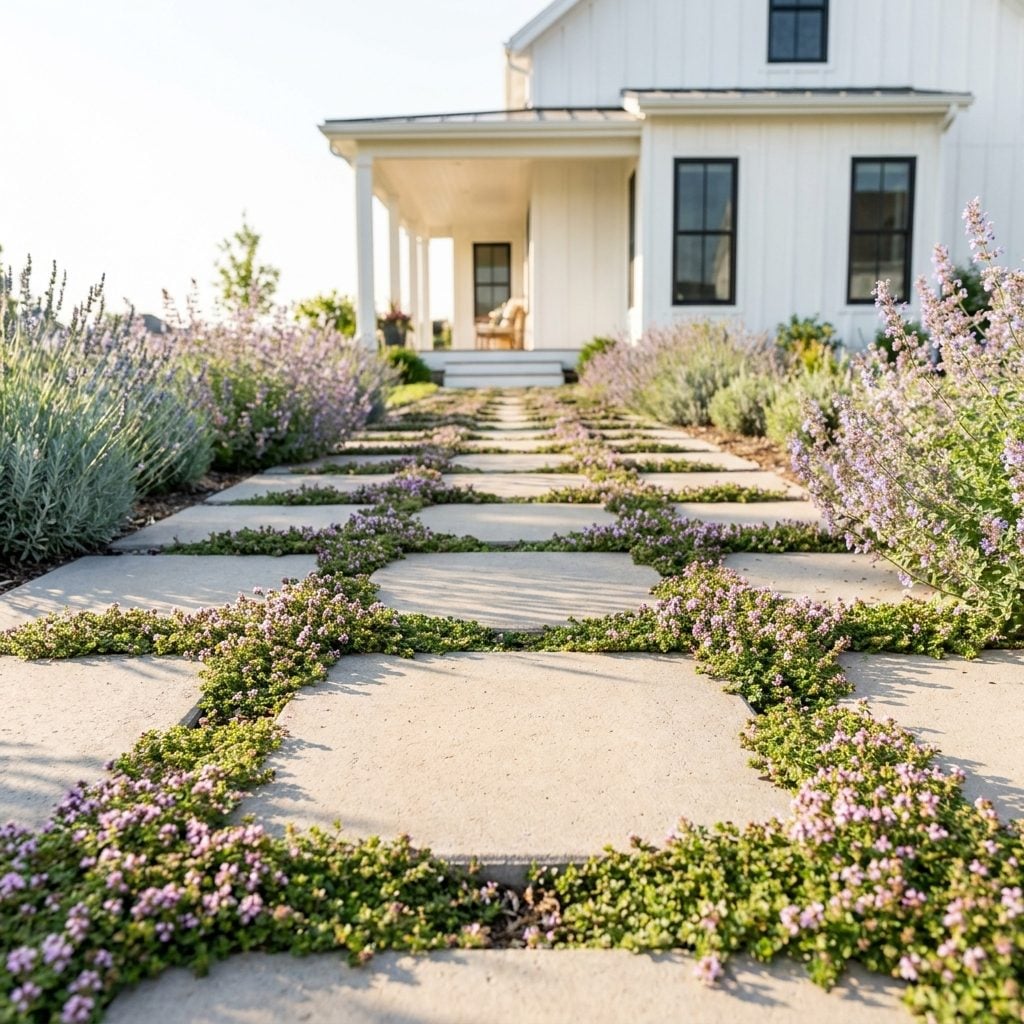
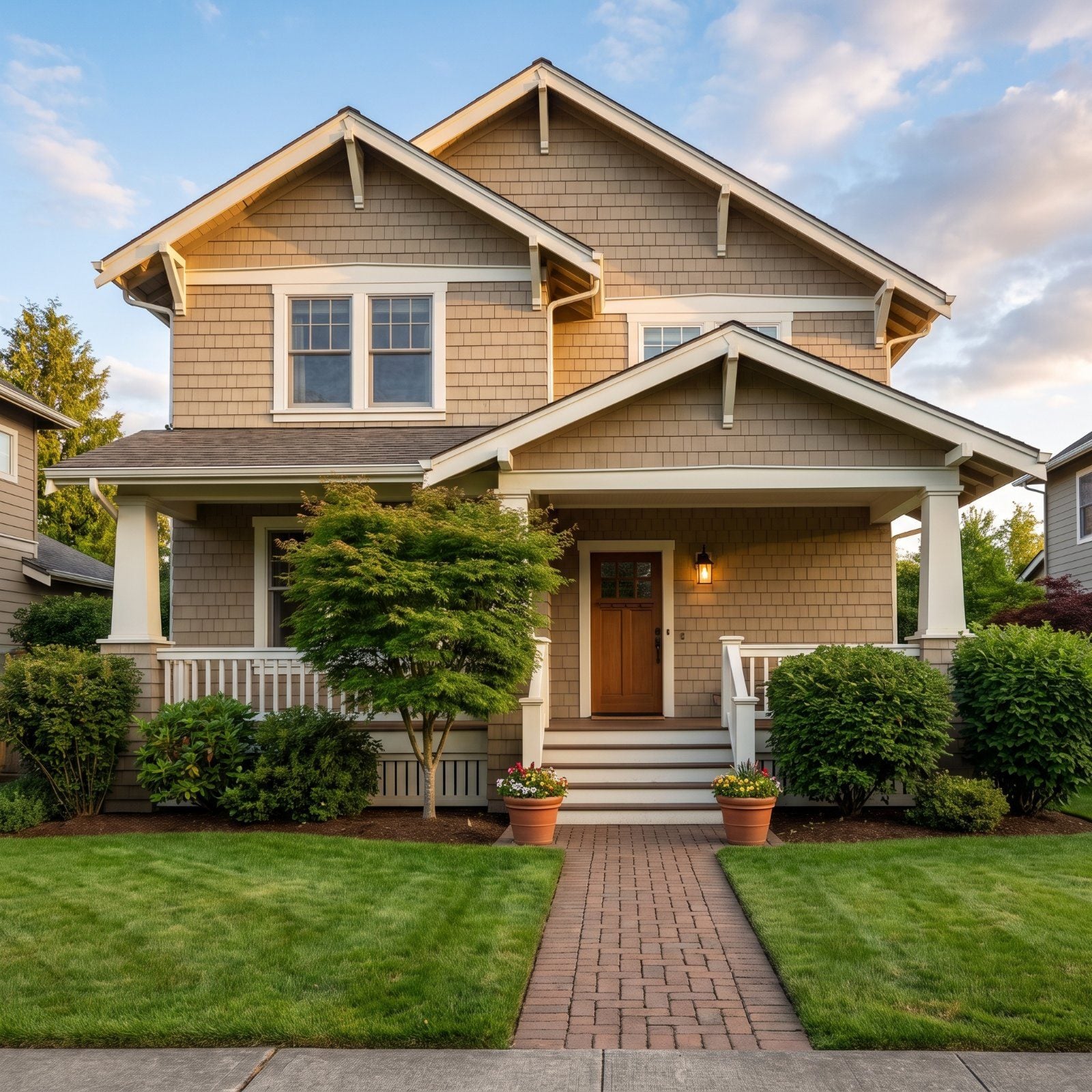
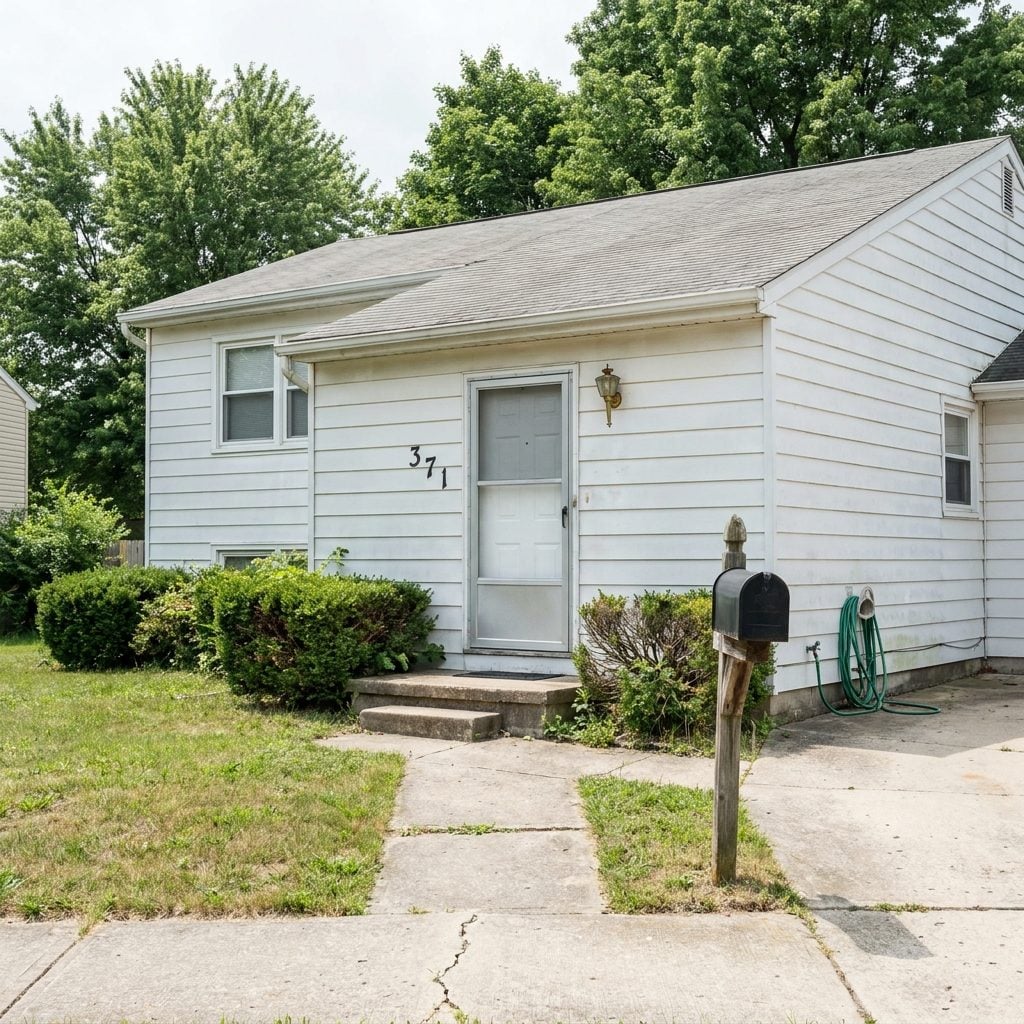
Before HGTV turned it into a measurable category with its own dedicated show, curb appeal was not a phrase most homeowners used. People mowed their lawns. Maybe they planted some hostas. The mailbox was whatever the previous owner installed. That was fine.
The network reframed the front of your house as a first impression with quantifiable ROI, and that shift fundamentally changed how Americans spend money on exteriors. Suddenly your front door color was a “statement.” Your house numbers needed to be “modern.” Landscaping became a project with before-and-after potential rather than a Saturday chore. Without this reframing, fewer homeowners would agonize over whether their matte black house numbers coordinate with their porch light finish. And they’d probably be happier for it.
6. Luxury Vinyl Plank Would Still Be a Budget Secret Instead of a Whole-Home Default
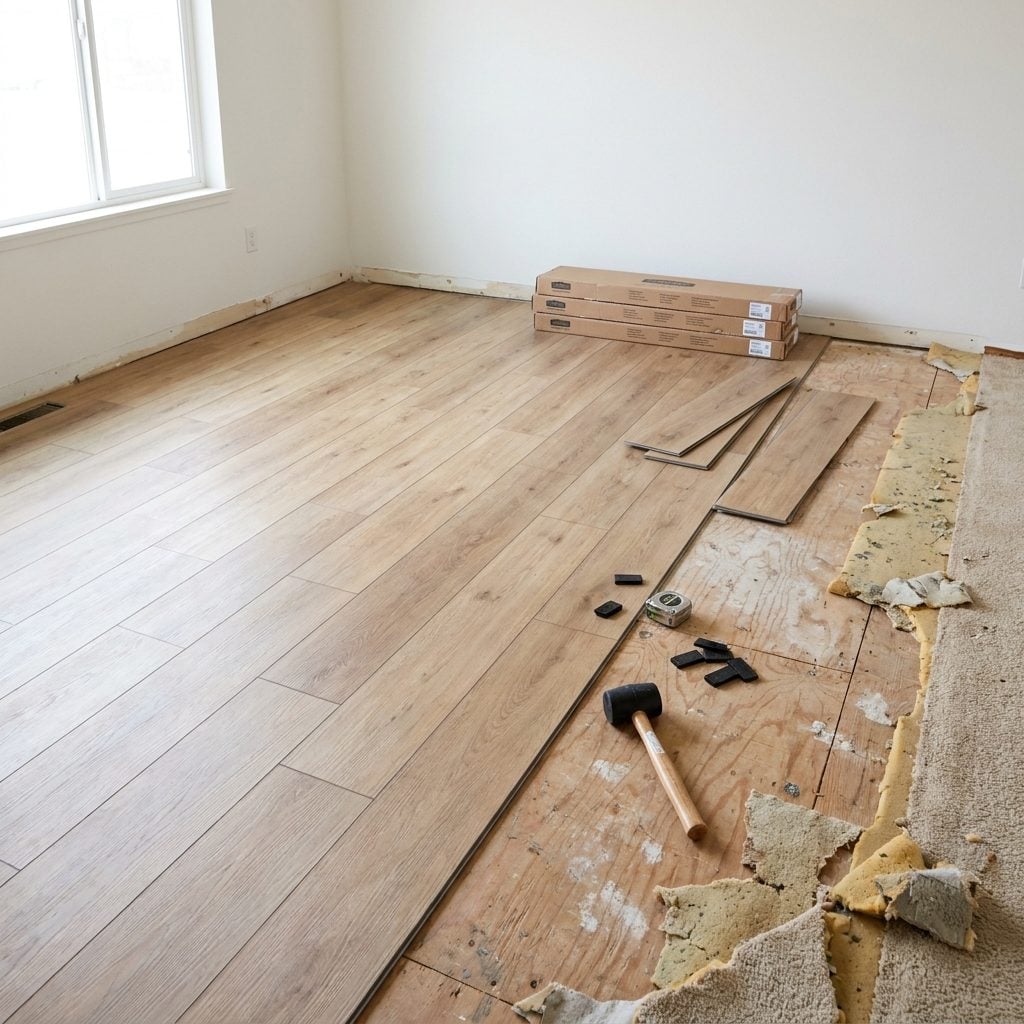
LVP flooring existed for years before HGTV turned full-home flooring replacement into a standard renovation step. It was a practical, quiet option that contractors knew about, but most homeowners associated vinyl with their grandmother’s kitchen and wanted nothing to do with it.
Then renovation shows needed dramatic visual transformations on tight budgets, and luxury vinyl plank became the workhorse. It looked like wood on camera. It installed fast, which mattered when you had 30 minutes of television to fill. It cost a fraction of real hardwood. Show after show ripped out perfectly good carpet and tile to lay LVP throughout entire homes, and viewers took notes. Without that exposure, luxury vinyl plank flooring would have spread gradually through contractor recommendations and flooring showrooms. Instead, it went from niche to national practically overnight.
5. Perfectly Good Kitchen Cabinets Would Live Long, Useful Lives Instead of Being Ripped Out at 15
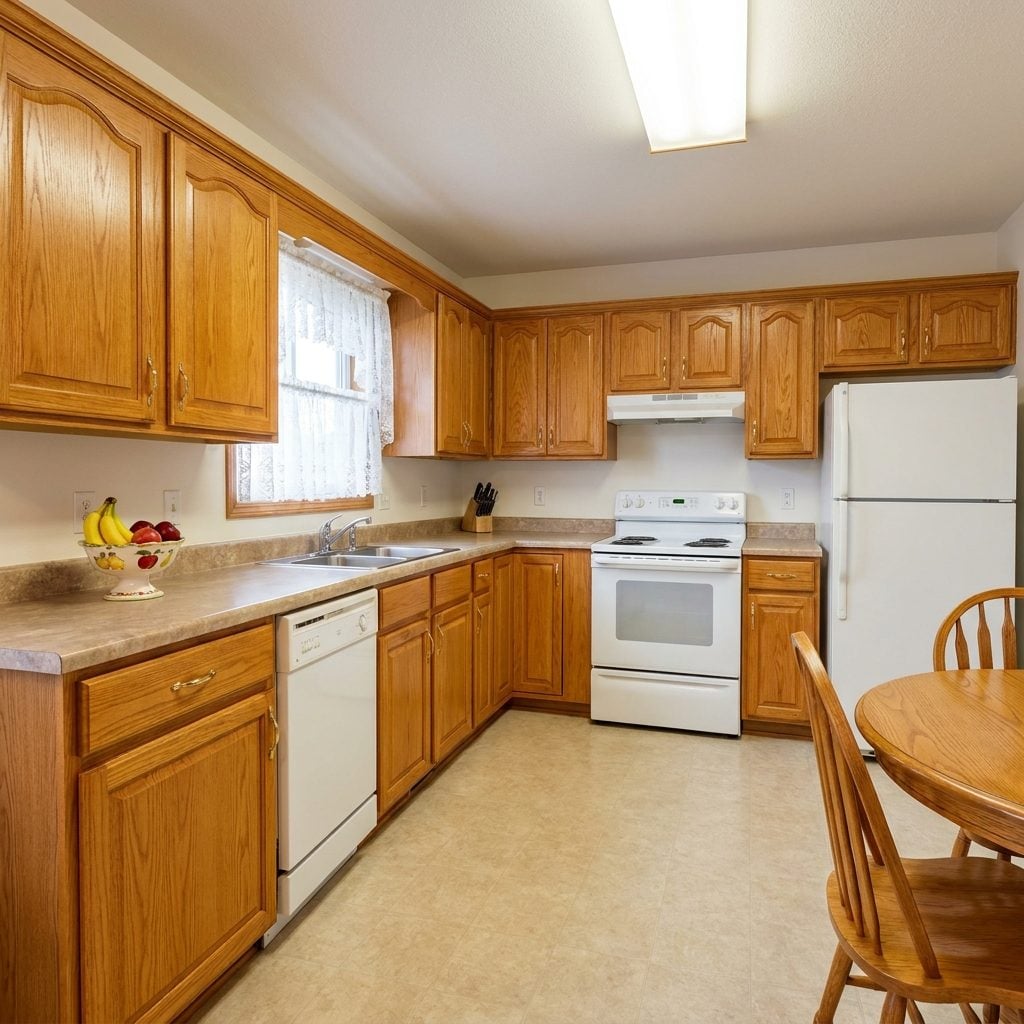
Solid oak cabinets from 1998 are better built than most of what replaces them in 2024. I’ll say that plainly because it’s true and nobody on television will.
HGTV created a cycle where functional cabinets became the first casualty of any kitchen renovation. The golden oak finish that was “builder grade” in the ’90s became a visual shorthand for “needs updating,” even when the boxes were solid, the drawers worked, and the hinges hadn’t loosened. The network taught homeowners to evaluate their kitchens through a camera lens rather than a utility lens. Without that conditioning, more families would paint their existing cabinets, swap the hardware, and move on. Instead, entire kitchens get gutted so someone can install white shaker cabinets that will look just as “dated” in fifteen years.
4. More Homes Would Look Like the People Living in Them Instead of a Zillow Listing
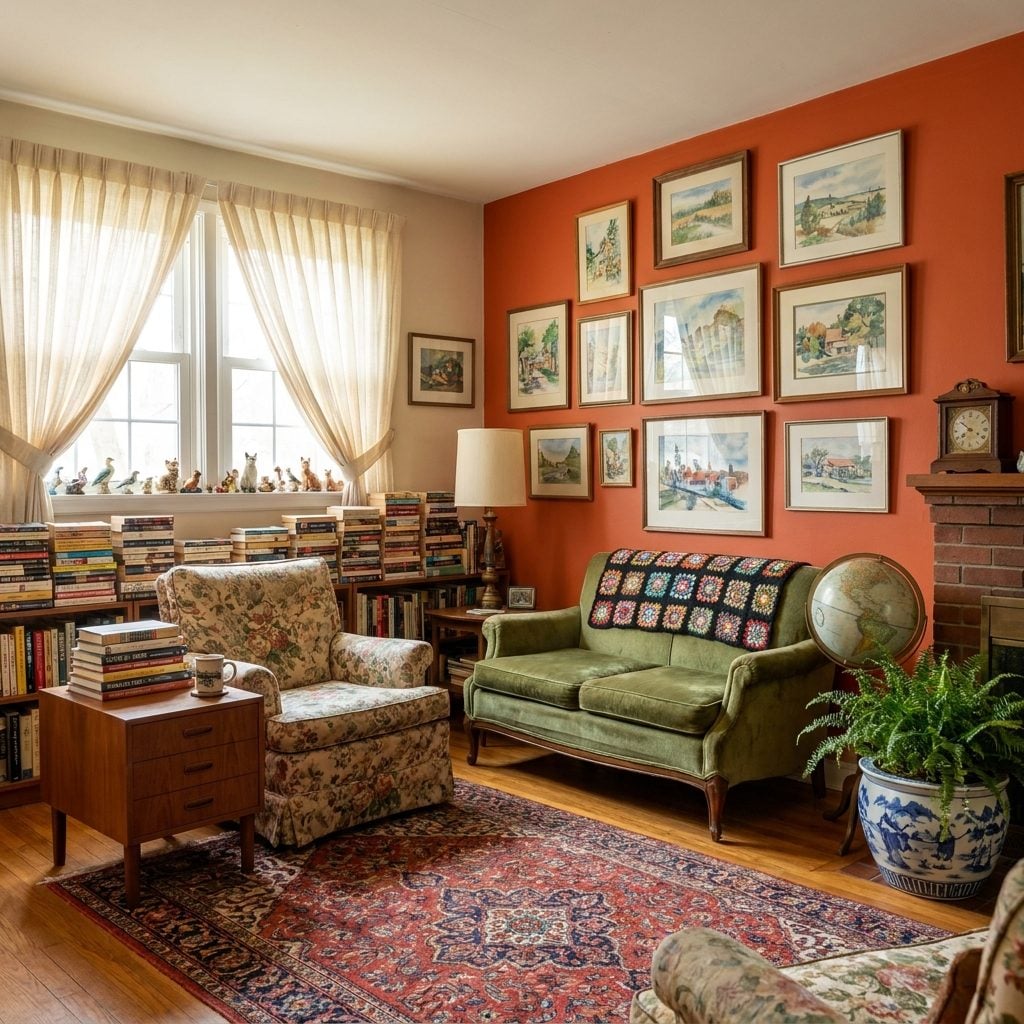
This is the big one, and it’s worth sitting with for a moment.
Before HGTV, a retired teacher’s house looked like a retired teacher’s house. There were shelves crammed with paperbacks. A collection of ceramic owls on a windowsill that nobody questioned. A kitchen painted the specific shade of yellow that made one person happy. Homes were autobiographical. They accumulated personality through years of living, not through a single weekend of styling for home bar design or resale photography.
The network, across thousands of episodes, gradually replaced personal taste with resale logic. Neutral walls. Staged vignettes. “Mass appeal.” And homeowners internalized this, even when they weren’t selling. They began decorating defensively, choosing what a future buyer might want instead of what they actually liked. Without HGTV, more American homes would be weird and specific and full of things that only make sense to the people who live there. We lost something real.
We stopped decorating for ourselves and started decorating for imaginary strangers who might buy our house someday.
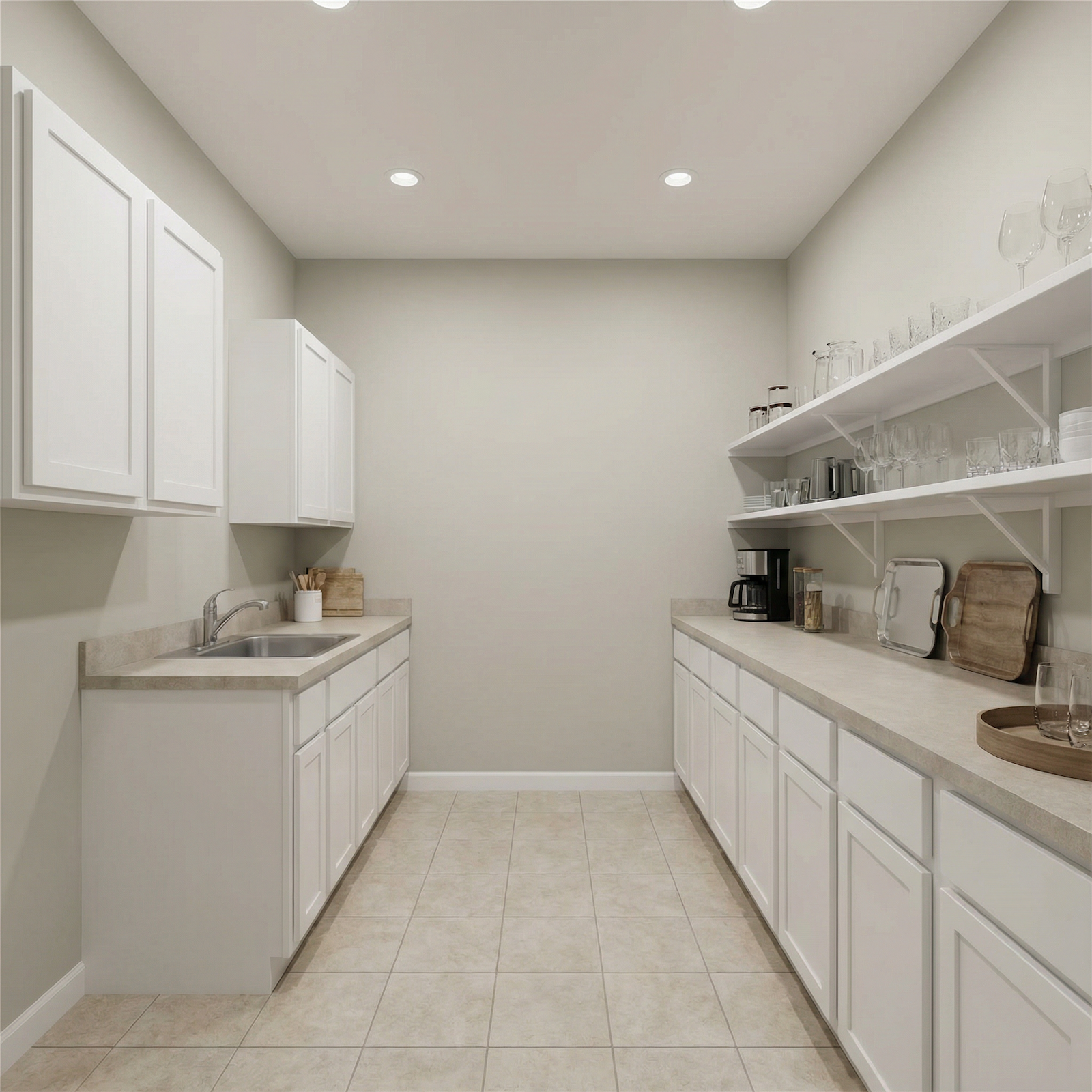
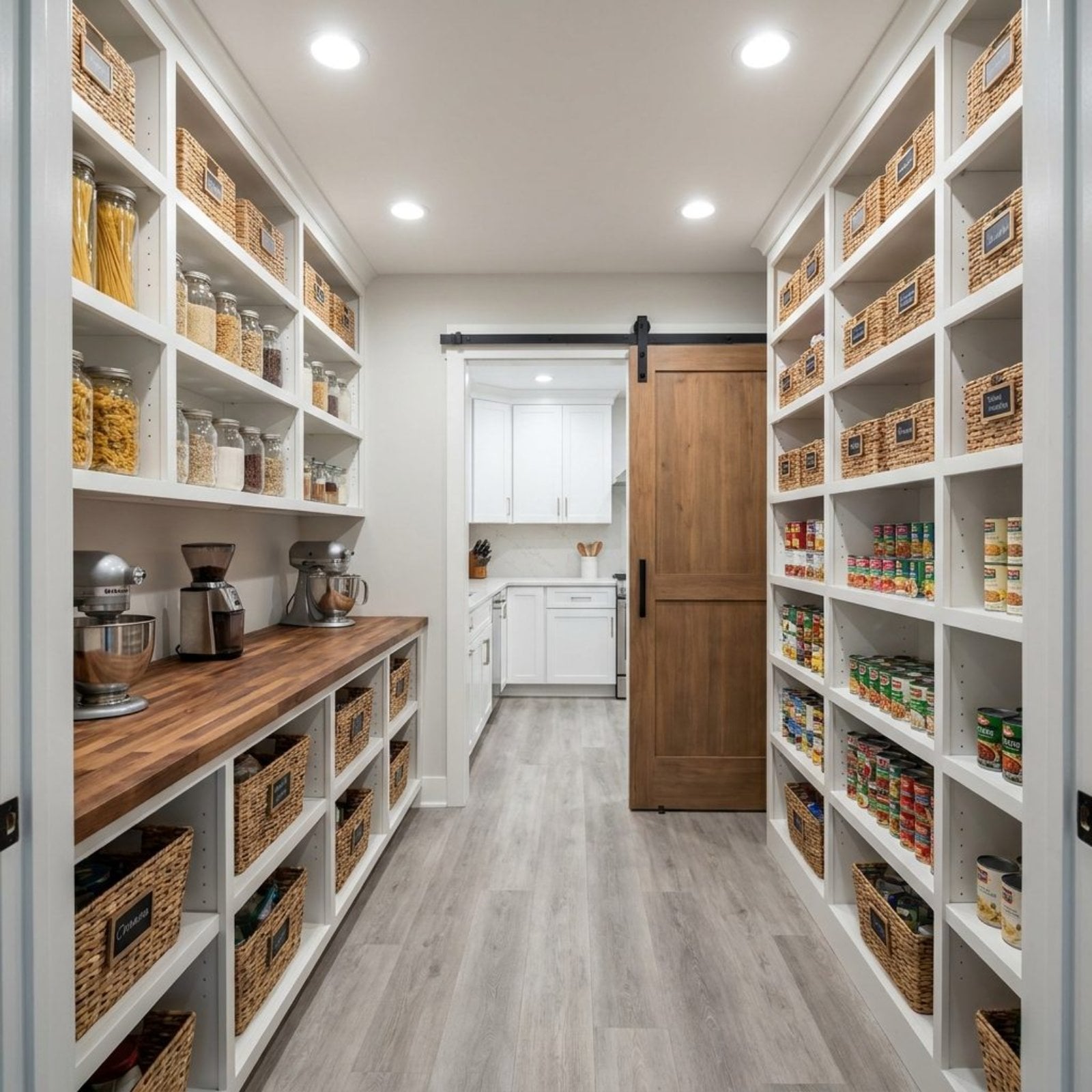
3. The Walk-In Pantry Would Still Be a Rich-People Thing Instead of a Non-Negotiable on Every Floor Plan
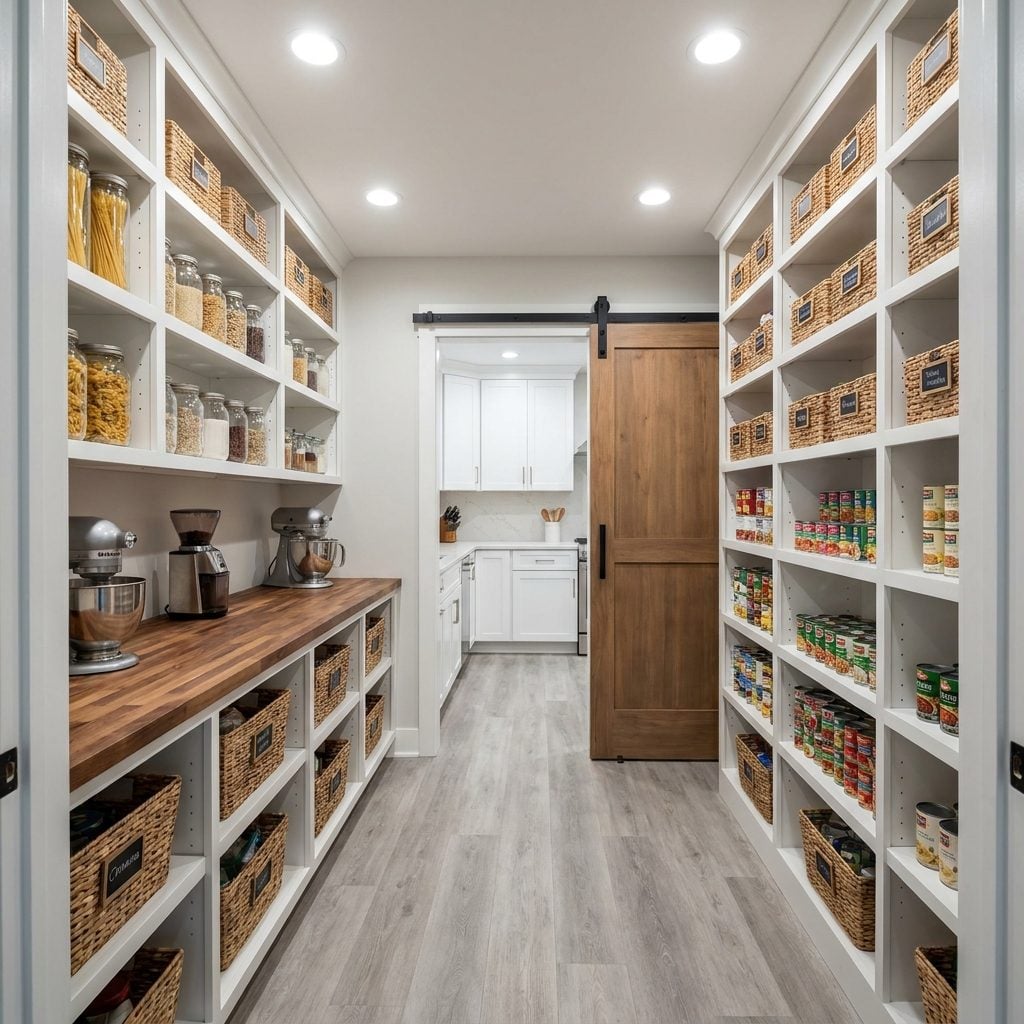
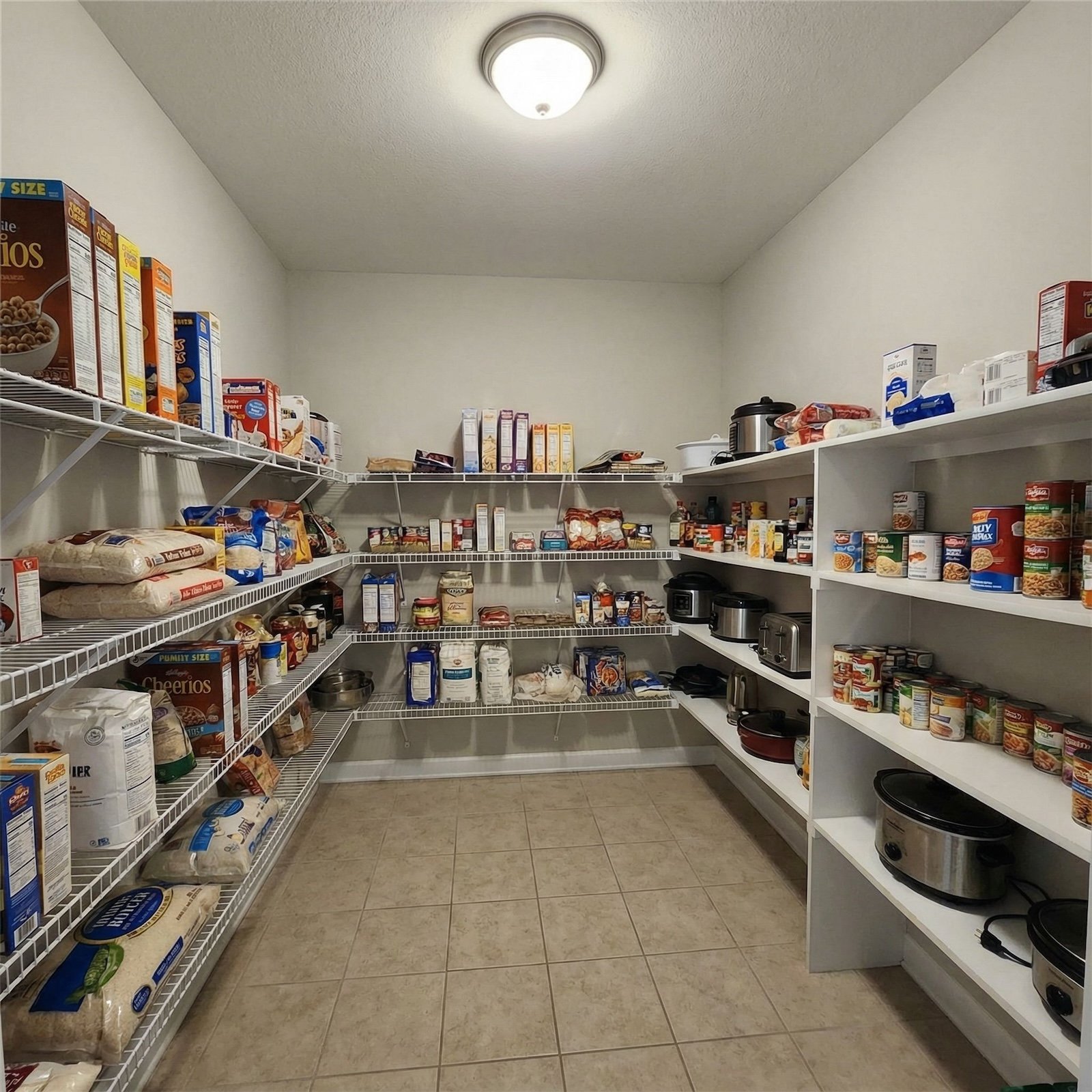
Walk-in pantries used to appear in homes over 3,500 square feet. Period. Everyone else had cabinets, and maybe a narrow closet off the kitchen if they were lucky. That was the arrangement for decades, and nobody wrote angry Zillow reviews about it.
HGTV’s influence on new construction, especially through shows featuring home tours and custom builds, turned the walk-in pantry into an expected feature at every price point. Builders started including them in 1,800-square-foot starter homes because buyers had seen them on television and now considered them standard. The square footage had to come from somewhere, and it usually came from the dining room or the garage. Without this expectation shift, plenty of perfectly functional kitchens with adequate cabinet storage would still satisfy their owners. But try selling a new-build without a pantry now. Good luck.
2. Unfinished Basements Would Just Be Basements, Not a Source of Existential Homeowner Guilt
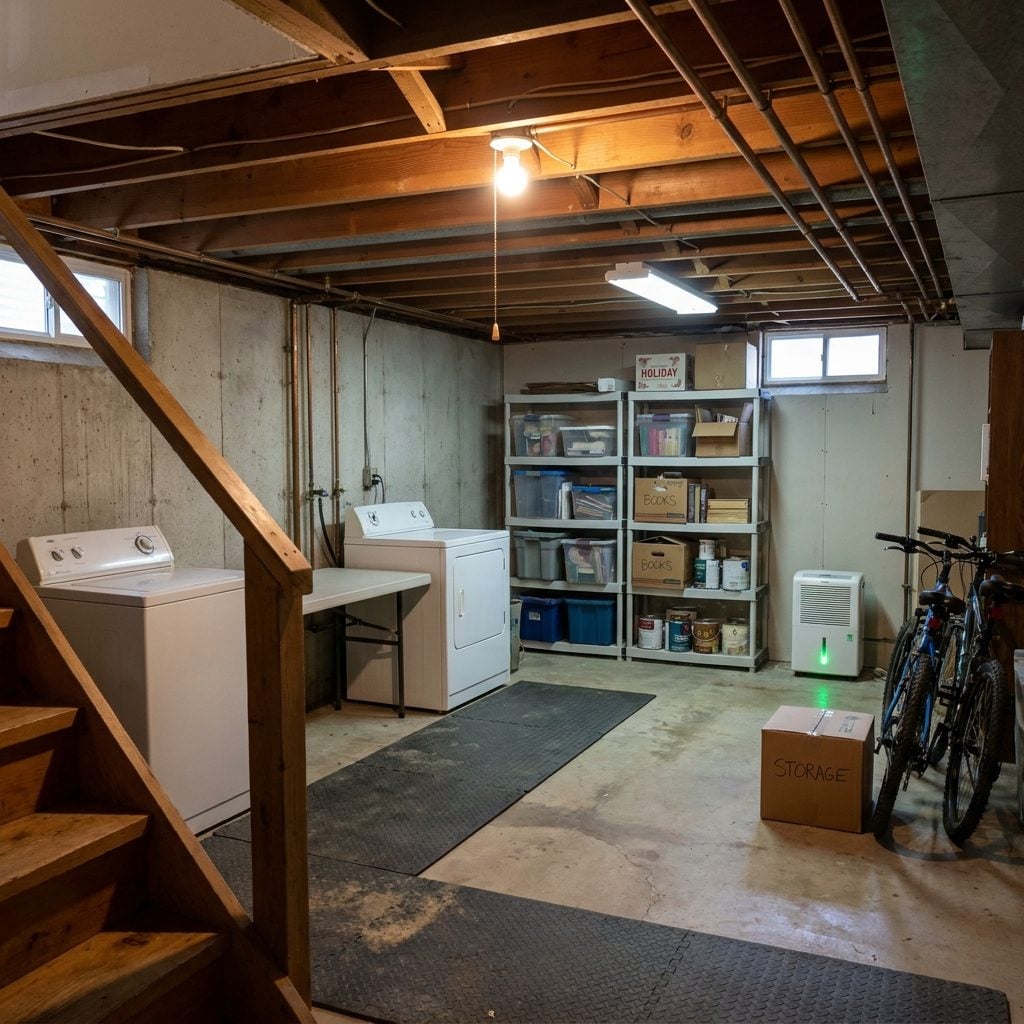
An unfinished basement used to be a place where you stored holiday decorations, let the dehumidifier run, and occasionally sorted laundry on a folding table under a bare bulb. It smelled like concrete and slightly like dryer sheets. It was fine. It was a basement.
Then HGTV turned every square foot of a home into potential living space, and suddenly that concrete floor and those exposed joists became a personal failing. Entire shows were dedicated to “reclaiming” basements, as if the space had been taken hostage. Homeowners who had never once thought about their basement started feeling guilty about it, calculating the cost of framing walls and dropping ceilings over what was, functionally, perfectly adequate storage.
Without the network’s relentless messaging that unused space equals wasted value, most Americans would still walk downstairs, grab a can of paint from the shelf, step over the cat carrier, and walk back up without a single thought about what their basement “could be.” The home inspiration industry convinced us that every room needs a purpose and a design scheme. Some rooms just need to hold your stuff.
1. American Homes Would Actually Look Different From Each Other
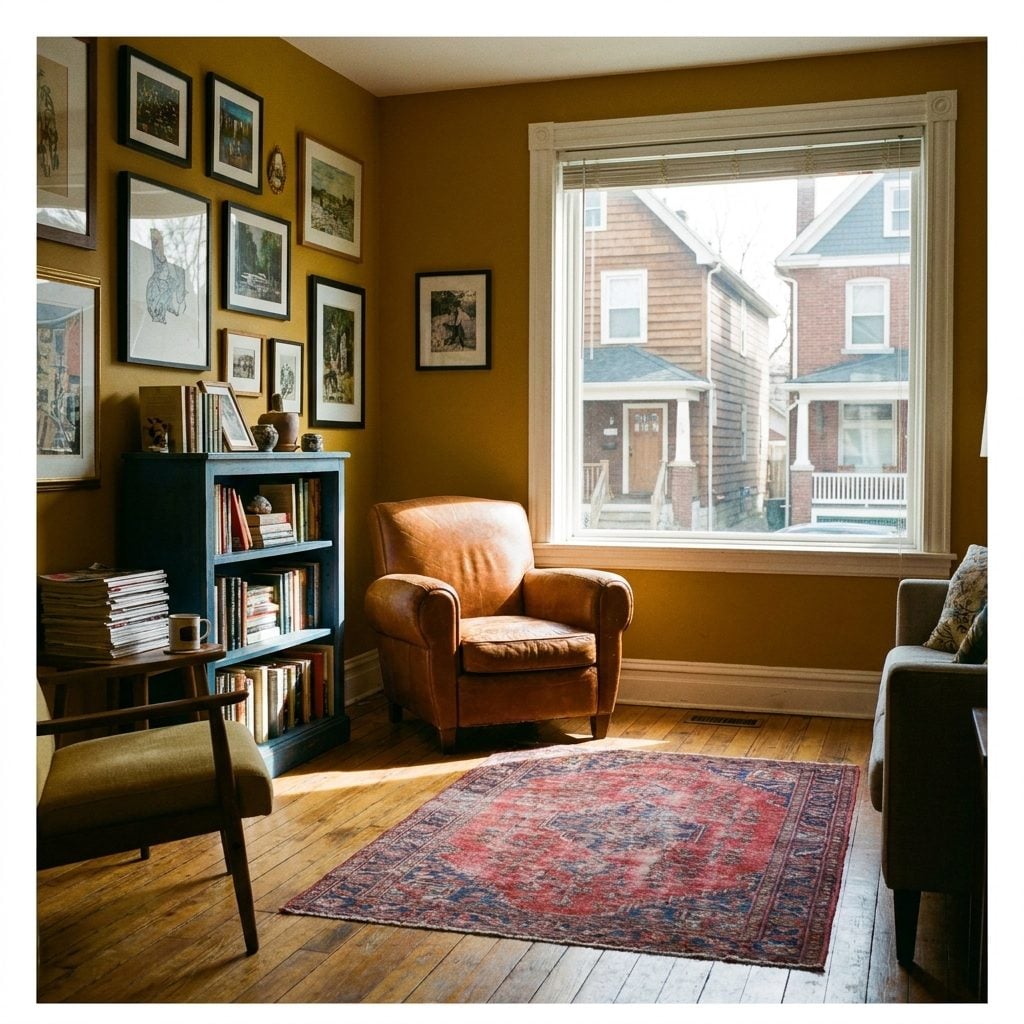
Nobody talks about this paradox: a network built around helping people improve their homes may have actually made millions of homes worse — or at least made them all look the same. Before HGTV gained traction in the early 2000s, most people decorated with hand-me-downs, whatever their local furniture shop stocked, and the dubious guidance of a neighbor’s cousin who “had good taste.” The results were messy, personal, and wildly inconsistent from one house to the next. Which was the whole appeal.
Strip HGTV out of the picture, and there’s no universal playbook. No coast-to-coast agreement that grey is the only wall color a sane person would choose, that shiplap belongs in every room regardless of context, or that open shelving somehow beats cabinets that actually hide your mismatched mugs. Regional character would have survived longer. A Savannah home would look nothing like a Portland one, which would bear zero resemblance to anything in Duluth — and honestly? That was more interesting.
The sameness goes deep. Walk through any suburb renovated between roughly 2012 and 2022. Same brushed nickel pendant lights. Same white subway tile backsplash. Same engineered hardwood in a shade the industry insists on calling “greige.” Builders and flippers watched the same shows their buyers watched, and a feedback loop formed where everybody optimized for a single aesthetic — a single vibe, really, stripped of anything that might offend or surprise. Without that loop, personal taste wouldn’t have been steamrolled into a national average. People would still make odd choices, bold choices, occasionally catastrophic choices involving burgundy accent walls. But you’d walk into a room and actually know whose house you were standing in.