🔥 Would you like to save this?
Close your eyes and walk down those stairs. The carpet is brown. The walls are browner. Something is buzzing. Somewhere, a dehumidifier is filling up a tank that nobody will remember to empty until tomorrow. The 1980s American basement was its own ecosystem, operating by rules that made complete sense at the time and zero sense now. If you grew up with one of these rooms, you already know exactly what it smelled like. Here are 33 things that prove it.
Wood-Paneled Walls Covering Every Square Inch, Floor to Ceiling, in a Brown That Had No Official Name
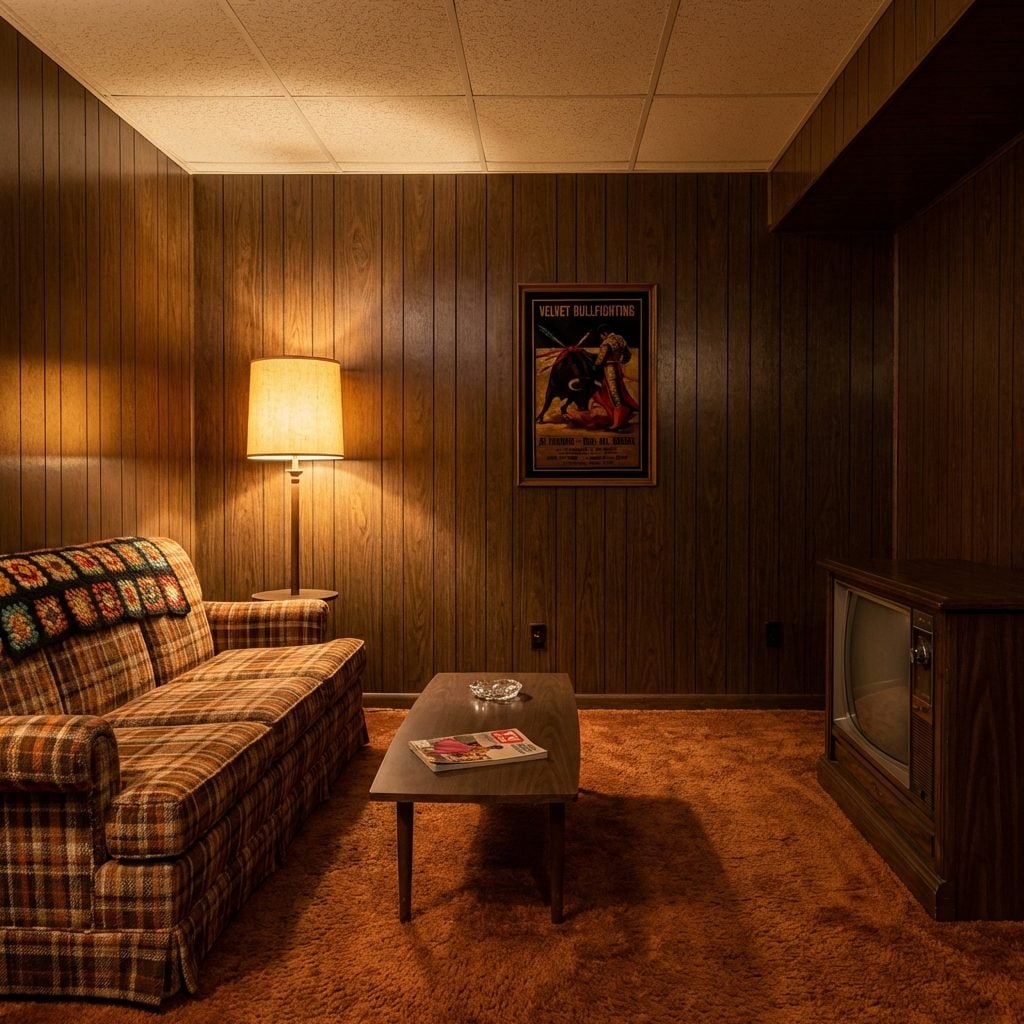
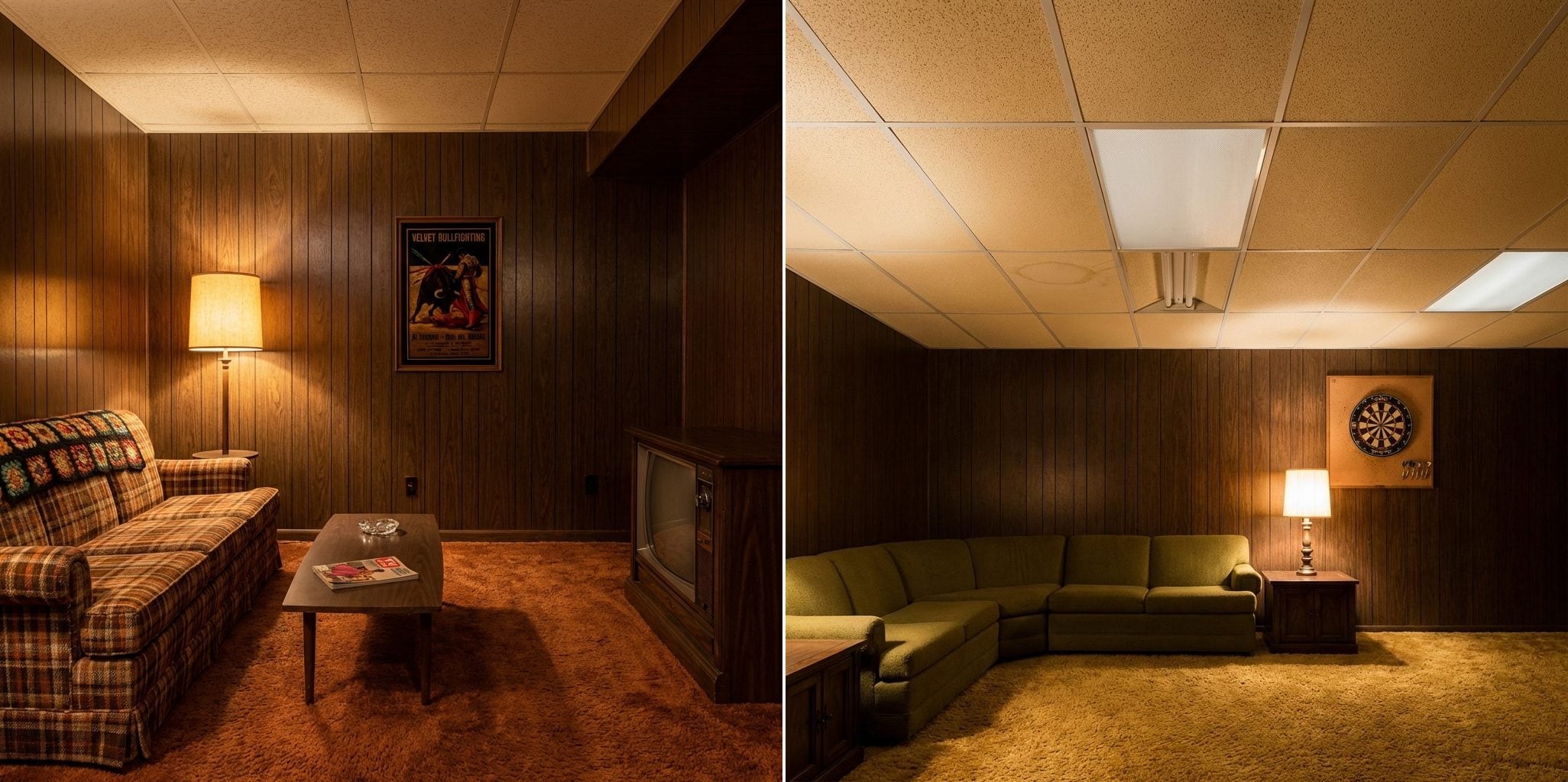
It wasn’t walnut. It wasn’t mahogany. It was just brown, a particular shade of late-autumn despair that arrived in 4×8 sheets from the hardware store and got nailed to every available surface without a single question asked. The paneling ran floor to ceiling, corner to corner, and somehow made a room that was already underground feel even more subterranean.
In order to come up with the very specific design ideas, we create most designs with the assistance of state-of-the-art AI interior design software. Also, assume links that take you off the site are affiliate links such as links to Amazon. this means we may earn a commission if you buy something.
The sheets were thin enough that you could hear a dull thud when you knocked on them, which made the walls feel simultaneously permanent and temporary. The vertical grooves collected dust in perfect little parallel lines. Nobody cleaned those grooves. Nobody talked about the grooves. The grooves simply existed.
What Our Readers Say
- Today, images with dark wood tones get fewer hearts from Home Stratosphere readers than the other images in the same articles, 46% versus 51%.
- When we asked about ceilings, about half of our readers picked white, with wood at 29% and colour at 22%.
From Home Stratosphere reader polls and votes.
Drop Ceiling with Yellowing Foam Tiles and at Least Two Replacement Squares That Didn’t Quite Match
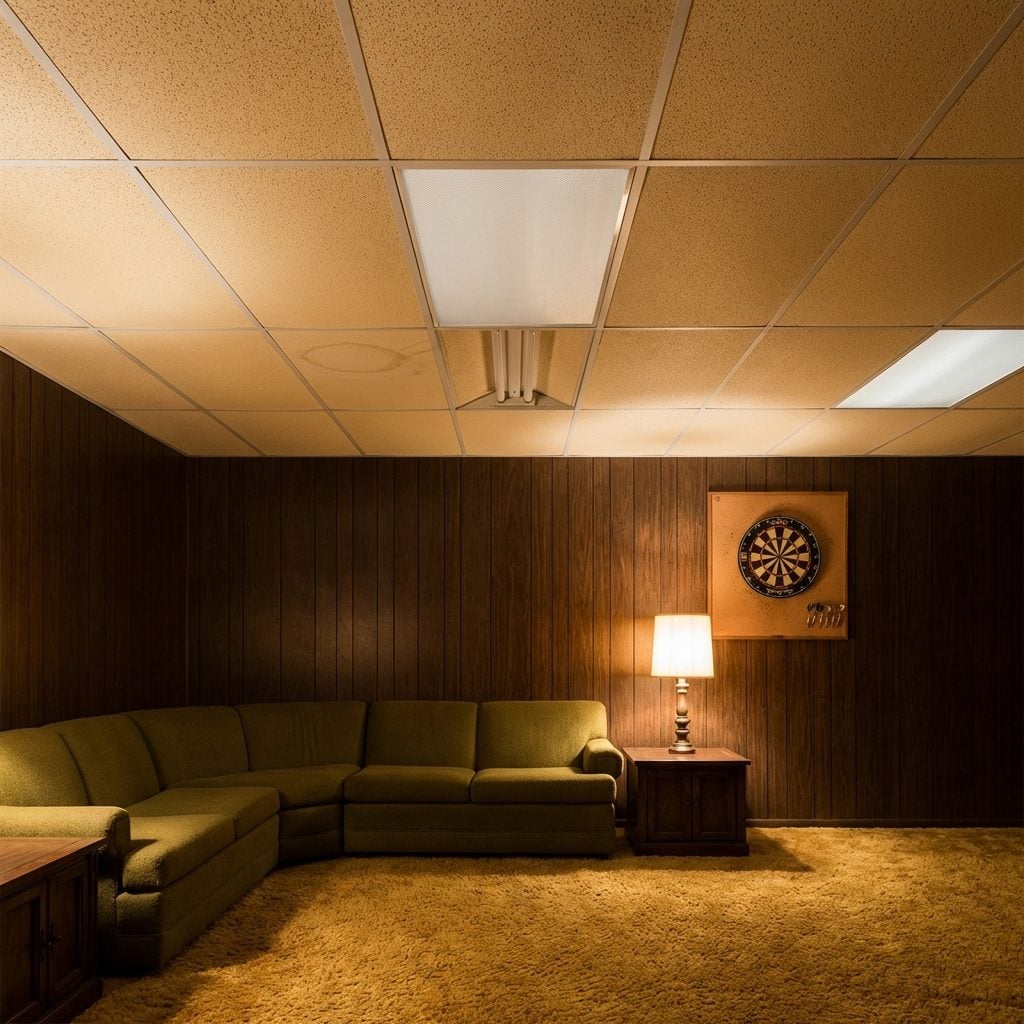
Every basement drop ceiling told a story through its tiles, and the story was always a little suspicious. The original tiles were ivory or off-white when installed. Within a decade they had turned a warm, unmistakable yellow, the color of old paperbacks, from a combination of humidity, cigarette smoke, and time.
Then came the replacements. Somewhere along the way, a tile got water-stained or cracked or just went missing, and someone bought a new box that was ever so slightly whiter, or slightly more square, or textured differently. Those replacement tiles stuck out like a confession. You could always find them. The ceiling became an accidental record of every leak, every project, every year the house had been through.
Shag Carpet Thick Enough to Swallow Small Objects, in a Color Somewhere Between Harvest Gold and Pure Regret
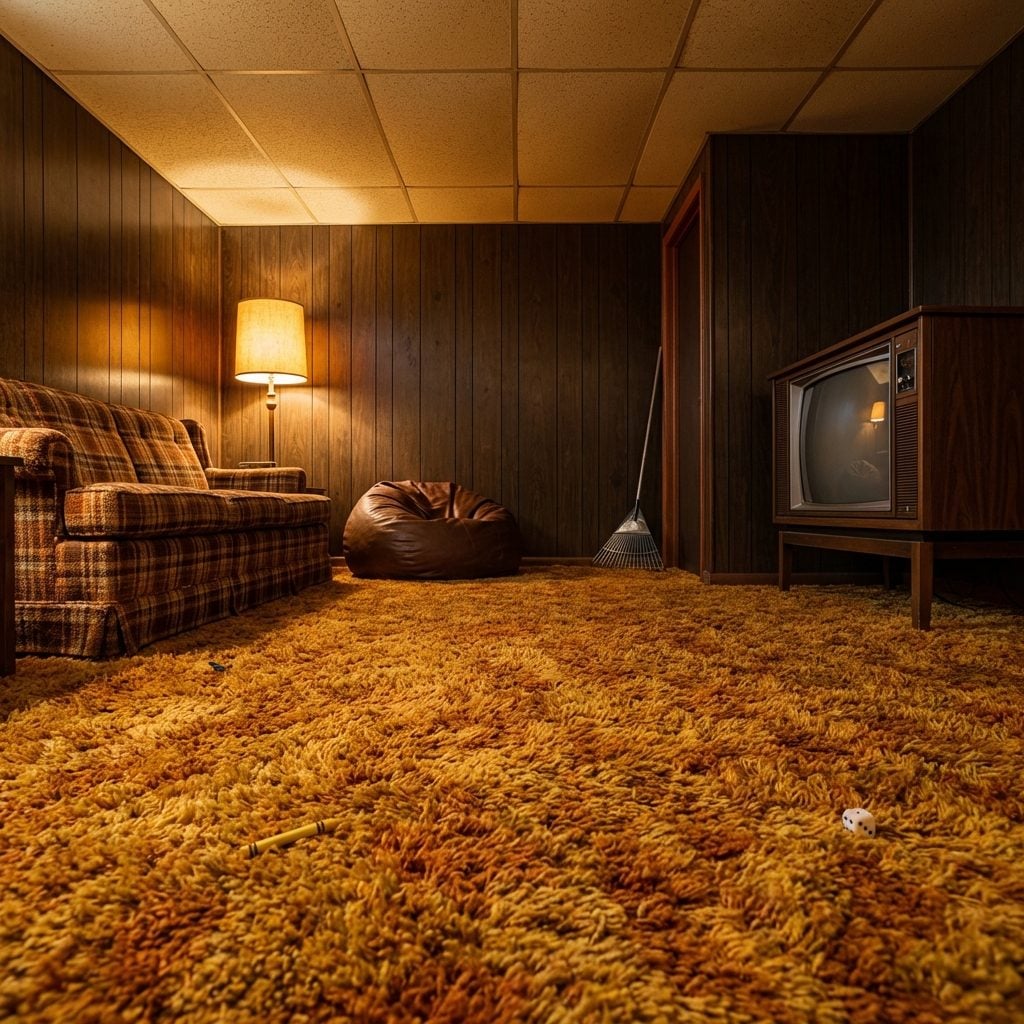
If you’ve ever lost a Matchbox car in a basement carpet and found it four years later with your bare foot at 11pm, you know exactly what we’re talking about. This carpet was installed directly over concrete slab, which meant it was simultaneously soft and somehow also cold. The pile was long enough that raking it, there were literal carpet rakes sold for this purpose, was considered maintenance.
The color is hard to describe accurately because the color no longer exists in the natural world. It was in the harvest gold family, sure, but with an orange lean and a brownish undertone that made it look dirty even directly after vacuuming. It was the carpet equivalent of a color that gave up.
The Full Built-In Wet Bar with a Mirrored Backsplash, Vinyl Bar Stools That Stuck to Your Legs, and a Mini Fridge Stocked Mostly with Beer and Tab
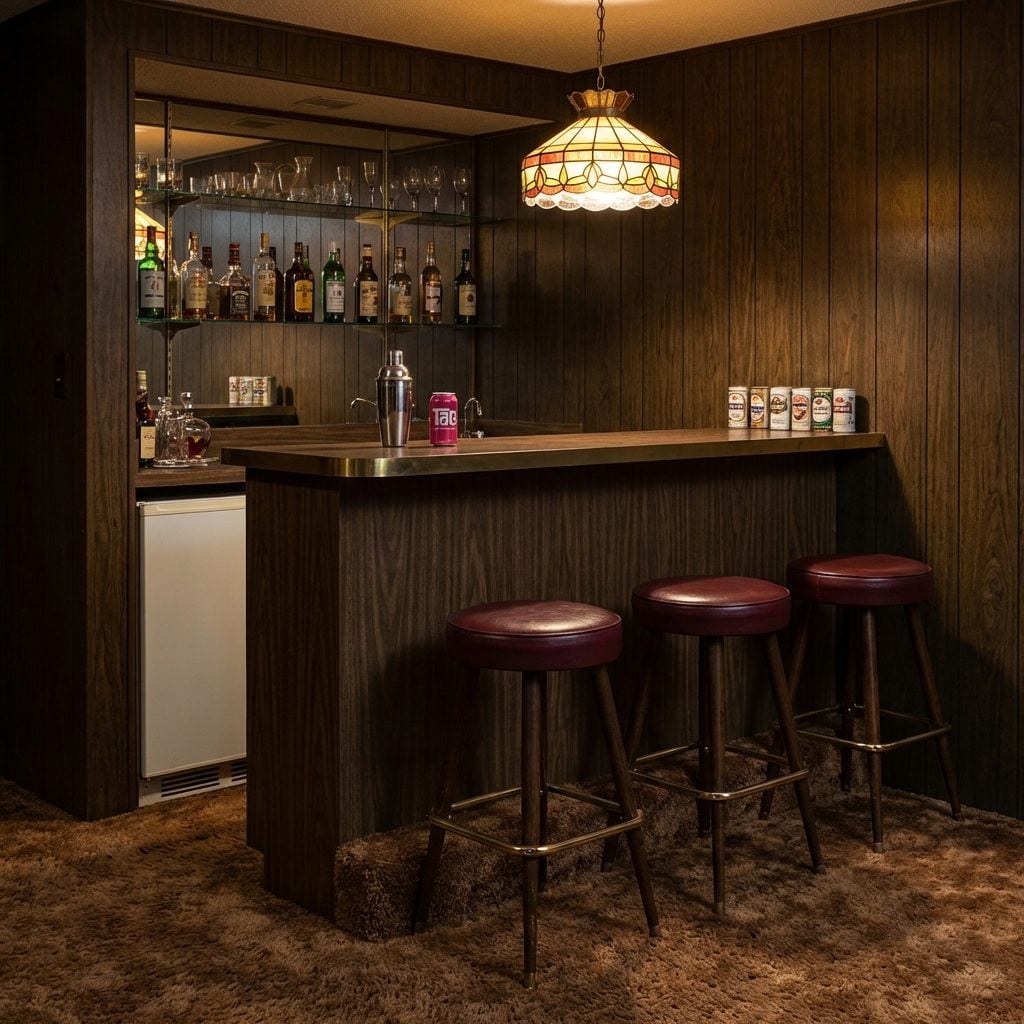
The wet bar was not subtle. It announced itself from across the room with its mirrored backsplash, which made the room look twice as large and twice as enthusiastic about drinking, and a row of bottle-shaped shadows reflected back at you. The bar top was laminate pretending to be wood grain, edged in a thin strip of brass-toned metal that someone wiped down occasionally with a damp cloth.
The vinyl bar stools were upholstered in a dark color, usually burgundy or forest green or a brown that matched nothing else, and they stuck to the backs of your thighs in summer with a sound that was, frankly, embarrassing. The mini fridge hummed constantly and held a strict inventory: canned beer in the main section, Tab and 7-Up on the door, and exactly one bottle of vermouth that had been there since 1979.
This was the feature that separated a regular basement from a finished basement. The wet bar meant your dad had achieved something. You can explore what a modern take on this looks like with a mediterranean home bar floor plan, but nothing will replicate the particular energy of that mirrored backsplash at a Super Bowl party.
The Wood-Burning Fireplace (or Pellet Stove) That Anchored the Whole Room Like It Was the Main Event
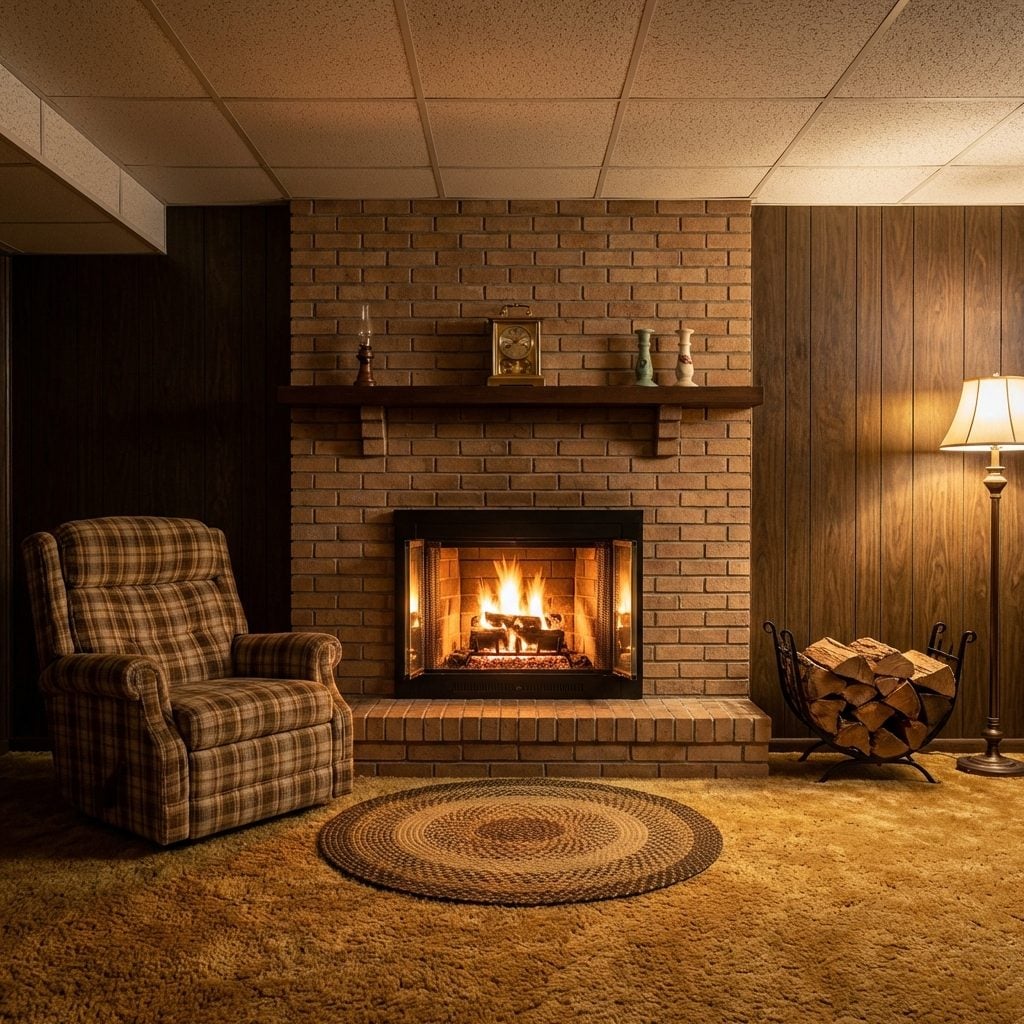
In a room that was otherwise a collection of unrelated brown things, the fireplace or pellet stove gave the basement a reason for being. It was the focal point, the destination, the thing you walked toward. The surround was usually brick, real or faux, and the mantel was invariably dark wood, holding a clock and maybe a couple of candle holders that never got used.
The pellet stove variant had its own personality: a squat, self-important black metal box with a small glass window through which you could watch the pellets drop and catch. It made a particular mechanical rattling noise during the feed cycle that became so familiar, you stopped hearing it entirely after the first winter. Both versions did the same job: they made a basement feel less like a basement.
A Giant Wood-Framed Console TV That Weighed Several Hundred Pounds and Served as Both Screen and Side Table
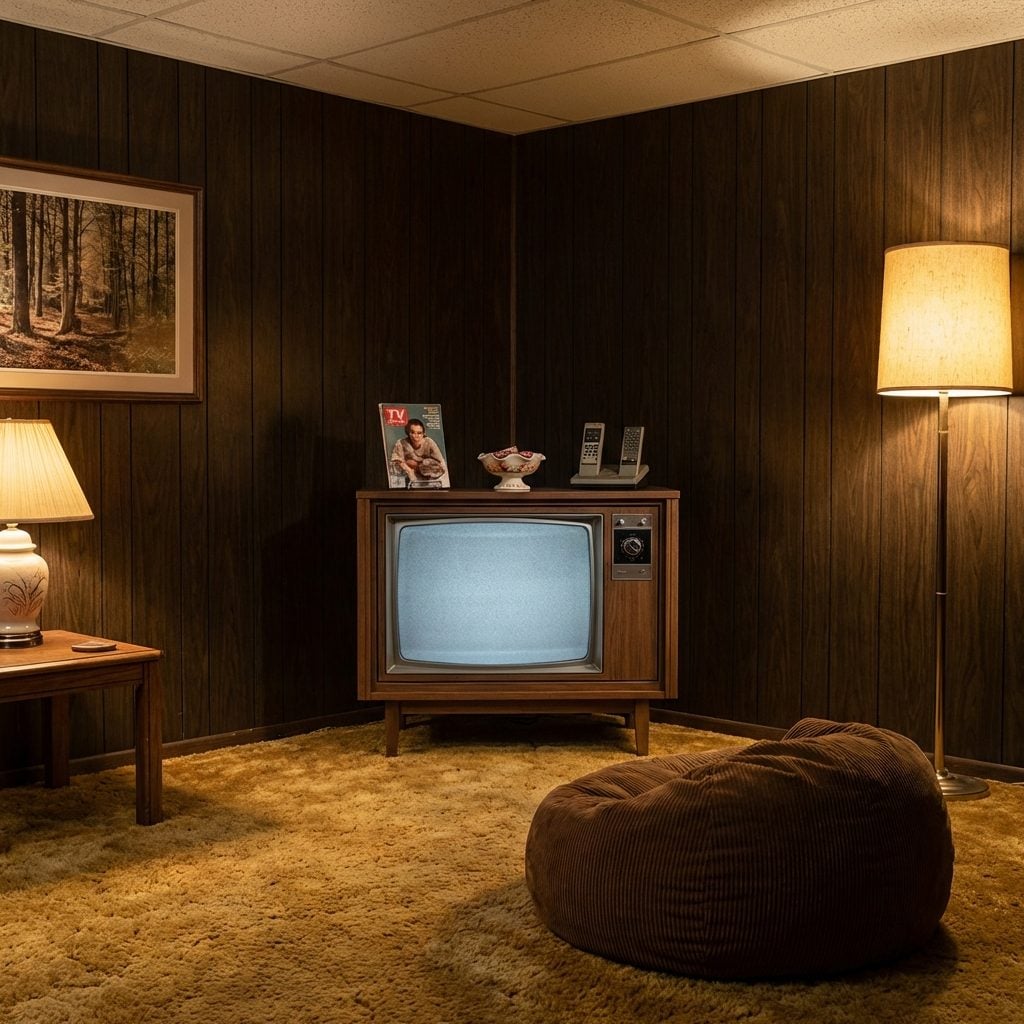
The console TV was furniture first and television second. Finished in a wood-grain veneer that matched nothing else in the room but somehow complained about it loudly, it sat on four stubby legs and occupied a corner with the energy of something that intended to be there forever. Moving it required at least three adults and a brief period of silence after.
The top surface was a natural flat for placing things: a TV Guide, a set of TV remote controls that only worked if you pointed them at a specific angle, a ceramic candy dish shaped like a pineapple. The screen itself was a deep, convex glass bubble that collected static electricity and the fingerprints of every child who had ever touched it. When you turned it off, the picture collapsed to a single white dot in the center that lingered for several seconds before fading. That dot was somehow the coziest thing in the room.
The Hi-Fi Stereo Console with Floor-Standing Speakers, a Turntable, and an Eight-Track Slot Nobody Admitted Still Existed
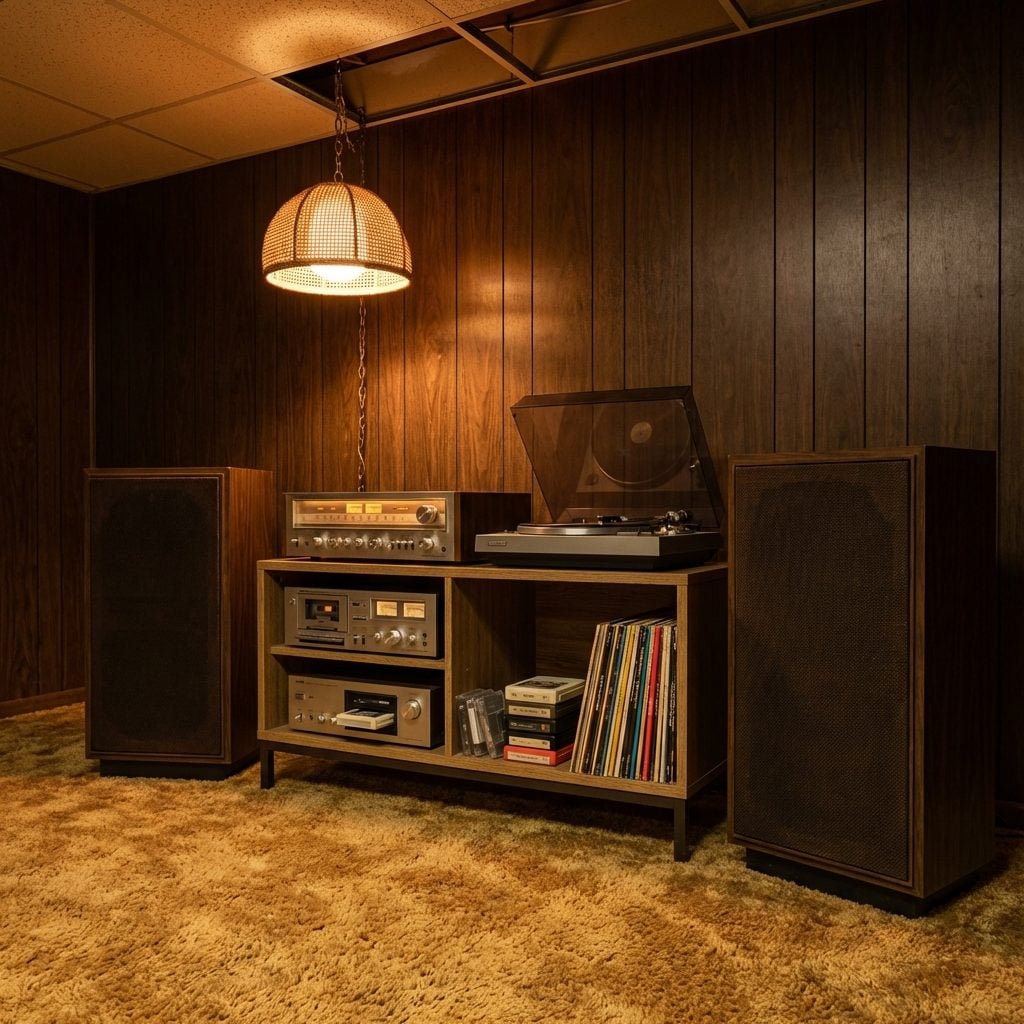
There was a whole wall, or at least a whole corner, dedicated to this. The component stereo system of the 1980s basement was an engineering achievement dressed in fake wood and displayed with the pride of a trophy. The receiver had a backlit dial that glowed amber in the dark. The turntable had a hinged plastic cover that clicked satisfyingly when you lifted it. The speakers were large rectangular towers in walnut veneer that did, in fairness, sound genuinely good.
The eight-track player was the archaeological layer of the system, already passé by 1981, but still physically present, still occasionally loaded with a Fleetwood Mac cartridge that someone forgot was in there. Touching the eight-track slot was not encouraged. The whole system existed as a kind of domestic altar, and the unspoken rule was that only one person in the house was authorized to operate it correctly.
‘The receiver had a backlit amber dial that glowed in the dark like a tiny, very specific sunrise.’
The ‘Rec Room’ That No One Officially Named but Everyone Understood Completely
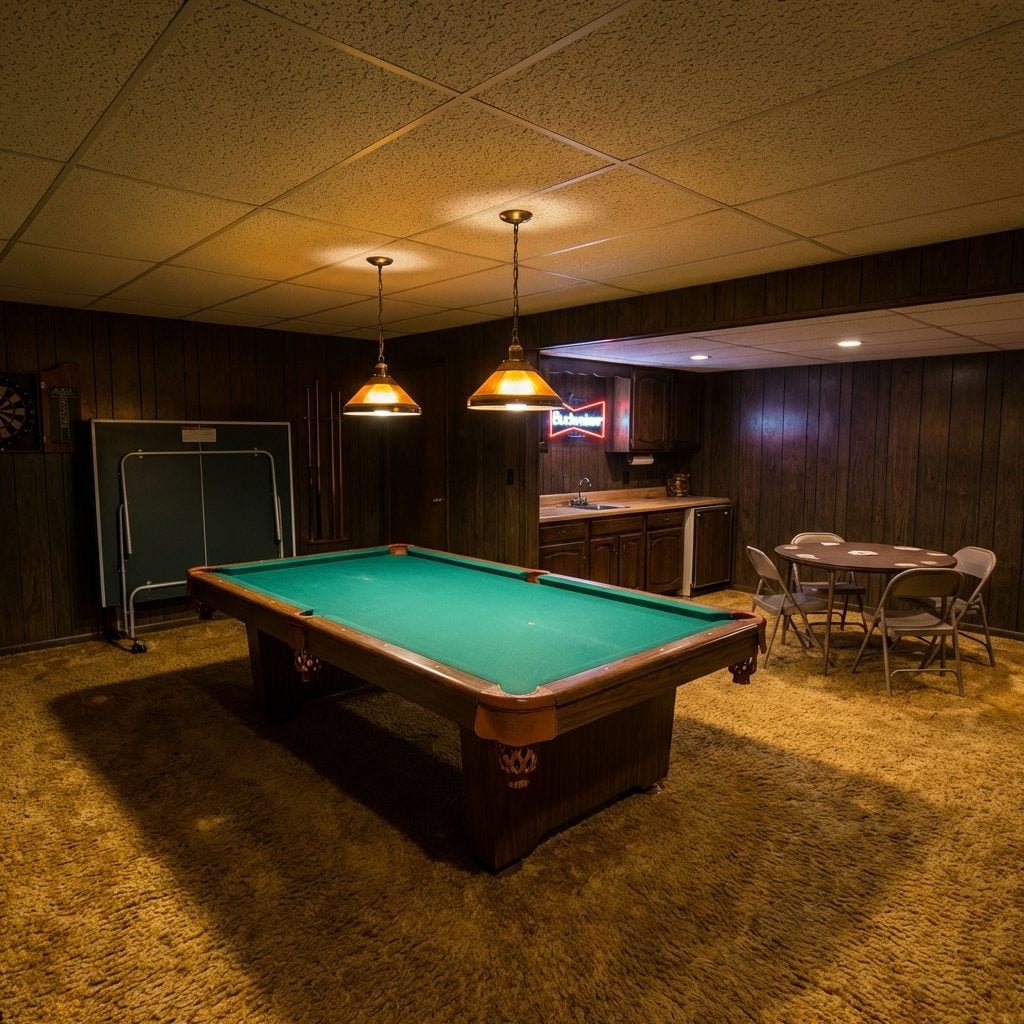
Nobody put a sign on the door. Nobody had a conversation about what this room was for. It was simply understood, by everyone in the household and every kid who ever visited, that the basement was the rec room and the rec room was where things happened that couldn’t happen upstairs. Loud things. Messy things. Ping-pong.
The rec room held the pool table or the ping-pong table or the foosball table or, in ambitious households, all three. It held the card table that came out on Saturday nights. It held the bar, the TV, the stereo, the beanbag chairs. It was the room that had no decorating standard to meet, which paradoxically meant it ended up holding the most personality in the house. A good basement makeover today often tries to recreate that feeling of organized looseness, a space that works hard without looking like it’s trying.
Fake Brick or Faux Stone Veneer That Was Trying Very Hard to Look Like It Belonged in a Mountain Lodge
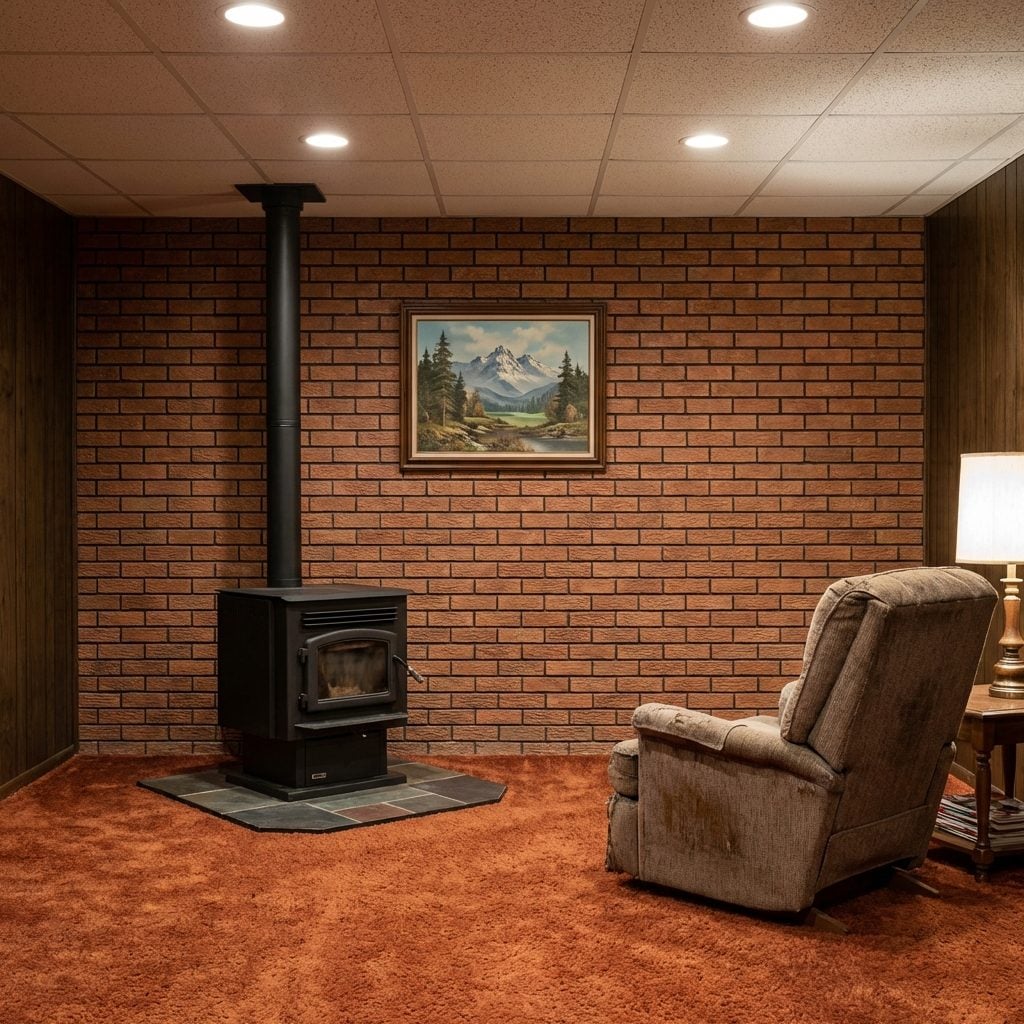
Somewhere between the wood paneling and the fireplace was a wall, always just one wall, never all four, because even 1980s basement decorators had a line, covered in faux brick or faux stone veneer. It was a product made of lightweight polyurethane or thin real stone chips pressed into sheets, and it was installed with great sincerity and zero irony.
The faux brick version came in a reddish tone that was just slightly too uniform to be real. The faux stone version had a rugged, dimensional surface that collected dust in its crevices and looked genuinely convincing until you knocked on it and heard a hollow thud. Both versions served as the accent wall of their era. Both versions were, in their own way, deeply committed to the bit.
Exposed Beams Painted Dark Brown to Blend In with Everything Else That Was Also Dark Brown
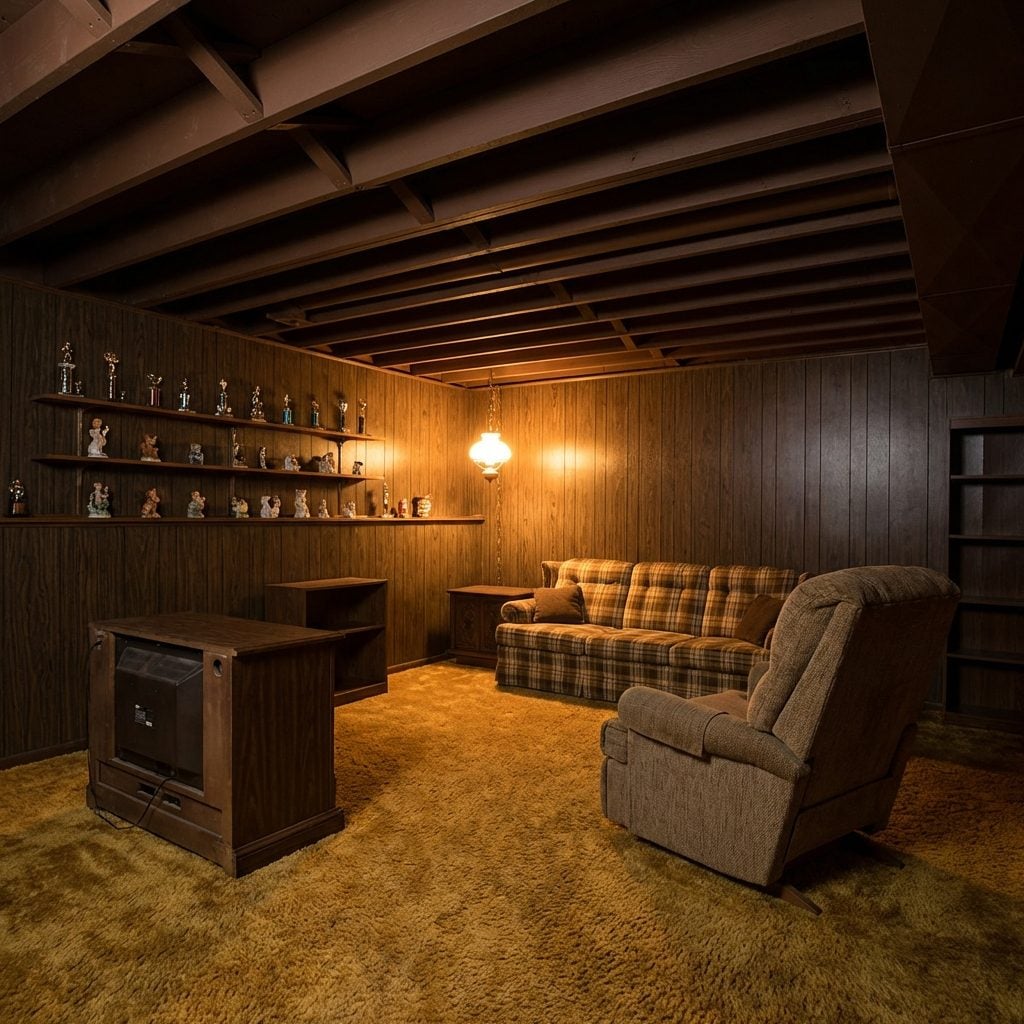
If the basement had exposed joists or decorative beams, they were painted dark brown. Not stained, painted. With a flat or semi-gloss latex in a color from the brown family that matched, approximately, the paneling, the furniture, and the carpet in its darker moments. The reasoning was presumably that consistency was a virtue.
The effect was a room that absorbed light rather than reflecting it, which gave the space a cave-like intimacy that residents either found cozy or slightly oppressive depending on their disposition. Modern interpretations of this aesthetic, what’s sometimes called a craftsman basement design, tend to celebrate exposed structural elements with a much lighter hand, leaving wood natural or whitewashing beams to bounce light back into the room. Different instinct. Arguably correct instinct.
Heavy Curtains Over Tiny Basement Windows, Blocking the Small Amount of Natural Light That Was Trying to Help
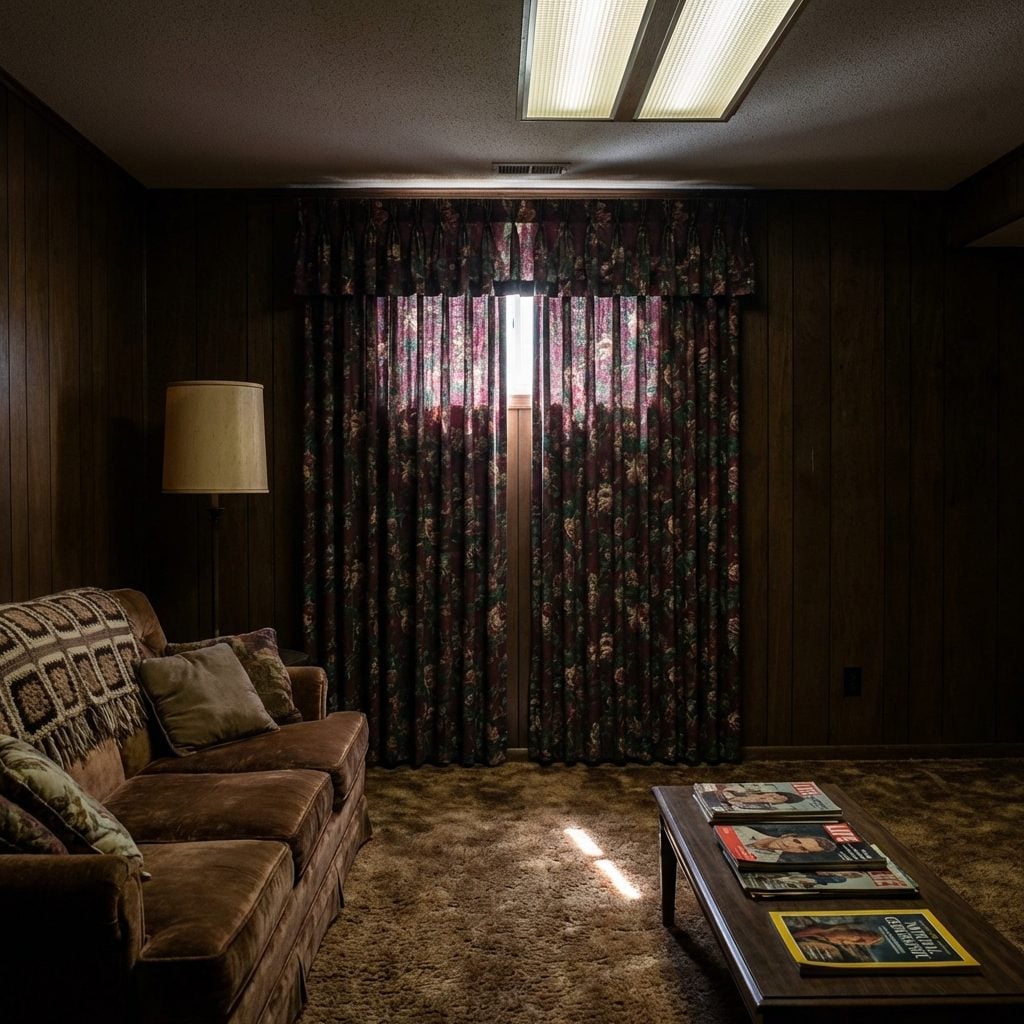
The basement windows were already losing the battle, small, high on the wall, frosted or screened, letting in about as much light as a dim hallway. And then someone hung curtains over them. Full, lined, heavy curtains in a pattern that matched nothing but committed completely anyway: a burgundy floral, a forest green plaid, a dusty mauve that suggested someone had been to a fabric store in 1984 and made a decision.
The curtains served no privacy function in any meaningful sense. Nobody was looking in through a ground-level basement window. They served a purely decorative purpose: to make the room feel finished, to suggest that there were real windows behind them, to impose the logic of an above-grade room onto a space that did not technically qualify. They worked, in the same way that believing something works can sometimes make it work.
Curtains themselves are far from finished, though: in our reader poll on window coverings, curtains, shutters and blinds came out as a near three-way split.
Fluorescent Tube Lighting That Buzzed Faintly and Made Every Person in the Room Look Vaguely Unwell
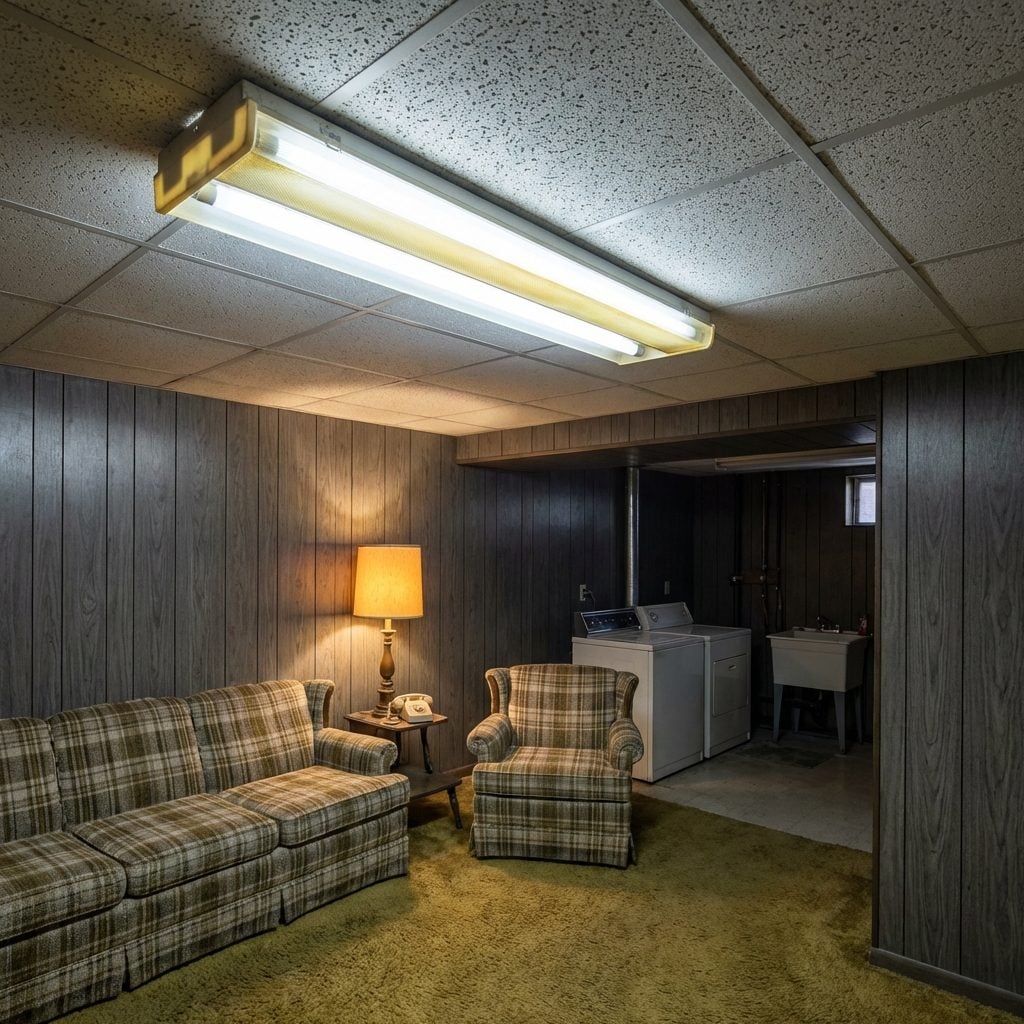
The single overhead fluorescent fixture was the functional lighting choice for a room that needed brightness but hadn’t thought hard about what kind. Two 48-inch T12 tubes behind a yellowed plastic diffuser panel, casting a flat, slightly blue-white light that eliminated shadows and, along with them, any sense of warmth or atmosphere.
The buzz was constant and low, a 60-cycle hum that you noticed for the first five minutes and then your brain simply deleted from conscious experience. Until it started flickering. A flickering fluorescent tube in a 1980s basement had a particular quality: it didn’t break cleanly, it deteriorated over weeks in an increasingly erratic strobe pattern that everyone acknowledged and nobody replaced until it was genuinely unbearable.
This is, in fact, the one element most modern basement renovations address first. Today’s approaches to minimalist basement design and even open basement design treat lighting as the primary tool for making below-grade spaces feel livable. Which is correct. The fluorescent tube was the anti-thesis of this philosophy, and the basement paid the price in vibes every single day.
The Wallpaper That Clashed With the Paneling AND the Carpet at the Same Time
🔥 Would you like to save this?
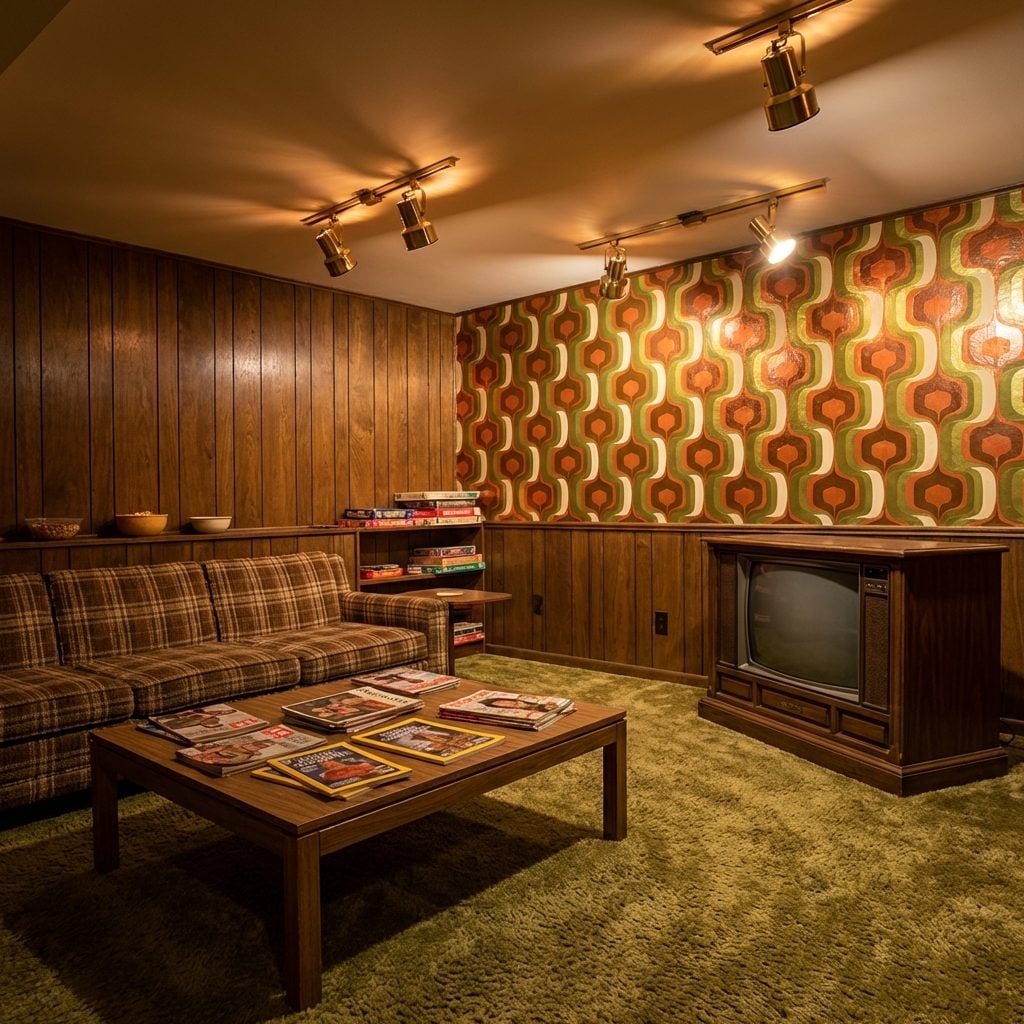
Somehow the design brief for the 1980s basement was: pick three patterns, make sure none of them speak to each other, and then commit. A single wall of foil-print geometric wallpaper, the dark brown wood paneling on the other three walls, and a carpet in a shade of green or rust that existed nowhere else in nature. The result was a room that assaulted the eyes before you’d even hit the bottom step.
Nobody hired anyone to do this. Dad did it himself on a weekend, probably in stages, across two or three different years. Which is why nothing matched. Which is why we loved it anyway.
The Dartboard Drilled Directly Into the Wood Paneling
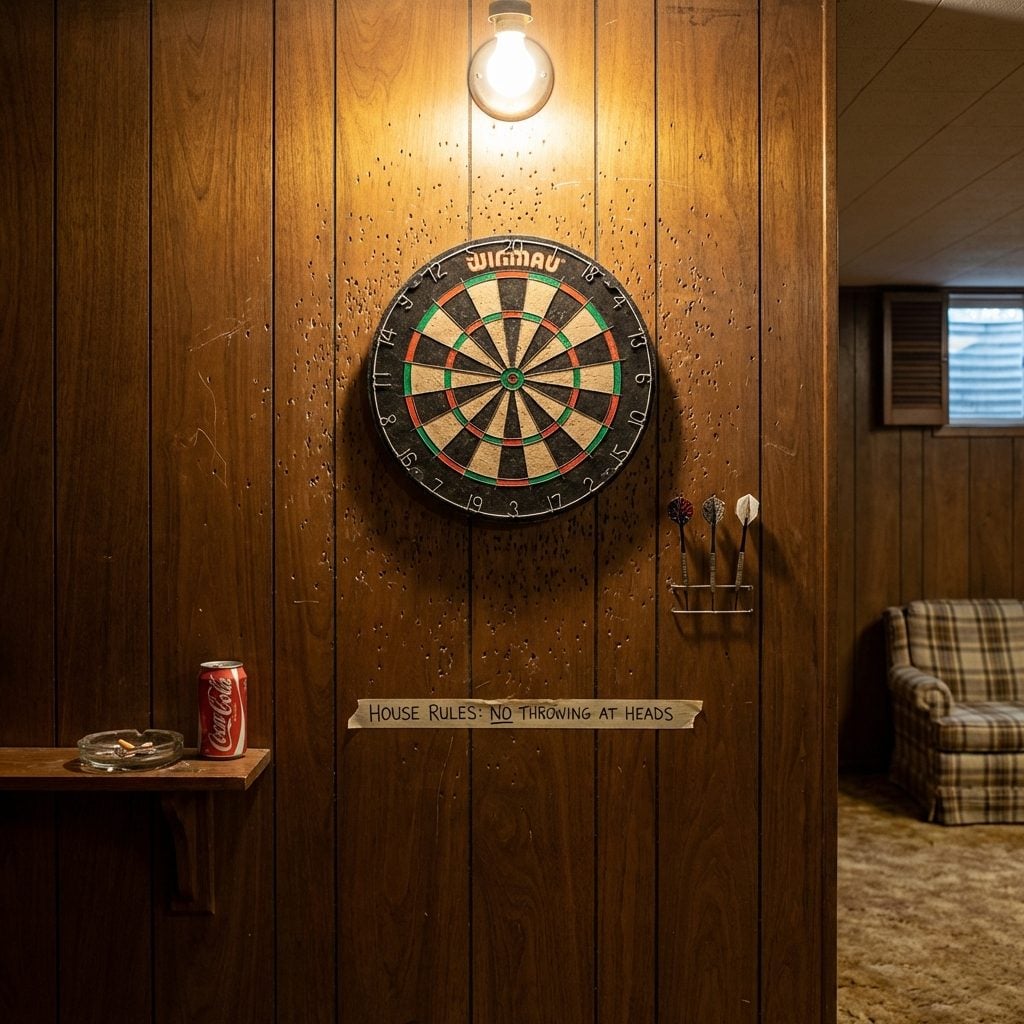
Not mounted on a backing board. Not surrounded by cork. Just screwed straight into the paneling, with roughly four hundred tiny holes radiating outward in a six-inch halo from every number on the board to prove that the paneling had taken thousands of stray throws over the years. The paneling didn’t mind. The paneling had seen things.
There was always a small cup or jar nearby holding three darts, usually mismatched, usually with one bent flight. Someone had written the house rules in marker on a strip of masking tape and stuck it to the wall next to the board, and it was still there in 2003.
Ashtrays on Every Horizontal Surface, Including the One Next to the Toy Box
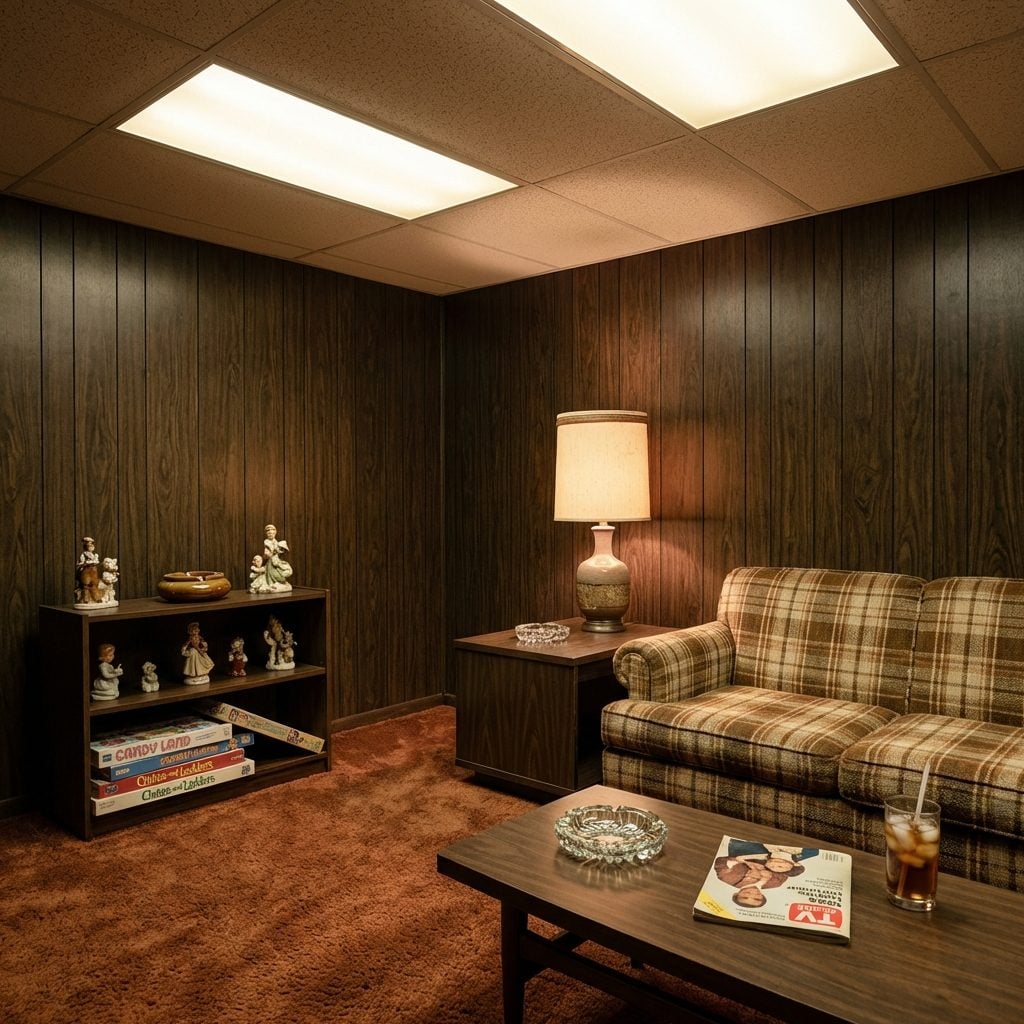
A glass ashtray on the side table. A ceramic one shaped like a leaf on the shelf. One on the bar cart that definitely came from a hotel. In a home with a six-year-old who played down there every afternoon. This was not considered unusual. This was just how basements worked.
The smell never left the carpet. Not fully. Even years after smoking moved outside or stopped altogether, the basement had its own atmospheric signature, a combination of cigarette smoke, basement damp, and whatever the carpet cleaner people used when they came every couple of years. It was not unpleasant, exactly. It was just the basement.
The Pool or Ping-Pong Table That Functioned Mostly as a Giant Shelf

It dominated the room. Took up approximately sixty percent of the usable floor space and required you to hold your cue at a thirty-degree angle against the wall just to take a shot from certain positions. When new, it was the centerpiece of the whole basement renovation project, the thing that made this a real rec room.
Within eighteen months, one end was permanently covered in a folded tablecloth, two boxes of Christmas decorations, a broken cassette player, and a laundry basket that never quite made it back upstairs. The other end still had the balls racked. You could play half a game if you moved the boxes.
The Recliner With a Permanent Body-Shaped Indentation That Was Absolutely Not Allowed Upstairs
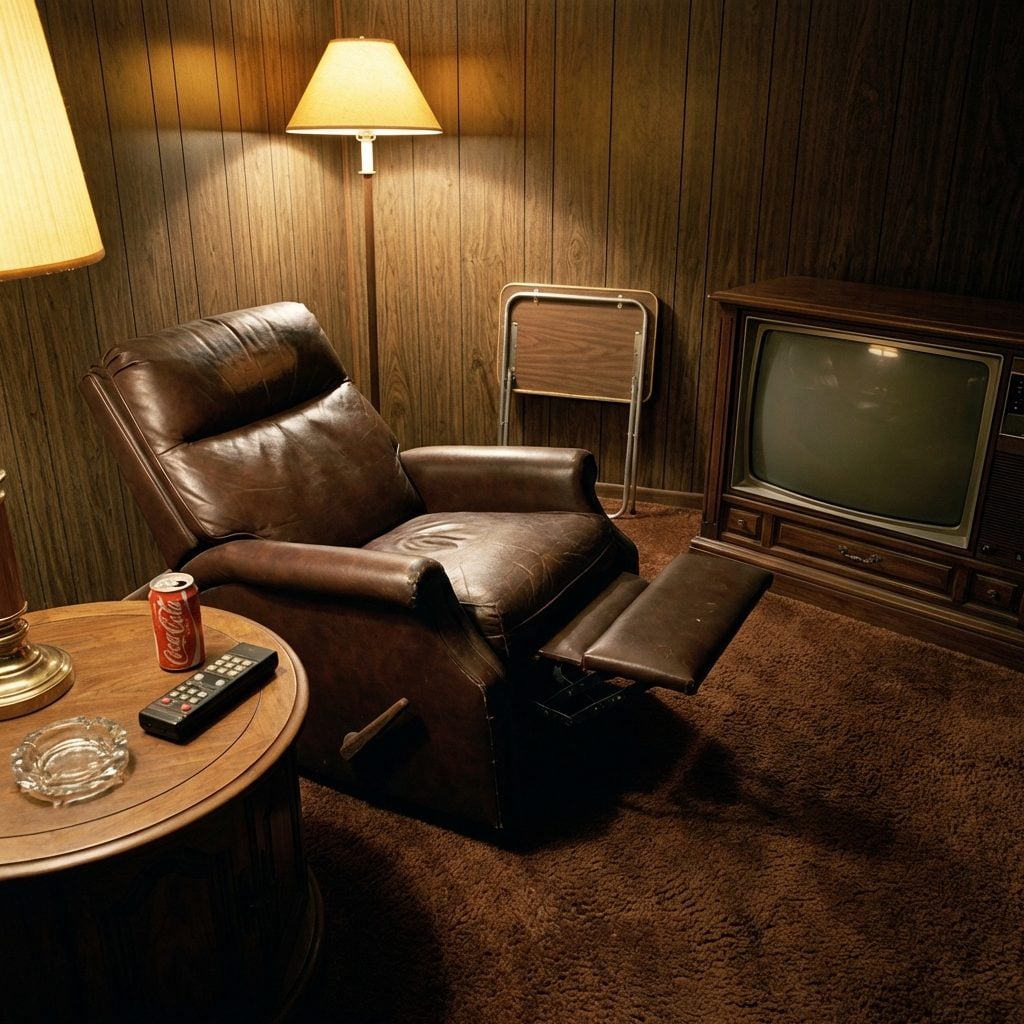
Every basement had one. You knew exactly whose chair it was without being told. The vinyl or nubby fabric had worn smooth in a precise silhouette: a shallow bowl where the back met the seat, two armrest grooves polished to a shine, a footrest that no longer locked back into place fully without a specific nudge with the heel. It had been banished from the living room during some previous administration and relocated here, where it reigned without competition.
Sitting in someone else’s dad’s recliner felt mildly transgressive. It was his chair. The basement was his kingdom. The recliner was his throne.
The recliner wasn’t furniture. It was a designated territory with armrests.
The Fold-Out Sofa Bed That Was Uncomfortable in Every Single Configuration
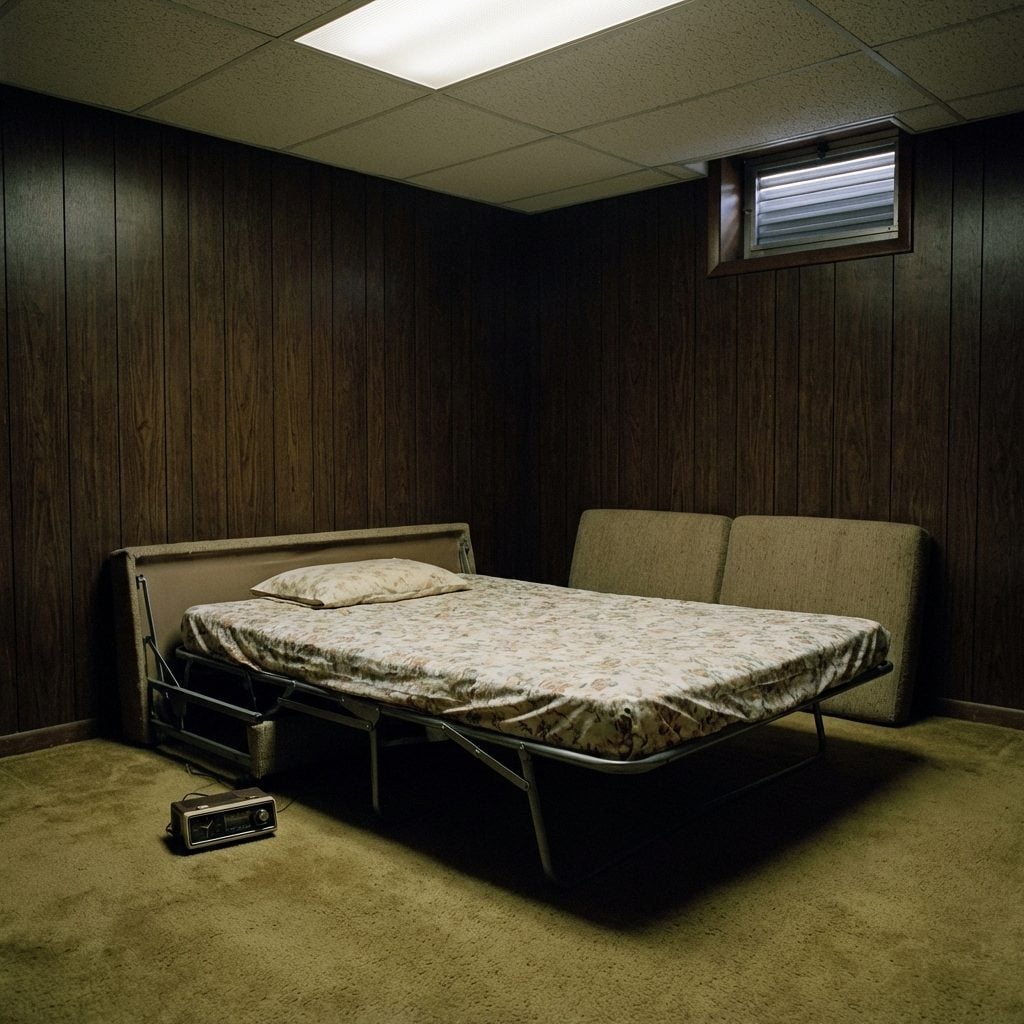
Folded up, it was a sofa that sat slightly too high and had a bar you could feel through the cushion if you leaned back at the wrong angle. Pulled out, it was a mattress roughly the thickness of a yoga mat stretched over a metal frame engineered specifically to locate your spine and press against it all night. The sheets never fit right either, because the mattress was a size that exists nowhere in the standard bedding universe.
Guests slept on it anyway. Kids had sleepovers on it. It was the only option and everyone understood that. This was the 1980s basement sleep experience, and you were grateful for it.
The Chest Freezer the Size of a Coffin That Hummed Continuously and Was Never Fully Explained
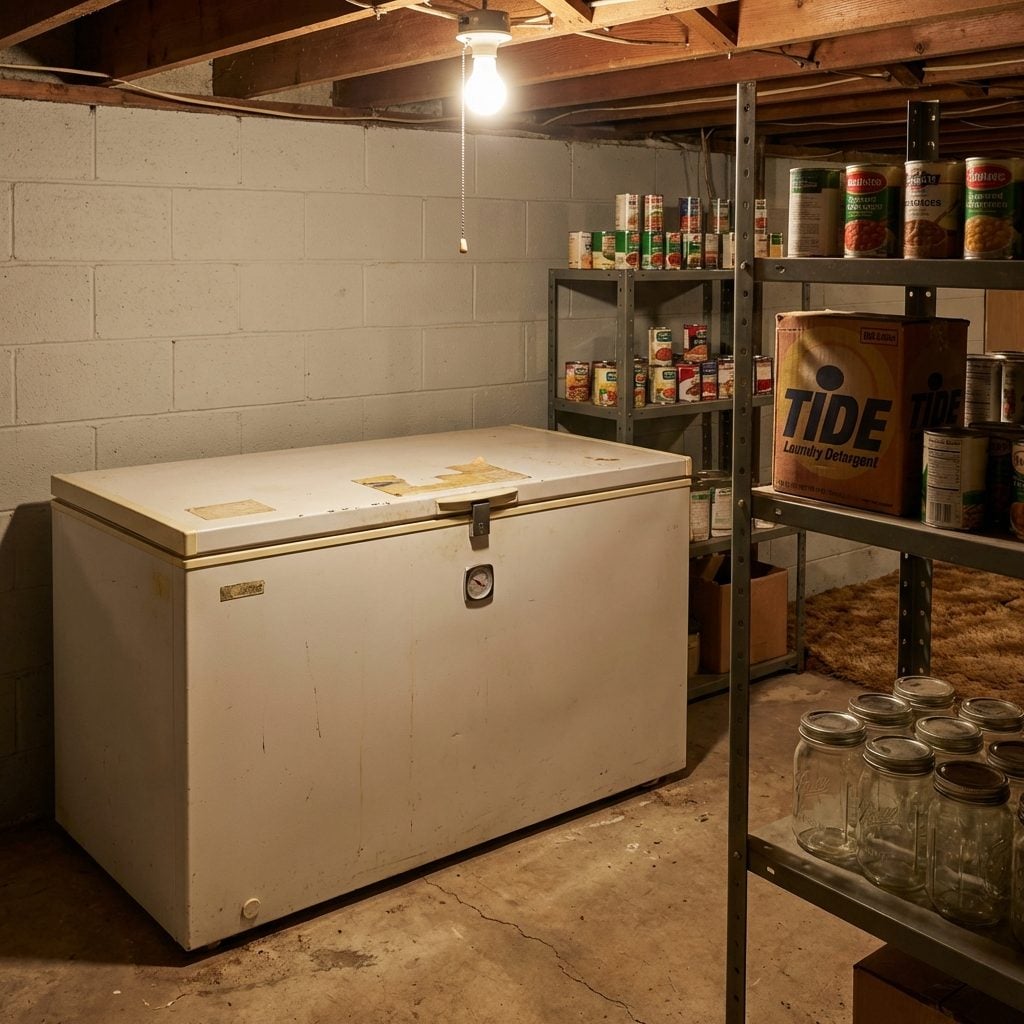
It was in the utility corner, or pushed against the wall behind the stairs, or just sitting there in the middle of the unfinished section like it had always been there and always would be. It hummed. Not loudly, but constantly, a low mechanical drone that became part of the ambient soundtrack of the basement itself.
What was in it? Venison, sometimes, if anyone hunted. Casseroles in Tupperware containers organized by a system only one parent understood. Twelve pounds of ground beef from a sale that ended in 1991. A half-gallon of ice cream. The answer varied by family but the freezer was always full of something, and the lid was always heavy.
The Dehumidifier That Never Stopped Running and Was Everyone’s Least Favorite Chore
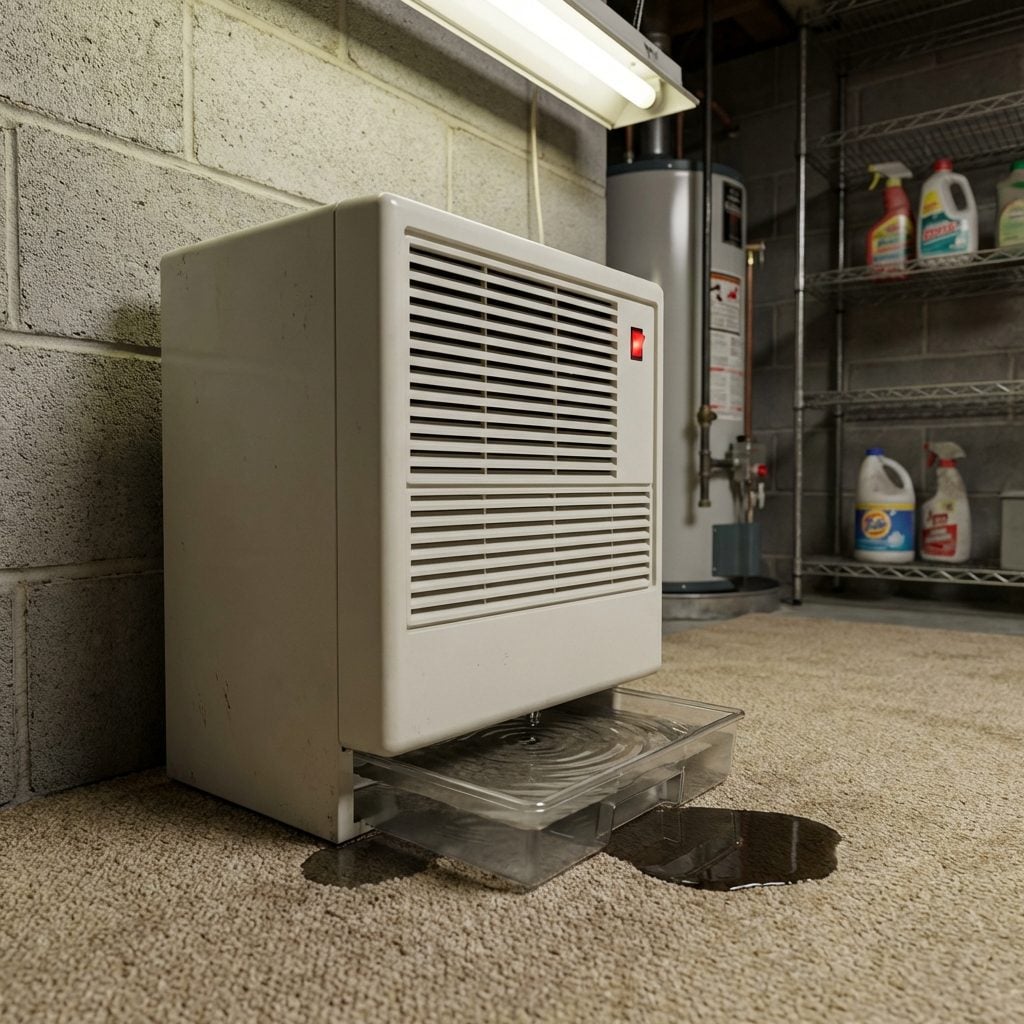
It sat in the corner and it worked very hard and nobody thanked it. A squat white or beige box with a plastic grille, usually a brand like Sears Kenmore or GE, pulling moisture out of the basement air at all hours. The drip tray filled in roughly two days in summer, sometimes less during a wet July, and emptying it was the most reliably forgotten household task in America.
You’d go down to get something from the freezer and notice the red light was on, meaning the tray had overflowed slightly onto the carpet. Again. Someone would get in trouble. The dehumidifier would be reset. This cycle repeated until October.
For anyone attempting a basement makeover today, dehumidifiers have gotten quieter and smarter, but they’re still the unglamorous backbone of any finished basement that intends to stay that way.
The Built-In Shelves Holding Every Board Game Ever Owned Plus an Encyclopedia Set Nobody Touched After 1987
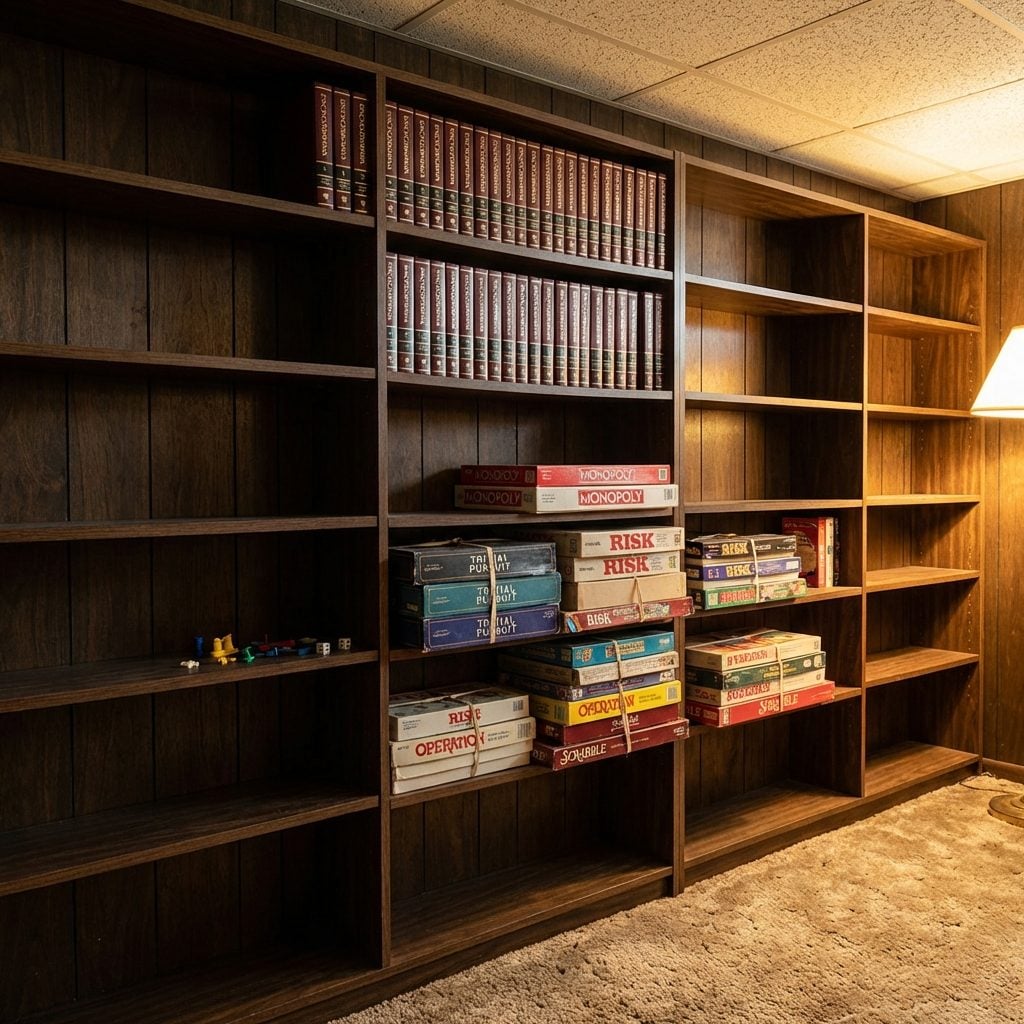
The encyclopedias were always World Book or Britannica, always in a matching set, always in a custom-built or pressed-wood shelving unit that was clearly designed with them in mind. They stood in a row, volume A through Z plus the yearbooks, spines uniform and serious. They were used for exactly three school projects and then retired to the basement to live out their days next to Trivial Pursuit and a 1978 edition of Boggle missing two vowels.
The board game shelf was a different kind of archive. Every game the family had ever owned was there, stacked and tilted, boxes soft at the corners, some with rubber bands holding them shut because the original tuck tab had failed years ago. Monopoly on the bottom because it was the biggest. Operation on top because it was fragile. Risk somewhere in the middle, dusty and ambitious.
The Craft Corner That Was Technically Always “Being Cleaned Up”
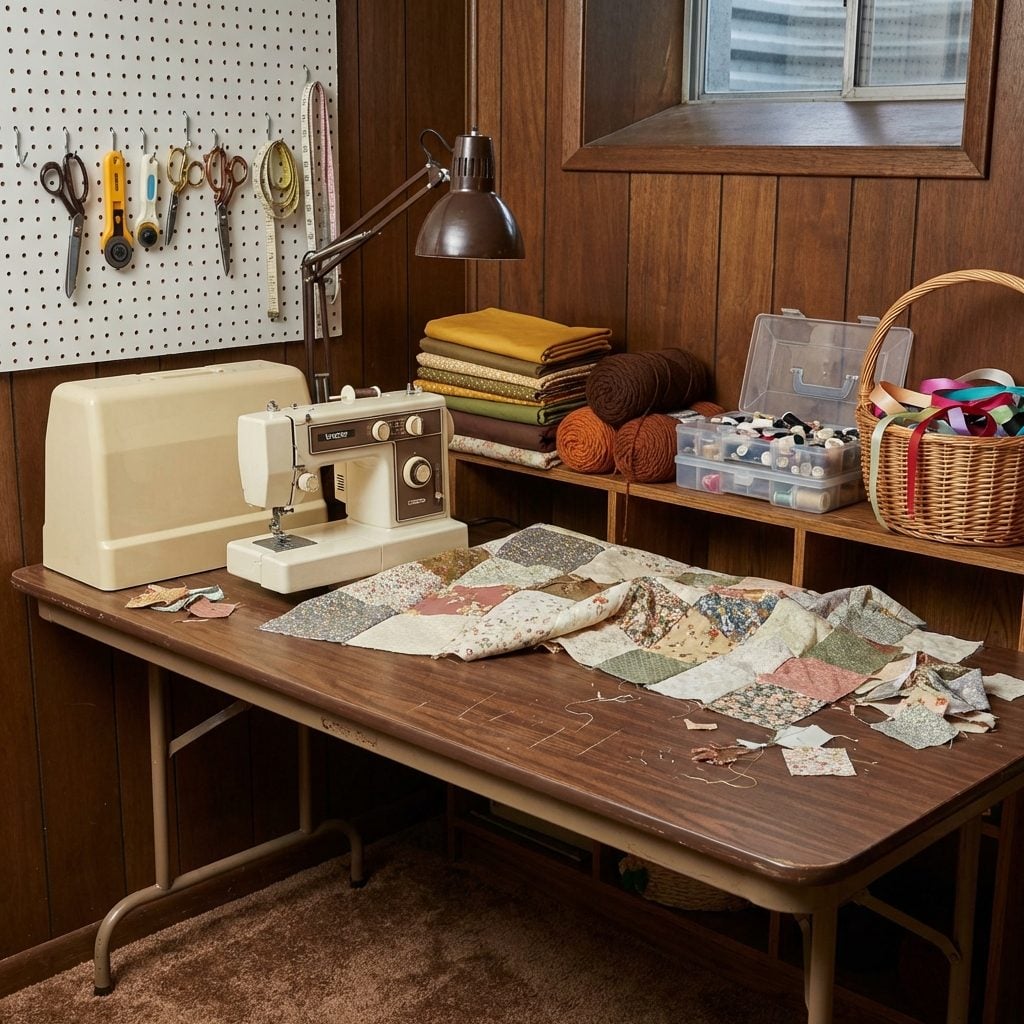
One end of the basement, usually the brightest corner near the window well, had been designated for creative work. A folding table, a pegboard with hooks for scissors and rotary cutters, a shelving unit holding fabric bolts, yarn skeins, cross-stitch patterns in plastic sleeves, and enough ribbon to wrap a department store.
It was never not mid-project. A half-finished quilt lived on the folding table for years, actively, in the sense that it was worked on during specific seasons and then left, patient, for the next one. This was not disorder. This was the natural state of a craft corner. Anyone who has ever had one understands the difference.
The Basement Bedroom That Got No Natural Light and Made No Architectural Sense
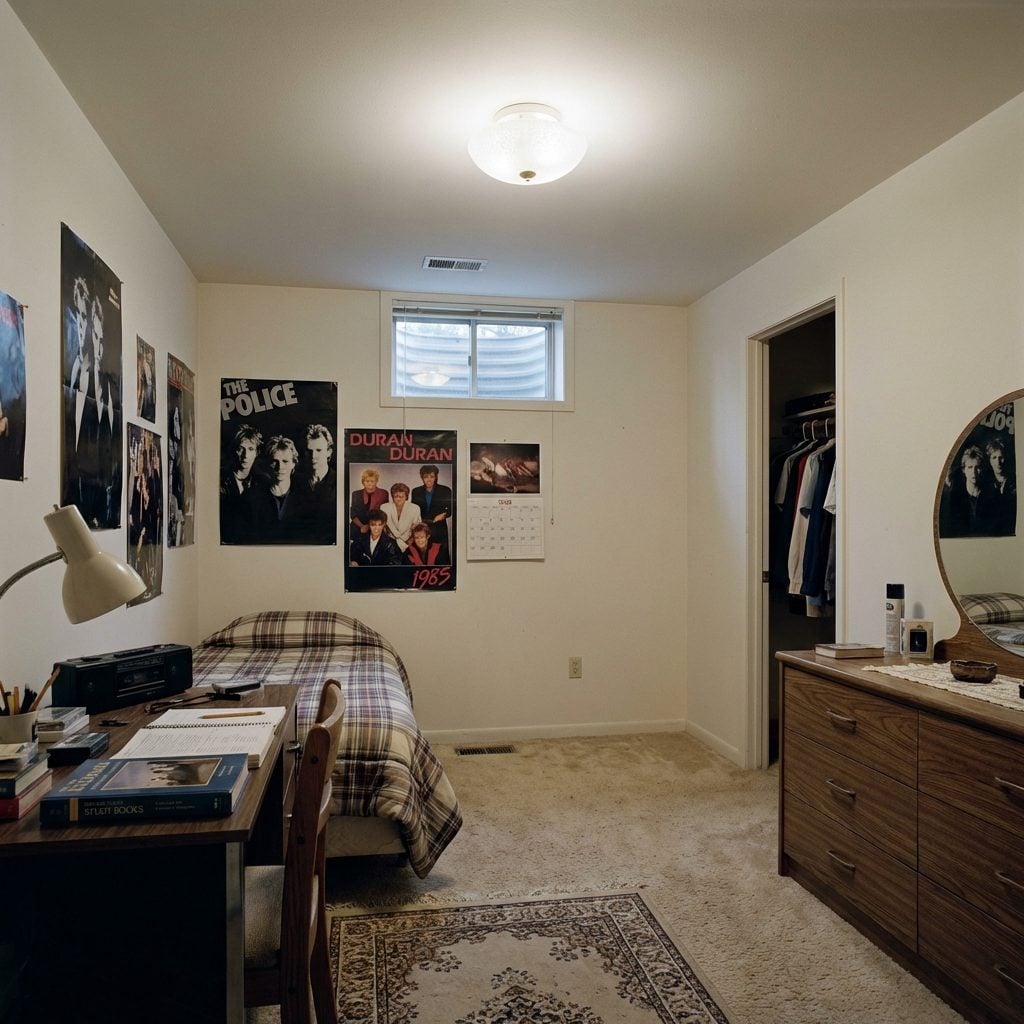
It was the smallest room. One window, high on the wall, level with the lawn outside, small enough that it admitted approximately forty minutes of usable light per day, usually between 10 and 10:40 in the morning when the sun hit that side of the house at the right angle. The rest of the time it was lit by a single overhead fixture, sometimes a bare bulb, sometimes a frosted glass dome that collected dead moths.
Whoever lived in this room adapted completely. You stopped noticing the lack of natural light after a few weeks. You had a poster on every wall, a specific system for the small closet, a carpet remnant over the standard carpet for no clear reason. It was yours. That made it fine.
For context on how far minimalist basement design has come since then, the distance is almost comedic.
The Space Heaters Doing the Job the Furnace Fundamentally Refused to Finish
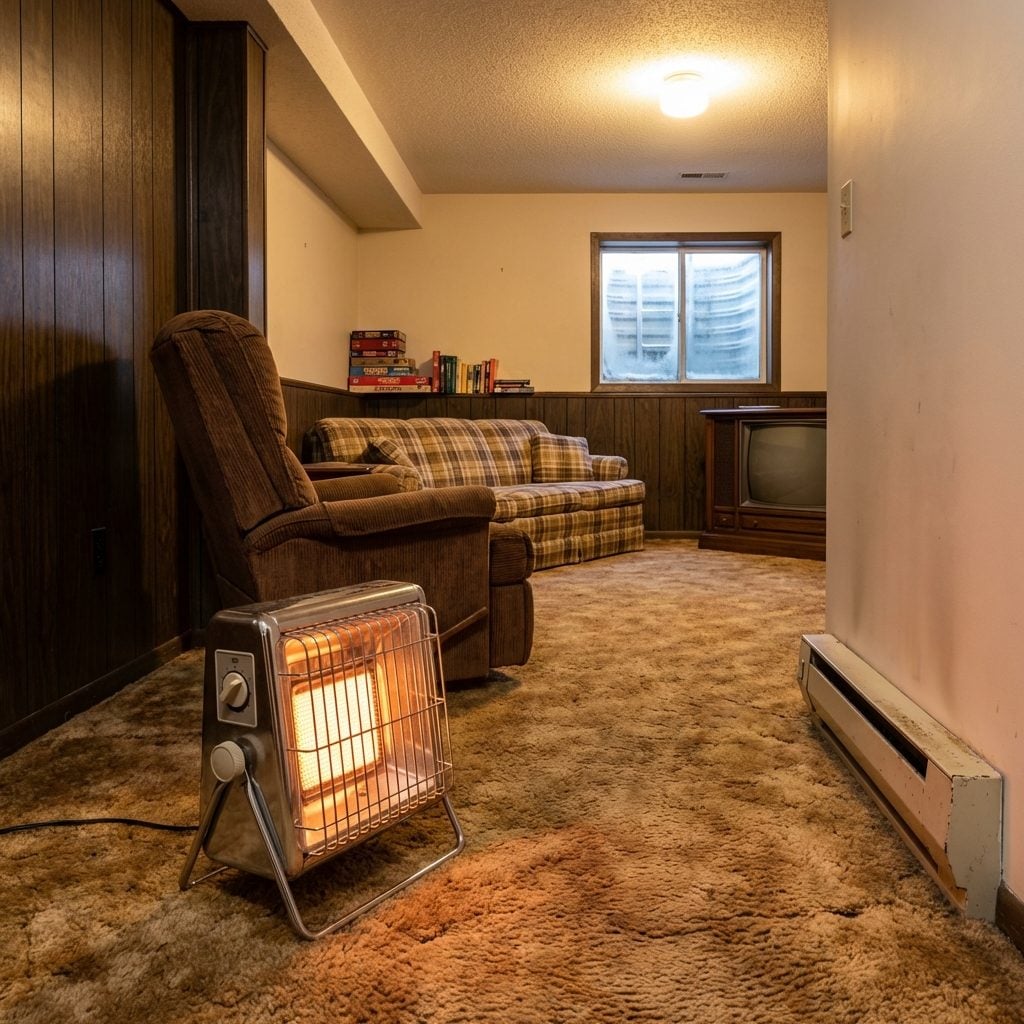
The main furnace heated the upstairs to a perfectly normal temperature and essentially considered its job done. The basement, which was technically connected to the ductwork, received whatever heat managed to trickle down through the system, which in practice amounted to a very slight reduction in coldness. The gap was filled by whatever combination of space heaters the family had accumulated over the years.
The classic 1980s basement heat solution was an orange-glowing electric coil heater in a chrome cage, the kind that clicked and pinged as it warmed up, positioned roughly four feet from the recliner and aimed directly at whoever was sitting in it. The rest of the room stayed cold. The person in the recliner was fine. The system worked.
The Built-In Gun Cabinet With the Glass Front That Nobody Ever Actually Discussed
🔥 Would you like to save this?
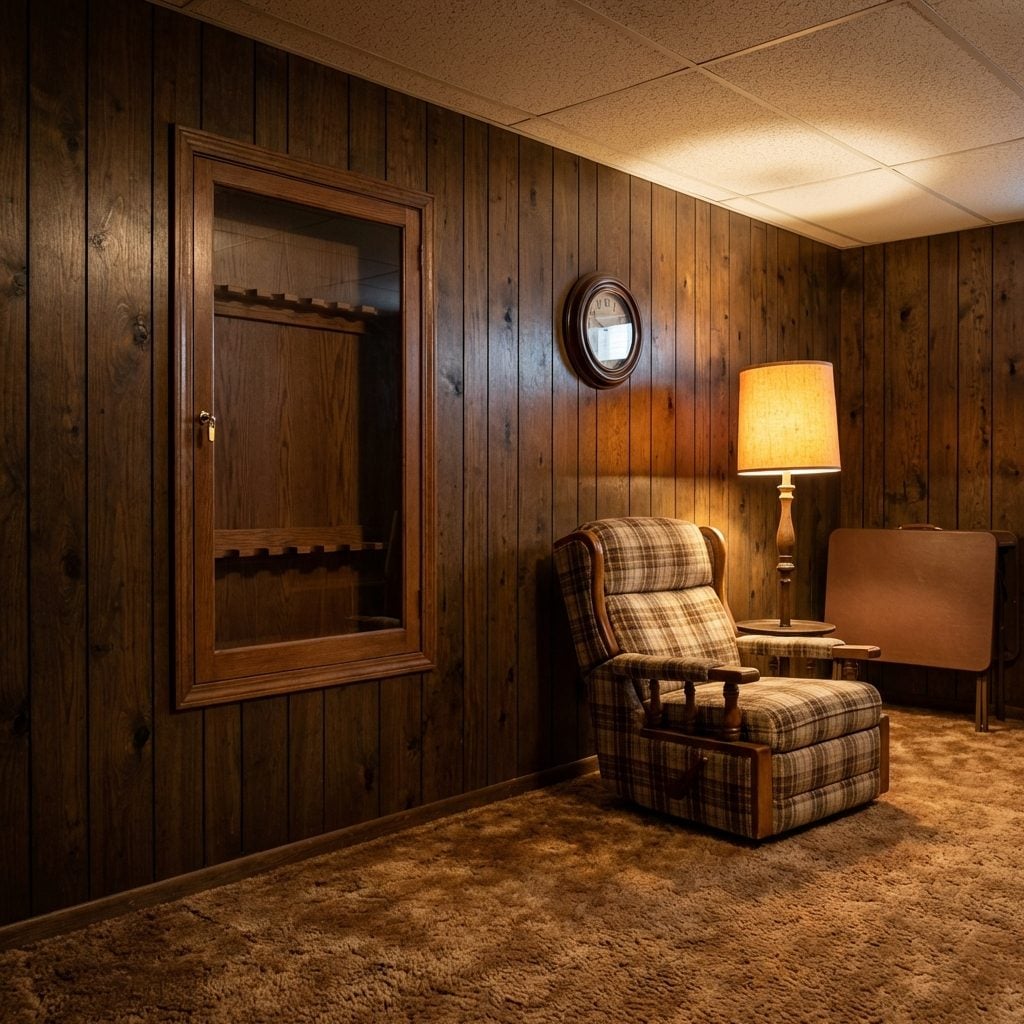
It was just there. Built right into the paneling like a bookshelf, with a little brass lock that the key for had been lost sometime around 1977. The glass front showed exactly what was inside, and nobody thought twice about it. Dad might glance at it when he walked past. Guests might notice it and say nothing. It was furniture, essentially.
Today it would require a conversation. Back then it was just part of the basement, as unremarkable as the water heater. If the family eventually moved, it either stayed with the house or got converted into a display case for bowling trophies.
The Pegboard Wall Loaded With Hooks and Tools That Had Not Been Touched Since Carter Was President
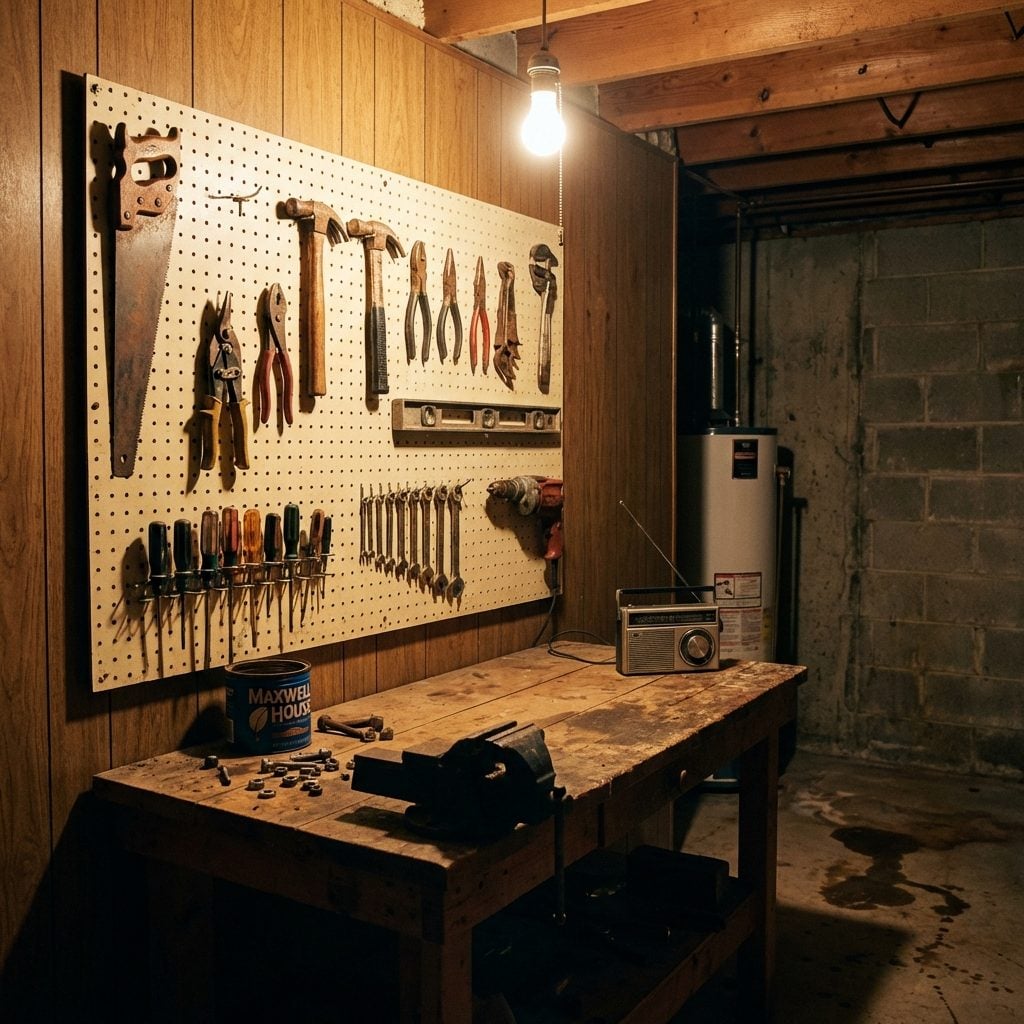
Every single hook had something on it. That was the rule. A rusty pair of tin snips. A hand saw with a handle that had cracked and been wrapped in electrical tape. Three different hammers, because apparently you needed three. The pegboard itself was usually painted a cheerful cream or light gray, which made the rust look especially festive.
The genius of pegboard was that it made a complete absence of home maintenance look incredibly organized. Dad had not touched the half-inch drill bit in eleven years, but it had a designated hook, so clearly he was on top of things.
The Fuse Box With Handwritten Labels in Three Different People’s Handwriting That All Contradicted Each Other
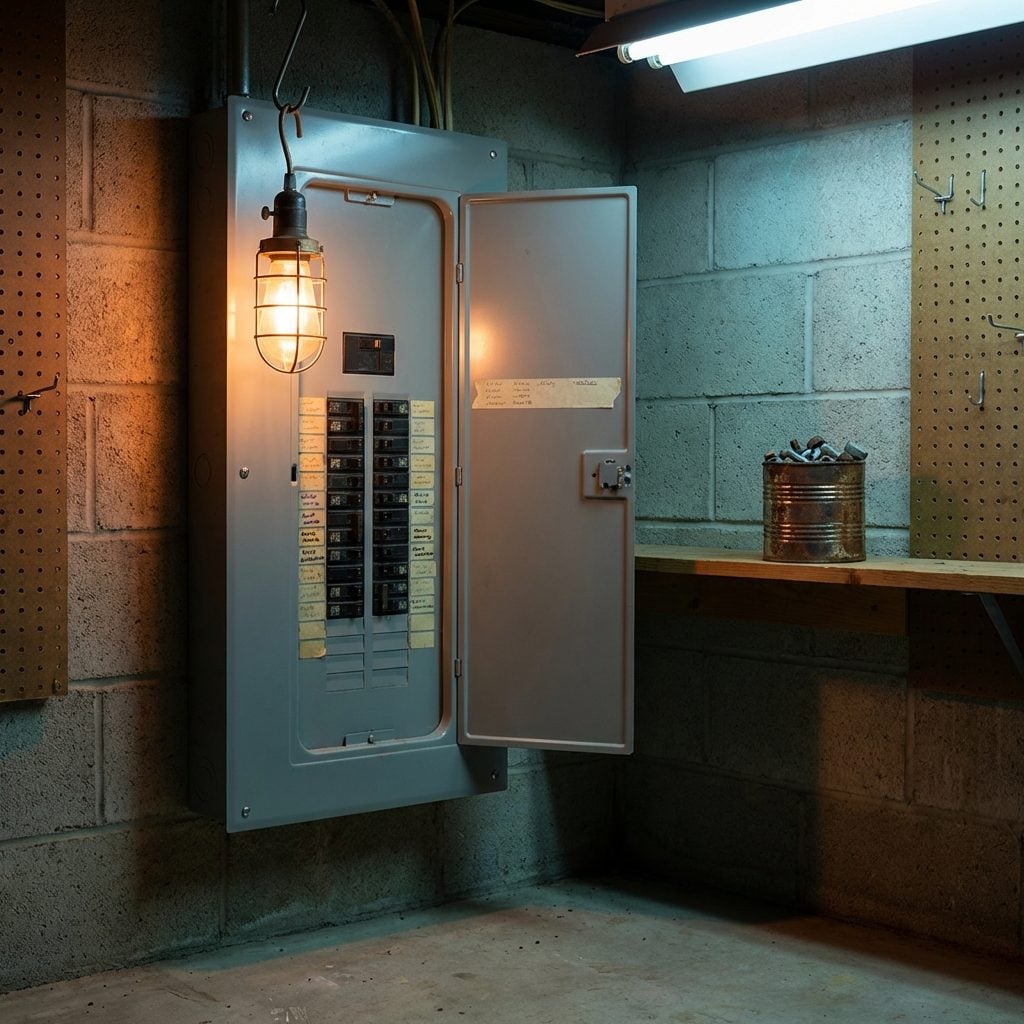
“Kitch” said one label, in blue ballpoint. “KITCH + DNING” said the one below it, in pencil. “Kitchen ONLY (NOT dining)” said a third, in red marker, clearly written by someone who had reached the end of their patience. The fuse box was a palimpsest of every electrical argument the family had ever had.
At least one breaker was labeled simply “?” and had been that way for years. Nobody tripped it to find out what it controlled. Some mysteries were better left alone.
The Intercom Speaker Mounted on the Wall That Connected to the Kitchen and Sometimes Actually Worked
It crackled before it delivered any message. That two-second burst of static was your warning that Mom was about to tell you dinner was ready or that your friend was at the door. The speaker itself was a beige or almond-colored rectangle, same color as every appliance made between 1974 and 1989, and it had a little talk/listen toggle switch that you had to hold exactly right.
The system was sold to families as an upgrade, a futuristic convenience. In practice, it was used approximately twice a week and misheard at least once each time. Half the conversations that came through it required someone to walk upstairs anyway to clarify what had just been said through the static. But it was there. It was on the wall. That counted for something.
The Illuminated Budweiser or Miller Lite Bar Sign That Was 100% Considered Legitimate Wall Art
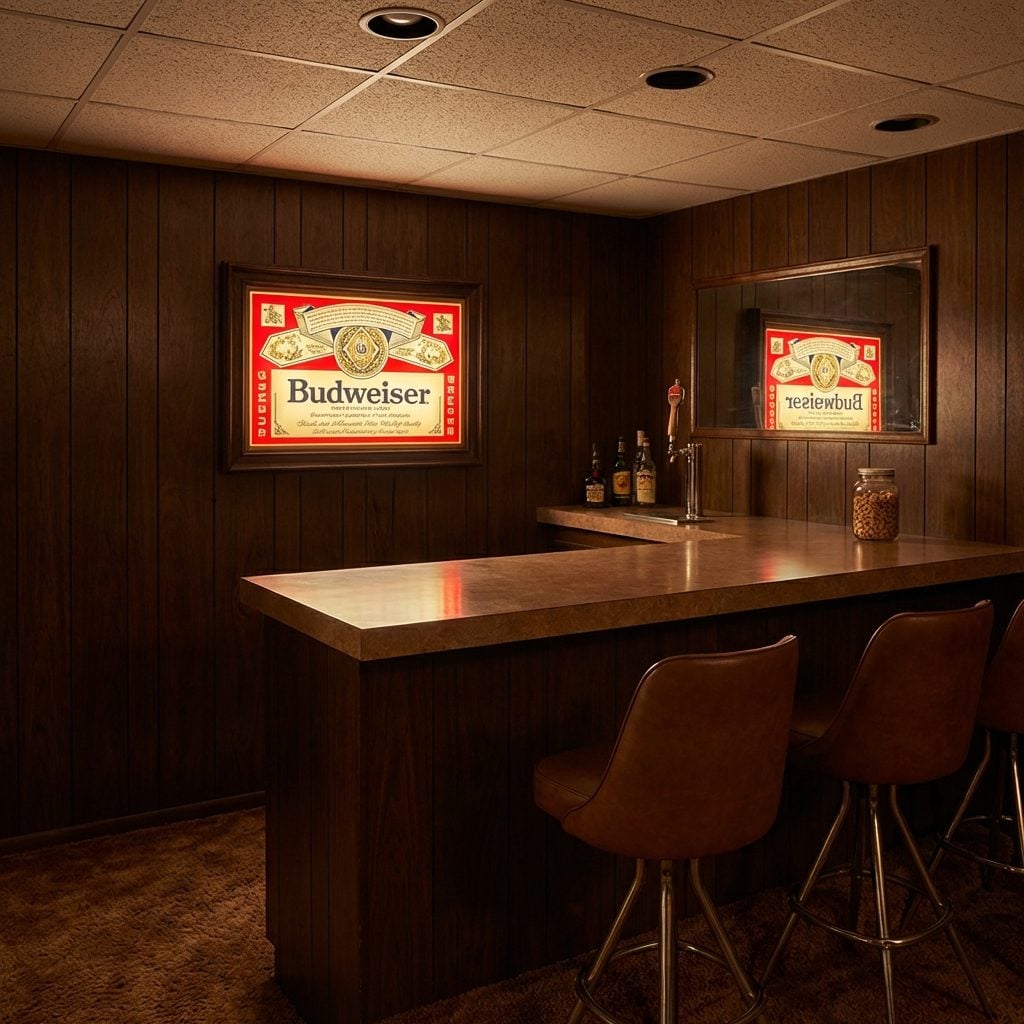
It plugged into the wall. It had a cord. The light inside it made the red and white logo glow like a stained glass window in a very specific kind of cathedral. And in the context of a 1980s basement bar, it was genuinely beautiful in its way, warm, amber-edged, casting just enough light to make the whole corner feel like a place worth being.
Nobody questioned whether a beer advertisement belonged on a wall. It belonged on that wall. It had probably been won at a company raffle or scored through a buddy who knew a distributor. Either way, it was displayed with the same pride as a landscape painting.
The Card Table With Fold-Out Metal Legs That Appeared at Every Holiday Without Fail
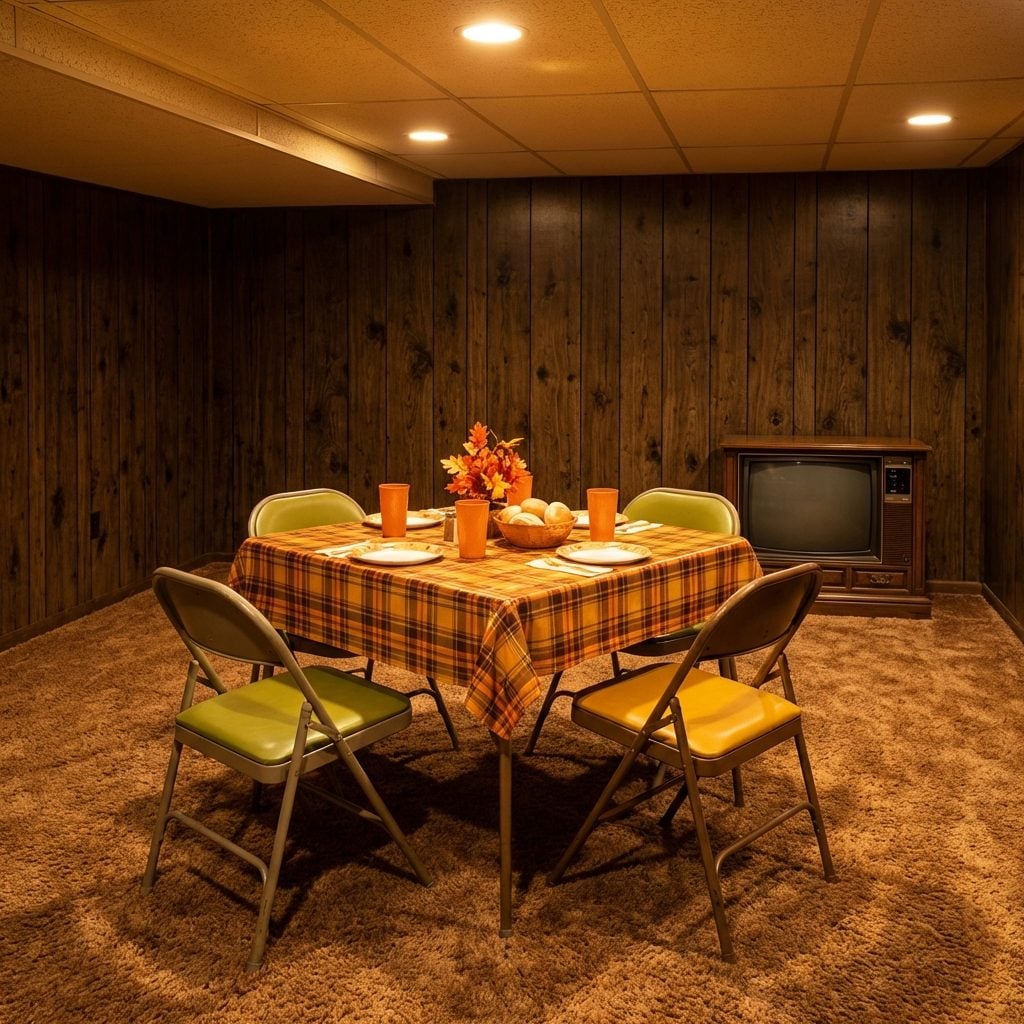
It lived in the basement the rest of the year, folded flat against the wall behind the water heater or tucked under the stairs. But at Thanksgiving or Christmas it made its journey upstairs and became an official dining surface, covered with a plastic tablecloth from the grocery store and surrounded by four metal folding chairs that didn’t match.
The legs had to be locked into position with those little metal catches, and at least one leg was always slightly shorter than the others. Everything placed on it had a faint tilt. The kids were seated here. Always the kids.
“The card table was the kids’ table. The kids’ table was a right of passage. You ate your turkey at a 4-degree angle until you were old enough to sit upstairs.”
The Shower Stall in the Corner That Nobody Used But That Was Absolutely There Just in Case
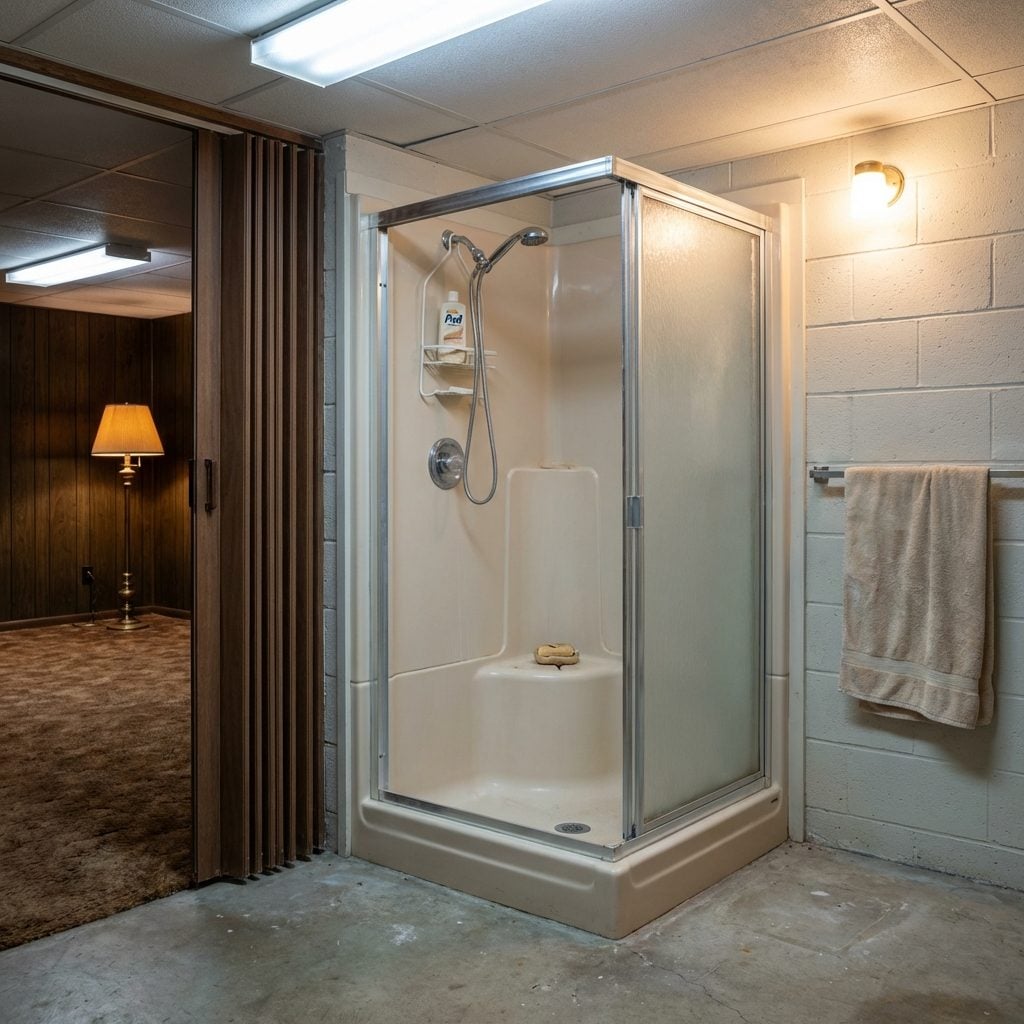
It had its own corner of the basement, usually separated from the main room by a short wall or a folding partition that had since become a storage surface. The shower stall itself was prefab fiberglass in beige or pale yellow, with a sliding door that had developed a slight mildew smell from disuse. The showerhead dripped. There was a bar of soap that had been there for possibly three years.
“Just in case” was the stated reason for its existence. Just in case of what, exactly, was never specified. A natural disaster? Unexpected overnight guests who needed to shower but weren’t welcome upstairs? It was infrastructure for a scenario that never arrived.
The Storage Shelves Built From Two-by-Fours Holding Mason Jars From a Canning Project That Peaked in 1979
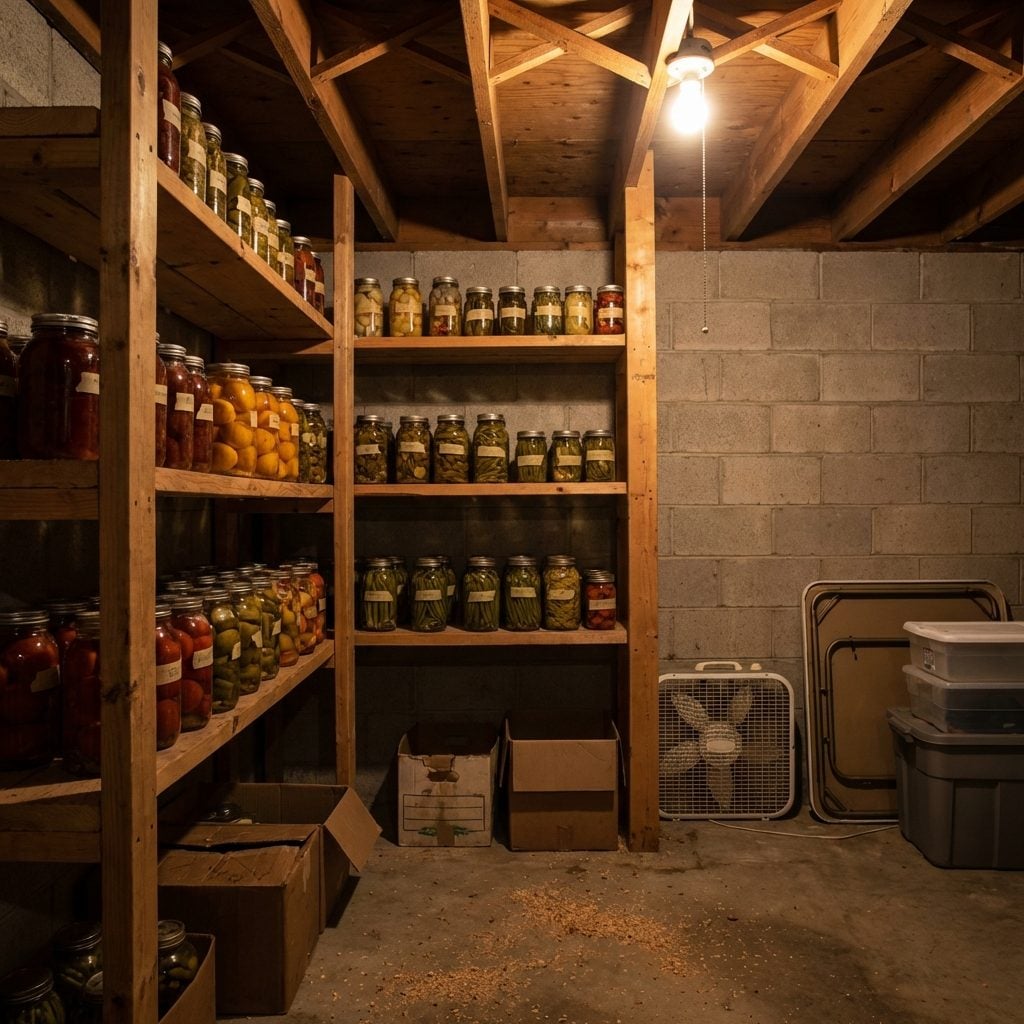
The shelves were built to last, and they did. Two-by-four uprights nailed into the concrete block wall, cross-pieces dadoed or just nailed at angles, the whole thing completely overbuilt for the task of holding jam. And on those shelves: mason jars. Dozens of them. Ball or Kerr brand, with zinc lids and rubber seals that had long since stopped being airtight.
Peaches. Green beans. Tomatoes. Dilly pickles. The labels were masking tape and marker, and the marker had faded enough that you could only half-read what was inside. Mom had a canning phase. The shelves remained as its monument, long after the phase ended and the jars became decorative by default. A basement makeover could have cleared them out, but nobody ever quite got around to it.
The Basement Office Assembled From Every Piece of Furniture That Couldn’t Fit Anywhere Else in the House
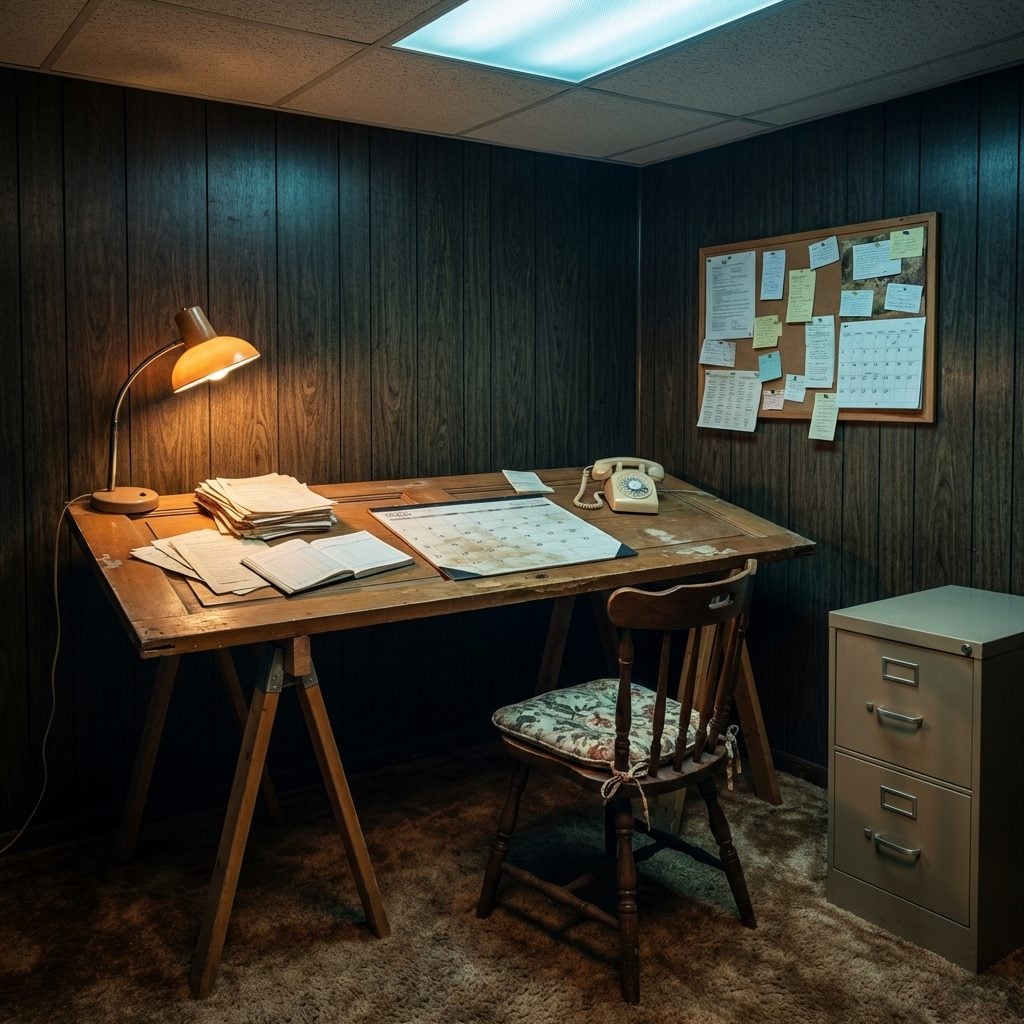
The desk was a door on two sawhorses, or an old kitchen table that had been replaced upstairs when Mom finally got her oak set. The chair was a cast-off dining room chair with a cushion bungee-corded to the seat. The lamp had previously lived in the bedroom. The filing cabinet was the only thing that had been purchased specifically for this room, and it was the wrong color.
And yet, it worked. Something about being in the basement, away from the traffic of the house, with the hum of the water heater and the smell of the carpet, made it actually productive space. Dad retreated here. He paid bills here. He did whatever it is that dads did in the 1980s when they needed to be alone with a calculator and a cup of coffee that had gone cold.
Today we’d call it a small home gym or a dedicated workspace, spend $4,000 furnishing it intentionally, and photograph it for Instagram. The 1980s version cost nothing and worked about as well.
The Smell Itself: Carpet Plus Wood Paneling Plus Something Faintly Electrical, The Unmistakable Signature of an American Basement in 1984
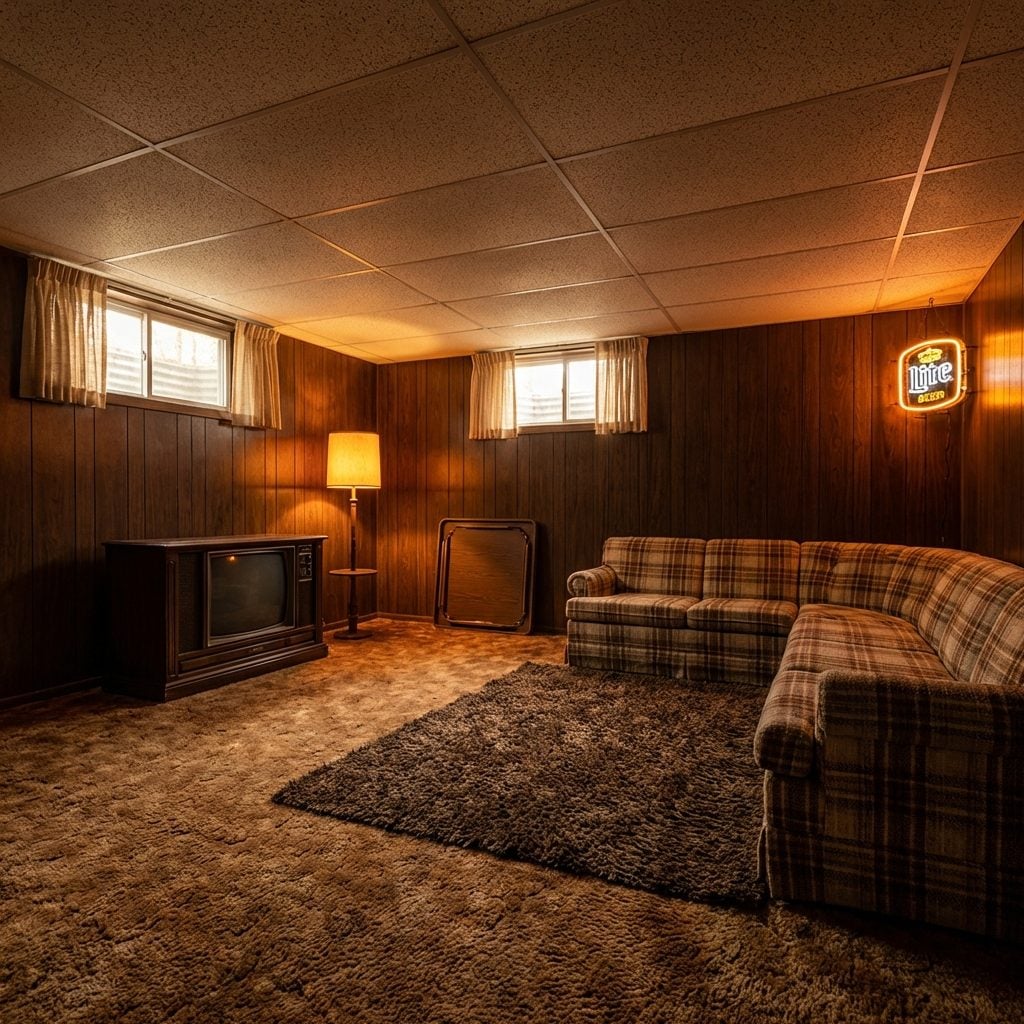
You knew it before you reached the bottom step. A warmth that wasn’t quite warmth, a thickness that wasn’t quite dust. The shag carpet had its own particular smell, synthetic fiber, slightly damp at the pad, baked for years by the proximity of the water heater. The wood paneling added something resinous. The old TV contributed a faint ozone note that no modern screen produces.
All of it together was not a bad smell. That’s the thing people forget. It was a specific smell, and specific smells become identity. That basement smelled like Saturday afternoons, like being nine years old, like somewhere safe and slightly underground and entirely yours.
No designer has ever replicated it. No home makeover show has attempted it. The closest thing available is probably the memory itself, which arrives without warning, usually in hardware stores, usually near the carpet samples.