🔥 Would you like to save this?
The carpet was mauve. The walls were cream with a chair rail that served absolutely no structural purpose. The sofa had cushions so stiff they crinkled when you sat down, and somewhere behind the wet bar, there was a plant that had been silk since 1983. If you grew up in an American home during the 1980s, the living room wasn’t just a room. It was a whole aesthetic universe with its own rules, its own palette, and its own very specific ideas about what comfort meant. Here’s what was in it.
31. The Giant Wood Console TV That Was Basically a Family Shrine
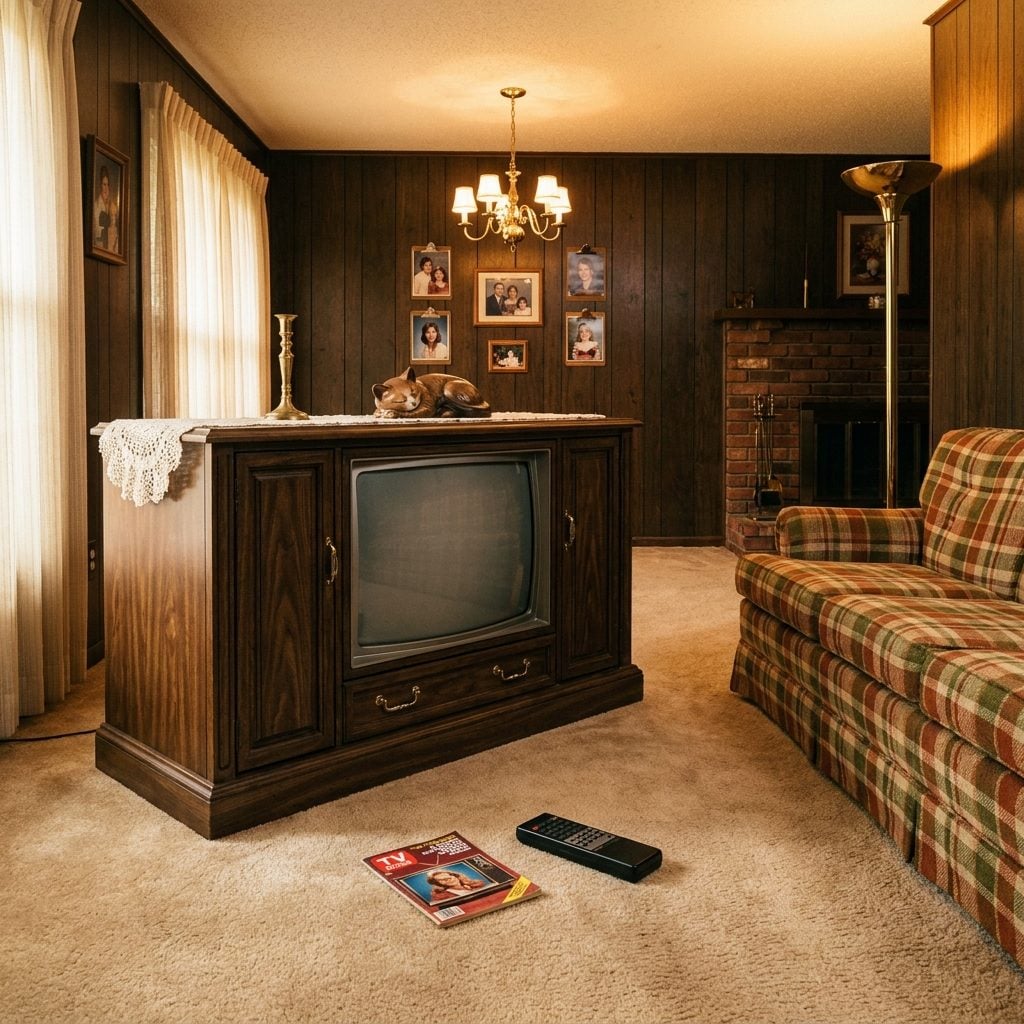
It sat against the longest wall in the room like a piece of furniture that had decided it was architecture. The wood-grain console TV was not just a television, it was a focal point, a status symbol, and occasionally a surface for your mom’s best ceramic owl. Every house had one, and every one of them weighed approximately as much as a small car.
In order to come up with the very specific design ideas, we create most designs with the assistance of state-of-the-art AI interior design software. Also, assume links that take you off the site are affiliate links such as links to Amazon. this means we may earn a commission if you buy something.
Nobody questioned why a television needed cabinet doors. Or a doily on top. The doily was non-negotiable. The TV was the undisputed center of the small family room, and everything else, the sofa, the chairs, the kids on the floor, orbited it completely. When it finally died, families didn’t throw it out so much as grieve it and then strain their backs moving it to the garage.
30. Plastic Slipcovers That Announced Every Single Sitting
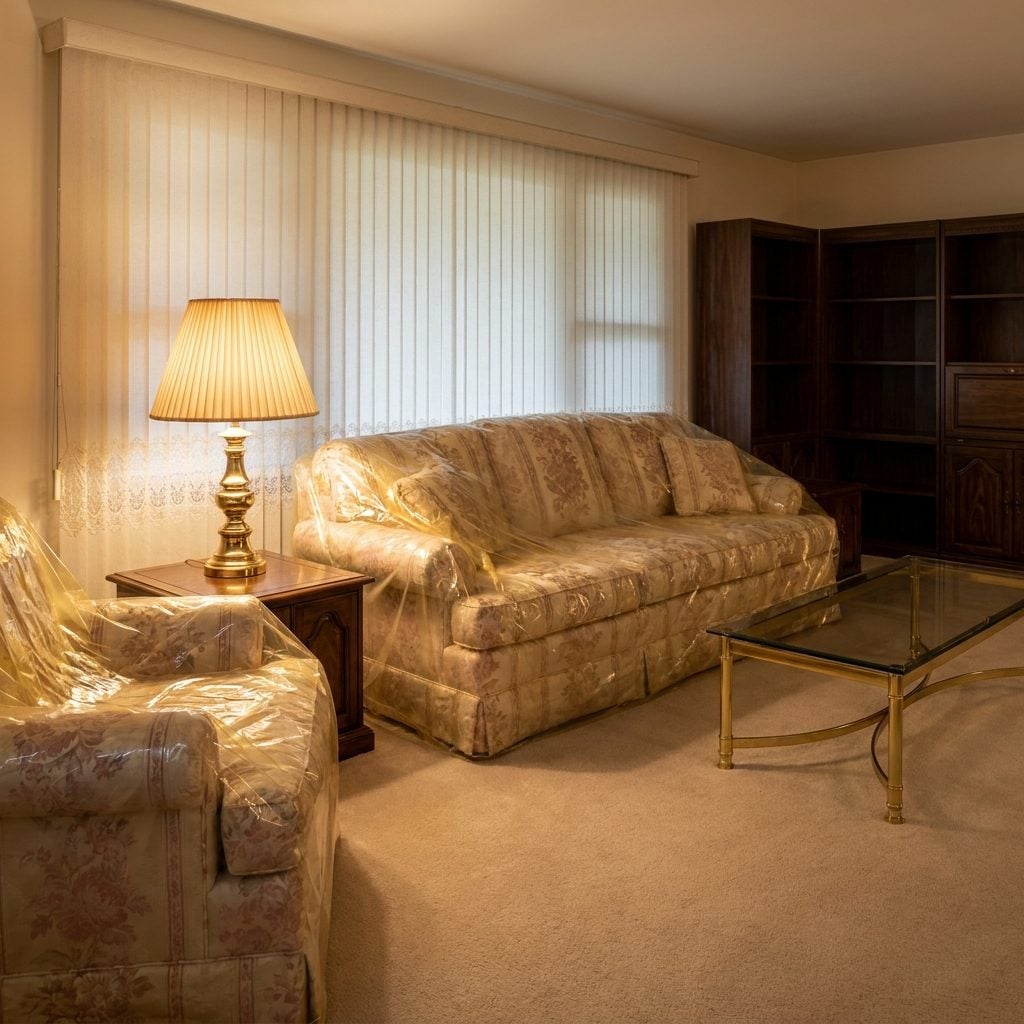
You heard it before you felt it: that hollow squeak of skin on plastic the moment you sat down. In summer, the slipcover fused to the back of your thighs. In winter, it was somehow still cold. The sofa underneath was always a floral brocade that nobody had ever actually touched with their actual body.
These covers existed to protect furniture that was itself too good to use. The logic was circular and completely airtight to the generation that lived through the Depression. The floral brocade sofa beneath was preserved in amber, essentially. Guests could tell immediately which houses had them because every time anyone shifted their weight, the living room announced it.
29. The Sunken Conversation Pit That Felt Like a Luxury Resort and a Lawsuit Waiting to Happen
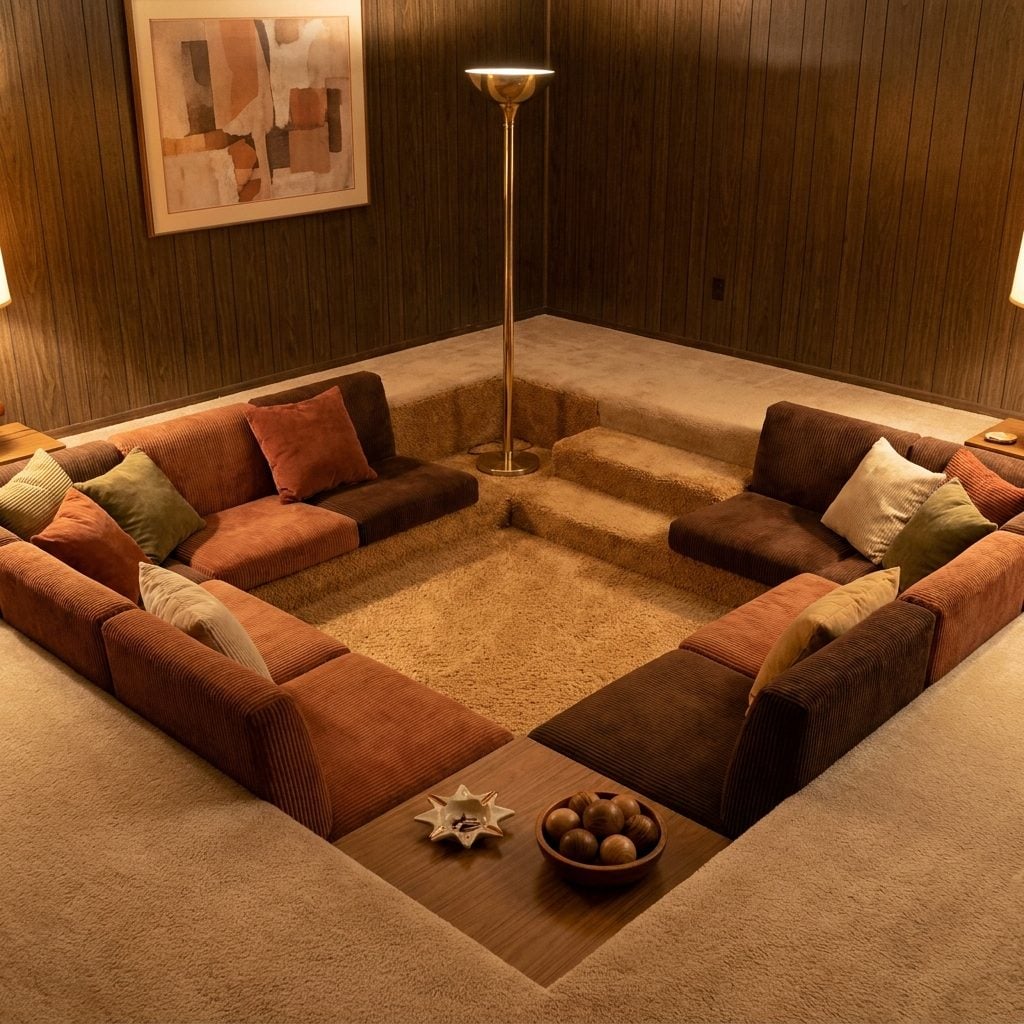
Someone in the late 1970s looked at a perfectly flat living room floor and thought: but what if it went DOWN. And for one glorious decade, that idea was considered sophistication. The sunken conversation pit signaled that you took entertaining seriously, that your home had a zone for conversation, set apart from the rest of the room by sheer gravitational commitment.
The cushions were always in colors named after geological formations: adobe, canyon, harvest wheat. The shag carpet at the bottom had its own microclimate. And yes, everyone who had one knew at least one person who missed the step coming in from the kitchen and went down hard with a plate of Swedish meatballs. That was simply the price of having a sitting room decor feature this dramatic.
28. Brass-and-Glass Coffee Tables With Corners That Drew Blood
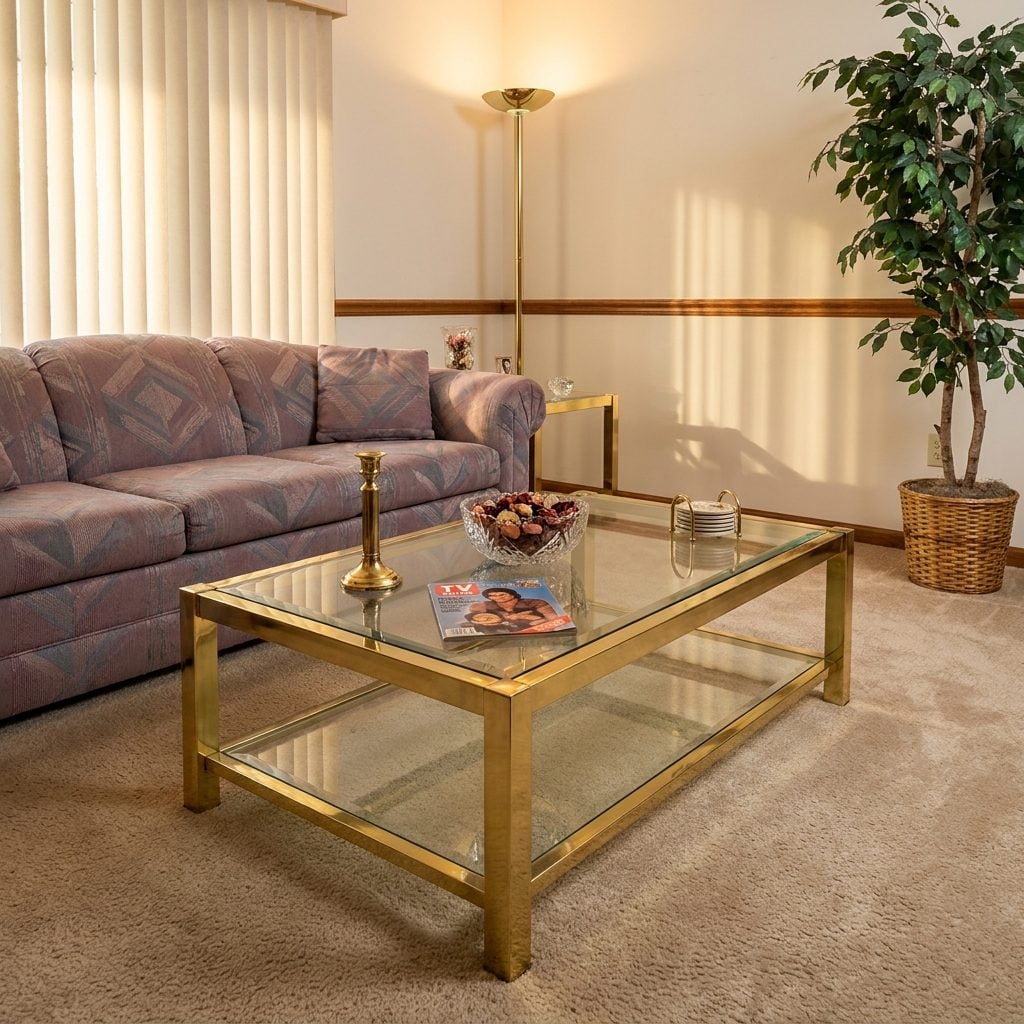
Every single corner of that table was a medical event waiting to happen. The brass-and-glass coffee table was objectively beautiful and absolutely unforgiving. Shin height. Perfectly positioned in the walking path between the sofa and the kitchen. The brass gleamed, the glass showed every fingerprint, and small children navigated around it like it was a geological hazard.
It always had the same things on it: a brass coaster set nobody used correctly, a glass bowl of potpourri that smelled like a candle store in 1987, and a TV Guide opened to the wrong week. The sharp corners were simply accepted. That’s just what coffee tables did.
27. A Wall-Sized Entertainment Center Built for One 27-Inch TV and Absolutely Nothing Else
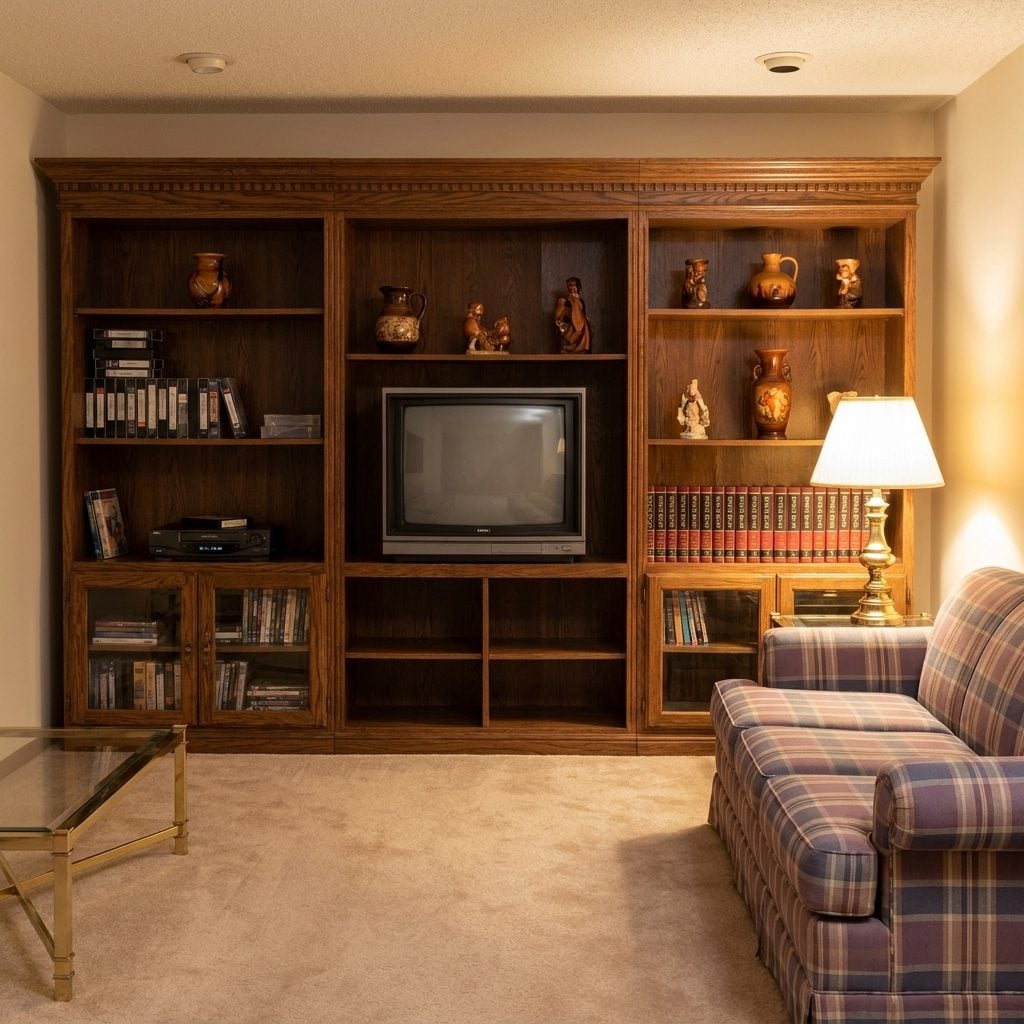
The entertainment center was a monument to optimism. It was built, or bought in a flat-pack from a furniture store with a name like “Expressions” or “Rooms To Go”, to hold an entire entertainment system that, in practice, turned out to be one 27-inch TV and a VCR. The remaining shelves were allocated to: a ceramic lighthouse, the family’s World Book Encyclopedia set from 1979, and a brass-based lamp that had no business being on a shelf.
The center cavity was always slightly too large for the TV, leaving a gap on each side that collected dust and an inexplicable amount of coaxial cable. The unit itself took up so much wall that there was nowhere left to put the colorful game room accessories every family seemed to accumulate. It didn’t matter. The entertainment center was the wall now.
26. Fake Wood Paneling Dark Enough to Eat the Light Alive
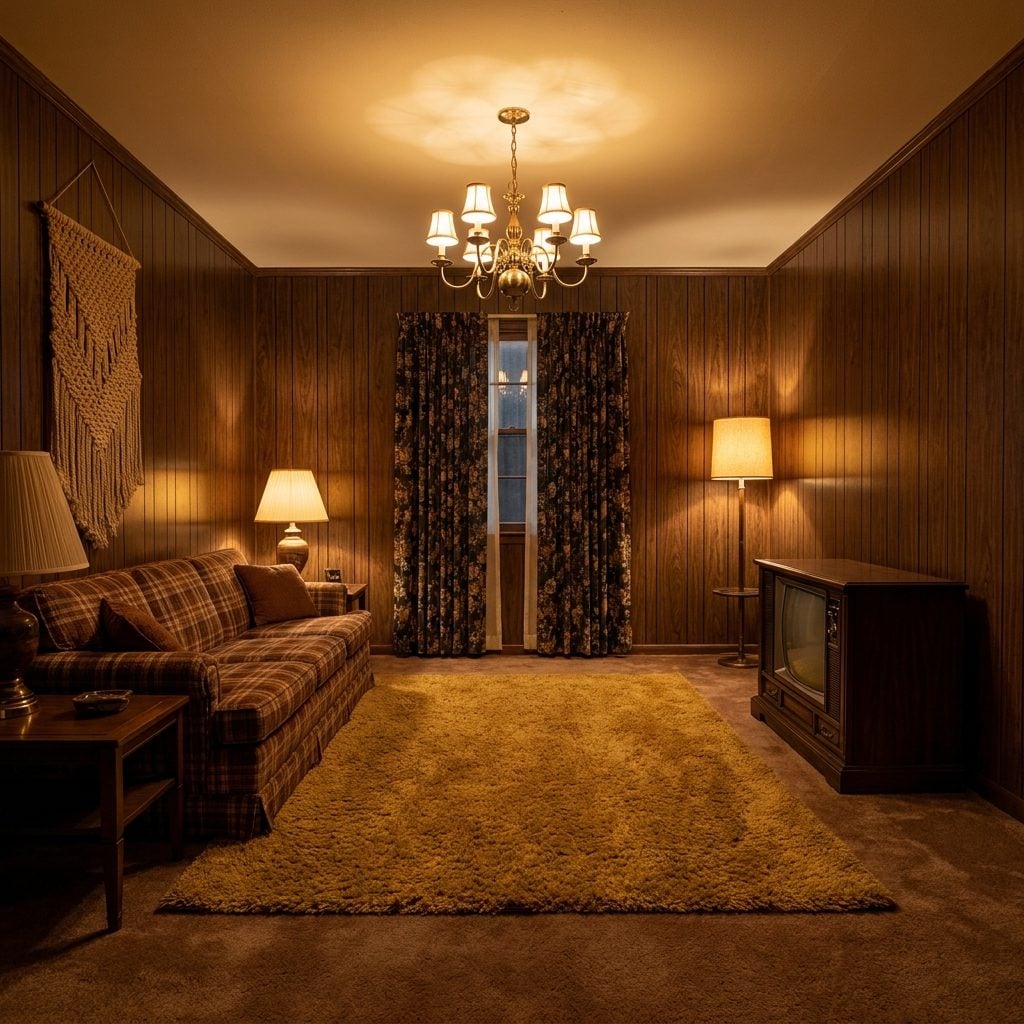
It was not wood. Everyone knew it was not wood. The thin hardboard panels had a photographic wood grain printed on them that, up close, looked exactly like a photograph of wood grain rather than actual wood grain. And yet, it was in millions of homes. Basements, living rooms, dens that had been converted from garages.
The dark walnut tone absorbed so much ambient light that you needed a lamp on at two in the afternoon. The vertical grooves collected dust in a way that made cleaning it feel pointless. It came down in sheets when anyone eventually renovated. Beneath it, people found original plaster, 1950s wallpaper, and, occasionally, evidence that the house had been making decisions without them for decades.
“The paneling didn’t just cover the walls. It consumed the room. Three lamps and a chandelier, and it was still basically a cave.”
25. The VCR Blinking 12:00 That Absolutely Nobody Was Going to Fix
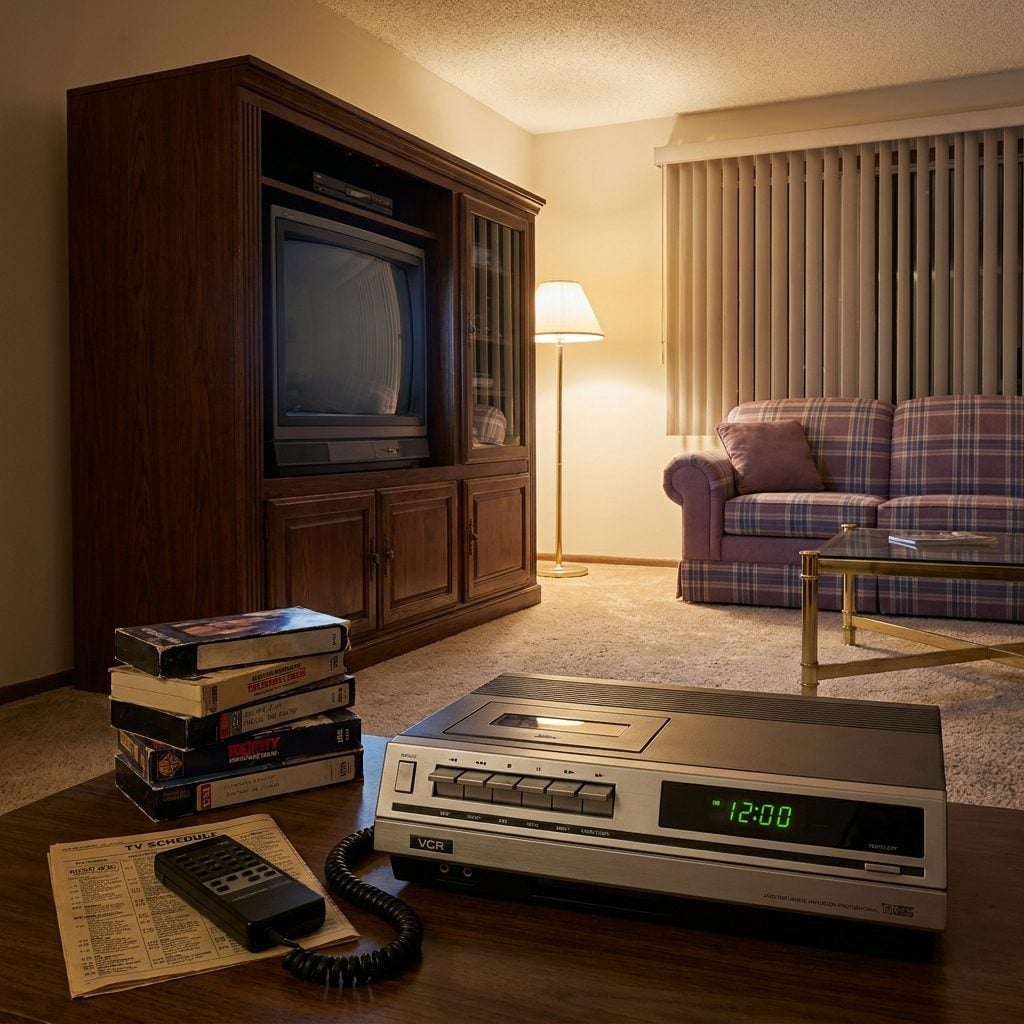
It blinked for years. Not days, years. Every power outage reset it, and resetting a VCR clock required locating the manual, which was in a drawer in the kitchen with expired coupons and a Chinese food menu from 1985, so. Nobody reset it. The green pulse of 12:00 became a permanent feature of the room, like the carpet or the drapes.
The beautiful irony is that the VCR was otherwise a source of genuine household power. Whoever figured out how to record a show while watching another one was treated like a minor deity. The clock, though? That clock just blinked on into the 1990s, serene and unbothered, marking no time at all.
24. Vertical Blinds With Two Slats Permanently Missing (and Nobody Asking Questions)
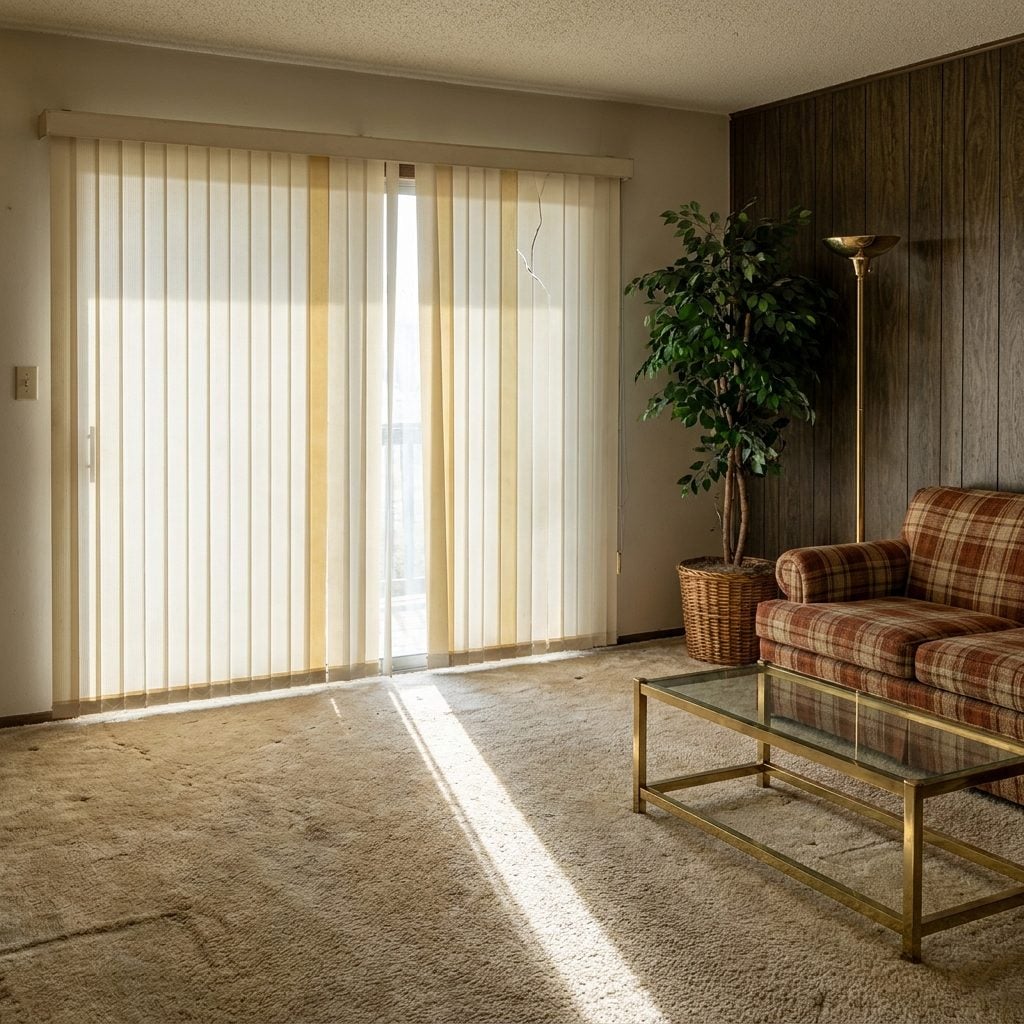
Two slats gone. Always exactly two, always from somewhere near the middle where they’d catch on something, a doorknob, a curious child, a moment of frustration during a phone call, and just never get replaced. The gap let in a sharp blade of sunlight that landed on the carpet in the same spot every afternoon, fading it slightly over the years.
Replacement slats were available at the hardware store. This was known. And yet the light living room effect never quite arrived because someone was always meaning to get around to it. The remaining slats twisted at slightly different angles, one always stuck perpendicular to the rest, the pull cord fraying where it met the header track. Vertical blinds were the one home feature that deteriorated in the most public, visible way possible and somehow remained in place for an entire decade.
23. The Bowl of Plastic Fruit Nobody Was Allowed to Touch (Or Move. Or Look at Too Hard.)
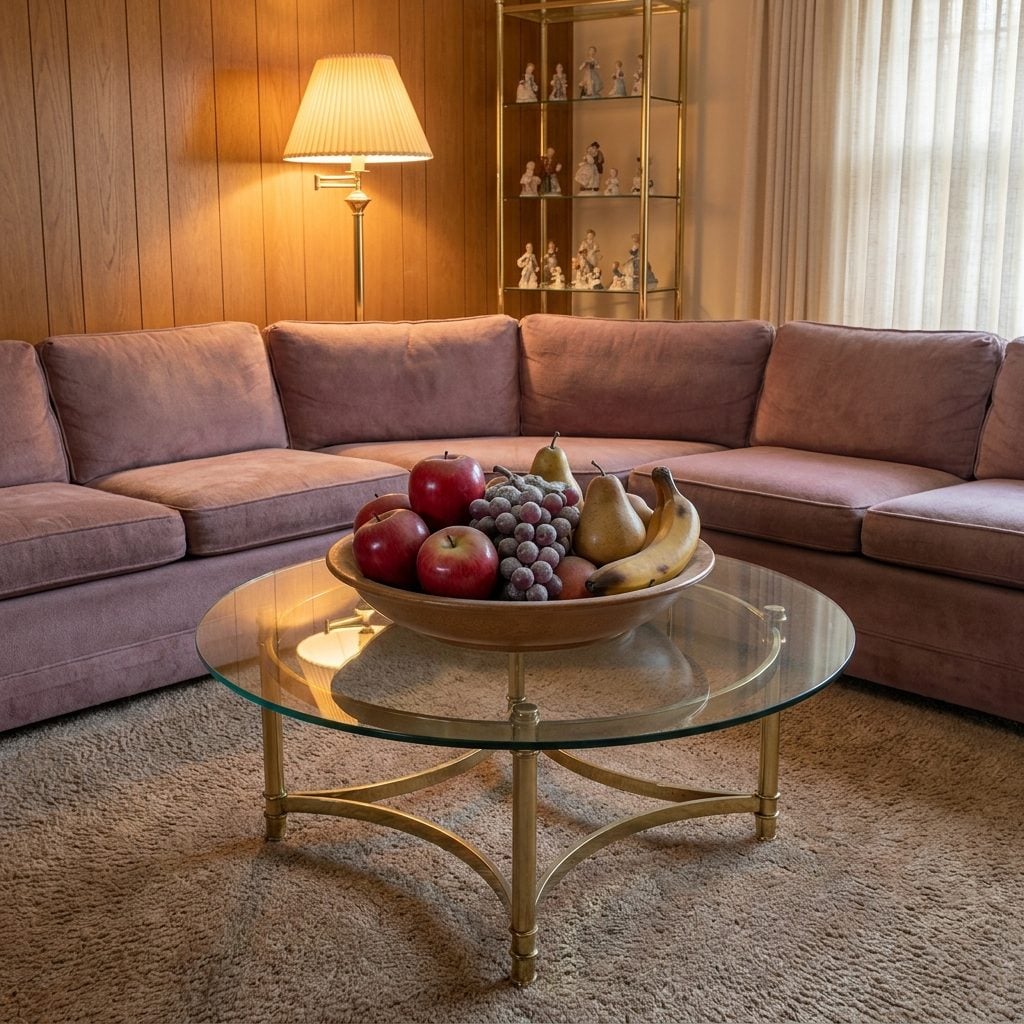
It sat there on the coffee table like a still life painting that had been granted permanent residency. The grapes were always a little dusty. The apples had that waxy gleam no real apple ever achieves. And if you reached for one as a kid, just to see what would happen, the look you got across the room could stop a clock.
Nobody ever explained the plastic fruit. It wasn’t decorative in any way that could be articulated. It wasn’t fruit-scented. It didn’t fool anyone. It was simply there, occupying a bowl, guarding the coffee table, permanent as a mortgage. The bowl itself was usually ceramic with a hand-painted border, and it had probably come from a craft fair in 1983 and would outlast several family dogs.
22. The Ashtray on Every Surface, Whether Anyone in the House Smoked or Not
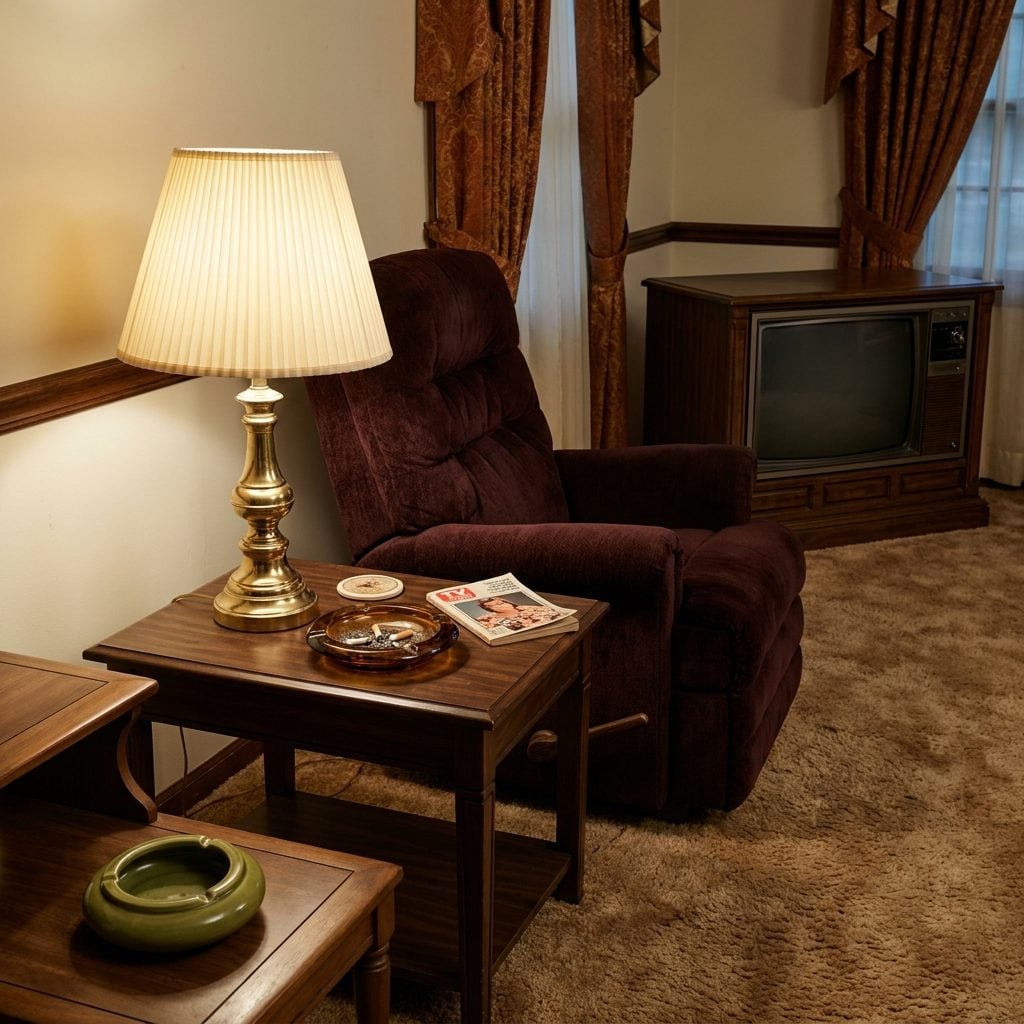
Every surface had one. The coffee table, both end tables, the little shelf under the side table. It didn’t matter if nobody in the family smoked on a Tuesday, the ashtrays stayed. They were considered accessories. Decorative objects. Some were amber glass, some were chunky pottery in avocado or harvest gold, and the fancy ones came out when company arrived.
There was something almost ceremonial about them. The good ashtray was rinsed and displayed like a fruit bowl (see above). The everyday one collected paper clips, a stray button, and a dime. At some point in the mid-nineties, someone quietly put them all in a bag for Goodwill, and nobody mentioned it.
21. Wall-to-Wall Carpet in a Shade Best Described as Toasted Oatmeal
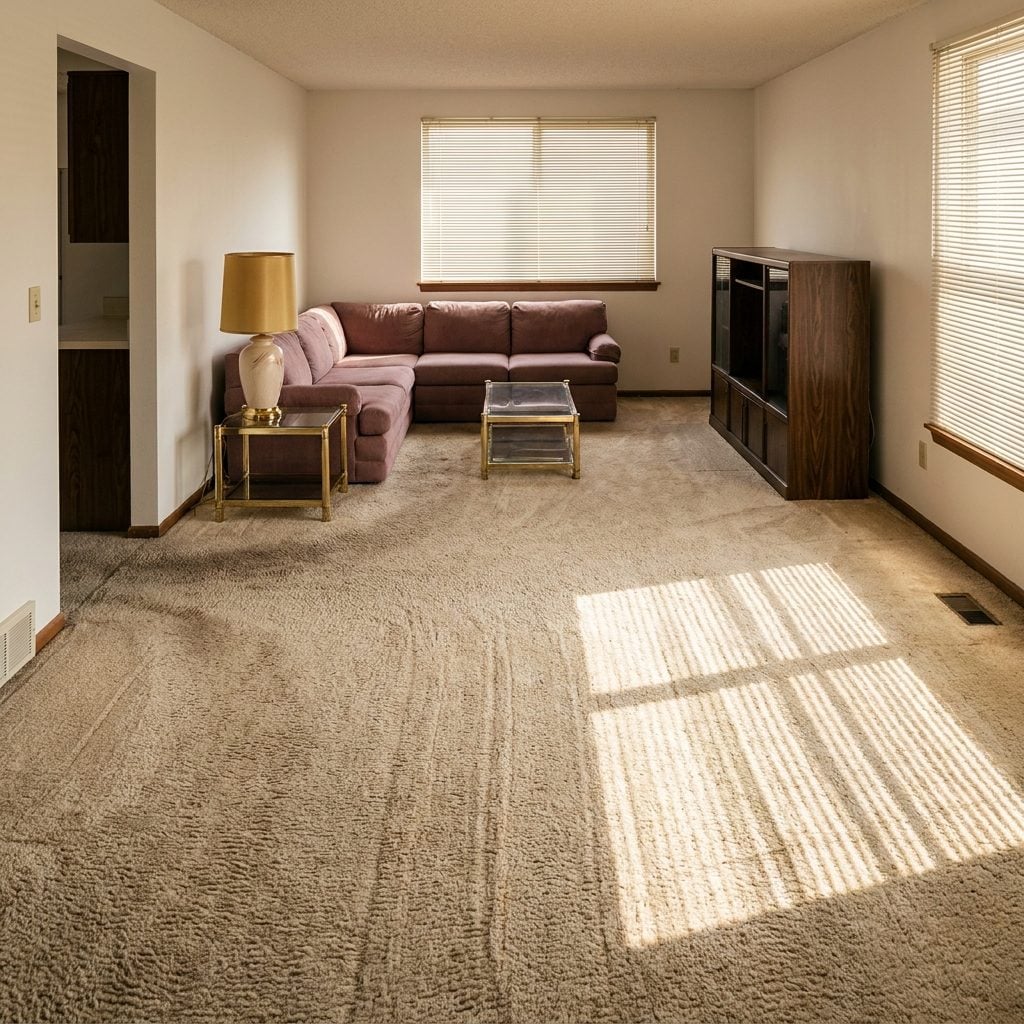
It was warm. It was everywhere. And it hid absolutely nothing. Grape juice, a dropped crayon, the slow shadow of a spill that had been blotted but not quite defeated, the carpet absorbed all of it with the stoic patience of something that had given up on being clean. The vacuum lines were the carpet’s only good days.
The color itself defied easy description. It wasn’t beige. It wasn’t tan. It was something that had been chosen to hide dirt but somehow showed every single footprint. Millions of small family room floors across America wore this exact shade, and when hardwood became fashionable in the nineties, people ripped it up and found perfect original wood underneath and felt genuinely betrayed.
20. The Stereo Cabinet with Speakers the Size of Small Appliances
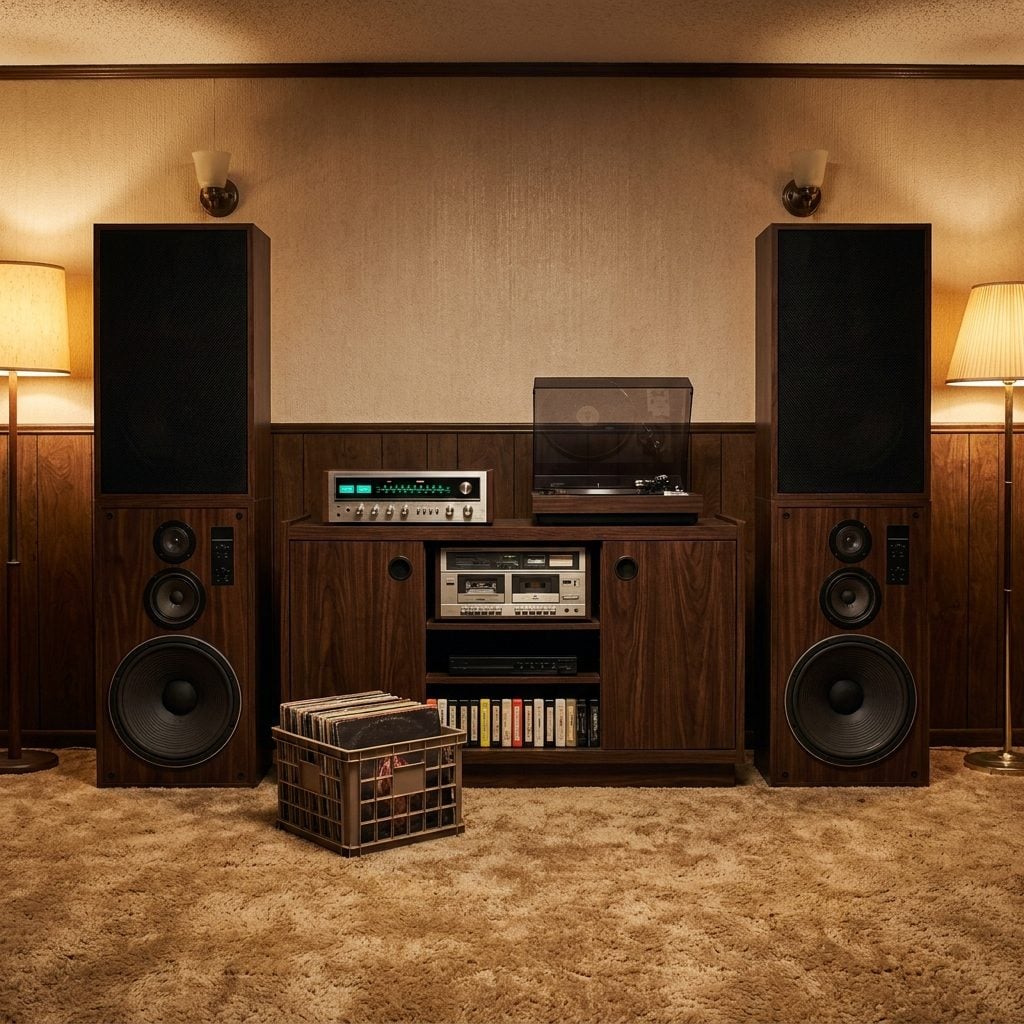
Those speakers weren’t speakers. They were furniture. They were load-bearing members of the family. Each one stood taller than most of the children in the house and had a mesh grille that looked vaguely architectural, like the front of a modernist building someone had shrunk down and pointed at the couch.
Dad knew every dial on that receiver. The green tuner display glowed in the dark. There was a cassette deck, a turntable with a smoked plastic lid, and a specific volume setting that constituted a house rule. Touching the equalizer without permission was somewhere between a misdemeanor and a federal offense.
The speakers were positioned like twin monoliths, and the whole setup was treated with a reverence usually reserved for religious objects.
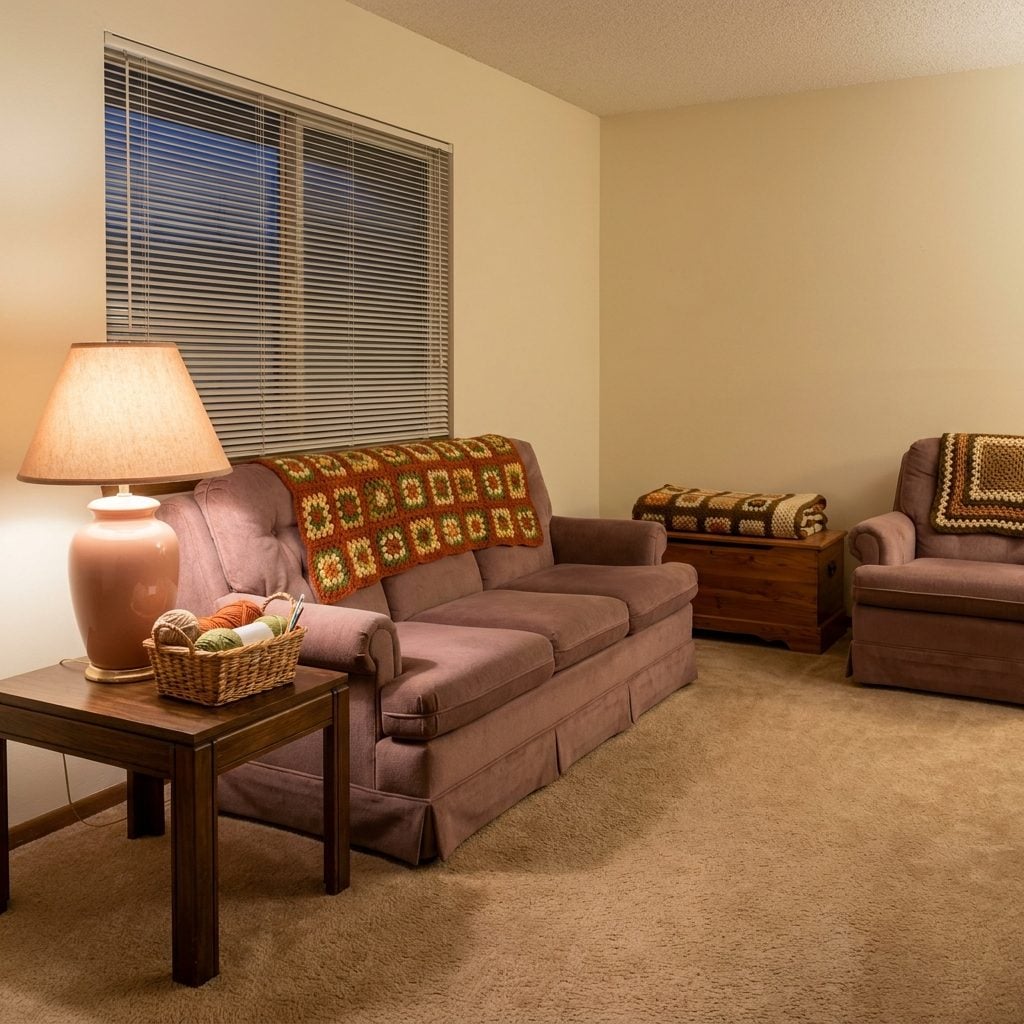
19. The Crocheted Afghan Draped Over Every Chair, Sofa Arm, and Horizontal Surface Within Reach
🔥 Would you like to save this?
Every granny square was a decision. Brown next to orange, orange next to yellow, yellow next to that one weird green that has no name but exists in every afghan made between 1974 and 1991. Someone’s grandmother made these. Or an aunt. Or a neighbor who dropped one off in a paper bag with no explanation and somehow it ended up on the back of the sofa forever.
They weren’t just blankets. They were territorial markers. That afghan on Dad’s chair was his afghan, and you didn’t borrow it. The one on the back of the couch was communal property and had been washed enough times that the yarn had gone slightly fuzzy and soft in a way that felt like being young.
18. The Six-Foot Fake Ficus That Had Been Gathering Dust Since Carter Was in Office
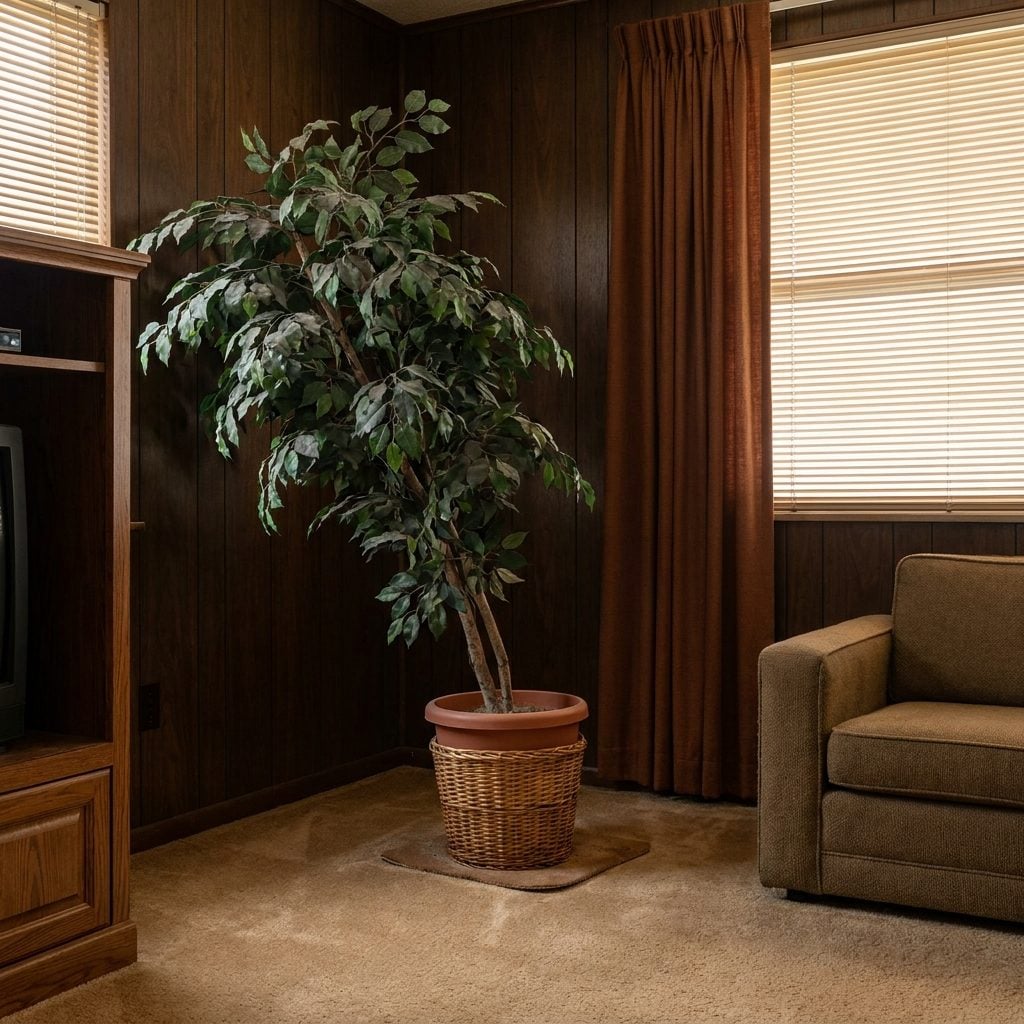
It leaned slightly to the left and had been leaning slightly to the left for so many years that it had become the correct angle. The dust on the upper leaves was geological at this point, a thin grey sediment that recorded time passing in the corner of the living room while life went on around it.
Nobody watered it, obviously. Nobody dusted it, mostly. It was just there, conferring greenery on a room that needed something in that corner, fulfilling a vague decorating instinct without any of the burden of actual plant ownership. The light living room crowd of today with their fiddle-leaf figs has no idea they are living in the direct spiritual descendant of this exact fake ficus.
The wicker basket it came in was already falling apart but was also never going to be replaced. The whole assembly was a monument to commitment through inertia.
17. Glass Bricks Dividing the Living Room from the Hallway for Absolutely No Discernible Reason
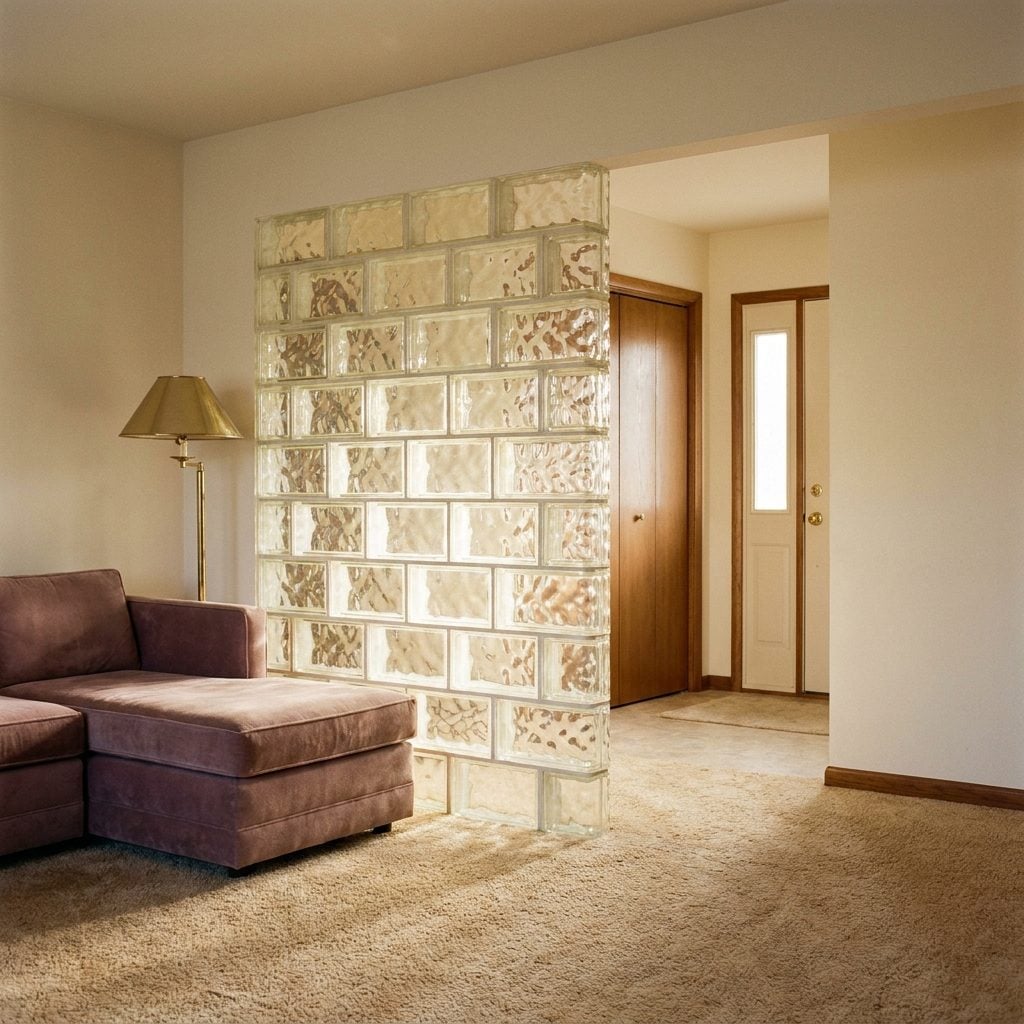
Glass bricks were the 1980s answer to a question nobody had asked. They divided rooms while not actually dividing rooms. They let in light while obscuring the view through a kind of aquarium haze. They were structural in the sense that they were load-bearing, and decorative in the sense that someone had clearly seen them in an architecture magazine and decided this was the future.
The future lasted about eleven years. By 1995 they were already reading as dated, and by 2002 they were the punchline of every home renovation show segment where a contractor sighed, rolled up his sleeves, and said something like “well, first we’re going to deal with this.” A surprising number of them are still out there, glowing quietly in ranch houses across the midwest, waiting to be either demolished or, eventually, praised as retro.
16. The Floor Lamp with Three Glowing Mushroom Shades That Lit Exactly Nothing
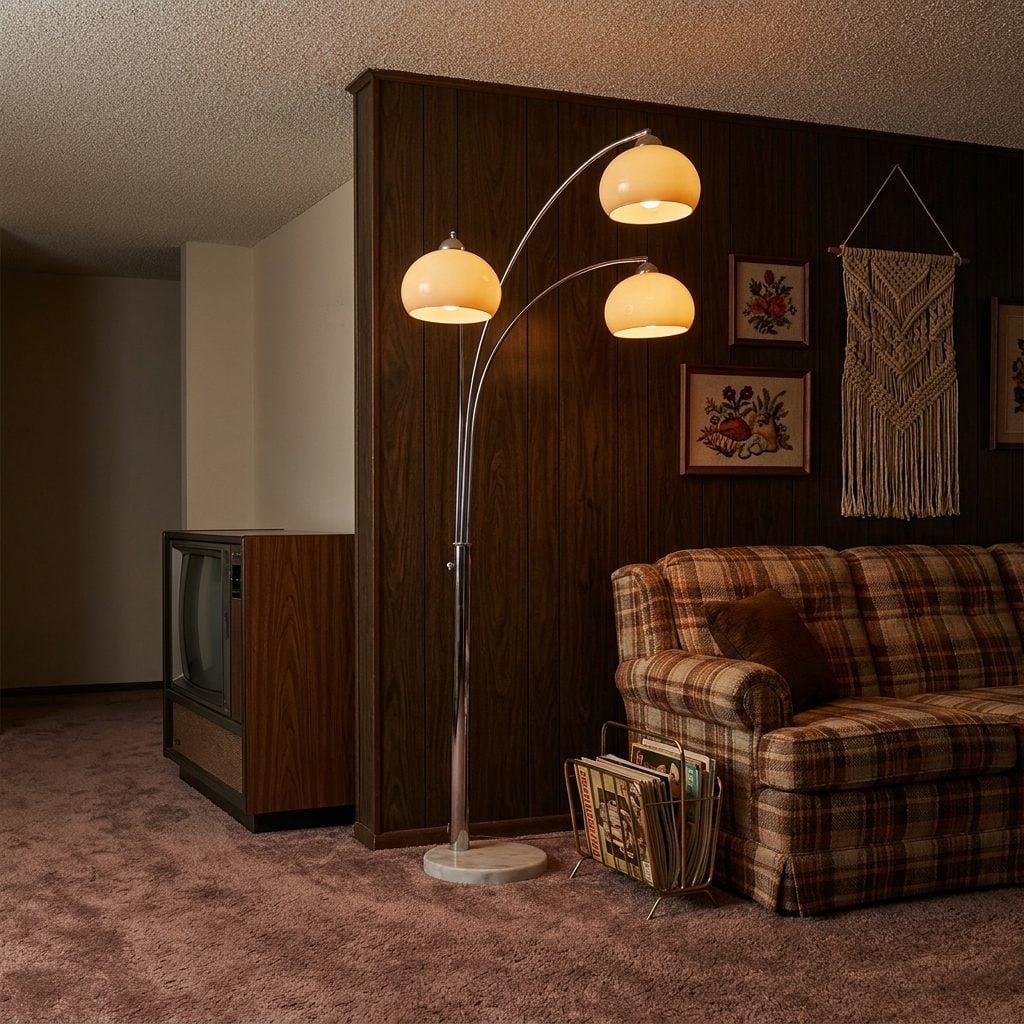
Three arms. Three frosted globes. Zero lumens reaching anywhere near your book. The mushroom floor lamp was a fixture in every ’80s living room that wanted to seem sophisticated, and it absolutely delivered on seeming. The actual glow it produced was the visual equivalent of a whisper, enough to cast a lovely halo on the ceiling, enough to make the room feel like a lounge, not enough to read the TV Guide without squinting.
Nobody questioned it. The lamp was decor, not lighting. That was the rule. You turned it on at 6 p.m. and left it on all evening while the real illumination came from the television. A perfectly reasonable system, when you think about it.
15. Wood Trim Everywhere, Including on the Ceiling, the Stairs, and Your Sense of Dignity
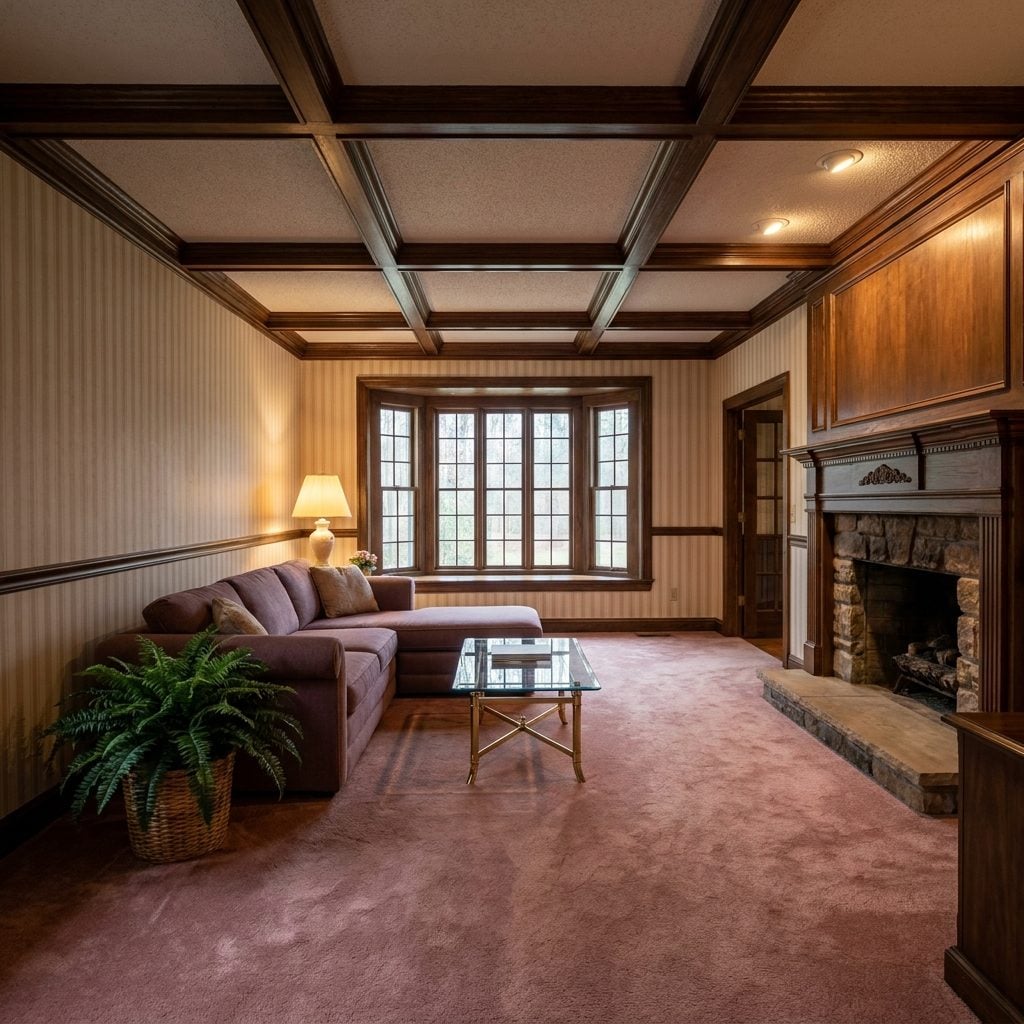
There was a period in American home design when the correct answer to every question was wood trim. Bare wall between windows? Wood trim. Ceiling looking plain? Wood trim. Coffee table edge feeling exposed? You already know. The ’80s living room treated stained oak molding the way a nervous host treats cheese, just keep adding it and eventually everyone feels comfortable.
The chair rail was nailed up with confidence. Then came the door casings, then the window casings, then the wainscoting, and at some point someone looked at the ceiling and said not yet. The coffered grid was born. Dark walnut stain over absolutely everything, including the mantel, the bookshelf surround, and what appeared to be the television cabinet. Wood trim was the ’80s equivalent of gray paint today: a default decision dressed up as a design choice.
14. Decorative Geese in Seasonal Outfits: A Phenomenon That Requires No Further Explanation
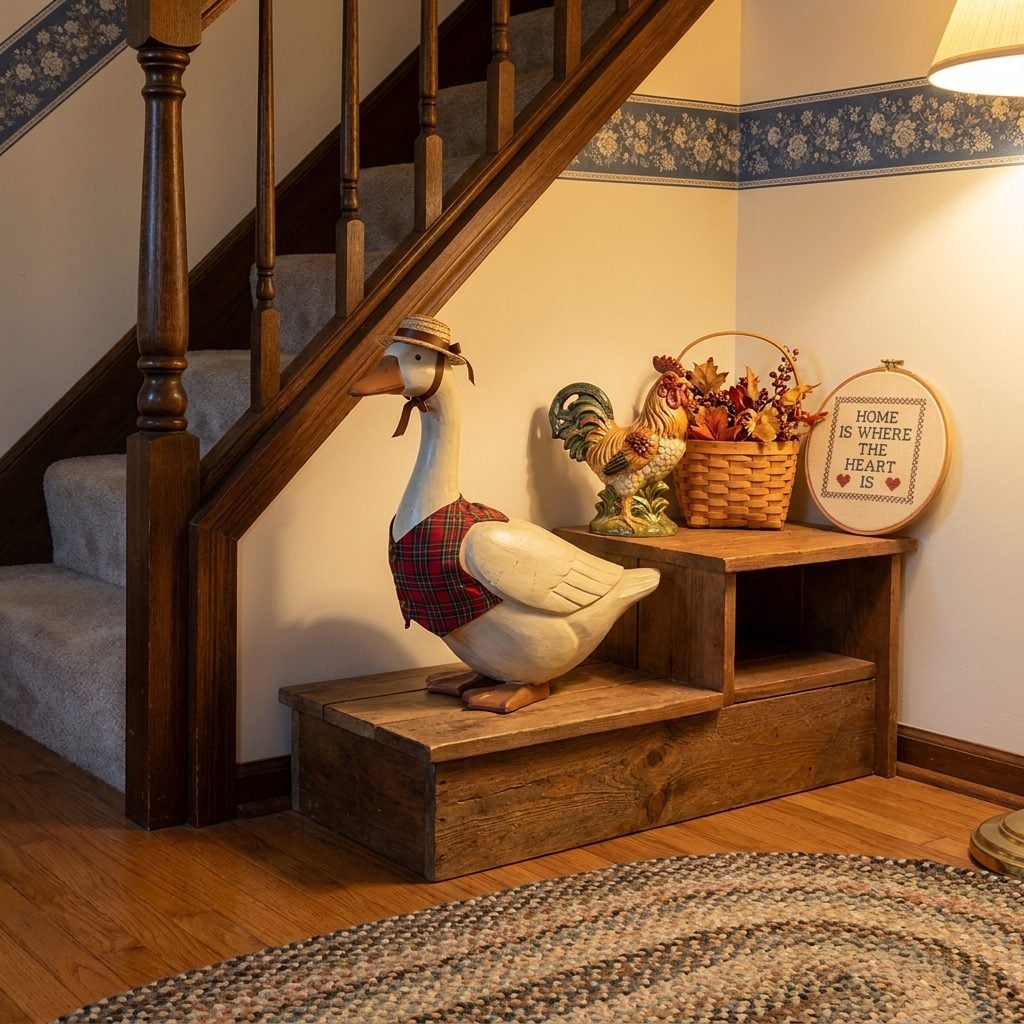
Somewhere, in a container of totes in someone’s attic, there is a full wardrobe of tiny outfits waiting to be rotated onto a wooden goose. Valentine’s Day: red heart apron. Easter: bonnet and basket. Halloween: witch hat. Christmas: Santa coat with a belt that does not close. The goose itself never changed. Only the outfit changed. This was considered decorating.
The truly committed households had multiple geese. A pair. One for each season standing at attention near the front door or beside the fireplace hearth like very well-dressed sentries. Nobody asked why. The geese simply were, and if you grew up with them, their absence from modern homes still feels faintly like something is missing.
13. The Wallpaper Border Running Around the Room Like It Was Holding Everything Together
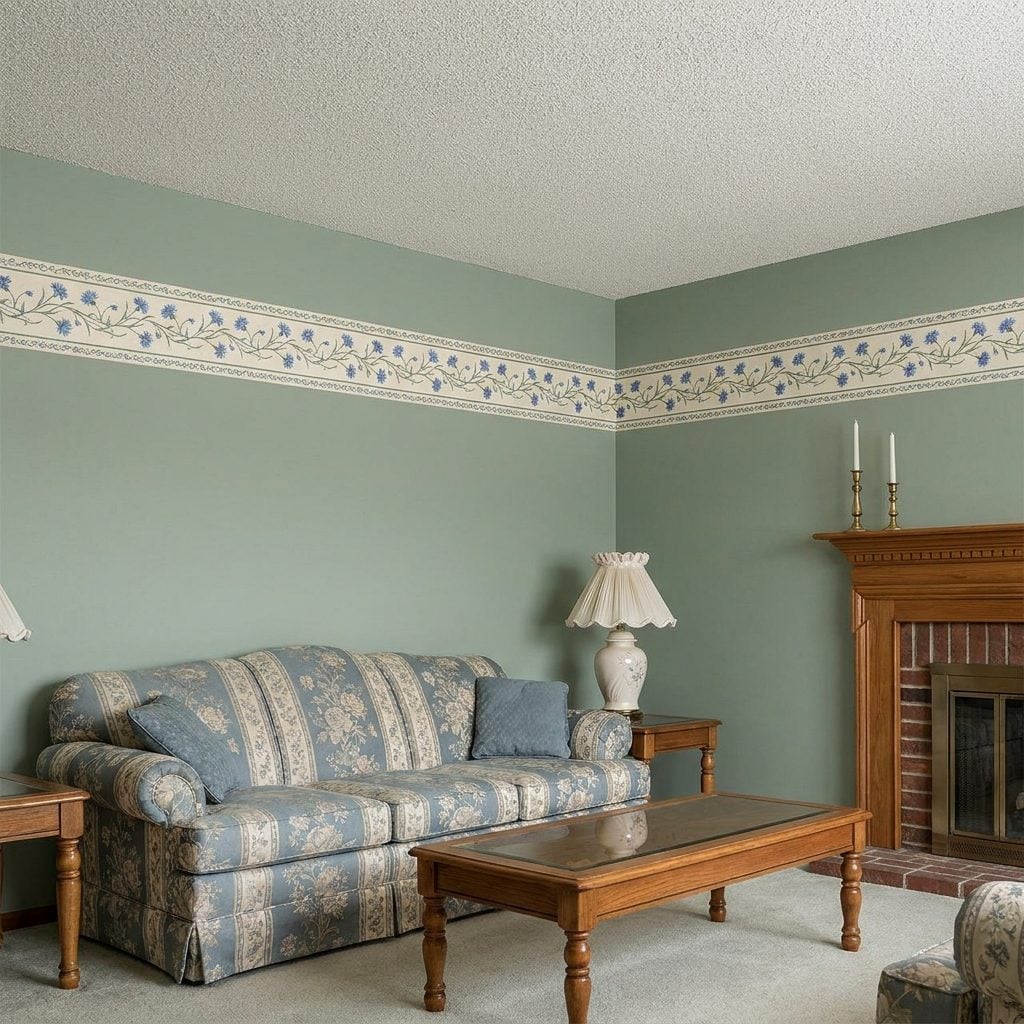
Not enough commitment for full wallpaper. Too much personality for a plain wall. The border was the compromise, and it was applied with the seriousness of someone hanging art at the Louvre.
Grapes were popular. Tiny blue flowers were extremely popular. Ducks wearing bonnets occupied a specific regional niche in the upper Midwest. The border went up near the ceiling, or sometimes as a chair-rail divider, or sometimes in both places simultaneously, the double-border households were playing at an advanced level. Peeling it off in the 1990s took roughly as long as it had taken to apply, and left behind a ghostly strip of old adhesive that no primer fully covered. Some of those walls are still haunted.
12. The Stack of TV Guides on the Side Table, Organized by Nobody and Read by Everyone
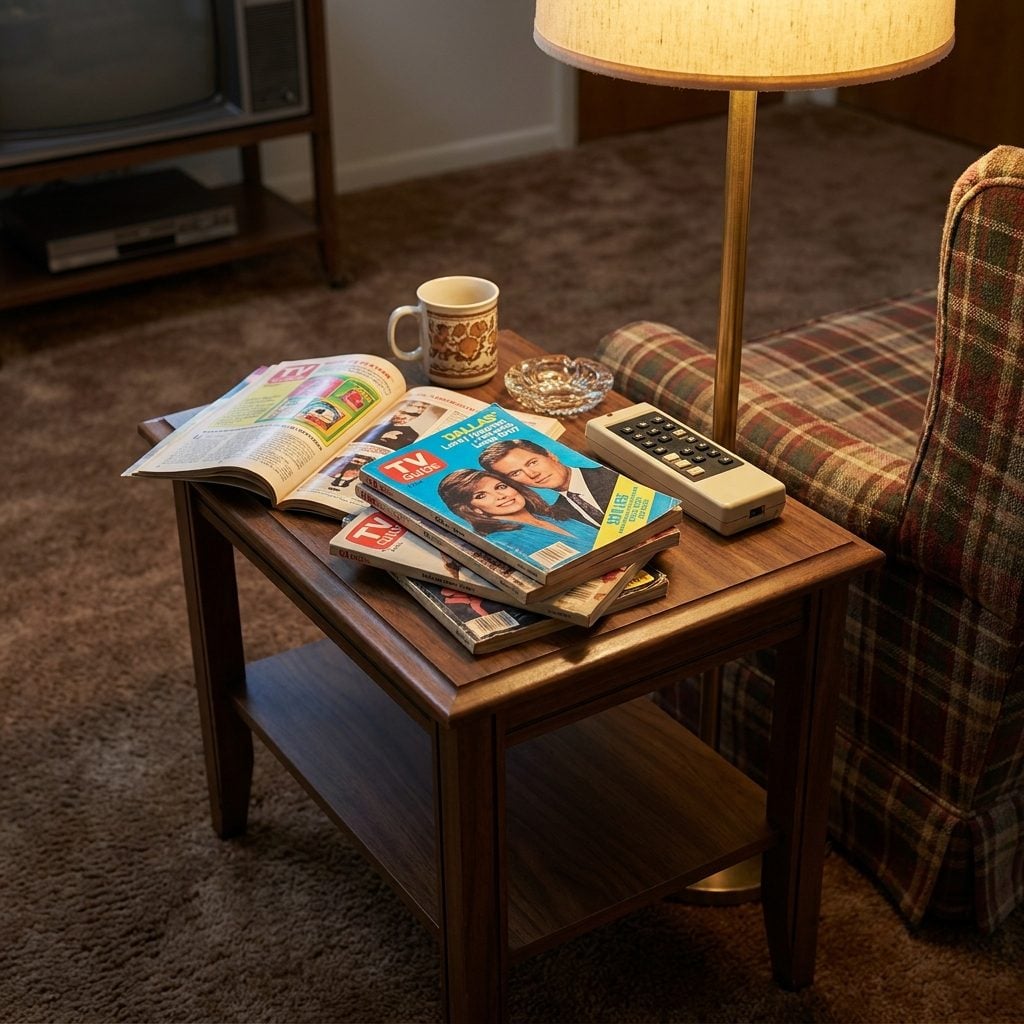
Every household had them. Nobody subscribed intentionally, the subscription just existed, renewed automatically, arriving each week with the earnestness of a small newspaper. The stack accumulated in the same spot, usually on the table beside whoever sat there most often, and grew into a leaning archive of the previous two months of programming that no one would ever reference again.
The ritual was specific: you flipped to your night, circled what you wanted to watch in ballpoint pen, and left the magazine open to that page as a kind of household notification system. If the TV Guide was open to Thursday, everyone understood the plan. It was a scheduling app made of pulp paper. We could have used a calendar. We didn’t.
11. The Recliner That Consumed Fathers and Never Fully Released Them
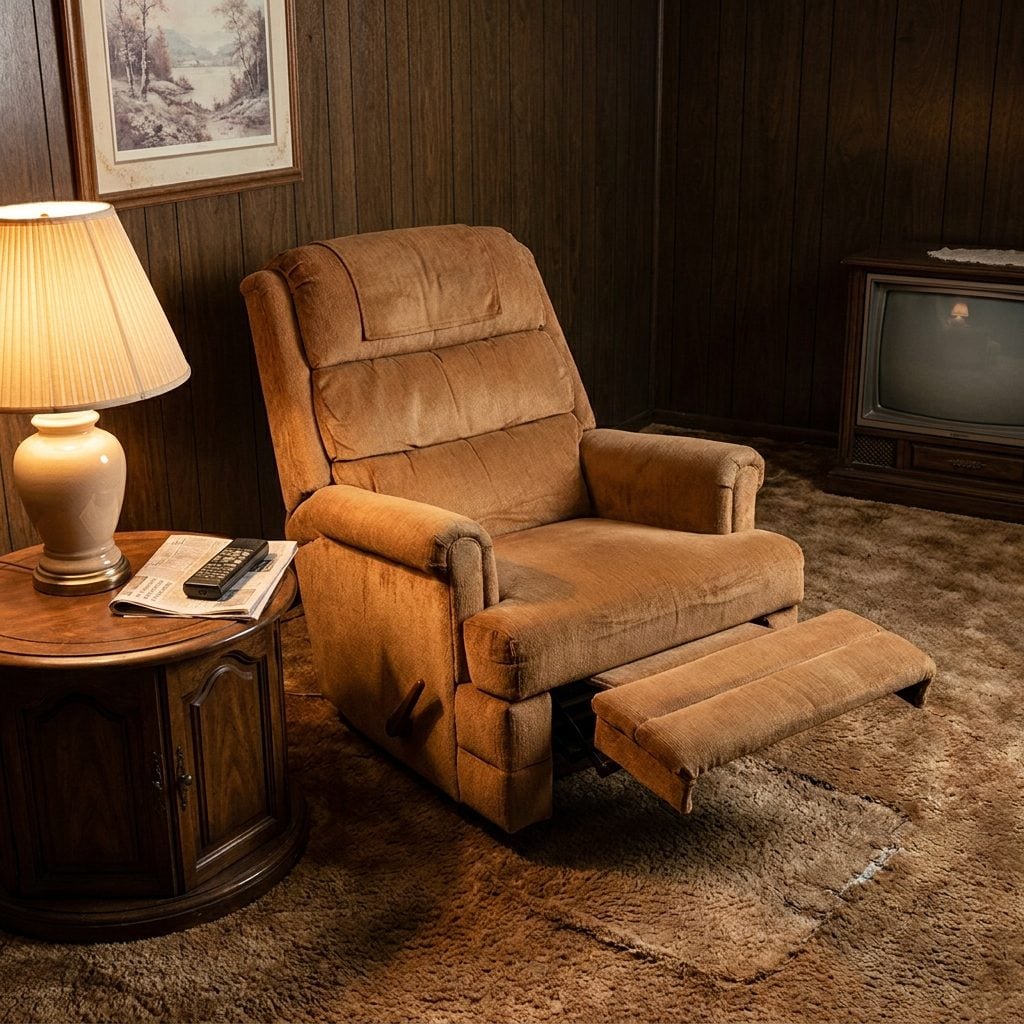
The chair had a name. Not a brand name, a family name. “Dad’s chair.” Sitting in it while Dad was home was a misdemeanor. Sitting in it while Dad was away was legal but spiritually complex, because the thing was molded to exactly one person’s body and sitting in it felt like trying on someone else’s shoes.
The pull lever on the right side was the important part. A quick yank and the footrest shot forward with a mechanical thunk that meant the evening had officially started. The armrests were shiny where hands had rested for a decade. The fabric around the headrest had a slightly different texture from years of contact. These chairs lasted thirty years, got reupholstered once, and still ended up in garages rather than the trash because nobody could bring themselves to do it.
10. The Heavy Drapes Pulled Shut at Noon Against the Glare and Never Really Reopened
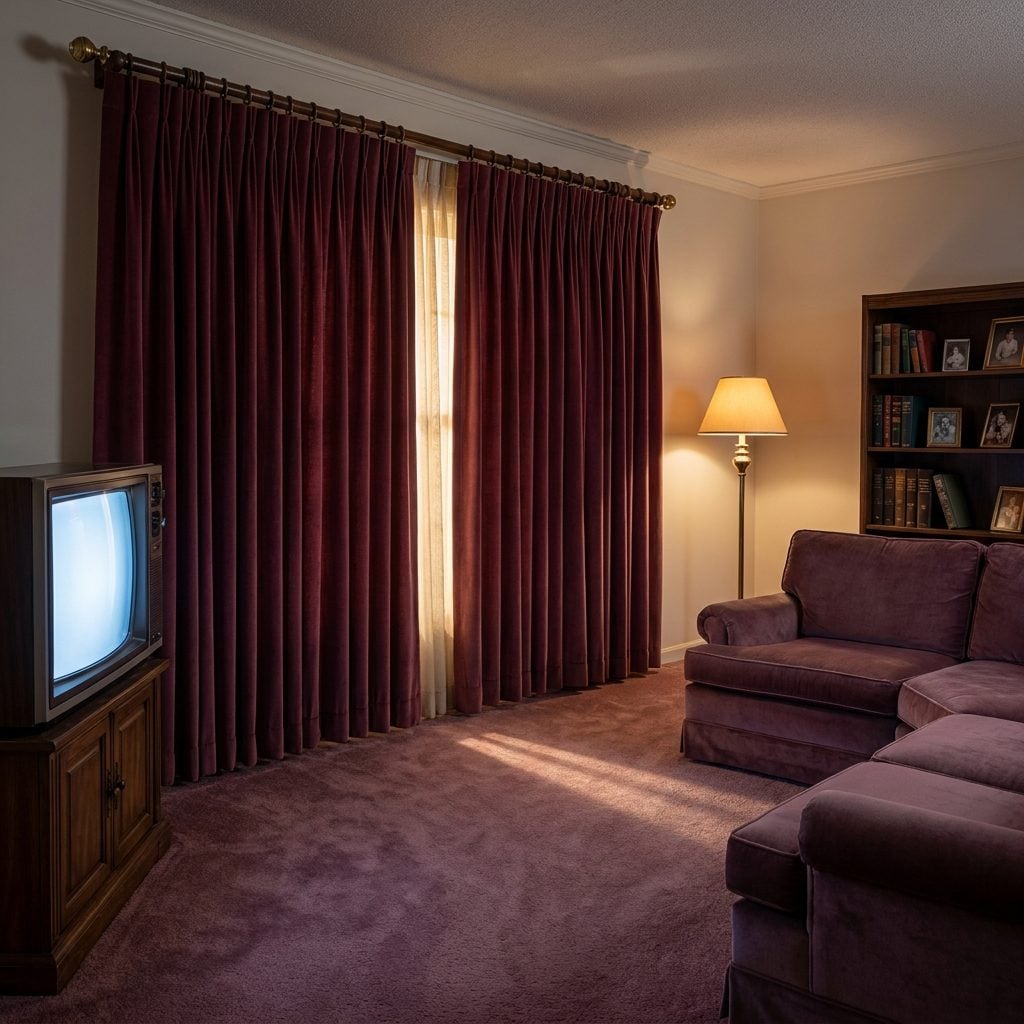
The original reason was TV glare. That was the stated, practical reason the drapes were pulled shut before noon on a Saturday in June. The real reason, after a few years, was simply that this was now how the room looked and nobody was changing it.
Heavy velvet drapes in wine red or hunter green, lined in cream, hanging from floor to ceiling on a wooden rod with brass rings, these weren’t window treatments so much as walls you could move, and they were almost never moved. The room behind them existed in a permanent warm twilight that was somehow both cozy and slightly melancholy, the way an old movie theater feels between showings. Outside was fine. But in here, the television glowed, the lamp hummed its amber hum, and the carpet held the heat, and it was enough.
9. Mirrored Walls That Doubled the Visual Chaos
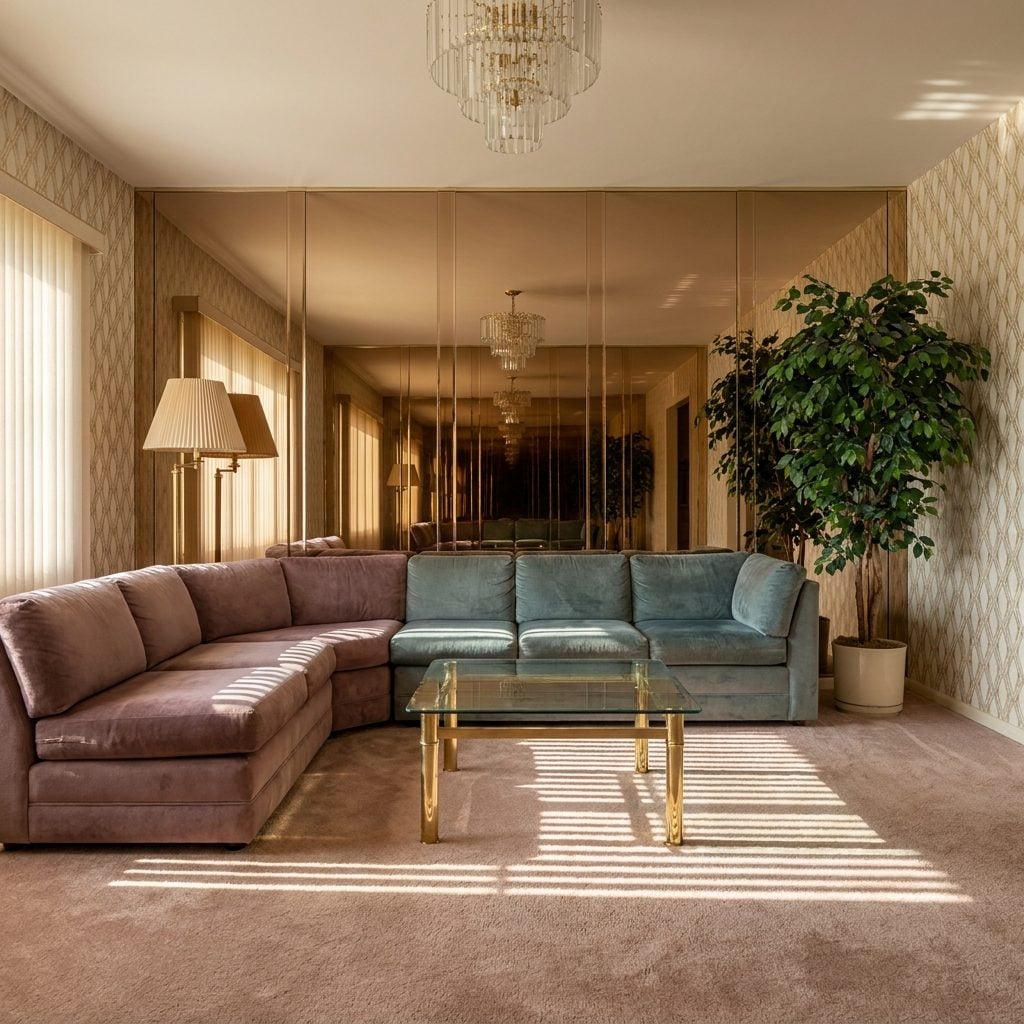
Walk into one of these rooms and your brain needed a full second to catch up. Mirrored walls, usually installed in panels with thin beveled edges running between them, made every 1980s living room feel simultaneously twice as large and twice as crowded. The furniture, the ficus, the chandelier: all of it reflected back at you in slightly amber-tinted glass.
The idea was borrowed from hotel lobbies and upscale restaurants, which felt aspirational at the time. In practice, it meant you could watch yourself eat a bowl of cereal from three angles. Nobody questioned it. Nobody thought to question it.
8. A Cordless Phone the Size of a Brick Parked on the End Table
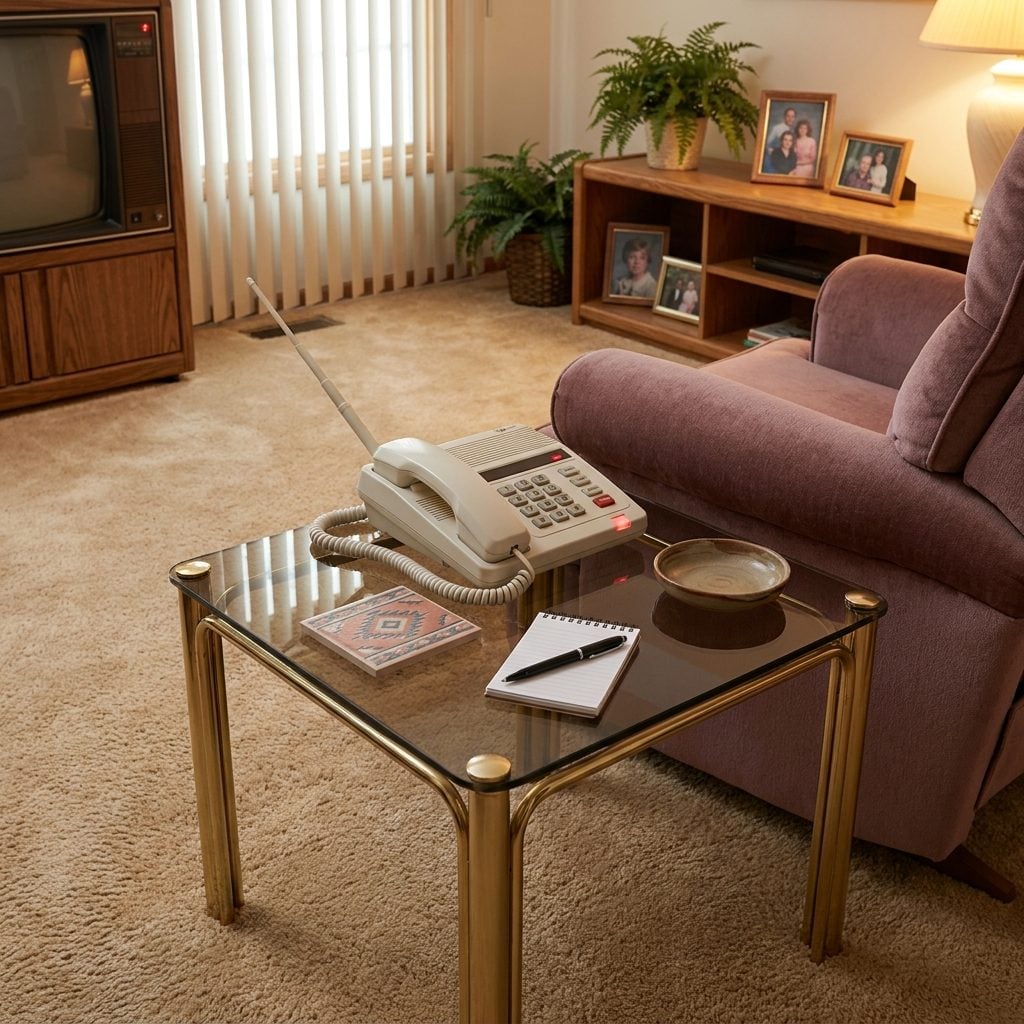
It sat there like a small appliance. The antenna was always up, always fully extended, because everyone believed, incorrectly, that this improved reception. The handset was roughly the weight of a hardcover novel. The base blinked a red light when the battery was low, which was most of the time, because nobody put it back in the cradle correctly.
Cordless phones in the 1980s represented genuine technological optimism. You could walk to the kitchen while talking. You could take it outside, theoretically. The range was about forty feet before the static made conversation impossible, but the freedom of those forty feet felt like a miracle.
7. Laser-Background Family Portraits Hanging with Authority Above the Couch
🔥 Would you like to save this?
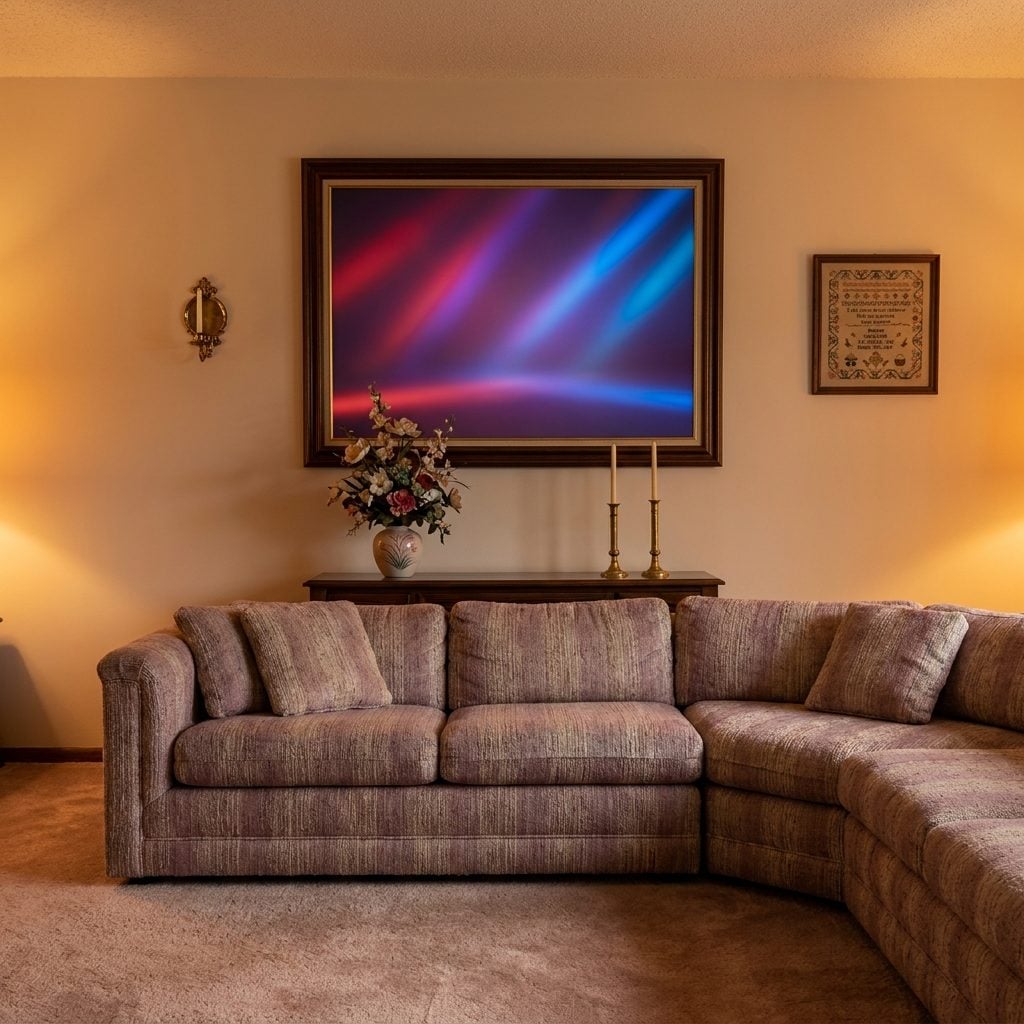
The laser background portrait was not optional. Every family had one, hung in the most prominent spot in the living room, matted in cream and framed in wide dark wood with a gold lip. The backdrop itself, those radiating streaks of magenta and electric blue, looked like a special effect from a movie about space travel, which made the whole thing feel vaguely ceremonial.
Sears Portrait Studios and JCPenney photo departments ran these sessions on weekends. Everyone wore coordinating outfits (usually jewel tones), sat on a curved bench, and stared into the middle distance while someone off-camera said “say cheese” with a conviction that was never quite earned. The resulting portrait was treated like a legal document.
6. The Giant Bowl of Hard Candies Nobody Touched (But Everyone Displayed)
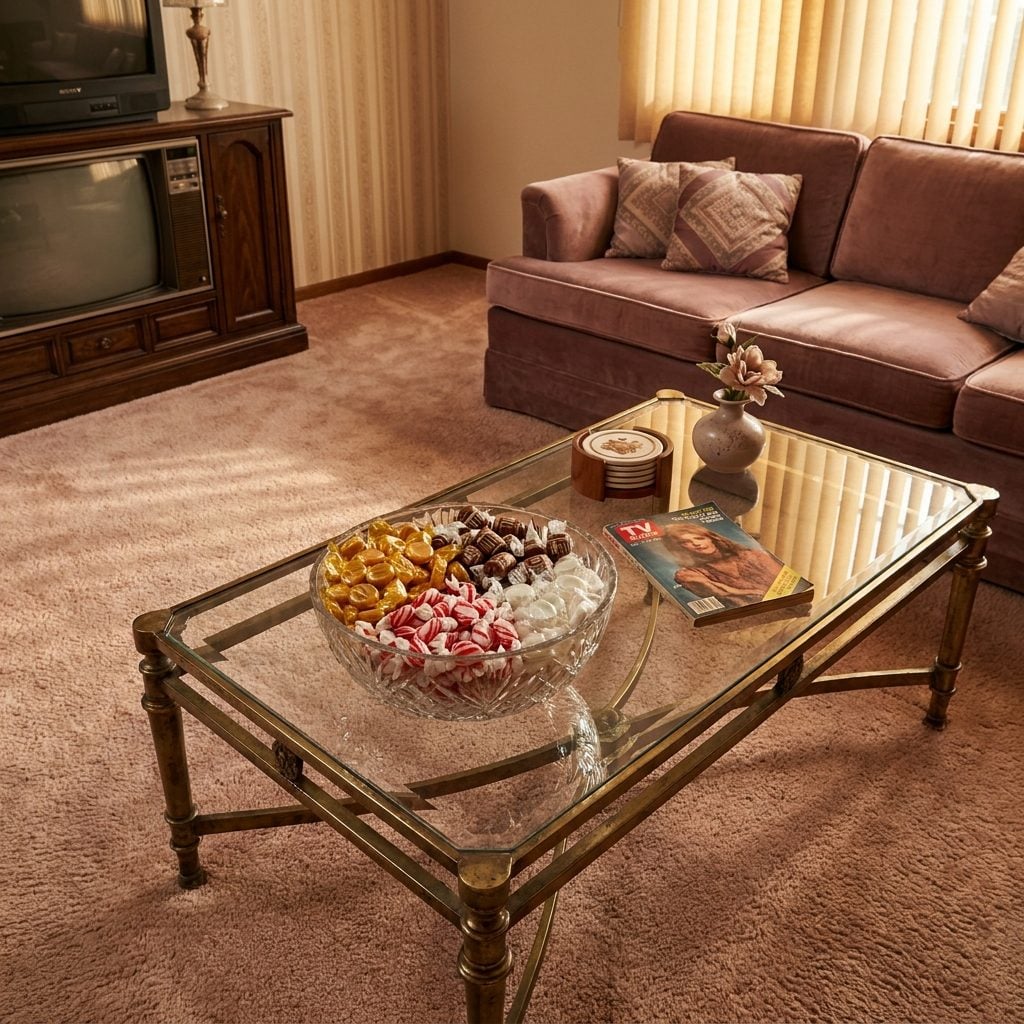
A full bowl of individually wrapped hard candies on the coffee table was the universal symbol of a respectable household. Butterscotch discs. Strawberry twists. The occasional root beer barrel that everyone avoided. They were always there, always plentiful, and almost always the exact same candies your grandmother’s grandmother would have recognized.
Nobody ate them. That wasn’t the point. They were decorative in the same way a centerpiece is decorative, a signal that this living room was prepared for guests. If someone actually took one, the bowl was replenished within 48 hours. The candies themselves were secondary to the ritual of maintaining the bowl.
5. The Smoked-Glass End Table Holding Exactly One Fern
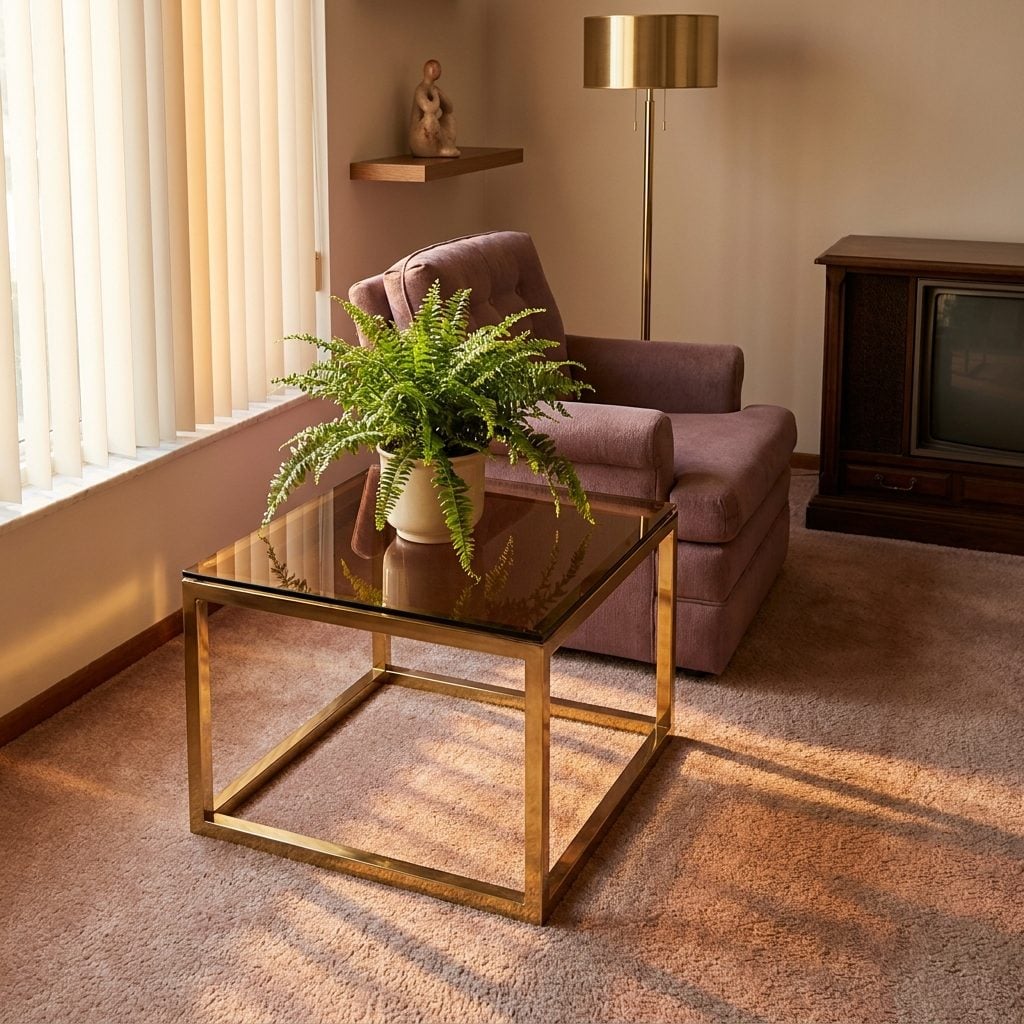
That brass frame was always slightly wobbly. The smoked-glass end table, dark amber glass set into a geometric brass base, was the centerpiece of sitting room decor in the mid-to-late 1980s, and it existed primarily to hold one thing: a fern. Always a fern. Never a succulent, never a philodendron. A Boston fern in a cream ceramic pot, its fronds draped over the glass like it was posing for a magazine.
The combination of smoked glass, brass, and a single plant communicated a very specific type of adult sophistication. Nobody thought about why. It just looked right, the way certain combinations look right in every era without anyone being able to fully explain why.
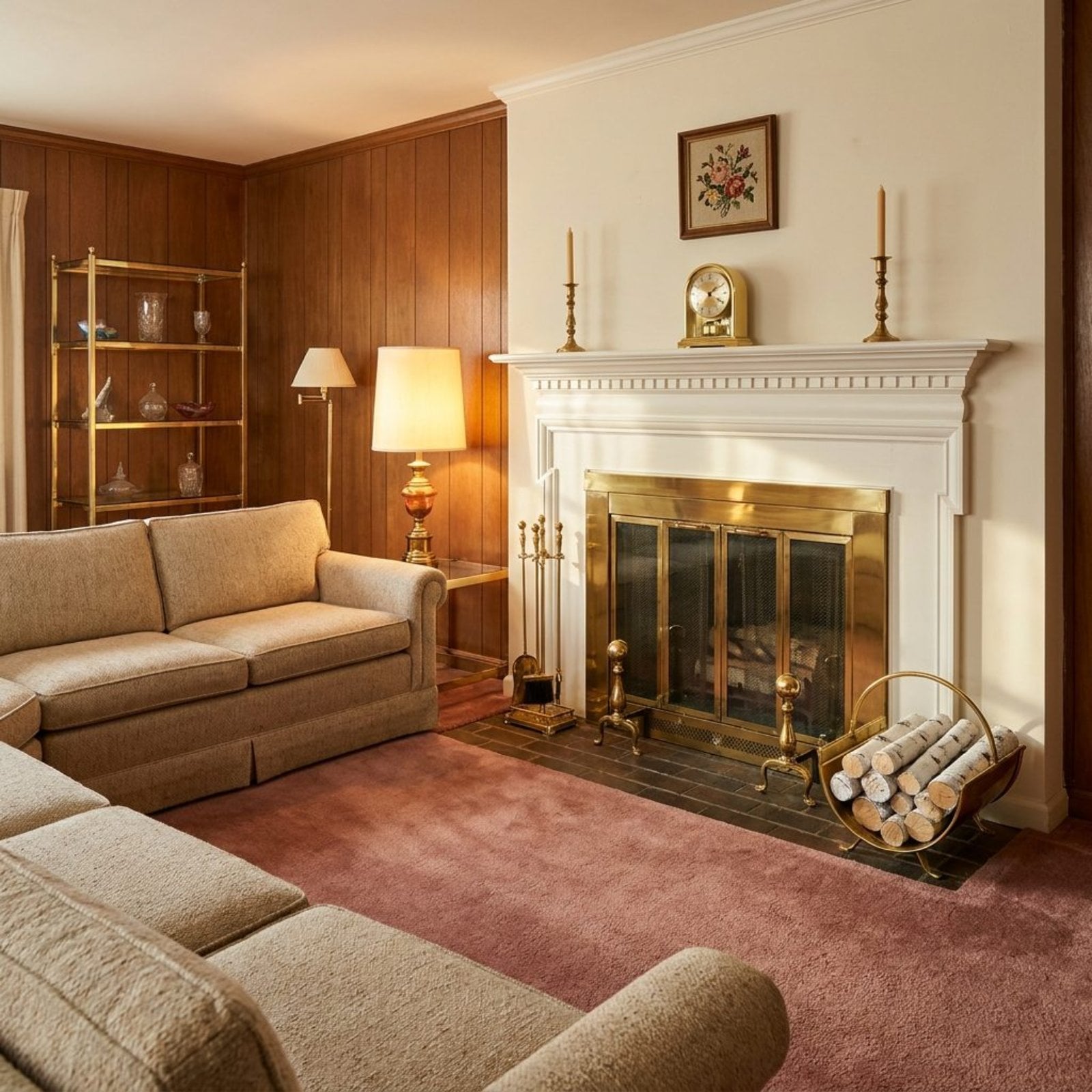
4. The Wood-Burning Fireplace Dressed in Brass and Fake Logs
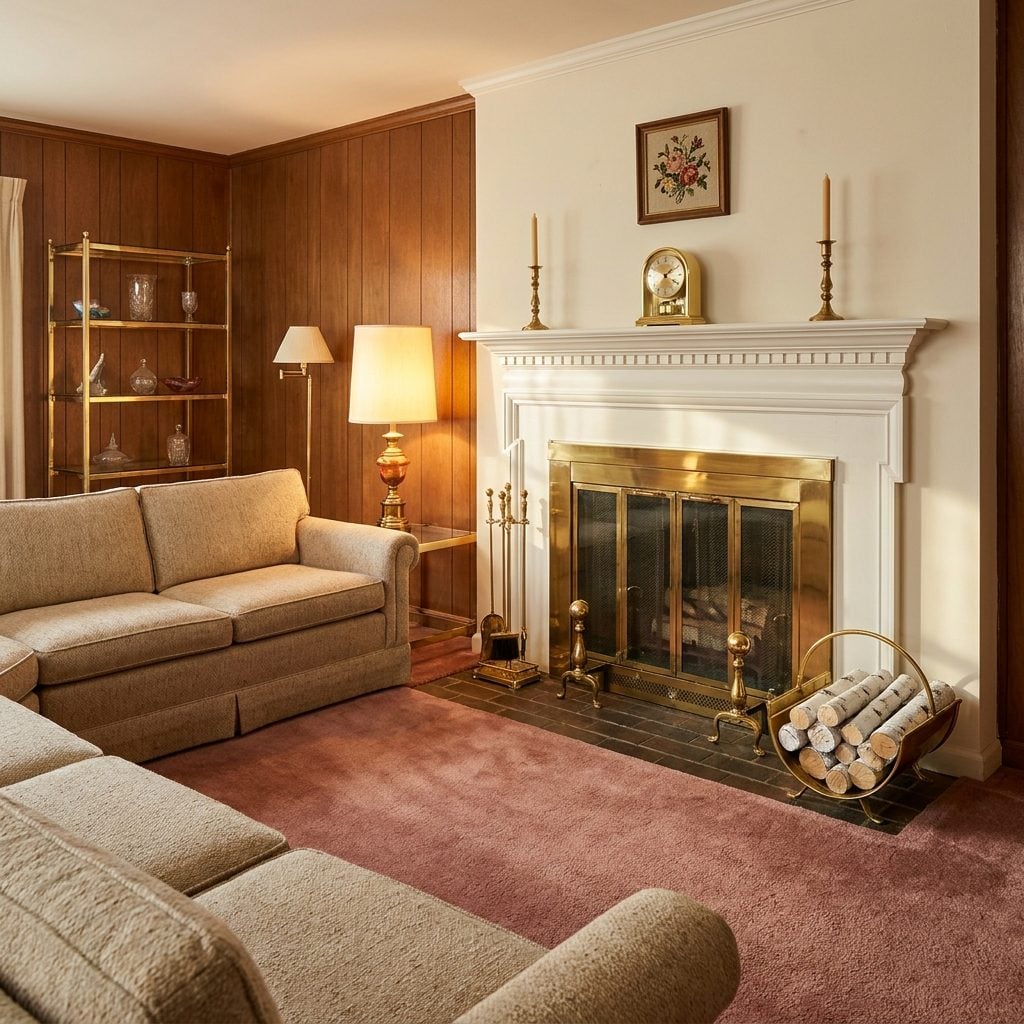
Every detail of a 1980s fireplace was brass. The screen, the andirons, the log holder, the tool set with its little shovel and poker that nobody ever used correctly. The fireplace itself might have occasionally burned actual wood, but the ceramic fake logs sat in front of the real ones year-round, giving the hearth a permanent decorative presence even in July.
The brass was always slightly fingerprinted. Brass polish was a product people owned but rarely used. The mantel above was treated as a shrine: the clock, the candlesticks, a small piece of artwork, all of it arranged with a formality that the rest of the room didn’t quite match.
3. A Shelf Full of Porcelain Figurines Nobody Was Allowed Anywhere Near
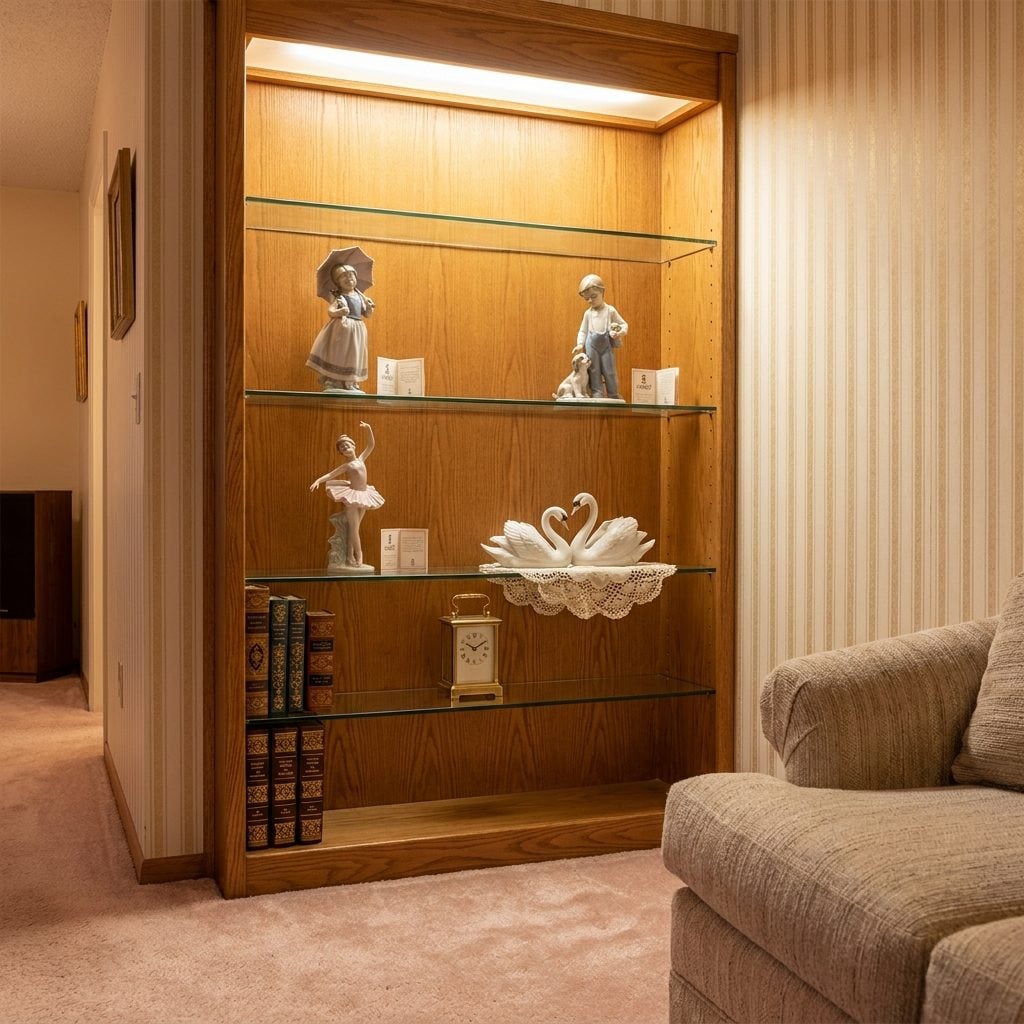
There was always a radius around this shelf that children understood without being told. The Lladró figurines, or the slightly less expensive Hummel-adjacent ones from a department store, occupied their glass shelves like a small sacred collection. The girl with the umbrella. The boy with the dog. The pair of swans that were definitely not to be touched by anyone under forty.
Some of these pieces had their own folded paper labels propped in front of them, listing the name and the year received. This was a small sitting room tradition that predated the internet by decades, a private catalog system maintained entirely by memory and habit.
What strikes me now is how genuinely beautiful some of them were. At the time, they just seemed like obstacles to avoid. Funny how that goes.
2. The Beige Rotary Dimmer Switch Everyone Spun Way Too Fast
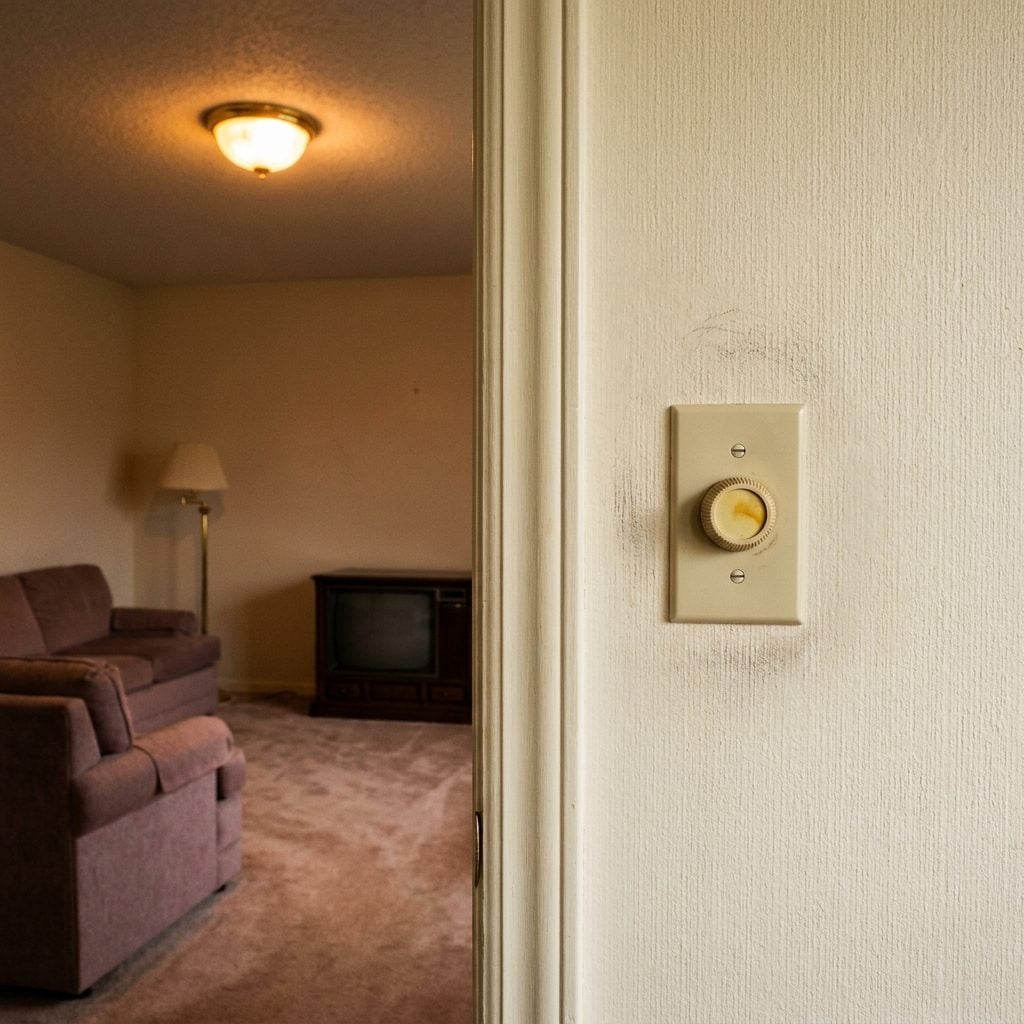
You gave it a hard spin and then immediately regretted it. The rotary dimmer switch, beige, slightly yellowed, with a ridged plastic dial that clicked satisfyingly at the extremes, was a fixture in every 1980s small family room and hallway. The problem was that nobody, not once in the entire decade, turned it slowly. You spun it the way you’d spin a combination lock under pressure, and then the lights would either slam on at full brightness or die completely while everyone in the room made the same joke.
There was also that particular buzzing hum it introduced into the ceiling fixture when the light was set anywhere between 20 and 40 percent. Everyone heard it. Nobody mentioned it. That hum was just part of the ambient soundtrack of the 1980s American household.
1. The Woven Magazine Rack Stuffed to Bursting with Reader’s Digest and Better Homes & Gardens
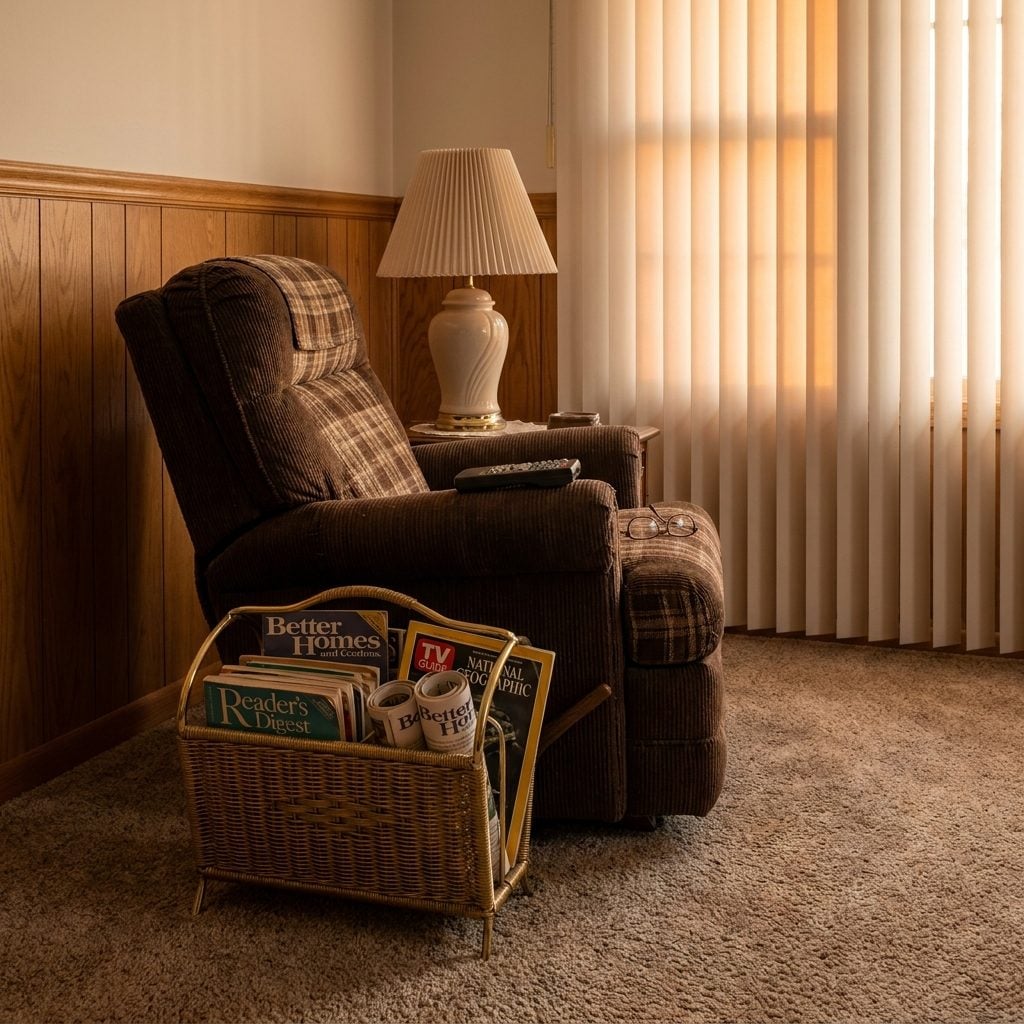
It leaned slightly to one side because it was never, ever empty. The wicker or woven brass magazine rack was a permanent fixture next to someone’s recliner in basically every living room from 1982 to 1993, and it held a very specific archive: Reader’s Digest condensed books, a few months of Better Homes and Gardens, at least one TV Guide with a celebrity on the cover, and a National Geographic that nobody had actually read but nobody could throw away either.
The rack itself cost maybe twelve dollars. It was often spray-painted gold or left in its natural wicker state, occasionally with a small decorative bow tied to the handle. This was accepted without comment. Nobody questioned the bow. Nobody questioned why Reader’s Digest needed to be condensed further by being crammed sideways into a container too small for it. It just lived there, perpetually overflowing, a soft monument to the idea that someone in this house was always about to sit down and catch up on their reading.