🔥 Would you like to save this?
Old money style isn’t about price tags. It’s about the writing desk with a half-finished letter on it, the rug that came from a grandmother’s sitting room, the silver that gets polished every few weeks because it actually sees dinner. These homes don’t look designed, they look accumulated, layered, lived in across generations. Most people chasing this aesthetic get it wrong because they’re shopping for it. But the real signs? They’ve never been purchased. Here are 40 things that quietly signal a home has that rare, unhurried, old money feel.
37. The Sofa Nobody Bought, Because It Was Always Just There
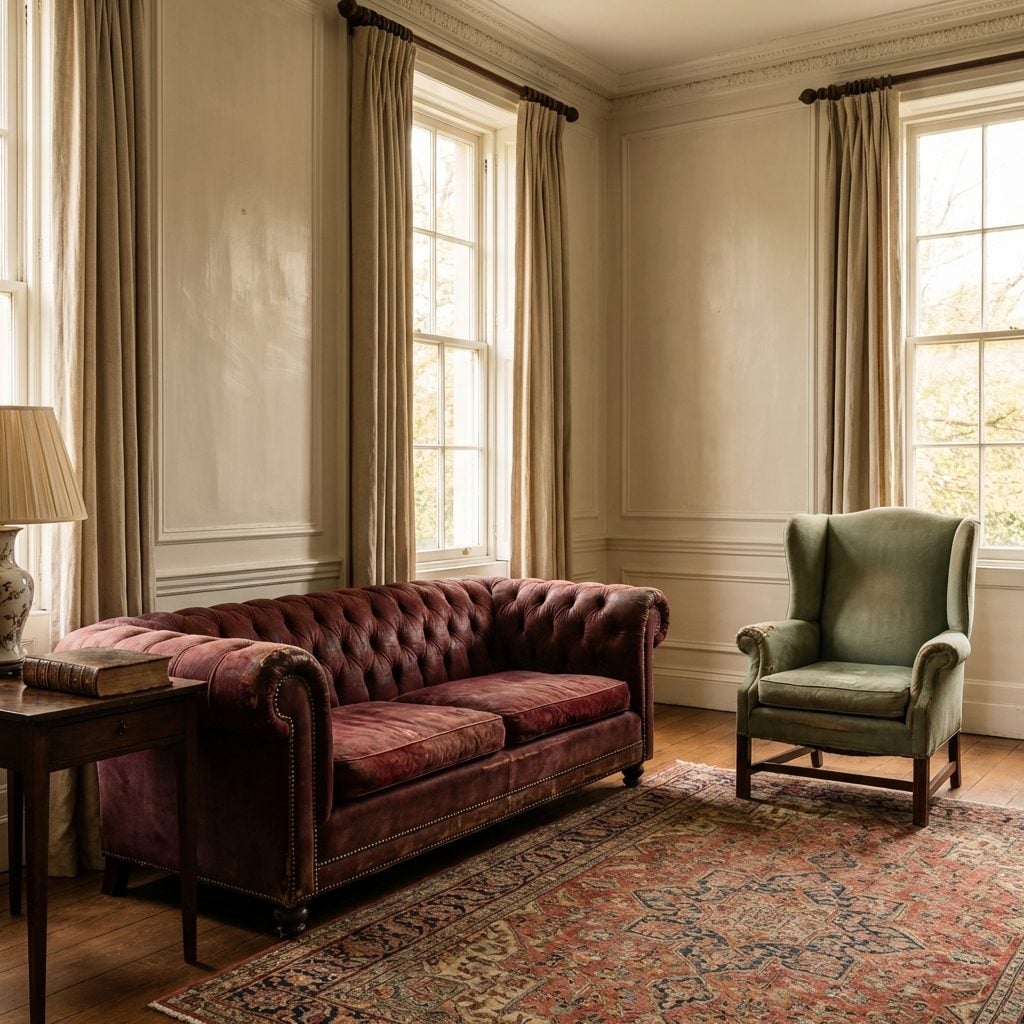
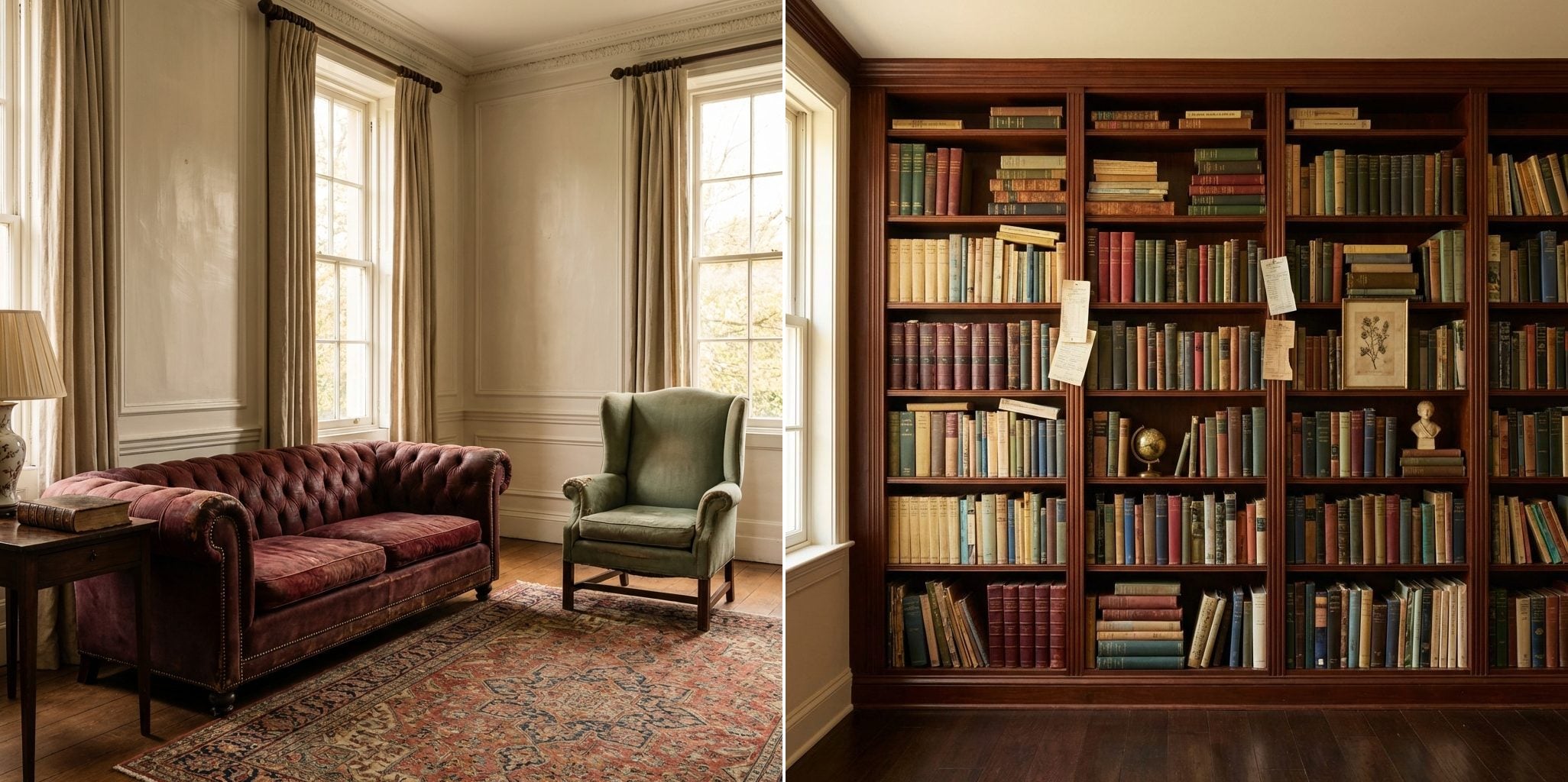
Inherited furniture carries something no showroom floor can replicate: a patina of actual time. The wingback armchair with the slightly worn armrests wasn’t worn down by neglect. It was worn down by three generations of people reading the Sunday paper in the same spot. That kind of history doesn’t depreciate, it compounds.
In order to come up with the very specific design ideas, we create most designs with the assistance of state-of-the-art AI interior design software. Also, assume links that take you off the site are affiliate links such as links to Amazon. this means we may earn a commission if you buy something.
Old money interiors are rarely “decorated” in the conventional sense. They accumulate. A velvet Chesterfield sofa that arrived in someone’s parlor in 1952 and simply never left communicates something that a brand-new reproduction never could. The slightly mismatched scale, the upholstery fabric that no longer exists in production, the brass nail-head trim that’s turned from bright gold to a warm amber, it all says this family didn’t need to buy taste. They already had it.
36. Bookshelves That Look Like Someone Actually Lived Inside Them
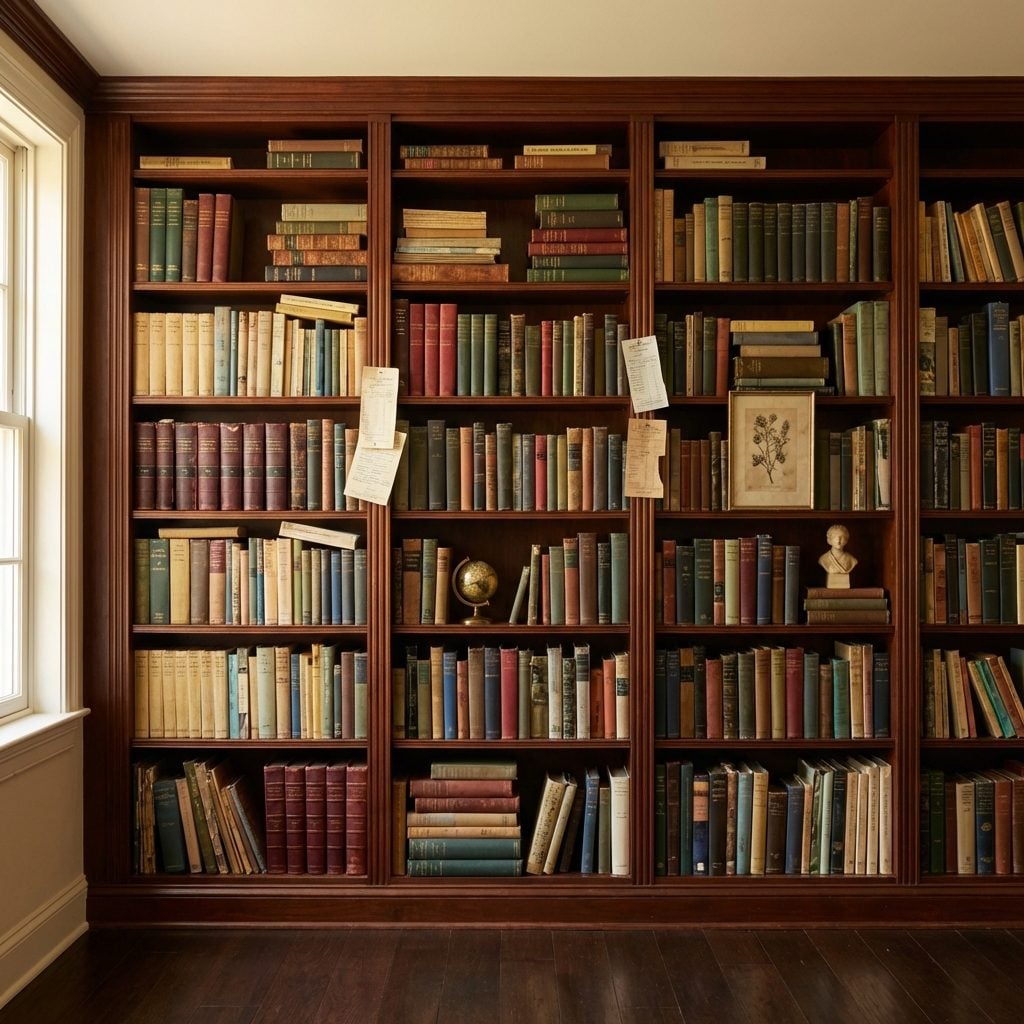
You can always tell the difference between books that were bought by the yard and books that were actually read. One set has cracked spines, folded-back pages, and margin notes in faded pencil. The other set coordinates by color.
Old money bookshelves are chronologically honest. There are dog-eared paperbacks next to leather-bound classics. A field guide to British birds is wedged next to a novel with a library stamp still inside. Receipts used as bookmarks from shops that closed decades ago. The mahogany bookshelf itself probably has a small repair somewhere, a reinforced shelf, a replaced door hinge, which only adds to the sense that this case has been actively used rather than displayed.
“A room without books is like a body without a soul.” The old money household took Cicero literally and never stopped adding to the collection.
35. Faces on the Wall That Are Clearly Relatives, Not Gallery Fillers
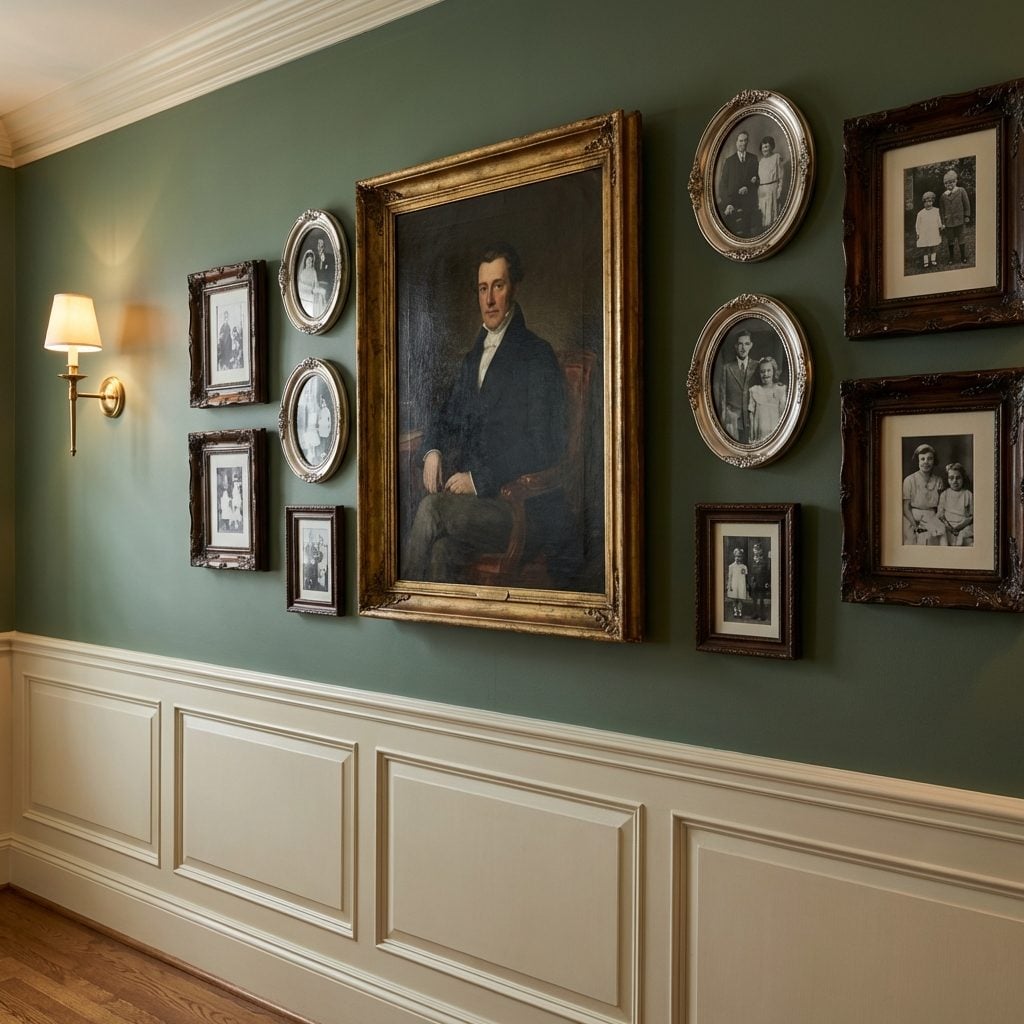
A framed black and white photograph of someone’s grandmother on her wedding day, mounted in a tarnished silver frame, says something that a grid of abstract prints never could. Old money homes hang family history like other households hang art, because to them, family history IS the art.
Oil portraits take this further. Even a modestly skilled portrait from the early 20th century, slightly darkened with age, creates an atmosphere of lineage that no interior decorator can manufacture on commission. The person in the portrait doesn’t need to have been famous. They just need to have been real, and related, and important enough to someone that the painting survived.
These walls communicate continuity. They say: we were here before this house was decorated, and we’ll be here long after the current arrangement changes.
34. Rugs Layered Over Floors in a Way That Looks Accidentally Perfect
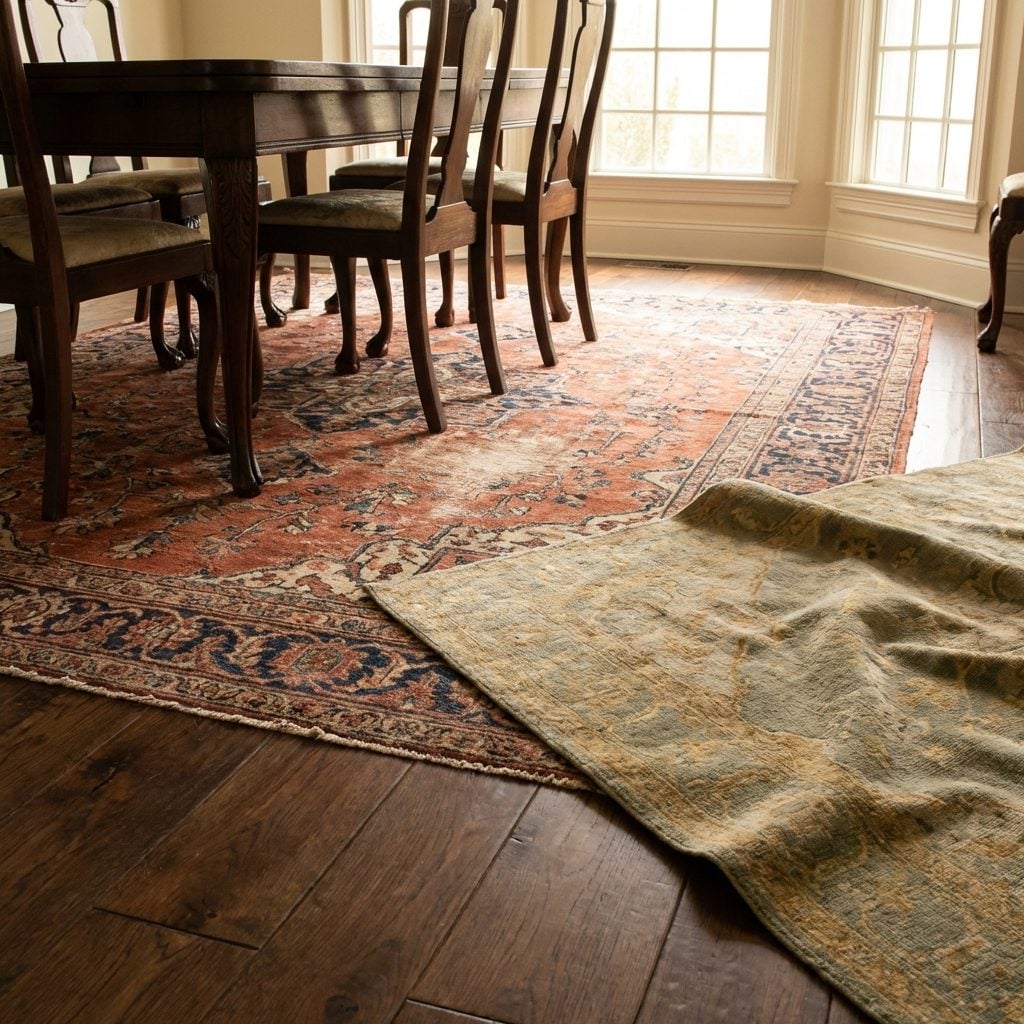
The layered rug look that interior designers currently charge a great deal to execute was never a “look” in old money homes. It happened because a Persian Heriz was already on the floor when a smaller Oushak arrived, and nobody felt the need to choose between them.
The rugs themselves matter enormously here. A hand-knotted antique rug in muted terracotta and indigo, slightly worn in the traffic paths, laid over dark-stained wide-plank oak floors creates a richness that no single material achieves alone. The antique Persian rug grounds the room while the visible floor around it gives the space to breathe.
33. The Silver on the Table That’s Been Used So Long It Has Its Own Personality
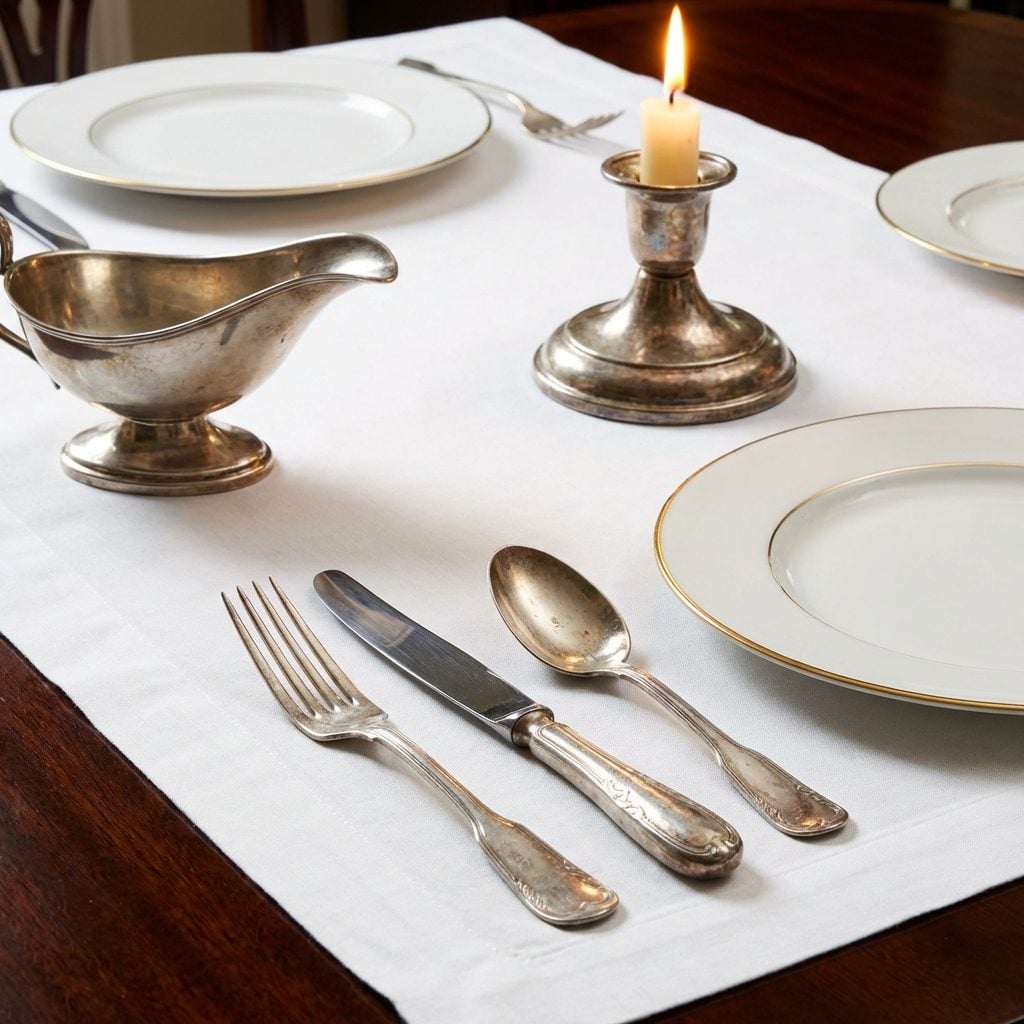
New money buys silverware. Old money polishes it, then actually sets the table with it on a Tuesday.
There’s a specific quality to silver that has been used regularly over decades. The pattern on the handles is slightly softened from thousands of cycles through careful washing. Each piece has a weight to it, a substantiality that modern stainless flatware doesn’t replicate no matter the price point. A sterling silver candlestick that’s slightly lopsided from being buffed by hand so many times, a gravy boat with a faint repair around the handle, these aren’t flaws. They’re proof of use.
The act of polishing silver is itself a marker. It’s maintenance as ritual, care as inheritance. Old money households didn’t display silver behind cabinet glass. They put it on the table for dinner with guests, and sometimes just for family on an unremarkable Wednesday night.
32. Fabrics That Get Better With Age Rather Than Pills and Fades
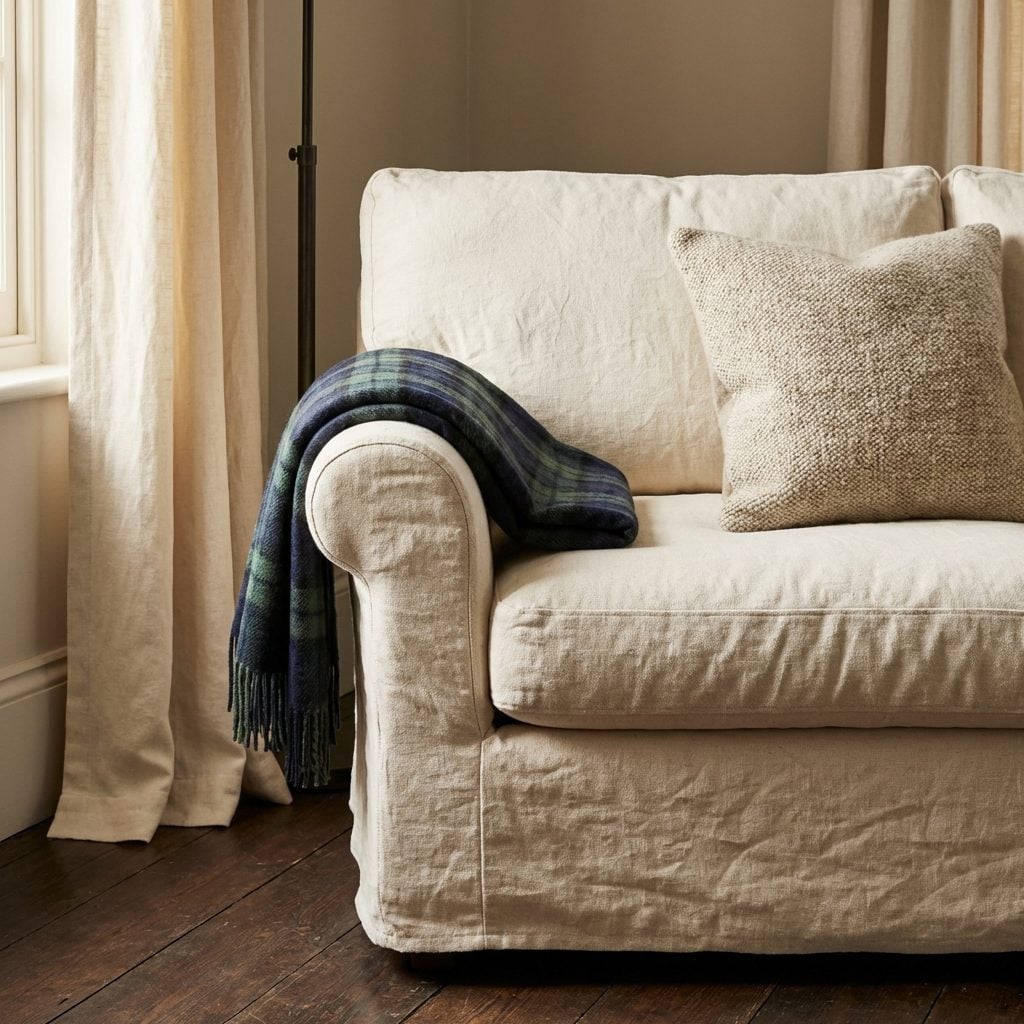
Run your hand across a linen cushion cover that has been washed two hundred times. Then feel a polyester blend that came in a gift bag last Christmas. The difference isn’t just tactile, it’s philosophical. Old money households defaulted to natural textiles not as a design statement but simply because those were the fabrics that existed, lasted, and improved with time.
Wool throws draped over chair backs, linen slipcovers in unbleached ivory, a wool tartan throw on the library sofa, these textiles telegraph quality without announcing it. They soften with washing. They hold their shape across decades. And their imperfections, a slight variation in weave here, a small mend there, become part of the textile’s character rather than evidence of wear.
31. Curtains That Touch the Floor Like They Were Made for This Room Specifically
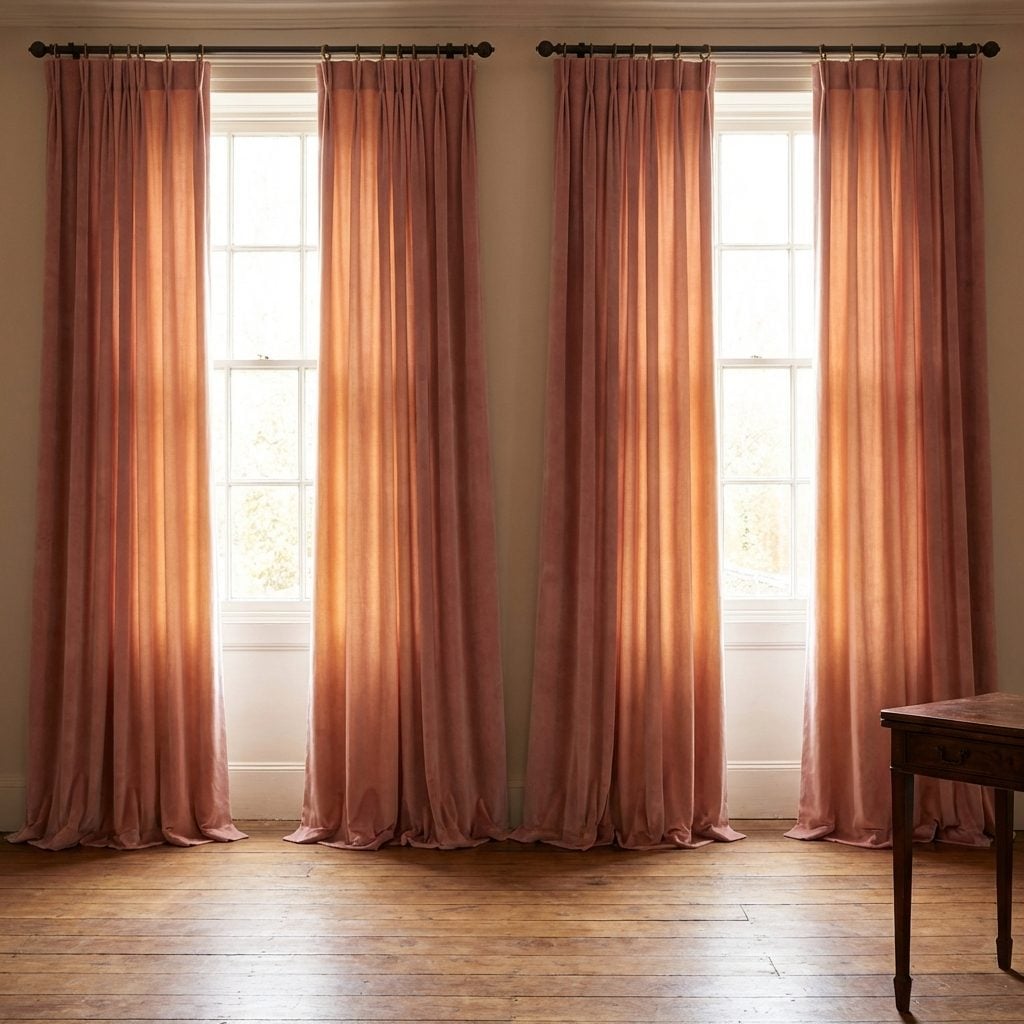
Curtains that pool slightly on the floor are one of the most specific tells of old money interiors. Not dramatically draped, not trailing by a foot, but just an inch or two of gathered fabric resting against the floor, as if the curtains were measured generously and hung once and never adjusted.
The fabric matters too. Heavy silk velvet curtains in deep teal or faded rose, or floor-length linen panels in aged ivory, hung from simple iron or brass rods with ring clips. Not sheers. Not blackout panels with plastic grommets. These curtains filter light rather than block it, casting the room in a warm, diffused glow that feels more like early evening than overhead fluorescence.
30. The Writing Desk With a Letter Half-Finished and Nowhere to Be
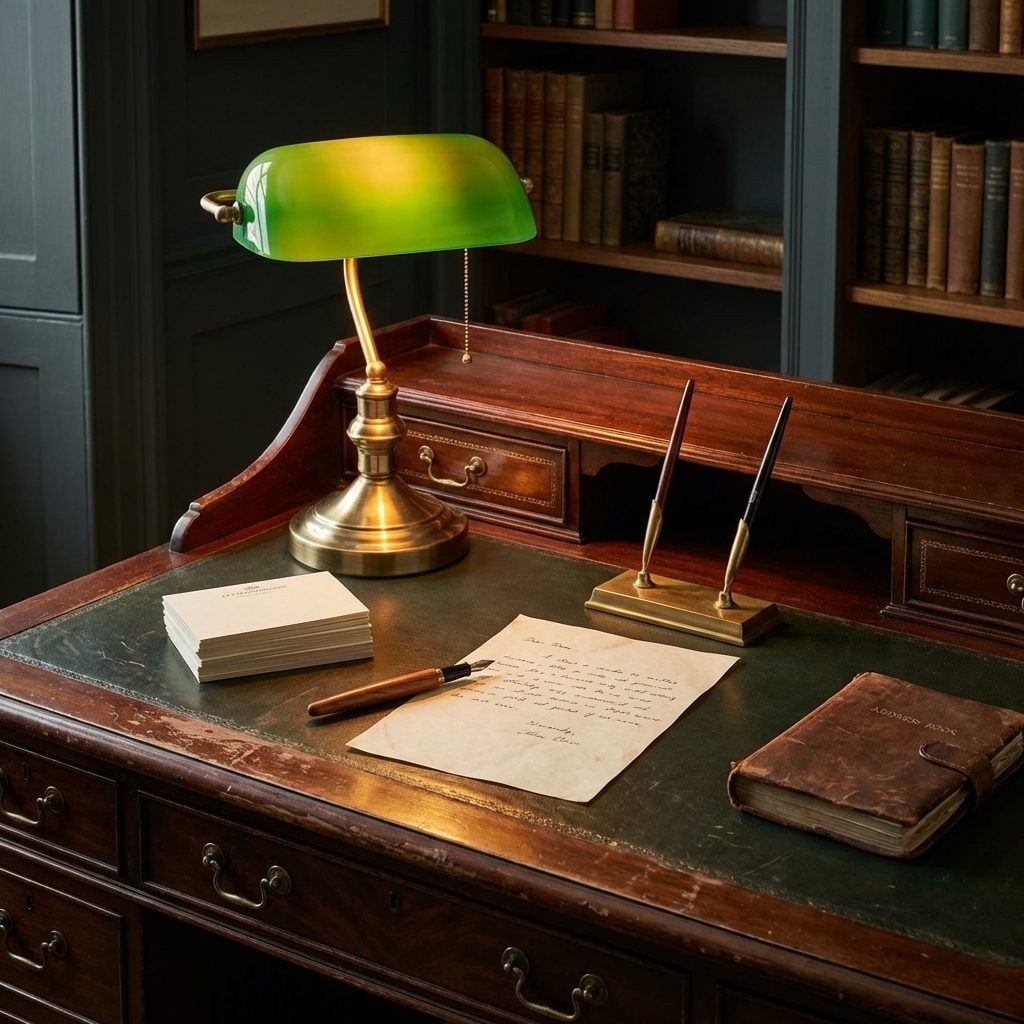
A proper writing desk, not a home office setup, not a standing desk with cable management clips, but an actual desk with a leather surface inset, a pen holder with real ink pens, and a small stack of cream-colored correspondence cards. This is one of the most quietly loaded signals in any home.
The stationery itself is telling. Not personalized labels from an online printer, but engraved or letterpress cards in a single color with a family address or monogram. A brass desk lamp adjusted to the working angle. An open letter on the surface that clearly wasn’t finished in a hurry. Old money households maintained the practice of written correspondence long after it became impractical, not out of affectation, but because some habits become structural. The desk is a commitment to a certain pace of life.
29. China That Doesn’t Match, and Is More Interesting Because of It
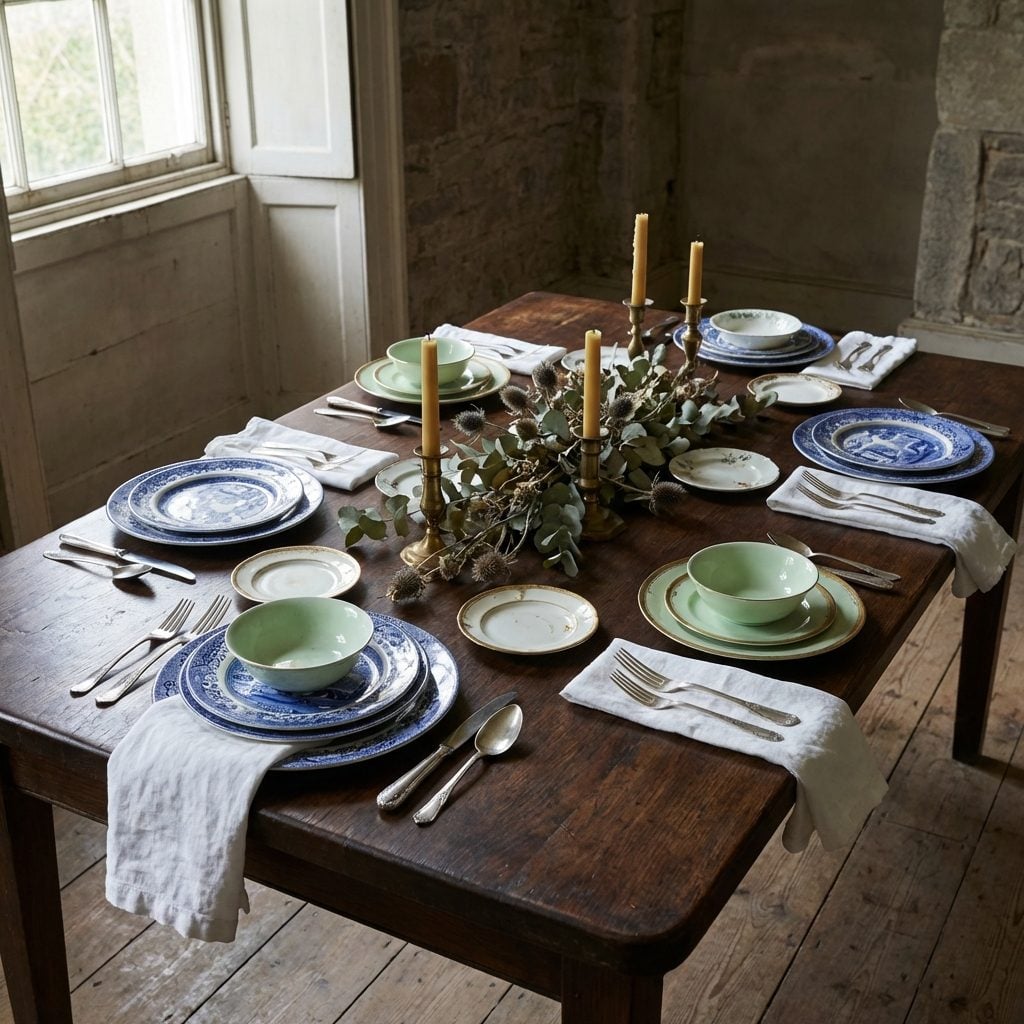
A complete twelve-place matching dinner service, still in the original storage boxes, is a wedding gift. Mismatched china that has been collected, inherited, and combined across fifty years of family meals is something else entirely.
Old money tables are set with an inherited logic: the main plates might be Wedgwood in ivory and pale blue, but the dessert dishes came from someone’s grandmother’s house, and the soup bowls have a different pattern entirely that nobody remembers acquiring. The result is a table that feels like a conversation rather than a catalog spread. Individual pieces are worth examining, a blue and white transferware plate with a slightly chipped rim still set with complete ease next to a thin-rimmed porcelain bowl in pale green.
The confidence required to serve guests on mismatched china is, itself, the whole point.
28. The Kind of Quiet That Comes From Thick Walls and Good Upholstery
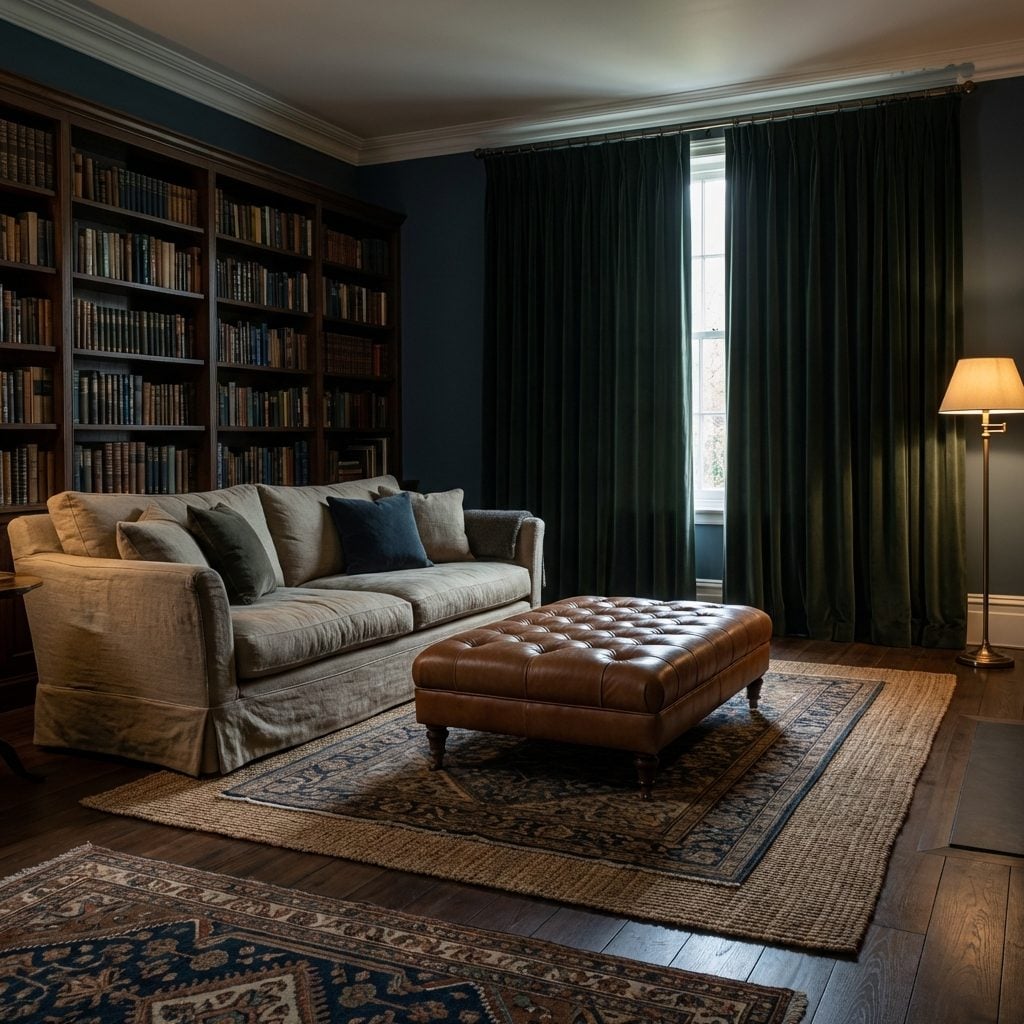
Old money homes tend toward a specific acoustic quality: hushed. Not silent, but padded, by heavy drapes, layered rugs, upholstered furniture, and walls thick enough to absorb the world outside. This isn’t soundproofing by design. It’s the incidental effect of building materials and furnishings that predate the era of hard surfaces and open-plan echo chambers.
A sitting room with a tufted leather ottoman, deep-set sofas in aged linen, walls lined with bookshelves, and floor-to-ceiling curtains in heavy velvet doesn’t just look substantial, it sounds substantial. Conversations in these rooms feel contained in the best way, as though the space itself is holding attention on what’s being said.
27. A Clock Somewhere in the House That You Have to Wind by Hand
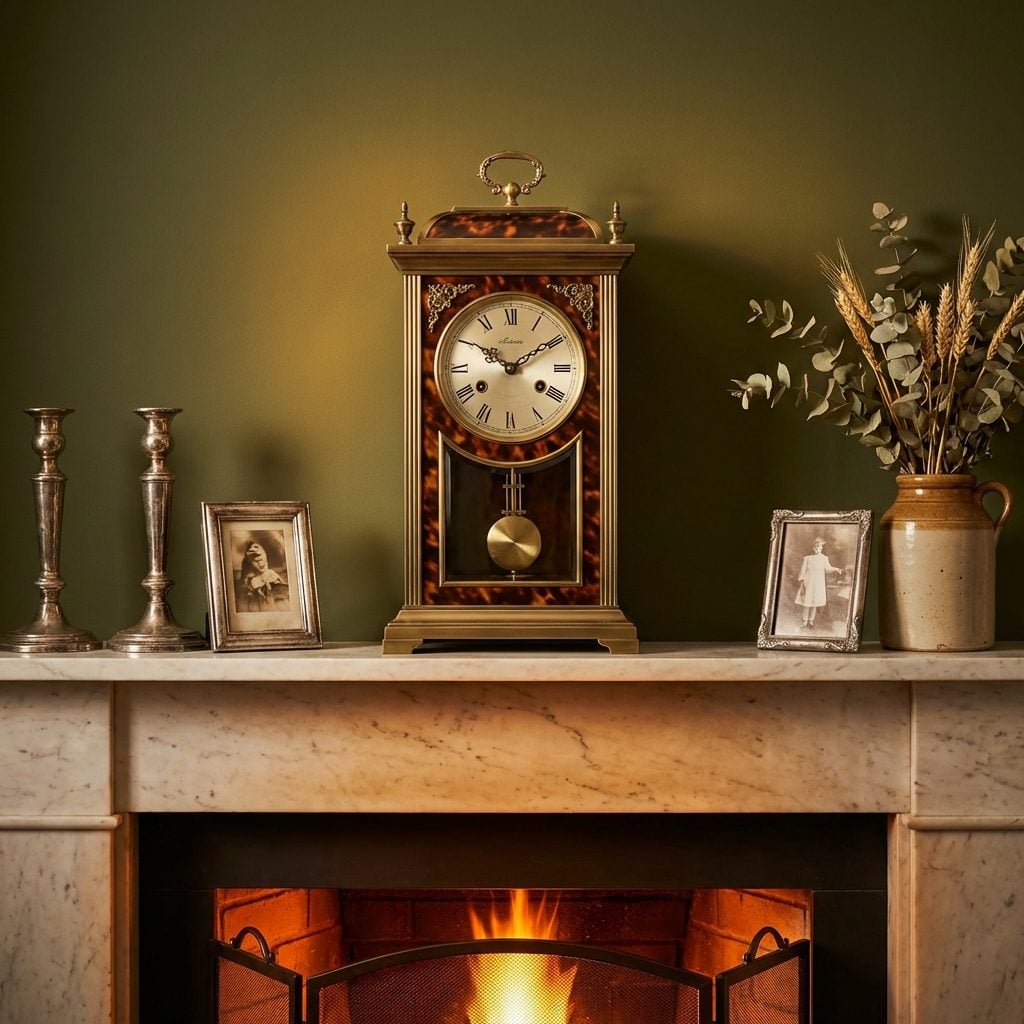
Battery clocks tell time. Wind-up clocks mark it. There’s a meaningful difference between an object that performs a function and one that asks you to participate in keeping it alive.
A mantel clock in polished tortoiseshell and brass, a longcase clock in the entry hall, a small travel clock on a bedside table with a worn leather case, each of these requires a weekly ritual. You have to remember to wind it. You have to know which direction, how many turns, when to stop. Old money households treated this maintenance not as inconvenience but as continuity. The same clock wound by the same family for decades develops a presence that no digital display achieves.
There’s something worth noting about how these clocks sound, too. A brass mantel clock with a mechanical tick audible from across the room creates a rhythm in the house that feels, surprisingly, like company.
26. The Bar Cart Where the Labels Are Always Turned Away
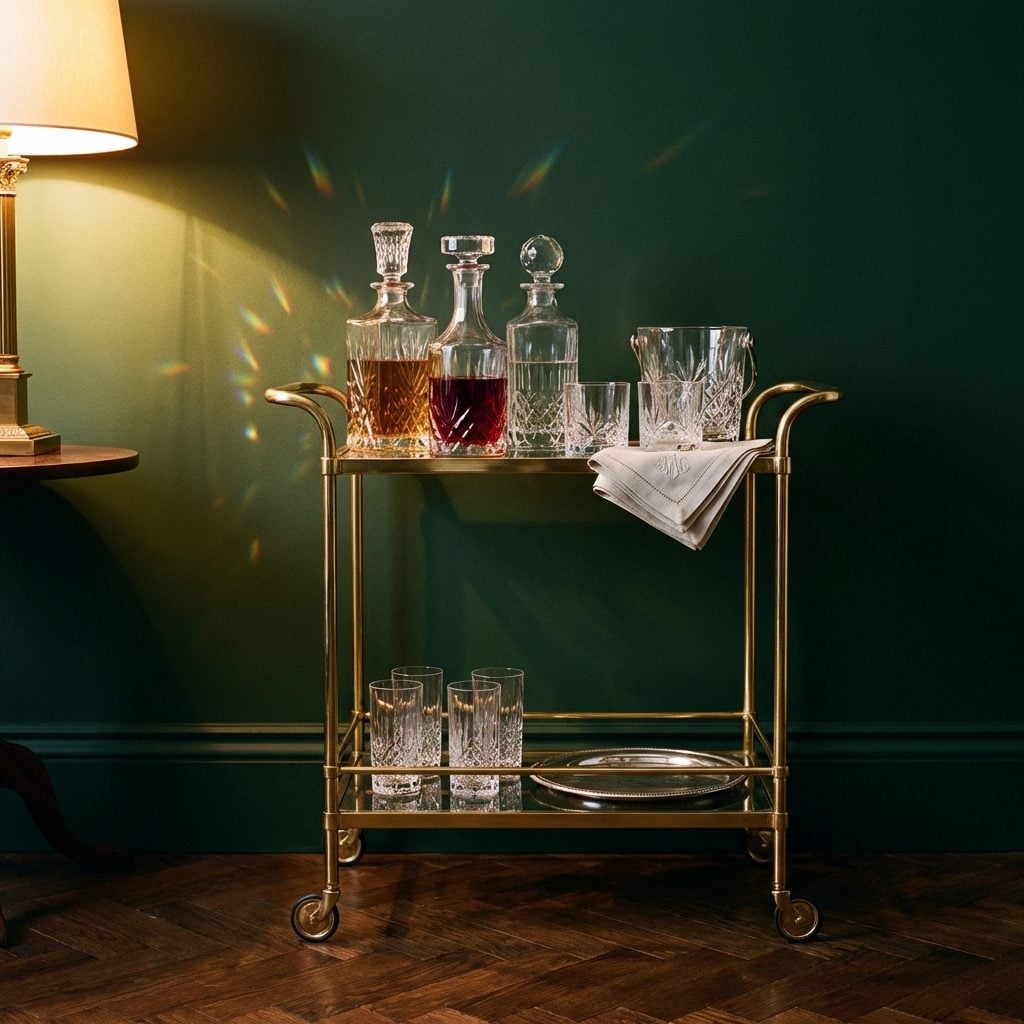
There’s a specific kind of confidence in a bar cart that doesn’t need to advertise itself. Crystal decanters filled with amber and garnet liquids, stoppers resting in place, not a single branded bottle in sight. It signals that the person who lives here knows what they’re drinking and doesn’t need a logo to tell their guests what it costs.
This is old money’s version of a status symbol: one that only people in the know will recognize. A crystal decanter set on a brass bar cart isn’t about showing off. It’s about a ritual, the evening pour, the unhurried drink, the assumption that hospitality is simply what you do. The absence of labels is the point. Taste doesn’t announce itself.
25. Monogrammed Towels That Were Never Meant to Impress Anyone
🔥 Would you like to save this?
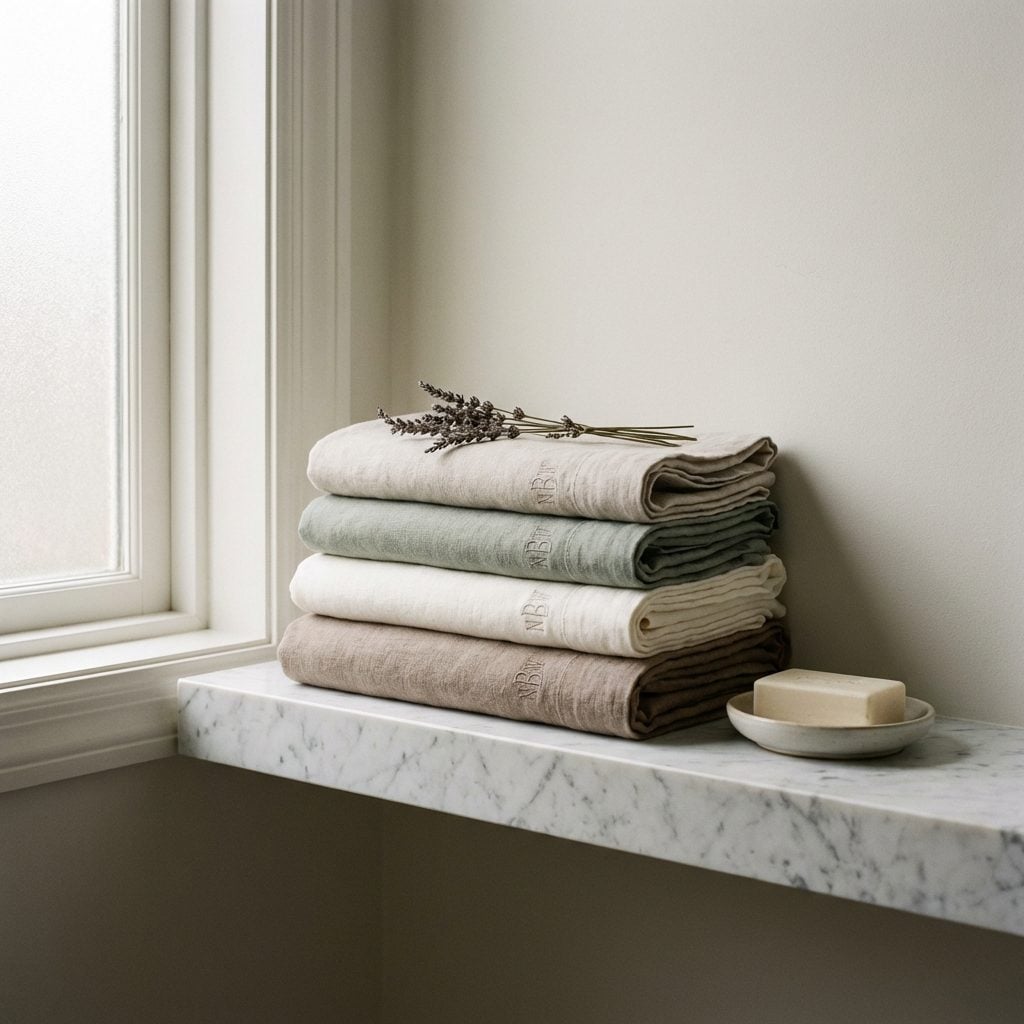
The monogram isn’t new. It was stitched decades ago, possibly by a grandmother, possibly ordered from a linen house that no longer exists. The thread is the same muted sage or dusty ivory as the towel itself, making it something you notice only on second look.
That restraint is everything. New money monograms are large and contrasting. Old money monograms are almost apologetic in their quietness, three interlocked letters in a classic serif, worn slightly soft from years of washing. Stacked in a linen closet or draped over a marble towel bar, these monogrammed linen towels in chalky white or dusty blush communicate something very specific: that quality was always the baseline, never the upgrade.
24. The Garden That Looks Like Nobody’s Trying Too Hard
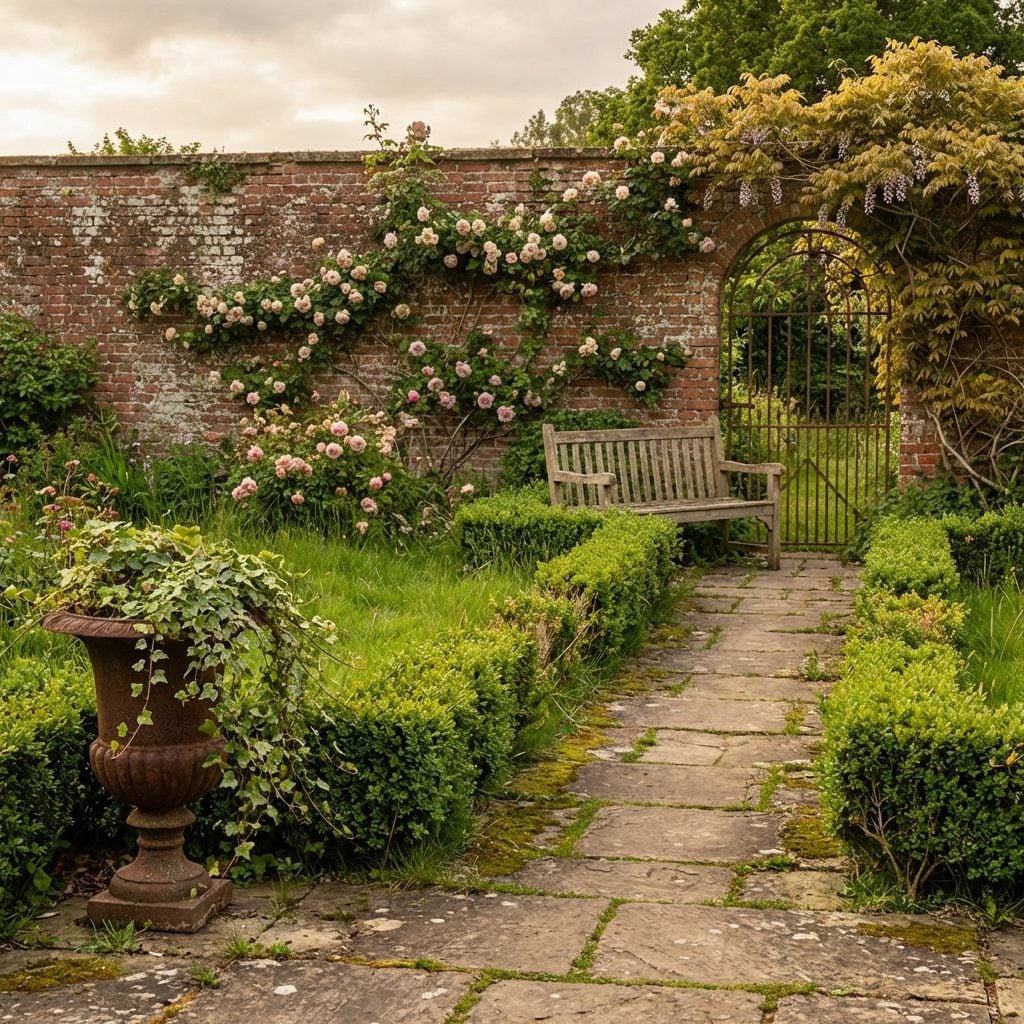
Perfectly symmetrical topiaries and pressure-washed gravel paths are a different aesthetic entirely. The old money garden has a climbing rose that’s been on that wall for forty years, slightly unruly at the edges but clearly loved. Box hedges that have been shaped but not obsessively so. A stone path worn slightly smooth underfoot.
This kind of garden takes time to achieve, and that’s precisely the point. You can’t fake a wisteria that’s grown over an iron gate for three decades. The moss between the flagstones isn’t a mistake; nobody removed it because it’s always been there. It’s the difference between a garden designed for a photoshoot and one designed for actual seasons.
‘The best gardens look as though the house grew up around them, not the other way around.’
23. The Fireplace That Has Actually Known a Winter
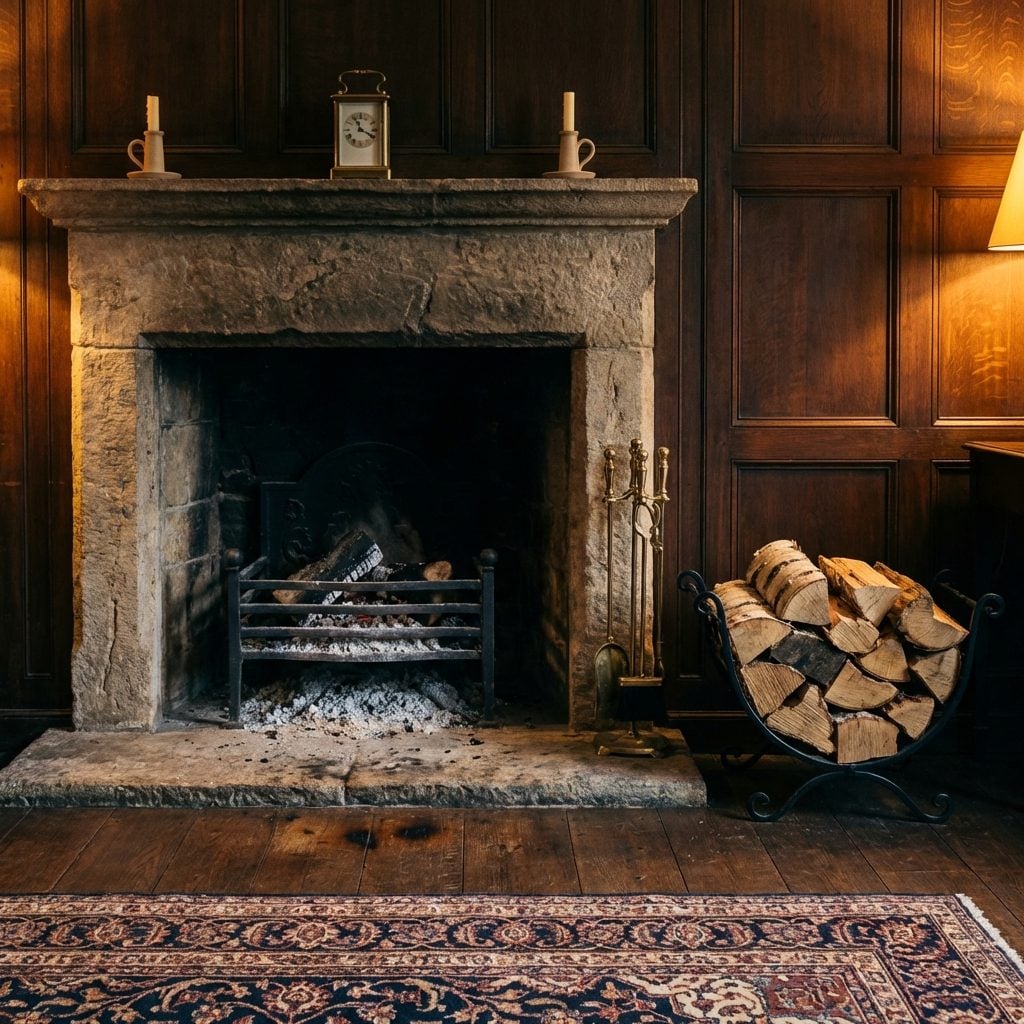
A working fireplace in a home with old money energy isn’t decorative. The grate has ash in it. There’s a basket of real firewood beside it, not uniform bundles from a grocery store but actual split logs in different sizes. The poker set shows use. The hearthrug has a small scorch mark from a popped ember that nobody bothered to hide because it’s part of the story.
A cast iron fireplace grate and a worn brass fireplace tool set standing to one side signal routine, not occasion. This is a fireplace that gets lit on Tuesday evenings, not just Christmas. That regularity is what separates it from the gas-log insert with the remote control hidden in a basket nearby.
22. Walls Painted a Color That Makes You Stop Walking
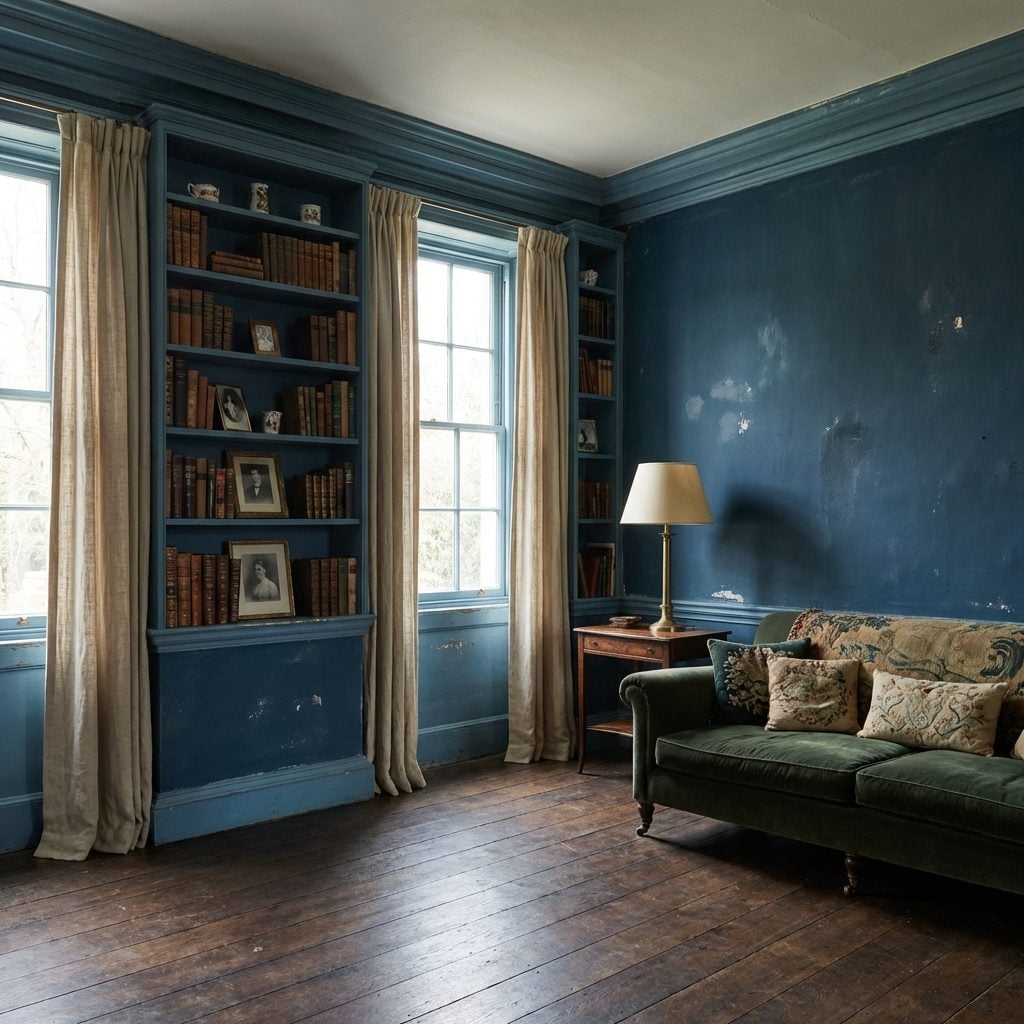
Not greige. Not Agreeable Gray. Something with actual commitment behind it, a deep library green, a tobacco brown, a faded Prussian blue, or the kind of aged white that’s been tinted by decades of candlelight. Old money walls are painted in colors that make the furniture look like it belongs there rather than the other way around.
Deep, enveloping colors have a specific psychological effect: they reduce the perceived size of a room while dramatically increasing its sense of warmth and enclosure. The Victorians understood this instinctively. A dark green velvet sofa against a forest green wall doesn’t disappear, it creates a tonal conversation that registers as considered and unhurried.
21. Framed Prints That Took a Long Time to Notice They Were There
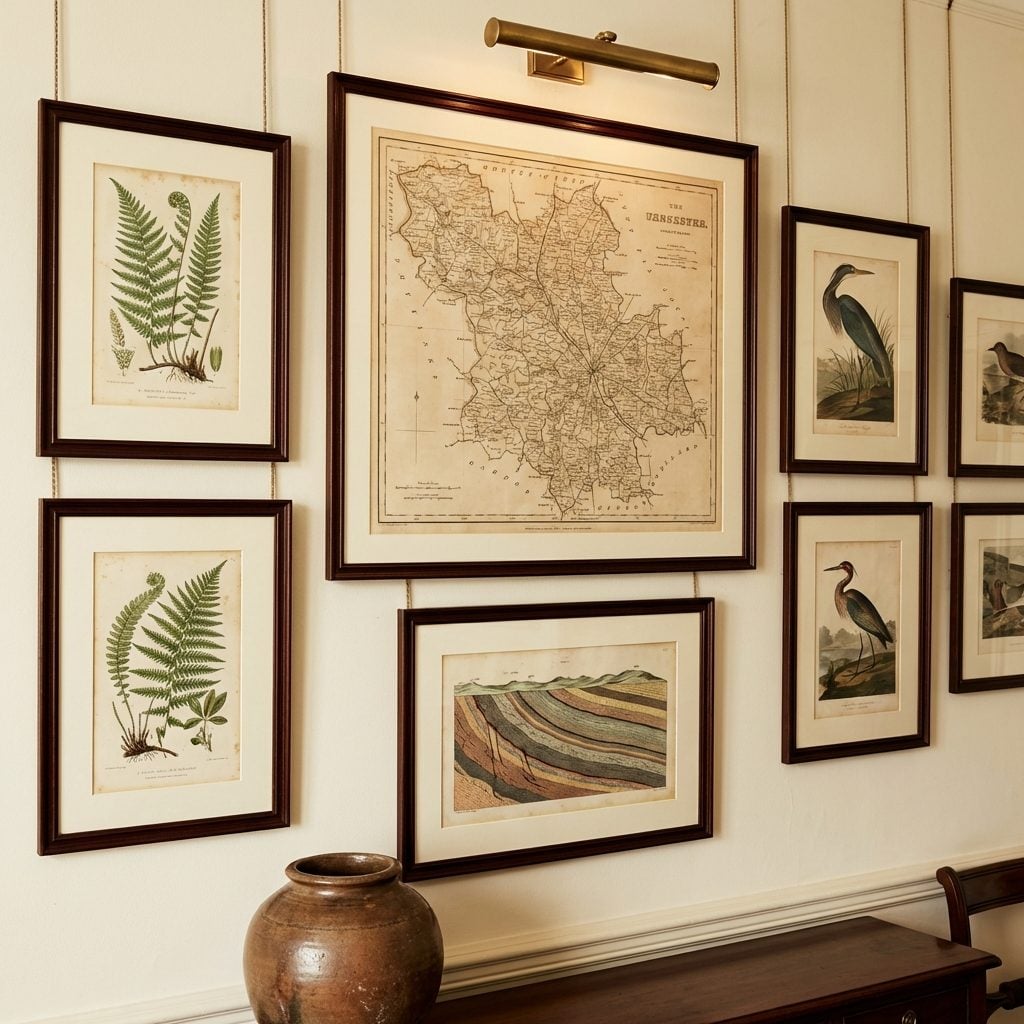
Botanical and topographical prints have a specific quality: they’re interesting without trying to be. A framed 18th-century engraving of a fern, a hand-colored map of a county in Ireland, a series of architectural elevations from an 1850s survey. They’re the kind of art that rewards looking but doesn’t demand it.
Old money homes rarely have a single dominant artwork that announces itself. Instead, walls accumulate over decades. A set of antique botanical prints in matching dark wood frames, hung with visible picture wire on a painted wall, suggests a collecting habit rather than a decorating decision. That’s the distinction.
What to Look For
- Uniform frames in aged gilt or dark wood, no mixed metals, no floating frames
- Prints that are slightly foxed or yellowed at the edges, indicating actual age or convincing vintage sourcing
- Subject matter drawn from the natural world: plants, birds, geology, coastal maps, architectural details
20. Wooden Furniture That Has Lived Somewhere Before You
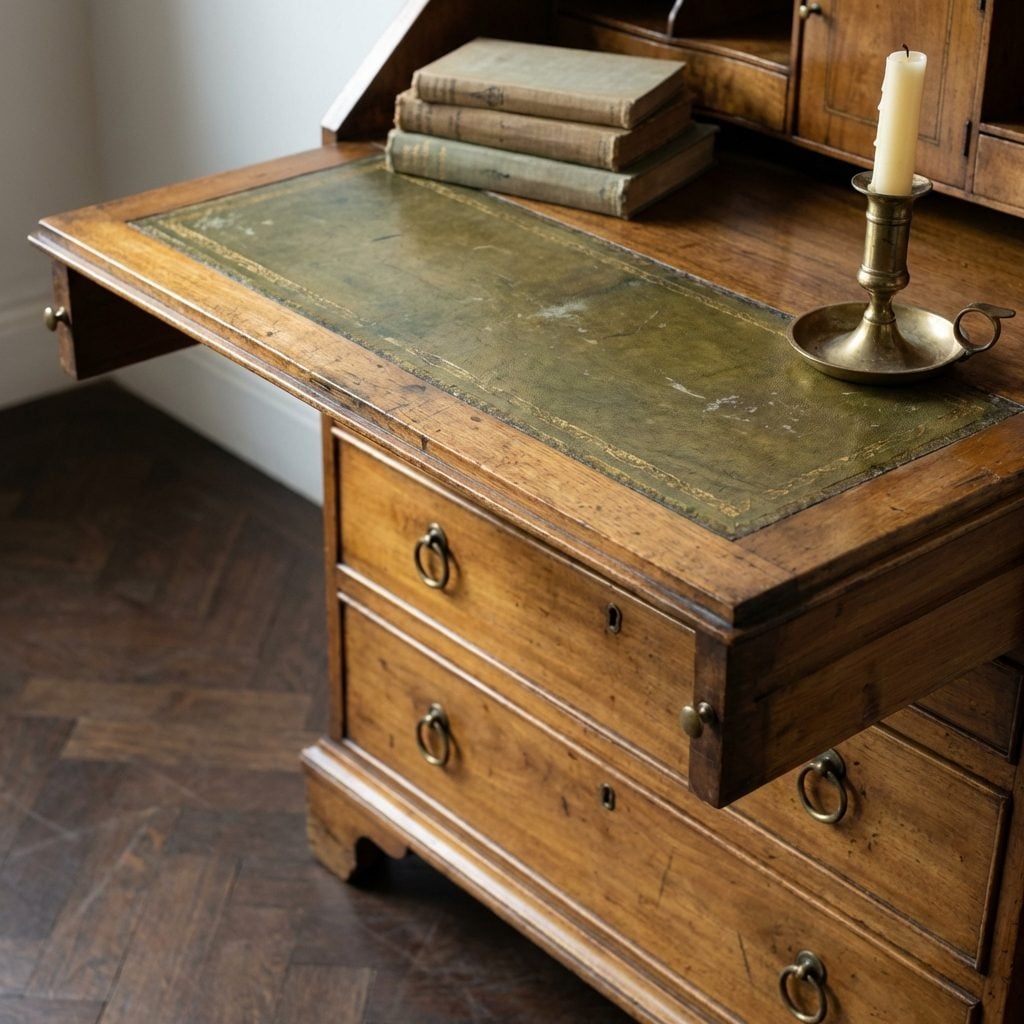
The patina on a truly old piece of wood can’t be replicated. Distressed furniture from a chain store has marks in the wrong places, uniform scratches, even aging applied with a wire brush. Real age marks the high-traffic corners first. The armrest edge wears smooth and slightly lighter. The drawer pulls have a groove where fingers have landed a thousand times.
A antique walnut writing desk or a Georgian chest of drawers with original brass hardware isn’t just furniture, it’s a fixed point in a room that everything else orients around. This is the piece that’s never for sale, never repainted, never replaced with something that matches better. Its value is entirely non-monetary.
19. The Guest Room That’s Ready Before You Even Thought to Ask
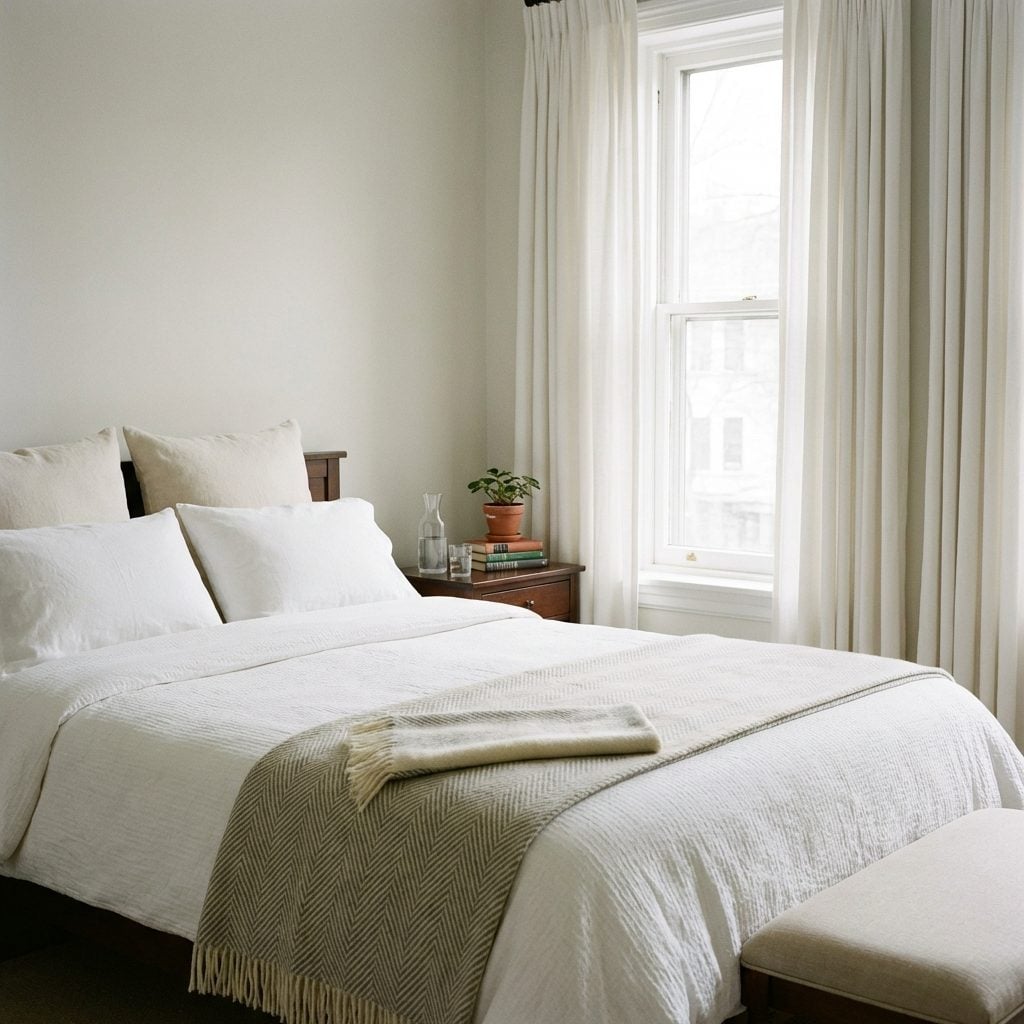
The guest bedroom in an old money home is made up on a Wednesday in March with no guests expected. Crisp white cotton sheets, a wool blanket folded at the foot, a carafe of water on the bedside table. A small stack of books chosen for the room, not dumped there because they had nowhere else to go.
This isn’t performance hospitality. It’s a disposition. The room is ready because being prepared for guests is simply part of how the household runs, not something that requires a 48-hour panic clean. There’s a linen euro sham behind the sleeping pillows. The herringbone wool blanket at the foot is folded with the selvage showing. Details nobody asked for, but impossible to fake.
18. Coffee Table Books That Are Actually Read, Not Just Stacked
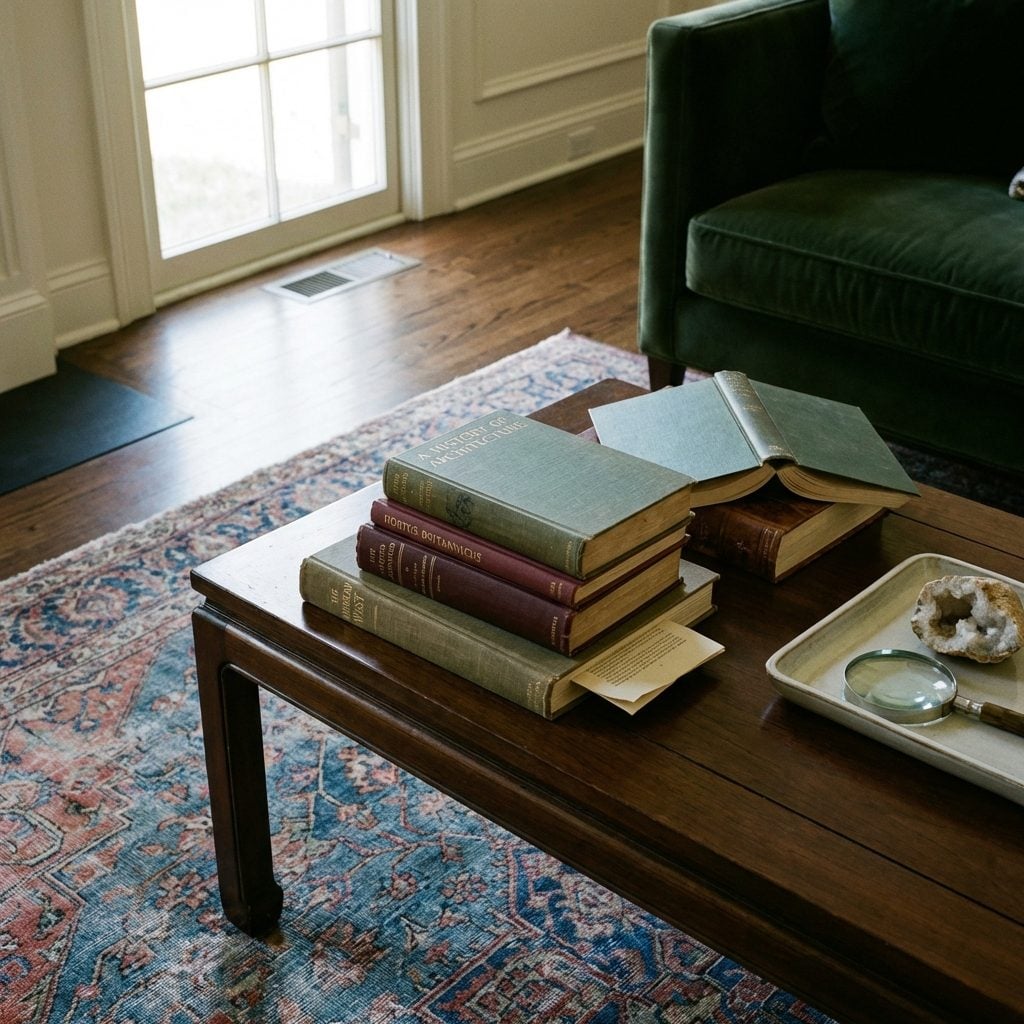
The giveaway is the spine. A coffee table book with a cracked spine was read. A bookmark sticking out of one on garden history, a turned-down page in an architectural survey of Palladian country houses, these are signs that the books on the table exist because someone in the house is actually interested in architecture, history, and horticulture, not because a stylist placed them there for a photoshoot.
Old money coffee table books tend toward a narrow set of subjects: garden design, classical architecture, the history of specific regions or families, natural history, field guides. They are not the oversized fashion photography books or color-blocked spines chosen for their Instagram potential. The topics are serious. The binding is cloth, not glossy. Nobody stacked them to photograph them.
17. A Library Ladder That Earns Its Place Every Week
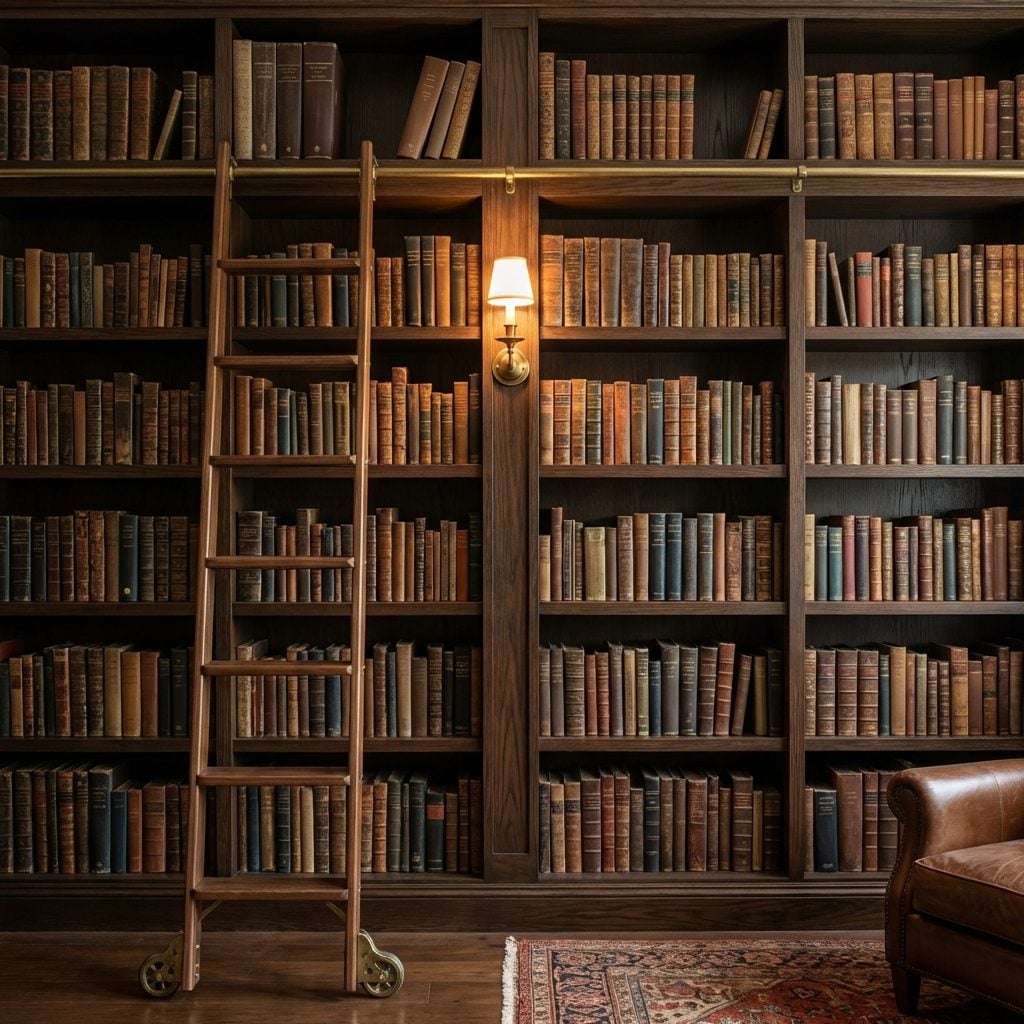
A library ladder on a brass rail that gets used is one of the most quietly satisfying things a home can have. Not as a design feature. As a tool. The top shelves hold reference books that actually get pulled down. The brass hardware is worn bright where hands have gripped it climbing up.
It signals something about how the room was built, that books were always the point of the space, floor to ceiling, and access to all of them was considered worth engineering. The rolling library ladder in warm wood with a brass rail system doesn’t stay in one corner for aesthetics. It moves. That’s the whole tell.
16. Needlepoint Pillows With an Actual Author in the Family
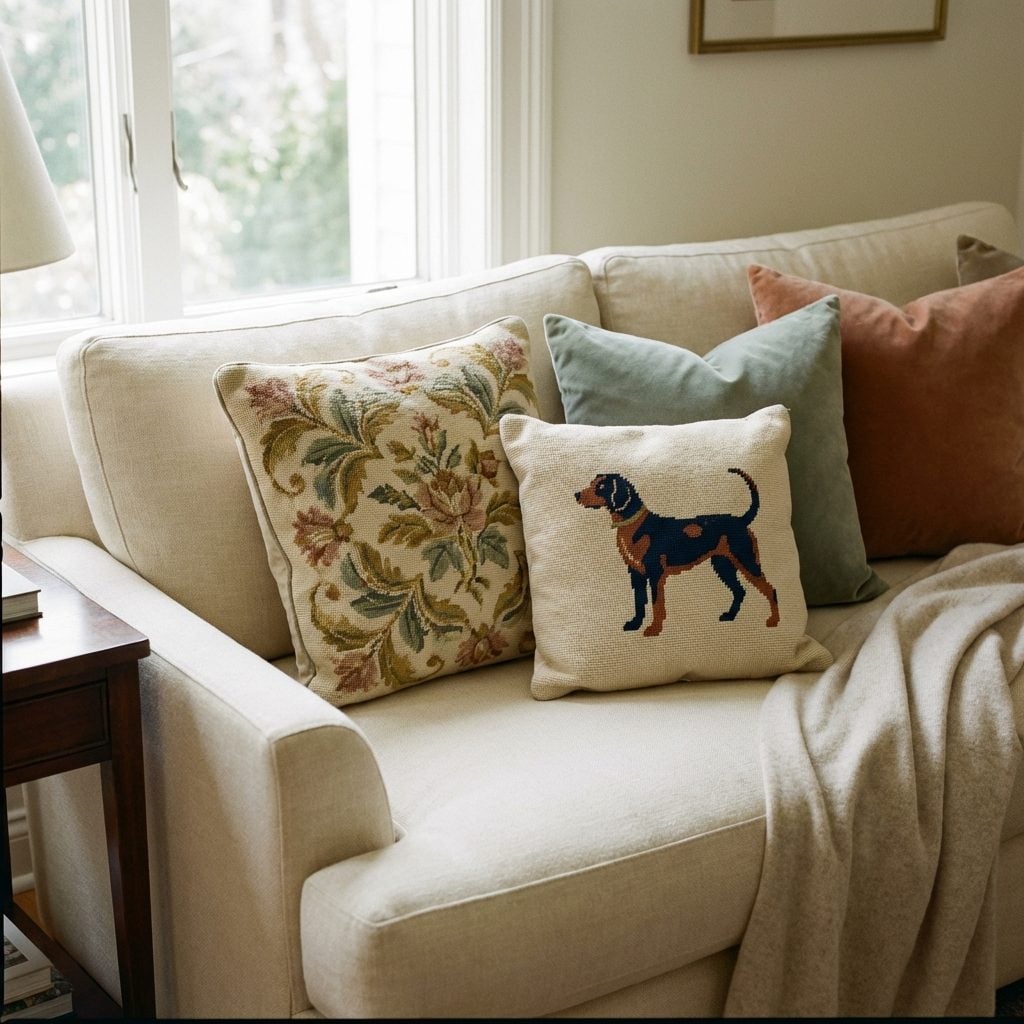
These pillows are not from a home goods store. The canvas has slight irregularities. The design might be a family crest, a dog breed that’s been in the family for generations, a house with the wrong number of chimneys stitched from memory. One corner might be slightly puckered where the tension was off. It doesn’t matter, it was made by someone specific, and everyone who sits on the sofa knows who.
Needlepoint pillows in old money homes carry narrative weight that no purchased object can replicate. A set of needlepoint pillows in botanical or heraldic patterns, slightly faded and softened with age, mixed with muted velvet throw pillows on a linen sofa, communicates something no interior designer can manufacture: that the home has been loved by specific hands over a very long time.
15. The Kitchen That Smells Like Someone Actually Cooked in It Today
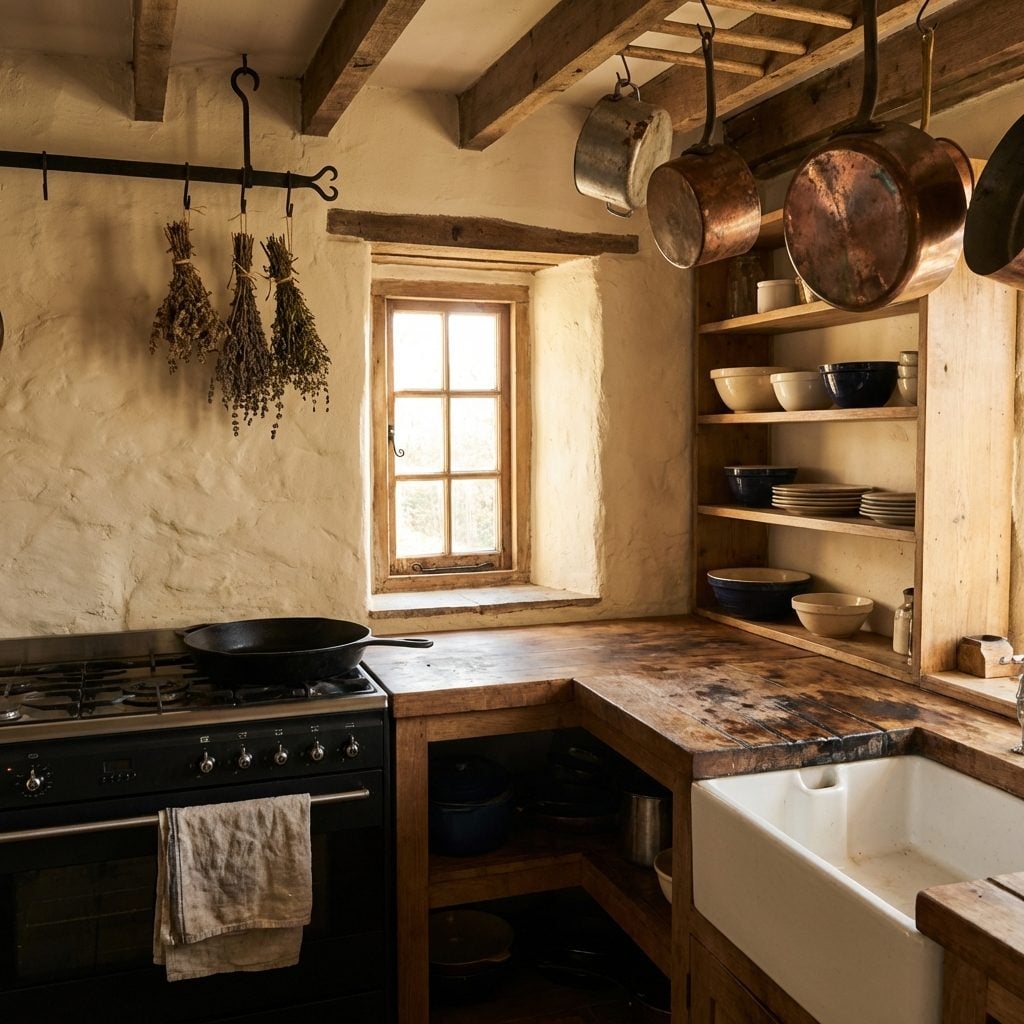
There’s a particular scent that clings to old-money kitchens, rendered fat, dried herbs, cast iron seasoned over decades. It doesn’t smell like a showroom. It smells like a kitchen that has made ten thousand meals and intends to make ten thousand more. The cast iron skillet on the range isn’t decorative. The copper stockpot has a dent near the handle from the time someone dropped it in 1987.
This kind of kitchen earns its patina. The wooden countertop near the sink is slightly darker where water has always been splashed. The herb bunches hanging from a ceiling hook have been replaced so many times the hook itself is worn smooth. Nothing here was bought to look used. It just is.
14. Floors So Cold in the Morning They Tell You Exactly How Old the House Is
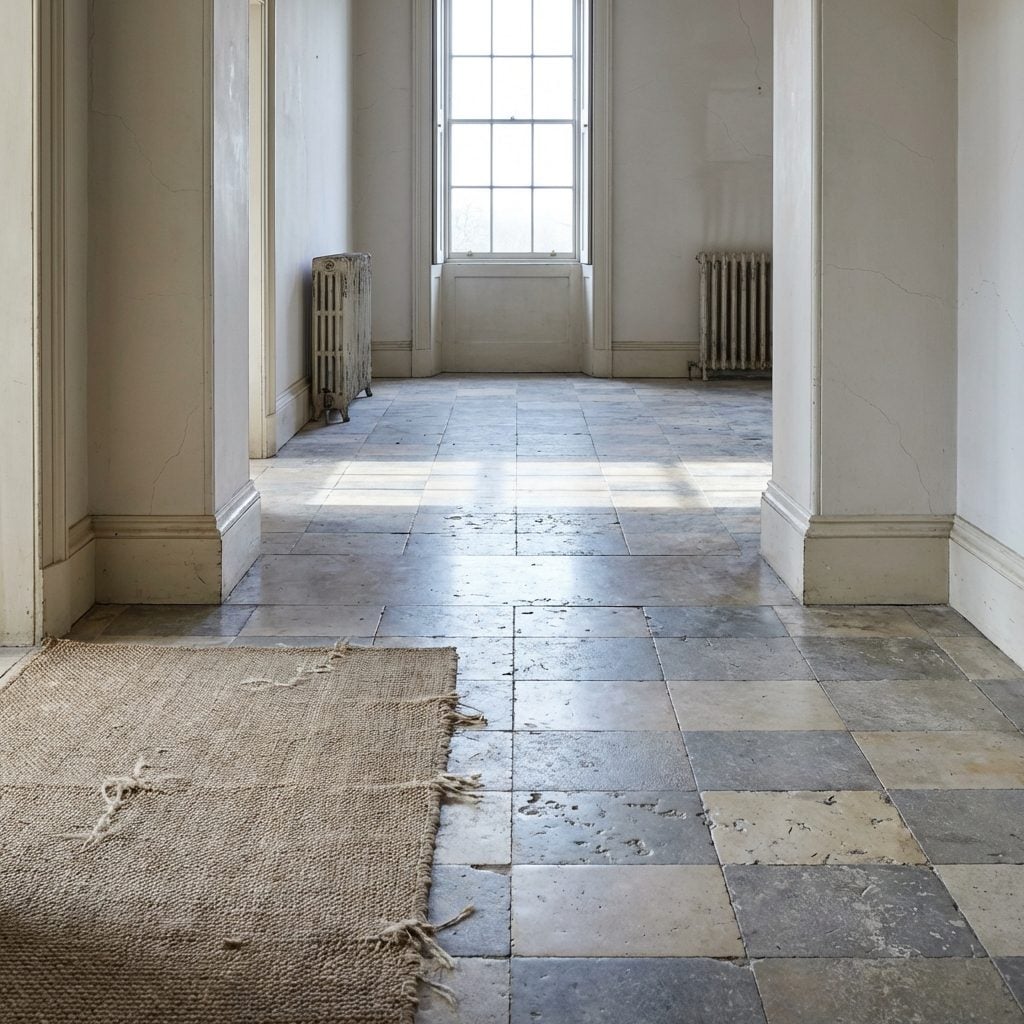
Stepping onto old stone or encaustic tile first thing in the morning is a very specific kind of shock, one that wealthy families have accepted for generations without complaint. These floors were never meant to be comfortable. They were meant to last.
The tell is in the surface variation. Reclaimed limestone wears unevenly. Flagstone develops a slight polish in high-traffic paths, from the door to the kitchen, from the stairs to the sitting room. Individual tiles show the ghost of past rugs, slightly lighter in patches where the sun never reached them. No two squares are perfectly level. A sisal area rug might be thrown down near the entrance, but it’s purely practical, not decorative.
13. Brass Hardware That’s Never Once Seen a Polish Cloth
🔥 Would you like to save this?
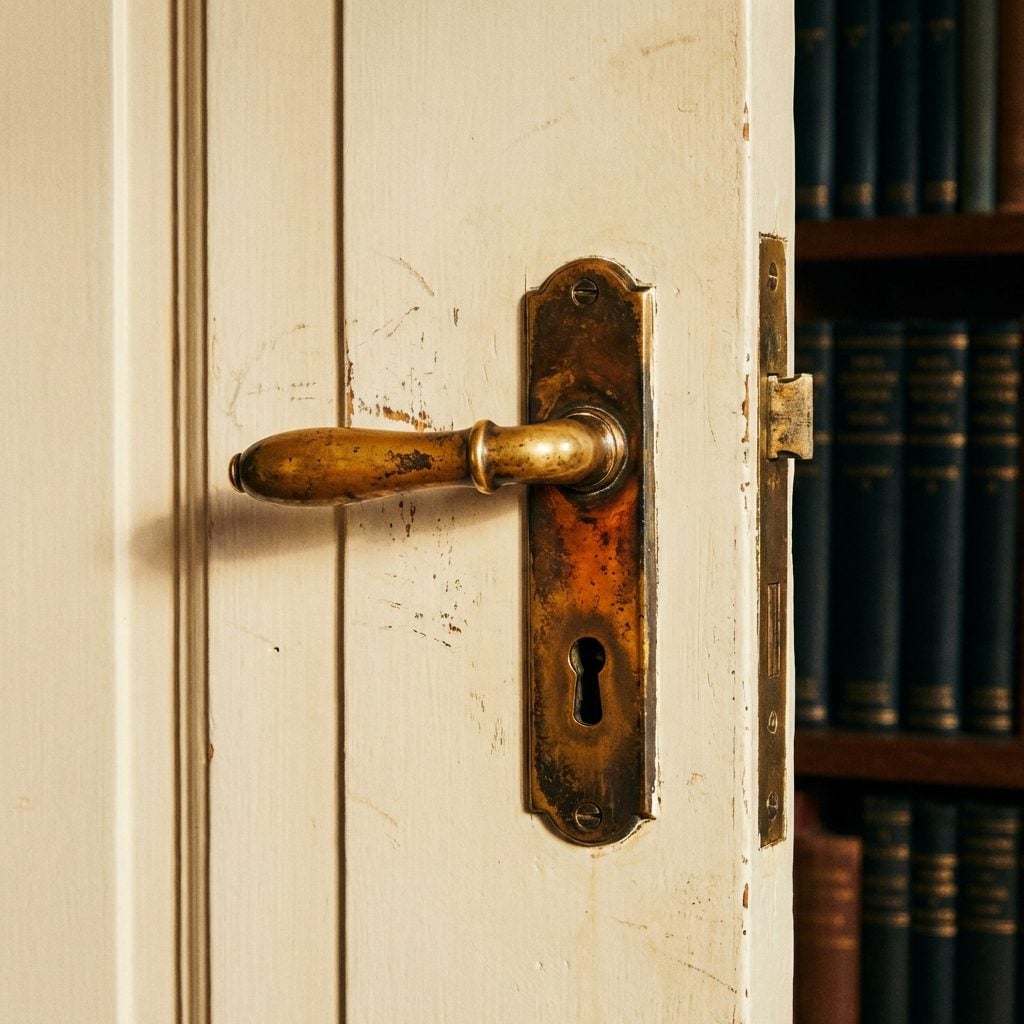
The lacquered version gives it away immediately. Polished-to-a-mirror brass that holds its shine forever is a renovation-era choice, bought shiny and kept that way. Real old-money hardware is solid brass that has done its job for seventy years, developing a warm, uneven patina that ranges from amber to near-black in the recesses.
Door handles, hinges, cabinet pulls, escutcheon plates, all of it coordinates only loosely, because pieces have been replaced piecemeal over the decades. The antique brass door handle on the study doesn’t quite match the brass cabinet pulls in the kitchen. That slight mismatch is the sign. No one sat down to design the hardware scheme. They just replaced things as needed, and time did the rest.
12. Window Seats With Cushions That Faded Before You Were Born
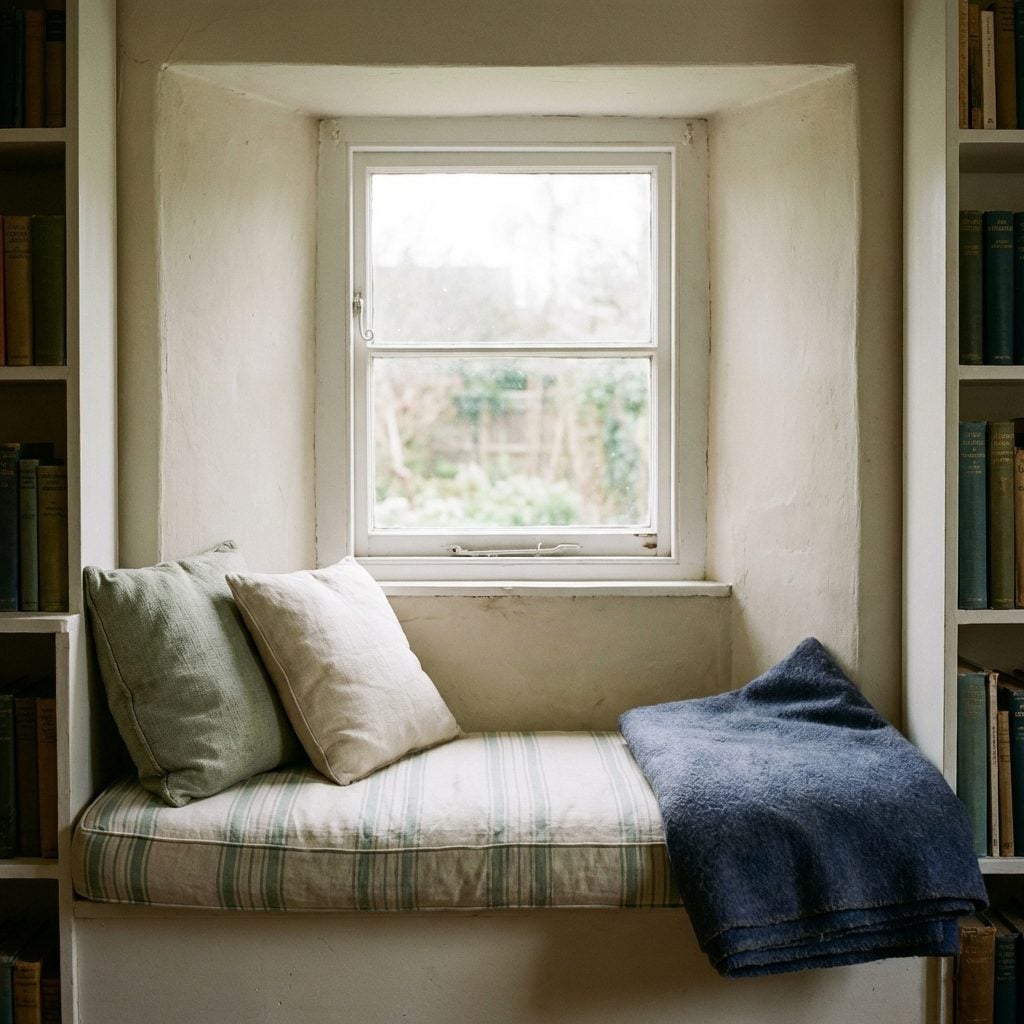
The fabric is no longer the color it was intended to be. A cushion that was once deep teal has become something closer to sage. Striped linen that started life in burgundy and ivory has faded to a soft rose and cream. This is not neglect. Nobody replaced the cushion because it still works perfectly and because the faded version has grown more interesting than the original.
Old-money window seats are often built into the architecture itself, deep enough to lie in, flanked by full-height bookshelves, with a view that has been the same view for a hundred years. A few linen throw pillows are stacked at one end. A wool blanket is folded over the back, not decoratively folded, just left there. Someone was reading here yesterday.
11. The Butler’s Pantry That Actually Functions as One
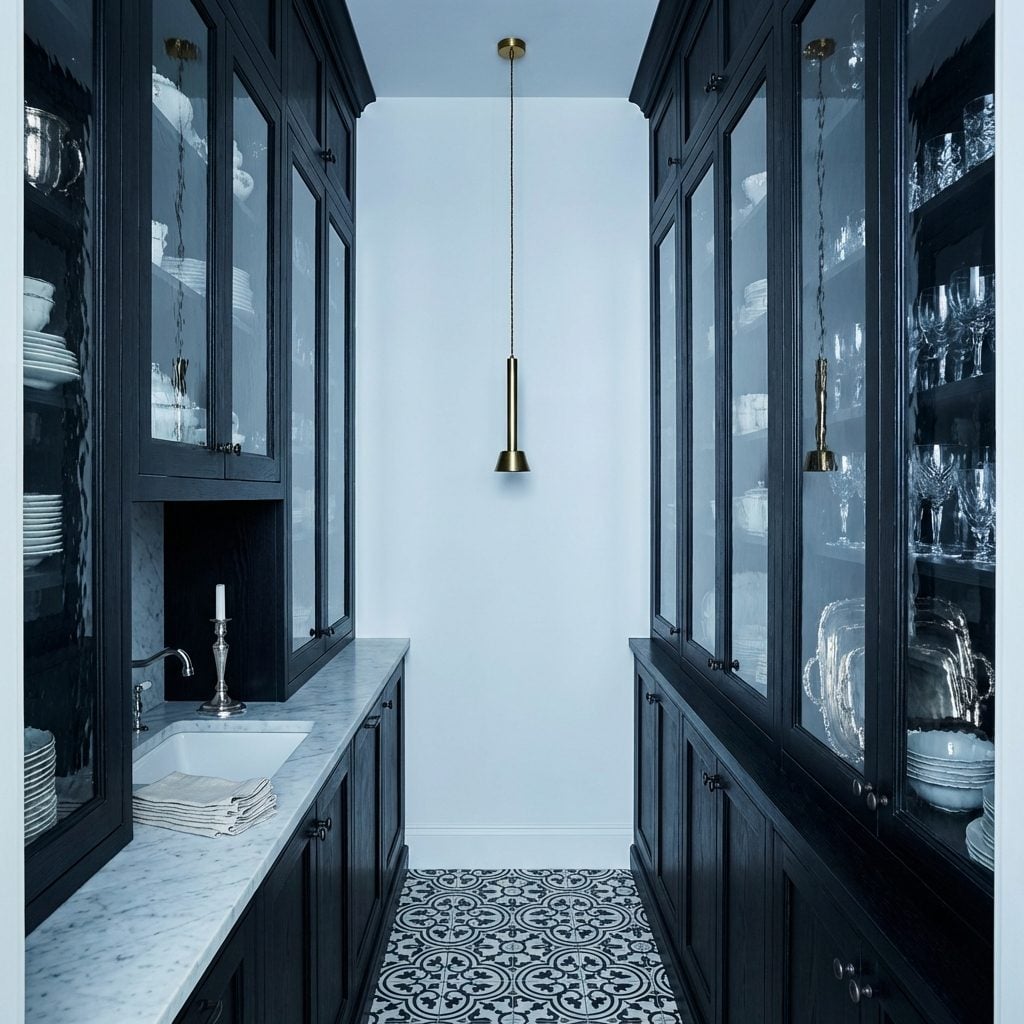
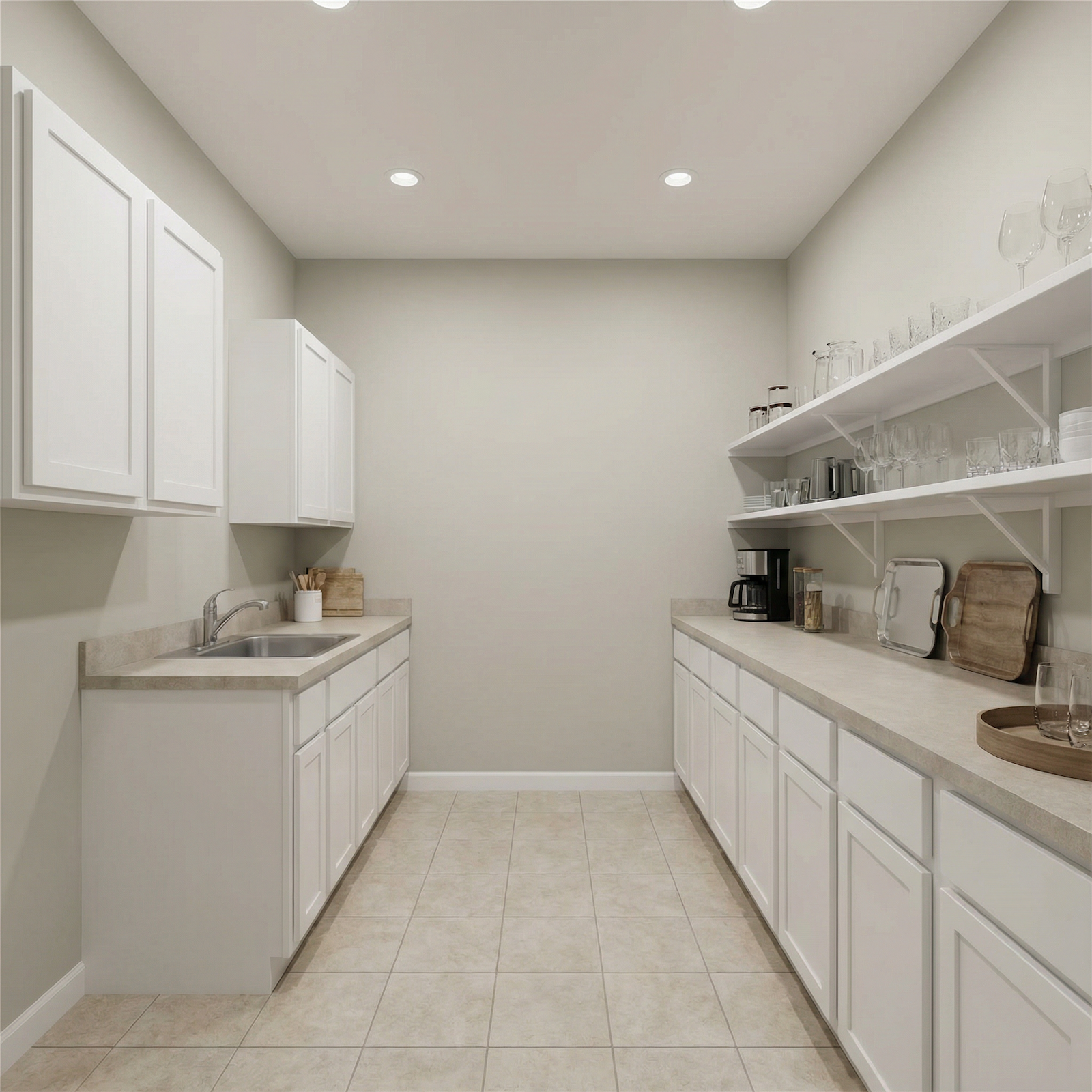
Not a wine bar conversion. Not an Instagram coffee station. A real butler’s pantry is a working pass-through room between the kitchen and dining room, lined with deep glass-front cabinetry holding the good china, the silver plate, the serving pieces that only come out when there are twelve people for dinner. There’s usually a second sink, slightly smaller, and a section of countertop permanently dedicated to polishing and laying out serving pieces before a meal.
The cabinetry might be original, which means the wood is dark and the glass panes are slightly wavy. A proper larder version includes thick stone or marble shelves kept cool by the exterior wall it backs onto. Either way, the space is deliberate. It tells you that whoever designed this house was thinking about entertaining on a scale that required its own dedicated room for preparation.
10. Hallways Hung With Maps of Places the Family Has Actually Been
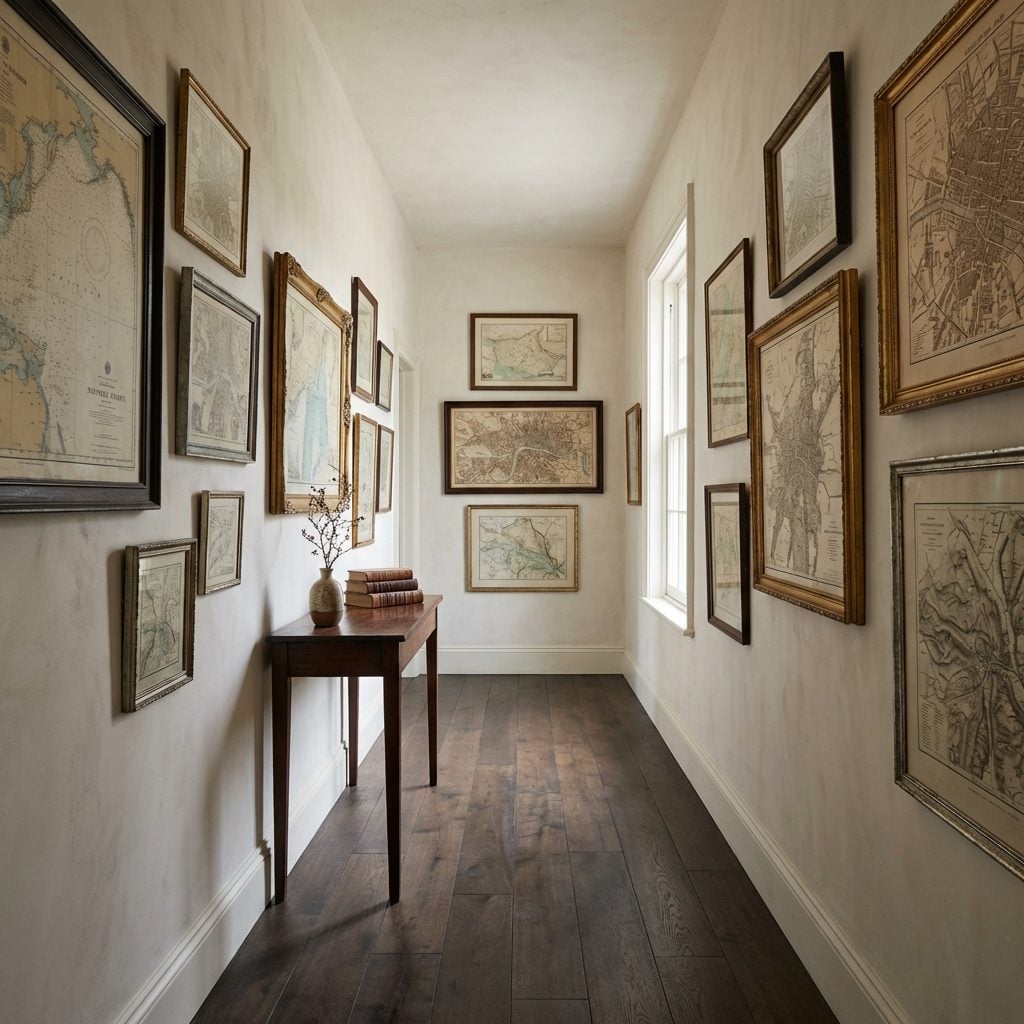
The framed maps in an old-money hallway are not from a home goods store. They are original survey maps, Victorian-era city charts, hand-illustrated coastal maps of specific harbors, or reproduction ordnance maps of a region in Scotland where someone once owned land. Each one has a reason to be there.
What Makes These Different From Decorative Map Art
- The frames don’t match. They were framed over decades, at different framers, in different cities.
- Some maps have pencil annotations, a route marked, a date written in a corner.
- The locations are specific, not general. Not “Europe” but a particular valley in Tuscany. Not “the Caribbean” but a specific island chart.
A antique gold picture frame holds a 1920s survey map that someone once used as a navigation reference. That specificity is the whole point. The hallway is a visual record of actual movement through the world, not a design choice.
9. An Umbrella Stand by the Front Door With Umbrellas That Have Actually Dried Out in It
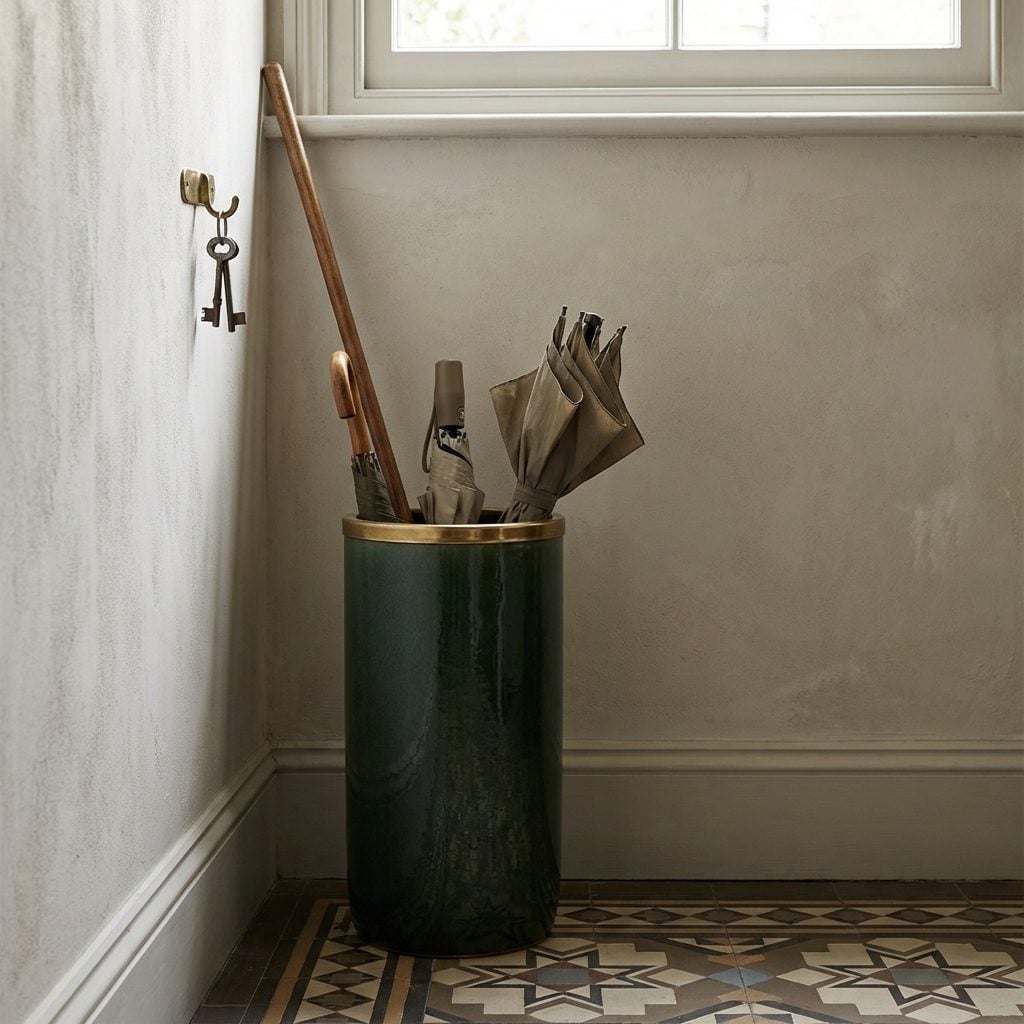
This is the detail that separates a house from a home managed by someone who has thought about wet umbrellas. The stand itself is likely ceramic, brass-fitted, or a converted Victorian stick stand, heavy enough that it won’t topple when you shove a wet brolly into it in a hurry. Inside: three or four umbrellas of varying quality and age. One telescoping travel umbrella, one large wooden-handled walking umbrella, one that belongs to a guest who left it three years ago and is still welcome to collect it.
8. Guest Towels Too Nice to Use That Are Genuinely Meant to Be Used
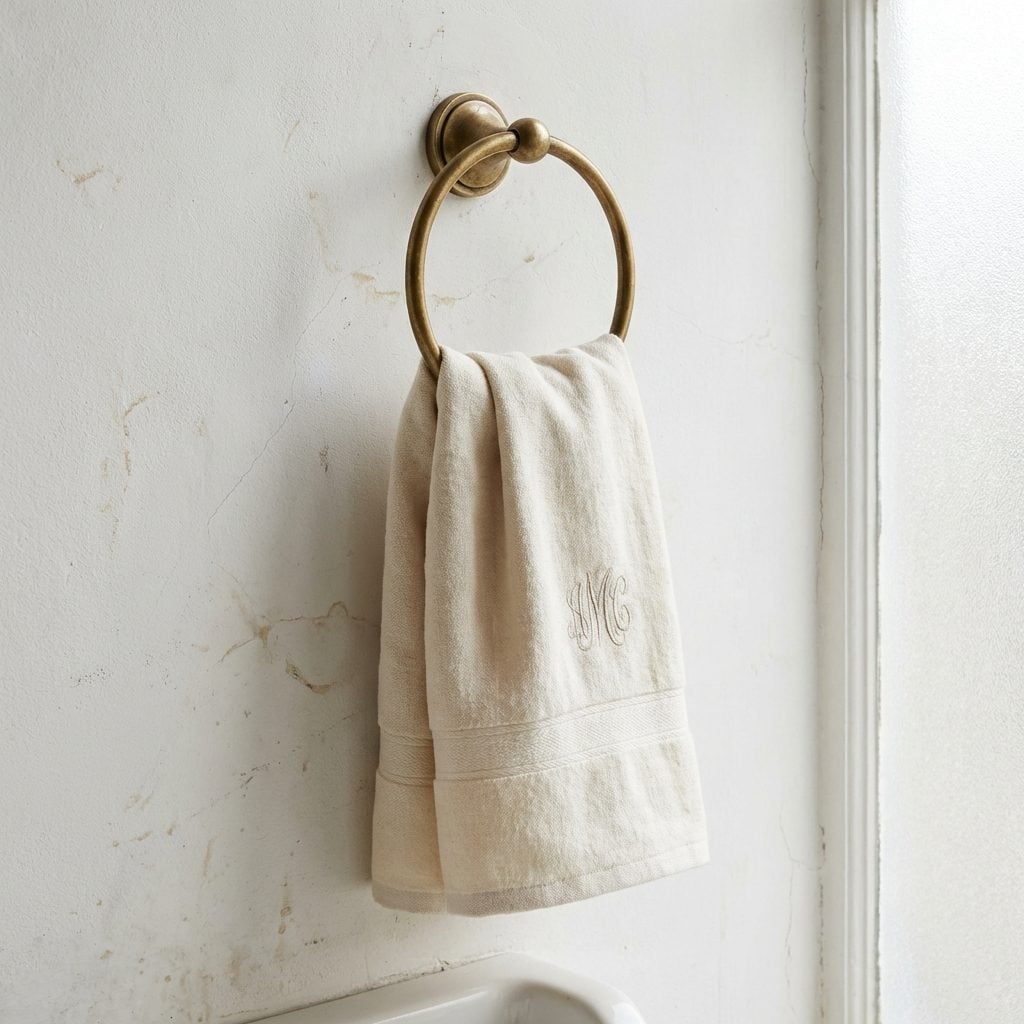
They’re folded on the towel ring, not rolled in a basket, not fanned decoratively on a shelf. Just folded neatly, slightly heavier than anything you’d buy today at a department store, with a monogram embroidered in a font that is restrained rather than decorative. The monogrammed linen hand towels are from a set that has outlasted three bathroom renovations.
The old-money move is that these towels are genuinely offered. There’s no backup stash of cheap paper towels nearby. You are expected to use the good ones, and when you do, you understand that you are a guest who is being taken seriously. That’s the entire social transaction, compressed into a folded piece of linen.
7. Wooden Tennis Rackets in the Mudroom That Are Not Decorative
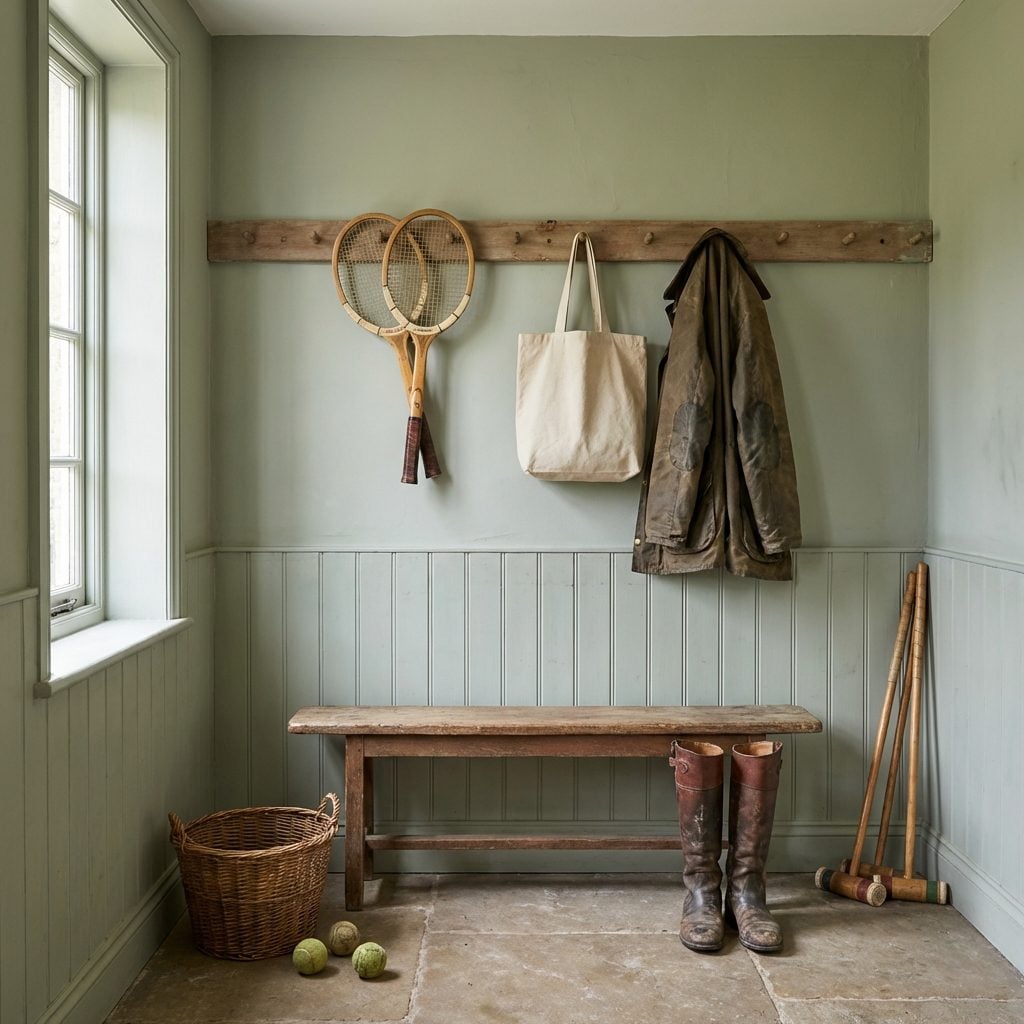
They’re stored upright in the corner of the mudroom, or hung on a peg rail, or leaned against the wainscoting, next to the croquet mallets, the riding boots, and the worn canvas tote that holds extra balls. None of this was placed here intentionally. It ended up here because this is where sporting equipment lives.
Wooden tennis rackets are the detail that crystallizes the whole aesthetic. They predate graphite rackets by decades, and their presence signals not nostalgia but continuity. The court out back is the same one that’s always been there. The wooden tennis racket hanging on the peg is the same one used last summer. The leather riding boots below it are waiting for Tuesday morning.
6. Magazine Subscriptions That Have Been Arriving at This Address Longer Than You’ve Been Alive
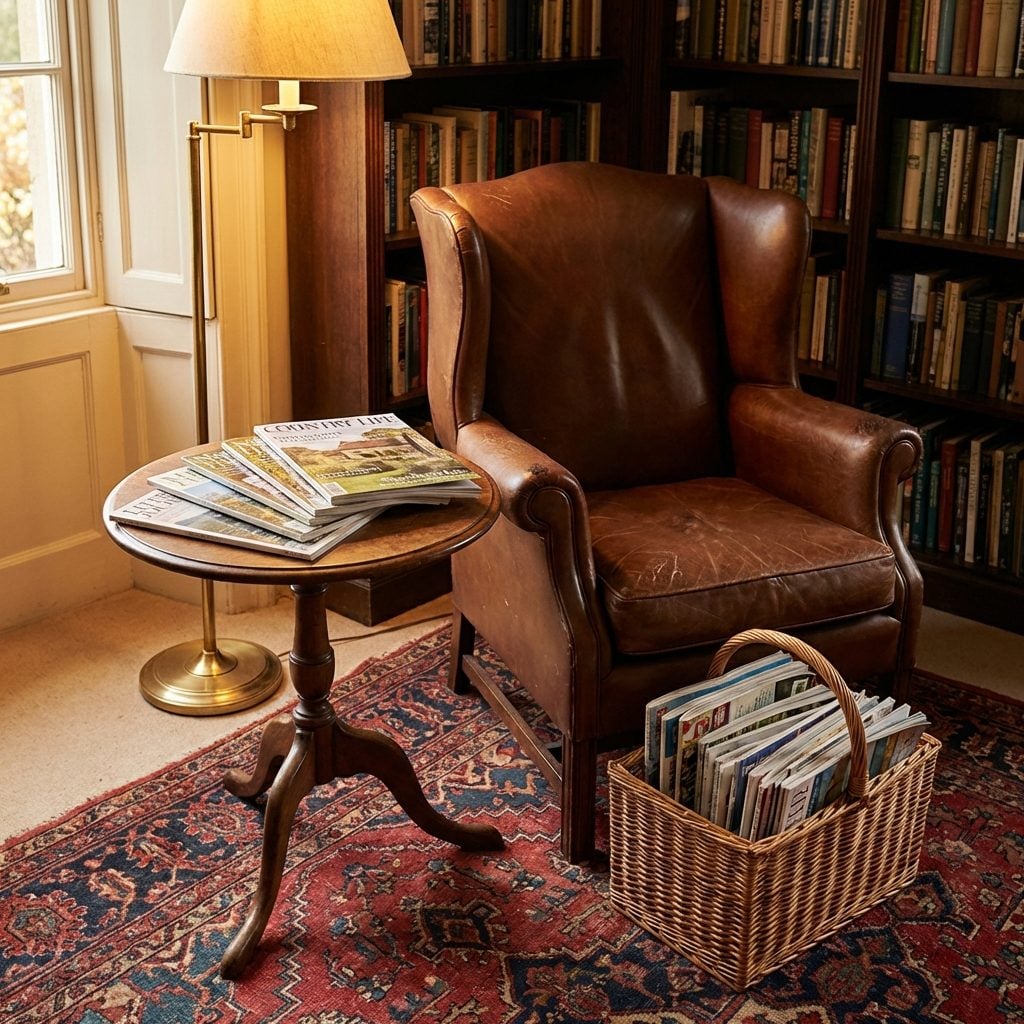
The stack near the armchair is not aspirational reading. It’s arriving because it has always arrived. Issues of Country Life, The Spectator, or National Geographic that have been delivered to this address since the 1960s. Some issues are bound in annual volumes with labels on the spine. Others are simply in a basket, the most recent on top, the stack going back six months before someone tidies them away.
What this says is not that the family is intellectual or sophisticated, although they may be. What it says is that they have been in the same place long enough for a subscription to become a rhythm, and that the rhythm has never been disrupted. A forwarded address sticker on an old issue sometimes tells the more interesting story: the same subscription followed the family through a move and kept coming.
“The stack near the armchair is not aspirational reading. It’s arriving because it has always arrived.”
5. A Wine Cellar That Was Drawn Into the House Plans, Not Added Later
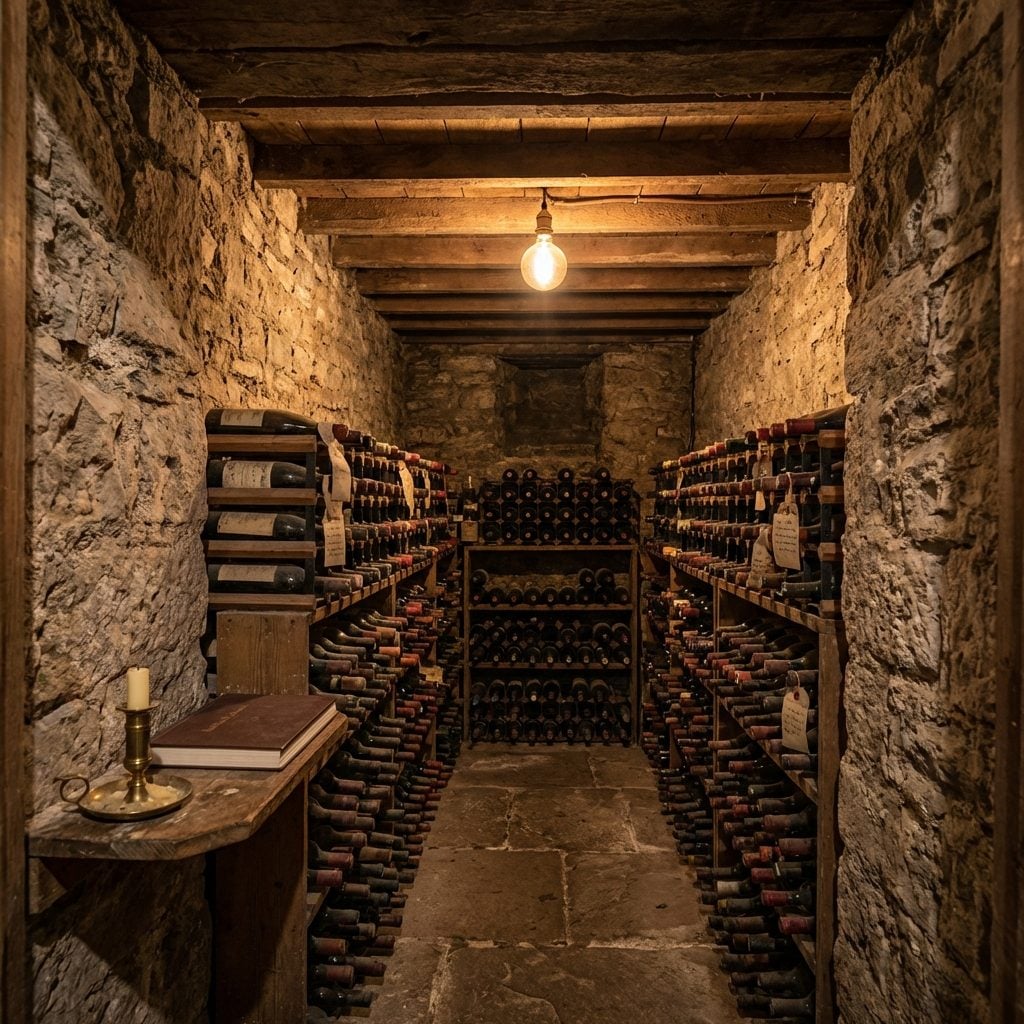
The difference is architectural. A retrofitted wine fridge is shoved under a counter or squeezed into a kitchen alcove. A planned wine cellar is accessed through a door off the kitchen or dining room, descends a few stone steps, and has a ceiling low enough to make you duck slightly. The temperature is consistent because the room was built into the earth, not because a compressor is running.
The bottles are not arranged for display. Some are lying horizontally in old wooden racks, others in individual wire cradles that have been there since the seventies. A few bottles have candle wax dripped down the neck from the last time they were brought upstairs without a proper holder. There’s a log book on a small shelf near the entrance, handwritten, going back to when the house was first occupied. The first entries are in a different handwriting than the most recent ones.
4. Landscape Paintings by Artists Nobody Outside the Family Has Ever Heard Of
🔥 Would you like to save this?
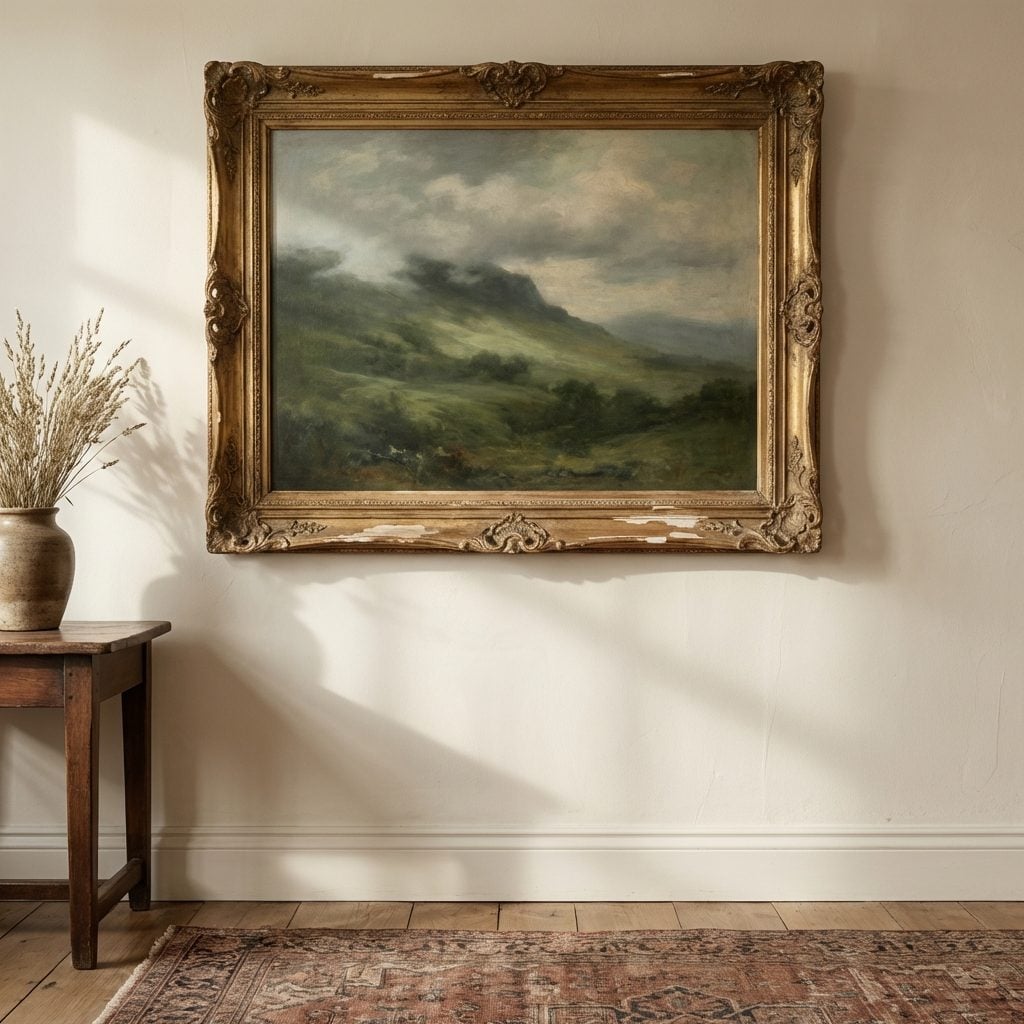
There is no artist statement pinned to the wall. No gallery label. Just a moody oil painting of a Scottish moor or a Hudson Valley hillside, hanging in a heavy gilded wood frame that has been re-gilded at least once. The signature in the corner is illegible to anyone outside the family, and that is entirely the point.
New money buys names. Old money buys what it loves. The landscapes that carry genuine old-money energy are the ones with a story attached, a great-uncle who painted on weekends, a purchase made at a country auction in 1962, a piece that came with the house and simply stayed. The lack of market value is almost the flex. When art is chosen for feeling rather than investment, it shows in the way it sits on the wall: unhurried, unapologetic, completely at home.
3. The Sofa That Has Been Reupholstered Twice and Will Outlive Everyone
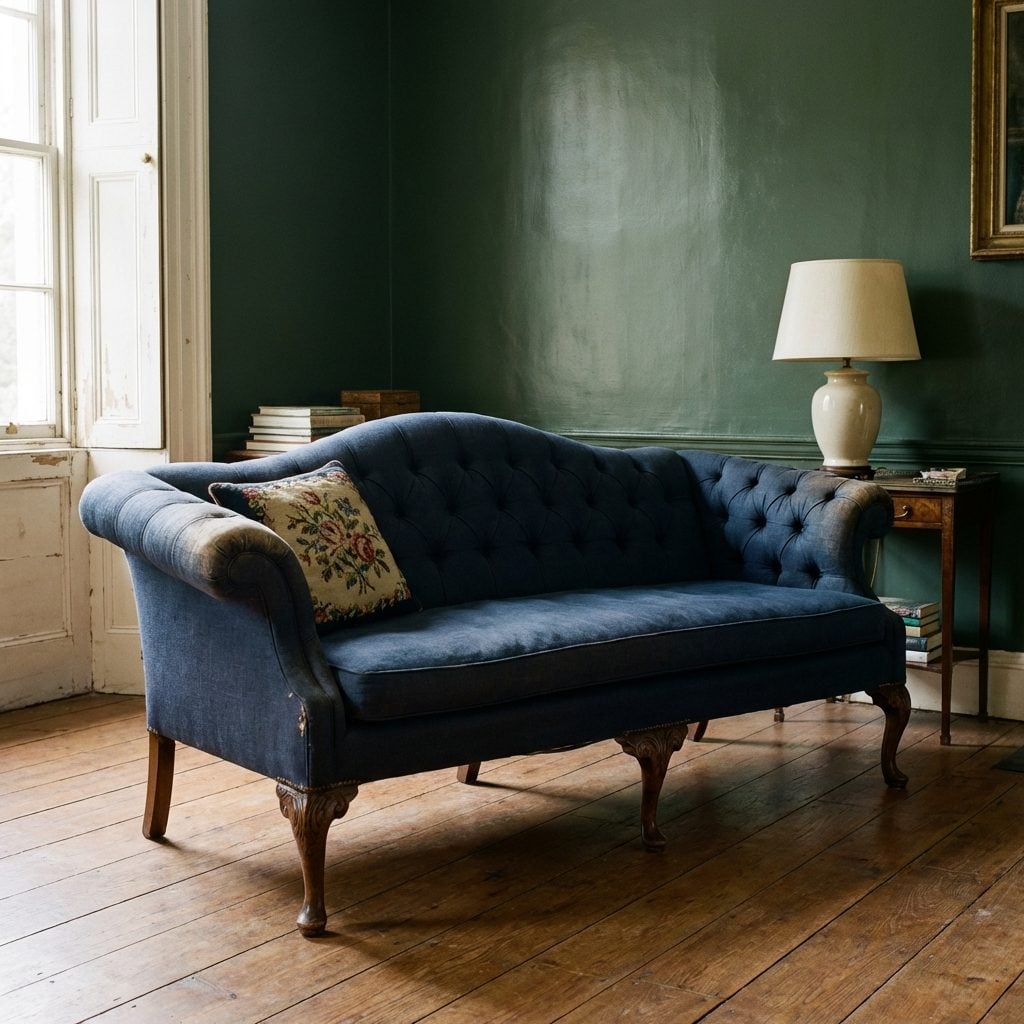
Old money does not replace. It repairs, restores, and reupholsters. The sofa in the formal sitting room has good bones, a tufted camelback silhouette with hand-carved walnut legs, and it has worn three different fabrics over its lifetime. The current one is a navy linen upholstery, slightly faded at the armrests, chosen to last another twenty years.
This is one of the clearest signals in any home. The relationship with furniture shifts entirely when a piece is treated as an heirloom-in-progress rather than a purchase with an expiration date. Frame quality, joinery, cushion fill, these things only matter if you plan to keep something. And old money always plans to keep something.
‘The frame is solid. We’ll just have it redone.’ That sentence is worth more than any price tag.
2. A Dining Room That Actually Gets Used on a Tuesday
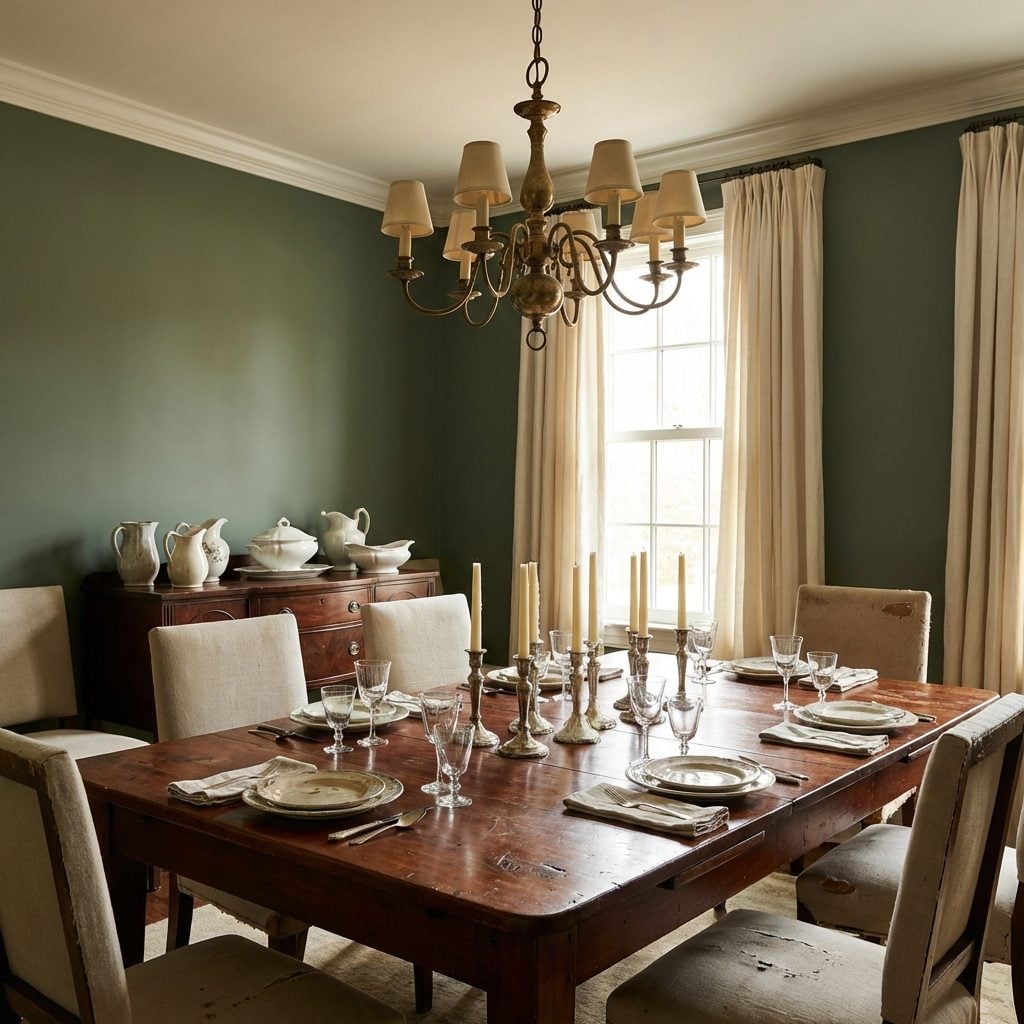
Most formal dining rooms in America are monuments to optimism: purchased, decorated, and then used twice a year while everyone eats at the kitchen island. The old-money version is different. The mahogany dining table has candle wax on it. The linen dining chairs are slightly mismatched because two were replaced after a flood in 1987. Dinner here is not an event. It is simply what happens at seven o’clock.
The psychology here is quietly significant. A room used daily does not stay pristine, and old money is not afraid of that. Scratches in the table surface are logged like a family timeline. The chandelier above it has been rewired but never replaced. That kind of unselfconscious use of a formal space signals something that no amount of decorating can fake: the habit of living well without making a production of it.
1. Architectural Drawings Rolled in a Corner Like They Were Never Meant to Be Seen
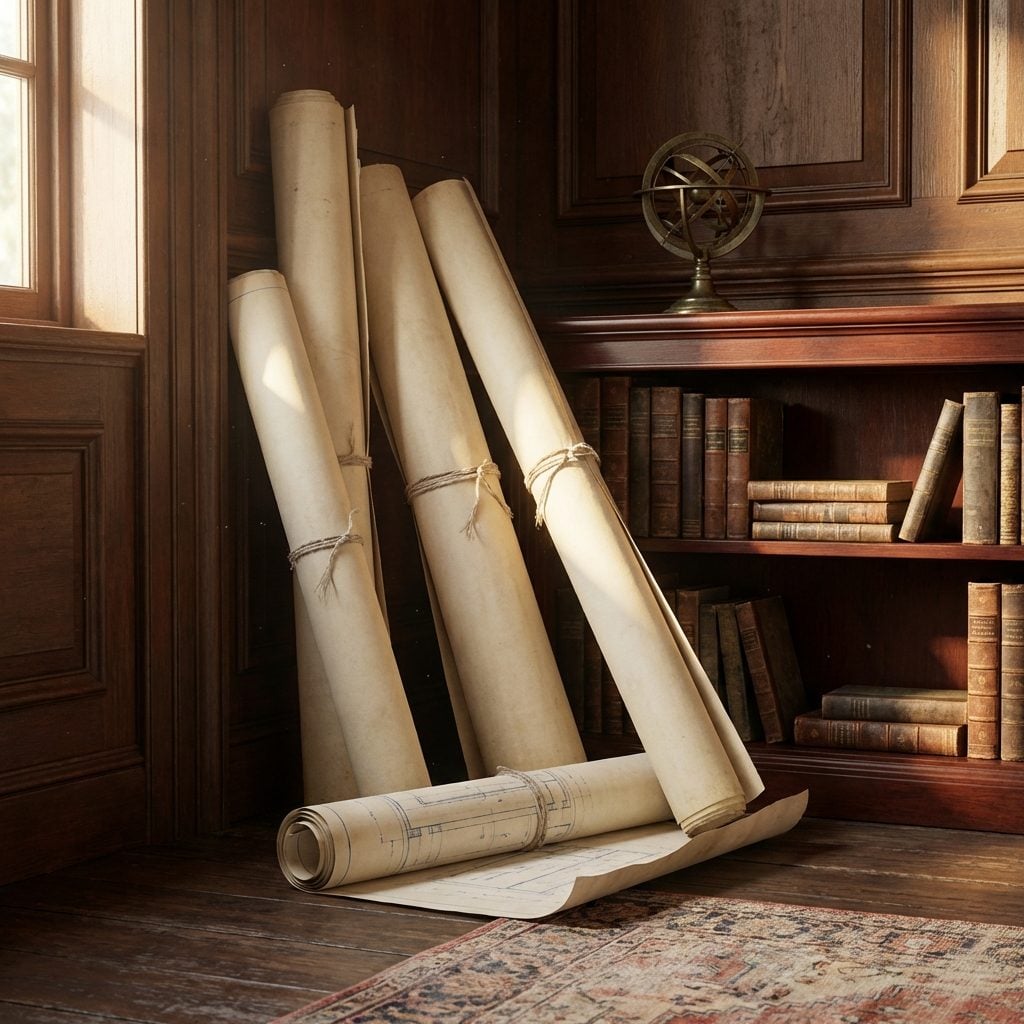
Not framed. Not displayed. Just leaning against the wall in a study or library, slightly curled at the edges, tied with a piece of cotton twine that has been re-tied more than once. These are the original blueprints for the house, or the plans for the addition that was done in 1954, or the drawings for a wing that was never built.
The fact that they are not on the wall is exactly what makes them interesting. Displaying them would turn them into decor. Keeping them rolled in a corner means they are simply documents, part of the ongoing administrative life of a house that is taken seriously as a structure, not just a backdrop.
There is a tactile richness to the object itself: heavy drafting paper or linen-backed blueprints, the faint smell of old ink, pencil annotations in the margins. If you have ever unrolled a set of drawings like this on a table to check a measurement or settle an argument about where a wall used to be, you already understand the energy entirely.