🔥 Would you like to save this?
There was a specific kind of pride that came with opening a well-organized ’90s closet. The smell of cedar hit first, then the gleam of those mirrored sliding doors, then the satisfying sight of every belt, shoe, and sweater with its own designated spot. Before Pinterest boards and custom built-ins cost a month’s salary, we were out here installing ClosetMaid systems on a Saturday afternoon and feeling like we’d completely reinvented domestic life. Here are 37 features that made us feel like we had it all figured out.
37. Sliding Mirrored Closet Doors That Made Every Bedroom Feel Twice as Big
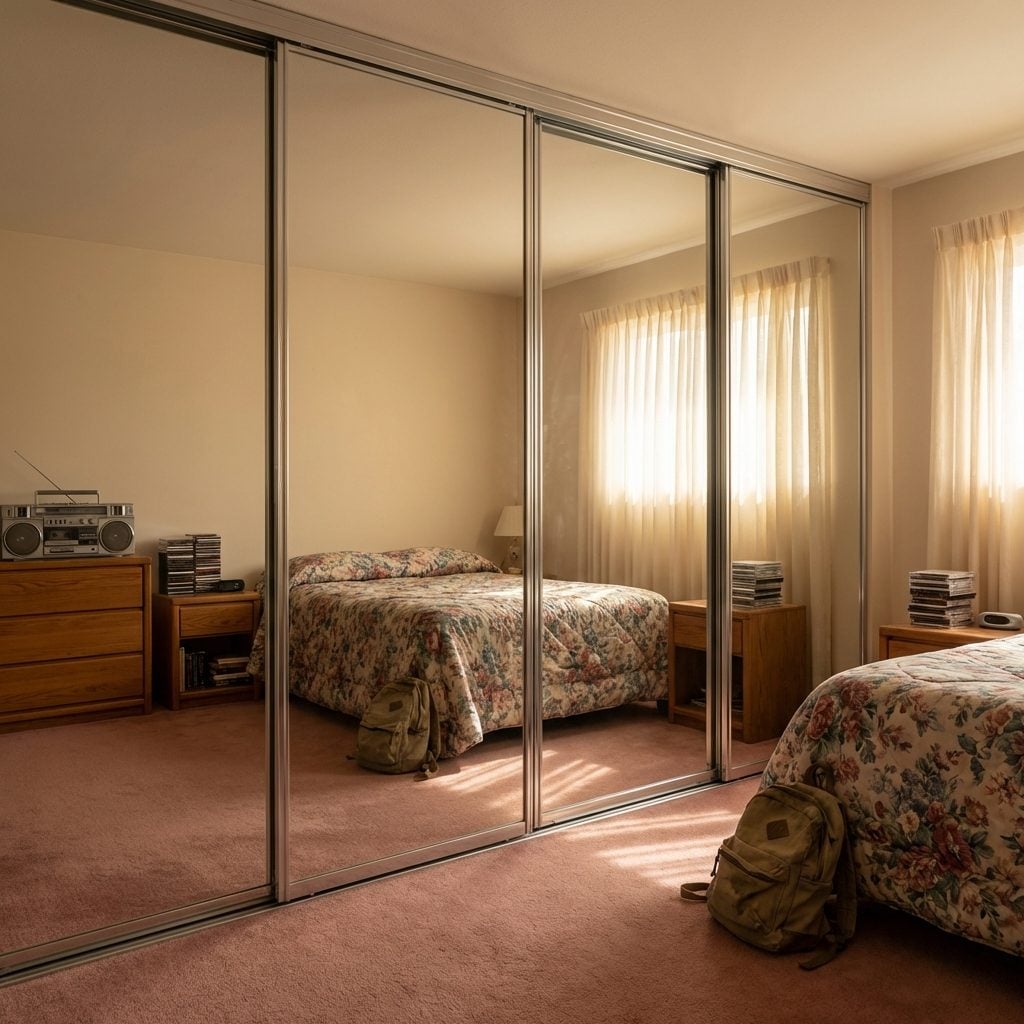
You could see your entire outfit from collar to shoes without moving an inch. Those floor-to-ceiling mirrored sliding doors were the ultimate ’90s bedroom status symbol, and every kid who had them felt genuinely rich. The aluminum track at the top had a particular sound when you yanked the door open, a metallic swoosh that echoed slightly, like you were entering a boutique.
In order to come up with the very specific design ideas, we create most designs with the assistance of state-of-the-art AI interior design software. Also, assume links that take you off the site are affiliate links such as links to Amazon. this means we may earn a commission if you buy something.
They warped slightly after a few years, which meant your reflection got just a little funhouse-mirror at the edges. Nobody cared. The closet felt glamorous, the room felt bigger, and getting dressed in the morning felt like a production. mirrored sliding closet door setups are actually making a real comeback right now, but nothing touches the original.
36. Double Hanging Rods That Finally Let You Sort by Season (In Theory)
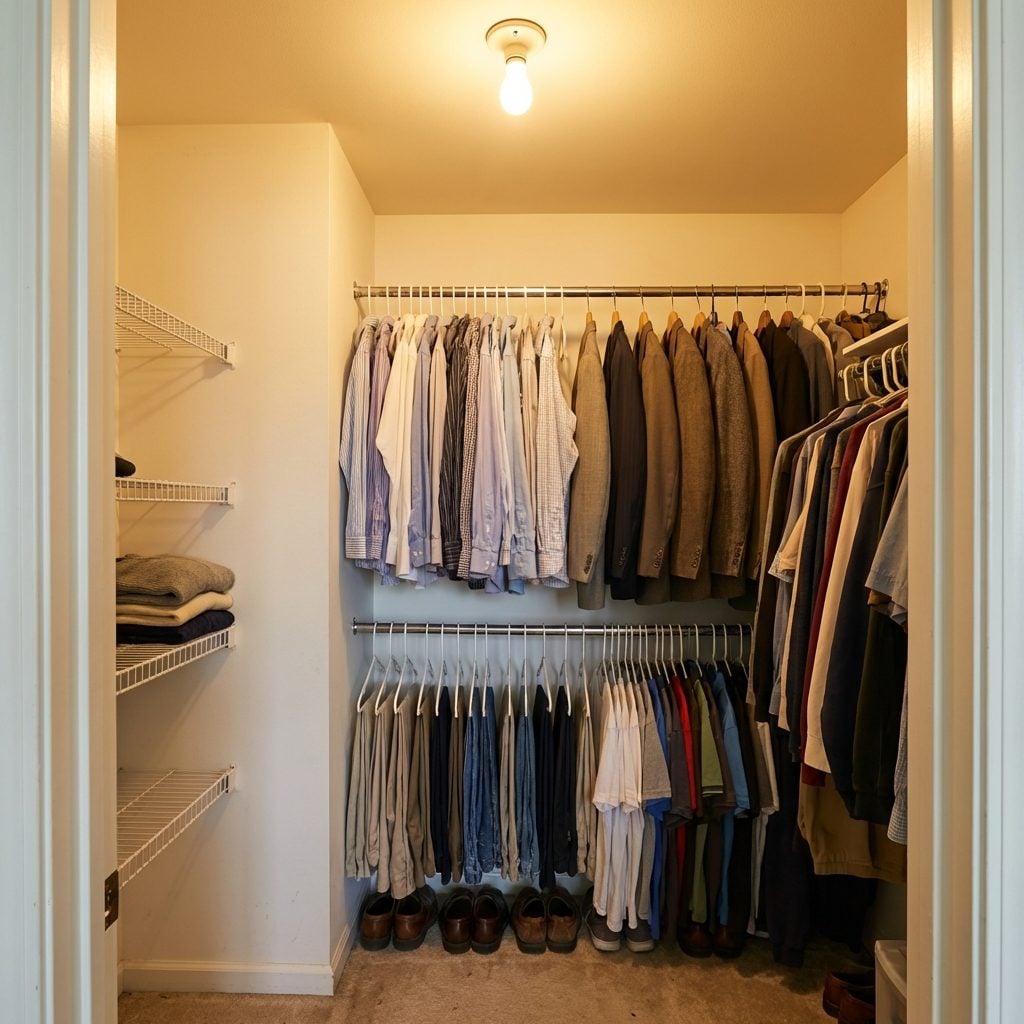
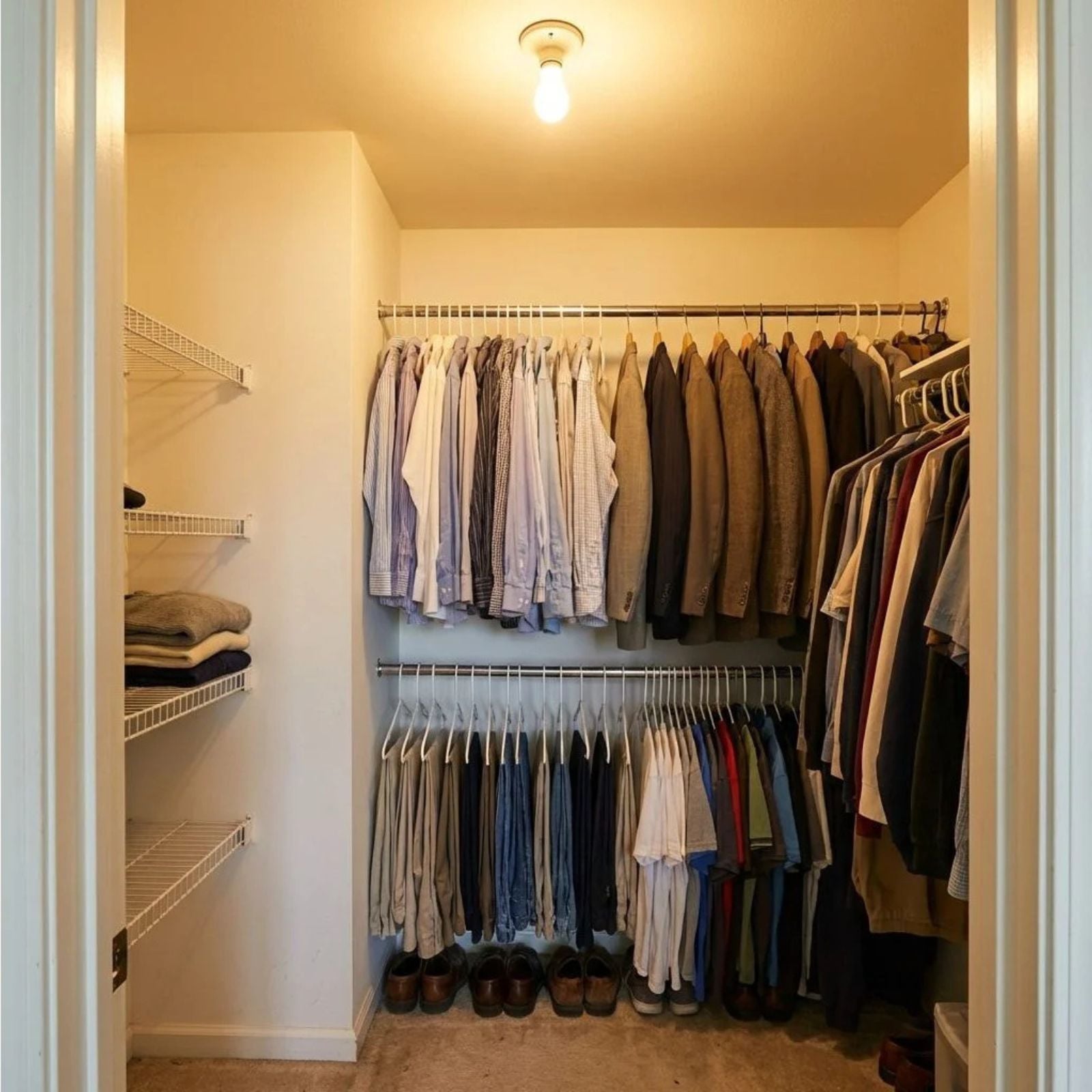
The premise was simple and completely revolutionary to a generation raised on one sad rod crammed with everything from winter coats to Easter dresses. Adding a second rod below the first meant you could, theoretically, hang shirts up top and pants below, short items on one side and long on the other. Organization nirvana.
In practice, the bottom rod was always jammed so tight that retrieving anything from it felt like excavating. But the system itself felt like real big den design energy applied to personal space. It was the first time a lot of people realized a closet could actually be engineered rather than just stuffed. That feeling of standing back and looking at two full rows of clothes, neatly hung? That was genuinely exciting.
35. Built-In Angled Shoe Shelves That Displayed Your Collection Like a Store
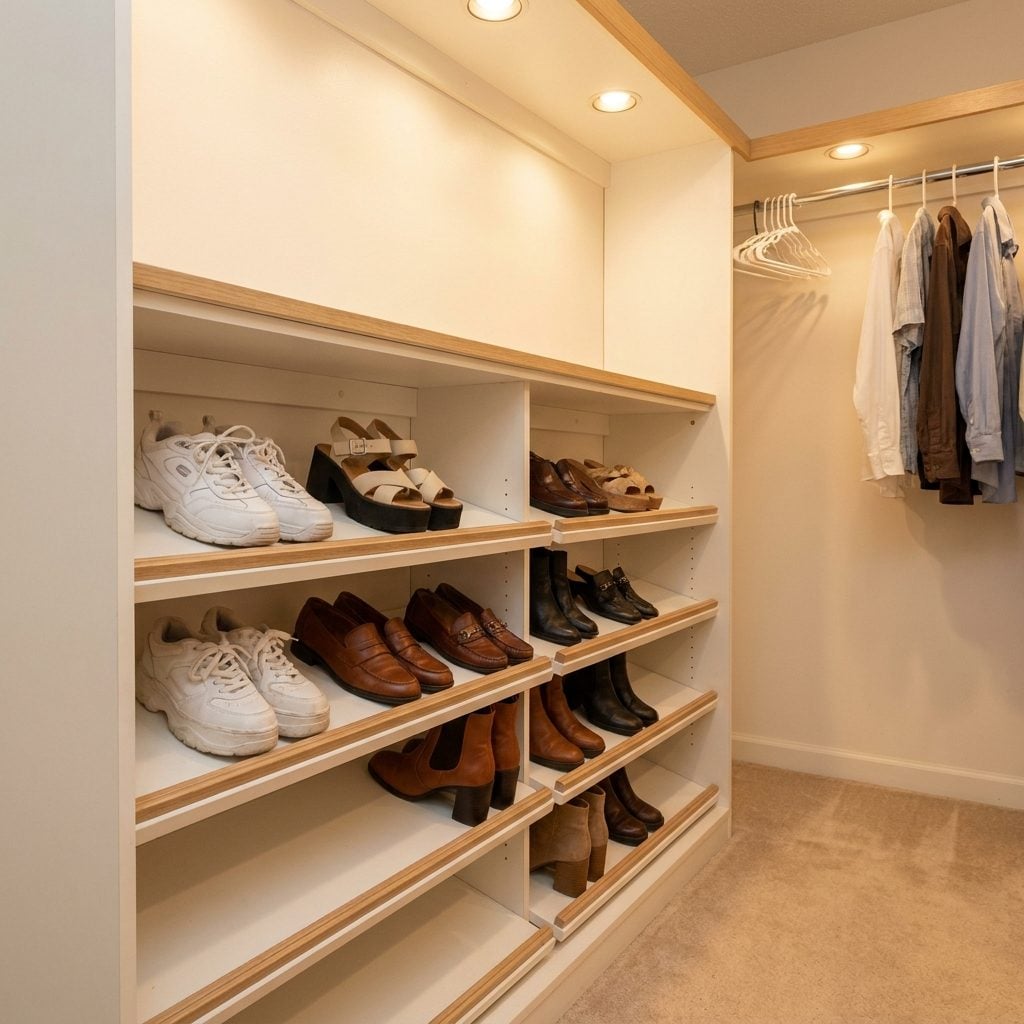
Suddenly your Reeboks and chunky Steve Maddens weren’t piled in a heap at the bottom of the closet. They were on display. Angled shoe shelves, usually laminate wood in white or oak finish, held each pair at a slight backward tilt so you could see every shoe at a glance. It felt aspirational in a very specific late-’90s way, like your bedroom closet had opinions about retail merchandising.
The shelves were sized for exactly one pair each, which meant sneakers always crowded out heels, and boots never quite fit anywhere logical. Still, walking into a closet with those angled shoe shelves and a full collection on display was a particular kind of satisfaction. You can find versions of this idea today, but the originals had that chunky laminate edge that made them look solid and permanent in a way that modern wire ones just don’t.
34. The Pull-Out Belt and Tie Organizer That Lived Behind the Door
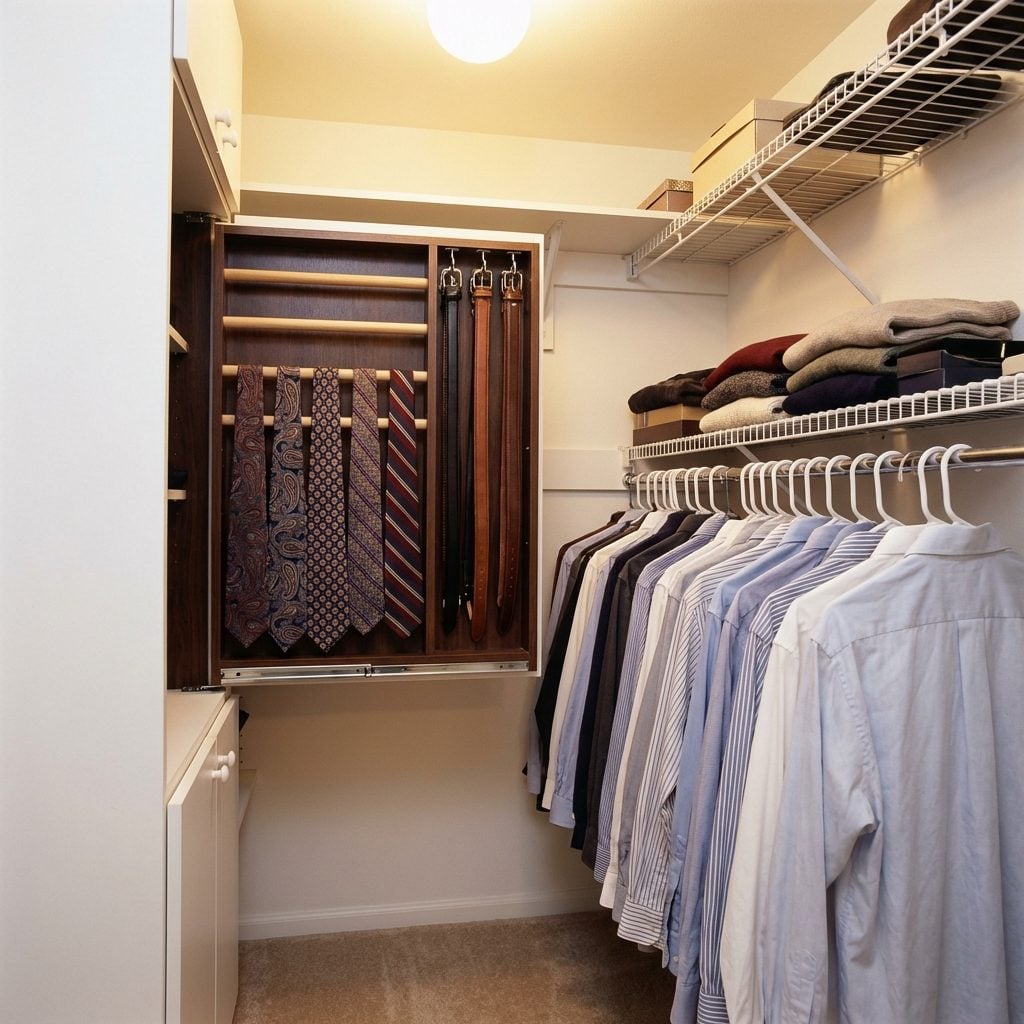
Usually a narrow panel of dowel pegs or a hinged rack mounted to the closet wall or door, this little organizer had one job: give every belt and tie a dedicated hook so they weren’t knotted into a ball at the bottom of a drawer. In the ’90s, this was a big deal. Dad had a lot of ties.
The wooden versions had maybe eight pegs in two rows. The plastic ones had more hooks but felt cheaper. Either way, seeing all those ties fanned out in a row, paisley, striped, novelty prints of fish and golf balls, was like a catalog of every occasion a man had ever dressed for. A good pull-out tie organizer tucked neatly into a closet corner is still one of the most satisfying small-scale storage solutions ever designed.
33. Cedar-Lined Closet Walls That Smelled Like Someone Genuinely Had It Together
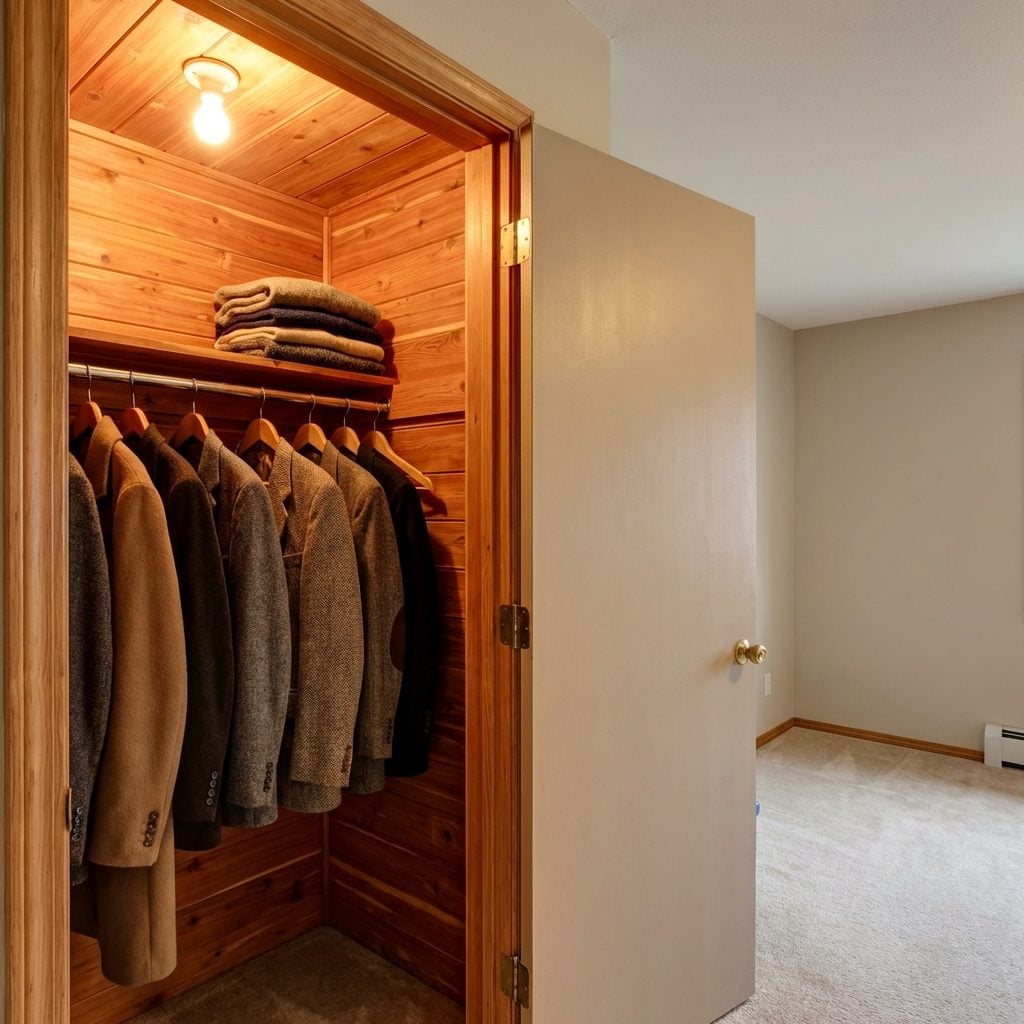
That cedar smell hit you the moment you opened the door, and it said something. It said: this family takes care of their things. Cedar-lined closets were the quiet flex of the ’90s household, not flashy, just deeply competent. The tongue-and-groove panels came in kits from the hardware store, and a motivated parent could line a closet in a weekend. The result was a warm, reddish-brown interior that smelled faintly of pencil shavings and pine.
Beyond the scent, cedar actually did repel moths. So every cashmere sweater and wool coat that survived the decade owes a small debt to that paneling. The smell fades over time and you can sand the surface lightly to revive it, a fact that felt like secret knowledge, passed along between homeowners like a handshake.
“Opening that cedar closet was like a little hit of calm, everything inside felt protected, deliberate, cared for.”
32. Velvet-Flocked Hangers That Changed the Game (Quietly and Completely)
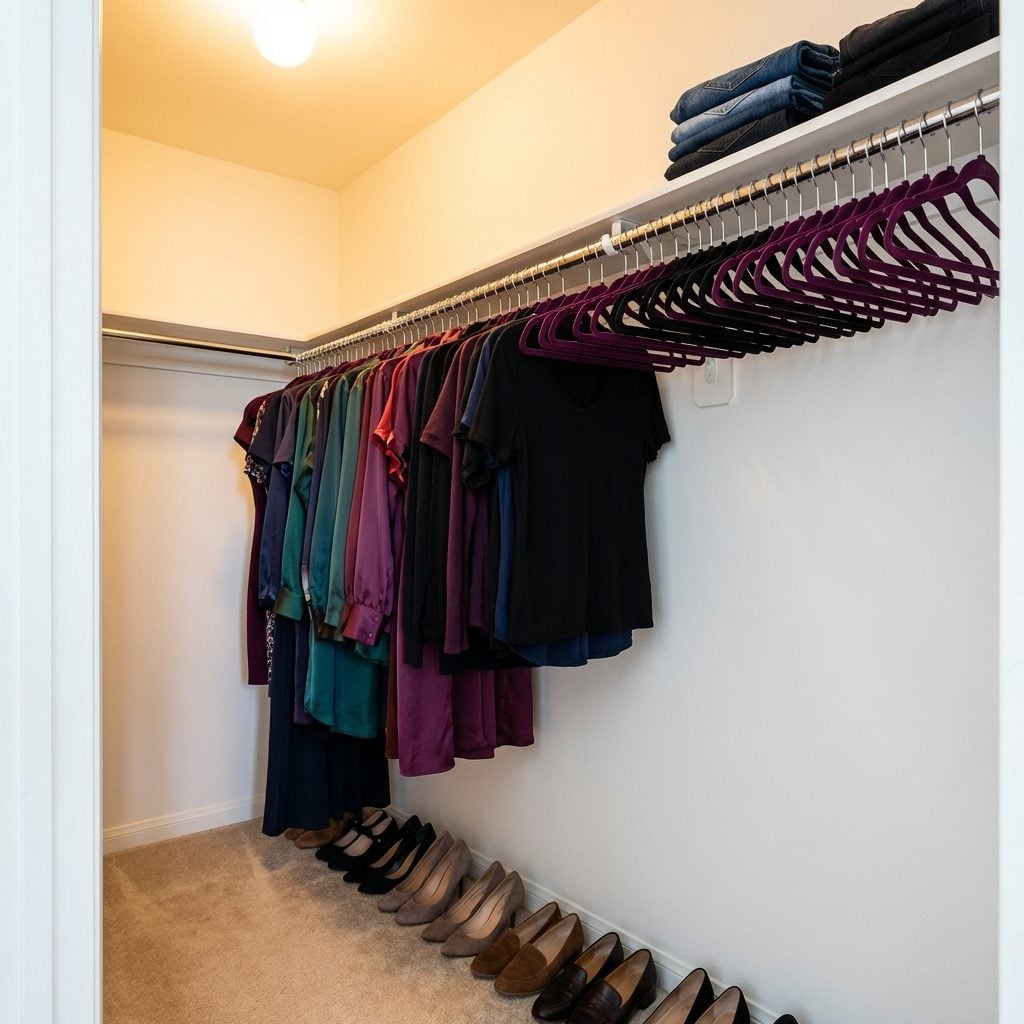
Nothing slipped off them. That was the whole miracle. Every silky tank top, every spaghetti-strap dress that had been sliding off wire hangers since the beginning of time, suddenly stayed put. The velvety coating gripped fabric like it was being paid to do it. And they were thin, which meant you could fit thirty shirts where fifteen had lived before.
They came in black or jewel tones, deep plum, teal, burgundy, and a closet full of matching velvet hangers looked like you had hired someone. Which was the point. This was the decade when the concept of the “organized closet” stopped being a luxury and became something you could aspire to with a single trip to Bed Bath and Beyond. Velvet flocked hangers are still sold today in essentially unchanged form, which is a quiet testament to how well they work.
31. The Stackable Clear Plastic Bins That Organized Everything and Showed All of It
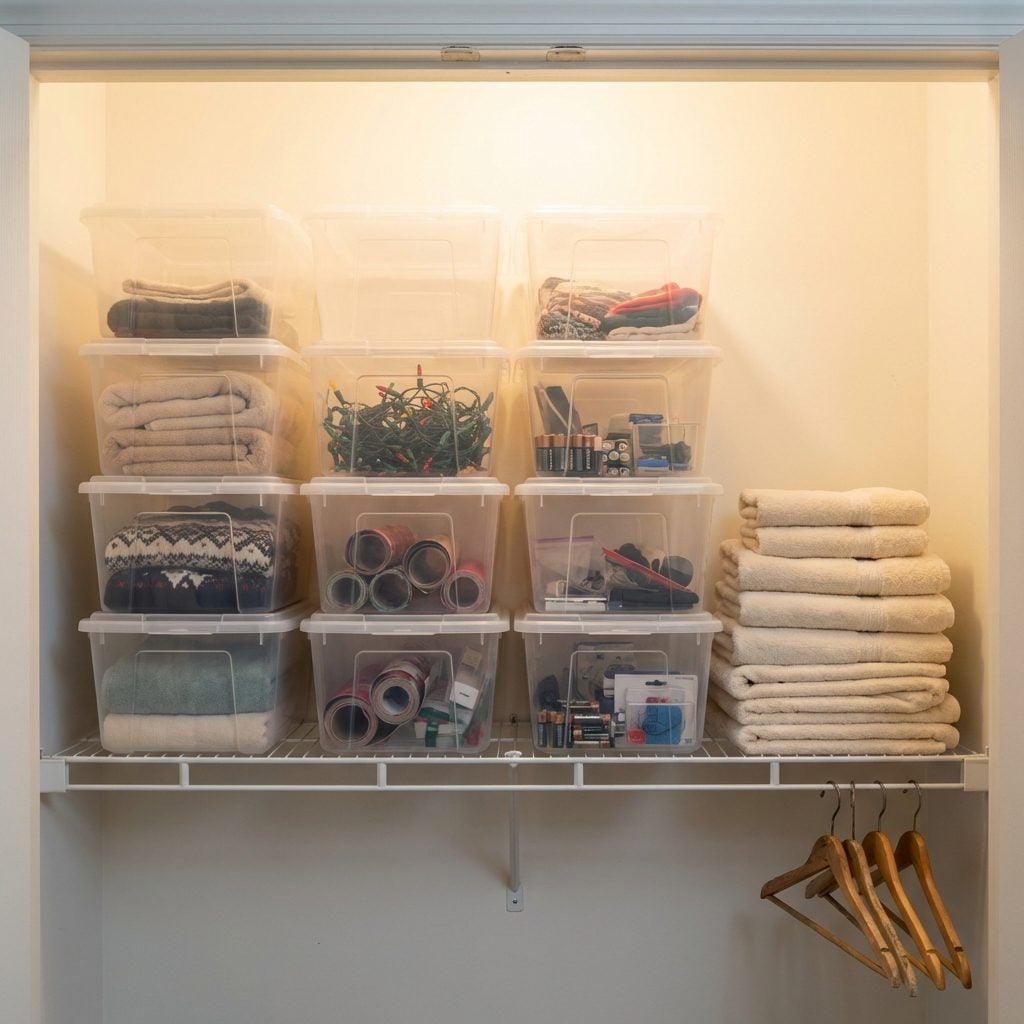
Sterilite and Rubbermaid made a generation of people feel like they had control over their lives. Those clear rectangular bins, stackable, snap-top, sized in three or four standard dimensions, went into every closet shelf, every linen closet, every upper shelf above the hanging rod. The point was visibility: you could see exactly what was inside without opening anything.
In practice, you could see that you’d shoved an absolute mess inside them. But they still felt organized because the mess had hard plastic walls around it. Stack four of them on a shelf and the closet looked intentional. They held everything: holiday decorations, extra toiletries, out-of-season swimsuits, cables to devices nobody remembered owning. Some of those bins are still in people’s parents’ closets right now, contents unknown.
30. Built-In Drawers Inside the Closet That Made a Dresser Unnecessary
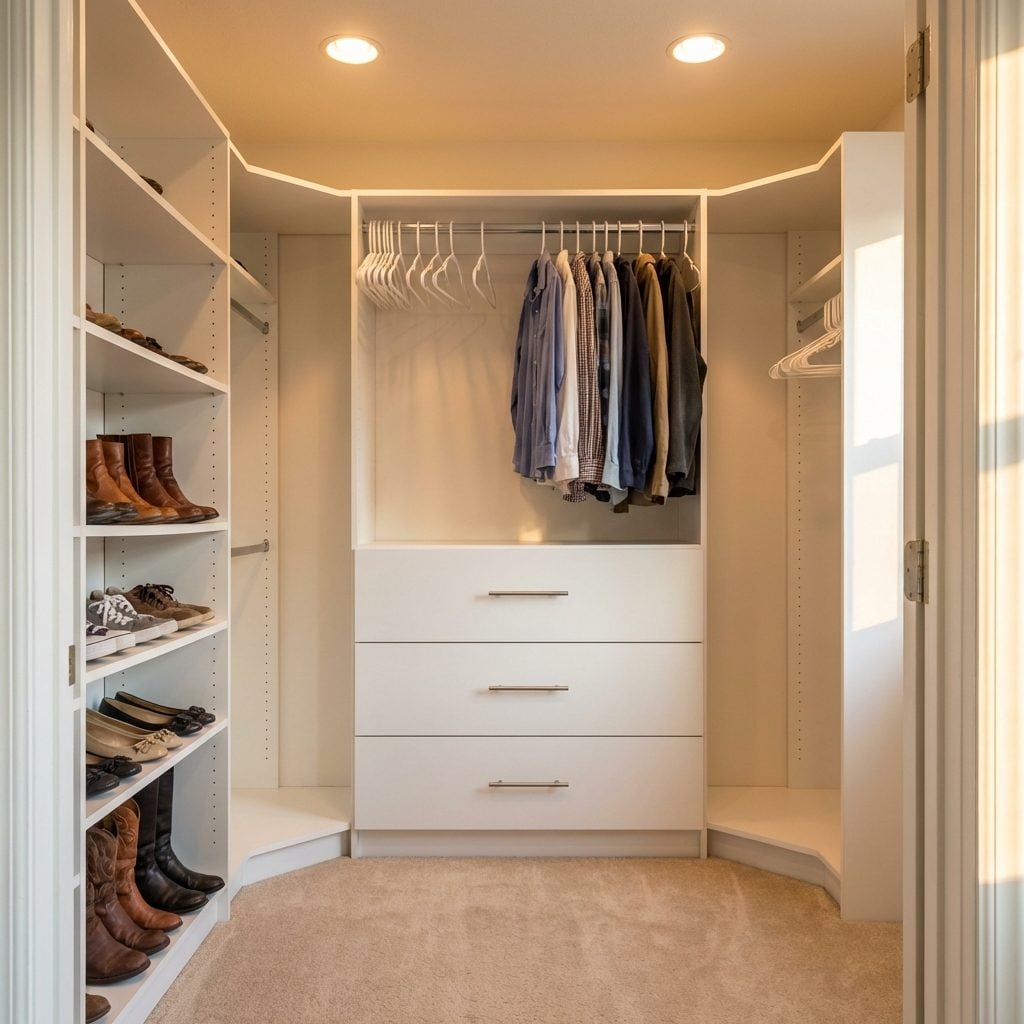
This was the feature that made custom closet systems feel genuinely architectural. Not a separate piece of furniture pushed against a wall, actual drawers, framed right into the closet cabinetry, usually in white laminate with brushed nickel pulls. Underwear, socks, folded T-shirts: all of it tucked away inside the closet itself, leaving the bedroom clean.
The psychological shift was real. When your whole wardrobe lived in one dedicated space, hanging clothes above, drawers below, shoes on the side, you stopped treating your bedroom like a staging area and started treating it like a room meant for sleeping. Interior designers now call this concept a big cabinet designs philosophy applied at the personal scale. In 1996 it just felt like having your life together.
29. The Overhead Shelf Light That Finally Let You See What Was Up There
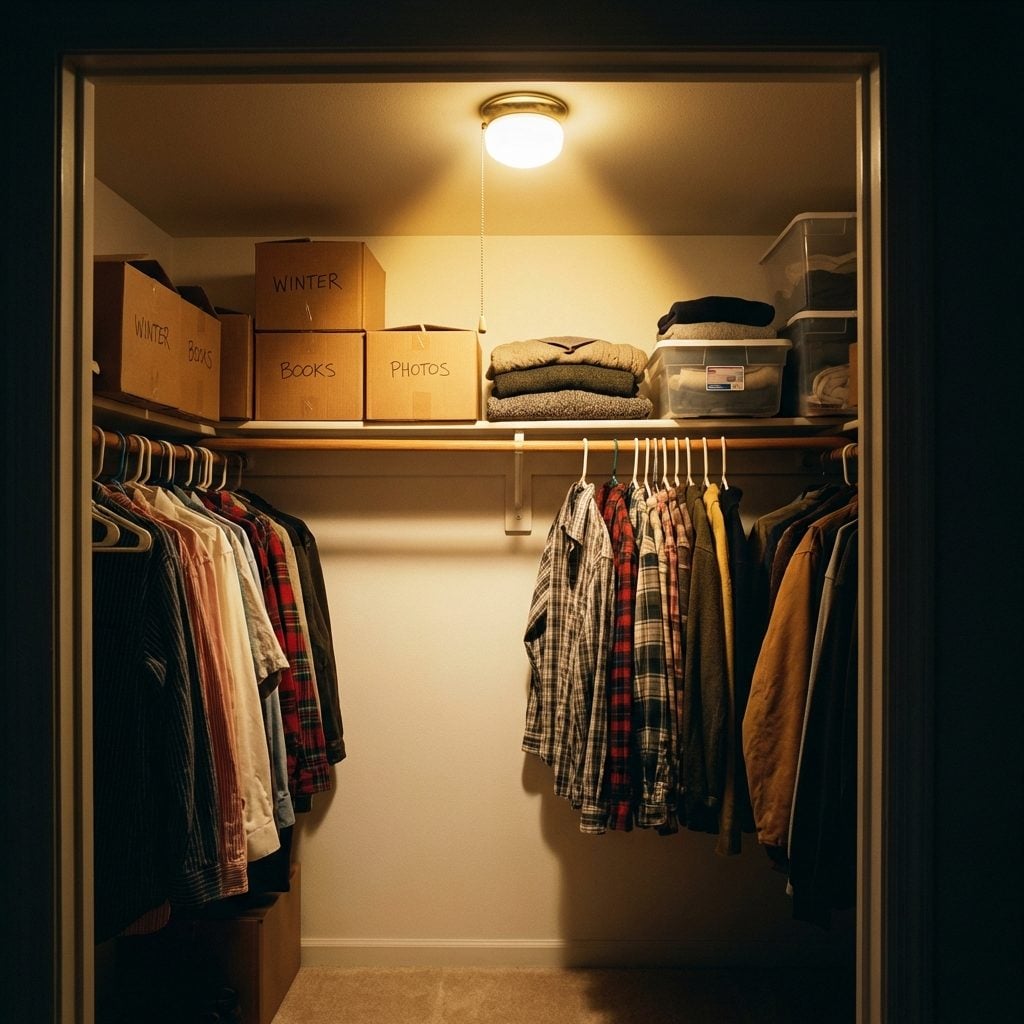
Before this, you were reaching blind into the top shelf of the closet, pulling down what you hoped was the right box and discovering it was definitely not. Then someone installed a small fixture, usually a basic surface-mount or a plug-in strip light with a little pull cord, and suddenly the entire upper shelf was illuminated.
The pull-cord version was especially satisfying. A short brass chain hanging from a bare-bulb fixture, and one click of that chain turned your closet into a fully operational storage system. The light was warm and slightly yellow and made everything up there look like it had been neatly stored on purpose, even when it hadn’t. If you’re building out a big media room or walk-in closet today, dedicated overhead lighting still delivers the same instant “this is a real room” payoff it did in 1993.
28. White Wire Shelving Systems That Went Into Approximately Every Closet in America
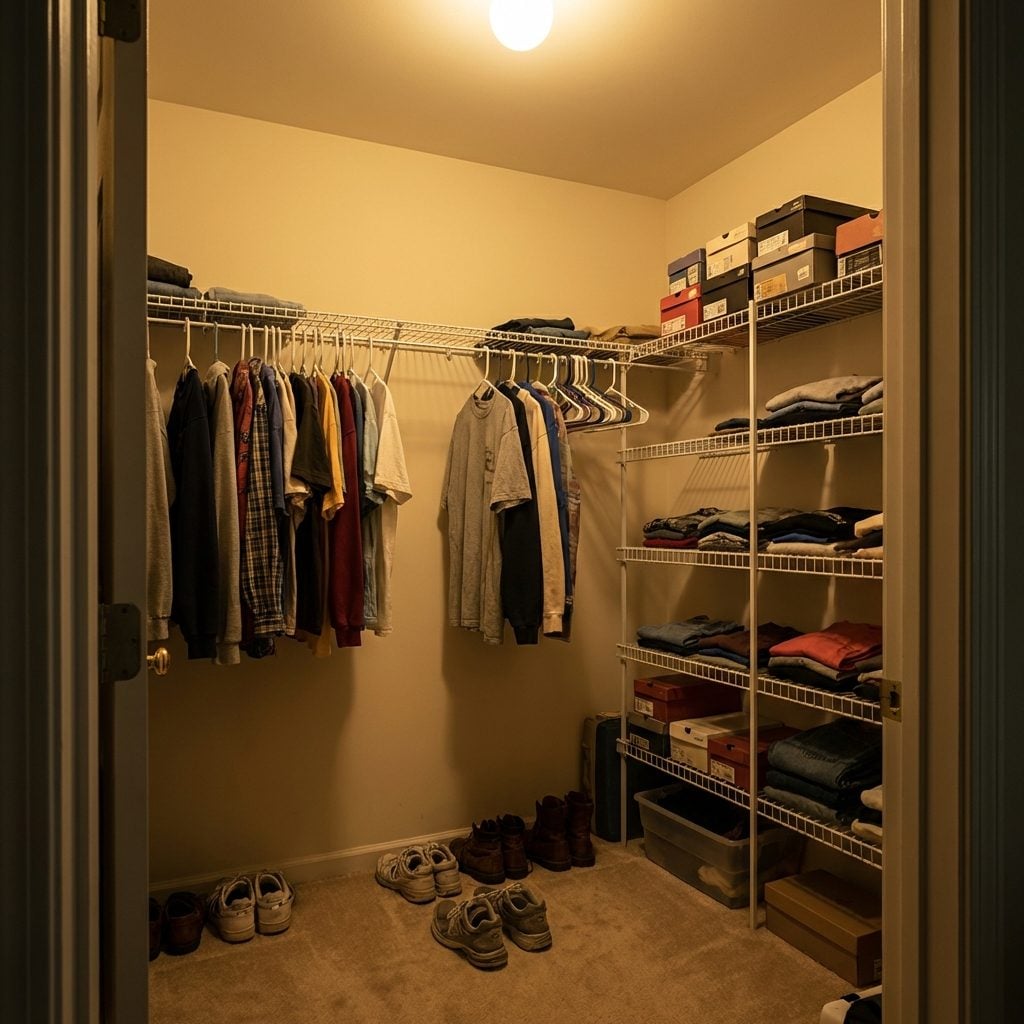
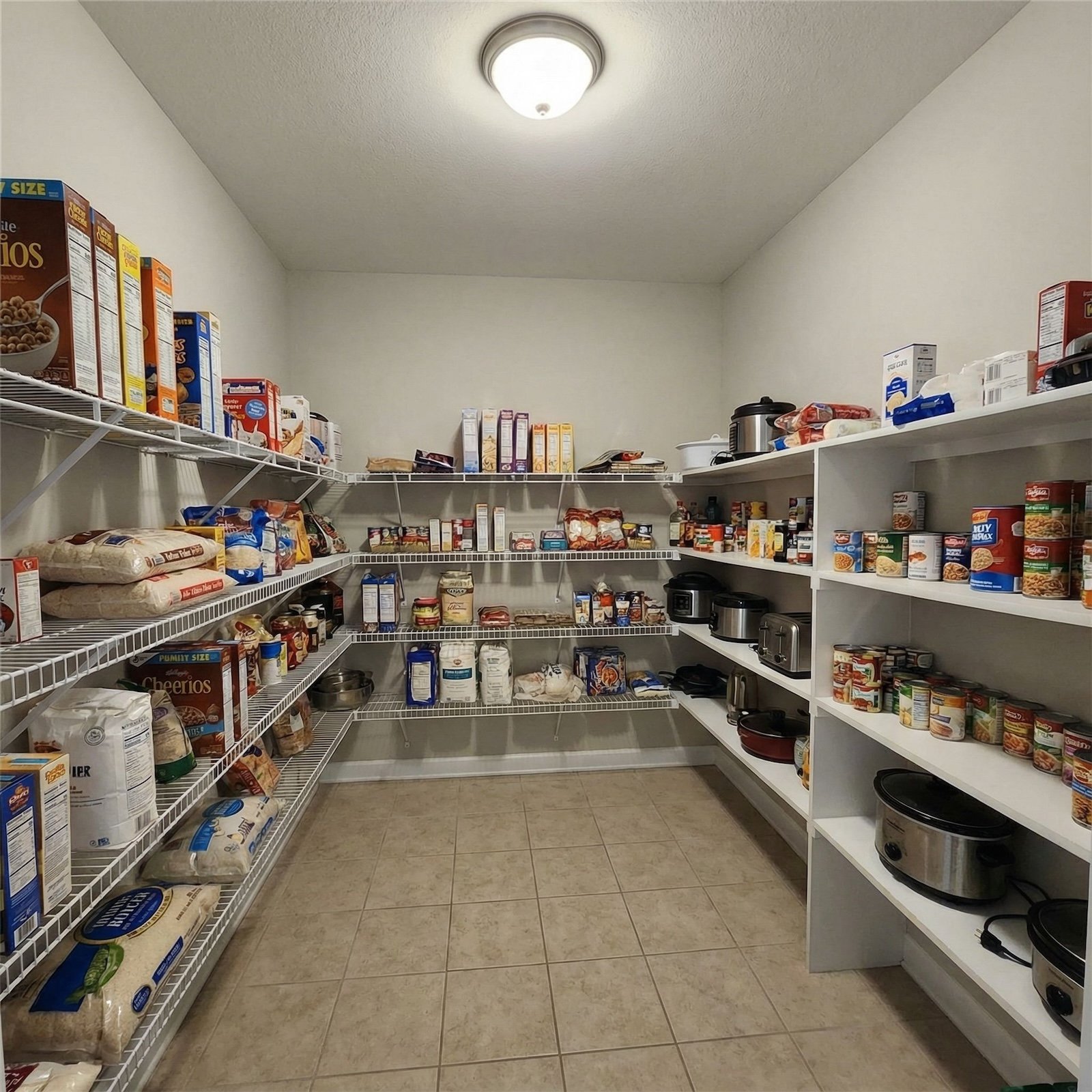
ClosetMaid’s white-coated wire shelving was the drywall of the ’90s closet world. It went everywhere. Builder-grade apartments, ranch houses, new construction subdivisions, that same white grid of vinyl-coated steel wire appeared in every closet, every pantry, every linen cupboard coast to coast. It was airy, it was adjustable (theoretically), and it cost roughly nothing per linear foot.
The shelving had a particular sound when you dropped something onto it, a hollow metal rattle that echoed through whatever it was storing. Sweaters developed little dimples where the wires pressed in. Everything smelled faintly of the vinyl coating for the first few months. And yet, compared to one bare rod over a pile of shoes, this was a revolution. A modest one. But a real one.
27. The Lazy Susan Corner Unit That Made the Dead Corner Actually Useful
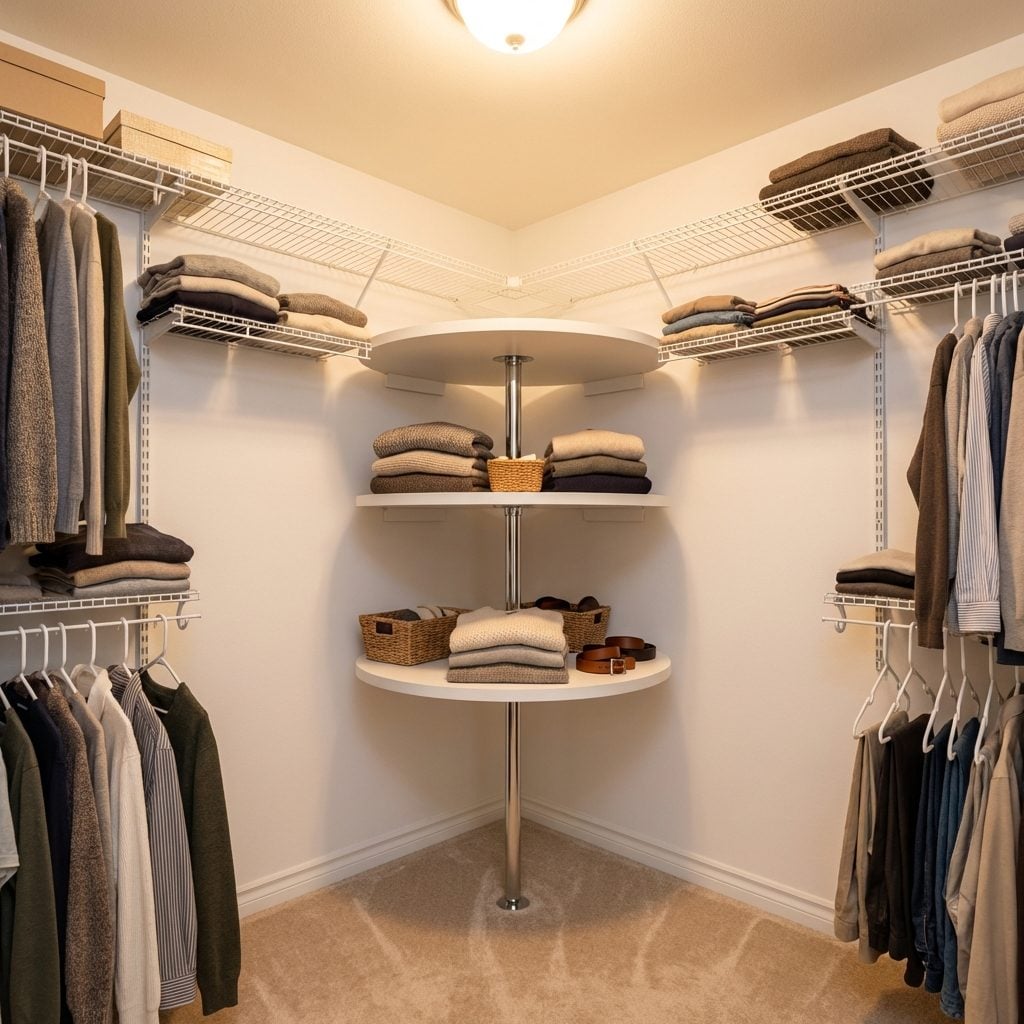
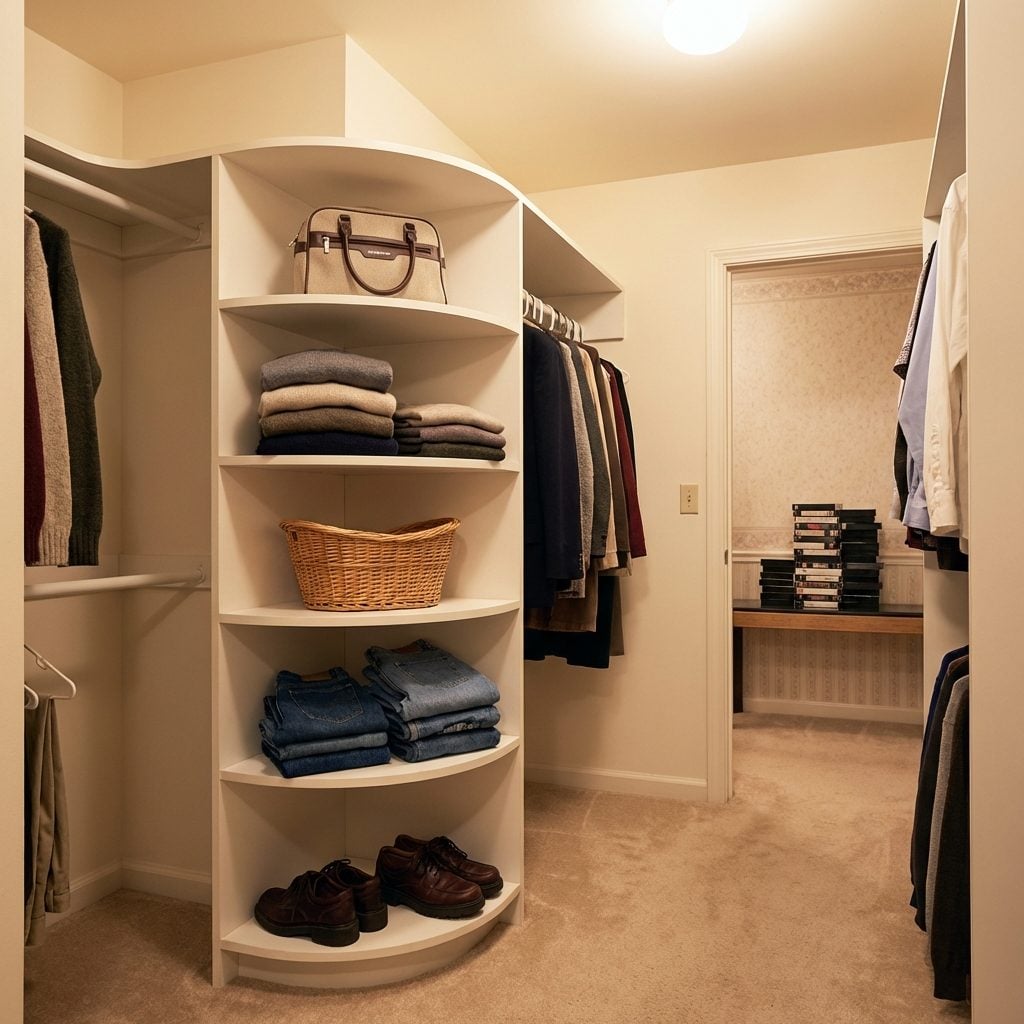
Walk-in closet corners were dead zones. You couldn’t hang things there, you couldn’t reach things stored there, and whatever ended up in that corner became lost property indefinitely. The rotating corner unit fixed this in the most satisfying mechanical way possible: a circular shelf that spun on a central axis, bringing anything stored on it around to the front with a single push.
Usually in white laminate or clear plastic with a chrome post, these units were genuinely clever engineering in a decade when closet hardware felt almost cutting-edge. Seeing the whole thing rotate and stop exactly where you needed it was a small daily pleasure. Today’s closet designers talk about dead corners as a primary design problem to solve, but in the ’90s, a spinning shelf was the whole solution, and it was enough.
26. Pull-Out Pants Racks That Treated Your Trousers Like They Deserved Respect
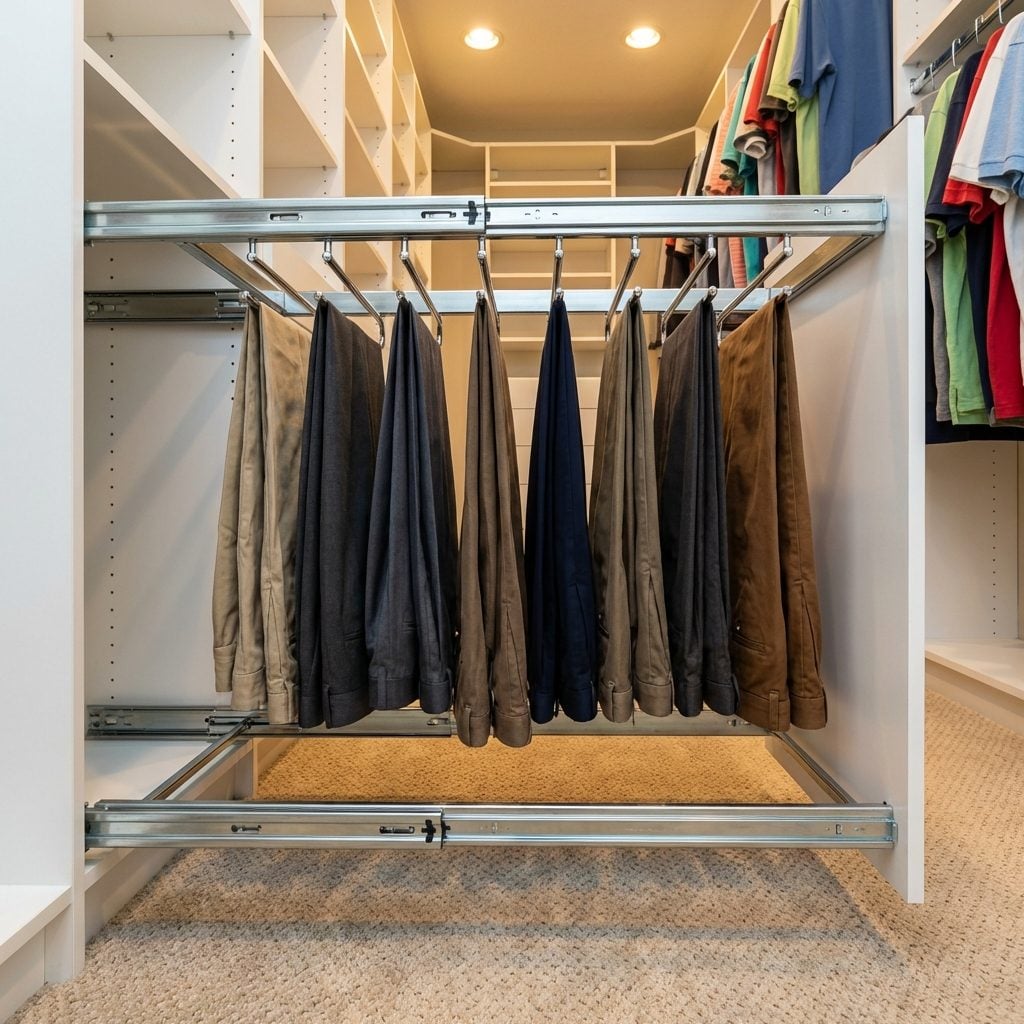
A dedicated rack just for pants, mounted on full-extension drawer slides so the whole thing pulled out toward you like a tray, this was the feature that separated a custom closet from a regular one. Each pair hung over its own individual chrome or wooden dowel, spaced far enough apart that the crease wouldn’t get crushed. No folding. No cramming. Every pair visible, accessible, and crease-perfect.
The sliding action was the best part. A smooth pull and the rack glided out on its slides, every pair of trousers fanning out like a deck of cards. This is the kind of feature that made people give closet tours. If your dad had one of these, he was very proud of it and he had every right to be. Modern big basement design projects sometimes incorporate this kind of pull-out hardware into utility and laundry areas, but the original home was always the master closet. Pull-out pants rack inserts are still available today and still deliver that same small daily satisfaction.
25. Built-In Jewelry Drawers With Velvet Inserts
🔥 Would you like to save this?
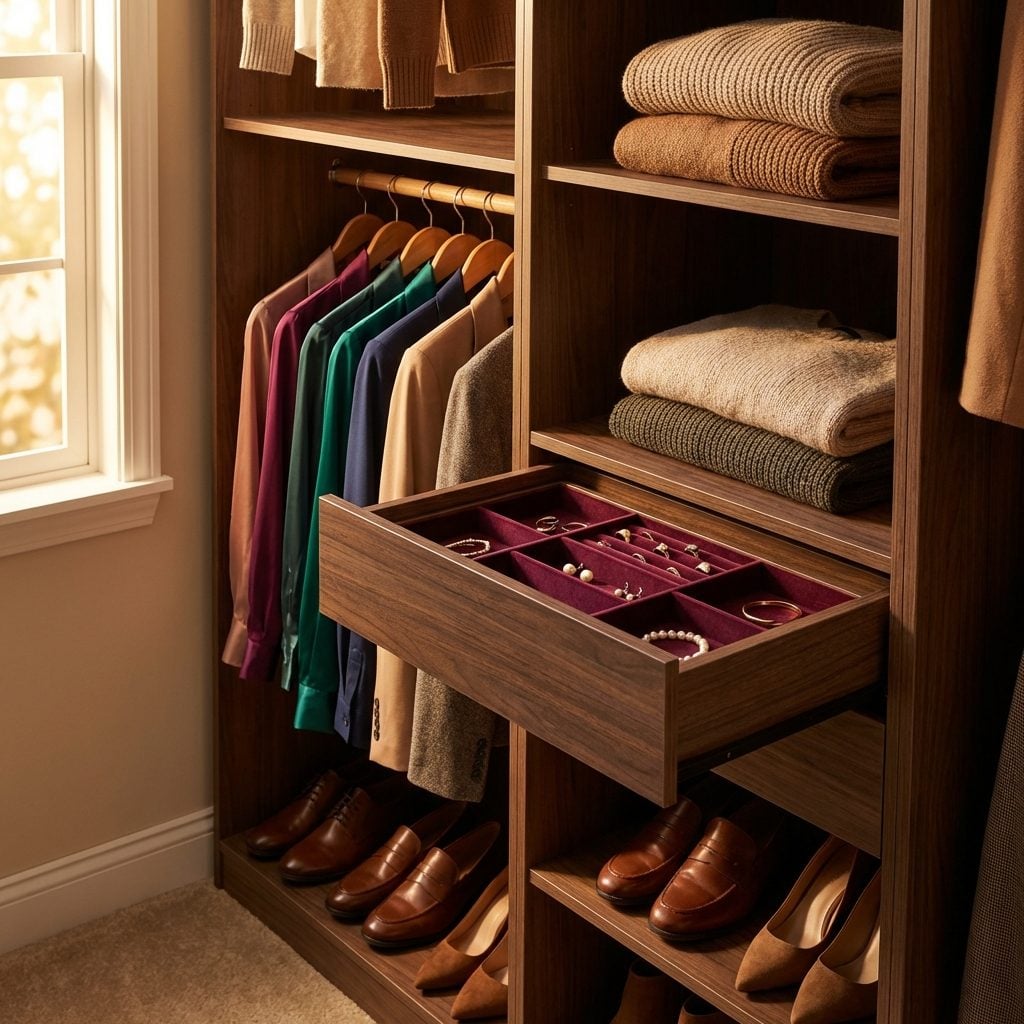
Crack open one of these shallow little drawers and you were instantly transported to someplace fancy. The velvet was always either dusty navy, forest green, or the particular shade of burgundy that existed only in the ’90s, and the compartments were sized precisely for rings, earring pairs, and one very special bracelet.
Having a dedicated jewelry drawer felt like something a movie star would have. Before this, the jewelry situation was a tangled knot inside a ceramic dish on the dresser. The velvet-lined drawer said: these things matter, they have a place, we are organized people now.
24. The Valet Hook on the Back of the Closet Door
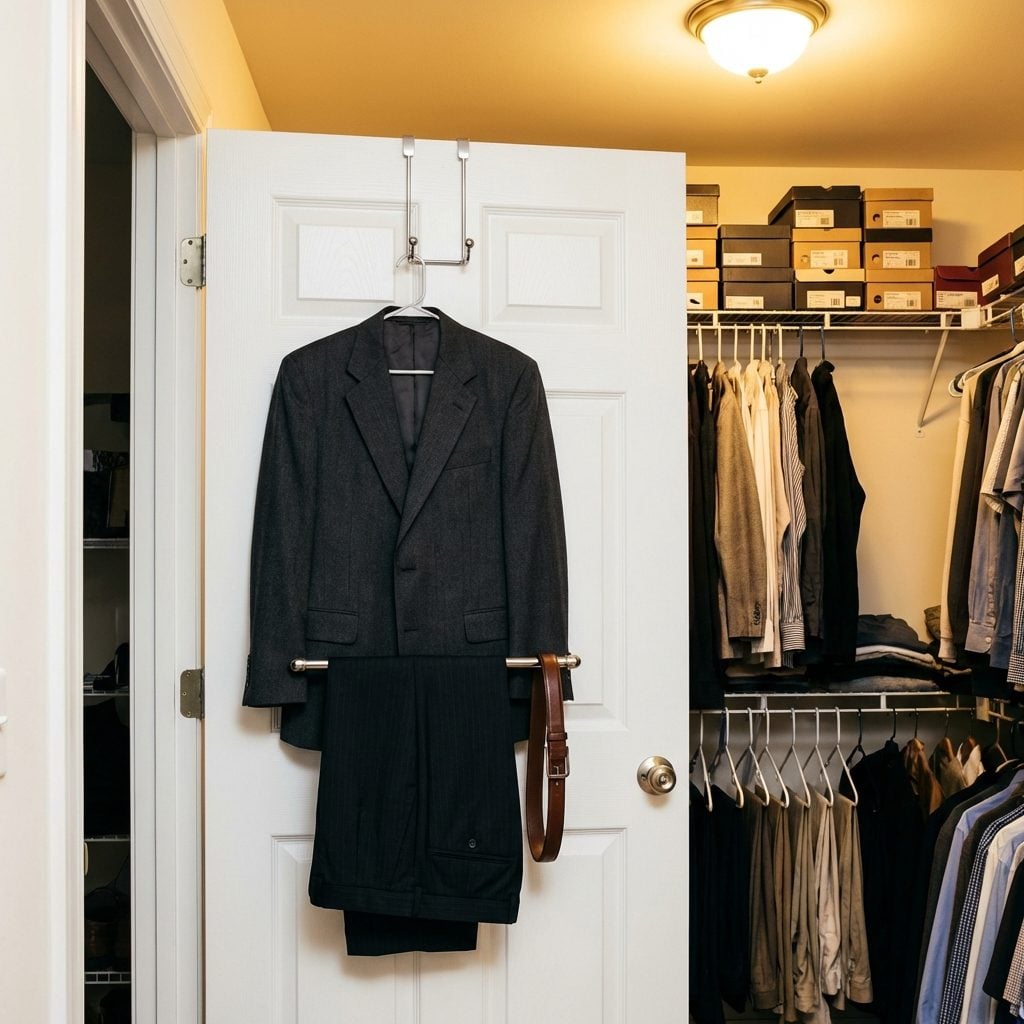
Every ’90s master closet with any ambition had a row of hooks or a small valet rod on the back of the door. This is where tomorrow’s outfit lived. You’d hang the blouse, drape the pants over the rod, and feel genuinely prepared for whatever Monday had planned.
The better setups had a little fold-out valet arm, the kind with a horizontal crossbar so your whole outfit could hang together like a headless mannequin. Some even had a small hook below for a belt loop. Simple, obvious, and somehow deeply satisfying to use every single morning.
23. Sweater Cubbies With Proper Divided Shelving
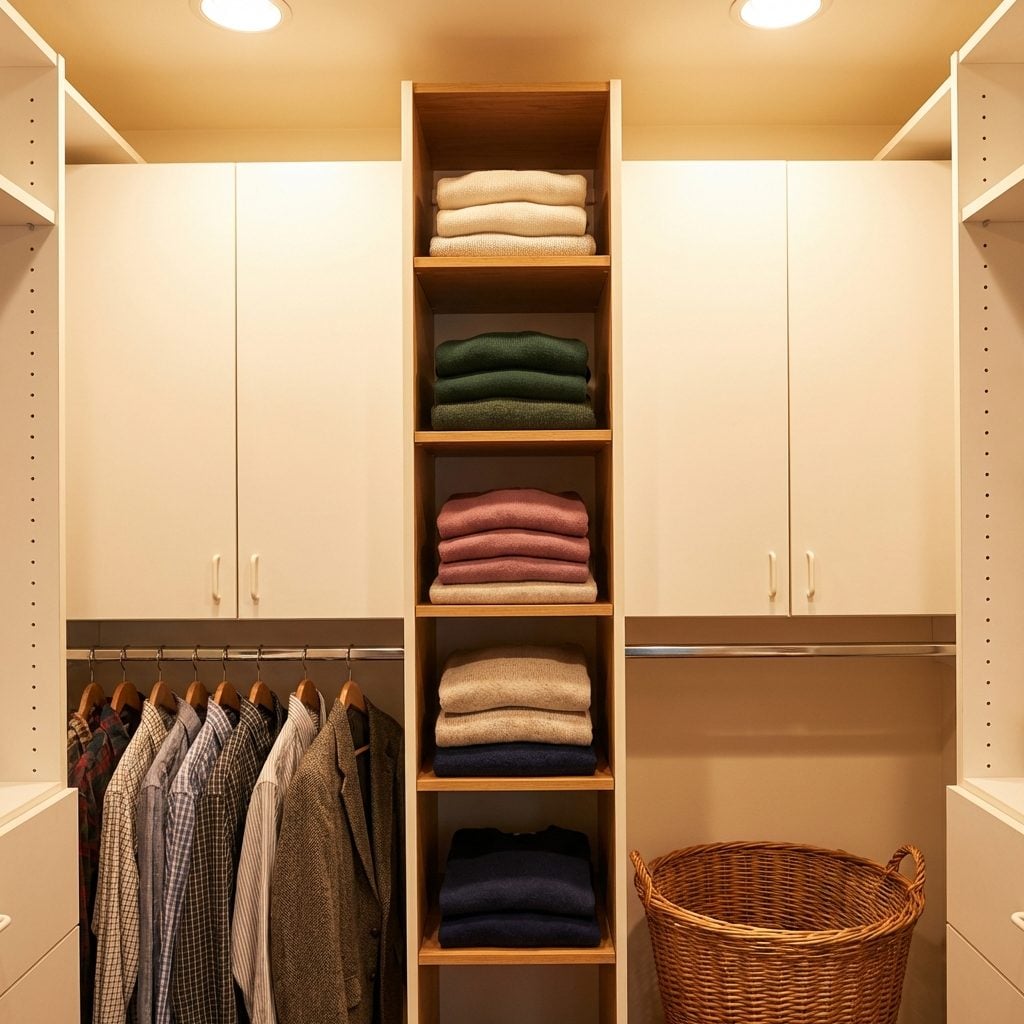
Before this, every sweater in the house was either folded into a regular drawer (disaster) or hanging on a hanger (stretched-neck disaster). The divided sweater cubby was the solution nobody knew they needed, and once you had one you couldn’t imagine going back.
Each compartment was sized to hold exactly one folded stack, usually three to four sweaters deep. You could actually see every color at a glance. The cubby arrangement that paired with hanging space below was the big cabinet designs moment of ’90s closet culture, turning even a builder-grade closet into something that felt intentional.
22. Modular Closet Systems (The ClosetMaid Era)
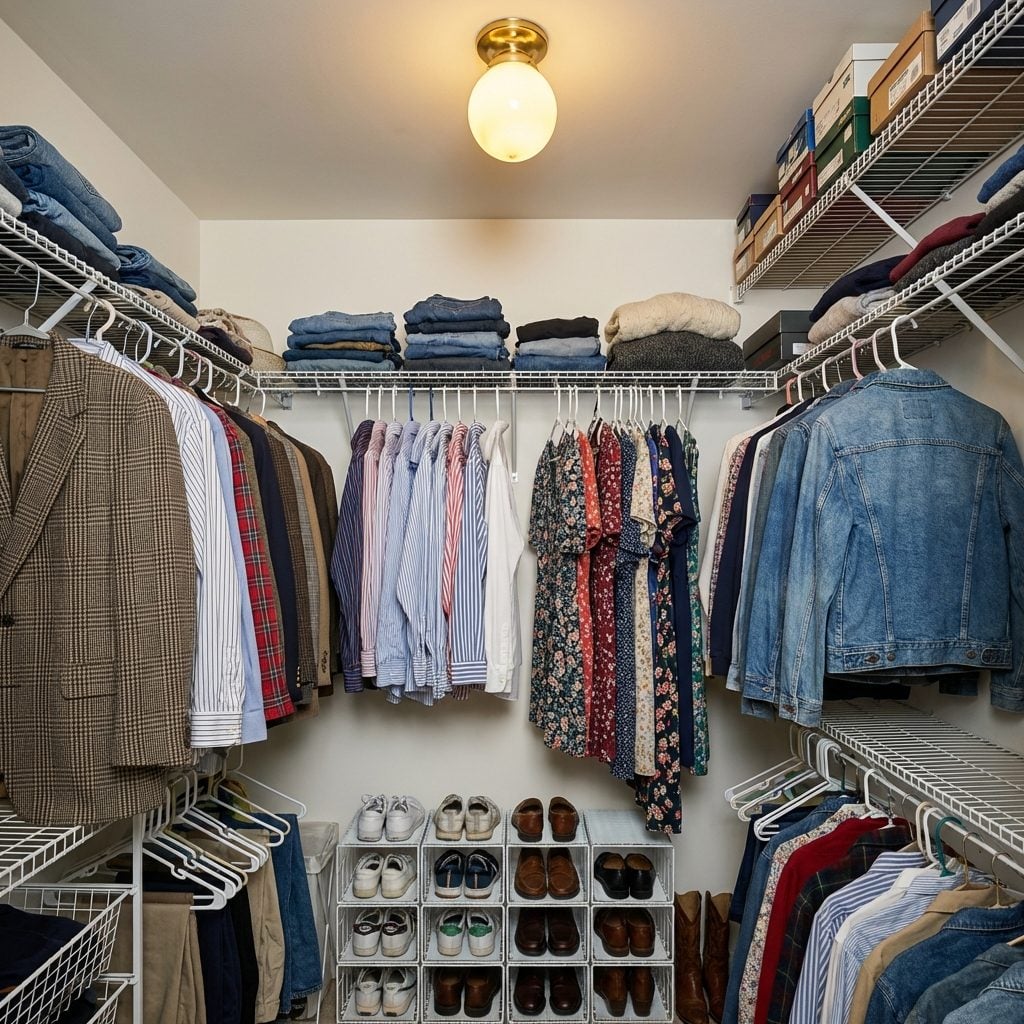
The white wire shelving system was the gateway drug to closet organization, and entire weekend afternoons were sacrificed to installing it. ClosetMaid boxes were stacked in the garage. The instructions were technically optional. Someone always stripped a screw.
But when it was done: pure joy. Suddenly there were double hanging sections, a shelf for shoes, a cubby for sweaters, and the whole closet had been rethought. The wire aesthetic was clinical in a way that felt modern at the time, and the modular logic (add a shelf here, move a section there) made it genuinely flexible.
Seeing that finished white wire grid on a Sunday evening felt like the most adult thing you’d ever done.
21. Scented Cedar Blocks and Drawer Sachets
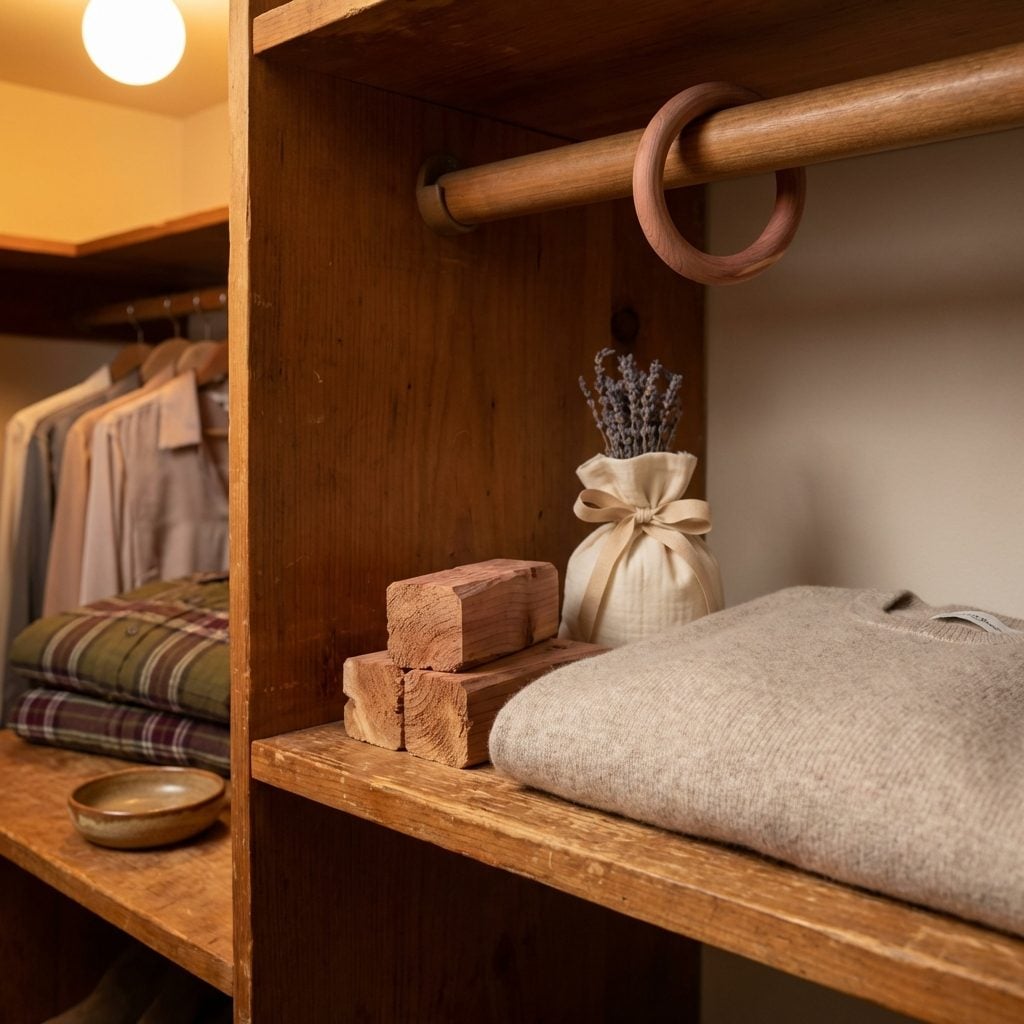
That particular wood smell, faintly pencil-shavings, faintly forest, is one of the most reliable ’90s memory triggers in existence. Cedar blocks sat on shelves, cedar rings hung on hangers, and lavender sachets tucked into corners made the whole closet smell like someone’s very put-together aunt.
It was functional, technically, because moths hate cedar. But mostly it was aspirational. A scented closet was a considered closet. You were the kind of person who thought about what happened inside a closed door when no one was looking.
20. The Dedicated Hat Shelf (Usually at the Very Top)
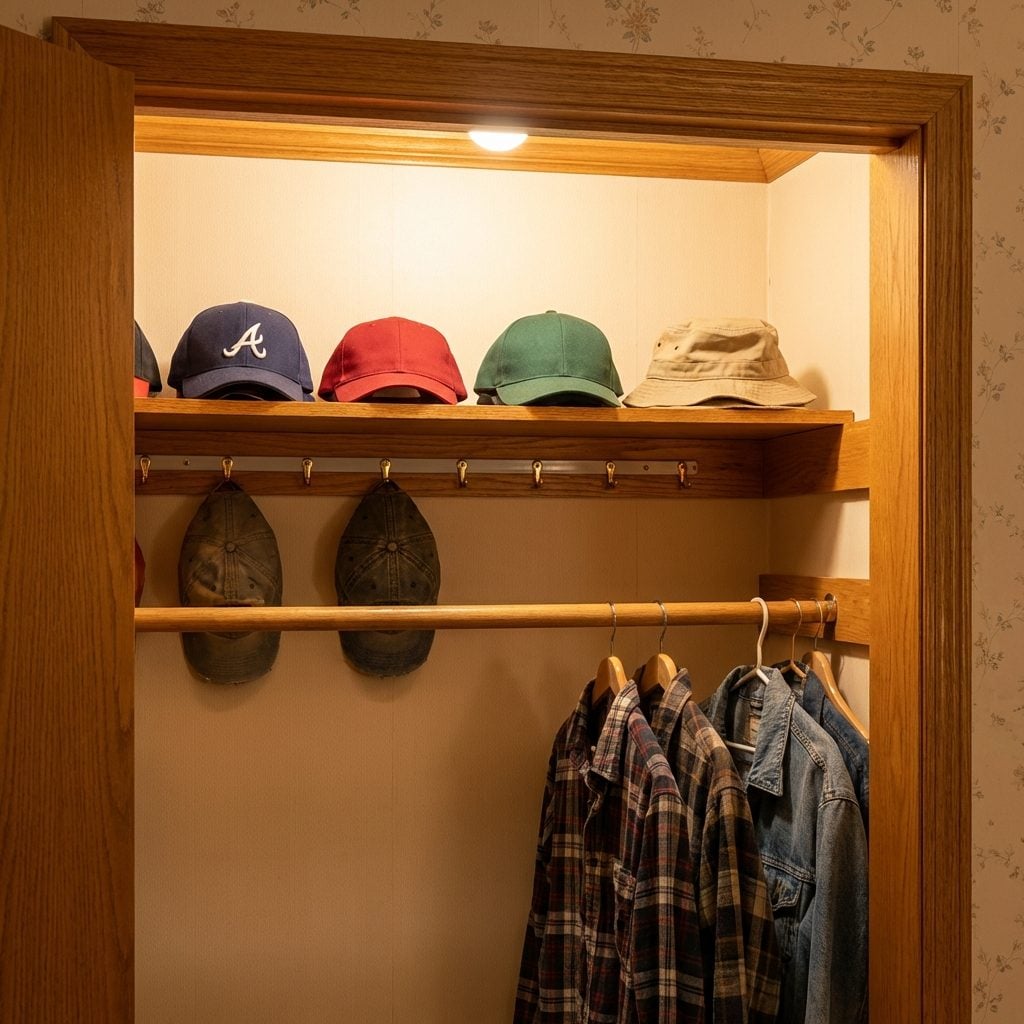
There was always a wide, flat shelf running along the very top of the closet, above the hanging rod, just shallow enough that things kept threatening to fall off. In the ’90s, the upgrade was treating this like actual prime real estate for hats, specifically a row of baseball caps on hooks or a shelf with a lip that kept your newsboy cap and bucket hat from sliding.
Some closets had built-in hat hooks on a rail under this shelf. Seeing your caps lined up in a neat row hit different than the usual grab-pile on the dresser. A big media room got all the attention, but this small shelf at eye-level in the closet was a genuinely satisfying piece of ’90s home organization.
19. Over-the-Door Shoe Pocket Organizers

Clear vinyl pockets. Exactly one shoe per pocket. The door groaning faintly under the weight of eighteen pairs of mules, sneakers, and pumps every time you opened it.
This was peak ’90s problem-solving: spatial constraints met by adding more surface area to a surface that already existed. The back of the closet door was suddenly prime real estate, and nobody thought this was weird. Some versions had fabric pockets in tan canvas. Some had the clear vinyl that fogged up and cracked after two years. All of them were considered an upgrade over shoes in a pile on the floor.
18. The Built-In Hamper Tucked Inside the Closet
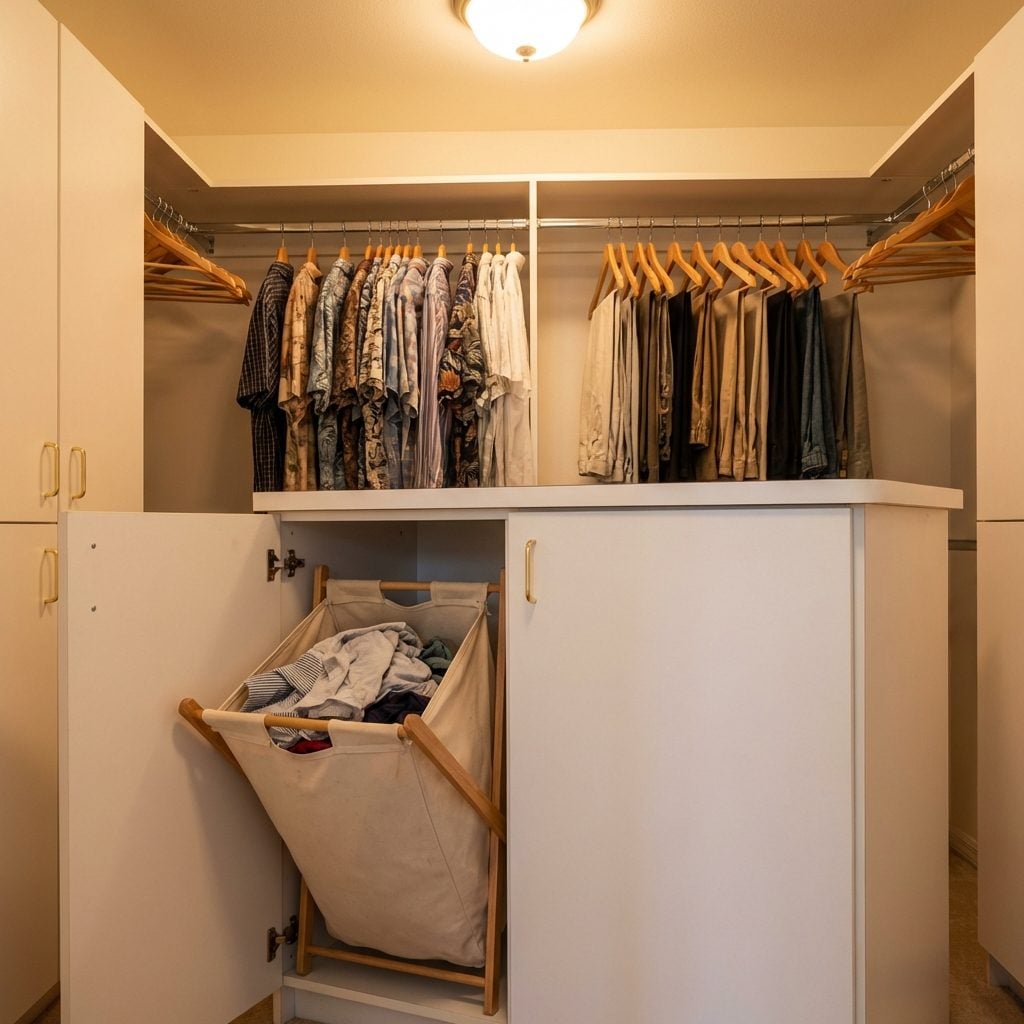
Getting the laundry hamper off the bedroom floor and inside the closet was, genuinely, a quality-of-life upgrade. The built-in version had a pullout or tilt-out canvas bag behind a cabinet door that looked like the rest of the cabinetry. Closed, it was invisible. Open, you’d drop in the day’s clothes and close it again. The bedroom stayed clean. Order was maintained.
Some versions had two side-by-side hamper sections for lights and darks, which felt incredibly sophisticated at the time. This was the kind of feature that made you want to give a closet tour to anyone who came over.
17. Tiered Skirt and Trouser Hangers
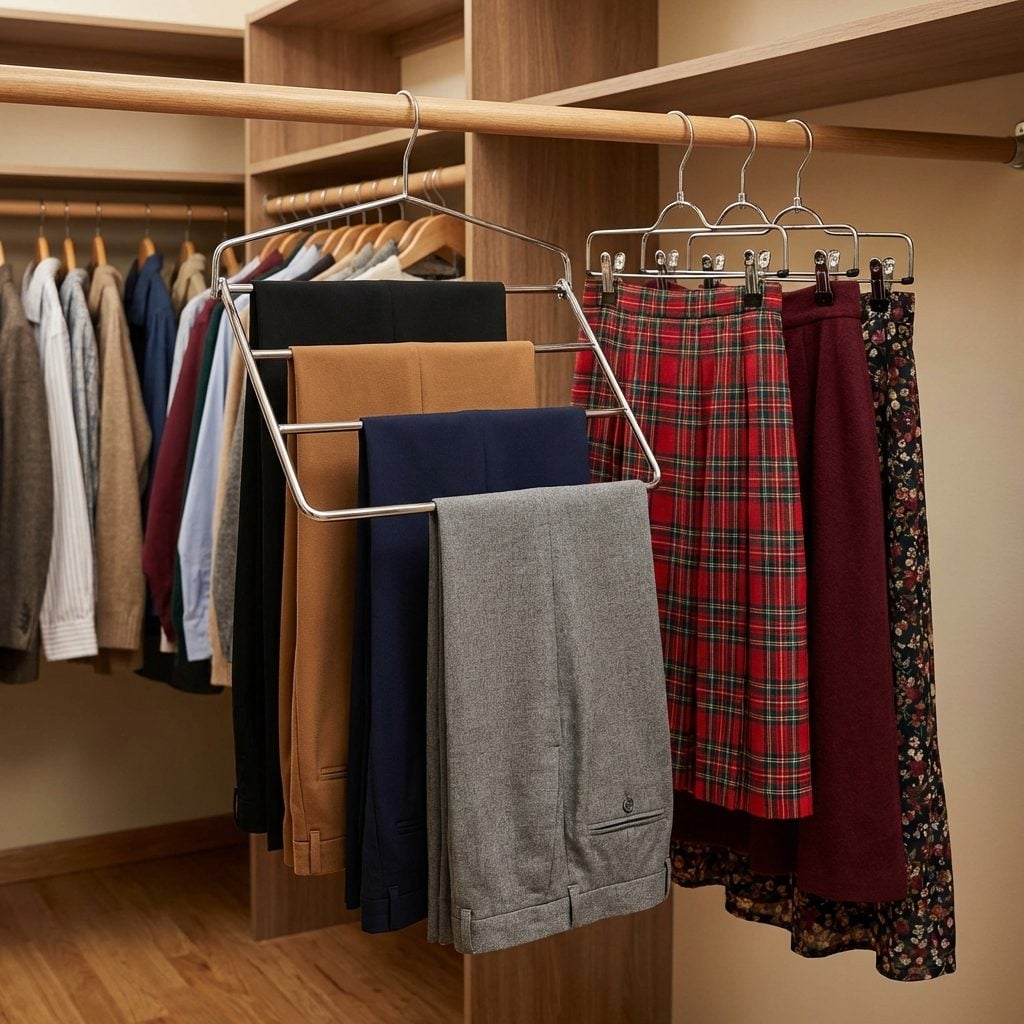
The tiered trouser hanger was a chrome ladder of clips that let you hang five pairs of pants in the space usually occupied by one. Satisfying in concept, maddening in practice: you always needed the bottom pair.
For skirts, the cascading version with individual clips for waistbands was legitimately great. You could see every skirt at a glance without digging. In an era when pleated trousers and midi skirts were both serious wardrobe investments, having a hanger that treated them with some dignity made perfect sense. These sat alongside big headboard-level bedroom upgrades as the kind of thing you’d quietly point out to a guest.
16. Specialty Hooks for Purses and Bags

Before this, the handbag situation was a chair. Or the top of the dresser. Or the hook on the back of the door that was already holding three coats. The ’90s closet upgrade was a dedicated row of large, padded or rubberized hooks at eye level specifically for bags.
Some systems had a horizontal bar with S-hooks you could rearrange. Others had fixed hooks at descending heights so a tote, a shoulder bag, and a clutch could all hang without touching. Seeing every bag clearly, handles looped, ready to grab, was one of those small daily conveniences that made the whole morning feel more manageable.
15. Adjustable Shelf Pegs That Let You Actually Customize Your Space
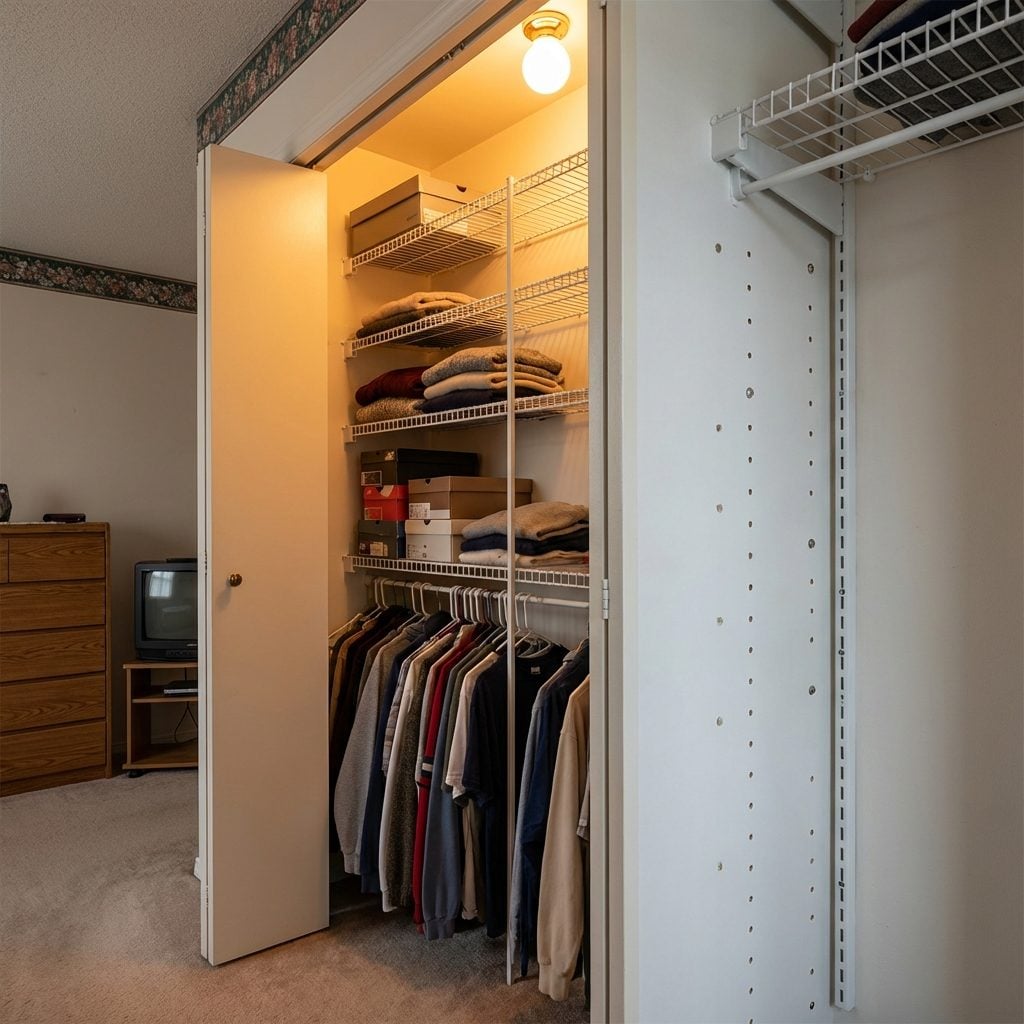
Those little plastic or metal pins changed everything. You’d pull them out, move them up three holes, reinsert them with the confidence of someone redesigning their entire life, because technically, you were. No tools, no commitment, no problem. The pegboard track systems from ClosetMaid and Rubbermaid made this possible at a price point that felt almost too good to be true, and the satisfying click when the shelf locked in place was its own small reward.
Before this, closet shelves were fixed. You lived around them. The adjustable peg was basically the first time a closet told you: you’re in charge here.
14. Sliding Wire Baskets on Tracks That Made You Feel Like a Container Store Executive
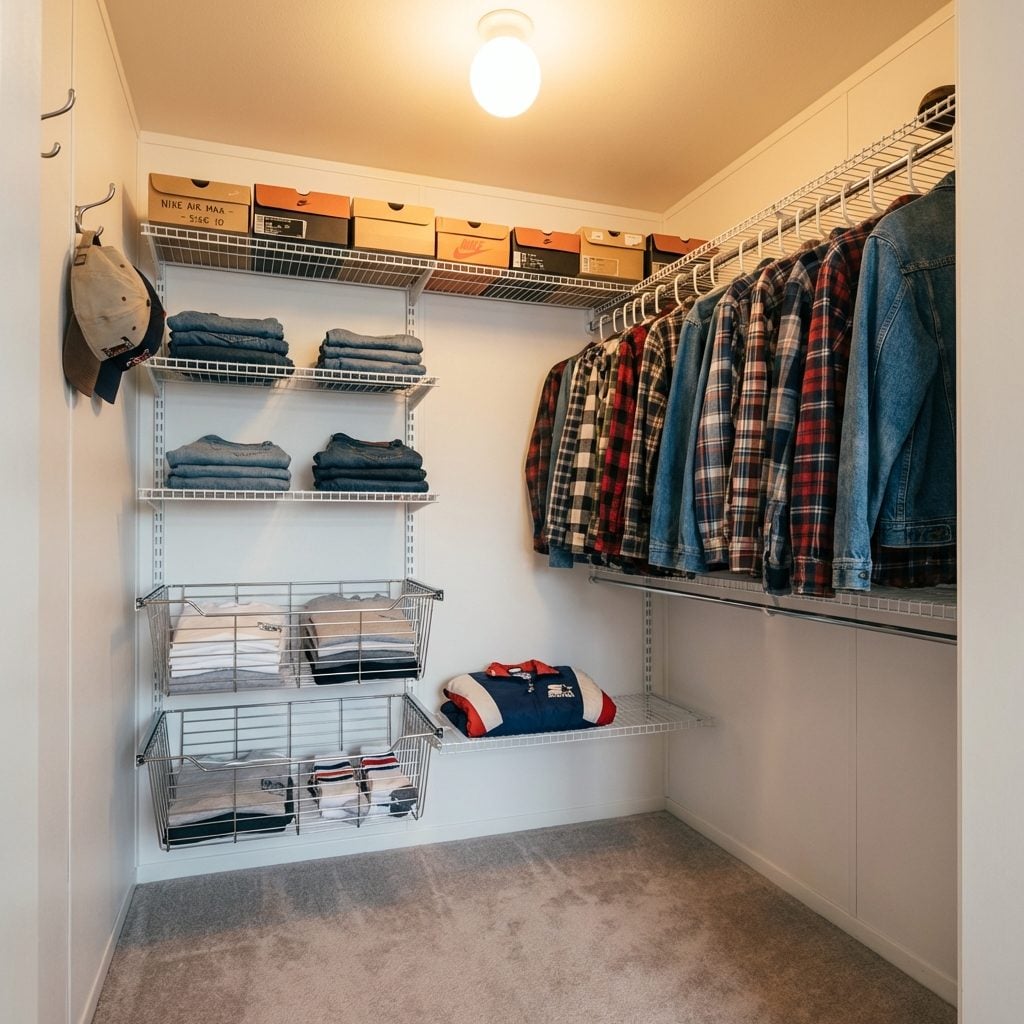
Pull one open and it glided out smooth, then caught with a gentle stop at the end of the track. The chrome wire caught the light. Your gym socks, your extra belts, your collection of sports team hats, suddenly they had a home, a real home, not just a pile on the floor you kicked around. These rolling wire baskets were sold as a closet upgrade and delivered on every promise.
They were also weirdly satisfying to load. Something about placing items into a basket that could slide in and out made organization feel like a hobby rather than a chore. The chrome wire basket wasn’t glamorous, but it was practical in a way that felt almost futuristic at the time.
13. Corner Shelving Units That Finally Conquered the Dead Zone
🔥 Would you like to save this?
Every closet had a corner that just… ate things. You’d throw something in there and find it six months later under a pile of mystery scarves. Then corner shelving units arrived and reclaimed that entire no-man’s land. The swooping rounded shelves that fit the 90-degree angle were practically architectural, and fitting them in felt like solving a puzzle.
12. Garment Bags with Built-In Hooks That Actually Hung on the Rod

These were aspirational storage.
The clear vinyl ones with the zippered front panel and the integrated hook at the top that looped directly over the closet rod. Your good blazer, your bridesmaid dress, your one suit you wore to exactly three occasions a year, all sealed in protective plastic, hovering above your regular clothes like VIP guests. There was something almost hotel-like about them.
They came from the dry cleaner first, and then you started buying your own at Bed Bath & Beyond. The ones with the little cedar block pocket in the bottom felt especially grown-up. You didn’t just have clothes; you had a wardrobe.
11. Accessory Drawers with Built-In Dividers for Every Belt and Bracelet

Before these, every drawer was a tangle. Belts coiled around earrings, necklaces strangled each other, and finding one specific thing meant emptying the entire drawer on the bed. Accessory drawers with molded or insertable dividers were the answer nobody knew they needed until they had one.
The dividers themselves were often a creamy white velvet-lined grid, or a stark black plastic honeycomb. Sunglasses in one cell. Rings in another. Watches laid flat in the long horizontal slot. The velvet drawer organizer made even a basic closet feel like a boutique. Some of these drawers were integrated into the big cabinet designs of built-in closet systems, which officially meant you had made it.
10. Motion-Sensor Closet Lights That Felt Like Actual Magic

You opened the door and the light came on by itself. That was it. That was the whole trick. But in 1994, that felt like living in the future.
The battery-operated tap lights came first, then the passive infrared motion sensors that triggered on their own, small white hockey-puck-shaped fixtures that adhered to the wall or the ceiling with sticky tape. No wiring. No electrician. Just batteries and a tiny miracle every morning when you reached for your jacket.
Opening that closet door and having a light blink on automatically was the closest most of us got to feeling like we lived in a smart home.
They also died mid-outfit at the worst possible moment when the batteries ran out, which was less magical but equally memorable.
9. Under-Shelf Hanging Baskets That Multiplied Your Storage Out of Thin Air

You clipped them onto the bottom of an existing shelf and suddenly had a whole new layer of storage underneath it. Hanging wire baskets that hooked onto shelf edges were peak 90s organization ingenuity: no drilling, no installation, no commitment. Just clip and load.
They held everything that didn’t quite have a place. Hair accessories, folded scarves, rolled-up belts, that one clutch you only used at weddings. The wire hanging basket dangled slightly when you put too much in it, which was the universe’s way of suggesting you revisit that third-wedding clutch situation.
8. Expandable Closet Rods That Doubled Your Hanging Space for About $12

Spring-loaded. Chrome-plated. Telescoping. You compressed it, wedged it between the two side walls, let go, and it locked itself in place with the pressure. Then you had a second rod, usually installed below the first, specifically for shirts or folded pants hanging from clip hangers. The whole operation took four minutes and cost less than lunch.
The expandable rod was the unsung hero of the 90s closet upgrade era. No landlord needed to know. No tools involved. Just a satisfying tension-click and suddenly your big media room closet, or that weird shallow bedroom closet, had twice the hanging capacity it started with.
7. Rolling Garment Racks for When the Closet Simply Could Not Keep Up

This was a closet admitting defeat, and it was completely honorable. When the rod maxed out, when the shelves were full, when adding another hanger required removing one, the rolling garment rack appeared, usually in the bedroom corner, and stayed there for the next four years.
The chrome pipe frame on casters with the single hanging rod and the bottom shelf for shoeboxes. Some had a little fabric cover you could zip around the whole thing for a slightly more polished look. The rolling garment rack was temporary storage that everyone knew was permanent. It was also, for a certain type of person, a source of genuine pride: all of your clothes, visible, organized, accessible from all sides. Like a boutique you lived in.
6. Full-Length Mirrors Mounted Inside Closet Doors That Unlocked a Secret Dressing Room

You swung the door open and there it was: floor to ceiling reflection, warm light catching you mid-outfit, the closet interior framing you like you were in a department store fitting room. The full-length door mirror was a revelation for any bedroom that wasn’t big enough for a standalone mirror, which was most bedrooms.
The hardware store versions came with adhesive strips or a slim metal frame with screw clips at the top and bottom. They sat slightly off the door surface, which meant they vibrated just a little when you closed the door too fast. Some were beveled around the edges. Some had a slight greenish tint that you didn’t notice until you saw a photo of yourself taken in natural light. Still worth it.
5. Plastic Drawer Towers That Lived Inside the Closet Like a Tiny Apartment

The Sterilite or Rubbermaid stackable plastic drawer tower, usually three to five drawers, always slightly translucent, always in either white or that particular shade of soft grey that existed only in the 1990s. You could see vaguely what was inside each drawer without fully opening it, which felt like innovation at the time.
They went into the closet and turned dead floor space into a whole vertical organization system. Socks in the bottom drawer. Underwear in the second. Workout clothes in the third. The top drawer was always a mystery catch-all that you never actually sorted through. The plastic storage drawers weren’t beautiful, but they were the backbone of every college dorm and first apartment closet across an entire decade. Getting one was a rite of passage at the Container Store or Target, usually purchased alongside a shower caddy and false confidence about having your life together.
4. Clip Hangers for Pants and Skirts That Finally Gave Them Their Own Real Estate

🔥 Would you like to save this?
Before the clip hanger entered the picture, pants were either folded over a regular hanger in a configuration that created a permanent crease in the wrong place, or crammed onto a multi-bar trouser rack that required a small engineering degree to operate. The clip hanger, two rubber-tipped clips on a swiveling chrome or plastic bar, was clean, simple, and completely solved the problem.
It also introduced the mild anxiety of making sure the clip was clamped tight enough. Nothing worse than opening the closet to find your one good skirt on the floor. The clip pants hanger was a small upgrade that made the whole hanging row look intentional, especially in a big headboard-style primary bedroom closet where presentation actually mattered.
3. The Hanging Fabric Shelf Organizers That Turned One Rod Into a Whole System

You snapped those canvas cubbies onto the closet rod and suddenly felt like you had your life together. They came in beige, dusty mauve, or that particular shade of teal that existed only in the ’90s, with little cardboard inserts to keep the shelves stiff. Sweaters went on top. Jeans in the middle. That mysterious bottom cube slowly became a catch-all for things you didn’t want to deal with.
The setup took about four minutes and made your closet look like a catalog page. They swayed slightly whenever you grabbed something off the rod next to them, which was fine. Totally fine. Every Target and Bed Bath & Beyond sold these by the thousands, and somehow, every closet in America still felt like it needed one more.
2. Dedicated Handbag Display Shelves That Made Your Purses Feel Like Museum Pieces

Before handbag hooks and over-door organizers took over, there was a brief, glorious window when the move was a row of shallow wooden or laminate shelves installed specifically for purses. Each bag got its own slot. Your everyday black shoulder bag. The going-out clutch you used twice a year. That structured Coach satchel someone gave you for graduation.
Arranging them felt genuinely satisfying, a big cabinet designs energy applied to something intimate and personal. The shelves were usually the same white melamine as the rest of the closet system, and they sat at eye level so you could see everything at once without digging. It was a small luxury that signaled serious adult organizational intent, even if the rest of the closet was chaos.
1. The Folding Step Stool That Lived on the Closet Floor and Came Out For Top-Shelf Archaeology
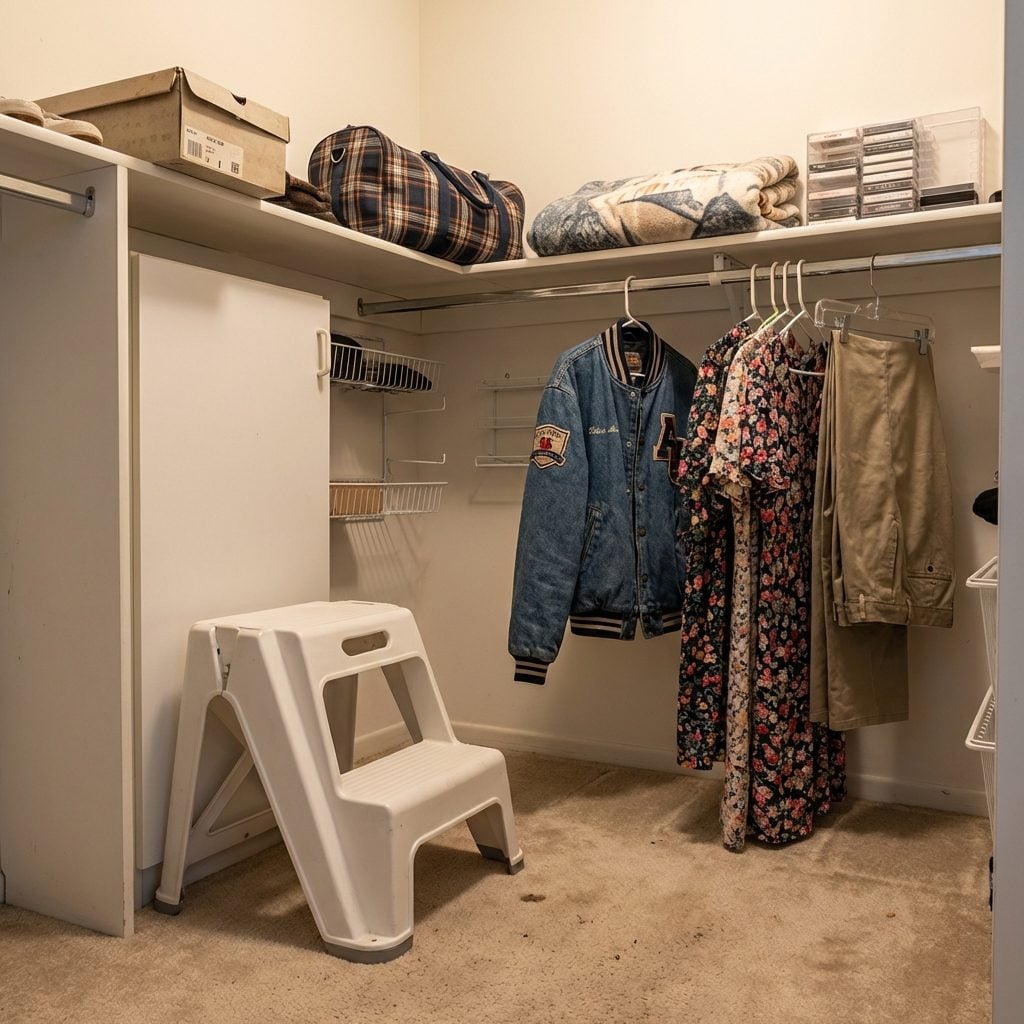
Every closet had a top shelf loaded with things that hadn’t been touched since the Clinton administration, and the only way up there was a small folding step stool with rubber-tipped legs and a little handle cutout at the top. Ours was white plastic or that particular shade of almond that matched nothing and everything.
You’d unfold it, step up, and suddenly discover: a box of photos, a forgotten sweater, a gift bag you’d been looking for since 1997. It lived in the corner of the closet floor, slightly in the way of the shoe rack, but nobody ever moved it because moving it would mean finding somewhere else for it to live. The step stool was a permanent fixture, a small monument to ambitious vertical storage.