🔥 Would you like to save this?
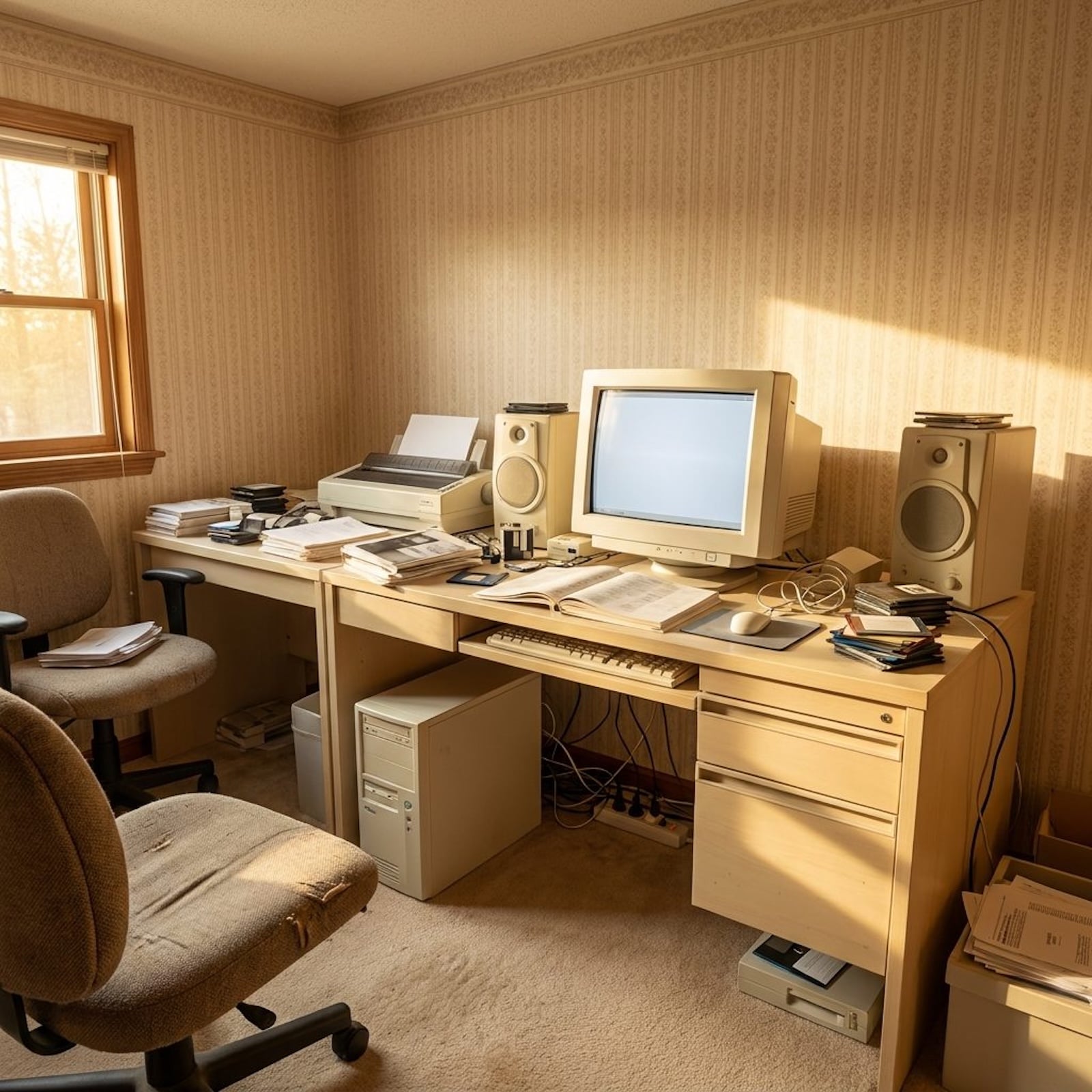
The hum. Before you saw the screen, you heard it — that low mechanical drone from the corner of the spare room, the sound of a fan spinning inside a beige box the size of a briefcase. The room smelled faintly of warm plastic and dust cooking on the back of a monitor.
Everyone’s setup looked a little different and exactly the same. What follows is the stuff that lived in that room: on the desk, under it, and behind it where nobody dared to look.
In order to come up with the very specific design ideas, we create most designs with the assistance of state-of-the-art AI interior design software. Also, assume links that take you off the site are affiliate links such as links to Amazon. this means we may earn a commission if you buy something.
35. The Beige Desktop Tower Humming Away Under the Desk
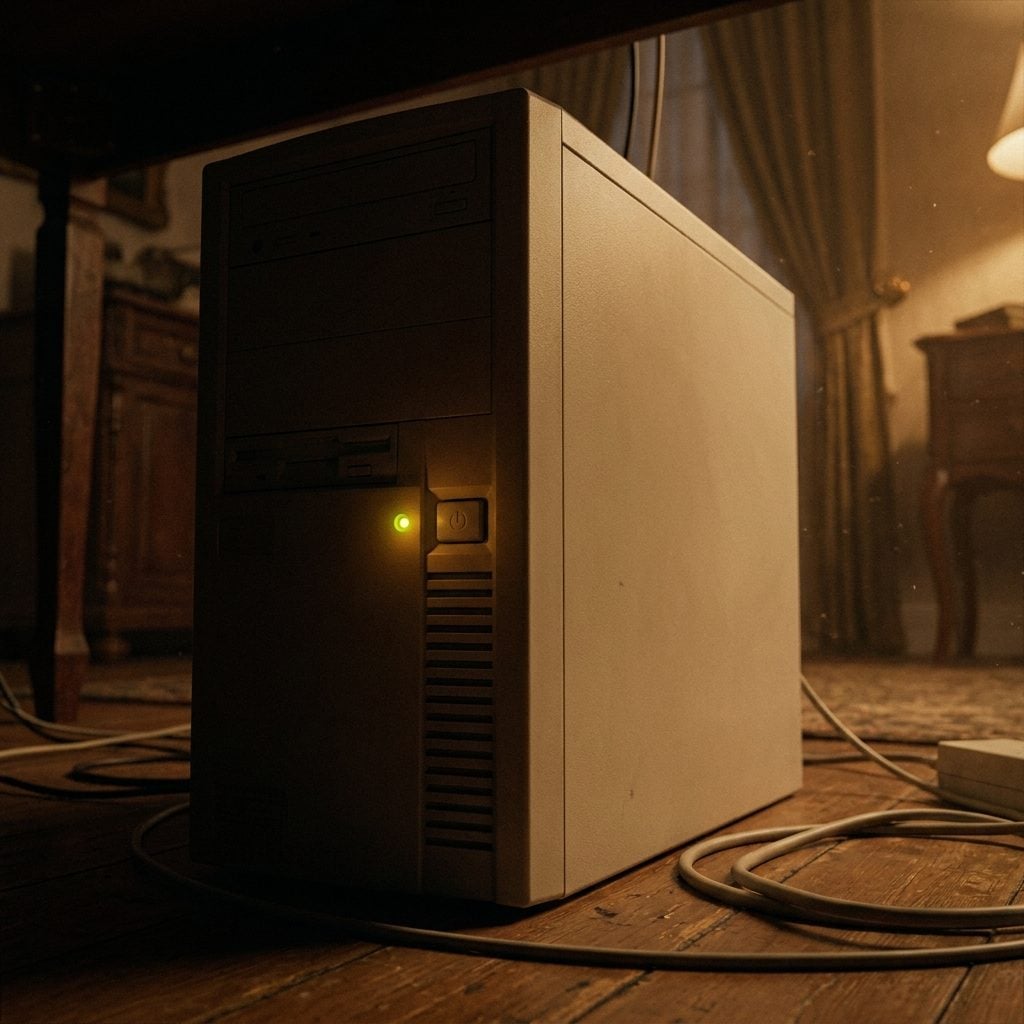
You didn’t turn it on so much as wake it up. That chunky power button gave a satisfying clunk, and then the fan spun up into a drone that never really quit until bedtime. The whole thing sat on the carpet under the desk, collecting dust in its front vents and warming your feet through winter.
Some machines still carried a mysterious turbo button, a holdover from the days when changing processor speed could help older software behave. By the later ’90s, plenty of users had no idea why it was there. And that faint yellow tint the beige plastic could acquire after years of heat, age, and sunlight? Almost part of the color scheme.
34. The Enormous Beige CRT Monitor That Weighed a Ton
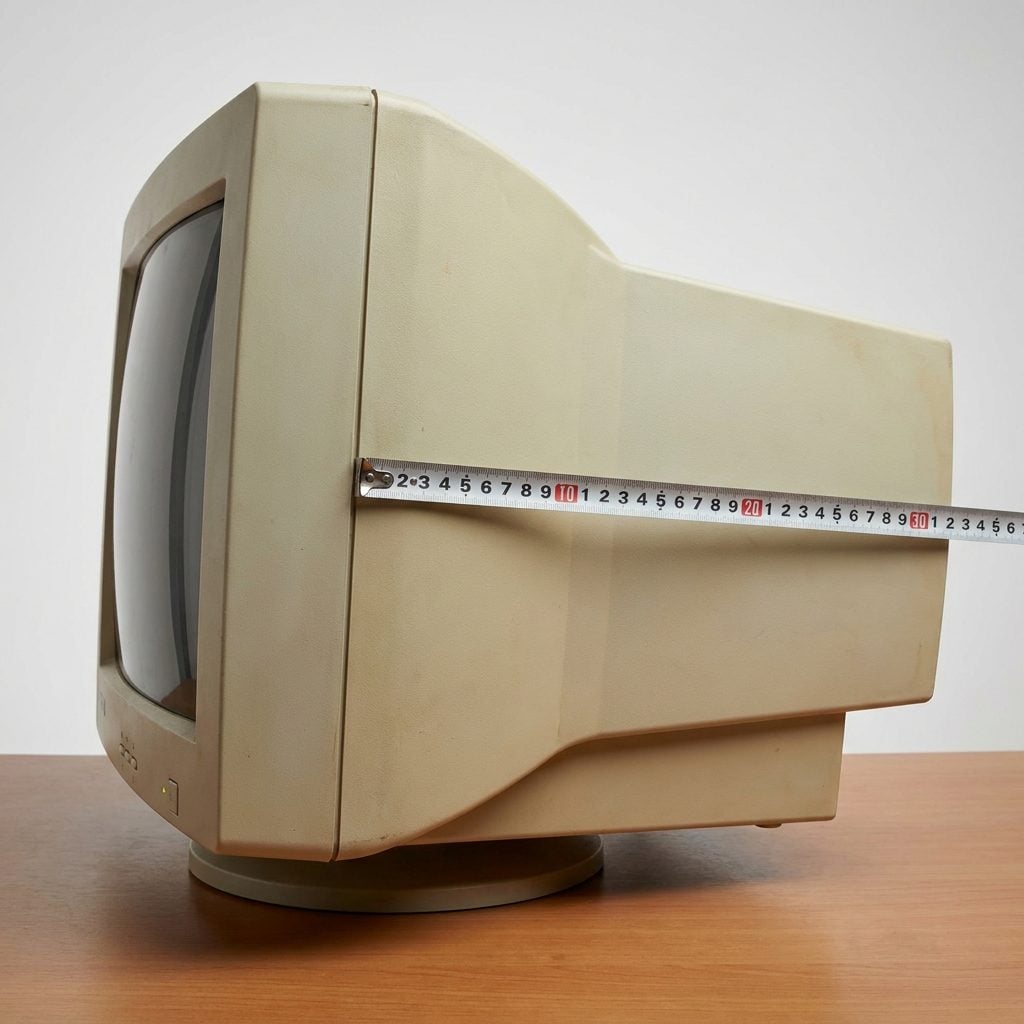
This thing had presence. It ate half the desk with its depth alone, a box so deep the back end nearly kissed the wall, and moving it required both arms and a moment of respect for your lower back.
The glass curved gently at the corners, and shutting the monitor down could produce that unforgettable shrinking flash at the center of the screen. Run a hand near the warm glass afterward and there was often a faint static crackle waiting for you.
33. The Heavy Computer Desk Built for One Machine
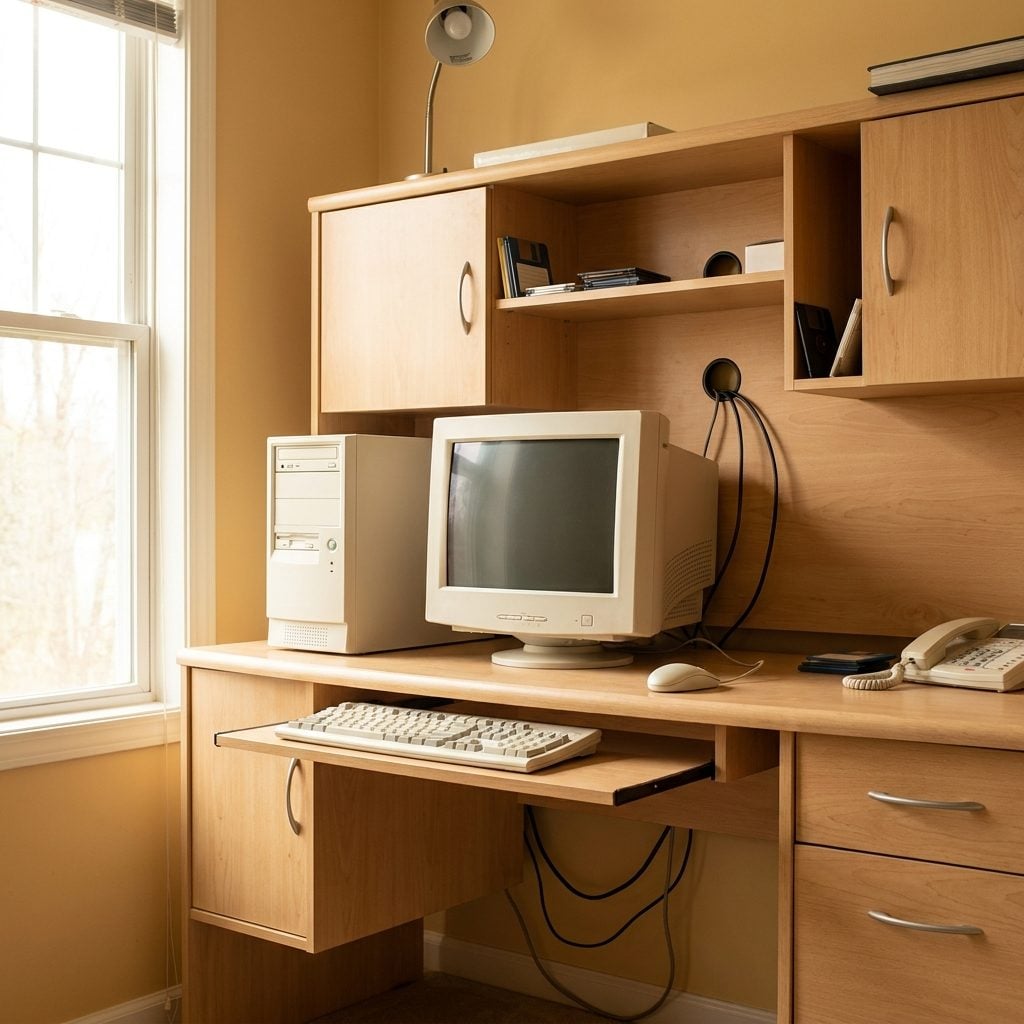
Someone at the furniture store convinced half the country that the family PC needed a purpose-built home of its own. So we bought hulking oak-laminate workstations in flat cardboard boxes and burned a Saturday assembling them with a tiny hex key. Compared with today’s lighter farmhouse desk designs, these things were practically permanent architecture.
The standard setup had a floor cubby for the tower, a raised shelf for the monitor, and a little hutch of compartments above for CD-ROMs and fat instruction manuals nobody read. Furniture built around a single machine. When the machine changed, the desk didn’t — it just stayed enormous.
32. The Pull-Out Keyboard Tray That Rattled
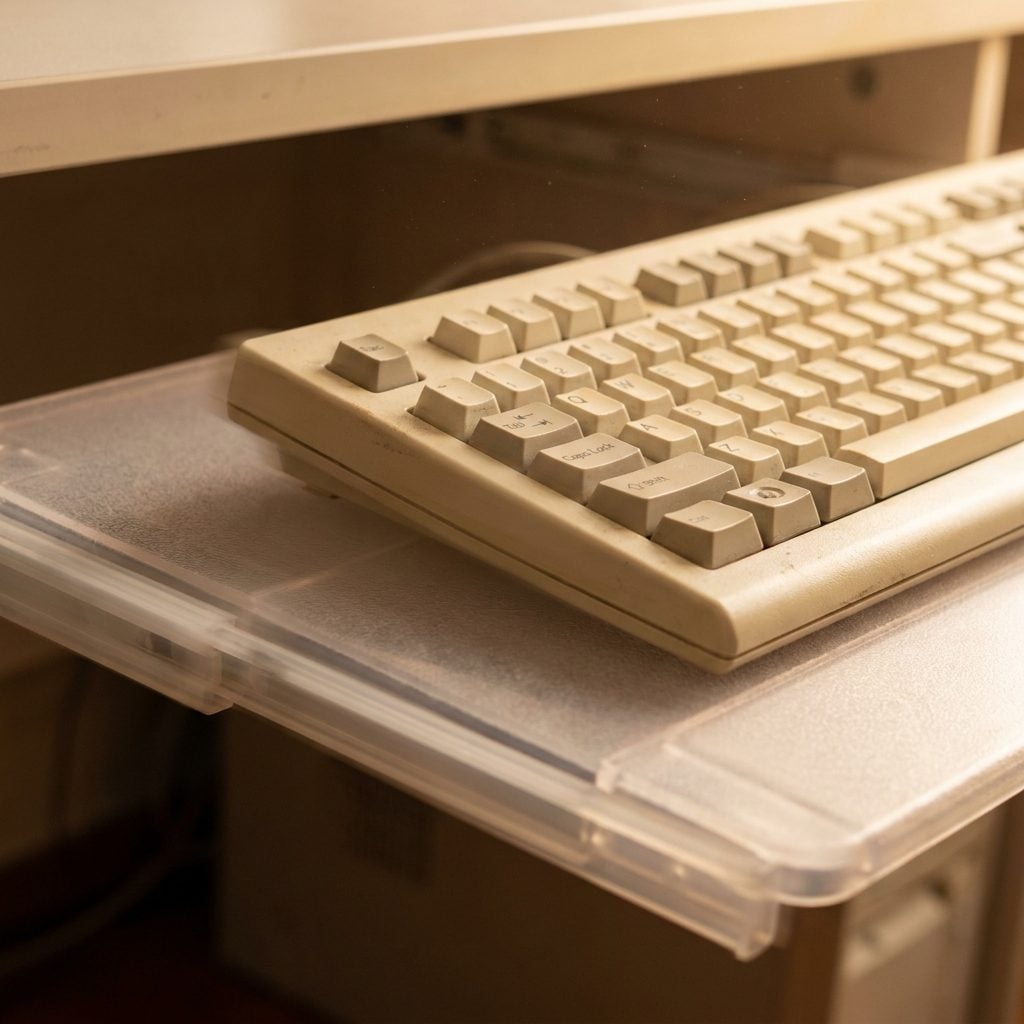
It slid out on plastic runners with a rattle, and lean on it wrong and the whole tray tilted, threatening to dump the keyboard in your lap. Typing meant keeping your elbows suspended at an angle no ergonomics expert would have volunteered for.
Some came with a padded wrist rest glued to the front lip. Then there was the particular clatter when you shoved everything back under the desk to reclaim a few inches of surface. Pure muscle memory.
31. The Swivel Office Chair That Never Quite Fit the Desk
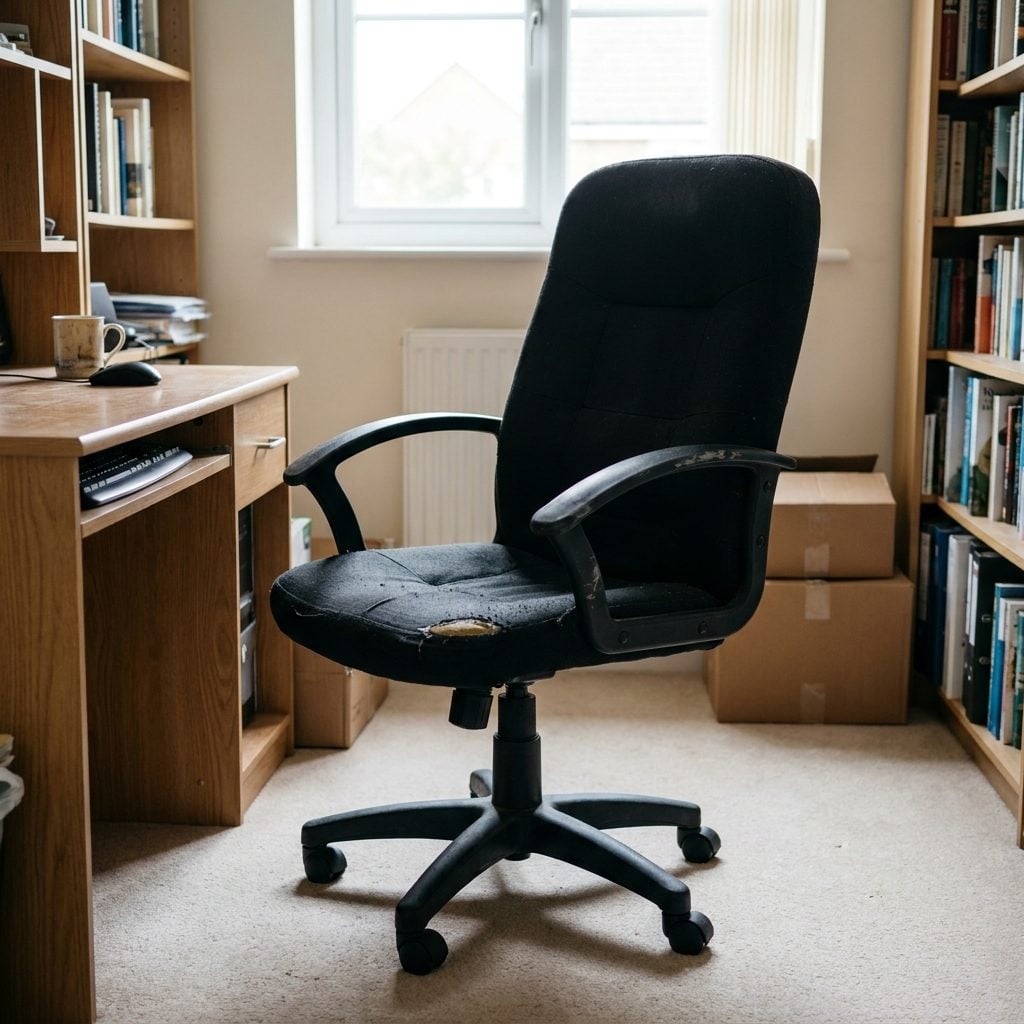
Every home seemed to acquire one chair that matched nothing and fit nobody. Black cloth seat, plastic arms, five casters that rolled beautifully on hard flooring and slowly excavated permanent tracks through the carpet.
The height lever was a gamble. Pull it and the seat dropped farther than expected. Pump it back up and suddenly the keyboard seemed six inches too low. Somewhere between those extremes was the correct position, but the chair wasn’t interested in revealing it.
And then there was the spin. Kids discovered immediately that office seating doubled as recreation. Some of today’s sleek black office design schemes may be better looking, but they can’t touch the unapologetic utility of that old chair.
30. The Beige Two-Button Mouse With a Ball Inside

Two buttons. That was it. No scroll wheel, no side buttons, just left-click, right-click, and a rubber-coated ball underneath that eventually collected every crumb, hair, and speck of dust within reach.
When the cursor started stuttering across the screen, over went the mouse. Twist off the retaining ring, pop out the ball, and scrape the gray bands of gunk from the internal rollers with a fingernail. Nobody handed you instructions. One day the pointer stopped cooperating and this knowledge simply entered your life.
29. The Mouse Pad That Was Genuinely Non-Negotiable
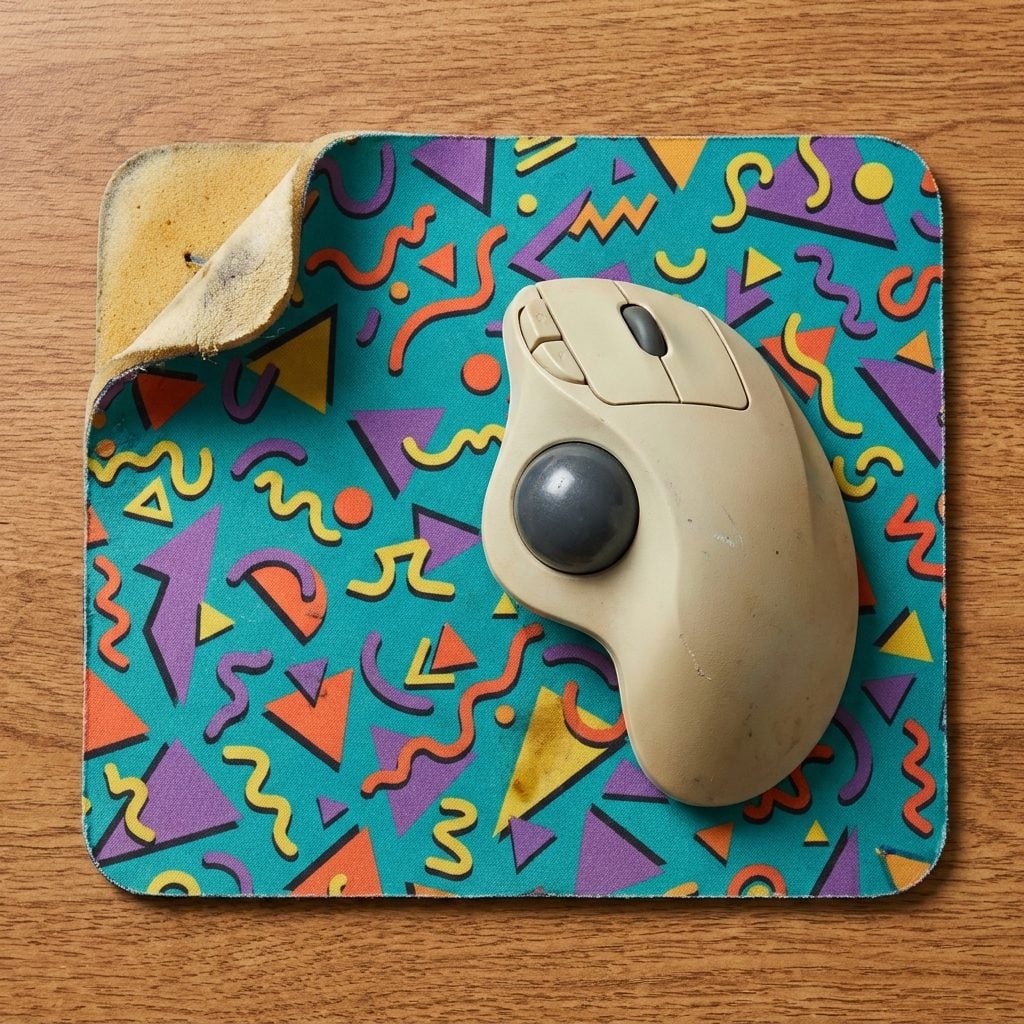
A ball mouse might technically cooperate with the bare desk, but a decent mouse pad gave it a far more reliable surface to roll across. Without that extra grip, pointer control could turn into an argument.
The pads came in every design imaginable — corporate logos handed out at trade shows, wildlife scenes, marbled swirls, geometric patterns straight off a bowling-alley carpet. Most were foam rubber with a fabric top that frayed at the corners and eventually curled upward. You rarely remembered buying one. It simply arrived in the house and stayed for a decade.
28. The Tangled Nest of Cables Nobody Dared Touch
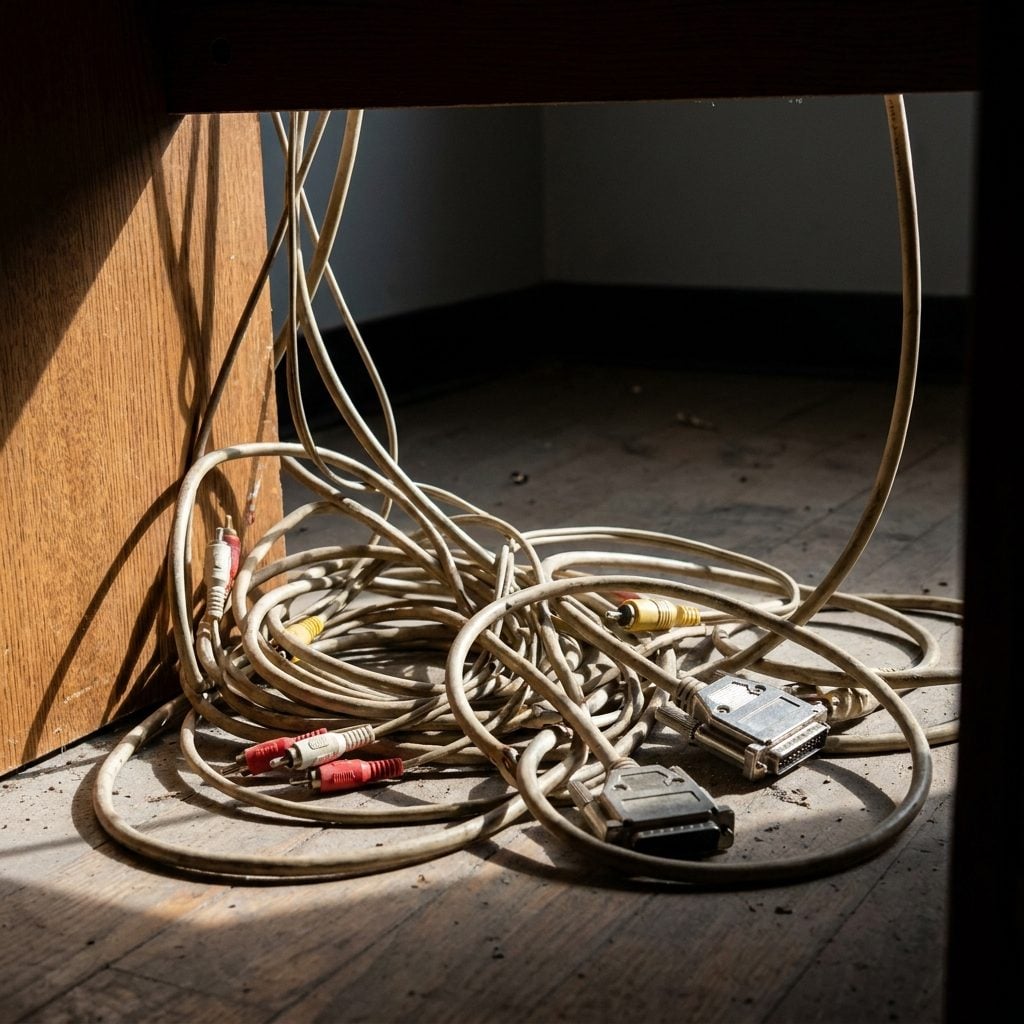
Back there was a place time forgot. Monitor cable, keyboard cable, mouse cable, printer cable, speaker wires, modem line, power cords — all twisted into a knot that seemed to have been growing since the computer arrived. Several connectors came with chunky little screws you tightened by hand, and tracing one through the darkness could require a flashlight.
Dust bunnies the size of small mammals lived behind that desk. Once everything worked, the sensible policy was nonintervention. Nobody wanted to unplug the wrong thing and discover what stopped working.
27. The Power Strip Groaning Under Oversized Plugs
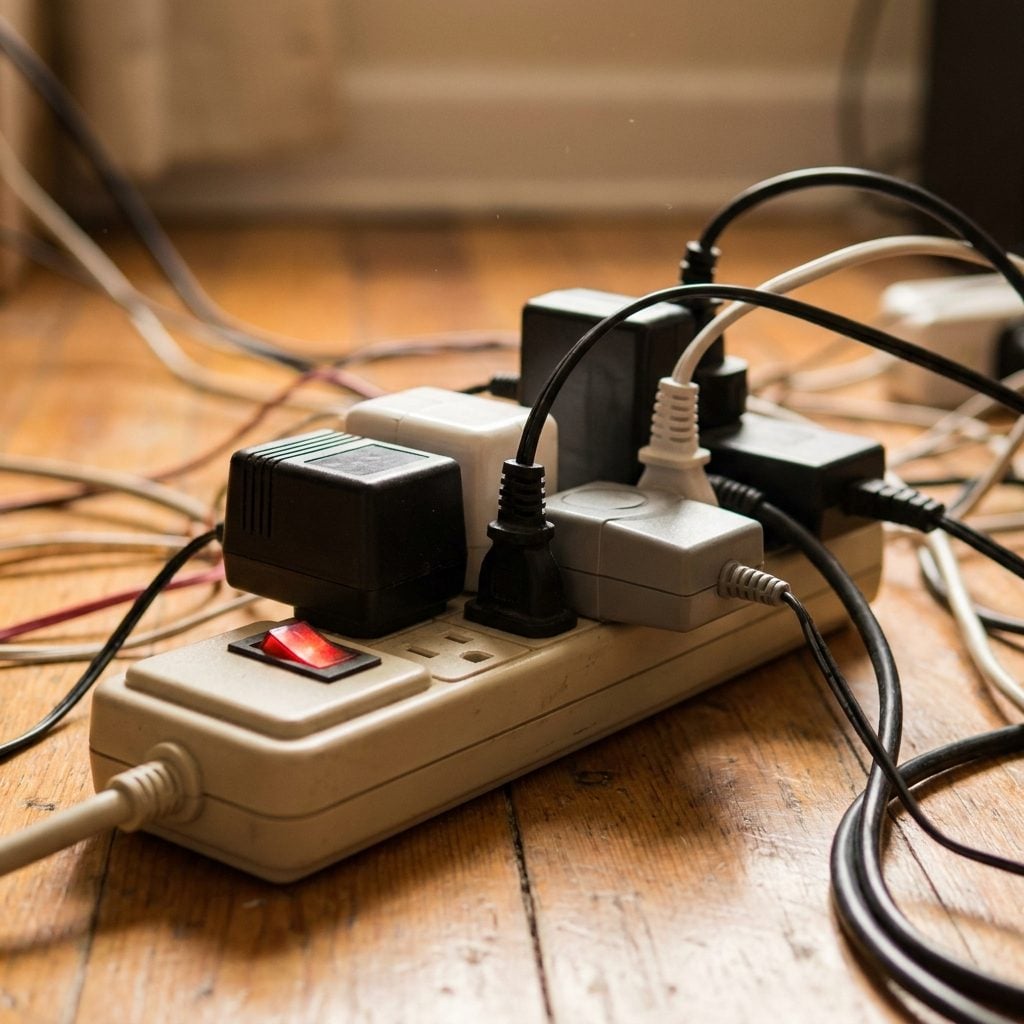
The surge protector was a beige bar with a red switch glowing at one end. Half its outlets seemed permanently blocked by chunky black transformer bricks — the kind that hogged the neighboring socket even when they were powering nothing more glamorous than the speakers or modem.
Flip the red switch and the whole desk went dead. Flip it back and fans, monitor, speakers, and assorted little indicator lights returned one after another. After a few hours, warm electronics gave the room its own unmistakable smell.
26. The Floppy Drive Slot Built Right Into the Tower
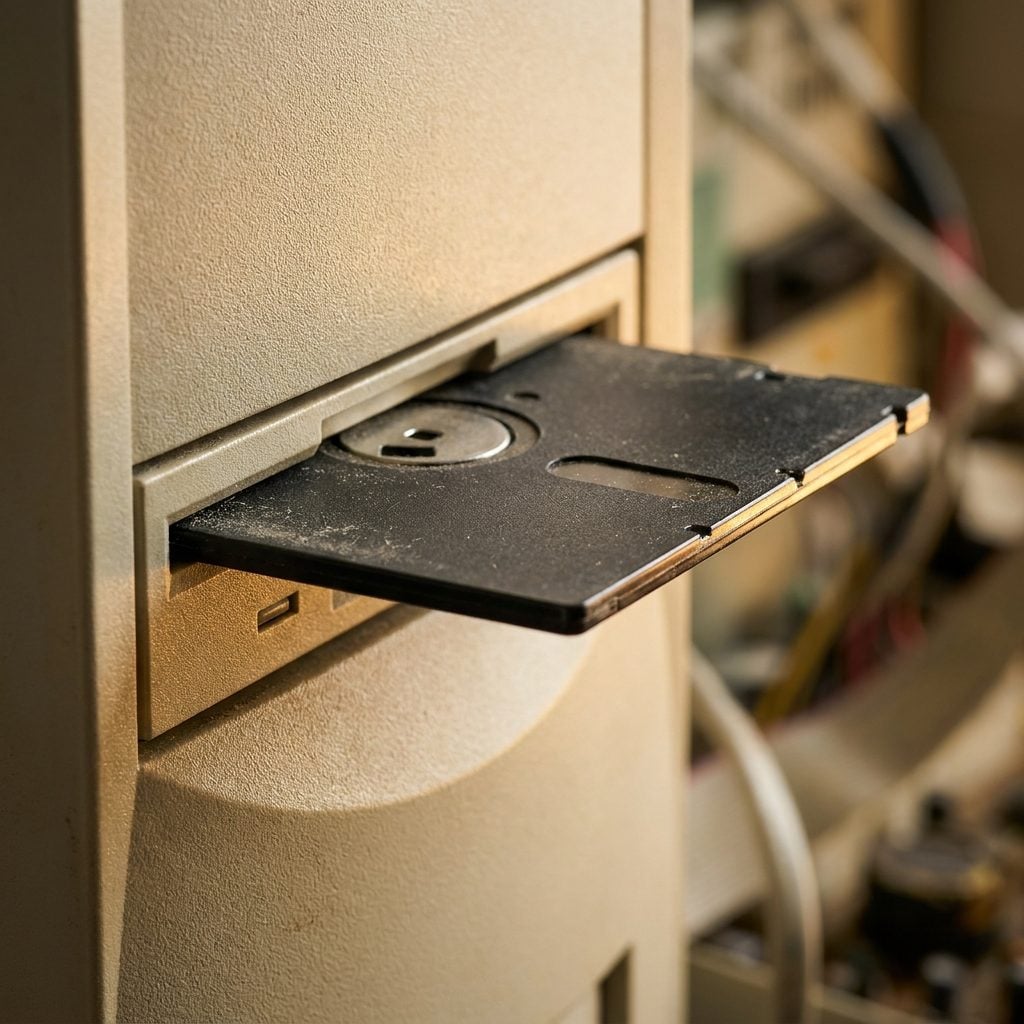
That satisfying chunk-click when the disk seated all the way in. Then the drive whirred and rattled like it was making up its mind, the little green light flickering while it read.
The eject button popped the disk back out with a spring-loaded snap that never got old. Leave a nonbootable floppy in the drive and plenty of PCs would stop during the next startup and demand that you remove it. One tiny plastic square could hold up the whole machine.
25. The Stack of Floppy Disks Nobody Could Throw Away
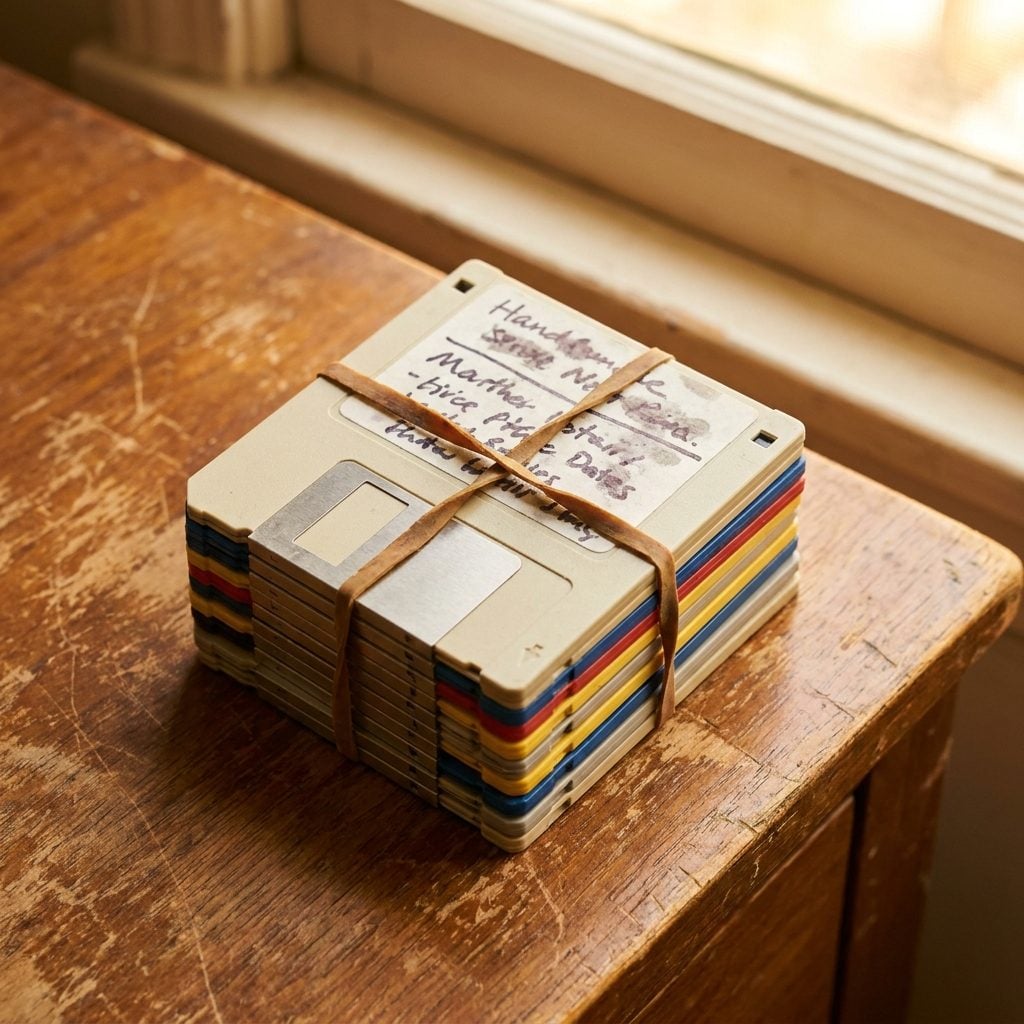
Every desk accumulated them, held together with a rubber band or leaning in an uncertain pile. Labels were written in ballpoint, scratched out, written again, and eventually became only vague suggestions about what might actually be stored inside.
Slide the little metal shutter sideways and there was the dark magnetic disk underneath — something everybody was curious about and nobody was supposed to touch. The common high-density 3.5-inch floppy held just 1.44 megabytes. A modern phone photo can easily consume the space of several of them.
They outlived the computers that read them, sitting in drawers because throwing one away felt suspiciously like deleting something important. A few are probably still hiding in a desk somewhere.
24. The Plastic Floppy-Disk Storage Box With the Flip-Up Lid
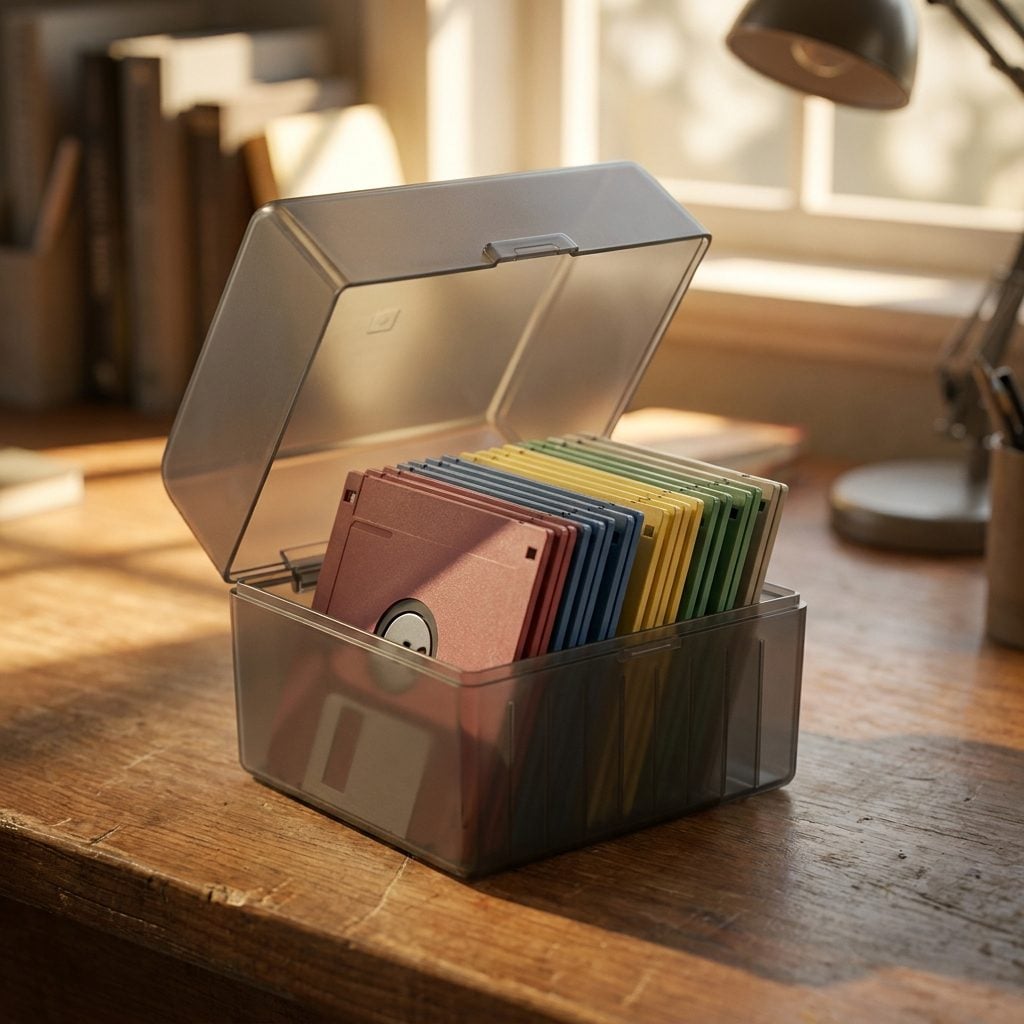
The loose disks eventually needed somewhere respectable to live. Enter the smoke-gray plastic box with the transparent or tinted flip-up lid, turning a pile of 3.5-inch squares into something resembling an archive.
Inside, disks stood upright so you could actually read their handwritten labels. Some boxes even had little dividers that encouraged the fantasy of alphabetical organization. The lid snapped shut with a satisfying click, and suddenly those homework files, saved games, letters, and miscellaneous mysteries felt protected from the chaos of the desk.
23. The CD-ROM Drive That Made the Whole Machine Feel Futuristic
🔥 Would you like to save this?
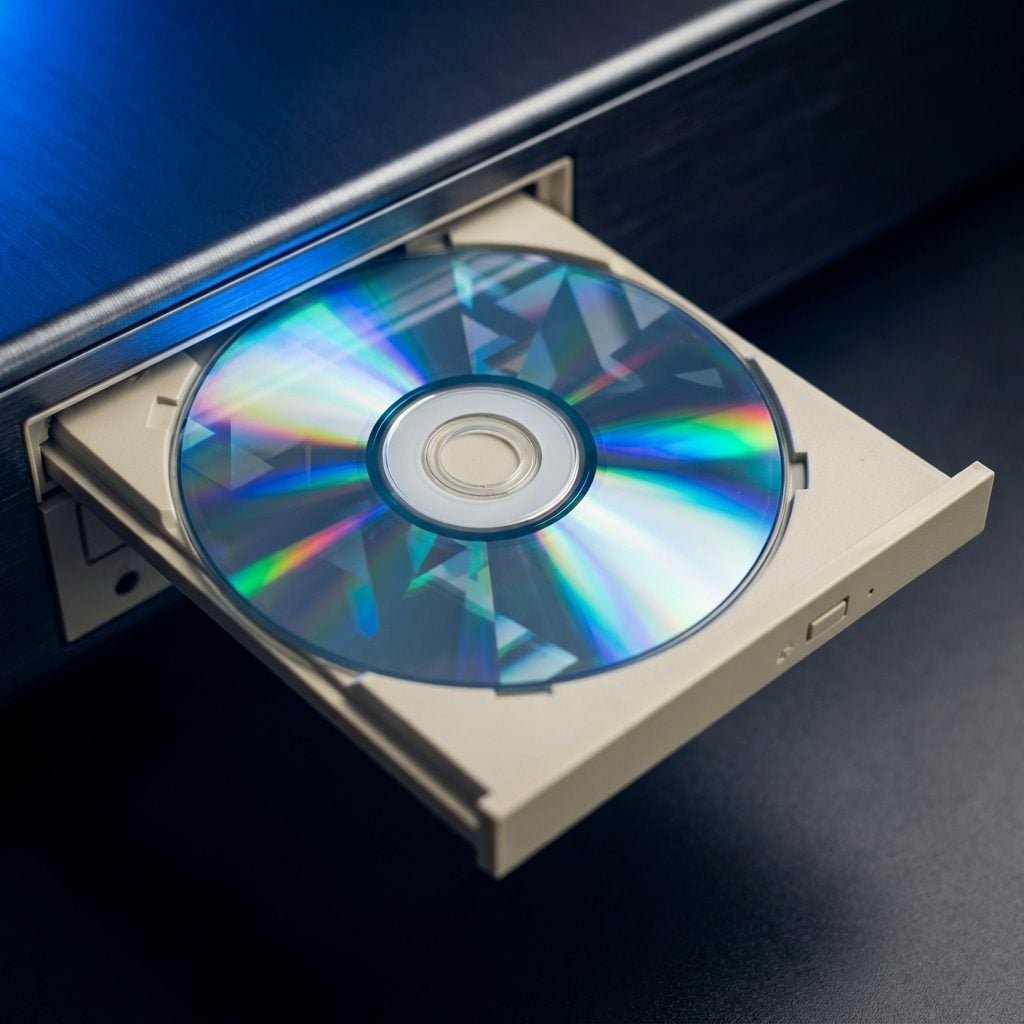
Then the tray slid out with that soft mechanical whir, and suddenly the beige box felt as though it belonged in a spaceship. One CD could hold hundreds of times as much data as a 1.44-megabyte floppy, opening the door to encyclopedias, enormous games, video clips, and software that no longer arrived on a fistful of disks.
Some drives even had a headphone jack and little volume wheel on the front. Half the fun was watching the disc spin up while the green LED flickered and the drive decided what you’d handed it. For a while, owning a CD-ROM drive felt like proof your household was keeping up.
22. Software CDs and Installation Disks Piling Up on Every Surface
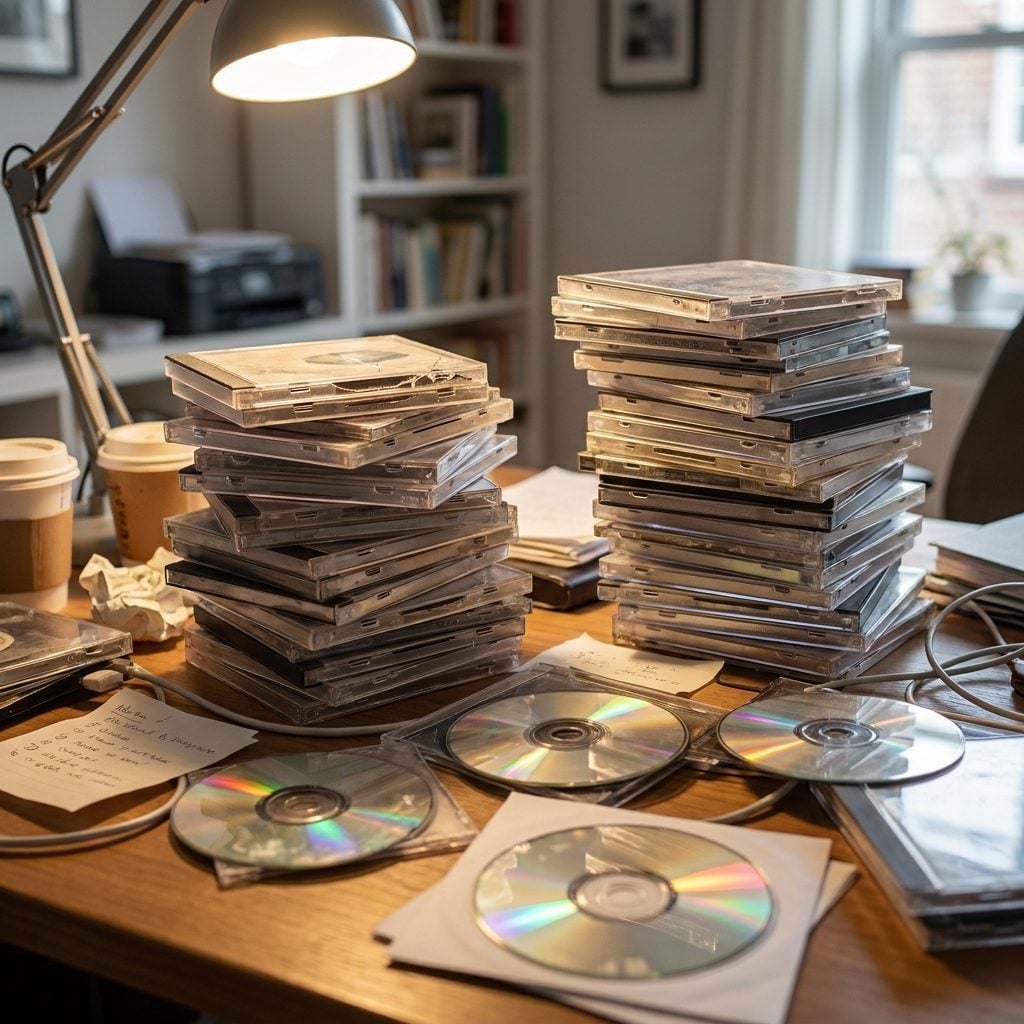
The discs multiplied. Jewel cases with cracked hinges leaned in lopsided towers, loose discs slipped into paper sleeves, and installation media remained long after anyone remembered what half the programs did.
You kept the originals because reinstalling software could require that exact disc, sometimes along with a serial number printed on a booklet nobody could find. Games, printer drivers, encyclopedias, utilities, office software — the stack became an accidental history of everything the computer had ever been asked to do.
21. The Dot-Matrix Printer Shrieking Next to the Computer
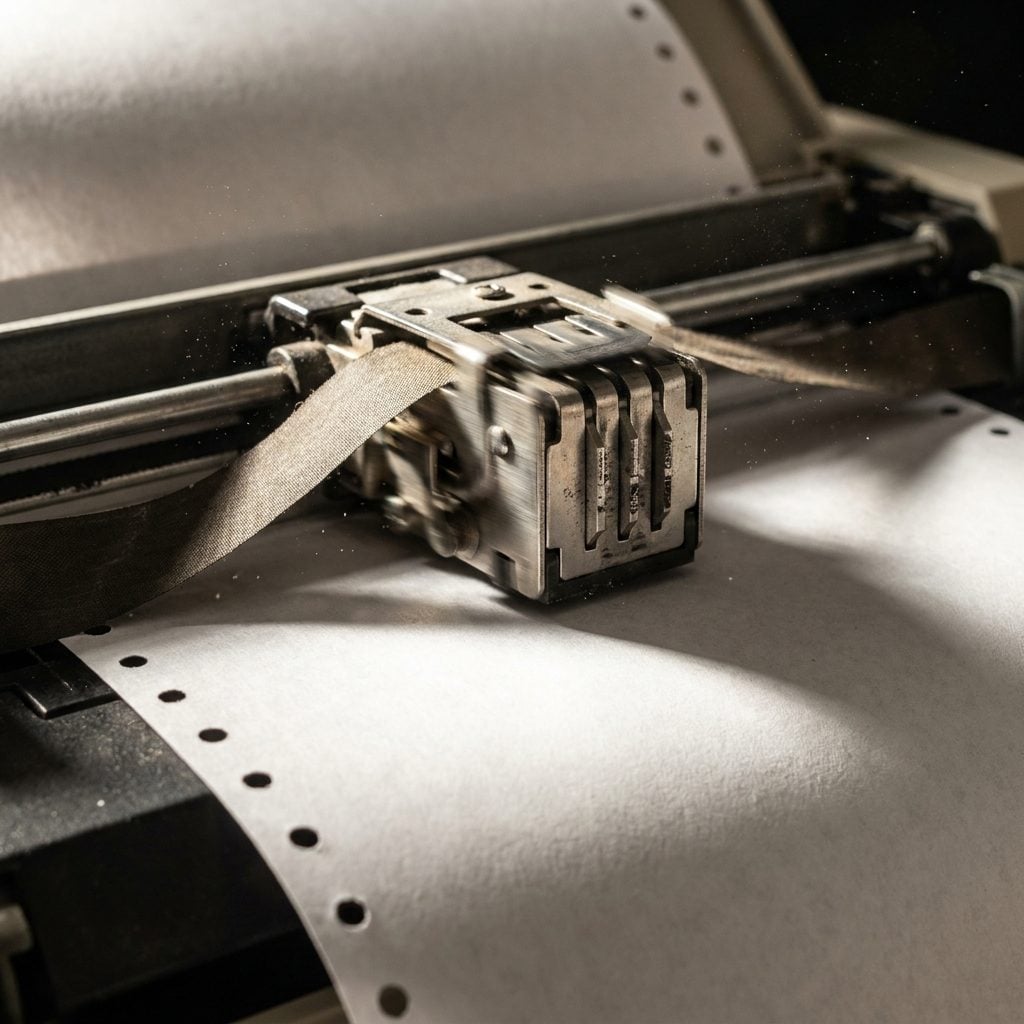
The noise. Good grief, the noise.
A dot-matrix printer didn’t print so much as announce itself, the printhead hammering back and forth in a mechanical shriek you could hear from the other end of the house. One page felt like an event. A report meant letting the machine chatter away while everyone else learned to live with it.
Inside, the ribbon cartridge faded gradually until black text turned weary gray. Naturally, you kept printing until it became almost illegible because replacing the ribbon required remembering to buy one.
20. Continuous-Feed Printer Paper With the Tear-Off Perforated Edges
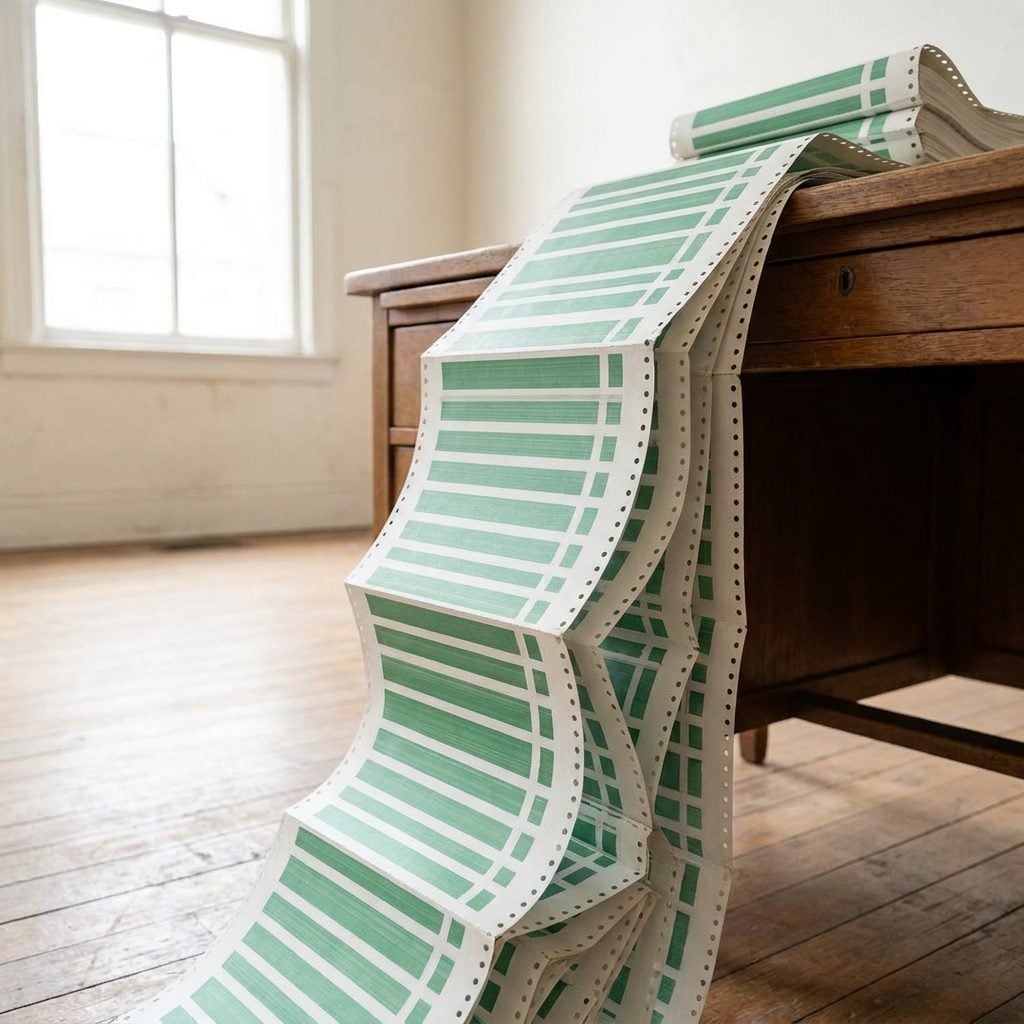
Feeding that screecher was continuous fanfold paper, an accordion stack rising from a box beneath or behind the printer. Perforated strips ran down both sides, punched with little holes that caught the printer’s tractor-feed sprockets and dragged each sheet through.
The reward came afterward. Tear off one perforated edge in a single uninterrupted pull, then the other, and for five seconds life felt beautifully ordered. Unless the strip tore halfway down and left a ragged fringe of tabs. Nobody misses the paper jams. That clean tear, though, had something.
19. The Inkjet Printer That Eventually Replaced the Screecher
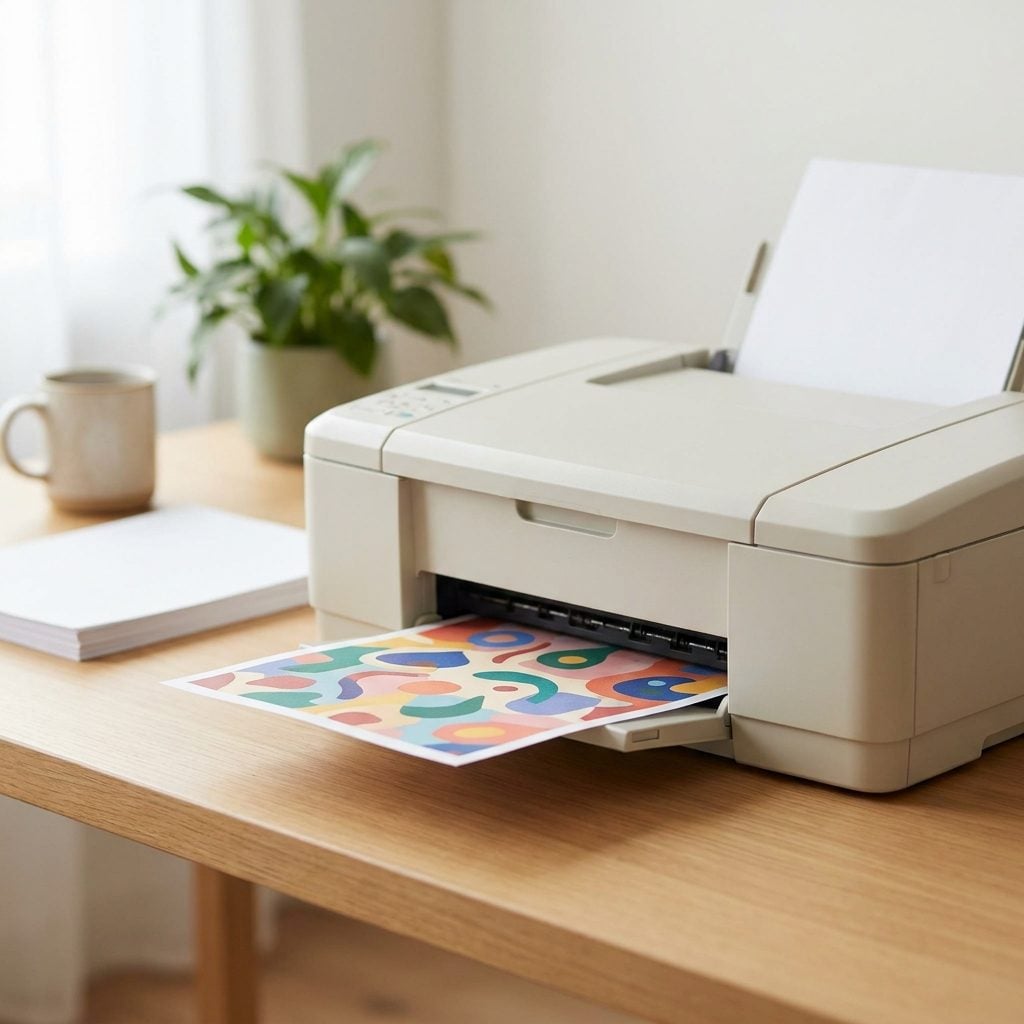
Then the inkjet moved in and the house got dramatically quieter. It still clicked, hummed, and shuffled paper, but compared with a dot-matrix printer it seemed almost civilized. Better yet, affordable models could print in color.
The cartridge always appeared to run dry when somebody needed an important page immediately. Glossy photo paper brought another ritual: pick up the fresh print carefully and give the ink time to settle before dragging a thumb straight across it. Even with the expense and fuss, watching a color image emerge at home still felt a little miraculous.
18. The Printer Table Buried Under Spare Paper and Half-Finished Stacks
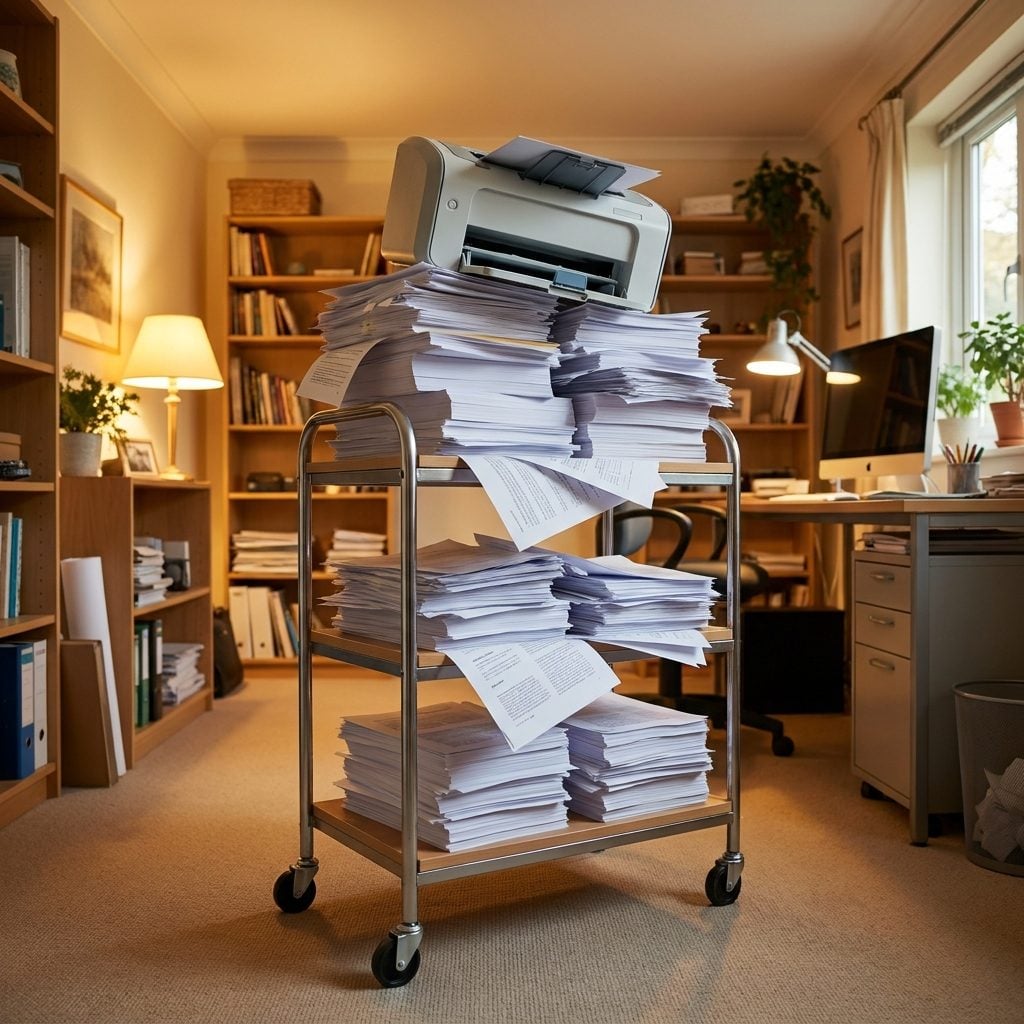
The computer desk couldn’t absorb one more object, so the printer got furniture of its own: a little metal-and-laminate table shoved alongside everything else.
The printer occupied the top with a shred of dignity. Underneath went the supplies — reams still wrapped in crinkly plastic, fanfold paper, spare ribbons or cartridges, folders, envelopes, labels, and a stapler that migrated there and never returned. The idea was to keep clutter off the main desk. In practice, the printer table simply became a second desk you weren’t allowed to call a desk.
17. The Dial-Up Modem That Connected You to the Whole World, Slowly
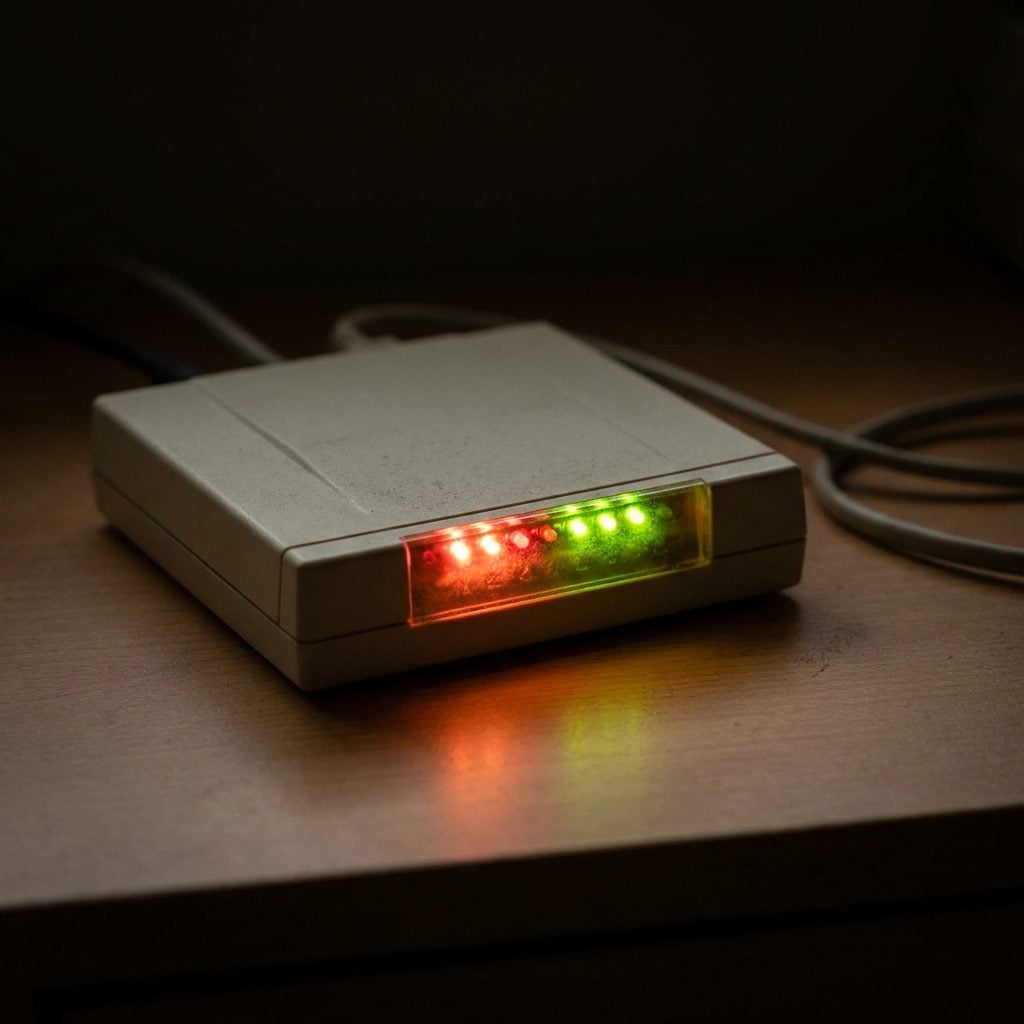
A flat beige box with a row of blinking lights, and somewhere beyond those lights, the entire internet. That was the promise. The delivery took patience.
Connect, wait, then watch green and red LEDs flicker while the modem negotiated a link over an ordinary telephone line. Web pages could build themselves across the screen in pieces, with images appearing progressively as the data arrived. Slow as it was, that little box turned a spare bedroom into a doorway to somewhere impossibly large.
16. The Telephone Cord Snaking Across the Room to the Wall Jack
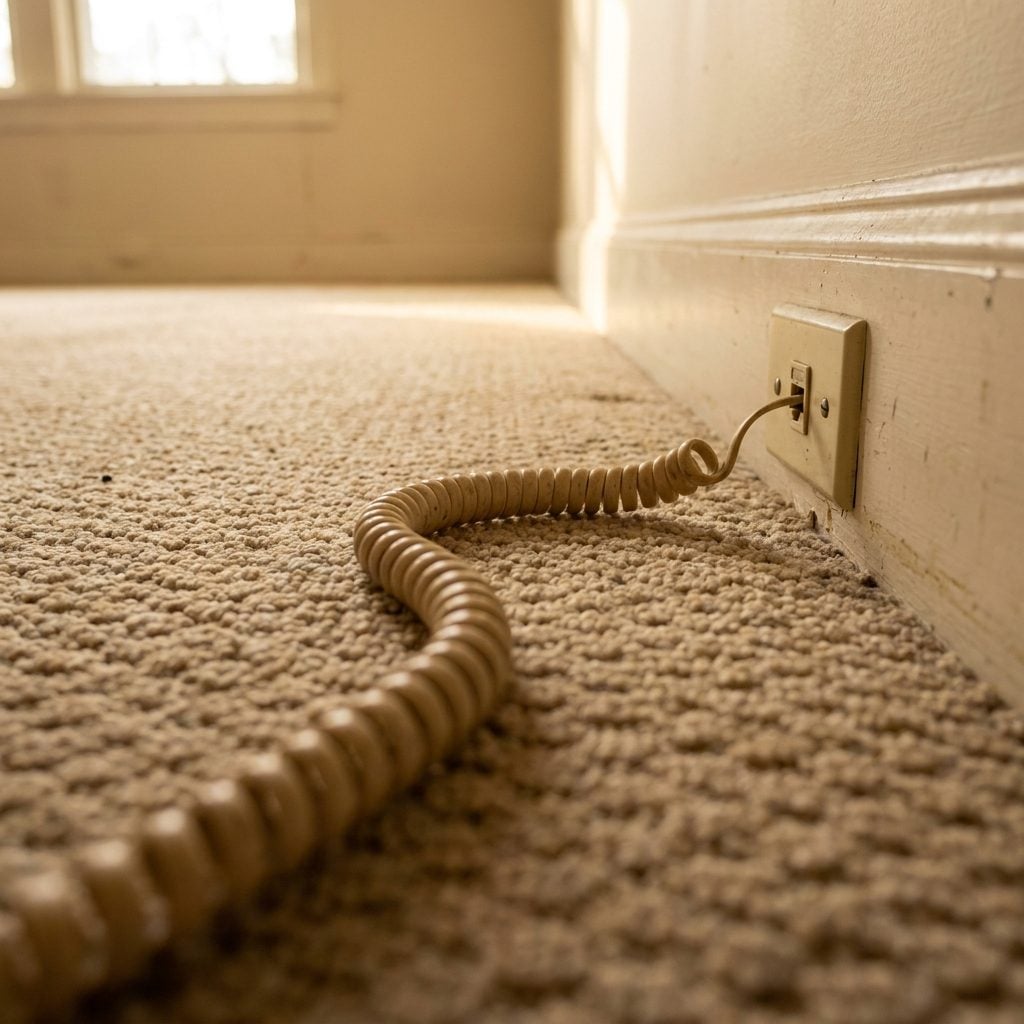
Here’s the detail nobody put in the futuristic advertisements: the modem still had to reach a telephone jack. And naturally, the jack was rarely sitting exactly where the computer happened to be.
So a pale cord crossed the baseboard, disappeared behind furniture, looped around a desk leg, or took the dangerous shortcut straight across the carpet. Tape held down the worst section until the tape itself collected enough dust to become another permanent feature of the room.
15. The Dial-Up Connection Sound Everyone in the House Learned by Heart
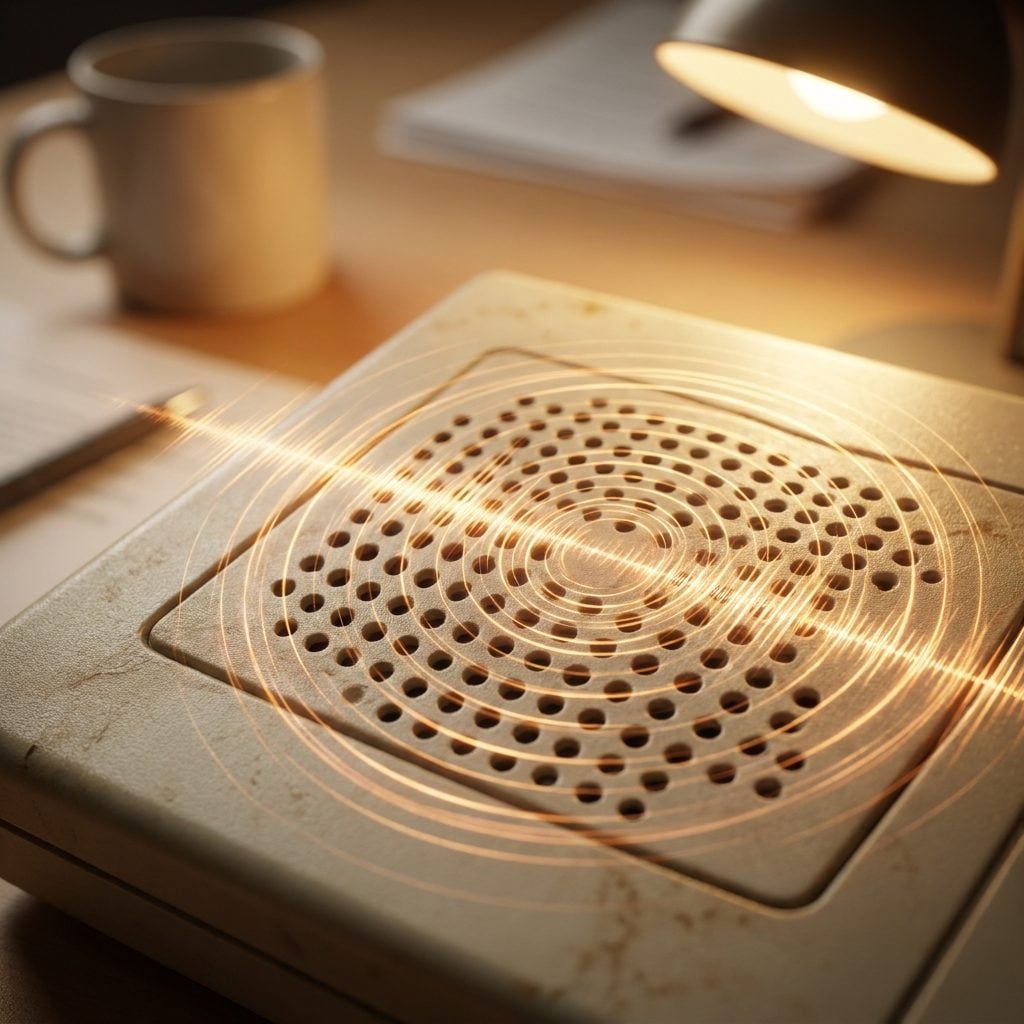
And then there was the sound. You know the one. That shriek-hiss-warble handshake anyone who lived through the era could recognize from another room, the electronic equivalent of two robots arguing through a wall.
The tones changed as the modems negotiated how they were going to communicate. Then came the moment when the racket stopped, the connection held, and the computer was suddenly online. Nothing about it sounded reassuring, yet that sequence became one of the most recognizable noises of the decade.
14. Getting Kicked Offline When Someone Needed the Phone
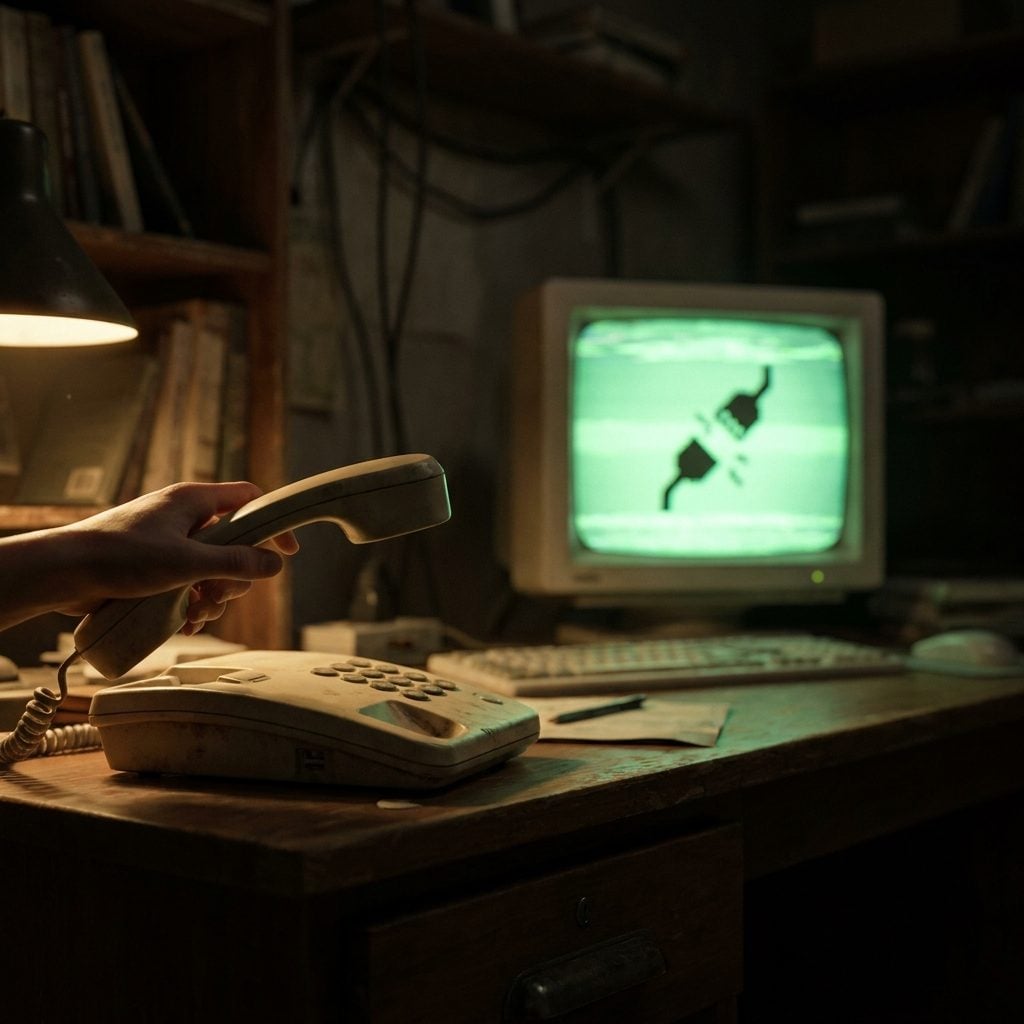
The connection was finally working. A download was crawling toward completion. Then somebody in another room needed the telephone.
One ordinary household phone line was being asked to serve two masters, and dial-up usually meant the internet occupied that line while you were connected. The resulting negotiations became part of family life: “I’M ONLINE” shouted down a hallway, followed eventually by someone asking how much longer you could possibly need.
13. The Landline Telephone Sitting Right Next to the Computer
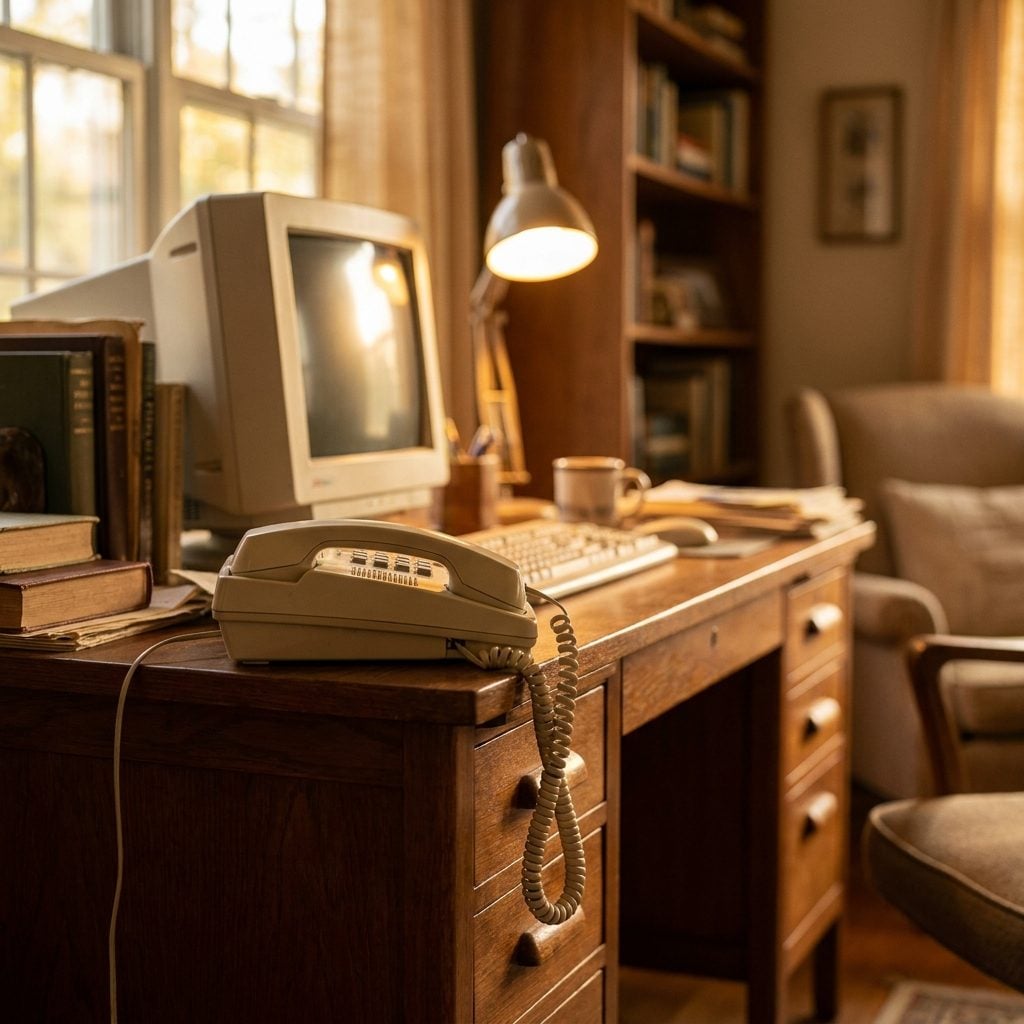
The telephone often sat within arm’s reach because calls were still something you made from a fixed location. Its coiled cord stretched farther than seemed physically possible, then snapped back toward the desk the moment you forgot you were attached to it.
Frequently called numbers lived in your head. The receiver landed in its cradle with a satisfying plastic click, and when the phone rang, everyone waited to discover who the call was actually for.
12. The Answering Machine Sharing the Same Phone Line
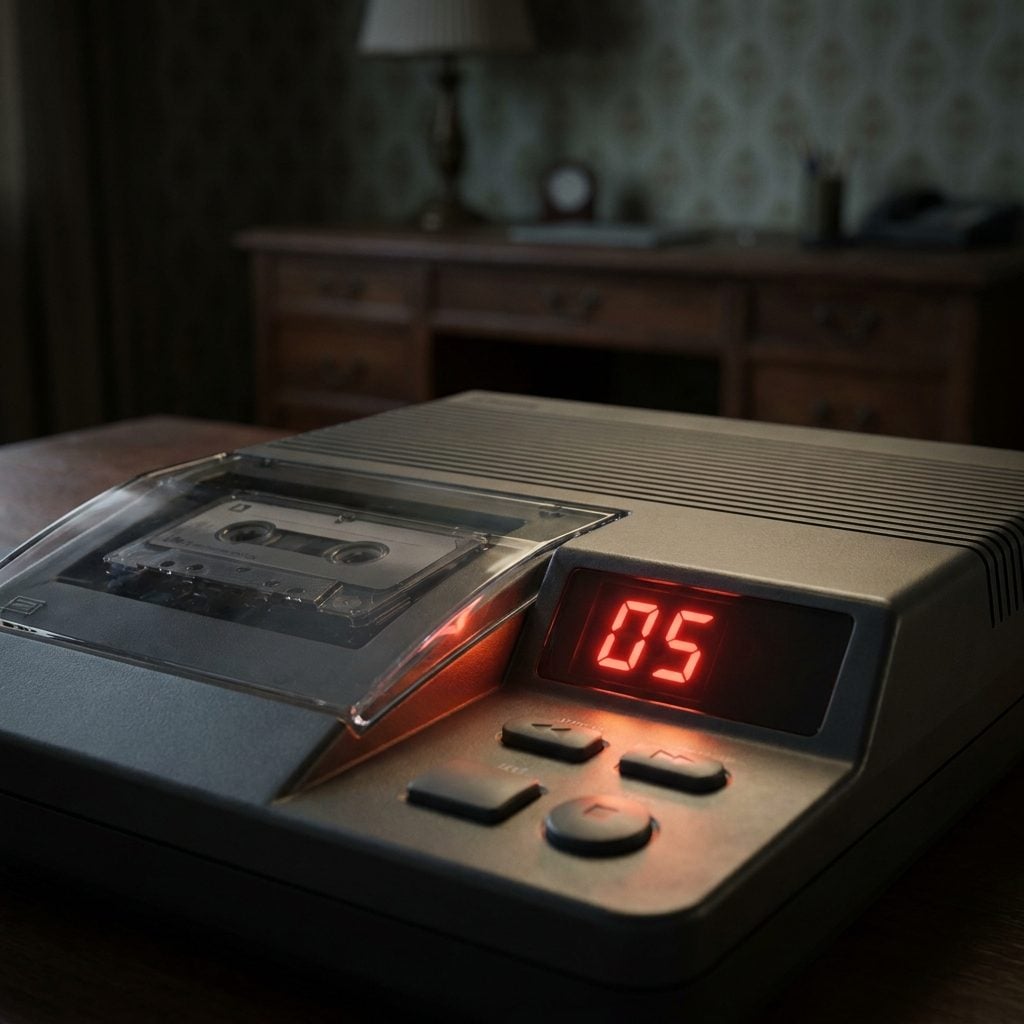
That blinking red number was one of the first things you checked after walking through the door. Three messages meant something happened. Zero meant the world had apparently managed without you.
Cassette-based machines brought hiss, mechanical clicks, and the strange experience of hearing your own outgoing greeting played back through a tiny speaker. The family recorded that greeting again and again until nobody laughed, coughed, barked, or forgot what to say. Later digital models removed the tape but kept the ritual: beep, message, playback, everybody listening.
11. Computer Speakers Sitting on Either Side of the Monitor
🔥 Would you like to save this?
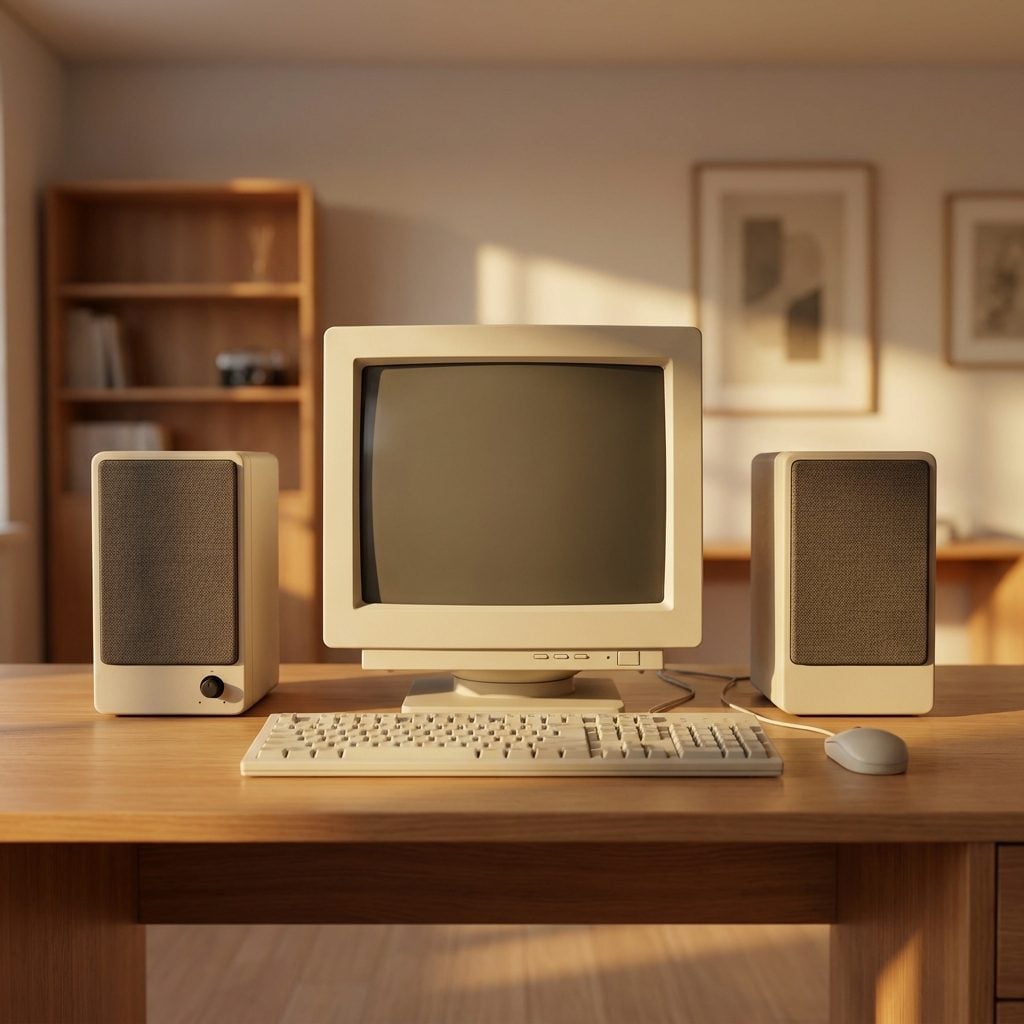
Beige, boxy, and parked on either side of the monitor like tiny sentries. A little volume dial lived on the front, and one speaker inevitably developed a wire that needed a strategic jiggle before both channels cooperated.
Volume control mattered more than expected. A MIDI file could suddenly blast through the house at midnight, while the new-mail chime somehow disappeared whenever you were actually waiting for it. Today’s neutral workspaces may borrow the same practical mood — even a gray desk can echo that old workhorse palette — but at least the speakers no longer need to occupy half the desktop.
10. The Microphone Perched Beside the Speakers
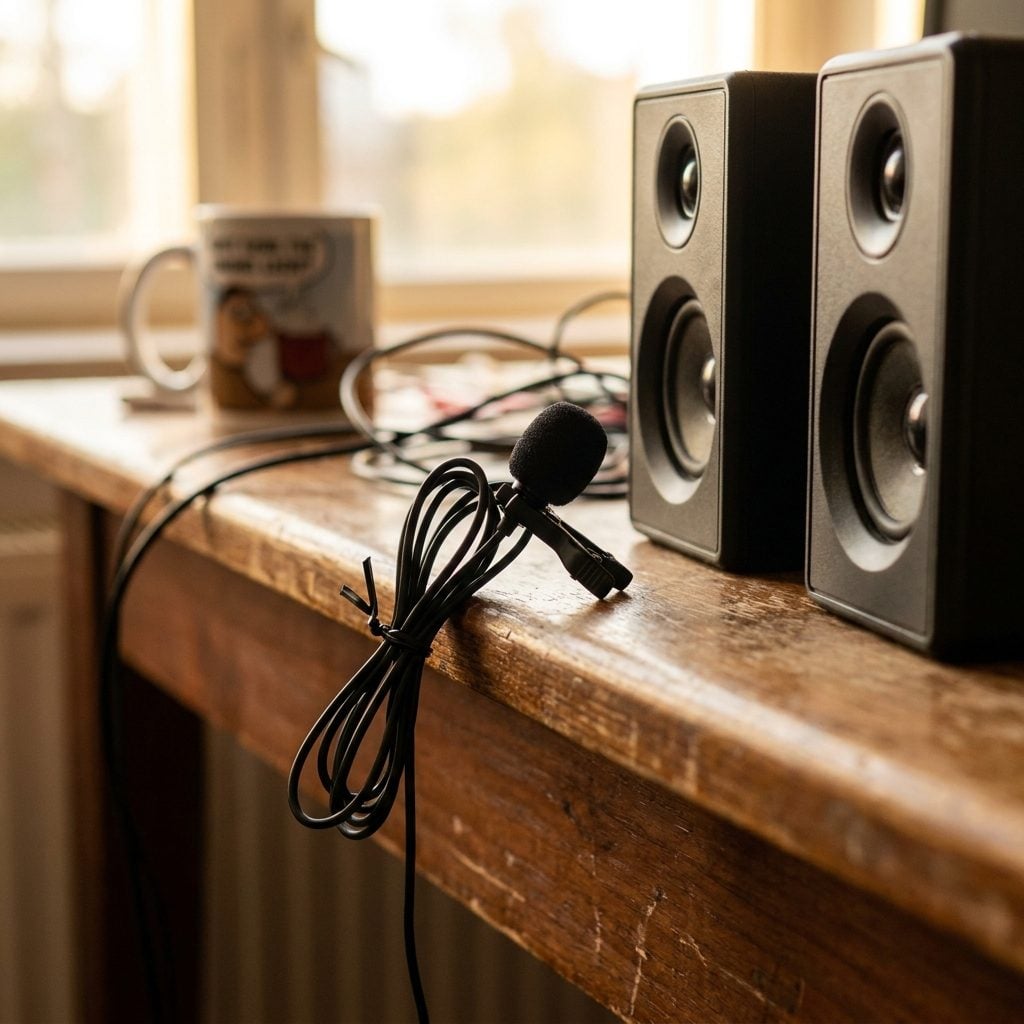
Nobody knew exactly what the little desktop microphone was going to revolutionize, but it came with the computer, so it earned a permanent spot beside the speakers. Naturally, the first test involved tapping it and saying “testing, testing” to an audience of absolutely no one.
Maybe it recorded a voice memo. Maybe somebody tried early speech-recognition software and watched a perfectly ordinary sentence return as surrealist poetry. Mostly the microphone sat there gathering dust, a tiny plastic promise that talking to computers was going to be important someday.
9. The Giant Computer Manual That Went Straight in a Drawer
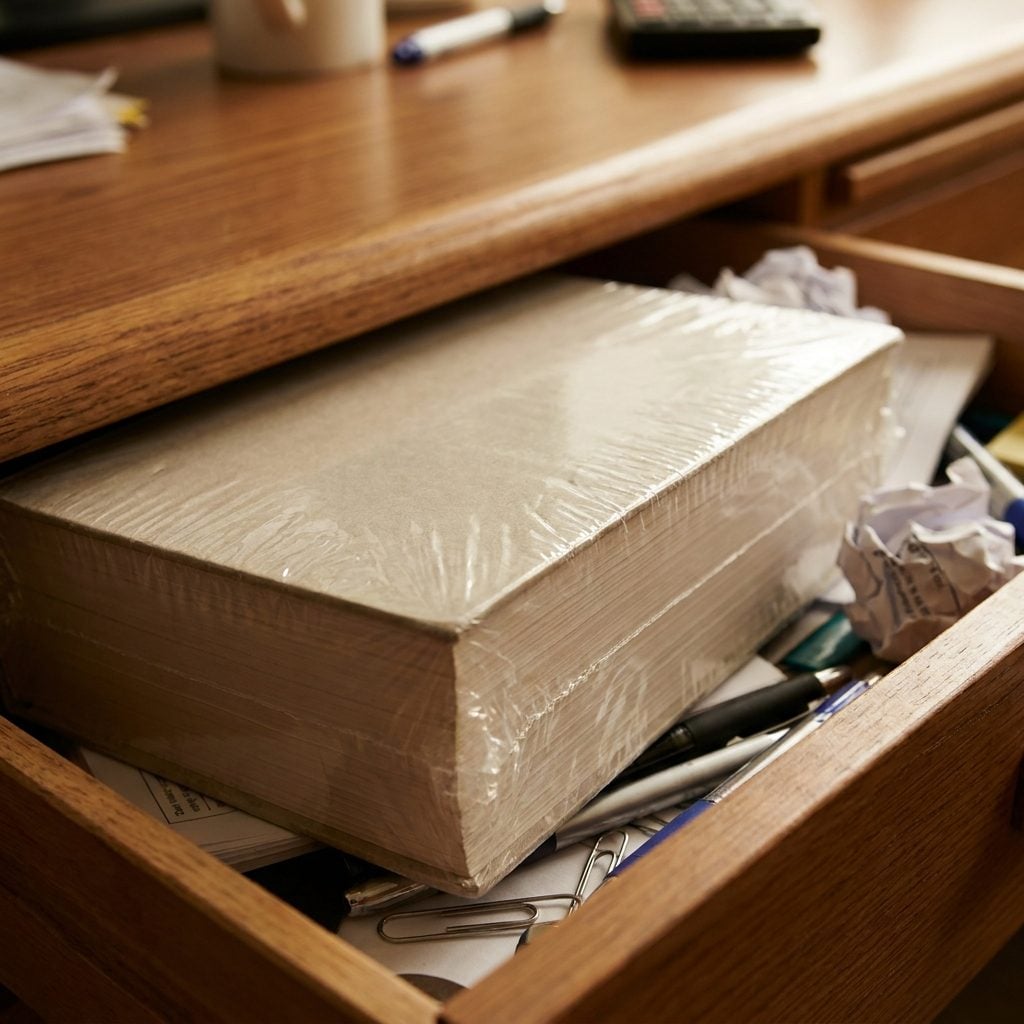
The size of a phone book, and just as inviting. It came shrink-wrapped with the tower, went straight into a drawer, and remained untouched until the machine finally did something alarming.
Then came the panicked flip to Troubleshooting, where the illustrations somehow never quite matched the computer sitting in front of you. Eventually someone called the one cousin who “knew computers.” That cousin became unpaid technical support for the entire extended family and may still be carrying the resentment.
8. Computer Magazines Piling Up Next to the Desk
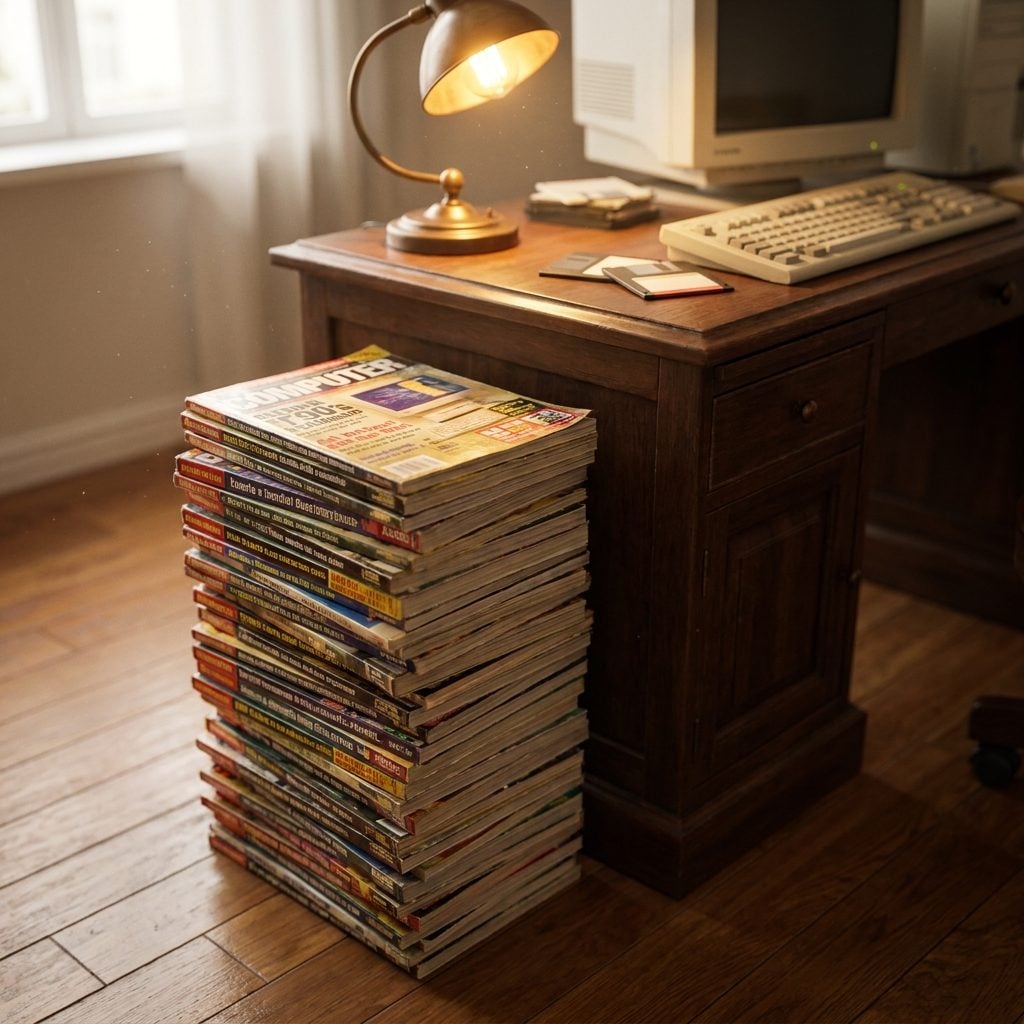
Absurdly heavy, packed with advertisements, and read from cover to cover. The reviews told you which sound card was suddenly essential, which modem had supposedly changed everything, and which new processor had made the computer you bought six months earlier feel prehistoric.
Then there were the cover discs: demos, shareware, utilities, screensavers, and mystery software installed simply because it was there. Issues accumulated beside the desk until the leaning stack became one more piece of furniture.
7. AOL and Other Internet Trial CDs Arriving Constantly
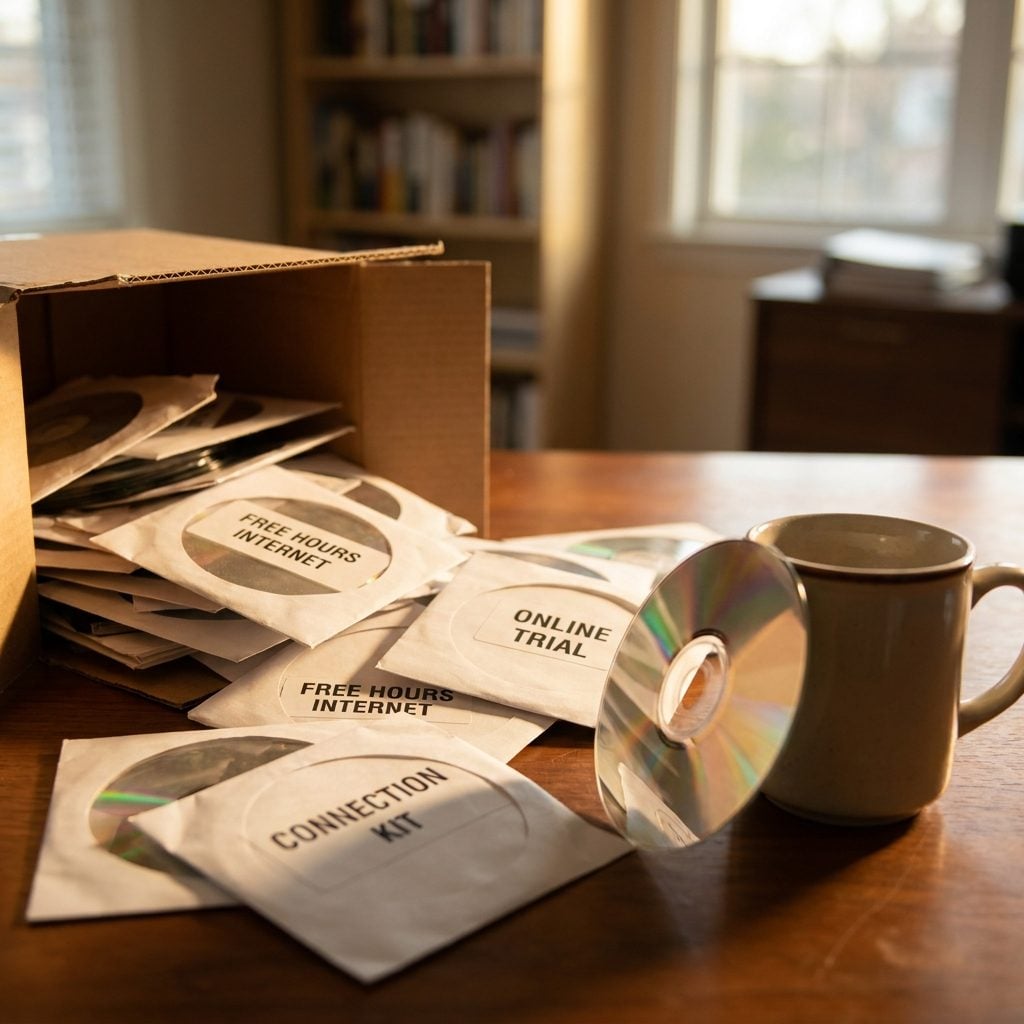
They arrived in the mail, inside magazines, through promotional giveaways, and seemingly anywhere else a shiny disc could be placed. Another trial offer appeared before you had figured out what to do with the previous three.
So households invented secondary uses. Coasters. Bird deterrents in the garden. Craft supplies. Something reflective to hang where nobody particularly needed something reflective. Each disc promised another pile of free internet hours, as though the real scarcity wasn’t access but uninterrupted possession of the family phone line.
6. The Rolodex or Address Book Beside the Phone
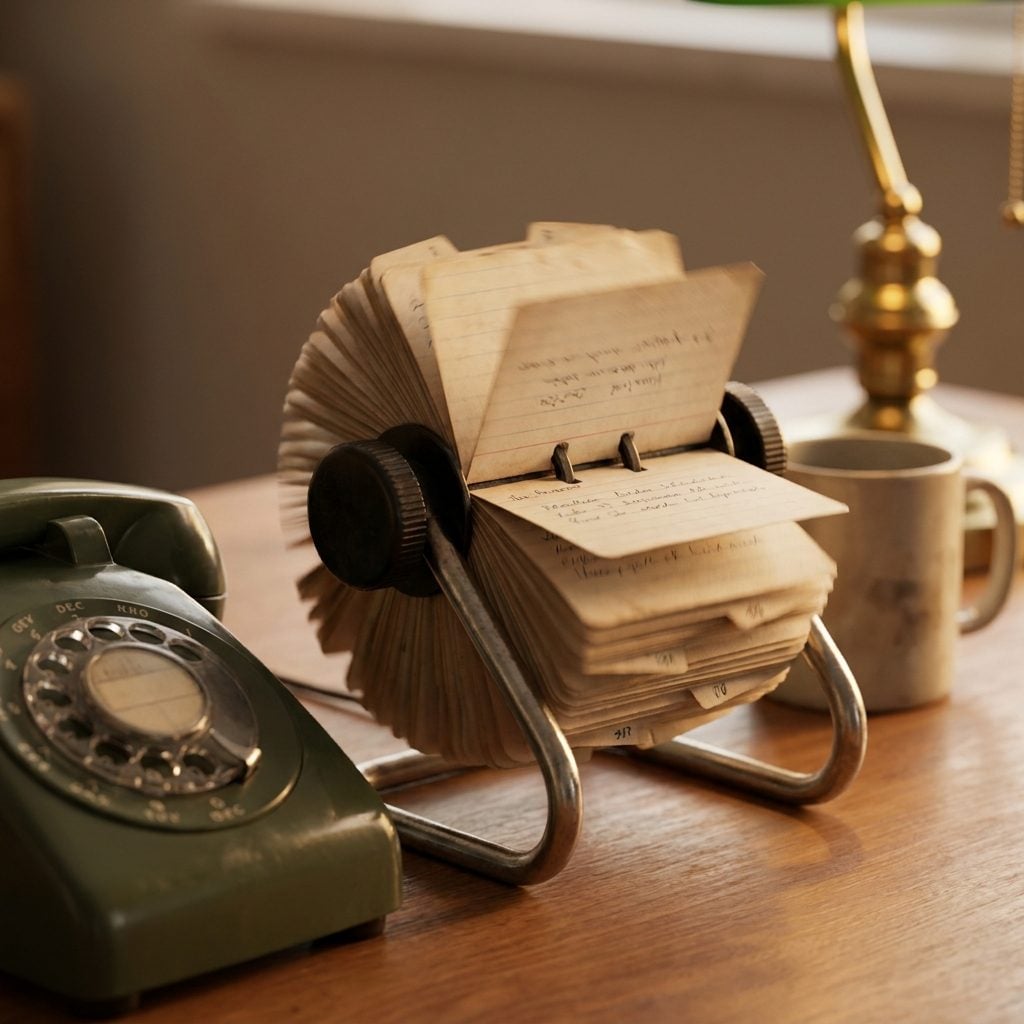
Before contacts lived in your pocket, they lived on little cards you spun with your thumb or on pages covered in handwriting. The most-used entries showed it: soft corners, crossed-out numbers, arrows pointing toward replacements, addresses revised three moves in a row.
That book became the family’s social network on paper. Some entries survived long after the person moved, changed numbers, or disappeared from everyday life. A familiar name written years earlier in somebody else’s handwriting could stop you for a second in a way a perfectly synchronized digital contact never does.
5. The Fax Machine Taking Up Another Corner
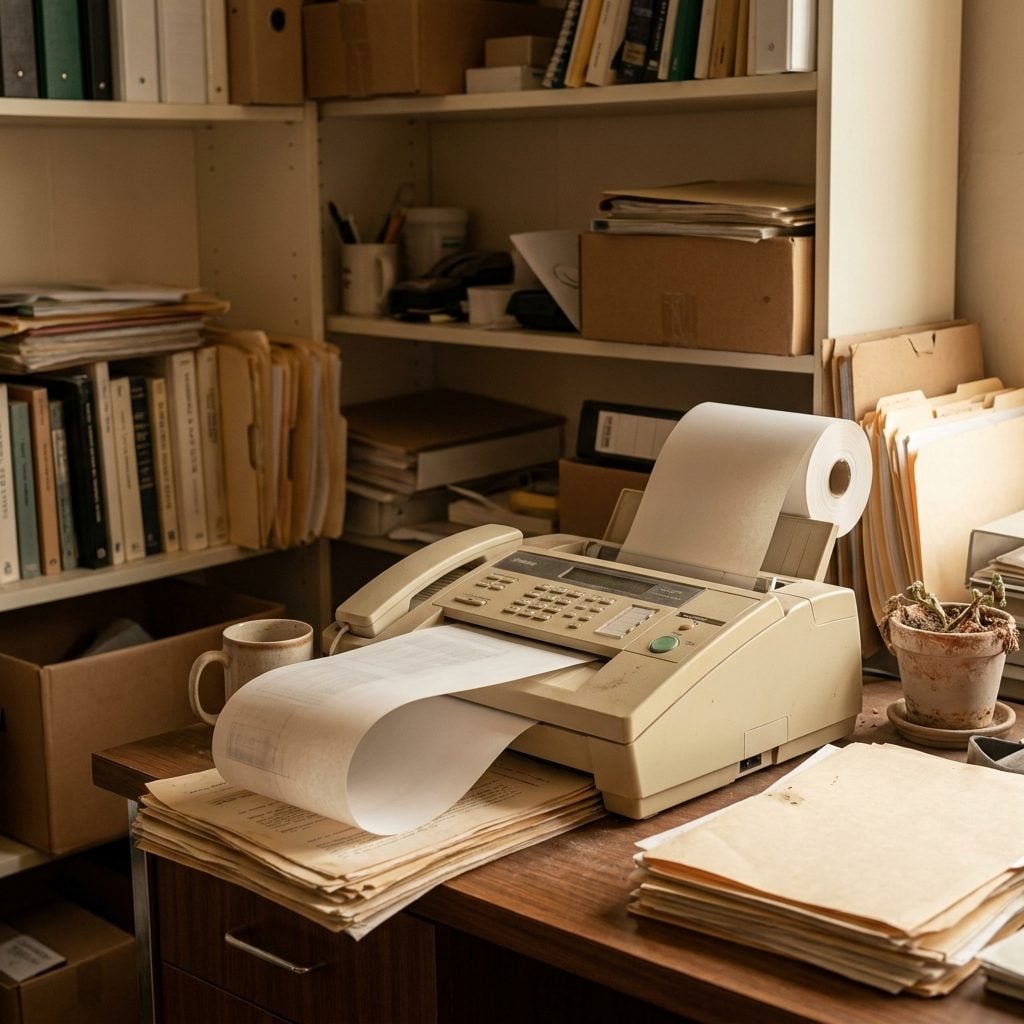
The sound alone. A shrill electronic negotiation over the phone line, followed by the slow mechanical progress of a page emerging from the machine.
Many home and small-office fax machines used thermal paper that loved to curl and could fade badly over time. The fax also wanted access to the same telephone line as everything else, turning one more piece of office equipment into part of the household communications puzzle. Forms, confirmations, signed pages, business paperwork — somehow it all passed through there.
Modern rooms can bury most of that equipment entirely; even a dark black office design looks remarkably calm when it isn’t making space for a fax machine and its paper roll.
4. The Filing Cabinet Full of Household Paperwork
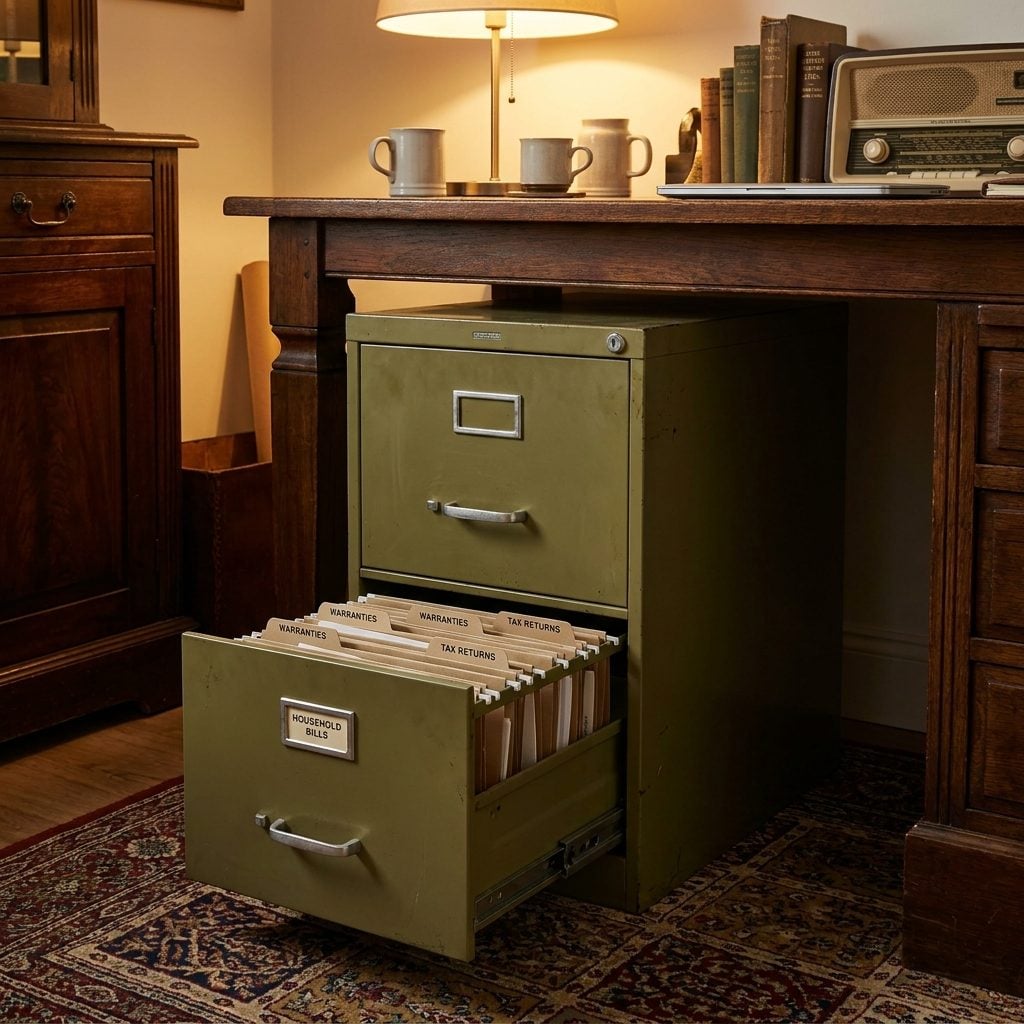
That squat metal cabinet tucked beneath the desk or wedged against the wall held the paper life of a household — vehicle records, insurance documents, appliance manuals for machines that had already broken, and a folder marked TAXES that nobody wanted to open until absolutely necessary.
The drawers stuck, so opening one became a two-step lift-and-pull maneuver. Inside, hanging folders sagged under too much paper, while little plastic label tabs carried handwriting that slowly faded over the years.
Before cloud storage and searchable PDFs, this was where warranties, receipts, statements, and records went to wait for the unlikely day somebody actually needed them.
3. Bills and Bank Statements Stacked in Wire In-Trays
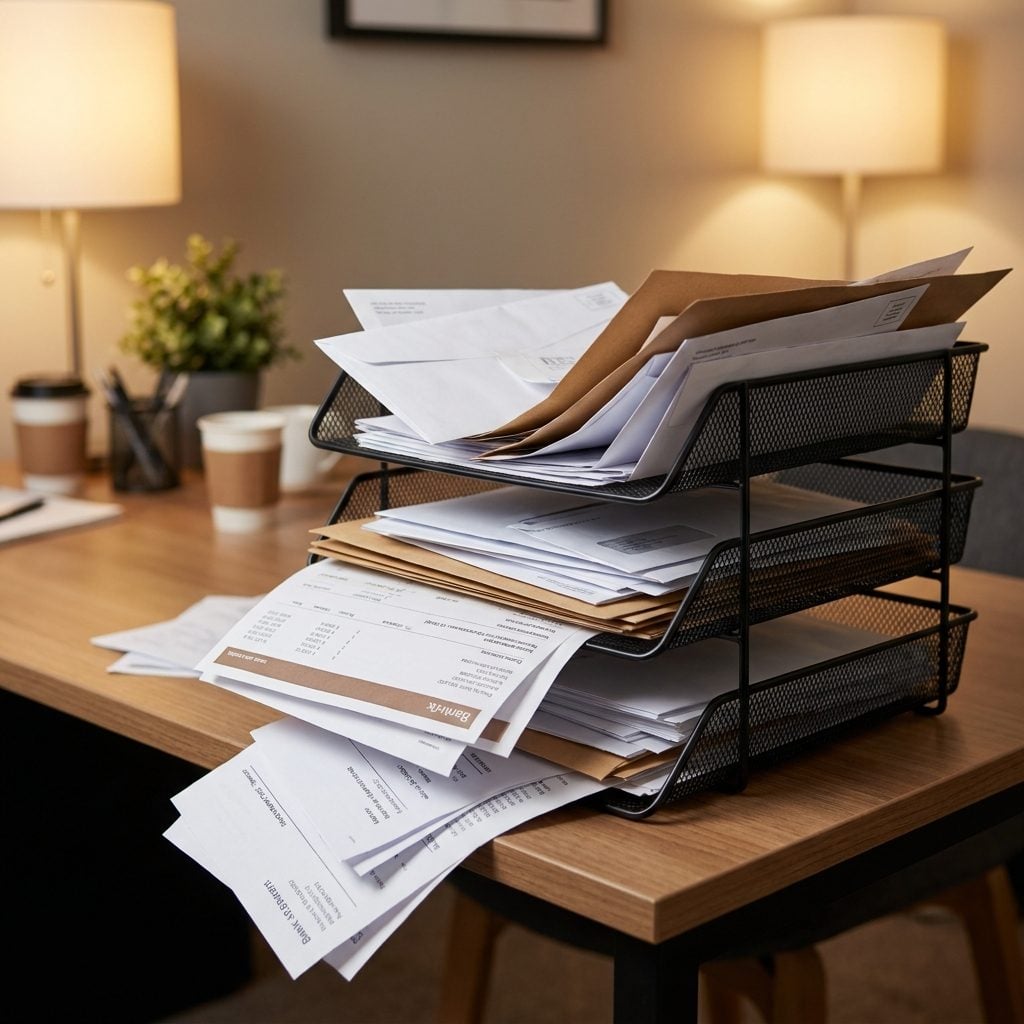
The wire in-tray was the waiting room for money you were about to owe somebody. Two or three black mesh baskets sat stacked on a little riser, and one of them was always fuller than household optimism suggested it should be.
Bills were paid physically at that desk: checkbook, envelopes, stamps, pen, tear-off remittance stubs. Paper bank statements arrived by mail and balancing the checkbook against them became a recurring ritual with its own low-grade tension.
Then the statements went into a folder because someday, somehow, you might have to prove something. Usually you never did.
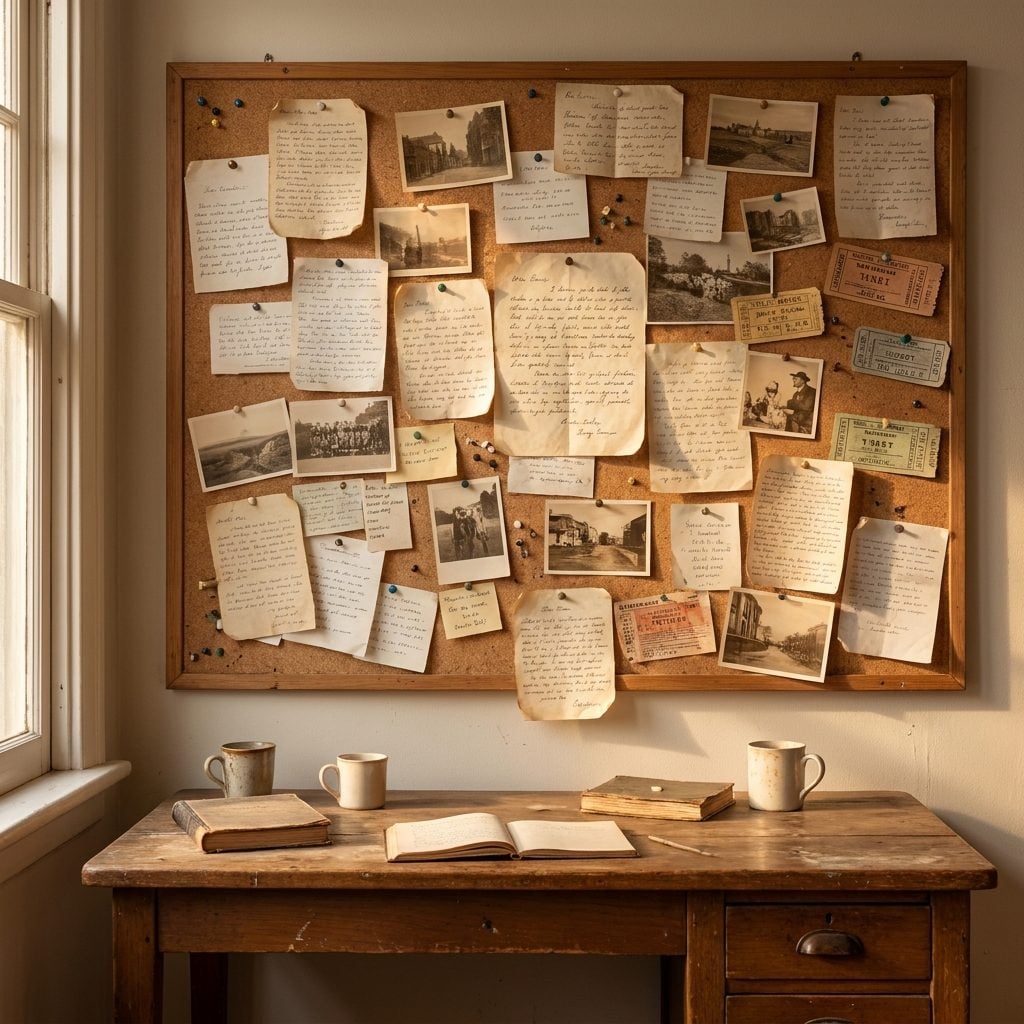
2. The Corkboard Above the Desk, Layered With Six Years of Life
🔥 Would you like to save this?
The corkboard could tell you more about a household than half the furniture. Paper went over paper until the older layers yellowed at the edges and pushpins occupied holes nobody remembered making.
Takeout menus. A kid’s drawing. Dentist appointment cards. A comic strip somebody thought was funny in 1994. A phone number scribbled without a name. There was a system, technically, but mostly it was geology — newer life accumulated over whatever came before.
Mounted above the monitor, the board was half memory and half command center.
1. How the Computer Room Became the Family’s Unofficial Tech Headquarters
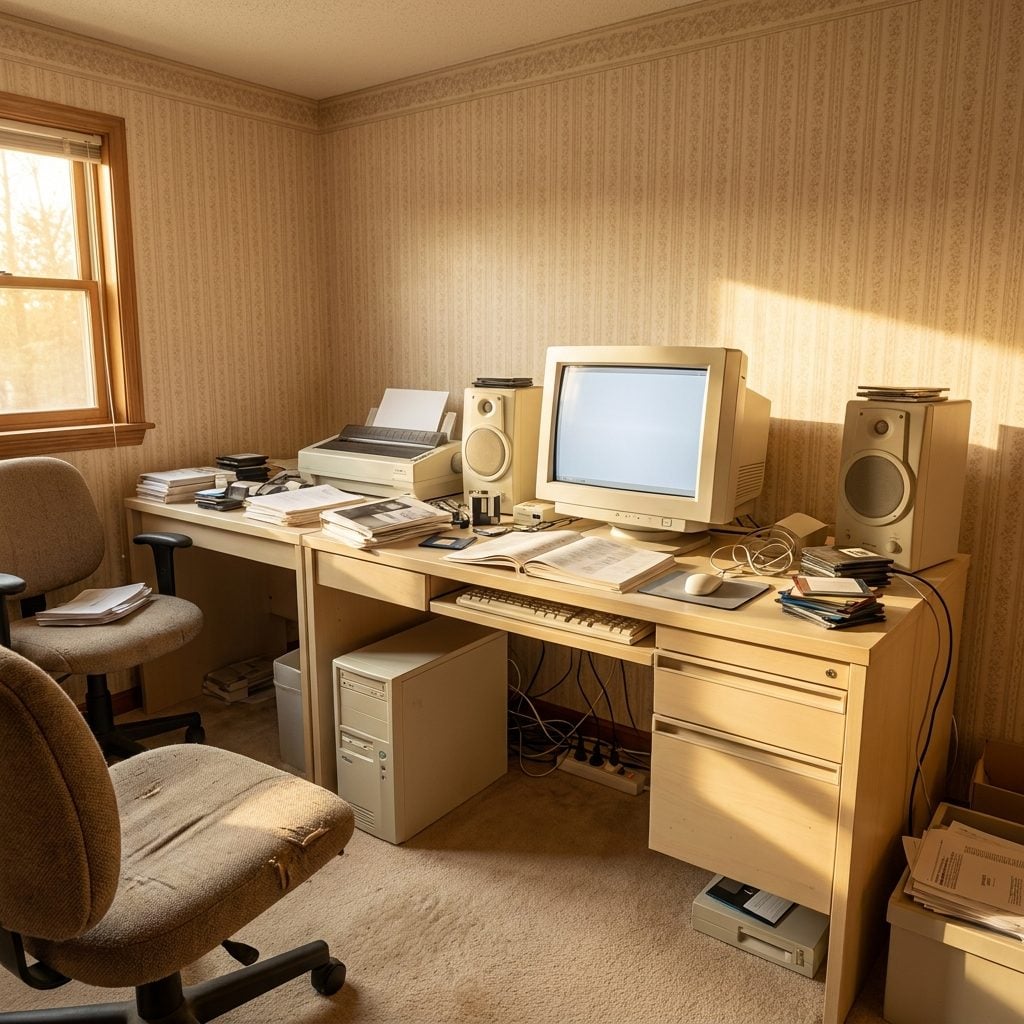
It usually started as a spare bedroom or a corner of the den. Then the computer arrived and slowly annexed the whole space.
School reports were printed there. Someone checked the bank balance. Someone else played Solitaire when they were supposed to be doing something productive. Dad crawled under the desk with a flashlight because the printer had stopped communicating with the tower. Somebody waited impatiently in the doorway for a turn.
The whole family funneled through one machine and one phone line, creating a running negotiation over who got access next. By accident, the room became the household’s technology headquarters, and it held that job until laptops, Wi-Fi, and phones scattered everyone back into separate corners.
One computer, one phone line, and a whole family taking turns. That room was the closest thing a ’90s house had to a control center.
Set it beside a modern home makeover where every room hides its tech, and the old computer room feels almost charming for how proudly it wore its cables.