🔥 Would you like to save this?
The expensive-looking front yard has a dirty little secret: most of its polish comes from editing, not gardening harder. Lose the awkward ribbons of lawn. Stop buying one of every perennial at the nursery. Give a good tree some breathing room. Repeat plants until the repetition looks intentional. Suddenly the yard feels less like weekend work and more like something an expensive landscape designer quietly left behind.
In order to come up with the very specific design ideas, we create most designs with the assistance of state-of-the-art AI interior design software. Also, assume links that take you off the site are affiliate links such as links to Amazon. this means we may earn a commission if you buy something.
That is the game across these front yards. Some trade thirsty turf for groundcover, grasses, gravel, or broad planting beds. Others lean on long-lived trees, evergreens, drought-tough herbs, native plants, or one spectacular patch of thyme between the pavers. None is maintenance-free — gardens are living things, after all — but each one shifts the work away from mowing, edging, replanting, and constant fussing. The result is the useful kind of luxury: a front yard that looks as though somebody is always tending it when, most weeks, nobody is.
33. One Flowering Tree Doing the Work of an Entire Flower Bed
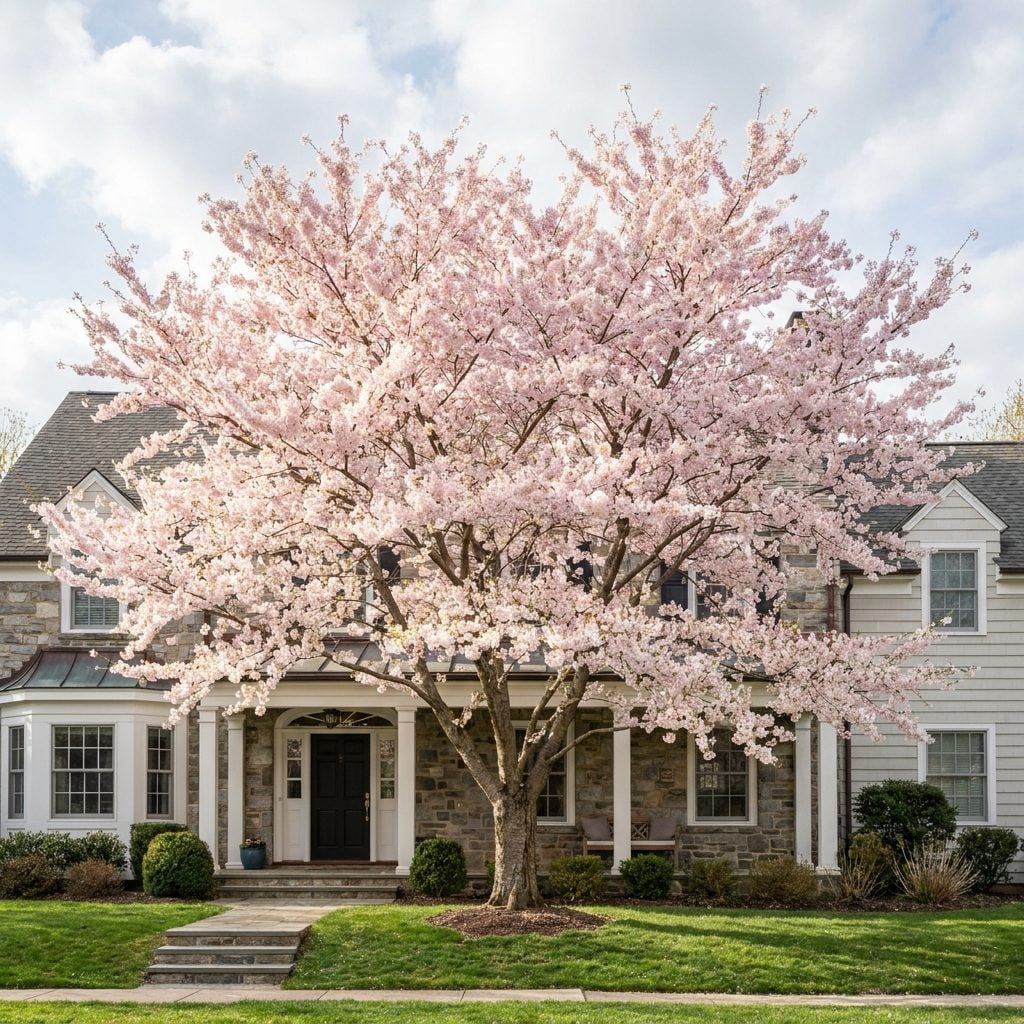
A good ornamental tree can deliver more curb appeal than an overstuffed border without requiring twenty different plants to cooperate. Give it room and let the silhouette earn its keep.
Set the tree slightly off-center in a simple lawn or broad bed, underplant it with an easy groundcover, and resist the urge to keep adding. Spring brings the flowers; summer brings shade and foliage; bare branches can carry the composition through winter. Choose a species suited to the site and most of the work happens in the first few years while it establishes.
32. Large Landscape Islands Cutting the Lawn Almost in Half
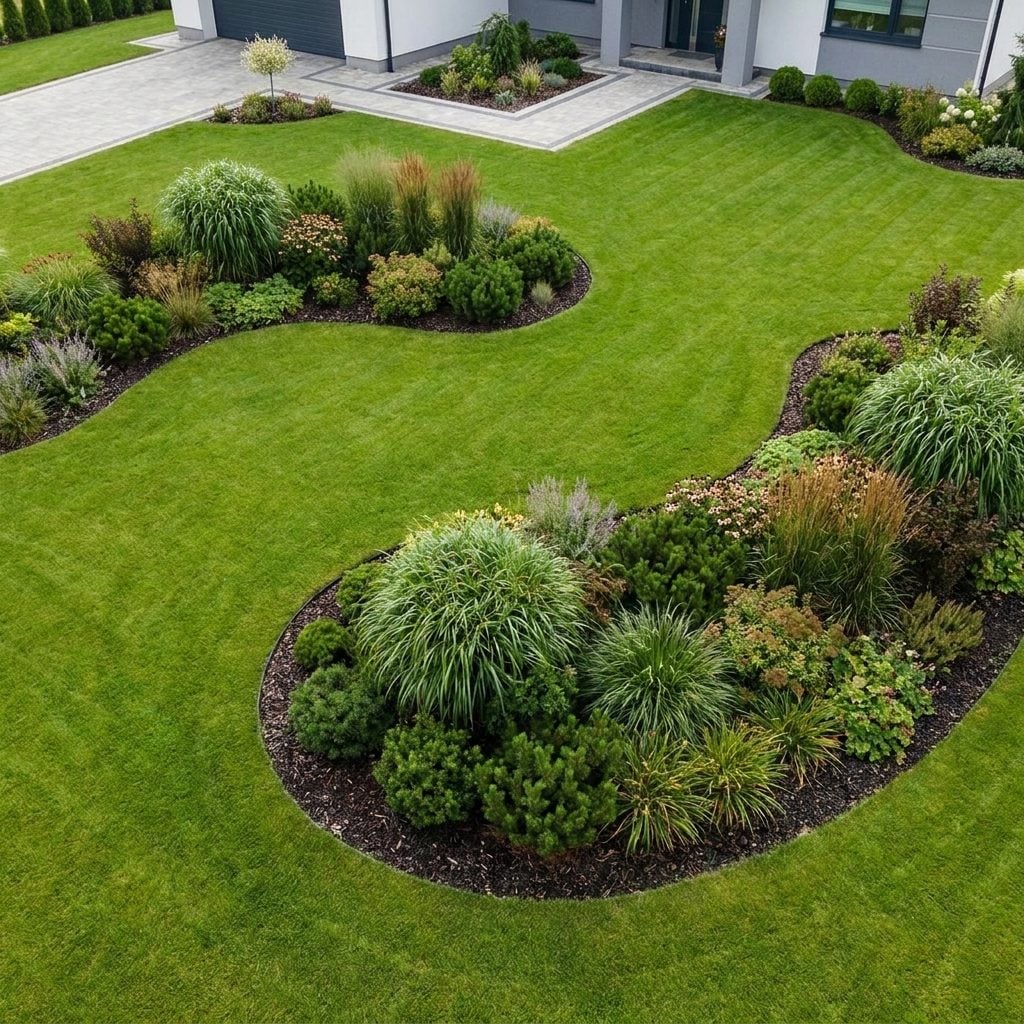
Two generous planting islands beat a dozen apologetic little beds. They look more deliberate, hold more plants, and leave the mower with fewer ridiculous corners to negotiate.
Build each island around an anchor — a small tree or substantial shrub — then repeat a middle layer and let perennials or groundcover knit across the floor. The remaining lawn stays broad enough for long mowing passes, while the planted areas swallow territory that used to demand cutting every week. Less turf, fewer edges, more garden.
31. A Traditional Brick Home With Simplified Classic Landscaping
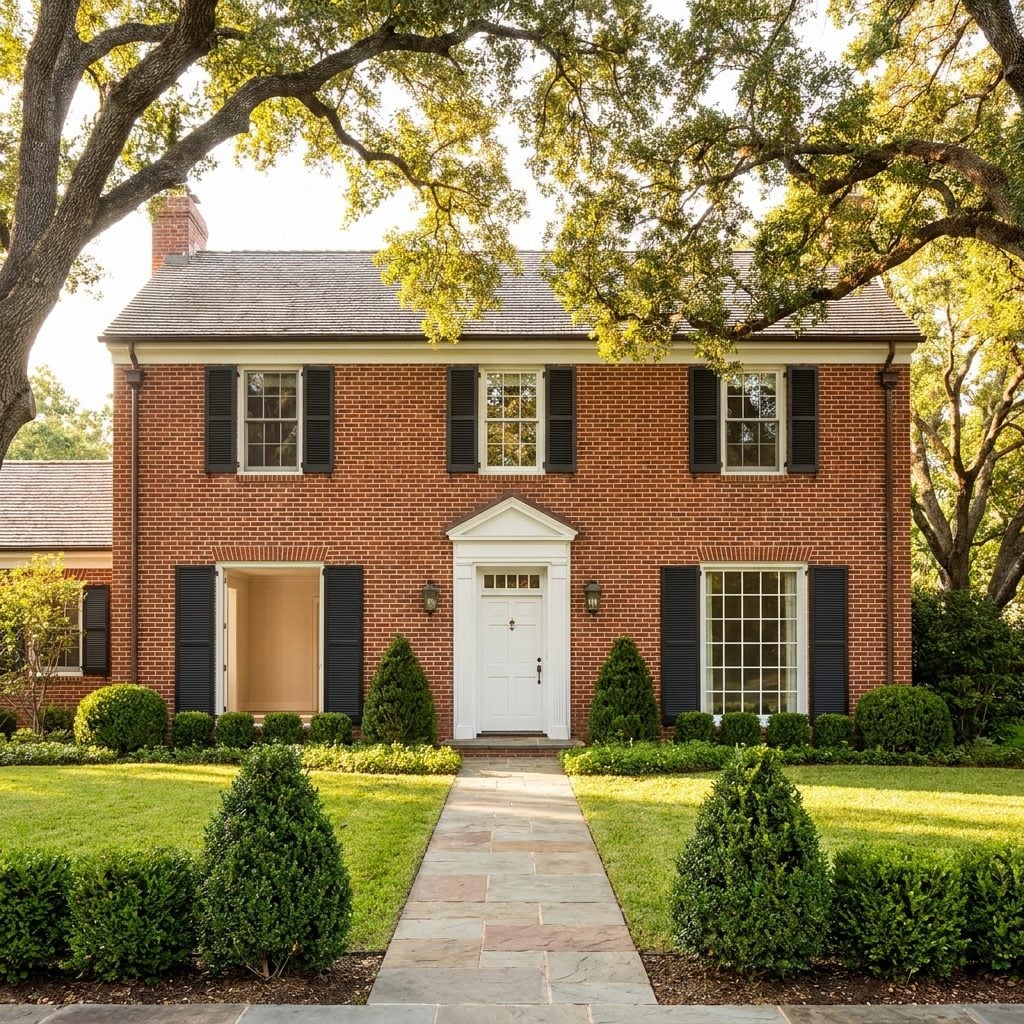
Traditional landscaping can smother a perfectly good house under a convention of tiny foundation shrubs. This yard edits instead. A handful of compact boxwood establish a green baseline, hydrangeas soften one corner, and enough brick remains visible to remind you there is architecture back there.
The sophistication comes from what isn’t planted. Fewer varieties create repetition, repeated shapes create rhythm, and one ornamental tree in the lawn can carry more visual weight than a dozen unrelated shrubs jostling beneath the windows.
30. A Front Walk Lined With Long-Lived Plants Instead of Annual Flowers
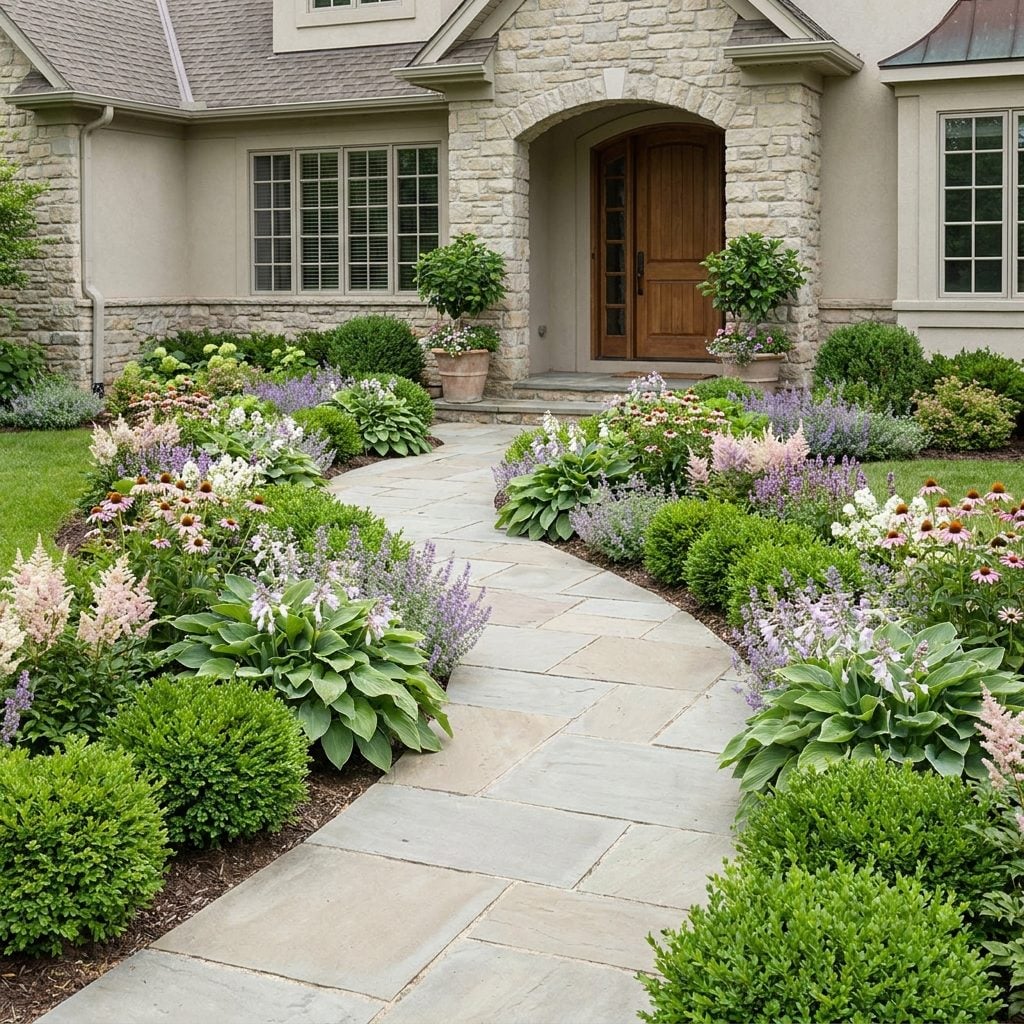
Annual bedding is gardening on a subscription plan. Buy it in spring, enjoy it for a season, watch it disappear, then meet the same flats at the garden center next year.
This walk builds its color from plants that return. Catmint and lamb’s ear loosen the path edge, coneflower and compact hydrangea rise behind them, and the palette repeats instead of changing every three feet. There will still be pruning and cleanup, but the basic composition doesn’t have to be purchased again every April.
The luxurious move isn’t more flowers. It’s planting the ones that know how to come back.
29. Groundcover Replacing the Lawn Nobody Enjoyed Mowing Anyway
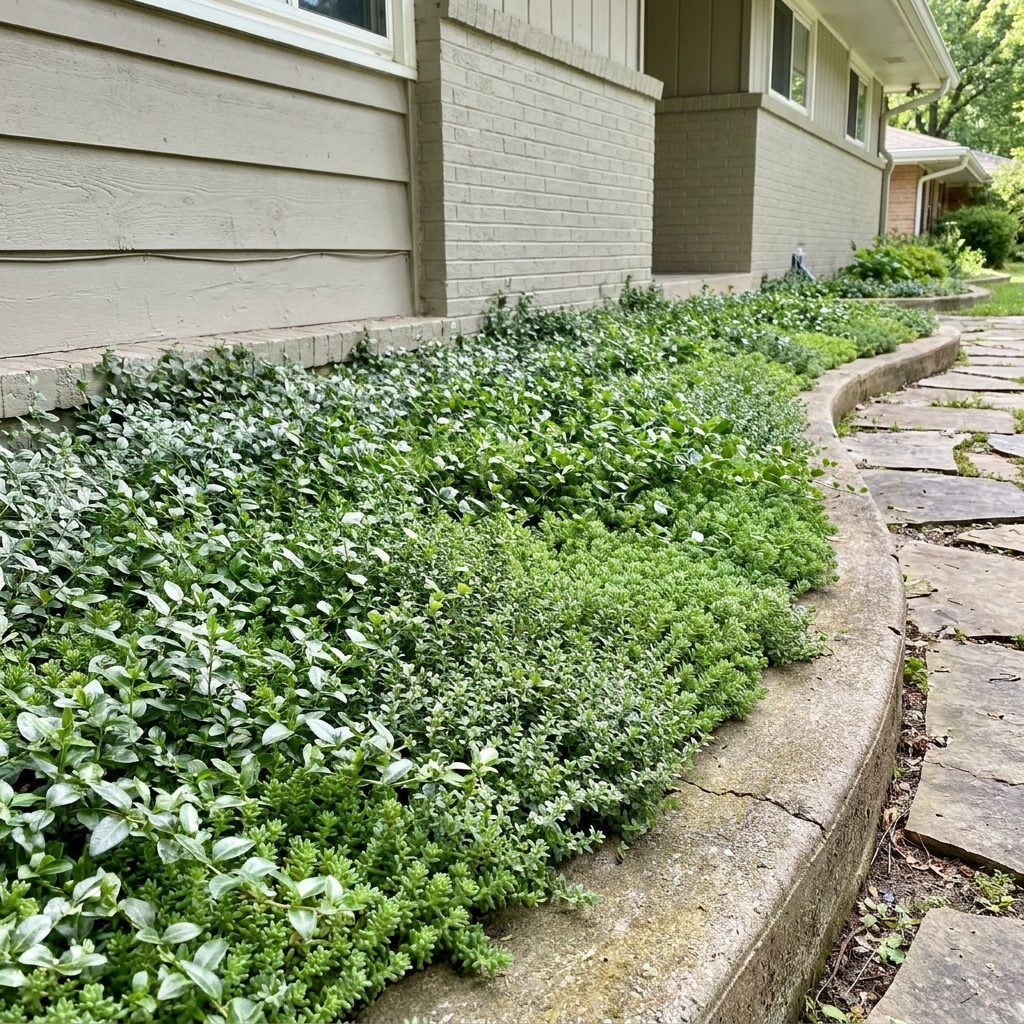
Anyone who has mowed around a ranch house knows the enemy: the miserable ribbon of grass between foundation bed and wall, too narrow for a clean pass and apparently designed to justify owning a string trimmer.
Plant it out. A dense groundcover can absorb narrow strips, inside corners, and other bits of turf that never contributed much except work. Keep a broad central lawn if you like the green, but eliminate the pieces that force the mower into a three-point turn.
28. Long-Blooming Perennials Planted in Bold Repeating Drifts
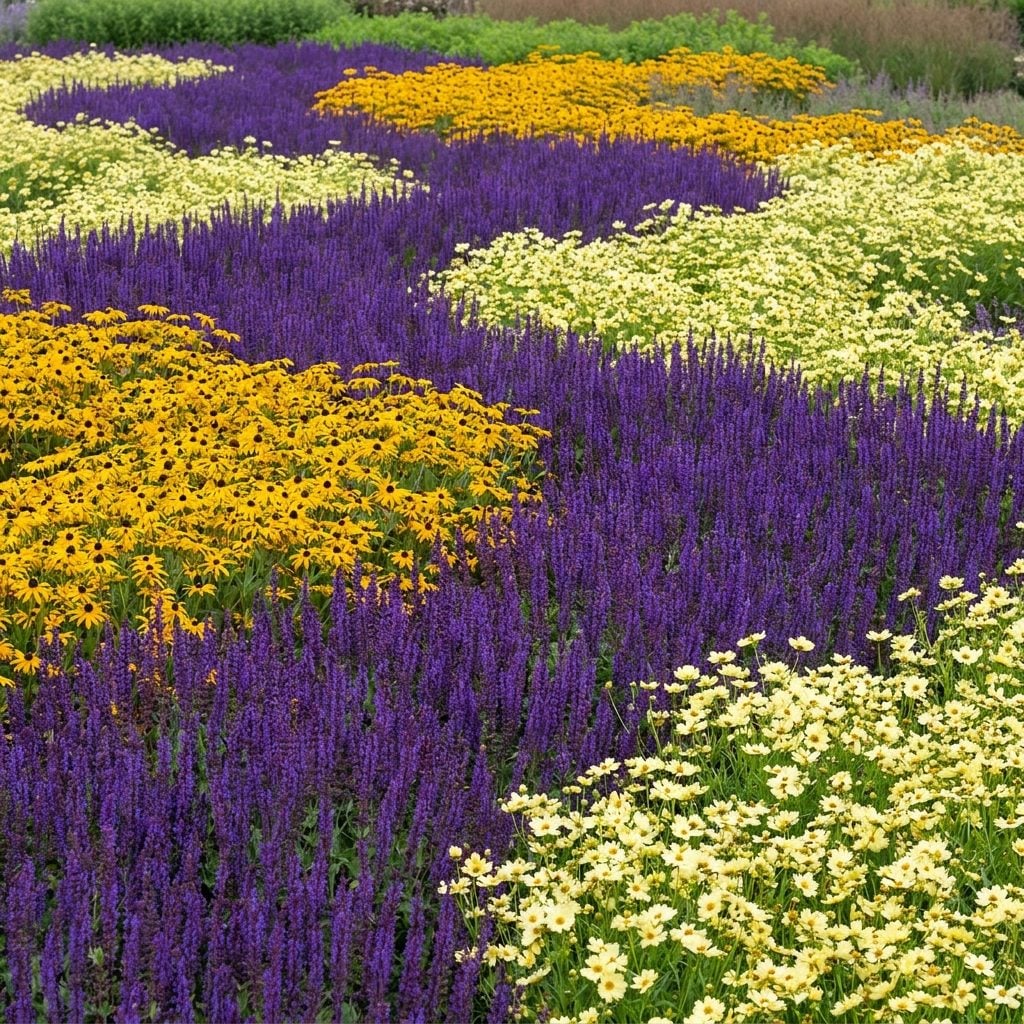
The perennial aisle encourages terrible behavior. One purple thing, one yellow thing, something with an interesting leaf, something whose tag you lose on the drive home — and suddenly the border resembles a botanical garden’s clearance table.
Drifts fix the problem. Choose a small cast of reliable performers and plant them in broad, interlocking sweeps. Repetition lets color travel through the yard instead of popping up randomly, and choosing long-season plants reduces the number of prima donnas that need constant coaxing to keep the show going.
Repetition is the difference between a garden and a plant collection.
27. A Polished Pollinator Garden With Crisp Defined Edges
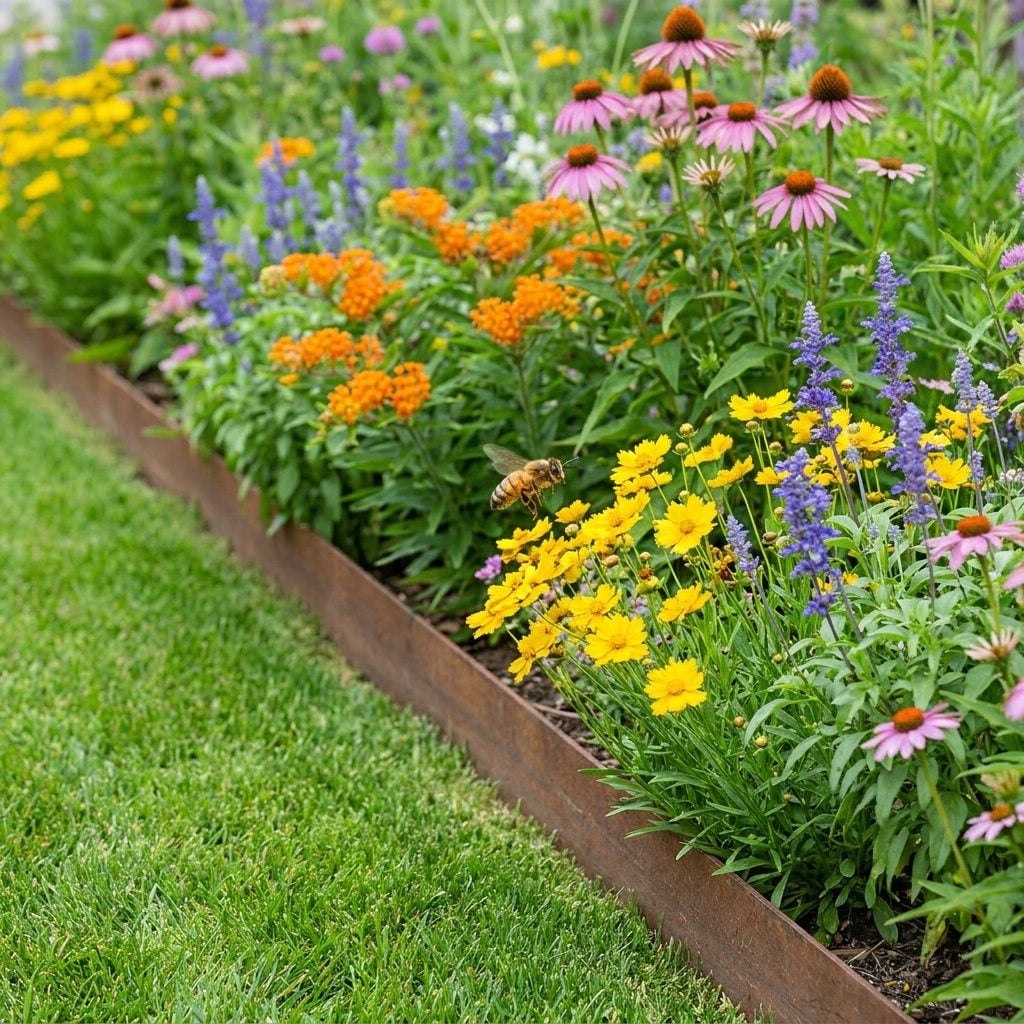
Pollinator gardens have a public-relations problem. Say the phrase and somebody immediately pictures a roadside ditch with a small sign asking the neighbors not to complain.
A sharp boundary changes the whole reading. Inside the line, flowers can lean, seed heads can stay standing, and native perennials can behave like plants rather than soldiers. Around it, a clipped lawn edge, path, or low evergreen framework says the looseness is deliberate. Wildlife gets the useful mess. The street gets the polish.
26. Ornamental Grasses Framing a Sweeping Front Walk
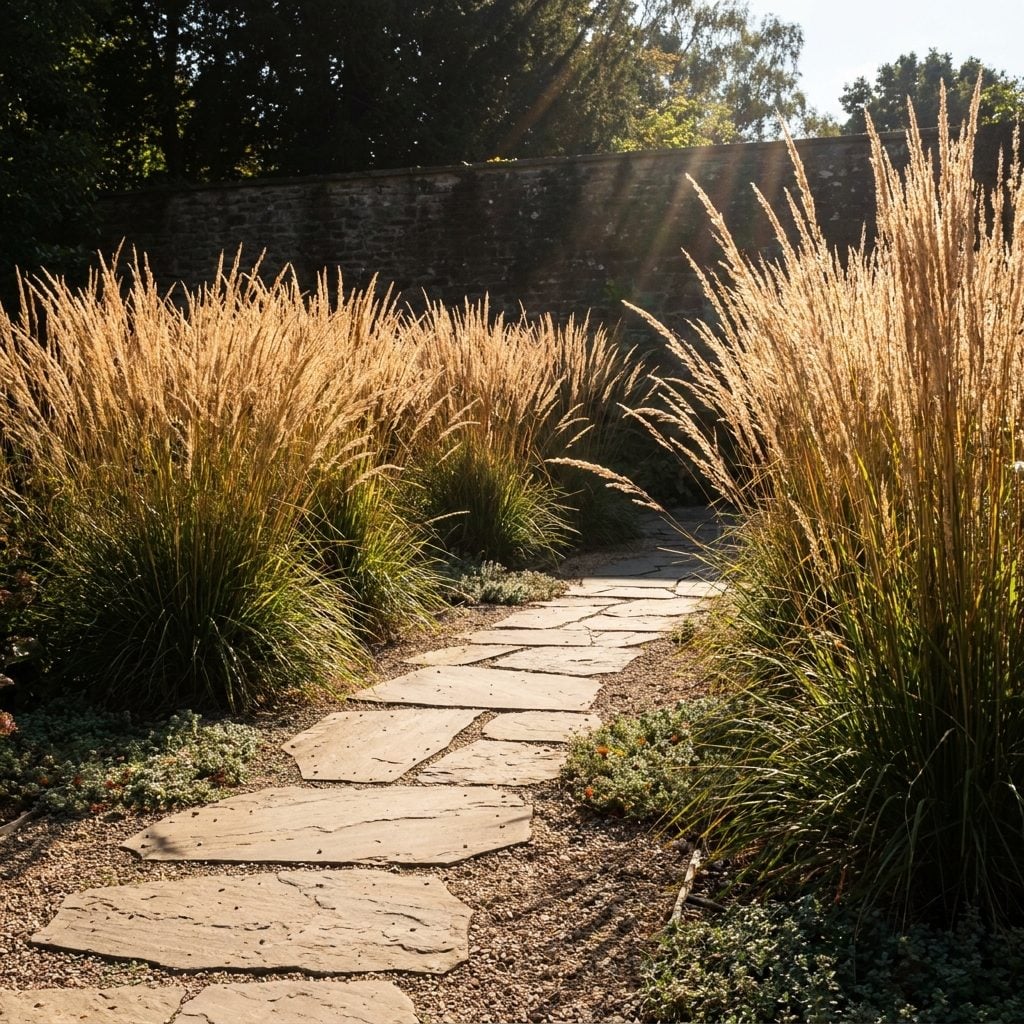
A well-chosen ornamental grass is almost unfair. It gives you height, texture, movement, seed heads, winter structure, and the occasional cinematic breeze without demanding a flower border’s supporting cast.
Here the grasses follow the curve of the walk in broad masses rather than standing around as individual specimens. Fine blades soften the hard path, taller clumps interrupt the sightline, and late light catches the seed heads like somebody installed tiny lamps inside them. Many deciduous grasses need little more than an annual cutback once established, though the right species for the climate matters.
25. Layered Evergreen Foundation Beds With Year-Round Structure
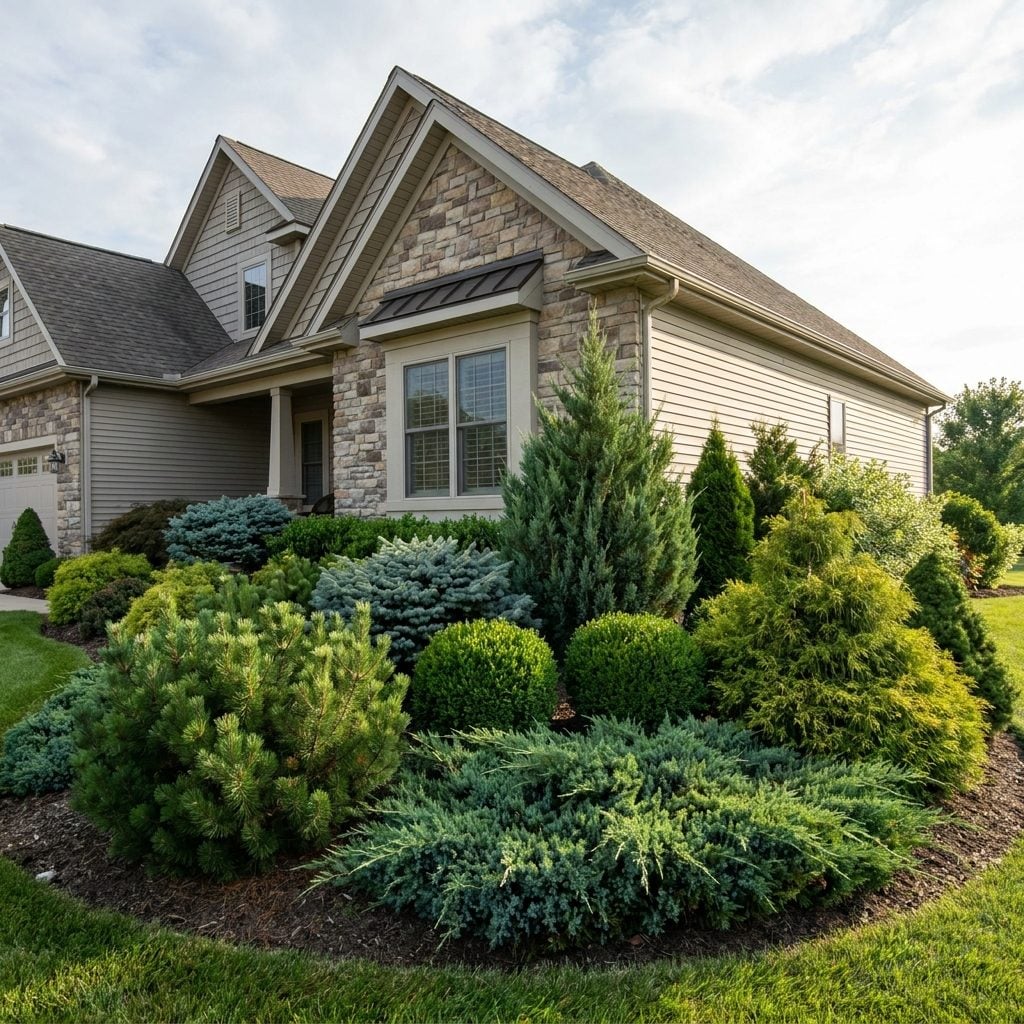
Evergreens are the structural engineers of the easy-care garden. When the perennials disappear and the deciduous shrubs are down to twigs, they are still standing there holding the composition together.
The trick is shape rather than quantity: upright forms near the corners, mounded shrubs through the middle, something low spreading along the edge. Three or four repeating types are enough. The bed looks layered because the forms change, not because the plant list requires a spreadsheet.
24. A Gravel Garden So Lush You Barely Notice the Gravel
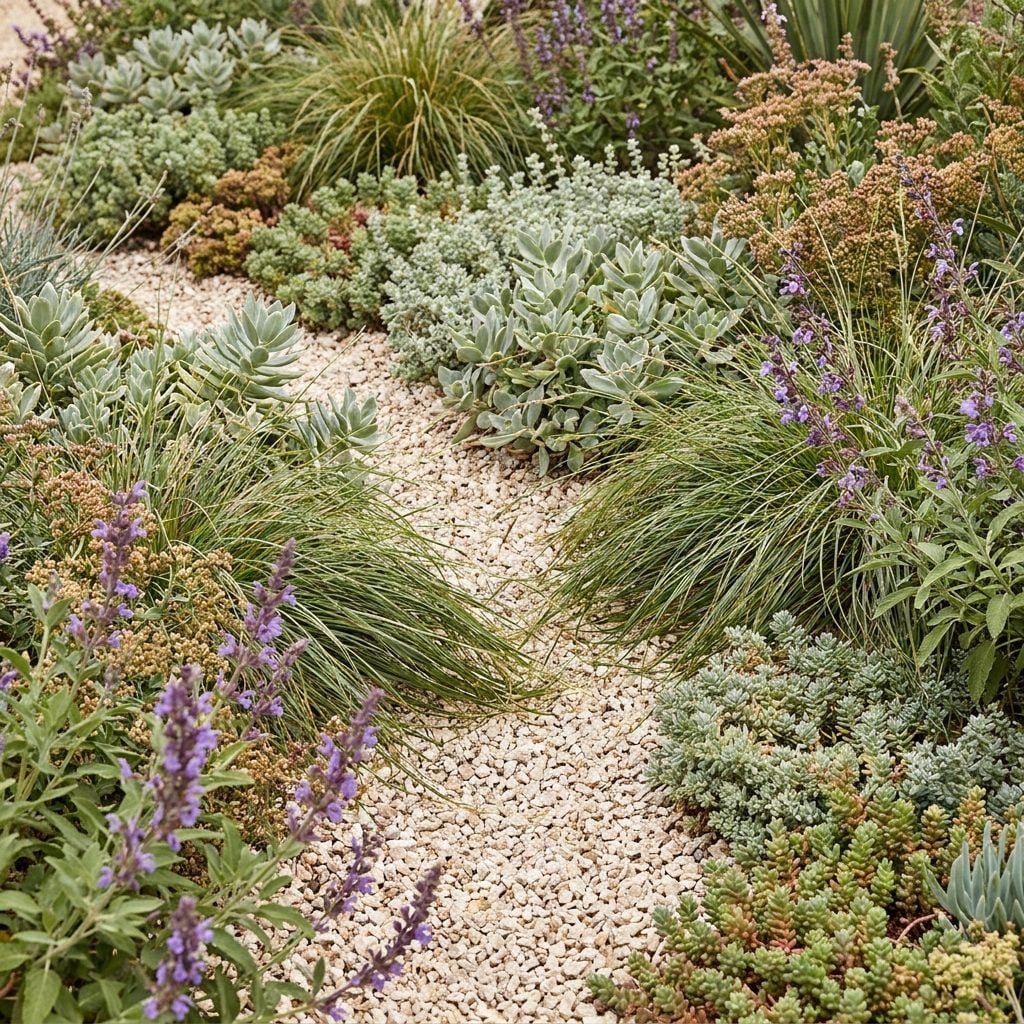
“Gravel garden” has been badly damaged by yards that resemble parking lots with three plants dropped in as witnesses.
The better version treats gravel as flooring, not scenery. Drought-adapted perennials and airy shrubs overlap until the stone appears only in flashes between them. Architectural plants give the softer masses something to push against. The result looks abundant rather than arid while reducing thirsty lawn, regular mulch replacement, and — once the planting closes in — a fair amount of weeding.
23. Three Repeating Shrubs Making the Whole Yard Look Designed
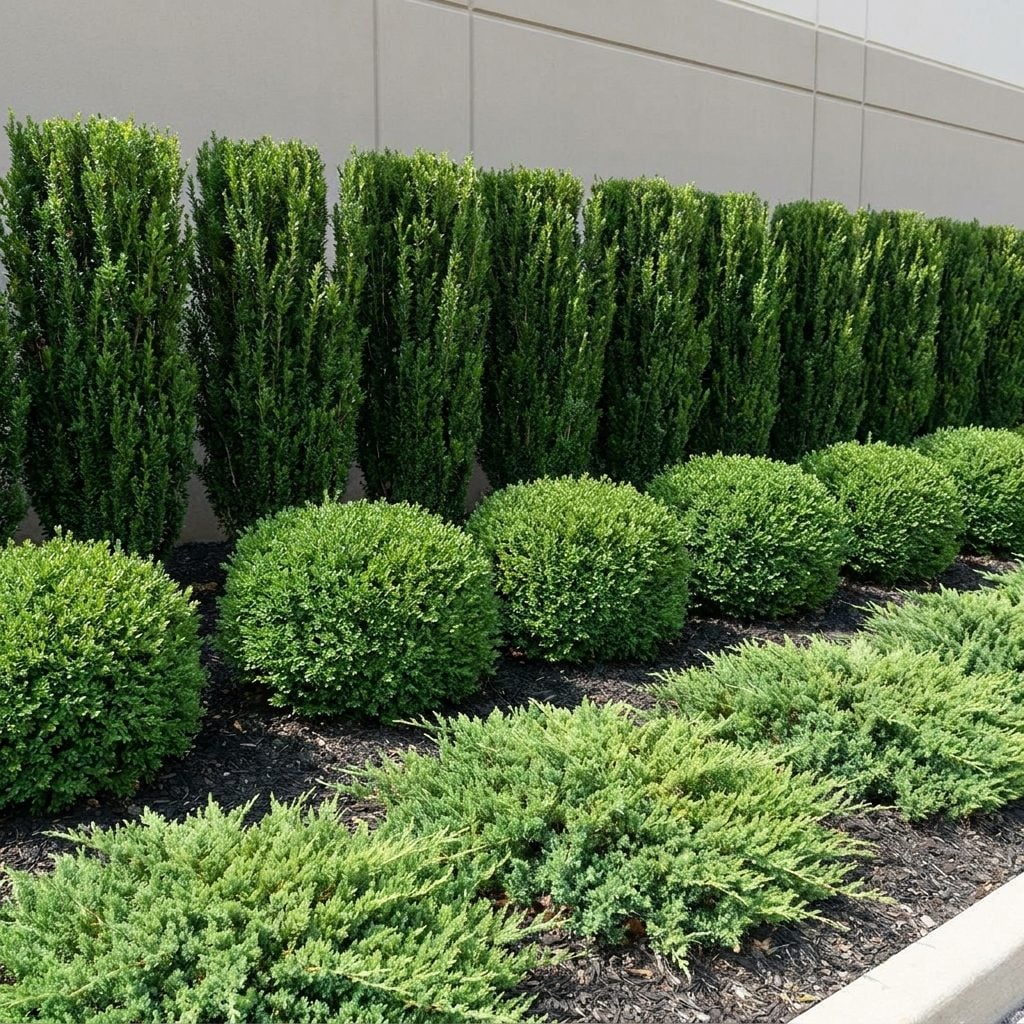
Three shrubs. That’s practically the entire vocabulary. One has height, one fills the middle, one stays low — then the same characters keep reappearing until the property starts looking suspiciously organized.
A limited palette means fewer plants to learn, fewer pruning requirements to remember, and fewer random replacements when something turns out to hate the site. Group them in loose masses rather than alternating them like parking-lot landscaping and the restraint starts looking expensive.
22. Native Plants Given the Same Discipline as a Designer Garden
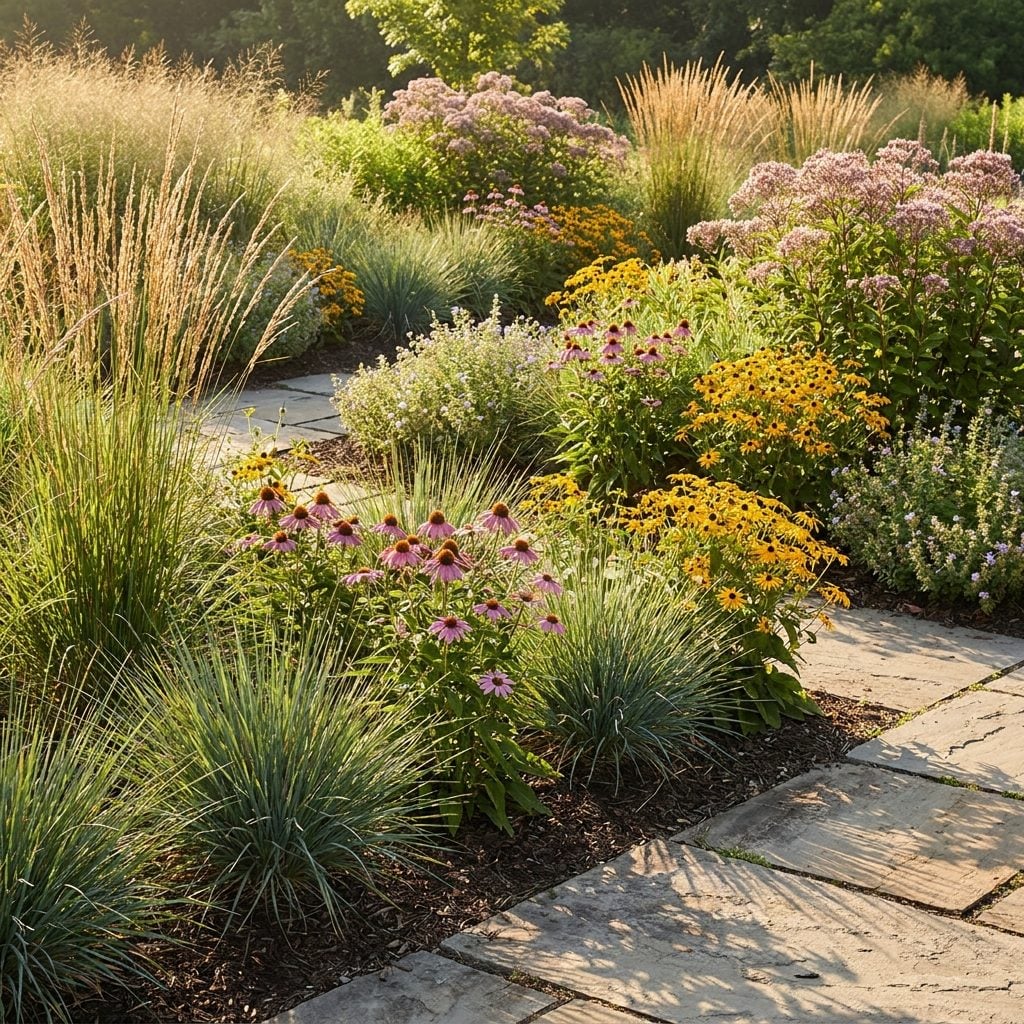
Native planting doesn’t have to look as though the wind handled the installation. The plants may be local; the composition can still have manners.
Repeat species in masses, establish clear height layers, and leave deliberate breathing room between the strongest groups. Flowering plants, seed heads, grasses, and foliage can all appear at once without becoming visual static. When the species are genuinely suited to that site’s soil, moisture, and exposure, they can also need far less supplemental care after establishment.
21. A Courtyard-Style Front Yard With Almost Nothing to Mow
🔥 Would you like to save this?
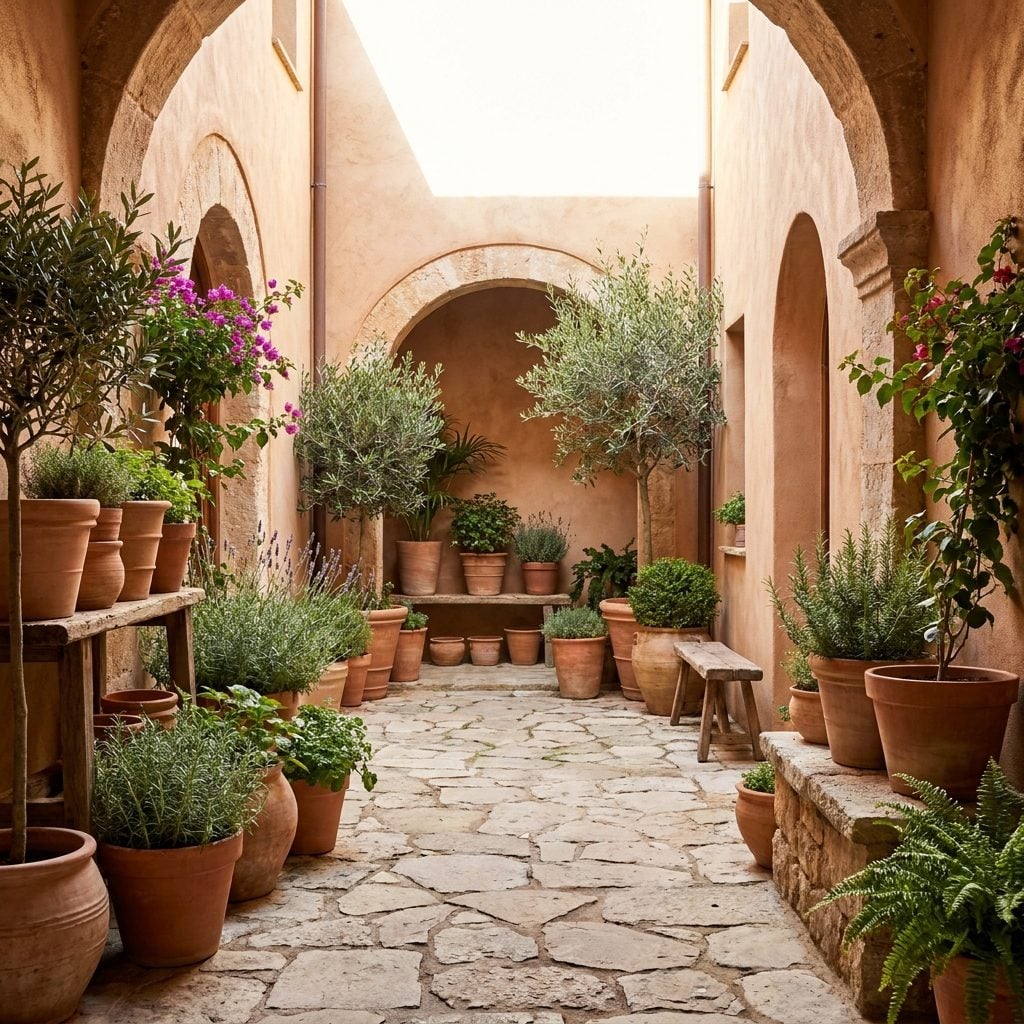
Replacing lawn with paving can go wrong fast. Too much hard surface and the front yard starts feeling like somewhere a restaurant stacks tables after closing.
The fix is to let the planting press back in. One shade tree, layered shrubs, groundcover spilling toward the flagstone, perhaps a pair of low chairs where there used to be grass nobody enjoyed maintaining. You haven’t eliminated upkeep — paving still needs cleaning and joints need attention — but the weekly mower circuit has largely vanished.
20. A Four-Season Foundation Garden That Doesn’t Start Over Every Spring
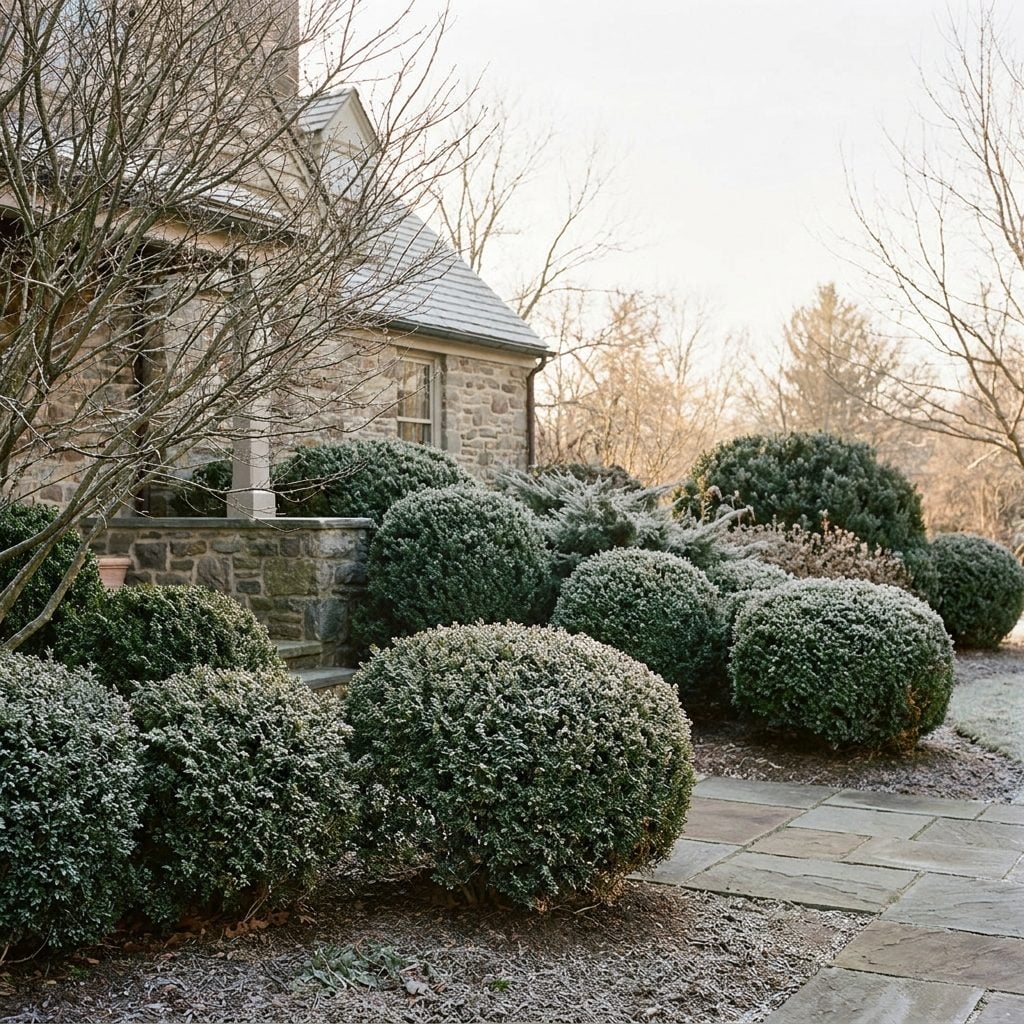
This bed isn’t asking every plant to be spectacular all year. That’s the reason it works. Dwarf evergreens hold the bones, deciduous shrubs handle color changes, grasses turn tawny, and a small tree supplies another layer once the leaves drop.
The serviceberry earns particular respect here. Bark and branching become part of the winter composition rather than something to apologize for until spring. The maintenance advantage is longevity: most of the plants remain in place year after year instead of turning the foundation bed into an annual renovation.
19. A Cottage Garden That Looks Abundant but Behaves Itself
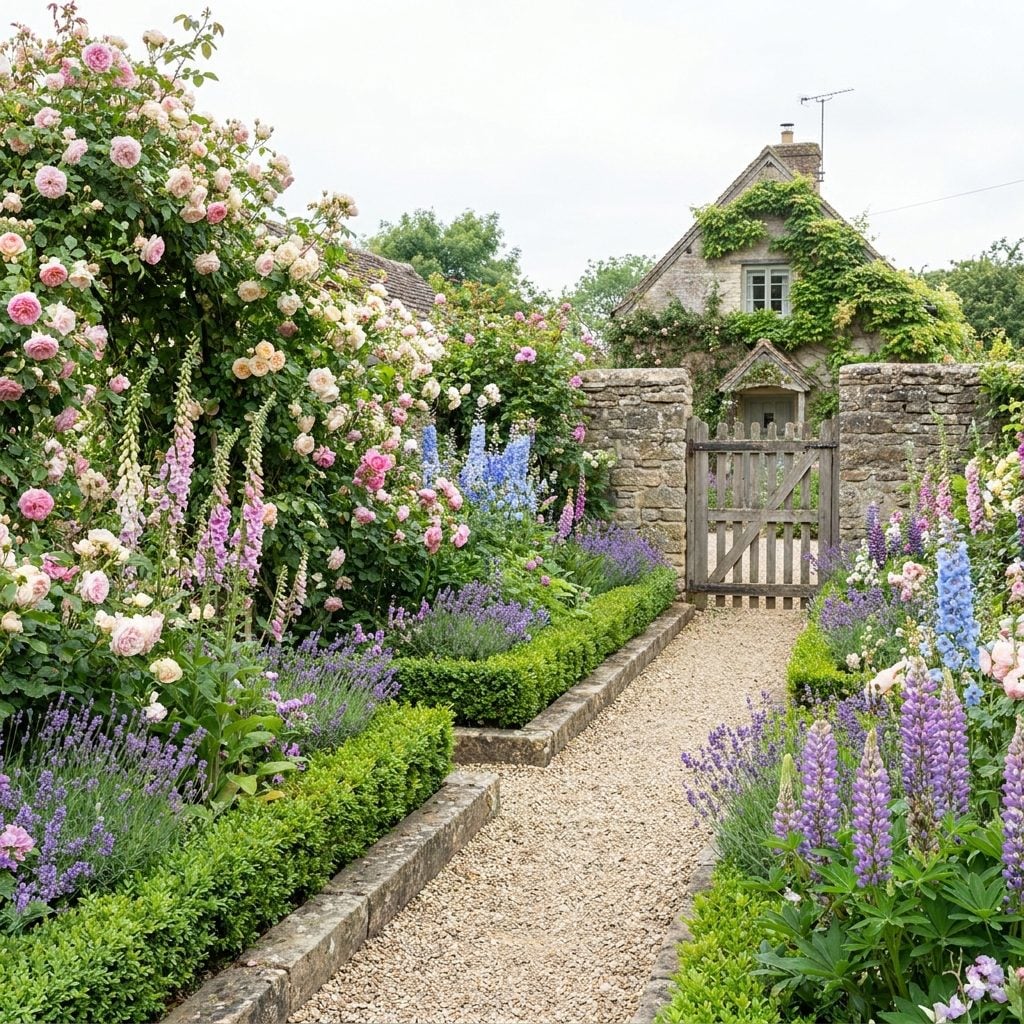
The classic cottage garden can become a second job wearing flowers. This one cheats the effect with tough perennials and shrubs repeated generously enough to create abundance without rebuilding the border every spring.
Catmint, salvia, and daylilies spill toward a flagstone path that remains deliberately visible. A climbing rose gets a trellis and a clearly defined piece of territory. There will still be seasonal pruning, division, and cleanup, but the romance comes from permanent plants rather than trays of annuals and botanical chaos.
18. Extra-Deep Borders Erasing the Fussiest Lawn Edges
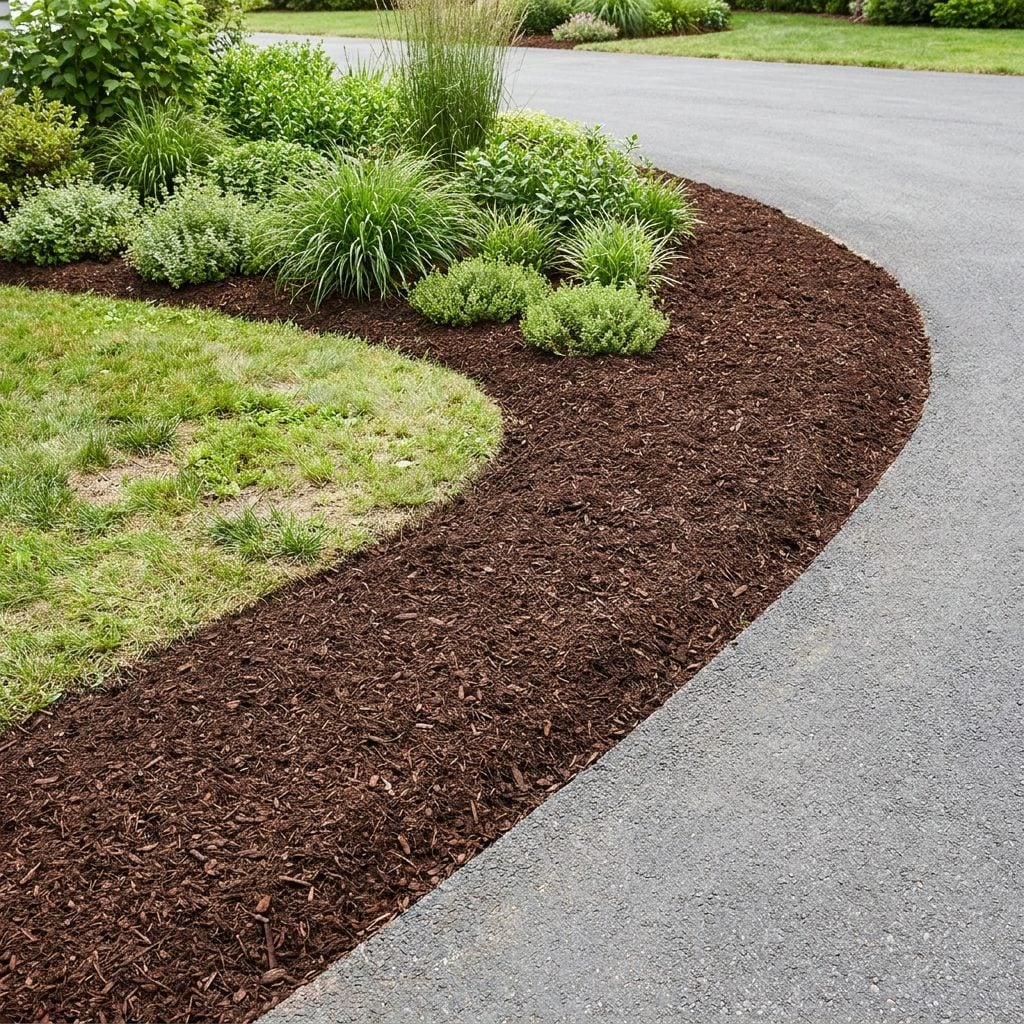
That skinny strip of grass between the driveway and the flower bed is not lawn. It is punishment with chlorophyll.
Widen the border until the awkward mowing strip disappears, then plant deeply enough that mulch becomes a background rather than the main visual event. One broad lawn with easy curves is faster to mow than several pinched fragments, and mature shrubs and groundcover eventually occupy territory that once needed weekly cutting.
17. A Single Japanese Maple Anchoring an Otherwise Quiet Bed
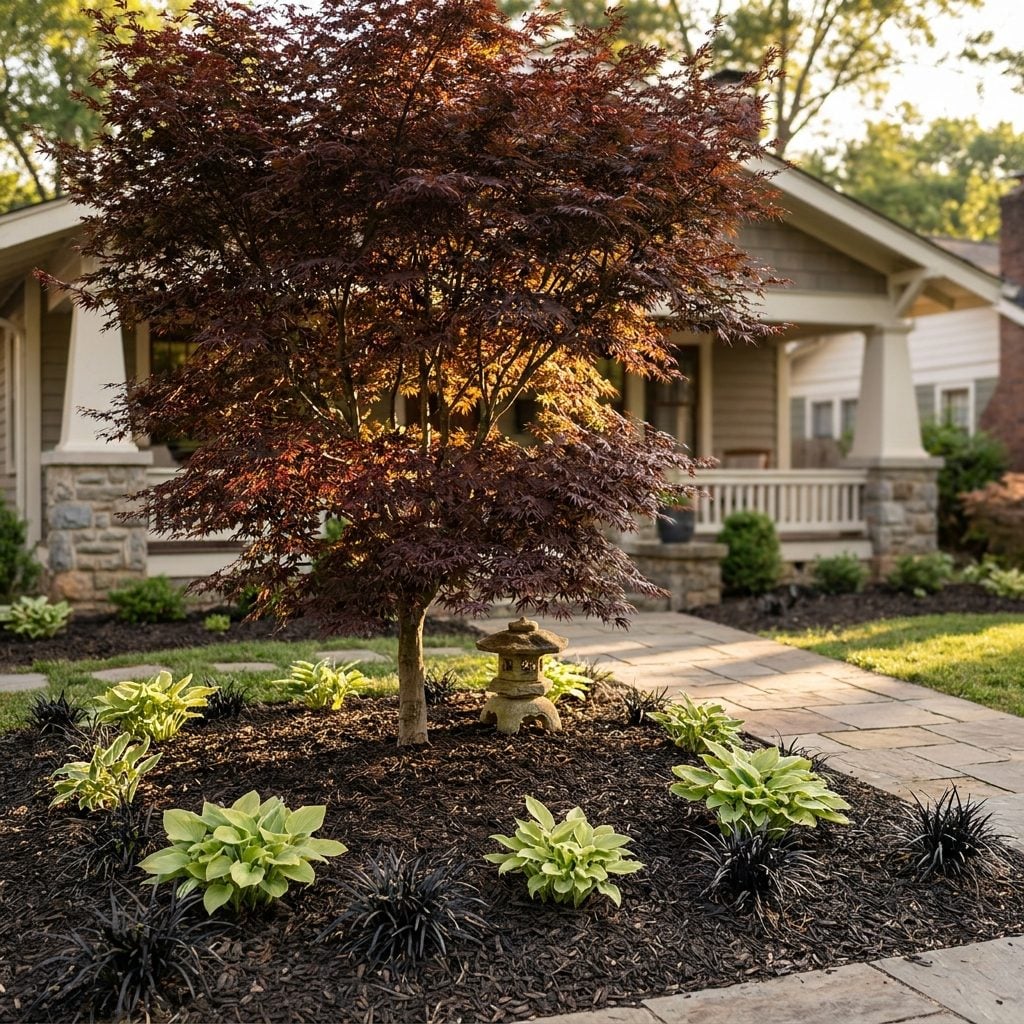
A strong specimen tree gives everything around it permission to stop auditioning. Here a burgundy Japanese maple supplies the canopy, color, and finely cut foliage while the understory plays a very disciplined backup role.
Hostas and black mondo grass stay low, dark mulch lets the foliage jump forward, and nothing competes with the tree for billing. Japanese maples aren’t universally carefree — exposure, drainage, heat, wind, and cultivar all matter — but in a suitable site their slow growth can make them remarkably civilized anchors.
16. Rounded Evergreen Forms Carrying the Yard Through Winter
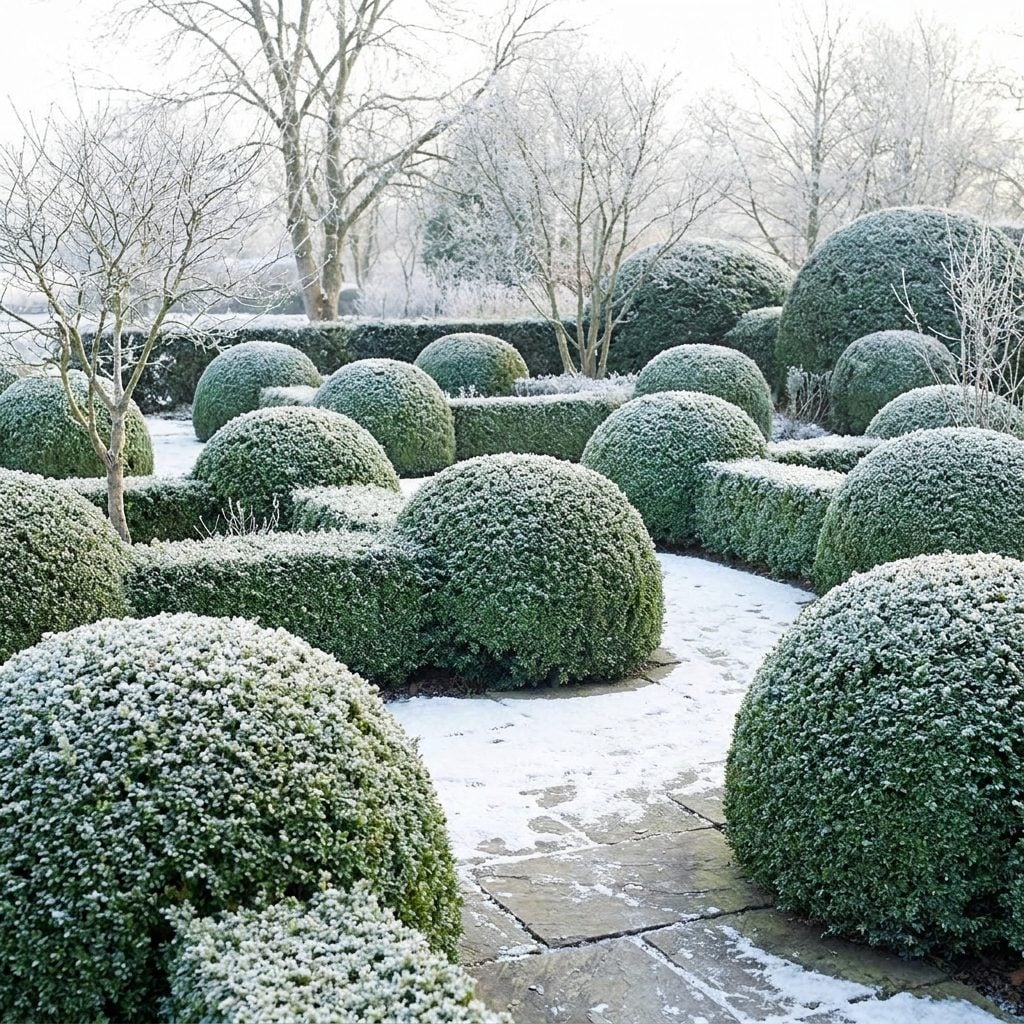
Winter is when the garden stops bluffing. Flowers are gone, leaves are down, and suddenly everybody can see whether there was a composition underneath.
Mounding evergreens make excellent bones because the best selections develop recognizable shapes without requiring constant barbering. Mix dwarf pines, low junipers, and naturally rounded shrubs at several sizes rather than clipping everything into identical green meatballs. When the seasonal plants retreat, the geometry remains.
15. A Contemporary Front Yard Softened With Naturalistic Planting
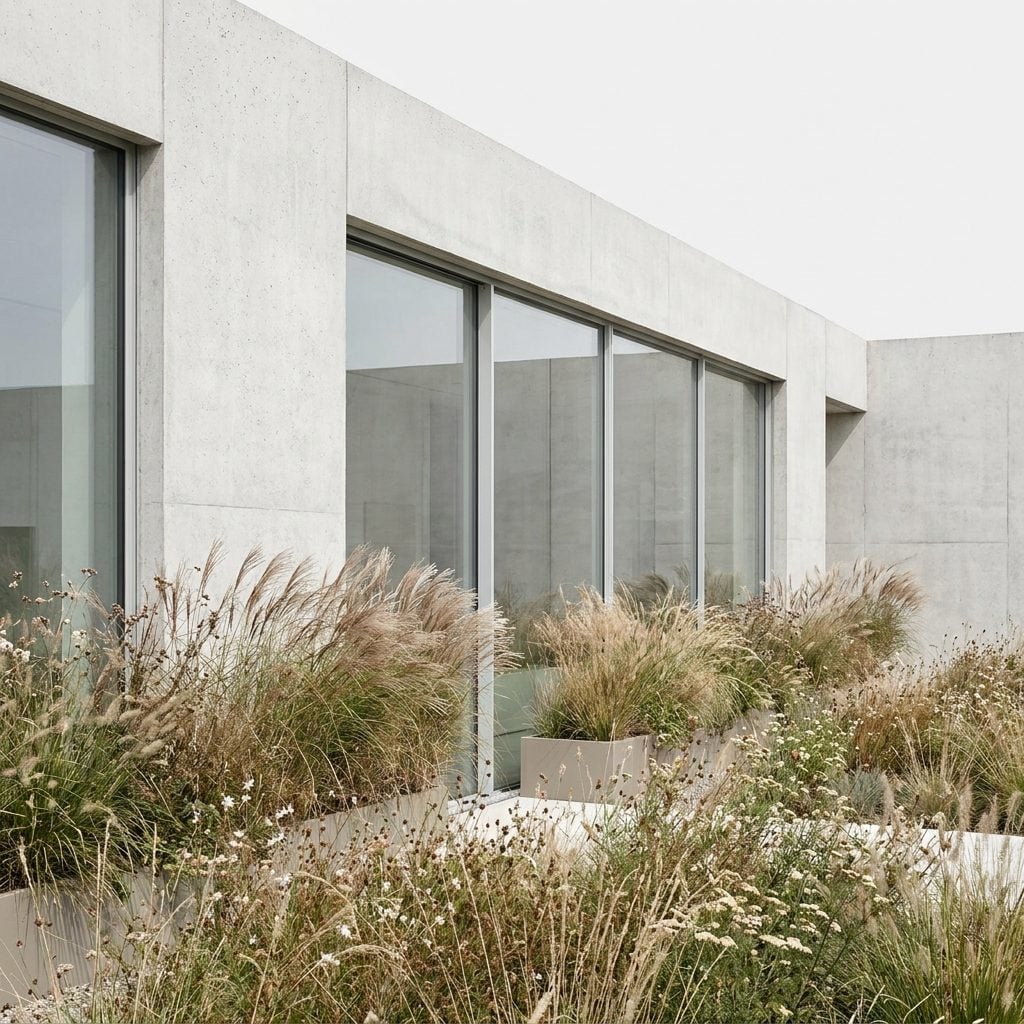
The default modern front yard can be a chilly little equation: white gravel, identical grasses, concrete, repeat. Clean, yes. Also a surprisingly generous invitation to every weed that spots the exposed ground.
This version lets the architecture stay hard and the planting go soft. Grasses and perennials overlap in broad drifts, brush the paver edges, and move in the late light while the building provides all the straight lines anyone could possibly need. Dense planting shades more soil as it matures, suppressing many weeds without turning the garden into a sheet of landscape fabric and stone.
14. A Corner Lot Unified With One Repeating Plant Palette
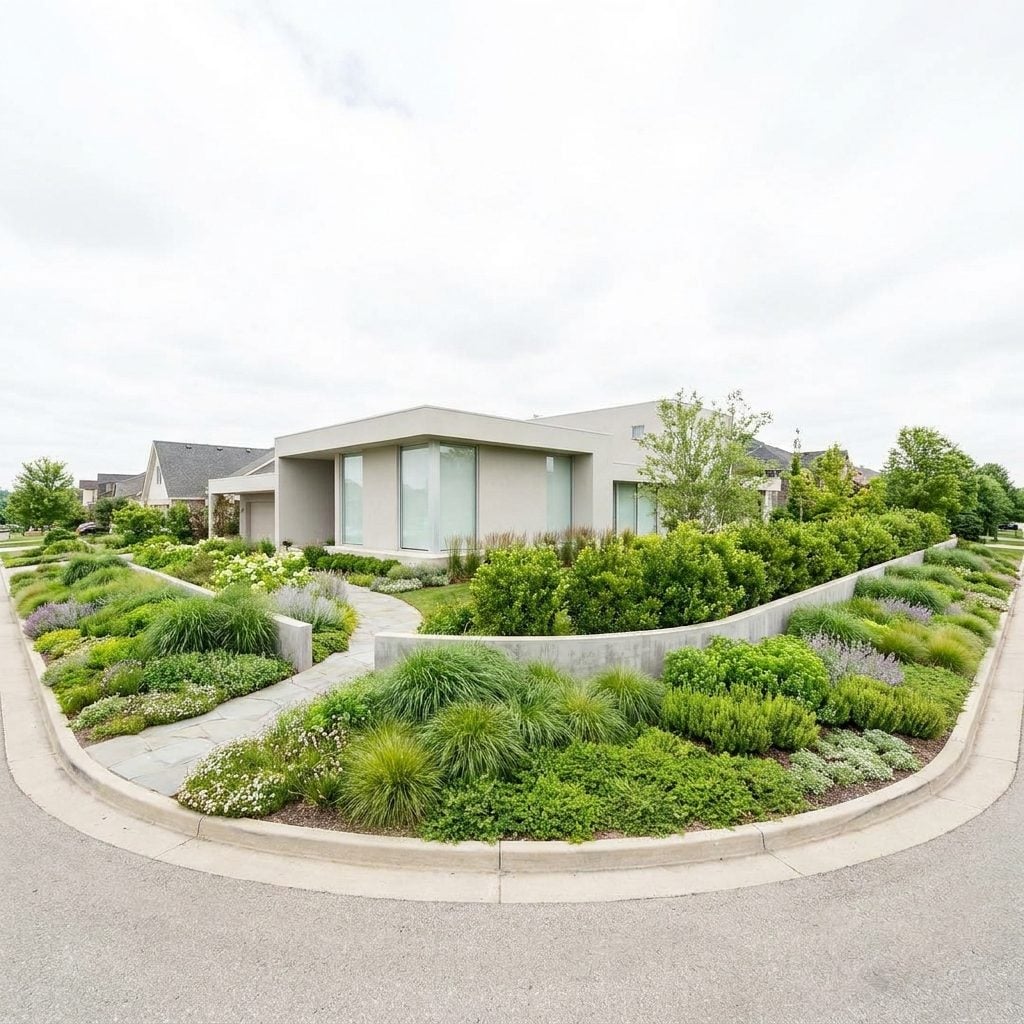
A corner lot can look like two front yards forced into an arranged marriage. Twice the street exposure, twice the chances to start an unrelated planting scheme, twice the maintenance if nobody imposes discipline.
Choose a small recurring palette — perhaps one shrub, one grass or flowering perennial, and one groundcover — then repeat it around both street sides in generous sweeps. The eye follows familiar plants around the corner and reads one property instead of two. Near intersections, keep mature plant heights compatible with local sight-line requirements.
13. A Steep Front Slope Turned Into Permanent Terraced Planting
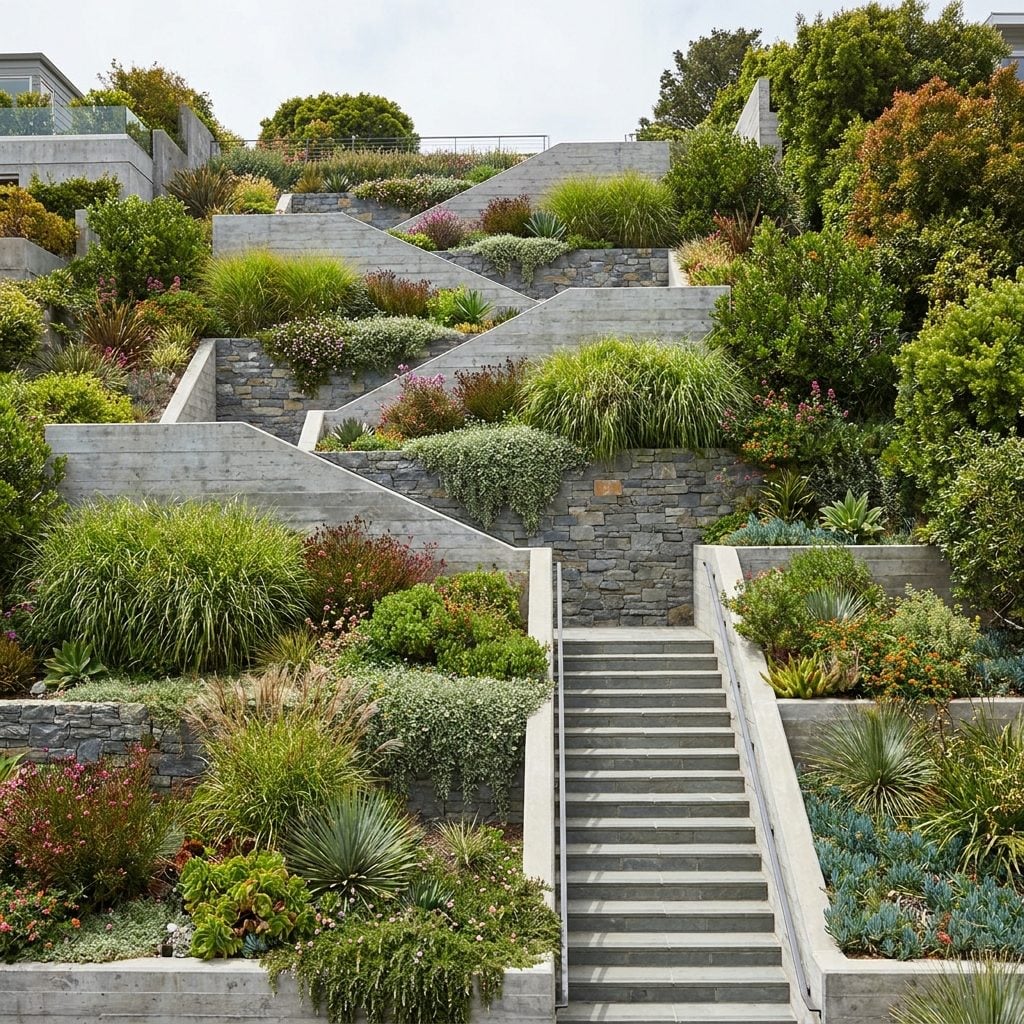
Mowing a steep slope is one of those chores that makes you reconsider both homeownership and gravity. It’s awkward, potentially dangerous, and turf often struggles on the grade anyway.
Terracing converts that problem into usable planting space. Broad levels held by appropriately built low walls create beds for shrubs and spreading perennials, while proper steps replace the scramble to the front door. Retaining walls and drainage need to be designed correctly — this isn’t the casual Saturday project of the gallery — but once built, the slope can become far easier to live with.
Done well, it doesn’t look like somebody solved an engineering problem. It looks like the slope was the reason the garden became interesting.
12. A Mediterranean Front Yard That Thrives in the Right Dry Climate
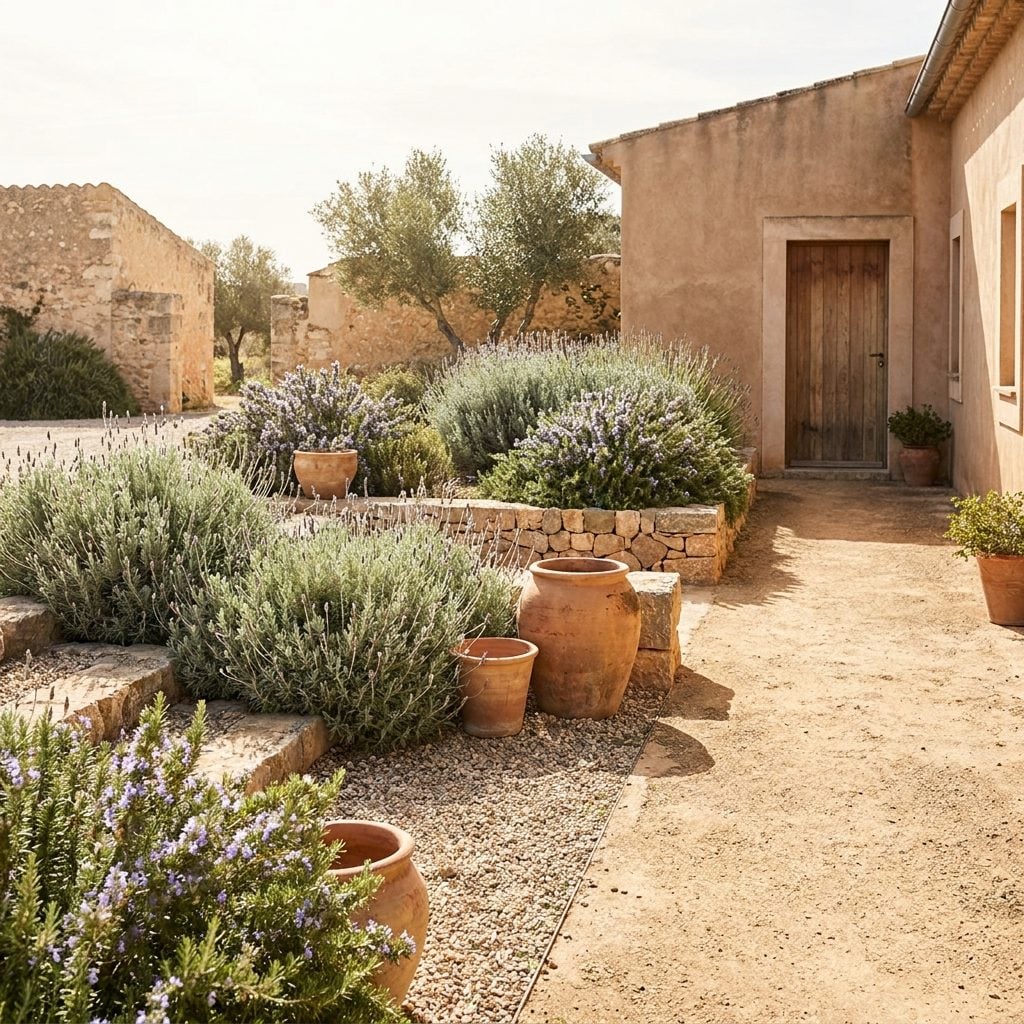
Silvery foliage is one of gardening’s quieter flexes. Lavender, rosemary, and santolina wear that dusty color because the leaves are built for sun and dry conditions, and together they make drought tolerance look suspiciously elegant.
A decomposed-granite path and single olive tree provide the bones while aromatic shrubs mass softly around them. In a sunny climate with sharply drained soil — and once the planting is established — supplemental watering can be dramatically lower than a thirsty lawn would demand.
11. Sculptural Architectural Plants That Don’t Need Flowers to Perform
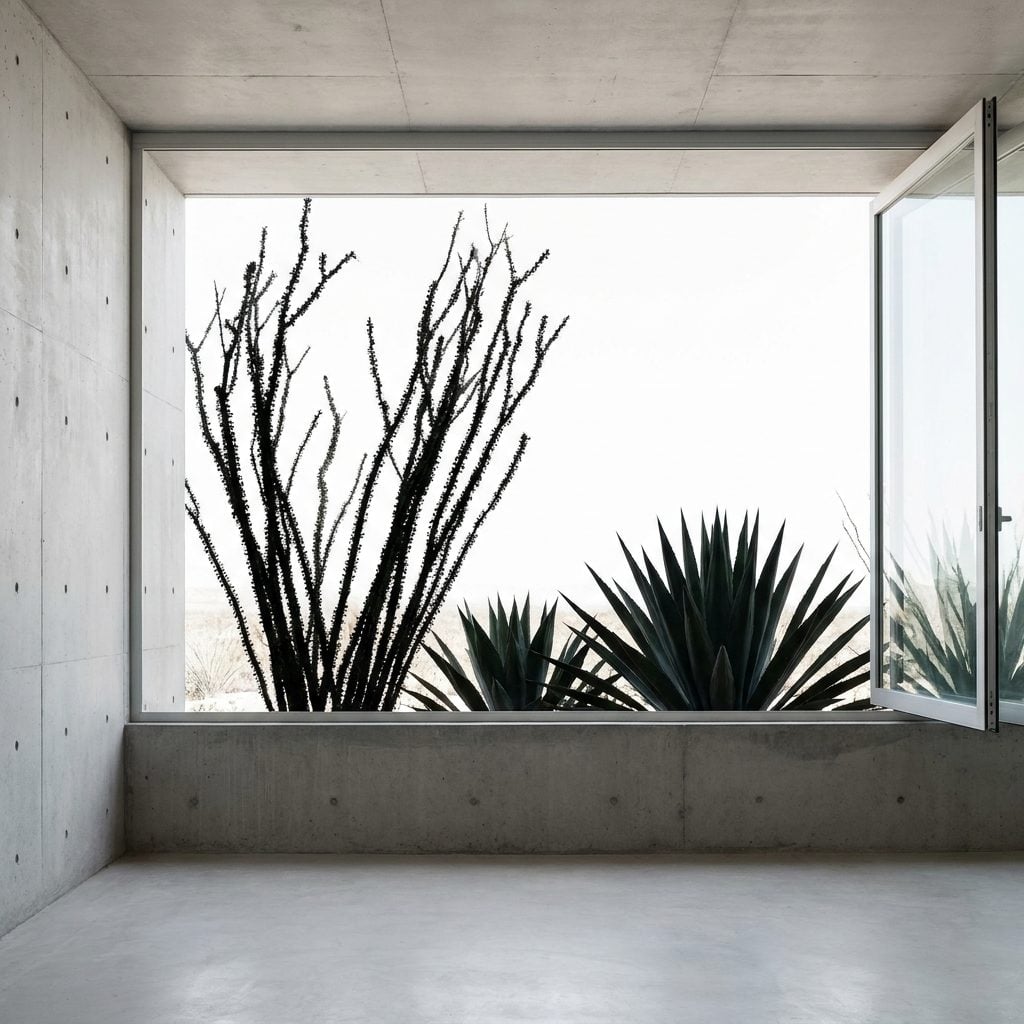
No flowers. Not one. And almost nothing here misses them.
In an appropriately hot, dry climate, upright ocotillo and broad agave rosettes can build an entire composition out of silhouette: tall against low, spiky against smooth, vertical lines interrupted by enormous radial forms. Stone and mineral mulch leave those shapes exposed rather than burying them in decorative clutter.
One rule deserves to survive every climate zone: keep weaponized foliage away from the walk. A landscape that draws blood on the way to the mailbox has lost the argument.
10. A Succulent-Studded Front Bed Built for Warm, Dry Weather
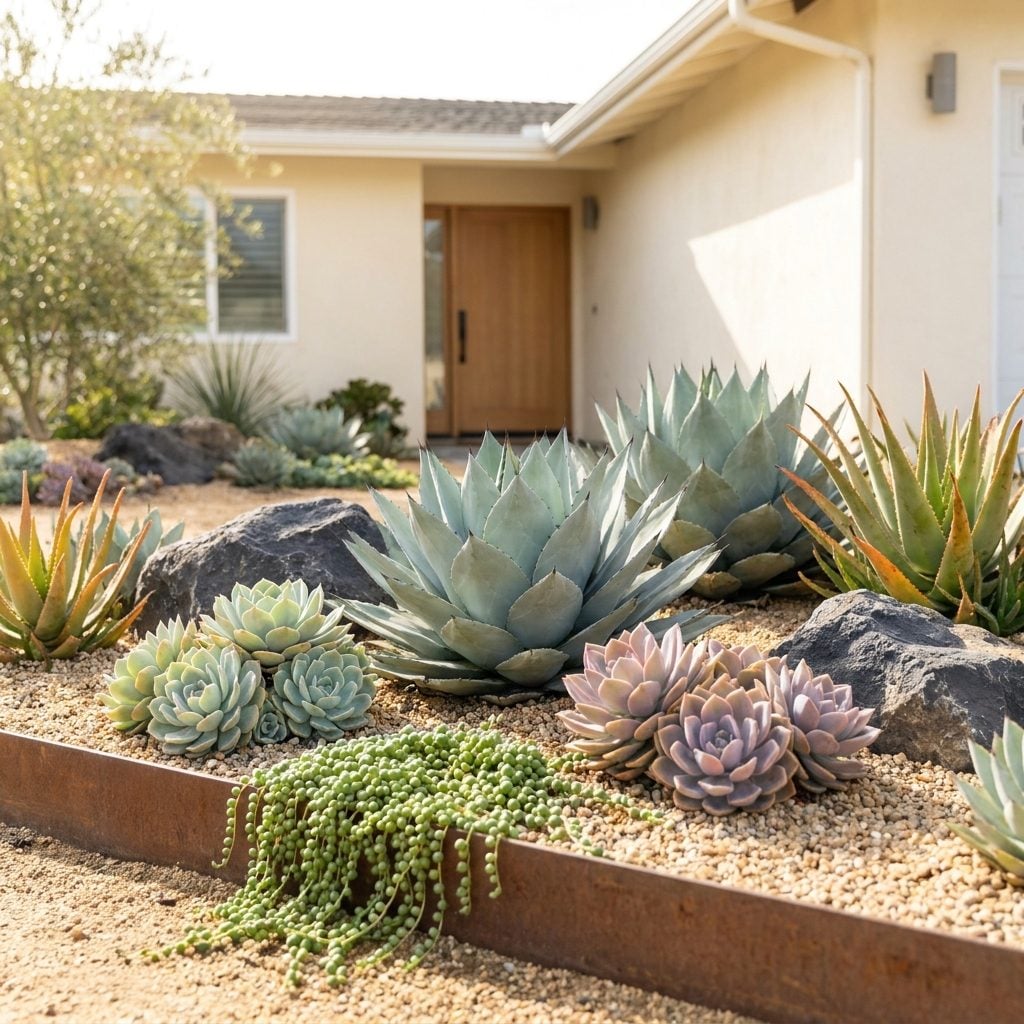
In a frost-free or suitably mild climate, a succulent bed can look improbably composed for something so uninterested in being fussed over.
Blue-gray agave rosettes supply the big shapes, while echeveria and aloe tuck into the gaps and trailing succulents fall over the Corten edge. A few partly buried boulders keep the planting from looking like every interesting plant at the nursery was simply placed on gravel and told to mingle.
The climate qualifier matters. Many of these plants cannot spend winter outdoors across much of the country. Where they belong, though, the water demand can be a fraction of conventional lawn and bedding plants.
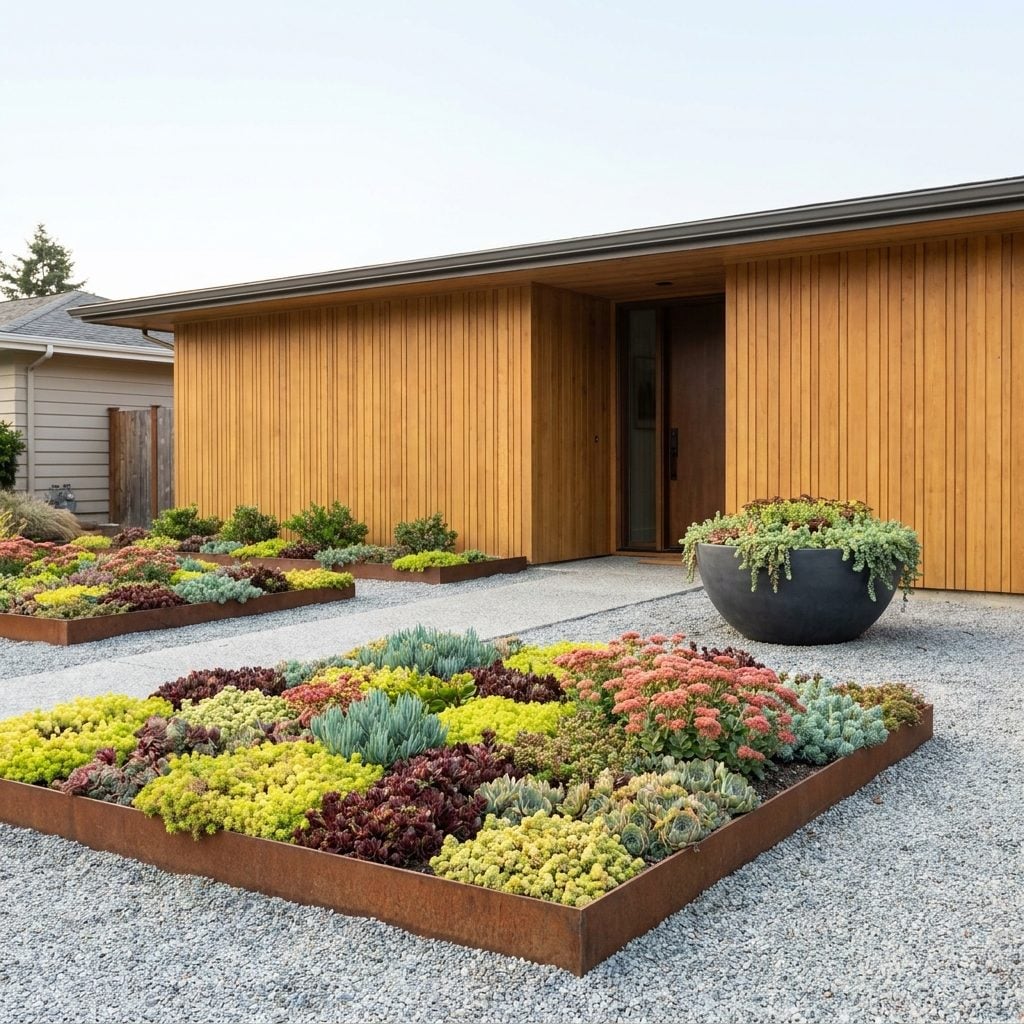
9. Corten-Edged Sedum Beds That Sail Through Dry Spells
🔥 Would you like to save this?
Sedum is what you plant when you want the garden to retain some dignity while you’re elsewhere doing something more interesting.
These low beds edged in rusted Corten steel get most of their impact from foliage: tight rosettes, burgundy, chartreuse, and fleshy blue-green leaves held against the warm metal. Once established in suitable drainage, many sedums handle dry spells beautifully and don’t need staking or elaborate seasonal grooming.
8. A Cluster of Feather Reed Grass Bringing Motion Without Flop
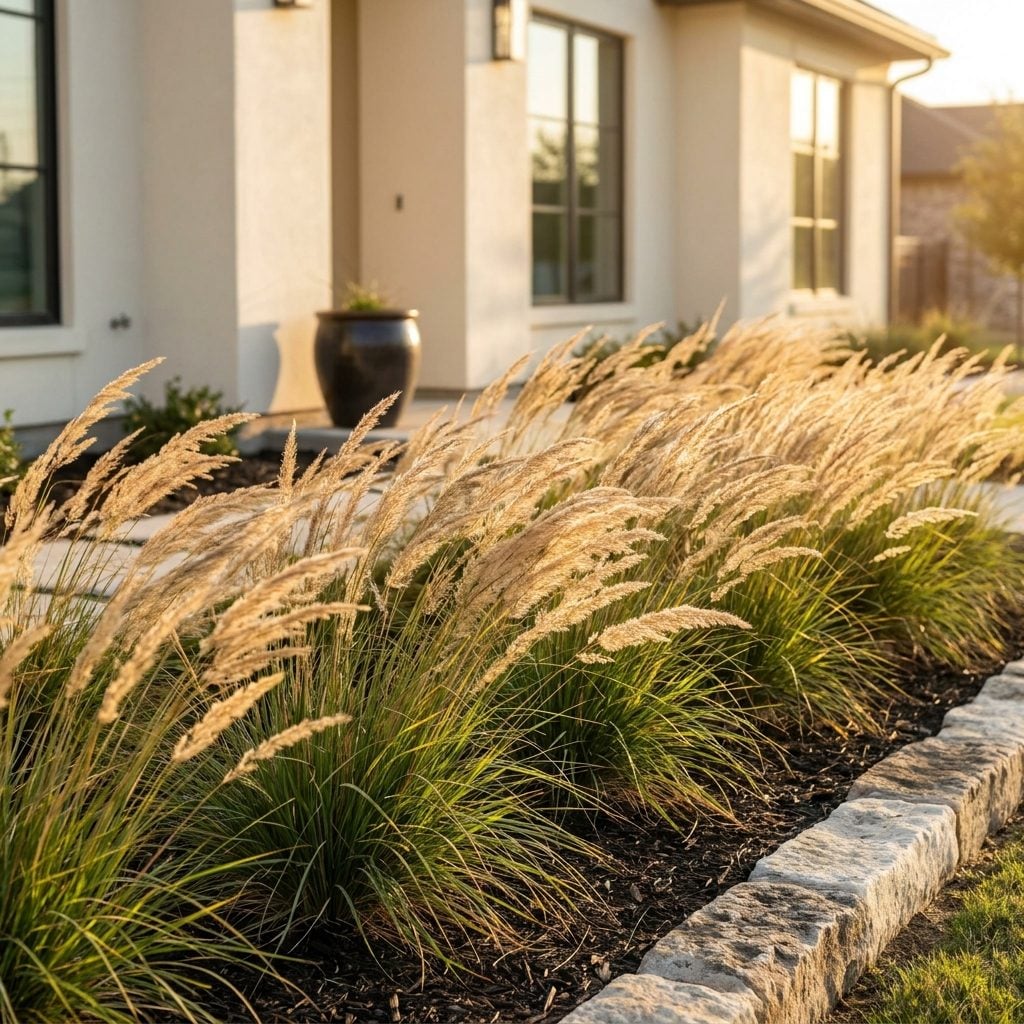
Some ornamental grasses spend August lying across the path like they’ve had a difficult evening. Feather reed grass is famous for better posture.
Its narrow upright habit gives a bed height without swallowing the plants beside it, while golden plumes catch low light and move with almost no breeze. Many common cultivars remain standing into winter, so the garden keeps a vertical element long after the flower show has packed up.
For established clumps in a suitable site, the main recurring job is usually cutting back the old growth before the new season gets underway. Occasional division and establishment watering still belong to real life.
7. A Tiny Front Yard Made Luxurious With Only Four Plant Types
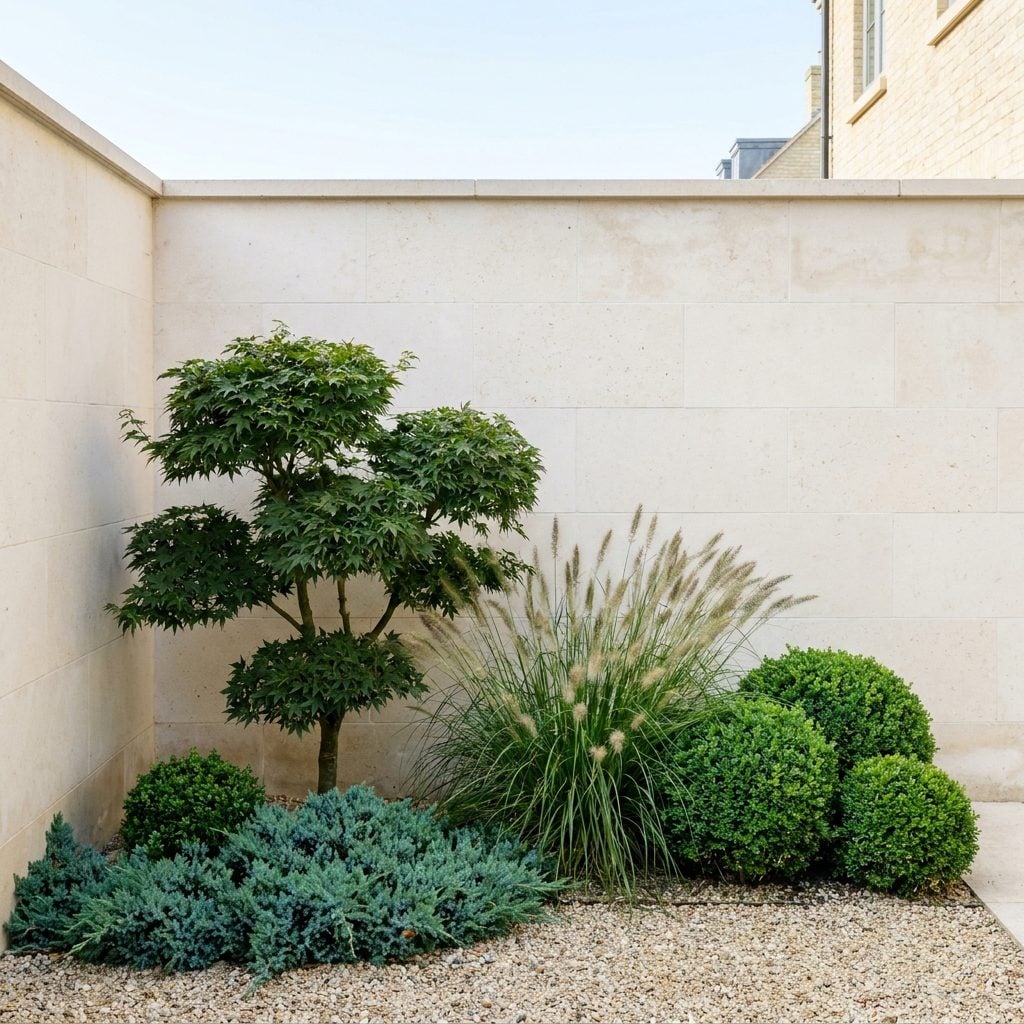
A tiny front yard has no obligation to demonstrate the full inventory of the local nursery. In fact, the smaller the space, the more ruthless the edit can be.
One structural evergreen. One slender tree for height. One flowering perennial. One groundcover. Repeat them and stop. Suddenly a frontage the size of a generous parking space feels composed instead of crowded, and maintenance means learning four recurring behaviors rather than twenty-seven botanical personalities.
6. An Almost-No-Lawn Front Yard That Still Looks Lush and Expensive
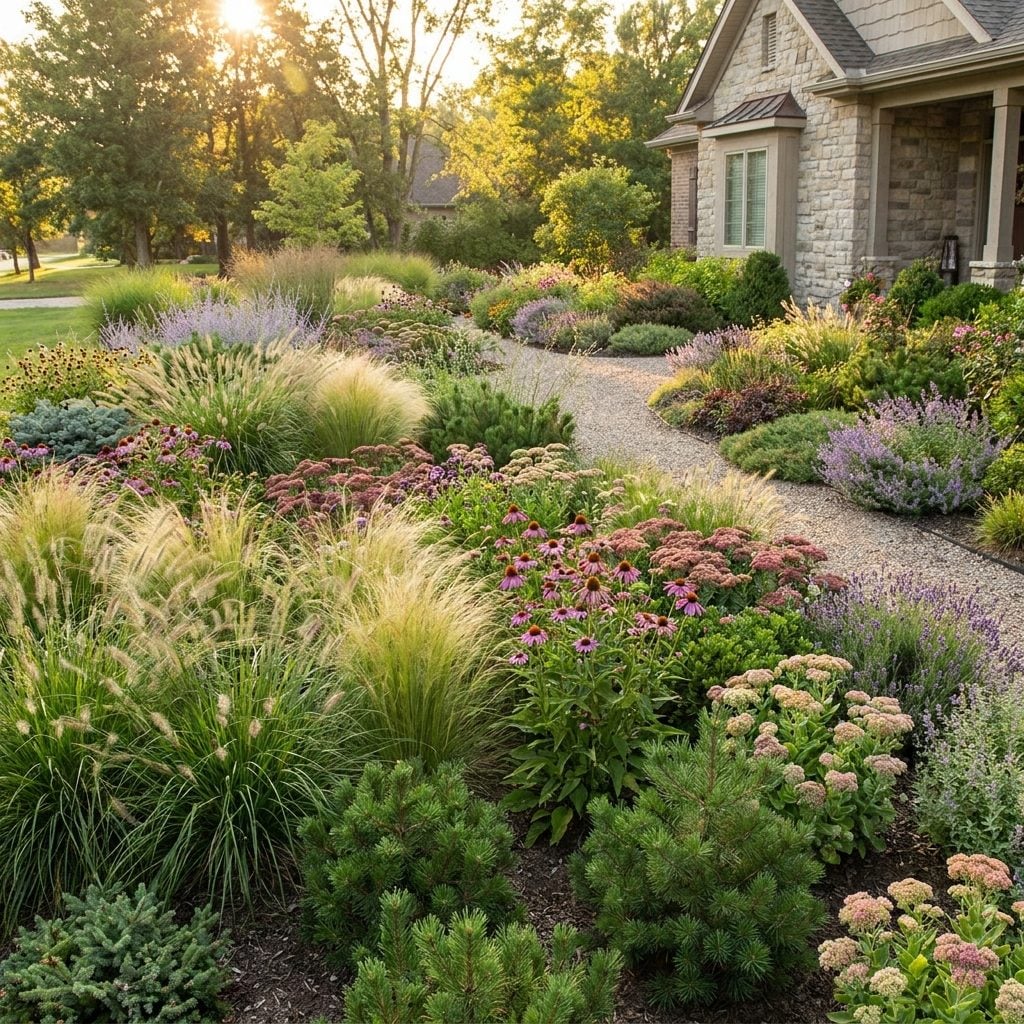
Removing most of the lawn doesn’t require replacing green with gravel. This yard keeps the abundance and simply changes what produces it.
Serviceberry and burgundy Japanese maple establish height. Boxwood and viburnum supply persistent structure. Perennials, grasses, and groundcover overlap below until bare soil almost disappears. A narrow ribbon of turf survives because the composition benefits from it, not because every square foot was automatically assigned to lawn.
Low-maintenance doesn’t mean no maintenance. Shrubs still need pruning, beds need occasional editing, and new planting needs water while it establishes. The difference is what disappears from the calendar: most of the mowing, a great deal of edging, and the ritual of maintaining turf where turf never contributed much.
5. Boulders and Grasses Turning a Difficult Slope Into the Main Event
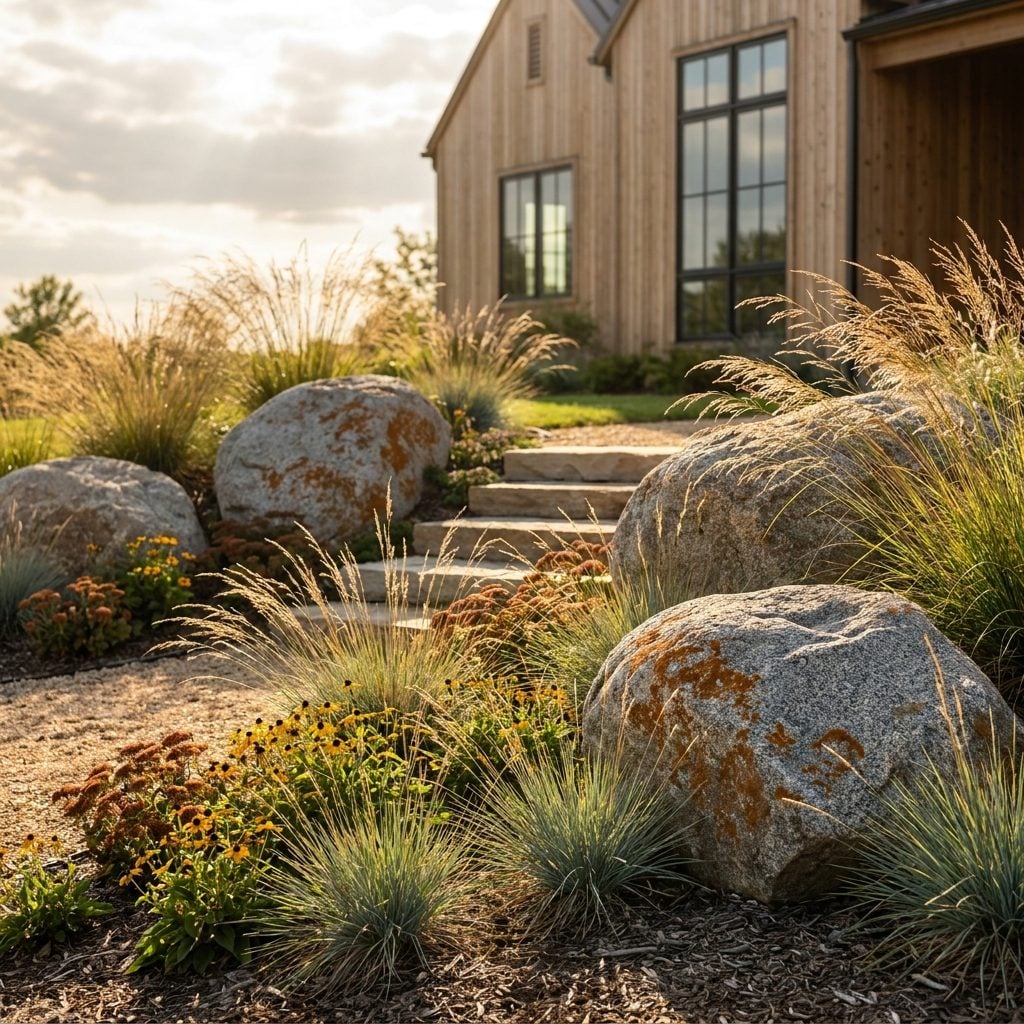
Not every slope needs to be terraced into submission. Sometimes the better move is to stop pretending it wants to be lawn.
Large boulders set at different elevations make the grade feel intentional, especially when they sit partly buried rather than balanced decoratively on top. Switchgrass and little bluestem supply the opposite texture — fine, airy, constantly moving — while black-eyed Susans and rusty sedum close the gaps.
The rock doesn’t move. The grasses never stop. That tension between permanence and motion gives the slope more character than a flawless sheet of turf ever could.
4. A Front Path Framed by Two Neat Rows of Lavender
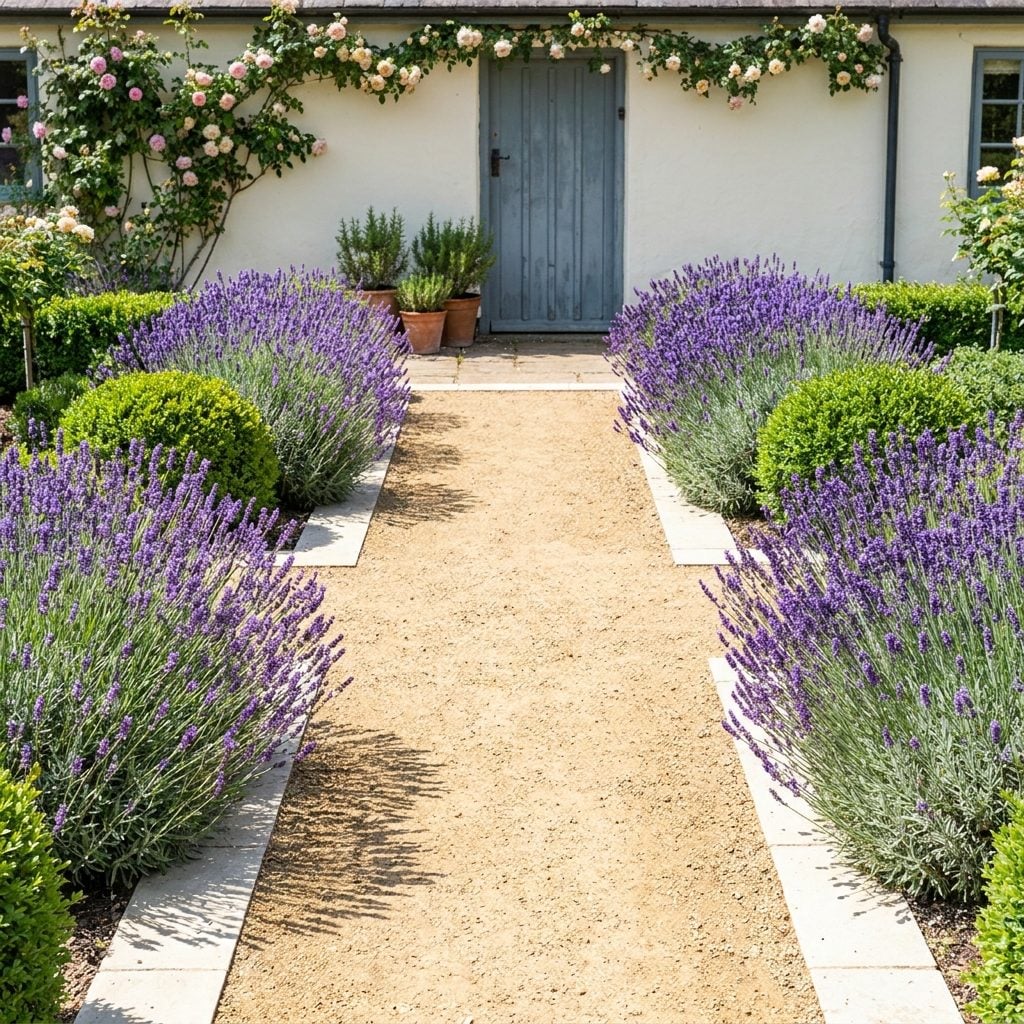
Lavender flanking a straight walk is a cliché for the same reason white shirts and good loafers are clichés: the argument was settled a long time ago.
In a sunny site with excellent drainage, two repeated rows produce silver-green mounds before the flowers even appear. Violet spikes arrive above them in season, while a restrained evergreen layer behind keeps the walk structured after bloom. Terracotta pots of rosemary at the door can continue the dry-climate language without introducing another color circus.
On a warm afternoon, brushing the flowers adds scent to the approach. Provence has been invoked for less.
3. A Front Yard Built Almost Entirely on Dwarf Conifers
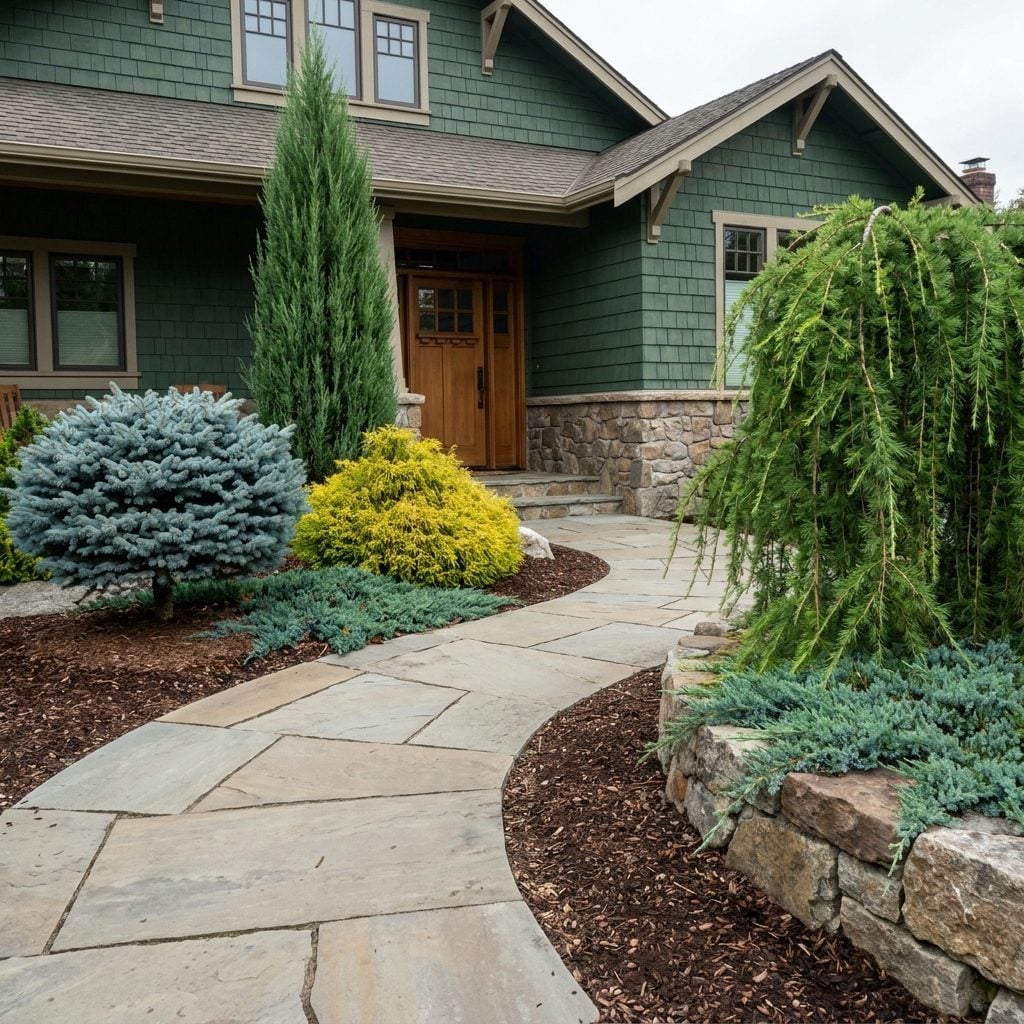
Conifers suffer from the memory of foundation plantings where one green blob was repeated beneath every window until the house looked federally administered. Dwarf conifers can do much better than that.
Use shape and color as the variation: a globe of blue spruce, a mounding golden conifer, a narrow juniper for height, perhaps a weeping form falling over stone. Steel blue, chartreuse, deep green — plenty is happening before a single flower turns up.
The payoff arrives in February. Deciduous gardens are revealing their skeletons while this one is still fully dressed.
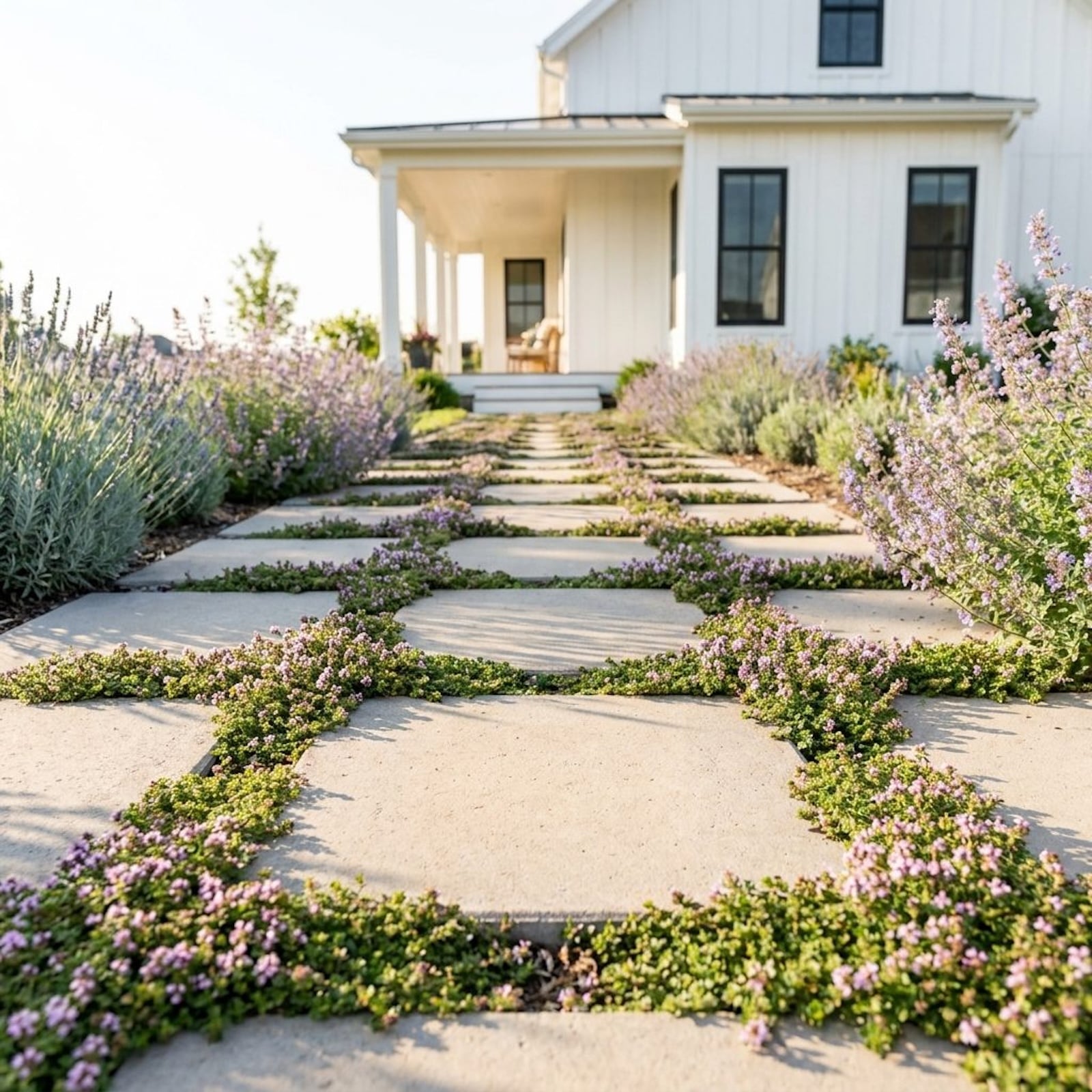
2. Creeping Thyme Between Pavers That Never Needs Mowing
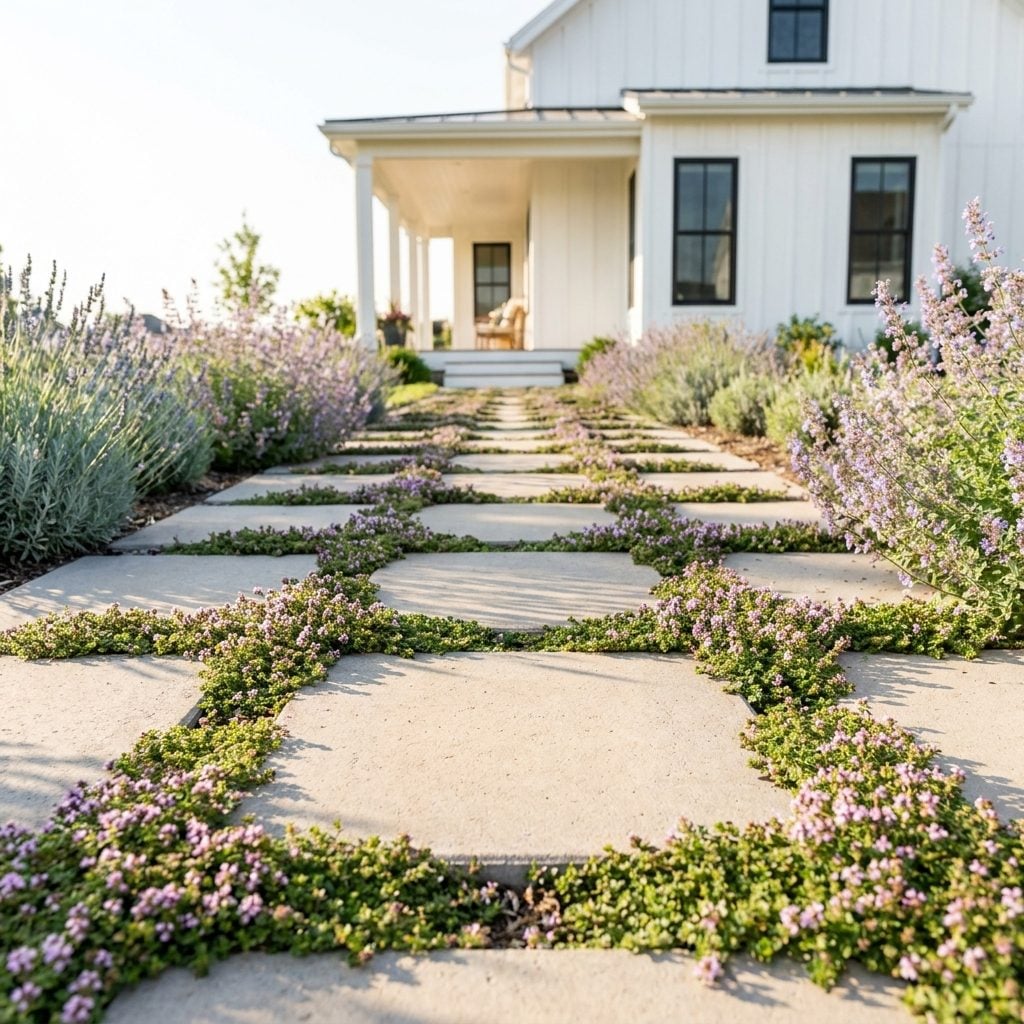
Grass between pavers is a tiny maintenance problem repeated fifty times. Creeping thyme turns those same joints into part of the garden.
In a sunny, well-drained path, low thyme can knit between stones, release a herbal scent when brushed, and flower in a haze of pink-purple that brings bees down to shoe level. It never needs mowing, and established plants can tolerate light foot traffic far better than their delicate appearance suggests.
1. A Xeriscaped Yard That Still Reads Green, Layered, and Full
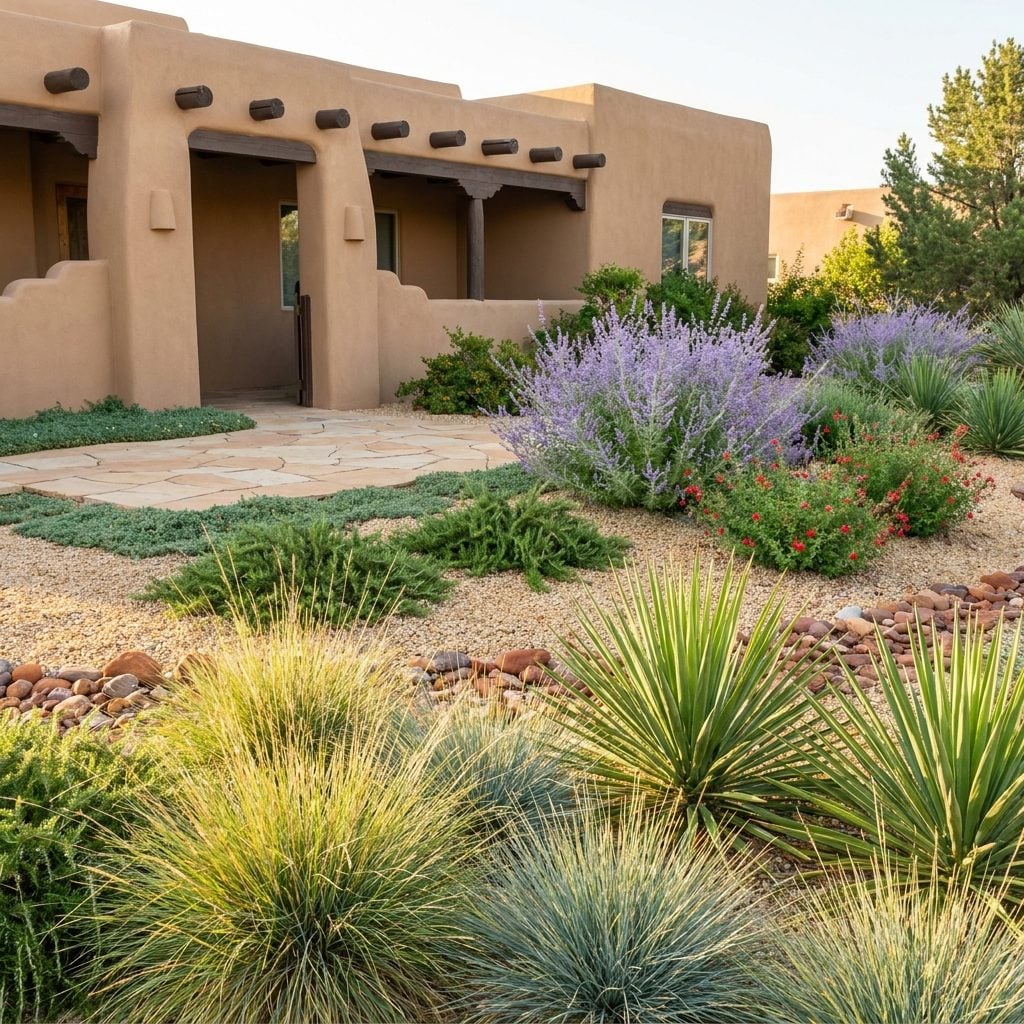
“Xeriscape” still makes some people picture three miserable cacti marooned in a sea of gravel. That isn’t a water-wise garden. That’s a hostage situation.
The lush version layers just as aggressively as any conventional border. Deer grass and blue fescue supply the fine texture. Russian sage rises behind in a violet haze. Autumn sage flashes warmer color, yucca interrupts the softness with an architectural spike, and trailing rosemary slips across the gravel edge. Pale stone becomes the floor rather than the attraction.
Matched to the climate and watered properly while it establishes, a landscape like this can demand dramatically less irrigation than conventional turf while still looking full enough to make “drought-tolerant” feel almost beside the point. That’s the real trick running through the entire gallery: remove the work people notice least, keep the plants and structure they notice most, and let the front yard look like it’s showing off.