🔥 Would you like to save this?
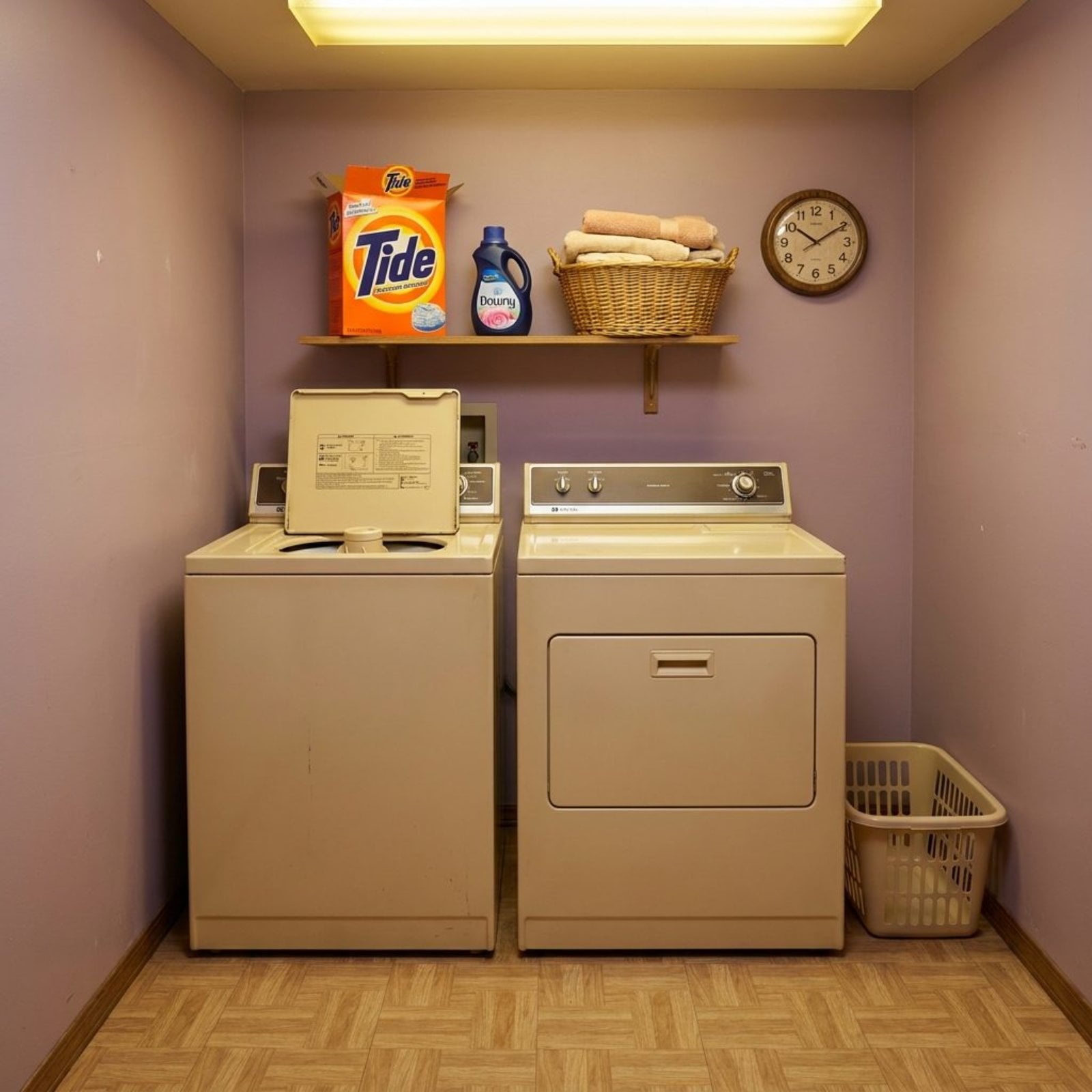
The door stuck a little when you pulled it open. Behind it: the hum of a harvest gold Maytag mid-cycle, the sharp chemical sweetness of Downy mixing with warm lint, and vinyl flooring that peeled up just slightly in the corner near the utility sink. Your mom’s laundry room was never on a magazine cover, but it had a system. Every shelf, every stenciled goose, every coupon pinned to that corkboard served a purpose only she fully understood.
Here are 29 details from that room you haven’t thought about in years.
In order to come up with the very specific design ideas, we create most designs with the assistance of state-of-the-art AI interior design software. Also, assume links that take you off the site are affiliate links such as links to Amazon. this means we may earn a commission if you buy something.
29. Those Rounded Control Consoles with Clicky Push Buttons and Dials You Could Actually Feel
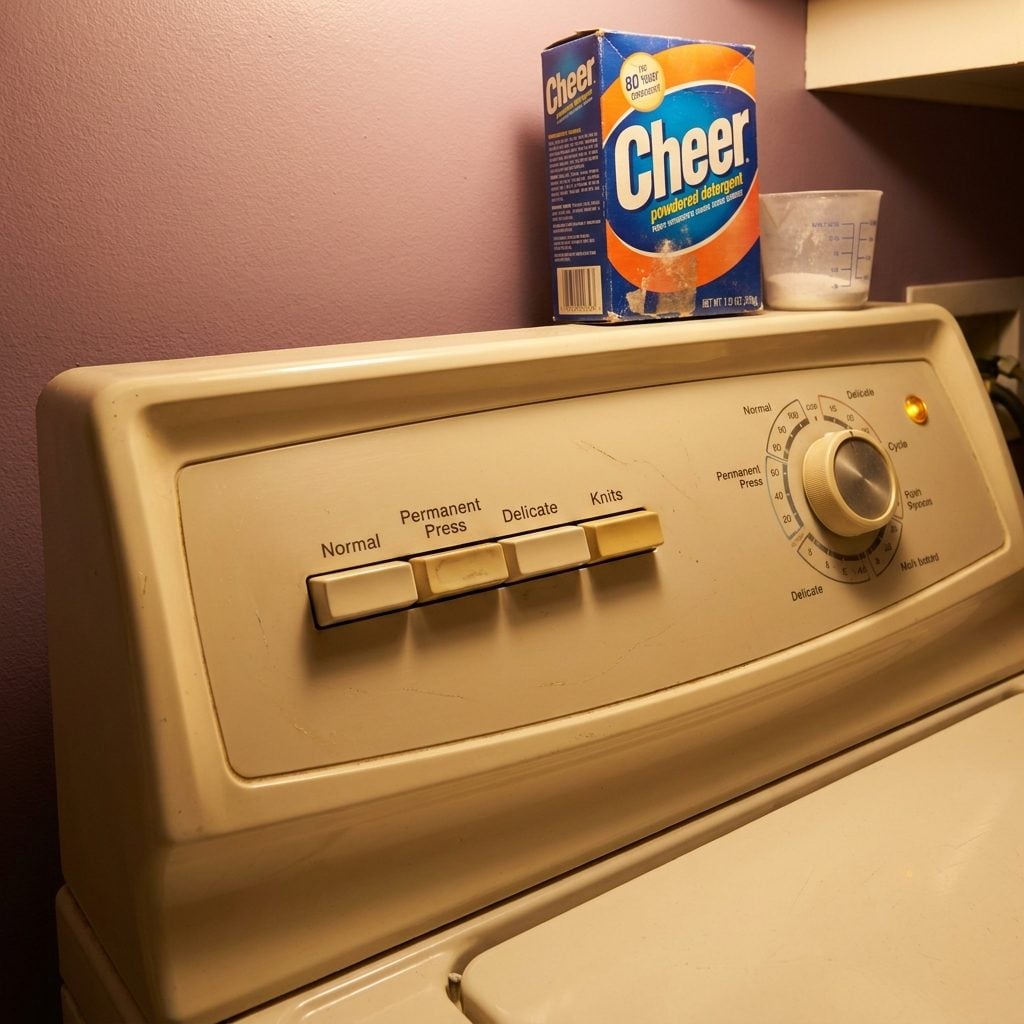
Every cycle selection felt like a commitment. You pushed that button and it stayed pushed, physically depressed into the console with a satisfying mechanical click. Normal. Permanent Press. Delicate. Knits. Each one a raised rectangle on a curved plastic panel, backlit by a single amber bulb if you were lucky. The analog dial beside them had actual tick marks you rotated through, and you could hear the timer mechanism engaging inside the machine like tiny gears finding their place.
No touchscreens. No WiFi connectivity alerts. No companion apps. Just your index finger and a physical interface that told you exactly where you stood in the wash cycle by how far the dial had rotated. When the load finished, the dial hit zero with a loud clunk. That was your notification system.
28. The Maytag Lonely Repairman and Why Your Mom Swore By That Brand Like It Was a Religion
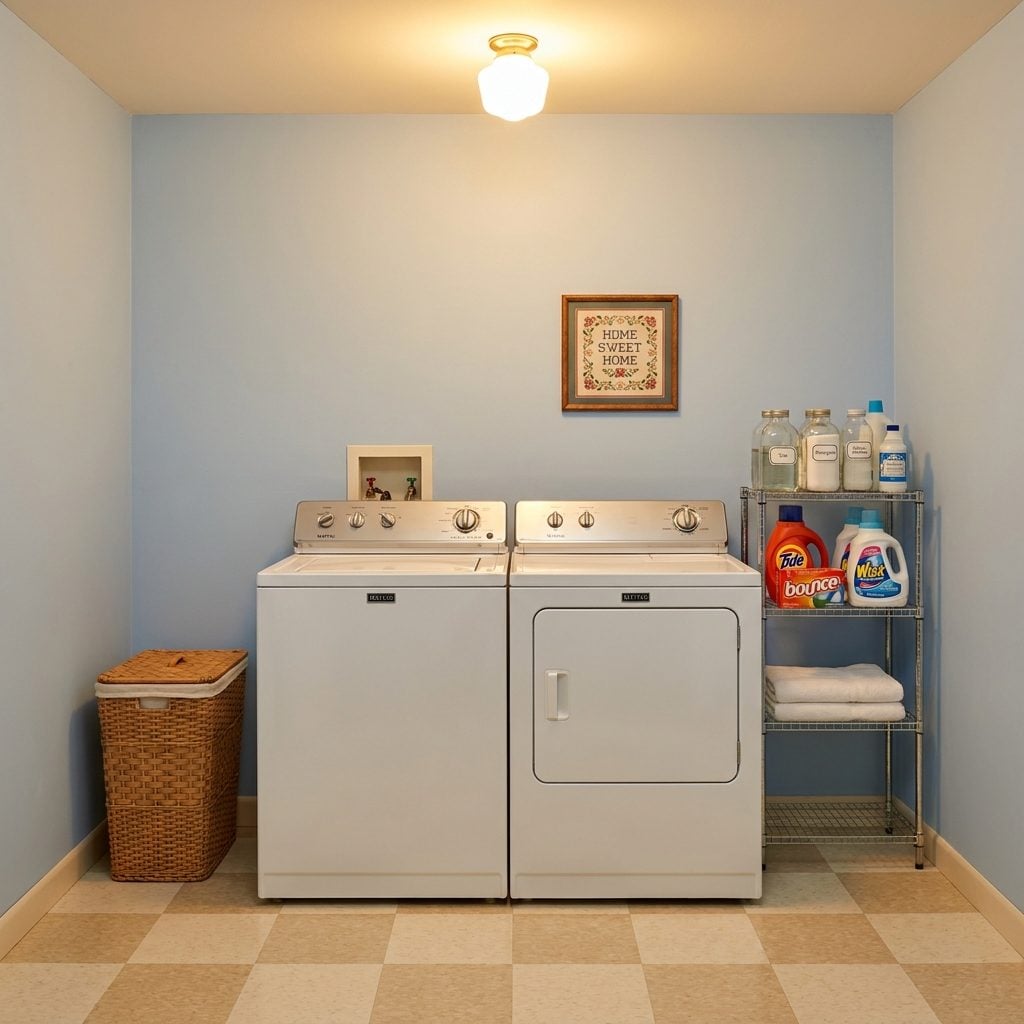
Jesse White in that uniform, sitting by a phone that never rang. The Maytag repairman campaign ran for decades, but in the ’80s it was gospel. Your mother didn’t just buy a Maytag. She told people she bought a Maytag. It was a status declaration dressed up as a practical purchase.
The pitch was simple and brilliant: these machines are so reliable that the guy hired to fix them has nothing to do. In an era before online reviews, brand loyalty was built on exactly this kind of emotional shorthand. One memorable character. One repeated joke. And suddenly a washing machine became an aspirational object, which is a sentence that would make absolutely no sense to anyone born after 1995.
27. Main-Floor Laundry Rooms Off the Kitchen (Because the Basement Was Too Far and Too Creepy)
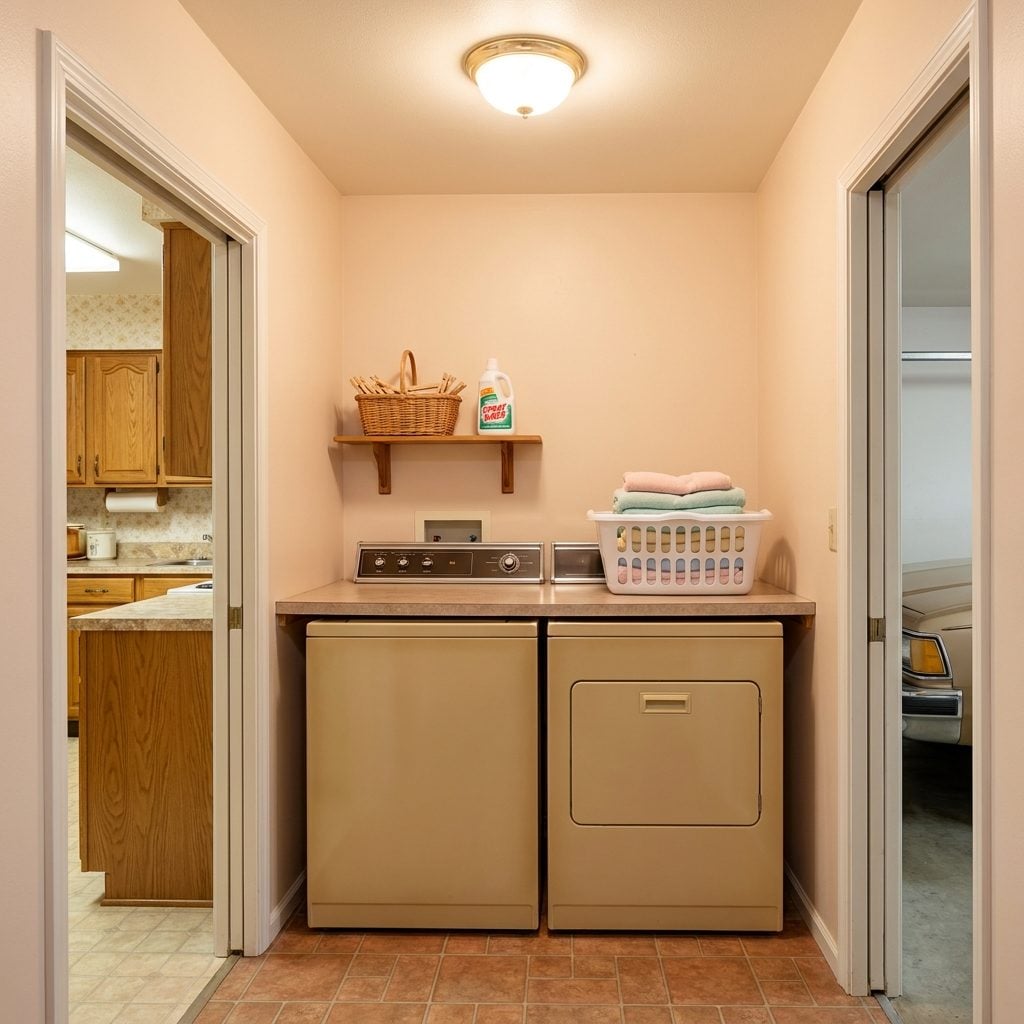
At some point in the early ’80s, suburban builders collectively decided that trudging down basement stairs with a full hamper was an unreasonable ask. The main-floor laundry room appeared, usually tucked between the kitchen and the garage, and it changed everything about how houses flowed.
These rooms were small. Maybe 6 by 8 feet. A door to the garage on one side, a door to the kitchen on the other, appliances along the back wall, and just enough space to stand and fold if you kept your elbows tucked in. The sound of the washer became the background noise of dinner prep. The dryer’s warmth leaked into the kitchen on winter evenings, which honestly was one of its better features.
Builders marketed this as a “convenience upgrade,” and they were right. But it also meant your kitchen perpetually smelled like a mix of whatever was in the oven and whatever detergent was on sale that week at the grocery store.
26. Louvered Bifold Doors That Hid the Laundry but Never Hid the Sound
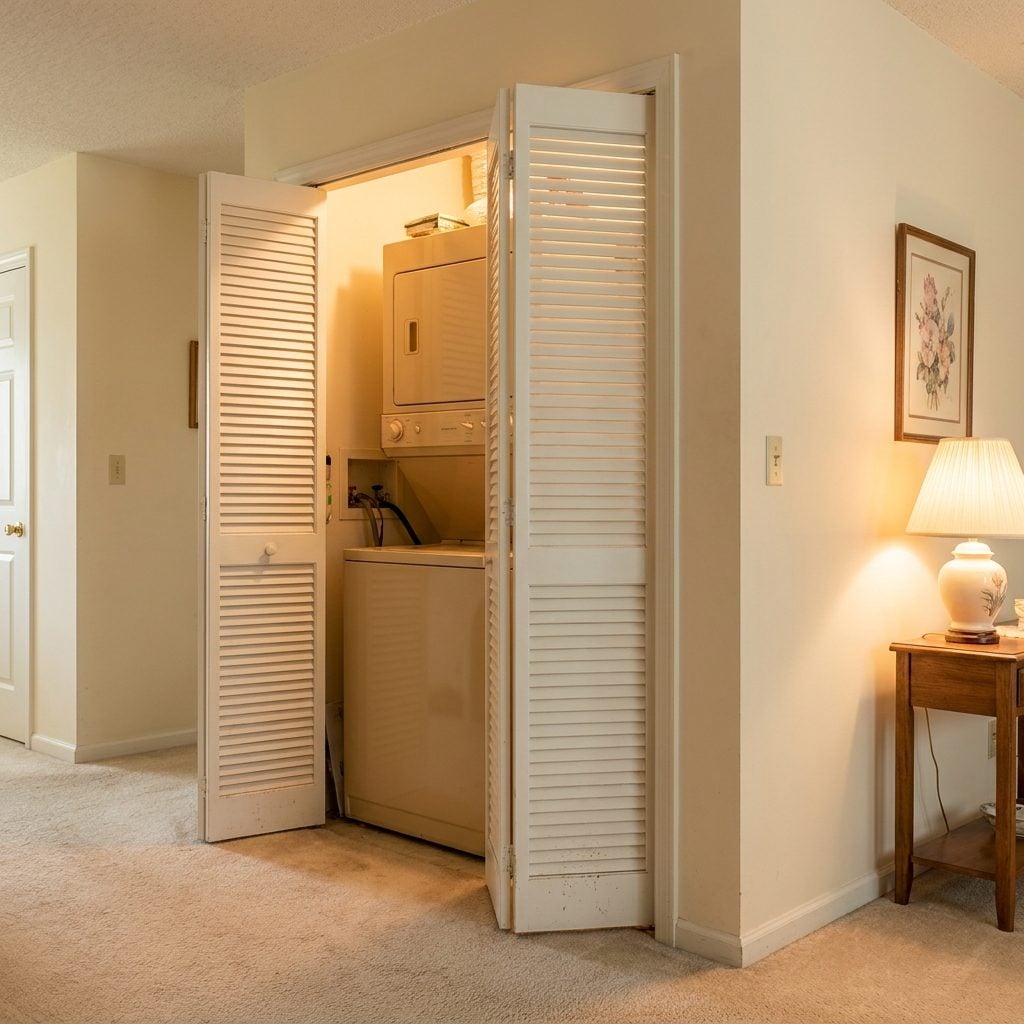
Those slatted doors. Folding open on a track that always stuck on the left side. The louvers were supposed to provide ventilation while maintaining the visual fiction that no laundry was happening behind them. In practice, they broadcast every machine noise directly into the hallway while also collecting dust in each individual slat like a venetian blind turned vertical.
Cleaning them was a punishment. Each louver required individual attention with a damp cloth, and there were dozens per door. Nobody cleaned them. They just accumulated a soft gray fuzz along the bottom edges that everyone pretended not to see.
25. Vinyl Sheet Flooring in Faux Brick or Fake Parquet That Fooled Absolutely Nobody
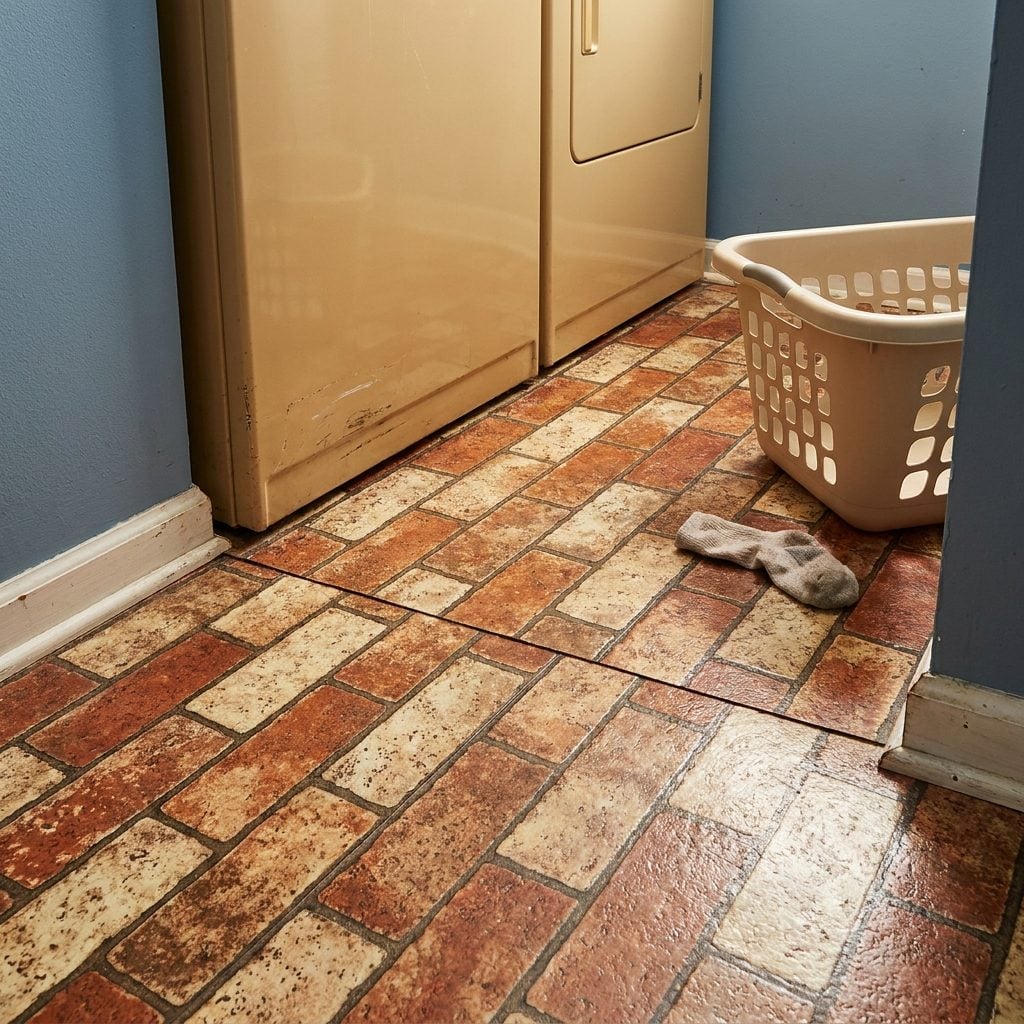
You could feel the seam where two sheets met if you walked barefoot. That little ridge, slightly tacky in summer, was the defining texture of every 1980s utility space. The patterns were ambitious: faux brick in rust and cream, pretend terracotta hexagons, imitation parquet with printed wood grain so flat it looked like a photograph of a floor taped to another floor.
Armstrong and Congoleum dominated the market. The flooring went down in one piece over whatever substrate existed underneath, sometimes directly over older vinyl, creating a layered geological record of every previous homeowner’s taste. Pull up an ’80s vinyl sheet today and you’ll find the ’70s avocado pattern underneath, and beneath that, the ’60s gold speckle. It’s archaeology.
24. Mauve, Dusty Blue, and Peach Walls: The Holy Trinity of 1980s Paint Colors

If you walked into a laundry room in 1986 and the walls were anything other than mauve, dusty blue, or peach, that homeowner was either a radical or had simply run out of those paint chips at Sherwin-Williams. These three colors owned the decade the way gray would own the 2010s. They showed up everywhere, sometimes all three in the same house across different rooms.
Mauve was the power player. Not pink, not purple, not quite either. A color that exists only in the 1980s and in dried rose petals. Pair it with the almond appliances, the oak trim, the brass cabinet pulls, and you had yourself a transitional living room or laundry room that screamed 1985 from every surface.
Dusty blue ran a close second, favored by anyone who found mauve “too feminine.” And peach was the wildcard, the color your neighbor chose because the decorator on the Phil Donahue show recommended it.
23. Wallpaper Borders with Country Geese, Calico Hearts, and Zero Shame
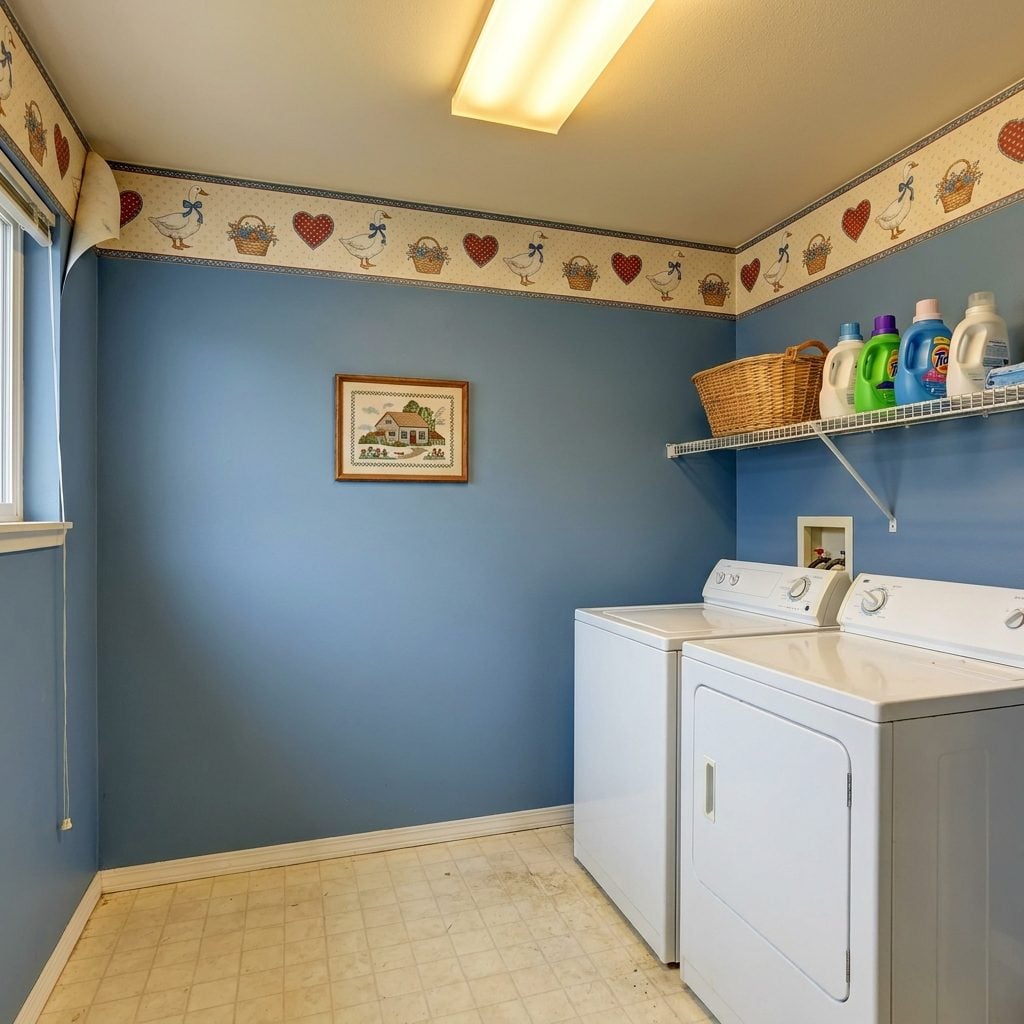
About six inches of decorative wallpaper running along the ceiling line, just above where the regular paint ended. Geese wearing ribbons. Hearts in calico fabric prints. Little baskets of dried flowers. Sometimes all three in a repeating pattern that circled the entire room like a narrative frieze in a very specific kind of domestic temple.
These borders came pre-pasted. You soaked them in the bathtub, carried the dripping strip to the laundry room, and tried to apply it straight while standing on a step stool. They never went on straight. The seams always showed. And within two years, the corners started peeling, which everyone “fixed” by pressing them back with a wet sponge, a solution that worked for approximately 45 minutes.
22. Stenciled Folk-Art Motifs That Turned Every Flat Surface Into a Craft Project
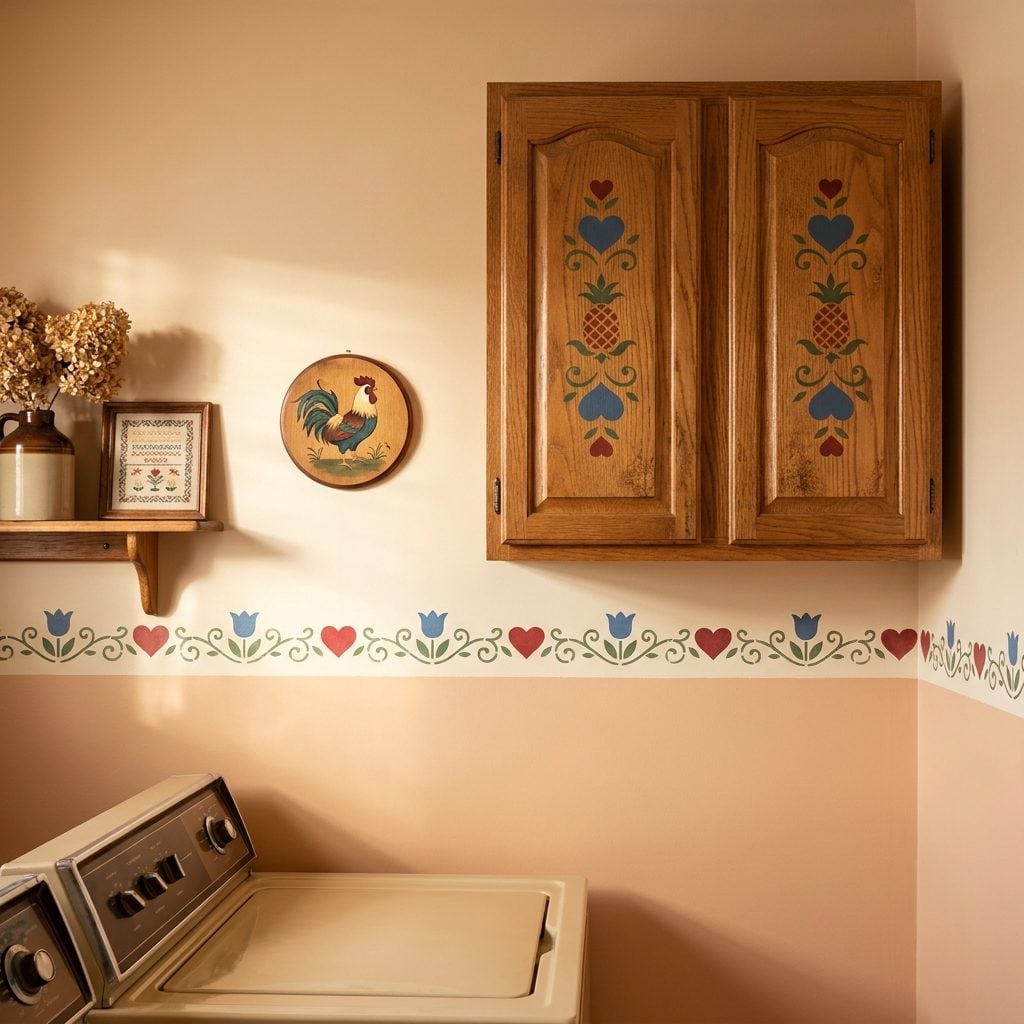
Hearts. Pineapples. Little Dutch-looking tulips. Tiny repeating sheep. Someone in the household owned a stencil kit from a craft store, a set of round sponge-tip applicators, and a few bottles of acrylic paint in country blue, barn red, and hunter green. That was all it took.
Cabinet faces got stenciled. The wall above the dryer got stenciled. The wooden shelf brackets got stenciled. No surface was safe from a motivated hobbyist with a free Saturday afternoon and a subscription to Country Living magazine. The results were charming in a handmade way that would make a modern minimalist quietly leave the room.
21. The Deep Utility Sink with a Chrome Gooseneck Faucet That Handled Everything From Stains to Science Projects
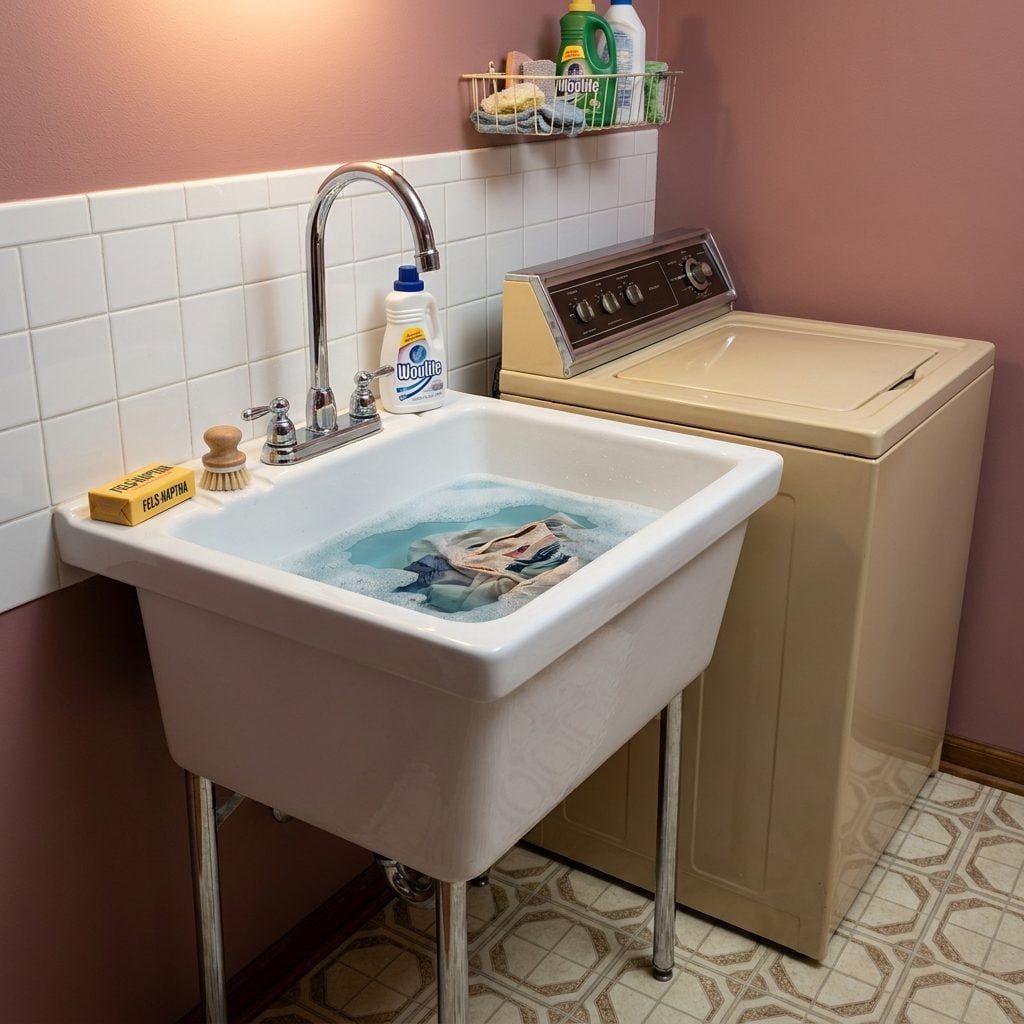
Massive. White. Porcelain or molded fiberglass, deep enough to soak a king-size comforter or bathe a Labrador retriever if the situation demanded it. The chrome gooseneck faucet arched over it like a question mark, usually with separate hot and cold handles because single-lever mixers hadn’t fully conquered every room yet.
This sink was the real workhorse of the laundry room. Grass stains got pre-treated here. Paint brushes got rinsed here. Your mother hand-washed the “good blouse” in this sink with woolite and warm water, treating the garment like it was made of tissue paper. In houses with kids, this sink saw mud, food coloring, papier-mâché paste, and at least one failed attempt to dye a t-shirt with Rit dye that turned everything in a three-foot radius pale lavender.
20. The Laminate Countertop Built Over the Appliances That Created the World’s Most Inconvenient Folding Station
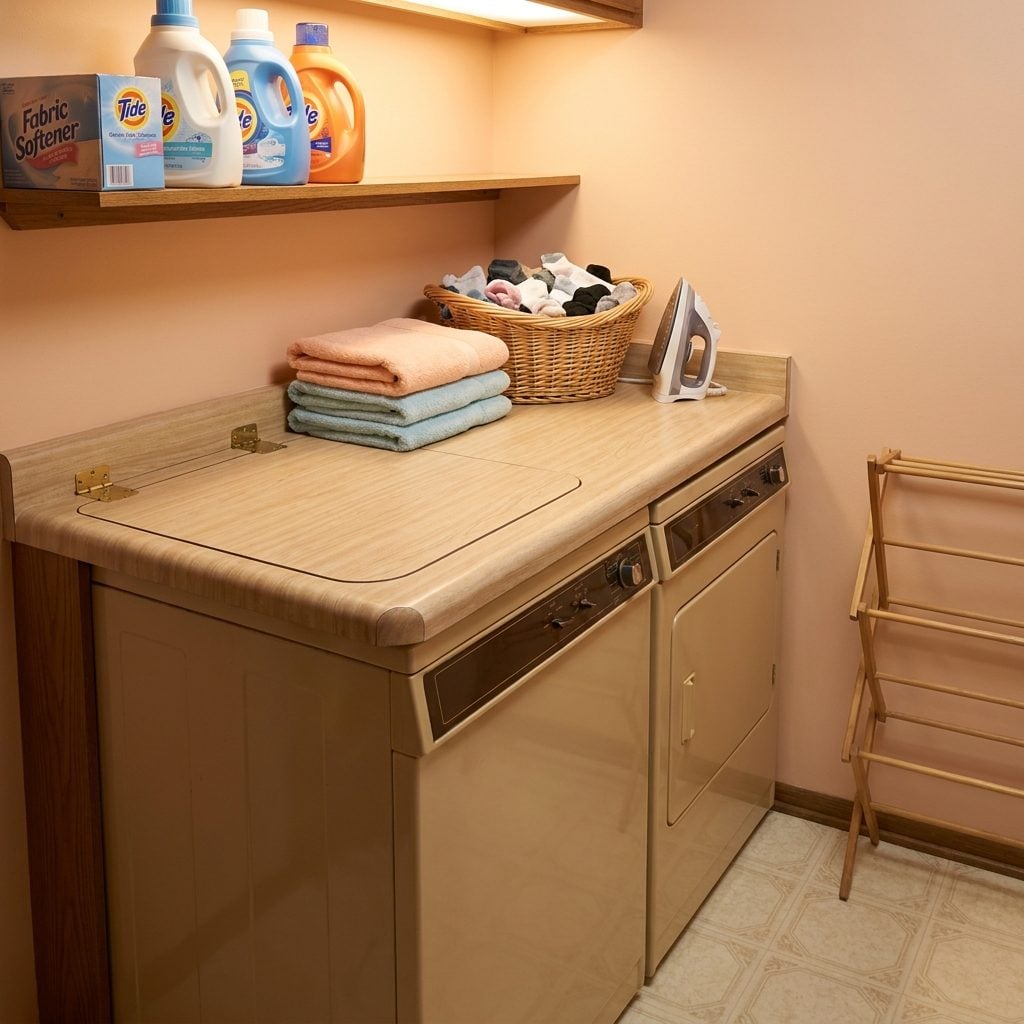
Someone, at some point, measured the width of the washer and dryer, built a wooden frame, topped it with Formica in almond or butcher-block pattern, and called it a folding counter. Genius in theory. The execution was always more complicated.
The counter vibrated when the washer hit spin cycle. Items placed on it migrated slowly toward the edge like they were trying to escape. Opening the top-loading washer required either removing the counter entirely or, in more “thoughtful” installations, lifting a hinged section that never stayed propped open without being held. Every homeowner who built one of these had a specific story about the time the hinged lid fell on their arm mid-transfer.
But the counter also created valuable workspace in a room that had none. You folded towels here. Sorted socks here. Set down the iron for a moment here. It was a colorful utility room fixture that solved a real problem, even if the solution came with bruised forearms and a permanent collection of stray dryer sheets stuck behind the counter’s back edge.
19. White Melamine Cabinets With Brass Pulls and Oak Trim That Screamed ‘Upgraded’
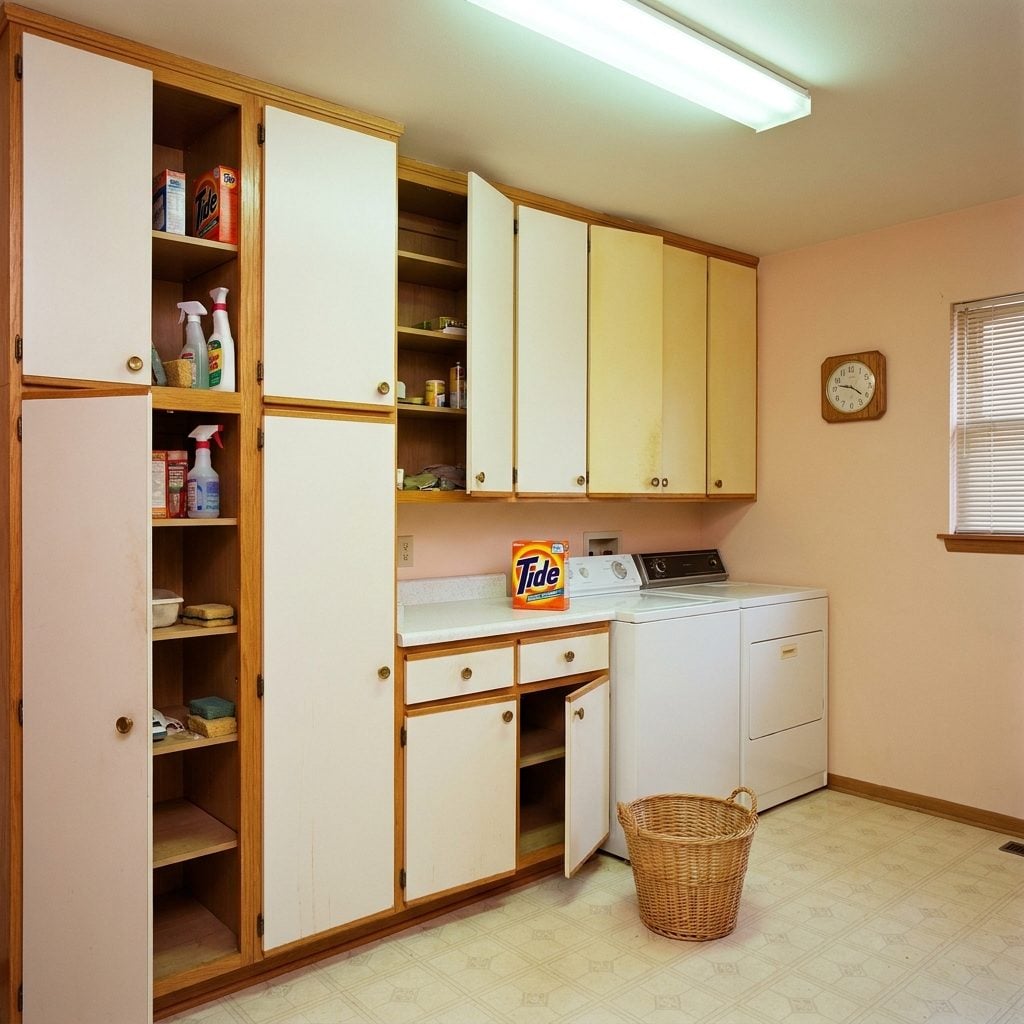
These weren’t fancy. They weren’t even close. But in 1984, white melamine cabinets with a strip of honey oak trim and those rounded brass knobs meant someone had invested in their laundry room. The laminate surface yellowed over time, especially near the dryer vent, and the particleboard underneath would swell if it caught any moisture. Nobody cared.
You’d open one of those cabinets and find a chaos of half-used detergent boxes, a can of something called “bluing,” and a lint roller with exactly three sheets left. The brass hardware always loosened after a year. You’d tighten it, it would loosen again. That was just the deal.
18. The Built-In Ironing Board That Folded Out of the Wall Like a Secret Passage
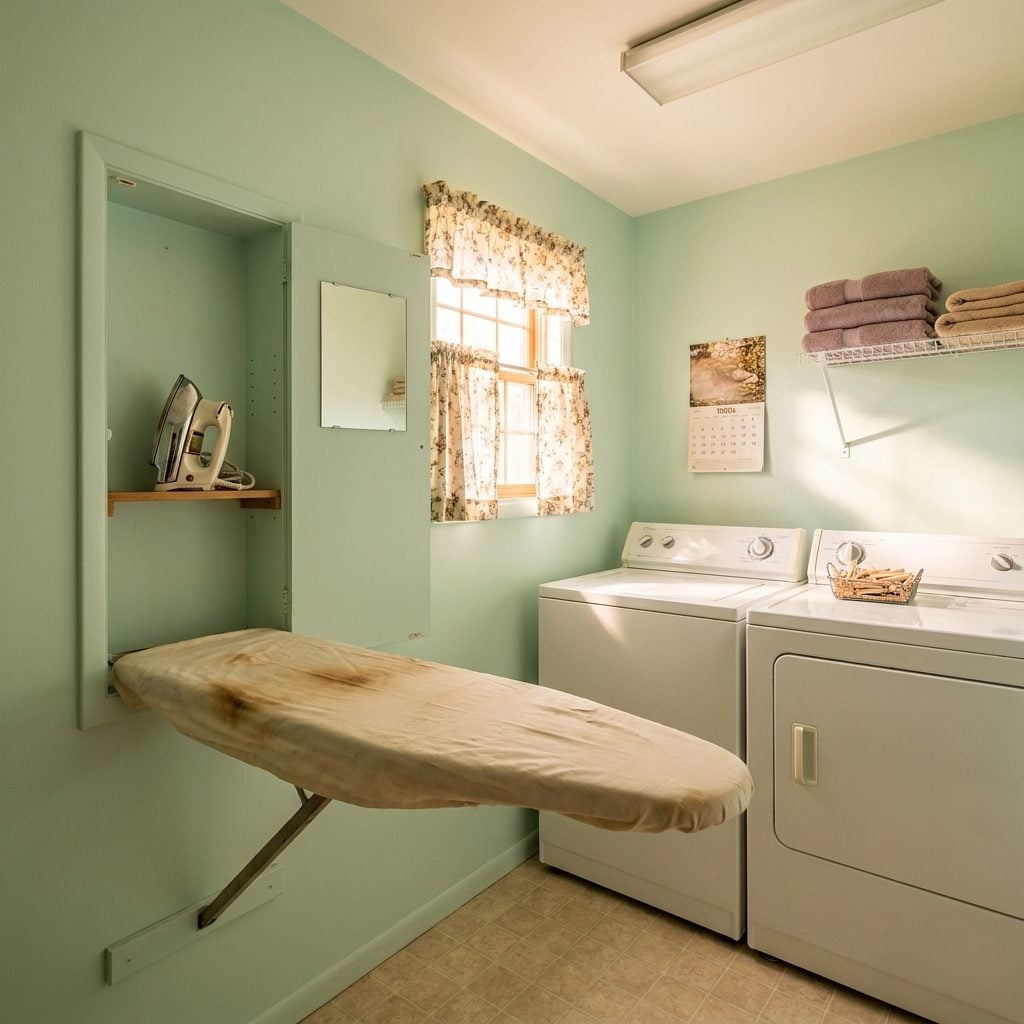
Every kid thought this was a hidden door. You’d pull the recessed cabinet open, unfold the ironing board on its spring-loaded hinge, and suddenly the laundry room had a purpose beyond just washing. The board itself was always covered in a scorched cotton pad with brown iron-shaped marks from years of Sunday-night shirt pressing.
These wall units were genuinely clever. They saved floor space in what was often the smallest room in the house, tucking away behind a flat panel door that blended with the wall. Some had a built-in electrical outlet inside the cabinet. Some had a small shelf for the iron. Most had a mirror on the inside of the door, which made no sense in a laundry room but somehow felt right.
Try explaining to a twenty-something today that ironing was a regular household chore, not a once-a-year emergency. The board was out more than it was folded away.
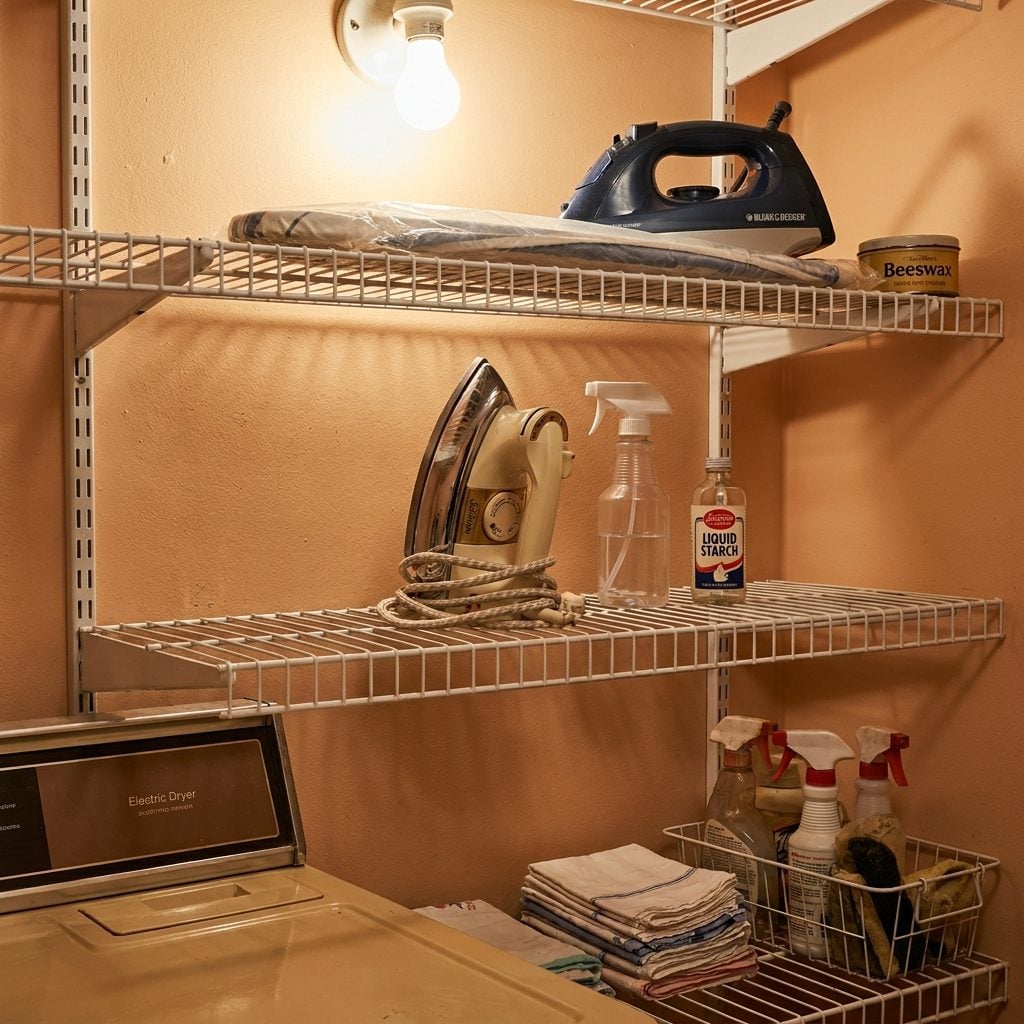
17. Sunbeam and Black & Decker Steam Irons Sitting on Open Shelves Like Trophies
🔥 Would you like to save this?
Nobody stored these in a box. The iron lived on a shelf, cord wrapped loosely around itself, water reservoir half full from last time. A Sunbeam with the chrome soleplate and that satisfying click when you set the temperature dial. Or a Black & Decker with the blue plastic body that felt surprisingly heavy for its size.
The steam burst button was the power move. You’d press it and get a dramatic hiss that made ironing feel almost industrial. The water would sometimes spit brown mineral deposits onto a white dress shirt, which was its own special kind of tragedy.
16. Plastic Laundry Baskets in Almond, Mauve, and Avocado That Matched Absolutely Nothing
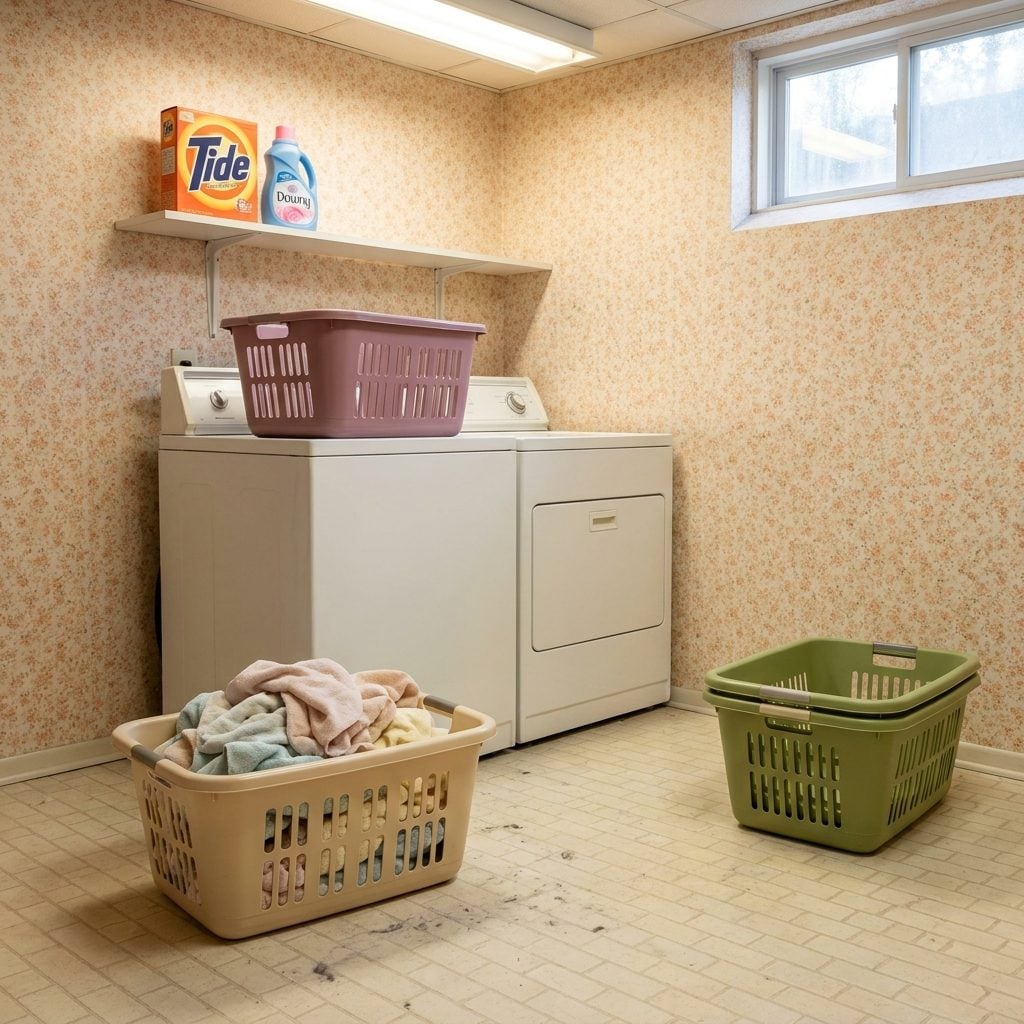
The color options were: almond (which was beige pretending to be fancy), mauve (which was pink pretending to be serious), and avocado (which was a holdover from the 1970s that refused to die). Every household owned at least two. They cracked along the rim within six months but kept working for another decade.
These rectangular Rubbermaid-style baskets lived on top of the dryer, on the floor, sometimes stacked three high. The ventilation slots on the sides left grid-pattern imprints on warm clothes fresh from the dryer. Nobody folded laundry in the laundry room. You carried the basket to the couch, turned on the TV, and folded there. That was the system.
15. Retractable Clotheslines Stretched Across the Room Because the Dryer Couldn’t Handle Everything
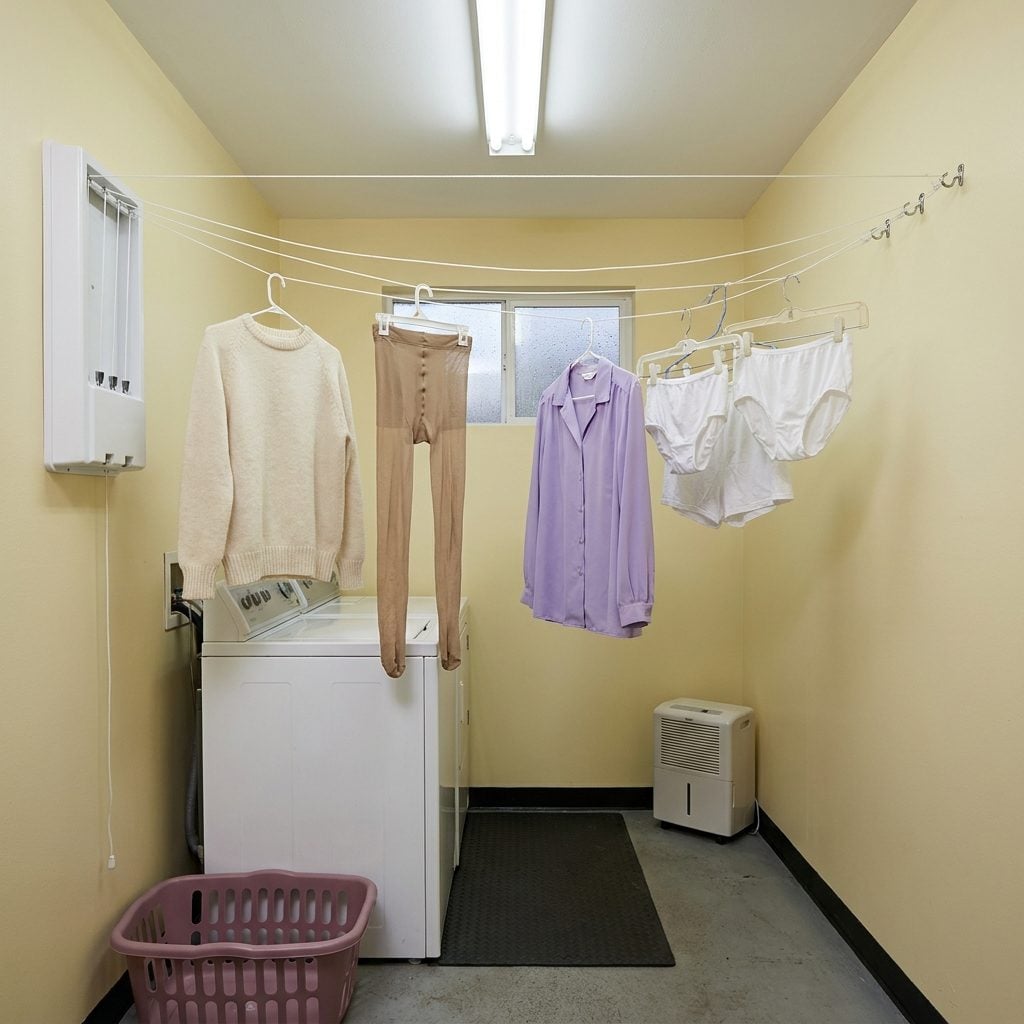
A small white plastic housing screwed into one wall, a hook on the opposite wall, and between them: four or five thin nylon cords that you pulled across the room and locked into place. Suddenly your laundry room became an obstacle course of dripping sweaters and hand-wash-only blouses.
The retractable mechanism never fully retracted after the first month. The lines sagged in the middle under the weight of wet denim. And the room turned into a humid, fabric-softener-scented sauna that fogged up any nearby window. But delicates were delicates, and the dryer was considered too aggressive for anything with a care label. So the lines stayed up from Monday through Wednesday, minimum.
14. Wall-Mounted Wire Drying Racks That Folded Flat and Pretended to Save Space
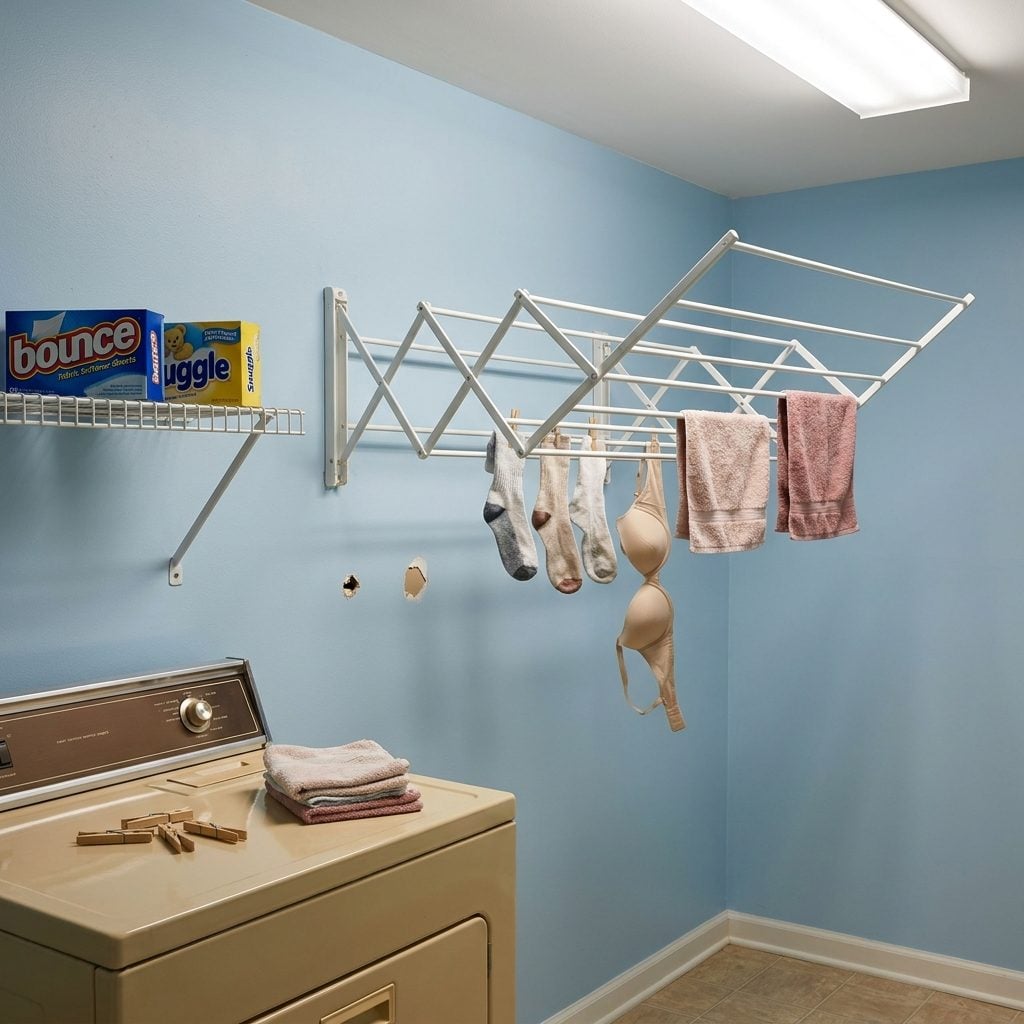
They folded flat against the wall, in theory. In practice, they were always extended, loaded with socks that had been “drying” for three days. White vinyl-coated wire, an accordion-style hinge mechanism, and roughly eight dowel-width bars that could hold maybe two sweaters and a handful of delicates before the whole thing started sagging away from the wall.
The mounting screws pulled out of drywall constantly. Everyone’s dad re-anchored theirs at least twice. A few resourceful parents bolted them into studs, and those racks are probably still there today, in houses that have since been renovated around them.
13. Giant Tide Boxes and Wisk Bottles That Took Up Half the Counter
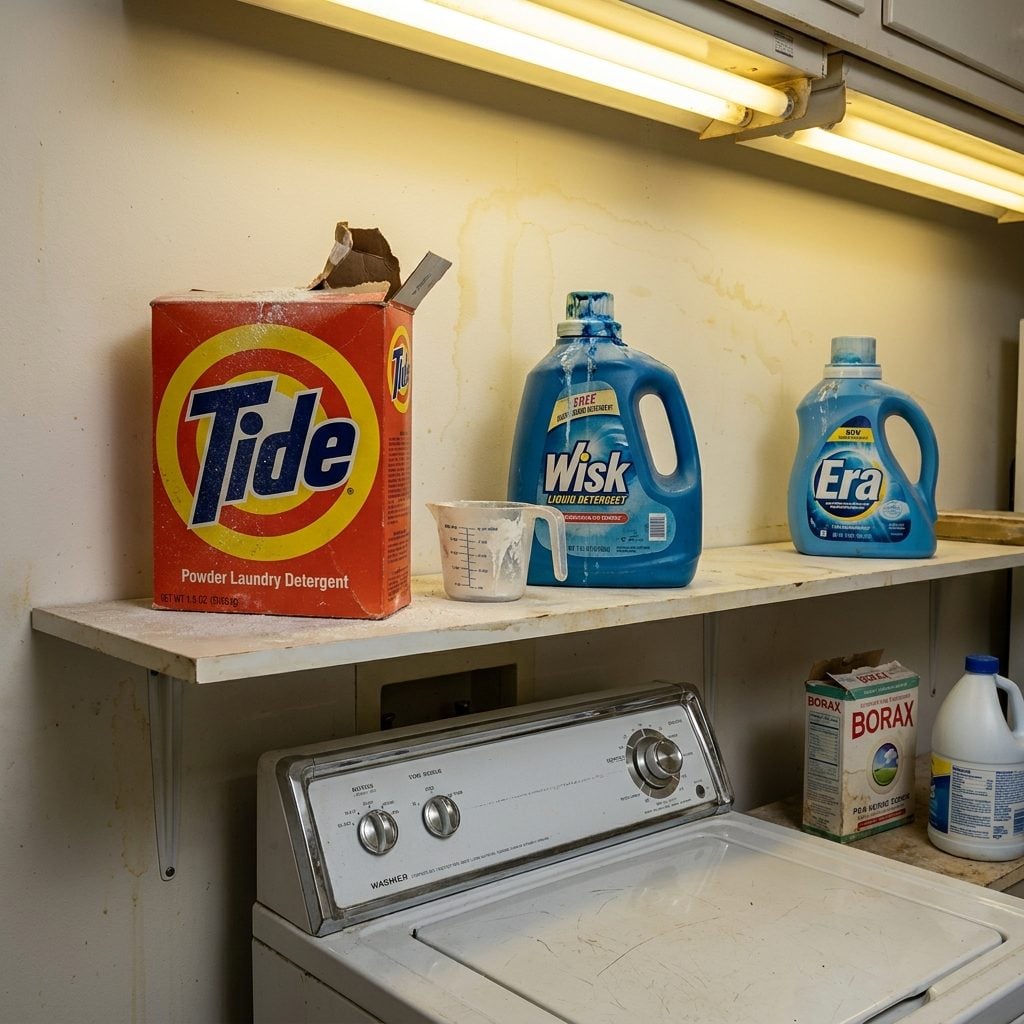
Detergent packaging in the 1980s was not designed for small spaces. The Tide box alone was the size of a toddler. Wisk came in a jug so heavy when full that you needed two hands to pour it. Era had that distinctive blue bottle. All of them lived on a shelf or on top of the washer, their labels fading from humidity and splashes, a crust of dried detergent around every cap and spout.
The Tide box had a perforated pour spout you punched open with your thumb. It never opened cleanly. Powder would spill down the side and leave an orange-and-blue streak on the cardboard. The measuring scoop inside was always buried, so you’d dig around in the powder like you were panning for gold. And somehow, a quarter-inch of detergent dust coated every surface within a two-foot radius of wherever the box sat.
The laundry room shelf wasn’t organized. It was a skyline of oversized packaging.
12. Downy Bottles and Bounce Boxes: The One-Two Punch of Fabric Softening
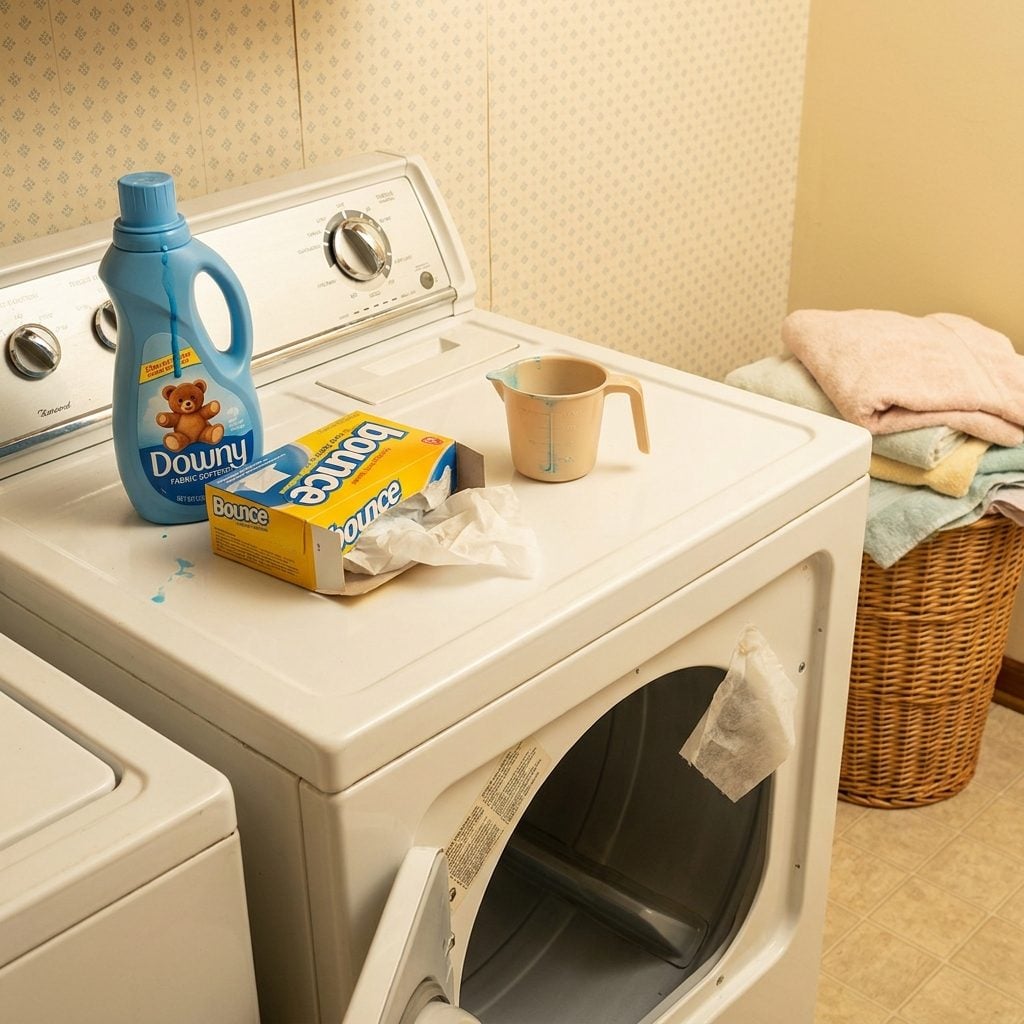
That blue Downy bottle with the bear on the label. You poured the thick, syrupy liquid into the washer’s fabric softener dispenser (if your machine had one) or waited for the rinse cycle and added it manually, which meant hovering near the washer like a pit crew member waiting for a tire change.
Bounce dryer sheets were the backup plan, or the primary plan, depending on who was doing laundry. You’d toss one in with every load and the whole house smelled like “outdoor fresh” for an hour. Used sheets ended up stuck to the inside of the dryer drum, wadded in pockets, or clinging to the back of someone’s shirt at school. The static-free promise was only about 70% reliable, which everyone accepted without complaint.
11. Shout and Spray ‘n Wash: The Stain Pre-Treatment Arsenal
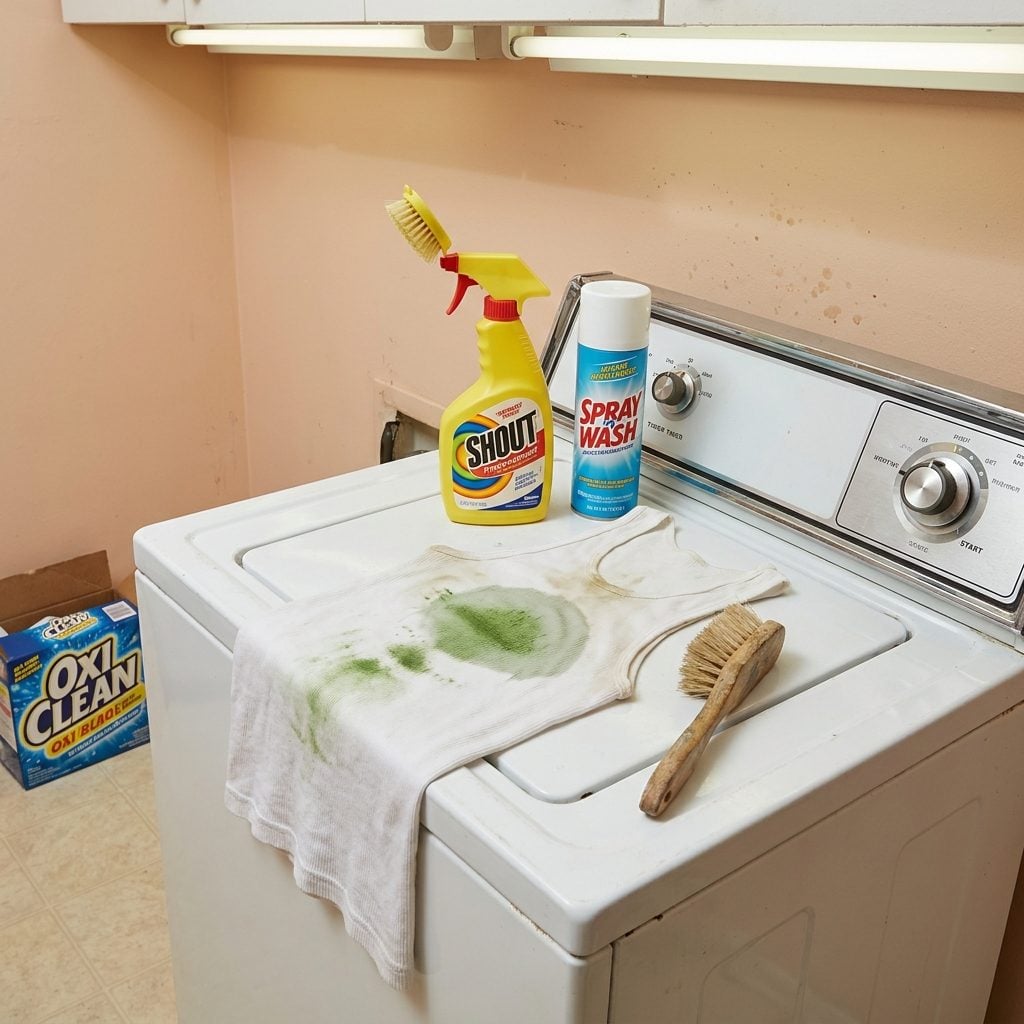
Grass stains. Spaghetti sauce. Mystery spots that could have been anything. Every 1980s laundry room had at least one trigger-spray bottle of Shout or Spray ‘n Wash standing at the ready, usually right next to the washer where it could be grabbed and deployed in seconds. The trigger mechanisms jammed constantly. You’d pump it five or six times before it would finally spray, and by then you’d soaked a two-inch circle when you only needed a dime-sized spot.
Shout had a built-in brush cap on some versions. You’d flip the bottle over and scrub the stain right there on the edge of the washer. It was satisfying in a way that modern stain pens will never replicate.
10. Almond and Harvest Gold Washers That Made Every Laundry Room Look Like a Kitchen Appliance Had a Baby
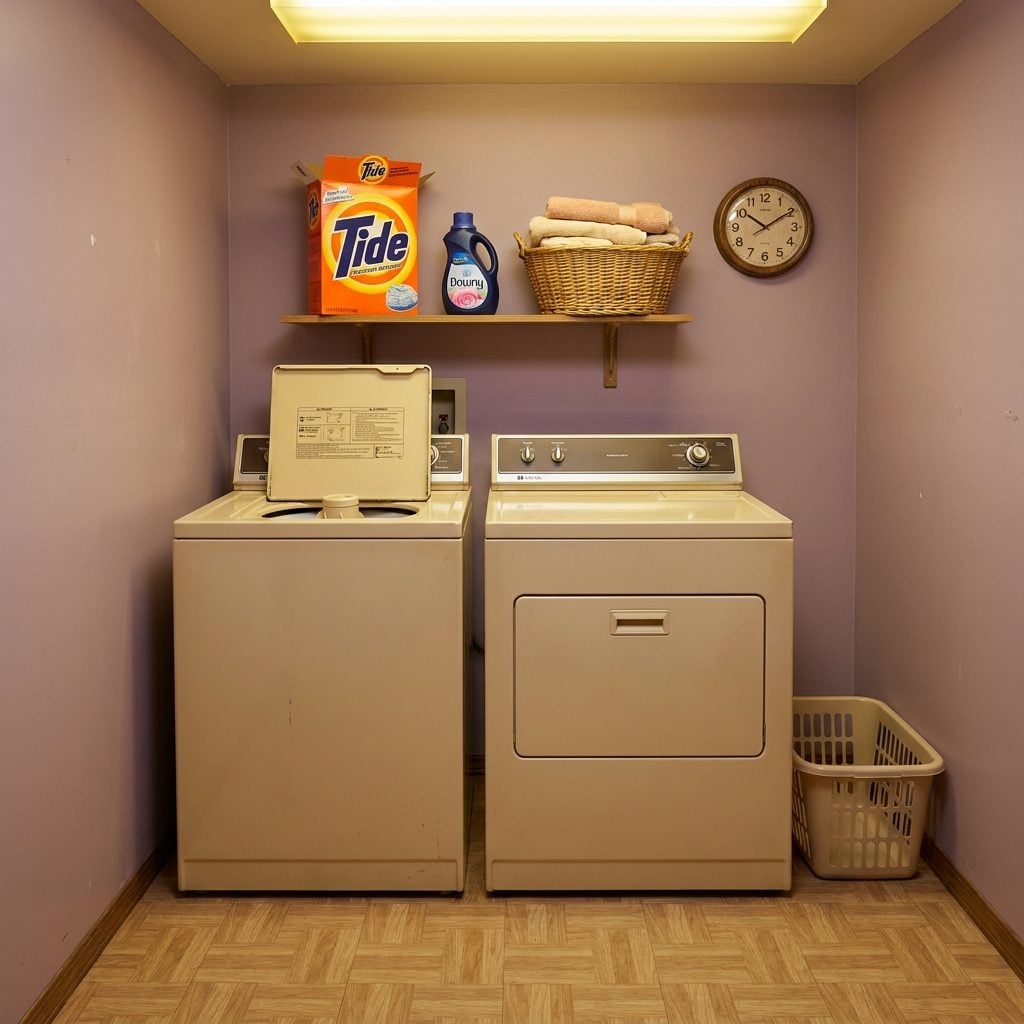
Not white. Never white. The 1980s laundry room came in exactly two flavors: almond (which was really just off-beige pretending to be elegant) and harvest gold (which had been hanging around since the ’70s and refused to leave). Whirlpool, Maytag, Kenmore, they all participated in this conspiracy. Every appliance showroom floor looked like a paint chip display for “colors that go with nothing.”
The wild part? We thought these tones were warm. Sophisticated, even. They matched the linoleum. They matched the countertops. They matched each other in that aggressive, coordinated way that defined the decade’s approach to home trends. If your dryer was almond and your washer was white, something had gone terribly wrong in your household, and everyone who visited your laundry room knew it.
9. Spray Starch Cans and Mysterious Bluing Agents That Nobody Under 30 Has Ever Heard Of
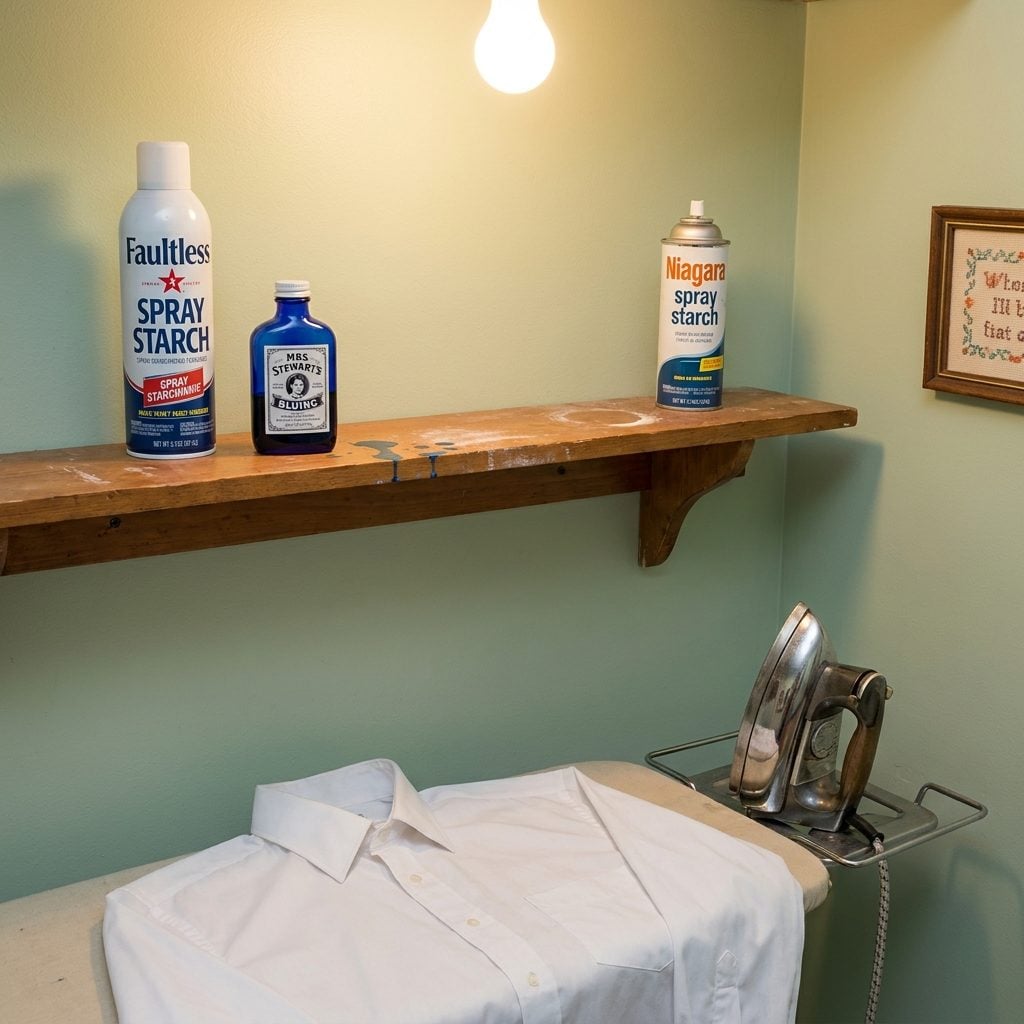
Faultless spray starch in the tall aerosol can. You’d hit a dress shirt collar with it, iron over the starch, and that collar would stay crisp until approximately 10:15 a.m. The can left a white residue if you sprayed too close, and the nozzle clogged if you didn’t shake it first. A faint chemical-sweet smell that mixed with the hot iron’s steam into something oddly specific to the act of pressing clothes.
Then there was bluing. An actual blue liquid you added to the wash to make whites appear whiter. Not bleach. Not detergent. A blue dye that counteracted the yellow tinge in white fabrics through an optical trick. Mrs. Stewart’s Bluing in that little cobalt bottle. It sounded like folk magic, and honestly, it kind of was.
Good luck explaining either of these products to someone who sends their shirts to a wash-and-fold service.
8. The Dustbuster Mounted on the Wall: Always Charged, Never Quite Powerful Enough
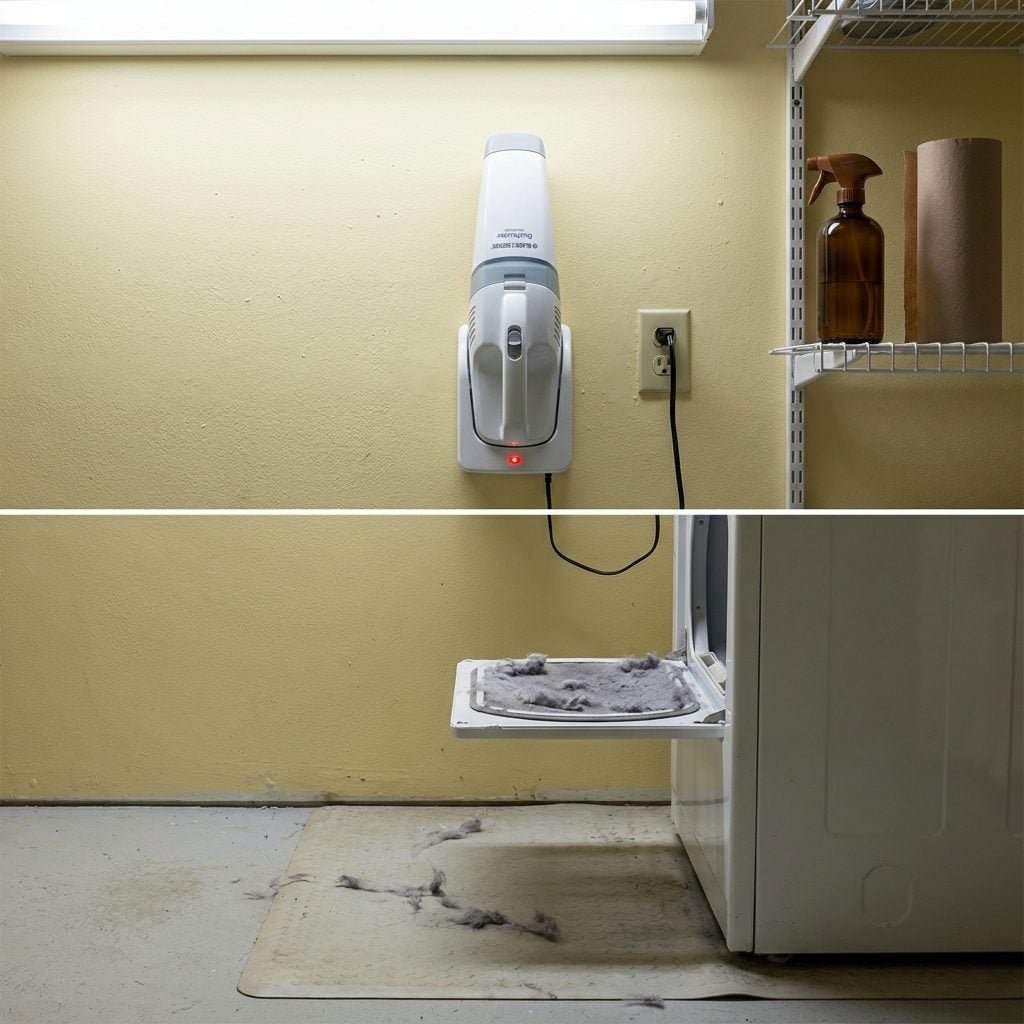
That white and gray Black & Decker Dustbuster sitting in its wall-mounted charging cradle, little red charging light glowing, ready for action. It lived in the laundry room because that’s where lint happened. Dryer lint that escaped the trap, detergent powder on the floor, the general grit of a utility space. You’d grab it, hit the button, and hear that wheezy, increasingly pathetic whir as the battery drained in about ninety seconds.
It picked up lint. It sort of picked up crumbs. It absolutely could not handle anything with actual weight. But reaching for the Dustbuster felt more reasonable than dragging out the full vacuum for a small mess, so you used it anyway and accepted the results.
7. The Rotary Wall Phone With a Coiled Cord Long Enough to Reach the Backyard
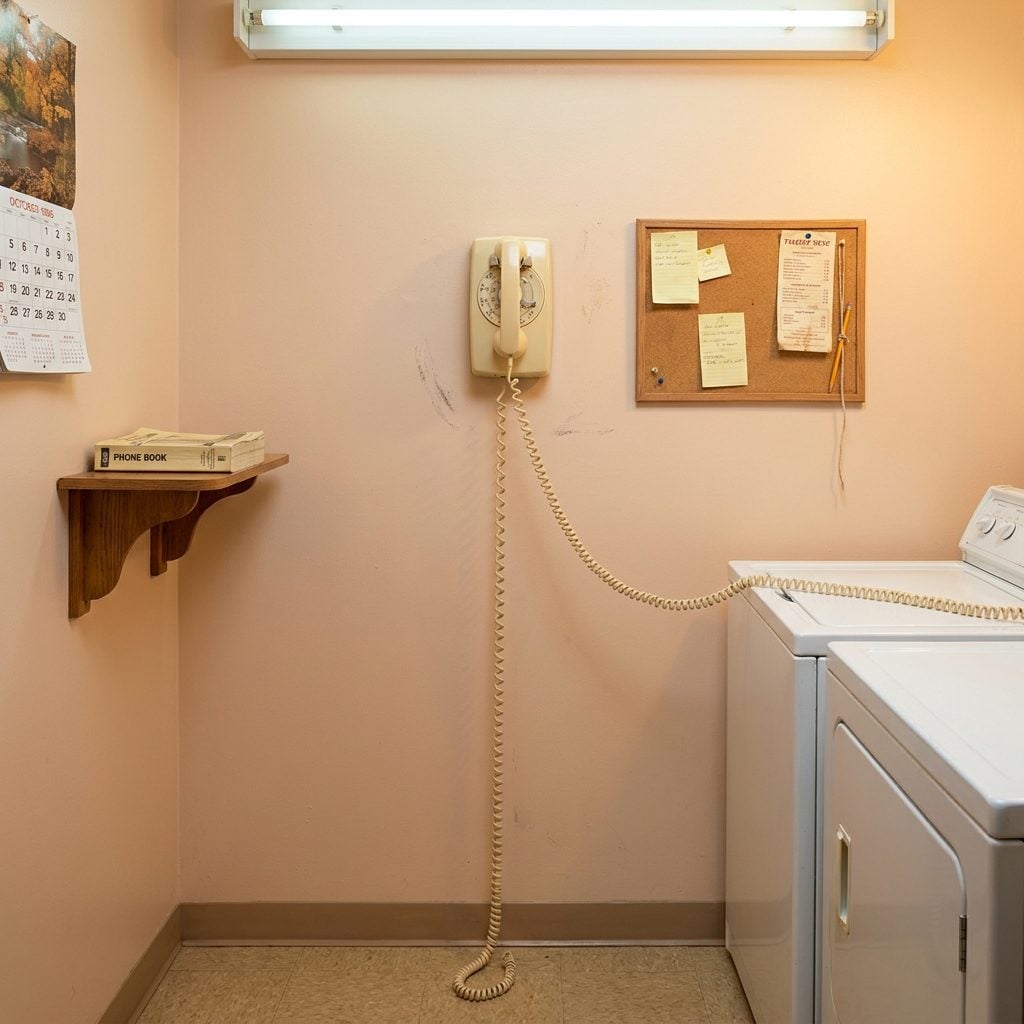
Mounted right there on the laundry room wall, usually in almond or harvest gold, with a coiled handset cord that had been stretched so many times it hung in loose, uneven spirals almost to the floor. This was the house’s second phone line, or sometimes the only one, placed in the laundry room because that’s where the phone jack happened to be when the house was wired.
People had entire conversations while loading the washer, folding towels, sorting darks from lights. The receiver cradled between shoulder and ear, hands busy, the rhythmic thump of the washing machine as background noise. Teenagers would stretch that cord around the doorframe into the hallway for privacy, which worked until someone needed the dryer and physically stepped over the cord on their way in.
The phone itself was nearly indestructible. You could drop the handset on concrete and it would still work fine. The same cannot be said for anything we carry in our pockets now.
6. The Tiny Countertop TV That Made Folding Laundry Feel Like an Event
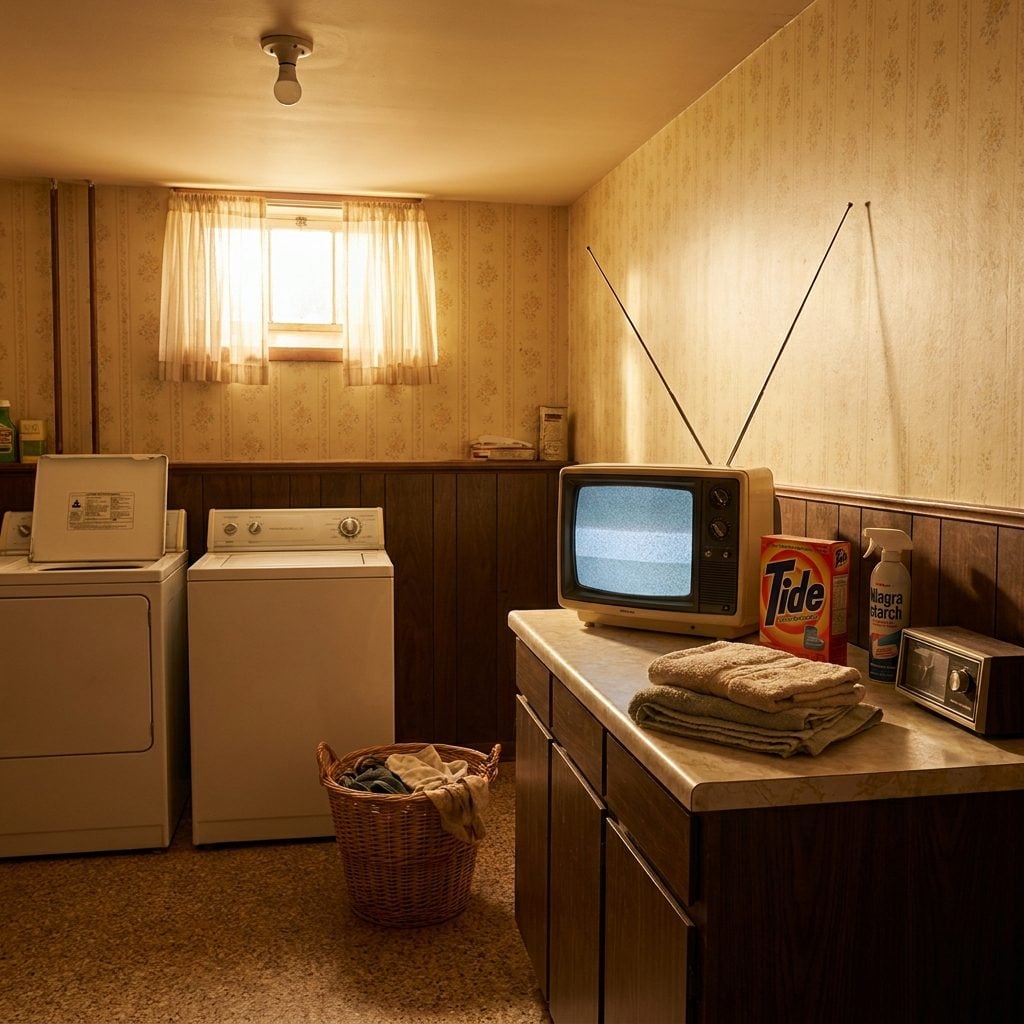
There it sat, usually a 9-inch or 13-inch screen, rabbit ears splayed at odd angles, perched between the detergent and a stack of washcloths. You could hear the tinny audio from the hallway: Phil Donahue, General Hospital, or whatever your mom had tuned in while sorting socks. The picture was always a little snowy. Nobody cared.
These weren’t entertainment centers. They were company. Folding fitted sheets alone in a basement laundry room is grim work, and that little TV turned a chore into a ritual. Some families had a clock radio instead, always tuned to the same AM station, the volume just loud enough to compete with the spin cycle. The point wasn’t high fidelity. The point was not being alone with the lint trap.
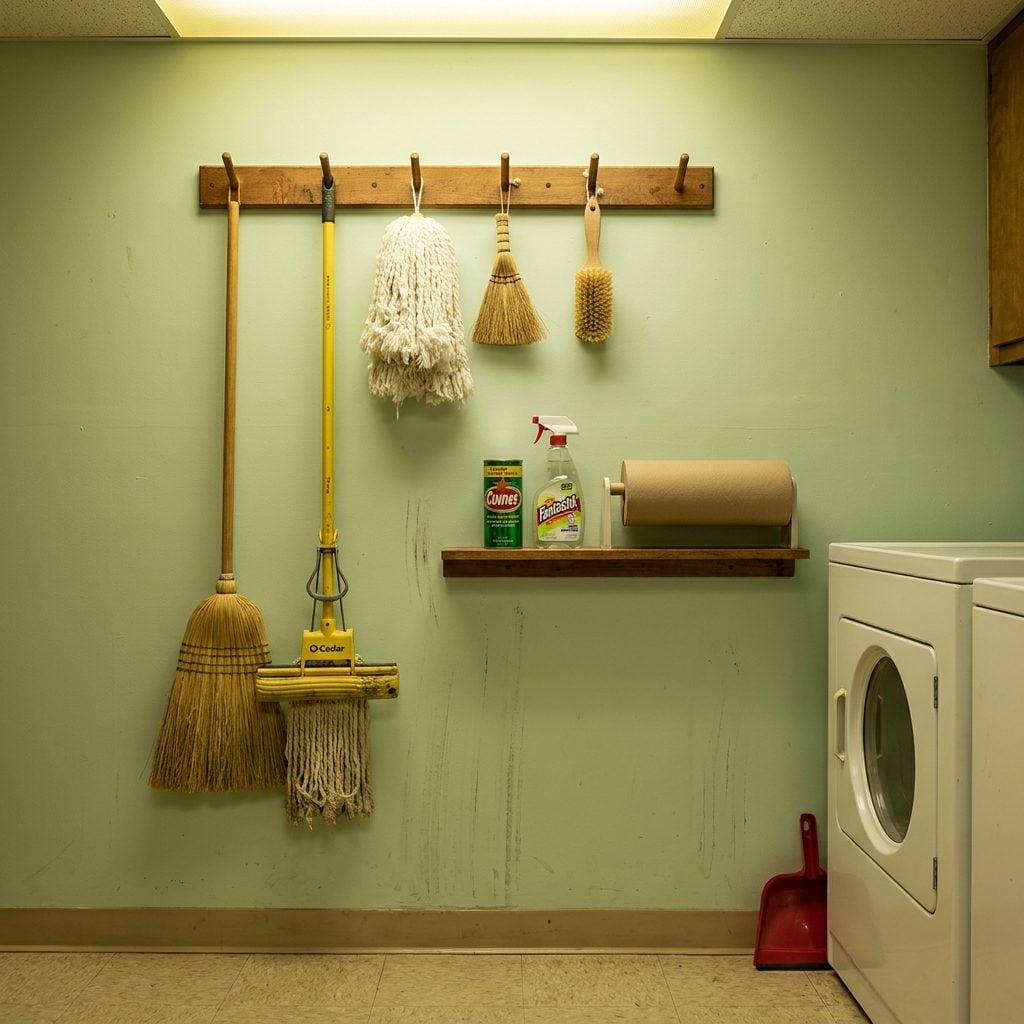
5. The Peg Rack Wall Holding Every Mop, Broom, and O-Cedar Sponge Mop You’ve Ever Seen
🔥 Would you like to save this?
Every laundry room had one wall that looked like a janitor’s supply closet. A row of wooden or plastic peg hooks screwed directly into drywall, each one bearing the weight of a different long-handled cleaning tool. The corn broom. The push broom. The Dust Buster hanging by its charging cord. And always, always, the O-Cedar sponge mop with its yellow cellulose head, slightly gray from use, leaning at an angle because the peg wasn’t quite strong enough.
This was organized chaos. The tools clinked against each other when the dryer shook the wall. Half of them needed replacing. Nobody replaced them.
4. The Three-Bin Hamper System Labeled ‘Whites,’ ‘Colors,’ and ‘Delicates’ Like a Tiny Filing Cabinet for Dirty Clothes
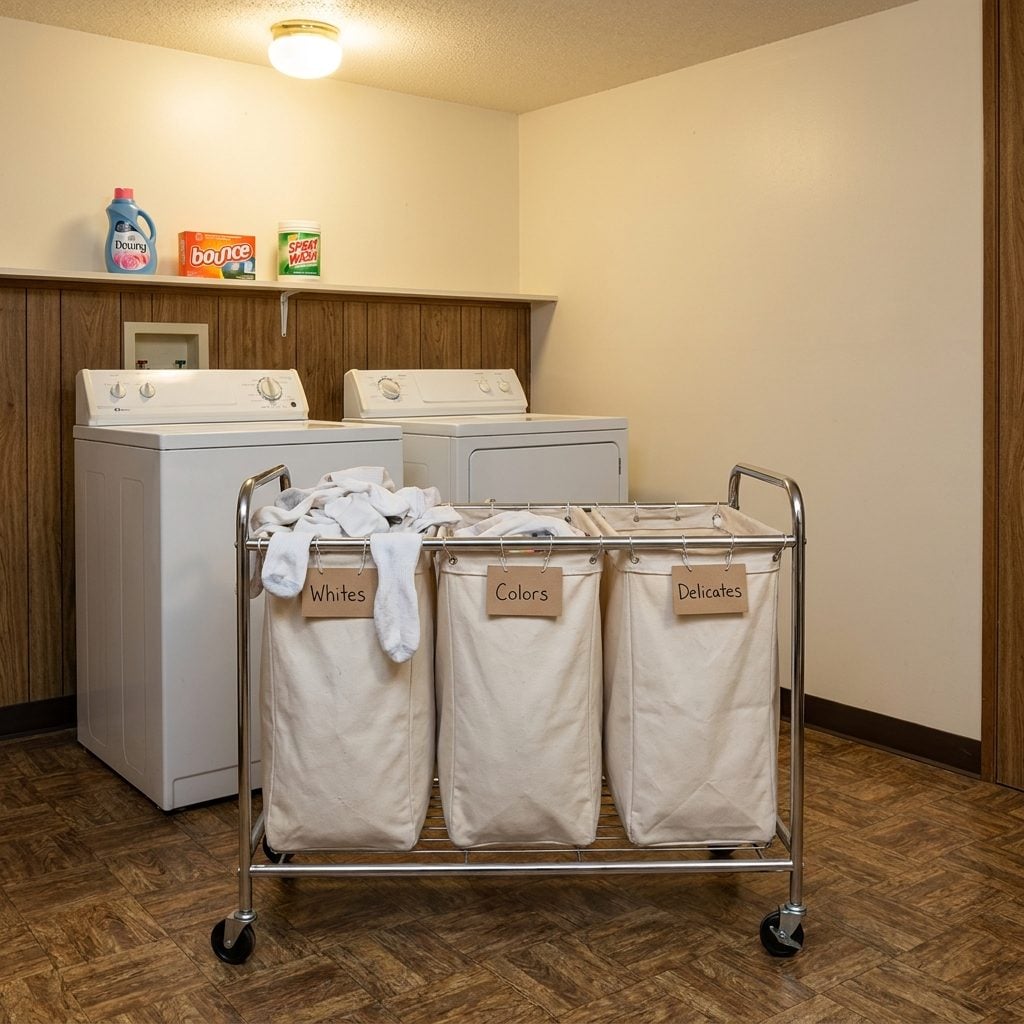
This was the laundry room’s version of bureaucracy. Three compartments, usually canvas bags on a metal rolling frame, each one labeled with a handwritten tag or a little plastic placard. Whites. Colors. Delicates. The theory was beautiful. The execution was chaos.
By Wednesday, the “whites” bin was overflowing with gym socks while “delicates” held one silk blouse from 1978 that nobody wore anymore. Kids never sorted correctly. Dads didn’t sort at all. But your mom kept the system going with a conviction that bordered on religious, because mixing a red sock with the white load wasn’t just a mistake. It was a moral failing.
The frames always wobbled. One wheel was perpetually stuck. And yet these things survived for years, outlasting appliances, marriages, and several sets of curtains.
3. The Laundry Room That Was Also the Mudroom, the Coat Closet, and Somehow the Pantry
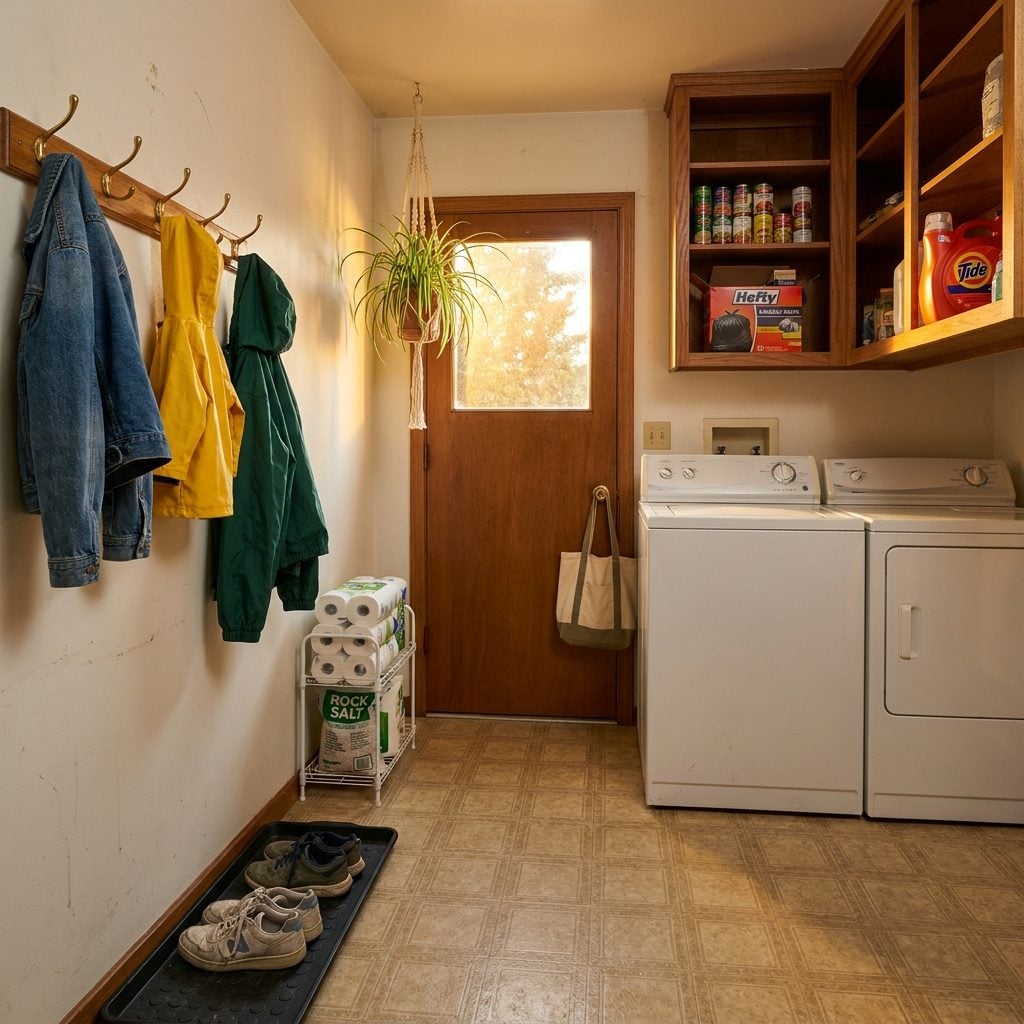
Nobody in the 1980s had a dedicated mudroom. That concept was for magazine houses and ski lodges. What we had was the laundry room near the back door, and it absorbed every function the rest of the house rejected. Coat hooks on the wall. A shoe rack that was really just a rubber mat. Maybe a shelf with canned goods that didn’t fit in the kitchen. A half-dead spider plant on top of the dryer.
This room was the true transitional living room of the house, except nobody was living in it. You passed through it twenty times a day. It smelled like Bounce dryer sheets and wet galoshes. It held everything that didn’t belong anywhere else: the dog leash, the spare house key on a hook, the bag of rock salt for the driveway, half a case of Diet Coke.
The genius of it was that nobody designed it this way. It just happened, one coat hook at a time, until the room became the most honest reflection of how a family actually lived.
2. The Pet Food Bowls and Litter Box Tucked Into the Corner Like a Tiny Studio Apartment for the Cat
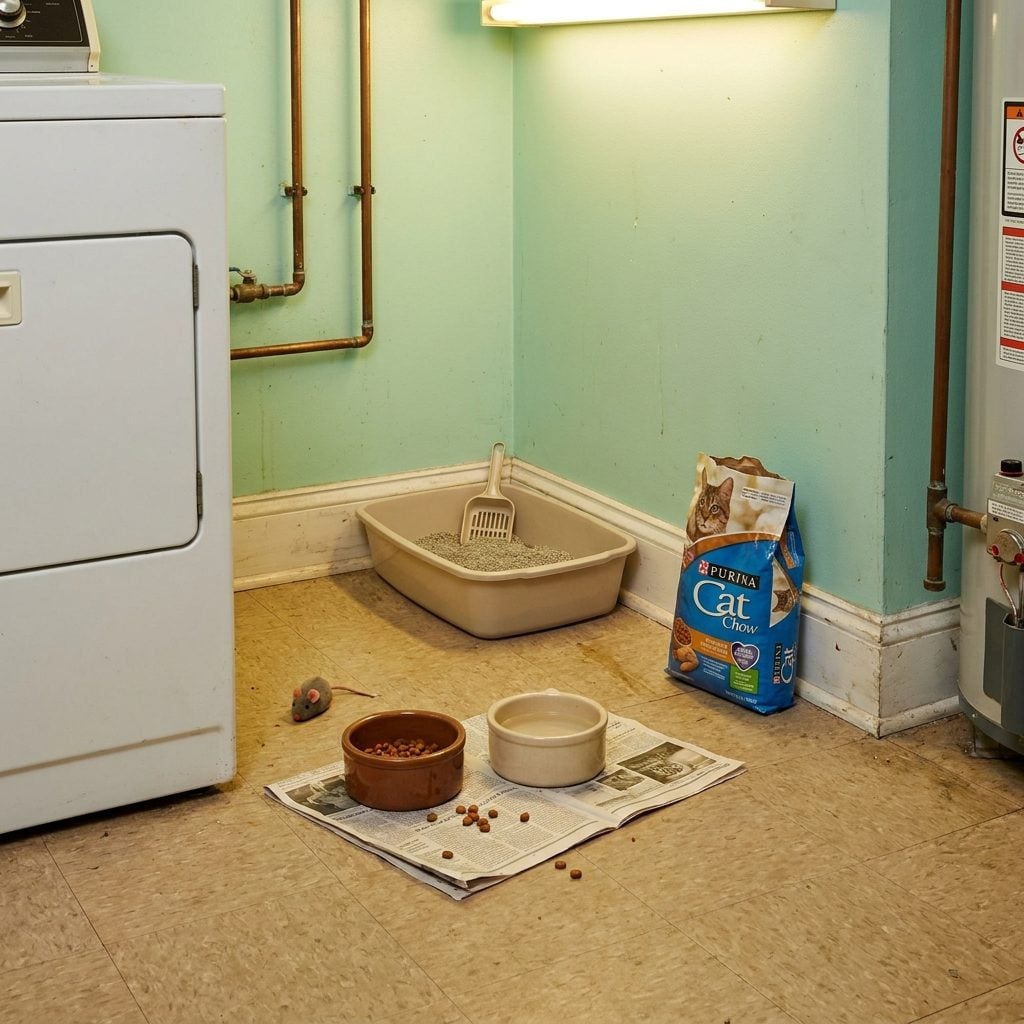
Somewhere between the dryer and the water heater, the family pet had staked out real estate. Two ceramic bowls on a folded newspaper (to catch the mess that the newspaper never actually caught), a bag of Purina leaning against the wall, and if there was a cat, a plastic litter box wedged behind the door where it would ambush you with its smell every time the dryer kicked on warm air.
Nobody questioned this arrangement. The kitchen was for people. The laundry room was for everything else, including the animals’ entire dining and bathroom situation. It made the room smell like a cocktail of Tide and Meow Mix, a combination so specific that if someone bottled it, half the people reading this would tear up.
1. The Corkboard Covered in Coupons, Soccer Schedules, and Notes Nobody Ever Took Down
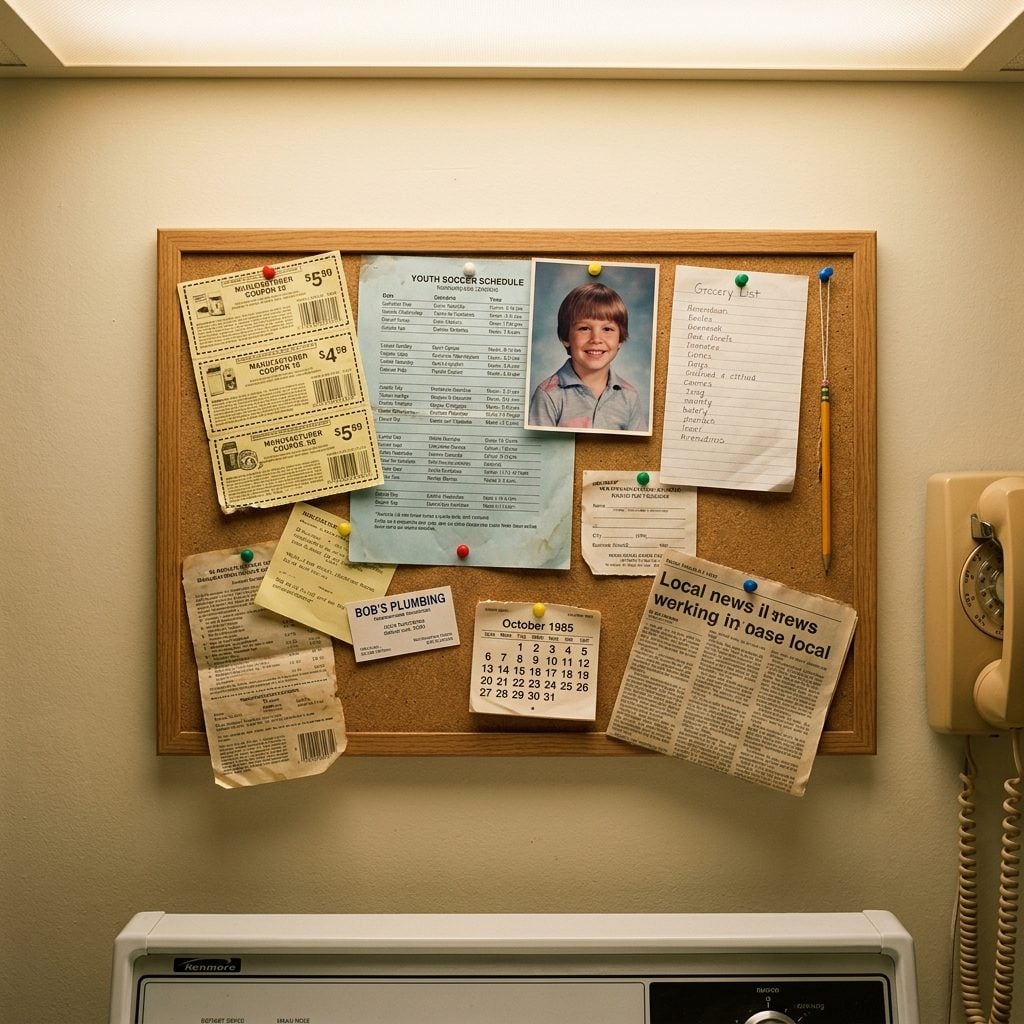
This was the family’s operating system before smartphones. A rectangle of cork, maybe 18 by 24 inches, mounted above the dryer or next to the light switch, absolutely buried under layers of paper. Expired Jell-O coupons pinned over still-valid pizza coupons. A soccer practice schedule from two seasons ago. A reminder to call Aunt Linda. A school photo held up by a yellow thumbtack.
Some families upgraded to a chalkboard or a small dry-erase board, but the corkboard was the original. It was never cleaned off, only added to. Layers accumulated like geological strata. You could peel back the top layer and find a dentist appointment card from 1983.