🔥 Would you like to save this?
The smell hit you first. Roast beef, cigarette smoke, and something floral from a candle that had been burning since four o’clock. The dining room in a 1960s American home wasn’t just where you ate, it was a stage. A place where avocado-green met harvest gold, where the good china came out for company and stayed out a little too long. Thirty-two details made that room what it was. You’ll recognize every single one.
31. The Rolling Hostess Cart That Made Every Dad Feel Like a Bartender
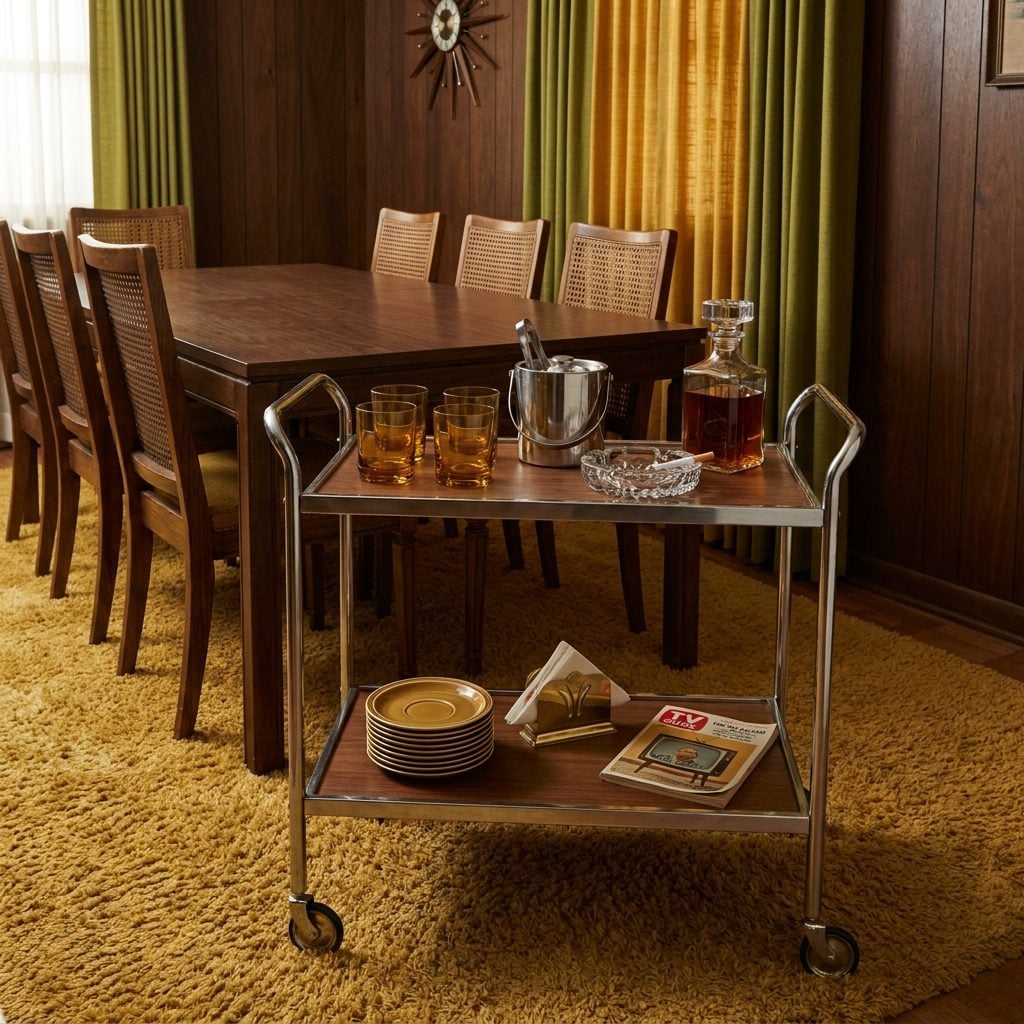
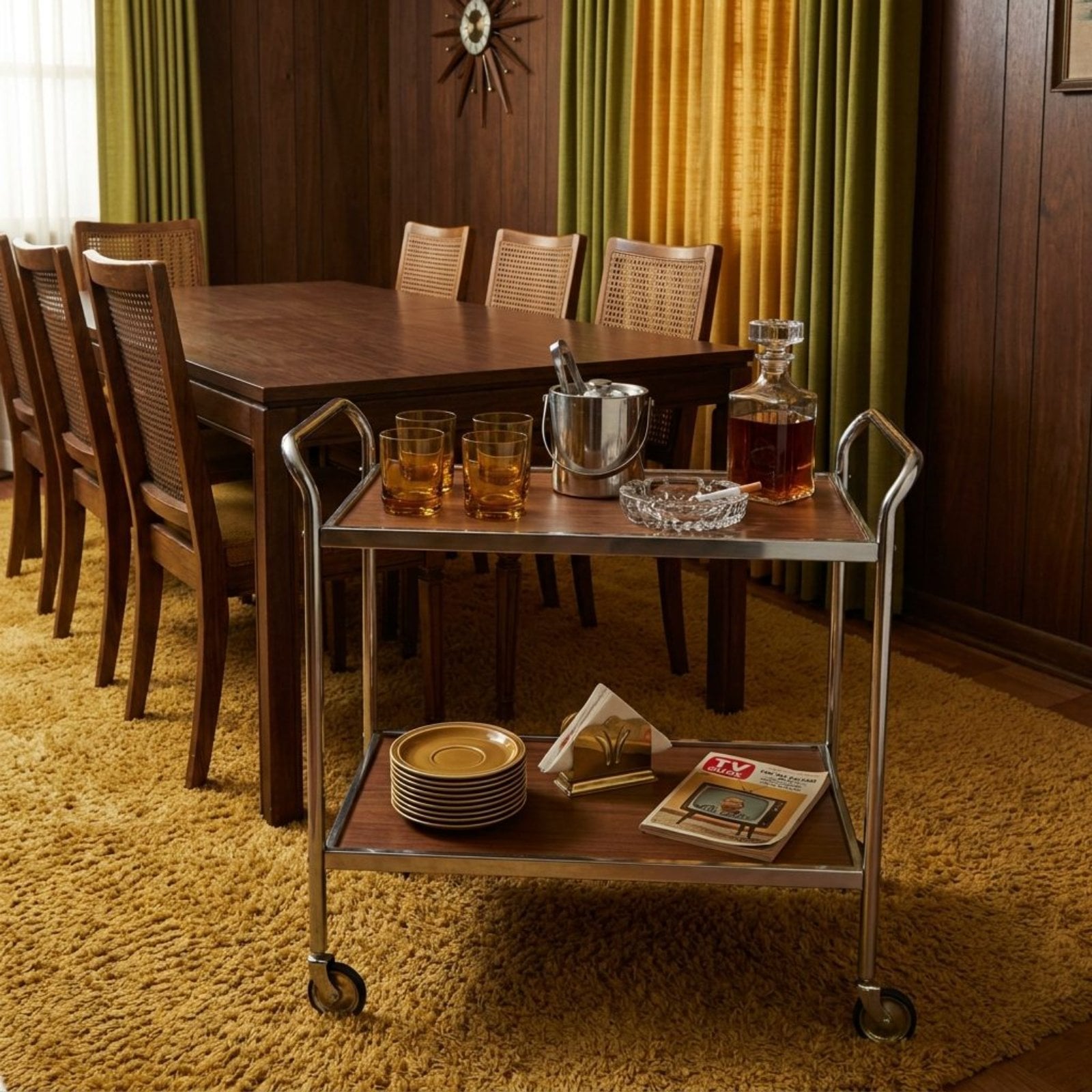
It rolled out the moment company arrived, which in the 1960s was at least twice a week. The hostess cart was chrome and teak, or sometimes painted white with brass fittings, and it always smelled faintly of vermouth and good intentions. Mom had it stocked before the guests even knocked: the good cocktail glasses (not the everyday ones), a little dish of stuffed olives, a cluster of those impossibly tiny appetizer plates that held exactly three crackers each.
In order to come up with the very specific design ideas, we create most designs with the assistance of state-of-the-art AI interior design software. Also, assume links that take you off the site are affiliate links such as links to Amazon. this means we may earn a commission if you buy something.
Dad presided over it like it was a ship’s helm. Nobody asked what you wanted. You got a Scotch rocks or a gin and tonic, and you were grateful. The cart was also, conveniently, where the ashtray lived during parties, which explains the faint brown ring on the lower shelf that no amount of Murphy Oil Soap ever fully removed.
30. The China Cabinet Full of Good Dishes Nobody Was Actually Allowed to Use
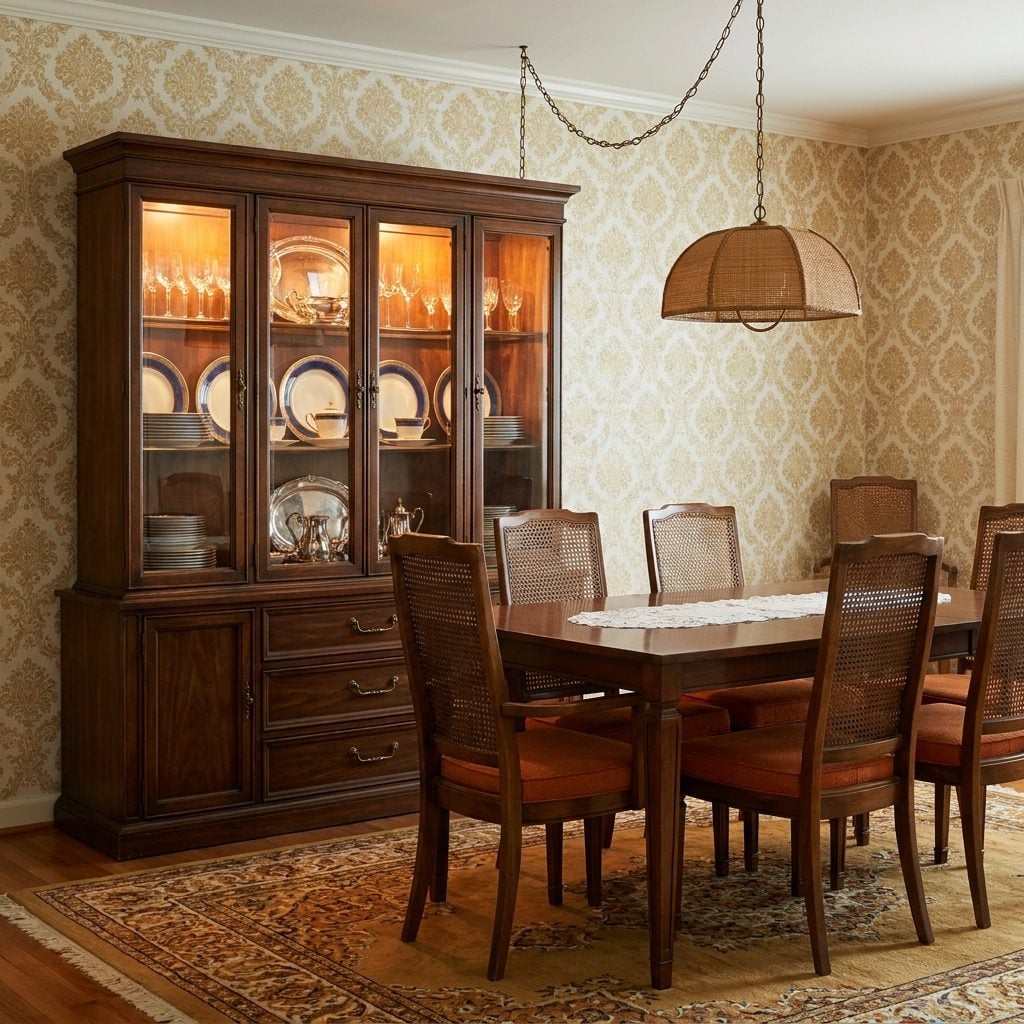
The dishes inside that cabinet were perfect. Every single one of them. And they stayed that way because the understanding, never spoken aloud but completely clear to every child in the house, was that touching them without a holiday-level justification was essentially a crime.
The china cabinet itself was a piece of furniture with genuine presence: dark walnut or mahogany, glass fronts with that little interior light that glowed like a reliquary. The good dishes sat in there for years. Sometimes decades. Some families had sets that were used maybe eleven times in thirty years and yet were treated as heirlooms of near-religious significance.
What’s funny is how much care went into displaying things nobody could see up close. The arrangement was deliberate: stacked plates in graduated sizes, crystal glasses angled just so, the silver gravy boat always front center. It was sitting room decor logic applied to dinnerware: beautiful things exist to be witnessed, not necessarily used.
29. The Padded Vinyl Table Protector That Lived Under the Tablecloth Year-Round
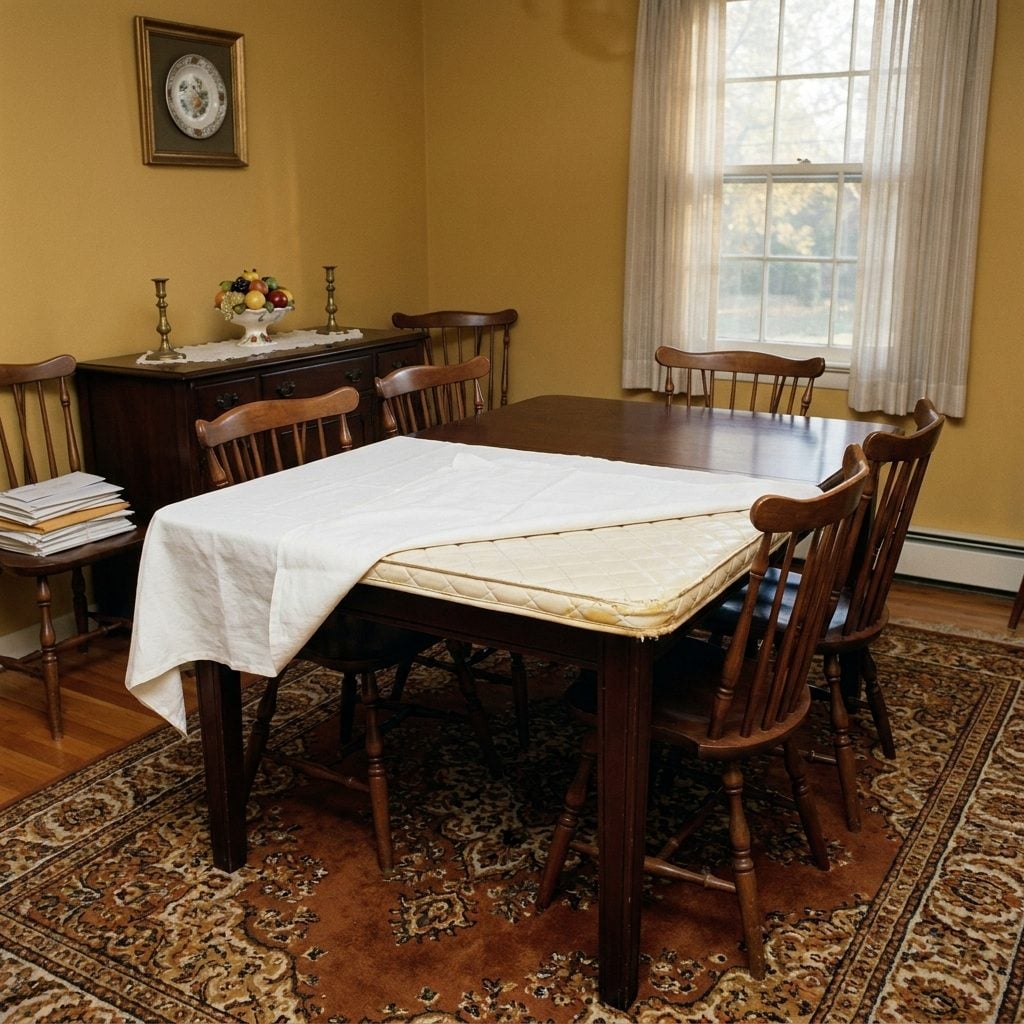
Under every tablecloth in America, there was a padded vinyl table protector. It was cream or off-white, slightly quilted on one side, shiny and wipe-clean on the other, and it had the faint plasticky smell of something that had absorbed thirty Thanksgiving dinners and two dozen birthday cakes.
It stayed on the table all year. The tablecloth went over it for company and came off after. The protector stayed. It was the unsung workhorse of the 1960s dining room: protecting that mahogany surface from hot dishes, spills, and the general entropy of family life.
28. The Starburst Clock That Watched Over Every Dinner Party Like a Golden Sun God
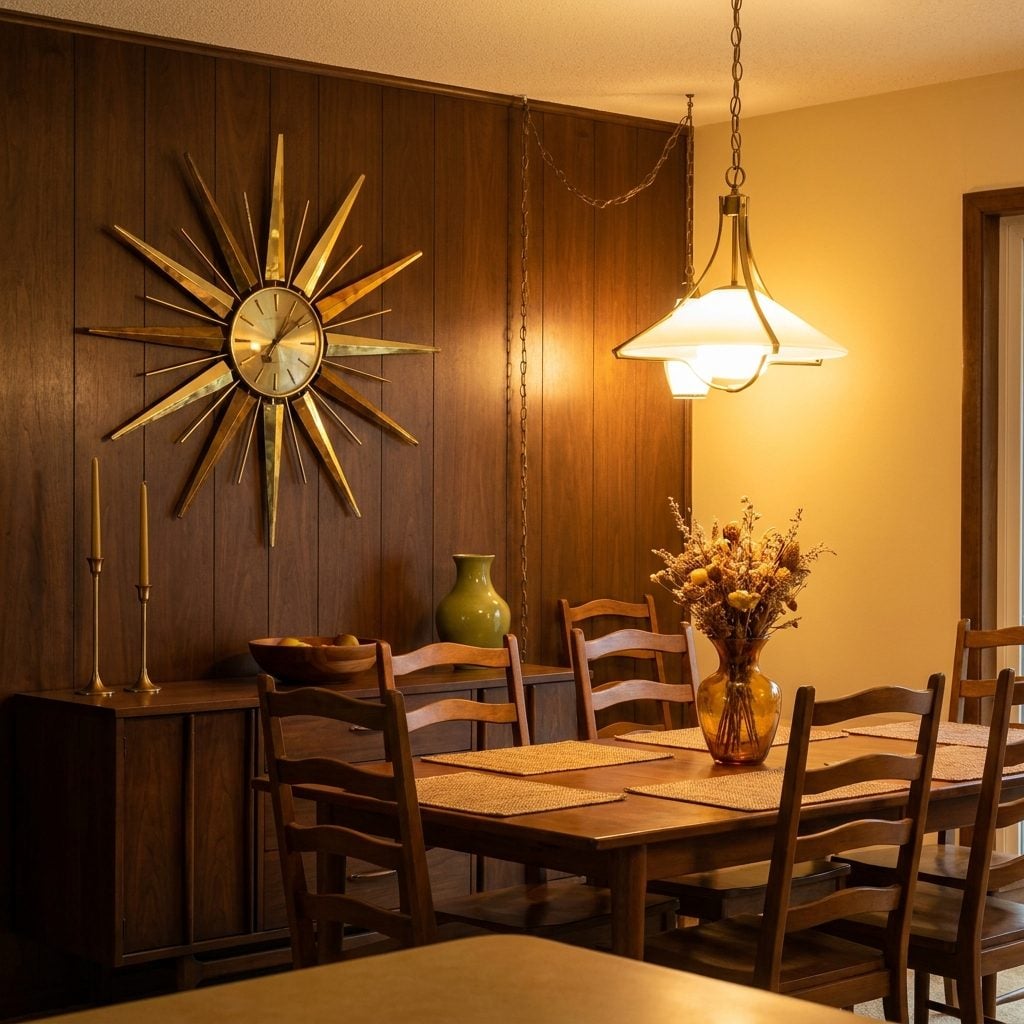
Every dining room had one, positioned with the confidence of something that belonged there forever. The starburst clock: brass rays of varying lengths shooting outward from a simple clock face, hung above the buffet like a mid-century sun god overseeing the meatloaf and mashed potatoes.
It wasn’t just decorative. It was a statement. A starburst clock said that this household was modern, optimistic, forward-looking. It was the Space Age in wall decor form, and it worked surprisingly well against dark paneling or flocked wallpaper. The Sunburst and Sputnik styles were everywhere from about 1955 through the late 1960s, and many of them are still running today in antique shops and very stylish apartments where people are paying real money to find the exact same clock their grandmother ignored for thirty years.
27. Dark Wood Paneling That Made Every Meal Feel Like a Board Meeting You Actually Enjoyed
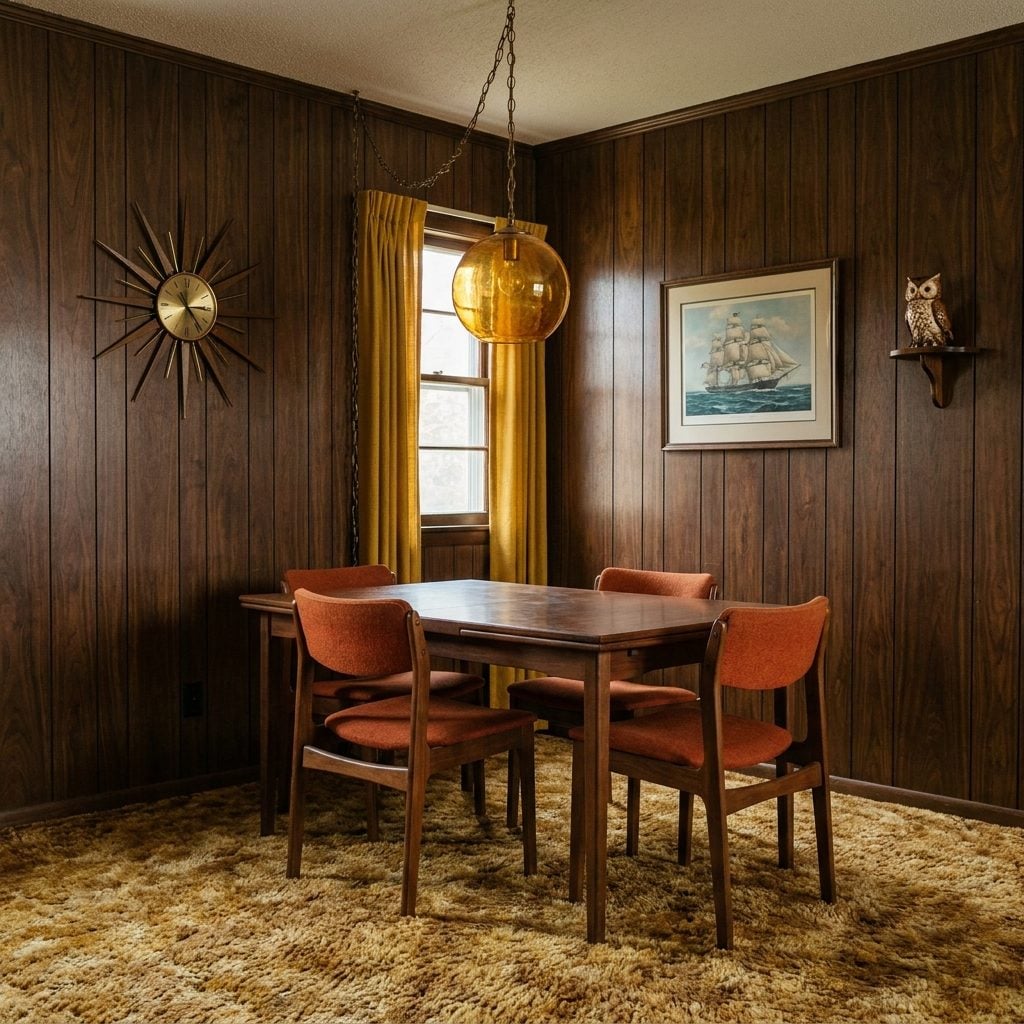
Dark wood paneling did something to a room that no paint color has ever quite replicated. It made it feel serious. Private. Like conversations held inside those walls carried more weight than conversations held anywhere else in the house.
The panels themselves were almost always 4×8 sheets of thin plywood with a printed wood-grain finish, grooved at regular intervals to look like planks. Real wood, technically. Sort of. The color was invariably some shade of walnut-brown that absorbed light rather than reflected it, which meant dining rooms paneled floor to ceiling had a perpetual amber dusk regardless of the time of day.
Families who had it didn’t think much about it. It was just what the walls looked like. Now, of course, it’s everywhere in design publications as a deliberate choice, and people are paying contractors to install the exact same thing that their parents covered with drywall in 1987.
26. The Swag Lamp Hanging So Low Over the Table It Was Basically a Third Guest
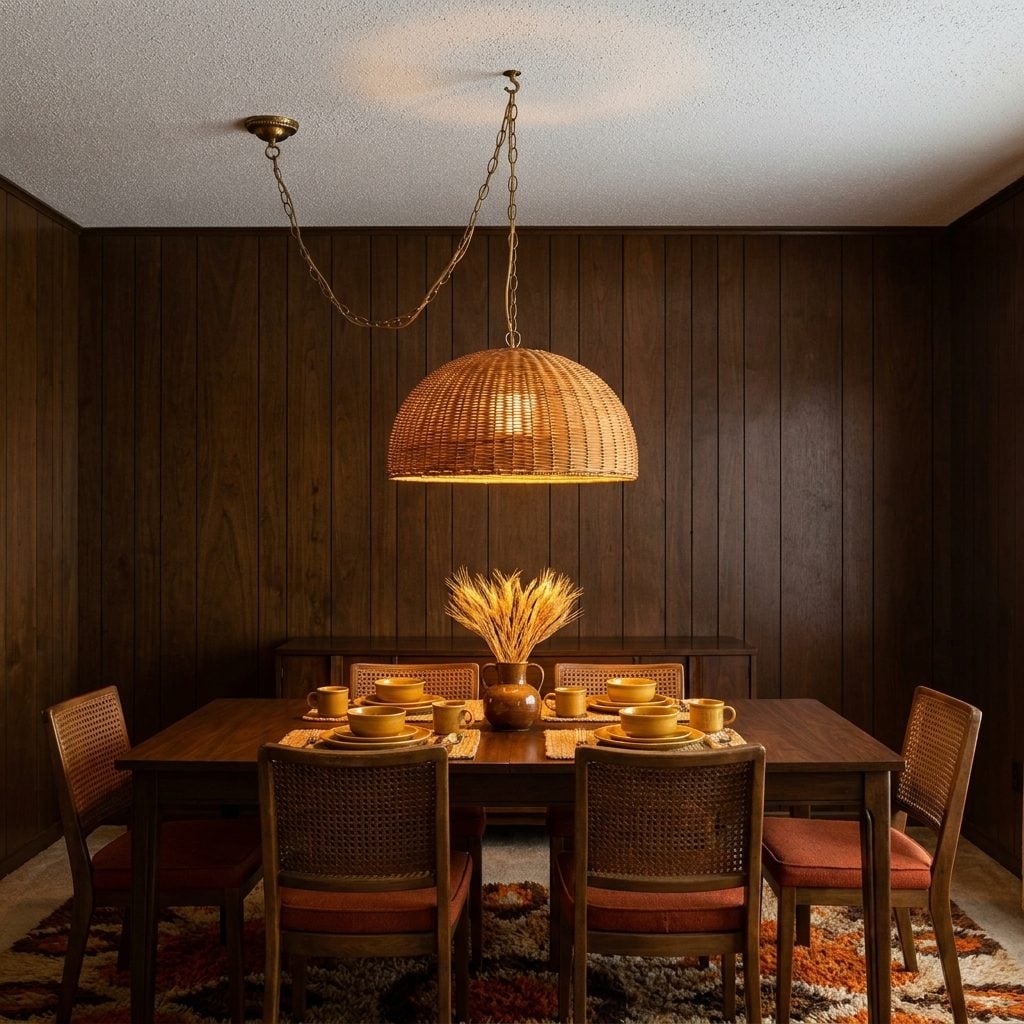
It hung on a chain from a brass hook screwed into the ceiling, swinging slightly whenever anyone walked past, casting a warm amber circle of light over the center of the table that somehow made every meal feel like a private event. The swag lamp was the light living room philosophy applied to dining: one warm pool of light, everything else in soft shadow, which was genuinely flattering to both the food and the people eating it.
The shades were often smoked amber glass, woven rattan, or those textured ceramic globes in avocado or harvest gold. They hung low enough that a tall person standing up too fast after dinner had a brief, startling encounter with one. This happened more than once at every family gathering, and yet nobody ever raised the chain.
25. Plastic Slipcovers on the Dining Chairs That Crinkled Every Time You Shifted Your Weight
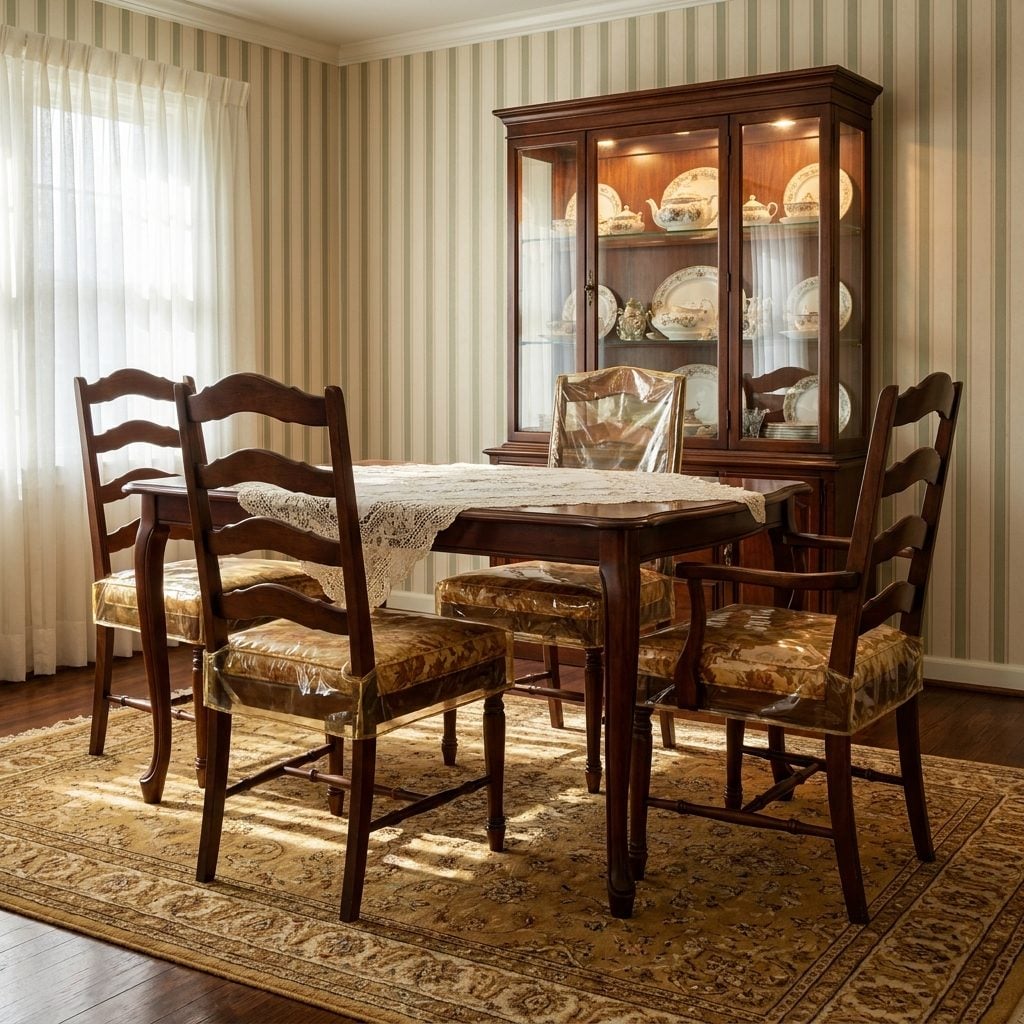
Clear plastic slipcovers over the dining chair cushions meant two things simultaneously: that those cushions were worth protecting, and that you were going to be mildly uncomfortable for the entire meal. The vinyl was always slightly too tight, slightly yellowed at the edges from years of use, and it made a sound when you shifted your weight that was impossible to ignore in a quiet room.
Children hated them. Guests tolerated them. The women who installed them were entirely correct, because underneath every one of those plastic covers, the original upholstery fabric was in perfect condition decades later. The gold-and-rust brocade survived. The dining chairs are probably still out there in an estate sale somewhere, protected and pristine and completely vindicating every grandmother who ever smoothed one back into place after Sunday dinner.
24. The Built-In Corner Hutch That Held Crystal, Commemorative Plates, and Family History
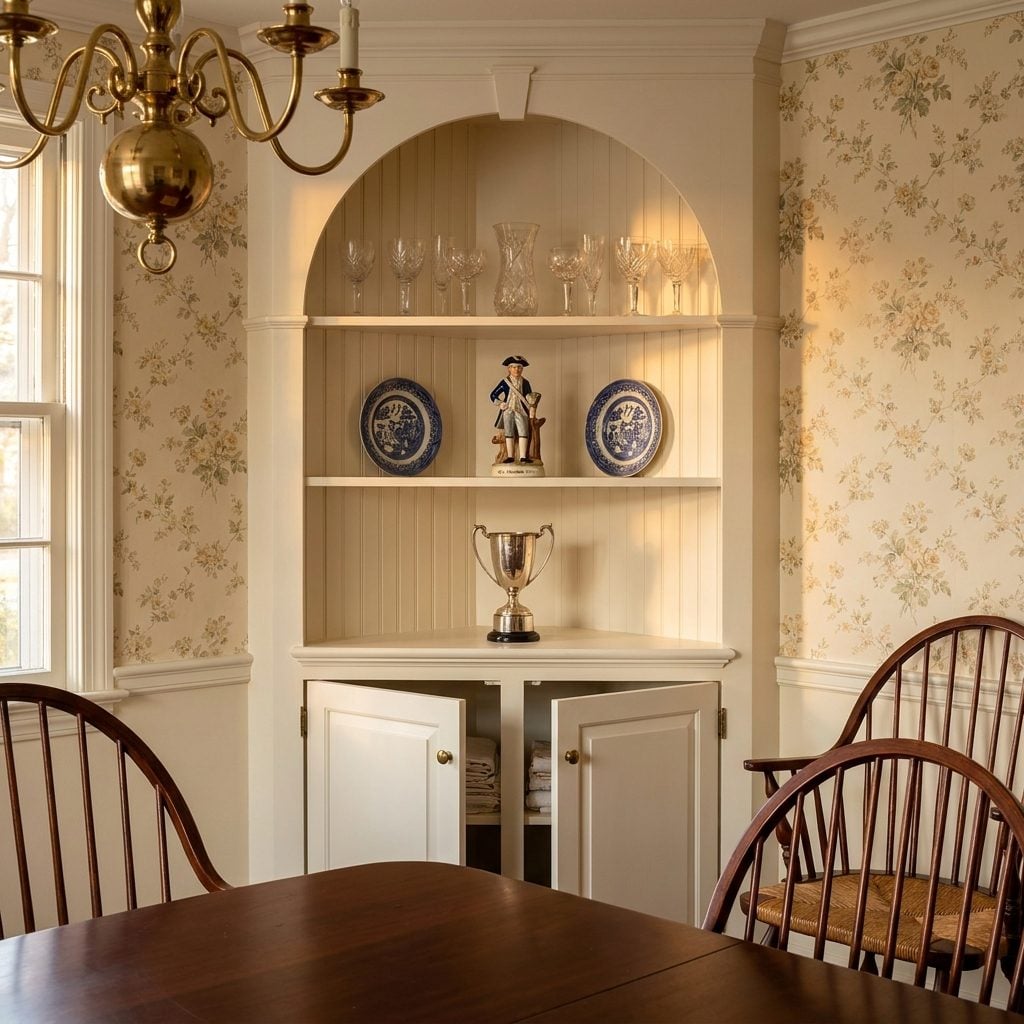
Built-in corner hutches were in homes before the 1960s, but that decade gave them their fullest expression as repositories of everything a family considered worth keeping but not necessarily using. Crystal stemware inherited from a grandmother. A commemorative plate from the 1964 World’s Fair. A small ceramic figurine someone brought back from a road trip to Gatlinburg. A silver-plated award from Dad’s bowling league.
The hutch was part display case, part archive. It told you more about a family in thirty seconds than most conversations would in an hour. The small sitting room equivalent was the curio cabinet, but the corner hutch was built in, permanent, load-bearing in the emotional sense. You didn’t move it when you redecorated. You worked around it.
The lower cabinet section almost always held the good linen napkins and the extra tablecloths, which meant opening those doors was a small ceremony of its own every time a holiday approached.
23. The Cigarette Smoke That Drifted Through Every 1960s Dinner Party Conversation
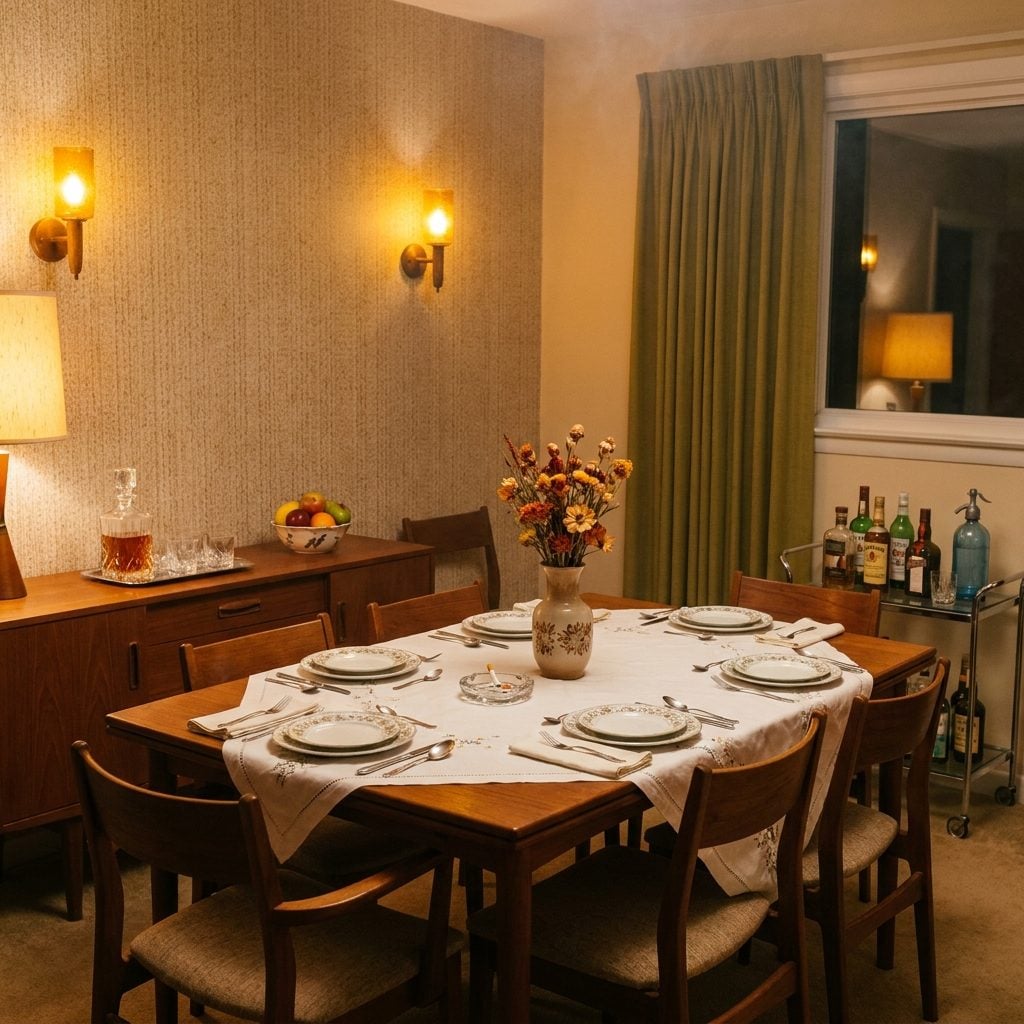
Every ashtray on the table was both decorative and fully functional, and no one thought twice about it. The crystal ones came out for company. The ceramic ones shaped like leaves or boomerangs lived there permanently. Dinner conversation in 1960s America happened inside a slow blue haze, and the smell of a burning cigarette mixed with pot roast and perfume was just the smell of a dinner party.
Nobody excused themselves to the porch. The Surgeon General’s report landed in 1964 and barely dented the dinner table ritual. Ashtrays were designed to match the china pattern. They were wedding gifts. They were heirlooms. The fact that this was ever completely normal is one of those details that hits differently with every passing decade.
22. Fondue Pots That Turned a Tuesday Night Dinner Into a Whole Event
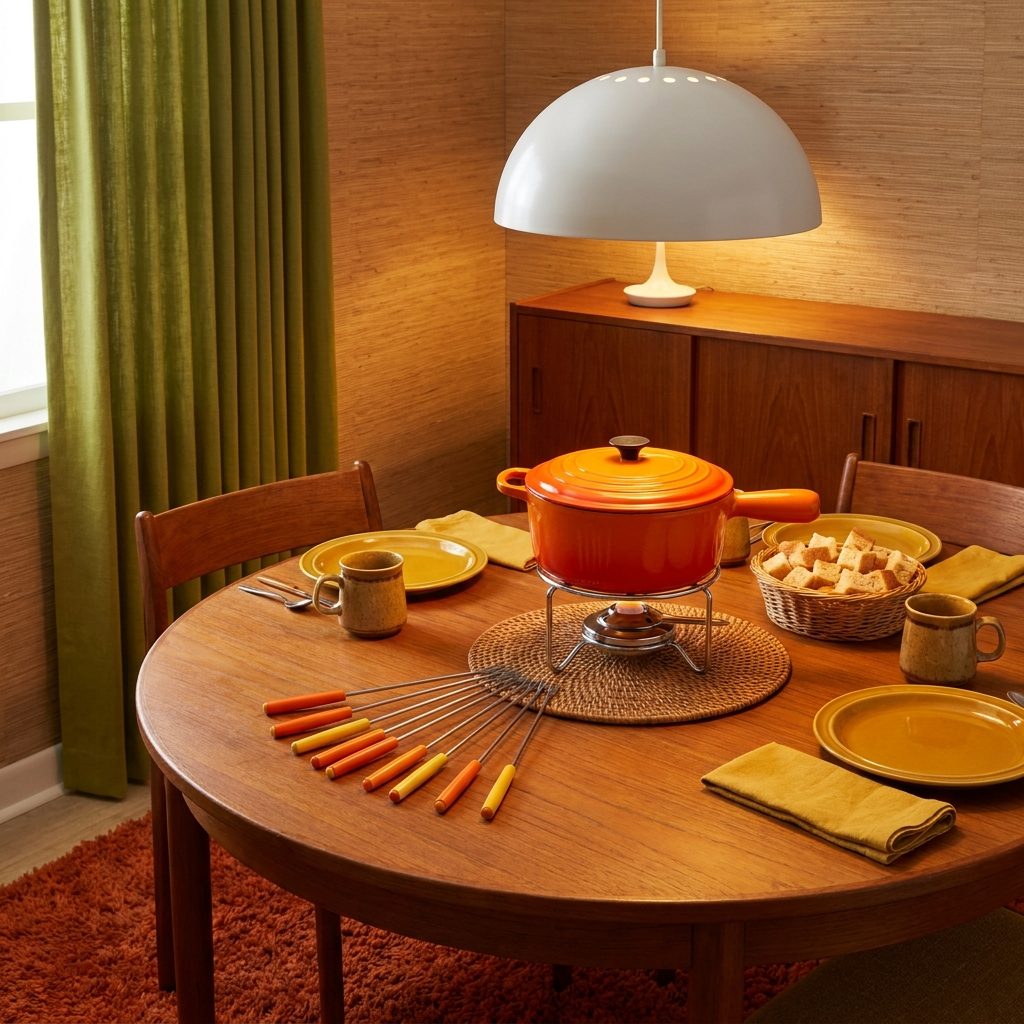
The fondue pot was the 1960s version of interactive dining, and people were absolutely wild for it. You bought the set, the long forks, the little color-coded fork rings so nobody mixed up whose was whose, and suddenly you were hosting an experience instead of just dinner. The orange enameled pot sitting over its little flame at the center of the table was pure theater.
Cheese fondue was the classic. Chocolate fondue was the dessert flex. Meat fondue in hot oil was for households that had truly committed to the bit. The whole ritual required everyone to lean in, which, as a party mechanic, was actually genius. Fondue sets were among the most popular wedding gifts of the decade. Most of them are still out there, haunting estate sales in perfect condition.
21. Avocado Green and Harvest Gold Creeping Into Otherwise Perfectly Formal Dining Rooms
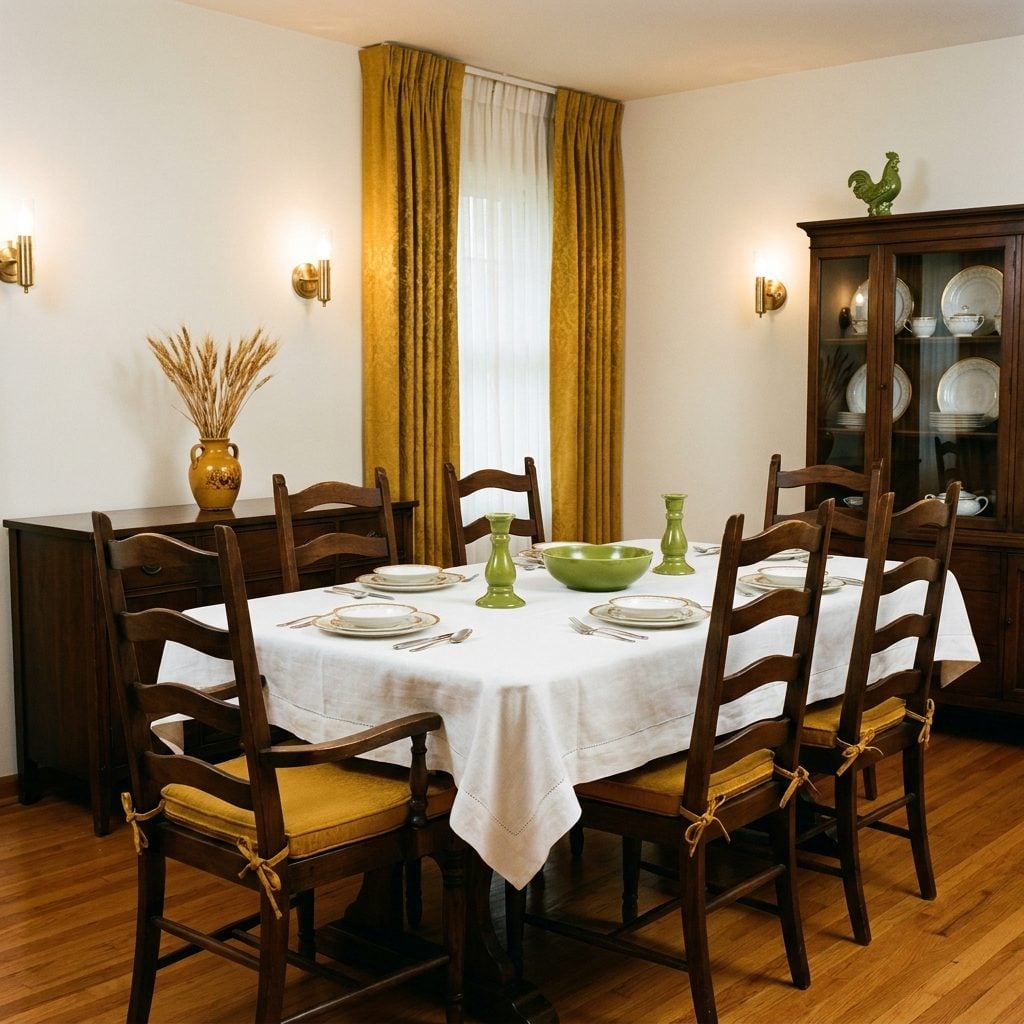
It started as an accent. One harvest gold candle holder. A single avocado green ceramic bowl on the sideboard. And then, somehow, it was everywhere. These two colors defined 1960s American domestic life the way beige defined the 1990s, inescapably, almost aggressively, and with a confidence that in retrospect is either admirable or baffling depending on your mood.
The fascinating thing is how these colors invaded formal dining rooms that otherwise had traditional furniture and china cabinet sets handed down from grandparents. The dark walnut table, the ladder-back chairs, the embroidered tablecloth, and then a harvest gold pottery vase sitting right in the middle of it all, completely unbothered. No one saw this as a contradiction. For a solid decade, avocado green was just what the word “green” meant.
20. The Danish Modern Teak Dining Set That Announced Exactly Who You Were Trying to Be
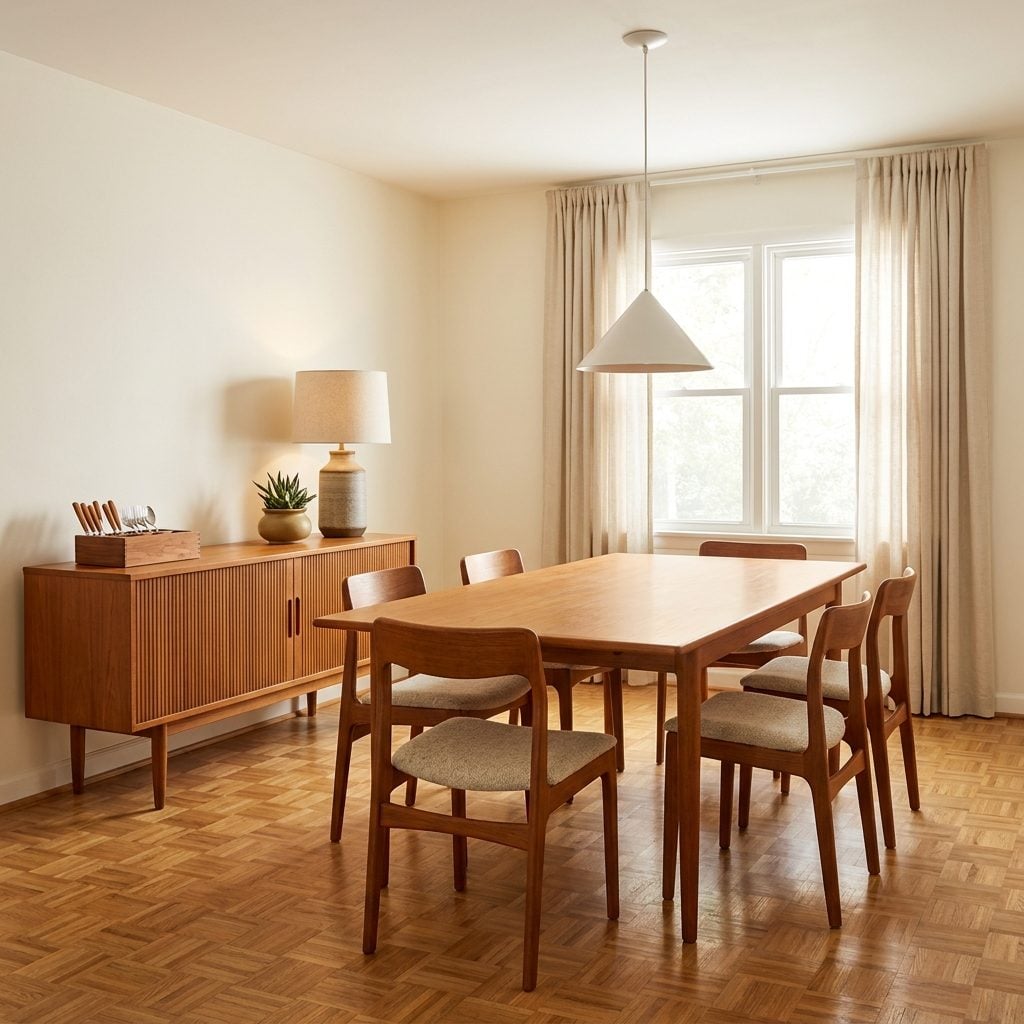
The teak dining set was a social statement delivered in furniture form. Owning one meant you had taste that was modern without being weird, sophisticated without being stuffy. Danish modern arrived in American homes via magazines like Better Homes and Gardens and a wave of import stores that made Scandinavian design accessible to the suburban middle class, and it landed in the dining room first.
The warm honey tones of the teak, the tapered legs, the restrained lines, this was as close to light living room design philosophy as most Americans got in the 1960s. The set communicated that you had read design magazines and taken them seriously. It was aspirational in the most earnest possible way, and honestly, fifty years later, these pieces hold up better than almost anything else from the decade.
19. The Bowl of Plastic Fruit That Sat Undisturbed on the Table for Approximately Fifteen Years
🔥 Would you like to save this?
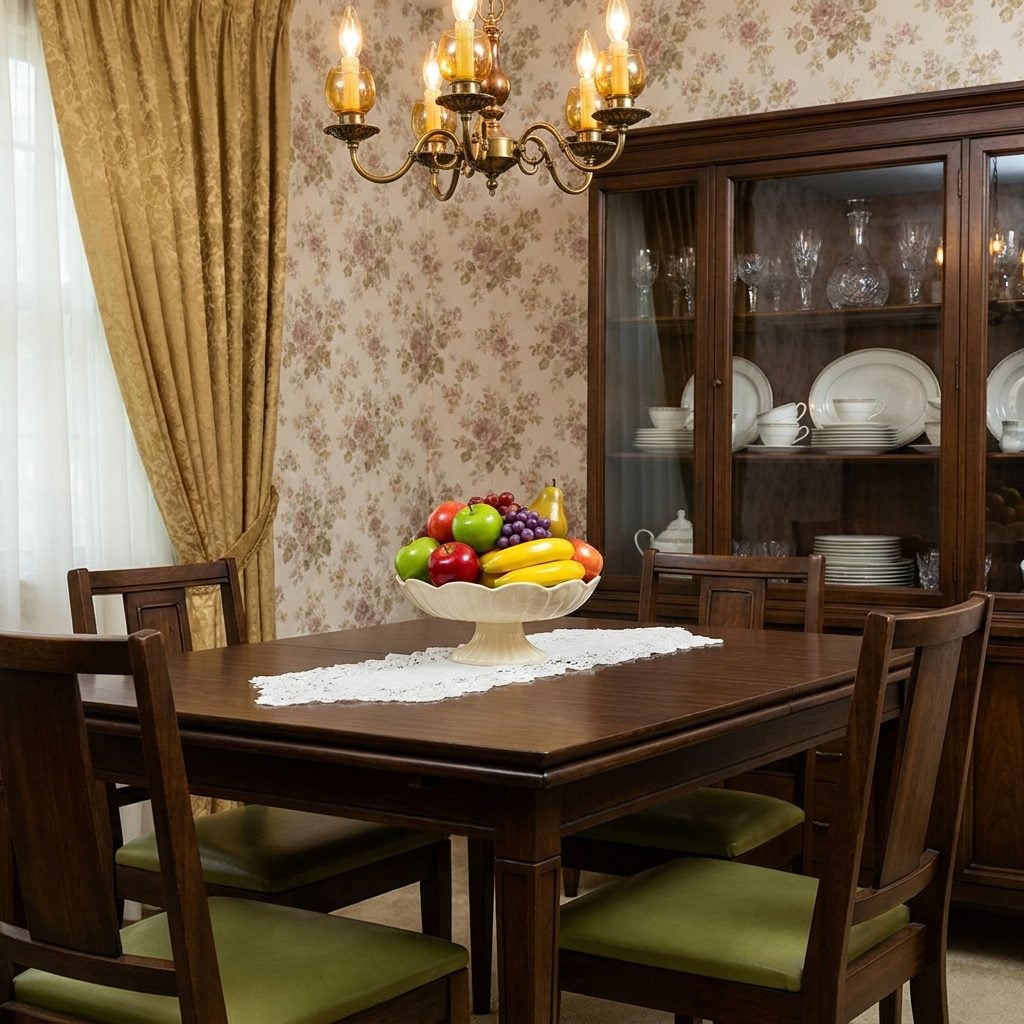
Nobody was ever going to eat it. That was the whole point. The plastic fruit bowl occupied the center of the dining room table the way a trophy occupies a shelf, permanent, untouched, and vaguely proud of itself. The apples were always a slightly too-saturated red. The bananas were a yellow that doesn’t occur in nature. The grapes had a dusty bloom on them that was either painted on or actual dust, and after a few years it was genuinely impossible to tell.
Some households had wax fruit, which had the added excitement of occasionally melting in summer if you left the windows open too long. Both versions were understood to be decorative, which meant no one ever moved them except to dust underneath, and even that was optional.
The plastic fruit bowl was permanent, untouched, and vaguely proud of itself, occupying the center of the table like it had always been there and always would be.
18. The Heavy Floral Drapes That Commanded Every Dining Room Picture Window
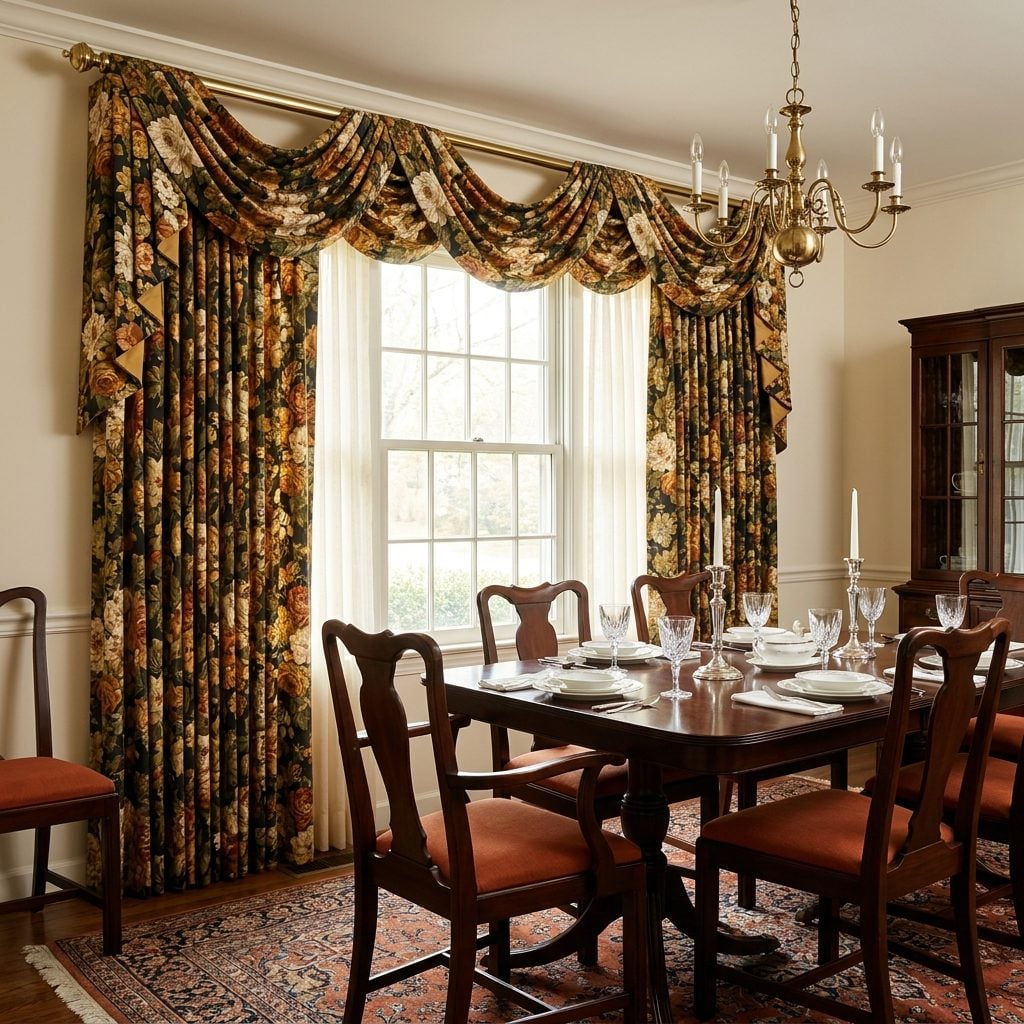
These were not curtains. They were an architectural commitment. The heavy floral drapes of a 1960s dining room went floor to ceiling, pooled slightly on the carpet, and featured blooms the size of dinner plates in colors that could be described charitably as autumnal and accurately as overwhelming. They were lined, interlined, and hung on brass rods with hooks that required a stepladder to reach.
The picture window they framed was usually the best architectural feature in the room, which makes it slightly funny that the drapes were designed to cover as much of it as possible. When fully drawn, a 1960s dining room with its floral drapes closed felt like being inside a jewelry box. That wasn’t necessarily a bad thing. There was something about all that fabric and pattern that made even a modest house feel genuinely substantial.
17. The Silver Serving Tray That Only Came Out When Company Was Coming
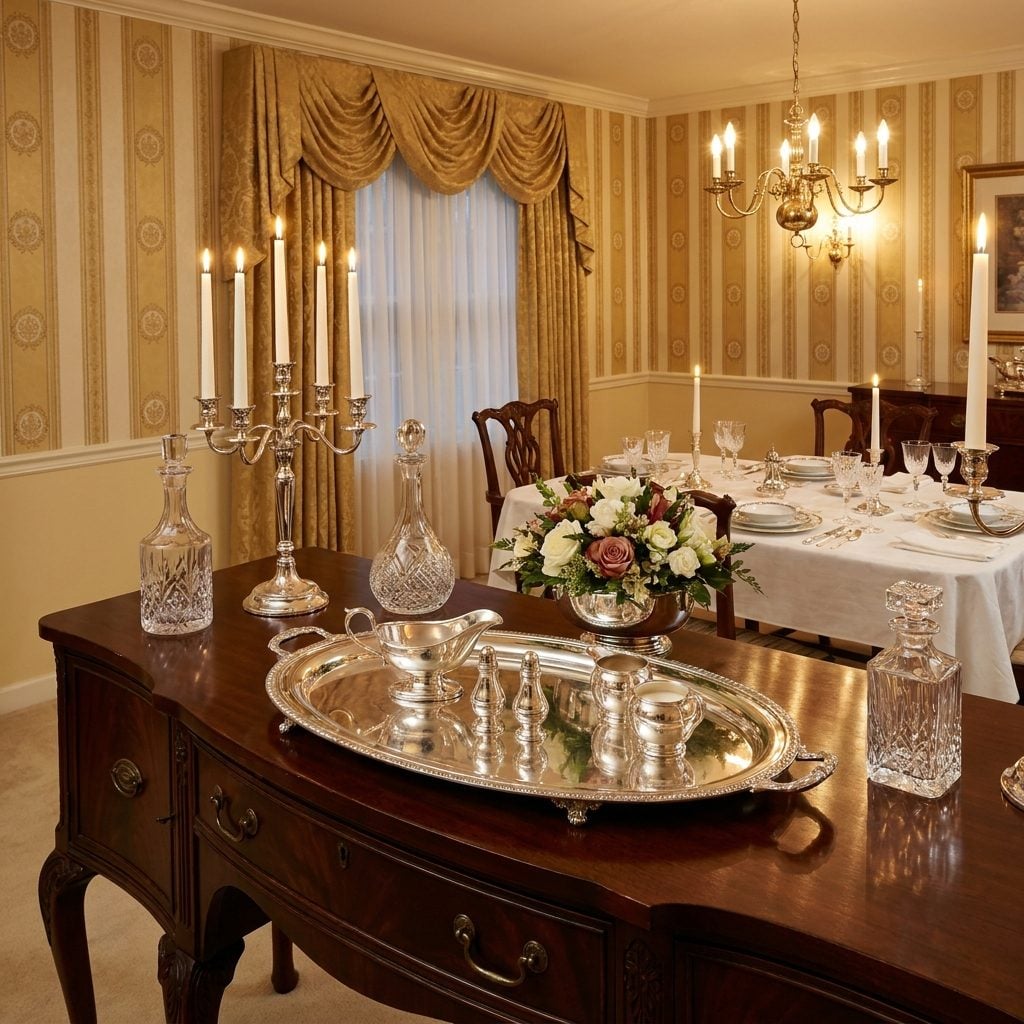
The silver tray lived in the sideboard drawer wrapped in a dark cloth that left black tarnish lines on your fingers when you unfolded it. Bringing it out required polishing, which required that specific pink paste in the jar that smelled faintly medicinal and came off in grey streaks on the cloth. This was understood. The effort was part of the point.
A polished silver tray on the sideboard communicated that this meal mattered, that you had prepared, that you were the kind of household that owned silver and maintained it. It held the gravy boat, the cream and sugar, the salt and pepper set that matched nothing else on the table but had been a wedding gift and therefore occupied the tray regardless. The sitting room decor might have been casual all week, but when that tray came out, the whole house straightened up.
16. Cocktail Napkins Folded Into Shapes That Took Longer to Make Than the Actual Cocktails
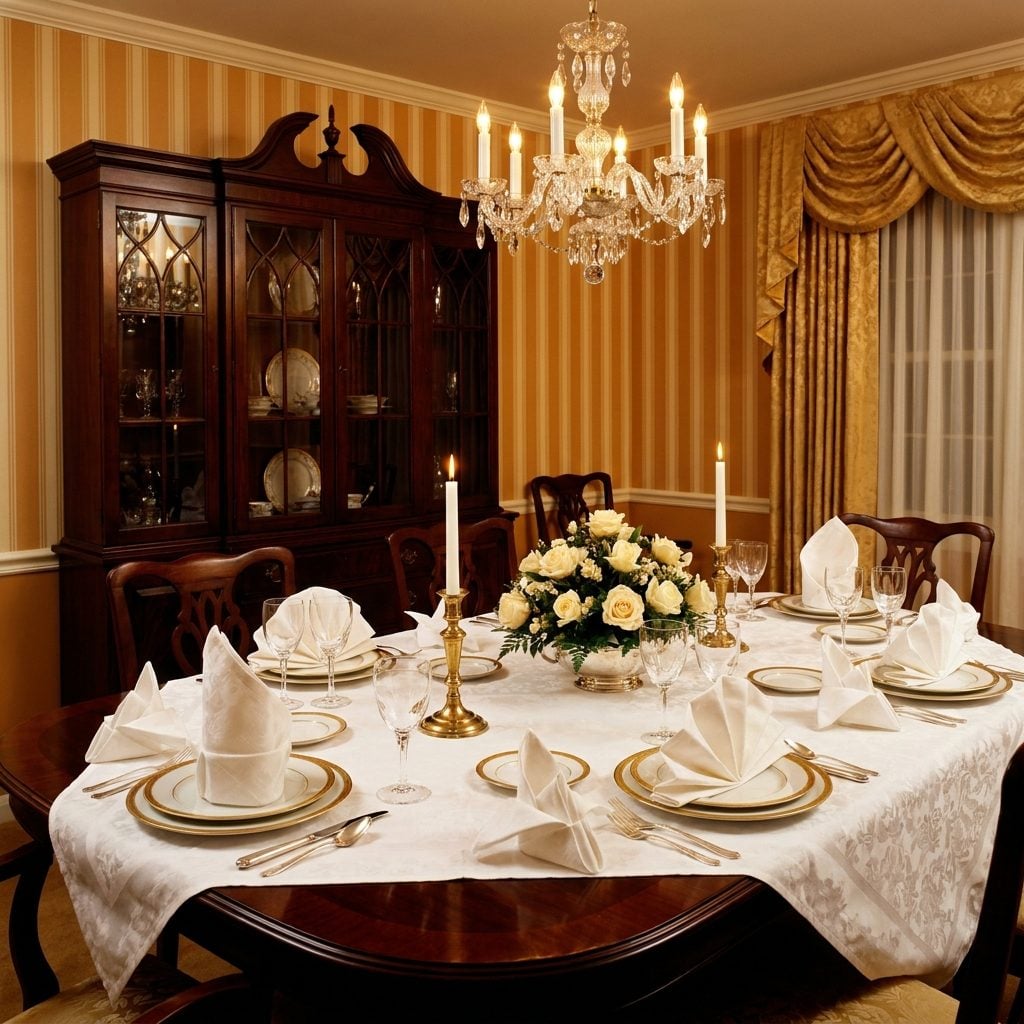
There were books dedicated entirely to this. Actual published books with photographs and step-by-step diagrams for folding a cloth napkin into a bishop’s hat, a water lily, a standing fan, a fleur-de-lis. Women bought them. Women studied them. A properly folded napkin at a 1960s dinner party place setting was evidence of hours of practice that the hostess was absolutely not going to mention.
The paper cocktail napkin version was its own parallel universe of effort: printed with martini glasses or seasonal motifs, sometimes folded into triangles and tucked under the fork, sometimes fanned into a glass on the bar cart. The message either way was the same: nothing about this evening is casual. Every detail has been considered. Please notice the napkins.
15. The Lazy Susan That Turned Every Family Dinner Into a Game of Spin the Condiments
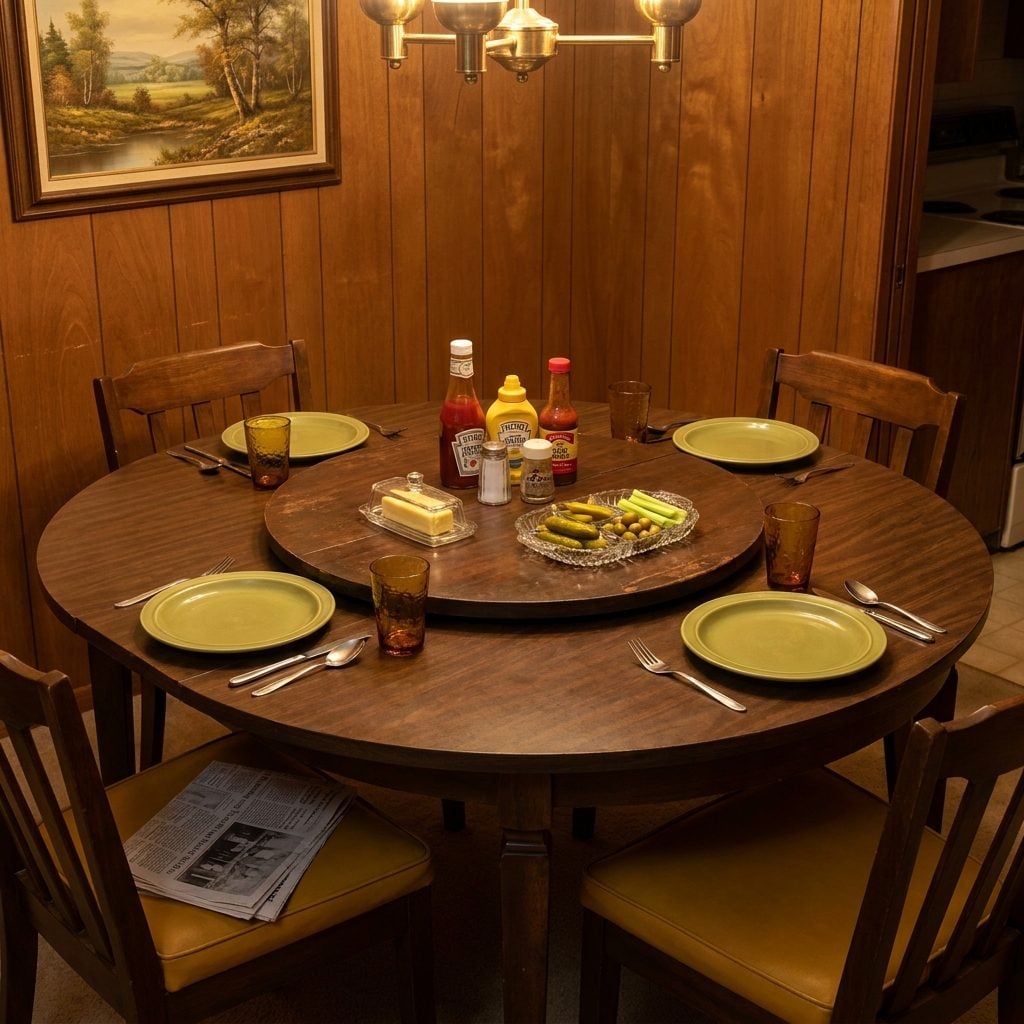
That satisfying wooden grind as it rotated. Every family dinner table with more than four chairs seemed to have one of these — a walnut Lazy Susan parked in the center like a tiny carousel for ketchup, mustard, and whatever relish tray Mom had assembled.
Kids spun it too fast. Dad would reach over and stop it with one hand mid-rotation, bottles wobbling but somehow never falling. Equal parts practical and theatrical — the simple act of passing the salt became a whole production number.
By the 1970s, they’d mostly migrated from dinner tables to kitchen corner cabinets, where they quietly remain in a surprising number of homes.
14. The Telephone on the Wall, Cord Stretched All the Way From the Kitchen So Mom Could Talk and Set the Table Simultaneously
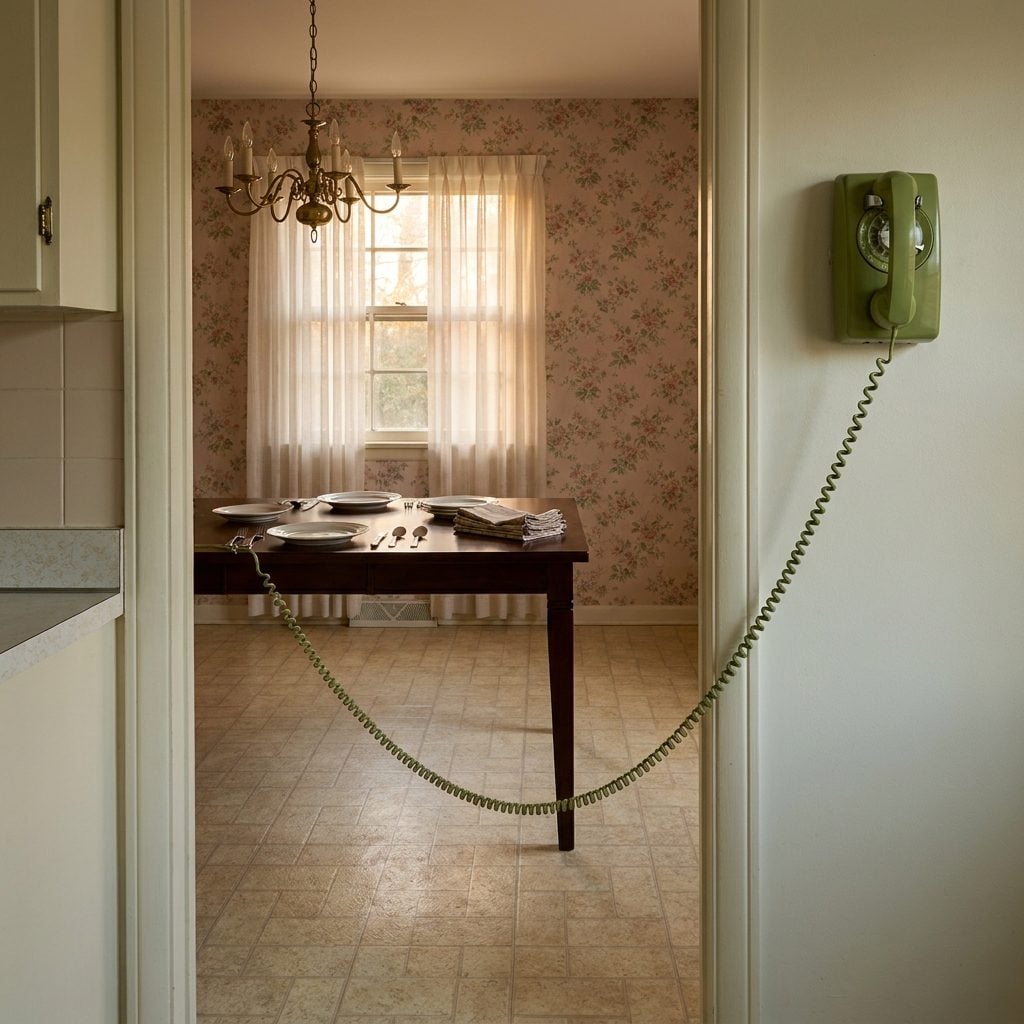
Nobody had a phone in the dining room, but the dining room was never more than one impossibly stretched cord away from the kitchen phone. That coiled line pulled taut across the doorway like a trip wire — universal signal that someone was mid-call and dinner prep was happening simultaneously.
You learned to step over it or duck under it. Complaining got you nothing.
13. The Felt-Bottom Trivets That Protected the Table From Hot Dishes and From Joy
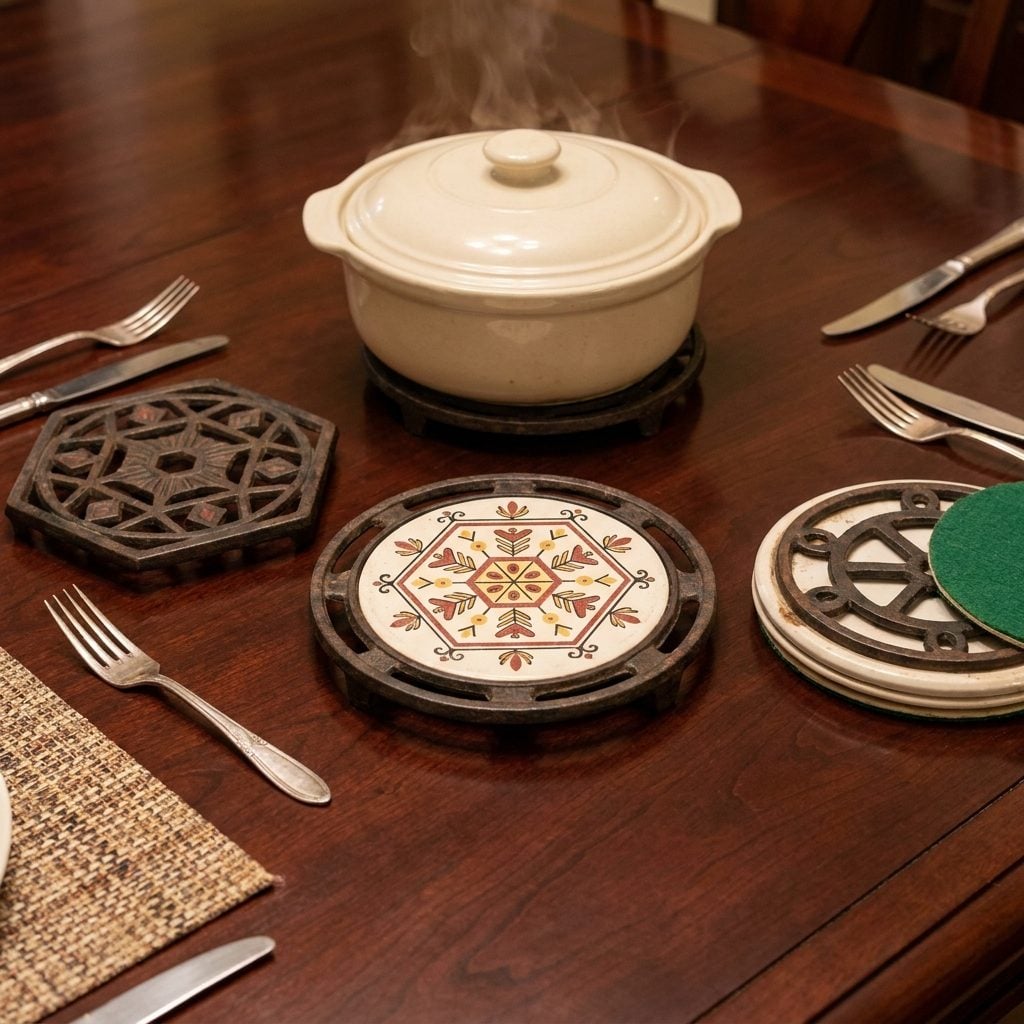
Green felt on the bottom. Always green. These little decorative pads guarded the dining table surface like sentries, and God help you if you set a hot pot down without one. The table itself was practically a family member in the 1960s — treated with more reverence than some of the actual children sitting around it.
Most homes had a whole collection: ceramic tile trivets with Pennsylvania Dutch hex signs, cast iron ones shaped like roosters, cork discs crumbling at the edges. They lived in a kitchen drawer until the exact moment they were needed, then materialized before any dish could touch bare wood. Almost like someone was standing guard specifically for this purpose. Because someone usually was.
12. The Matching Salt and Pepper Shakers That Had Nothing to Do With Cooking and Everything to Do With Personality
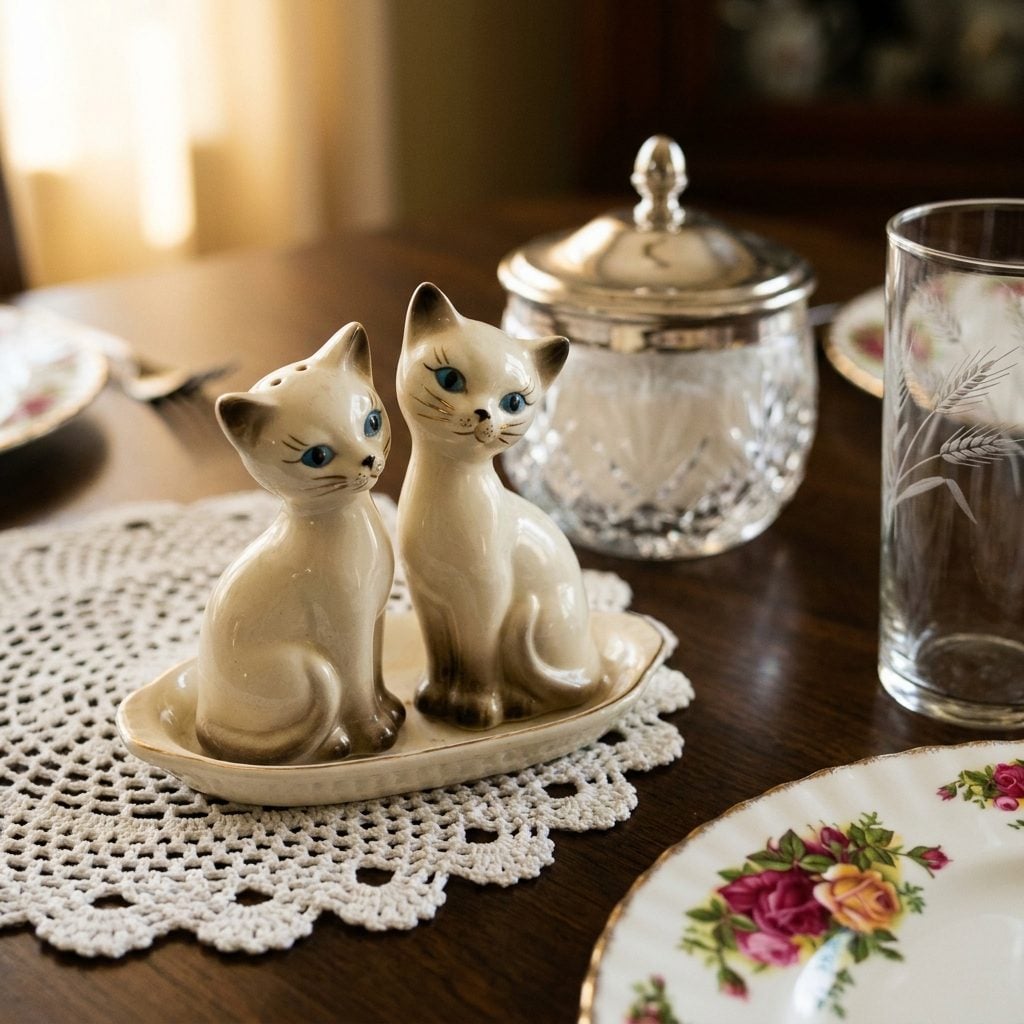
Ceramic poodles. Kissing Dutch children. Ears of corn. Little potbelly stoves. The salt and pepper shaker collection in a 1960s dining room was a personality test sitting right there on the table for everyone to judge.
The everyday pair stayed put permanently. The fancy pair came out for company. And somewhere in a cabinet, six more sets waited — gifts, souvenirs, impulse purchases from a roadside shop nobody could quite remember visiting. Nobody threw them away. I’m convinced half of them are still circulating at estate sales right now, being picked up by people who will also never throw them away. The cycle continues.
11. The Electric Percolator Plugged Into the One Outlet Behind the Buffet
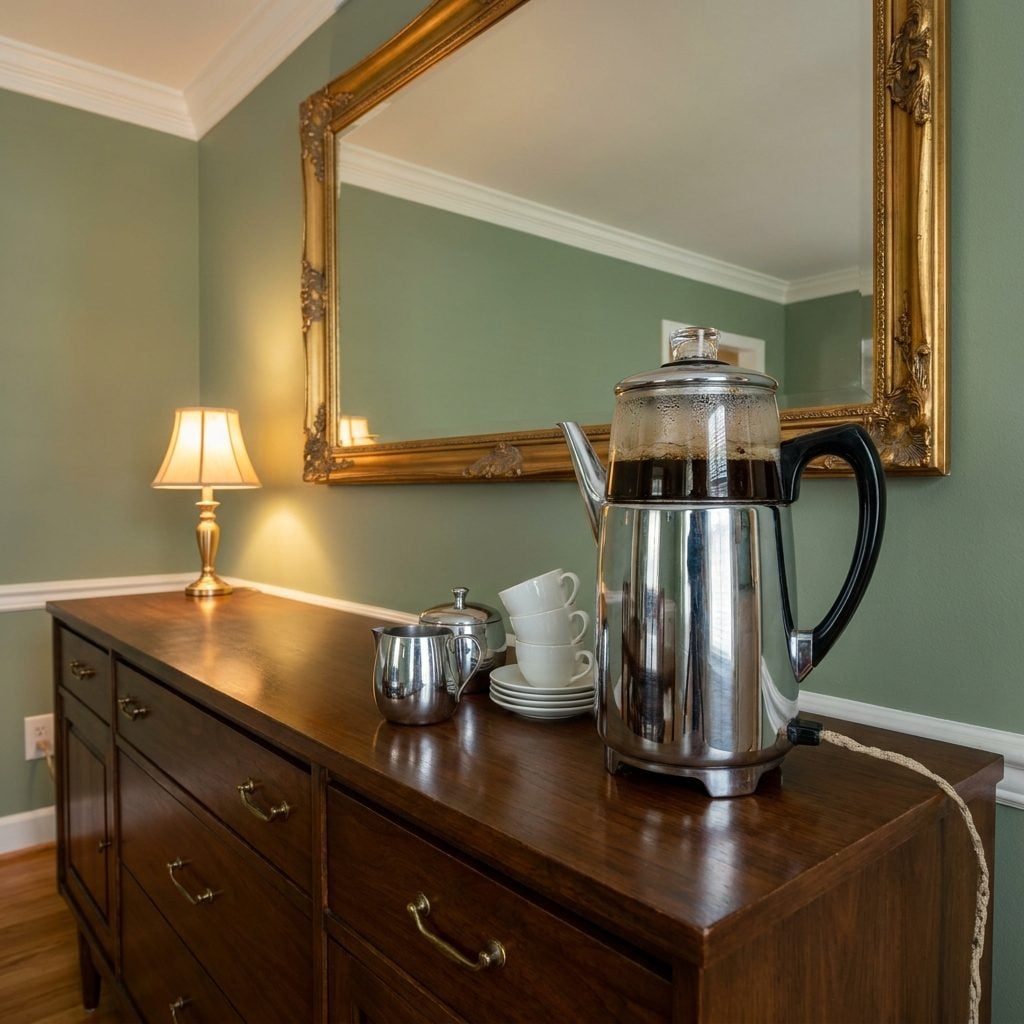
That rhythmic bubbling sound was the dinner party soundtrack nobody talks about. Before Mr. Coffee changed everything in the early 1970s, the chrome percolator sat on the dining room buffet like a gleaming trophy, plugged into the one outlet that required moving the entire sideboard to access.
The coffee it made was, frankly, terrible — over-extracted, bitter, reheated past the point of rescue. But nobody cared because the ritual mattered more than the taste. That glass knob on top pulsing with dark liquid was hypnotic. You’d watch it while conversation drifted into the comfortable post-dinner haze, and somehow the awful coffee tasted fine.
10. The Carpet That Extended Right Into the Dining Room Because Apparently Spilled Gravy Wasn’t a Concern
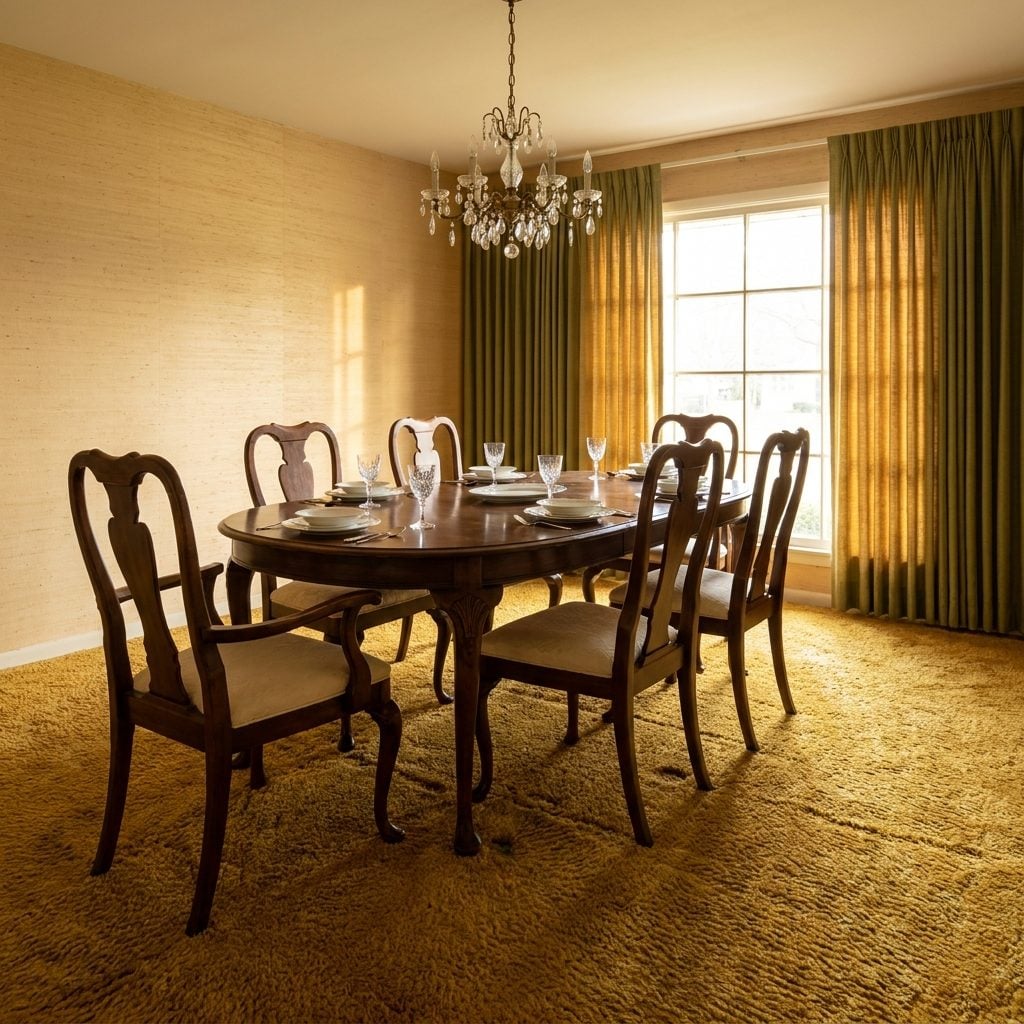
Wall-to-wall carpet in the dining room. Just sit with that for a second.
A room dedicated to eating food, drinking red wine, and hosting children with unpredictable motor skills — and someone decided the floor should be deep-pile fabric that absorbs everything permanently. Gold shag, olive green sculptured carpet, rust-colored indoor-outdoor weave. Chair legs left permanent dents. The spot under the kids’ end of the table told a story in layered stains that no amount of Resolve could fully erase. Honestly wild. And we all just accepted it as perfectly normal for about two decades, which might be the wildest part.
9. The Folding TV Tray Tables Stacked in the Hall Closet, Ready to Be Deployed at a Moment’s Notice
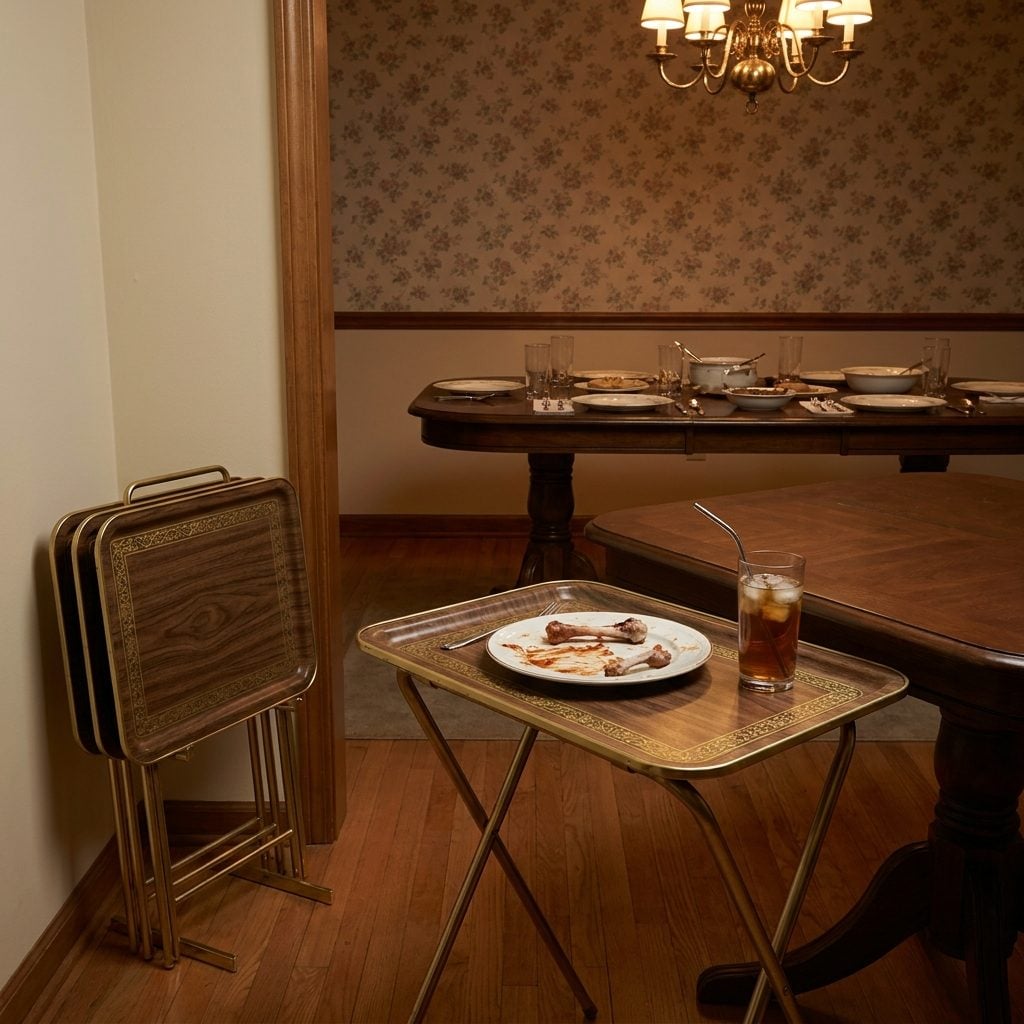
Thanksgiving. Christmas. Any gathering where the guest count exceeded the dining chair count. Out came the folding tray tables from the hall closet, each one a little wobbly, each one decorated with some variation of faux wood grain or a landscape scene scratched beyond recognition.
The kids’ table was always these. Always.
They folded with a satisfying metallic click and fit into a slim rack that stood upright like a tiny bookshelf. Every house had the same set of four — wedding gift or department store sale purchase, origin story lost to time. The legs never sat perfectly level on carpet, so your milk glass tilted slightly all through dinner. You didn’t complain. You adapted. Or you spilled, and then you adapted faster next time.
8. The Wallpaper Border Running Along the Chair Rail Like a Decorative Belt Nobody Asked For
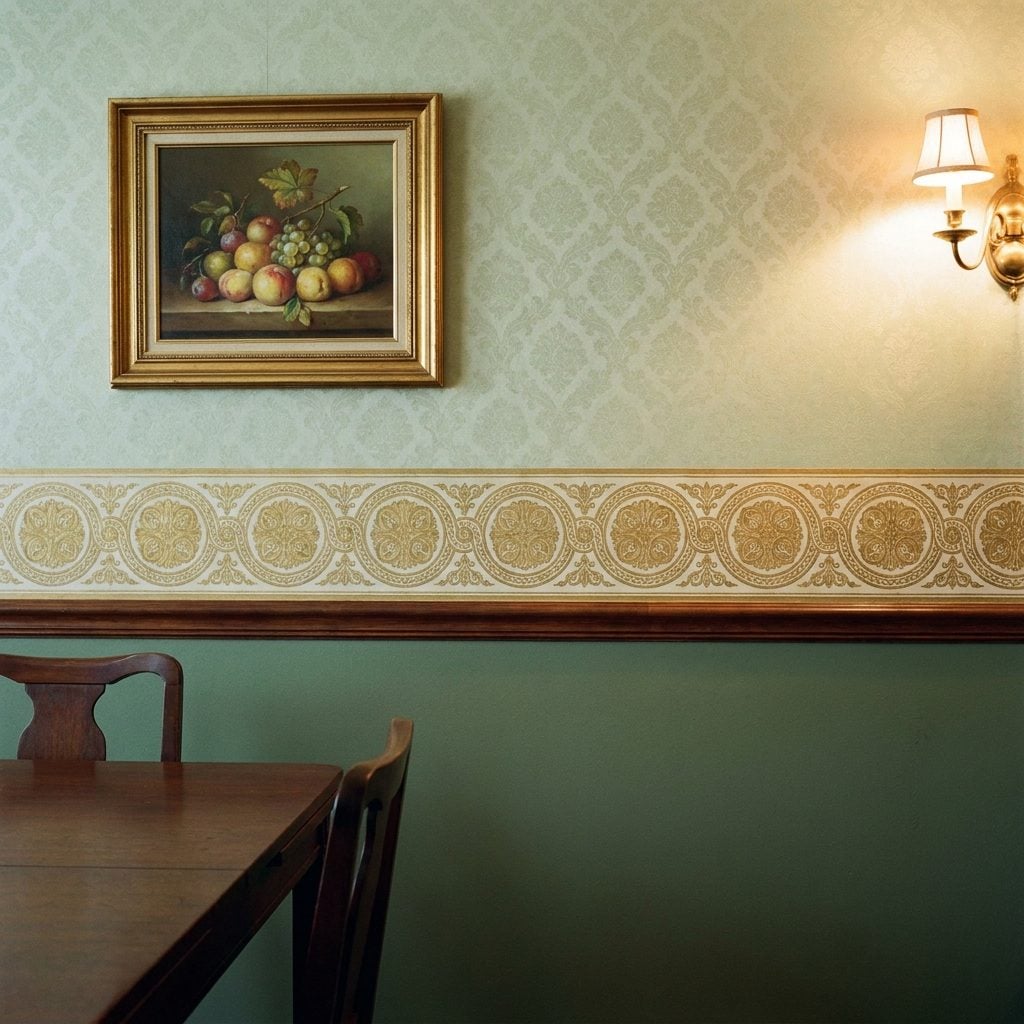
Two different wallpapers separated by a chair rail was already ambitious. But then someone added a coordinating border strip along the rail itself, and suddenly the dining room wall had three distinct zones — geological strata of decorating ambition, if you want to be generous about it.
Scrollwork, fruit garlands, Greek key patterns, tiny repeating florals. Sold by the roll at wallpaper shops and applied with wheat paste that sometimes bubbled at the seams within a year. Peeling a corner of one was irresistible — kids couldn’t resist, and neither could some adults, if we’re being honest. Even in a small family room, that border announced the space had been deliberately decorated, not just painted.
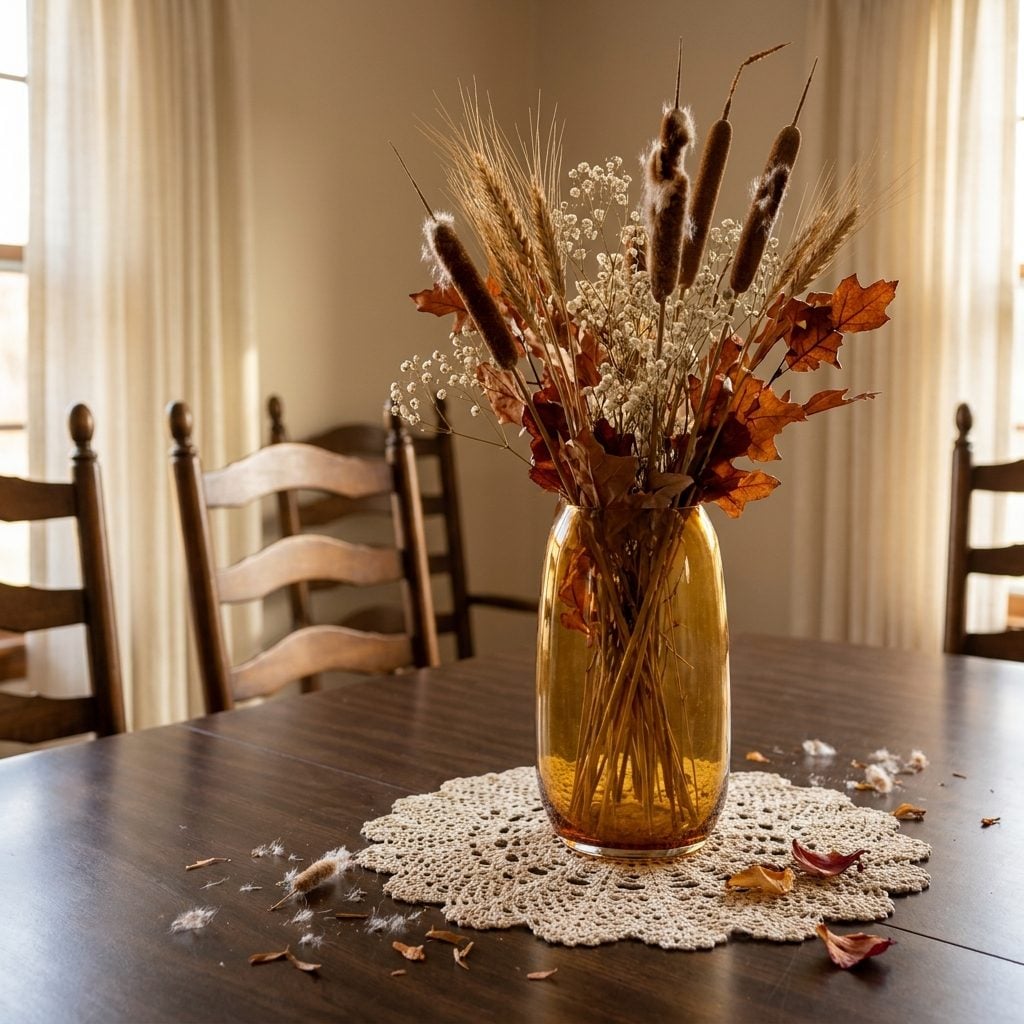
7. The Centerpiece of Dried Flowers and Cattails That Shed Quietly Onto the Table for Months
🔥 Would you like to save this?
Fresh flowers were for special occasions. The rest of the year, the dining table hosted a permanent arrangement of dried things in an amber or milk glass vase — cattails, wheat, statice, strawflowers, maybe some baby’s breath that had gone from white to a concerning shade of yellow.
Nobody dusted them. They just quietly disintegrated, dropping tiny seeds and fluff onto the table like botanical dandruff. Every few months someone would sneeze near them and a small cloud would rise. Eventually they’d get replaced with a new dried arrangement that would begin its own slow decomposition. Circle of life, dining room edition.
6. The Sideboard Drawer Full of Candles in Every Color Except the One That Matched Anything
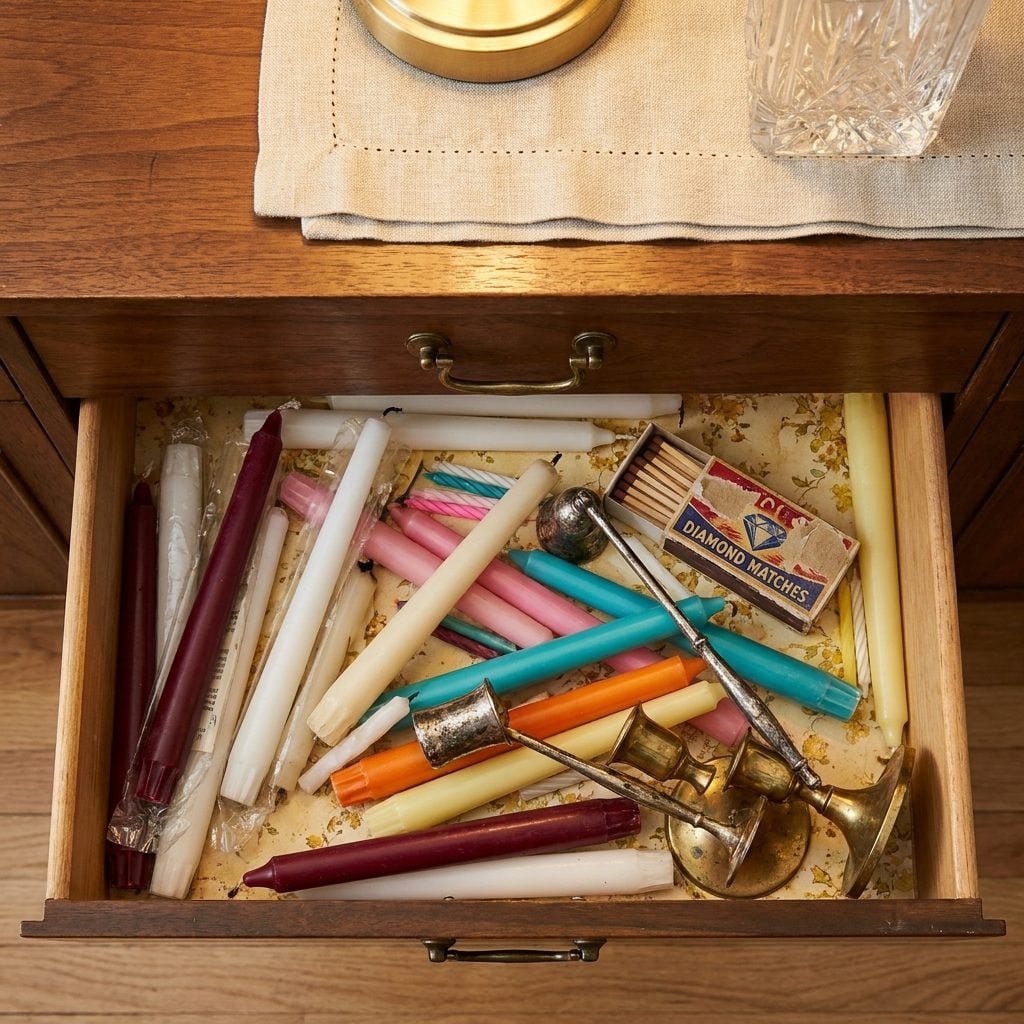
Every sideboard had this drawer. You’d open it looking for matches and find a graveyard of half-burned tapers in colors that coordinated with nothing currently in the room. Turquoise. Burgundy. A pale pink that might have matched a tablecloth from 1962.
Some still in cellophane. Some bent from sitting in a hot drawer through three summers, wicks black and crusty. A silver candle snuffer rolled around loose at the back, next to a box of Ohio Blue Tip matches that was mostly empty. Nobody organized this drawer. Nobody purged it either. It accumulated year after year — a wax-based archaeological record of every dinner party that had come before, and probably a few birthday cakes too, judging by the stray pink-and-white striped candles mixed in with the tapers.
5. The Brass Chandelier With Candle-Shaped Bulbs That Flickered Like It Was Haunted
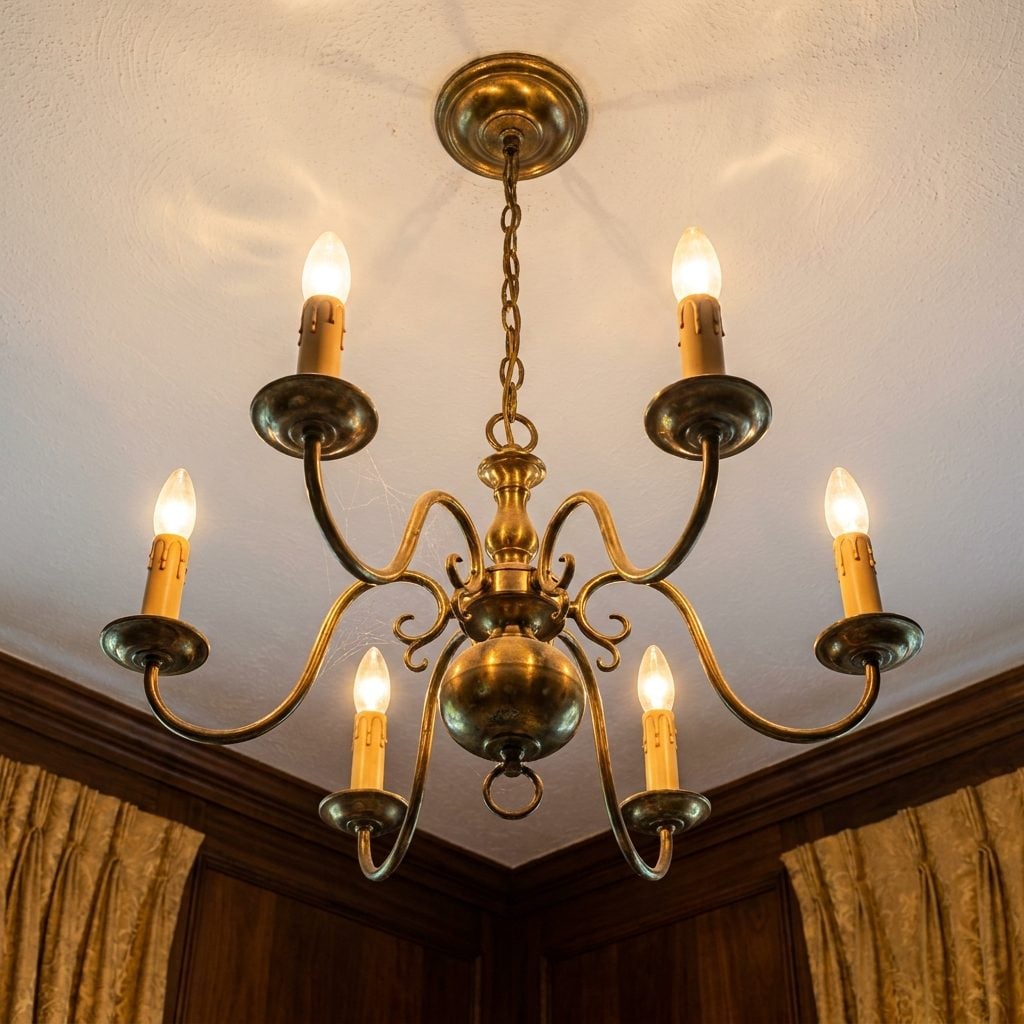
Every one of those little flame-shaped bulbs buzzed at a slightly different frequency, so sitting down to dinner meant the whole fixture hummed like a very small, very confused orchestra. The brass arms curved outward with a confidence that said “we are trying extremely hard to look like Versailles on a Sears budget.”
Nobody ever cleaned the top of it. Dust collected up there for years — undisturbed, stratified, a geological record of family dinners nobody asked to preserve. The bulbs burned out constantly, always the one in front, so the chandelier spent most of its working life lopsided and dim. Somehow that made it better. Uneven light turned meatloaf night into something almost romantic, which meatloaf absolutely does not deserve.
4. The Bread Basket Lined With a Cloth Napkin, Served Like It Was a Gift From the Queen
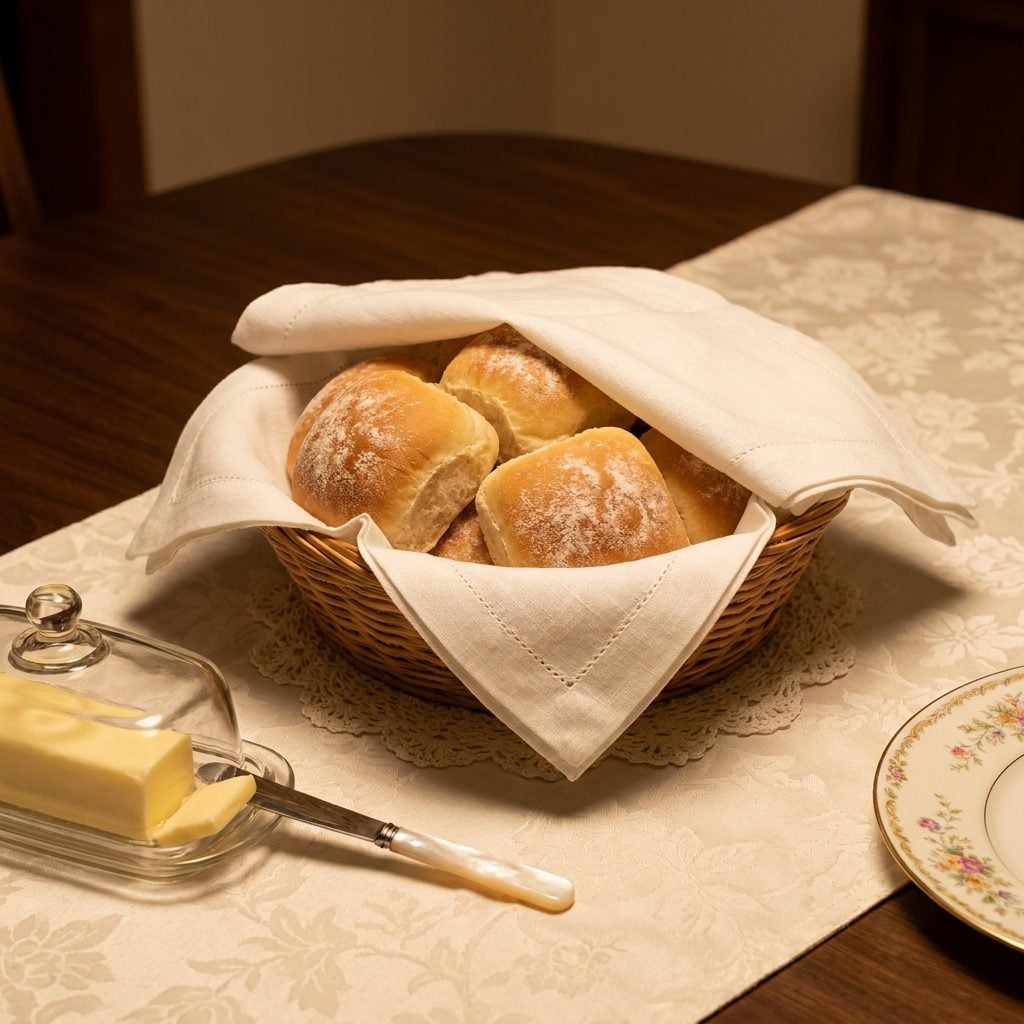
Four dinner rolls and a folded napkin shouldn’t carry this much ceremony, but they did. The bread basket arrived at the table like it had been rehearsed — napkin pressed, rolls arranged, a pat of butter on a separate dish because putting it directly in the basket would have been, apparently, chaos.
Always wicker. Always slightly lopsided from years of use. And the napkin lining it came from the “good” set — not paper, never paper, don’t even suggest paper. That linen did a few hours of service per week and spent the rest of its life ironed flat in a drawer, which is a pretty luxurious existence for a napkin if you think about it. The rolls themselves were store-bought more often than anyone admitted, but the basket made them feel homemade. Presentation did all the heavy lifting.
3. The Framed Norman Rockwell Print Hanging in the Dining Room Like a Moral Instruction Manual
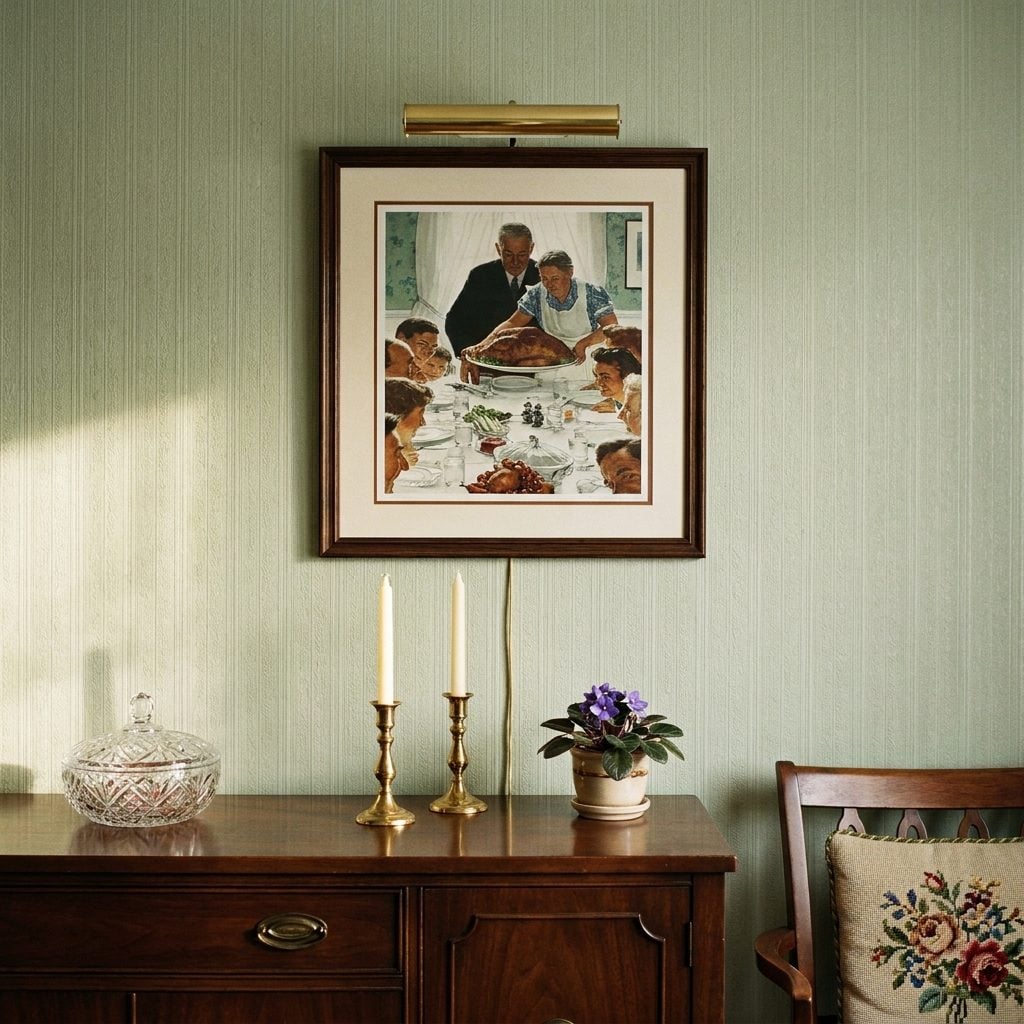
“Freedom From Want.” That was the one — the big turkey, the beaming grandmother, the family gathered in wholesome gratitude. It hung in dining rooms across America like a visual aspiration, a quiet prompt about who we were supposed to be during dinner. Whether the actual meal below it was pot roast or leftover casserole made no difference whatsoever.
The frame was always slightly too formal for the print, as if someone at the framing counter had talked Mom into the upgrade. Hung too high, too. Whoever installed it must have been the tallest person in the household, because you always had to tilt your head back to really look at it. Most people stopped noticing after the first year — it fused with the wall, became part of the room’s quiet insistence that this family had standards. Which, honestly, is a lot of emotional weight for a magazine illustration to carry.
2. The Rubber-Tipped Chair Leg Caps That Squeaked Across Linoleum Like Tiny Screaming Animals
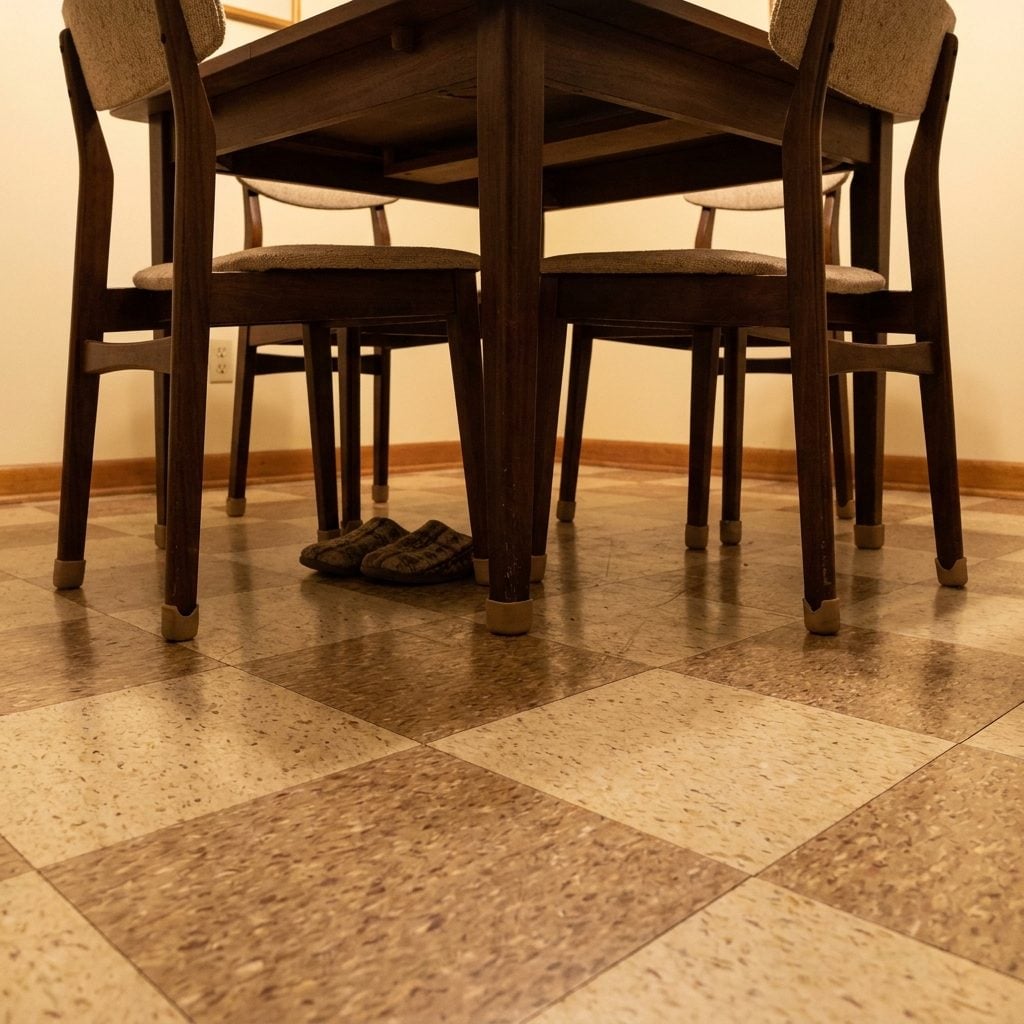
You heard dinner ending before you saw it. Chairs scraped back and those little rubber caps dragged across linoleum with a sound that could strip paint off drywall — every kid at the table cringed on instinct.
I got their purpose wrong for years. I thought the caps existed to dampen noise. They did not. They were producing a new, worse noise while technically protecting the floor, which feels like a metaphor for most parenting decisions of the era. Half of them fell off within months and ended up as tiny beige hockey pucks kicked under the radiator, never retrieved, permanently forgotten. The bare chair legs left pale scratch lines across the linoleum — a map of every argument, every second helping, every dramatic exit. Those floors recorded the whole history of dinner whether you wanted them to or not.
1. The Formal Dining Room That Sat Empty 360 Days a Year, Waiting for Its Five Days of Glory
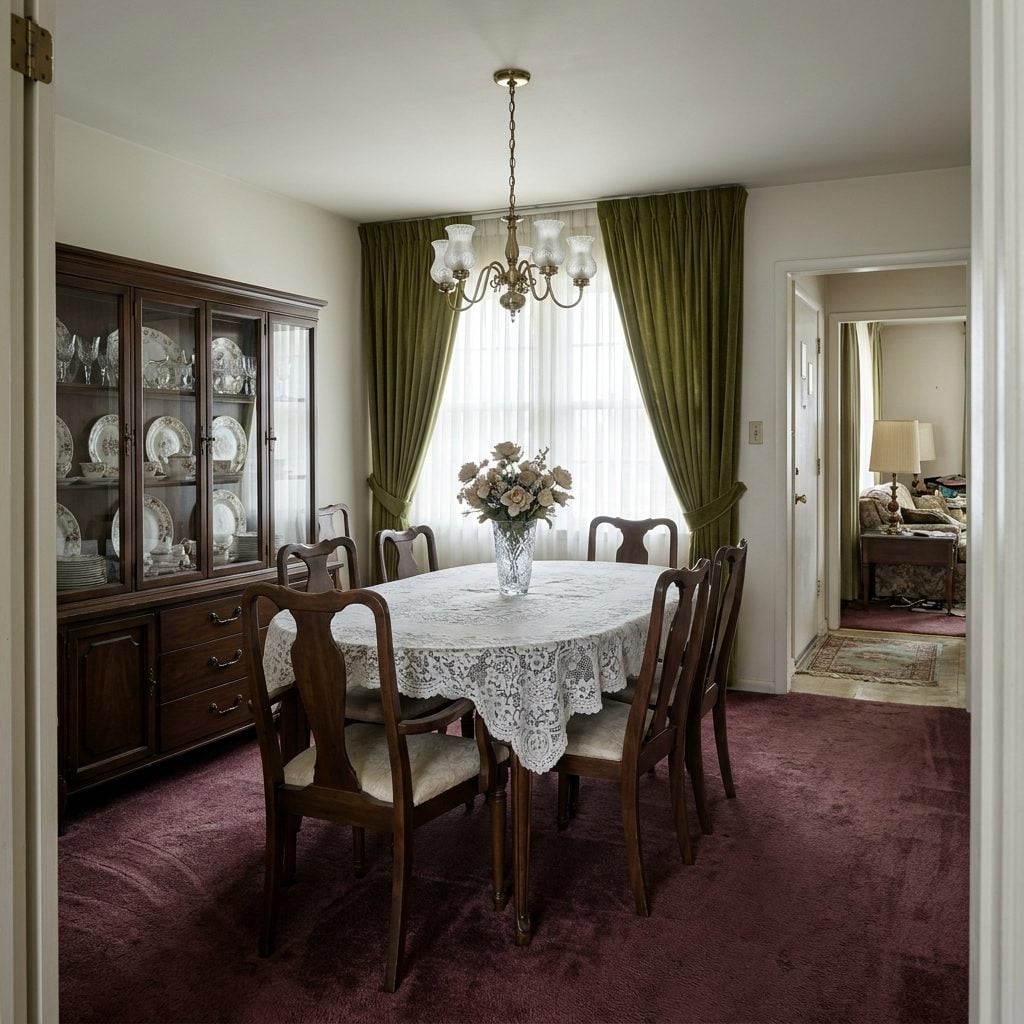
The room with the invisible velvet rope. You walked past it every day on the way to the kitchen, and every day it sat in perfect, eerie stillness — a furniture showroom that happened to be inside your house. Vacuum lines in the carpet stayed crisp for weeks. Nobody set foot in there.
Thanksgiving. Christmas. Easter. Maybe a birthday if someone important was visiting. That was it. The rest of the year, the formal dining room existed as domestic theater — a carefully arranged space nobody occupied, preserved for occasions that barely materialized.
And yet every family who had one would defend it ferociously. “We need a formal dining room.” Did we, though? The kitchen table was right there, ten feet away, fully functional, already covered in mail. But that sealed-off room stood for something — a promise that at any moment life could become an occasion worth the good china, and the belief alone justified giving it square footage. I’m not sure it was wrong, either. A room held in reserve for joy you haven’t had yet is a strangely optimistic thing.