🔥 Would you like to save this?
The summer of 1976 did not care about your comfort. No app told you to stay indoors, no smart thermostat hummed quietly in the hallway, and central air was something rich people had. Everyone else got creative. What follows is a collection of the actual strategies, tools, and small daily rituals that kept a household livable when the heat index hit the nineties and the only backup plan was a box fan and a prayer. Some of these are brilliant. A few are borderline folklore. All of them worked.
26. Sleeping on the Screened Porch When the Bedroom Was Unbearable
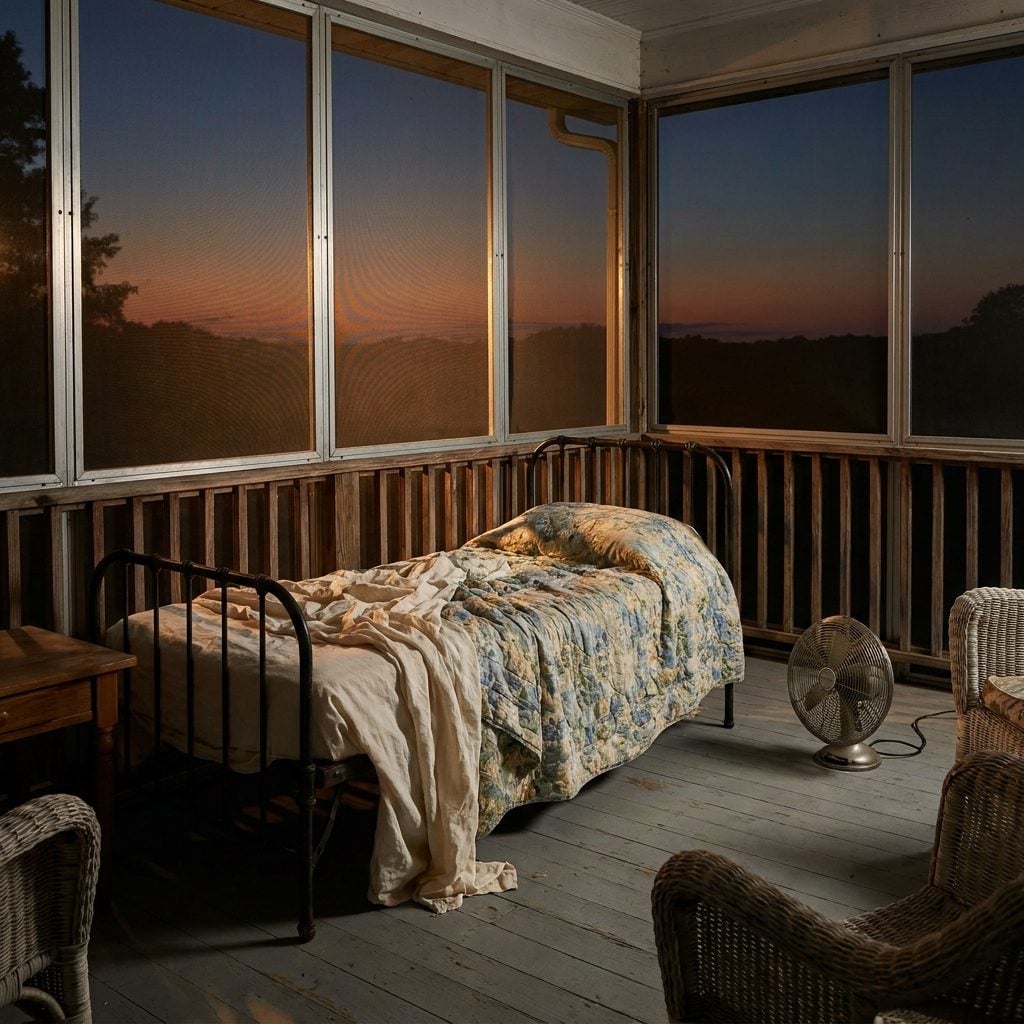
The screened porch was the original guest room, except the guest was anyone in the house who wanted to sleep without waking up drenched. A cot, a thin sheet, a small oscillating fan, and the actual night air moving through the screens. That was the whole system.
In order to come up with the very specific design ideas, we create most designs with the assistance of state-of-the-art AI interior design software. Also, assume links that take you off the site are affiliate links such as links to Amazon. this means we may earn a commission if you buy something.
There’s something almost architectural about how seriously people took porch sleeping before central air made it unnecessary. Older homes were designed with sleeping porches as deliberate rooms, not afterthoughts. Second-floor porches caught the prevailing breezes. Ground-level ones stayed cooler but traded comfort for mosquitoes and the neighbor’s dog. Either way, waking up to actual morning air with the sound of birds instead of a compressor cycling on is the kind of thing that’s hard to explain to anyone who grew up with cool deck ideas and a smart thermostat. You slept outside. It worked. Nobody thought it was remarkable.
25. Attic Fans Pulling Hot Air Out After Sunset
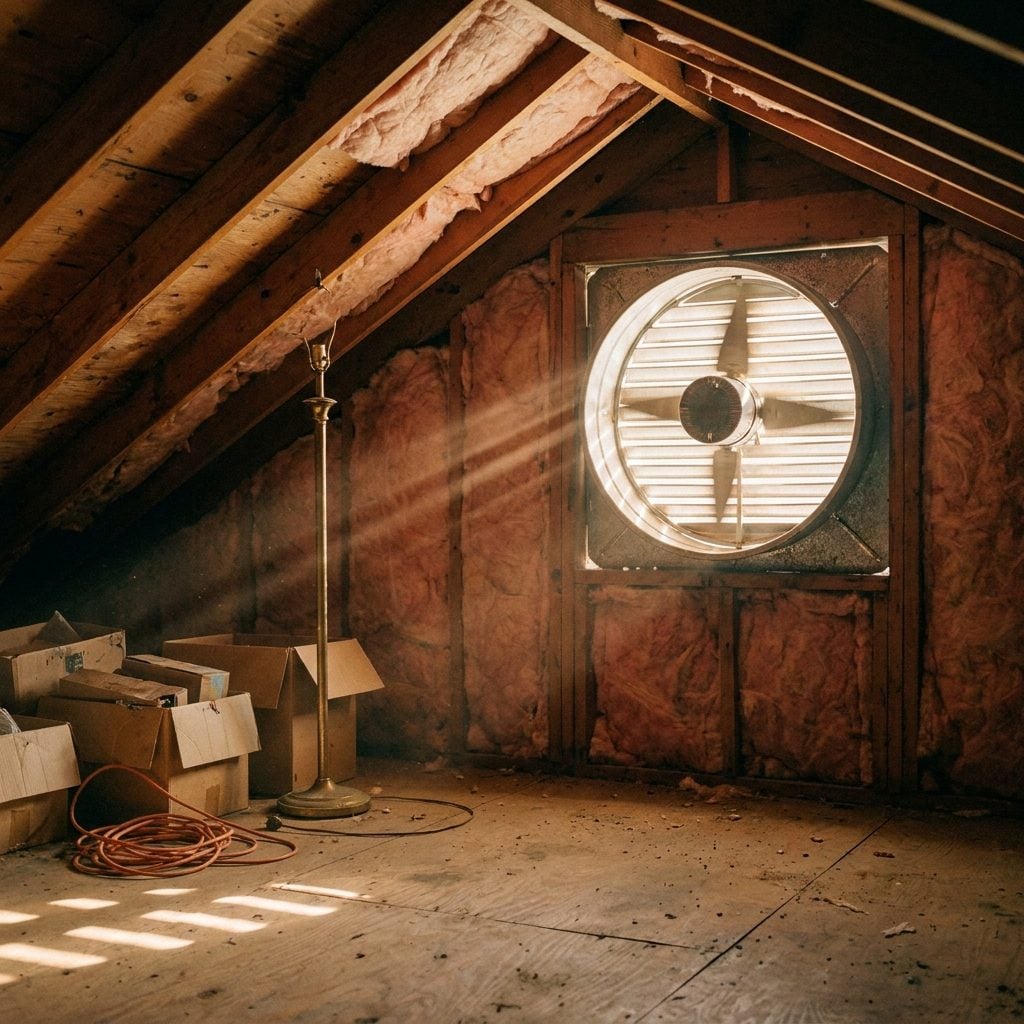
Around eight, once the outside air had finally dropped below the inside temperature, homeowners flipped the attic fan on. It pulled the day’s trapped heat out of the roof cavity and dumped it into the night sky. By morning the whole house had shed a few degrees for the price of running one motor.
The genius was patience. Wait for the temperature crossover, or you were just shuffling hot air around and paying for the privilege. Flip it on at three in the afternoon and you learned that the hard way.
24. Closing Off the Formal Living Room and Living in the Basement
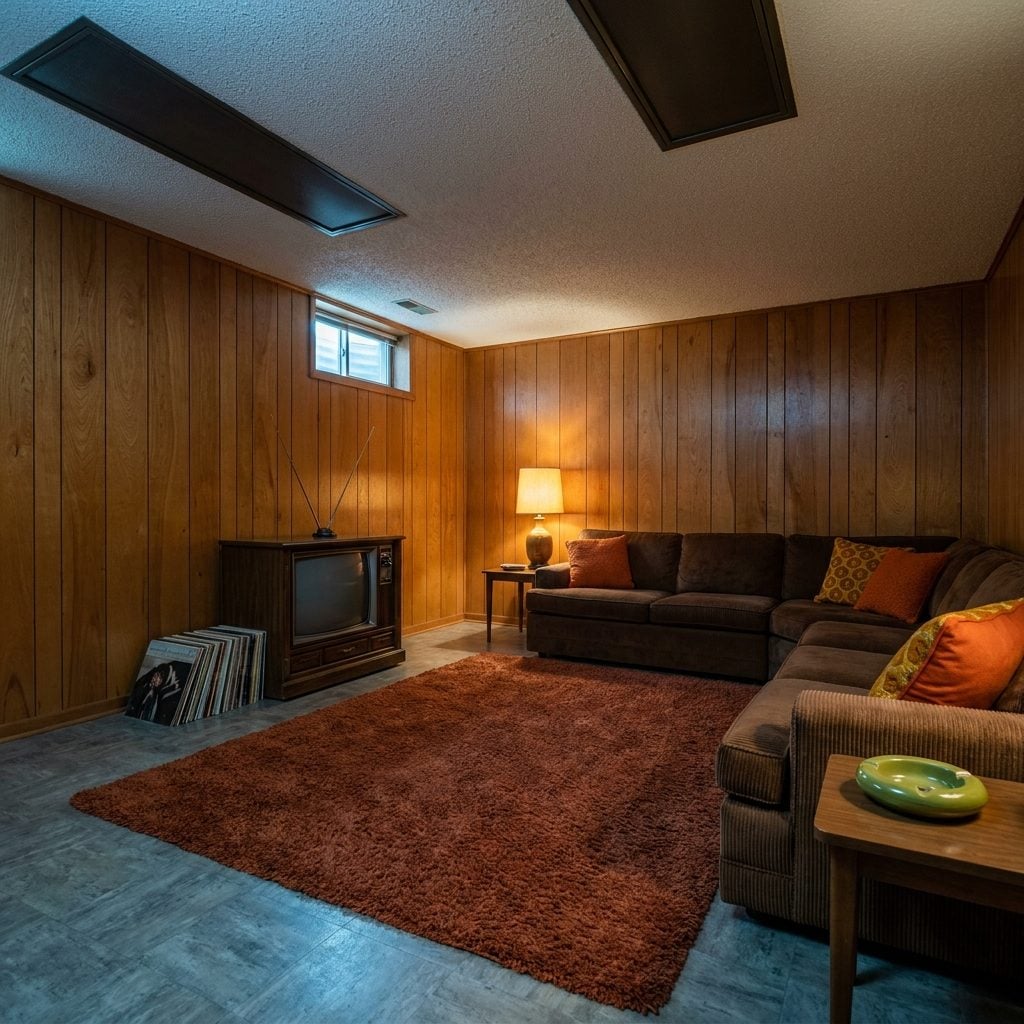
The basement ran noticeably cooler than upstairs and nobody was using it for anything important, so families migrated. The television got dragged down, dinner got eaten off TV trays, and kids ended up sleeping on the sectional.
Meanwhile the formal living room stayed shut with the drapes drawn from June through August, sitting there being a museum while everyone actually lived below grade, surrounded by concrete that had been quietly refusing to warm up all summer.
23. Awnings Over Every South-Facing Window
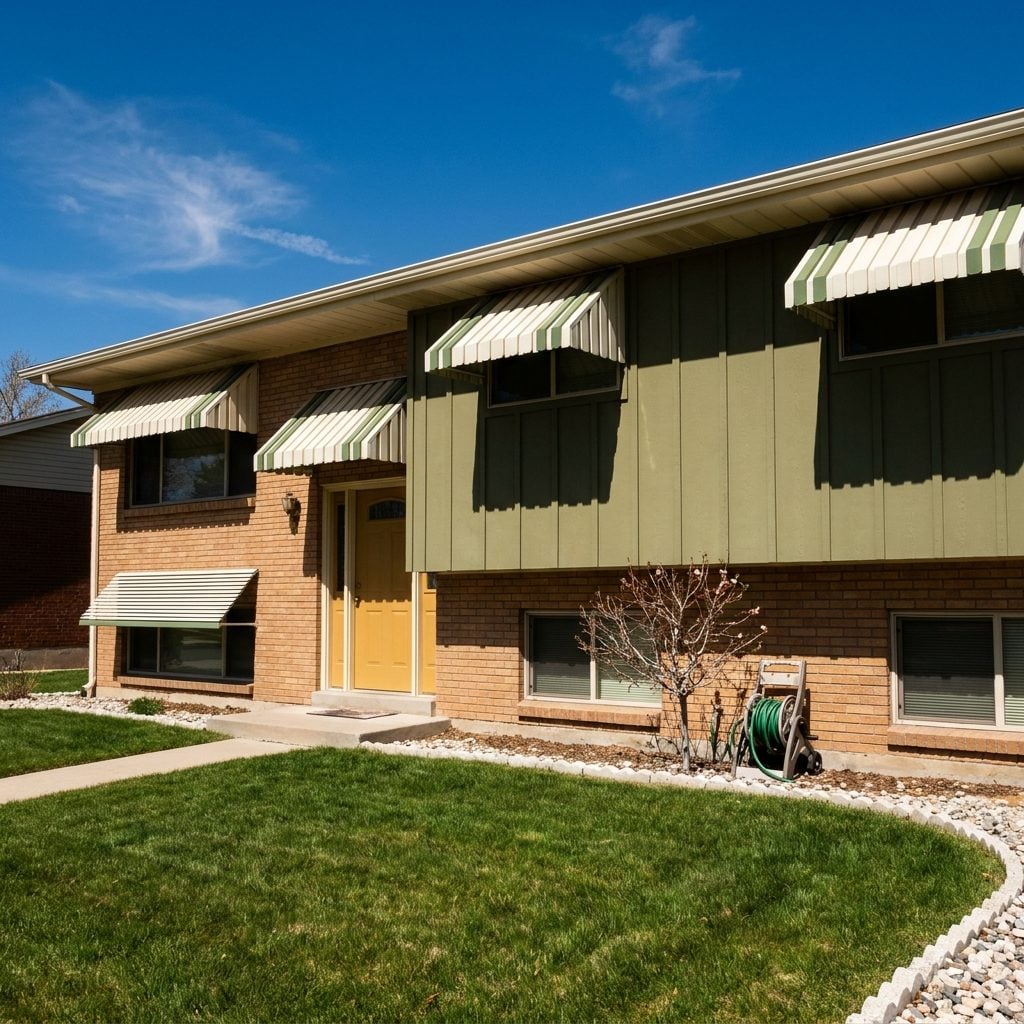
Aluminum awnings look dated now. In 1974 they were doing serious work.
Every south and west window got one, and on a scorching afternoon the difference between an awned window and a bare one was the difference between a room you could sit in and a room you couldn’t. The math was simple: block the sun before it hits the glass, or spend all night trying to cool the room down. Once light got through the window, it was already too late.
22. Cross-Breeze Engineering With Two Windows and a Box Fan
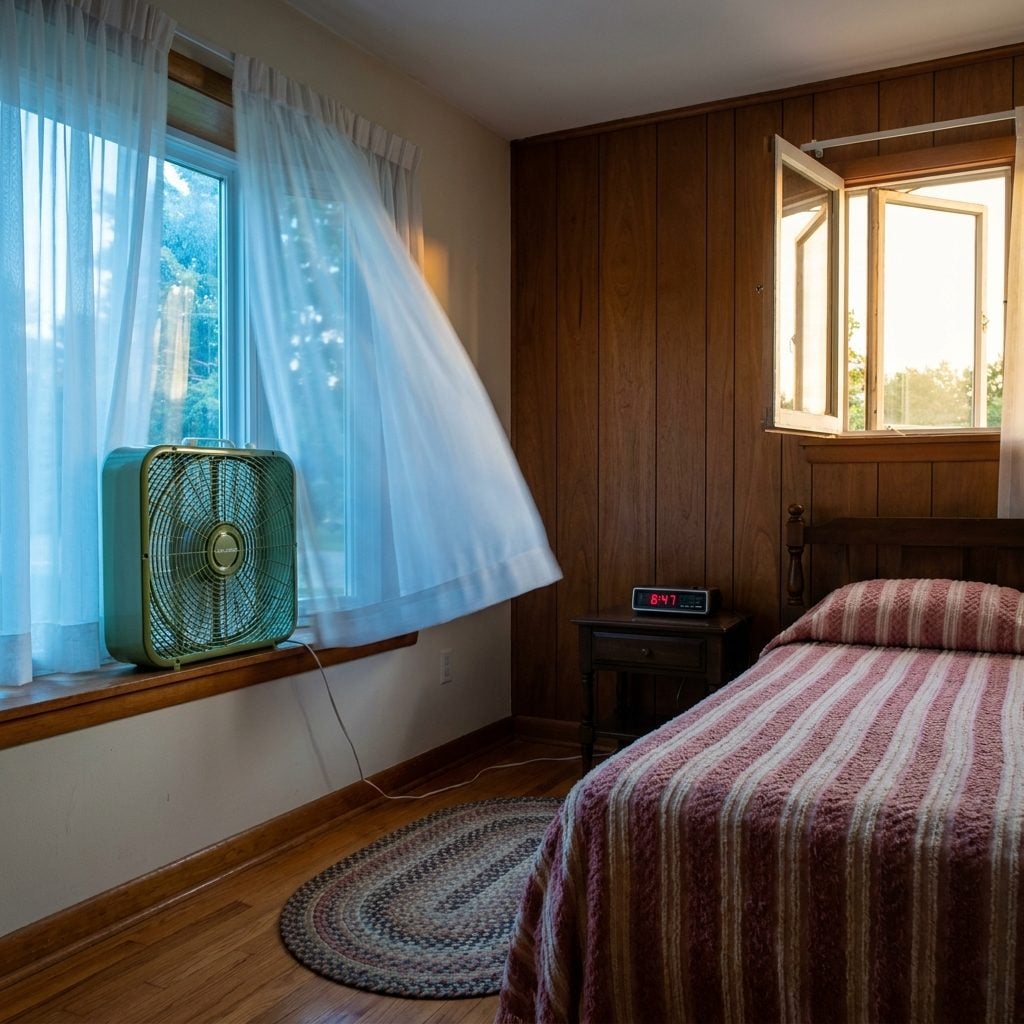
The fan didn’t cool the room. It pulled cool evening air through the room. Enormous difference.
You put the box fan in a window facing away from the breeze, blowing outward, and left the opposite window open with nothing in it. The fan pulled a vacuum, the whole house turned into a wind tunnel, and by ten o’clock the sheets were cold enough to shiver under.
21. Ice Cubes in a Bowl in Front of the Oscillating Fan
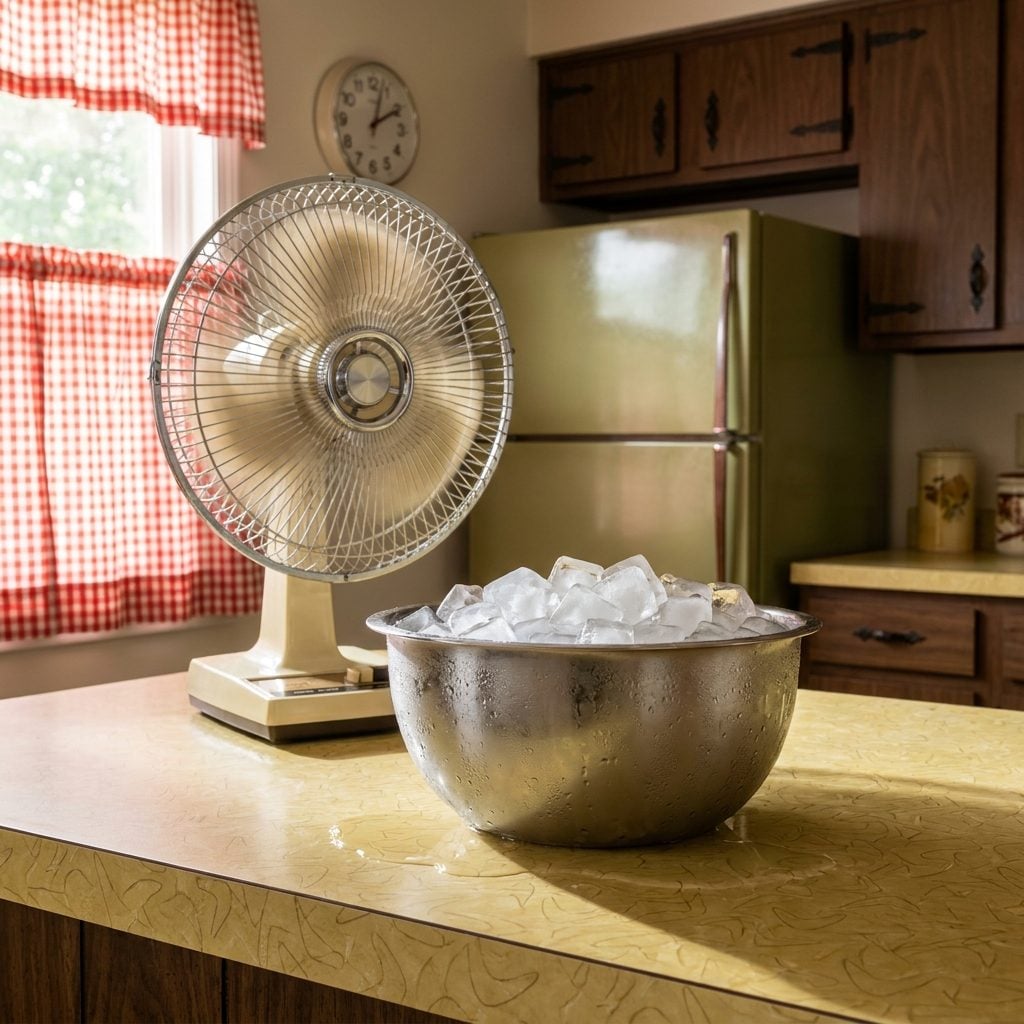
A poor man’s air conditioner: big metal bowl, tray of ice cubes, oscillating fan pointed at the bowl. The fan blew across the ice, the ice knocked a few degrees off the air, and if you parked yourself directly in the path it was almost civilized.
It didn’t cool a room. It cooled a person, which was all anyone was really asking for.
20. Terrazzo and Linoleum Floors That Stayed Cold All Summer
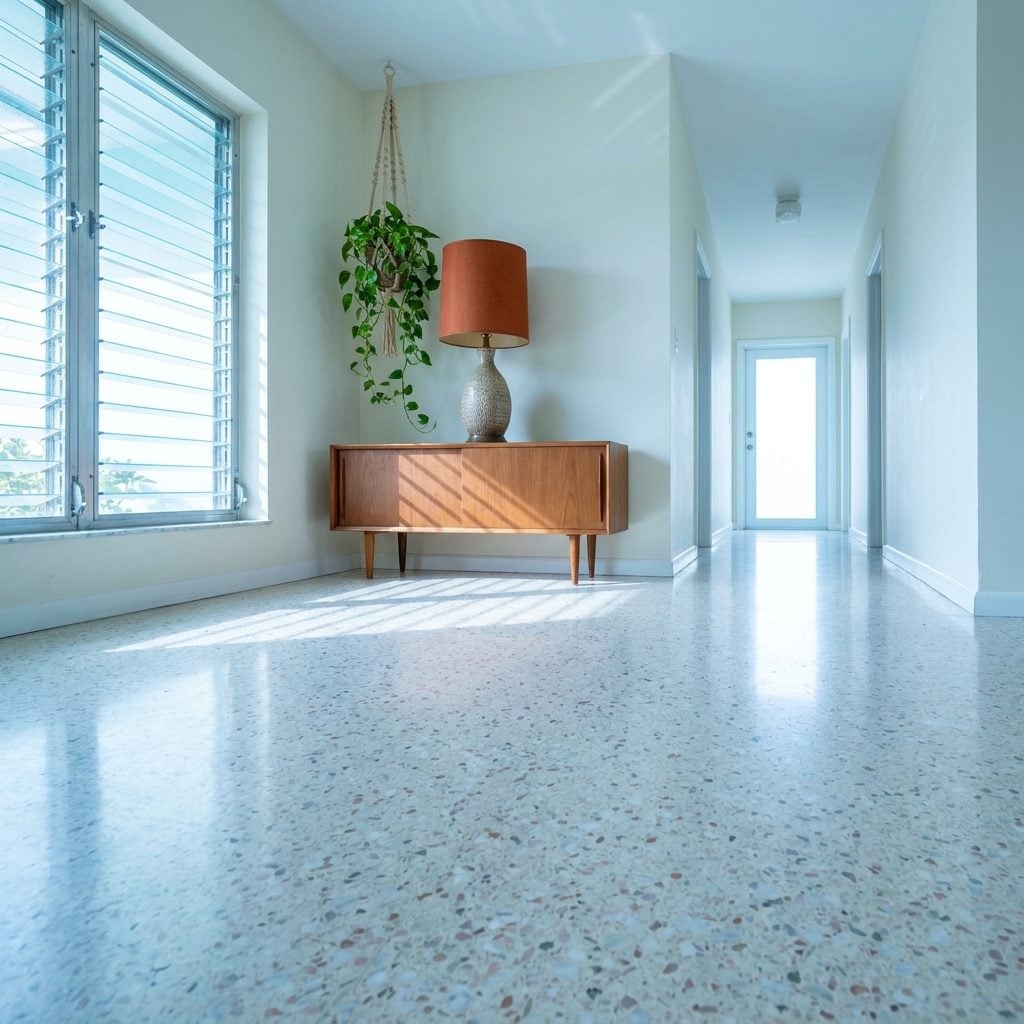
Terrazzo, linoleum, ceramic tile, cold hardwood — any floor that wasn’t carpet was a heat sink working in your favor. You padded around barefoot and let the floor pull heat out of you through the soles of your feet.
Carpet trapped heat. Carpet was for people who hadn’t figured it out yet.
19. Damp Sheets Hung Over Open Windows
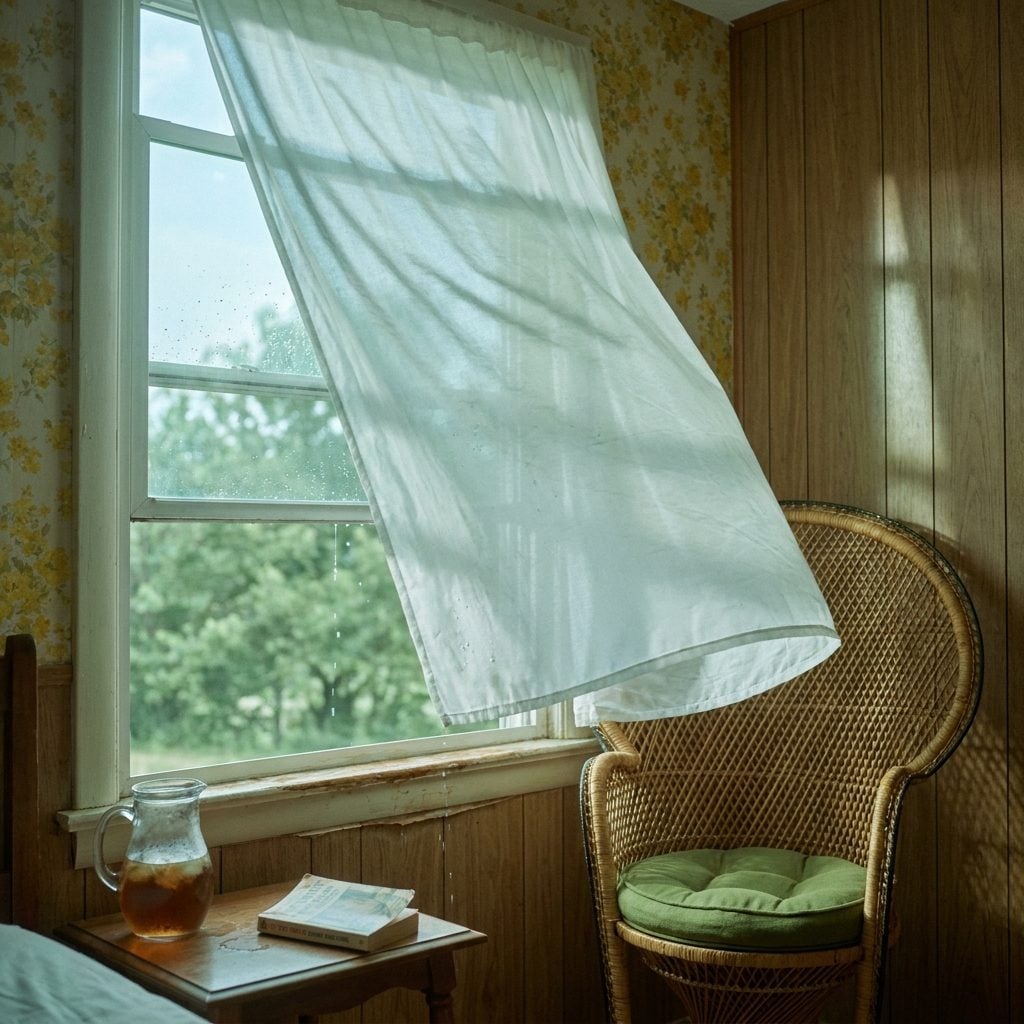
Wet a bedsheet in cold water, wring it out, hang it over an open window. The breeze passed through the wet fabric and evaporation cooled it down before it reached the room — a swamp cooler you built in four minutes.
You had to re-wet it every hour or two. A minor tax for a real drop in temperature.
18. Sleeping in the Yard on the Aluminum Chaise
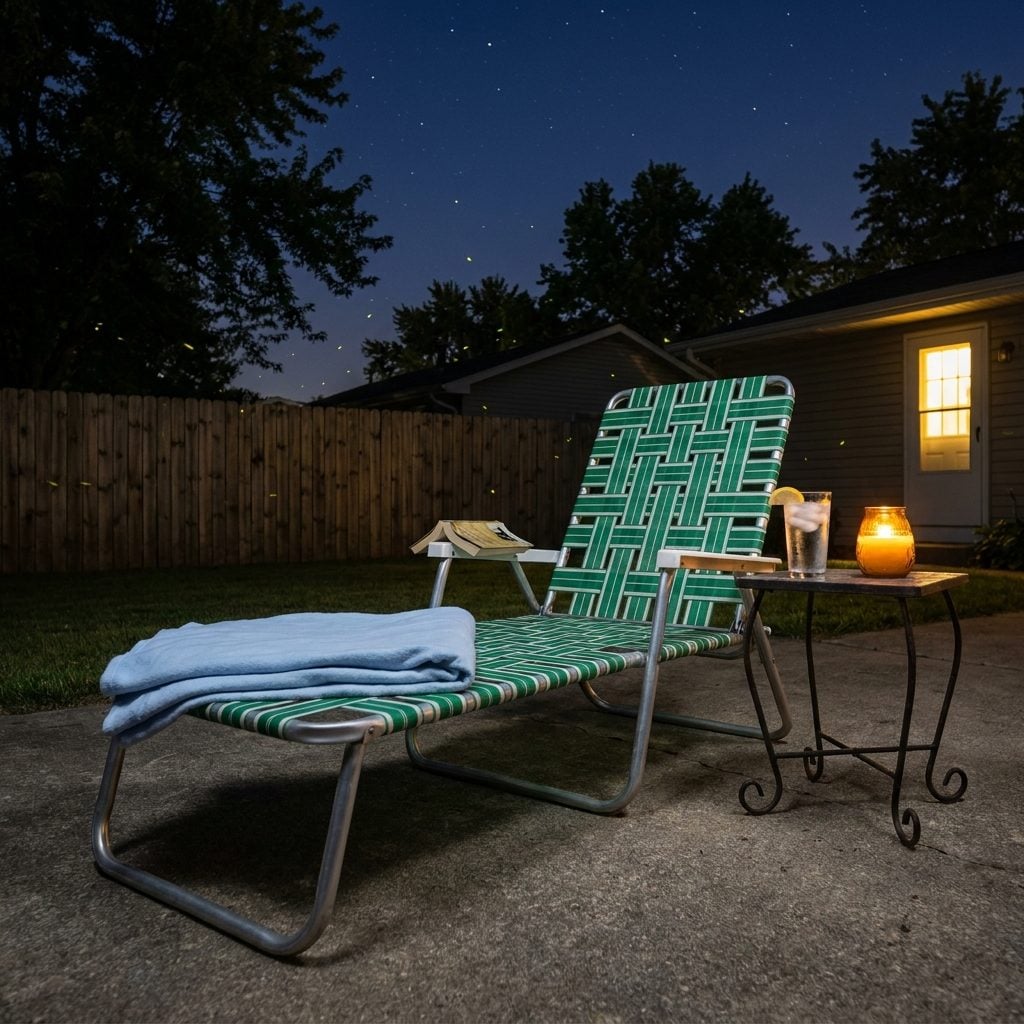
When the second floor was still stifling past midnight, people gave up and went outside. The chaise came off the patio, a pillow came out through the sliding door, and you slept under a sheet with mosquitoes for company.
The yard was always cooler than the bedroom by a wide margin. It was also full of bugs and dew and the neighbor’s sprinkler starting at five in the morning. You made your peace with it.
17. The Deep Overhang and the Wraparound Porch
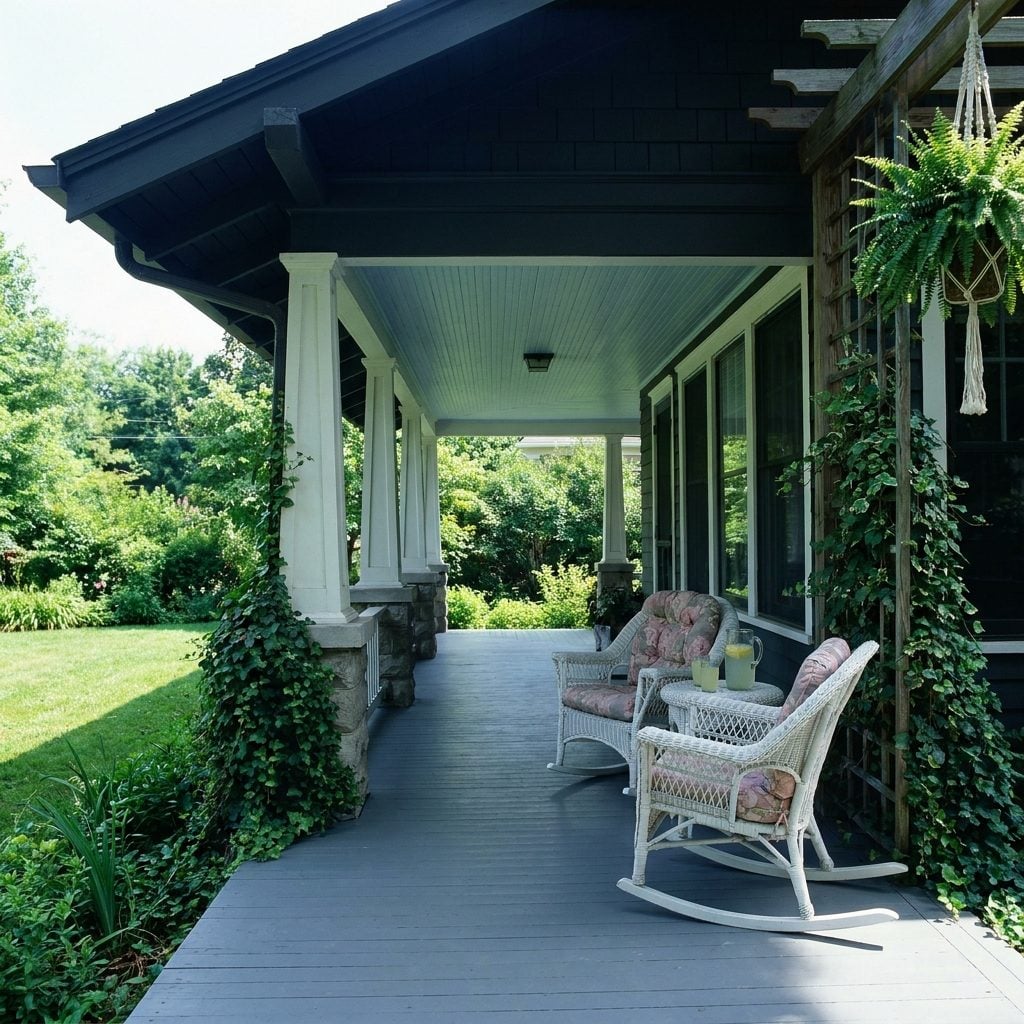
Older houses had four-foot roof overhangs for a reason. The July sun sits high overhead, and a deep overhang blocks it before it ever hits the wall, so the house never gets a chance to warm up on the outside — which means less heat migrating in.
Then the porch itself became the summer living room: cooler than any interior room, screened against bugs, furnished with wicker and a pitcher of something cold. Cool deck ideas owe more to this than anyone admits.
16. Basement Freezer Water Bottles in Every Bed
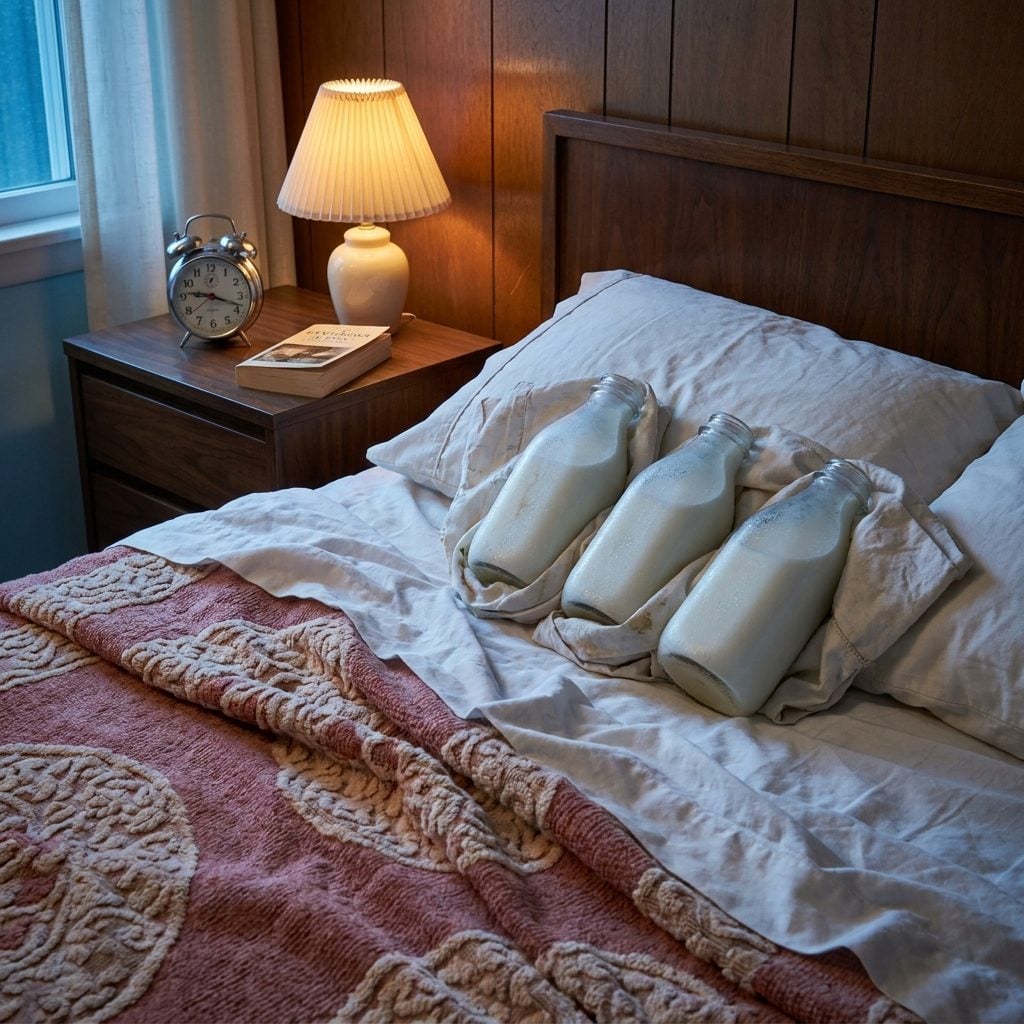
Fill glass bottles with water, freeze them solid in the basement chest freezer all day, then tuck them into the bed at bedtime. The cold radiated up through the sheets for hours — a stretch of genuinely cold pillow, then a longer stretch of merely cool, which was enough to fall asleep on.
Grandmothers passed this trick down like a family recipe. It works. It has always worked. Try it once in August and you’ll understand.
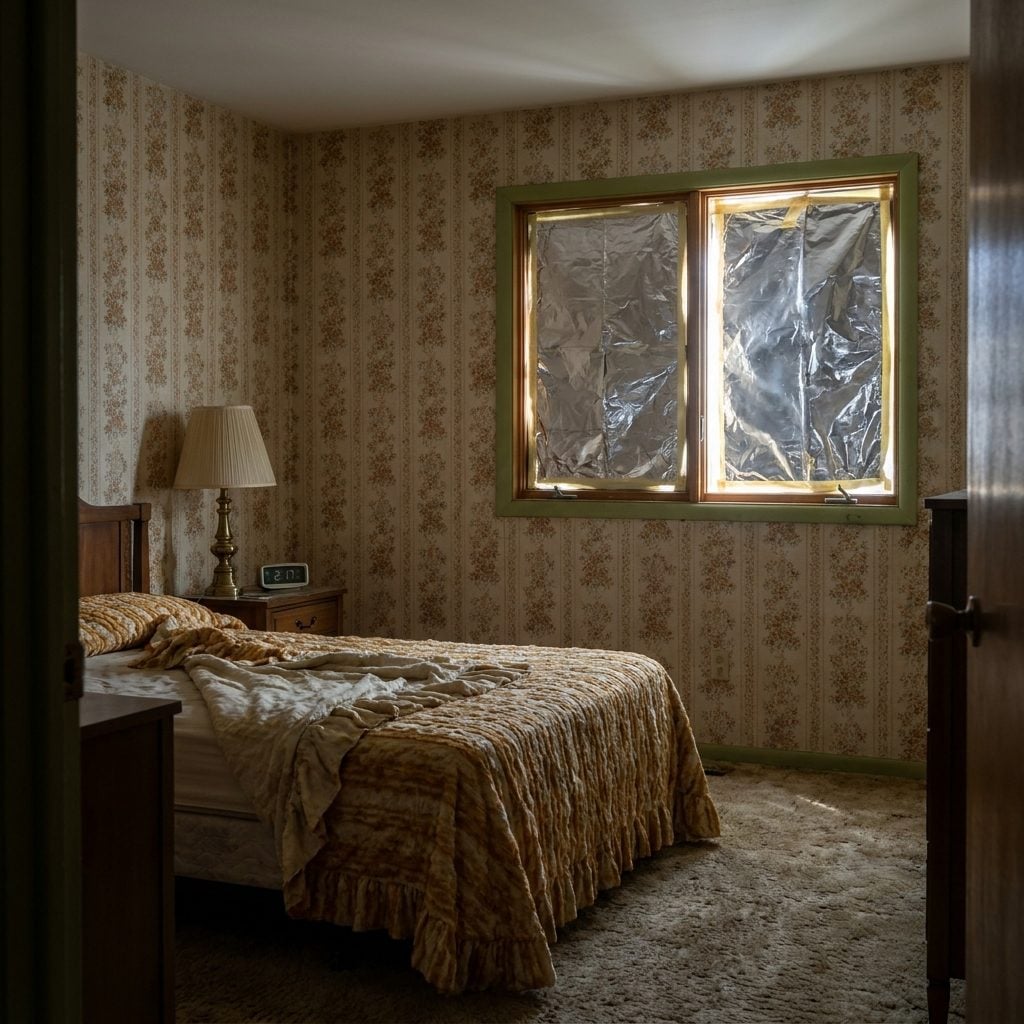
15. Aluminum Foil Taped to the West-Facing Windows by 2 PM
14. The Whole-House Fan That Sounded Like a Jet Engine at Midnight
🔥 Would you like to save this?
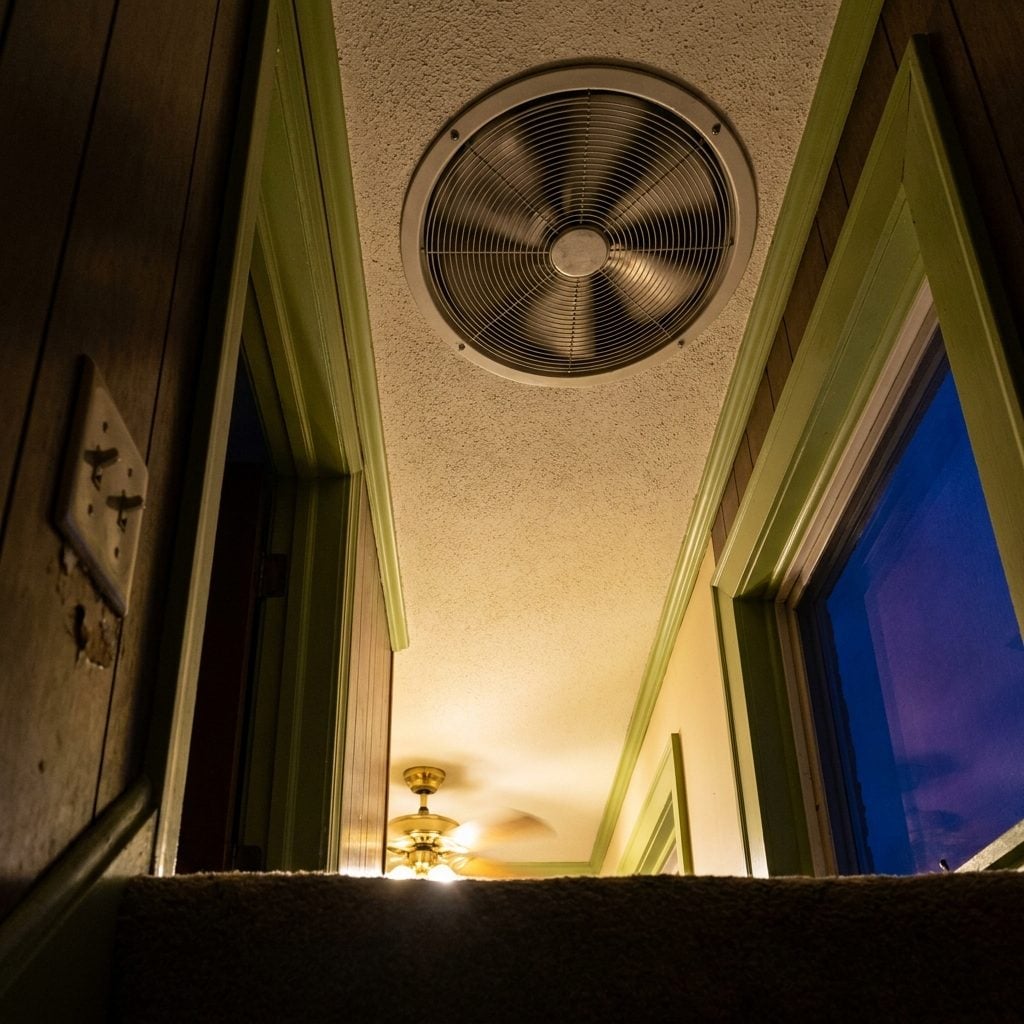
Every kid who grew up in a 1970s house remembers the moment someone flipped the whole-house fan switch. First, a low mechanical groan. Then a roar. Then every window in the house needed to be cracked open or the thing would shake itself loose from the ceiling joists. They were not subtle. They were not quiet. They worked anyway.
The whole-house fan pulled hot air up through the attic and out the soffit vents, dragging cooler outside air in through the windows. Run it after 9pm when the night air finally dropped below 80 degrees, and the house would be genuinely comfortable by midnight. It was loud enough to need conversation at full volume, but in 1973, that fan was the closest thing most families had to home improvement that actually worked. The noise was part of the deal.
13. The Wet T-Shirt in the Freezer, Then Straight Onto the Chest
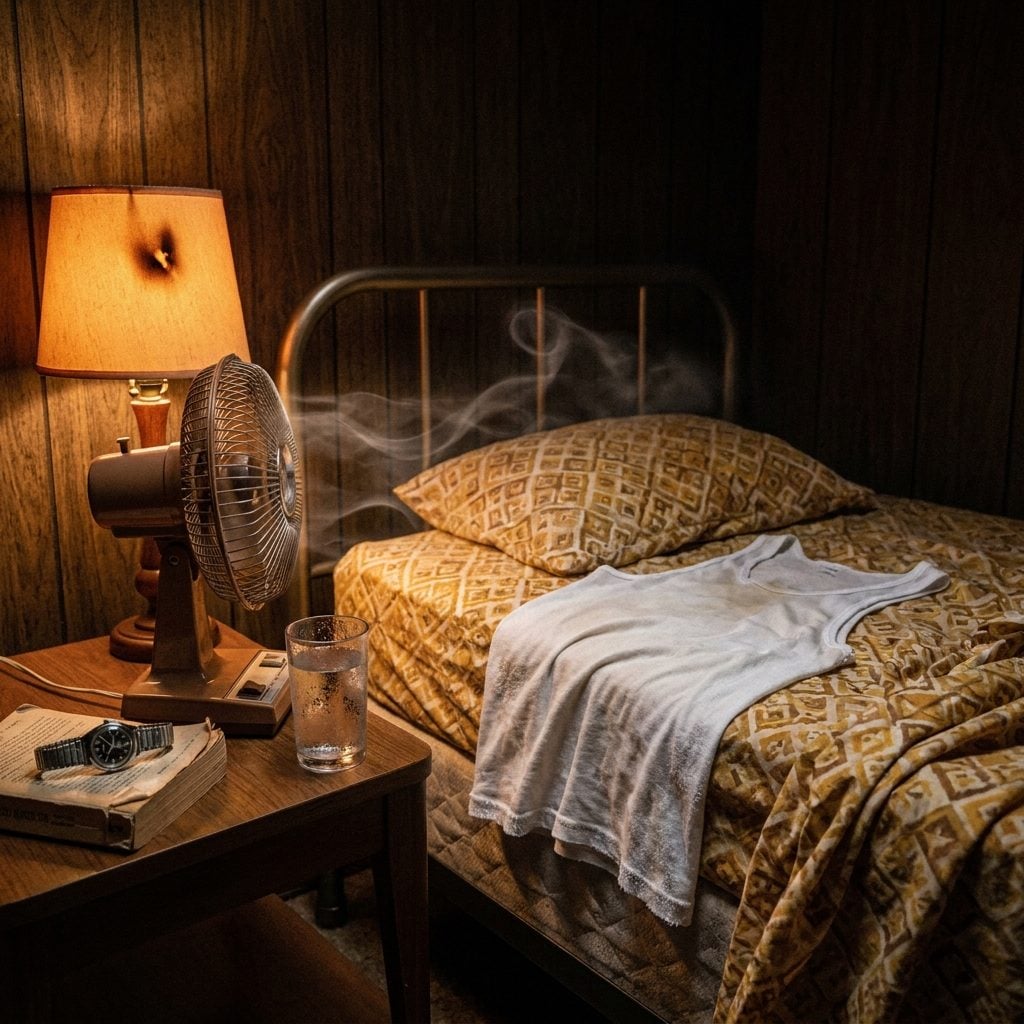
The trick was owning two shirts, one always in the freezer. Around 9 PM you’d pull the frozen one out, let it thaw just enough to unfold, then lie down before the ice melted into your collarbones. Bought you about forty minutes of sleep before the cotton warmed up and you were back where you started.
Sounds insane now. Was completely normal then — anyone raised in Texas or Oklahoma before AC will tell you the same thing without blinking, and probably add a wrinkle of their own.
12. Turning the Whole House Into a Chimney at Dusk
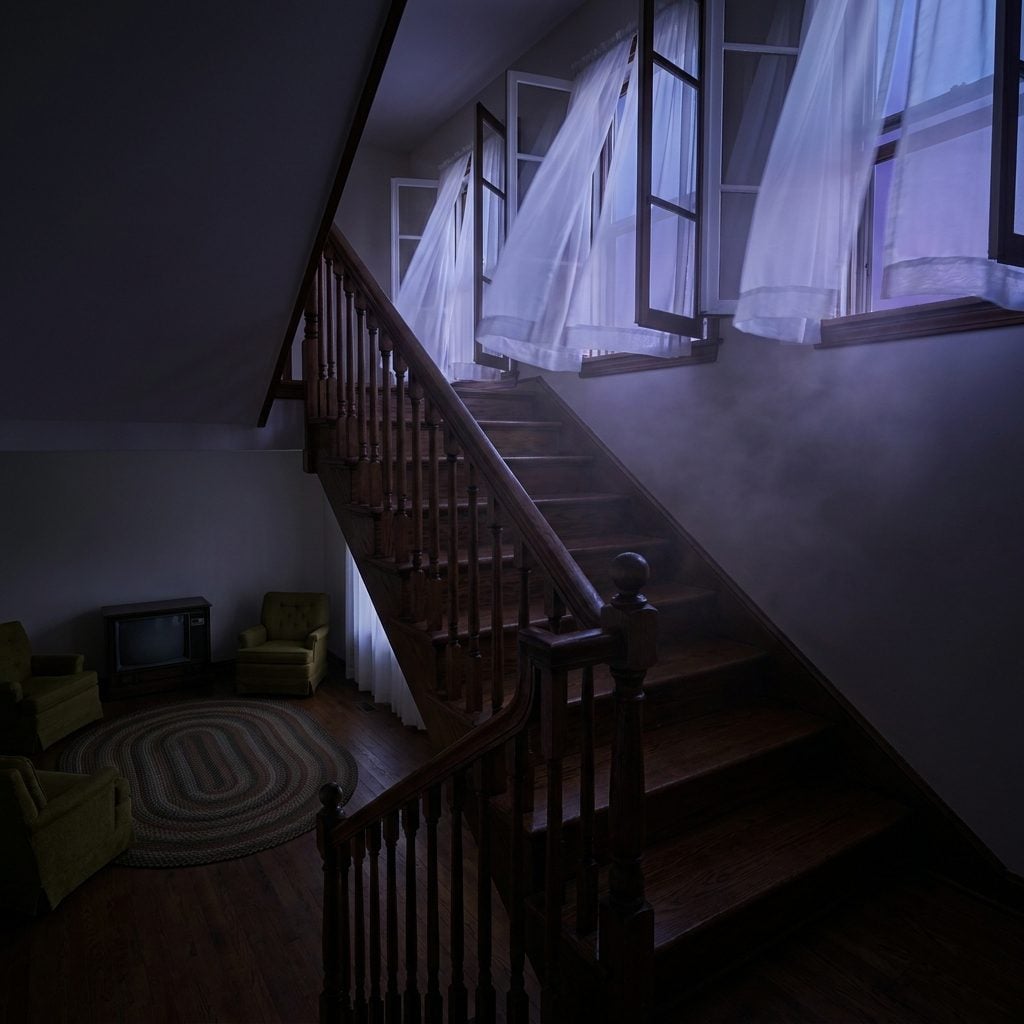
Keep everything sealed until sunset. Then throw every window open at once — downstairs first, then upstairs, top floor last. Hot air stacked on the second story rushed out the top while cool evening air rolled in through the basement windows, and the whole house essentially exhaled in one long sigh.
Only worked if the outside actually got cool at night. In 1974, most places still did.
11. Bamboo Roller Shades Between the Storm Window and the Sash
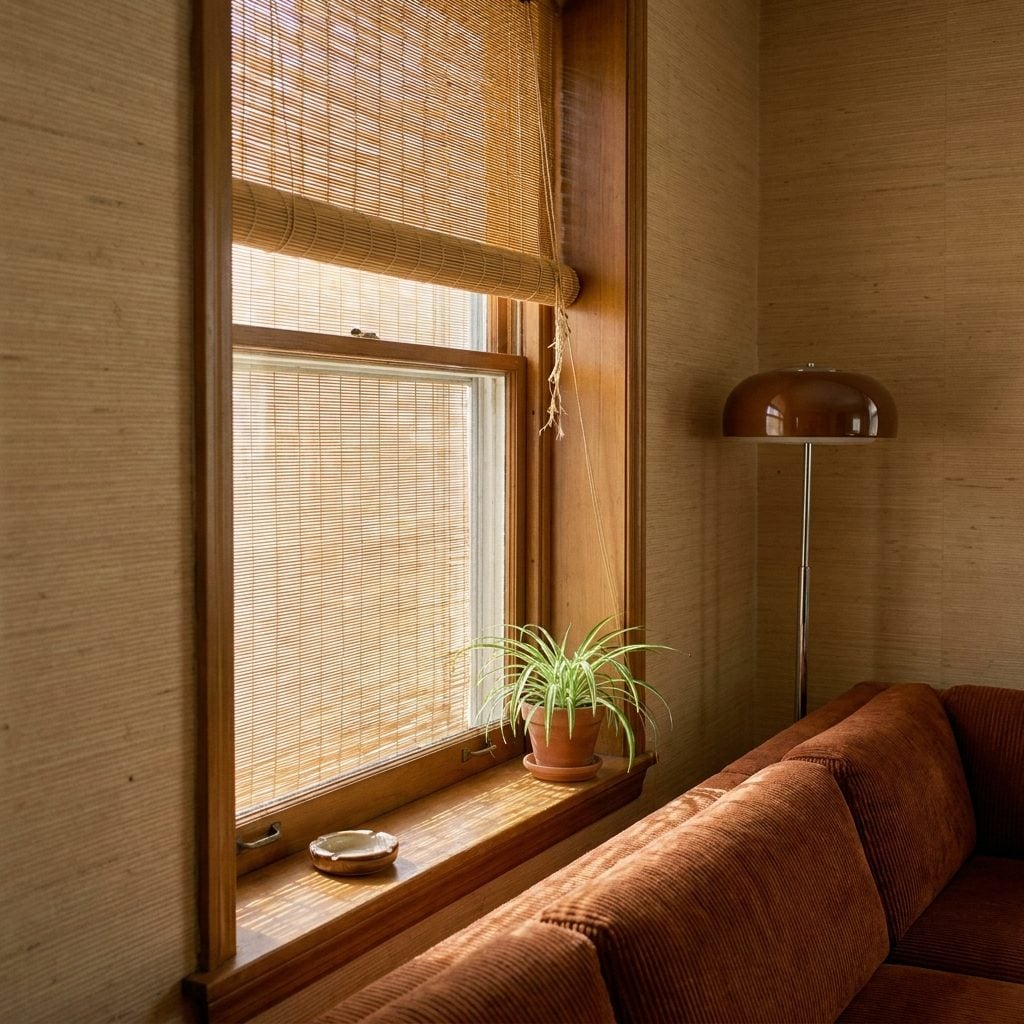
Most people ran shades on the inside. The smart move was between the panes.
That trapped pocket of shaded air worked as a second layer of insulation — storm window took the solar beating, bamboo blocked the light, and the interior stayed noticeably cooler than the neighbor’s with identical windows and interior blinds. Same principle behind modern low-E argon-filled glass. Done with a piece of split cane and a nail.
10. The Root Cellar Nobody Called a Root Cellar Anymore
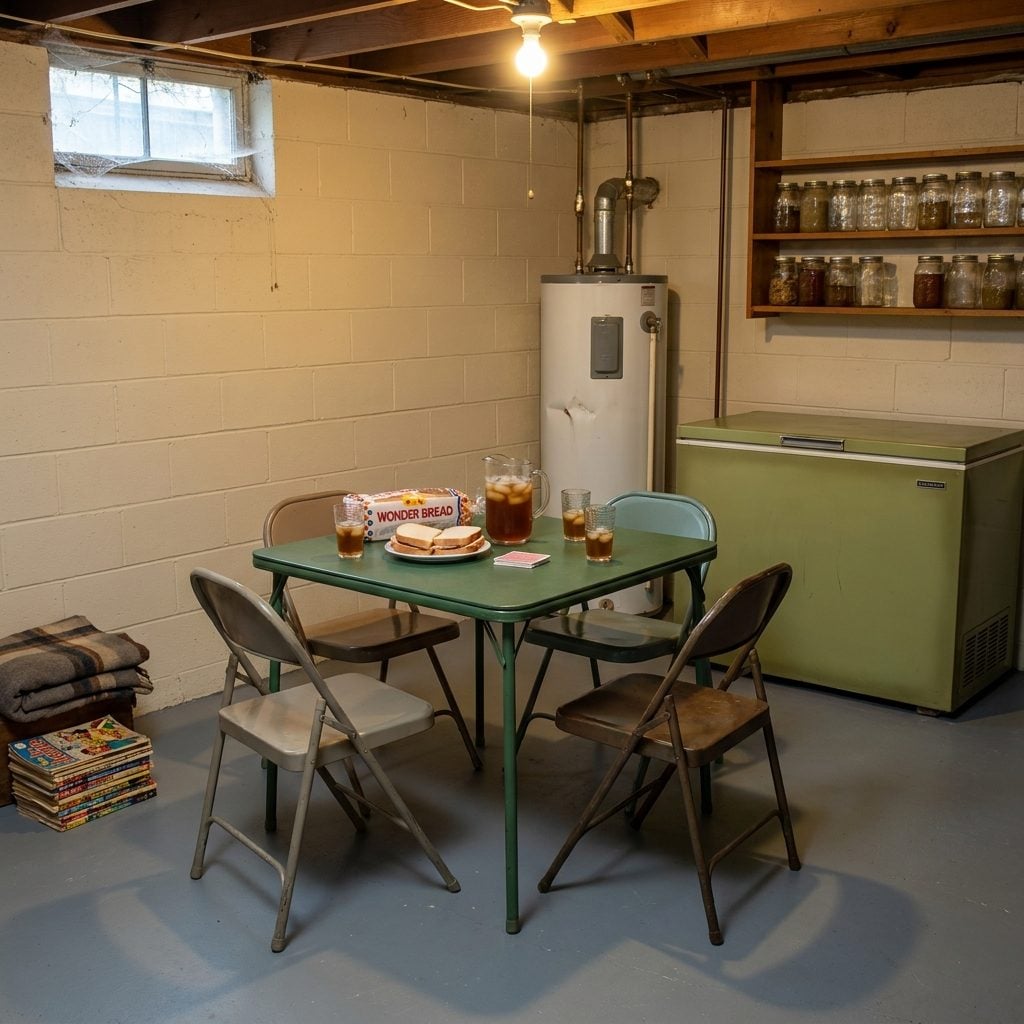
By 1974 it was where the extra freezer lived and where kids read comics on the concrete floor. Still 62 degrees down there in August, though. Families ate dinner on card tables set up next to the water heater, and the dog picked its spot first — always the corner closest to the north-facing wall, always before anyone else could stake it out.
9. Painting the Roof White the Summer After You Bought the House

The neighbors thought it looked cheap. Then they noticed the guy with the white roof had his windows open in August while everyone else’s attic was cooking.
Reflective roofing wasn’t a marketing category yet — just a bucket of elastomeric from the hardware store and a Saturday afternoon on a ladder. Same physics as today’s cool roofs, minus the white paper and the certification stamp. Some of those houses are still standing with the second or third coat holding on.
8. Wet Towels Draped Over the Screen Door
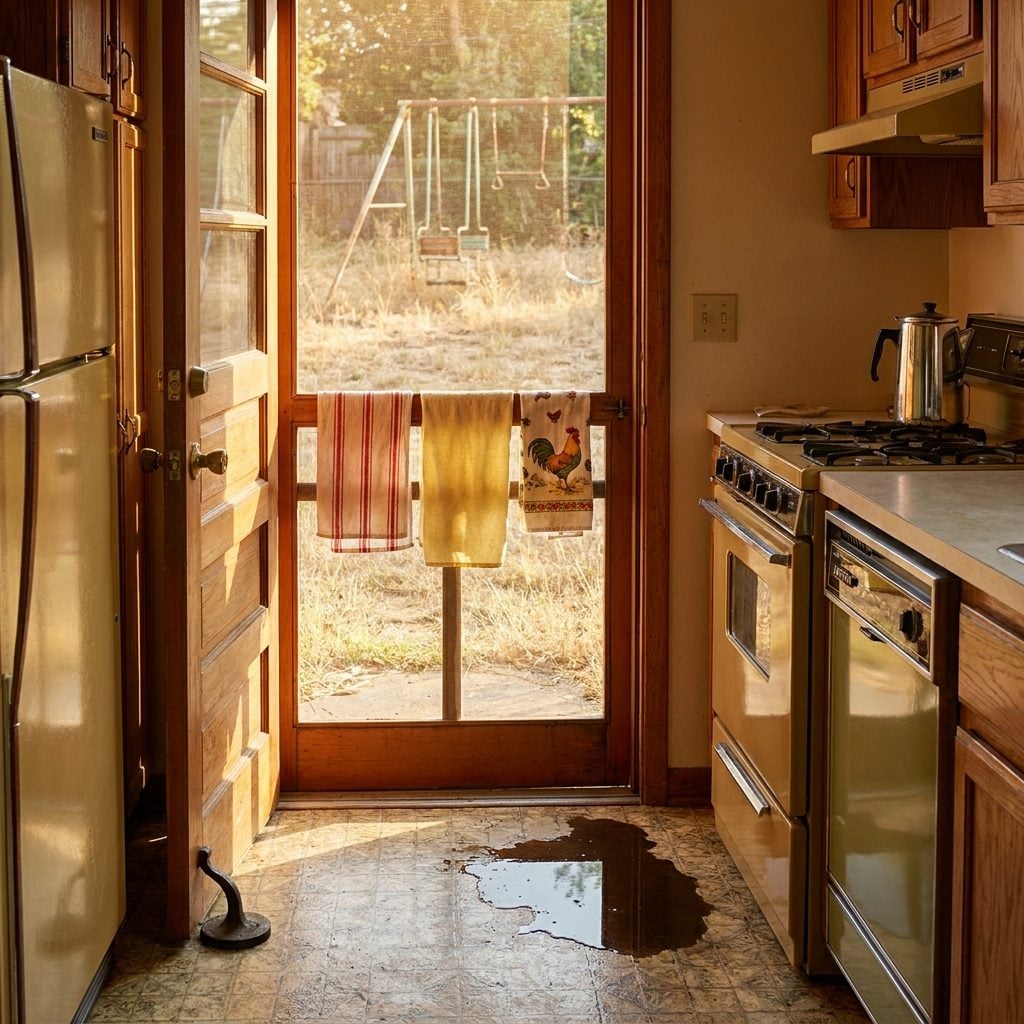
A trick borrowed from swamp coolers, done with kitchen towels. Soak two or three, wring them halfway, drape them over the screen door on the shady side of the house, prop the interior door open. As the breeze passed through the wet cotton, it dropped a few degrees before hitting the kitchen.
Best in dry heat. In humidity, you just got a wet-smelling kitchen.
7. Living in the Bathtub After Supper
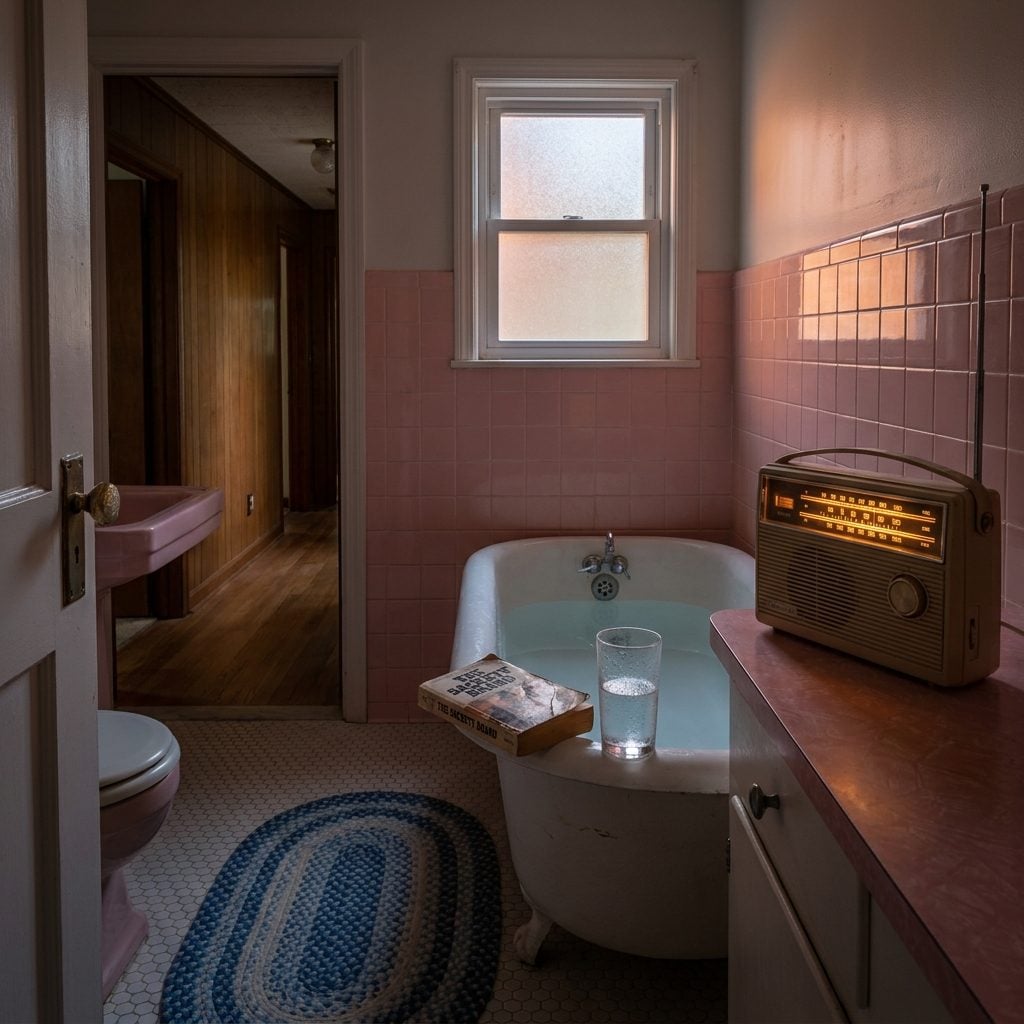
Not a bath. A tub full of cold tap water, three or four inches deep, and you sat in it in shorts and a t-shirt reading a paperback until the water warmed to skin temperature. Then you refilled it. In a west Texas summer, this counted as a hobby — a legitimate one, with rituals and preferred paperback genres and a strong opinion about whether to include ice.
6. Trellised Grape Vines Grown Specifically to Shade the Kitchen Window

Deciduous vines were the smart homeowner’s secret weapon. Full leaf-out by June meant complete shade all summer, then the leaves dropped in October and let the winter sun back in to warm the kitchen again. Grapes, wisteria, or Dutchman’s pipe were the common choices, though the grape guys were smug about the extra jelly.
You could pay a landscape architect a small fortune today to design the same thing and hear it called passive solar biophilic screening. Grandma called it a grape arbor.
5. The Sacred Rule of Never Opening the Oven Between June and September
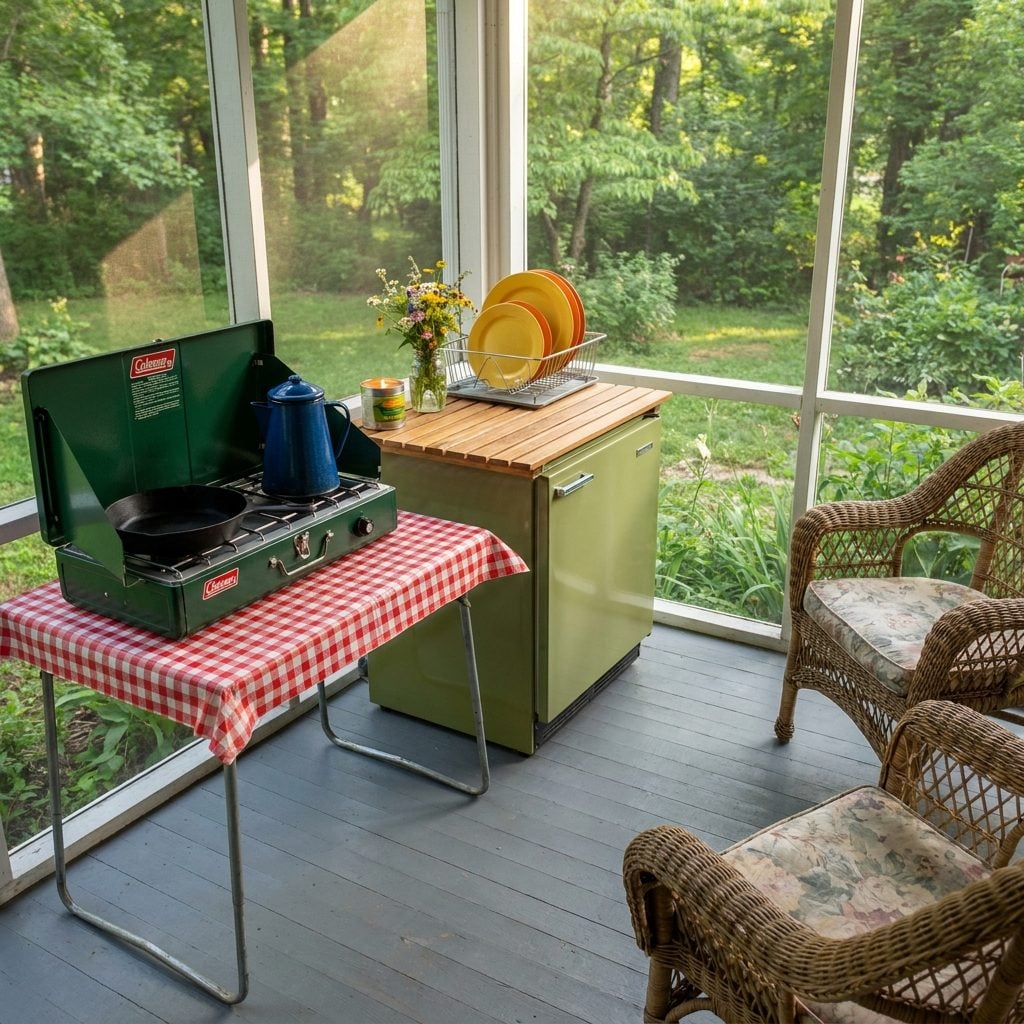
Cold cuts. Tuna salad. Cereal for dinner if it came to it. Anything that needed the oven got shifted to breakfast or postponed until October, and the stovetop was tolerated only for boiling corn — exhaust fan on high, every window in the kitchen open, and even then you’d catch a look from whoever had to walk through.
Serious families ran a second kitchen on the back patio: a Coleman camp stove, a folding table, a screened porch. That’s where July and August actually happened.
4. Sleeping With Your Head at the Foot of the Bed to Catch the Window Breeze
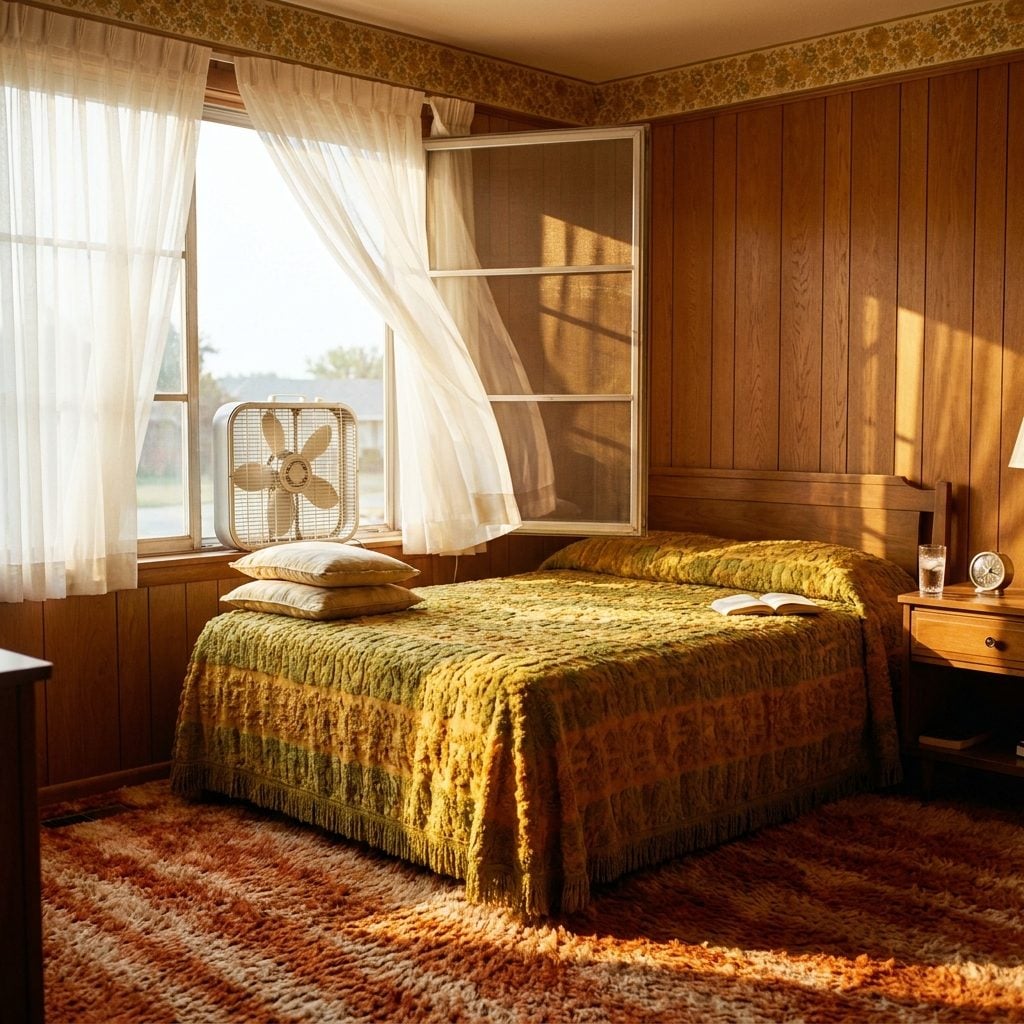
Kids figured this out first. The pillow migrated to the foot of the bed because that’s where the window lived, and the window was where the air came from. Parents grumbled about the wrinkled bedspread and then quietly did it themselves come August.
Simple physics. Two feet closer to the screen meant two feet closer to the moving air, and in a house without central air, two feet was everything. You’d wake up with your neck at a bad angle, half your head off the mattress, the room still eighty-four degrees — but you slept.
3. The Marble Slab on the Kitchen Counter That Doubled as a Cold Compress
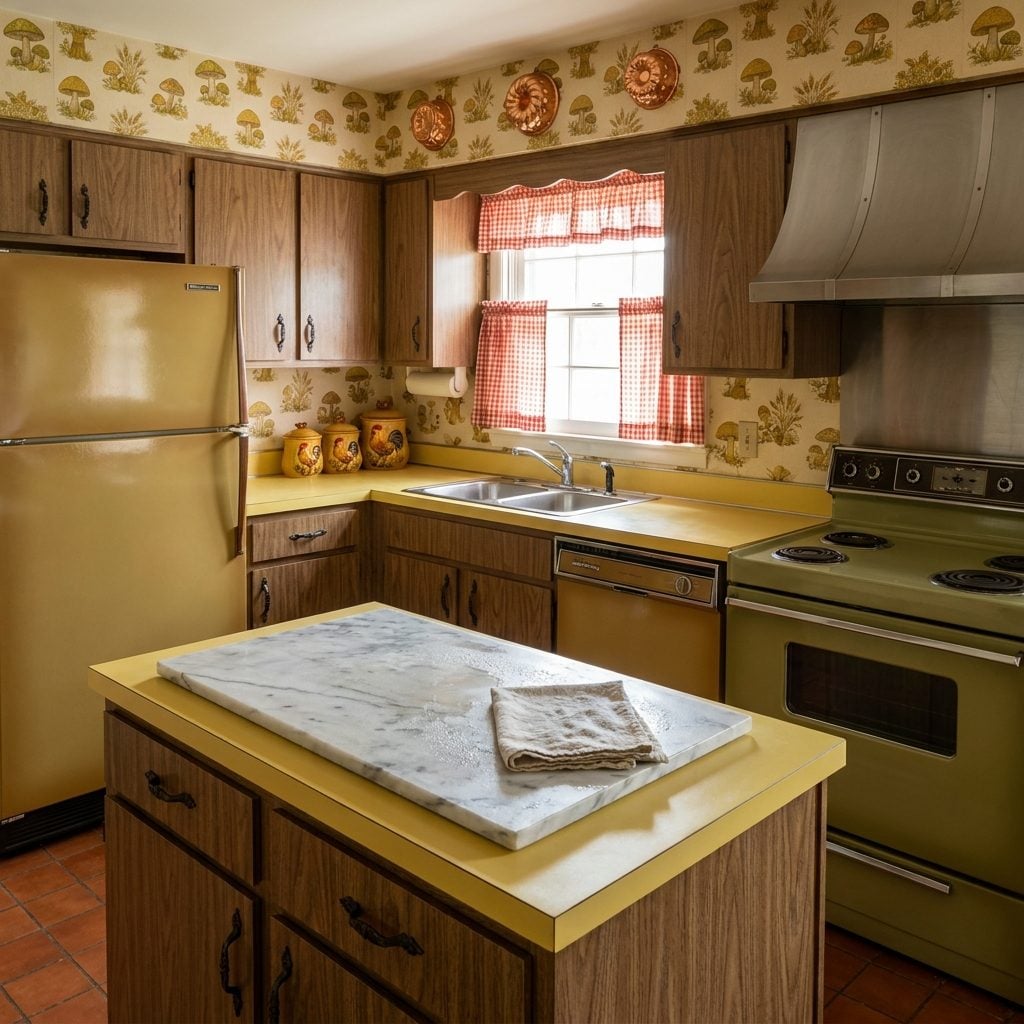
Grandma’s pastry marble had a second job. On the hottest afternoons it came out of the cabinet and lived on the counter, and anyone with a headache or a heat flush pressed their forearms flat against it.
The wrists especially — blood runs close to the surface there, and marble hangs stubbornly below room temperature because it sheds heat slowly. Wet a dish towel, lay it on the slab a couple minutes, fold it across the back of your neck. Cheaper than aspirin, and honestly faster.
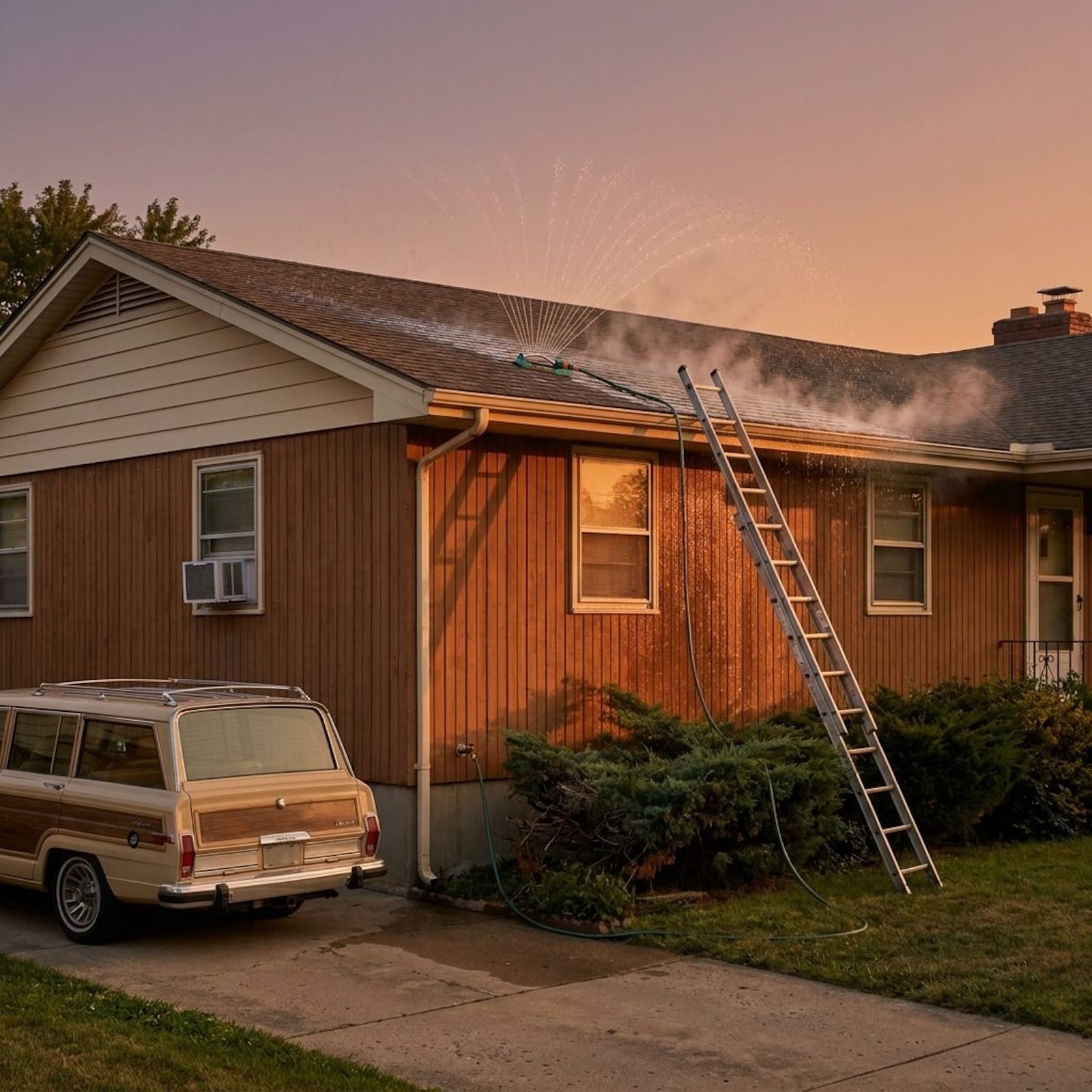
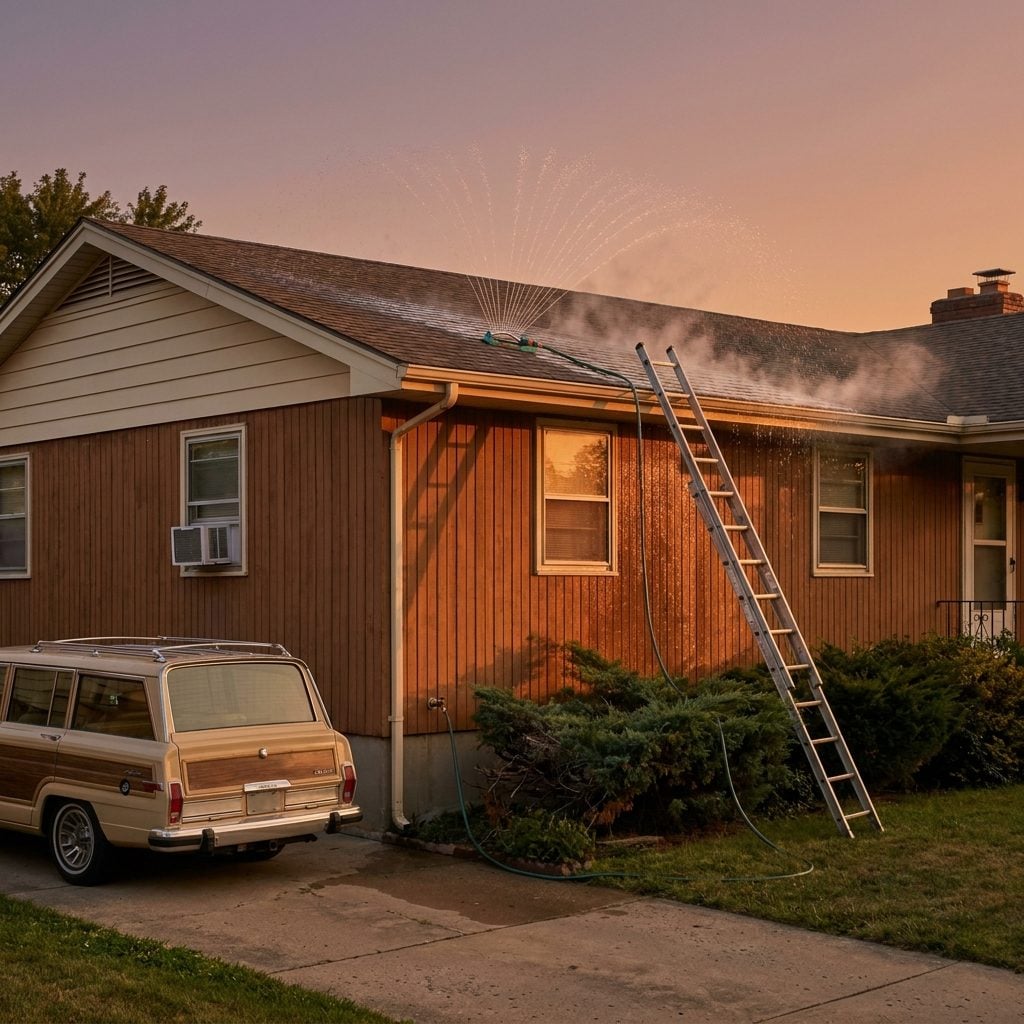
2. Running the Sprinkler on the Roof for an Hour Before Bed
🔥 Would you like to save this?
Neighbors thought Dad had lost it the first time he dragged the ladder out. By the third summer, half the block was doing it too.
Asphalt shingles bake all day and keep radiating heat down into the attic long past midnight, so wetting the roof at sunset dropped the shingle temperature quickly, which cooled the attic, which meant your bedroom ceiling wasn’t a griddle by the time you crawled into bed. You could feel the difference the moment your cheek hit the pillow. Water bill went up. Sleep was worth it.
1. The Basement Living Room Setup Nobody Talked About Until July
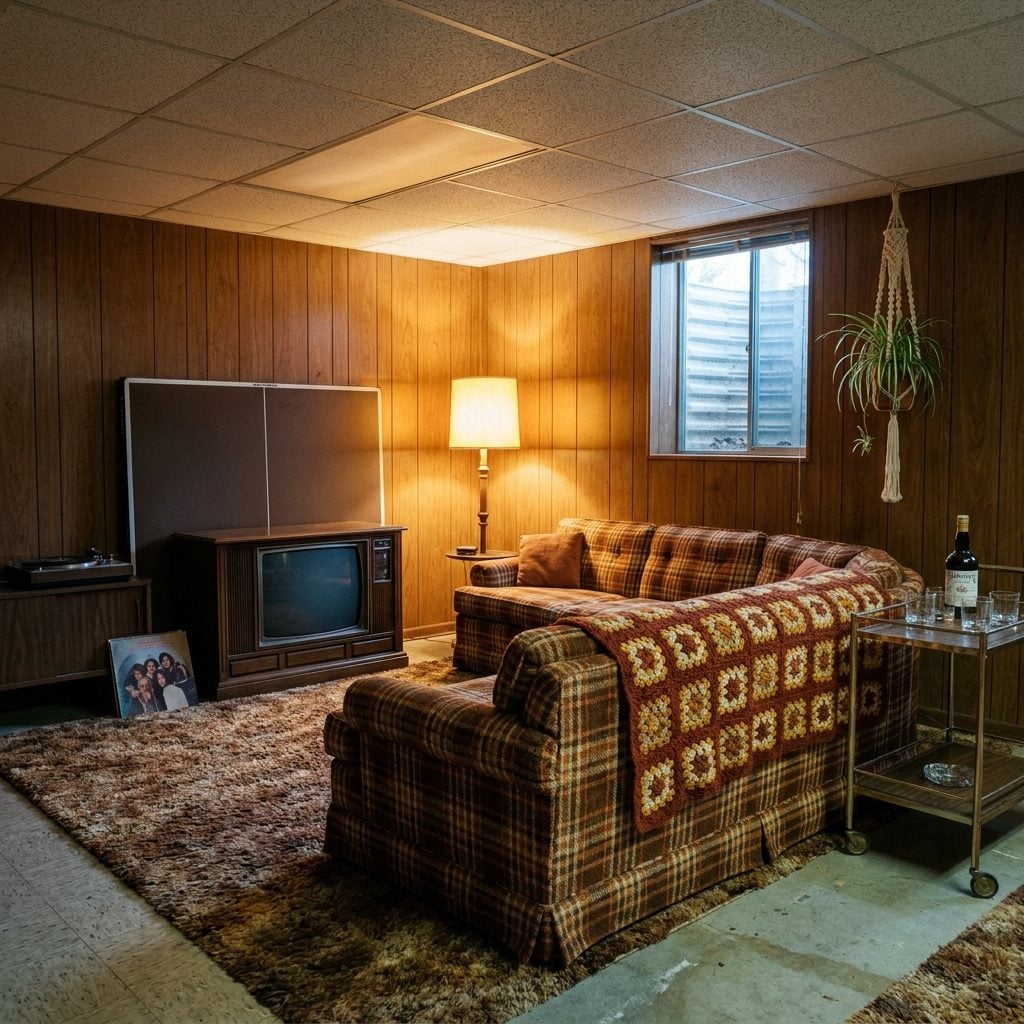
Eleven months of the year the basement was for laundry and the deep freezer. Then July arrived and the whole family migrated downstairs like it had always been the plan.
Concrete foundation walls sit against earth that stays somewhere around fifty-five degrees all year, and that thermal mass pulls heat out of everything above it. Dad watched the news on the plaid sectional, Mom read on the afghan-covered cot she’d dragged down after Memorial Day, and the kids slept on the shag with pillows hauled from upstairs. Nobody called it living in the basement. They just went down after supper and came up for breakfast.