🔥 Would you like to save this?
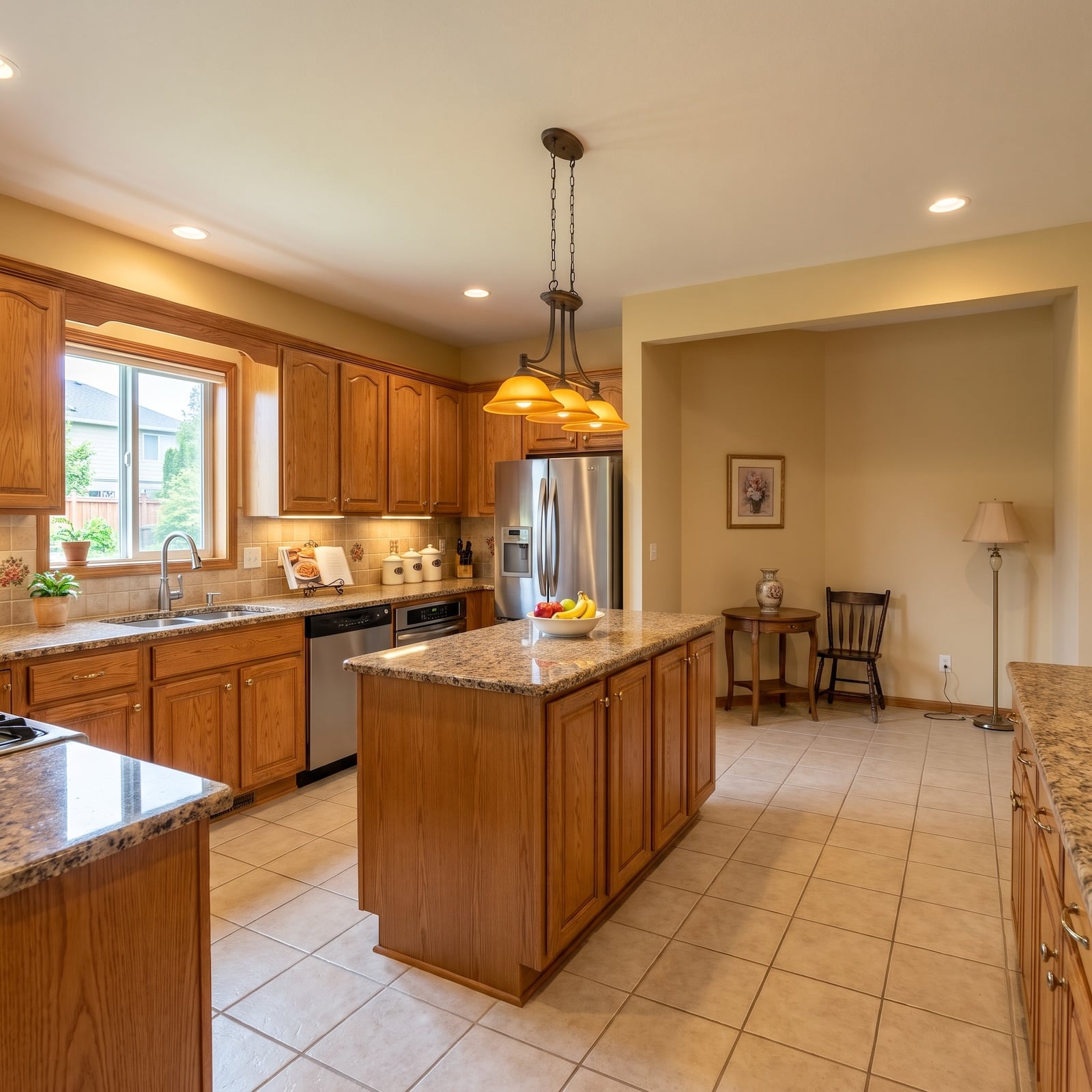
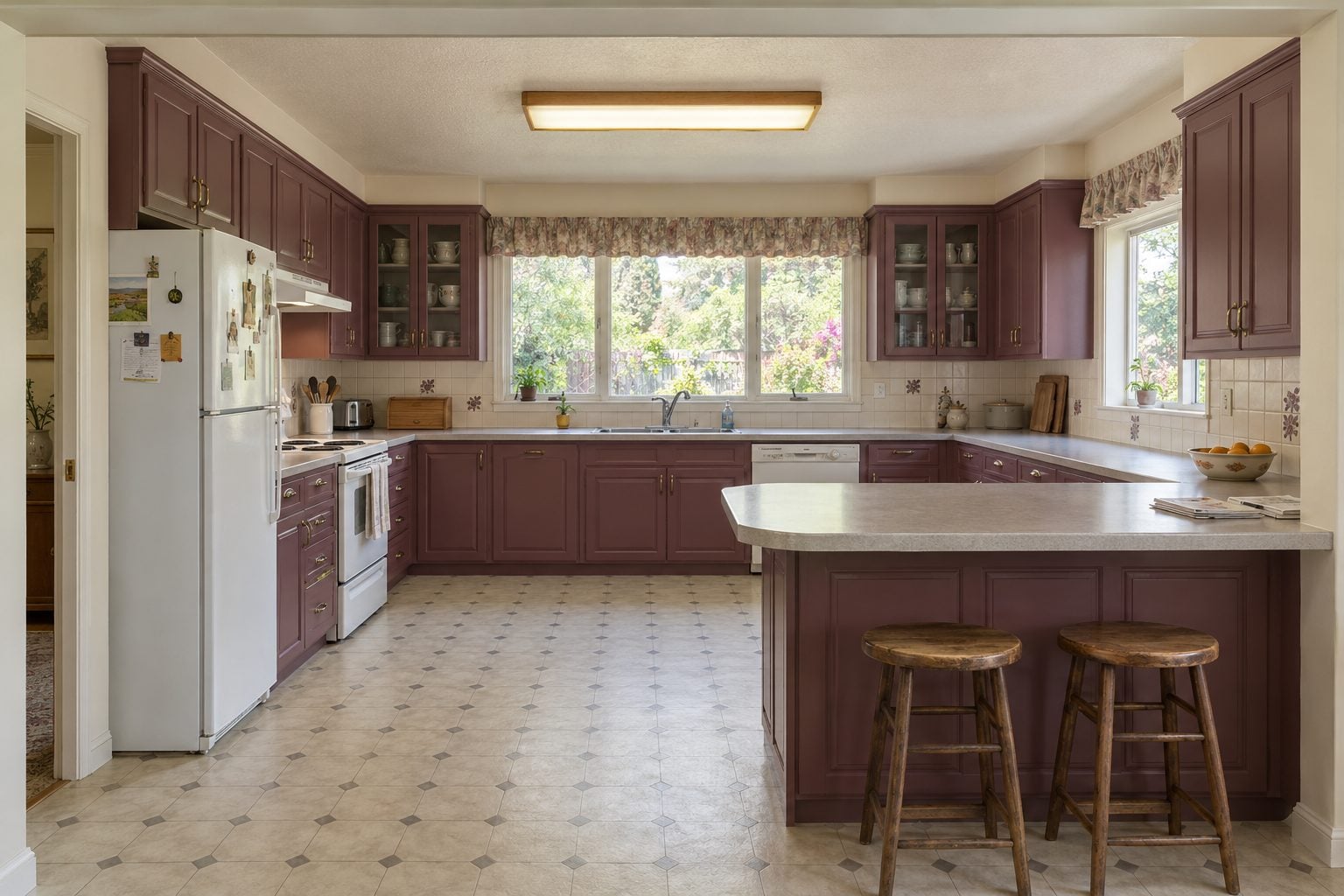
Mauve cabinets, floral valances, white appliances, and a ceiling light with all the charm of a waiting room. A previous era left its fingerprints everywhere. Patterned flooring, decorative backsplash tiles, and a peninsula the size of a minor fortification complete the picture. Yet beneath the dated finishes sits an enviable starting point: generous dimensions, windows on two walls, and daylight to spare. The room has possibilities its cabinetry never considered.
The original scheme gives every cabinet equal billing and the peninsula an unfortunate starring role. Nothing establishes a focal point; nothing makes the eye travel. Replace that visual monotony with the swagger of richly veined stone, the precision of modernist joinery, or the warmth of a room furnished as thoughtfully as a library. An island becomes a limestone monolith. Bronze mesh replaces conventional cabinet panels. Curved timber, translucent glass, and metallic finishes turn familiar kitchen components into objects worth looking at twice.
In order to come up with the very specific design ideas, we create most designs with the assistance of state-of-the-art AI interior design software. Also, assume links that take you off the site are affiliate links such as links to Amazon. this means we may earn a commission if you buy something.
Across 33 AI-conceived transformations, the same familiar kitchen becomes an argument for design imagination. Some are unapologetically theatrical, with illuminated glass, richly veined stone, and cabinetry that looks dressed for an architectural awards ceremony. Others find their strength in proportion, restraint, and the way daylight grazes a carefully chosen surface. Two evening interpretations make the case for atmosphere: the kitchen as a room for lingering long after dinner is finished. One room, dozens of competing ideas about what a kitchen can be. The biggest transformation isn’t the color of the cabinets. It’s the ambition behind them.
33. Charcoal Cabinetry, White Marble, and Dinner After Dark
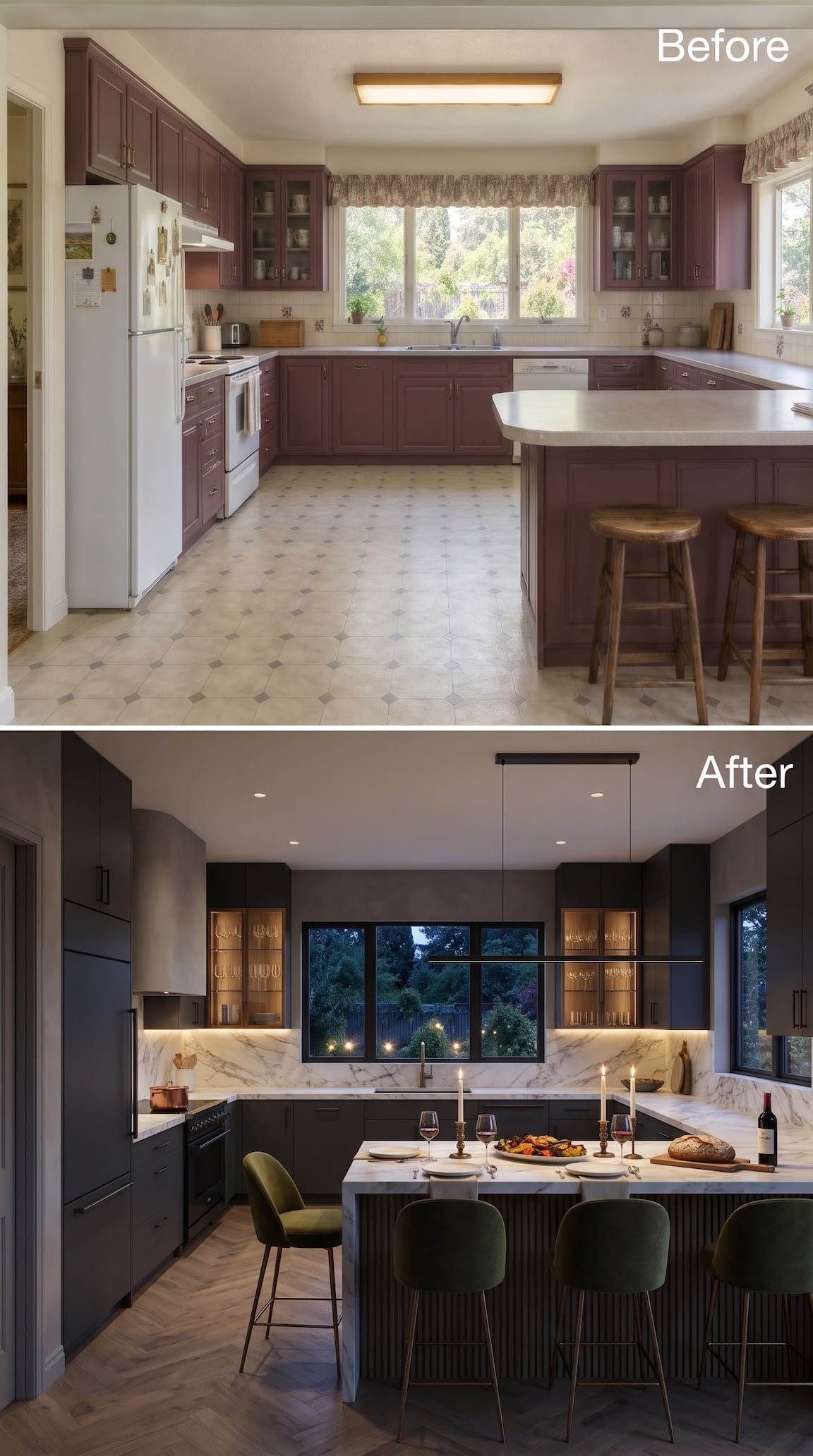
At dusk, the kitchen trades its dated lighting for something considerably more seductive. Charcoal cabinetry absorbs the fading daylight, while white marble sweeps across the countertops and backsplash, its gray veining animated by warm undercabinet lighting. Outside the black-framed windows, the garden recedes into blue-black evening.
Illuminated glass-front cabinets introduce a golden glow on either side of the central window. The fluted island base adds texture beneath a broad marble surface, while olive-green upholstered stools bring an unexpectedly soft note to the dark composition. Candles, wine glasses, and place settings on the marble island demonstrate how dramatically the atmosphere changes when lighting is treated as architecture rather than an afterthought. The old ceiling fixture illuminated everything equally. This design knows exactly what deserves attention.
32. Ebony Deco Geometry and a Faceted Island
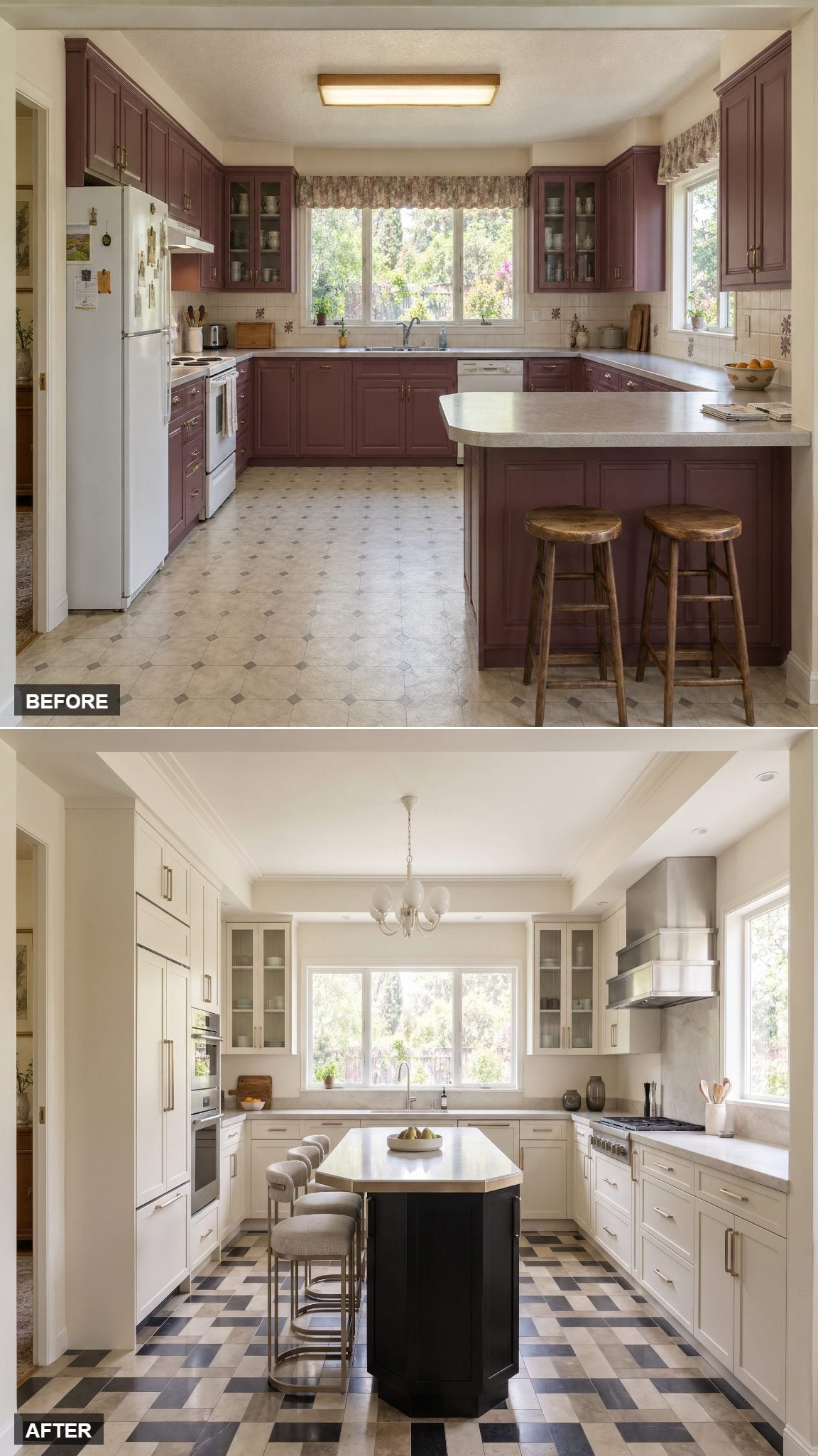
The faceted ebony island arrives with the swagger of an Art Deco cocktail cabinet. Champagne-metal edging traces its angular form, pale quartzite crowns the top, and curved upholstered seating wraps one end like a private supper-club booth.
Ivory perimeter cabinetry with slim vertical detailing balances the darker centerpiece. The brass pendant lights complete the composition with a little metallic theater. Geometry, glamour, and a distinctly unapologetic appetite for luxury.
31. Buttercream Lacquer Meets Burgundy Marble
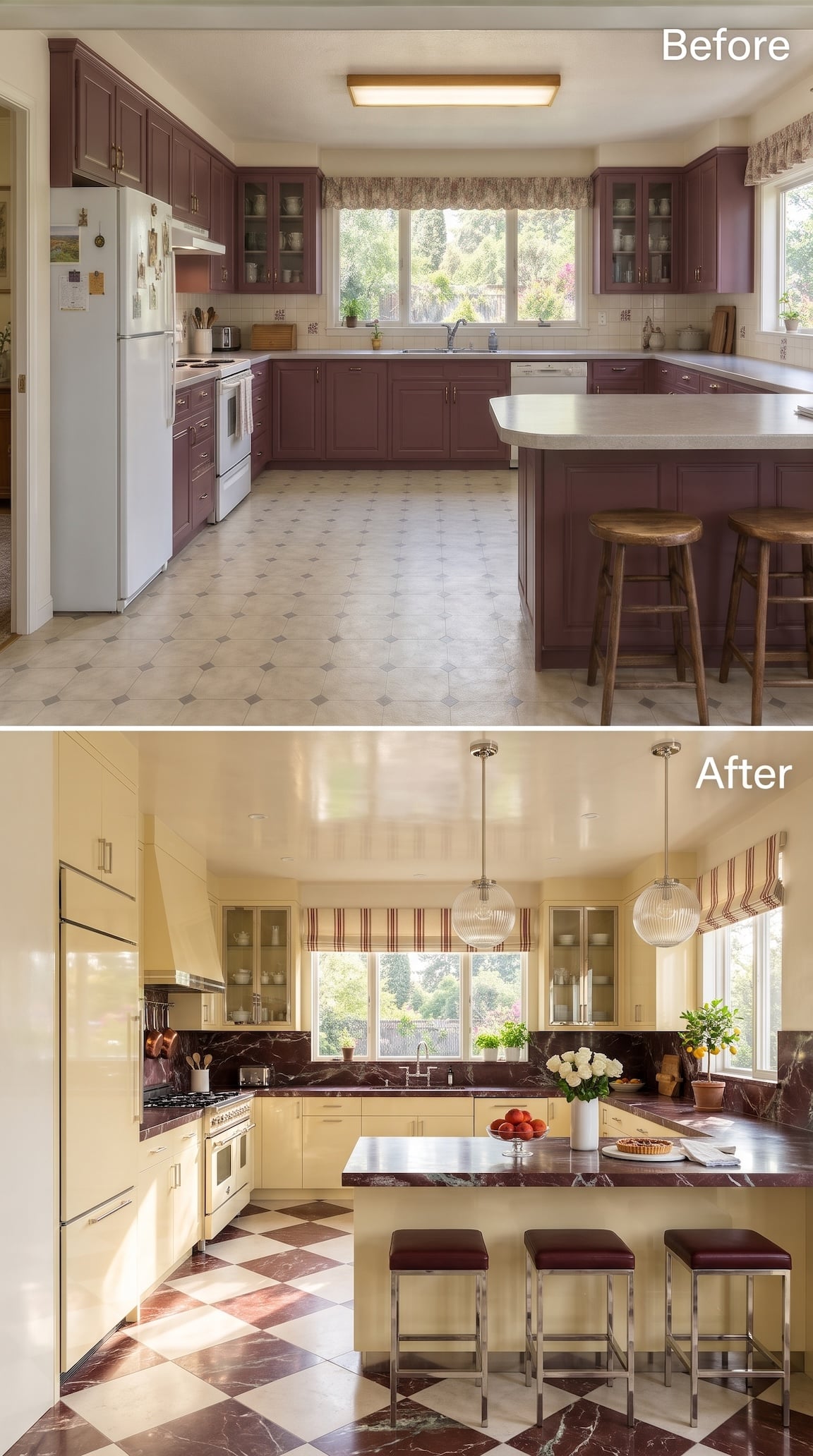
Buttercream cabinetry and burgundy marble make a persuasive case for luxury that doesn’t depend on gray, black, or another anonymous shade of greige. The cabinetry has a soft, luminous finish, while the marble’s wine-dark surface carries pale veining across the counters, backsplash, and island. The combination feels lavish without abandoning warmth.
Underfoot, an oversized burgundy-and-cream checkerboard gives the room the confidence of a grand European interior. Ribbed glass pendants, chrome-framed stools, and tailored striped window shades add a polished, slightly nostalgic edge. The original window arrangement remains central to the composition, pouring daylight across surfaces that reward every change in angle. This kitchen has the manners of a classic and the material appetite of a modern maximalist.
30. Silver-Bronze Cabinetry and an Aubergine Quartzite Island
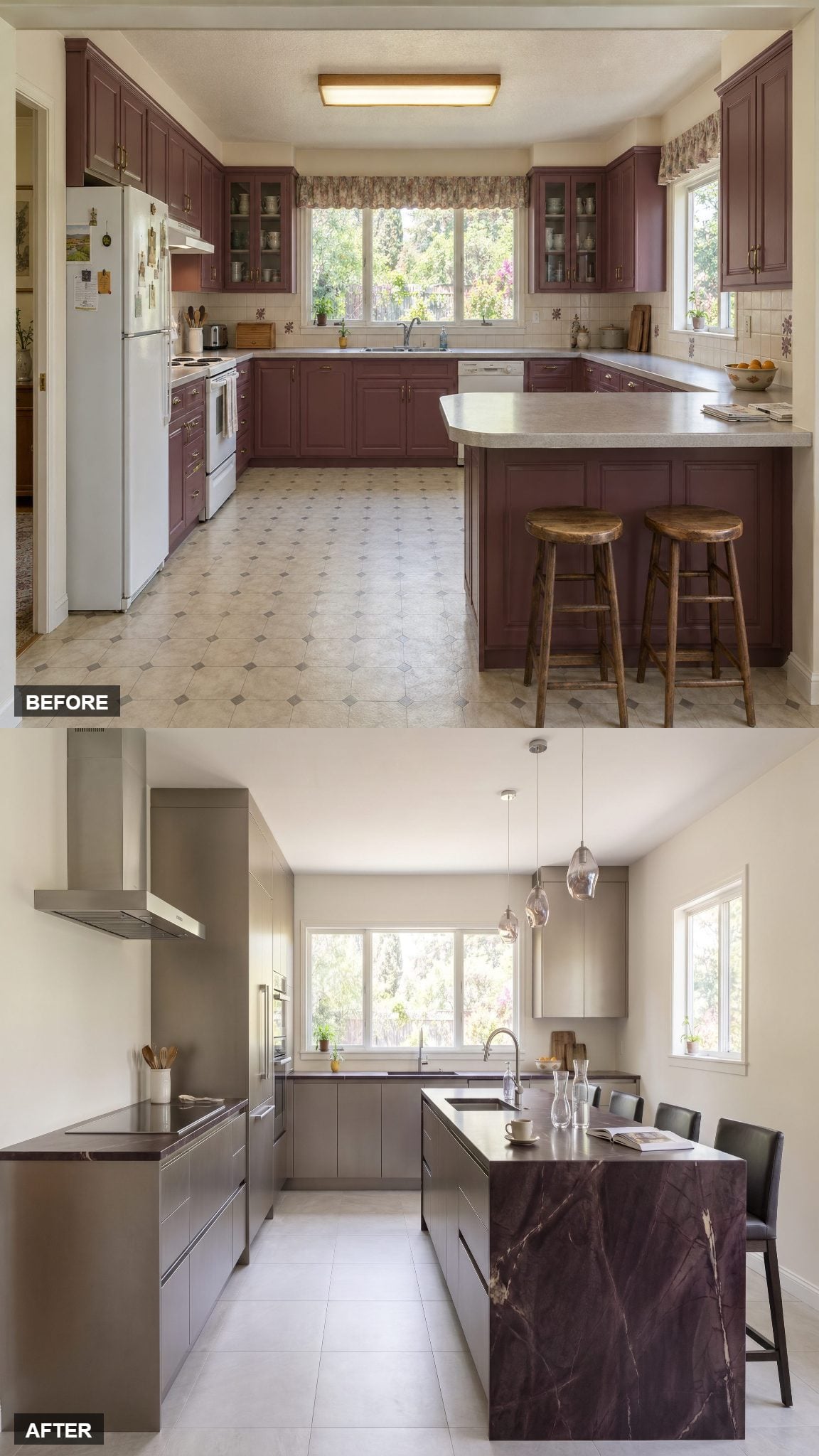
Aubergine quartzite carries the drama, with cream mineral lines threading through deep purple like smoke through wine. Against that extravagance, silver-bronze cabinetry plays a cooler, more disciplined role, reflecting light without demanding equal attention.
A slim metal hood and three sculptural glass pendants establish a strong vertical rhythm above the island. Their delicate silhouettes contrast with the stone’s geological extravagance, keeping the composition from feeling top-heavy. The quartzite supplies the spectacle; the surrounding architecture gives it room to perform.
29. Pearl-White Curves and Fluted-Glass Futurism
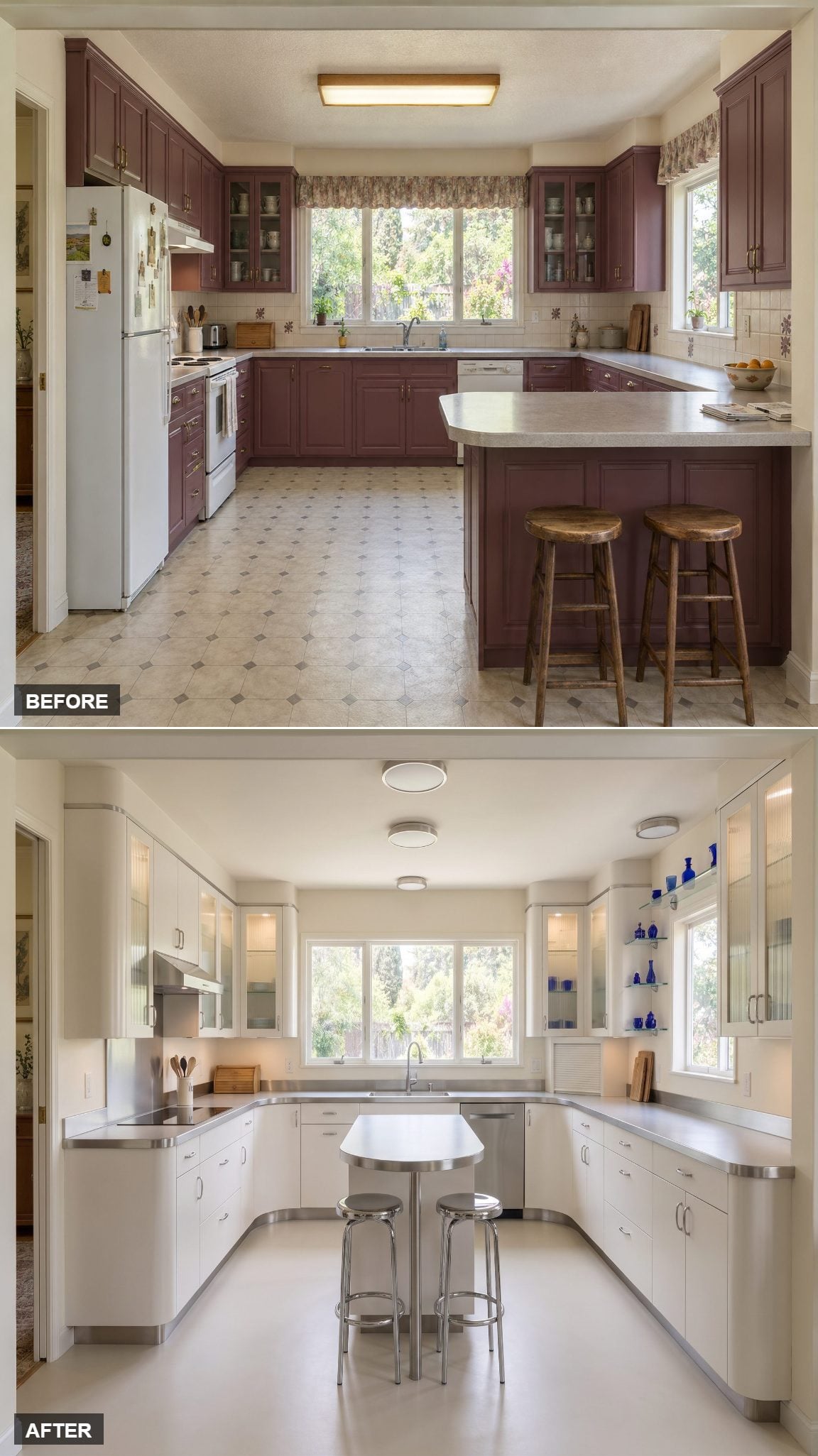
The old kitchen has lost its floral valances, fussy cabinet fronts, and even its appetite for right angles. Pearl-white cabinetry curves around corners with the smooth continuity of a spacecraft interior that has developed an appreciation for domestic comfort.
Fluted-glass upper doors interrupt the solid surfaces, their vertical ribbing obscuring the details of stored dishes while retaining a sense of depth. Pale-gray counters and slim stainless edging reinforce the streamlined geometry. A stainless kettle and trailing plant supply a few welcome irregularities. Even futurism benefits from a little evidence of everyday life.
28. Emerald Ceramic Panels Behind White Steel Frames
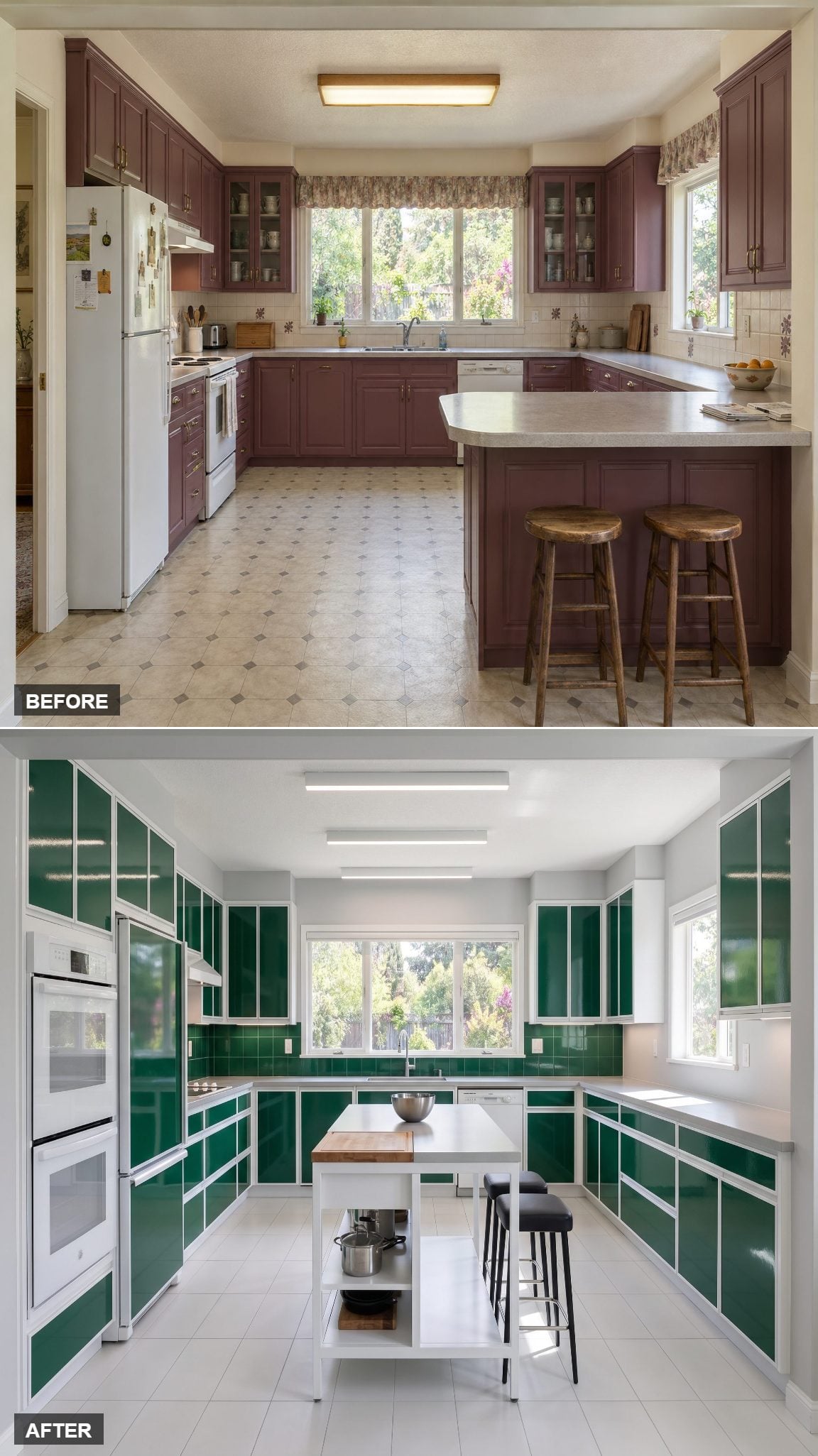
Emerald ceramic panels sit inside crisp white steel frames, giving the cabinetry the precision of custom furniture. Saturated color fills the panels while the white framework keeps every edge sharp and legible. A low bench breaks up the floor plan without introducing another bulky cabinet.
The cooking and appliance bank occupies the left wall, with cleanup positioned beneath the back window. An emerald vase and folded tea towel add small domestic details to an otherwise architectural composition. The result makes conventional white kitchen ideas look positively timid. The steel establishes order; the green supplies the electricity.
27. Smoked Mirror and Mocha Lacquer Go Full Drama
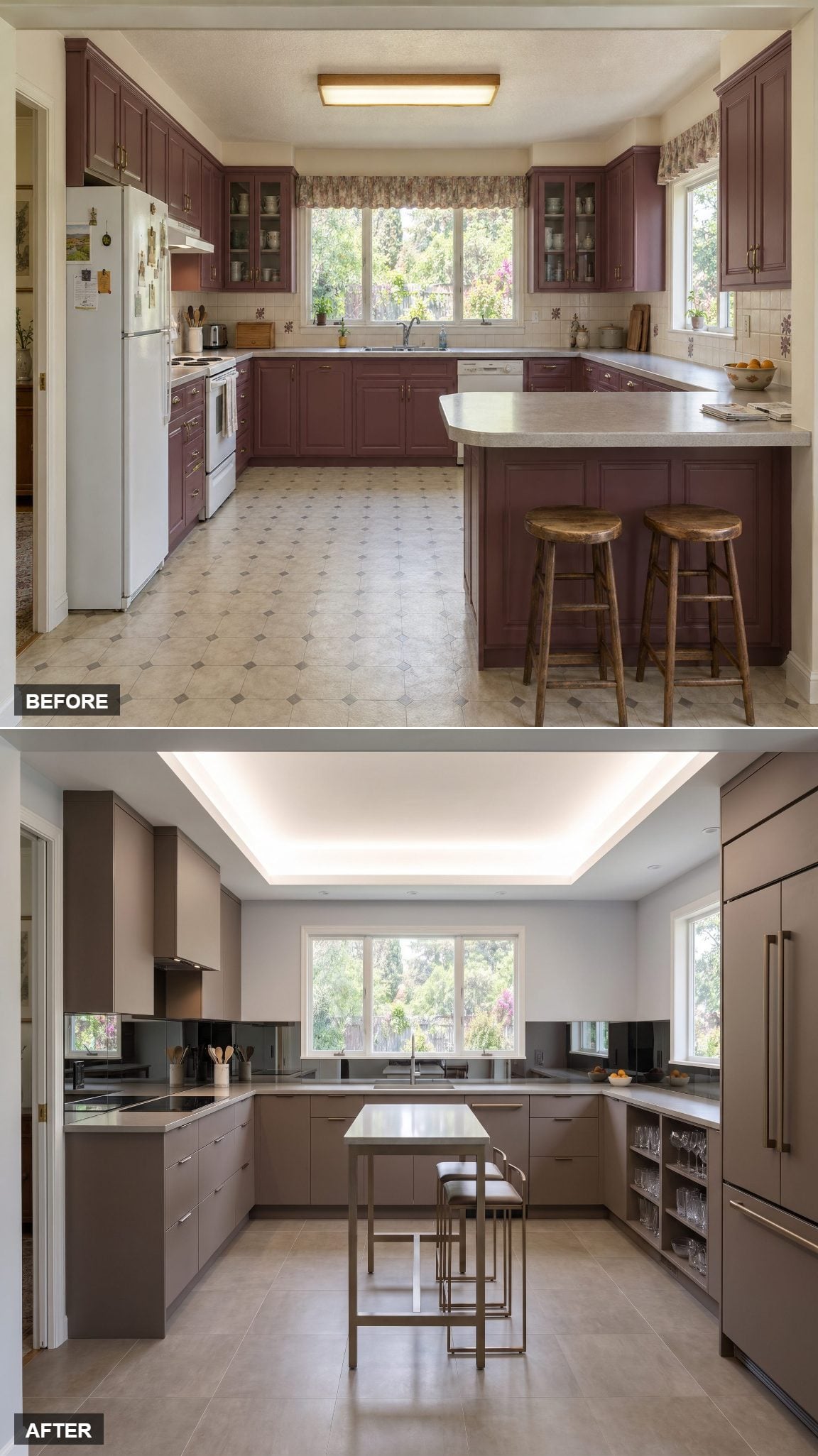
Matte mocha cabinetry wraps the left and back walls in a shade somewhere between espresso and bitter chocolate. Warm-gray quartz counters offer a lighter horizontal break, but the real surprise arrives at the backsplash.
Smoked-mirror panels reflect portions of the room without the brightness of ordinary clear mirror. Restricted to solid wall sections, they add depth and shifting reflections rather than a wall-to-wall hall of mirrors. The effect is theatrical, certainly, but with the lighting turned down to a civilized level.
26. Sea-Glass Green Gives the Old Kitchen Room to Breathe
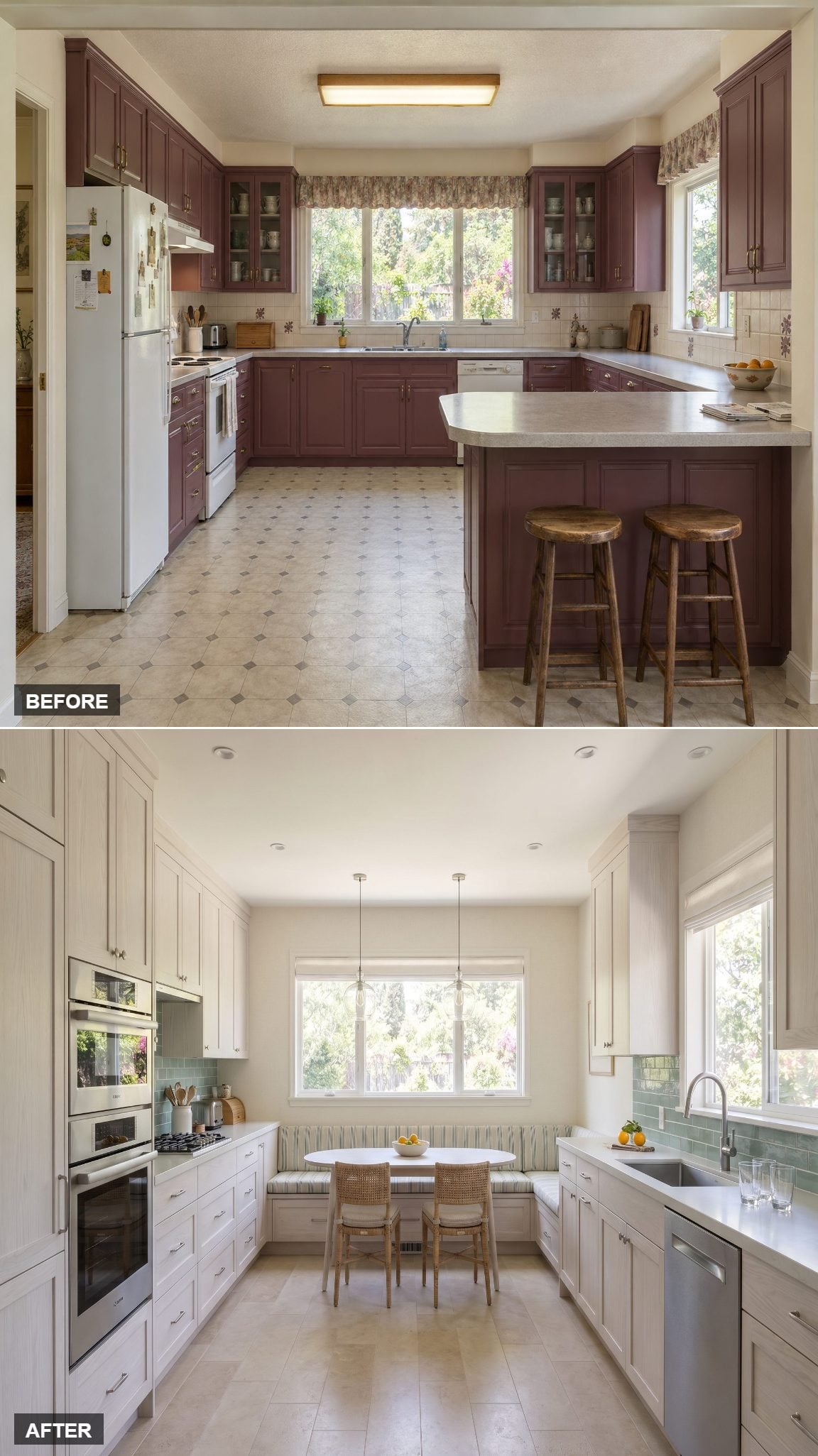
Daylight is the greatest asset in this interpretation. The original finishes made the room feel busier than its dimensions warranted; whitewashed surfaces and pale sea-glass green reverse that effect without resorting to a clinical all-white palette.
Lower cabinets carry the color, while an upholstered window bench beneath the back window introduces a domestic note that conventional cabinetry couldn’t match. The room feels lighter because the surfaces surrounding the windows finally cooperate with the daylight.
25. Charcoal Concrete and a Warm Bamboo Island
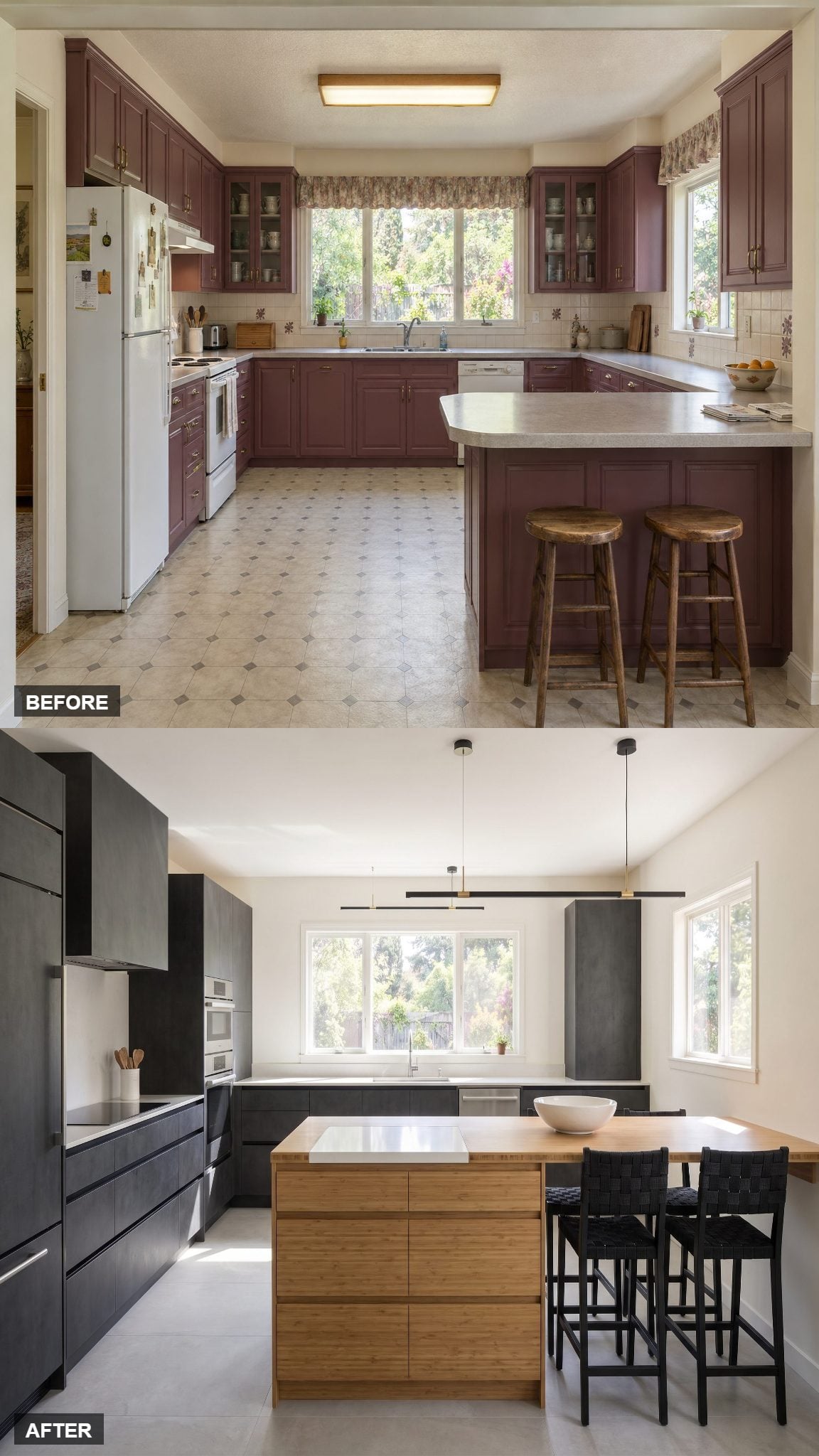
Charcoal concrete cabinetry could make a kitchen feel like a bunker. The bamboo island changes the conversation, introducing warm grain and a lighter, more tactile presence against the dark perimeter.
Horizontal drawers give the island a strong architectural rhythm, while a cantilevered seating section creates space for stools without extending the entire work surface. An inset white ceramic prep area interrupts the bamboo with a crisp, practical detail. Overhead, black-and-brass light bars continue the room’s linear discipline. The result is industrial in character, but unmistakably designed for domestic life.
24. Deep Turquoise Slabs and a Sculpted White Oak Island
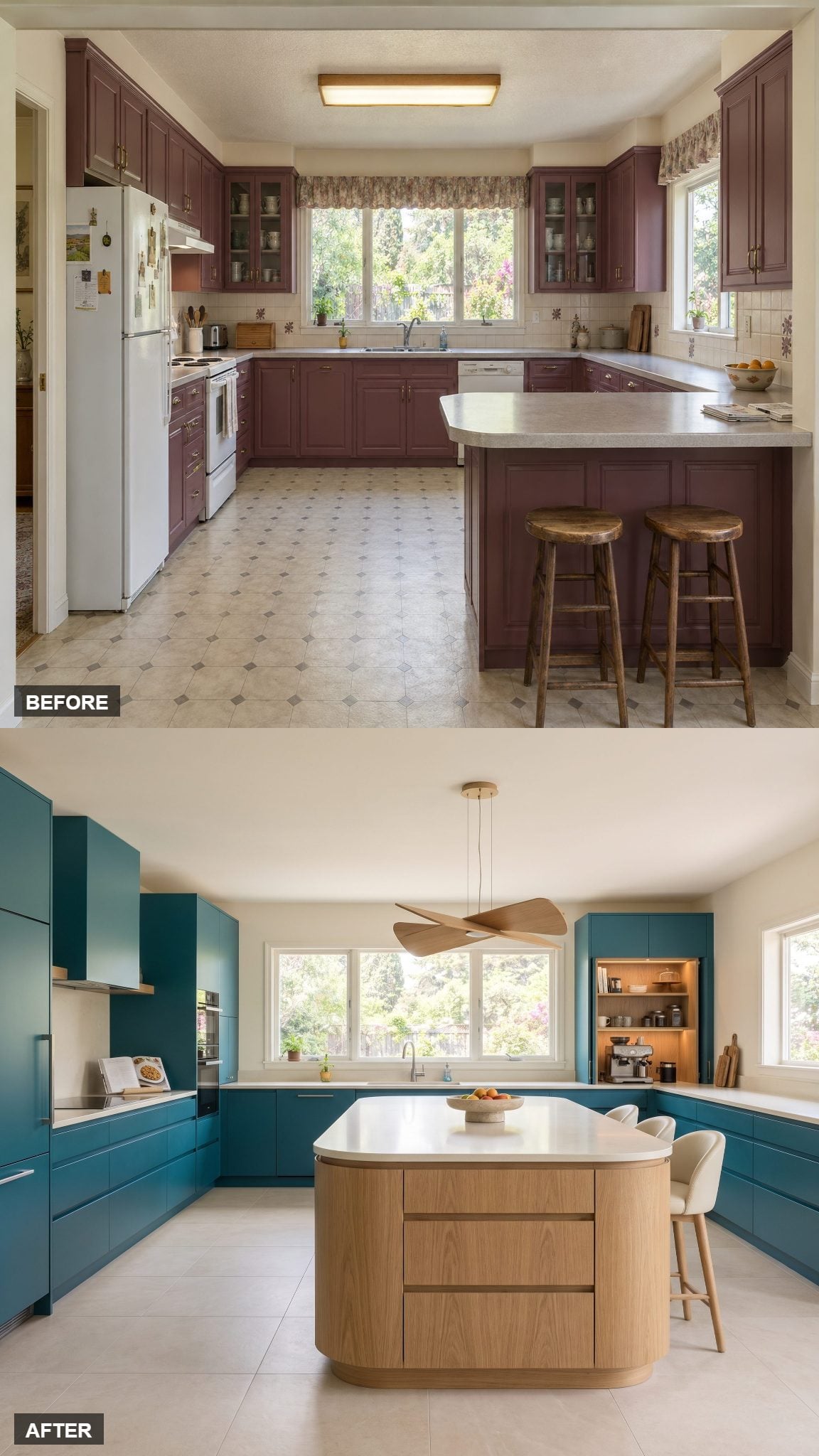
Deep turquoise cabinetry makes a powerful entrance, but the sculpted white oak island refuses to be overshadowed. Its curved ends and warm grain introduce a softer geometry against the saturated, rectilinear surroundings.
The island’s rounded profile is more than a decorative flourish. It changes the way the central volume meets the surrounding floor, replacing abrupt corners with a continuous sweep of timber. An ivory ceramic top gives that sculptural base a clean, pale crown. The cabinetry establishes the color story; the island makes the room memorable.
23. Champagne Aluminum Meets a Midnight-Blue Backdrop
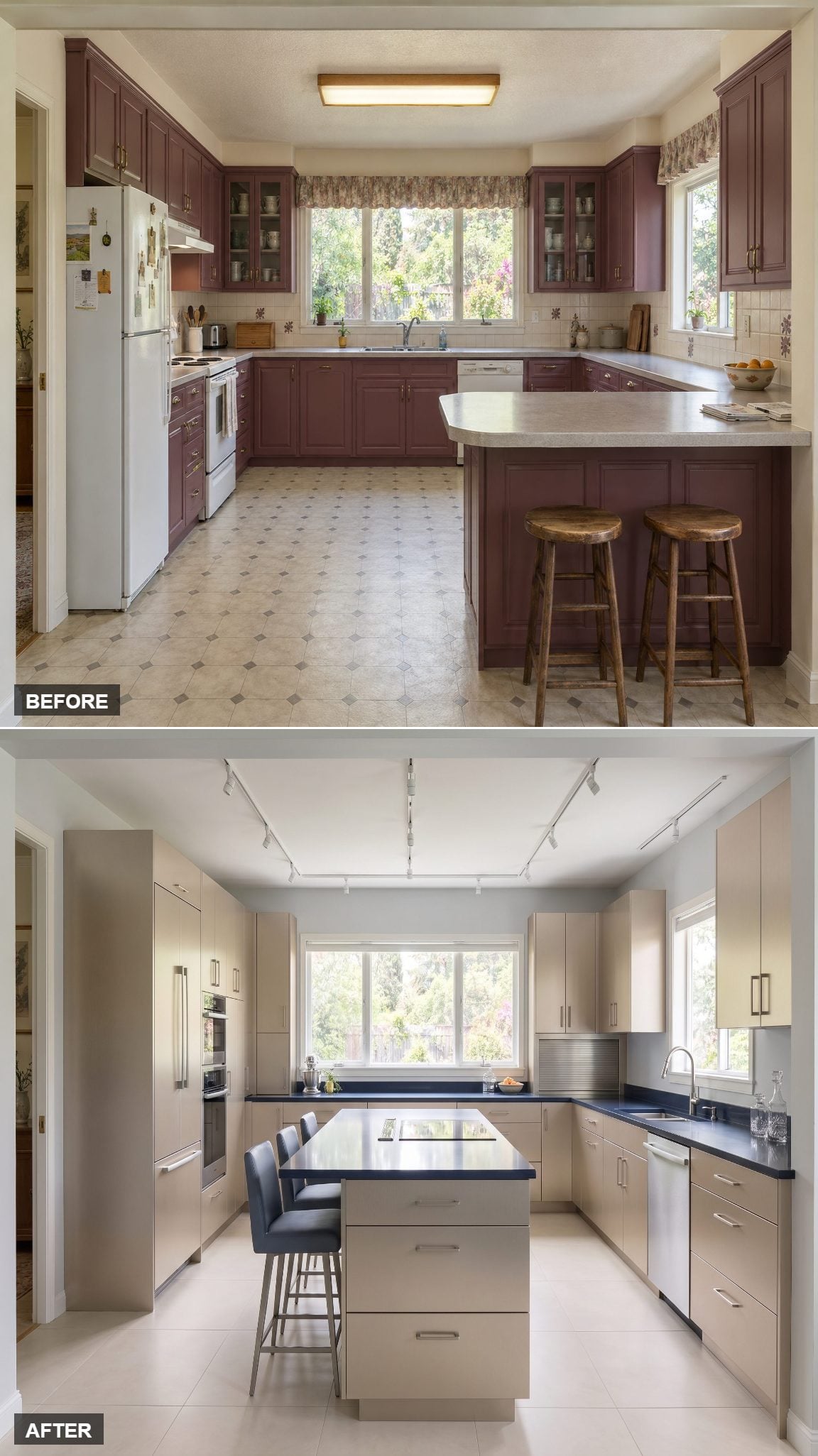
Champagne-anodized aluminum cabinetry catches the light with the subtle sheen of brushed jewelry. Midnight-blue engineered-quartz counters bring depth and contrast, allowing the metallic finish to appear luminous rather than flashy.
A rectangular induction island anchors the center, its integrated cooking surface maintaining the streamlined geometry. The effect approaches the polish of a luxury hotel, although the working arrangement remains unmistakably domestic. Every surface seems to have been measured twice and edited once more.
22. Blush, Chrome, and a Kitchen That Dresses Like a Showroom
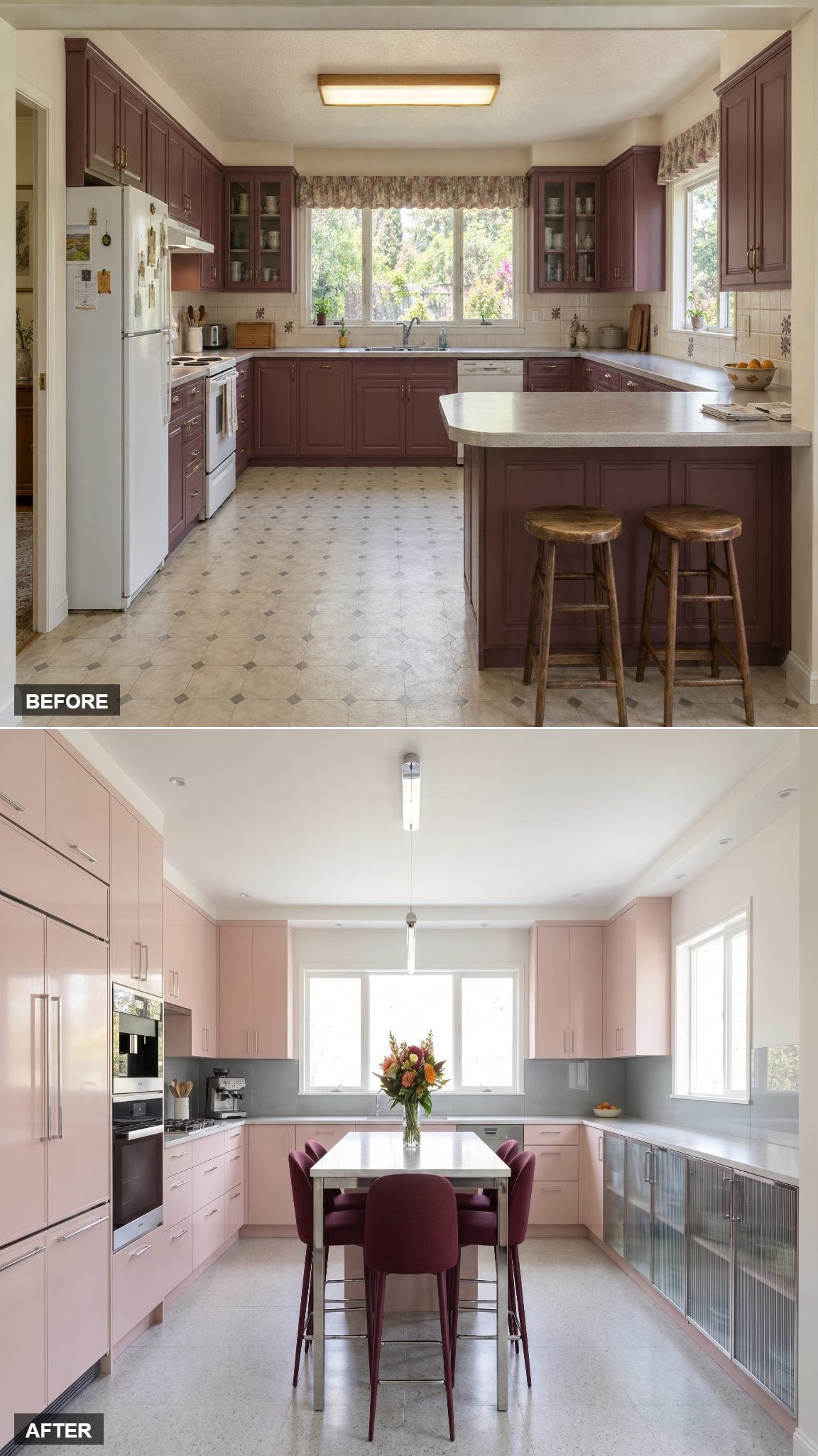
A freestanding white island takes center stage like a dress form in a fashion atelier. Pale-pink cabinetry runs around the perimeter, while chrome hardware flashes against the satin finish with the precision of carefully chosen accessories.
The combination could easily become sugary. Chrome supplies a cool, hard-edged counterpoint, and the island’s clean white geometry gives the room discipline. Pink isn’t being treated as a novelty here. The cabinetry wears it with the confidence of a tailored suit.
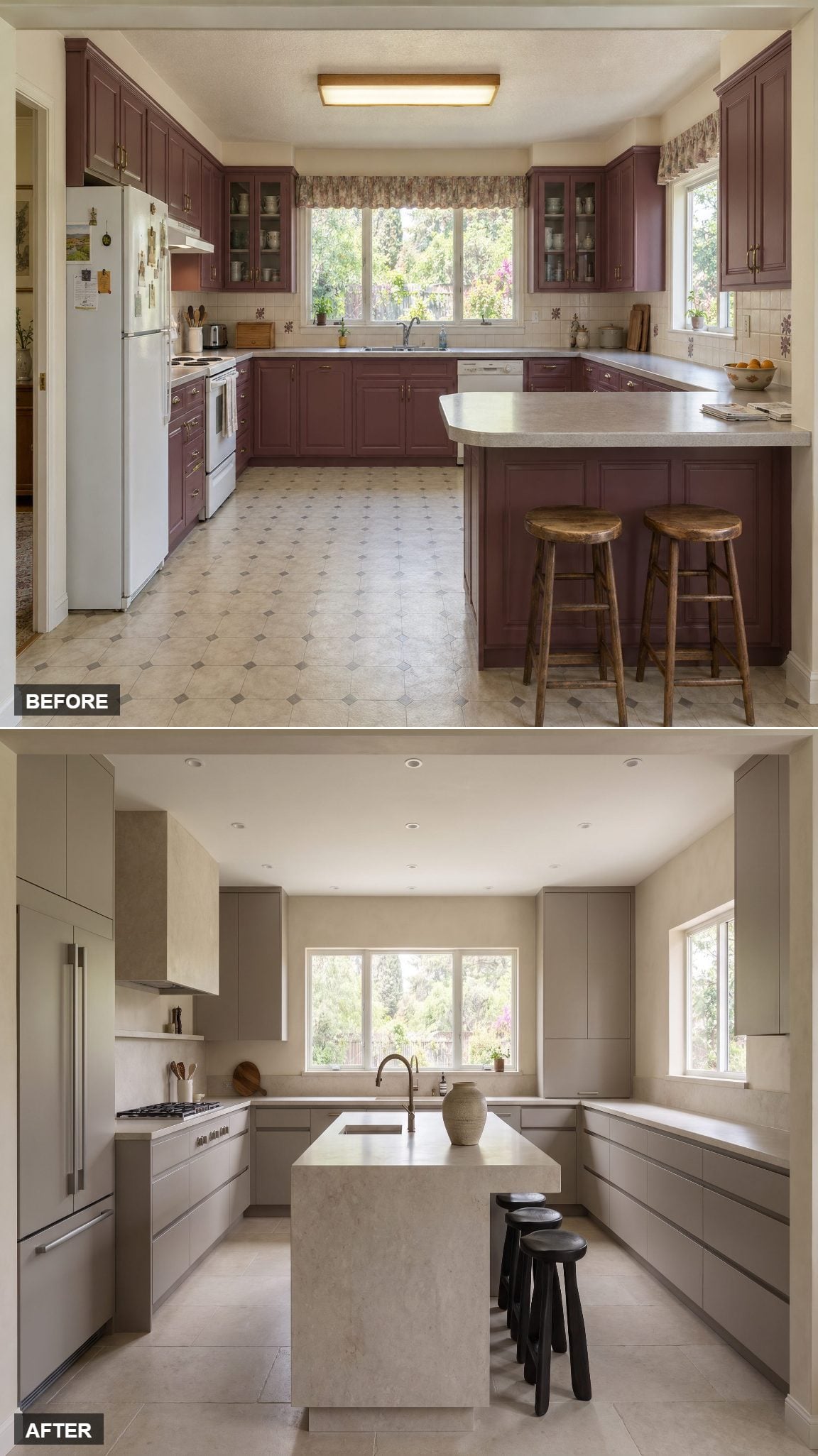
21. Limestone Takes Command of the Room
🔥 Would you like to save this?
A substantial limestone-clad island dominates this transformation, incorporating cleanup, deep storage, and a recessed seating niche. Its plinth is pulled back from the edges, creating a shadow line that makes the heavy stone volume appear lighter.
Warm-gray flat-panel cabinets recede behind the limestone’s mass and texture. The design approaches the kitchen as a piece of architecture rather than a collection of appliances and cupboards. The island’s imposing stone volume establishes the room’s geometry, while its integrated functions make that dramatic form genuinely useful.
20. Champagne Pink Cabinetry Meeting Pale-Green Marble
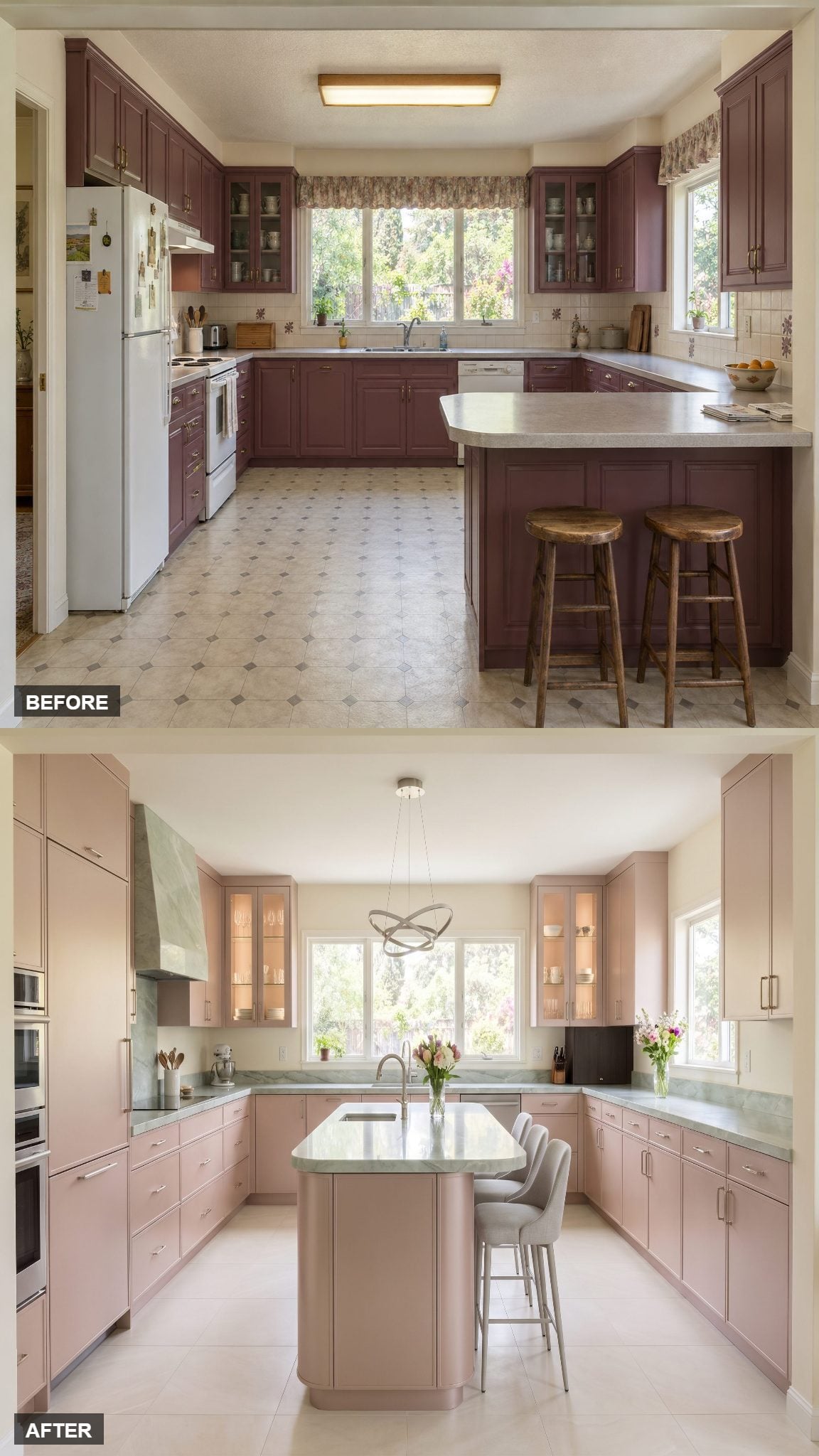
Champagne satin cabinetry and pale-green marble are an unexpected duet, all soft reflection and quiet mineral movement. Neither color is especially loud, allowing their contrast to emerge gradually.
The marble brings natural movement through its veining, while brushed nickel adds a cool metallic accent. The pairing has the polish of a carefully styled interior without demanding that every accessory participate in the color scheme. A little metallic precision gives this gentle palette the edge it needs.
19. Ruby Glass and Polished Concrete, Loud on Purpose
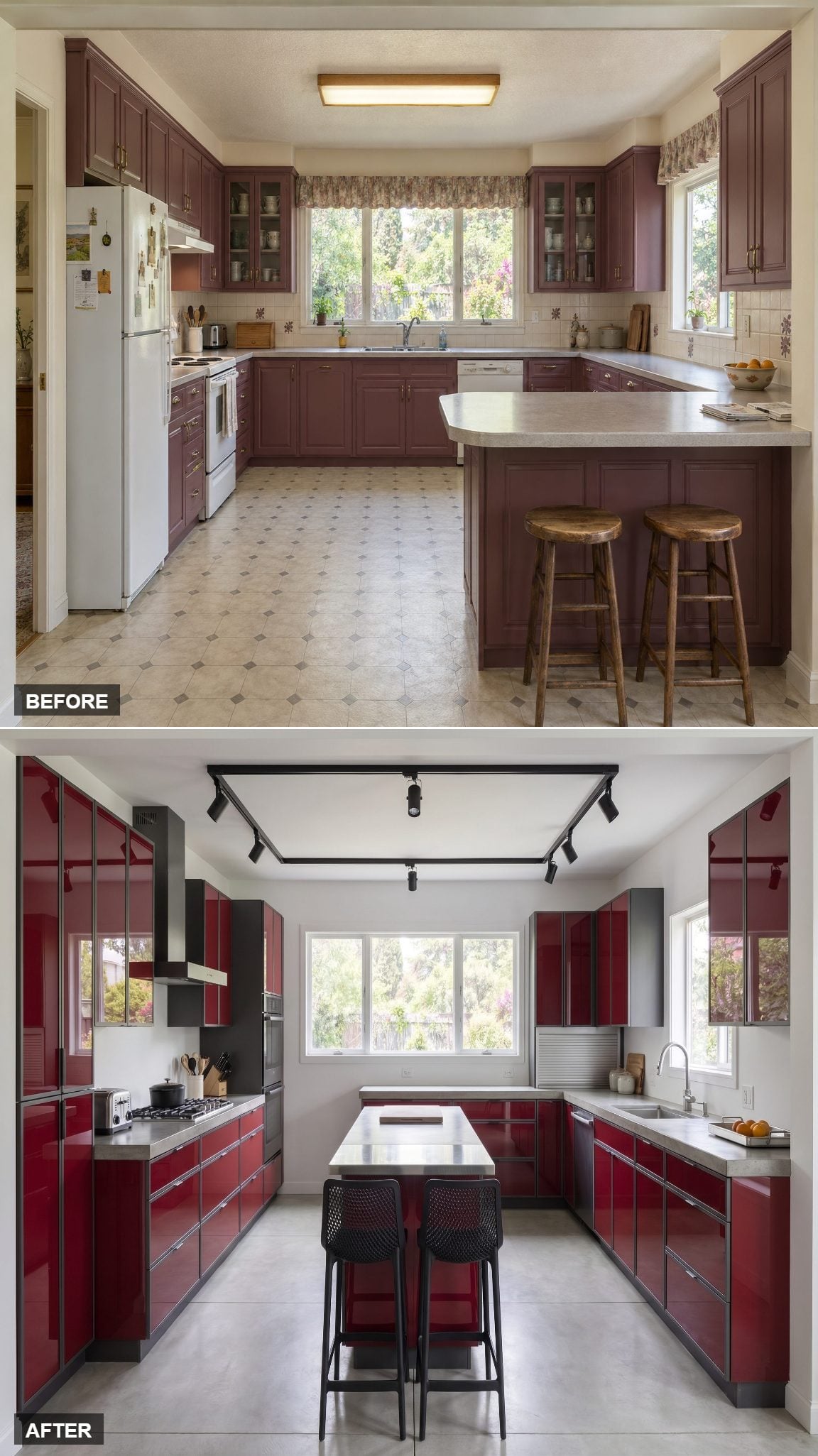
Ruby-red back-painted glass fronts. No shy version of this kitchen exists.
Graphite aluminum frames divide the red into precise rectangles, while polished concrete counters introduce a rougher, quieter surface. The cabinetry reads almost like a wall of colored architectural glazing, each glossy panel held within a dark grid. Concrete provides a convincing counterweight, grounding the brilliant red in something solid and distinctly industrial.
18. Eucalyptus Cabinetry Meeting Sculpted Terrazzo
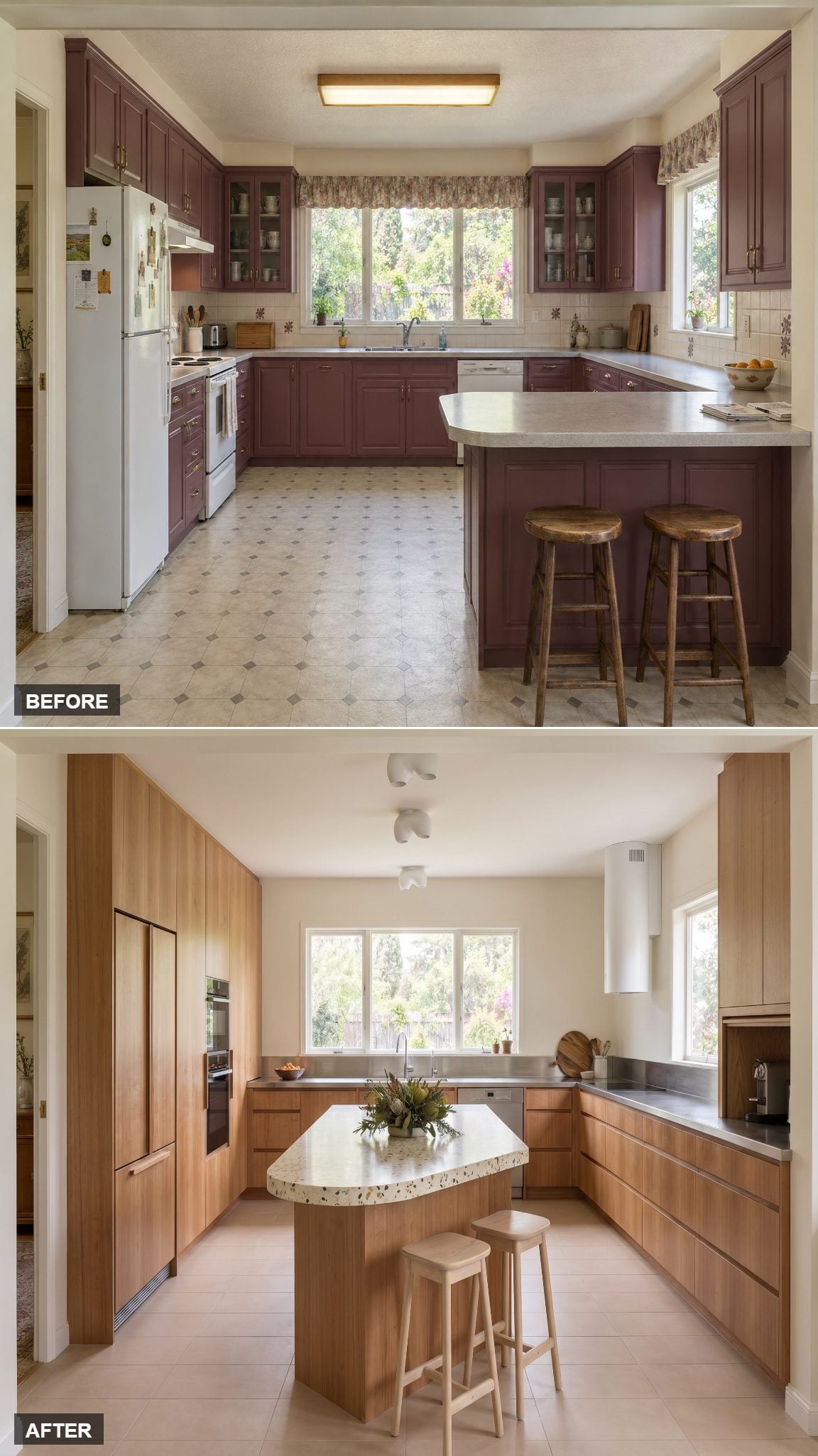
Soft gray-green eucalyptus cabinetry runs along the right wall, with cleanup positioned beneath the back window. The island, however, refuses to follow the usual rectangular script. Its rounded triangular form angles into the room, giving the floor plan an unexpected sense of movement.
Warm aggregate chips animate the terrazzo surface, turning what could have been a heavy central block into a sculptural feature. Terrazzo’s midcentury associations become almost irrelevant. The material feels fresh because the geometry is doing something new.
17. Pale Pistachio Cabinets and a Cork Island You Want to Touch
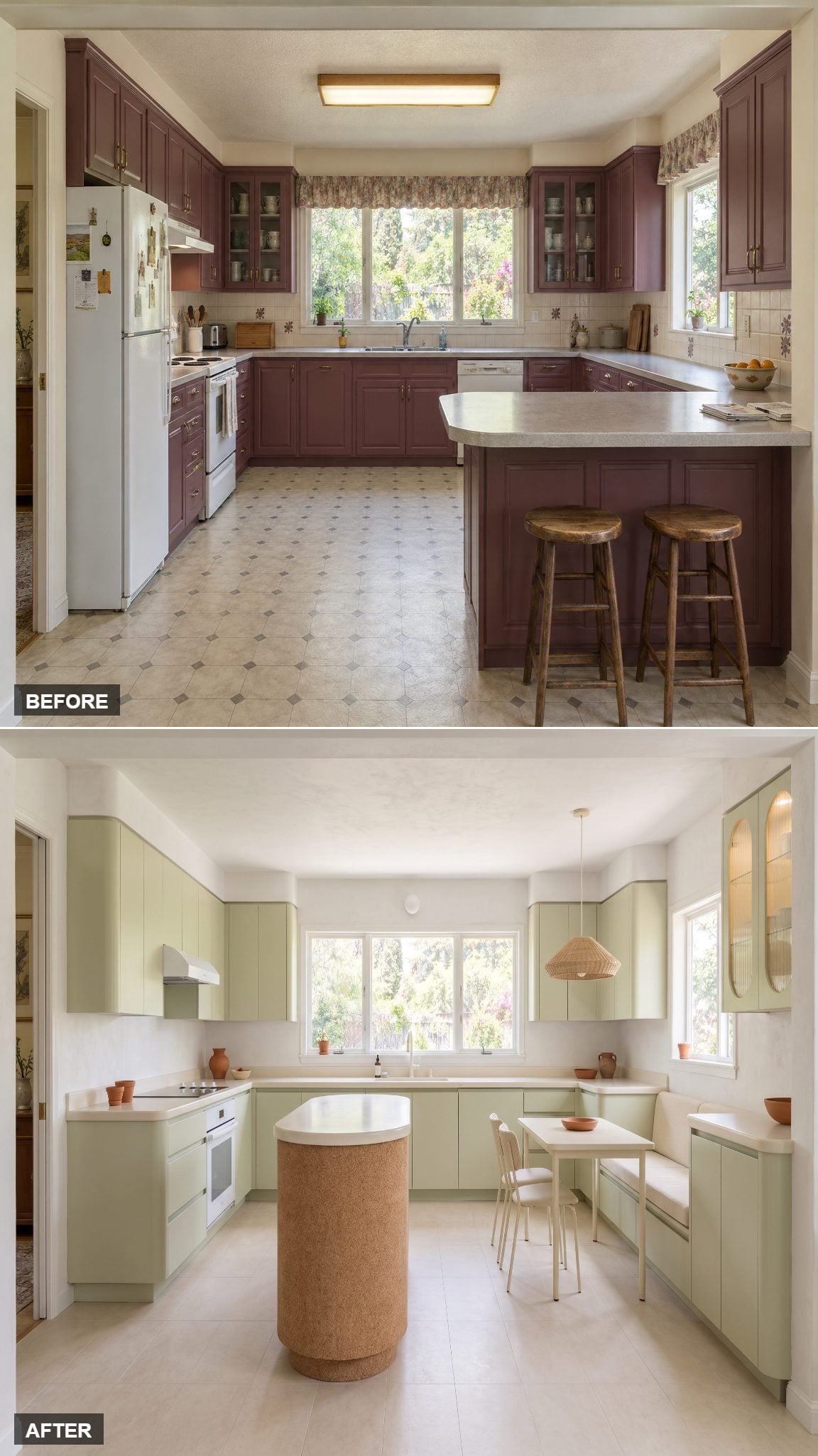
Pistachio cabinetry establishes a soft, chalky green setting against ivory ceramic counters. Pleasant enough. Then the island arrives, and conventional kitchen design takes an unexpected detour.
The cylindrical prep island is wrapped in natural cork, its finely textured surface contrasting with the smooth cabinetry and counters. Cork brings warmth without relying on another timber finish, while the circular form gives the room a distinctly sculptural center. An unusual material used with enough confidence to make it seem inevitable.
16. Forest-Green Cabinetry and the Blue-Hour Kitchen
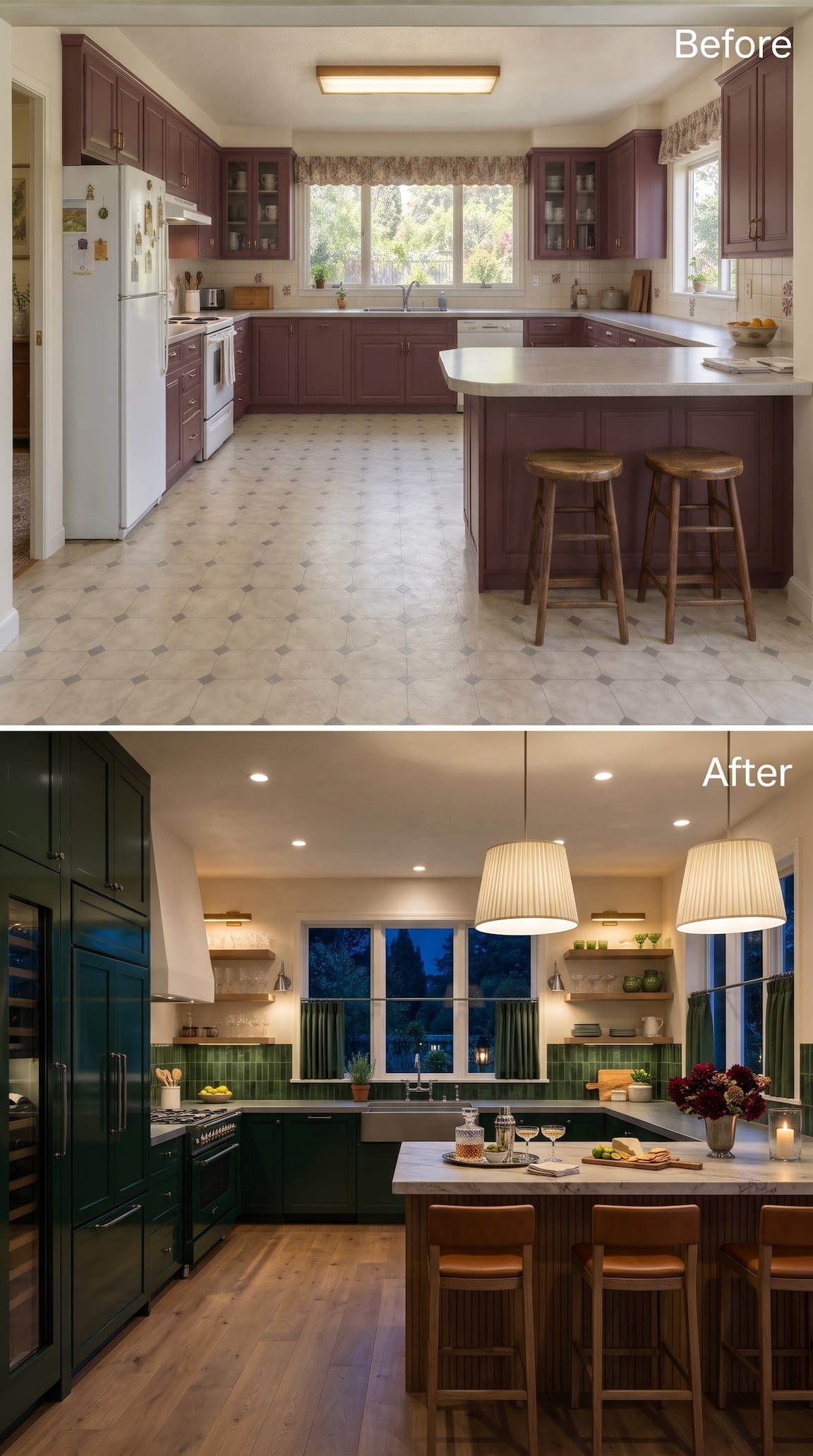
Outside, the garden has turned midnight blue. Inside, deep forest-green cabinetry, glossy green tile, and pools of amber light give the kitchen the intimacy of a beautifully furnished dining room after sunset. The color is rich enough to feel enveloping, although the pale counters and warm oak flooring prevent the room from becoming oppressive.
The island takes a more relaxed approach than the surrounding cabinetry, with a vertically ribbed timber base, light stone top, and leather-upholstered stools. Oversized pleated pendants bring a softness rarely associated with contemporary kitchen lighting. Open shelves and glass-front storage allow the walls to breathe, while the central window remains a dark, reflective focal point. This is a kitchen designed to be enjoyed when the cooking is finished and nobody is in a hurry to leave.
15. Pale Maple Slabs Wrapped in a Black Ceramic Ribbon
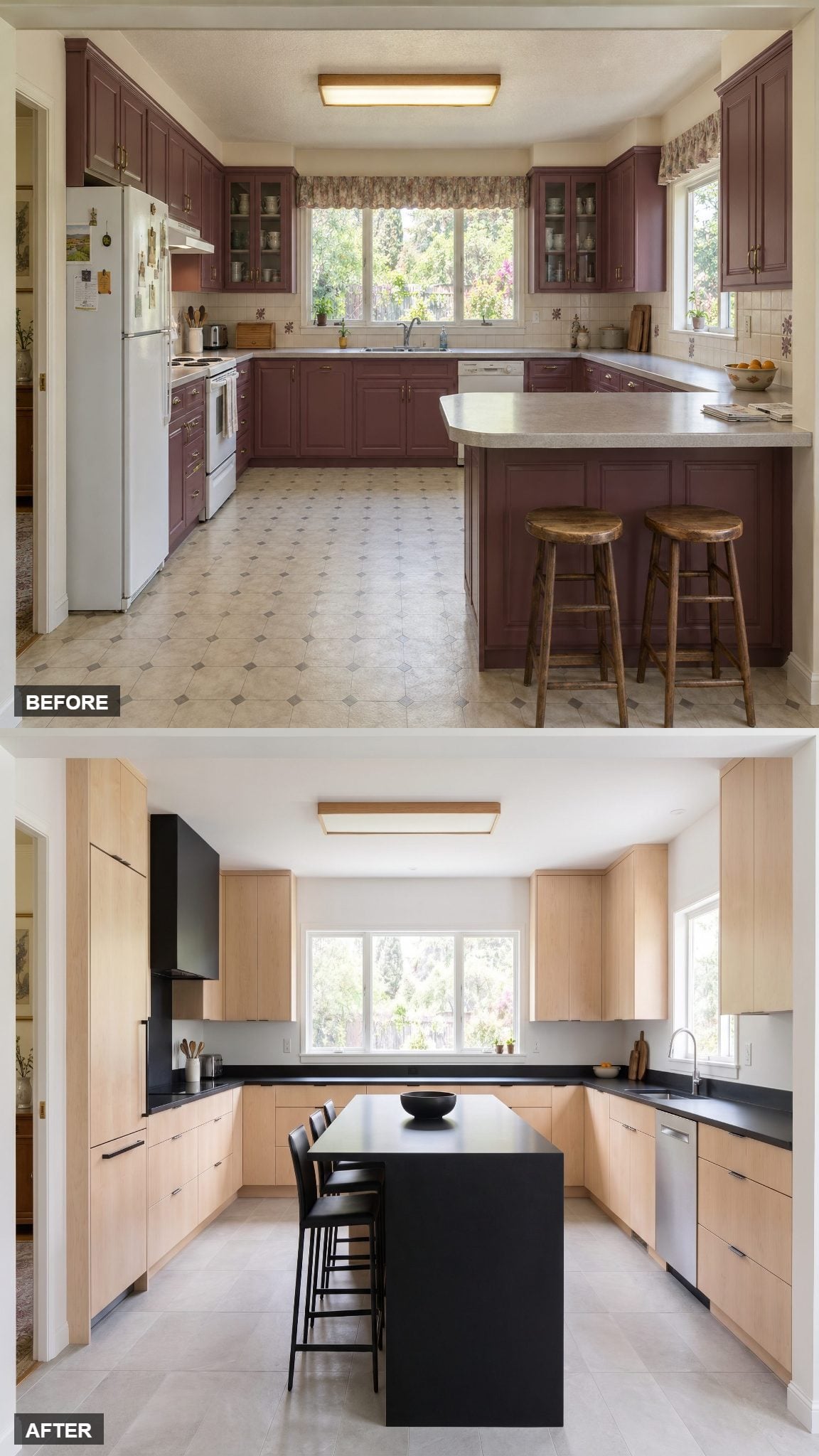
Black ceramic folds across the island top and down both ends, creating the impression of one continuous ribbon. A familiar rectangular work surface becomes something almost sculptural, with the dark material defining its silhouette from every angle.
Pale maple brings warmth without interrupting the geometry. The contrast between timber and ceramic continues overhead in an elongated wood-and-opal ceiling fixture. Nothing needs embellishment when the island itself has this much presence.
14. Teal Cabinetry and a Kitchen Built to Host
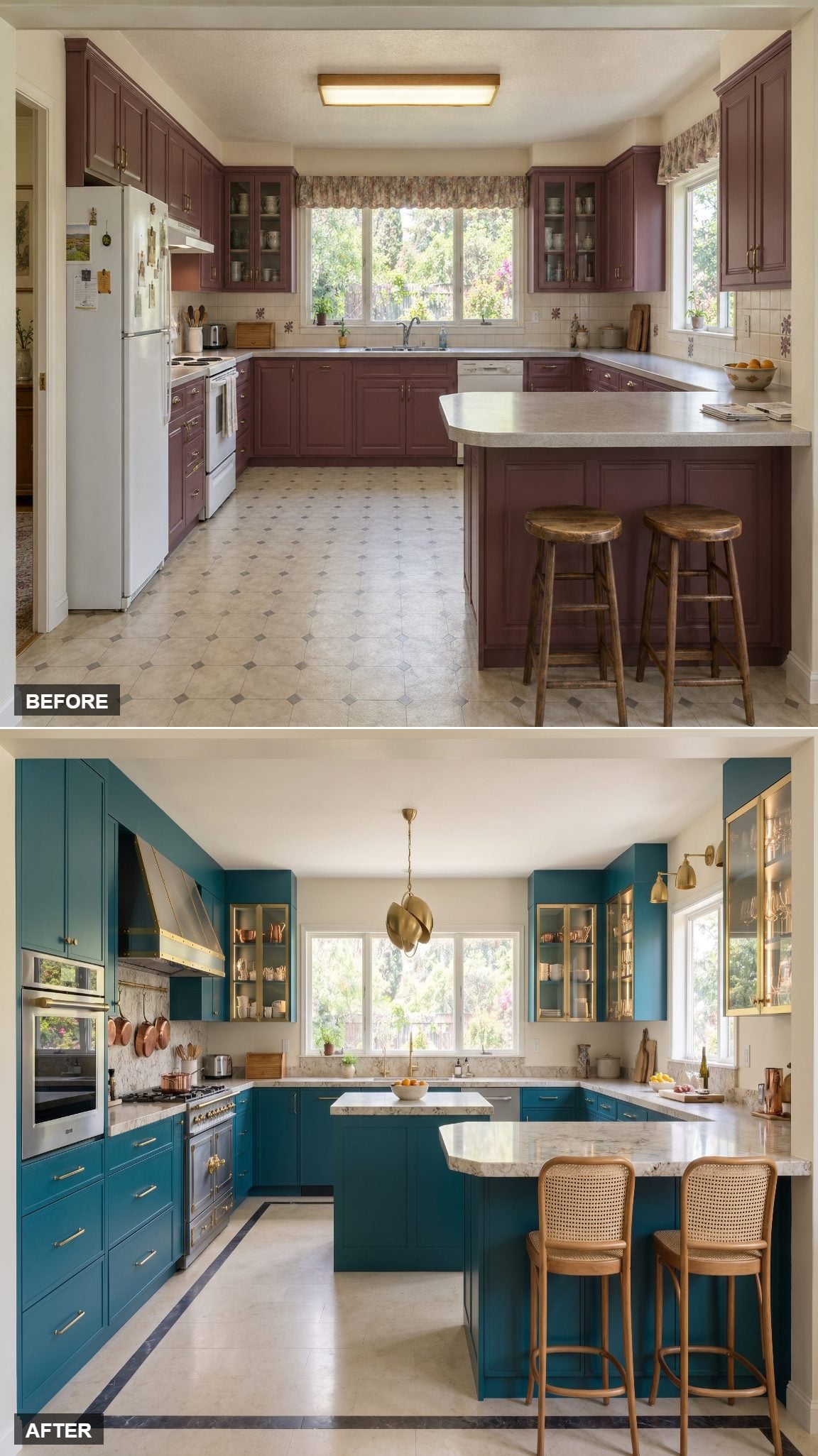
Saturated teal cabinetry occupies the left wall, while ivory granite crowns the central prep island. The combination is bold, but the arrangement is refreshingly practical: cleanup beneath the back window, cooking and appliances grouped along one side, and open floor space between the working zones.
The island gives guests somewhere to gather without occupying the main circulation routes. Its broad, pale surface provides a practical landing area for serving dishes, while the surrounding counters remain available for preparation. The design recognizes a simple truth about entertaining: a kitchen works better when conversation and cooking can coexist without everyone crowding the same corner.
13. Architectural Cream With a Checkerboard Punch
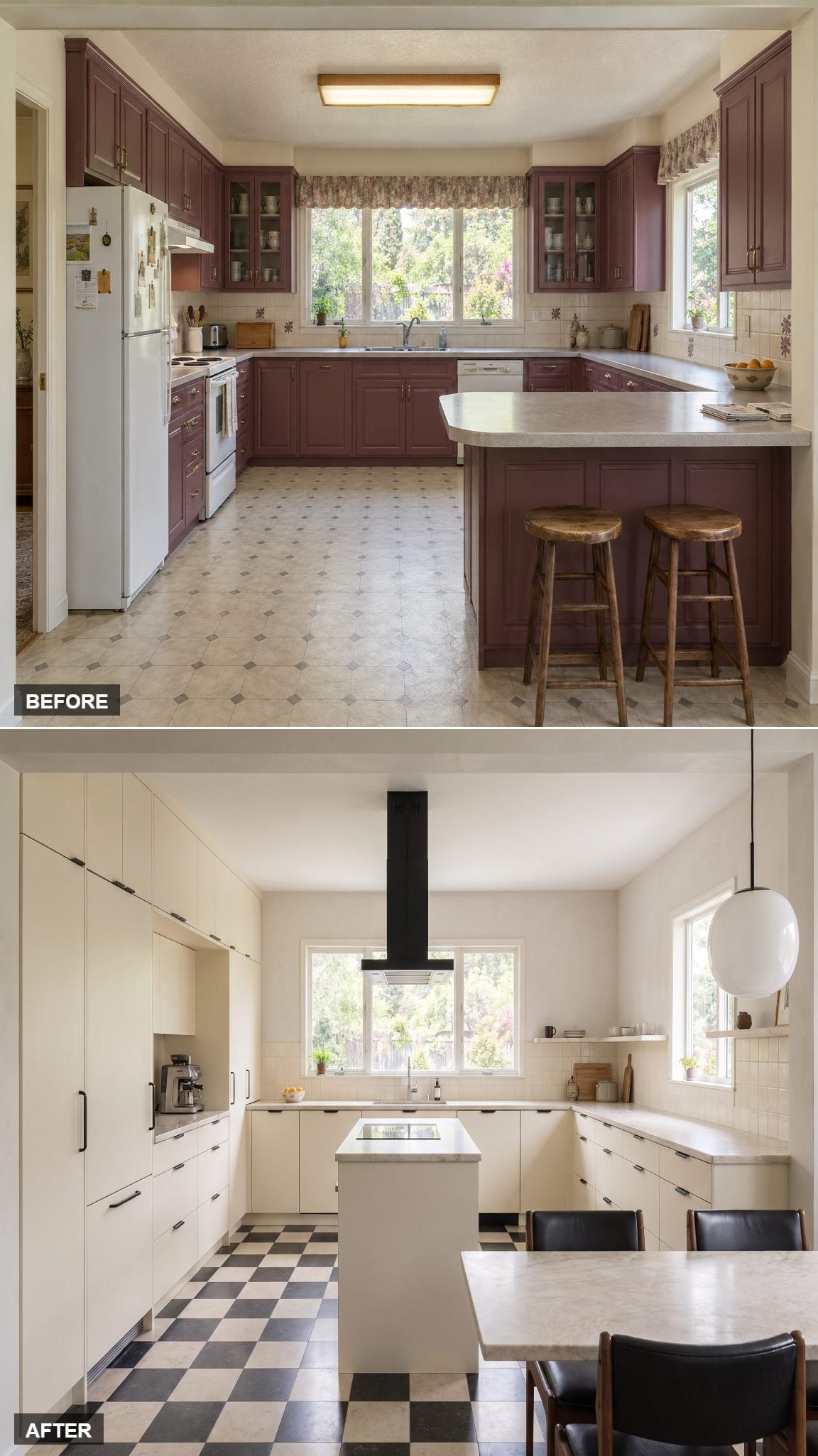
Full-height cream cabinetry along the left wall is almost aggressively restrained. No ornate profiles, no conspicuous hardware, no decorative interruptions. The architecture seems determined to disappear.
Then the checkerboard floor takes over. Its graphic pattern supplies the energy that the cabinetry deliberately withholds, creating a sharp division between calm vertical surfaces and lively horizontal ones. Induction cooking occupies a low run beneath the right window. For anyone drawn to white kitchen ideas but suspicious of blandness, the floor offers a persuasive counterargument.
12. Ivory Porcelain and Rust-Red Travertine, All Texture
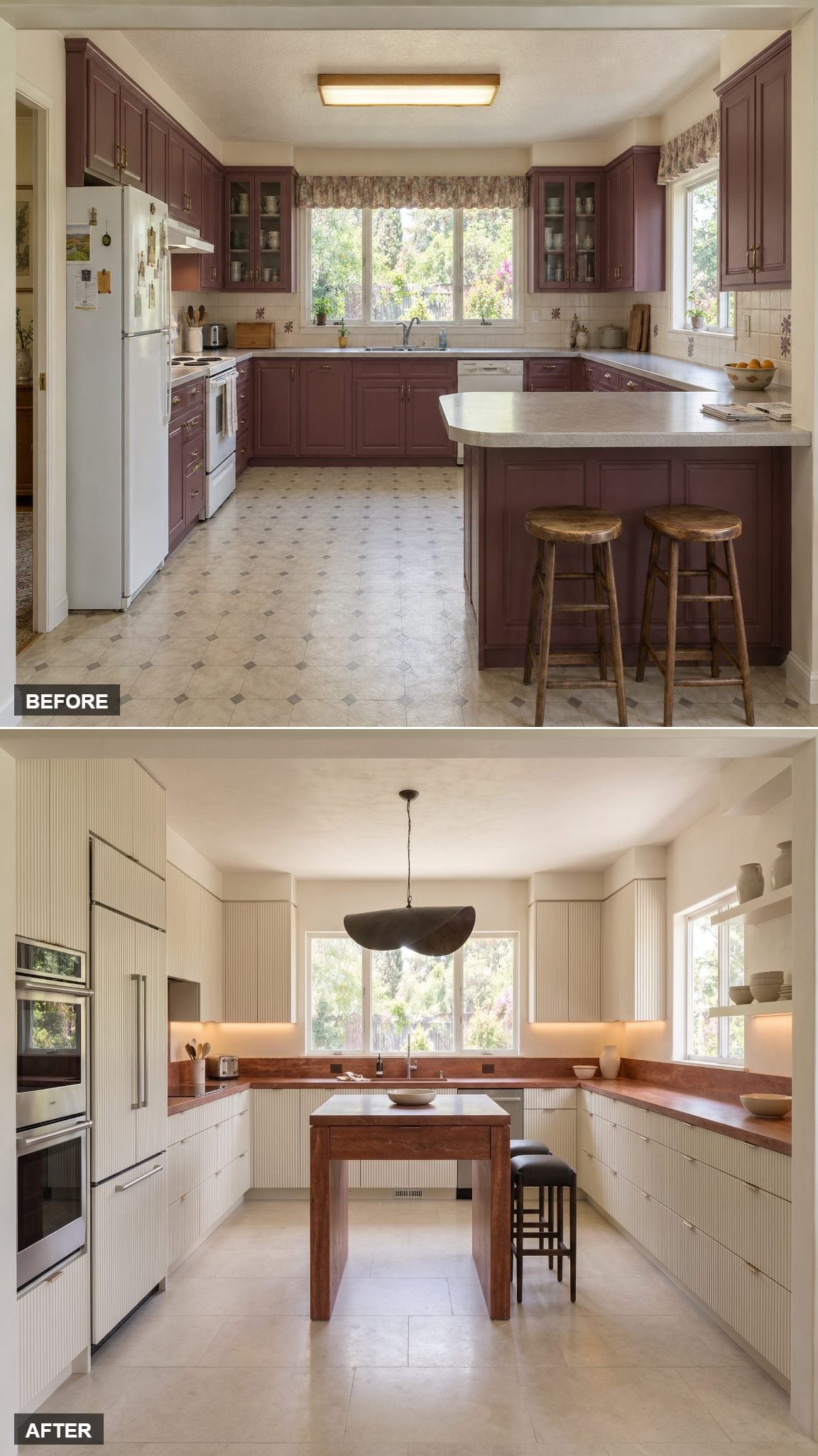
Run your eyes across this kitchen and the surfaces almost seem tactile. Finely ribbed ivory porcelain cabinet fronts catch light in delicate vertical lines, while rust-red travertine counters bring a warmer, more irregular stone texture.
Soft white plaster walls allow those material differences to register without interference. Cooking, cleanup, and storage occupy clearly defined areas, while a travertine fruit bowl and olive-oil bottle add restrained domestic detail. The richness comes from surface variation rather than ornamental excess.
11. Denim Blue and Pale End-Grain Oak
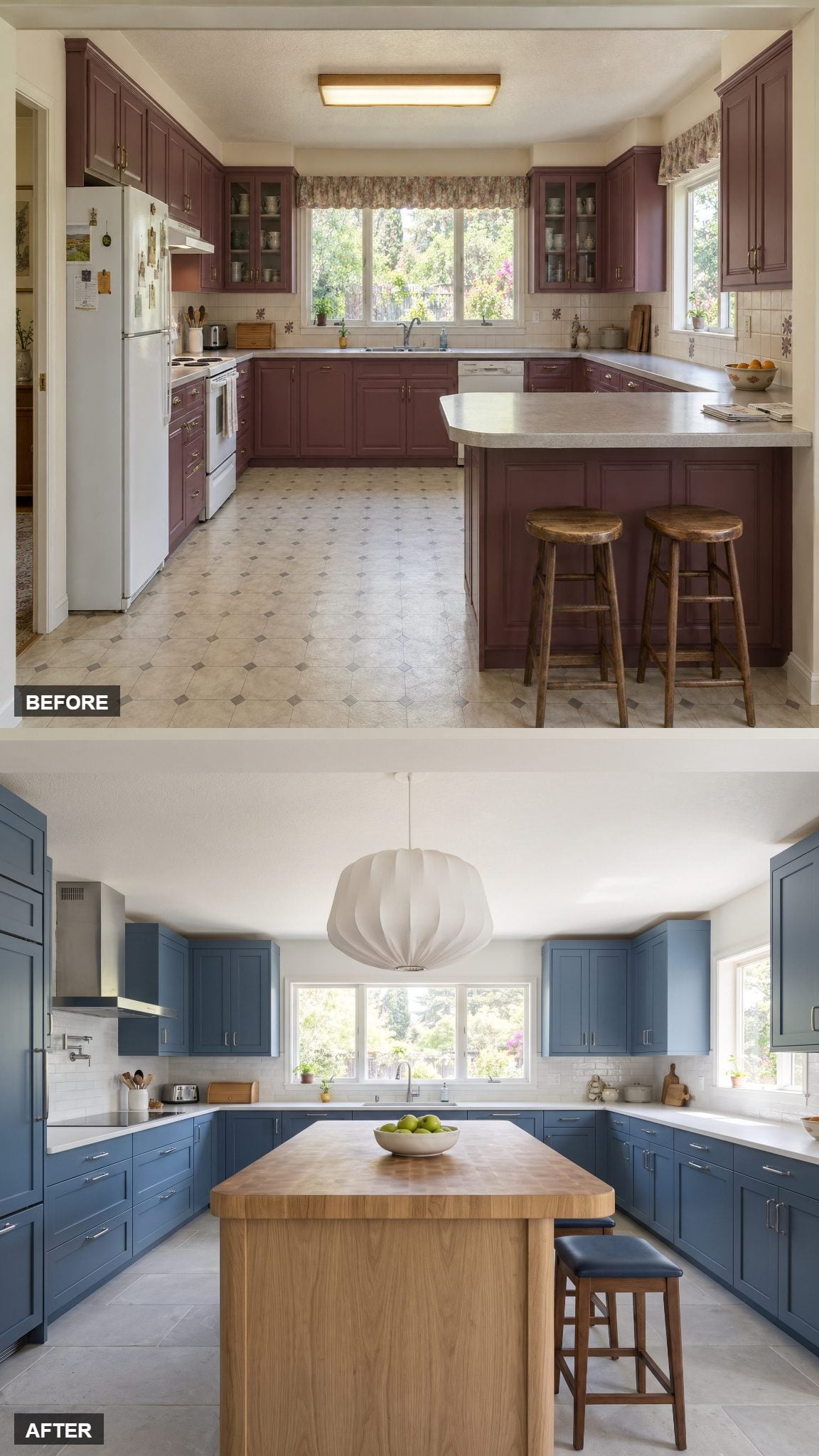
Denim blue has the familiarity of a favorite jacket without the obviousness of navy. Against pale end-grain oak, the color settles into a relaxed, practical register that avoids the usual coastal clichés.
The end-grain surface introduces a distinctive block pattern, giving the island a tactile character quite different from the polished stone and lacquer elsewhere in the collection. Its pale timber tones brighten the center of the room, while the denim cabinetry establishes a calm perimeter. A bowl of green apples supplies a crisp finishing note. This kitchen doesn’t need a dramatic gesture to make its point; its appeal lies in the pleasure of materials that look comfortable together.
10. Soft Lilac Slabs and a Sculptural Ivory Stone Island
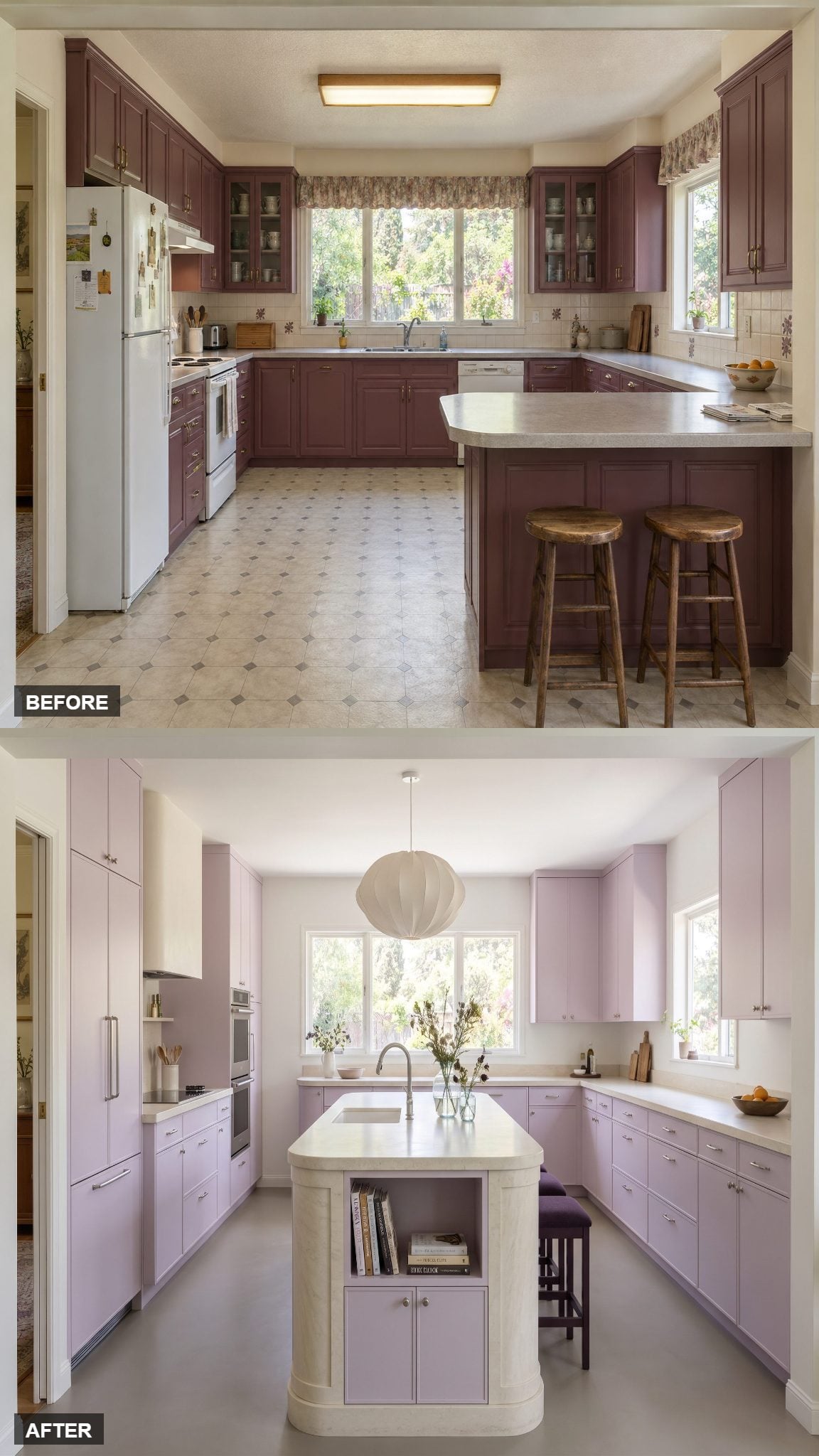
The original kitchen’s hard-edged peninsula gave the room a rigid center. Here, ivory limestone curves around the front corners of a sculptural island, creating a gentler silhouette and a more fluid transition between the work surface and surrounding floor.
Soft lilac cabinetry reinforces the lighter atmosphere, while an oversized paper pendant introduces an almost playful scale overhead. Its rounded form echoes the island below, establishing a relationship between two very different materials. The kitchen has lost its hard edges without losing its structure.
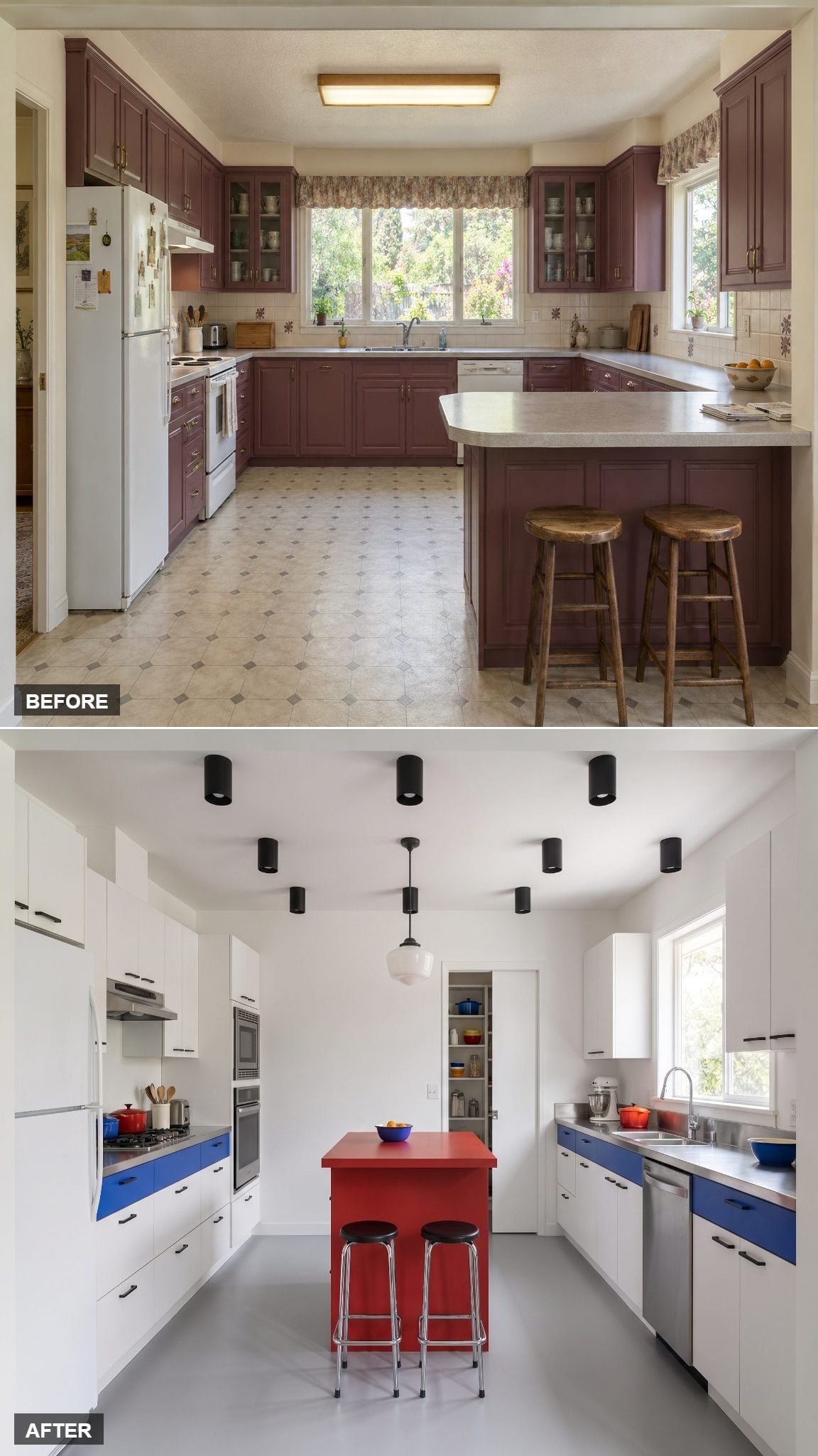
9. Bauhaus-Inspired Geometry With Cobalt Accents
🔥 Would you like to save this?
White slab cabinetry establishes a disciplined composition, interrupted by carefully placed cobalt-blue drawer fronts. Black linear hardware reinforces the geometry, creating something closer to graphic design than conventional kitchen decoration.
The cobalt accents work because they appear at deliberate intervals rather than covering an entire cabinet run. Their placement gives the long horizontal arrangement a visual rhythm, breaking the white surfaces into a sequence of contrasting shapes. The result recalls the clarity of a modernist graphic composition, with color used to establish structure rather than provide decoration.
8. Storm Blue Cabinetry Over Silver Travertine
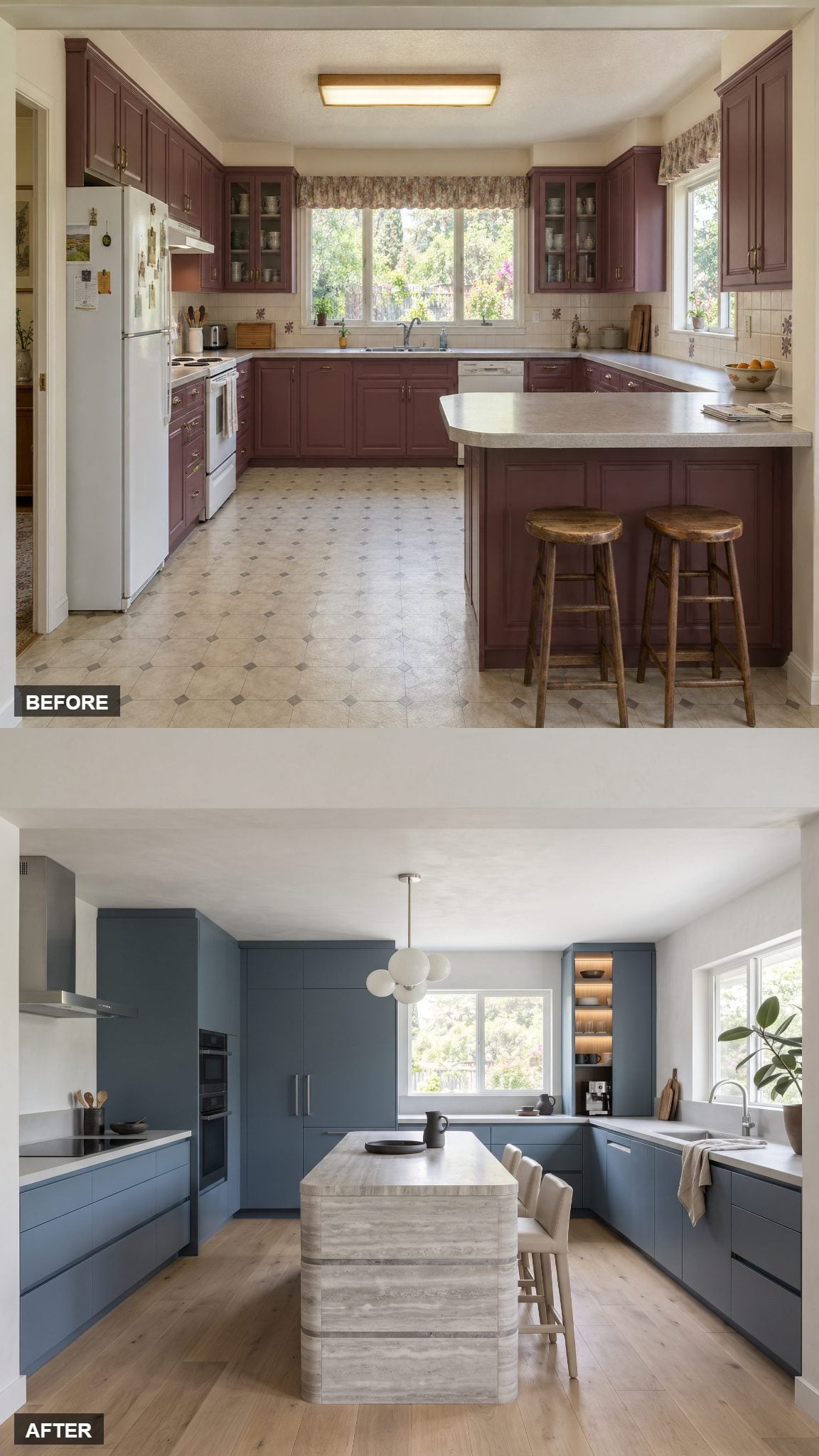
Storm blue cabinetry offers a quieter alternative to conventional navy, its gray undertones framing a silver-travertine island. Horizontal bands of stone wrap around the corners, emphasizing the island’s apparent solidity and the continuity of its pattern.
That edge treatment is a small detail with considerable impact. Continuous veining makes the island appear more monolithic, while abrupt pattern breaks would reveal its assembled construction more clearly. Many blue kitchen designs concentrate on cabinet color; here, the stonework deserves equal attention.
7. Dark Olive and Brushed Pewter
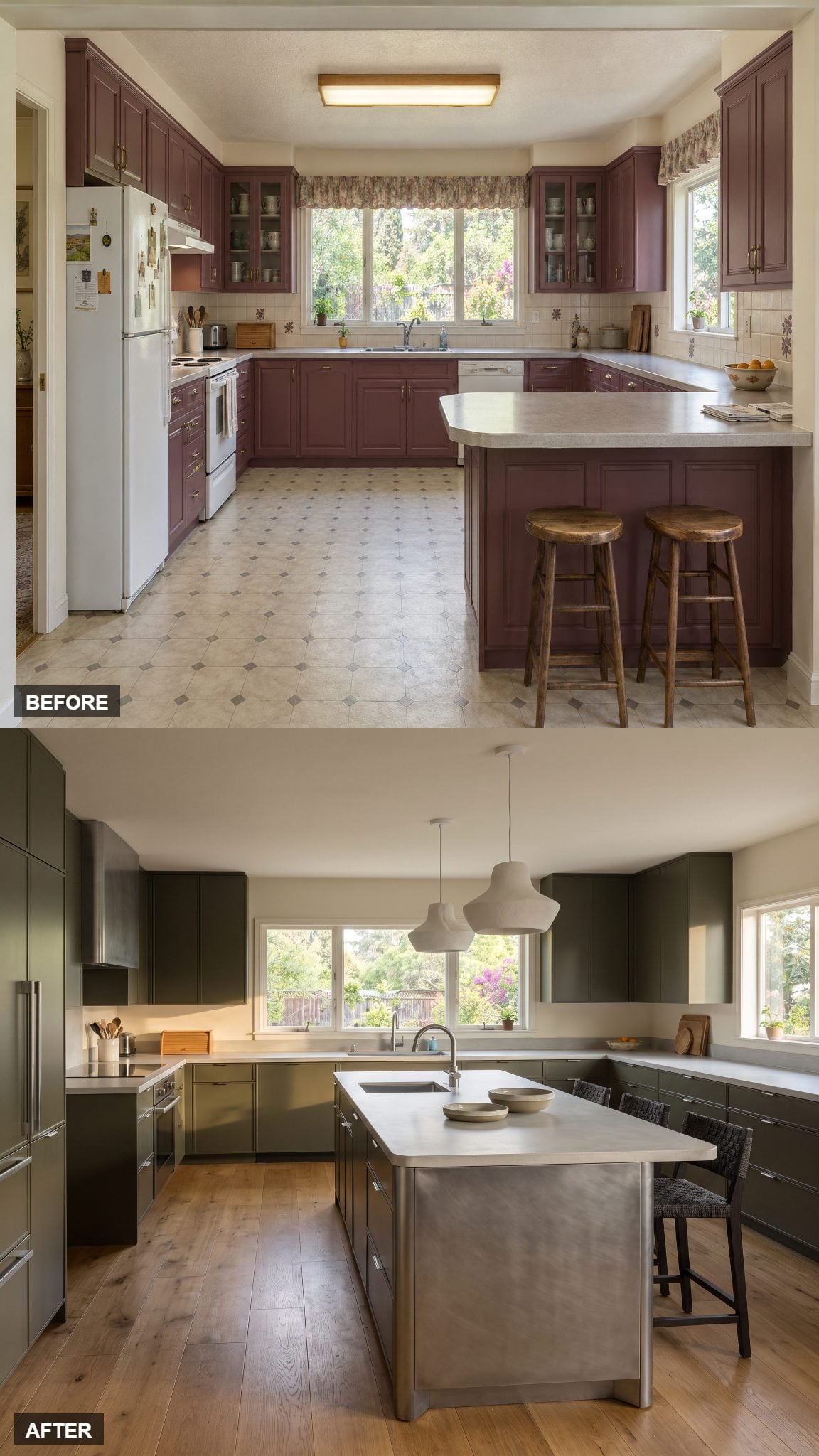
Olive cabinetry brings the earthy character of a traditional kitchen into a distinctly contemporary setting. The brushed-pewter island interrupts that natural palette with a cool metallic surface, producing a contrast more intriguing than another slab of marble would have been.
The island’s metallic finish gives its geometry unusual clarity. Light travels across the brushed surface in a soft sheen, emphasizing the difference between the central work area and the darker perimeter cabinetry. The room has the understated confidence of a well-designed piece of industrial equipment, although its olive palette keeps the atmosphere firmly domestic.
6. Natural Elm and Oceanic Quartzite
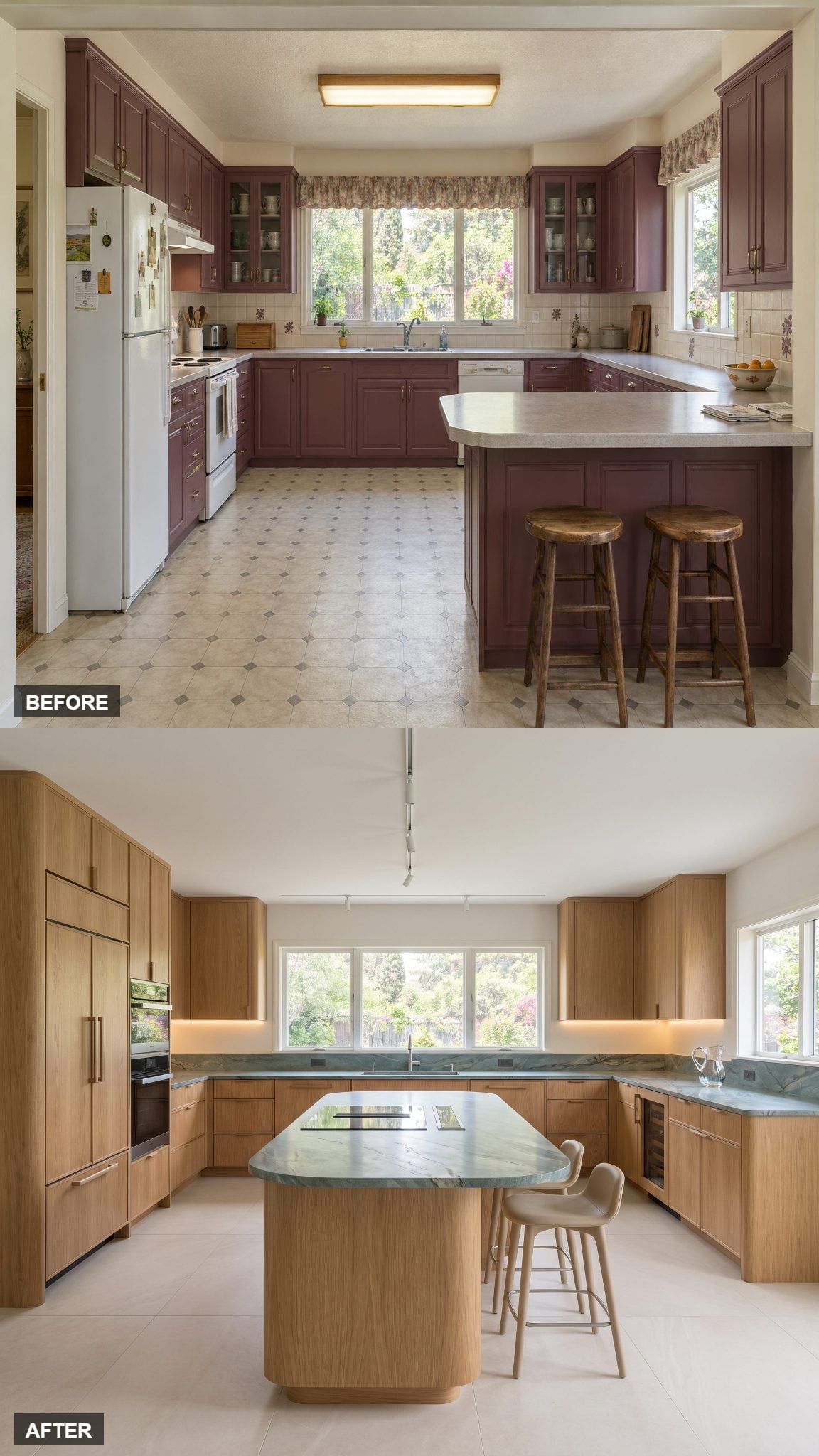
Blue-green quartzite spreads across the island like a piece of ocean floor brought indoors. Against the honey tones of natural elm, its cool mineral pattern creates a striking contrast without sacrificing the room’s warmth.
Island cooking is paired with downdraft ventilation, eliminating the overhead hood that would otherwise interrupt the view across the stone. The uninterrupted sightline allows the quartzite to dominate, while natural elm keeps the surrounding cabinetry relaxed and approachable.
5. Blackened Oak Perimeter and a Bronze-Mesh Island
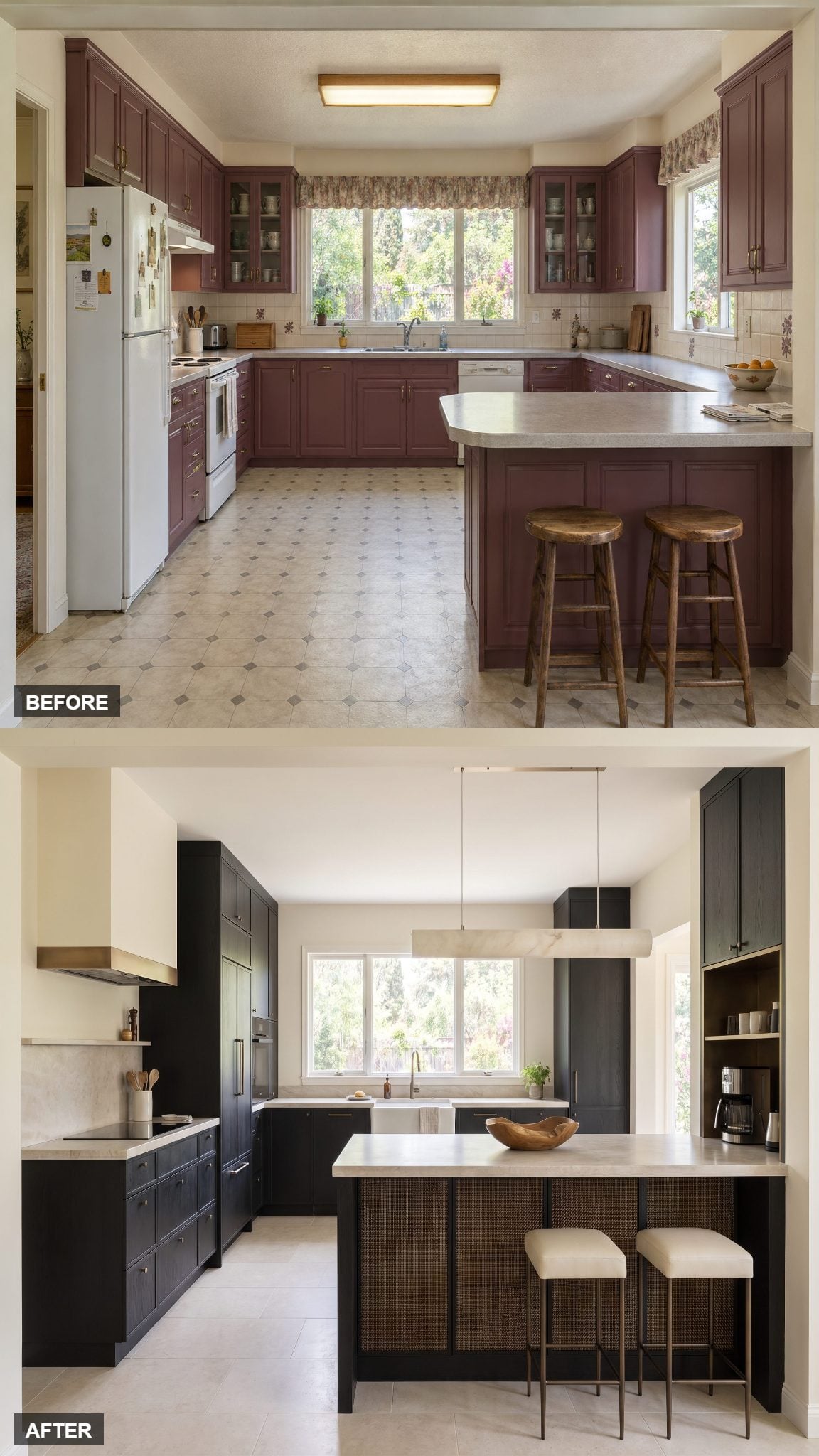
Bronze mesh gives the island a surface that changes with distance. Up close, the woven metal catches light in tiny highlights; from across the room, it becomes a warm, finely textured plane.
Blackened oak cabinetry creates a dark perimeter, allowing the bronze to emerge gradually rather than announce itself with bright color. A long alabaster pendant casts soft illumination overhead, completing a composition built around texture and shadow. The old ceiling light had one setting: interrogation. This kitchen has discovered atmosphere.
4. Terracotta Lacquer and Cloud-White Quartz
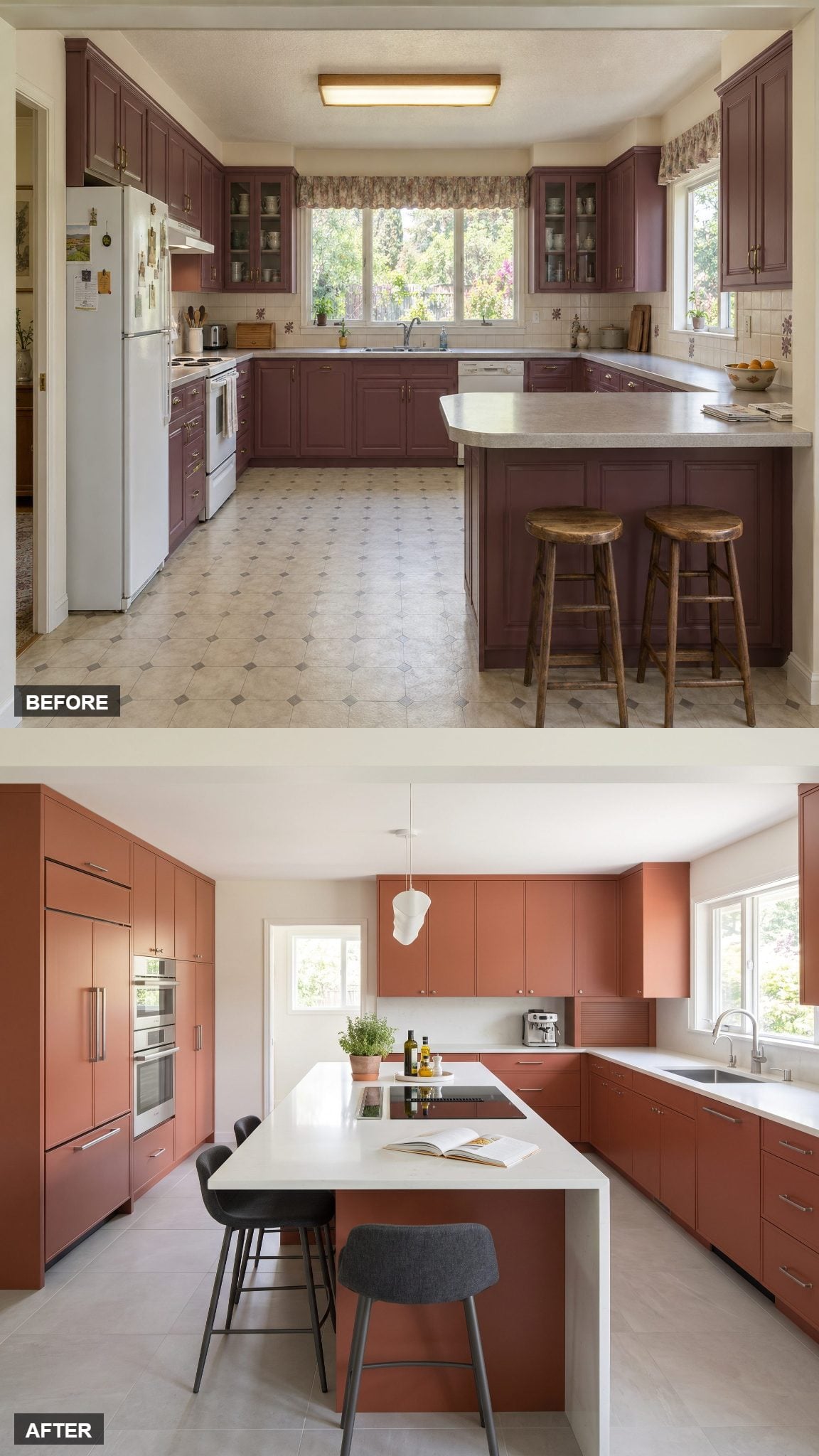
Terracotta lacquer brings the warmth of fired clay into a contemporary kitchen, its satin surface catching light without the roughness of actual pottery. Cloud-white quartz counters provide a crisp contrast, preventing the saturated cabinetry from dominating every plane.
Waterfall ends carry the white quartz down the sides of the island, breaking up the terracotta mass and emphasizing the stone’s clean geometry. The result is warm, assertive, and surprisingly crisp. Earthy color doesn’t have to mean rustic styling.
3. Dusty Rose and a Ribbed Walnut Drum
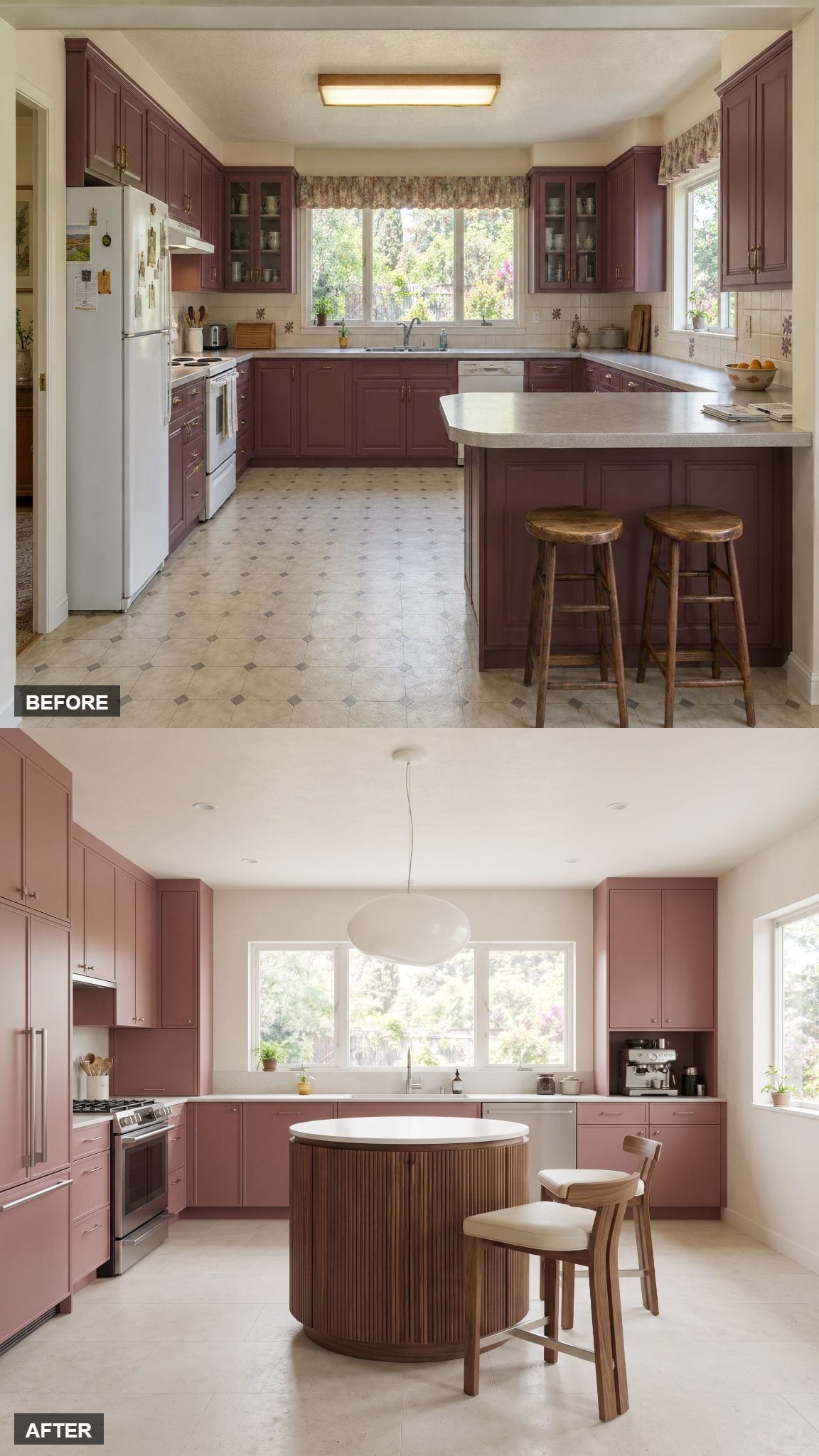
A round island is a quiet rebellion against the rectangle everyone defaults to. Here, ribbed walnut forms a substantial drum, its vertical grooves catching light and giving the center of the kitchen an almost furniture-like quality.
Dusty-rose perimeter cabinetry softens the surrounding architecture without competing with the walnut. The circular form changes how the room is experienced: no sharp island corners, no obvious front or back, and a continuous surface that invites movement around it.
2. Warm Pewter Cabinetry and an Amber Cast-Glass Island
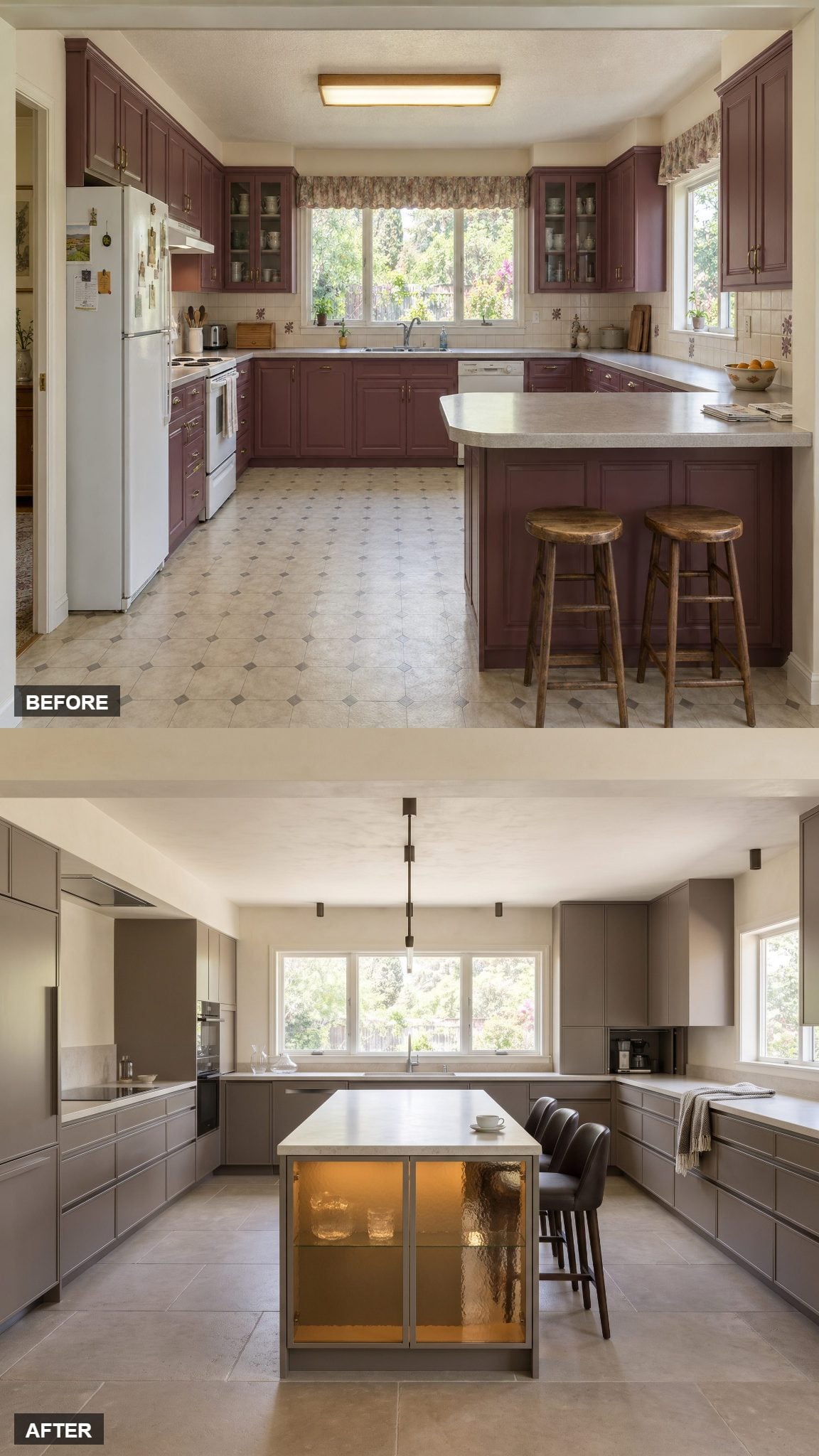
The amber cast-glass island looks almost molten. Light passes through its textured panels, revealing irregularities and depth that a smooth, opaque surface would conceal. Against the surrounding pewter cabinetry, the glass introduces a remarkable sense of warmth and translucency.
Plaster walls and taupe limestone extend the earthy palette into the surrounding finishes. The island’s substantial rectangular form provides a strong architectural center, while the cast glass prevents that volume from appearing heavy or inert. Its irregular texture is especially effective against the precision of the metallic cabinetry. The atmosphere approaches that of an intimate cocktail bar, minus the obligation to make cocktails.
1. The Walnut Library Kitchen
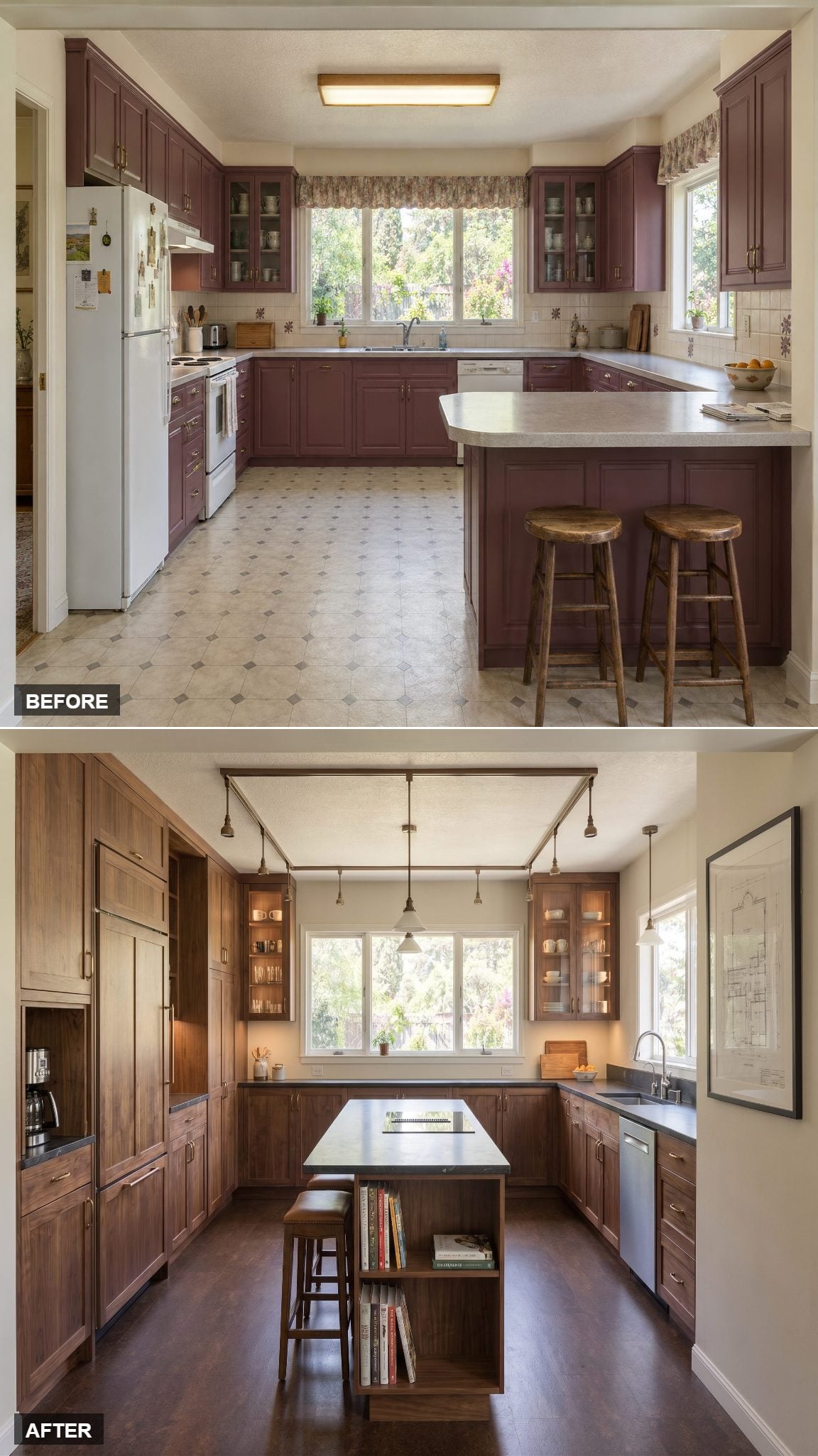
The left wall becomes a continuous expanse of walnut, with tall appliances and pantry storage integrated into the cabinetry like bookshelves in a private library. A pocket-door coffee station disappears behind matching panels, preserving the uninterrupted timber surface.
Cleanup occupies the window wall, while induction cooking is integrated into the counters. Walnut’s deep grain supplies much of the richness, requiring little ornament beyond a few cookbooks and a walnut bar stool. The original kitchen was a collection of cabinets occupying a room. This one makes the cabinetry the architecture.