🔥 Would you like to save this?
You walk in and the air smells faintly of lemon Pledge and something floral that hasn’t been manufactured since the Carter administration. The lamps match. The lamps really match. On the coffee table sits a candy dish with the same three butterscotches that have been there since you were nine, and yes, everyone knows this house. It belongs to someone who set up their taste in 1958 and never saw a reason to revise it — and honestly, some of it holds up better than the reboots we keep buying at West Elm.
28. Every Surface Has a Doily and Every Doily Has a Job
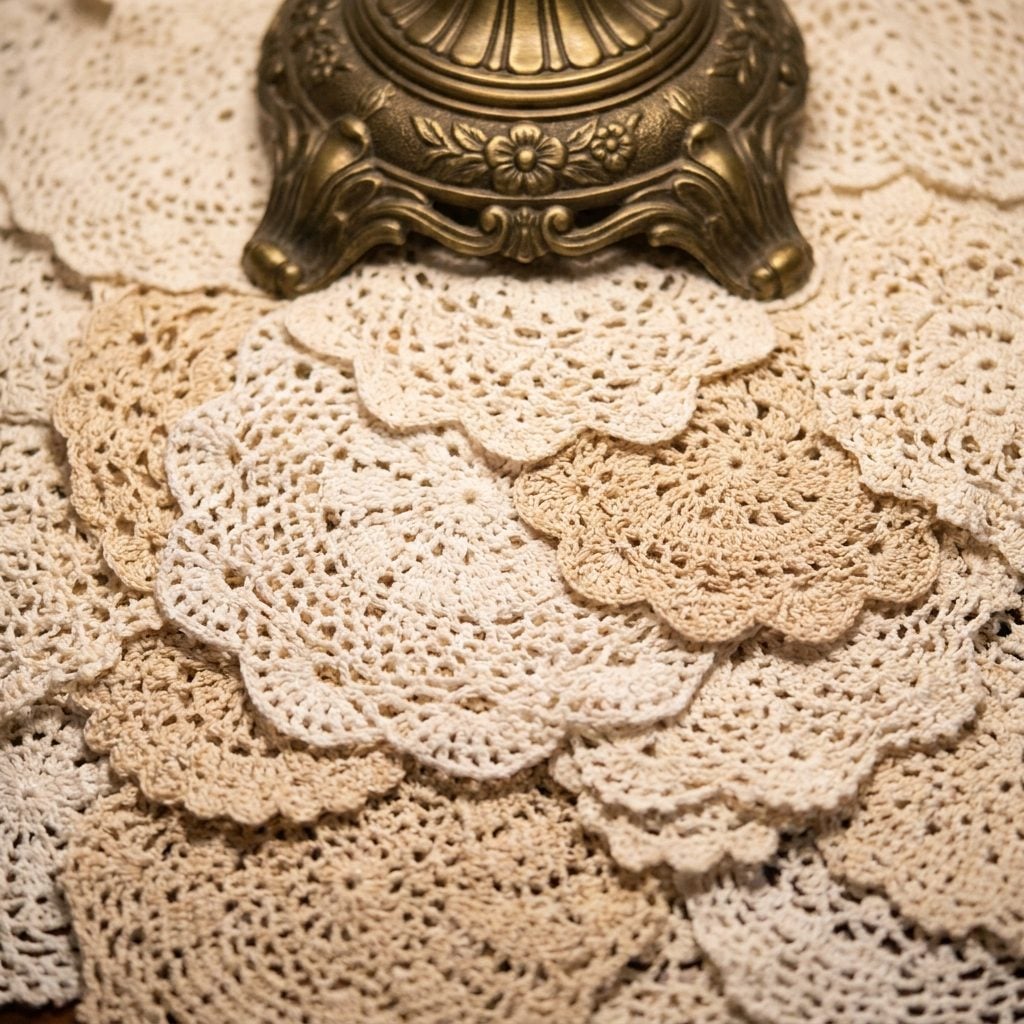
Under the lamp. Under the vase. Under the phone that hasn’t been picked up in a decade. Under the other doily.
In order to come up with the very specific design ideas, we create most designs with the assistance of state-of-the-art AI interior design software. Also, assume links that take you off the site are affiliate links such as links to Amazon. this means we may earn a commission if you buy something.
A doily is protective infrastructure disguised as decoration, and this generation understood the assignment. Wood is precious, wood scratches, and a hand-crocheted circle of cotton thread between your good end table and a sweating iced tea glass is not fussy — it’s practical hardware in disguise.
The real tell shows up when you lift one and find the wood underneath still the color the furniture was on the day it came home from the store. Every other surface has faded. Not this one. Fifty years on the job, hasn’t missed a shift.
27. The Formal Dining Room Nobody Has Eaten In for Twenty Years
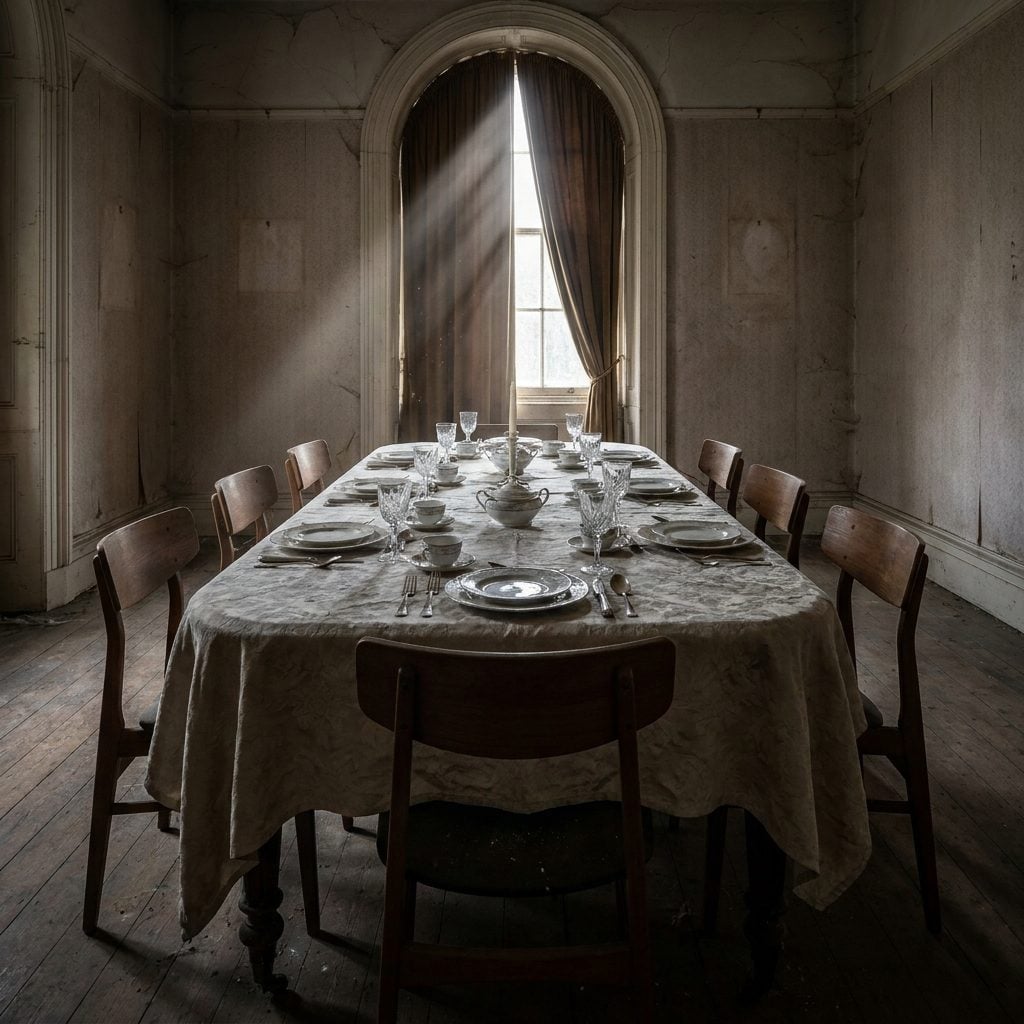
The table is set. It has been set since Easter of some year nobody can quite pinpoint — good china in position, cloth napkins folded, water glasses polished, chandelier crystals dusted every spring whether they need it or not.
Meanwhile actual eating happens in the kitchen, at the small round table with the plastic tablecloth, on the everyday plates. The room exists to be looked at rather than used, and that contradiction is the whole design brief.
26. A Console Television That Doubles as Furniture
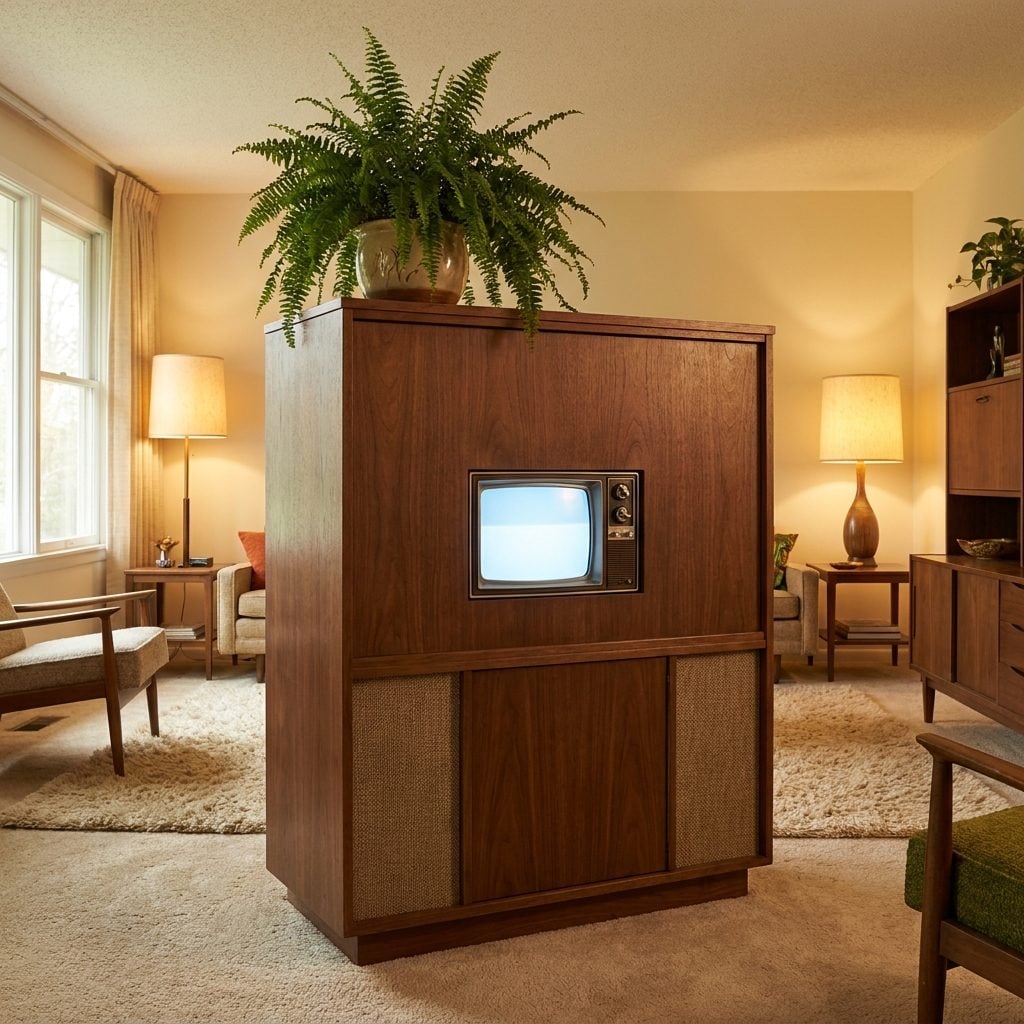
It weighs three hundred pounds and carries a screen the size of a dinner plate embedded in a piece of furniture the size of a small car. Nobody has turned it on since the Reagan administration but nobody has moved it out either, because it functions as a credenza that happens to receive channel 4.
The top holds the family: wedding photo, graduation photo, a doily, a lamp, a bowl of hard candy. The tube inside has probably gone soft — the wood veneer has not. Furniture built when a television was a piece of the room, not a rectangle stuck to the wall like an unwanted appliance.
25. The Bar Cart Stocked Like It’s Expecting the Neighbors
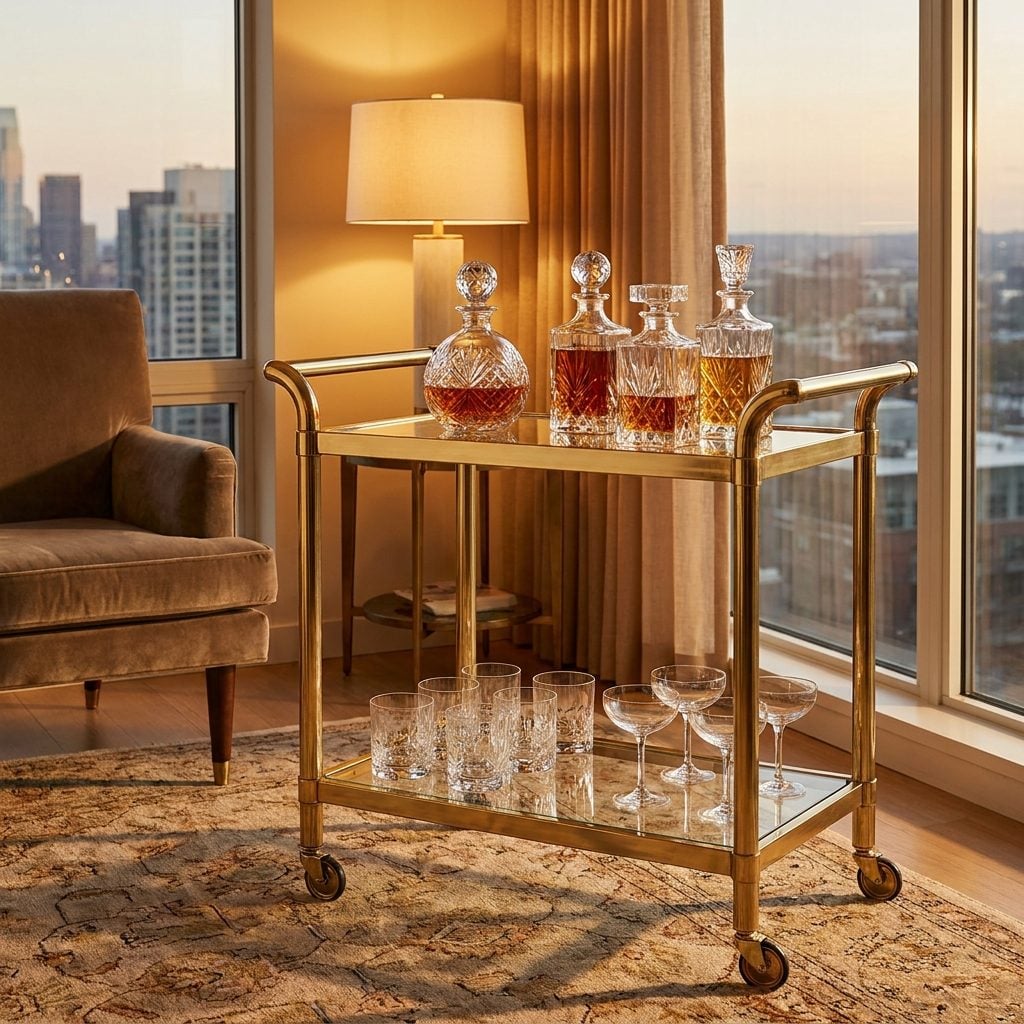
Old Fashioneds. Manhattans. Something called a Rusty Nail that nobody has ordered in a bar since 1974. The bar cart stays fully stocked, permanently, on the assumption that at any moment three couples might drop by unannounced and expect to be served properly.
Nobody drops by unannounced anymore. The Drambuie has separated, the vermouth turned to vinegar years ago, but the cart stays polished, the crystal stays clean, and the ice bucket sits ready. Design equivalent of keeping the porch light on. A style guide for their craftsman home bar would have been unthinkable — they figured it out on their own with a Sears catalog and a wedding gift.
24. Wall-to-Wall Carpet in Colors That Were Once Bold
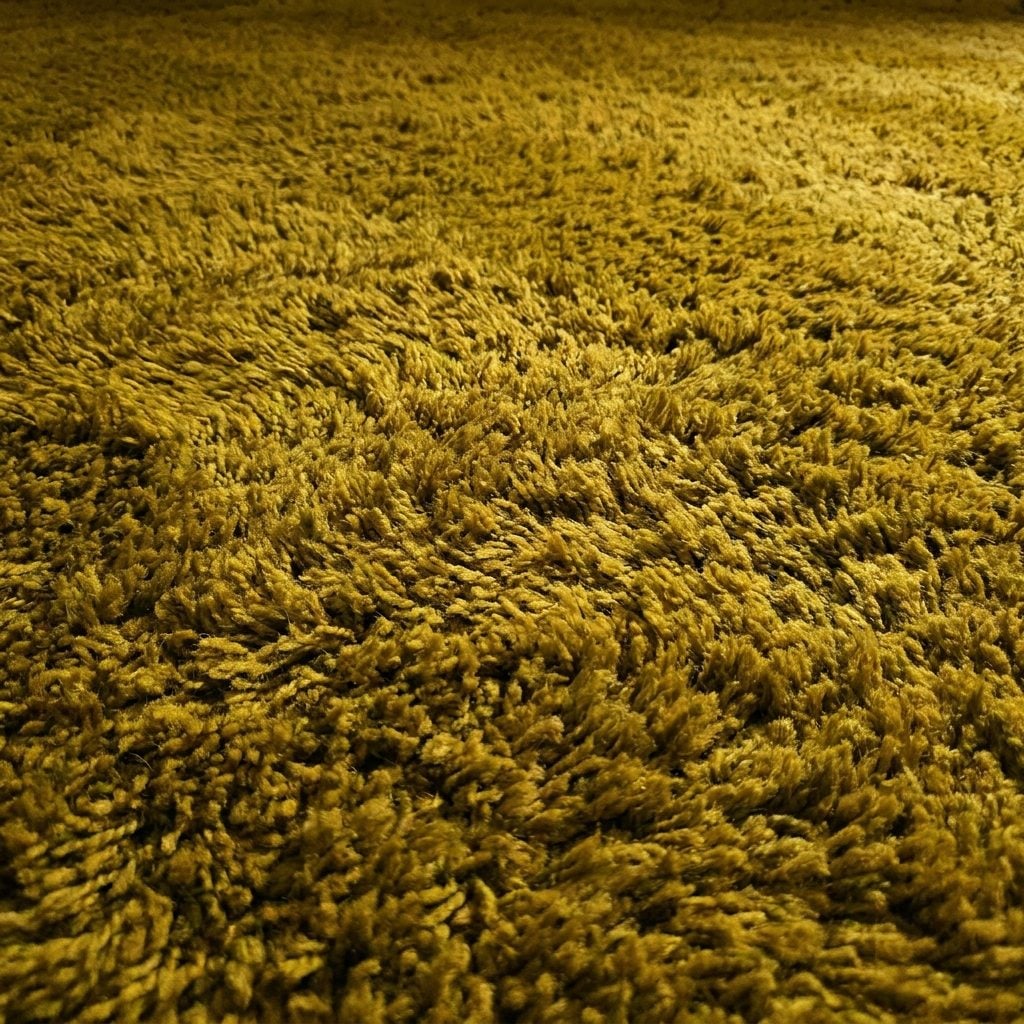
Harvest gold. Avocado. Burnt orange. Powder blue. These weren’t accents — they were the entire floor, wall to wall, installed when the house was new and still there now.
The carpet has outlasted the marriages, the pets, the children, the second children. Under the couch it remains the color it was on installation day, while out in the walkway it has faded to something softer, almost pretty. Colors that read as loud in 1968 have mellowed into something the current design world is trying very hard to recreate at four times the original price.
23. The China Cabinet Full of Dishes That Have Never Touched Food
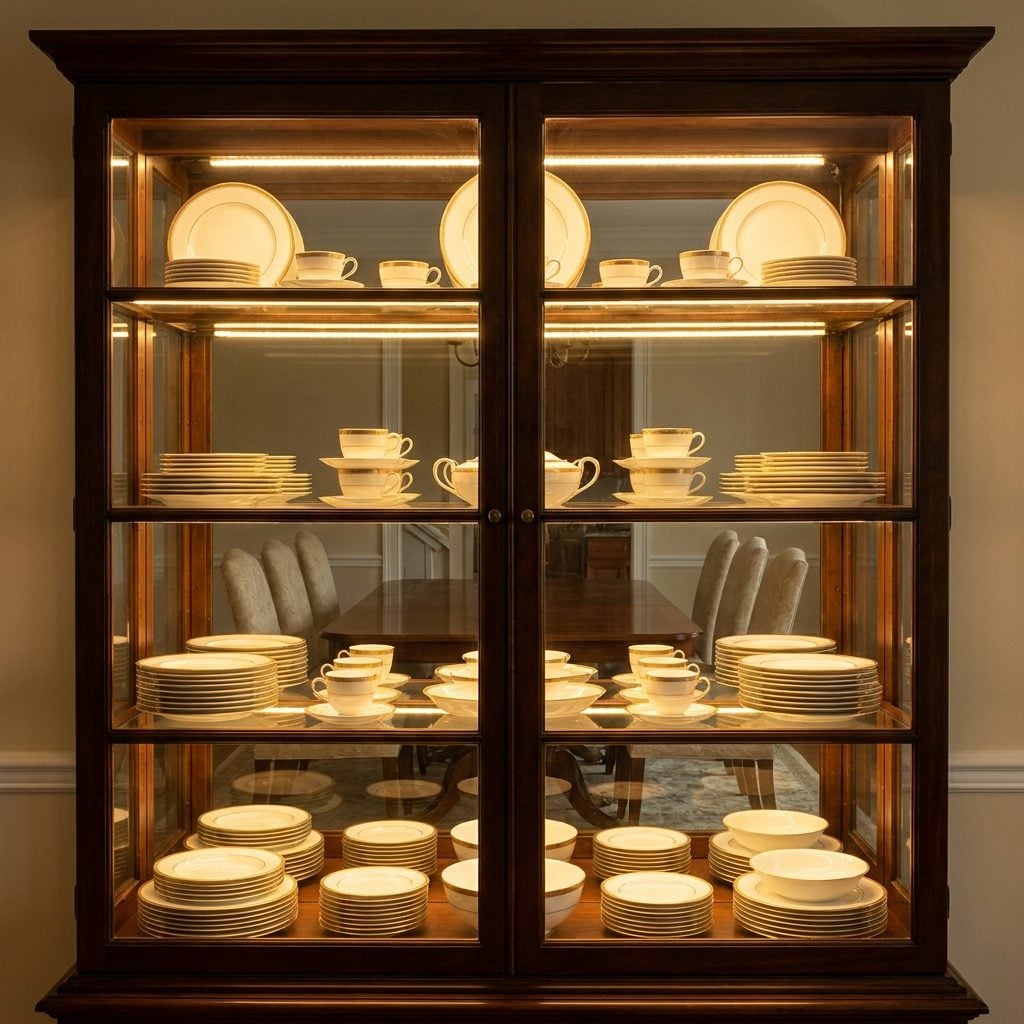
Twelve place settings, a gravy boat, a tea service, and a covered vegetable dish nobody has ever seen the inside of.
The china came out for Thanksgiving 1971 and possibly a christening in 1983. That’s the extent of its working life. The rest of the time it sits behind glass, backlit, arranged by someone who took the arrangement seriously enough that if you move a teacup half an inch they’ll notice within a week.
22. Plastic Slipcovers on a Couch That Deserved Better
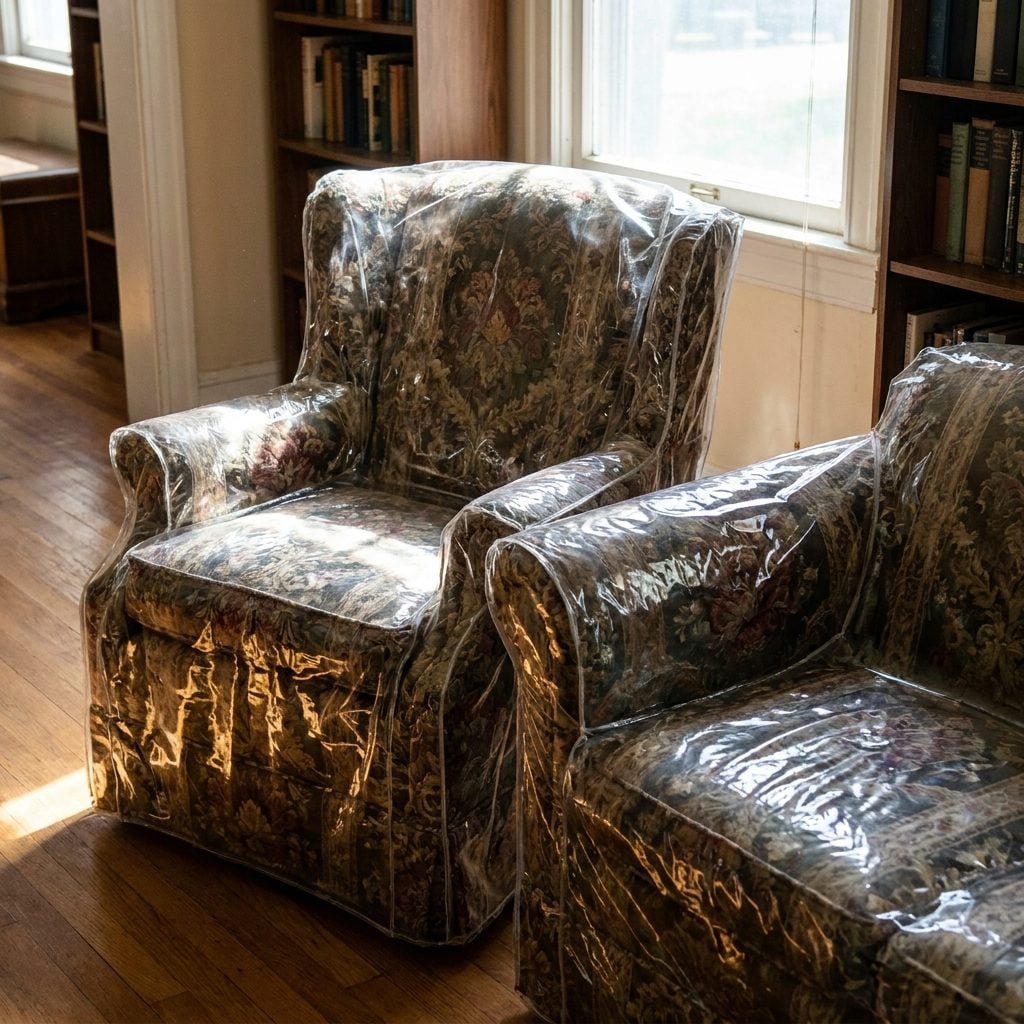
Underneath the plastic sits a beautiful piece of furniture — a brocade, maybe, or a silk-blend jacquard. Something that cost real money in 1961 and has been kept in showroom condition by the simple fact that no human skin has touched it in six decades.
You sit down, the plastic makes a sound. In summer your legs stick. In winter it feels like cold linoleum. The plastic was supposed to be temporary, protection until the good stuff wore in, but temporary turned into permanent, and now removing it would feel like taking the wrapper off a museum piece. The couch was preserved. The experience of sitting on it got sacrificed. Somewhere in that trade-off you’ll find the entire ethos of the decade.
21. The Kitchen Wallpaper Featuring Roosters, Teapots, or Both
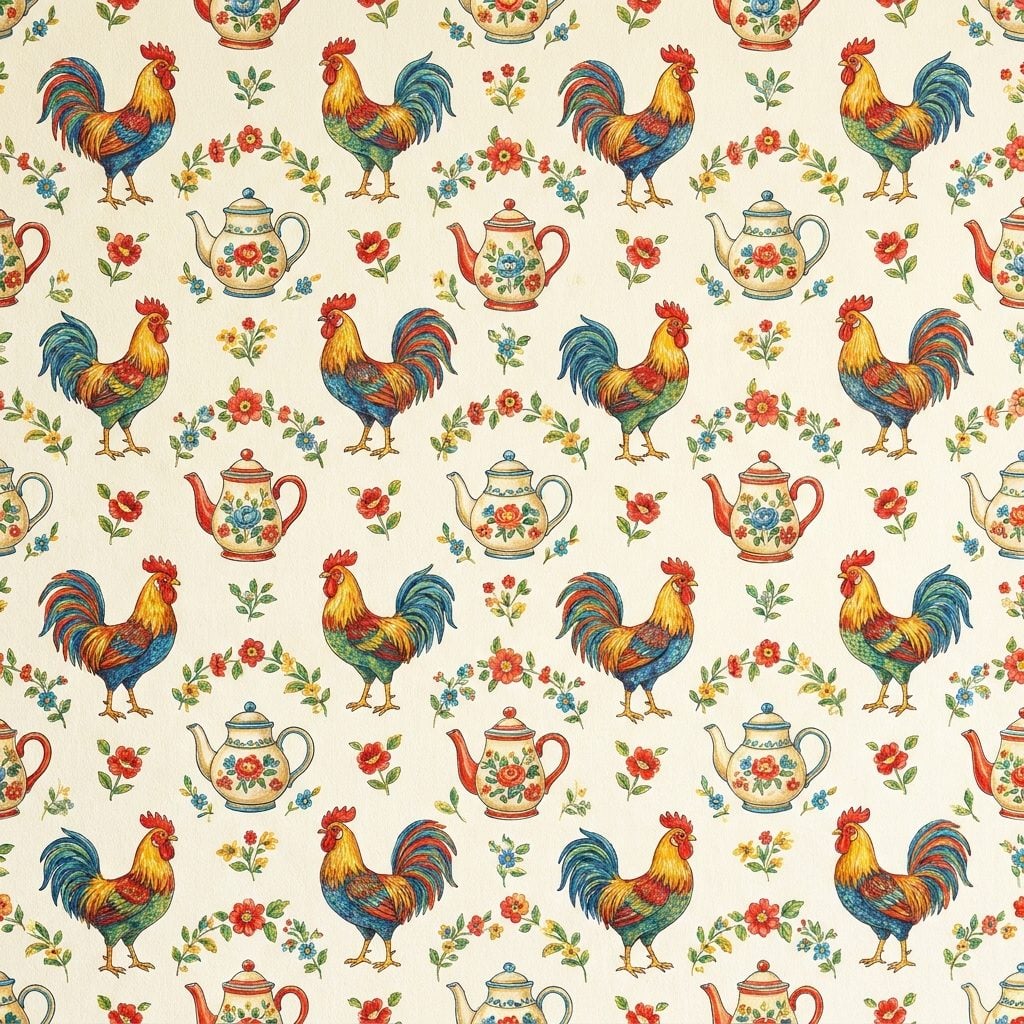
Roosters. So many roosters. Also possibly teapots, wheat sheaves, colonial-era coffee grinders, or a small rustic barn scene repeating every eight inches from ceiling to chair rail. Kitchen wallpaper of this era did not whisper — it committed.
Underneath sits more wallpaper from an earlier decade, possibly with different birds. The rooster ended up on top because roosters won the 1970s and nobody had the energy to strip four layers of paste off the drywall. Now the roosters are back in Nancy Meyers movies at eighty dollars a roll and everyone acts surprised.
20. A Sunburst Clock That’s Outlived Three Marriages and a Roof
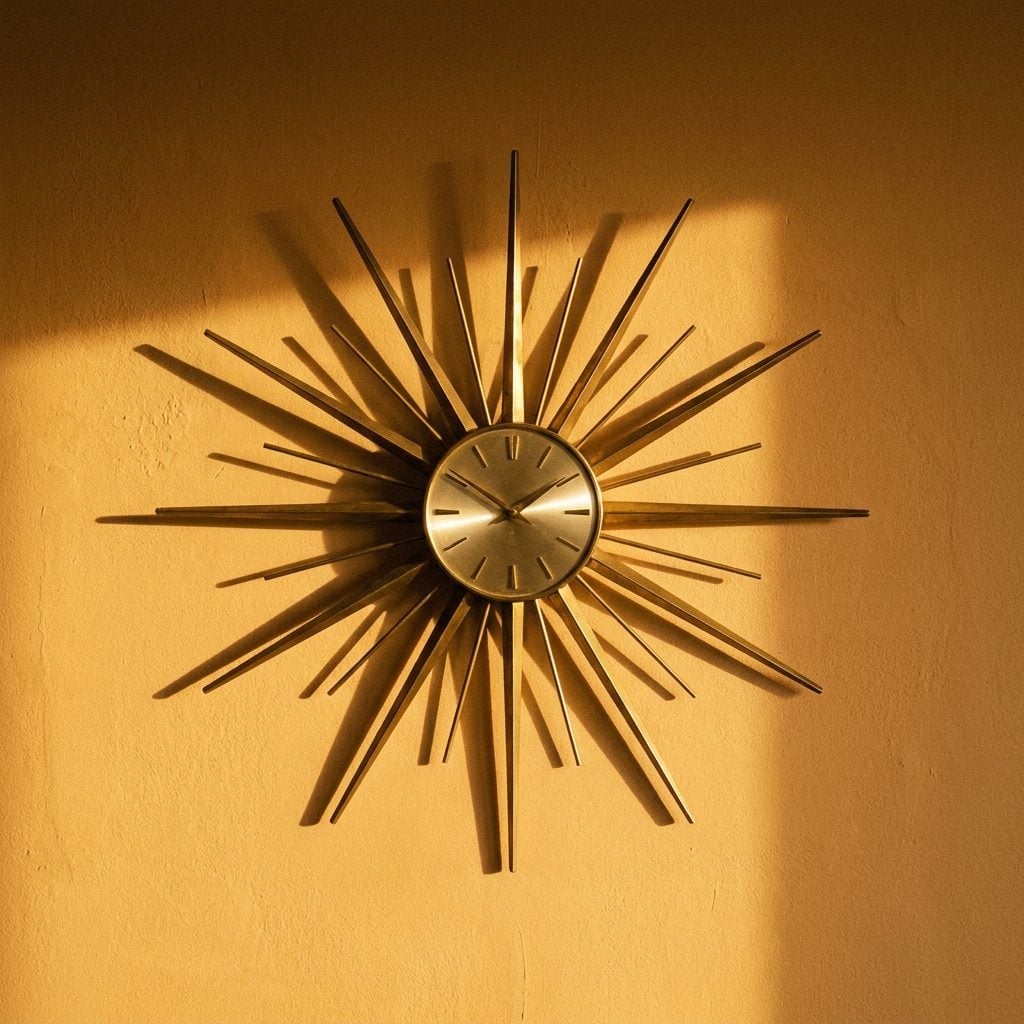
Still keeping time. That’s the wild part. The sunburst clock went up in 1959 and has been ticking ever since, through the shag carpet phase, the wallpaper border phase, the sponge-painted accent wall phase, all of it.
The rays have developed a patina, the batteries have been changed maybe forty times, and someone once tried to take it down to paint the wall and thought better of it. Now it hangs above whatever piece of furniture ended up beneath it — a fixed point in a house that has otherwise been in slow motion for seventy years. For a bedroom with the same energy, look at how tan workshop decor handles brass, patina and all.
19. The Pink Bathroom Nobody Has Had the Heart to Renovate
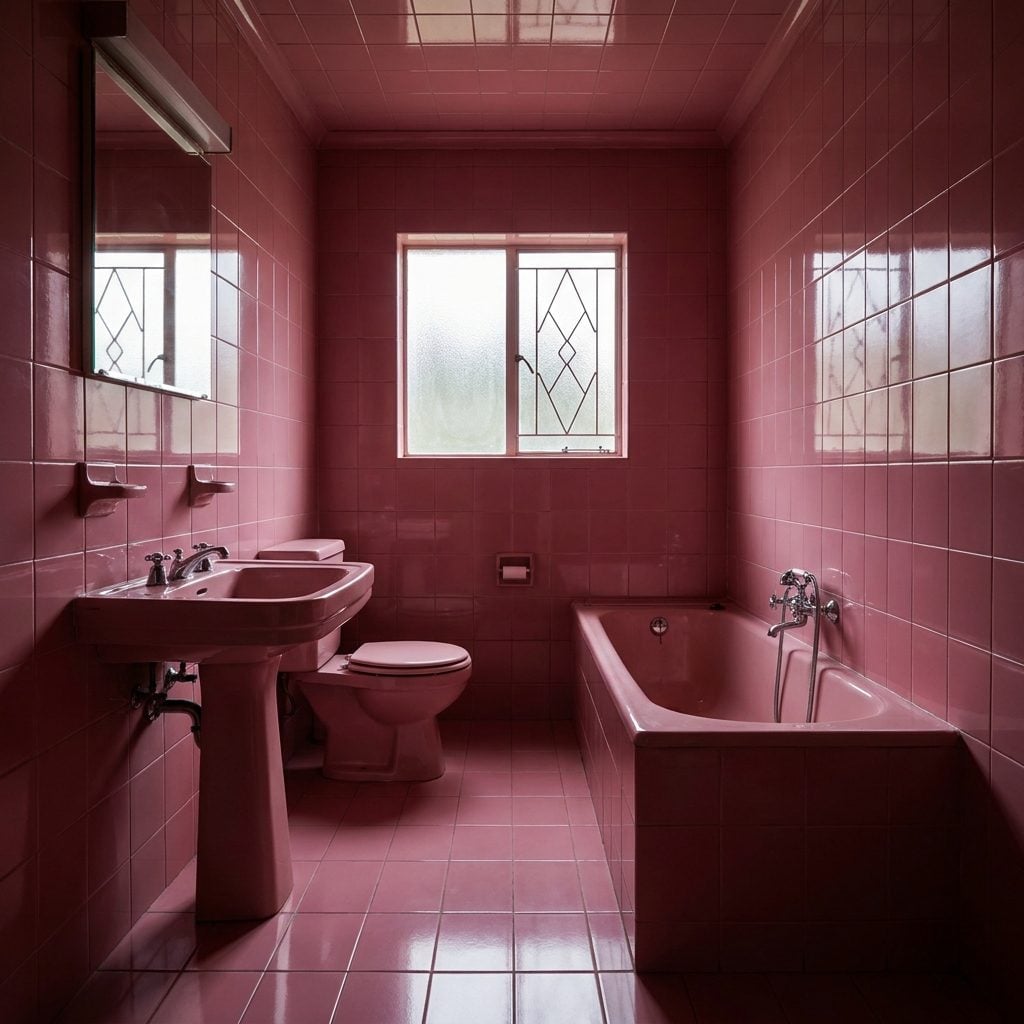
The pink tile stopped being a design choice a long time ago. It’s a hostage situation now, and everyone in the house has quietly agreed to the terms. Original Mamie pink from 1954, black pencil liner, laid by a tile setter who probably retired before Kennedy was shot.
Taste has nothing to do with why it’s still there. The thing is structurally perfect. Grout still tight, tub cast iron and heavy enough to warp a floor joist, never once refinished. Ripping it out would cost more than most people spent on the house — and the person who lives there knows it.
18. Matching Twin Beds in the Primary Bedroom
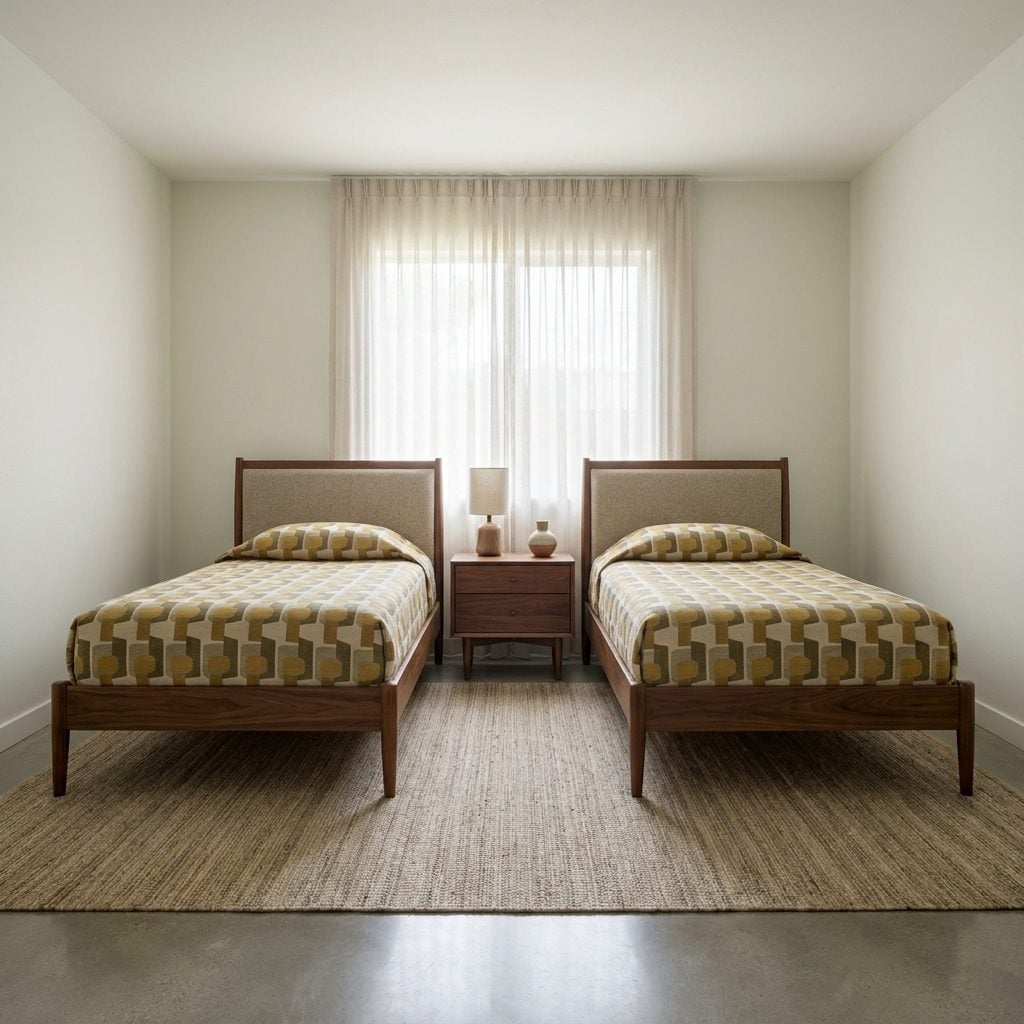
Two beds. One bedroom. Married fifty-one years.
This baffles anyone under forty and needs no explanation to anyone over seventy. Long before television made separate beds the familiar picture of respectable married life, furniture companies were already selling twin sets as modern, hygienic, and sophisticated. Hollywood reinforced the look until two matching beds, divided by a nightstand and three feet of carpet, seemed less like distance than good housekeeping.
What survives in these rooms is remarkable: solid maple frames, chenille bedspreads washed a thousand times and still holding their nap, mattresses replaced only when absolutely necessary. Each person had a lamp, a drawer, a side of the room, and a way of sleeping that did not require negotiation. They liked things a certain way and never saw a reason to change.
17. The Curio Cabinet That’s a Museum of Small Ceramic Animals
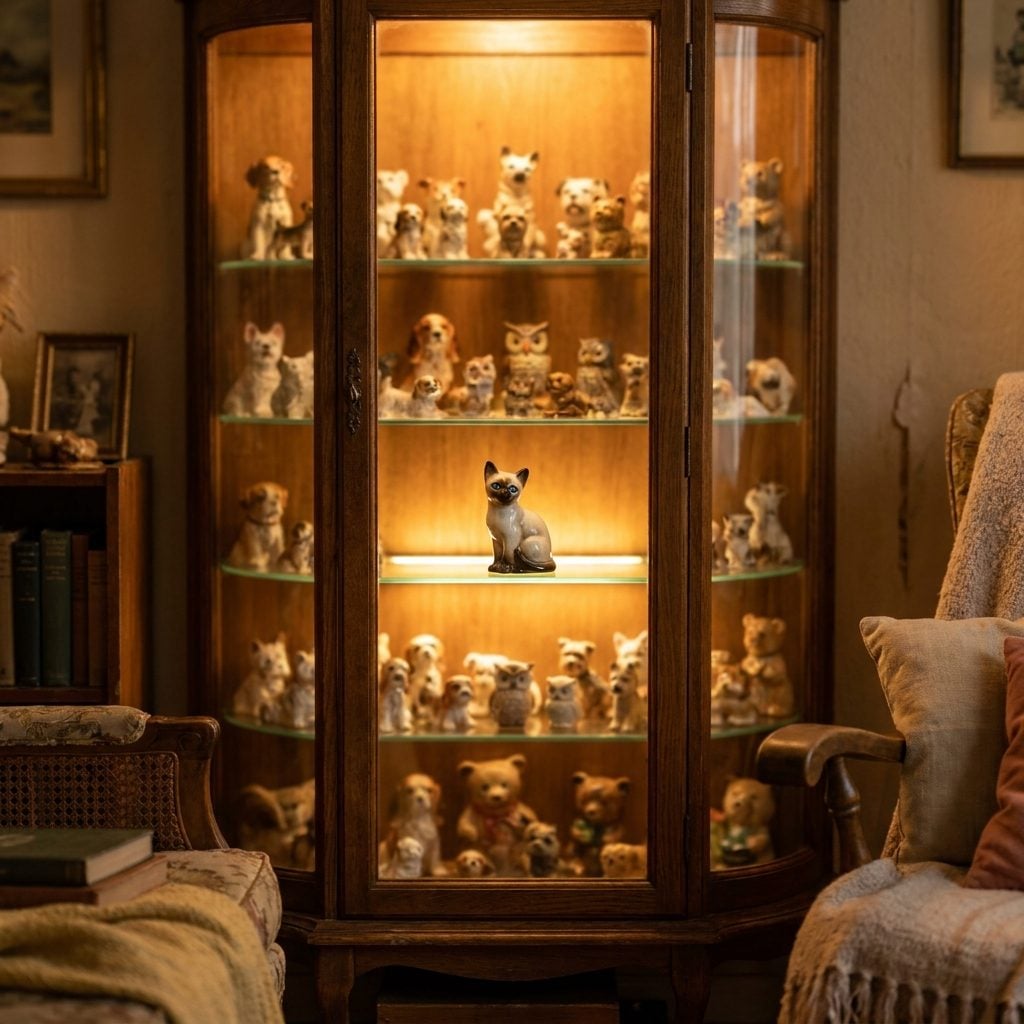
Every figurine has a story attached to it. The Siamese cat came from Niagara Falls in 1962, the Hummel was a gift from a sister-in-law, and the three Bambi deer got bought at the S.S. Kresge one at a time over three paychecks. Nobody but the person who owns them remembers any of this — which is the whole reason they’re still there.
The cabinet itself is worth more than everything inside it. You couldn’t pay her to admit that. Dusting happens on Saturdays, one shelf at a time, and each animal goes back exactly where it was.
16. The Living Room That’s Been Waiting for Company Since 1962
🔥 Would you like to save this?
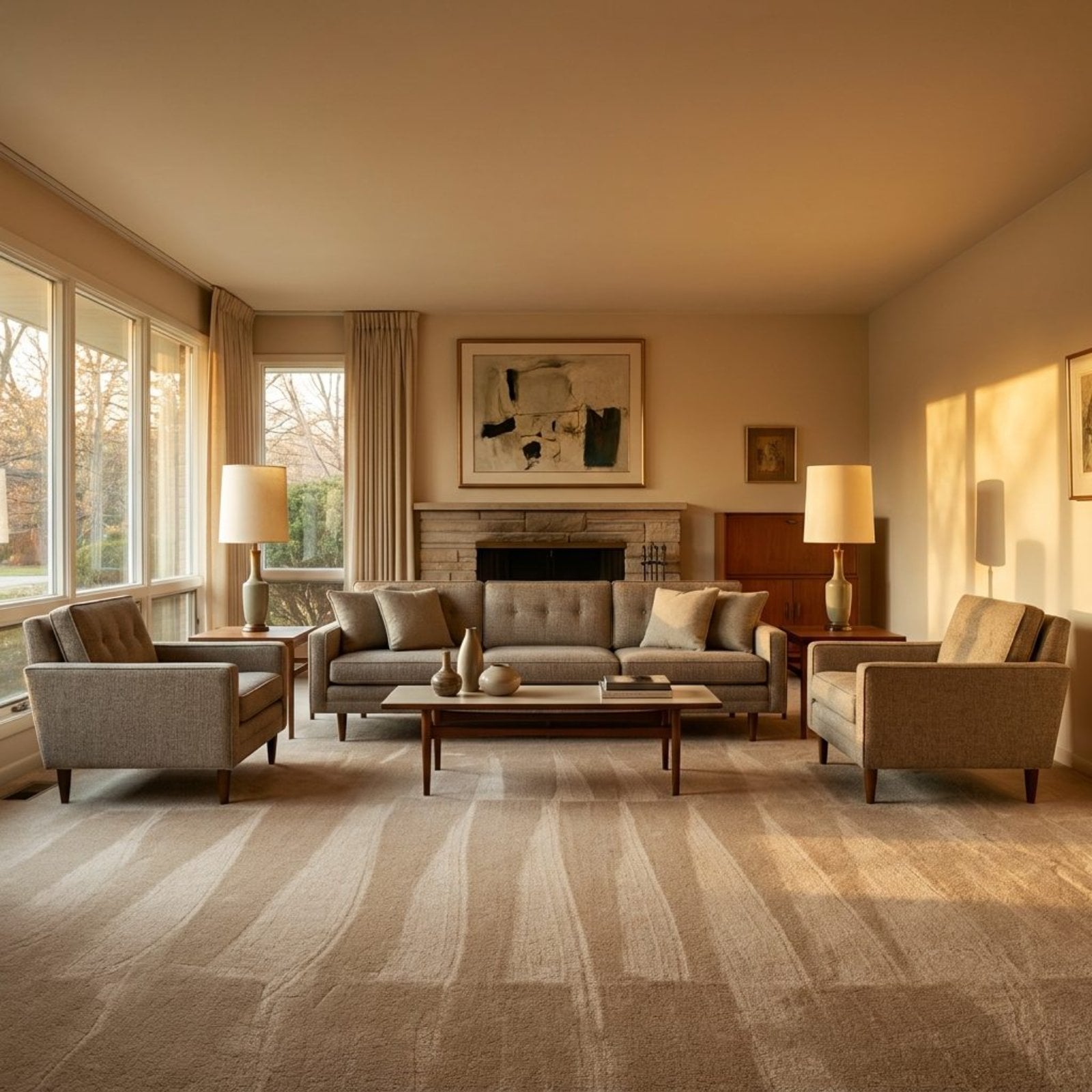
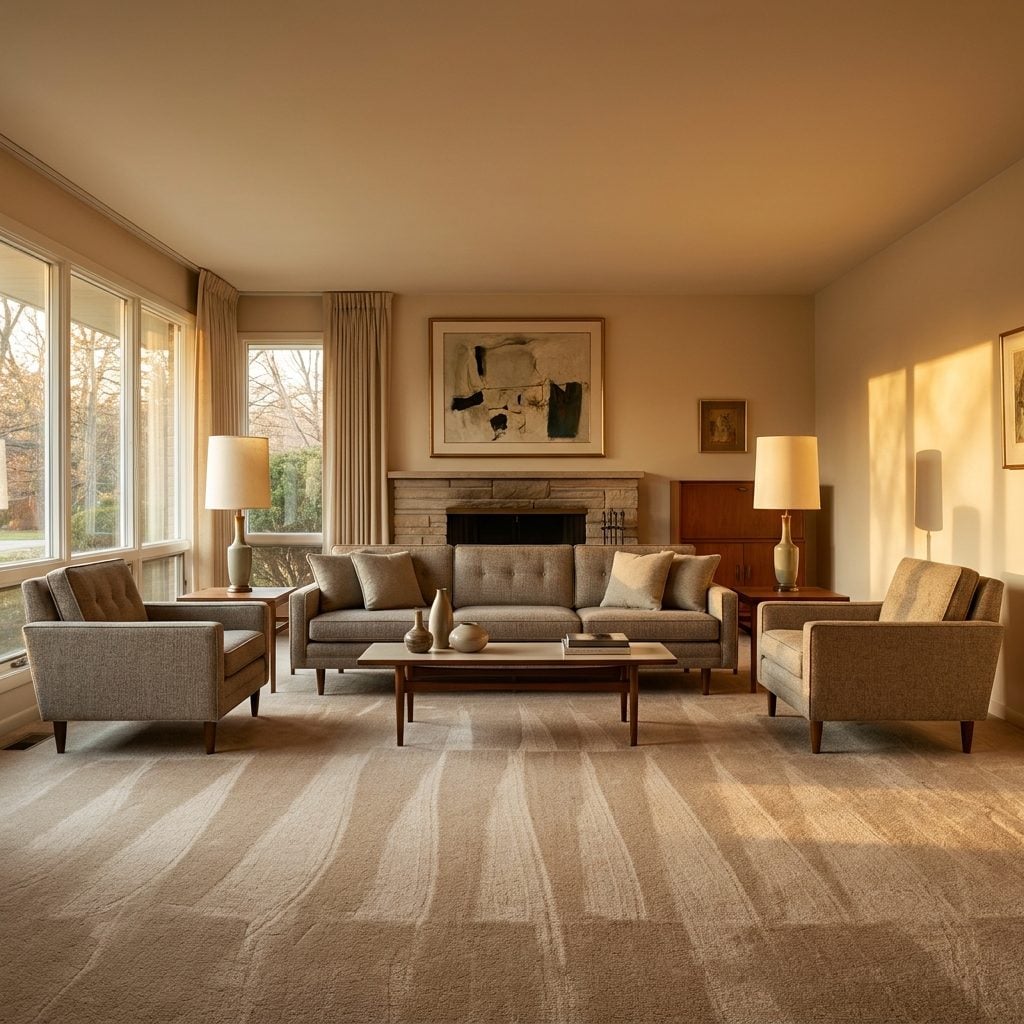
The couch is perfect, the pillows are karate-chopped, and the carpet has vacuum lines running in a single direction because nobody has walked on it since Tuesday. This is the room reserved for company that stopped coming around 1987, and it has been ready for their return every single day since.
What makes it work, in spite of itself, is the commitment. Furniture matches. Lamps match. Frames match. There’s no negotiation with trend, no ironic wink, no attempt to make it look collected over time — it was bought as a set and it has aged as a set, and there’s a strange dignity in that.
15. Framed Norman Rockwell Prints in the Hallway
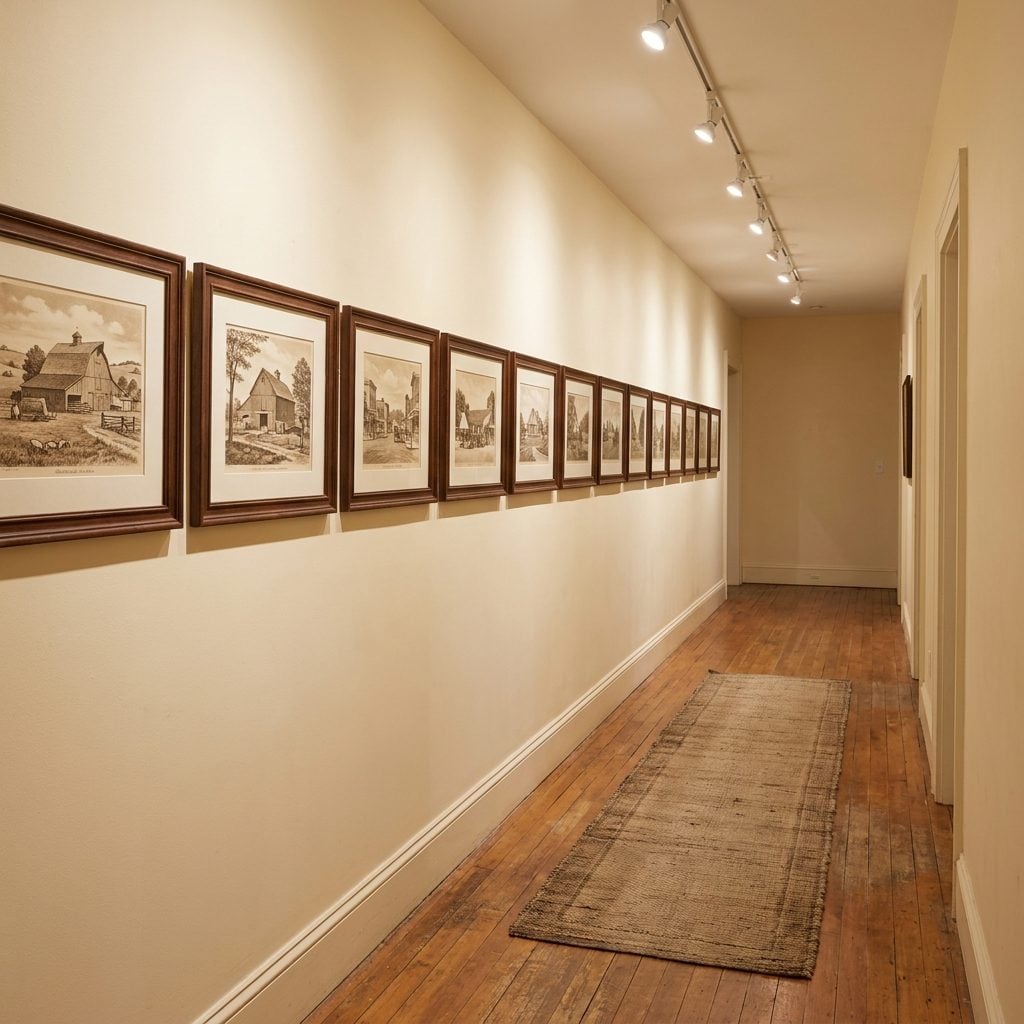
Always the same four or five prints. The doctor with the doll, the barber shop quartet, Thanksgiving, the girl with the black eye outside the principal’s office — ordered from a Sunday supplement in 1958 and framed at the local drugstore for two dollars each.
They don’t hang there because anyone thought Rockwell was the pinnacle of American art. They hang there because he painted a version of the country this generation actually remembered living in, or at least remembered wanting to. Less about art than about proof.
14. A Vanity in the Bedroom With a Padded Bench and Perfume Bottles
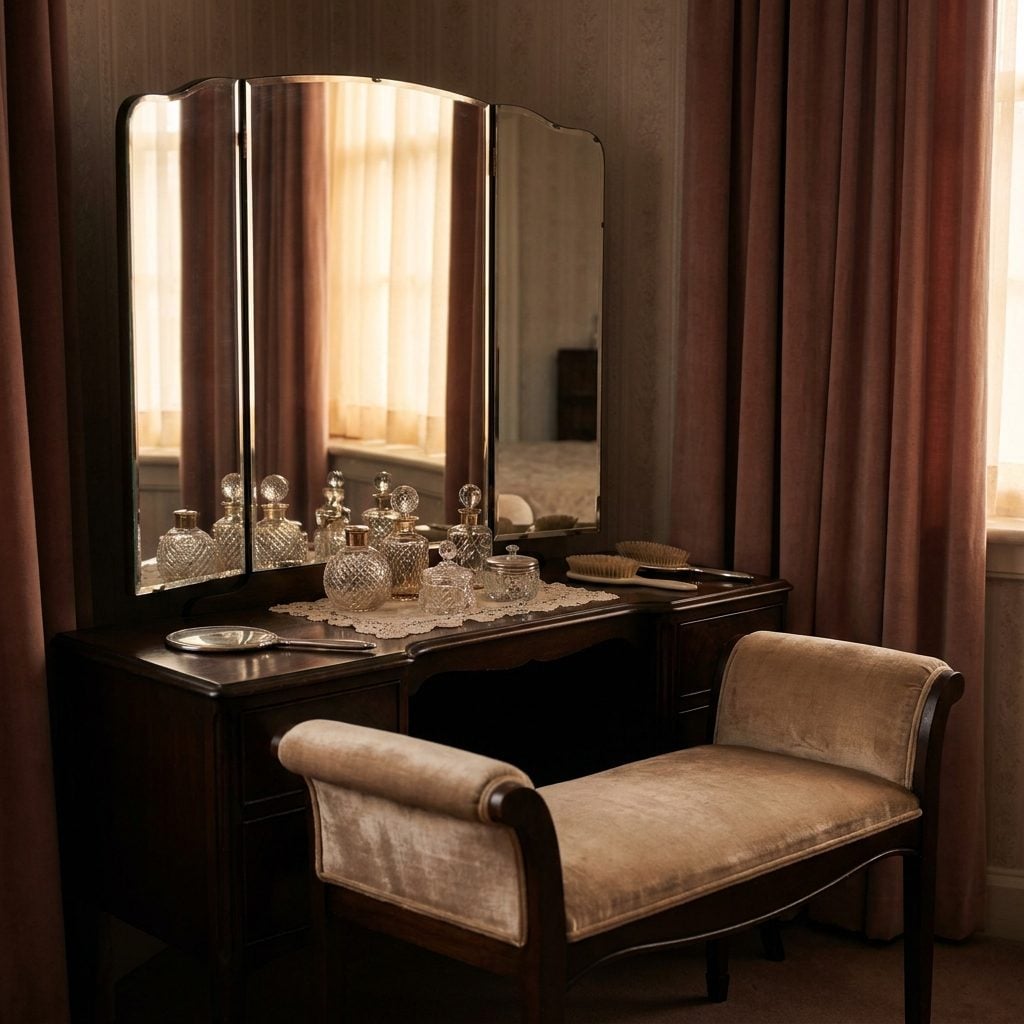
The bench is padded because getting ready was something you sat down for. Twenty minutes minimum — powder, rouge, lipstick blotted twice, hair set the night before in pin curls, a spritz of Evening in Paris on both wrists.
Perfume bottles on the tray are half-empty and have been for decades. The scent has turned. She still touches the stopper to her collarbone out of habit. The triple mirror shows three versions of the same woman, and she has known all of them for a long time.
13. The Hi-Fi Cabinet That Still Works and Nobody Believes It
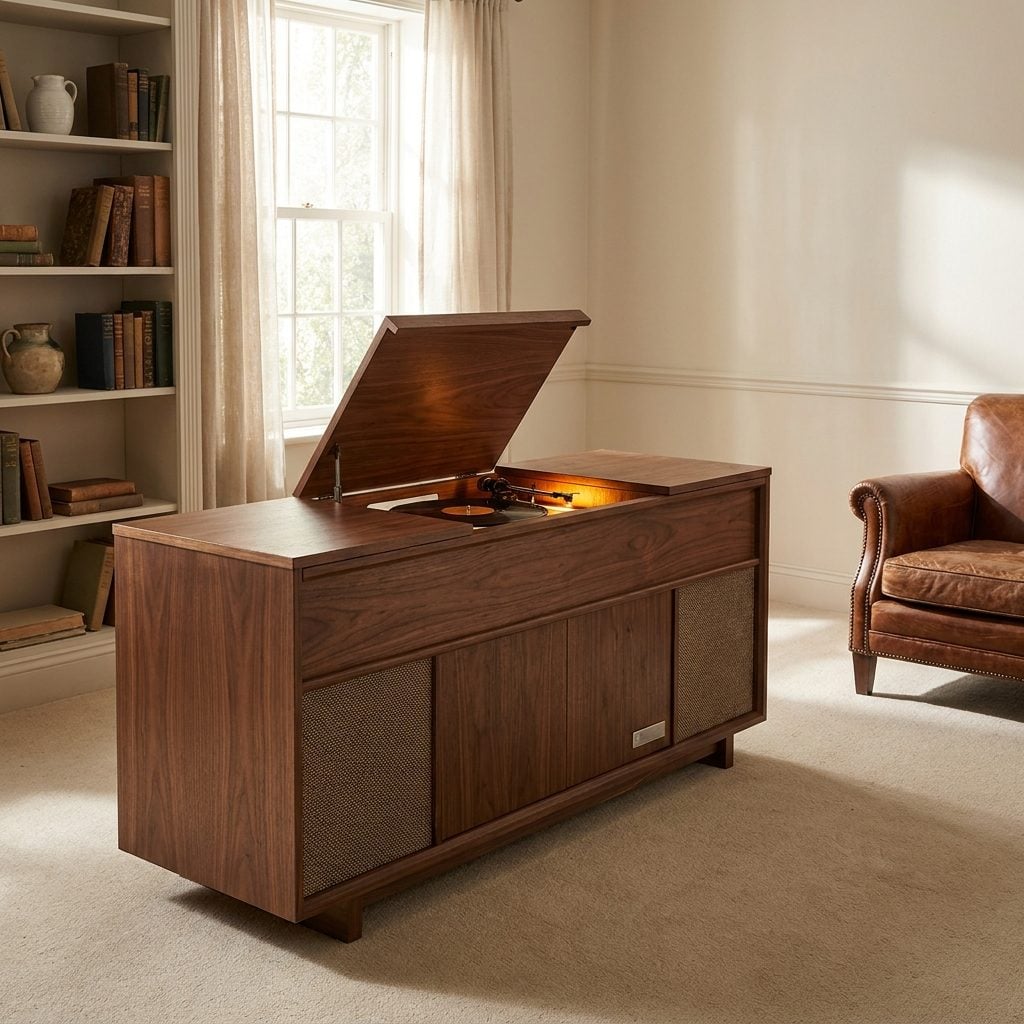
Magnavox, Zenith, Fisher. The console hi-fi was furniture first and electronics second, which is why they were built to last sixty years and did.
The tubes still warm up. The turntable still spins at 33 and 45, and the sound coming out of those built-in paper cone speakers is warmer than anything you’ll buy at a big-box store today — every audiophile who visits ends up on their knees in front of it. Nobody sold the cabinet because nobody could bring themselves to. It anchors the whole living room and always did.
12. Curtains, Valances, and Sheers All Doing Their Own Job at the Same Window
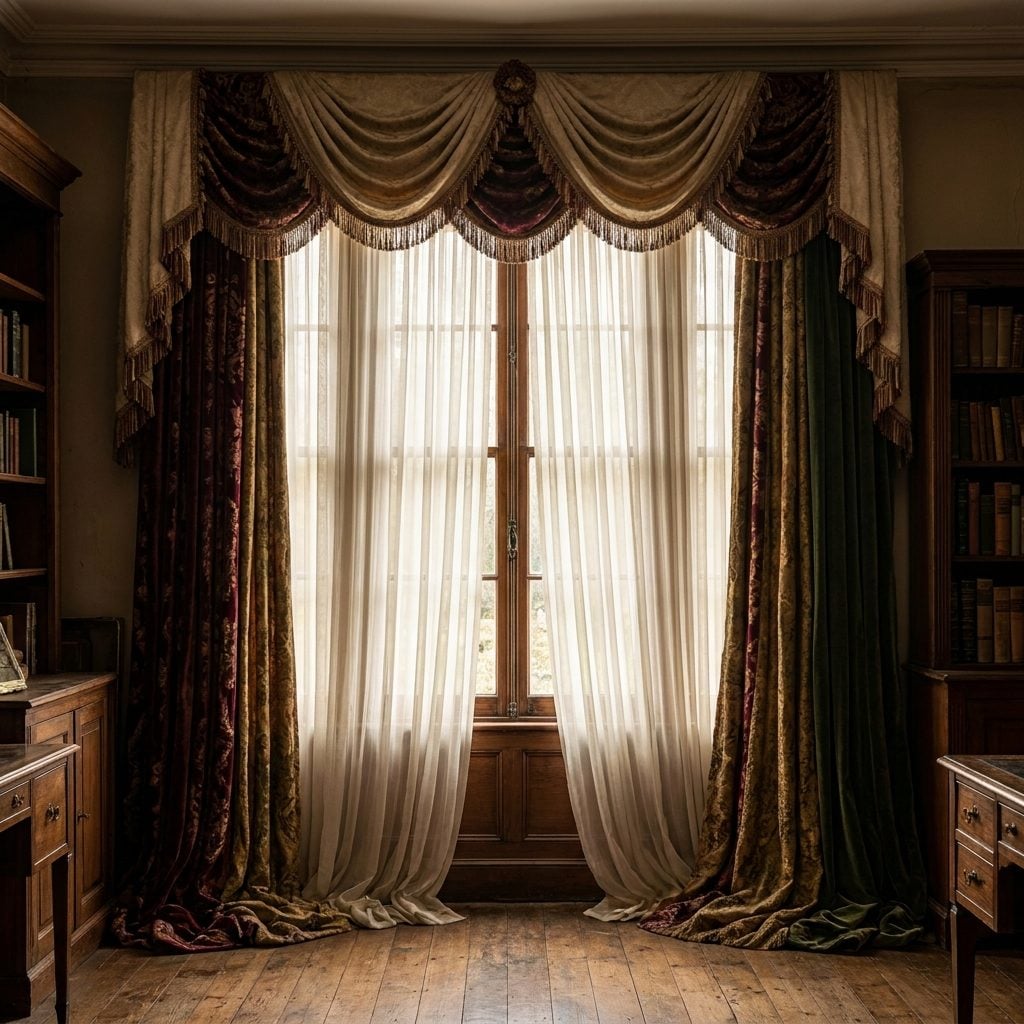
Three treatments. One window. Each with its own job description.
The sheers filter the light and hide you from the neighbors during the day, the drapes close at night for privacy and to keep the heat in, and the valance covers the hardware to give the whole thing a finished look — because a naked curtain rod was considered as unfinished as an unmade bed.
Modern minimalism sees clutter here. The person who hung them saw three problems solved at once with fabric she picked out at Sears and had made up by a local seamstress for twelve dollars a panel. She was right. Modern minimalism is wrong. The light coming through those sheers at three in the afternoon is the argument.
11. The Kitchen Table With a Boomerang Pattern on the Formica
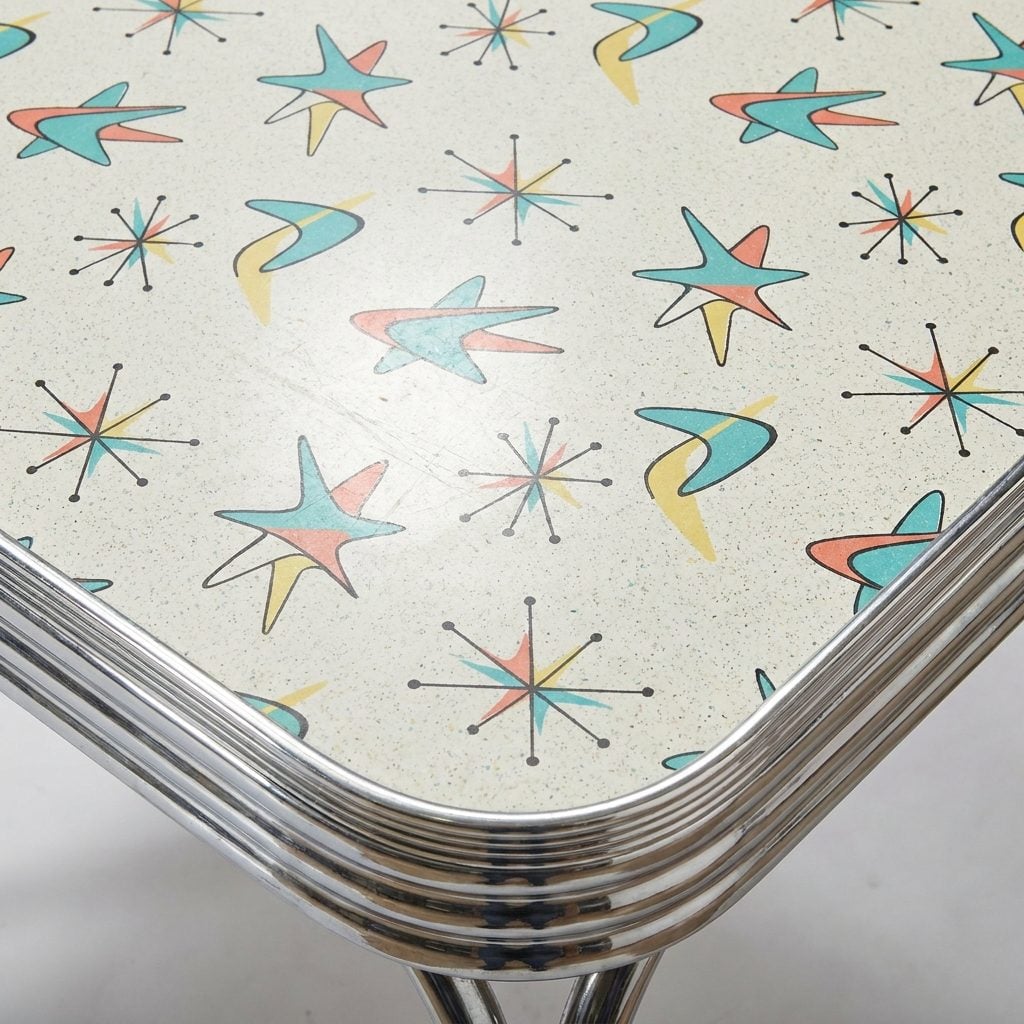
Boomerang. Amoeba. Atomic starburst. The pattern had a dozen names and Formica made all of them, in a color scheme somewhere between a diner and a science fiction magazine. This one is turquoise, coral, and charcoal — the most popular combination sold from about 1954 to 1961.
The tabletop has survived everything: hot casserole dishes, spilled homework, cereal, cocktails, a birthday cake with the frosting stuck to it in 1967. You cannot damage a Formica boomerang table. People have tried, on purpose and by accident, and the table wins every time.
10. A Full Set of Encyclopedias Somebody Actually Read
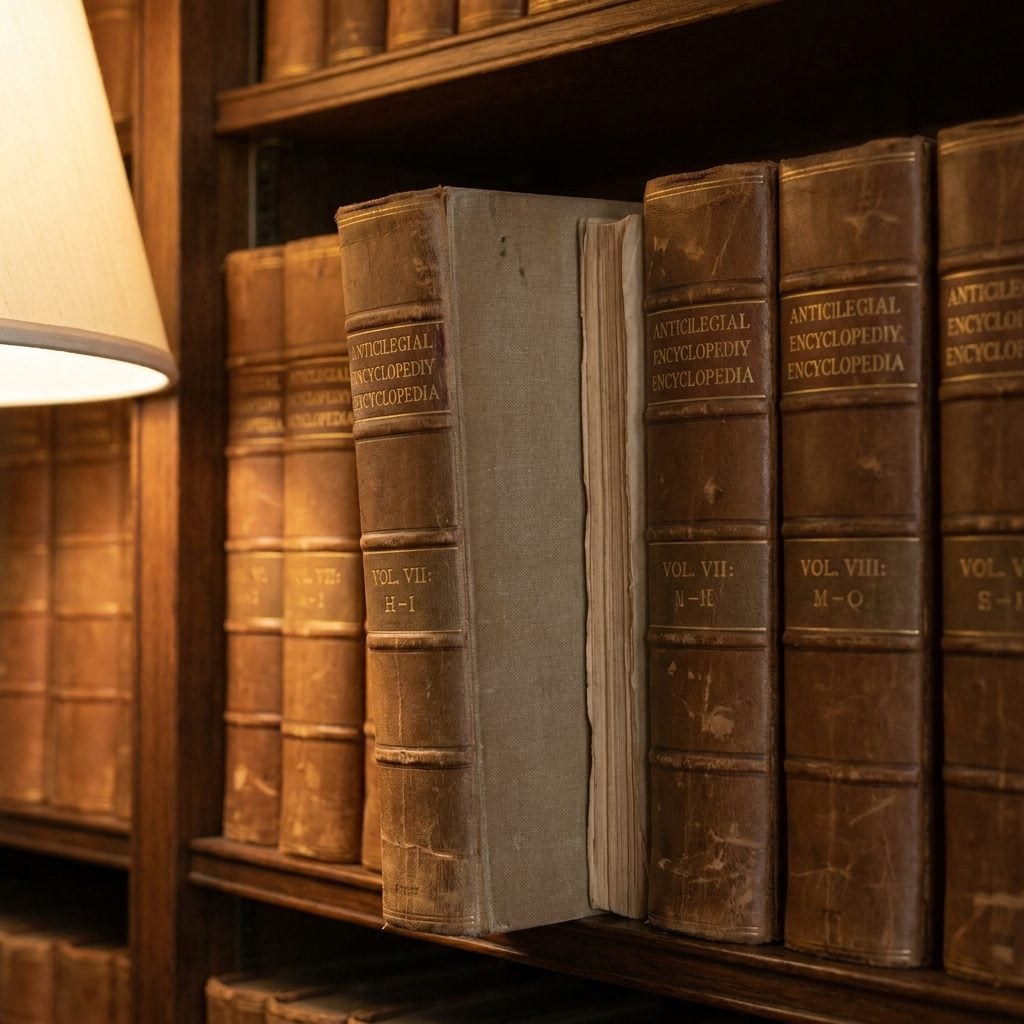
World Book, Britannica, Compton’s. Sold door to door by a young man in a tie, on a payment plan of eight dollars a month for eighteen months, because a family that owned an encyclopedia was a family that was going somewhere.
What makes this set different from any other set of encyclopedias in any other house is that this one got used. The spines on volumes A, B, and S are worn. Volume K has a coffee ring on it. The Yearbook volumes from 1960 to 1967 got added on and then stopped, which is when television did what television did. Those first twenty-two volumes taught somebody who wasn’t going to college most of what they knew about the world, and they earned every inch of shelf they take up.
9. The Guest Towels That Are Not for Guests or Anyone Else
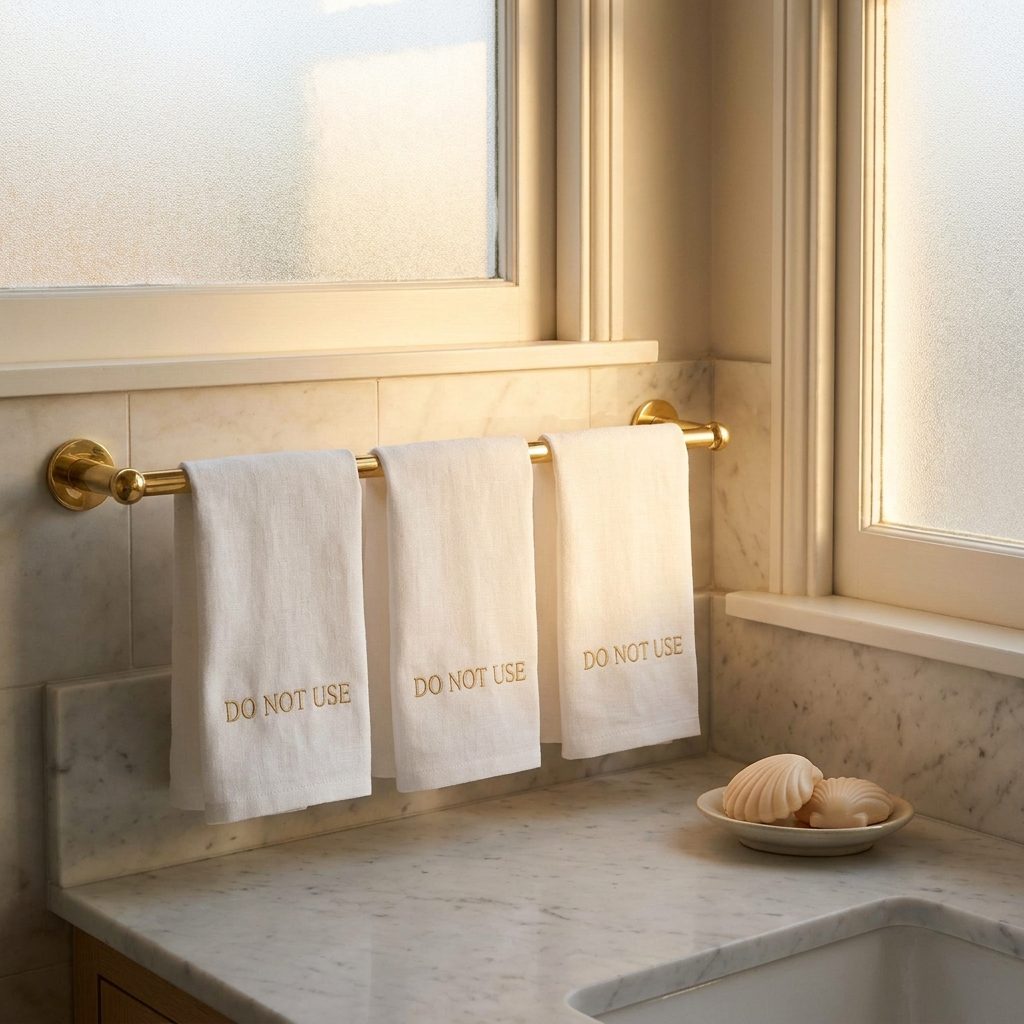
They are called guest towels. They are, in fact, for nobody.
A guest who tries to use one will be scolded, gently, and handed a regular towel from the linen closet. The embroidery was done by hand, probably by an aunt, probably during a long recovery from something in 1956. The lace was crocheted separately and stitched on. Together they represent something like forty hours of labor, and they exist to hang on a bar and be looked at.
The grandchildren find this maddening. It is also the entire reason the towels still exist. Function ruins things — she figured that out in 1955 and everyone else is just catching up.
8. Green Glass Everywhere You Look
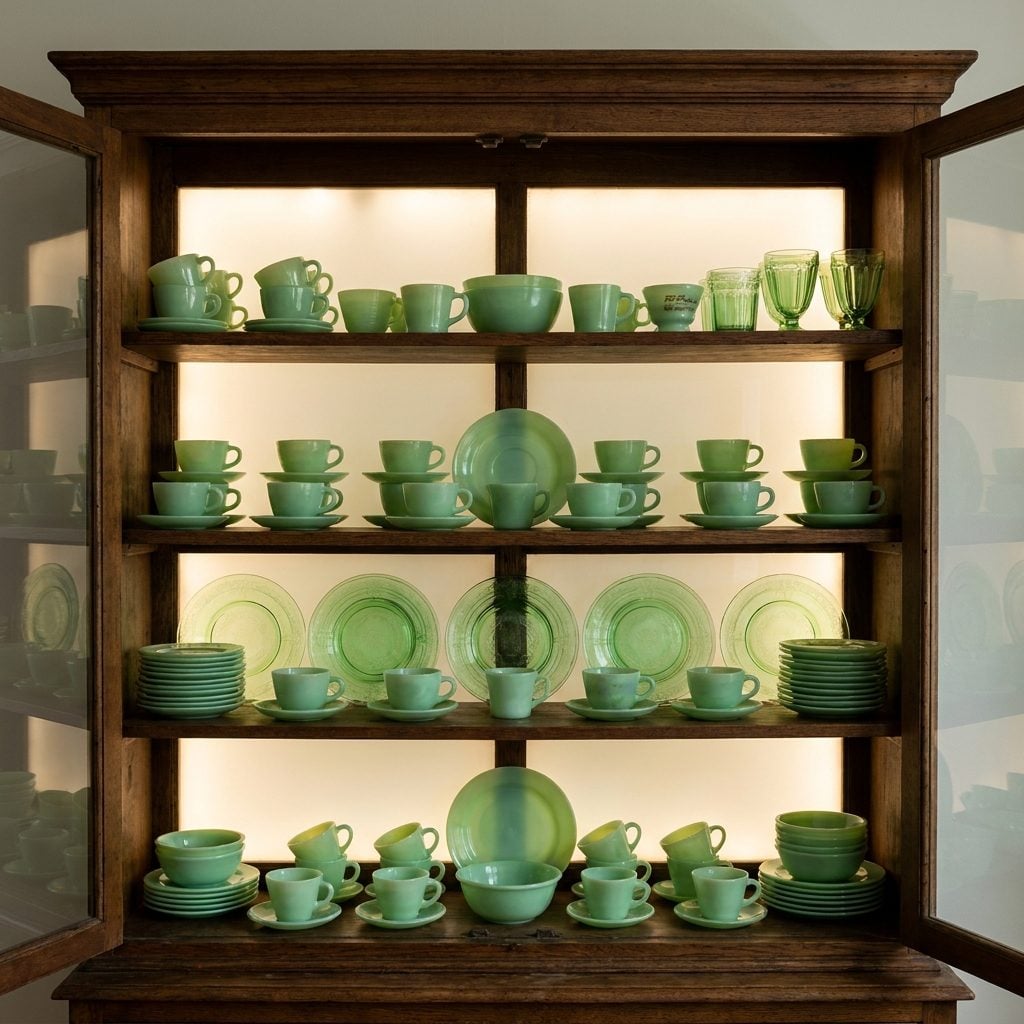
Jadeite, Depression glass, Fire-King mugs stacked five deep. If a home has a china cabinet packed with pale green glass, and the owner can rattle off which piece came from which aunt, somebody in that house came of age when green glass was the everyday china. It wasn’t precious then — it came free in oatmeal boxes.
What dates the era isn’t the collection. It’s that the pieces get used. Green tumblers come out for iced tea in July, the compote holds mints when company arrives, and the whole thing has museum energy with kitchen function.
7. A Coat Closet Organized Like It’s About to Be Inspected
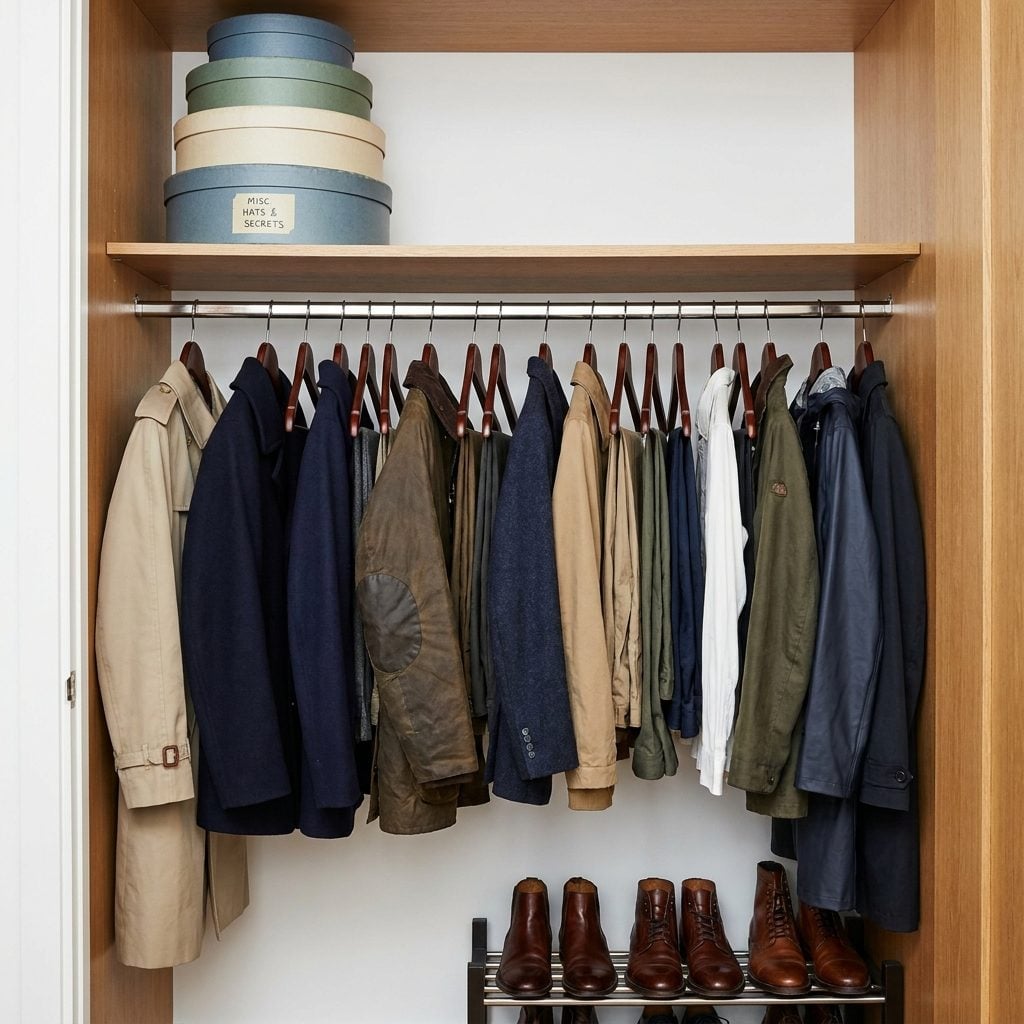
Coats spaced an inch apart, hangers all wooden and all facing the same direction, hat boxes graduated by size on the top shelf, shoes polished and paired below and pointed the same way.
This isn’t a Marie Kondo situation. She was taught at fourteen that a closet reflects the mind of the woman who owns it, and she has never once questioned the premise. The order is muscle memory. She would find your closet upsetting. She would not say so.
6. The Wallpapered Ceiling in a Room You Weren’t Ready For
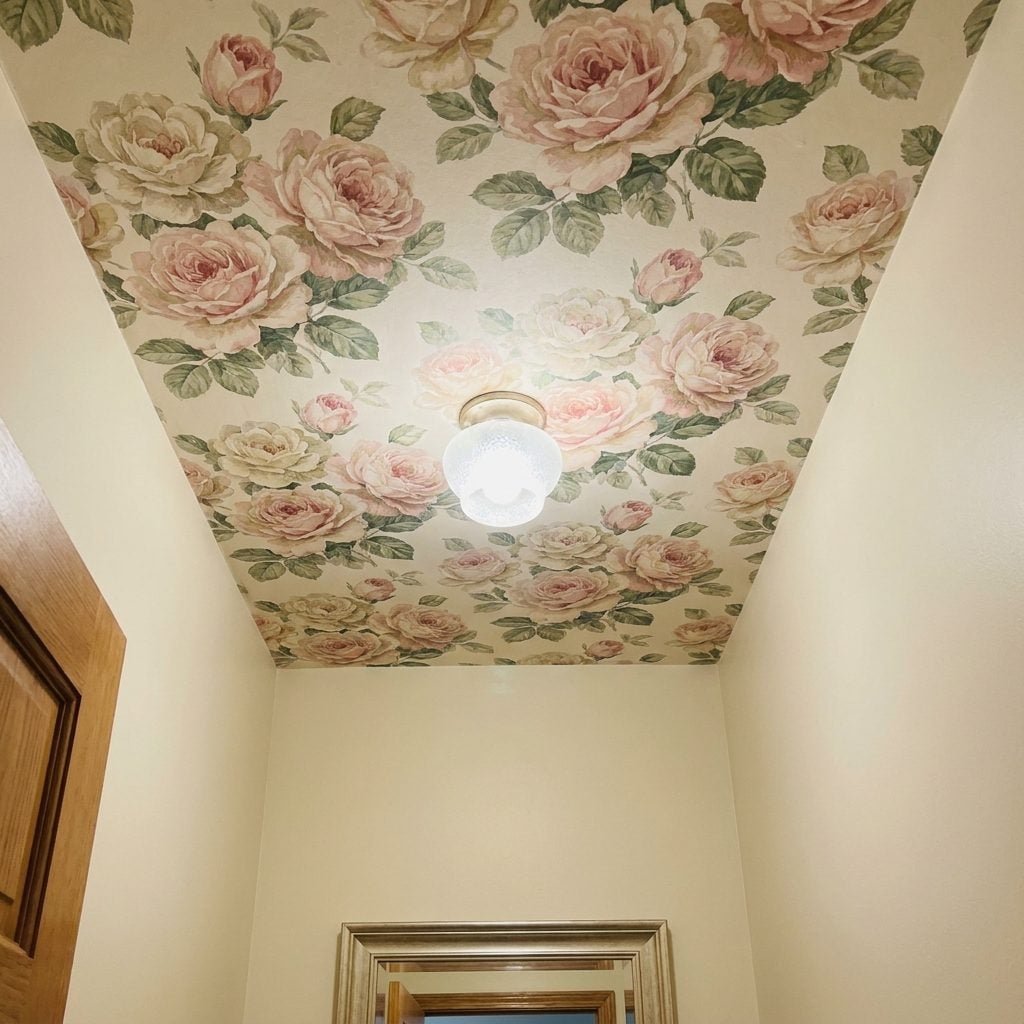
You walk into the powder room to wash your hands and something is wrong. You look up. Cabbage roses. Or a lattice. Or a repeating scene of Parisian street cafés in pale blue and cream, papered right across the ceiling.
Wallpapering the ceiling was hardly invented in the 1950s, but houses of the period sometimes pursued it with a commitment later decades struggled to match. It made small rooms feel like jewel boxes, and it made big rooms feel like a bit much. Either way, once you notice it, you can’t stop. Good bathroom decor from this era wasn’t afraid to swing.
5. Silver That Gets Polished on a Schedule
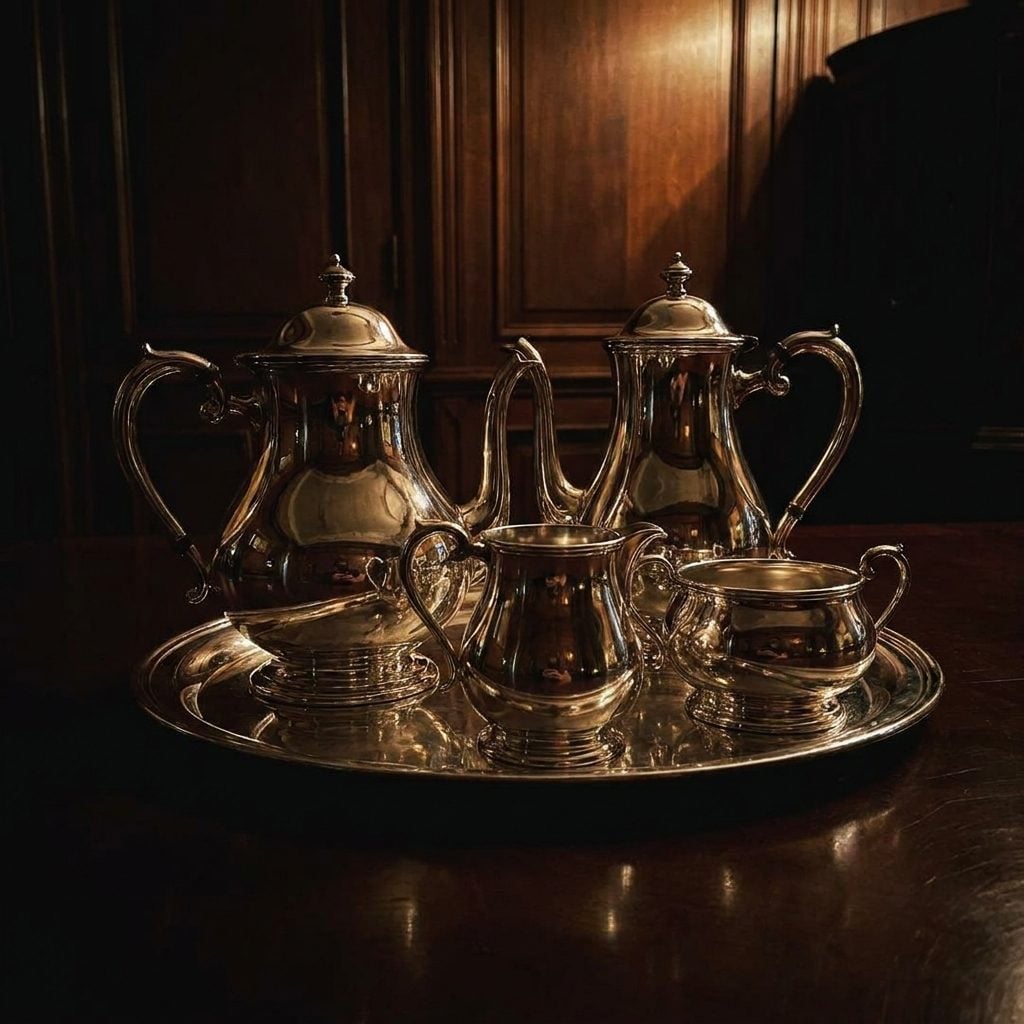
The silver isn’t for show. It comes out for Thanksgiving, Easter, and the birthdays that count. Between those days, it sits in a felt-lined chest that keeps it from tarnishing, and twice a year somebody sits down at the kitchen table with polish and a cloth and works through every piece.
Nobody teaches this anymore. Inherit silver from a grandmother who came of age in the 1950s and you also inherit her expectation that you’ll keep it polished. You probably won’t. She probably knows.
4. The Basement Rec Room With a Wet Bar and Wood Paneling
🔥 Would you like to save this?
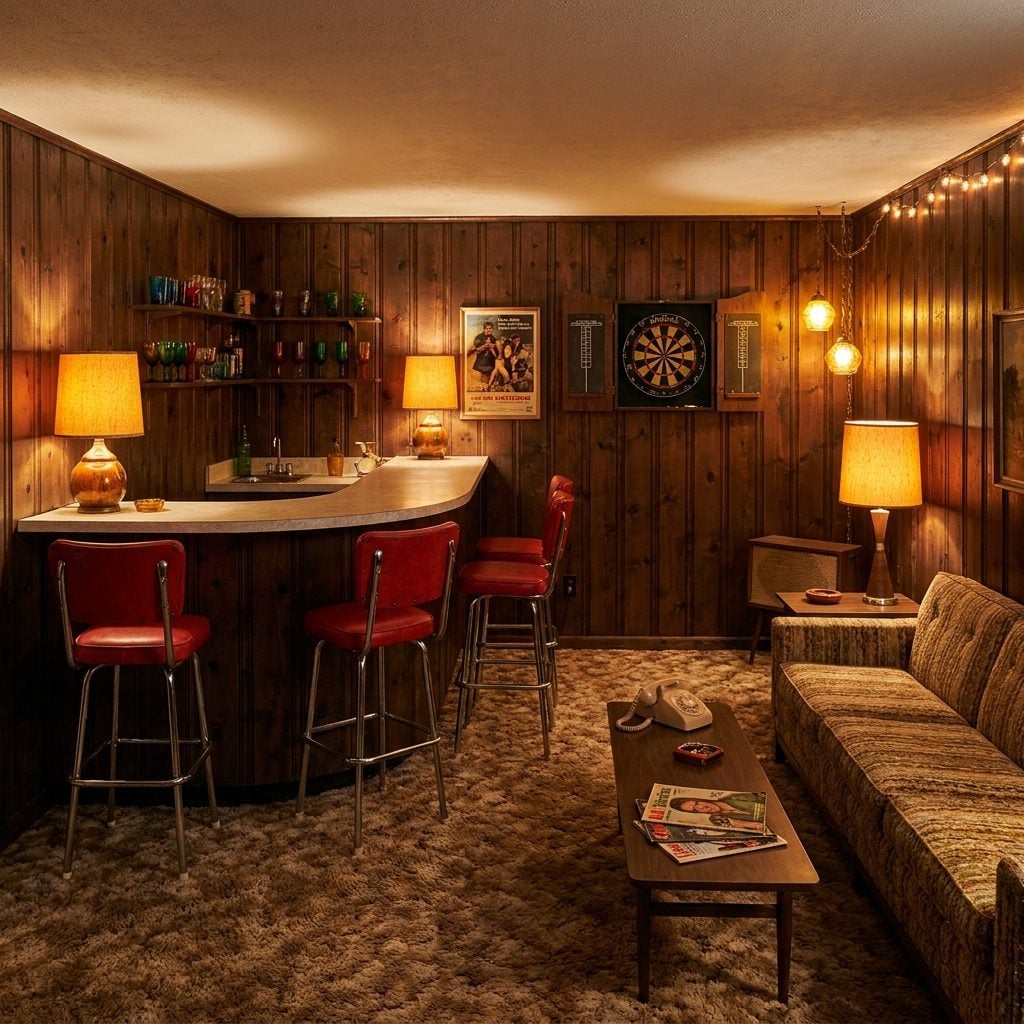
Wood paneling floor to ceiling, a wet bar with three vinyl stools, a dartboard in a wooden cabinet you swing open. Call it what you want — a man cave it is not. Man cave implies retreat, apology, the room the wife lets him have. This room predates the concept. This was where couples entertained, where the neighbors came over for highballs, where kids were allowed exactly one hour of the party before being sent upstairs.
The wood is knotty pine. Lighting stays warm and indirect. The bar is stocked with rye, gin, and vermouth, because those are the things people actually drank. If a home still has one of these rooms intact, somebody in that house made the right call decades ago and left it alone.
3. Ashtrays in Rooms Where Nobody Has Smoked in Thirty Years
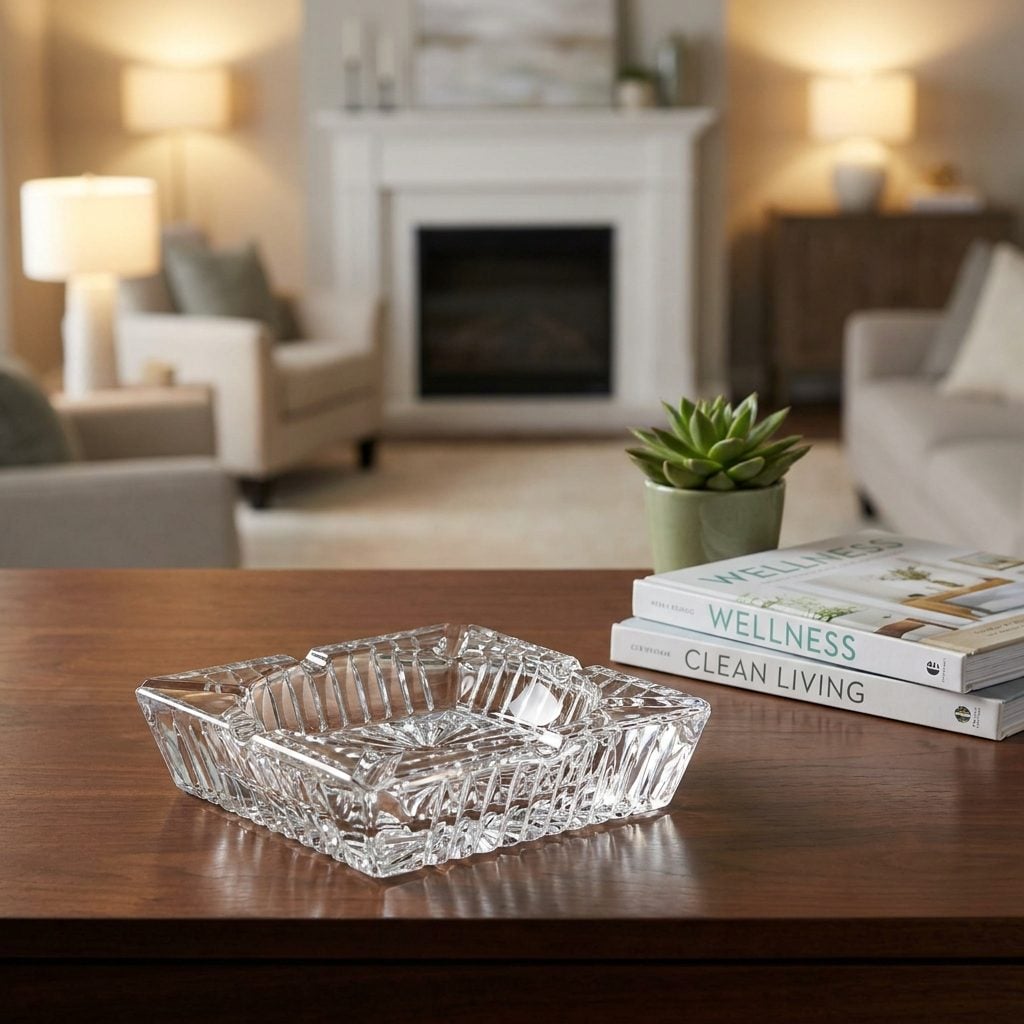
A crystal ashtray on the coffee table. Another, ceramic with a hand-painted rose, by the reading chair. A brass table lighter shaped like a lantern. Nobody in the house has smoked since Nixon resigned.
They stayed because they were nice. Cut crystal, hand-painted porcelain, brass ones with hinged lids — they cost real money in 1958 and throwing them out felt wrong. So they became candy dishes, key trays, or just objects sitting where they were left forty years ago.
2. A Sewing Room That’s Still Fully Operational
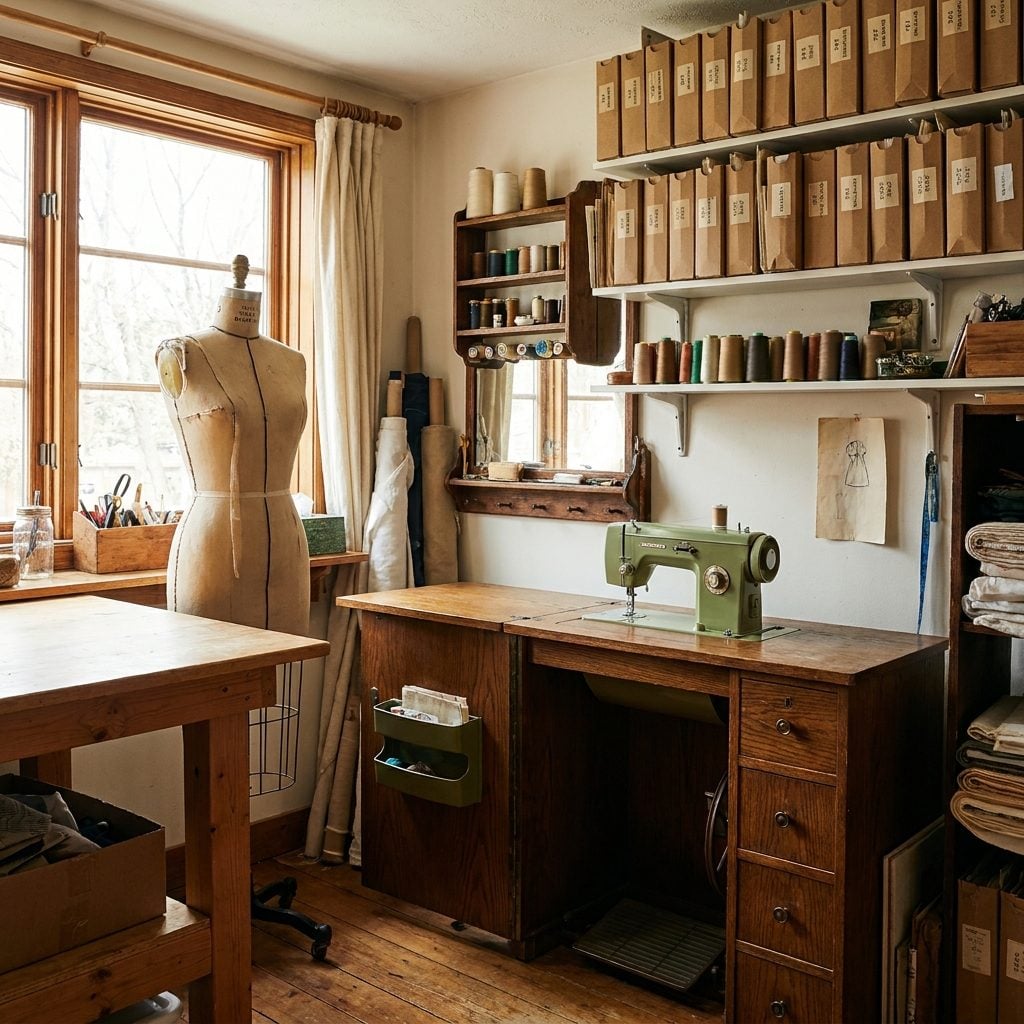
Dress form in the corner. A Singer built into its own cabinet — avocado green, still working. Pattern envelopes filed by number in a wooden drawer, and buttons in a mason jar because you never know.
Sewing at home wasn’t a hobby in 1955. It was how you clothed a family that wasn’t rich, and a woman who came of age then can still hem a pair of pants in the time it takes you to find scissors. She has opinions about your seam allowance. The room might officially be a guest bedroom now, but the machine is still out and the tomato pincushion is still on the desk — even a small bedroom decor setup couldn’t crowd out the essentials of her craft.
1. The Front Door Opens Onto a Foyer That Means Business
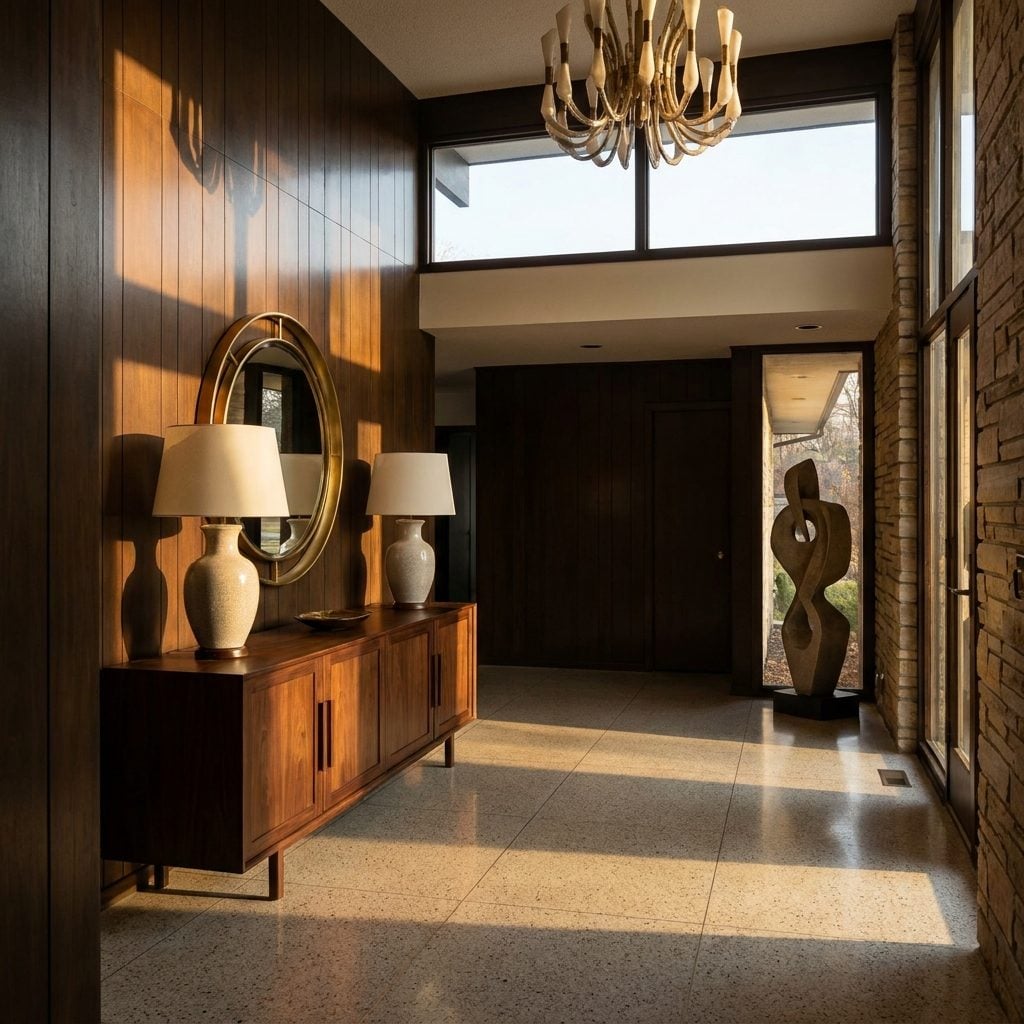
The foyer has a job. Not a mudroom, not a landing spot for Amazon boxes, not somewhere to kick off shoes — it’s the room that meets you at the door and tells you, before you’ve taken three steps, what kind of house you’ve walked into.
A demilune table against the wall. A lamp with a pleated silk shade, always on. A mirror at exactly the right height to check yourself before you knock on the interior of your own home. Maybe a calling-card tray, kept because it was a wedding gift in 1957 even though nobody has left a calling card in this century. The floor is marble or a very good imitation, and the rug is a runner, and it’s straight because somebody straightens it.
You walk in and you know. This house has a front and it has a back and it has never confused the two.