🔥 Would you like to save this?
The catalog called it “Avocado.” On the wall it read closer to a very confident olive, and nobody blinked. You picked a dominant finish—usually harvest gold or avocado—and then let the whole kitchen fall in line: fridge, range, the little clock radio on the counter, the phone bolted to the wall. That room had a hum, a specific one, and a smell of coffee left too long on the burner. What follows will drag all of it back up.
32. The Avocado Refrigerator That Held the Family Together (and the Jell-O)
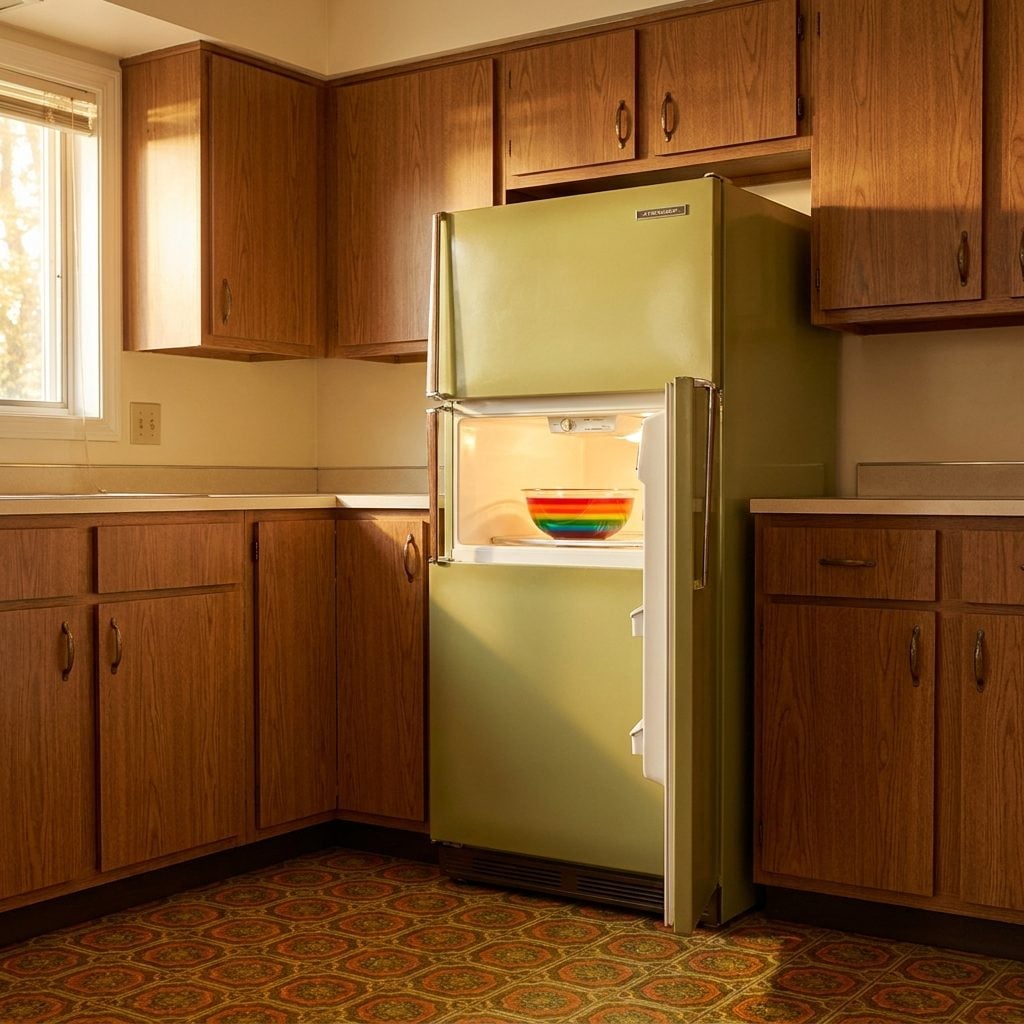
You heard it before you saw it. That low avocado hum from the corner ran day and night, holding the milk and the leftover meatloaf and the covered dish of lime Jell-O with shredded carrot in it that somebody’s aunt swore up and down was a salad.
In order to come up with the very specific design ideas, we create most designs with the assistance of state-of-the-art AI interior design software. Also, assume links that take you off the site are affiliate links such as links to Amazon. this means we may earn a commission if you buy something.
The door was a family bulletin board. Report cards under a plastic strawberry magnet, a dentist appointment card, forty crayon drawings taped in overlapping layers until the green underneath was just a rumor. The freezer up top froze everything into a solid rectangle, and you accepted this.
31. The Hand Mixer That Beat Every Box of Duncan Hines Into Submission
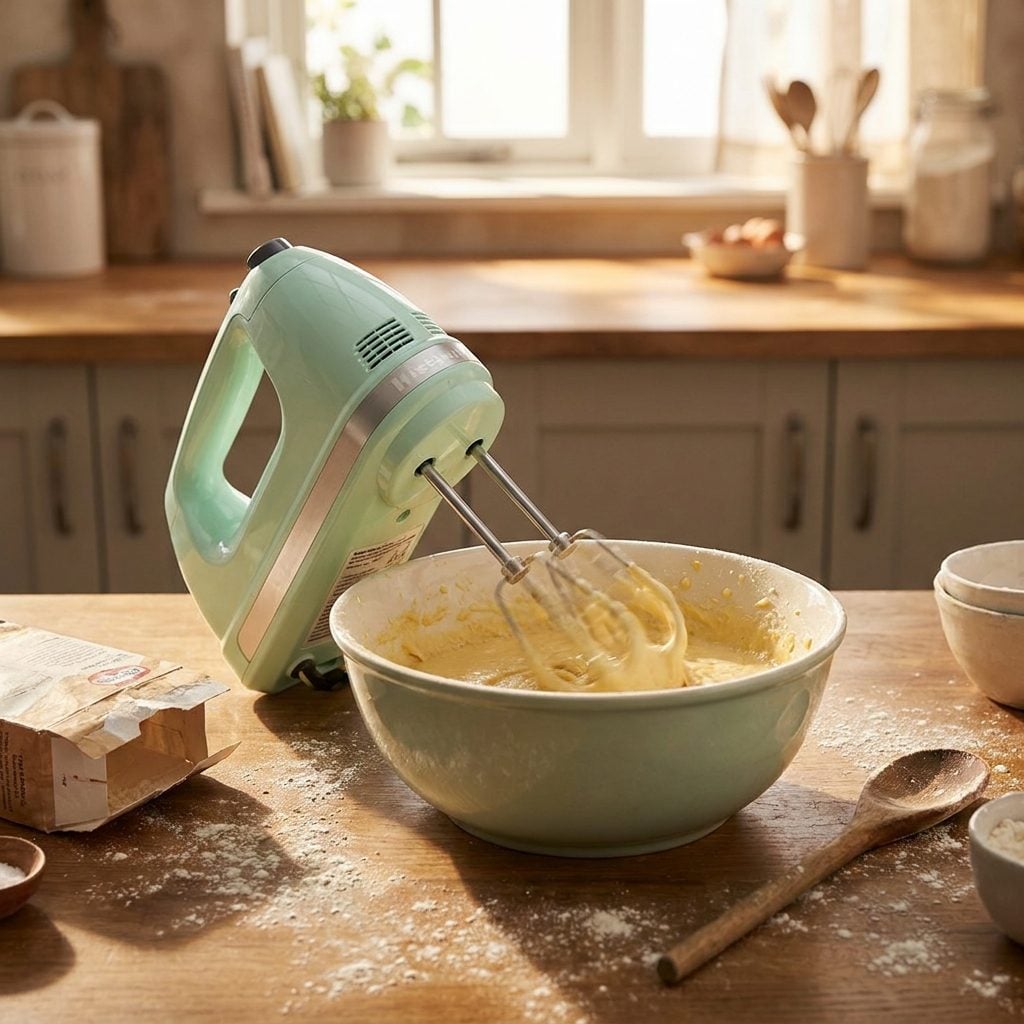
Two beaters, a five-speed switch, and a body the color of a school bus that had seen a hard year. You pulled it from the drawer maybe once a week, usually because a box on the counter said beat on medium for two minutes. So you did. Batter climbed the beaters and flecked the backsplash, and there was always that one drip on the cabinet door that stayed put until spring.
The cord was too short and by minute three the motor gave off a faint hot smell. Nobody minded. You licked one beater, the kid licked the other, and that was the whole negotiation.
30. The Geometric Vinyl Floor You Could Mop in Thirty Seconds Flat
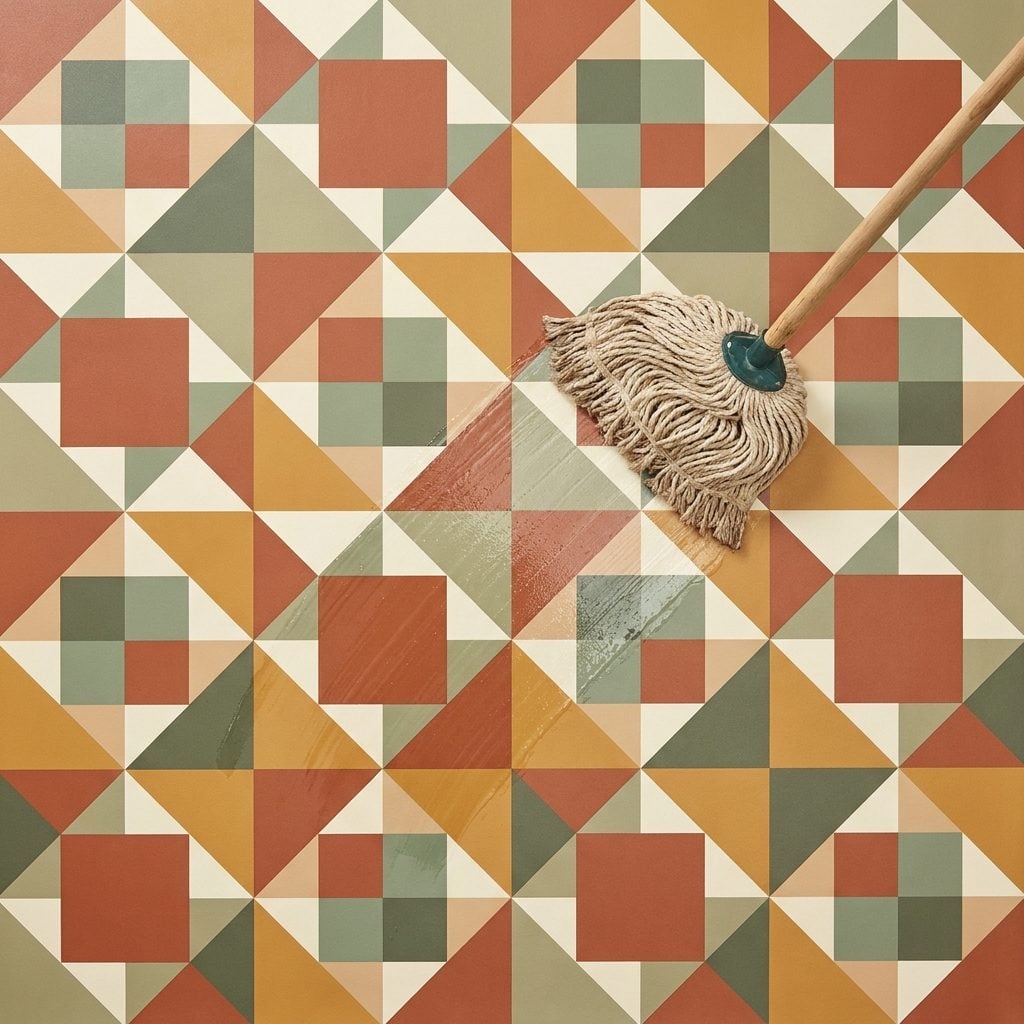
Warm gold hexagons, amber diamonds, a brown-and-cream pattern that looked engineered to hide dropped toast—because it was. This floor had one job and it did it without complaint.
The sheet vinyl ran wall to wall in a single piece. No grout lines to scrub, no tile to chip. Drag a mop across it after dinner and the whole thing came clean while the dishwater was still warm. What I remember most is the slightly tacky feel of it under bare feet on a summer morning, and how it stayed cool no matter how hot the oven ran. Cheap, forgiving, and honestly a little ugly in the best way.
29. The Harvest-Gold Electric Range With Coil Burners You Learned to Fear
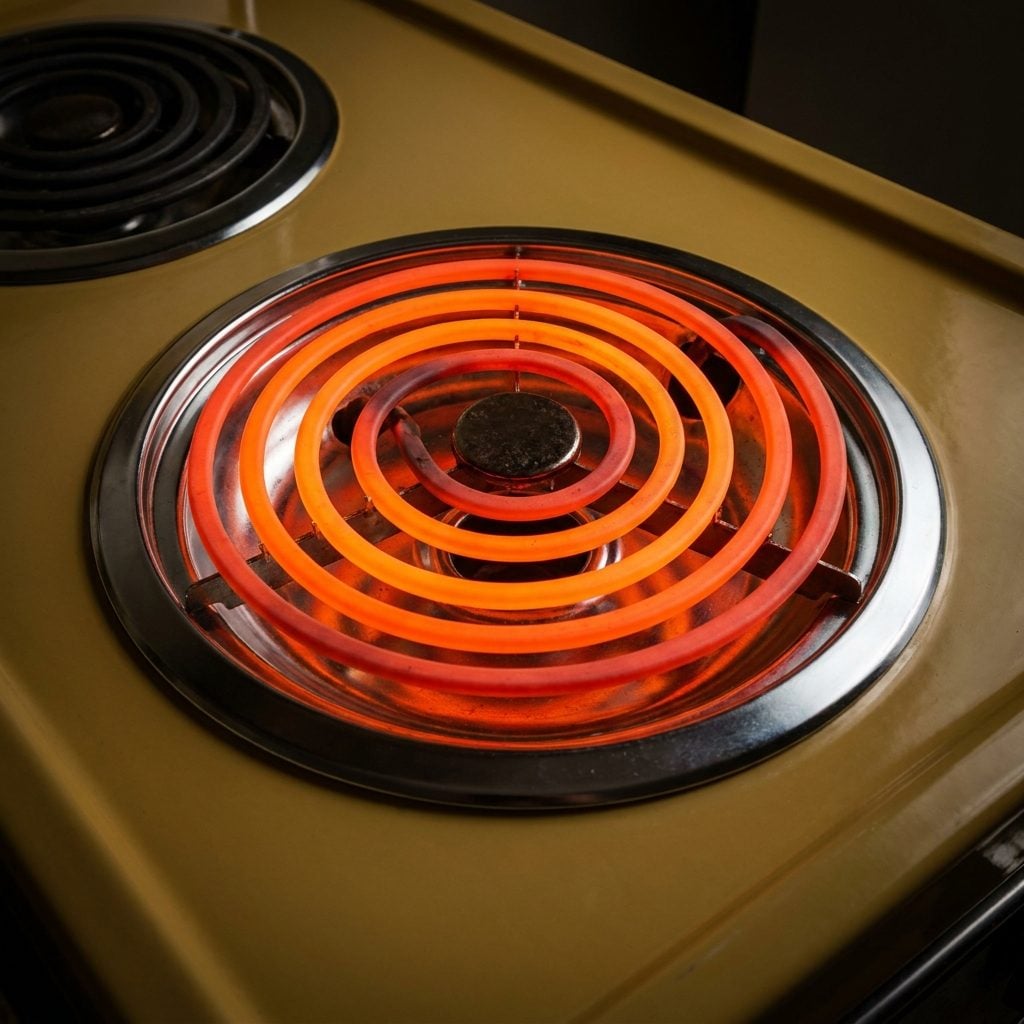
The front-left burner was always the fast one, and everybody knew it. You didn’t read a manual. You learned the personality of your own stove the way you learned which stair creaked.
Those coils glowed a deep orange when they meant business, and the chrome drip pans underneath caught a lifetime of boil-overs no scrubbing ever fully reversed. You wiped them, soaked them, and eventually accepted that company would see the least-damaged ones.
The clock on the backsplash was almost never right. Nobody set it—it blinked or sat frozen at some hour from a power outage two summers back, and dinner still made it to the table on time.
28. The Sunburst Wall Clock With Brass Rays That Watched Over Breakfast
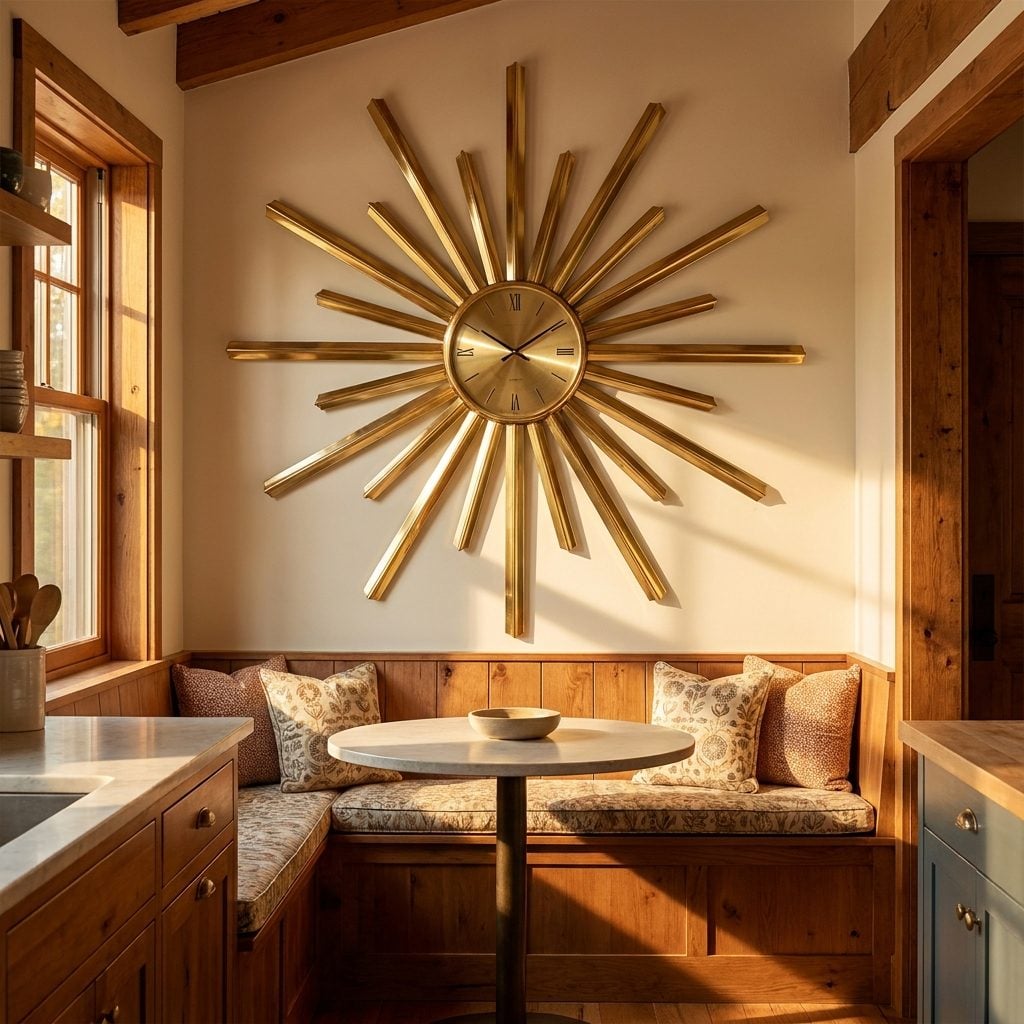
Those spokes shot out in every direction, some brass, some walnut, one or two bent a little from a move that went sideways. It hung above the breakfast nook and pulled double duty as art. Who bought a plain round clock in 1974 when you could own a small sun instead?
You checked it over cereal, checked it again while the coffee gurgled. The second hand swept instead of ticking loudly, leaving the fridge hum and somebody scraping toast as the main sounds in the kitchen at 7 a.m.
27. The Chest Freezer in the Garage Holding Half a Cow
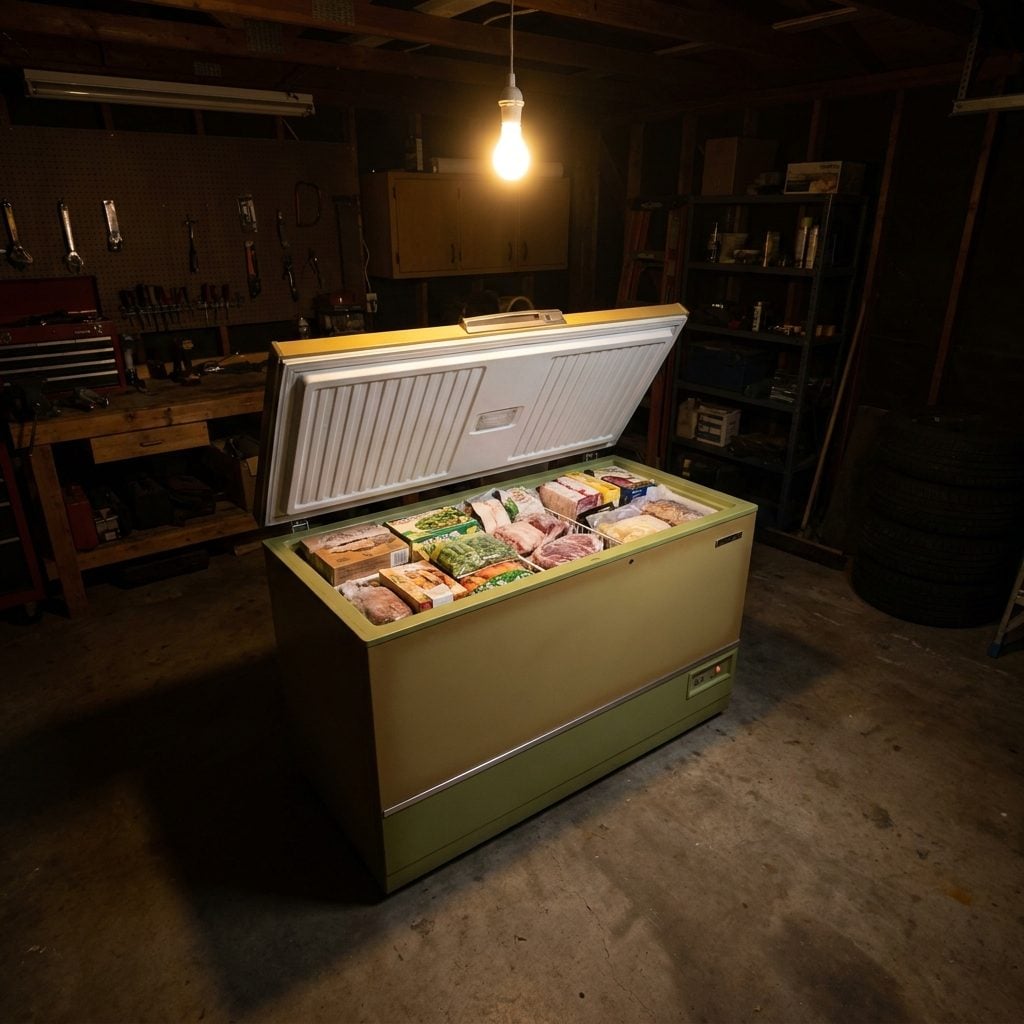
It lived in the garage or the basement, humming in the dark, and inside was a family’s entire strategy against uncertainty. Half a cow bought straight from a farmer. Casseroles frozen for a funeral that hadn’t happened yet. A wedding cake tier from 1971.
You had to lean way in to reach the bottom, half your body disappearing into the cold, digging past ice-crusted packages you couldn’t identify. There was always at least one mystery parcel down there so long it had become archaeology.
The lid was heavy. It closed with a solid, satisfying thunk, sealing everything back into the frost.
26. The Toaster Oven That Handled Everything the Big Oven Couldn’t Be Bothered With
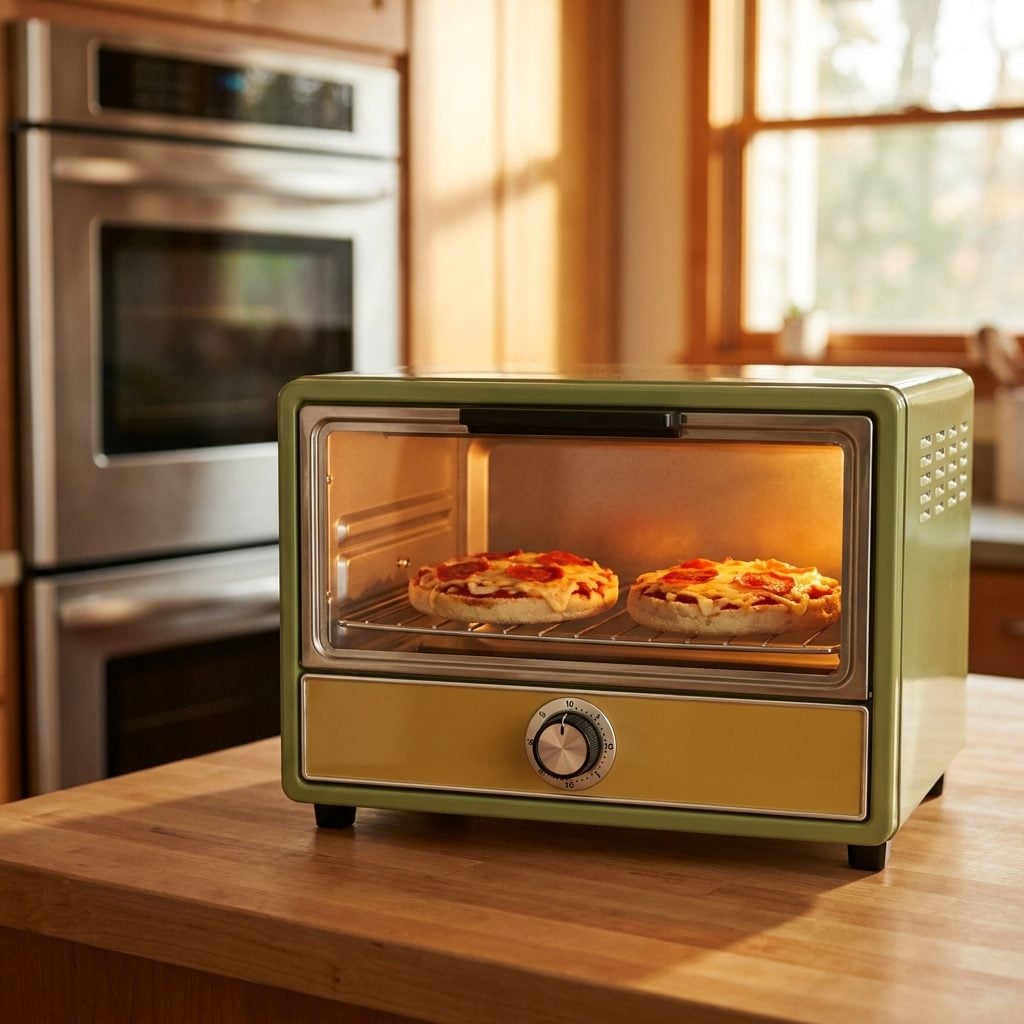
Nobody was firing up the big oven for two English muffin pizzas. That’s what the toaster oven was for. It sat there with its glass door and its little dial, doing the honest, unglamorous work of melting cheese onto things.
The glass fogged, then cleared to reveal whatever was bubbling inside. There was always a burnt spot on the tray from something that dripped in 1974 and never fully came off. Come Thanksgiving it moonlighted as a second oven when the real one was packed.
25. The Coordinated Countertop Set You Bought All at Once
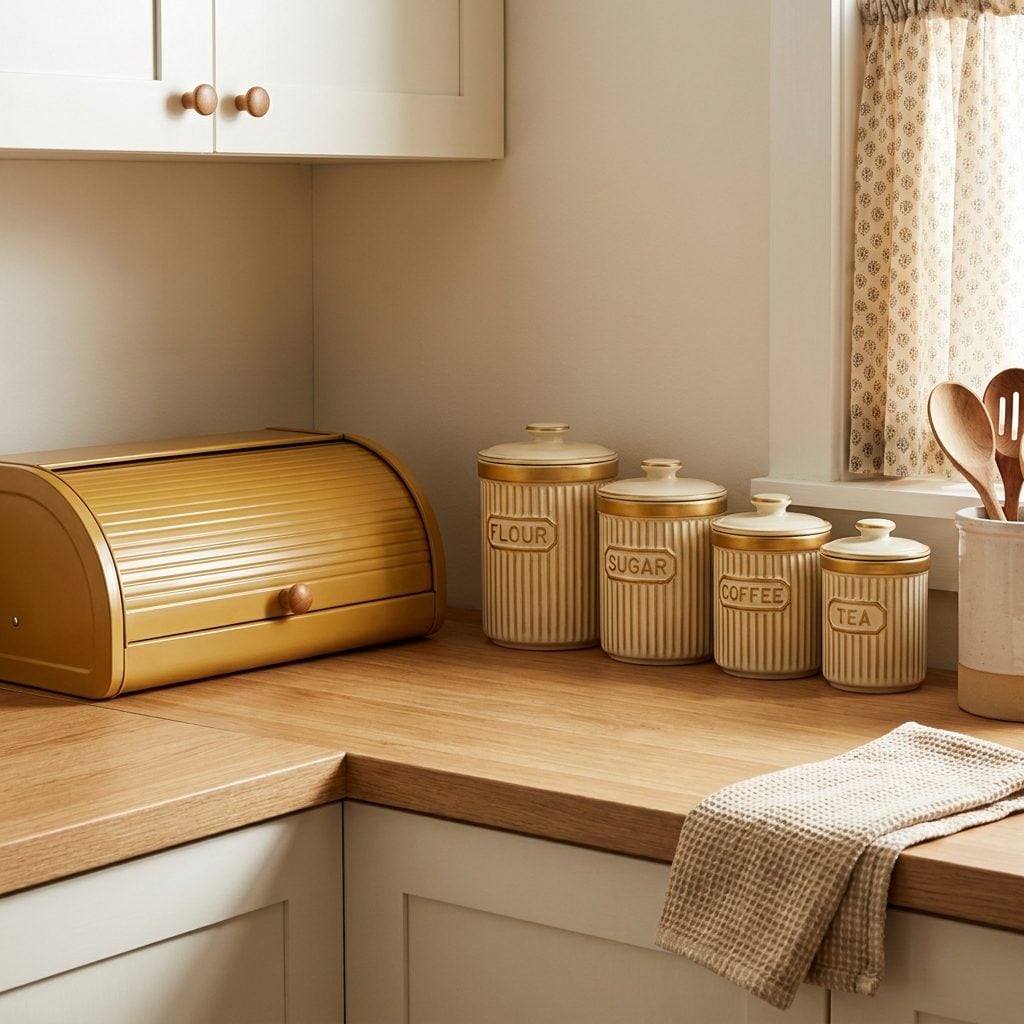
Here was a counter with a plan. The bread box, canisters, salt and pepper, and sometimes even the paper-towel holder arrived in the same finish, bought together so nothing had to be chosen twice.
That was the appeal: one purchase turned an accumulated countertop into a magazine-ready arrangement. Matching was not subtle, but it was efficient. The whole surface looked settled before anyone had put a single ingredient away.
24. The Built-In Wall Oven That Made the Kitchen Feel Custom
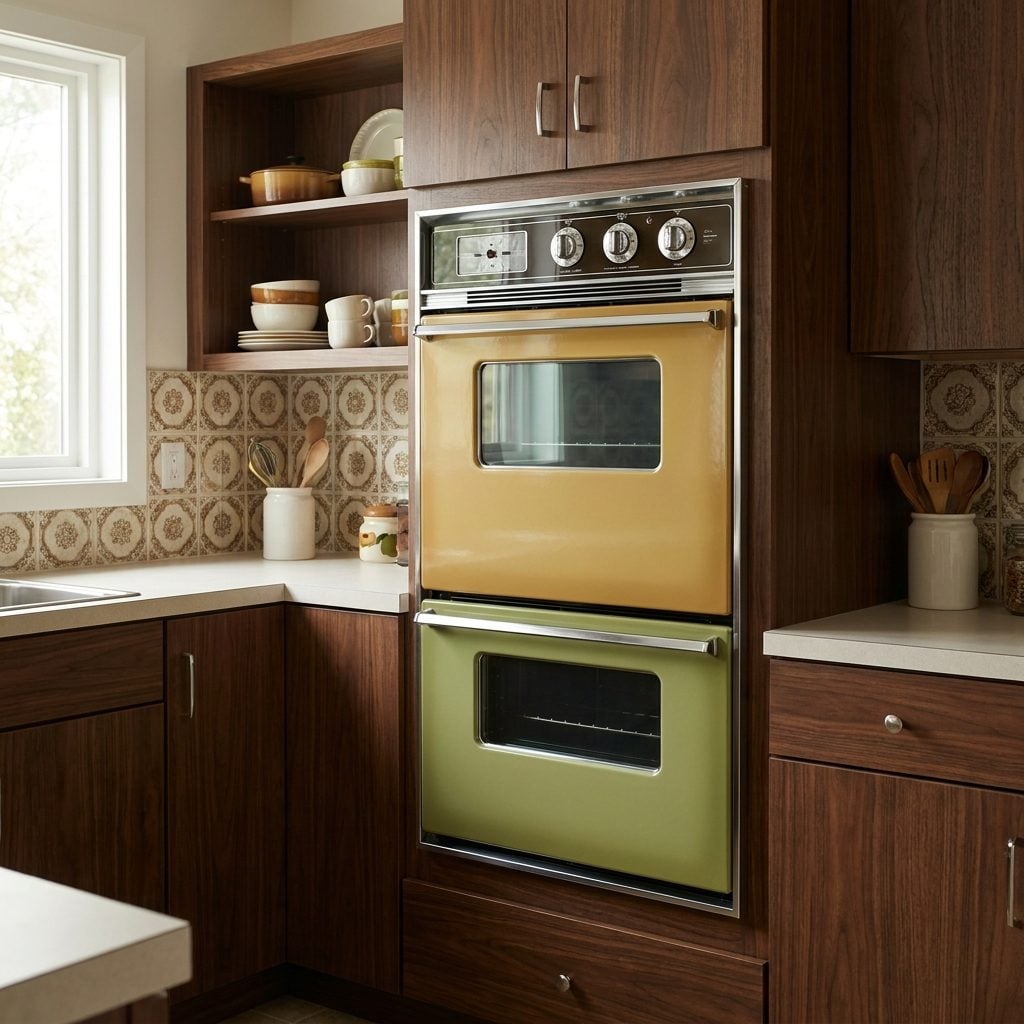
A wall oven made the kitchen feel planned rather than merely furnished. Set at eye level and glowing behind smoked black glass, it brought a little showroom drama to the cabinetry.
Some homes had two of them stacked, and the top one basically never got used. It was for the idea of a big holiday, held in reserve for a turkey and a ham on the same afternoon that came around maybe twice a decade.
23. The Popcorn Popper That Rattled and Smelled Like Sunday Night TV
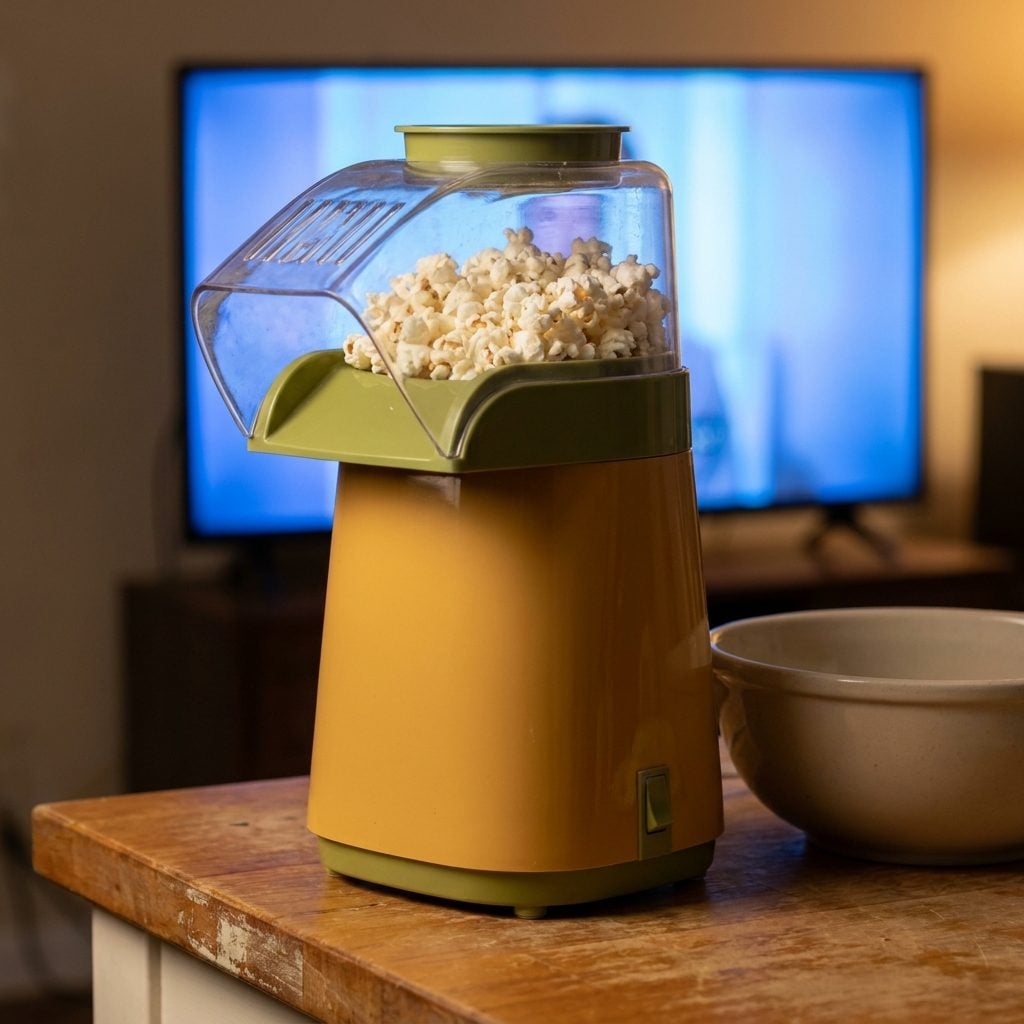
The rattle was the whole experience. Kernels bounced around a chrome base, the clear dome slowly filled, and the little butter well on top melted a pat into the pile below. It was theater before the movie even started.
On Sunday nights, something played on television while this machine went full tilt on the counter. It smelled incredible, made a mess, and drew every kid close to watch the popping slow without ever knowing whether it was finished or merely teasing.
22. The Double-Basin Sink With the Sprayer That Stuck
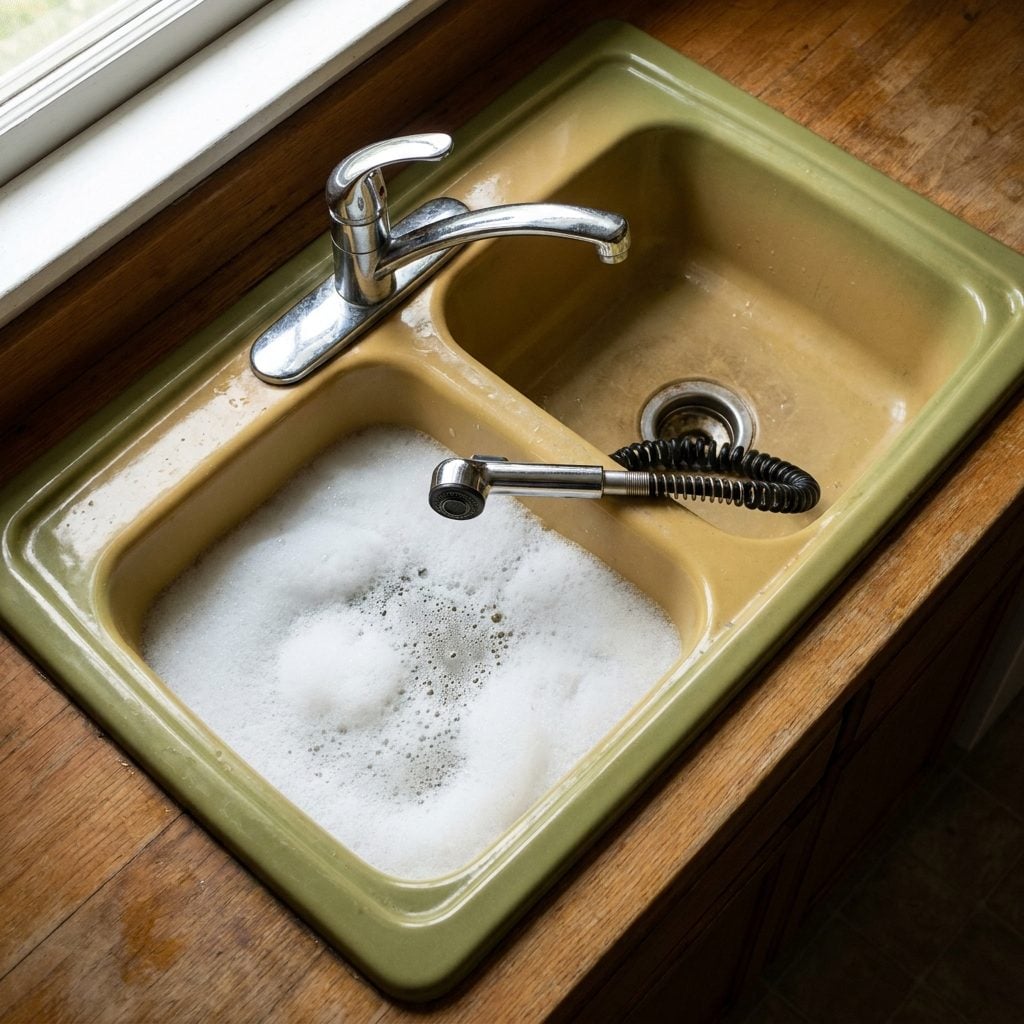
Two basins, always: one for washing and one for rinsing, back when dishwashers were still far from universal. The brushed stainless never looked new, and honestly that was the whole point of it. Scratches and water spots just piled on the character.
Then there was that side sprayer. The coiled hose kinked at the worst possible moment, shot sideways when you least expected it, and refused to seat back into its cradle nine times out of ten. Nearly every house seemed to have one, and every family had fought with it.
The double-basin sink outlasted the harvest-gold everything around it. That’s why you still stumble onto these in kitchens that quietly skipped the last three renovations, faucet and all.
21. The Electric Percolator That Gurgled and Perfumed the Whole Kitchen
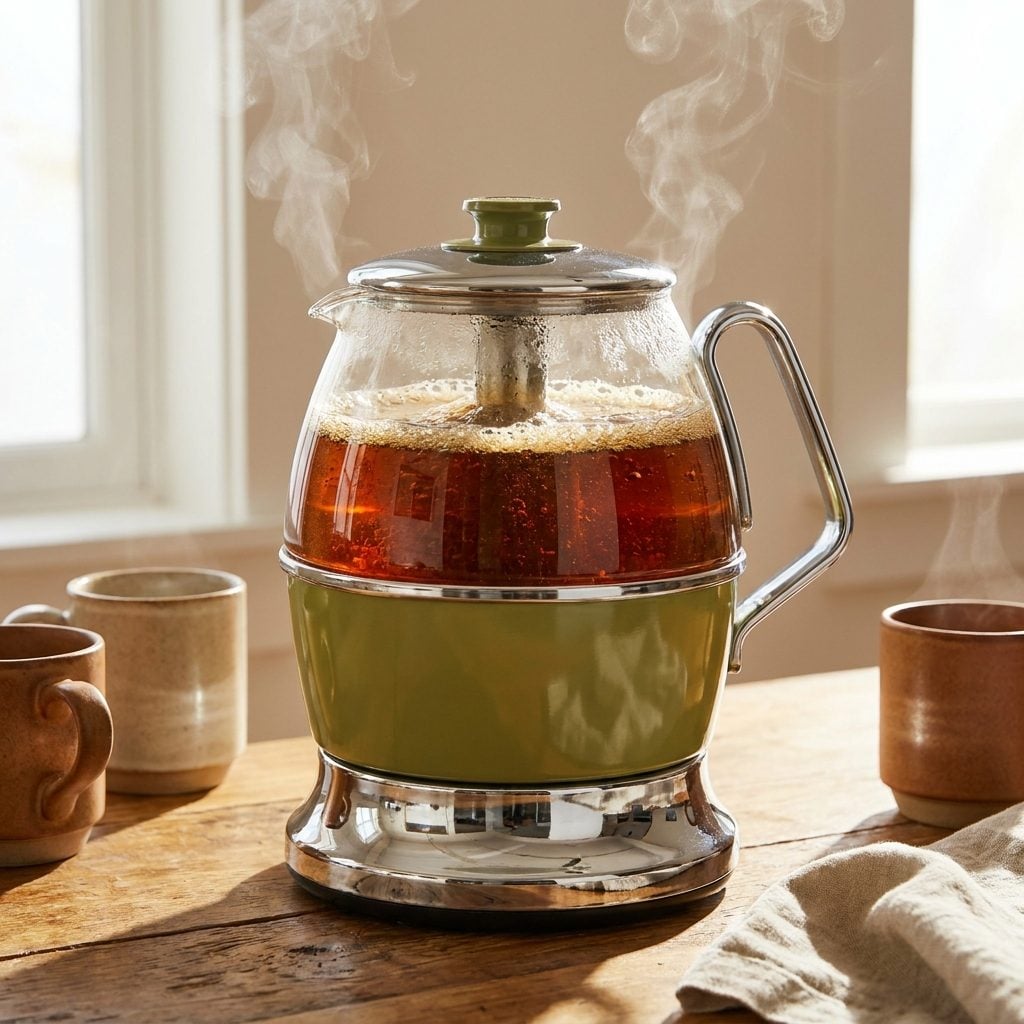
You could hear it before you smelled it: that steady glub glub glub climbing to a rolling gurgle, then the little glass knob on top going dark. That was the signal. Coffee’s ready, and the whole kitchen went from silent to alive in about four seconds.
Tall, harvest gold, always warm to the touch. It made coffee that was honestly a little burnt and a little strong, and nobody ever complained. Plugged into the same outlet for a decade, the cord wore a permanent kink where it wrapped around the base.
20. The Food Processor That Made Every Recipe Feel Like a Cooking Show
🔥 Would you like to save this?
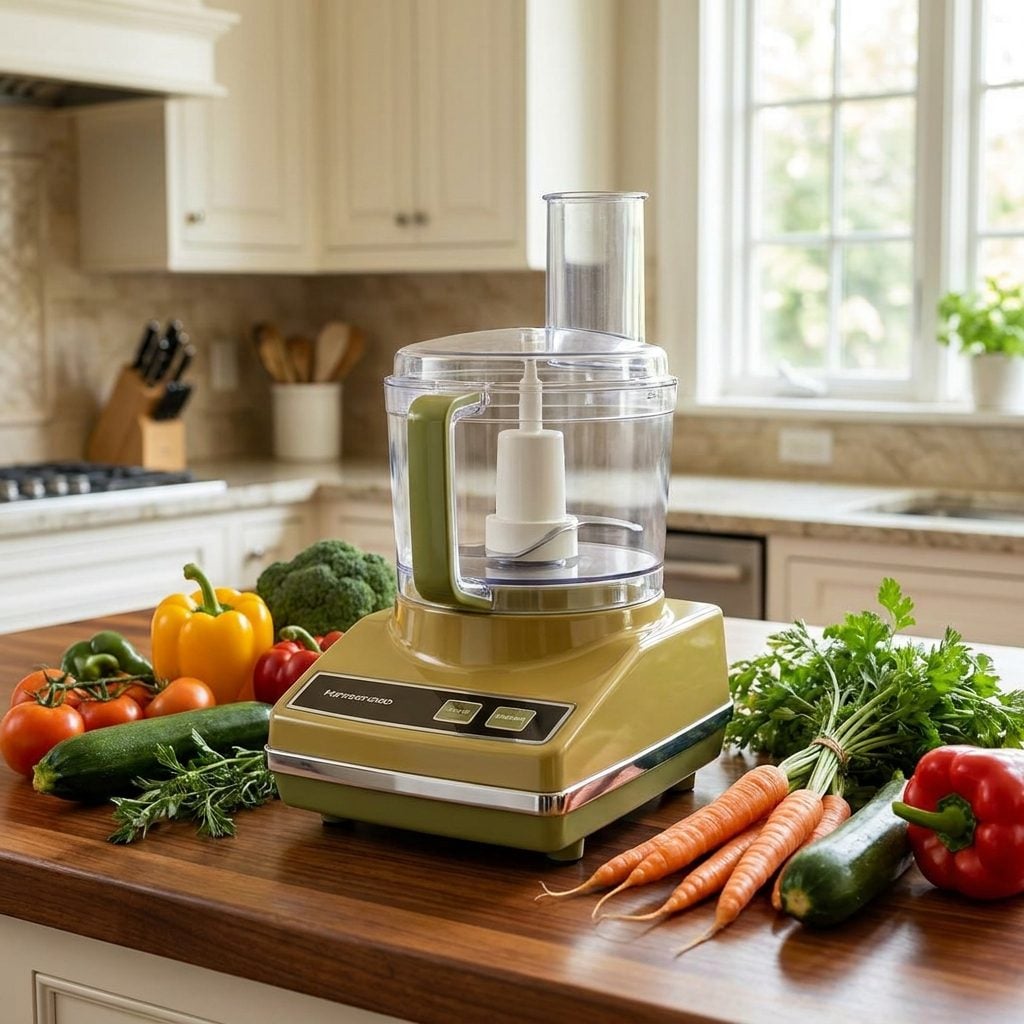
This was the fancy one. The food processor reached American kitchens in the 1970s and spent much of the decade moving from culinary curiosity to coveted countertop machine. Suddenly you could slice, shred, and puree in seconds, and anyone who owned one made sure you knew about it.
It came with a stack of plastic discs and blades you kept in a drawer and could never match to the right job. The heavy base stayed planted while the bowl locked on with a twist and a click, and that first whirl of chopped onions felt like a small miracle. It usually lived next to the cookbook stand, open to something French and slightly beyond your skill level.
19. The Bread Box With the Roll-Top Door That Stuck
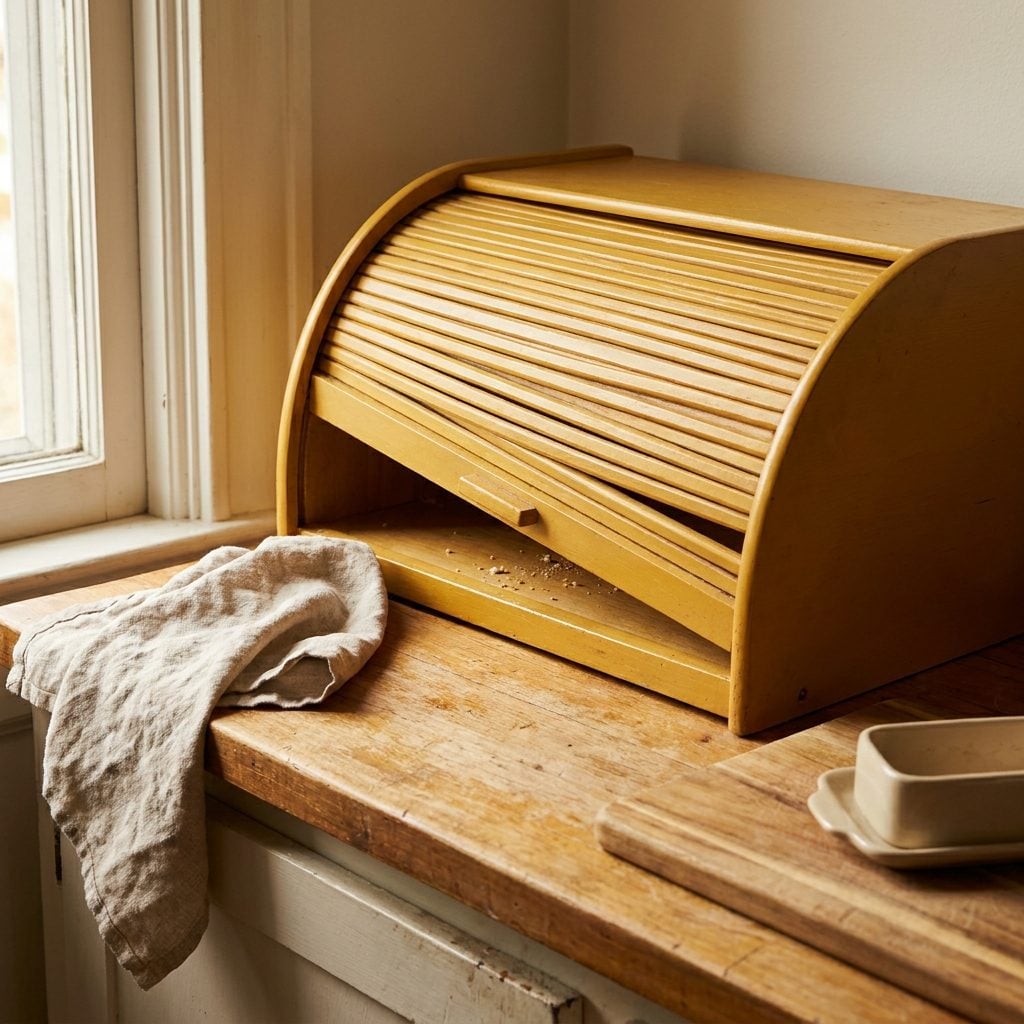
The tambour door was supposed to roll up smoothly and quietly. It never did. You’d push, it would stick halfway, you’d push harder, and then it would shoot up all at once with a clatter that woke the whole house. Inside lived the sliced loaf and a bag of hamburger buns, kept out of sight because a countertop was for matching accessories, not clutter.
The harvest-gold metal coordinated within an inch of its life with the ribbed canisters beside it. The door mechanism was a design that looked great and functioned poorly, which honestly describes a fair chunk of the decade’s kitchen gear. It kept the bread fresh-ish, looked the part, and that was enough.
18. The Range Hood With the Fan Switch and the Light Nobody Turned Off
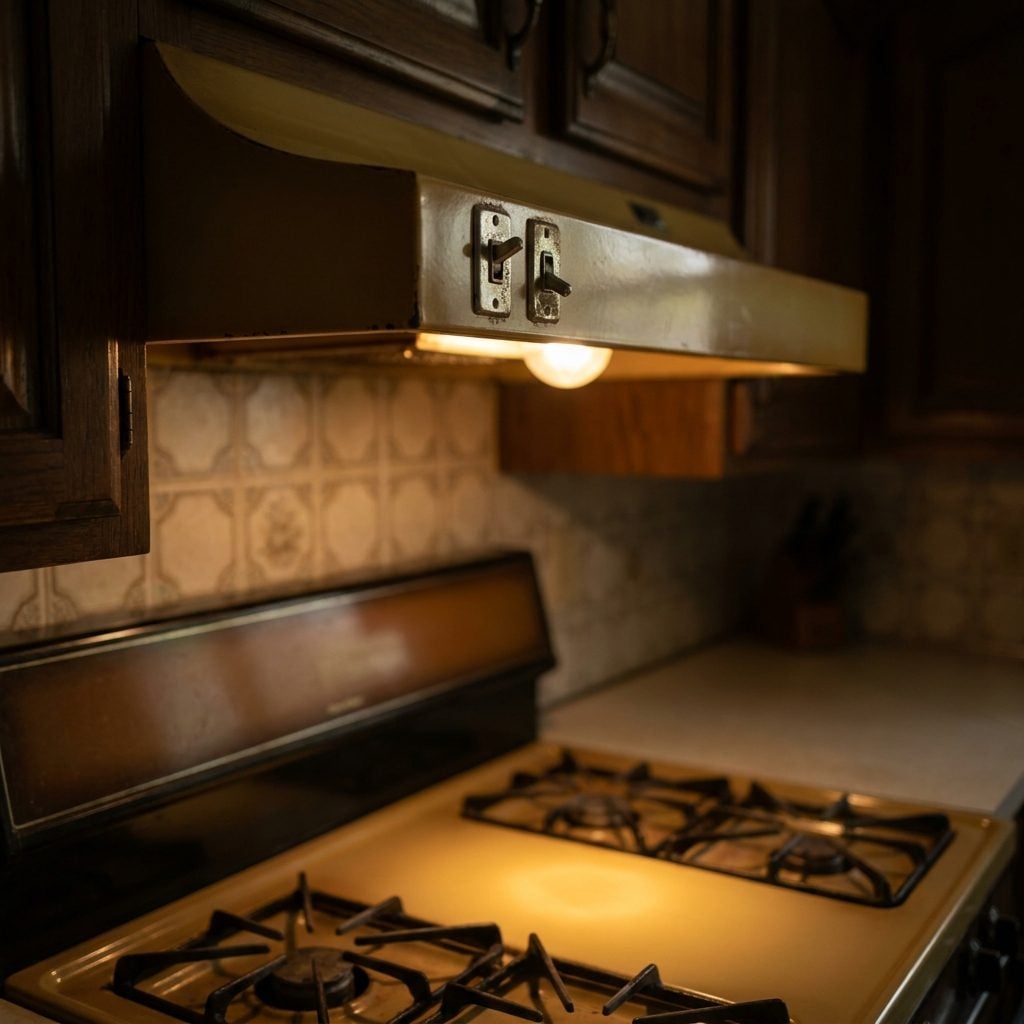
Two little toggle switches, one for the fan and one for the light, and the light won a permanent victory. It stayed on. It became the low nighttime glow of the whole kitchen, the beacon you walked toward at 2 a.m. for a glass of water.
The fan was another story. It roared like a small aircraft, and everybody swore it did nothing. The grease filter behind the mesh went years between washes because reaching it meant admitting it existed.
17. The Waffle Maker With the Little Red Light That Never Quite Meant Ready
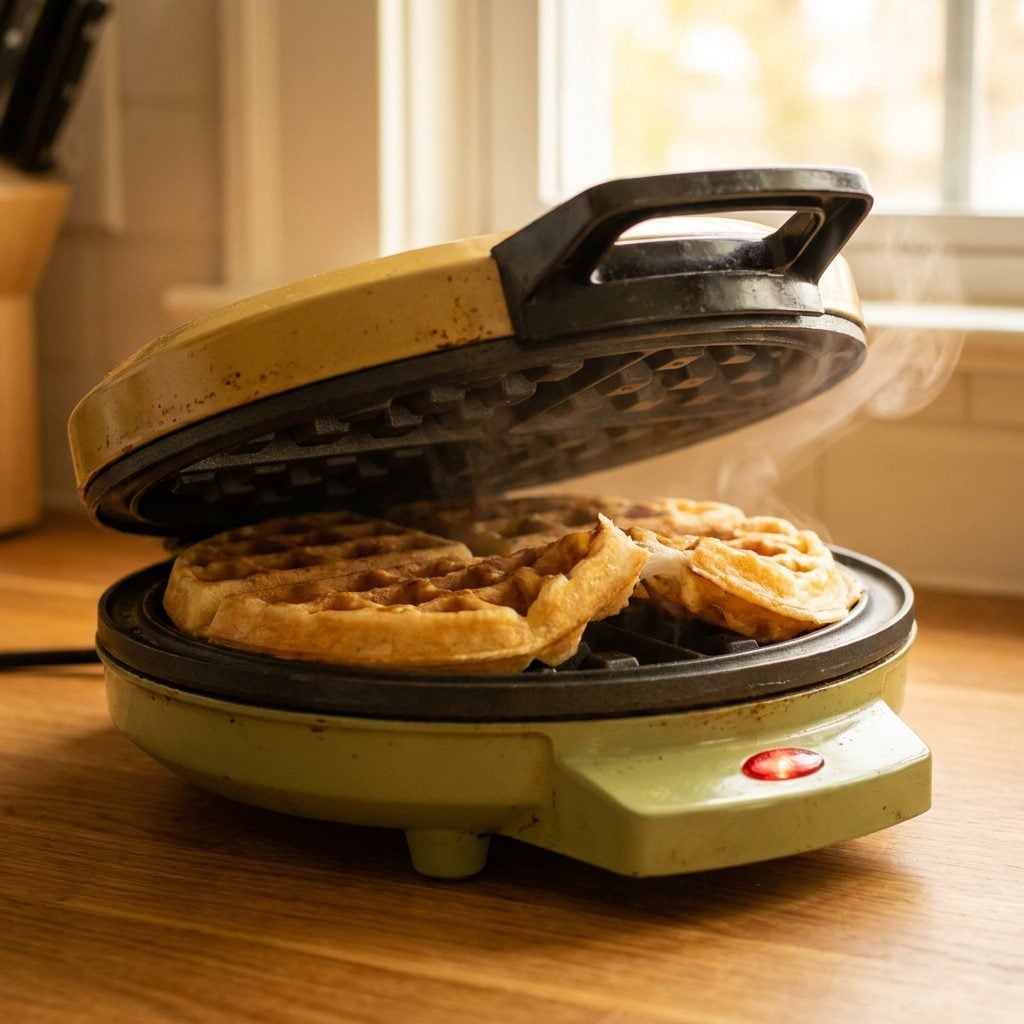
Nobody ever trusted that little red light. It would glow, you’d lift the lid too soon, and half your waffle would tear away and cling to the top plate in a doughy protest.
So you learned to wait for the steam to slow. That took experience, which meant the first waffle was usually a sacrifice to the gods of Saturday breakfast. The chrome hinge got hot enough to teach every kid in the house a lesson exactly once, but families kept these things for decades because a fresh waffle beat a frozen one, and the smell made everyone forget the occasional scorched fingertip.
16. The Floor-to-Ceiling Wooden Cabinets That Swallowed the Whole Kitchen
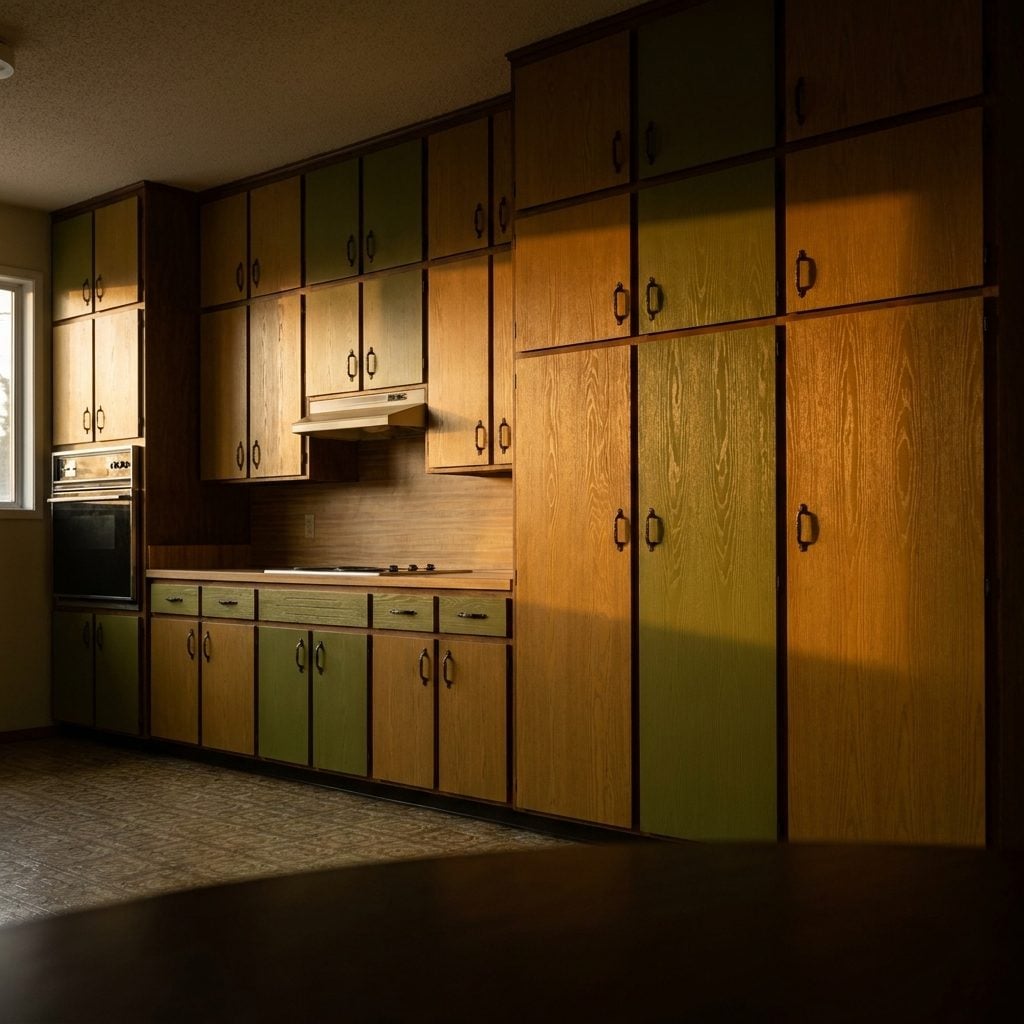
They started at the toe-kick and didn’t stop until they hit the ceiling. Dark walnut, so dark that on a cloudy afternoon the whole kitchen went the color of strong coffee. The uppers ran so high nobody could reach the top shelf without the step stool that lived in the pantry—which, naturally, is exactly where the good serving platters hid and stayed hidden for years.
Those doors had a pronounced grain and small pinched metal pulls that caught your knuckle if you grabbed one wrong. Everything about them said permanent. You didn’t repaint walnut. Nobody swapped it out on a whim, either.
15. The Autumn-Leaf Crock-Pot That Started Cooking Before Anyone Was Awake
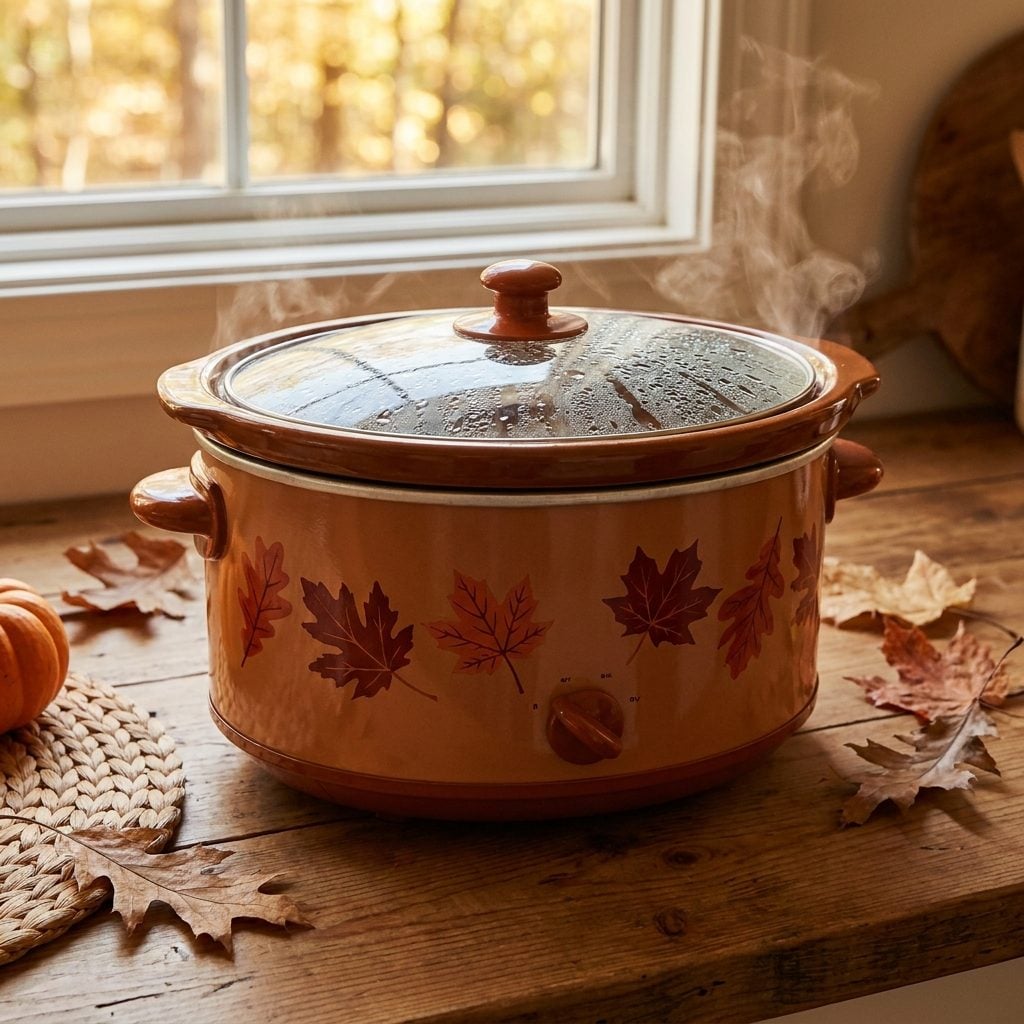
You’d plug it in before the school bus came and forget about it. By three in the afternoon the whole house smelled like a pot roast that had been mulling over its own existence all day. That was the Crock-Pot. Its stoneware insert sat inside a harvest-gold housing wrapped in a band of orange and brown leaves, the same pattern that showed up on every kitchen towel and canister that decade.
One dial. Off, Low, High—the entire interface, and it never once let anyone down.
The magic was leaving. You committed to the meal at 7 a.m. and walked away for eight hours, which is precisely why working parents adored the thing.
14. The Two-Slot Toaster With the Chrome Sides You Could See Your Face In
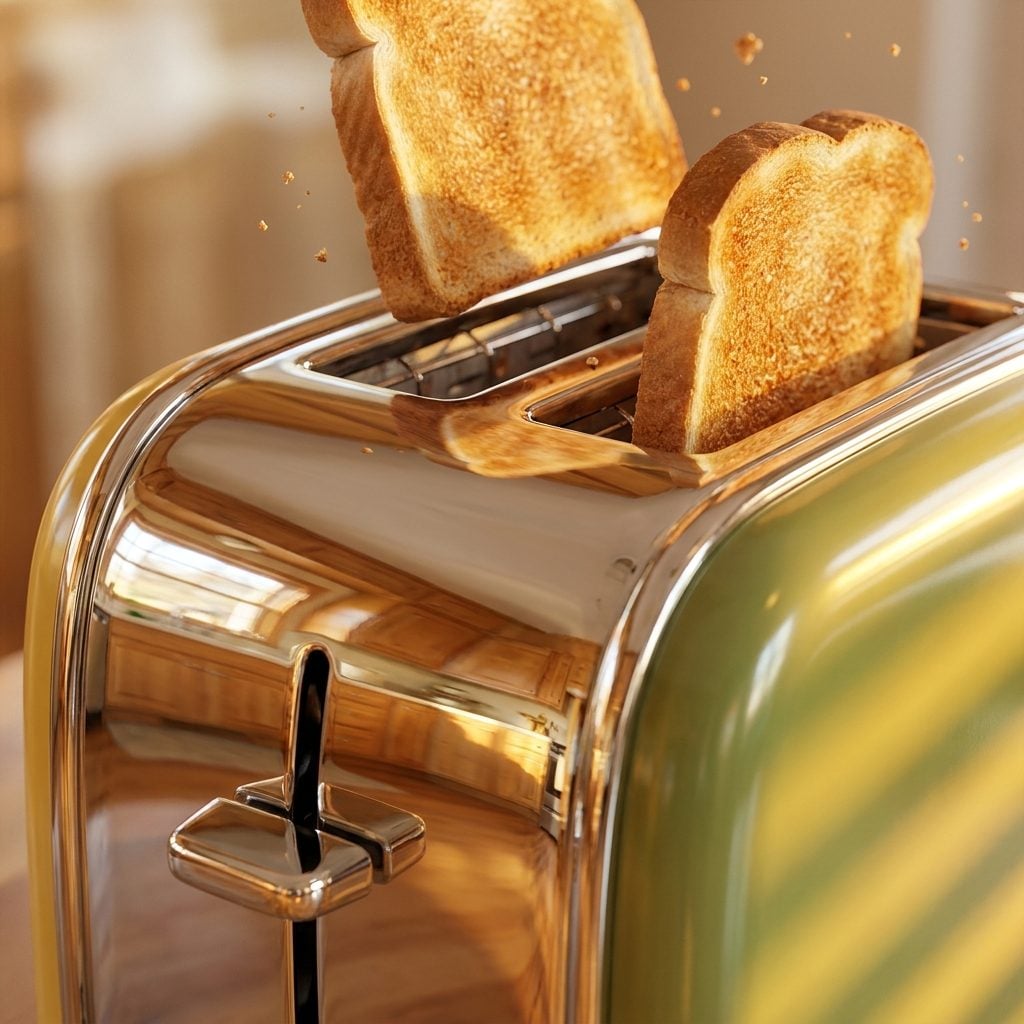
The chrome was so shiny you’d catch a warped reflection of your own face leaning in to check the toast. Nearly every kitchen seemed to have one, usually with the same slightly-too-dark setting somebody cranked up years earlier and nobody dared touch again.
The lever went down with a satisfying clunk, then the long quiet wait, then the pop that startled you every single time even though you were standing right there watching for it. Crumbs collected in the tray you never emptied.
13. The Ice Crusher Mounted Right on the Wall
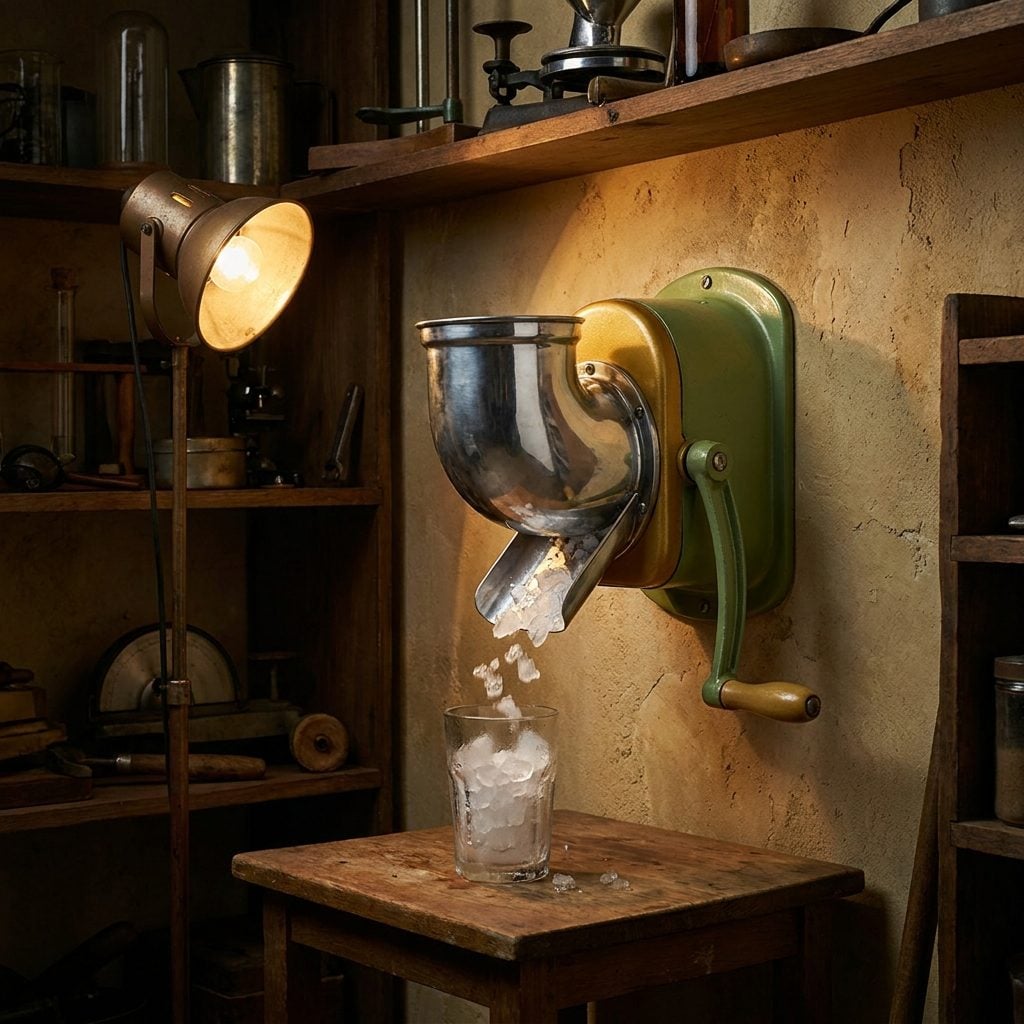
Somebody once decided that crushed ice was important enough to bolt hardware to the kitchen wall, and honestly, they weren’t wrong. You fit a glass under the chute, turned the hand crank, and caught a shower of crushed ice for whatever cocktail the evening required.
The crank stuck sometimes, and the mechanism could jam on a stubborn cube. When it worked, though, the ritual gave an ordinary drink a little ceremony and made the kitchen feel equipped for company.
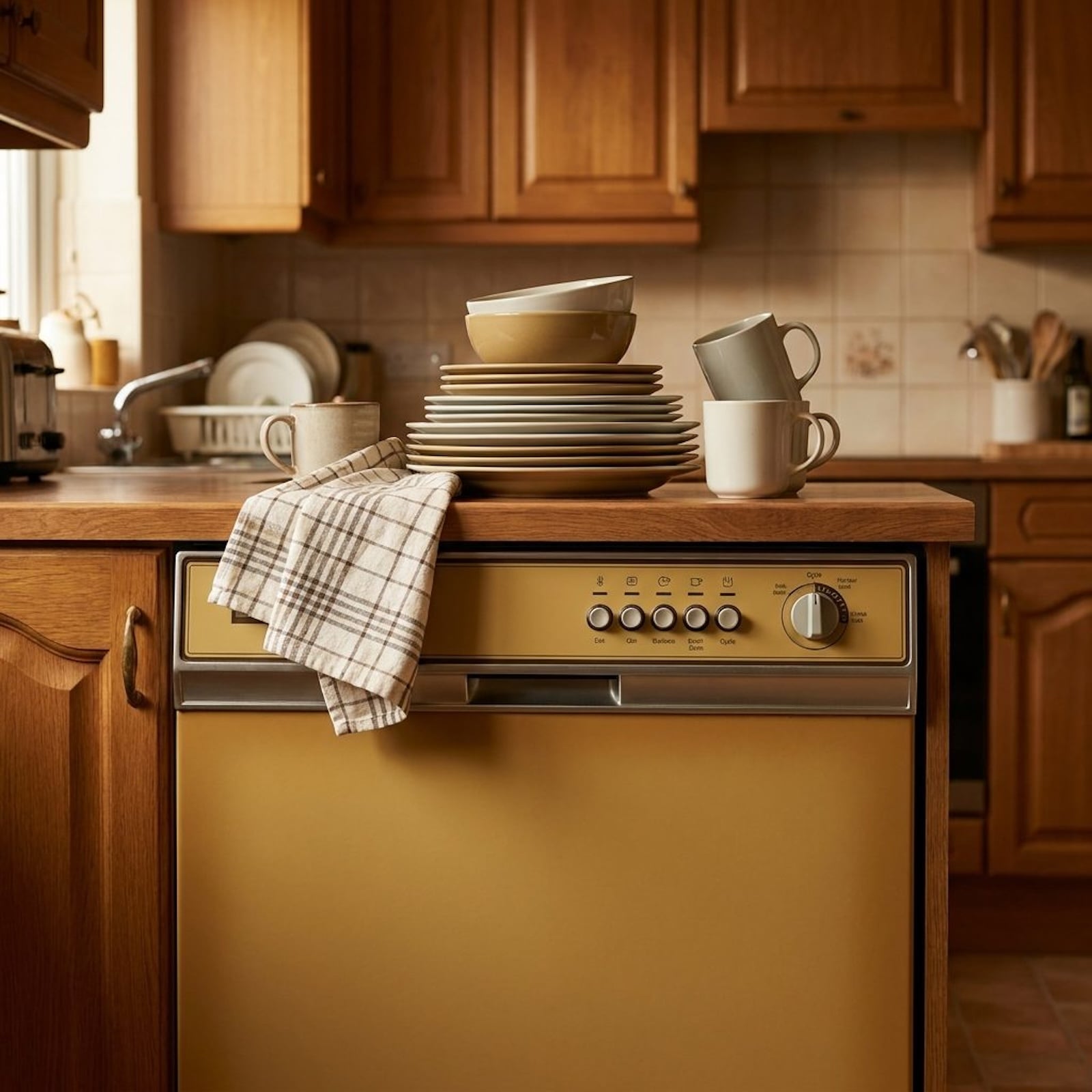
12. The Harvest-Gold Dishwasher That Doubled as a Second Counter
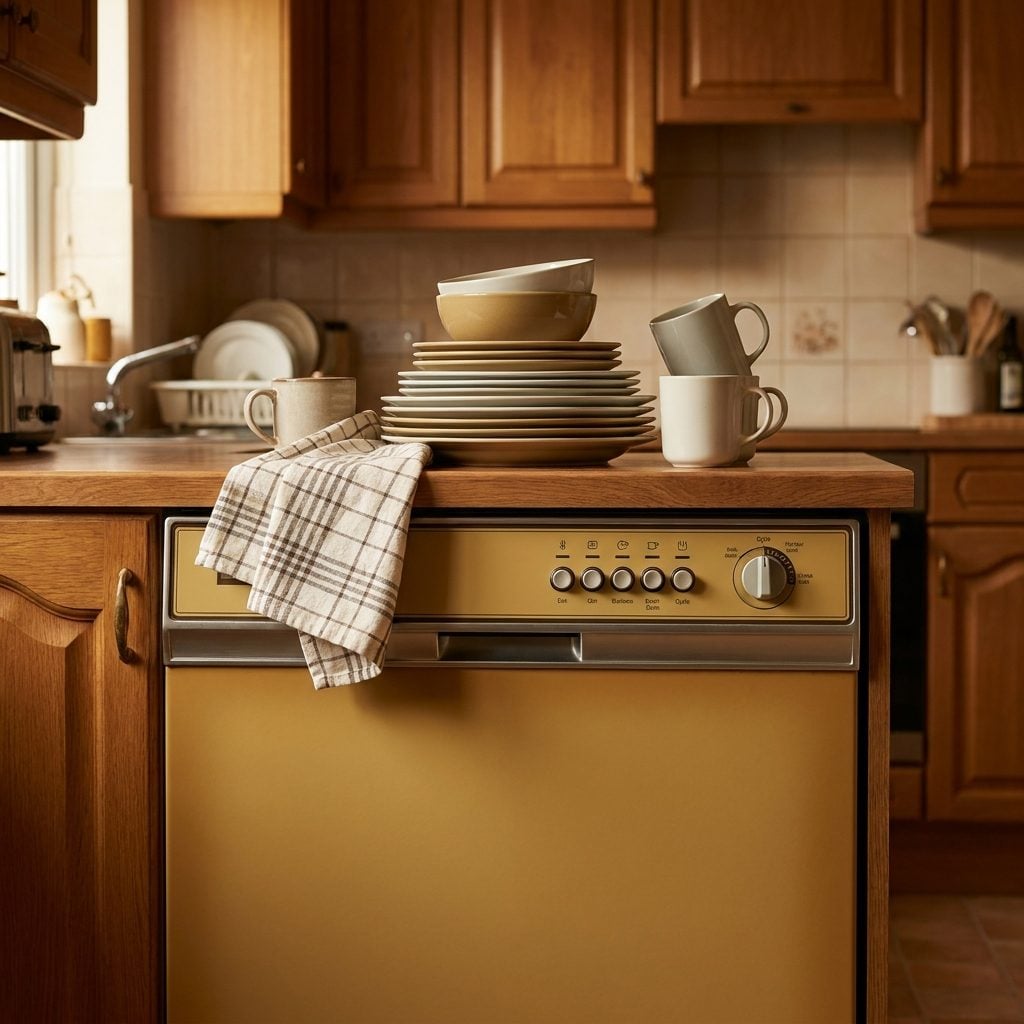
Plenty of households that owned one still washed everything by hand first. The dishwasher handled the final wash, but everybody’s mother said the same thing: it won’t get them clean if you don’t get them clean.
The top of it, flat harvest-gold enamel, was prime real estate. Cooling casseroles landed there, along with the grocery bags and the mail. In a small kitchen it was another two feet of counter you didn’t have to pay for.
The wash cycle was a roar you could hear from the living room, a long churning growl that meant dinner was over and the night had officially started.
11. The Harvest-Gold Stand Mixer That Claimed Its Corner and Never Gave It Back
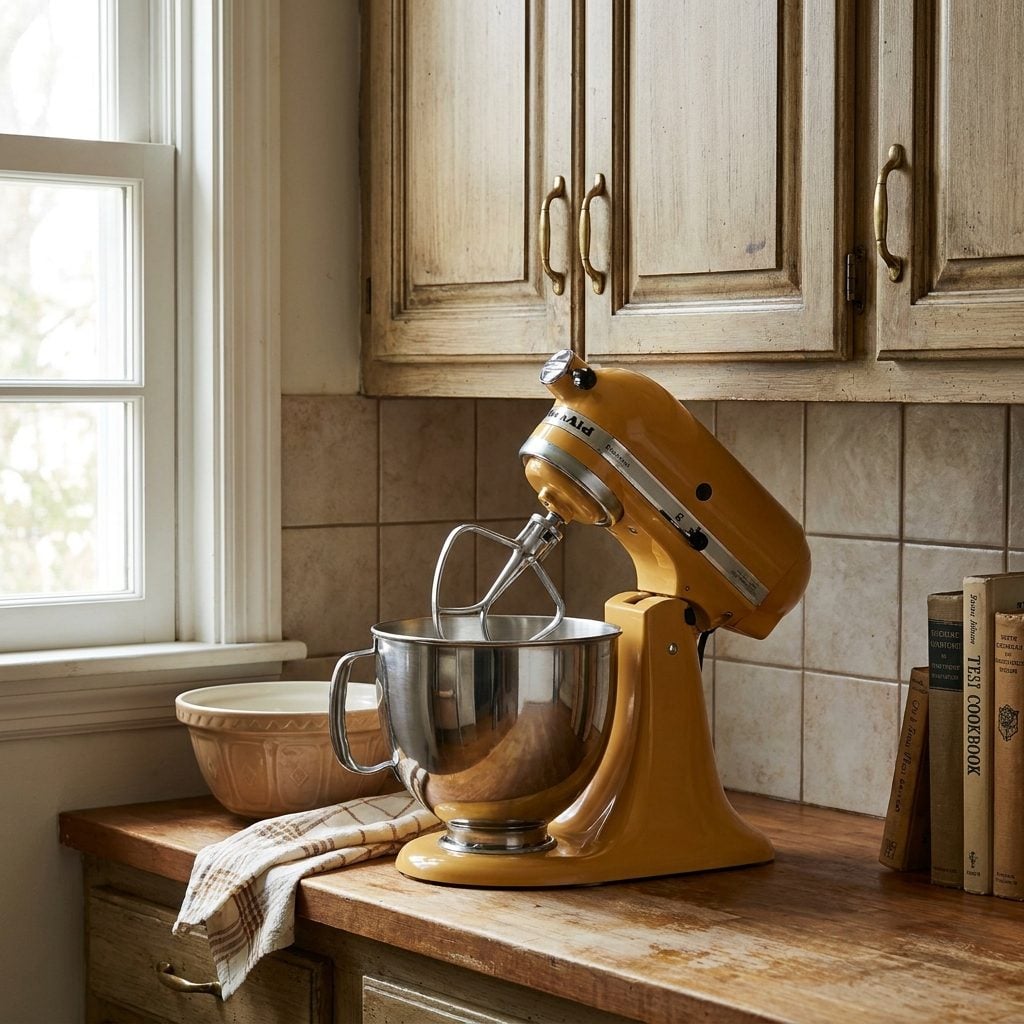
It sat in the same spot for a decade—that back corner by the outlet, tilted slightly toward the window, the bowl usually still on it from the last thing somebody made. Nobody put it away. Putting it away meant lifting it, and the thing weighed like it was cast from a bank vault.
The dial ran from a whisper up to a speed that flung flour clear across the backsplash if you skipped the low setting. You learned. Everyone did, once.
10. The Ceramic Cookie Jar Shaped Like Absolutely Anything
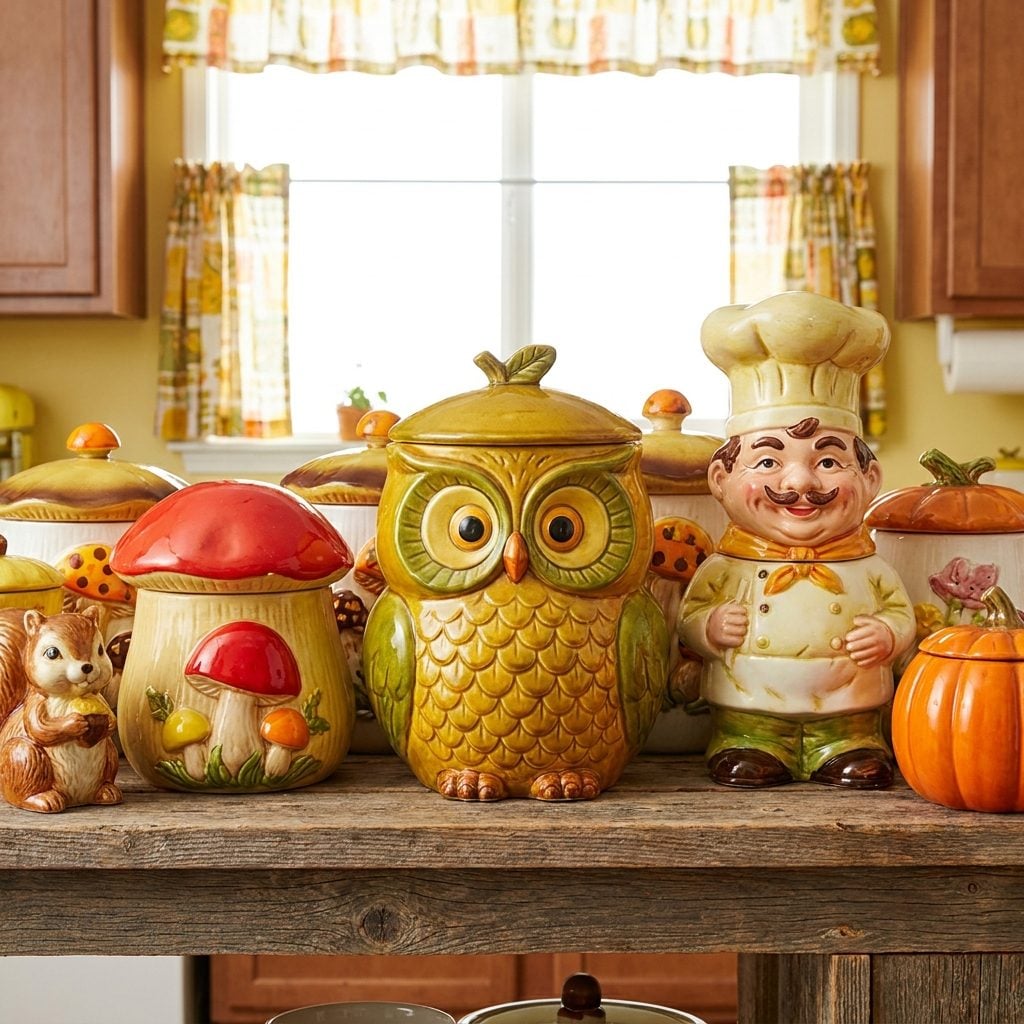
Owls. So many owls. Also cookie-shaped monsters, plump chefs, mushrooms, and the occasional pig—if you could glaze it, somebody made a cookie jar out of it. These ceramic beasts weighed a ton and the lids clinked in a way that made stealth impossible, which was probably the point when a grandmother was standing right there. Ours was an owl in harvest gold and brown, and lifting that lid was the closest thing to a treasure hunt a kid got before dinner. The jar usually held exactly the cookies you weren’t supposed to have yet. Kitsch, heavy, wildly impractical, and beloved without reservation.
9. The Countertop Microwave That Weighed as Much as a Small Child
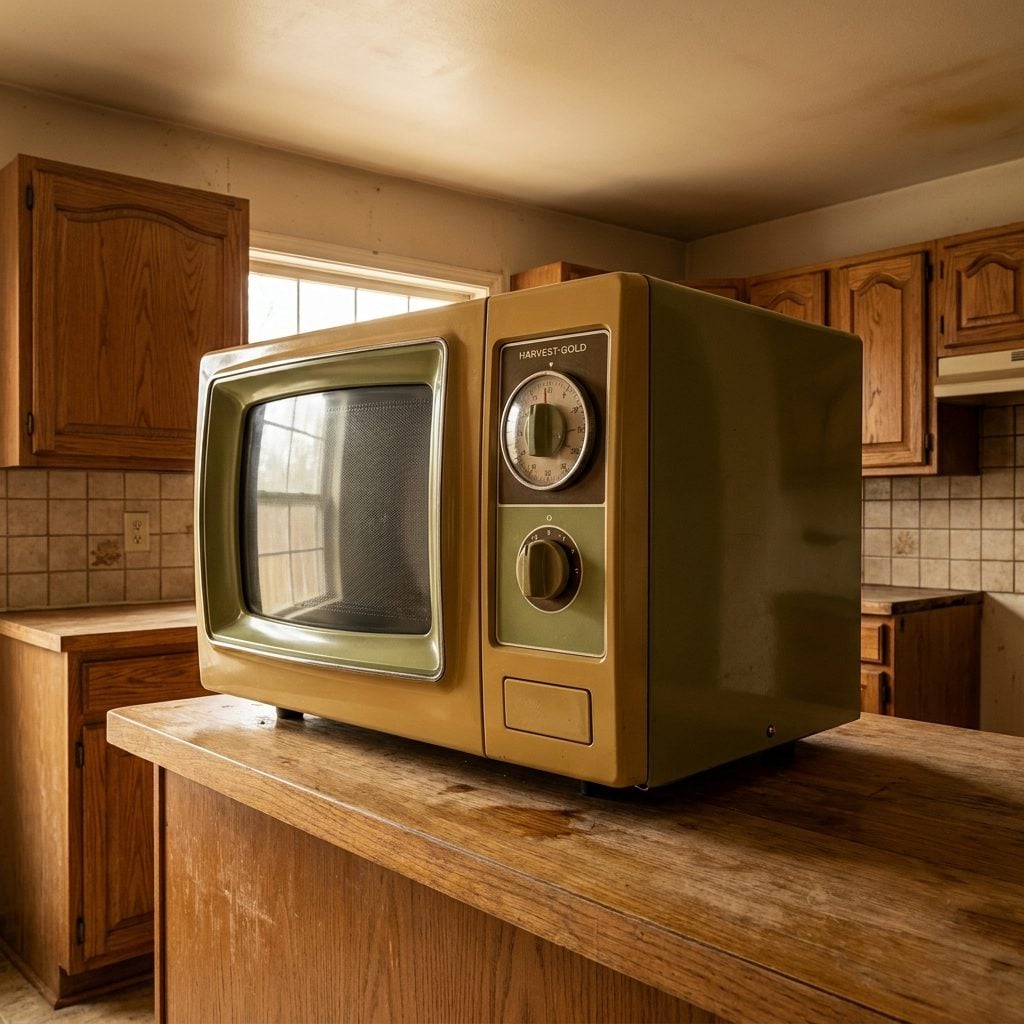
It landed on the counter like a piece of furniture, wood-grain sides and all, because the manufacturers wanted you to feel it belonged with the cabinets. It did not fit anywhere small.
You turned a dial. No keypad, no beep, just a mechanical ding and a light behind mesh glass so thick you could barely see what was happening inside. For the first year nobody quite trusted it. Then somebody heated a mug of water in ninety seconds and the whole family gathered around like it was the moon landing.
8. The Electric Carving Knife That Came Out Twice a Year
🔥 Would you like to save this?
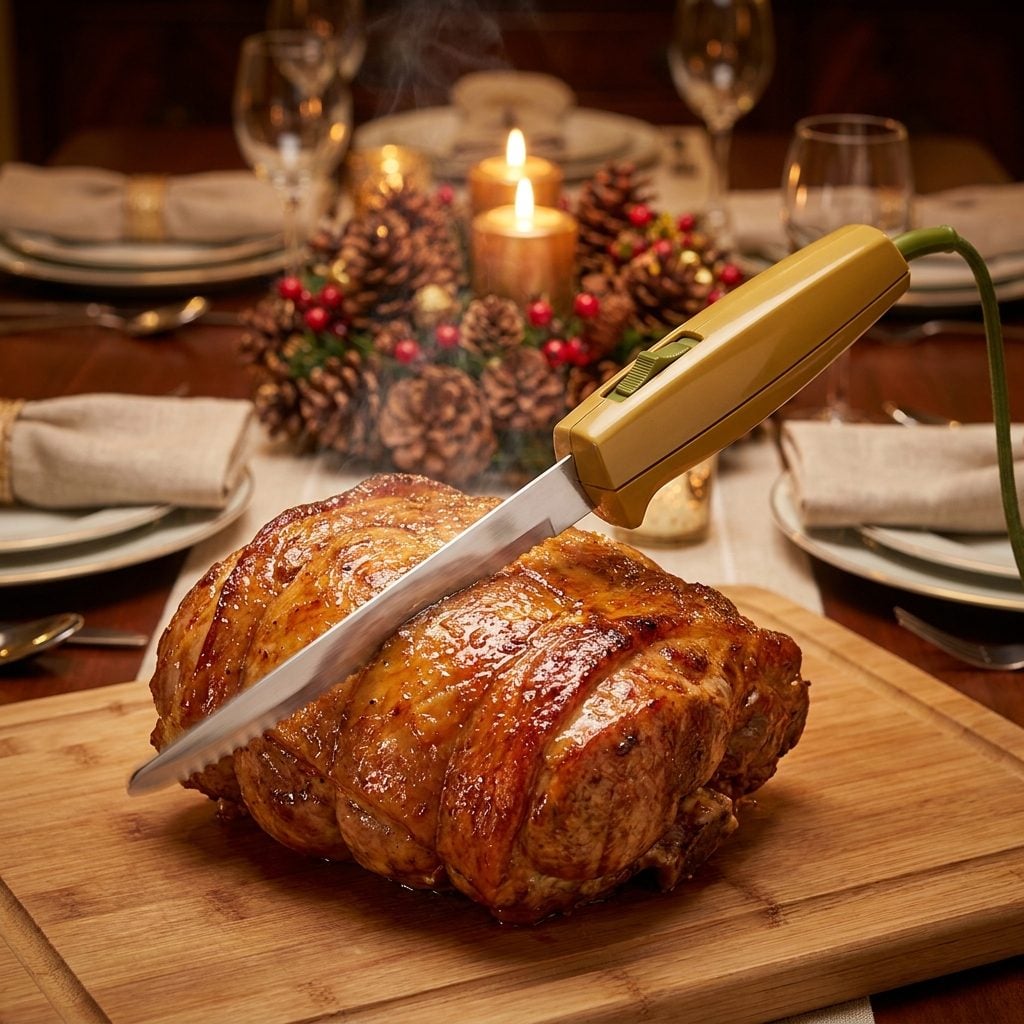
You knew the holidays had arrived the moment you heard it buzz. The electric carving knife lived in a drawer eleven months of the year, then emerged for Thanksgiving and Christmas like a ceremonial object, twin serrated blades whirring through the roast while everyone pretended not to flinch.
Was it faster than a good sharp knife? Honestly, no. But Dad got to feel like a surgeon, and that mattered more than efficiency ever could. Half the fun was watching him line up the blade, click the trigger, and slice with a confidence that had absolutely no basis in his everyday cooking skills.
7. The Harvest-Gold Laminate Countertop With That Rolled Front Edge
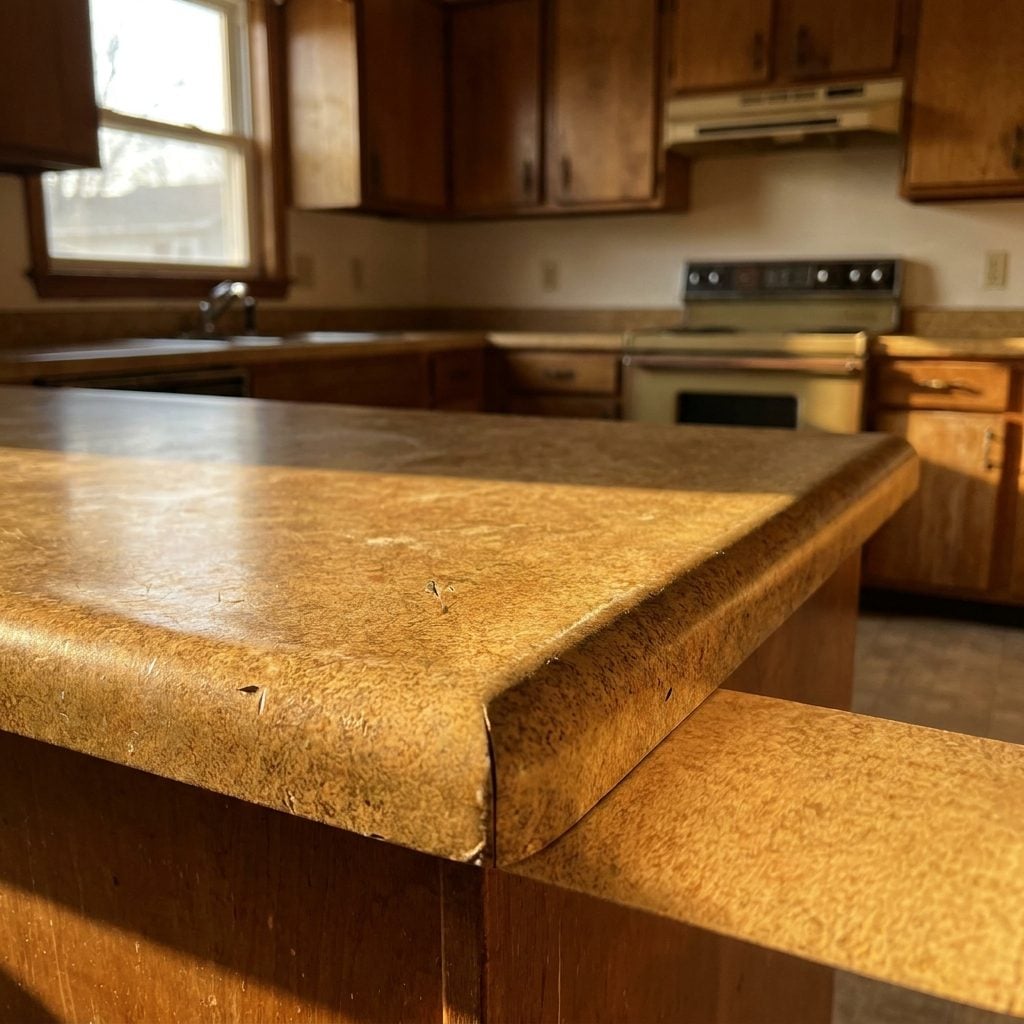
Run your thumb along the front of one of these and you’d feel it—that soft curve where the laminate wrapped smoothly over the front edge. At the wall, a coved backsplash eliminated the crumb-catching seam. No sharp corners. Just a smooth profile the color of butterscotch pudding.
Formica ran the show, and every kitchen on the block seemed to land on the same warm mottled pattern that hid coffee rings and knife marks like it was built for exactly that. It practically was.
Set down a hot pan without a trivet and you might earn a scorch mark that the toaster covered forever after. Nobody tore out a counter over one burn—you just shuffled the small appliances around and moved on.
6. The Upright Freezer That Finally Let You See What You Owned
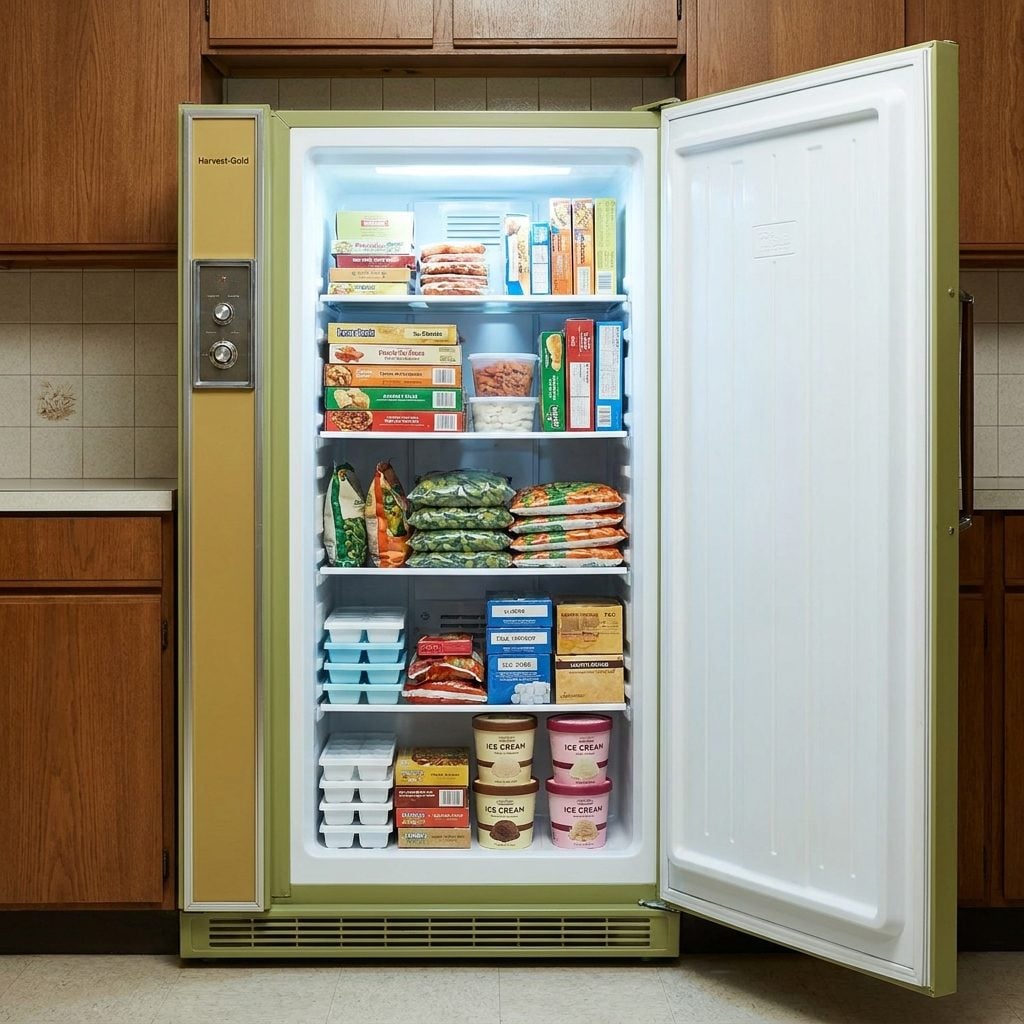
The upright was for the household that had grown tired of excavating a chest freezer. Here everything stood on shelves, visible and sortable, labeled in your mother’s handwriting on masking tape that peeled at the corners.
When frost built up along the back wall, defrosting became an annual campaign involving a hair dryer, a pan of hot water, and a great deal of swearing you weren’t supposed to hear.
Still, you could open it and take stock of your whole cold pantry in one glance. For a certain kind of person that view was deeply satisfying. Green door, frost breath, and the vanilla ice cream right where it should be.
5. The Wall-Mounted Electric Can Opener That Also Sharpened Your Knives
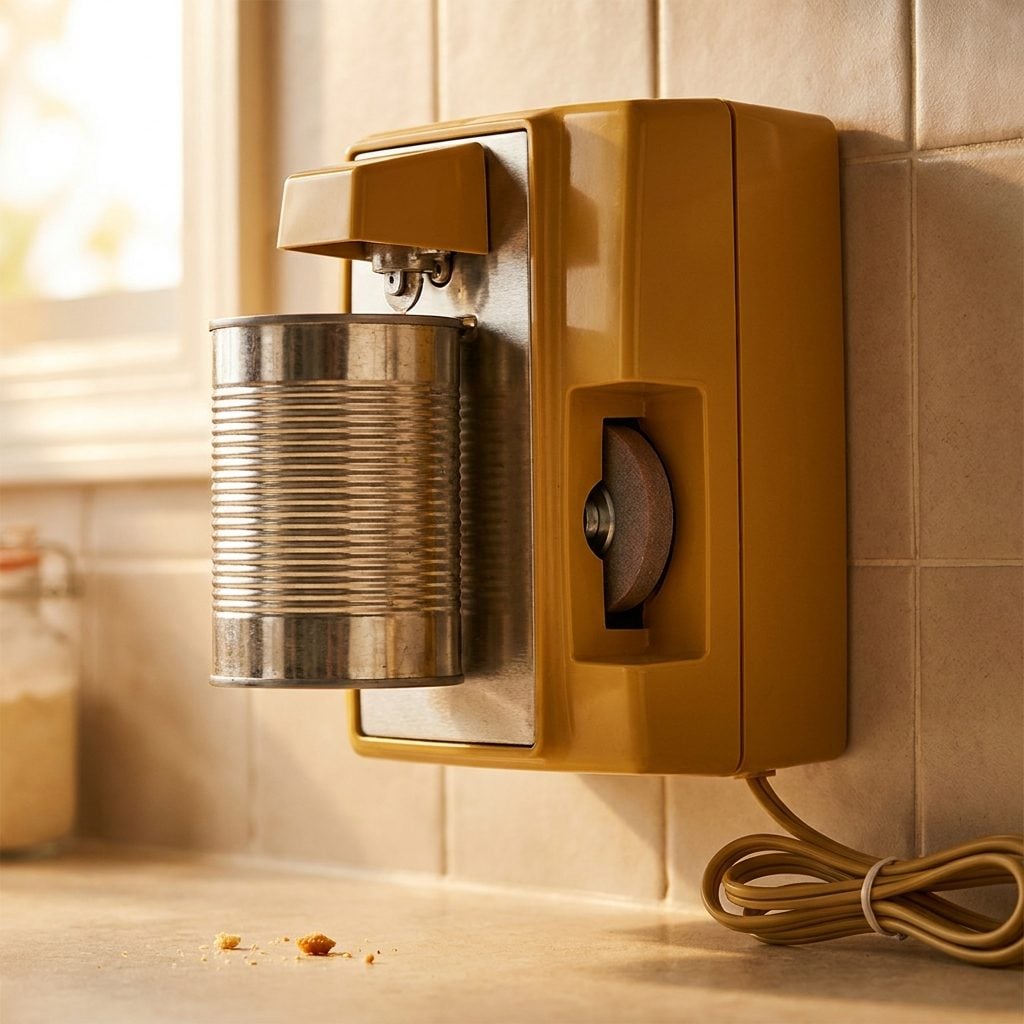
Why open a can with your own two hands when a whirring gold gadget would do it for you? That was the logic, and nobody questioned it. You pressed the lever, the can spun around with that grinding hum, and a little magnet caught the lid so it didn’t drop into the soup.
Half of these had a knife sharpener built into the side that you used exactly twice. It stayed wedged in the corner for years—a genuinely unnecessary machine that everyone somehow needed.
4. The Matching Canisters That Actually Earned Their Counter Space
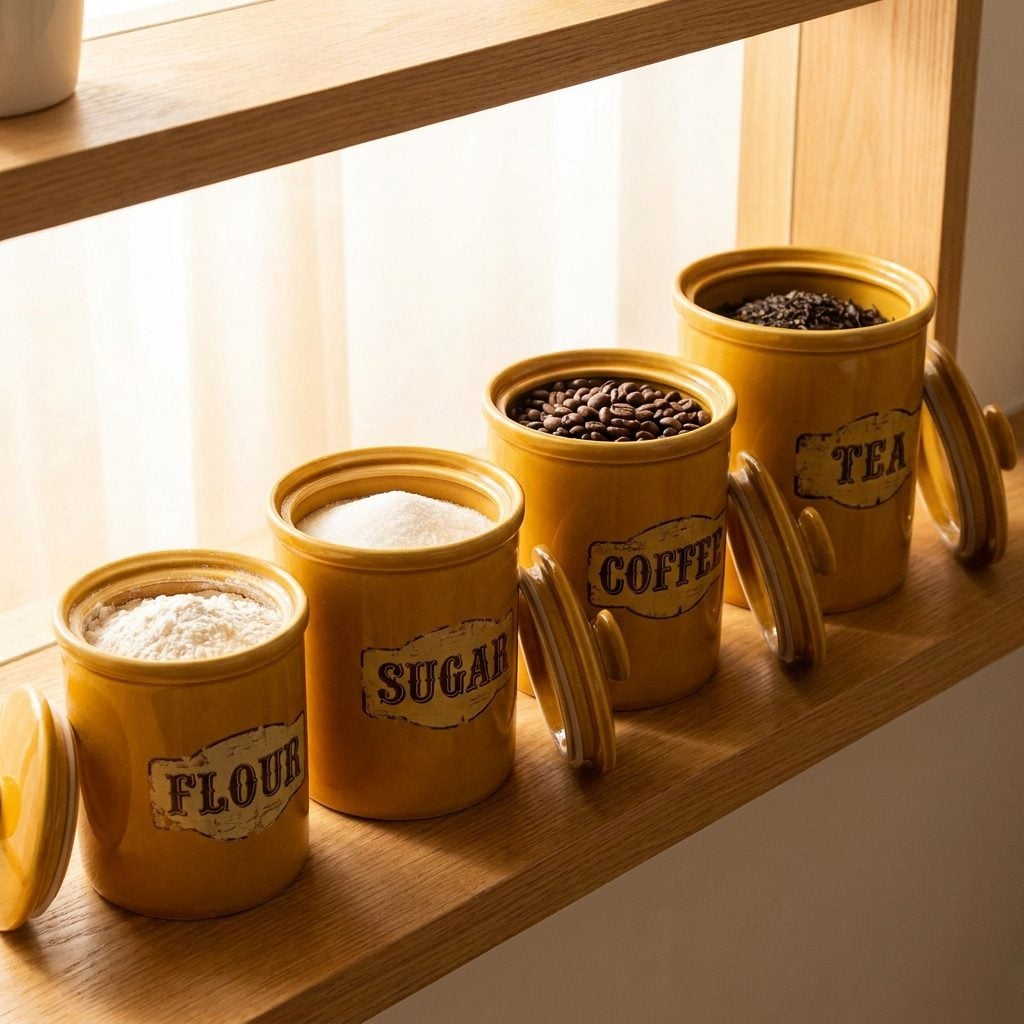
Plenty of canister sets were mostly decoration. These were not. Flour dust clung to one rim, sugar crusted beneath another lid, and a measuring cup stayed buried inside because somebody baked often enough to need it there.
My aunt kept hers so well stocked that you could make a cake at midnight on a whim, and people did. A working canister set carried evidence of use: smudged labels, grains in the seams, and lids opened too often to stay spotless. That was the difference between a kitchen arranged for display and one earning its keep.
3. The Electric Skillet That Basically Was the Second Stove
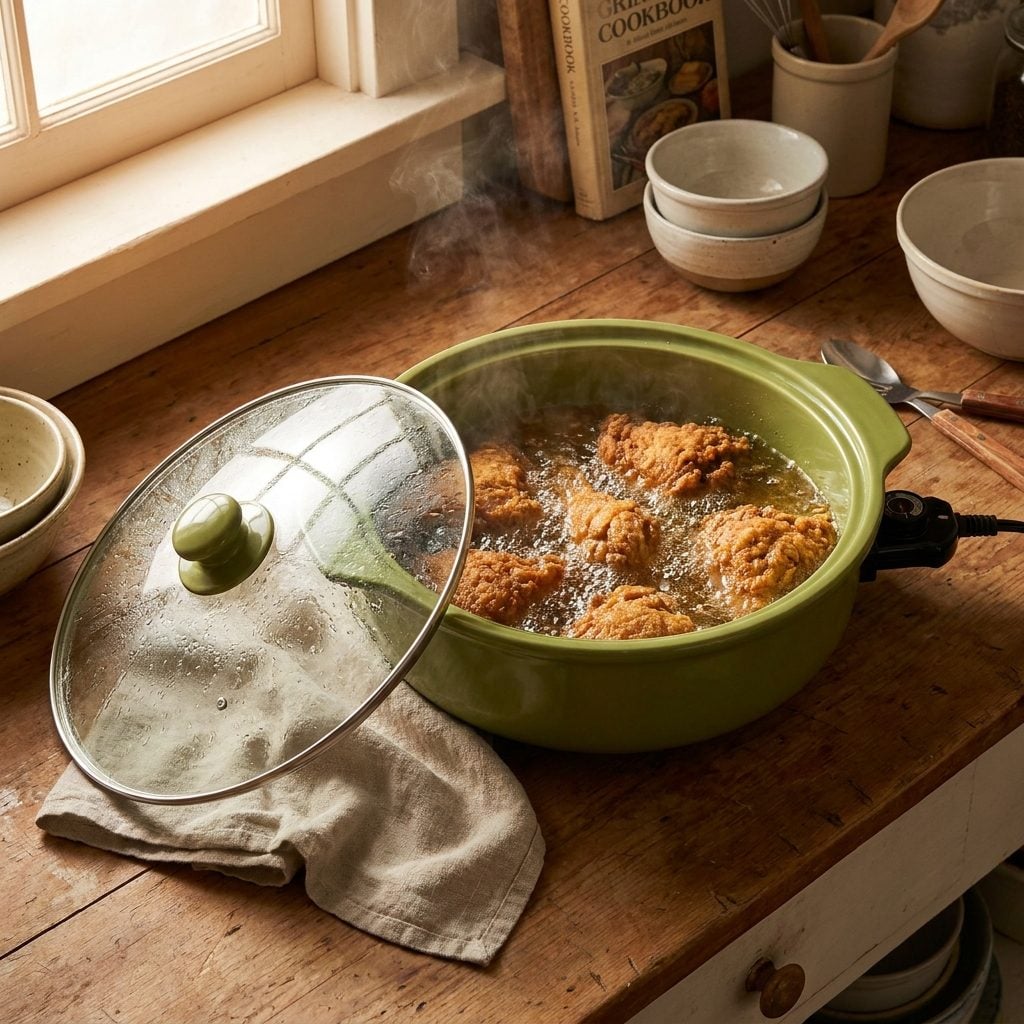
This thing did everything. Fried chicken, pot roast, Sunday pancakes, the occasional questionable casserole—the electric skillet handled it all while the actual range sat there unused. Set the dial, forget the stove, and cook at the counter where you could keep an eye on the kids.
The domed glass lid fogged so thoroughly you couldn’t see a thing inside, which never stopped anyone. A lot of households leaned on these harder than they’d admit because the temperature control was reliable and cleanup meant one pan instead of a whole stovetop. My grandmother swore hers made better gravy than anything on the range, and I’ve never had the heart to disagree with a dead woman.
2. The Drip Coffee Maker That Made the Percolator Feel Old Overnight
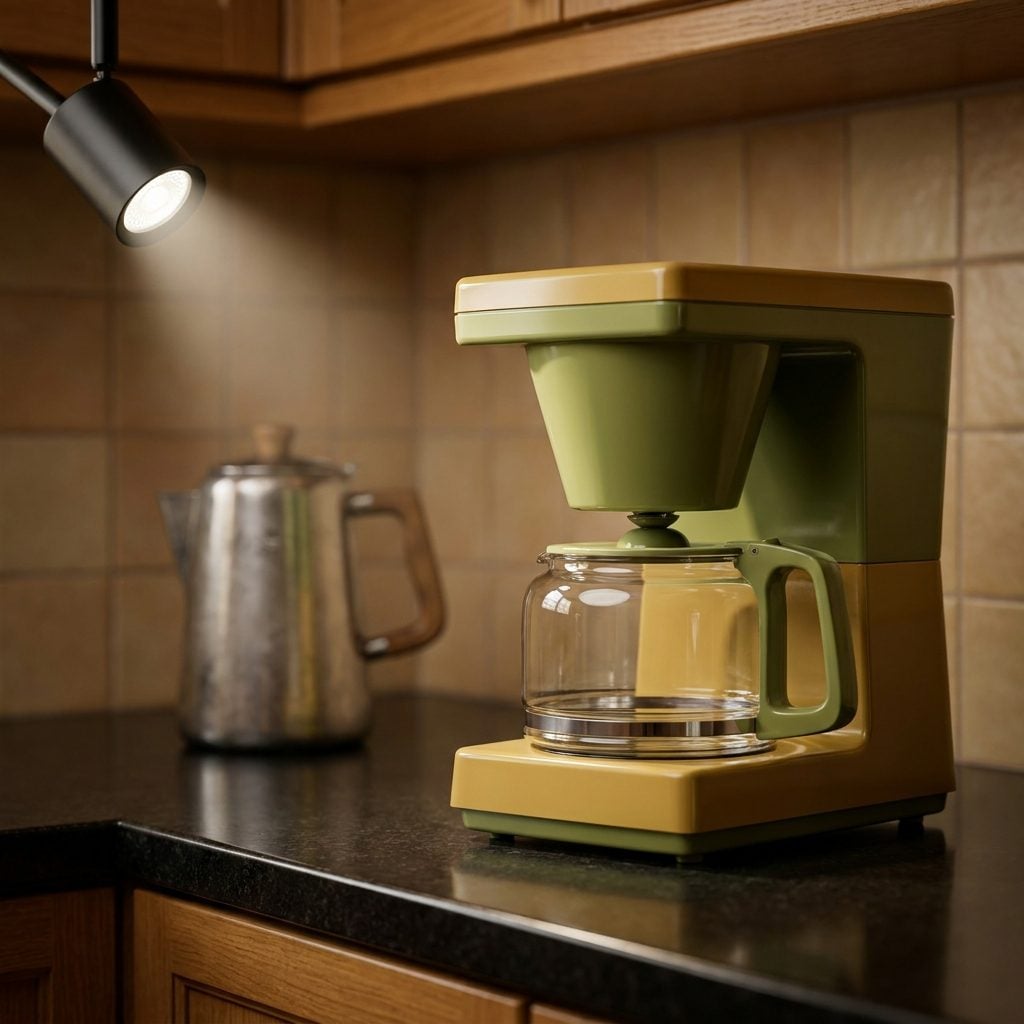
The day one of these landed on the counter, the percolator’s days were numbered. No more standing guard over a gurgling pot. Pour water in the back, grounds in the basket, flip a switch, walk away. It felt like the future had arrived in beige plastic.
The carafe sat on a little warming plate that kept the pot going long past its prime, which is exactly how so much 1970s coffee ended up tasting like it had spent the afternoon on a radiator. Nobody minded. The convenience won.
1. The Fondue Pot That Meant Company Was Coming
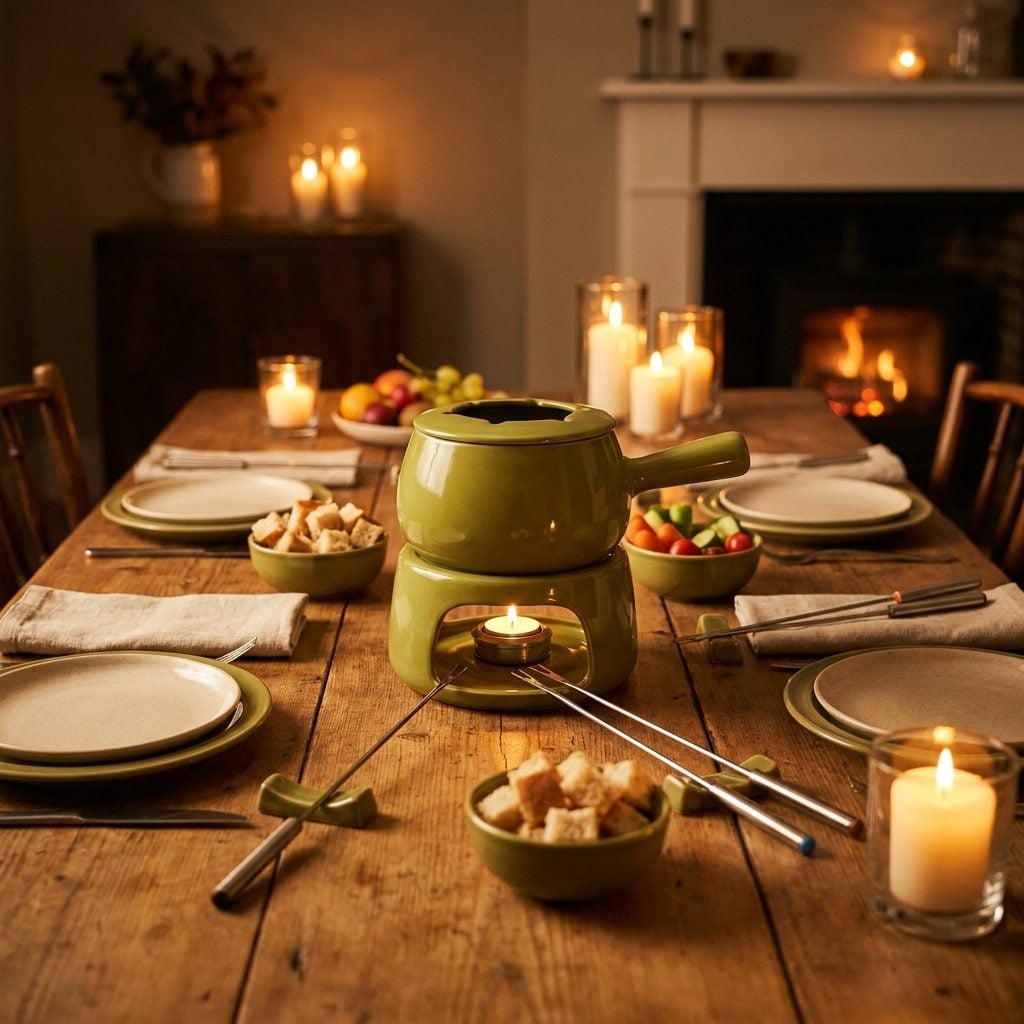
When the fondue pot came out, you knew the good plates were coming too. It was the centerpiece of an entire style of entertaining—the little burner flame, the color-coded forks so nobody double-dipped, the bread cubes waiting on a board. You dropped your bread in, waited, prayed it didn’t slide off into the cheese where you’d have to fish it out with everyone watching.
At a fondue party, dinner revolved around this thing. It was communal and slow and slightly ridiculous, and people adored it for all three reasons. For a stretch of the decade, throwing a fondue night was practically a personality.