🔥 Would you like to save this?
That drawer of mismatched silver-plated flatware your grandmother left you. The marble countertop with a wine stain from 1997 that nobody’s tried to fix because it “adds character.” Old money kitchens don’t announce themselves with price tags or brand names. They whisper through details most people walk right past: a particular kind of hinge, a specific shade of cream on the cabinetry, the absence of anything that looks like it was bought all at once. You don’t need a trust fund to have one. You just need to know what to look for. Here are 39 signs yours already qualifies.
39. The Table That Replaced the Island and Nobody Questioned It
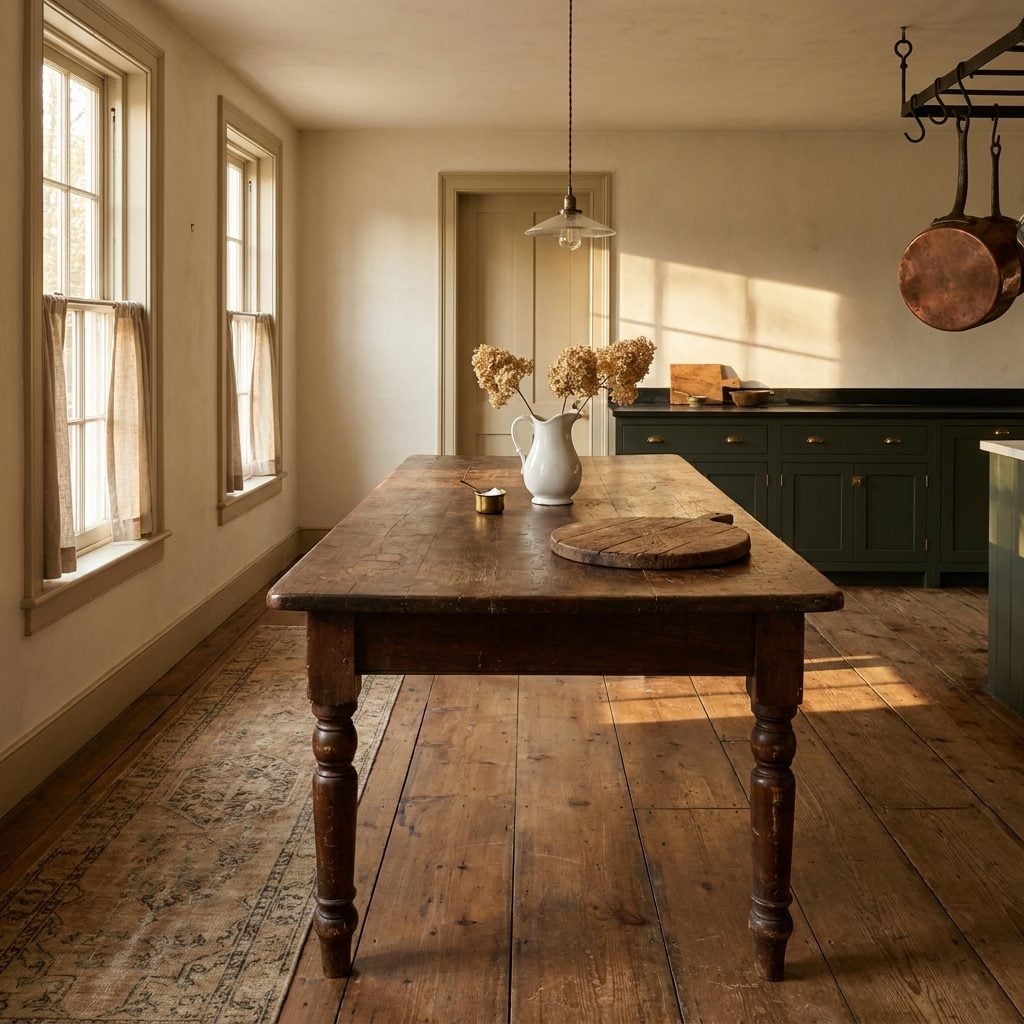
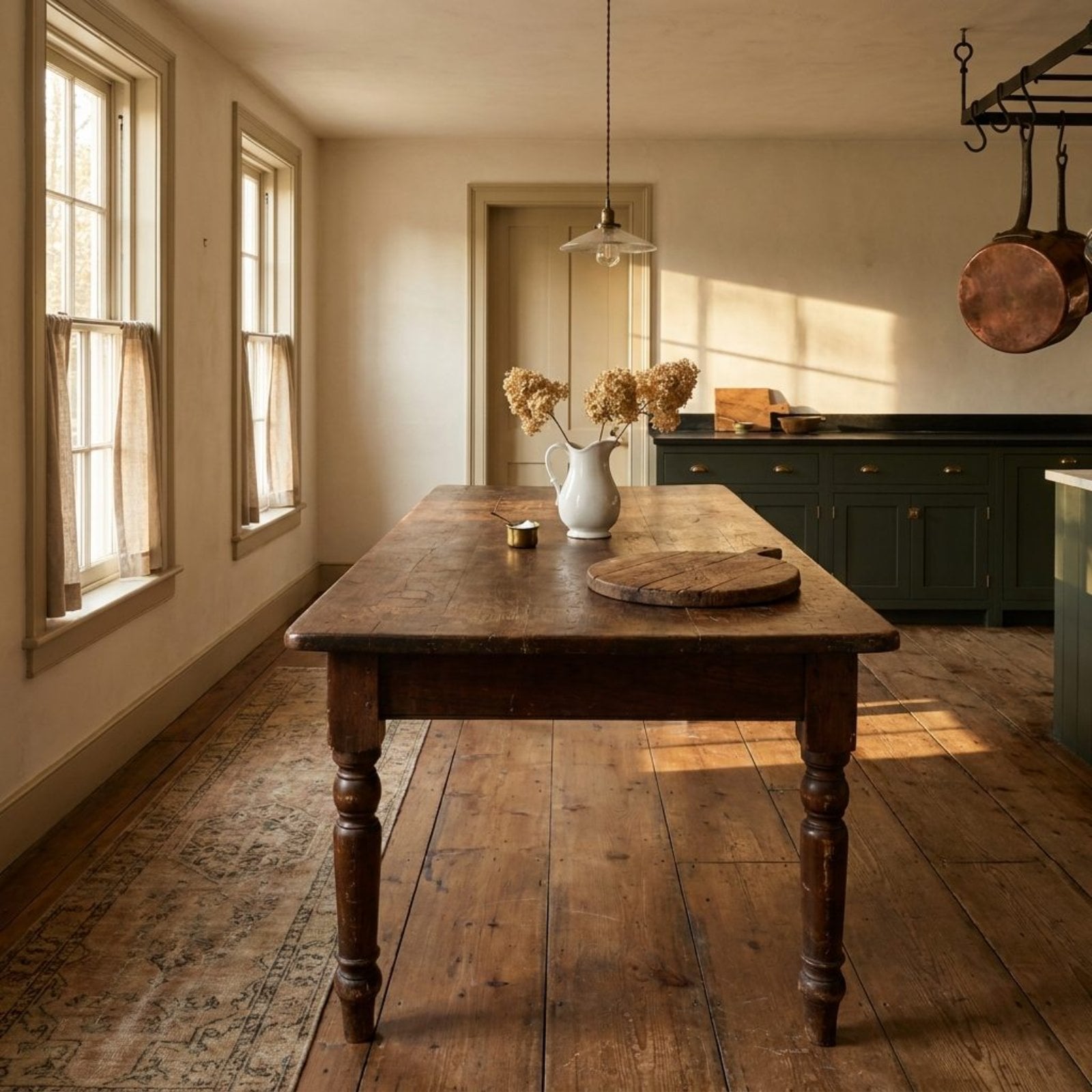
No waterfall edge. No quartzite slab. No bar stools lined up like they’re waiting for bottle service. The kitchen is built around a table that’s been in the family longer than anyone can precisely remember, and that’s exactly the point.
In order to come up with the very specific design ideas, we create most designs with the assistance of state-of-the-art AI interior design software. Also, assume links that take you off the site are affiliate links such as links to Amazon. this means we may earn a commission if you buy something.
Old money kitchens don’t need a six-figure island to anchor the room. They use a antique walnut farmhouse table with scars from Christmas mornings and homework sessions and one leg that’s been shimmed with a folded card since 1987. The surface has ring stains from generations of coffee mugs, and nobody’s rushing to refinish it. A single white ironstone pitcher with dried flowers sits on one end. Maybe a cutting board at the other. That’s it.
The table does everything an island does, prep and gathering and morning coffee, but it carries a weight that new stone never will. I got this wrong for years, thinking bigger islands meant better kitchens. They don’t. They mean bigger kitchens. There’s a difference.
38. The Cabinets Were Painted in a Color That Doesn’t Have a Trendy Name
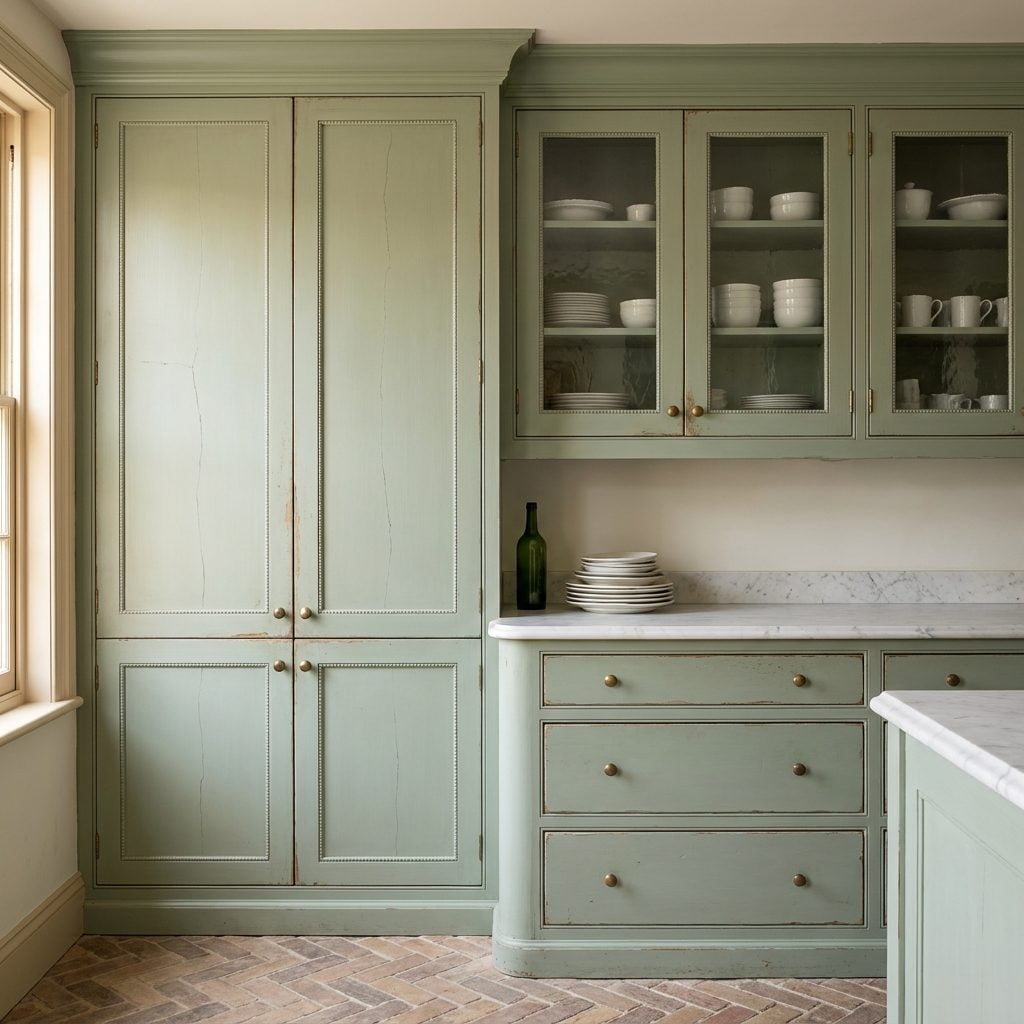
That color on the cabinets? It isn’t “Agreeable Gray” or “Hale Navy” or whatever Benjamin Moore shade is saturating Pinterest this quarter. It’s something the family chose in the early nineties, or possibly the seventies, and it’s been touched up exactly twice since. The shade sits somewhere between sage and putty and doesn’t photograph the same way in different light. That’s how you know it’s real.
Custom inset cabinetry like this, with recessed panels and brass cabinet knobs that have gone dark at the edges, tells you the kitchen was built by someone who understood joinery. The doors close flush. The gaps are even. And the paint shows its age honestly: tiny cracks near the hinges, a chip or two where a pot handle caught the corner. Nobody’s panicking about it.
37. The Wood Grain Tells a Story No Showroom Could Fabricate
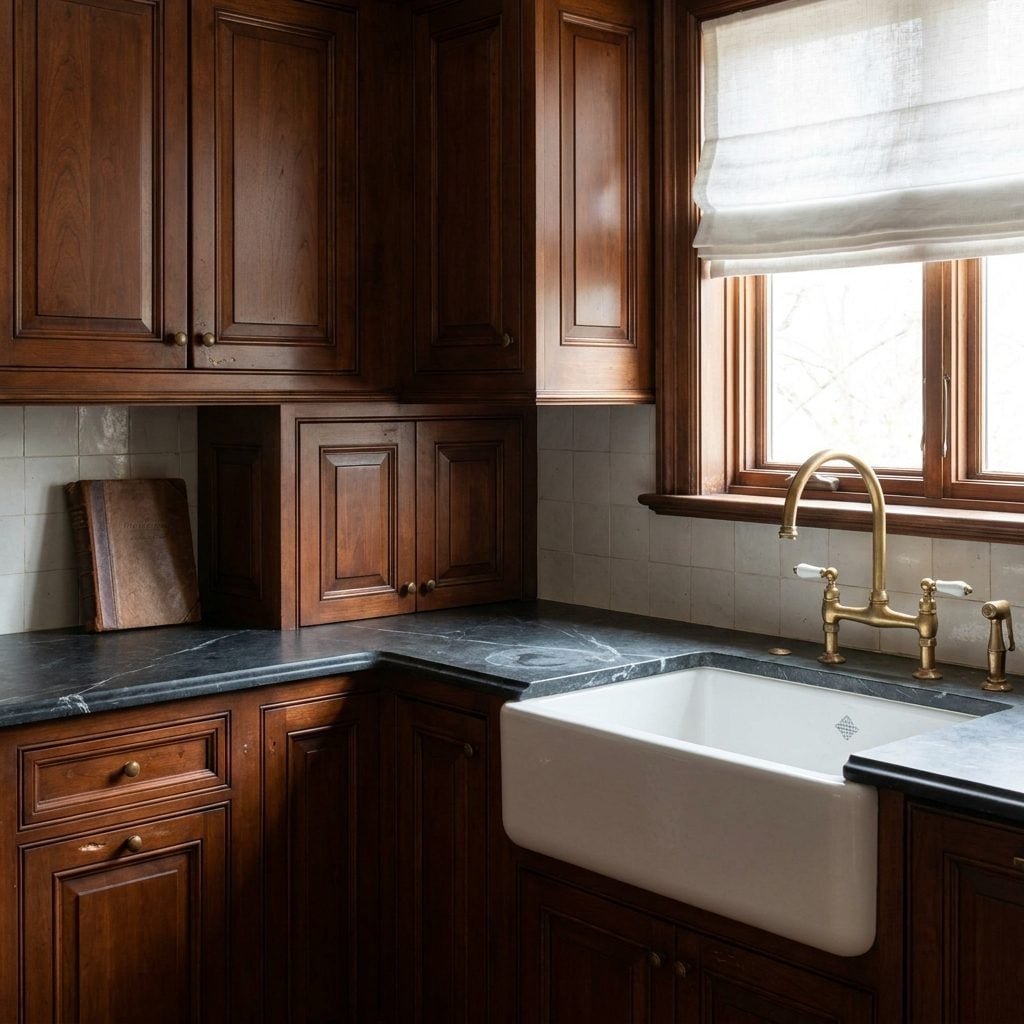
Painted cabinets hide their material. Stained cabinets hint at it. But solid wood left mostly alone? That’s a statement of confidence. The cherry or mahogany in an old money kitchen has darkened unevenly over the years, richer near the windows where sunlight hit, slightly lighter in the corners where it didn’t. There’s a dent on one drawer face from something nobody remembers dropping.
These aren’t the orange-toned oak cabinets of a nineties builder-grade kitchen. The grain is tight, the wood was quarter-sawn, and the finish is hand-rubbed oil that someone reapplies every few years with an old rag. Next to a soapstone countertop and a brass bridge faucet, the whole thing reads as something that was invested in once and respected since.
36. The Hardware Is Slowly Turning Green and That’s the Entire Point
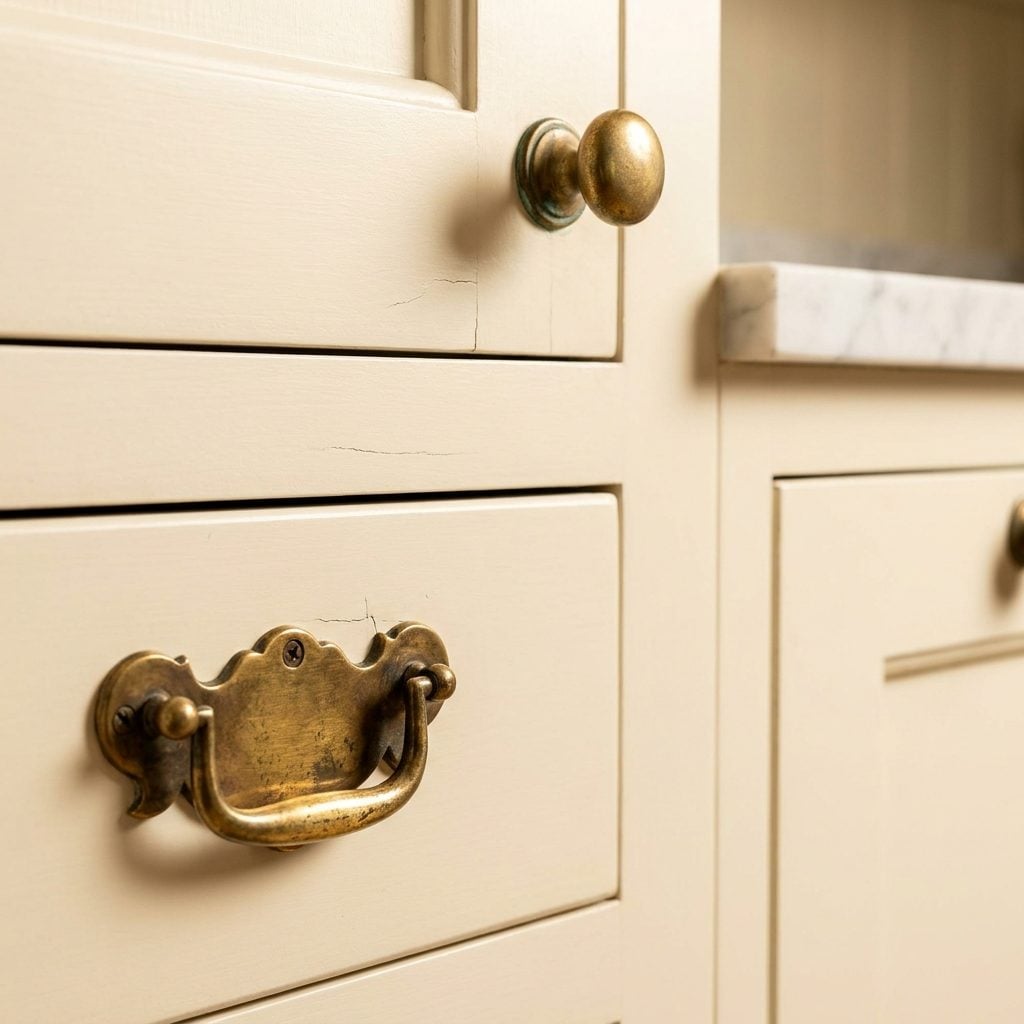
Lacquered brass stays shiny forever. That’s the problem. It looks the same on day one as it does on day three thousand, and old money kitchens are fundamentally allergic to things that refuse to age.
Unlacquered brass cabinet pulls develop patina the way leather develops character, unevenly, unpredictably, and in direct proportion to how often they’re actually used. The pulls near the stove darken faster from the heat and the oils on your hands. The ones on the seldom-opened corner cabinet stay brighter. Over five or ten years, every single piece of hardware in the kitchen becomes unique.
I’ll be honest: I resisted unlacquered brass for a long time because I thought it would look neglected. It doesn’t. It looks like someone lives there and cooks there and reaches for the same drawer forty times a week. The slight green verdigris forming at the base of each knob is proof of life, not proof of poor maintenance. And if you want to know the fastest way to spot a renovation pretending to be old money, check the hardware. If every pull is identically bright gold, it was installed last Tuesday.
35. You Can’t Actually Identify the Refrigerator at First Glance
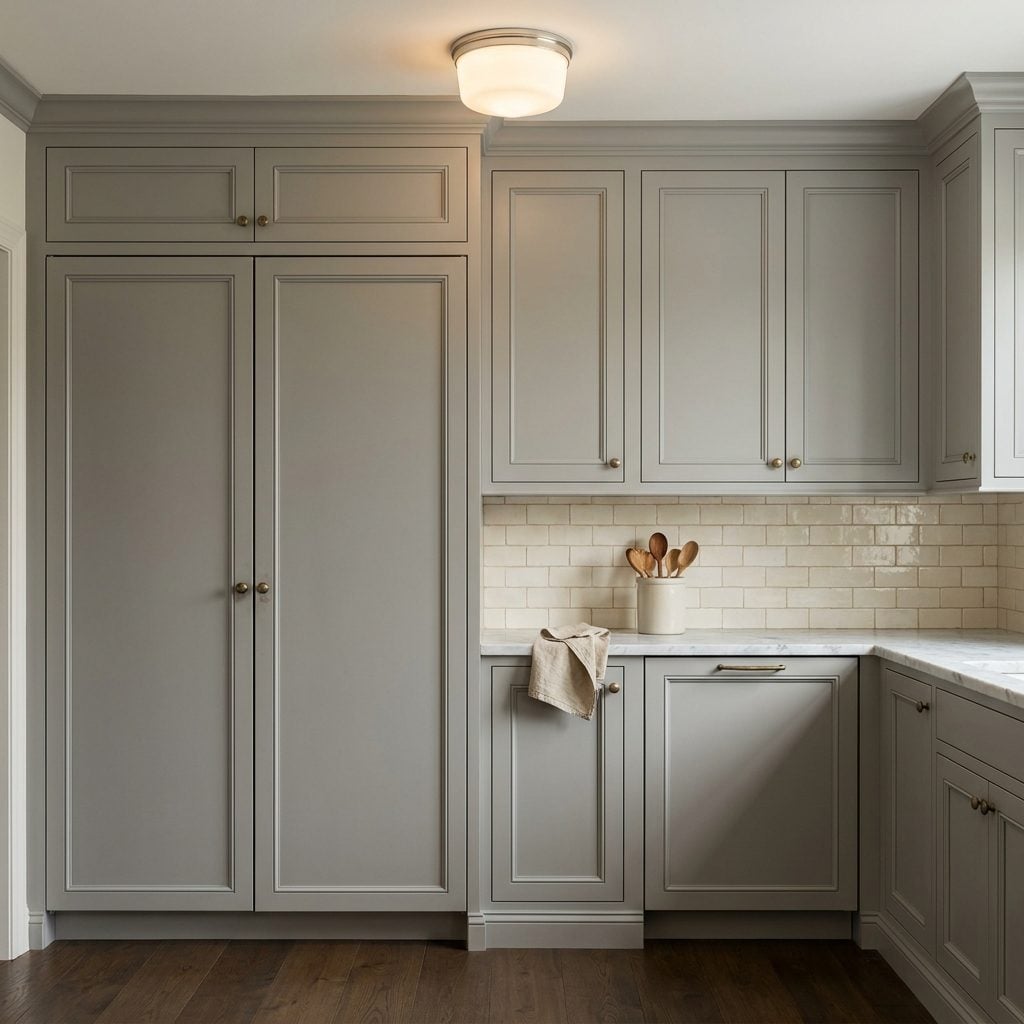
Walk into an old money kitchen and try to find the fridge. Go ahead. It’s behind a panel that matches every other cabinet in the room, and the only thing giving it away is that the brass pulls are spaced a little wider apart. The dishwasher? Same trick. You won’t hear it either, because the insulation behind panel-ready appliances tends to be better than the freestanding stainless steel monoliths everyone else is buying.
This is the fundamental philosophy: the kitchen serves the house, not the appliance brands. There’s no French-door refrigerator screaming its manufacturer’s name in chrome lettering. There’s just more cabinetry.
34. Every Appliance Disappeared Into the Woodwork, Literally
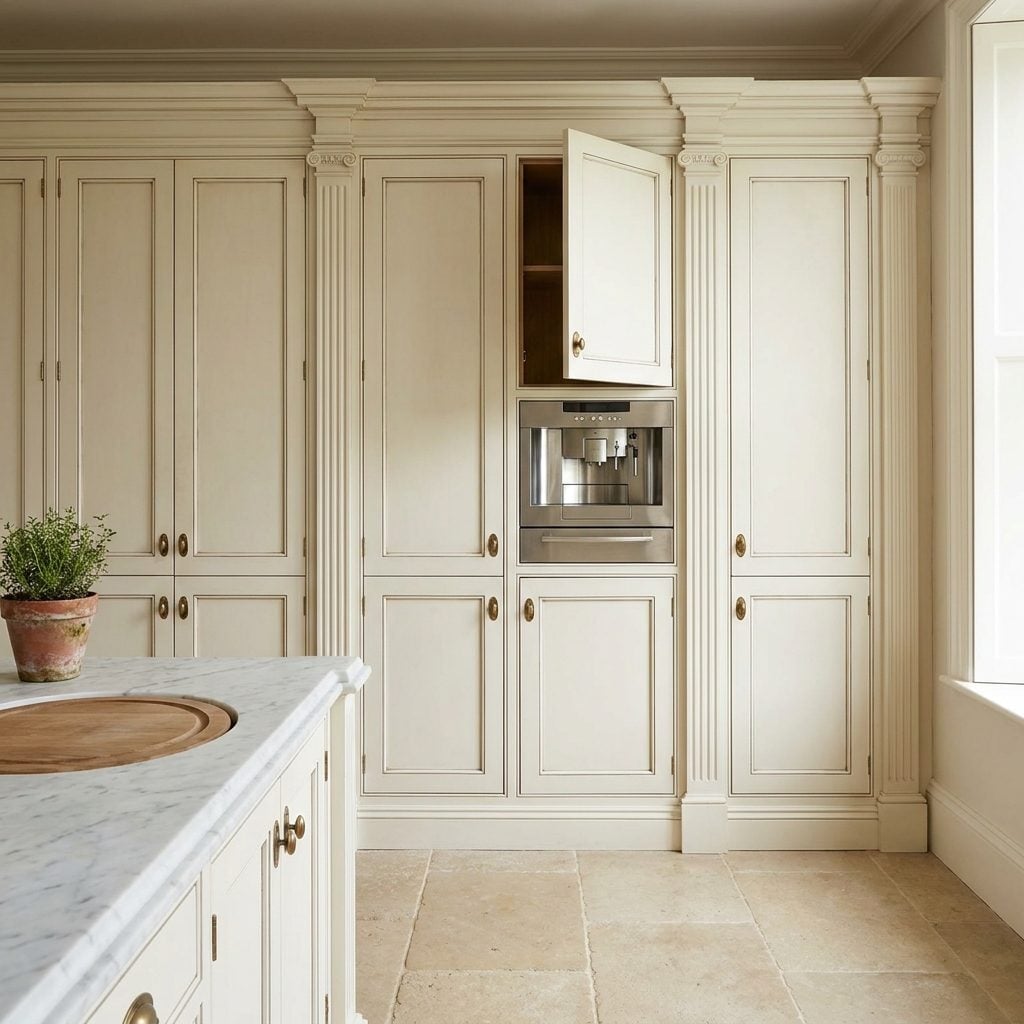
A step beyond panel-front integration: the appliances aren’t just hidden, they’re architecturally absorbed. The coffee machine lives behind a cabinet door with brass teardrop pulls. The speed oven sits within fluted pilasters that look like they belong in a library, not a kitchen. Everything closes flush.
Real contemporary kitchen design borrows this trick now, but old money kitchens have been doing it since before it had a name. The millwork was commissioned from the same cabinetmaker who built the dining room’s breakfront, and it shows. Grain direction matches across doors. Molding profiles are consistent from room to room.
Here’s the quiet flex: that warming drawer you didn’t notice? It’s been keeping dinner plates at temperature for forty-five minutes. Nobody mentioned it. Nobody needed to.
33. There’s an Entire Second Kitchen Behind a Door You Didn’t Notice
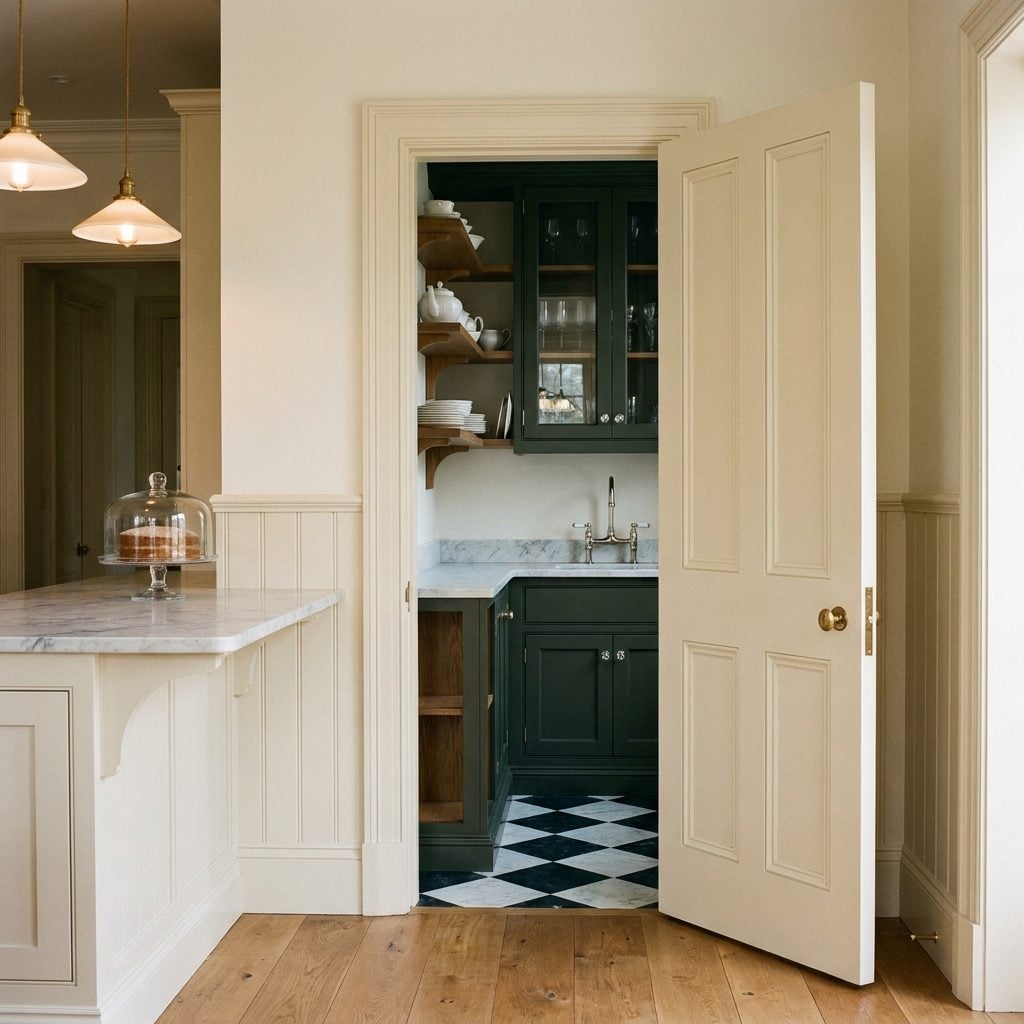
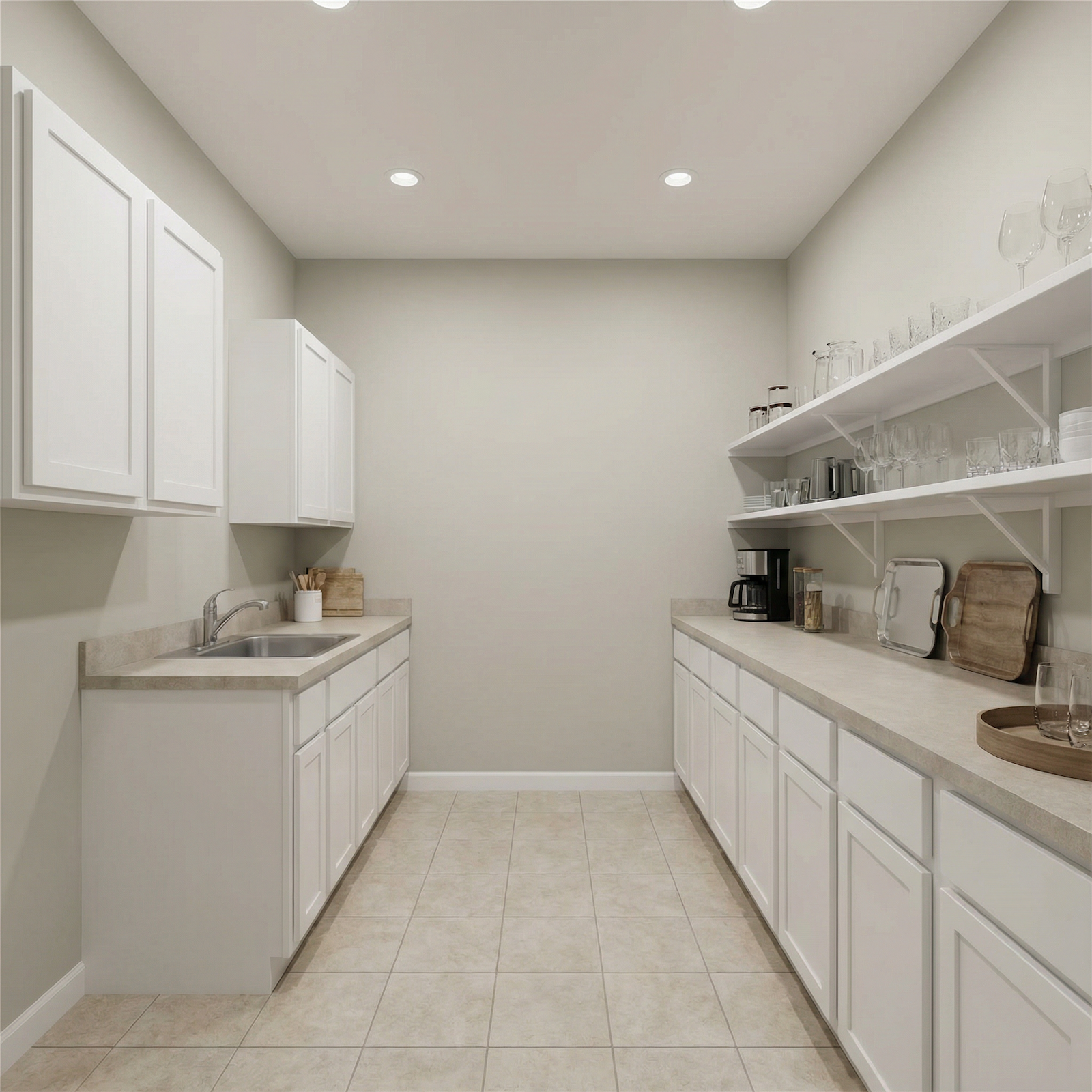
The real work happens back here. Behind what looks like just another panel in the wall, there’s a butler’s pantry with its own sink, its own counter space, and enough crystal stemware to serve thirty without anyone needing to wash a glass mid-party. The black and white marble floor tile shifts from the main kitchen’s oak planks, marking the threshold between what guests see and what the house actually runs on.
Butler’s pantries were standard in homes built before the 1940s. They fell out of favor when open-concept layouts took over, and now they’re returning because people realized that hiding the mess is actually more civilized than displaying it. An old money kitchen never abandoned them in the first place. The silver is polished and stored in felt-lined drawers. The good china lives in green glass-front cabinets arranged by size. And the door? It closes flush with the wall so quietly you’d walk past it a dozen times before realizing it’s there.
32. The Open Shelving Holds Exactly Seven Things and All of Them Earn Their Spot
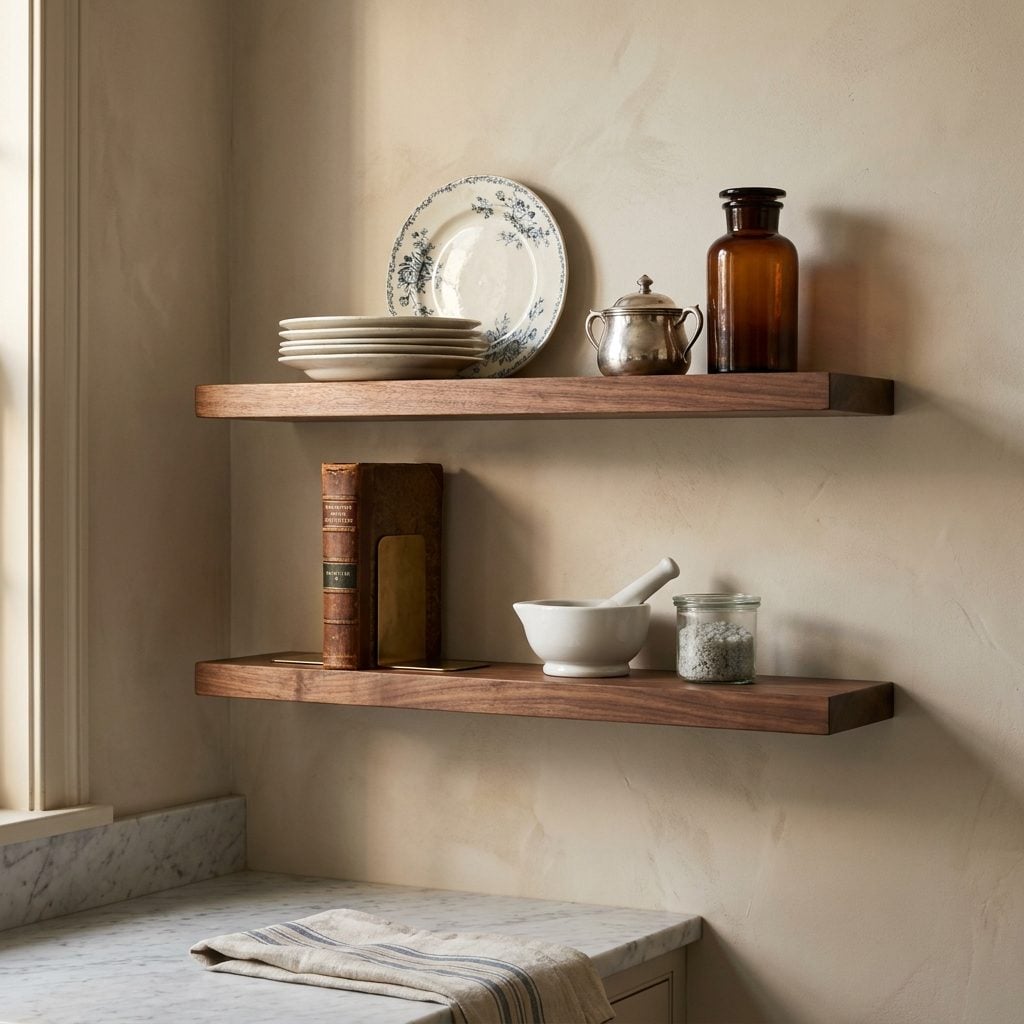
Open shelving in most kitchens turns into a chaotic display of mismatched mugs and half-empty spice jars within about three weeks. I know because I’ve lived it. Old money open shelving is a different animal entirely. It holds almost nothing, and every piece on it could probably be appraised.
A stack of antique French faience plates. A silver sugar bowl with a dent in the lid from some dinner party decades ago. One cookbook, spine cracked. A ceramic mortar and pestle that actually gets used. The rest is empty space, which is the most expensive-looking thing on the shelf.
The discipline here is ruthless. For every object that made the cut, ten were returned to a cabinet. That restraint, the willingness to leave a shelf half-empty, is what separates old money styling from the Instagram version. Maximalism is about acquisition. This is about editing.
31. The Porcelain Never Matches, and Nobody Has Ever Apologized for It
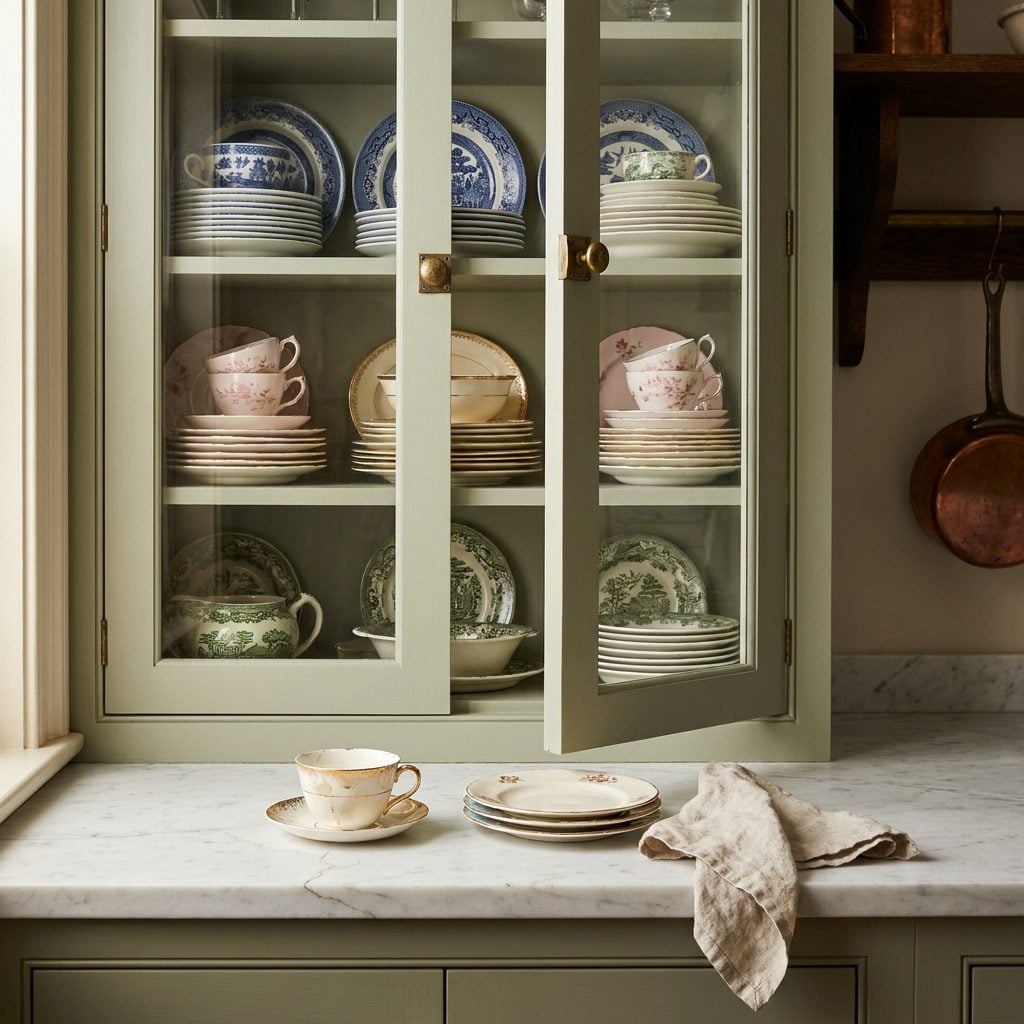
Every single plate tells on the family. That’s the quiet secret of an old money kitchen: the porcelain arrived in waves, across decades and continents, and nobody ever sat down to “register” for a matching set. You’ll find a Limoges dessert plate next to a blue and white transferware saucer that someone’s grandmother brought back from a trip to Holland in 1967. A gold-rimmed teacup with a hairline crack still gets used for Tuesday morning coffee.
The tell is that none of it lives behind glass like a museum display. It’s in the open cabinet, stacked casually, some pieces chipped at the edges. There’s no anxiety about breakage because these things were always meant to be used. I got this wrong for years, thinking nice dishes meant precious dishes. Old money kitchens taught me otherwise.
30. That Deep Farmhouse Sink Has a Stain Map You Could Read Like a Novel
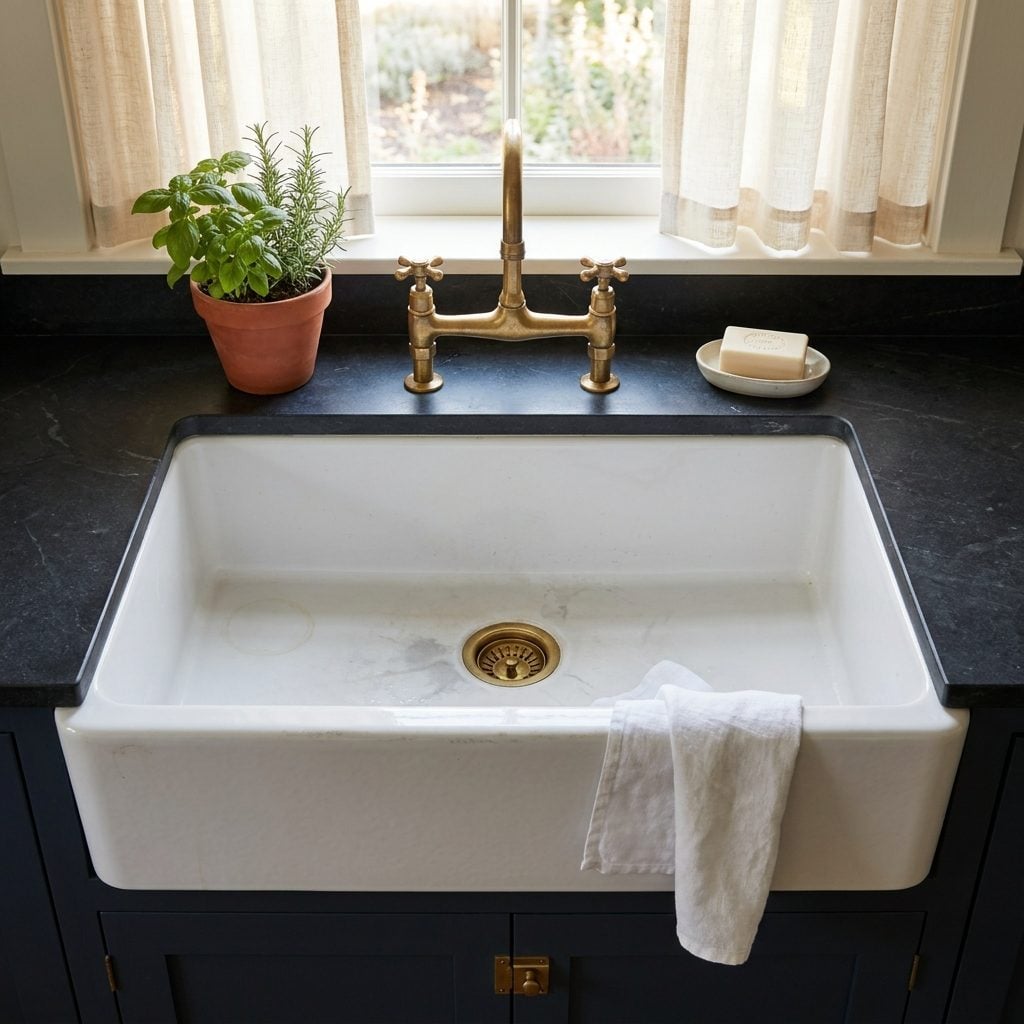
A fireclay sink that still looks factory-fresh isn’t an old money sink. The real thing has been scrubbed ten thousand times and wears every one of those mornings in its surface. There’s a tea stain that won’t quite come out near the left wall. The glaze along the front lip is worn thin from decades of someone leaning against it while washing the good silver by hand.
What matters here is the brass bridge faucet that’s gone from polished to honeyed to something approaching bronze, and nobody called a plumber to replace it. That patina is the point. The sink in this kind of kitchen is always deep enough to hide a full roasting pan, because it was installed in an era when people actually roasted things at home, regularly, for a crowd.
29. The Countertops Have Etching That Would Make a New Homeowner Panic
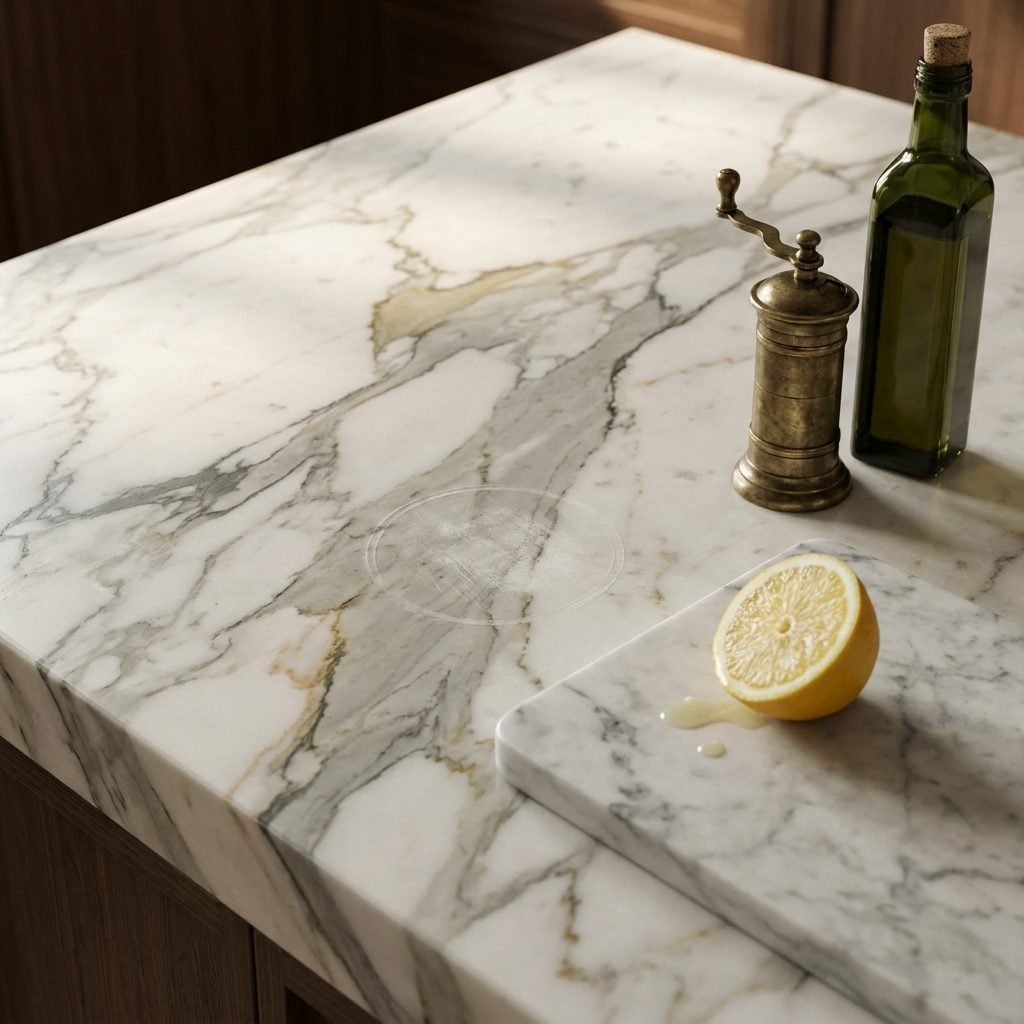
Lemon juice is the enemy of marble, and old money kitchens stopped caring about that fact sometime around 1985. Those faint circular etch marks near the sink? Someone set down a glass of Sancerre without a coaster. The dulled patch near the stove edge? A lifetime of cutting boards sliding across it. None of this triggers a call to the stone restoration company.
The thickness is the giveaway. We’re talking a full two-inch slab, sometimes thicker, with an eased or slightly bullnose edge that looks like it was quarried for a specific kitchen, not ordered from a warehouse catalog. This kind of contemporary kitchen counter gets more interesting with age, not less. I’ll be honest: I once watched someone wipe up a red wine spill on Calacatta marble with a shrug, and I realized that was the most expensive gesture of nonchalance I’d ever witnessed.
28. The Lighting Does Absolutely Nothing to Call Attention to Itself
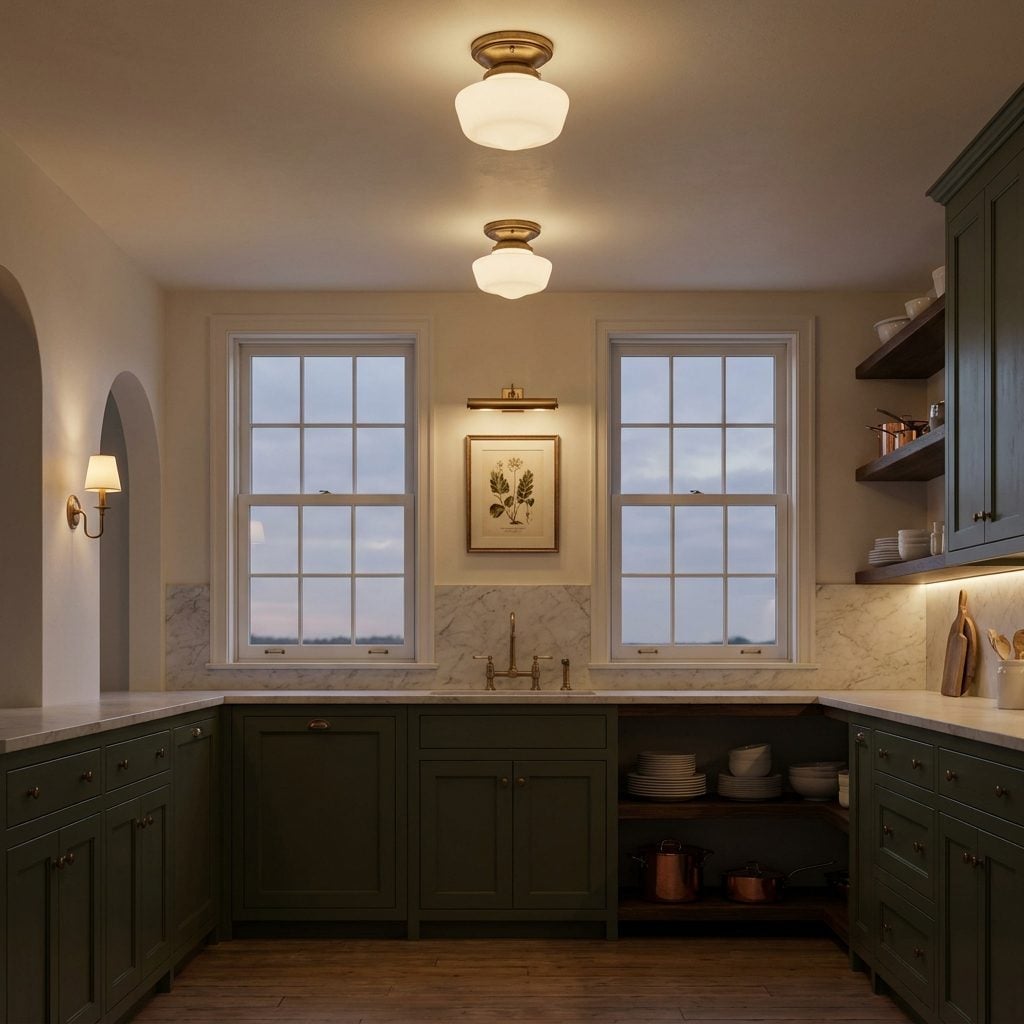
Here’s how you can tell: look up. If there’s a $4,000 sculptural pendant demanding to be Instagrammed, you’re in a renovated kitchen, not an inherited one. Old money lighting is boring on purpose. Flush-mount fixtures with frosted glass. A brass picture light over a framed botanical print that’s been hanging in the same spot since the kitchen was last painted, which was longer ago than anyone admits.
The trick is layers. Under-cabinet lighting that’s warm, not blue-white. A wall sconce near the doorway. Maybe a small lamp on the counter, which sounds odd until you’ve experienced how much better a kitchen feels when you can turn off the overheads entirely. The ceiling stays plain plaster, not a gallery for pendant collections.
Real wealth whispers in wattage. The entire room is lit well enough to cook a proper dinner, and not one fixture begs for a compliment.
27. The Curtains Are Just Linen, and They’ve Never Once Been Ironed
🔥 Would you like to save this?
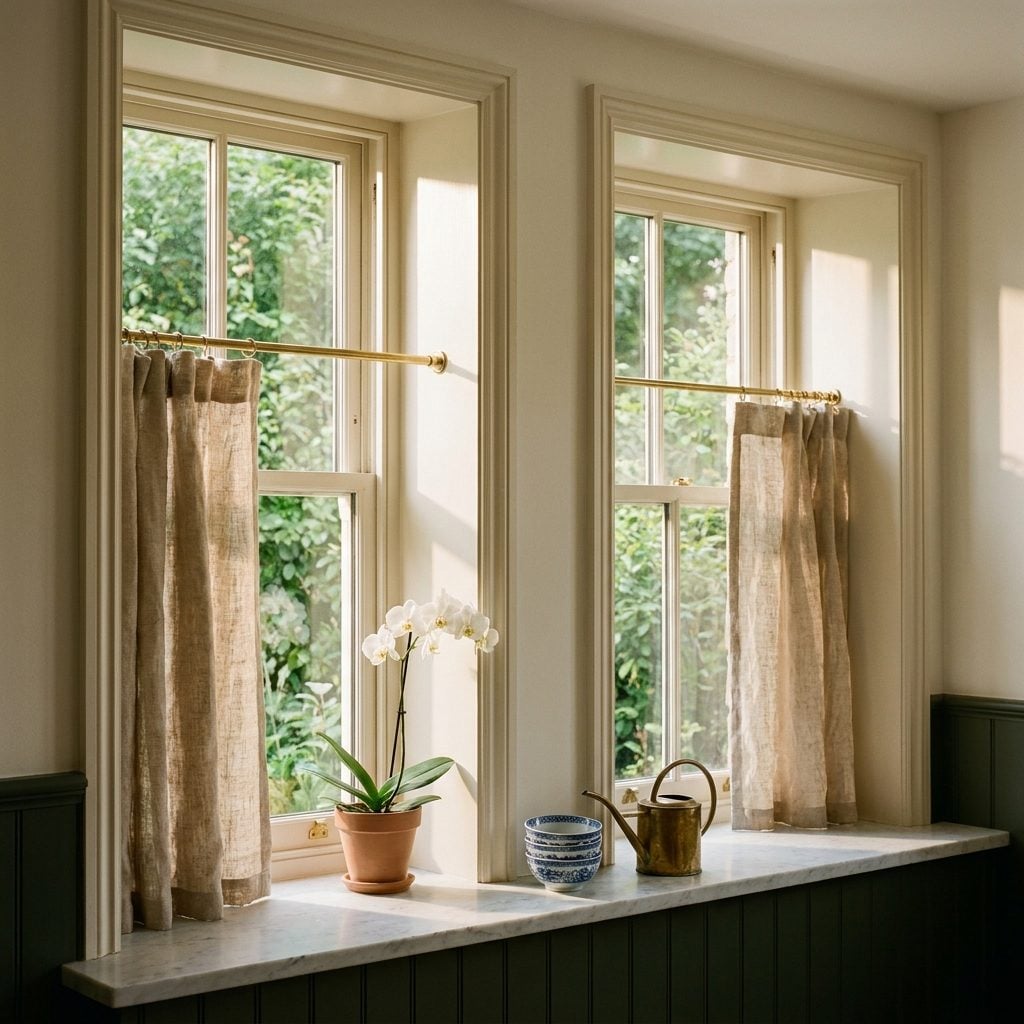
No Roman shades with contrast trim. No motorized blinds linked to an app. Just natural linen curtains that puddle slightly at the sill and have been washed so many times the fabric feels like an old bedsheet, soft and slightly sheer in places where the sun hits hardest.
They hang from a thin brass curtain rod that’s probably been there since the last renovation, which happened during a presidential administration you’d have to look up. The wrinkles aren’t a flaw. They’re the whole look. And the light they let in has this particular quality: filtered but generous, turning the whole kitchen golden in the late afternoon without making anyone squint at their crossword.
26. The Cookbooks Have Actual Food Stains on Pages That Fall Open by Themselves
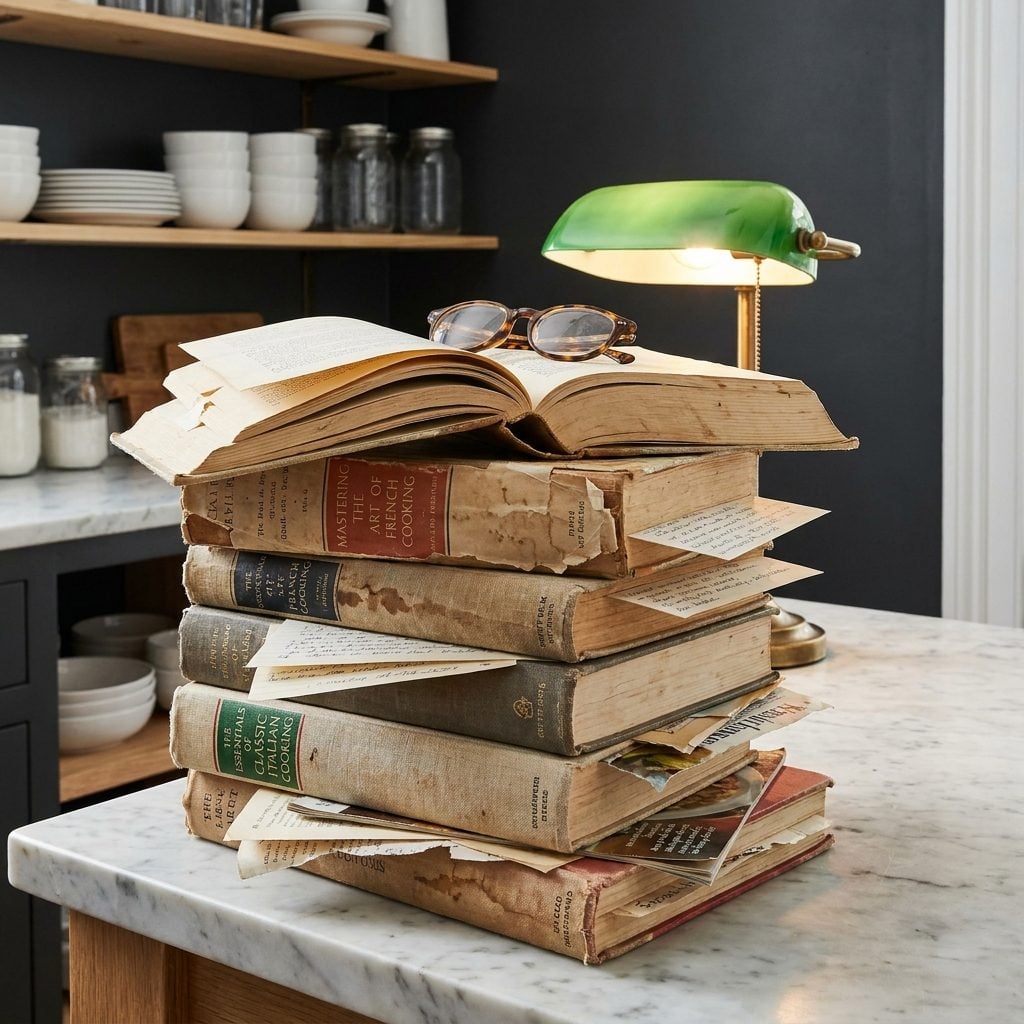
Not a single one was purchased at an airport bookstore because the cover matched the backsplash. These cookbooks have oil-spattered pages that fall open to the same béchamel recipe because the spine gave up fighting years ago. There’s a torn magazine clipping from 1994 wedged into the Marcella Hazan, and someone once wrote “needs more salt” in pencil in the margin of the beef bourguignon.
The stack is never organized. It sits on the counter like a small geological formation, layered by use rather than aesthetics. A Julia Child volume with a dust jacket held together by hope. A faded hardback with no jacket at all, just a linen cover and a name inscribed on the inside in fountain pen.
I’ll die on this hill: a kitchen with cookbooks that have never been opened is just a kitchen with expensive shelf decor. The food stains are the credential.
25. There’s a Kettle on the Range That Hasn’t Been Put Away Since the Clinton Administration
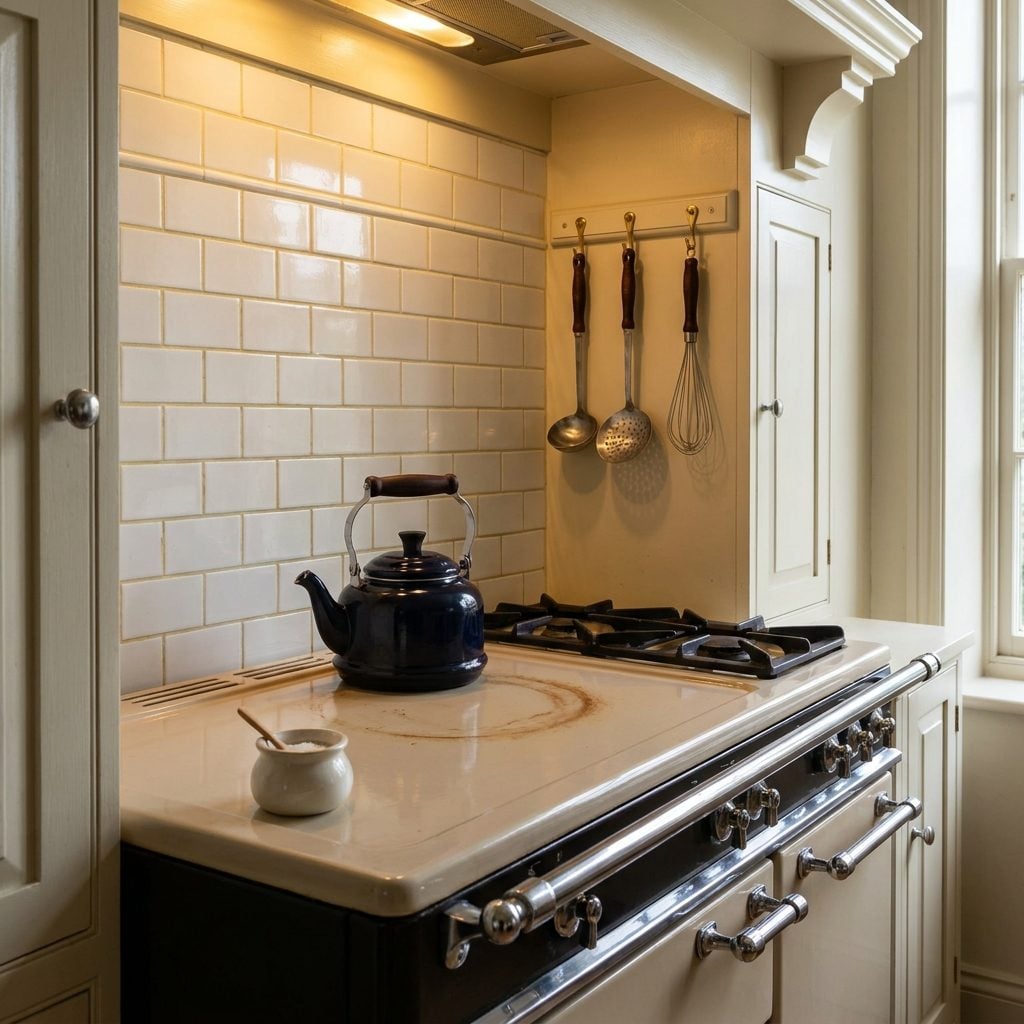
That kettle has its own burner. Not officially, of course, but it hasn’t moved in so long there’s a faint darkened ring on the range surface as proof. A navy enamel kettle with a wooden handle that’s gone from smooth to slightly rough over the years, sitting on a range that cost more than some people’s cars but is treated with the casual indifference of a kitchen appliance that simply works.
This is craftsman kitchen inspiration at its most honest. The kettle says: someone in this house drinks tea multiple times a day, and the twenty seconds it takes to put the kettle away and take it back out again is twenty seconds nobody is willing to spend. It’s a small monument to daily ritual over daily tidying.
24. The Floors Have a Worn Path from the Sink to the Stove That No One Would Ever Refinish
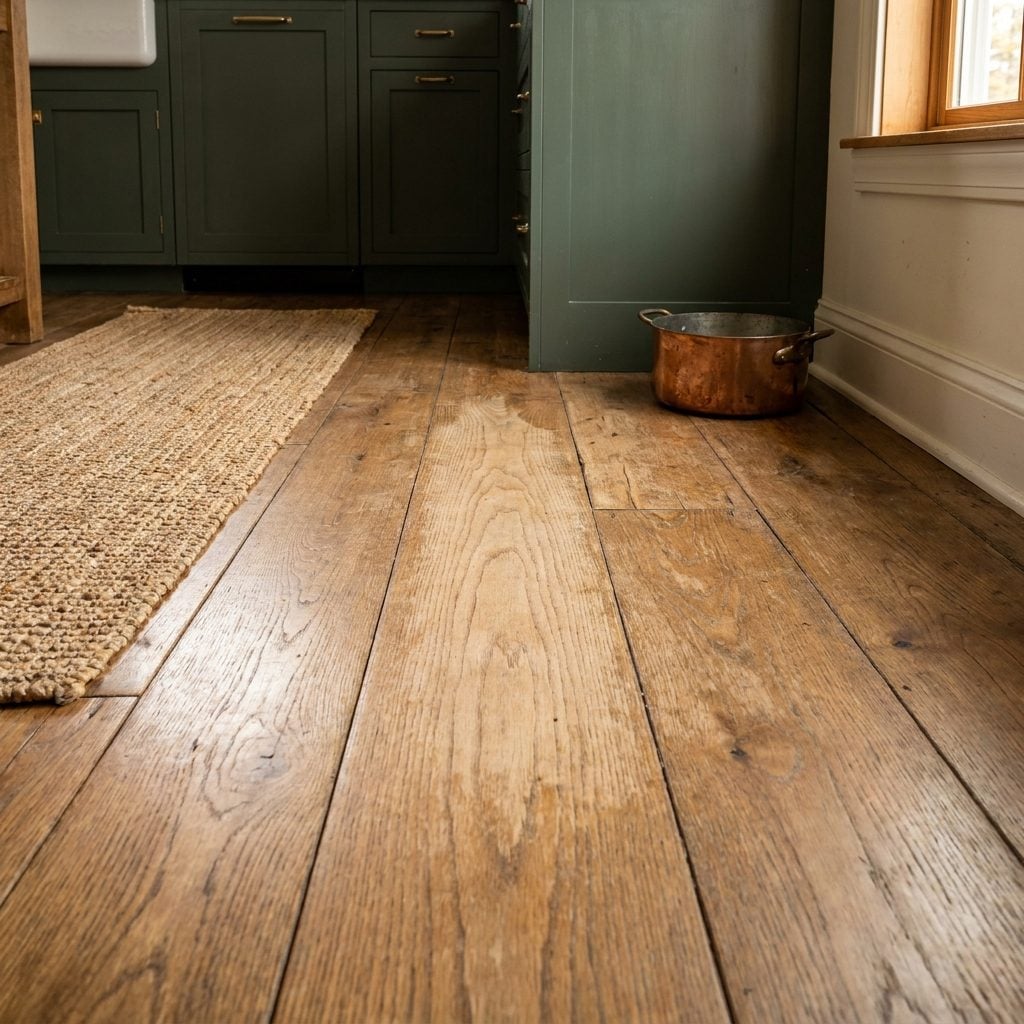
You can read a kitchen’s biography in its floors. That lighter, smoother track from sink to stove to refrigerator? Generations of sock feet and bare heels have polished a literal path into the oak. The boards along the walls and under the table still have their original grain texture, slightly rougher, a shade darker. It’s an accidental map of how this kitchen has actually been used.
Wide plank floors like these, eight inches or more across, were milled from old growth timber that nobody can source anymore. The gaps between planks have darkened. A few knots have loosened. And absolutely no one is calling a floor refinisher, because sanding these down to raw wood and sealing them with high-gloss polyurethane would erase the very thing that makes them worth having.
23. Nothing Matches, and That’s Precisely the Point
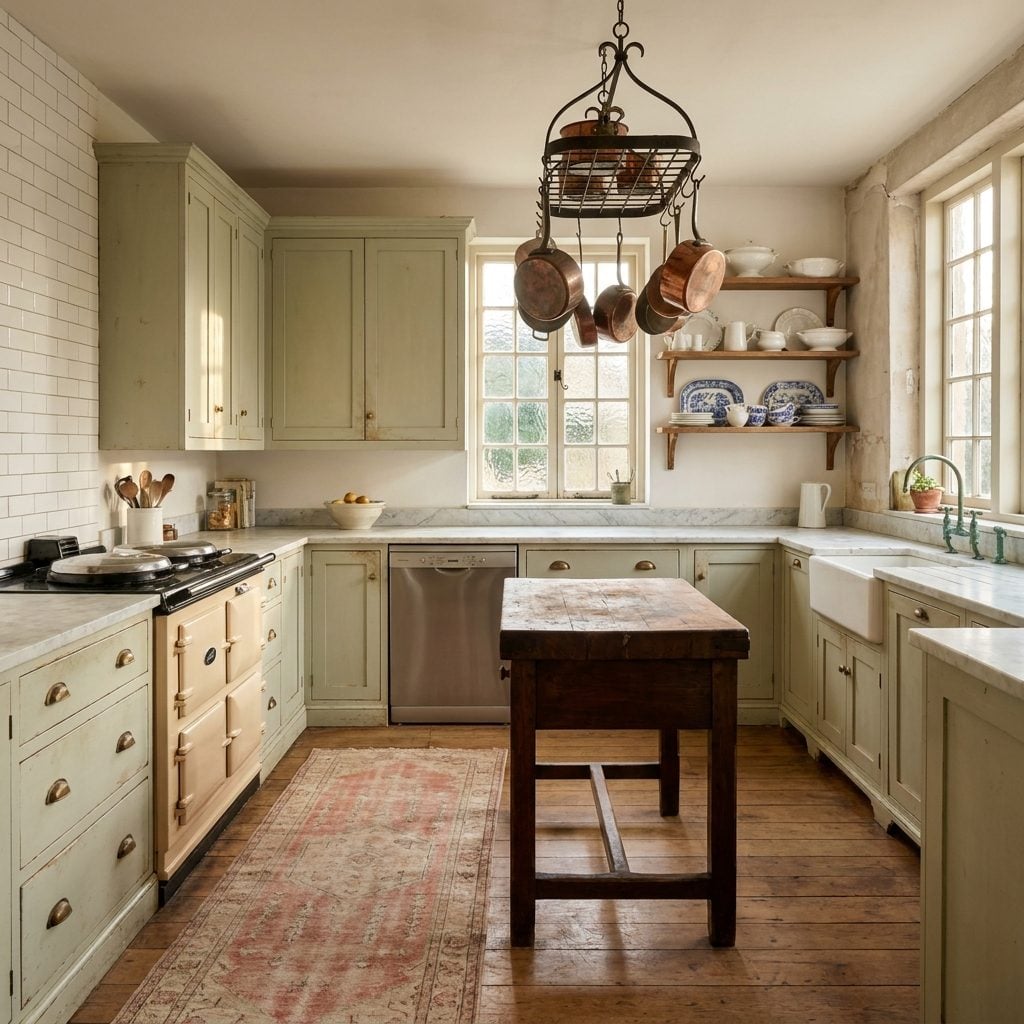
The cabinets are one era. The countertops are another. The island looks like it wandered in from a different house entirely, and the whole thing somehow works with the quiet confidence of a room that’s been added to, not designed. This is the single most reliable tell of an old money kitchen: nothing was purchased during the same shopping trip.
Real wealth kitchens collect their elements the way families collect stories. The unlacquered brass faucet went in during the nineties. The range is older than that. The dishwasher got swapped last year because the old one finally gave up, but nobody thought to “update the whole space” while they were at it. I got this wrong for years, thinking cohesion was the goal. It isn’t. Cohesion is what showrooms sell you.
22. There’s an Actual Piece of Furniture Standing Where a Cabinet Should Be
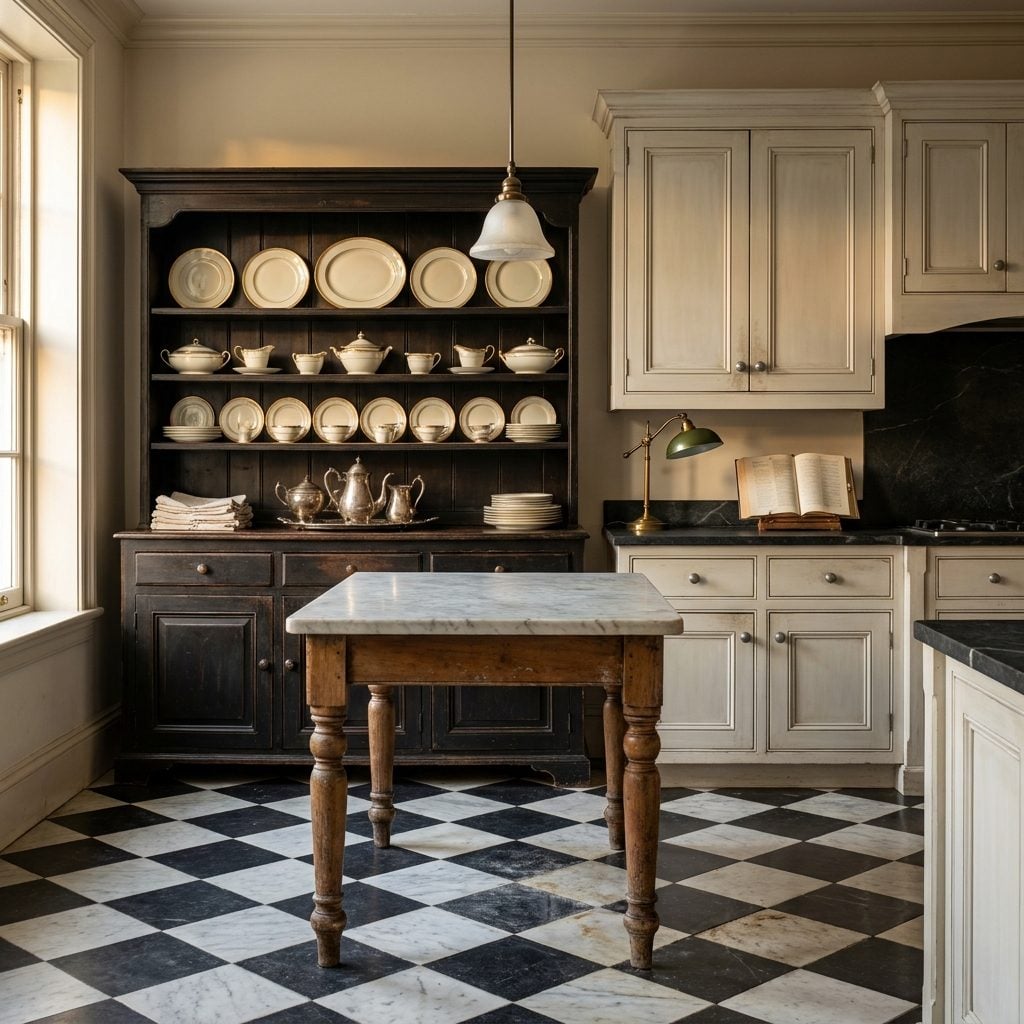
Fitted kitchens are a relatively modern invention. Before the mid-twentieth century, kitchens were furnished the same way you’d furnish a dining room: with freestanding pieces that served specific purposes. Old money kitchens never fully abandoned this idea.
You’ll spot a antique oak dresser holding the good china. A marble-topped table doing duty as a prep station. Maybe a library cabinet repurposed for cookbook storage. These aren’t decorating choices made from a Pinterest board. They’re pieces that migrated into the kitchen decades ago because someone needed a spot for the silver, and no one ever saw a reason to replace them with built-ins.
21. You Could Photograph It in 1994 or 2024 and Nobody Would Know the Difference
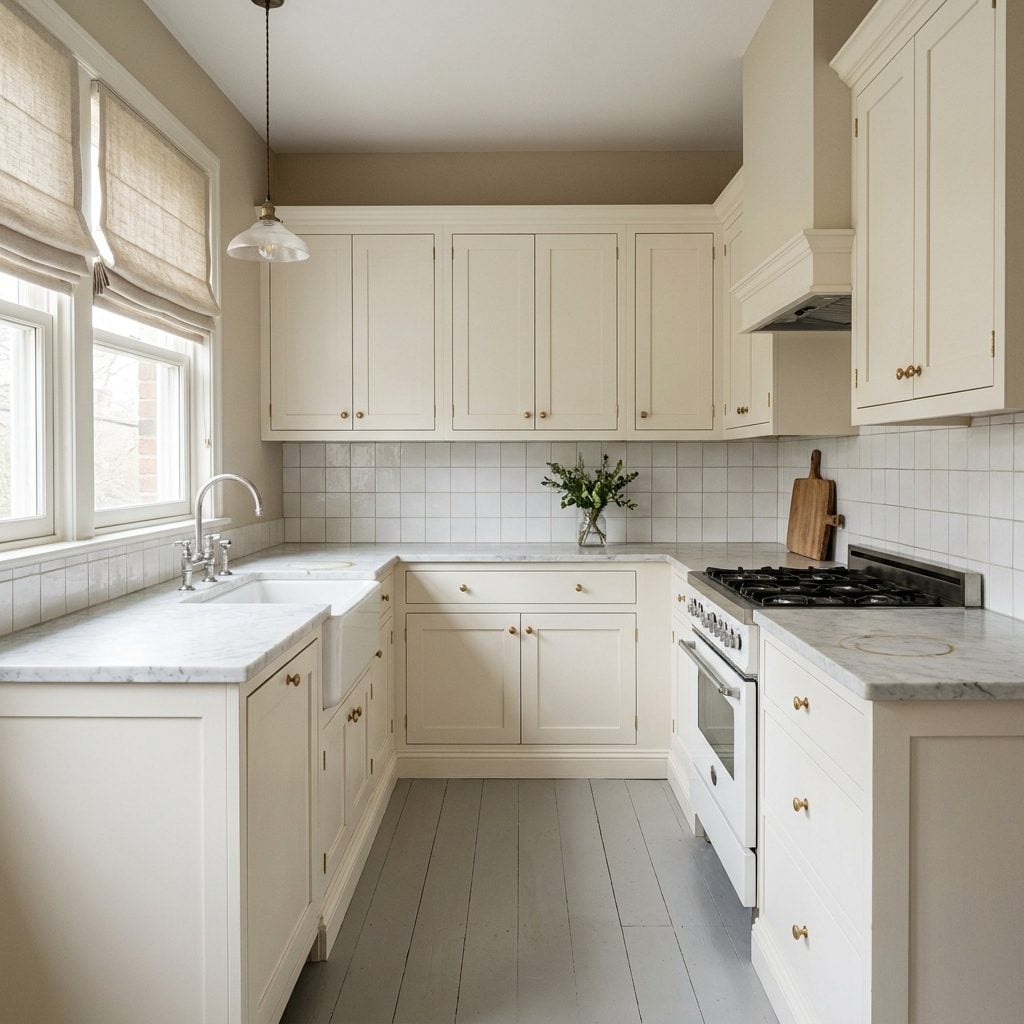
No navy island. No waterfall edge. No matte black fixtures. The palette reads as barely-there: warm whites, stone, putty, the occasional soft gray. It’s the kind of kitchen that trends actively avoid because there’s nothing to react to.
That restraint is the entire point. A contemporary kitchen announces its era with every material choice. An old money kitchen refuses to participate. The honed marble countertop could have been installed in any decade since the 1920s. The white cabinets are the same. Nothing dates it because nothing was chosen to be current in the first place.
20. The Drawers Stick a Little, and Nobody’s Called a Contractor About It
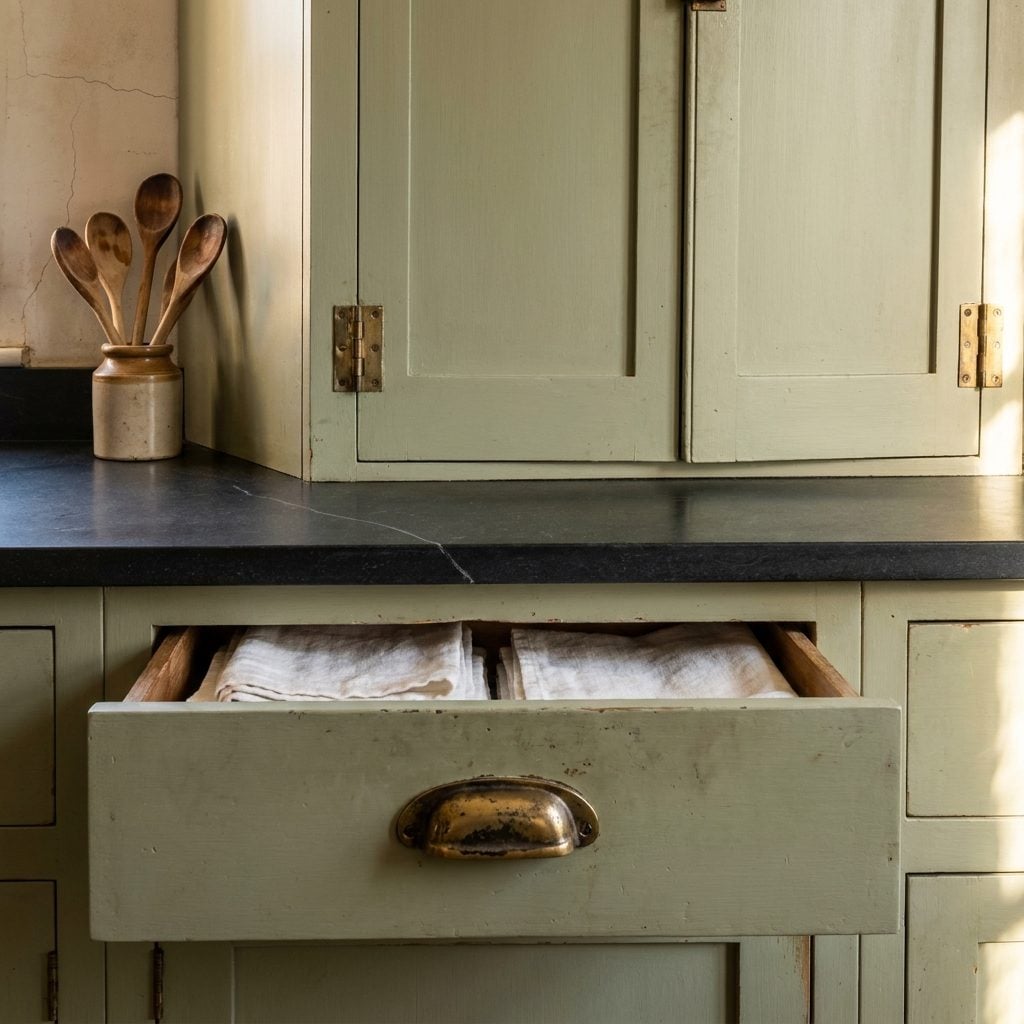
Here’s the thing nobody tells you about truly expensive cabinetry: it ages. Solid wood doors warp slightly in humidity. Hand-cut dovetail drawers loosen over years. Brass bin pulls develop a dark, cloudy patina that would horrify anyone who thinks hardware should gleam.
And nobody in an old money household is losing sleep over any of it. These minor imperfections are treated the way a well-worn leather jacket is treated: as evidence that the thing is real. The paint shows wear at the edges where hands have gripped for decades. One door hangs a fraction lower than the other. The kitchen still works perfectly. I will die on this hill: a kitchen with zero signs of wear is a kitchen that hasn’t been loved yet.
19. The Glass Cabinets Are Showing Off Chipped Plates, Not a Pottery Barn Set
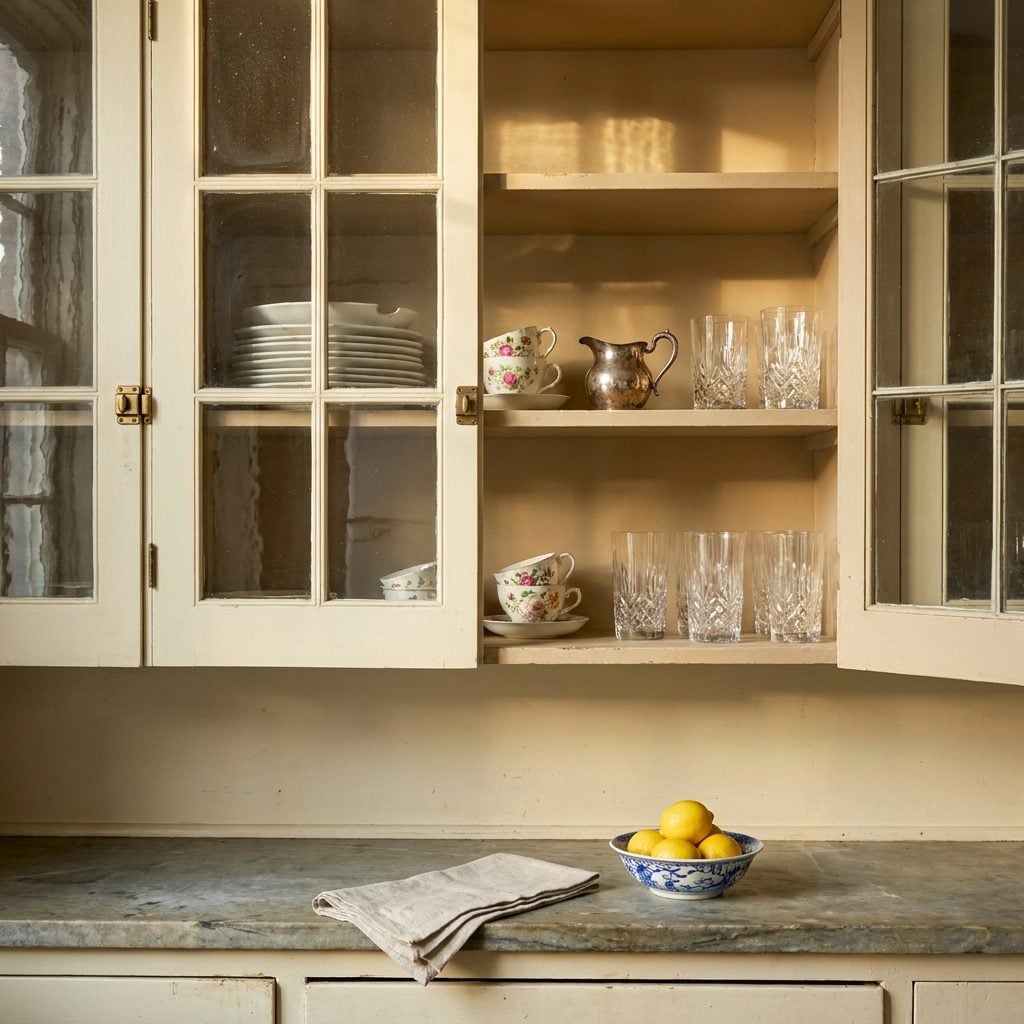
Glass-front cabinets in catalog kitchens are curated like museum displays. Everything coordinated, evenly spaced, sometimes even color-sorted. Glass-front cabinets in old money kitchens look like someone opened the door, grabbed a plate for breakfast, and closed it again without rearranging anything.
The dishware behind that glass tells its own story. There’s the everyday set that’s missing two saucers. A few crystal pieces from a grandmother. A creamer with tarnish nobody’s bothered to polish. One shelf has an obvious gap because something’s in the dishwasher right now. This is a kitchen is actually used, daily, by people who don’t consider their dishes a design statement.
18. There’s a Door Between the Kitchen and the Rest of the House, and It Closes
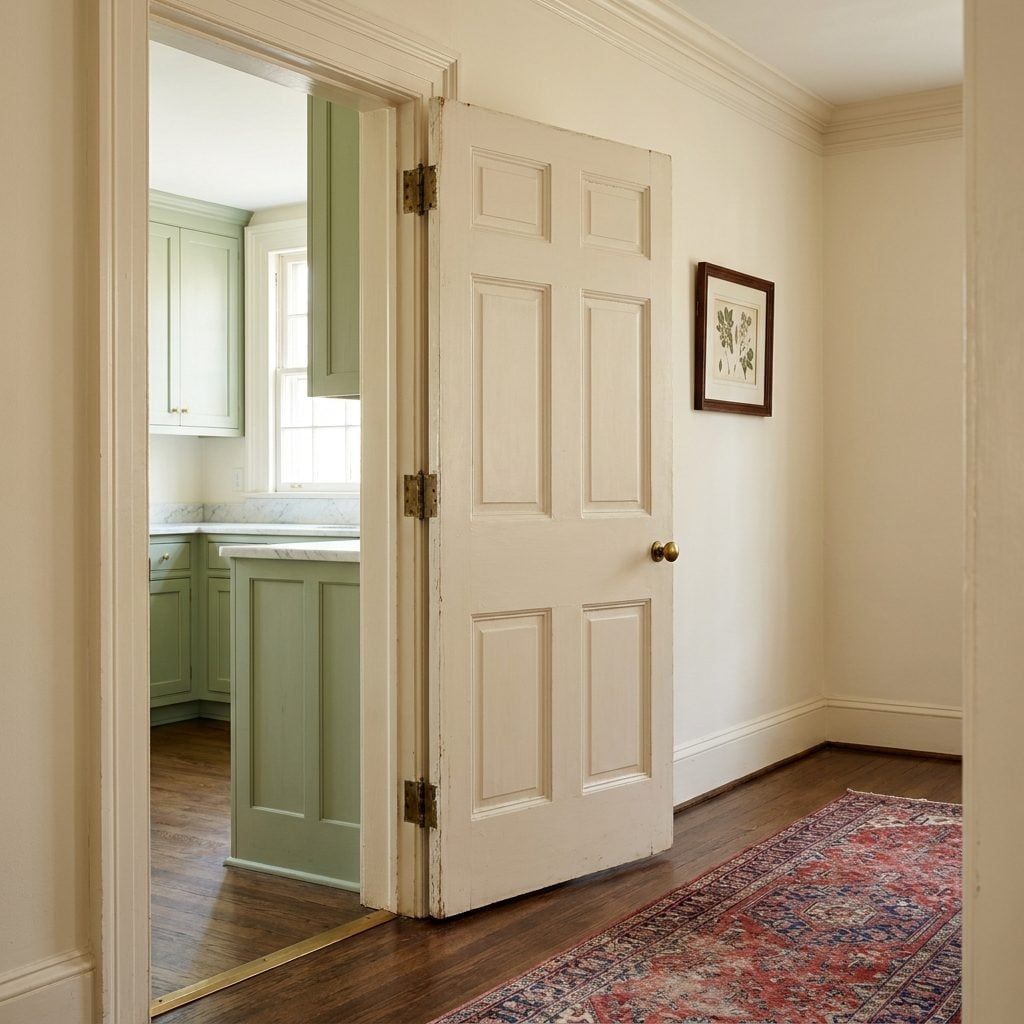
Open-concept kitchens are, architecturally speaking, quite new. And old money homes want nothing to do with them.
The kitchen in a traditional wealthy household was always a working room, separate from the spaces where entertaining happened. That division wasn’t about hiding the cooking. It was about function: kitchens produce heat, noise, and smells that don’t belong in a drawing room. This practical logic hasn’t changed, even if the rest of the housing market decided to blow out every wall between the stove and the sofa sometime around 2005.
If your kitchen has a proper door, maybe even a butler’s pantry serving as a transition zone between cooking and dining, you’re looking at a floor plan that predates trend cycles. That separation feels almost radical now, which is funny, because for most of residential history it was just called “a house.”
17. The Brightest Thing in the Room Is the Window, Not a Light Fixture
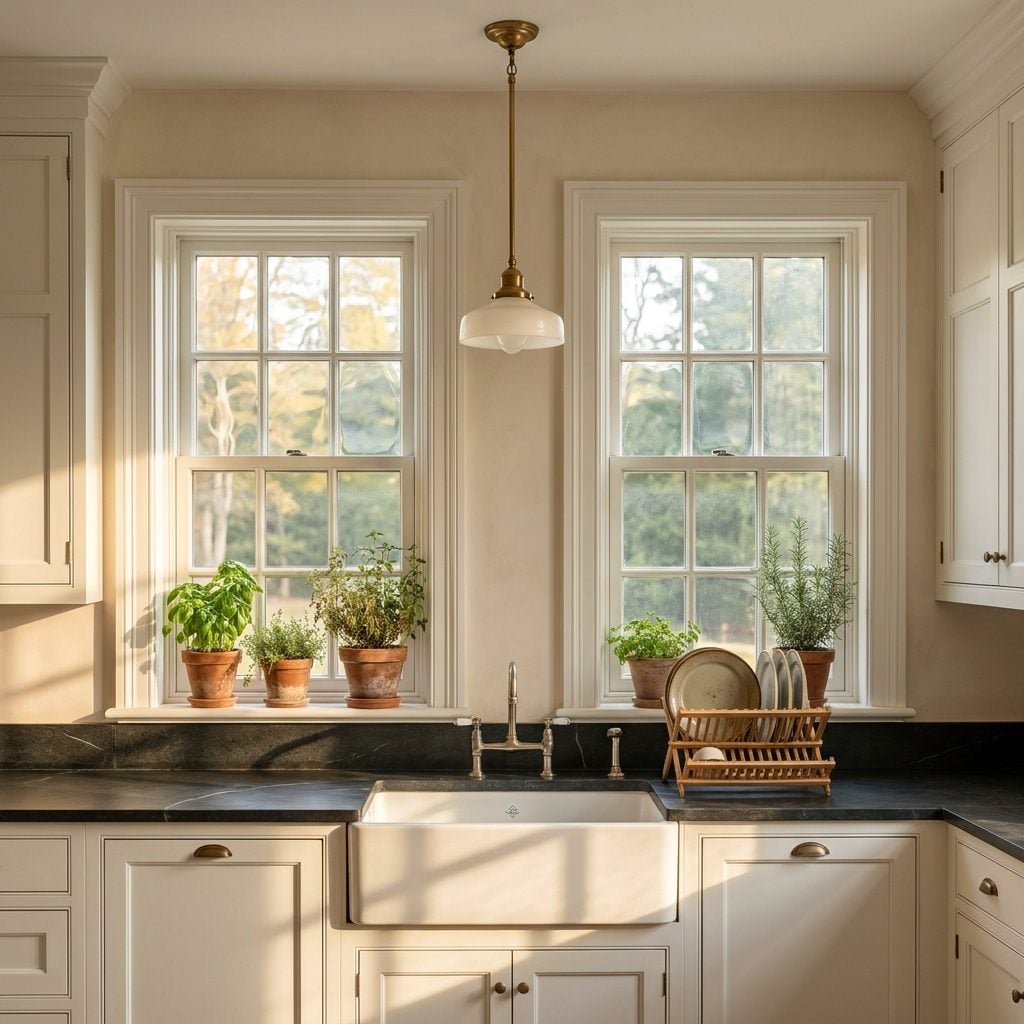
Count the recessed lights. In an old money kitchen, you probably can’t, because there aren’t any. Maybe there’s a pendant over the sink. A fixture over the table if there is one. But the dominant light source is daylight, and the room was oriented around its windows long before anyone invented a “lighting plan.”
This drives modern designers slightly crazy. Where are the under-cabinet LEDs? The task lighting? The dimmers? They’re absent, and the kitchen is better for it. Sunlight on soapstone countertops does something no 3000K bulb can replicate. It shifts through the day, goes golden in the afternoon, and makes even plain white dishes look like they belong in a painting.
16. The Backsplash Has a Crack in It, and That Crack Is Older Than You Are
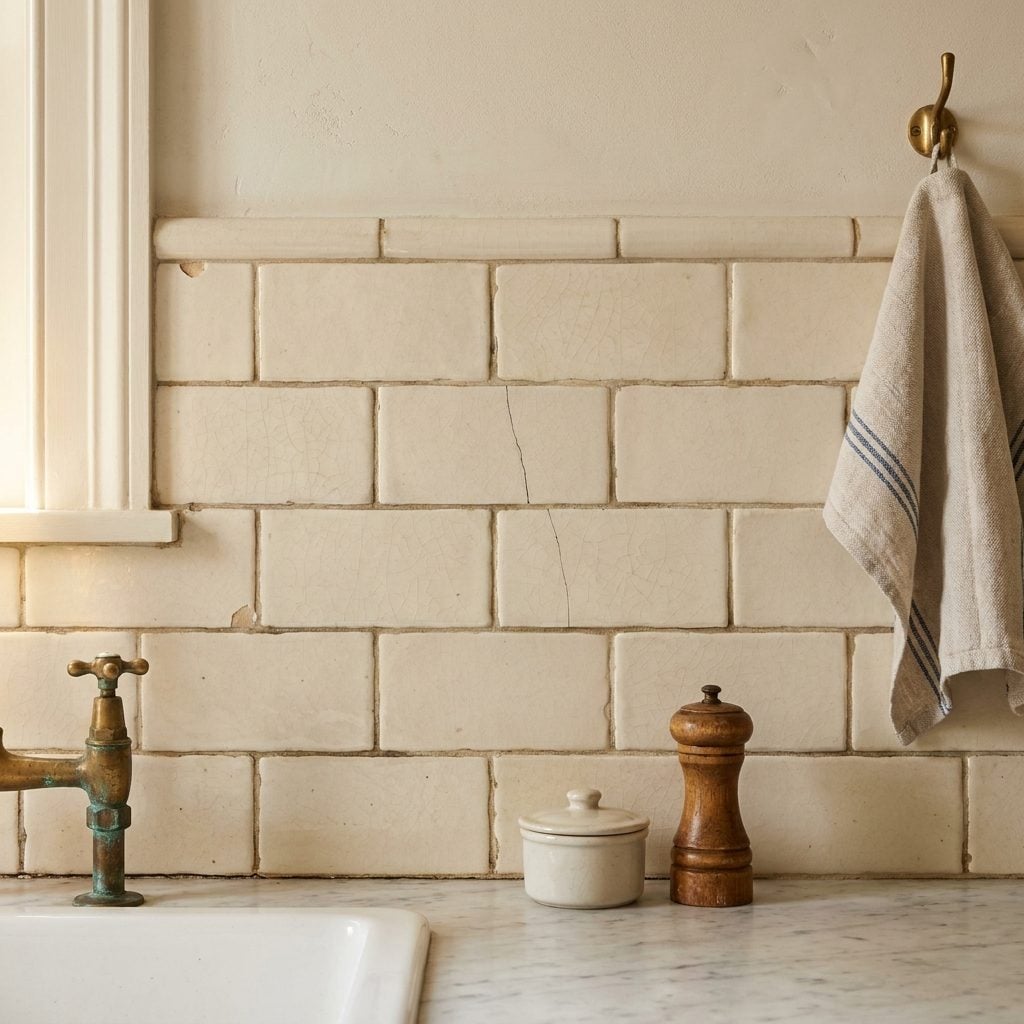
That subway tile everyone installs now as a “classic” choice? In an old money kitchen, the actual classic version has been on the wall since the house was built. The glaze has crazed into a web of fine lines. One tile near the stove has a crack. Another has a chip at the corner where someone presumably knocked it with a pot handle in 1978.
Nobody has retiled.
This is perhaps the starkest difference between old money and new money kitchens. New money replaces anything showing age. Old money sees age as the entire point. Those handmade ceramic tiles with their slightly uneven surfaces and warm crackled glaze carry decades of kitchen life in their imperfections. You can draw craftsman kitchen inspiration from exactly this approach: choosing materials that improve with wear instead of deteriorating from it. Soapstone darkens. Brass tarnishes. Handmade tile crazes. And somehow, the kitchen just keeps getting better.
15. Every Surface Is Clear, but the Room Still Feels Like Someone Lives There
🔥 Would you like to save this?
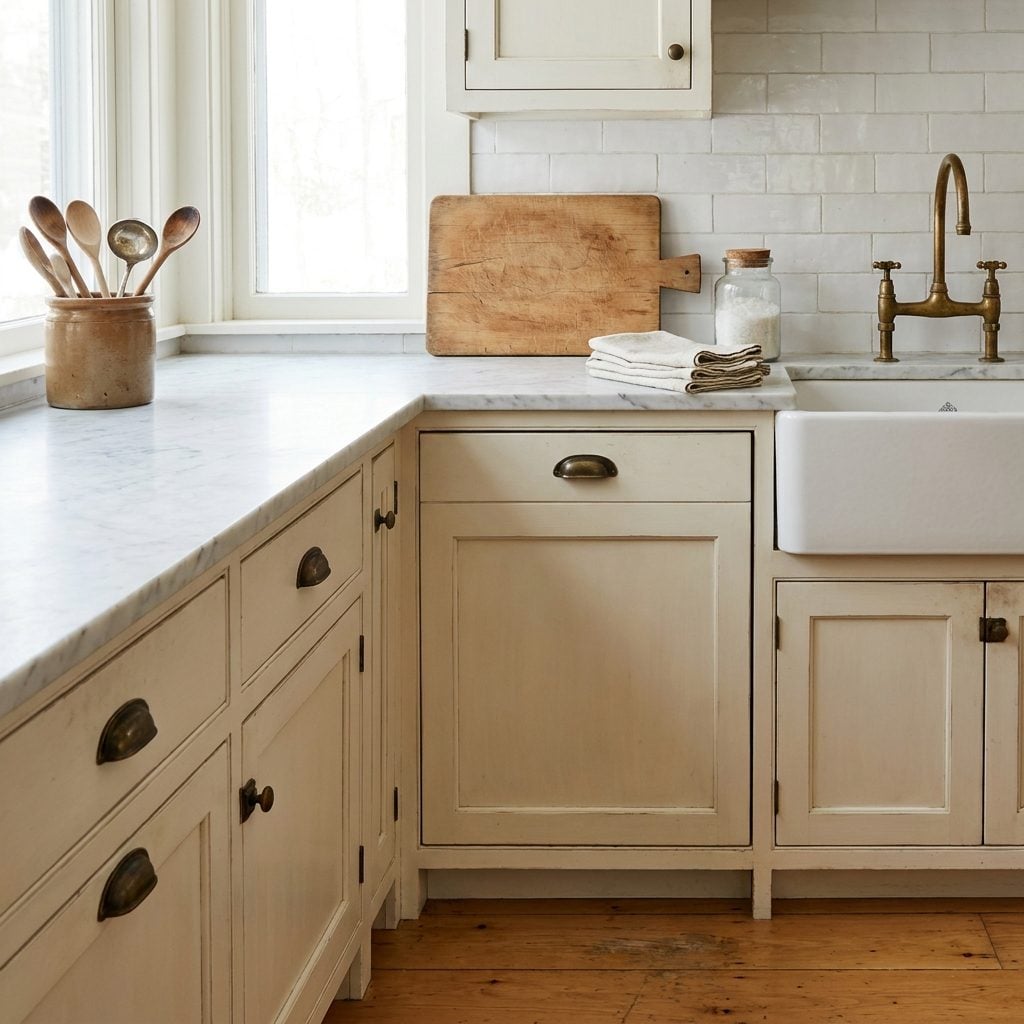
There’s a difference between a kitchen that’s been ruthlessly decluttered for a photo and one that simply never accumulated junk in the first place. The old money version is the second kind. You won’t find a countertop appliance graveyard or a pile of takeout menus. But you also won’t find the eerie sterility of a kitchen nobody cooks in.
What you will find: a ceramic crock of wooden spoons that have actually stirred something, a single jar of good salt, maybe a linen towel draped over the oven handle. Everything present has a job. Everything absent was never missed.
I got this wrong for years, thinking a “clean” kitchen meant hiding every object. Old money kitchens taught me the opposite. The trick isn’t absence. It’s that every item earns its counter space through daily use, not decoration.
14. There’s a Handwritten Note Tucked Behind the Spice Rack That Nobody Talks About
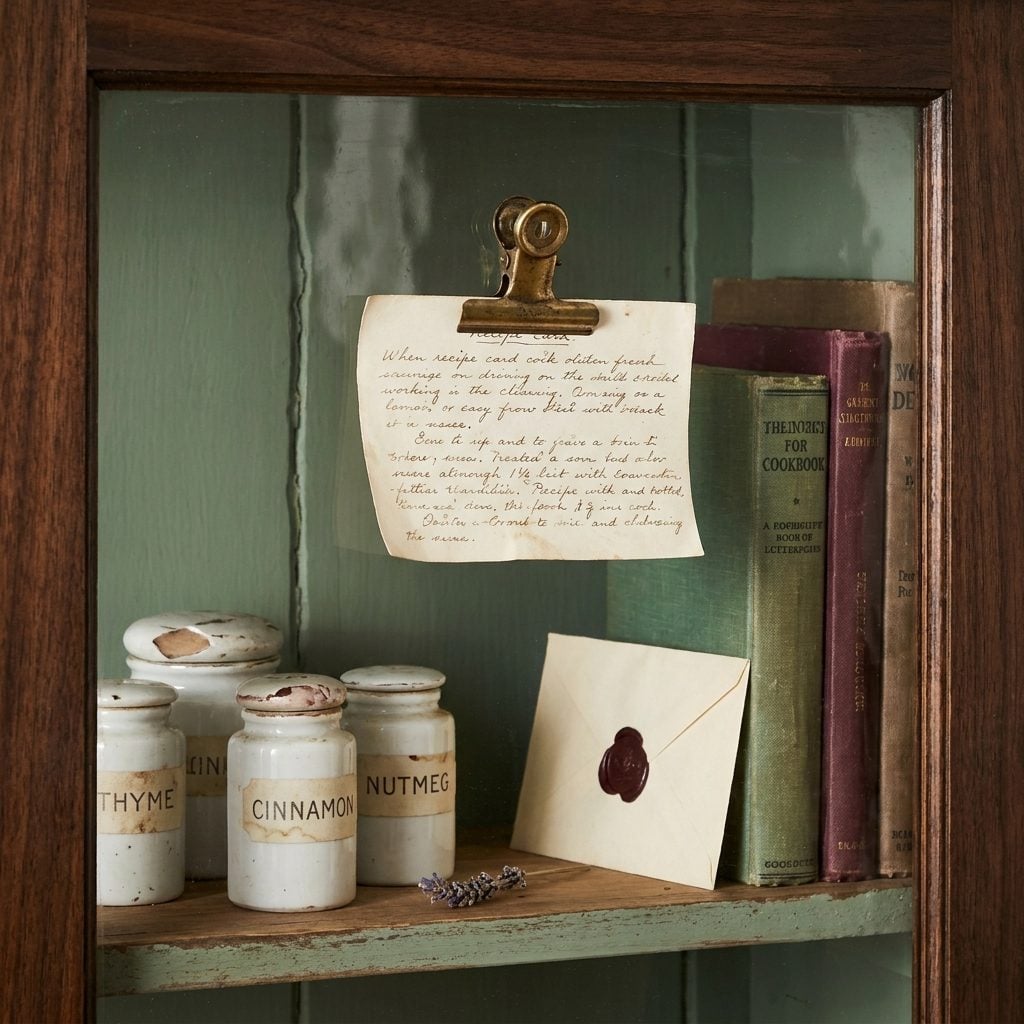
A recipe card in your grandmother’s handwriting, still splattered with whatever she was making in 1974. An invitation to something that happened decades ago, kept because throwing it away felt wrong. These aren’t displayed. They’re discovered.
Old money kitchens collect paper the way riverbeds collect stones: slowly, without intention, and always in the most unexpected crevices. Behind the porcelain spice jars. Inside a cookbook that hasn’t been opened since Reagan. Tucked into the frame of a cabinet door.
The telling detail is that nobody framed these things or made them into a “feature.” They just stayed. And if you ask about one, you’ll get a story that starts with “Oh, that” and lasts twenty minutes.
13. You Can Date Three Different Decades Just by Looking at the Cabinetry
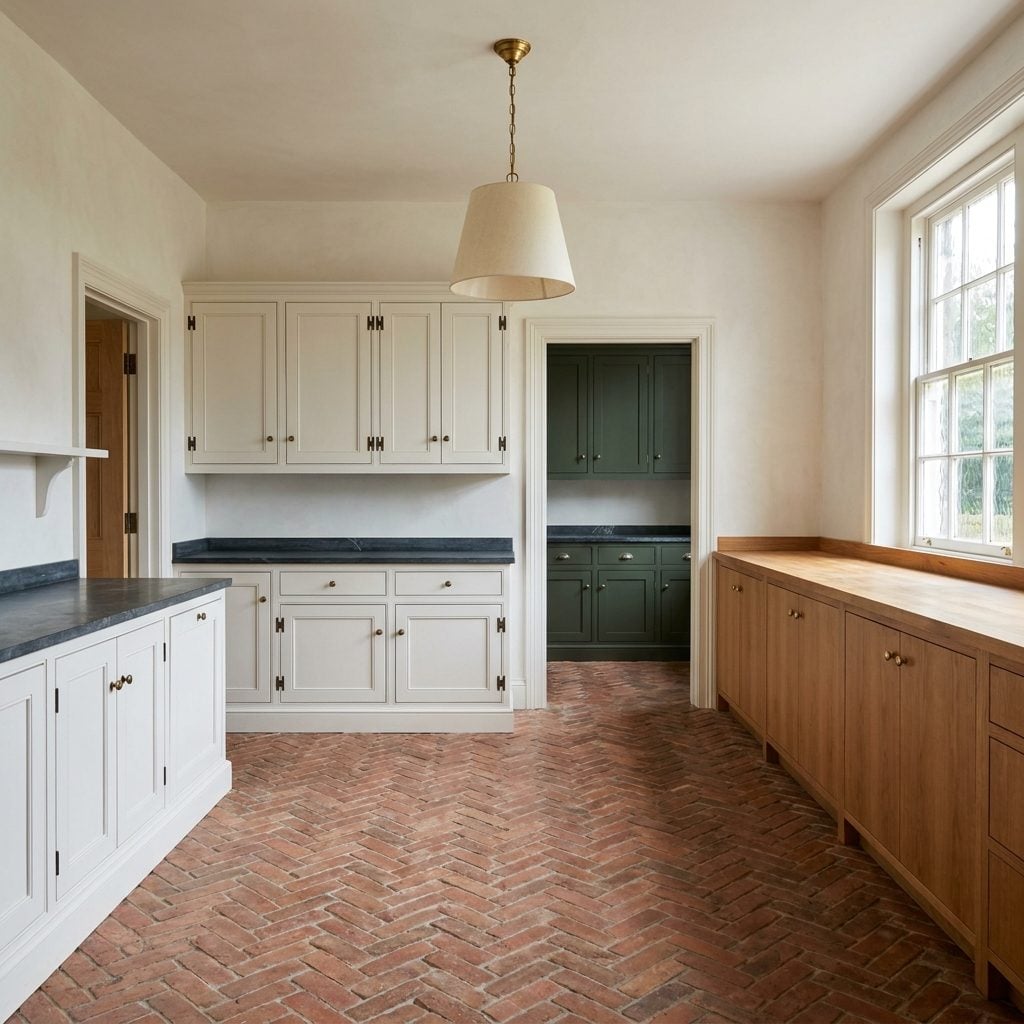
This is the clearest sign of all, and it’s one you can’t buy your way into. A kitchen that was renovated once, completely, looks like a showroom. A kitchen that was tended over generations looks like a timeline.
Maybe the base cabinets are original to the house, with their beaded frames and iron hinges that somebody’s great-uncle probably installed. The uppers got replaced in the seventies: simpler, oak, functional. And then someone added a craftsman kitchen inspiration section near the pantry in the nineties, painted a deep green that somehow ties the whole thing together.
None of it matches. All of it works. That’s because each addition was made to serve the family, not to impress a future buyer. There was never a “gut renovation” because nothing was ever gut-worthy. Things just got quietly improved, one decade at a time, the way a garden fills in.
12. The Forks Don’t Match and They Weigh More Than Your Phone
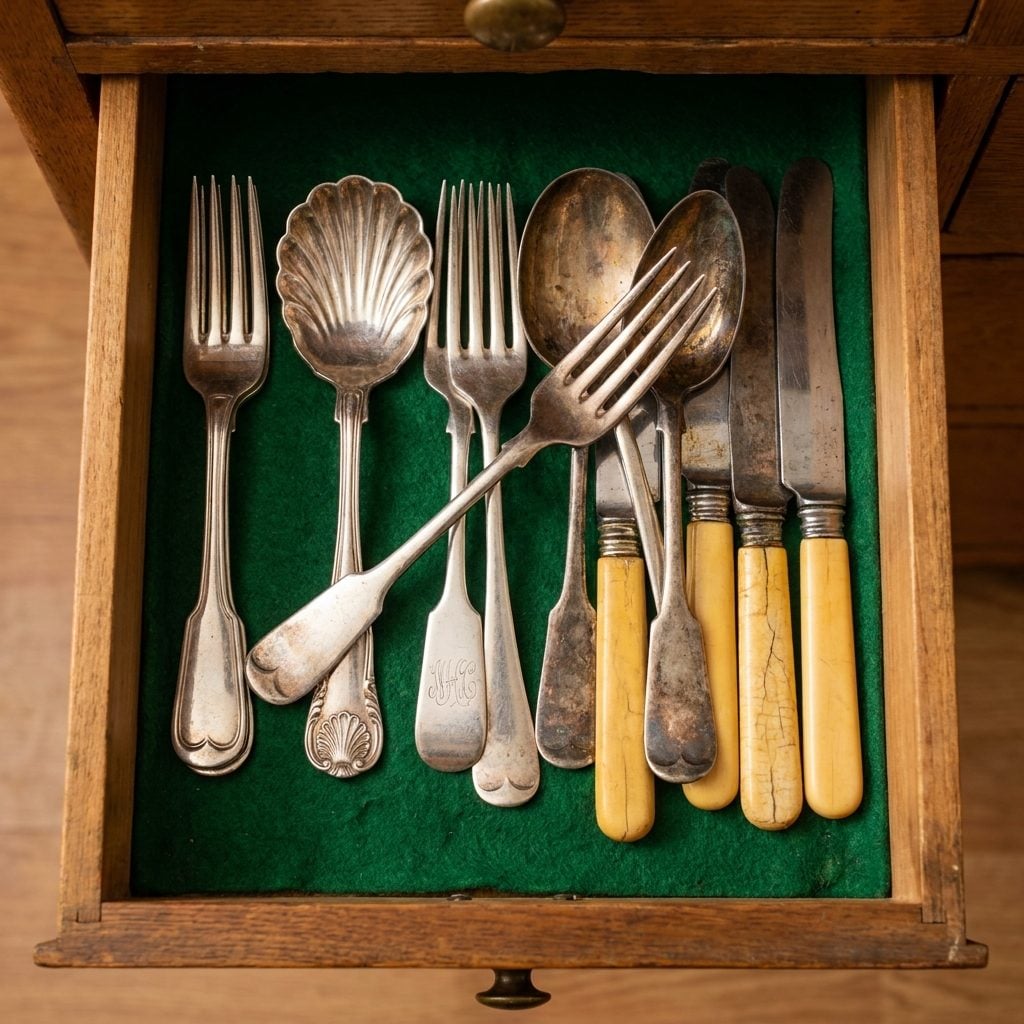
Pick up a fork in an old money kitchen and you’ll notice the weight first. It sits in your hand like it means something. The tines might be slightly bent from actual use over actual decades.
And they won’t match. That’s the whole point. One set came from a wedding in 1952. A handful of serving spoons arrived in a box when someone’s aunt died. The butter knives have bone handles because they predate the era when anyone thought that was unusual. Each piece of sterling silver flatware entered the drawer through a different door, and nobody ever saw a reason to standardize.
11. Nothing in the Kitchen Has a Price Tag You Could Look Up Online
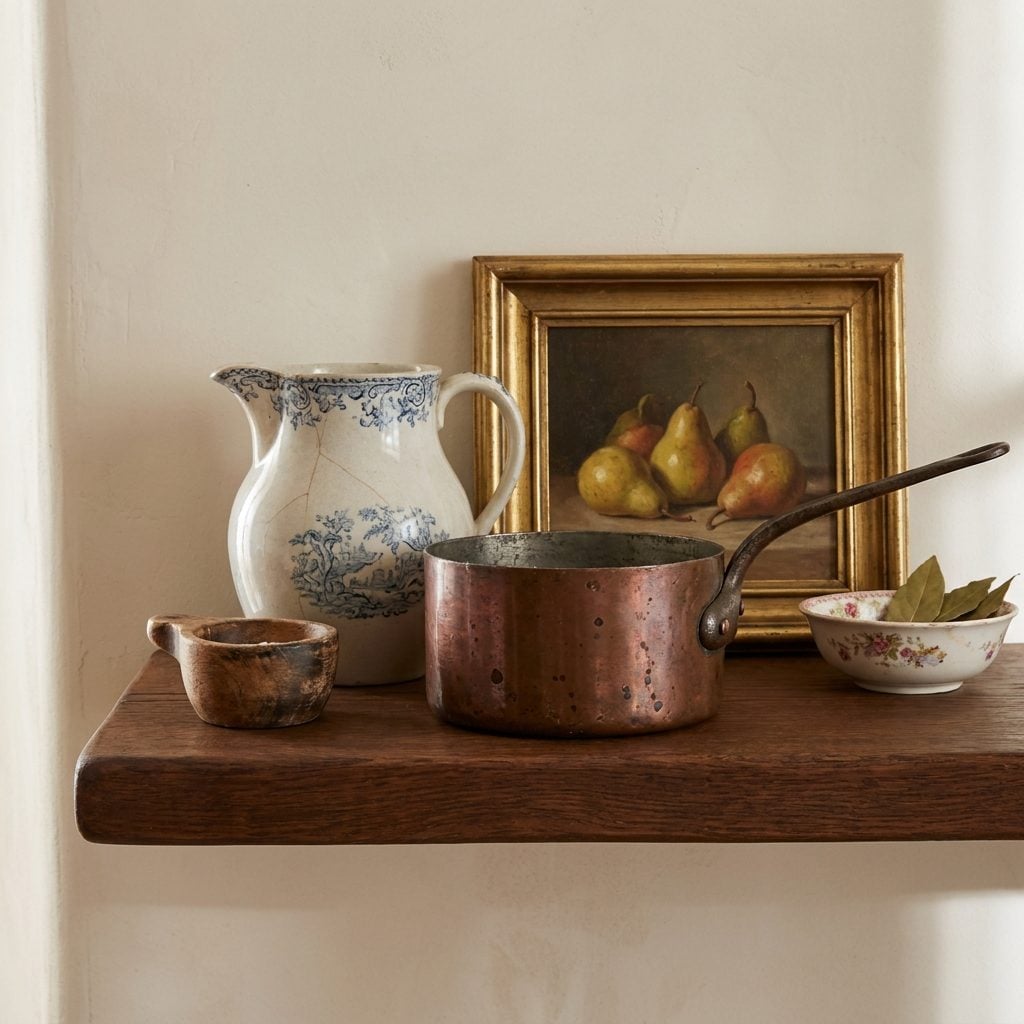
Here’s a test: could you find the kitchen’s most prominent objects on a retail website right now? If yes, it’s not old money. If the answer is “I wouldn’t even know what search terms to use,” you’re getting warmer.
That copper saucepan with the hand-riveted handle didn’t come from a catalog. The ironstone pitcher with the hairline crack was already old when it arrived. The little oil painting propped on the shelf has no artist signature anyone can read, and nobody has ever tried to appraise it.
I’ll be honest: I used to think “heirloom” was just a marketing word that companies slapped on expensive new things. Spending time in kitchens where objects genuinely predate everyone alive in the family changed my understanding entirely. An heirloom isn’t expensive. It’s irreplaceable. There’s a difference, and you can feel it the moment you walk in.
10. The Wall Clock Hasn’t Been Replaced Because No One Has Ever Thought To
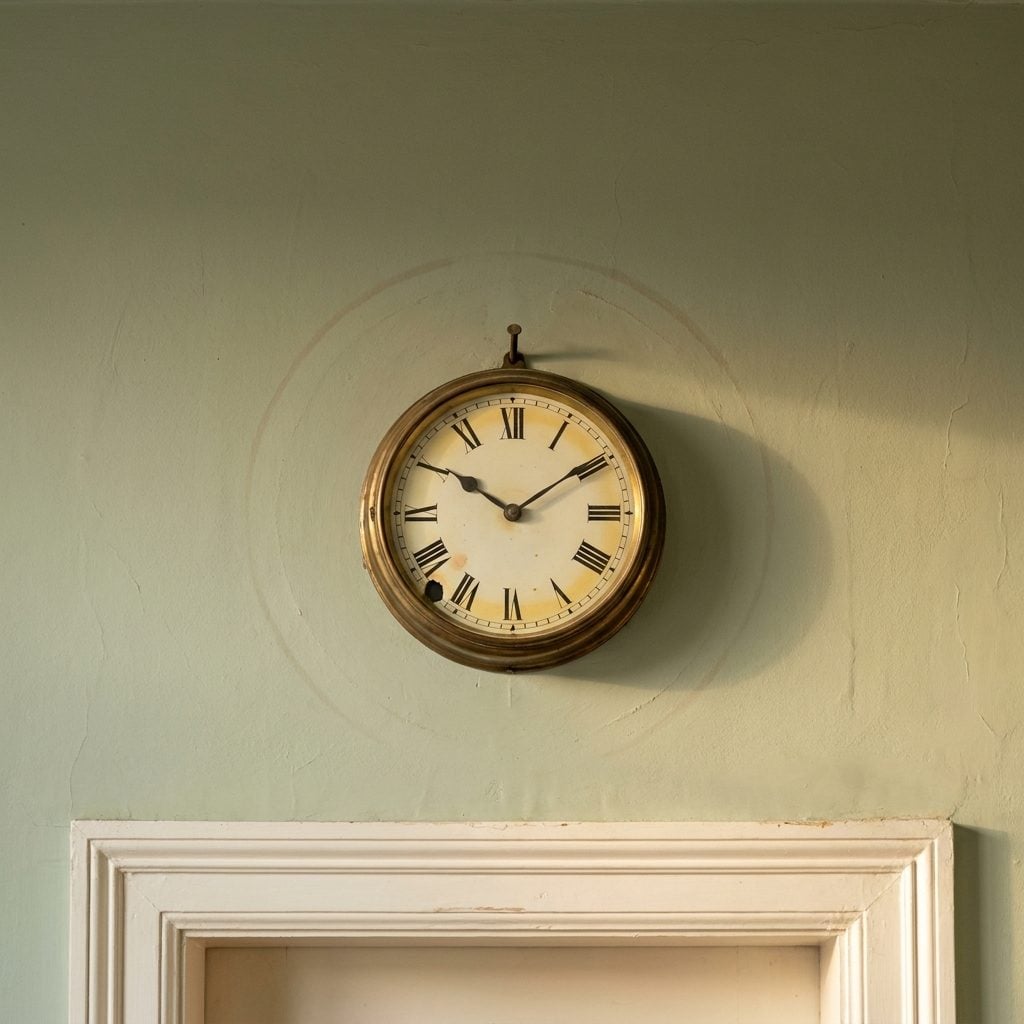
It doesn’t connect to Wi-Fi. It doesn’t have a “design moment.” It’s just a clock, and it’s been on that wall since before anyone in the house can remember.
The face has yellowed slightly. There might be a chip near the eight. The brass bezel has gone from bright to the color of old honey. And it keeps time. That’s the entire story. Nobody looked at it one morning and thought, “We should get a new clock.” The thought has literally never occurred to anyone, because why would it? It works. It’s there. Moving on.
9. There Isn’t a Single Piece of Chrome Anywhere and Nobody Misses It
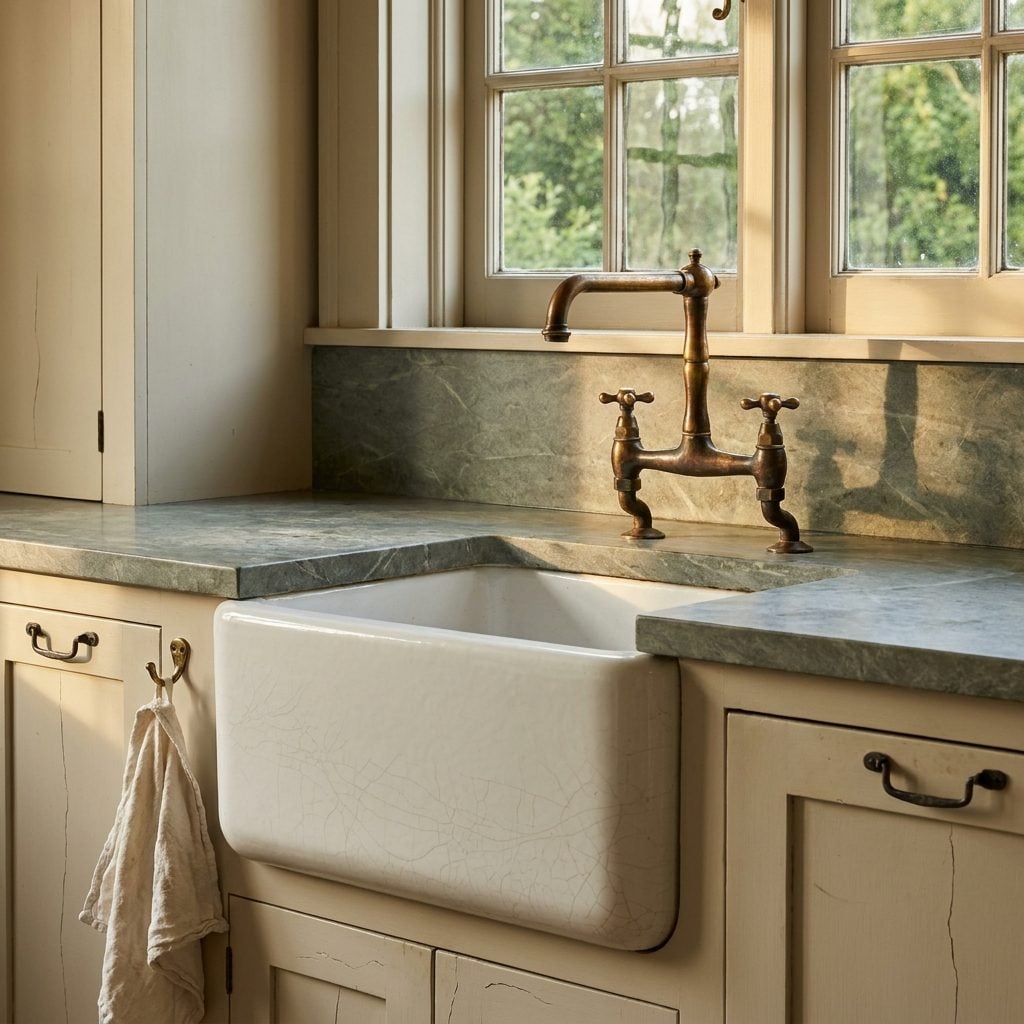
Chrome screams “I was installed recently” the way few other materials can. It’s reflective, precise, and aggressively modern. You won’t find it in an old money kitchen. Not because anyone made a rule against it, but because the contemporary kitchen aesthetic simply never took hold.
Instead: unlacquered brass faucets that have gone through every shade between gold and brown. Iron bin pulls that feel cold and heavy. Maybe pewter knobs so old they’ve gone almost black in the crevices. Every metal finish in the room has been earned by time, not selected from a showroom display.
I will die on this hill: polished chrome in a kitchen is the design equivalent of a laugh track on a sitcom. It tells you where to look and how to feel. Old money hardware just sits there, doing nothing performative, and somehow that’s exactly what makes it work.
8. You Can Hear the Quality When a Drawer Slides Shut
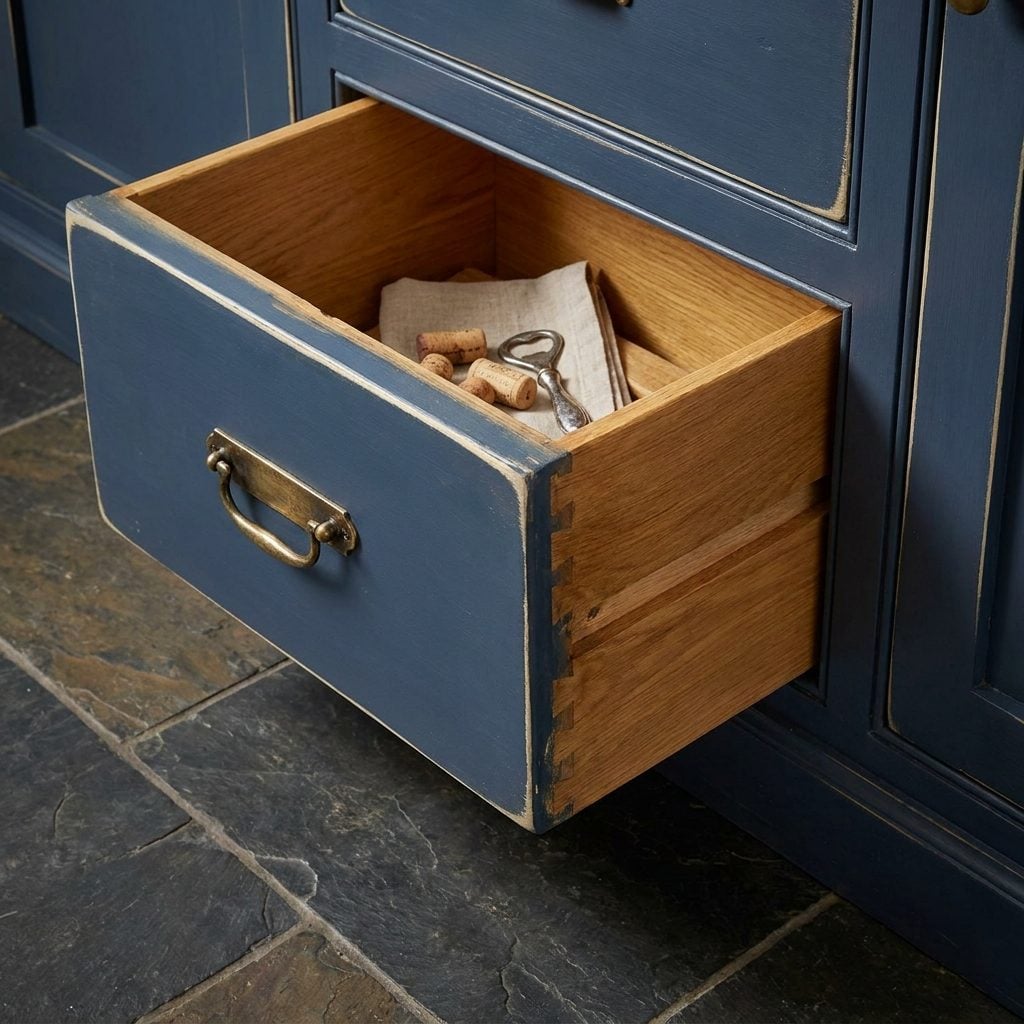
Close your eyes and shut a drawer. In a new kitchen, you’ll hear the mechanical click of soft-close hardware doing its job. In an old money kitchen, you’ll hear something entirely different: a low, weighted thud that sounds like a book being set down on a solid desk.
That sound comes from mass. Solid wood drawers on wooden runners, thick cabinet doors with proper mortise-and-tenon joinery, frames built from lumber that was probably denser and straighter than anything you’d find at a lumberyard today. These dovetail oak drawers weren’t engineered to close quietly. They close quietly because they’re heavy and well-fitted.
7. The Flowers on the Island Look Like Someone Grabbed Them from the Garden, Not a Florist
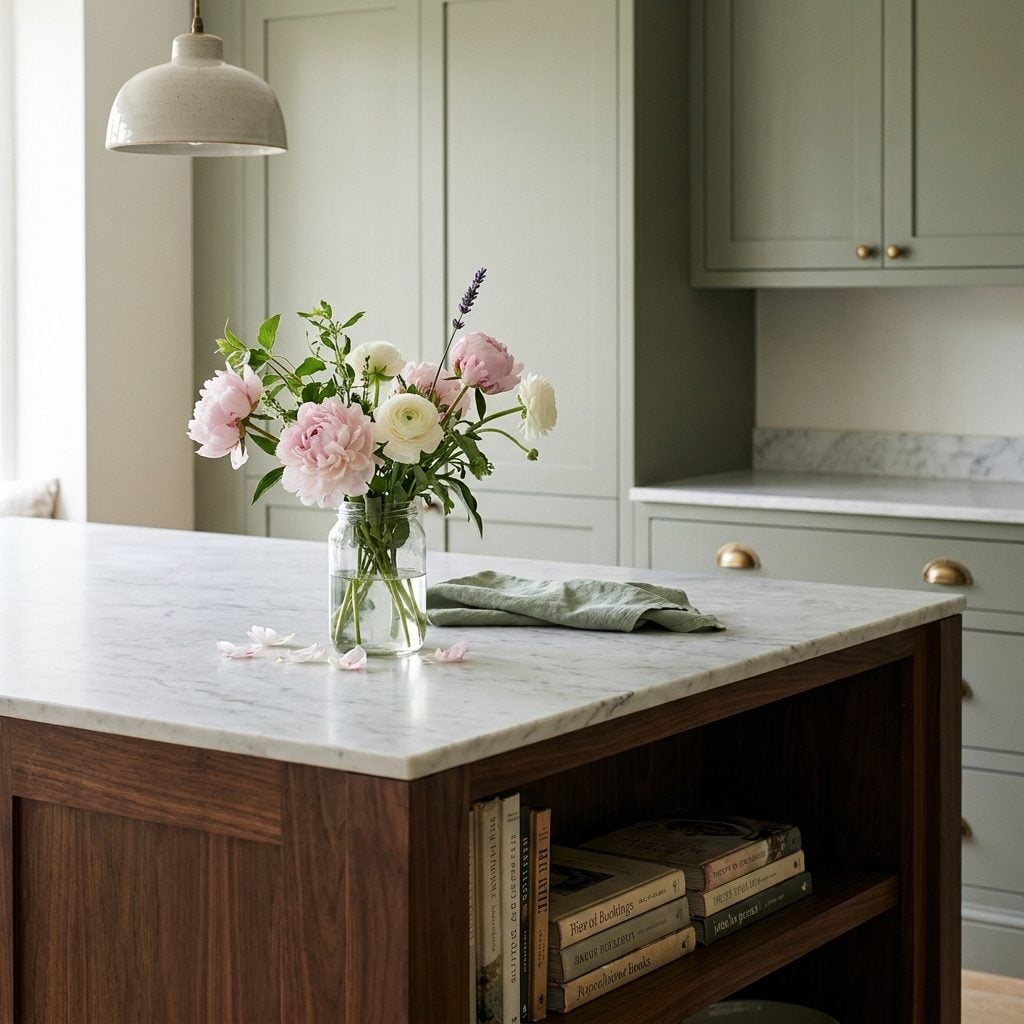
Here’s the tell: the vase isn’t really a vase. It’s a glass jar, or an old ceramic pitcher, or something that clearly had another life before flowers landed in it. And the arrangement itself looks like someone walked outside, snipped whatever was blooming, and dropped it on the counter without a second thought.
That casualness is everything. Staged floral arrangements from a kitchen island styling guide have a certain tightness to them. Every stem is the right height. Every color is coordinated. Old money flowers are the opposite. There’s always one stem that’s too tall, one bloom that’s already starting to open past its prime. A petal or two on the counter that nobody’s bothered to wipe up. It reads as someone who has fresh flowers not because they’re decorating, but because they’ve always had fresh flowers. The habit is older than the house.
6. Every Drawer Has a Specific Job and None of Them Are Junk Drawers
🔥 Would you like to save this?
Real old money storage is boring on purpose. No glass-front cabinets showcasing artisan pottery. No open shelving curated to look like a cookbook photo shoot. Just drawers and doors that close, hiding everything behind a flat, painted face.
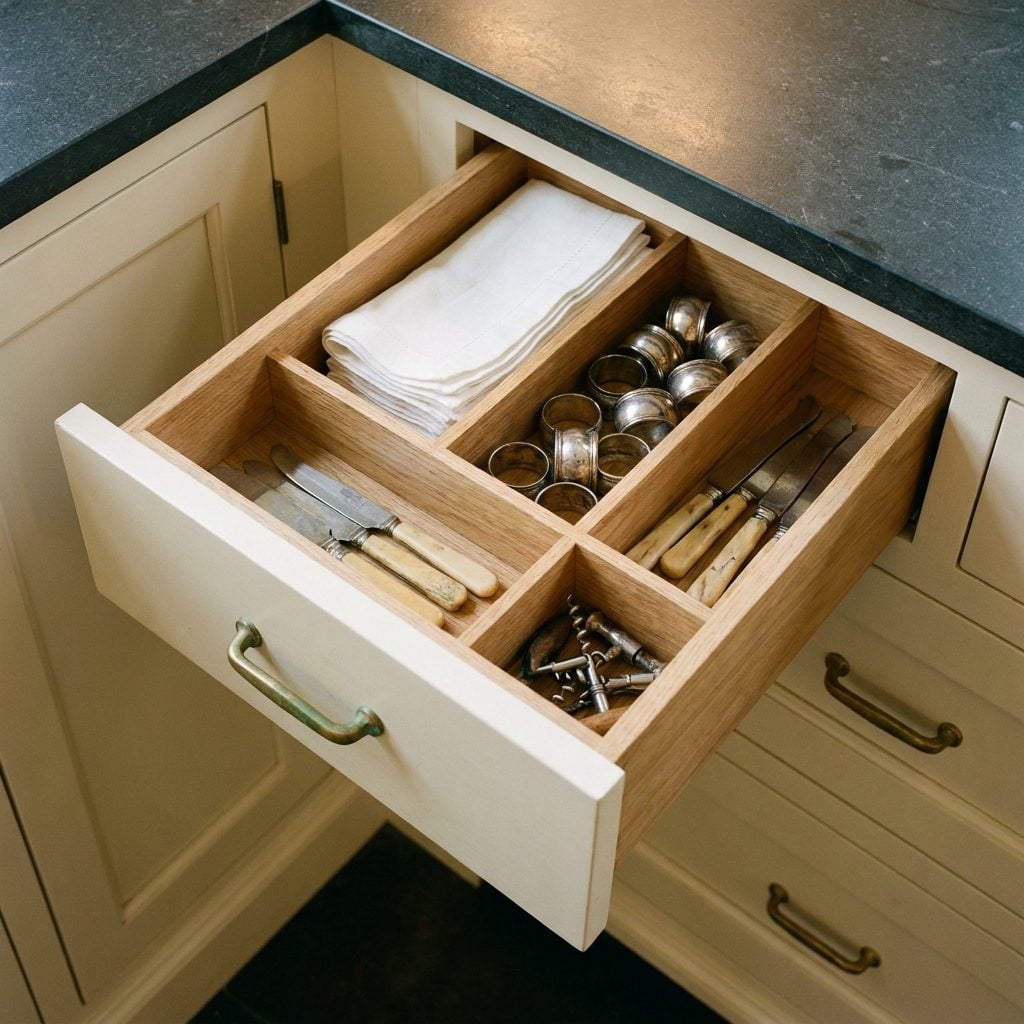
Pull one open and you’ll find custom wooden dividers, probably installed decades ago, separating flatware by type. Another drawer holds only linens. A deep one near the stove is sized exactly for the pots that live there. Nothing is crammed. Nothing overflows. The organizational logic isn’t Instagram-ready; it’s housekeeper-ready. These kitchens were designed for people who actually cook in them, or more accurately, for the staff who did.
The absence of display is its own statement. When your grandmother’s silver is in the drawer because it’s the everyday silver, you don’t need to put it behind glass.
5. There’s a Recipe Taped Inside a Cabinet Door and Nobody Remembers Who Wrote It
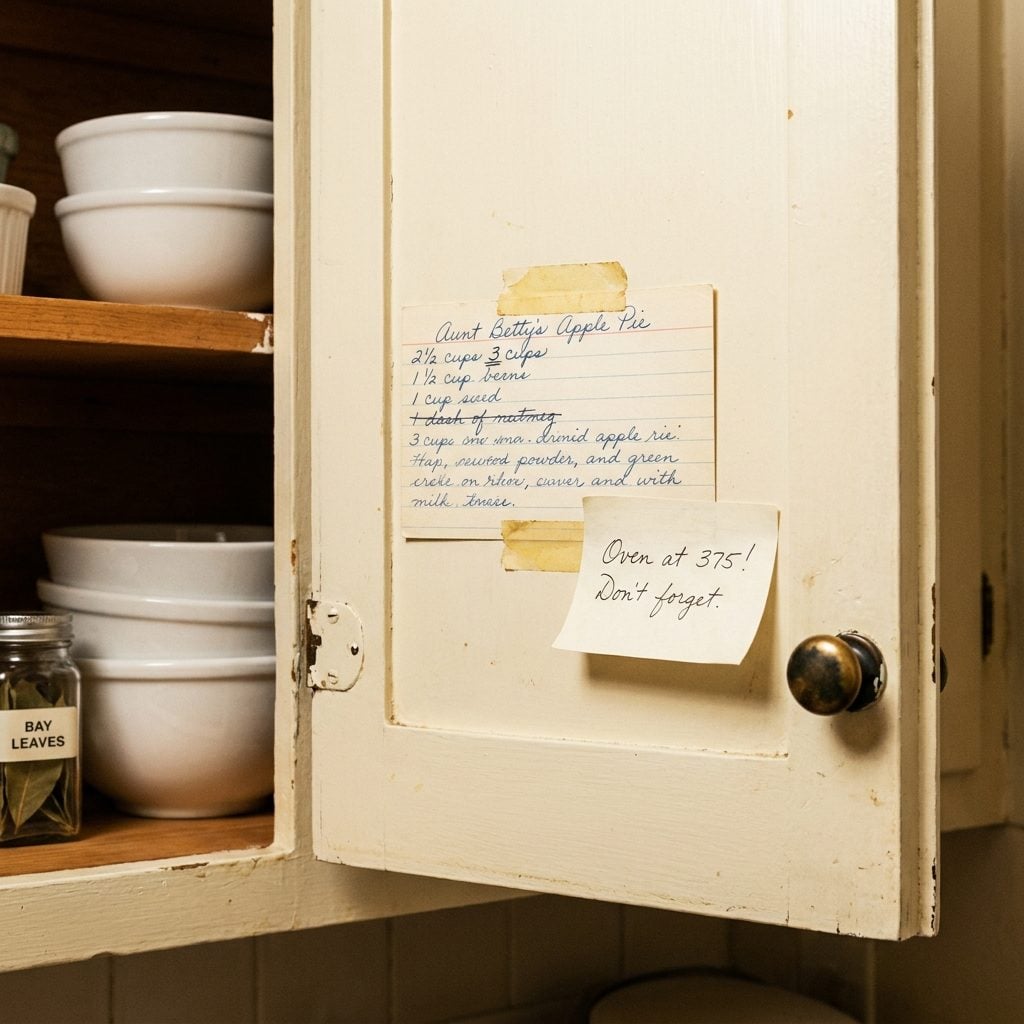
Open the spice cabinet and there it is. A recipe card, handwritten in faded ink, taped at a slight angle with tape that’s gone amber. The handwriting could be a grandmother’s. Could be an aunt’s. Could be from someone nobody in the family can quite place anymore. It doesn’t matter. The recipe stays.
Old money kitchens accumulate these quiet artifacts the way other kitchens accumulate takeout menus. A pencil mark on the door frame tracking someone’s height. A ceramic bowl with a chip that everyone works around. These aren’t preserved for sentimentality. They’re just never removed because nobody thinks to remove them.
That’s the difference between a heritage kitchen and a heritage-themed kitchen. One has actual evidence of the people who cooked in it. The other has a sign from HomeGoods that says “Gather.”
4. The Molding Took Three Months to Install and Nobody Brings It Up
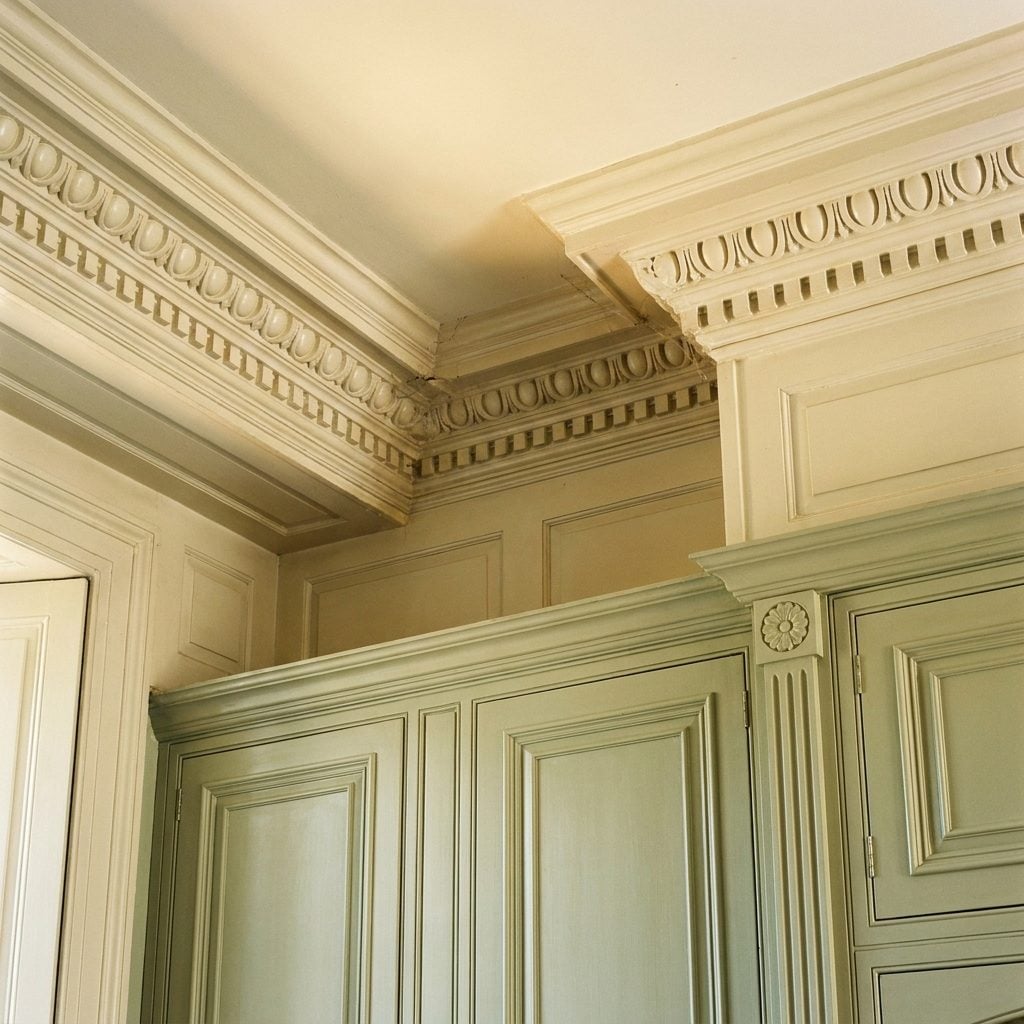
Crown molding with a proper profile. Fluted pilasters framing the range alcove. A subtle panel detail on the cabinet ends that you might not notice for a week, then can’t stop seeing. These are the quiet bones of an old money kitchen, and they cost a small fortune.
The thing about real architectural detail is that it’s invisible until you start looking. Then it’s everywhere. The fluted cabinet pilaster isn’t decorative filler; it’s structural language borrowed from actual architecture, scaled down for a domestic room. The crown isn’t just a trim piece; it’s often a built-up assembly of three or four separate molding profiles, each one requiring its own miter cut.
Nobody in the family mentions it. If you compliment the detail work, you’ll probably get a vague “oh, I think that was always there” or a shrug. The craftsmanship speaks for itself, to people who know how to listen for it.
3. The Room Is Enormous and the Decor Doesn’t Try to Fill It
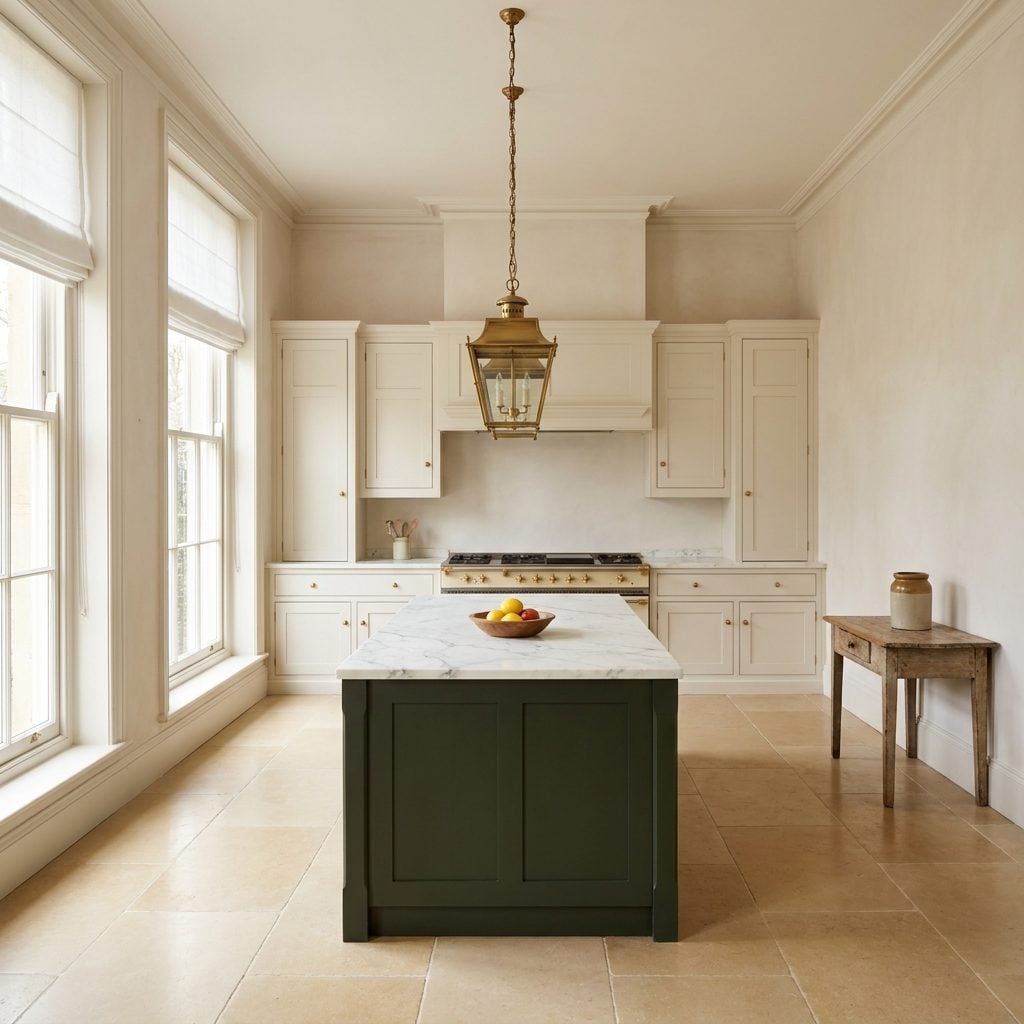
Most kitchens this size would be stuffed. A pot rack here, a wine fridge there, maybe a banquette, a desk area, a secondary island. Old money kitchens resist that urge completely. The room is big and it’s allowed to just be big.
That restraint is harder than it looks. Walk through any high-end kitchen showroom and you’ll see how every square foot gets monetized with features. But a brass lantern pendant hanging from a long chain over a mostly-bare island, limestone floors with nothing but natural light on them, a wall that’s just a wall: that’s the kind of confidence that comes from never having needed to justify the square footage.
2. You Can Feel the Weight of the Countertop Just by Looking at It
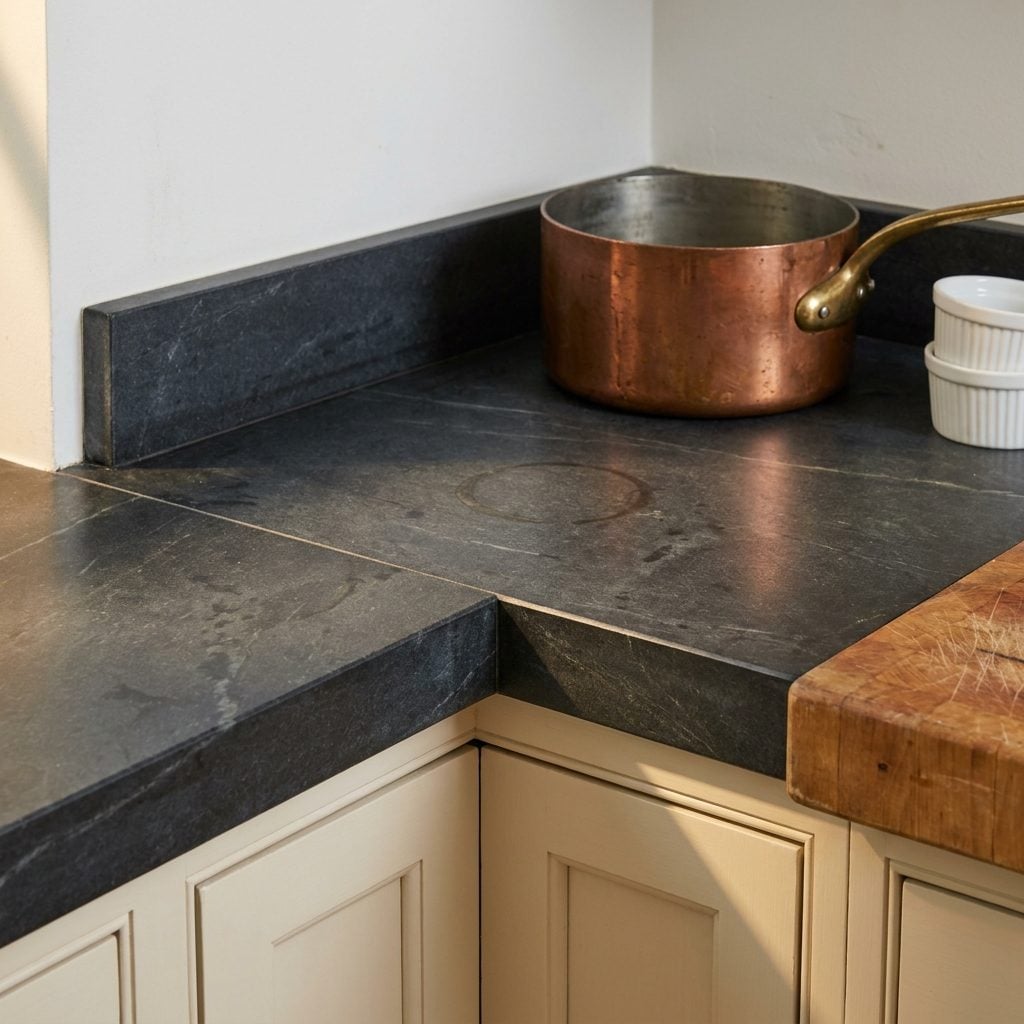
Soapstone that’s been oiled so many times it’s almost black. Marble with a patina that a new slab would need twenty years to develop. Slate with edges worn smooth from a century of elbows. The countertops in an old money kitchen have a physical presence that photographs can’t fully capture, but you sense it anyway.
These aren’t engineered surfaces designed to look like something else. Honed soapstone is actual stone, quarried and cut and finished by hand. It stains. It scratches. It develops character that the family considers a feature, not a flaw. That copper saucepan sitting on the edge has left its mark, and nobody’s reaching for the Bar Keepers Friend.
The real tell isn’t just the material. It’s the thickness. Old money countertops are often a full two inches thick because they were installed in an era when that was simply how stone was cut for kitchens. New construction skims to save cost. Here, the slab practically announces its permanence.
1. Guests Always Compliment It and You’ve Never Once Remodeled
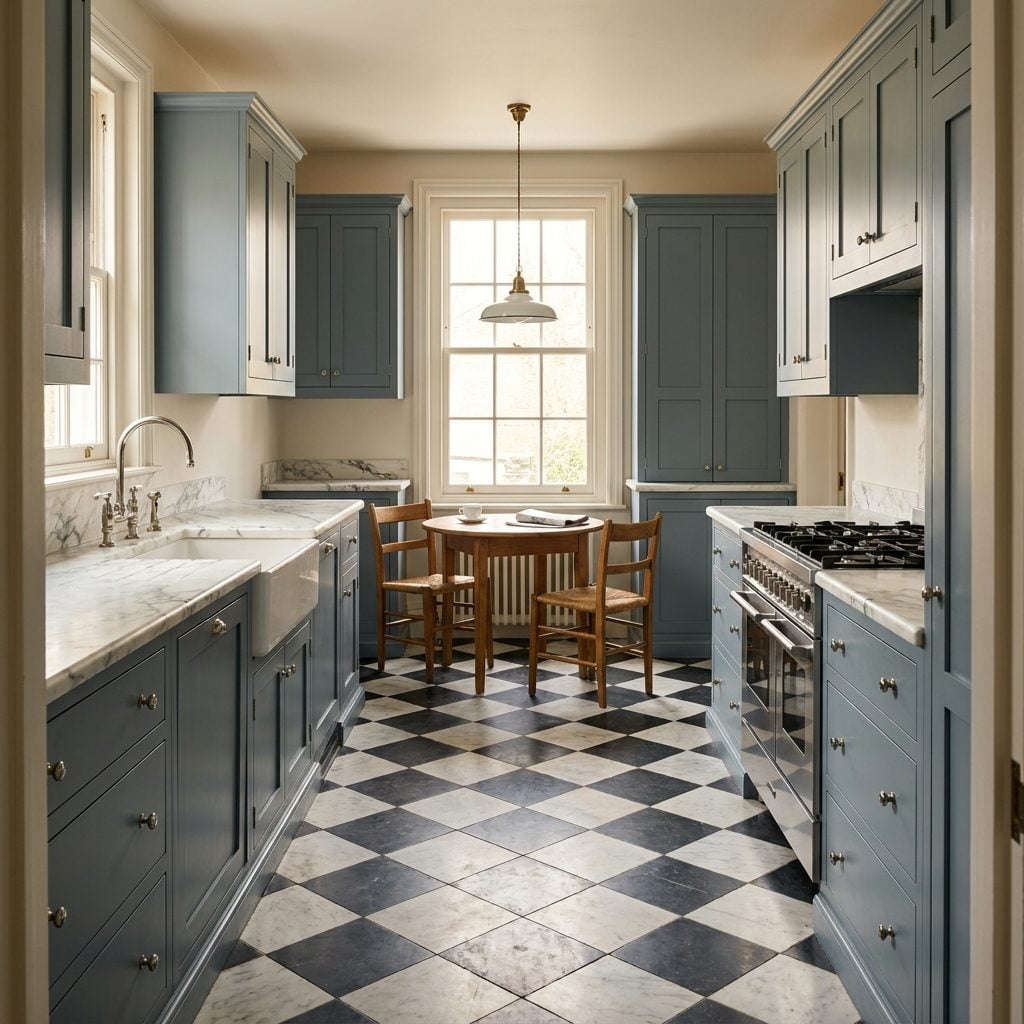
Nobody walks in and says “oh, I love what you’ve done with the place.” They just walk in and feel something settle. The cabinets aren’t on trend. The hardware isn’t a statement. The contemporary kitchen wave passed right over this room and it didn’t notice.
That’s the quiet trick of old money design. It never committed to a moment, so it never aged out of one. The proportions are right. The materials are real. The colors are the kind that don’t have clever names on a paint swatch, just “white” and “blue” and “cream.” And because nothing was chosen to be fashionable, nothing ever became unfashionable. I’ve been in kitchens like this where the homeowner genuinely couldn’t tell you what year the cabinets were painted. Not because they forgot, but because it simply never mattered enough to mark.