🔥 Would you like to save this?
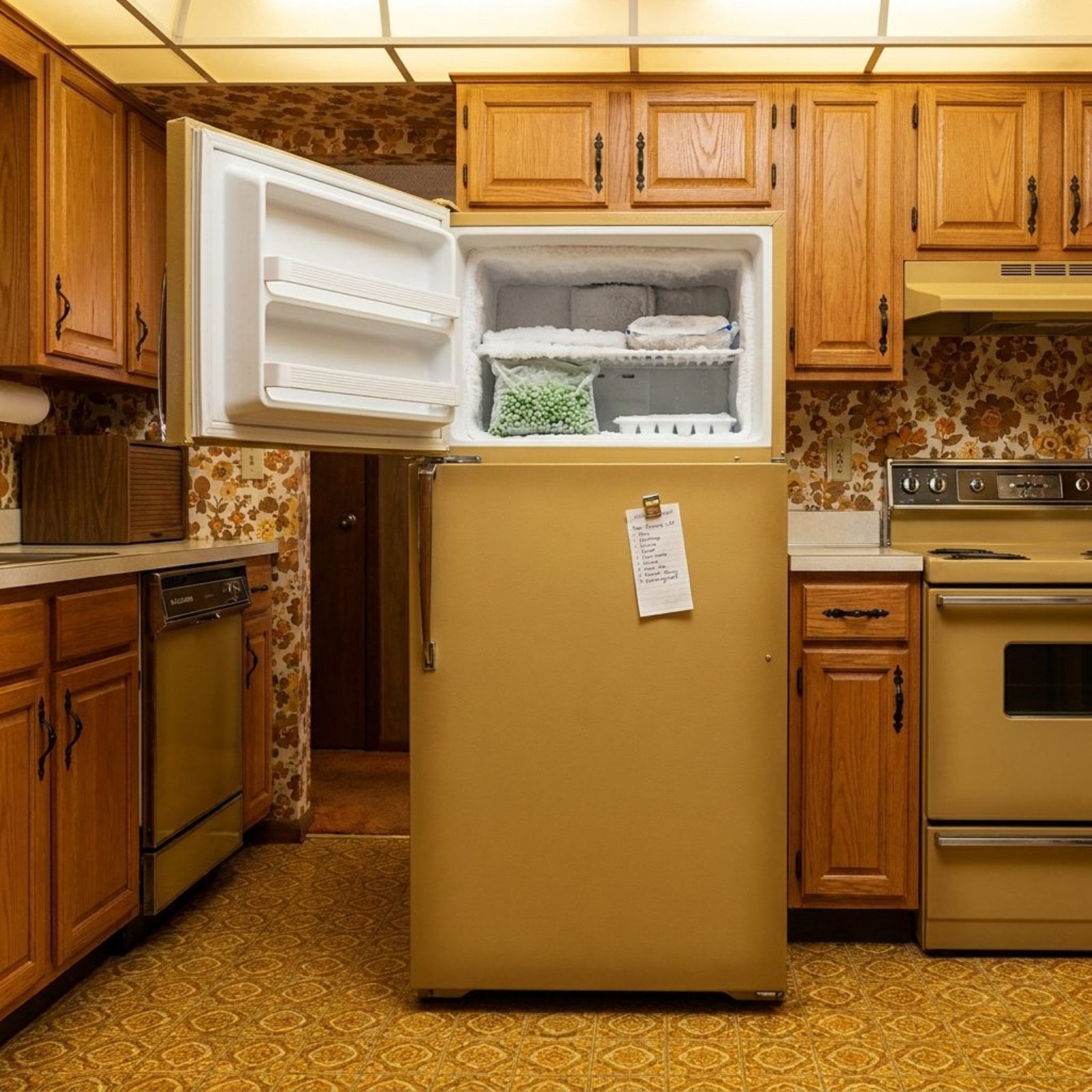
The smell hits first. Bacon grease, Pine-Sol, and whatever was percolating on the Mr. Coffee. The wall phone had a fifteen-foot cord because someone stretched it that way arguing with their sister for two hours a night, and the fridge was the color of a school bus left too long in the sun. Nothing in that room was quiet. Everything had an opinion. Fifty years later the kitchen has calmed down considerably — and depending on who you ask, that’s either a mercy or a loss.
30. The Appliance Color: Harvest Gold Gives Way to Brushed Steel
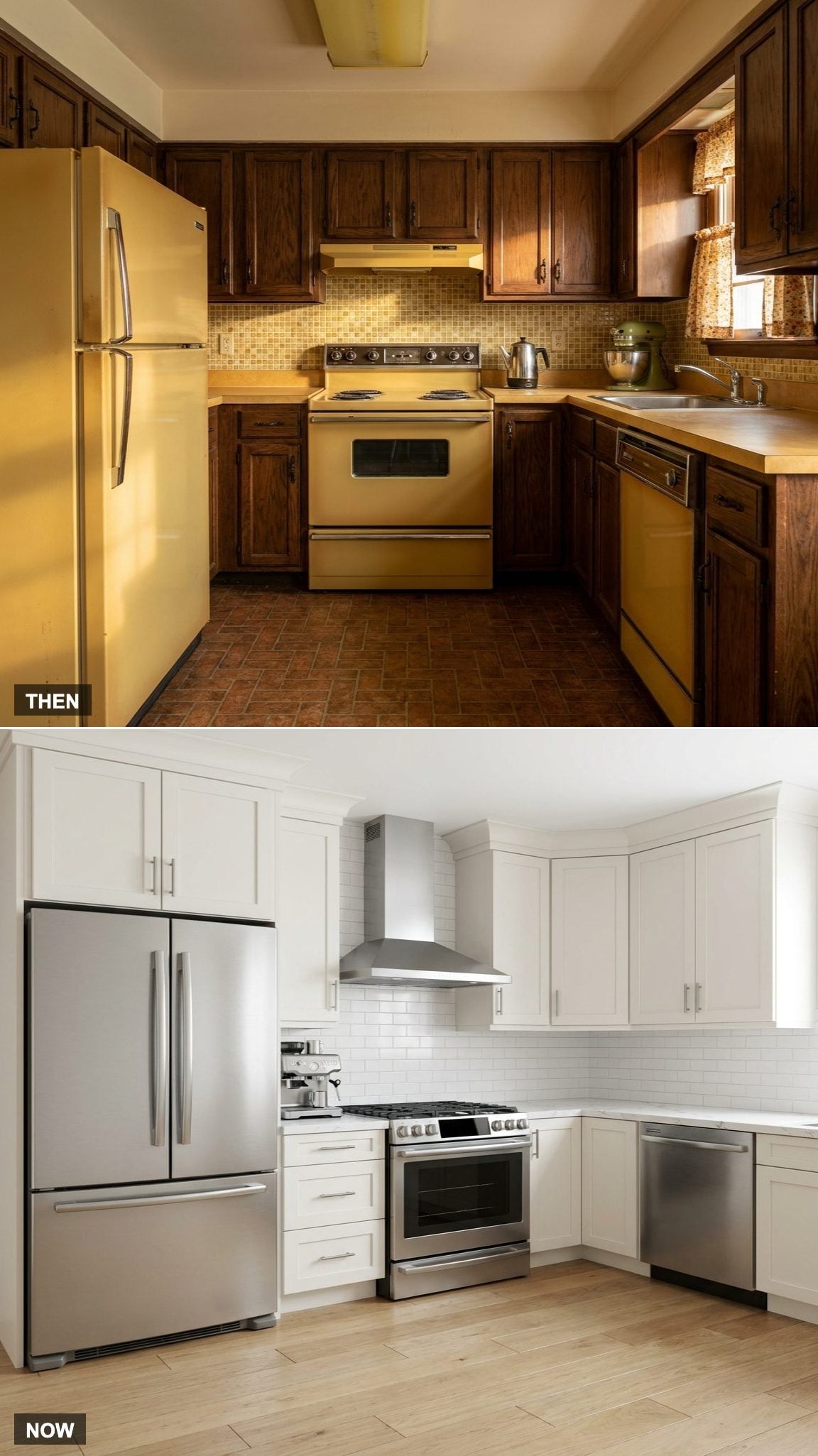
Harvest gold was not a color so much as a decision the entire country made together and then quietly regretted. Sears sold it in every catalog for a decade, Whirlpool built factories around it, and if your mother was ambitious she went with coppertone. If she was truly wild she went avocado. But gold was the safe middle path.
In order to come up with the very specific design ideas, we create most designs with the assistance of state-of-the-art AI interior design software. Also, assume links that take you off the site are affiliate links such as links to Amazon. this means we may earn a commission if you buy something.
Stainless took over in the late nineties and never left. It reads as neutral now. In fifty years someone will probably write an article about how weird it looked that we all agreed on the same silver box.
29. The Wall Color: Avocado Everything to Warm Neutrals
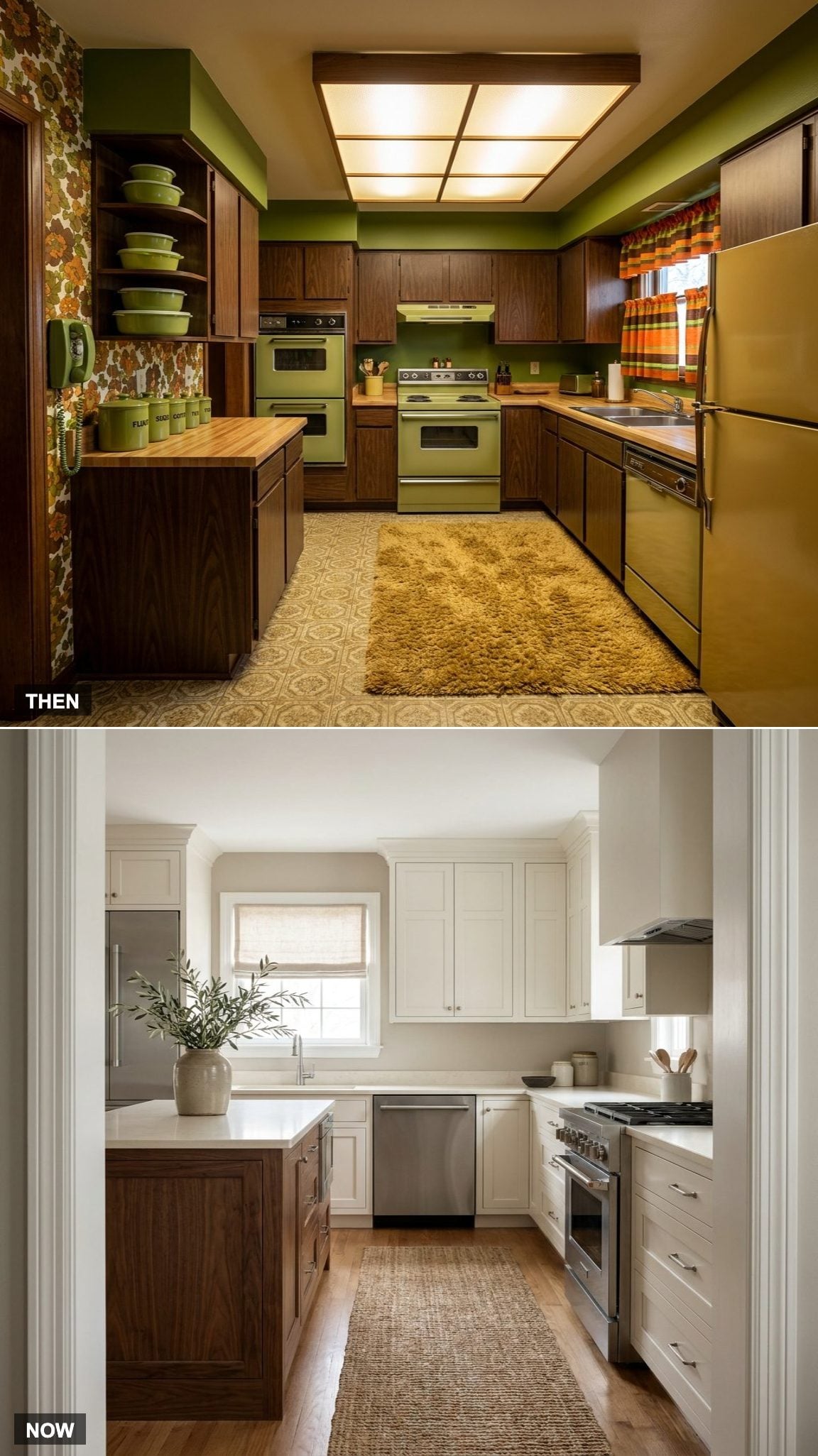
You’ve seen the photos. Your grandmother’s kitchen was some combination of avocado, gold, and burnt orange, and she was proud of it. The green in particular had a specific quality — dusty and slightly murky, like a swamp had opened a paint store.
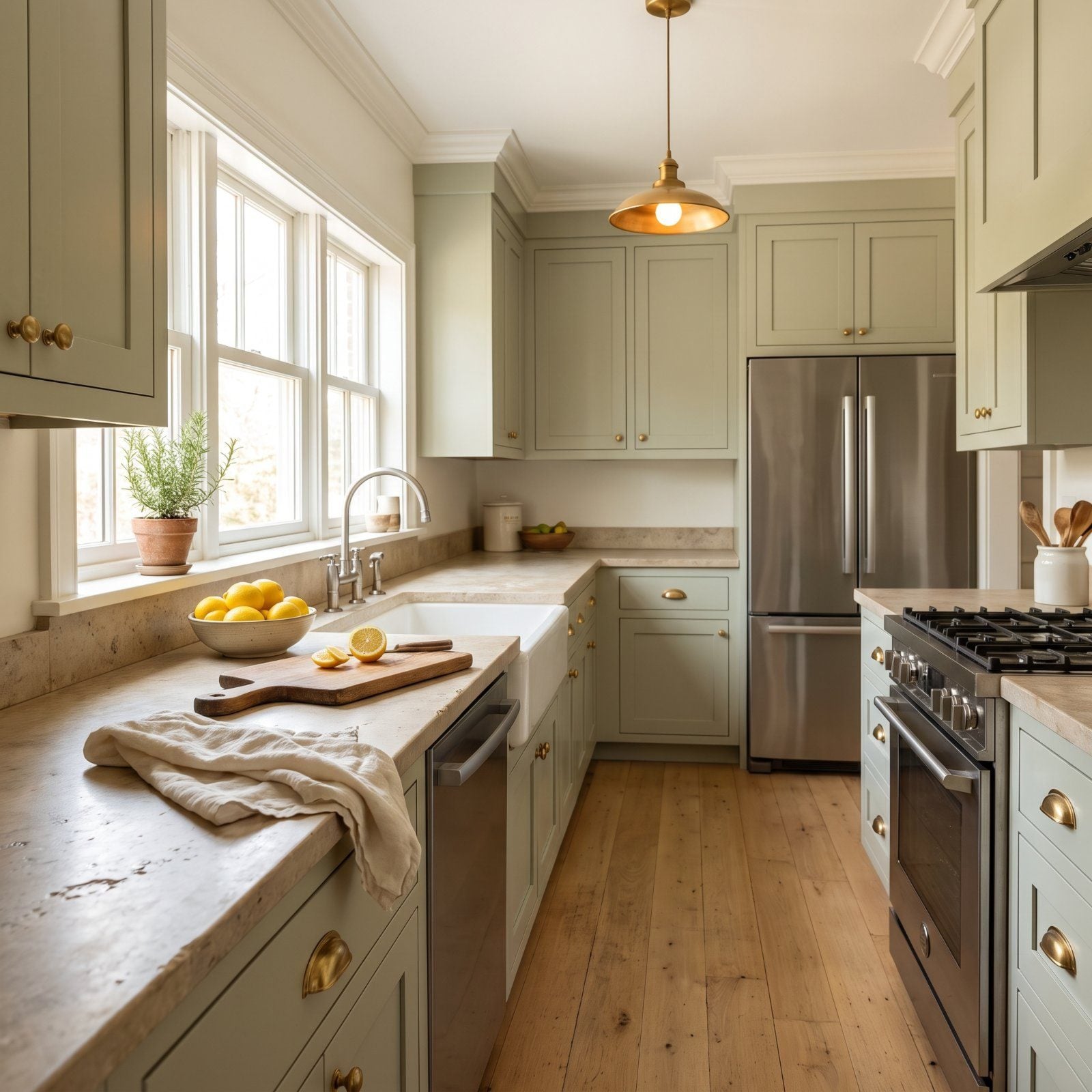
Neutrals took over around 2005 and haven’t slowed since. Warm whites, greiges, soft clays. For the current playbook, browse neutral kitchen renovation galleries and you’ll see the same three or four palettes on repeat. The pendulum will swing back. It always does.
28. The Layout: Walled-Off Galley to Wide-Open Great Room
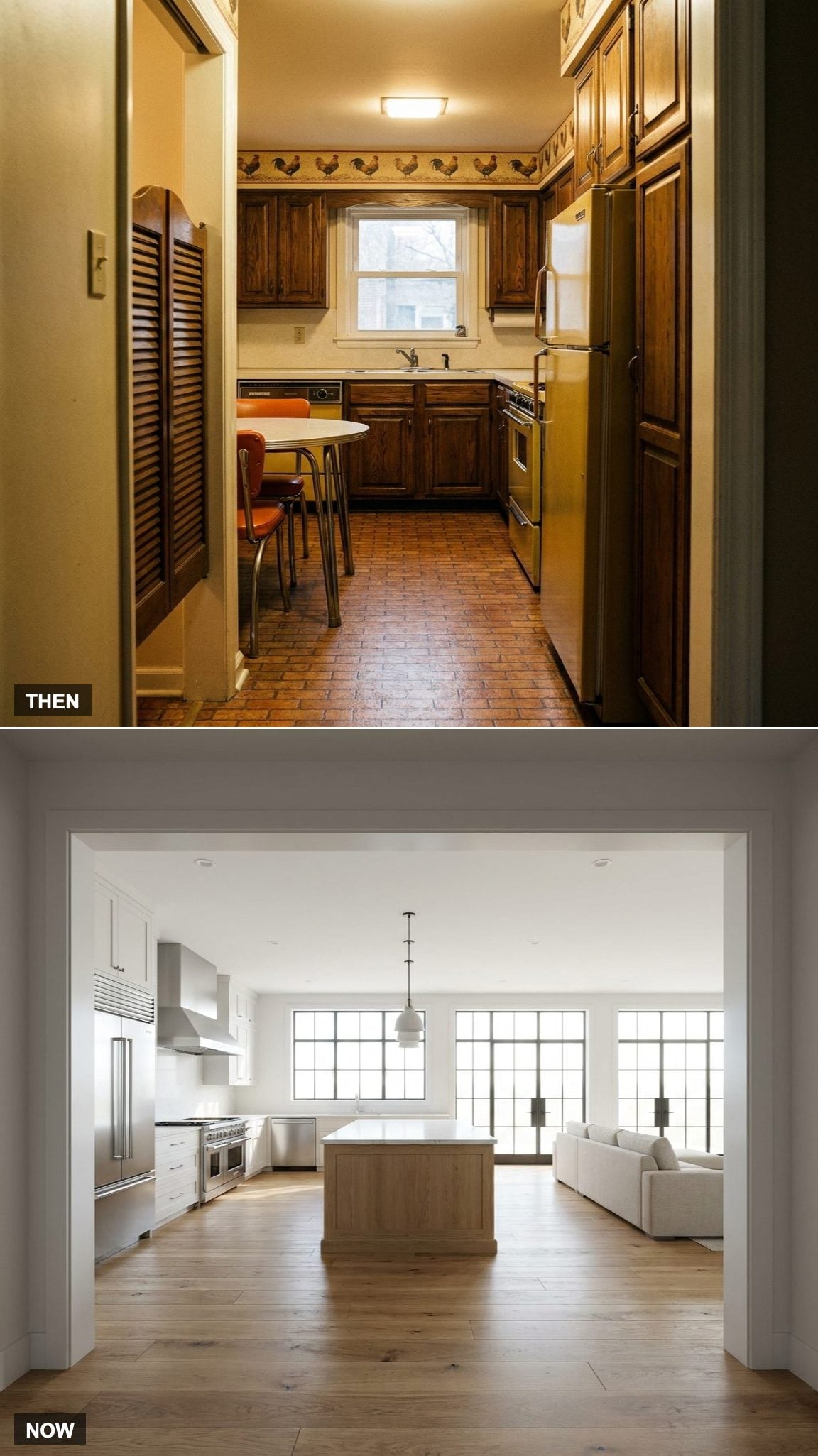
The kitchen used to be a room where work happened, and the rest of the house was where people happened. A wall separated the two on purpose. Nobody wanted guests watching the meatloaf get assembled.
Then somewhere around 1998 we collectively decided the cook should be part of the party, and every wall in America started coming down. The great room won. Whether it should have is a separate conversation — one anyone who has tried to nap on the couch while someone else runs a Vitamix has thought about at length.
27. The Cabinets: Heavy Dark Oak to Pale and Grain-Forward
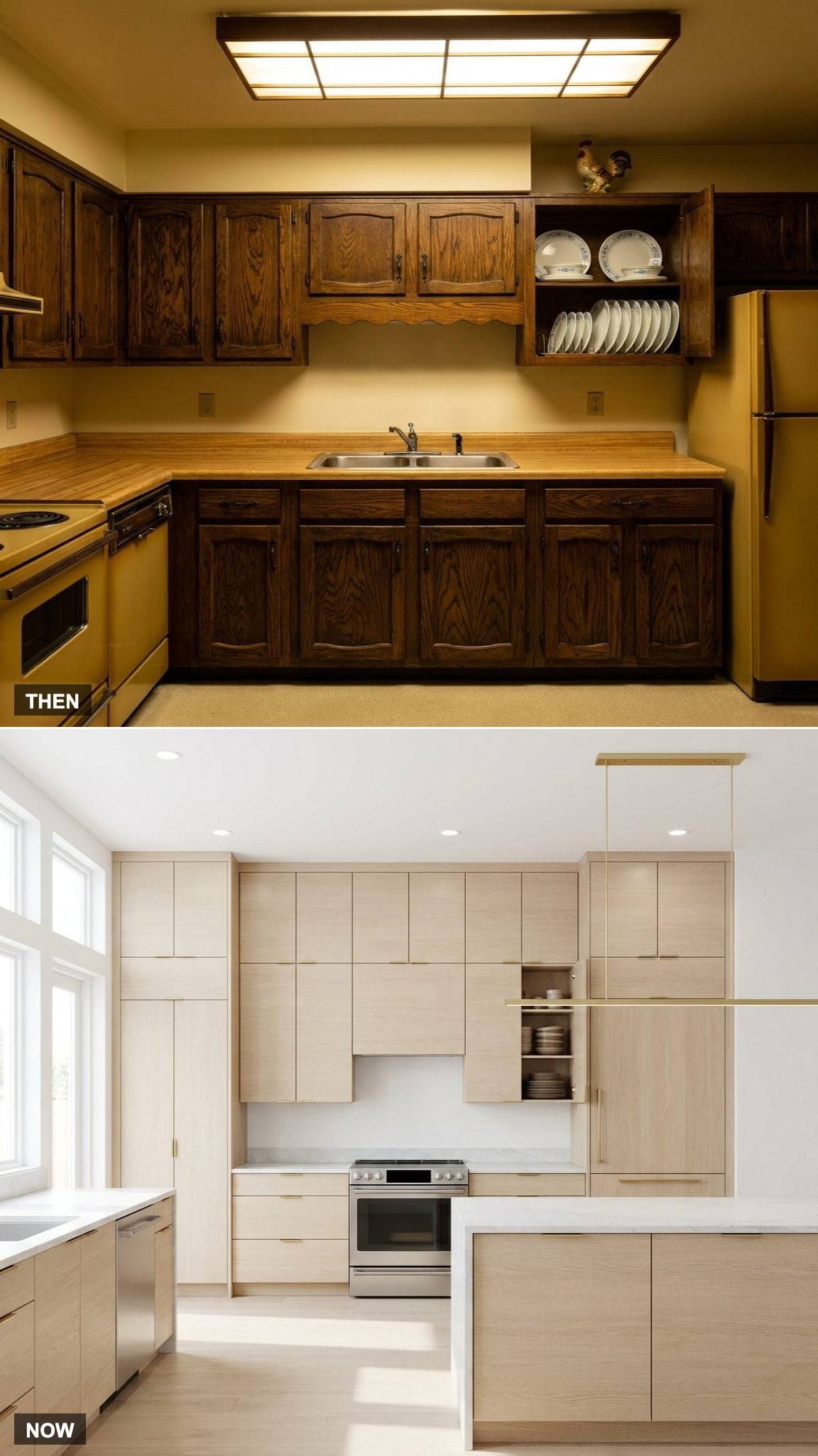
Dark oak cabinets weighed rooms down like a bad mood. They were built to last, which is the problem — they’re still out there. Someone is looking at theirs right now, in a house they just bought, wondering what a cabinet refinisher costs.
Pale wood is the current answer: white oak, rift-cut, matte sealed, grain running horizontal because vertical is apparently over. For a warm-wood approach that’s aged well next to its avocado-era cousins, craftsman kitchen inspiration holds up.
26. The Counters: Wild Laminate Patterns to Calm Stone Slabs
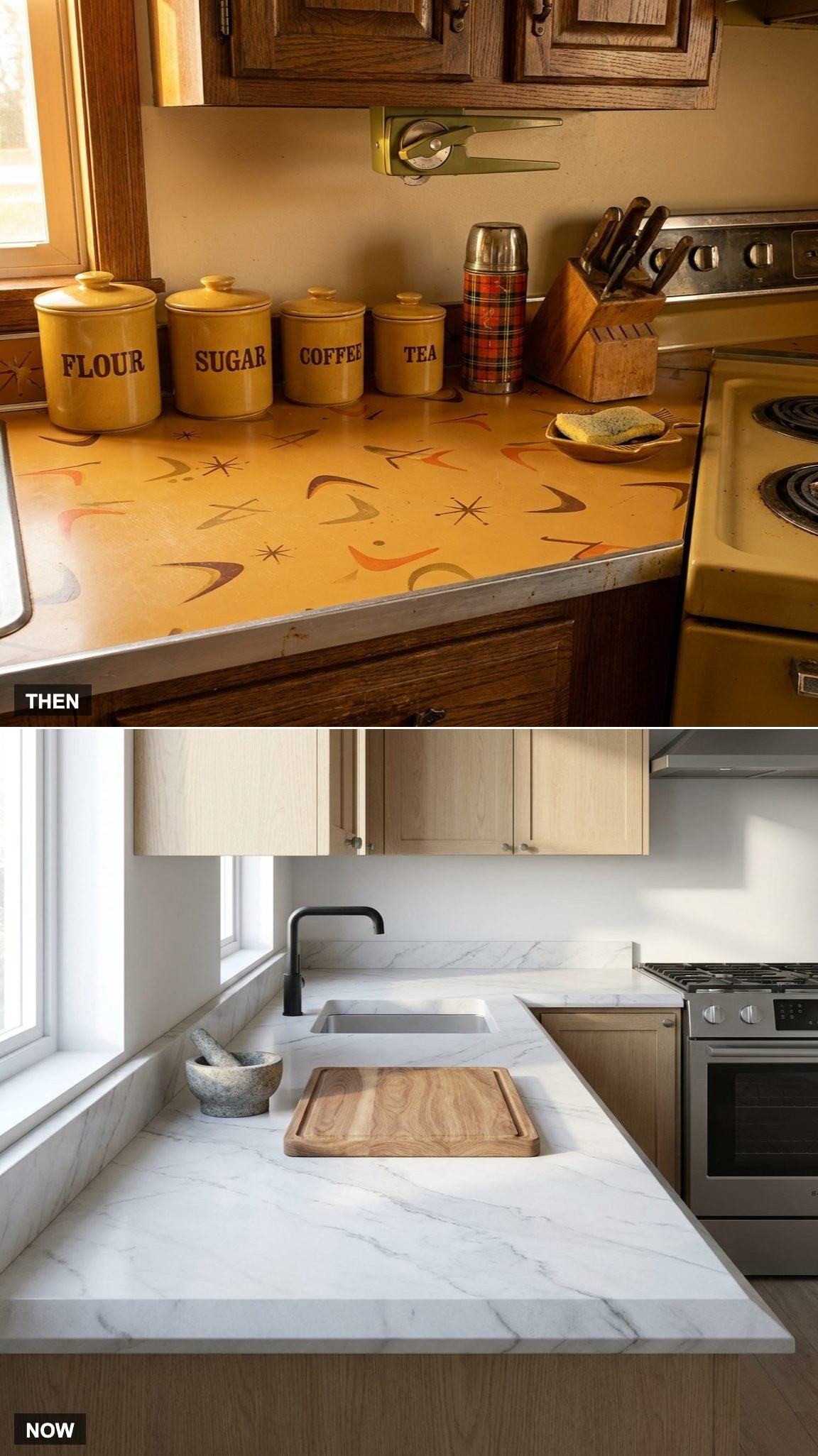
Formica in 1975 was not shy. Boomerangs, starbursts, faux-marble that looked like nothing found in nature. The counter competed with the wallpaper and won.
Quartz and quartzite took over because they don’t compete. They hang back and let the cabinets or the light fixture do the talking — a more mature move, though I miss the confidence of a countertop that dared you to say something about it.
25. The Floor: Sheet Vinyl to Real Wood and Convincing Fakes
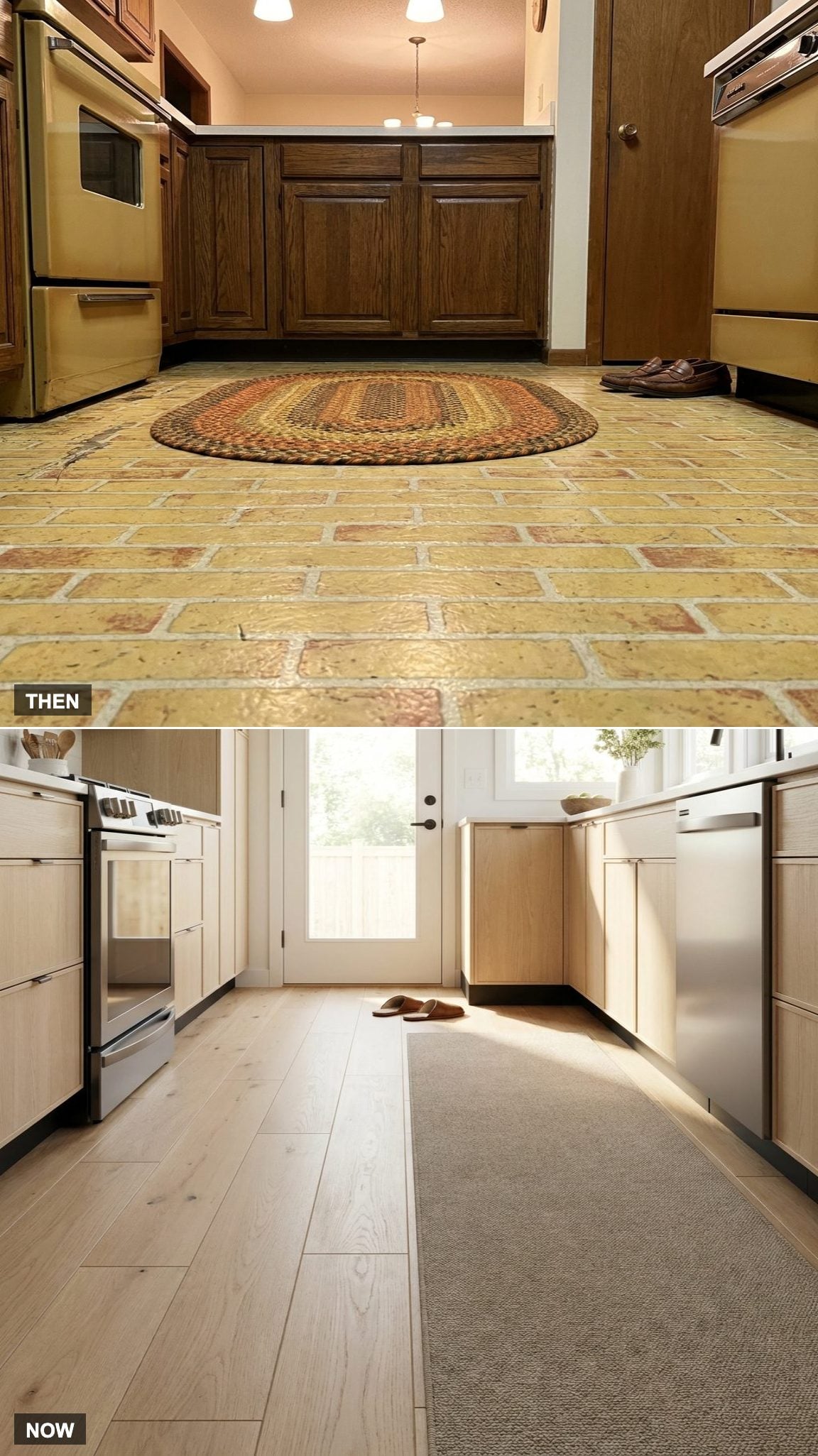
Sheet vinyl was a marvel of chemistry and a crime against feet. Cold in winter, sticky in summer, permanently indented wherever the refrigerator sat. The brick pattern was popular because bricks were popular, and nobody stopped to ask if a floor should look like the outside of a building.
Real hardwood is back. Luxury vinyl plank has gotten so convincing that flooring installers pause to check. Progress, sometimes, is just better fakes.
24. The Lighting: One Buzzing Fluorescent Box to Layers Everywhere
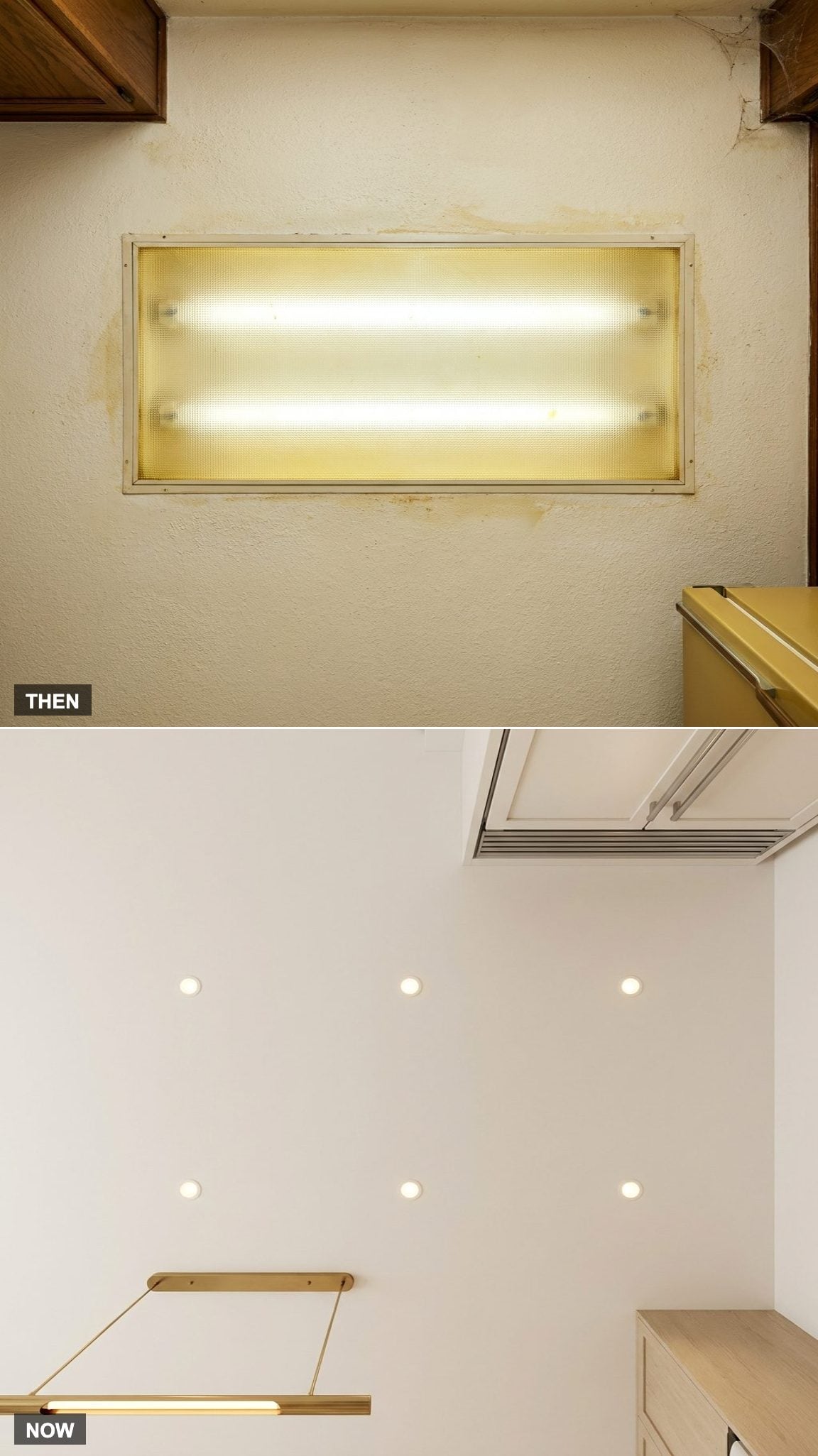
The fluorescent panel was the sun of the 1975 kitchen. On or off — no in between. It hummed at a frequency that made teenagers irritable and made everyone look slightly ill in family photos.
Layered lighting is the current religion. Recessed cans for general light, pendants over the island for drama, under-cabinet strips for tasks, a warm bulb over the sink for late-night glasses of water. Four zones on four dimmers. Anyone who has cooked by a single overhead can tell you the difference is not small.
Consider a brass linear pendant over an island if you’re borrowing this playbook.
23. The Communication Hub: The Wall Phone to the Phone in Your Hand
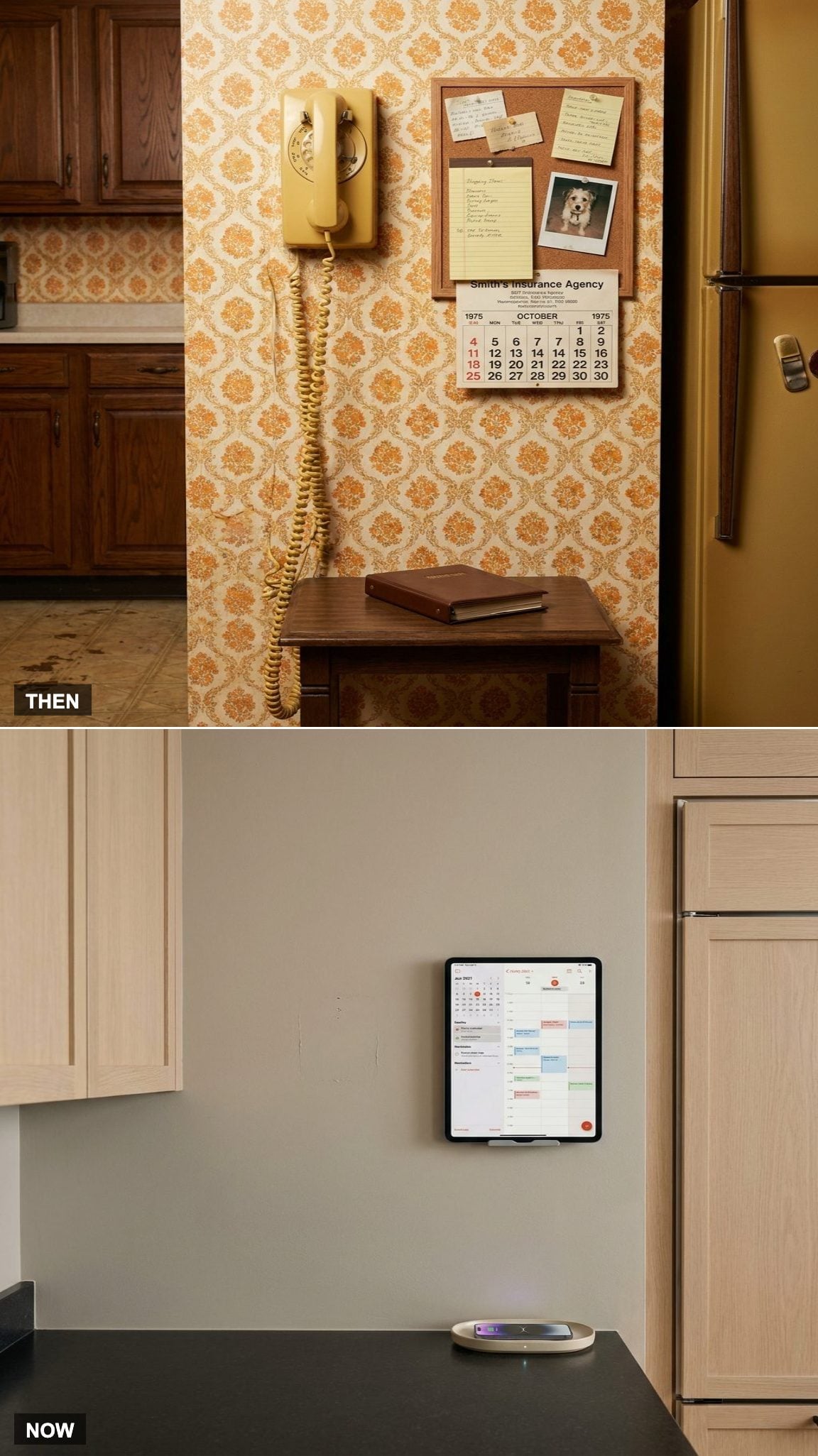
The phone lived in the kitchen because the phone lived where the wire came in. That was the entire reason. Every household argument, every teenage romance, every death in the family, every casserole recipe traded between sisters happened in the same six-square-foot patch of linoleum.
Now the phone is in a pocket, the pocket is on a person, and the person is anywhere. Something was gained. Something was lost. Anyone over forty can tell you exactly what.
The fifteen-foot coiled cord was the closest thing a teenager had to a private life.
22. The Recipe Source: Cookbook Shelves to a Propped-Up iPad
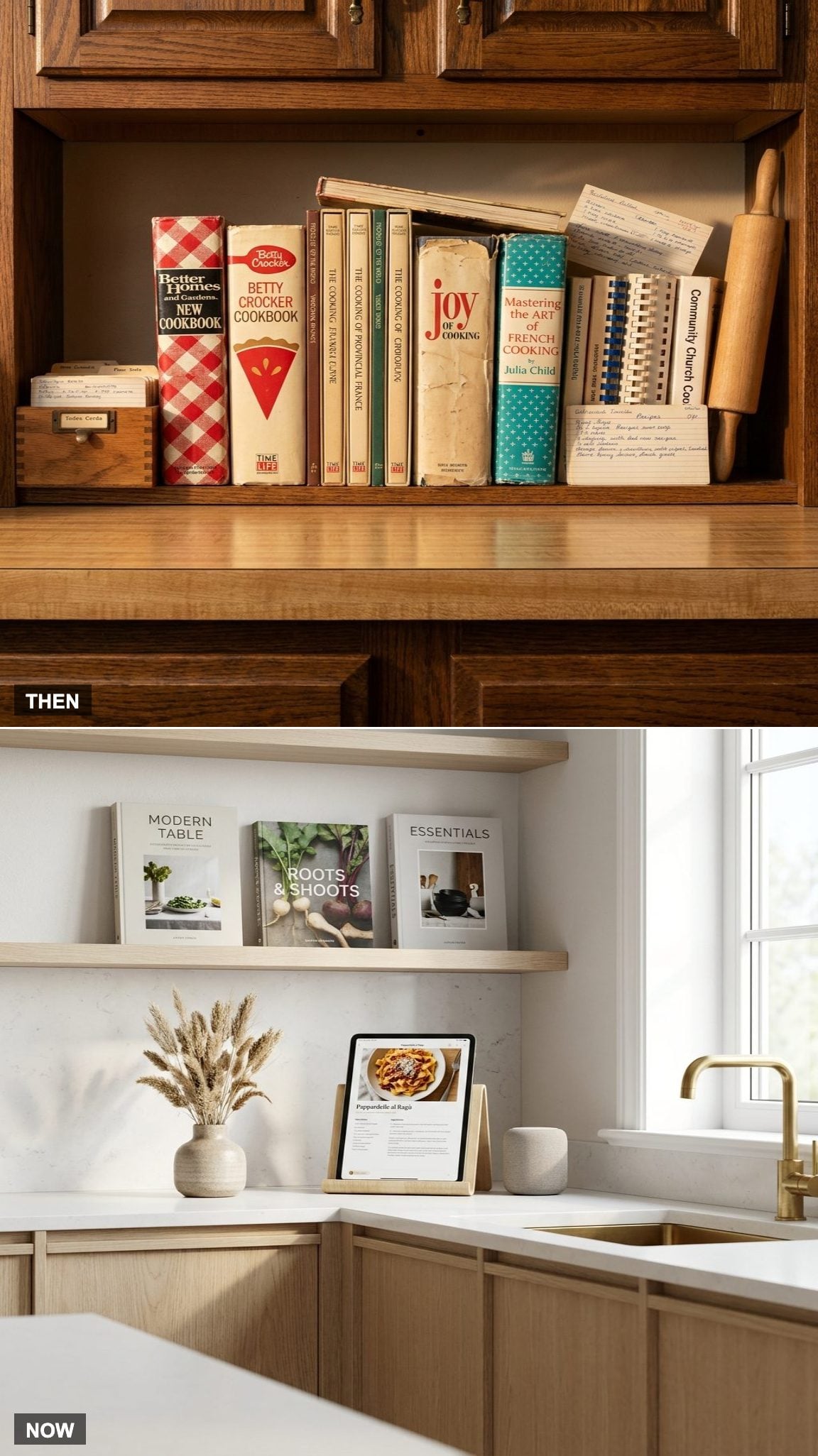
The cookbook shelf was a family archive. Spines splashed, pages stuck together with vanilla and butter, every margin bearing a note in someone’s grandmother’s handwriting. Recipes were currency. You did not lightly give away the one for the coffee cake.
The screen replaced all of it, which is efficient and also a little sad. Nobody spills olive oil on an iPad and thinks tenderly of it forty years later.
21. The Microwave: A Countertop Trophy to a Built-In Given
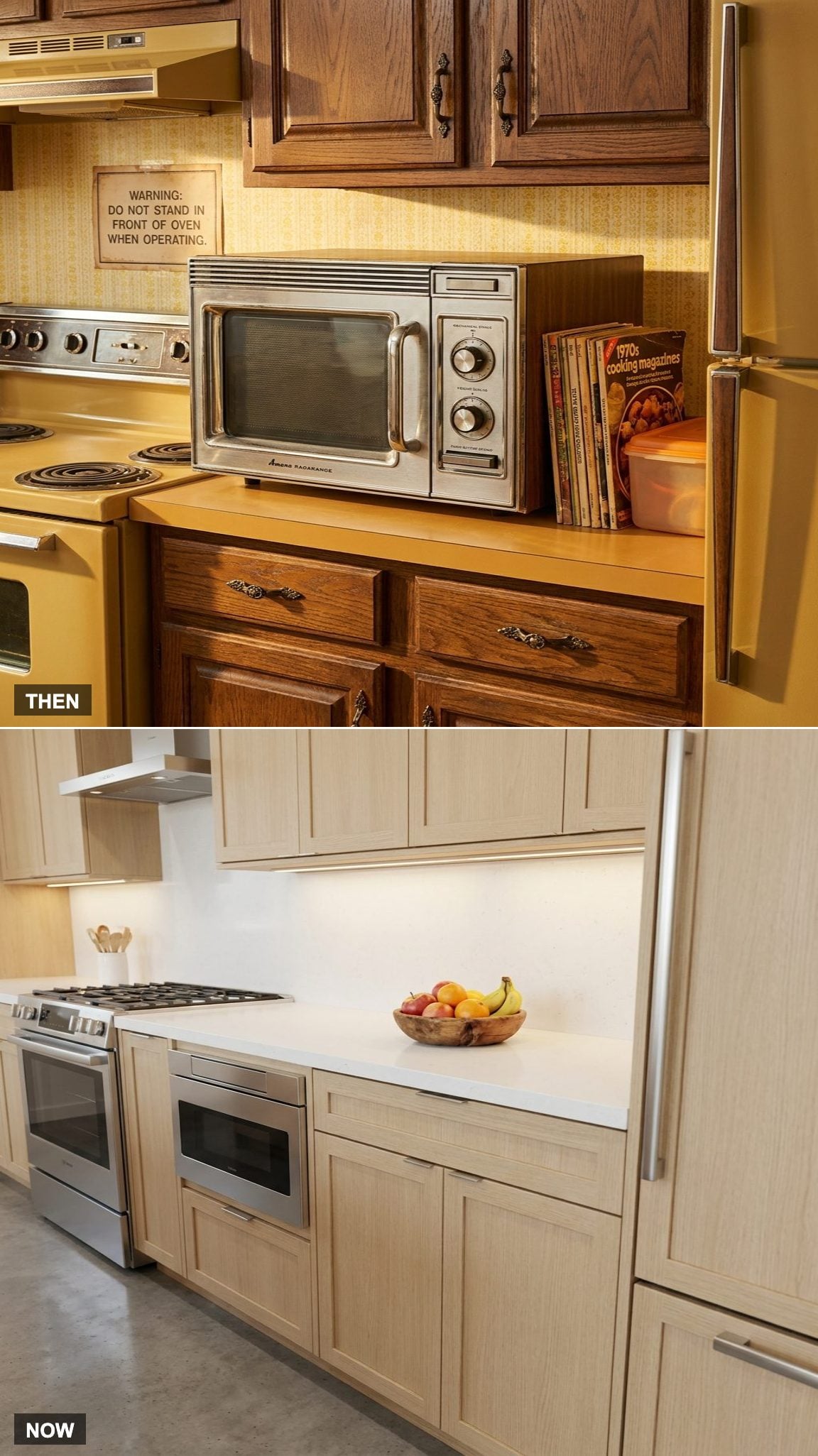
The first countertop microwaves were expensive enough that only one house on the block had one. Kids from the neighborhood came over to watch a hot dog cook in thirty seconds like it was a magic trick. Because it was.
Now it’s a drawer. Tucked under the counter, panel-fronted, forgotten about until someone reheats coffee. The trophy became furniture — which is what happens to every miracle if you wait long enough.
20. The Trash Compactor Gives Way to the Recycling Station
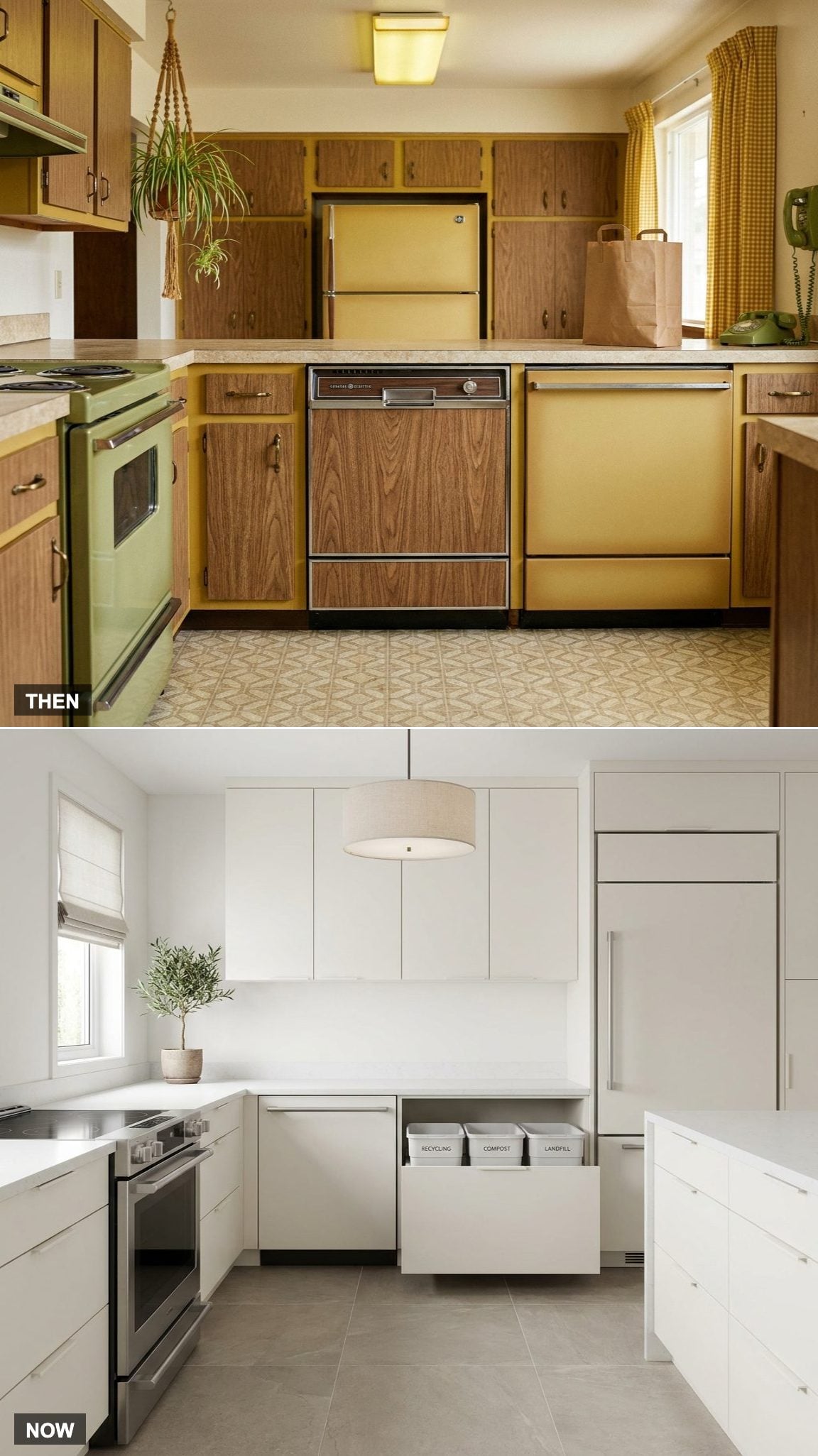
The trash compactor was the space-age hero of 1975, and every builder brochure bragged about it. Nobody mentioned how it smelled by Thursday.
Modern kitchens swapped one bin for three — recycling, compost, landfill — all sliding out on soft-close hardware behind a cabinet front you’d never guess was a garbage command center. Values changed. The cabinetry followed.
19. The Breakfast Nook Loses Its Crown to the Island
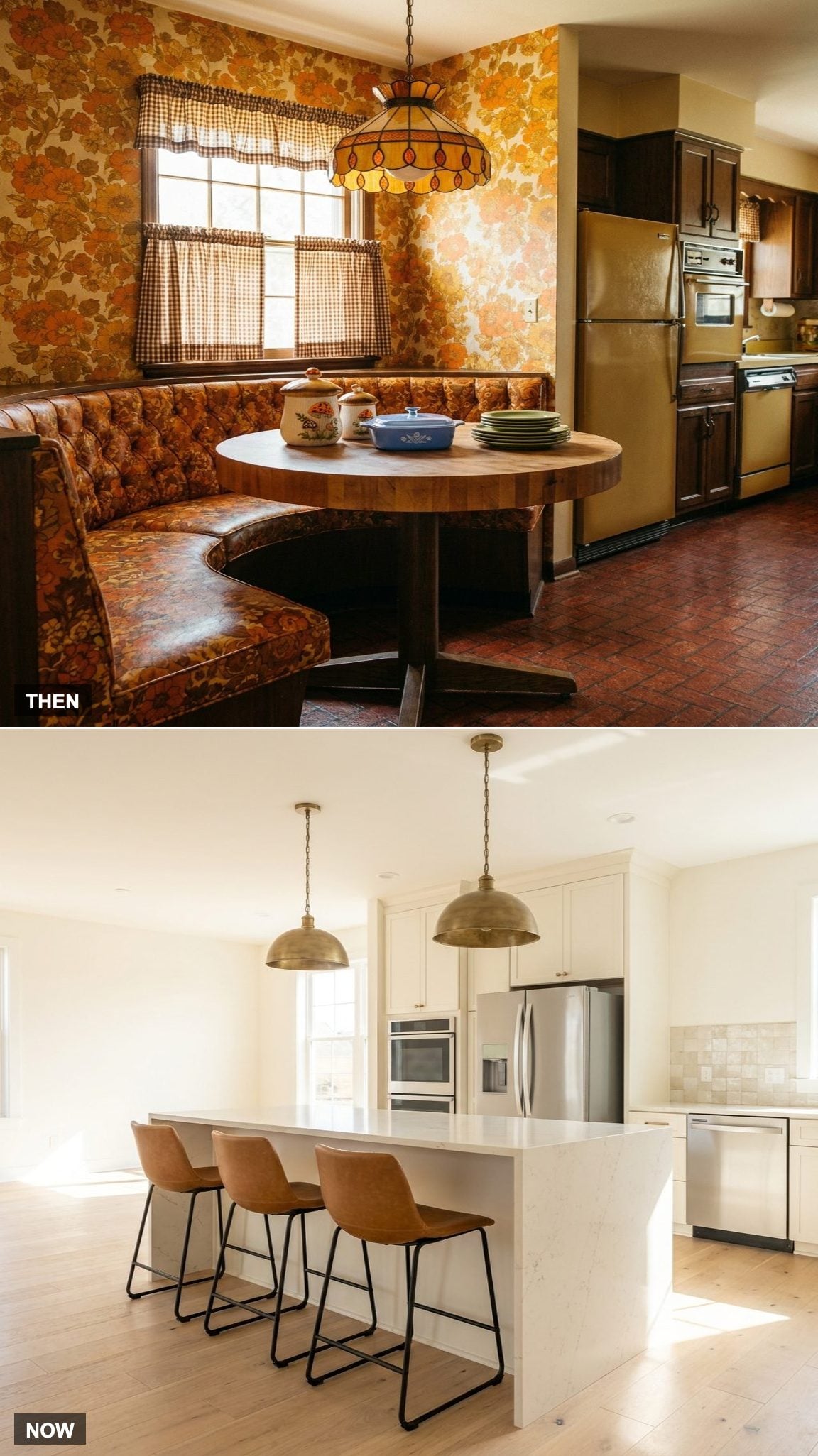
The breakfast nook was where homework got done, cereal got eaten, and one specific aunt always insisted on sitting on the outside so she could get up easily. That corner banquette held decades of ordinary life.
Now the island runs the show — prep zone, homework spot, wine bar, buffet, the place guests lean on while you cook. The nook wasn’t killed by the island so much as absorbed by it. Want the cozy corner back? Look at traditional kitchen ideas that still make room for both.
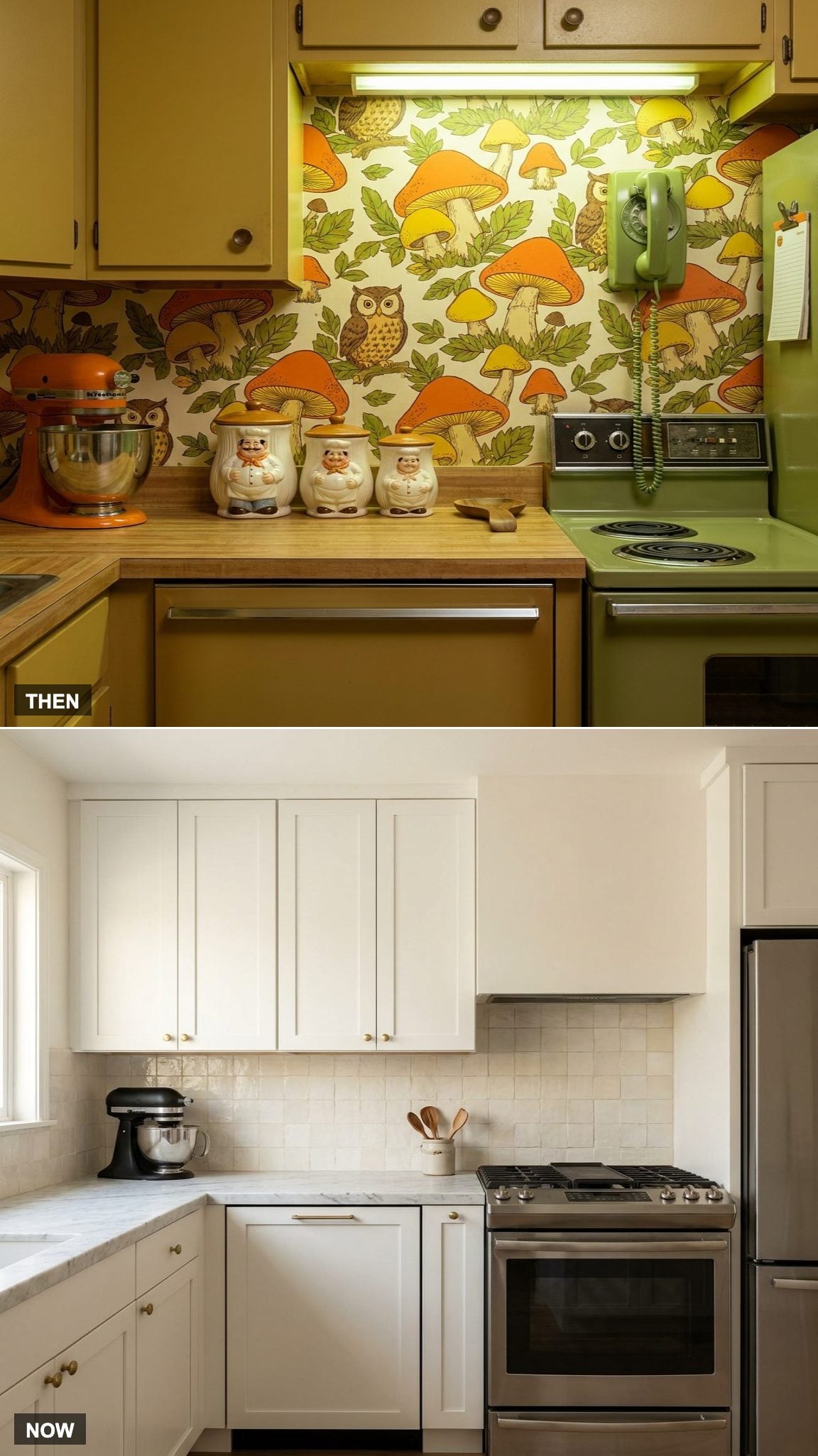
18. The Wallpaper Bows Out, Paint and Tile Move In
🔥 Would you like to save this?
The 1970s did not do subtle wall coverings. Mushrooms, owls, roosters, entire barnyards printed at furniture scale — whole rooms wrapped in patterns that would exhaust you by breakfast.
Modern kitchens went the other direction: paint in a warm neutral, tile that whispers, and let the food and the light do the talking. Look at any neutral kitchen renovation and notice how much bigger the room feels the second the pattern comes down.
17. Open Shelves Retire, Hidden Storage Takes Over
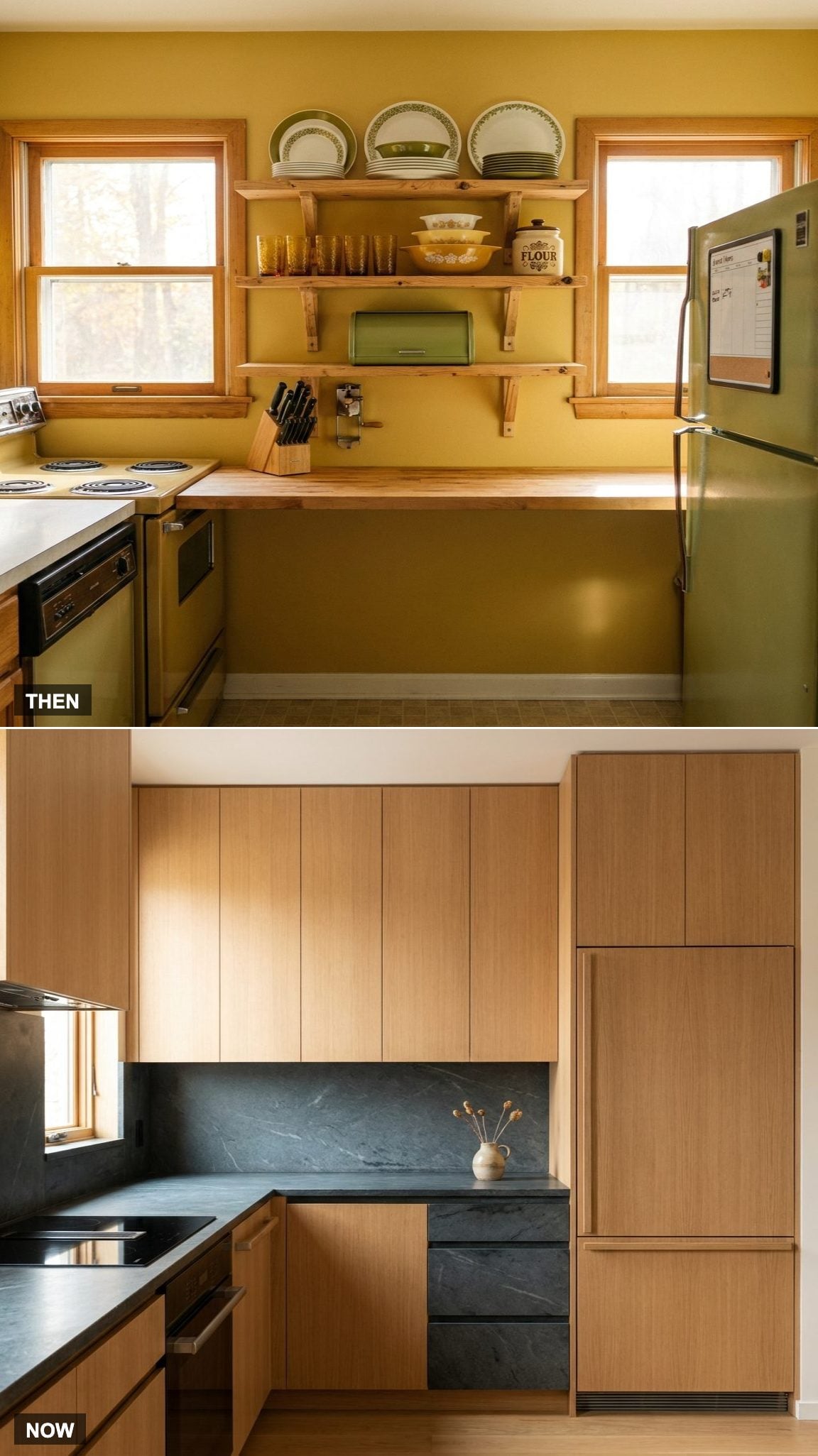
Open shelves in 1975 weren’t a design statement. They were where the dishes lived, dust and all.
Now everything hides — appliance garages, integrated fridges, pull-out pantries, drawers within drawers. The visual quiet is the whole appeal. Fewer things fighting for your attention when you walk in.
16. The Single Oven Doubles Up
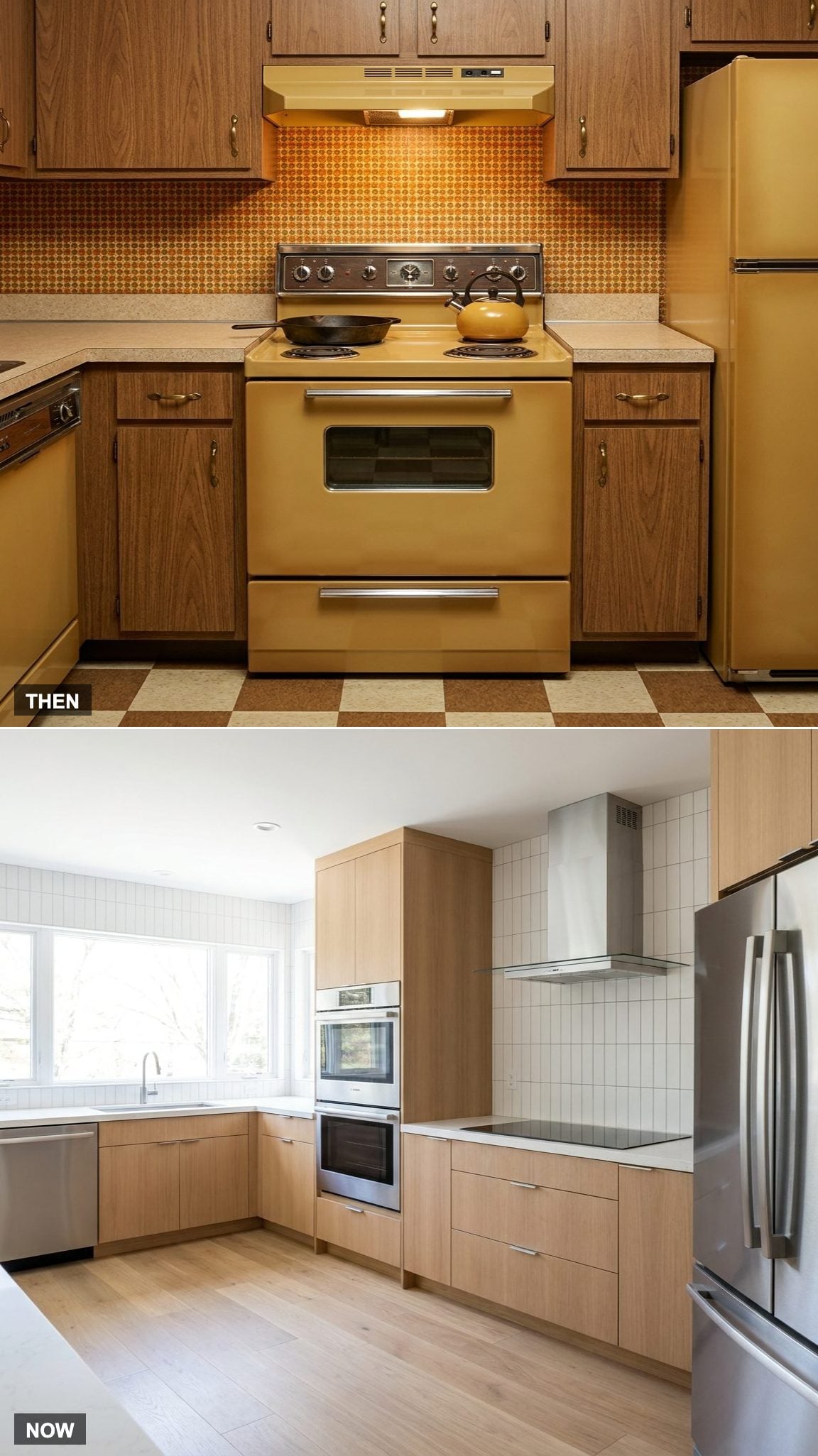
One oven. One temperature at a time. If the turkey was in, the pie waited, and if the pie was in, the rolls were cold.
Double ovens broke the queue — convection on top, conventional below, or one running low and slow while the other blasts a sheet pan of Brussels sprouts at 425 for the last fifteen minutes before dinner. Thanksgiving got shorter. For an industrial kitchen makeover, double ovens are practically the entry ticket.
15. The Manual Can Opener Retires to the Drawer of History
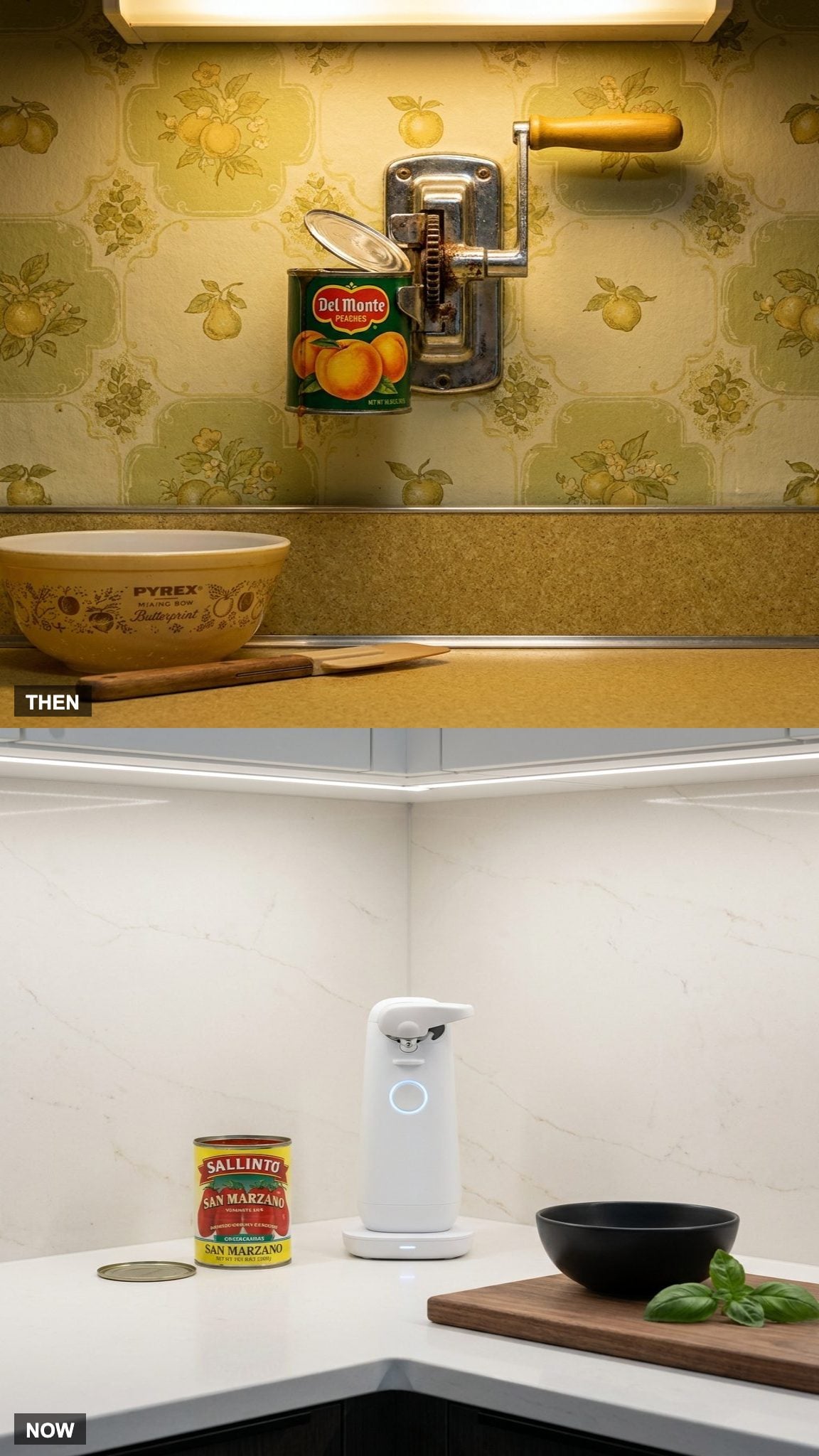
Every 1975 kitchen had one, mounted to the wall or lurking in a drawer, always with a slightly rusted gear and a handle that squeaked. Opening a can was a small workout.
Now one gadget does six jobs, sits on a charging dock, and gets forgotten between uses. The counter is quieter. So is the process.
14. Countertop Appliances Disappear Behind the Appliance Garage
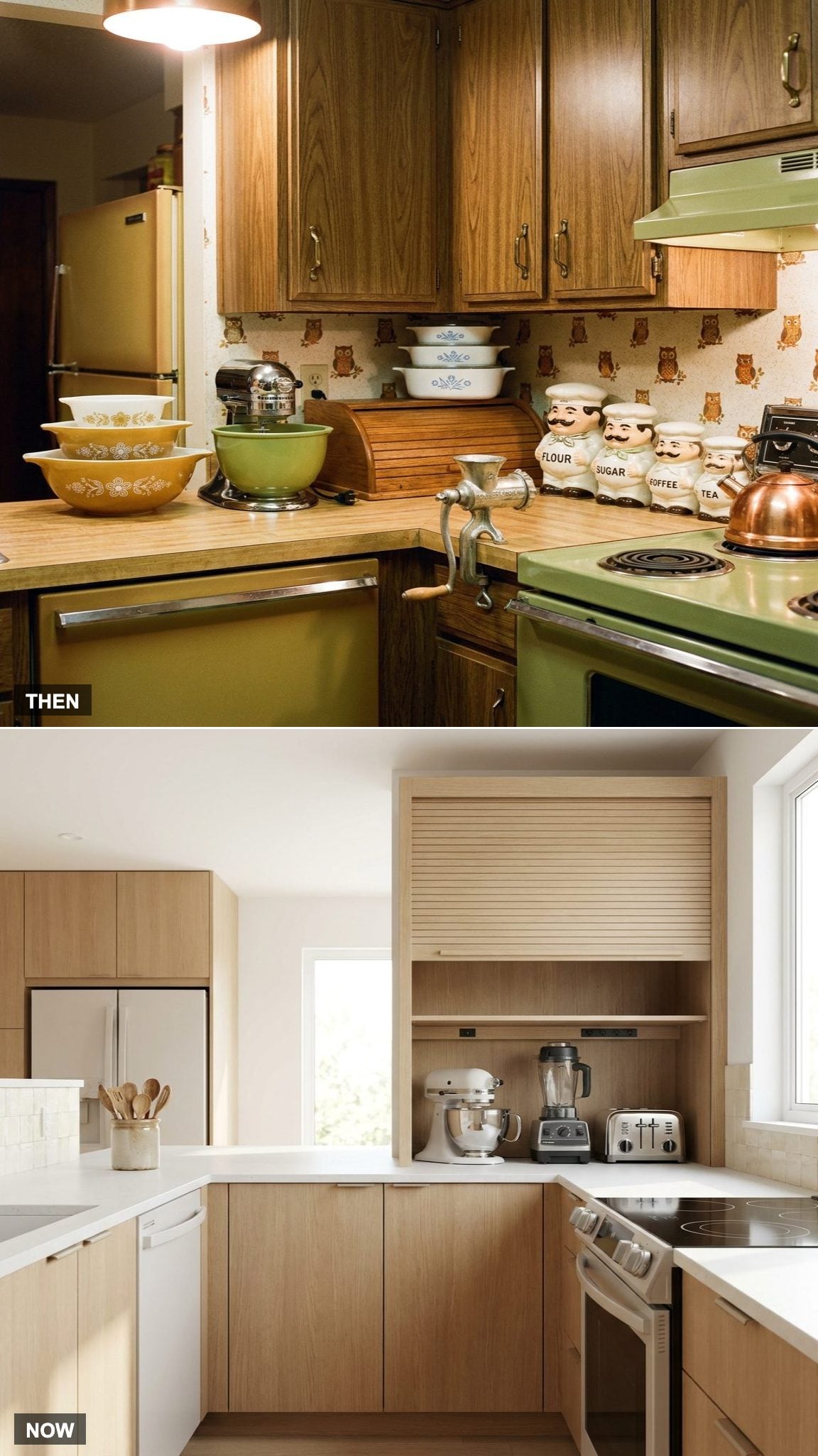
The 1975 counter was a working surface in the truest sense. Everything you used sat where you last used it, and the stand mixer weighed forty pounds and moved once a decade.
The appliance garage solved a real tension — wanting things accessible while wanting the counter clear. Roll the tambour up, plug it in, use it, roll it back down. The counter breathes again.
13. Two Outlets, Then a Wall of Them
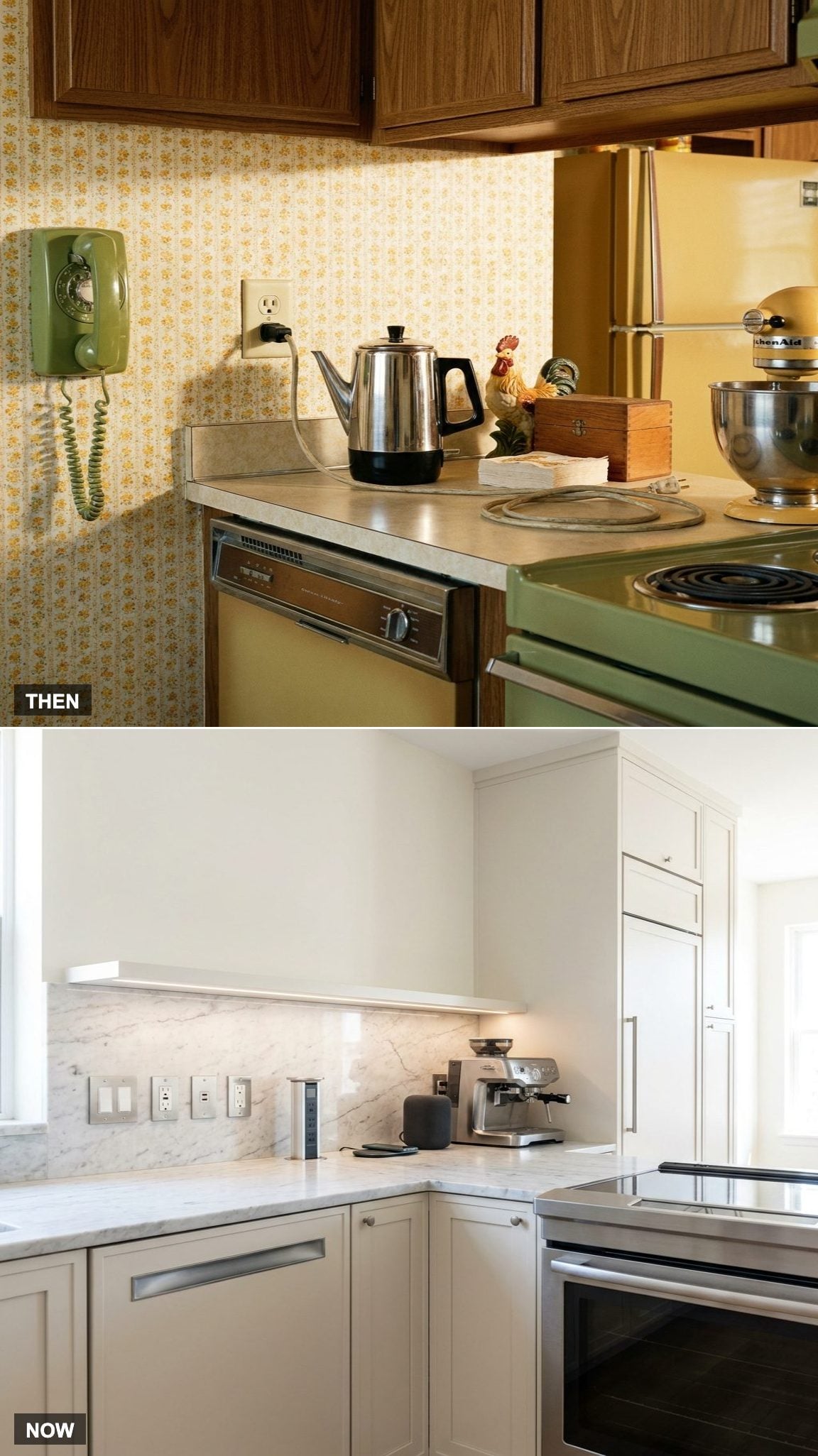
Two outlets. Maybe three if the builder was feeling generous. The whole kitchen ran off a coffee pot and a phone.
Every appliance now wants a plug, every phone wants a charger, and the pop-up tower in the island exists because we finally admitted the truth — a modern kitchen needs power the way a 1975 one needed a junk drawer.
12. The Fridge Calendar Goes Digital
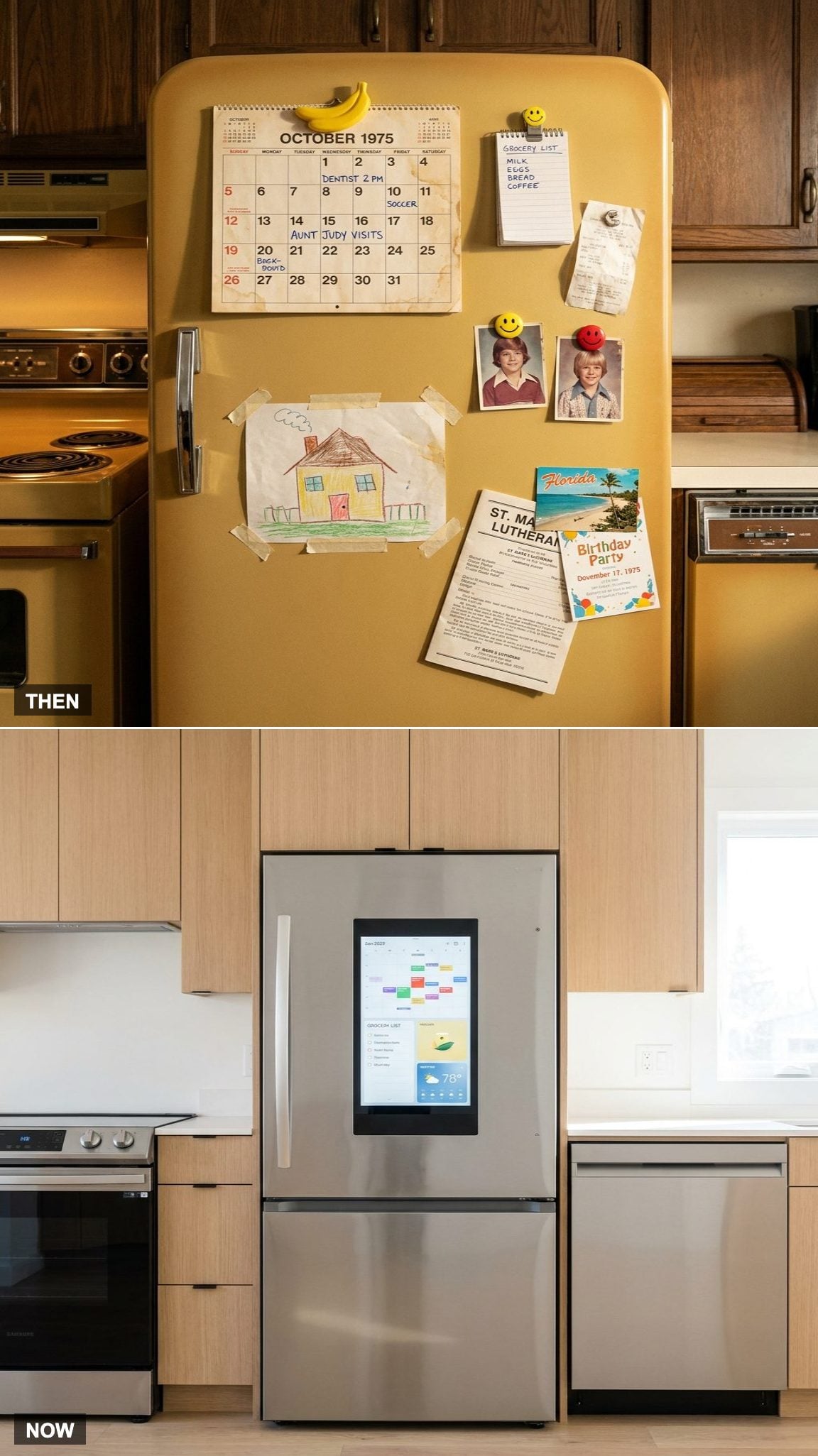
The fridge door was the family bulletin board — calendar, art gallery, permission slip archive, wedding invitation display, and grocery list all held up by souvenir magnets from places nobody remembered visiting.
The digital calendar killed the paper one, and the fridge door got clean. Something was gained. Something else was quietly lost. That drawing your kid made in kindergarten doesn’t have a home on a stainless steel touchscreen.
11. The Cookie Jar Steps Aside for the Coffee Bar
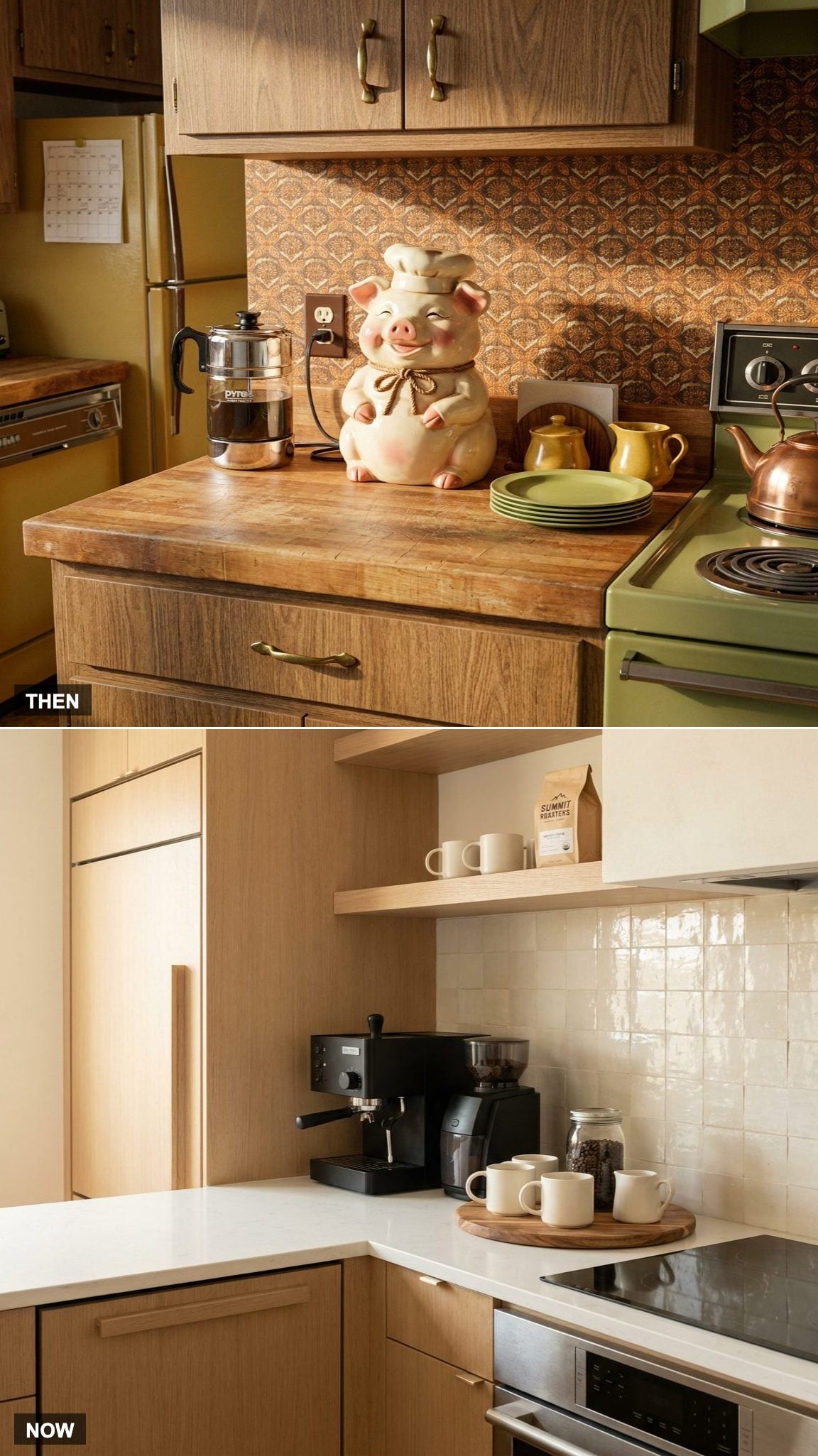
Every kitchen had one — ceramic pig, ceramic bear, ceramic apple with a face, ceramic grandma-lookalike with a bonnet. The lid made a specific clunk when you lifted it, and every kid in the house knew that sound from three rooms away.
The coffee bar took its counter real estate: espresso machine, grinder, mugs, beans, milk frother. The daily ritual moved from after-school snack to morning caffeine ceremony. Same square footage, different life stage. To see how the coffee corner integrates into a full remodel, browse a few craftsman kitchen inspiration layouts.
10. The Dishwasher Situation
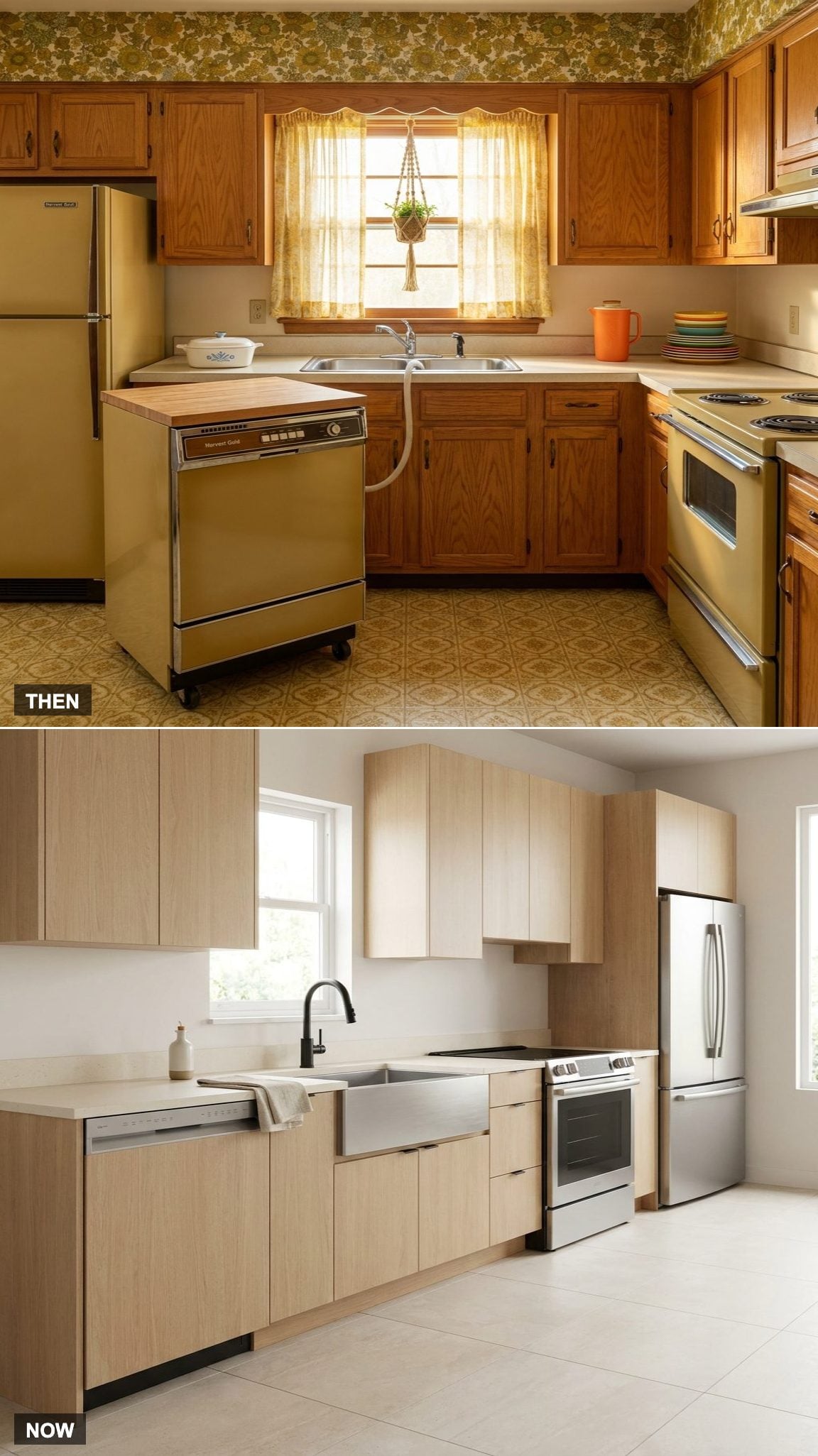
The portable dishwasher on wheels was a whole event. You rolled it across the linoleum, clamped the hose to the faucet, and hoped nobody needed the sink for the next ninety minutes while the thing chugged and hissed like a small locomotive. Loud. Hot. Thirsty enough to fill a bathtub.
Now it hides behind a cabinet panel and runs at 39 decibels, quiet enough to hold a conversation next to. A modern cycle uses roughly three gallons instead of fourteen, fits taller wine glasses, sheet pans, and a full week’s worth of dishes for a family of four. The Harvest Gold monster earned its retirement.
9. Kitchen Ventilation
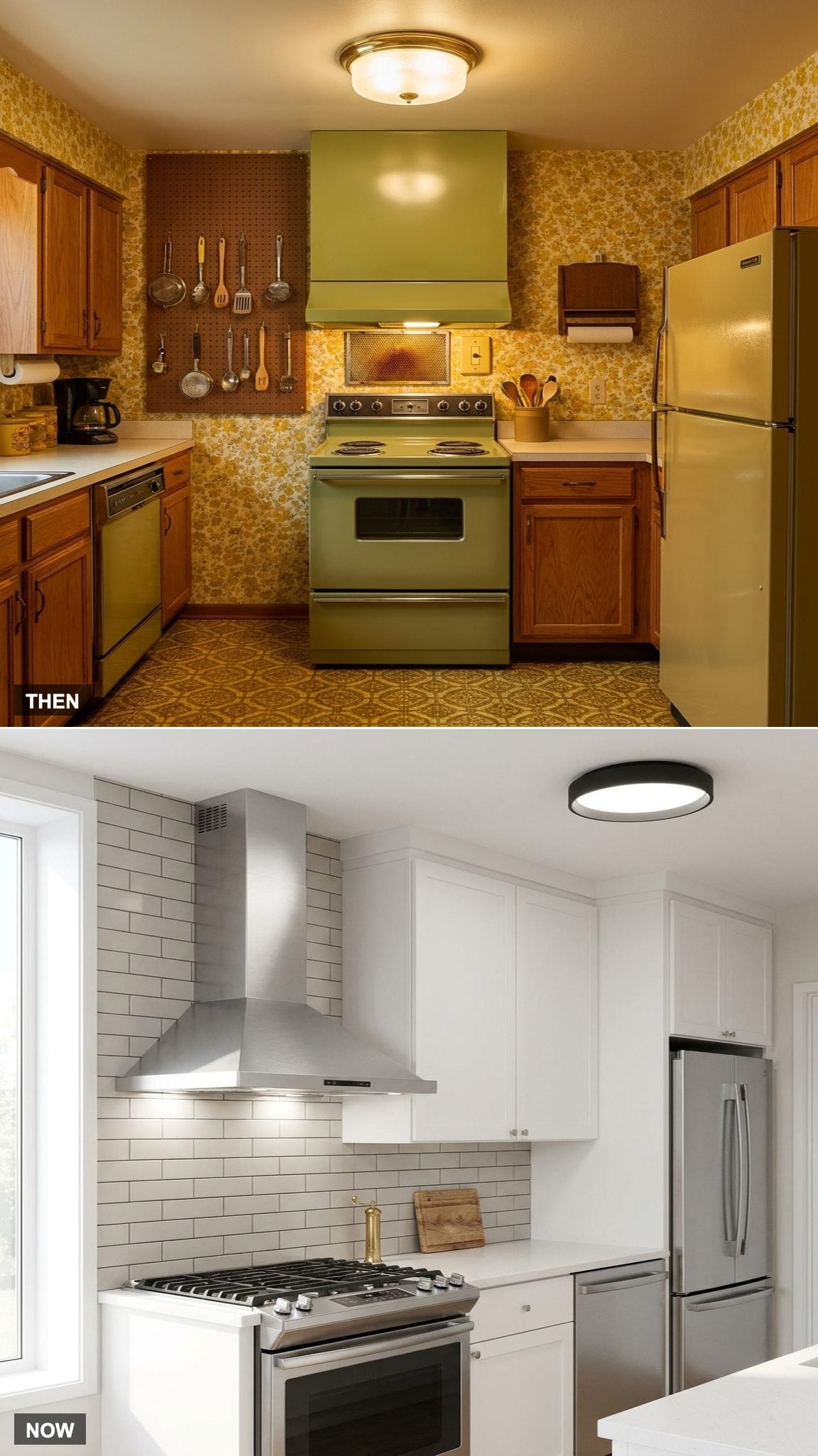
Ventilation in 1975 meant a little metal box mounted above the range that mostly recirculated hot bacon air back into your face. Half the time it wasn’t even vented outside — it sucked grease into a filter nobody remembered to clean, and pushed the smell of last night’s fish into the living room curtains.
Modern hoods pull serious CFM without breaking a sweat, and they actually vent outdoors. LED task lighting underneath means you can see what you’re searing. If you’re going for a more polished look overall, plenty of traditional kitchen ideas now build the hood into custom millwork so it disappears into the cabinetry entirely.
8. The Freezer Frost Situation
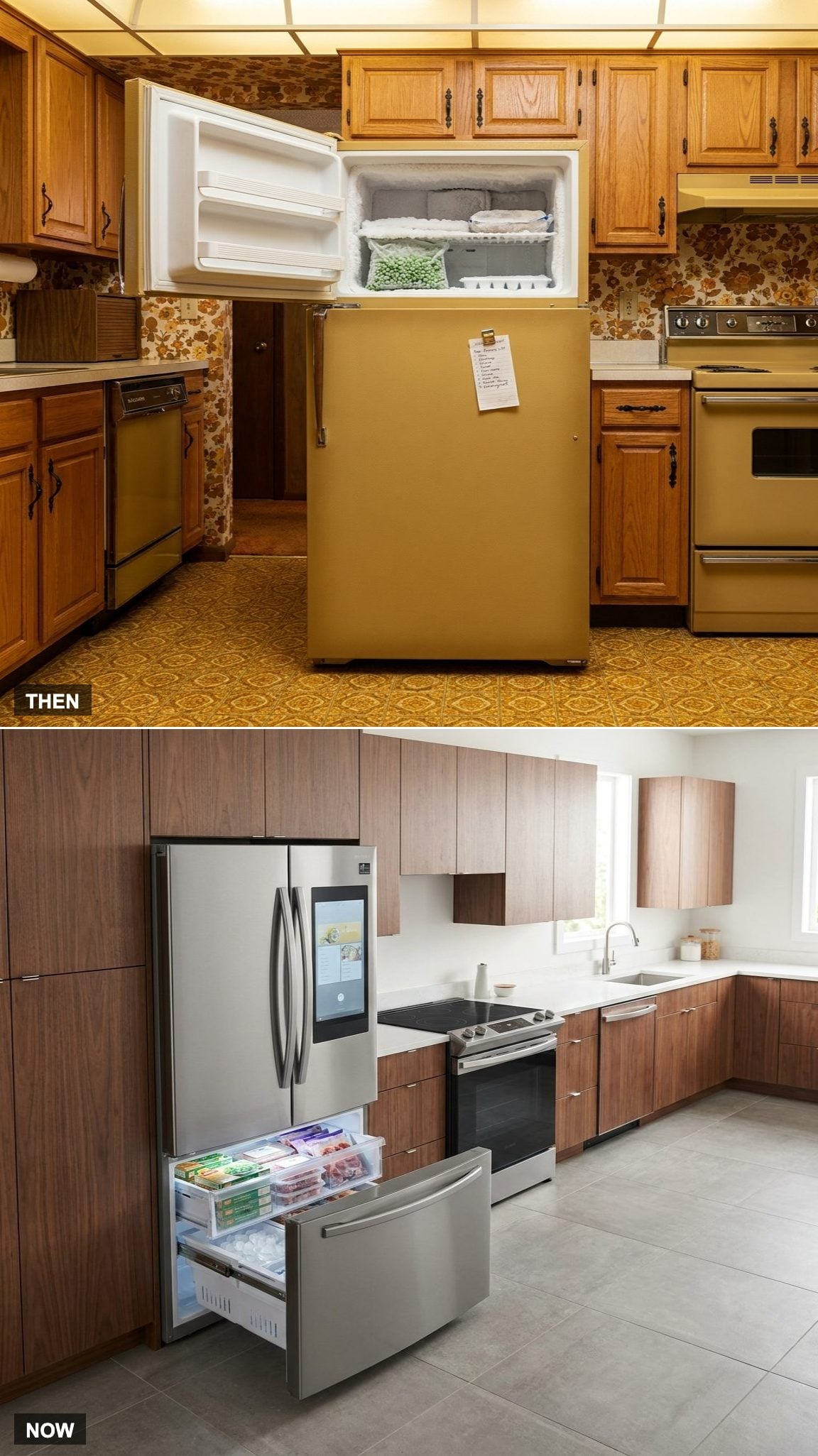
Twice a year, defrosting the freezer ate a whole Saturday. You unloaded everything into a cooler, propped the door open with a chair, laid towels on the floor, and waited for the glacier inside to give up. Some people took a hair dryer to it. Some people took a butter knife to it, which is how a lot of freezers died young.
Frost-free is the baseline now. A small heater cycles around the coils on a timer and the ice never gets a chance to form. An entire chore just quietly disappeared from American life sometime in the 1990s and nobody threw a party for it.
7. What’s In the Pantry
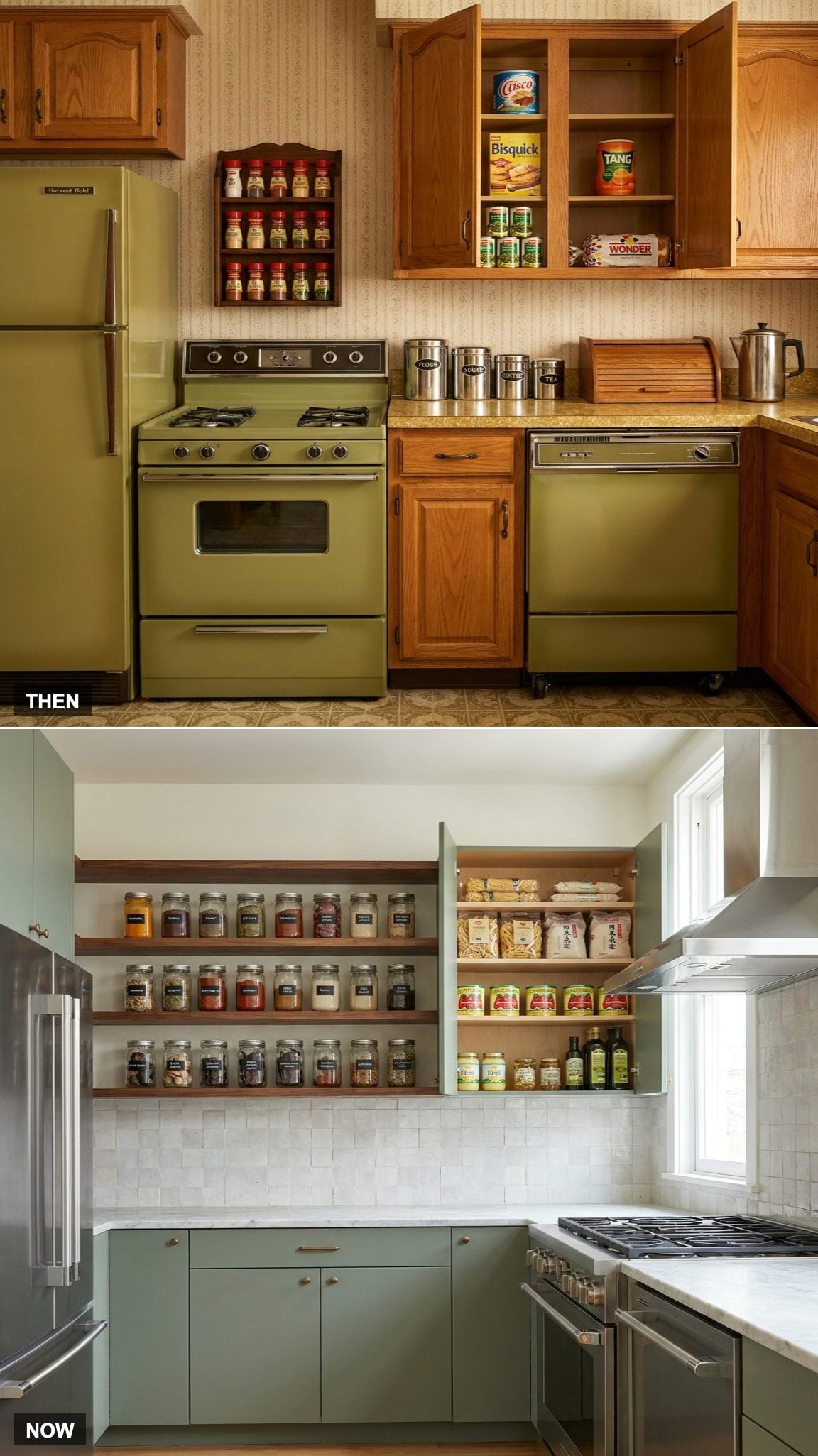
A 1975 spice rack held twelve jars and told you everything about American cooking. Salt, pepper, paprika for color, garlic powder for pretending. Oregano was the exotic one. If you had cumin, you were showing off.
Now the pantry looks like a UN summit — gochugaru next to za’atar next to miso paste. Home cooks routinely stock ingredients that weren’t available outside major cities forty years ago. The internet did that. So did immigration, travel, and a generation that decided dinner didn’t have to taste like Ohio.
6. The Cabinet Height Question
🔥 Would you like to save this?
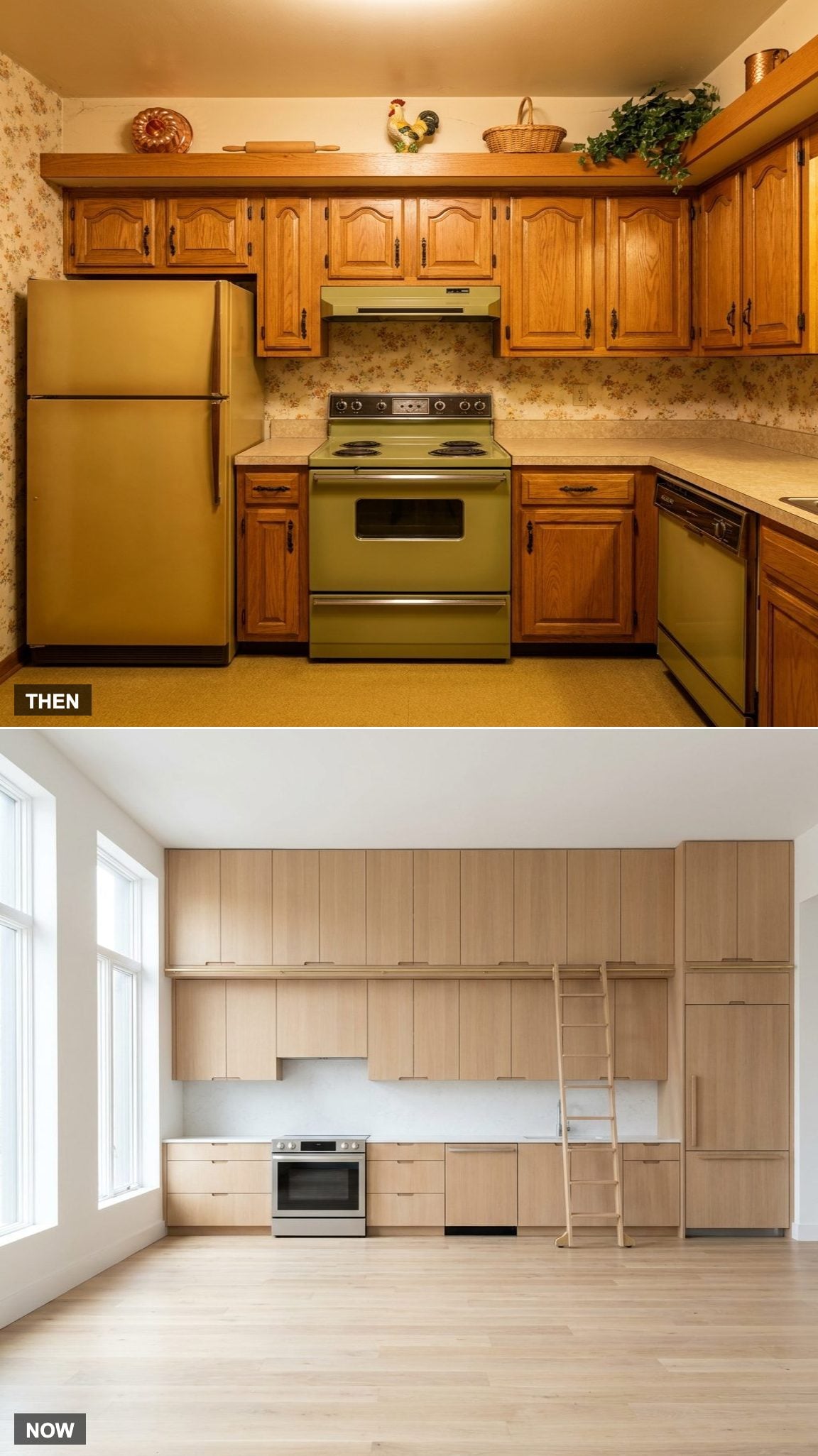
The soffit was a compromise between the cabinet maker and the drywall guy, and it lost a huge amount of storage per kitchen in the process. It also gave every American home a dust collection zone at eye level, where the copper jello molds and ceramic roosters went to slowly turn gray.
Full-height cabinets are the standard now, and the top shelf is where holiday platters and the pasta maker live. You need a step stool. That’s the whole downside.
5. The Sink Story
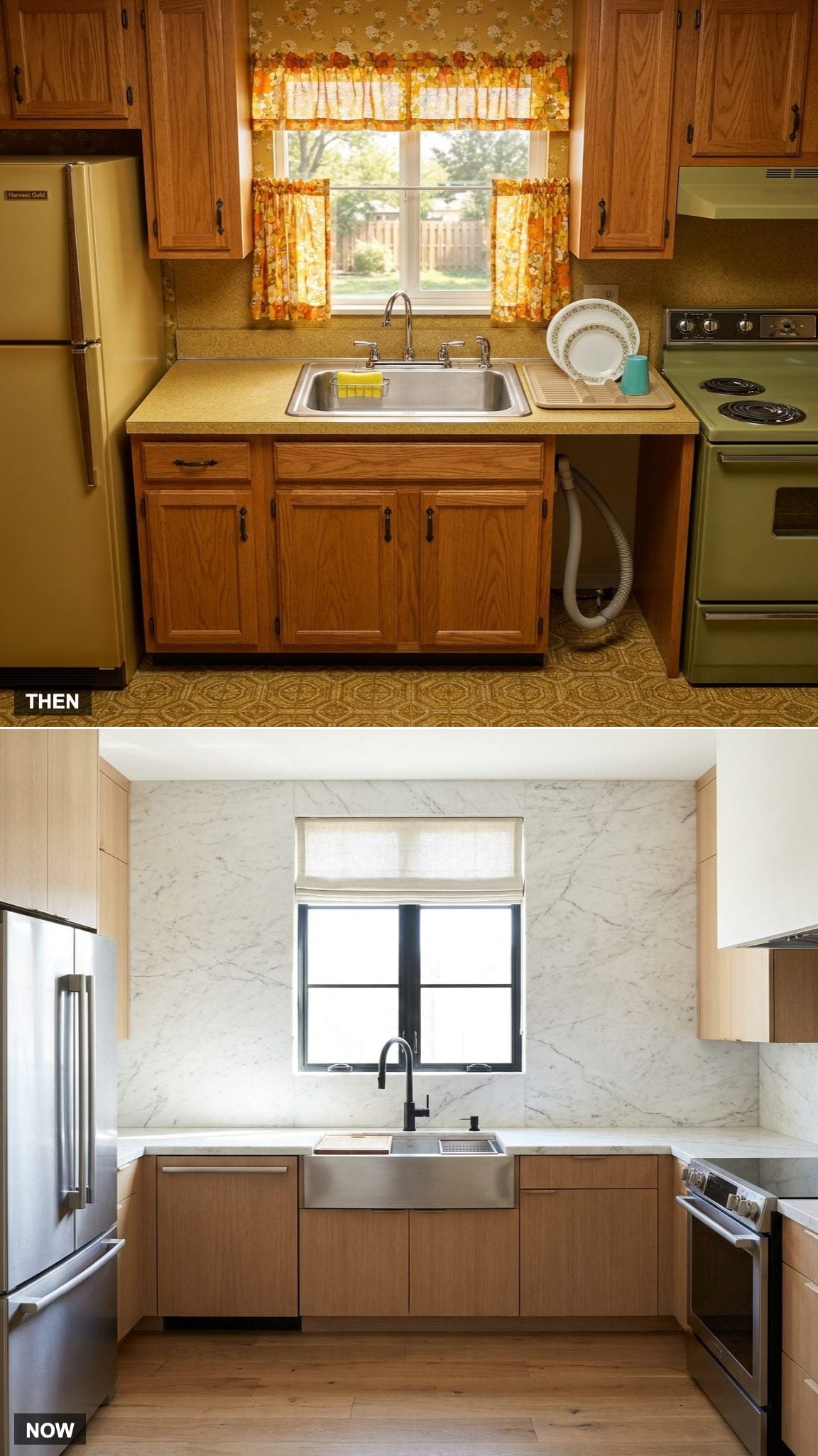
One sink. Twenty-two inches wide. That’s what most 1975 kitchens had, and it handled everything — dishes, produce washing, filling the pasta pot, thawing the Thanksgiving turkey. The faucet swung about six inches, so if you needed to fill a stockpot, you filled it in stages.
The workstation sink changed the geometry of cooking, and it did it quietly. A deep single basin with a sliding cutting board, a colander insert, and a pull-down sprayer that reaches every corner is a small piece of infrastructure that fixes a problem people didn’t know they had.
4. The Matched Set Aesthetic
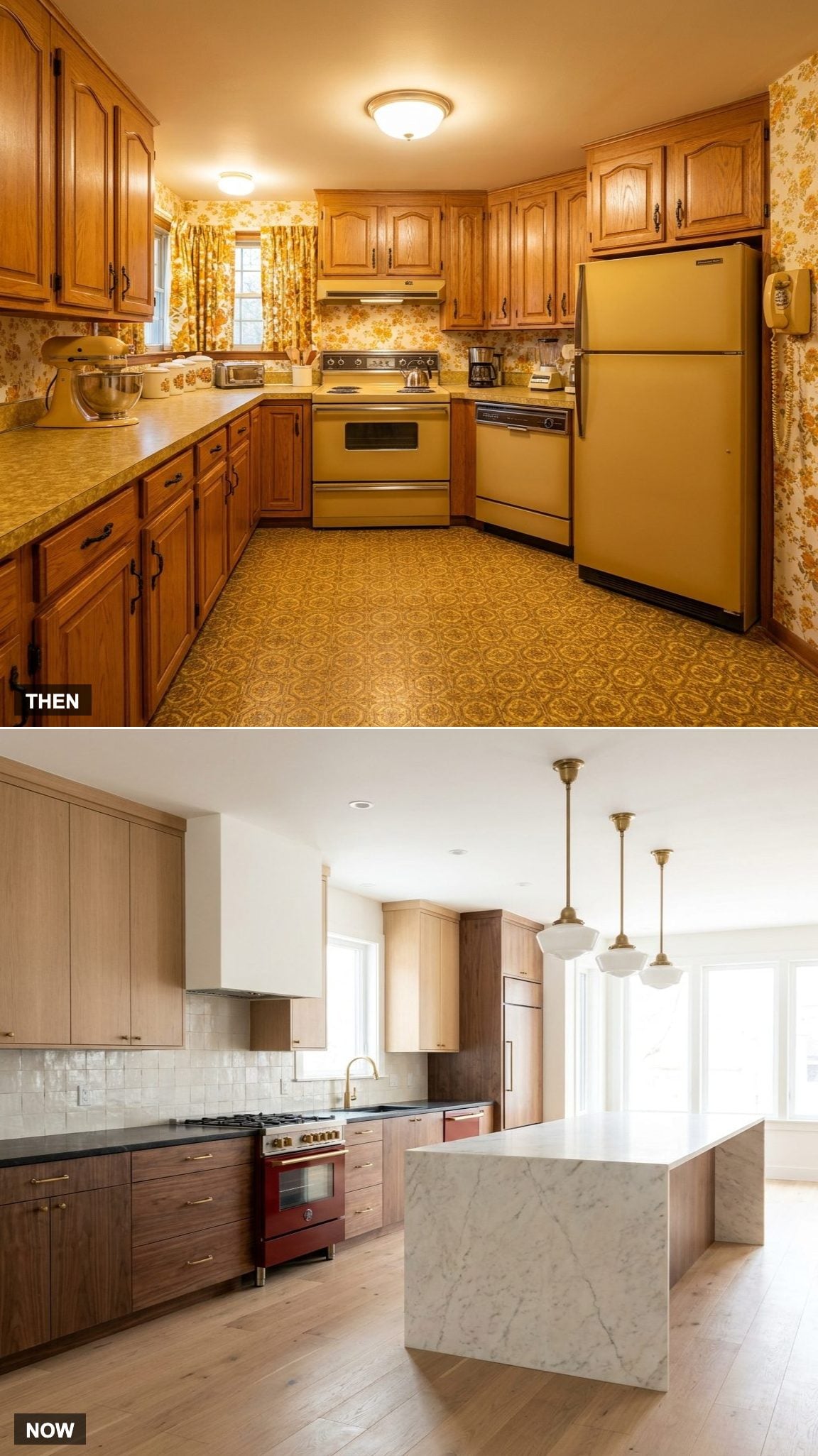
Harvest Gold was a commitment. If the fridge was gold, the range was gold, the dishwasher was gold, the phone on the wall was gold, and the toaster on the counter was gold too. Manufacturers coordinated, homeowners obeyed, and you could walk into any tract house in 1975 and predict the palette from the driveway.
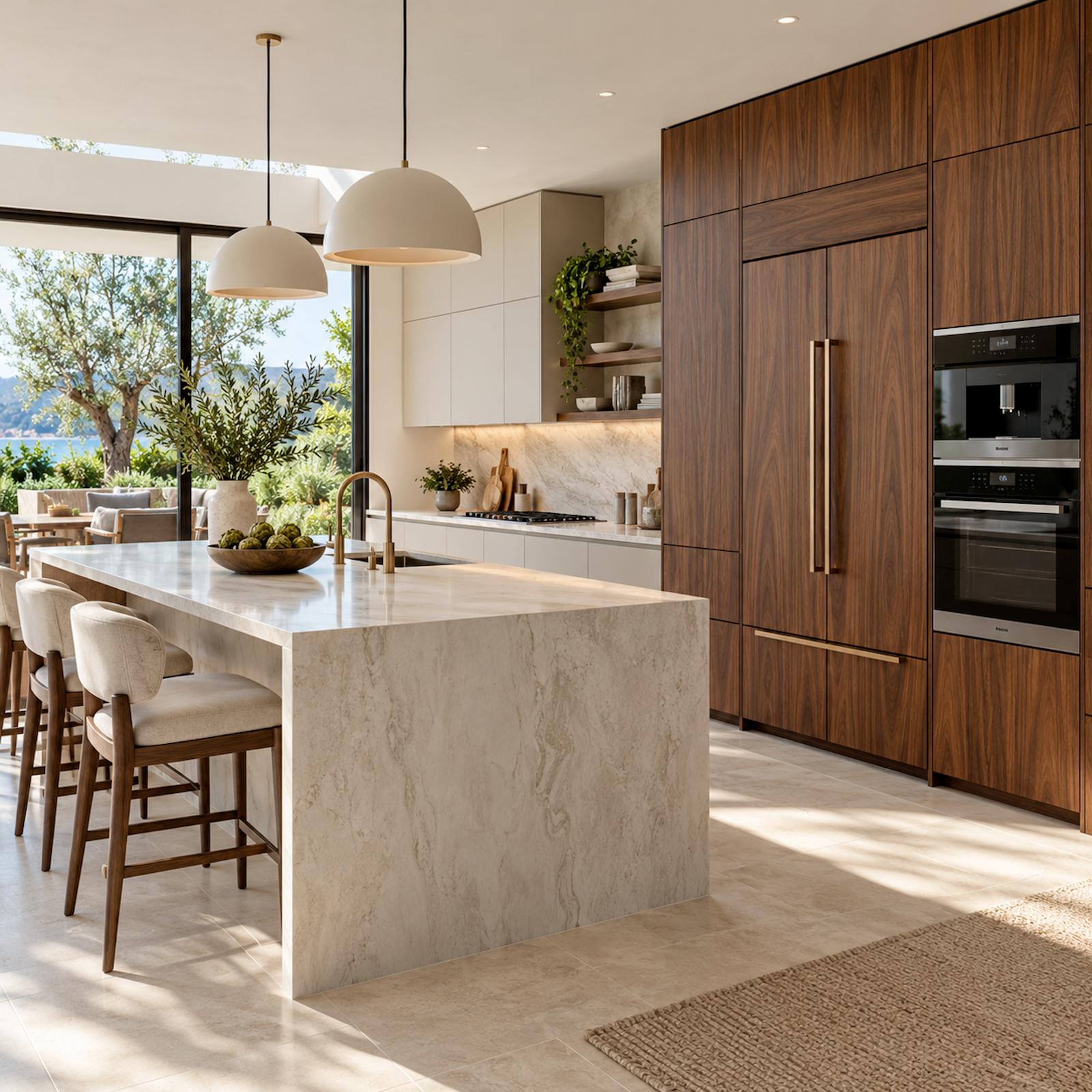
Now the whole aesthetic runs on contrast. Walnut lowers under white oak uppers. Black soapstone next to marble. Brass pulls with matte black hinges. A red enamel range as the one loud thing in an otherwise quiet room. The rule is that there is no rule, which is harder than following one. For inspiration, this red kitchen renovation shows how a single bold appliance color can anchor a mixed-material space without tipping into chaos.
3. How Dinner Actually Gets Made
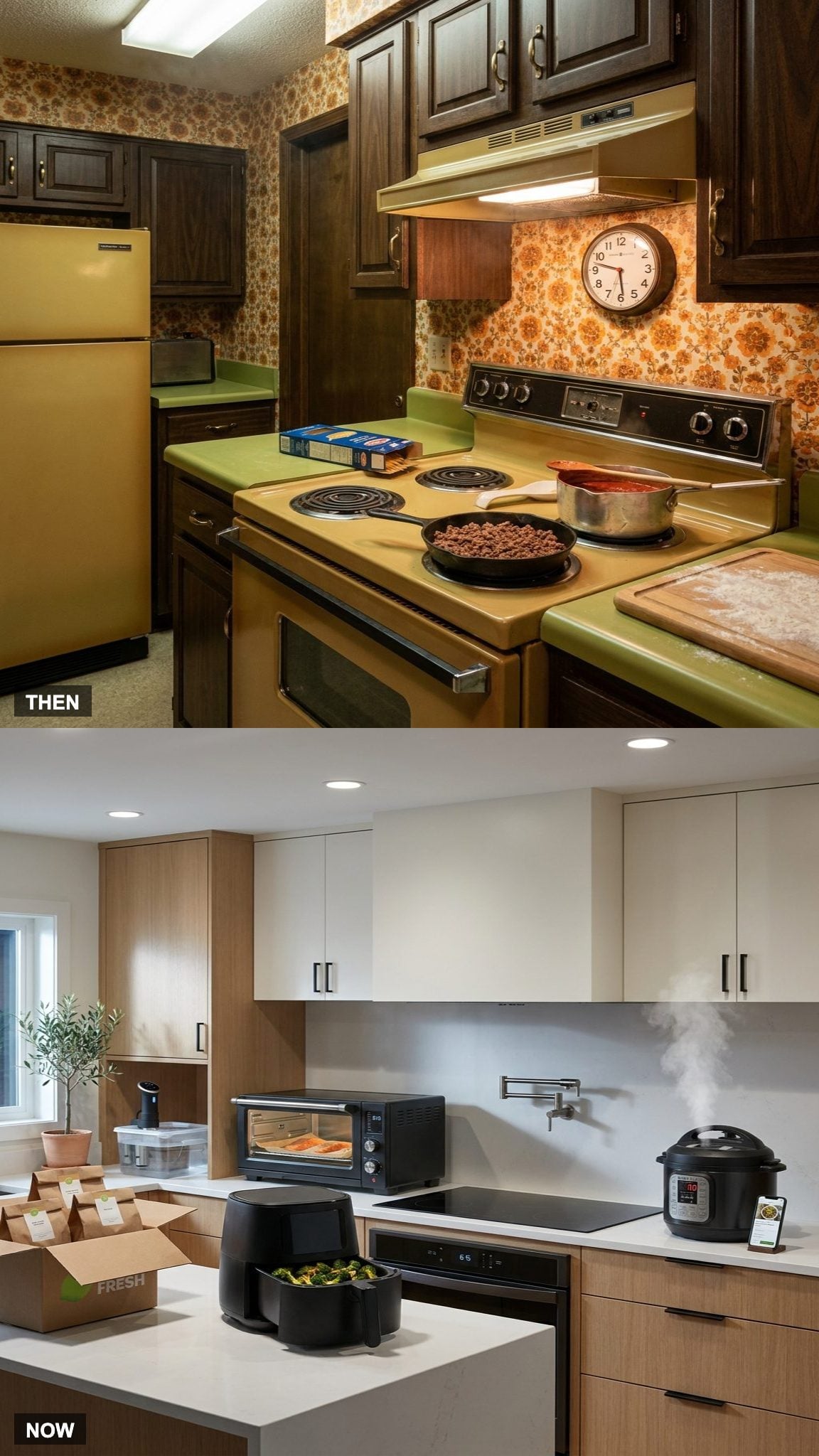
Most nights in 1975, dinner started as raw ingredients on a stovetop. Ground beef browned in cast iron, sauce simmered for two hours, pasta made by hand on a floured board if you were ambitious or dumped from a blue box if you were tired. Either way, someone stood at the range for the better part of an hour.
Now the range is one appliance among many. The Instant Pot handles the braise, the air fryer does the vegetables, the countertop oven roasts the salmon, and the sous vide waits in a corner for weekend projects. Meal kits show up in boxes with everything pre-portioned. Cooking from scratch is a choice now, not a default.
2. Before: Kitchens Chased Every Color Trend | After: Restraint That Outlasts the Decade
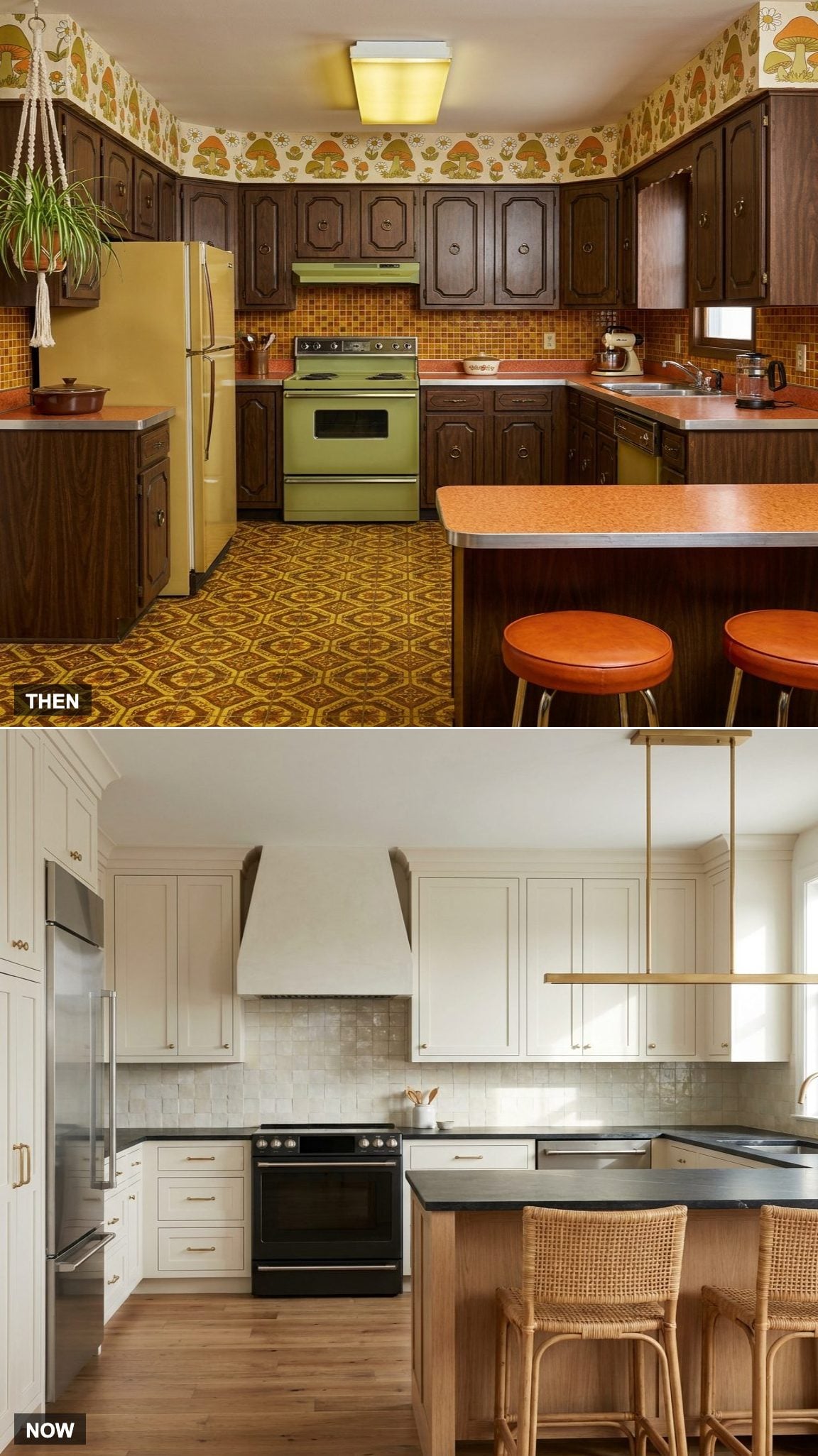
A 1975 kitchen read like a paint chip fan deck somebody shook too hard — harvest gold fridge, avocado range, burnt orange tile, mustard wallpaper, every surface elbowing the others to prove it was current. Trouble is, current has an expiration date. By 1982 the whole room looked like a costume nobody could take off.
The 2026 version pulls the opposite move. Warm off-white cabinets. Honed soapstone. A zellige backsplash the color of unbleached linen. Nothing shouts, and that’s the whole appeal — the brass hardware will patina, the oak floor will darken, the soapstone will earn its scratches, and the room gets better instead of older. For anyone drawn to that longer view, these traditional kitchen ideas lean the same direction.
1. Before: The Kitchen Was Just for Cooking | After: The Room the Whole House Orbits
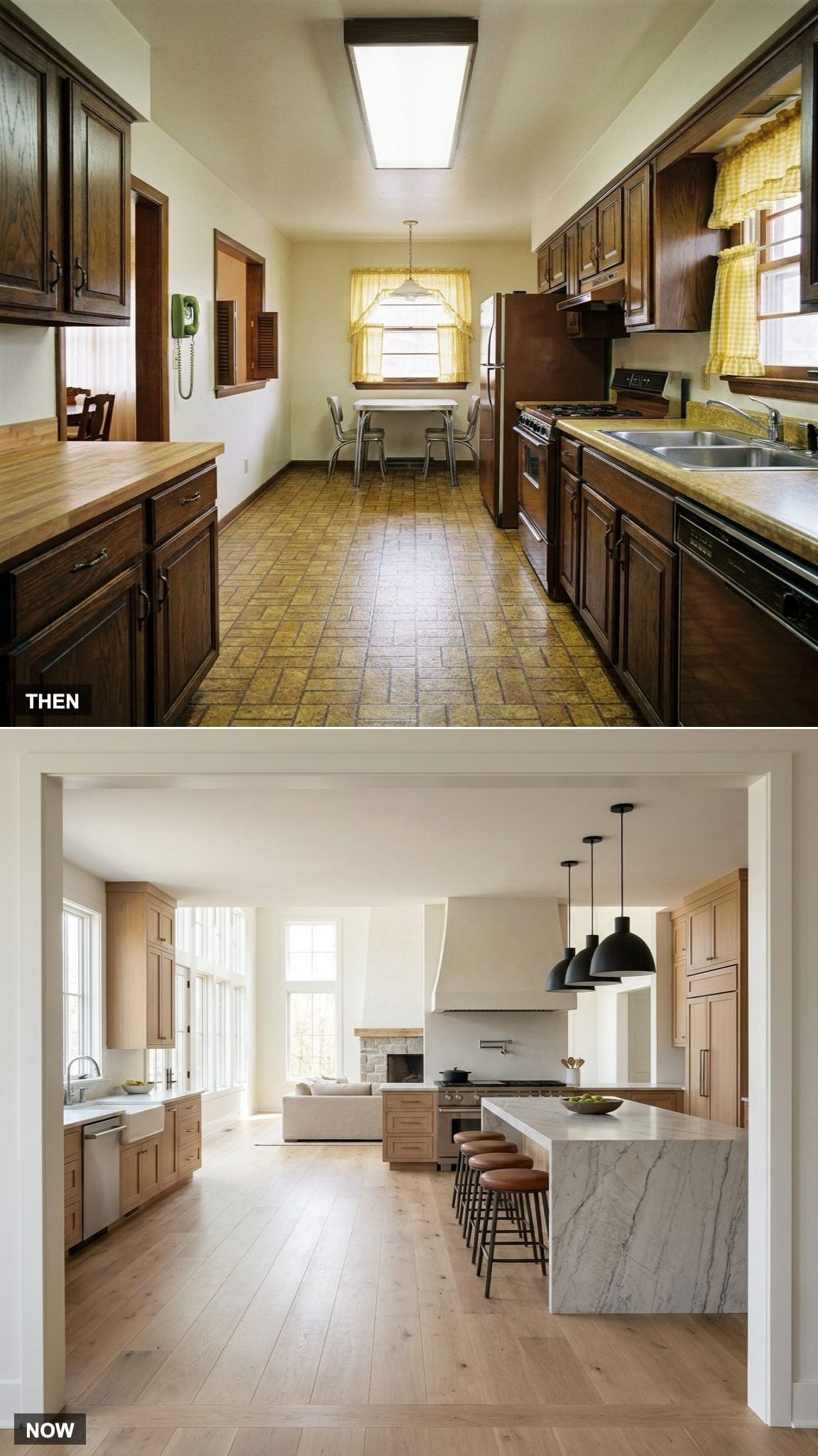
In 1975, the kitchen had a door for a reason. Cooking was work, work was messy, and messy was something you closed off from company — one cook, one job, one pass-through window to slide the casserole through when supper was ready. The avocado wall phone was the only social feature in the room, and even that was there because someone had to call the butcher.
Fifty years later, that wall is gone in almost every renovation.
The kitchen absorbed the dining room, then the living room, then the homework station and the wine fridge and the coffee bar. The island became a second dinner table. Everyone ends up here — the dog, the neighbor who “just stopped by,” the teenager who won’t sit anywhere else. A good neutral kitchen renovation shows how radical that shift really is once you watch the wall come down.
The 1975 kitchen kept people out. The 2026 kitchen can’t keep them away.
Whether that counts as progress depends on whether you like an audience while you cook. I go back and forth on it, honestly.