🔥 Would you like to save this?
A brand-new above-ground pool ran about $300 in 1974. That number sounds like a misprint until you remember the average factory worker was clearing around $4 an hour. The 1970s backyard was its own kind of ambition: redwood decks going up on weekends, avocado-green lawn chairs, charcoal smoke drifting over the fence every Friday night. What follows is what all of it actually cost, from the Weber kettle to the patio umbrella to the bag of concrete holding the fence post in the ground.
22. A Sunbeam Electric Rotisserie Grill: About $34 in 1971
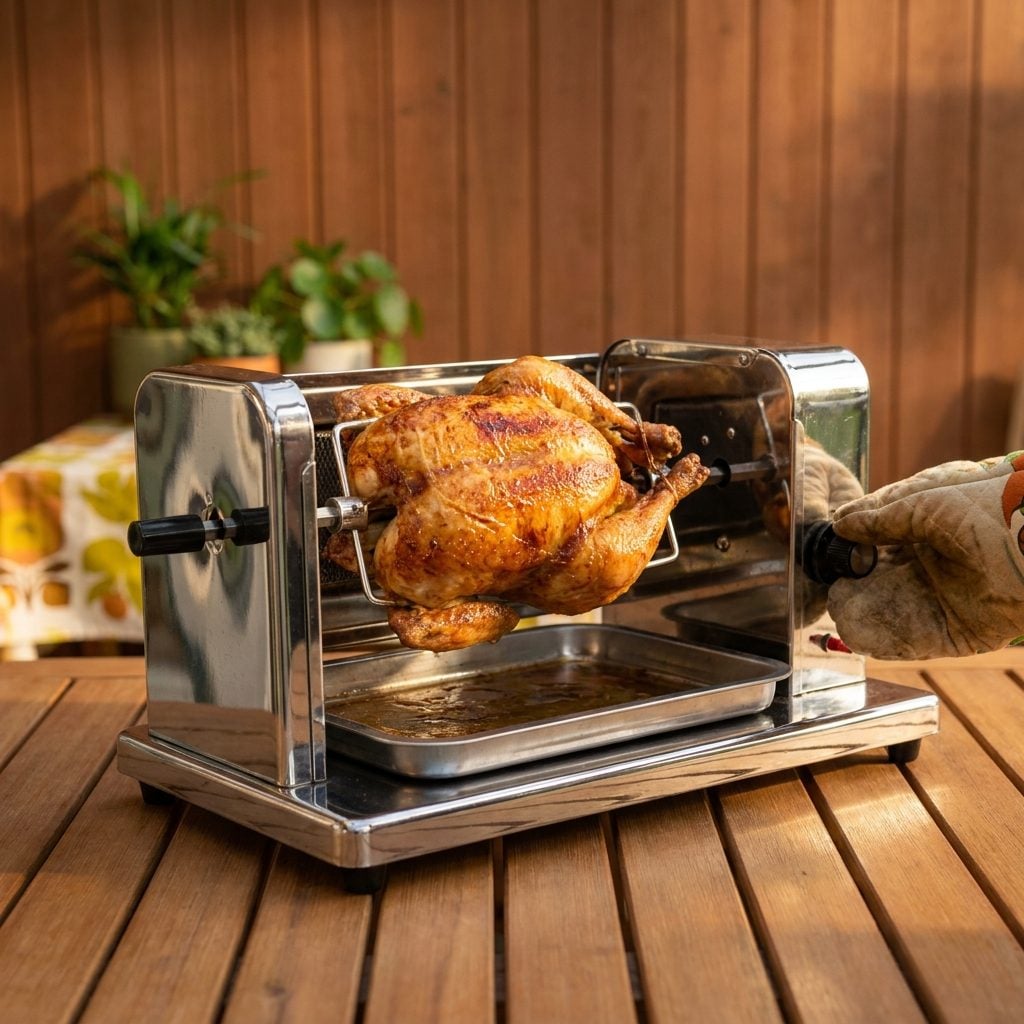
The electric rotisserie was the appliance that made suburban dads feel like they were running a restaurant. The Sunbeam model cost about $34 in 1971, which was a real purchase, nearly a full day’s pay for most workers. The spit turned. The chicken went around. Everyone stood and watched it like it was television.
In order to come up with the very specific design ideas, we create most designs with the assistance of state-of-the-art AI interior design software. Also, assume links that take you off the site are affiliate links such as links to Amazon. this means we may earn a commission if you buy something.
Gas grills existed by then, but an electric rotisserie felt more modern, more automatic, more space age. It also required a patio outlet, which meant a lot of extension cords running across the grass.
21. Cedar Wood Lawn Edging and Garden Border Bricks: About $12 for a Full Yard Perimeter in 1974
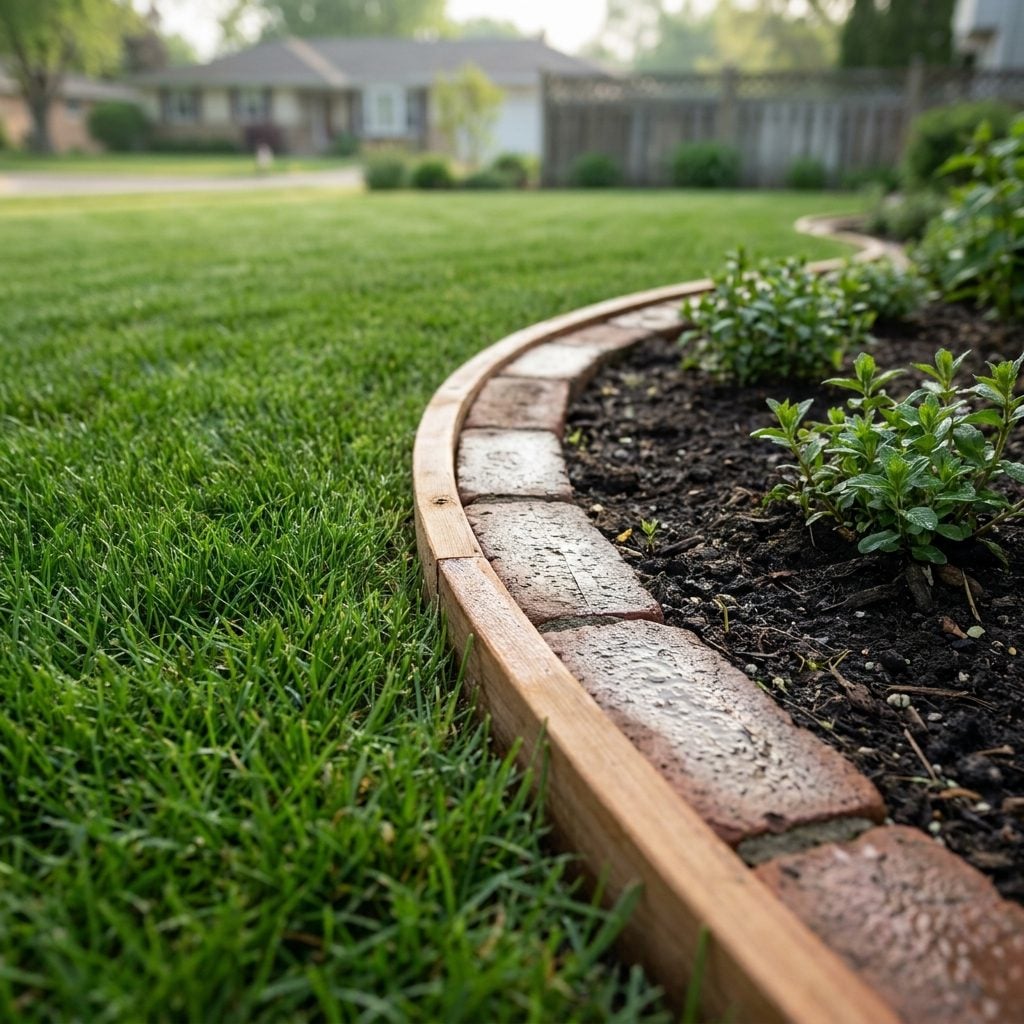
Nobody talks about lawn edging when they talk about the 1970s backyard, but it was serious business. Cedar edging and a row of border bricks to line the flower beds cost maybe $12 for an average yard in 1974. Hardware stores sold the cedar in bundled strips, the bricks by the pallet, and every weekend in spring someone was out there on their knees getting the line straight.
The patio design choices of that era relied heavily on these small details to give the yard a finished look on a very un-finished budget.
20. A Coleman Two-Burner Propane Camp Stove for Patio Cooking: Around $19 in 1972
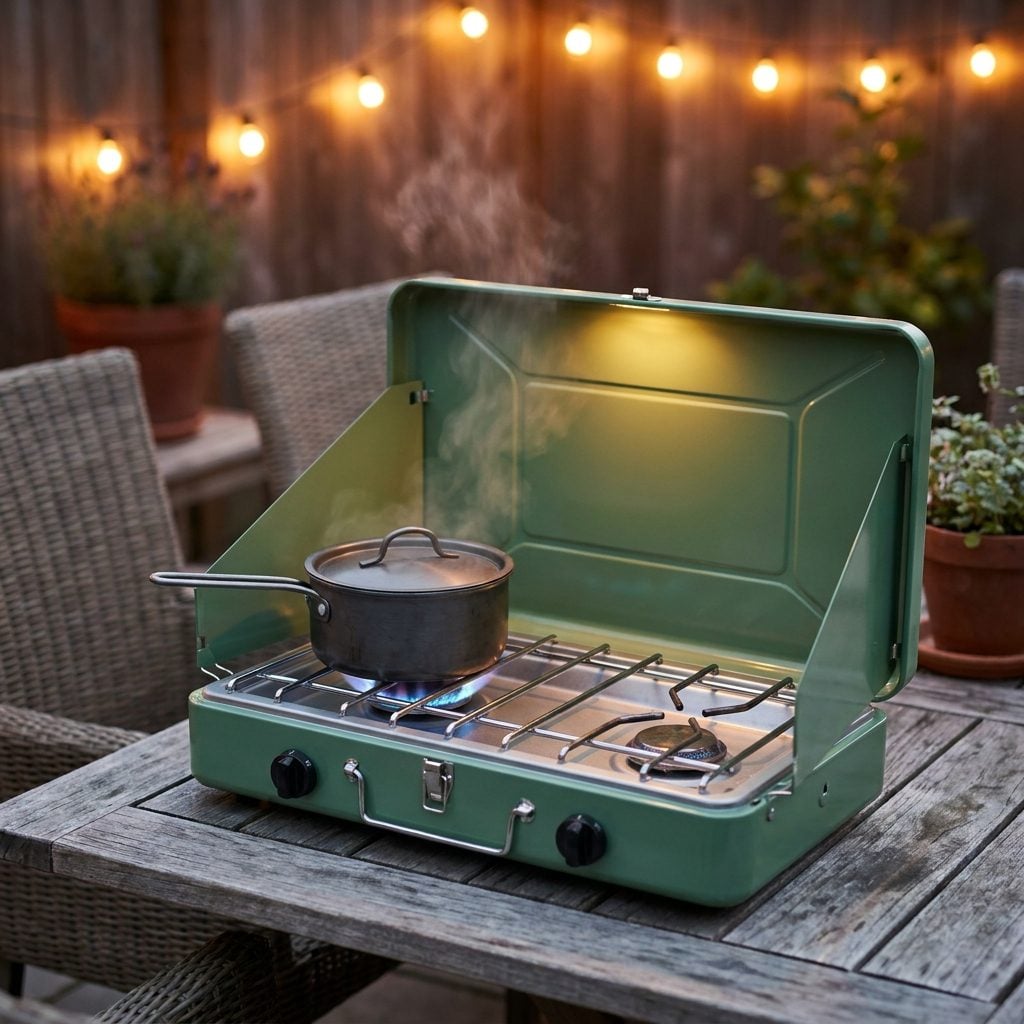
A Coleman two-burner propane stove wasn’t just for camping. Plenty of 1970s households kept one permanently stationed on the country back porch for frying fish, boiling corn, or getting the heat out of the kitchen on a July Saturday. About $19 in 1972, which felt like a reasonable buy since the thing lasted twenty years without complaint.
19. A Box of Patio Party Tiki Torches: About $6 for a Set of Four in 1976
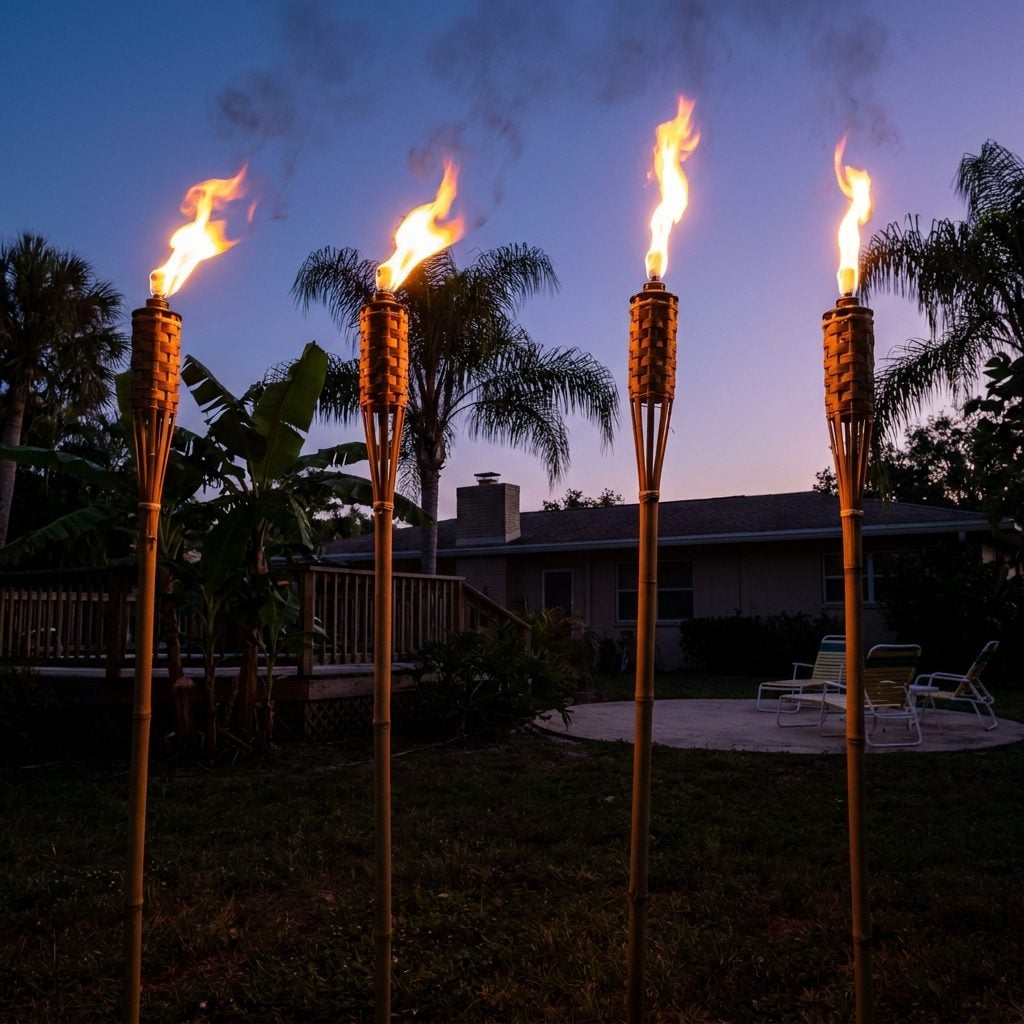
Tiki torches were the backyard lighting solution of the 1970s, full stop. A box of four bamboo torches ran about $6 in 1976. You filled them with citronella oil, staked them in a ring around the patio, and suddenly a Tuesday night felt like a party. They also kept mosquitoes at bay, which mattered in a decade before DEET became a household word.
The aesthetic was loosely Polynesian in the same way a Mai Tai from a suburban blender was loosely Hawaiian. Nobody minded.
18. A Weber Kettle Grill with the Lid: About $39 in 1975
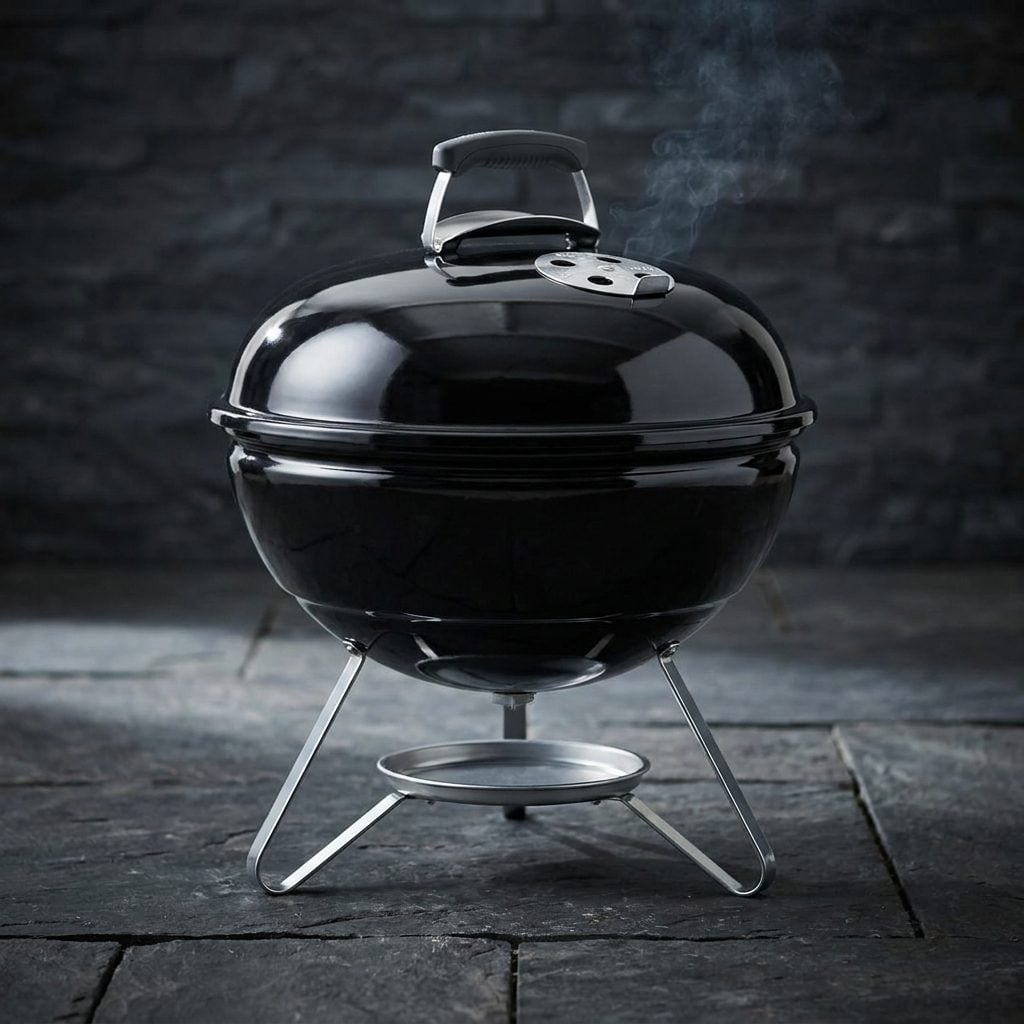
The Weber kettle grill is one of those products that arrived basically finished. The design George Stephen introduced in 1952 hadn’t changed much by 1975, when a new one cost about $39. That price was accessible enough that most families could buy one, but substantial enough that you kept it for a decade and treated it accordingly.
Forty dollars in 1975 is roughly $240 today. A new Weber kettle now runs $165 to $200, arguably the one backyard item that actually got cheaper in real terms, which explains why the design still dominates the category fifty years on.
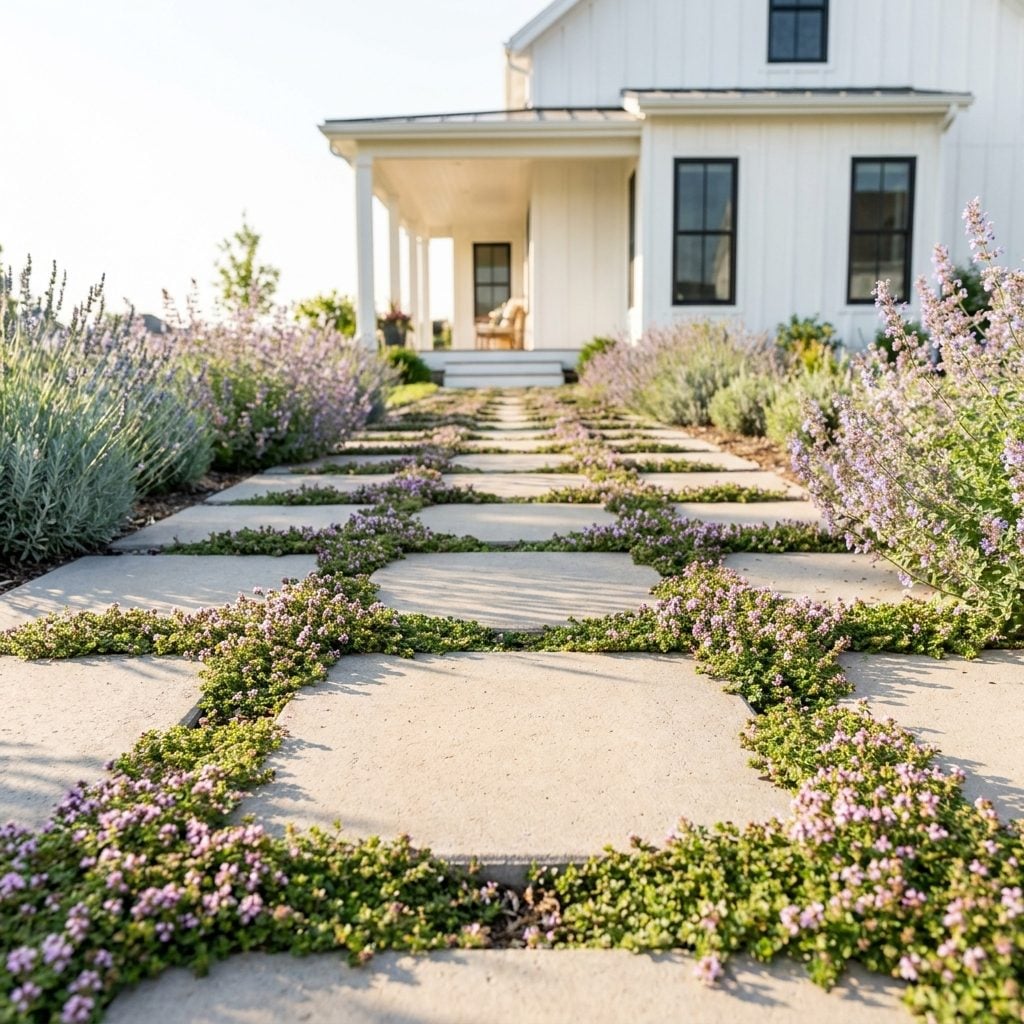
17. Patio Stepping Stones for a Garden Path: About $0.40 Each in 1977
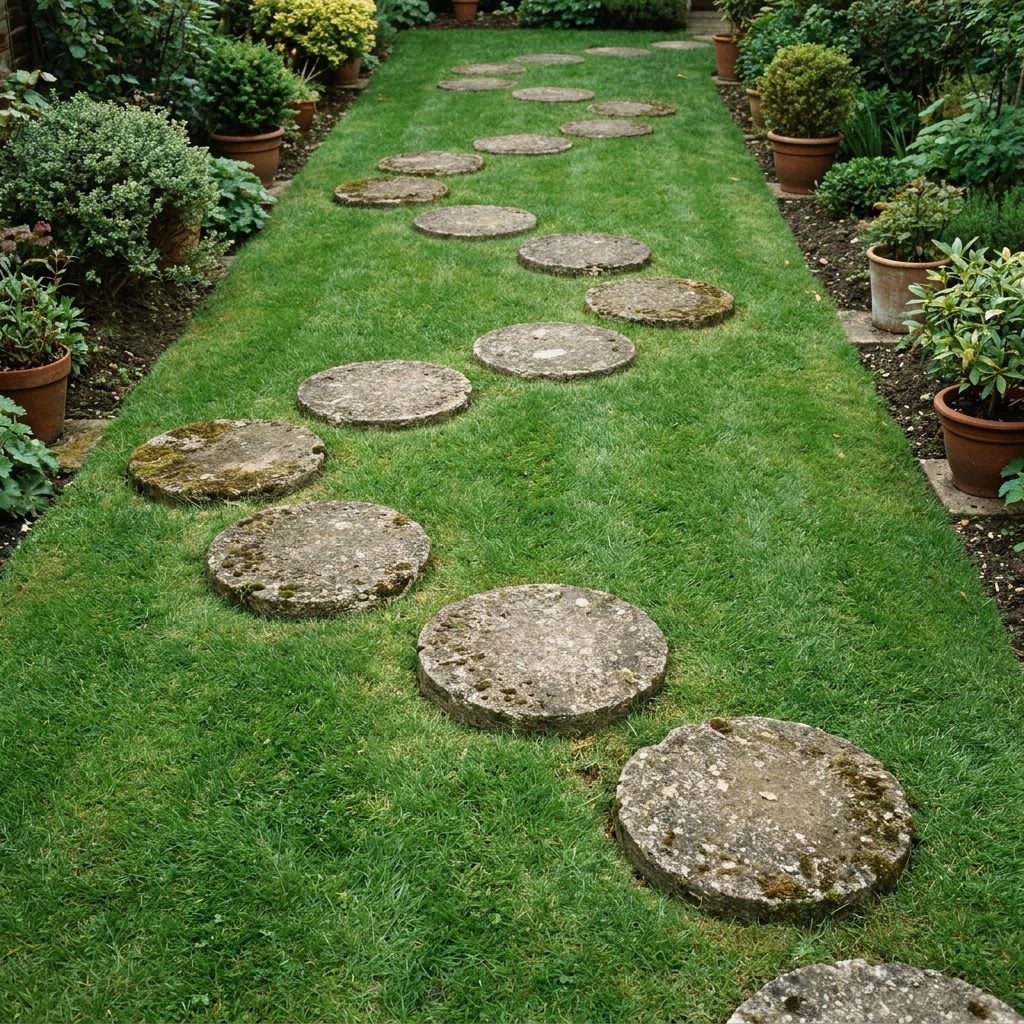
Forty cents a stone. That’s all a plain concrete stepping stone cost at a hardware store in 1977, and the 1970s backyard ran on them. A path from the back door to the garden, another from the patio to the gate, you could lay the whole yard for under $15 in materials and a Saturday afternoon in labor.
The red patio renovation trend that defined a lot of mid-decade backyards relied heavily on these paths to connect zones. Forty cents doesn’t sound like design, but get twenty of them in the right curve and it becomes exactly that.
16. A Lawn Sprinkler System (Oscillating Hose Type): Around $8 in 1974
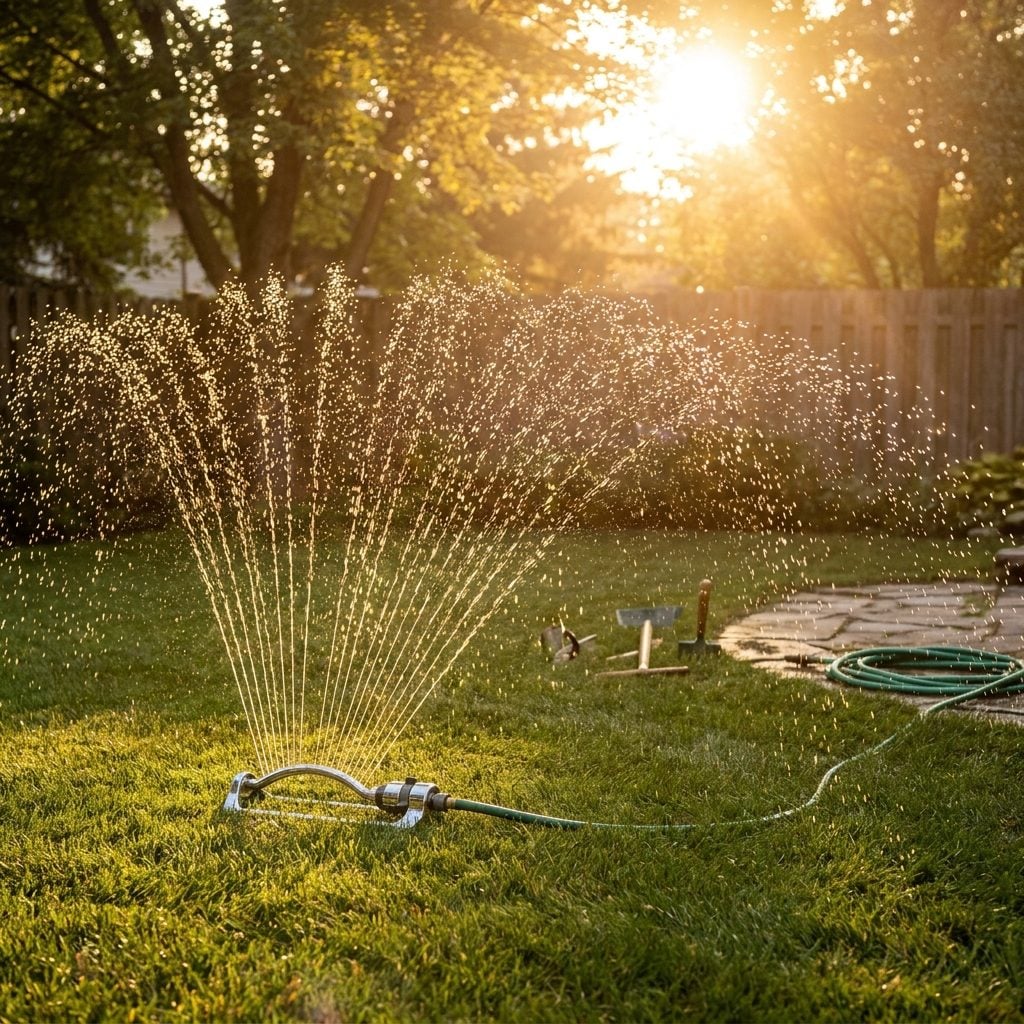
An oscillating metal lawn sprinkler cost about $8 at any hardware store in 1974. You screwed it onto the garden hose, set it in the middle of the lawn, and went inside. The sweep of the water arc was the sound of a 1970s summer afternoon, that rhythmic tick-tick-tick-tick-whoosh that meant someone’s yard was getting watered and the dog was probably going to run through it.
Eight dollars, one hose connection, and the whole lawn was covered. The 1970s backyard didn’t overthink irrigation.
In-ground sprinkler systems existed but were for houses in another tax bracket. The hose-end oscillator was democratic, universal, and largely unchanged from a design first sold in the 1930s.
15. A Vinyl Umbrella Patio Table Set: About $79 in 1971
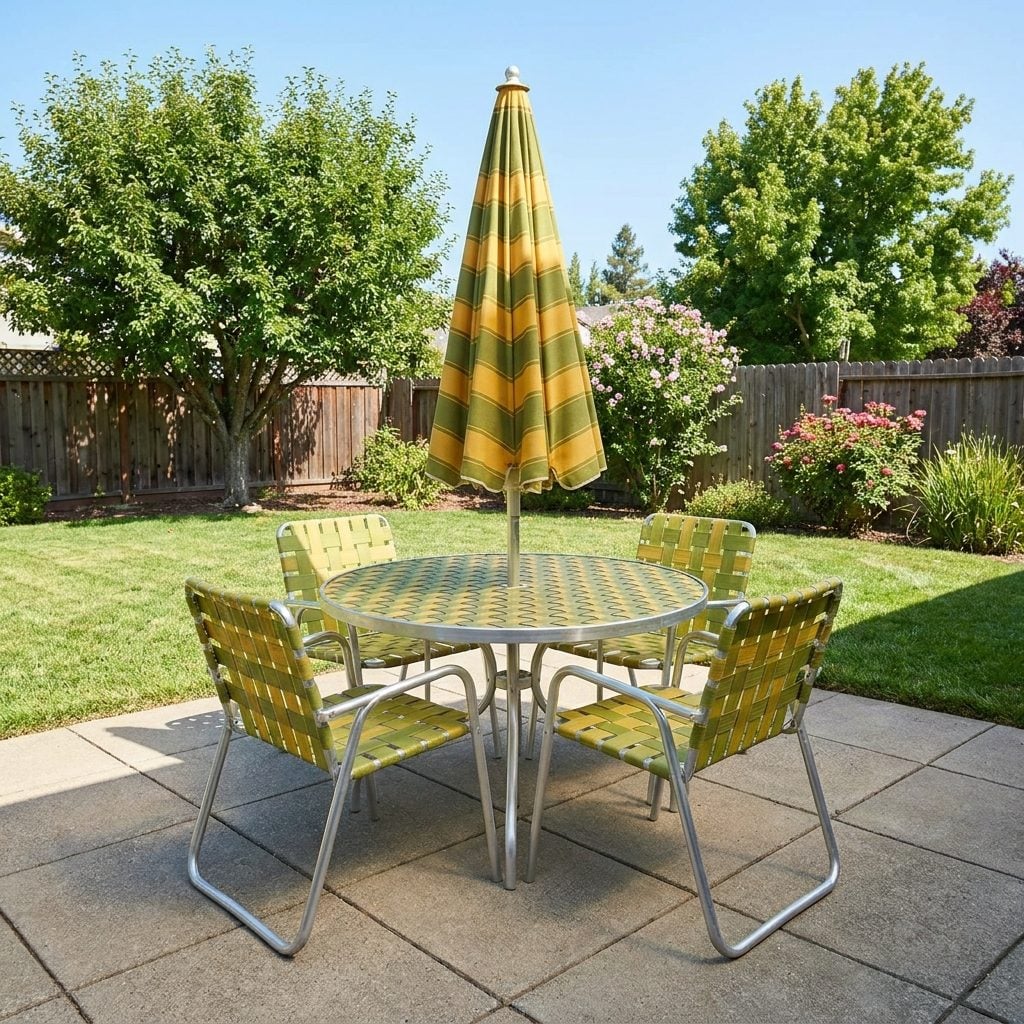
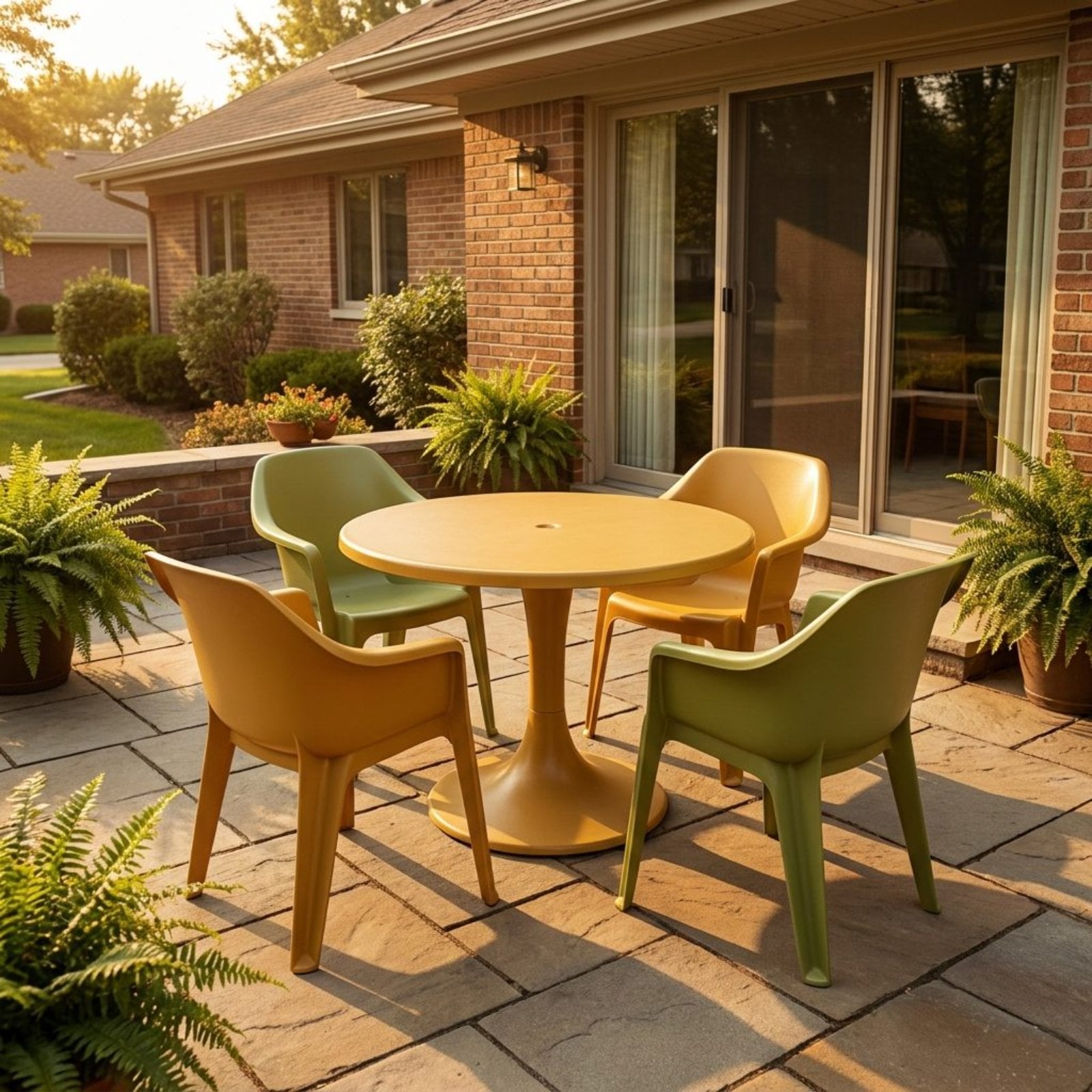
The vinyl-strap aluminum patio set was the universal language of the 1970s backyard. Avocado green and harvest gold straps, wobbly umbrella, slightly sticky arm rests on a hot August afternoon. A full four-piece table set with umbrella ran about $79 at Sears. That was a lot of money when median household income sat around $10,000, but families bought them anyway because the backyard was where summer happened.
14. Cinder Block Planter Borders: About $0.25 Per Block in 1974
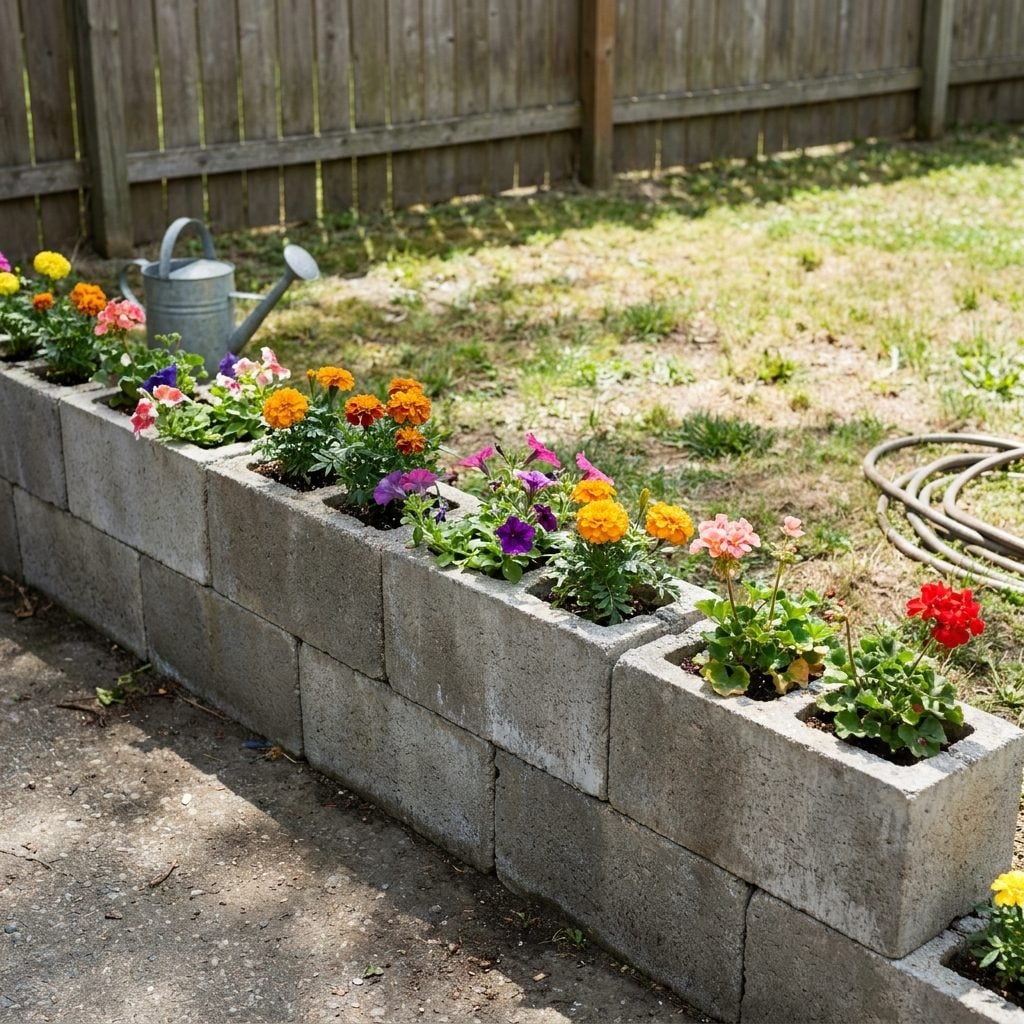
Cinder blocks at about 25 cents each were the DIY red patio renovation budget’s best friend. People edged patios with them, built raised garden beds, stacked them into outdoor shelving, and filled the holes with soil and marigolds. A full patio border cost maybe $8 in blocks. It looked exactly like what it was, which is probably why so many people remember it fondly. There was nothing pretending to be anything else.
13. A Hammock Between Two Maples: Around $18 in 1970
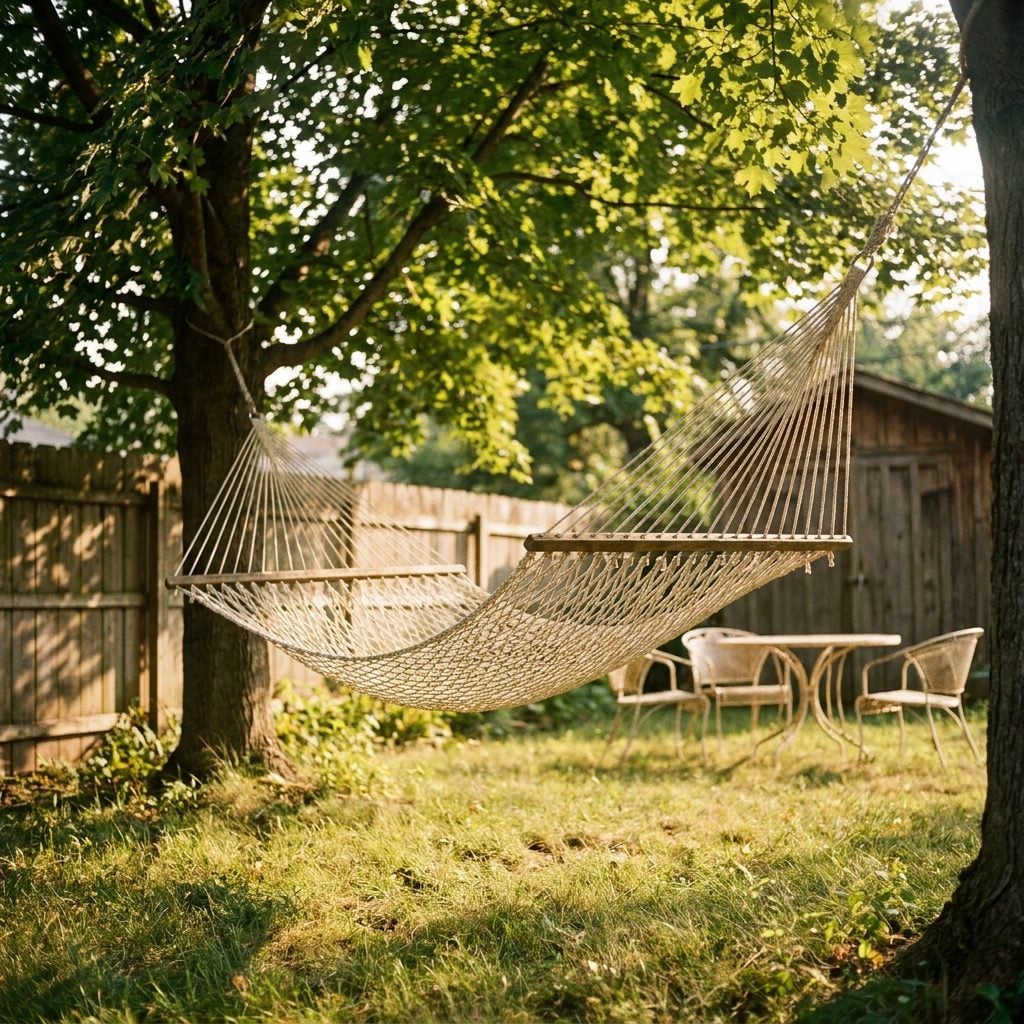
A woven cotton rope hammock with wooden spreader bars cost about $18 at garden centers and sporting goods stores in 1970. It was the backyard’s answer to a day off. String it between two trees, add a paperback and some lemonade, and the yard became its own retreat, the kind of country back porch feeling without a porch required.
They also rotted in about four seasons if you left them out in the rain. Which everyone did. Which is why they sold so many of them.
12. Badminton and Croquet Set Combo: About $22 in 1977
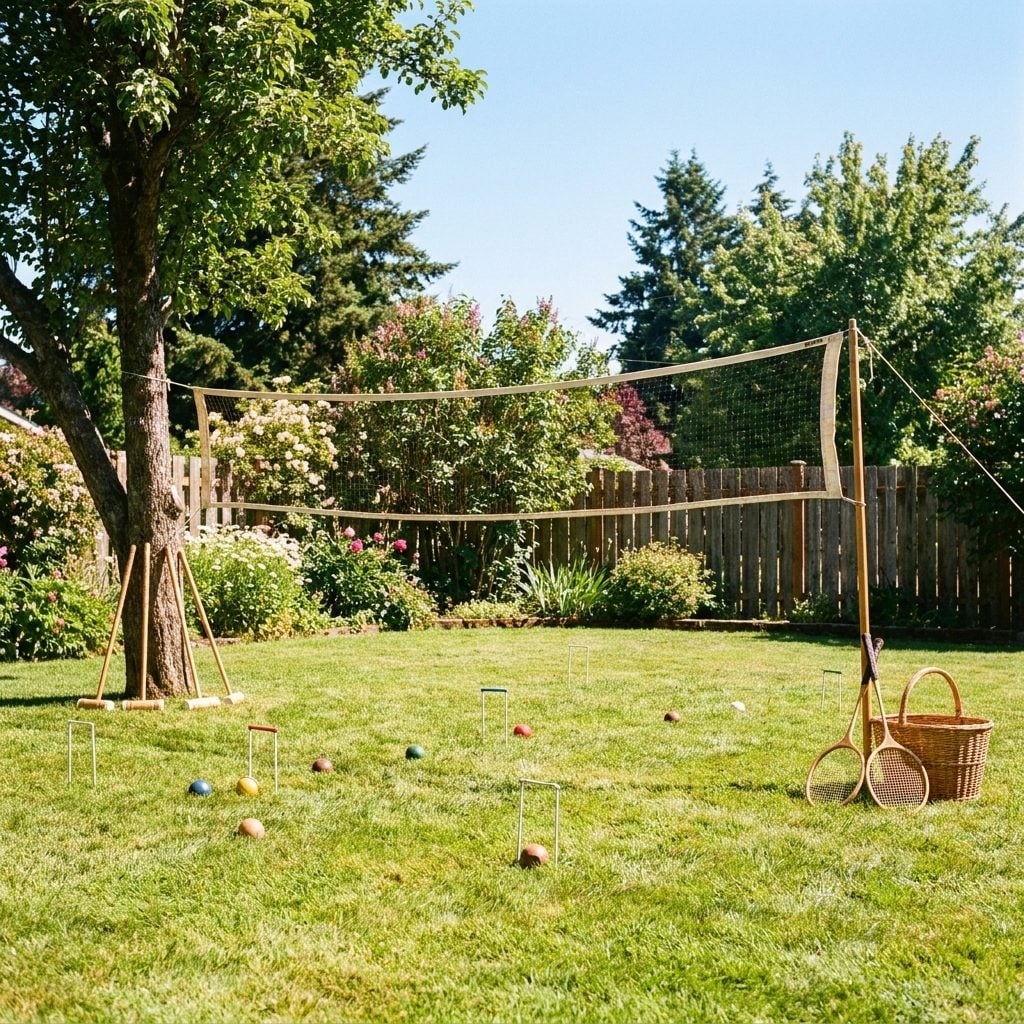
The combination backyard game sets Sears and Kmart sold through the 1970s were genuinely great deals. A full eight-player croquet set plus a badminton net and racket set bundled together ran about $22 in 1977. These were the original cool deck ideas for families without a deck: turn the lawn itself into the entertainment.
11. A Sears Fiberglass Patio Table and Four Chairs: Around $89 in 1973
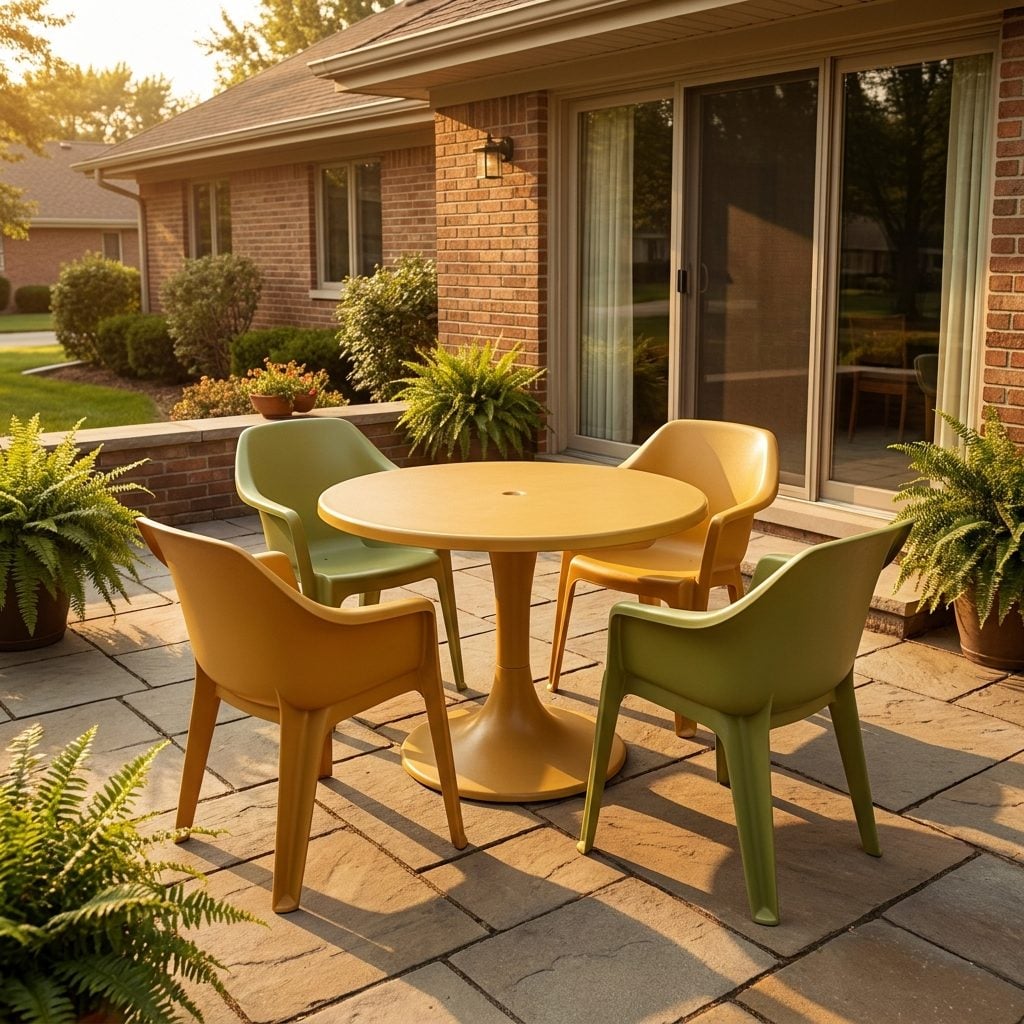
Sears was basically the Amazon of the 1970s backyard, and the fiberglass patio set was its bestseller. Around $89 bought a table and four chairs in 1973, roughly two days’ wages for the average factory worker. The finish came in harvest gold, avocado green, or a burnt orange that somehow looked correct against every wooden fence in America.
These sets were nearly indestructible. They faded, cracked slightly at the legs, and outlasted at least two marriages. The equivalent today runs $300 to $600, and the build quality is arguably worse.
10. Outdoor String Lights Across the Patio: About $6 in 1975
🔥 Would you like to save this?
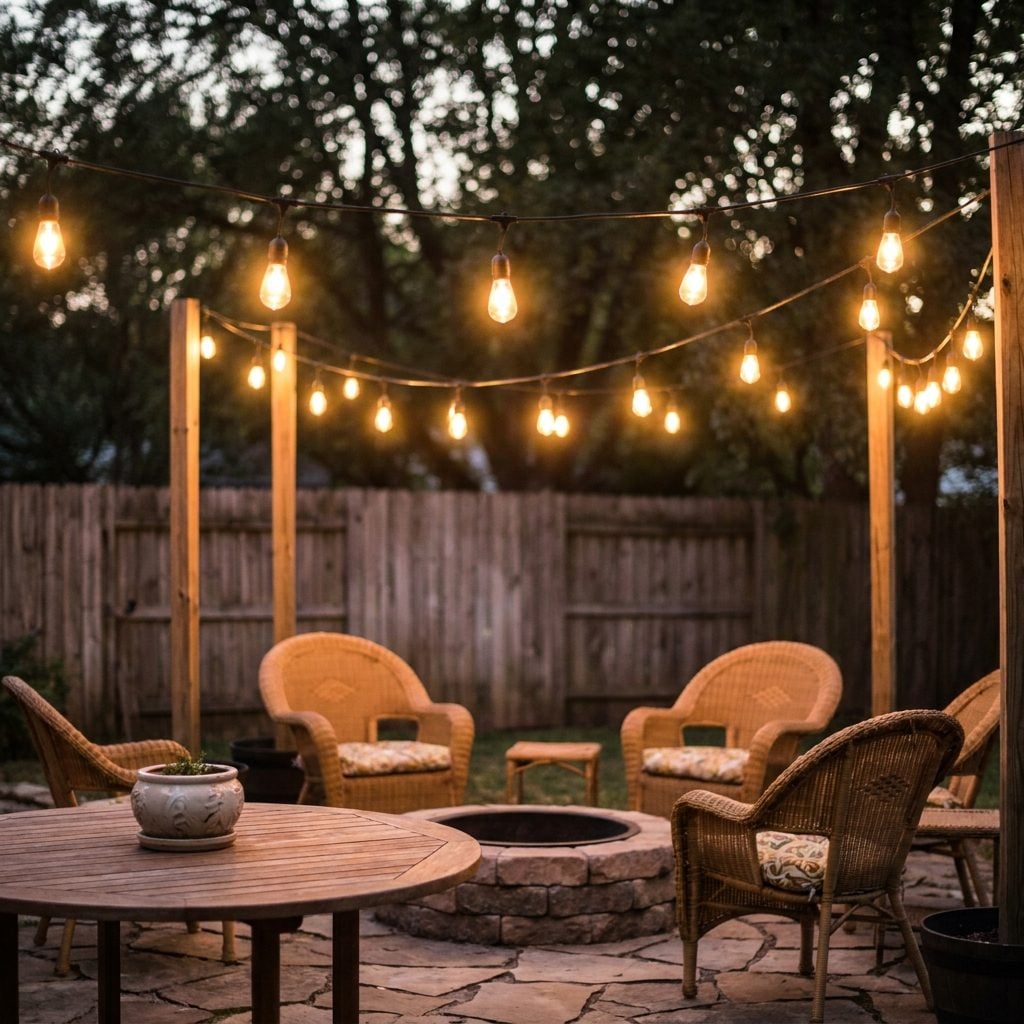
A strand of outdoor incandescent string lights, 25 feet with large round bulbs, cost about $6 at hardware stores in 1975. Two strands criss-crossed over a patio cost $12 total and changed the entire feel of the space after dark. The contemporary backyard design world now charges $40 or more for a single strand of Edison bulbs doing exactly the same job.
The bulbs burned out faster and used more electricity. None of that stopped anyone from buying them. The light they threw on a summer night was worth it.
9. A Bag of Charcoal and a Bottle of Lighter Fluid: About $1.50 Total in 1975
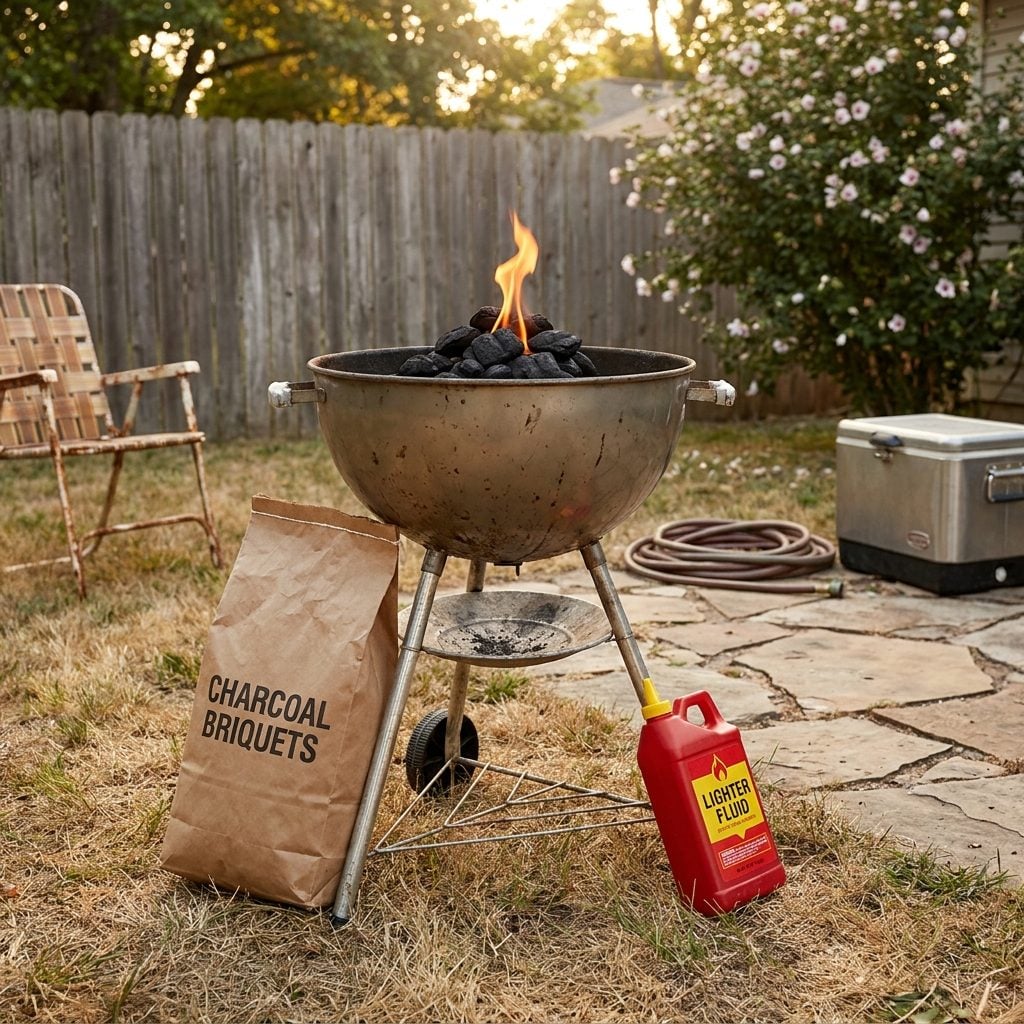
A ten-pound bag of Kingsford charcoal ran about 89 cents in the mid-1970s. A bottle of lighter fluid cost maybe 60 cents. For under two dollars, you had everything you needed to burn dinner in the backyard on a Saturday, which was basically the whole point.
The ritual mattered as much as the meal. Every dad had his own theory about chimney starters versus fluid, about pyramid stacking versus flat grids. Most were wrong and absolutely certain they weren’t. Charcoal prices crept up steadily through the decade as oil prices pushed manufacturing costs higher, but in 1975 it was still one of those purchases you made without looking at the price tag. Those days didn’t last.
8. The Redwood Deck That Took All Summer to Build: Materials Around $400-$600 in 1978
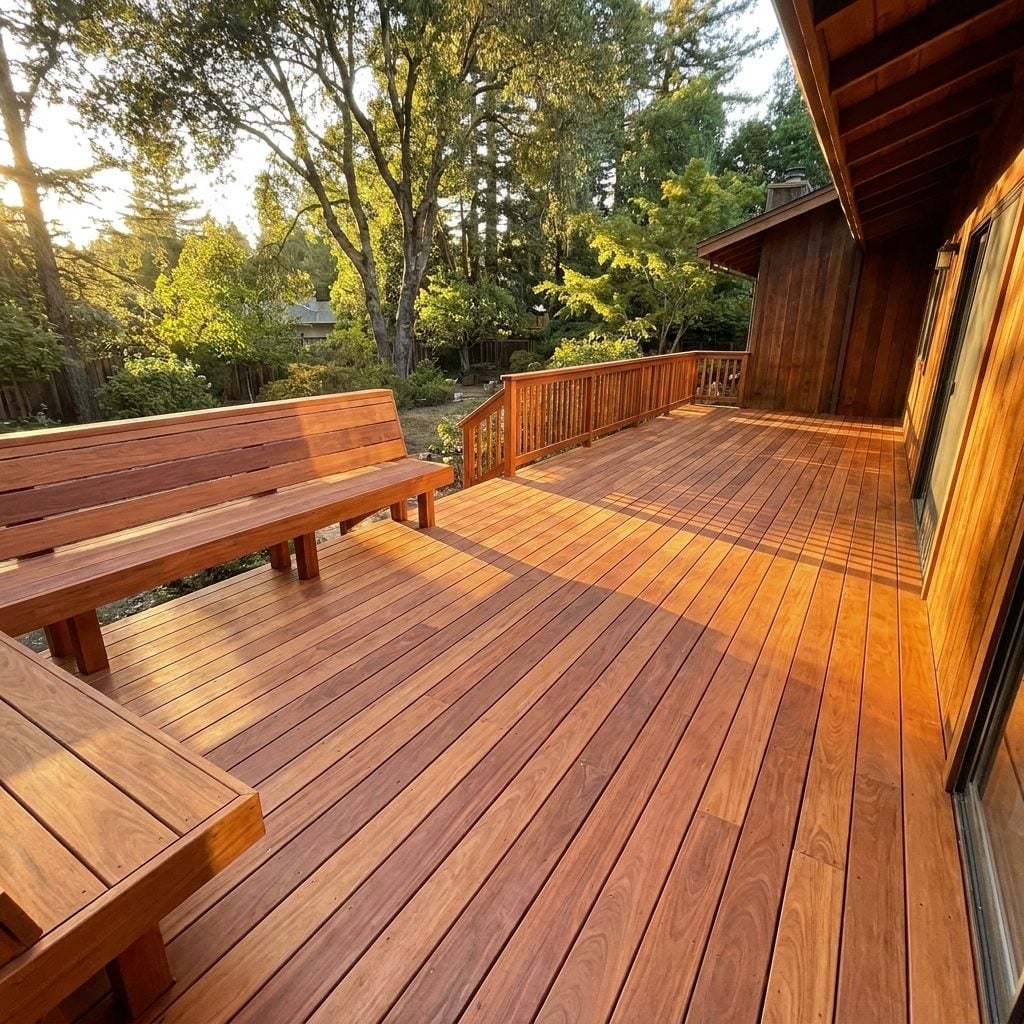
Redwood was the prestige move in 1970s backyard building. Clear-grade boards for a standard 12-by-16-foot deck cost somewhere between $400 and $600 in materials alone by the late ’70s, depending on where you lived and how many trips to the lumber yard your husband made before getting the measurements right.
Labor was free, obviously, because you were doing it yourself over the course of a summer that somehow stretched into October. The patio design philosophy of the era was straightforward: build it flat, build it wide, and add a red patio renovation-worthy overhang when the budget recovered. Redwood’s natural rot resistance made it the obvious choice before pressure-treated pine took over the market in the ’80s. A well-built redwood deck from 1978 is still standing somewhere right now, probably under three coats of deck stain applied by three different owners.
7. An Above-Ground Pool from Sears: Around $299 in 1974
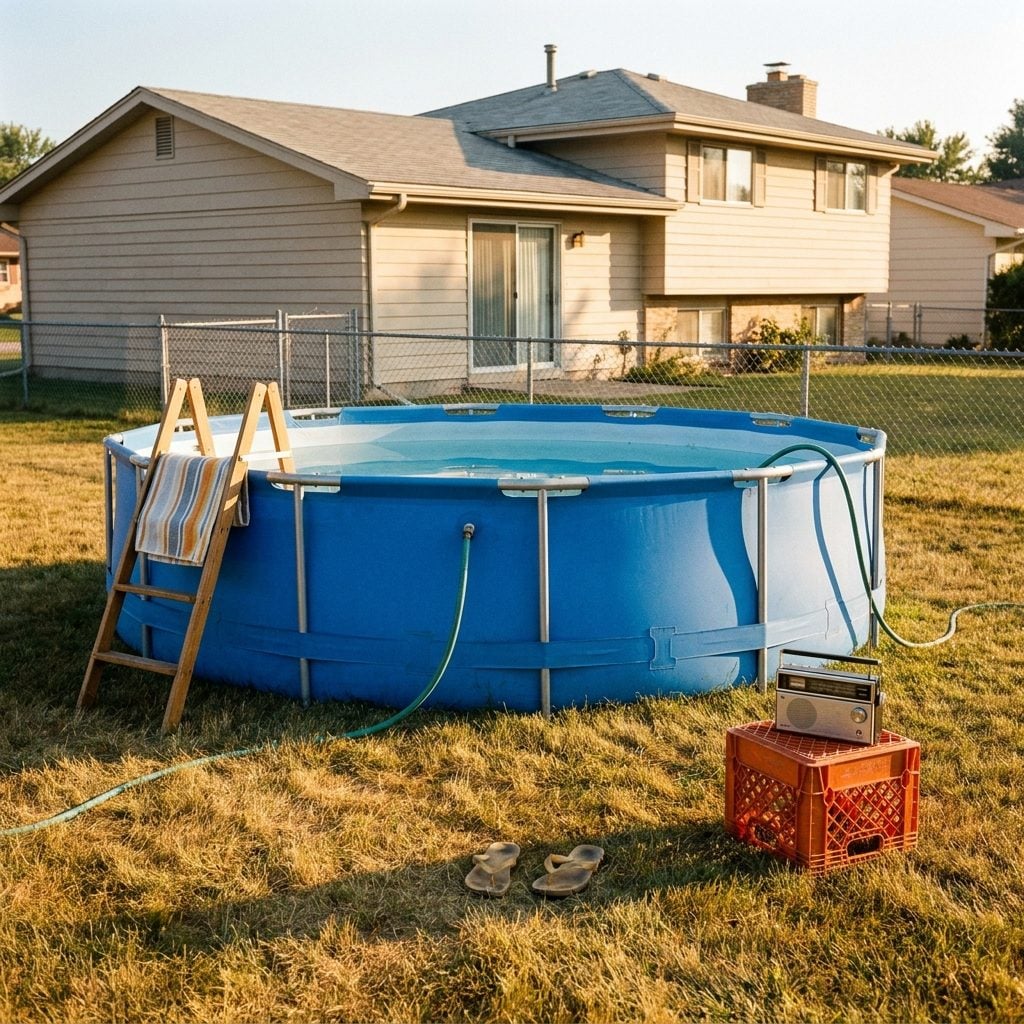
Flip open the 1974 Sears Wish Book and you’d find page after page of round steel-frame pools priced between $249 and $349 depending on size. The 15-footer landed right around $299, and that was the one every family with a decent-sized yard seemed to end up buying.
Median household income that year was roughly $11,800, so the pool ran about a week’s pay before you factored in the sand base, the pump, and the shop-vac you’d eventually need. Filling it took most of a Saturday and one very irritated water bill.
6. A Set of Redwood Adirondack Chairs: About $45 Each in 1976
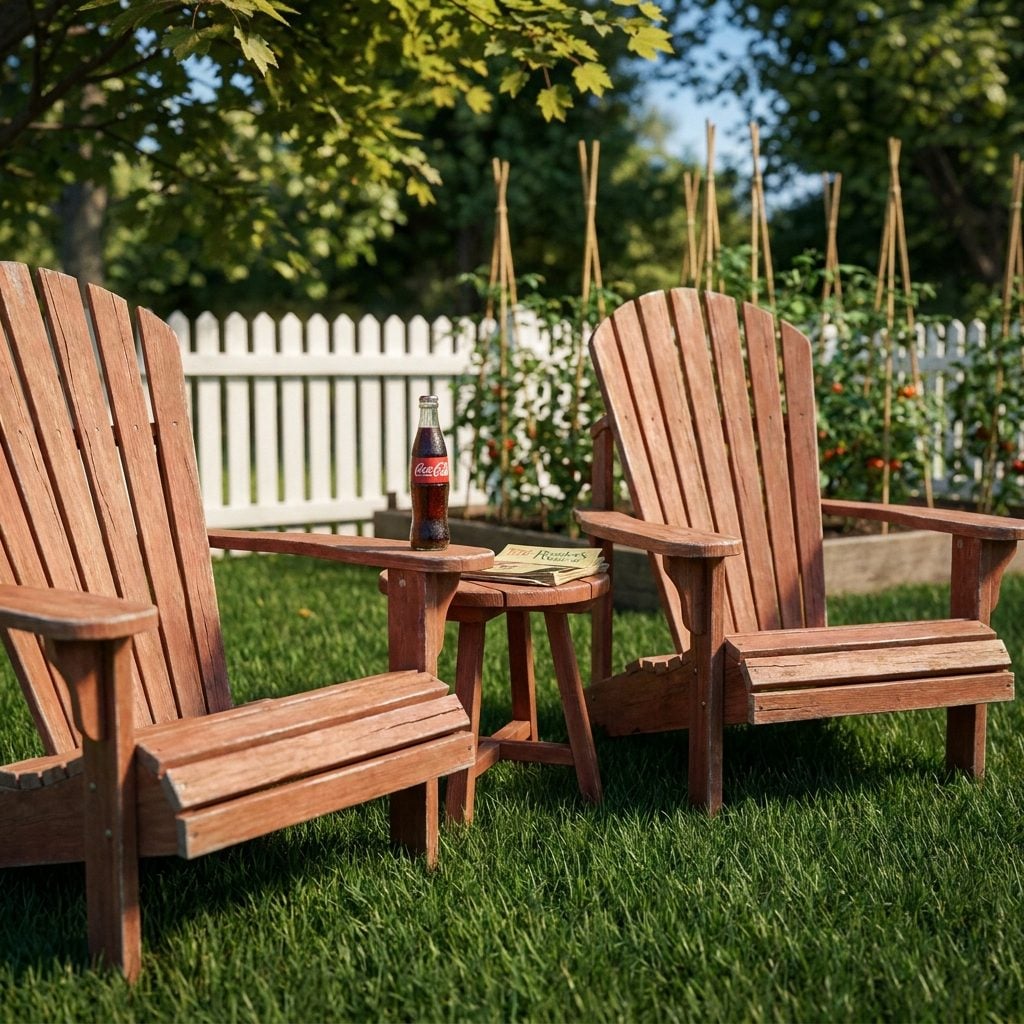
Redwood was still cheap and plentiful in the mid-70s, which is why every hardware store from Ohio to Oregon had a stack of Adirondacks piled out front for around $45 apiece. A matching pair with a little side table ran closer to $110.
Roughly six hours of work at the going wage. Not nothing. But you’d have them forever — or until the sprinkler finally rotted the back legs out. Mine did, eventually. Took eleven summers.
5. A Gas-Powered Push Lawn Mower: Around $89 in 1973
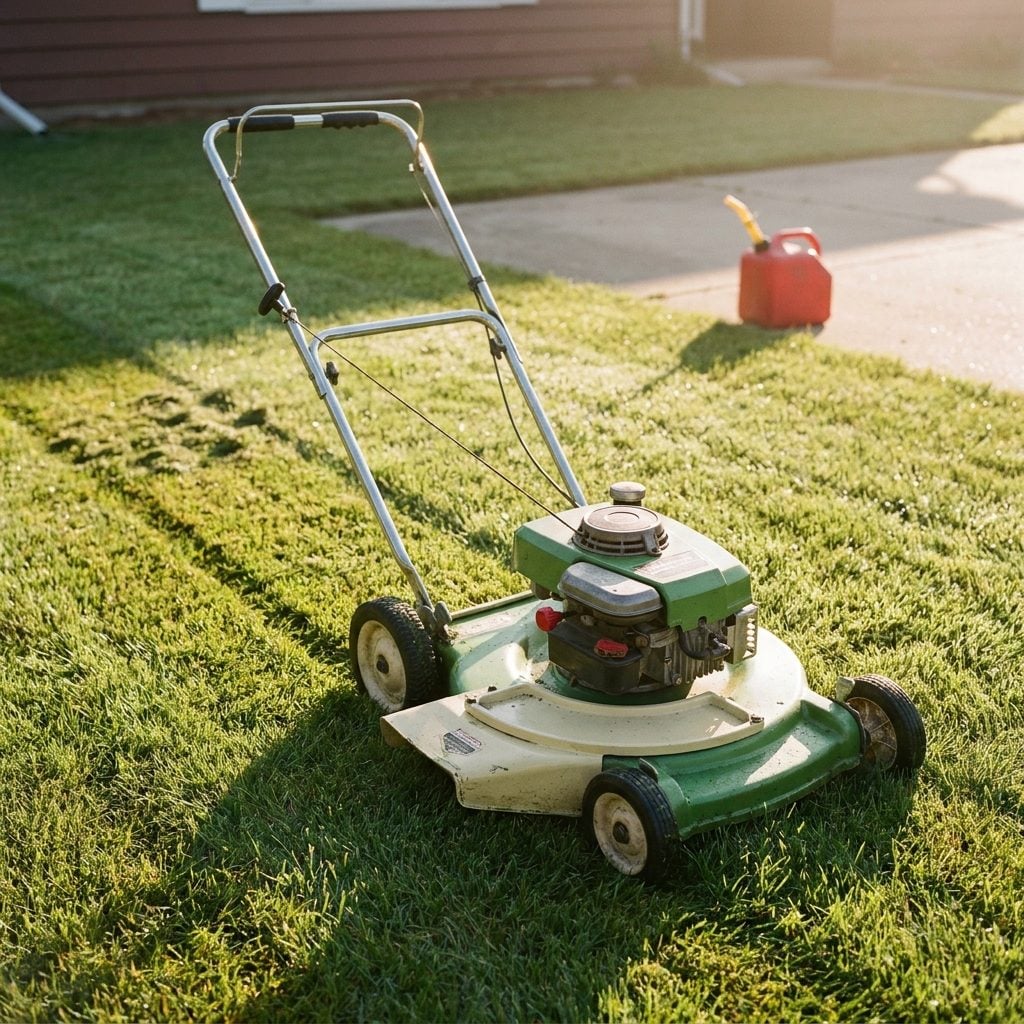
Push mowers with a Briggs & Stratton engine hovered right around $89 at the Sears garden center in 1973, and self-propelled models climbed to $130-ish. Both started on the third pull if you were lucky, the seventh if you weren’t.
Gas ran 39 cents a gallon, so mowing the yard cost pennies. The real expense was the Saturday morning you gave up doing it.
4. A Concrete Birdbath from the Garden Center: About $14 in 1972
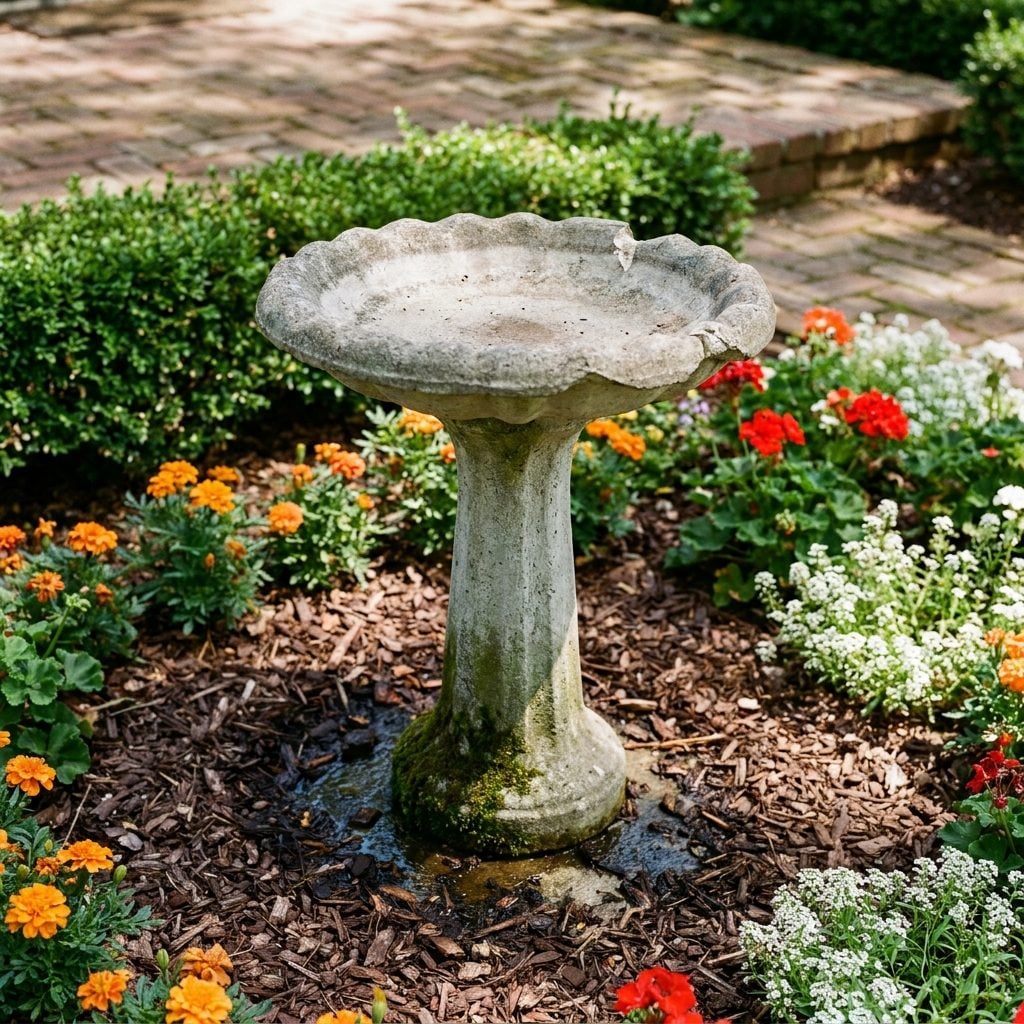
Every garden center in 1972 had a row of these lined up out front, priced somewhere between $12 and $18. Plain concrete on the cheap end. The fancy ones came with a little cherub or a fluted pedestal for $22.
Nobody bought one for the birds, not really. They bought it because their mother had one, and their grandmother had one, and it made the yard feel finished.
3. A Set of Aluminum Folding Lawn Chairs with Woven Webbing: About $8 Each in 1975
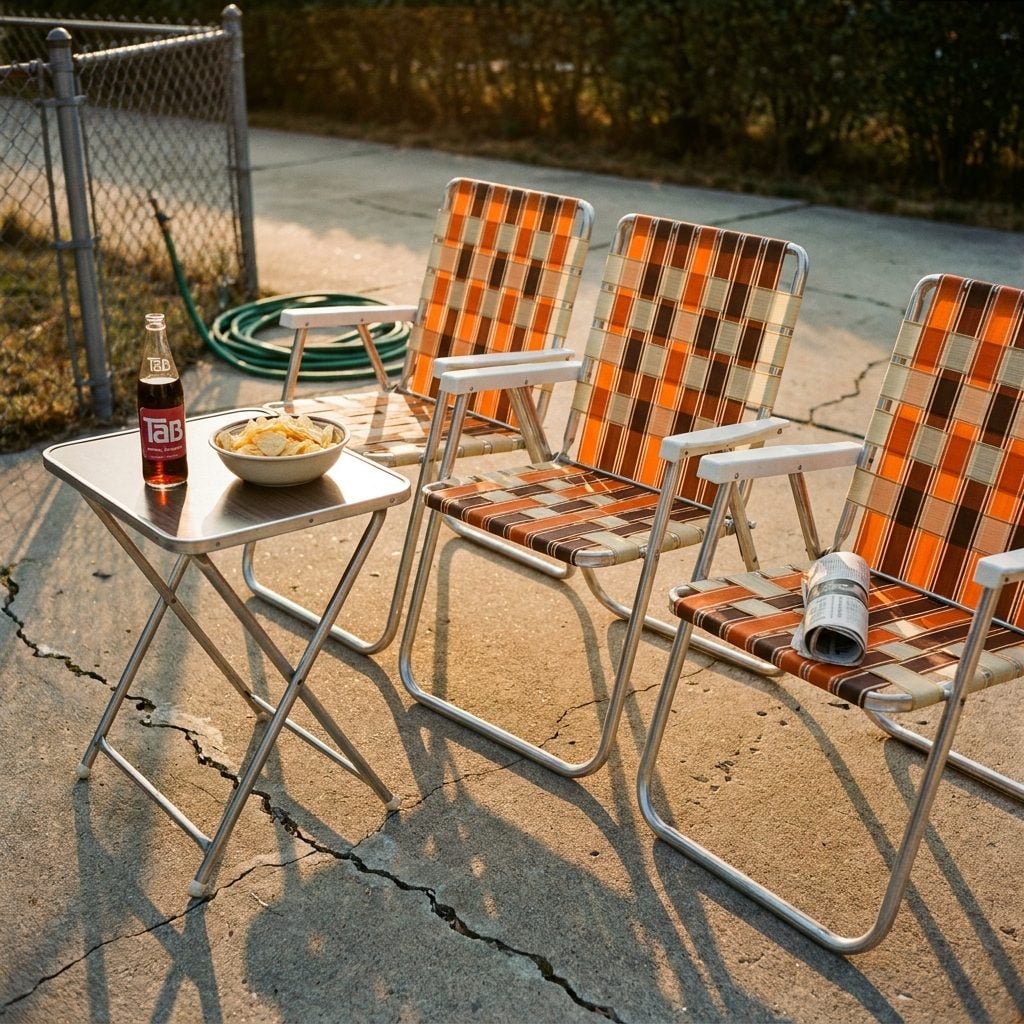
Kmart, Woolworth, Ben Franklin — take your pick. Aluminum folding chairs with woven vinyl webbing ran $7.99 to $9.99 depending on the color scheme, and the orange-and-brown combo outsold everything else by a wide margin. It was a very orange decade.
Webbing snapped after four or five summers. You could buy a replacement kit for $2.49 and re-weave the whole chair on a Sunday afternoon, which is exactly what people did.
2. A Cast-Iron Chiminea, No, Wait, a Metal Fire Pit Ring: About $22 in 1976
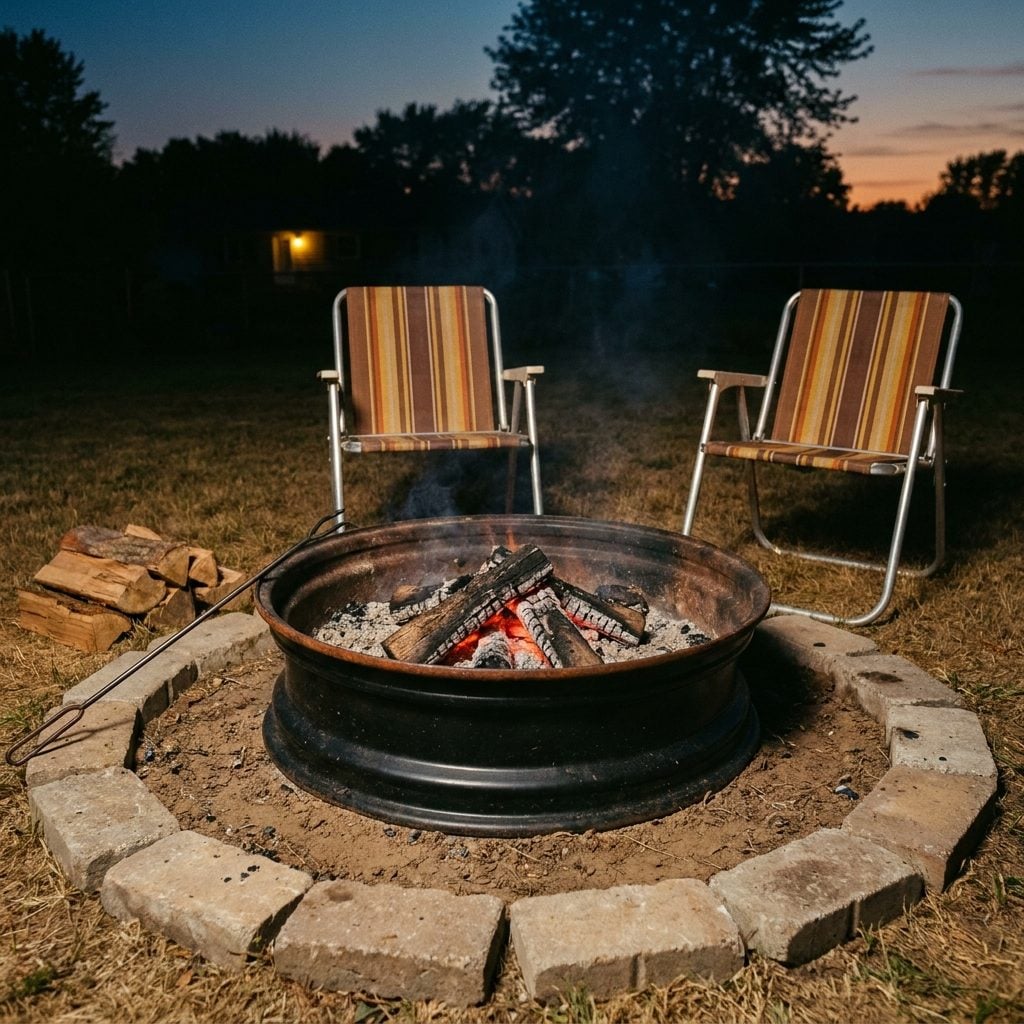
Long before every backyard had a masonry fire pit ringed with Adirondack chairs, most people just owned a $22 steel ring from the farm supply store. Drop it on the grass, toss in some scrap 2x4s, call it Saturday night.
The ring rusted through by year four. Nobody minded — you bought another one.
1. A Chain-Link Fence Around the Whole Yard: Around $1.25 Per Foot Installed in 1979
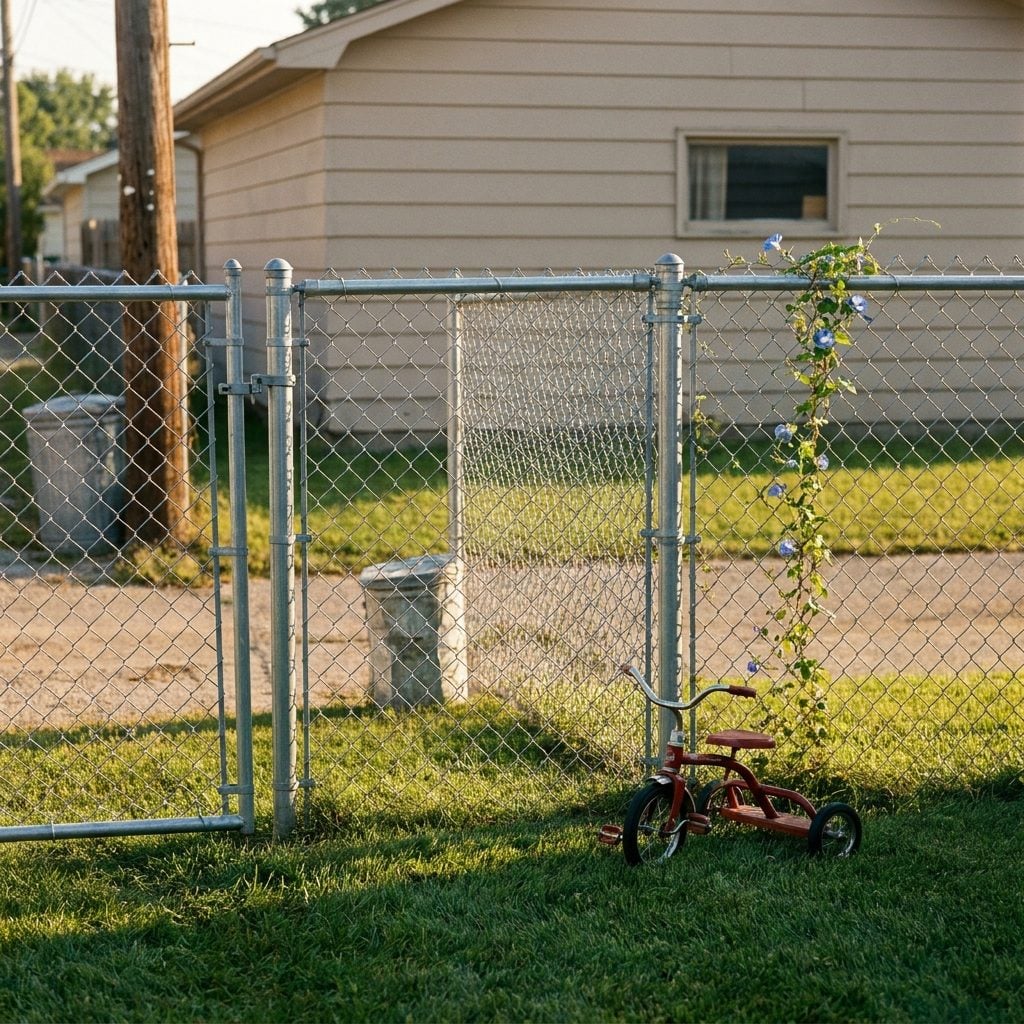
Chain-link was the default backyard boundary of the decade. By 1979 you could get it installed for around $1.25 to $1.75 a running foot, so a typical suburban yard of maybe 150 perimeter feet ran $200 to $260, gate included.
It wasn’t pretty and it wasn’t trying to be. Kept the dog in, kept the neighbor’s kids honest, and did both without asking for much.
Compare that to a modern compact backyard design where cedar privacy fencing alone can run $40 a foot, and the humble galvanized diamond weave starts looking like the deal of the century. It kind of was.