🔥 Would you like to save this?
The smell hit you before the door was even open all the way. Motor oil, WD-40, sawdust, and something vaguely electrical that nobody could ever identify. The 1970s garage was its own universe, operating entirely outside the rules of the house. Part serious workroom, part holding facility for everything that might someday be useful, it belonged to one person, and everyone in the house knew it. This was the one space where chaos was not just tolerated but quietly respected. These are the things that made it exactly what it was.
26. The Chest Freezer Plugged In Next to the Water Heater
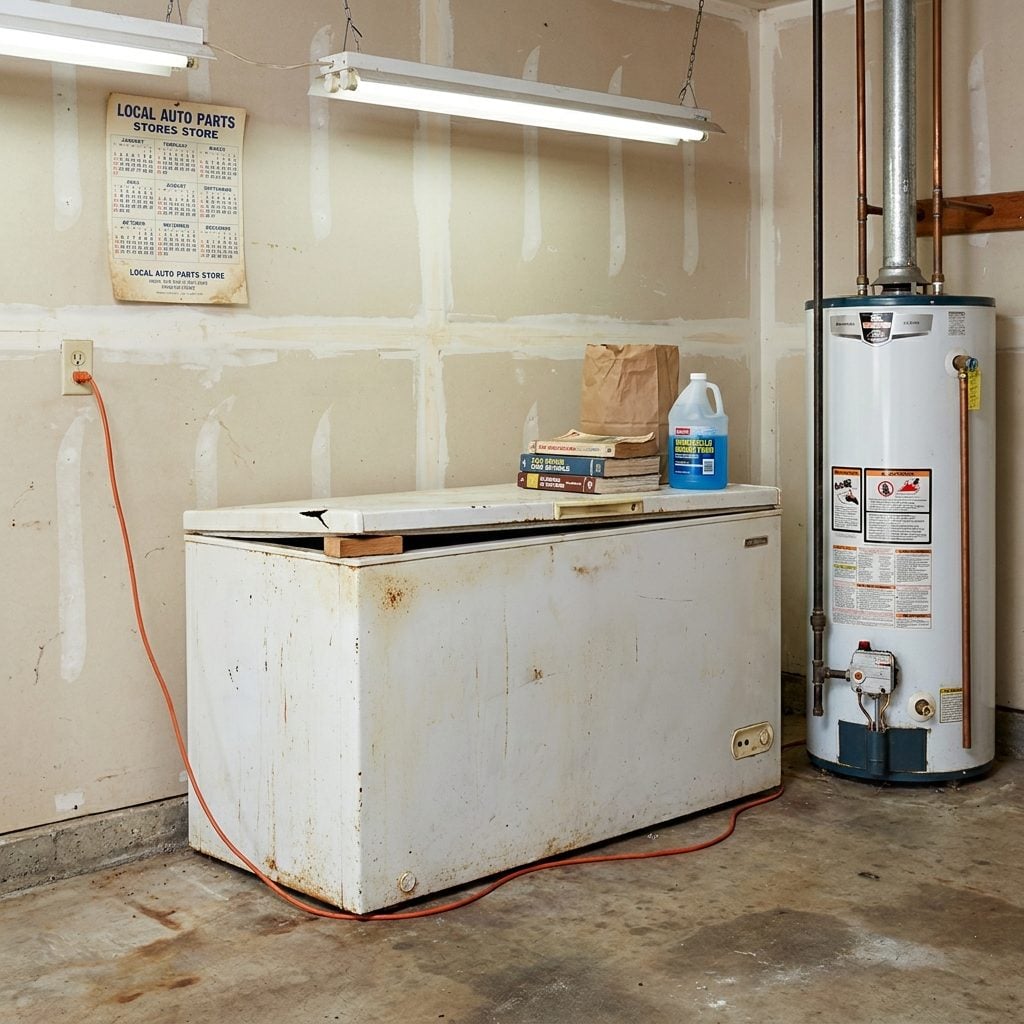
The garage chest freezer was never part of any plan. One day it showed up after the kitchen freezer ran out of room for the half-side of beef from a neighbor’s farm, and it never left. Plugged into the wall near the water heater on an orange extension cord that was technically not rated for the job, it hummed its steady hum through every summer.
In order to come up with the very specific design ideas, we create most designs with the assistance of state-of-the-art AI interior design software. Also, assume links that take you off the site are affiliate links such as links to Amazon. this means we may earn a commission if you buy something.
It held frozen venison, a bag of ice that had been there since 1974, and approximately two dozen mystery-labeled containers that nobody ever opened. Opening the lid was an act of mild courage.
25. The Shop Radio with the Bent Antenna Wrapped in Aluminum Foil
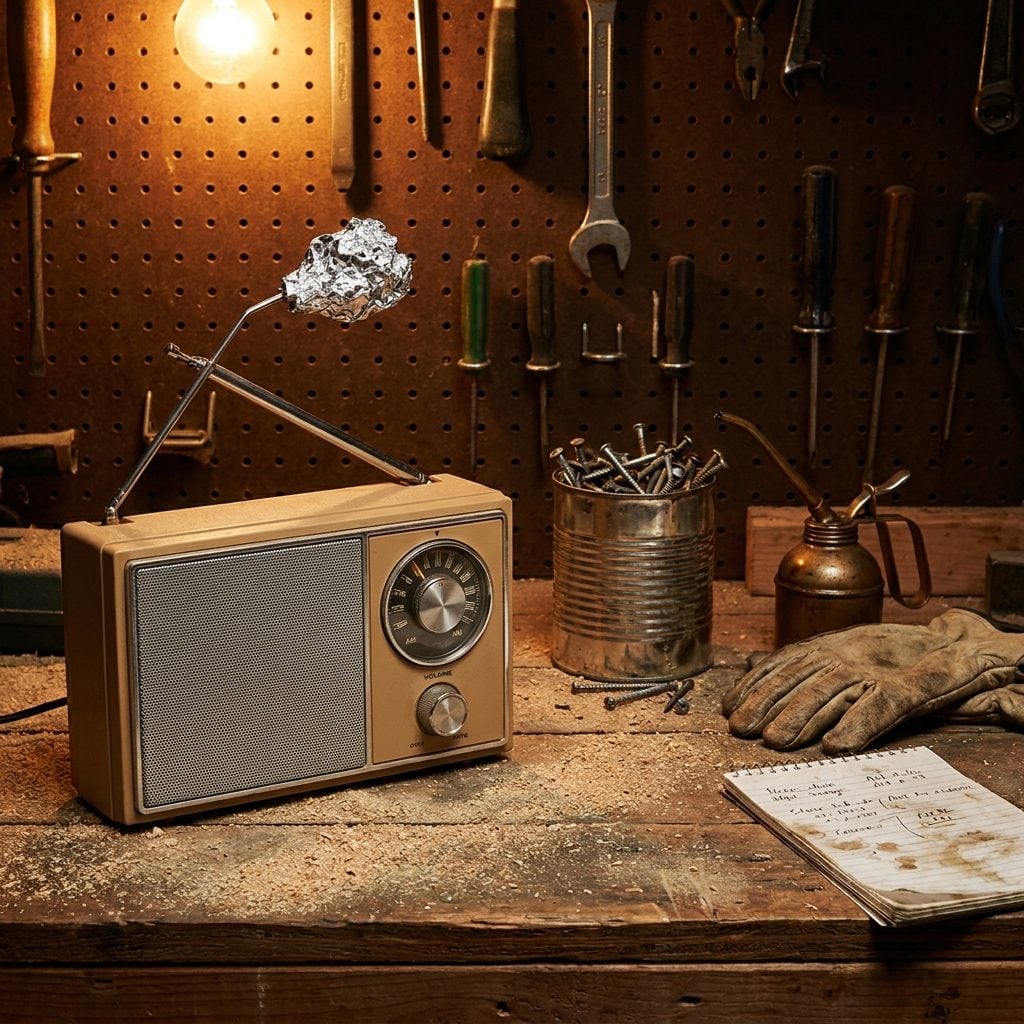
Reception in a concrete-block garage was never reliable, which is why every shop radio in the 1970s had been through at least three antenna modifications. First the original antenna, then the antenna bent toward the window, then the antenna wrapped in foil. If you were lucky, you got the AM country station. If you weren’t, you got static and a faint country station under the static.
The radio stayed on all day regardless. Static was company. It was background noise for every oil change, every sanding project, every hour spent doing something vague with tools and calling it maintenance.
24. The Hand-Lettered Sign Above the Workbench That Said Something About Rules
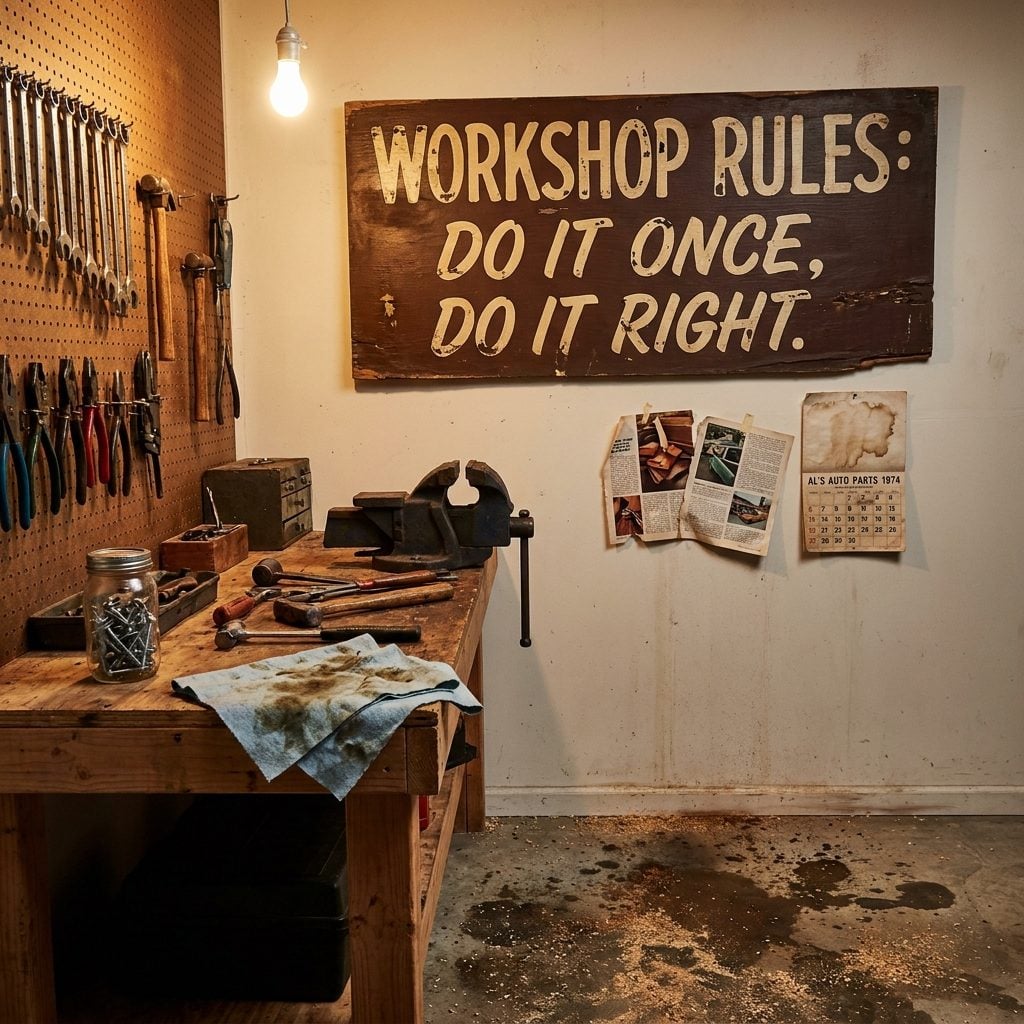
Every garage with a workbench had a sign above it. Sometimes a bought plaque from the hardware store. More often something hand-painted on a piece of board by the garage owner himself, slightly uneven, the letters getting smaller toward the right. The content was usually a rule of some kind: borrow a tool and return it, or a reminder that this was a serious place for serious work.
Nobody followed the rule. The sign was aspirational, not descriptive.
23. The Stack of Tires in the Corner That Grew Every Spring
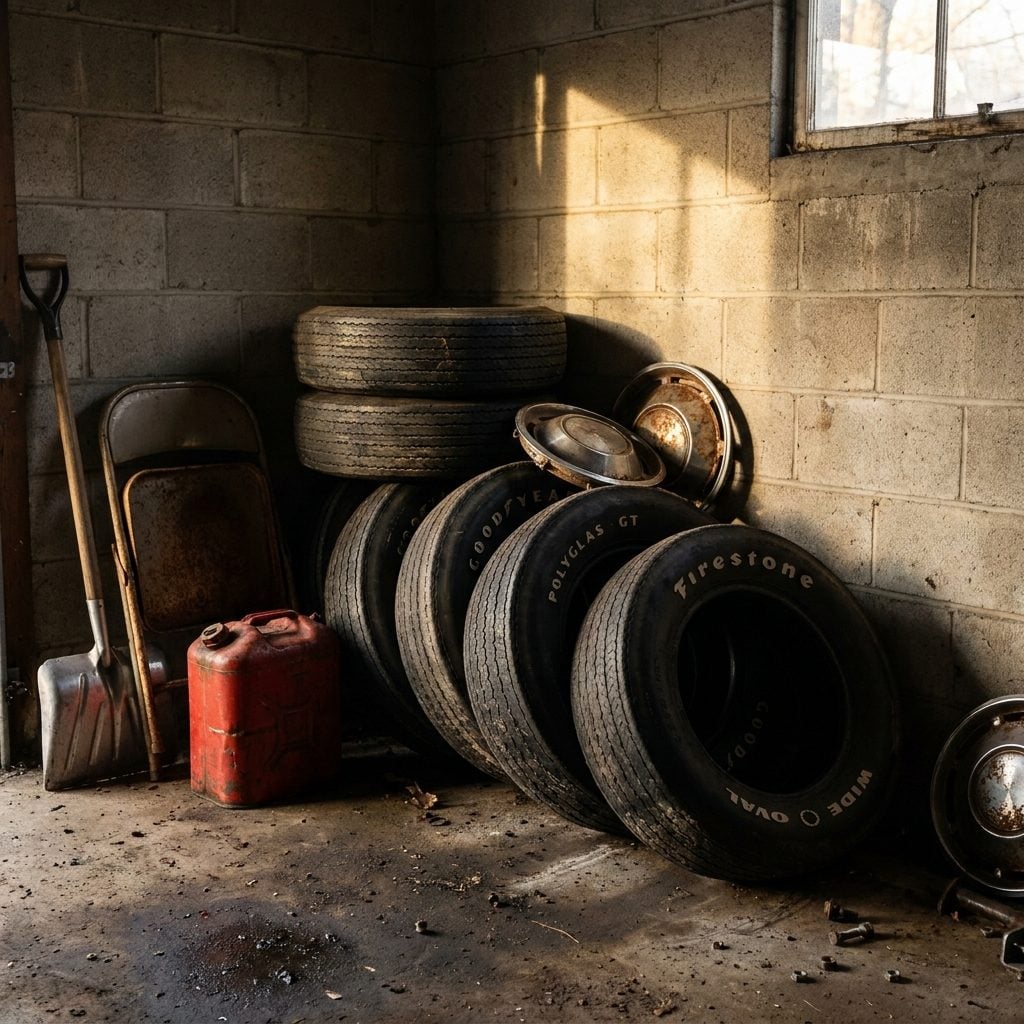
The seasonal tire swap was supposed to result in one set of tires on the car and one set on a shelf, neat and accounted for. What actually resulted was a stack of tires in the corner that grew by one or two every spring, because last year’s winter tires were too worn to keep but not bad enough to throw away just yet.
By the late 1970s, some garages had a tire stack that represented five years of automotive ambivalence. Nobody touched them. They became furniture.
22. The Wall of Nails Hammered Directly Into the Studs for No Clear System
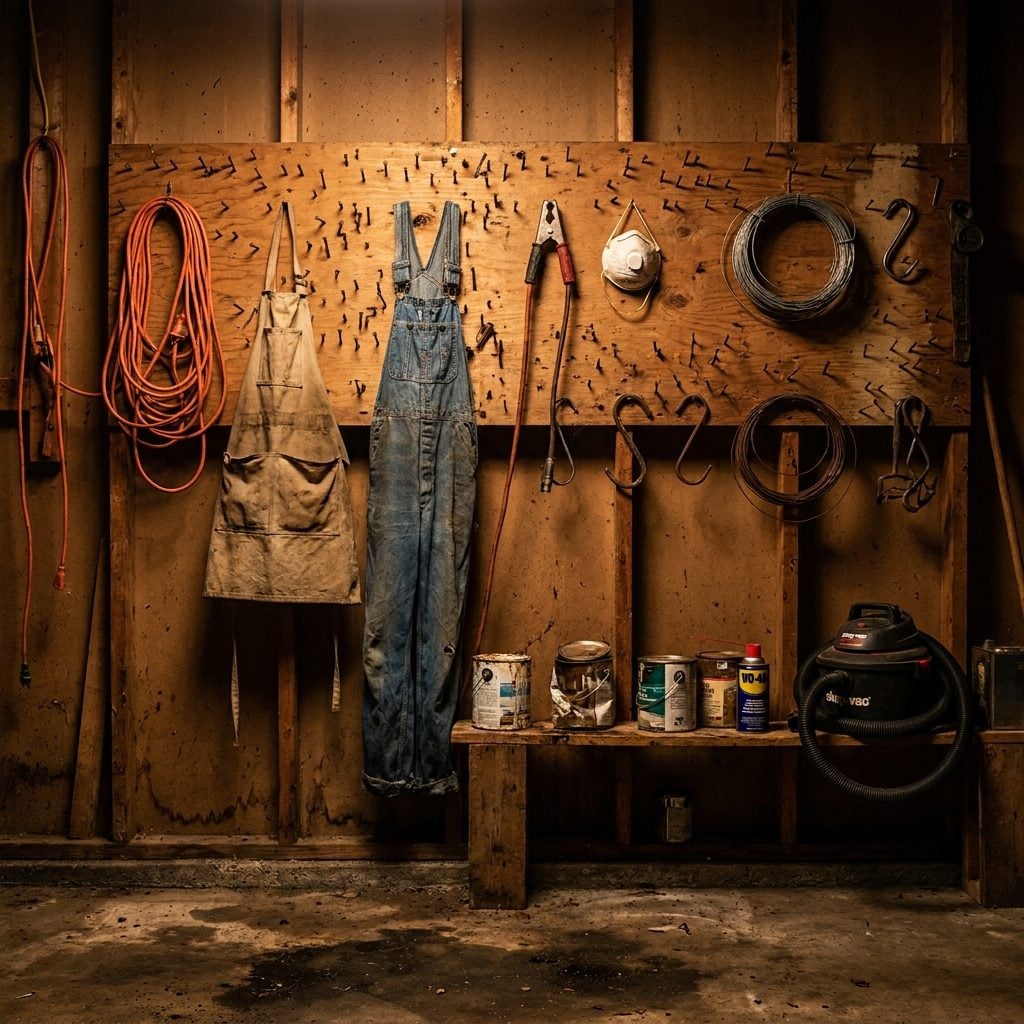
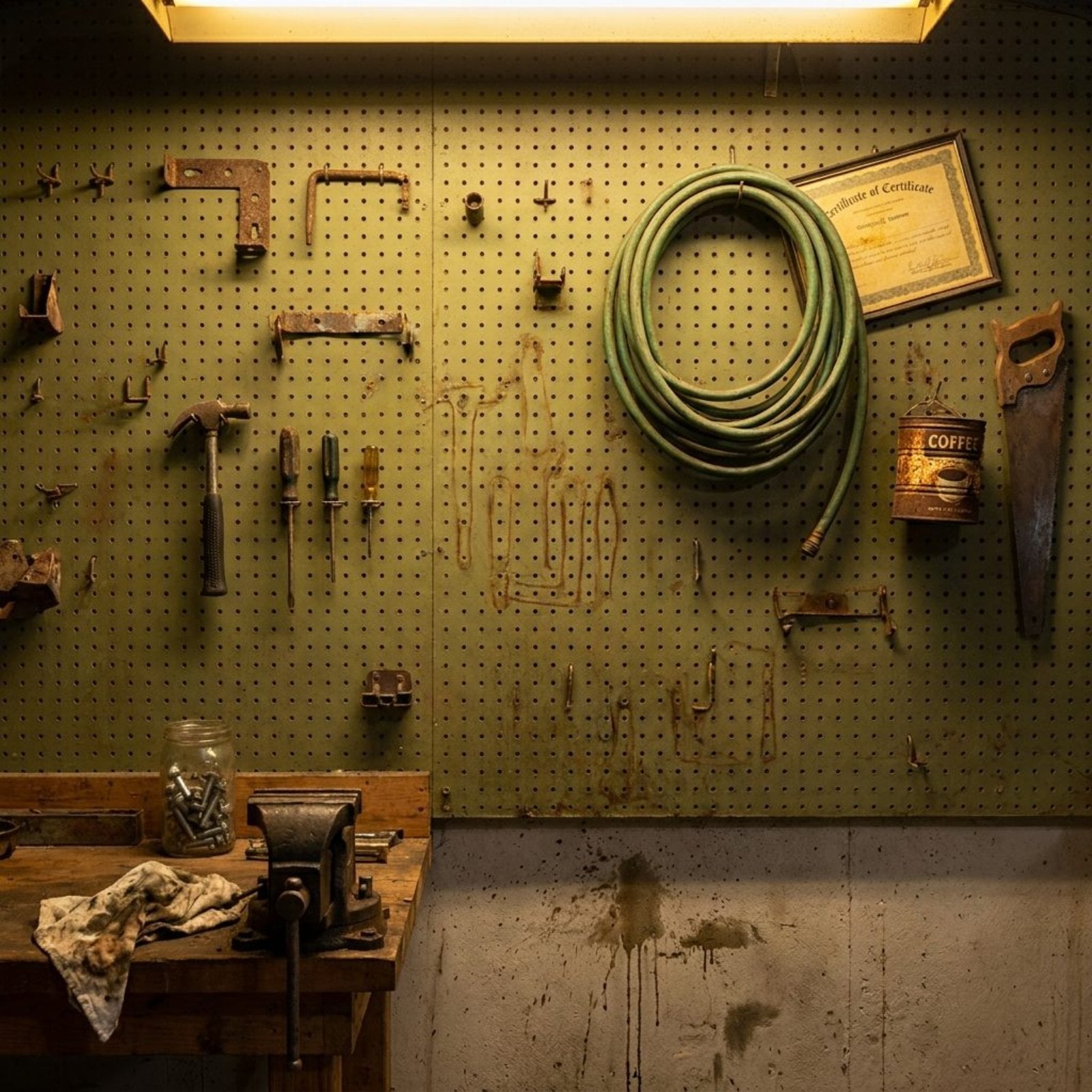
Before pegboard, before wall-mounted rail systems, before anyone sold you an organizing solution, there were nails hammered directly into studs. One nail for the extension cord. One nail for the work apron. Three nails for something that no longer exists but left three nails behind. The system was archaeological: the older the nail, the less anyone remembered what it was for.
21. The Concrete Floor with the Oil Stain Map of Every Car the Family Ever Owned
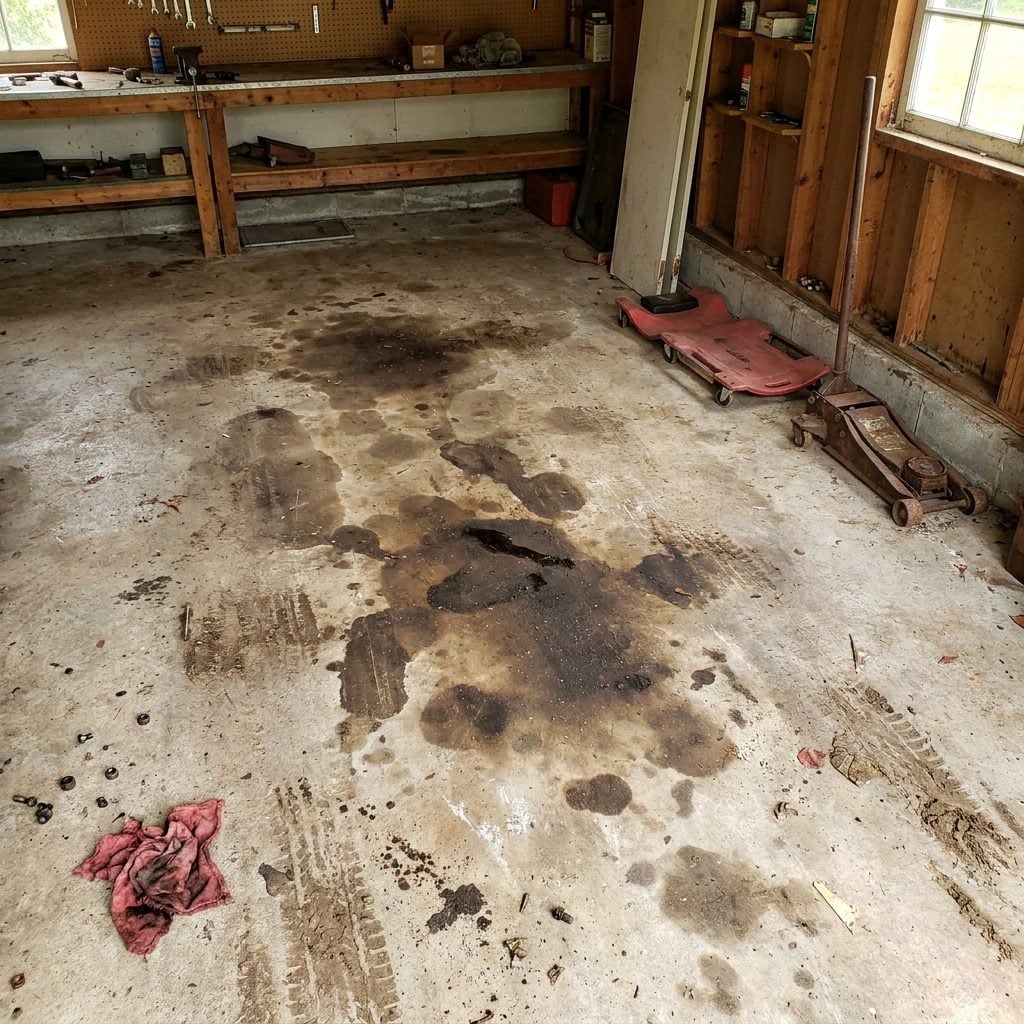
The oil stains on a 1970s garage floor were a record. Not just of leaks, but of every car the family ever owned and where it sat. A big dark stain near the back wall from the 1966 Impala with the pan gasket problem. A newer, smaller stain from the ’73 Datsun. If you looked carefully at the shapes and positions, you could date them like rings in a tree.
Nobody thought to seal the floor. That was not a concept yet. The concrete just absorbed everything, year after year, building its own quiet archive.
20. The Trouble Light on a 25-Foot Cord Draped Over the Hood
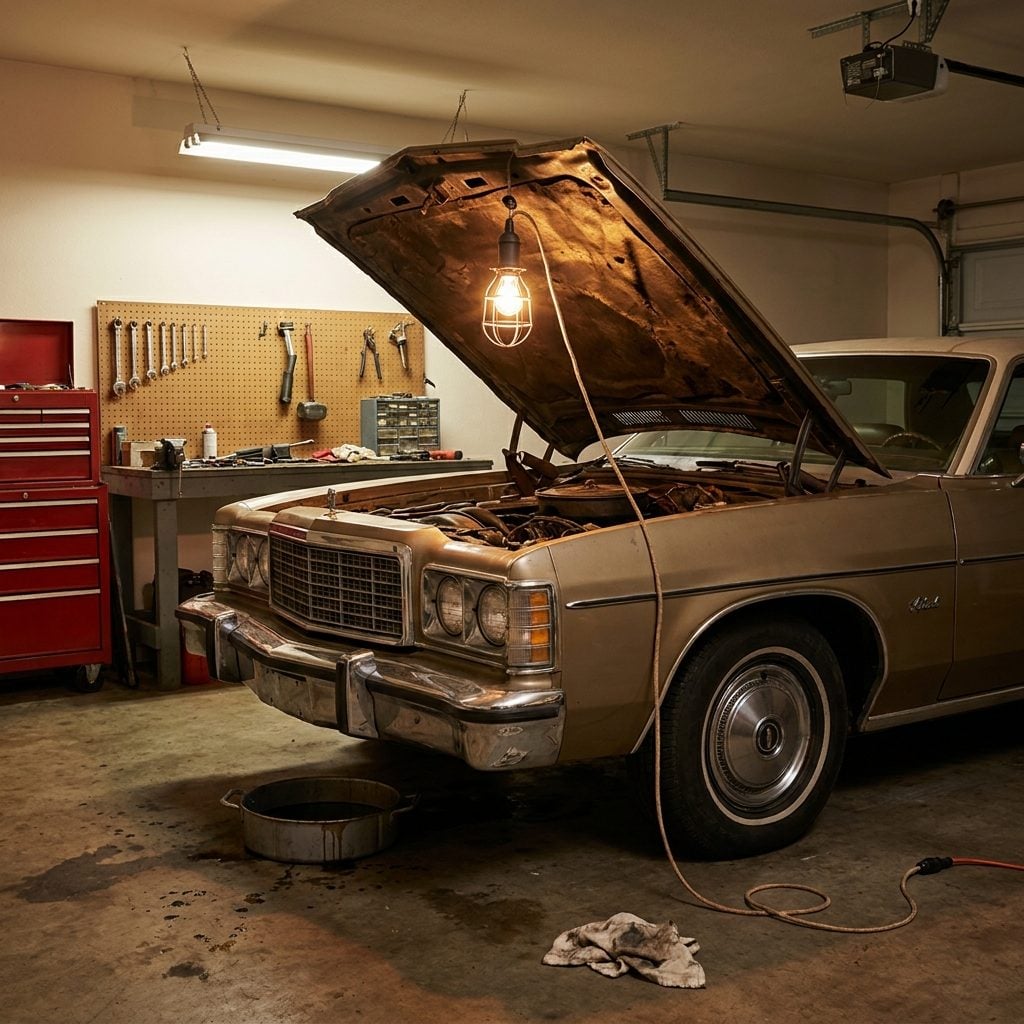
The trouble light was one of the most important tools in the garage and received almost no credit for it. A bare bulb inside a wire cage on a very long cord, it went wherever the problem was: over the engine, under the car on the creeper, into the wheel well, behind the water heater. The cage got hot enough to brand you if you weren’t paying attention, which is something every kid who grew up around one learned exactly once.
For a modern garage, the LED work light has replaced it entirely. But nothing made a 1970s engine bay feel more like urgent, real work than that orange glow swinging from a bent hood latch.
19. The Sawhorse That Never Left (And Became a De Facto Shelf)
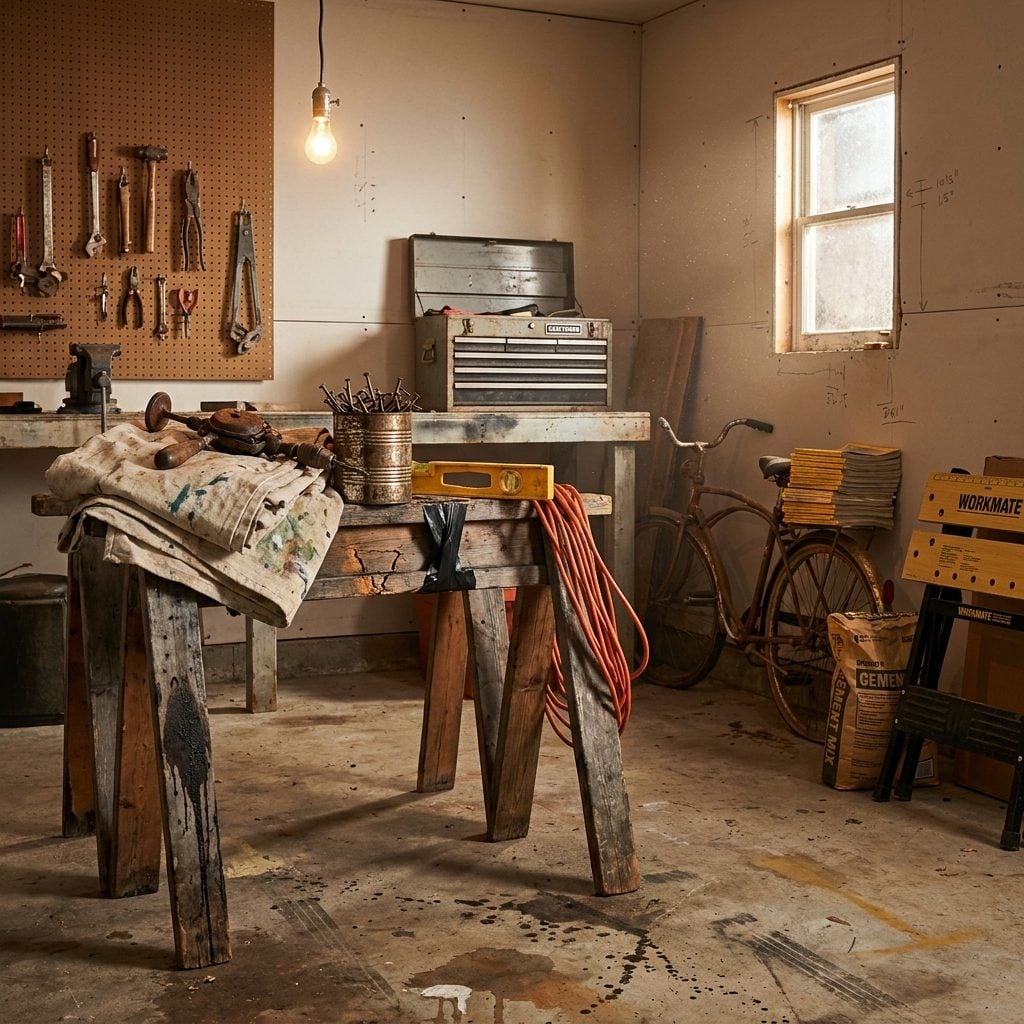
It started life as a tool. Somewhere around 1973 it became furniture. The sawhorse that was supposed to support a sheet of plywood during one weekend project just never got put away, and by the time the decade was half over it had collected a drop cloth, three paint cans, a broken electric sander, and a coffee can of bent nails that nobody was ever going to straighten. It occupied the same four square feet of garage floor for years.
This was the unspoken law of the 1970s modern garage: anything set down horizontally would be covered within a week. The sawhorse was just honest about it. It held everything, complained about nothing, and outlasted half the projects it was meant to serve.
18. The Single Bare Bulb on a Pull-Chain That Made Everything Look Like a Crime Scene
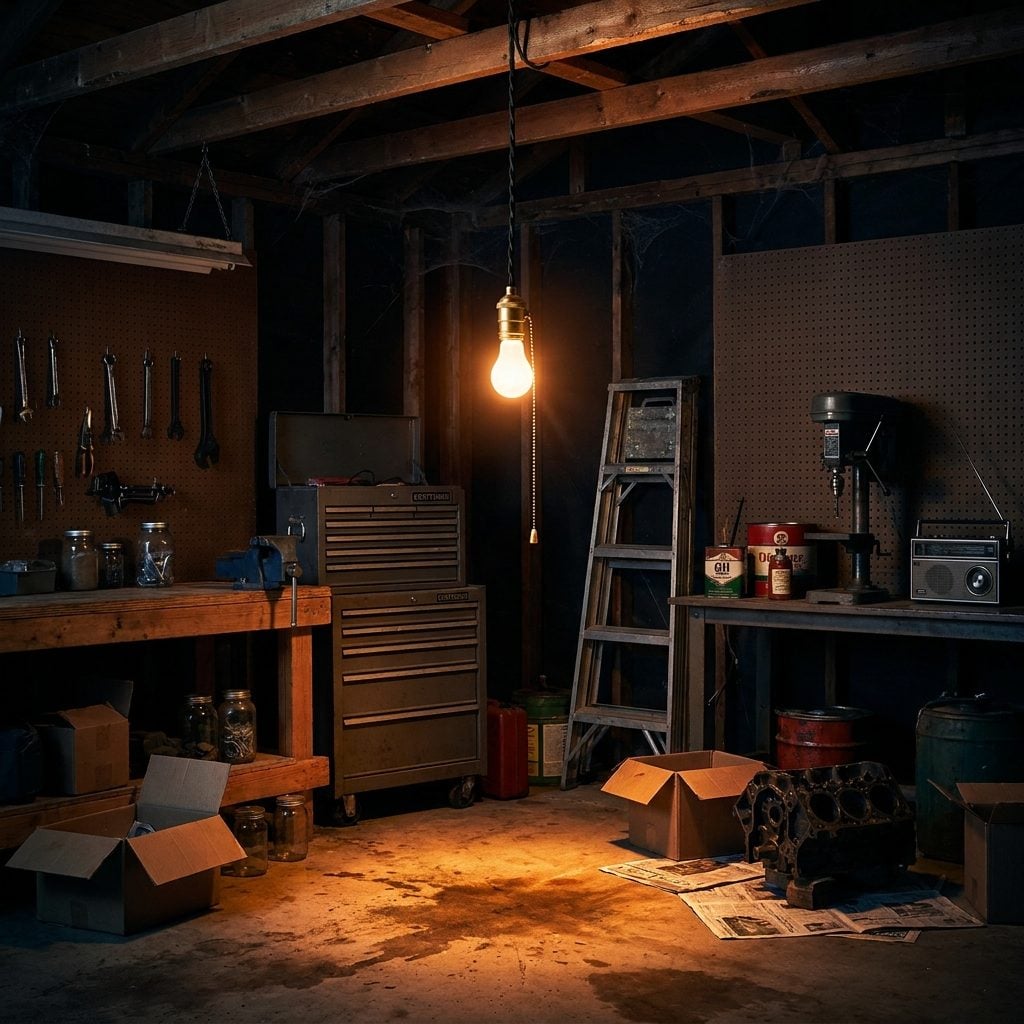
One bulb. No shade. Pull the chain and the whole garage either lit up or it didn’t, depending on whether the bulb had finally burned out. The light it threw was less illumination and more suggestion, a warm amber disc on the floor that faded to nothing about four feet in any direction.
Changing a spark plug under that light required either a flashlight held in your teeth or a second person standing there holding one. Most of the time it was the flashlight. A tan workshop vibe, if the workshop had given up on visibility as a concept. The bare pull-chain bulb wasn’t an oversight. It was just how garages worked, and everyone who spent time in one knows exactly what that amber circle on the concrete looked like at ten o’clock on a Saturday night.
17. The Coffee Can Full of Screws That Nobody Had Sorted Since Nixon Was in Office
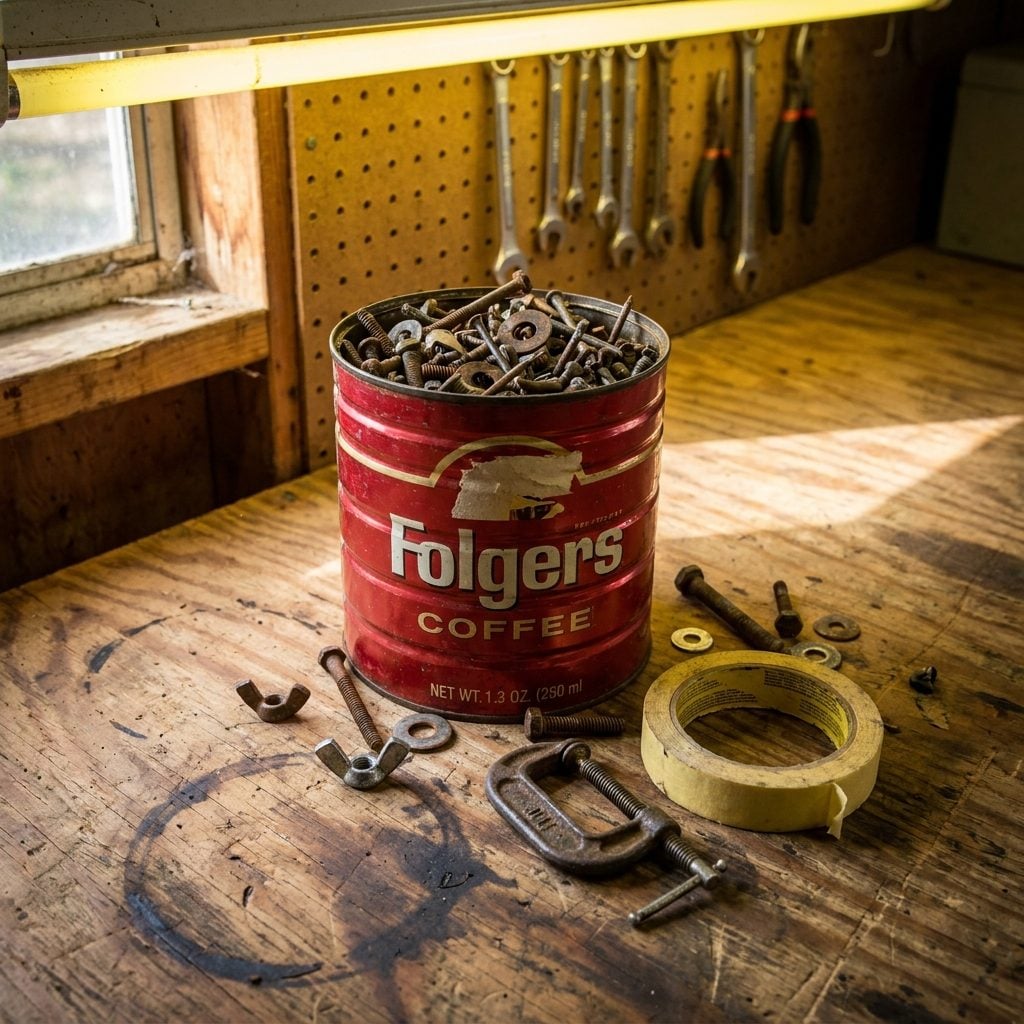
Every garage had one. Sometimes two. A Folgers can or a Maxwell House tin, label half-peeled, crammed with every fastener anyone in the family had touched since the late 1960s — drywall screws tangled with wood screws tangled with bolts that fit nothing anyone still owned.
Need a specific screw? You’d dump the whole can onto the workbench and pick through it like panning for gold. Finding the right one was a long shot. Cutting your finger on something sharp in the process was guaranteed.
16. The Lawn Mower Parked Right in the Middle of Everything Like It Paid Rent
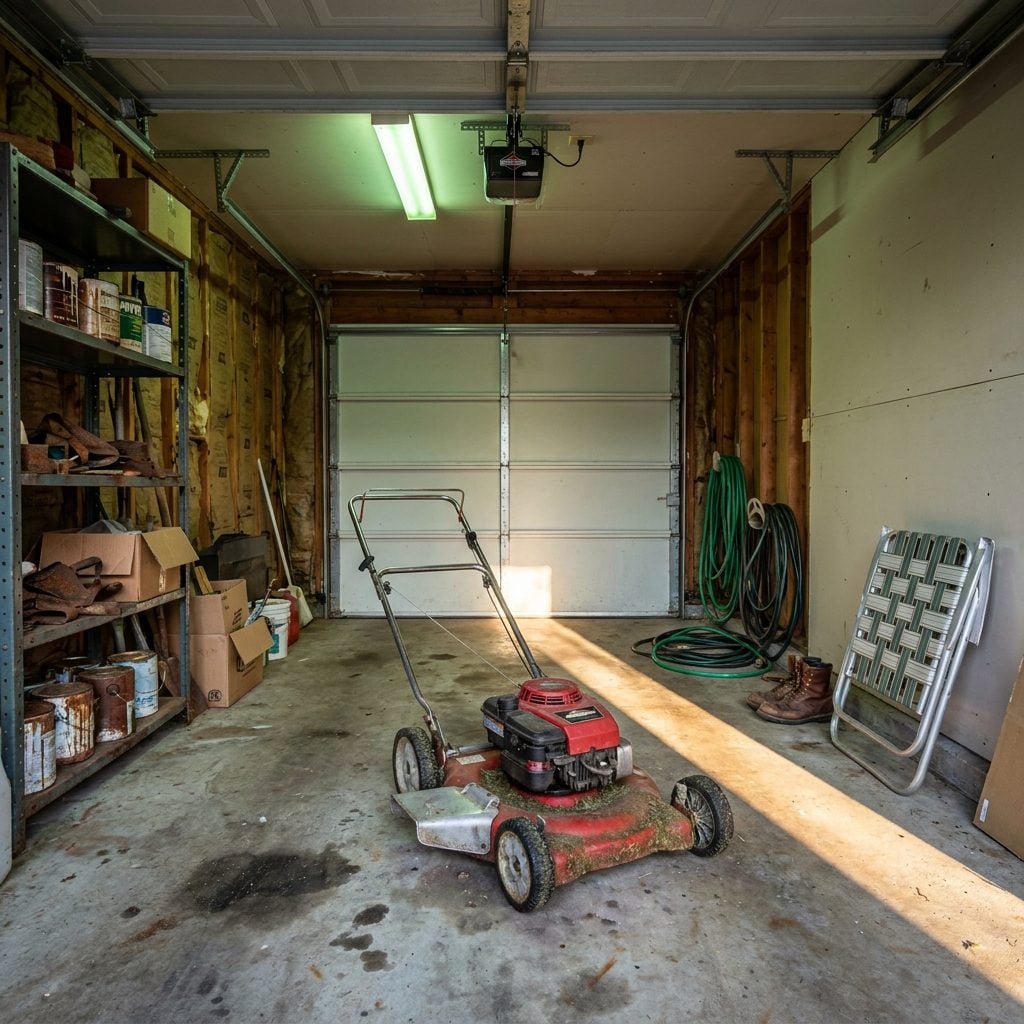
The car could wait outside. The lawn mower lived indoors.
It sat dead center on the garage floor like a territorial dog, surrounded by dried grass clippings and a gasoline smell that had seeped permanently into the concrete. Moving it required pulling the starter cord just to roll it sideways, because the wheels had seized from sitting in one spot all winter. Nobody questioned the arrangement. The mower was there. The car fit around it. End of discussion.
15. The Mason Jars Lined Up on a Shelf, Each One Holding a Different Mystery Liquid
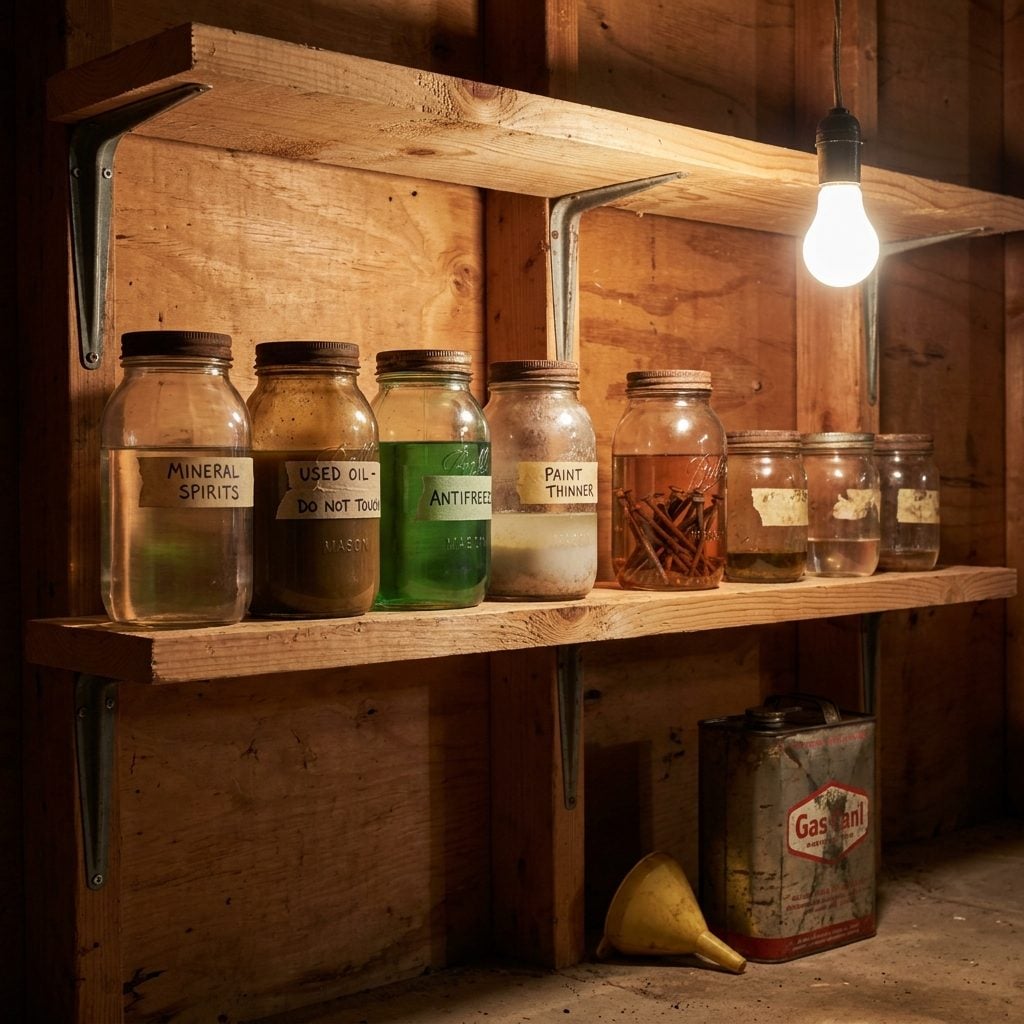
Turpentine, maybe. Or mineral spirits. Or paint thinner from 1973 that had separated into two distinct layers and would probably ignite if you looked at it wrong.
The masking tape labels had faded to uselessness — half just said “DO NOT” with the rest torn off, which was somehow more alarming than any complete warning could have been. Every tiny garage layout had its own version of this chemical library. Gloves? Nobody wore gloves opening them. That was just how things went.
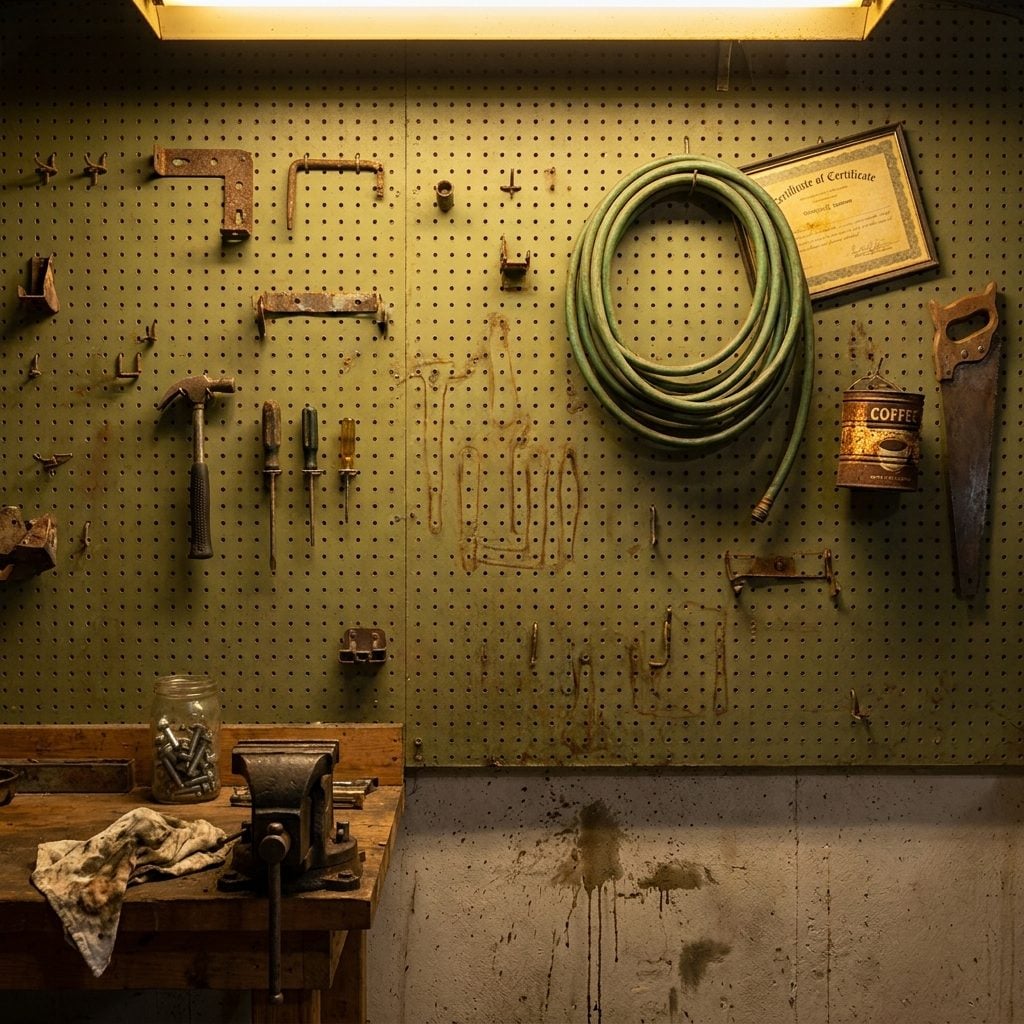
14. The Pegboard Wall That Was Half Organized, Half Archaeology
🔥 Would you like to save this?
Every 1970s garage dad had one vision for the pegboard wall: a place for everything and everything in its place, tools hanging in perfect outline silhouettes like a shadow box in a hardware store. What actually happened was something different. Half the hooks held real tools. The other half held a coffee can of mystery fasteners, a broken caulk gun, and whatever someone grabbed off the bench and never put back properly.
The outlines were the best part. That faint ghost-trace of a tool that left decades ago, still visible on the painted wood. Something between an inventory and an epitaph.
13. The Workbench Vise That Could Crush a Walnut or Hold a Universe Together
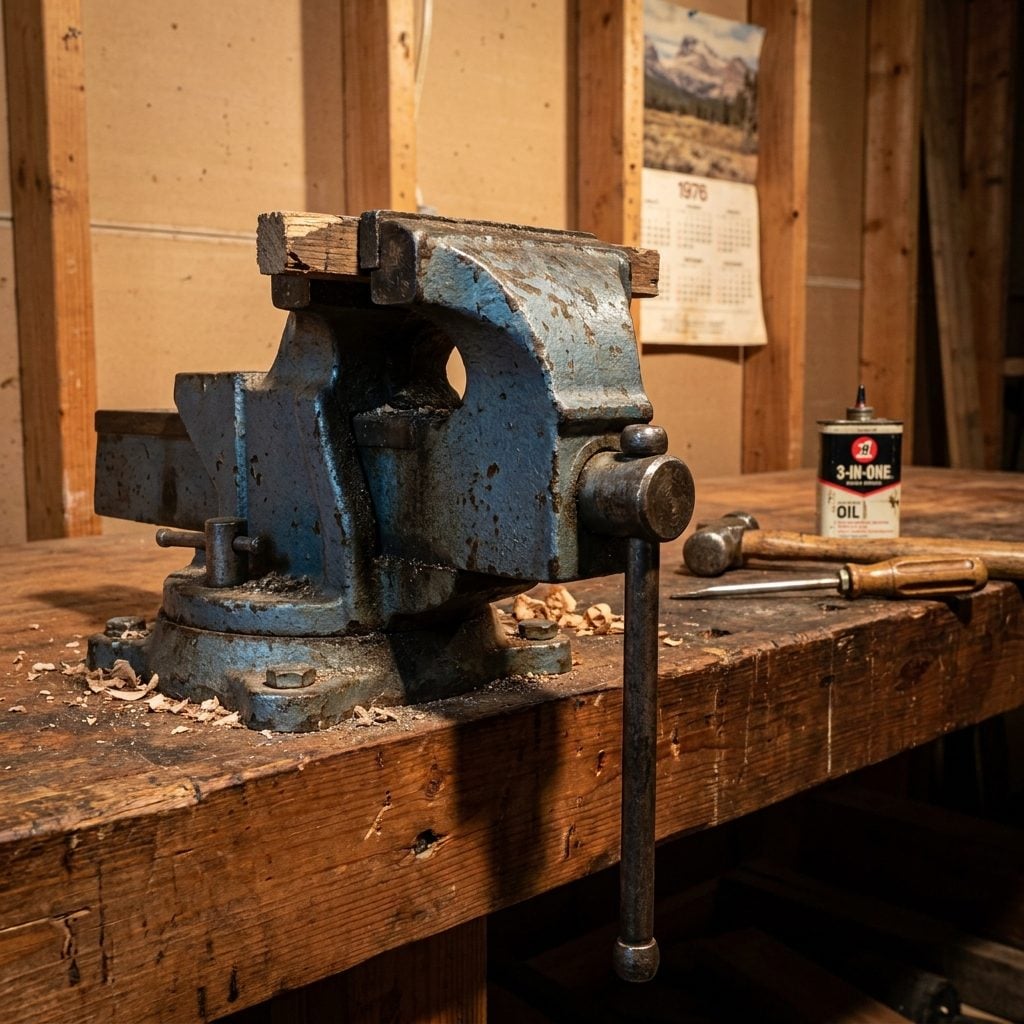
Bolted to the workbench like it had grown there. The handle was always cold — even in August — and turning it made a satisfying metallic grind that meant business.
Dads used it for everything. Holding pipe while they hacksawed through it. Bending sheet metal. Cracking walnuts at Christmas, leaving oil stains in the jaw serrations that never came out. It had exactly one job: hold still. And it did that job for forty years without so much as a wobble, outlasting marriages, roofs, and at least two family cars.
12. The Extension Cord Situation That Would Make a Modern Electrician Weep
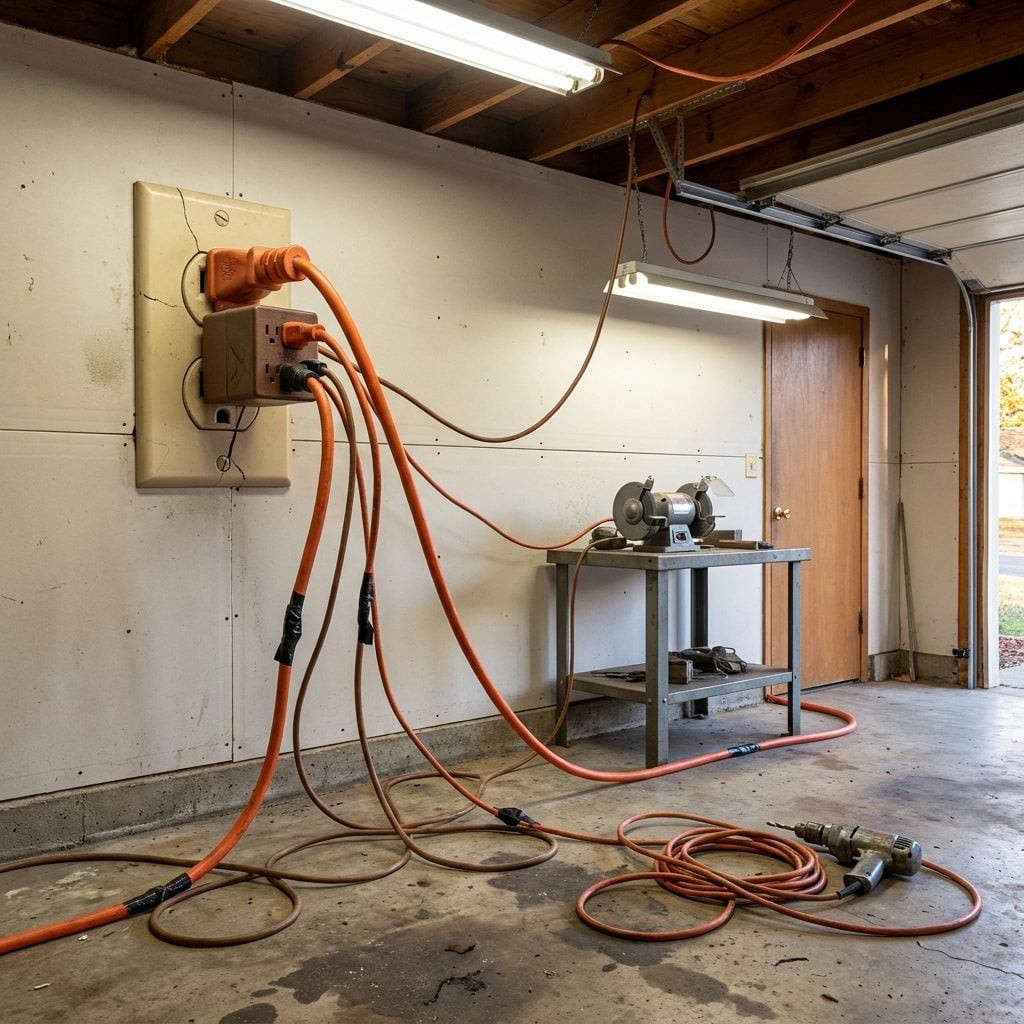
One outlet. One cube tap. Four things plugged into it, at least two drawing serious amperage.
The extension cord network in a 1970s garage was less of a wiring plan and more of a geological record — every project that ever needed power had left its cord behind. They ran under doors, over rafters, through partially closed windows. The heavy orange outdoor cord was the backbone of the whole operation, and the thin brown indoor cord that had no business being out there was the wildcard everyone pretended not to notice. Sections wrapped in electrical tape? Those marked the spots where someone had run over the cord with the Buick and patched it with the confidence of a person who genuinely did not believe electricity could hurt them.
11. The Hubcap Collection Hanging on the Wall Like Chrome Dinner Plates
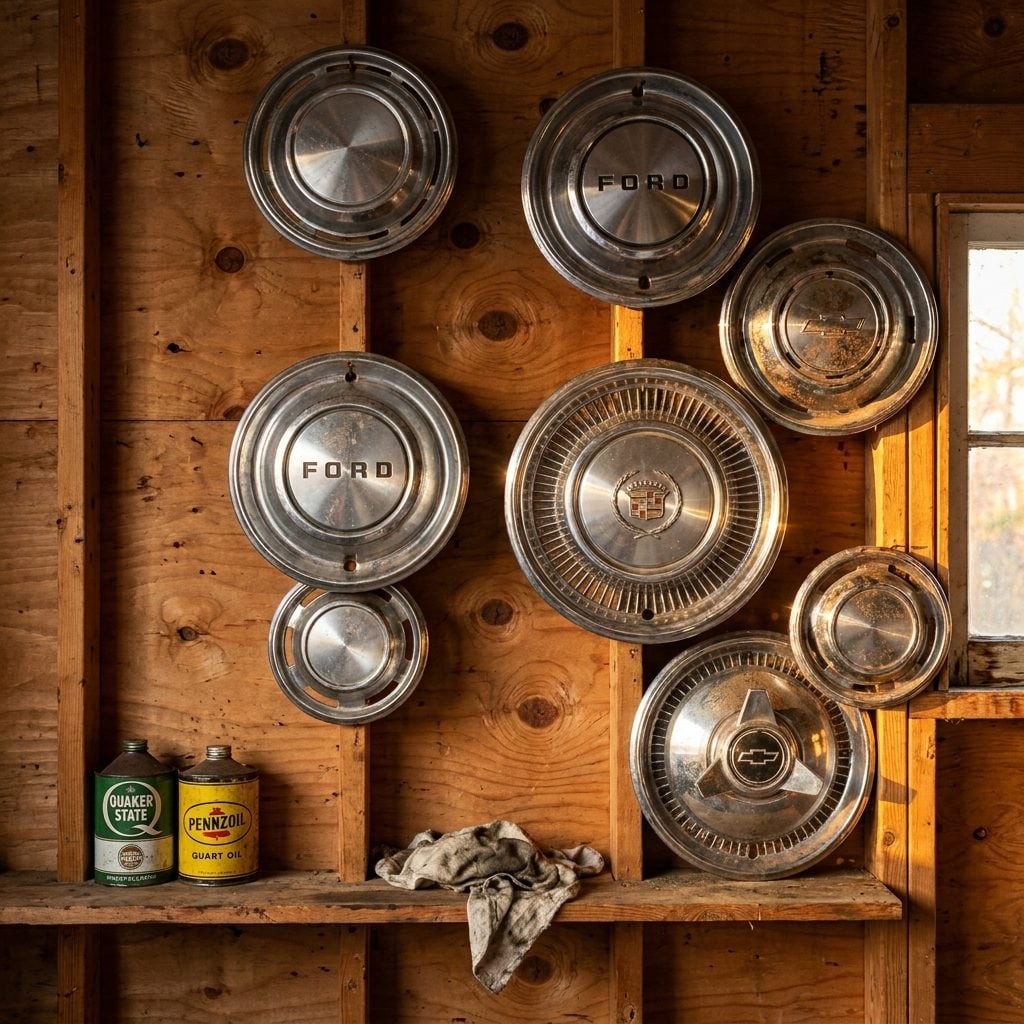
They came off during tire changes and never went back on — or got scooped off the highway shoulder after someone else lost them at speed. Either way, they ended up on the garage wall, hung on sixteen-penny nails like the world’s most niche art gallery.
Chevy, Ford, Cadillac, a couple of no-name aftermarket caps with fake wire-spoke patterns. Each one slightly dented, warping the shop light into fun-house reflections across the chrome. Nobody called it decorating. The modern equivalent might be an art deco garage accent wall, but in 1974 nobody was thinking about aesthetics. They just looked right up there, and throwing away a perfectly good hubcap felt criminal.
10. The Bag of Rags That Used to Be the Family’s Wardrobe
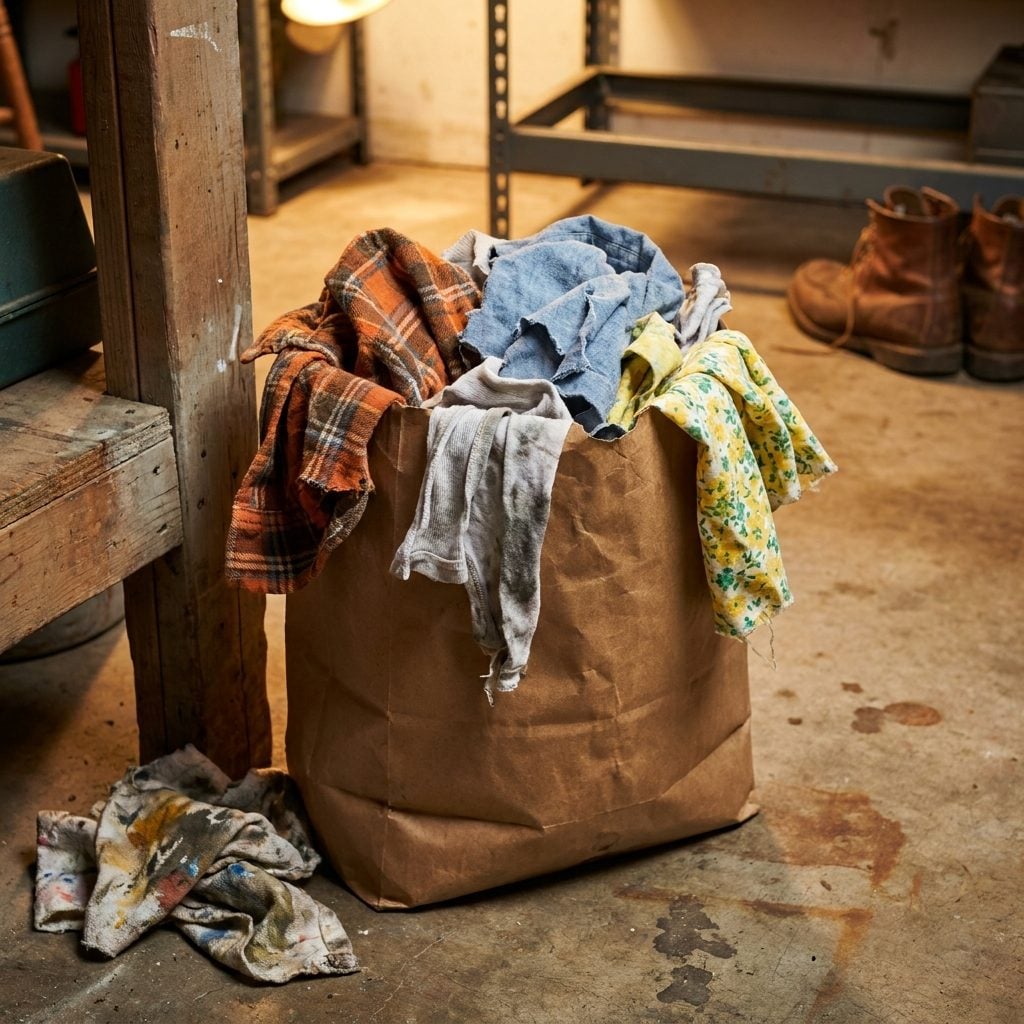
Dad’s old flannel that finally blew out at the elbow. A housedress with a bleach stain. Undershirts that had crossed some invisible threshold between wearable and finished. All of them ended up in the rag bag, cut into rough squares with kitchen scissors, promoted to a second career wiping down engine parts and soaking up spilled paint.
You could read a family’s whole decade in that bag if you bothered to look. The plaid from ’71. The polyester from ’74. A beach towel from a vacation nobody mentioned anymore. Nothing got discarded in one clean step — it migrated to the garage first, served a lesser purpose, and disintegrated quietly.
9. The Hand-Crank Bench Grinder with the Wire Wheel That Threw Sparks Like a Tiny Fireworks Show
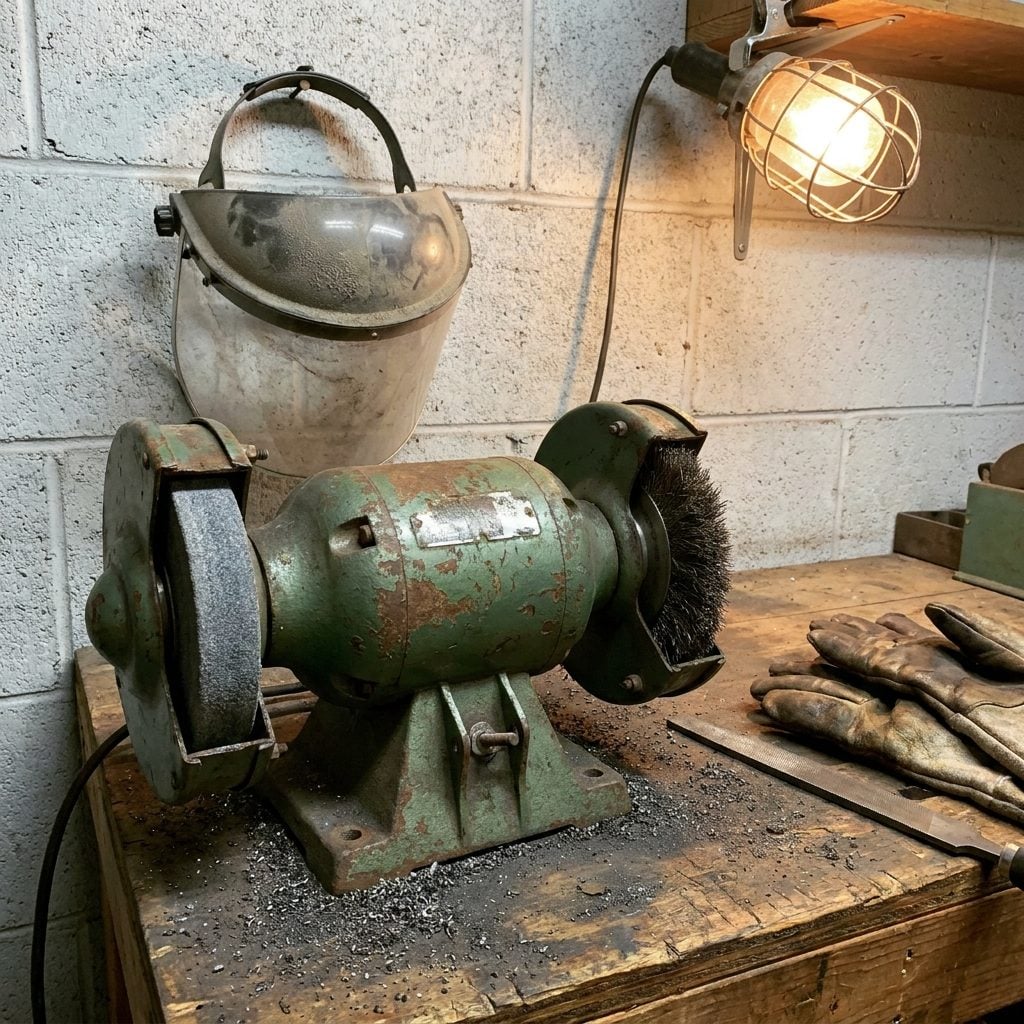
Touch a rusty bolt to that wire wheel and the whole garage became a light show — orange sparks arcing across the concrete in every direction, hot metal smell filling the air, the motor whining against whatever you were pressing into it.
Safety glasses? Optional, and usually absent. The wire wheel ate gloves if you got careless. But a rusted hinge came off that wheel looking reborn, and that small transformation justified the entire setup. Worth noting: the face shield hanging on the nail behind the grinder was always dusty. Always. That tells you everything.
8. The Calendar from the Auto Parts Store with a Photo That Had Nothing to Do with Auto Parts
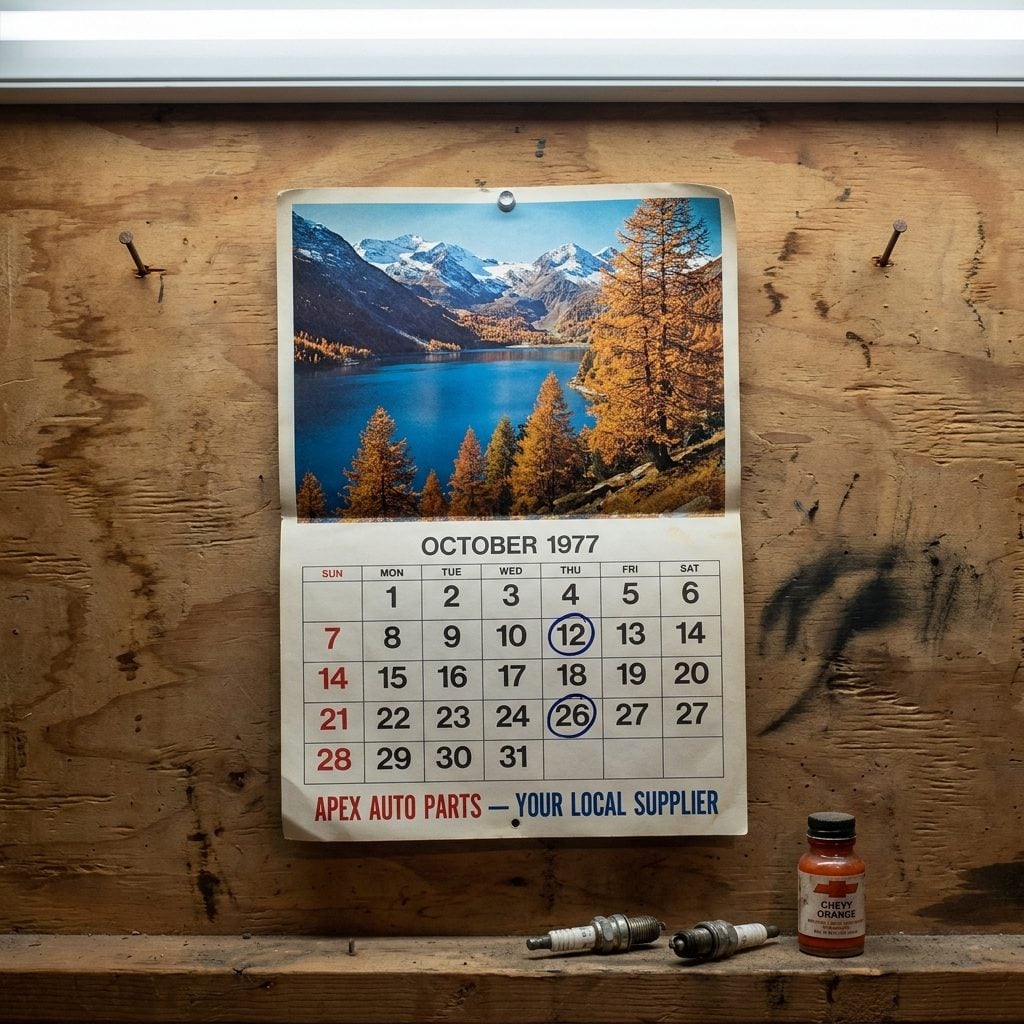
A mountain lake. A covered bridge in Vermont. A sunset over wheat fields. Whatever the NAPA or CarQuest calendar showed that month, it had zero connection to camshafts or brake pads, and everybody was fine with that.
It hung on the wall all year, usually running two or three months behind because nobody flipped it. Circled dates sometimes marked oil changes or inspection deadlines. Sometimes birthdays. The calendar was the garage’s one concession to the idea that a person might occasionally want to look at something without grease on it — a tiny window into a world where people stood beside mountain lakes instead of lying under Chevrolets.
7. The Wooden Stepladder Splattered with Every Paint Color the House Had Ever Been
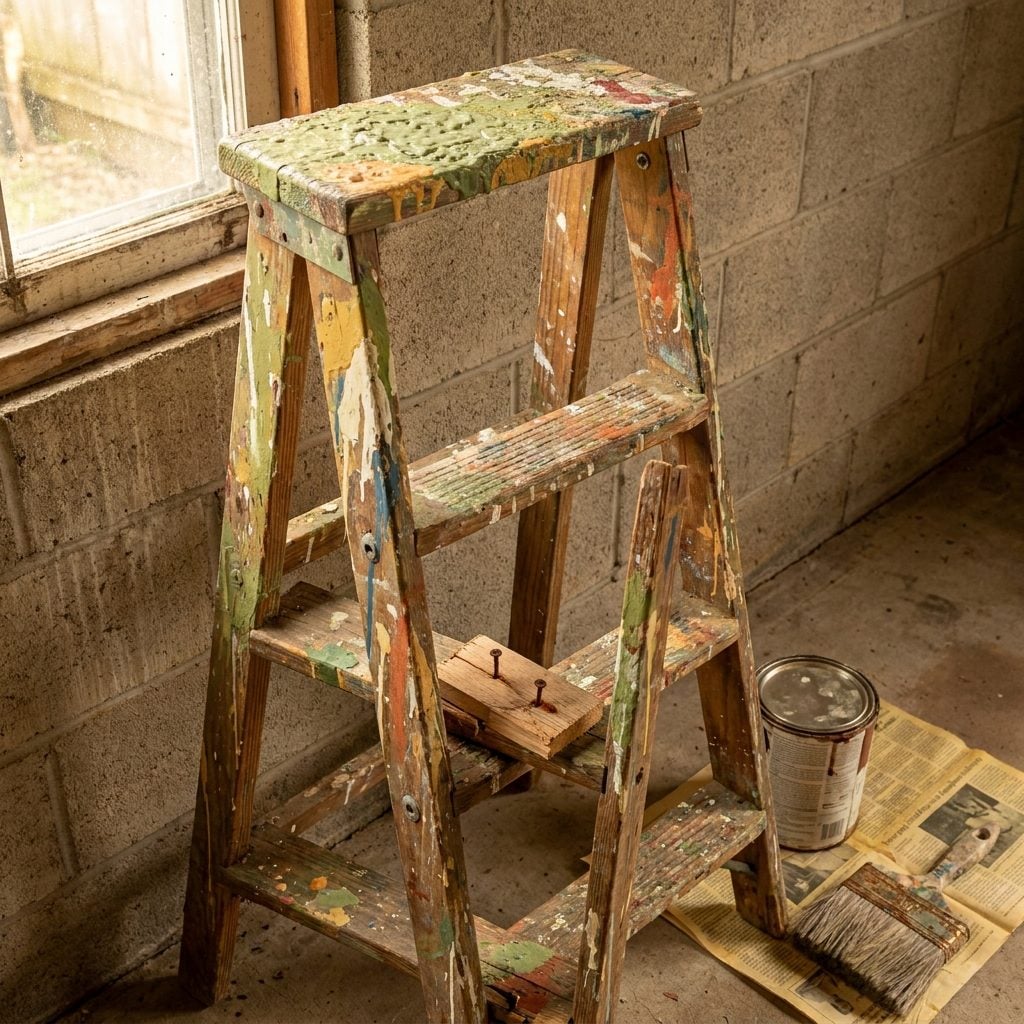
Avocado green from the kitchen in ’72. Harvest gold from the bathroom in ’75. A colonial blue that lasted one season before someone painted over it with off-white and pretended the whole experiment never happened.
The stepladder was the house’s autobiography in drips — every room’s color history recorded on the rungs and that little fold-out shelf where the paint can sat. Nobody cleaned it between jobs, so the layers just accumulated until the steps got slightly wider from buildup and the whole thing weighed noticeably more than it did when it was new. One step had cracked and been repaired with a scrap of wood and two screws, which somehow made it feel more trustworthy, not less. A craftsman garage design today would swap it for a sleek aluminum model. Lighter, cleaner, better in every measurable way. But it wouldn’t tell you a single thing about the house it served.
6. The Bicycle Hanging from the Ceiling Joists on Two Bent Hooks
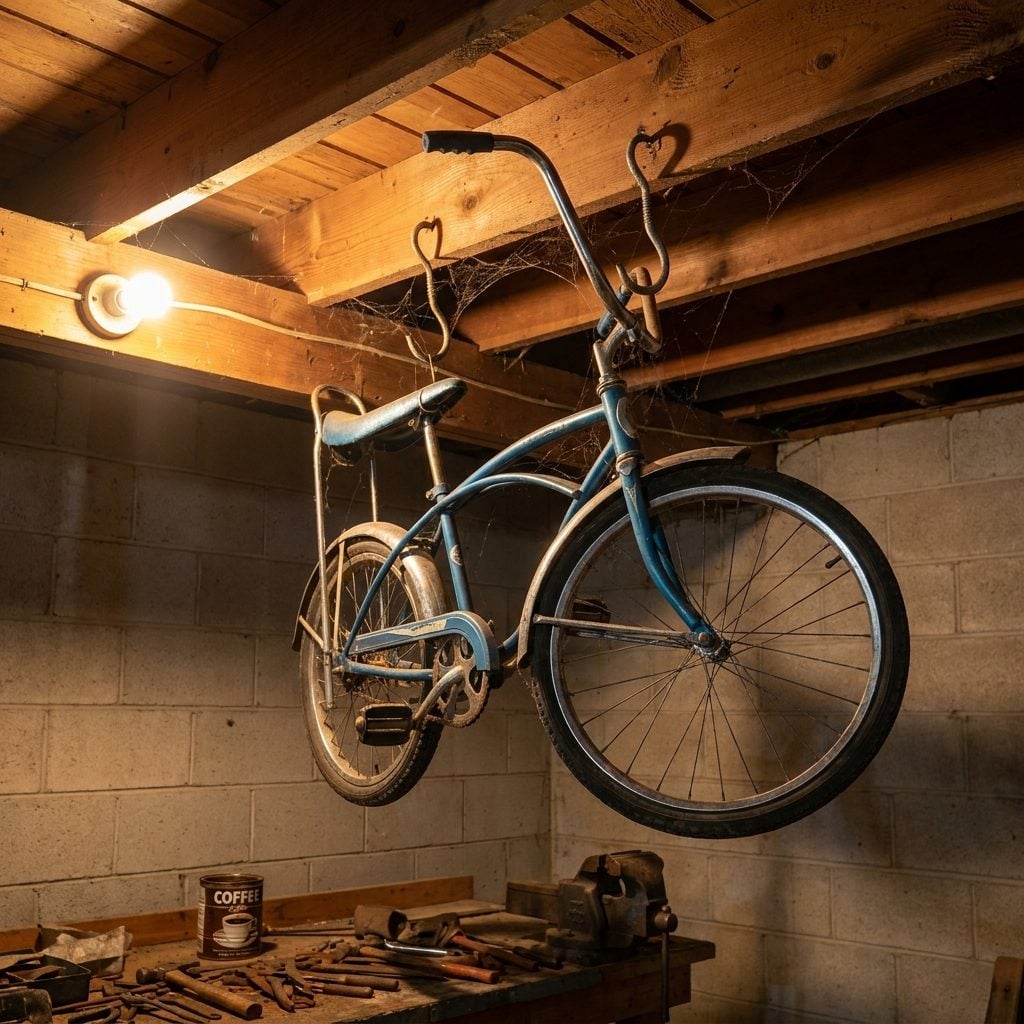
Nobody rode it anymore. That was understood. The chain had rusted into a single rigid loop and one pedal was missing, but taking it down would have meant admitting something, so up it stayed.
The hooks were never quite level — one sat a quarter inch higher, so the bike hung with a permanent lean, frozen mid-turn. Every time the garage door opened, it swayed just enough to remind you it was there. You’d duck under it a thousand times. Never once think about riding it again. But you’d also never float the idea of getting rid of it, because getting rid of it wasn’t really about a bicycle, and everybody in the house knew that without saying so.
5. The Transistor Radio Sitting on Top of the Fuse Box
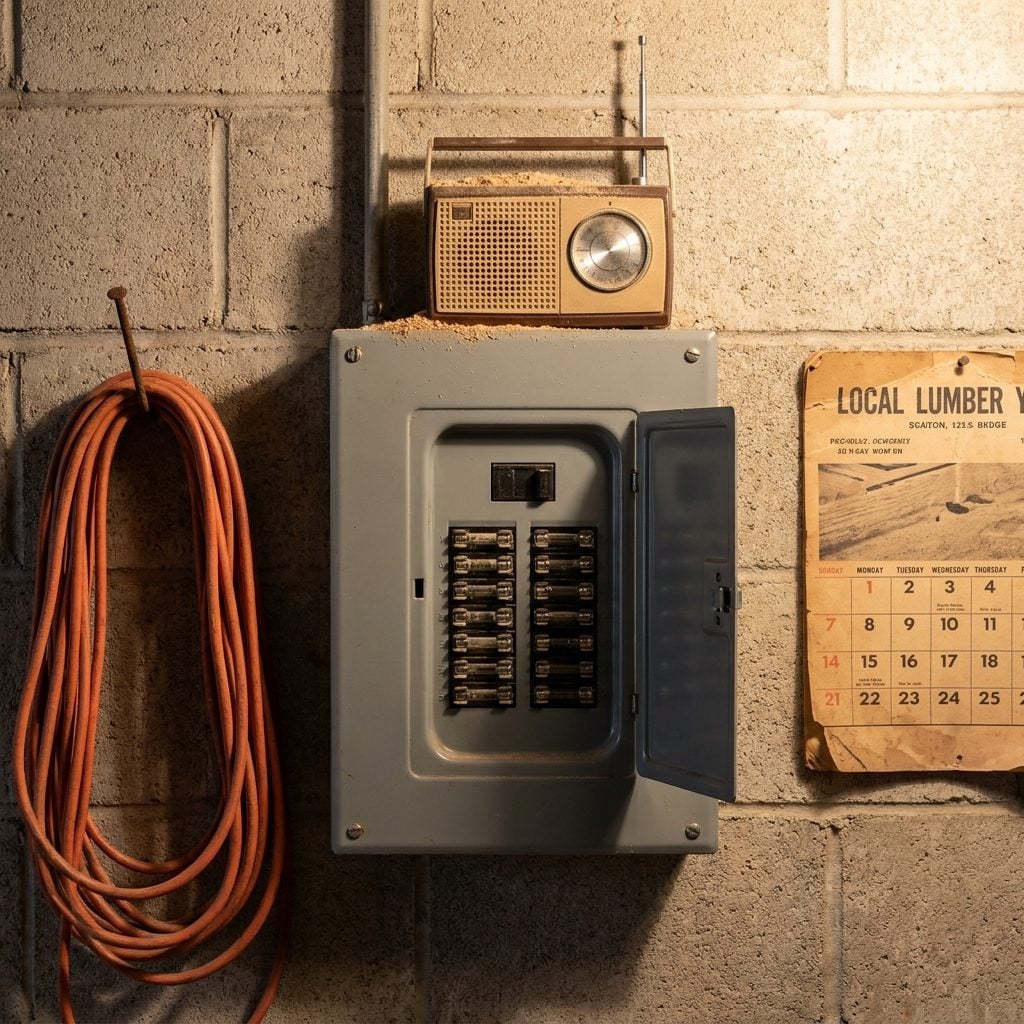
It sat there so long it became part of the electrical panel. Sawdust packed into every seam, the volume knob stuck at one setting — loud enough to hear over a circular saw if you were standing within four feet, useless from anywhere else.
The station never changed either. AM talk, or the oldies station, or the game. Someone had found the right antenna angle through trial and error, bending it to a precise 40-degree kink that pulled in a clean signal, and touching it was a violation on par with adjusting the thermostat. That radio cost almost nothing and outlasted appliances that cost ten times as much. Probably still works, wherever it ended up.
4. The Piece of Carpet Remnant on the Concrete Floor in Front of the Workbench
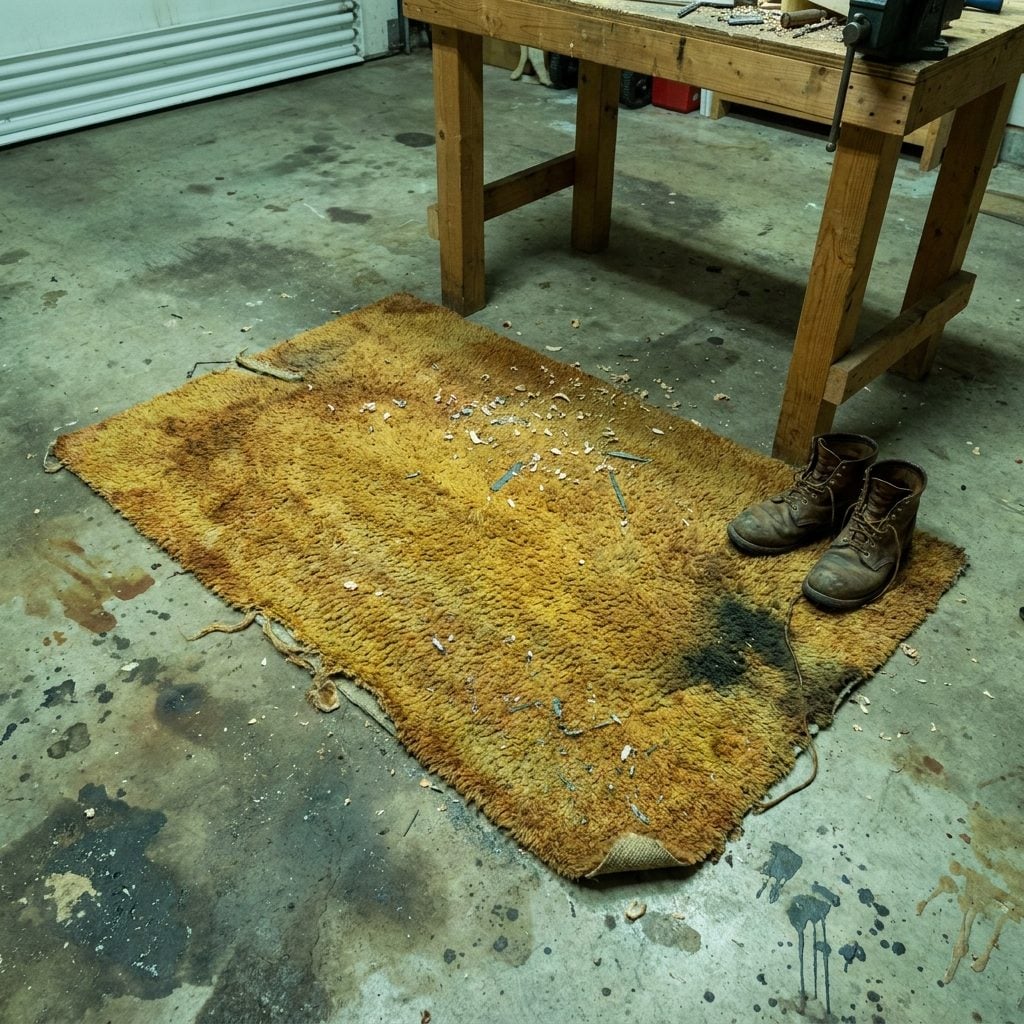
Leftover from the living room remodel. The good carpet went inside; this piece, cut crooked with a utility knife, went to the garage, where it became the only concession to comfort in a room built entirely without it.
Standing on bare concrete for three hours while you rebuild a carburetor does something permanent to your knees and your patience. That scrap of harvest gold shag made the difference between finishing the job and quitting at the halfway point. Filthy. Reeked of motor oil and damp concrete. Nobody ever washed it, because washing it would have meant acknowledging it was carpet and not just another layer of the floor — and that distinction mattered to no one.
3. The Dented Metal Gas Can with the Flexible Spout That Never Sealed Right
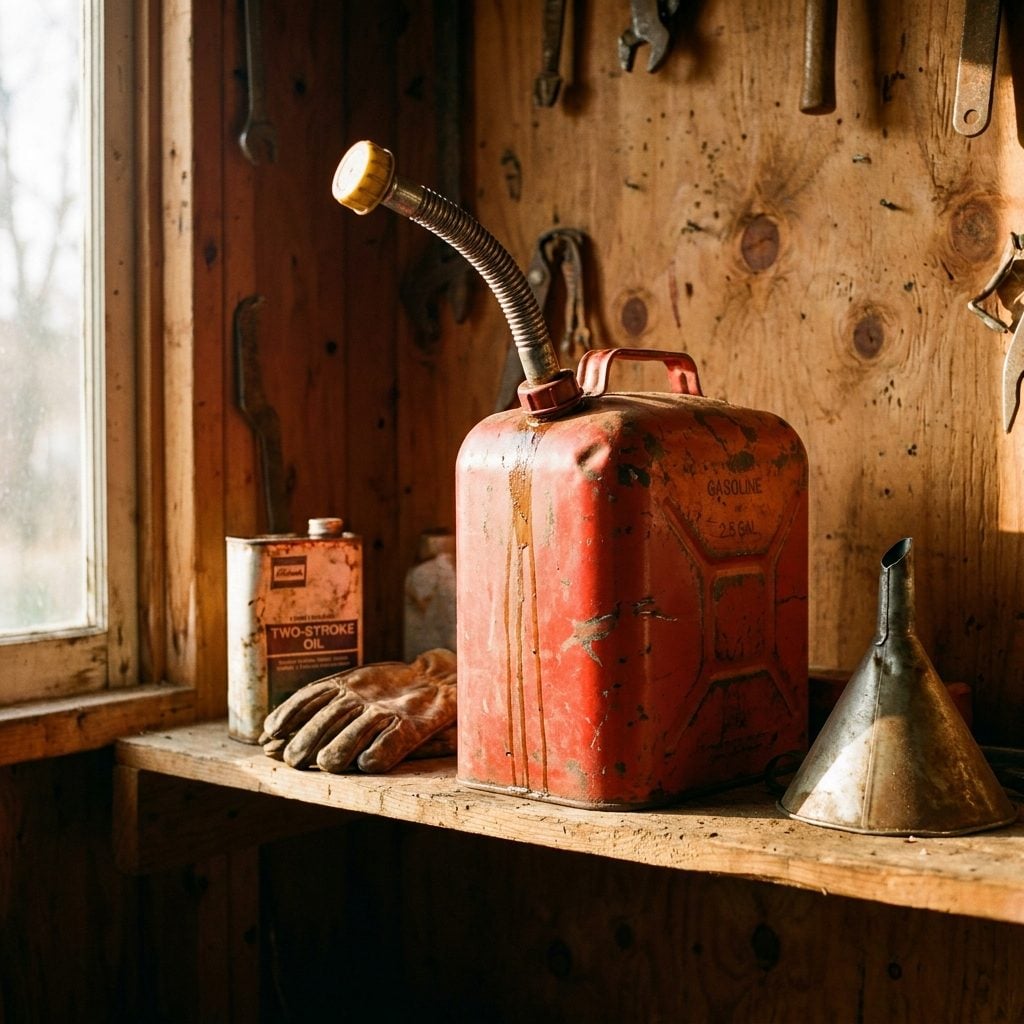
You could smell it from the driveway. That flexible metal spout had a cap meant to seal, and it did — for about six months. After that, the fumes were a permanent feature of the garage atmosphere, mixing with sawdust and old paint in a cocktail that probably took years off everyone’s life but smelled exactly like Saturday morning.
Pouring from it was an event. The spout flexed in directions you didn’t want, the cap tumbled into the mower’s gas tank at least once a season, and the whole operation left your hands smelling like fuel until Monday. Modern modern garage setups have those safety-compliant plastic cans with spring-loaded nozzles. They don’t leak. They also take four hands and a PhD in mechanical frustration to operate, which is its own kind of problem.
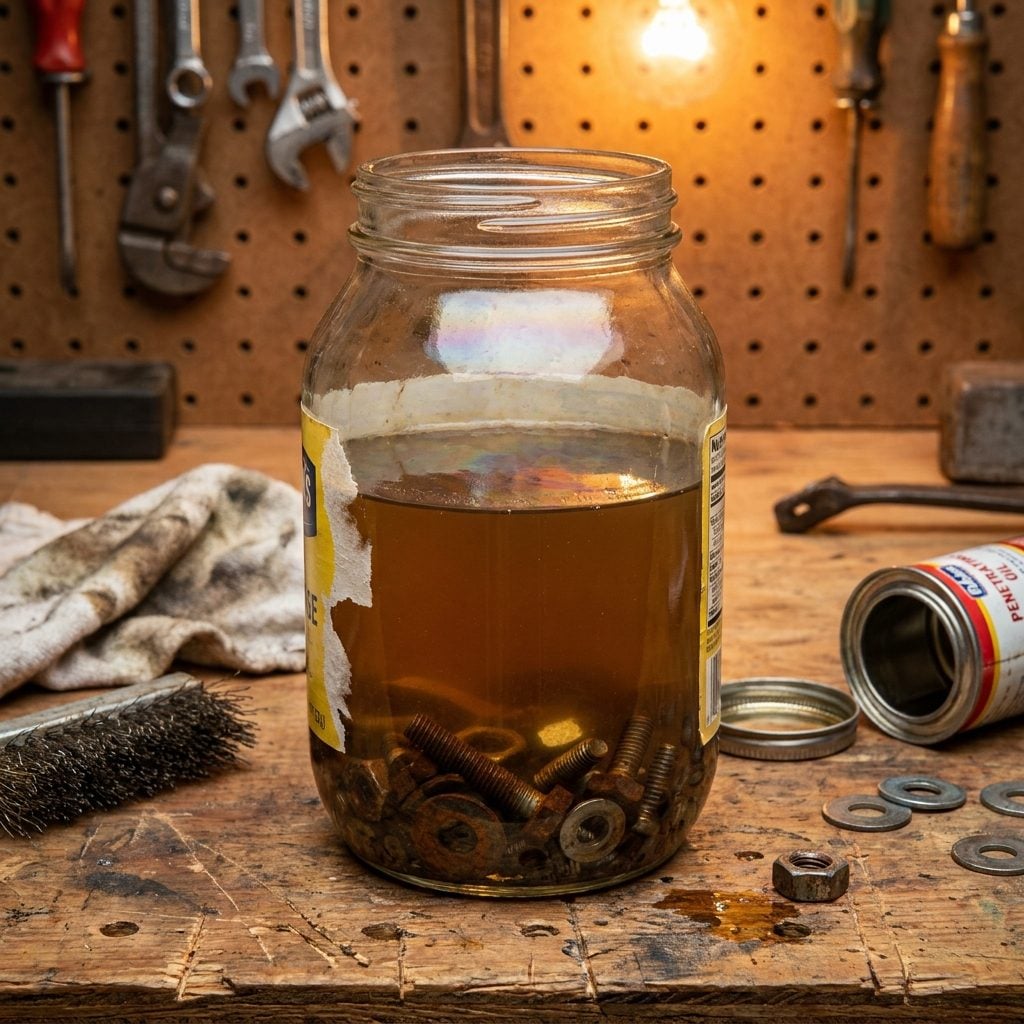
2. The Jar of Bolts Soaking in Something That Was Definitely Not Water
🔥 Would you like to save this?
Kerosene, probably. Or mineral spirits. Or some blend of solvents that would make a hazmat team visibly tense. The jar sat on the workbench for weeks at a stretch, doing its slow, patient work on a handful of seized bolts, and nobody questioned the open container of volatile liquid three feet from the bench grinder. Why would they? It had always been there.
And the bolts always came out better than expected. The method was reckless but the results held up. Every garage had at least one of these quiet little chemistry experiments running, and the rules were simple: don’t knock it over, don’t ask what’s in it, don’t mention it to your mother. Three rules. Nobody broke them.
1. The Kid’s Outgrown Sled Leaning Against the Wall Behind Everything Else
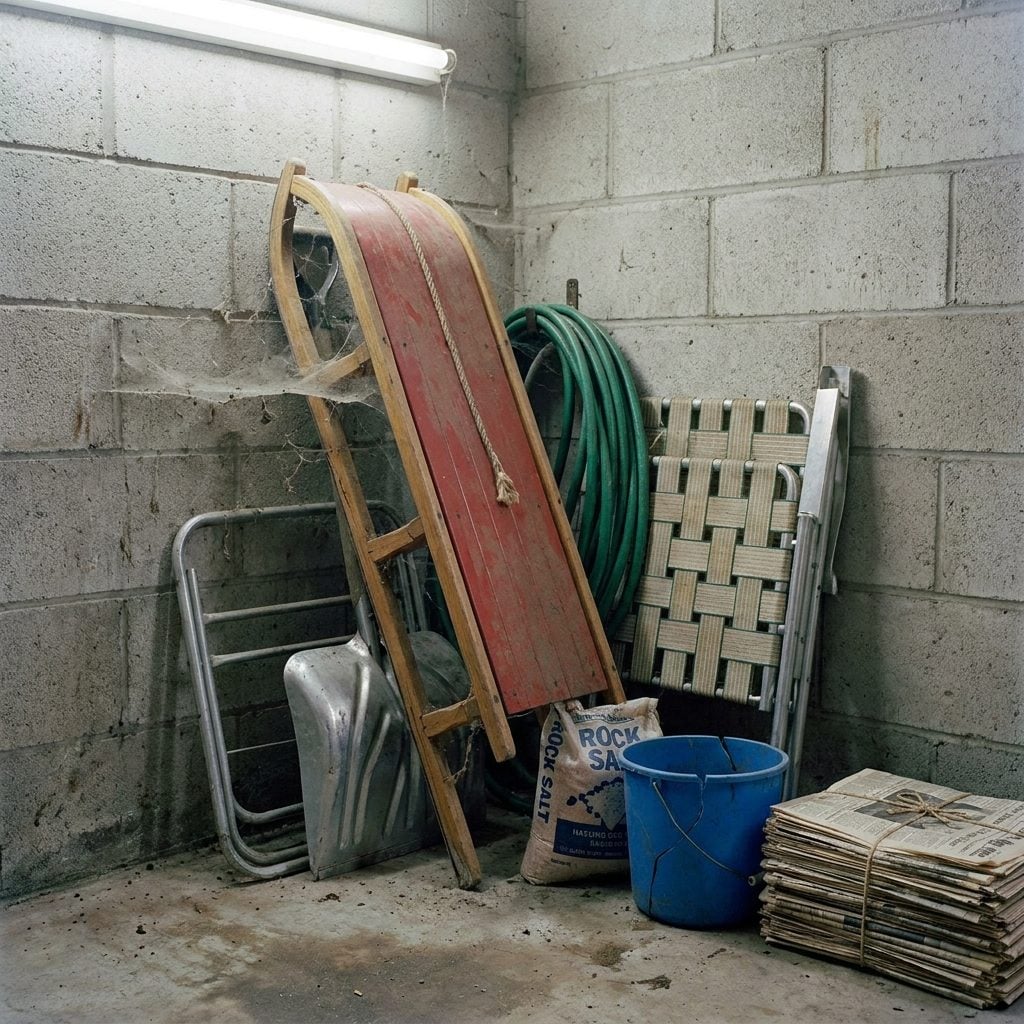
The kids who used it were in high school now, and the hill it was built for had a housing development on it. The sled stayed anyway.
It lived in that back corner behind the lawn chairs and the snow shovel, unreachable without moving six other things, which meant it never moved at all. Rope pull gone stiff. Red paint faded to something closer to pink. But throwing it away would have required someone to say out loud that the sledding years were over, and that was a sentence nobody in a craftsman garage design household of that era was willing to speak. So it leaned. It waited. Probably still there, honestly, behind a newer layer of lawn chairs belonging to the people who bought the house in 1998.