🔥 Would you like to save this?
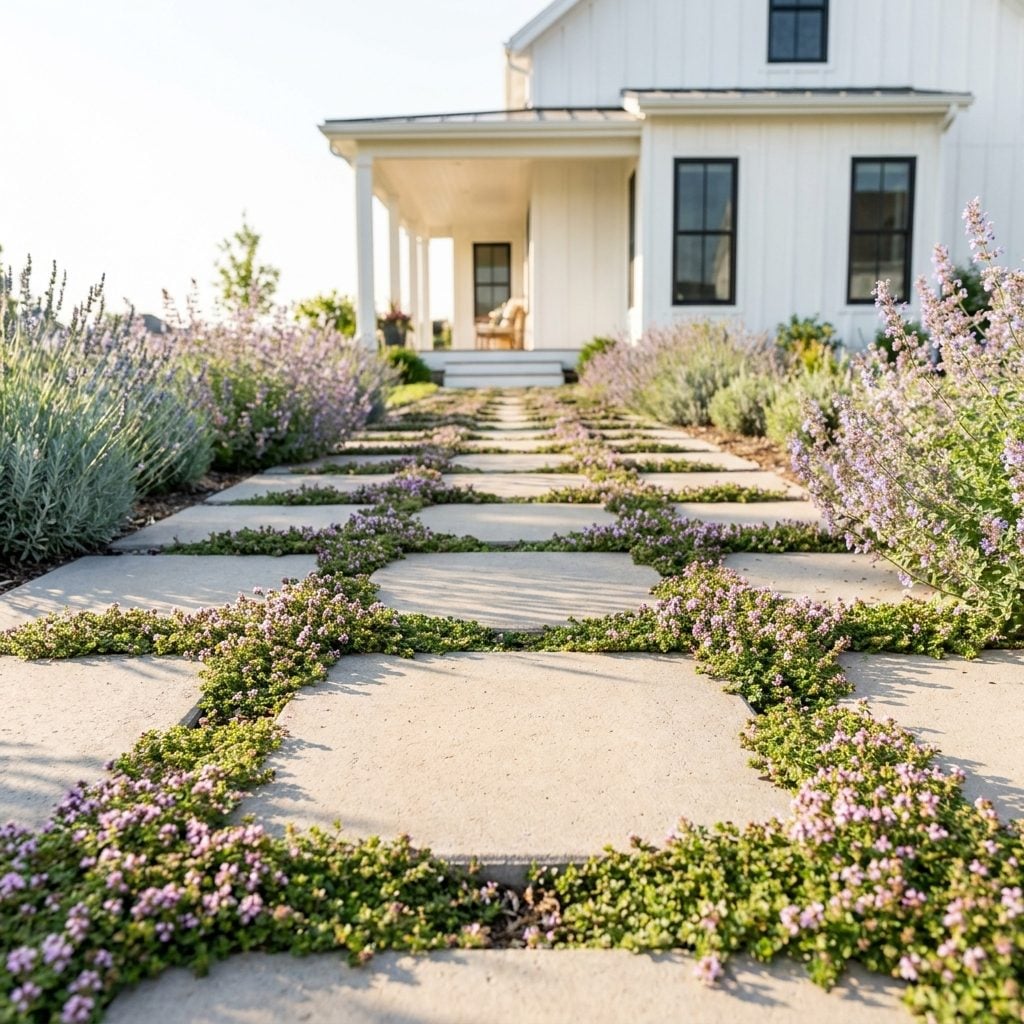
The front lawn has long been treated as a given, as automatic as a mailbox or a house number. But more homeowners are pulling up the grass and finding something better underneath. This collection of 25 designs focuses on what actually replaces the turf, not just the idea of going lawn-free.
In order to come up with the very specific design ideas, we create most designs with the assistance of state-of-the-art AI interior design software. Also, assume links that take you off the site are affiliate links such as links to Amazon. this means we may earn a commission if you buy something.
Gravel beds, decomposed granite, native ground covers, flagstone, drought-tolerant plantings, and hardscape arrangements all make appearances. Each design was selected because it holds together visually at street level, which is the real test of whether a lawn-free front yard works or just looks unfinished. The 25 examples ahead cover a range of climates, budgets, and house styles. Readers can judge for themselves which approach fits their block.
25. Rocky Outcroppings Replace Grass on This Two-Story Stone and Glass Exterior
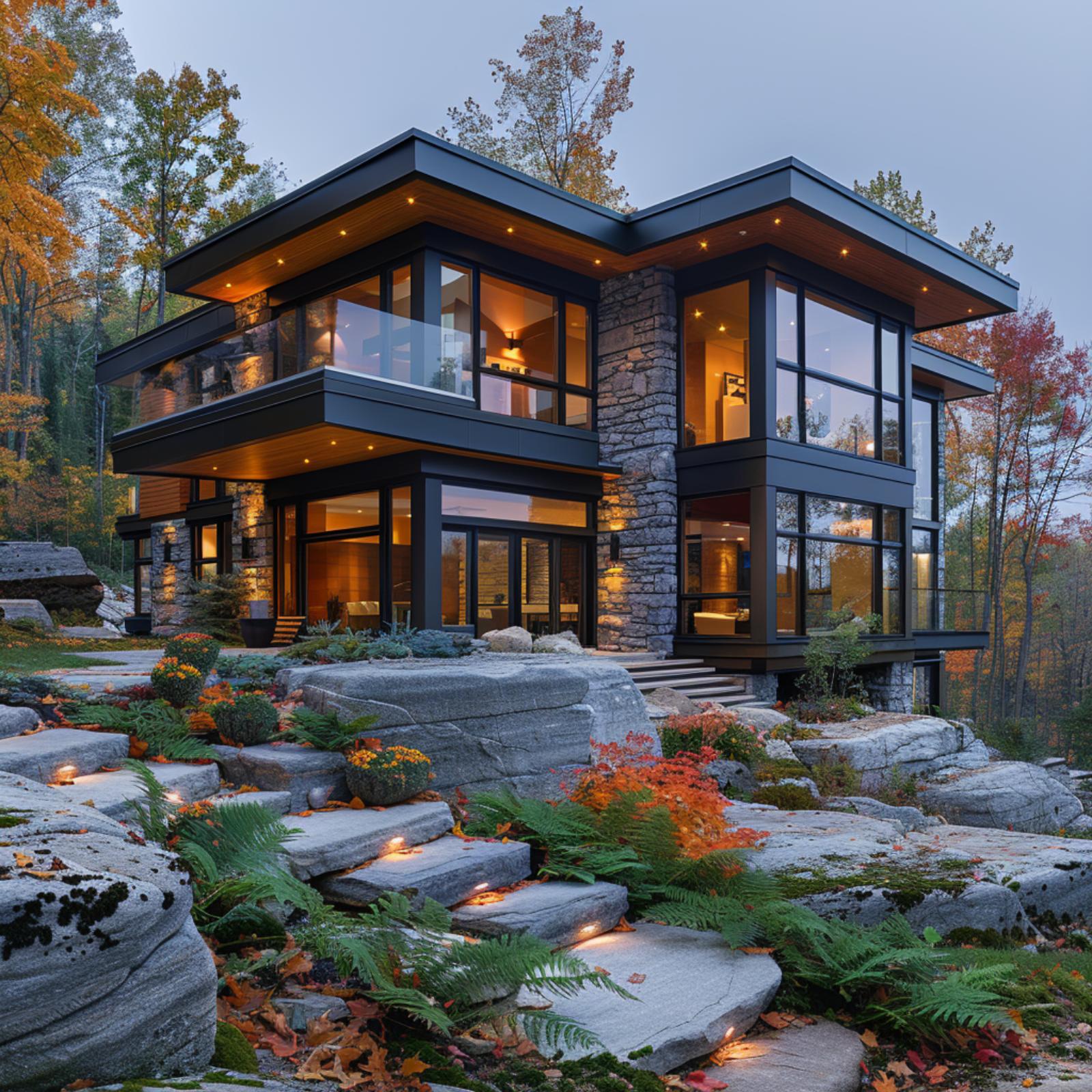
Granite boulders double as both hardscape and planting beds, with low-growing ferns, red Japanese maples, and yellow chrysanthemums tucked into the crevices. Recessed path lights illuminate flat stone steps leading upward toward the dark steel-framed facade.
24. Fynbos and Cobblestone Pull Focus Away From Grass on This Wine Country Estate
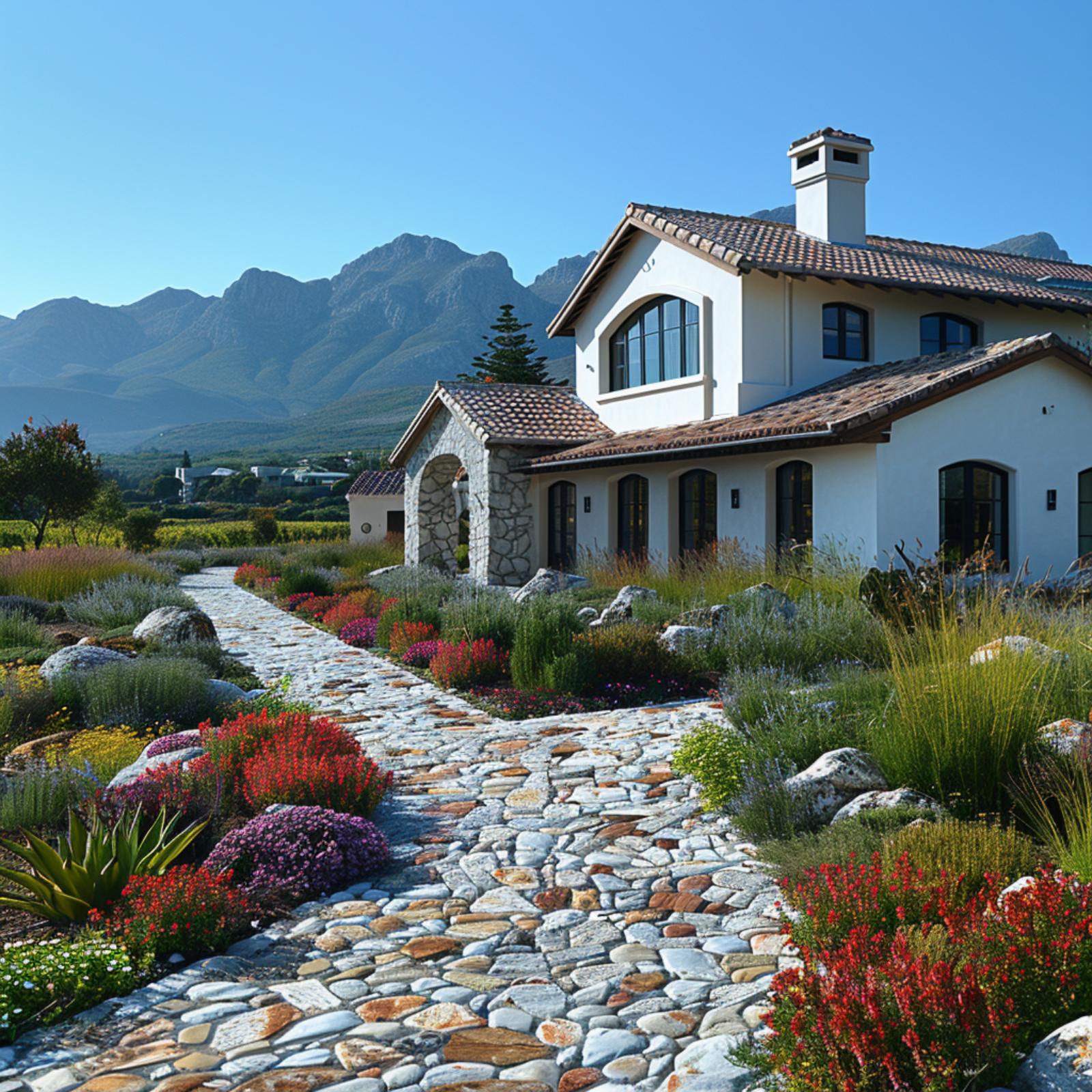
Rounded river stones in cream, rust, and taupe form a wide path that winds toward a white stucco facade with terracotta barrel tiles and a painted chimney stack. Stone veneer frames an arched gateway to the left, anchoring the entry with rough-cut granite in grey and brown tones.
Flanking the path, low-growing fynbos shrubs in crimson, violet, and gold cluster around scattered boulders, with aloe rosettes adding structure near the foreground. The Boland mountains visible in the background confirm the Western Cape setting, and every plant choice reflects the region’s native palette rather than imported lawn culture.
23. Blue Agapanthus and Slate Steppers Do the Work That Grass Usually Does
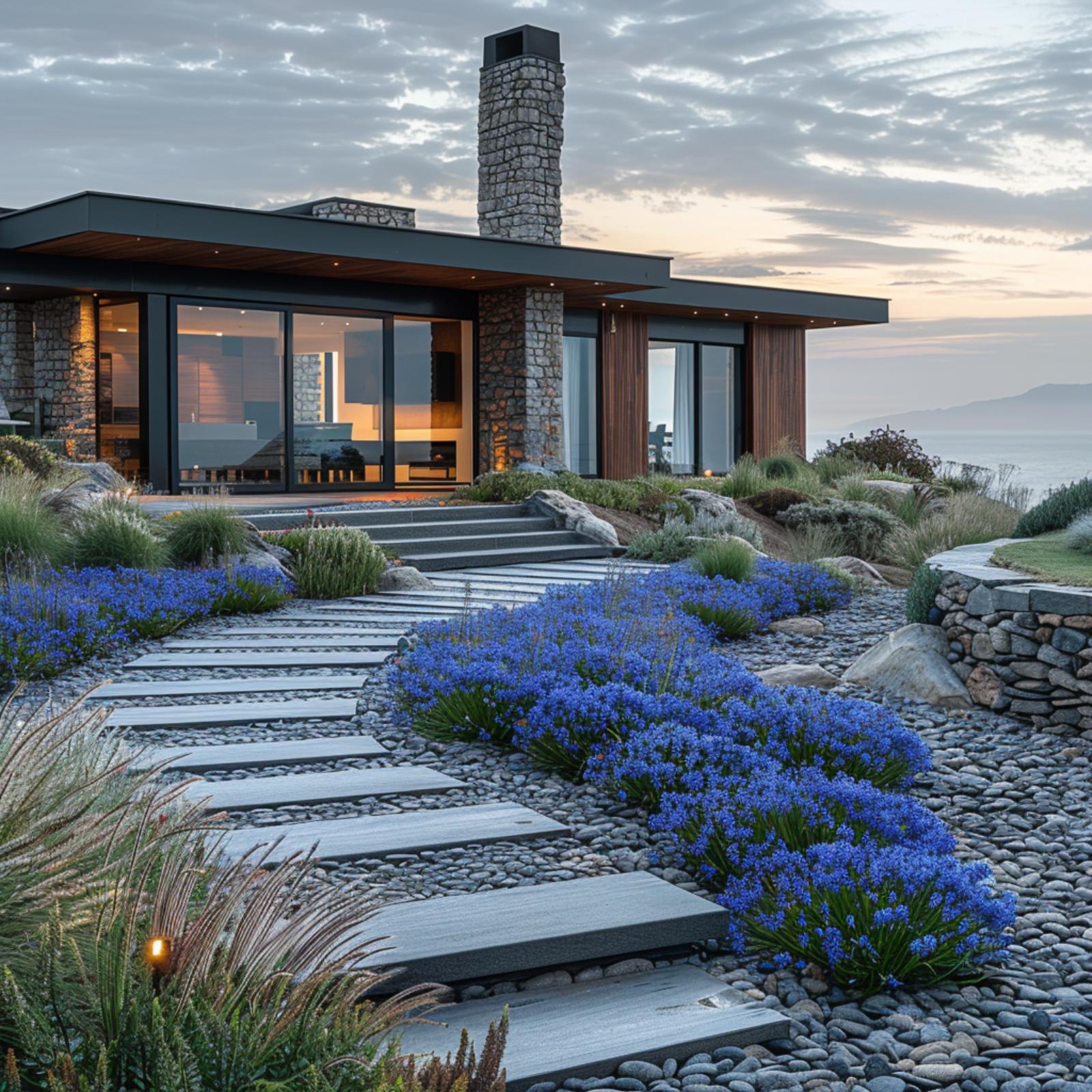
Clusters of violet-blue agapanthus push through river pebble ground cover along a path of gray slate stepping stones. The flat-roof structure pairs rough-cut stone columns with vertical cedar cladding and floor-to-ceiling sliding glass panels that reveal warm interior lighting at dusk.
22. Lavender Rows and Crushed Gravel Replace Every Blade of Grass on This French Riviera Villa
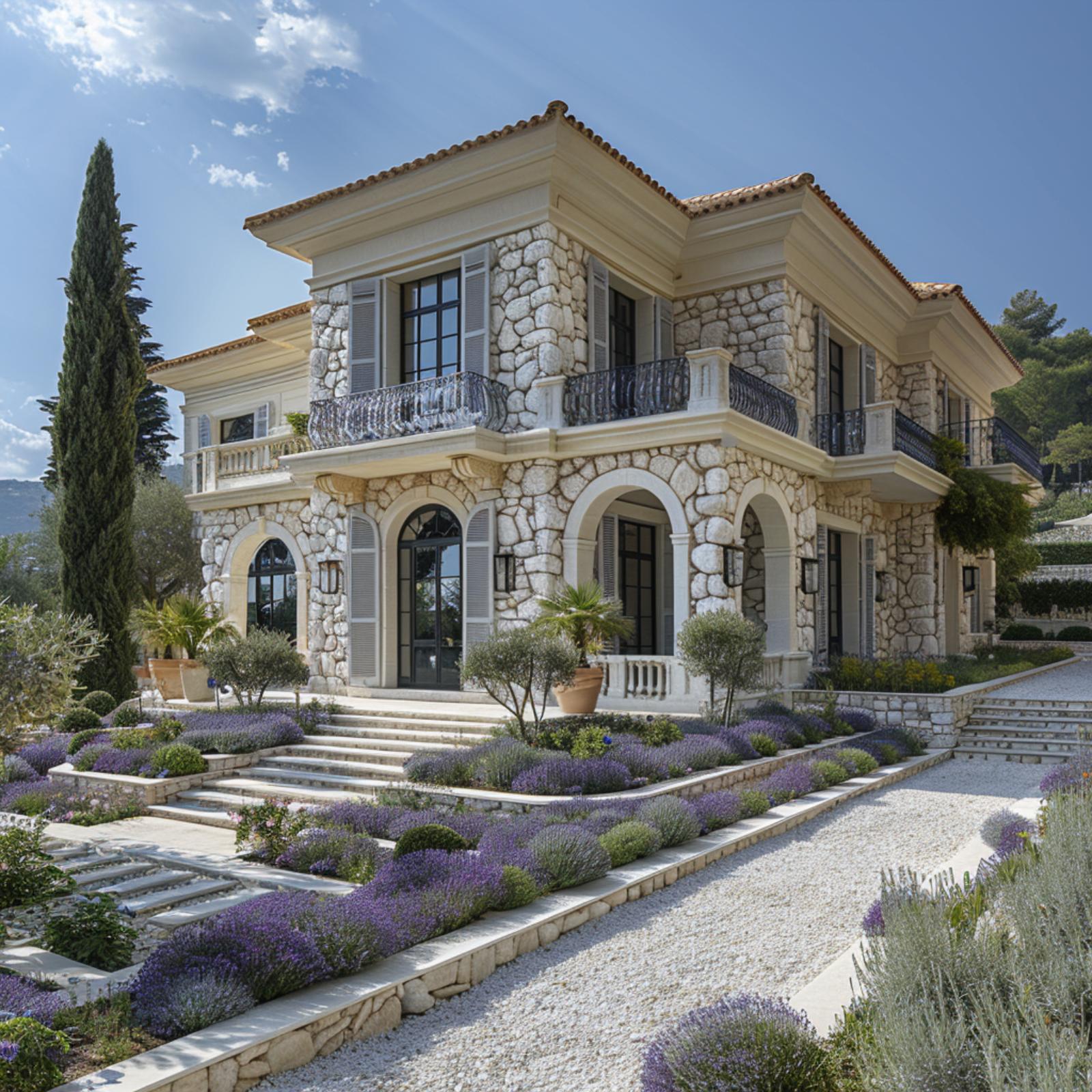
Terracotta roof tiles, cobbled stone walls, and wrought iron balcony railings frame a front yard where lavender does the structural work. Rows of purple blooms run parallel to white gravel paths, anchored by clipped olive trees in terracotta pots.
- Lavender rows create rhythm without turf
- Gravel paths drain fast and need no mowing
- Cypress trees add vertical structure grass never could
21. Whitewashed Stone, Bougainvillea, and an Ancient Olive Tree Stand In for Grass
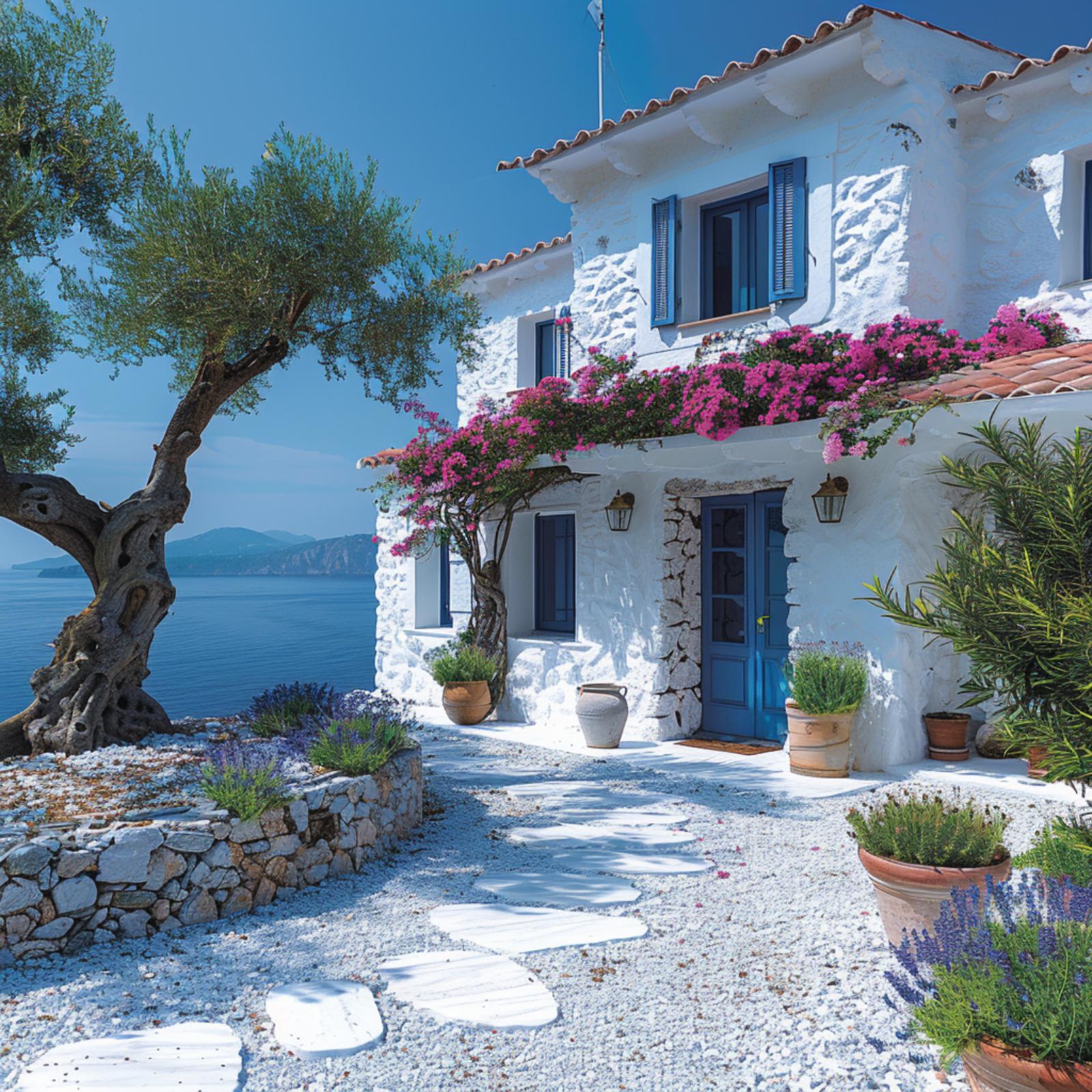
White pea gravel covers every inch of ground where a lawn might otherwise sit, broken only by flat stone pavers that lead to a blue-painted door. Pink bougainvillea climbs past the roofline, spilling over the entry in a way that draws the eye upward rather than outward. Lavender plants in clay pots line the facade, and a gnarled olive tree anchors the left corner with its twisted trunk.
The house itself is whitewashed stone with terracotta roof tiles and blue louvered shutters on the upper windows. A low dry-stack stone retaining wall separates the gravel courtyard from the drop toward the sea beyond. Mountains rise faintly across the water in the background.
Color Story: White pea gravel acts as a near-reflective surface here, bouncing light back against the whitewashed stone walls and making the pink bougainvillea appear more saturated than it might against a darker ground cover. The blue of the shutters and door is notably consistent, suggesting a deliberate match rather than a gradual accumulation of paint colors over time. That tight palette of white, blue, and pink carries the entire exterior without needing a single blade of grass to fill visual space.
20. Wisteria-Draped Stone and Cobblestone Court Pull Off Lawn-Free Elegance
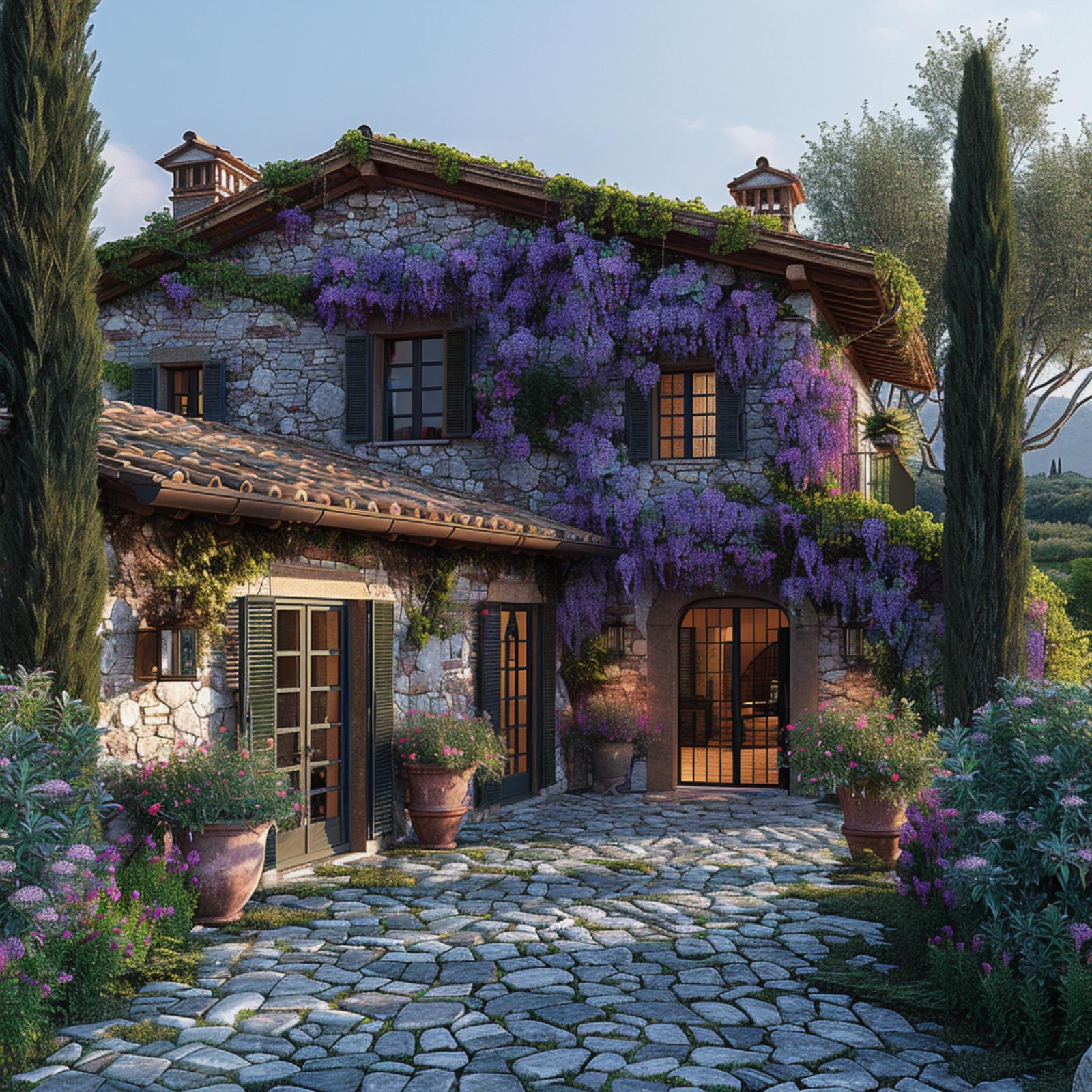
Purple wisteria cascades from the roofline down the rough-cut stone facade, framing arched iron-grilled doors and shuttered windows with dark slate-blue louvers. A cobblestone forecourt in irregular grey fieldstone replaces every inch of turf. Terracotta urns planted with pink geraniums anchor the entry without a single blade of grass in sight.
History Corner: Wisteria has been trained onto European stone farmhouses since at least the 17th century, when Italian and French estate owners first used it to soften rubble-stone walls during summer months. Tuscan masons historically selected rough-cut limestone and fieldstone precisely because climbing plants could grip the irregular mortar joints, making the pairing both structural and ornamental.
19. Floating Stone Steps and Azalea Mounds Prove Grass Was Never the Point
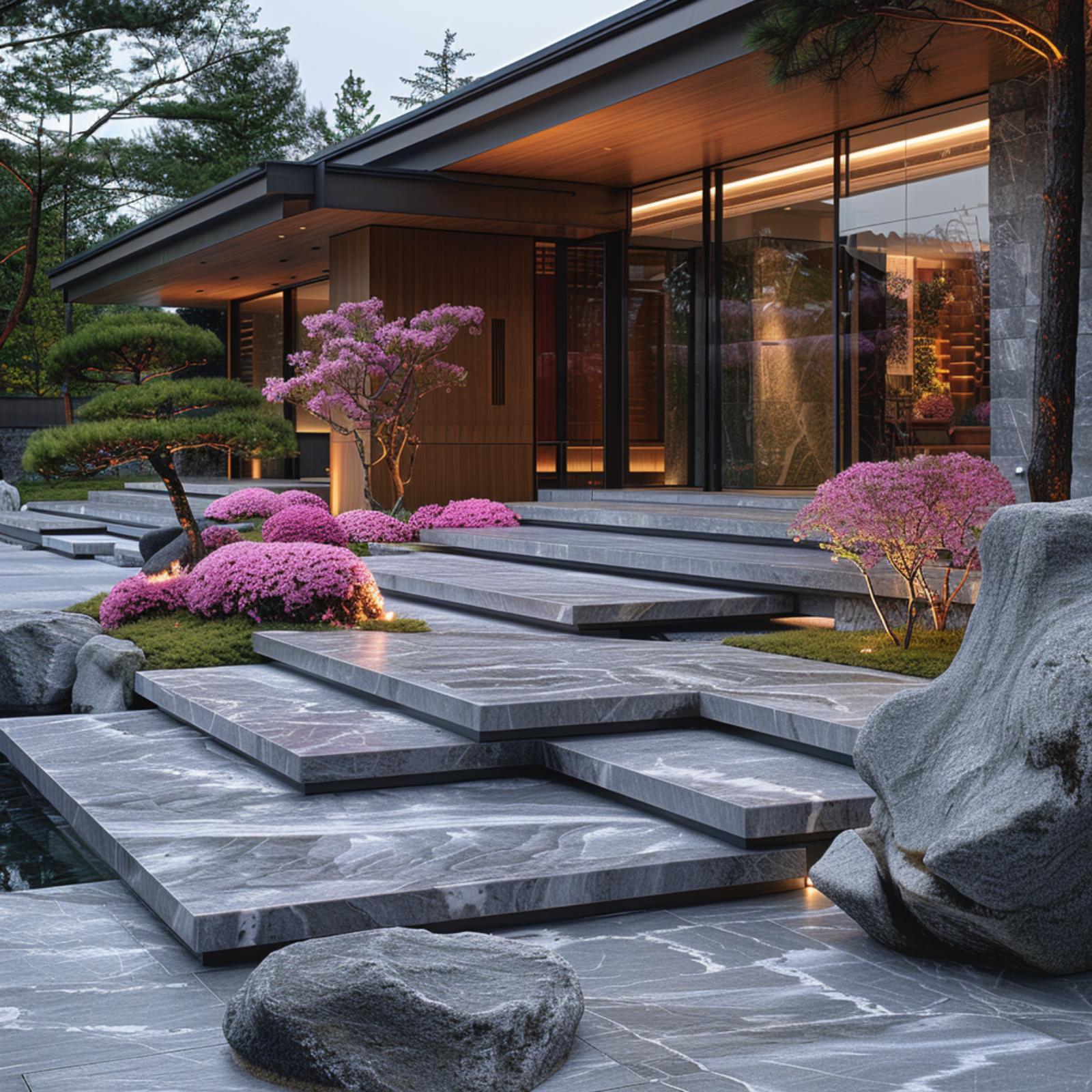
Veined gray stone slabs stack in offset tiers, each lifted slightly to expose recessed LED strips underneath. Mounded azaleas in deep magenta fill the gaps between steps. Shaped pines anchor the left edge. Floor-to-ceiling glass reflects the warm cedar ceiling beyond.
Ask Yourself: Before committing to a lawn-free front yard, ask yourself how much of your curb appeal currently depends on green as a neutral background. Stone and flowering shrubs create their own contrast, but the balance between hard and soft surfaces needs deliberate planning, not default choices.
18. Pink Azalea Mounds and Raked Gravel Give This Japanese-Modern Exterior Its Edge
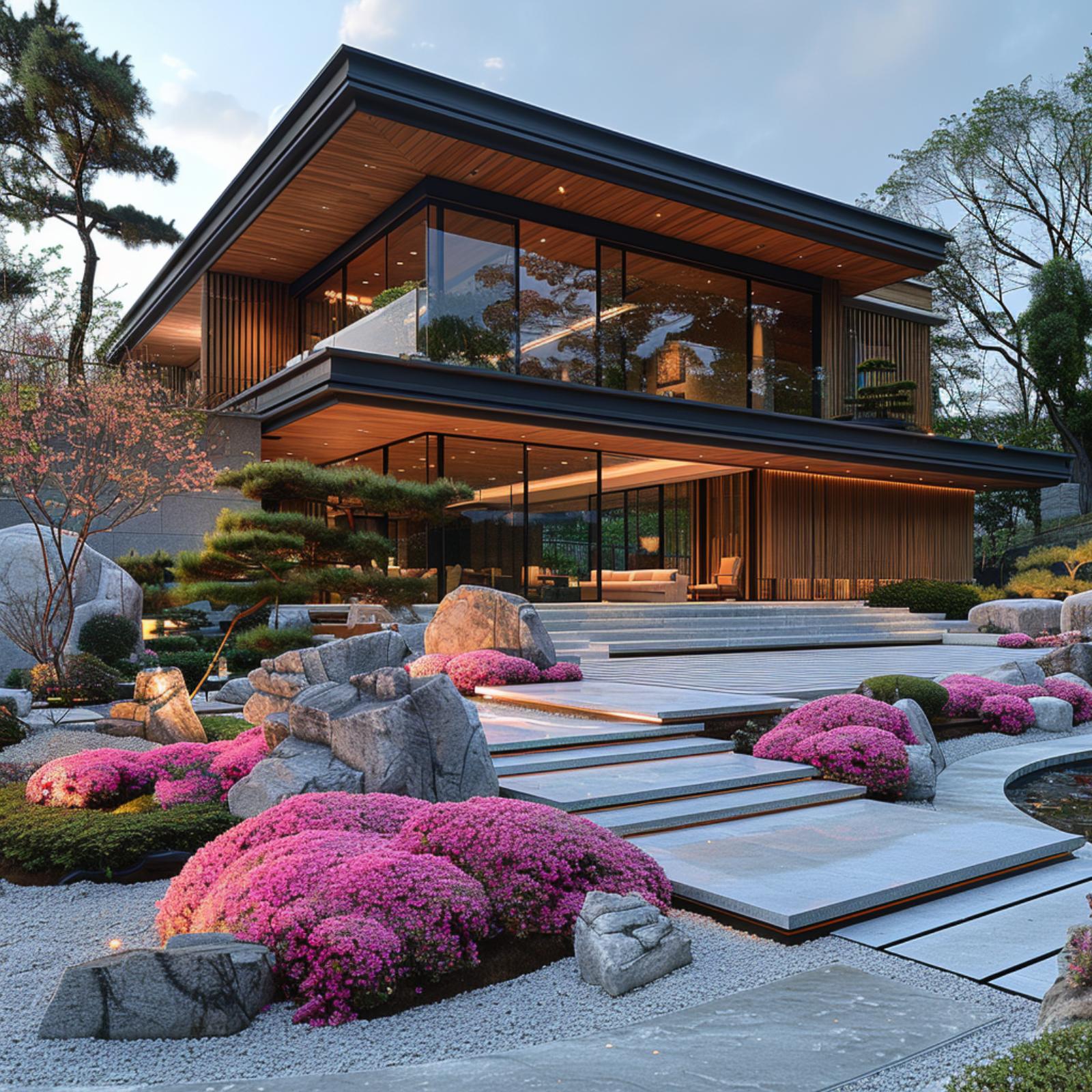
Grass would have ruined this entirely.
Mounded azaleas in saturated magenta sit low against raked white gravel, their rounded forms echoing the natural boulders placed throughout the garden. Floating stone pavers in honed light grey step up toward a wide platform terrace, where warm-toned wood ceiling cladding glows from interior recessed lighting. Floor-to-ceiling black-framed glass walls on both levels expose the living spaces beyond, including what appears to be a sofa in oatmeal upholstery on the lower level. Sculptural Japanese black pines anchor the midground, their horizontal branching drawing the eye laterally rather than toward the roofline. The gravel base keeps maintenance low while giving the whole composition a deliberate, considered weight that turf simply could not provide.
17. Agave, Flagstone, and Ocean Light Do Everything Grass Never Could
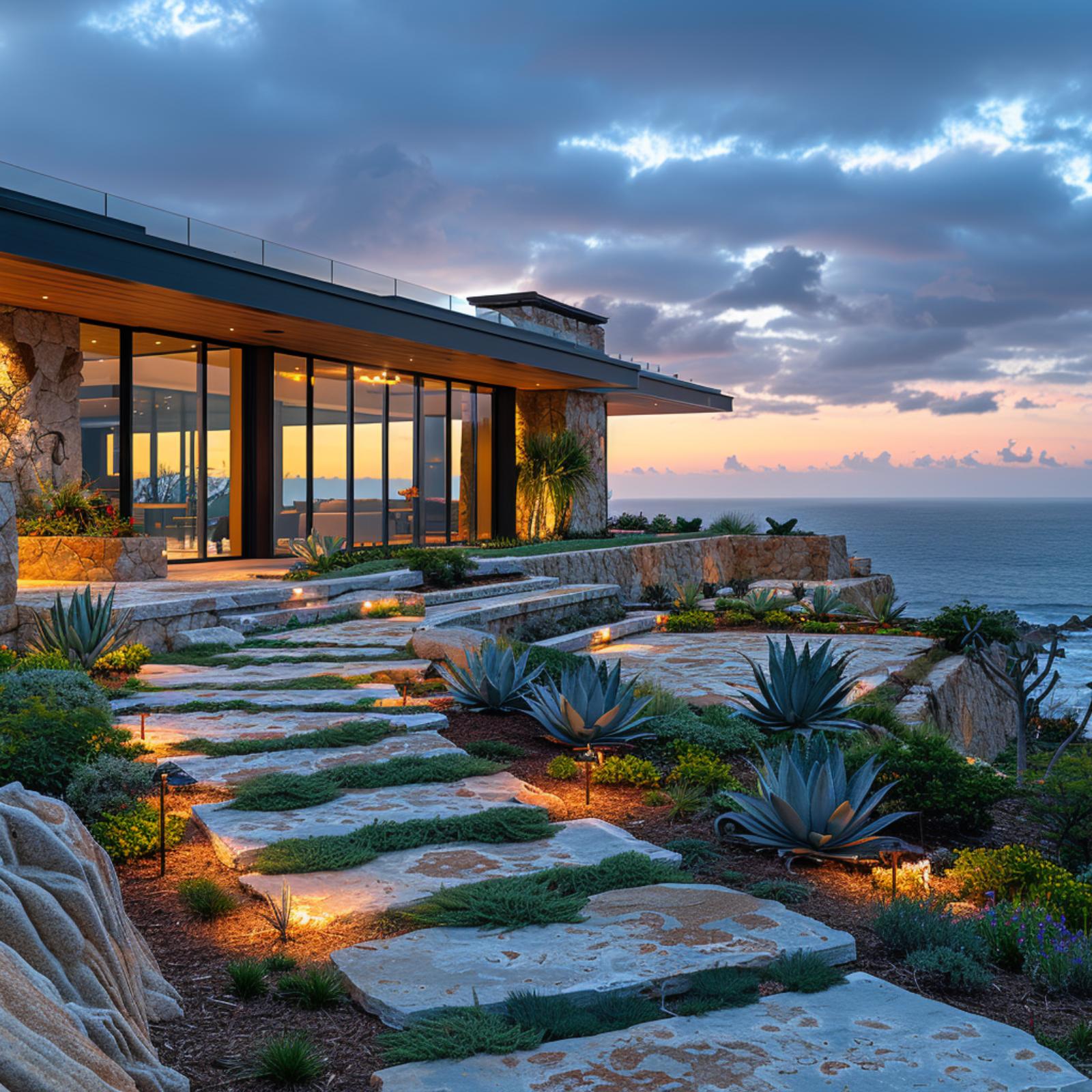
Blue-gray agave rosettes anchor the terraced beds here, their sharp geometry contrasting against irregular flagstone pavers lit from below by low-profile path lights. Stone-clad retaining walls step down toward the water in layers, with ground-cover creepers filling the joints between slabs.
Pro Tip: Agave species like Agave americana require virtually no irrigation once established, making them one of the most cost-effective ground-level plants for cliff-side or coastal properties where soil retention matters as much as appearance. Landscape lighting installed beneath flagstone risers, rather than beside them, eliminates the harsh shadows that standard bollard lights cast across planting beds at night. That uplighting technique is what gives this exterior its warm, interior-quality glow after sunset.
16. Illuminated Concrete Steps and Agave Plantings Replace Every Inch of Turf
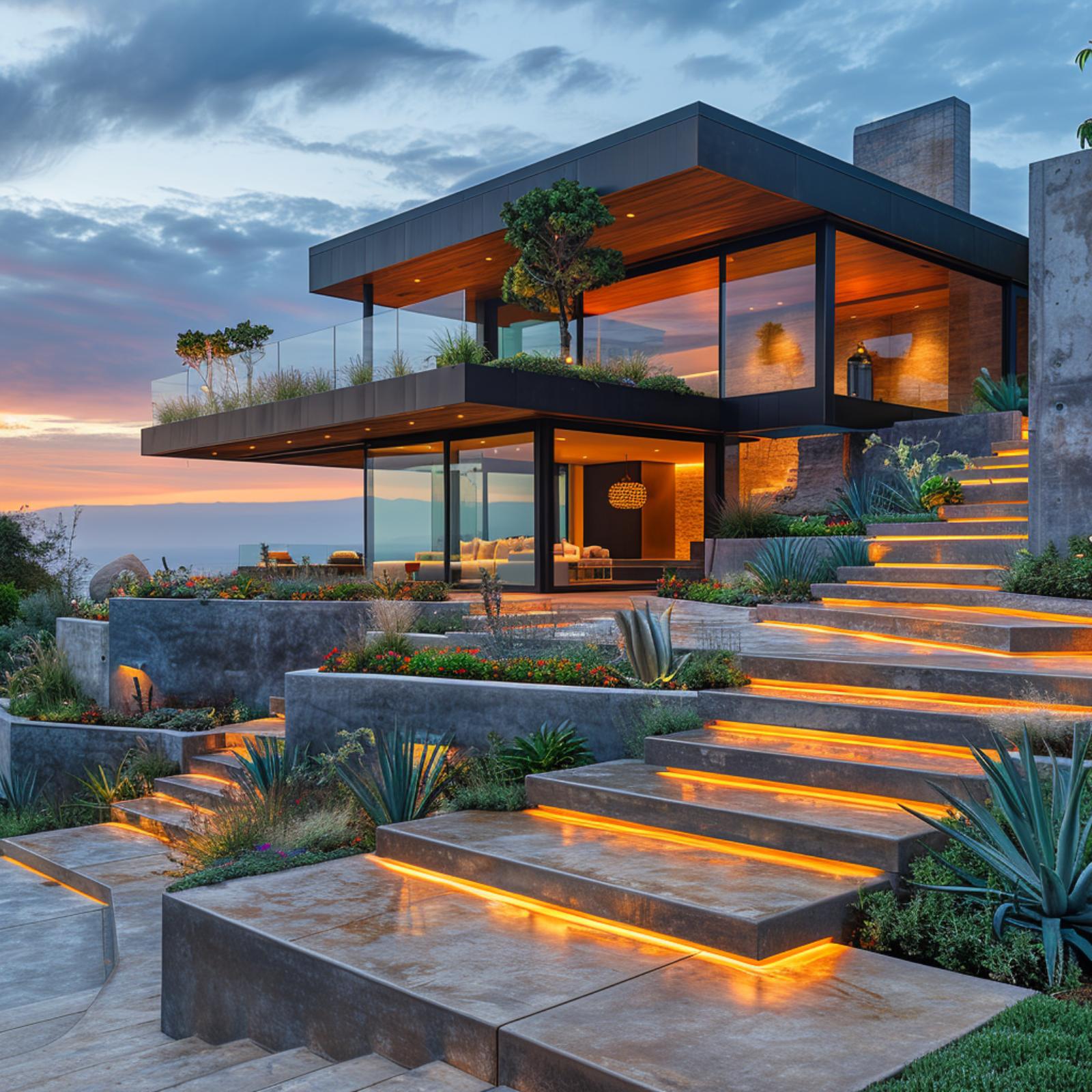
Warm-amber LED strip lights run beneath each concrete tread, casting a band of orange light that makes the tiered approach feel intentional after dark. Agave plants in blue-green rosettes anchor the retaining walls on both sides, while red flowering ground cover fills the planting beds between levels. The house itself pairs black steel frames with warm ipe-toned ceiling panels and floor-to-ceiling glass, keeping the interior glow visible from the lowest step. Grass plays no role here.
In The Details: Under-step LED strip lighting has surged in residential landscape design over the past five years, largely because it solves a safety problem while adding visual structure to multi-level entries. Unlike path lighting staked into soil, recessed tread lighting requires no replanting or repositioning as plantings mature around it.
15. Lavender Borders and a Terracotta Tile Path Make Grass Look Like an Afterthought
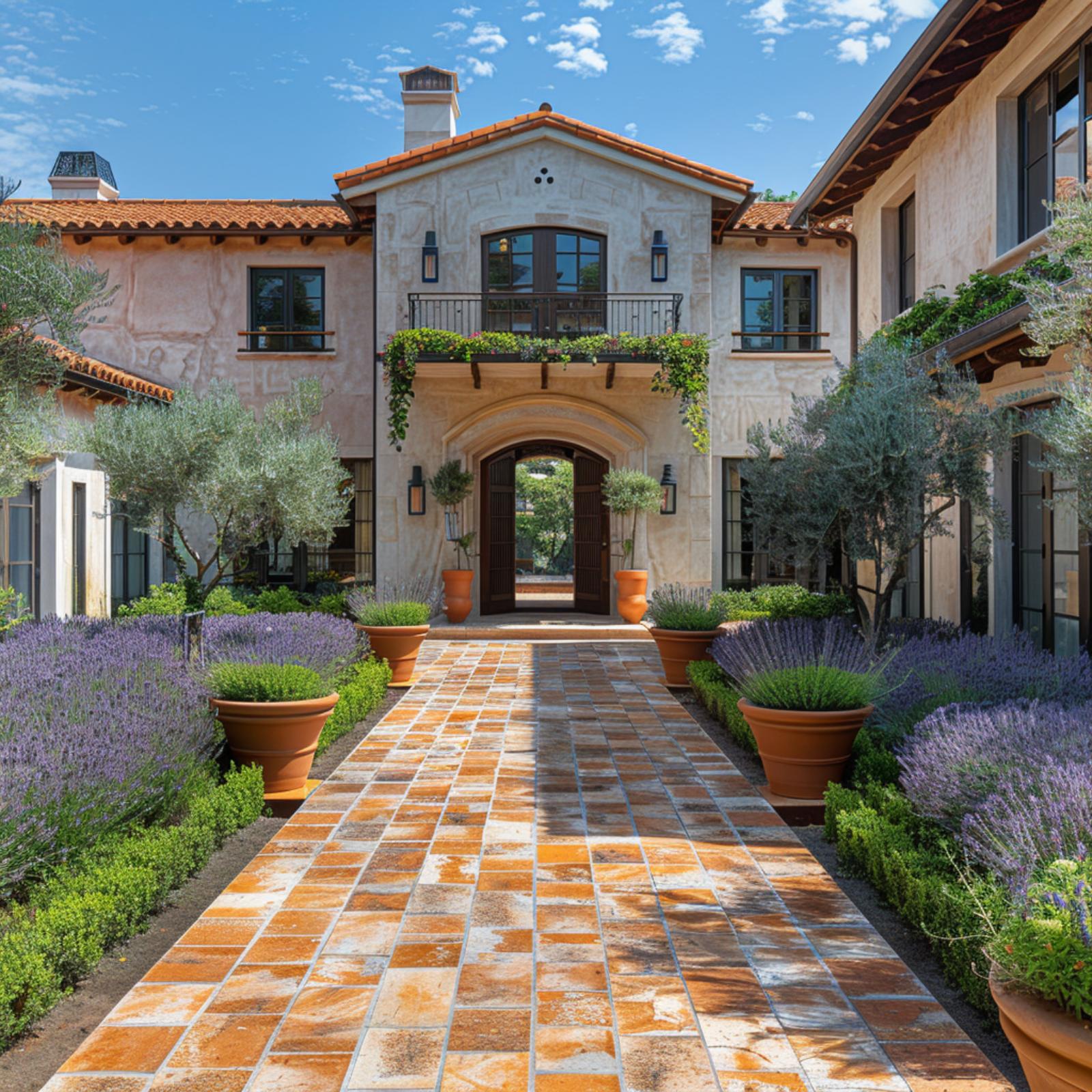
Salvaged-look terracotta square tiles form the entry path here, their sun-bleached ochre and rust tones pulling the eye straight toward a dark walnut arched door framed by a limestone surround. Climbing vines spill over a wrought iron balcony railing above, while large clay urns anchor the path at measured intervals. Every material choice traces back to southern European vernacular building.
Rows of lavender flank both sides, their silver-green stems and violet blooms doing the work a lawn would normally do by softening the hard geometry of the tile. Clipped boxwood panels and mature olive trees add structure without crowding the entry. Not one square foot of turf appears anywhere in the composition.
Quick Fix: Lavender planted directly against a tiled walkway releases fragrance as visitors brush past, adding a sensory layer that no grass planting can replicate. It also requires roughly 60 percent less water than a comparable stretch of turf once established in a Mediterranean-adjacent climate. For homeowners worried about seasonal color loss, mixing early-blooming Hidcote lavender with late-blooming Phenomenal variety extends the purple display from late spring through early fall.
14. Bougainvillea, Saguaro, and Arched Iron Doors Pull Off What Grass Never Attempted
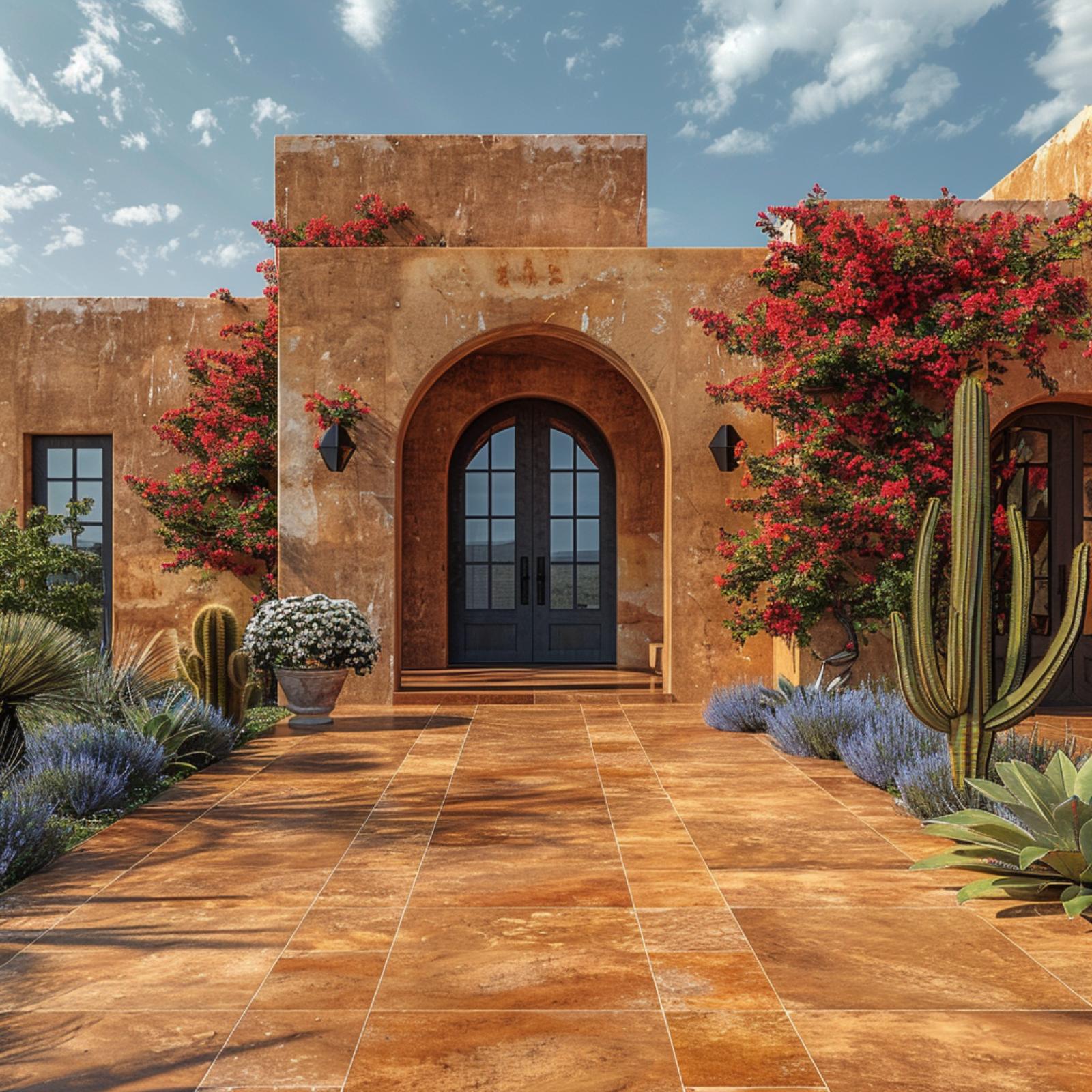
Ochre stucco, worn to expose patches of raw earth tone beneath, anchors a facade that relies entirely on plant mass and stone for visual weight. Two bougainvillea specimens trained against the walls deliver dense red bloom clusters at cornice height, framing a round-arched entry fitted with dark-framed double doors divided by a grid of glass panes. Wall-mounted black geometric sconces flank the arch on each side.
A tall saguaro cactus stands near the right wing, paired with low agave rosettes and drifts of lavender. Rust-toned stone tile covers the entire forecourt in large format squares, the warm variation in each slab keeping the ground plane from reading as flat or monotonous. A single stone urn planted with white chrysanthemums sits at the base of the entry steps.
Did You Know: Bougainvillea is not a flowering plant in the traditional sense. The vivid color comes from papery bracts, which are modified leaves, not petals. This distinction matters for pruning schedules, since cutting back after the bract cycle ends encourages a denser flush the following season rather than interrupting an active bloom.
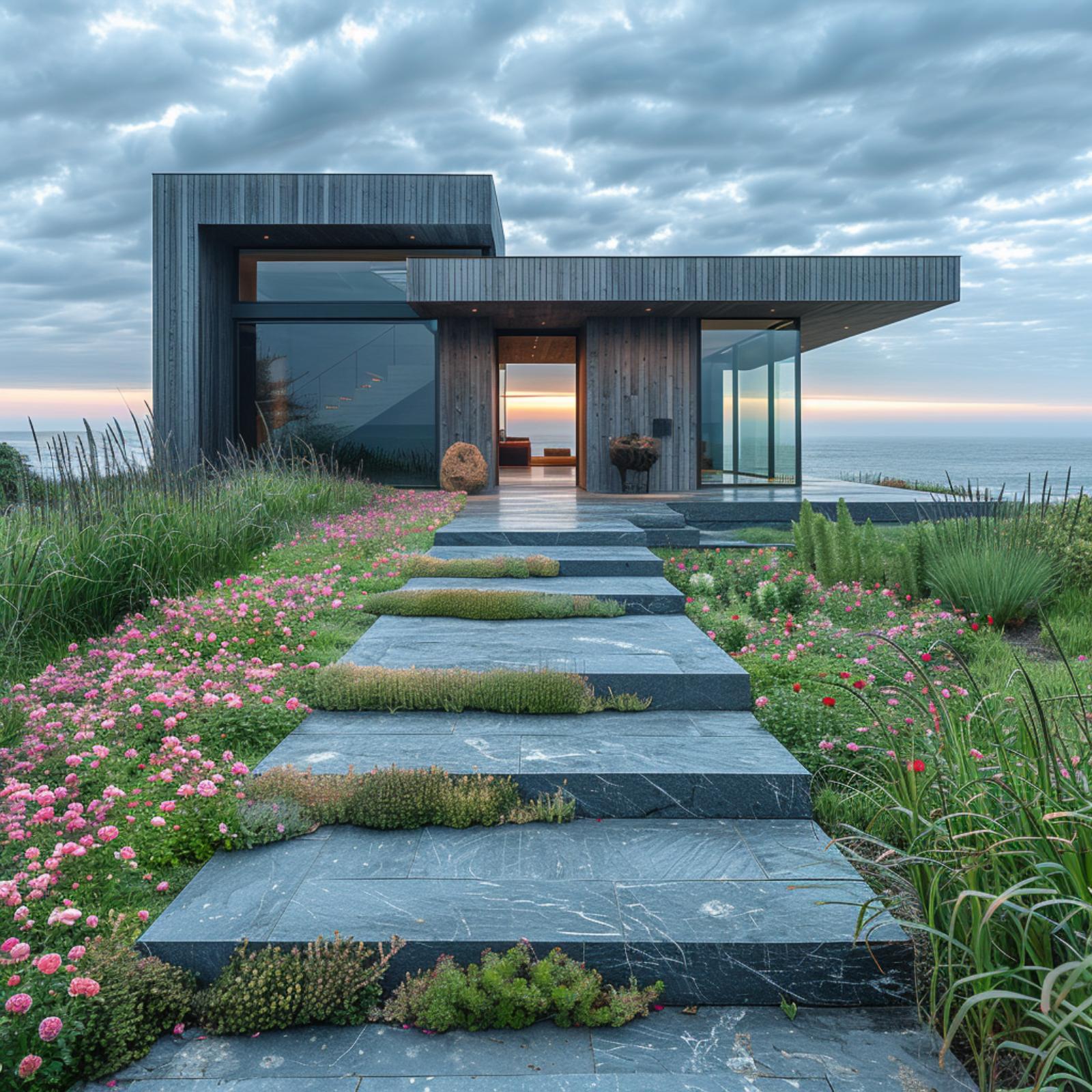
13. Slate Steps, Coastal Grasses, and Pink Roses Swap Out Every Square Foot of Lawn
🔥 Would you like to save this?
Broad bluestone steps rise toward a cedar-clad pavilion with floor-to-ceiling glass panels and a cantilevered flat roof. Small-leafed ground cover fills the gaps between each tread. On both sides, pink roses and ornamental grasses grow in loose, unedged drifts that read as intentional rather than wild.
Through the open entry, a warm interior glow catches the last light from the ocean horizon behind the building. The house sits at the edge of a coastal bluff, and the slate path does the organizing work that a lawn would normally handle.
Why the Step Gaps Matter More Than the Steps Themselves
The low ground cover planted between each bluestone tread serves a structural purpose beyond softening the hardscape. Creeping thyme and similar mat-forming plants anchor the soil along a sloped approach, reducing erosion on a grade that would otherwise shed topsoil during heavy coastal rain. Gap planting also slows foot traffic just enough that visitors look down, which draws attention to the craftsmanship of the stone rather than past it.
12. Moroccan Arched Entry, Blue Ceramic Urns, and Zero Lawn Needed
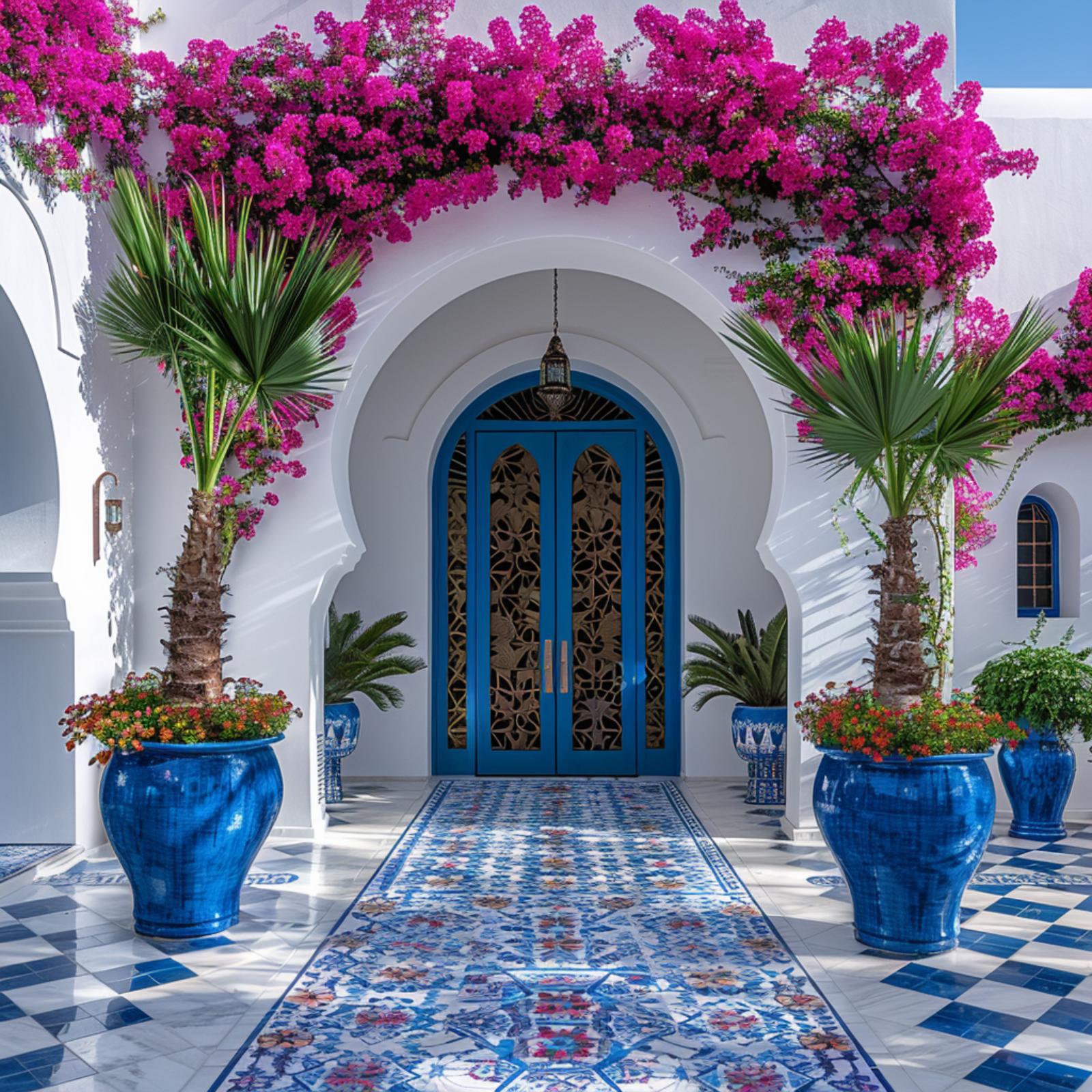
Cobalt blue ceramic urns anchor both sides of a whitewashed entry courtyard, each planted with a dwarf fan palm rising above clusters of orange and red flowers. The floor splits between a blue-and-white diamond-check tile border and a central runner of hand-painted floral mosaic in red, cobalt, and ivory. Bougainvillea in deep magenta arches overhead, trained across the full width of the entry vault.
The arched double door, framed in cobalt blue, features intricate pierced metalwork in a geometric pattern. A Moroccan lantern hangs centered from the arch above it. No grass exists anywhere in this courtyard, and none is missed.
Common Mistake: One of the most common errors in lawn-free courtyard design is choosing containers that fight the architecture rather than echo it. Here, the cobalt glaze on the urns repeats the door frame color exactly, which is what makes the composition read as intentional rather than assembled. When container color and architectural trim color share no relationship, even a well-planted entry can look accidental.
Prairie-style architecture proves the lawn-free formula works just as well on flat, open land as it does on Mediterranean hillsides.
11. Wildflowers, Flagstone, and a Stone Chimney Tower Replace Every Blade of Grass
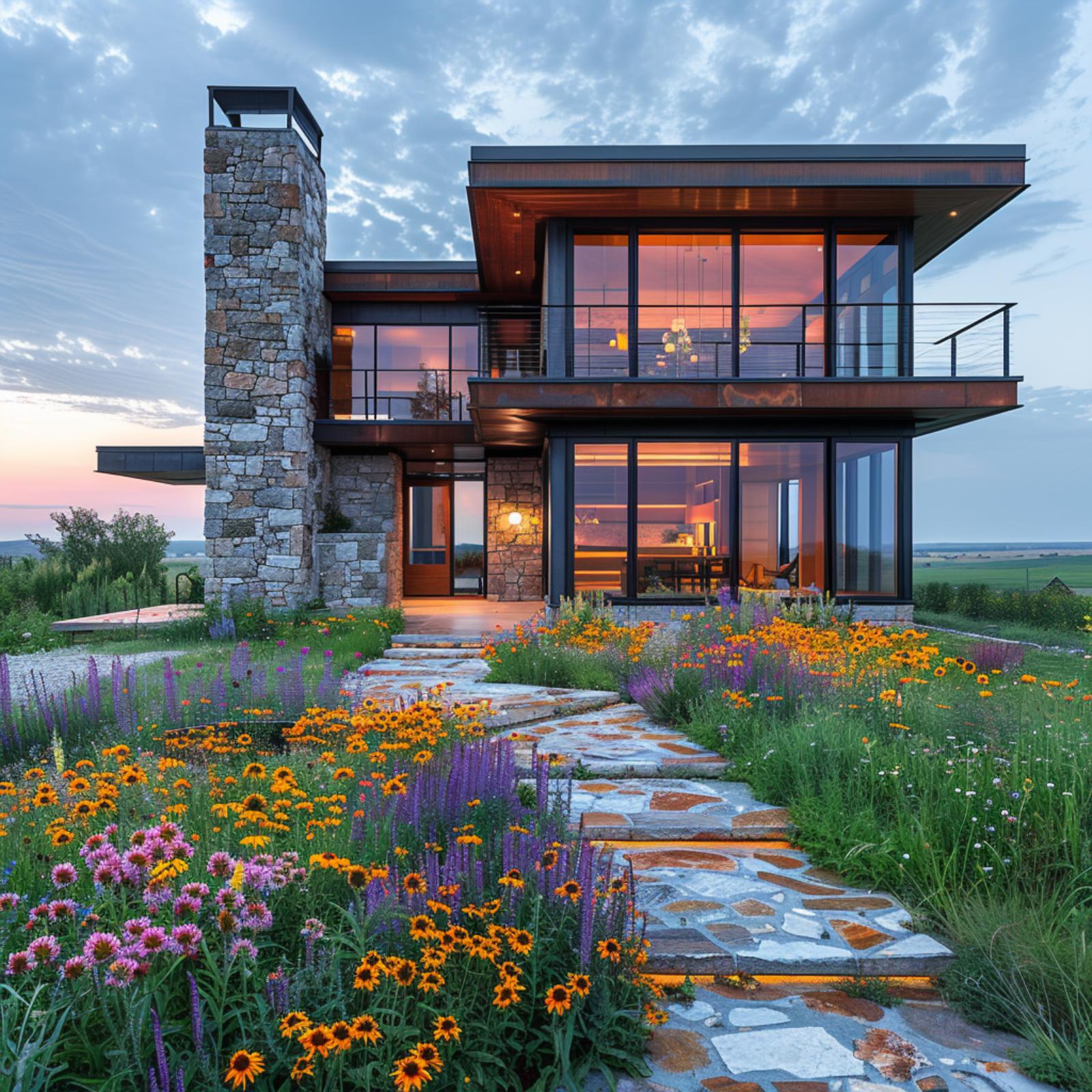
Irregular flagstone pavers cut a path through drifts of black-eyed Susans, purple salvia, and coneflowers in pink and orange, none of it arranged in a way that looks planted so much as arrived at naturally. The two-story structure pairs a rough-cut fieldstone chimney column against floor-to-ceiling steel-framed glass, with wood soffit panels on the cantilevered upper level glowing copper under recessed ceiling lights.
At dusk, the warm interior light pressing through the glass walls creates a contrast against the blue-gray sky that no turf lawn could produce. Wildflower plantings like this require far less water than turfgrass once established, and they support native pollinators that manicured grass monocultures cannot. The stone path doubles as a retaining edge, keeping foot traffic clear without introducing any formal edging material that might harden the look.
10. Birch Groves, Gravel Beds, and Ground Lights Replace Every Square Foot of Turf
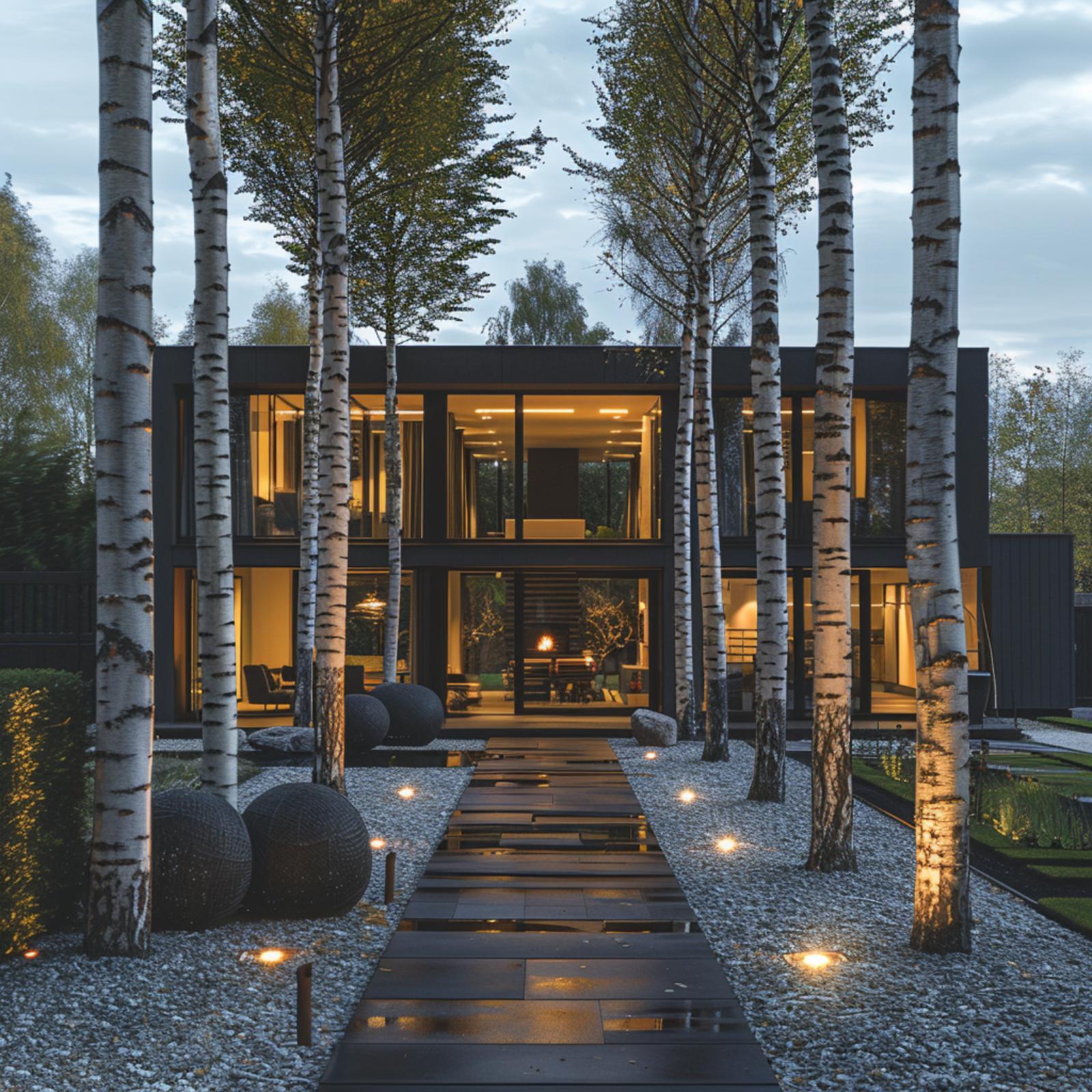
Nine birch trees with white-and-black bark stand in loose rows across a white gravel bed, framing a dark wood-plank walkway that leads straight to an open ground floor. The two-story exterior is clad in matte black panel siding, with floor-to-ceiling glazing on both levels pouring amber light onto the gravel below. Sphere-shaped concrete ornaments anchor each side of the path.
In-ground uplights dot the gravel at irregular intervals, casting warm pools across the tree bases without any overhead fixture in sight. Inside, a fireplace glows through the open ground-level glass, visible from the entry path. No single blade of grass appears anywhere on the property.
Budget Tip: White pea gravel is typically priced between $35 and $55 per cubic yard, making it one of the least expensive ways to cover large ground areas compared to sod installation, which averages $1 to $2 per square foot plus labor. Pairing gravel with in-ground path lights purchased in bulk sets can keep the entire front yard project under $4,000 for a mid-size lot. Birch trees sourced as bare-root stock in early spring cost roughly half the price of container-grown specimens sold at garden centers.
9. Plumeria, White Gravel, and Ground-Flush Lighting Replace Every Square Foot of Lawn
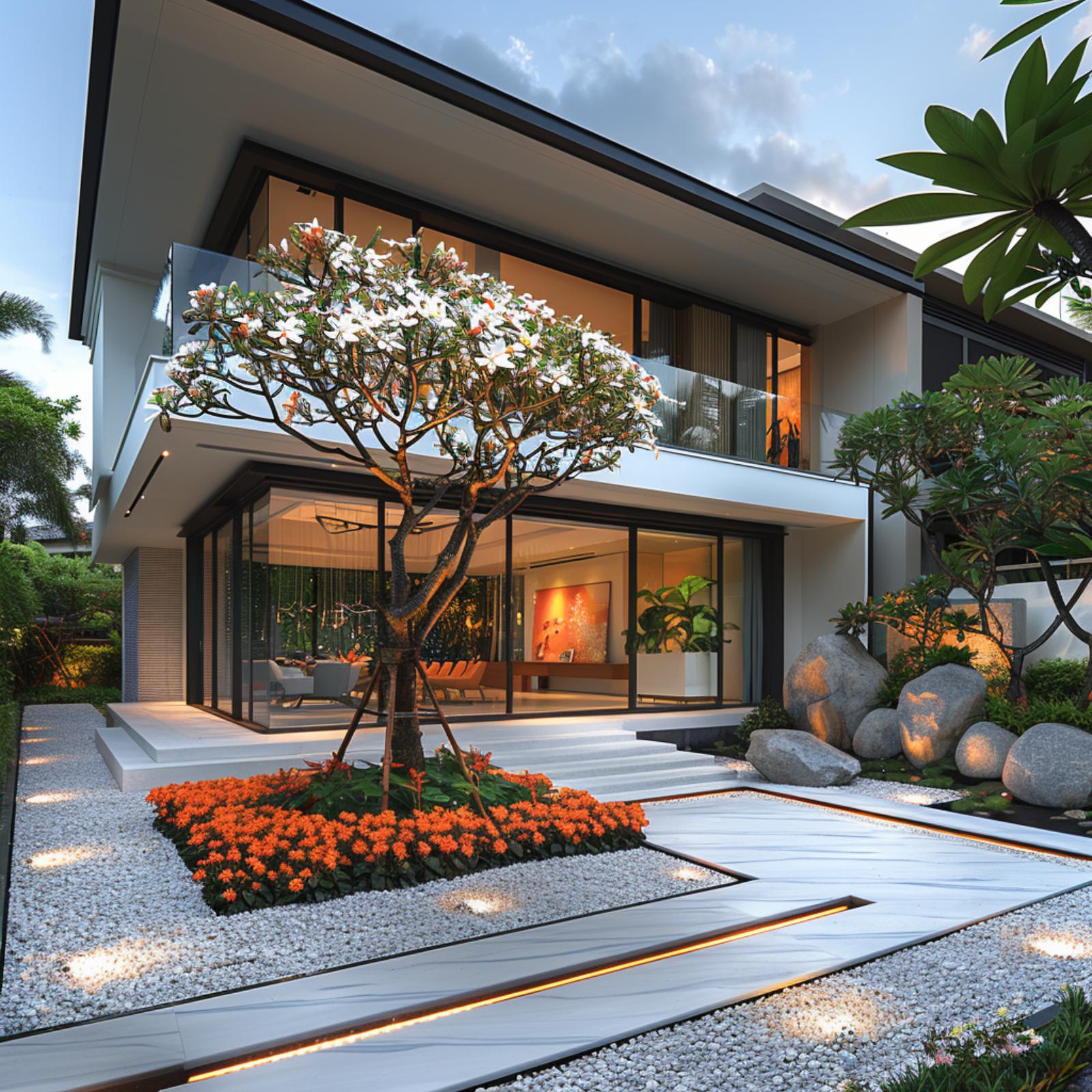
Flowering plumeria anchors the center of a white gravel bed, its gnarled trunk rising from a square planting of orange ixora that reads almost like a fire pit at ground level. Flat white pavers cut through the gravel in parallel bands, each strip edge-lit by recessed ground lights that cast a low, warm glow across the crushed stone surface. Boulder groupings on the right side of the entry hold their own against the glass-and-white-render facade, which runs two stories with black aluminum sliding frames and a cantilevered upper floor. Inside, visible through the full-width glazing, warm-lit artwork in orange tones echoes the ixora planting outside with a coherence that feels deliberate rather than accidental.
Orange ixora at the base of the plumeria creates a ground-level color hit that no lawn could replicate with the same precision.
8. Cor-Ten Steel Walls, Golden Barrel Clusters, and Not a Blade of Grass in Sight
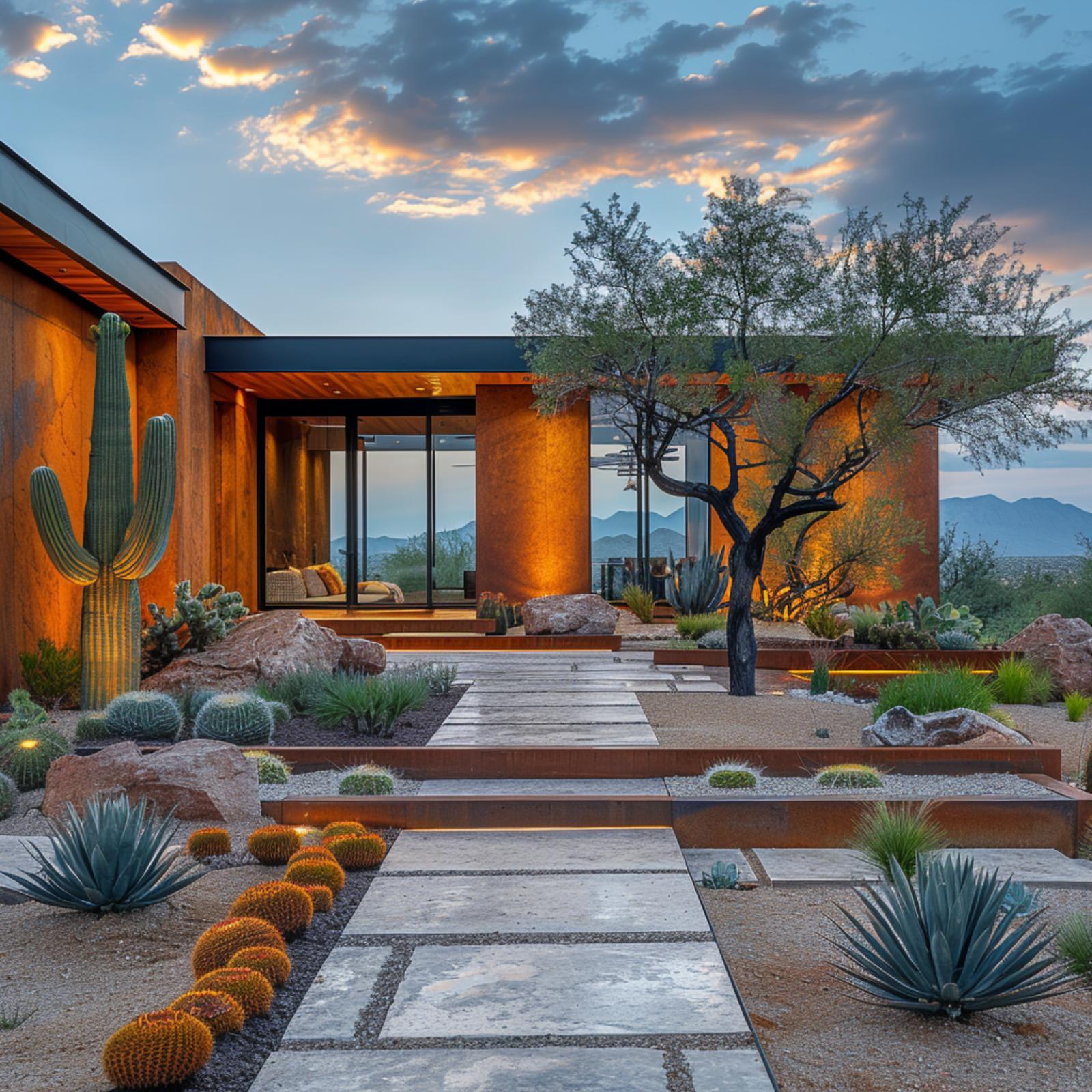
Weathered Cor-Ten steel panels wrap the exterior in a rust-orange patina that deepens under the uplighting positioned at the base of each wall. Large-format concrete pavers run down the center path, flanked by decomposed granite in warm sand tones. Golden barrel cacti line the left border in a tight row, their burnt-orange spines catching the dusk light.
A mature desert tree anchors the right side, its dark branching structure contrasting the warm steel behind it. Saguaro, blue agave, and globe-shaped cacti fill both beds without a single repetitive grouping. Floor-to-ceiling glass at the entry pulls the mountain silhouette indoors.
How Cor-Ten Steel Functions as a Living Finish in Desert Climates
Unlike painted or stucco exteriors that fade or chip under intense UV exposure, Cor-Ten steel develops its rust-layer patina through a controlled oxidation process that actually stabilizes the surface over time, requiring no paint or sealant. In arid climates with low humidity, that patina tends to settle into a rich, even tone rather than the blotchy streaking common in wetter regions. The result here is a facade finish that grows more cohesive with each passing season rather than degrading.
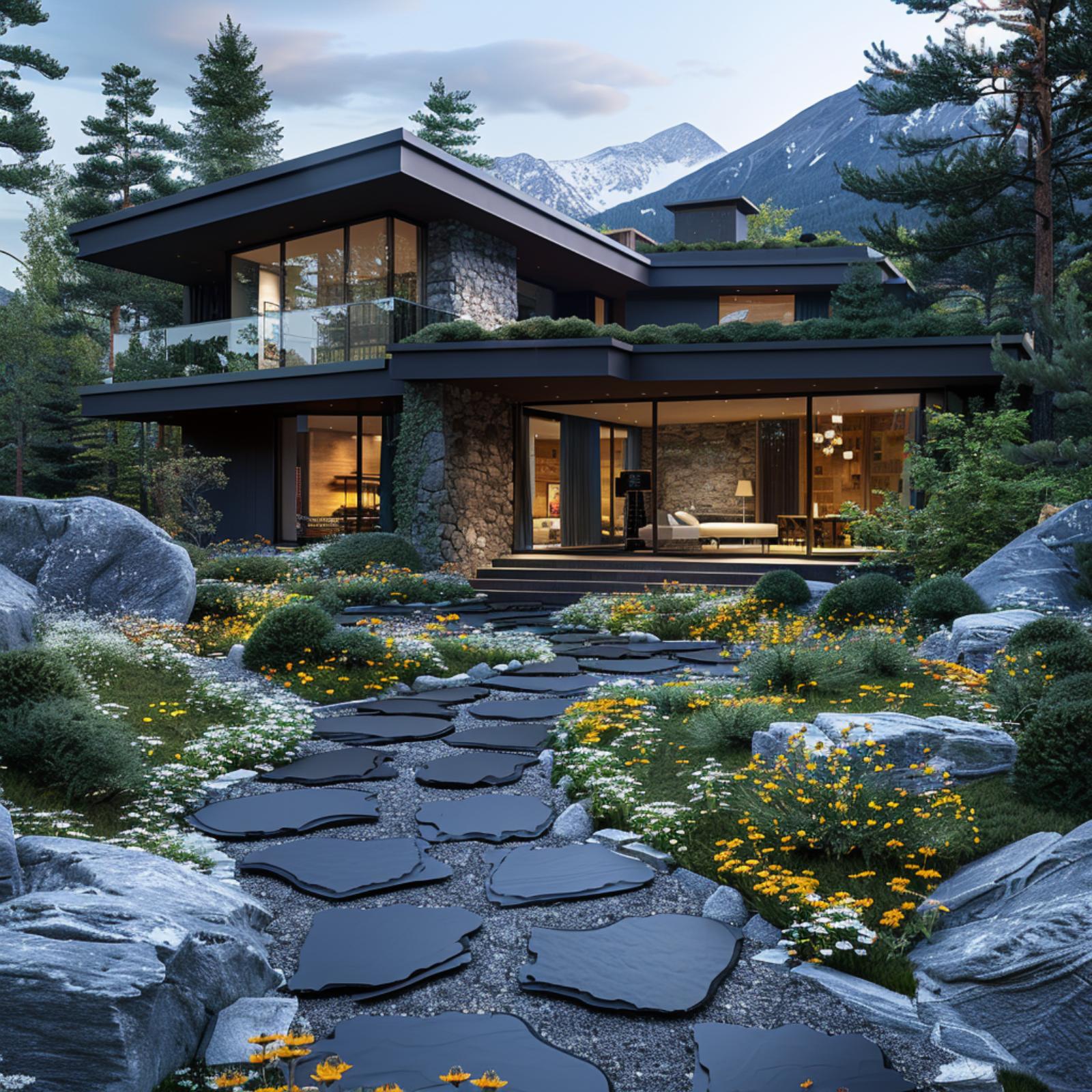
7. Dark Slate, Wildflowers, and Mountain Stone Pull Off What Turf Could Never Manage
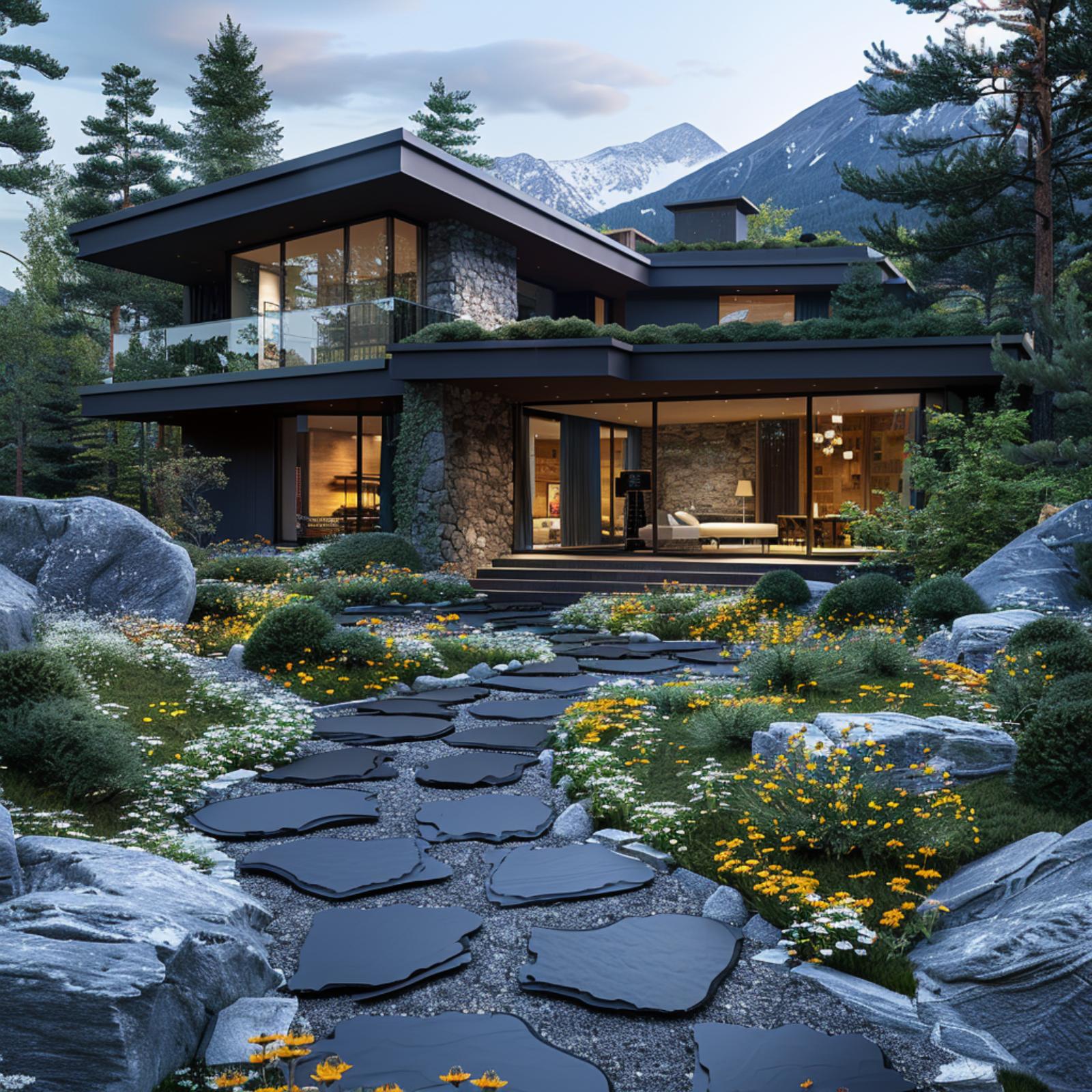
Slate stepping stones in near-black charcoal cut a path through gravel and low-growing wildflowers in yellow and white, leading directly to a two-story house clad in rough-cut natural stone. The flat roofline carries a green roof planted with ground-hugging shrubs, while floor-to-ceiling glass panels on both levels reveal warm interior lighting and a visible sofa and pendant fixture inside.
Large boulders anchor the perimeter in place of hedgerows or fencing. Trimmed globe shrubs provide structure between the flower drifts without demanding water the way turf would. Snow-capped peaks rise behind tall pines in the background, giving the stone facade a reason to exist beyond aesthetics.
Try This: Irregular flagstone or slate paths read more naturally in mountain and forest settings when the pieces are laid with deliberate gaps rather than tight joints, allowing low groundcover or gravel to fill between them. That spacing also reduces runoff by letting water absorb directly into the ground rather than pooling at the edges.
6. Tropical Palms, Black Pebble Beds, and Recessed Soffit Lights Do the Work Lawn Never Could
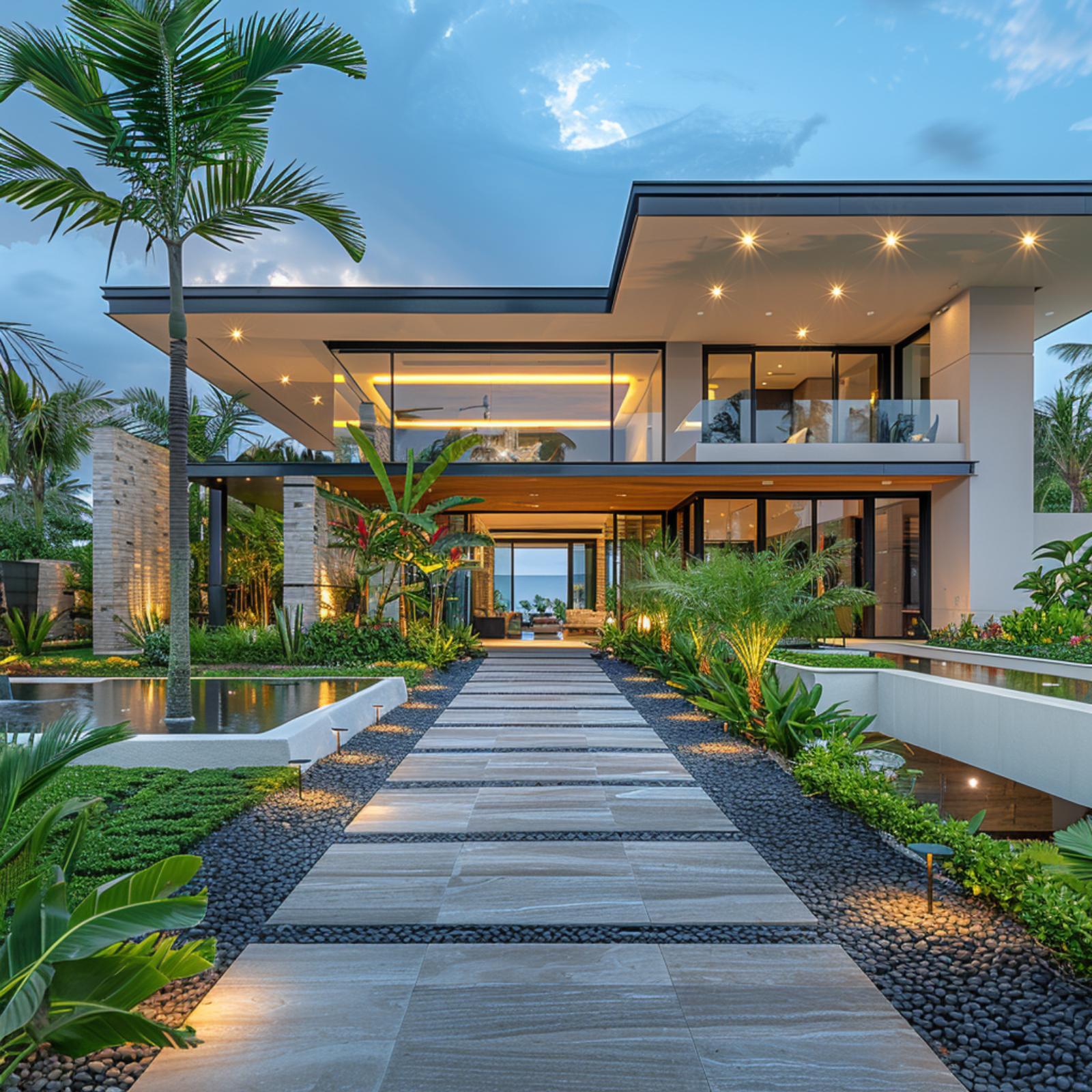
Large-format stone pavers in a linear grid run straight to the entry, flanked by black river pebble beds and low ground-flush spotlights that wash the plantings in amber. Tall royal palms and banana-leaf plants fill vertical space the way a lawn never attempts to.
5. Cypress Rows, Blooming Lavender Beds, and Terracotta Brick Earn Every Compliment Grass Once Got
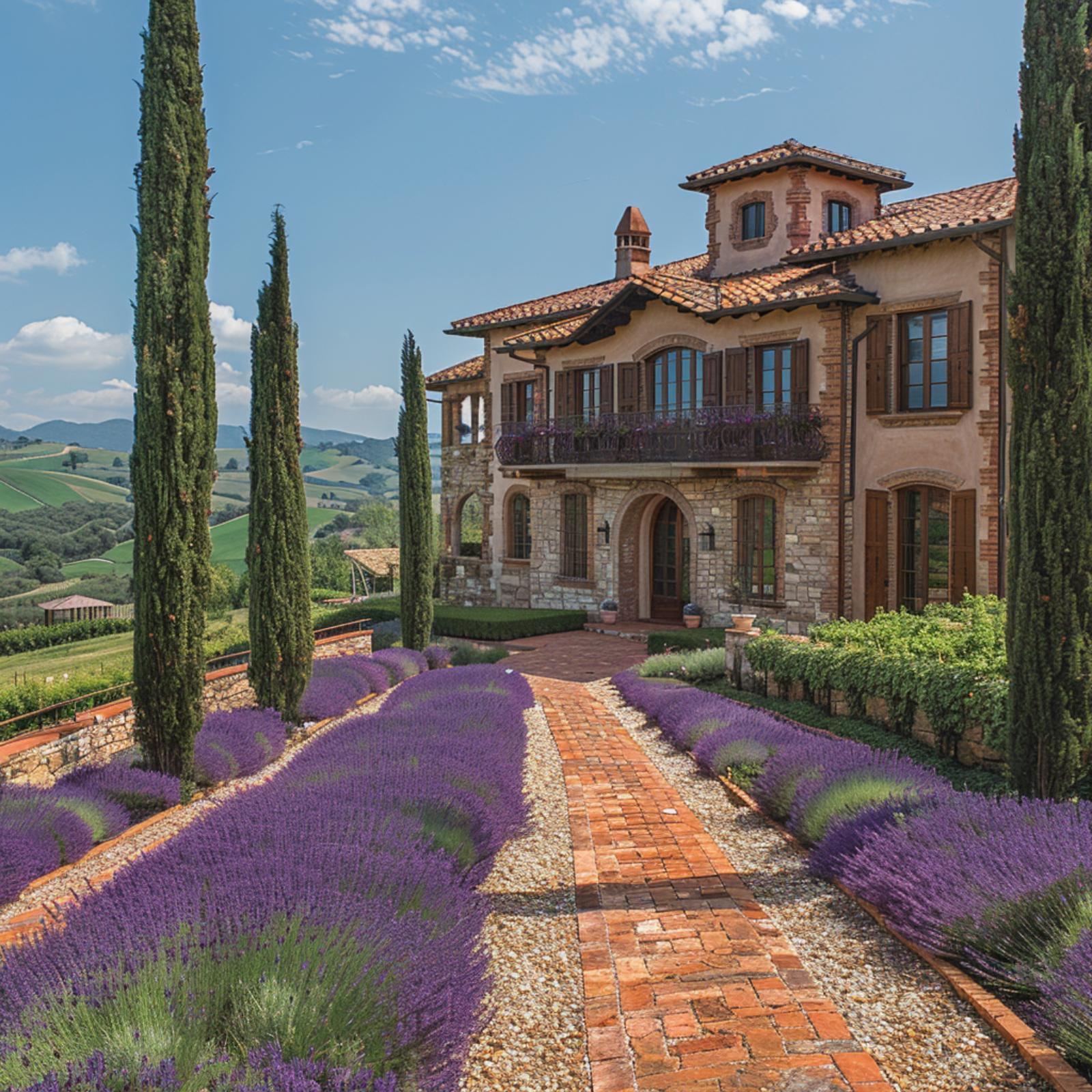
Italian cypress trees flank a central brick path laid in a running bond pattern, with crushed gravel borders separating each lavender row from the next. The three-story stone villa behind it features terracotta roof tiles, wrought iron balcony railings, and wood shutters in a warm chestnut finish.
4. Corten Steel Planters, Olive Trees, and LED Stair Strips Retire the Lawn Permanently
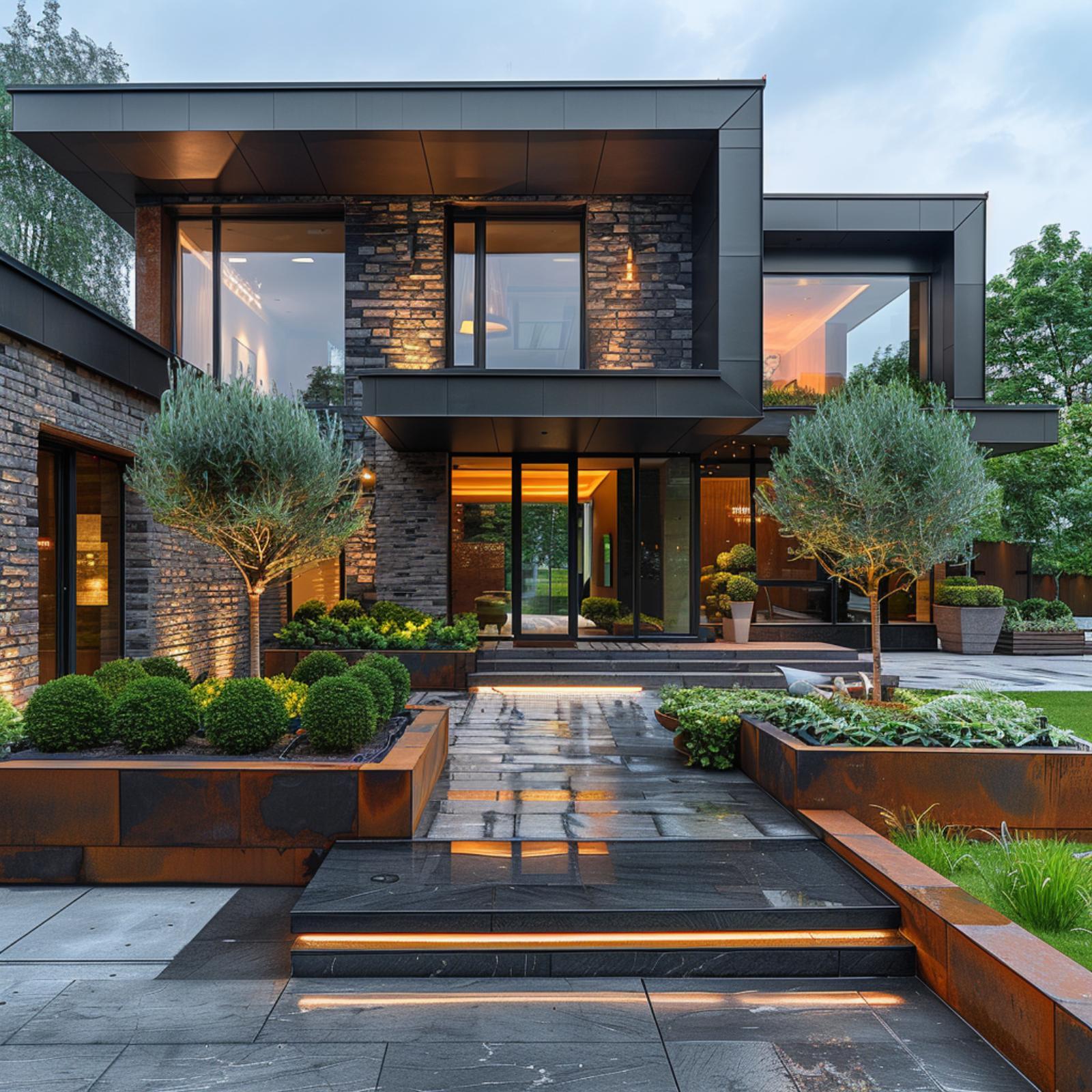
Dark grey stone cladding covers the two-story facade in a stacked horizontal pattern, interrupted by floor-to-ceiling black-framed glass that reveals warm amber interiors behind. The flat roofline extends past the wall plane on both sides, casting a wide overhang that frames the entry without any decorative fuss. Corten steel retaining beds line both sides of the approach, their rust-orange oxidized finish pulling warm tones out of the brick columns flanking the front doors.
Clipped box spheres sit at ground level alongside upright olive trees, their silver-green canopies lit from below by recessed uplights. Charcoal stone pavers lead from the street in a staggered grid, with amber LED strips embedded beneath each riser tread. Those strips do double duty: they mark the grade change after dark and add a layer of warmth that the grey stone would otherwise absorb entirely. Microclover, a low-growing, sustainable, low-maintenance lawn alternative borders the stone pavers.
3. Travertine Steps, Orange Blooms, and Agave Clusters Prove Lawn Was Never the Point
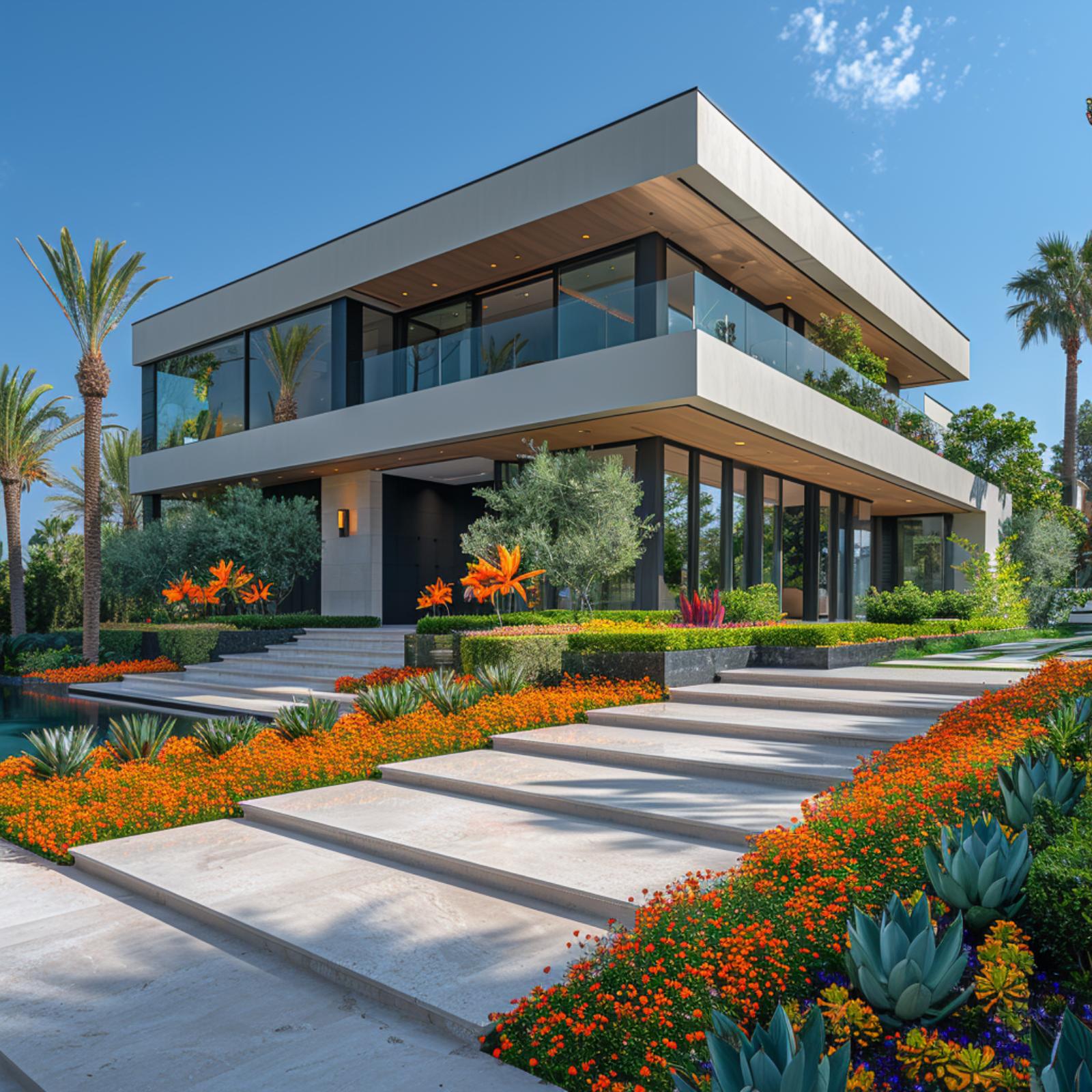
Wide travertine pavers ascend in staggered tiers toward a two-story modernist facade clad in white concrete panels with full-height black-framed glazing. The staircase splits into parallel runs flanked by dense plantings of orange marigolds and bird-of-paradise, their saturated color reading almost incandescent against the pale stone. Blue-green agave rosettes anchor the foreground beds, their geometry doing the structural work that a lawn border once handled.
Olive trees with silver-green canopies occupy the mid-level terraces, breaking up the vertical glass wall without crowding it. A recessed soffit above the entry glows with warm downlighting even in daylight, defining the threshold before visitors reach the top step. Travertine was chosen deliberately here: its cross-cut surface texture absorbs direct sun rather than reflecting glare, keeping the approach visually calm despite the intensity of the surrounding color.
2. Cobblestone Curves, Allium Blooms, and Georgian Brick Prove Grass Was Always Optional
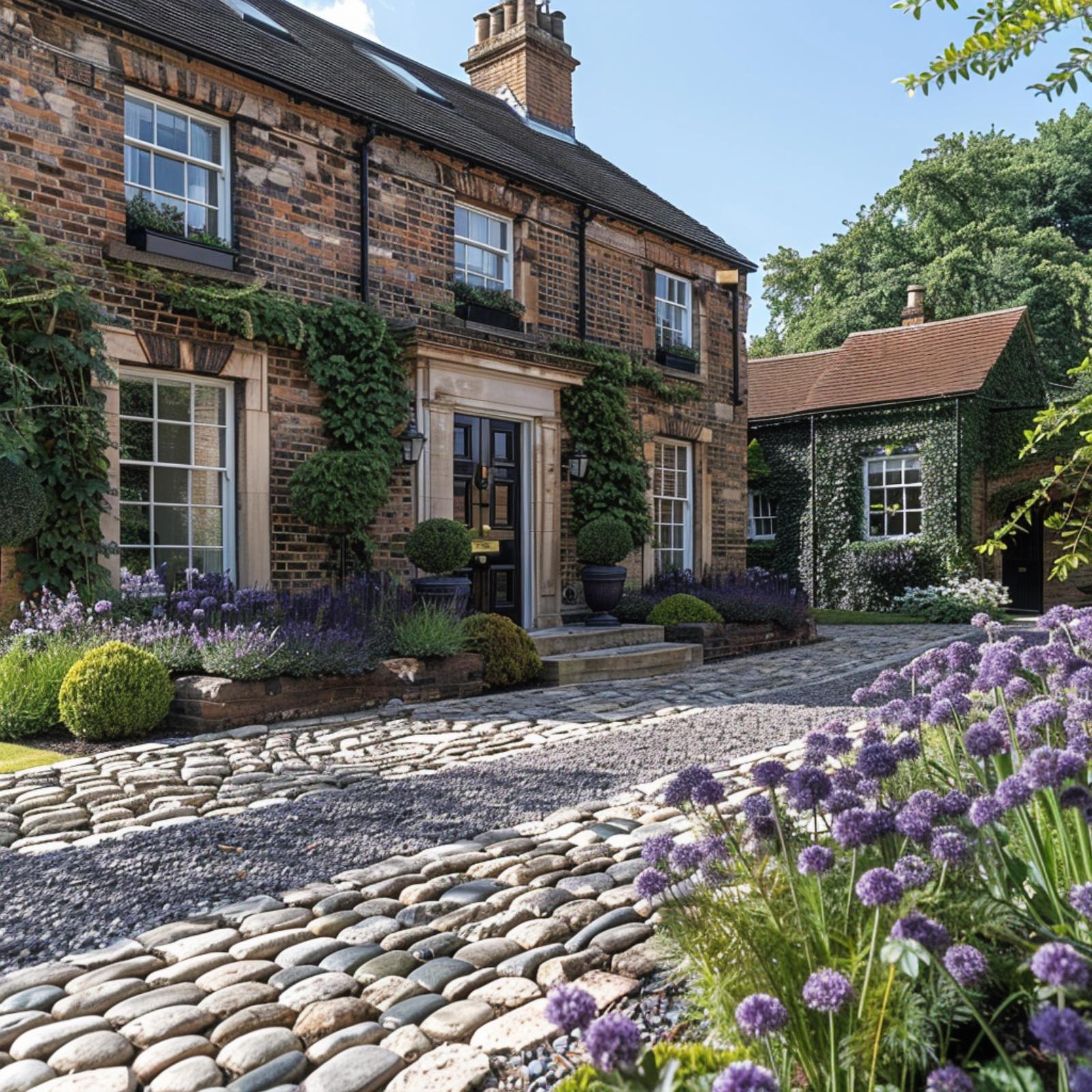
River-washed cobblestones form two distinct bands across the front drive, one using pale grey and cream stones, the other darker charcoal rounds, creating a pattern that reads almost like a woven border from above. Topiary balls in black glazed planters flank a pilastered entry door painted black, while climbing ivy has been trained up the warm red-brick facade for what appears to be several decades.
Purple allium heads and lavender colonies line the border between cobblestone and building, providing vertical contrast against the low box hedging. The outbuilding to the right is almost entirely covered in a dense, fine-leafed creeper, making it appear as a solid green wall with windows cut through it. No single planting does all the work here. The cobblestone patterning carries the weight that turf would normally bear.
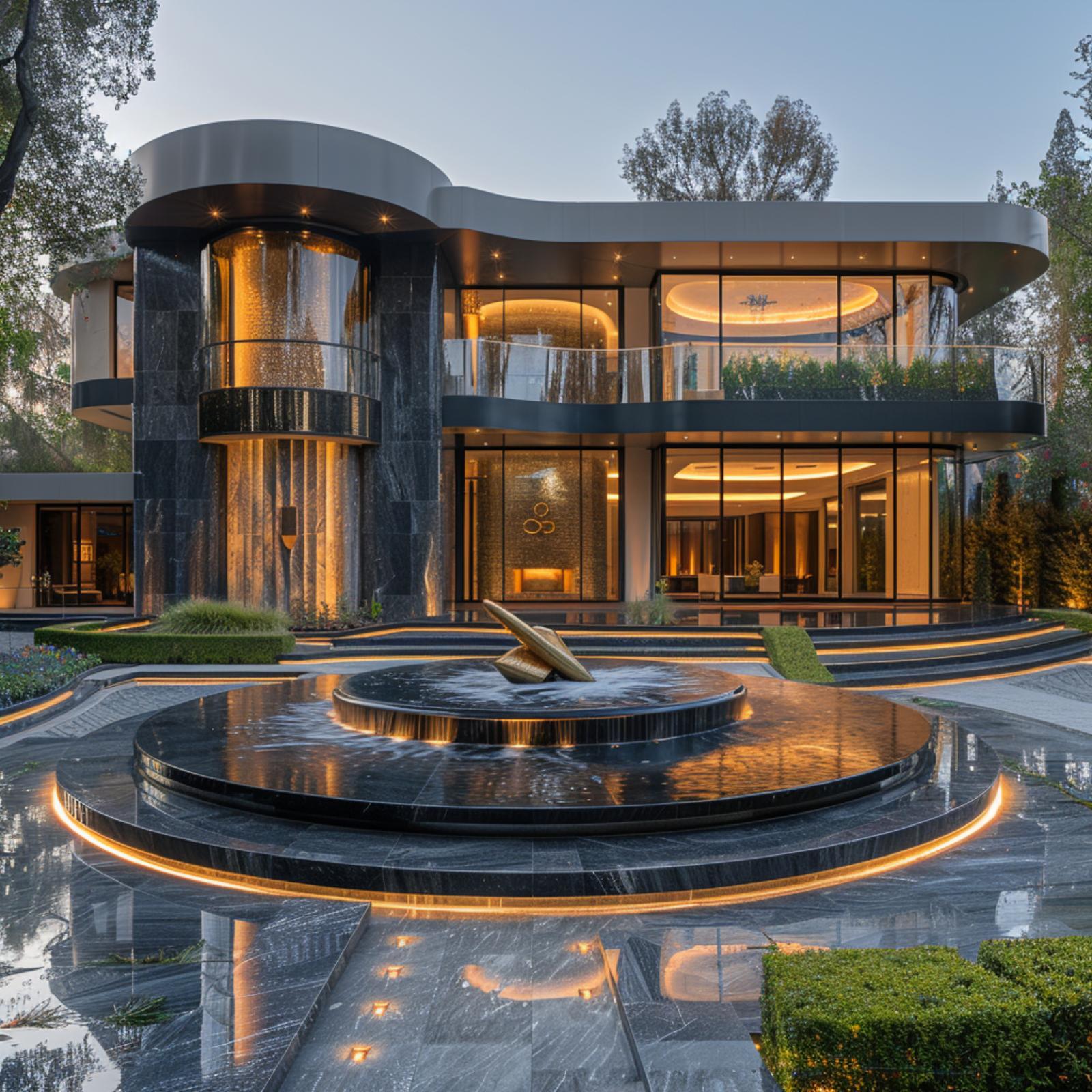
1. Black Marble, Gold Fountain Sculpture, and Curved Glass Close Out the Lawn Debate
🔥 Would you like to save this?
Black marble platforms stack in graduated tiers around a circular fountain, where a gold sculptural fin catches the amber underlighting embedded along each tier edge. Two cylindrical columns clad in veined black stone anchor the entry, backlit with warm gold to read almost molten at dusk. Floor-to-ceiling glass panels reveal a round ceiling cove glowing orange-amber inside. Manicured box hedges and ornamental grasses fill the ground beds.