A friend of mine once spent $14,000 finishing her basement. New carpet, recessed lighting, a sectional that cost more than her bedroom set. Six months later, she called it “the room we walk through to get to the freezer.” Nobody sat down there on purpose. The pillows stayed perfectly fluffed, which is the saddest thing a pillow can be. Here’s the strange part: the basement looked fine. Better than fine, honestly. It photographed well. But something about it felt like wearing a suit to a picnic. Too correct and somehow still wrong. That nagging sense that a below-grade room is never quite “done” isn’t a failure of your decorating. It’s a collision between ancient survival instincts and a space that violates nearly every environmental cue your nervous system uses to feel safe, settled, and home. The reasons are weirder, and more fixable, than you’d guess.
The Invisible Threshold Your Brain Crosses Every Time You Walk Downstairs
🔥 Would you like to save this?
I once spent an entire weekend painting my basement walls a warm taupe, rolling on primer like I was performing surgery, and I still felt a vague unease every time I hit the bottom step. The room was objectively fine. My brain wasn’t buying it.
In order to come up with the very specific design ideas, we create most designs with the assistance of state-of-the-art AI interior design software. Also, assume links that take you off the site are affiliate links such as links to Amazon. this means we may earn a commission if you buy something.
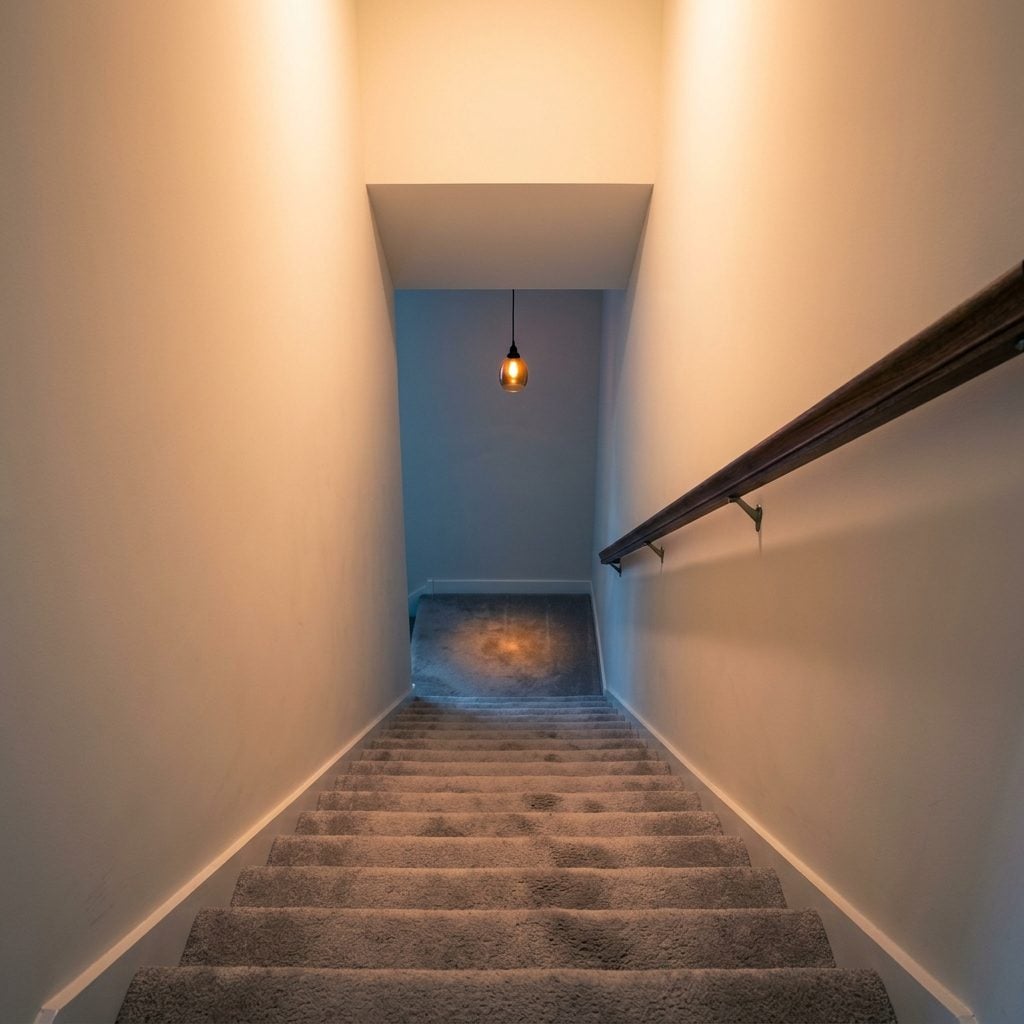
Here’s what’s actually happening: descending a staircase triggers a subtle but measurable shift in your nervous system. An enclosed, narrow staircase with limited natural light can induce feelings of unease and anxiety, according to a perception study on the psychological impact of stairs by Muzata (Source). Your body registers the descent as a transition away from safety. The walls close in. The light changes. The temperature drops a degree or two. And all of this happens in the span of maybe twelve steps.
That physical threshold primes your brain to treat whatever’s below as categorically different from the rest of your home. You’re not walking into a room. You’re walking down into one, and your nervous system logs that distinction whether you want it to or not. Every design choice you make in the basement has to fight that initial framing.
Why Your Eyes Refuse to Trust a Room Without Natural Light
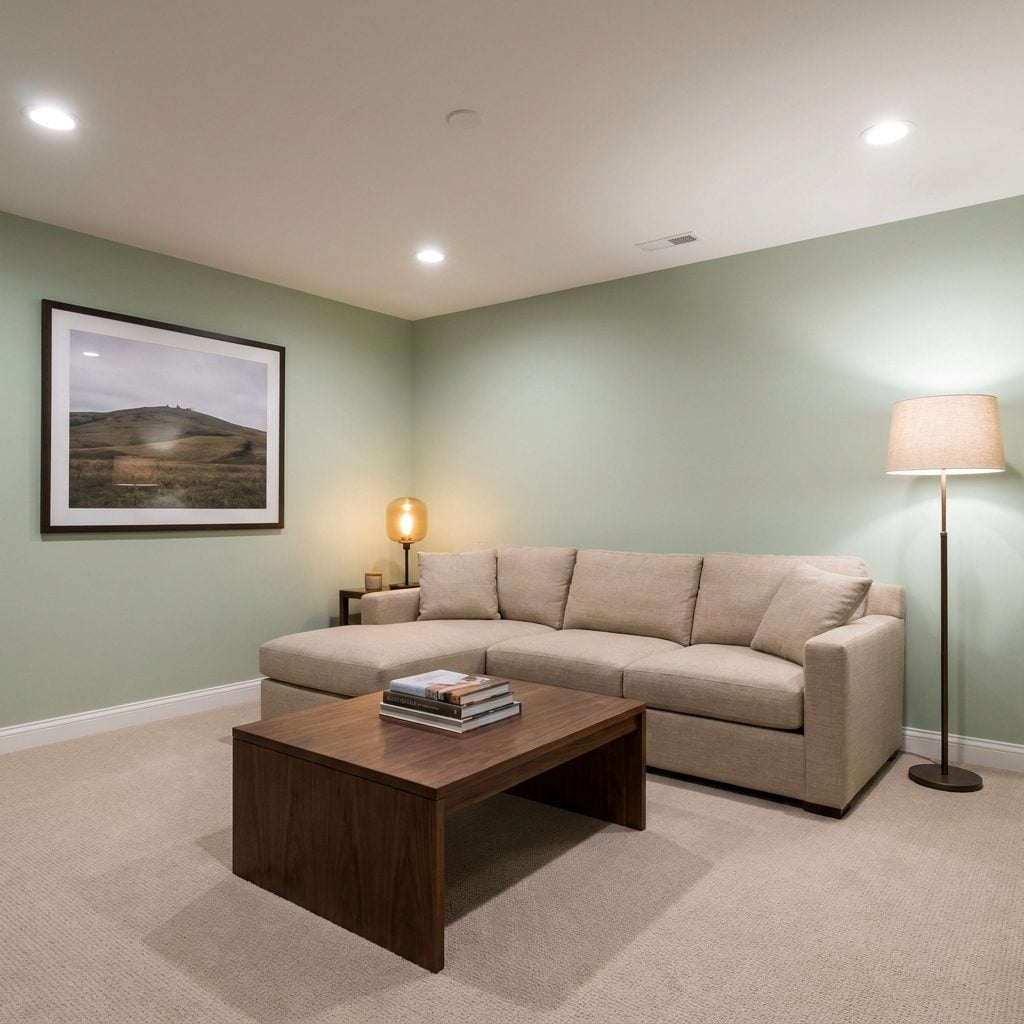
Your brain is tracking the sun even when you think you’ve stopped caring. A pilot study published in the Journal of Clinical Sleep Medicine (Source) compared office workers in windowed versus windowless environments and found that those with daylight exposure slept an average of 46 minutes longer per night and reported significantly better physical and mental health. Strip away the window and your body quietly loses its bearings.
This isn’t just about brightness. You can flood a basement with recessed LED panels and it still won’t register the same way. Windowless spaces can increase a person’s risk of mental health issues, and a study of the University of Michigan’s mostly windowless Munger Graduate Residences (Source) found that the absence of natural light was strongly associated with lower scores on mental well-being measures, including attentional function and social connectedness, despite the building’s premium amenities.
Your eyes don’t just see light. They’re checking for proof that the outside world still exists. A basement without that proof is a room your brain can’t fully commit to, no matter how many recessed LED panel lights you install.
The Ceiling Height That Quietly Shrinks Your Ambition
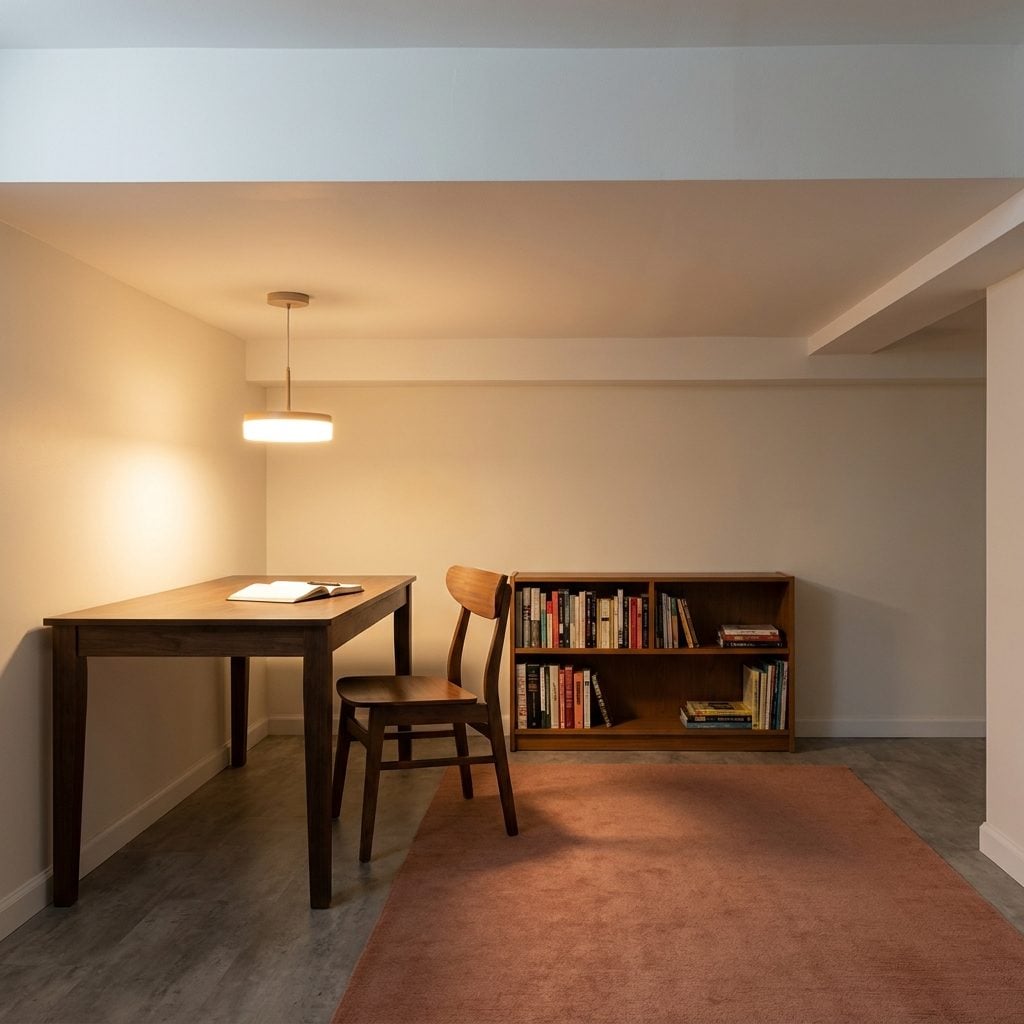
Researchers call it the Cathedral Effect, and it’s one of the most well-documented quirks in environmental psychology. Joan Meyers-Levy and Rui Zhu at the University of Minnesota found that ceiling height affects how people think, feel and act (Source): higher ceilings activate concepts of freedom and abstract thinking, while lower ceilings push people toward concrete, detail-oriented processing.
Most basements sit around seven feet, sometimes less. That’s below the threshold where your cognition shifts.
A 2023 study using VR environments in art galleries found that participants associated lower ceiling heights with negative emotions like fear, anger, and sadness, while moderate heights around 4.8 meters were predominantly chosen for experiencing joy (Source). Your basement ceiling isn’t just low. It’s actively nudging your emotional state downward, making the space feel more confining than its square footage would suggest. I got this wrong for years, blaming paint colors and furniture arrangement when the real culprit was literally pressing down on me from above.
How Your Nose Decides a Room Is ‘Wrong’ Before Your Eyes Even Adjust
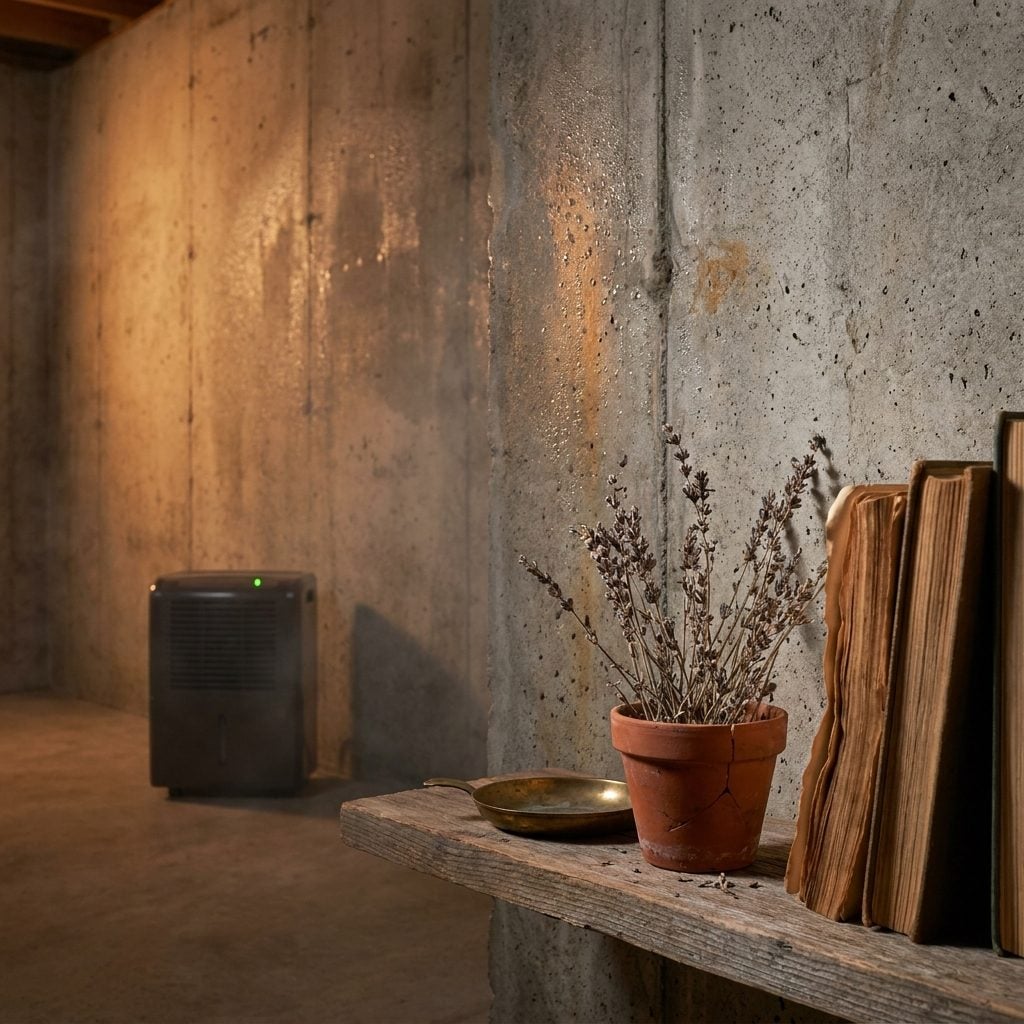
Smell is the only sense that bypasses the thalamus and routes directly to the amygdala and hippocampus, the brain regions responsible for emotion and memory. According to Harvard neurobiologist Venkatesh Murthy, olfactory signals reach the limbic system almost instantly, meaning your brain has already formed an emotional judgment about a space before you’ve finished blinking in the dark.
That faintly mineral, slightly damp smell most basements carry? It’s not dangerous. But your olfactory system doesn’t care about danger levels. It cares about associations. And research shows the first association formed to an odor typically remains tied to it despite future experiences in different contexts (Source). If your childhood basement smelled like wet concrete and old cardboard, every basement will carry a whisper of that first impression.
The Primal Alarm System That Activates When You Can’t See an Exit
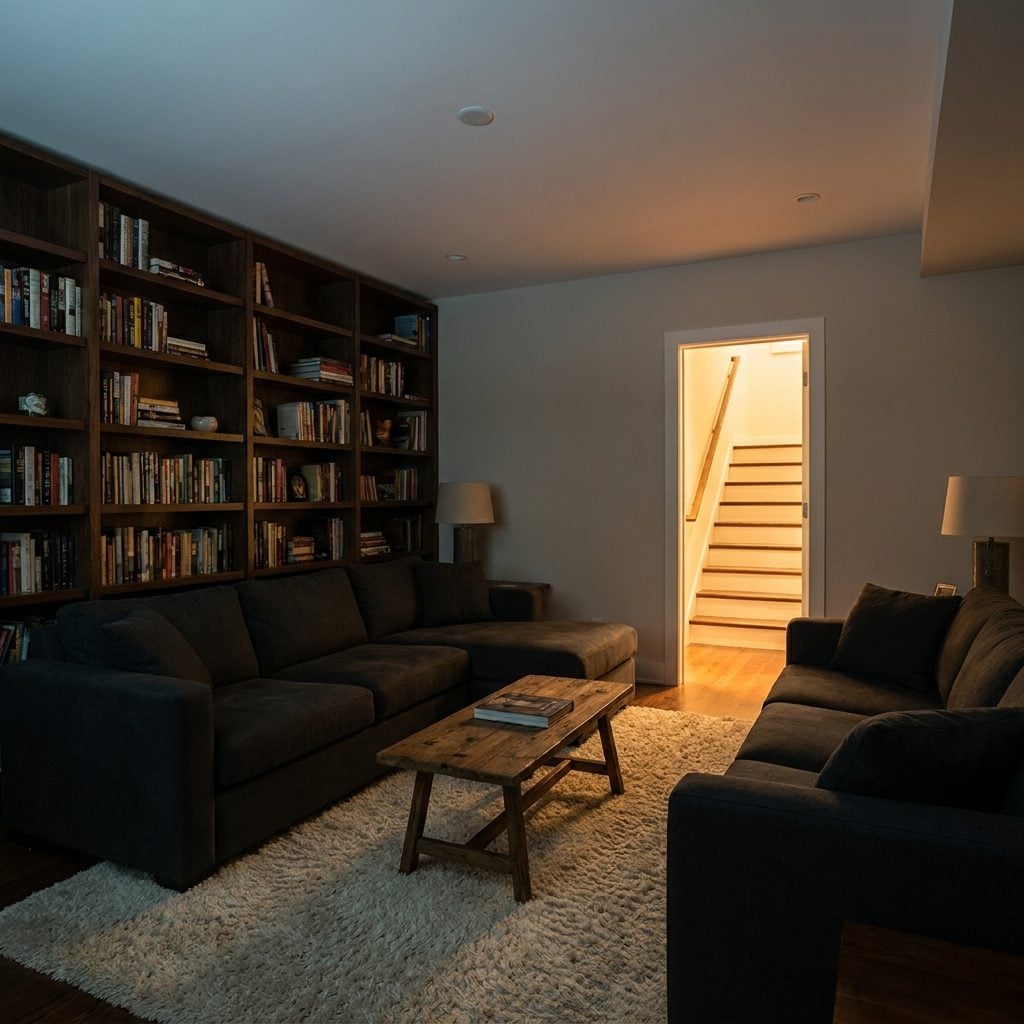
There’s a reason you instinctively don’t love sitting with your back to a door. Prospect-refuge theory, developed by geographer Jay Appleton in 1975, argues that humans are hardwired to prefer spaces where they can observe their surroundings while remaining protected. The ideal spot: back to a wall, clear sightlines ahead, visible escape routes (Source).
Basements violate nearly every principle of this framework. You’re below grade. The single exit is typically a narrow staircase behind you. The room may wrap around corners you can’t see past. Your rational mind knows there’s nothing down here but holiday decorations and a broken treadmill. Your limbic system is running a very different calculation.
A space with only refuge and no prospect, no outward view, no clear escape, tips from cozy into confining. That’s the basement problem in a single sentence. You can add a plush sectional sofa and a shag area rug, but your nervous system is still quietly cataloging the exits. Or the lack of them.
Why Concrete Walls Whisper ‘Temporary’ No Matter How Much Paint You Add
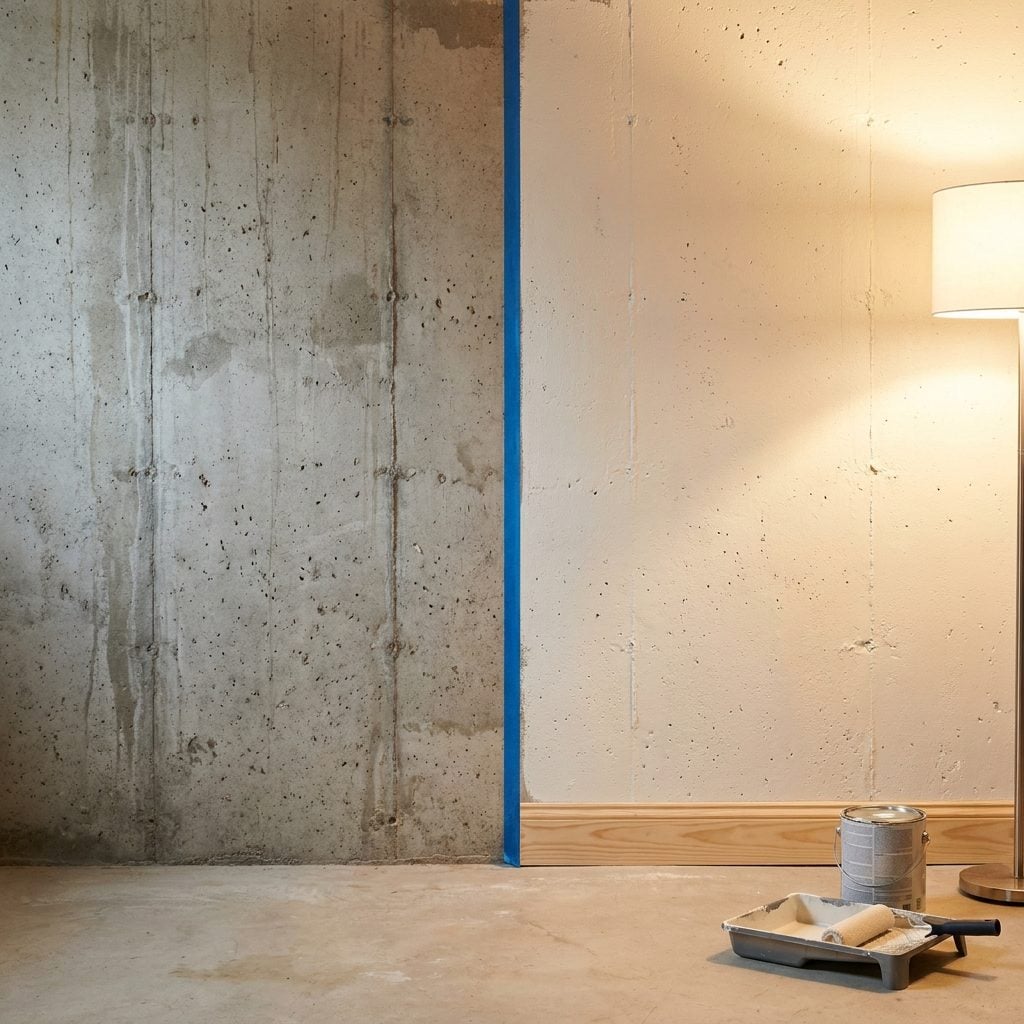
I will die on this hill: concrete reads as infrastructure, not architecture. Your brain knows the difference. A concrete wall says foundation, parking garage, utility corridor, unfinished. It says structure, not home. And no amount of Sherwin-Williams can fully overwrite that association.
Material psychology is real, even if it’s rarely discussed in those terms. Natural materials carry encoded cultural and sensory meanings. Wood signals warmth, life, craftsmanship. Stone suggests permanence and geological time. Glass communicates modernity and openness. Concrete, though? Concrete communicates function. It’s the material of things that support other things. It’s what you build on, not what you live in.
When you paint a concrete basement wall, you’re applying a cosmetic layer over a material your brain has categorized as utilitarian. The texture still shows through: the porous surface, the faint grid lines from forms, the cold-to-the-touch sensation. Your fingers know it’s concrete even if your eyes see Benjamin Moore’s “White Dove.” This is partly why a warm basement design with wood paneling or drywall over the concrete reads so differently. You’re not just covering the wall. You’re replacing one material vocabulary with another.
The Color Temperature Mistake That Makes Every Basement Feel Like a Waiting Room
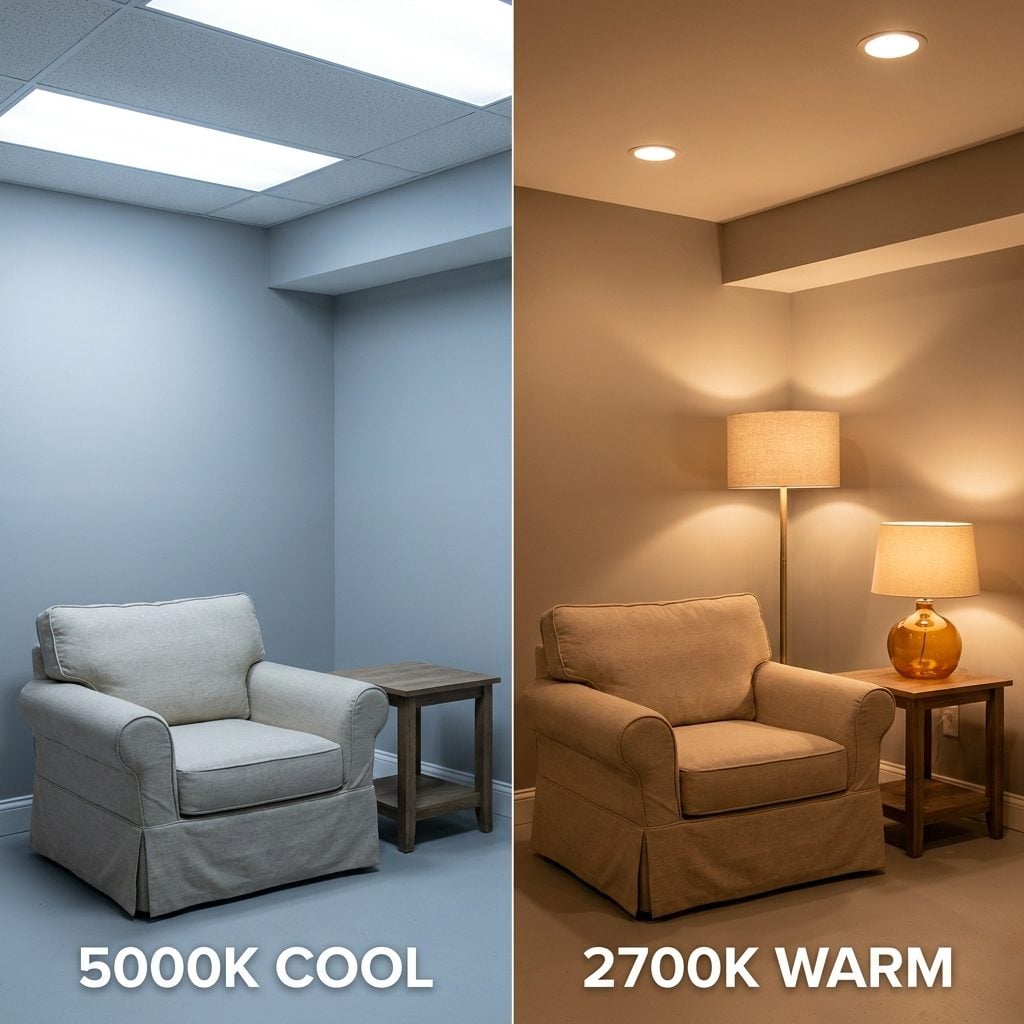
Most people get this exactly backward, and honestly, I did too for years. You’d think a bright, white, high-Kelvin light would make a dark basement feel more alive. It does the opposite. Cool white light (4000K and above) in a windowless space with low ceilings creates the exact ambiance of a fluorescent-lit office or a hospital corridor. Your brain reads that combination and files it under “institutional.”
There’s a reason for this. In spaces with natural light, cool-toned illumination gets balanced by warm sunlight shifting throughout the day. Remove the daylight variable and you’re left with flat, unchanging coolness that never gets corrected. Research on artificial skylights found that when a windowless office was illuminated by conventional fluorescent lamps, occupants perceived the room as more “tense” and “detached,” while artificial skylights providing warmer, more dynamic light improved positive mood states and reduced anxiety (Source).
Your Brain’s Secret Checklist for What Counts as a ‘Real’ Room
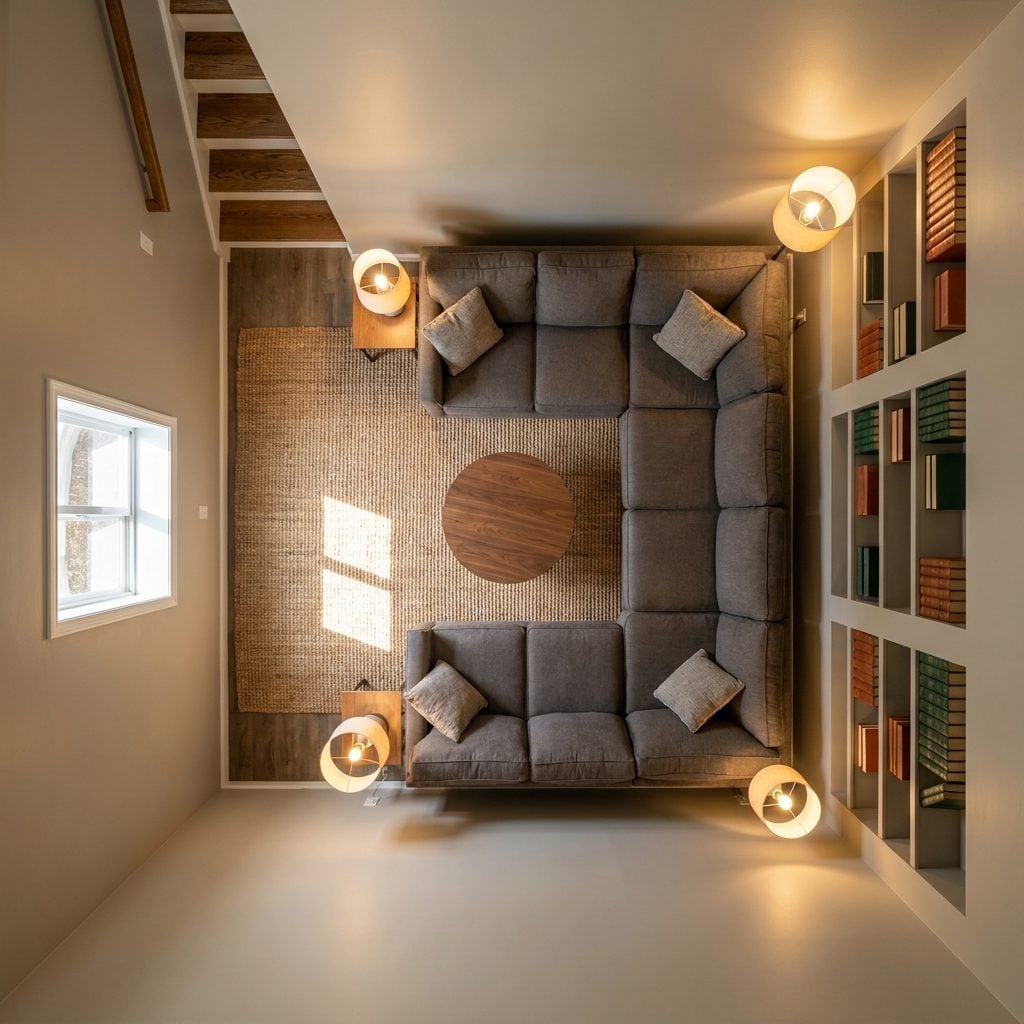
Here’s the uncomfortable truth at the center of all this: your brain maintains an unconscious checklist for what qualifies as a legitimate living space, and most basements fail on multiple counts. This isn’t a design problem you can solve with one clever purchase. It’s a pattern-recognition issue baked into how you’ve experienced rooms your entire life.
The checklist runs something like this:
- Natural light entering from at least one direction
- A ceiling high enough that you don’t notice it
- More than one way in or out (or at least a clear sightline to the exit)
- Materials that read as finished, intentional, residential
- Air that smells neutral or pleasant
- Acoustic properties that feel “above ground” (not echoey, not deadened)
Fail one or two, and the room still passes. Fail four or five, and your brain subtly downgrades the space no matter what’s in it. That’s why you can furnish a basement identically to your living room and it still won’t feel like your living room. The checklist doesn’t care about your sofa many styles or your carefully chosen paint color. It’s running a systems check, and the basement keeps coming up short.
The Reason Clutter Feels Three Times Worse Underground

A single cardboard box in your living room barely registers. That same box in the basement makes you want to set the whole space on fire. I’m not being dramatic; I’ve felt this. The difference isn’t the box. It’s the absence of natural light stripping away your brain’s ability to filter what matters from what doesn’t.
Here’s what’s actually happening: your visual cortex relies on natural light to help prioritize information. In a sunlit room, bright daylight essentially “dims” clutter in your peripheral vision, letting you focus on what you’re doing. Underground, with flat artificial light hitting every surface equally, every object screams for attention at the same volume. According to a study published in Personality and Social Psychology Bulletin (Source), people who described their homes as cluttered or full of unfinished projects showed flatter cortisol slopes throughout the day, a pattern linked to chronic stress. Now imagine that stress response amplified in a space where there’s no restorative natural element to offset it.
Basements also tend to be the dumping ground for “I’ll deal with this later” items, which means the clutter itself carries a different psychological charge. Every item down there represents a deferred decision, and according to the Rocky Mountain College of Art and Design (Source), each one represents work yet to be done and a choice yet to be made. Your brain logs each as an open loop. A basement full of open loops, illuminated by a single overhead fluorescent, is basically a stress generator wearing the disguise of a room.
Why the Same Furniture Feels Cozy Upstairs and Depressing Below Grade
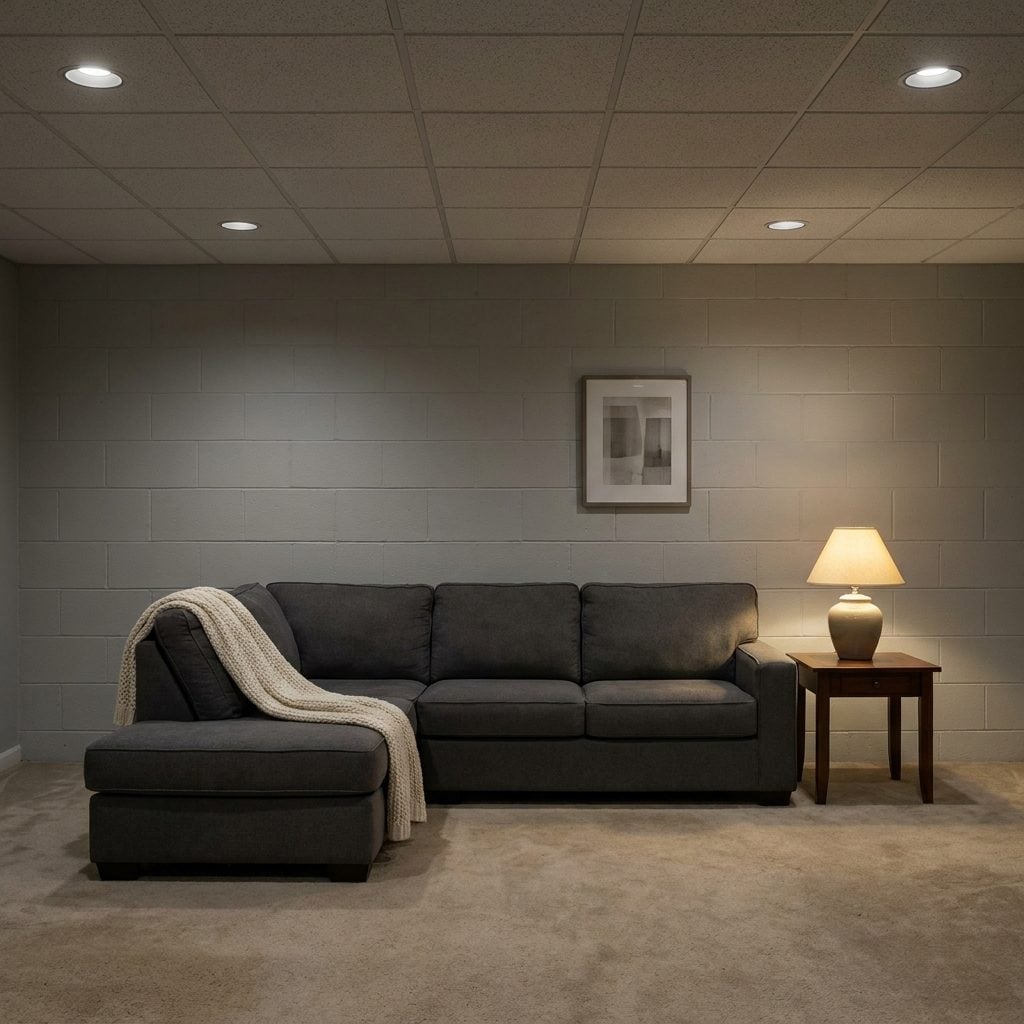
That sectional sofa you loved in the showroom? It’s been in the basement for two years now, and something about it just feels wrong. The cushions are the same. The color hasn’t changed. You haven’t changed. But the room around it has stolen all its warmth, and the culprit is daylight, or rather the total lack of it.
A study published in the Proceedings of the National Academy of Sciences (Source) found that light-deprived environments caused measurable depressive behavior in test subjects, with neurons producing serotonin and dopamine actually beginning to deteriorate. Your basement isn’t that extreme, obviously. But the principle scales down. Without the shifting quality of natural daylight moving across surfaces throughout the day, fabrics lose their visual depth. A charcoal sectional sofa that looks rich and layered near a window looks flat and institutional under a ceiling-mounted LED. The same knit throw blanket that reads as inviting in your den reads as abandoned in the basement.
There’s also a context problem. Upstairs, a sofa exists within a visual ecosystem of windows, art, plants, changing light. Below grade, it sits against a blank wall in a room your brain has already categorized as utilitarian. I got this wrong for years, assuming the furniture just needed rearranging. It didn’t. It needed light that behaves the way light is supposed to behave.
The Acoustic Trick Your Basement Gets Backward Every Single Time
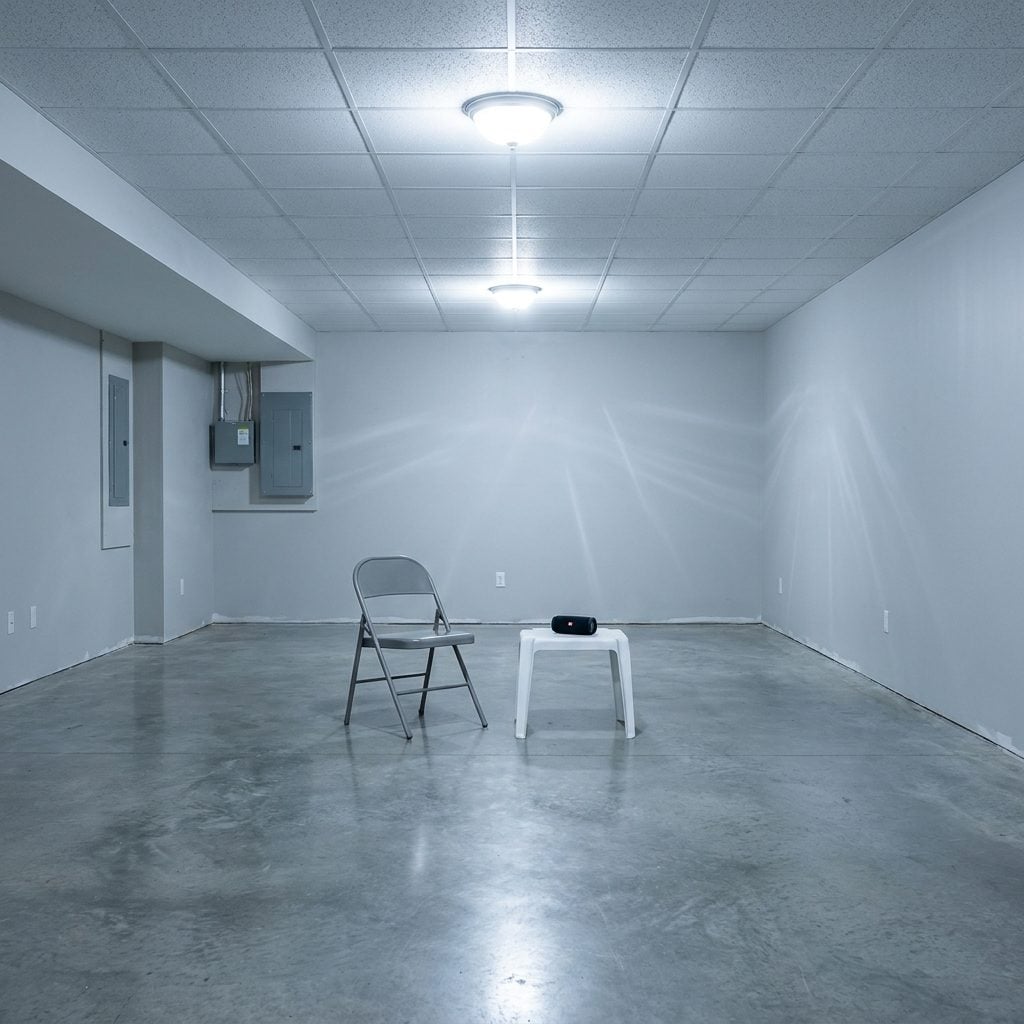
You know that hollow, slightly echoey quality every basement conversation has? That vaguely institutional sound where your voice bounces off concrete and comes back to you half a second too late? That’s not just annoying. It’s telling your nervous system something specific: this space isn’t for relaxing in.
Hard surfaces like concrete, drywall, and tile bounce sound waves rather than absorbing them. According to research on the psychology of acoustics (Source), constant echo and noise buildup increases cortisol and tension, while softer, diffused sound promotes relaxation. Most basements are essentially reverb chambers. Concrete floors, painted block walls, exposed ductwork overhead. Every surface is a mirror for sound, and the result is an acoustic environment that makes your brain work harder to process speech, music, even silence.
How Unfinished Edges and Exposed Systems Keep Your Brain in ‘Alert Mode’
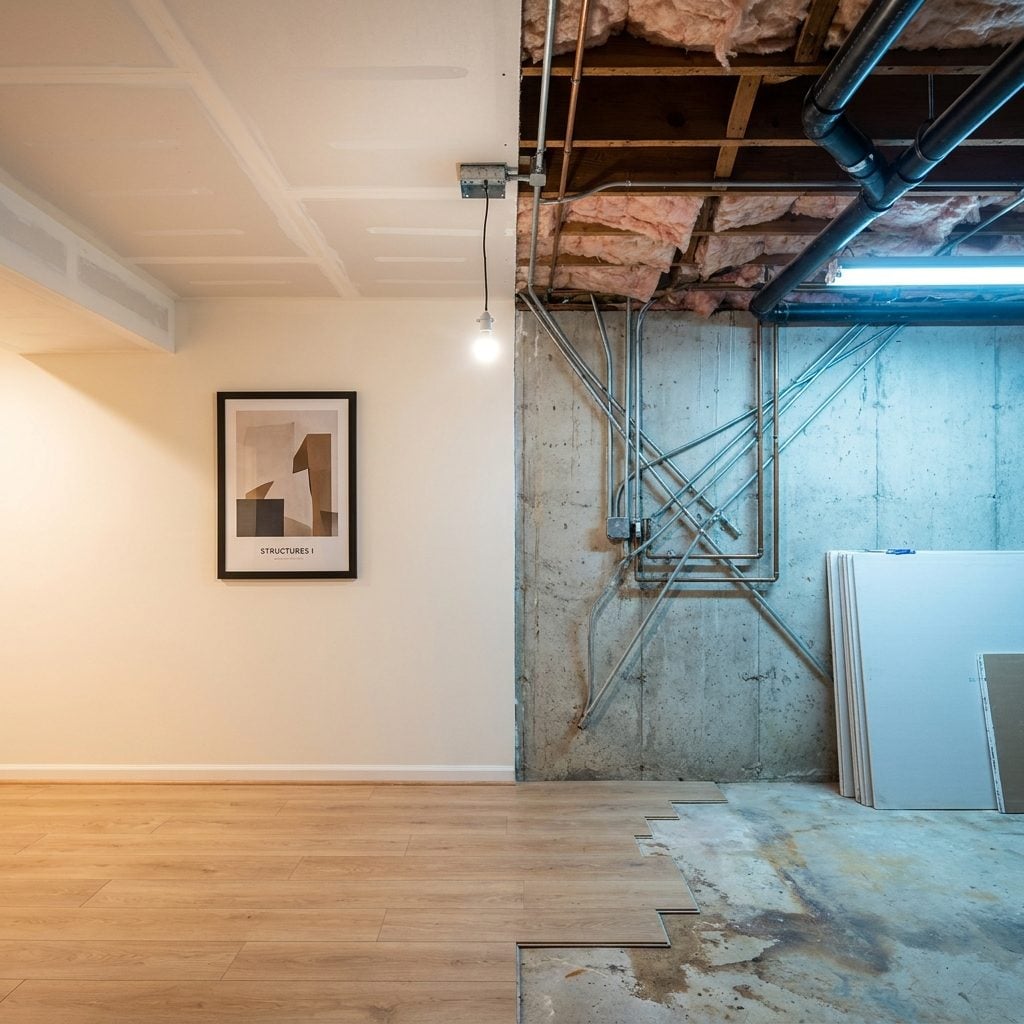
Exposed wiring. Visible pipe joints. That one corner where the drywall just… stops. You’ve probably learned to look past these things, but your brain hasn’t. It can’t. Unfinished visual edges register as incompleteness, and incompleteness is a mild form of threat.
This isn’t precious overthinking. Evolutionary psychologists describe a concept called “habitat assessment,” the rapid, unconscious scanning your brain performs in any new environment to determine safety. Complete surfaces, sealed boundaries, and enclosed systems signal shelter. Exposed joists, dangling wires, and unfinished ceiling grids signal the opposite: this structure isn’t done, which means it might not be fully protective. Your amygdala doesn’t care that you’re standing in a perfectly safe suburban home. It reads the visual cues and keeps your sympathetic nervous system just slightly more activated than it would be in a finished room upstairs.
I’ll die on this hill: no amount of decorating fixes an unfinished ceiling. You can add the most inviting furniture, the warmest paint, the best lighting. If your eye keeps catching that gap where the drywall meets bare concrete, or the tangle of Romex cable running across exposed joists, some part of your brain is still cataloging the room as temporary. And temporary spaces don’t get the psychological investment that permanent ones do.
The Thermal Cue That Tells Your Body This Space Isn’t Meant for Living
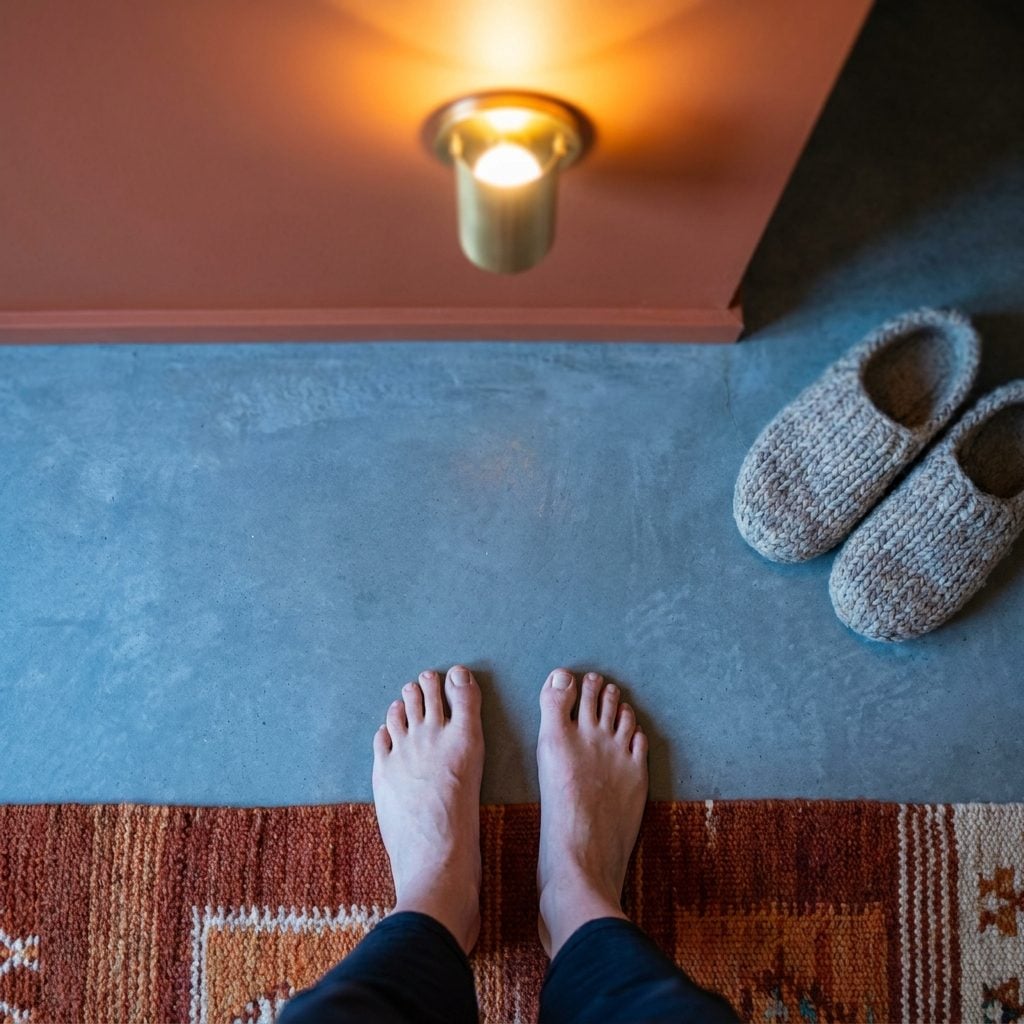
Walk barefoot from your kitchen down to the basement. That temperature drop on the soles of your feet isn’t just physical. It’s a signal, and your body interprets it fast.
According to ASHRAE, thermal comfort is “a condition of mind that expresses satisfaction with the thermal environment,” as referenced in an analysis of thermal comfort versus human psychology (Source). The definition itself reveals the truth: comfort is psychological as much as physical. Two people can sit in the same room and experience different levels of thermal satisfaction. Basements tend to run cooler than the rest of the house by several degrees, and that coolness registers on bare skin almost instantly. Your body’s thermoreceptors send a message that subtly contradicts any visual effort you’ve made to warm the space up. You can paint the walls the warmest terracotta in existence. If your feet are cold on that concrete slab, your body is overriding your eyes.
Why Your Brain Treats Basement Storage Differently Than Closet Storage
🔥 Would you like to save this?
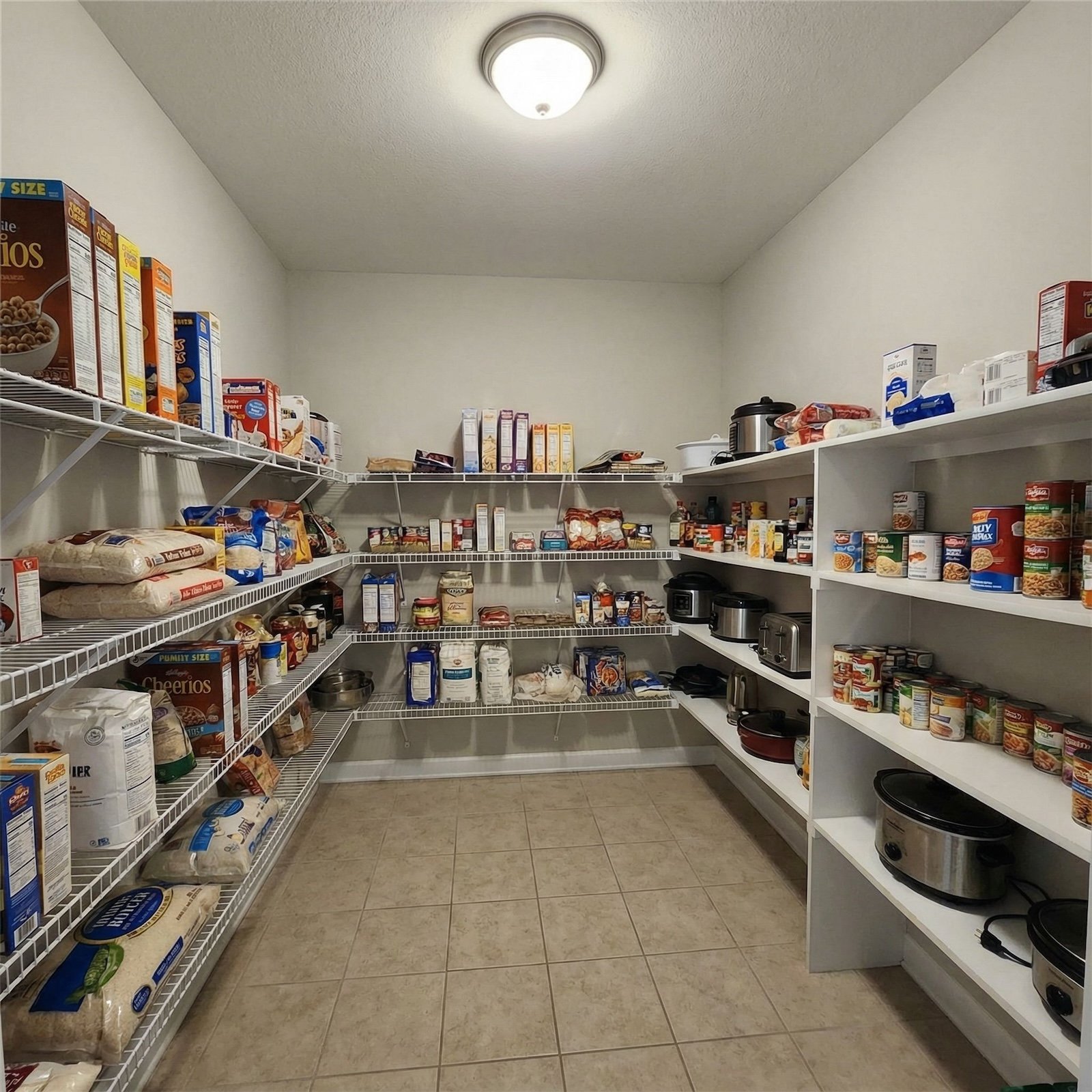
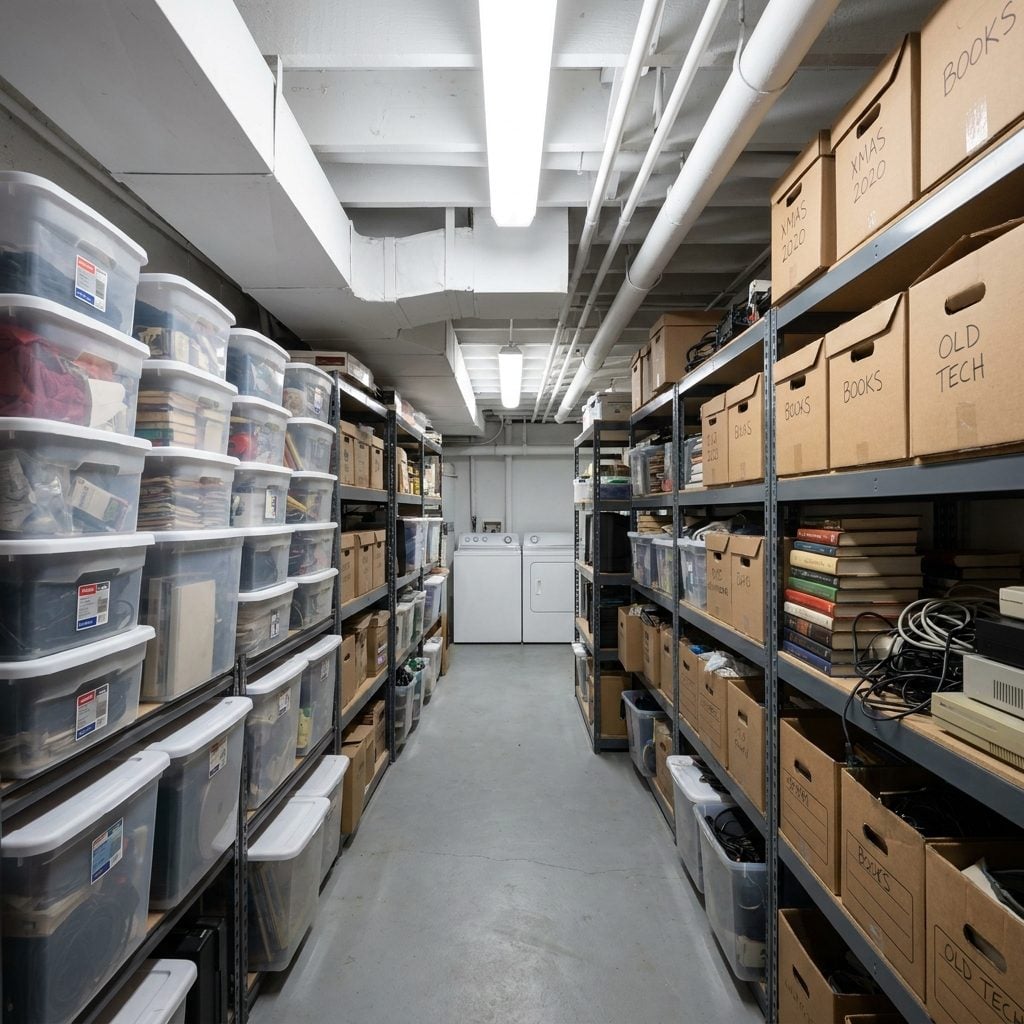
Interesting thing about the hall closet: you can cram it full of coats, board games, old shoes, and a broken vacuum, close the door, and feel totally fine. The basement has twice the storage capacity and a fraction of the stuff, and it still feels like a problem. Why?
Closets have doors. Full stop. A closed door gives your brain permission to stop processing what’s behind it. Cognitive load theory, developed by psychologist John Sweller in the late 1980s, describes how working memory can only handle a few chunks of information at a time. Open, visible storage in a basement, where shelving units display their contents and boxes sit in plain view, forces your brain to keep processing all of that information constantly. Every visible item is a micro-demand on your attention, and research on the science behind decluttering (Source) suggests that people with cluttered living areas tend to suffer from fatigue because they spend mental energy just being around their stuff.
The “Out of Sight” Paradox
Here’s where it gets weird, and honestly a bit funny. You moved things to the basement specifically to get them out of sight. But basements, unlike closets, are rooms you walk through. They’re not sealed compartments. So you’ve created a space where everything you didn’t want to think about is now arranged on shelves at eye level in a room you pass through every time you do laundry. That’s not storage. That’s a gallery of deferred decisions.
The Psychological Trap of the Multi-Purpose Room That Serves No Purpose
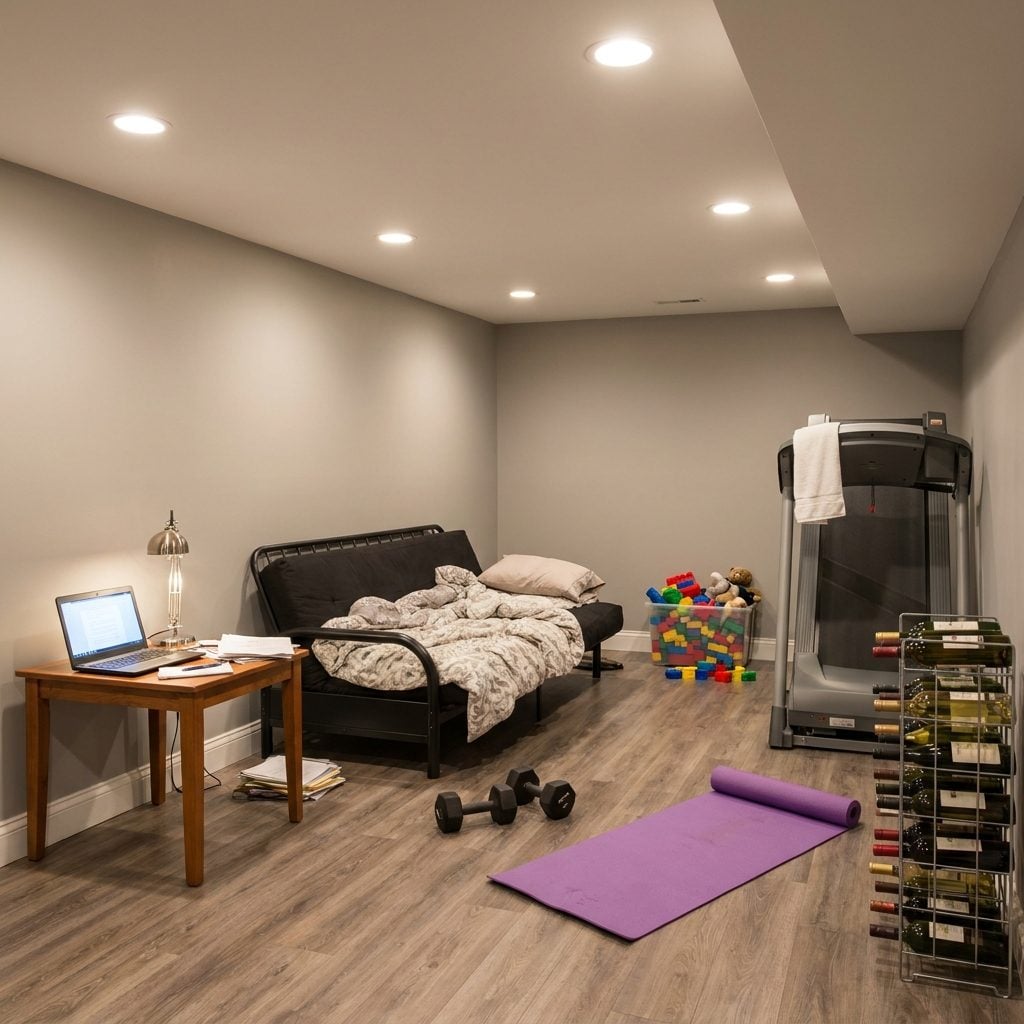
Guest bedroom. Home gym. Playroom. Office. Wine bar. If your basement is trying to be all five, it’s probably failing at all five, and there’s a real cognitive reason for that.
Your brain assigns identity to rooms almost instantly. Kitchen means food. Bedroom means sleep. This rapid categorization, which environmental psychologists sometimes call “place identity,” is how your nervous system calibrates behavior. A room with one clear purpose lets you settle into a single mode. A room with five purposes keeps you in a low-level state of decision-making: what is this room right now? What should I be doing here? That mental toggling is exhausting, even when you don’t notice it consciously. Research on cognitive load shows that when incoming information exceeds available mental bandwidth, we struggle to keep up, miss details, and feel overwhelmed.
I say this as someone who tried to make one basement room work as a home office, a guest room, AND a place to store camping gear. It worked for exactly none of those things. The desk was always covered in sleeping bag stuff. The air mattress was always half-deflated behind my chair. And I never once felt productive in that room because my brain couldn’t decide what it was for.
The One Sensory Layer Almost Every Basement Is Missing
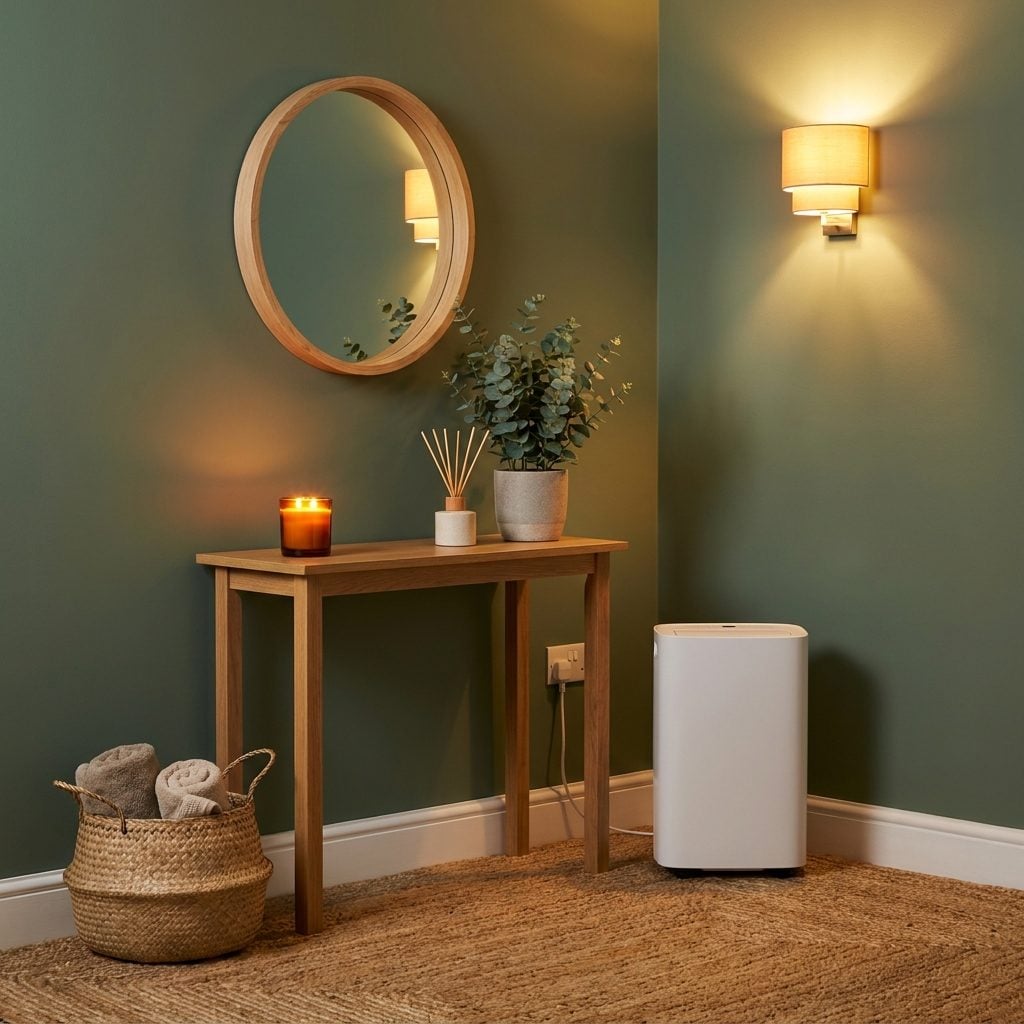
Smell. It’s smell. You probably already knew that on some level, because you’ve walked into basements that made you feel slightly uneasy for reasons you couldn’t pinpoint, and the answer was almost always that faint mineral-damp-concrete scent that every below-grade space seems to carry like a fingerprint.
We don’t think about olfactory design the way we think about paint colors or furniture arrangement, but scent is arguably the most direct path to emotional response your brain has. Olfactory signals bypass the thalamus and route directly to the amygdala and hippocampus, the brain regions governing emotion and memory. That musty basement smell, even if it’s subtle, triggers associations with neglect, dampness, age, and disuse. No amount of visual polish can override what your nose is reporting. I learned this the hard way after spending a weekend making a warm basement design look terrific, only to realize the room still felt off. It was the smell the whole time.
Why Organizing a Basement Gives You a Dopamine Hit That Vanishes by Tuesday
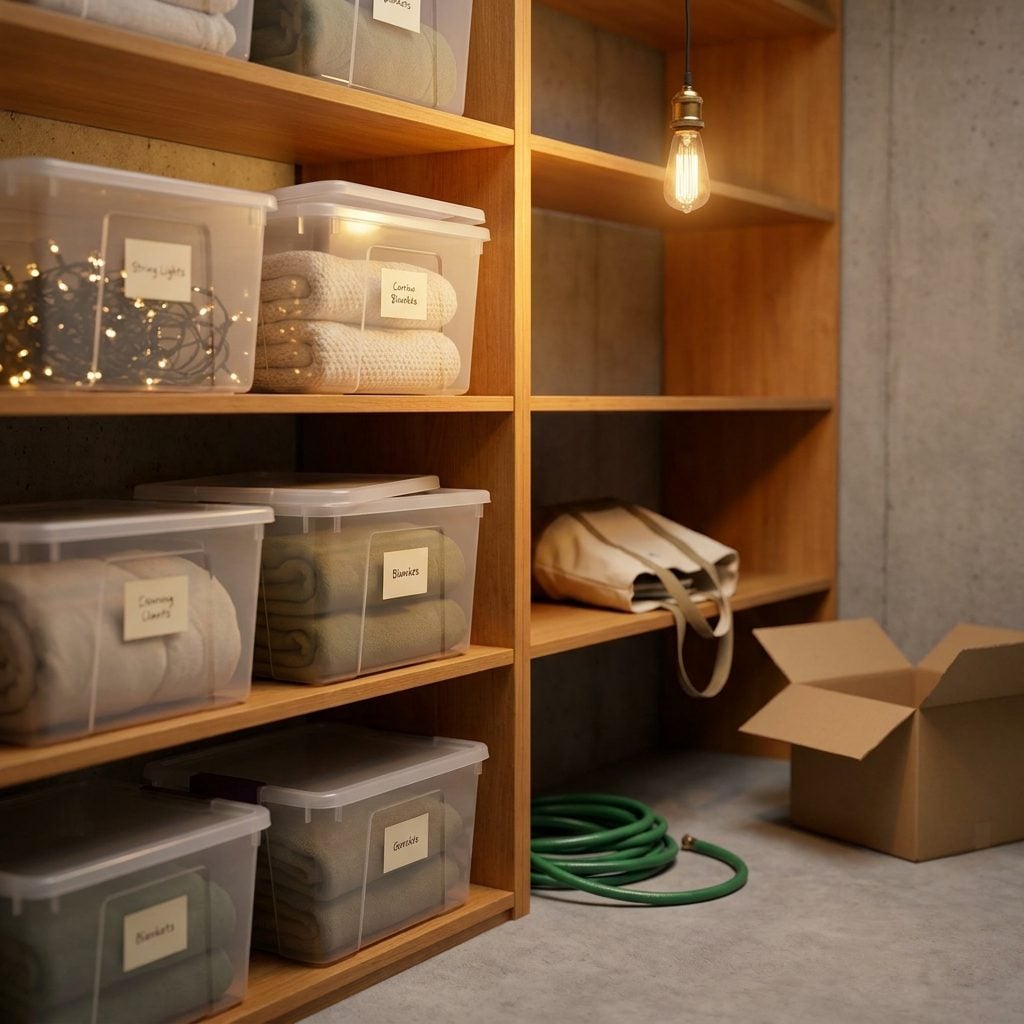
I’ll confess something: I once spent an entire Saturday reorganizing my basement storage shelves, labeling bins with a label maker I bought specifically for the occasion, and then stood at the bottom of the stairs admiring my work like I’d hung art in a gallery. By Wednesday, a half-deflated pool float had migrated out of its bin, two bags of potting soil sat on the floor, and the label maker was buried under a pile of extension cords. The high was completely gone.
Here’s what’s actually happening in your brain. According to University of Colorado Boulder psychology professor Randall O’Reilly (Source), your brain rewards you with small hits of dopamine as you make progress on a cleaning or organizing project. That’s the Saturday euphoria. But the dopamine system runs on comparison: your brain is constantly measuring what you have versus what you expected to get. Once the organized basement becomes your new baseline, the reward signal flatlines. The clean shelves aren’t better than expected anymore. They’re just… normal.
This is why basements are particularly cruel. Unlike a kitchen you see twenty times a day, a basement sits out of sight. You don’t get the repeated visual reinforcement that sustains the reward loop. And because basements tend to be the dumping ground for things you can’t decide about (holiday decorations, old furniture, stuff you might need “someday”), they’re especially vulnerable to what O’Reilly identifies as loss aversion: we keep things because the brain says getting rid of them equals losing them. So the clutter creeps back, and you’re left wondering whether you organized anything at all. The dopamine faded, but the indecision never did.
The Bottom Line
The reason your basement feels off no matter what you do is that you’re decorating against your own nervous system. Every signal that space sends, the descent, the missing light, the cool air, the muffled sound, the single exit, triggers the same ancient verdict: this is a place you shelter in temporarily, not a place you live. You won’t fix it with paint or furniture; you fix it by systematically replacing each underground cue with the sensory evidence your brain actually requires before it will let you relax.