🔥 Would you like to save this?
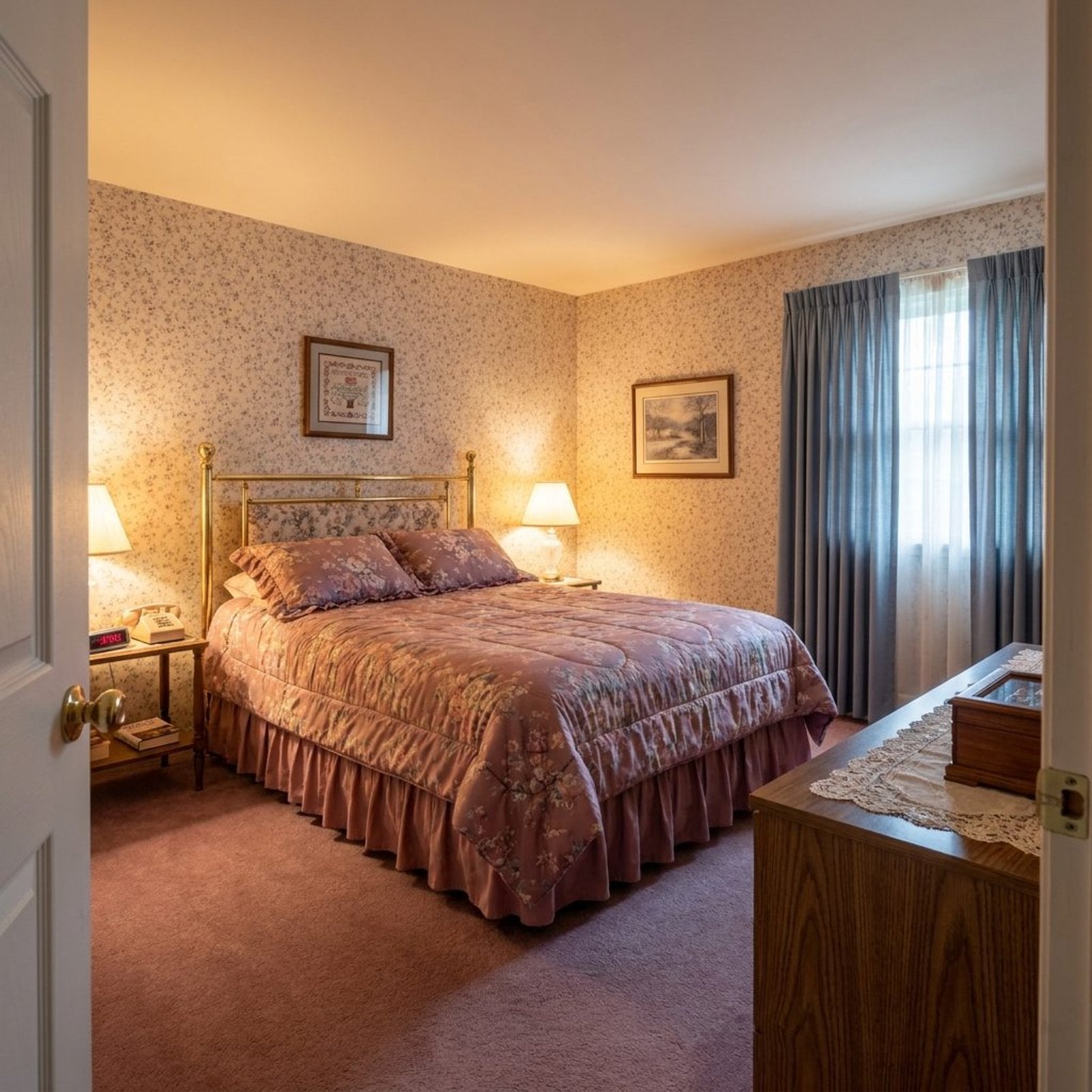
The smell hits first. Aqua Net, new plastic, the faint chemical sweetness of a vinyl waterbed frame warming in afternoon sun. A ceiling fan clicks overhead while a corded phone rings somewhere down the hall. If you were tucked into a bedroom in 1985, you already know what’s coming: peach walls, an oak headboard heavy enough to anchor a rowboat, a clock radio glowing red across the shag. Here’s what those rooms actually looked like — and what took their place.
30. Floral Wallpaper Everywhere vs. Paint With One Accent Wall
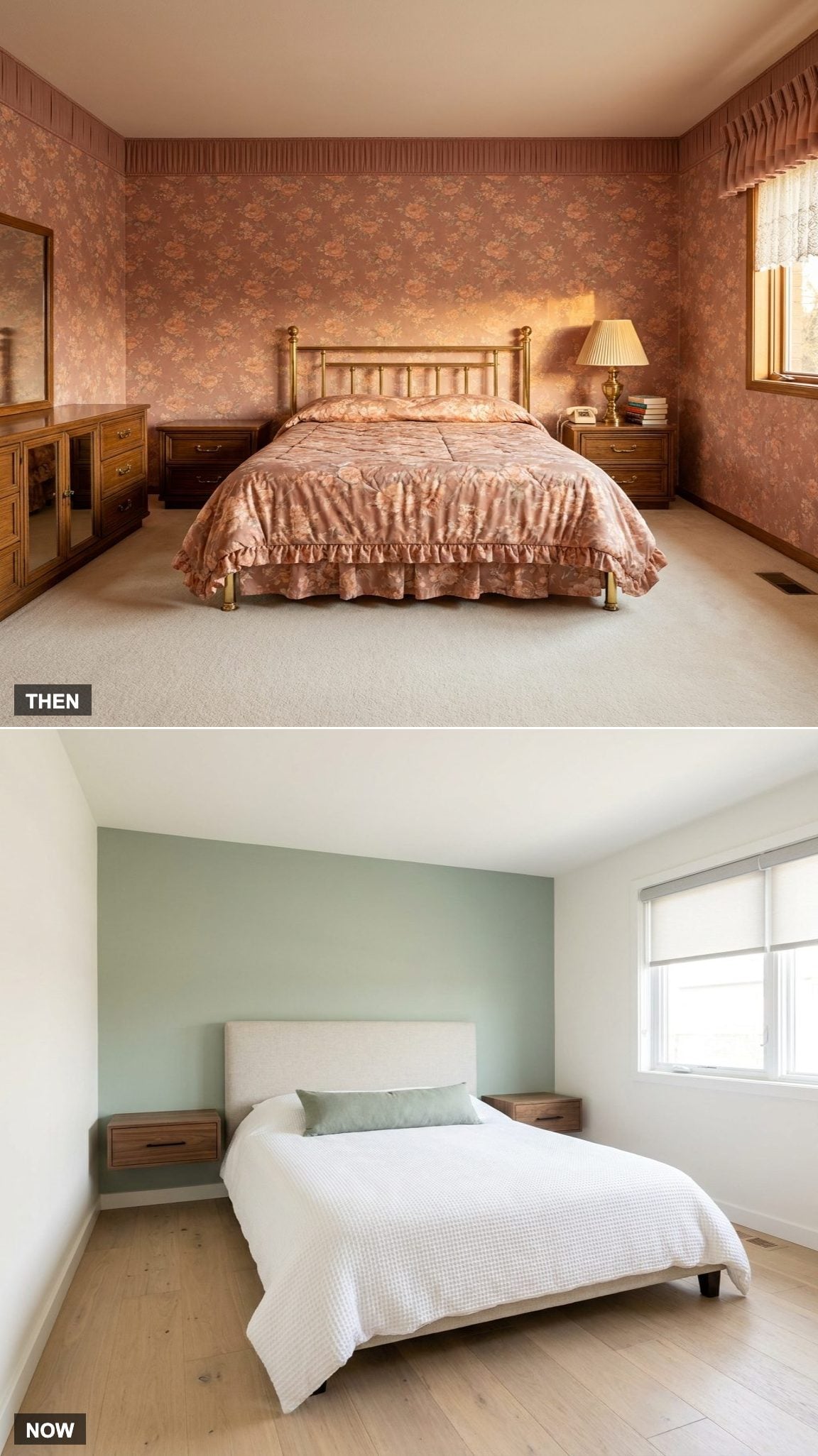
Every square inch of wall carried pattern in 1985 — roses, ribbons, tiny bouquets, coordinating borders parked at eye level and refusing to leave. Rooms felt smaller because they literally were, visually speaking. The wallpaper ate the square footage.
In order to come up with the very specific design ideas, we create most designs with the assistance of state-of-the-art AI interior design software. Also, assume links that take you off the site are affiliate links such as links to Amazon. this means we may earn a commission if you buy something.
Today’s move is quieter. One wall gets the color commitment; the other three step back and let the light do the work.
29. Matching Oak Bedroom Sets vs. Furniture That Doesn’t Match on Purpose
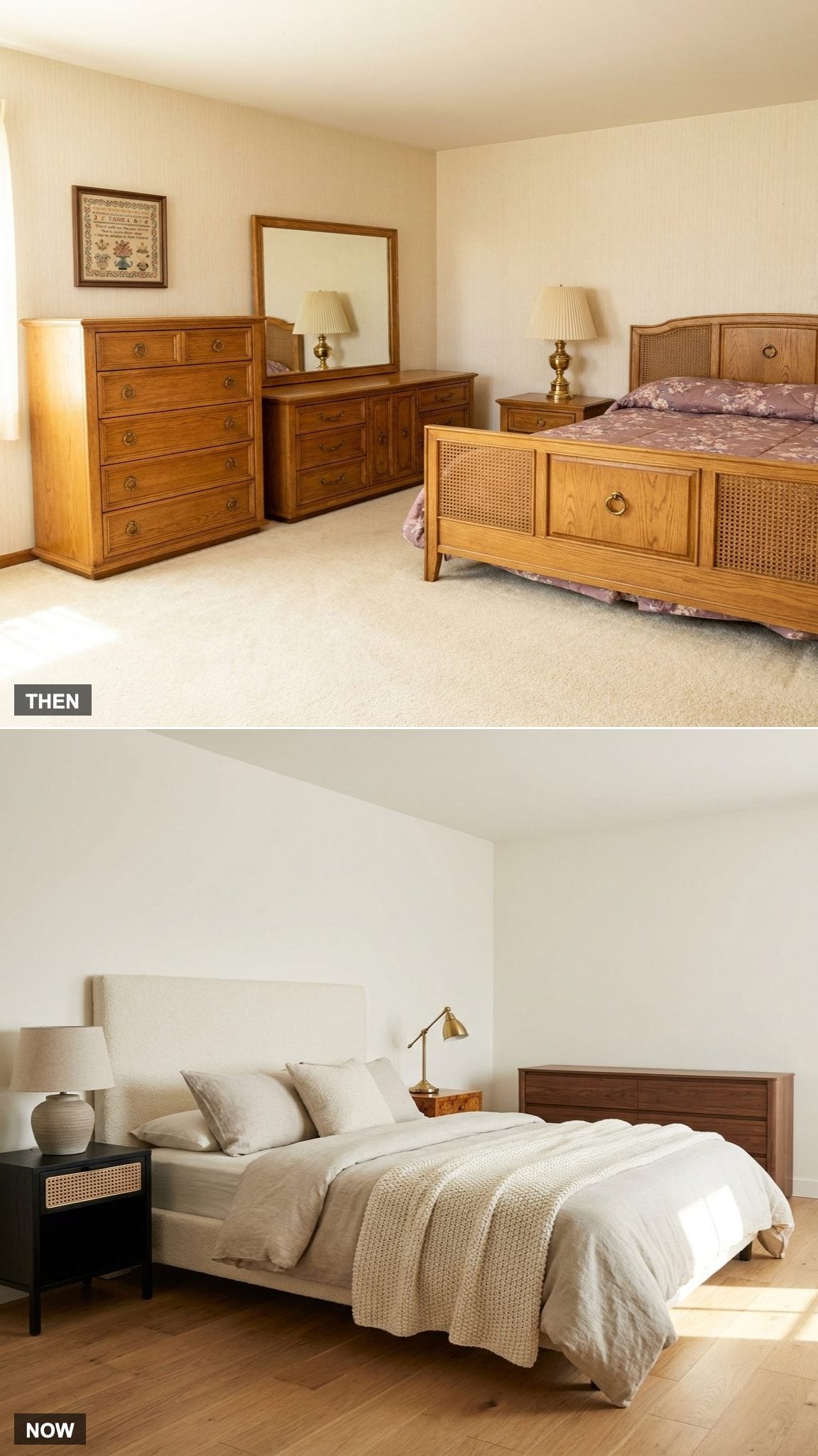
The bedroom set arrived as a package deal. You bought the whole suite at Levitz or Ethan Allen, delivery truck backed up to the driveway, and by dinnertime your room looked exactly like your neighbor’s — efficient, sure, and entirely without personality.
Now the nightstands don’t even try to match. One is cane, one is walnut. The lamps came from different centuries and the room reads collected instead of ordered.
28. The Waterbed Era vs. Memory Foam Everything
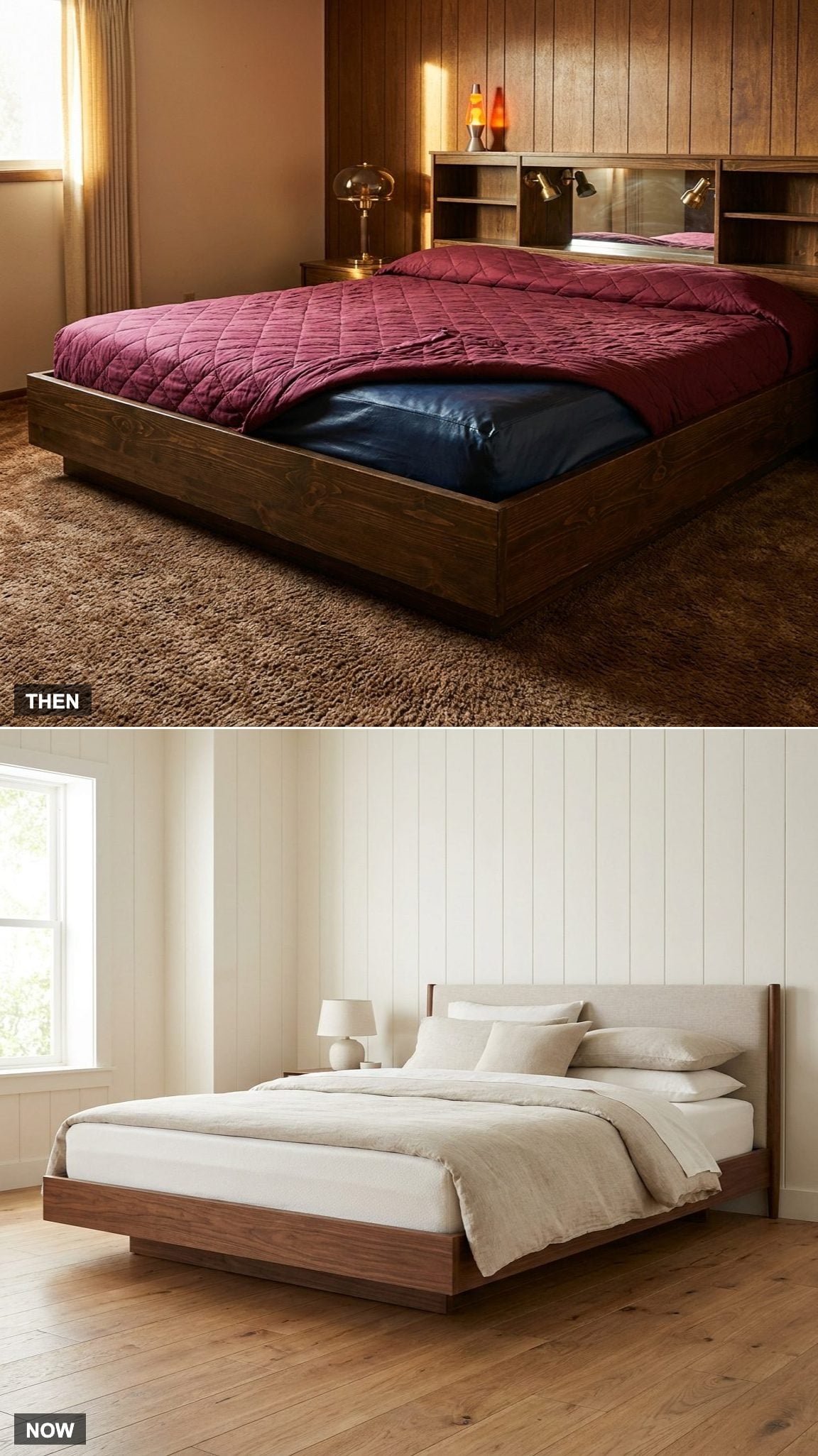
The waterbed was the flex. If you had one, you mentioned it.
The heater hummed, the sheets never quite fit, and moving day required draining the thing with a garden hose out a second-story window. Nobody talks about that part. Memory foam won because it does the one job a waterbed pretended to do — not hurt your back — without requiring a plumbing consultation.
27. Wall-to-Wall Carpet vs. Hardwood Underfoot
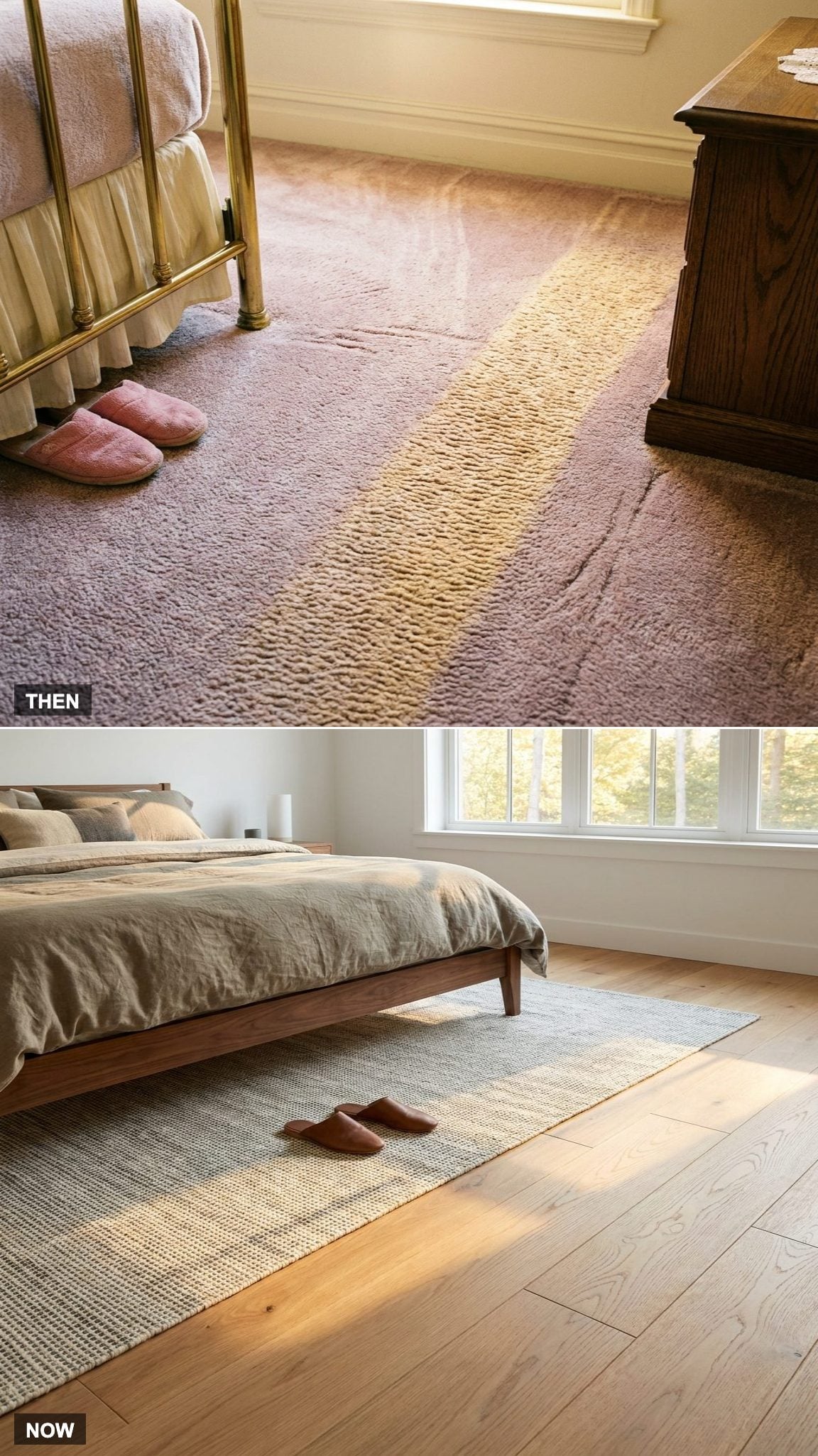
Mauve carpet. Dusty rose carpet. That specific 80s pink that vacuumed into a dozen different shades depending on the direction of the pile — it felt luxurious for about three years, then it started holding onto everything you spilled on it.
Hardwood or luxury vinyl plank handles the floor now, with a rug doing the softness work in a defined zone. Easier to clean. Easier to change. Doesn’t trap the smell of the family cat from 1992.
26. The Tube TV on the Dresser vs. The TV That Disappeared Into the Wall
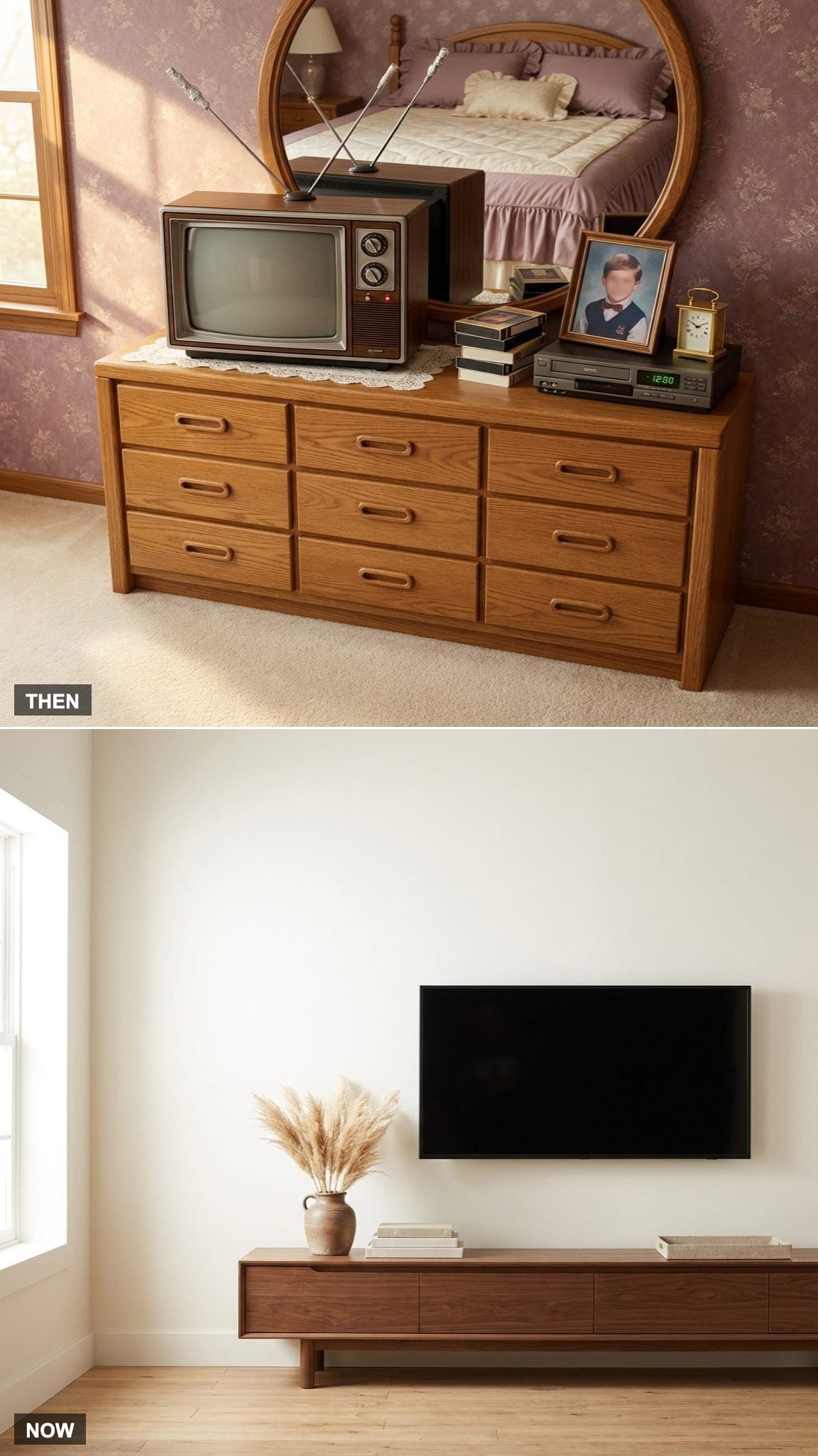
The bedroom TV was a project. Sixty pounds, two-person lift, reception a matter of foil, geometry, and prayer — the dresser it sat on was chosen partly for structural reasons.
Now the TV weighs less than a bag of groceries and hangs on the wall like a picture. The dresser gets to be furniture again.
25. The Digital Alarm Clock vs. The Phone That Ate Its Job
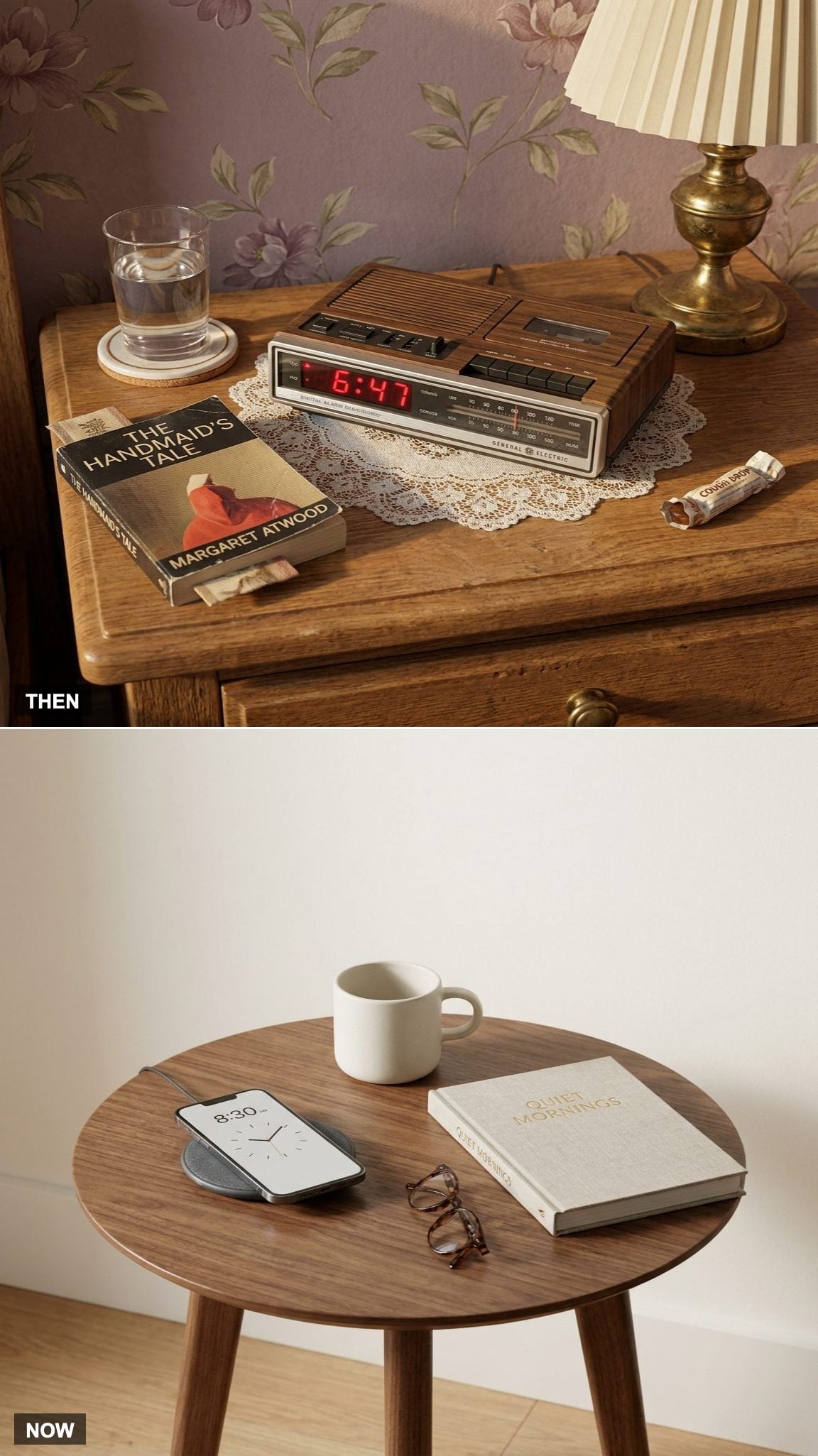
The red glow of a clock radio was the last thing you saw at night and the first thing you saw in the morning. It also woke you up with a DJ mid-sentence about traffic on the interstate.
The phone does all of it now — alarm, weather, sunrise simulation instead of a startling buzz. The nightstand got quieter. Whether the mind did is a separate conversation.
24. The Corded Bedside Phone vs. The Charging Pad That Replaced It
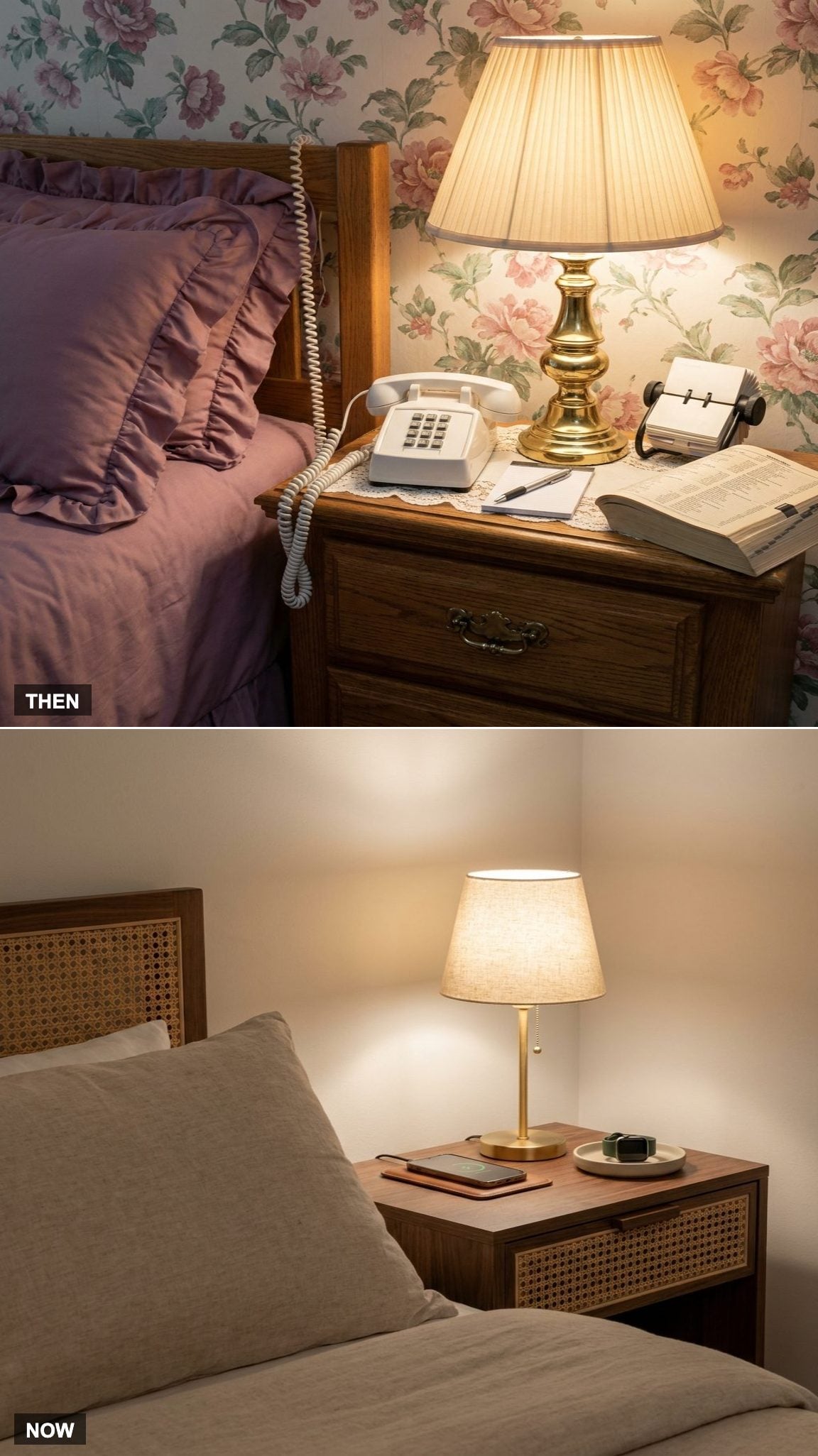
You dragged the cord across the room to talk to your best friend in private. Everyone did. The cord kinked, tangled, and eventually gave up in a permanent spiral you could never quite straighten out again.
The bedside phone is a charging pad now, juicing your phone, your watch, your earbuds. Less romantic, more functional, and nobody has to yell up the stairs that it’s for you.
23. Lace Priscilla Curtains vs. Blackout Shades and Simple Drapes
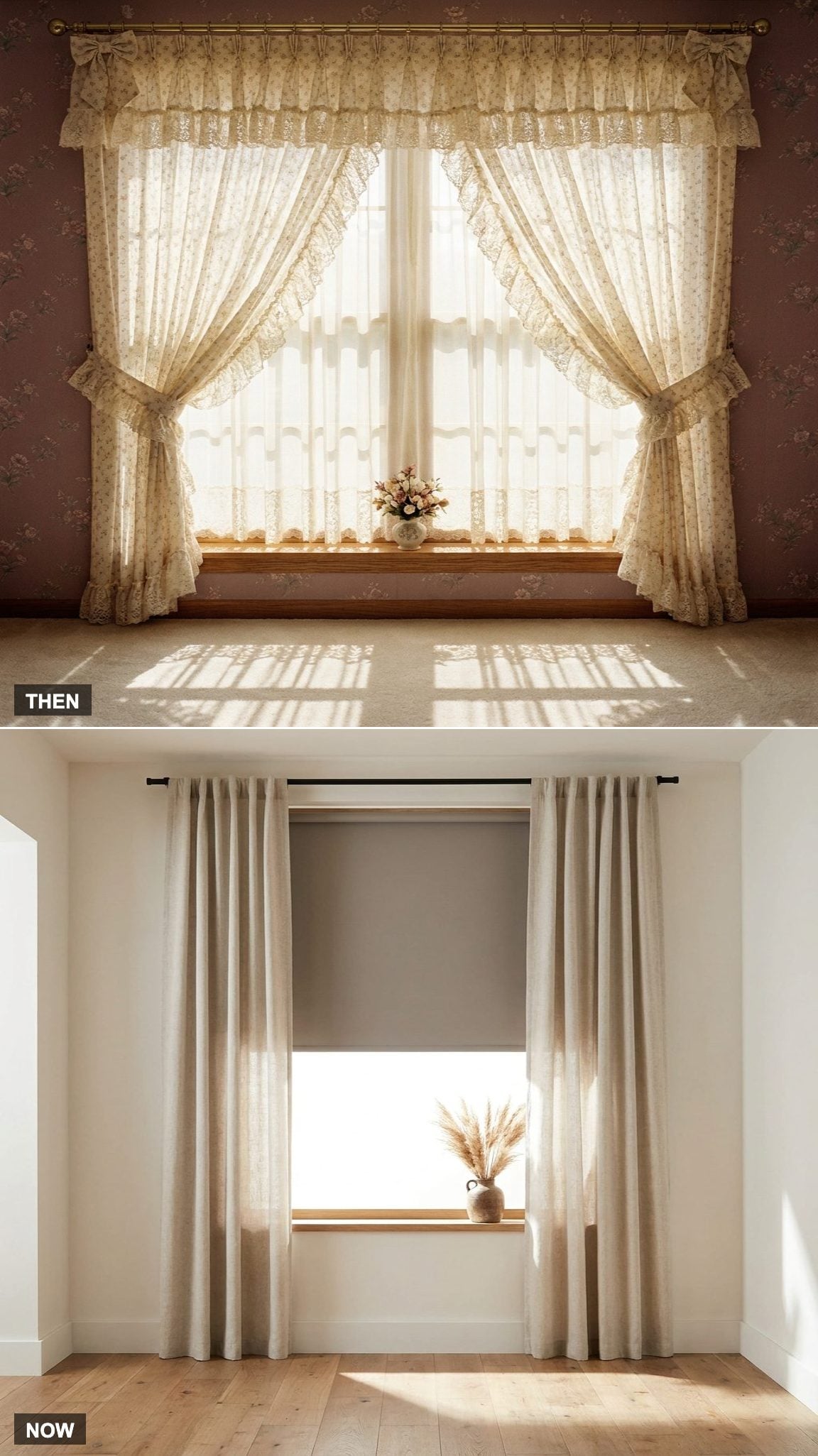
Priscillas were their own event: ruffled, crossed, tied back, layered over sheers, topped with a valance that had its own bow. The window worked harder than most of the furniture in the room.
Current thinking is a blackout shade to sleep, a linen panel to soften the edge, done. Takes a Saturday morning off the annual cleaning list and lets the window frame itself.
22. The Globe-Light Ceiling Fan vs. The Fixture You Actually Notice
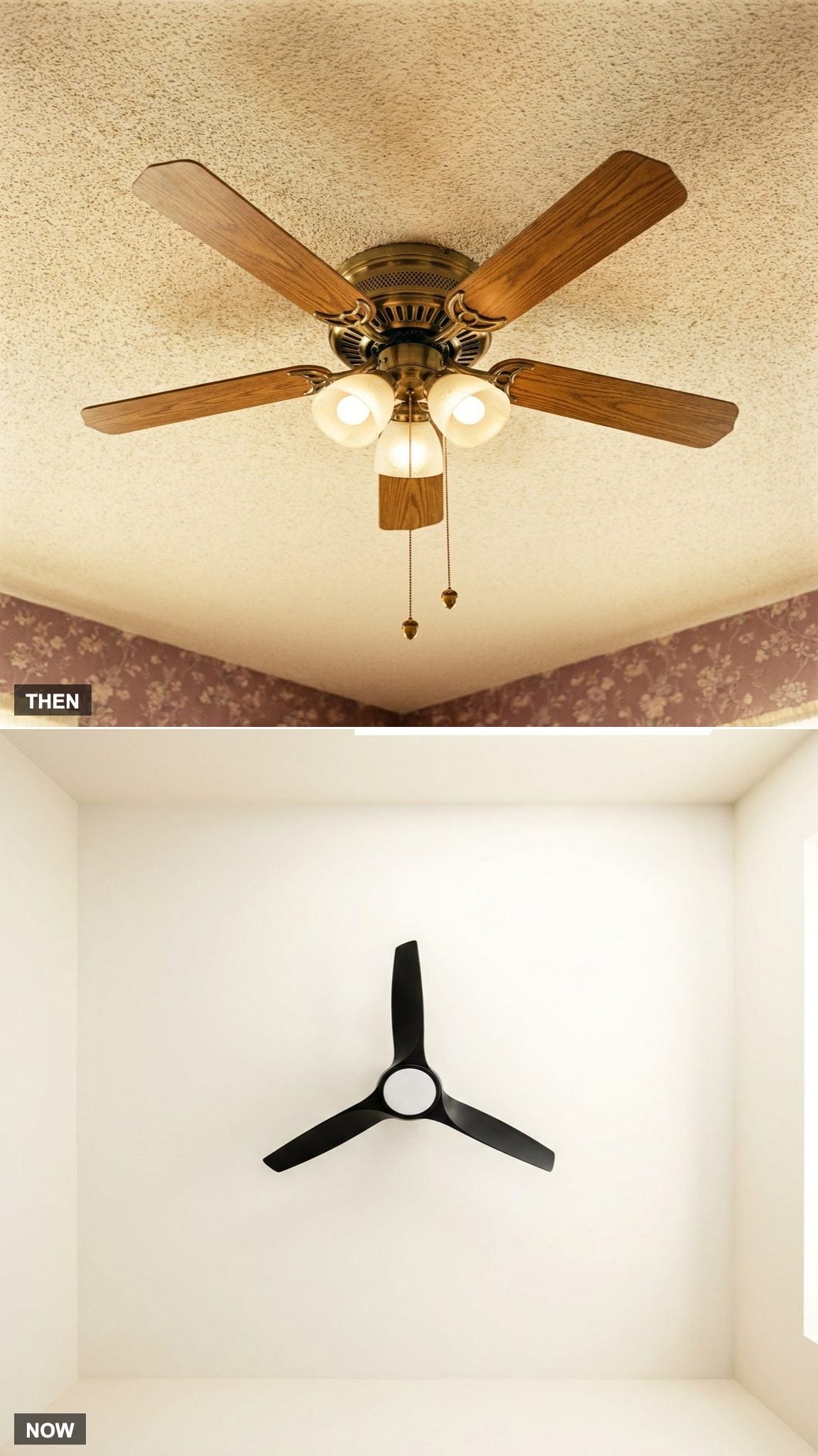
Every 80s bedroom had the same fan. Faux brass, oak blades, three frosted globes, two chains dangling at chest height, and you pulled the wrong one at 2 a.m. and lit up the whole room instead of turning off the fan.
Modern fixtures hid the chains, ditched the globes, and let the ceiling breathe. Some tuck the blades entirely inside a flush-mount profile. Better light, less visual weight, no accidental strobe show at bedtime.
21. The Brass Bed Frame vs. The Upholstered Headboard
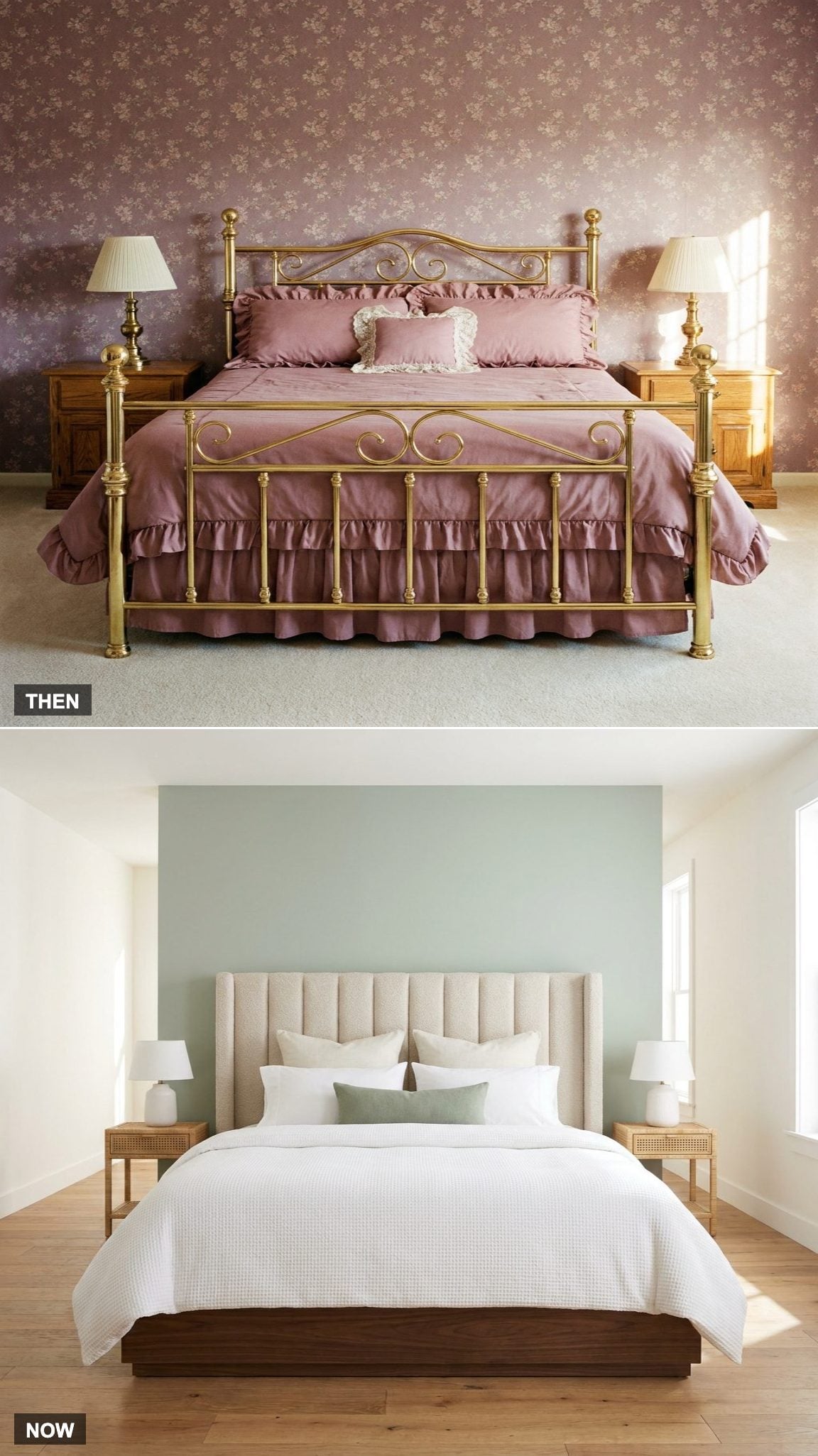
Brass beds were the crown jewel — Sears, JCPenney, every furniture showroom had a whole section of them, catching the light, announcing themselves, requiring regular polishing to keep the gleam. A lot of shin-banging went with the territory.
The upholstered headboard is a softer thesis. Boucle, linen, velvet, channel-tufted or slab-simple, doing acoustic and visual work at once. Nothing to polish. The bed reads like furniture now instead of a display piece.
20. The Closet Doors: Mirrored Slabs vs. The Walk-In Reveal
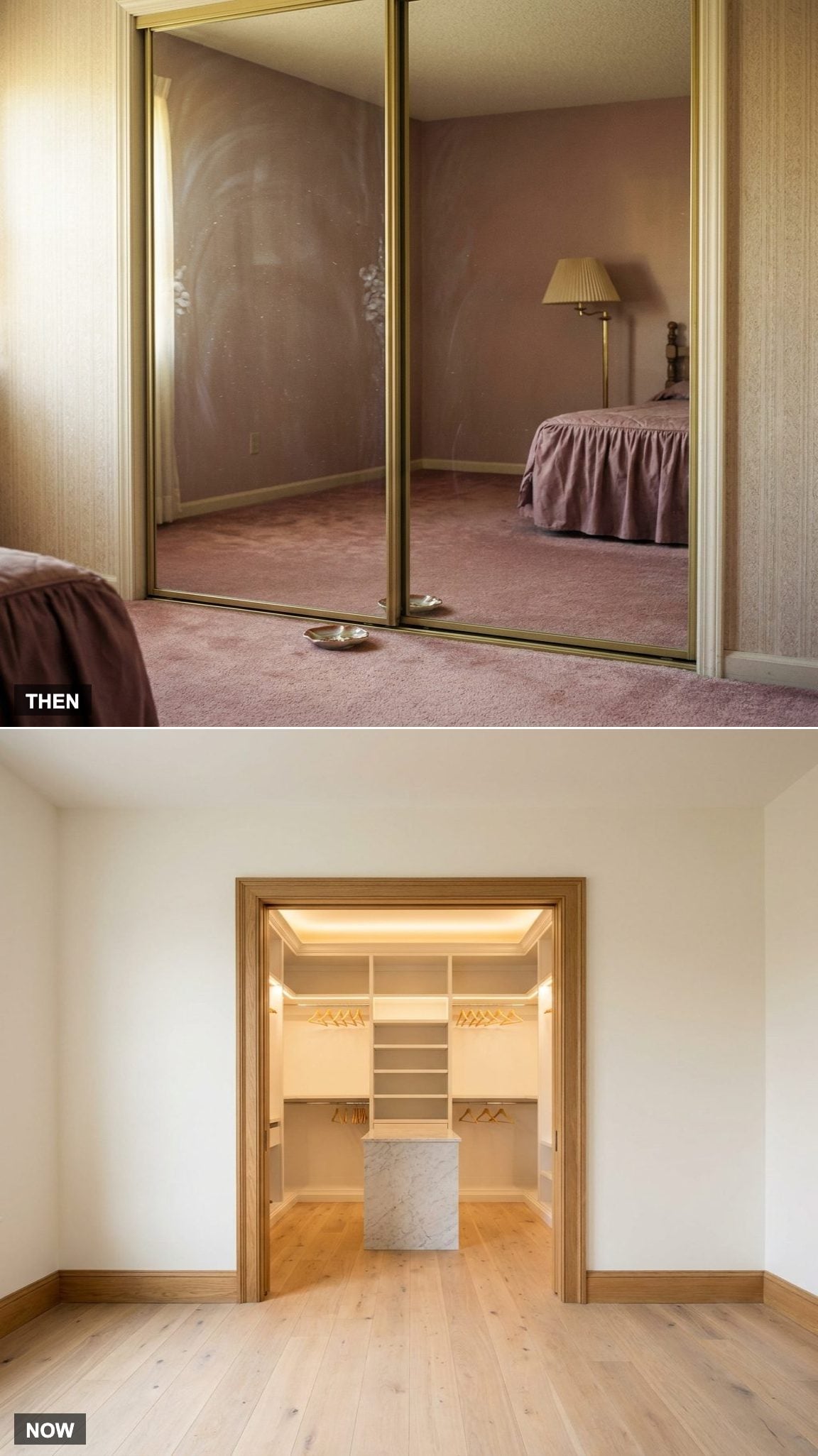
Those mirrored closet doors pulled double duty in 1985 — storage door and full-length mirror in one, and every teenager checking her outfit before homeroom knew exactly which panel had the smudge. Gold aluminum framing was practically a national standard, and so was the moment one door jumped its track and hung there sideways for six weeks before anyone called somebody to fix it.
The walk-in changed the psychology of getting dressed. Suddenly it wasn’t a transaction with a wall — it was a room of its own, with lighting and seating and sometimes a window. Clothes got real estate. The bedroom got its wall back.
19. The Stereo Corner: Component Towers vs. One Small Speaker
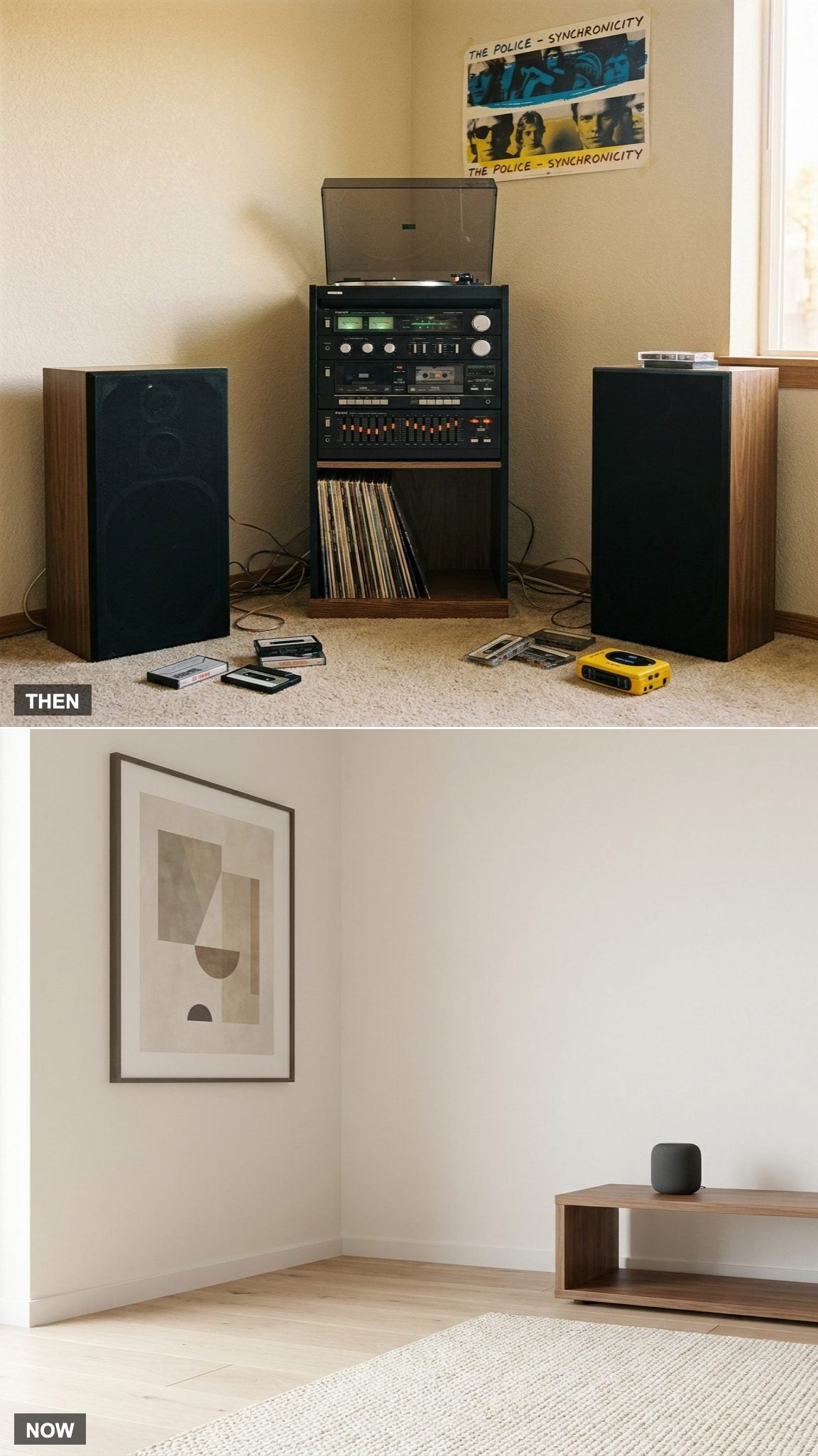
A serious stereo in 1985 was furniture — it had weight, footprint, and a specific ritual: flip the record, cue the tape, watch the VU meters bounce. Speakers were the size of end tables. Half the room was arranged around them, and nobody thought this was excessive. It was just what music looked like.
Now the whole corner is a hockey puck on a shelf. It also tells you the weather.
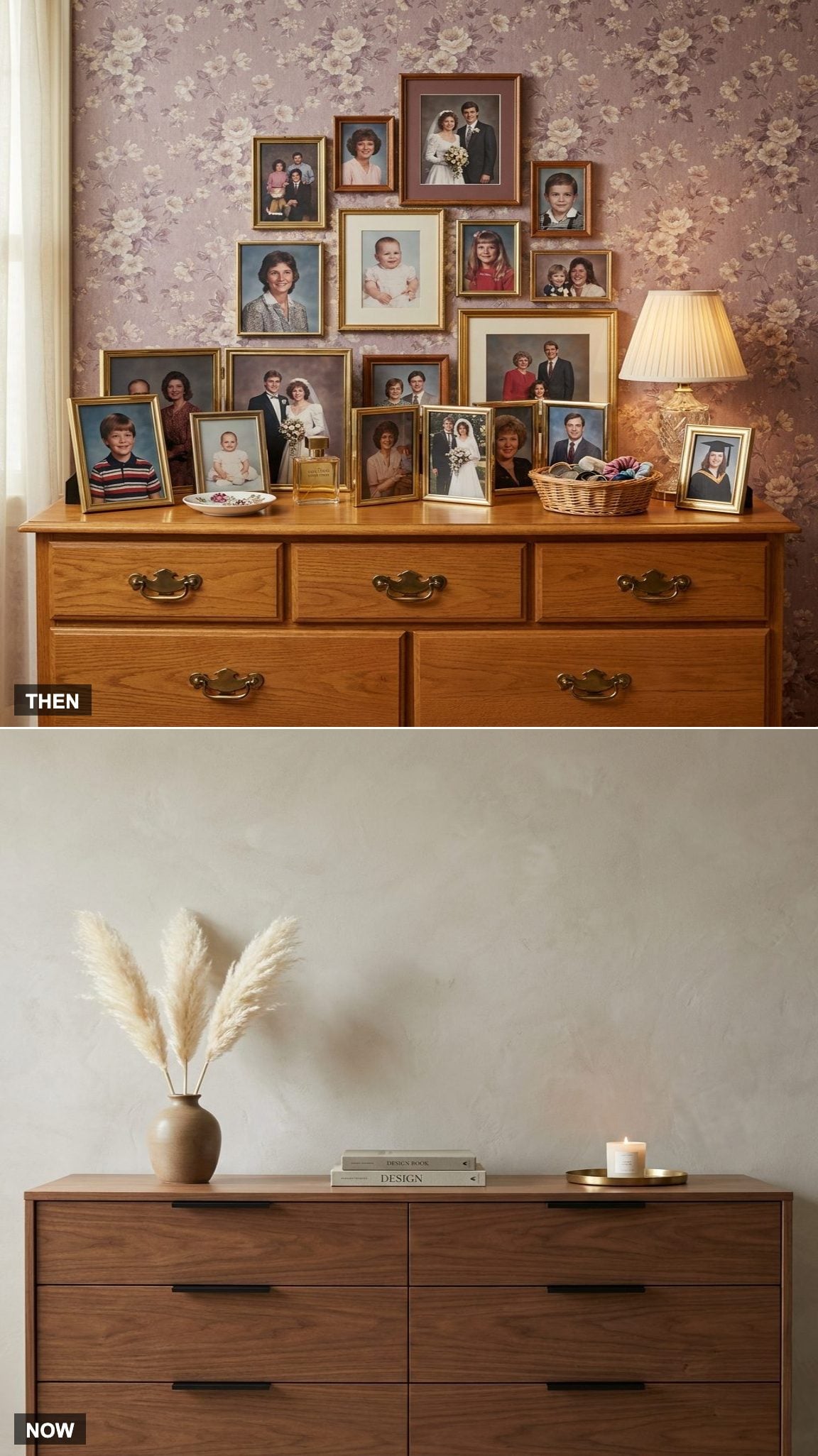
18. The Dresser Top: Photo Frame Chaos vs. Three Objects, Chosen
🔥 Would you like to save this?
The 1985 dresser top was a shrine. Every milestone, in a frame, on display, dusted around rather than moved — you could reconstruct a family tree from one afternoon of looking. There was a hierarchy, too. The biggest frame went to whoever had graduated most recently.
The modern surface stays clear on purpose. Three objects, breathing room, a candle nobody plans to light. It reads calm because there is nothing to catalog.
17. The Bedding: Country Rose Comforters vs. Hotel White
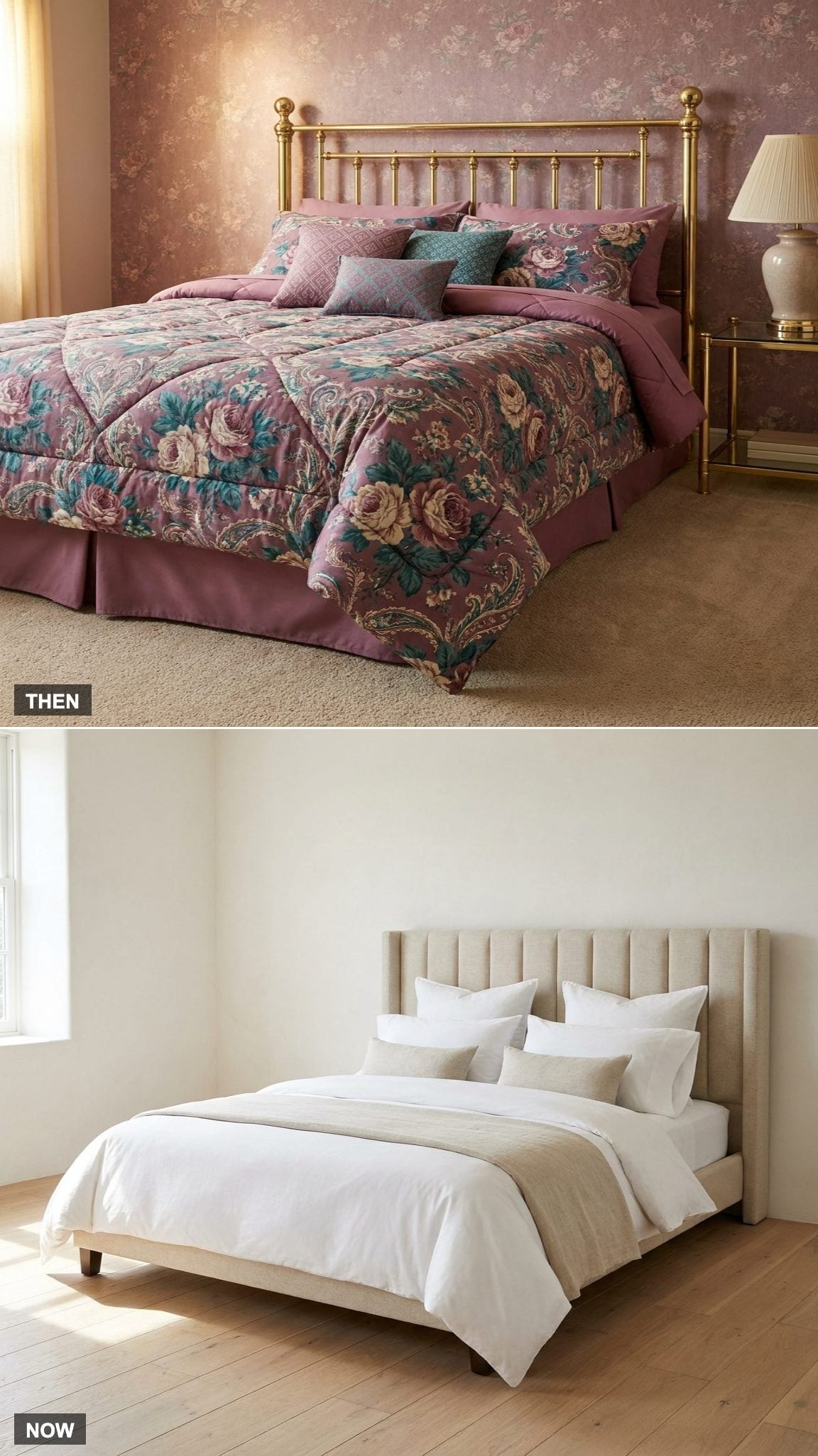
Country rose was inescapable. The comforter matched the shams, matched the dust ruffle, matched the curtains, matched the wallpaper border, and sometimes matched a small pillow embroidered with a goose. This was called a coordinated bedroom set, and it came in a plastic bag from JCPenney.
The hotel-white bed runs on the opposite instinct: pattern disappears, coordination becomes automatic, and texture does the work color once handled.
16. The Walls: Warm Wood Paneling vs. Quiet Neutral Plaster
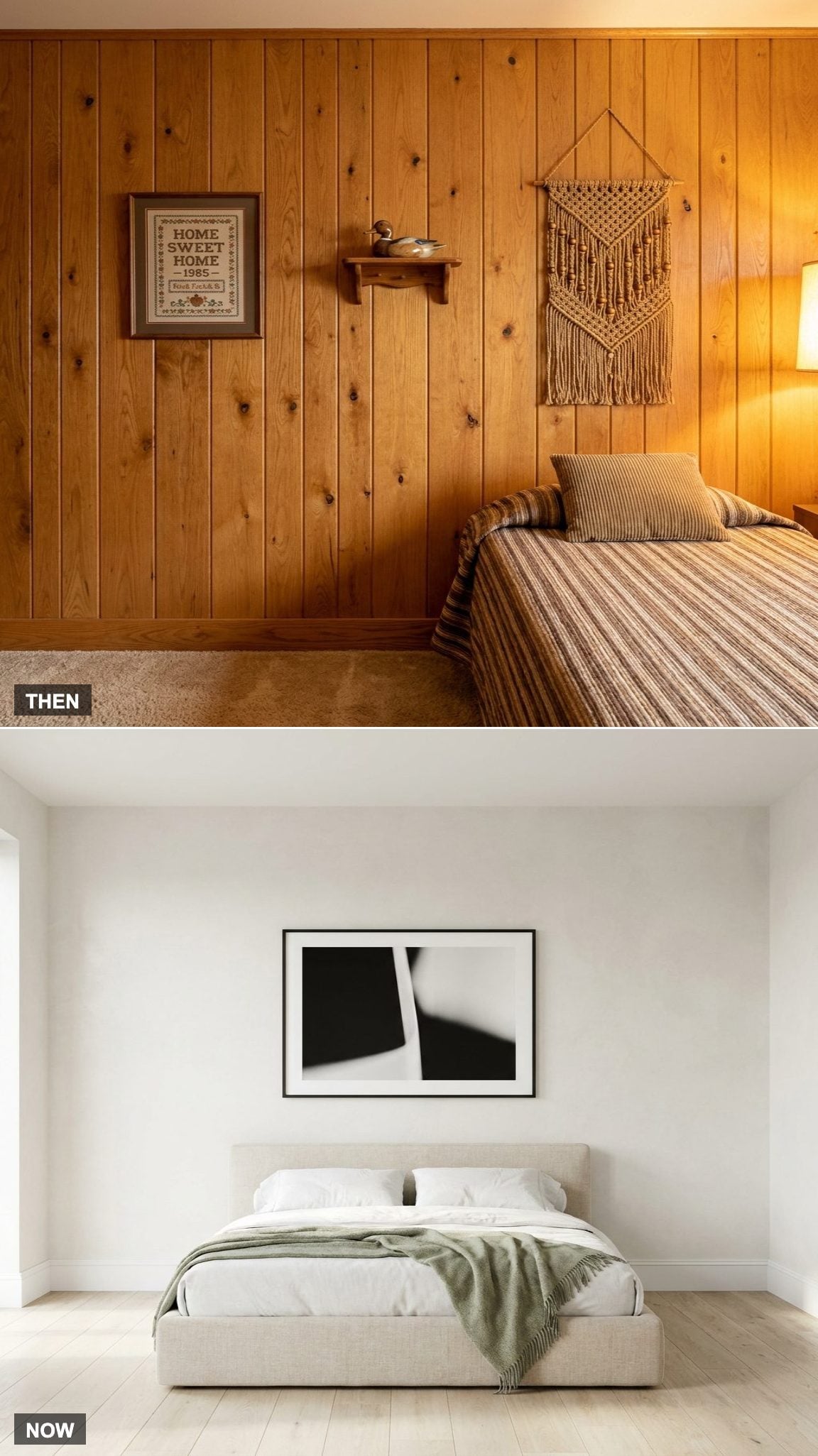
Wood paneling in a bedroom in 1985 was considered warm, masculine, a little lodge-y. It made the room feel enclosed in the good way, like a den you slept in. It also made the room feel enclosed in the bad way, which is why most of it got painted over sometime around 2003.
Neutral plaster reads modern because it does nothing. And doing nothing, it turns out, is what a bedroom wall is supposed to do.
15. The Nightstand: Paperback Tower vs. The Charging Tablet
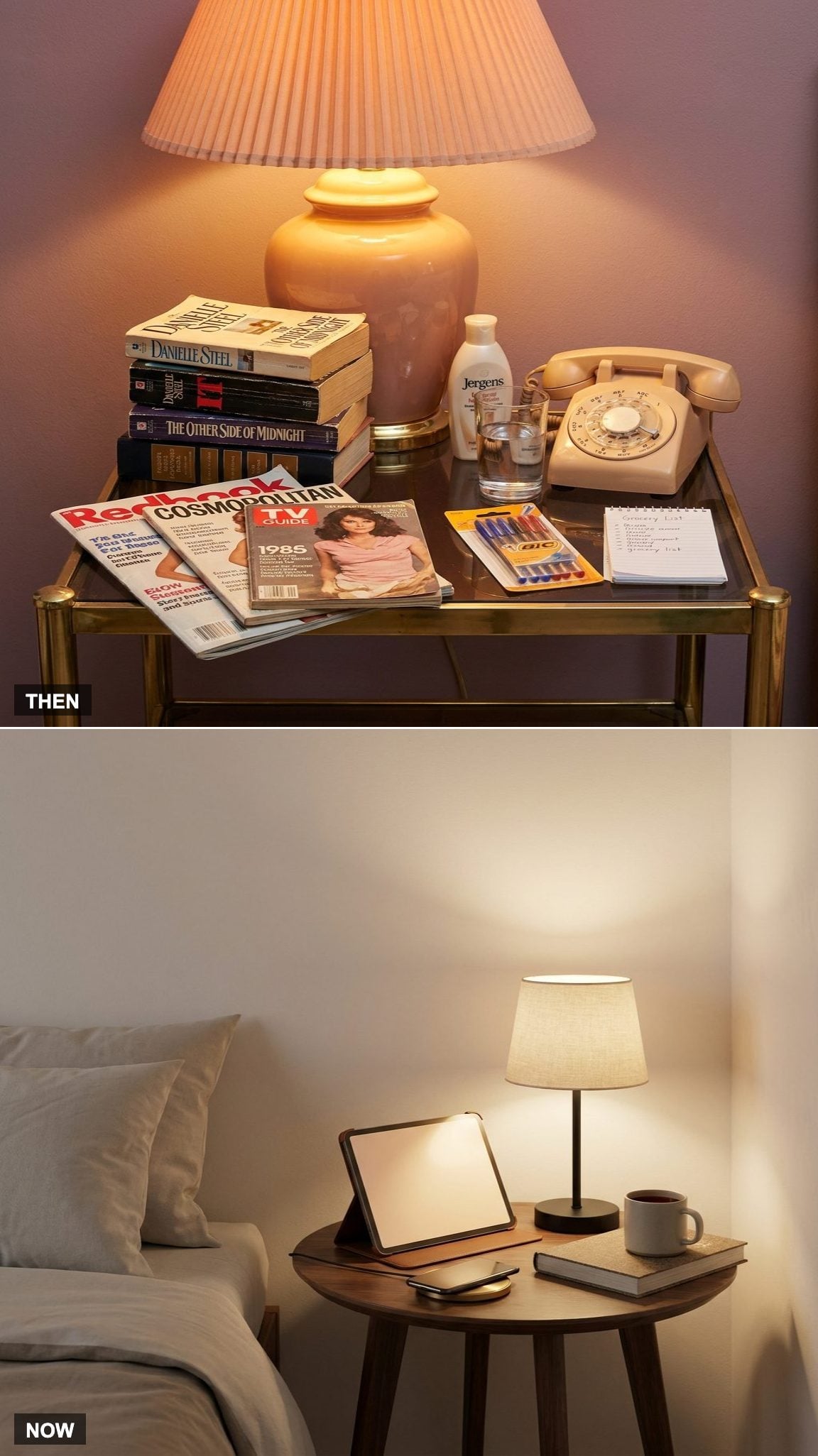
The nightstand pile told you what kind of year the reader was having. Three books deep meant a good stretch. Twelve deep meant a person who kept starting things and getting distracted — which, honestly, was most people.
The tablet holds everything now, including the twelve books nobody finished. The pile just went digital, and the distraction is the same.
The paperback stack was a physical record of intention. The tablet is the same intention, invisible, and somehow easier to ignore.
14. The Jewelry Storage: Freestanding Armoire vs. Hidden Drawer Insert
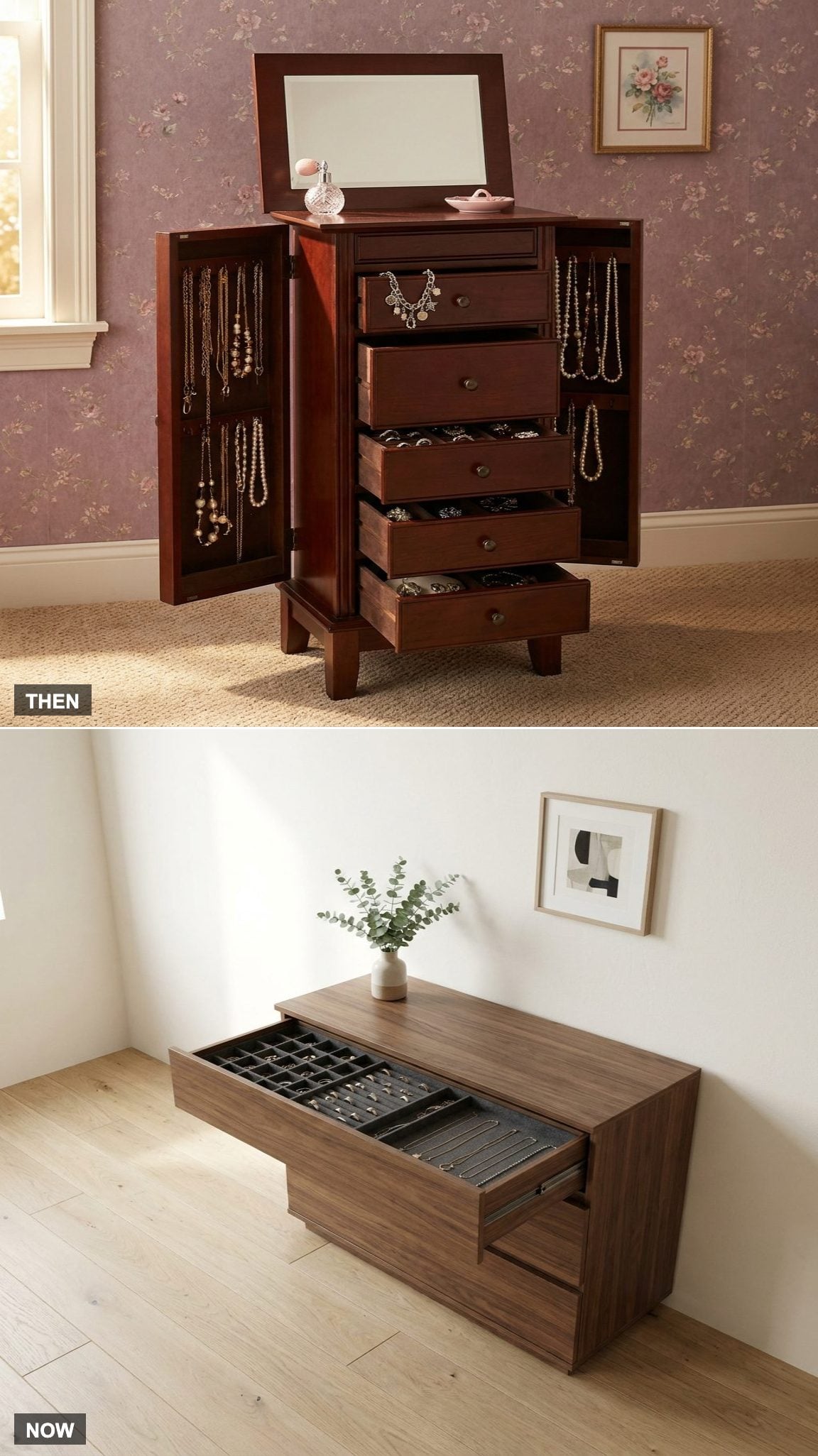
The jewelry armoire was its own piece of furniture. Everyone had one. And the necklaces inside were always tangled, no matter how carefully you laid them down.
Built-in inserts solved the tangle by giving every chain its own slot. The armoire disappeared into the dresser. Drawer closes. You forget it exists until you need it.
13. The Getting-Ready Zone: Vanity Table vs. The Bathroom Migration
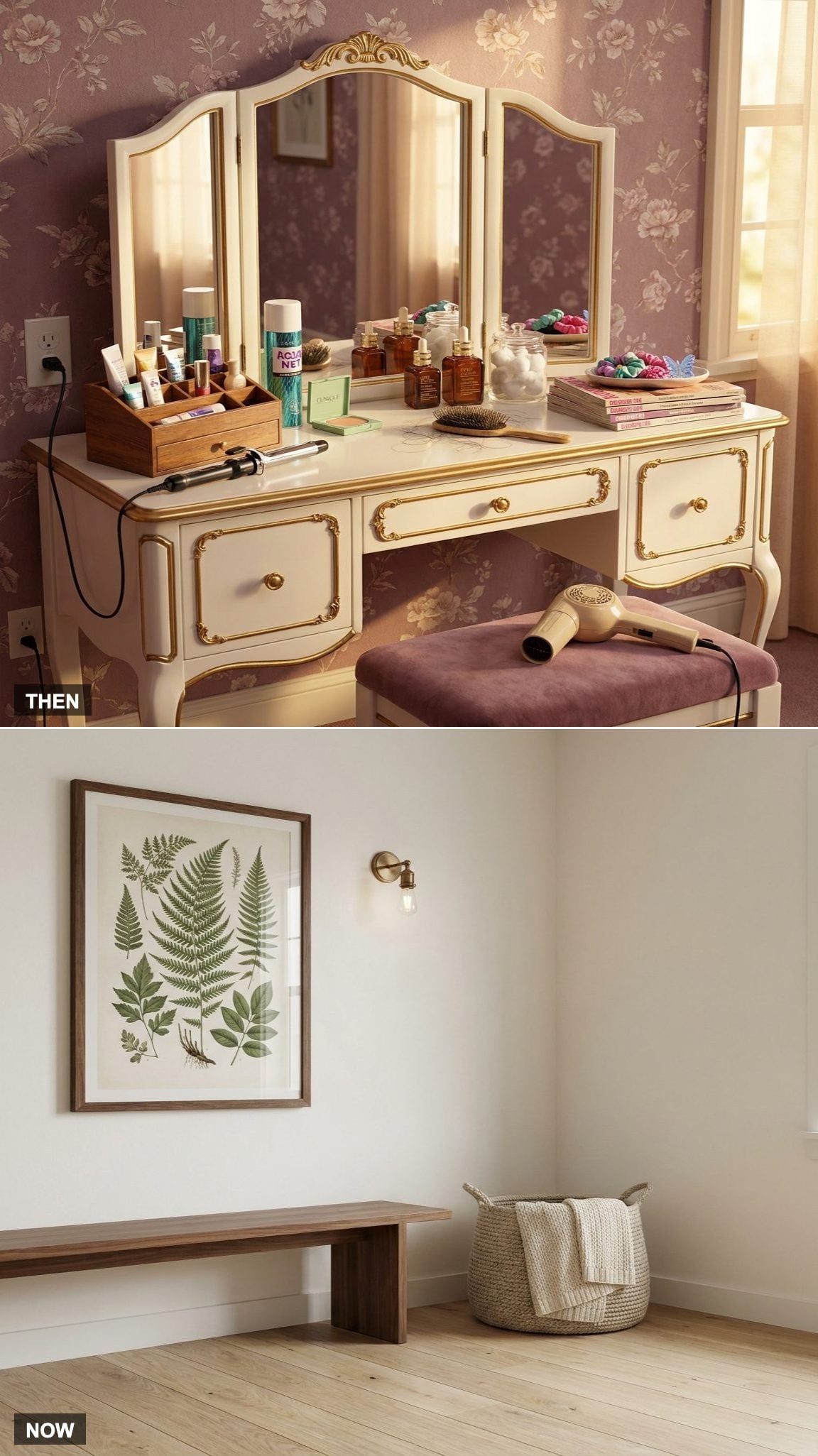
Every bedroom of a certain kind had one — the vanity table, the round mirror, the little stool, the entire drugstore represented on its surface. It was where the day started, and it smelled like Aqua Net for forty-eight consecutive years.
Bathroom vanities took over because they had better lighting, plumbing for the sink, and outlets for the tools. Bedrooms got quieter. Mornings moved down the hall.
12. The Bed Pillows: The Stuffed Animal Menagerie vs. The Pillow Committee
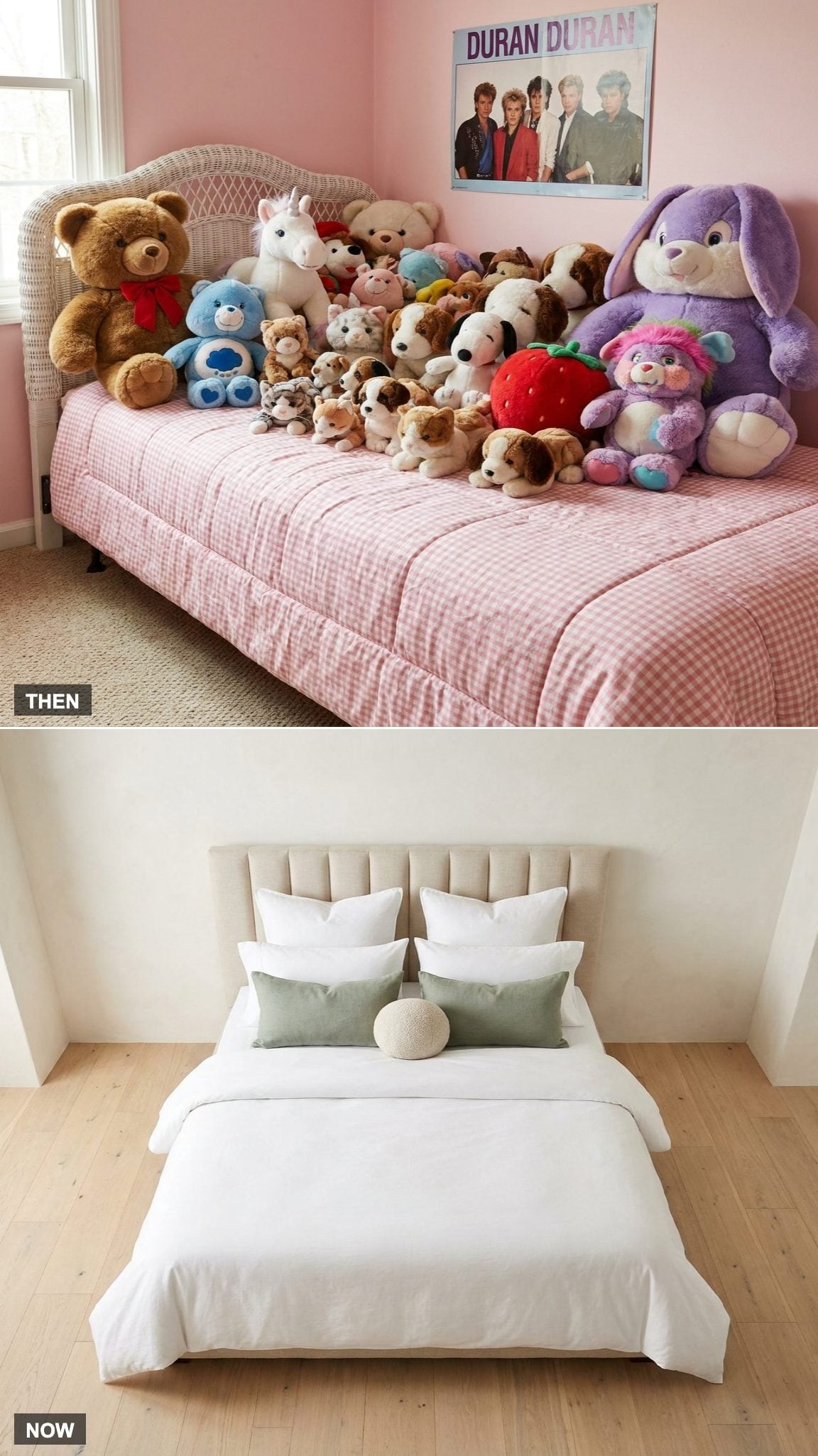
The stuffed animal pile was a whole ecosystem — a hierarchy, a rotation, and one animal that got demoted to the closet when a new one showed up. Nobody actually slept on the pillow because the pillow was already occupied.
Decorative pillows replaced them. Same problem, more expensive. You still throw them on the floor before bed. You still put them back in the morning. Some habits just change outfits.
11. Posters Taped to the Wall vs. Framed Art on a Picture Rail
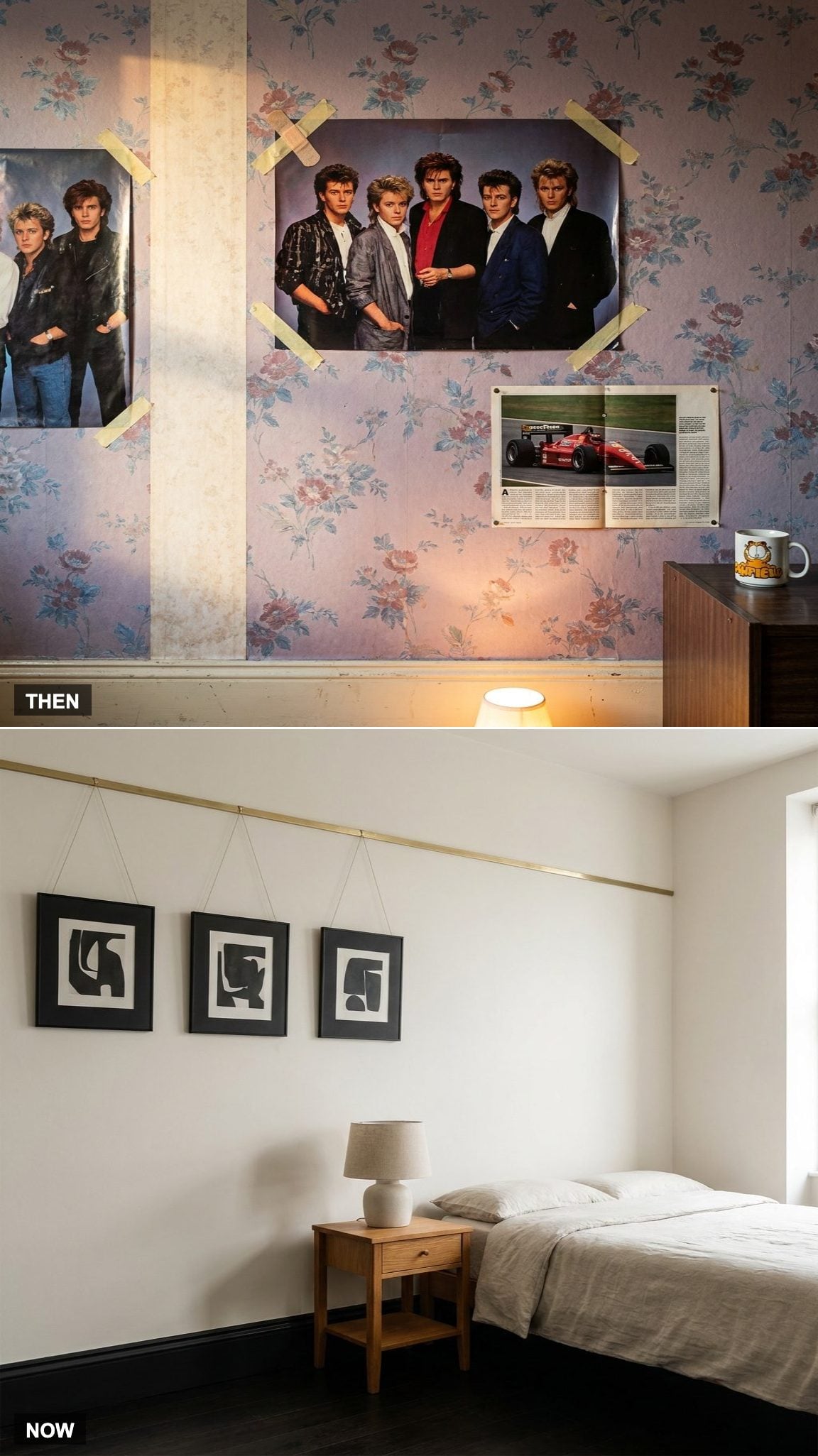
Scotch tape was the framing budget of an entire generation. Posters went up crooked, corners curled within a month, and the sun bleached a permanent stripe down whichever wall caught afternoon light. Nobody minded — the wall was a mood board before anyone called it that.
The current version reads calmer because it commits to repetition. Three matted prints, one rail, one frame color. A brass picture rail does the work masking tape used to, minus the peeled paint when you move.
10. The Window AC Unit vs. Silent Central Air
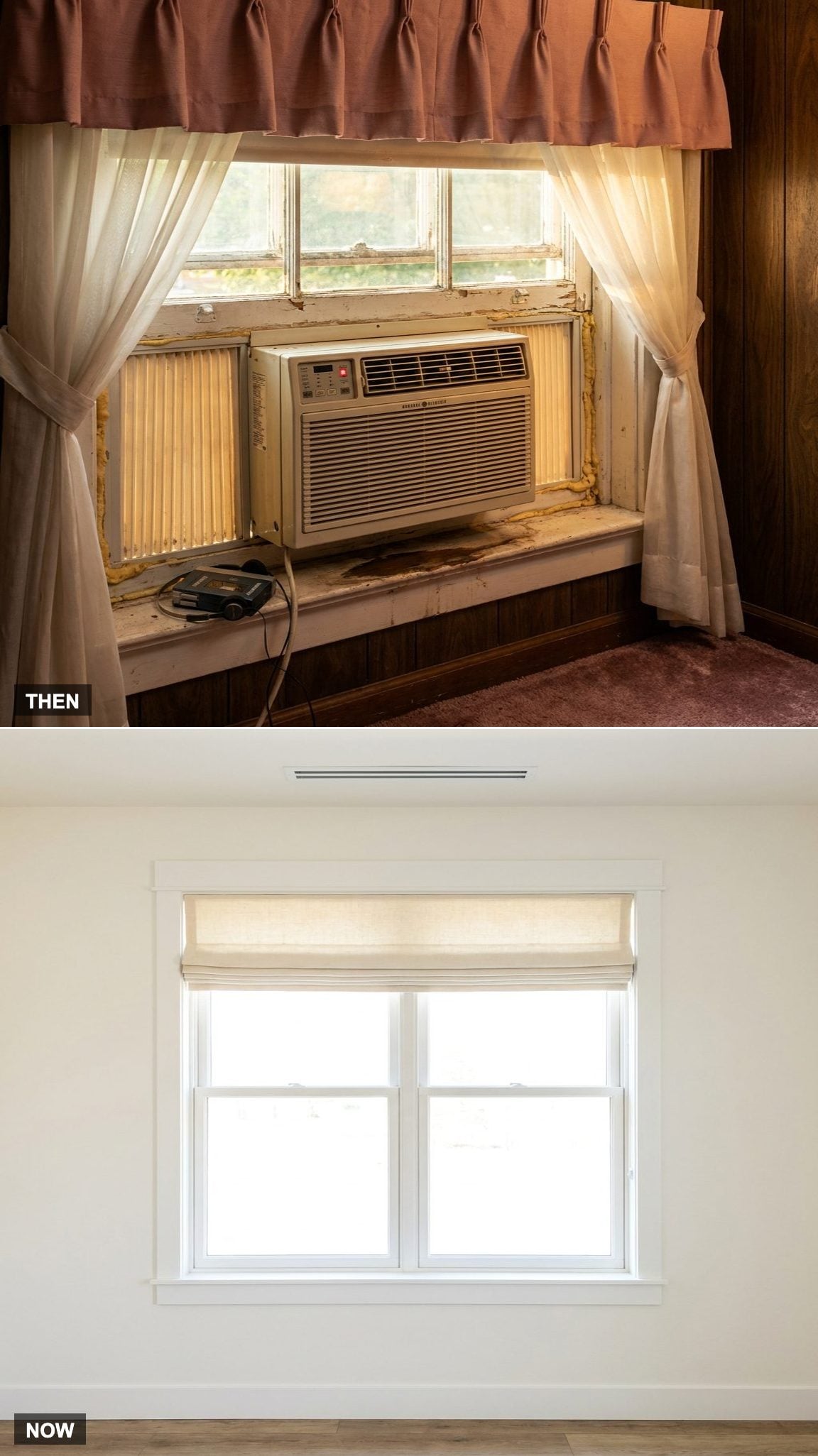
The window unit was the soundtrack of summer sleep. That low rattling hum, the occasional shudder when the compressor kicked on, ice-cold air that only reached the six feet directly in front of it, and the rest of the room stayed lukewarm and slightly damp all night.
Central air made bedrooms boring in the best possible way. You stop noticing temperature entirely, which is what climate control was always supposed to do. What got lost? The particular white noise that put a whole generation to sleep.
9. The Cassette Drawer vs. Everything on a Phone
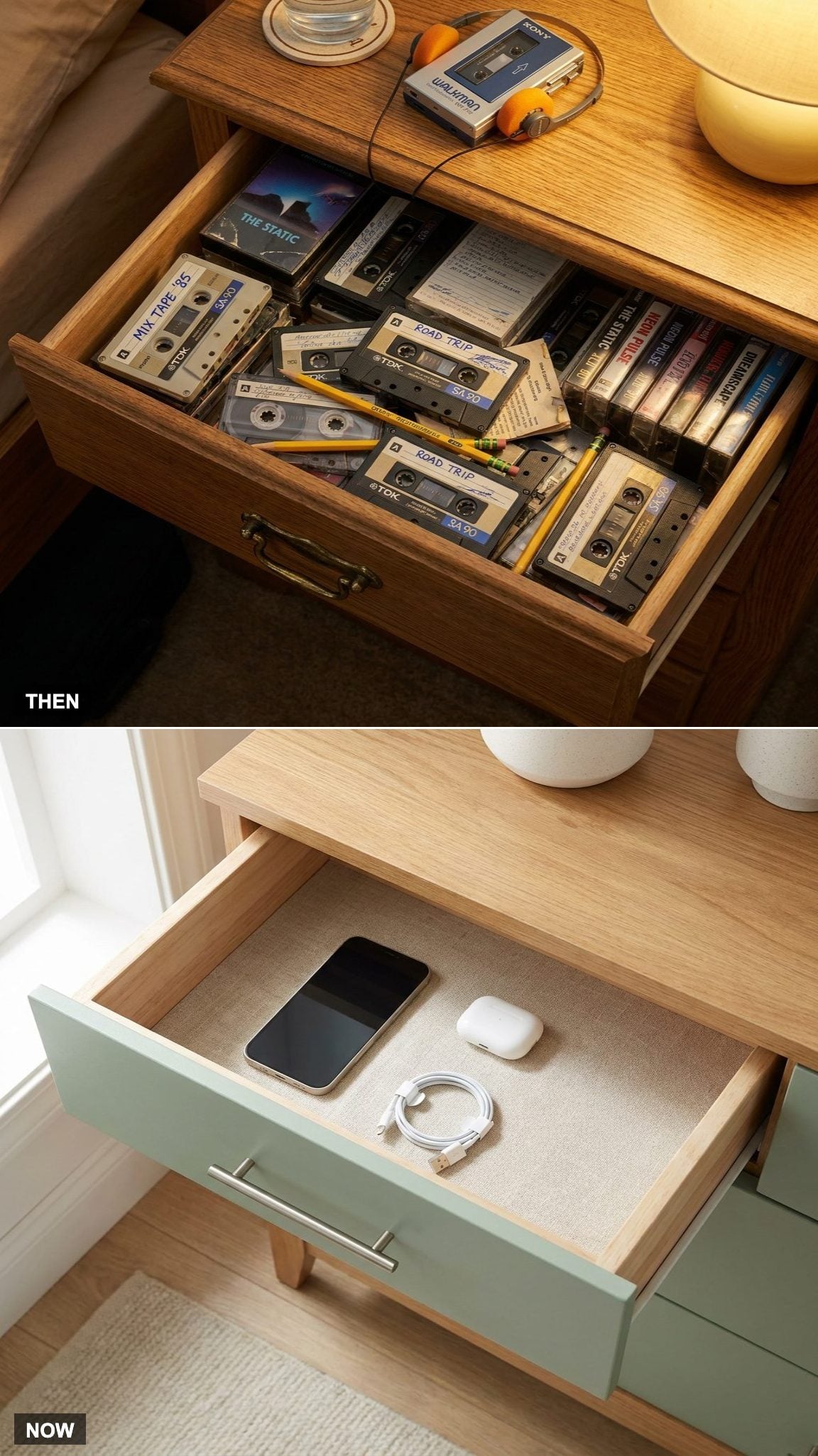
Every cassette in that drawer represented a decision. You recorded off the radio, waited through the DJ talking over the intro, and labeled the J-card in whatever pen was nearby. A mixtape took ninety minutes to make and could not be undone with a swipe.
Now the entire drawer’s contents live on a device the size of a coaster. The convenience is not up for debate. What got lost is the physical evidence that you cared about something enough to write its name down by hand.
8. The Sewing Basket in the Corner vs. The Charging Station Takeover
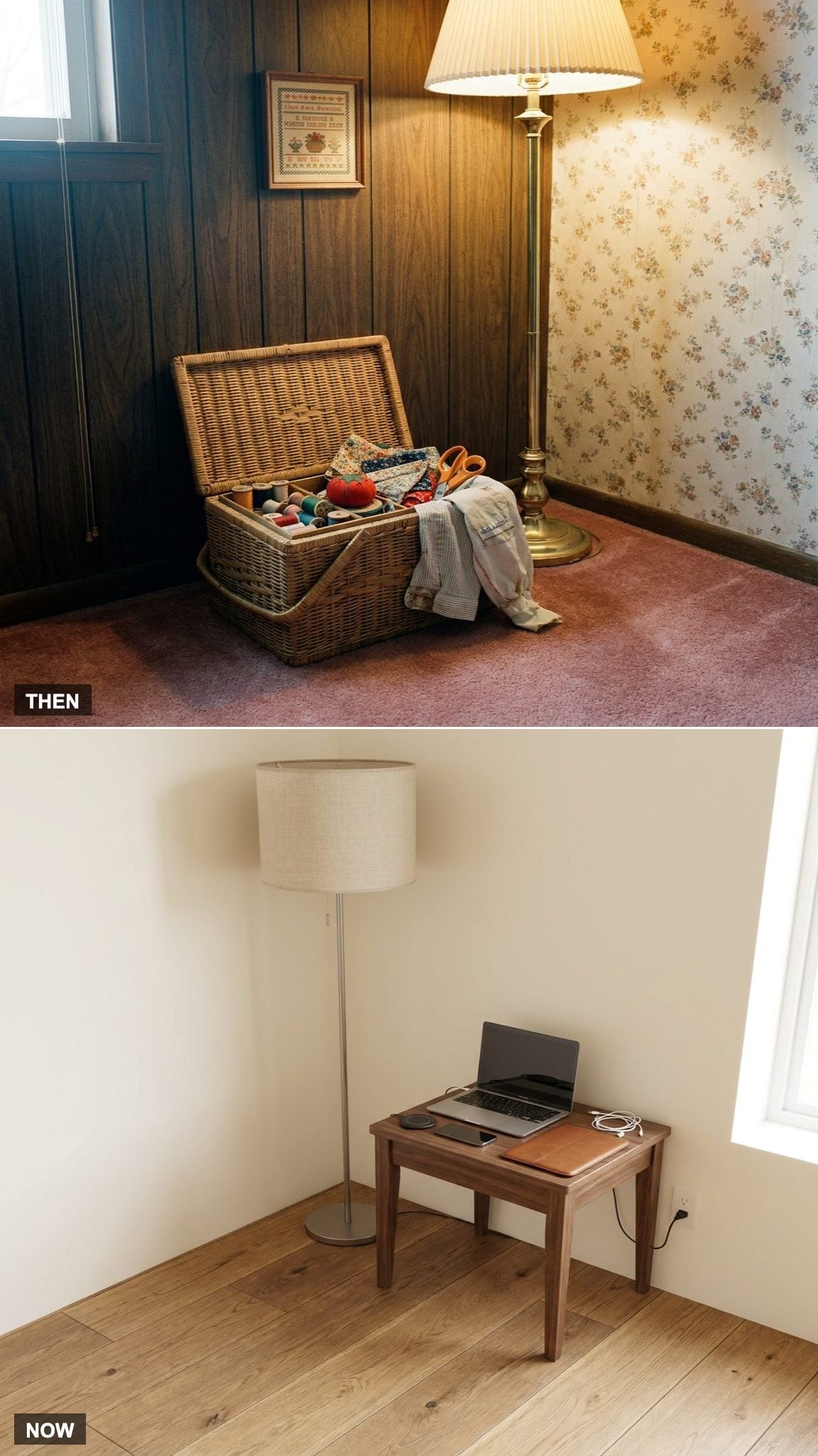
The sewing basket was a fixture. Buttons popped off shirts, hems came down, and someone in the house knew how to fix it before Sunday afternoon was over. That corner of the bedroom held the tools of small, quiet competence.
The same square footage now holds a small nest of cables, a charging pad, and whichever device is currently at 4 percent. The corner still exists to keep things running. Only the definition of “things” has changed.
7. The Massive Dresser vs. Built-In Wardrobes
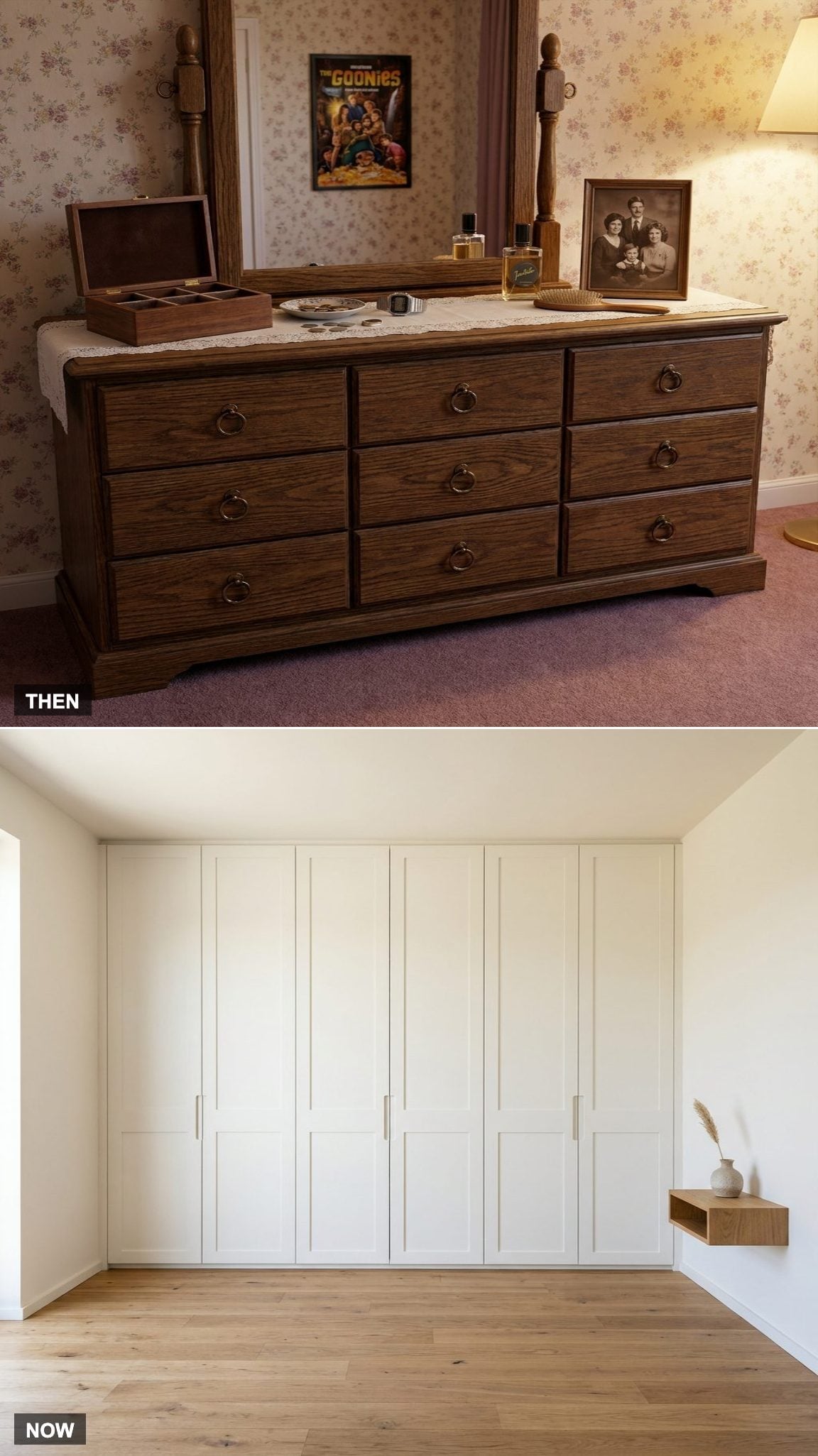
Nine drawers, a swiveling mirror, a doily runner, and enough surface area to hold a drugstore’s worth of small ceramic dishes. The 1985 dresser was furniture as landmark — you could see it from the hallway.
Built-ins ate the freestanding dresser and the reader barely noticed. The floor plan reads roomier, even though the storage volume is roughly the same. Furniture that touches the ceiling always feels quieter than furniture that stops halfway up.
6. Personality-Packed Bedrooms vs. Buyer-Ready Neutrals
🔥 Would you like to save this?
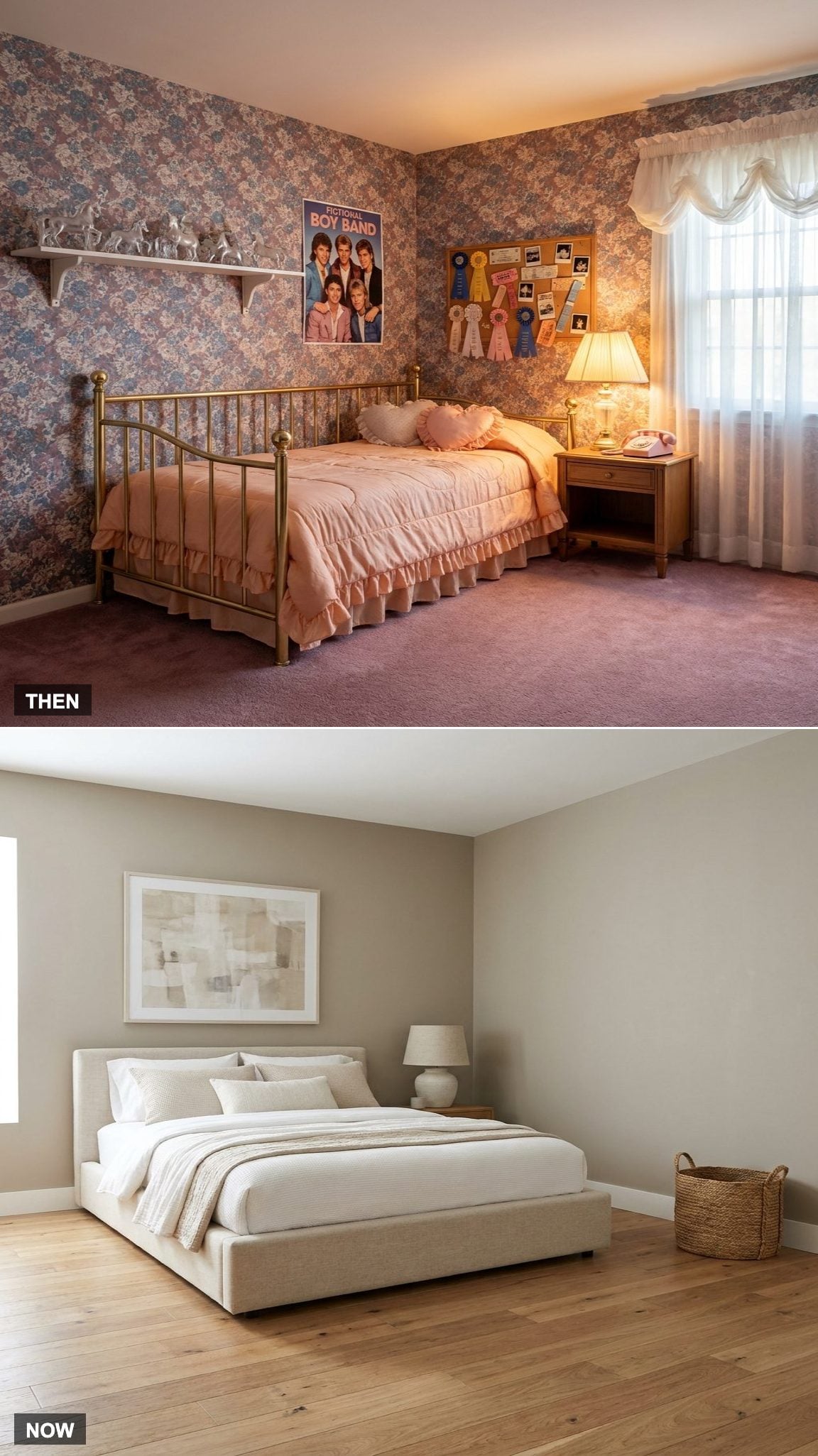
You could walk into a 1985 bedroom and know within four seconds who slept there, what they listened to, and whether they had a crush on the person whose ticket stub was pinned to the corkboard. The rooms were autobiographical.
The staged bedroom of today is designed to be nobody’s in particular. Real estate photography drove the shift. Once buyers started scrolling listings, personality became a liability, and beige became a strategy. Whether that’s a loss or a discipline depends on who you ask.
5. One Sad Spider Plant vs. A Full Indoor Jungle
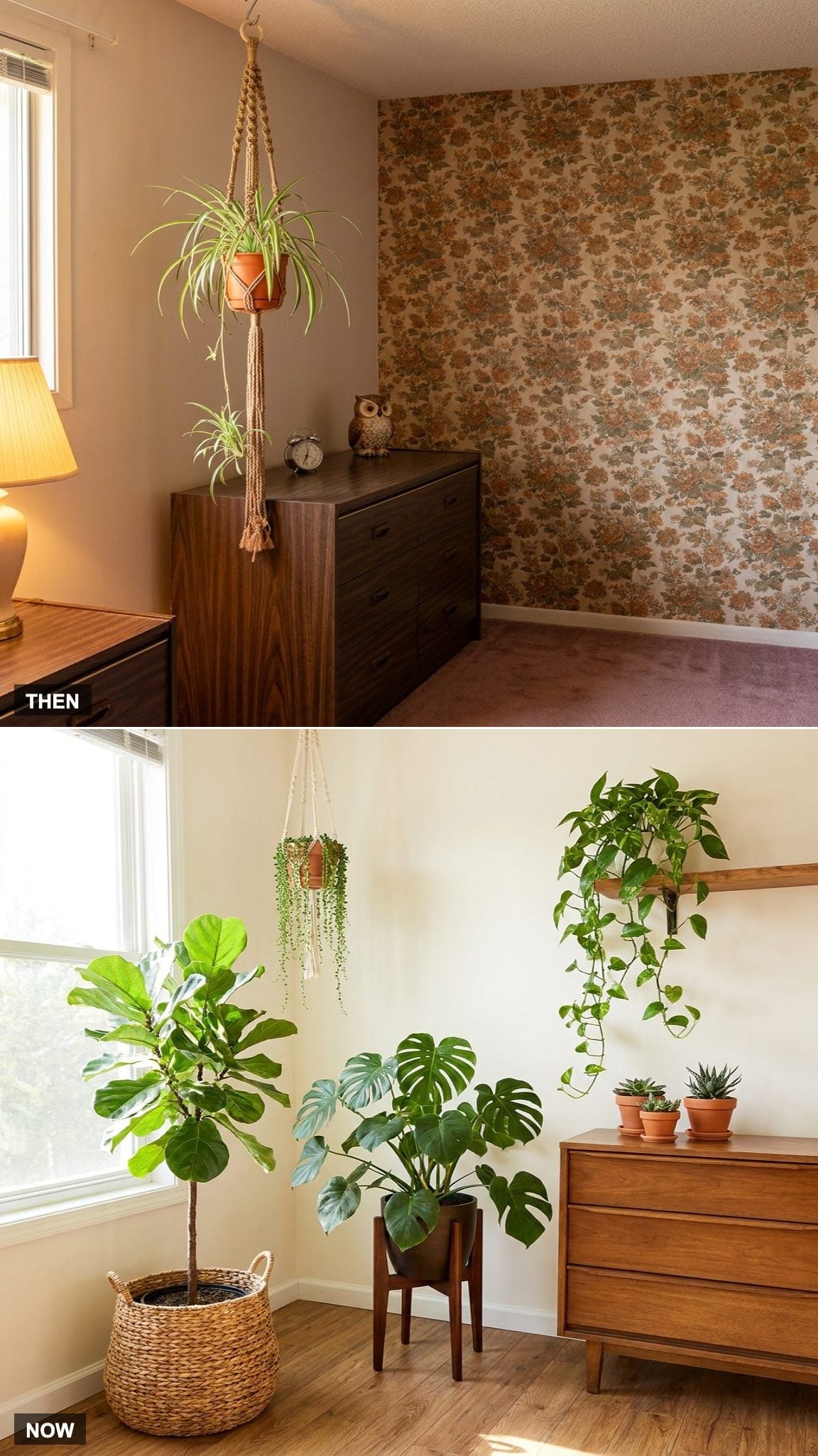
One macrame hanger. One spider plant. A lot of dry brown tips. Nobody was rotating it toward the light or misting it — it was decor, not devotion.
The indoor jungle happened because millennials moved into apartments they couldn’t renovate and needed something alive to care for. A well-placed fiddle leaf does more for a room than most of the framed art hanging next to it, and the right woven plant basket does what a plastic pot never could.
4. The Overflowing Closet vs. The Custom Closet System
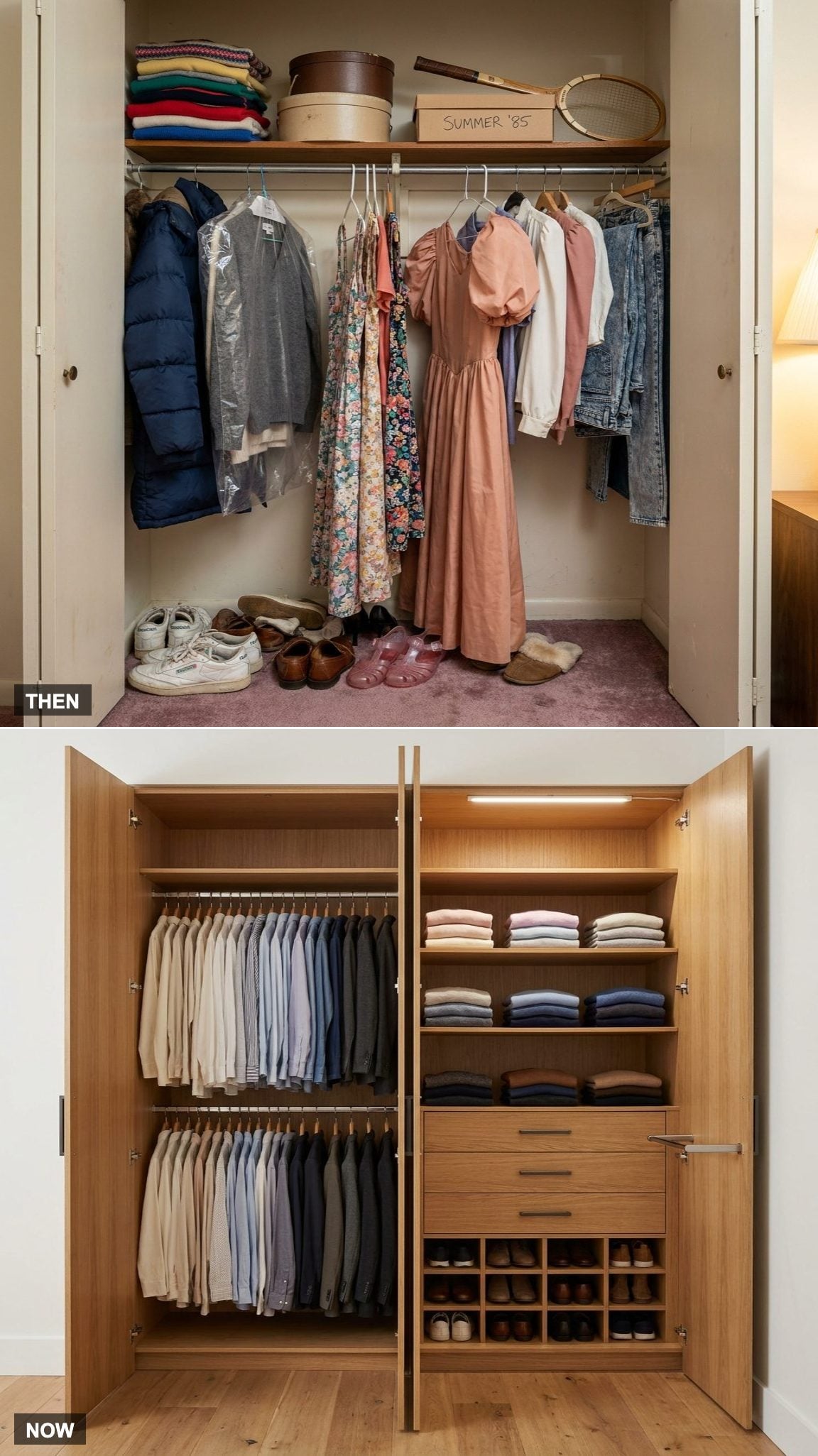
The 1985 closet ran a rotation problem. Summer clothes and winter clothes fought for the same rod, and whichever season lost got shoved to the back until the temperature changed. The floor absorbed the overflow. So did the top shelf, which no one could see into without a chair.
Custom systems solved a problem that used to be treated as normal — closets were built for storage, not for retrieval. Once you can see everything you own, you stop buying duplicates because you forgot about the black sweater. The system pays for itself in un-bought sweaters alone.
3. Dusty Rose and Country Blue vs. Warm Earth Tones
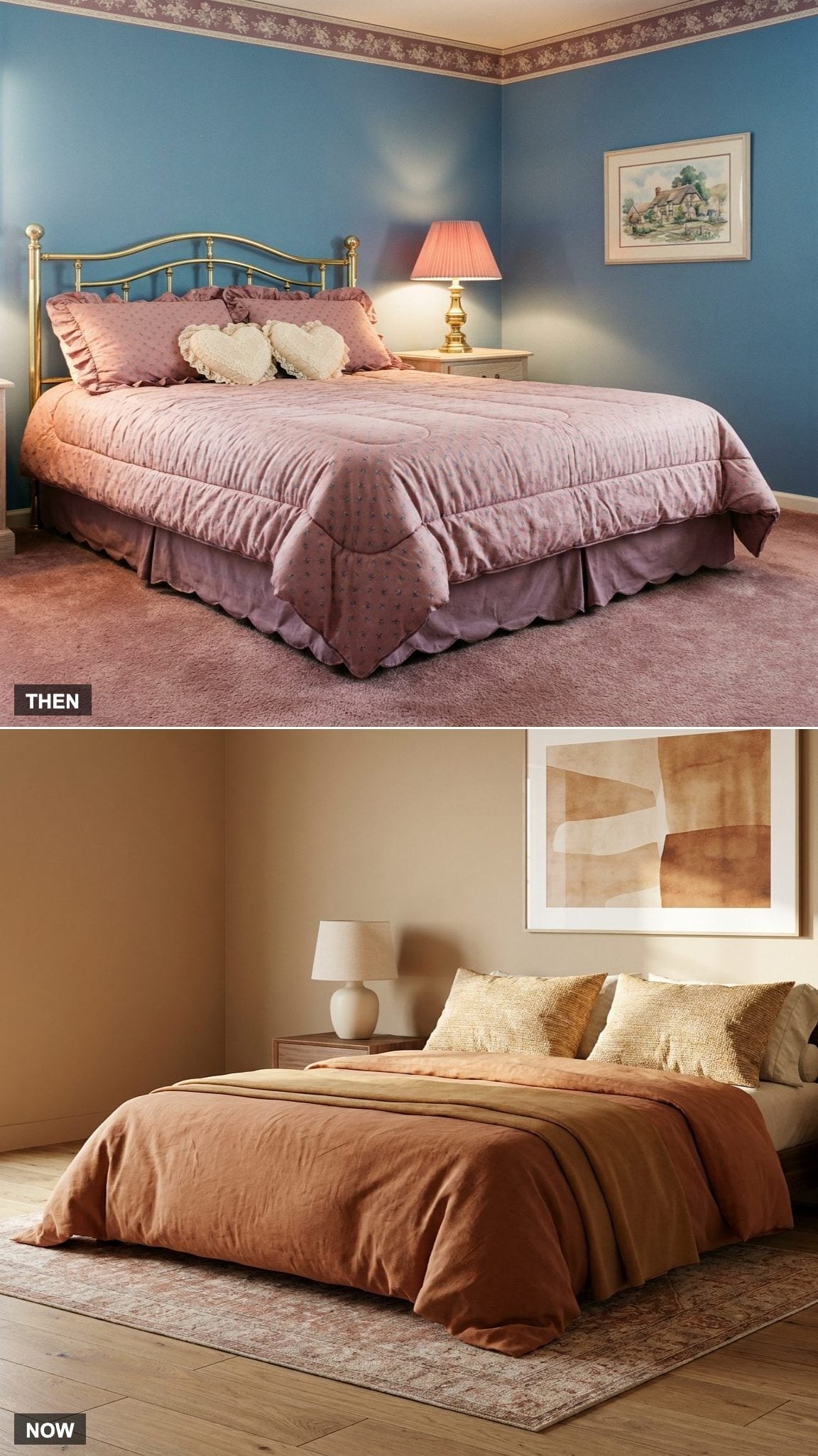
Dusty rose, mauve, country blue, and a wallpaper border with a scalloped edge. The 1985 bedroom color story was soft, feminine, and fully committed. Laura Ashley sold it and half the country bought it.
The palette now runs warmer and lower on the color wheel — terracotta, ochre, clay, caramel, the occasional deep olive. It reads grounded because the tones come from earth pigments rather than pastel dyes.
2. The Bedroom as Sanctuary vs. The Bedroom as Second Office
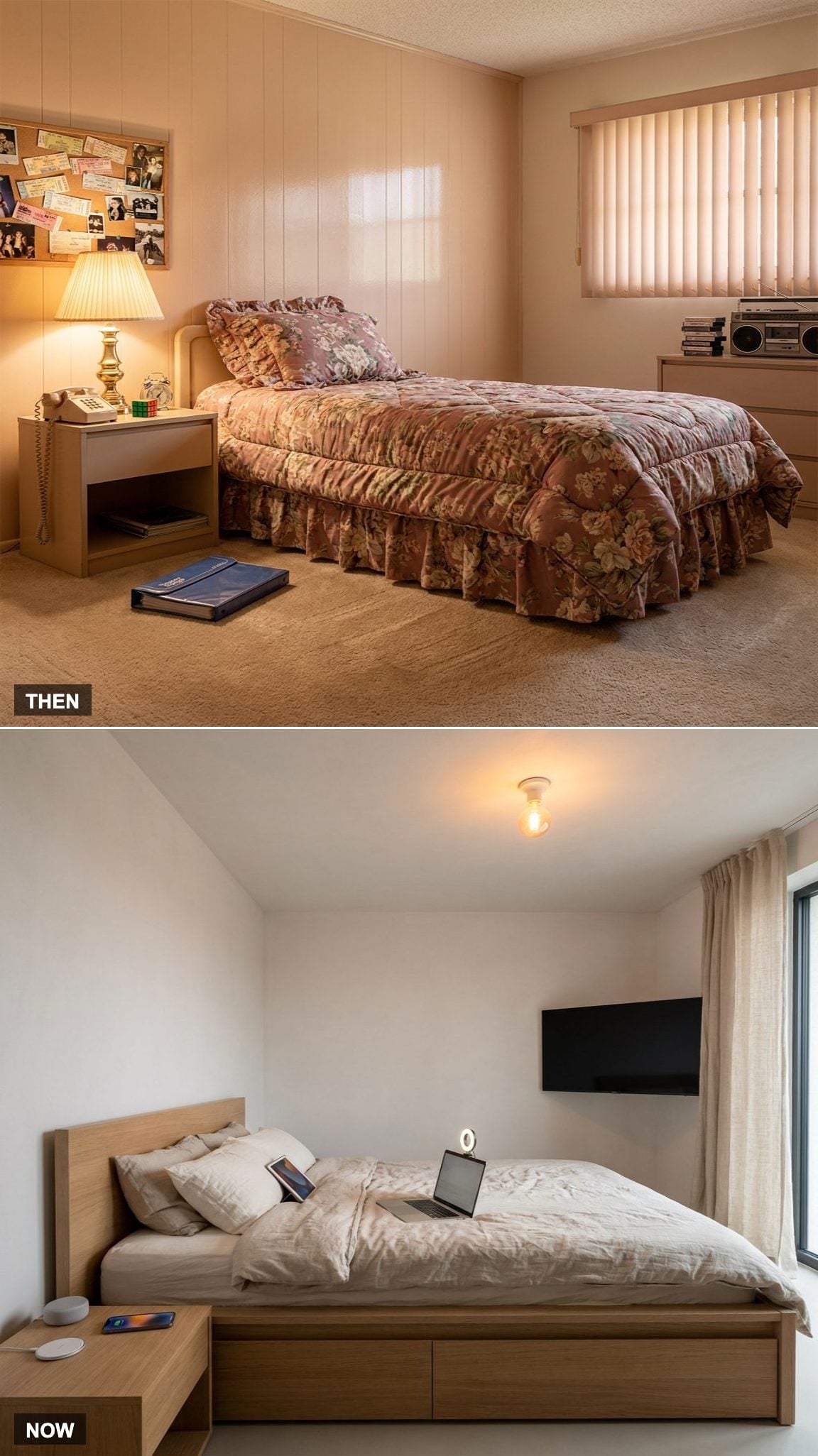
A 1985 bedroom had exactly one job: shut the door and disappear. The rotary phone had a cord long enough to stretch into the closet, and that was the extent of the outside world getting in — though your mom could still pick up the kitchen extension and blow the whole thing up. Nothing glowed. Nothing buzzed. Just a boombox, a stack of cassettes with hand-labeled spines, and the specific muffled quiet of a carpeted room that nobody could interrupt without knocking.
Today’s bedroom leaks.
The phone charges six inches from your pillow, a TV faces the bed, a laptop lives on the duvet somewhere near your feet, and a smart speaker sits in the corner waiting to hear its name. What used to be a retreat is now a satellite office with a mattress in it.
1. Pattern-on-Pattern Bedrooms vs. Rooms Built Around Texture
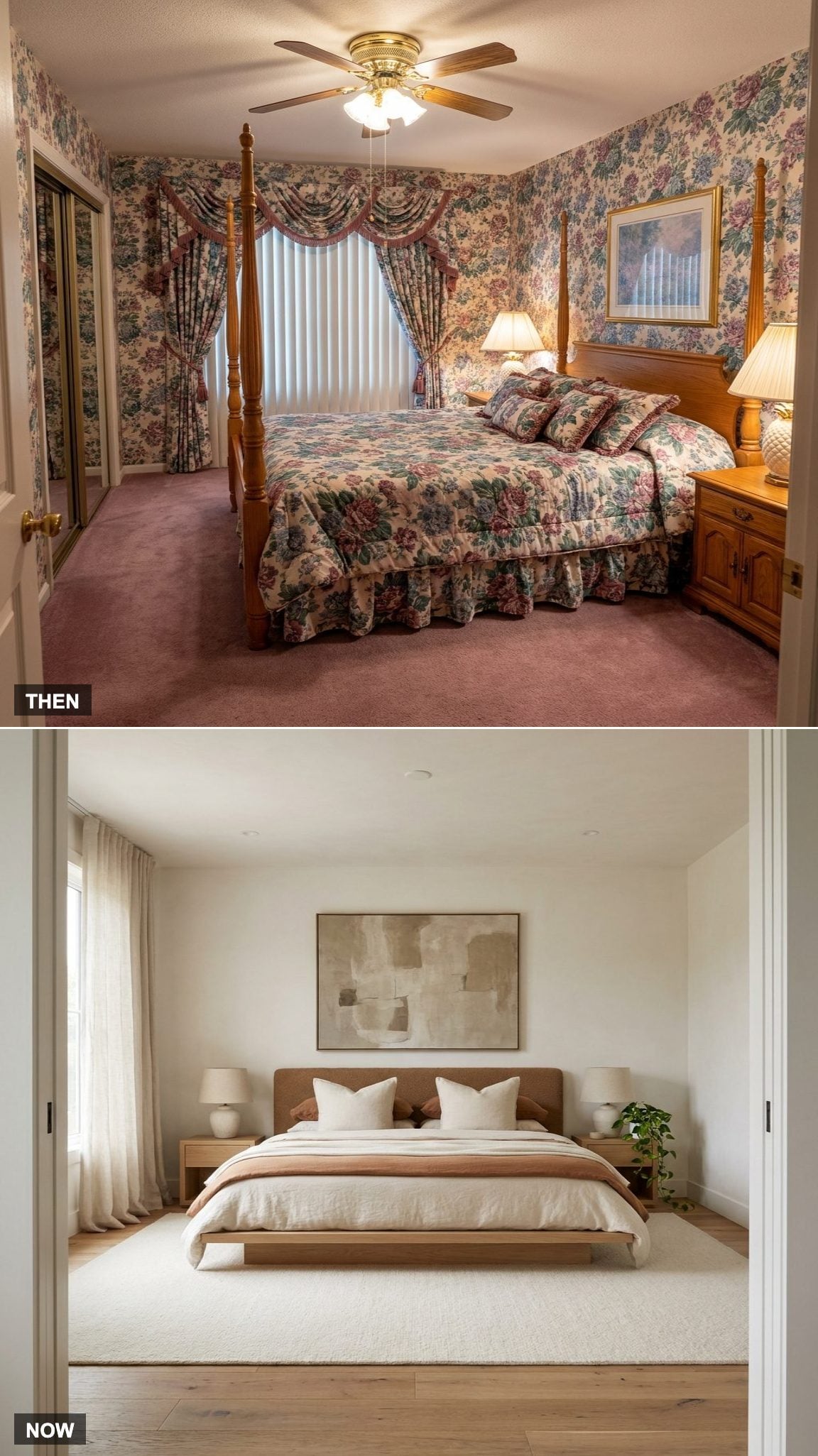
In 1985, the bedroom announced its theme from the doorway. Florals met stripes, pleated valances met ruffled shams, and every surface seemed determined to participate. The room felt finished because nothing had been left undecorated.
Today, texture carries more of the weight. Washed linen, woven wool, pale oak, and softly plastered walls create interest without covering every surface in pattern. The room still has personality, but it no longer has to explain itself all at once.
Why It Works: Texture gives the eye variation without demanding constant attention. The result feels layered rather than busy, which is a better fit for a room designed around rest.