🔥 Would you like to save this?
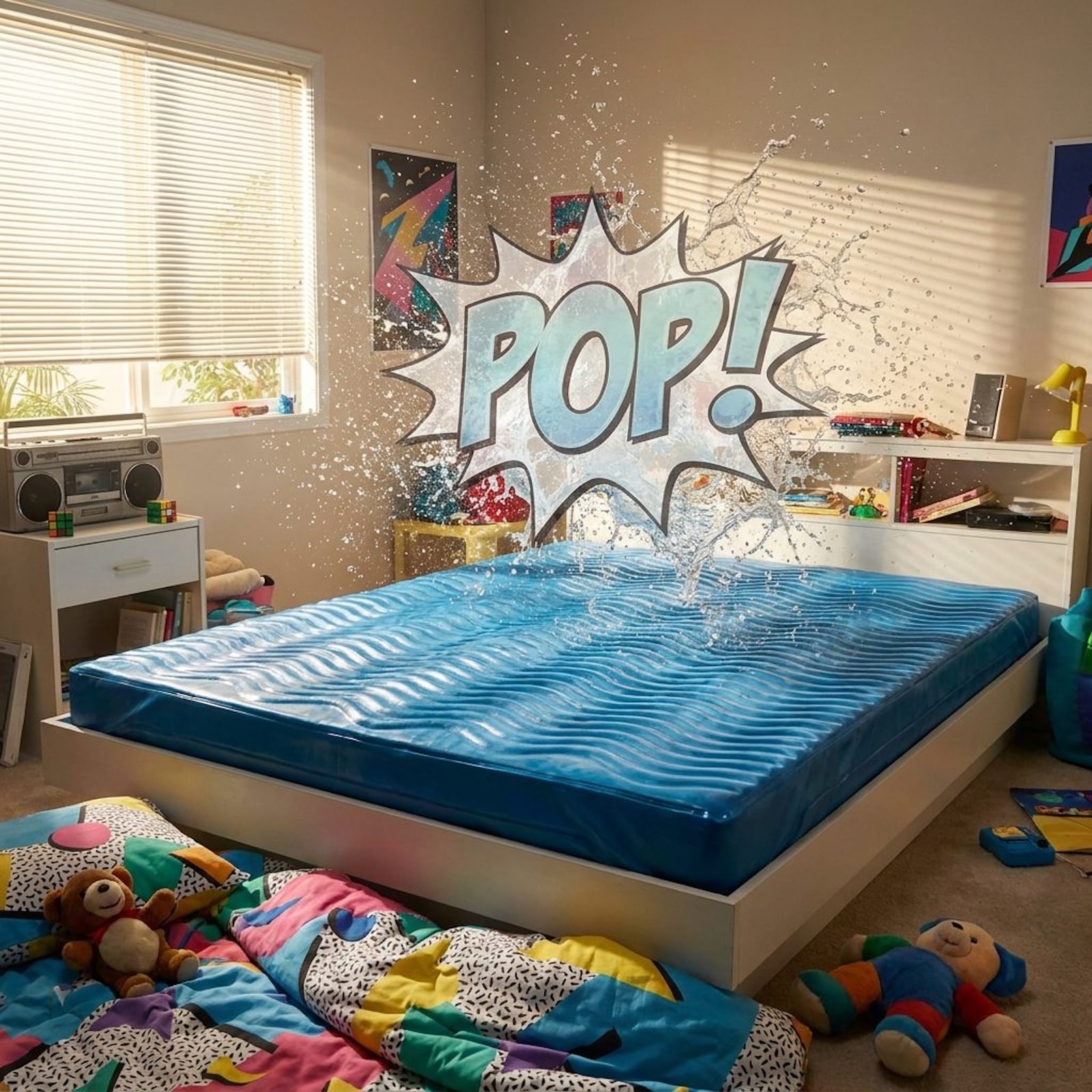
The sloshing sound was unmistakable. You heard it before you even sat down, that slow liquid shift beneath a vinyl mattress stretched tight inside a wooden frame the color of dark walnut stain. The waterbed wasn’t just a place to sleep. It was a statement, a status symbol, the piece of furniture that separated the cool houses from the regular ones. If your parents had one, you felt lucky. If they didn’t, you spent the night at someone’s house who did, just to feel what it was like.
25. The Instruction Manual Nobody Read Until Something Went Wrong
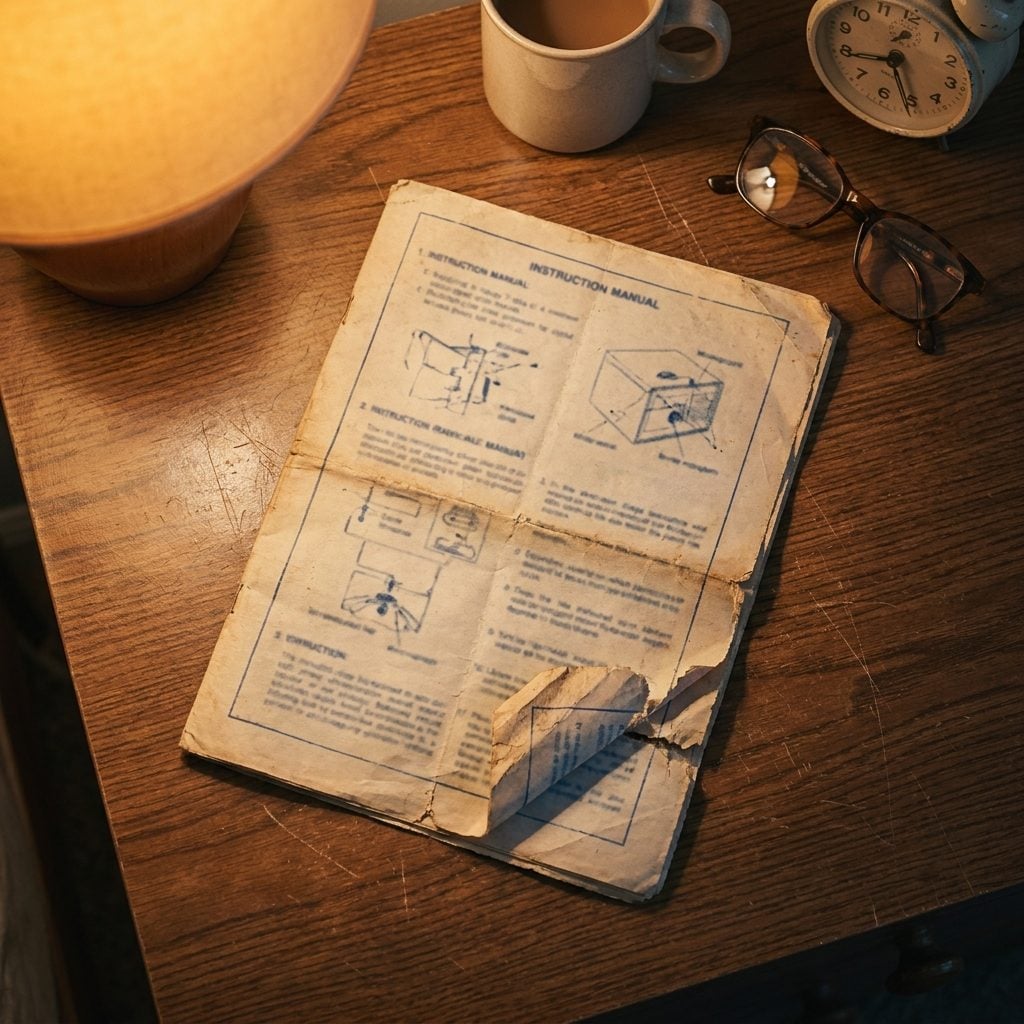
It came folded into eighths, printed in that specific shade of blue ink that faded if you looked at it too long. The manual lived in a drawer until the bed started losing pressure or developed an unexplained warm spot, and then someone dug it out and discovered it had been written by an engineer who had never once tried to explain anything to a normal human being.
In order to come up with the very specific design ideas, we create most designs with the assistance of state-of-the-art AI interior design software. Also, assume links that take you off the site are affiliate links such as links to Amazon. this means we may earn a commission if you buy something.
Every diagram showed a cross-section that looked like a biology textbook. Nobody followed it the first time. Almost everyone had to follow it eventually.
24. The Satin Sheets That Sent You Sliding Off the Side
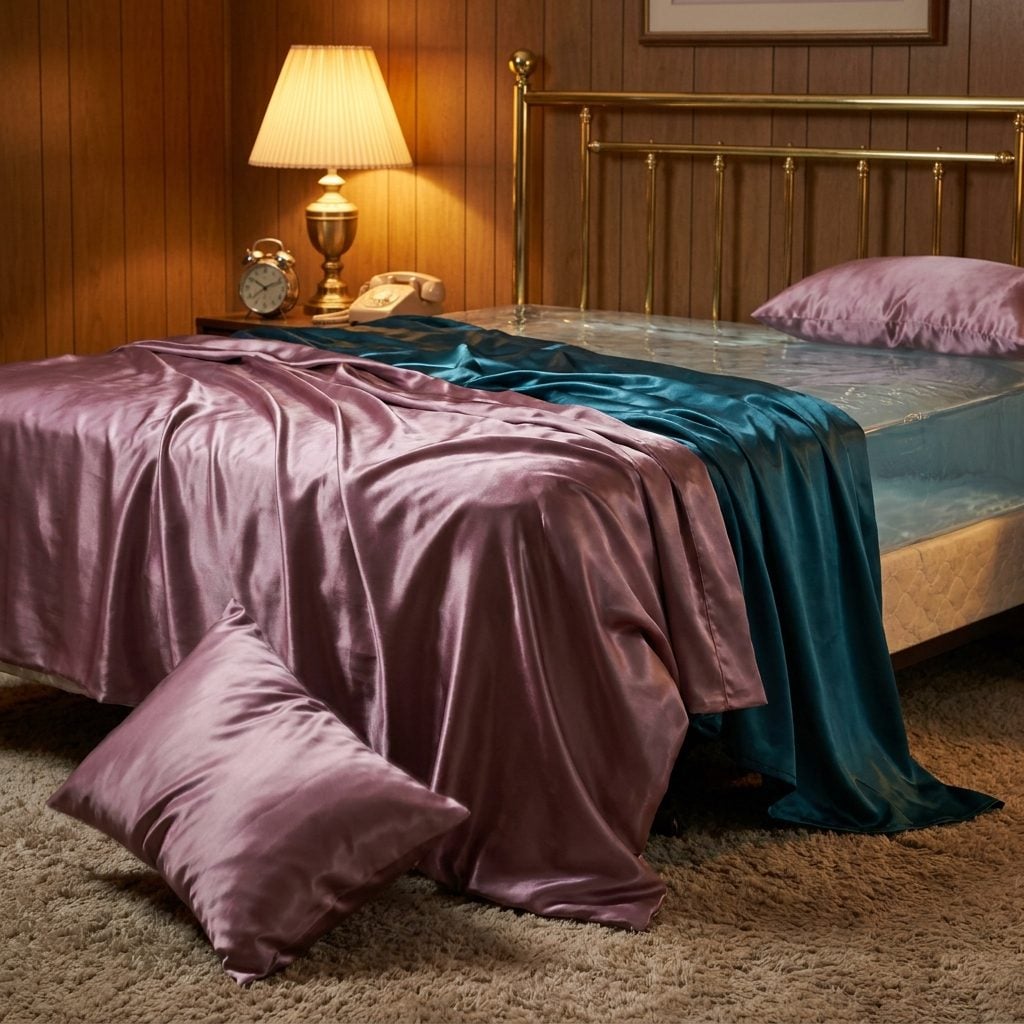
Satin sheets and a waterbed were a combination that should have come with a warning label. The water surface already had a mind of its own. Add fabric with the friction coefficient of an ice rink and you had a bed you could not stay in without active effort.
Sitting up too fast sent the pillow off the side. Rolling over sent you after it. Everyone who owned this combination has a specific memory of waking up on the floor and not entirely knowing how they got there. The satin sheets looked incredible. They were completely impractical. Nobody returned them.
23. The Patch Kit Taped to the Inside of the Closet Door
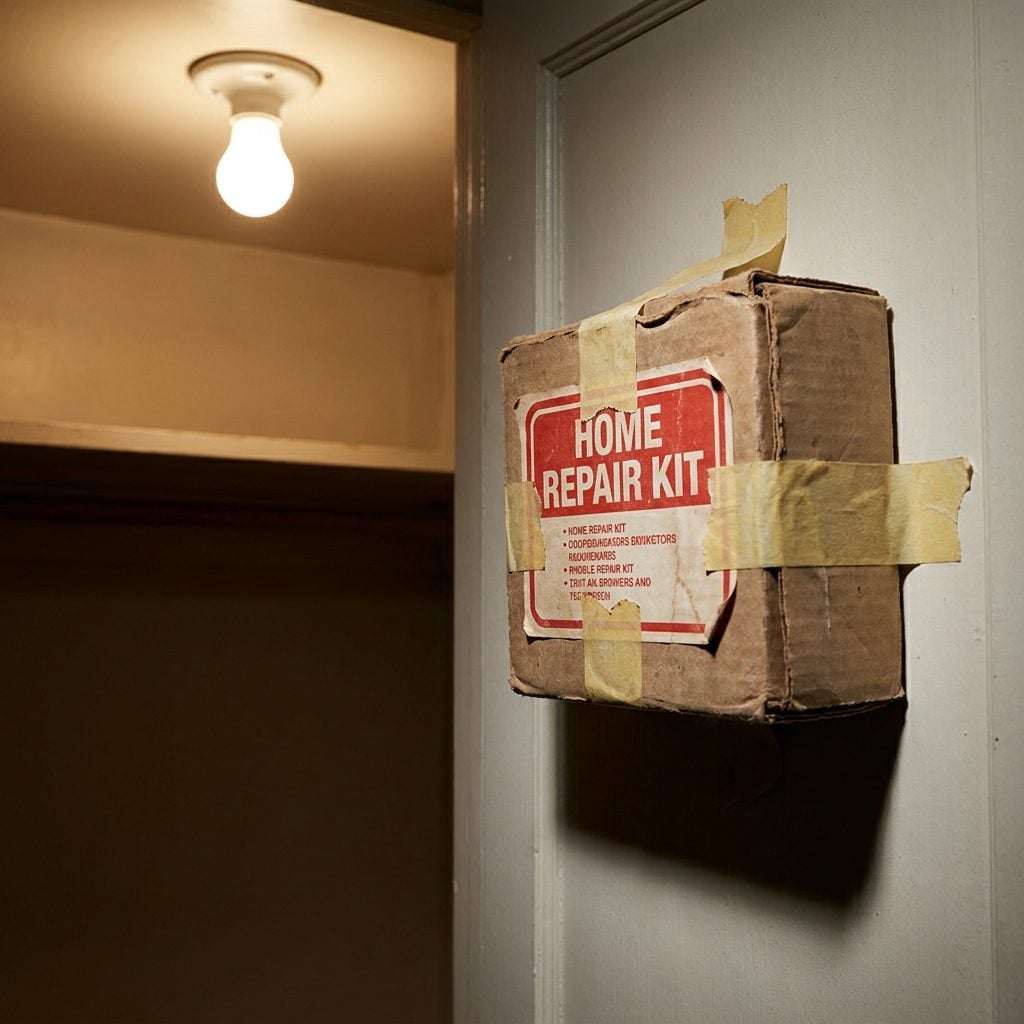
Every waterbed household had one. Taped up there with the kind of conviction that said: we are not being paranoid, we are being prepared. The patch kit came with the bed or got purchased separately after the first small scare, and it stayed on that closet door for the entire decade, mostly as a psychological comfort object.
The adhesive dried out within a few years. Most people did not discover this until they needed it. The kit itself became a kind of talisman: as long as it was there, nothing would go wrong. This logic worked right up until it didn’t.
22. The Waveless Upgrade Your Parents Got After the First One Was Too Much
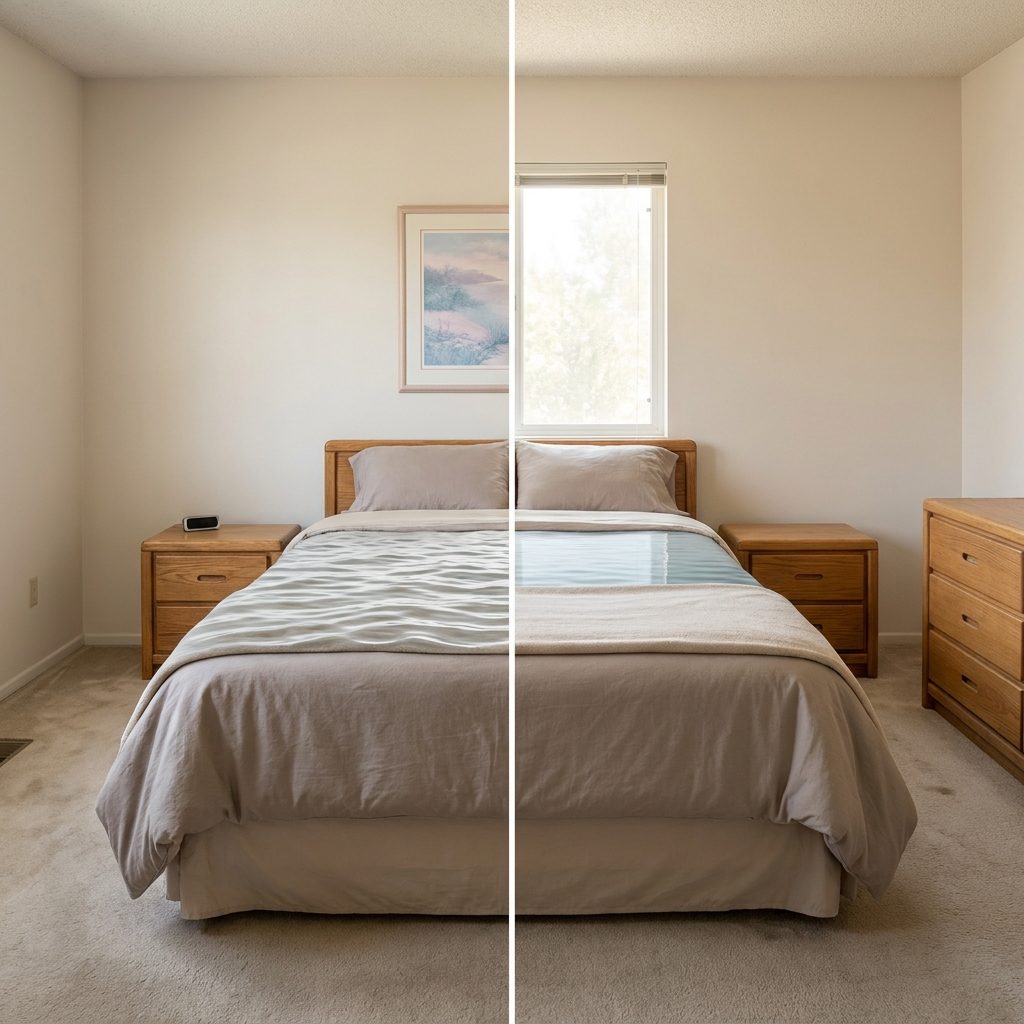
The free-flow waterbed was the original: all water, nothing else, and it moved like the ocean during an argument. Waveless designs became increasingly sophisticated during the early and middle 1980s, using fiber layers and internal baffles to slow the motion. This was marketed as an upgrade. It was also a quiet admission that the full experience had been a lot.
Parents who bought the waveless version described it as more supportive. Kids recognized it for what it was: the version where the fun got slightly negotiated away. It was still a waterbed. It just didn’t feel like you were sleeping on a slow-motion wave machine anymore. Some people found this a relief. Others missed it immediately.
21. The Morning You Woke Up and It Was Cold Because the Heater Tripped Overnight
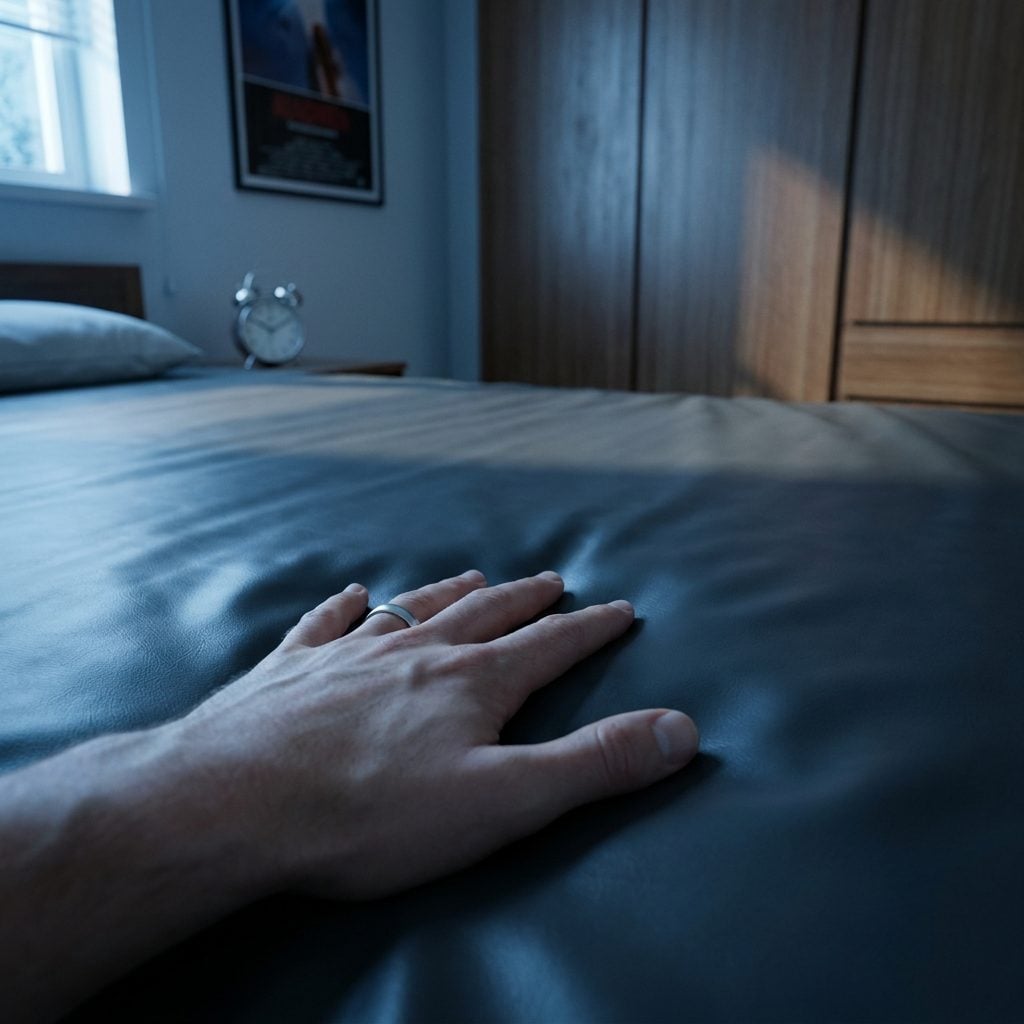
You knew before you were fully awake. Something was wrong with the temperature. You reached out and touched the mattress and it was not the warm, slightly yielding surface it was supposed to be. It was cool vinyl, faintly resistant, like a water balloon that had been sitting in a garage.
The thermostat had tripped. Or the outlet had given out. Or someone had kicked the cord in the night. The fix took thirty seconds, but that did nothing about the next two hours while the heater worked to bring it back up. You either waited it out under every blanket in the house, or you went and slept on the couch and told no one.
20. The Soft-Side Waterbed That Tried to Look Like a Regular Mattress
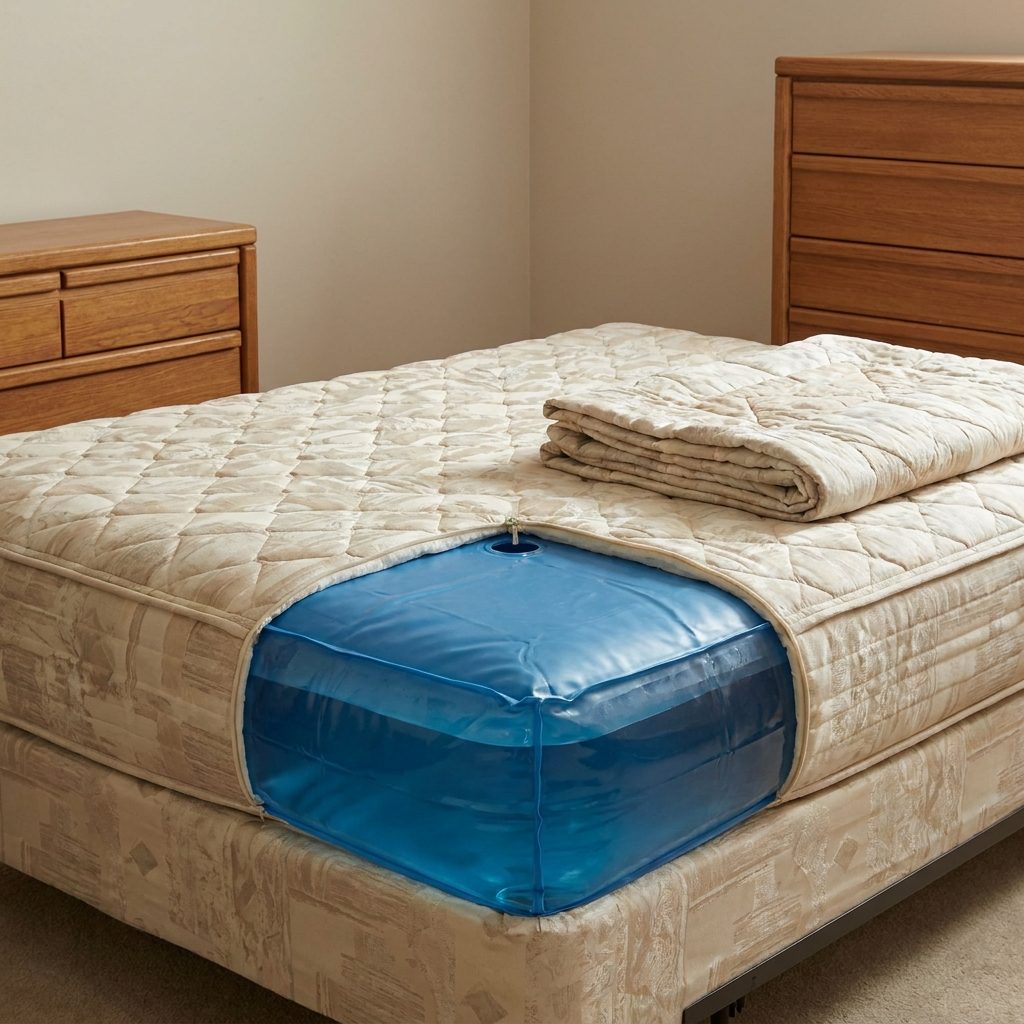
By the late 1980s, waterbed makers understood that not everyone wanted the full monument of a pedestal frame in their room, so they built a version that hid. The soft-side waterbed tucked the bladder into a foam casing and called it a mattress. It could go on a regular bed frame. It did not announce itself the moment you walked in.
It still sloshed. It still needed the heater and the conditioner and the slow-fill Saturday. But it looked like it was trying to fit in, and that counted for something in a decade that was just starting to wonder if the waterbed era had a natural endpoint.
19. The Summer When the Heater Stayed Off and the Bed Stayed Warm Anyway
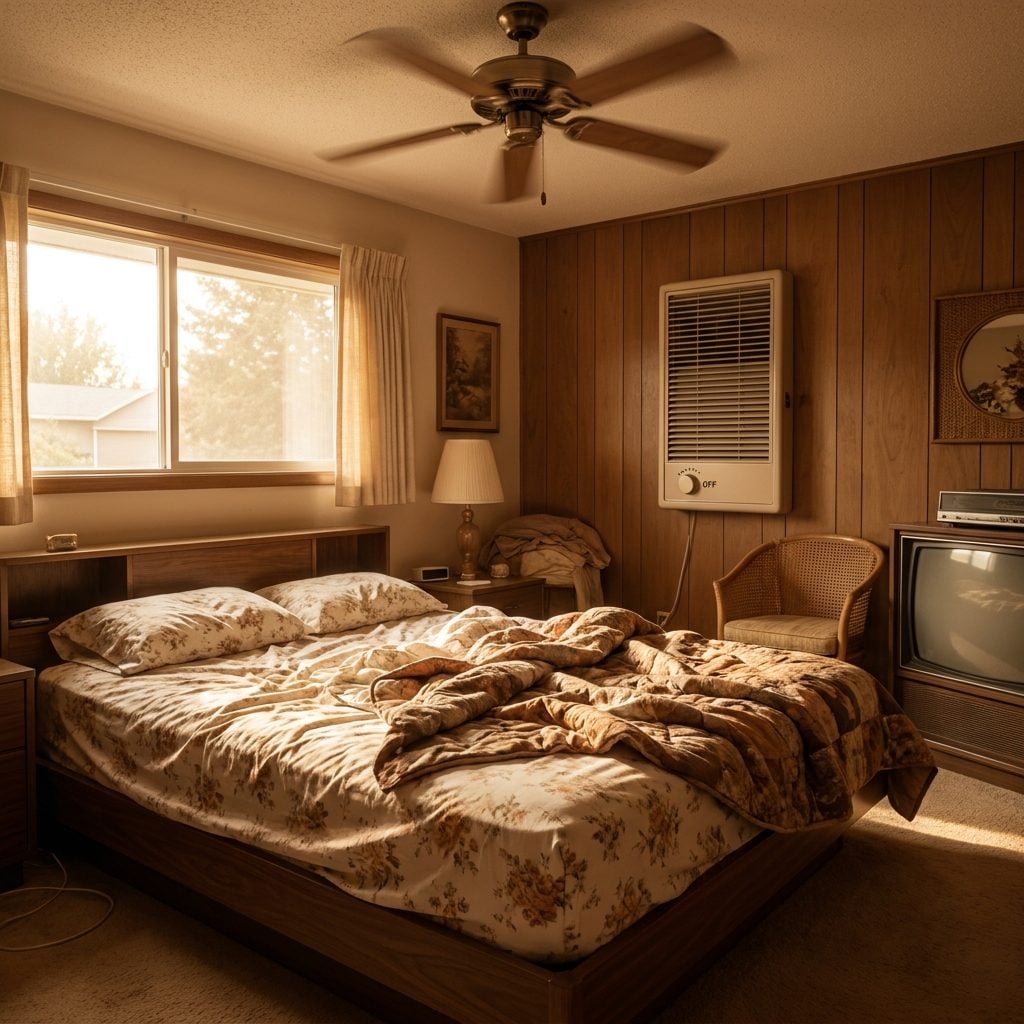
At some point every summer, someone in the house realized they had forgotten to turn the waterbed heater down and the bed had absorbed enough ambient heat from the room to not need it. The water just held the warmth from the day before, and the day before that.
Sleeping on it in July was its own particular thing. Not uncomfortable exactly, but enveloping, like climbing into something that already knew you were warm. The heater went off. The window went up. The box fan ran all night. This is the specific memory that surfaces when people who had these beds try to describe them to people who didn’t: that particular summer heat, held in water, under one thin sheet.
18. Trying to Make the Bed, Which Was a Philosophical Problem
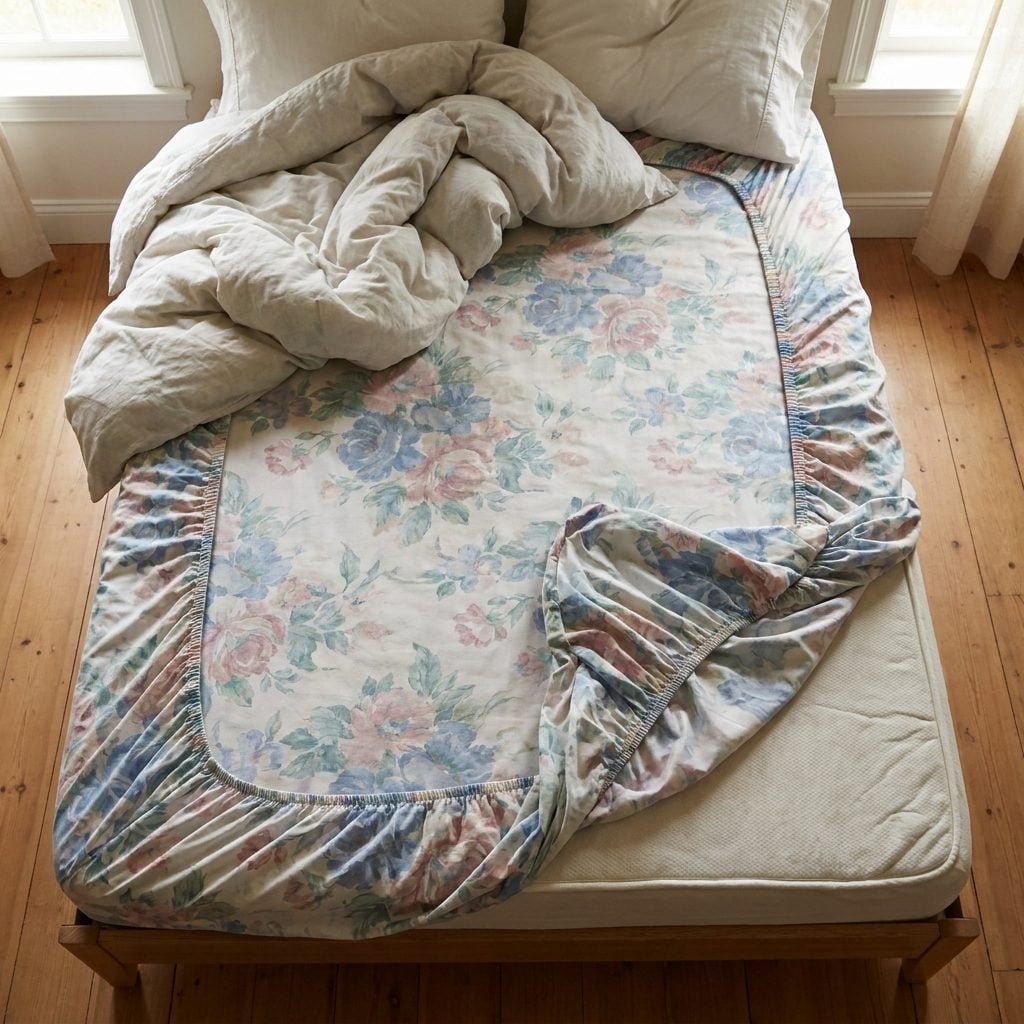
A regular mattress stays where you put it. A waterbed participates in the process of being made. Every tuck on one side sent a ripple to the other. Pulling the fitted sheet toward the foot of the bed lifted the head. The surface had opinions.
You could get a good result, but it required a strategy: anchor one corner, move fast, don’t stop for anything. People who made their waterbed every morning without fail had a specific kind of patience. People who gave up and threw the comforter over it and called it done had a different kind of wisdom. Both approaches were defensible.
17. The Sloshing Sound That Followed Every Move You Made
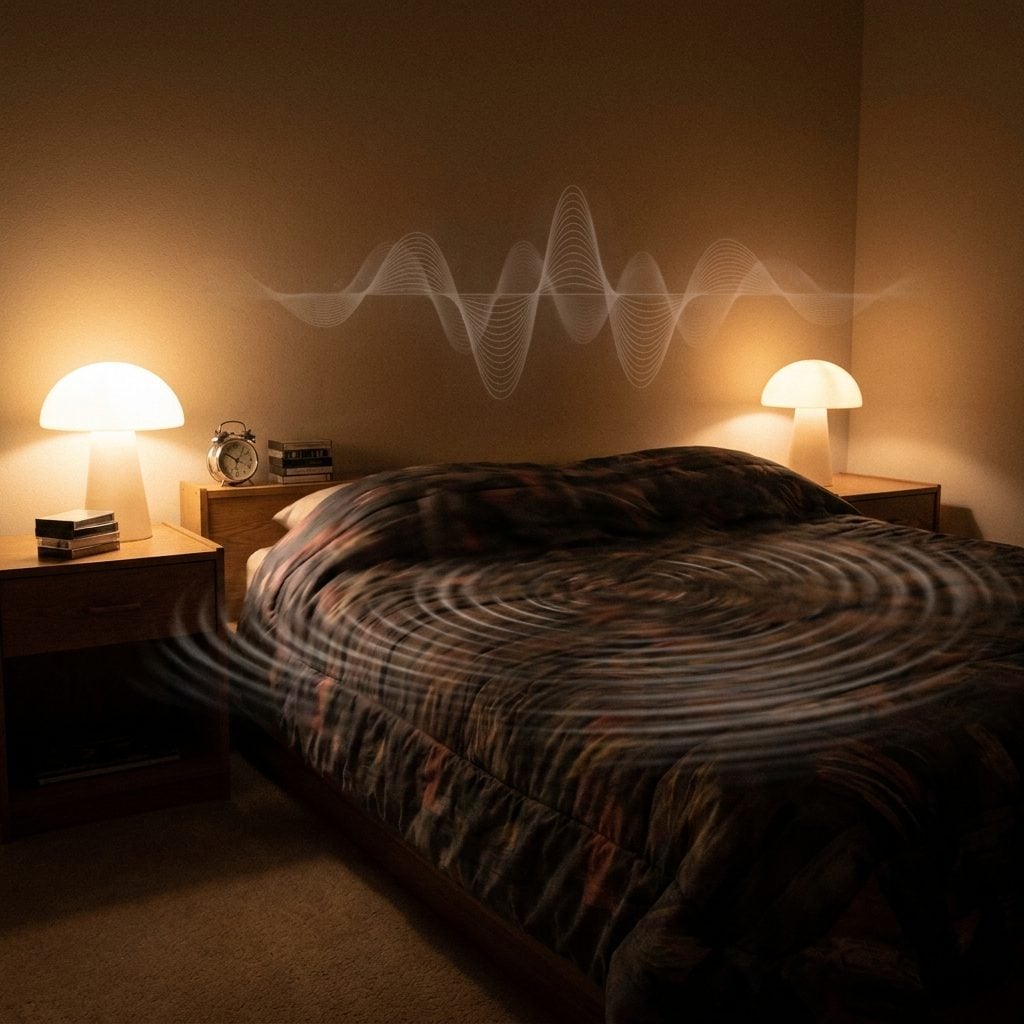
You didn’t just get into a waterbed. You announced yourself. Every shift, every turn, every attempt to get comfortable sent a slow wave rolling through the mattress that sloshed against the wooden frame with a sound somewhere between a bathtub and a very patient whale. Stealth was not an option.
Kids who grew up with one learned to read the waves. A small ripple meant someone sat on the edge. A big one meant someone tried to roll over too fast. The whole bed became a kind of liquid conversation, and you never got to sleep in silence again.
16. The Heater That Kept the Whole Thing From Feeling Like a Swamp
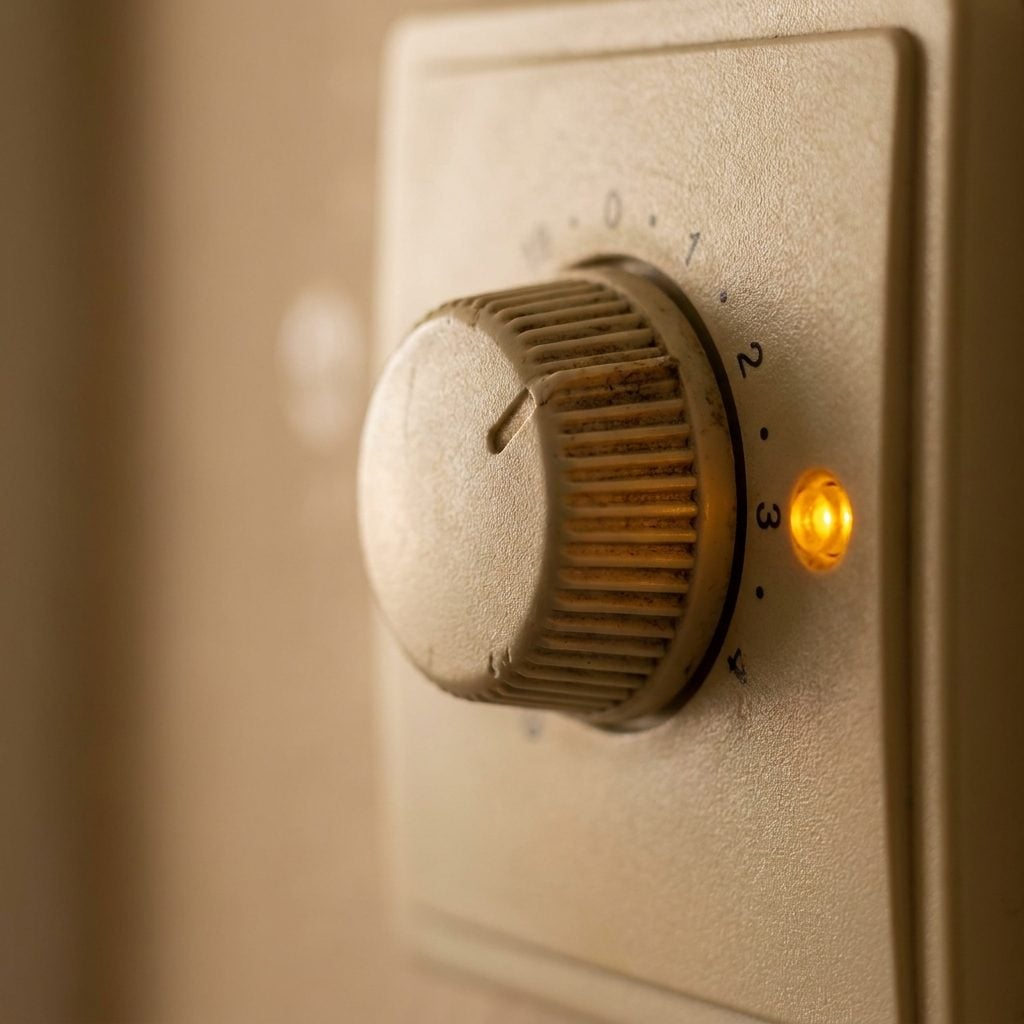
There was a thermostat dial on the side of the frame. Set it too low and you woke up feeling like you’d slept on a waterlogged mattress someone stored in a garage. Set it too high and the bed felt like a very calm hot tub, which sounds better than it was at 2 a.m. in July.
The heater ran constantly, quietly humming beneath the mattress, and parents were acutely aware of what it did to the electric bill. That dial was non-negotiable territory. Kids knew not to touch it.
15. The Waterbed Frame That Was Also a Bookshelf, a Nightstand, and a Trophy Case
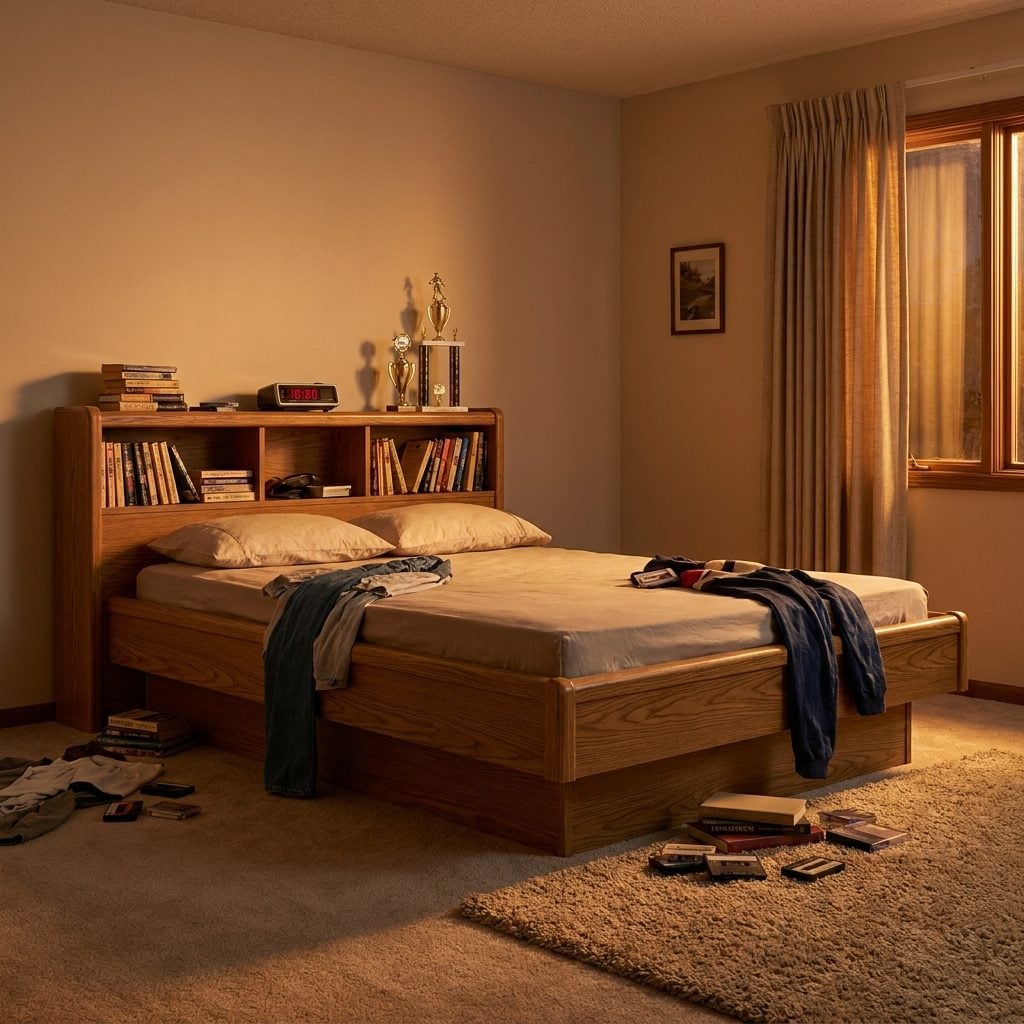
The frame wasn’t just structural. It was the whole point. Waterbed manufacturers understood that you needed to sell parents on the thing too, so they built frames that were essentially small apartments: built-in bookshelves on the headboard, flat side rails that doubled as nightstands, sometimes a mirrored panel at the top, sometimes a drawer tucked into the pedestal base.
Every inch of that dark walnut shelf space got filled. Clock radio. Lip balm. A stack of Judy Blume paperbacks. Whatever small ceramic animal you won at the county fair. The bed became the organizing principle of the entire bedroom, and the frame made it feel official, like furniture a grown-up would choose.
14. The Slow-Fill Process That Took Half a Saturday
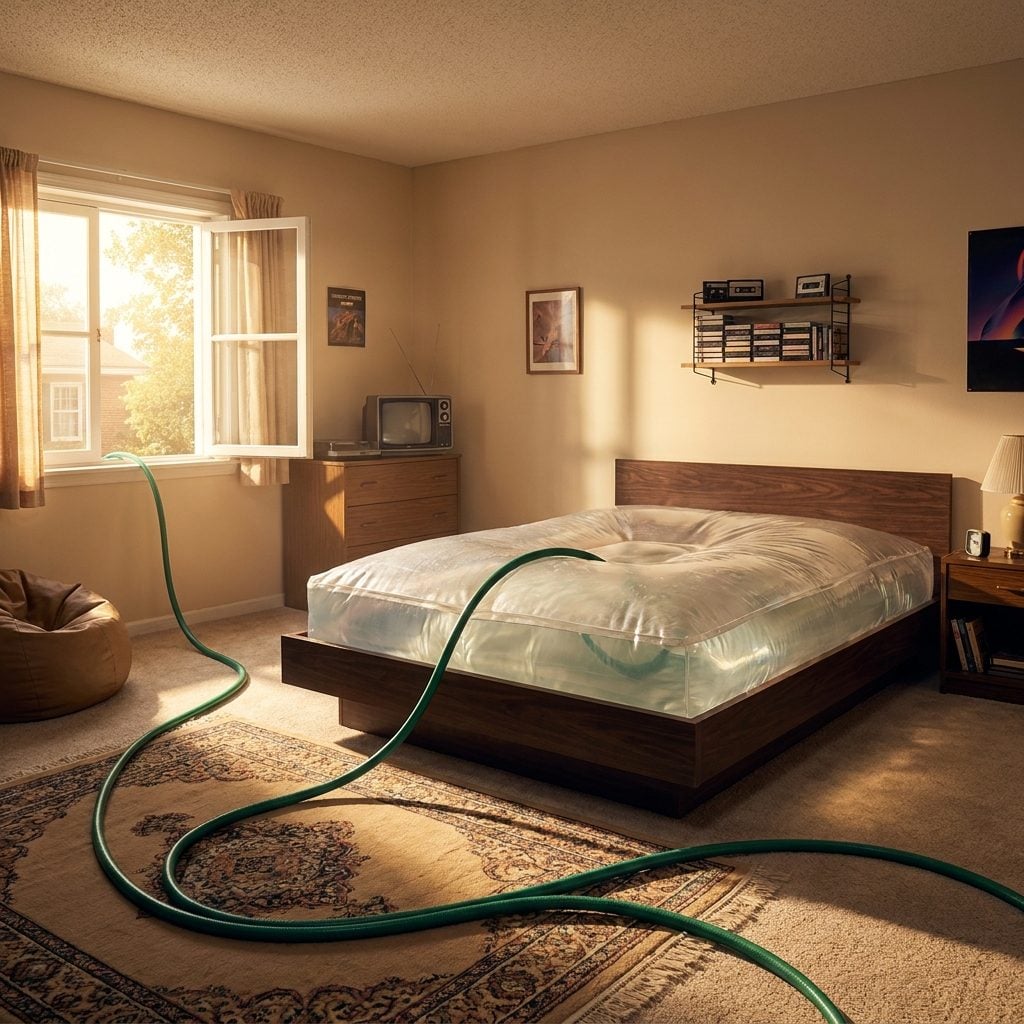
The day the waterbed arrived was a full production. The frame went together with an Allen wrench and some optimism, the vinyl bladder got unfolded and laid inside, and then someone ran a garden hose through the bedroom window or down the hallway and started filling it. Then everyone waited.
Depending on its dimensions and fill depth, a traditional waterbed could hold well over 100 gallons and weigh more than half a ton once filled. At standard garden hose pressure, that takes a while. Hours. The mattress went from flat to lumpy to enormous to finally, impossibly full, and you couldn’t sleep on it until the heater had run long enough to bring it up to temperature. The anticipation was its own specific childhood memory.
13. The Conditioner You Had to Add to Keep It From Going Wrong Inside
🔥 Would you like to save this?
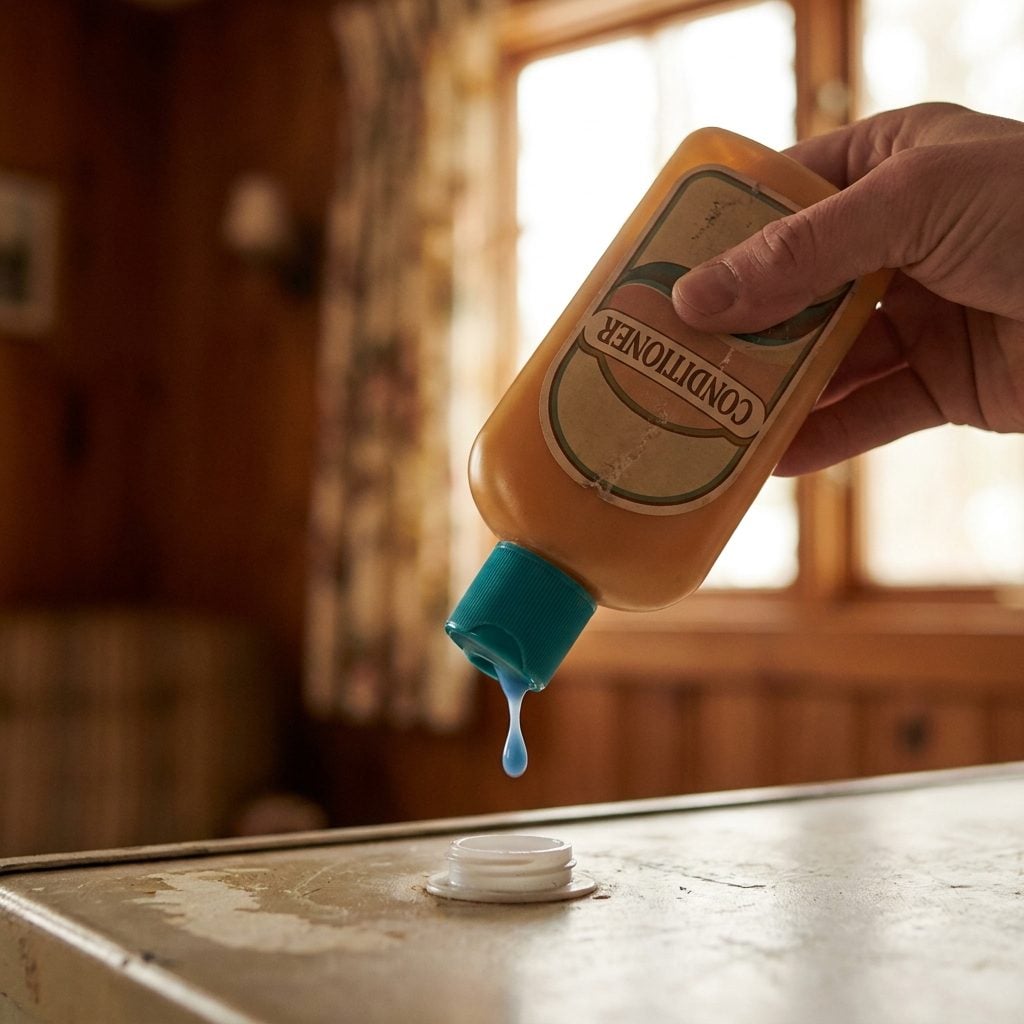
There was a bottle of something. Waterbed conditioner, it was called, and it went in through a small port in the vinyl bladder every few months to prevent algae, bacteria, and whatever other aquatic unpleasantness wanted to take up residence inside a dark, warm, sealed environment. Parents took this seriously.
The fill cap came off with a special tool, the conditioner went in, the cap went back on. Done correctly and consistently, a waterbed bladder could last years. Done incorrectly, you had a problem you very much did not want to think about. The conditioner bottle lived on the shelf above the dresser like a small, chemical guardian of the whole enterprise.
12. The Day Someone Brought a Cat Near It and Everyone Held Their Breath
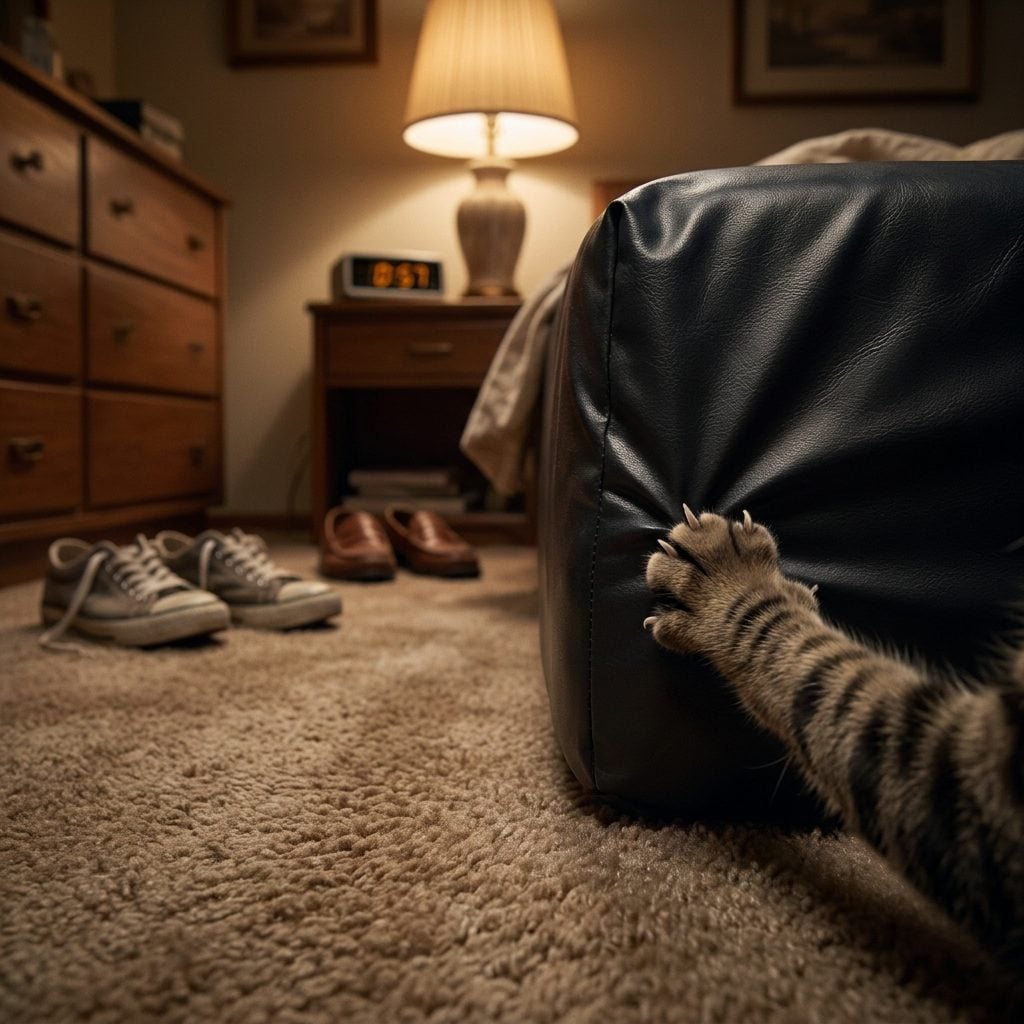
The rules in a waterbed household were few but absolute. No scissors near the bed. No sharp belt buckles. No pens with the cap off. And under no circumstances did you let the cat in that room unsupervised.
The fear was completely rational. A cat’s claw through a vinyl waterbed bladder produced a leak that started slow and then didn’t. Every waterbed family had a story, or knew a family who had a story, about a repair kit used at midnight, towels stacked on the carpet, a very guilty-looking animal nowhere to be found. The threat was real. The vigilance was real. The waterbed created its own domestic code of conduct, and the cat clause was the first amendment.
11. The Vinyl Smell That Hit You the Second You Walked Into the Room

That smell. Nobody warned you about the smell. You’d open the door to a room with a waterbed and it would hit you immediately: warm vinyl and something faintly chemical, like a new pool toy left sitting in the sun all afternoon. Not unpleasant, exactly. Just completely specific to that thing and that thing alone.
The heater ran all day to keep the water at body temperature, which meant the vinyl was always slightly warm to the touch and the scent never fully aired out. Decades later, catch a whiff of an inflatable pool float on a hot day and see what memory comes flooding back.
10. The Cap Gun Sound When You Sat Down Too Fast
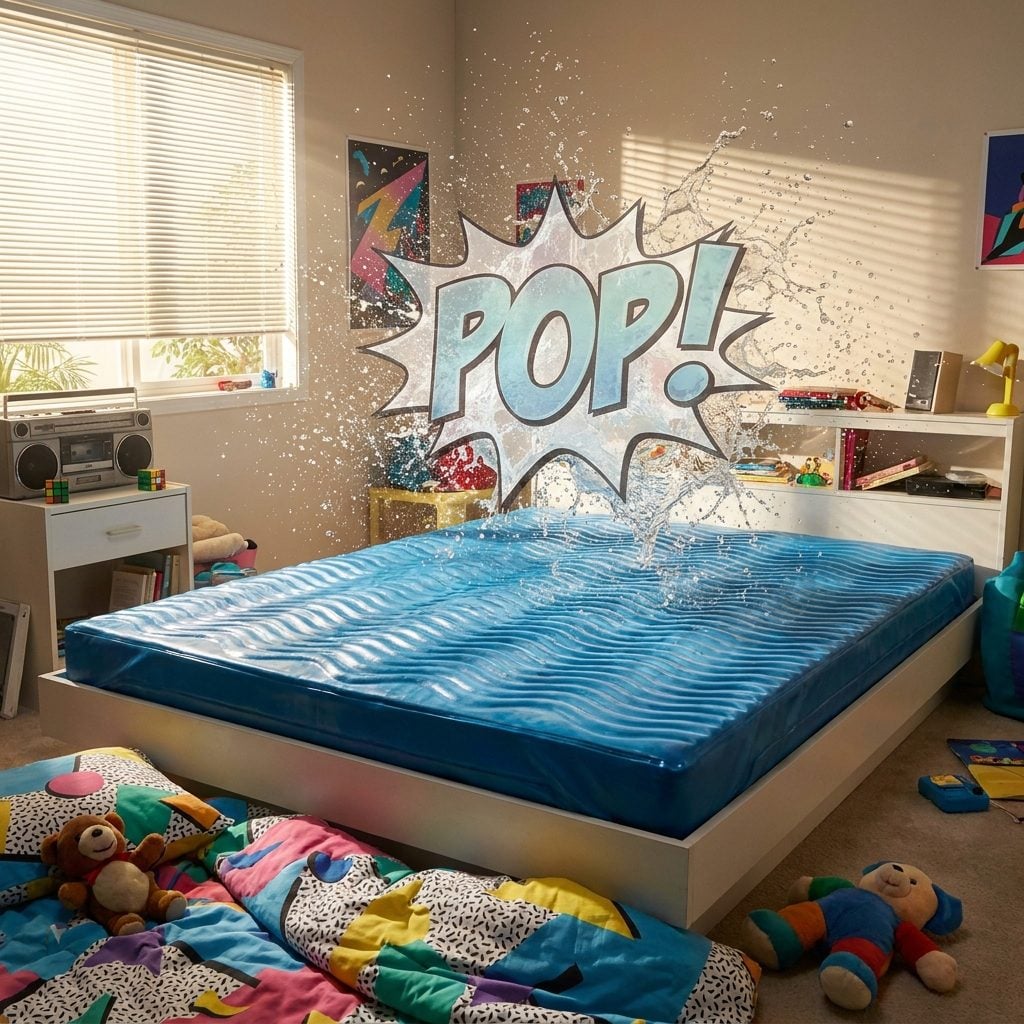
You did not ease onto a waterbed. Nobody did. You flung yourself onto it with complete commitment and were immediately rewarded with a massive percussive slap of vinyl against water that sounded like someone fired a starter pistol in the hallway. Parents two rooms away heard it every single time.
The harder you launched yourself, the more dramatic the shockwave. The whole mattress surface would bow under the impact and then send a slow rolling wave toward the headboard, which would return and gently lift you on the rebound. It was, objectively, the most fun physics lesson a 9-year-old ever had.
9. The Bookcase Headboard With the Sliding Mirrored Doors Nobody Ever Unlocked
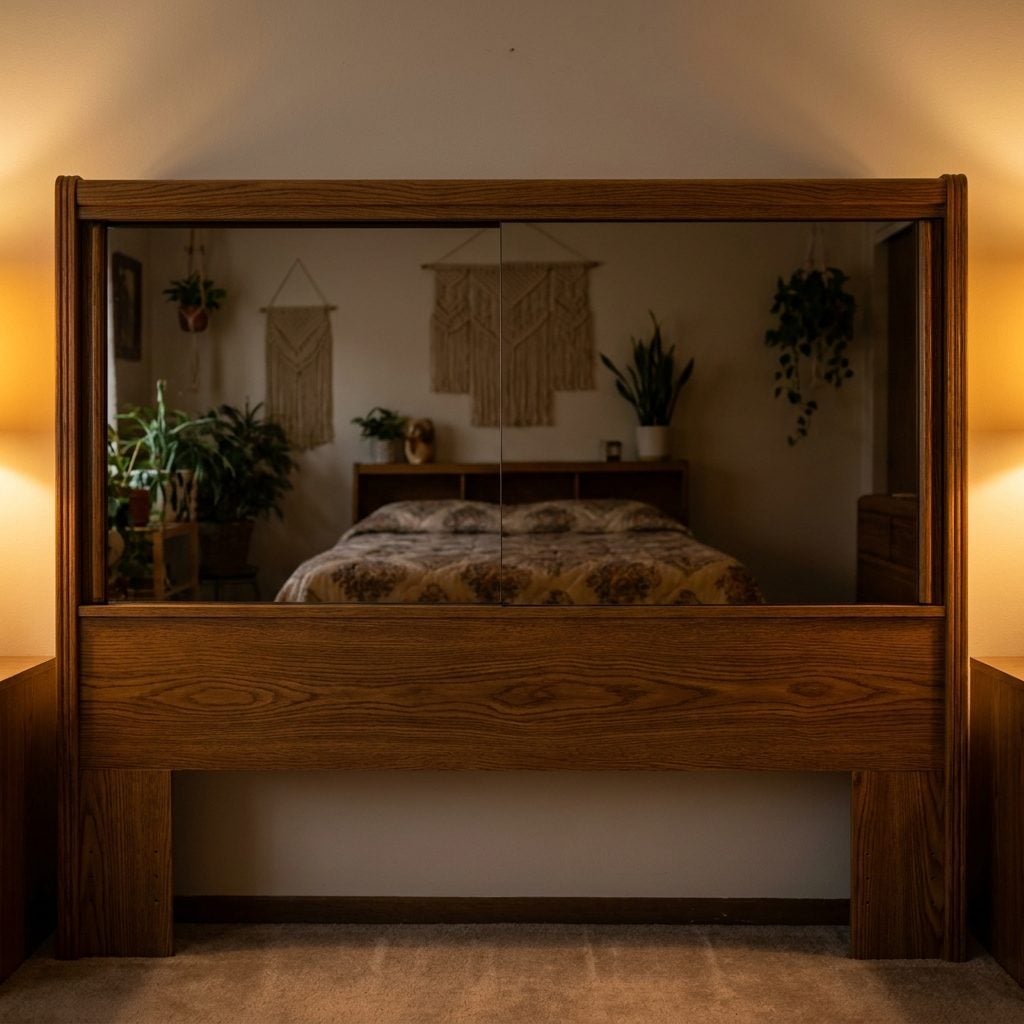
The bookcase headboard was the waterbed’s greatest architectural achievement. An entire piece of furniture built into the thing: shelves for books and a clock radio, a recessed light behind smoked acrylic, and those small sliding mirrored cabinet doors at the bottom that every single waterbed seemed to come with and nobody could fully explain.
They had tiny locks. You almost certainly lost the key within the first month. Whatever went in there, a diary, a flashlight, a cassette tape you weren’t supposed to have, stayed in there. For anyone interested in cottage bed inspiration, the waterbed headboard was its own strange precursor: storage built into the sleeping unit, functionality dressed up as something slightly glamorous.
8. The Week After You Moved It, When You Found the Damp Patch on the Subfloor
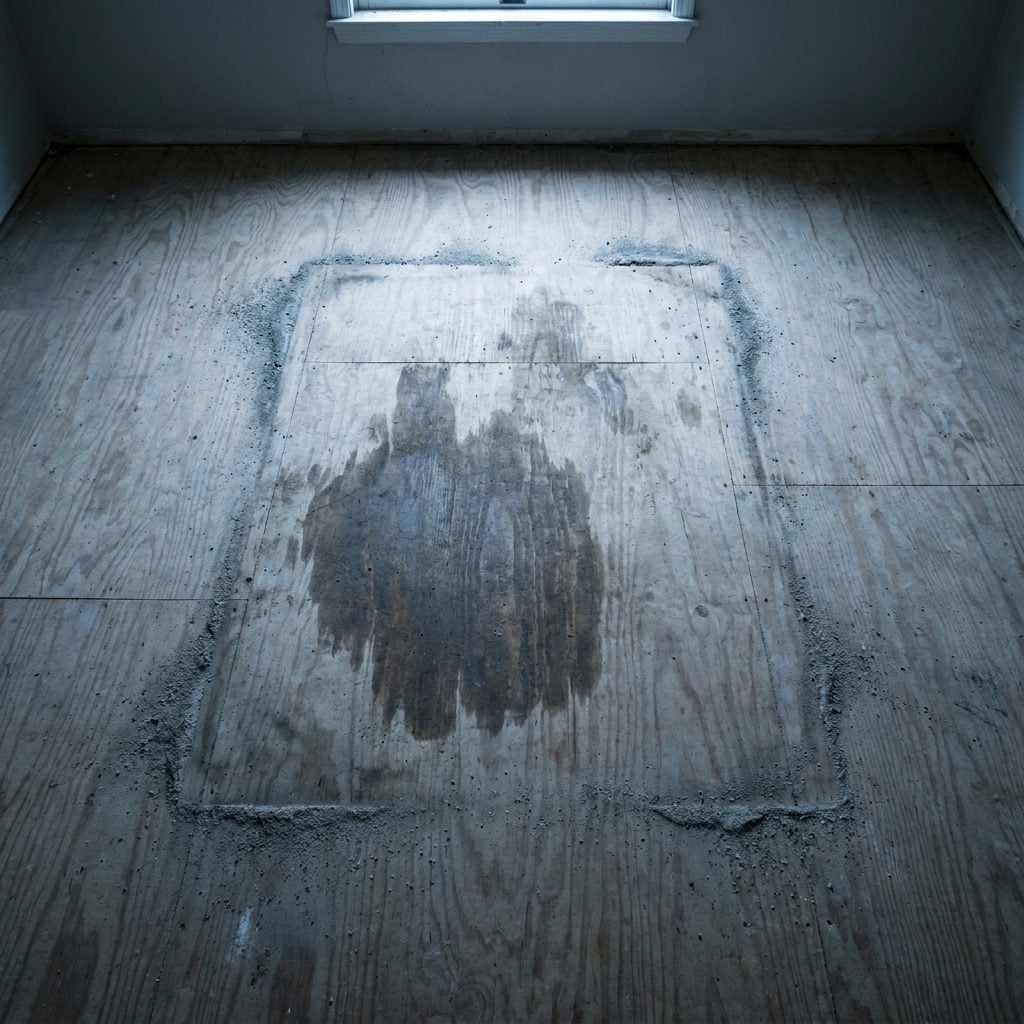
Moving a waterbed was a multi-day project that required planning, hose connections, and at least one family argument. But the real discovery always came after. You’d pull back the frame and find it: a faint darkened rectangle pressed into the subfloor or the carpet pad underneath, the ghost of a slow leak that had been quietly happening for longer than anyone wanted to admit.
Not enough to cause panic. Just enough to cause a specific kind of parental silence. The carpet fibers in that rectangle were matted flat and slightly off-color, permanently stamped by three hundred gallons sitting in one spot for six years. Some houses still have that outline under new flooring. They just don’t talk about it.
7. Falling Asleep to the Sound of Your Own Heartbeat Amplified Through the Water
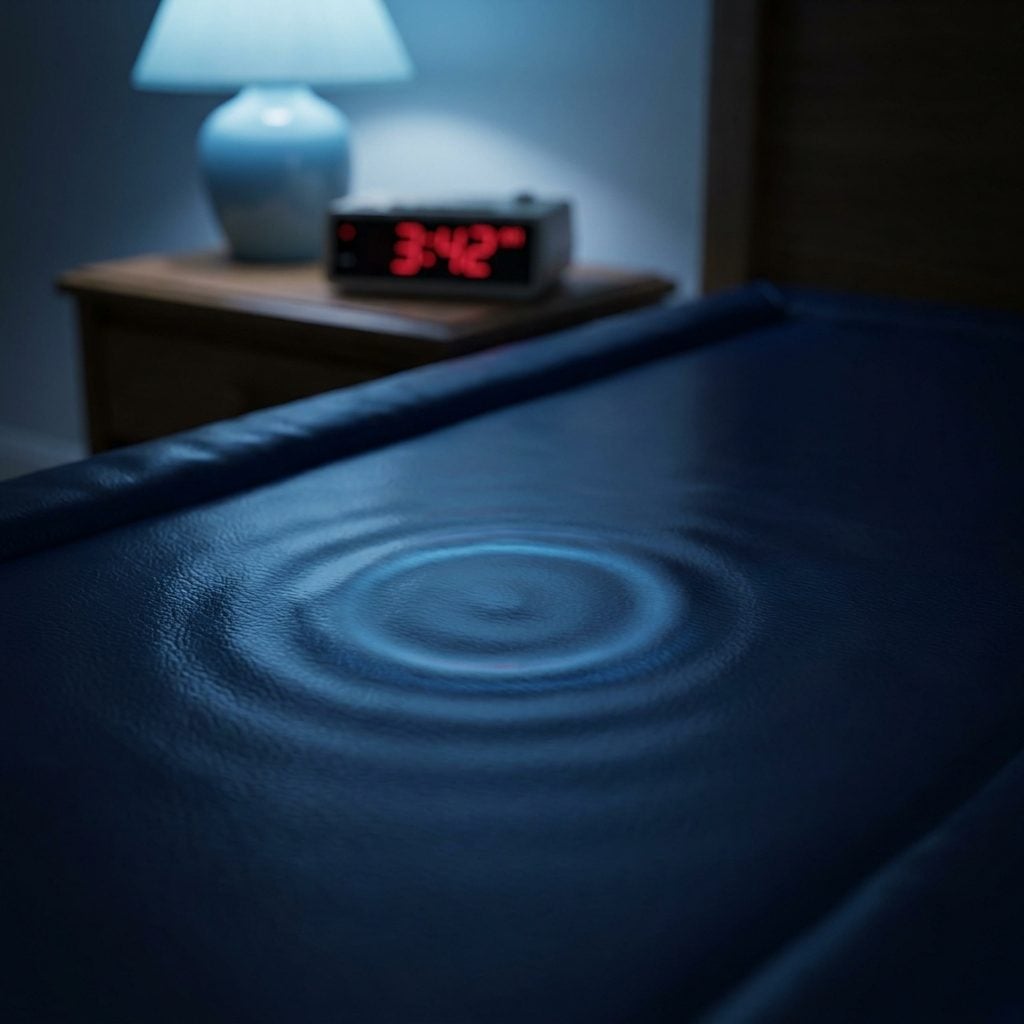
Late enough that the house had gone quiet, ear pressed against that vinyl surface, you’d hear it: your own pulse, low and rhythmic, coming back up through the water like the mattress was alive. The whole bed was essentially a giant acoustic membrane, and once you noticed it you couldn’t un-notice it.
There was something genuinely calming about it. The gentle wave from shifting your weight, the steady hum of the heater underneath, the low underwater thrum of your own heartbeat. For light bed inspiration that captures that same quality of warmth and quiet shelter, people have been chasing the feeling ever since. The waterbed delivered it in the most unsubtle way possible. It worked anyway.
The waterbed didn’t just hold you. It responded to you. Every breath, every heartbeat, every small adjustment. Nothing before or since has slept quite like that.
6. The California King That Wouldn’t Fit Through the Bedroom Door
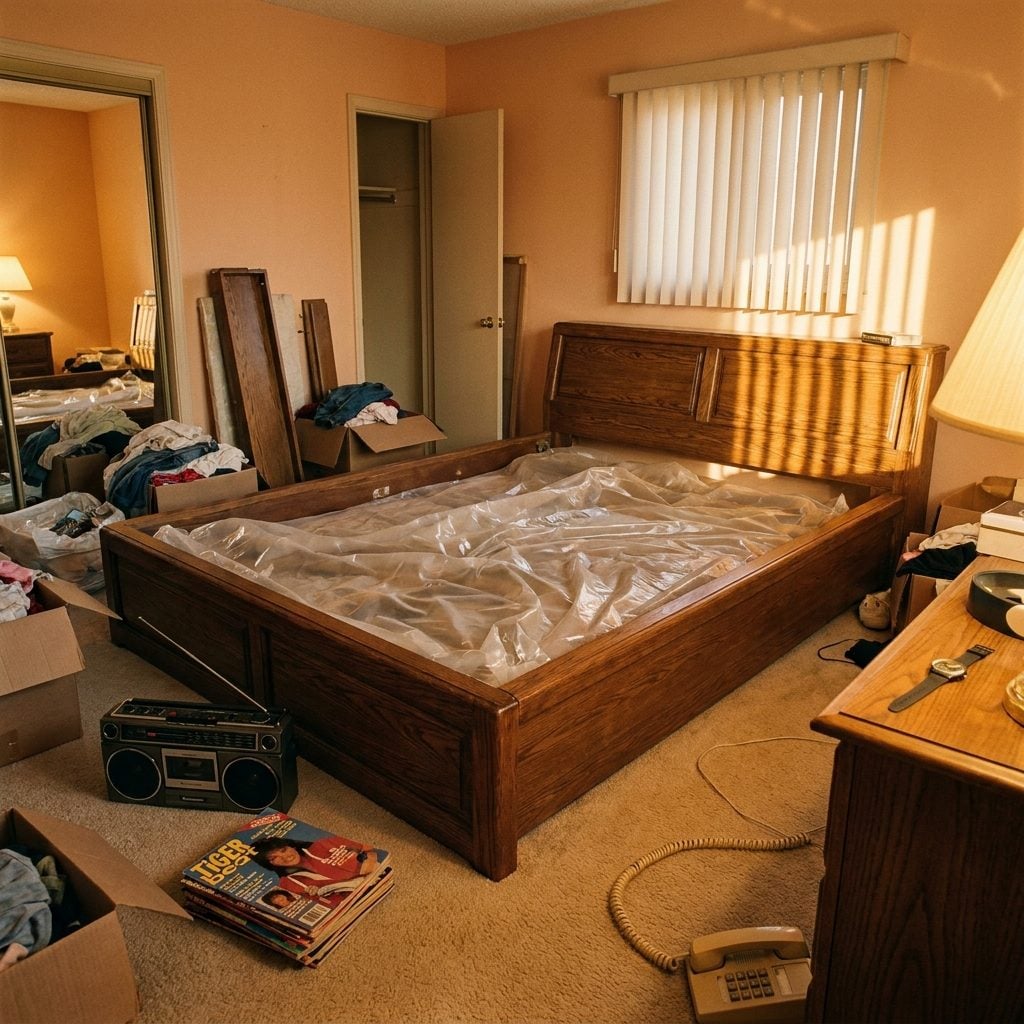
Somebody’s dad measured the doorway. Somebody’s dad measured wrong. The frame components would go in disassembled — fine — but the mattress bladder, once filled, was going nowhere for the next six years without a wet-vac and a ruined Saturday.
California King was the aspirational size, bigger than the parents’ bed and honestly bigger than the room. Kids picked it out of the showroom brochure with zero concept of square footage, and parents said yes because the salesman was persuasive and the financing was 90 days same as cash.
5. The Showroom on the Edge of Town With the Beaded Curtains
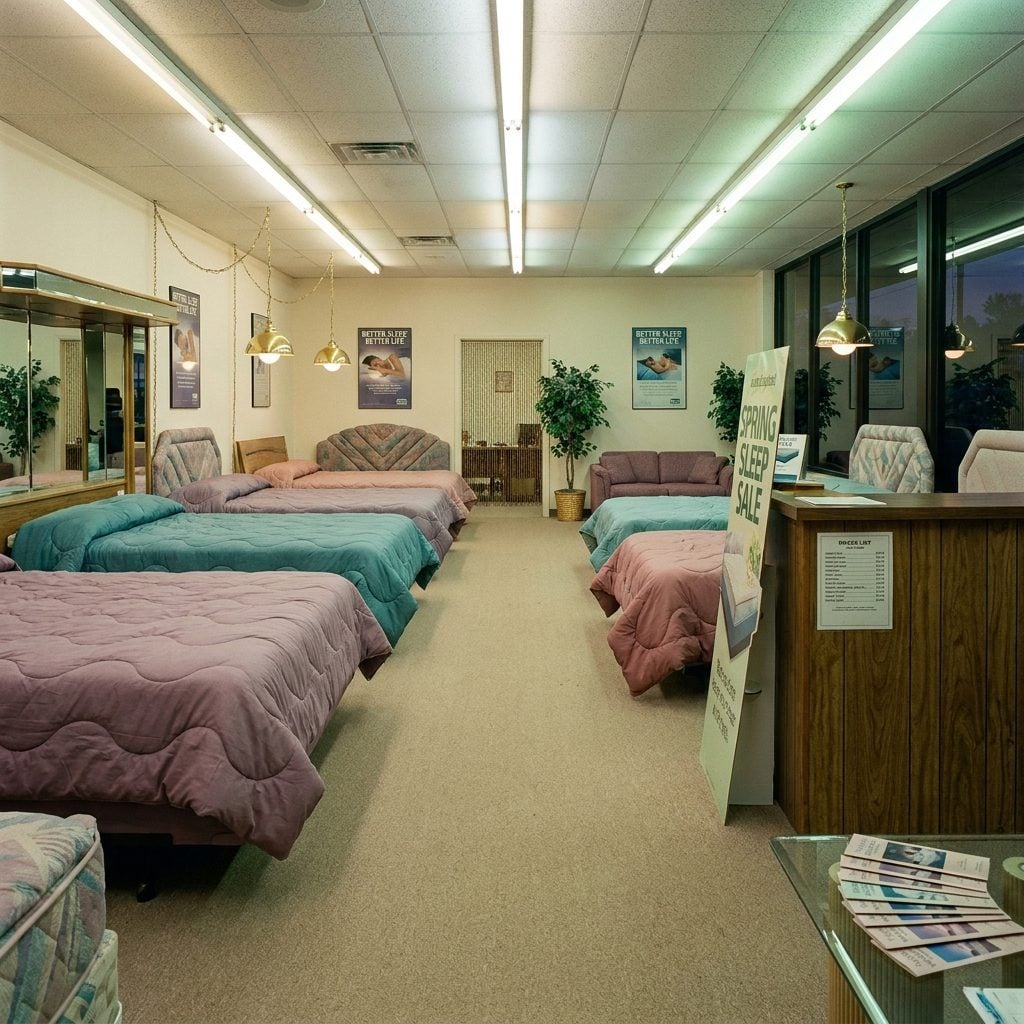
Every mid-sized town had one, usually crammed into a strip mall between a video store and a place that sold hot tubs. Empty parking lot on weekdays. Packed on Saturdays.
You walked in and the salesman was on you inside ten seconds, asking if you’d ever tried one and gesturing at the display models like a maitre d’. Kids were allowed to climb on, which was the whole pitch really — climb on, feel the wave, imagine sleeping on this every night forever while your parents nodded politely and asked about the warranty.
4. The Comforter Set That Came in Mauve, Teal, or Both
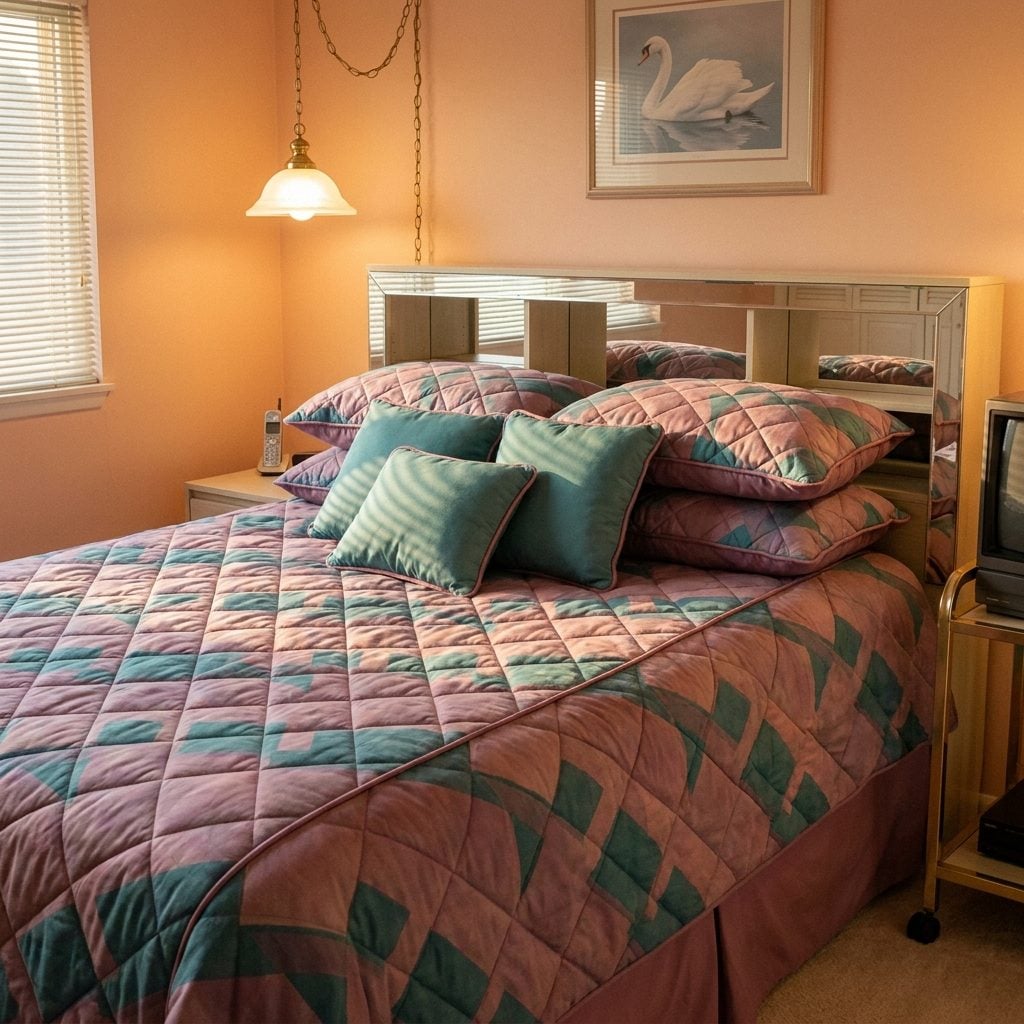
The bedding department had a section, and the section was mauve. Some teal in the mix, sometimes both jammed together in a geometric print that looked ripped from a music video background. Always quilted, always slightly puffy, always sold as a set with pillow shams and a coordinating bed skirt you’d never wash.
For a hint of the softer version this era eventually gave way to, check out this cottage bed inspiration. Very different energy.
3. The Way You Could Feel Someone Else Get Out of Bed Three Rooms Away
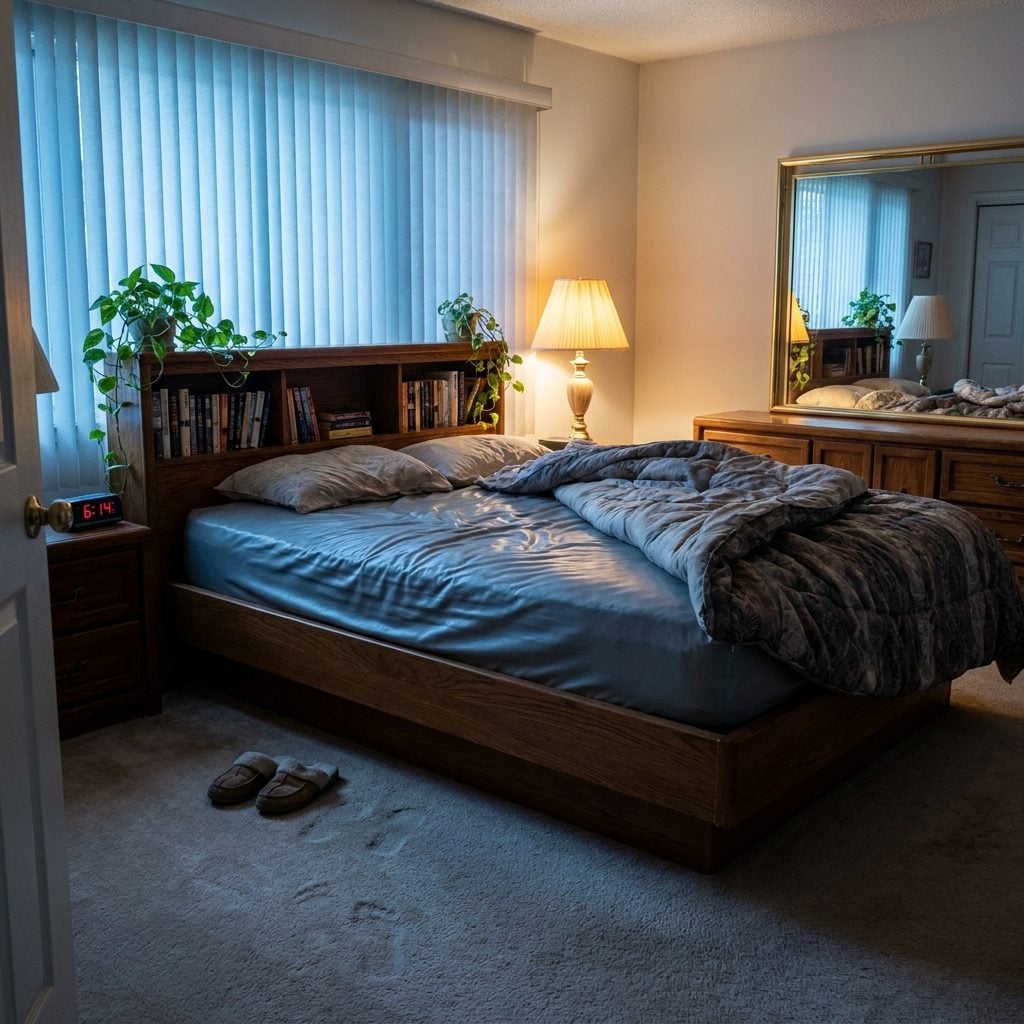
Physics doesn’t care about your sleep. When one person got out of bed the wave traveled across the mattress and into the other person’s ribs, subtle but unmistakable, and you could tell whether your partner had gotten up to use the bathroom or was just rolling over based on the amplitude alone.
Some couples learned to move slowly. Some never did. The waterbed taught you a lot about the person you were sleeping next to, whether you wanted the lesson or not.
2. The Draining Ritual When It Was Time to Move
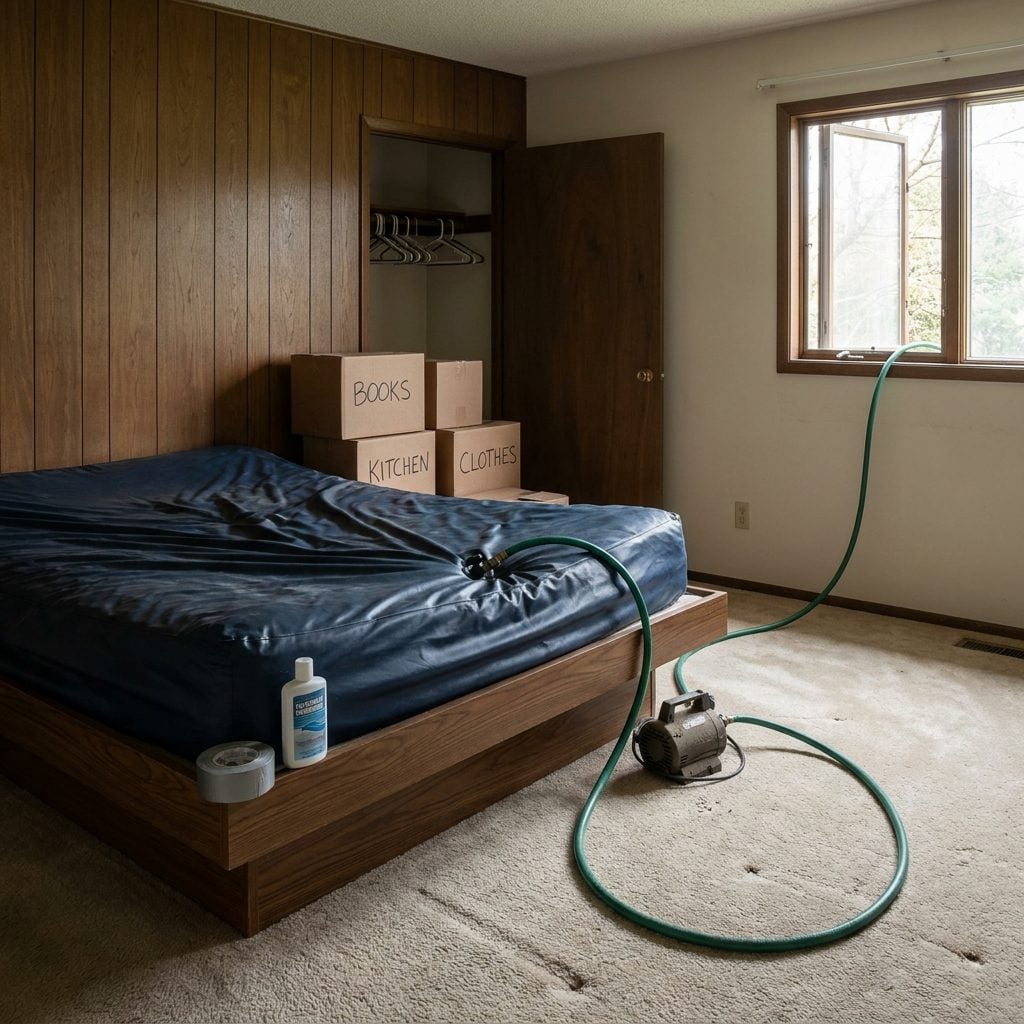
Moving day started the night before, sometimes two nights before. You hooked a hose to the drain valve, ran it out the window, and prayed the pump worked. If it didn’t, you were siphoning by mouth — and yes, you got a mouthful.
The whole thing took hours. Sometimes the mattress refused to fully drain and you were left folding a half-flooded vinyl sack into the back of a U-Haul with water still sloshing in the corners, cursing every decision that led to this point. People sold their waterbeds cheap when they moved cross-country. Some just left them behind.
1. The Day You Finally Got Rid of It and the Room Felt Enormous
🔥 Would you like to save this?
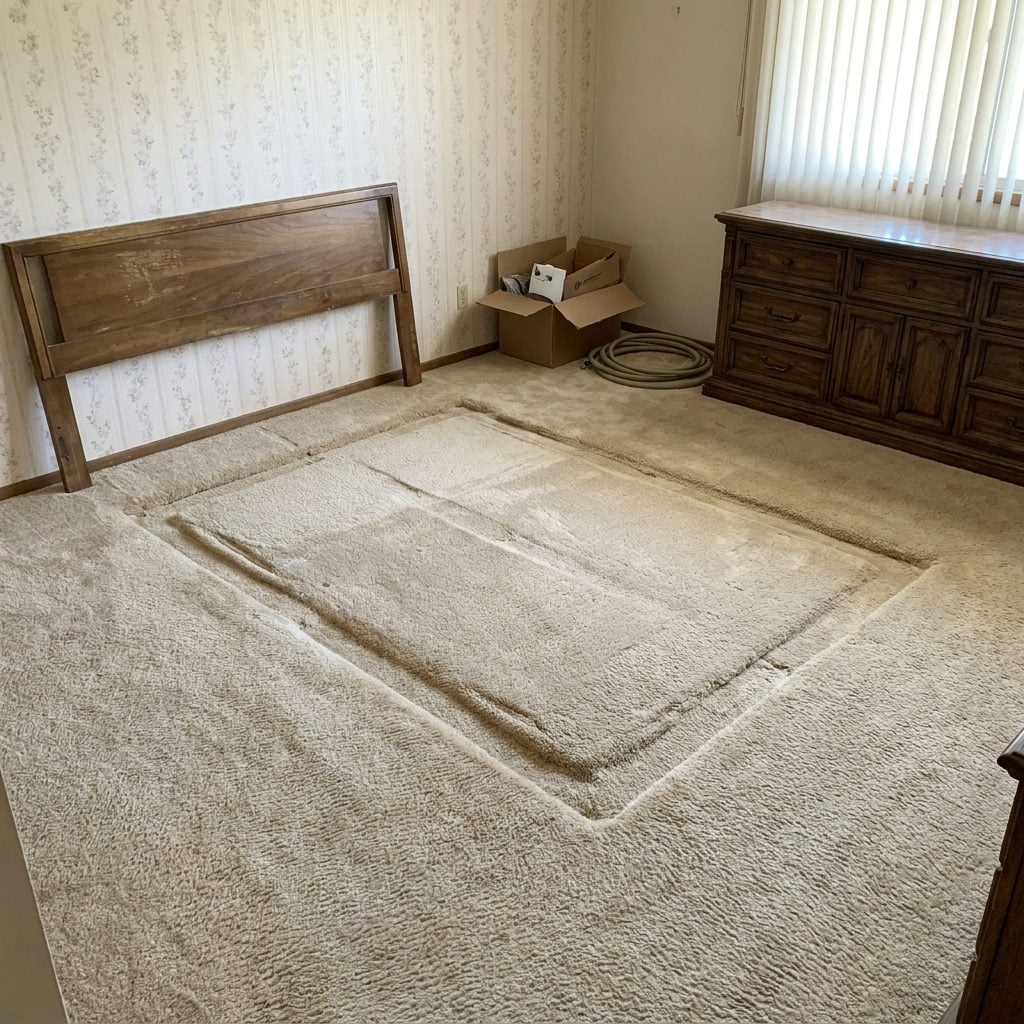
The carpet remembered. A deep rectangular indentation, sharp at the edges, took years to spring back — and sometimes never did fully. You stood in the doorway of the newly empty room and realized the bed had taken up more space than seemed possible.
What went in its place was usually a regular mattress on a regular frame. Small. Light. Nobody had to warn a friend before sitting down, nobody heard a slosh when they turned over, and the room got quiet in a way it hadn’t been in years. For the first week that quiet felt like something was missing.