🔥 Would you like to save this?
A 1970s backyard barbecue rarely needed much to get started. A round black kettle grill established the kitchen. A vinyl-covered picnic table became the dining room. Aluminum chairs migrated out of the garage, an orange cooler landed somewhere in the shade, and the lawn handled everything else. By late afternoon, the yard had organized itself.
The objects did more than fill the space. Charcoal smoke advertised that something was cooking. A bowl under foil meant more food had arrived. The sprinkler could pull the children away from the table faster than any organized game, while webbed chairs, badminton nets, transistor radios, citronella buckets, and paper plates created an outdoor room with almost no concern for coordination. Nothing matched. Almost everything belonged.
In order to come up with the very specific design ideas, we create most designs with the assistance of state-of-the-art AI interior design software. Also, assume links that take you off the site are affiliate links such as links to Amazon. this means we may earn a commission if you buy something.
These 32 details follow that loose choreography from the first ash-gray coals through burgers, side dishes, coolers, lawn games, wet grass, mosquitoes, unexpected company, and the point after sunset when the food was mostly gone but the backyard still had momentum. The remarkable part was not how polished the setup looked. It was how little infrastructure a summer evening seemed to require.
32. The Round Charcoal Kettle Grill Smoking Up the Entire Backyard
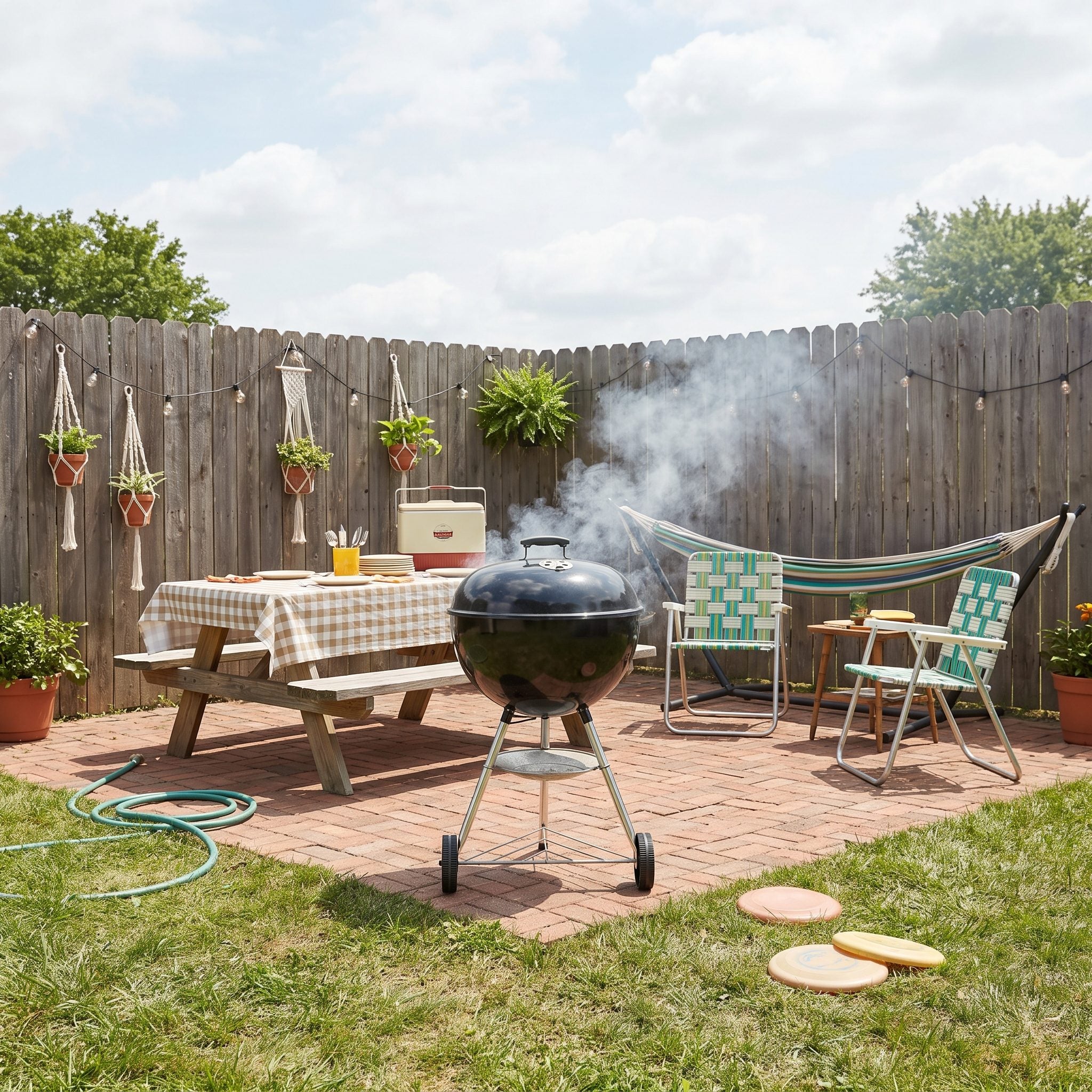
Few objects announce a backyard barbecue faster than the round black kettle grill. Its three-legged silhouette was compact, portable, and almost aggressively simple: bowl, grate, domed lid, wheels, fire.
Weber had been producing its kettle design since the early 1950s, and by the 1970s the form had become increasingly familiar in American backyards. The domed lid helped control heat and airflow while containing more of the ash and flare-ups that plagued open braziers. Smoke rising over a fence supplied the rest of the advertising.
History Corner: George Stephen developed the original Weber kettle in 1952 while working for Weber Brothers Metal Works, which manufactured metal buoys. He adapted the rounded form into a covered charcoal grill, creating one of the most recognizable shapes in backyard cooking.
31. The Pyramid of Charcoal Briquettes Turning Ash-Gray Before Dinner
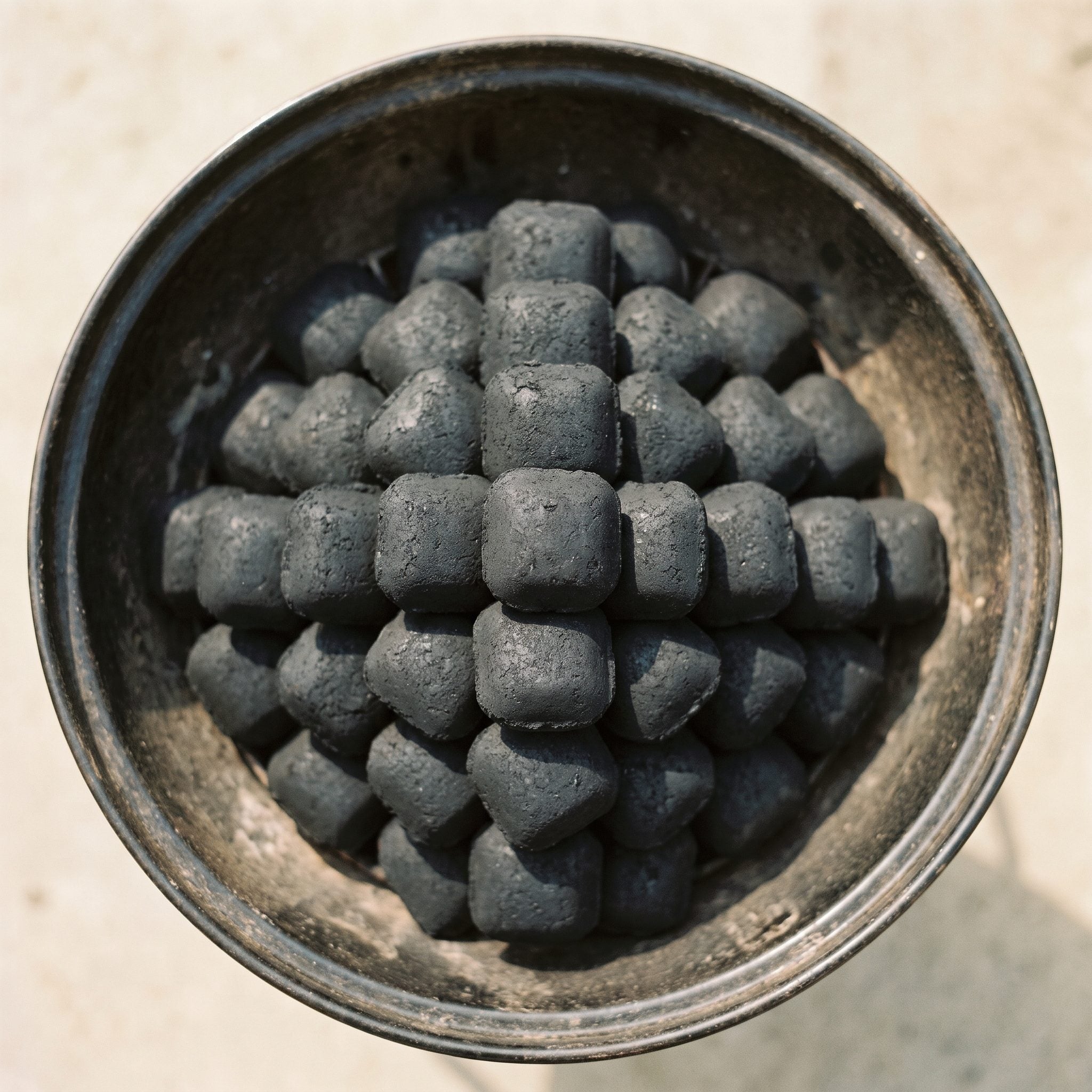
Charcoal cooking began with an interval that no amount of optimism could eliminate. The briquettes had to ignite, spread heat through the pile, and develop that familiar pale coating before the grate was ready for serious cooking.
The changing color was an easy visual cue. Black briquettes gradually glowed at the edges and took on a gray-white layer of ash as the fire established itself. Long before instant-read thermometers became common backyard equipment, the coals themselves offered the most obvious indication that the grill was settling into usable heat.
30. The Squirt of Lighter Fluid That Made the Grill Roar
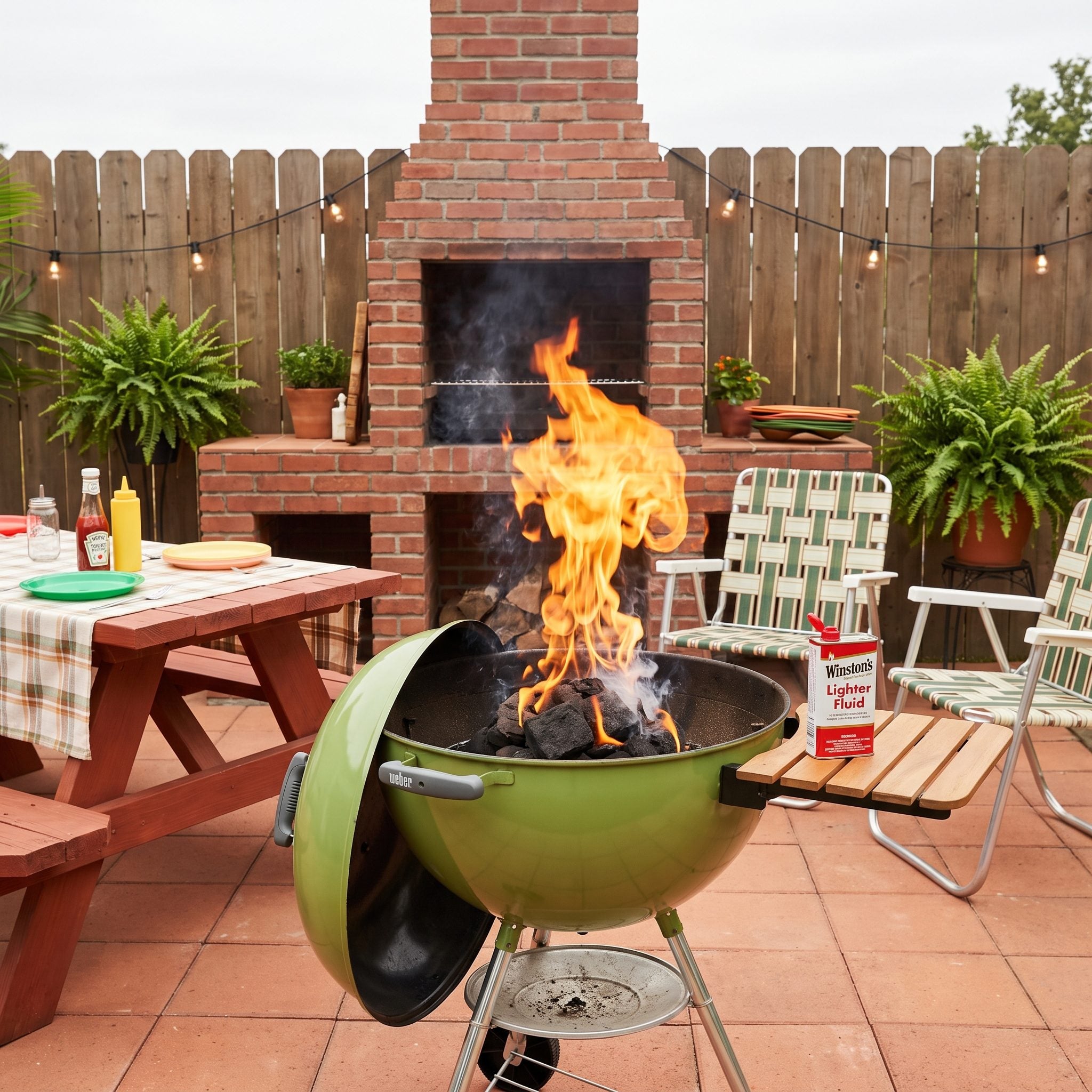
Before chimney starters became commonplace, charcoal lighter fluid was part of the standard backyard ritual. Applied to the briquettes and ignited, it could produce an immediate burst of flame considerably more dramatic than the slow, steady cooking fire that followed.
The petroleum smell was unmistakable, which is also why the fluid needed time to burn away before food went over the coals. The spectacle lasted seconds. The charcoal took considerably longer.
Grill Note: Lighter fluid should be used according to the manufacturer’s directions and only before the charcoal is ignited. Adding it to an active fire can cause dangerous flare-ups.
29. The Backyard Grill Master With an Extra-Long Barbecue Fork
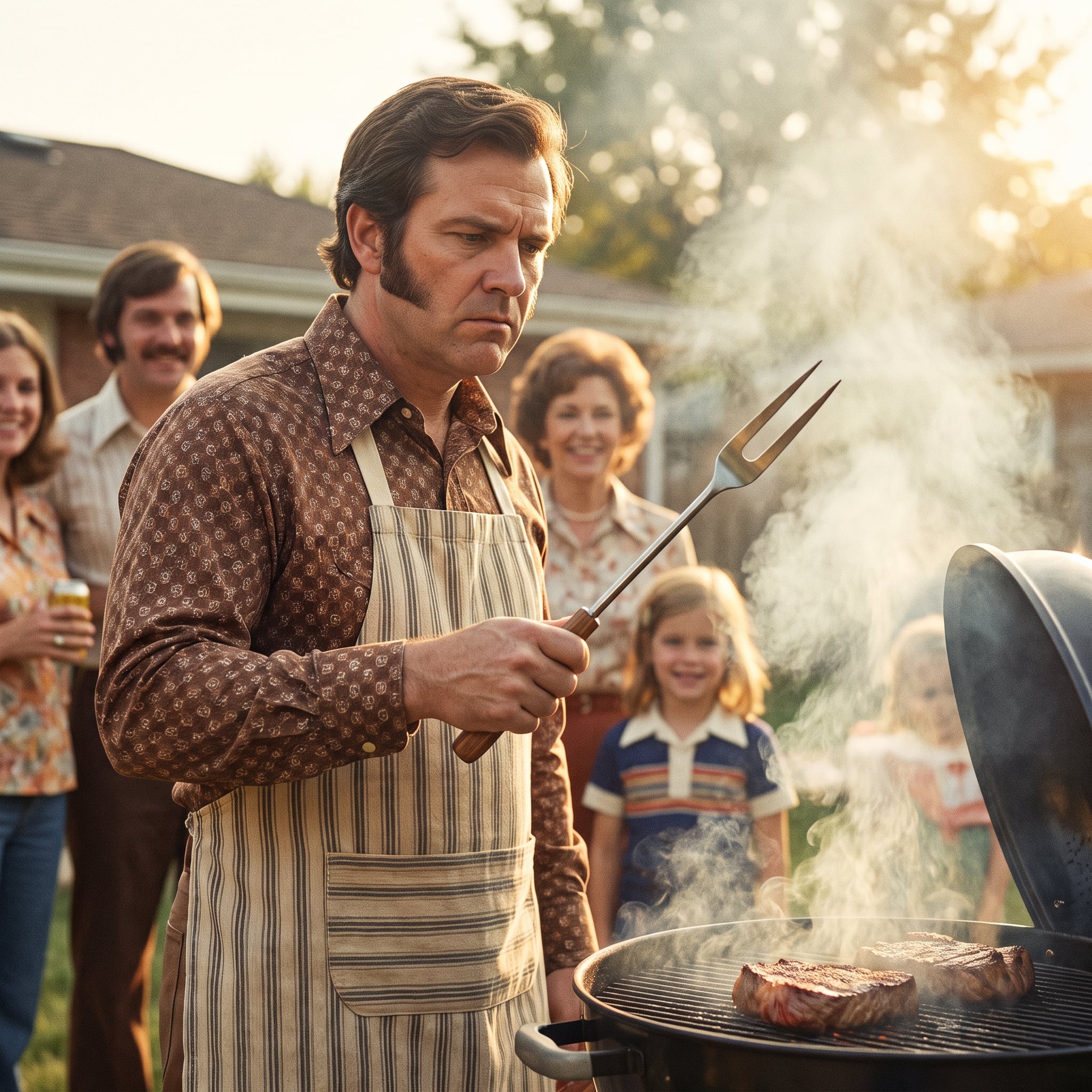
Long-handled forks, spatulas, and tongs made sense around live charcoal: distance from the heat was useful, and the tools looked appropriately serious hanging beside the grill.
The extra-long barbecue fork became particularly associated with the suburban grill-master image of the era. It could turn sausages, move chicken, and test the resistance of a burger, although repeatedly piercing meat also gives juices an easy route out. The fork was part utensil, part badge of office.
Backyard cooking turned one small patch of lawn into a temporary kitchen, and the person at the grill rarely lacked an audience.
28. Burgers and Hot Dogs Sharing the Same Bed of Coals
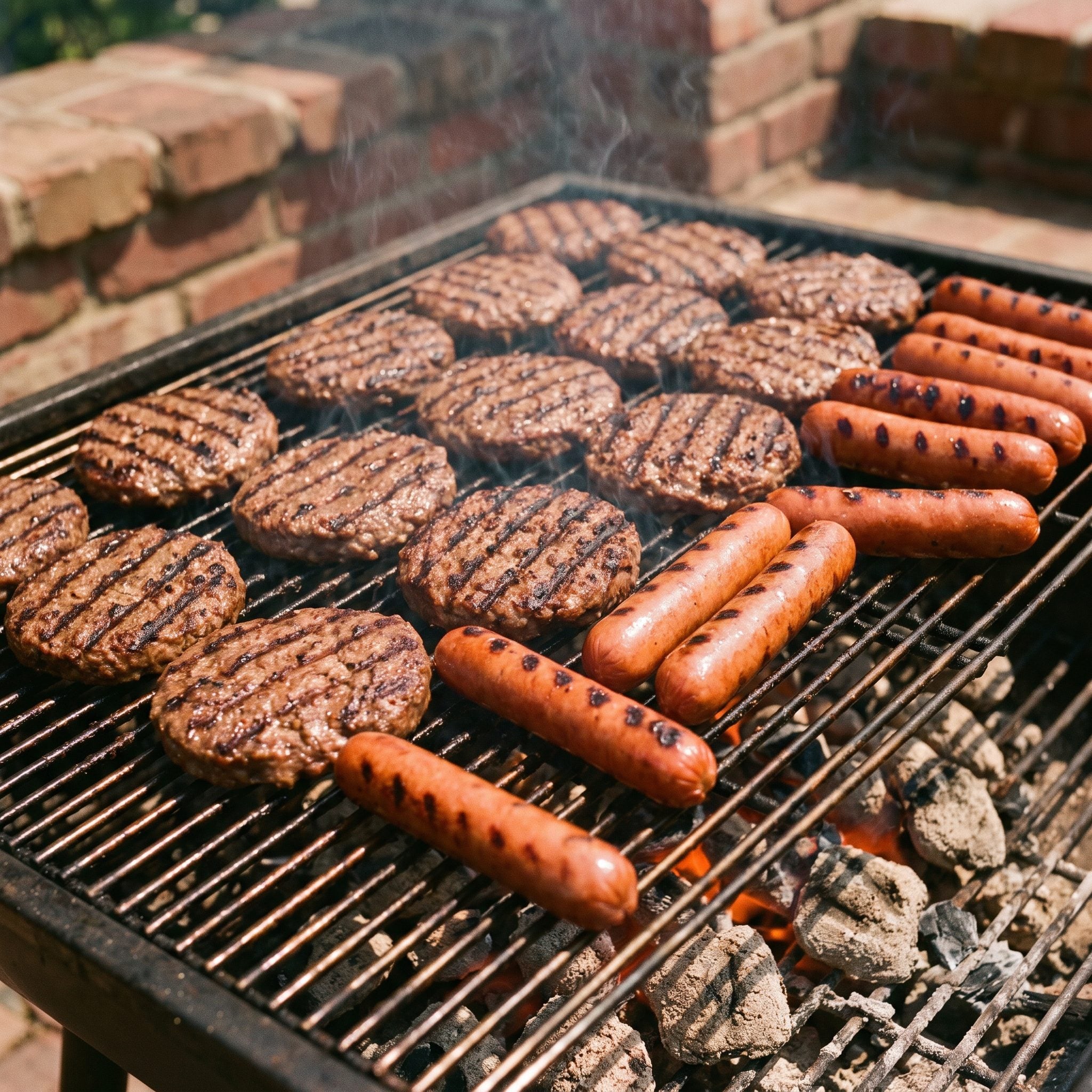
Backyard menus did not require separate cooking stations. Burgers and hot dogs could occupy the same grate, shifted around according to heat and timing, with sausages and franks taking particularly well to the browned blisters that came from direct contact with a hot grill.
Burgers brought their own little piece of theater. Fat hitting charcoal produced smoke and occasional flare-ups, while soft white buns waited nearby for patties with dark grill marks and crisp edges. Simple food made sense when most of the evening was supposed to happen away from the stove.
27. Corn on the Cob Blackening Around the Edges
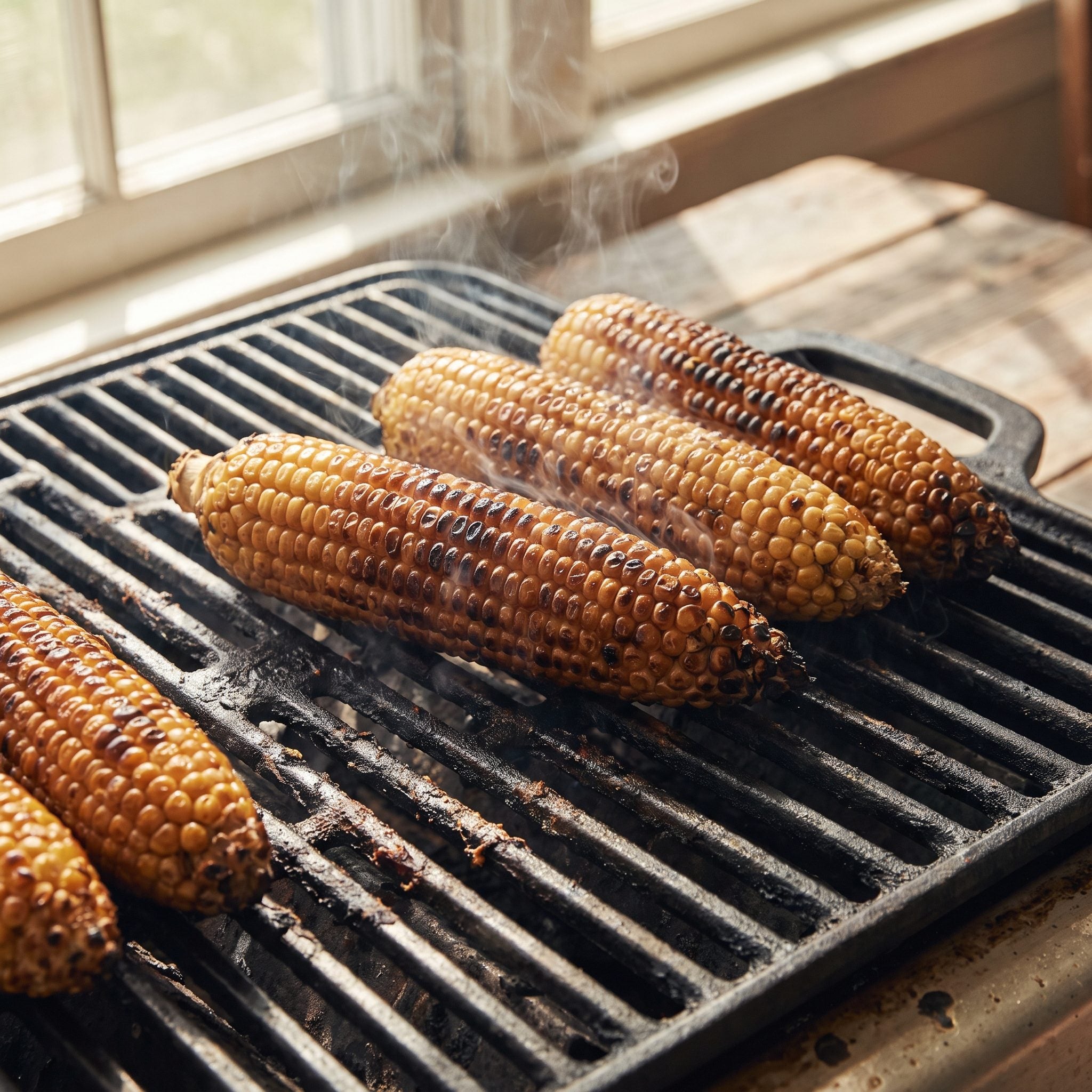
Corn could go onto a grill several ways — in its husk, wrapped, or stripped completely bare. The direct-grate version produced the most visible evidence: golden kernels interrupted by brown blisters and occasional blackened spots.
Butter and salt did not need much assistance after that. Grilling concentrated the corn’s sweetness while adding a smoky bitterness at the darkest edges, turning a vegetable into something that could hold its own beside burgers and chicken.
26. Chicken Pieces Lacquered in Sticky Barbecue Sauce
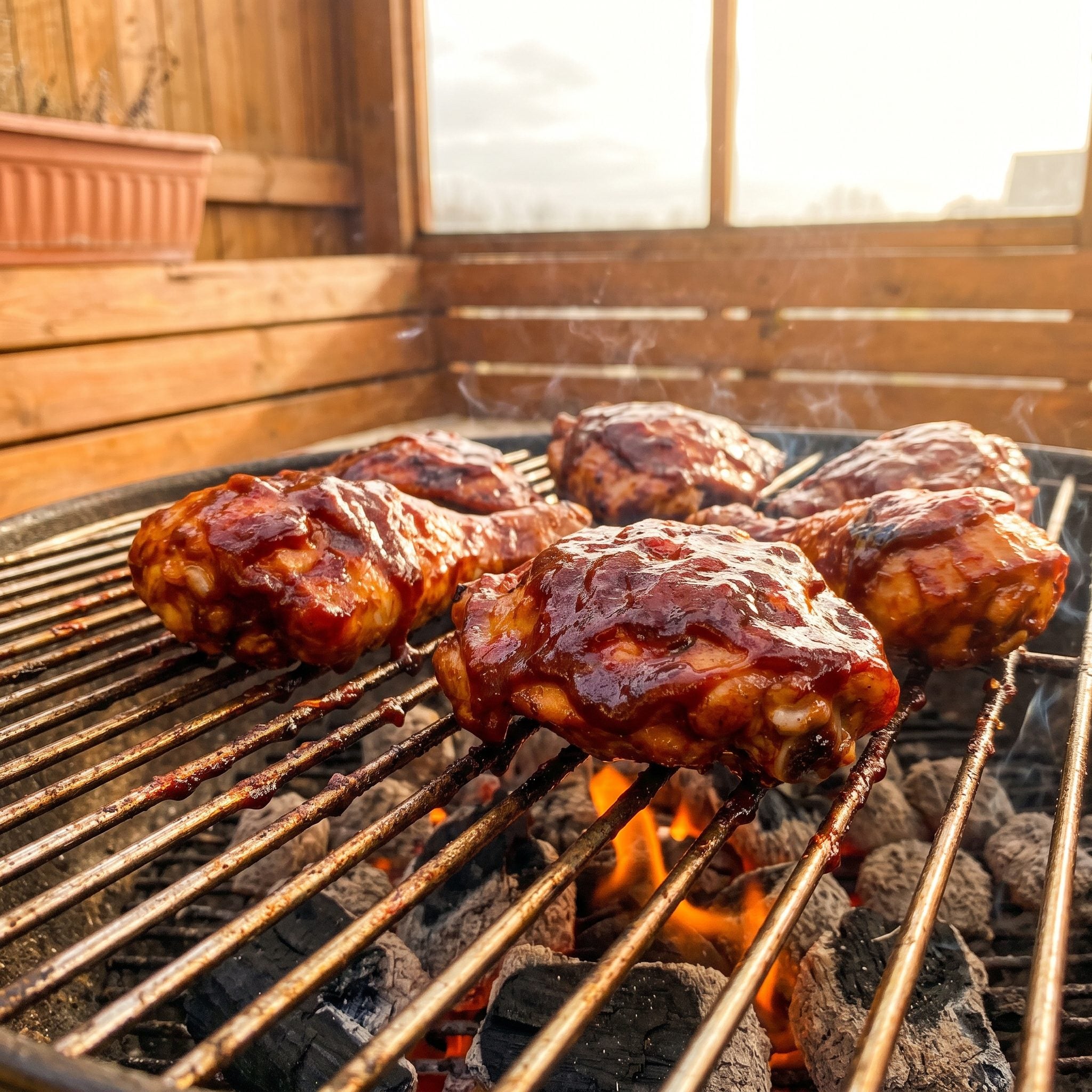
Chicken demanded more patience than a hot dog and considerably more attention than the average hamburger. Skin rendered, fat dripped, and sweet barbecue sauce could go from glossy to scorched with impressive speed.
That sauce was often the visual centerpiece: thick, tomato-red, shiny from sugar, and brushed over the chicken until the surface darkened around the edges. Applied too early over high heat, sugar-rich sauces can burn before the meat is finished.
Why It Works: Sugars brown and caramelize readily, which gives barbecue sauce its glossy, darkened surface. Applying a sweet sauce later in cooking reduces the chance that it will scorch before the chicken reaches a safe internal temperature.
25. The Picnic Table Covered With a Vinyl or Checkered Tablecloth
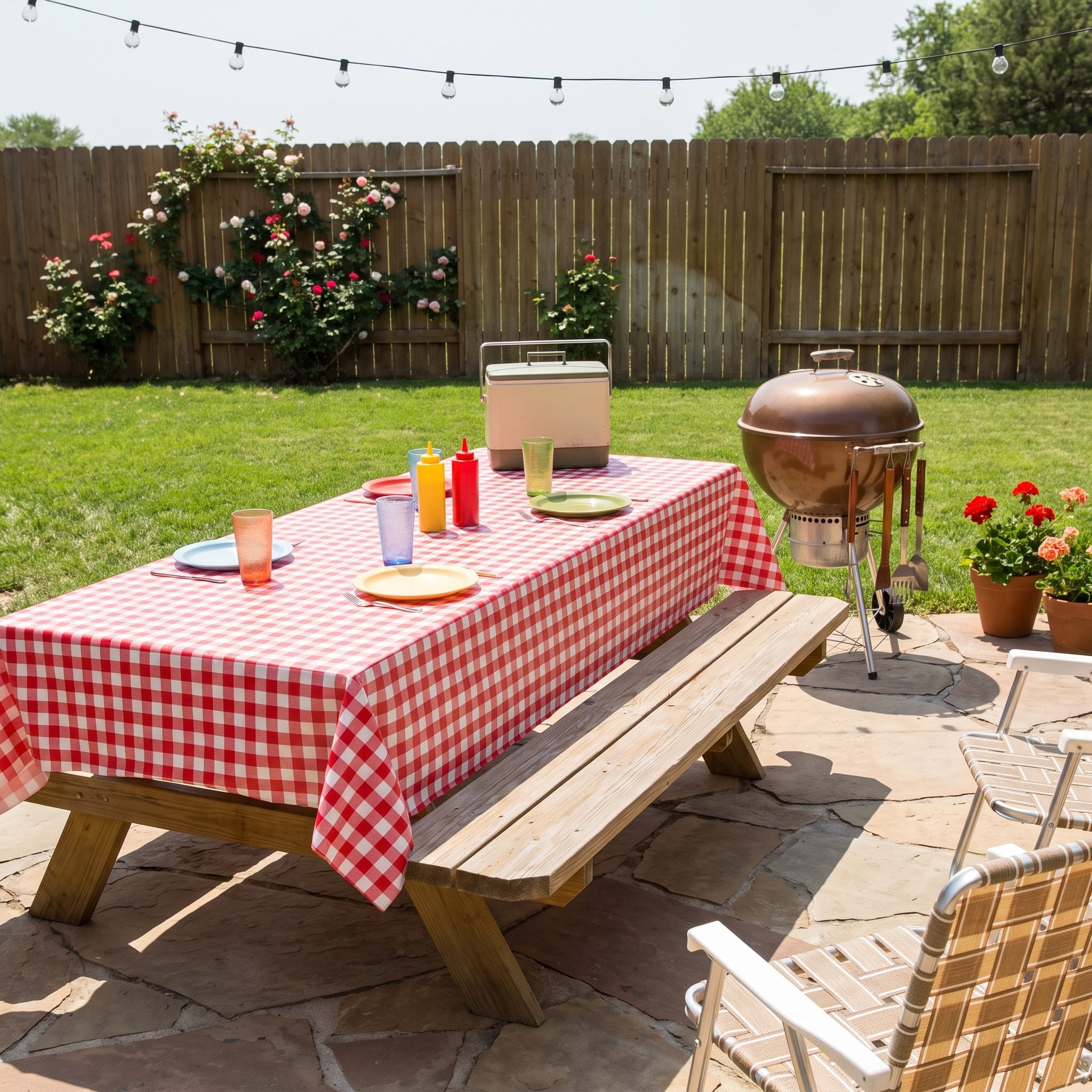
A wipe-clean vinyl tablecloth could turn an ordinary picnic table into party furniture in about thirty seconds. Red-and-white checks, florals, fruit prints, and other busy patterns were particularly useful because mustard, condensation rings, and barbecue sauce had plenty of competition.
Many versions used a soft backing to keep the slick surface from sliding, although a summer breeze could still turn the corners into sails. The cloth protected the wood, established the food table, and collected the visual evidence of the entire afternoon.
The same long-table instinct still turns up in modern back porch ideas, although the wipe-clean vinyl rarely gets enough credit for doing the practical work.
24. The Giant Bowl of Homemade Potato Salad
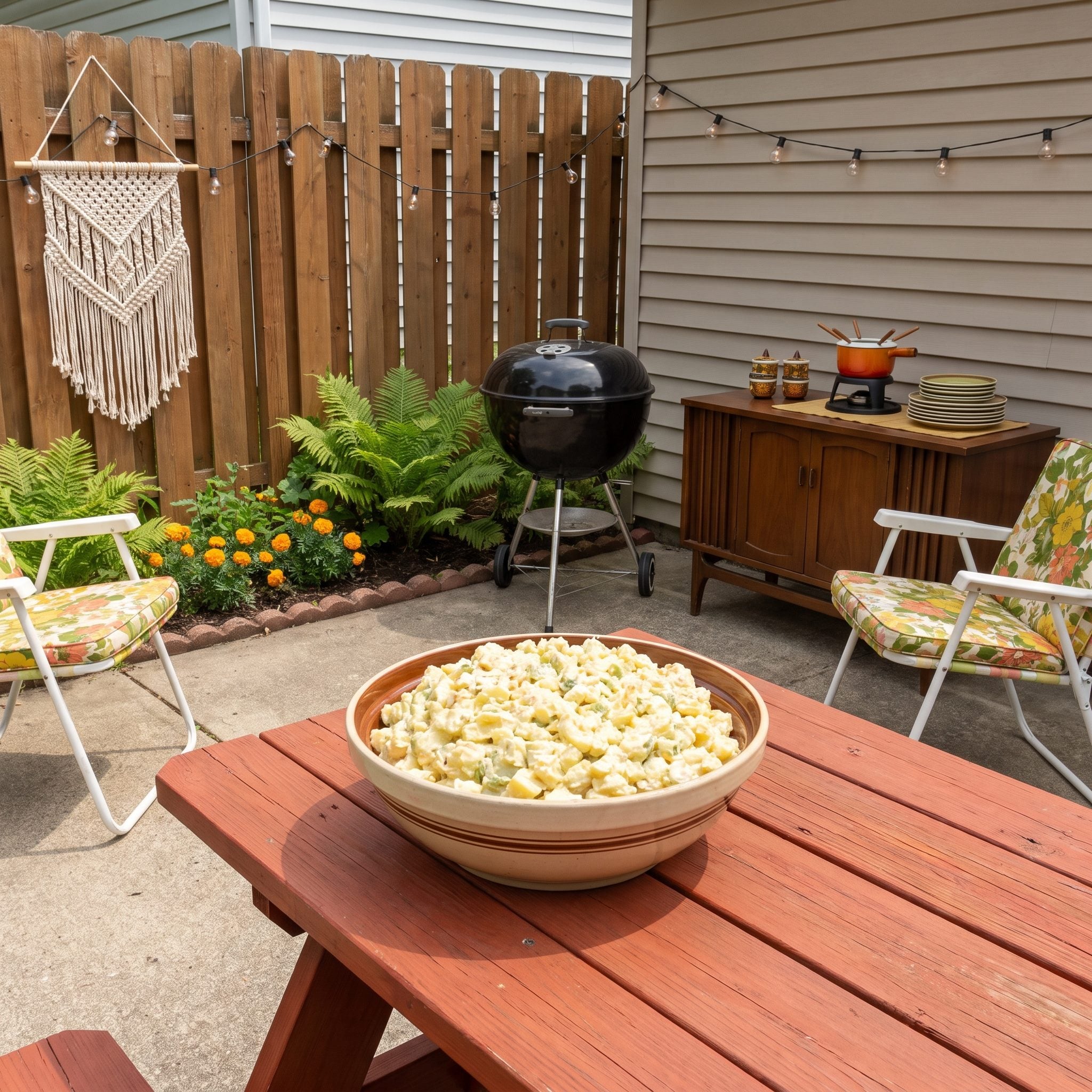
Potato salad supplied scale. It rarely arrived in a delicate dish. A substantial bowl of potatoes folded with mayonnaise or another dressing, mustard, celery, onion, egg, or some combination of them could feed a backyard without demanding another trip to the grill.
Paprika across the top provided both color and a mild peppery note, while the chilled, creamy texture offered a cool counterpoint to smoky meat. The important update is food safety: potato salad and other perishable dishes should remain chilled rather than sitting for hours in summer heat.
Food-Safety Note: Cold salads containing eggs, mayonnaise, dairy, or other perishable ingredients should be kept properly chilled and returned to refrigeration promptly rather than left on a warm outdoor table for an extended period.
23. Paper Plates Bending Under Far Too Much Food
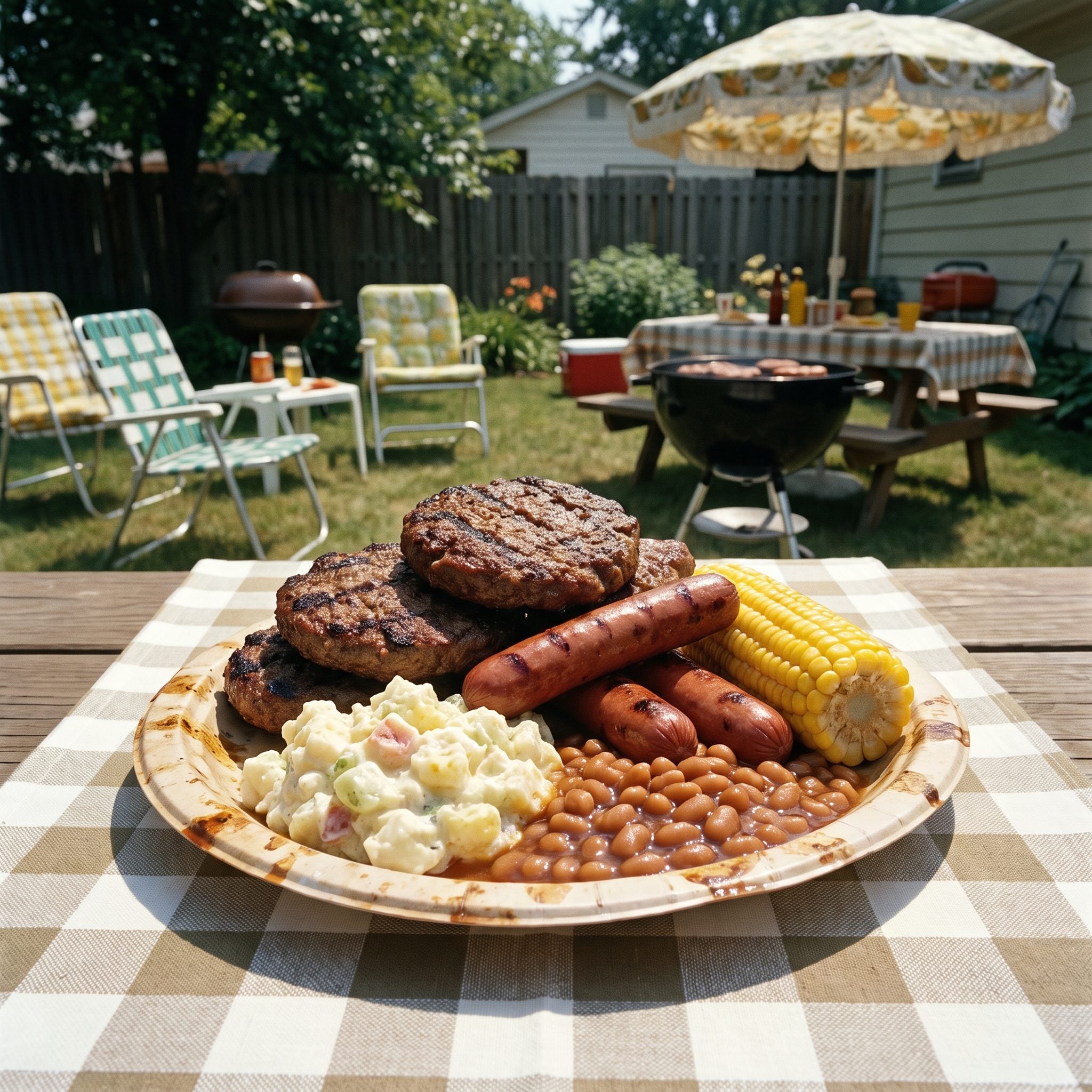
The paper plate solved one problem — washing dishes — by introducing another: structural engineering. A burger, potato salad, beans, coleslaw, and watermelon could turn a thin plate into a flexible tray with very little warning.
Supporting the underside with a second hand was often the difference between dinner and lawn food. Doubling two plates also provided more stiffness when the menu involved heavy or wet side dishes. Elegant it was not. Effective enough, absolutely.
22. Baked Beans Bubbling in an Amber Casserole Dish
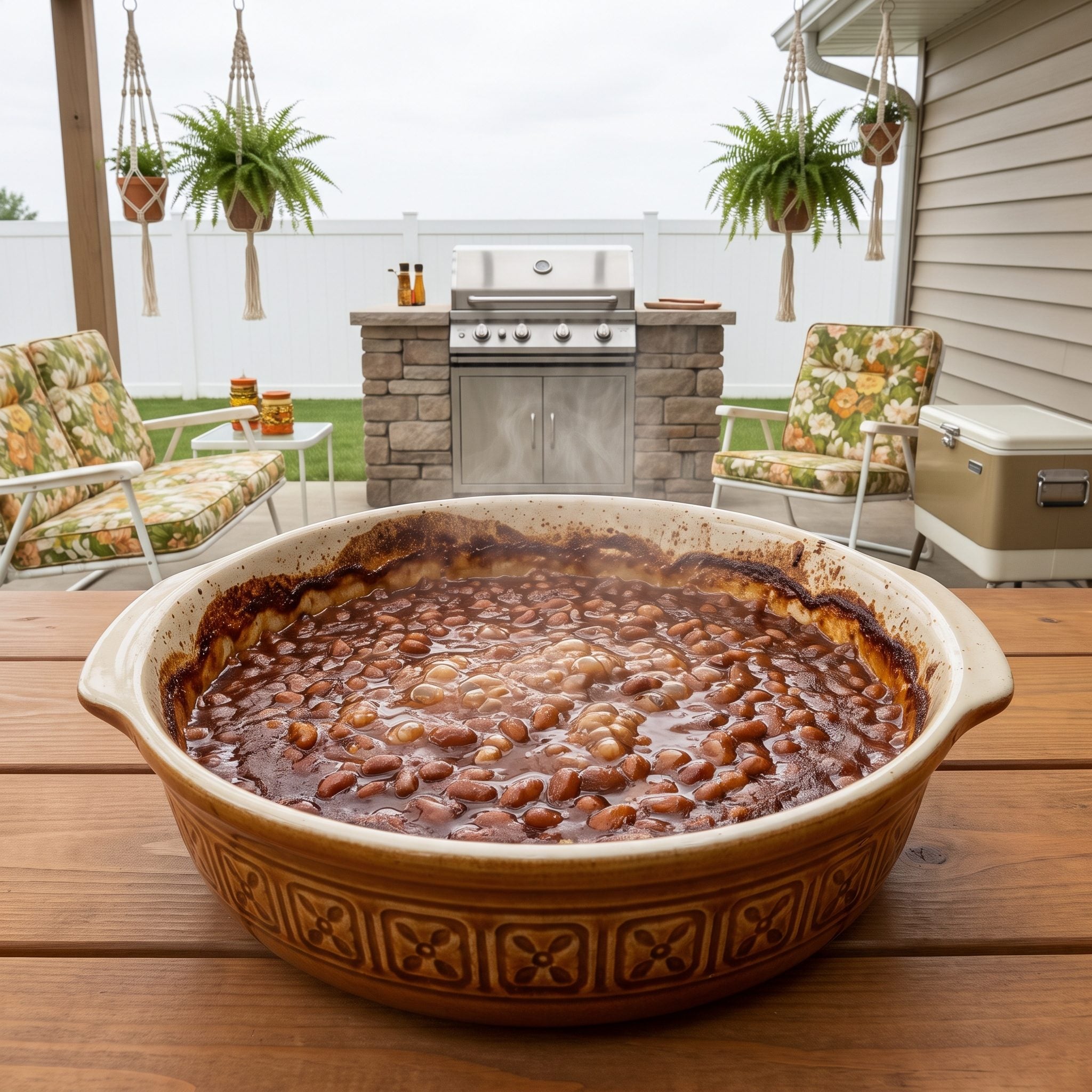
Baked beans were almost engineered for a cookout plate: sweet, savory, inexpensive, easy to make in quantity, and completely unconcerned about touching the coleslaw.
Canned beans could be dressed up with brown sugar, mustard, onion, bacon, or barbecue sauce and baked until the edges thickened. Amber and orange casserole dishes were especially at home on a 1970s table, where warm glass and stoneware colors already dominated kitchens and serving pieces.
21. Plastic Cups in Amber, Avocado, and Smoke
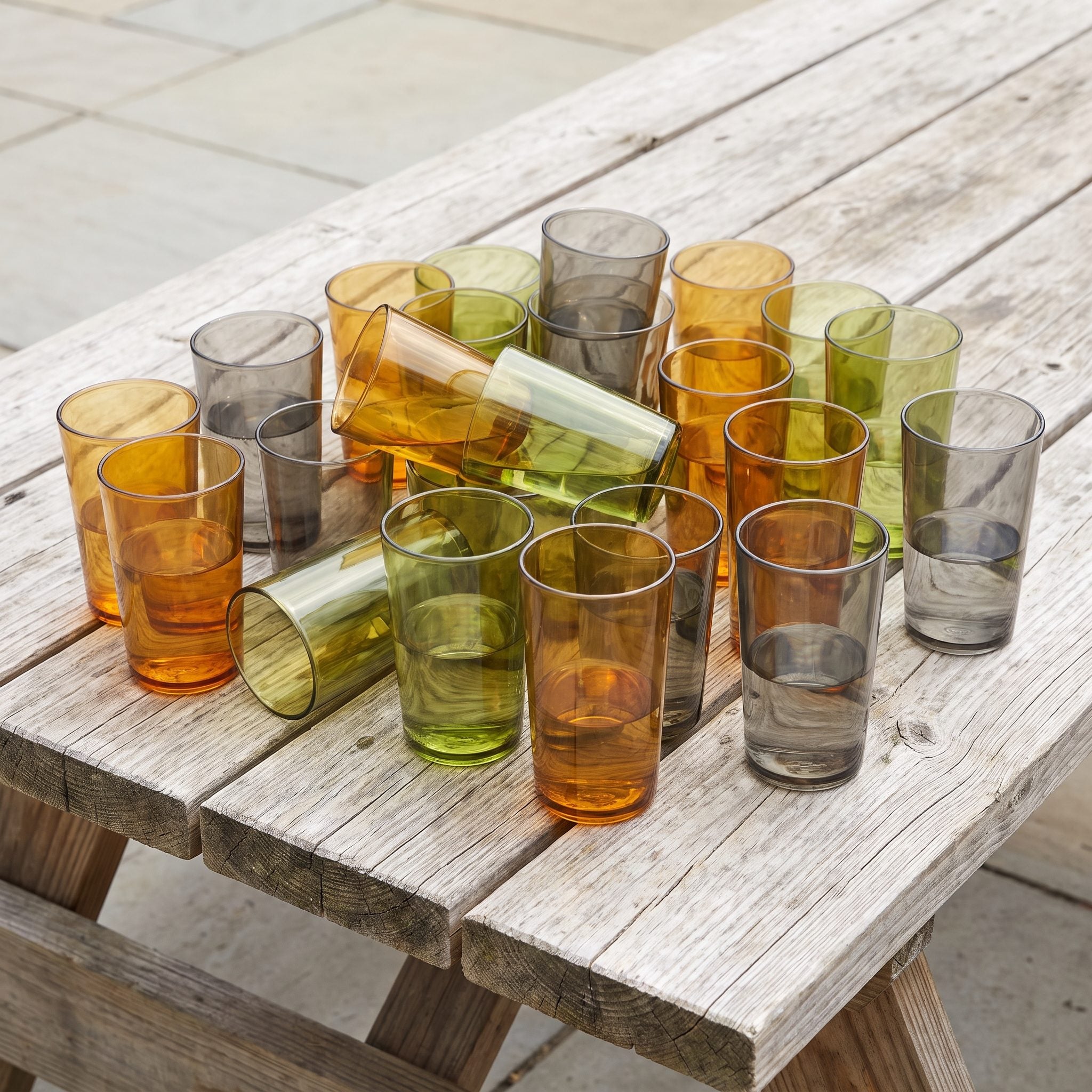
Reusable plastic tumblers fit the period palette beautifully. Amber, olive, avocado, harvest gold, and smoky brown could make even ice water look coordinated with the kitchen.
The disadvantage appeared once several identical cups reached the same table. Half-full tumblers multiplied quickly when nobody could confidently identify the one already in use. Long before insulated bottles arrived in individualized colors, cup ownership depended heavily on memory.
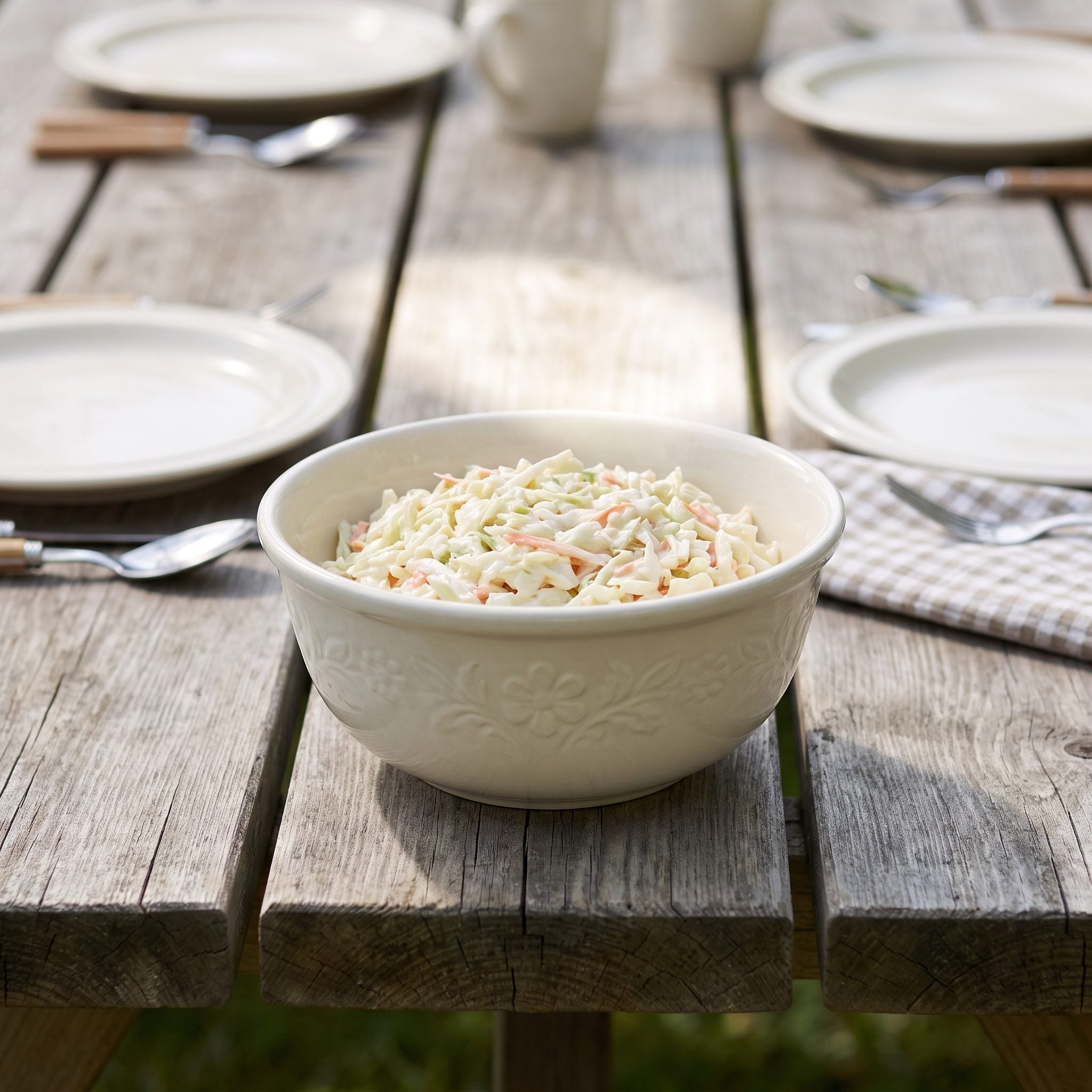
20. The Bowl of Coleslaw That Belonged Beside the Grill
🔥 Would you like to save this?
Coleslaw supplied something the grill could not: cold crunch. Shredded cabbage and carrot, often dressed with a creamy, faintly sweet mixture, cut through fatty burgers, sticky chicken, and baked beans without asking for any more cooking space.
Its supporting role was exactly the point. A forkful beside a smoky piece of meat changed the texture of the entire plate, which explains why cabbage slaw remained such an enduring barbecue companion.
19. Deviled Eggs Arranged Like Company Was Coming
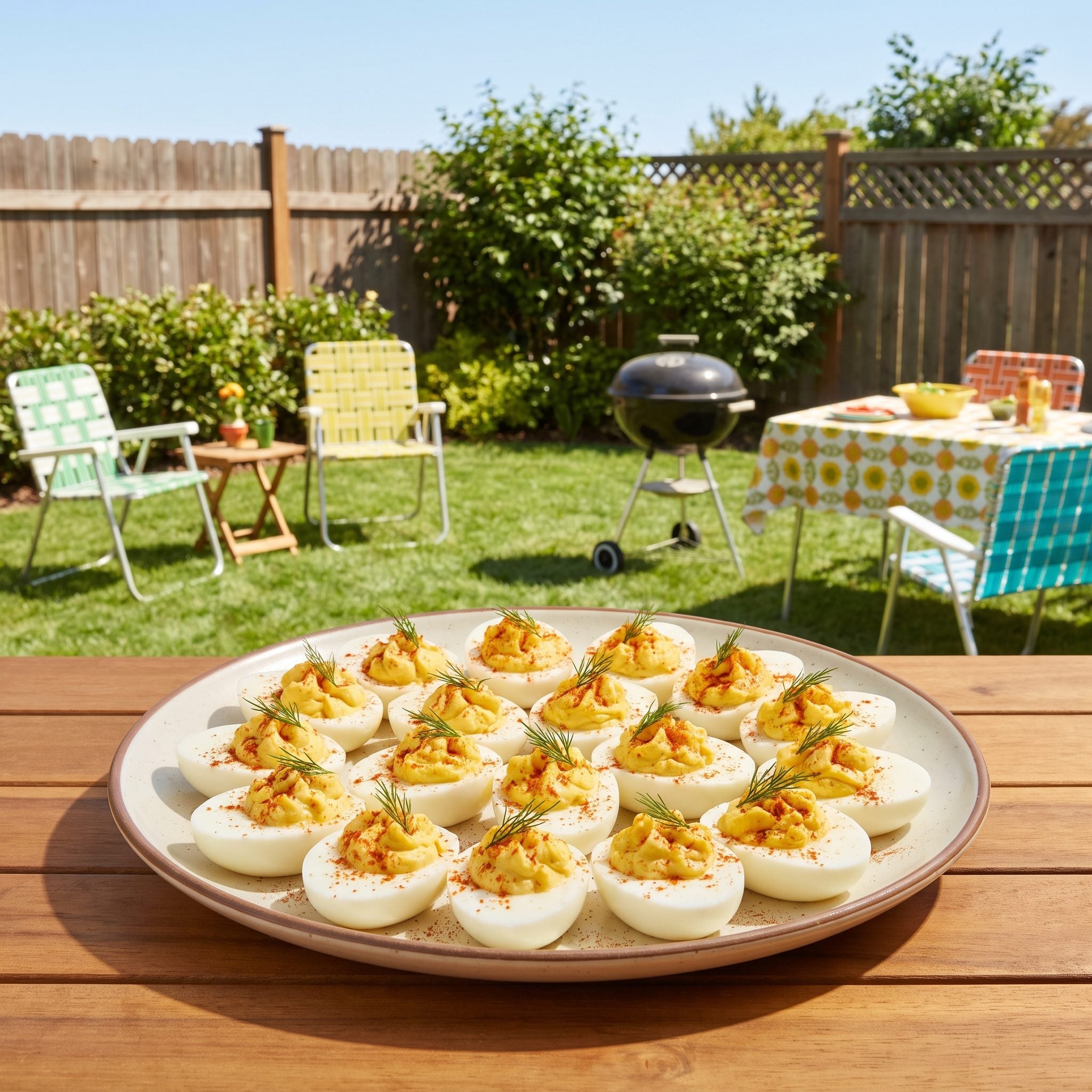
Deviled eggs could make a backyard table look unexpectedly formal. Halved whites, piped or spooned yolk filling, and a dusting of paprika suddenly justified the existence of those molded serving plates with one indentation for every egg.
Stuffed and seasoned eggs have a history reaching back far beyond the 20th century, while the modern American deviled egg became a familiar party and picnic food much later. By the mid-century decades, dedicated egg plates fit perfectly into a culture that had serving dishes for remarkably specific jobs.
History Corner: The idea of filling cooked eggs is centuries old. The word “deviled” came later, referring to assertively seasoned foods. Mid-century entertaining culture gave the dish another flourish with specialized platters designed to keep each half neatly in place.
18. The Giant Beverage Cooler Full of Something Ice-Cold
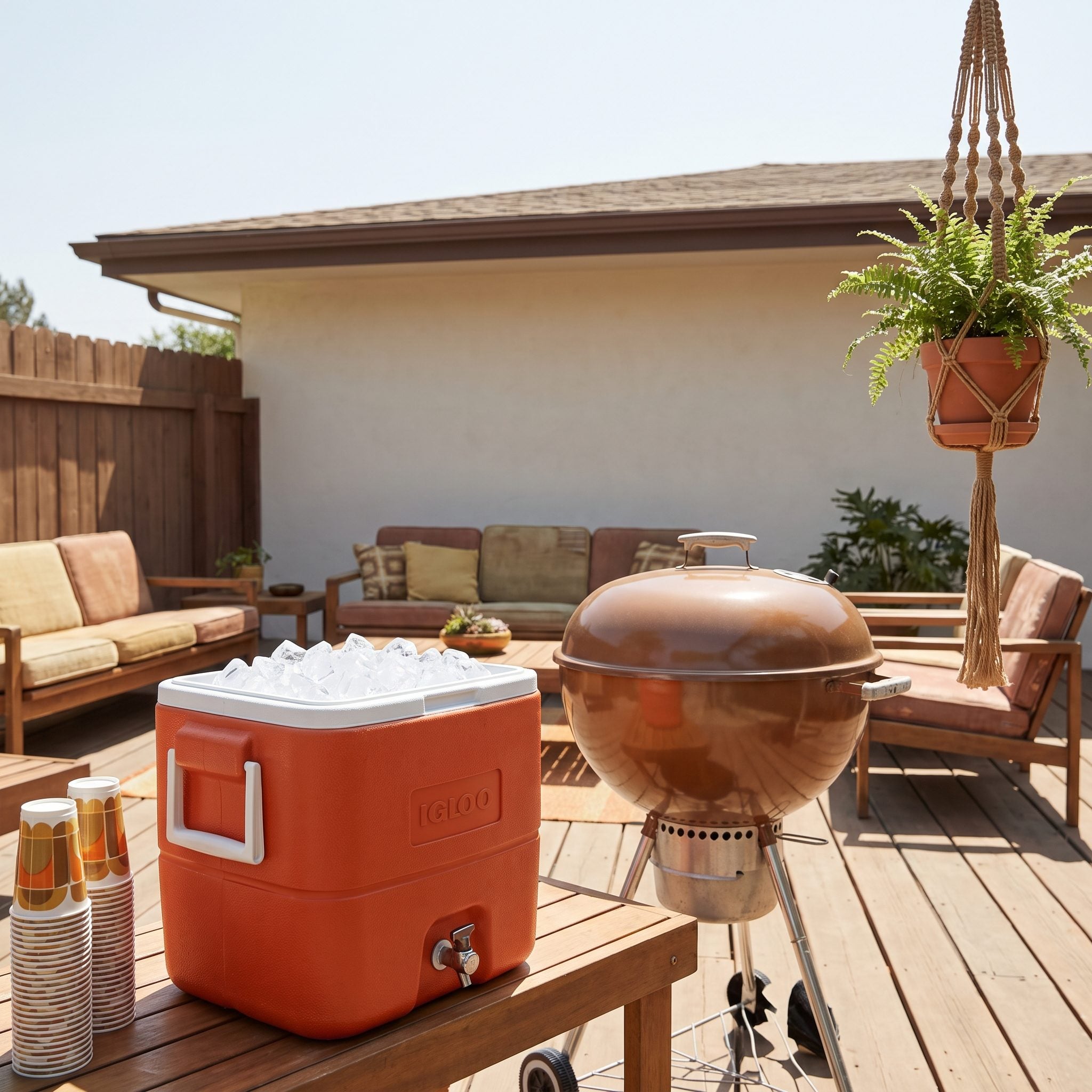
The insulated beverage jug was essentially a communal drink machine without electricity. Orange bodies, white lids, molded handles, and push-button spigots turned powdered fruit drinks, lemonade, or ice water into self-service refreshment.
Ice knocking against the interior announced how full the jug remained. The inevitable drip beneath the spigot announced how often it had been used. Large capacity mattered more than finesse when a backyard could empty a pitcher in minutes.
17. The Gelatin Salad That Looked Perfectly Normal in 1974
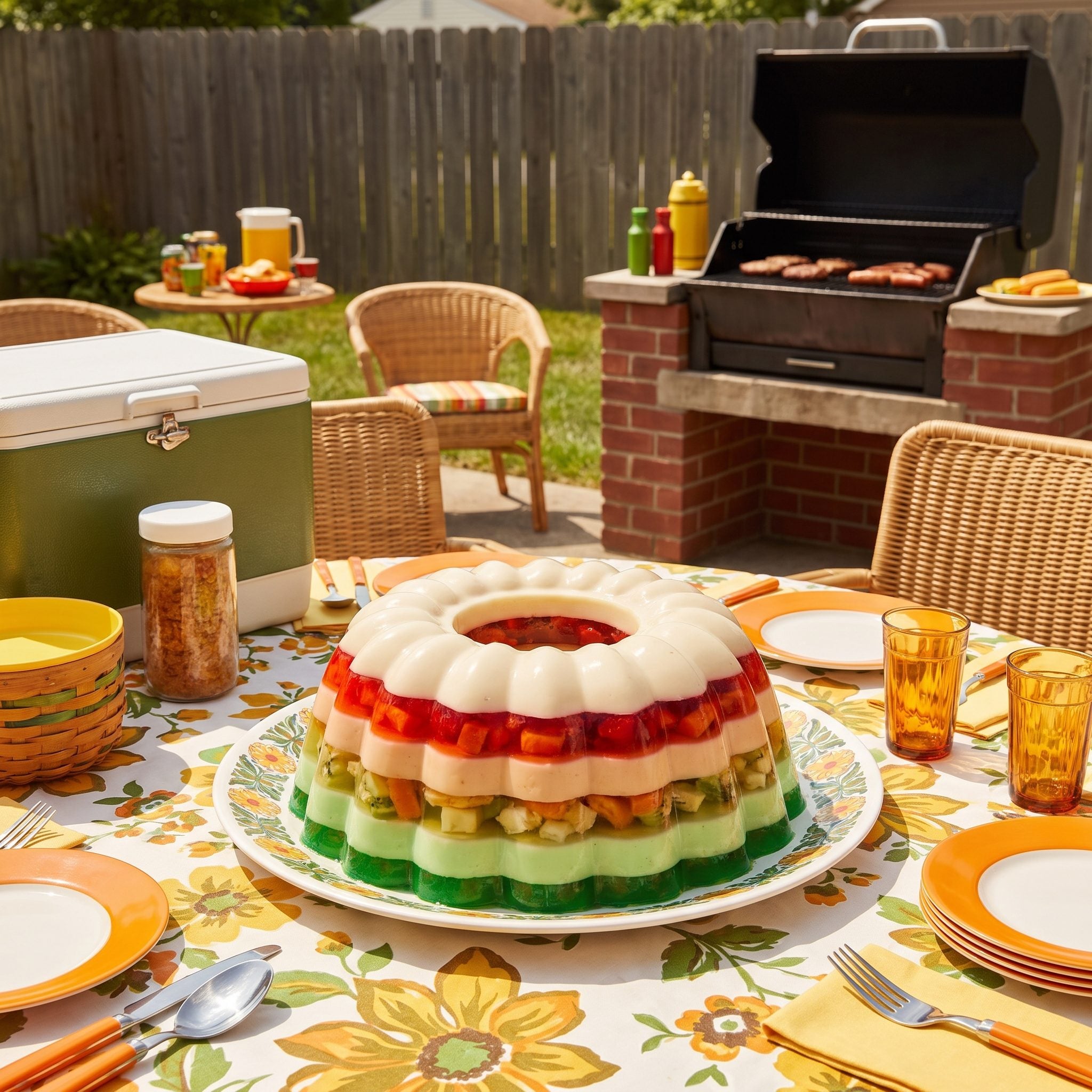
Gelatin had already spent decades proving that almost anything could be suspended inside it. Fruit cocktail was straightforward. Shredded vegetables pushed the definition of salad. Cream cheese, marshmallows, nuts, cottage cheese, or mayonnaise could take the composition somewhere considerably more ambitious.
By the 1970s, molded gelatin salads still belonged comfortably within American party-food culture even as tastes were beginning to change. The clean release from a ring mold was part of the performance: glossy, geometric, and completely unlike anything else on the table.
16. The Metal Cooler Packed With Ice and Cans
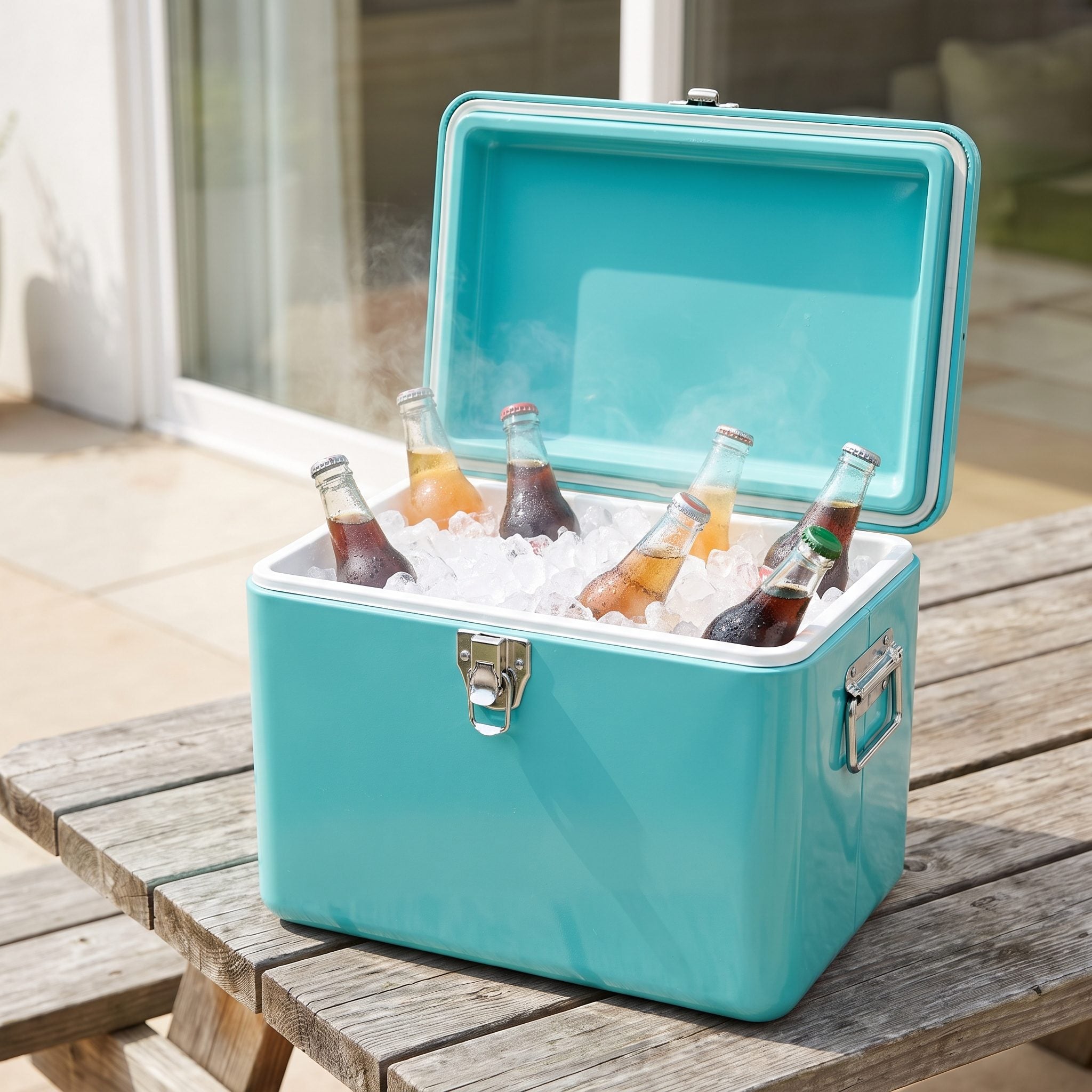
The beverage jug handled the communal drink. The hard cooler handled everything else. Steel or molded-plastic boxes packed with ice kept cans and bottles cold while doubling as surprisingly sturdy backyard furniture whenever seating became scarce.
A metal latch, substantial handle, and drain plug gave older steel coolers the feel of equipment rather than accessories. Finding a drink often meant reaching past the ice on top and fishing through freezing water underneath.
Did You Know: Coleman’s steel cooler line dates to 1954. The durable metal construction and recognizable shape helped make steel-belted coolers enduring pieces of postwar camping and backyard equipment.
15. Watermelon Slices Taking Over an Entire Tray
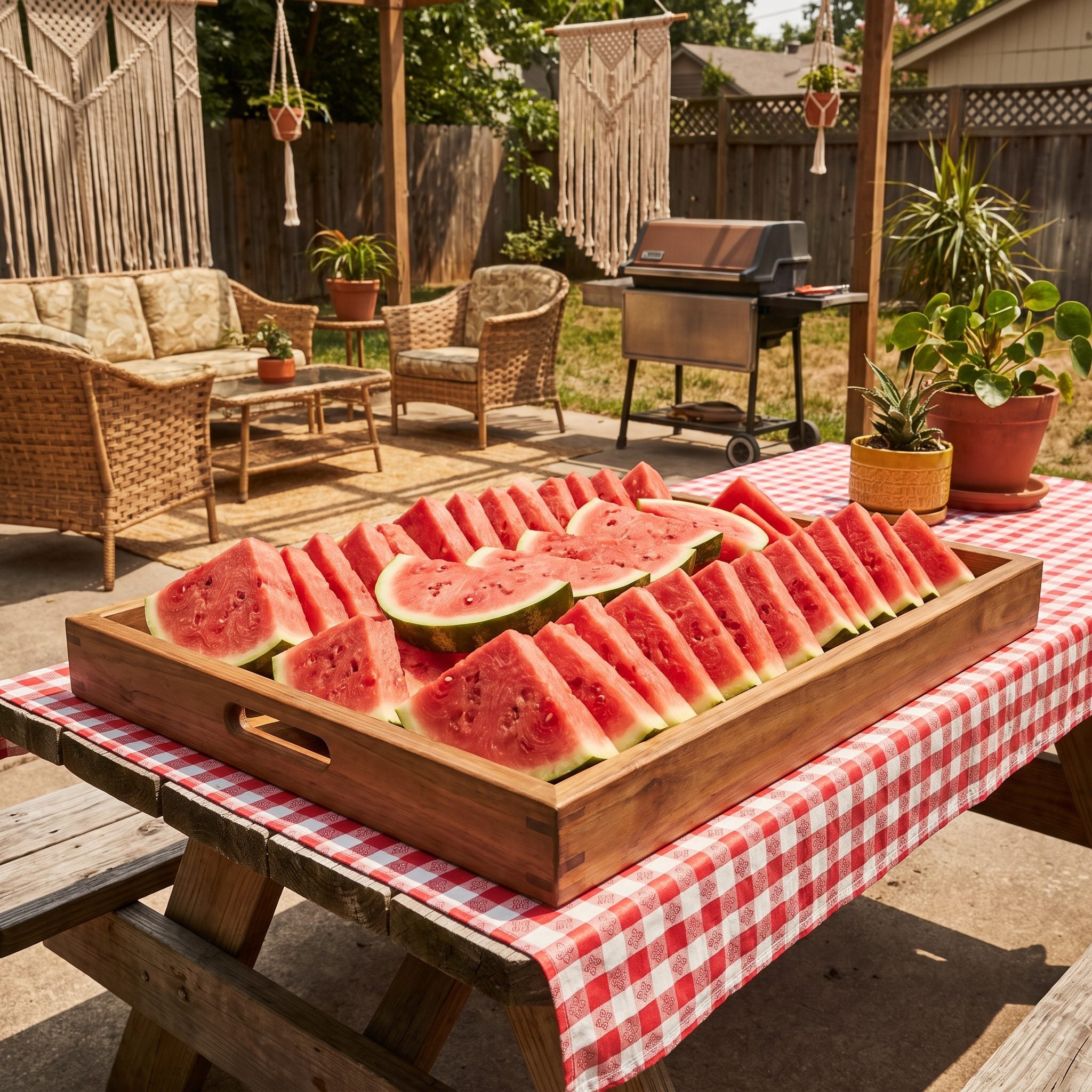
Watermelon required almost no preparation beyond a large knife and enough table space. Thick triangular slices arrived stacked high, their red centers and green rinds providing more color than most of the cooked food combined.
Salt beside the tray was not as strange as it might seem. A small amount can heighten the perception of sweetness and mute bitterness, which helps explain the long-running habit of sprinkling salt over watermelon.
Try This: A very light pinch of salt can sharpen the contrast between watermelon’s sweetness and its fresher, greener notes. The key word is light.
14. The Big Bowl of Potato Chips Beside the Sour-Cream Dip
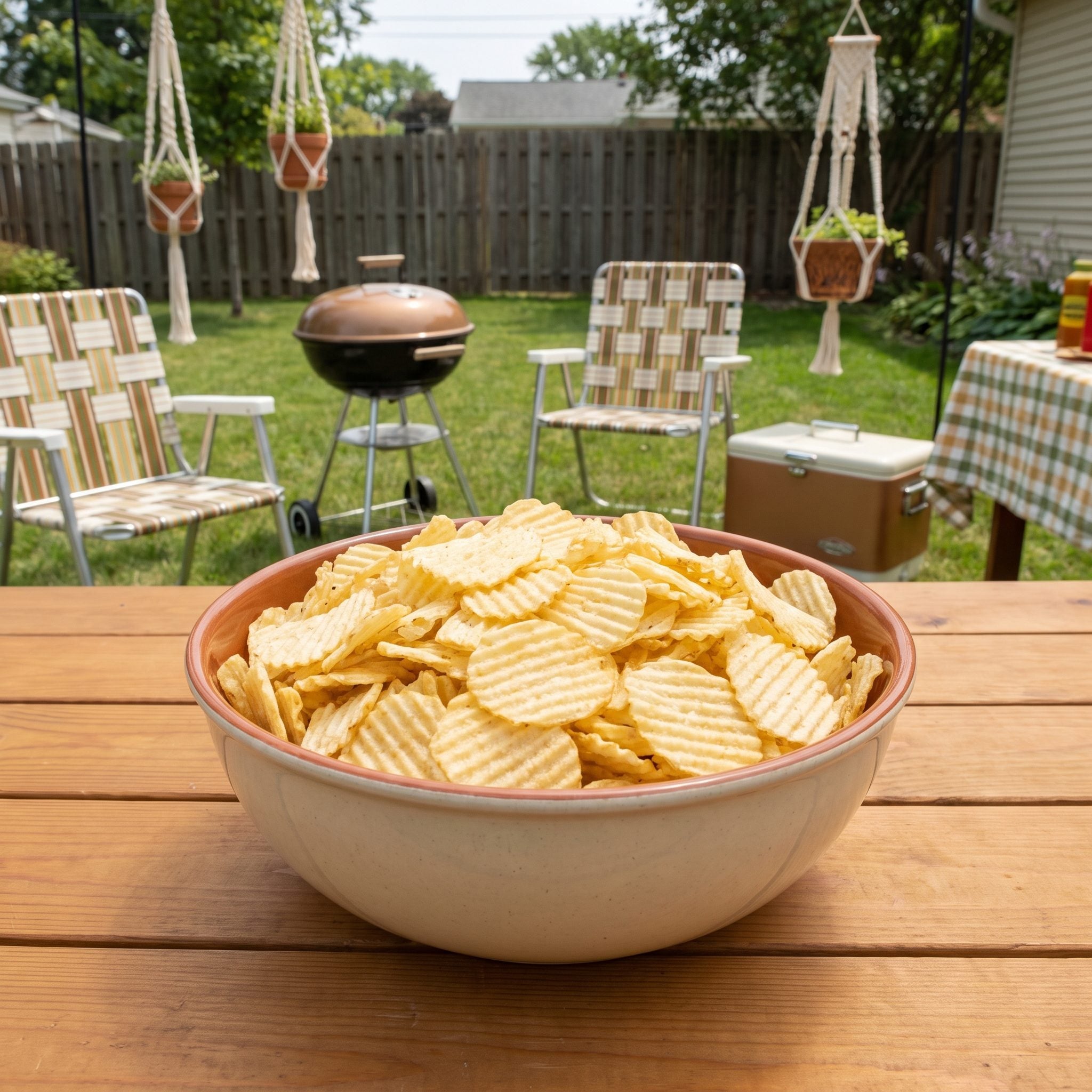
A large bowl of ridged potato chips required no serving utensils, no warming tray, and no explanation. Beside it, sour cream mixed with dried soup or onion seasoning supplied the sort of dip that could vanish before the charcoal finished settling down.
The pairing was unapologetically communal: one bowl, one dip, plenty of crumbs, and increasingly small chip fragments toward the bottom. Elaborate plating had nothing to contribute here.
13. Aluminum Webbed Lawn Chairs Pulled Into a Loose Circle
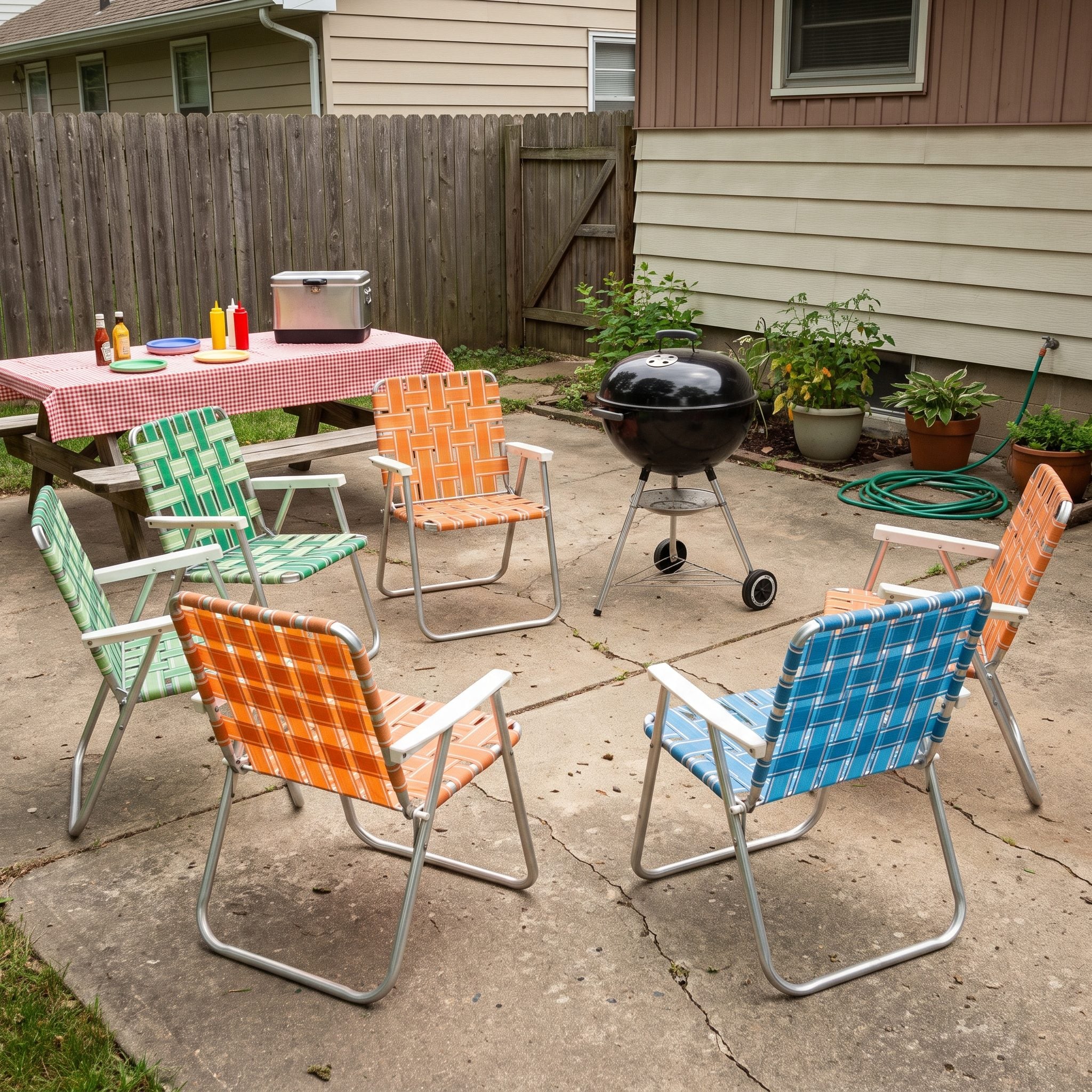
Lightweight aluminum frames and woven vinyl straps made these chairs almost absurdly portable. They folded flat, leaned easily against a garage wall, and could be redistributed around a yard whenever the conversation moved.
Green-and-white webbing, orange stripes, yellow, turquoise, and other period colors turned a mismatched group into its own accidental palette. The postwar expansion of aluminum manufacturing helped make lightweight metal furniture affordable and common, while replaceable webbing extended the useful life of many frames.
The same casual mix still appears in vintage backyard design and in the low-key outdoor seating around a good country back porch.
12. The Transistor Radio Fighting the Lawn Mower for Volume
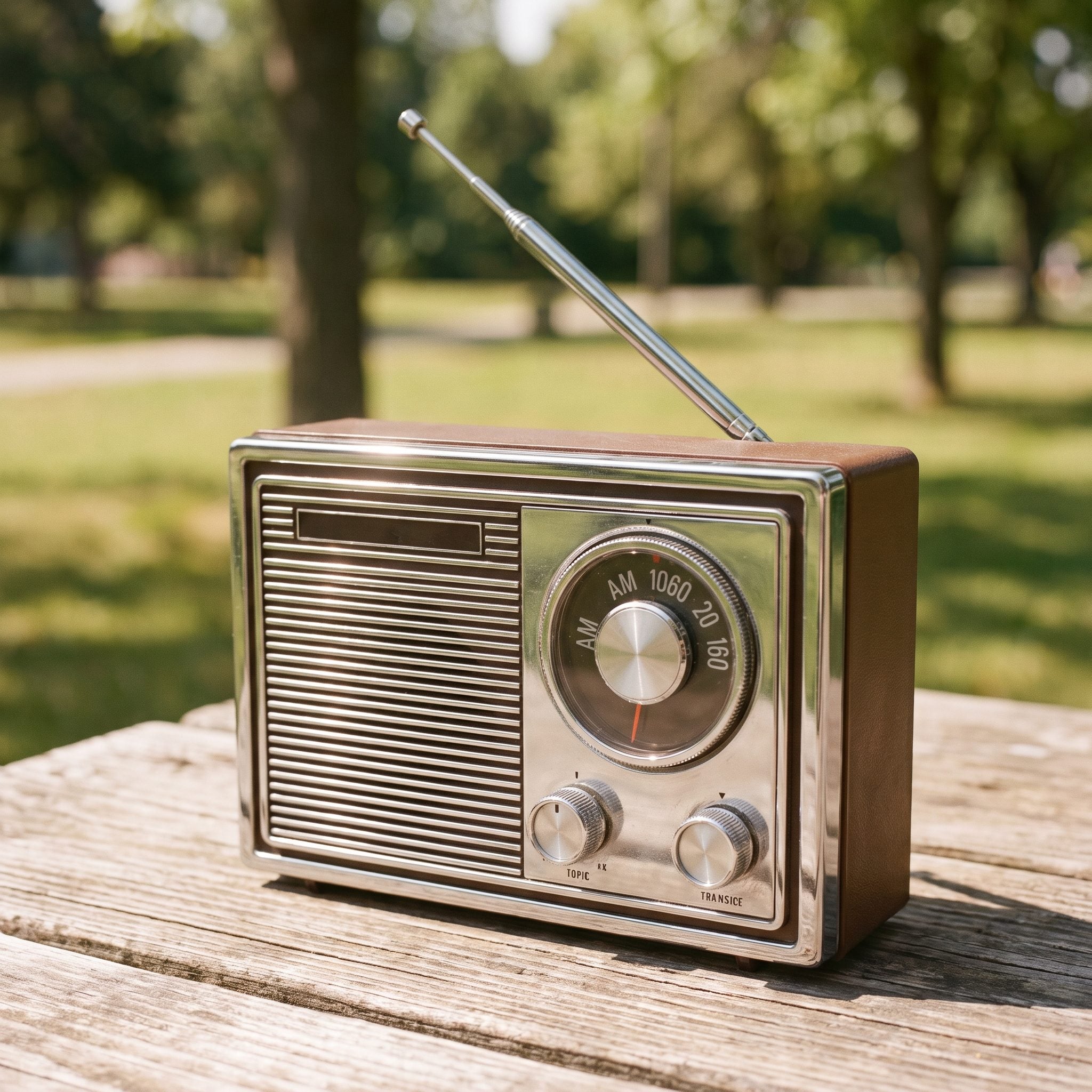
A small transistor radio could put music, baseball, news, or talk into the yard with one speaker and an antenna that seemed to have strong opinions about orientation.
The sound was rarely luxurious. AM reception could crackle, nearby lawn equipment could overwhelm it, and the signal might improve dramatically when the antenna moved six inches. None of that mattered much. Portability was the breakthrough. The soundtrack no longer had to stay inside with the stereo cabinet.
11. Kids Eating on the Grass When the Chairs Ran Out
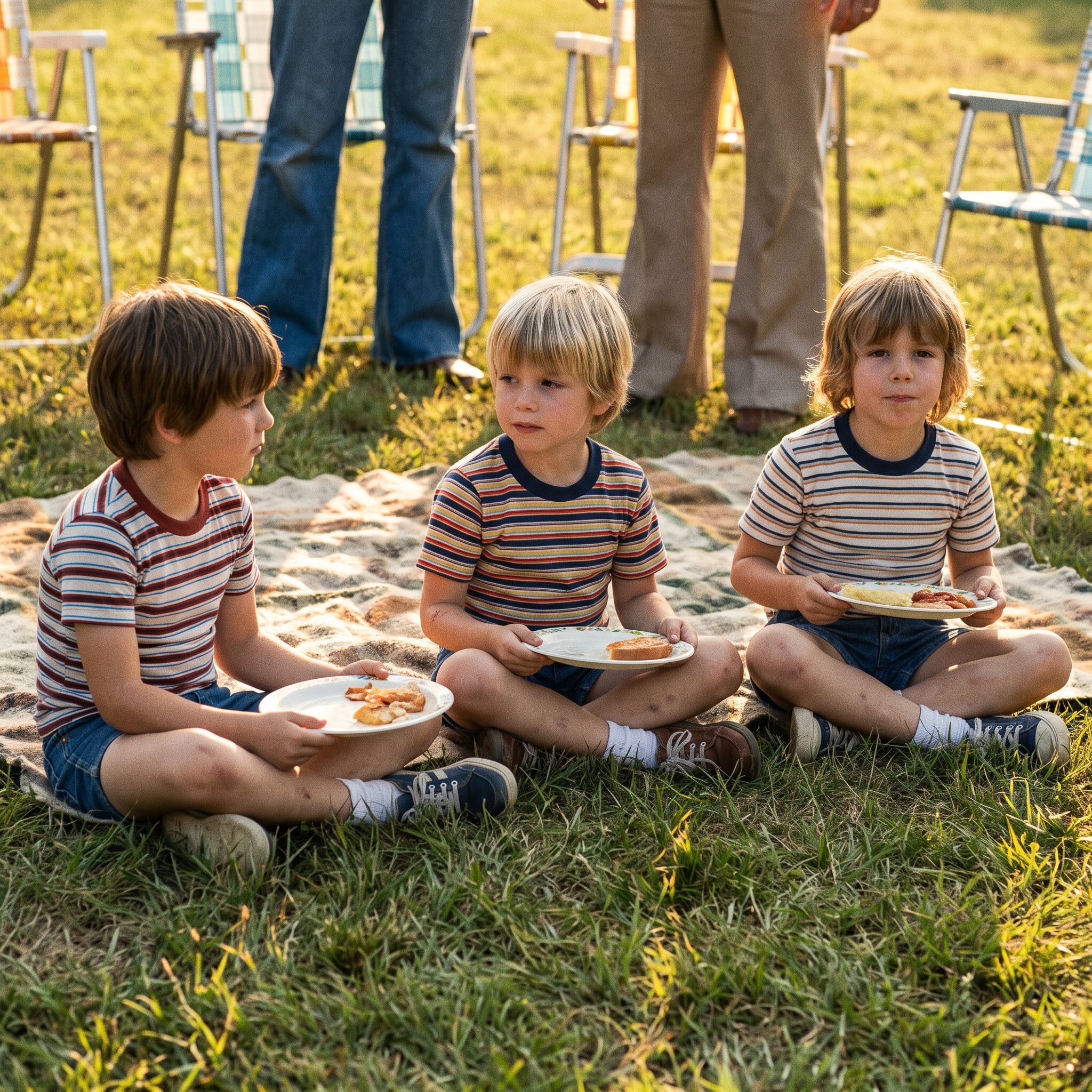
Limited backyard seating produced its own hierarchy without requiring assigned places. Folding chairs and picnic benches filled first; grass, blankets, steps, and the edge of the deck absorbed the overflow.
For children, the lawn was hardly a punishment. Plates balanced on knees, shoes came off, and the distance between dinner and the next game collapsed to zero. A formal children’s table would almost have been overdesign.
10. The Plastic Kiddie Pool Turning Into Grass-Clipping Soup
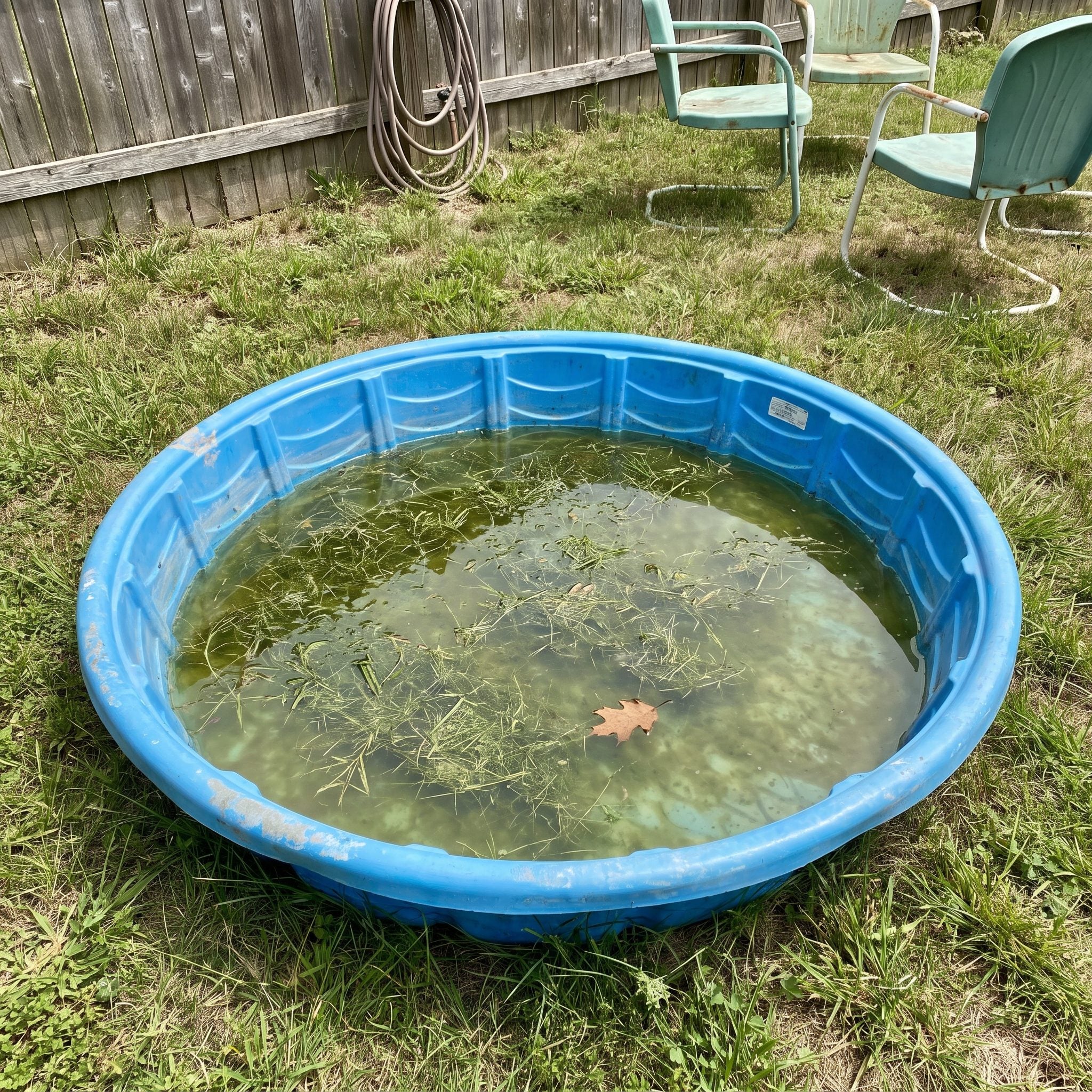
A shallow molded-plastic pool could begin the afternoon clear and acquire an ecosystem by dinner. Wet feet carried in grass, leaves floated down, and repeated trips between lawn and water gradually changed the color.
Those pools were small, inexpensive, and wonderfully uncomplicated. They were also standing water, which means they should be emptied and refreshed rather than left outside indefinitely. Nostalgia has its limits; mosquitoes do not need period authenticity.
9. Badminton Cutting the Yard in Half
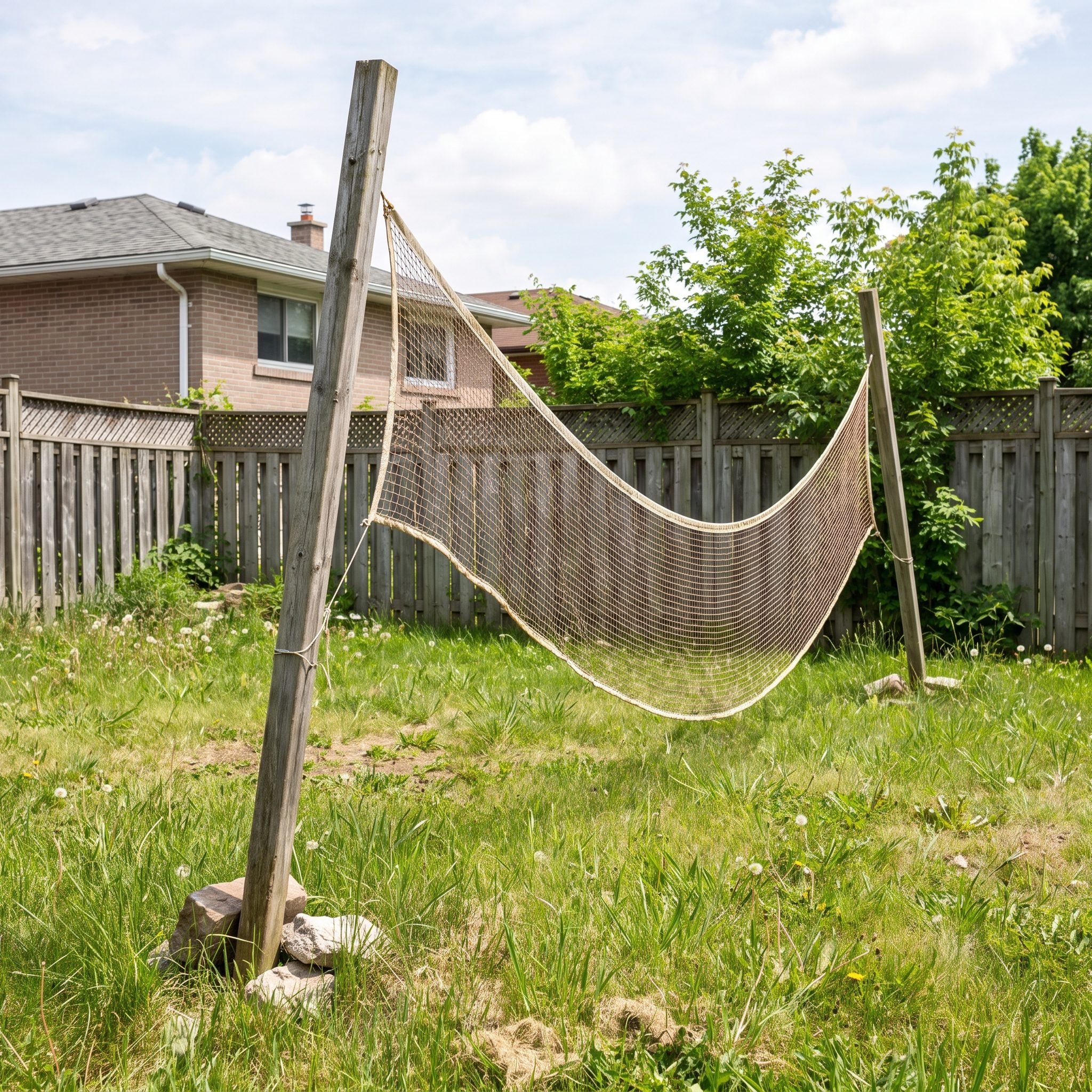
The portable badminton set was outdoor planning by obstruction. Two poles, one long net, a few stakes, and suddenly the most direct route from the chairs to the food required negotiation.
Perfect court dimensions mattered far less than keeping a shuttlecock in the air. Backyard badminton could accommodate children, adults, improvised boundaries, uneven grass, and scoring systems that changed whenever necessary. The crooked net was not a defect so much as part of the genre.
8. Horseshoes Turning the Side Yard Competitive
🔥 Would you like to save this?
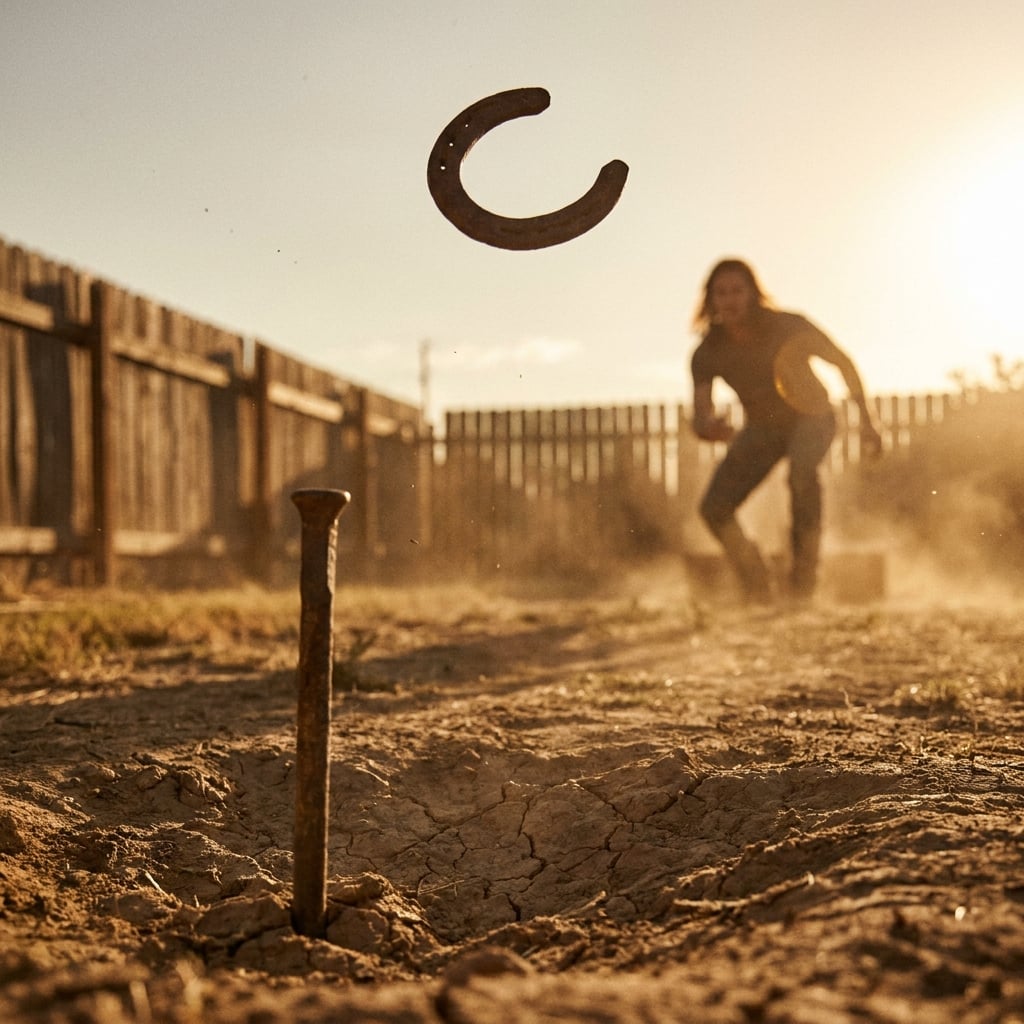
Horseshoes required almost nothing visually: two stakes, open ground, and heavy metal shoes. That simplicity gave the game an oddly serious soundscape. A clean ringer announced itself with a metallic clang impossible to ignore.
The pace suited a barbecue. Turns were brief, conversation could continue between throws, and a casual game could become competitive without requiring anyone to change clothes or stop holding a drink.
A small patch of dirt and one metal stake could generate considerably more attention than the equipment suggested.
7. A Frisbee Flying Much Too Close to the Food Table
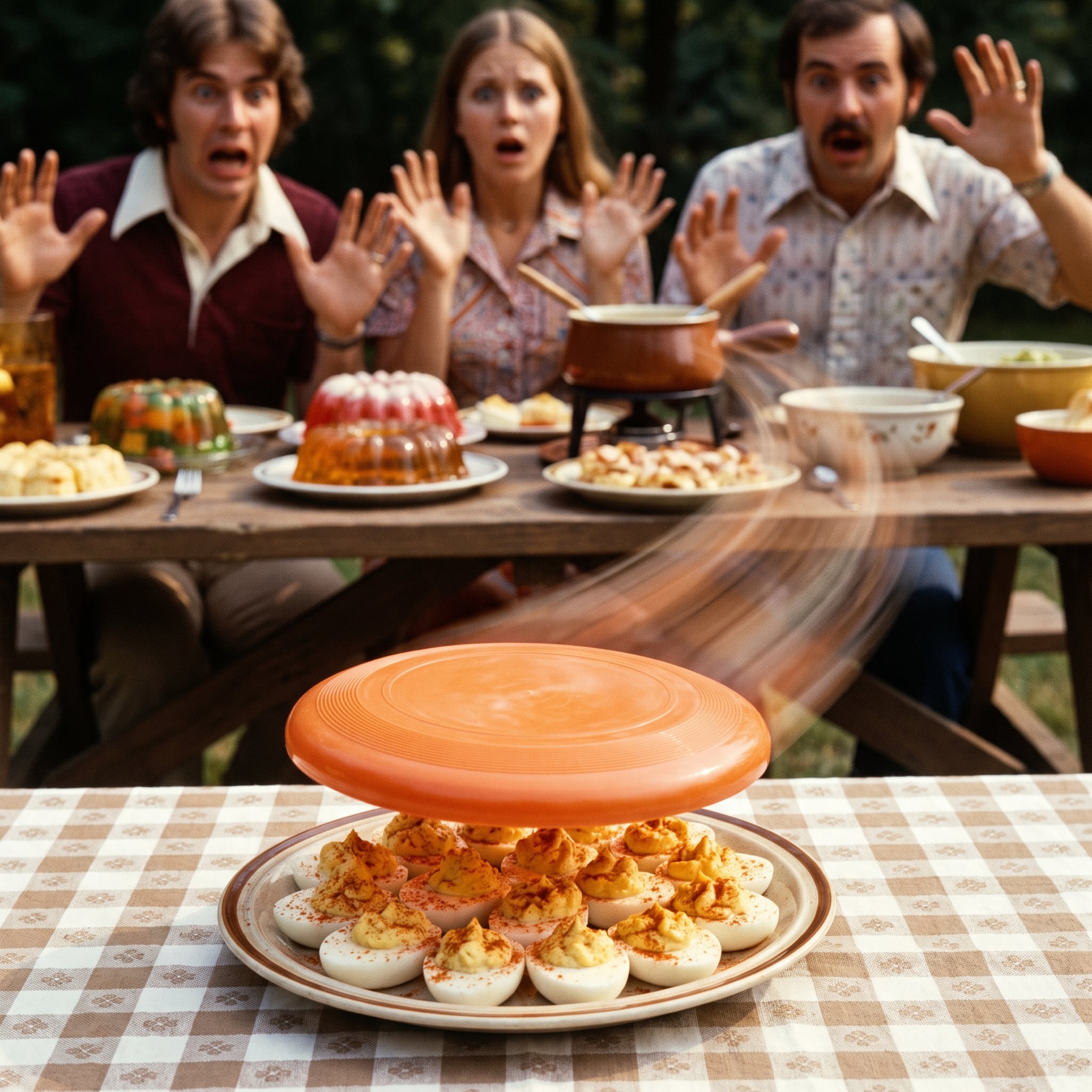
The flying disc needed more horizontal territory than most suburban yards comfortably offered. A long throw could cross the lawn, skim past lawn chairs, threaten the food table, and continue into whatever property happened to be next.
That was part of the appeal: almost no setup, no teams required, and no fixed playing area. The same openness that made the game easy also made every pitcher, plate, and open gate part of the obstacle course.
Did You Know: Wham-O began marketing the Frisbee in 1957. The name echoed the Frisbie Pie Company, whose pie tins had already been tossed recreationally, helping turn the flying disc into one of the most recognizable leisure objects of the postwar era.
6. The Folding Chaise Lounge That Became Premium Seating
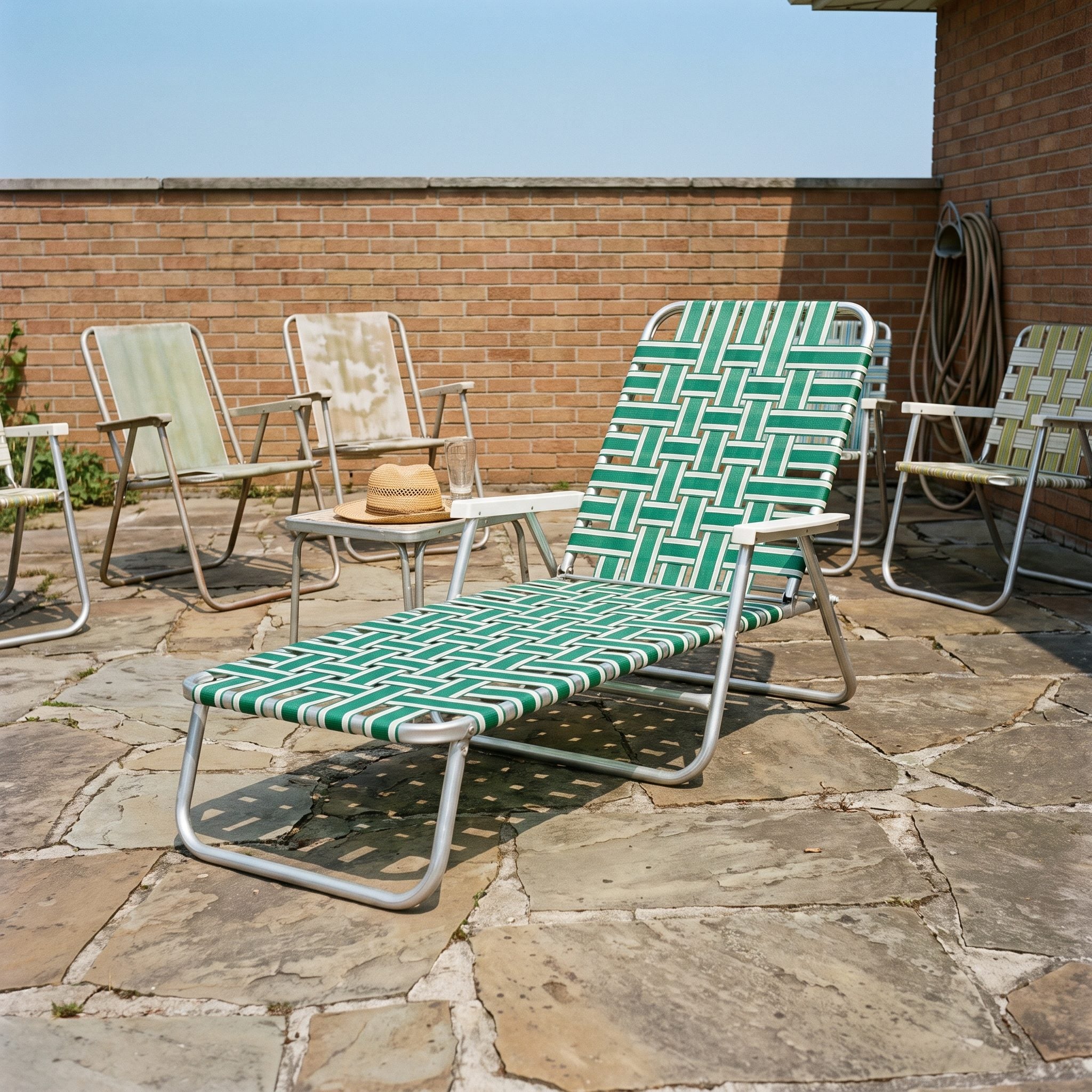
If the ordinary webbed chair was democratic, the folding chaise was first class. The adjustable back, extended leg support, and generous footprint made one chaise occupy the lawn space of several upright chairs.
The same lightweight aluminum tubing and woven synthetic straps kept it portable despite the extra length. Postwar aluminum production helped push lightweight metal furniture into the mass market, and lawn chaises became one particularly relaxed expression of that technology.
History Corner: Lightweight aluminum furniture expanded rapidly after World War II as manufacturers brought industrial metal-forming techniques into consumer products. Webbed lawn chairs and chaises became affordable, portable fixtures of suburban outdoor life.
5. The Garden Hose and Sprinkler Becoming the Main Attraction
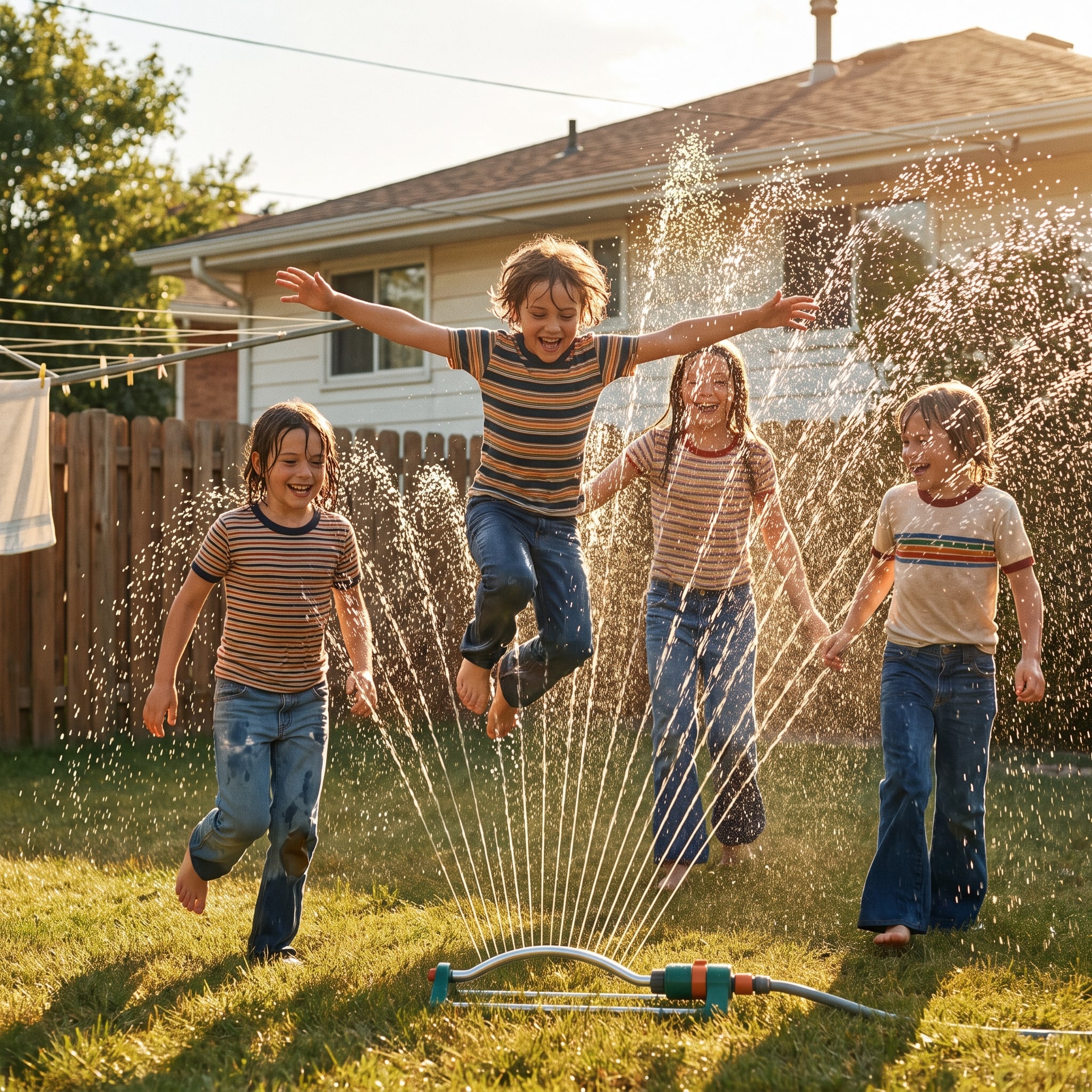
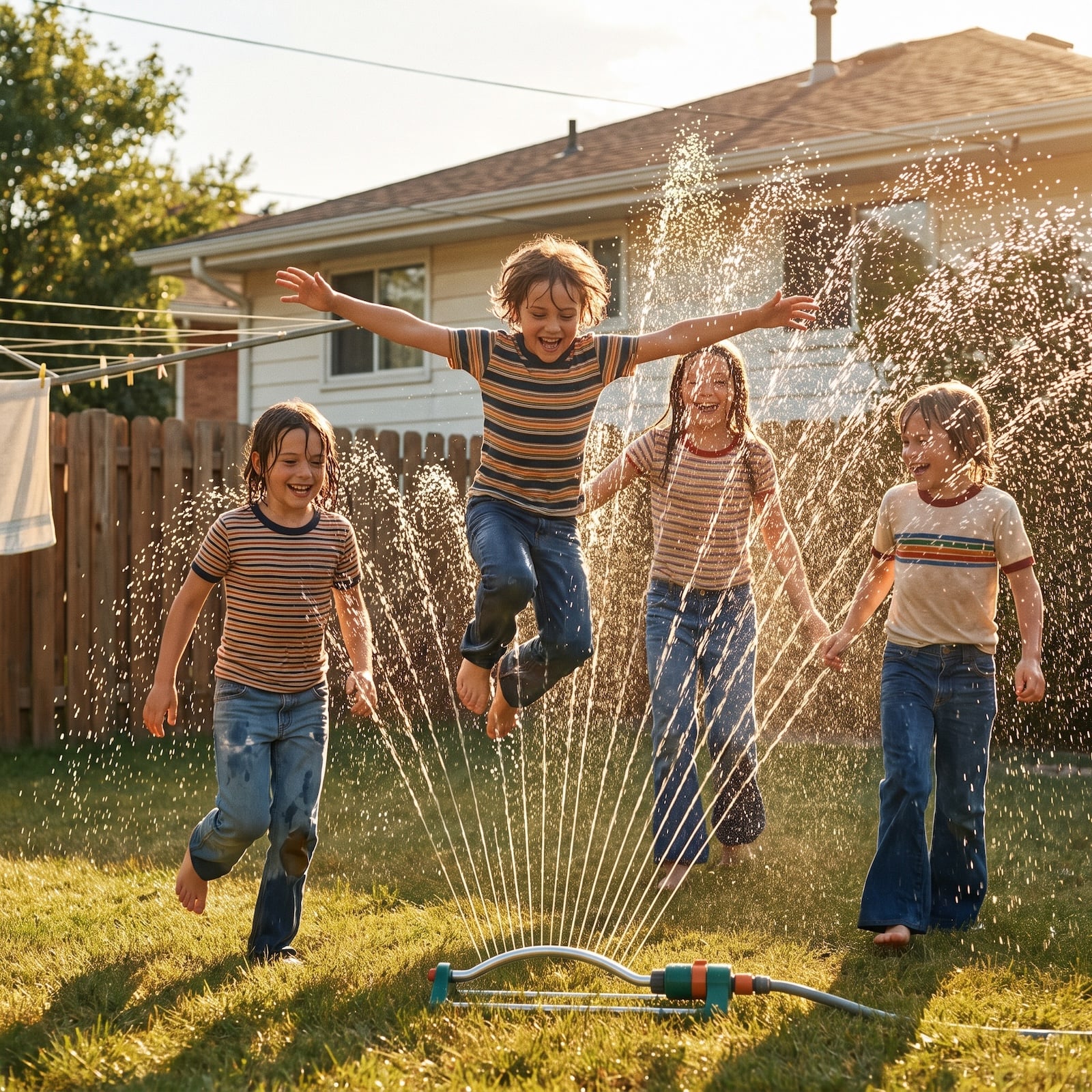
The sprinkler had one official job and a far more entertaining secondary career. An oscillating model turned lawn irrigation into a moving wall of water, with the slow sweep creating just enough predictability to invite jumping, dodging, and badly timed runs.
By the postwar suburban lawn boom, oscillating sprinklers had become familiar household equipment, and their appeal to children required no modification at all. A garden hose, summer heat, and enough open grass were sufficient.
The setting may look tidier in contemporary preppy backyard ideas, but the basic attraction has not changed much: moving water remains more interesting than most purpose-built lawn toys.
Fun Fact: Oscillating sprinkler designs date back many decades and became especially familiar as suburban lawns expanded after World War II. Their back-and-forth spray pattern happened to be nearly perfect for running through.
4. Citronella Candles Marking the Shift Into Dusk
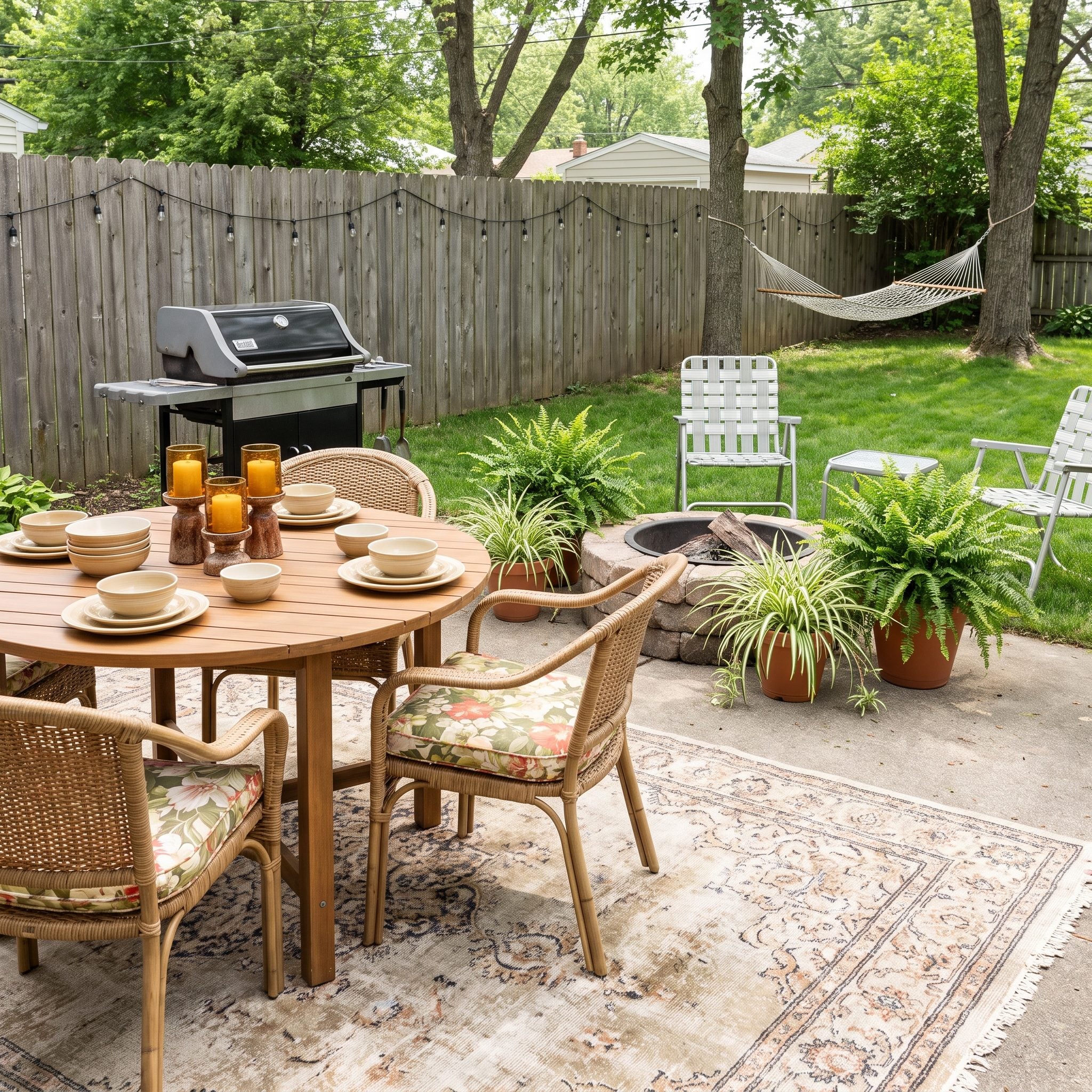
Citronella buckets belonged to the moment when a daytime cookout became an evening gathering. The galvanized container, thick wick, and unmistakable citrus-herbal smell arrived just as mosquitoes became harder to ignore.
Citronella candles can provide some limited protection in the immediate area, but they do not create a mosquito-proof perimeter. Their other contribution was visual: several low flames around a patio made the yard feel different after sunset without requiring bright overhead lighting.
Worth Knowing: Citronella candles may reduce mosquito activity modestly at close range, but effectiveness is limited and can be affected by wind. Screens, clothing, repellents, and eliminating standing water provide more reliable protection.
3. Charcoal Smoke Pulling Neighbors Toward the Fence
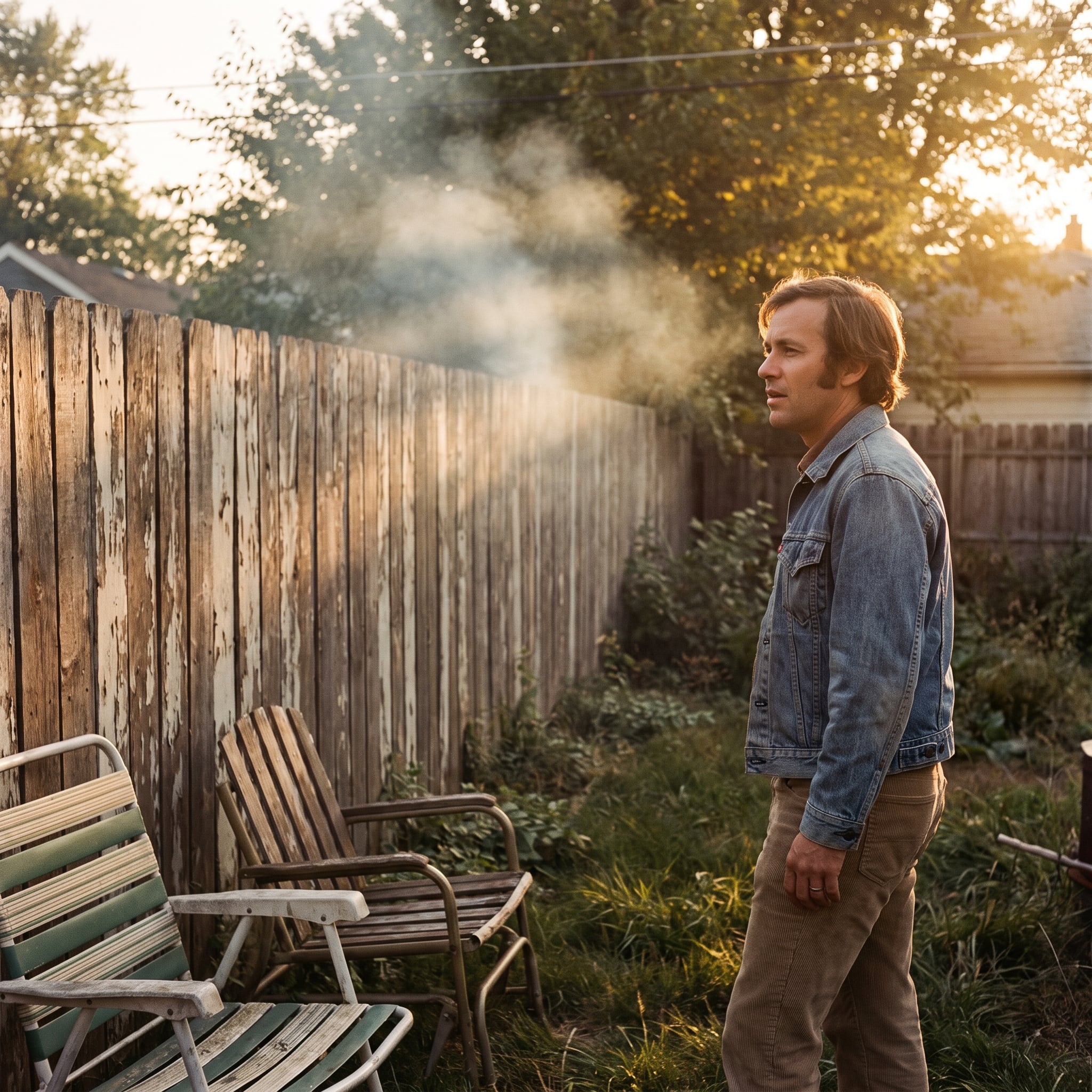
Charcoal smoke does not respect property lines. It drifts, announces itself, and carries the smell of whatever is cooking well beyond the grill that produced it.
That made the backyard barbecue unusually visible as a social event. Open gates, low fences, adjoining yards, and outdoor cooking all reduced the separation between one household’s gathering and the rest of the block. Drop-in neighbor culture did not belong exclusively to the 1970s, but the informal suburban backyard gave it exceptionally good conditions.
Modern back porch ideas may provide far more deliberate entertaining space. The older barbecue needed remarkably little: smoke, spare chairs, and enough food to stretch.
2. Another Bowl of Food Arriving With the Neighbors
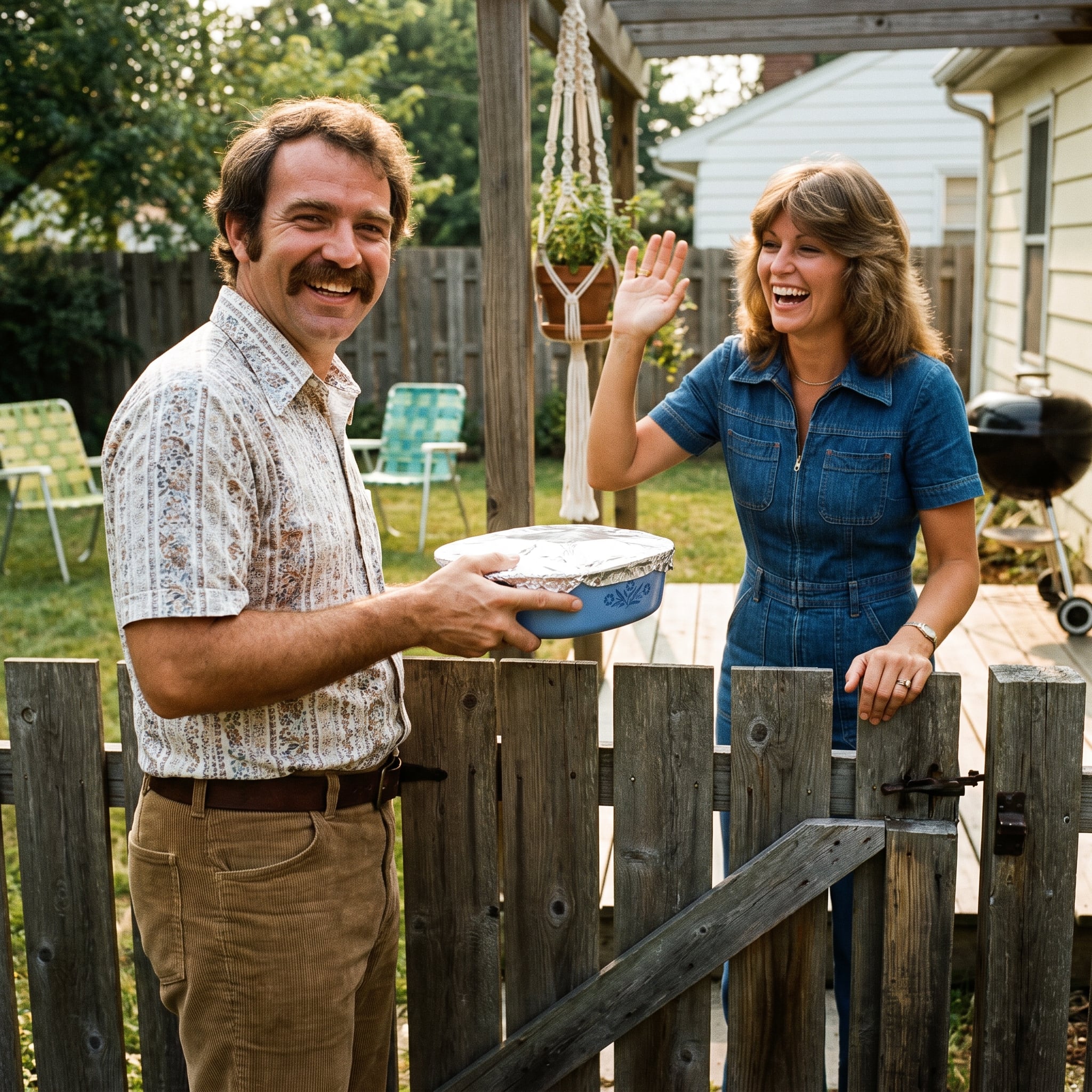
Potluck logic solved the arithmetic of an expanding guest list. Another household did not necessarily require another place setting planned in advance; it could arrive carrying macaroni salad, brownies, a casserole, or one more molded side dish for the table.
Portable food containers were becoming increasingly central to suburban entertaining during the postwar decades. Tupperware’s famous home-party sales system helped popularize lightweight, sealable bowls that could travel from kitchen to backyard without requiring the serving dish to stay home.
History Corner: Tupperware home parties became a major part of the brand’s success beginning in the 1950s and remained culturally prominent through the following decades. The products fit potlucks particularly well because the same container could store, transport, and serve food.
1. The BBQ Continuing After Sunset Because Nobody Was Ready to Go Home
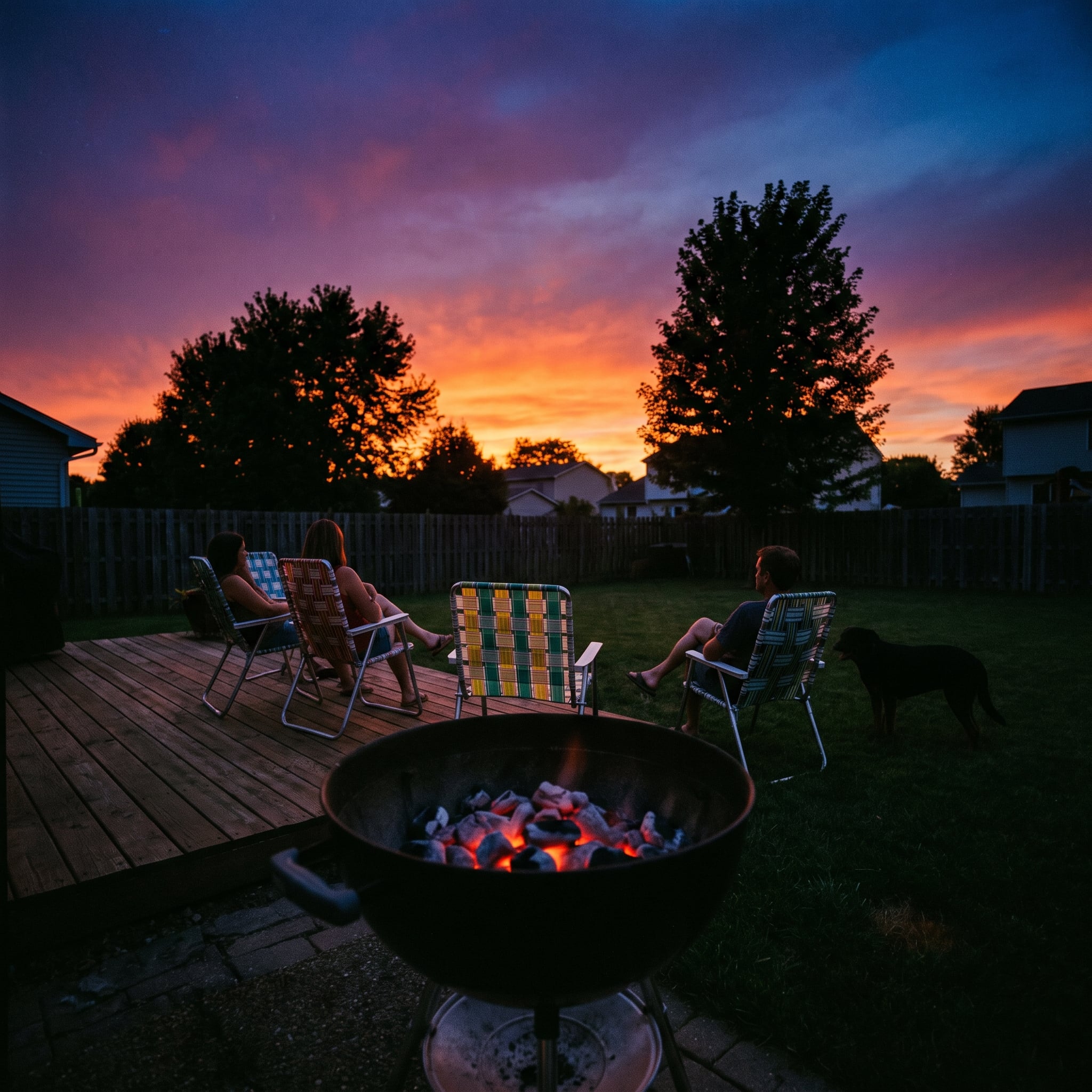
The grill eventually stopped being the center of the evening. Once the last coals faded and most of the food had disappeared, the chairs remained, the radio kept playing, and patio bulbs or porch lights took over from daylight.
That shift changed the backyard without requiring anyone to rearrange it. Colored bulbs became brighter against the dark, citronella flames registered more clearly, and conversation replaced the practical business of cooking and serving. The temporary outdoor room had outlasted the meal that created it.
The food brought the gathering outside. The yard kept it there after dinner was finished.
Why It Works: Low, warm light creates smaller pools of illumination than bright overhead fixtures, preserving the darker edges of a yard while keeping faces and seating visible. The result can feel more intimate without requiring any elaborate outdoor-lighting plan.