🔥 Would you like to save this?
The Jell-O mold was already wobbling on the good china before the doorbell even rang. Somewhere between the rumaki and the second bottle of Liebfraumilch, somebody’s mom decided that cream cheese belonged inside everything, and nobody at the table had the nerve to disagree. The 1980s dinner party operated under a specific set of culinary beliefs that now feel like dispatches from another planet.
Some of these dishes were genuinely ambitious. Most were aggressively beige. All of them showed up on a table set with cloth napkins and complete confidence. Here are 35 of them.
In order to come up with the very specific design ideas, we create most designs with the assistance of state-of-the-art AI interior design software. Also, assume links that take you off the site are affiliate links such as links to Amazon. this means we may earn a commission if you buy something.
35. Tomato Aspic Molded Into a Shimmering Ring and Served Like It Was Perfectly Normal
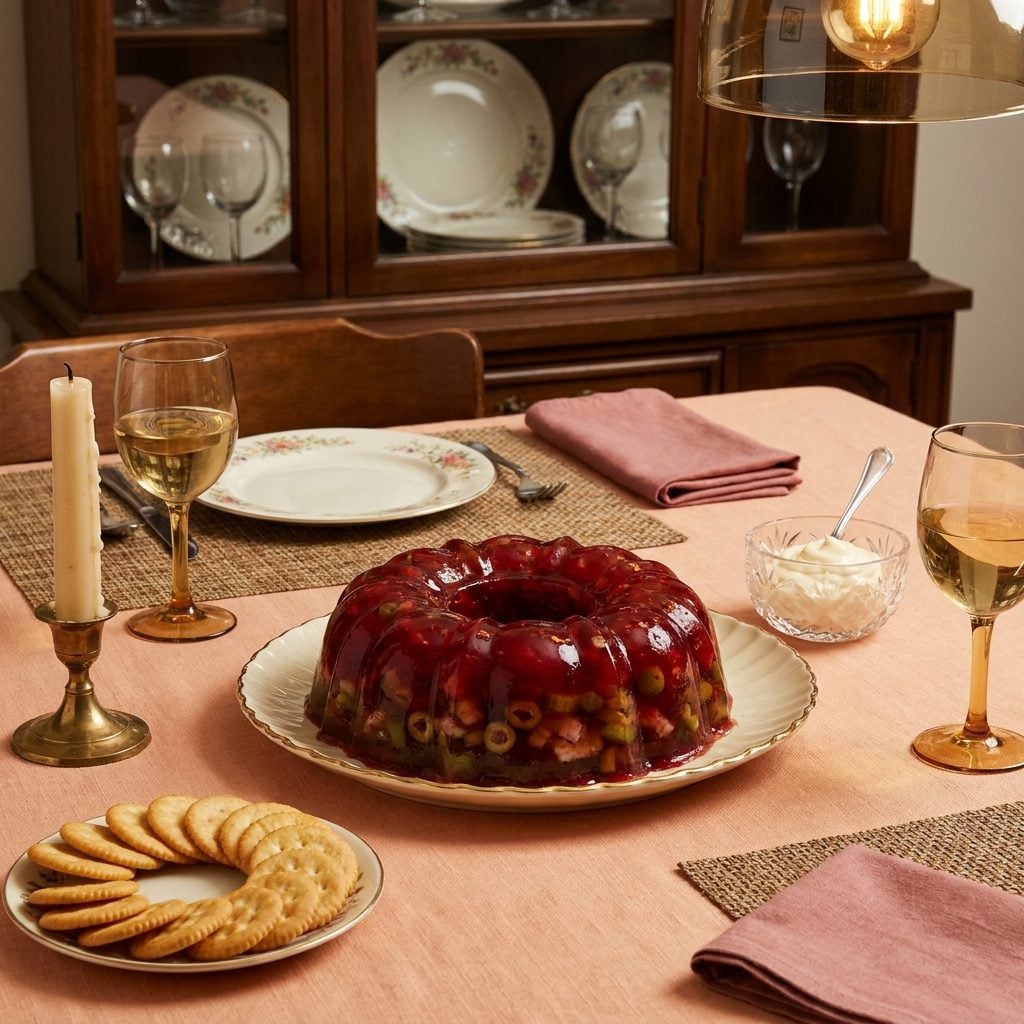
It wobbled. That’s the first thing anyone remembers. Someone’s mother would unmold this trembling scarlet ring onto a platter, and the whole table would hold its breath waiting to see if it kept its shape. Tomato juice, unflavored gelatin, a splash of Worcestershire, maybe some celery bits suspended inside like insects in amber.
The real power move was filling the center hole with cottage cheese or shrimp salad. Guests were expected to slice into it with a serving spoon and eat it on a lettuce leaf, straight-faced, like this was a reasonable thing to consume at a dinner party. Nobody questioned it. Nobody flinched.
34. Salmon Mousse Shaped Like an Actual Fish, Complete With Olive Eyes That Stared Back at You
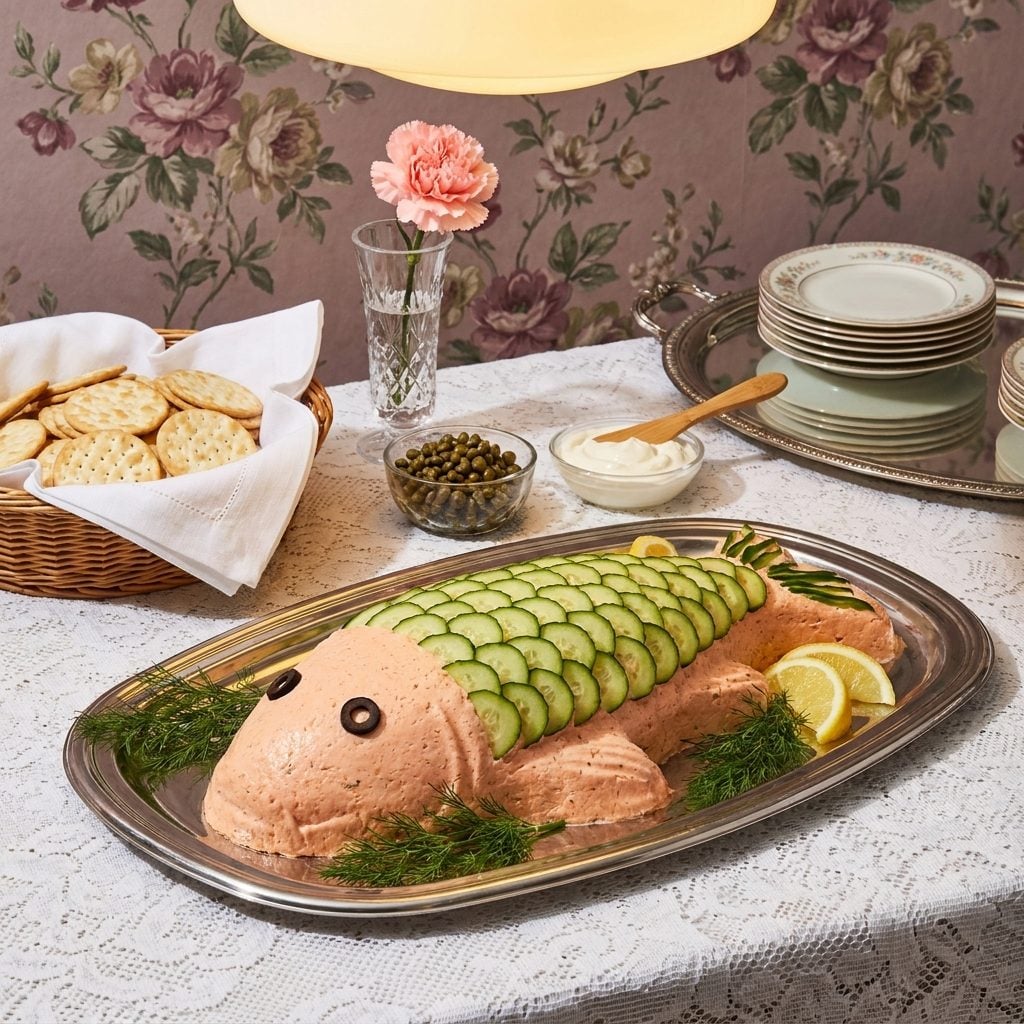
Canned salmon, cream cheese, gelatin, a squeeze of lemon. That’s it. That’s the recipe. And yet someone decided this mixture needed to be packed into a fish-shaped copper mold and presented on a bed of leafy lettuce like it had just been pulled from a stream.
The cucumber-scale decoration took an hour. The olive eyes were non-negotiable. And the whole thing tasted vaguely like a cold, dense spread that no one could identify but everyone politely ate on a Triscuit. I’ll be honest: the texture was closer to spackling compound than anything you’d willingly put in your mouth today.
33. That Lime Jell-O Ring Packed With Cottage Cheese and Shredded Carrots
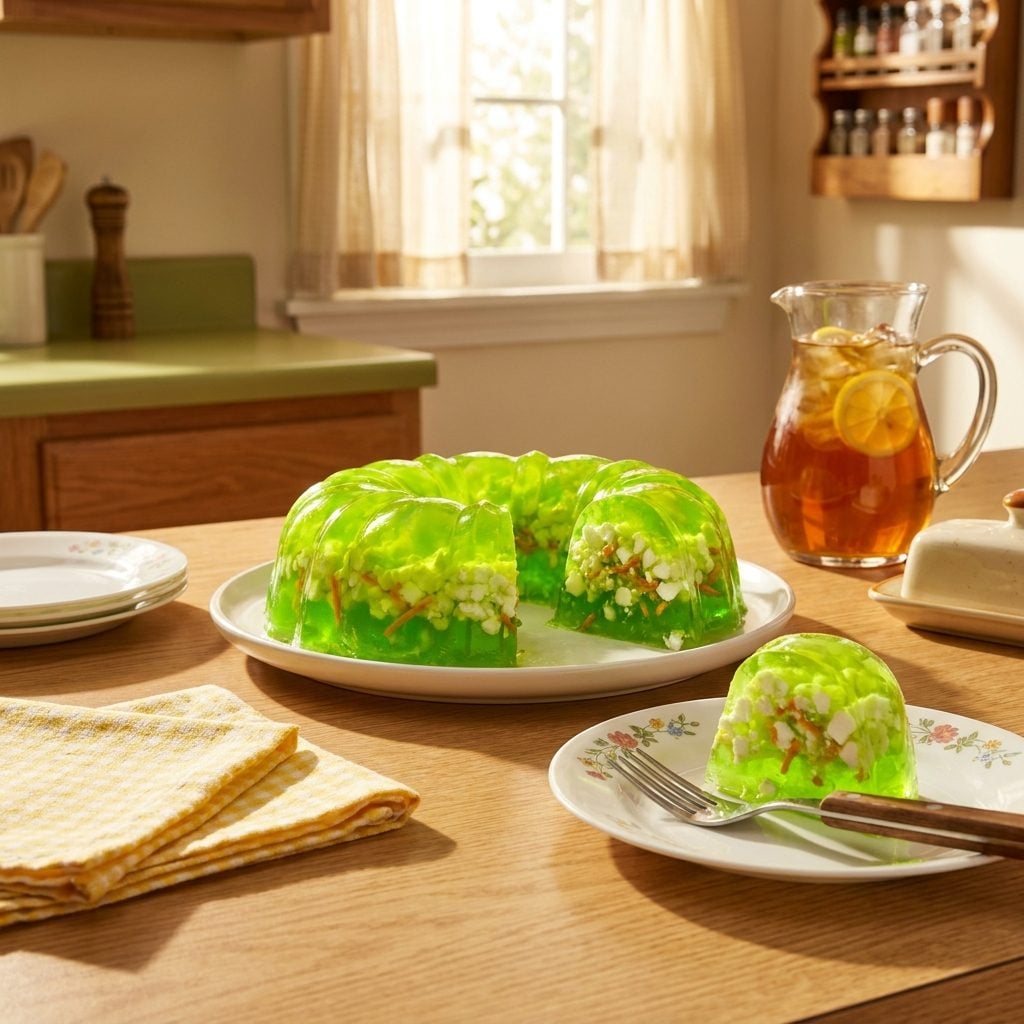
Neon green. Visible chunks of cottage cheese. Shreds of carrot floating in the middle like some kind of suspended vegetable terrarium. This was served as a “salad” at potlucks and dinner parties across America, and everybody just went along with it.
The recipe lived on the back of the Jell-O box, which gave it an air of corporate-endorsed legitimacy. Some versions added crushed pineapple. Some added chopped celery. All of them were cold, sweet, savory, and profoundly confusing to the palate. Kids would poke at it. Dads would take a heaping spoonful to be polite. Nobody went back for seconds.
32. Watergate Salad: The One That Pretended to Be Healthy While Hiding Marshmallows and Pudding Mix
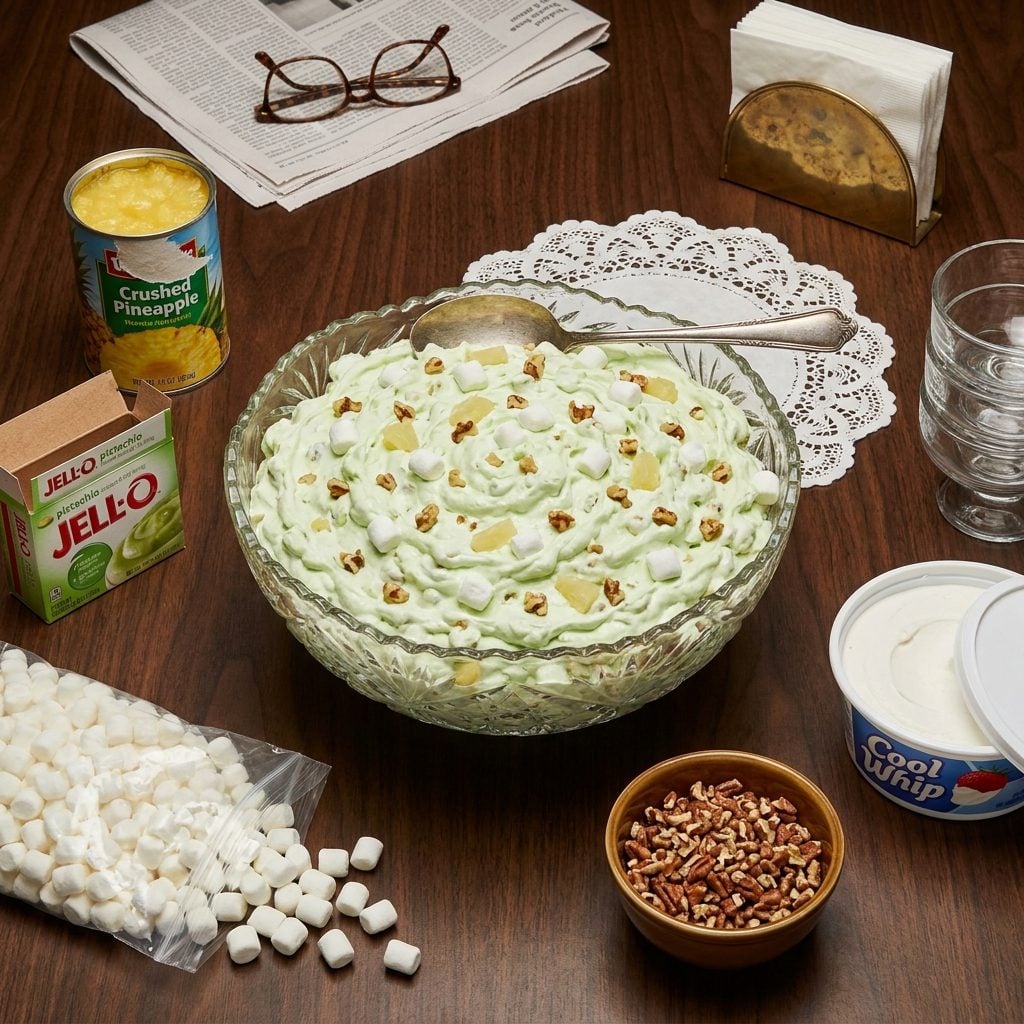
It was called a salad. Let that sink in. Pistachio pudding mix, Cool Whip, canned pineapple, mini marshmallows, and chopped nuts, all folded together into a pastel green cloud and presented alongside the actual food like it belonged on the savory end of the table.
The name supposedly had nothing to do with Nixon. The most credible origin story points to a Kraft recipe pamphlet, but the mystery only added to its allure. Every church supper, every holiday buffet, every neighborhood block party: there it sat, fluorescent and unrepentant.
The wild part is that it tasted good. Aggressively sweet, sure. But good. That’s what made it dangerous. You’d eat half a bowl before your brain caught up with what your mouth was doing.
31. Cocktail Weenies Swimming in a Crockpot of Grape Jelly and Chili Sauce
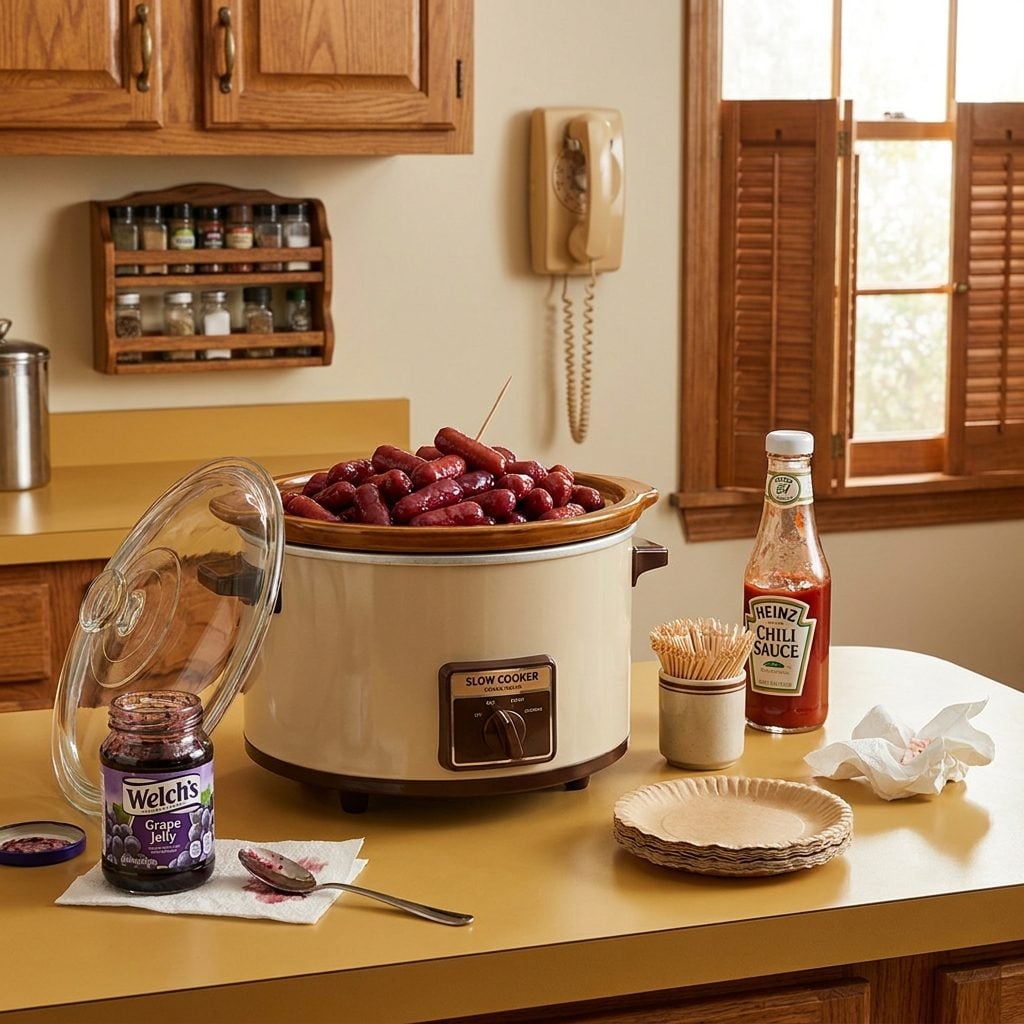
Two ingredients. A jar of grape jelly and a bottle of chili sauce, dumped over a package of Lil’ Smokies in a slow cooker set to low. That’s the entire recipe. It sounds like something a college student would invent at 2 a.m., but this was legitimate dinner party fare in the ’80s, served with frilled toothpicks and zero shame.
The sauce reduced into something glossy and sweet-tangy that genuinely worked, which is the most irritating part. You’d swear it couldn’t possibly taste right. Then you’d eat nine of them standing next to the crockpot.
30. Rumaki: Chicken Livers and Water Chestnuts Wrapped in Bacon, Speared on a Toothpick
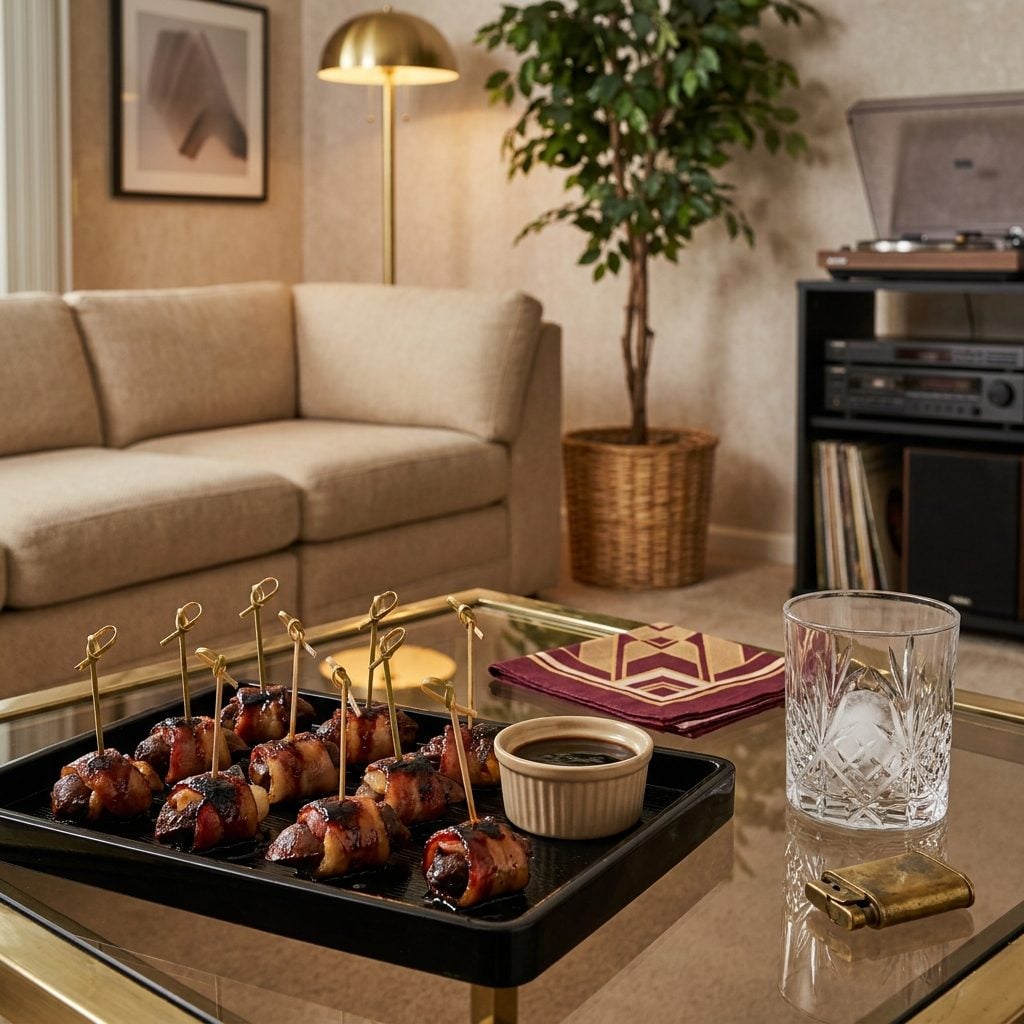
Chicken livers wrapped in bacon with a water chestnut tucked inside, marinated in soy sauce and brown sugar, then broiled. This was considered a sophisticated appetizer. Tiki bar culture and Trader Vic’s popularized rumaki in the ’50s and ’60s, but the dish hung on stubbornly through the 1980s at cocktail parties where everyone was trying a little too hard.
The texture was the problem. Creamy organ meat, crunchy water chestnut, chewy bacon, all in one bite. Some people loved the contrast. Most people quietly deposited the toothpick on their napkin after one polite attempt and moved on to the cheese ball.
29. Beef Tartare Crowned With a Raw Egg Yolk and Mixed at the Table Like a Chemistry Experiment
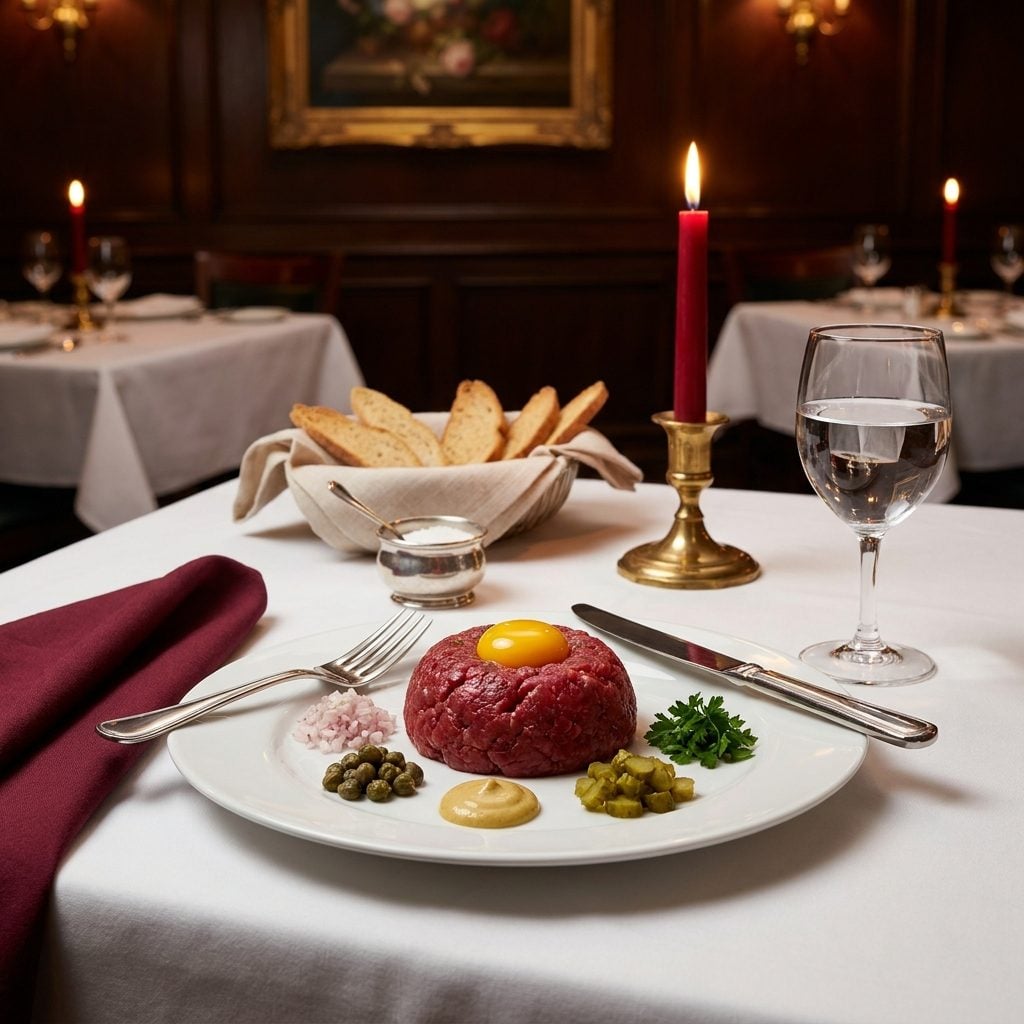
Raw ground beef, raw egg yolk, capers, minced onion, a dash of Worcestershire. Mixed together right there at the table in front of guests who were expected to look impressed rather than alarmed. This was the ultimate power dish of the 1980s dinner party host: the one that said “I’ve been to France, or at least I’ve been to a restaurant that’s been to France.”
The raw egg yolk sat in a little crater on top of the meat like a sunset over a very questionable landscape. Your host would fold it all together with two forks, season it, and spread it on toast points. Today this would send half the table running for the exits and the other half Googling food poisoning symptoms.
28. Steak Diane Set on Fire Tableside With a Heavy Cream Sauce and a Dangerous Amount of Brandy
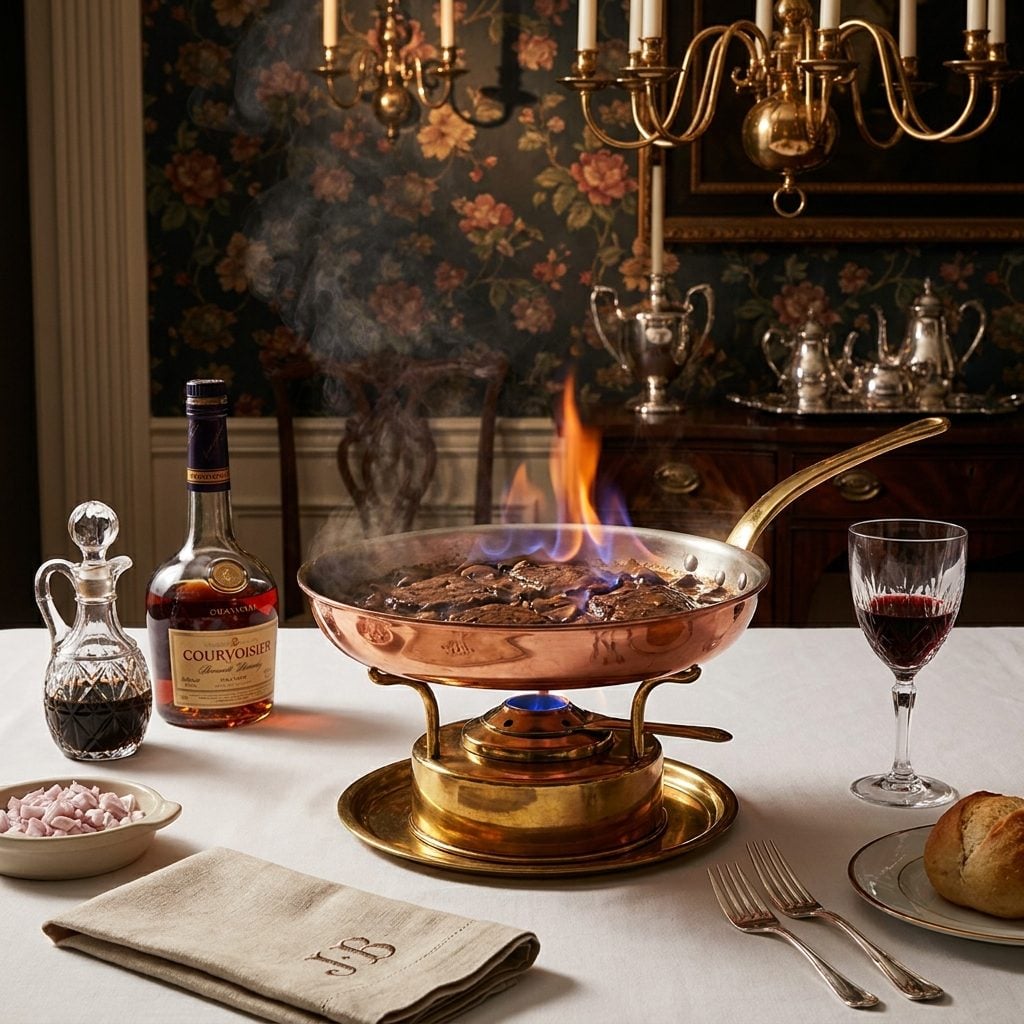
Someone’s dad with a copper chafing dish and a bottle of brandy, standing over the table like a man possessed. That’s Steak Diane. Pounded beef medallions, seared fast, hit with a splash of cognac, and lit on fire while everyone leaned back in their chairs and tried to look relaxed.
The sauce was the real event: shallots, mushrooms, Dijon, heavy cream, and the fond from the pan, all stirred together into something rich and deeply brown. It tasted spectacular. But the performance was the point. This was dinner theater. The host was chef, waiter, and pyrotechnician all at once, and the implicit message was clear: I am in control of this flame, this meal, and this evening.
You don’t see it much anymore, partly because open flames near curtains fell out of fashion and partly because nobody owns a chafing dish. But mostly because the whole production required a confidence that bordered on delusion.
27. Lobster Newburg Drenched in So Much Butter and Cream It Practically Needed a Cardiologist on Standby
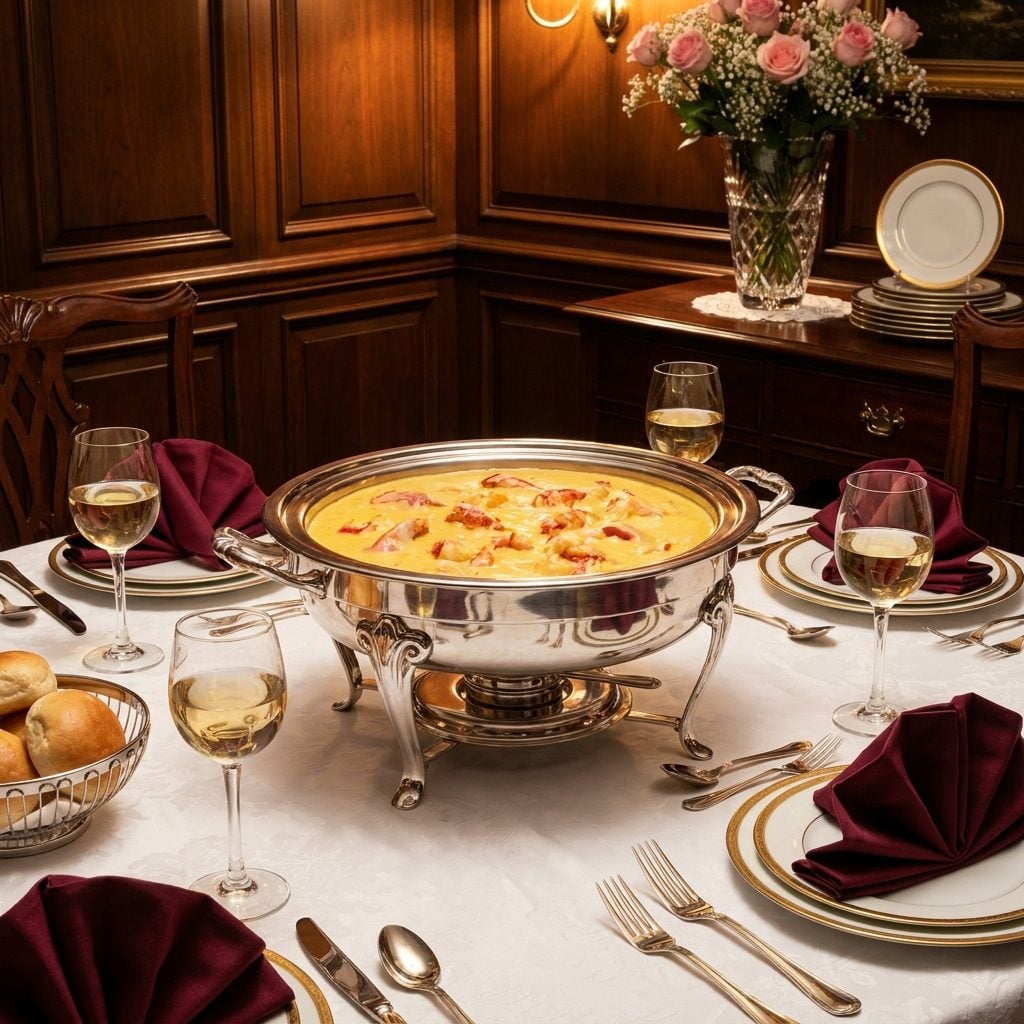
The sauce alone could have funded a small dairy farm. Lobster Newburg was the dish people pulled out when they wanted their dinner party to feel like a country club event, and it delivered on that promise with a richness that bordered on punishment. Heavy cream, egg yolks, butter, sherry, and enormous chunks of lobster meat, all spooned over toast points or into puff pastry shells like cholesterol was a myth invented by killjoys.
Nobody asked about saturated fat content. Nobody counted calories at the table. The whole point was the excess, the way the sauce coated the back of a spoon so thick it practically stood up on its own. Hosts would beam with pride as they ladled it out, and guests would eat every drop and then quietly unbutton something under the tablecloth.
26. Veal Oscar Topped with Crab and Béarnaise Because One Luxury Protein Was Never Enough
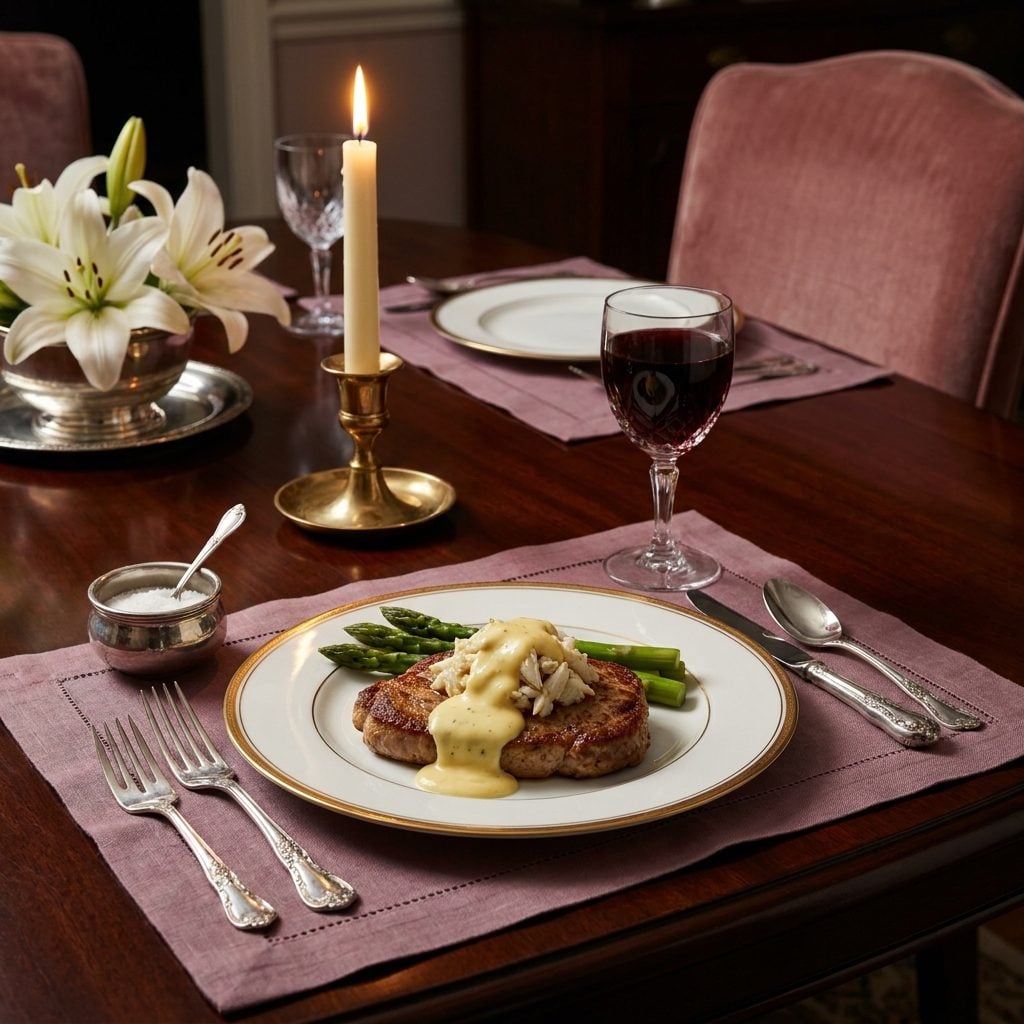
Veal, crab, béarnaise, and asparagus. On one plate. At the same time. Veal Oscar was the 1980s dinner party equivalent of wearing a Rolex with a tuxedo to a Tuesday gathering. The logic was simple: if one expensive ingredient was impressive, stacking three of them was devastating.
Try serving veal at a dinner party now and watch the room temperature drop. The ethical concerns around veal production have made it one of those ingredients that went from “sophisticated” to “conversation-ending” in about two decades. And béarnaise? Most home cooks today can barely commit to a vinaigrette, let alone an emulsified butter sauce that breaks if you look at it wrong. I say this as someone who has broken exactly that sauce more times than I’ll admit.
25. Beef Wellington Stuffed with Foie Gras Under That Golden Pastry Shell
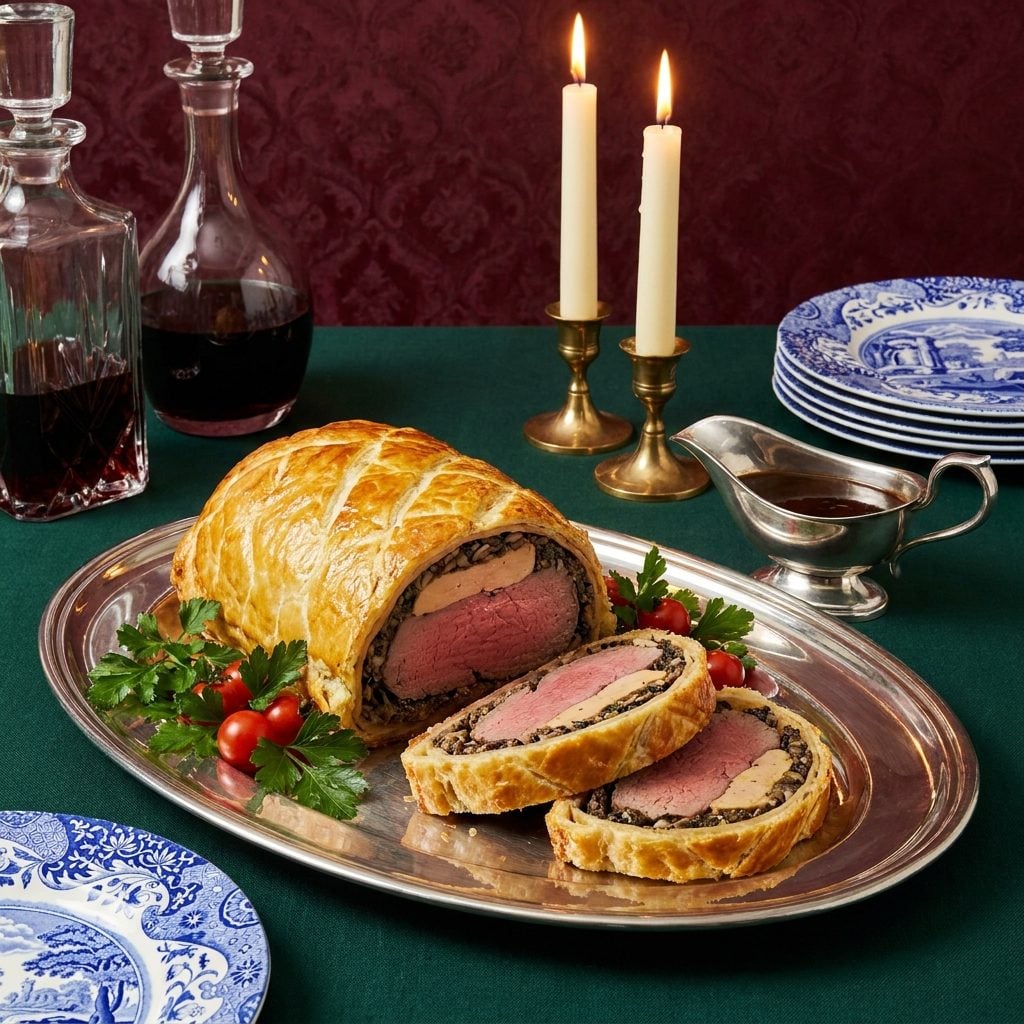
This was the boss fight of 1980s dinner party cooking. Hours of work, a tenderloin wrapped in mushroom duxelles and foie gras, then sealed inside puff pastry and baked until the outside was golden and the inside was, hopefully, still medium-rare. The margin for error was roughly the width of a dime.
Foie gras was the stealth ingredient that pushed it from ambitious to absurd. Most people today won’t touch foie gras with a ten-foot serving fork, and it’s banned outright in several places. But in 1983, layering it into your Wellington was simply what serious hosts did. The fact that the dish took an entire afternoon and could easily turn into an overcooked disaster wrapped in soggy pastry only added to its mystique.
24. The Crown Roast of Pork With Paper Frills on Every Single Bone Like a Meaty Birthday Crown
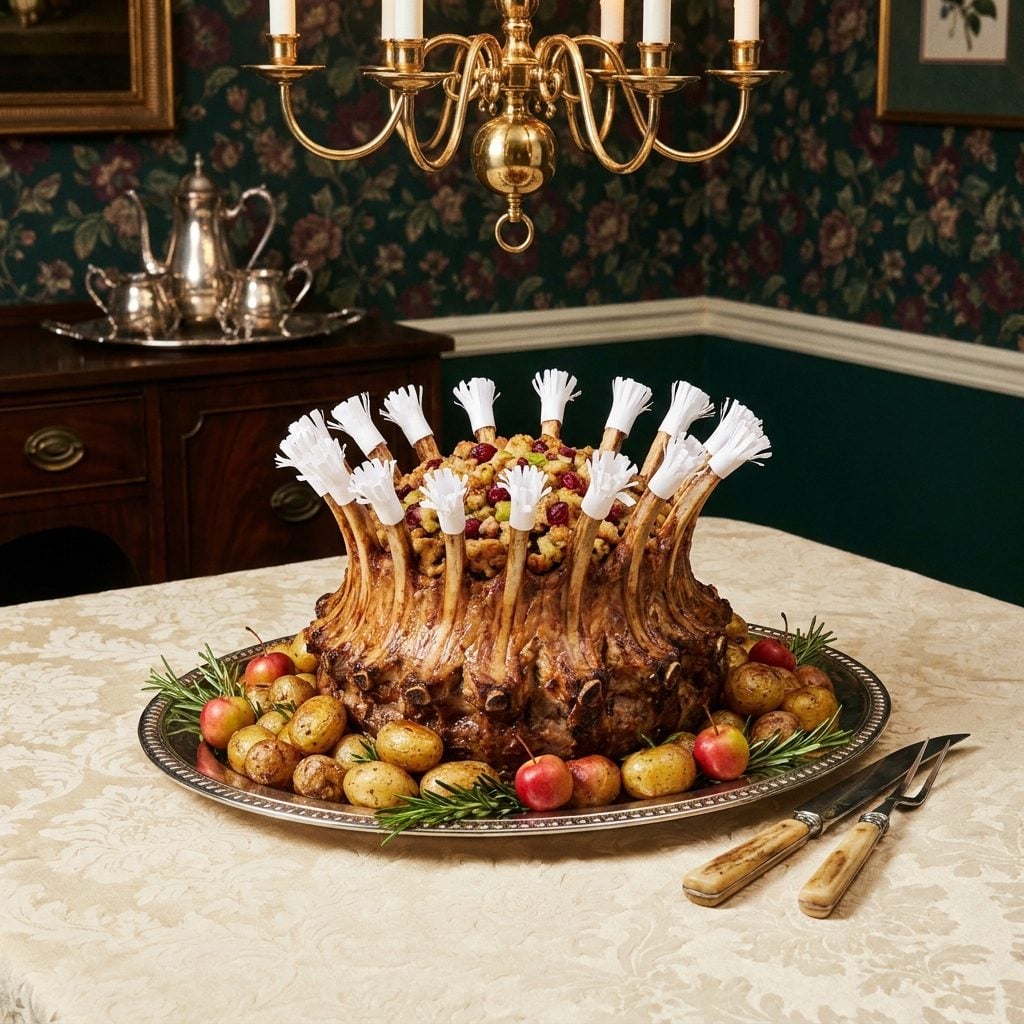
Those paper frills. Those absurd, ridiculous, wonderful little paper frills perched on each bone like the roast was about to perform in a burlesque show. The crown roast of pork was pure theater, a circle of rib chops tied into a ring with the bones pointing skyward, the hollow center packed with some variation of bread stuffing, and the whole thing presented on a silver platter like it was being offered to a minor European royal.
Nobody makes this anymore. Not because it tastes bad, but because it requires asking a butcher to do something very specific, which means actually talking to a butcher, which means finding a butcher. The presentation was half the point. You carried it out of the kitchen and set it on the table and everyone gasped, or at least nodded appreciatively, and that five seconds of gasping justified the entire production.
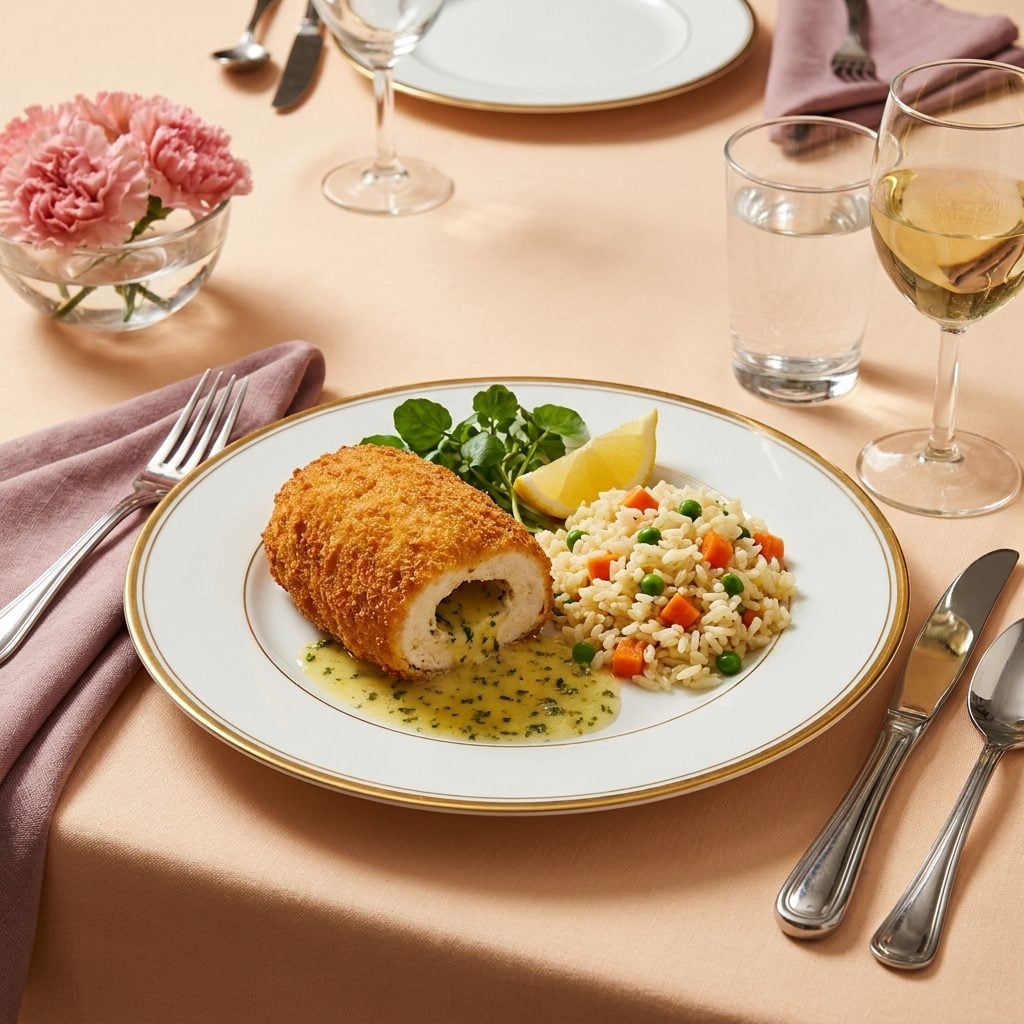
23. Chicken Kiev That Erupted a Geyser of Garlic Butter the Moment a Knife Touched It
🔥 Would you like to save this?
Cutting into a proper Chicken Kiev was a contact sport. That first puncture of the breaded shell released a pressurized stream of hot garlic butter that shot across the plate, across the tablecloth, and occasionally across the sleeve of whoever was sitting too close. It was violent and delicious.
The construction was bonkers when you think about it: a butterflied chicken breast pounded flat, a frozen log of herb butter placed inside, the whole thing rolled, breaded twice, and deep-fried. All so that one dramatic moment of butter eruption could happen at the table. The risk-to-reward ratio was completely insane. One tiny breach in the breading during frying and the butter would leak out early, leaving you with a dry, hollow disappointment. But when it worked? Glory.
22. Tuna Noodle Casserole Built Entirely from Cans and Crowned with Crushed Potato Chips
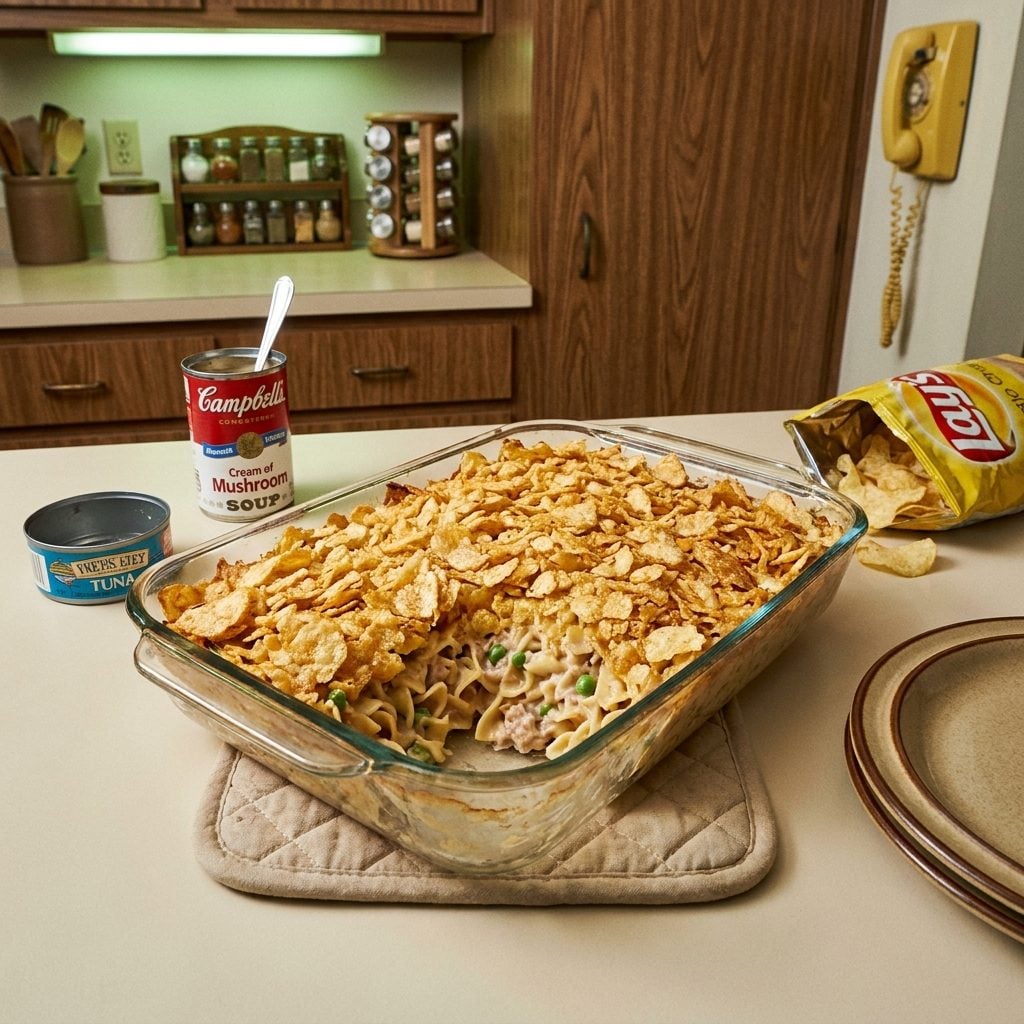
Not a single fresh ingredient in the entire dish. Canned tuna, canned cream of mushroom soup, canned peas, dried egg noodles, and a bag of potato chips crushed by hand for the topping. That was it. That was the recipe. And it showed up at potlucks and casual dinner parties with the confidence of a dish that cost forty dollars to make.
This was comfort food for people who didn’t use the word “comfort food” yet. It came out of the oven bubbling and golden, smelling like every art deco kitchen in every suburb in America. Serve this to guests in 2024 and they’d politely ask if you were feeling okay.
21. Sliced Beef Tongue Arranged on a Platter Like It Was Perfectly Normal (Because It Was)
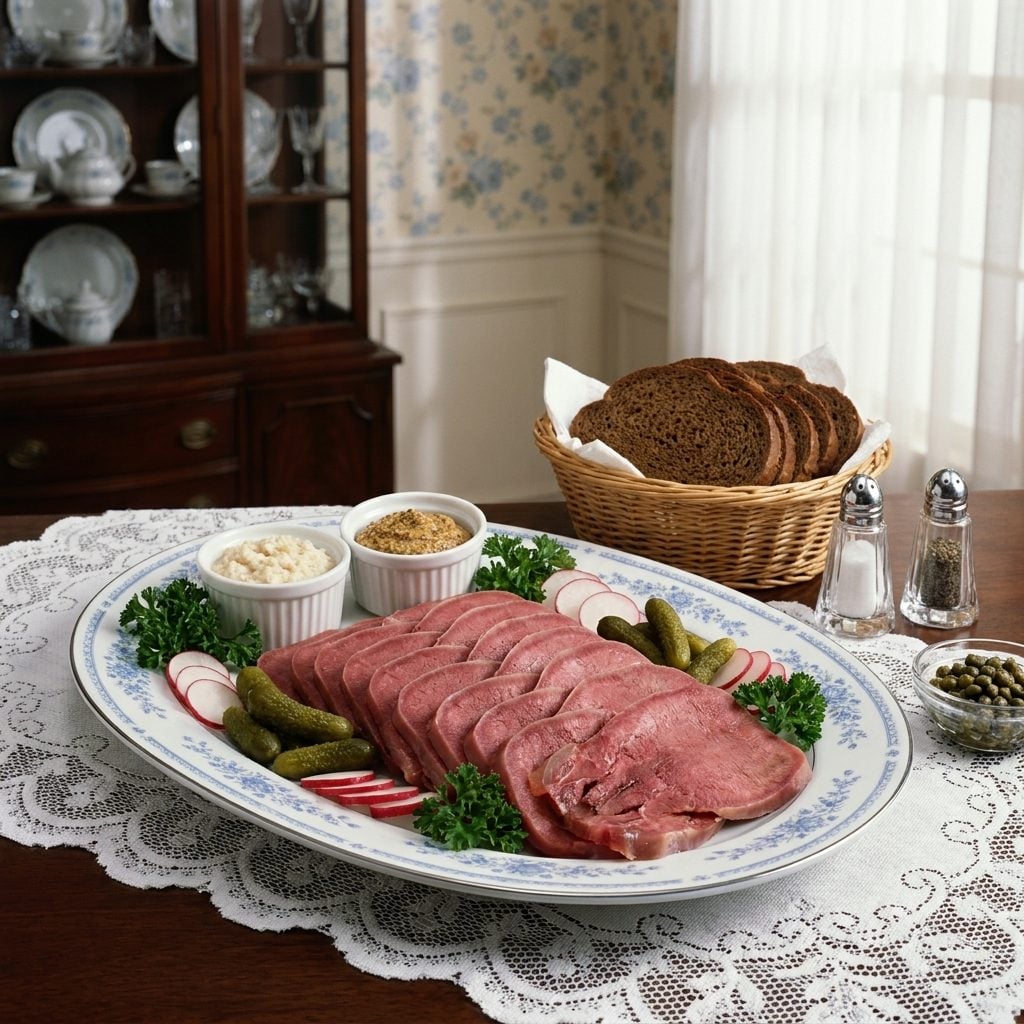
It was just sitting there on the platter. Sliced thin, fanned out, looking exactly like what it was. Nobody flinched. Nobody asked what it was. Everyone already knew, and they ate it with mustard and rye bread and moved on with their lives.
Tongue was a holdover from an older generation’s approach to cooking, where using the whole animal wasn’t a trendy philosophy but just what you did. By the late ’80s it was already fading from mainstream dinner parties, replaced by safer proteins that didn’t remind you of the animal’s face. But for a solid stretch of the decade, particularly in Jewish, Eastern European, and Latin American households, a platter of cold sliced tongue at a gathering was as unremarkable as a bowl of chips.
20. Fried Sweetbreads Served Proudly to Guests Who Definitely Did Not Ask What Organ They Were Eating
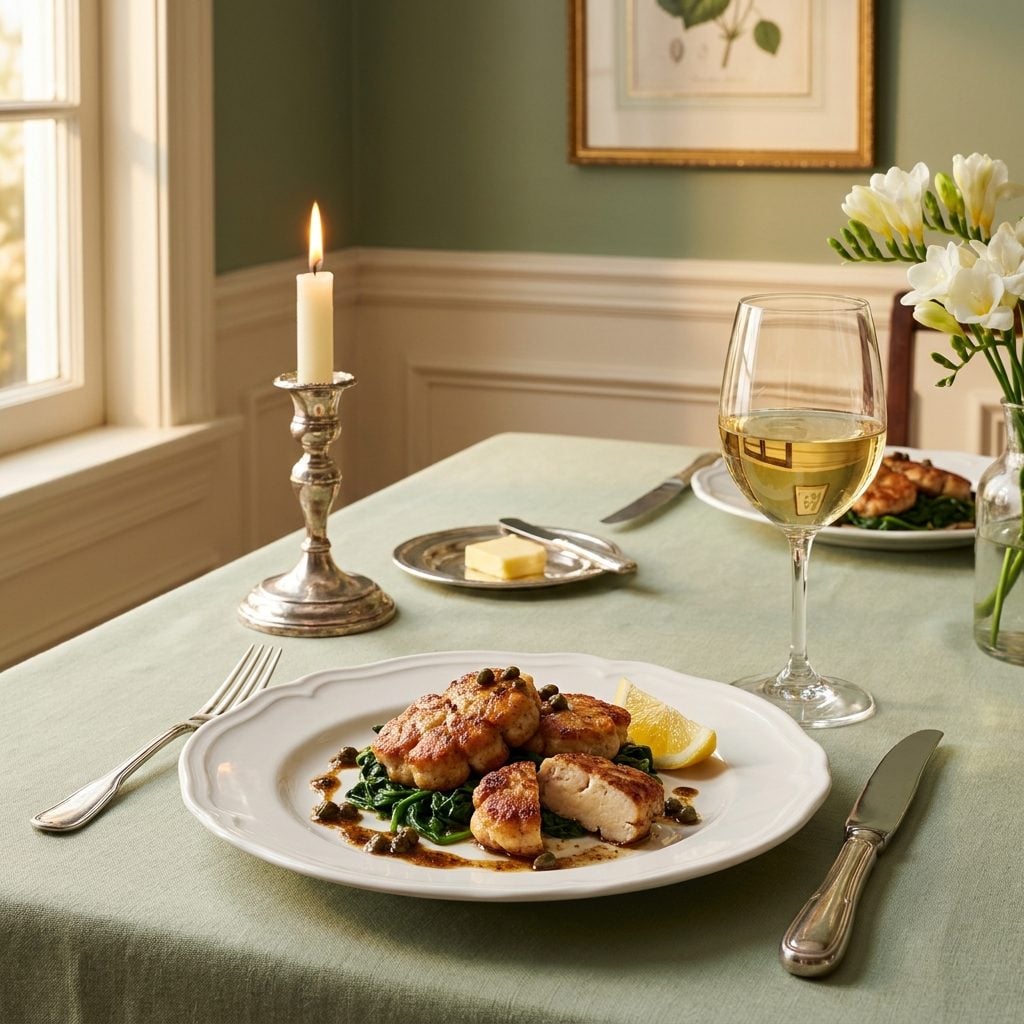
“What is this? It’s delicious.” That was the sequence. Always in that order. First the compliment, then the question. And then the host would say “sweetbreads” with a casual confidence that suggested the answer was obvious, even though absolutely nothing about the word “sweetbreads” tells you that you’re eating a thymus gland.
Pan-fried in butter until golden, sometimes with a squeeze of lemon and capers, sweetbreads were the dinner party flex for hosts who fancied themselves a little more European than their neighbors. The texture was custard-soft inside, crispy outside. Genuinely good. But the moment people learned the anatomical source, the dish’s social viability dropped off a cliff from which it has never returned.
19. Jellied Consommé in Coupe Glasses, Served Ice-Cold Like It Was Champagne
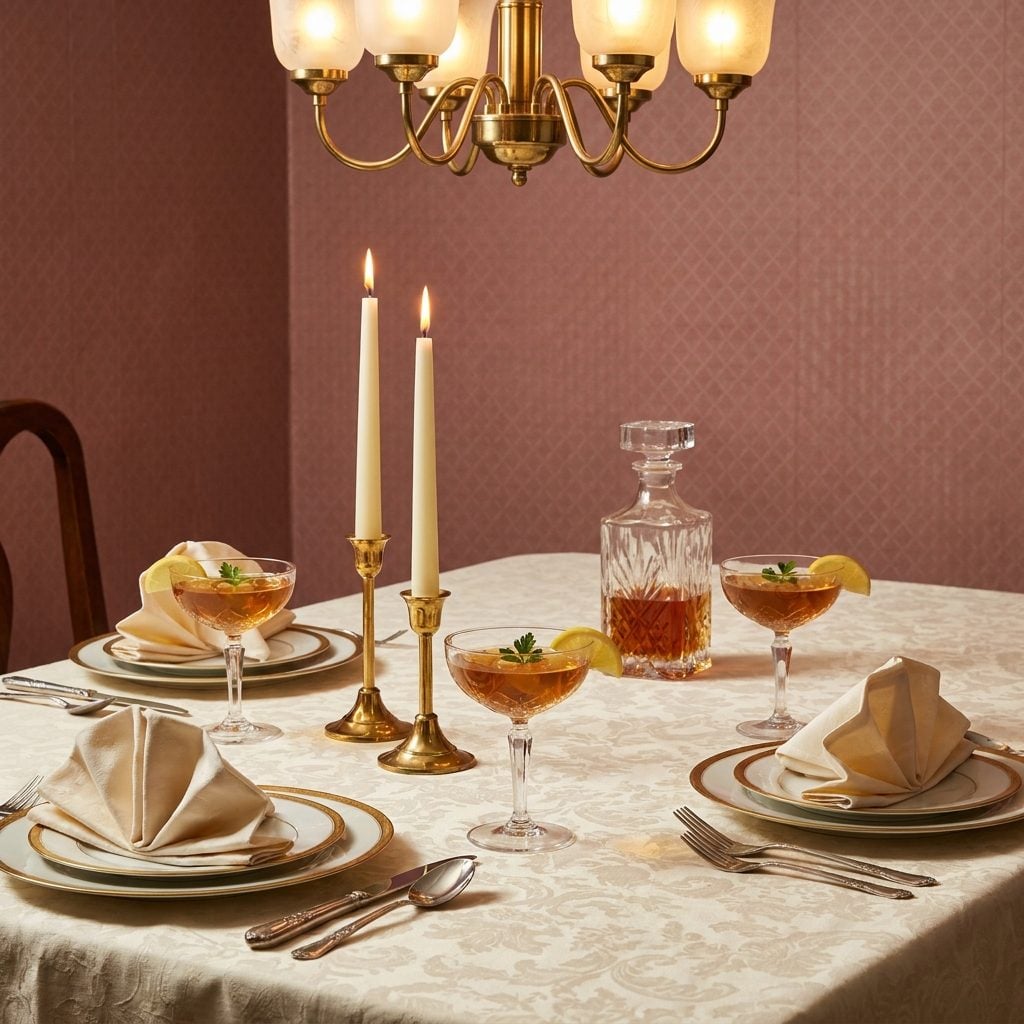
It wobbled. That was the whole point, apparently. Someone’s mother would carry these out on a silver tray, and every guest would smile like they’d just been handed liquid gold instead of, well, cold meat broth suspended in gelatin.
The coupe glasses were key. Serving jellied consommé in anything less than crystal stemware would have been an admission that you were, in fact, just eating fancy Jell-O. A squeeze of lemon on top, maybe a single chive laid across the surface with surgical precision. Nobody actually enjoyed it. Everyone said it was “refreshing.”
Try bringing this out at a dinner party now and watch six adults quietly reach for their phones to order pizza.
18. The Cheese Ball Rolled in Chopped Pecans, Surrounded by Its Cracker Army
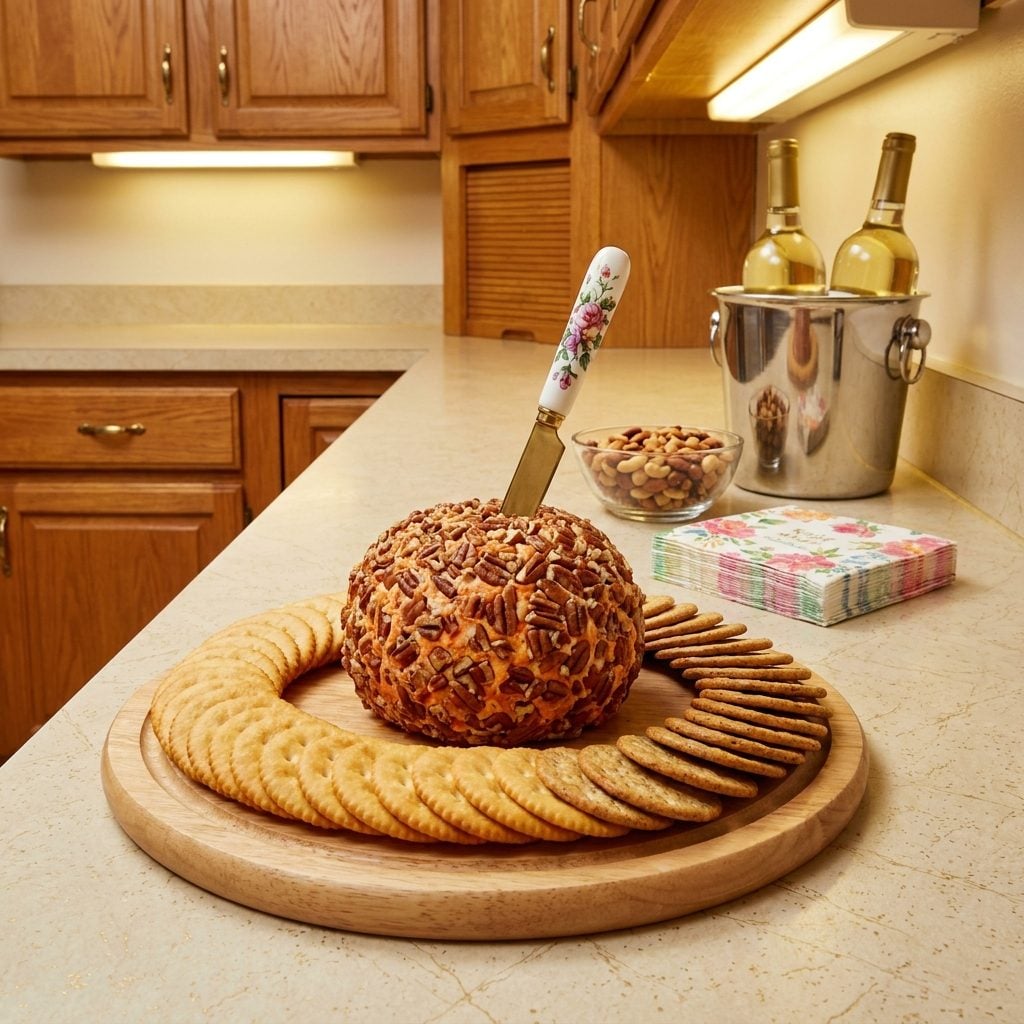
Every single one of these tasted exactly the same. Cream cheese, shredded cheddar, a splash of Worcestershire, maybe some onion powder, then rolled in pecans like a snowball through gravel. It sat on the counter getting progressively shinier and more room-temperature as the evening wore on.
The cracker fan was non-negotiable. Ritz crackers arranged in concentric circles, sometimes alternating with Triscuits for the illusion of sophistication. Someone always destroyed the arrangement within ten minutes, and the host always noticed.
17. Spinach Dip from a Soup Packet, Living Inside a Hollowed-Out Bread Bowl
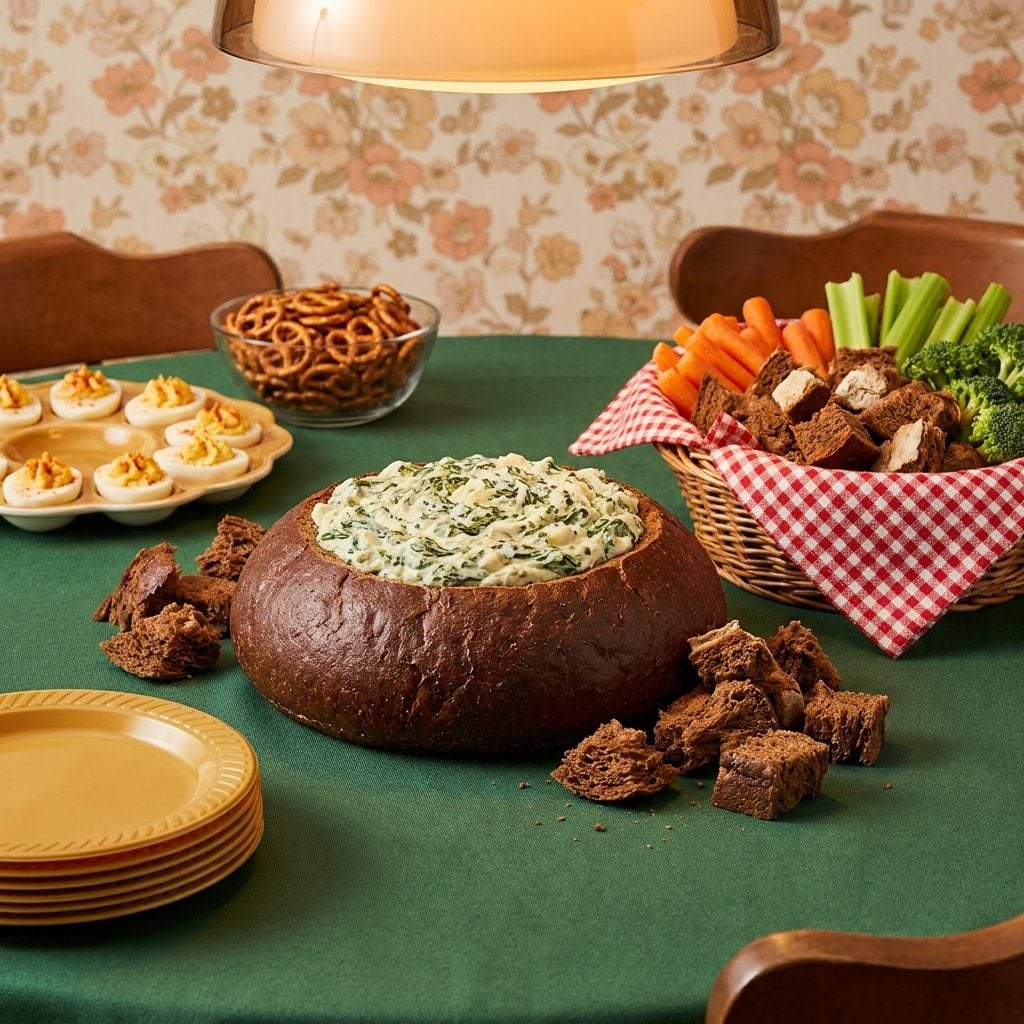
One packet of Knorr vegetable soup mix. One cup of sour cream. One cup of mayonnaise. A box of frozen chopped spinach, thawed and squeezed. That was literally the entire recipe, and it showed up at every gathering between 1982 and 1993 without exception.
The bread bowl was the real flex. Somebody had to hollow out a round pumpernickel loaf, and the scooped-out chunks became the dipping vehicle. Practical and theatrical. The dip itself had the consistency of spackling paste and tasted aggressively of dried onion.
Nobody makes this anymore. Not because it was bad, honestly. It just got replaced by hummus, and hummus won that war decisively.
16. Ambrosia Salad: Canned Fruit Cocktail, Coconut Flakes, and Mini Marshmallows Pretending to Be a Side Dish
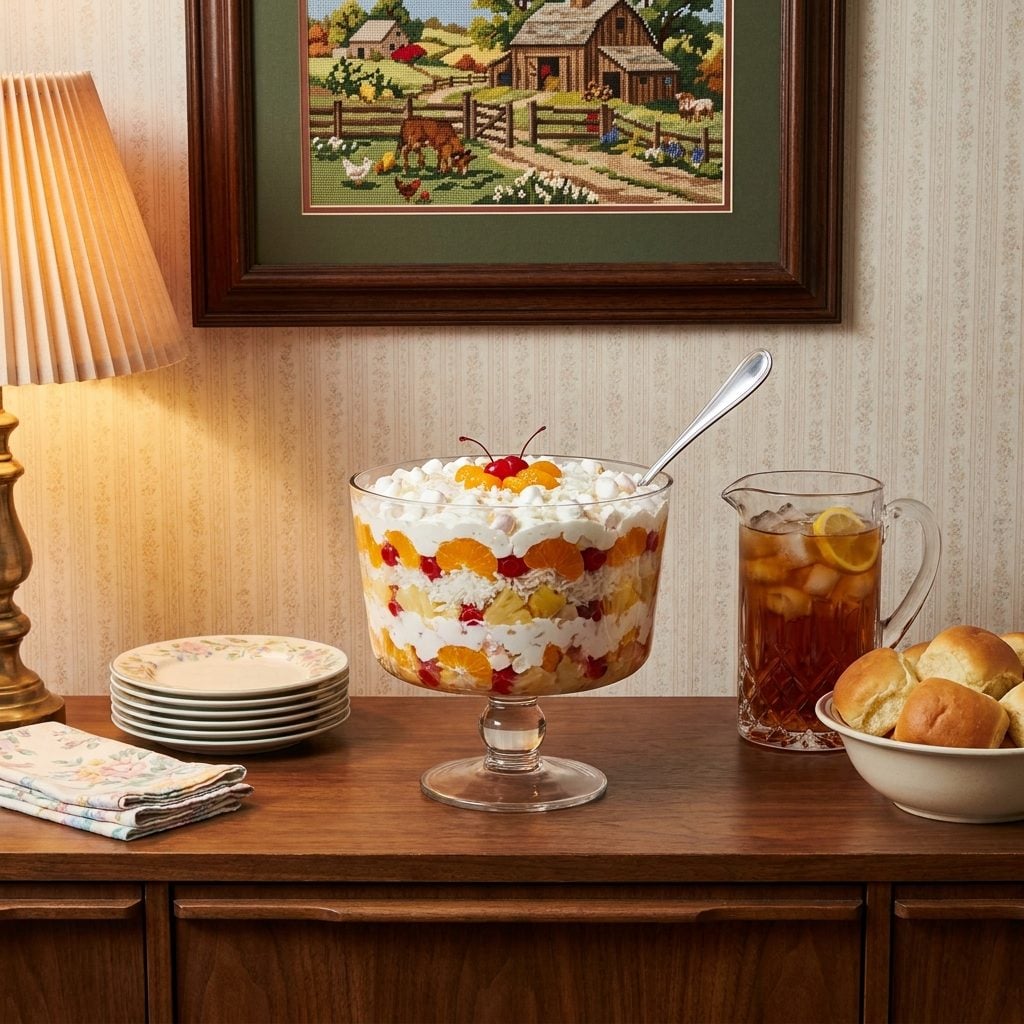
Was it a salad? A dessert? A cry for help? Nobody could say with certainty, but it appeared at the table right alongside the green beans and the rolls, occupying a deeply confusing middle ground.
Cool Whip held the whole thing together. Canned mandarin oranges, canned pineapple chunks, shredded coconut from a bag, mini marshmallows, and sometimes a handful of maraschino cherries for color. The result was sweet, wet, and vaguely tropical in the way that an air freshener is tropical.
15. The Whole Glazed Ham Studded with Pineapple Rings and Maraschino Cherries Like a Edible Christmas Ornament
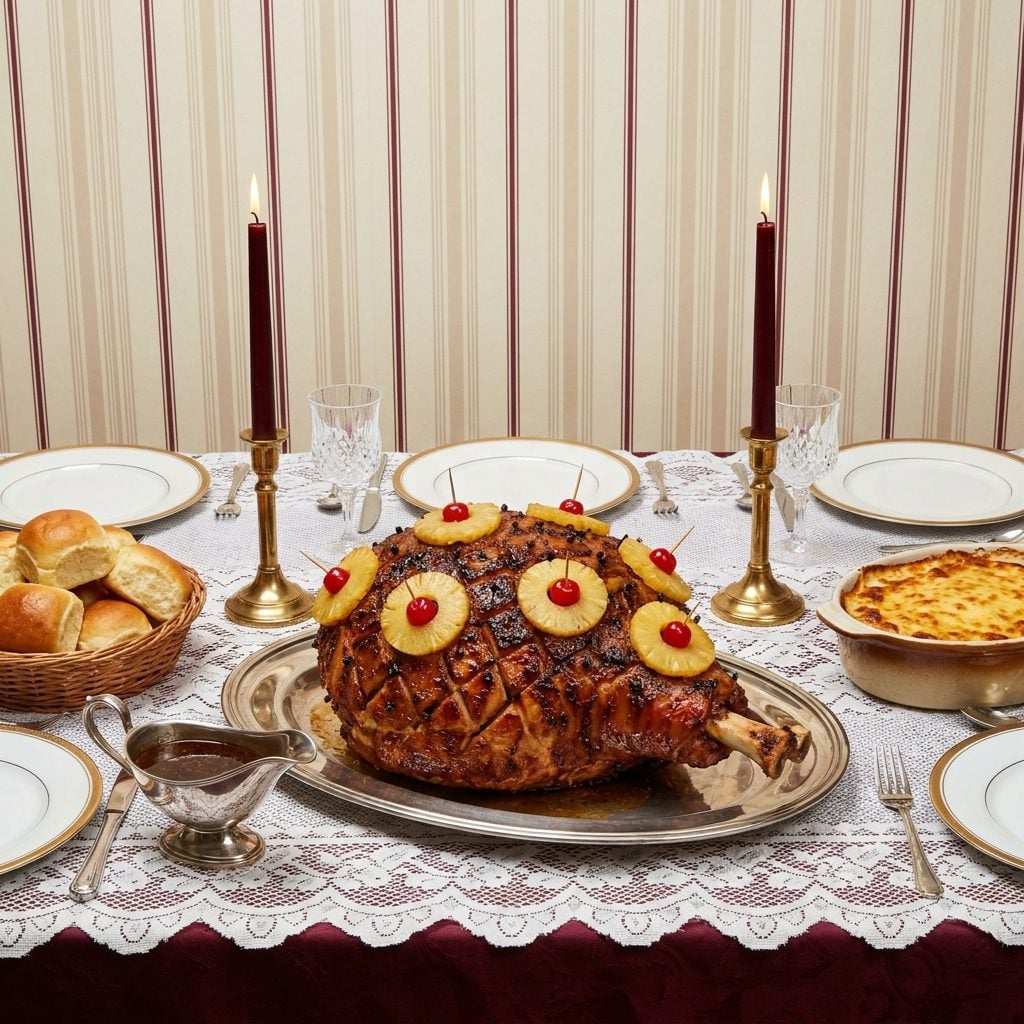
That ham looked like it had been decorated by a committee. Whole cloves pushed in at every intersection of a diamond-scored surface, pineapple rings pinned on with toothpicks, and those impossibly red maraschino cherries nestled in the center of each ring like little radioactive jewels.
The glaze was always the same: brown sugar, yellow mustard, maybe some pineapple juice from the can. It baked into a sticky shellac that made the whole kitchen smell like a candy factory colliding with a smokehouse. Carving it meant pulling out approximately forty toothpicks first, which everyone pretended was normal.
14. The Communal Fondue Pot Where Everyone Double-Dipped and Nobody Mentioned It
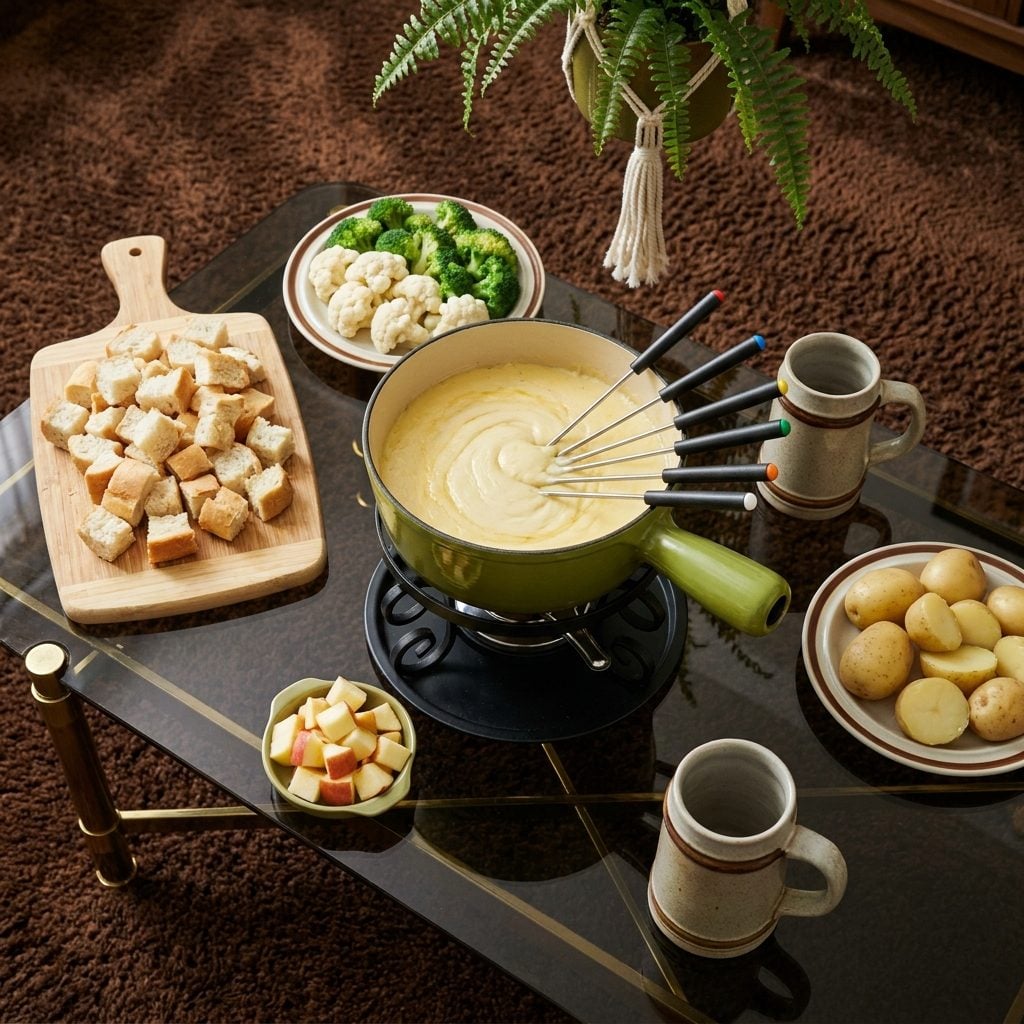
Six forks, six different colored handles, one pot of melted cheese. That was the system. The colored tips were supposed to prevent mix-ups, but three drinks in, nobody cared whose fork was whose.
The bread cubes always fell off into the cheese. There was an unspoken rule that if your bread dropped, you owed something: a round of drinks, a dare, a confession. In practice, you just fished it out with your fingers when you thought nobody was looking. The Sterno can underneath kept everything at a temperature that could remove fingerprints, and the cheese developed a rubbery skin if the conversation went on too long between dips.
13. Quiche Lorraine as the Entire Main Course, Served with Absolute Confidence
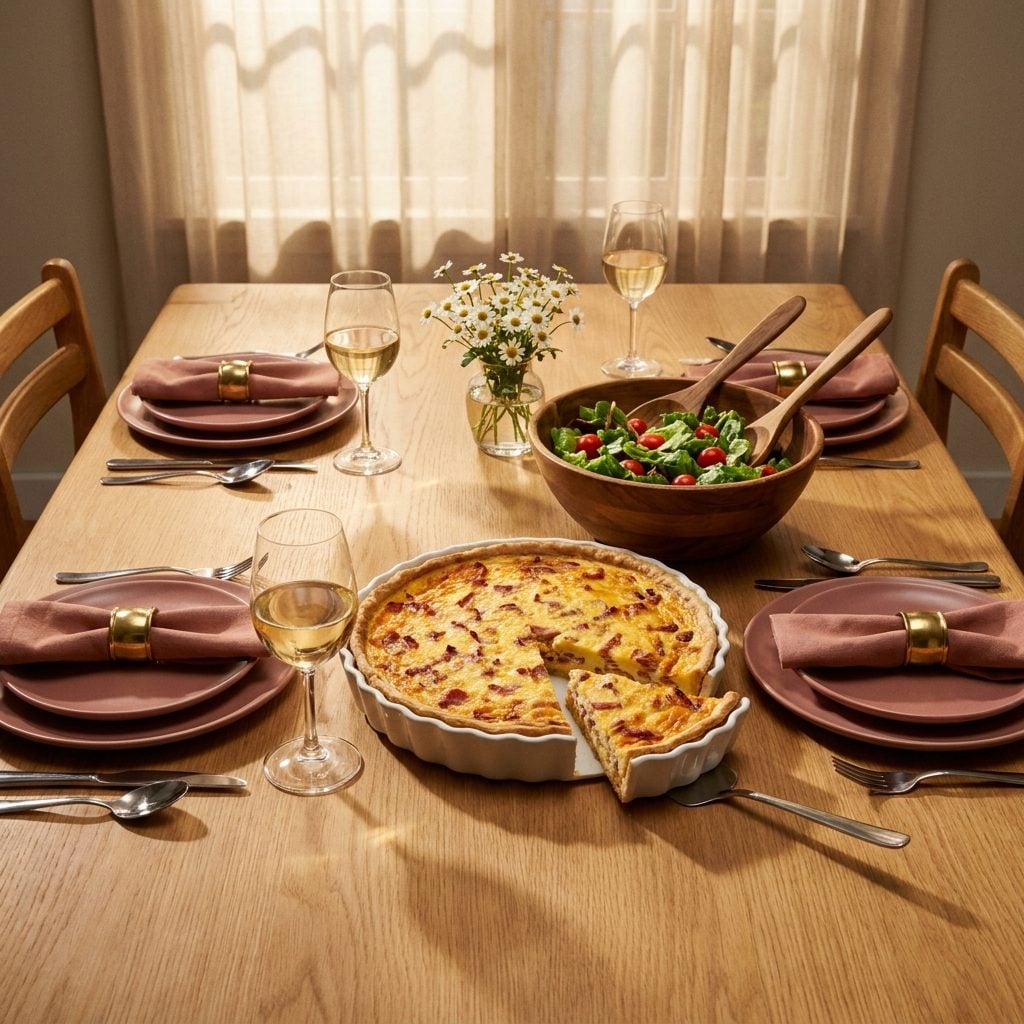
Real Men Don’t Eat Quiche came out in 1982, and quiche took a reputational hit it never fully recovered from. But before that book turned it into a punchline, quiche Lorraine was the dinner party main course of choice for anyone who wanted to seem Continental without actually cooking anything difficult.
Eggs, cream, Swiss cheese, bacon. A pie crust from the freezer section. That was it. The whole meal. Maybe a green salad on the side, maybe not. The audacity of serving what is essentially a savory custard pie as the centerpiece of an adult dinner and calling it French, I have to respect it.
12. Pâté en Croûte, Sliced Cold and Displayed Like Someone Was Trying to Win an Award
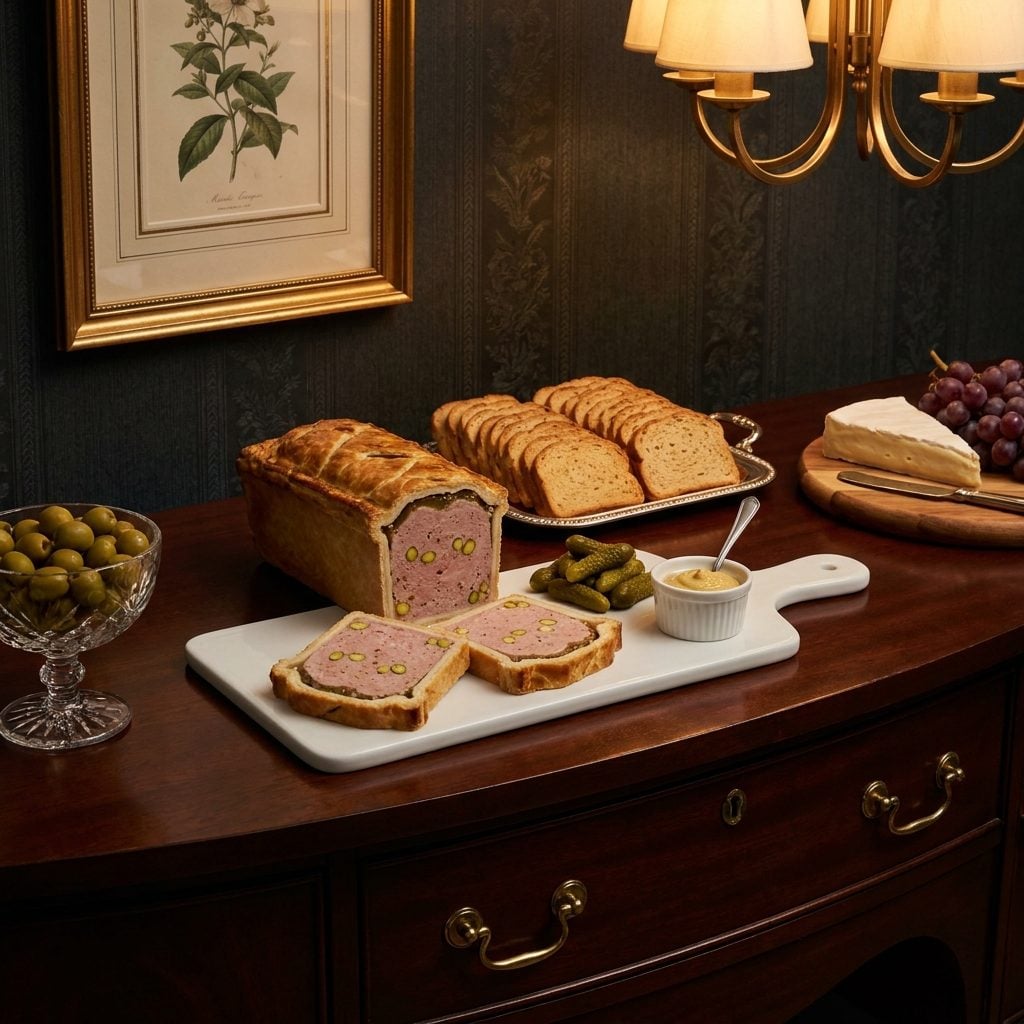
This was the nuclear option. If someone brought out a pâté en croûte, they were not messing around. They had spent the entire previous day in the kitchen, and they needed you to know that.
Cold. Sliced thick. The pastry crust golden and architectural around a dense core of seasoned meat studded with pistachios, sometimes with that thin line of aspic shimmering between the filling and the crust like a little gelatin moat. Cornichons on the side. Maybe some vintage wall art hanging above the sideboard where it was displayed, because this was always a sideboard moment, never a kitchen counter moment.
Most people had no idea what they were eating. They just knew it looked expensive and French, and in the 1980s, that was enough.
11. Stuffed Celery With Pimento Cream Cheese, Lined Up Like Little Green Canoes on the Good Platter
🔥 Would you like to save this?
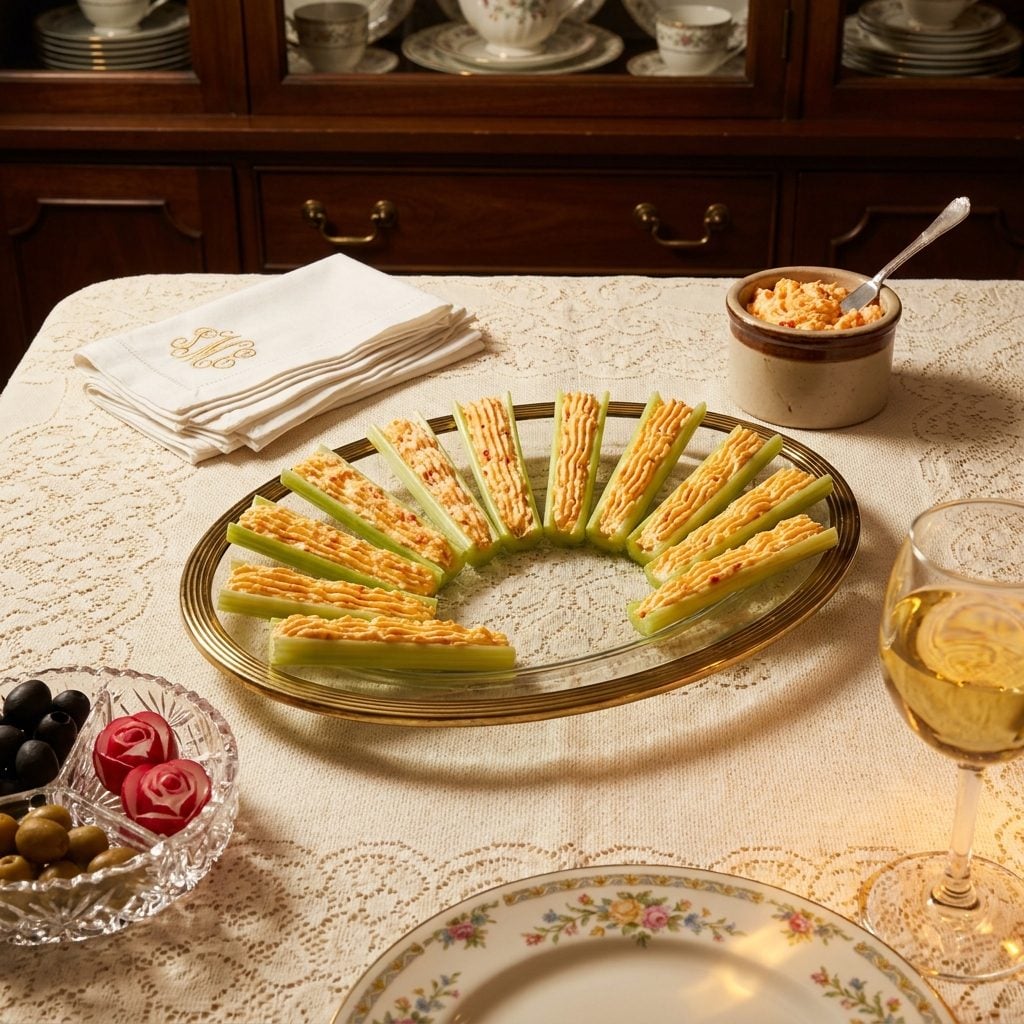
The platter came out first, always. Before anyone had even settled into the living room with their wine spritzers, there it was: a dozen celery sticks stuffed so aggressively with pimento cream cheese that the filling formed tiny ridged mountains. Every hostess had her own technique. Some piped it with a pastry bag. Others used a butter knife and sheer determination.
Nobody questioned it. Nobody asked why we were eating raw celery filled with cheese spread as a formal appetizer. It cost about forty cents to make and it looked, frankly, like something from a doctor’s office waiting room magazine. But it disappeared every single time. The celery was just a vehicle, really. A crunchy, watery excuse to eat cream cheese with your hands before dinner.
10. Frog Legs Sautéed in Garlic Butter, Passed Around Like Everyone Was Supposed to Be Fine With It
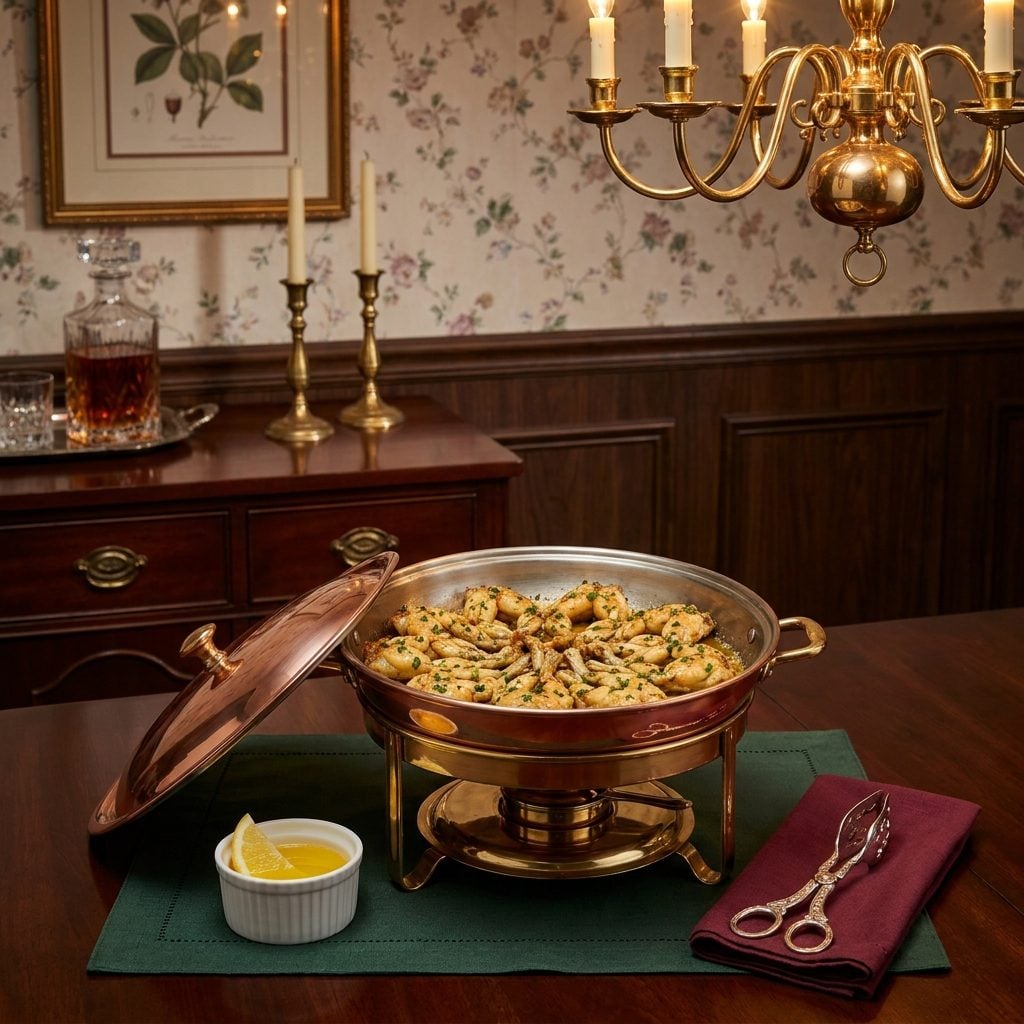
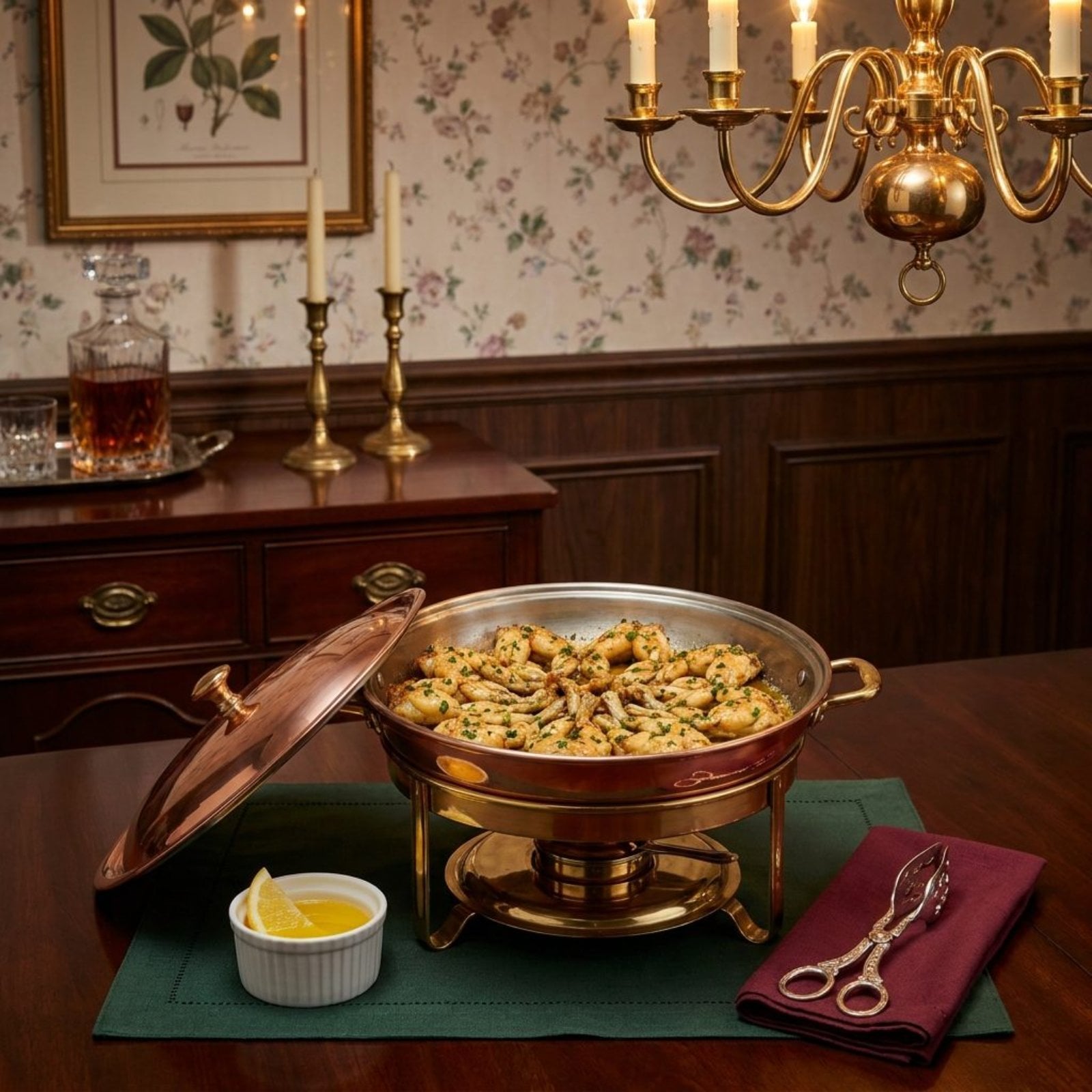
Someone’s dad always made these. Always. He’d been to New Orleans once in 1978 and never recovered from the experience. So every dinner party from then on featured a copper pan of tiny sautéed frog legs swimming in garlic butter, presented with the confidence of a man who believed he was introducing culture to the suburbs.
Half the guests would try one and smile politely. The other half would move their napkin over the plate and pretend they’d already eaten. Kids at the table looked genuinely betrayed. The taste was fine, honestly. Mild, a little like chicken. But the shape of the thing on your fork did all the psychological damage. Try passing these around at a 2024 dinner party and watch people reach for their phones to photograph evidence of your crimes.
9. Escargot in the Shells With Those Special Tongs Nobody Knew How to Use
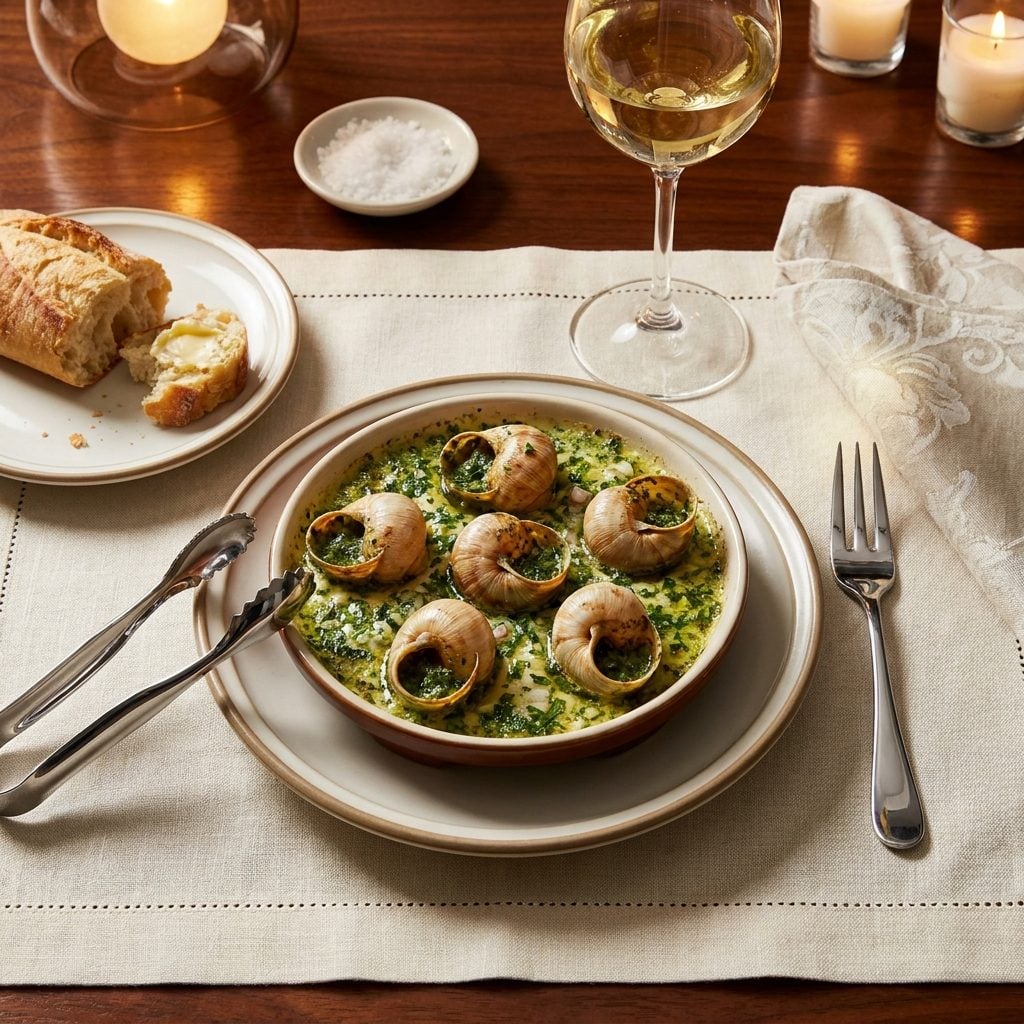
The tongs were the real show. Forget the snails themselves. The entire performance of escargot at an ’80s dinner party was watching seven adults try to operate a spring-loaded metal clamp they’d never touched before, while hot garlic butter pooled dangerously on the tablecloth.
The host had picked up the escargot tong set at Williams-Sonoma, still in the box. The canned snails came from a gourmet shop downtown. The whole affair reeked of compound butter and aspiration. And it worked, sort of. People felt sophisticated. Nobody mentioned that they were eating a garden pest from a can.
8. Baked Alaska, Torched Tableside Like a Culinary Magic Trick That Could Burn Your Eyebrows Off
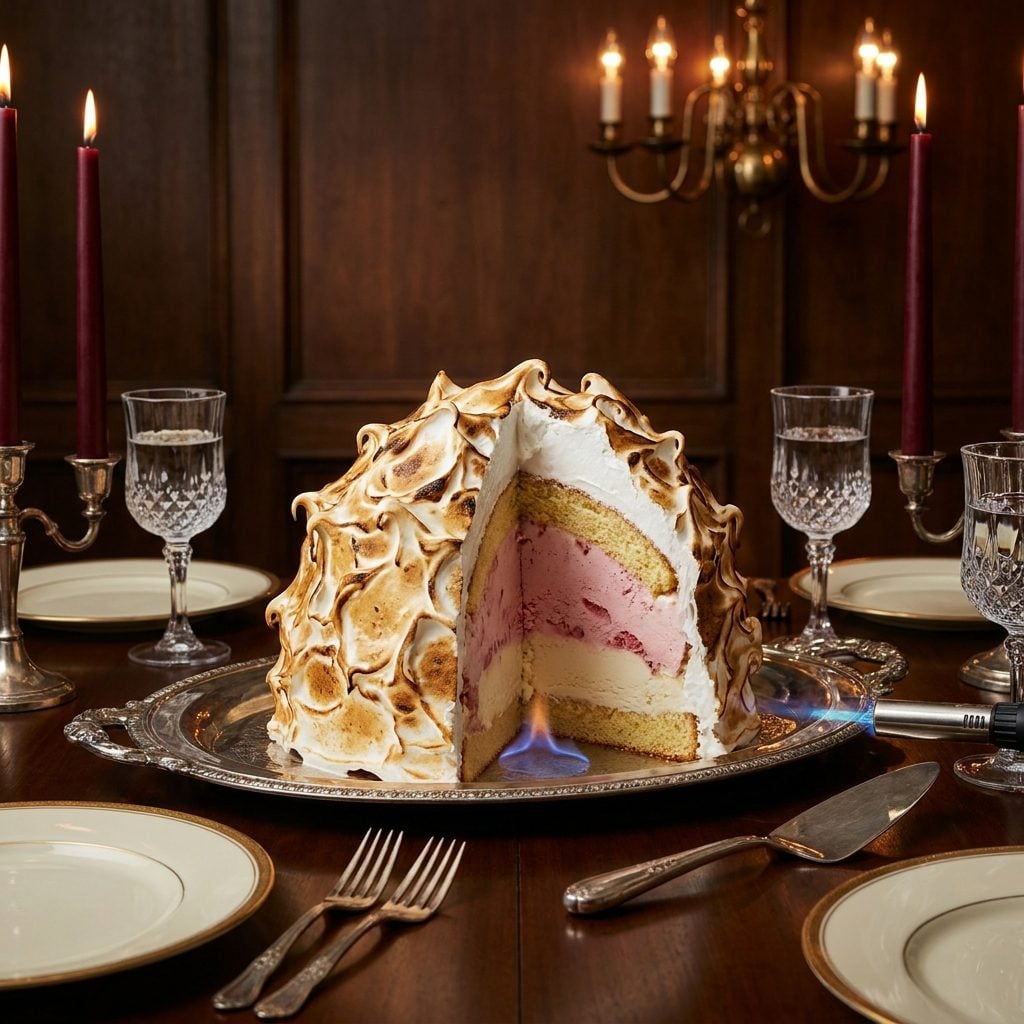
This was the ’80s dinner party mic drop. The lights in the dining room dimmed. The host emerged from the kitchen carrying what looked like a meringue volcano on a silver tray. Someone had a lighter, or worse, one of those little blowtorches from a hardware store. Then the whole thing got torched right there at the table while guests made sounds usually reserved for fireworks displays.
The engineering was genuinely impressive. Ice cream inside meringue inside an oven. It shouldn’t work and yet it did, assuming the host hadn’t panicked and left it in too long. When it was good, you got this gorgeous contrast of warm, slightly crispy meringue giving way to frozen strawberry ice cream. When it failed, you got meringue soup with cake chunks. Either way, everyone clapped.
7. Cherries Jubilee, Because Nothing Said ‘Dinner Party’ Like Setting Fruit on Fire
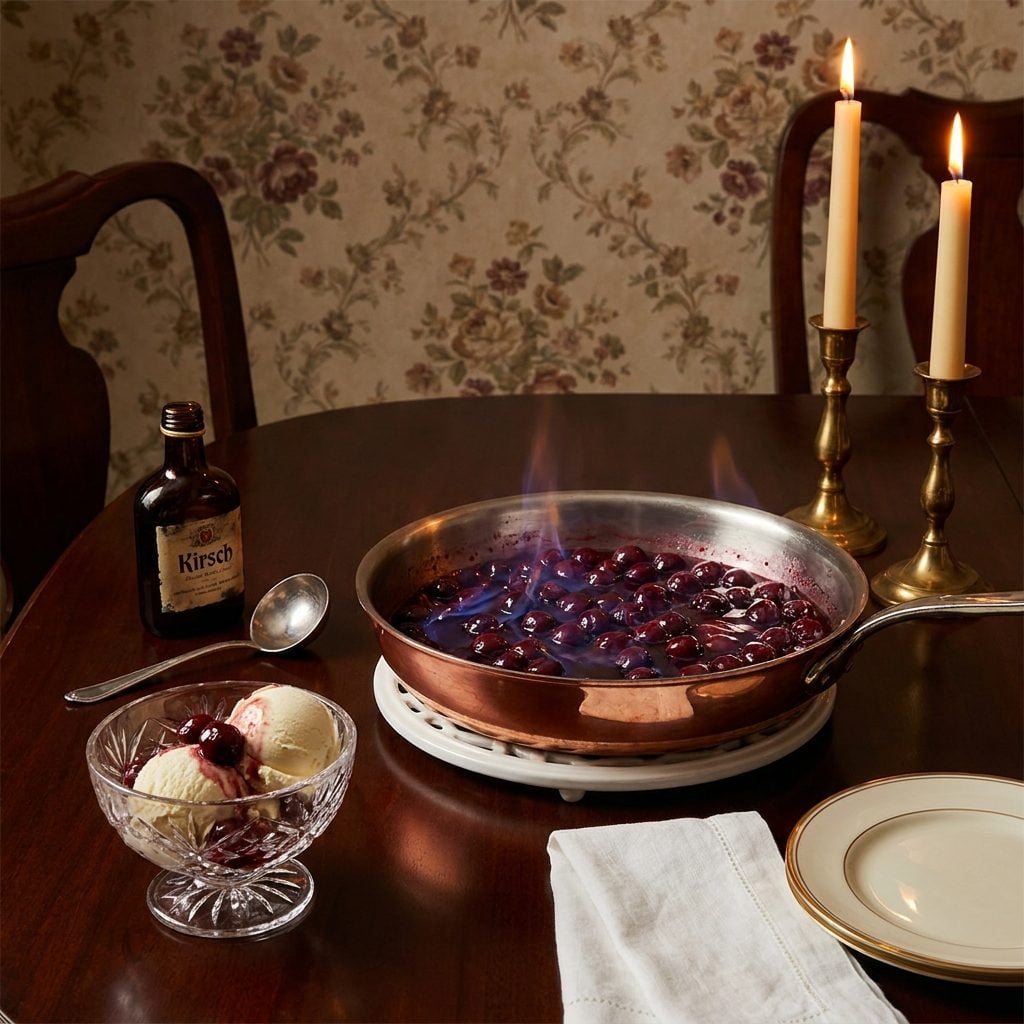
Cherries Jubilee required exactly two things: a bottle of kirsch that had been sitting in the liquor cabinet since 1974, and the nerve to light it on fire in front of company.
The cherries themselves were usually canned, sometimes jarred if the host was feeling ambitious. They got warmed in a pan with sugar and butter, then the brandy went in, then a match. The blue flame was always smaller and less dramatic than everyone hoped. But it flickered enough to make the dining room gasp, and then the whole shimmering mess got ladled over vanilla ice cream that immediately started melting into a pink river on the plate.
6. Bananas Foster Flambéed Right at the Table, Because One Fire Dessert Was Never Enough
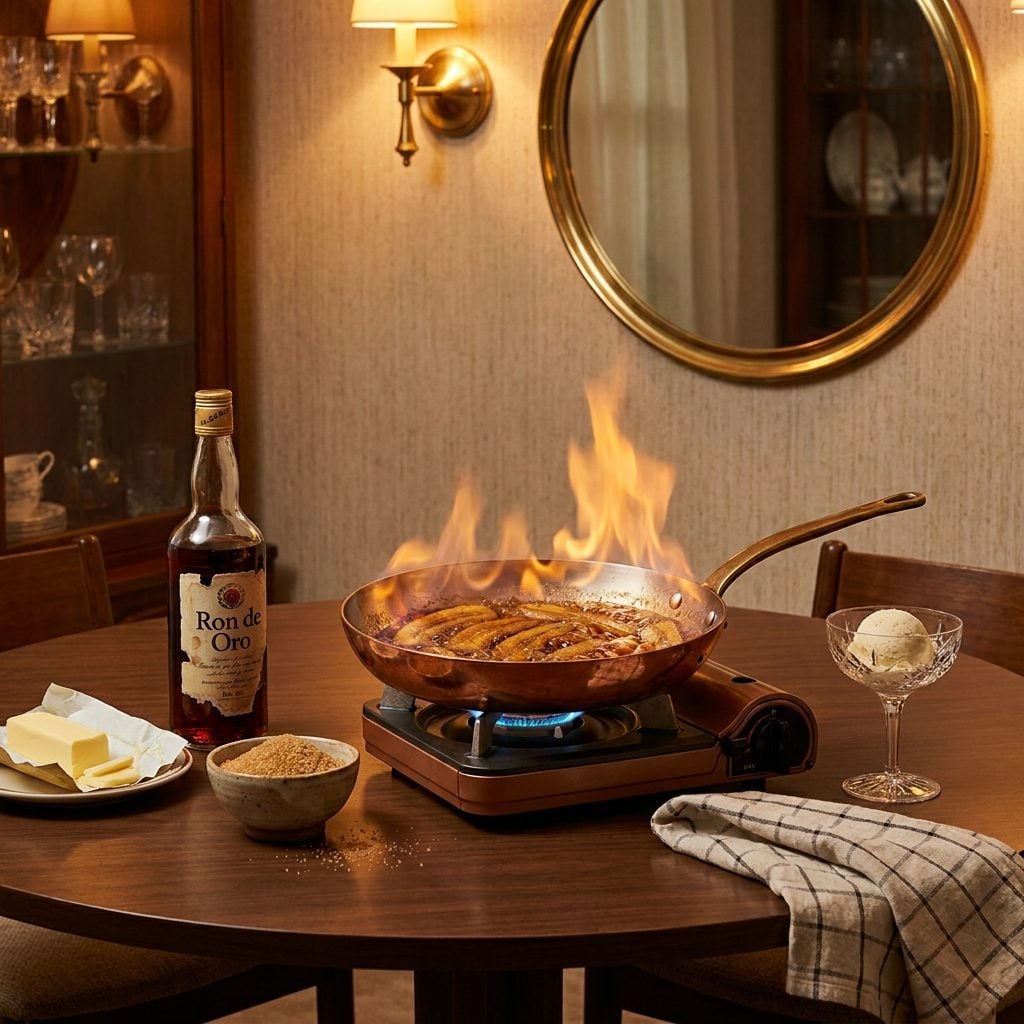
If the Cherries Jubilee went well, someone inevitably said, “You know what, let’s do Bananas Foster too.” And so the same copper pan came back out, this time with sliced bananas, a dangerous amount of brown sugar, half a stick of butter, and dark rum splashed in with the casual precision of someone who’d had three glasses of wine.
The flame on this one was always bigger. Rum burns hotter than kirsch, and the brown sugar spatters. It was thrilling and genuinely dangerous and it tasted extraordinary, those caramelized bananas collapsing into warm butterscotch over cold ice cream. Brennan’s restaurant in New Orleans invented it in 1951. By 1984, every ambitious home cook in America had attempted it at least once, with varying degrees of success and smoke detector involvement.
5. The Seven-Layer Salad That Sat in a Glass Bowl So You Could See Every Suspicious Layer
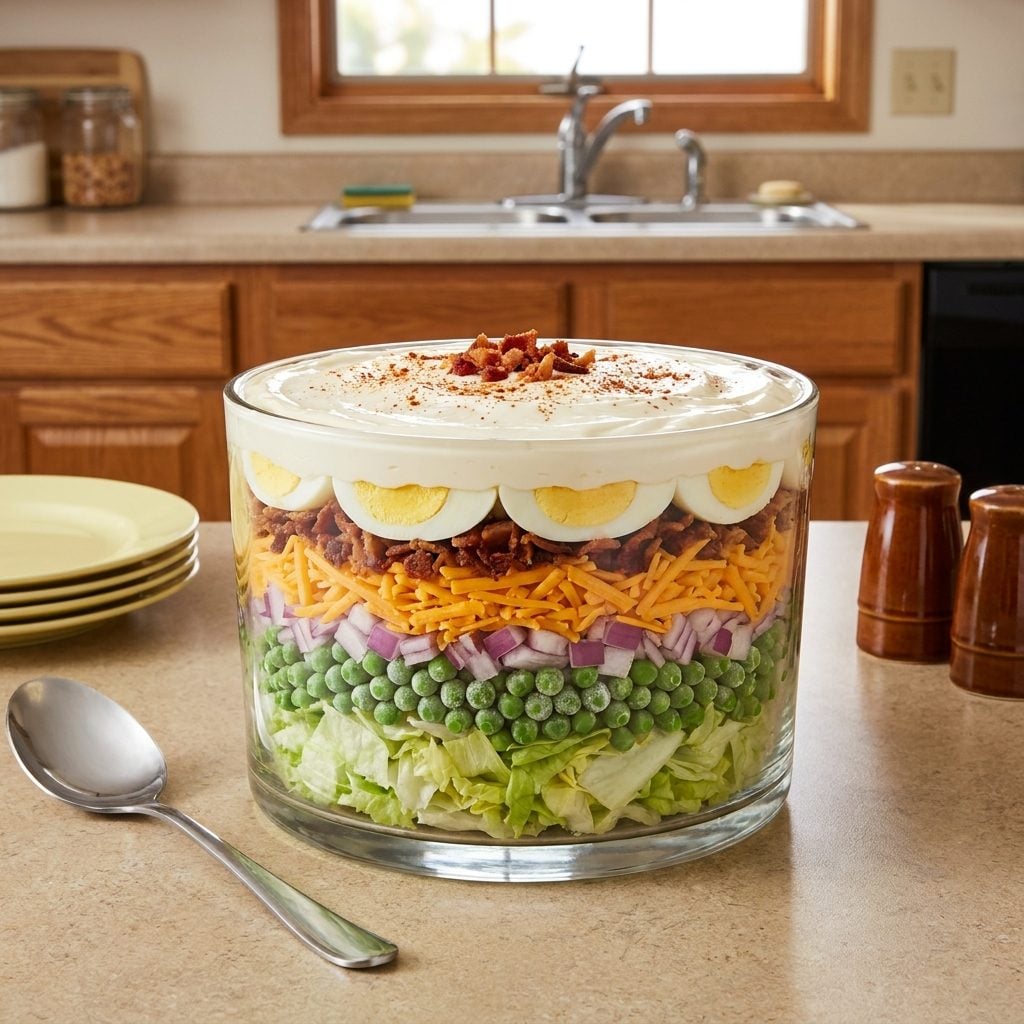
The glass bowl was mandatory. That was the whole point. You were supposed to see the architecture: lettuce, frozen peas, onion, cheddar, bacon, eggs, and then the finale, a solid half-inch of mayonnaise spread across the top like spackling compound on drywall.
This salad sat in the fridge overnight, which meant the mayo slowly seeped downward while the peas thawed into something resembling actual vegetables. By the time it hit the table, the bottom layers had merged into a cold, creamy amalgamation that was either revolting or deeply comforting depending on your relationship with mayonnaise. There was no in-between opinion on seven-layer salad. You either ate three helpings or you didn’t touch it.
4. Chicken à la King Poured Over Toast Points Like a Beige, Creamy Tidal Wave
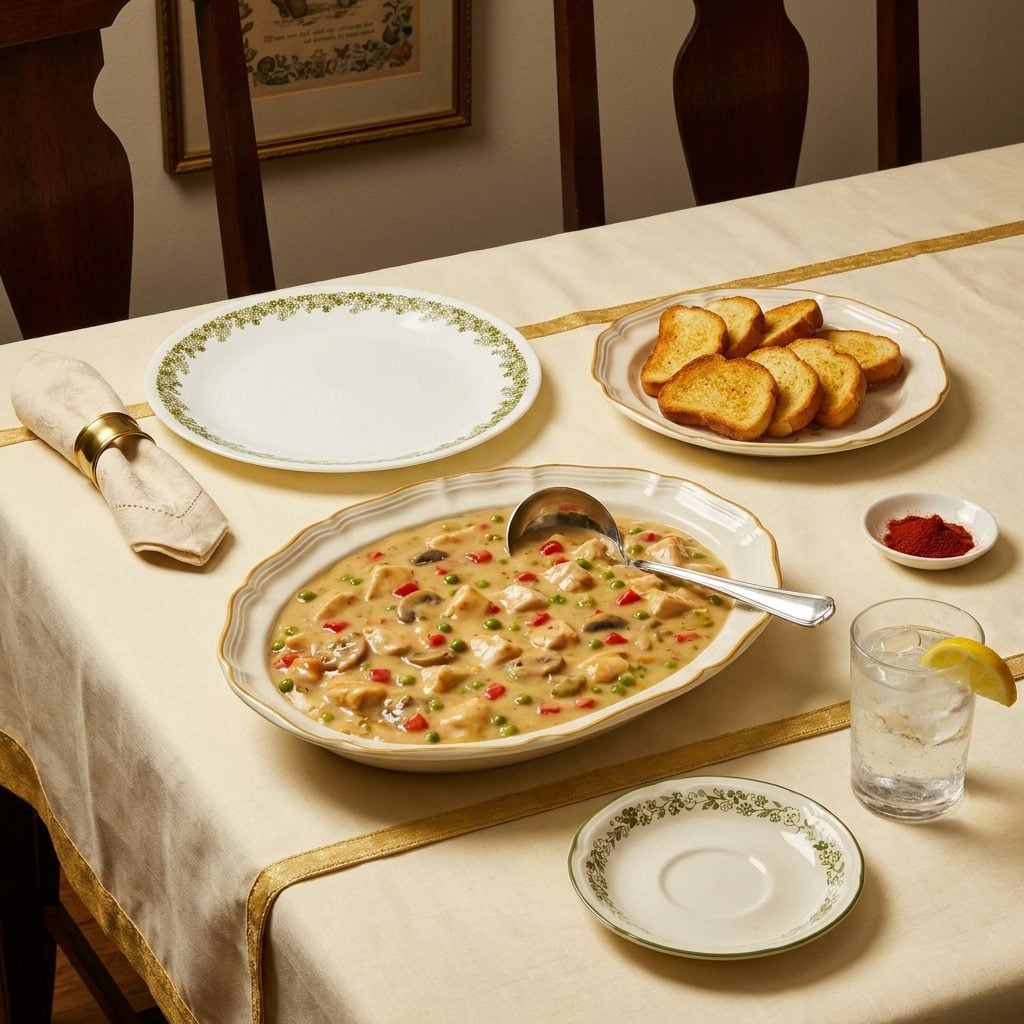
Beige. The whole plate was beige. Beige sauce, beige chicken, beige toast, with exactly three pimento squares and two peas providing the only evidence that color existed as a concept. Chicken à la king was the dinner party main course for people who wanted to cook something “fancy” but also had to feed eight people for under twelve dollars.
The sauce was a béchamel base, usually made with canned cream of mushroom soup when nobody was looking. It got ladled over toast points that immediately went soggy, creating a texture that lived somewhere between bread pudding and wet cardboard. And yet. There was something deeply, almost aggressively comforting about it. It tasted like your mom’s kitchen and a hotel banquet hall at the same time, which is a combination that shouldn’t work but absolutely did in 1985.
3. Beef Stroganoff Built Entirely on a Foundation of Campbell’s Cream of Mushroom Soup
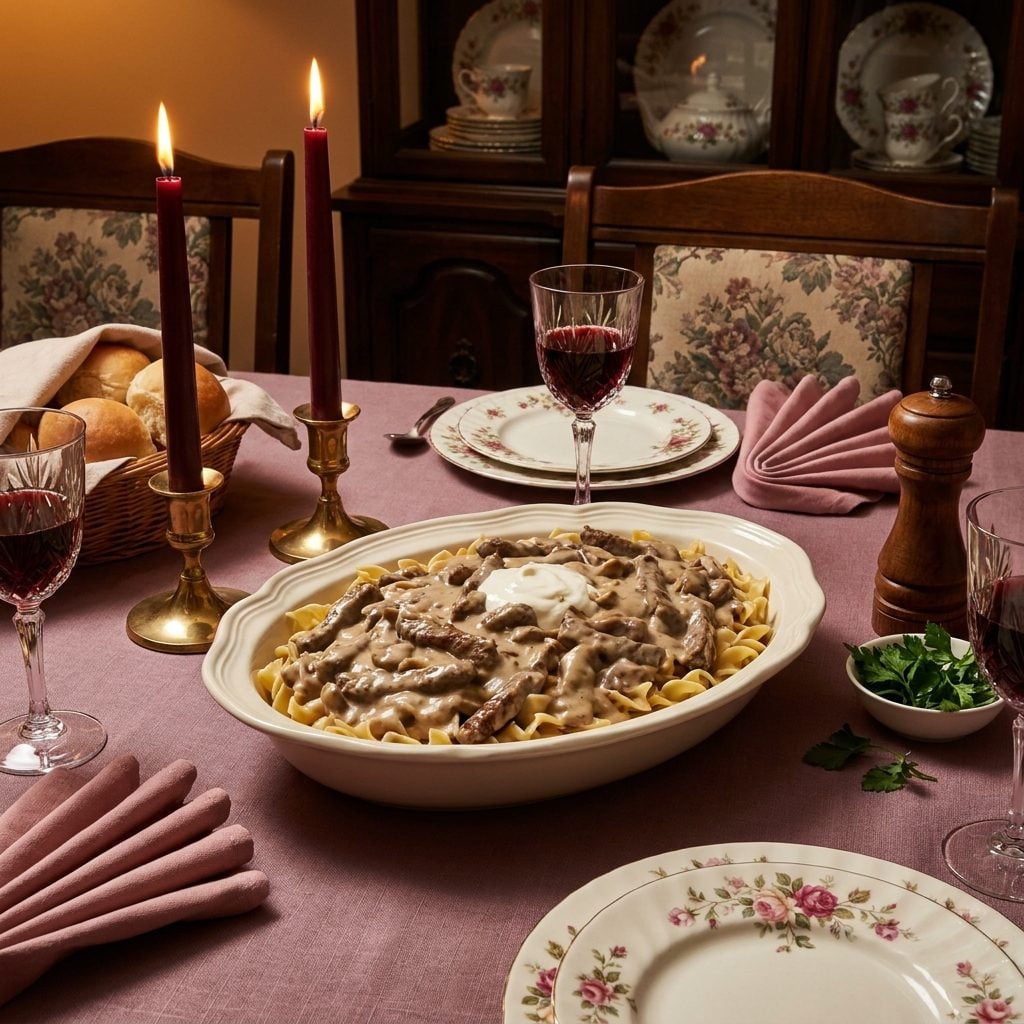
The can opener was doing more work than the chef. Every beef stroganoff recipe in every church cookbook and every issue of Good Housekeeping from roughly 1978 to 1989 called for one can of condensed cream of mushroom soup, a container of Daisy sour cream, and some strips of round steak that had been pan-fried to the texture of shoe leather. It all went over egg noodles, and nobody questioned it.
The thing is, it tasted fine. That’s the uncomfortable truth. The soup gave it a salty, vaguely fungal richness that passed for sophistication on a Wednesday night. Serve it today and someone will ask if you’re being ironic.
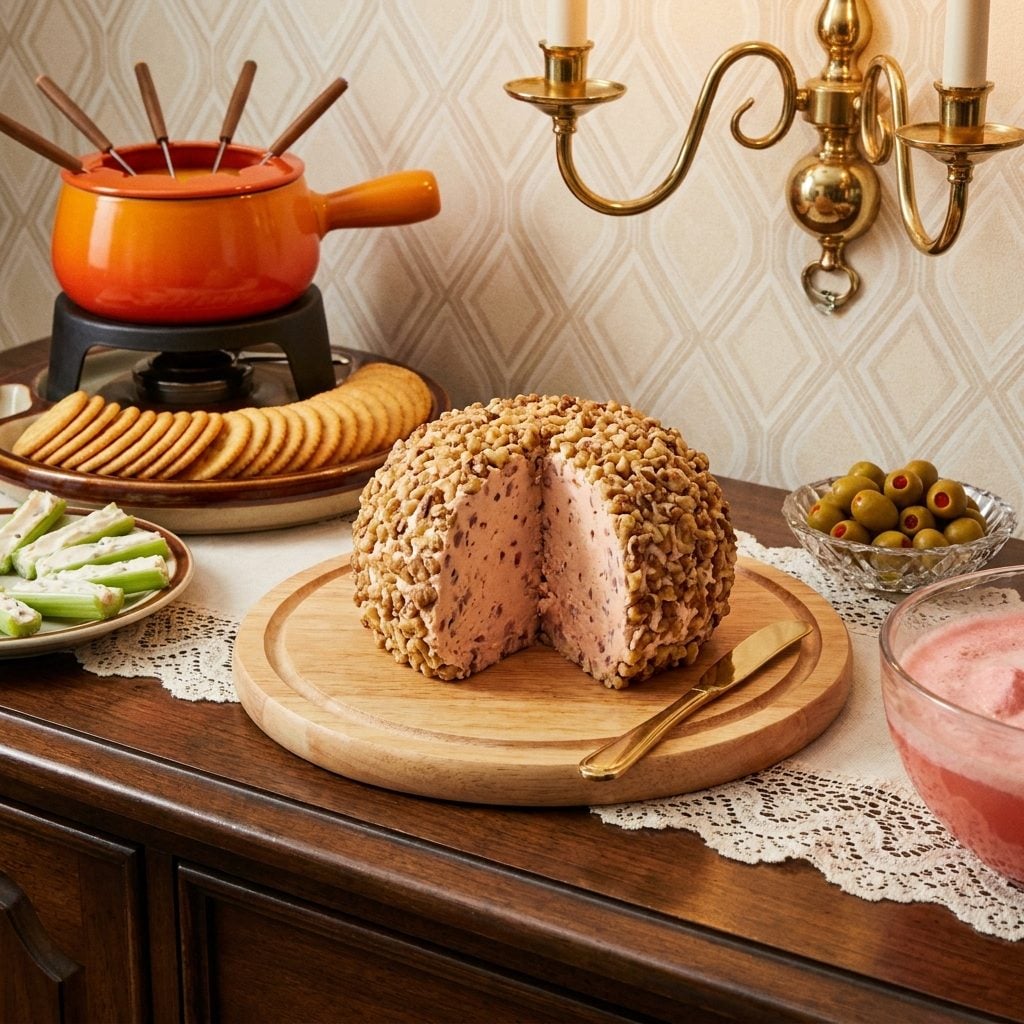
2. The Deviled Ham Cheese Ball Rolled in Chopped Walnuts That Anchored Every Appetizer Spread
🔥 Would you like to save this?
Every party had one. It sat in the middle of the coffee table on a wooden board, surrounded by a perfect sunburst of Ritz crackers, and nobody touched it for the first forty-five minutes because it looked too intact to ruin. Then one brave soul dragged a cracker through it and the whole thing was demolished in ten minutes flat.
The recipe was always some version of: two blocks of cream cheese, one can of Underwood Deviled Ham, a packet of ranch seasoning or a splash of Worcestershire, mixed together, rolled into a ball, then coated in chopped pecans or walnuts. The outside had a sophisticated, cocktail-party appearance. The inside tasted like what it was: canned meat product bound by cream cheese.
Try bringing one to a gathering in 2024 and watch someone quietly Google “what is deviled ham” on their phone under the table.
1. Iceberg Wedge Salads Absolutely Drowning in Kraft Chunky Blue Cheese from a Bottle
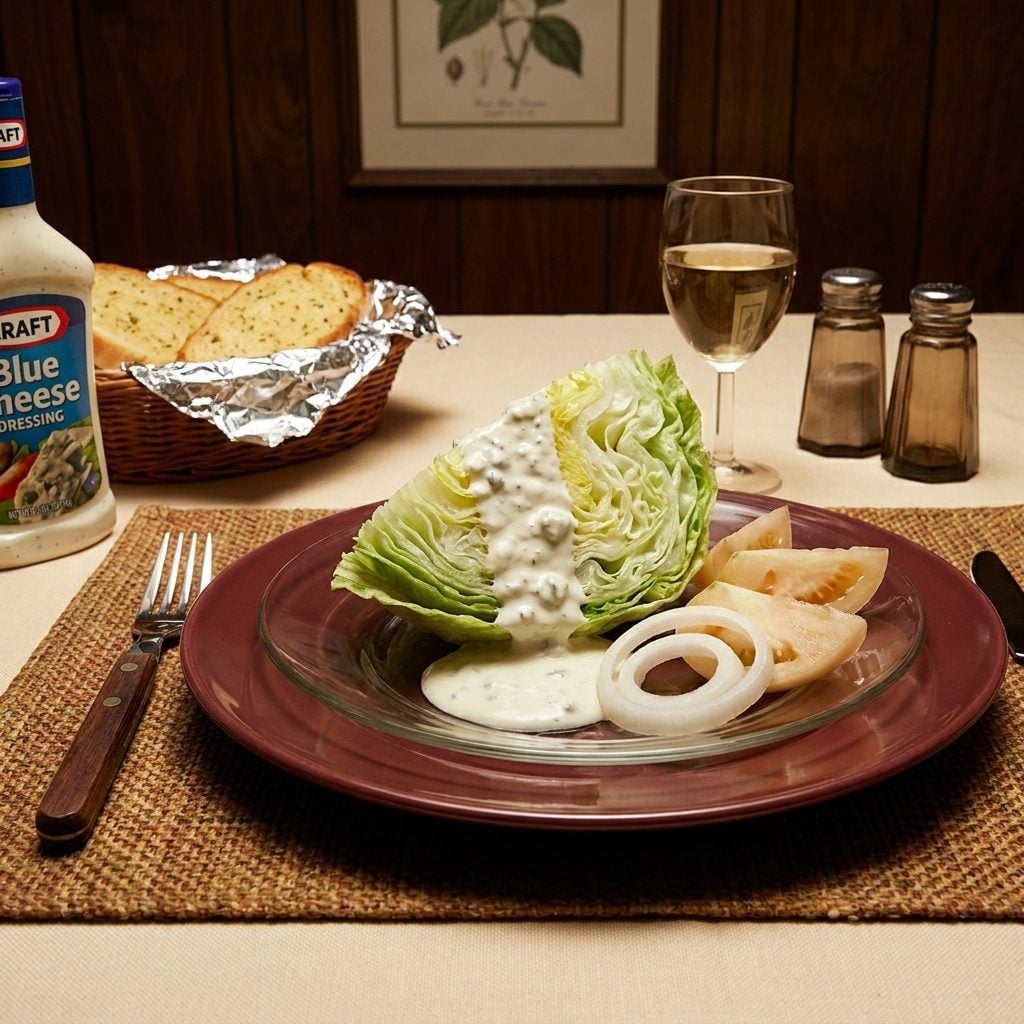
Iceberg lettuce had one job in the 1980s, and it wasn’t providing nutrition. It was providing a vehicle for blue cheese dressing. The wedge arrived at the table looking like a pale green doorstop that someone had thrown a snowball at. The dressing pooled in the plate. It ran off the sides. There was always more dressing than lettuce, and nobody considered that a problem.
The lettuce itself contributed almost nothing: some cold crunch and a faint, watery flavor. The real star was whatever was in that Kraft bottle, a thick, tangy, vaguely funky substance that bore only a passing resemblance to actual Roquefort. A few mealy winter tomato wedges completed the presentation.