🔥 Would you like to save this?
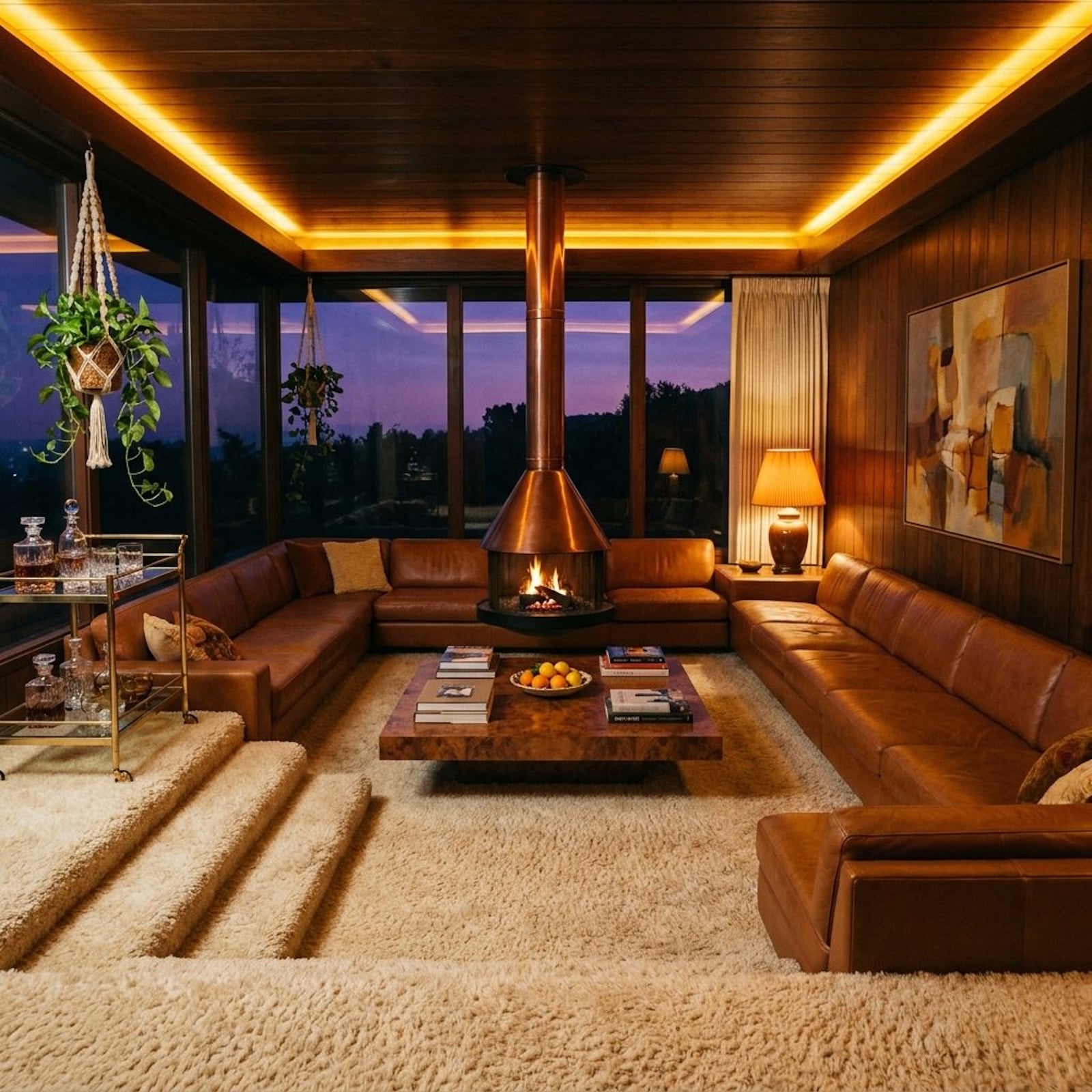
The carpet was thick enough to lose a sock in. You stepped down into it and something shifted, the noise of the house stayed up there, and you dropped into something quieter, softer, more serious about comfort. The sunken living room was the 1970s at its most confident: a room that announced, the moment you descended those two or three steps, that whoever built this place had opinions. These are the details that made it unforgettable.
22. The Moment the Party Moved to the Pit and Never Came Back to the Rest of the House
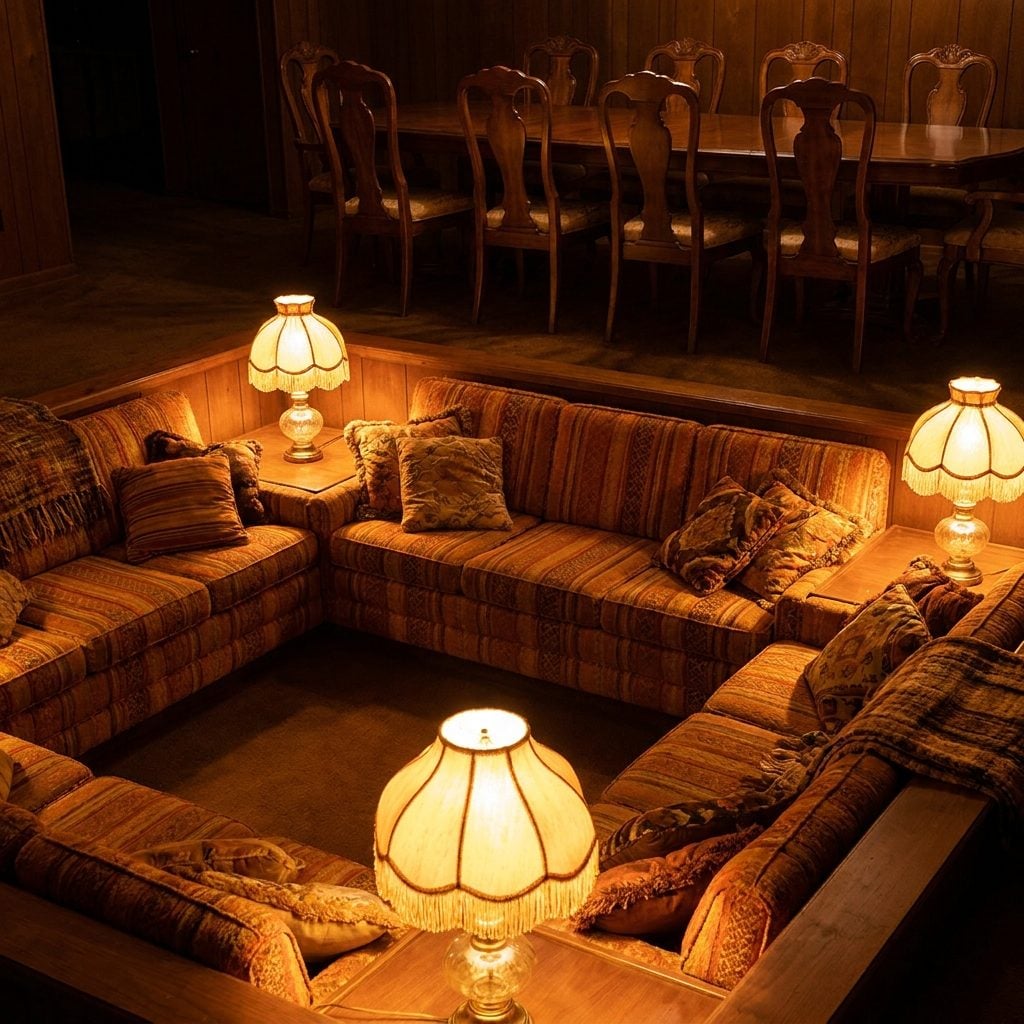
You could always tell how a party was going by whether anyone was still on the main floor. If the dining chairs were empty and the fondue pot had migrated to the coffee table in the pit, the night had officially started. The sunken living room had a gravitational pull that no other room in any house of that era could match. Once one person went down, the rest followed within minutes, and nobody climbed back out until the last record had played.
In order to come up with the very specific design ideas, we create most designs with the assistance of state-of-the-art AI interior design software. Also, assume links that take you off the site are affiliate links such as links to Amazon. this means we may earn a commission if you buy something.
It wasn’t just comfort, though the low cushions and the wraparound seating helped. It was the enclosure. The pit created its own small world, one step below the rest of the house and somehow a world apart from it. Conversations got quieter and more honest down there. The room above with its transitional great room proportions felt formal by comparison. The pit felt like somewhere you actually meant to be.
21. The Three Carpeted Steps That Turned an Entrance Into a Descent
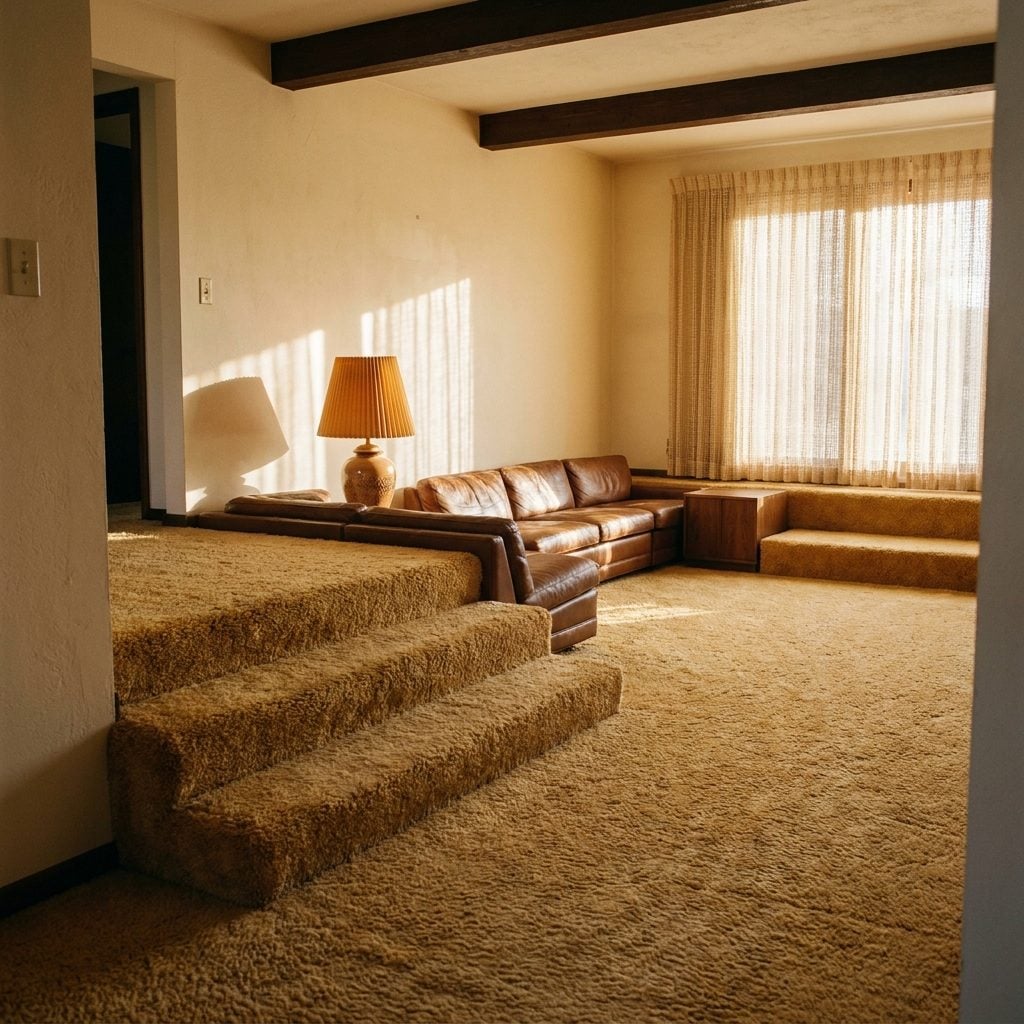
Those steps did something no modern floor plan can replicate. You didn’t walk into the room — you descended into it, like the host had built a small ceremony into the framing itself.
Carpet ran continuously from foyer to pit, so the drop felt soft and inevitable. Guests took the steps slowly, half because of the pile depth and half because they were already looking around, and by the time they reached the bottom they’d been given a moment to arrive.
20. The Wraparound Sectional That Was Basically Furniture Choreography
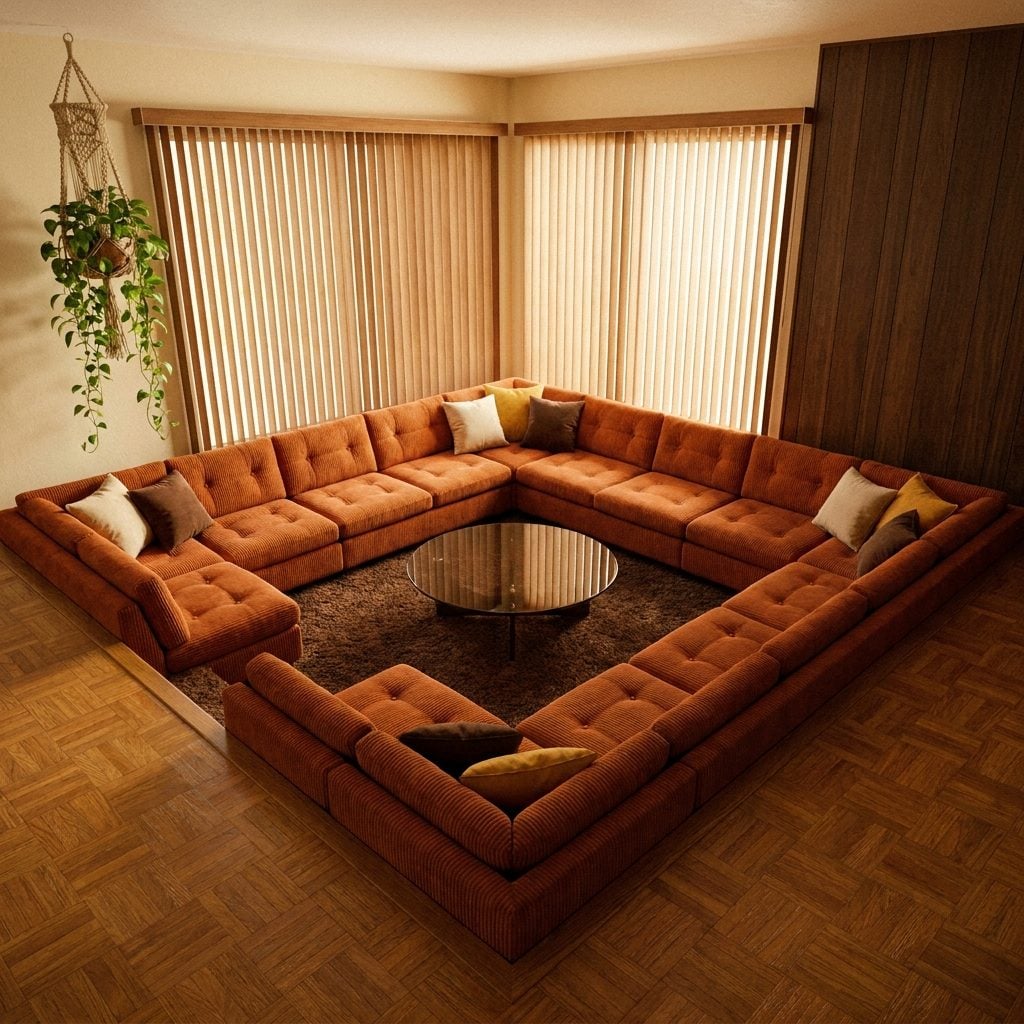
Nobody had to negotiate seating. The sectional wrapped the pit on three sides, so every guest landed somewhere with a clean view of every other guest, and no one got stuck on a lonely armchair pointed at the wall.
Eye contact geometry was the whole design. Conversation moved around the ring instead of across some coffee-table divide, and the low back cushions kept sightlines open. It was the closest a piece of furniture ever came to hosting the party for you. If you’re building a modern transitional great room, this is the layout logic worth stealing.
19. The Central Fireplace That Everyone Faced Whether They Meant To or Not
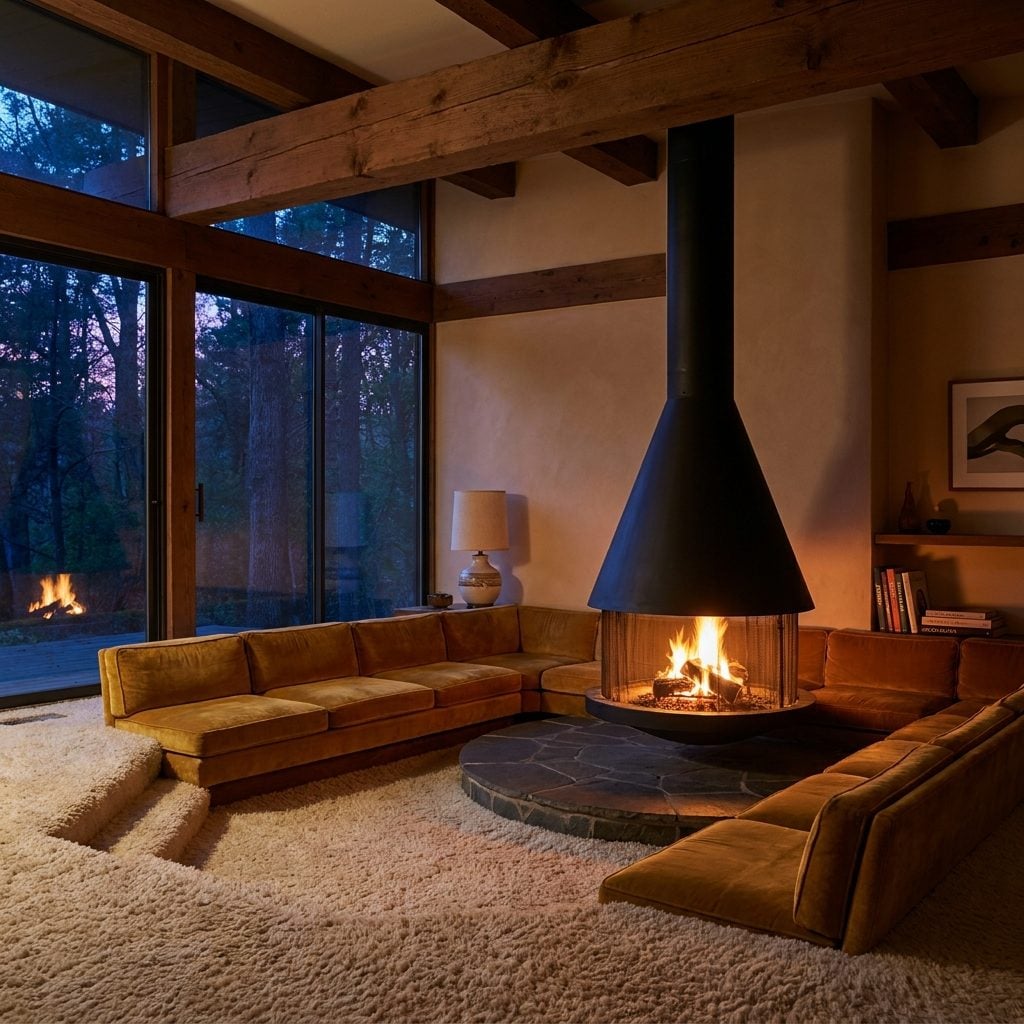
A cone of black steel suspended from the ceiling with a real fire inside. That was the centerpiece, and it did not have to try any harder than that.
Because it sat in the middle rather than shoved against a wall, every seat in the pit was a front-row seat. Guests turned toward it without being asked. The fire ran the room.
18. The Bar Cart Wheeled to the Edge Like a Room Service Call
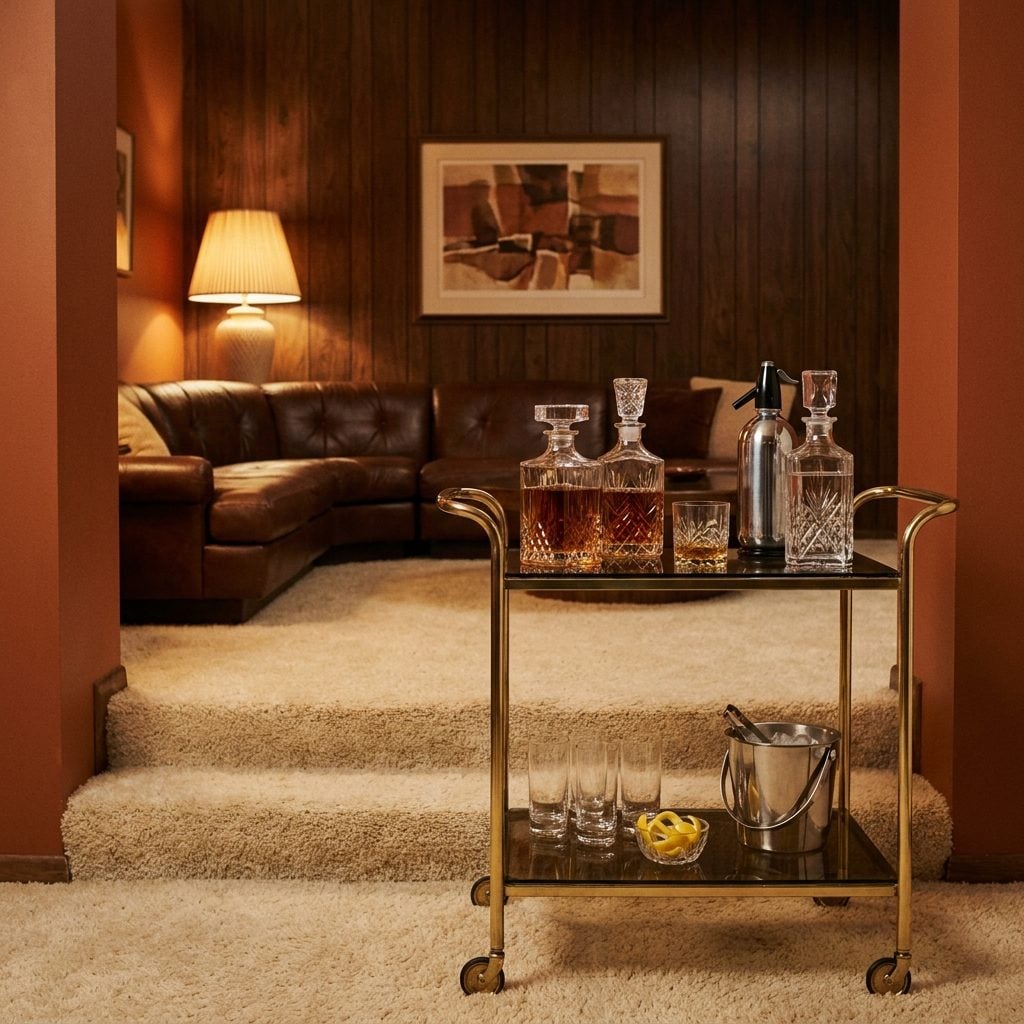
The brass bar cart rolled to the top step and stopped there. Guests didn’t have to get up. Drinks came to the edge of the pit like an offering.
Cut crystal decanters, a proper ice bucket, tongs that actually got used. The host poured from a standing position above the seated crowd, and somehow a gin and tonic became a small ceremony. Everyone got the version of themselves who accepts a drink graciously.
17. The Shag Carpet That Swallowed Your Shoes and Half Your Voice
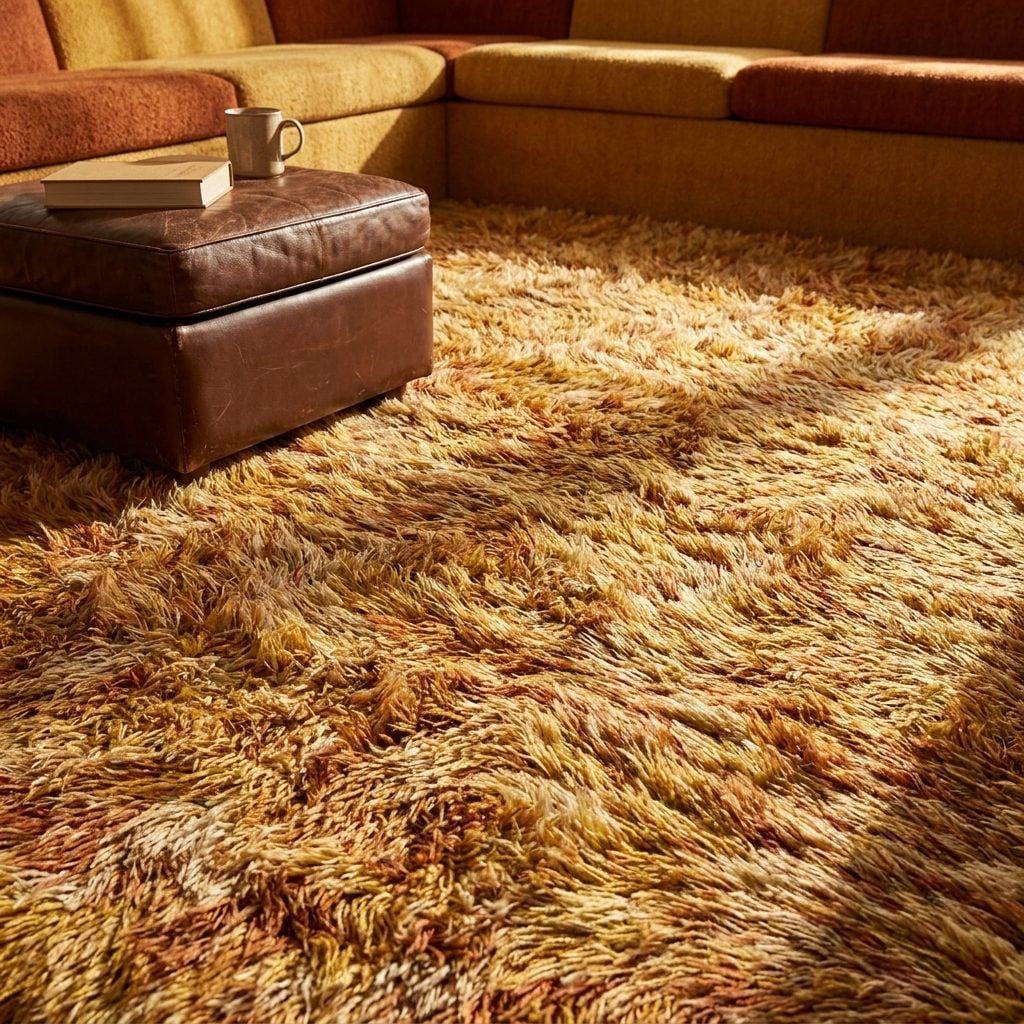
Ankle-deep and warm, the shag did something specific to the acoustics of the room — voices softened, music sat closer, even the ice in someone’s glass sounded muffled and cozy.
You took your shoes off without being asked. The floor made the decision for you.
16. The Ceiling That Dropped Just Enough to Feel Like a Canopy
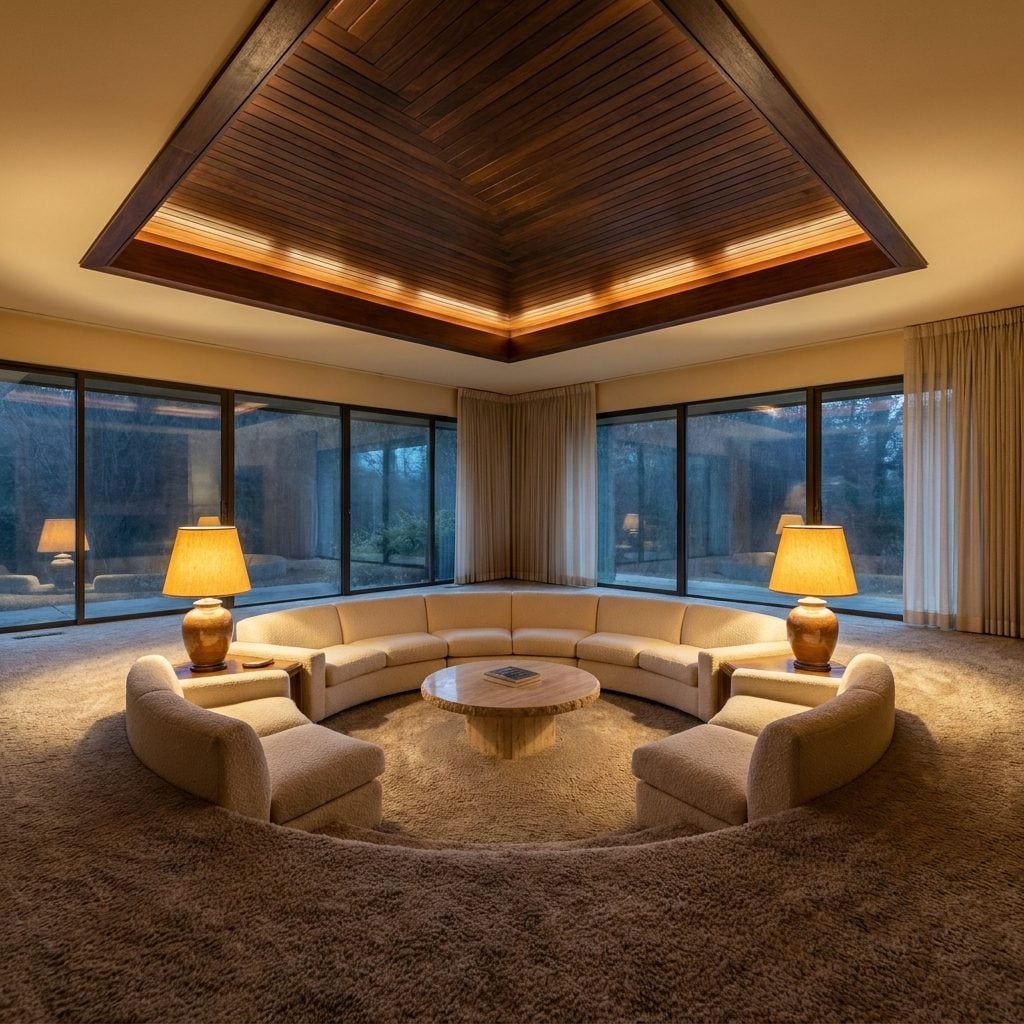
The best architects understood something specific. If you drop the floor by three feet, you also want to drop the ceiling a touch above the pit itself, creating a shelter within the shelter.
What you got was a room-within-a-room that felt held — voices contained, the rest of the house floating up and away somewhere above.
15. The Statement Coffee Table That Doubled as a Sculpture
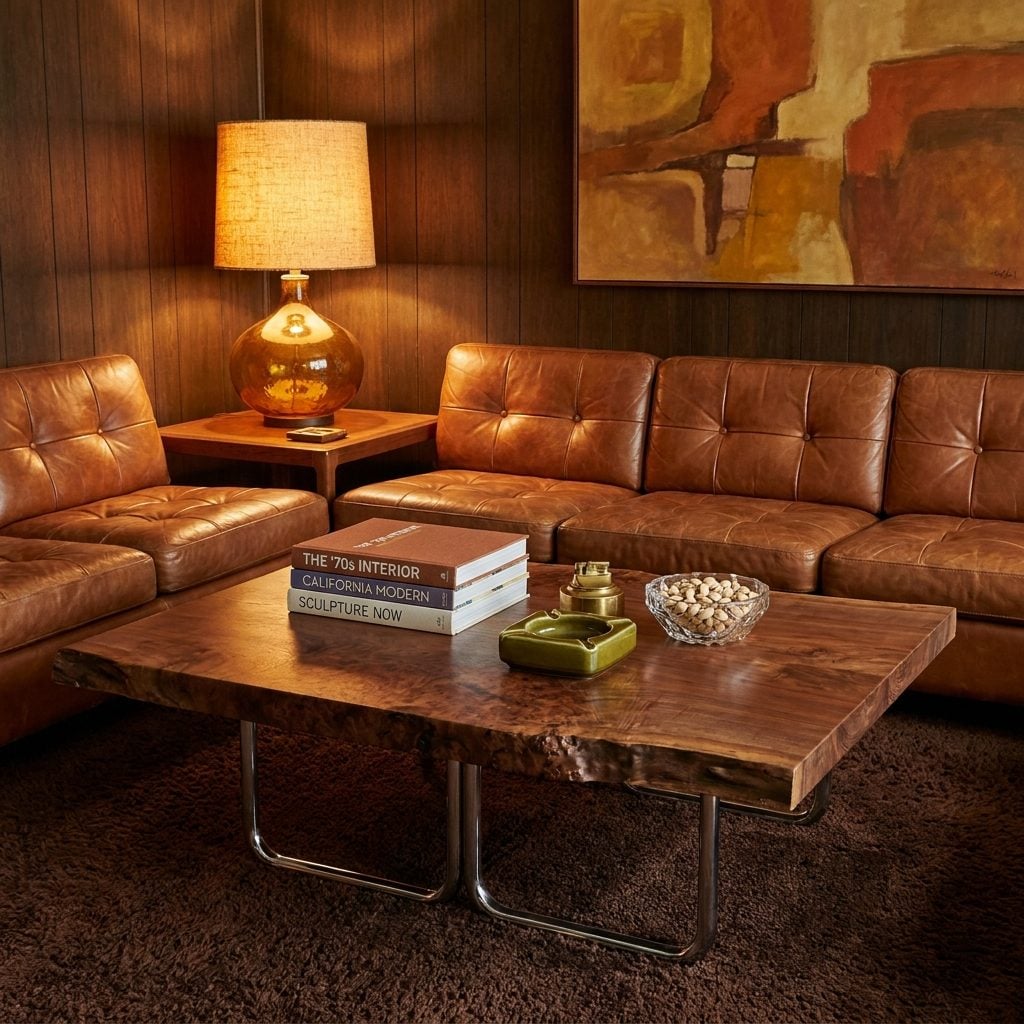
The coffee table wasn’t there to hold a coffee cup. It was doing real work in the middle of the pit — anchoring the geometry, giving the eye a place to land, offering a surface for whatever ritual the evening required.
Burl walnut slabs. Smoked glass on chrome. Travertine drums. Lacquered parsons cubes. Whatever the material, it had been chosen deliberately, and nothing about that choice was casual. In a proper traditional dining room the table runs the show; in the pit, this piece did similar work at a lower altitude.
14. The Recessed Cove Lighting That Made Everyone Look Better
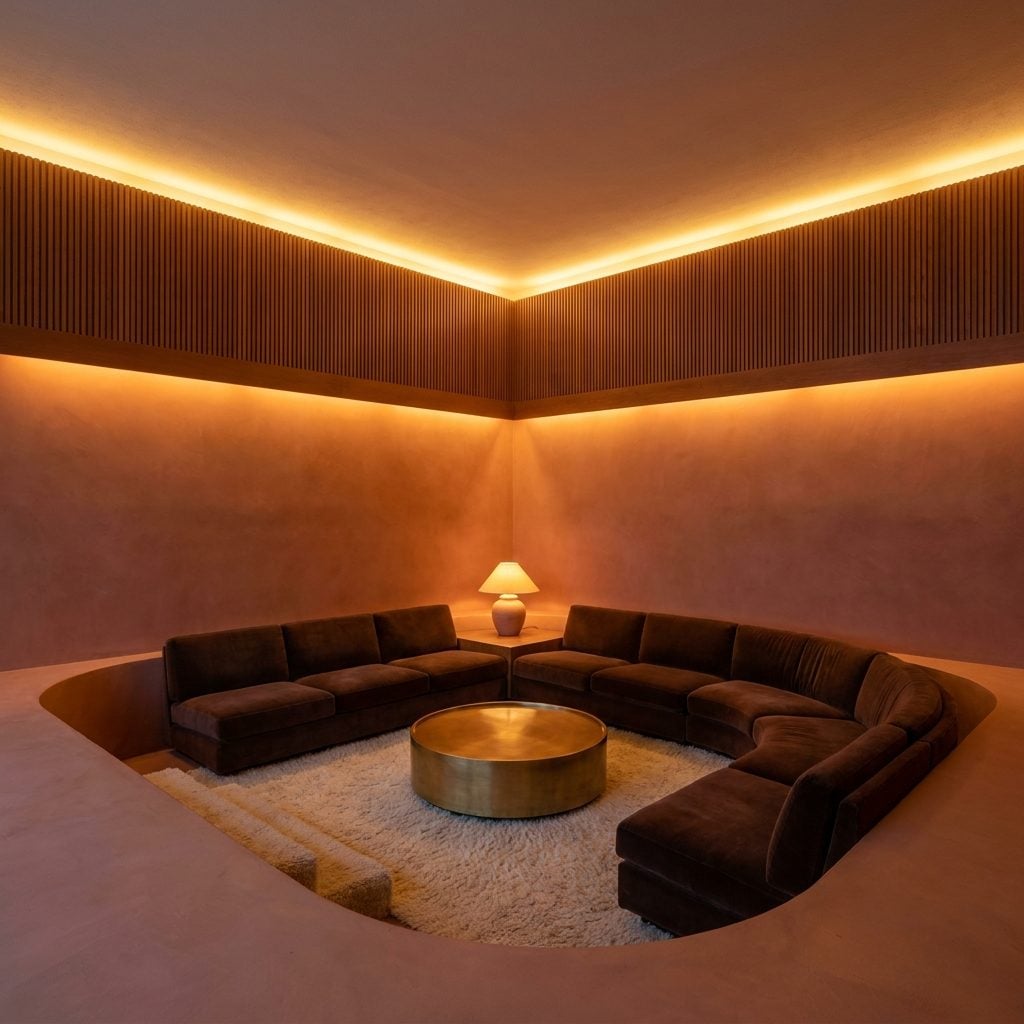
No overhead cans burning down on anyone’s forehead. The pit was lit from a hidden channel running along the top edge, throwing warm light up the walls and back down soft.
Complexions warmed. Wine looked better in the glass. Everyone at the party looked younger and more interesting than they had any right to, and nobody could quite say why.
13. The Built-In Speakers Wired Into the Walls Themselves
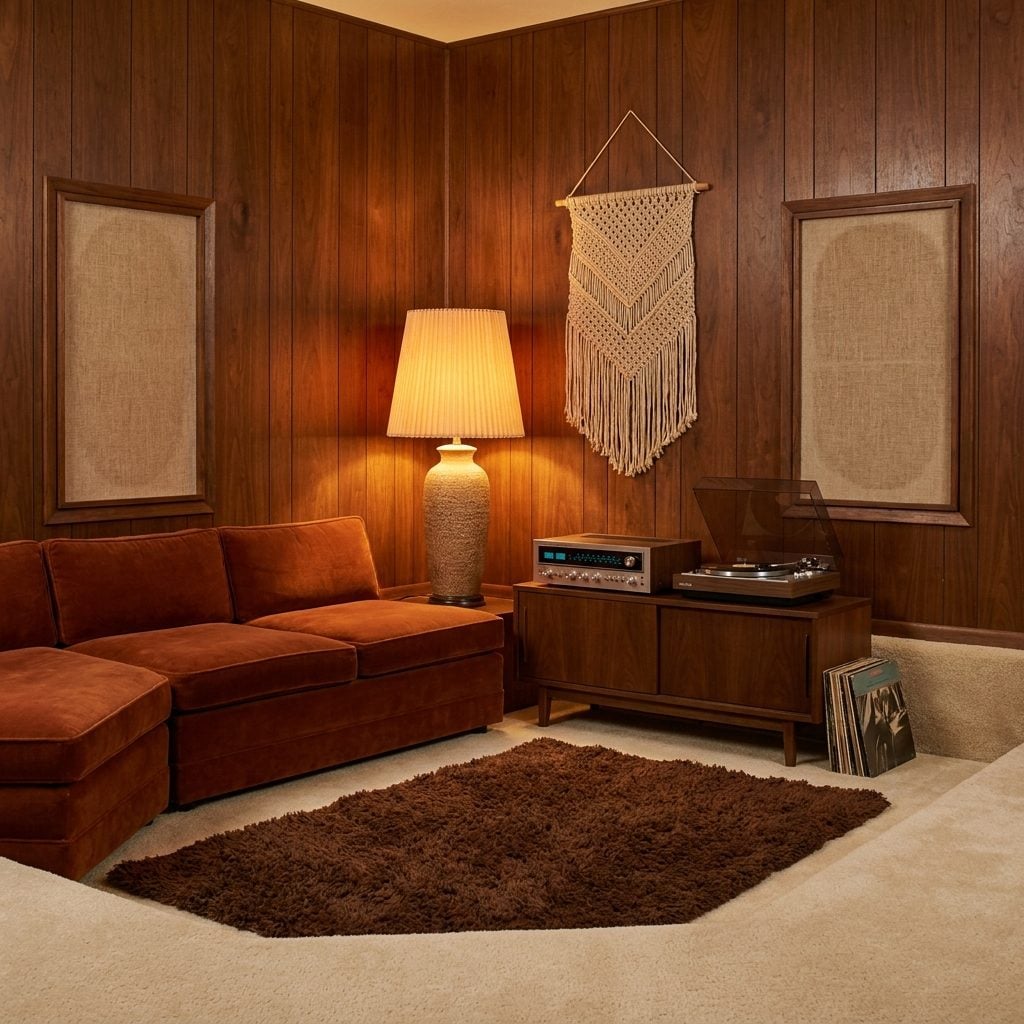
Speakers didn’t sit on stands or crouch in bookshelves. They lived inside the walls, behind linen grilles framed in walnut, wired back to a receiver in the credenza across the room.
Music arrived from everywhere and nowhere — Fleetwood Mac at low volume, filling the pit without a single visible speaker box breaking the sightlines. That was the flex, and it landed every time.
12. The Way the Whole Room Said the Night Wasn’t Going to Be Rushed
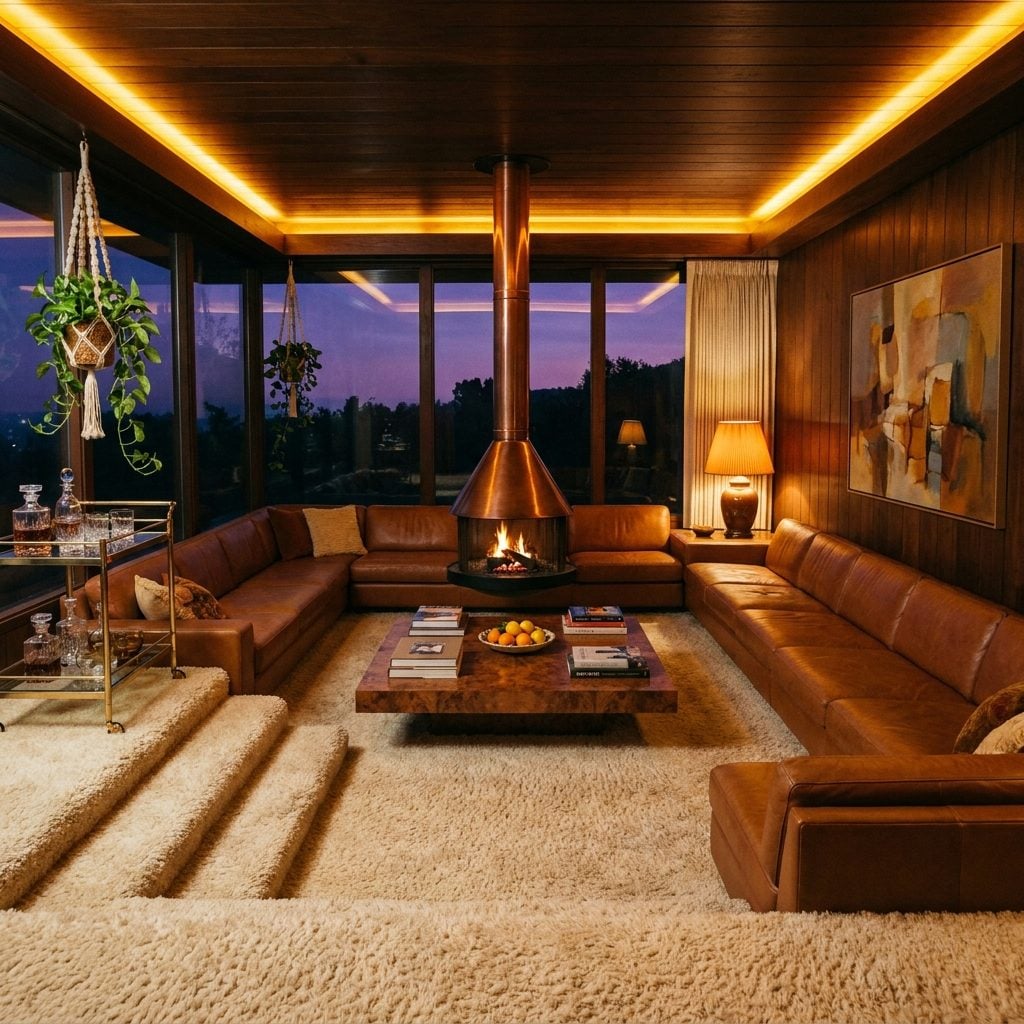
Every choice pointed at the same conclusion. The steps slowed you down, the sectional held everyone in a ring, the fire ran long, and the lights stayed warm and low.
Nothing about the pit said we’ll wrap this up by ten. The whole shape of it was an argument for staying — for another round, for one more record on the turntable, for the conversation that only starts after midnight. Guests felt like royalty because the room had cleared its schedule for them.
11. The Chrome and Smoked Glass Étagère Standing Guard in the Corner
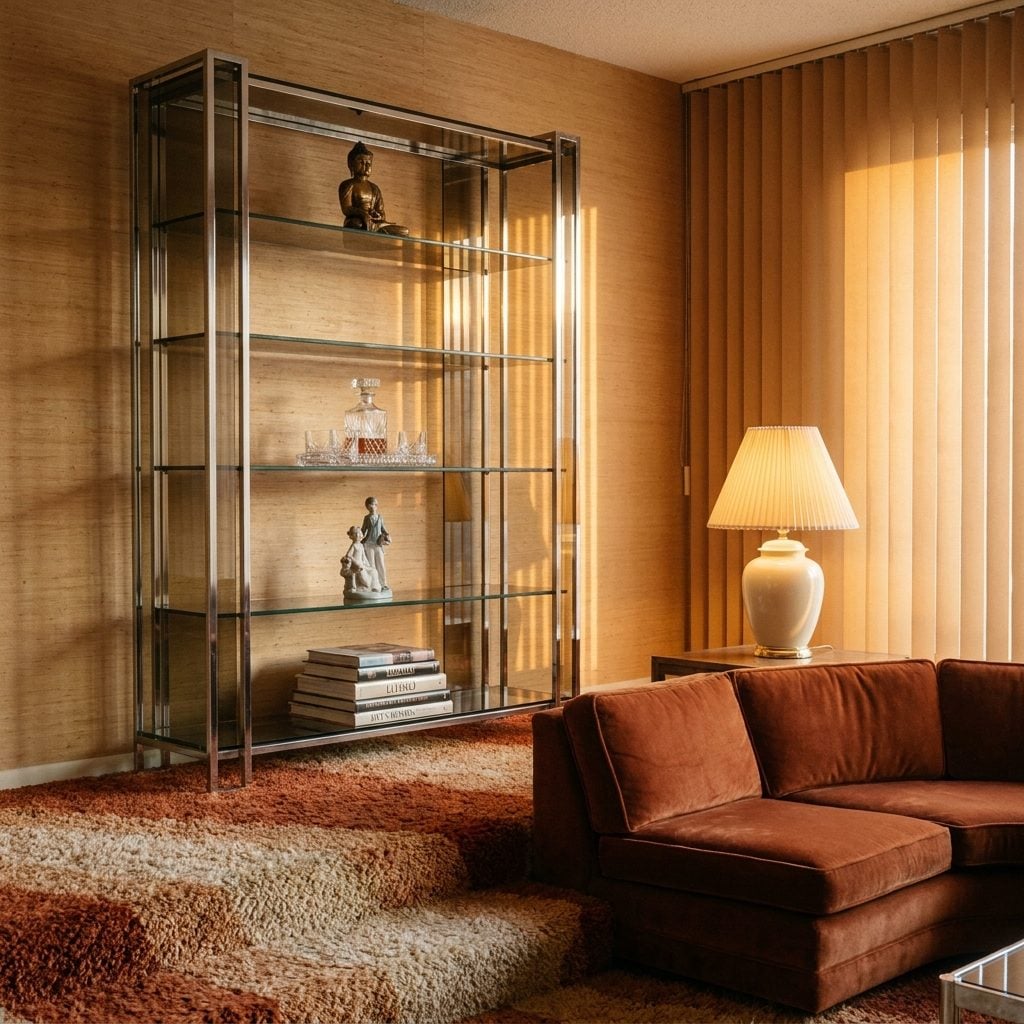
The étagère was the room’s résumé — chrome tubing, smoked glass shelves, and a small permanent collection of objects announcing that the people who lived here had been places and thought about things.
Guests drifted over to it every time. They’d pick up the brass Buddha, ask about the decanter, comment on whichever art book sat on top. The étagère did the small talk for you.
10. The Unspoken Rule That You Always Sat Down Before Anyone Else Arrived
🔥 Would you like to save this?
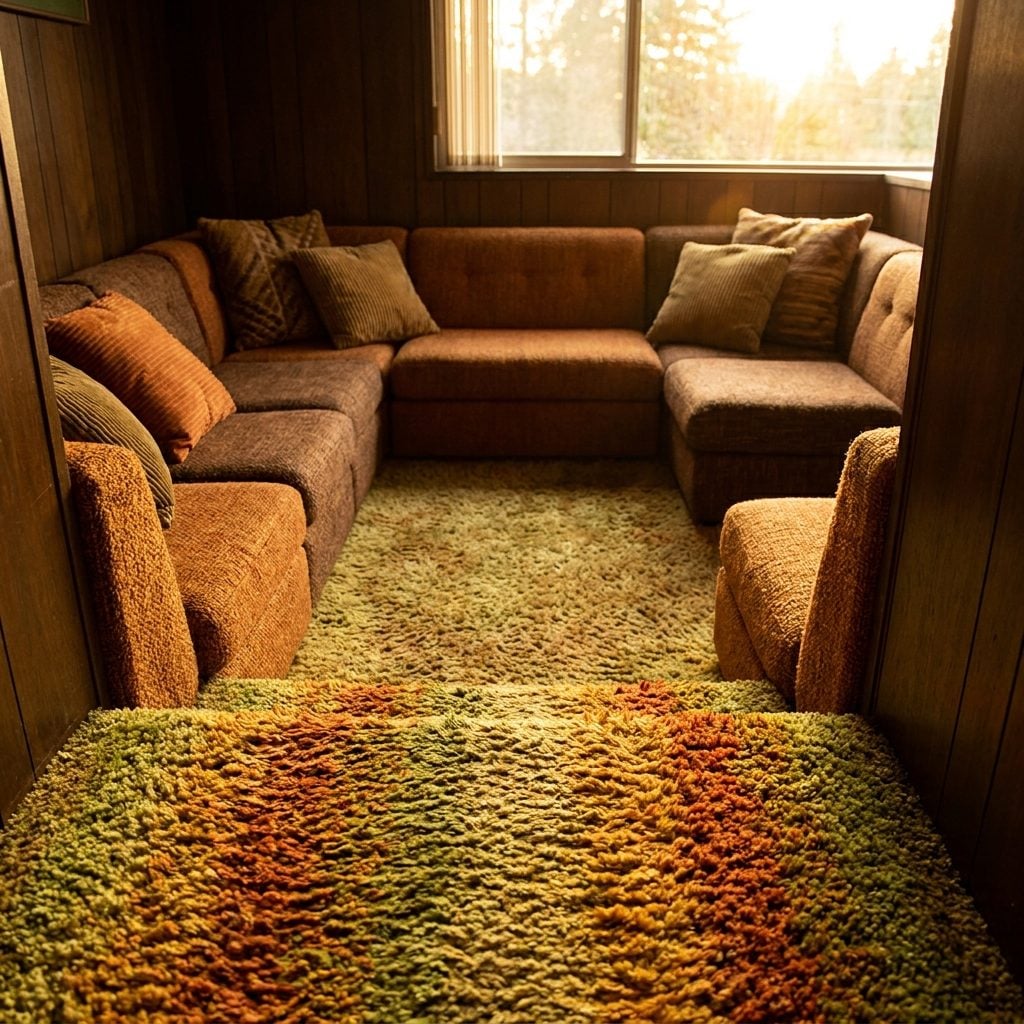
There was a ritual to the sunken living room that nobody ever said out loud but everyone understood. You descended first. You got settled. You arranged yourself on that low sectional before the guests came down, because once you were all seated at pit level, the hierarchy dissolved. Nobody was standing over anyone. Nobody was looking down. Every person in that conversation pit was exactly, deliberately, at the same height.
That was the whole point, really. The architecture did the social work so the host didn’t have to. You weren’t just offering someone a seat. You were offering them a position. A sense that the room had been built with their comfort as the blueprint. That feeling didn’t come from the velvet cushions or the chrome bar cart just steps away. It came from the floor itself having made a decision about how people deserved to be treated.
9. The Macramé Plant Hanger Suspended From a Ceiling Hook Nobody Remembers Installing
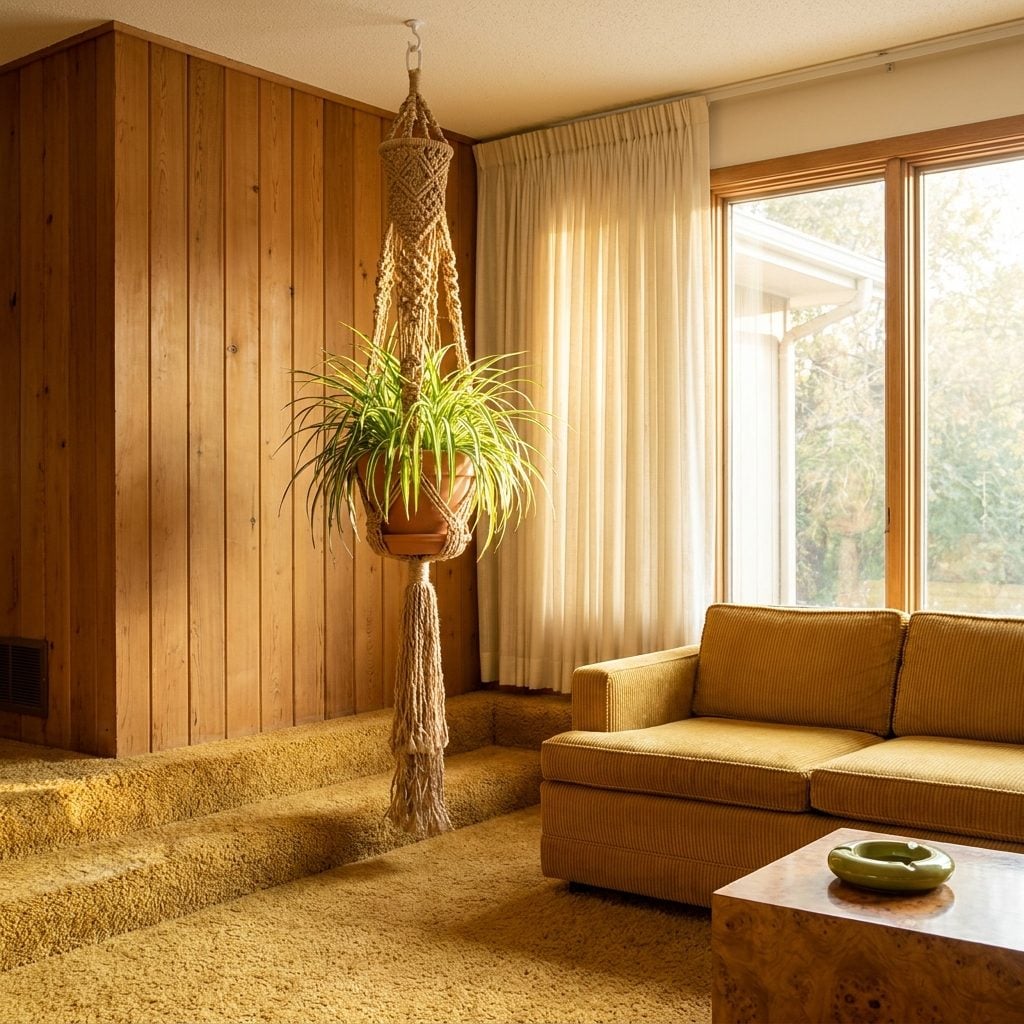
Every sunken living room had at least one macramé hanger, usually three — jute rope knotted by somebody’s cousin or bought at a craft fair, cradling a spider plant that had been divided so many times it was living in four houses simultaneously.
The plant was too big for the pot. The macramé was dusty. Nobody cared.
8. The Burl Wood Side Table Nobody Could Save From a Highball Ring
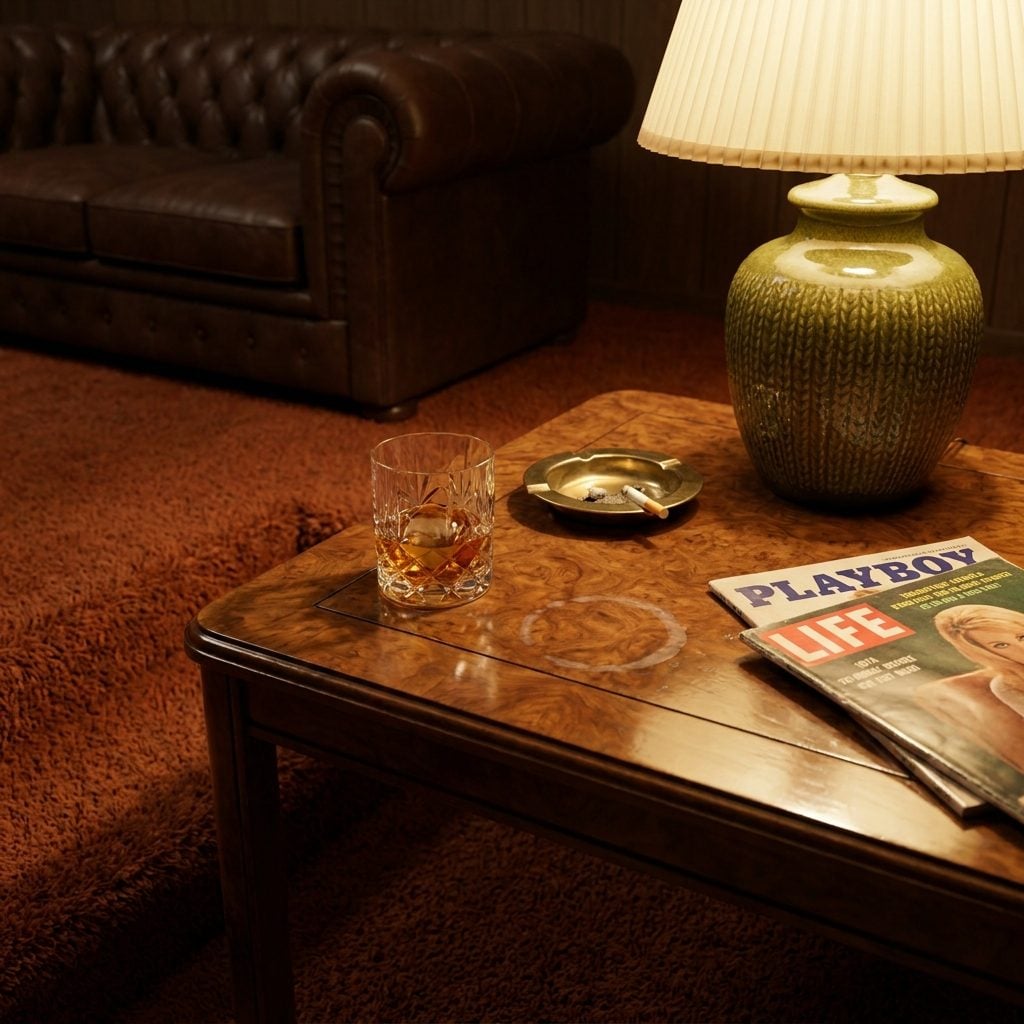
The burl walnut was so heavily figured it looked like a slice through geologic time, which made the little brass holder of untouched coasters beside it seem almost optimistic. The hostess set them out, pointed to them, and still watched every guest place a glass directly on the wood.
By the end of the decade, the table had collected a pale ring or two that no amount of polishing quite erased. Nobody refinished it. The marks simply joined the grain, proof that the room had hosted enough parties for the furniture to start keeping score.
7. The Brief Hush That Fell Over the Room Before Anyone Started Talking
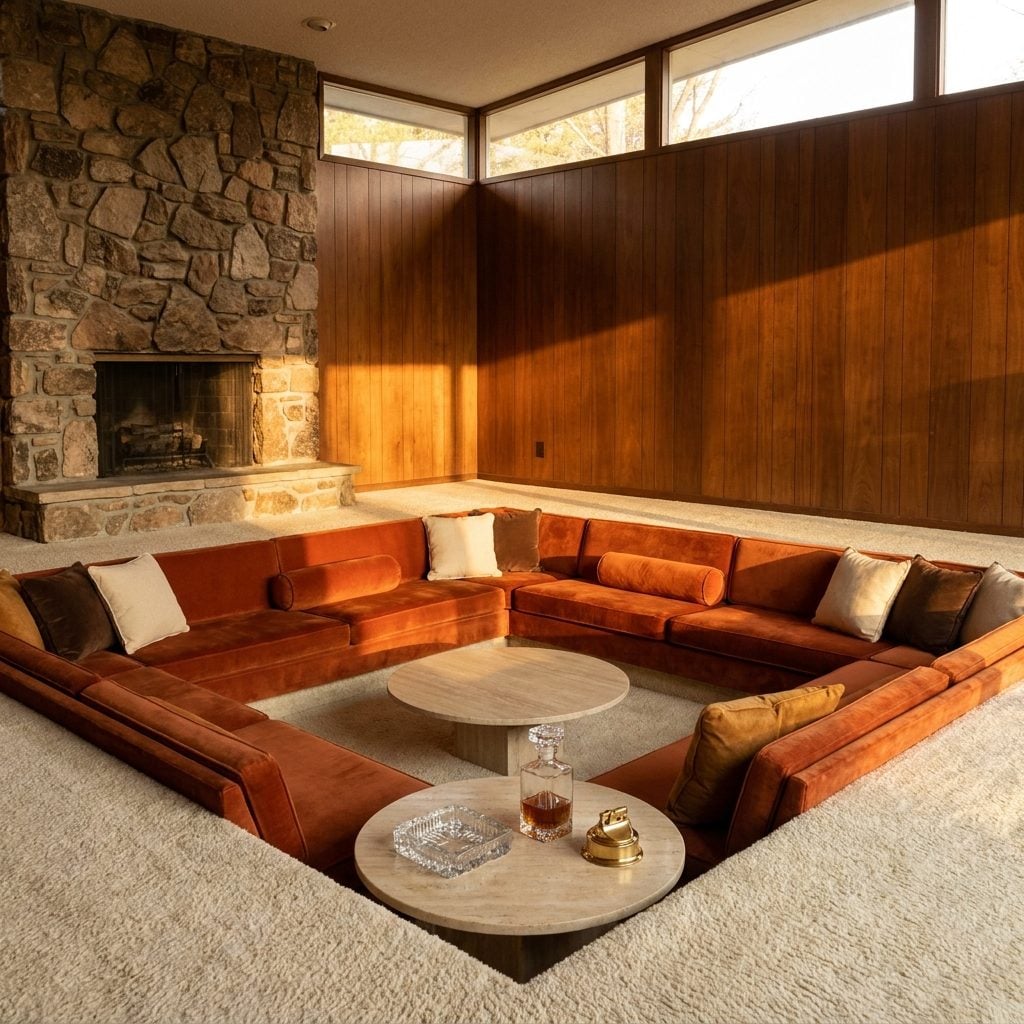
There was always a moment after everyone settled into the pit when the room seemed to pause. Glasses had been placed on the table, coats were upstairs, and the music was low enough that nobody had to compete with it.
The deep carpet, upholstered seating, and lowered floor absorbed the usual household clatter. For a few seconds, the group sat inside a quieter room carved out of the larger one. Then somebody spoke, everybody leaned in, and the conversation found its own volume.
6. The Framed Foil Print of a Paris Street Scene Above the Sofa
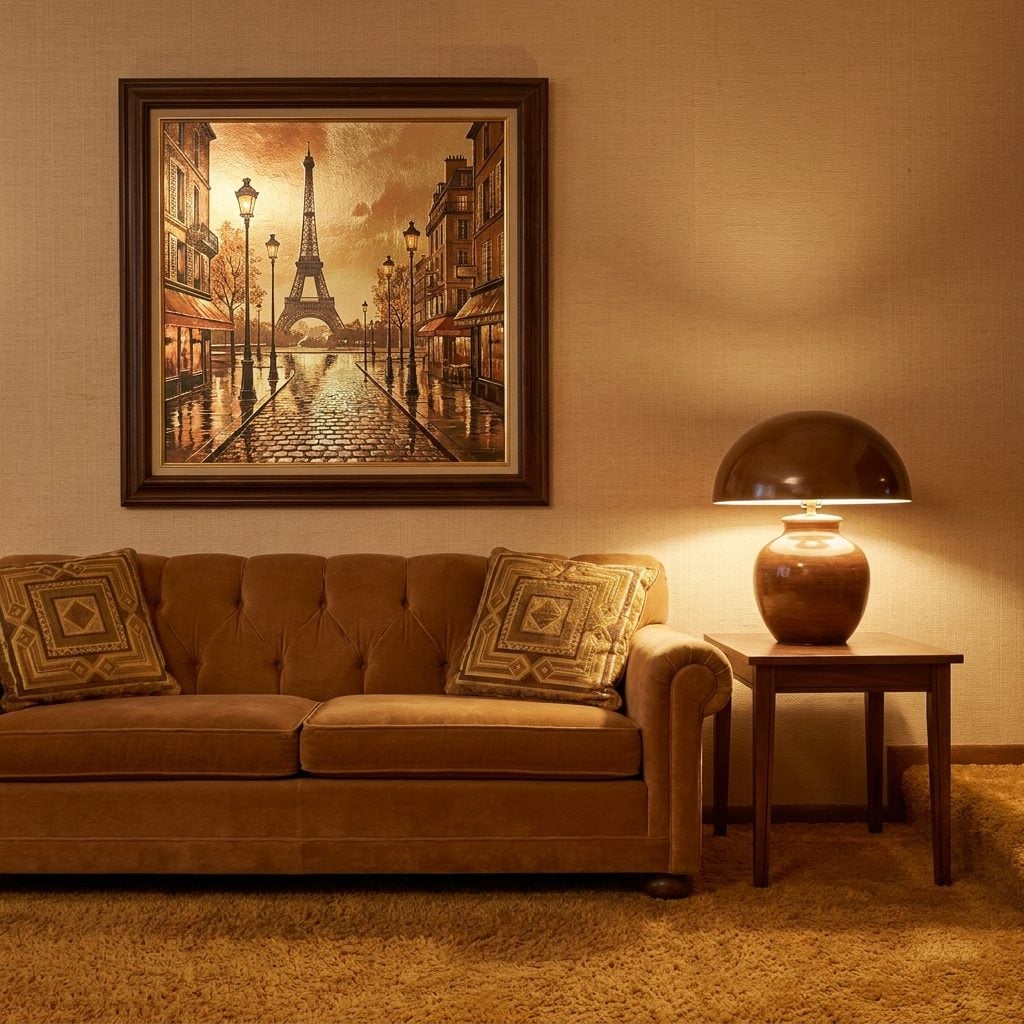
Paris in the rain. Or Venice with a gondola. Or a Left Bank cafe with striped awnings. The subject varied. The foil did not.
Everyone had one. And everyone’s caught the lamp light exactly the same way, throwing a warm coppery shimmer across the wall the moment the sun went down and the ceramic lamps came on.
5. The Fondue Pot Waiting On the Sideboard Like It Had Somewhere to Be
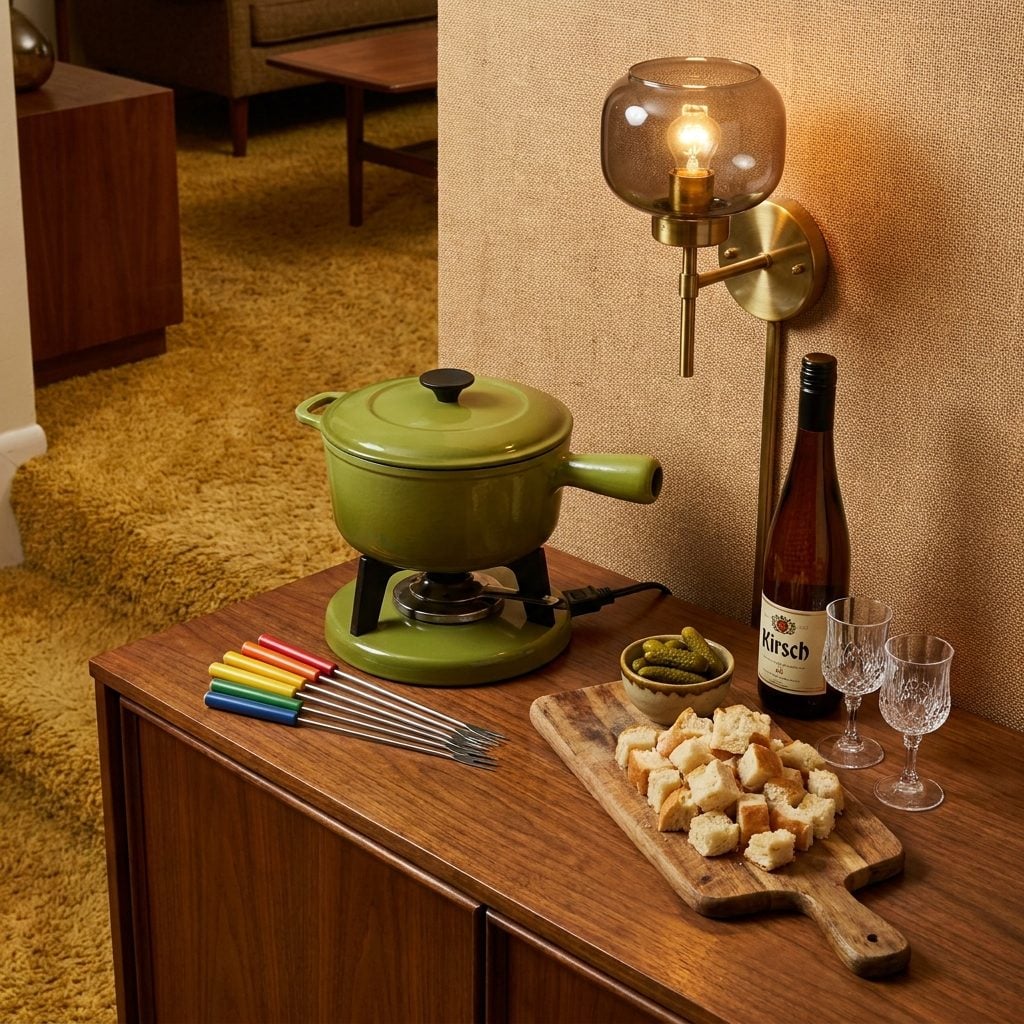
Avocado green enamel, long forks with color-coded handles so you knew which one was yours. The whole apparatus lived on the sideboard between parties and came out any time more than four people were expected.
Guests always made the same joke about losing bread in the pot and owing a kiss. Every single time. And it never stopped being funny to the hosts, which is either sweet or slightly deranged depending on how you feel about repetition.
4. The Row of Framed Family Portraits Angled Just So on the Grand Piano
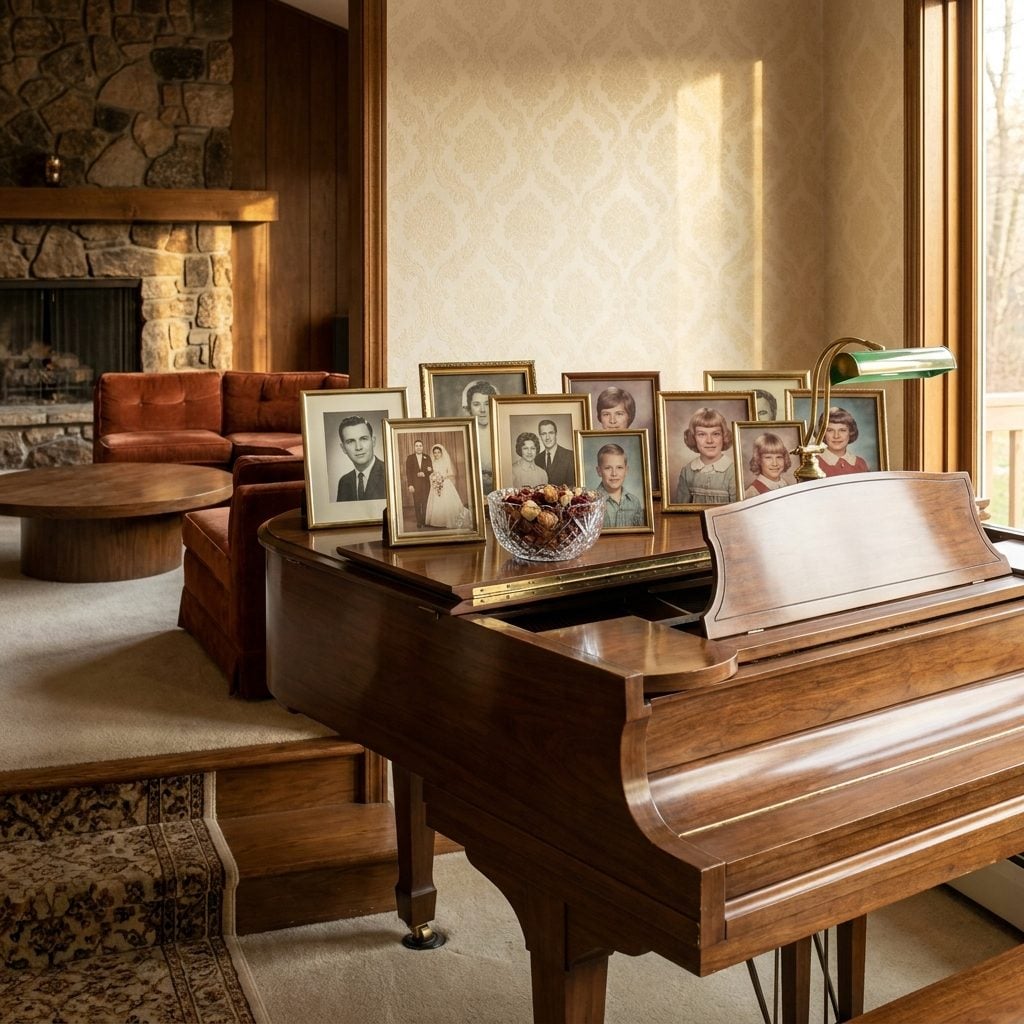
Nobody in the house played the piano. That was fine.
The piano was a display surface — an architectural announcement and a family archive rolled into one polished walnut object. Ten frames minimum. The grandparents’ wedding portrait got the middle spot, the most recent school photos went in front, and the bench had sheet music inside from 1962 that nobody had opened since Kennedy was alive.
3. The Travertine Planter Built Right Into the Step Wall
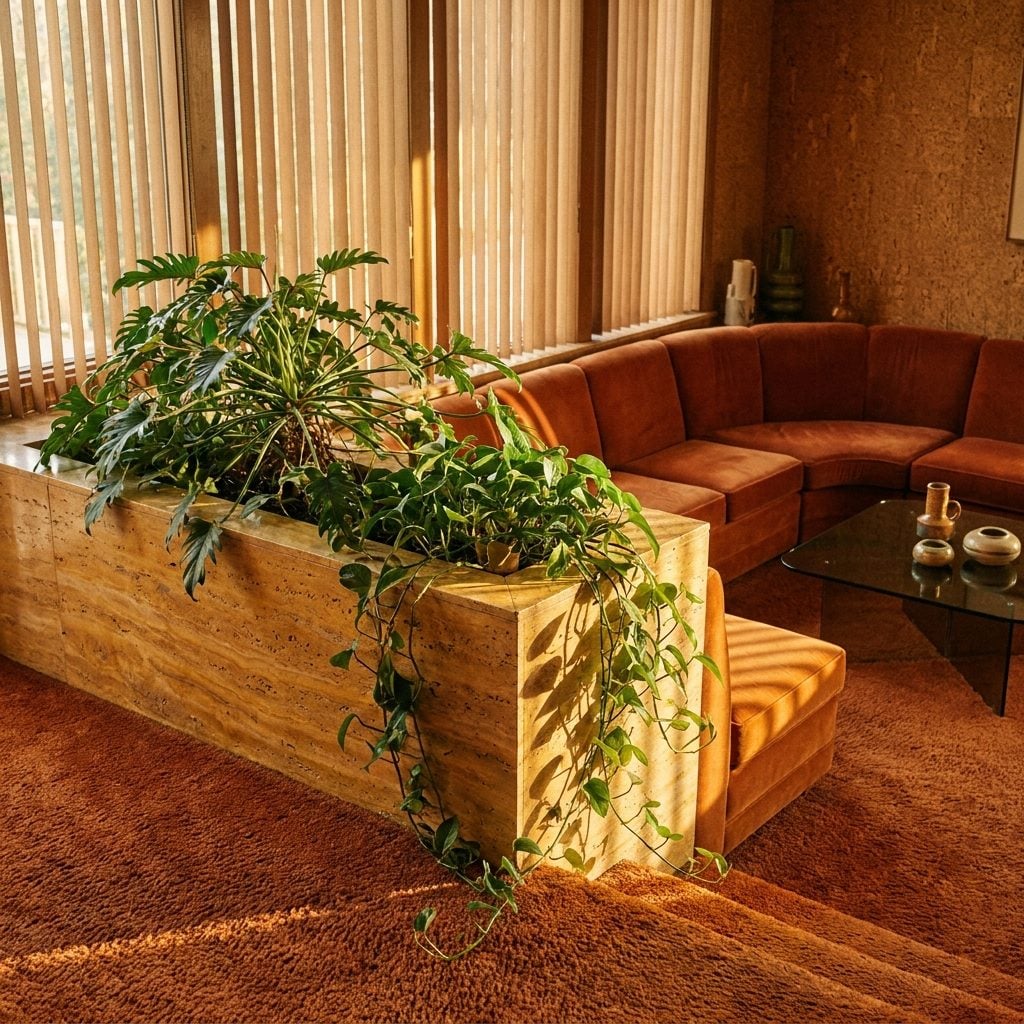
The planter was never really about the plant. It told you the architecture had thought of everything, right down to giving the greenery its own permanent address. Built-in. Not seasonal.
Most held a philodendron or a pothos — something forgiving that would trail down over the travertine lip and soften the hard geometry of the step, and the soil got watered from a copper can that lived on the bar cart. Nobody asked whose job it was. It just happened.
2. The Low Wood Railing That Doubled as a Drink Ledge
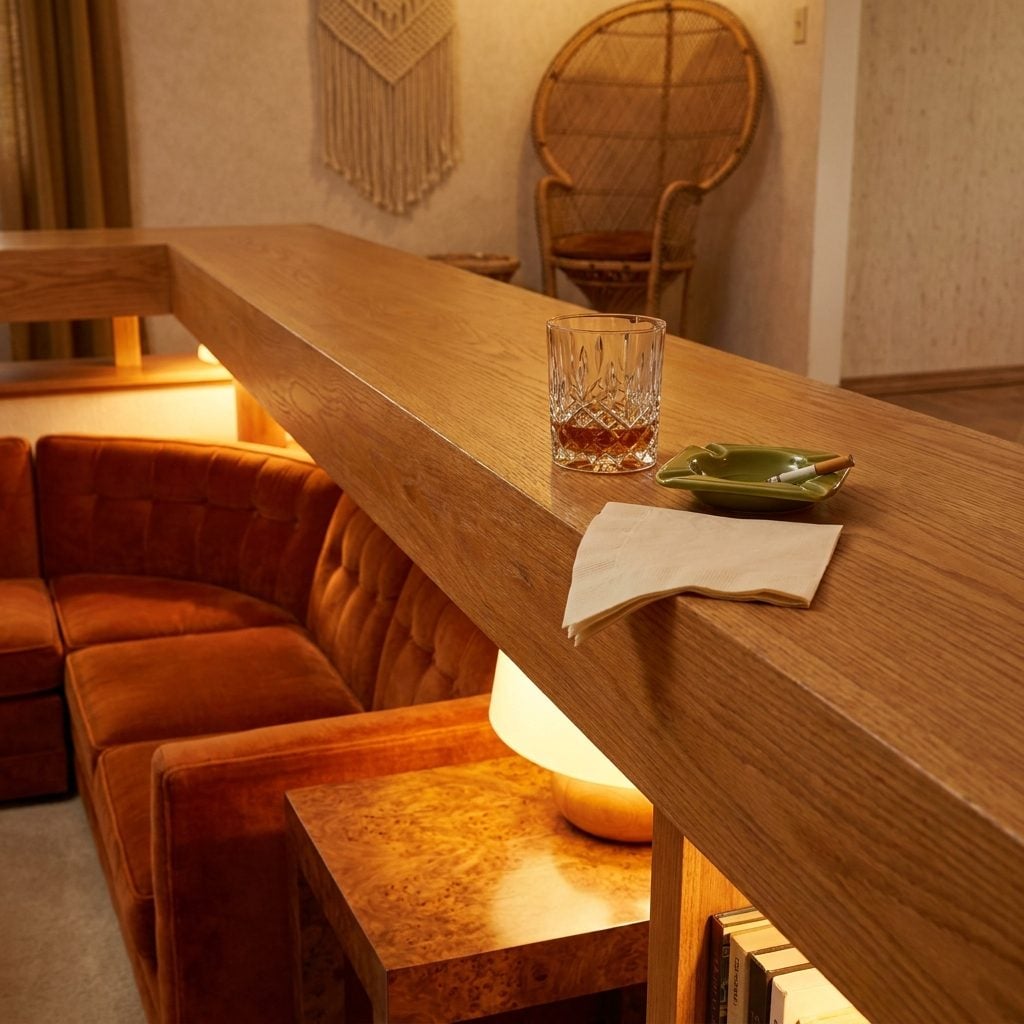
The railing was structural on paper and entirely social in practice. Anyone perched on the upper floor — half in the party, half out — had a shelf for their glass right there at elbow height, and that was really the point.
It doubled as the room’s unspoken border patrol. Coats got draped over it, purses hung from the far end, and somebody’s dad leaned on it with one hand for an entire conversation without spilling a drop.
1. The Enormous Ceramic Table Lamp With the Pleated Shade
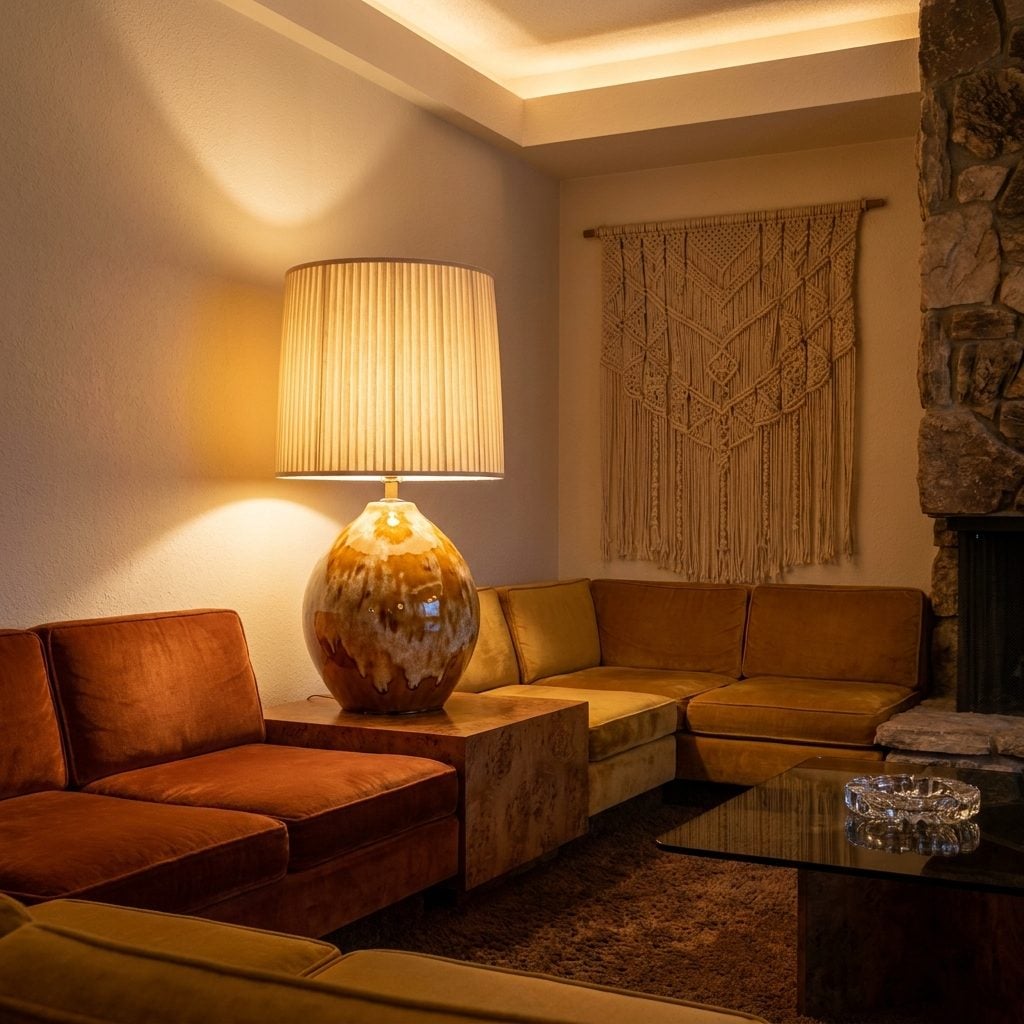
These lamps were monuments. The base alone weighed enough that you never actually moved one, and the shade sat so high it grazed the underside of the dropped ceiling if the table was tall enough.
What they did to the room was quiet magic — a warm circle of light on the wall, another on the carpet, and everything between softened by a few degrees. You could read on the sectional without turning on anything else. Some are still working on the original three-way bulb.