🔥 Would you like to save this?
You could smell the warm concrete before you even reached the steps. That mix of sun-baked flagstone, aluminum screen door heat, and whatever your neighbor was grilling three houses down. The 1960s front porch wasn’t a design statement. It was a threshold between the public street and the private life happening behind a turquoise door or a jalousie panel. Every ranch, split-level, and Cape Cod had one, and no two felt exactly alike.
Here are 30 that hit different when you actually remember them.
In order to come up with the very specific design ideas, we create most designs with the assistance of state-of-the-art AI interior design software. Also, assume links that take you off the site are affiliate links such as links to Amazon. this means we may earn a commission if you buy something.
The Split-Level Entry With a Turquoise Front Door and a Wagon Wheel That Nobody Questioned
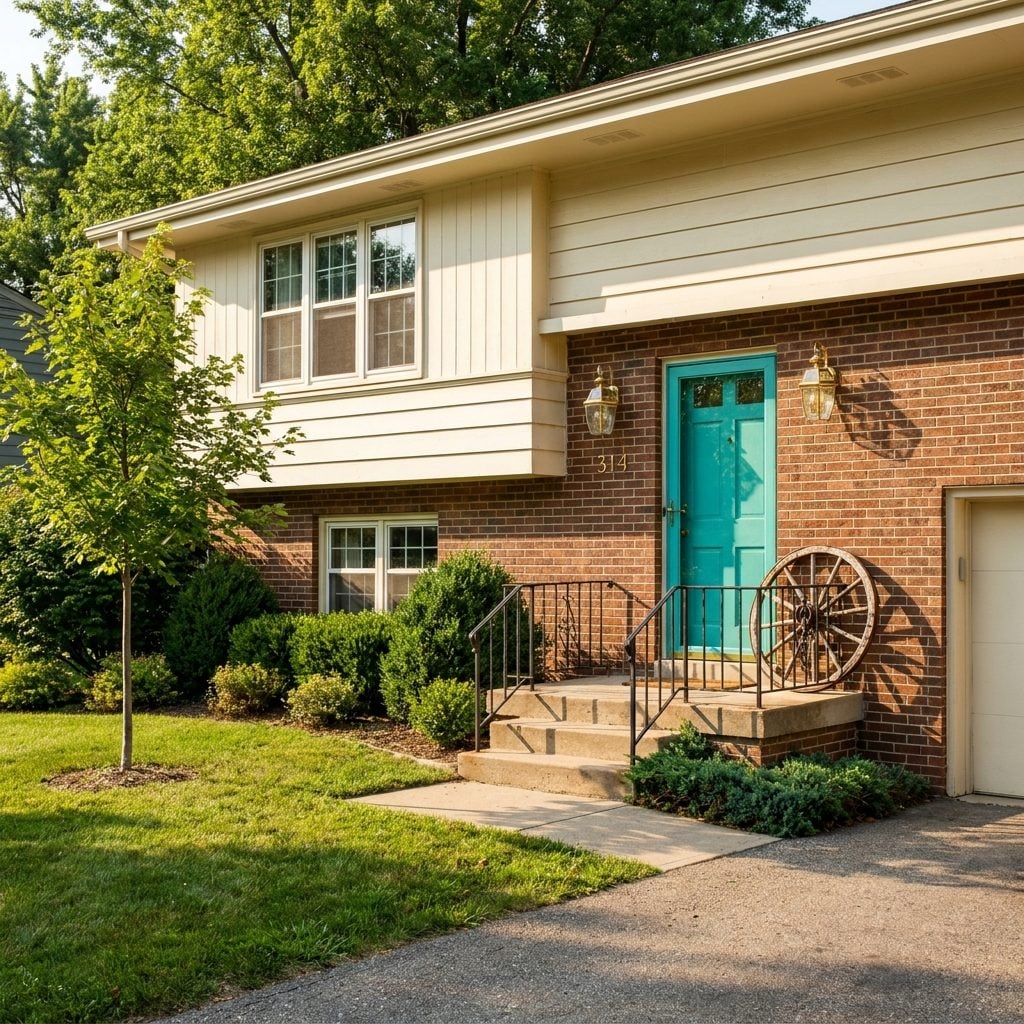
Why did we put wagon wheels against brick facades? Nobody was hauling anything. Nobody owned a covered wagon. Yet there it sat, leaning casually against the house like a prop from a Western that wandered into the suburbs of New Jersey.
The turquoise door was the real star, though. That particular shade of blue-green showed up on front doors from 1962 to about 1969 with the consistency of a national directive. Flanked by a pair of brass carriage-style coach lights, it announced something specific: this family watched Bonanza AND read Architectural Digest.
Split-levels had the most awkward entries of any home style. You opened the door and immediately faced a choice: stairs up or stairs down. The concrete stoop out front was usually just big enough for two people to stand on uncomfortably while someone fumbled with keys.
What Our Readers Say
- Bold front doors haven’t gone out of style: in our reader poll, 53% of Home Stratosphere readers picked a bold colour for the front door, well ahead of wood or black.
- Brick versus lap siding is still a coin toss for our readers, with the two finishing in a statistical tie when we asked which siding they’d choose.
From Home Stratosphere reader polls and votes.
That Colonial Revival Portico With the Pineapple Door Knocker Your Mother Polished Every Spring
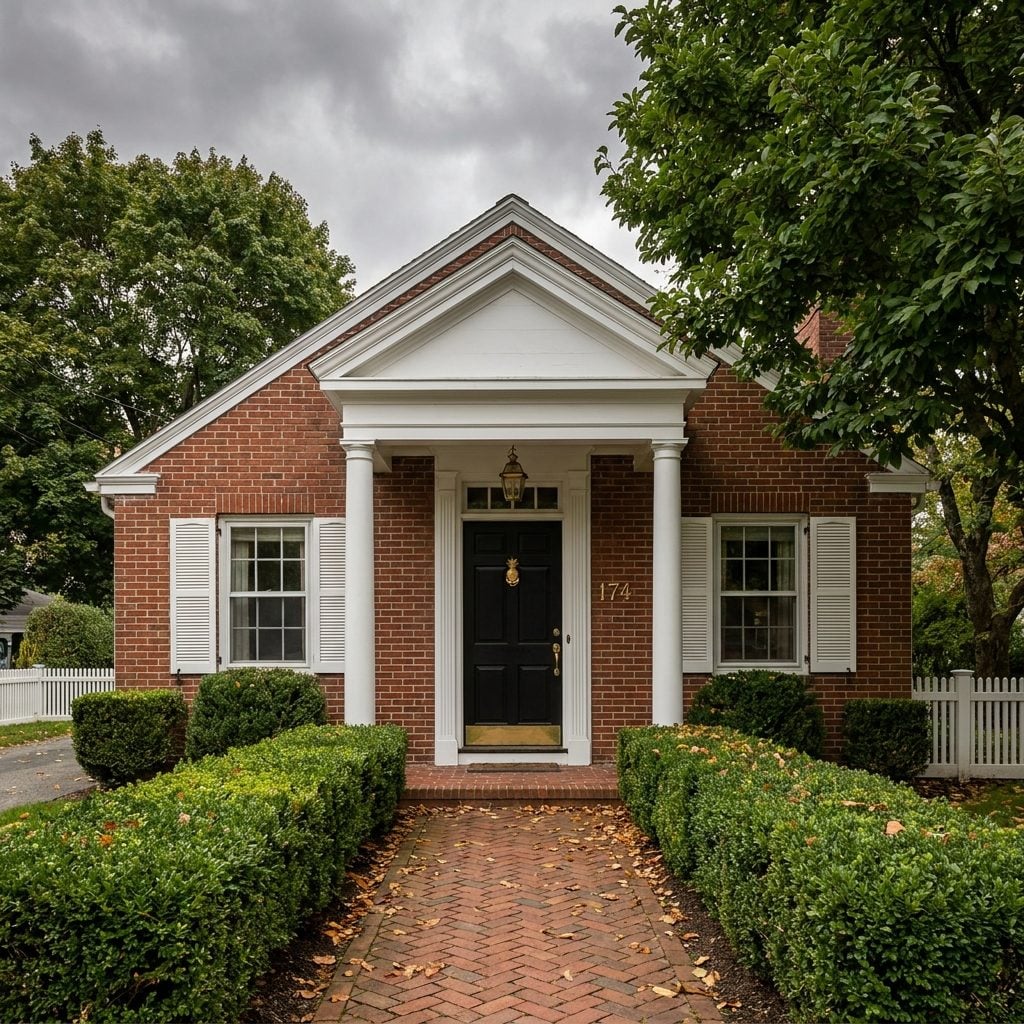
The pineapple meant welcome. Everyone knew this. Your mother told you, her mother told her, and the tradition stretched back to colonial sea captains. So naturally, by 1963, every brick Colonial Revival in New England had a brass pineapple door knocker on the front door, polished until it caught the light from across the street.
The portico itself was modest. Two columns, sometimes round, sometimes square, holding up a small pediment that barely kept the rain off your head. The real charm was everything around it: boxwood hedges trimmed with military precision, brass house numbers in a serif font, and a brick walkway that had settled just enough to make you watch your step.
The Atomic Ranch With a Concrete Breeze Block Screen and Indoor-Outdoor Carpet That Smelled Like the Future
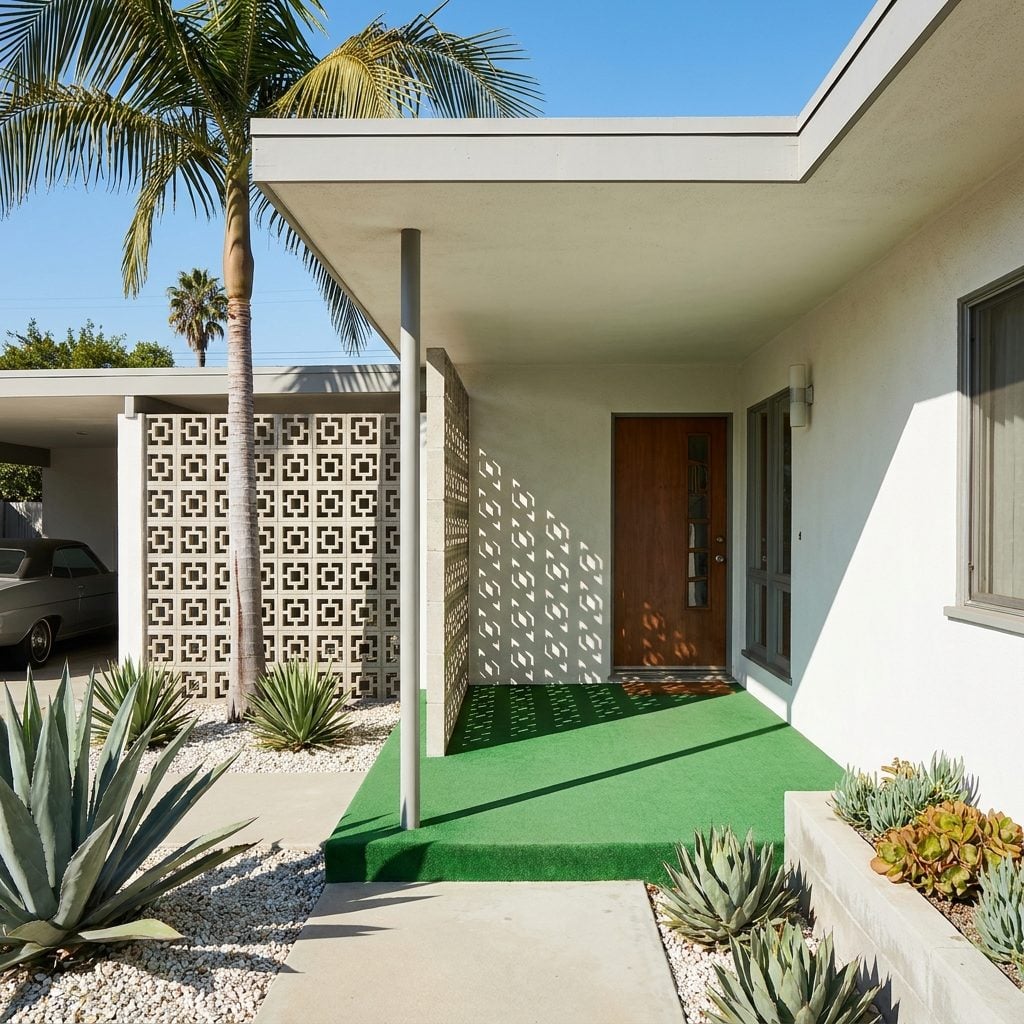
That green carpet. You know the one. It covered every porch, patio, and pool deck in Southern California like synthetic grass that had given up pretending. It was coarse enough to leave pattern marks on your knees and hot enough in direct sun to make you sprint across it barefoot.
But the breeze block wall was the architectural flex. Those geometric decorative concrete blocks, stacked in repeating patterns of squares and diamonds, filtered light into shifting geometric shadows all afternoon. They gave a flat-roofed ranch house the look of a Palm Springs resort, which was entirely the point. The flat roof overhang extended just far enough to shade the entry, and palm tree shadows layered over the breeze block shadows in a way that felt genuinely artistic.
Every one of these porches had a certain smell: warm concrete, that peculiar chemical tang of outdoor carpeting, and jasmine from somewhere in the yard.
The Cape Cod Storm Door With a Starburst Brace That Announced Every Season Change
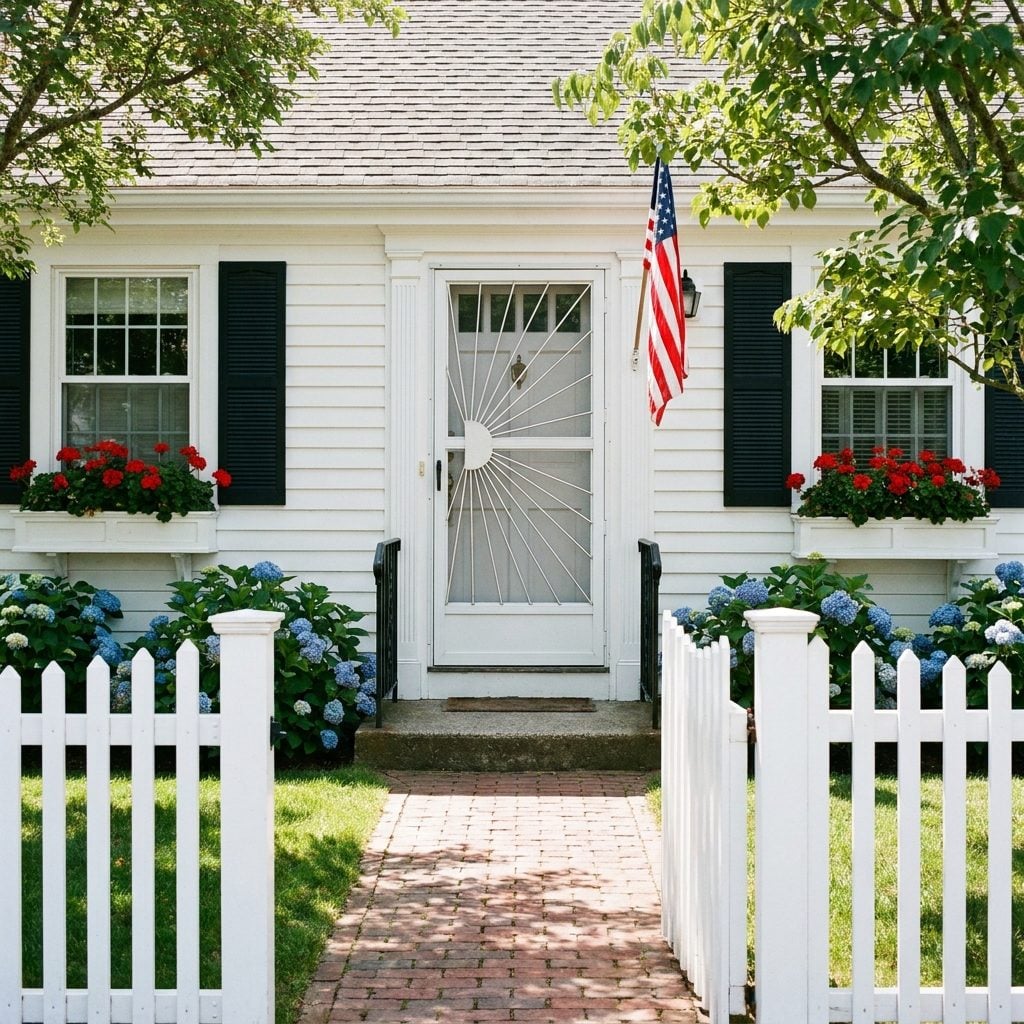
There was a ritual to it. Spring arrived, and the glass panels came out of the aluminum storm door. Summer screens went in. Fall, back to glass. The starburst brace in the center, that sunburst of aluminum rods fanning out like a midcentury clock face, stayed year-round. It was the only decorative thing about an otherwise purely functional door.
Behind it, the real front door was usually painted something modest. The black shutters flanking the windows were non-negotiable. Red geranium window boxes sat beneath every front-facing window like a uniform. A white picket fence completed the picture so thoroughly that the whole thing looked like a Norman Rockwell painting somebody accidentally moved into.
The Tract Home Porch With Jalousie Windows, a Metal Glider, and That Yellow Bug Light
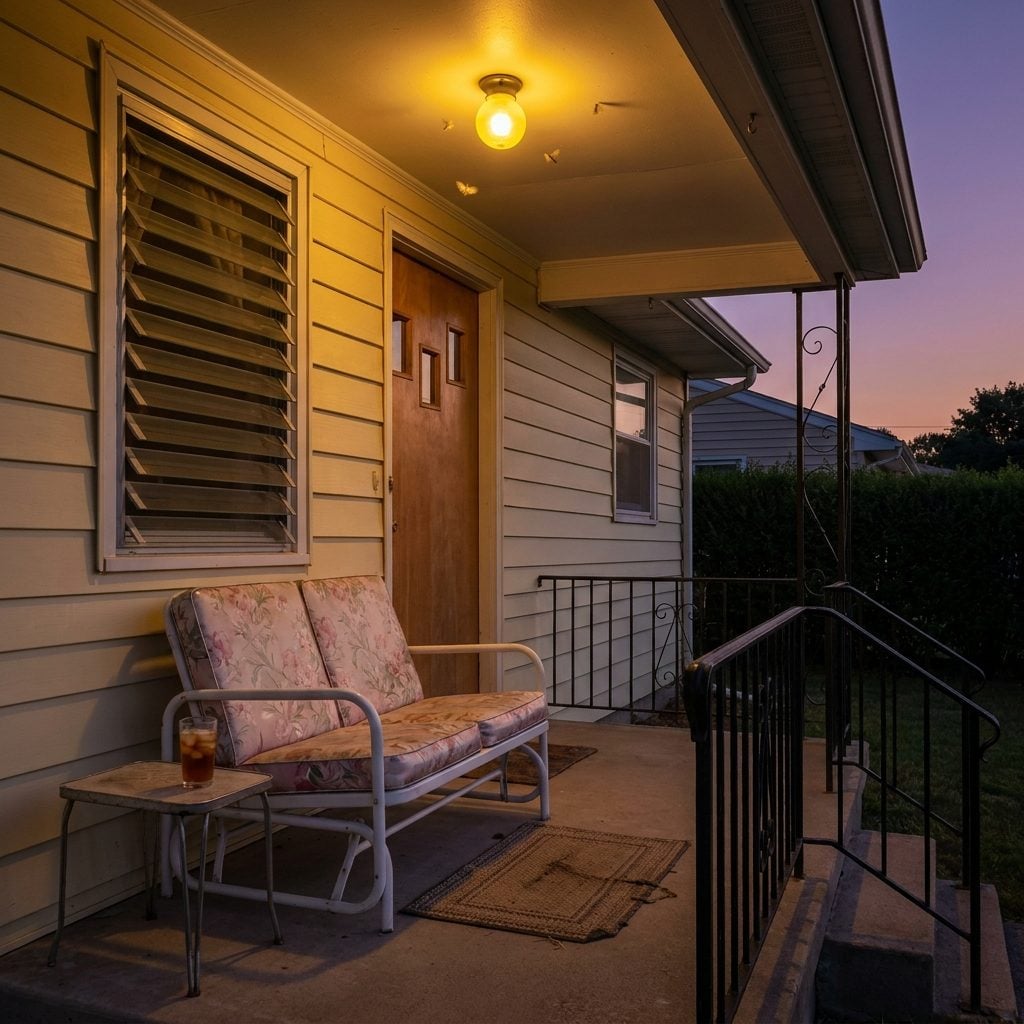
The yellow bug light changed everything about a porch at dusk. It turned the whole scene amber, like you were looking at a photograph that had already aged. Underneath it, the metal glider bench sat waiting, its floral vinyl cushions slightly tacky from the humidity, the frame giving that familiar squeak when you pushed off with one foot.
Jalousie windows beside the front door were pure 1960s logic: ventilation without commitment. Those horizontal glass slats cranked open to let air through while theoretically keeping rain out. They didn’t, really. But they looked modern, and in 1968 that was enough. The whole porch setup, the glider, the bug light, the jalousies, was really a tiny outdoor living room where neighbors stopped by without calling first. That was normal then.
The Brick Ranch With White Wrought Iron Railings and a Flagstone Crazy Paving Walkway That Led You Home
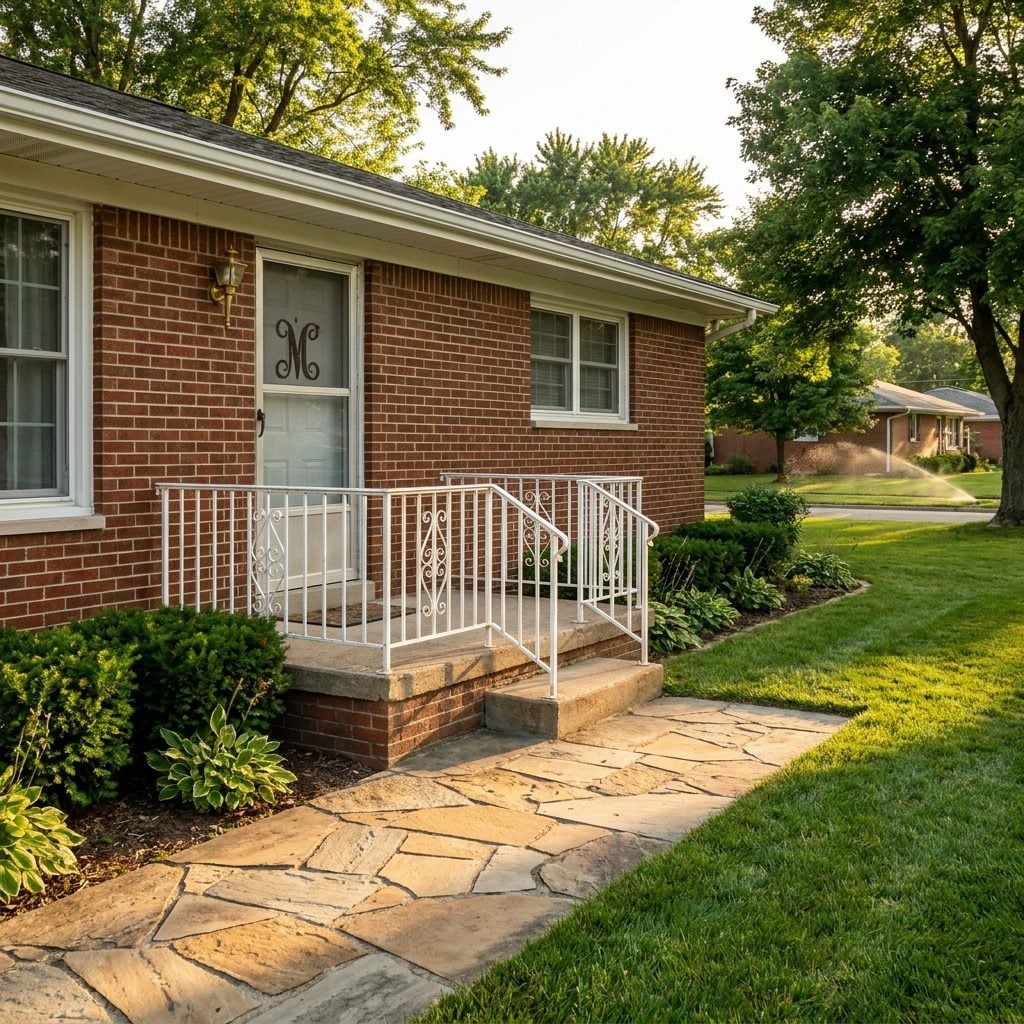
Crazy paving. That was actually what they called it. Irregular flagstone pieces fitted together like a jigsaw puzzle nobody finished, with mortar filling the gaps. Every front walkway in our neighborhood had some version of it, each one slightly different because no two stones matched and no homeowner had the patience to make them.
The white wrought iron porch railing was always the same pattern, though. Straight vertical balusters with a scroll at the top, painted white so often that the paint built up in layers you could chip off like geological strata. And the aluminum screen door with a cursive monogram initial in the center panel. That single letter told you whose house you were at before anyone answered the doorbell.
Something about walking up a flagstone path to a porch like this on an Indiana afternoon, the sprinkler going next door, the smell of fresh-cut grass in the air. It just felt like arriving somewhere safe.
The Florida Ranch With Terrazzo Floors and Jalousie Panels That Let Every Thunderstorm Inside
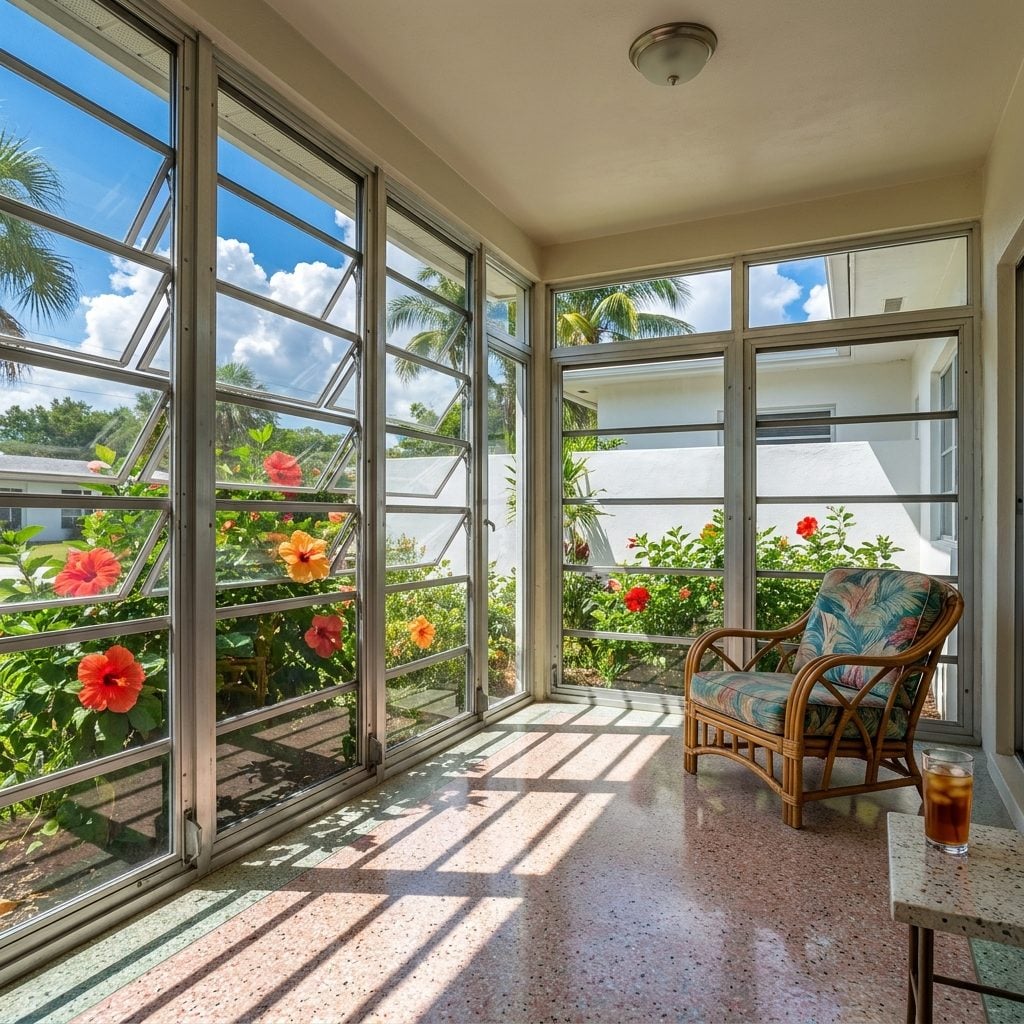
Terrazzo on a porch floor was a flex specific to Florida. Those tiny chips of marble and granite suspended in polished concrete caught the midday sun and threw it back in a thousand directions. Pink chips, white chips, the occasional fleck of something green. Every Florida porch floor was its own abstract painting, and nobody appreciated it because they were too busy sweating.
The jalousie glass panels wrapped around the porch like a solarium that couldn’t quite commit. Cranked open, they invited every breeze and every mosquito. Cranked shut during a thunderstorm, they leaked at every seam. Hibiscus bloomed red and orange right at the porch edge, so close you could touch them from your chair. That was the whole arrangement: terrazzo underfoot, jalousies on three sides, and the knowledge that it would rain at exactly 3 p.m. regardless of what the sky looked like at noon.
The Mediterranean Revival Porch With Stucco Arches and Bougainvillea That Refused to Be Contained
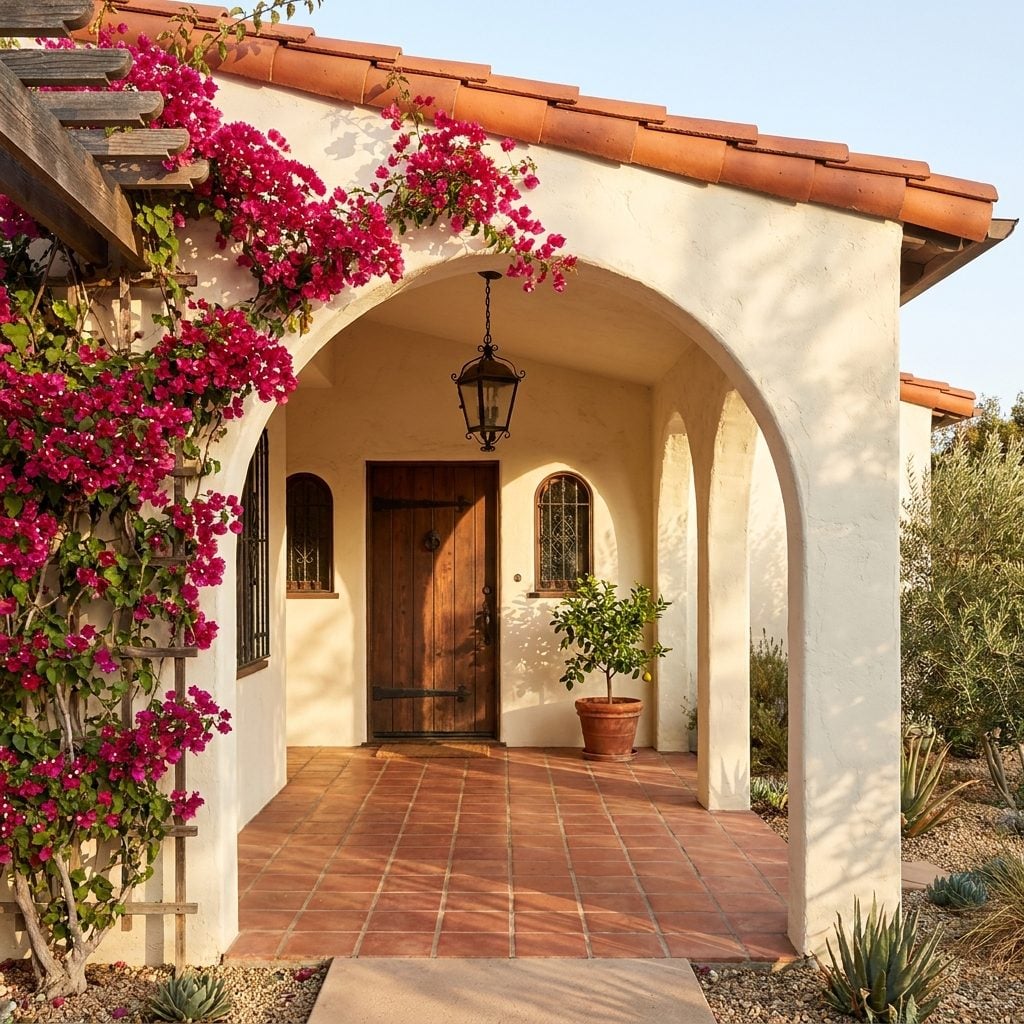
Bougainvillea doesn’t climb. It conquers. By midsummer the entire trellis was buried under papery magenta blooms so thick you couldn’t see the wood underneath, and the vine had started reaching for the roof like it had plans.
The stucco arches framing this porch were creamy white, slightly textured, warm to the touch even in early morning. A wrought iron lantern hung from the center of the arch on a short chain, its glass panels casting diamond-shaped light patterns on the red clay tile below. These porches existed all over Southern California and parts of South Florida, remnants of a 1920s building trend that the 1960s never fully let go of. The clay tile roof overhead radiated heat long after sunset. You’d sit out there at nine o’clock at night and the tiles were still warm, the bougainvillea still rustling, the lantern throwing soft shapes on the wall.
The Pacific Northwest Post-and-Beam Entry With Cedar Shake Siding and a Mossy Path That Looked Like a Fairy Tale
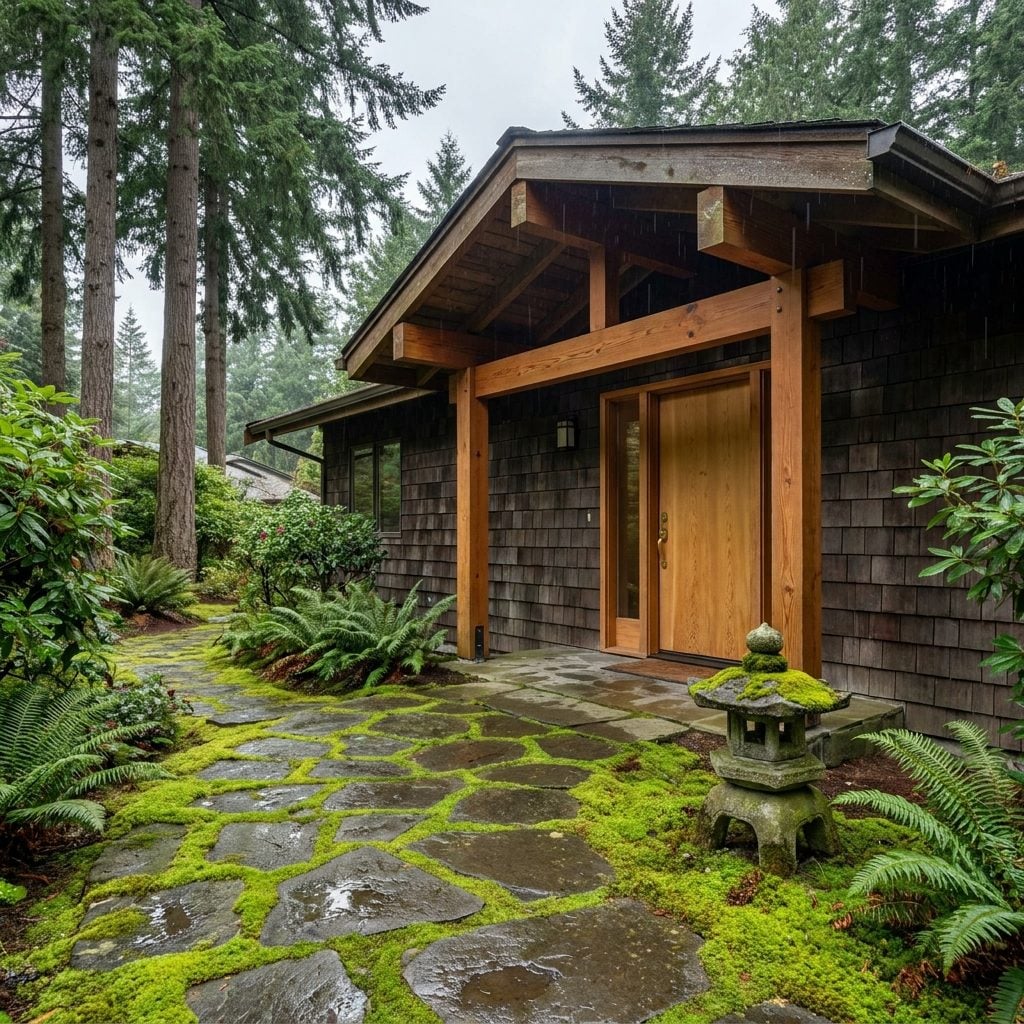
Rain made these entries. Not ruined them. Made them. Water darkened the cedar shakes to a deep coffee brown, turned the flagstone walkway slick and reflective, and fed the moss that grew in every crack and joint until the whole approach looked ancient. A Japanese-inspired stone lantern sat at the bend in the path, collecting rainwater in its basin, looking like it had been there for a hundred years when really someone picked it up at a garden center in Portland last spring.
The post-and-beam construction was honest. Thick Douglas fir beams, exposed, holding up a deep roof overhang that actually worked as rain protection, not just decoration. These entries understood their climate in a way that aluminum awnings in Ohio never did.
The Midwestern Mailbox-and-Lamp-Post Combo That Stood Guard at Every Driveway
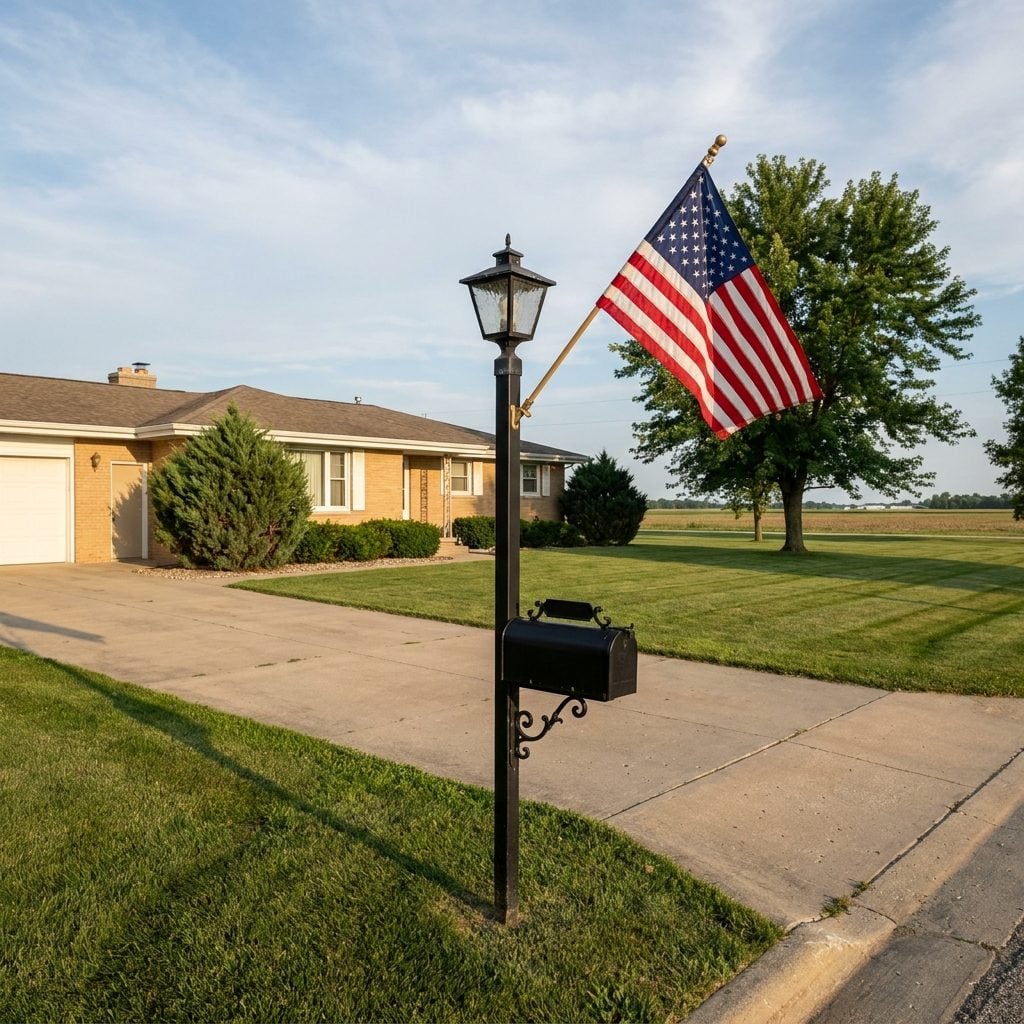
It wasn’t technically on the porch. It was at the end of the driveway, where the walkway met the sidewalk. But it defined the entire approach to the house more than anything else. The wrought iron mailbox and lamp post combination, usually black, sometimes with a scrollwork bracket holding a hanging lantern above a matching mailbox below. An American flag angled off the post at forty-five degrees because of course it did.
Rural Iowa had thousands of these. They lined country roads and subdivision streets with identical authority. The lamp clicked on at dusk via a photoelectric sensor, one of the genuinely space-age technologies that actually worked as promised. That single light at the end of the driveway was the first thing you saw driving home after dark, and there was real comfort in that. Not decorative comfort. The real kind. The kind that said someone left a light on for you.
The Storybook Cottage Porch With a Robin’s Egg Blue Dutch Door and Petunias That Smelled Like Summer Itself
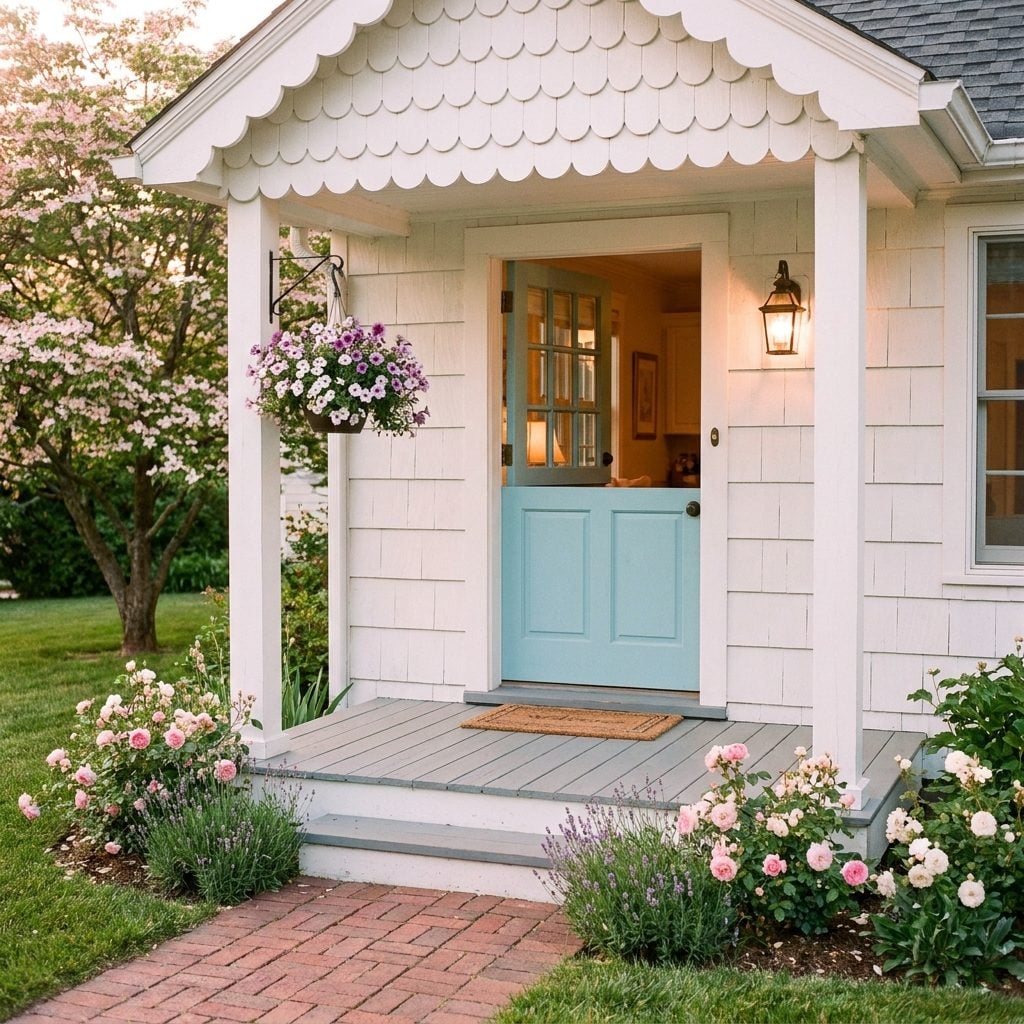
The Dutch door was the whole personality of this house. The top half swung open while the bottom stayed shut, which was originally meant to keep animals out of colonial kitchens but by 1964 served mainly as a way to talk to the mailman without letting the cat escape. Painted robin’s egg blue, that pale chalky shade somewhere between sky and eggshell, it was the single most charming detail on an already impossibly charming light front porch.
Scalloped trim along the porch roofline looked like something cut from a Valentine’s card. A hanging basket of purple and white petunias dangled from a wrought iron hook, releasing that particular sweet, slightly sticky fragrance every time the breeze moved through. These porches were never large. Maybe six feet deep, ten feet wide. But on a soft summer evening with the top of the Dutch door open and the petunias swaying, they felt like the entire world.
The Split-Level Breezeway That Made You Walk Through the Weather to Get to the Car
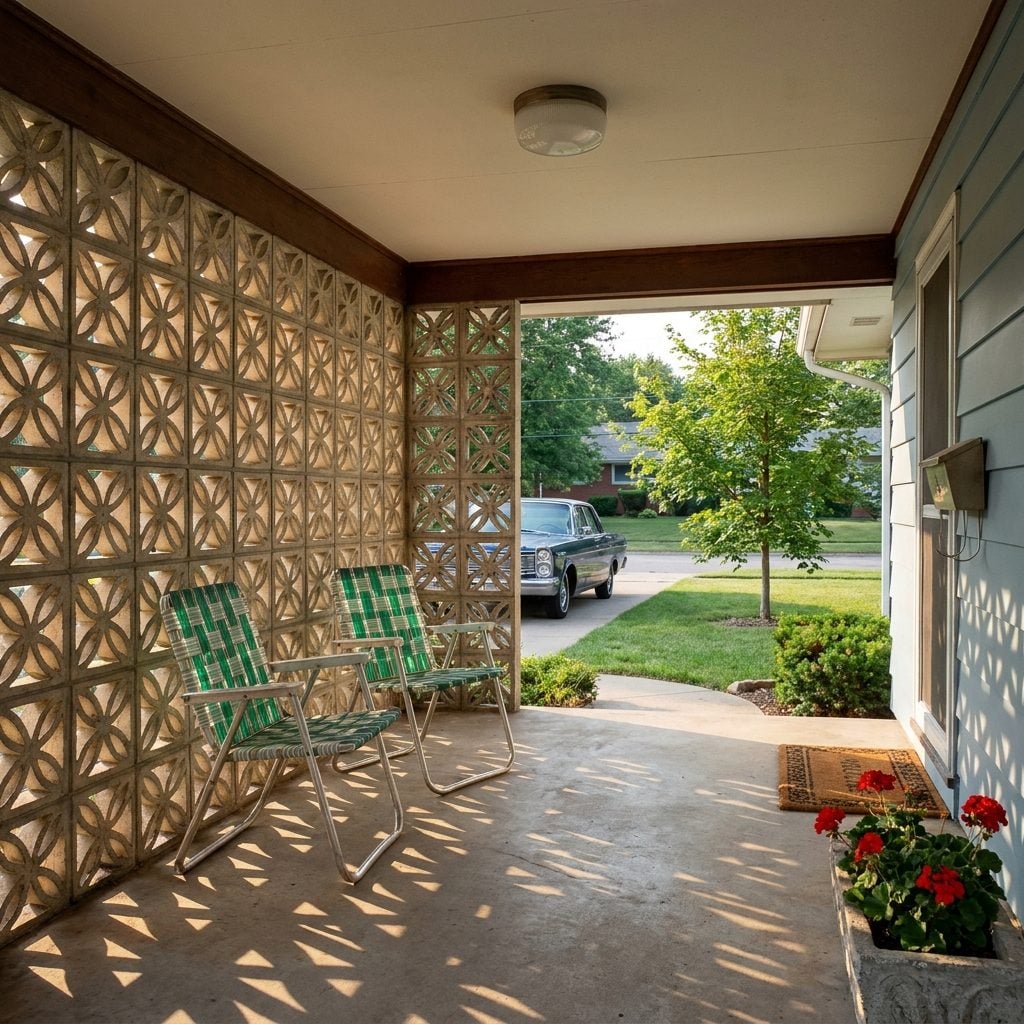
That covered passageway between house and garage felt like genius in the blueprint and pure wind tunnel in practice. The concrete block screen wall, usually in a stacked diamond or star pattern, was supposed to offer privacy and airflow. It delivered neither. What it did deliver was a perpetual collection of dead leaves in every crevice and a place for your dad’s aluminum patio chairs to live year-round, slightly oxidized, slightly tilted on the uneven slab.
The breezeway was the split-level’s signature move. Not quite indoors, not quite outdoors, always ten degrees colder than either. You’d sprint through it in January carrying groceries, and in July it became an unofficial second living room where nobody actually sat because the concrete radiated heat like a kiln.
The Tudor Revival Entry That Made Every Suburb Feel Like the English Countryside
🔥 Would you like to save this?
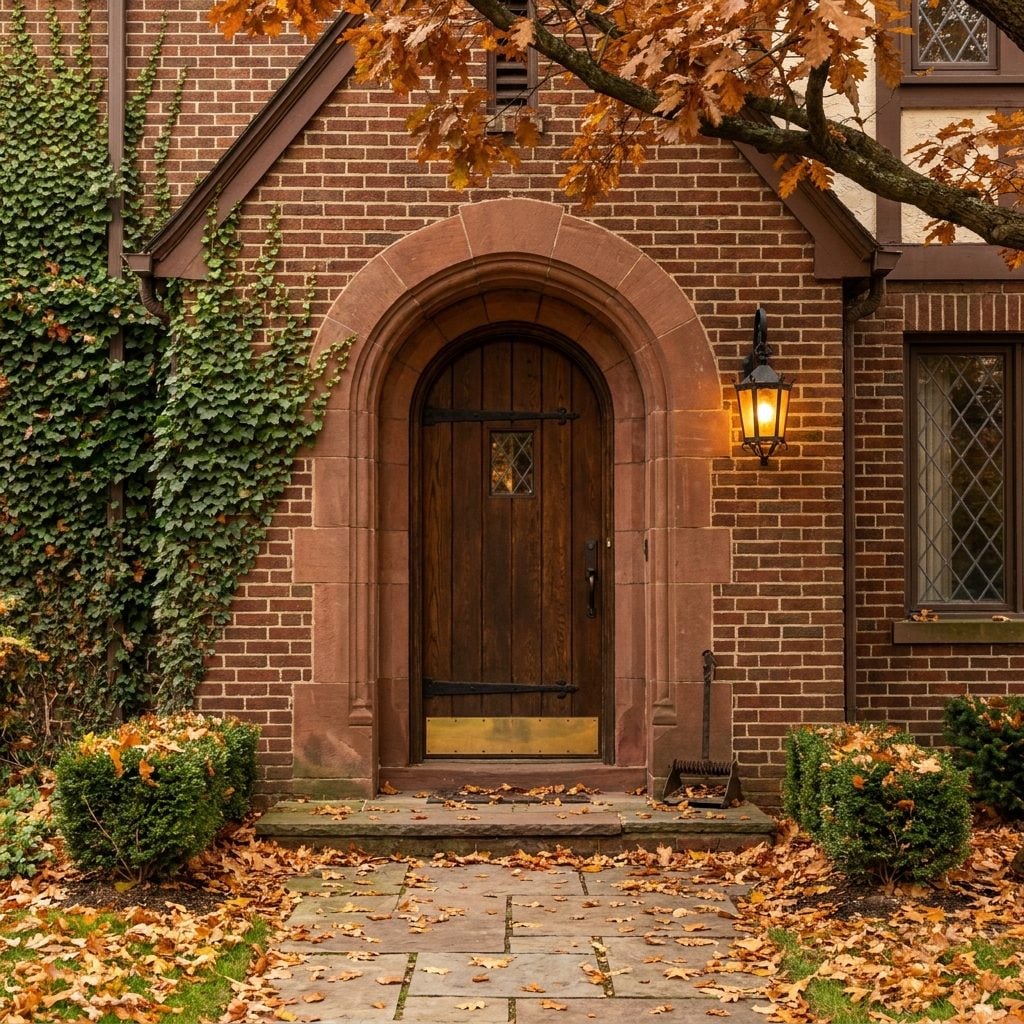
Stone archway. Diamond-paned window. Black wrought iron lantern on a chain. Ivy creeping up the brick like it had been there since the reign of Henry VIII, not since the Eisenhower administration. These Tudor-inspired entries were everywhere in established neighborhoods during the early sixties, holdovers from a prewar building boom that refused to let go.
The front door was almost always dark, heavy, and slightly too short by modern standards. You’d duck instinctively. The wrought iron lantern threw a warm amber glow across the stone, and in autumn with the leaves turning, the whole thing looked like a postcard someone’s aunt would send from Connecticut.
The Ranch Home Porch With Eaves So Wide They Could Shelter a Station Wagon
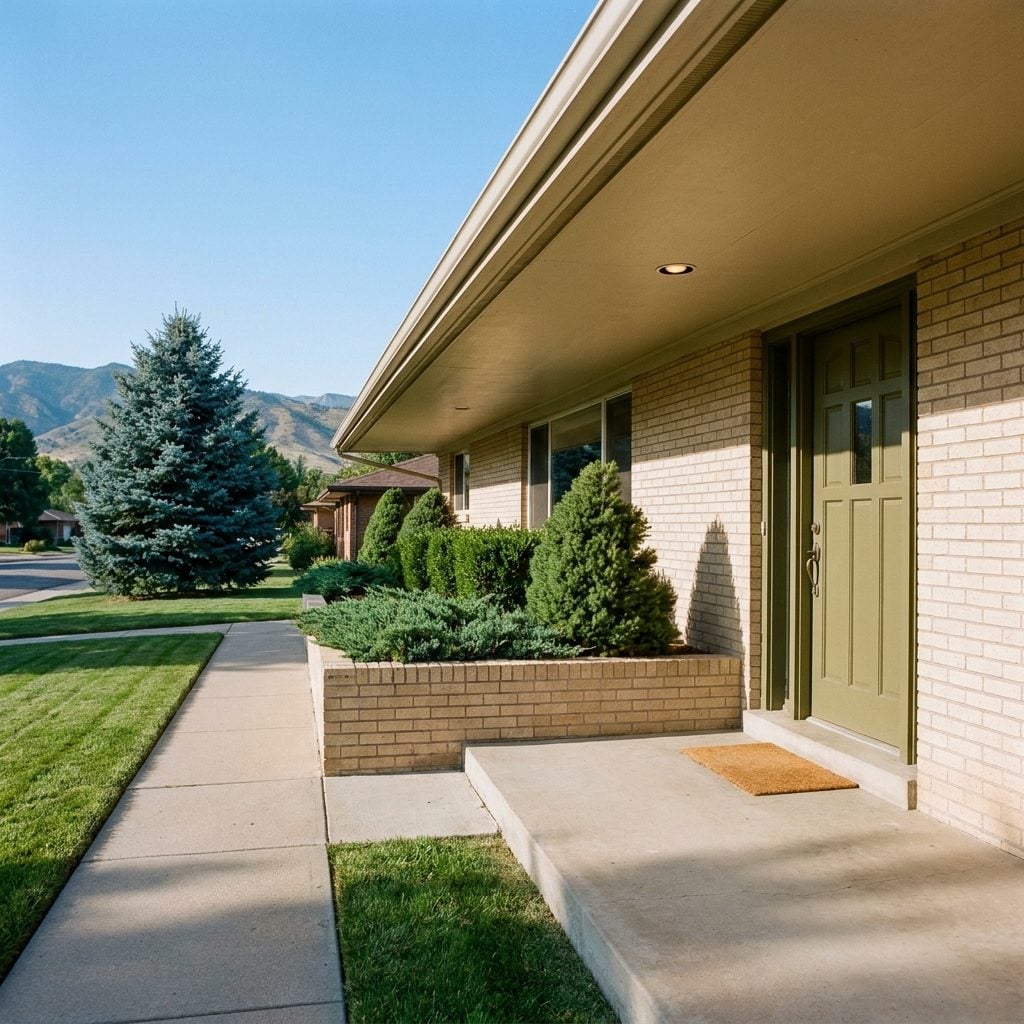
Those overhanging eaves weren’t decorative. They were doing real work. In Denver and across the Mountain West, the low-slung ranch home porch was designed to keep snow off the entry and summer sun out of the front windows. The brick planter wall running the length of the facade held trimmed junipers and maybe a single struggling rosebush that your mother treated like a patient in intensive care.
Everything was horizontal. The roofline, the planter, the clipped hedge, the driveway. Against the foothills, these homes looked like they’d grown out of the ground. The porch itself was barely deep enough for two people to stand, but with those generous eaves overhead, you never got rained on fumbling for your keys.
The Eichler Entry Atrium Where You Walked Through Glass to Get Inside
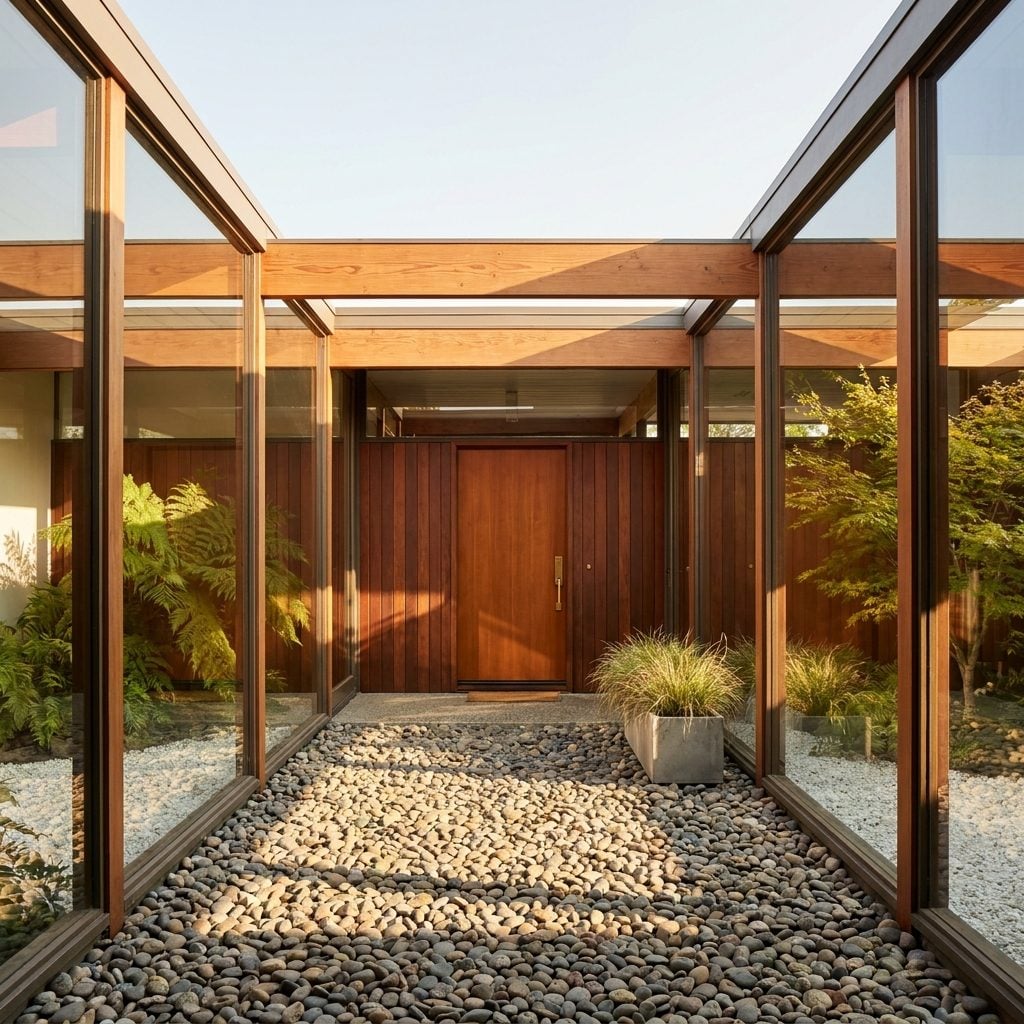
Before you even reached the front door, you were already kind of inside. That was the whole trick. Joseph Eichler’s Bay Area homes routed visitors through an open-air atrium enclosed by floor-to-ceiling glass panels, so the sky was your ceiling and a bed of river rock and ferns was your welcome mat. The teak front door at the far end felt like a reward for finding the right house on a street where every roofline looked like a museum annex.
The minimalism was absolute. No shutters. No railings. No flower boxes. Just clean post-and-beam lines, glass, and that distinctive flat or low-gable roof floating above it all.
These entries made you lower your voice instinctively, like walking into a gallery. The teak entry door was the only warm note in all that cool geometry.
The Southern Ranch Stoop With White Wrought Iron Railings That Burned Your Hands in July
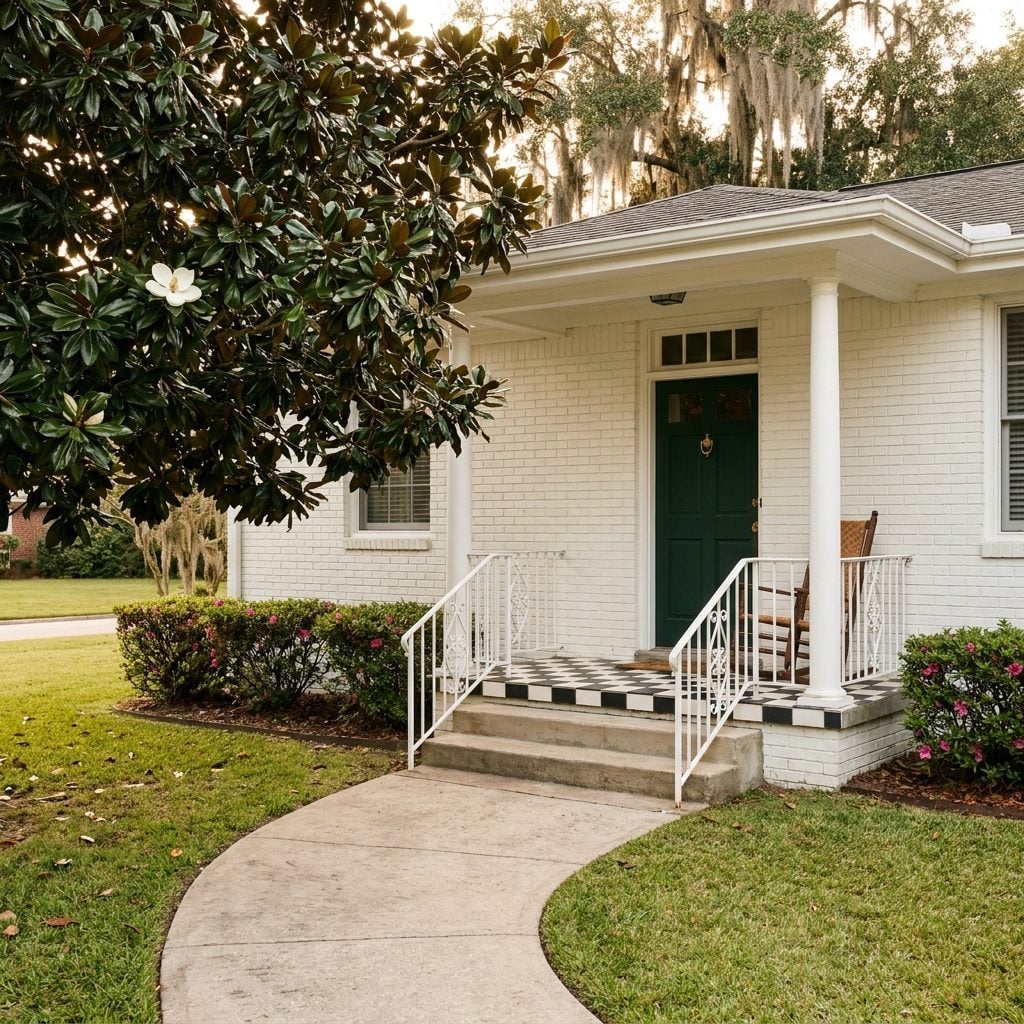
You could identify a Southern ranch porch by three things: white wrought iron railings with scrollwork that looked vaguely French, a black-and-white checkerboard tile stoop, and the magnolia tree out front that dropped waxy leaves on everything twelve months a year.
Those white wrought iron railings were scalding from May through September. You learned this once as a child and never grabbed one again. The checkerboard tile was slick when wet, which in Georgia meant it was slick from April to October. But the whole arrangement looked crisp, proper, put-together. It said something about the family inside before you ever knocked.
The Bungalow Stoop With an Aluminum Awning and a Milk Box That Still Got Deliveries
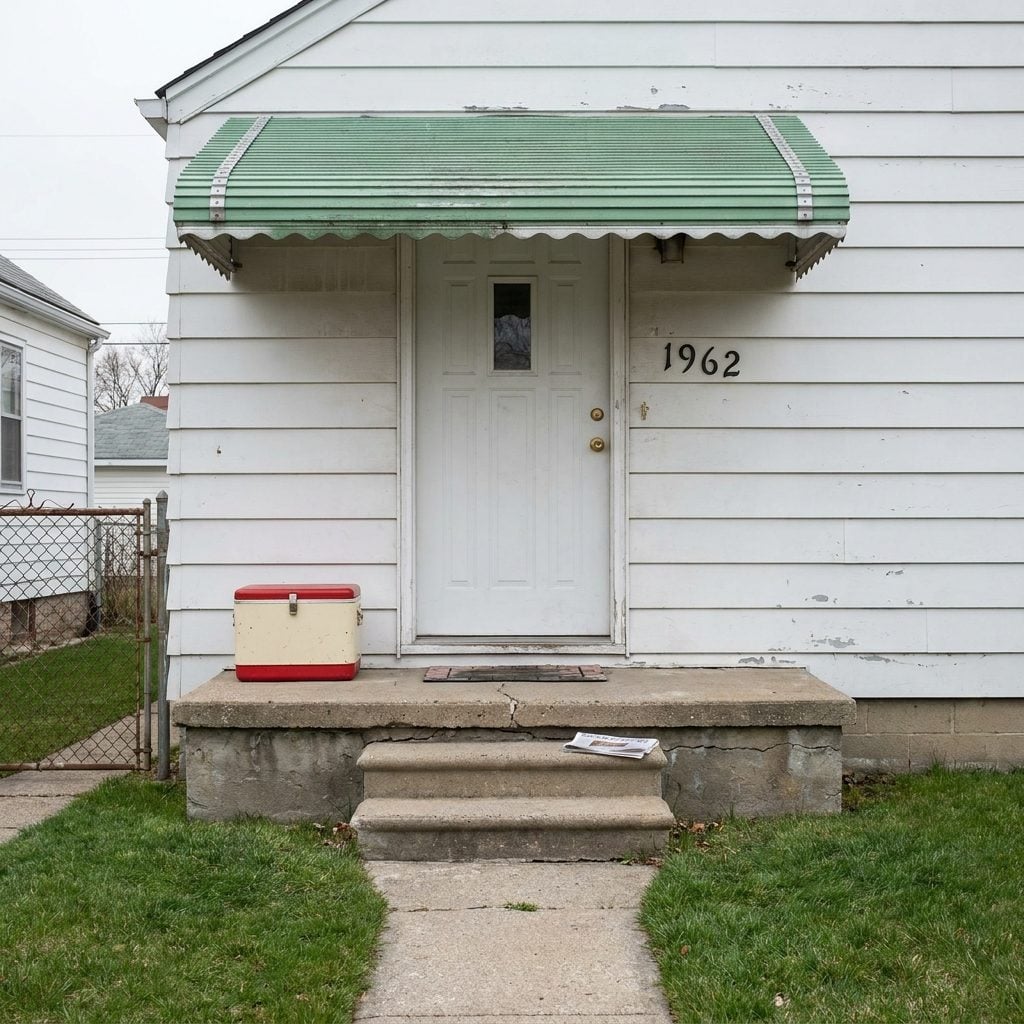
Corrugated aluminum awning, usually in green or white, bolted directly to the clapboard siding with metal brackets that left rust stains nobody fixed. The awning turned rain into a drum solo and made the stoop feel like standing inside a tin can. But it kept you dry, and that was the whole point in a neighborhood where nobody lingered at the front door anyway.
The real time capsule was the metal milk delivery box beside the door. In 1962, home milk delivery was fading fast, but in working-class Detroit neighborhoods, the insulated box remained. Some families still used it. Most used it to hold the newspaper or nothing at all.
Simple concrete steps, no railing, maybe a rubber-backed mat that said WELCOME in block letters. This wasn’t a porch for sitting. It was a porch for arriving and leaving.
The Atomic Ranch Entry in Palm Springs Where the Breeze Blocks Did All the Talking
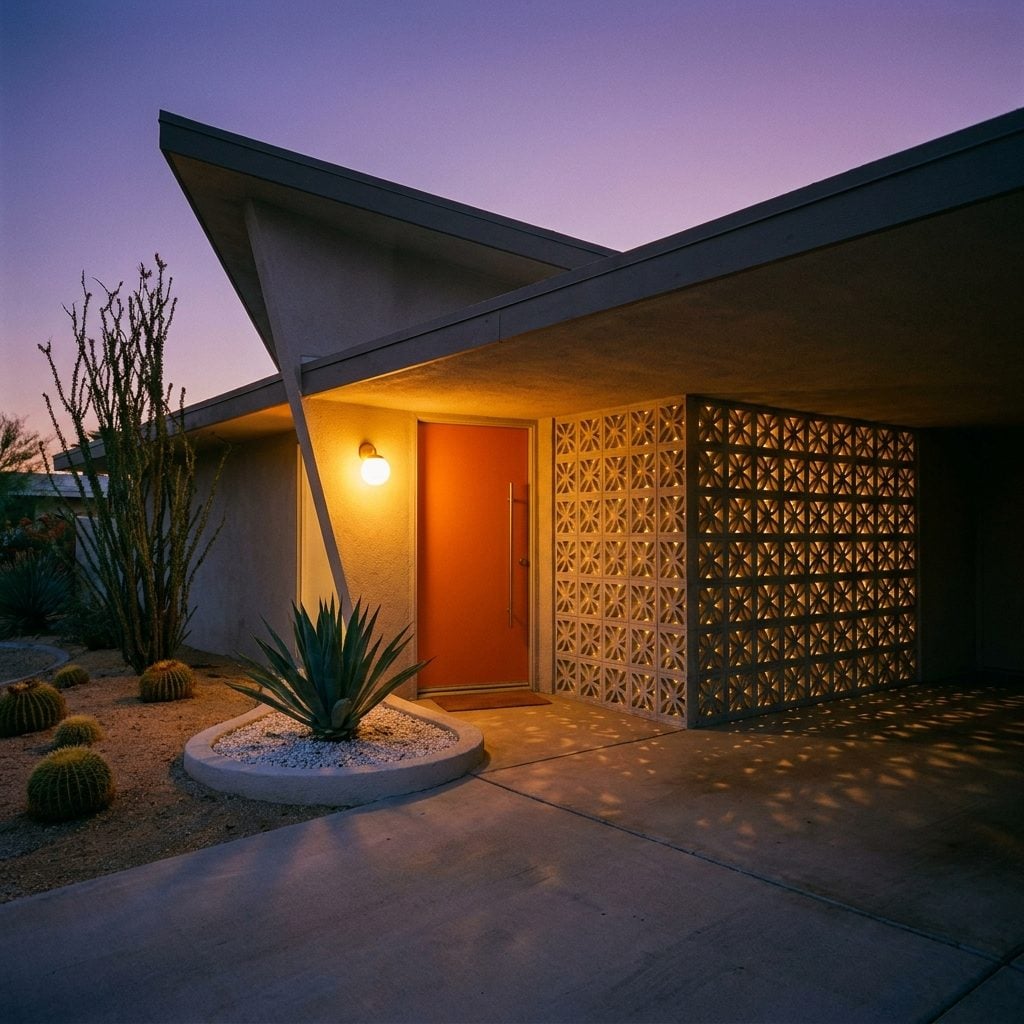
That asymmetrical roofline pitching upward at an unlikely angle. The decorative breeze block wall filtering desert light into geometric patterns on the concrete walkway. A kidney-shaped planter filled with gravel and a single agave that looked like sculpture. This was the atomic ranch at its most confident, and Palm Springs had more of them per square mile than anywhere else on earth.
At twilight, the single globe mid-century porch light switched on and the breeze blocks became a lantern wall, casting star-shaped shadows across the entry. The whole front of the house turned into a light installation that nobody called art but everyone felt.
Colonial Ranch Shutters in Williamsburg Blue and the Brass Eagle Knocker Nobody Actually Knocked With
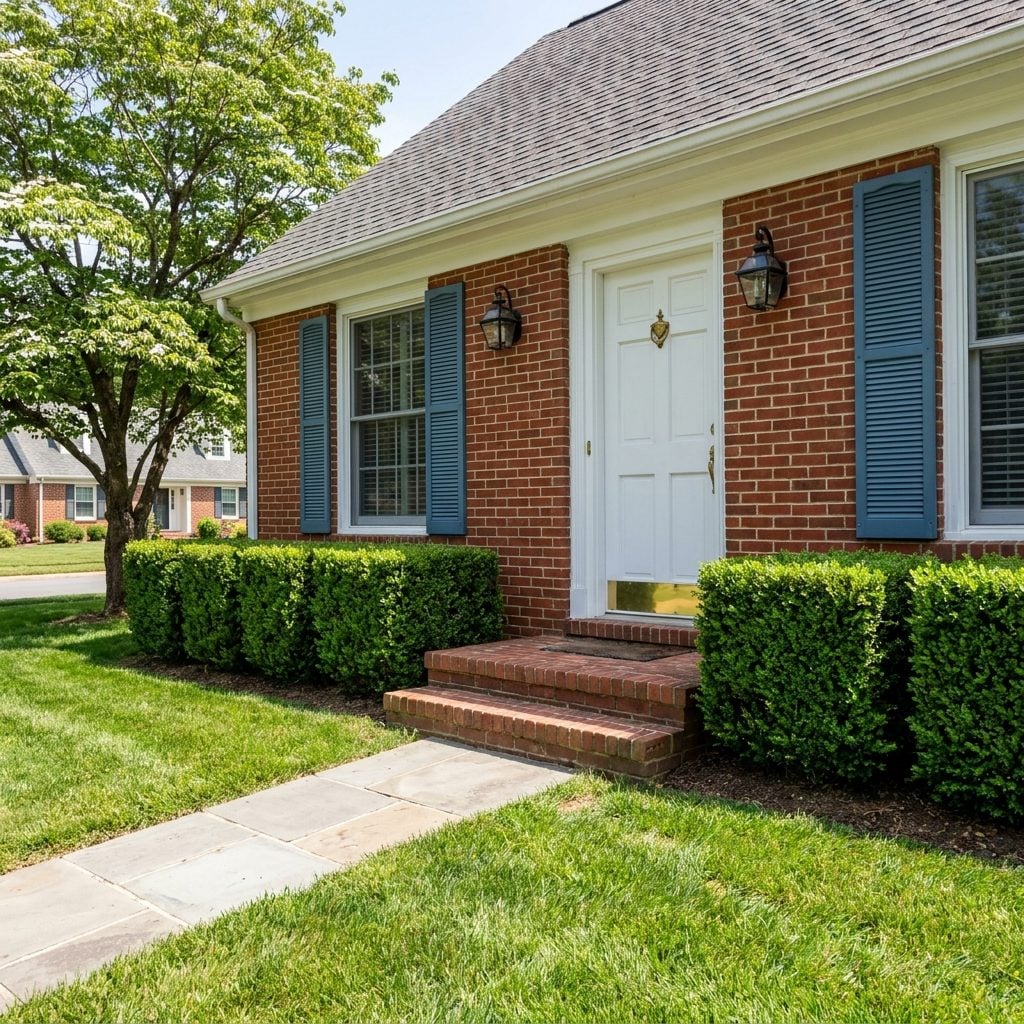
Every Virginia suburb had at least one street where this porch repeated itself like a chorus: red brick facade, Williamsburg blue shutters, a solid six-panel door in white, and a brass eagle door knocker mounted at exactly the wrong height for actually knocking. You’d reach for it, realize it was decorative, and press the doorbell instead.
The hedges were always boxwood. Always clipped into rigid rectangles. The brass eagle door knocker was polished on Saturdays or not at all. A light front porch fixture in colonial lantern style flanked each side of the door, black metal with clear glass panes.
The Prairie-Influenced Ranch With a Horizontal Overhang So Deep It Felt Like Standing Under a Wing
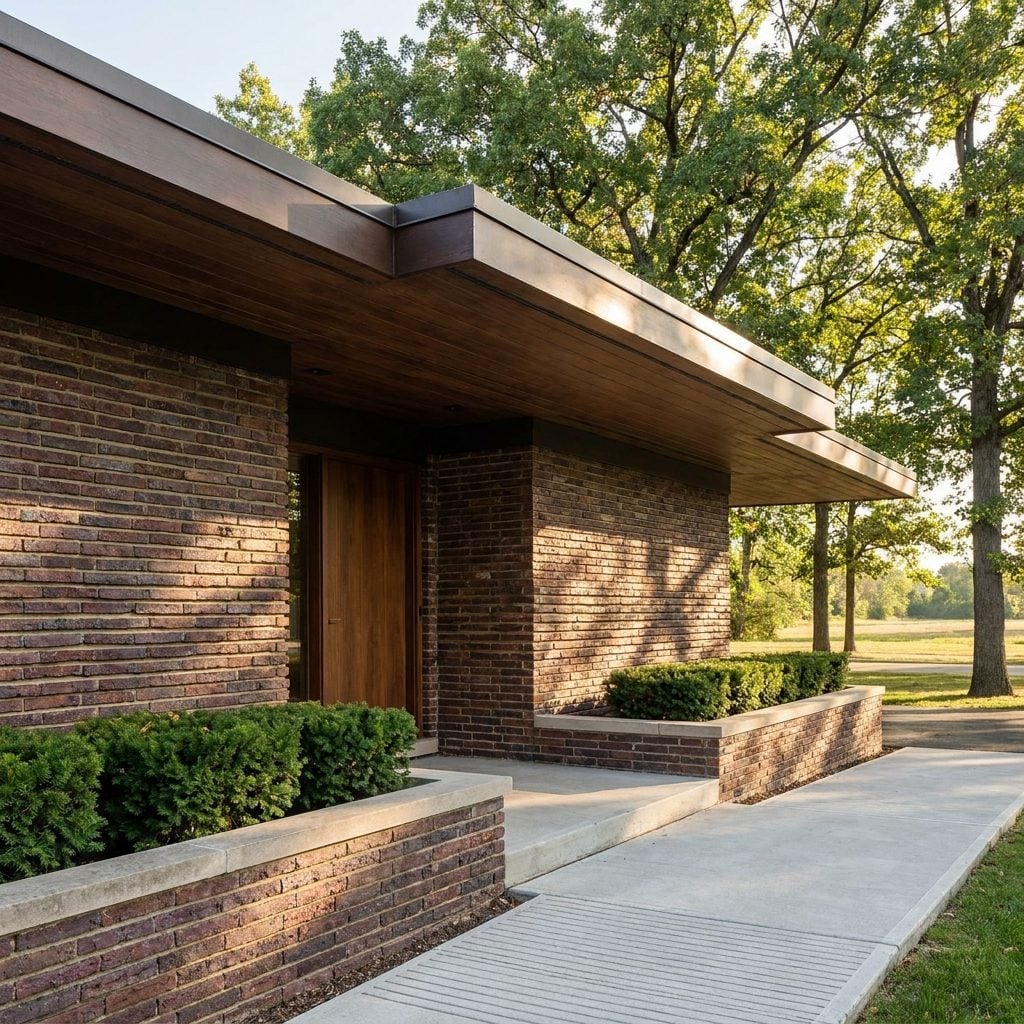
Frank Lloyd Wright lived in Oak Park, and the suburbs around it never quite recovered. By 1964, builders were borrowing his horizontal lines for ranch homes that hugged the ground like they were afraid of heights. The deep overhang, sometimes cantilevered four or five feet beyond the facade, created a porch without walls. You stood under it and felt sheltered by geometry alone.
Clinker brick, those rough, dark, irregularly shaped bricks that came from the hottest part of the kiln, gave the facade a texture that read as both rugged and deliberate. Low concrete planters held junipers pruned into flat-topped shapes that echoed the roofline. Everything was about the horizontal. Even the mortar joints were raked to emphasize width over height.
The Adobe Porch With Viga Beams, Terracotta Tile, and Chile Peppers That Were Decoration and Dinner
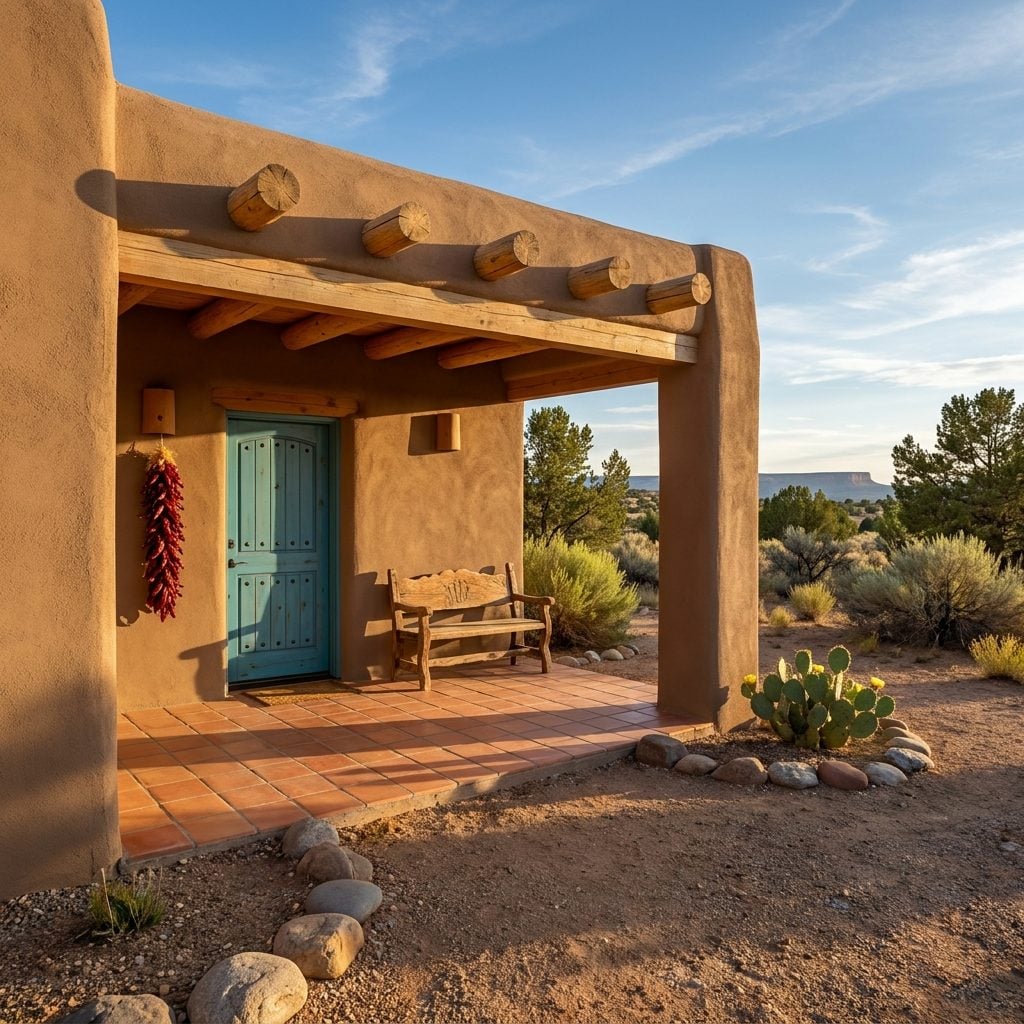
Round peeled log vigas jutting out from the parapet wall. Terracotta floor tile warm enough to walk on barefoot at sunset but absolutely punishing at noon. A ristra of dried red chile peppers hanging beside the door, simultaneously decorative and useful because you’d pluck one off on your way to the kitchen without breaking stride.
The adobe walls were thick enough to keep the interior cool without air conditioning, and the porch sat under a flat roof supported by those vigas, creating shade that felt ten degrees cooler than the yard. The desert stretched out beyond the gravel yard. Chamisa and sage grew where lawn would have been suicide.
This porch belonged to a building tradition hundreds of years older than anything else on this list. By 1966, new construction in Albuquerque and Santa Fe was still using these forms, not as nostalgia but because they worked. The desert demanded specific answers, and adobe gave them.
The Tudor-Ranch Hybrid Porch With Half-Timbered Gable and a Carriage Lamp That Whispered ‘Old Money’
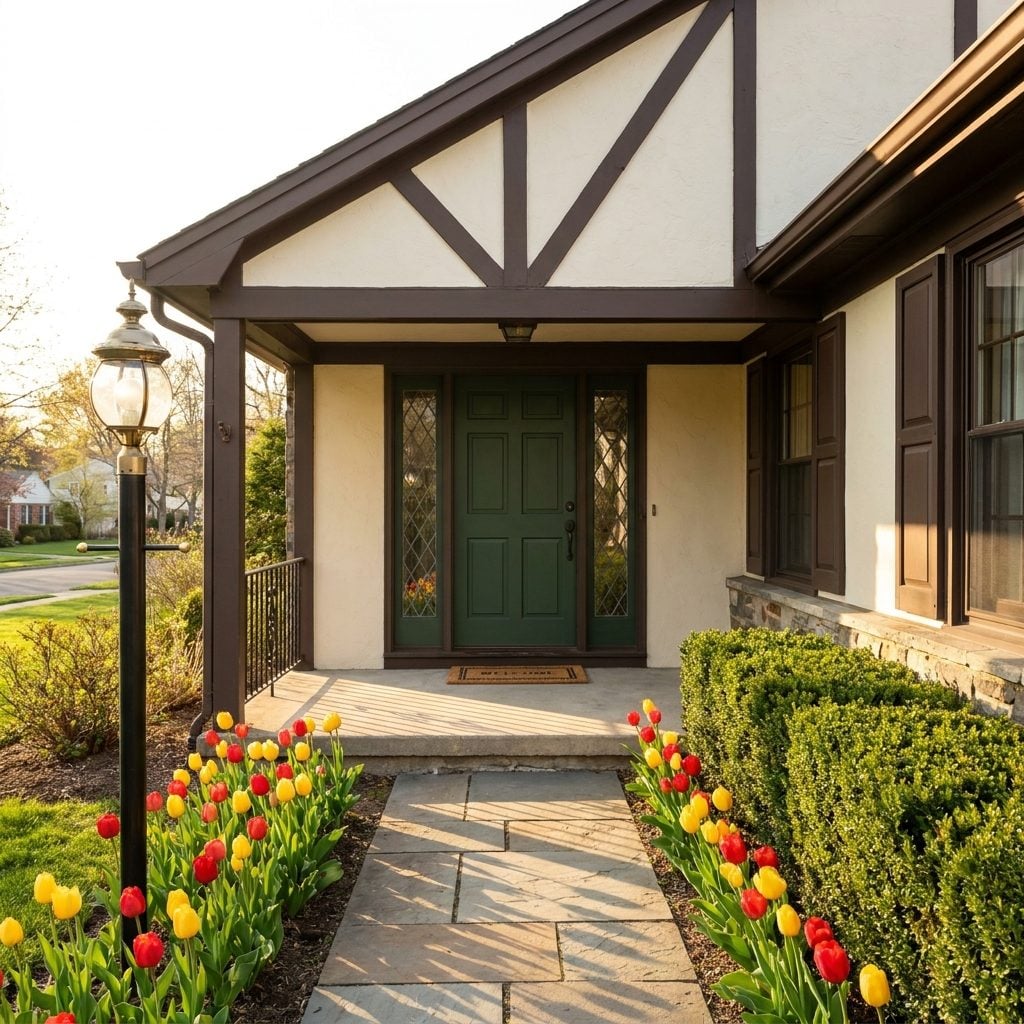
Nobody in Connecticut actually had old money, but the half-timbered gable over the front porch said otherwise. That decorative timber work, painted dark brown against cream stucco, borrowed from English manor houses and dropped it onto a split-level ranch without a shred of irony. The leaded glass sidelights flanking the front door threw little diamond-shaped light patterns across the entry tile every afternoon around four o’clock.
And then there was the brass carriage lamp post at the end of the walkway. Globe light on top, slightly too ornate for its surroundings, glowing amber from dusk until your father remembered to turn it off before bed. Spring tulips lined the flagstone path in perfect rows, red and yellow, because your mother had seen them in a magazine and decided that was the look.
The whole porch was maybe six feet deep. Just enough room to stand while fumbling for keys. But it carried the weight of an entire personality: we are respectable, we have taste, we read Architectural Digest. The leaded glass sidelights alone probably added two thousand dollars to the asking price when the house finally sold in 1978.
The Modest Postwar Ranch Porch With a Macramé Plant Hanger and an Aluminum Lawn Chair Nobody Ever Sat In
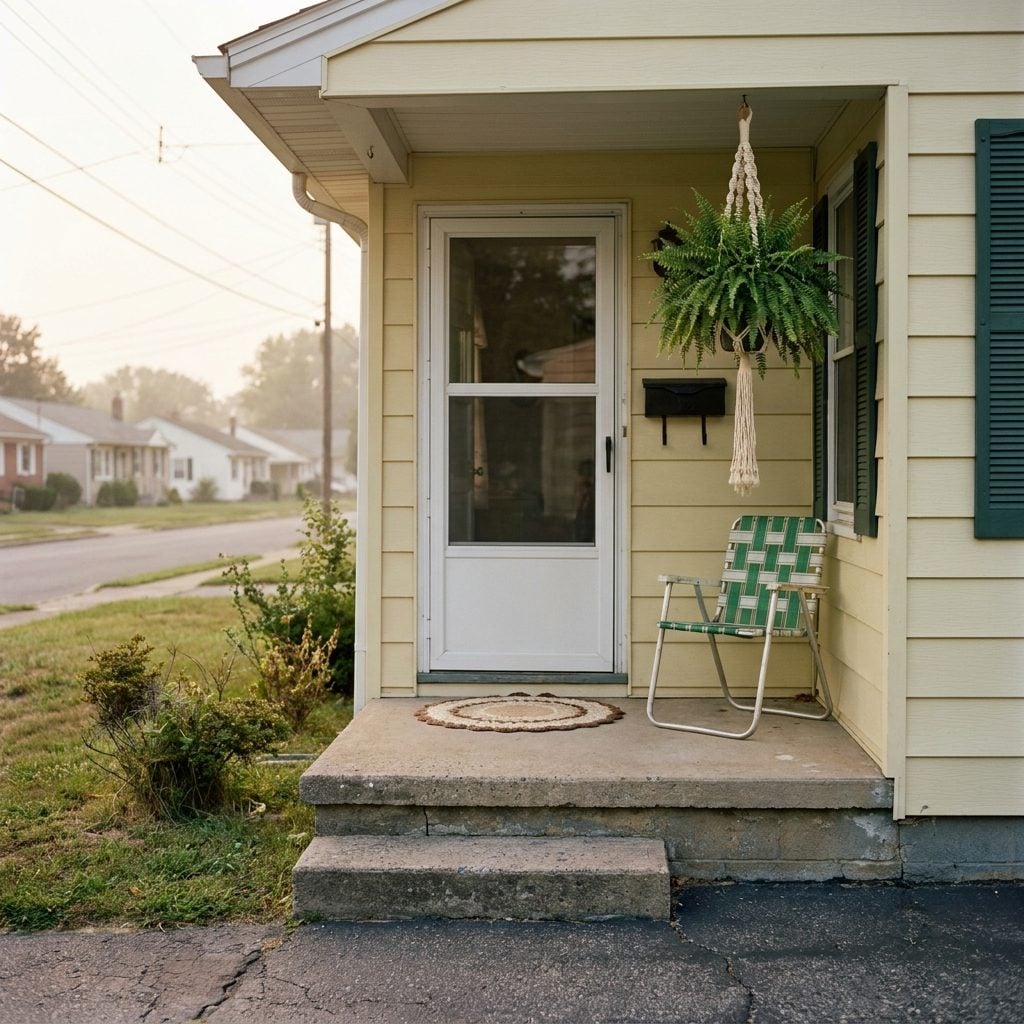
That aluminum lawn chair lived on the porch year-round. Green and white webbing, slightly frayed on the left armrest, one leg sinking into a soft spot on the concrete. Nobody actually sat in it. It was more of a territorial marker: someone lives here, and they might come outside eventually.
The macramé plant hanger held a Boston fern that was either thriving or completely dead, depending on the month. It hung from a small cup hook screwed directly into the porch ceiling, swaying just slightly when trucks passed on the main road. Below it, a crocheted doormat your grandmother made, beige and brown, collected mud from every pair of shoes that crossed it and never once got washed.
Small-town Pennsylvania porches like this one were honest. No pretension, no architectural statement. Just a concrete slab, an aluminum lawn chair, and the quiet understanding that the porch existed for watching, not for being watched.
The Ranch Porch With Wrought Iron Scrollwork and That Scalloped Aluminum Awning Nobody Could Resist
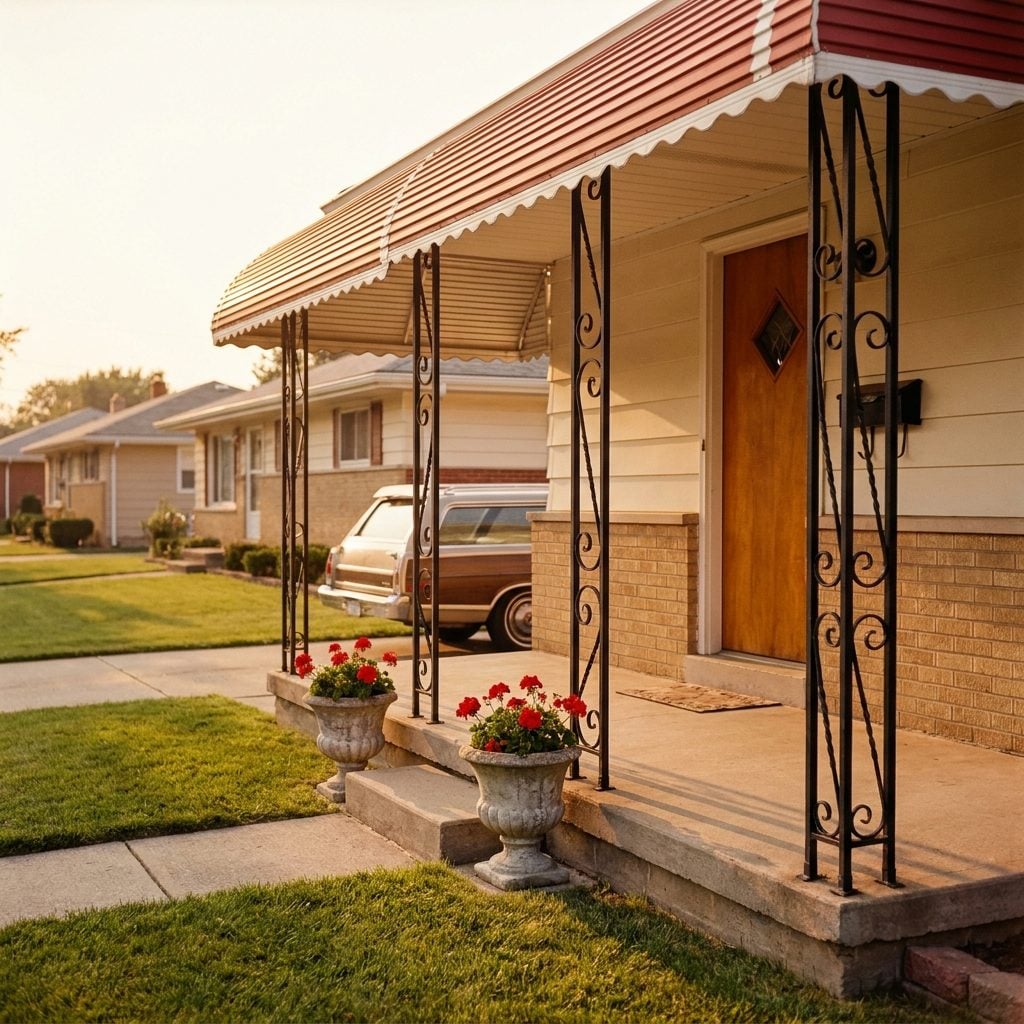
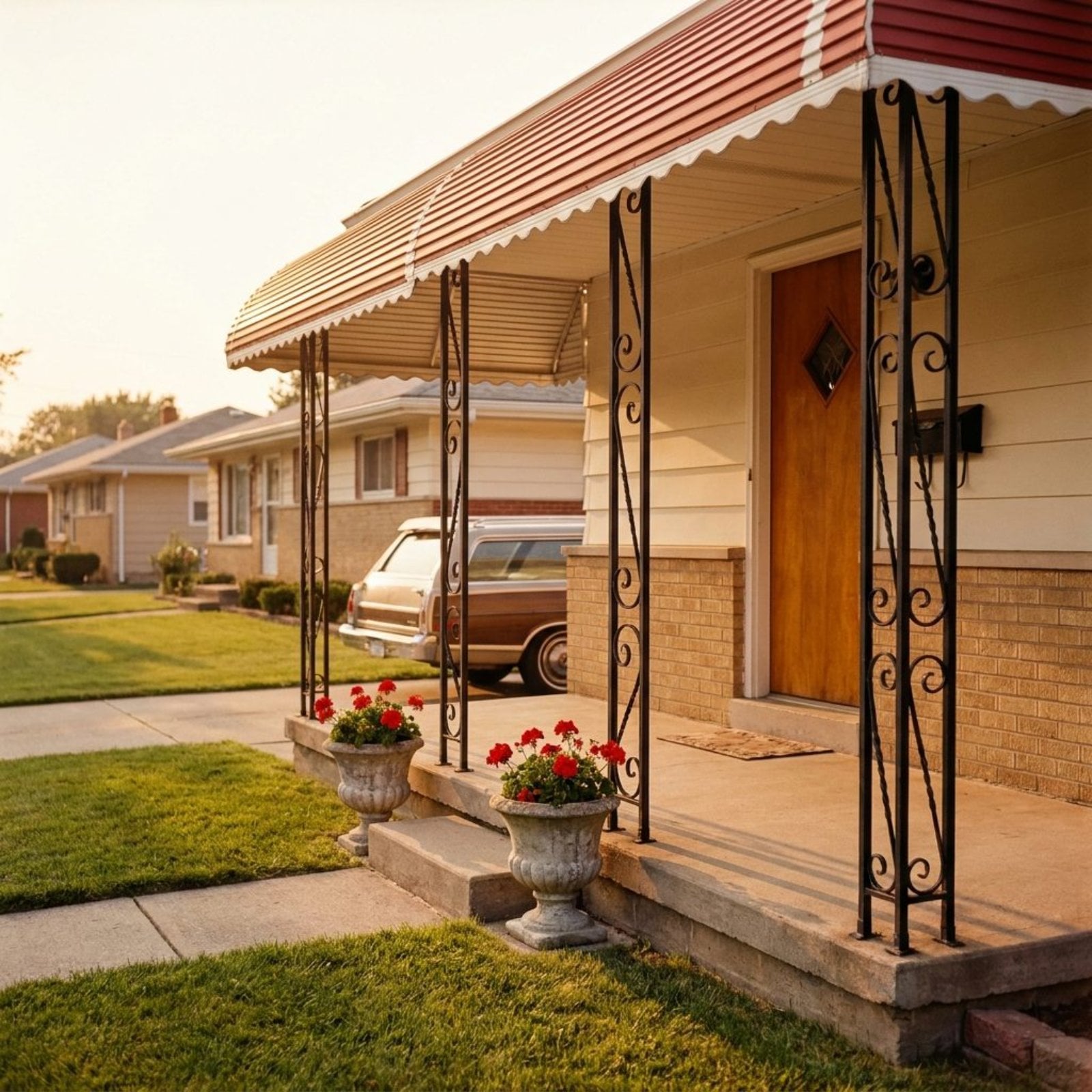
You could spot one of these from three houses away. The striped aluminum awning, usually green and white or red and white, with that scalloped edge fluttering just slightly when the wind picked up. Underneath it, a pair of concrete urn planters stuffed with red geraniums so bright they looked fake. They weren’t.
The wrought iron scrollwork posts did the heavy lifting visually. Thin, decorative, painted black or sometimes white, they gave a ranch house the illusion of grandeur without any of the square footage to back it up. Every dad on the street had the same ones, ordered from the same Sears catalog, installed the same weekend.
Golden hour hit these porches differently. The awning cast candy-striped shadows across the concrete slab, and the whole setup looked like something out of a magazine ad for suburban happiness. Which, honestly, it kind of was.
The Florida Block Home Porch With Pastel Paint, Jalousie Windows, and a Concrete Screen Block Divider That Was Pure 1964 Miami
🔥 Would you like to save this?
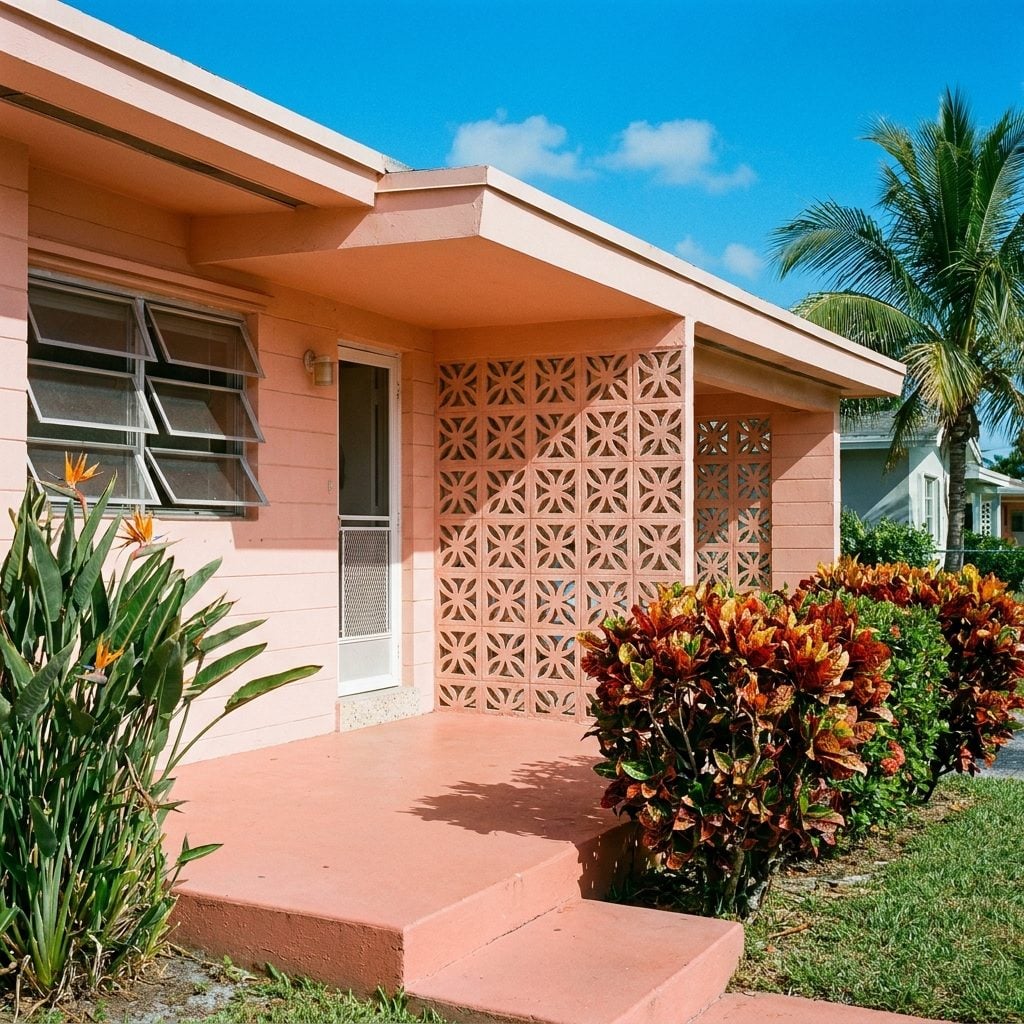
Every third house in Dade County had that divider. Concrete screen blocks, also called breeze blocks, stacked in geometric patterns to create a porous wall between the porch and the carport or the neighbor’s yard. They let air through. They let light through. They looked like something from a resort brochure, which was exactly the point.
The exterior paint was always pastel. Coral pink, seafoam green, pale aqua, sometimes a dusty lavender that faded to near-white within three hurricane seasons. Jalousie windows, those horizontal glass louvers cranked open with a small handle, lined the front of the house and stayed open roughly eleven months of the year. The concrete breeze blocks worked the same principle: ventilation was architecture in South Florida before central air became standard.
Tropical landscaping meant a bird of paradise plant, a croton hedge in absurd oranges and reds, and at least one coconut palm that dropped fruit onto the roof during storms. The porch itself was poured concrete, sometimes painted the same pastel as the house, sometimes left bare and slightly gritty underfoot.
The Striped Aluminum Awning Over Green Outdoor Carpet and a Metal Glider Bench That Squeaked With Every Push
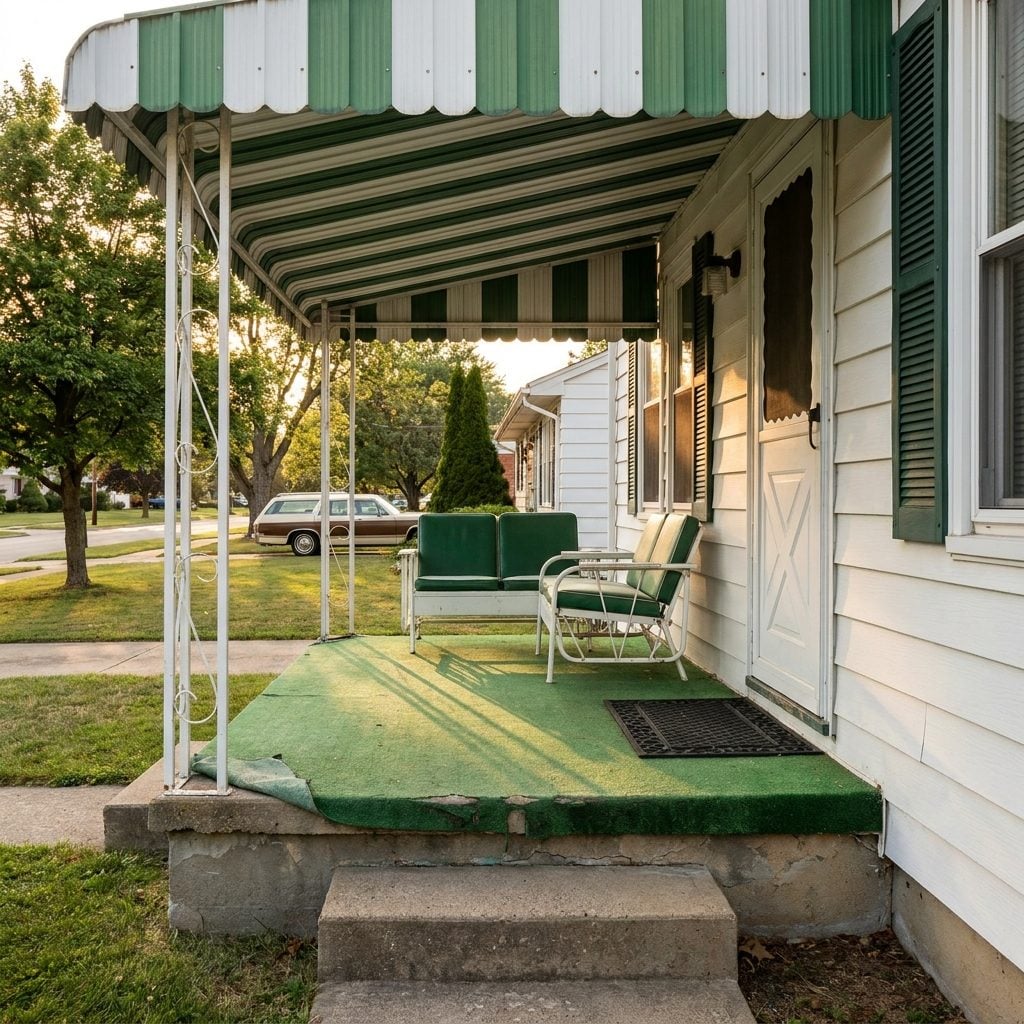
You heard the glider before you saw it. That rhythmic metallic creak, back and forth, was the sound of every summer evening on every suburban porch that had one. The metal glider bench sat on a concrete stoop covered in green outdoor carpet, the kind with a texture like astroturf’s less ambitious cousin, glued down at the edges and already peeling up near the steps.
Above it all, the striped aluminum awning. Green and white, or sometimes orange and white, corrugated and bolted to the house with brackets that left rust stains on the siding. It turned the porch into a room without walls. Rain drummed on it like a snare. Sun filtered through it in pale colored stripes across the carpet.
The awning, the carpet, the glider. That was the whole porch. That was enough.
The Minimalist Mid-Century Porch: Smooth Concrete, Slender Steel Posts, a Bold Red Door, and Nothing Else
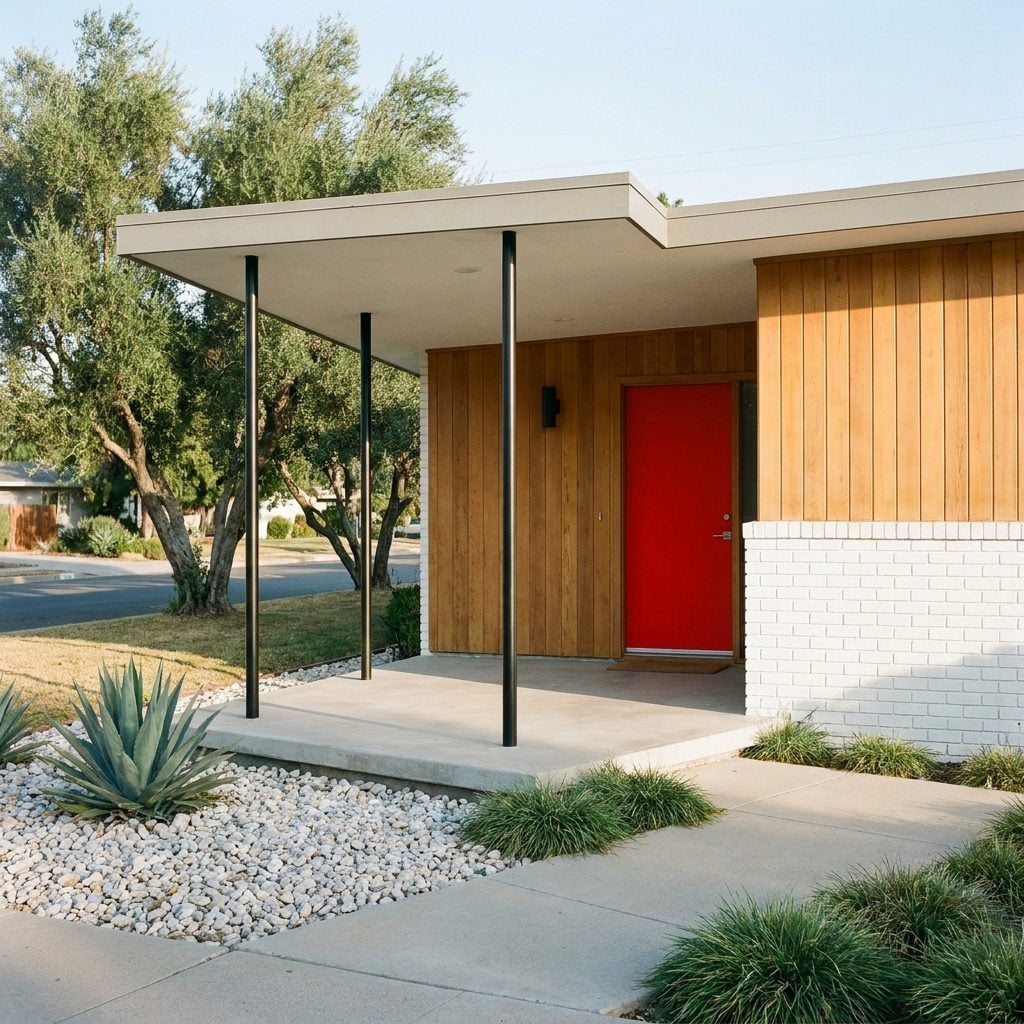
Some porches tried to say everything. This one said almost nothing, and that was the whole idea. A smooth poured concrete slab. Two or three slender round steel posts supporting a flat roof overhang. A front door painted fire-engine red or canary yellow, the single exclamation point on an otherwise quiet sentence.
These porches showed up in Eichler tracts in California, in builder-modern developments outside Chicago, in any suburb where an architect had actually been consulted. The horizontal lines of the roofline ran unbroken, the posts were thin enough to almost disappear, and the landscaping was low: river rock, a single sculptural shrub, maybe a patch of mondo grass.
There was nowhere to sit. No chair, no bench, no swing. The porch was a threshold, not a destination. You walked through it. The red front door pulled your eye forward and that was the only ornamentation the house needed.
The Classic Ranch Porch at Dusk: Boxy Concrete Steps, Black Metal Railing, a Wall-Mounted Mailbox, and the Coach Light Coming On
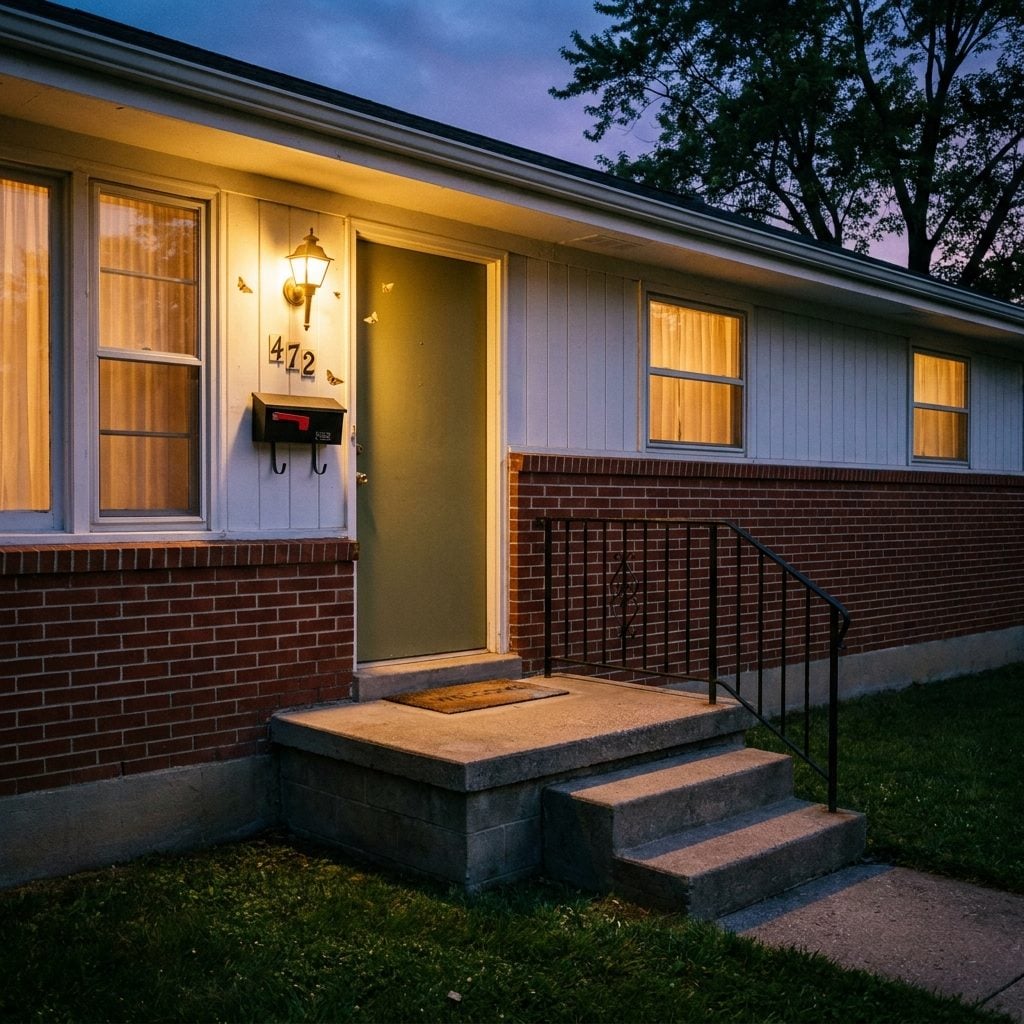
This is the one you remember when someone says the word “home.” Not the grand ones, not the stylish ones. The plain ranch porch with its two or three boxy concrete steps, a black metal railing your father installed one weekend with a borrowed drill, and a brass coach light that flickered on at dusk through a photocell sensor that never quite worked right.
The wall-mounted mailbox was black metal too, the kind with a small red flag on the side and your house number stuck on in adhesive digits, one of which had fallen off years ago. You knew what that missing number was. So did the mailman. So did everyone.
At dusk, the coach light threw a warm circle on the concrete, and the whole porch took on a quality that felt like the last scene of a movie. Moths gathered. The neighbor’s sprinkler hissed in the distance. The front door was unlocked because it was always unlocked. Something about that light front porch at that hour made everything feel finished for the day, settled, safe.
That black railing has aged well with our readers, too: entryway photos featuring black metal got more hearts than the other images in the same articles.