🔥 Would you like to save this?
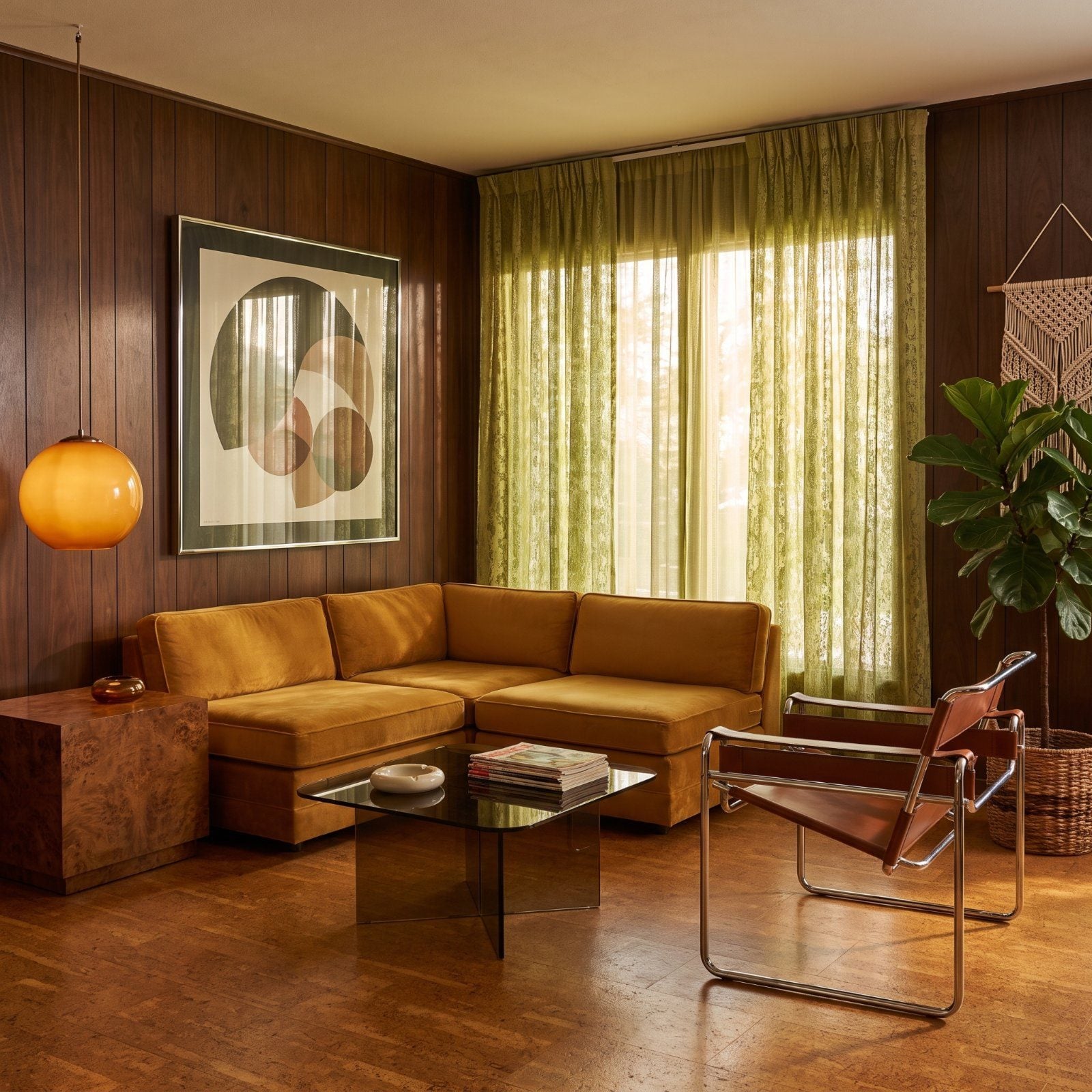
The smell of orange shag carpet under a chrome floor lamp. The sound of a swivel chair spinning while someone waited for the record to drop. The 1970s living room wasn’t shy, and it wasn’t cold — it asked you to sit low, stay long, and touch everything.
Now those same shapes and materials keep showing up in the rooms we photograph every week. Not as costume, but as choices people are making on purpose. Here’s what came back, and why it earned its second life.
In order to come up with the very specific design ideas, we create most designs with the assistance of state-of-the-art AI interior design software. Also, assume links that take you off the site are affiliate links such as links to Amazon. this means we may earn a commission if you buy something.
27. The Sunken Conversation Pit That Made Everyone Sit Closer

You stepped down and suddenly the whole room turned inward. That single drop in the floor did what no furniture arrangement ever could: it forced people to face each other instead of the TV.
Swap the wall-to-wall orange for bouclé and travertine and the logic still holds. A sunken pit creates instant intimacy because everyone shares one continuous seat, knees nearly touching. Call it the architecture of actually talking to someone.
26. Low-Slung Curved Modular Sectionals You Sink Into

That serpentine curve does all the heavy lifting. A straight sofa points you at the room; a curved modular one gathers everyone in, so a group of four ends up in a loose circle without anyone realizing they were arranged.
The low profile matters too. Sitting closer to the floor drops the visual weight of the whole room and makes the ceiling feel taller — which is why these pieces read as relaxed rather than formal. Pair a caramel velvet sectional with a shaggy rug and you’ve basically rebuilt a tropical living room lounge feeling without a single palm tree.
25. Plush Swivel Lounge Chairs Built for Spinning

A good swivel chair is a small act of rebellion against sitting still. Face the fire, then spin to catch the conversation, then spin again to watch the snow fall. No standing up required.
The plush, high-backed versions coming back now lean hard into that cocooning feeling — rounded shoulders, deep foam, a base that turns without a squeak. Put one in a reading corner and watch every guest gravitate to it.
24. Chrome-and-Leather Sling Chairs With Real Edge

Two materials, zero apology. The chrome tubing and single sling of cognac leather give this chair a hard, confident line that cuts against all the soft velvet elsewhere in the room.
That contrast is the whole trick. A room full of plush curves needs one piece with a spine, and the chrome leather sling chair is it. The leather ages beautifully, too, going darker and glossier where you rest your arms.
23. Smoked-Glass Coffee Tables That Hide the Mess

The genius of smoked glass was always a little sneaky. Clear glass shows every fingerprint and crumb; the tinted version keeps the light, airy feel while quietly forgiving whatever’s underneath.
It pulls a second trick visually. Because you see through it, the floor keeps flowing and the space feels bigger. Set a smoked glass coffee table in a small room and watch it disappear in the best possible way.
22. Burl-Wood Side Tables With Grain You Can Get Lost In

Look closely at burl and you’ll see why people obsess over it. The grain swirls and pools like water — no two pieces alike, each one a little geological event frozen in wood.
A burl wood side table brings that organic movement into an otherwise clean room. Keep the rest of the vignette simple, because burl doesn’t share attention well. One lamp, one glass, done.
21. Rattan Peacock Chairs That Own the Corner

A peacock chair doesn’t decorate a corner. It rules it. That towering fan back turns whoever sits in it into the center of the room, which is exactly why it became a photo-op decades before we had a word for that.
The woven rattan brings a natural, tactile texture that softens hard modern rooms, and it slides right into a bohemian media room setup. Surround it with trailing plants and you’ve got the one seat everyone fights over.
20. Chunky Beanbag Chairs You Actually Flop Into

There’s no dignified way to sit in a beanbag, and honestly that’s the appeal. You don’t perch on it. You commit, sinking in until it molds around you like the world’s laziest hug.
The new ones ditch the vinyl squeak for corduroy and suede, but the pitch hasn’t changed: casual, floor-level, no rules. Toss a couple in a blue craft room or a den and watch the kids abandon every proper chair you own.
19. Cork Flooring That’s Quietly Making a Comeback

Barefoot on cork is a different experience, and you feel it in the first step. Warm underfoot, slightly soft, and it swallows sound so a room calms down the second you walk in.
We ignored cork for years, filed it under seventies relic. We were wrong. It’s naturally cushioned, easy on the knees, and it insulates against cold far better than tile ever will. In a light sunroom especially, that acoustic hush changes the whole mood.
18. Dark Wood Wall Paneling, Reborn Without the Gloom

Wood paneling earned its bad name from decades of dim, cheap plywood that made rooms feel like a basement. The current revival fixed the two things that went wrong: the wood and the light.
Real walnut or oak on a single feature wall, balanced with plenty of daylight and light-colored furniture, reads as rich and grounding rather than dark. The vertical grain even pulls the eye up, so the ceiling feels higher.
Try it behind a bed in a cottage guest room or behind a sofa. Just one wall, though. Contrast is the goal, not a cave.
Paneling only felt oppressive because we starved it of light. Give it a bright room and it becomes the warmest wall in the house.
17. Bold Geometric Wallpaper Making a Loud Comeback

That accent wall is doing something a can of paint never could. The repeated ogee shapes in rust and olive pull your eye across the room instead of letting it settle, so a small living room reads bigger than it is.
What modern rooms have figured out is restraint. One wall, not four. We used to paper everything, closets included, and it was exhausting to look at. Now the pattern gets a single surface while warm wood and plain textiles carry the rest, because the eye needs somewhere to land and a bold print gives that landing spot some meaning.
16. Large-Scale Supergraphic Walls, Painted Right on the Plaster

Supergraphics are wallpaper’s braver cousin. Instead of a repeat, you get one enormous shape painted straight onto the plaster, an arc or a stripe or a bullseye that ignores where the wall ends and the ceiling begins.
What makes the contemporary versions land is color discipline. Three shades pulled from the same warm family, tangerine through terracotta, so the drama comes from scale rather than clash. Painting over a doorway separates the confident rooms from the timid ones. It tells your eye the walls are a suggestion, not a rule.
We love these because they cost almost nothing. A weekend, a laser level, a few quarts of paint. That’s it.
15. Mushroom Table Lamps Glowing on Every Side Table

🔥 Would you like to save this?
The mushroom lamp does one thing perfectly: it glows all the way around. That domed opal shade wraps the bulb completely, so there’s no glare and no hot spot, just an even wash that makes skin look good and rooms feel calm.
Designers keep reaching for these because they solve a real problem. LED lighting goes cold and clinical fast. A mushroom lamp with a warm bulb throws the kind of light you actually want to sit under. Set one on a walnut side table beside a leather chair and the whole corner sorts itself out.
14. Chrome Arc Floor Lamps Arching Over the Sofa

The genius of the arc lamp is that it drops overhead light exactly where you want it without cutting a hole in the ceiling. That polished chrome curve reaches out over the sofa and pools light right onto your lap. No wiring, no renovation, just a heavy marble base holding the whole thing steady.
Chrome is back partly as a rebellion against ten years of matte black everything. It bounces light, catches the warm tones around it, and adds a little glamour without shouting about it. Pair one with a low cognac leather sofa and you’ve built a reading corner that looks like it belongs in a film.
13. Amber Glass Globe Pendants Dropping Warm Light

Amber glass turns a bare bulb into a sunset. Instead of white light spraying everywhere, you get a honeyed glow that pools on the table and softens everyone’s face beneath it. Hang three globes at staggered heights and the whole nook feels like the good part of a dinner party.
The reason these keep coming back is simple. Warm-toned glass does automatically what expensive dimmers try to fake, filtering the light before it ever reaches you. A single amber globe pendant over a kitchen island, or a cluster above a table, gives you that low, flattering restaurant light at home.
12. Stereo Consoles With Speakers Built Right In

Remember the hum before the needle dropped? The stereo console was furniture and sound system in one long walnut box, speakers hidden behind woven grille cloth, records filed in the cabinet below. Nobody hid the electronics in a closet back then. You made them the centerpiece.
They’re returning now because we’re tired of gadgets that vanish. A console gives your record player a home, hands the wall a horizontal anchor, and pulls off the job a media unit does without looking like a plastic afterthought. Top it with a lamp and a plant and it earns its wall.
11. Macramé Wall Hangings Softening the Hard Walls

Bare walls sound louder than you’d think. That’s the quiet job macramé does. All those knotted cotton fibers absorb a little sound and soften the echo, so a room with a big hanging over the sofa feels calmer, not just prettier.
The versions coming back are less crafty-fair, more sculpture. Cleaner geometry, undyed cotton, a driftwood dowel instead of a plastic rod. Hang one above a low rattan sofa and it pulls the weight a painting would, but with texture you actually want to reach out and touch.
10. Woven Fiber Room Dividers Splitting Open Space

Open plan sounded great until you were eating dinner ten feet from the TV with nothing between them. A woven fiber divider fixes that without building a wall. Jute strung floor to ceiling, or wooden beads on cord, splits a big room into two rooms your eye still reads as one.
What sells the contemporary versions is light. Solid partitions block it. A woven screen filters it, throwing soft stripes across the floor as the sun moves. You get separation without the closed-in feeling, and that split of privacy against openness is what makes a room feel both cozy and free at once.
9. Mirrored Accent Walls Doubling the Light

A mirrored wall is the oldest trick for a dark room, and it still works. Face one toward a window and it grabs all that light and throws it back, doubling the brightness and making the room feel twice its size.
The current versions have grown up. Instead of the raw silver mirror of the disco era, designers reach for smoked bronze or antique-tinted panels that reflect softly and hide fingerprints better. Behind a low velvet sofa or in a narrow hallway, a tinted mirror wall carries a little of that old glamour without turning the place into a dance floor.
8. Built-In Cocktail Bars Ready for Company

Nothing said the grown-ups were in charge like the home bar. A walnut nook with a marble top, smoked mirror behind the bottles, glassware catching the light. The whole thing existed for one purpose: pouring a drink for someone who just walked in.
They faded for decades, and now they’re back, and the reason is emotional more than practical. A built-in bar is a promise that people will gather here, that the room is for company and conversation instead of screen time. Add a brass rail and a couple of velvet stools and you’ve built the corner everyone drifts toward at a party.
We’ll admit it. We want one more than half the sensible things on our renovation list. Some corners of a home are worth building purely for the good nights they invite.
7. Indoor Trees in Oversized Planters

A single tall tree does more for a room than a wall of small plants ever could. The 1970s understood this — you planted one big statement specimen, a rubber plant or a weeping fig or a dracaena climbing right up toward the ceiling, and let it own its corner.
The oversized planter is what sells it now. Skip the plastic nursery pot. A woven basket or a glazed ceramic vessel wide enough to look grounded is what turns a houseplant into architecture, and the scale is everything. A skinny plant in a skinny pot reads as an afterthought. A seven-foot fig in a basket you could practically sit in? That reads as intentional.
6. Glass Terrariums

Remember the little glass globe of moss and pebbles on somebody’s side table? Terrariums were everywhere in the 70s, and they’re back — only now the geometry has gotten sharper. Brass-seamed hexagons, faceted glass houses, big open bowls on teak stands.
Light is what makes them work in a modern room. Set a terrarium where morning sun can hit it and it turns into a tiny prism, tossing green and gold edges onto the wall. A living object that reflects and refracts at once.
Fair warning: we’ve fogged up and killed a few by overwatering. Closed terrariums basically water themselves, while open ones want a light misting and a whole lot of restraint. If you’re the type who loves your plants to death, go open.
5. Rust, Avocado, and Harvest-Gold Color Palettes

Avocado Green
Harvest Gold
Terracotta
Warm Cream
For years these colors were the punchline. Avocado appliances, harvest-gold everything, rust shag. Then something strange happened — people got tired of gray, and the warm palette that once felt hopelessly dated started feeling like a fireplace after a long winter.
Restraint is what makes it land in a current room. You don’t paint all four walls harvest gold. Put the rust on the sofa, the avocado on a lamp base or a piece of pottery, the gold on a single accent wall, and let warm cream carry the rest.
Here’s why it reads as cozy instead of a time capsule: temperature. Every color in this family sits on the warm side of the wheel, so they agree with each other, and that agreement is what your eye reads as calm. It works especially well in a tropical living room where the palette already leans golden.
4. Tiled Coffee Tables

The tiled coffee table is one of those quietly practical 70s ideas that got lost and deserved a comeback. A grid of glazed ceramic tiles set into a wood frame, ready to take a hot mug, a wet glass, a dropped candle, whatever life throws at it.
Handmade tile is what makes the new versions sing. Slight glaze variation from one tile to the next means the top catches light unevenly, so the surface has a low, tactile shimmer instead of the flat sheen you get off a lacquered table.
Practical, too. You cannot ruin a tiled top with a water ring. We appreciate any piece of furniture that has made peace with the fact that people actually live around it.
3. Crocheted Granny-Square Afghans

🔥 Would you like to save this?
Somebody’s grandmother made one. Every family had at least one granny-square afghan, usually stitched from whatever leftover yarn happened to be in the basket, which is exactly why the color combinations came out so gloriously random.
They’re showing up again, folded over the backs of expensive sofas, and the contrast is the draw. A handmade, slightly lopsided crochet blanket against a clean modern couch reads as warmth and humanity in a room that might otherwise feel like a showroom.
2. Lucite Accent Furniture

Lucite was the space-age darling of the 70s — clear acrylic chairs, waterfall coffee tables, floating shelves that looked like they’d been carved out of solid air. It fell out of favor, then came right back around.
The magic is what it pulls off in a small room. A clear acrylic chair takes up physical space without taking up visual space. Your eye reads straight through it to the floor and wall behind, so the room feels less crowded than it actually is.
Pair one Lucite piece with warm wood and brass and the contrast does the talking. Too much clear acrylic, though, and a room starts to feel like a display case, so we’d keep it to a piece or two. Natural fit for a light-filled light sunroom.
1. Wall-to-Wall Shag Carpet

You could lose a Lego in it for a week. Shag carpet was the tactile heart of the 70s living room — that deep gold or rust pile you raked with a special little tool and sank your bare feet into during Saturday morning cartoons.
It’s coming back, mostly in the smarter form of large area rugs rather than gluing the whole house down, and honestly that’s the version we’d argue for. Deep pile in one warm tone under a seating group gives a room instant softness and knocks down echo, so the space ends up sounding as cozy as it feels.
There’s a reason wall-to-wall shag felt so safe when you were a kid. Soft underfoot, warm to the touch, and it swallowed every stray noise. A room where the floor itself comforts you hits something deep, and the current revival is really just chasing that same feeling all over again.