🔥 Would you like to save this?
An $85,000 backyard sounds like a number you’d need to sell a kidney to afford, but it isn’t. The homeowners who pull off a project this size shrink the cost until it’s smaller than the dream, then finance only what’s left, and they never raid retirement savings to pour a patio. These 26 moves make the math work, from phasing the build over a few summers to borrowing the smart way for the parts that can’t wait.
This article contains affiliate links. If you sign up or buy through them, Home Stratosphere may earn a commission at no extra cost to you.
In order to come up with the very specific design ideas, we create most designs with the assistance of state-of-the-art AI interior design software. Also, assume links that take you off the site are affiliate links such as links to Amazon. this means we may earn a commission if you buy something.
26. Build the Backyard in Three Phases Over Three Summers
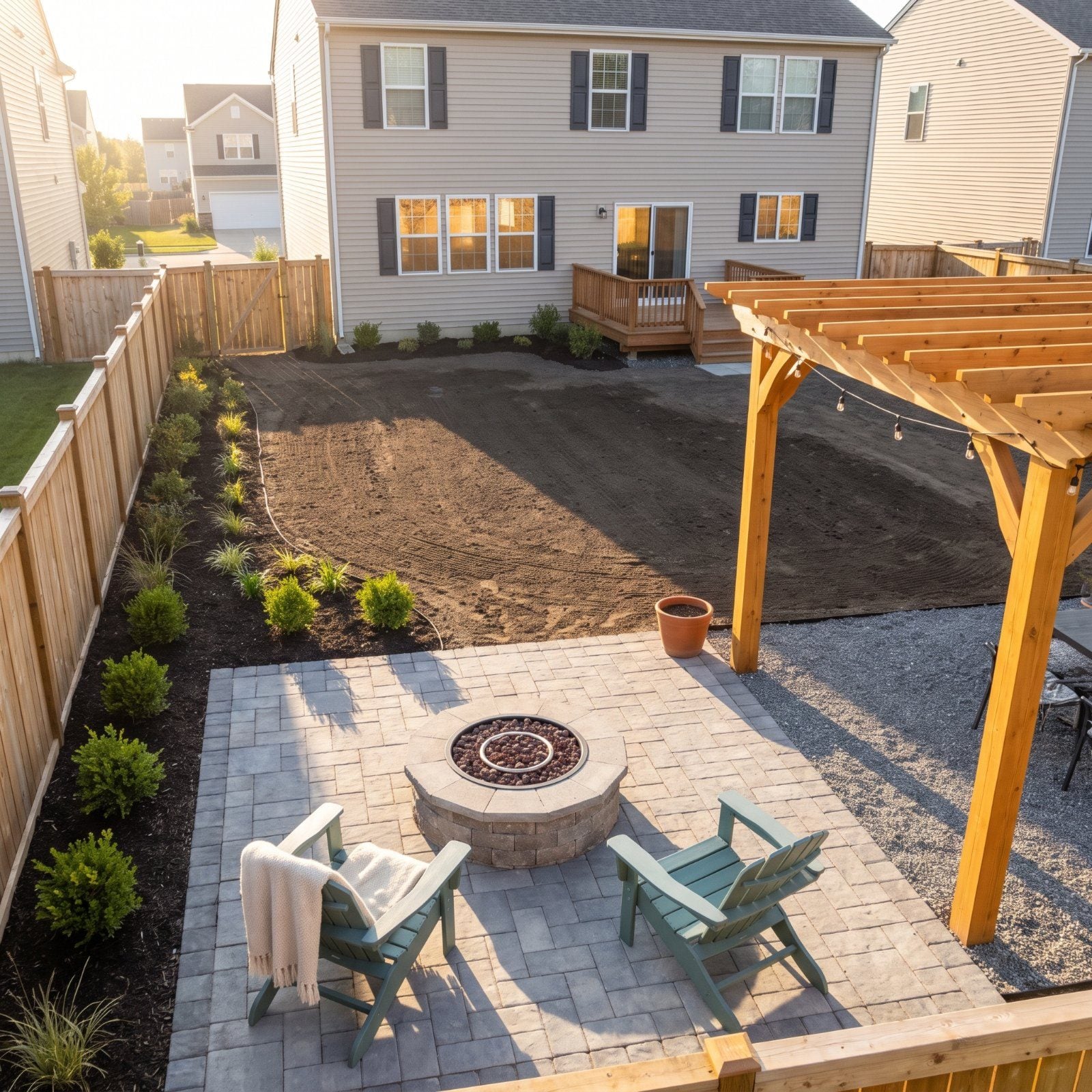
Nobody tells you this, but an $85,000 backyard almost never has to happen in one season. Split it into three and the whole thing becomes a series of smaller, payable chunks instead of one terrifying check.
Year one, pour the hardscape and get the bones in. Year two, add the pergola, the outdoor kitchen rough-in, the lighting. Year three, finish the planting and the soft stuff. You spend roughly a third each summer, pay cash for far more of it, and borrow a fraction of what you would have otherwise.
The quiet bonus? Living in the space for a year teaches you what you actually want next. Plenty of homeowners drop a planned water feature entirely after one summer, simply because they realize they’d never use it. Big backyard projects almost always look better when they’re allowed to breathe between stages.
25. Compare HELOC Rates Before You Break Ground
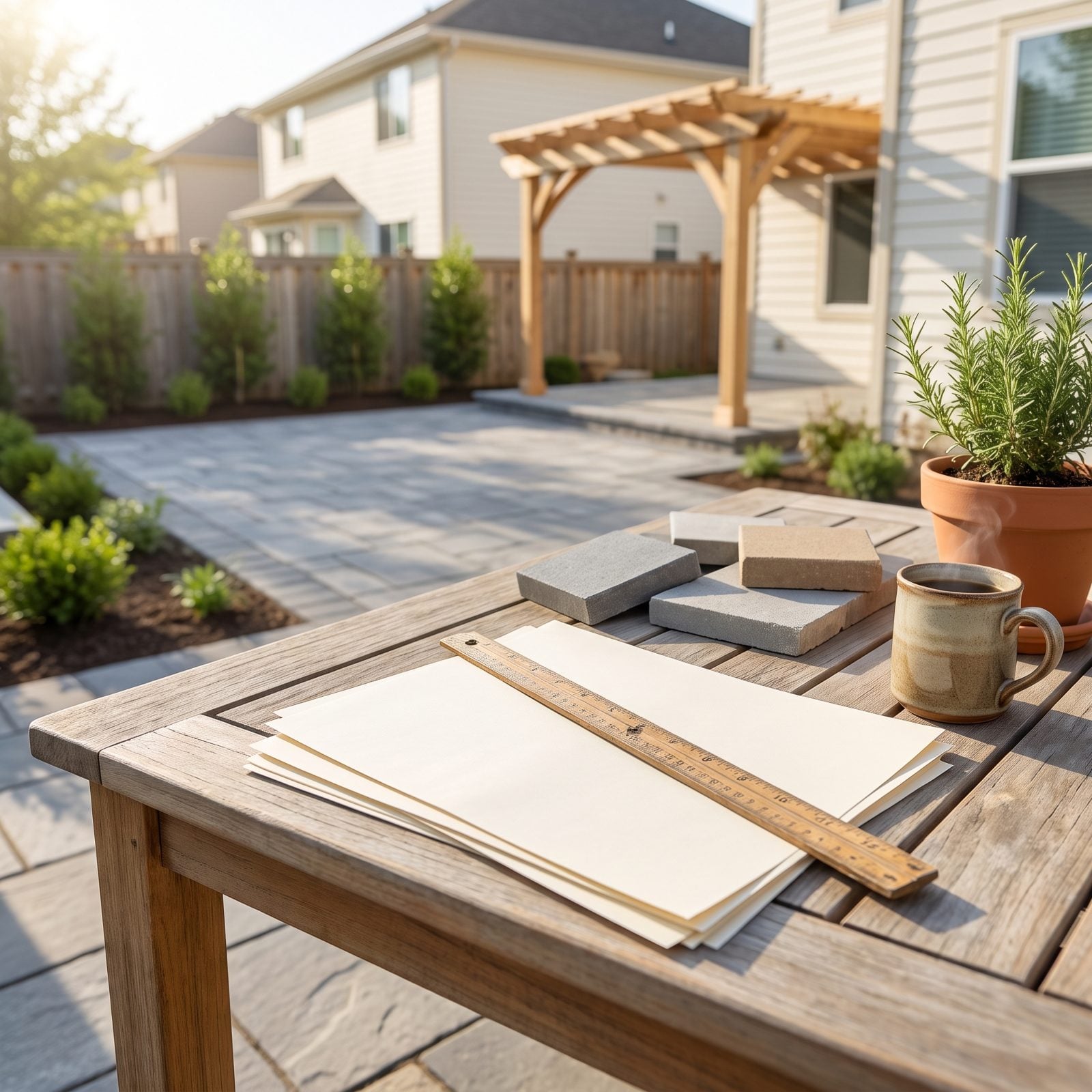
A HELOC is a line of credit against your home equity, and the rate you get is not the rate your neighbor got. It’s variable, it moves, and the spread between a decent offer and a bad one can cost you real money over the life of the project. So shop it. Three or four lenders, same week, same requested amount, and don’t let anyone talk you into borrowing the full $85,000 upfront when you’re only pouring a $22,000 patio this year.
Borrow only what you need, when you need it — that’s the whole appeal of a line versus a lump sum. Rates and approval swing by lender and by your own numbers, so compare closing costs and draw fees, not just the headline rate.
24. Pour the Patio Now and Plant Later
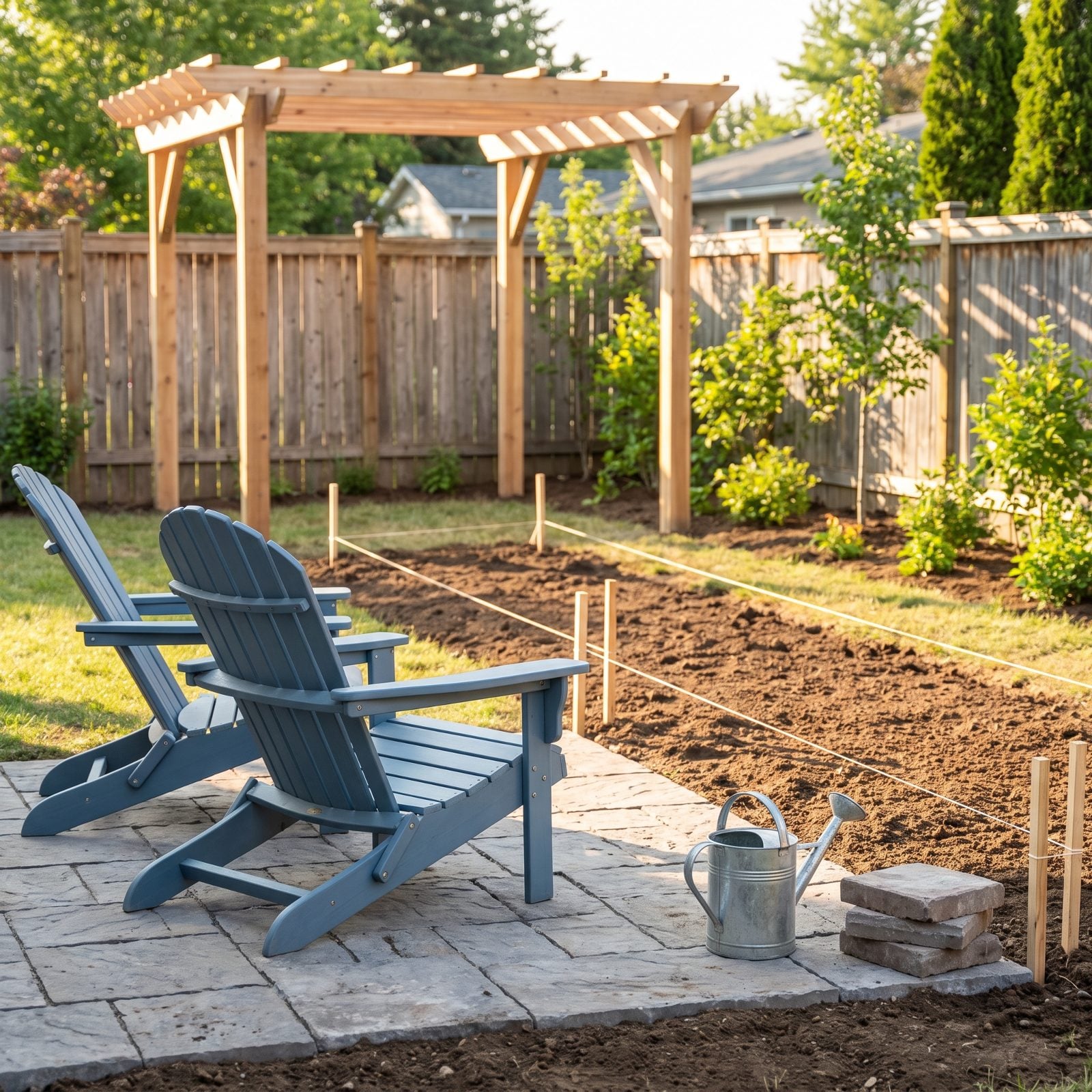
Hardscape is the expensive, disruptive, machinery-heavy part. Plants are the cheap, forgiving part you can add on a weekend. Flip the usual order and you win twice.
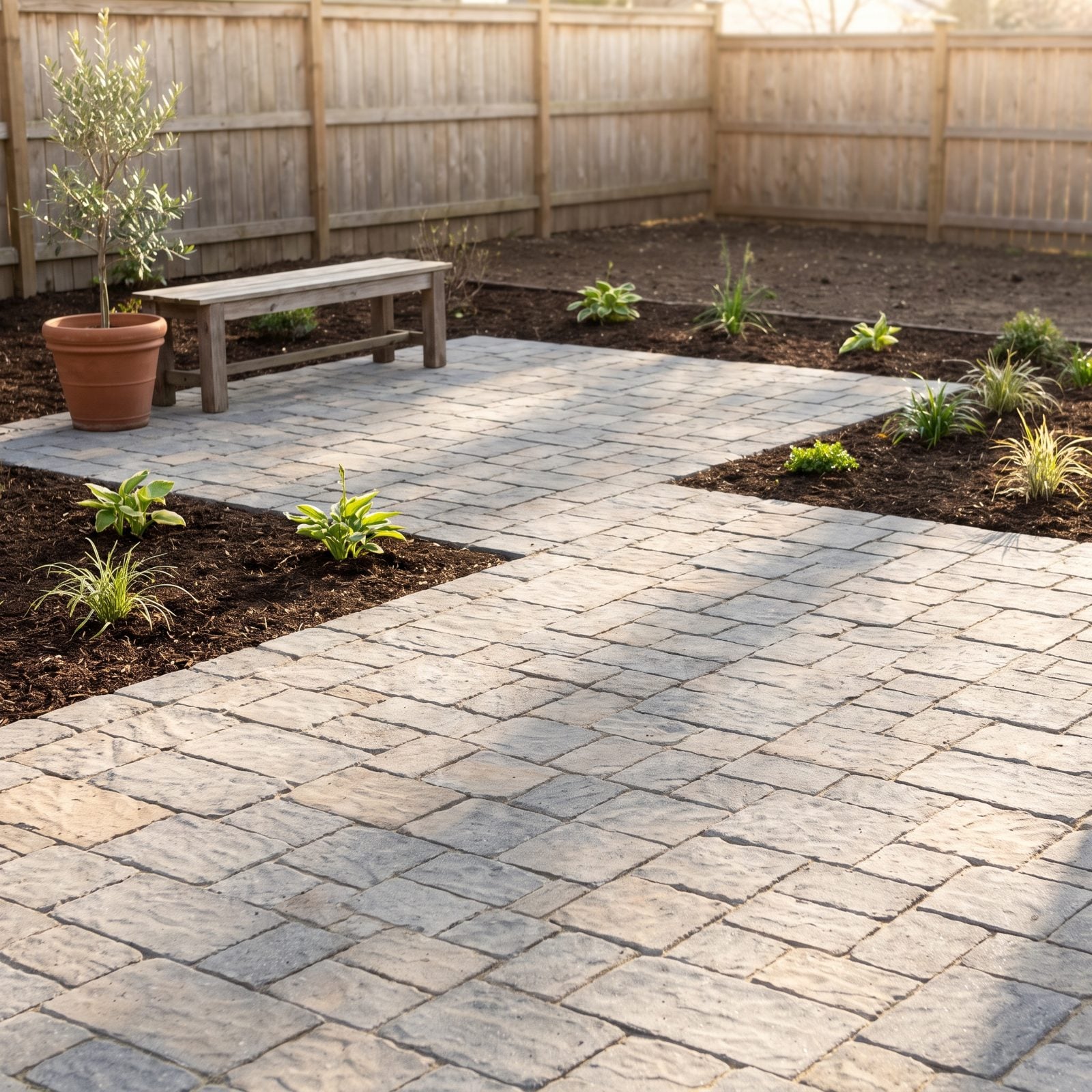
Get the patio, the retaining walls, the paths all poured and set while you’ve got the budget and the crew mobilized, then leave the beds mulched and mostly bare. A patio with empty planting beds looks deliberate, even a little grand. Half-finished stonework with lush plants crammed around it just looks like you ran out of money.
You’ll also plant smarter once the hard surfaces are in and you can read the light, the shade, and the sightlines for real. Small gardens especially reward this patience.
23. Choose Pavers or Stamped Concrete Over Natural Stone
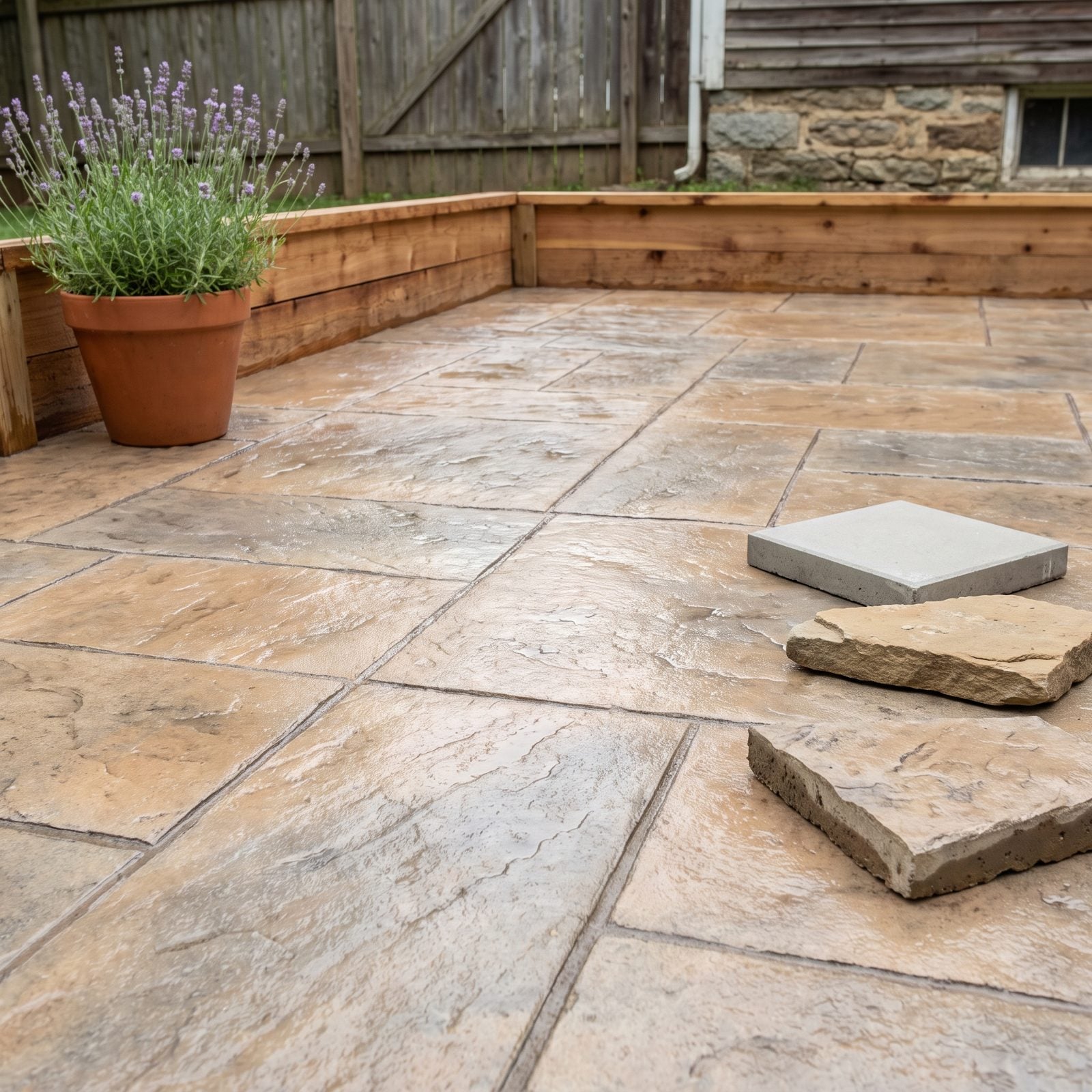
Natural stone is the single line item most likely to blow your budget, and most people can’t tell the difference from six feet away once it’s installed. Real flagstone and bluestone cost a premium for the material itself, and they’re heavier and slower to lay, which runs up labor too.
Pavers and stamped concrete both hand you the look for meaningfully less. Stamped concrete mimics flagstone, slate, even wood plank, and it goes down in a single pour. Pavers run a bit more than stamp, but they’re easy to repair one at a time if something cracks or settles.
22. Fund the Fire Pit and String Lights With Side Cash
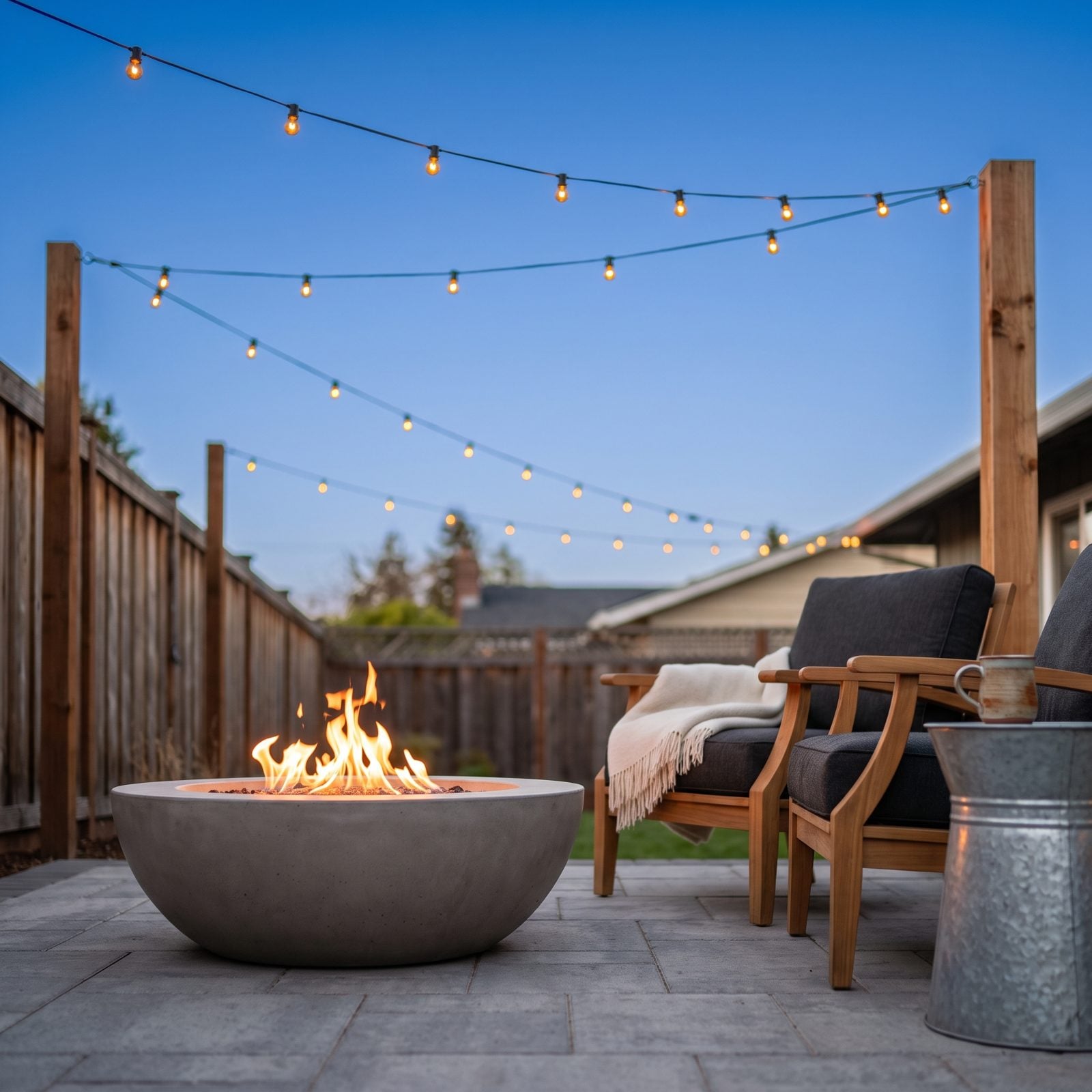
The fire pit and the lighting are the two cheapest things in the whole project that deliver the most feeling. A gas fire pit and a run of quality string lights land in the low thousands, often less — a number you can cover without touching a loan at all.
This is where tax refunds, a bonus, a few months of a side gig, or selling off the junk cluttering your garage all come in. Keep these small, high-impact items on a cash-only diet. Financing a fire feature over years makes no sense when a single refund covers it outright.
Warm string lights over a patio at dusk do more for the mood than almost anything you can buy. A set of warm string lights and a simple gas fire pit carry a surprising share of the whole backyard experience.
You can earn with Branded Surveys in spare minutes and let the payouts cover the fire pit, chairs and lights.
Start Earning With Branded Surveys →
21. Skip the Inground Pool and Try a Cheaper Way to Cool Off
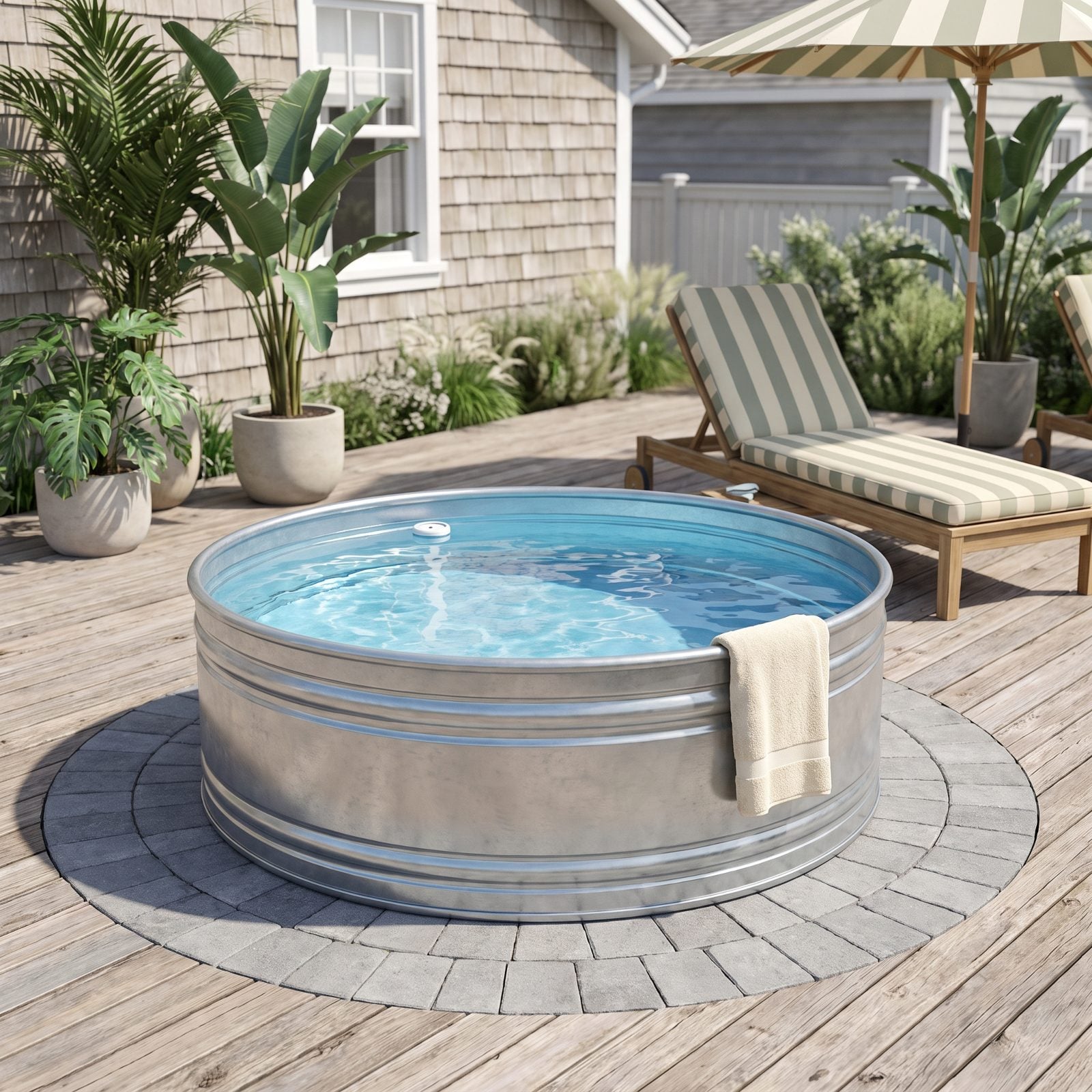
An inground pool can eat your entire $85,000 by itself, and then it keeps eating every year after in chemicals, heating, and maintenance. If cooling off is the real goal, there are far cheaper ways to get wet.
A galvanized stock-tank pool costs a tiny fraction of an inground and looks genuinely good set on a paver pad with a little decking around it. An above-ground pool, a plunge pool, or even a well-placed misting system and a shaded lounge zone all scratch the same itch — and free up tens of thousands for the rest of the yard.
20. Use a Fixed-Rate Home Equity Loan for the Hardscape
Not everyone wants a variable rate hanging over their head. A fixed-rate home equity loan is the other side of the coin: you borrow a set lump sum, you know the payment, and it never moves.
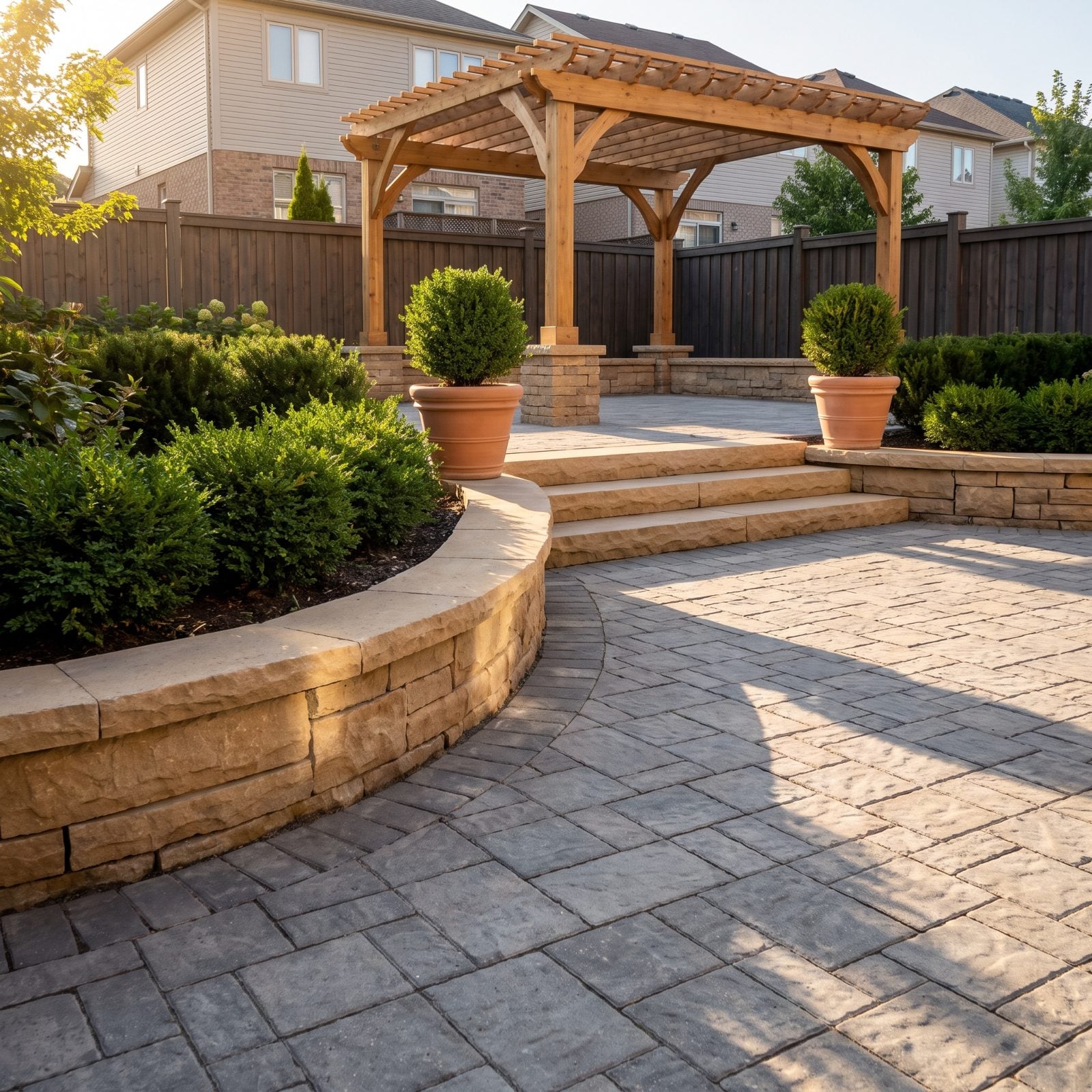
That predictability pairs well with hardscape, your big one-time cost you won’t repeat. If your patio, walls, and steps come to, say, $40,000 and you want to finance part of it, a fixed loan with a known monthly payment is easier to plan a decade around than a line that floats.
Like a HELOC, this is secured by your home, so weigh the fixed rate, the term, and the total interest against the variable option. Borrow only the part you can’t pay cash for. And never stretch the term so long that you’re still paying for a patio you’ve already worn out.
19. Ask a Landscape Pro Where the $85,000 Quote Can Shrink
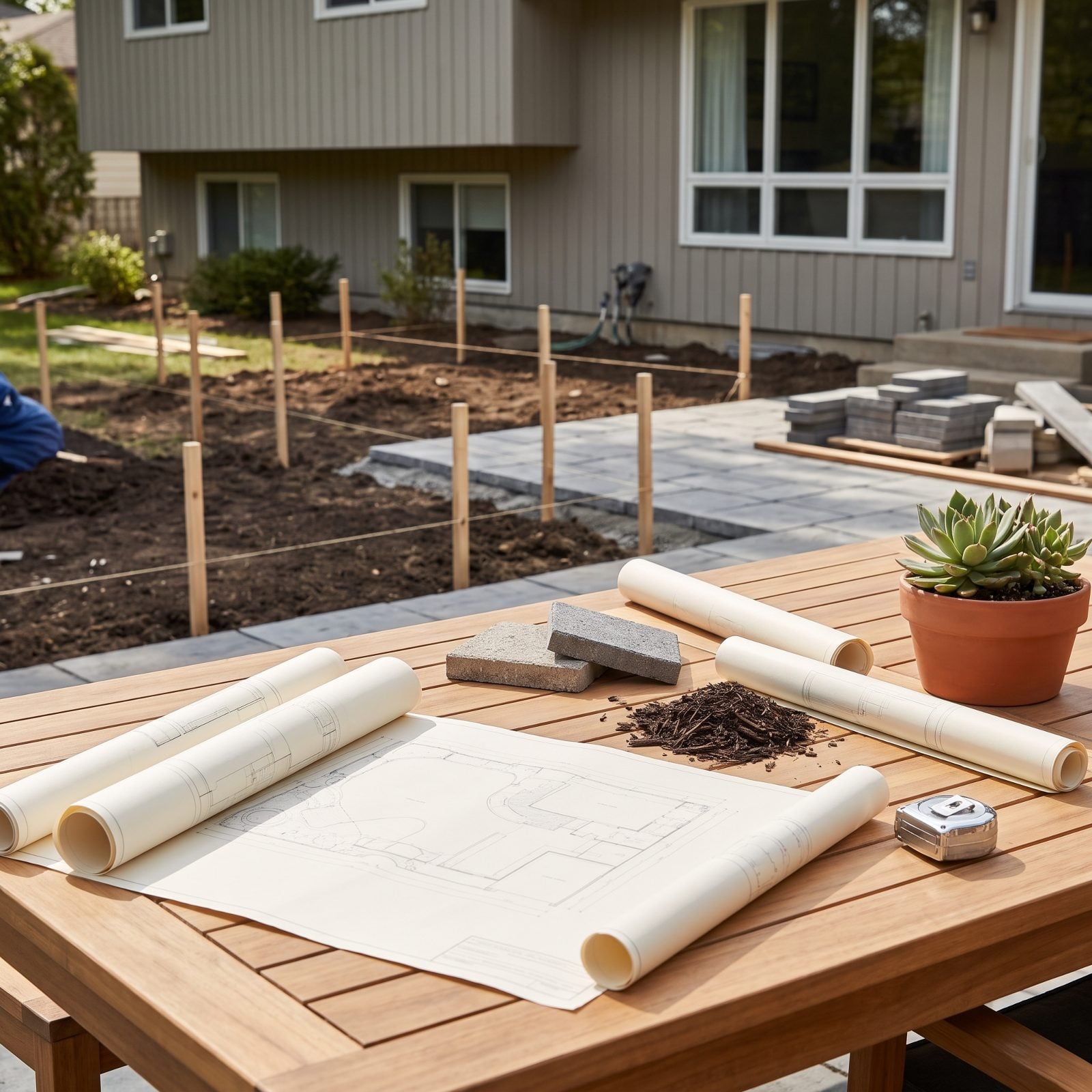
A good landscape pro knows exactly where the fat is in their own quote, and most will show you if you ask directly. The $85,000 number isn’t a fixed object — it’s a stack of choices, and half of them have cheaper versions that look nearly identical.
Ask the blunt questions. Where can I swap materials without hurting the design? What can I do myself to cut your labor? What if we phase this? Where are you padding for contingency?
- Material swaps on the big-ticket surfaces usually save the most.
- Doing your own demo, hauling, and planting cuts labor hours fast.
- Dropping one feature (that water wall, the built-in kitchen) can shave thousands in one line.
Get two or three bids so you can actually compare. The spread between contractors on the same scope will surprise you.
Before you sign, ask a landscaping expert on JustAnswer which parts of the plan are driving the price.
Ask a Landscaping Expert Now →
18. Plant Small and Let It Grow
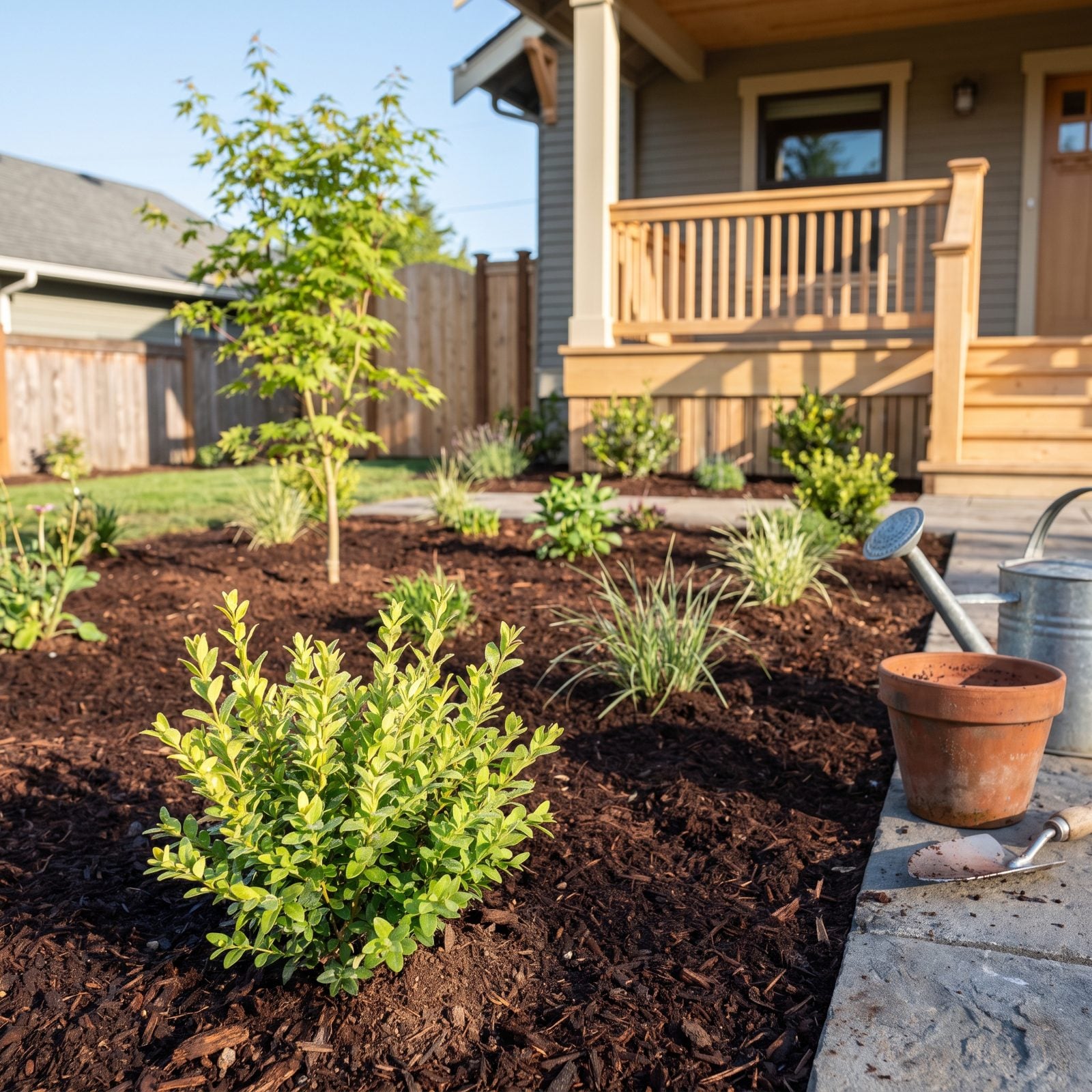
A fifteen-gallon tree costs a multiple of the same tree in a five-gallon pot, and in three or four years you genuinely cannot tell which one you planted. Plants grow. You’re paying a steep premium for someone else to have grown them first.
Buy small. One-gallon shrubs, smaller trees, perennials in cell packs if you’re patient. Space them for their mature size, leave the gaps alone, and let time do the expensive part for free.
Plants crammed too close because the bed looked bare at first rarely thrive. Give them room. A young bed that reads a little sparse in year one looks professionally designed by year three.
17. Build a Pergola From a Kit Instead of a Custom Structure
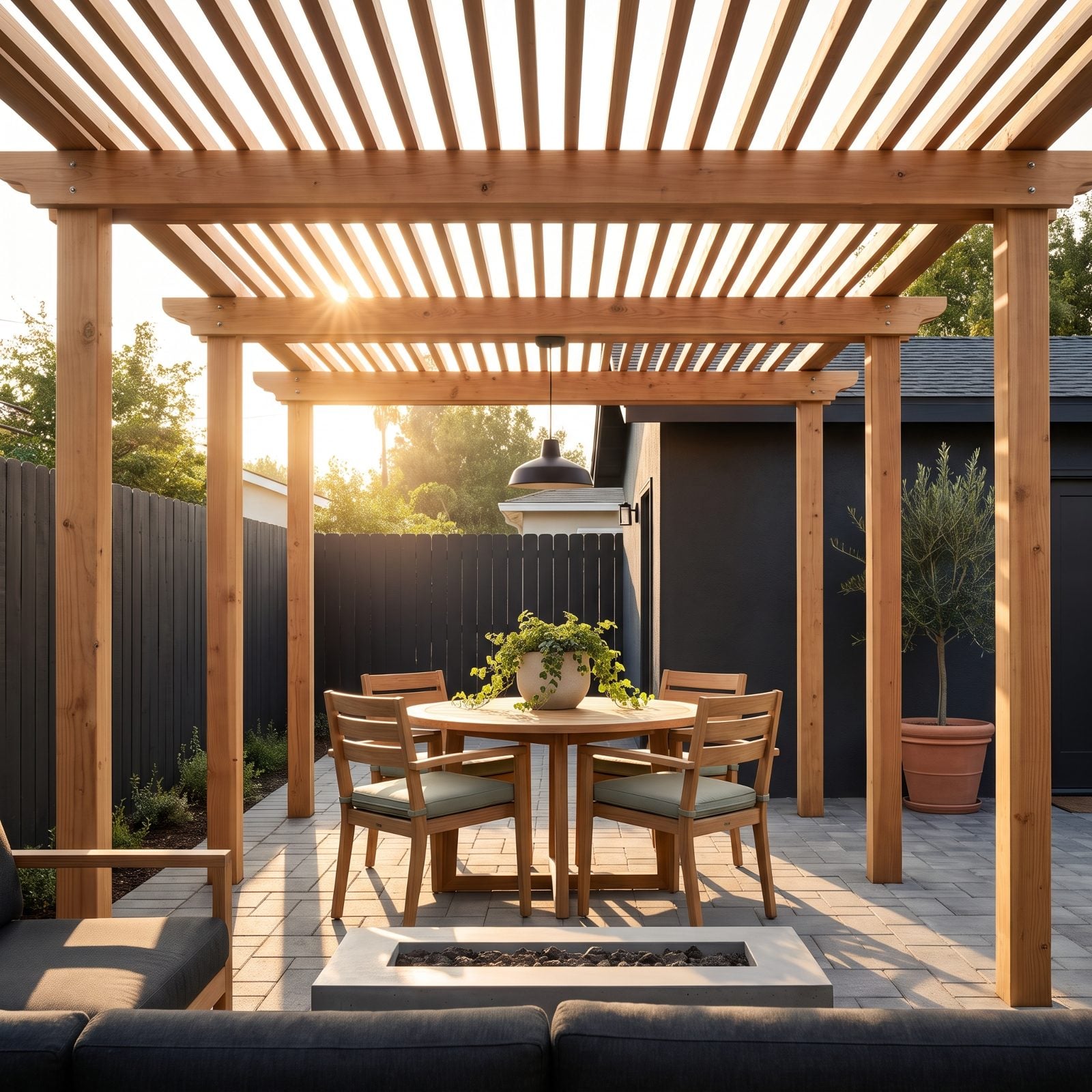
A custom-built pergola is a carpenter’s weekend of design, cutting, and labor, and you pay for every hour of it. A quality kit is the same cedar or aluminum, pre-cut and pre-drilled, for a fraction of the custom price.
You, a friend, and a free Saturday can stand most kits up in a weekend. The look is the look. Nobody sitting under it on a warm evening is going to interrogate whether the joinery was bespoke.
Add a simple outdoor pendant light, a teak dining table, and a run of string lights, and your kit pergola becomes the hub of the whole yard. The money you save here is the money that keeps you out of debt on everything else.
16. Build Your Credit Before Financing a Big Outdoor Project
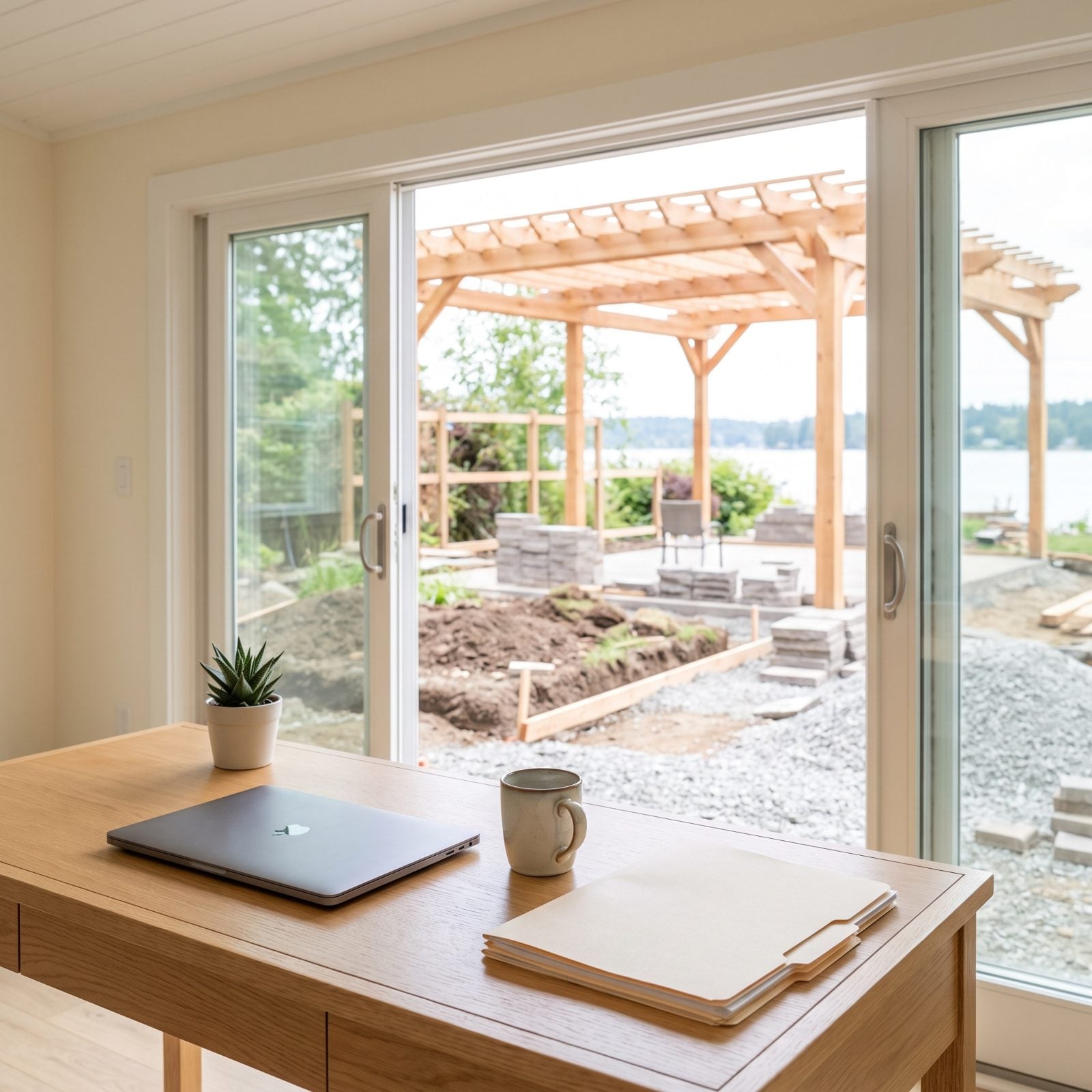
Financing costs are mostly decided before you ever apply. A few months of boring, unglamorous credit work can mean the difference between a workable rate and one that quietly adds thousands over the life of the loan.
Rates and approval vary by lender and by your profile, so nobody can promise you anything. The levers are predictable, though. Pay balances down well below your limits, don’t open new accounts right before you apply, and comb your reports for errors that drag your score. Even a modest bump lowers what a lender charges on the slice of the budget you actually borrow.
Here’s the quiet psychology. Lenders price risk, so look like a lower risk on paper and you pay less, full stop. Give yourself a runway instead of scrambling to apply the week the contractor wants a deposit.
Tools like Brigit’s credit-building features can help you get your score ready before you apply.
15. Get Three Bids From the Same Plan Drawing
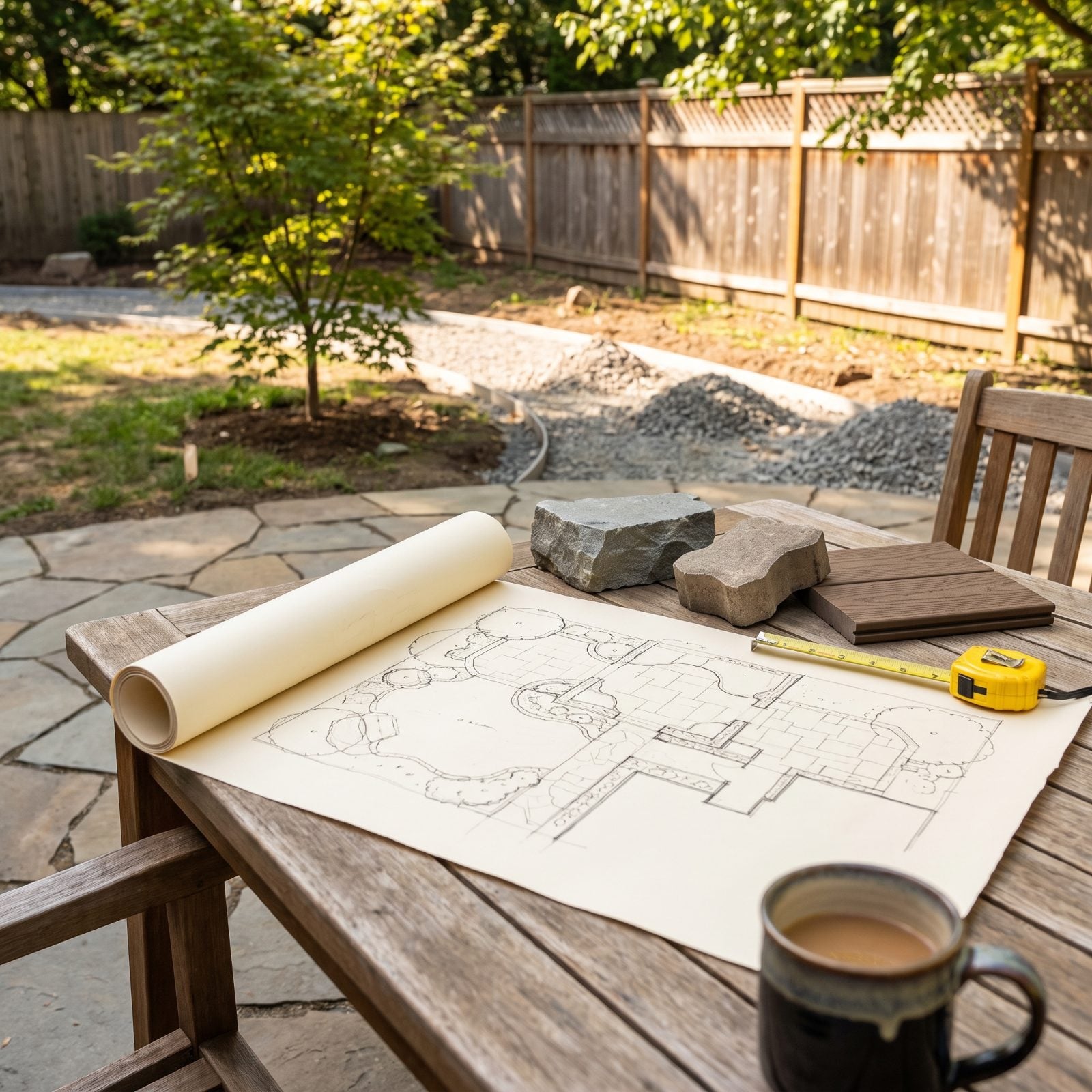
The cheapest move on a big backyard costs nothing at all: hand every contractor the exact same plan drawing. Same patio square footage, same paver spec, same number of lighting runs. When one bidder quotes high and another comes in thousands lower for identical work, you’ve found real money and you can see who’s padding and who’s sharp.
Verbal “we’ll figure it out” bids are where budgets go to die. A drawing locks the scope, and it lets you phase the job. Ask each bid to break out the patio, the pergola, the fire feature and the planting as separate line items so you can cut or delay without renegotiating the whole thing.
14. Book Landscapers in the Off-Season
🔥 Would you like to save this?
Landscapers are slammed in May and sitting on their hands in November. That gap is leverage.
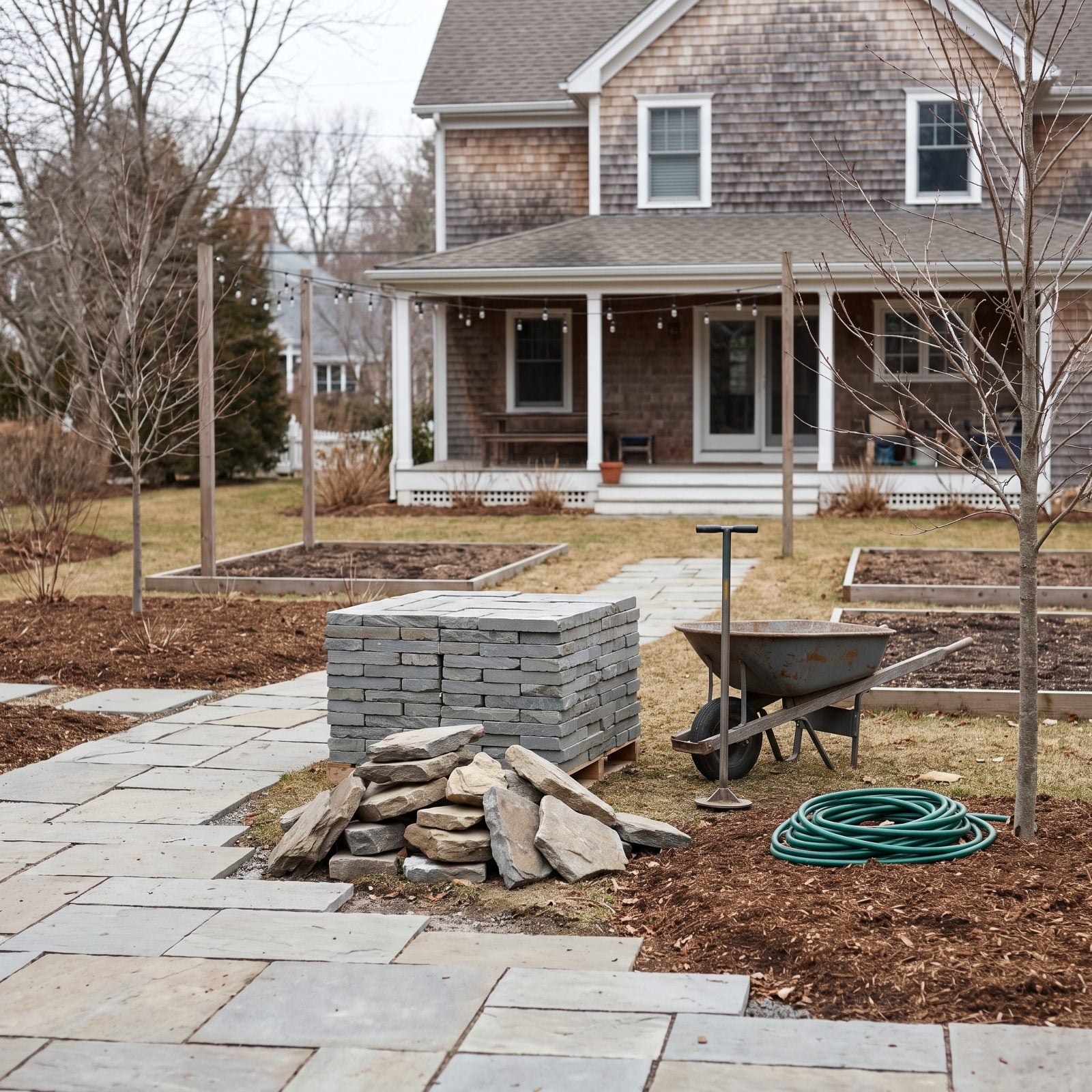
Crews booked solid in spring have idle weeks in late fall and the dead of winter, and idle weeks make them flexible on price and scheduling. Hardscaping doesn’t need warm weather the way planting does, so the structural bones of your project (patios, retaining walls, fire pits, pergola footings) can go in during the off-season while the beds and softscape wait for spring.
You also stop competing for attention. An off-season crew isn’t juggling six other yards, so you get fewer delays and a boss who actually answers the phone.
13. Work With the Trees, Grade and Drainage You Already Have
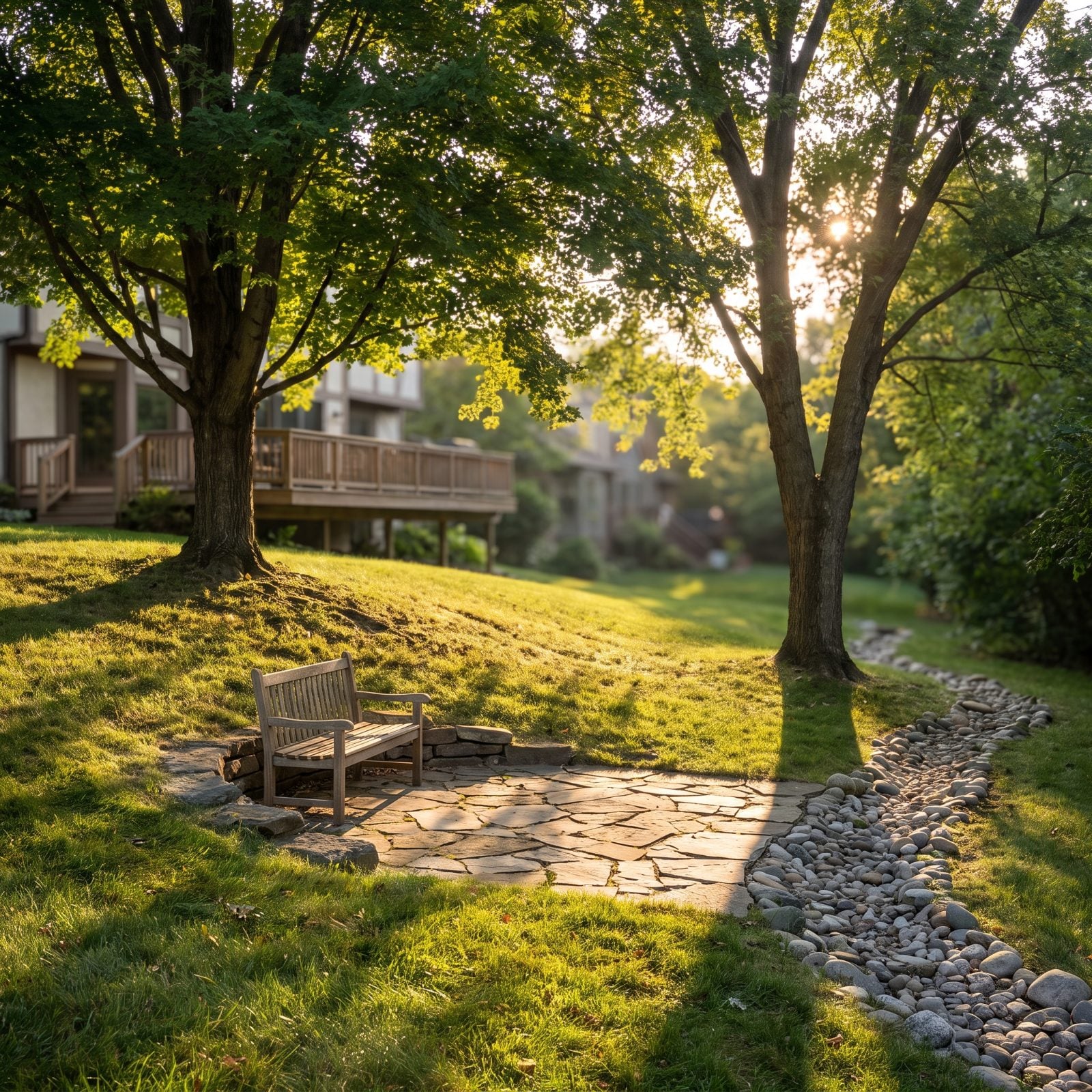
The most expensive line item on a lot of backyard quotes is the fight against the land itself. Regrading a slope, hauling in fill, bulldozing a healthy tree, rerouting water with a full drainage system. These are five-figure problems you can often design around instead of paying to erase.
Got a slope? Terrace it into seating instead of flattening it. A wet corner can become a rain garden or a dry creek bed, which is cheaper and better-looking than a buried drainage array. And that mature tree is worth a fortune in instant shade and privacy you can’t buy at any nursery, so build the patio around it.
12. Price the Outdoor Kitchen as a Grill Island, Not a Second Kitchen
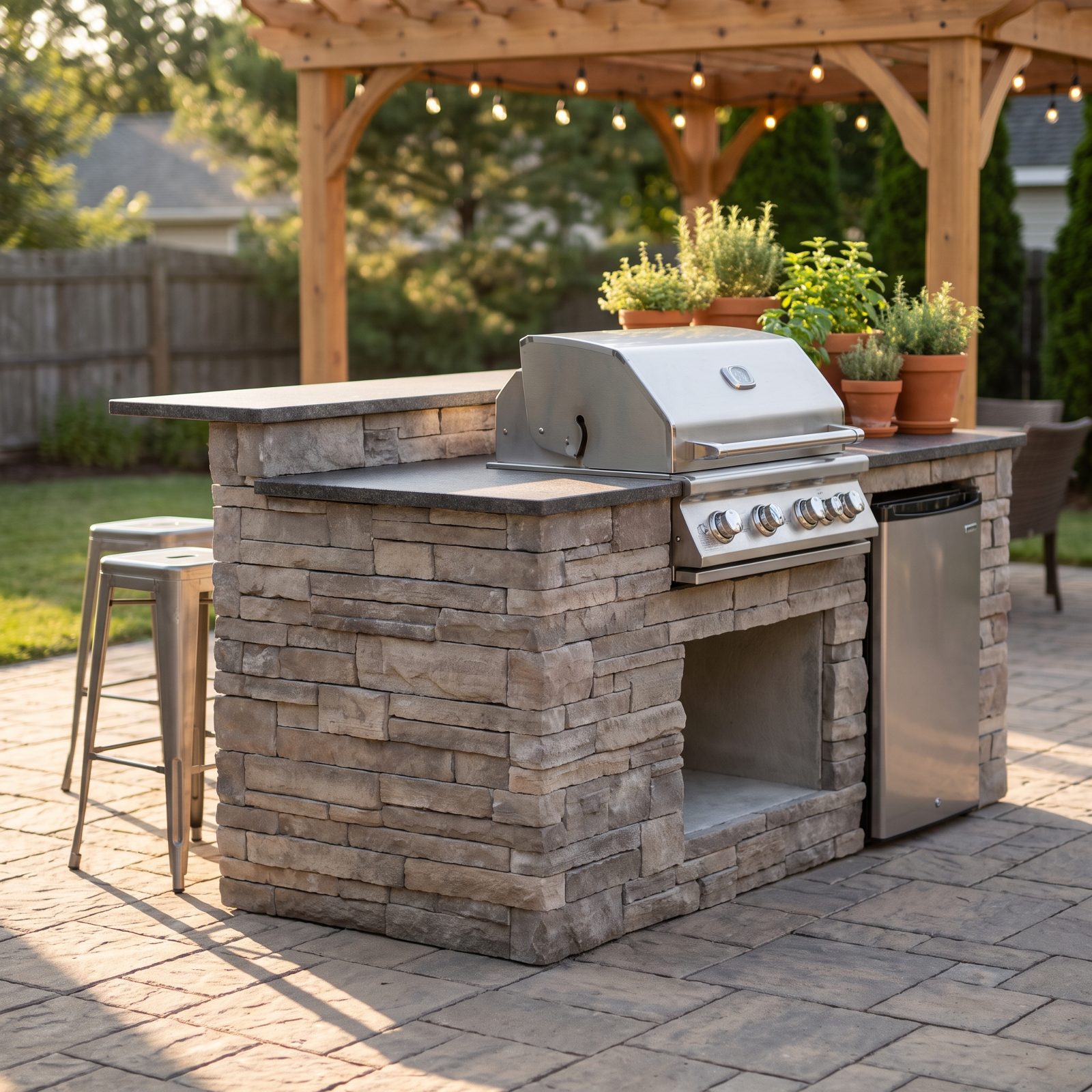
A full outdoor kitchen is a money pit dressed up as a lifestyle upgrade. Run a sink out there and you’re trenching water and drain lines. Add a fridge, a pizza oven, a sink and a run of cabinetry, and you can watch a small fortune evaporate before anyone grills a single burger.
A grill island does most of the job for a fraction of the spend. A built-in gas grill, a stacked-stone or stucco surround, a slab of granite or quartzite for counter space, a mini-fridge and some storage below. No plumbing. No gas-line drama if the grill runs on a nearby line or a hidden propane tank.
You keep the thing people actually use, a place to cook and set down a plate, and skip the plumbing bill nobody notices at the party. Spend the savings on a detail you’ll notice every day, like good overhead lighting or a stone accent wall.
11. Put Plants and Furniture on a Card You Can Clear Fast
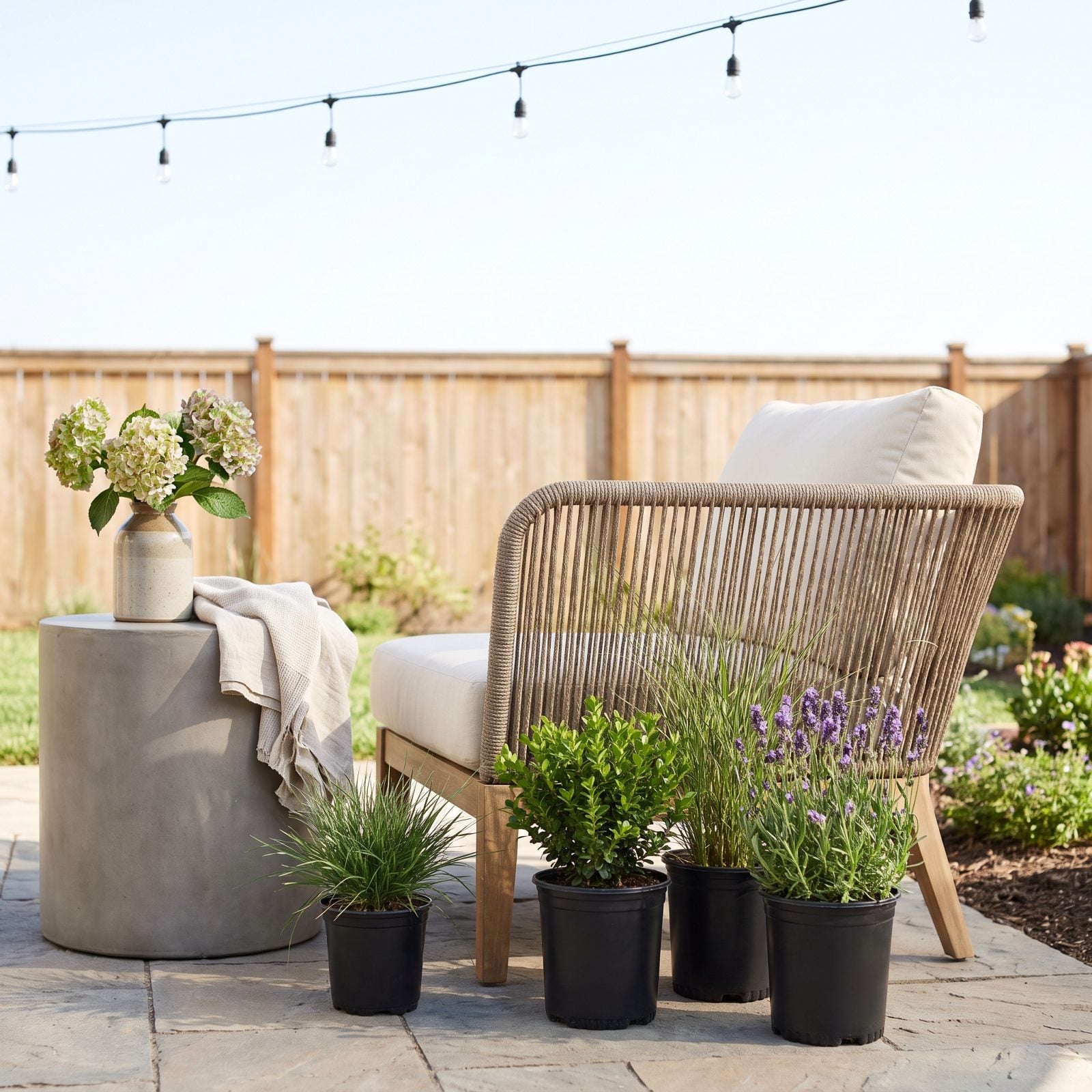
The soft stuff (plants, pots, cushions, a dining set, the fire-pit chairs) is the part of the budget you should fund the smartest. You buy it in bursts, and you can time it.
If you can clear a card balance in a month or two from your regular cash flow, charging the furniture and plants lets you shop end-of-season sales without draining your checking the same week the patio contractor wants a deposit. One rule, no exceptions: only treat a card like a short bridge if you’re genuinely clearing it fast. Carry it past that and the interest makes a $4,000 patio set quietly cost a lot more.
This is for the clearable slice, not the whole project. Hardscaping goes on the real financing. The pillows and petunias ride a card you pay off before the next cushion sale.
If you need a card for it, you can see if you pre-qualify for a Yendo card, which uses your car to secure the line.
See If You Pre-Qualify for Yendo →
10. Do the Planting, Mulch and Lighting Yourself
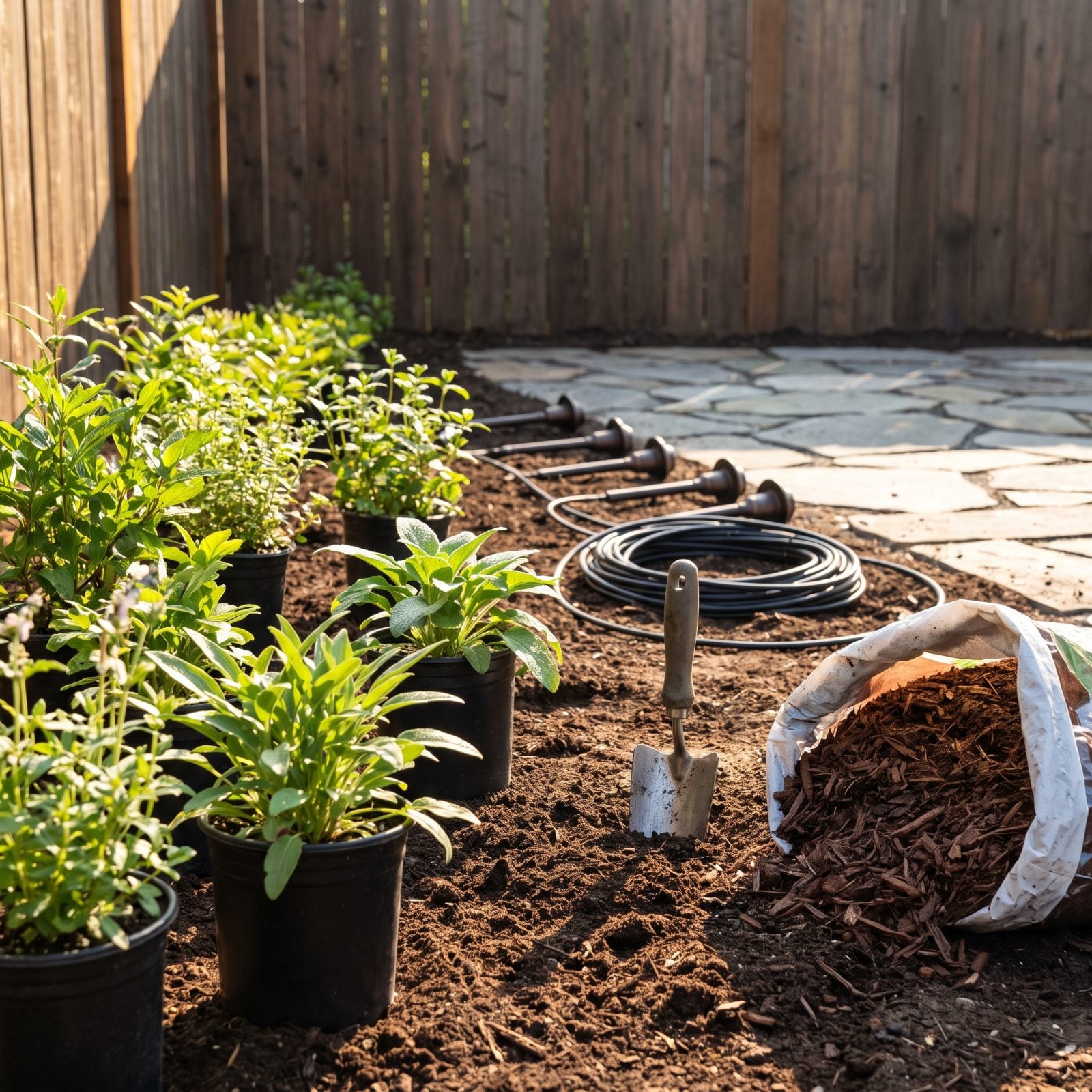
This is where contractor markup hits hardest for the least skill required. Planting perennials, spreading mulch and dropping in low-voltage path lights is labor a landscaper charges a premium for, and a reasonably fit homeowner can knock it out over a couple of weekends.
Low-voltage lighting especially. It’s wired for DIY on purpose: push-connectors, no electrician, a transformer that plugs into an outdoor outlet. The same system a crew bills a small fortune to install, you can lay out across an afternoon. Mulch is the same story. Buy it by the yard, delivered loose, for a fraction of bagged, and spreading it is just a wheelbarrow and a free Saturday.
Paying hundreds for a pro to drop in a flat of annuals makes little sense when planting them yourself takes about twenty minutes. The planting is the fun part anyway. Don’t pay someone to steal it.
9. Get Free Mulch, Wood Chips and Plants From Local Programs
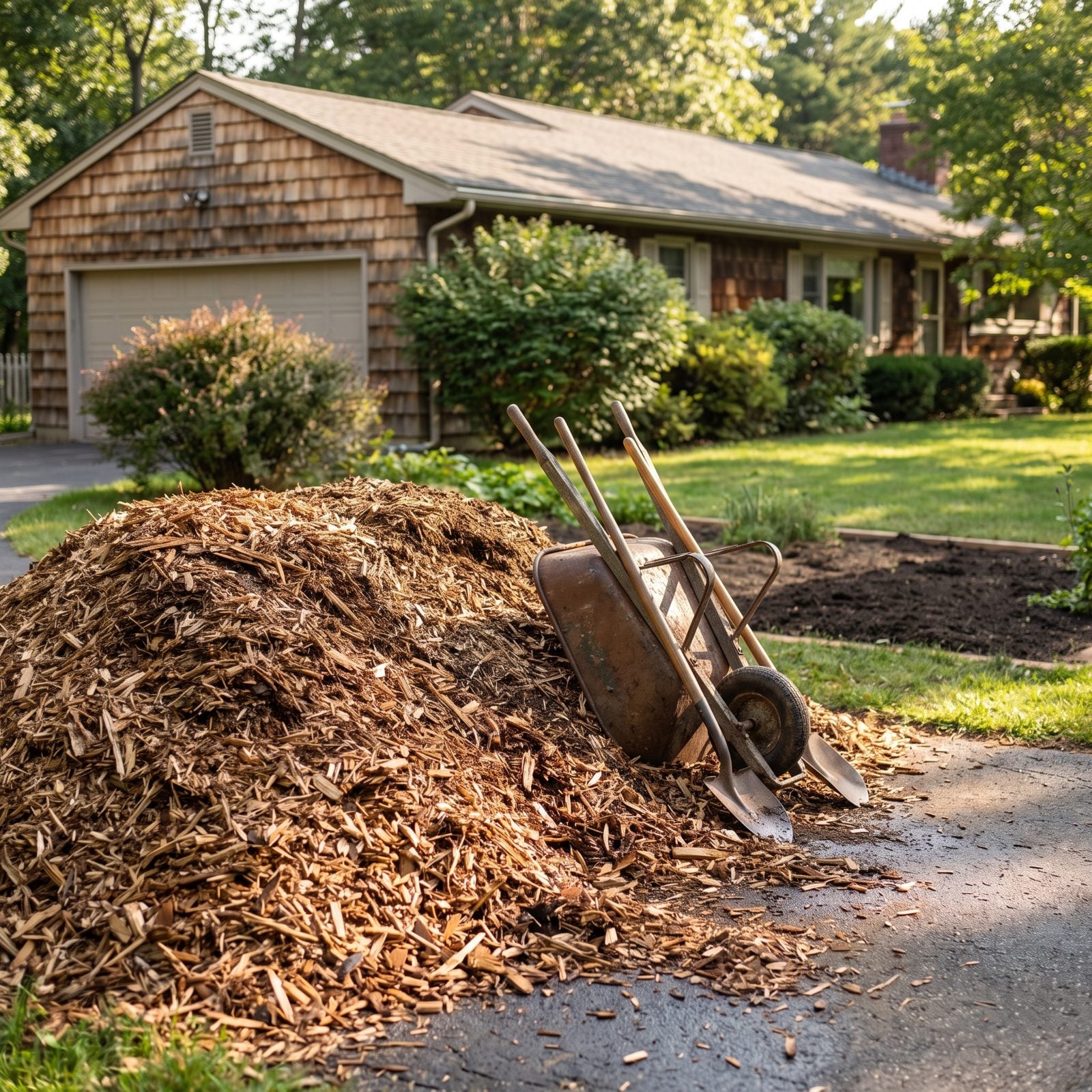
Mulch and wood chips are one of the few things in landscaping that can genuinely be free, and most homeowners have no idea.
Tree-trimming crews pay to dump their chips at facilities, so many will drop a full truckload in your driveway for nothing just to save themselves the trip. Plenty of municipal programs give away compost and mulch to residents. Plant swaps, community garden surplus and neighbors dividing overgrown perennials in spring will hand you free, mature plants that would cost real money at a nursery.
It takes a little hustle and a chunk of your weekend to spread it all. But on a project this size, free mulch across every bed and a stack of donated perennials can quietly knock hundreds off the softscape line without anyone being able to tell.
8. Leave Your Retirement Accounts Alone
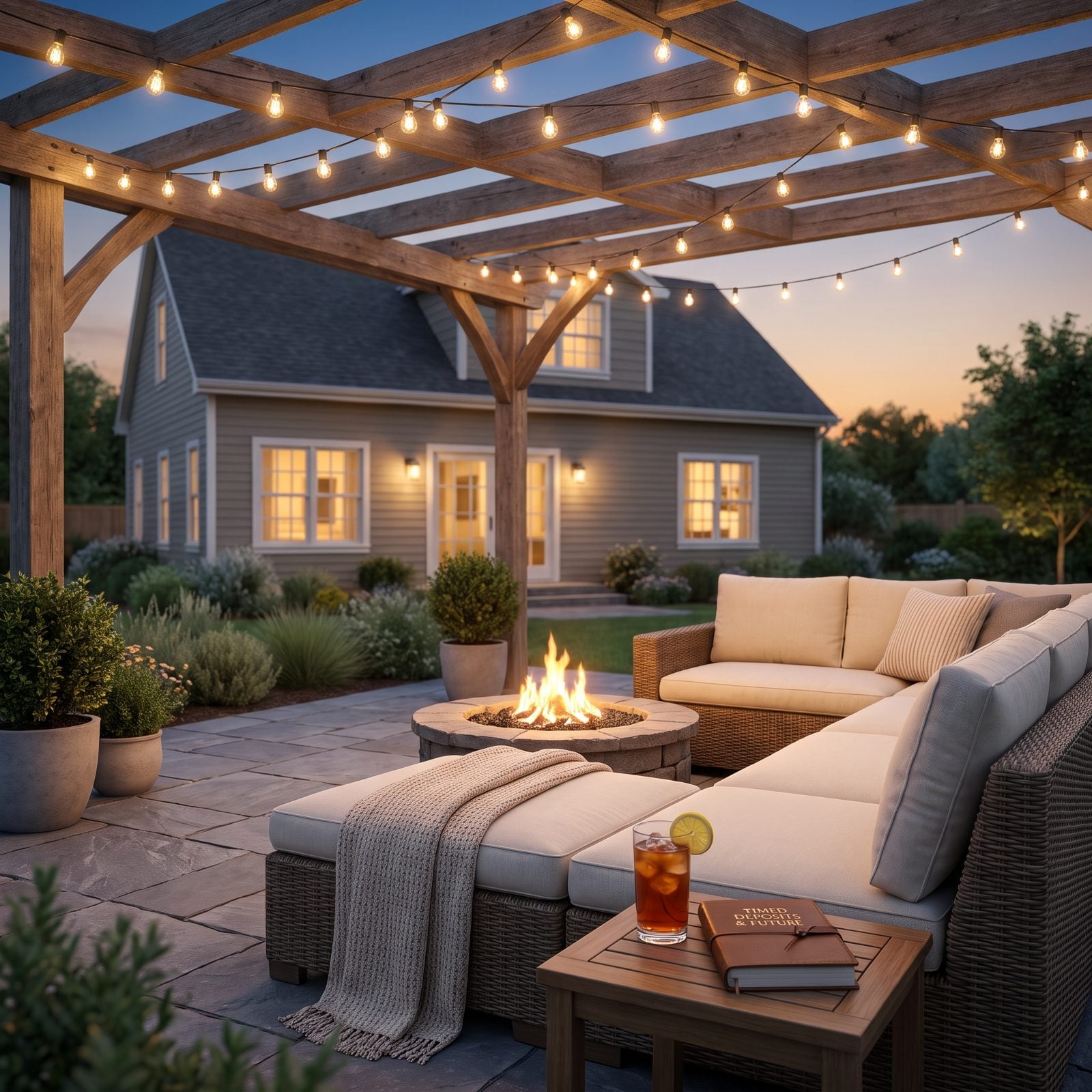
A backyard is wonderful. It is not worth your retirement. This is the one line in the whole project worth drawing in permanent marker.
Pulling money early from a 401(k) or IRA to fund a patio ranks among the most expensive ways to pay for anything. Depending on your situation, an early withdrawal can trigger income tax plus a penalty, so a big chunk of what you take out never reaches the backyard at all. Then there’s the invisible cost. Decades of compounding growth that money would have earned, gone, for a fire pit.
Borrowing against the account isn’t a free lunch either. Leave your job and the loan can come due fast, and you’ve traded future security for present landscaping. Fund the yard from current income, savings earmarked for projects, or financing you can service. The retirement accounts stay untouched. Confirm specifics with a tax professional, since rules depend on your account and situation.
7. Use a Renovation Loan or Cash-Out Refi Only When the Math Works
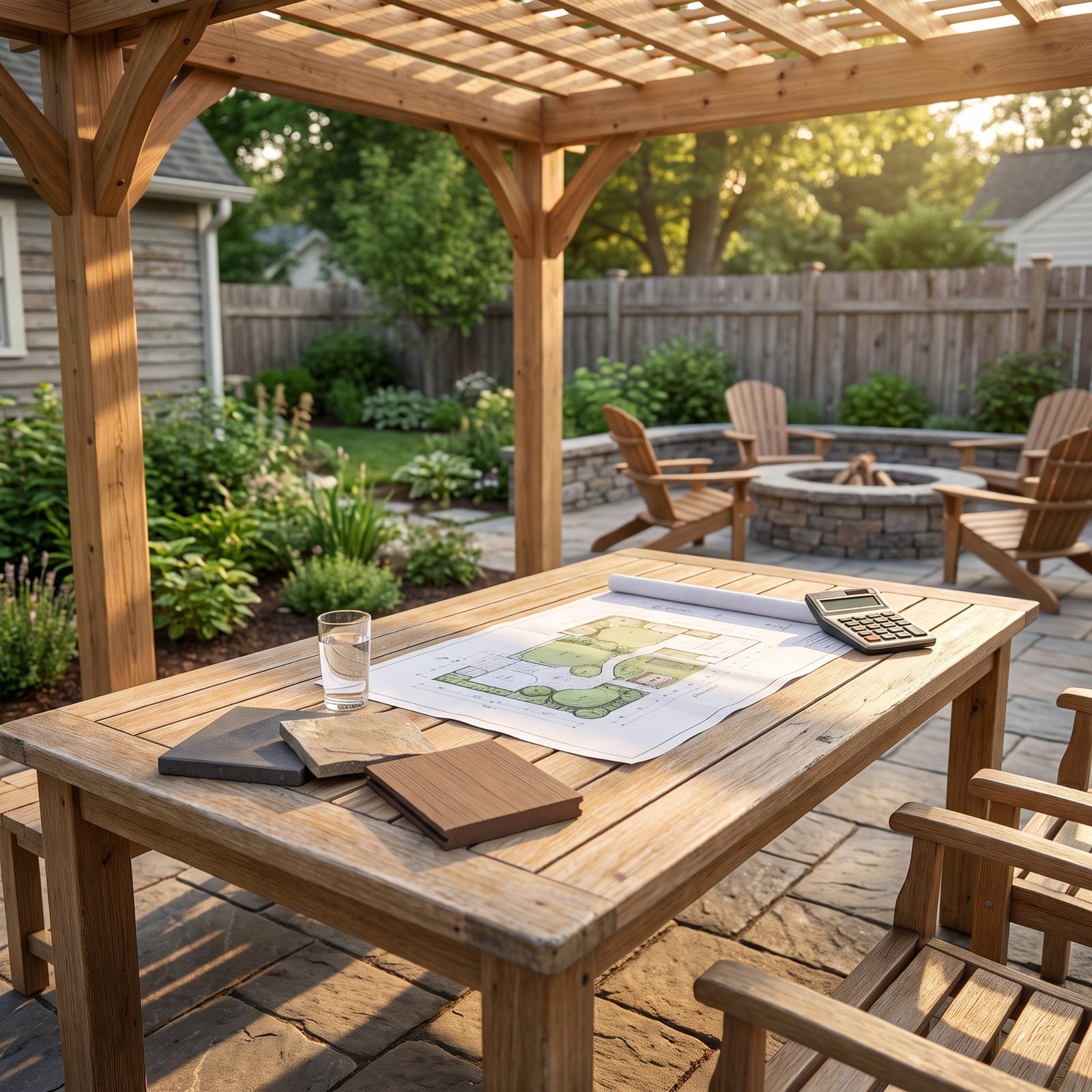
When you do finance the hardscaping, the right tool depends entirely on the math. These options also put your home on the line, so treat them seriously.
A home equity loan, a HELOC, a renovation loan and a cash-out refinance all borrow against your house. That’s cheaper than unsecured debt, and it’s exactly why you borrow only what you need. Rates, fees and approval vary by lender and by you, so compare the total cost, not the monthly payment. A low payment stretched over many years can cost far more overall.
- HELOC: flexible draws, good for phased work where you don’t need the whole sum at once.
- Home equity loan: lump sum, fixed payment, predictable.
- Cash-out refi: only pencils out when it doesn’t wreck a good existing mortgage rate.
And here’s the honest filter. If a bid that includes financing costs more backyard than the yard will ever be worth to you, shrink the project instead of the margin. A phased, scaled-down backyard makeover you can comfortably pay for beats a maxed-out one that keeps you up at night.
6. See Whether a Tax Pro Can Free Up Money for the Project
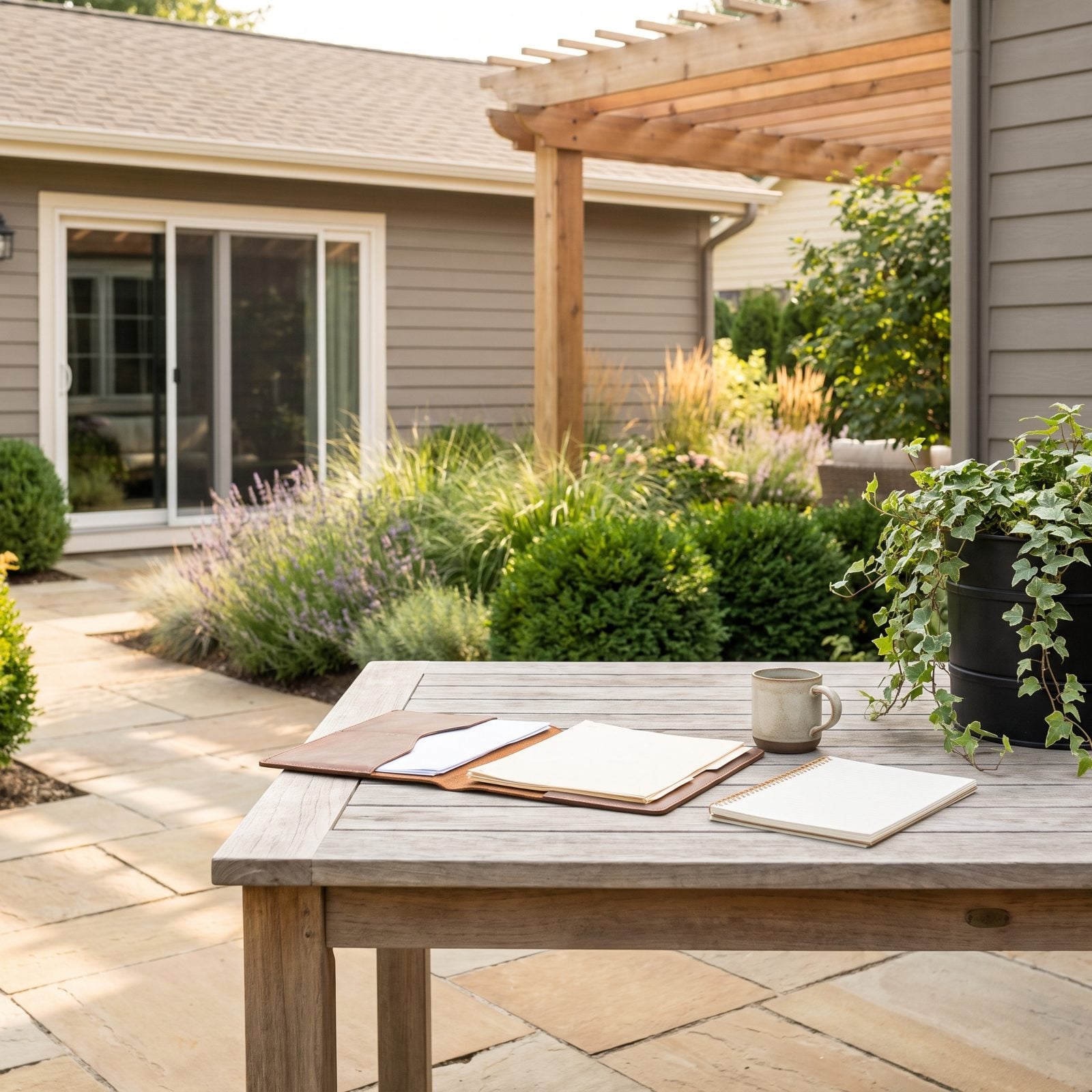
Before you borrow a single dollar, spend an hour with someone who knows the tax code better than you do. Not to chase loopholes — to find money you’ve already set aside and forgotten about.
A good tax pro looks at your withholding first. Getting a fat refund every spring means you’ve been handing the government an interest-free loan all year, and adjusting that puts an extra few hundred a month back into your checking account. Over a year of planning before the first paver goes down, that adds up to real money toward the patio.
They’ll also flag things specific to this kind of project. Some energy-efficient outdoor features and certain home improvements carry credits or deductions, but eligibility shifts constantly and depends on your situation. Don’t guess. Ask, and get it confirmed in writing before you count on it.
You can talk to a tax expert online through Tax Expert Now and find out before you set the budget.
5. Sell Unused Gear and Rent Out Garage or Yard Storage
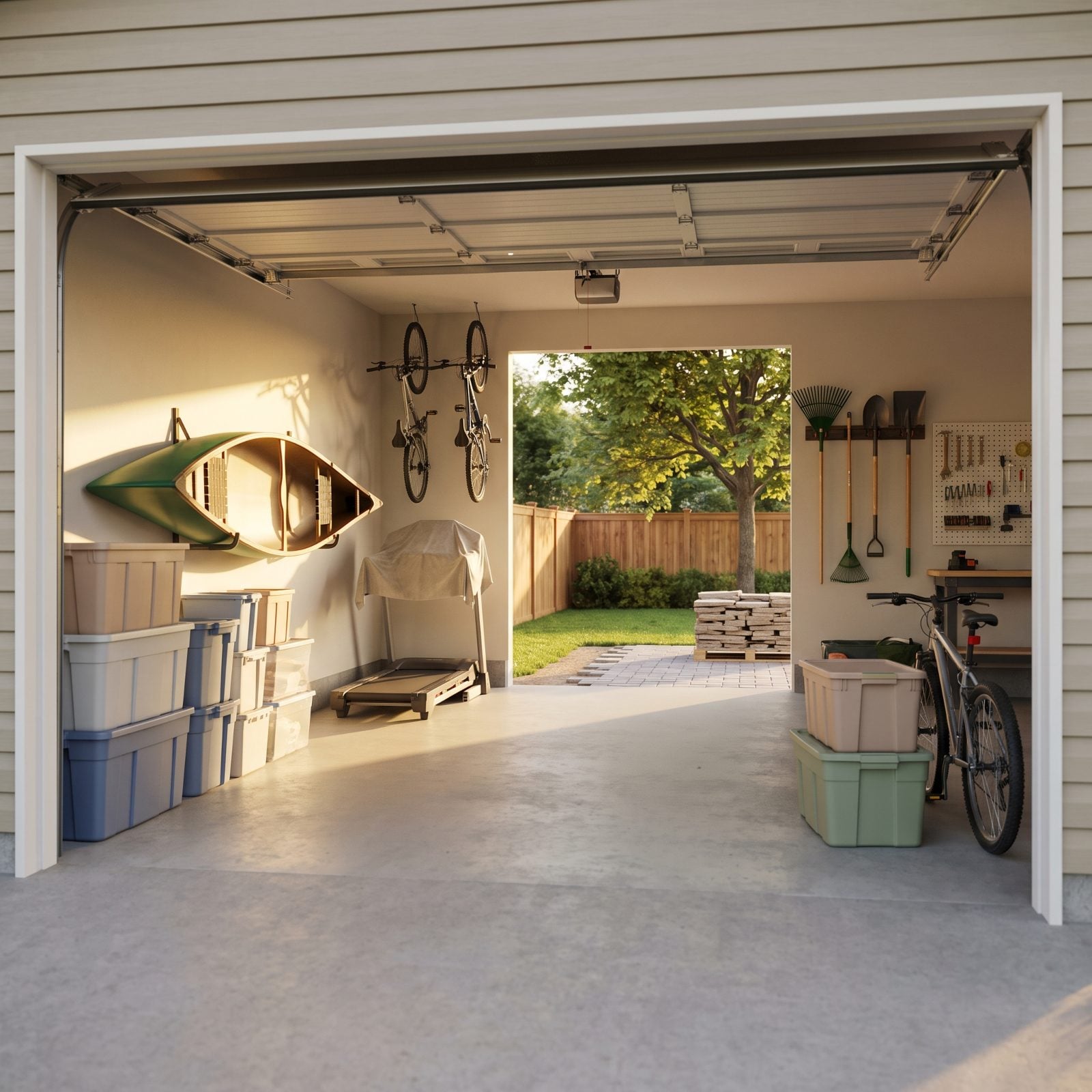
Walk into your garage and look at it honestly. The kayak you used twice. The treadmill holding a laundry pile. That table saw from a project you finished years ago.
All of it is backyard budget sitting in the dark. Selling the bigger stuff can knock a genuine dent into a five-figure project, and the smaller items add up faster than you’d think. Clearing it out has a second payoff, too: an empty, clean garage is rentable. Plenty of people need covered storage for a boat, a classic car, or seasonal inventory, and they’ll pay monthly for space you weren’t using anyway.
Same logic applies to a side yard or an unused slab of driveway. A few hundred a month in storage rent, banked across the planning year, funds a real chunk of the hardscaping before you ever touch a loan.
4. Use Contractor Promotional Financing Carefully
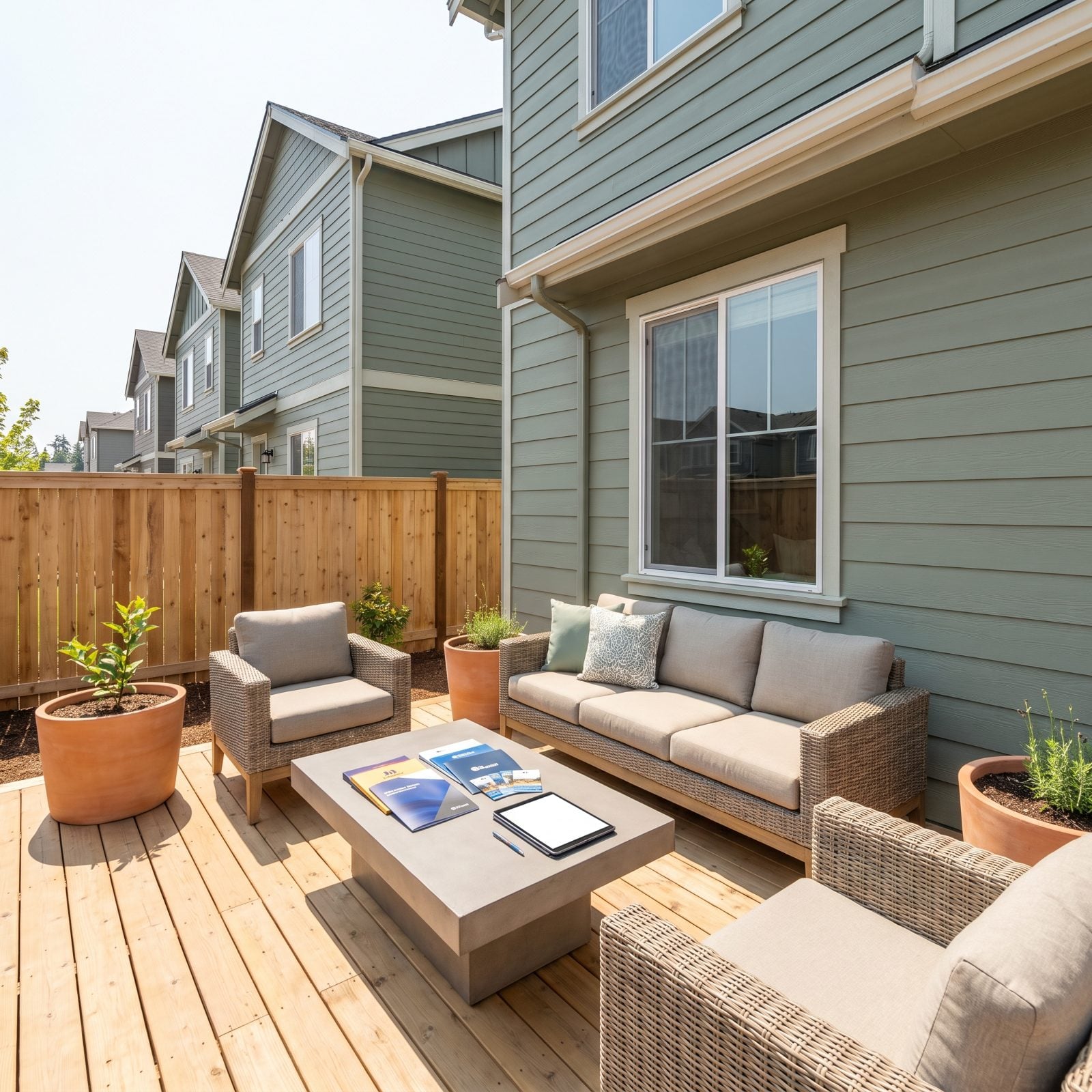
Contractors often dangle promotional financing. Zero interest for a year or more, deferred payments, that sort of thing. It can be a smart tool, or a trap dressed up as a favor.
Here’s the part people miss. Many of these offers are deferred interest, not zero interest. Don’t clear the full balance by the end of the promo window and the interest can get charged back to day one. On a big patio build, that back-dated interest is brutal. Read exactly how the promotion ends, and only take it if you have a concrete, funded plan to pay it off inside the window.
Rates, terms, and approval all vary, and a deal that’s great for one person is wrong for another. Compare the contractor’s offer against what your own bank or credit union would give you. Sometimes the promo wins. Sometimes it’s quietly the most expensive money in the room. Borrow only what you actually need, and never let the length of a promo talk you into spending more.
3. Choose One Statement Feature and Go Simple Everywhere Else
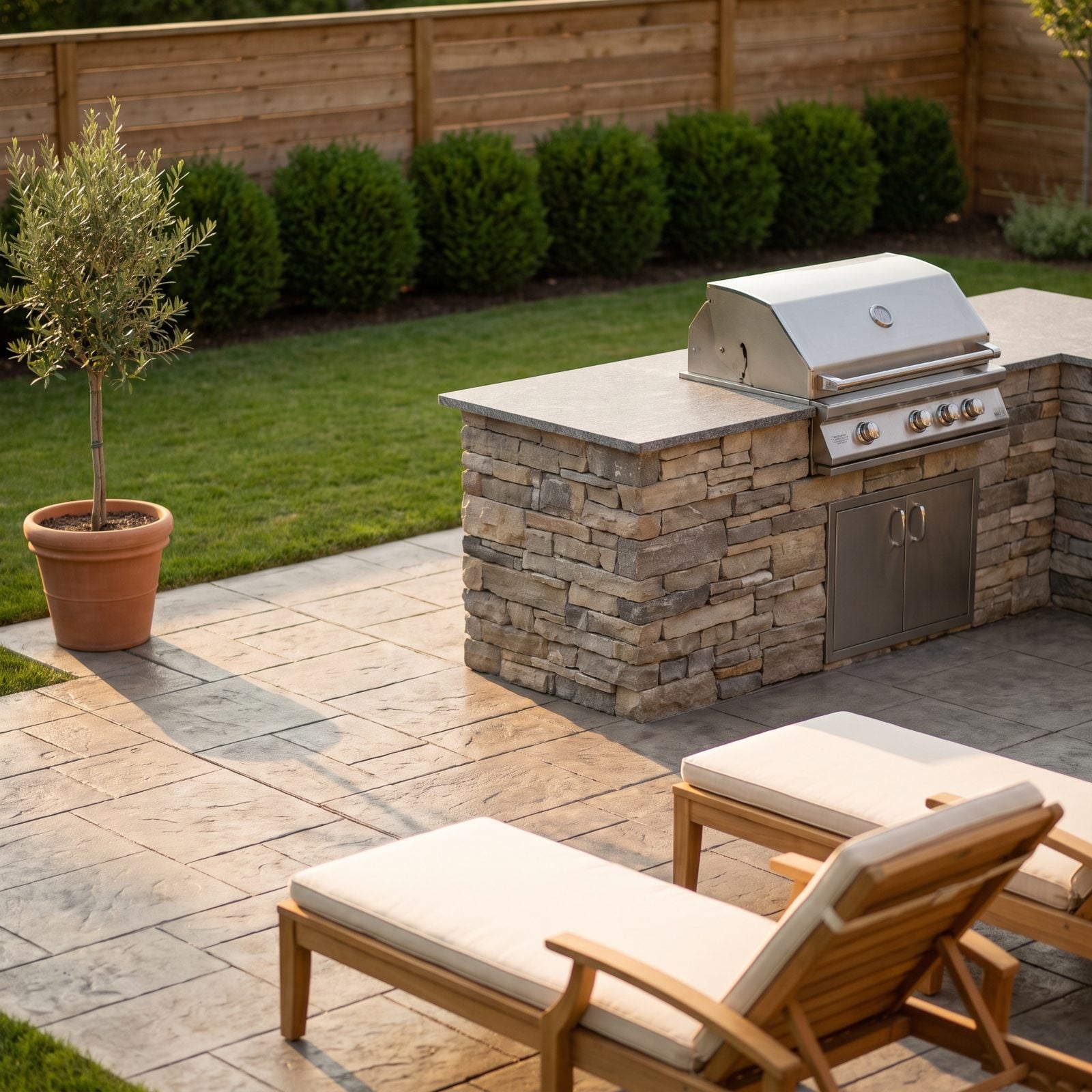
Trying to make every corner of the yard a showpiece is how a budget quietly balloons by tens of thousands. The fix is almost embarrassingly simple. Pick one thing to splurge on, and make everything else quietly supportive.
Let the fire pit be the star. Or the outdoor kitchen, or a new deck. Whatever you choose gets the natural stone, the real materials, the money. The rest of the yard goes clean and plain on purpose: a straightforward patio, a tidy lawn, a simple row of green.
This works because the eye needs somewhere to land and somewhere to rest. One hero feature against a calm backdrop reads as intentional and high-end. Five competing features read as cluttered and expensive at the same time, which is the worst of both.
2. Update Your Home Insurance Before Adding a Pool, Deck or Outdoor Kitchen
🔥 Would you like to save this?
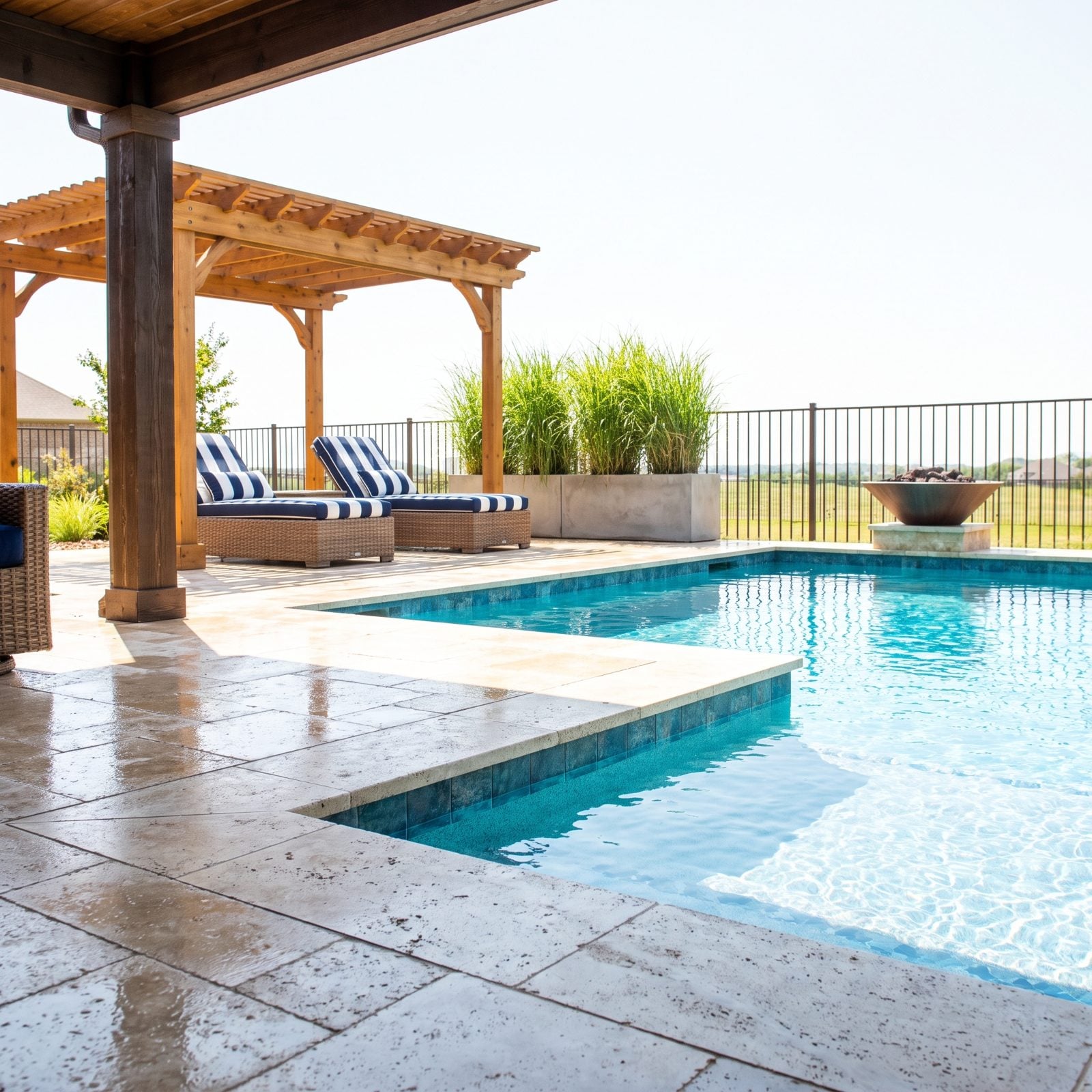
Nobody budgets for this one, and it’s the one that bites. A new pool, a raised deck, or an outdoor kitchen changes your home’s risk profile, and your insurance needs to catch up before anyone uses it.
A pool raises liability exposure. A deck adds structure and value. An outdoor kitchen brings fuel lines and fire into the picture. Call your insurer while the project is still on paper, not after it’s poured. You want to know what your premium does and what coverage you actually need, so the number is something you planned for rather than a surprise on next year’s bill.
Two practical notes. Many policies require specific safety features around a pool — a compliant fence, a self-latching gate — and installing those correctly the first time beats retrofitting later. Check, too, whether building something increases the replacement cost figure your policy is based on. Confirm the details with your own agent, because coverage rules vary by state and by carrier.
Before the new features go in, compare home insurance quotes with GetYourInsurance so the added coverage doesn’t come at an inflated price.
Compare Home Insurance Quotes →
1. Cap the Budget and Ask What $60,000 Can Build
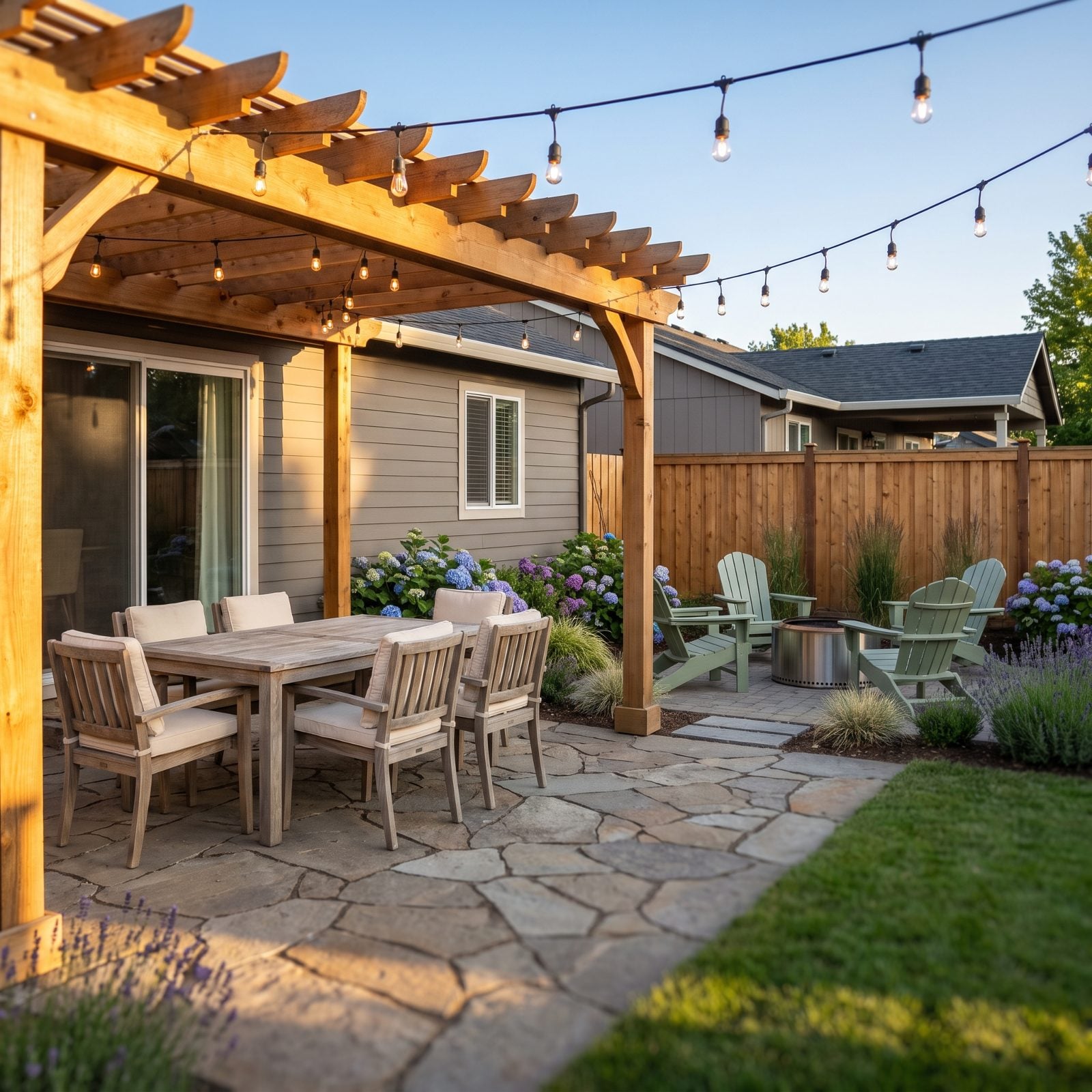
Here’s the question that protects your retirement account better than any spreadsheet. Don’t ask what the dream costs at full price. Ask what a firm, lower cap can build, and make the contractor design to that number.
Dropping the ceiling by a big chunk doesn’t cut a quarter of the yard. It cuts the most expensive, least-noticed inches. Stamped concrete stands in for cut stone and reads nearly identical from the lounge chair. A standard pergola kit replaces the custom build. Native plants go in smaller and fill in free over two seasons.
You still get the pergola, the fire pit, the string lights at dusk, the porch details that make the whole thing hang together. What you don’t get is the version that forces you to borrow against your future just to enjoy your weekends.
If that cap still stretches you, run the same exercise lower. The goal isn’t a smaller dream. It’s a dream that doesn’t come with a second mortgage attached.
The best backyard isn’t the one that impresses the neighbors. It’s the one you paid for and still sleep well owning.