🔥 Would you like to save this?
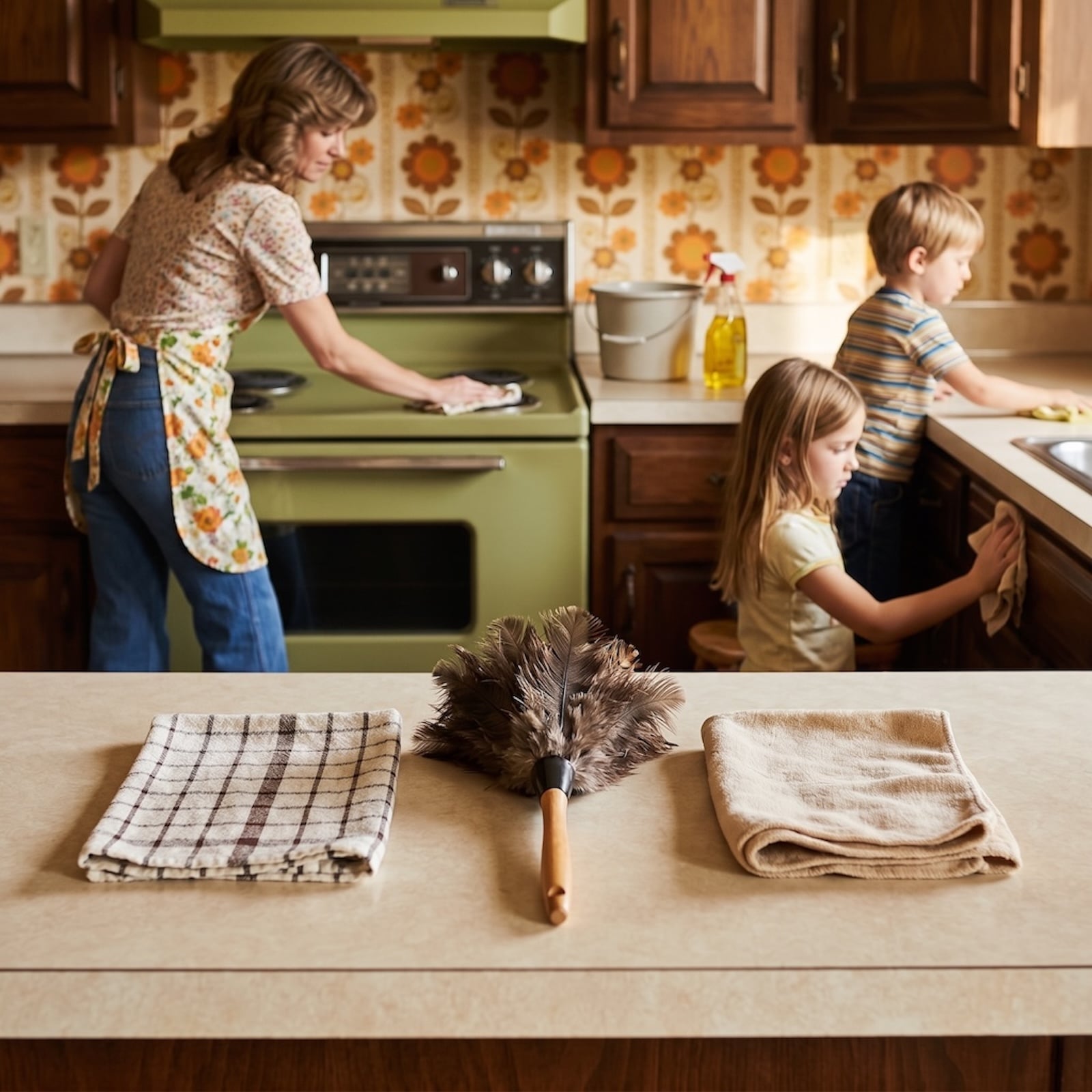
The plastic gave you away first. You sat down on the good couch and it hissed, then stuck to the back of your legs in July, and you knew the exact sound your skin made peeling off. Somewhere nearby, a vacuum had left perfect stripes in the carpet, a bottle of lemon Pledge was still on active duty, and at least one towel existed purely for decorative purposes.
In a certain kind of 1970s household, cleanliness wasn’t just a chore. It was infrastructure. Beds were made before breakfast had fully registered. Shoes stopped at the door. Water rings were treated like acts of sabotage. A crooked towel could apparently destabilize the entire domestic order. Nobody had written these rules down, but everybody knew them.
In order to come up with the very specific design ideas, we create most designs with the assistance of state-of-the-art AI interior design software. Also, assume links that take you off the site are affiliate links such as links to Amazon. this means we may earn a commission if you buy something.
And then there was company. Company could turn an ordinary Saturday into a five-alarm cleaning emergency involving baseboards, good towels, candy dishes, and rooms nobody normally entered. If any of this makes your legs sweat a little at the memory of vinyl upholstery, welcome home.
34. Plastic Slipcovers Protecting the Good Sofa
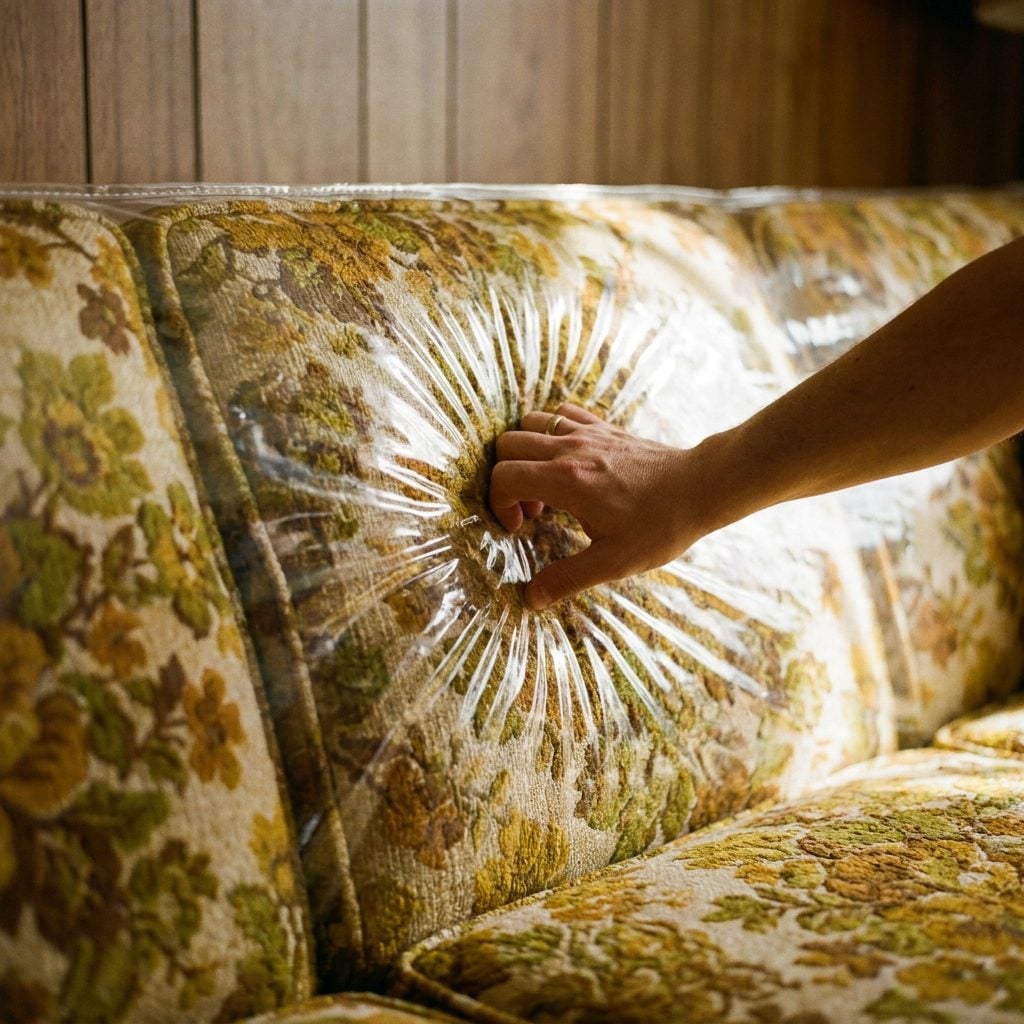
You heard it before you felt it. That crinkle when someone sat down, then the slow suction as they shifted their weight. In summer the backs of your legs fused to it, and standing up became a small act of violence.
The sofa underneath was gorgeous and nobody knew it — some rust-and-cream floral thing your mother picked out and immediately entombed. The plastic had gone slightly yellow at the seams after a decade of duty.
The logic was airtight, if you think about it. Buy nice furniture once, keep it nice forever, never actually enjoy it. That was the deal.
33. Plastic Runners Protecting the Carpet
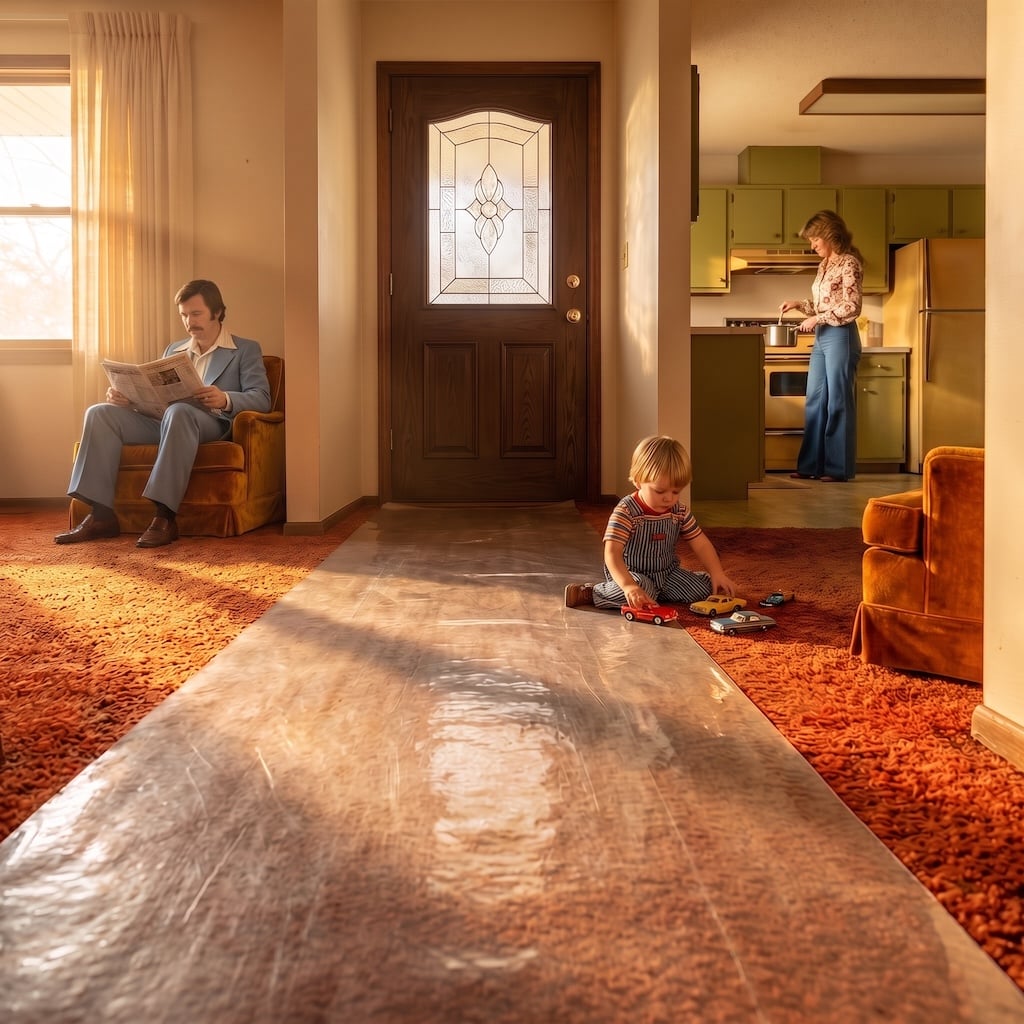
The runners told you exactly where you were allowed to walk. A clear plastic path from the front door to the kitchen, ridged on top so it dug into your socks, spiked underneath so it gripped the shag like it meant business.
Step off it and you left a footprint in the pile. A footprint was evidence. Evidence meant the vacuum had to come back out, and the vacuum coming back out was a whole ordeal you did not want to be responsible for.
Human feet barely touched the shag itself. It existed to be looked at and raked into those perfect lines with the vacuum — a level of commitment I still respect.
32. The Living Room Nobody Was Supposed to Sit In
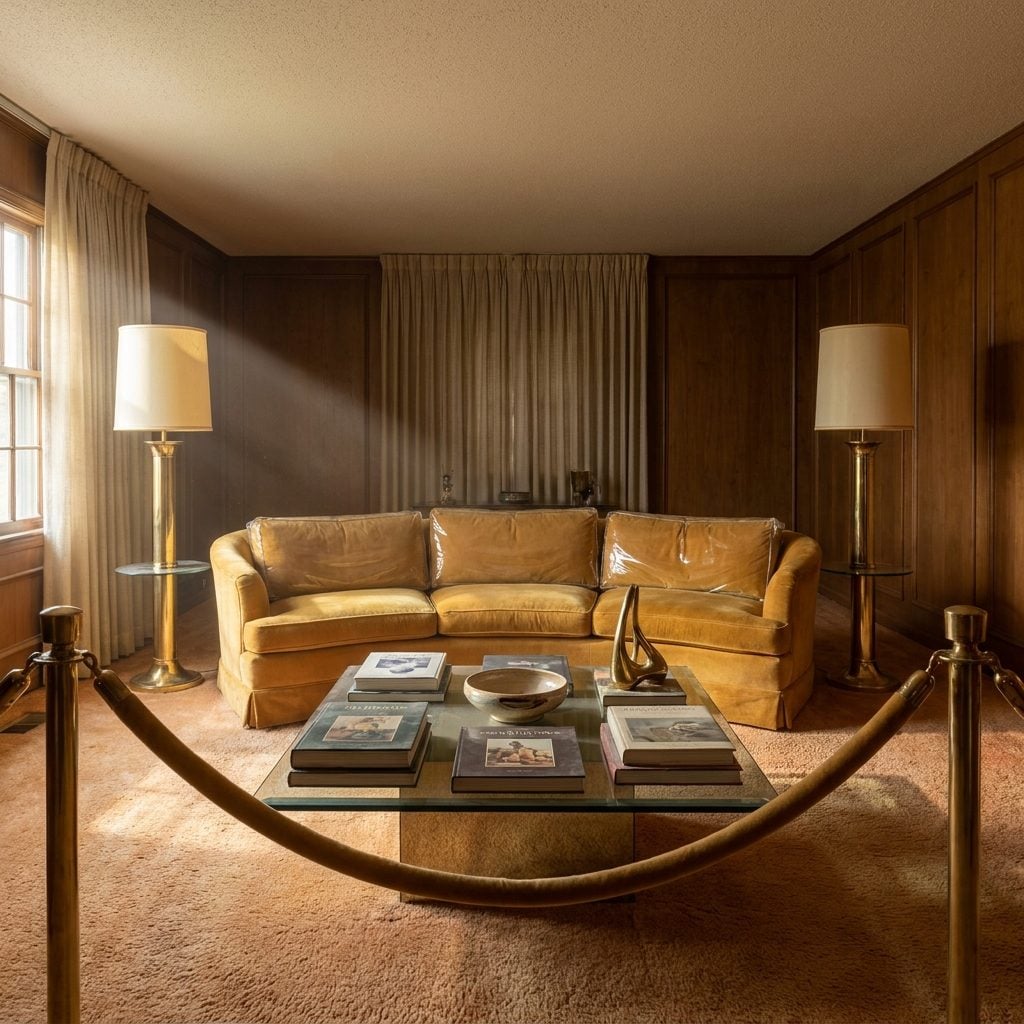
Every house like this had one. The room at the front with the best furniture, the good lamps, the coffee table books nobody opened, and a strict unspoken policy against human presence.
It was for company. Company came maybe four times a year. The rest of the calendar, it sat there like a shrine to a party that never happened.
You could stand in the doorway and look at it. That was permitted. Sitting down on that grandmillennial sofa arrangement, though, felt like breaking into a hotel lobby. The whole family lived in the den, on the beat-up furniture, which is where all the actual living happened anyway.
31. Decorative Towels That Never Touched a Wet Hand
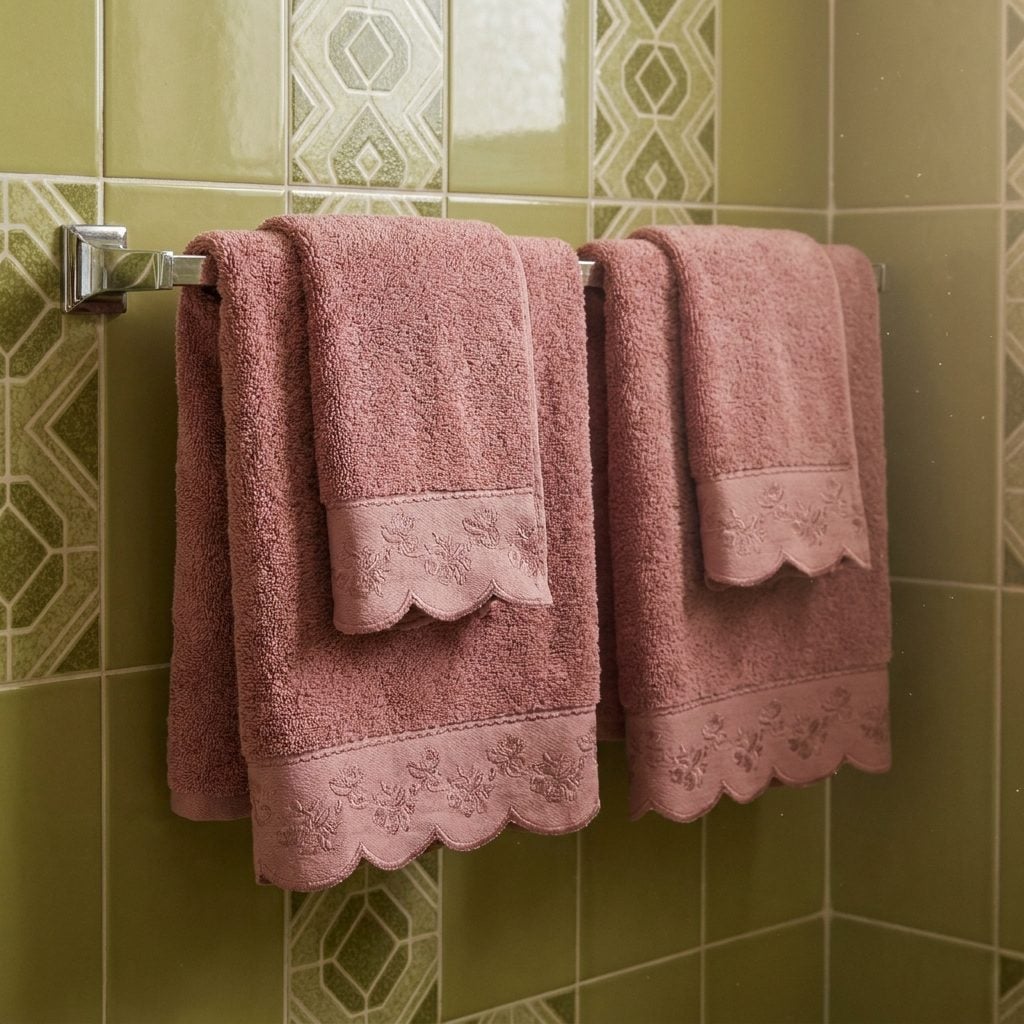
Folded in perfect thirds, hung so the embroidered edge faced out. Dusty rose with a little scalloped border. And if your damp hands went anywhere near them, you understood the mistake in real time.
These towels dried no hands. Ever. There was a real towel — a sad crumpled one shoved behind the door — for the messy business of actually being clean.
The little seashell soaps in the dish got the same treatment. Purely ornamental, never lathered, just sitting there smelling faintly of nothing.
30. The Bedspread Had to Lie Smooth as Glass
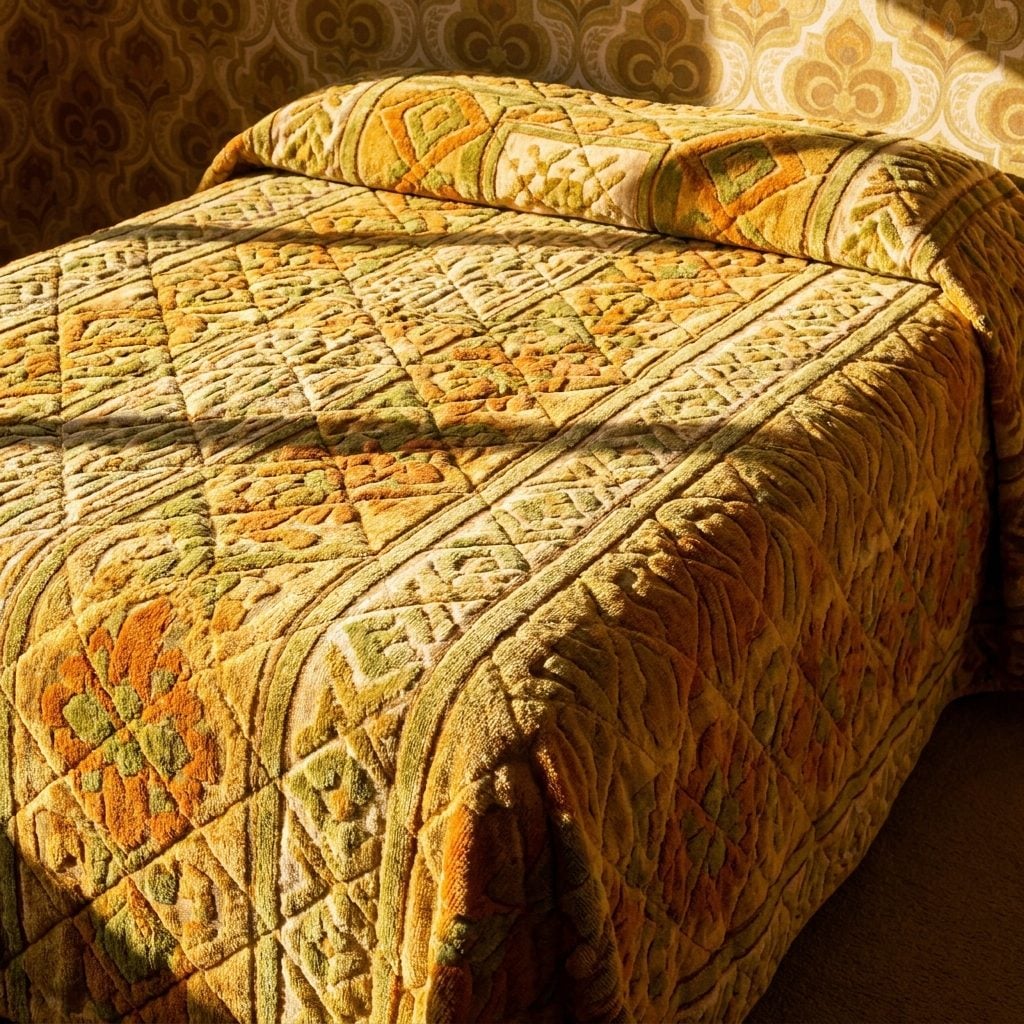
Not just made. Smooth. There’s a difference and your mother knew it in her bones.
The spread had to lie flat as a lake, corners tucked tight, no bump, no ripple, no evidence a human had ever slept there. Decorative pillows went on last, in an order that was not up for discussion.
You learned to make it right the first time because doing it wrong meant redoing it while she watched. That kind of standard doesn’t leave you. I still can’t sleep in a bed with a lumpy comforter, and I’ve made my peace with that.
29. Beds Were Made Before Anyone Left the House
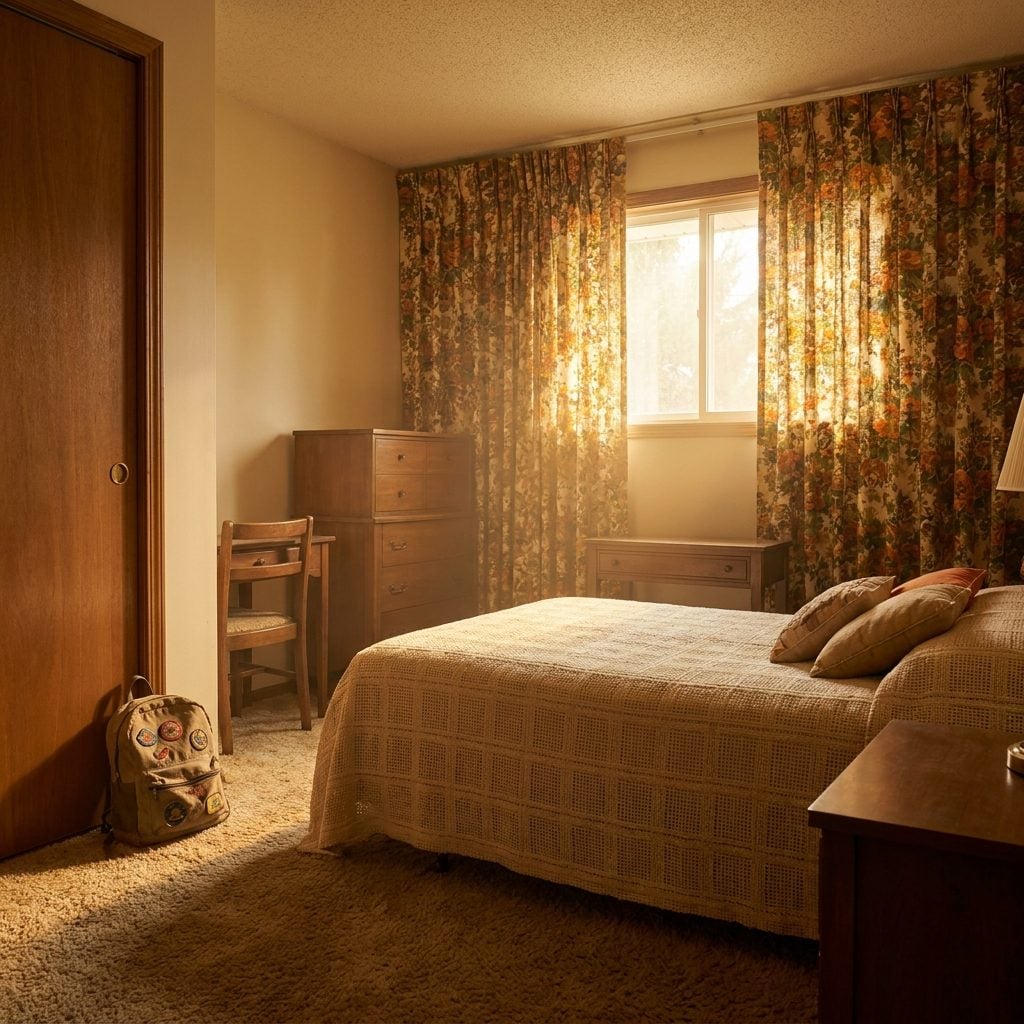
The rule was absolute: nobody left the house with a bed still unmade. Not on a school day, not on a snow day, not on the morning you were already running late.
The reasoning bordered on superstition. What if someone dropped by? What if the house had to be presentable at a moment’s notice for reasons that never once materialized?
So you pulled everything into place half-asleep at seven in the morning because coming home to an unmade bed wasn’t a scenario that existed in your household. It’s one of the few chores that stuck. I make mine every morning now and feel vaguely virtuous about it — exactly the outcome she was going for.
28. Shoes Came Off Before Walking Across Clean Floors
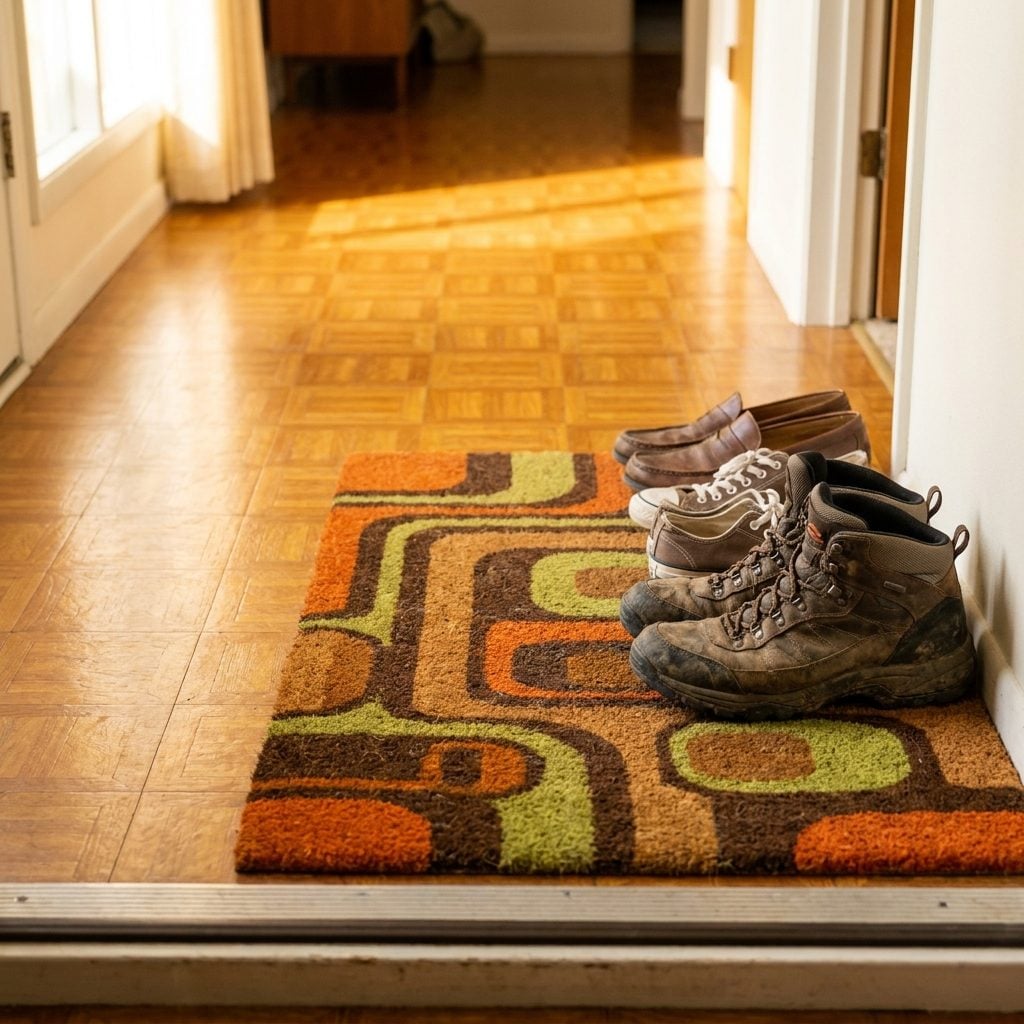
You knew the drill before you cleared the threshold. Shoes off, lined up on the mat, heels touching the wall. Track a single fleck of driveway grit onto the waxed floor and you’d hear about it from the kitchen.
That kitchen linoleum got buffed to a shine you could see your reflection in. A gold-and-white pattern, slick as an ice rink in socks — which is how half of childhood was spent, sliding down the hall the moment she left the room.
27. Coasters Were Mandatory on Every Table
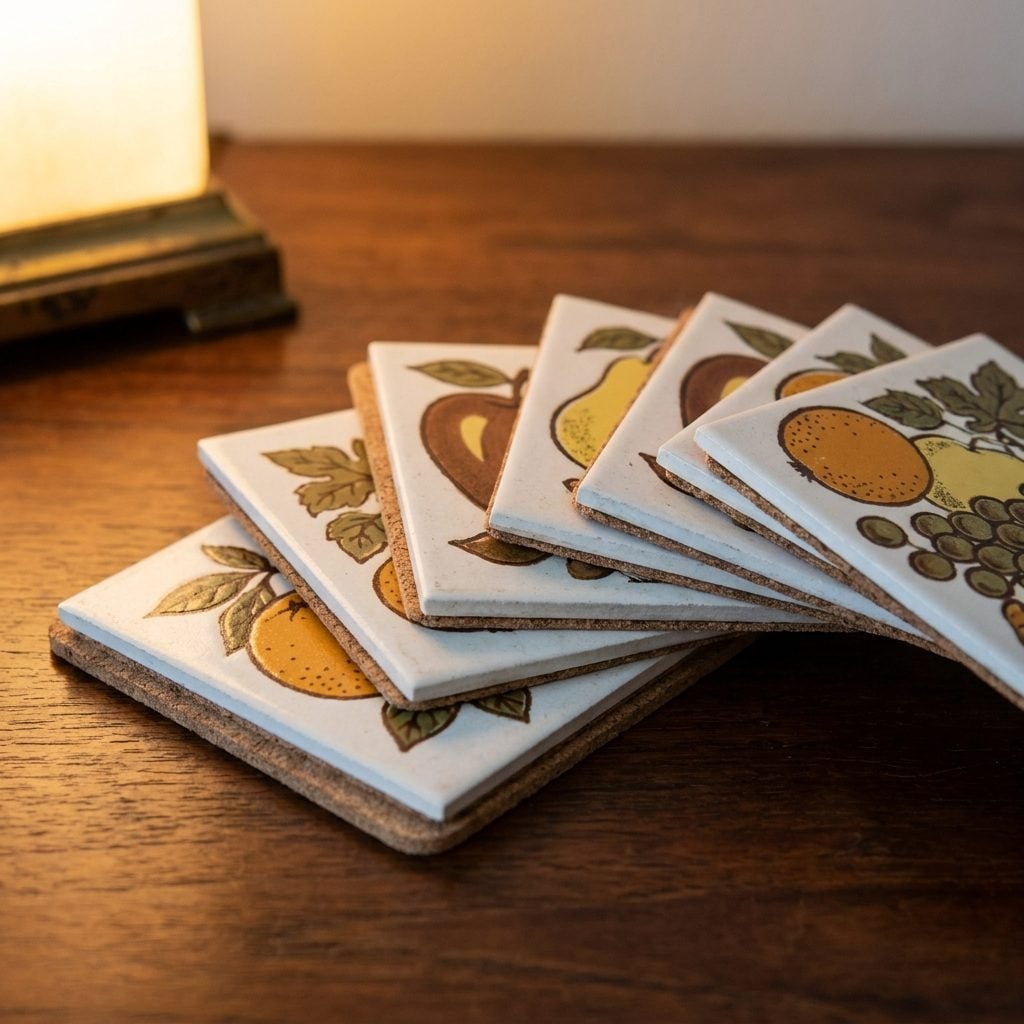
A little stack of them sat on every table — cork-backed, or those cheerful tile ones with the fruit pattern — and putting a glass down without one was a genuine breach of the peace.
The reflex got trained deep. To this day, if I set a cold drink on bare wood in someone’s house, a small alarm goes off in my skull. That’s not me. That’s her, still supervising from three decades ago.
Cork was the everyday coaster. The good tile ones came out for company, alongside the towels nobody used and the room nobody sat in.
26. Water Rings on Furniture Were a Serious Offense
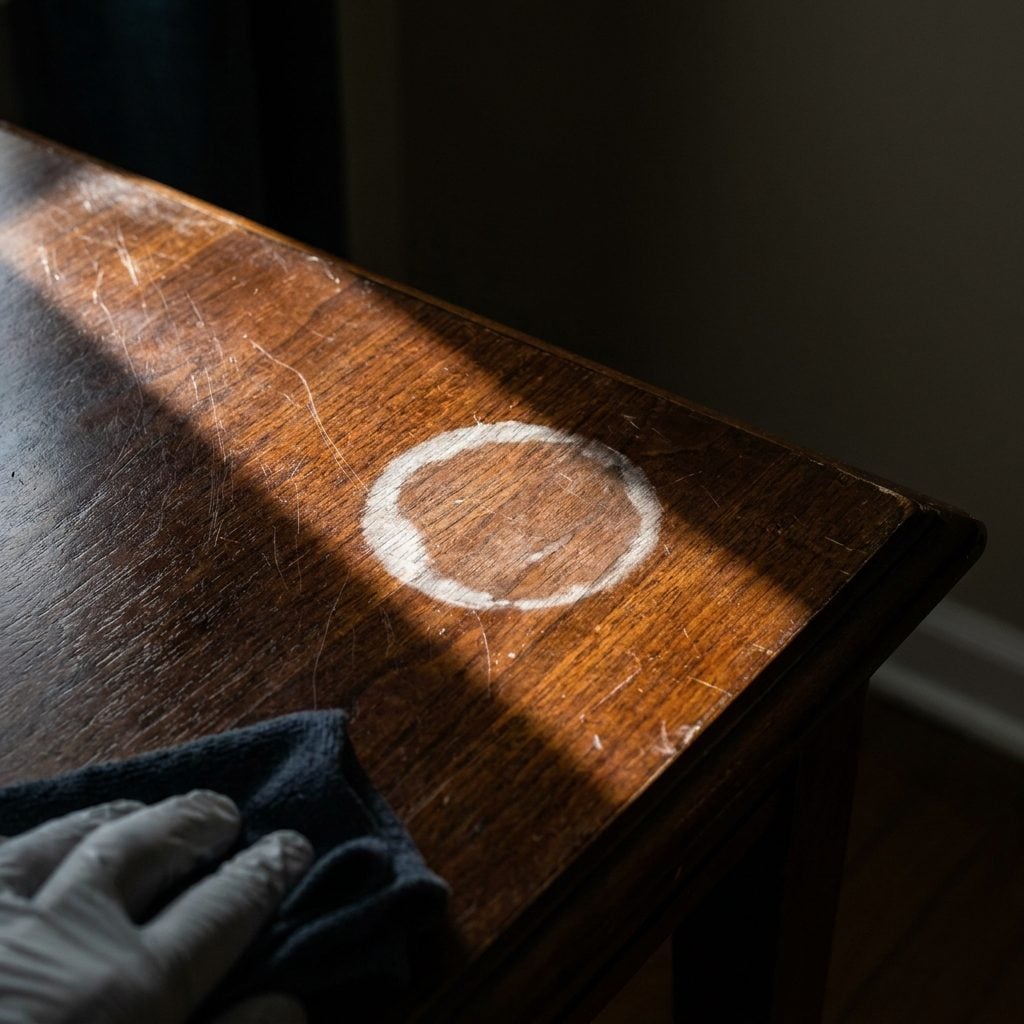
A pale ghost of a ring on the good end table. That’s all it took. The gasp, the cloth, the bottle from under the sink, the frantic attempt to make the evidence disappear.
Wood furniture got treated like it had feelings. It was dusted, polished, and defended. A cloudy mark on the walnut wasn’t merely a small mishap — it meant the finish everybody had spent years protecting had finally taken a hit.
The panic was real and contagious. You’d knock over a sweating glass and feel your stomach drop before it even landed, already rehearsing your defense. Some of that lush wood-toned house decor was genuinely well cared for, and you can still spot a table that survived decades of that kind of attention.
25. Ashtrays Were Emptied Before They Looked Dirty
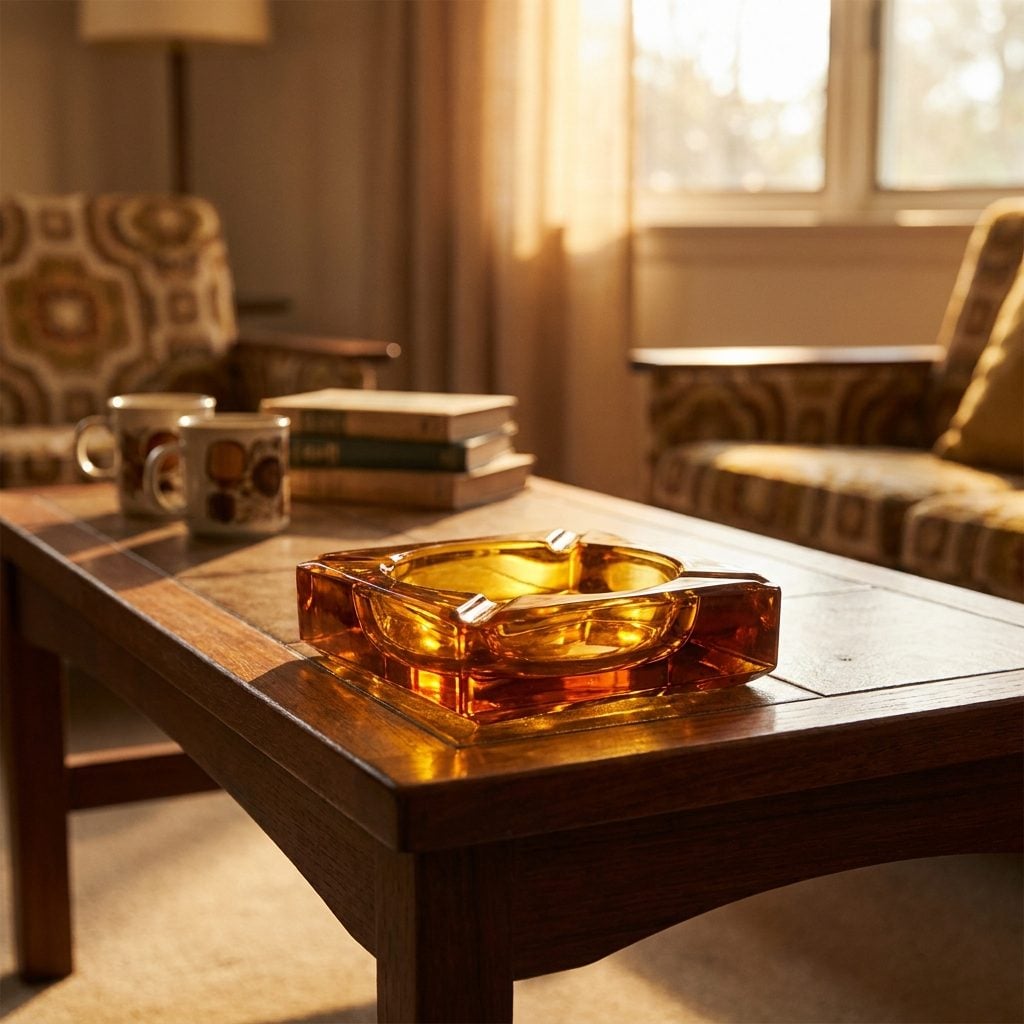
The heavy amber glass ashtray on the coffee table was never allowed to look like an ashtray. One stub in it and she was already up, dumping it, wiping it out, setting it back gleaming on its coaster.
A full ashtray read as neglect. It suggested the house had gotten away from someone, and getting away from her was simply not permitted.
Plenty of homes have quit smoking entirely, and the ashtrays went with them. But that reflex — tidy the evidence before it piles up — can be harder to shake. You wipe the counter while you’re still cooking. You put things away before you’re technically finished with them. Old household habits have long legs.
24. Furniture Was Dusted Every Week Without Exception
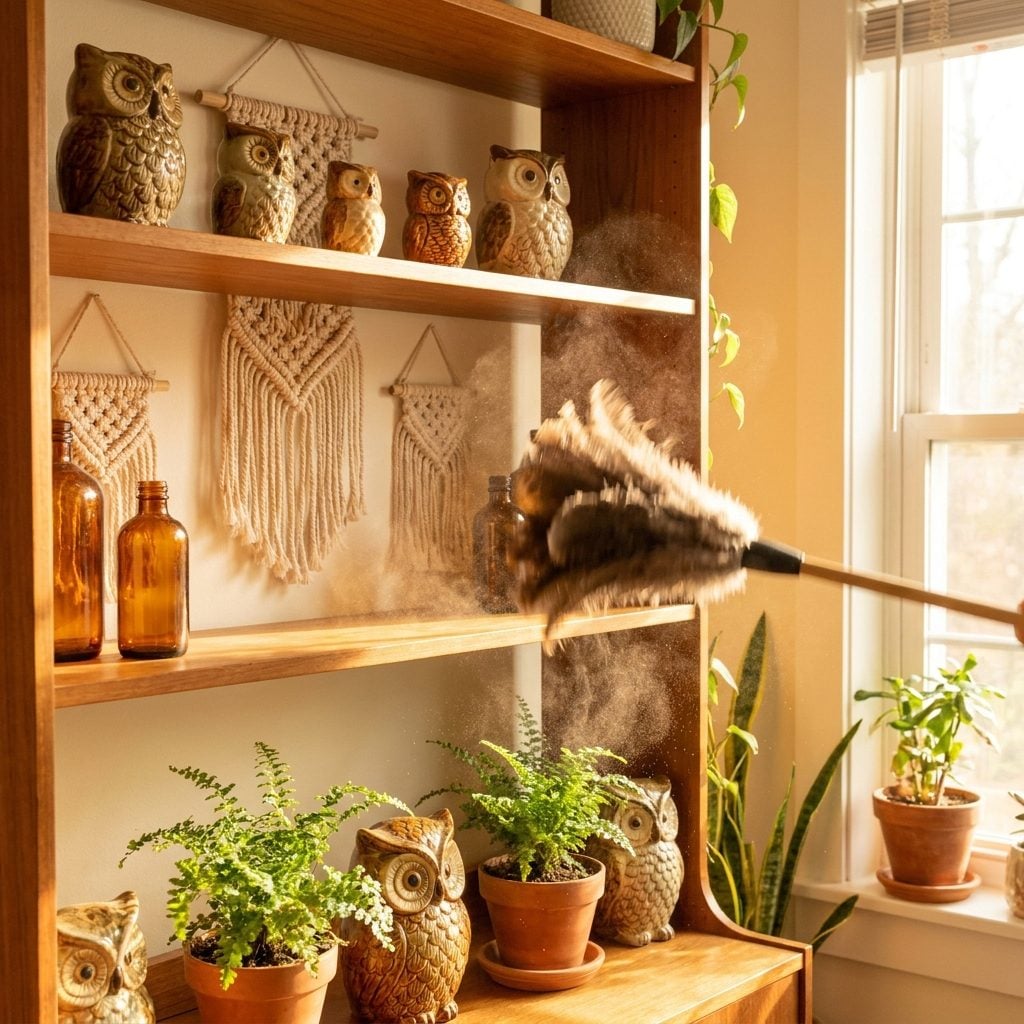
Saturday morning had a smell, and it was lemon. Before cartoons, before anything, the feather duster came out and every horizontal surface got worked over — the mantel, the picture frames, the tops of the door frames, because somebody could always run a finger up there and check.
Dust wasn’t dirt exactly. It was evidence that you’d let a week slip. And in a house like that, a week never got to slip.
23. Wooden Furniture Got Regular Polish
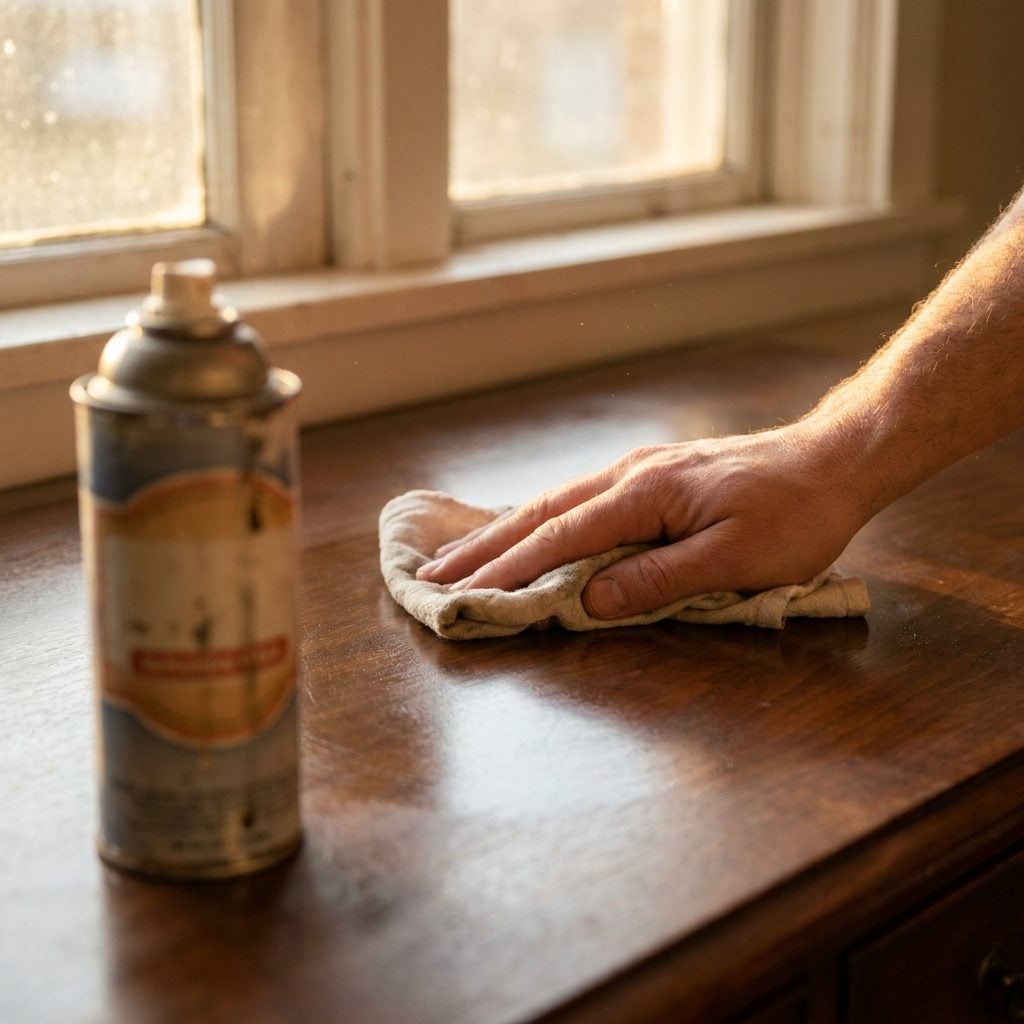
Half the house’s scent memory was that aerosol polish. One long spray, then the rag, then the slow circular buffing until the tabletop threw back a reflection you could almost read a newspaper in.
Wood furniture was built to stay. That china cabinet was going to outlive everybody in the room, and it was going to look good doing it.
22. Glass Tables Were Wiped Until No Fingerprints Remained
🔥 Would you like to save this?
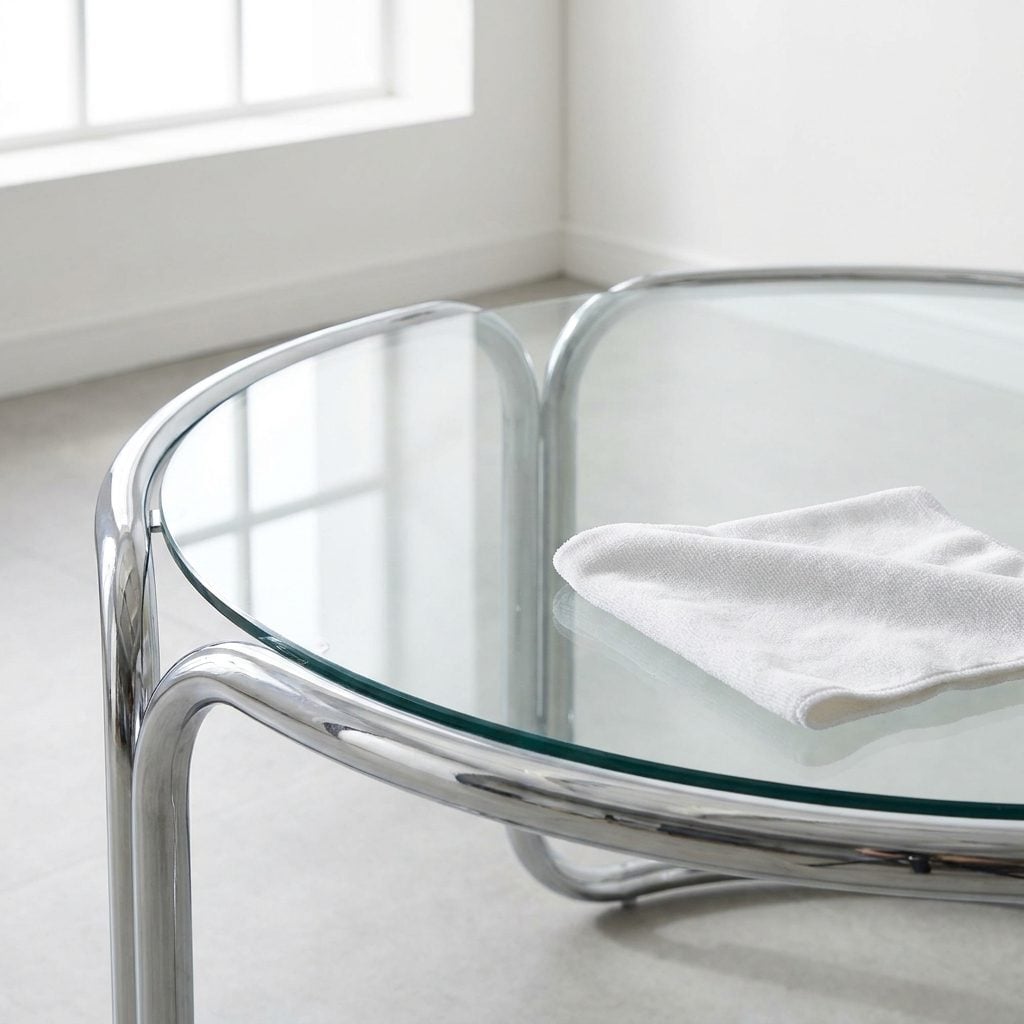
Glass tables were a trap and everyone knew it. Set down a glass of iced tea and you’d left a ring; rest an elbow and you’d left a smear. The table logged every crime.
So it got the treatment — the window cleaner, the paper towel, the little tilt of the head to catch the sun and hunt for streaks. You didn’t stop until it looked like nothing was there at all.
21. Windows Were Washed Inside and Out
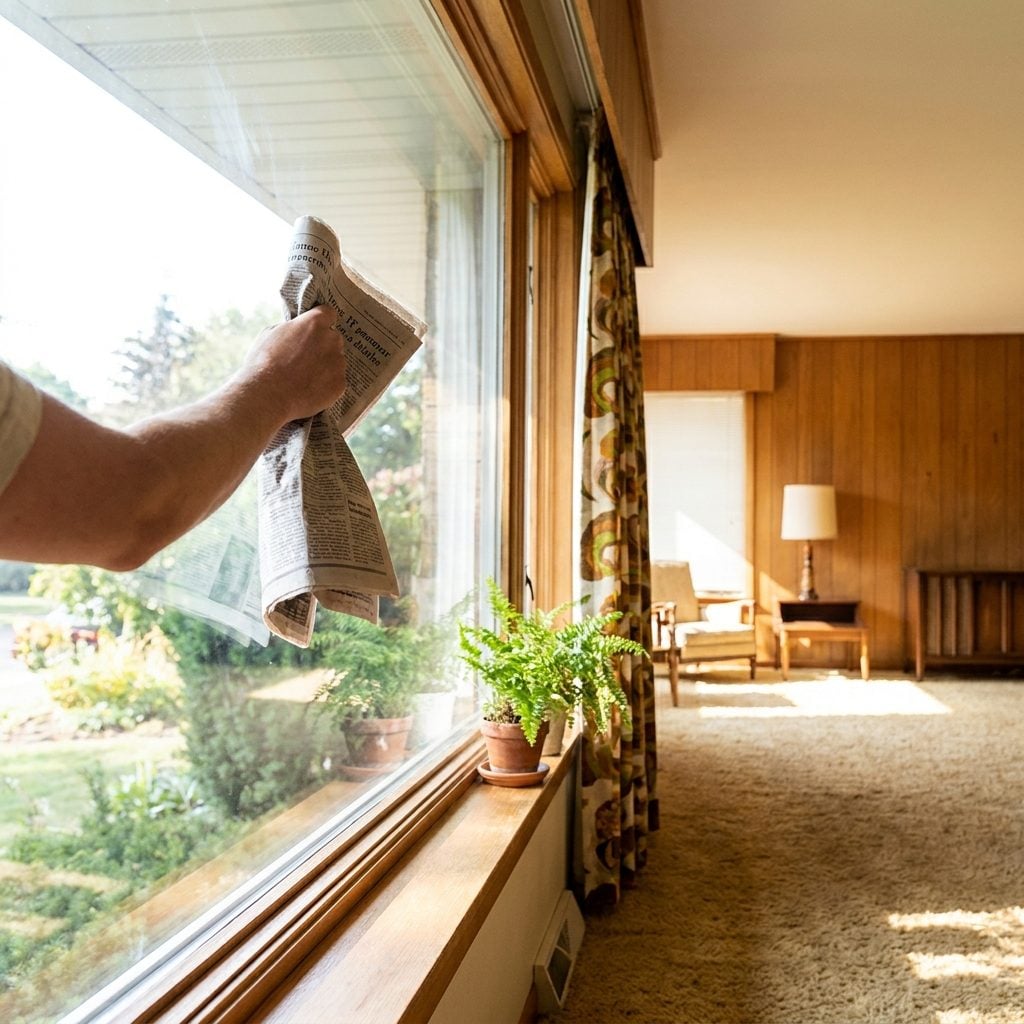
There was a right way to do windows and it involved newspaper. Not paper towels — newspaper. Somebody’s mother swore it stopped the streaking, and you weren’t about to argue with that logic on a Saturday.
Inside got done, then outside got done, and the reward came a half-second later when the light poured through so clean it felt like the glass wasn’t there.
20. Venetian Blinds Were Cleaned Slat by Slat
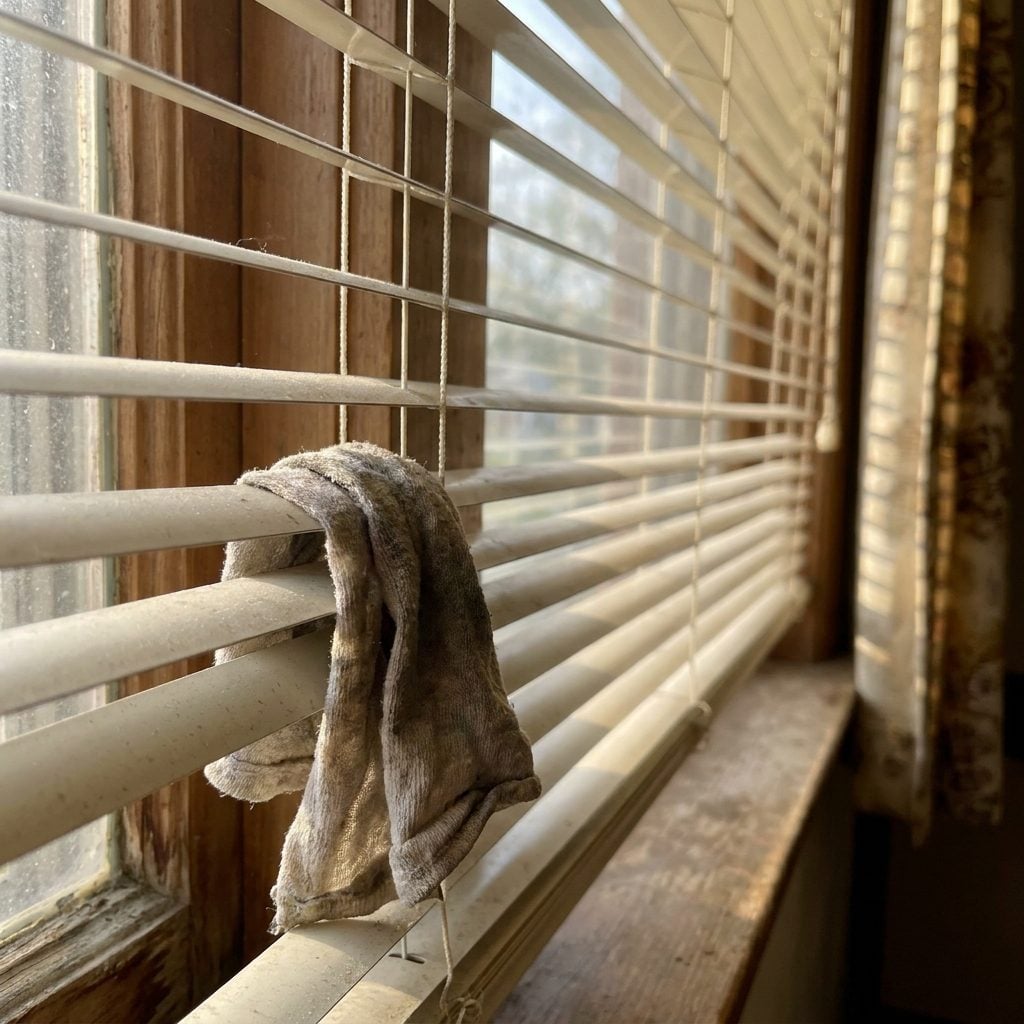
Nobody enjoyed the blinds. The blinds were a punishment. Each metal slat pinched between a folded rag, wiped top and bottom, then the next one, then the next, all the way down while the whole contraption rattled and slid sideways on you.
You could finish a whole window, step back, and spot the three slats you missed sitting there gray against the clean ones. Back you went.
19. Curtains Came Down for Washing
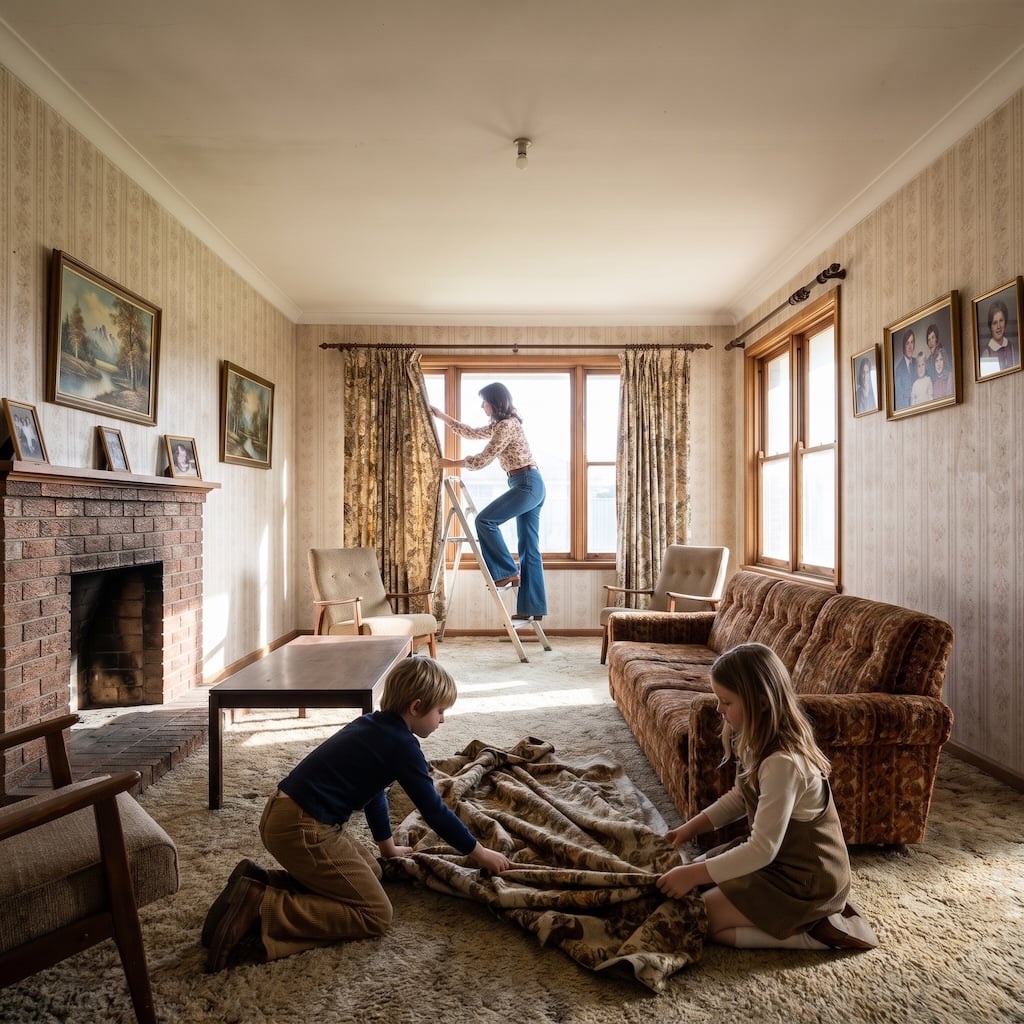
Twice a year, maybe with the seasons, the curtains came down and the whole room went strange. Bare windows. Too much light. The house suddenly looked undressed and a little vulnerable while everything hung on the line or spun in the machine.
Then they went back up, warm from the iron and smelling like outside, and the room seemed to exhale. I still think a house with clean curtains feels calmer, and I’ve got no evidence for that beyond growing up in one.
18. Rugs Were Taken Outside and Beaten
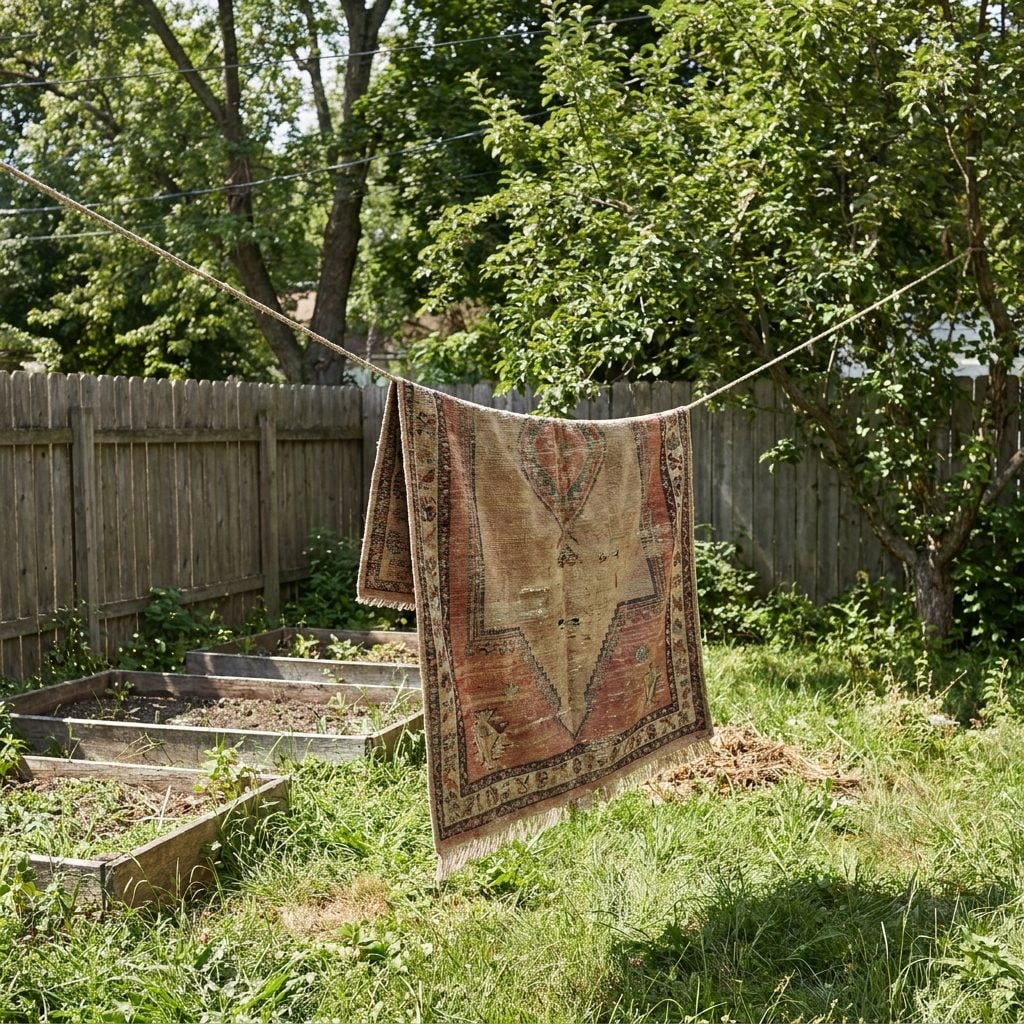
Out came the rug, over the clothesline, and then the beating started. Wicker paddle, full swing, and that satisfying whump that released a cloud of dust so thick you could see exactly what had been living under your feet all winter.
It was oddly great — loud, physical, faintly violent, and you got to watch the dirt leave. Most chores that decade were quiet. This one wasn’t, which is why it was the good one.
17. Carpets Were Vacuumed in Perfect Straight Lines
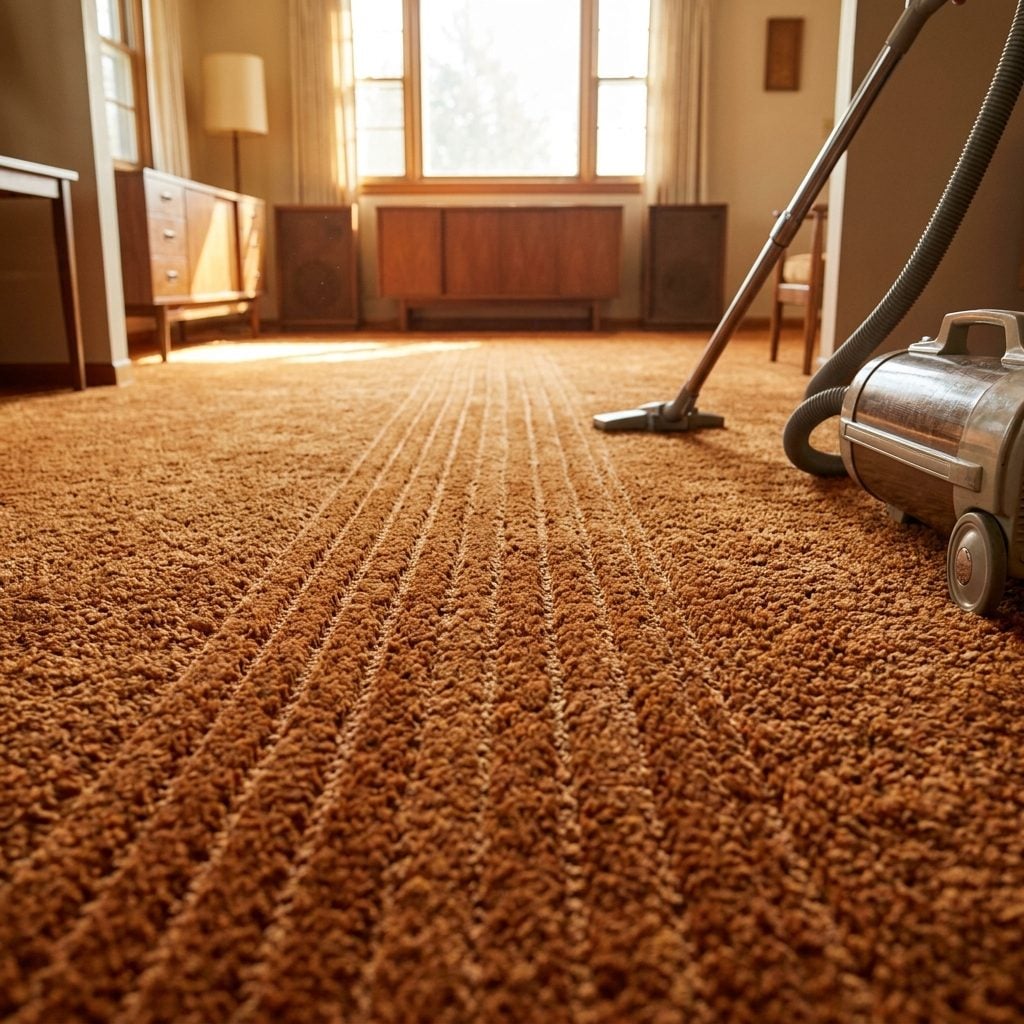
You worked backward out of the room so you never left a footprint — the rule nobody wrote down but everybody followed. Straight lines, all the same direction, laid across the shag like a freshly mowed lawn.
The lines were the receipt. One look from the doorway and everybody knew the carpet had been done. Which is why the first person to cut diagonally across it could inspire a level of irritation wildly out of proportion to a footprint.
And then, most sacred of all, you did not walk on it. The good living room stayed pristine for company that showed up maybe four times a year.
16. Linoleum Floors Were Scrubbed on Hands and Knees
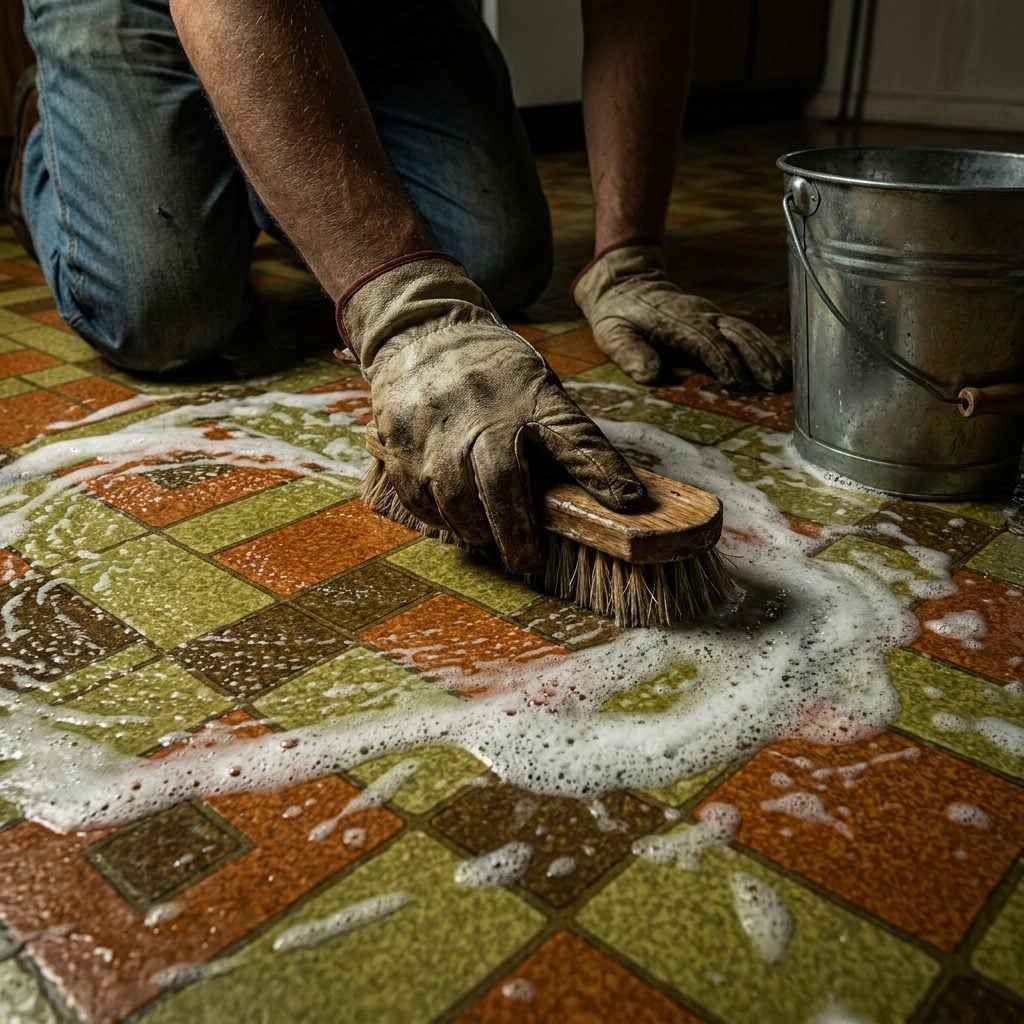
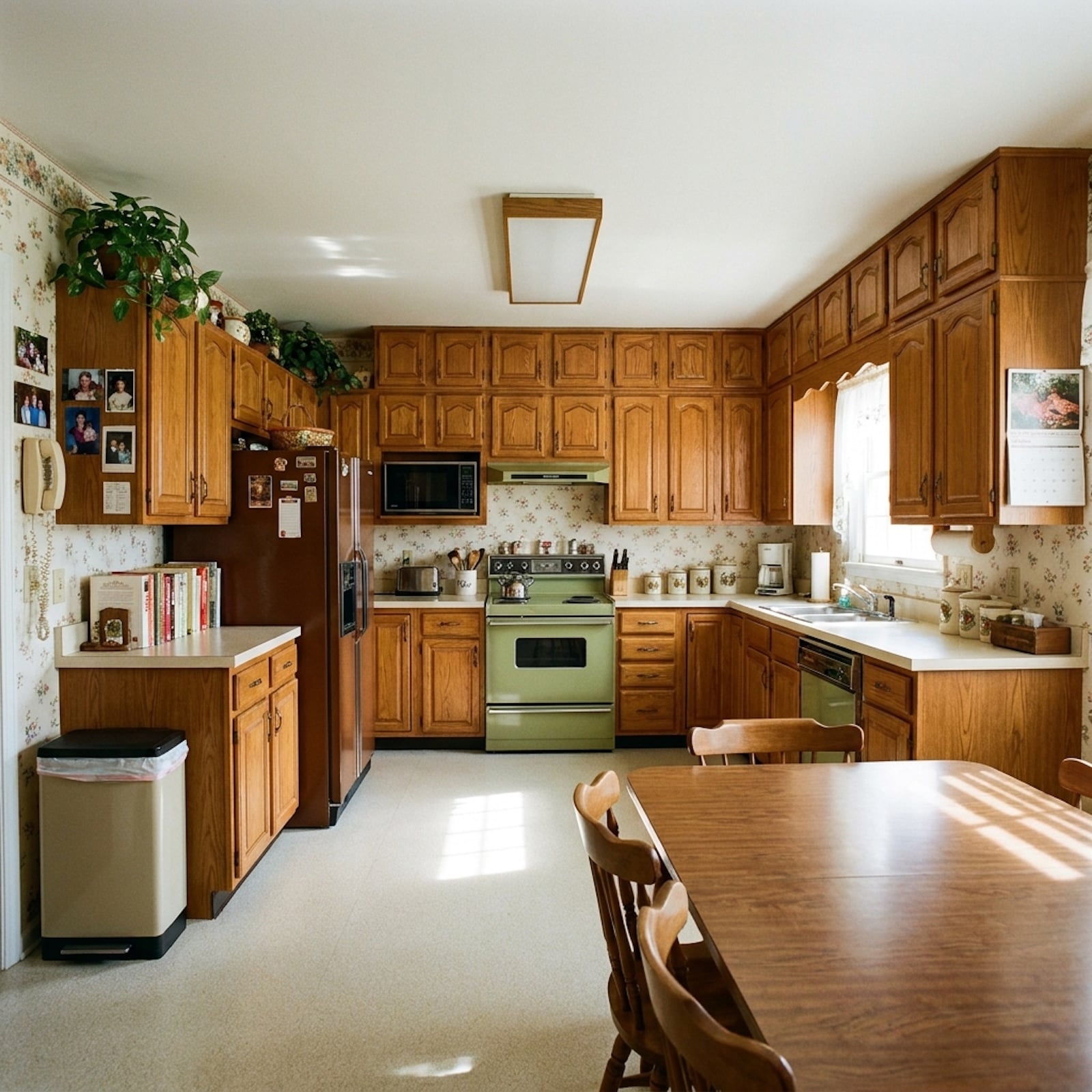
The mop was for weeknights. Saturday was for knees. Down on the linoleum with a brush and a bucket, working the corners the mop always skated over, the water going gray fast under the harvest-gold fridge.
Then came the ban. Floor’s wet, stay out of the kitchen, and everybody stood in doorways watching it dry like it was a spectator sport. When it finally gleamed you could see the whole window reflected back in it.
That’s the standard that outlasted all the others. Households like these didn’t just clean until the dirt was gone. They wanted the shine afterward.
15. Floors Were Waxed Until They Shined
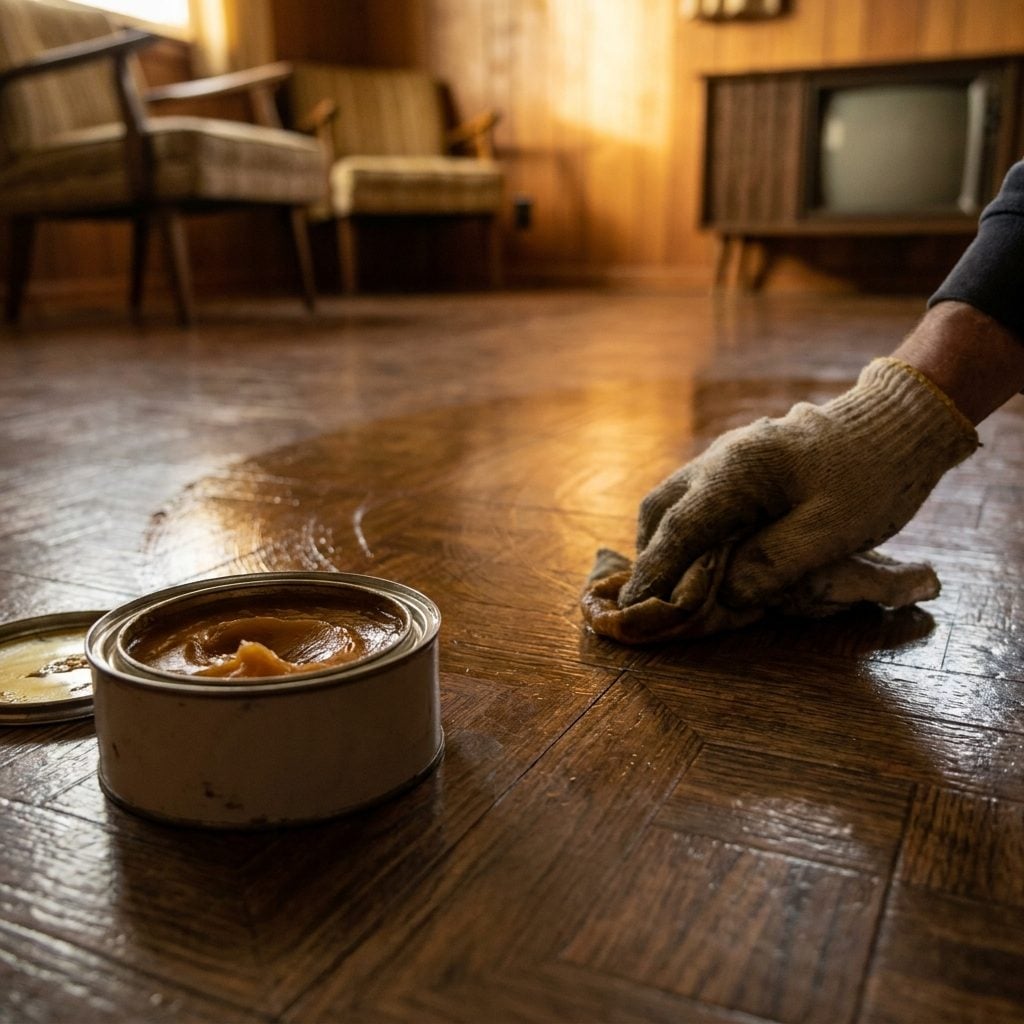
The floor was a project, not a chore. Paste wax out of a tin, spread thin with a rag, done on hands and knees while the radio played. You could smell it curing all afternoon, that faint solvent tang that meant nobody was walking through the kitchen for the next hour.
And you knew the rule. Socks only. Shoes came off at the door because a scuff on a freshly waxed floor was a small tragedy somebody would hear about at dinner.
14. Waxed Floors Had to Be Buffed Afterwards
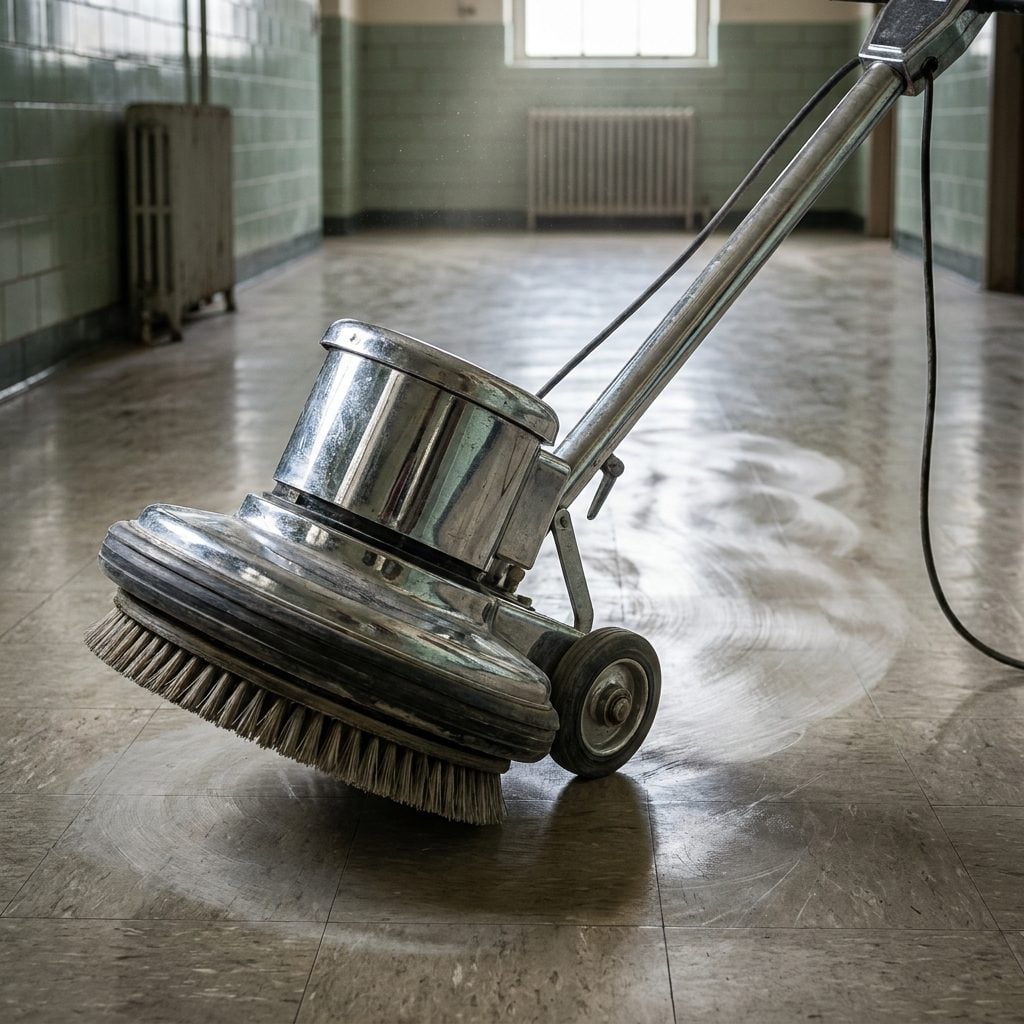
The wax was only half the job. Once it hazed over, out came the buffer, a heavy chrome machine that swung the operator around the room like a slow dance partner nobody chose. You gripped the handle and let it drag you wherever it pleased.
And the sound filled the whole house, a low mechanical hum you could feel in your teeth. When it was done, the floor didn’t just shine. It glowed, catching the swag lamp light like still water.
13. The Kitchen Sink Was Scrubbed After the Dishes
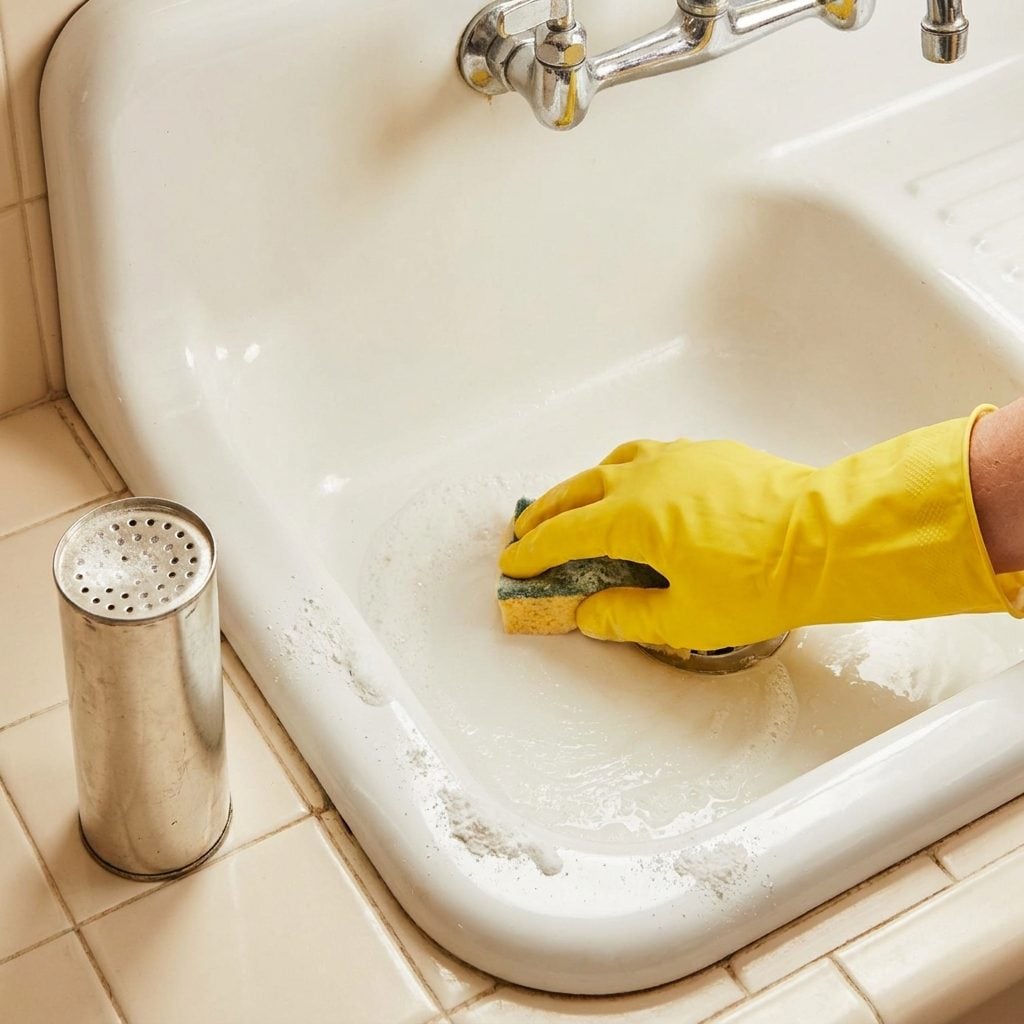
Nobody in that house considered dishes done when the dishes were done. The sink itself got scrubbed after, cleanser shaken out in a green cloud, the basin worked over until the stainless squeaked. Comet or Ajax, always under the sink, always half full.
The tell was the shine. A sink left with water spots or a coffee stain in the corner meant the job stopped early, and in this house the job never stopped early.
12. The Stove Was Cleaned After Every Mess
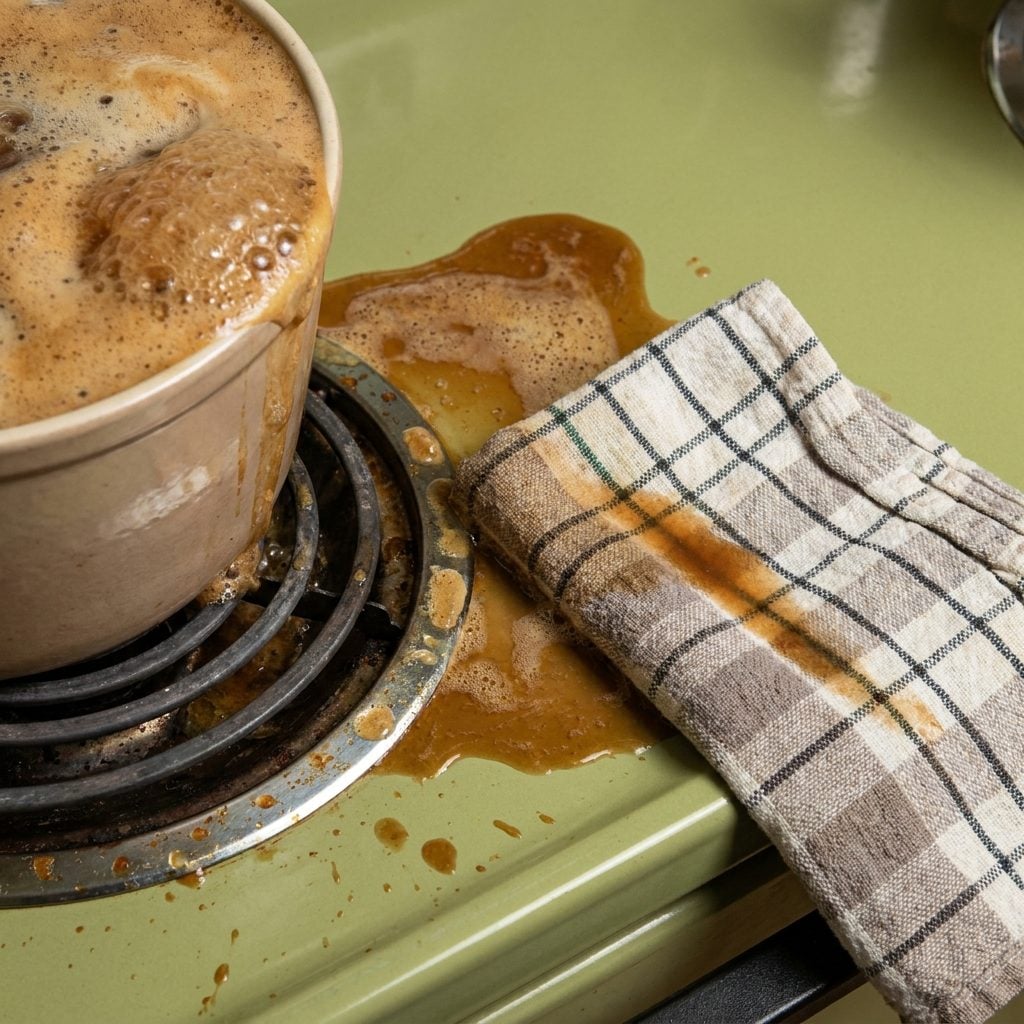
The moment a pot boiled over, the clock started. You did not leave a splatter to bake onto the enamel and become a permanent brown medallion. You wiped it once the surface was safe to clean, before yesterday’s dinner became part of the stove.
Burner grates came off and got scrubbed in the sink. The drip pans underneath got their own attention, because a scorched drip pan was the kind of thing that could ruin a person’s whole opinion of your housekeeping. That stove top could practically double as a mirror by bedtime.
11. Chrome Fixtures Were Polished Until They Gleamed
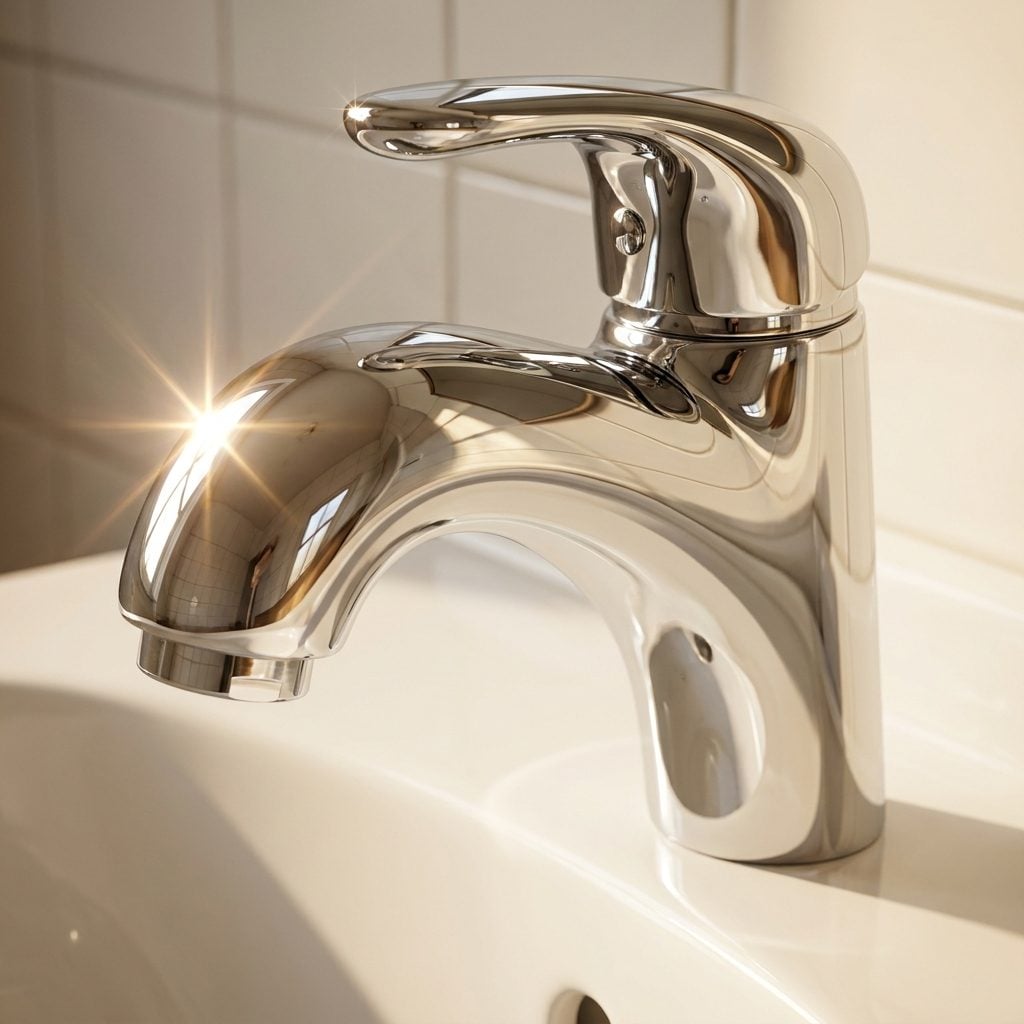
Water spots were the enemy. Chrome faucets, towel bars, the little handles on the medicine cabinet, all of it got wiped down and buffed until you could see the whole room bent and shining in the metal.
The finishing move got passed down like a family recipe: clean the surface, then dry it before fresh spots settled in. Kids figured out fast that you could catch your own distorted face in a well-polished tap, which was about the only entertainment the bathroom offered.
10. The Bathroom Had to Smell Like Disinfectant
🔥 Would you like to save this?
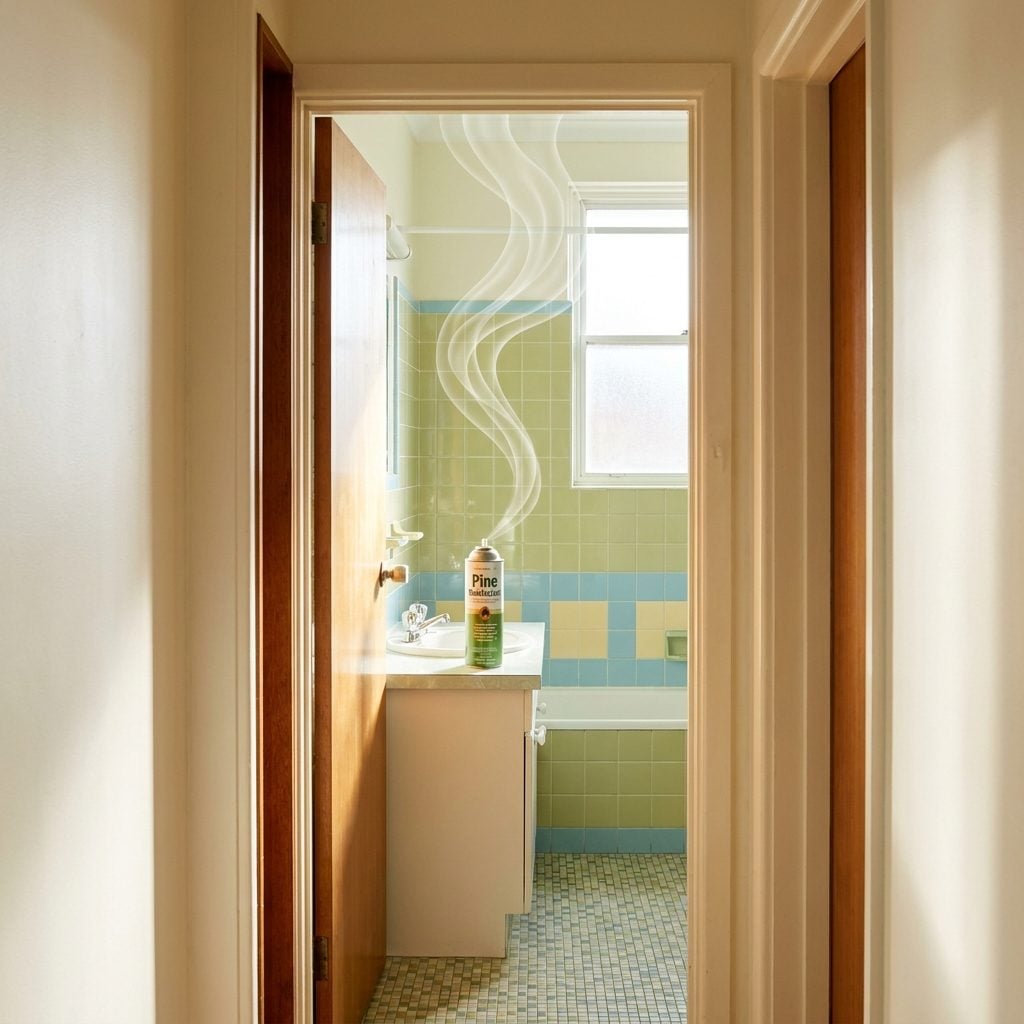
You knew the bathroom was clean before you saw it. You smelled it from the hallway, that sharp pine-and-disinfectant punch that stung the back of your nose. In those houses, clean had a smell, and this was it.
Nobody trusted a bathroom that only looked tidy. It had to announce itself. A faint cloud of cleaner lingering in the air was treated as proof the job had been done properly and recently, whether the fragrance itself had anything to do with cleanliness or not.
9. The Bathtub Got Scrubbed Before a Ring Could Form
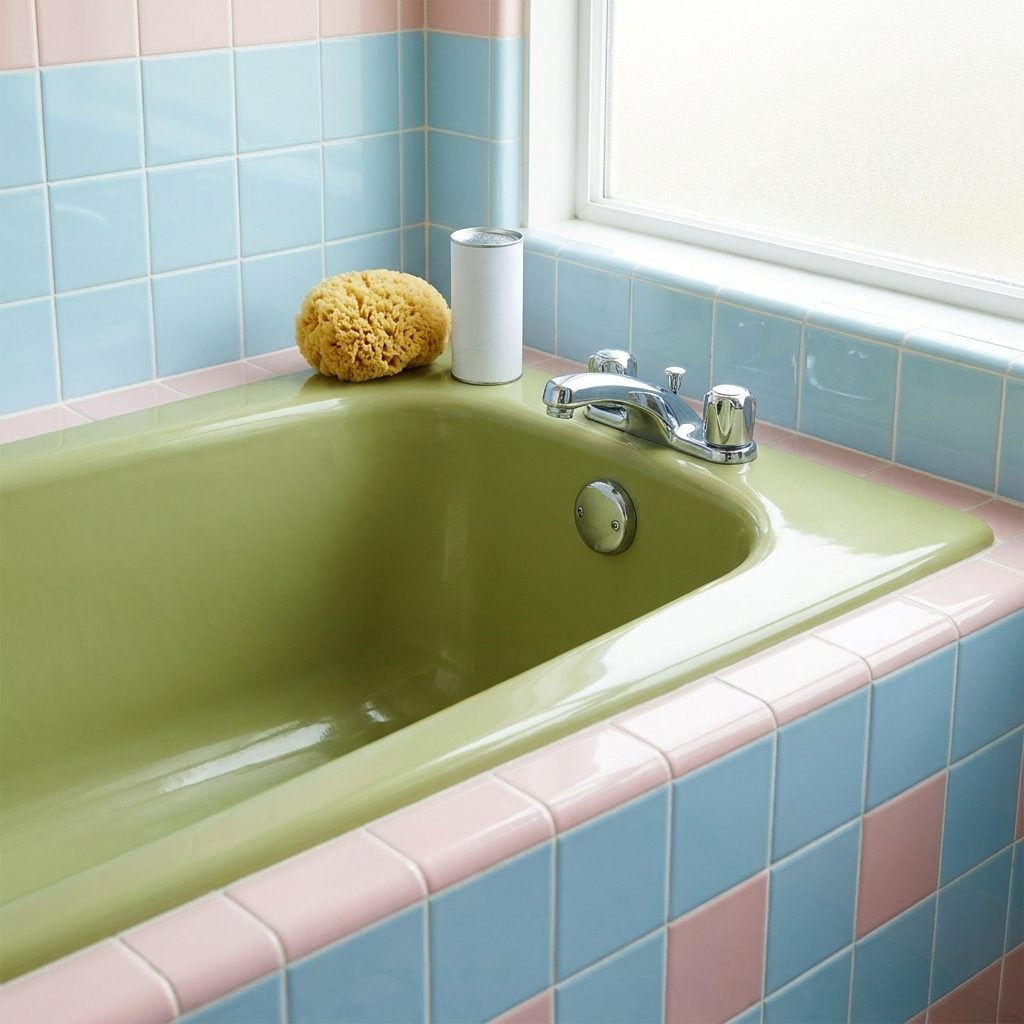
There was no such thing as a bathtub ring in that house. Soap scum barely got the chance to settle into a gray line before somebody was after it with cleanser and a sponge.
I say this as the kid who got handed that sponge more times than I can count. The waterline was where you earned your keep, scrubbing in tight circles while the cleanser gritted under the sponge and the enamel came back bright white. Then you rinsed, and the tub looked untouched, like nobody had ever bathed in it.
8. Toilet Bowls Were Cleaned on a Schedule
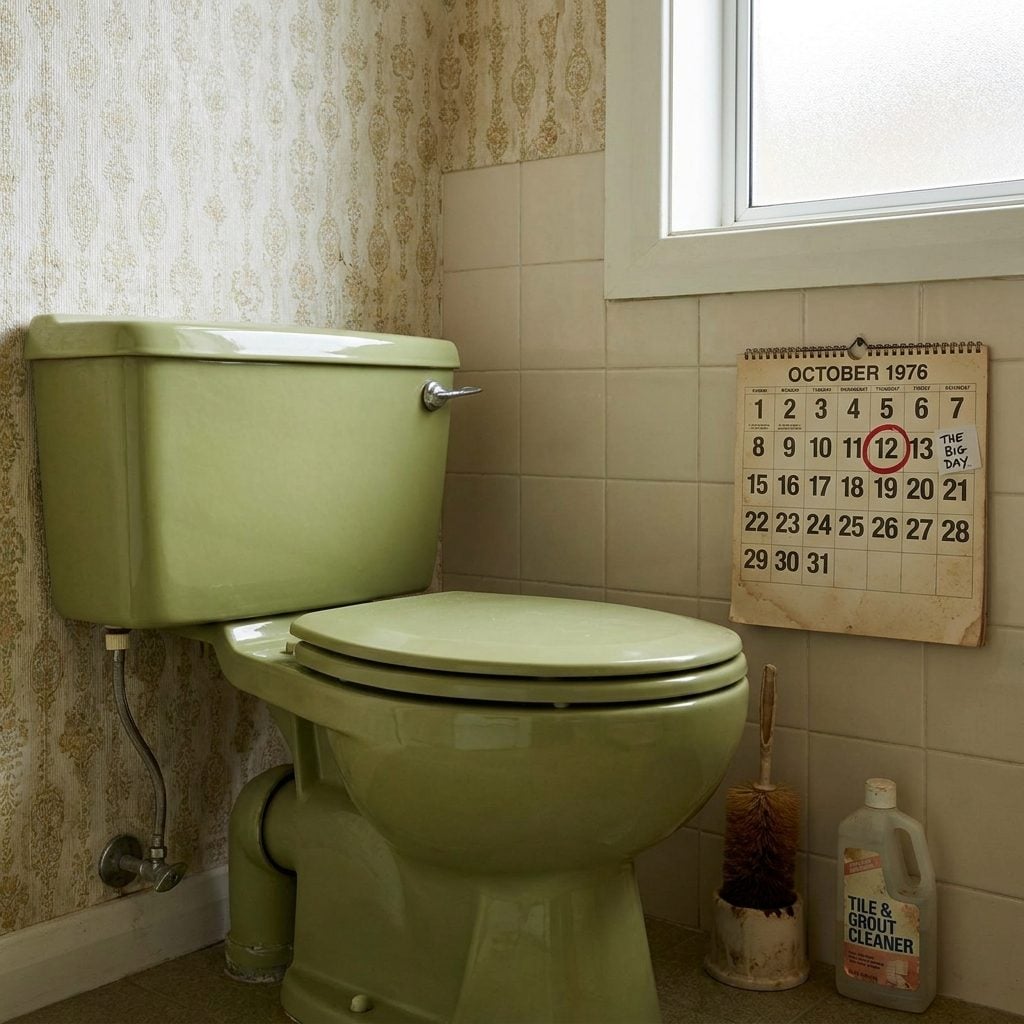
The toilet had a day. Not a vague sense of getting to it eventually, but an actual assigned slot when the cleaner went in under the rim, the brush went to work, and the outside got wiped down handle to base.
Some households marked it on the chore chart taped inside the pantry door. The brush lived in its own little holder, and if you were the one whose day it was, you knew, because nobody was going to let you forget.
7. Towels Had to Hang Perfectly Straight
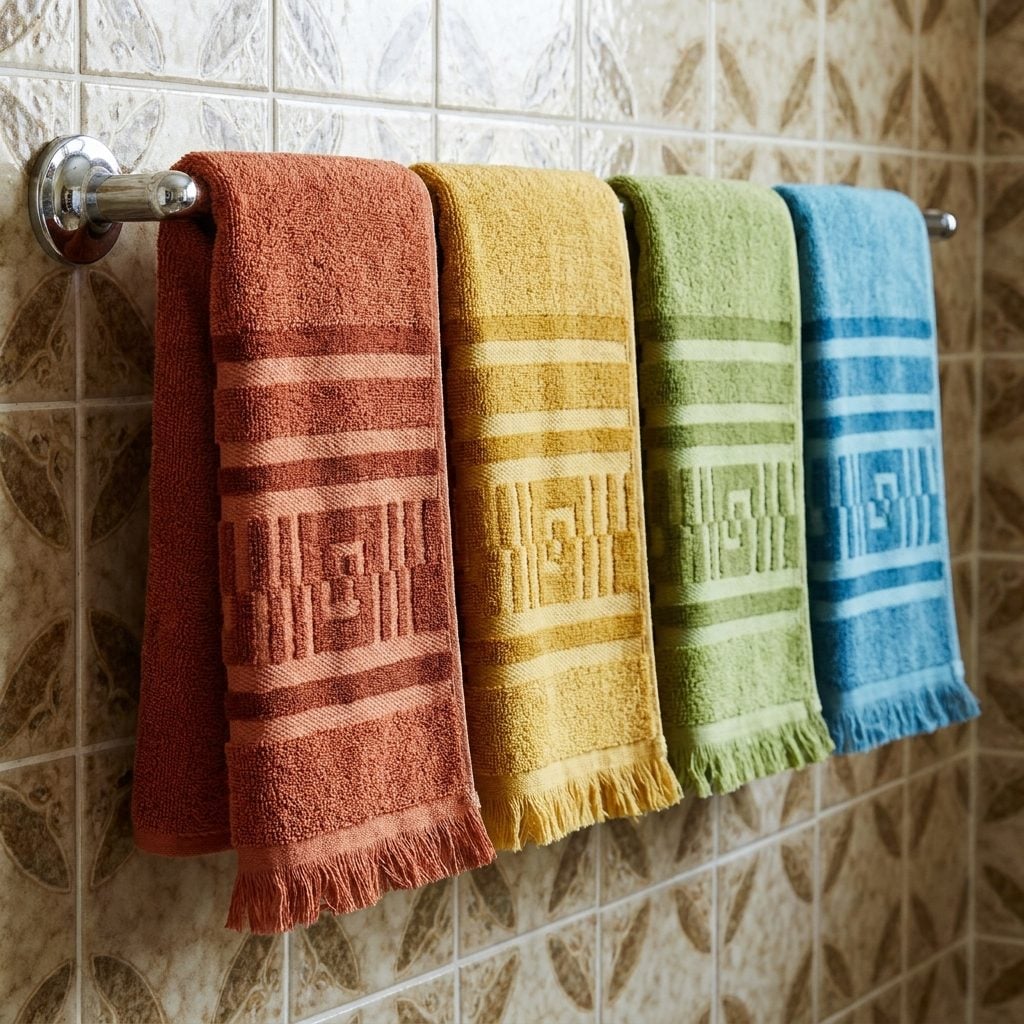
Folded in thirds. Edges aligned. Fringe pointing the same direction. A towel hung crooked was practically a moral failing, and it got fixed before anyone had time to admire the mess.
The rule applied even to the ordinary towels that actually earned their keep. You could dry your hands, but afterward the towel went back onto the bar square, centered, and facing the right direction. Leaving one twisted over the rail was how you announced that somebody else would be fixing it behind you.
Guest towels were furniture. Real towels were tools. Either way, somebody wanted them hanging straight.
6. Laundry Was Sorted With Military Precision
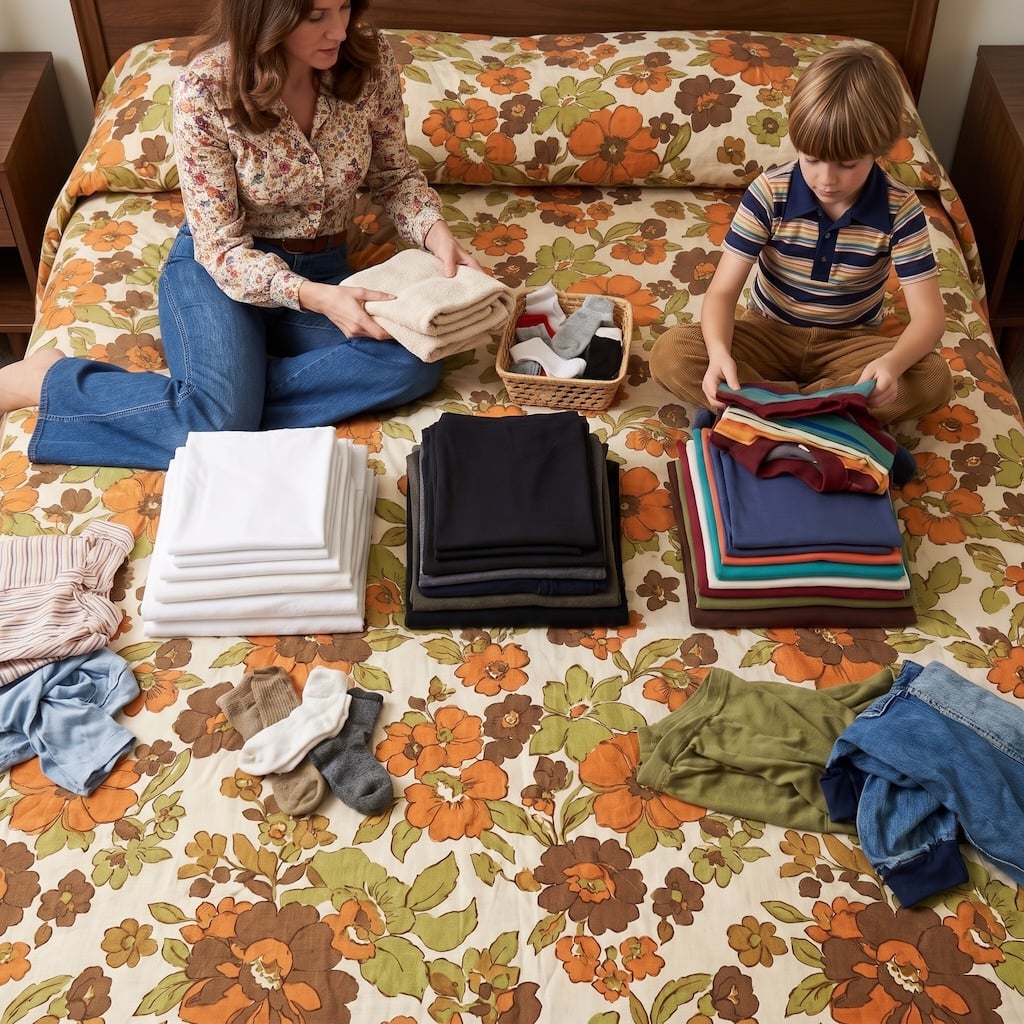
Whites, darks, colors. Three piles at minimum, and mixing them carelessly was the kind of mistake that turned everyone’s undershirts pink and lived on as family legend. The sorting happened before the machine ever started.
Different loads got different treatment. Whites might get hotter water or bleach when the fabric allowed it; darker colors were handled more cautiously to reduce fading and dye transfer. Then came another entire system at the other end: towels folded in thirds, shirts stacked, fitted sheets wrestled into something vaguely rectangular.
5. Clothes Were Hung Outside in Neat Rows on the Line
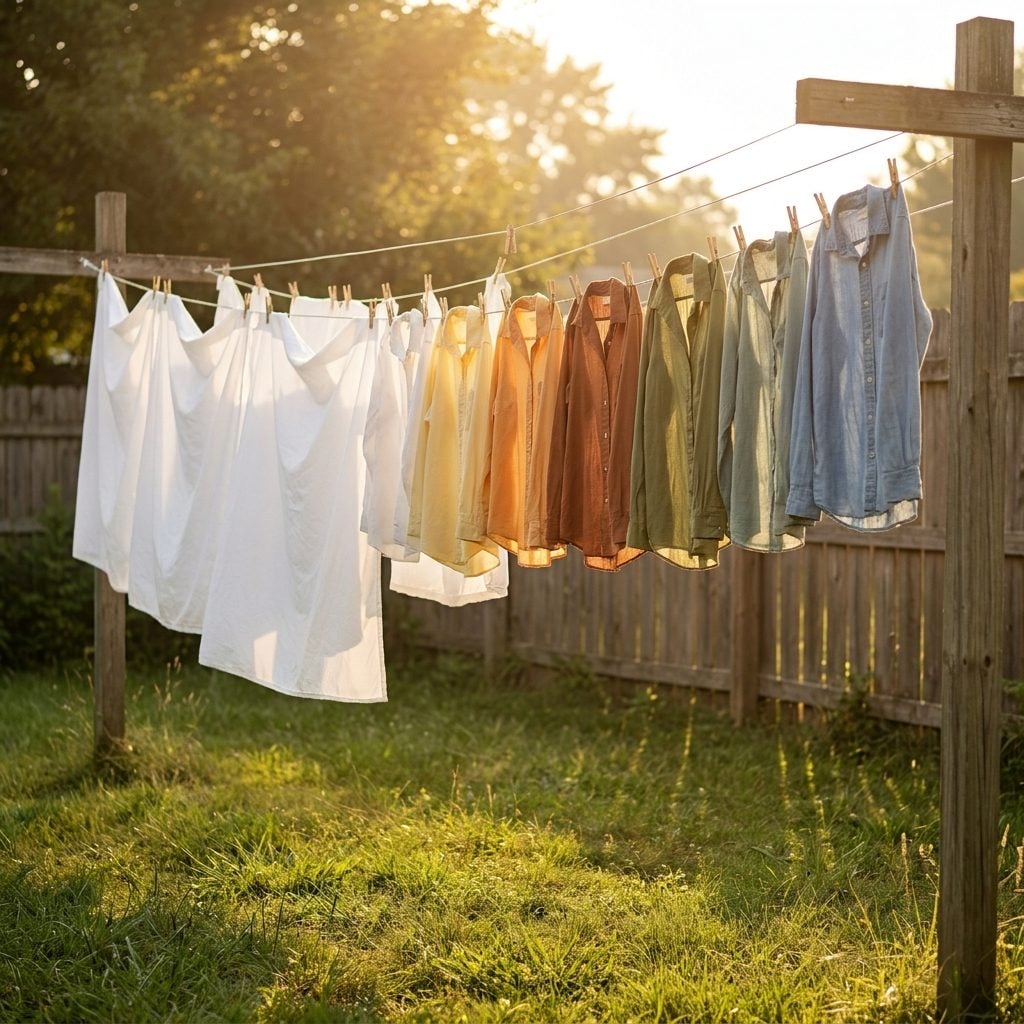
You could tell whose mother ran a tight ship just by looking at the backyard. Sheets first, then shirts sorted by color, then socks paired up like little soldiers, and nothing thrown on willy-nilly. There was an order to it. Everybody in the family knew you didn’t break the order.
That clothespin bag hung off the line like a permanent fixture, and pulling laundry down before the dew came was its own small deadline. The line-dried smell got into everything. No dryer sheet has ever come close, and I will die on this hill.
4. Shirts, Pillowcases, and Linens Got Ironed (Yes, the Pillowcases)
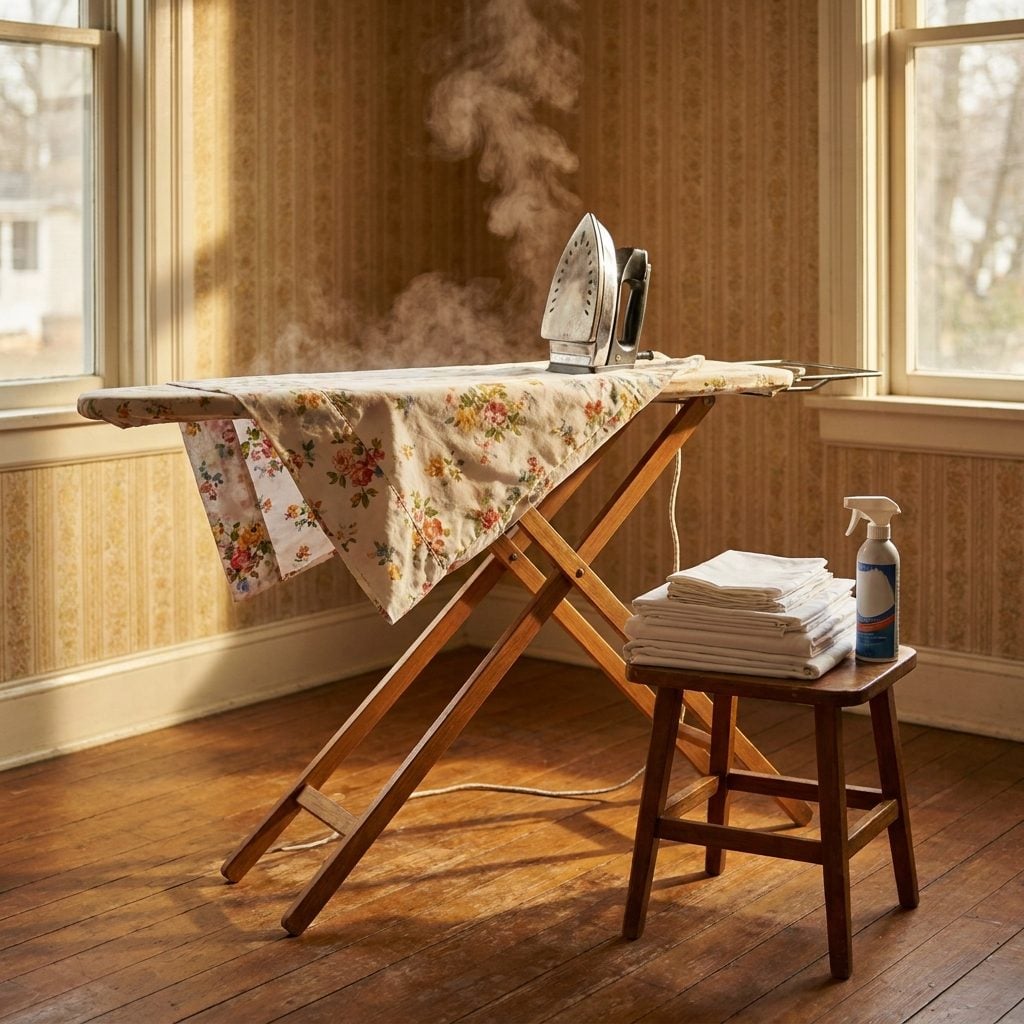
Ironing wasn’t reserved for special occasions. It was Tuesday. The board came out and stayed out, sometimes for days, wedged in the corner of the kitchen like a piece of furniture nobody bothered to fold away.
Shirts, sure. But the pillowcases got pressed too, and the handkerchiefs, and the tablecloth that only appeared on holidays. The house smelled faintly of hot cotton and starch. There was a whole technique to it — sprinkle water on a shirt, roll it up, let it sit so it pressed easier.
Was any of it necessary? No. Did anyone question it? Also no. A wrinkled pillowcase meant something in that house, and none of us wanted to find out what.
3. Saturday or Sunday Morning Meant Chore Time, No Exceptions
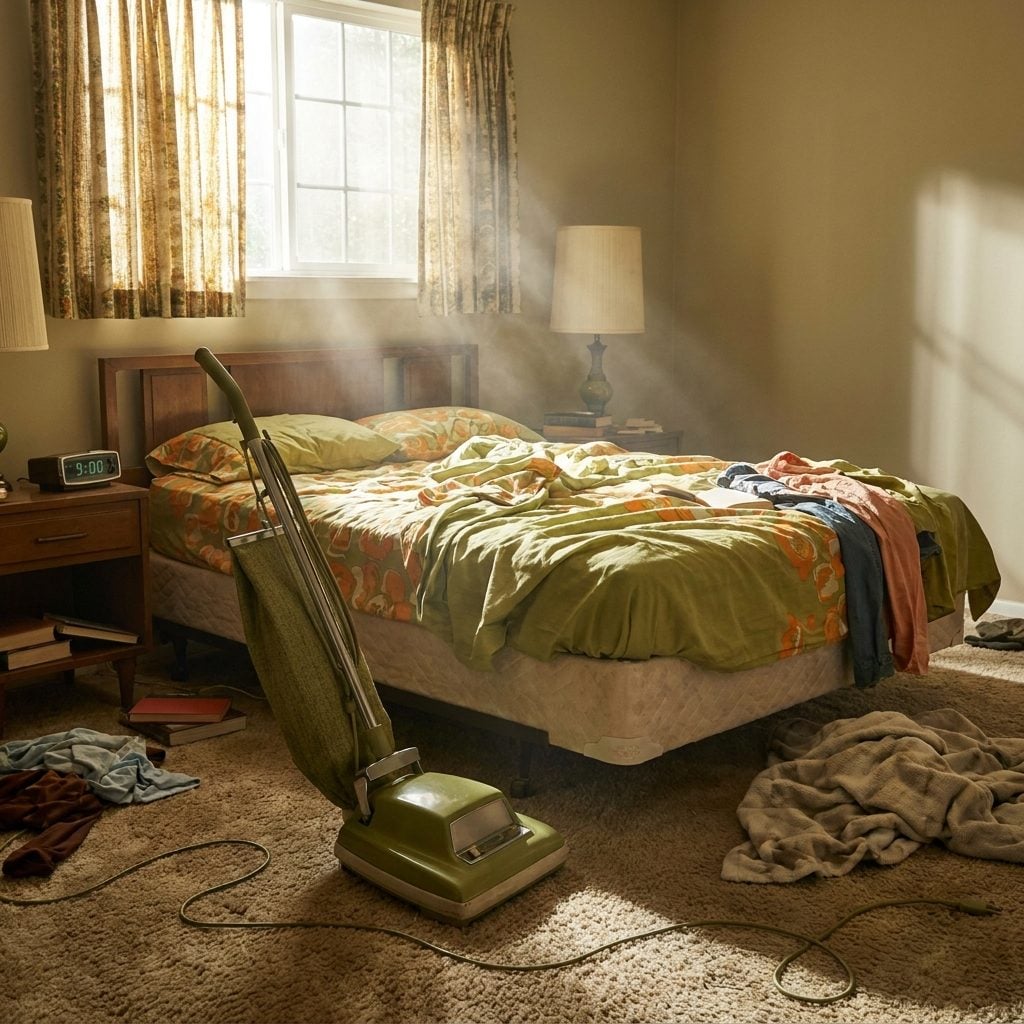
There was no sleeping in. The vacuum started up around nine, and if you weren’t awake before it, you were awake after it. That sound was the family alarm clock. No snooze button.
The whole house got done in one sweep — dusting, vacuuming, bathrooms, kitchen floor. You didn’t get to opt out because you had plans. Your plans were the chores, and everything else waited its turn.
2. Every Kid Had an Assigned Cleaning Job (and Knew It by Heart)
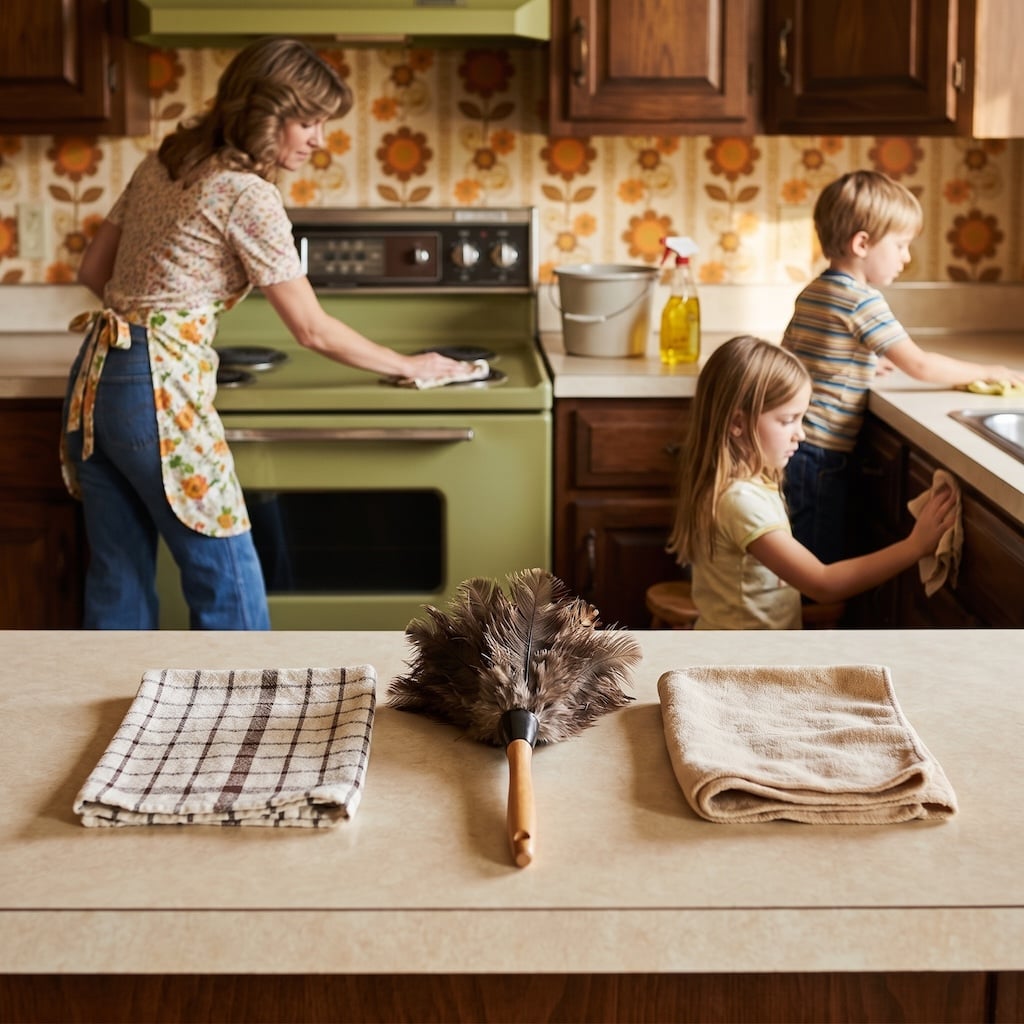
Nobody had to tell you your job, because it never changed. One kid dried, one kid put away. One kid did baseboards, another got the bathroom sink. Those assignments were as fixed as your seat at the dinner table.
And there was strategy in the sibling politics of it. Everyone knew which chore was the worst and who got stuck with it, and a quiet running negotiation about trading went on forever without ever actually working. Somehow the youngest always ended up matching socks.
1. Company Coming Over Triggered a Whole-House Cleaning Emergency
🔥 Would you like to save this?
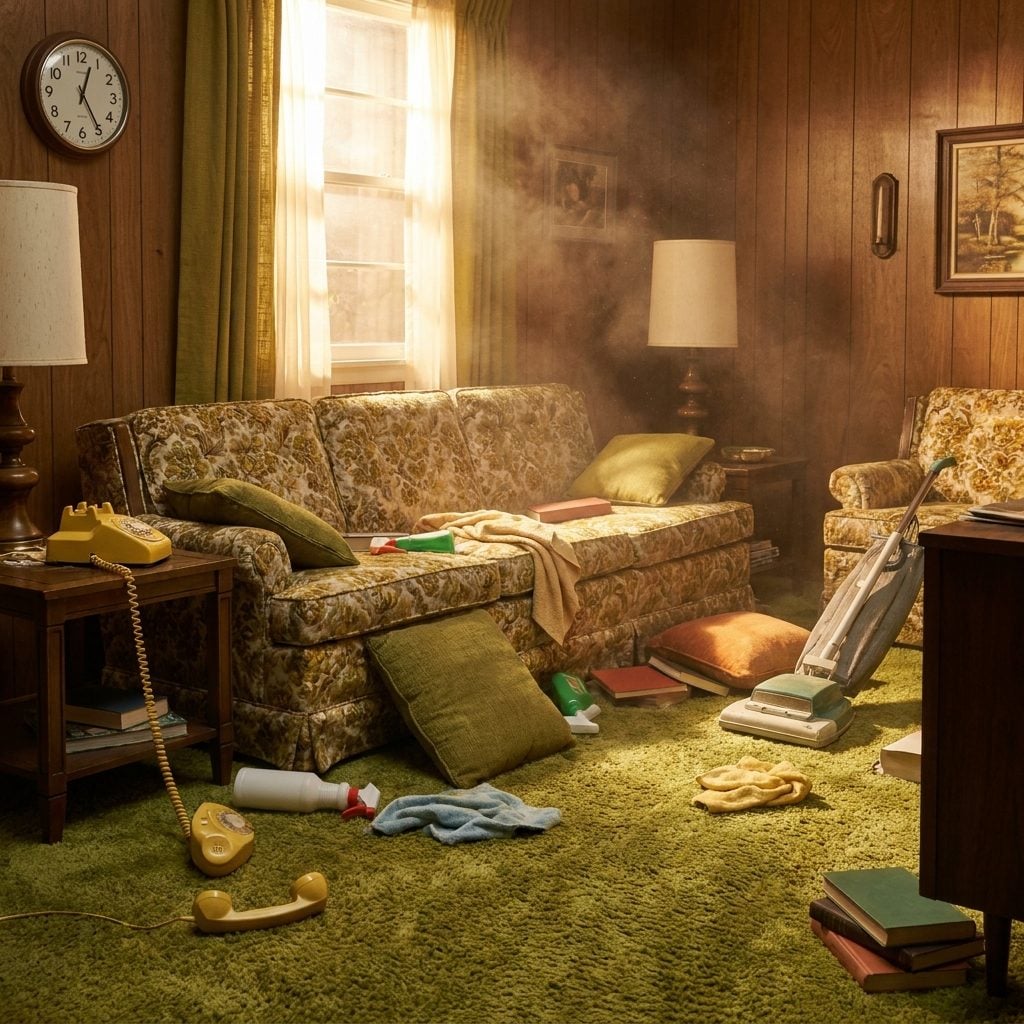
One phone call could change the entire afternoon. “They’re coming at six.” Suddenly it was all hands, and the calm weekend clean turned into a controlled panic on a deadline.
Out came the good towels nobody was allowed to use. The candy dish got filled, the plastic couch covers got wiped down, and baseboards you didn’t know existed suddenly mattered. The phrase “we don’t have time for this” got shouted at least twice while everyone found time for exactly this.
The funny part? Half the stuff being scrubbed, no guest would ever see. It wasn’t really about them. It was about the house being ready, top to bottom, because company didn’t create the standard. Company merely gave it a deadline.