🔥 Would you like to save this?
Real old money never announces itself. It doesn’t need to. You’ve walked into a room like this before, the kind where nothing shouts and everything belongs. The rug is worn in exactly the spot people cross. A lamp base looks like it was found, not bought. There isn’t a single visible label anywhere, and somehow the whole room outclasses the one down the street with the designer coffee table book fanned out for approval. That confidence comes from cues most people never notice. Layout, patina, light, the things kept and the things left alone. Here are twenty of them, and you probably already have a few.
20. The Furniture Doesn’t Match, and That’s the Whole Point
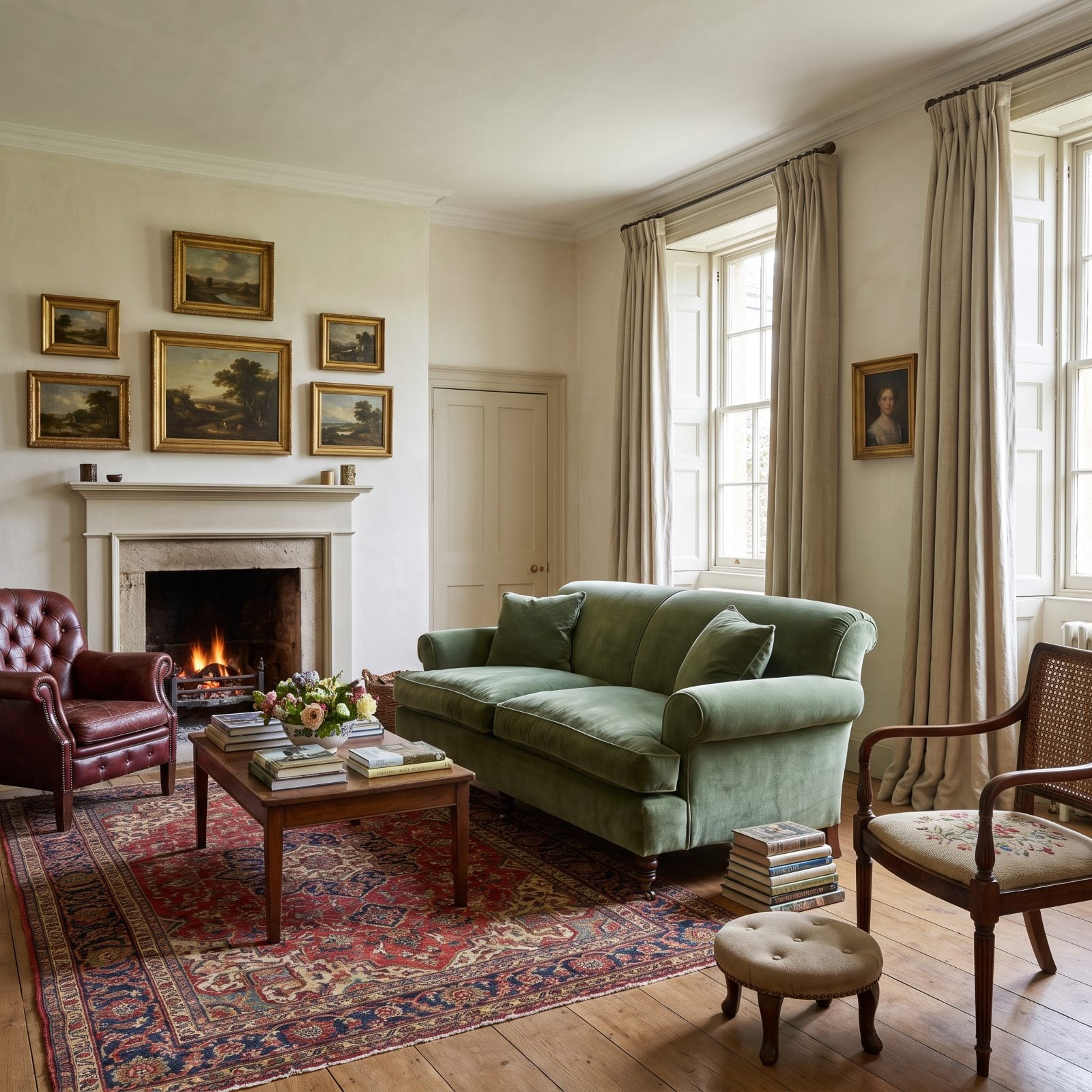
You’ve walked into a room where every piece coordinated perfectly and felt like you’d wandered into a showroom nobody told had closed. Old money never does that. The chairs come from a grandmother’s estate, the sofa was reupholstered twice, the coffee table has a burn mark from 1987 that nobody sanded out.
In order to come up with the very specific design ideas, we create most designs with the assistance of state-of-the-art AI interior design software. Also, assume links that take you off the site are affiliate links such as links to Amazon. this means we may earn a commission if you buy something.
The look reads as accumulated, not purchased. Each piece arrived at a different time, for a different reason, and stayed because it worked. A matching three-piece set says you bought your taste last Tuesday. A room full of survivors says your family has been sitting down for generations.
Look at the best great room inspiration and you’ll notice the confident ones mix wood tones, eras, and fabrics without apology. Try pairing a leather club chair with an inherited wing chair. Nothing needs to agree.
19. You Can See Where a Hundred Hands Have Touched the Same Spot
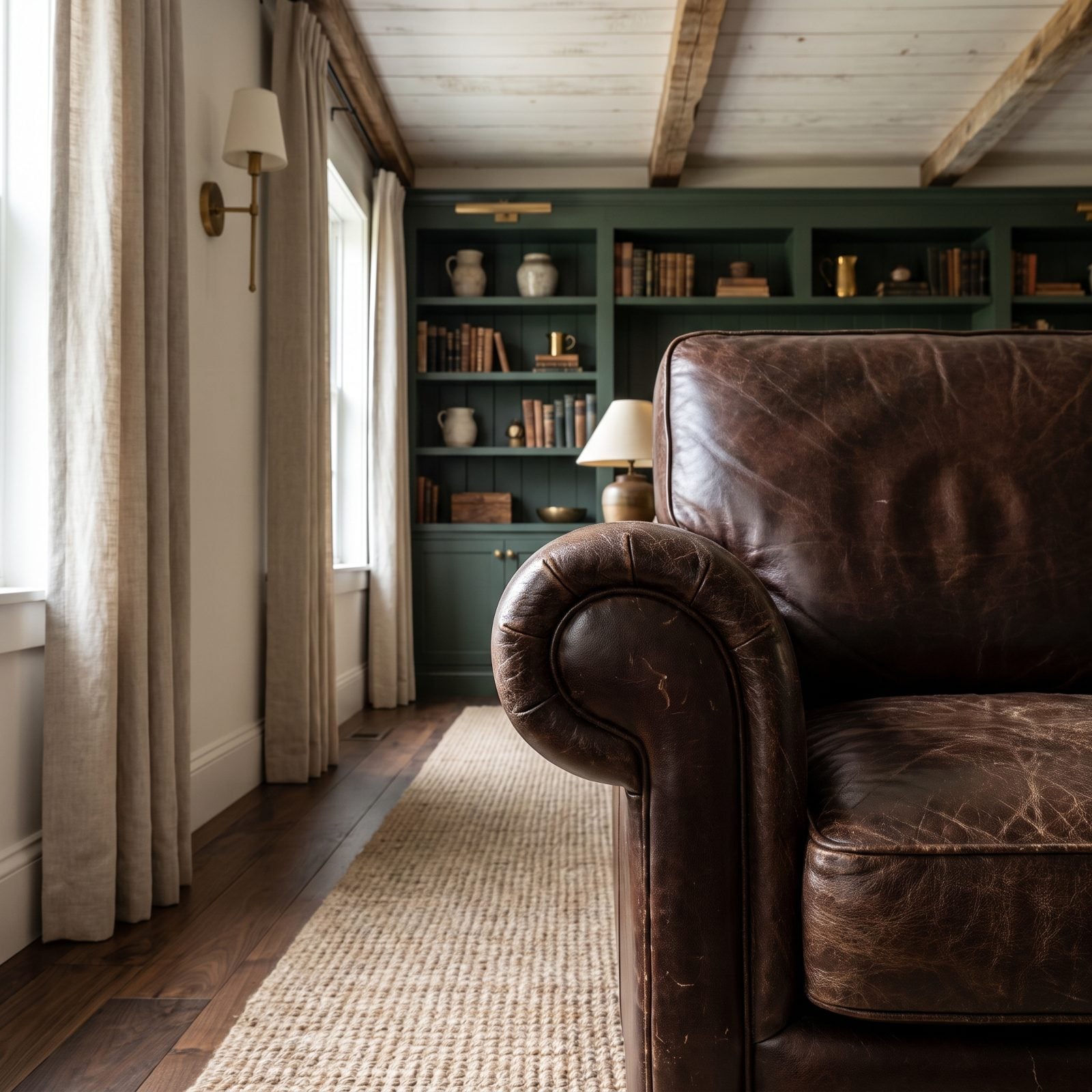
Patina can’t be faked, and everyone can tell when someone tries. The distressed furniture sold at big-box stores has its wear sanded on uniformly, evenly, in all the wrong places. Real wear is specific. It lives exactly where hands land.
The brass drawer pull polished bright while the rest darkens. The leather sofa arm gone honey-pale where forearms have rested for twenty years. The stair rail worn smooth at the turn. These are the fingerprints of a house that’s been lived in properly.
Buy leather that’s meant to age, not leather pretending it already has. A good tobacco leather Chesterfield sofa looks better in year fifteen than year one. That’s the entire investment.
18. Nothing in the Room Is Trying to Be the Star
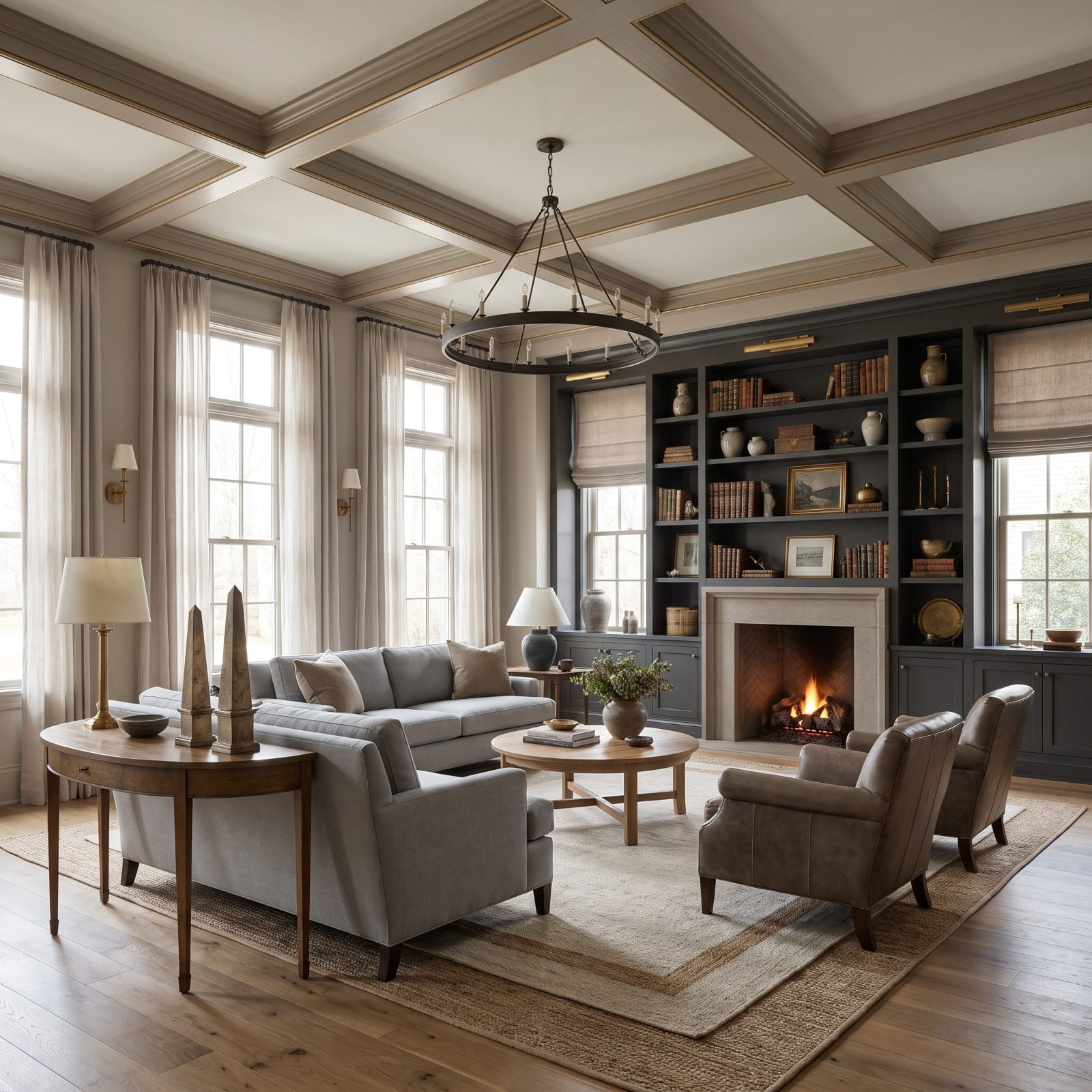
New money buys the statement piece: the neon abstract, the ten-foot chandelier, the sofa in a color that has a name like a cocktail. Old money buys quiet. No single object in the room raises its voice. The effect is a low, even hum of things that all belong.
This is harder than it looks. It takes real restraint to leave the flashy thing on the showroom floor. But a room where everything competes for attention exhausts you within minutes. A room where nothing competes lets you finally sit down.
The trick is even visual weight. A muted oil painting, a tarnished silver tray, linen the color of oatmeal. Nothing screaming, everything murmuring.
17. The Books Look Read, Not Bought by the Yard
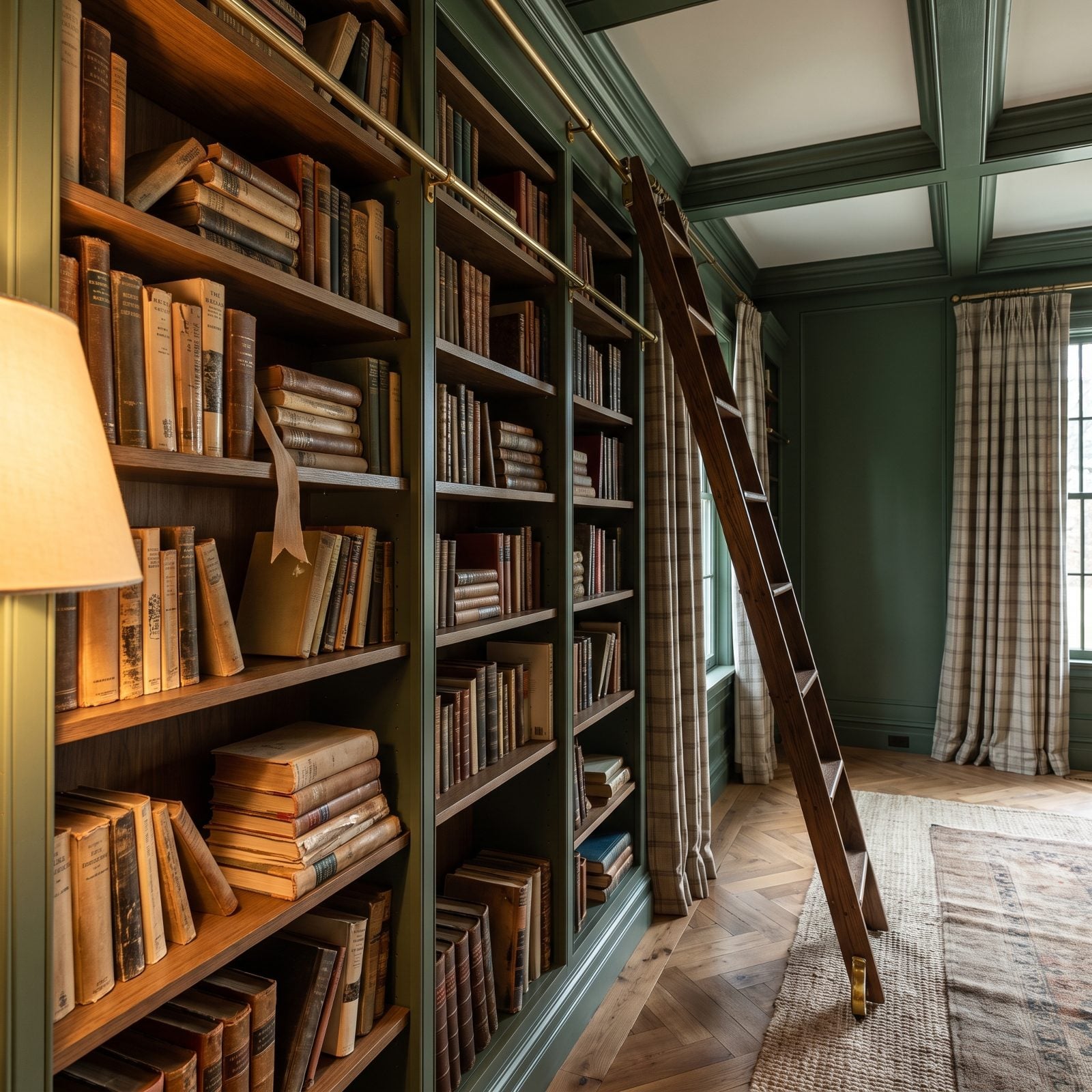
There’s a look to a shelf full of books someone actually opened. The spines are cracked at different angles. The heights don’t line up. A paperback got jammed between two leather-bound volumes because that’s where the reader set it down. Some lie flat because they’re too tall to stand.
Then there’s the other shelf. The one arranged by color, or worse, bought by the linear foot from a decorator who ships uniform gilt spines to make you look literate. It fools nobody. Real libraries are messy because reading is messy.
Tuck a few objects among the books: a piece of coral, an old photograph, a stack of letters tied with ribbon. And add a green glass brass reading lamp that says someone sits here after dark and finishes the chapter.
16. The Lighting Comes From Six Lamps, Never the Ceiling
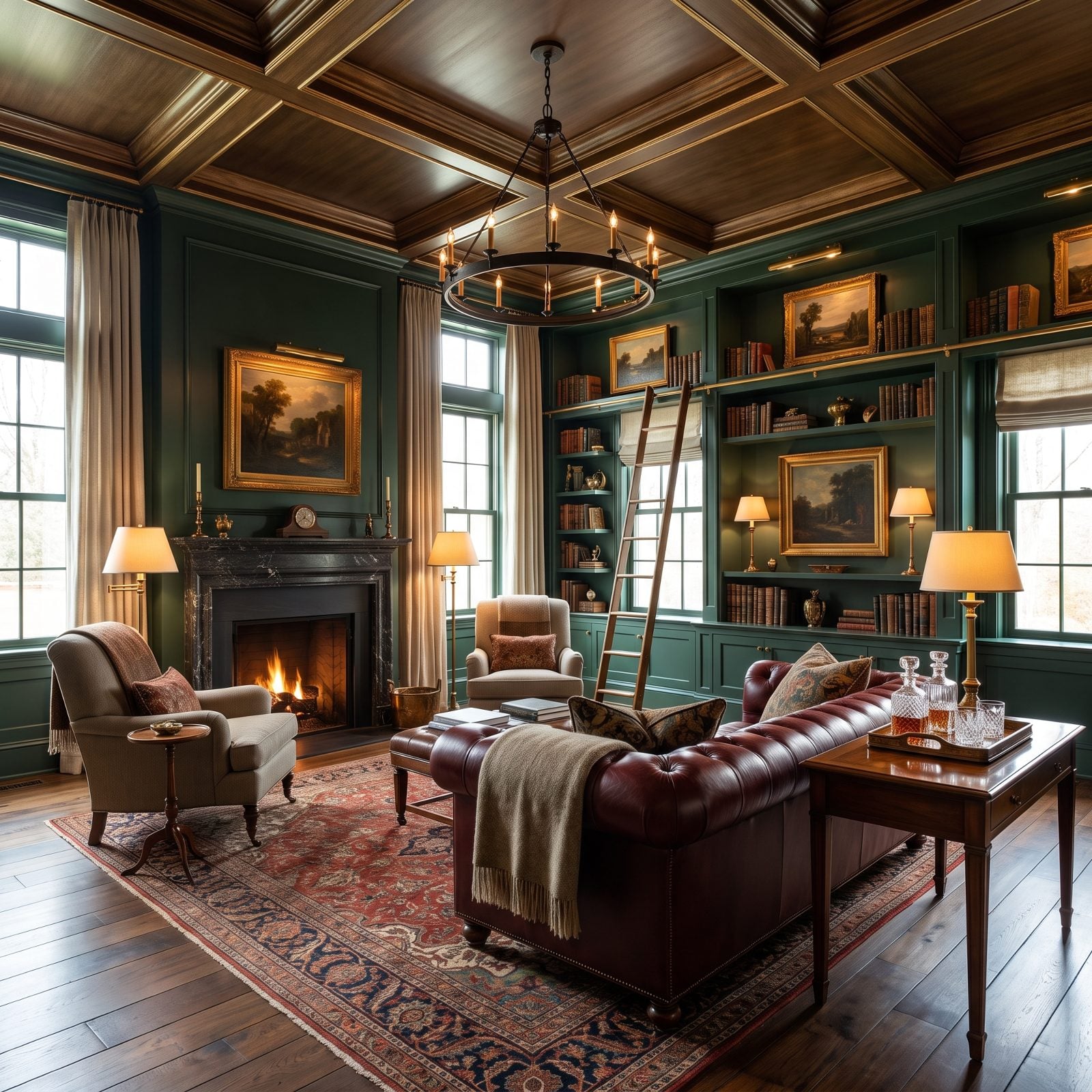
Flip on a single ceiling light and a room flattens instantly. Every corner lit the same, no shadow, no mood, the exact quality of light you’d find in a dentist’s waiting room. It’s the fastest way to make an expensive room look cheap.
Old-money rooms glow from lamps. Six of them, maybe more, scattered at different heights, each casting its own warm pool. Corners fall into shadow. The light layers. You get intimacy instead of interrogation.
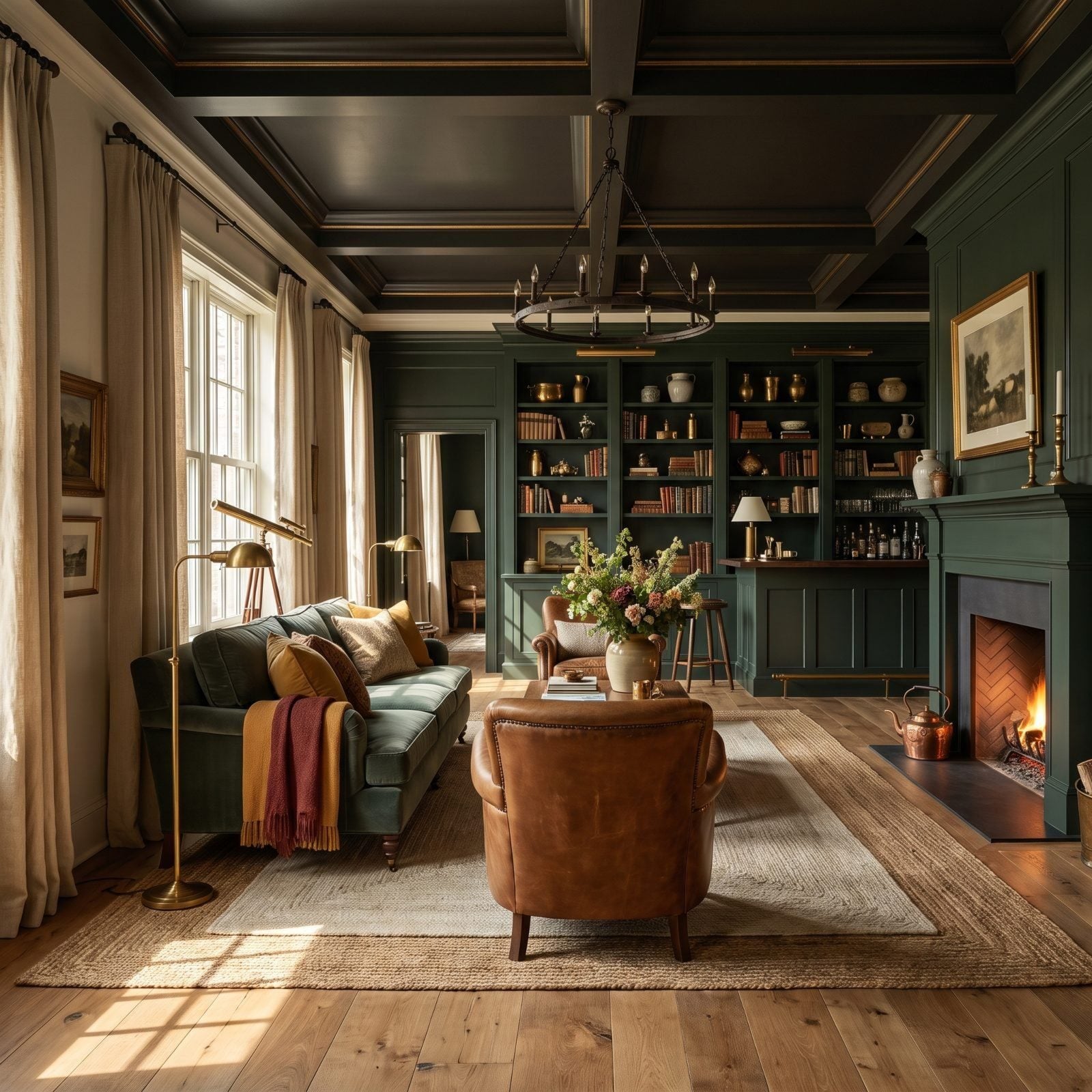
The rule I follow: light the room like a stage, not an operating theatre. A floor lamp by the reading chair, a pair of table lamps flanking the sofa, a picture light over the art, candles on the mantel when it’s evening. Never the switch by the door. Some of the best light sectional ideas come from ignoring the ceiling entirely and building warmth from the ground up with a brass floor lamp and a pleated shade or two.
15. There’s One Thing in the Room That Makes No Sense Until You Ask About It
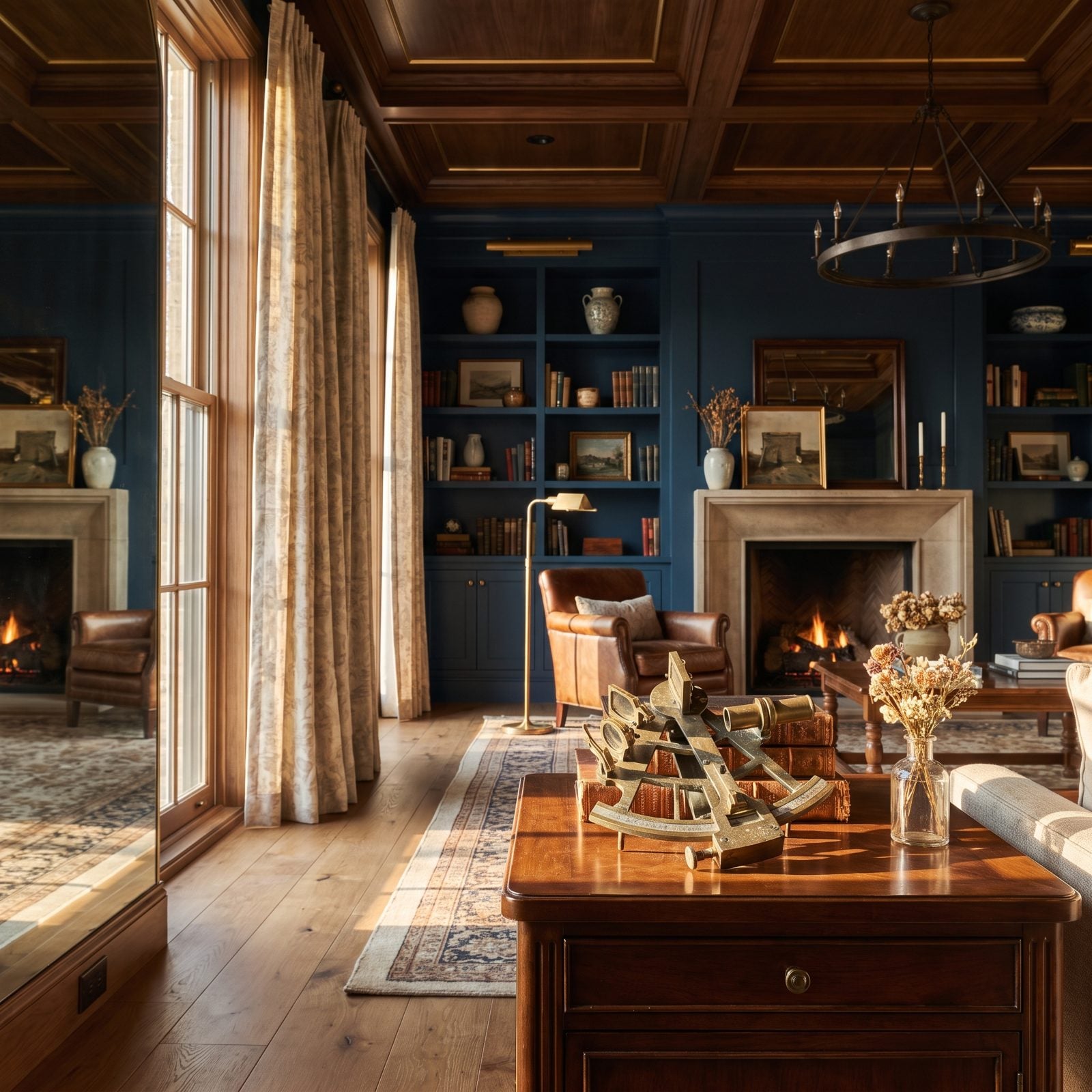
Every room with real old-money energy has one object that stops you. A brass sextant on the side table. A marble bust with a chipped nose. A hand-drawn map of a river nobody’s heard of, framed like it matters, because to this family it does.
These are the pieces you can’t buy your way into. They come from a great-uncle who sailed, a trip taken in 1971, a bust that’s been dropped twice and survived. The chip is part of the value now.
The lesson isn’t to hunt for antique oddities. It’s to keep the strange, personal things you already own and give them a place of honor instead of hiding them. The heirloom, the flea-market find with a story, the thing your mother swore was worthless. Put it out.
14. The Books Look Read, Not Bought by the Yard
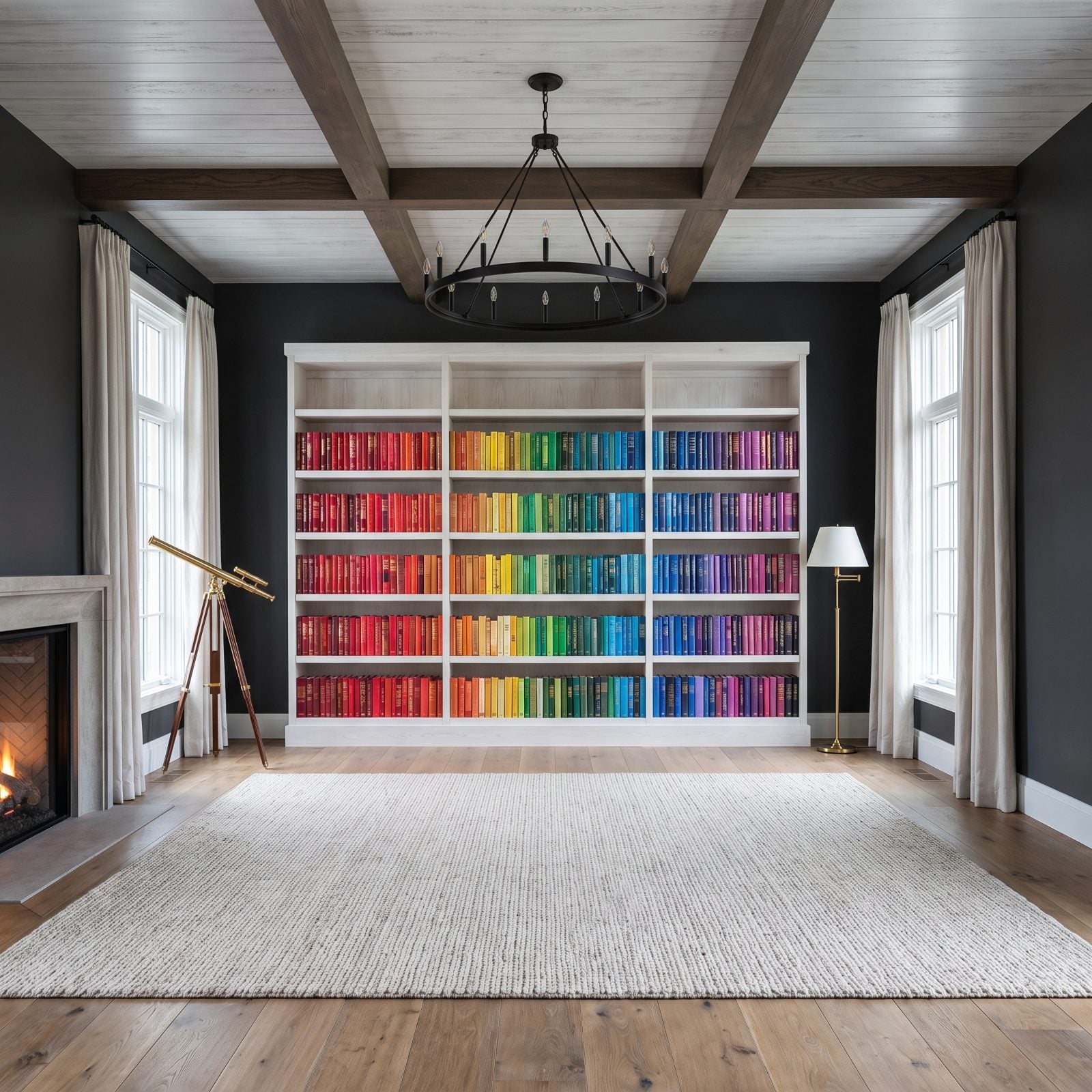
You’ve seen the shelf that was bought as a decision, not a habit. Uniform spines, sorted by color, not one of them ever opened. It photographs well and says nothing.
Old money reads. The shelf shows it. Cracked spines, a paperback wedged sideways because there was no room, a ticket stub doing the work of a bookmark. Nothing matches because nothing was meant to. The clothbound Trollope sits next to a beach thriller and neither is embarrassed.
Buy fewer books. Keep the ones you finished. Let the sun fade the jackets. A shelf earns its look over decades, and there’s no shortcut that doesn’t look like a shortcut.
13. One Lamp Doing the Work of Six Downlights
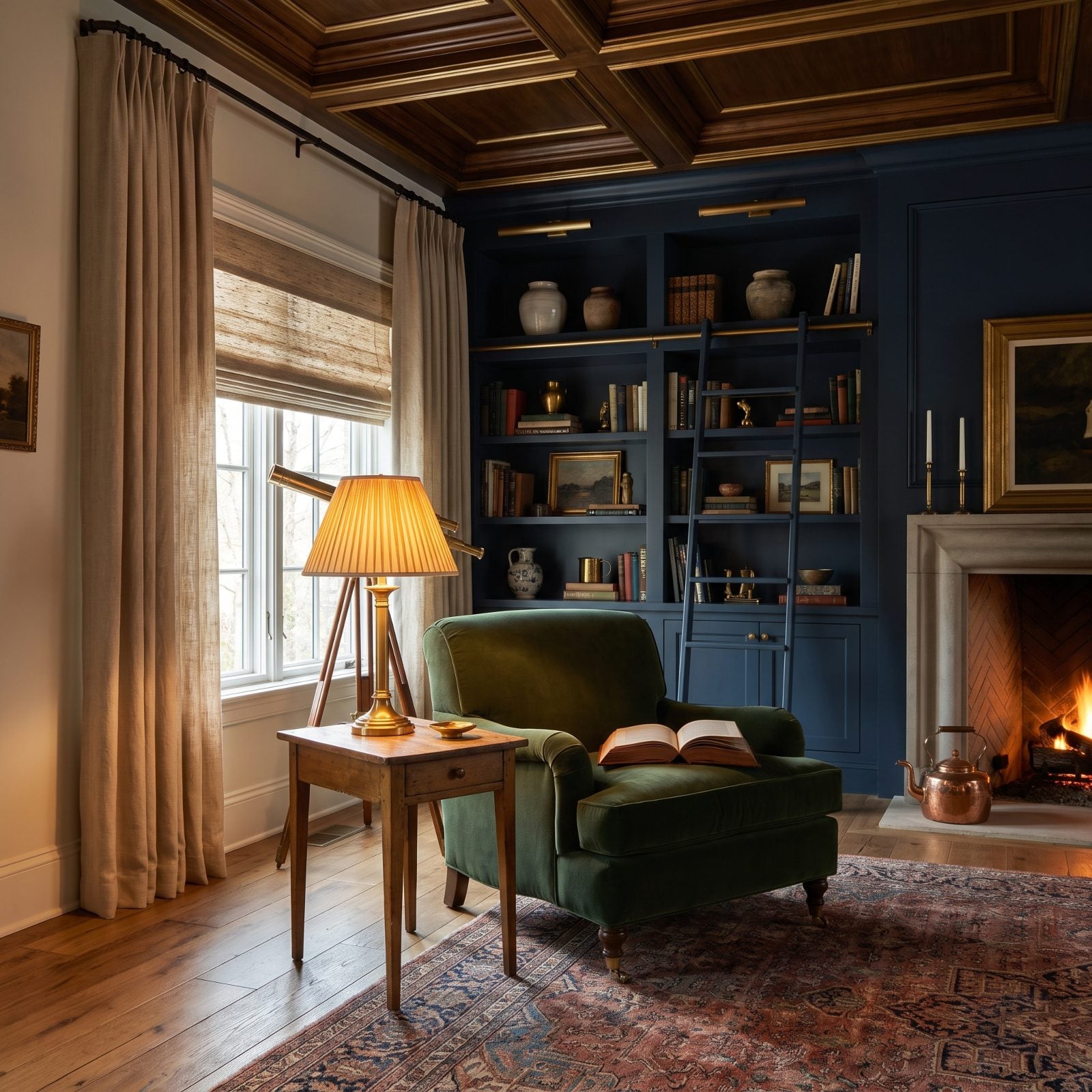
Overhead lighting flattens a room like a supermarket aisle. Old-money rooms almost never use it after dark.
The trick is lamps. Several of them, low, warm, set at eye level or below, throwing pools of light instead of one flat wash. Silk shades in ivory or parchment, never white plastic. The bulbs run soft, somewhere around 2700K, the color of candlelight rather than an operating theater. Shadows are allowed. Shadows are the point.
Put a lamp on a side table, another on a console, a small one on the bookshelf. Wire a few to a single switch so the whole room warms up at once. A brass table lamp with a pleated shade does more for a room than any fixture bolted to the ceiling.
12. The Rug Older Than Anyone Who Lives There
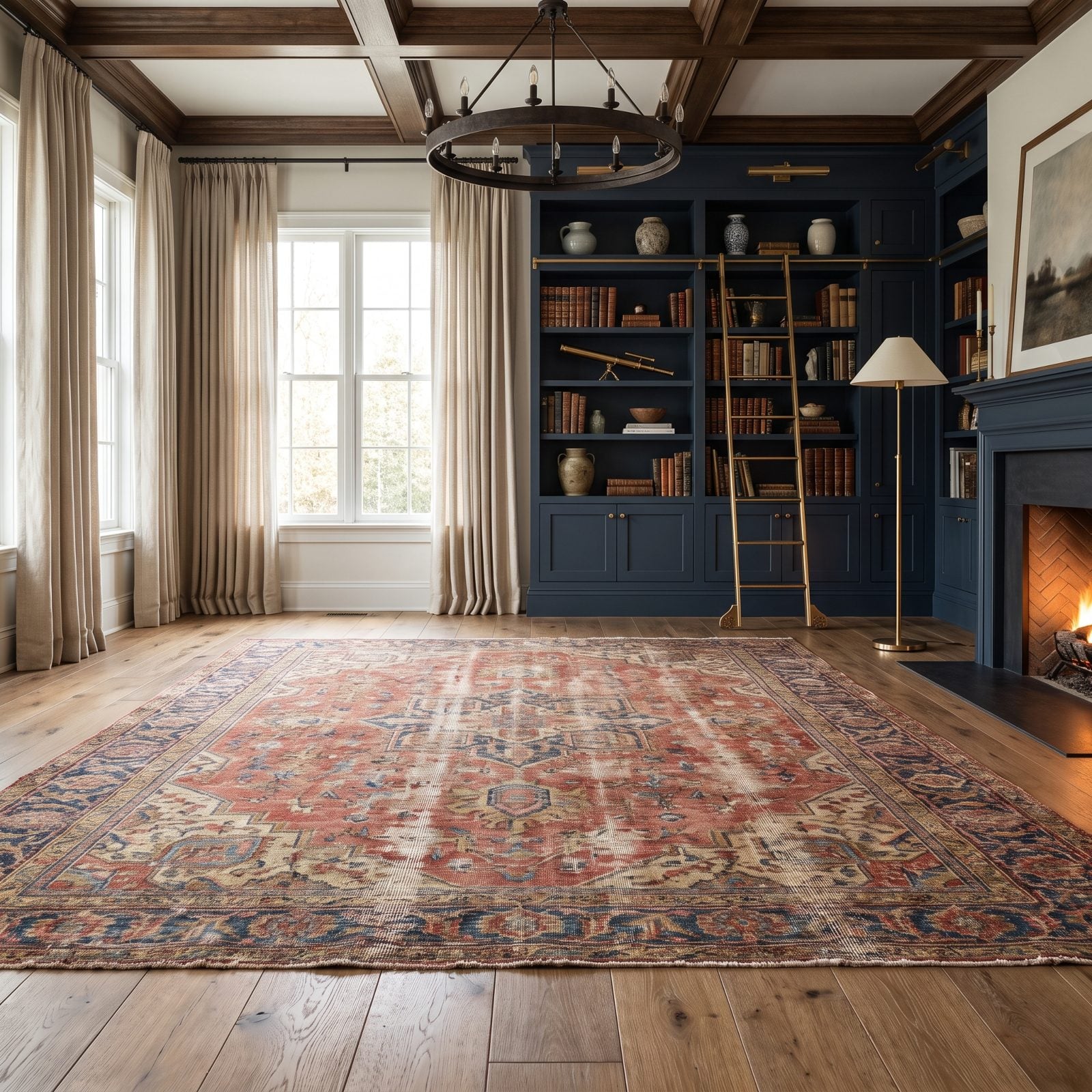
A brand-new rug tries to look old with machine distressing and it never quite lands. The fakeness sits in the evenness. Real wear isn’t even.
An antique Oriental or Persian rug wears where feet actually walk. Bare patches along the path to the door. A medallion faded on one side because that side faced the window for forty years. Colors softened to dusty rose and old teal. Maybe a small repair somebody paid for because throwing it out was never a question.
You don’t have to spend a fortune. Estate sales and auction houses move old rugs cheaply because nobody wants their grandmother’s carpet. Their loss. A worn vintage Persian rug anchors a room the way nothing new can, and the wear is the whole point.
11. Nothing in the Room Matches, and It All Belongs
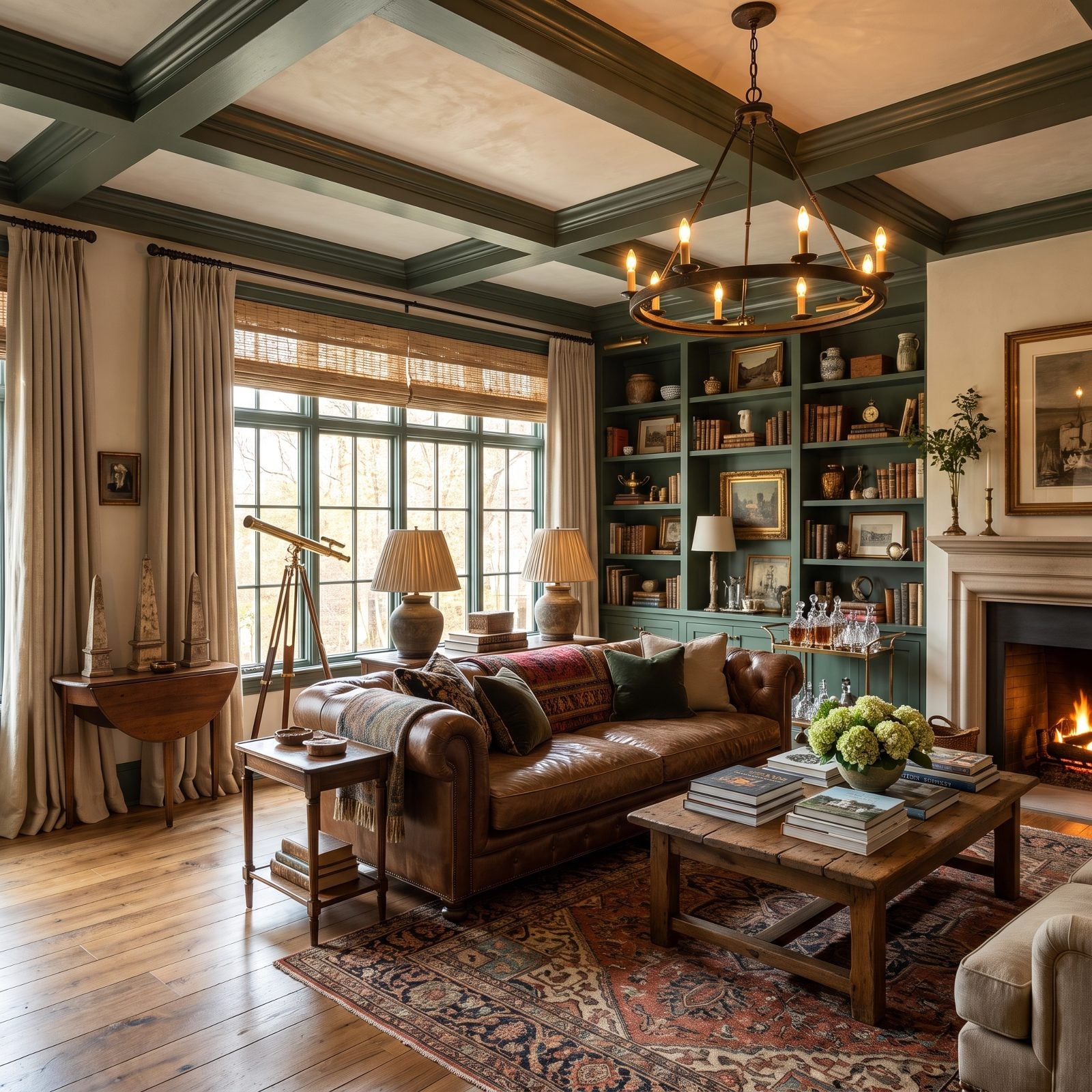
The matching furniture set is the surest sign that everything arrived on the same truck, on the same day, chosen in a single afternoon of not much thought.
Rooms that accumulate over decades never match. A camelback sofa inherited from an aunt. A wingback bought at auction. A leather chair somebody’s father sat in. Different woods, different fabrics, different eras, all sharing the same quiet register of restraint. The eye reads the mix as history, because that’s exactly what it is.
If you’re starting from scratch, buy one piece at a time and let months pass between them. Skip the showroom package deal entirely. A room assembled slowly, with a good green velvet sofa next to a mismatched leather chair, will always beat one bought as a matched set. This is closer to a proper great room inspiration than any coordinated collection.
10. The Small Ugly Object Nobody Would Ever Sell
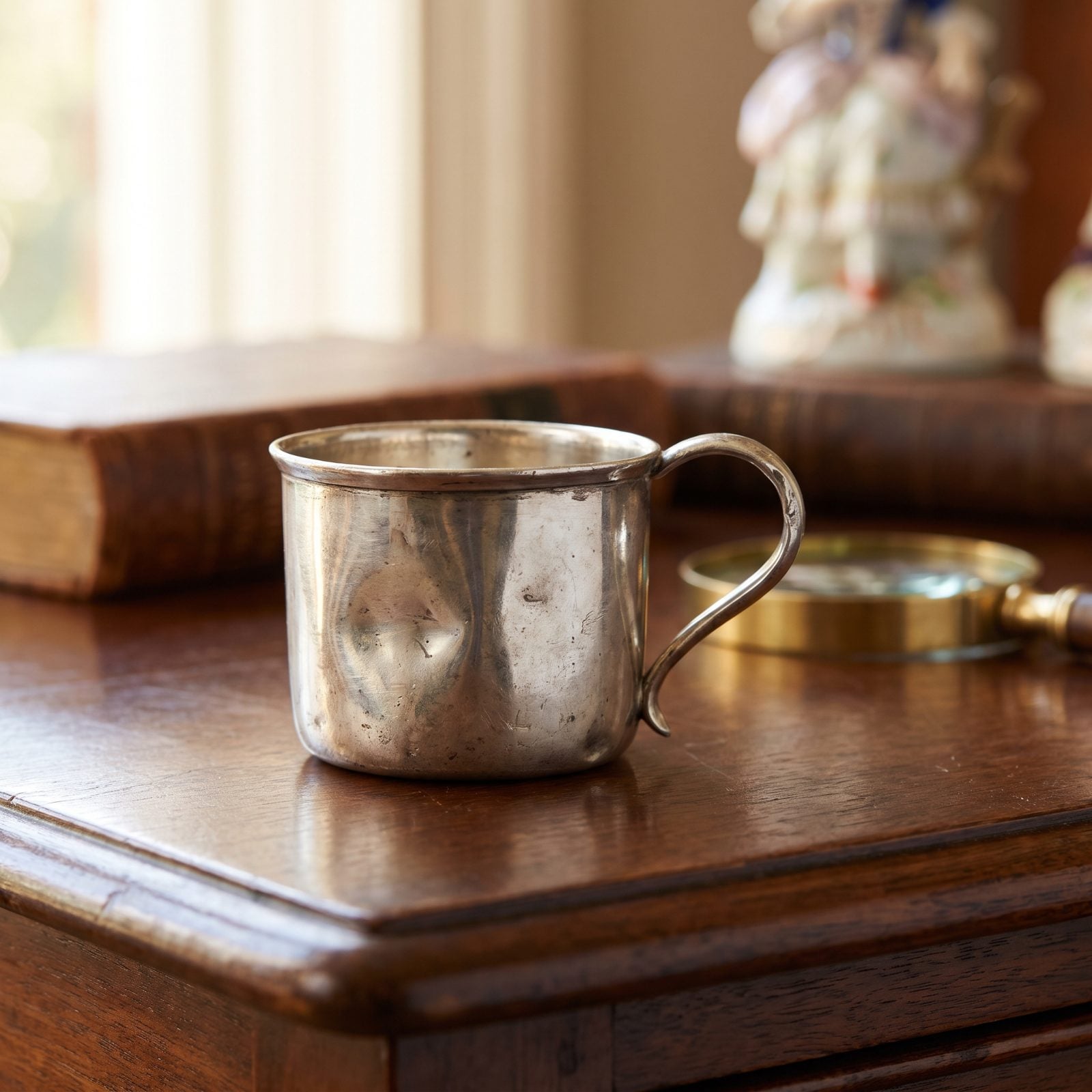
Every old-money room has one thing in it that makes no design sense. A dented christening cup. A homely little brass horse worn smooth. A cracked dish a child made.
It sits among the good objects on purpose. Not despite being humble, because of it. The message is quiet and unmistakable: we keep what matters to us, and we don’t care what it’s worth to you.
Decorators can’t fake this. It has to be genuinely yours, genuinely loved, genuinely a little ugly. That’s what separates a collection from a stage set.
9. Wood That Someone Has Actually Polished, Not Sprayed
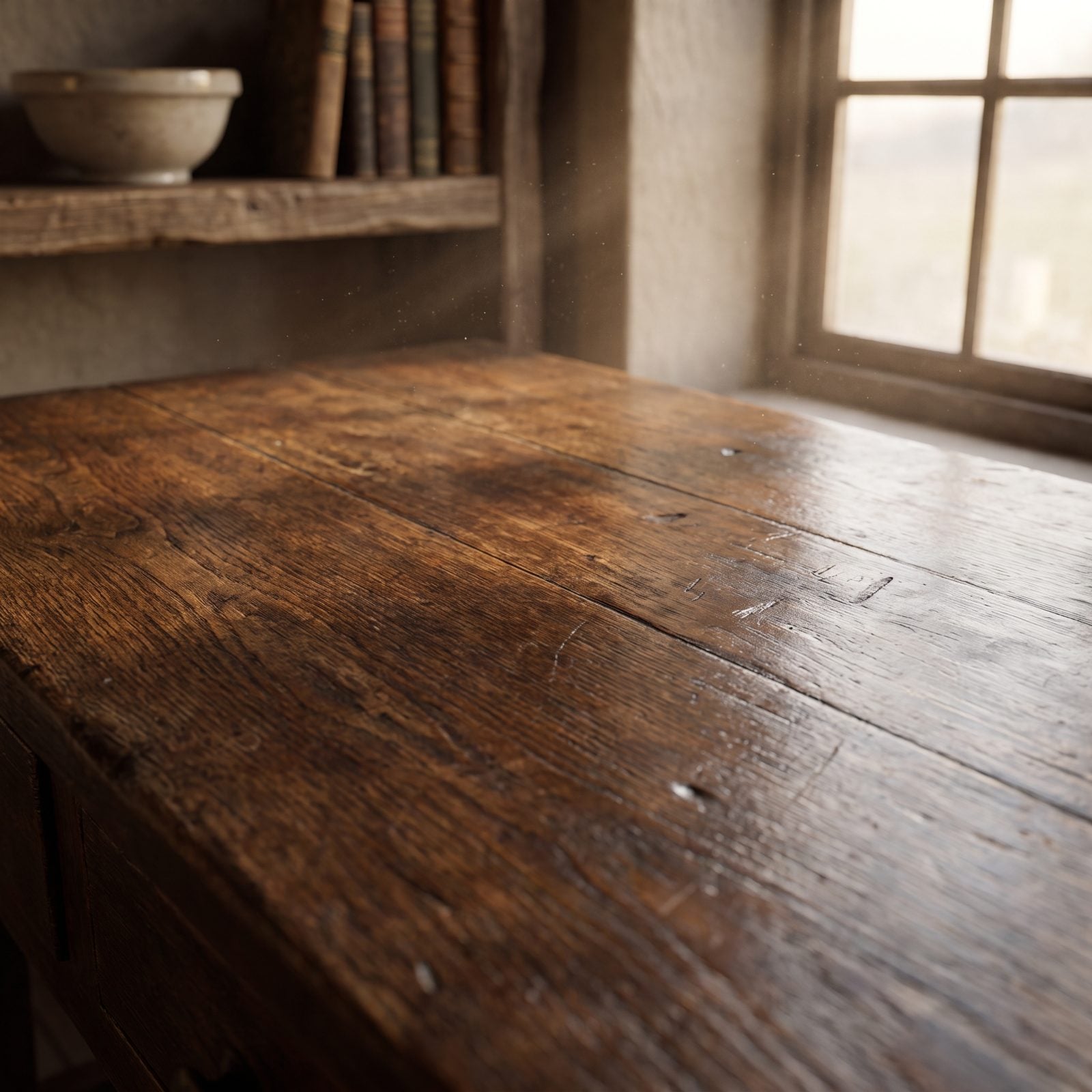
There are two kinds of shine on wood. One comes from a spray can and sits on top like cling film. The other comes from years of beeswax and a cloth, and it seems to glow from inside the grain.
Old furniture in an old-money room has the second kind. A depth you can see into. Small scratches that caught wax and softened. Edges rounded by hands rather than machines. The finish looks fed, because it has been, over and over, for a very long time.
This is maintenance, not money. A tin of proper wax and ten minutes on a Sunday does what no purchase can. Skip the silicone spray polish that builds a film and traps dust. Feed the wood instead. I got this wrong for years, spraying aerosol shine on good antique tops and wondering why they looked cheap. The wax was the answer the whole time.
8. The Bookshelves Hold Books That Were Actually Opened

🔥 Would you like to save this?
You can spot a decorator’s bookshelf in about two seconds. Spines sorted by color. Matching sets nobody ever cracked. A stack of oversized art books placed at an angle because someone read that in a magazine.
Old-money shelves look nothing like that. The books are worn. They’re doubled up, laid flat, shoved in sideways because the shelf ran out of room and the reading didn’t. Faded cloth covers sit next to bruised paperbacks. There’s no system because the system was reading them.
That’s the tell. Wealth that predates you doesn’t perform intellect. It just accumulates it, one finished book at a time.
7. One Chair Faces the Wrong Way on Purpose
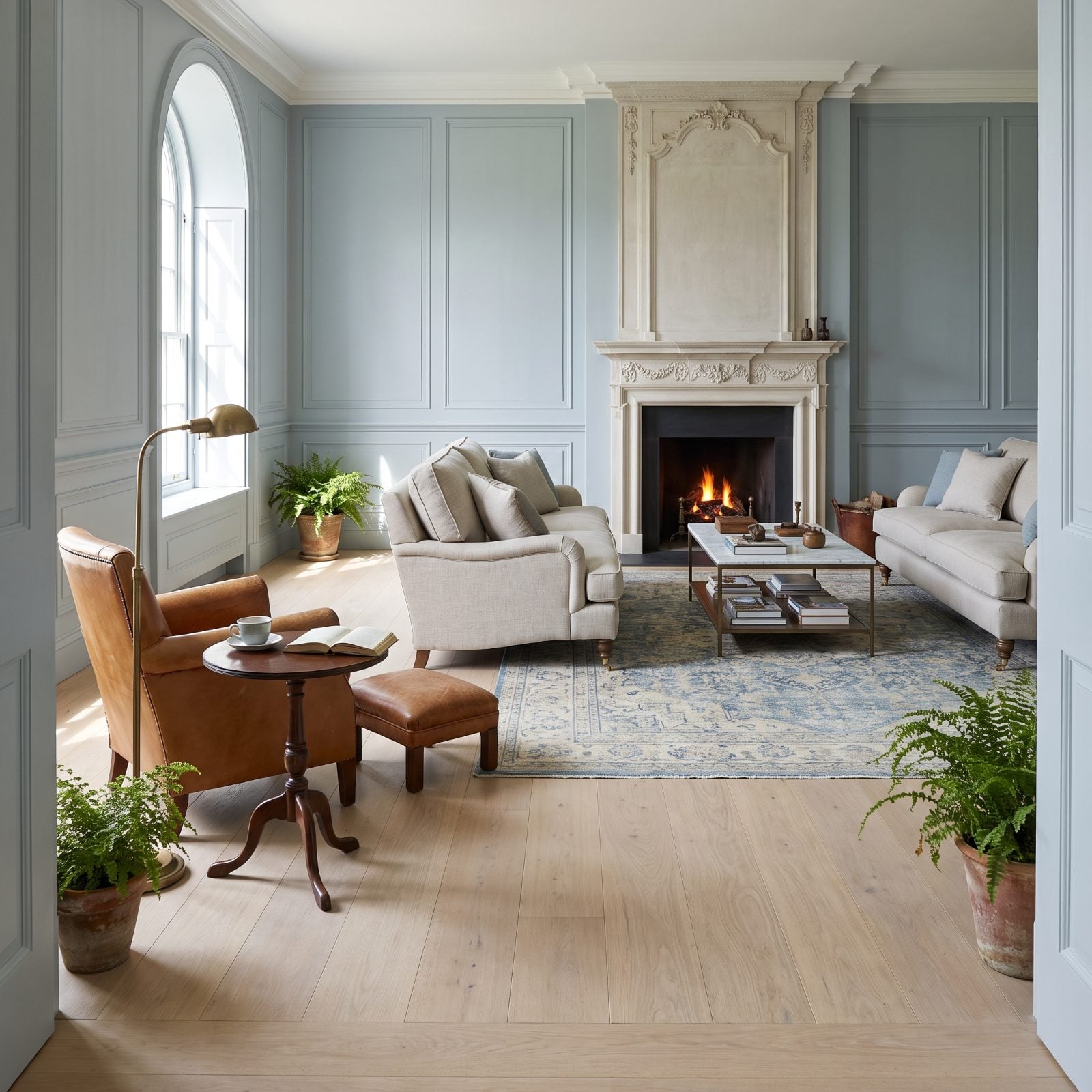
Showroom rooms are symmetrical. Two sofas facing each other, matching lamps, a coffee table dead center. It reads like a furniture catalog that got tired and sat down.
Real rooms that grew over decades never do this. There’s always one chair angled toward the window instead of the group. It’s turned that way because someone likes reading there in the morning light, and nobody rearranged it for guests. The asymmetry is honest. It says the room serves the people, not the photograph.
If you want that feeling, start by pulling one worn tan leather club chair out of the neat grouping and pointing it somewhere personal. A window. A fireplace. A view.
6. The Metals Don’t Match, and Nobody Tried to Fix It
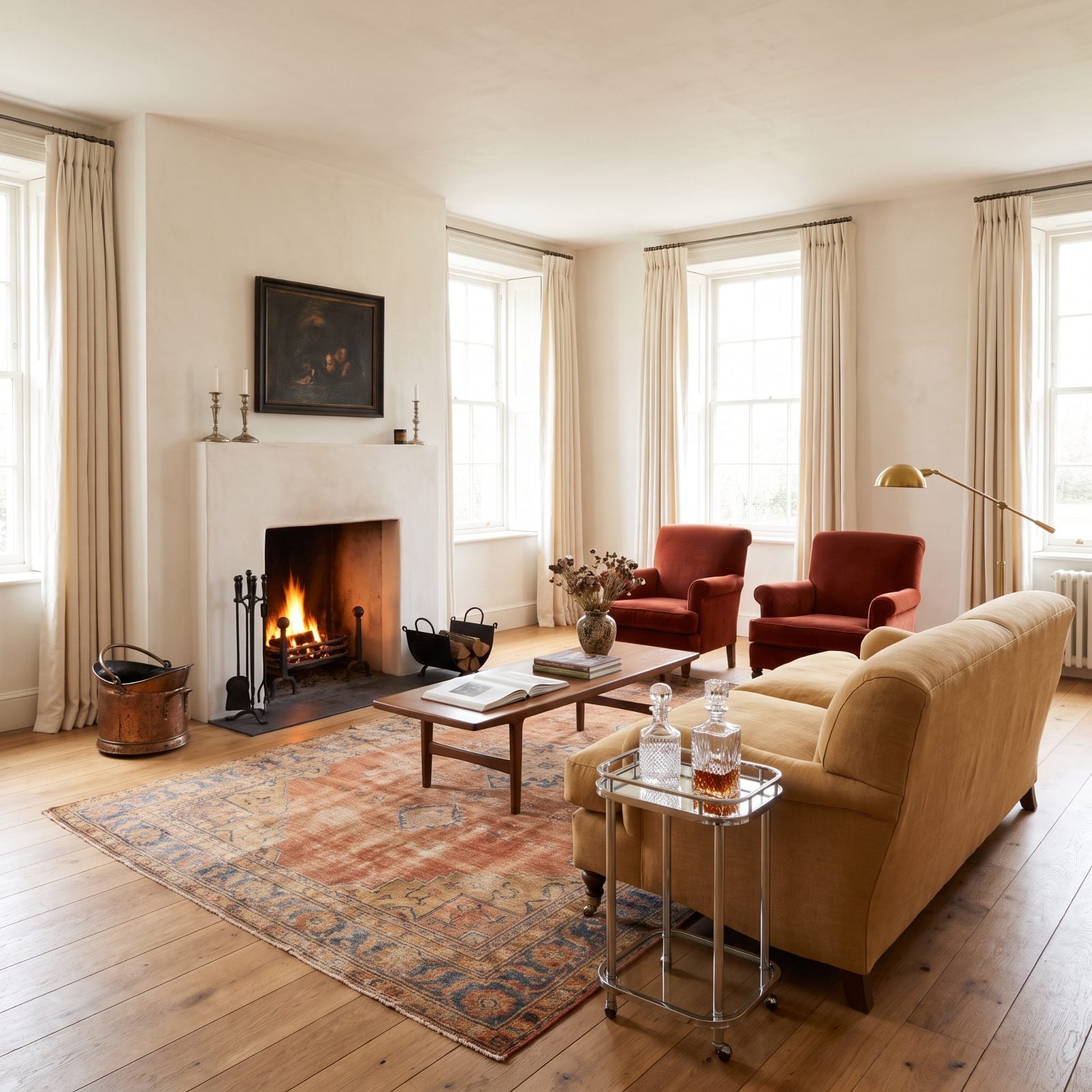
Somewhere along the way, design blogs decided every metal in a room had to match. Brass with brass. Chrome with chrome. Coordinate or die.
Old houses laugh at this. The candlesticks are silver because they came from one grandmother. The lamp is brass because it came from another. The fireplace tools are black iron because they’ve been there since before anyone alive was born. Nothing matches, and that mismatch is the proof of time.
New money buys a matched set on a Tuesday. Old money inherits a collision of finishes across four generations and never once thinks to make them agree. The tarnish is the point. Polish everything to a showroom shine and you erase the exact thing you were trying to buy.
5. There’s a Water Ring on the Good Table and No Coaster in Sight
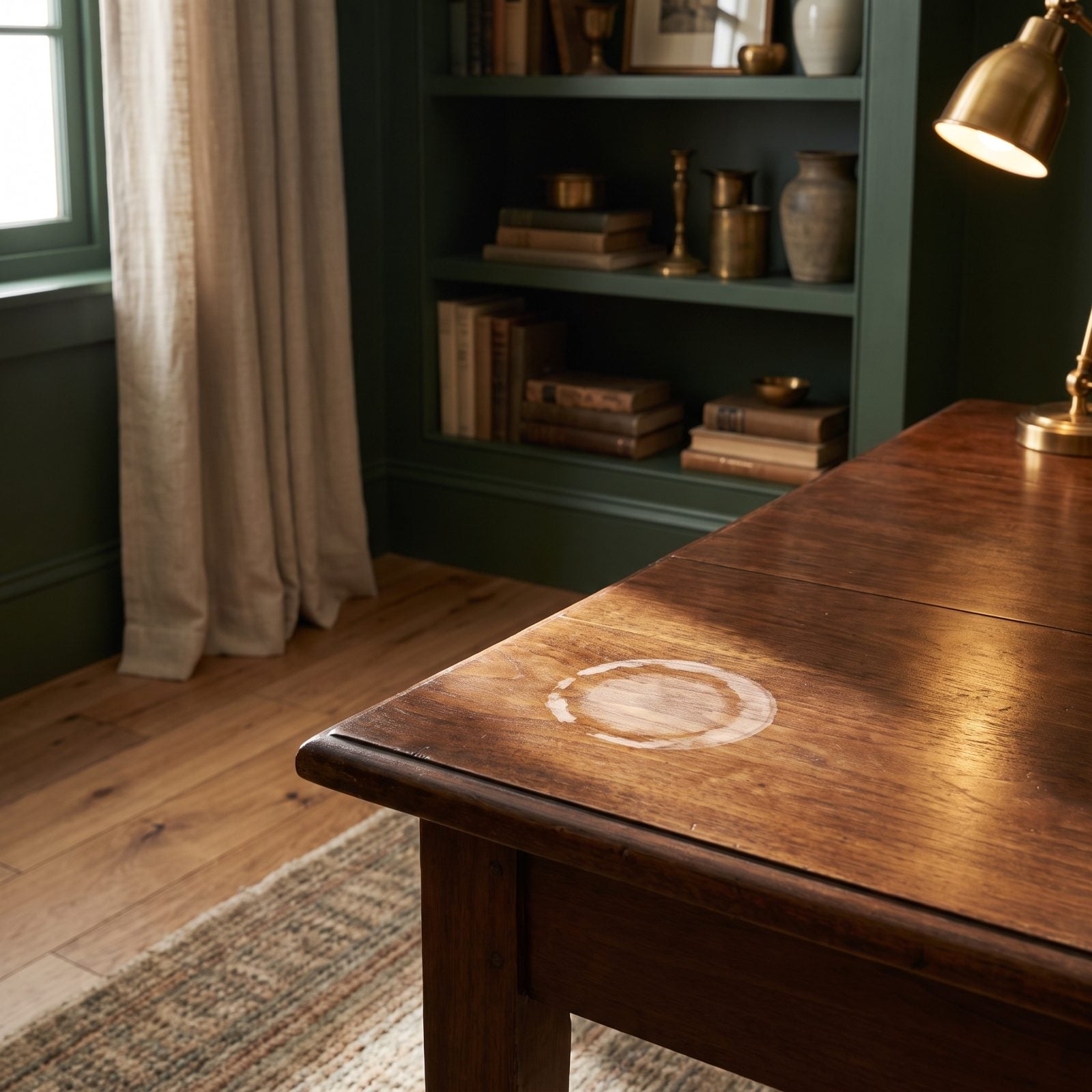
The most telling detail in an old-money living room isn’t what’s expensive. It’s how casually the expensive things are treated.
A water ring on a two-hundred-year-old table. A scratch on the piano lid. A faded patch on the sofa where the sun hits every afternoon. These aren’t neglect. They’re the absence of anxiety. When you’ve never had to guard your possessions to prove you have them, you stop flinching every time a glass goes down bare.
New wealth protects. Coasters, plastic runners, roped-off rooms. It treats the house like a museum of its own success. Real ease looks like a crystal tumbler set straight onto old mahogany because the table has survived worse and will survive this too.
4. The Art Is Small, Dark, and Impossible to Google
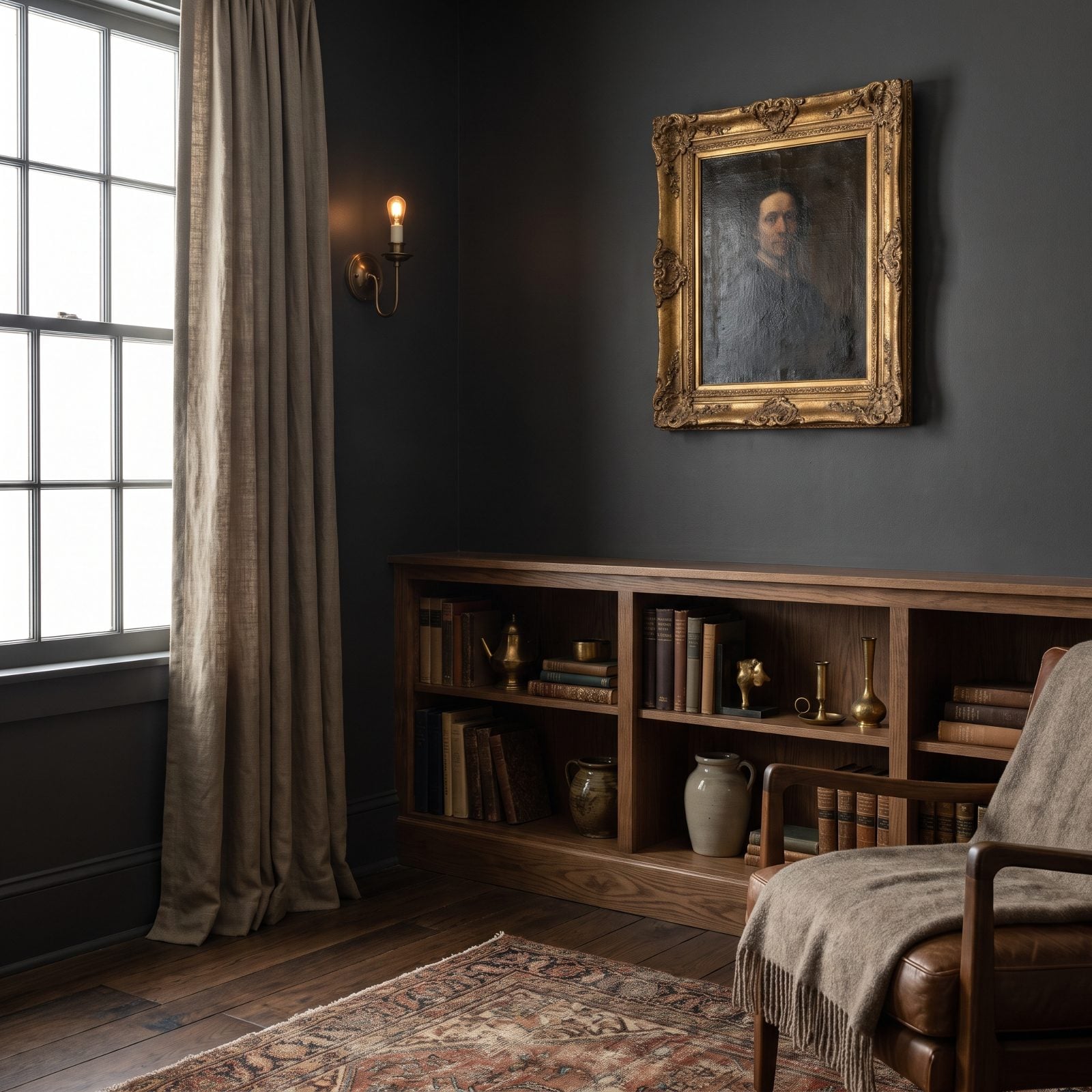
Ask new money about their art and they’ll name the artist, the auction, and roughly what it appreciated to. The art is a receipt.
Old money hangs paintings you’ll never identify. Small, dark oils in tarnished frames. A landscape gone amber under a century of varnish. A portrait of some ancestor whose name got lost three generations back. None of it is investment-grade. All of it is family.
The arrangement gives it away too. Not a gallery grid measured with a laser level. A loose cluster that grew as pieces arrived, one inherited frame nudging in beside another. The mismatch of sizes and eras tells you this wall assembled itself over decades. You cannot buy that in an afternoon, and everyone who knows can tell.
3. Everything Wears Out Slowly, and It’s Allowed To
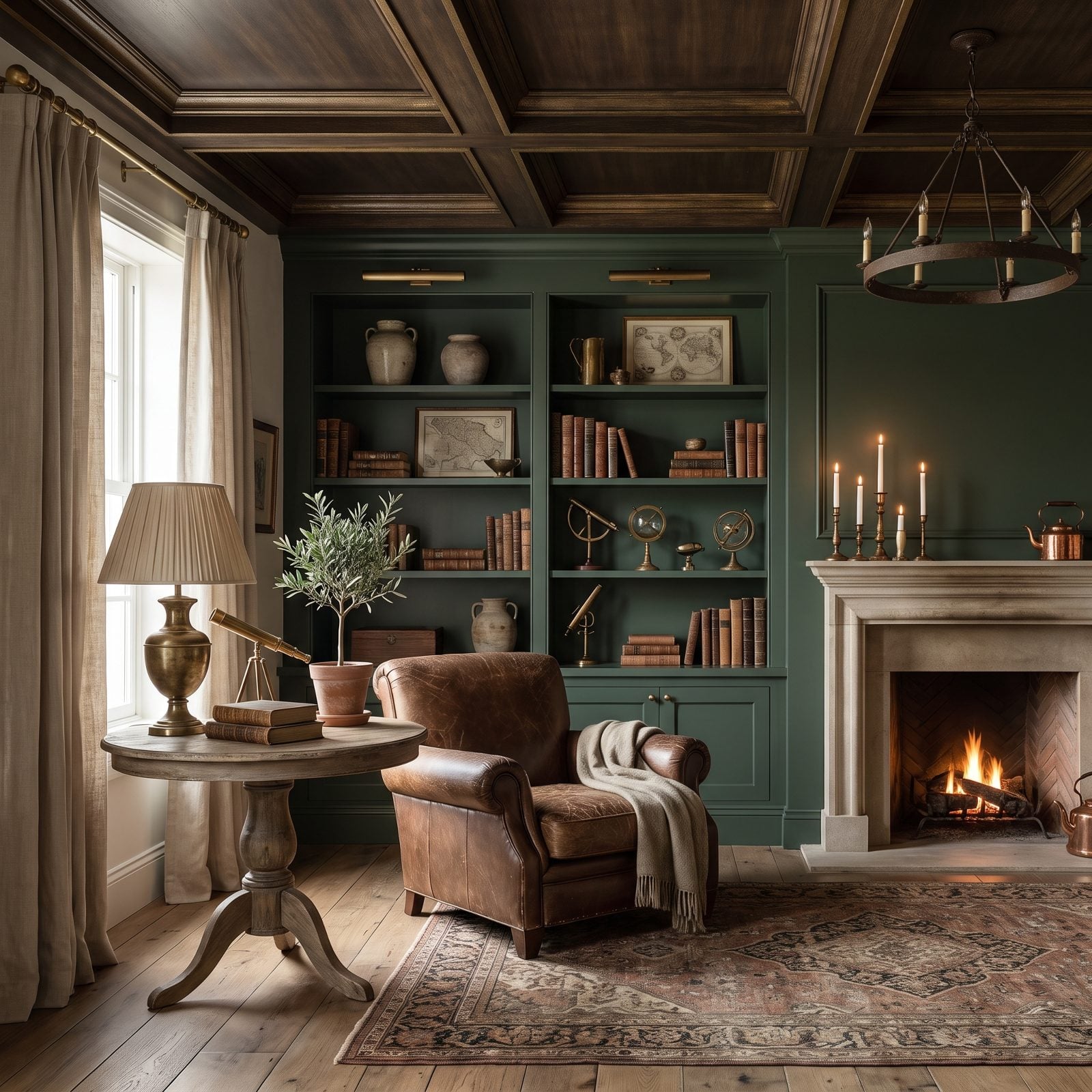
Here’s the secret hiding under all of it: the materials themselves are chosen to age, not to hold up forever looking new.
Linen that fades. Wool that softens. Leather that cracks into something better than it started. Seagrass rugs that fray honestly at the edges. Solid wood that takes a scratch and wears a path where feet always land. These are materials with a good second act. They look better at year twenty than year one.
Cheap goods do the opposite. Polyester pills. Veneer chips and shows the particleboard underneath. Faux leather peels into a mess nobody can fix. It looks best the day you buy it and worse every day after.
That’s the real code. Old-money rooms are built from things allowed to grow old gracefully, and the whole aesthetic is just decades of that patience made visible. Buy for the fade. The room will do the rest.
2. The Lampshades Are Cream, Never White, and They Glow Like Butter
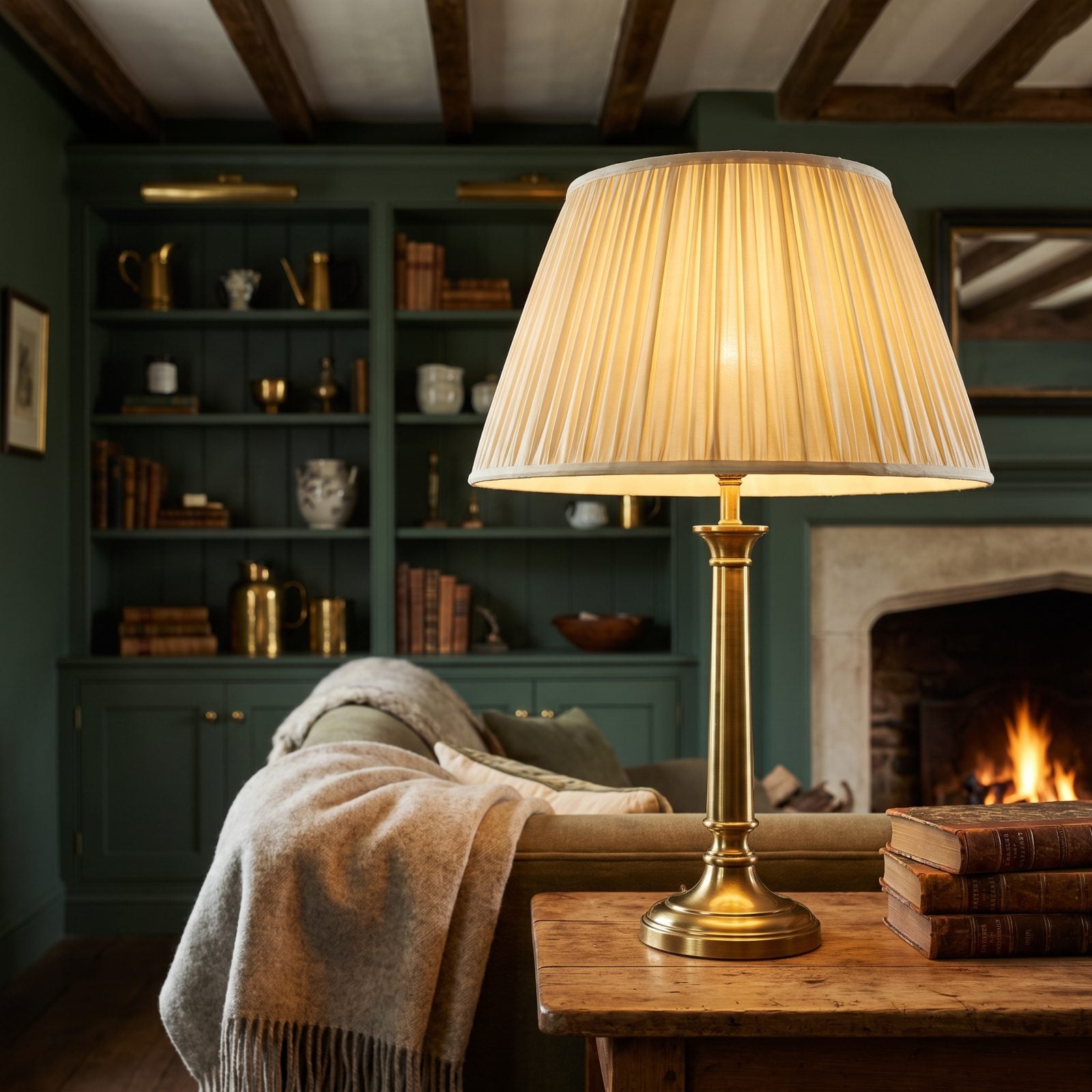
Overhead lights get switched on in houses that are still trying. In the ones that stopped trying decades ago, the light comes from lamps. Low, warm, scattered around the room at hip and shoulder height. You never get that flat ceiling glare that flattens a face and makes everything look like a rental.
The shades are cream. This matters more than it should. White reads new, cold, a little clinical. Cream reads like silk that has seen forty winters and softened into the color of old paper. Pleated cream silk lampshades on a heavy ceramic or brass base, warm bulbs, and suddenly the room feels like somewhere you’d want to sit and stay.
1. There’s a Bar Cart, and the Bottles on It Have Actually Been Poured From
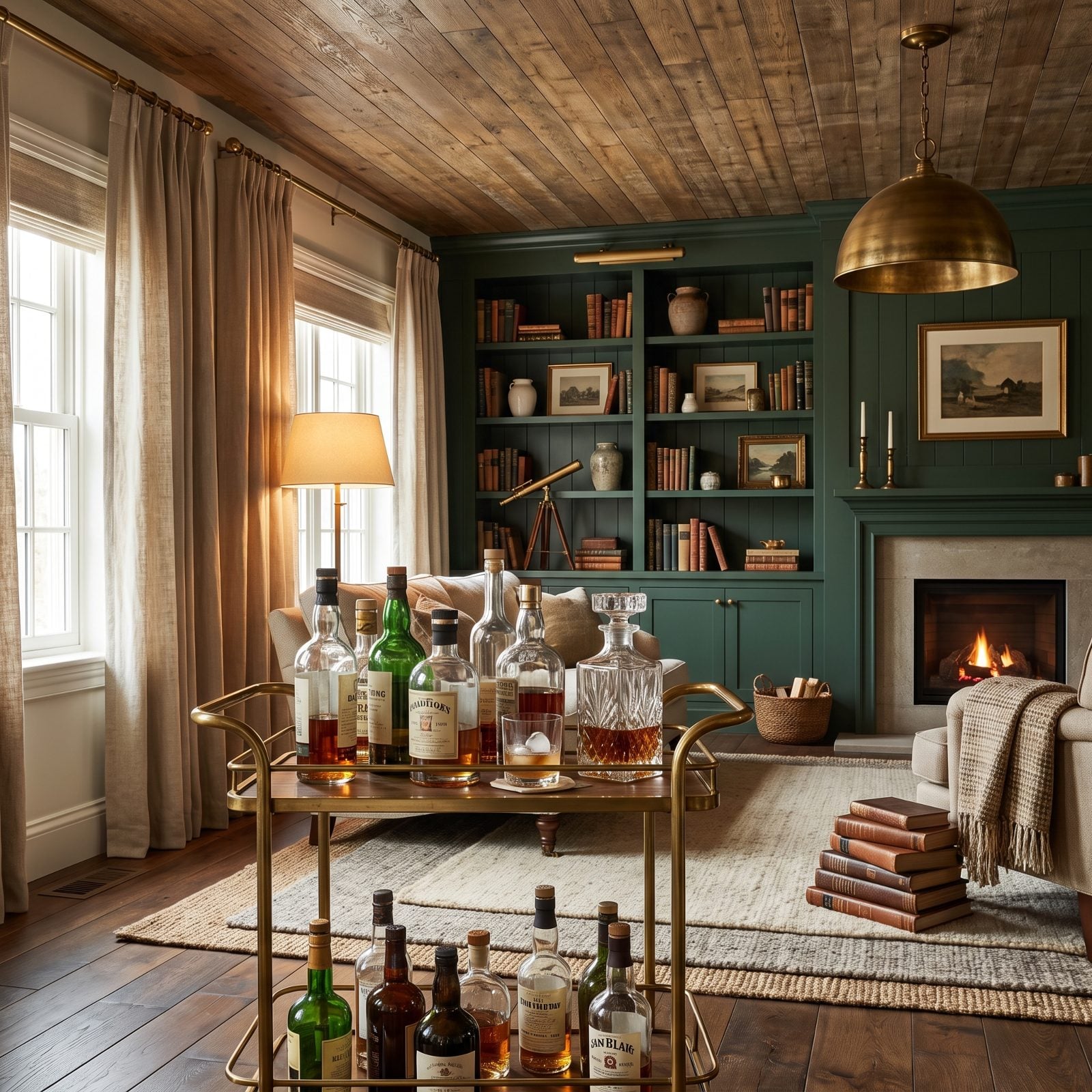
You can tell a decorative bar cart from a real one in about two seconds. The decorative one has three full bottles arranged by height and a decanter that has never held anything but dust. Nobody’s touched it. It’s a prop.
The real one is a mess in the way that only comes from use. Bottles at different fill levels. A whisky that’s down to the last inch. A crystal tumbler that got put back slightly out of line. A silver ice bucket wearing a soft tarnish nobody’s in a rush to polish off. The point isn’t showing off a collection. It’s that people actually make drinks here, and have for years.