🔥 Would you like to save this?
The key was on a string around your neck. The bus dropped you off. The door clicked shut behind you, and for the next three hours, that living room was entirely yours.
Not a museum piece. Not a Pinterest board. A real room in a real decade, with its own smell, its own hum, and that particular weight of afternoon light coming through vertical blinds. These are the things that were there with you.
In order to come up with the very specific design ideas, we create most designs with the assistance of state-of-the-art AI interior design software. Also, assume links that take you off the site are affiliate links such as links to Amazon. this means we may earn a commission if you buy something.
31. The Paneled Wall Behind the TV That Made Every Room Look Like a Mountain Lodge
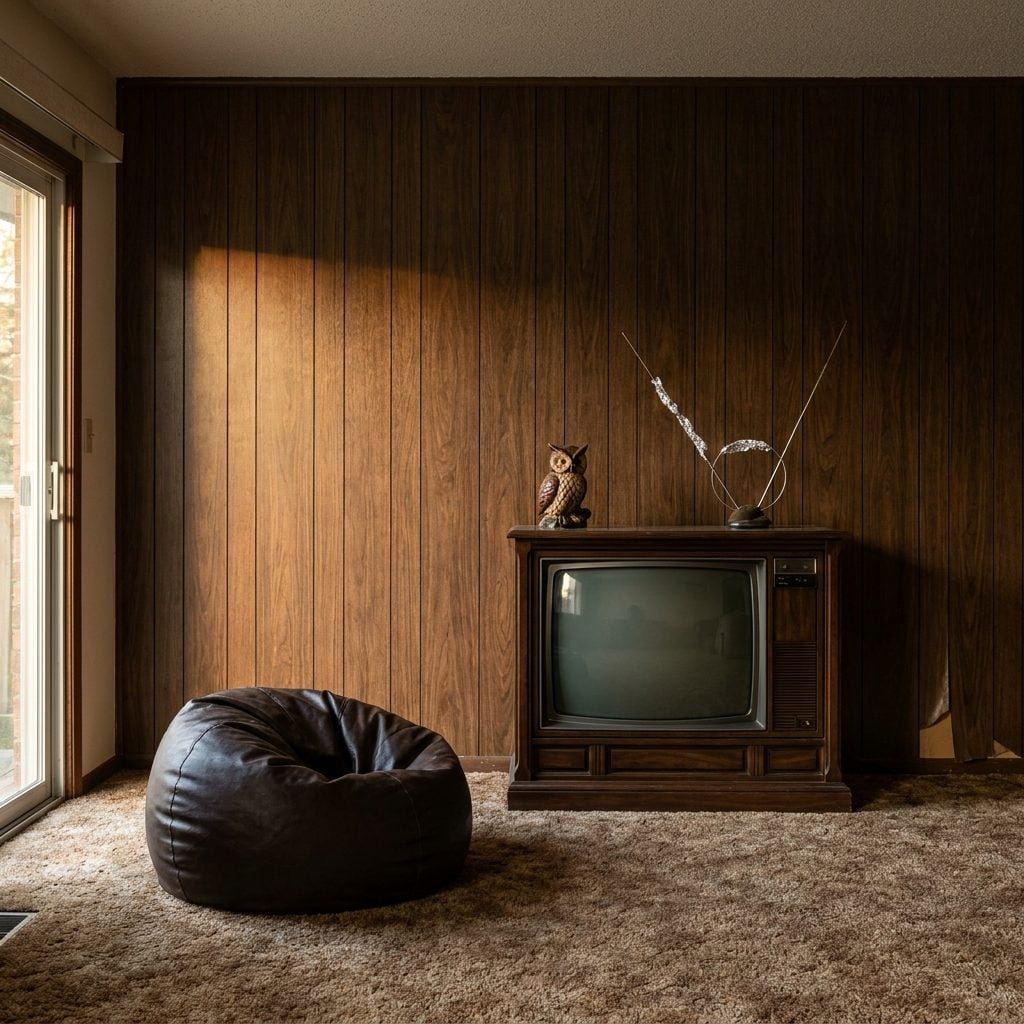
Dark walnut paneling, V-groove channels, and a surface that was definitely not real wood but somehow convinced everyone for about fifteen years. It went up fast, cleaned up easy, and made every living room in America feel like a ski lodge gift shop. The sheets were thin enough that you could feel the drywall flex if you pressed on them too hard, which you absolutely did.
After school, the paneling turned the room dim by default. The TV screen reflected it back at you. The whole room had a cave quality that felt private in a way that only an empty house in the afternoon can. The small family room became yours alone, and the dark paneling made it feel like it.
30. The Ceramic Fruit Bowl That Held Receipts, Rubber Bands, and Exactly Zero Pieces of Fruit
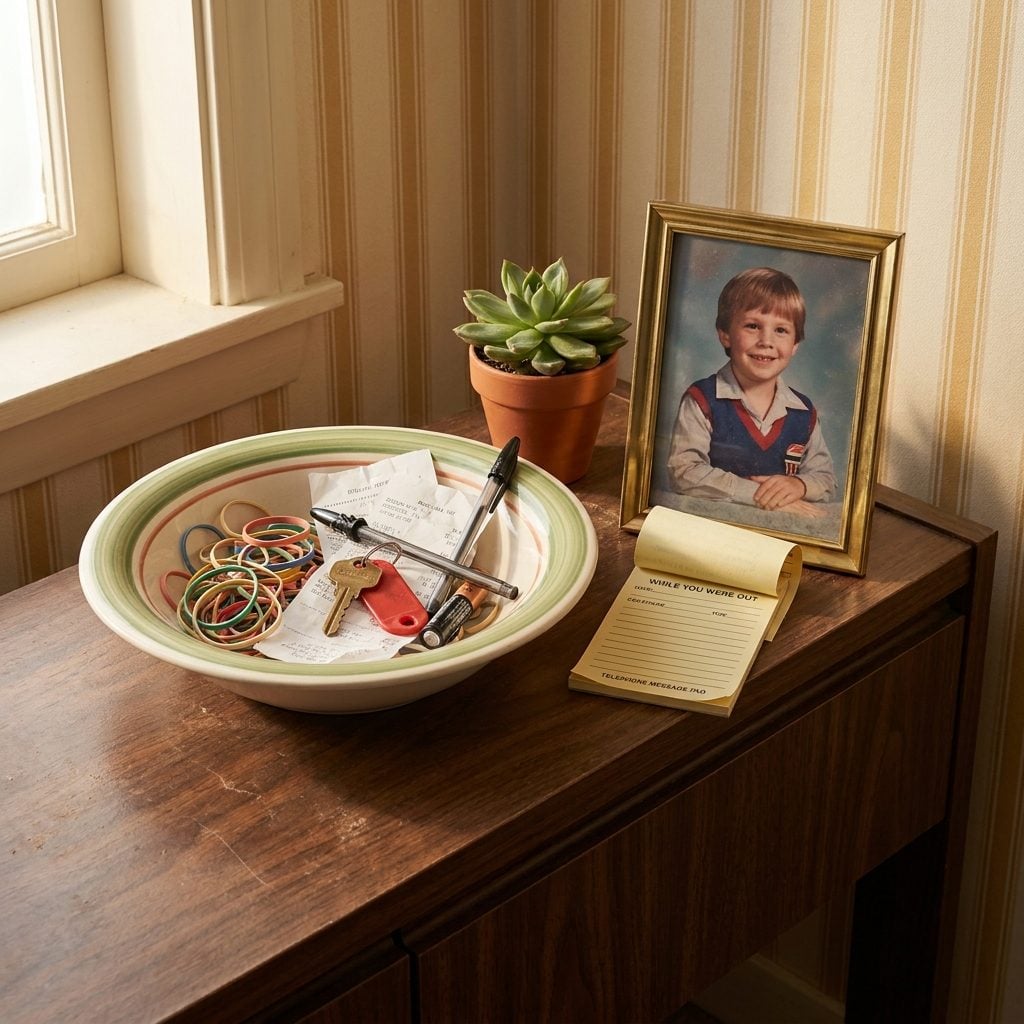
Every house had one, and none of them had fruit. The ceramic bowl on the console table near the front door or the TV stand was a catch-all that had long ago given up its original purpose. Receipts, loose change, a random key nobody remembered, a rubber band that had lost most of its elasticity. Sometimes a dried-up pen. The bowl sat there like a still life of adult responsibility left unattended.
As a kid alone in the house, you’d pick through it occasionally, not looking for anything specific, just passing time. It was the physical record of the week your parents had, compressed into a shallow ceramic dish. You never touched the receipts. But you always counted the change.
29. The Cable Box Sitting on Top of the TV Like a Small Altar to HBO
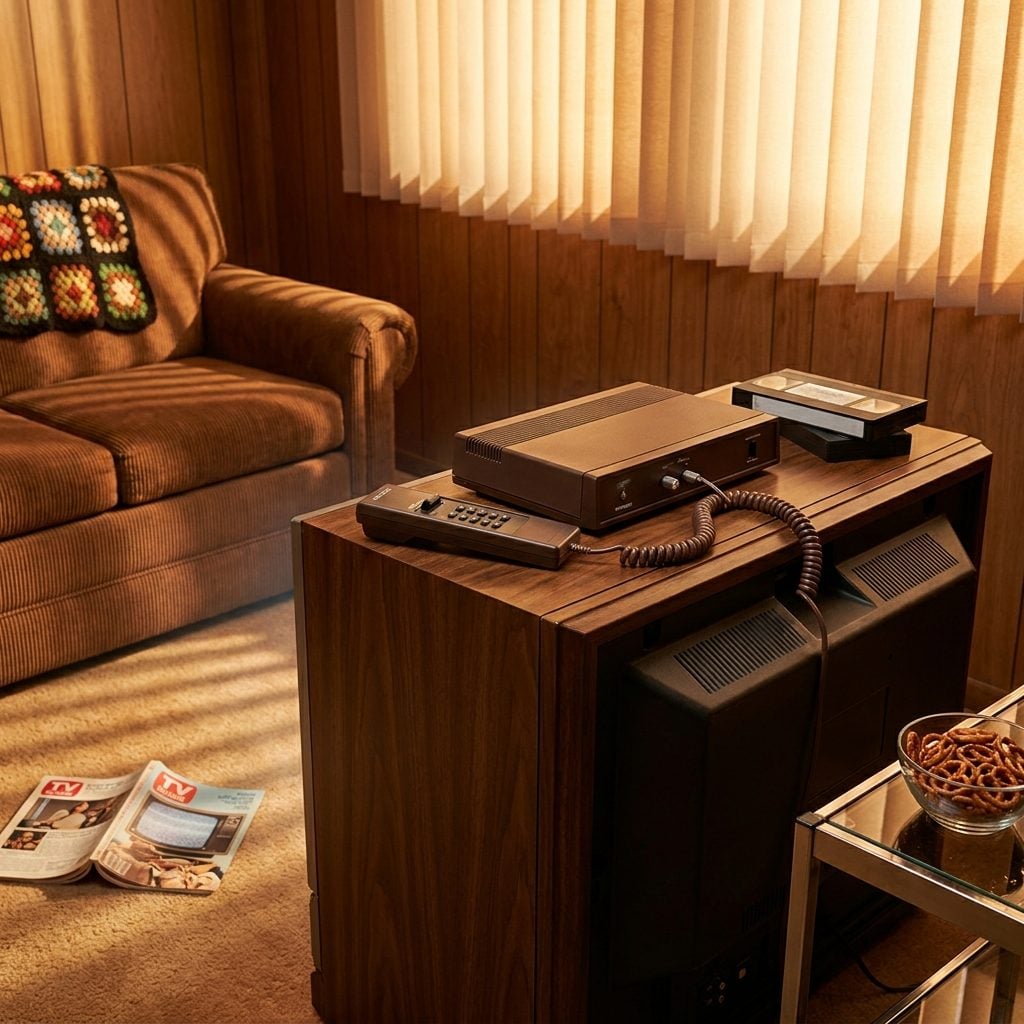
That brown box with the row of numbered buttons and the long cord stretching to the couch. You didn’t change channels from across the room — you changed them from two feet away, clicking through with a satisfying mechanical slide, one number at a time, hunting for something you weren’t supposed to be watching.
The whole ritual had weight to it. Thirty-six channels felt like infinity. And the ones your parents hadn’t paid for came through scrambled, the audio warbling in and out, just clear enough to make you sit there for ten minutes hoping the picture would unscramble on its own. It never did. But you waited anyway.
28. The Vertical Blinds That Announced Every Breeze and Every Sneaky Entry
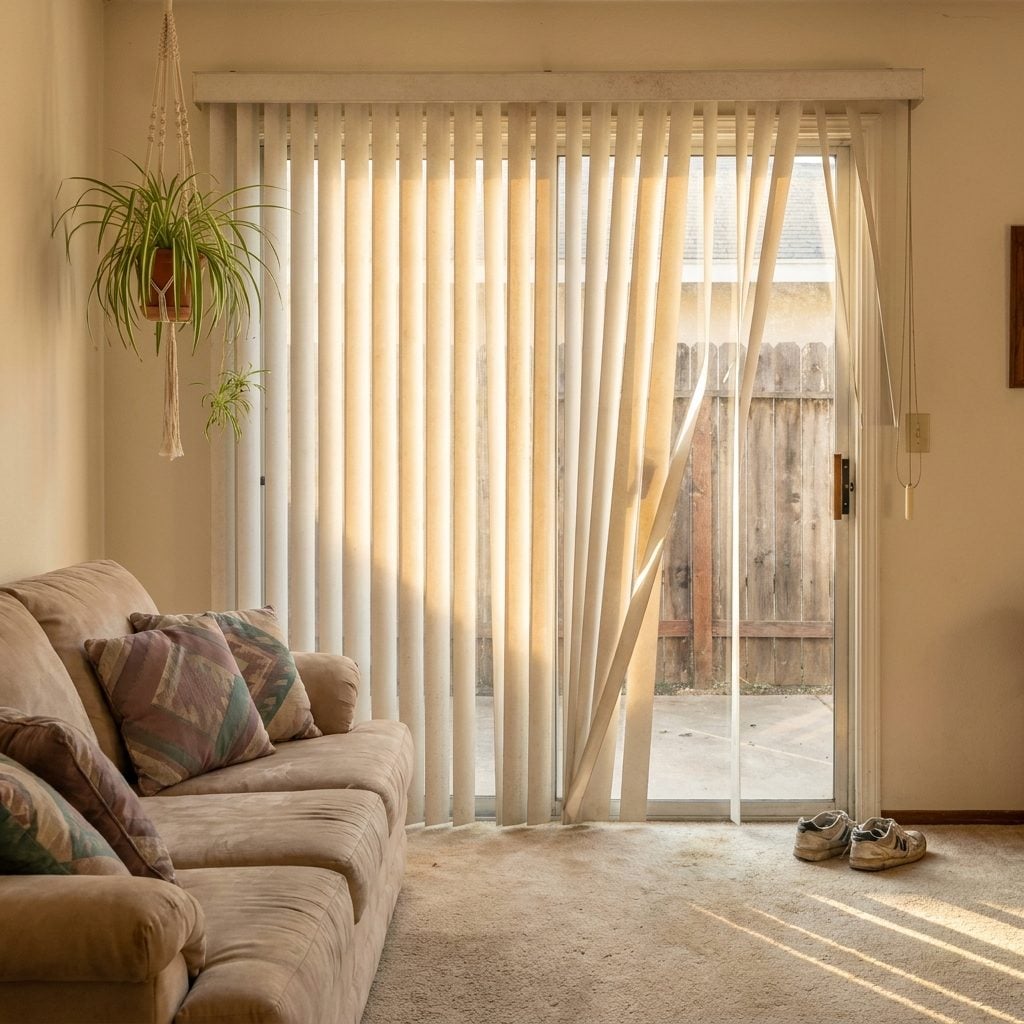
They clattered. Every single time. A breeze through the sliding glass door set them clicking against each other like a wind chime assembled from office supplies, and if you tried to come in quietly after school? Forget it. Those blinds reported your arrival to the whole house before your sneakers hit the carpet.
Half of them hung crooked because someone had yanked the cord too hard six months ago and nobody ever fixed it. The wand that was supposed to twist them open never quite worked. So you shoved them apart with your hand, permanently bending two slats, adding to the general state of defeat that vertical blinds seemed to exist in by default.
27. The Glass-and-Brass Étagère Holding Mom’s Precious Figurines You Were Forbidden to Touch
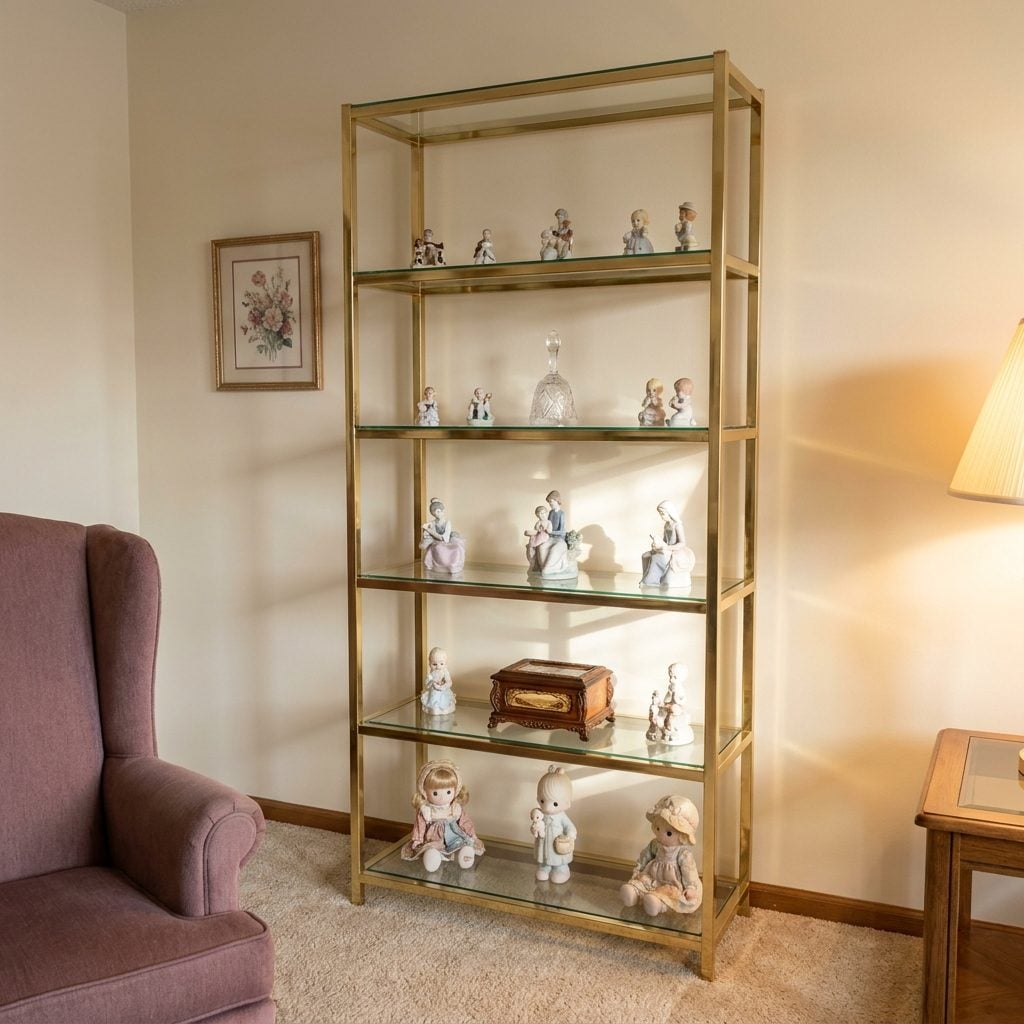
Five shelves of glass. Brass framing thin enough to look fragile but sturdy enough to survive two decades without a wobble. And on every shelf, figurines arranged with museum-level precision by someone who would absolutely notice if you moved one a quarter inch to the left.
You learned the word “Lladro” before you learned the word “mortgage.” Those pale ceramic shepherdesses and children with baskets lived behind glass in a small sitting room or living room corner that was functionally a no-fly zone — the étagère existing to hold things nobody used, displayed for guests who came over twice a year. But it caught lamplight in a way that made the whole corner feel deliberate. Considered. Like someone in this house prioritized beauty for its own sake, even if the rest of the place ran on pragmatism and bulk groceries.
26. The Coiled Phone Cord Stretched to Its Absolute Physical Limit From Kitchen to Hallway
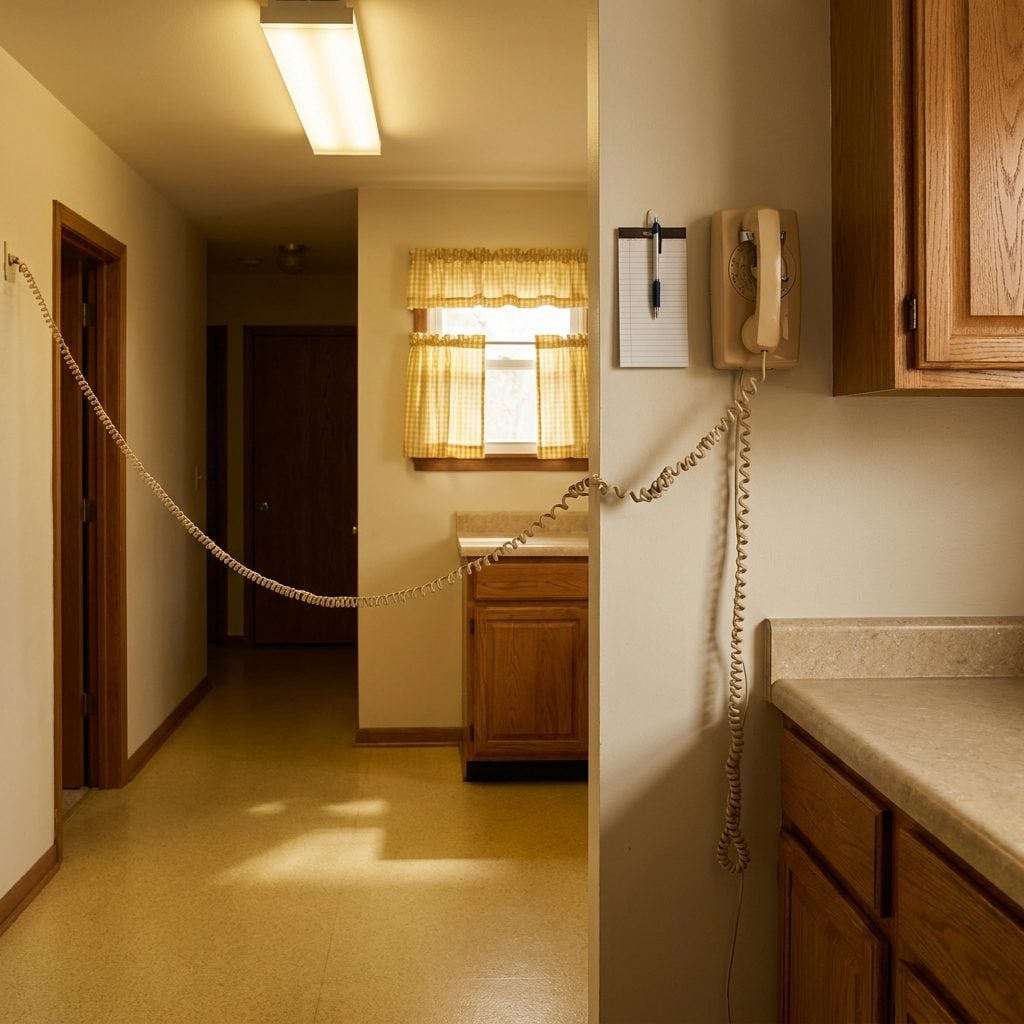
Twelve feet of coiled cord, permanently kinked from being stretched to sixteen. You’d pull that handset around the corner, into the hallway, close yourself into the bathroom if you could manage it, and whisper your conversation while the cord hummed with tension against the doorframe.
The cord itself told a story. Tight factory coils near the base. Sagging, overstretched loops in the middle where someone had carried it too far too many times. It never fully retracted after that — just hung there, a permanent record of every private conversation someone tried to have in a house that offered zero privacy. You could read the whole emotional history of a household in those stretched-out coils if you knew what to look for.
25. The TV Tray Set That Appeared for Dinner Exactly When Both Parents Were Working Late
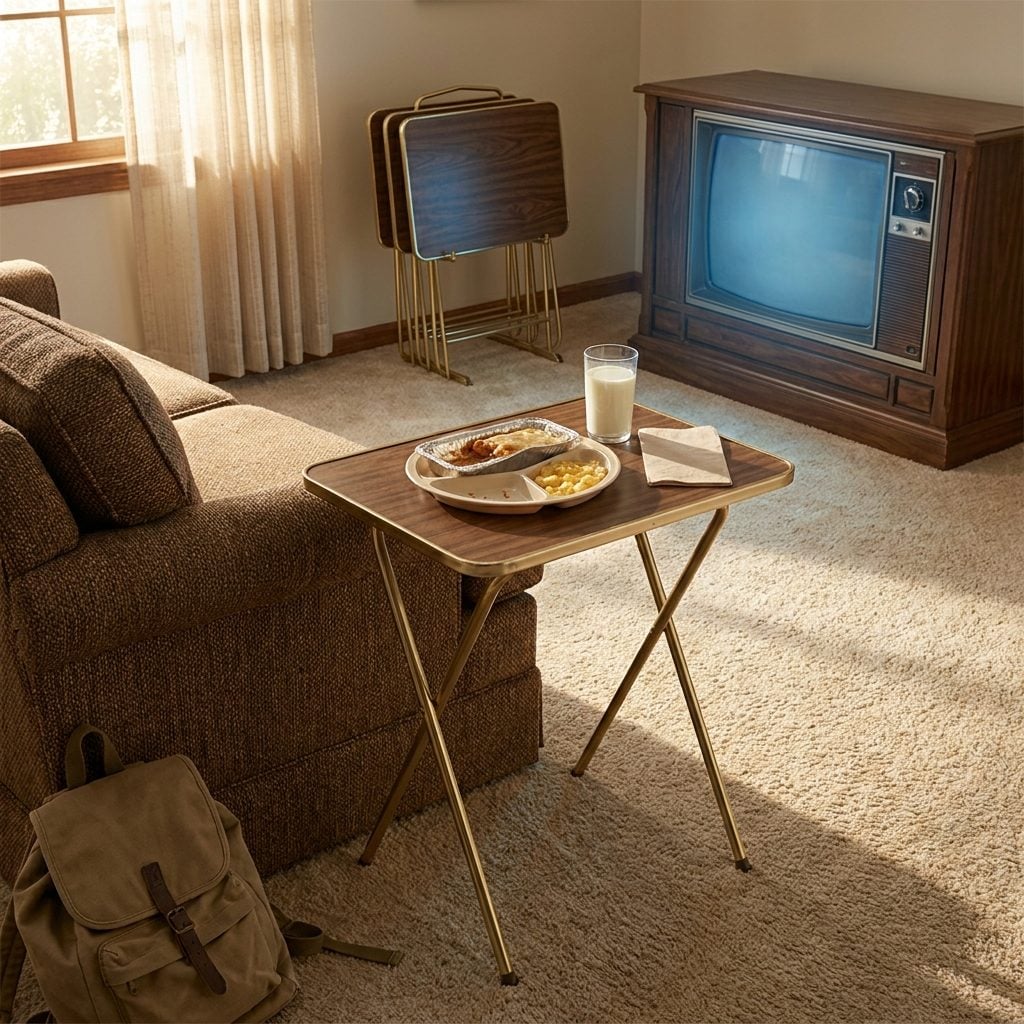
Faux woodgrain top, gold metal legs that locked into place with a satisfying click. Four of them lived in a wire rack against the wall, and pulling one out was the official signal: dinner is happening in front of the television tonight.
For a latchkey kid, this was the whole dining room. A Swanson turkey dinner in its foil tray, a glass of milk, the TV on at a volume that made the empty house feel less empty. The tray wobbled if you cut anything too aggressively — you learned to saw gently at that rubbery Salisbury steak, or else your milk was going sideways. Nobody taught you this. You just figured it out after the first spill.
24. The Encyclopaedia Britannica Set That Took Up an Entire Shelf and Settled Every Argument
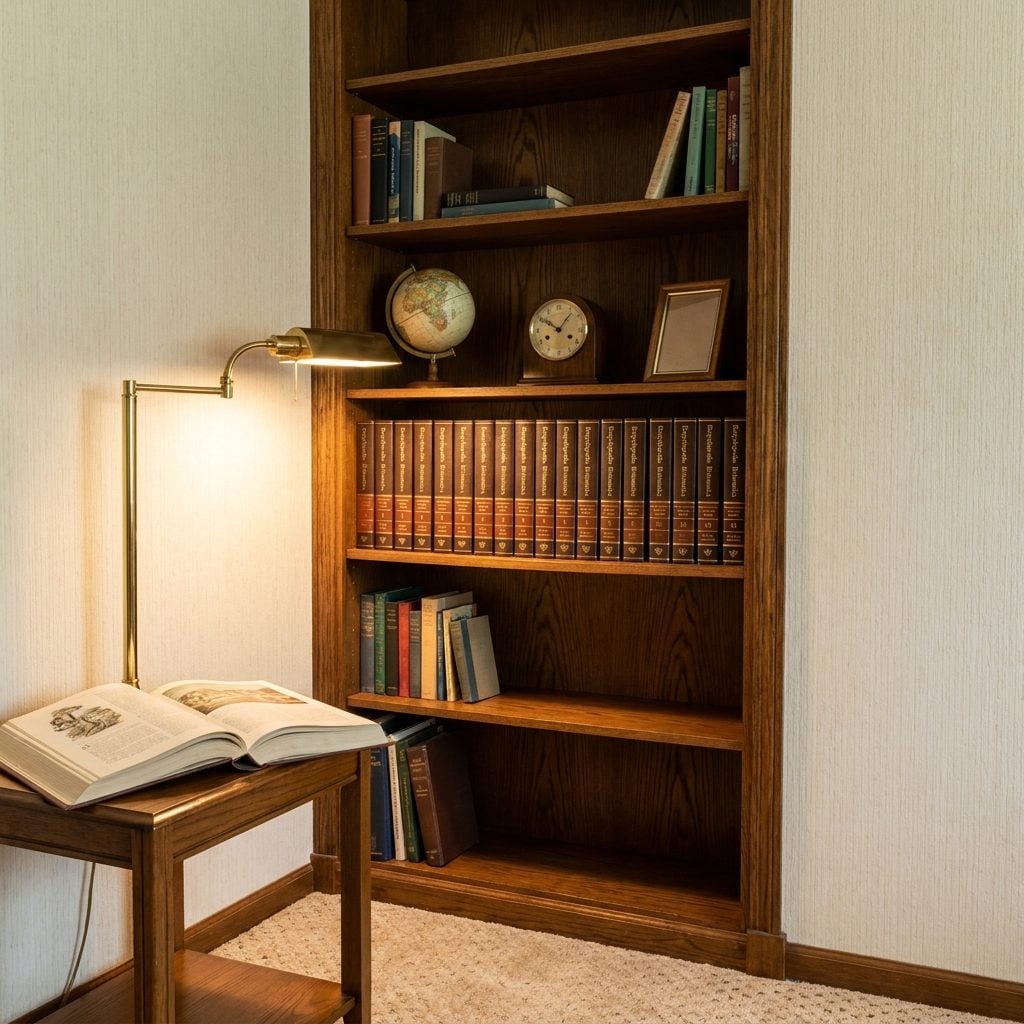
Twenty-nine volumes plus the index and yearbooks. Dark brown binding. Gold lettering. They weighed more than some of the furniture.
When you were home alone with a question, there was no search bar. You pulled the right letter off the shelf, found the entry, and read three pages about something you hadn’t even been curious about on the way to the thing you were actually looking for. An afternoon could vanish that way — start at “Saturn,” end up deep in the Sargasso Sea, because it was on the next page and nobody was telling you to do homework yet. You could fall into those volumes the way you’d fall into a conversation with someone who knew more than you about everything.
Some volumes had cracked spines from heavy use. “S” was always the most worn. “X” looked brand new. I don’t think anyone in any household ever opened “X” on purpose.
23. The Fake Ficus Tree in the Wicker Basket Planter That Fooled Absolutely Nobody
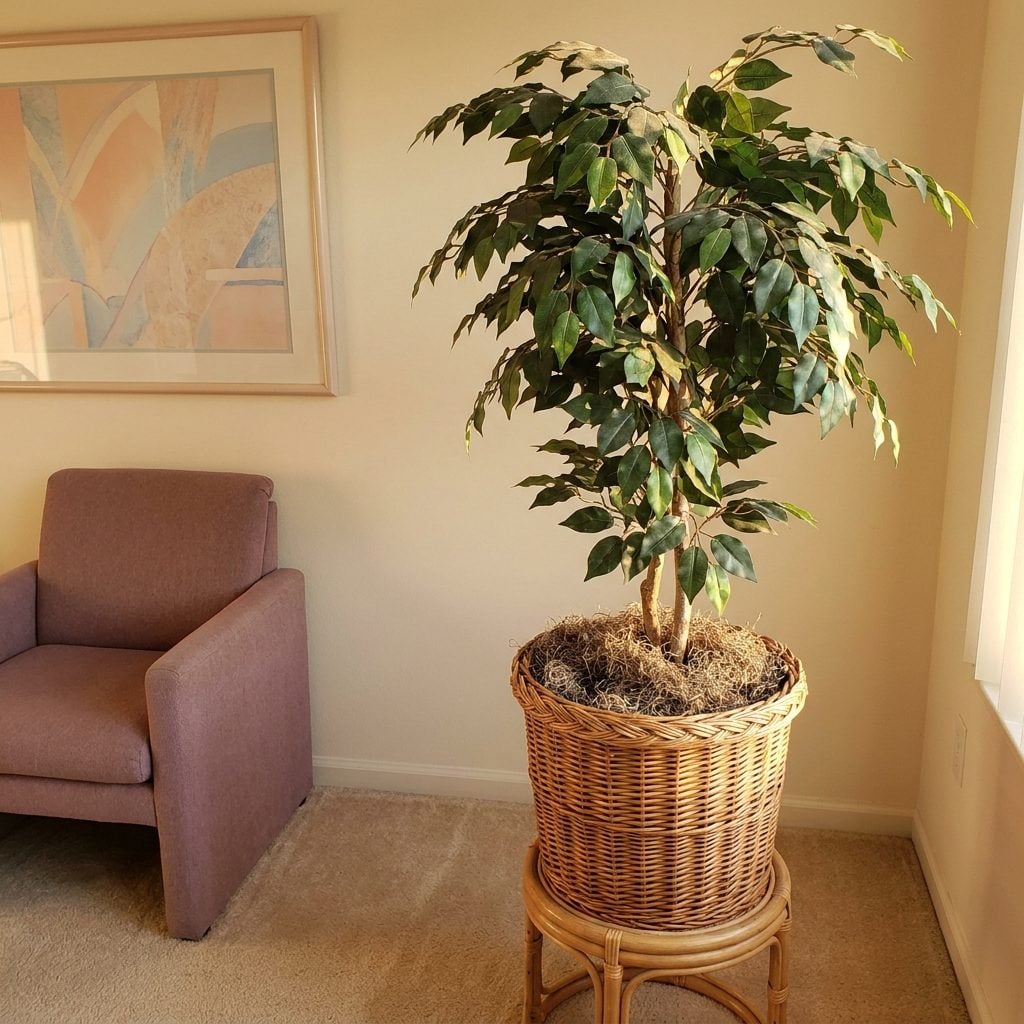
Five feet of silk leaves jammed into a wicker basket with some moss on top. It lived in the corner between the armchair and the window, collecting dust on every single leaf, and nobody ever watered it because nobody needed to.
Every house had one. The leaves had a sheen that real ficus leaves don’t have — a slightly plastic optimism — and after a year or two the color drifted from forest green toward a tired olive. But it filled the corner. It softened the room. And in a decade when both parents were working and nobody had bandwidth to keep a real plant alive, the fake ficus did its job without complaint, without yellowing leaves on the carpet, without guilt. Honestly, a more reliable roommate than most actual plants.
22. The Floral Sofa With Cushions So Deep You Lost the Remote in Them Daily
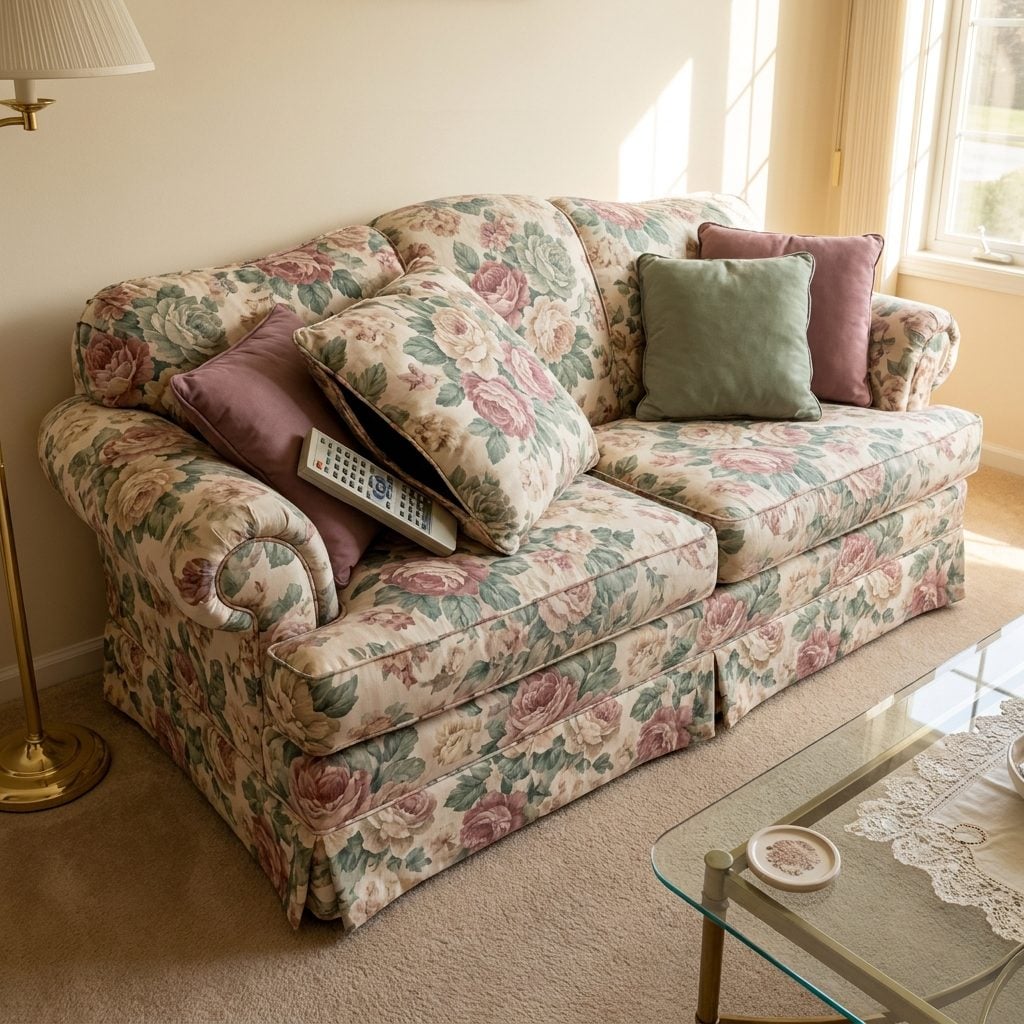
The cushions were roughly nine inches deep, which meant everything you owned eventually migrated into the sofa. Coins, pens, the remote, a homework assignment, a single sock — no explanation for that last one, ever.
But those floral print sofas were soft in a way modern furniture doesn’t attempt. You’d come home from school, drop your backpack, fall into those roses and sage leaves, and the cushions would close around you like the house was saying sit down, rest, you’re fine. The fabric had a nubby texture that left marks on your cheek if you fell asleep on it. You always fell asleep on it. Woke up with the cabbage rose pattern temporarily tattooed on one side of your face, and honestly, you didn’t mind.
21. The Sliding Lock on the Front Door You Checked Twice Because the House Was Too Quiet
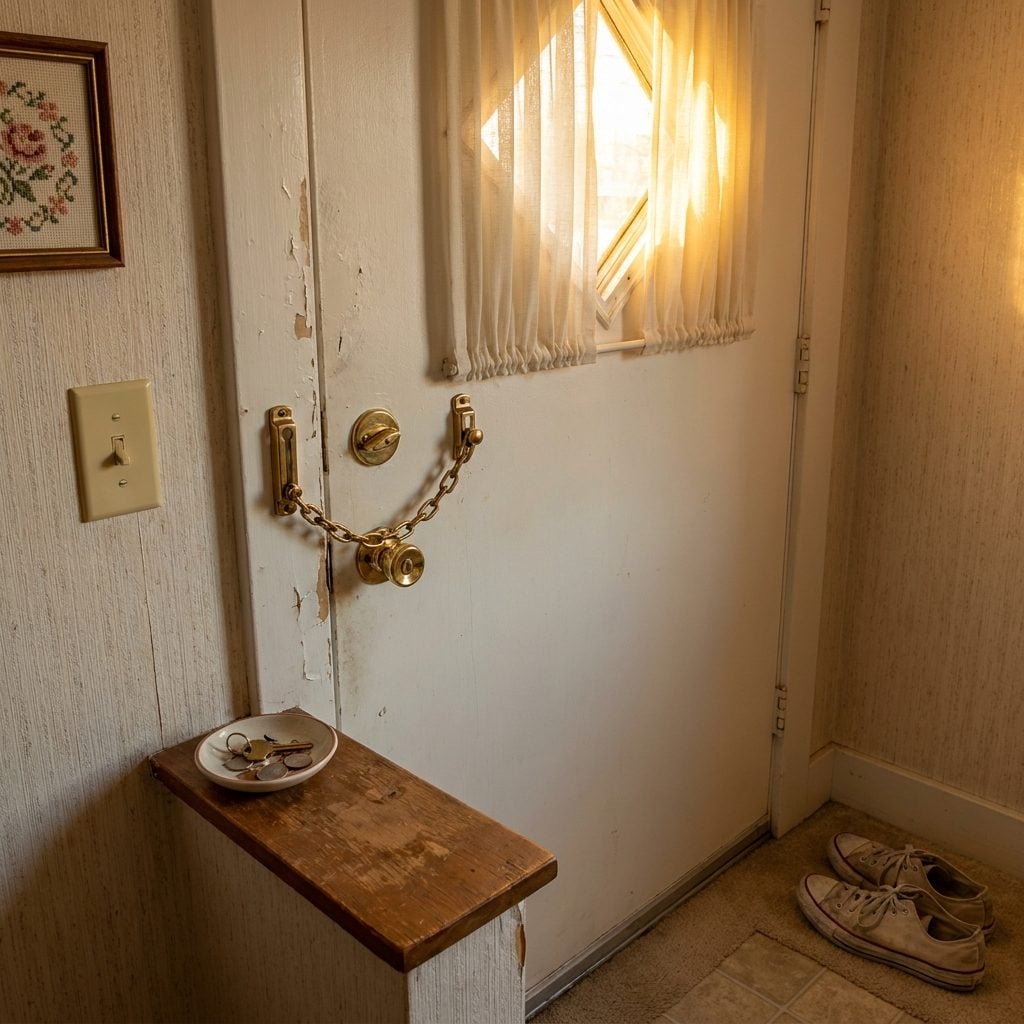
First thing you did. Every single day. Close the door, turn the deadbolt, slide the chain, then stand there for a second. Listening.
An empty house after school had a specific quality of silence — not peaceful, not scary exactly, but aware. The refrigerator hummed. The clock ticked. You stood at the front door making sure the chain sat in its track because someone had told you to do that and you did it, every time, even though a brass chain was going to stop precisely nothing if something actually went wrong. You knew that even then, on some level. Didn’t matter.
Checking twice wasn’t paranoia. It was ritual. The house felt more yours once the locks were set, like you’d drawn a line between outside and in.
20. The Ceiling Fan With the Schoolhouse Globe Light That Wobbled at Every Speed Above Low
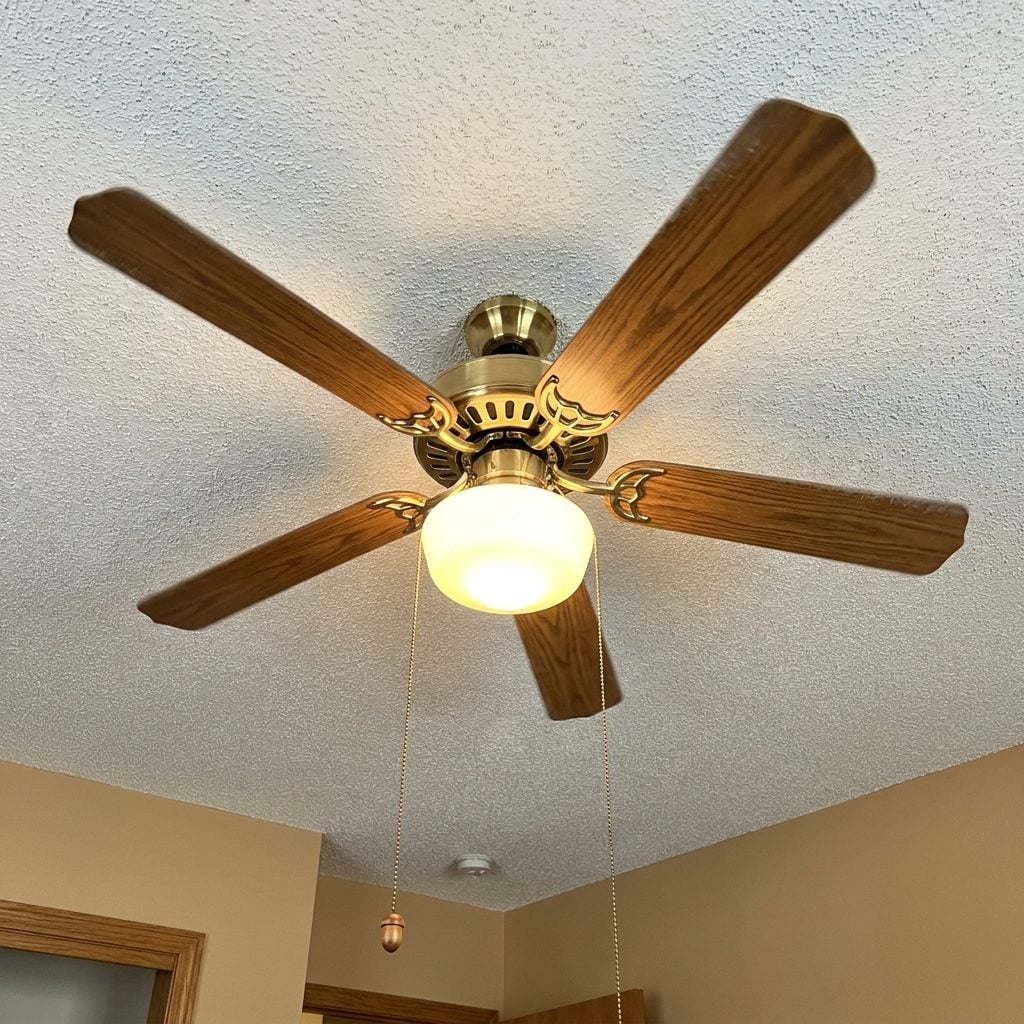
Pull chain on the left for the fan. Pull chain on the right for the light. One of the chains had a little wooden acorn on it so you could tell them apart in the dark. Grabbed the wrong one half the time anyway.
Low speed ran fine. Medium introduced a gentle tick-tick-tick that faded into background noise within five minutes. But high speed? High speed turned the whole fixture into something that sounded like it was reconsidering its attachment to the ceiling. The wobble was visible — genuinely, visibly wobbling — and the blades were dusty on top in a way you only discovered the one time you stood on a chair to investigate. Immediately wished you hadn’t. Some things are better left as mysteries, and ceiling fan blade grime is near the top of that list.
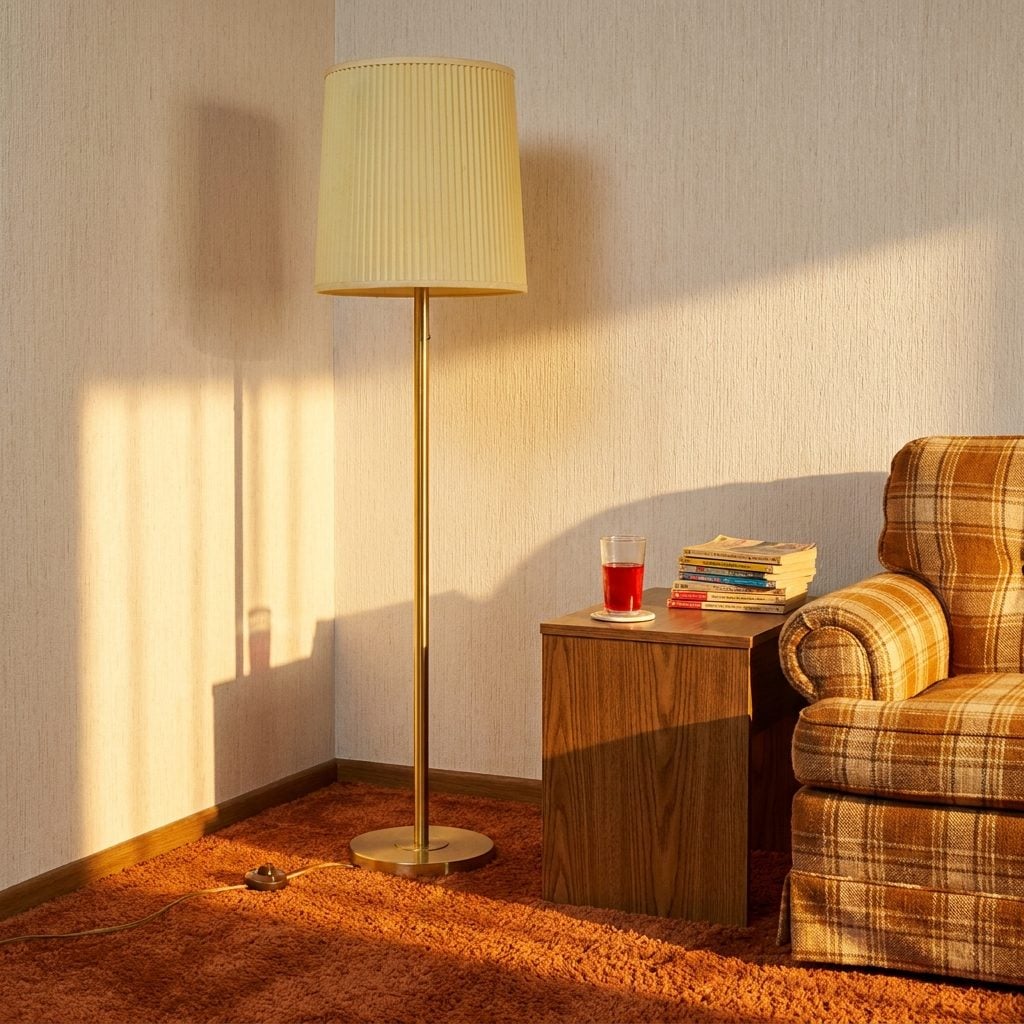
19. The Brass Floor Lamp With the Three-Way Switch You Cycled Through Every Single Time
🔥 Would you like to save this?
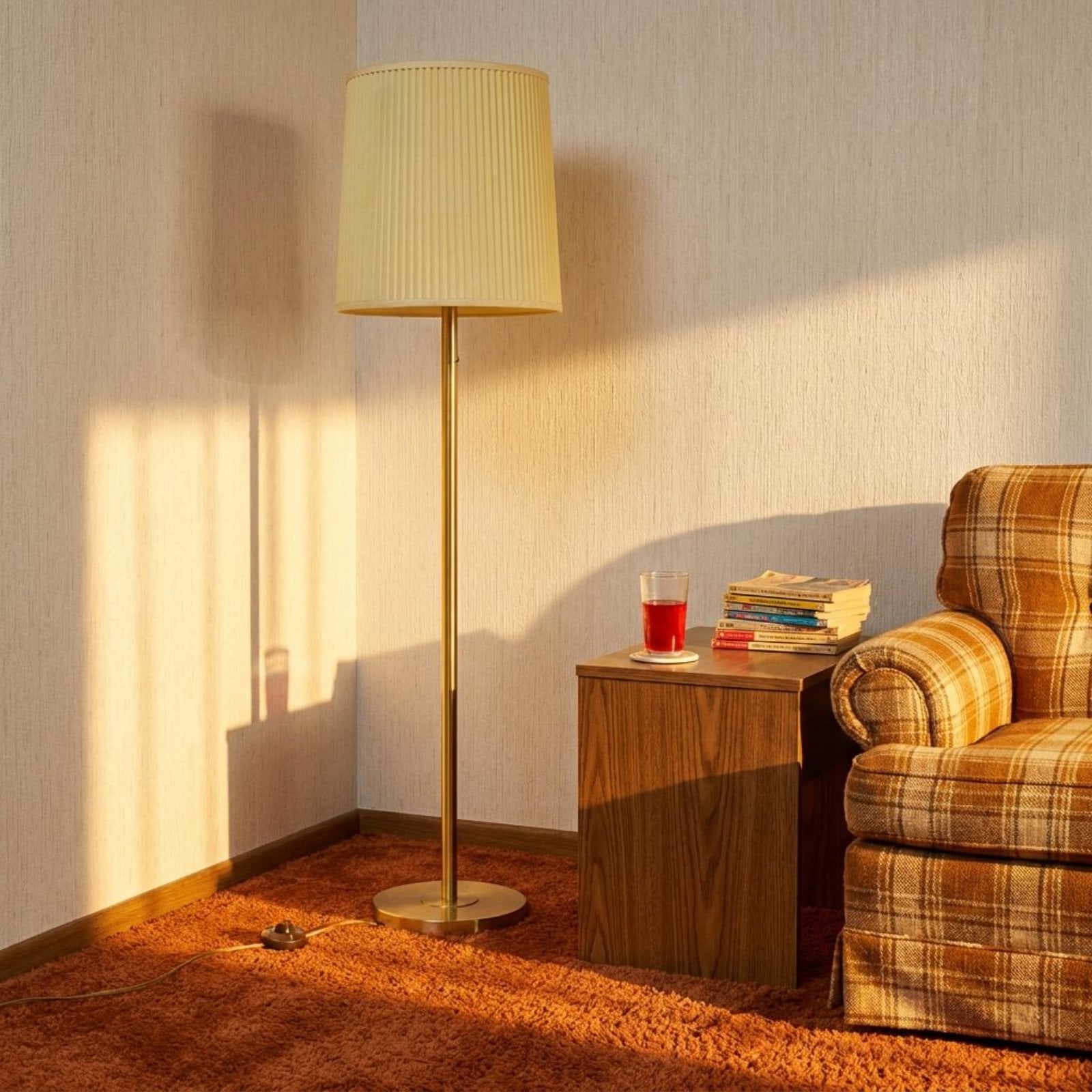
Off. Dim. Medium. Bright. You went through all four stops every single time, because landing on the right level of light felt like a small victory in an otherwise boring afternoon. The brass floor lamp in the corner was the first thing you clicked on after dropping your backpack by the door. Nobody told you to. It just made the room feel less empty.
The pleated fabric shade had gone slightly ivory from years of heat. The cord had a permanent kink where it snaked behind the couch. But that three-way switch, worn smooth from ten thousand rotations, was yours to control for the next three hours, and that mattered more than it probably should have.
18. The Wood-Grain Contact Paper on Every Shelf, Cabinet, and Surface That Would Hold Still
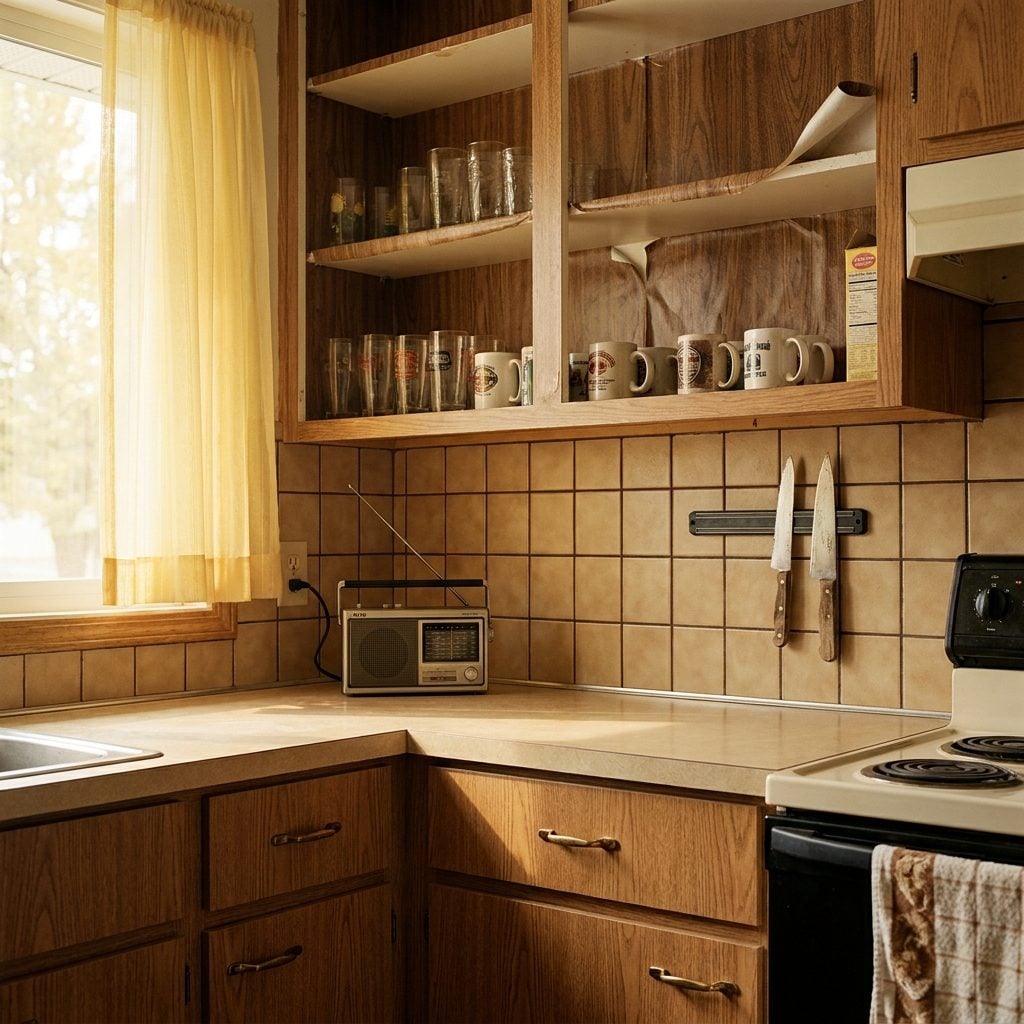
Somebody bought a roll of this at the hardware store and then couldn’t stop. Kitchen shelves first, then the bathroom cabinet, then the inside of drawers nobody opened. The pattern was always the same: a walnut grain so uniform it looked computer-generated, because it basically was.
The edges curled within six months — that was the tell. Real wood doesn’t peel up at the corners and reveal sticky white backing. But it covered the water stains and the cigarette burns and whatever the previous tenant left behind, and that was enough. Good enough, anyway.
17. The VCR Clock That Blinked 12:00 Permanently Because Nobody Could Program It
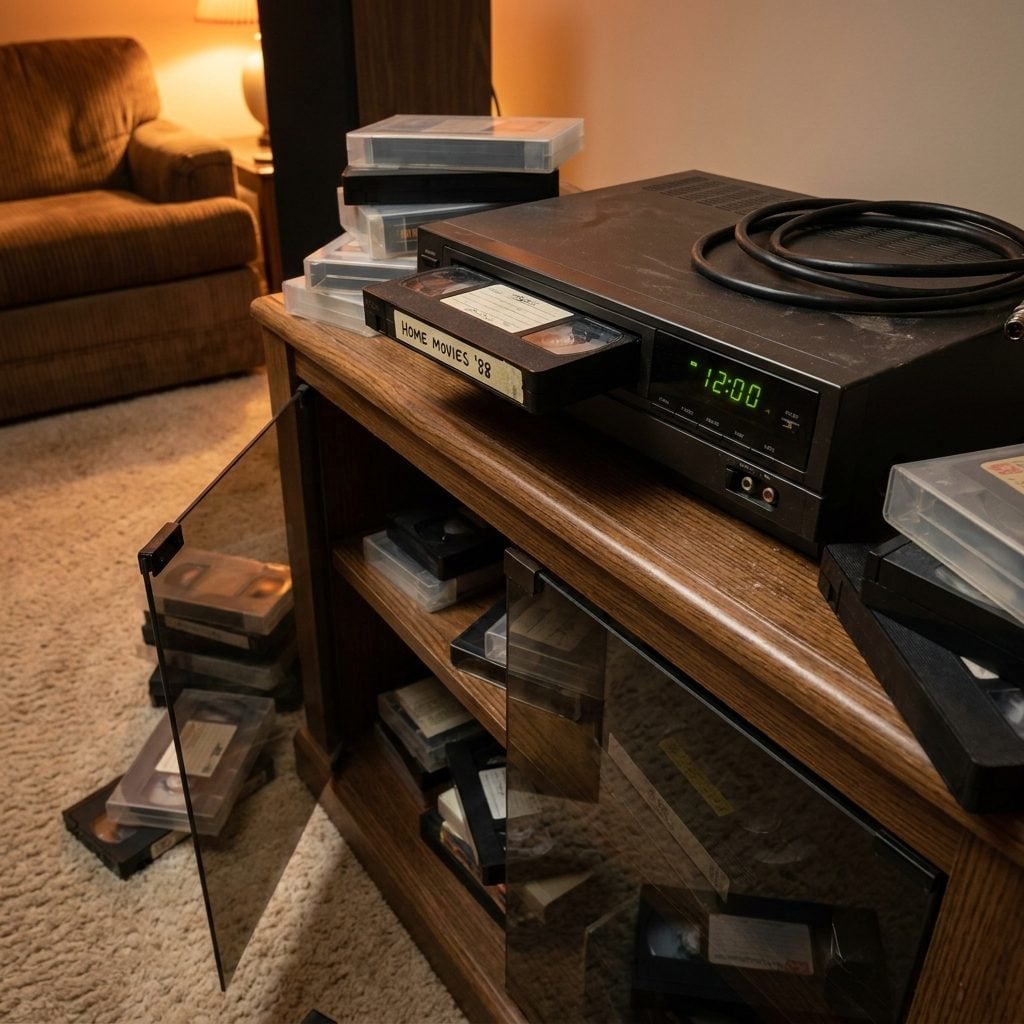
That green glow. Blinking. Always blinking — the heartbeat of the living room, wrong every second of every day.
The manual was in a drawer somewhere, forty pages of instructions for a task that should have taken thirty seconds. Nobody found it. Nobody programmed the clock. After a power outage it reset, and then it just blinked 12:00 until the next outage reset it again to the same wrong time. Eternal loop. The VCR recorded your shows fine, though. It just never had any idea when it was doing it.
16. The Brass-and-Glass Coffee Table With Edges Sharp Enough to Send You to the ER
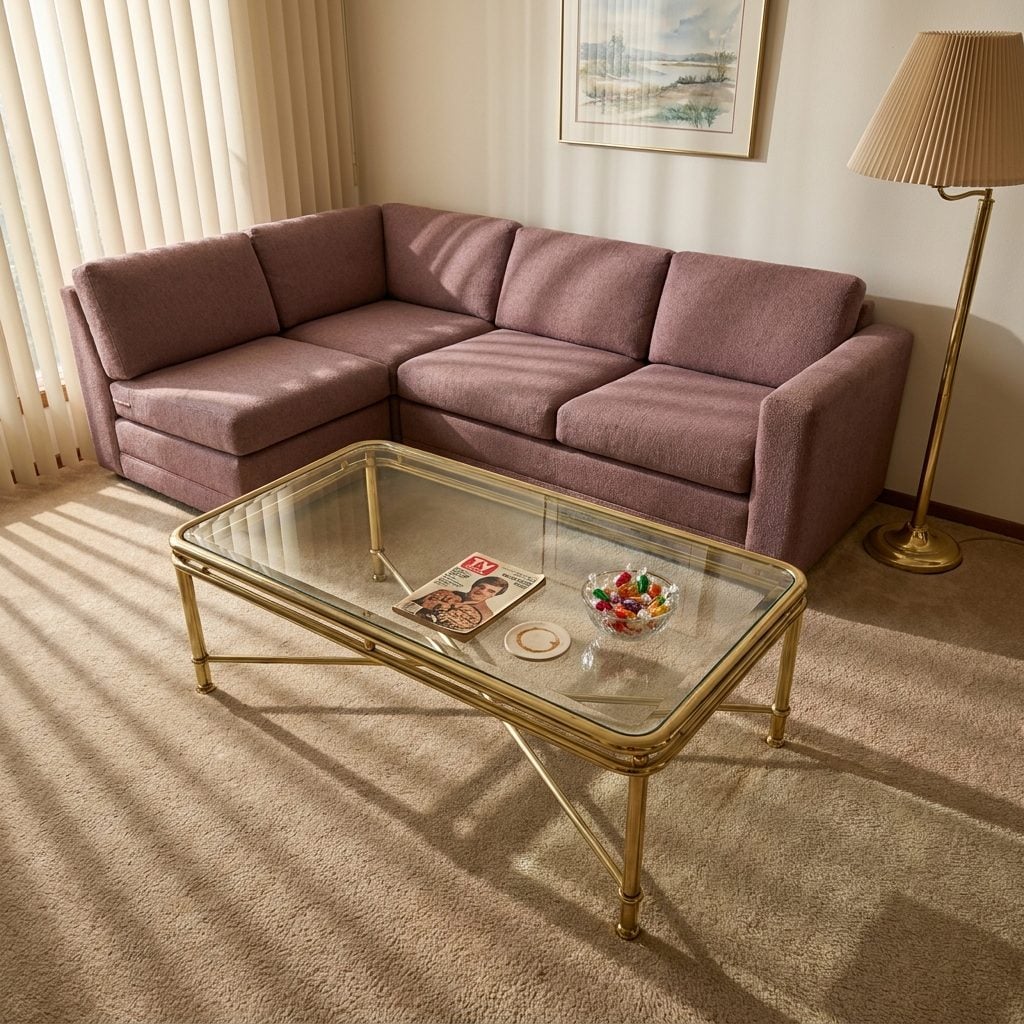
Every kid who grew up in the 1980s has a scar story about a brass-and-glass coffee table. Forehead. Shin. The soft spot just below the kneecap. The corners weren’t rounded or softened — they were right angles of beveled glass held in polished brass, and they sat at the exact center of every room where children ran.
And the glass showed everything. Every fingerprint, every water ring, every crumb from the after-school snack you weren’t supposed to eat in the living room. A forensic record of your afternoon. You had maybe twenty minutes to wipe it clean before anyone got home.
15. The Folded Afghan Draped Over the Back of the Couch Like a Permanent Installation
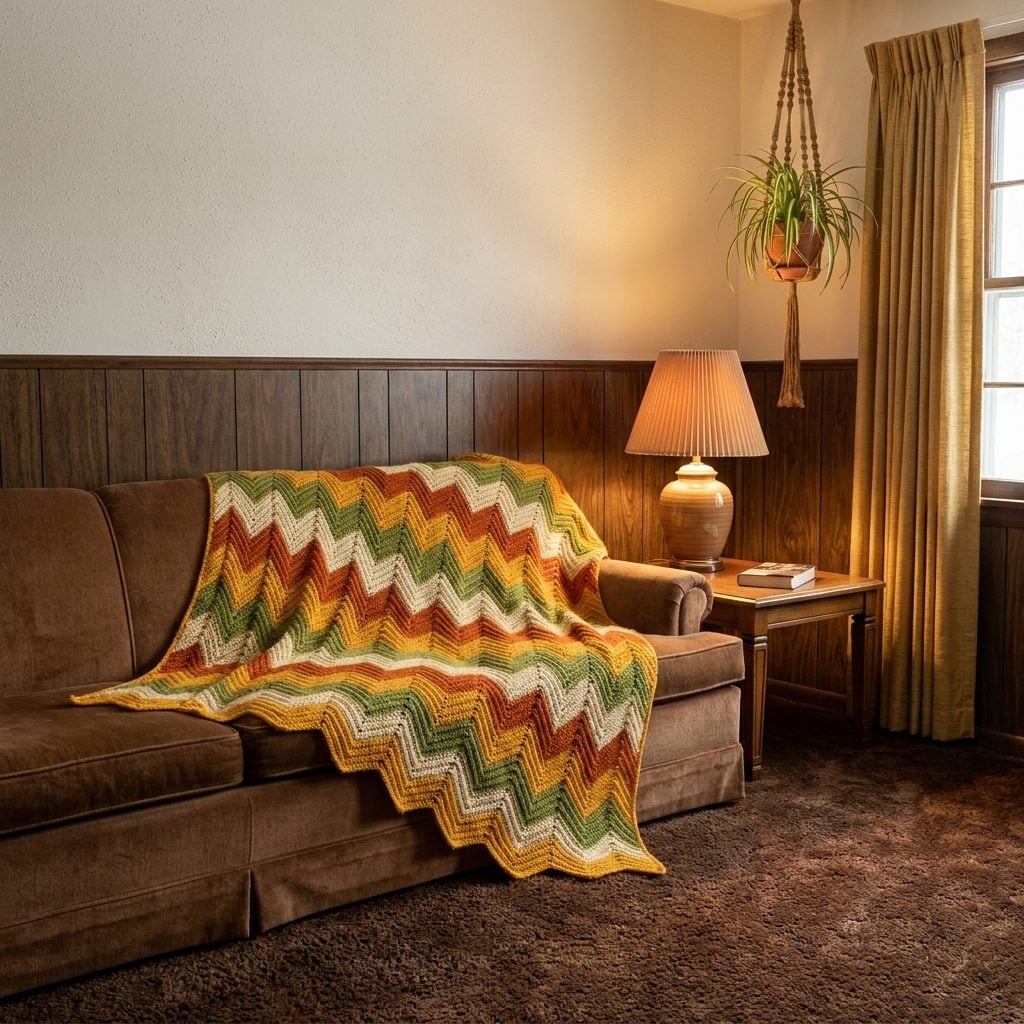
Somebody’s grandmother made it. Possibly yours, possibly a grandmother three owners back who was never identified. The zigzag pattern in harvest gold and burnt orange was so specific to its era it functioned as carbon dating.
It lived on the back of the couch. Permanently. You pulled it down when you were sick, or when it was cold, or on Friday nights to build a fort between the couch and the coffee table during a movie. Then you folded it back up and returned it to its post, because the small family room looked genuinely wrong without it there.
14. The Venetian Blind Cord You Wrapped Around Your Finger While Staring Out the Window Waiting for Someone to Come Home
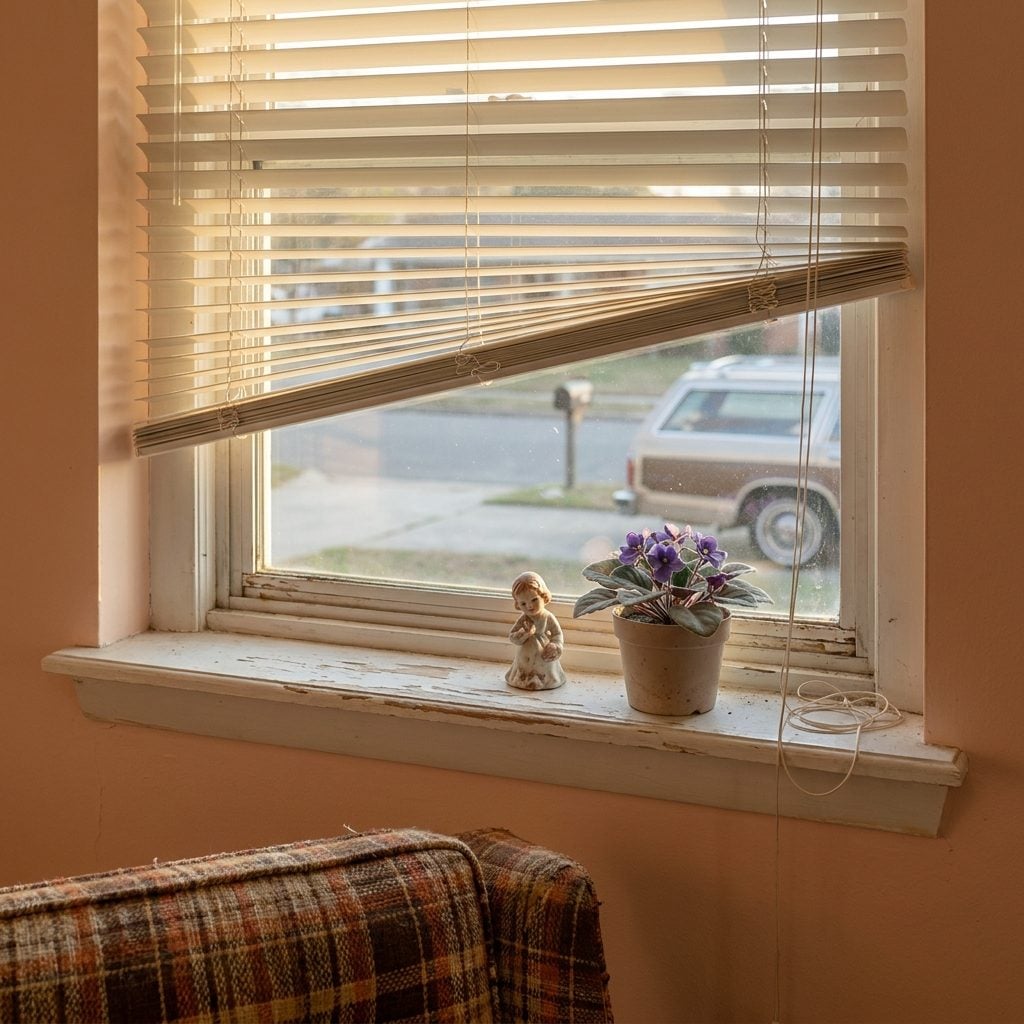
The house was quiet at 3:45, the TV on but the sound low because you’d already cycled through every channel twice. So you stood at the window.
The cord was right there. You twisted it, wrapped it around your index finger until the tip turned white, unwound it, wrapped it again. The blinds tilted open and shut with each pull — light shifting across the carpet in slow stripes. You weren’t bored, exactly. Just waiting. And the cord gave your hands something to do while you watched the street for headlights that meant the solo stretch was over.
13. The Big Brown Recliner That Was Off-Limits When Dad Was Home but Fair Game From 3 to 6 PM
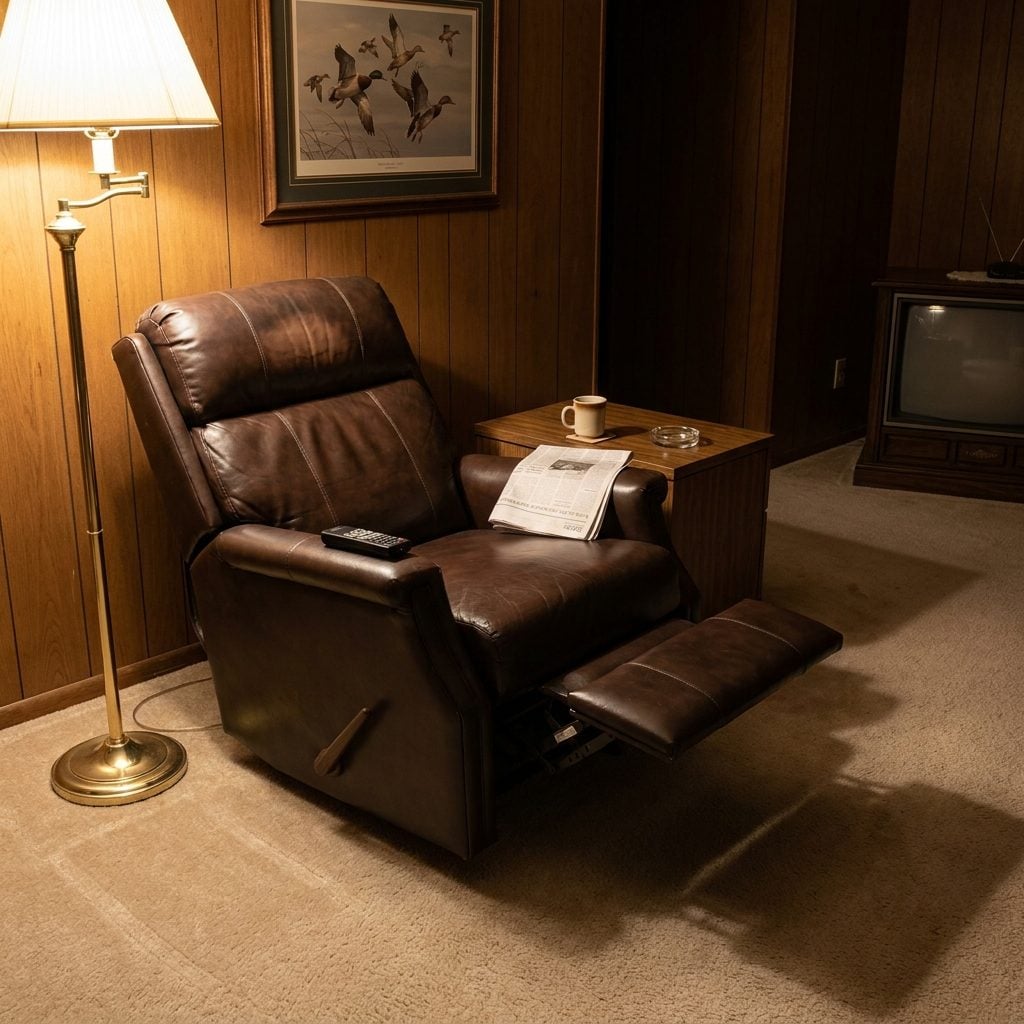
You knew better than to sit in it when he was home. His chair. His indent in the cushion. His remote on the armrest.
But between three and six? Yours. You’d pull the lever and the footrest would launch up with that satisfying mechanical thunk. The Naugahyde was cool for about thirty seconds, then warm, then slightly sticky — and it smelled like the house itself, some combination of coffee and newspaper ink and the vinyl cleaner nobody used often enough. You ate your snack there. Watched cartoons there. Did not do homework there. And at 5:50 you put the footrest down, smoothed the cushion, and migrated to the couch like you’d been there all along.
12. The Smoke Detector That Chirped Once Every Forty-Five Seconds Because Nobody Changed the Battery
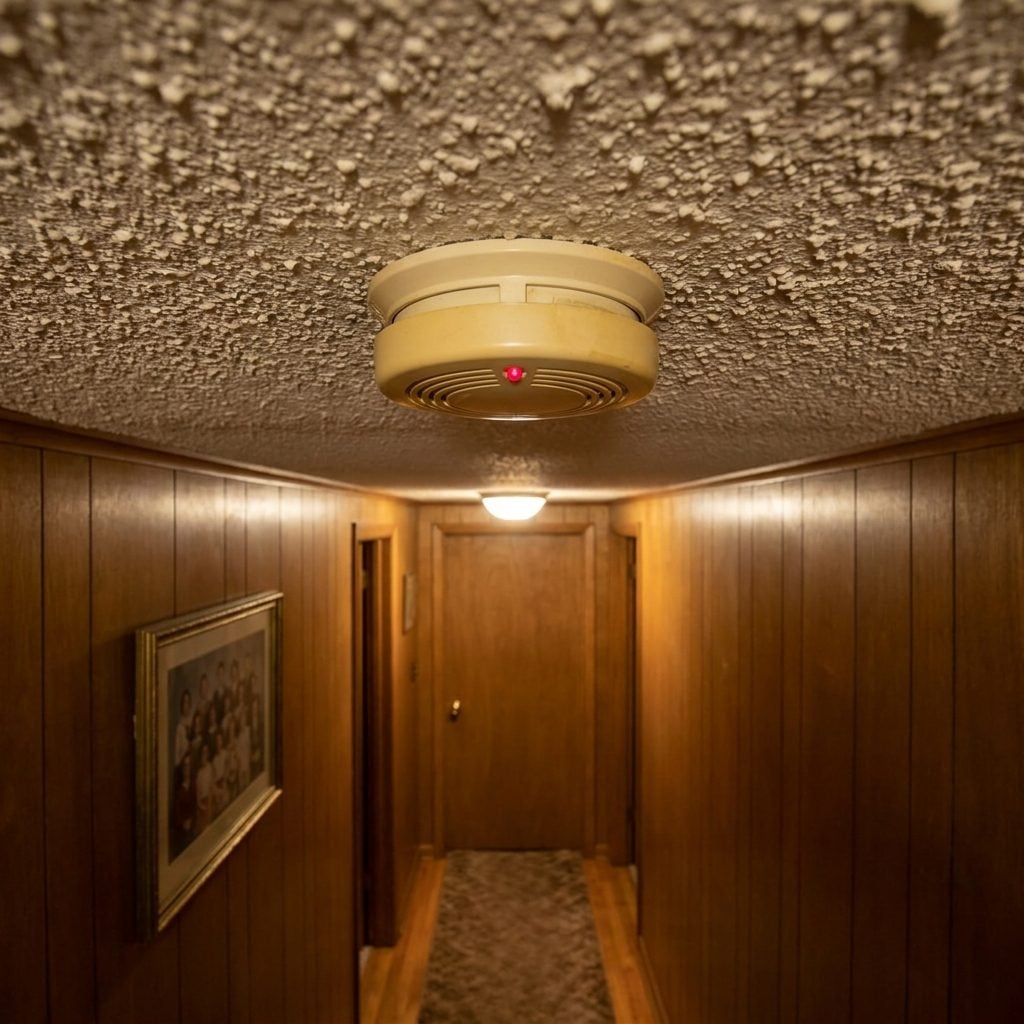
Chirp. Then silence. Then the slow, maddening count to forty-five. Then chirp.
It went on for weeks. Months, honestly. The nine-volt battery was dying and everyone in the house knew it and nobody climbed up there to fix it. You got used to it the way you got used to the refrigerator hum — it folded into the house’s ambient drone, as permanent as the popcorn ceiling it was screwed into. At some point you stopped hearing it. Guests, though? Guests heard it immediately and looked at you like you were all insane.
11. The Drawer Full of Takeout Menus, Dead Batteries, and a Screwdriver That Didn’t Match Any Screw in the House
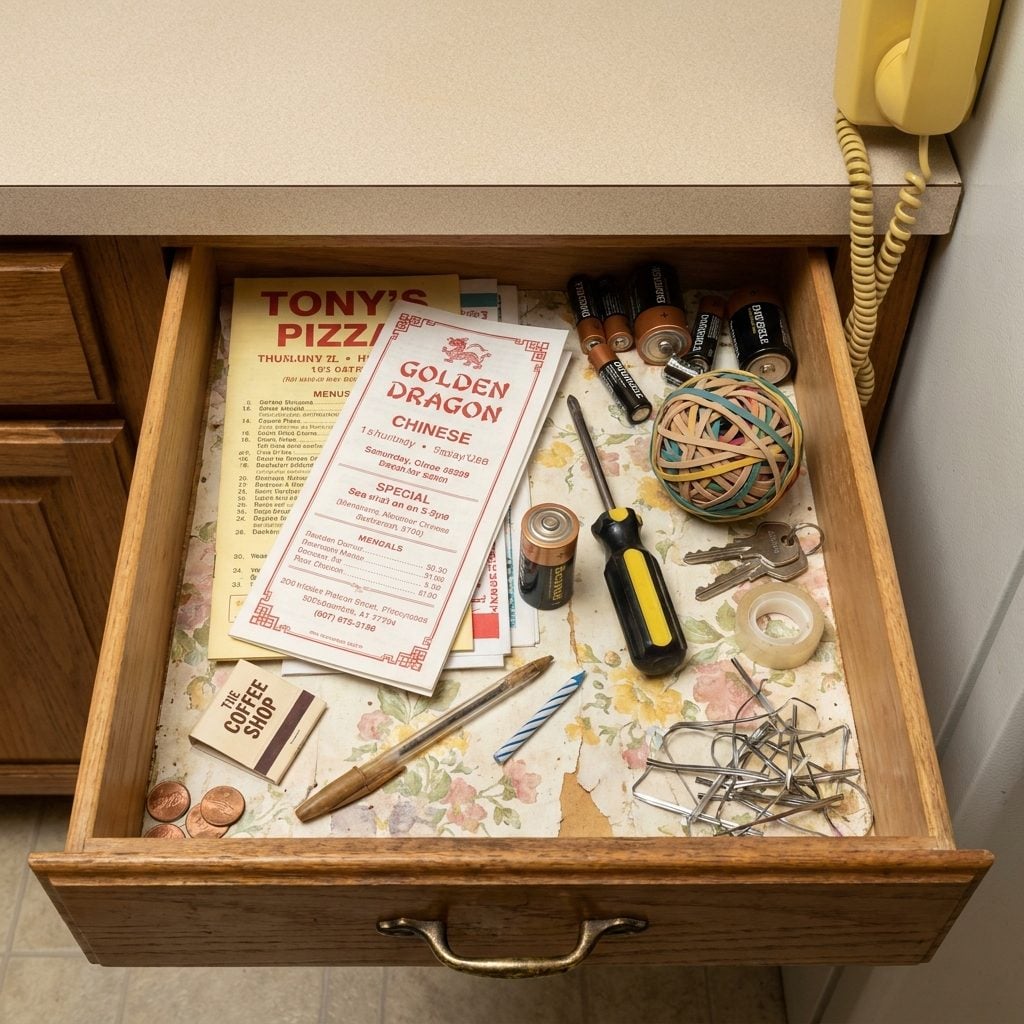
Every house had one. The drawer that held everything that didn’t belong anywhere else — takeout menus from restaurants that may or may not still exist, four dead D batteries next to two that might work, a screwdriver, rubber bands from the newspaper, keys to locks no one could identify, and a single birthday candle of uncertain vintage.
For a latchkey kid, those takeout menus were critical infrastructure. The backup plan for when the freezer held nothing but ice cream and a bag of frozen peas. You’d unfold three of them on the counter, compare prices like a tiny accountant, and then call whichever one had the shortest delivery time.
10. The Swag Lamp Hanging Over the Dining Table on a Chain Long Enough to Lasso a Horse
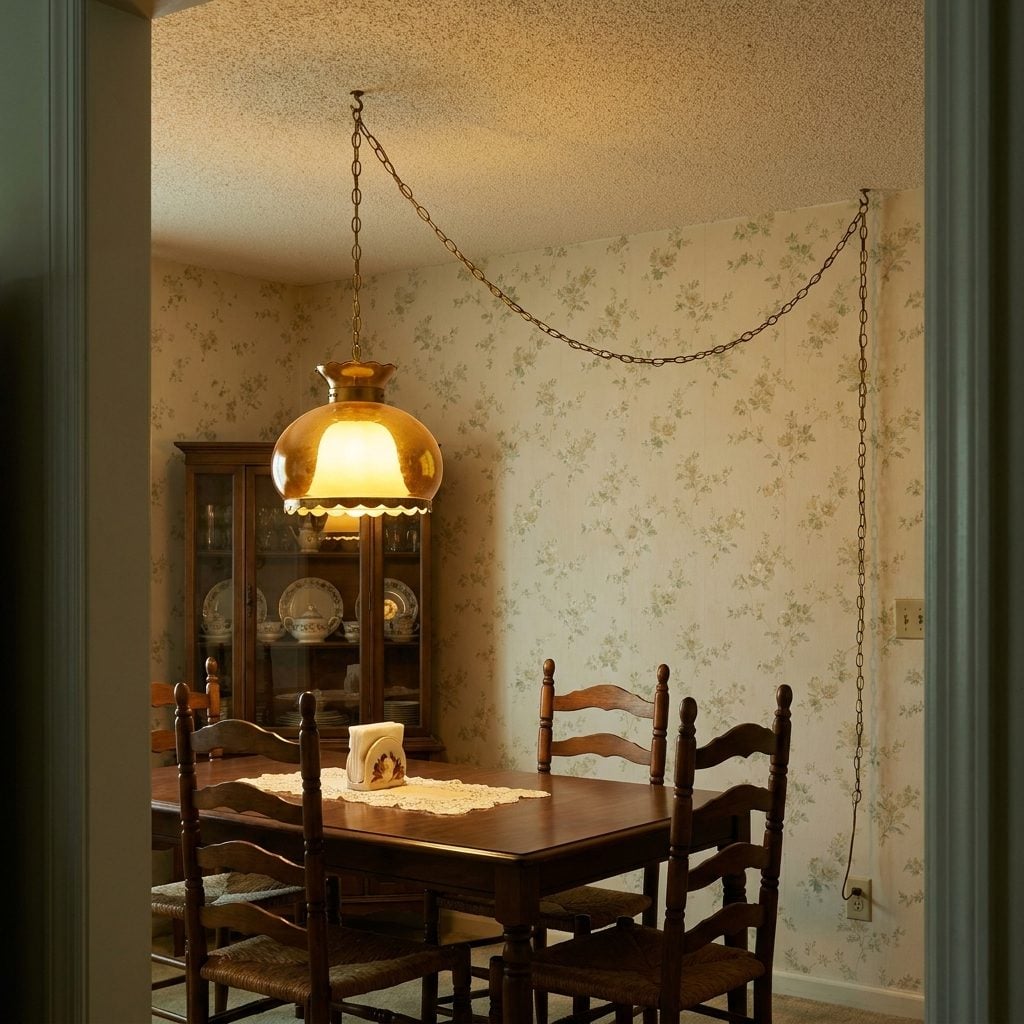
It didn’t plug into the ceiling like a normal fixture — it plugged into the wall. The brass chain ran from the lamp up to a hook in the ceiling, across the ceiling to another hook, and then down the wall to an outlet. The chain was part of the decor. The cord was painted gold to match. A weird arrangement, honestly, but it worked.
The amber glass shade turned everything beneath it the color of honey. Homework looked warmer under it. Dinner looked better. Even the table, which was perfectly ordinary dark wood, seemed more significant bathed in that pool of gold light hanging above it on a chain.
9. The Magnet Collection on the Refrigerator That Documented Every Vacation, Pizza Place, and Dentist Appointment Since 1979
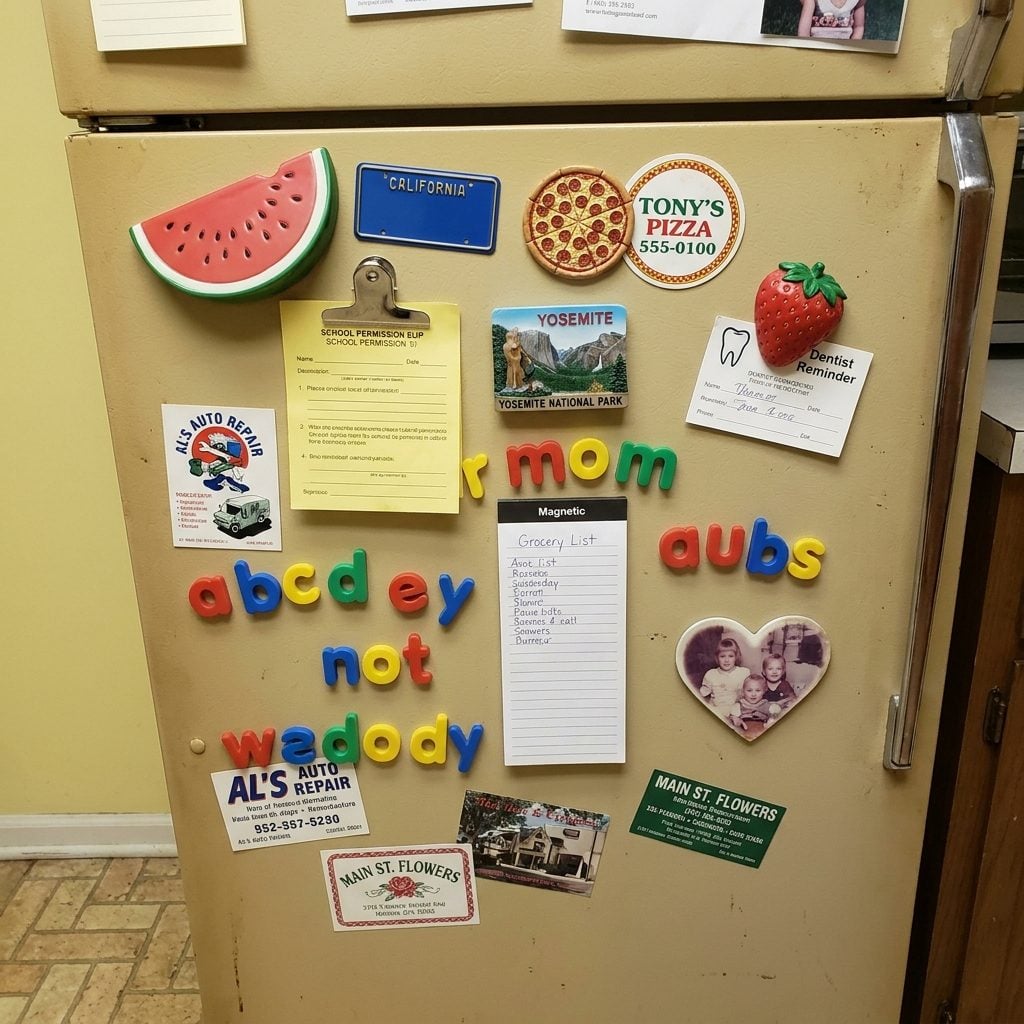
Read it top to bottom and you could reconstruct a family’s entire decade. The beach trip to Ocean City, 1982. The dentist on Route 9 who gave out magnets shaped like teeth. The pizza place that closed three years ago but whose number was still right there under a plastic pineapple.
Alphabet magnets in primary colors clustered near the bottom where small hands could reach them. A magnetic notepad with a grocery list in two different handwritings. A school permission slip under a clip magnet, unsigned — always unsigned. The light living room might have been the public face of the house, but the fridge door was where the actual story accumulated, layer by magnetic layer, one souvenir and one expired coupon at a time.
8. The Heating Vent You Sat On While Watching TV Because the Floor Was the Only Seat That Felt Right
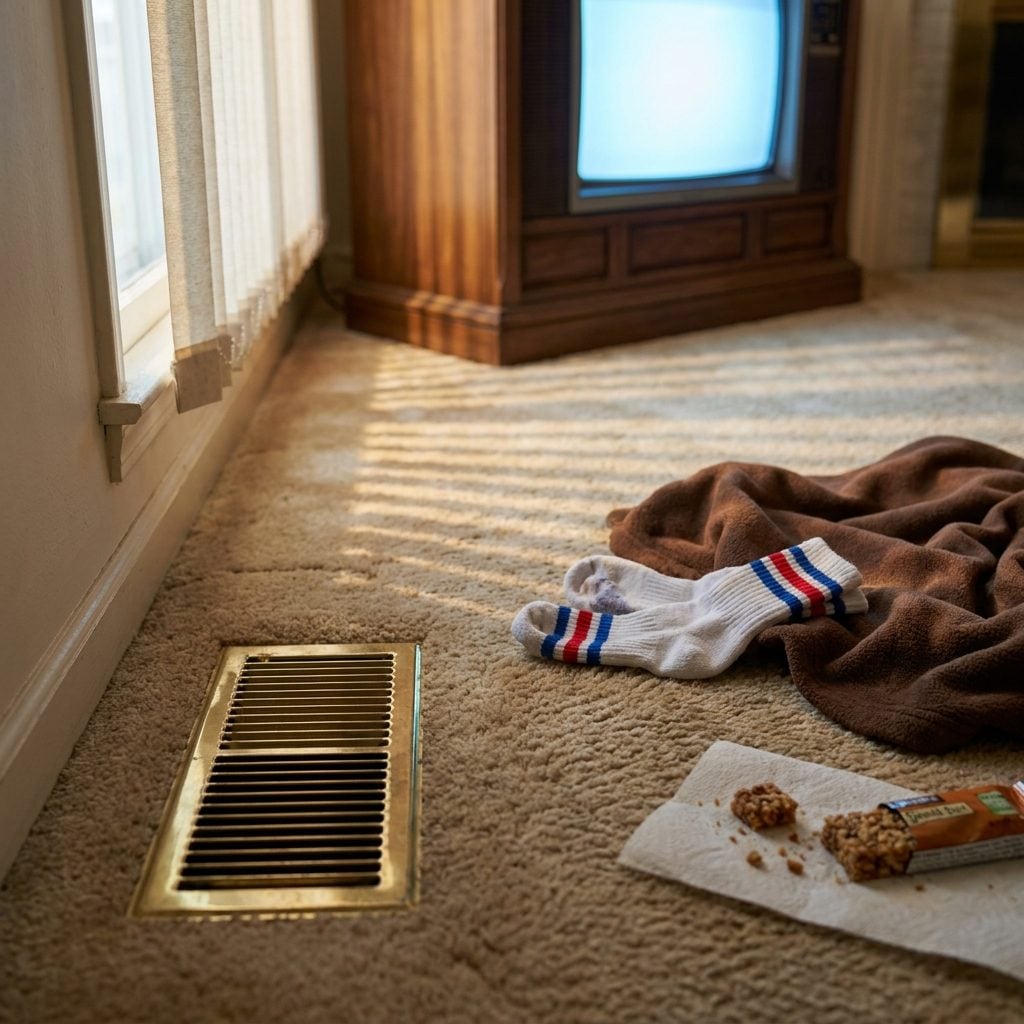
The carpet was fine. The couch was right there. But something about that metal heating vent in the floor pulled you to it every single time the furnace kicked on — you’d sit cross-legged directly over it, feel the warm air billow your shirt, and watch whatever came in clear on the one decent channel.
Those slat patterns pressed themselves into the backs of your thighs. You didn’t care. The light living room glow off the TV screen, the hum of forced air, the house all yours for two more hours. Warmest spot in the building. Warmest spot in the whole afternoon, honestly, and not just temperature-wise.
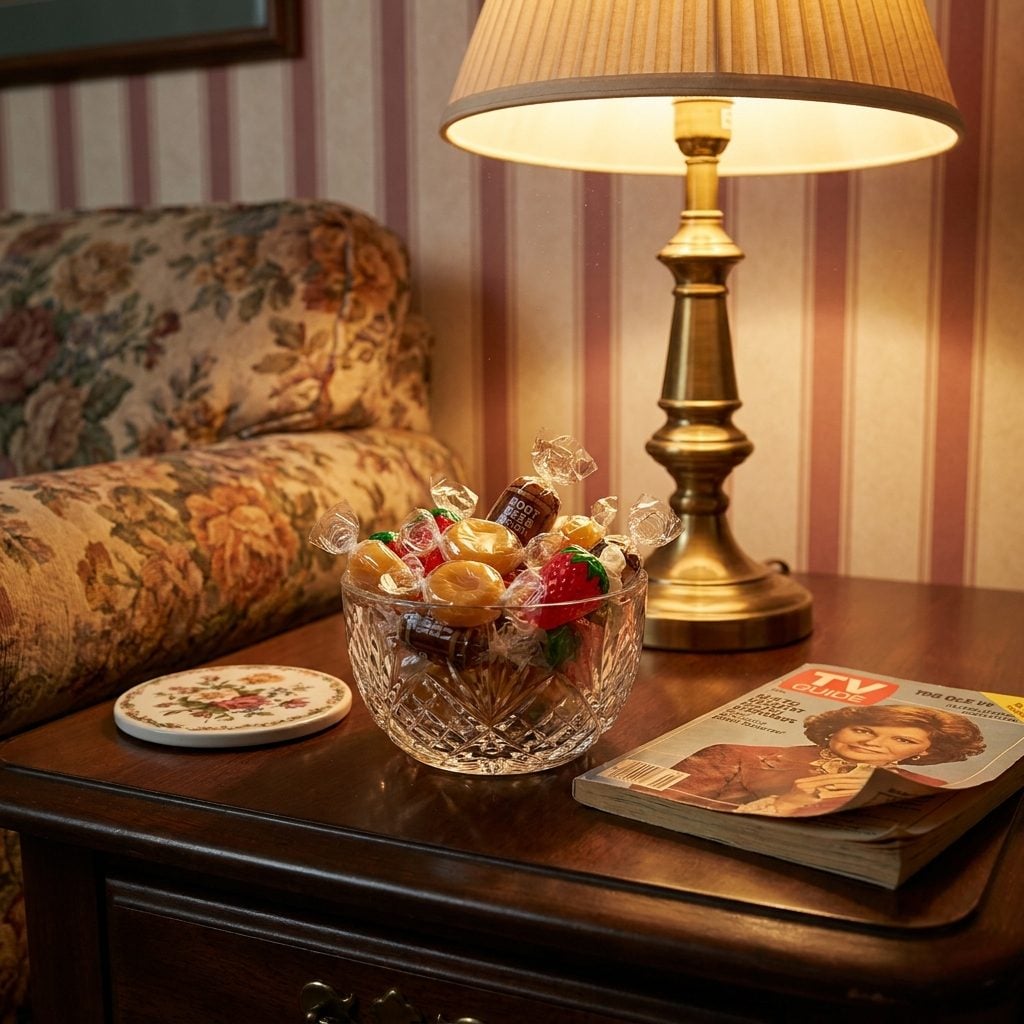
7. The Bowl of Hard Candy on the End Table That Had Been There Since Before You Were Born
🔥 Would you like to save this?
Nobody bought those candies. They just existed. A cut crystal candy dish crammed with butterscotch discs and strawberry hard candies in cellophane wrappers — the kind that crinkled loud enough to hear from two rooms away. Some had fused into a single amber mass at the bottom. You ate them anyway.
The dish never emptied and never refilled. It operated outside normal time, a decorative singularity for sweets that tasted faintly of dust and someone’s perfume. Every afternoon you unwrapped one. Not because you wanted candy, but because it was there and you were alone and the slow cellophane crinkle felt like company.
6. The Wood-Paneled Basement Stairs You Took Two at a Time Because Something Was Definitely Behind You
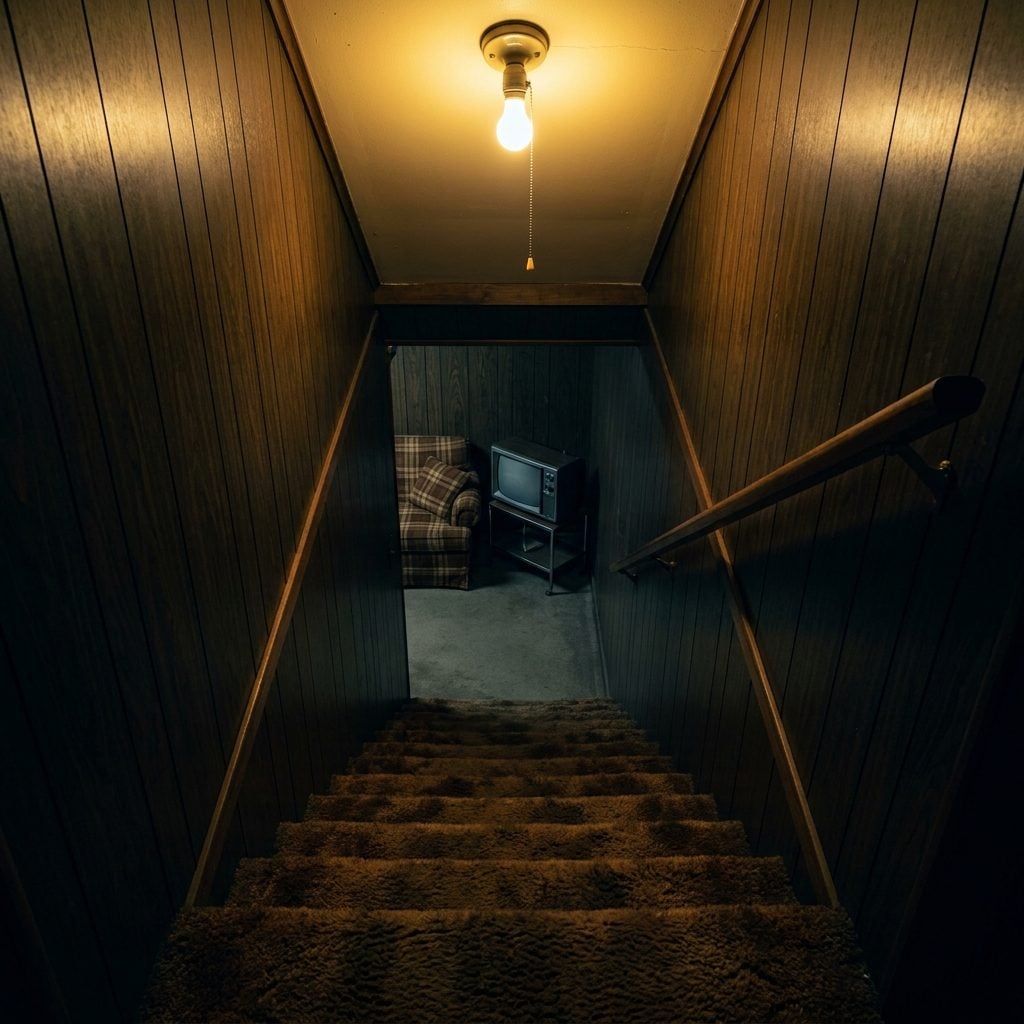
Three o’clock. House empty. You needed something from the basement. Fine. No problem. Not scared.
You flipped the light switch at the top, and that single bulb did almost nothing — the bottom three stairs stayed dark no matter what. Four steps down at a normal pace, then something shifted in your peripheral vision. Probably nothing. Almost certainly nothing. You took the rest three at a time, lungs already at full sprint capacity before your feet hit the basement floor.
Coming back up was worse. You killed the light, turned, and the dark behind you became a physical presence with intentions. I spent years pretending my reaction was rational. It wasn’t. That staircase had its own climate and it was always cold.
5. The Little TV in the Kitchen With Rabbit Ears Wrapped in Aluminum Foil
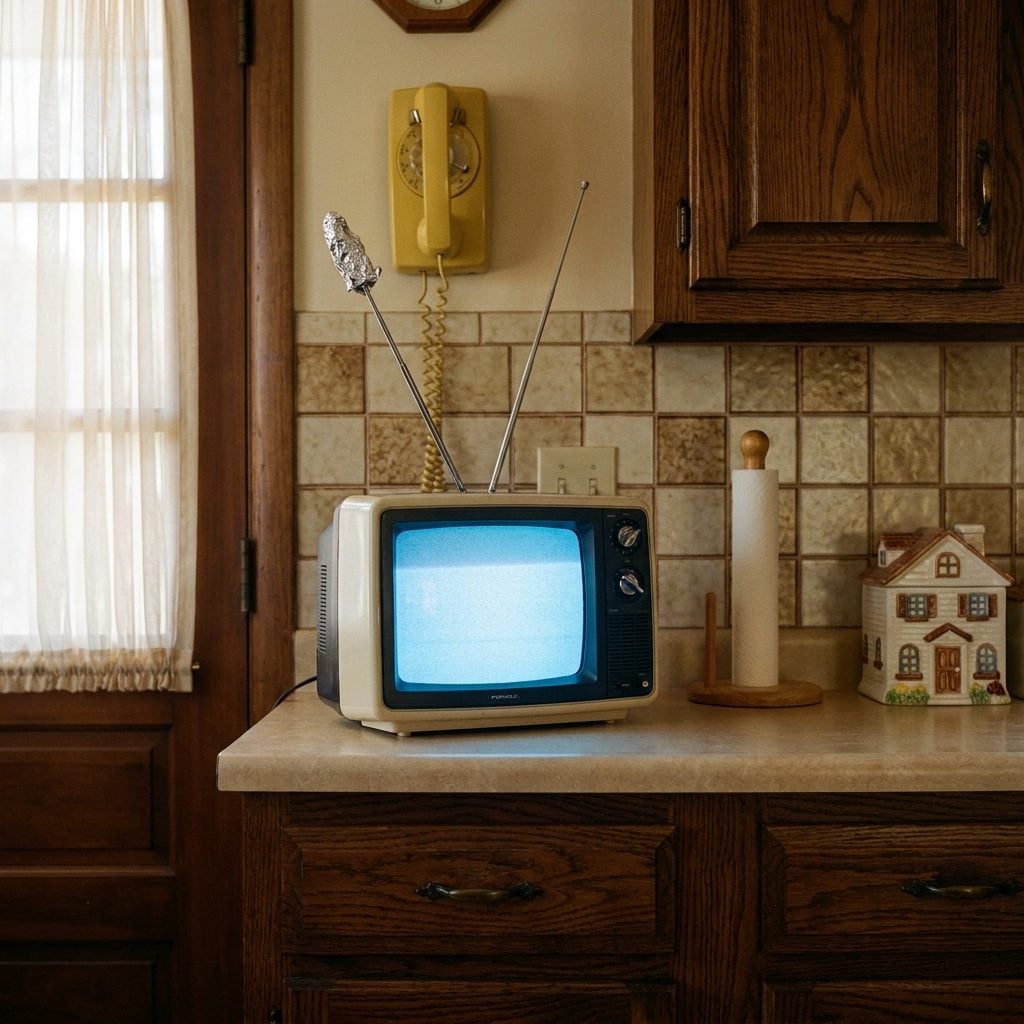
The main TV was in the living room. This one was the runt — a nine-inch screen, maybe thirteen if the family was feeling extravagant, perched on the kitchen counter between the toaster and the cookie jar. One antenna stood straight. The other had been bent at a severe angle and wrapped in foil because somebody’s uncle said that worked.
And it did work. Sort of. Three channels came in clearly, plus a fourth if nobody touched anything, including the counter itself. After school this was background noise while you assembled a sandwich. Reception wobbled whenever the refrigerator compressor kicked in, so you learned to time your channel changes around it — a strange little negotiation between appliances that felt completely normal at the time.
4. The Stack of TV Guides on the Coffee Table, Dog-Eared to Friday Night’s Lineup
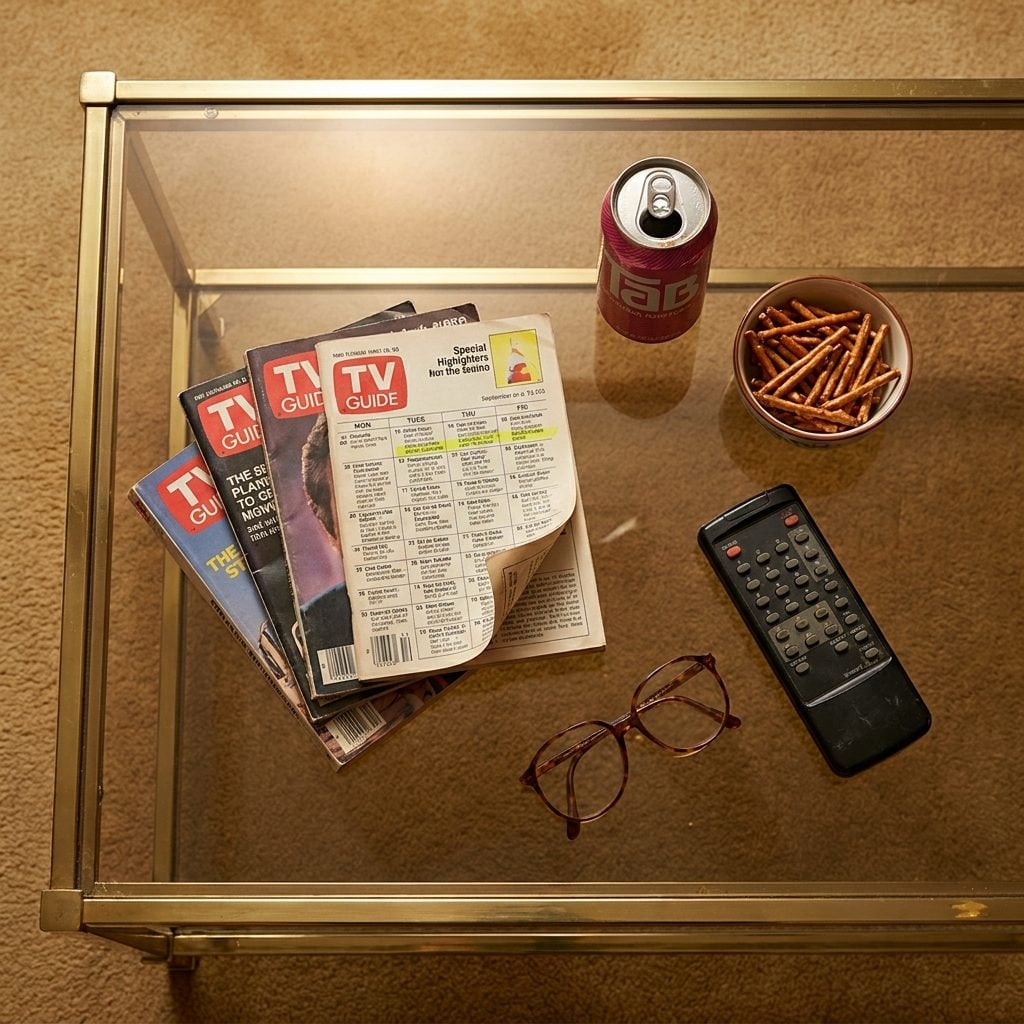
You planned your week around that little magazine. The TV Guide arrived and somebody — usually you — flipped straight to the grid. Highlighter on the good stuff. Corner fold on Friday’s page. An entire viewing schedule mapped out like a military campaign.
No scrolling, no algorithm. You read a printed grid of what was on, when, and on which of your available channels, and you committed. Miss it and it’s gone. The stakes of 8 PM on a Wednesday were genuinely real, which sounds absurd now but wasn’t then. That stack on the coffee table was the closest thing a latchkey kid had to a social calendar — and looking back, maybe a coping mechanism too, giving shape to all those empty weeknight hours.
3. The Deadbolt You Locked Behind You With the Key on the Shoelace Around Your Neck
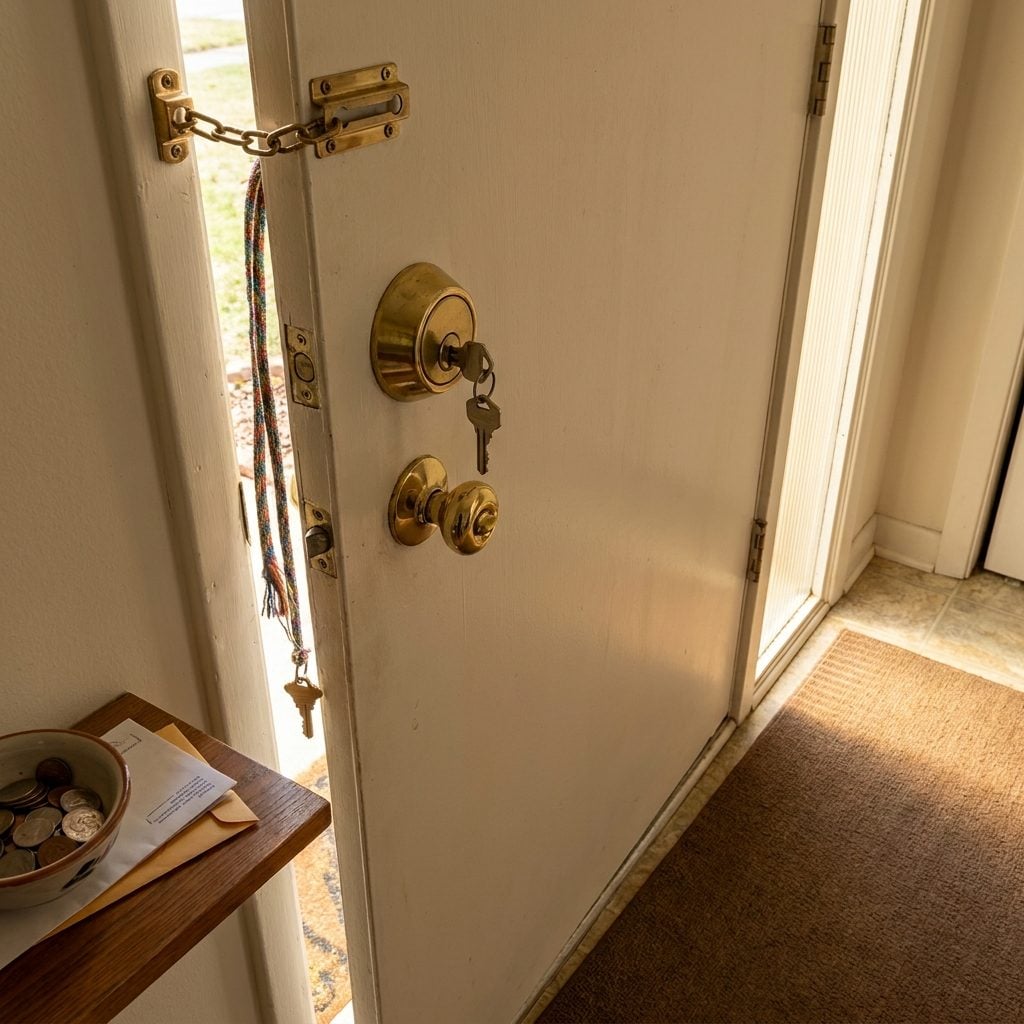
That key lived around your neck from September to June. A single brass house key on a shoelace, tucked under your shirt where it pressed cold against your chest during the walk home. You fished it out at the front door, turned the deadbolt, stepped inside, locked it again behind you.
The click of that deadbolt was the sound of your afternoon starting. House yours. Rules technically in effect but enforcement a couple hours away. The small family room went quiet once that door locked — just you, the hum of appliances, the slow settling of a building finding its weight without anyone watching.
2. The Snack You Made Yourself Because Nobody Was Coming Home to Cook Until Six
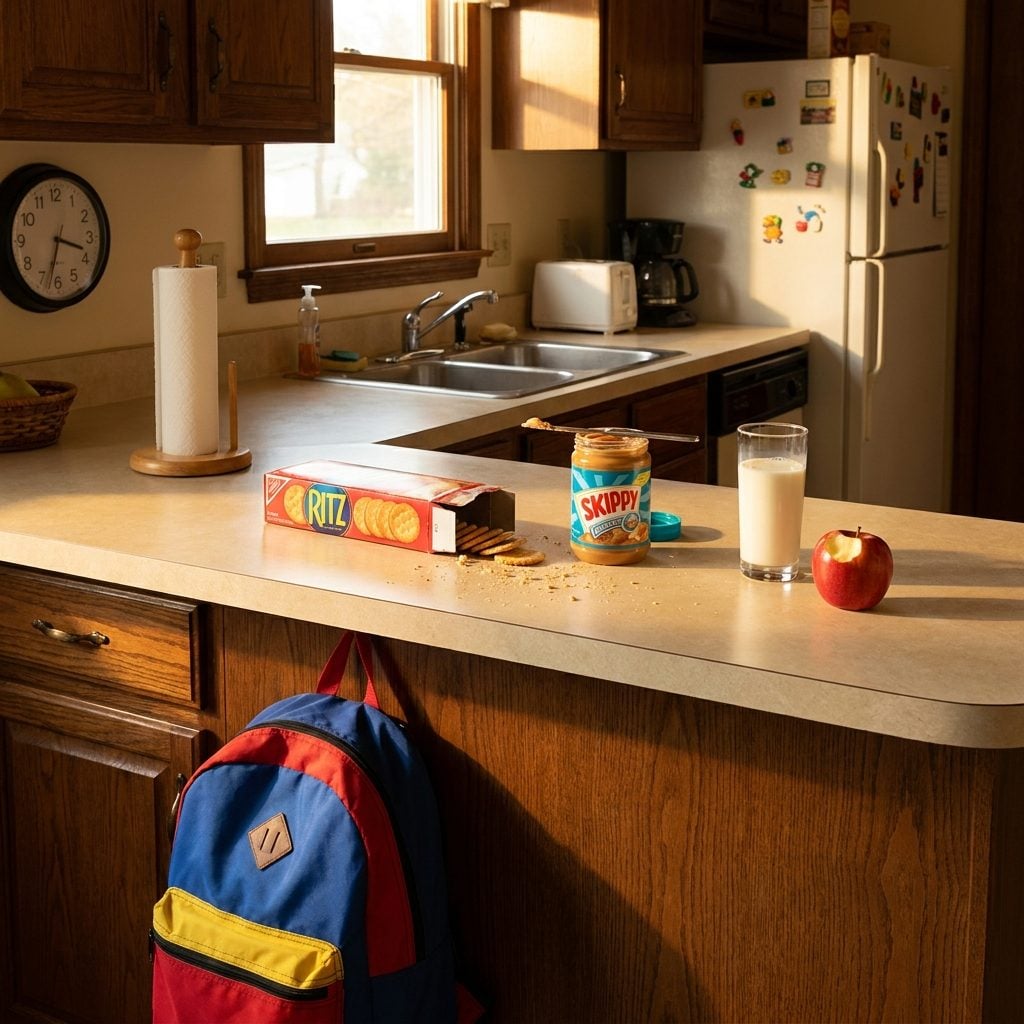
Peanut butter on Ritz crackers. A glass of milk poured too full, carried to the living room with both hands. Maybe a bowl of cereal if ambition struck. Self-sufficiency at age nine, executed daily with the confidence of someone who’d done it hundreds of times and never once questioned the routine.
Nobody gave a formal lesson. You watched your parents enough mornings to know where the clean glasses were and how far to tilt the milk carton before it became a flood. The kitchen was yours. The crumbs were your problem — and whether you cleaned them up or didn’t, the counter told the whole story when tires crunched in the driveway at six.
1. The Silence of the House at 3:15 PM That Was Louder Than Any Sound in It
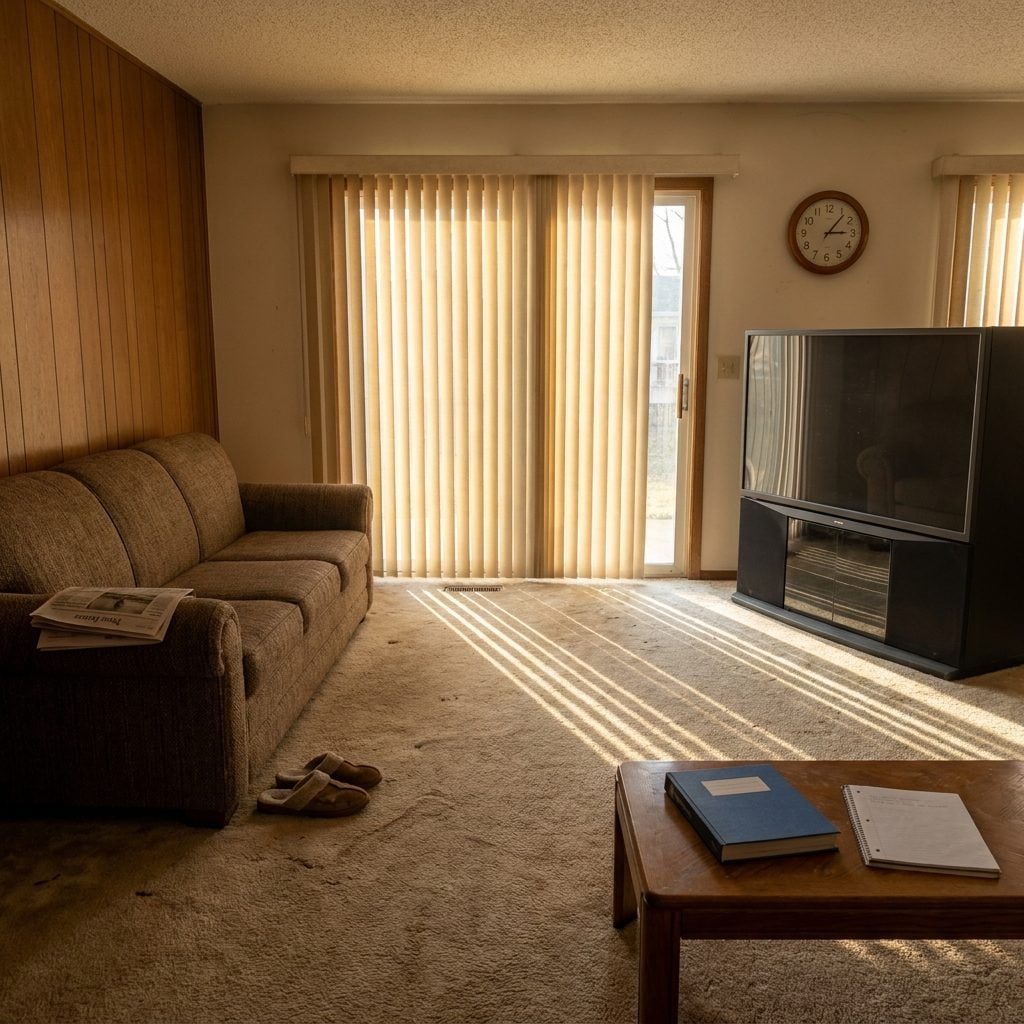
Not quiet. Silent. A specific, pressurized silence that only happened when the house was truly empty and belonged entirely to you. The refrigerator hummed, the clock ticked, a pipe somewhere made the one sound it always made — but these weren’t really noises. They were the grain of the silence itself, the way static is the texture of a blank screen.
You turned the TV on immediately. Every single time. Not because you wanted to watch something but because the silence pressed on the room like weather, and without voices from the screen the rooms behind you felt like they were paying attention. Before snacks, before the phone, before anything — sound first. Fill the house with noise so it stops feeling like a place that’s waiting for something.