🔥 Would you like to save this?
The smell hits first. Fresh-vacuumed plush carpet, a little pipe smoke soaked into wood paneling, the faint sweetness of a scented candle drifting from the wet bar. If you grew up in a house during the late 1970s or 1980s, your body knows that smell before your brain catches up.
Somewhere along the way we ripped most of it out and called it progress — open floor plans, gray everything, hard surfaces you can wipe down. But the ones below? They had a way of making a house feel like a place you actually lived in, and I’m not sure we appreciated that until it was gone.
In order to come up with the very specific design ideas, we create most designs with the assistance of state-of-the-art AI interior design software. Also, assume links that take you off the site are affiliate links such as links to Amazon. this means we may earn a commission if you buy something.
36. The Sunken Living Room You Stepped Down Into
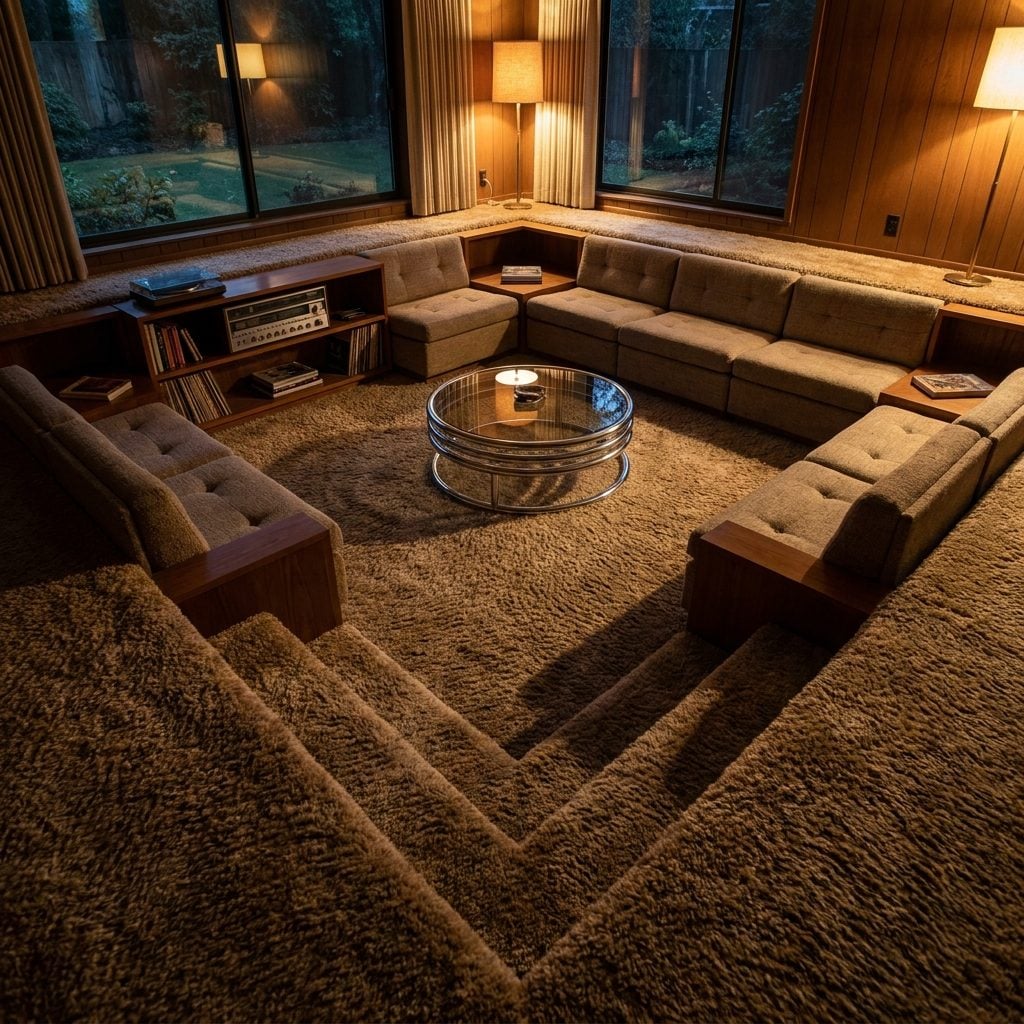
You knew you’d arrived somewhere fancy the moment the floor dropped away beneath you. Two carpeted steps down and suddenly you were in a room that felt like its own little world, with everyone up top looking down on you like you’d stepped onto a stage.
The genius was the way it cradled everyone. Drop the seating below the sightline of the doorway and the conversation gets closer, quieter, more yours. The lowered floor made the room feel set apart without actually closing it off. We called it the good part of the house.
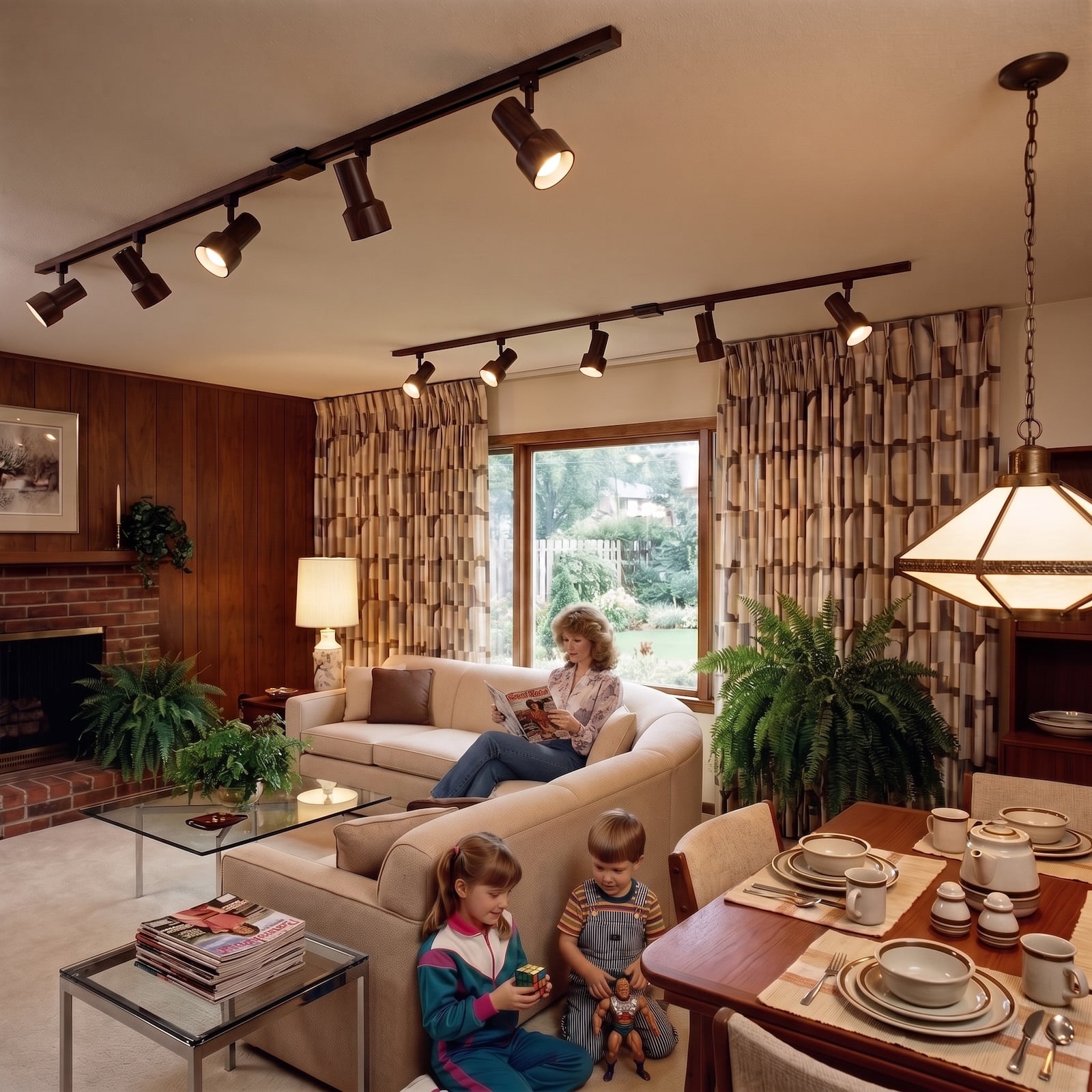
35. The Wood-Paneled Family Room That Glowed Amber at Night
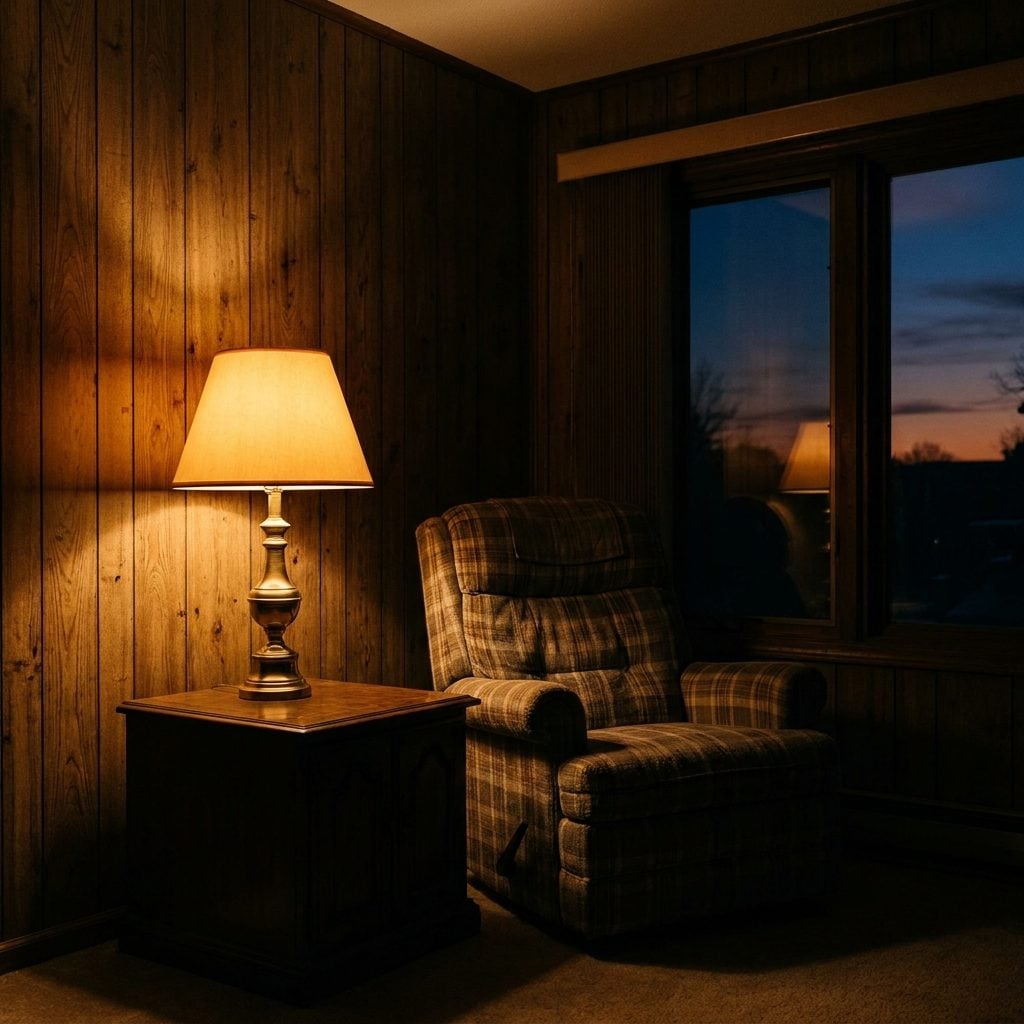
Turn on a single brass lamp in one of these rooms and the whole thing went the color of honey. That’s the part nobody warned us about when we painted over the paneling in 2011.
Wood absorbs light instead of firing it back at you. A white room at night is a light box; a paneled room at night is a lantern, and being inside it felt like being inside something safe.
Want that same enveloping feel in a modern space? A wood-heavy japandi home office gets surprisingly close.
34. The Built-In Wet Bar With Its Own Little Sink
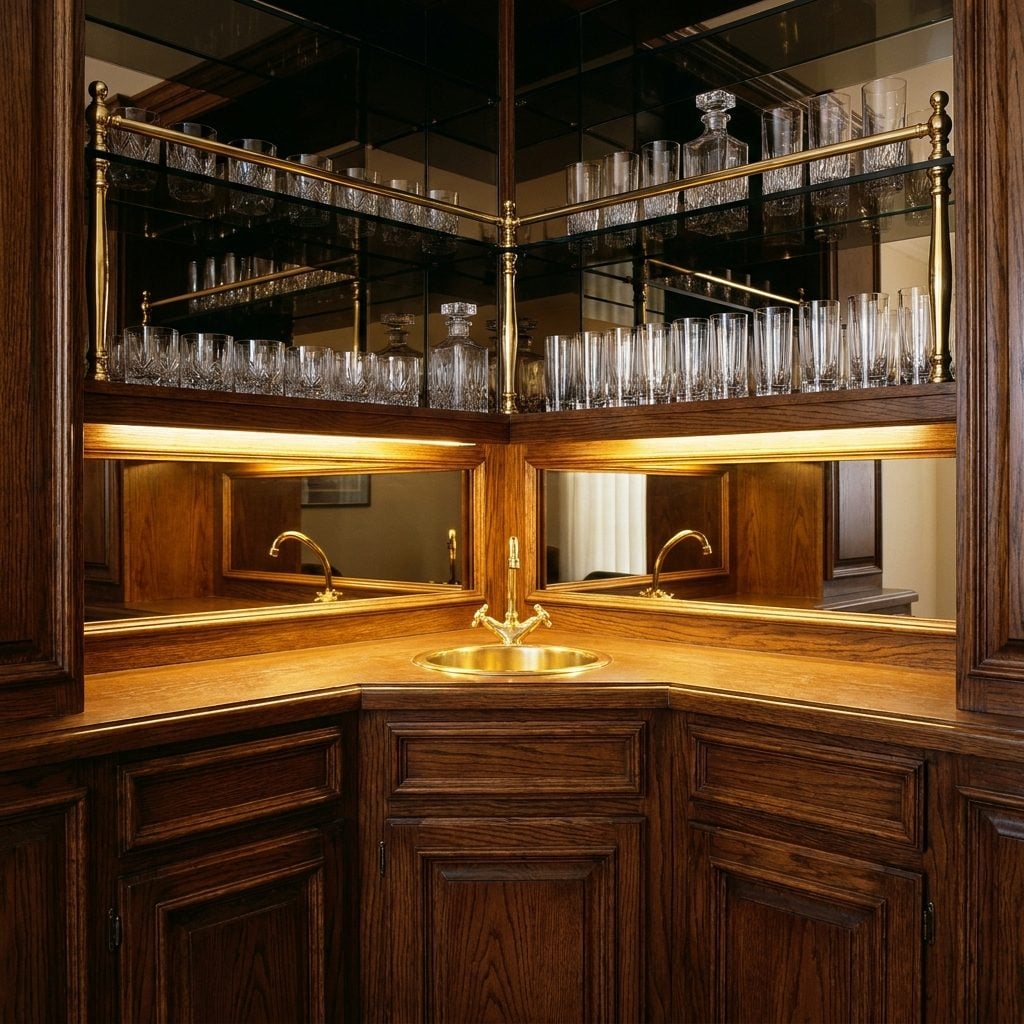
A tiny sink. In your living room. Its entire job was making drinks so you never had to leave the party. What a beautifully specific priority.
The built-in wet bar let grown-ups host without disappearing into the kitchen every ten minutes. Mirrored back wall, a row of glasses that only came out for company, a stained-glass pendant overhead throwing colored light on everybody. It was the corner of the house that said we have people over.
The modern contemporary home bar is basically this idea, grown up and gone minimalist. And a proper country home bar still keeps the little sink, because whoever designs those knows what matters.
33. The Eat-In Kitchen Breakfast Nook With the Curved Bench
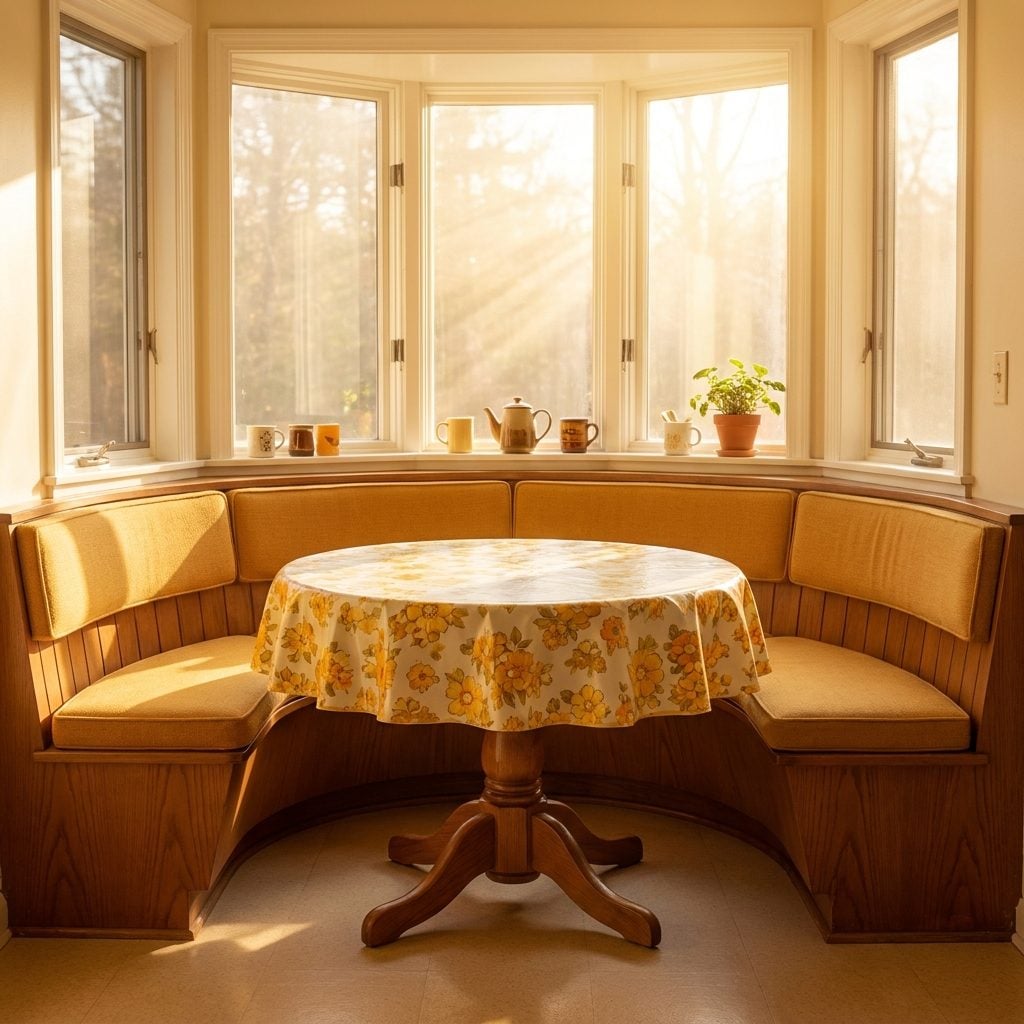
Sun through a bay window at seven in the morning, hitting a vinyl tablecloth that squeaked when you slid across the bench. That’s the memory. That’s the whole thing.
The breakfast nook tucked a curved bench into a corner and turned dead space into the most-used table in the house. Nobody ate in the formal dining room. Everybody ate here — elbows on the table, cereal bowls out, the good light pouring in.
The dining room was for company. The nook was for us.
Open plans gave us islands with barstools instead, and barstools are fine. But you can’t build a fort under a barstool, and a five-year-old with a whole curved bench to himself understood exactly what he’d been given.
32. Console Televisions That Looked Like Furniture
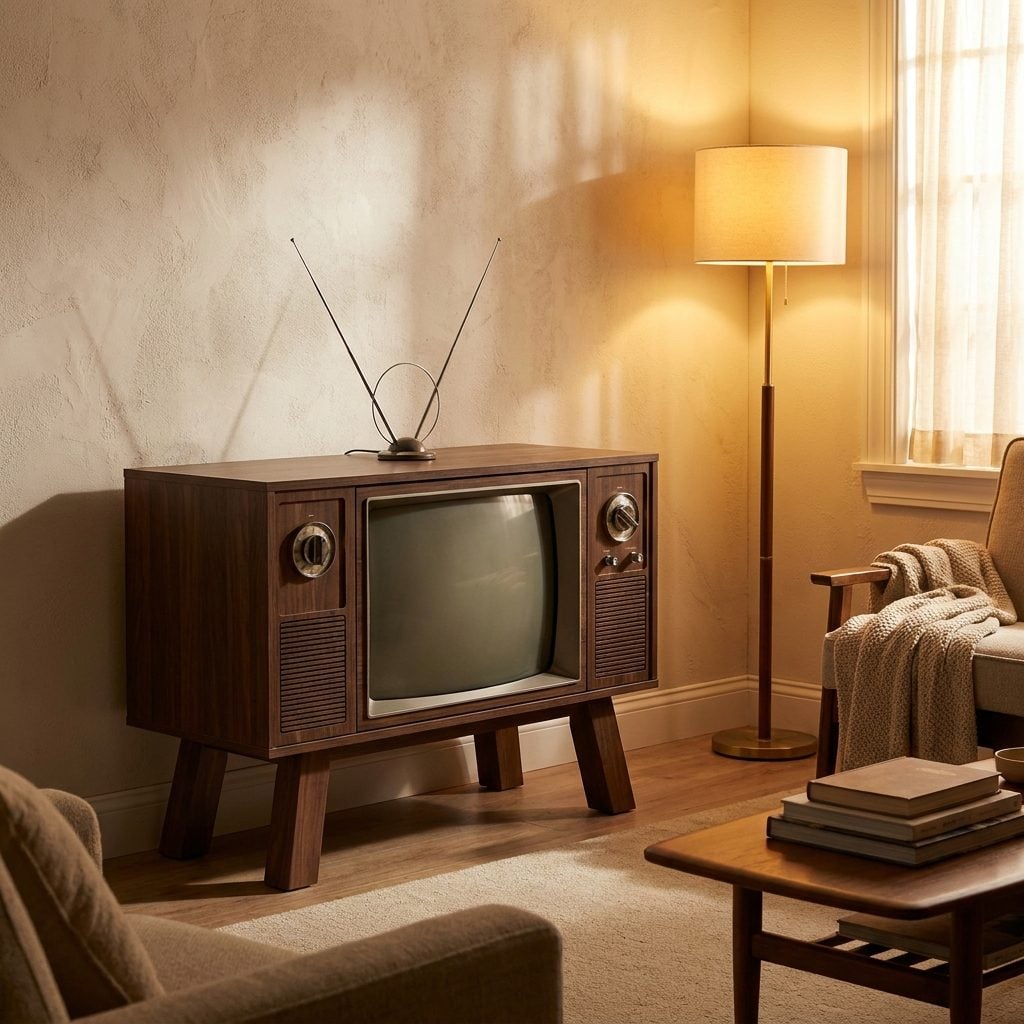
You didn’t put a console TV on a stand. It was the stand — a wood cabinet with stubby legs, heavy enough to hold down the corner of the room, and people set framed photos and a lamp right on top of it.
The screen was small relative to the furniture around it, but nobody cared. You changed the channel by walking over and turning a knob that went ka-chunk. Twelve stops. Then you sat back down.
31. Wall-to-Wall Plush Carpeting You Could Sink Your Toes Into
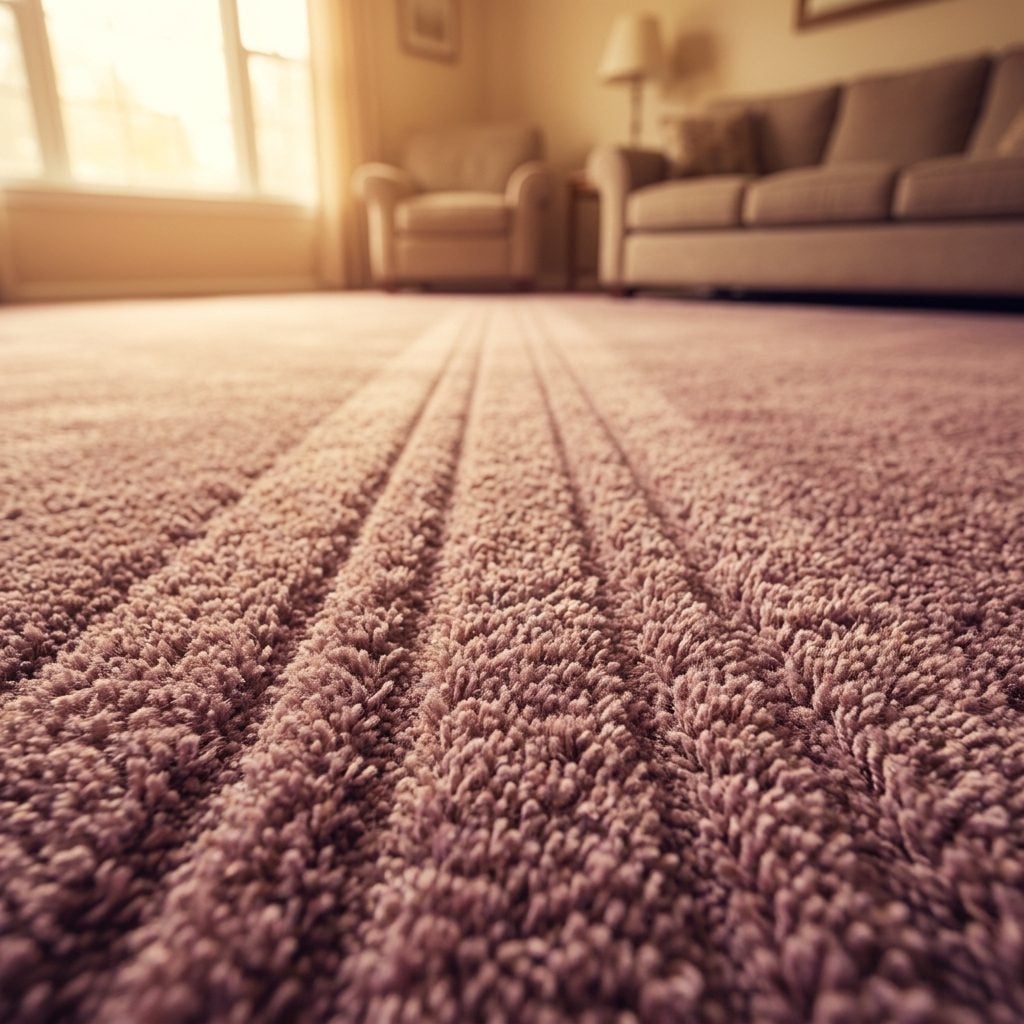
Vacuum lines. Remember vacuum lines? You could tell whether the house had been cleaned from the doorway.
Deep pile did something hard floors never will: it made a bedroom silent. No echo, no click of heels, no cold shock when your feet hit the ground at 6 a.m. You sank a little with every step, and honestly there was a small daily luxury in that nobody talks about anymore.
Hardwood came roaring back for plenty of reasons — easier cleaning, changing tastes, allergies, resale appeal — and all are fair points. But nobody ever stubbed a toe on hardwood and thought fondly of carpet at that exact moment. There’s a reason the good home decor revivals keep circling back to soft, tactile floors.
30. The Built-In Wall Intercom by the Kitchen Door
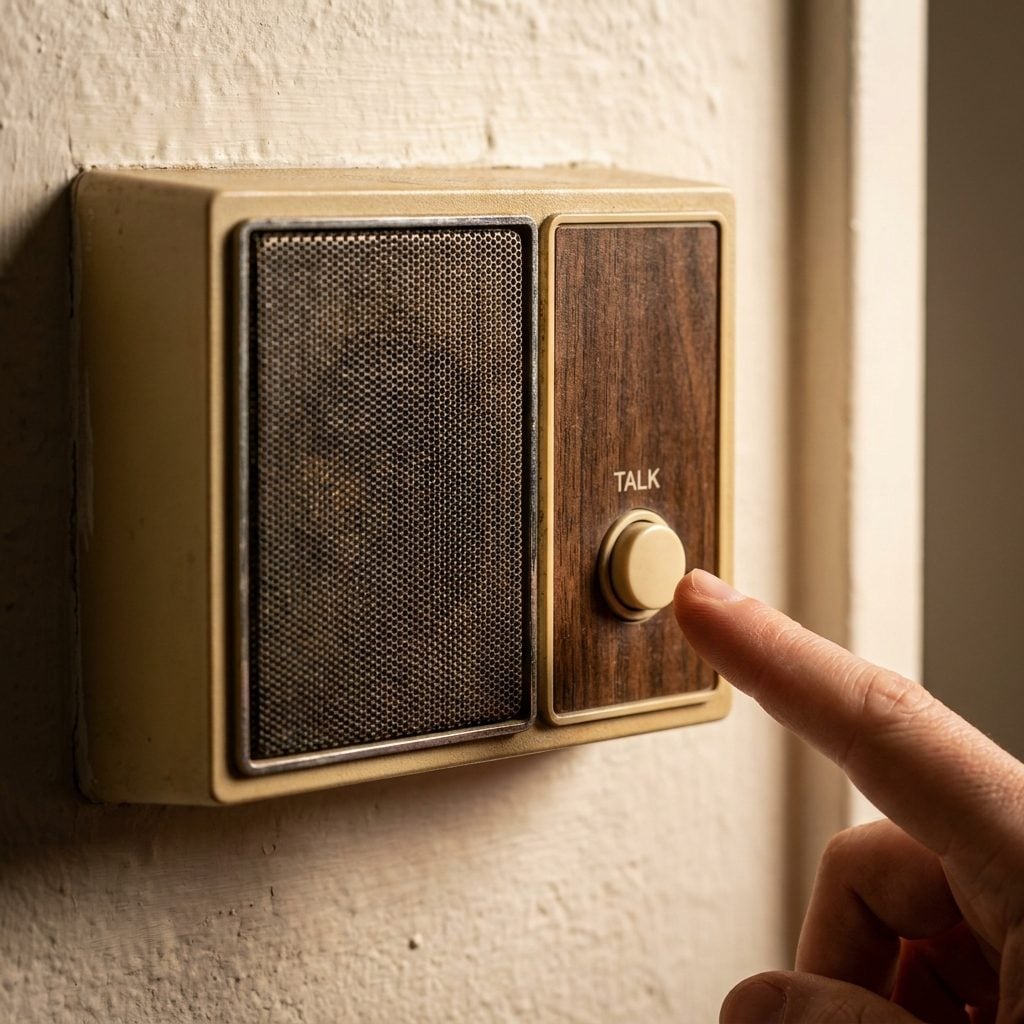
A beige plastic box on the wall, speaker grille and a talk button, and the whole point was never having to yell up the stairs. You pressed the button, leaned in, and said dinner’s ready to the whole second floor at once.
The catch was that everybody in the house could hear everything, so it doubled as a surveillance tool your parents pretended not to use. These vanished as cordless phones, cell phones, and other communication devices made the fixed wall intercom feel less essential. Still, there was something grounded about a communication system that belonged to the house itself, not to a device in your pocket.
29. Glass-Block Walls and Room Dividers
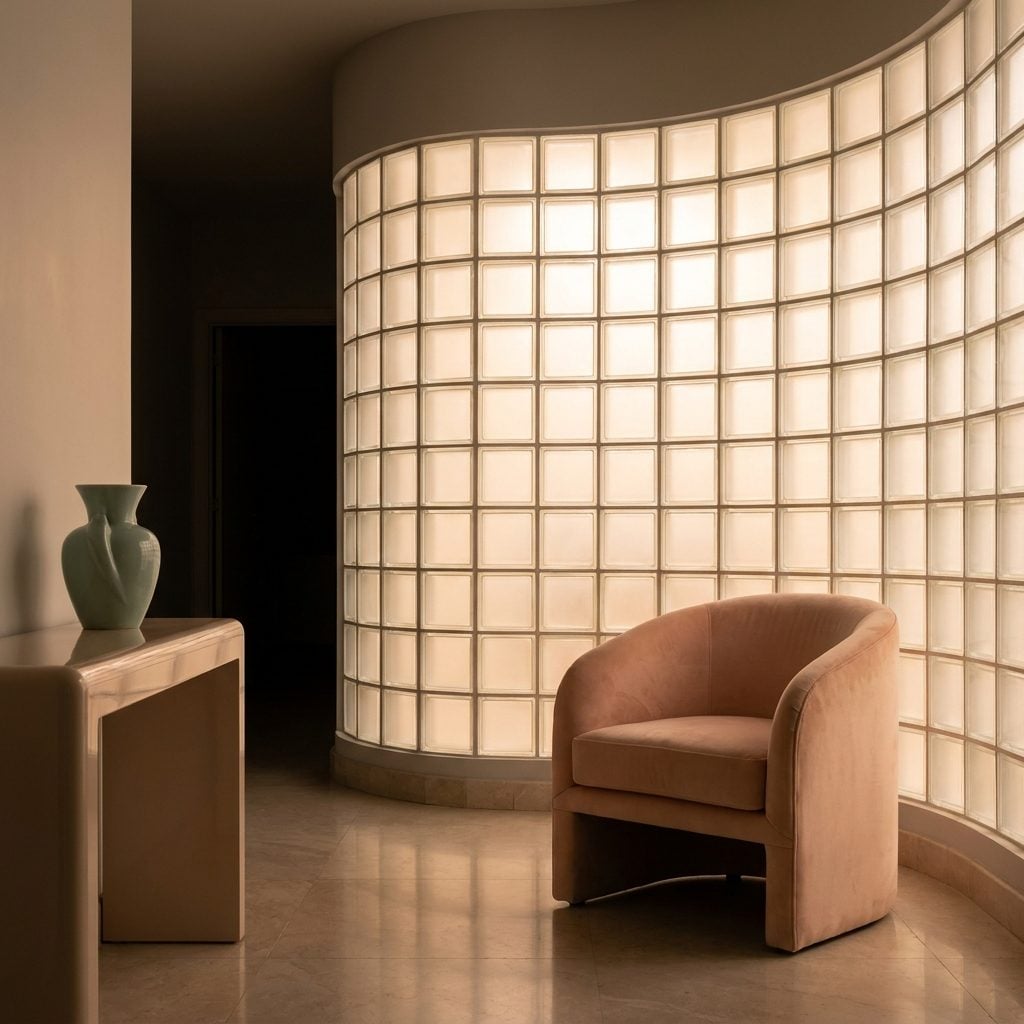
The height of sophistication in 1988. A curved wall of thick frosted blocks that let light through without letting anyone see through, usually screening an entryway or a shower or a bar corner.
The light it made was the whole point — soft, watery, scattered into a glow that hid a mess behind it. Pair one with a black lacquer console and a little pink neon and your home felt like a hotel lobby.
Very of-its-moment now, no argument. But I’ll defend the light. Nothing since diffuses a room quite like it.
28. Formica and Laminate Kitchen Countertops in Every Color the Decade Could Make
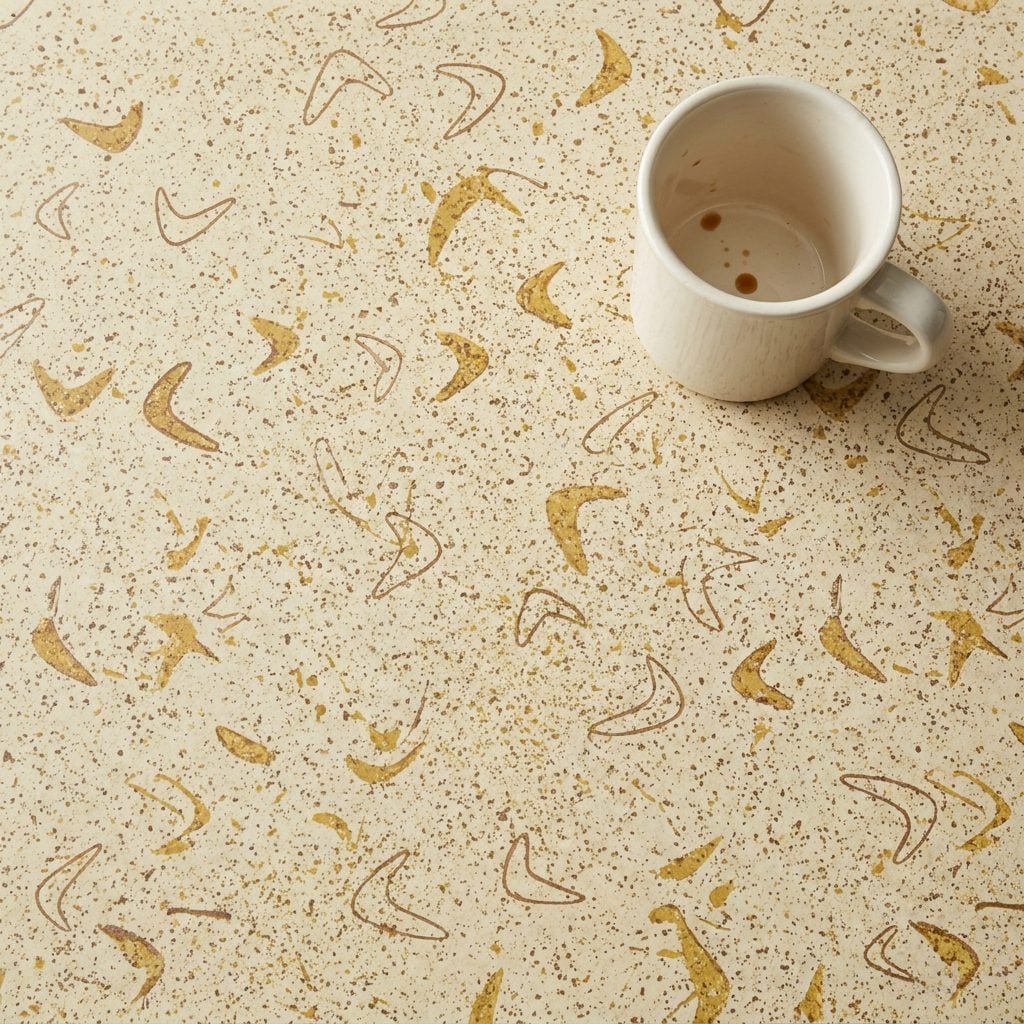
Almond, beige, soft gray, faux butcher block, that faint spatter pattern everyone pretended was granite from ten feet away. The laminate counter was the workhorse of the whole house — you rolled dough on it, did homework on it, and set a hot pan down on it exactly once before you learned not to.
The rolled front edge was the tell. No sharp corners, no seams to catch crumbs, just a smooth curve that flowed straight into a matching backsplash molded from the same sheet. Wipe it with a sponge and it looked new. Solid stone counters have been the aspiration for two decades now, and yet nobody I know has ever cried over scratching their Formica.
27. The Built-In Conversation Pit With Wraparound Seating
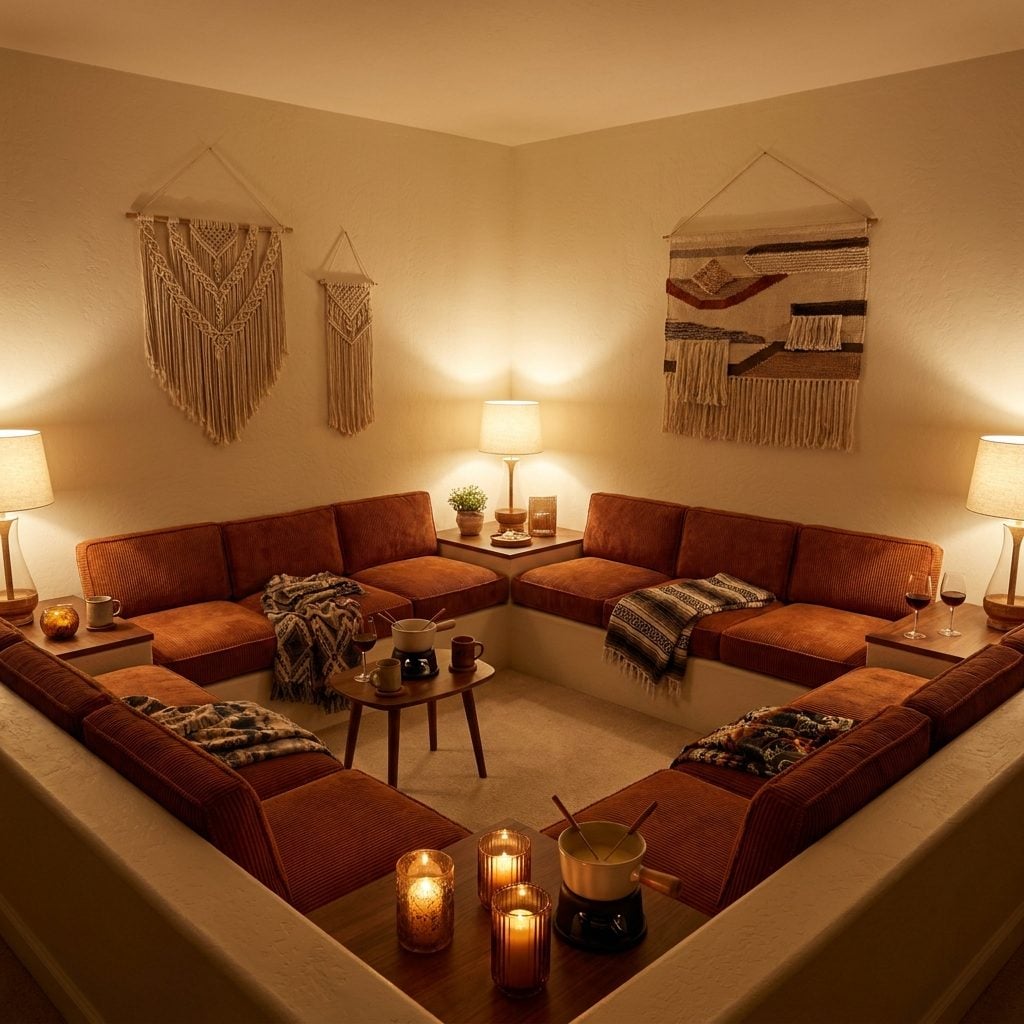
A whole room designed around the idea that people should sit close and talk to each other. Radical, apparently.
It sank the seating into the floor in a continuous ring, so nobody sat at the head of anything. You climbed in, kicked off your shoes, and stayed for three hours — no bad seat, no easy exit, which is precisely why the conversations went long and the fondue went cold.
We traded it for sectionals that all point at the TV. I’m not convinced that was an upgrade.
26. Ceiling Fans With Cane or Wicker-Blade Inserts
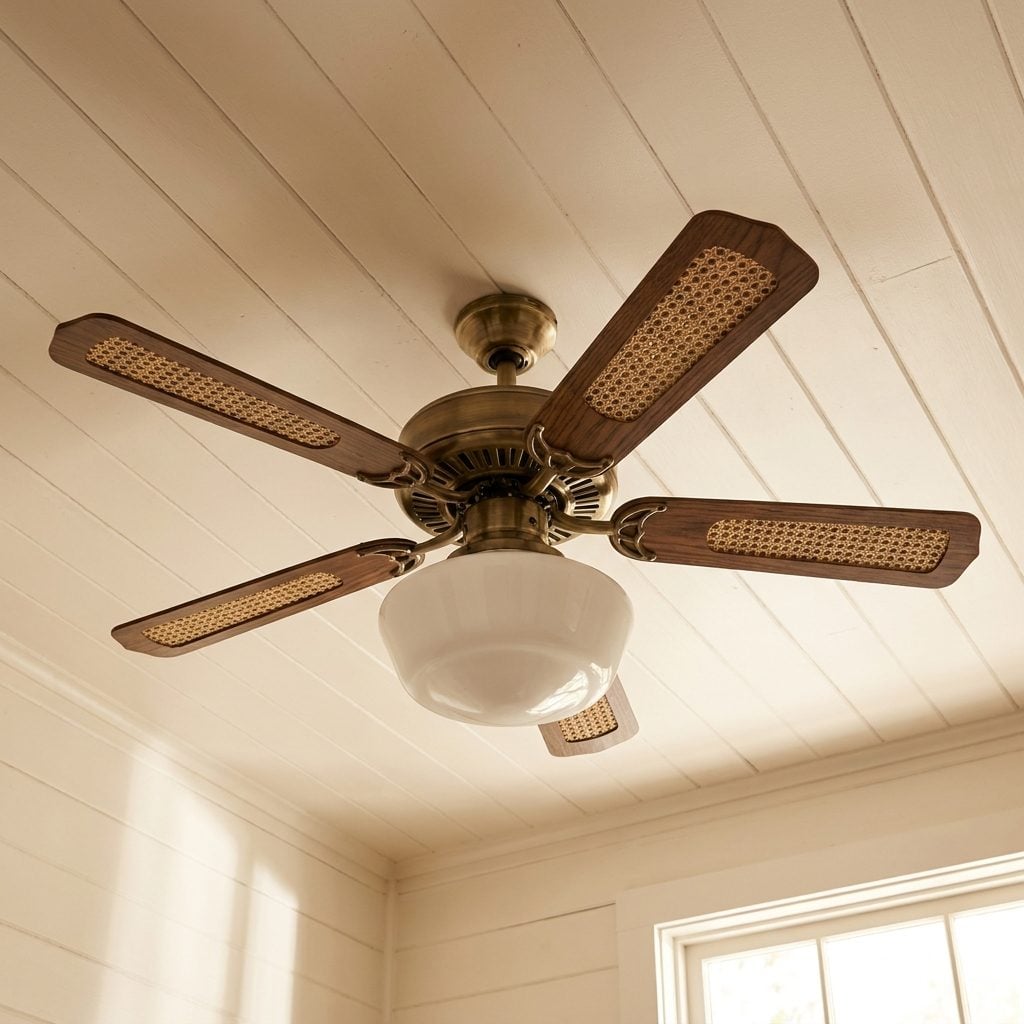
The fan that thought it was on vacation. Wide blades with woven cane or wicker inserts, a brass housing, and a frosted globe dangling below that hummed at the highest speed.
It belonged in the sunroom, over the wicker chair, next to the hanging fern, and it made the whole house feel a little tropical even in a snow state. Pull the shorter chain for the light, the longer one for speed, and pray you didn’t nudge it into that too-fast wobble.
Of everything here, this is the one I’d hang tomorrow. Something genuinely calming about that slow rattan turn on a hot afternoon.
25. The Landline Phone Bolted Right to the Kitchen Wall
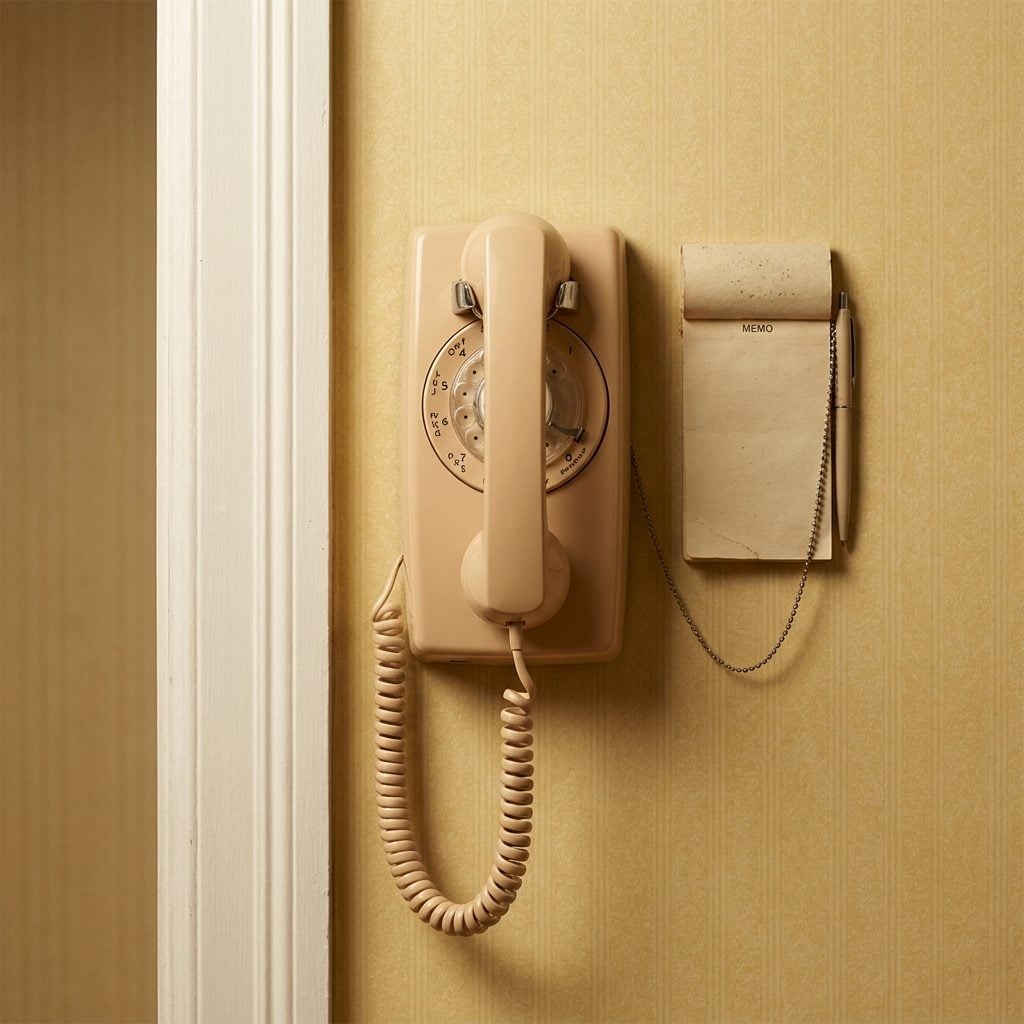
It hung on the wall near the doorway, cream or almond to match the appliances, with a little notepad and a pen tied to a string beside it. This was the family’s single point of contact with the outside world.
You knew your best friend’s number by heart because you dialed it standing right there, cradling the handset on your shoulder while you stirred a pot. Everyone in the house shared one line, which meant everyone in the house heard your business. When cordless phones and then cell phones arrived, the wall phone was the first casualty, and the ritual of a shared family line went with it.
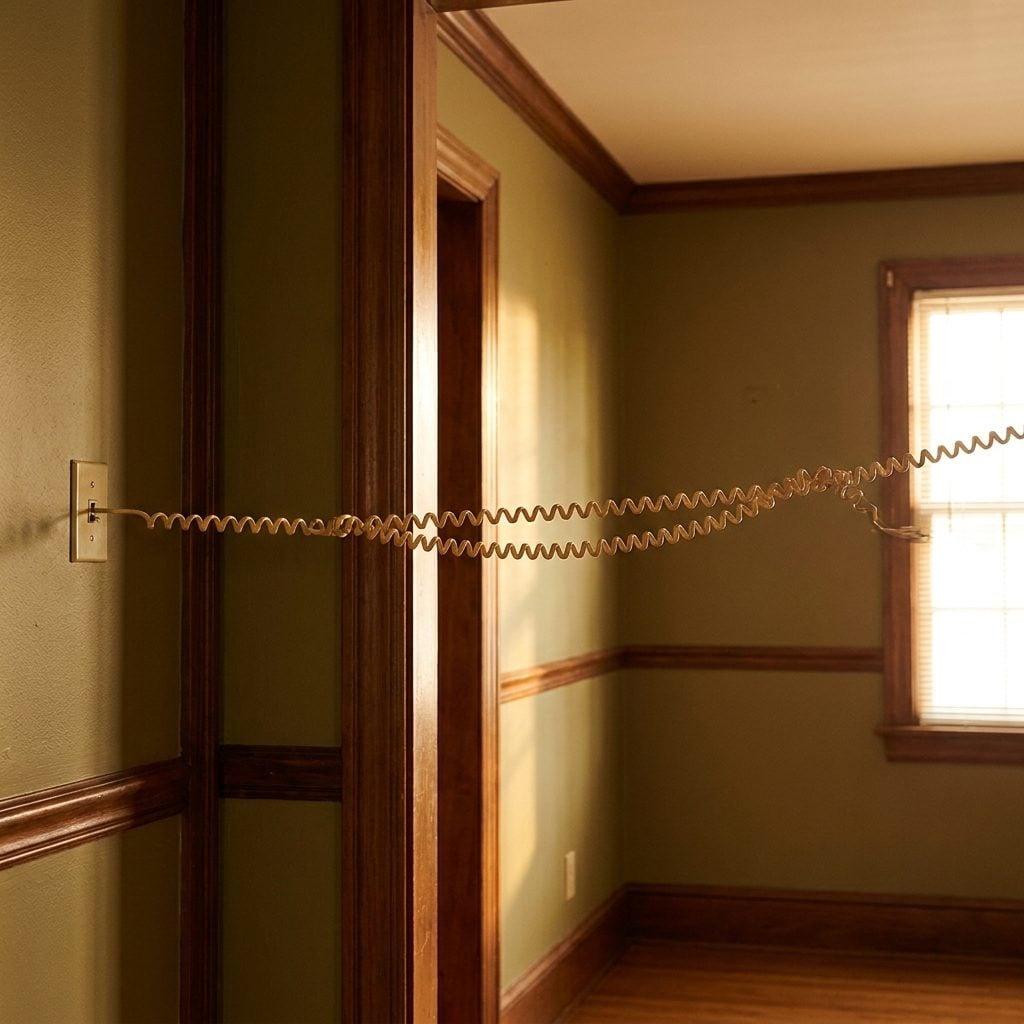
24. The Coiled Cord That Stretched to the Next Room Over
🔥 Would you like to save this?
Some cords came standard. And some, the good ones, stretched fifteen, twenty, twenty-five feet, coiling and uncoiling as you paced the kitchen and eventually rounded the corner into the hall for a shred of privacy.
The whole art of the teenage phone call lived in that cord. You pulled it to its absolute limit, sat on the floor just out of sight, and prayed nobody needed to walk through. It always ended up in a hopeless tangle, kinked into knots you’d spend a minute untwisting. A tiny, dumb, perfect piece of daily life that vanished the moment phones went cordless.
23. The Basement Rec Room Where the Kids Were Finally Free
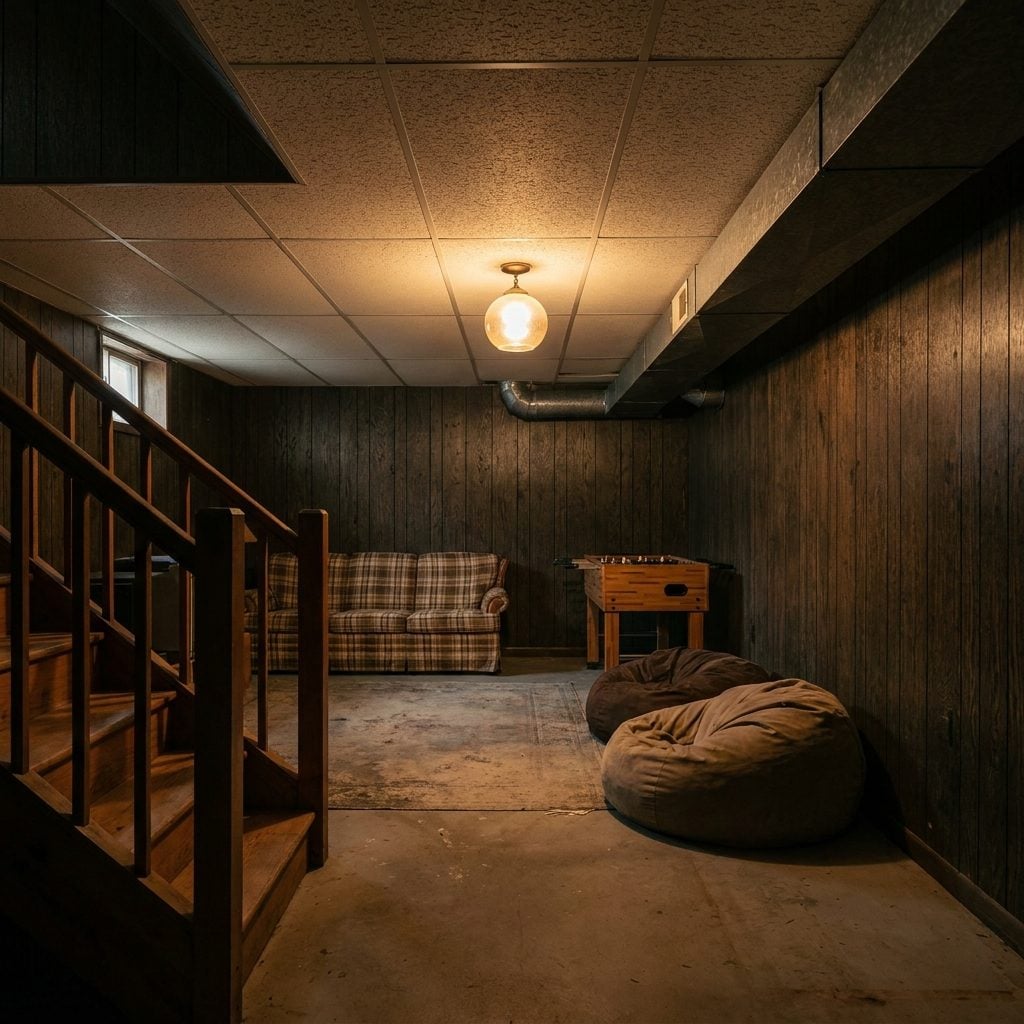
Down a set of carpeted stairs, past the water heater, into a world with its own rules. The basement rec room was the one place in the house where kids weren’t being watched.
You had the ping-pong table with a permanently dented corner, the beanbag that had lost half its beans, and a stereo cranked as loud as the ceiling could stand. Parents rarely came down, and that was the appeal.
As more family life migrated toward giant shared great rooms, this kind of rough secondary territory started to feel less central to the dream house. Something was gained in openness. Something also got lost when the kids ran out of places to hide.
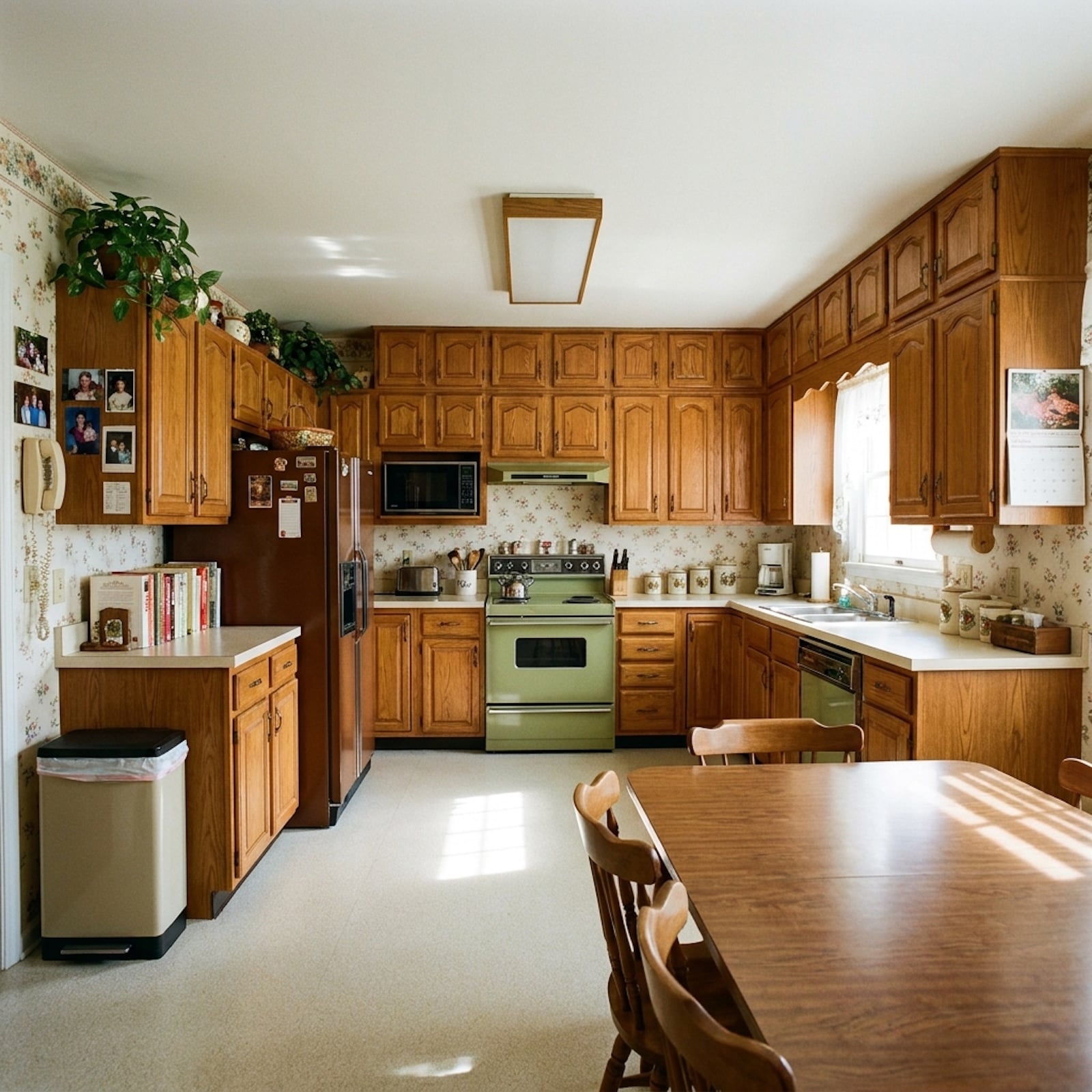
22. Honey Oak Kitchen Cabinets With the Cathedral Arch Doors
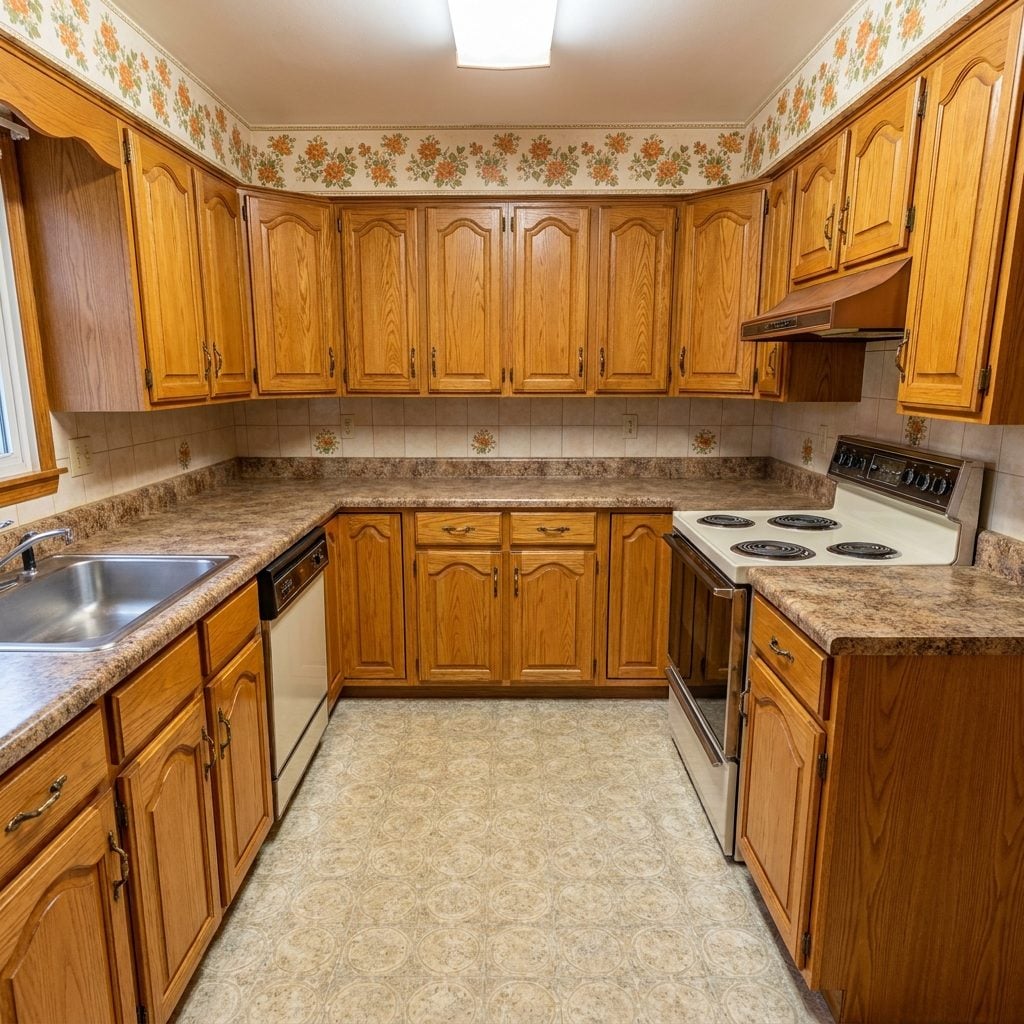
The whole kitchen was oak. Cabinets, trim, sometimes the table too. That golden-orange finish caught the light and made the room feel like the inside of a honeycomb.
The cathedral arch on the upper doors was the signature move — that gentle peak in the top rail that gave flat cabinet fronts a little shape and heft. Paired with brass pulls, it read as solid and permanent, the kind of kitchen that came with the house and stayed with it.
Painted cabinets took over completely, and honestly, most of those old oak kitchens got sprayed white the second someone bought the place. But visible wood grain is creeping back into modern kitchens and reno mood boards in paler, cleaner forms, including the oak-heavy interiors seen in many mid-century modern homes. Wood that looks like wood has a pulse that painted MDF never will.
21. Giant Stereo Component Systems
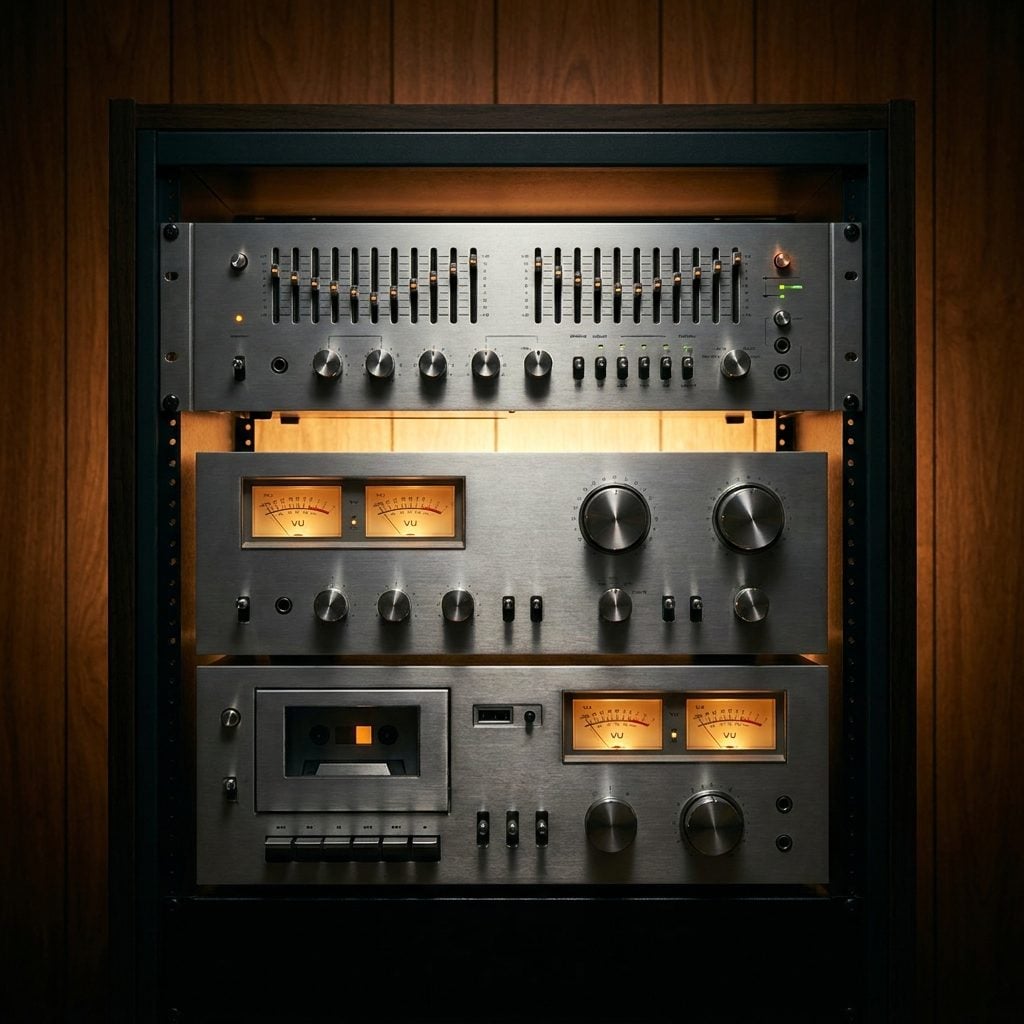
Separate boxes for everything — a receiver, a tape deck, an equalizer, a turntable — each one silver-faced with its own glowing meters that bounced when the music got loud. You stacked them in a rack and it was the most serious-looking thing you owned.
The equalizer alone was a whole personality. Ten sliders you’d nudge into a smile shape and then defend as “the correct settings” against anyone who dared touch them.
20. Mirrored Closet Doors
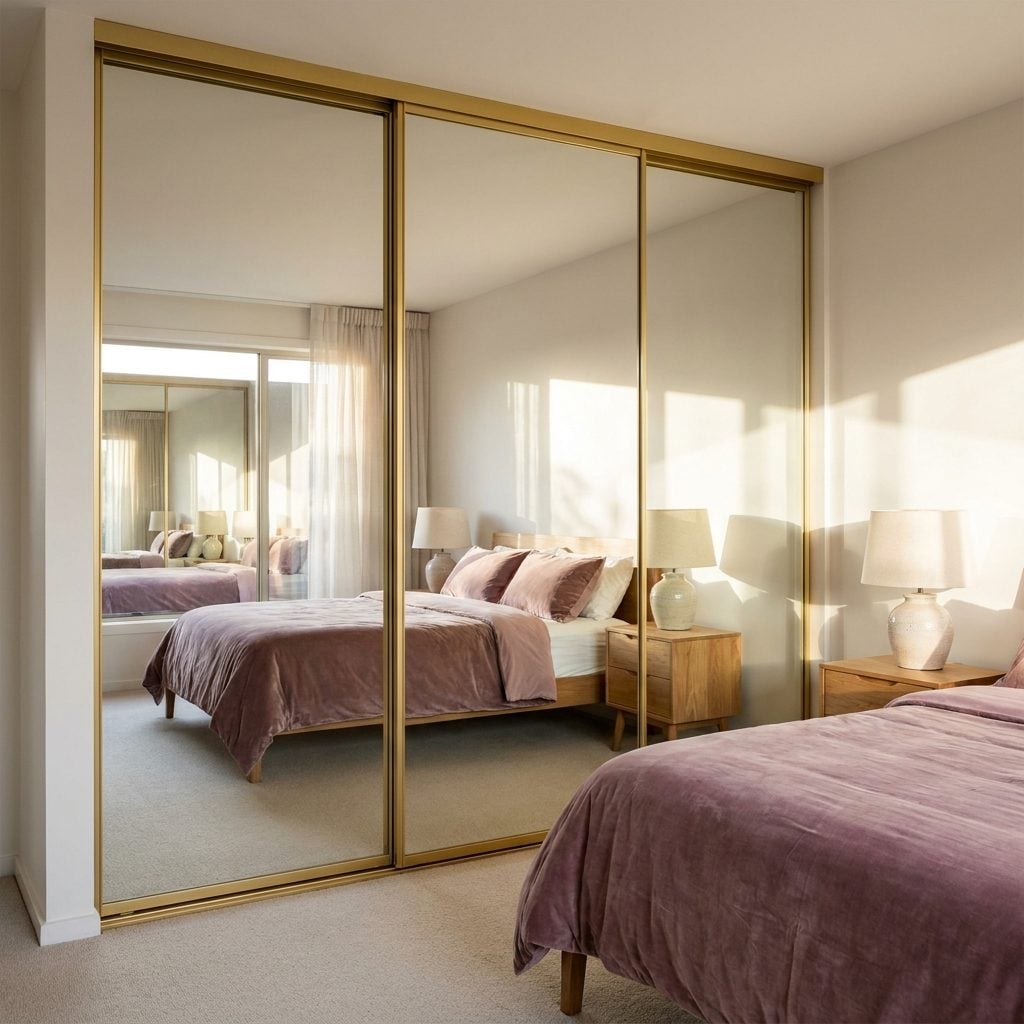
An entire wall that doubled the size of the bedroom and threw the whole thing back at you the second you woke up. Two big sliding panels with a thin gold or bronze frame, tracks at top and bottom that eventually stuck.
They made small rooms breathe. They also meant you couldn’t sneak a snack in bed without watching yourself do it. Everybody has a memory of one panel coming slightly off its track and the low grind it made sliding across.
19. Double Wall Ovens Stacked Like a Command Center
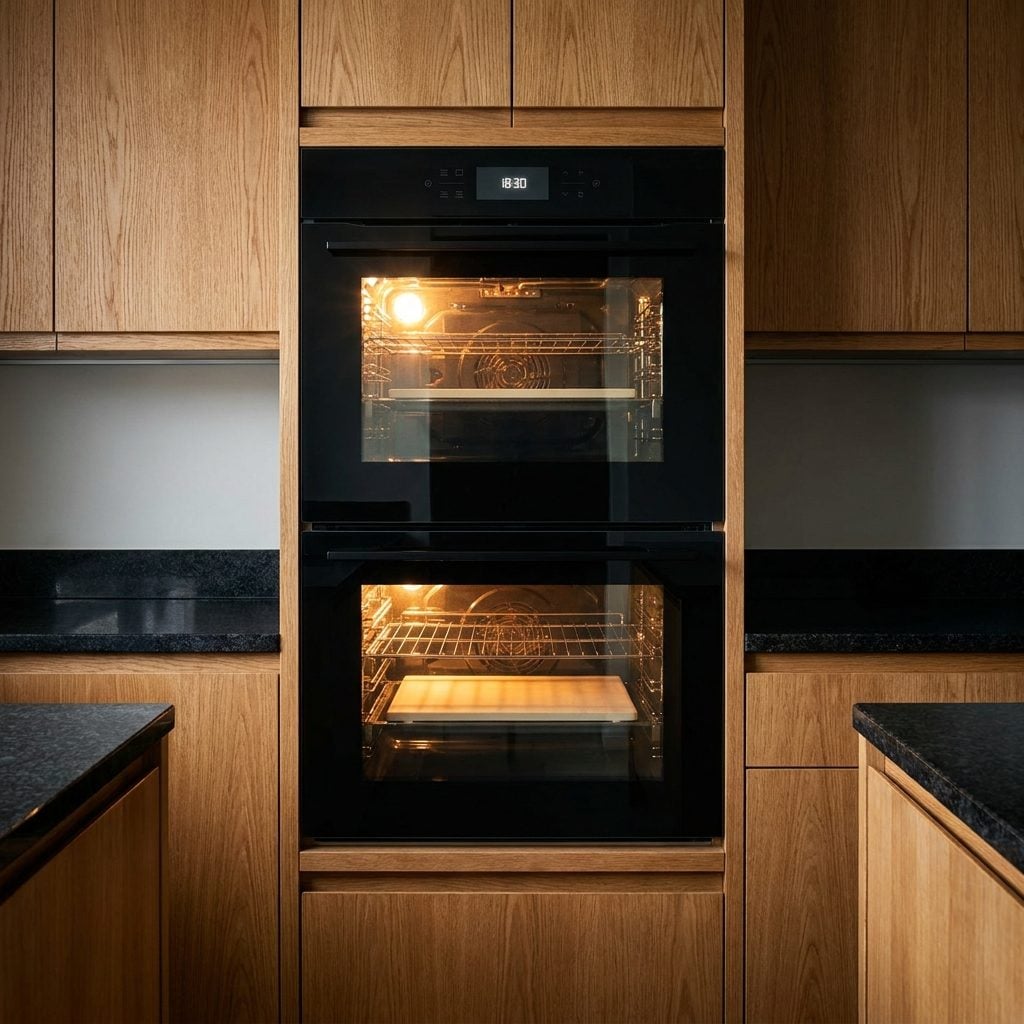
Two ovens, stacked, built right into the wall of cabinets like they meant business. One for the turkey, one for the pies, and a set of glowing green digital clocks that were always blinking twelve after a power flicker.
Double wall ovens signaled a certain seriousness about entertaining. Here was a kitchen that hosted, that ran two dishes at two temperatures without anyone breaking a sweat. They never disappeared, especially in larger kitchens, but big ranges and changing builder layouts made them less universal than they once seemed. For a big family holiday? Nothing beat having a second oven at eye level.
18. Brass-and-Glass Light Fixtures Hanging Over Every Dining Table
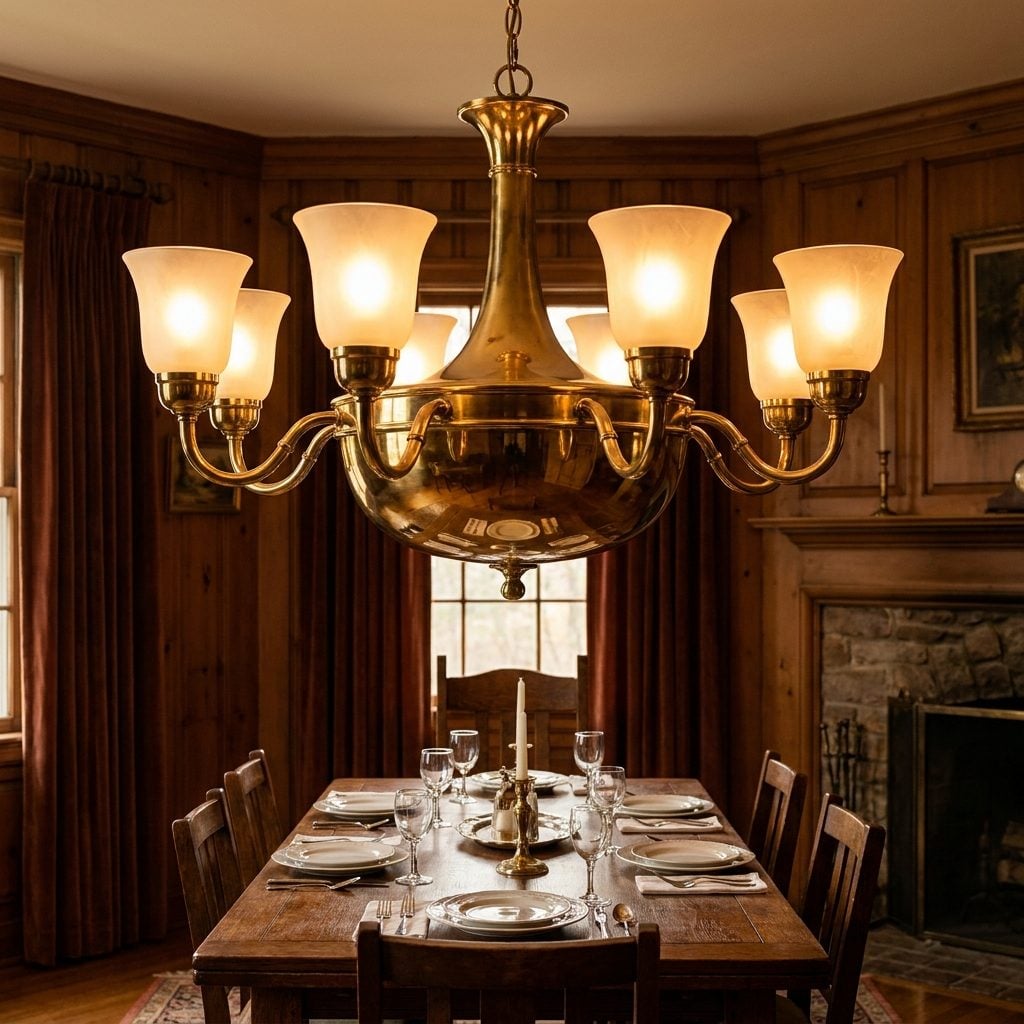
Every dining room had one. That brass chandelier with the little glass tulip shades all pointing skyward, dangling on a chain over a table it was never quite centered above. It hummed faintly when you dimmed it, and dust collected in the crooks of the brass where no rag could reach.
We ripped these out by the truckload in the 2010s and swapped them for matte black and Edison bulbs. Now brass is back at triple the price, and honestly? The originals had a warmth the reproductions keep missing.
17. Floor-Standing Wood-Cabinet Speakers
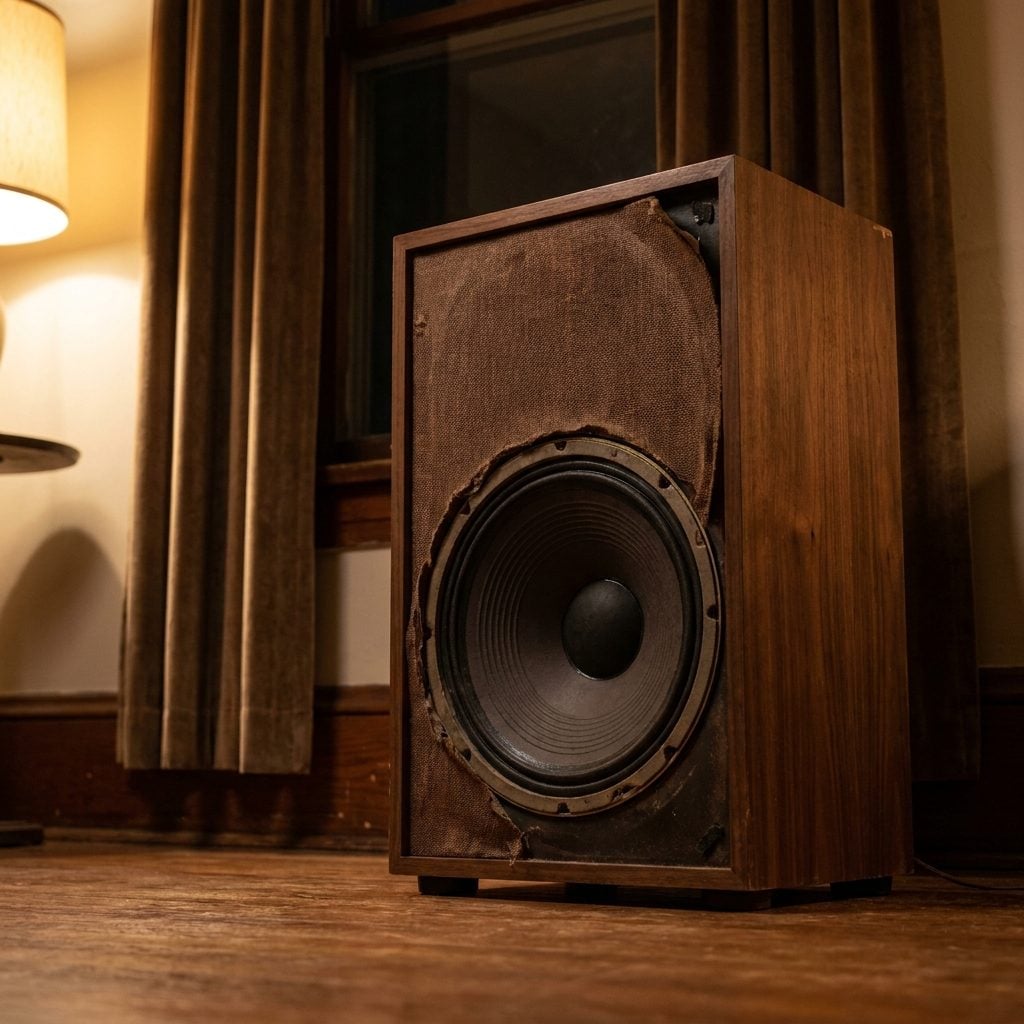
They were the size of nightstands and heavier than they looked. Walnut veneer cabinets with a brown cloth grille you could pop off to show the woofer, which somebody always did.
You didn’t hide these. You gave them the corners of the room and built the seating around them, because the sweet spot mattered and everyone knew exactly where it was. Dad’s chair, dead center, non-negotiable.
16. The Fully Carpeted Bathroom (Yes, Around the Toilet Too)
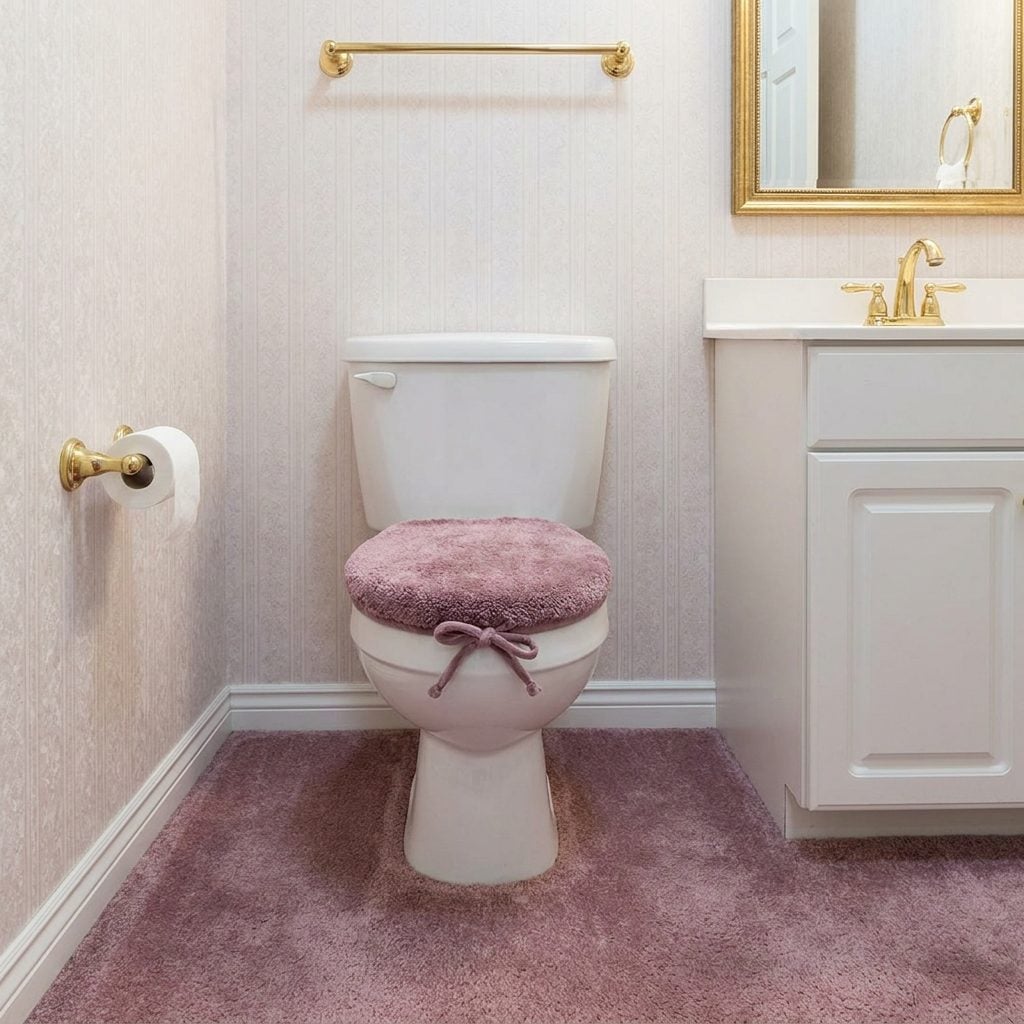
I know. I know. Carpet in the bathroom is indefensible on every hygienic level and I won’t pretend otherwise.
But there was exactly one thing it got right, and everyone who had it remembers it: stepping out of a hot shower onto warm, soft carpet on a February morning. No cold tile jolt. No frantic hopping to the bath mat. Just warmth under your feet the second you were vulnerable and dripping.
We were correct to get rid of it. I still miss the two seconds it was good.
15. The Appliance Garage That Swallowed Your Blender Behind a Roll-Up Door
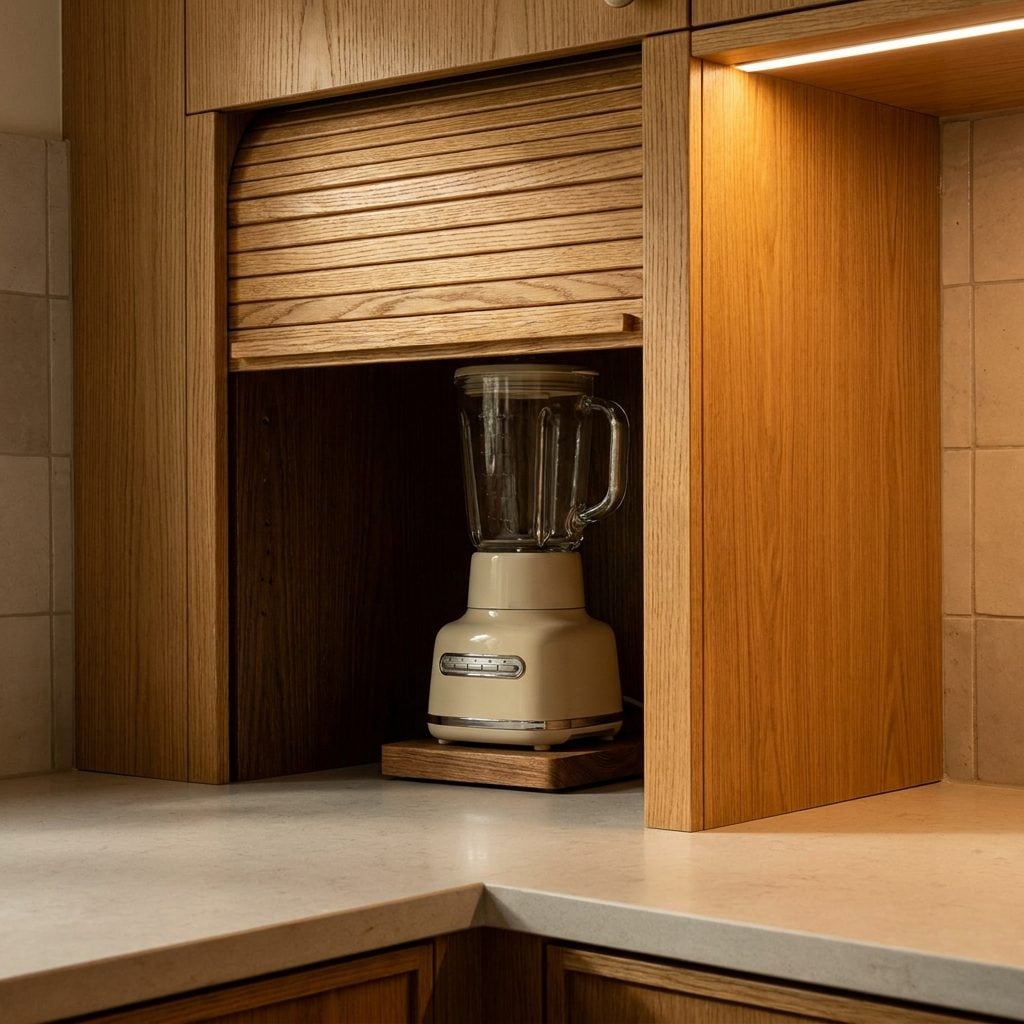
You could hear the slats rattle as the door rolled up, that soft wooden clatter first thing in the morning. Behind it: the toaster, the coffee maker, the can opener, all plugged in and ready, all hidden from view the second you pushed the tambour back down.
Clutter management, before anyone called it that. The counter looked clean because the small appliances lived in a little oak den of their own. I loved these things and I will die on this hill. A dedicated home for the toaster is a small luxury nobody talks about anymore.
14. Vertical Blinds Across Sliding Glass Doors
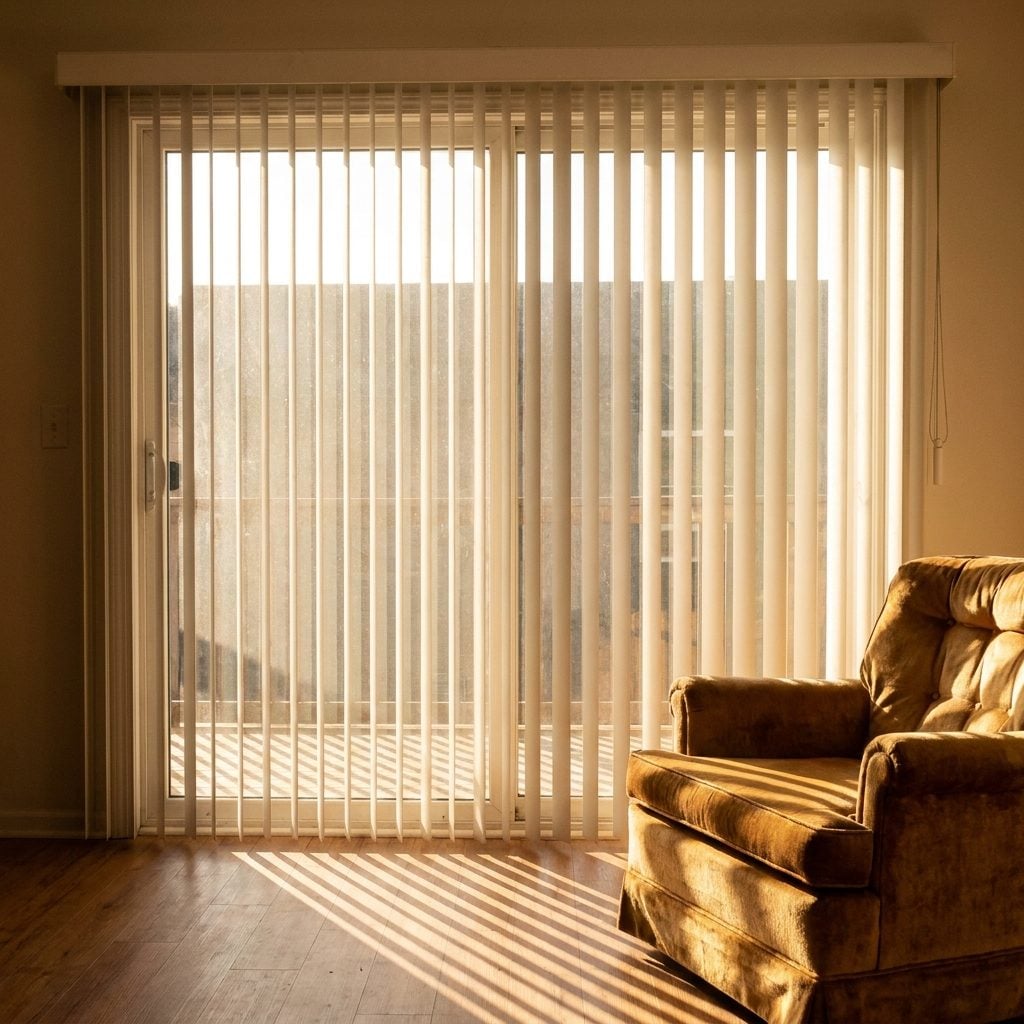
The universal cover for the sliding glass door. Long fabric or plastic vanes that pivoted with a little wand and stacked to one side, hissing like a deck of cards shuffled by a giant.
One vane was always cracked or twisted the wrong way. Always. And the chain along the bottom that linked them all together was the first thing a kid or a cat destroyed.
13. The Whole-House NuTone System That Piped Music Into Every Room
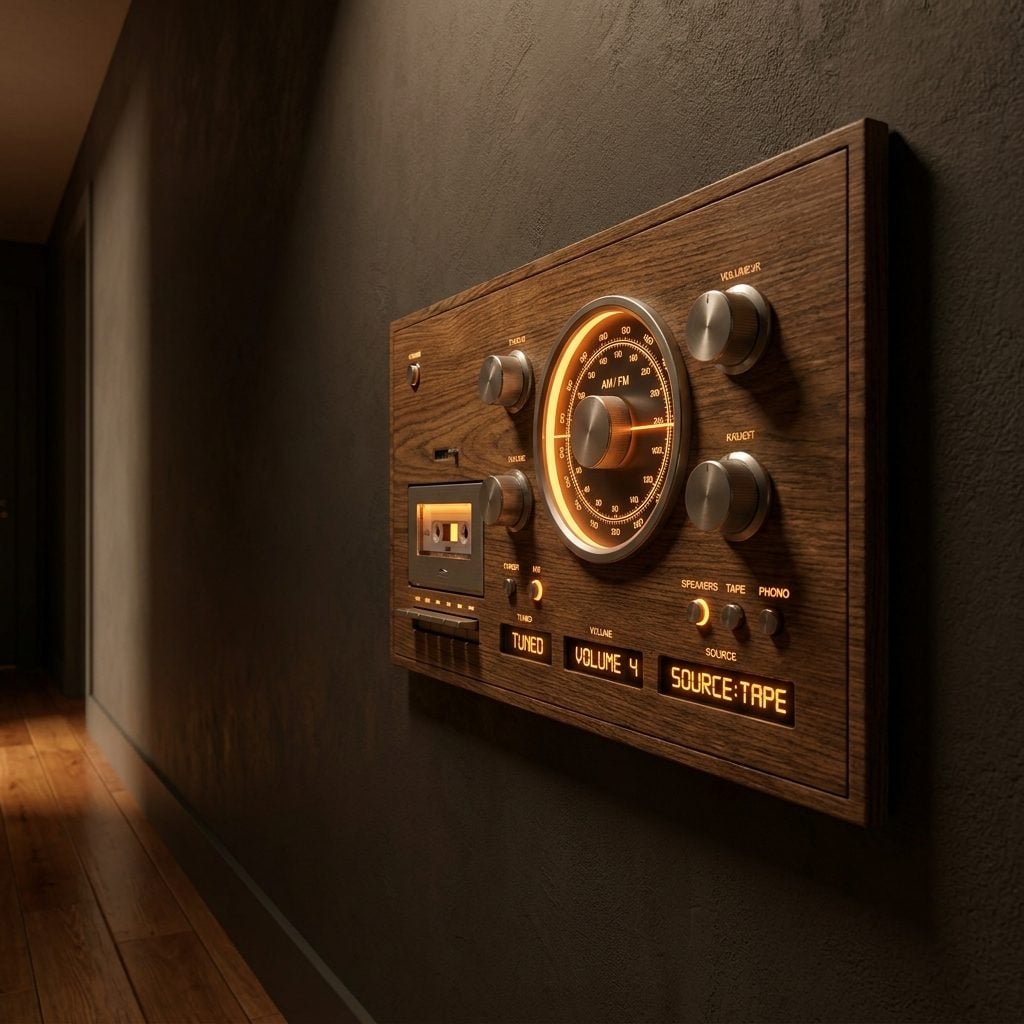
This was the deluxe version. Not just talk buttons, but a full AM/FM radio and cassette deck wired to speakers in the ceilings of nearly every room, including the bathroom and the patio.
Saturday mornings meant the same station playing softly through the whole house while everyone did chores. You could carry music from the kitchen to the backyard without moving a thing, because the sound was already there waiting in the walls.
Streaming does this now, room to room, with a phone and a few speakers. But the wired system had a permanence to it — it was baked into the house, a feature you bought the place for, not an app you downloaded. It feels like an unmistakable ancestor of the whole-home audio systems we use now.
12. Floral Wallpaper With a Matching Border Running Along the Ceiling
🔥 Would you like to save this?
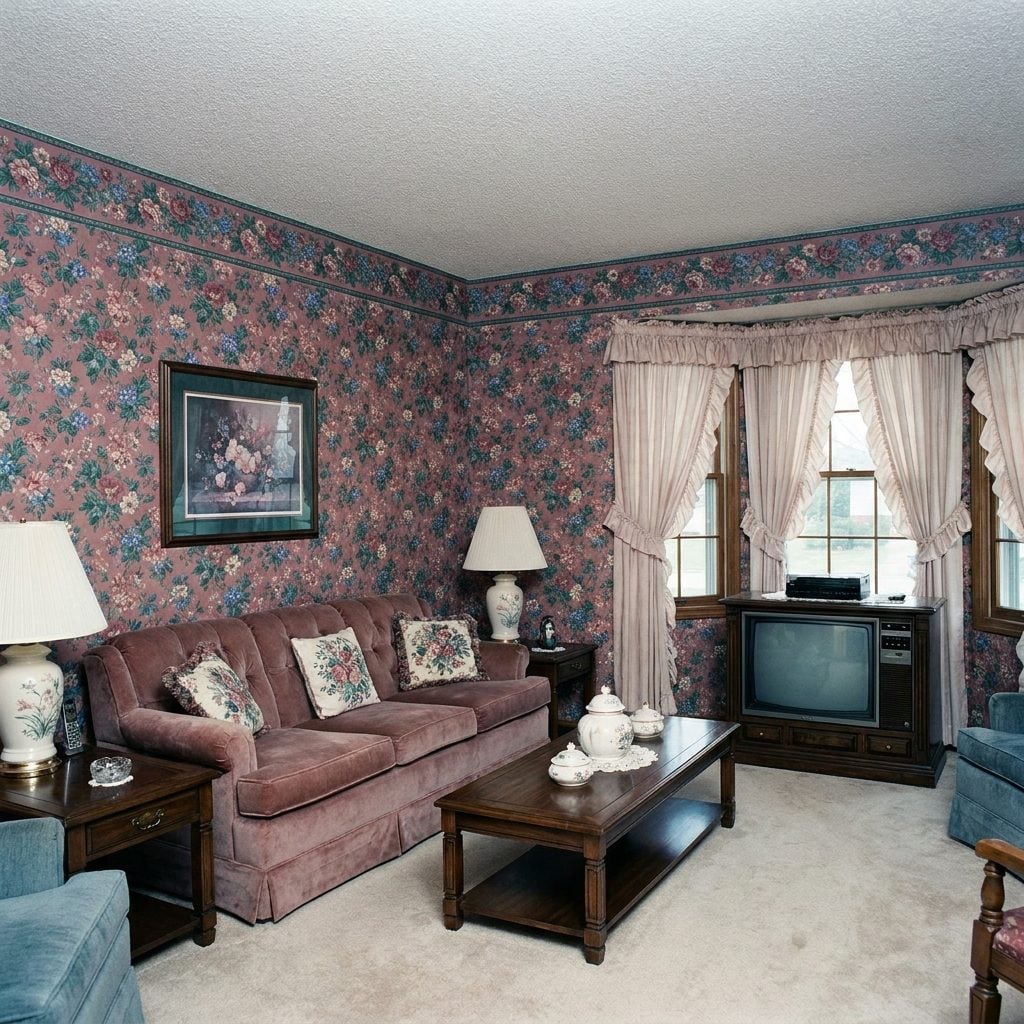
The border was the commitment. Anyone could paper a wall, but running a coordinating strip of larger flowers along the top edge? That said you meant it. Roses below, a ribbon-and-bloom motif up top, and if you were really serious, the comforter matched too.
We stripped it all off during a decade-long fit of gray paint. Now maximalist florals are crawling back into the magazines, and even borders occasionally peek around the edges again when nobody is looking.
11. The Pass-Through Window Between Kitchen and Dining Room
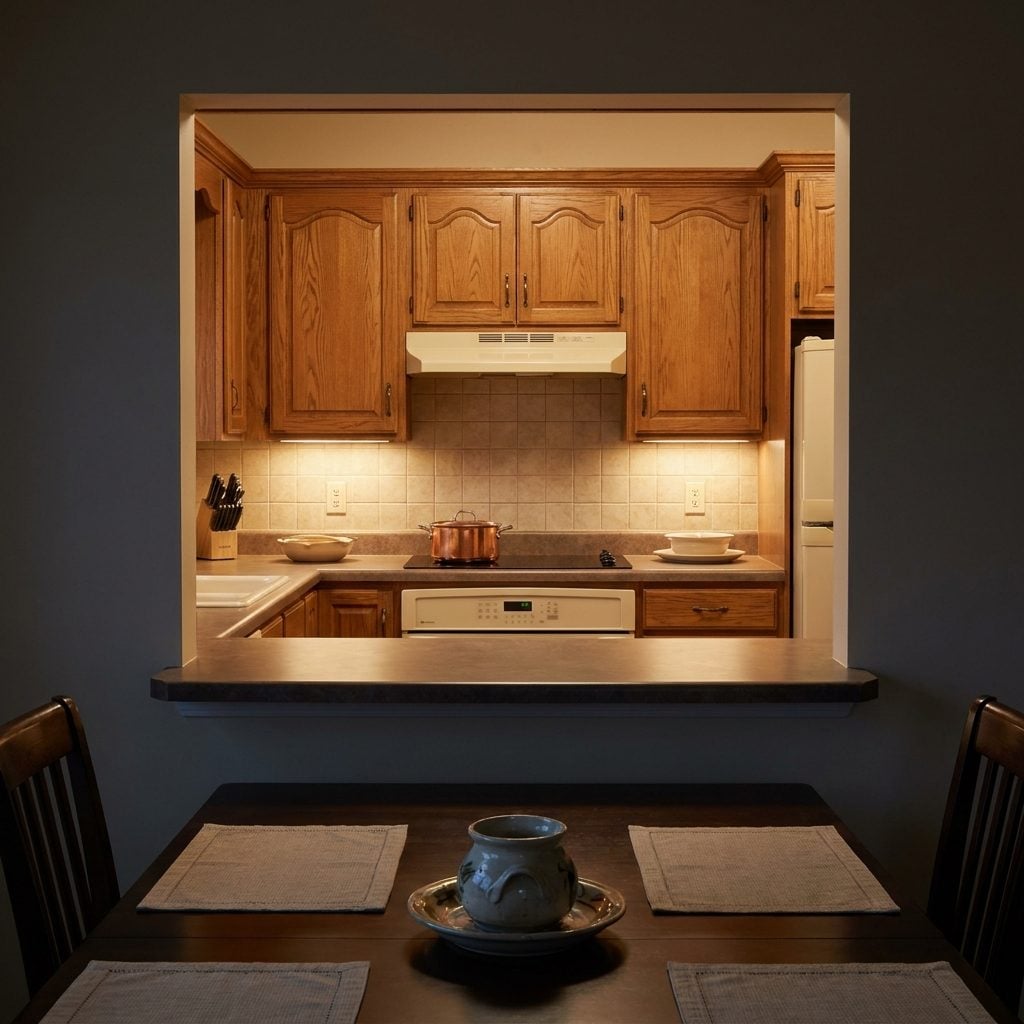
The best invention nobody talks about. A window cut clean through the wall so whoever was cooking could still be part of everything.
You slid the casserole through it, handed plates through it, and the kids did homework at the ledge on the dining side while dinner happened three feet away. It kept the cook connected without knocking down the whole wall.
We eventually sledgehammered these walls entirely and called it open concept. But there was something honest about the pass-through — the kitchen stayed a kitchen, the dining room stayed the dining room, and that little window let them talk. Good design solves a real problem, and this one quietly solved the loneliest part of cooking.
10. Entertainment Centers Built Around the Television
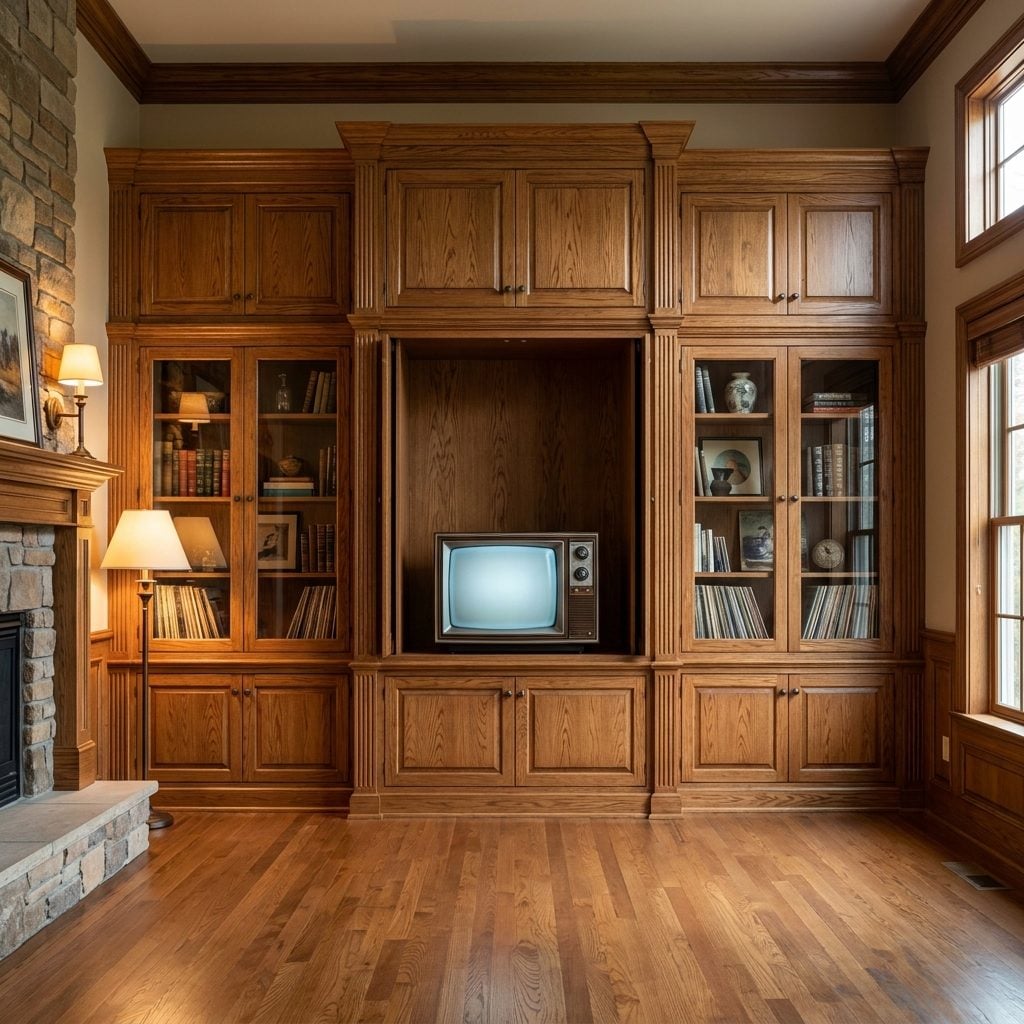
This was the altar. An oak monolith with a cave carved out of the middle for the TV, surrounded by shelves for everything a household accumulated: the VCR, the tape collection, the encyclopedia set nobody opened, the good china behind glass doors.
Assembling one ate a Saturday. Sometimes two. The instructions were a nightmare and you always had three screws left over.
The flat-screen finished it off. Once the TV got thin and went on the wall, the whole cathedral around it had no reason to exist. Plan a home renovation today and you get the wall back — which is nice, sure, but I miss the sheer confidence of a piece of furniture that announced this is where we watch things.
9. Track Lighting That Let You Aim Every Bulb Like a Tiny Spotlight
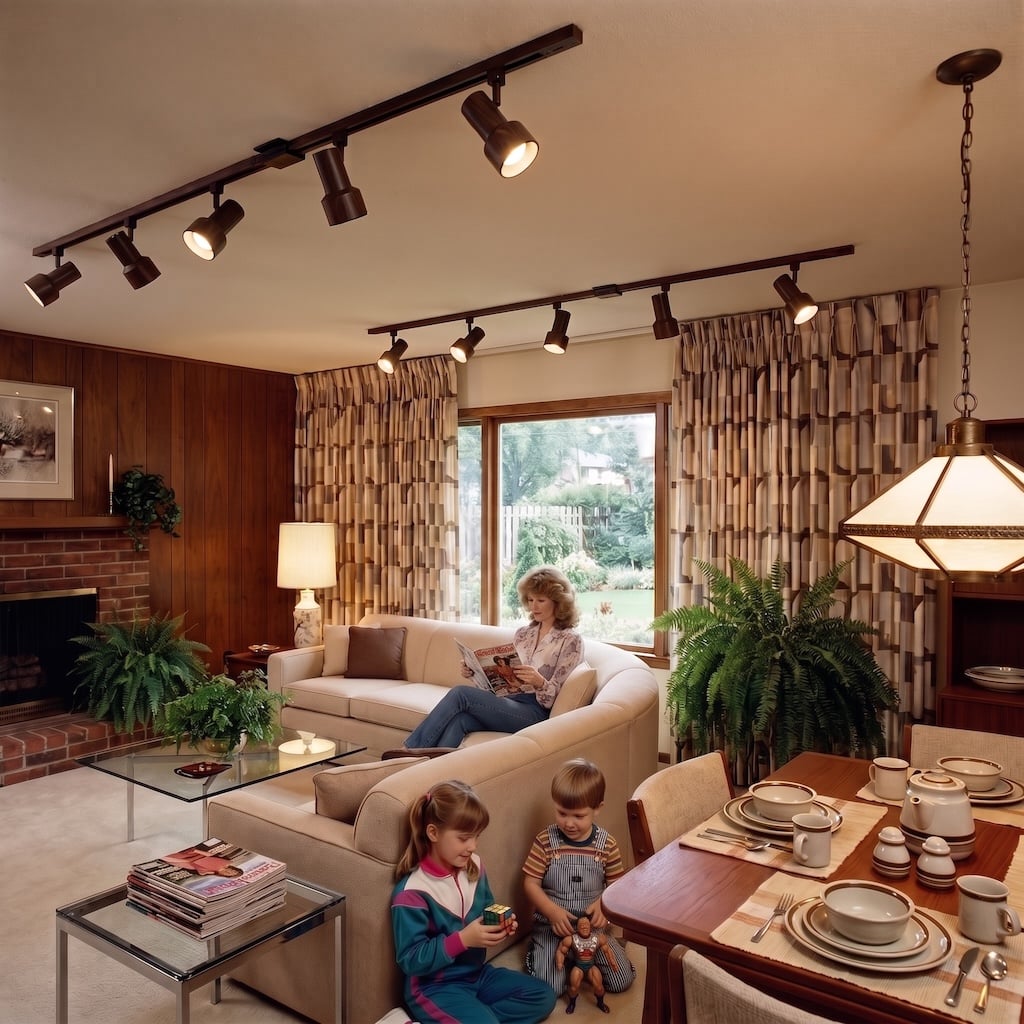
You could aim it, and that was the whole magic. A row of little canister heads on a ceiling rail, each one swiveling to spotlight the art, the plant, or the corner where absolutely nothing important was happening. We felt like set designers.
Then everyone decided recessed cans looked cleaner, and track lighting got exiled to garages and craft rooms. The flexibility was real, though. You could redecorate the whole mood of a room without moving a single lamp.
I still think it beats drilling six holes in a ceiling you can never un-drill.
8. The Fully Coordinated Bathroom Set Where Everything Matched the Towels
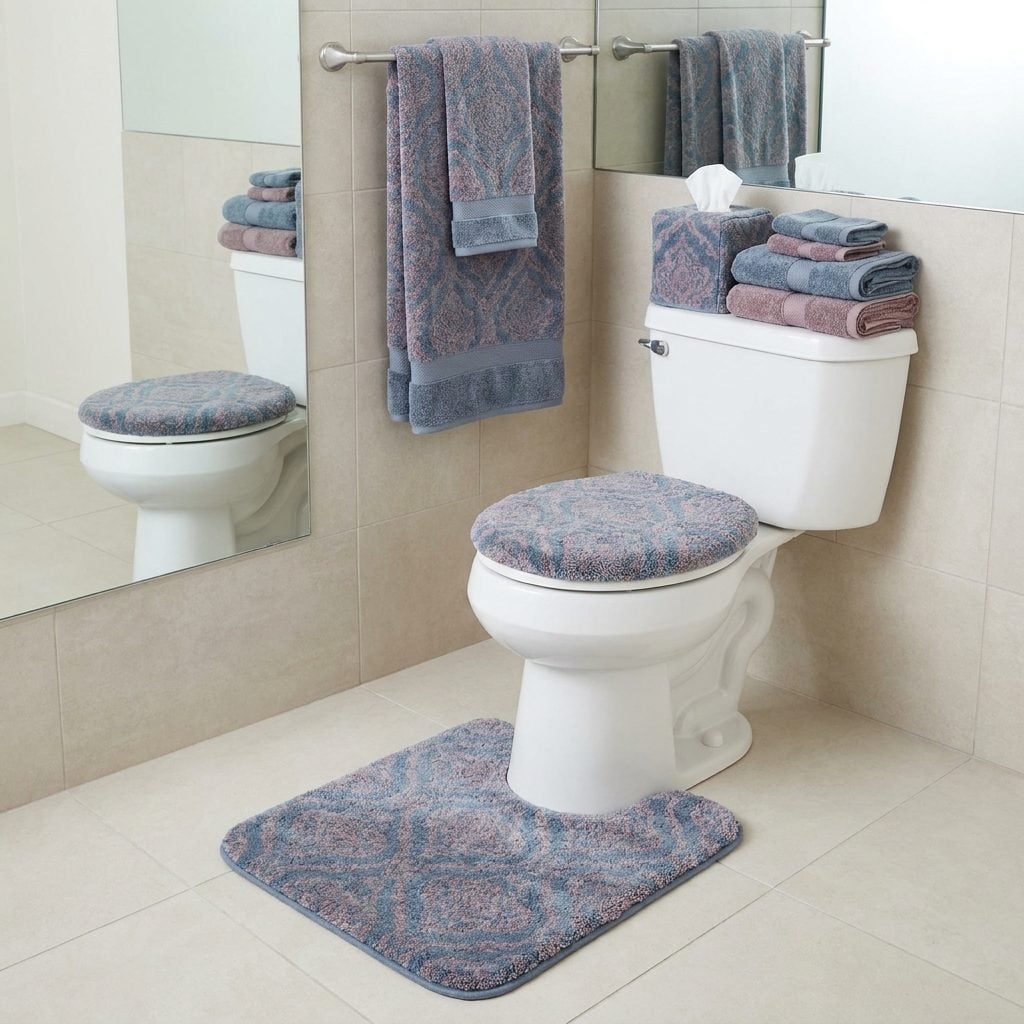
Nothing was left un-matched. The towels, the tissue box cozy, the padded lid cover, that little contour rug hugging the base of the toilet like a horseshoe. Even the soap dispenser and tumbler came in the same shade of mauve or dusty blue. You bought it all as a set, and buying it all as a set was, frankly, the entire appeal.
Somewhere along the way we decided a bathroom should look like a spa nobody actually lives in. All white, all restraint. Fine. But there was something reassuring about a room where every object had clearly been chosen to keep the others company.
7. Dedicated Record and Cassette Storage Cabinets
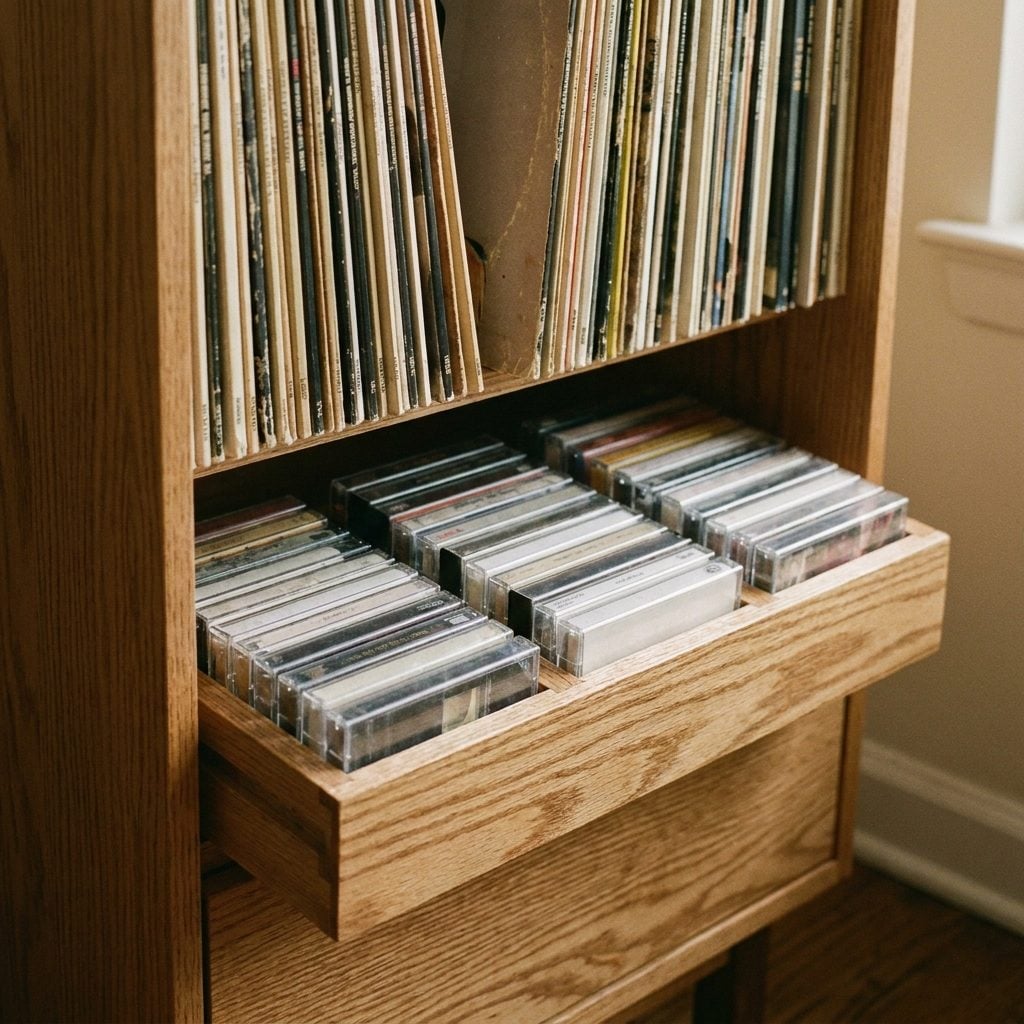
Furniture built for a format. Slotted dividers for records standing upright, then tiered rows below sized exactly to a cassette case. Some had a smoked-glass door. Some spun.
Alphabetizing it was a rainy-Sunday activity that felt weirdly important, and there was a specific joy in flipping through the spines with two fingers — that soft clatter of cases knocking together.
All of it evaporated when music moved into a device the size of a deck of cards. We traded a wall of tactile objects for a scroll wheel, and honestly? Some days I’d take the clatter back.
6. The Carpeted Staircase That Softened Every Step
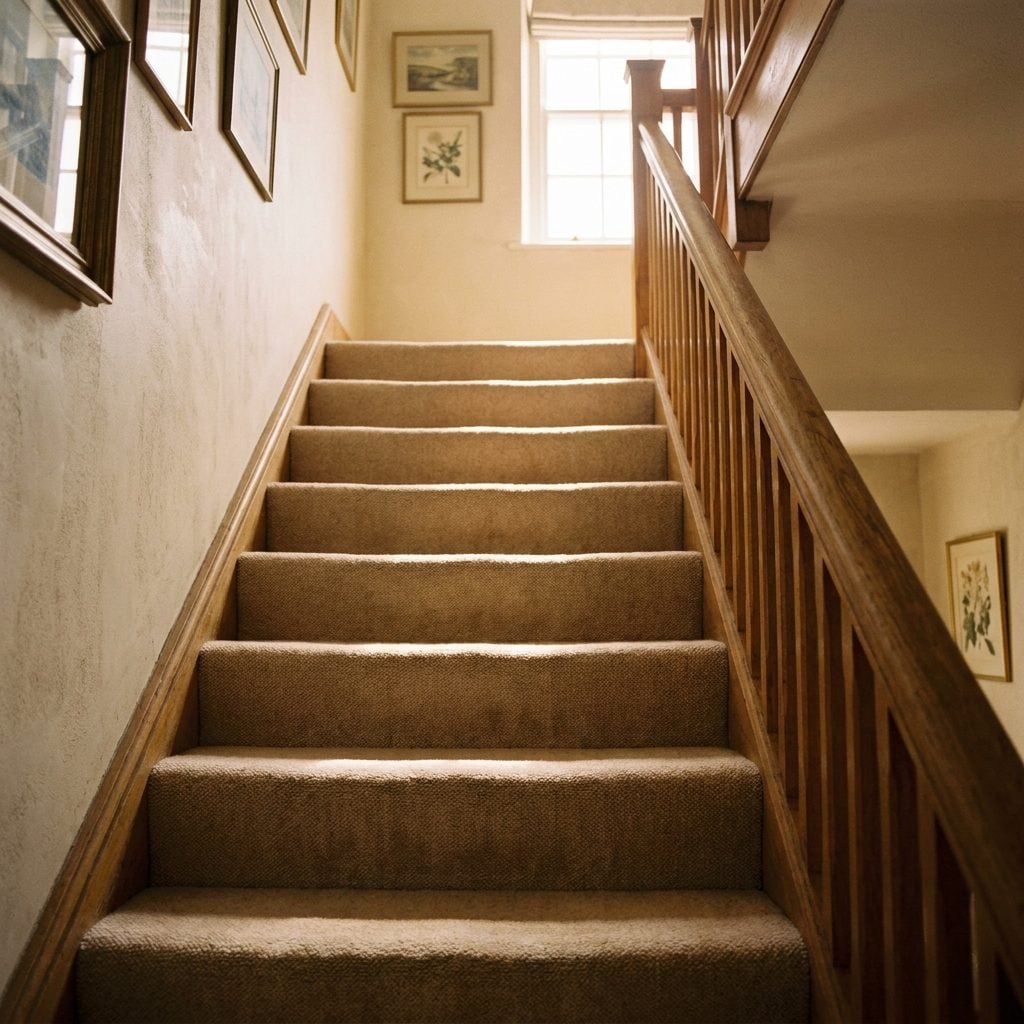
Kids slid down them. Toddlers survived them. And at 2 a.m. you could go down for a glass of water without waking the whole house.
The carpeted staircase muffled everything, and that mattered more than we admitted. Bare wood treads are handsome and loud, but carpet on the stairs was the sound of a house full of people who didn’t want to disturb each other.
Those little brass rods holding the runner in place? Peak detail. Nobody does that anymore and I think about it more than a grown adult should.
5. The Telephone Nook Built Right Into the Hallway Wall
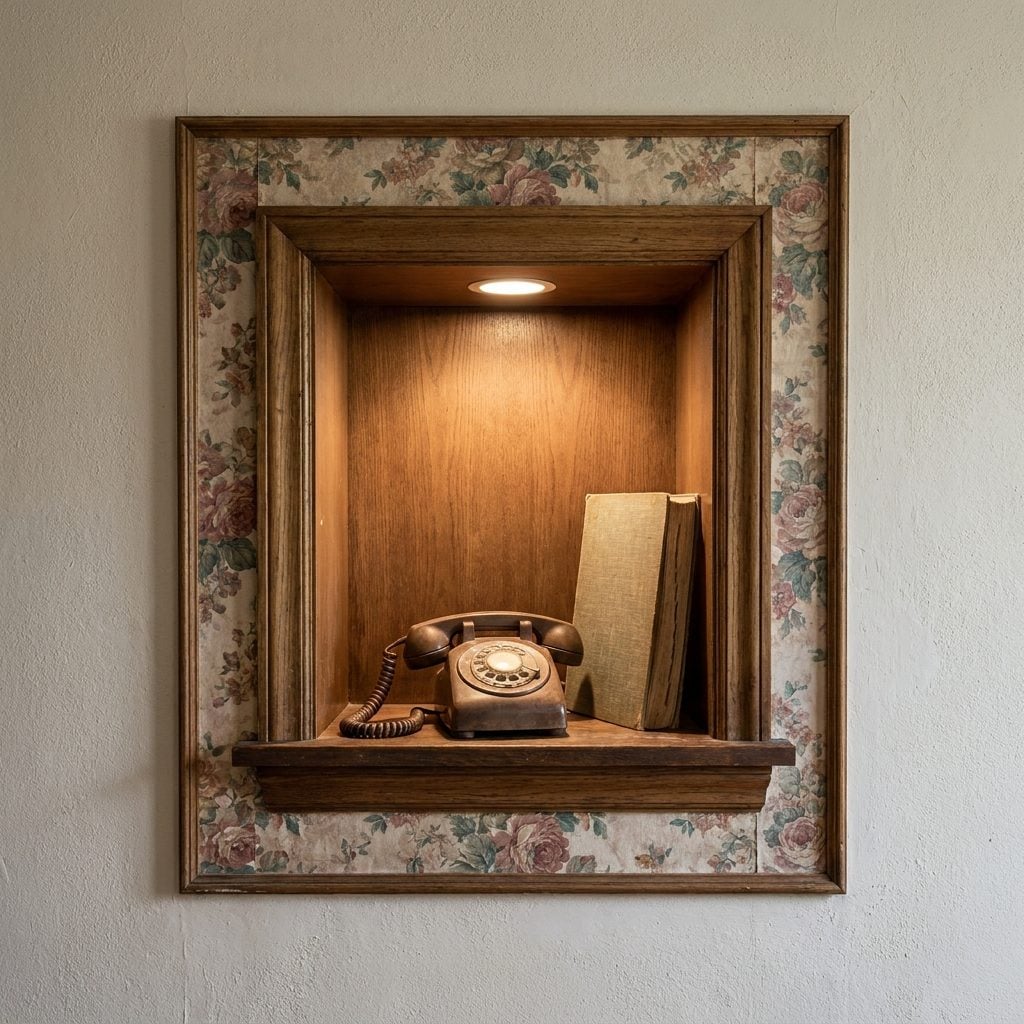
Some houses had it built right in: a shallow niche carved into the hallway wall, an oak shelf sized exactly for the phone, and a slot underneath for the fat yellow phone book. A little cubby above held the pens and the spare change.
It gave the phone a home, an actual address inside the house, and often a small bench or stool so you could sit for a long call. As phones became portable and then mobile, builders had even less reason to give the telephone its own piece of architecture. Now a random wall alcove can baffle the people who buy those houses, but I’ve watched a few homeowners repurpose theirs into a charging station or a little display shelf, and honestly, a purpose-built spot to plug in and pause is exactly what we’re all quietly craving again.
4. Built-In Bookshelves Covering Entire Walls
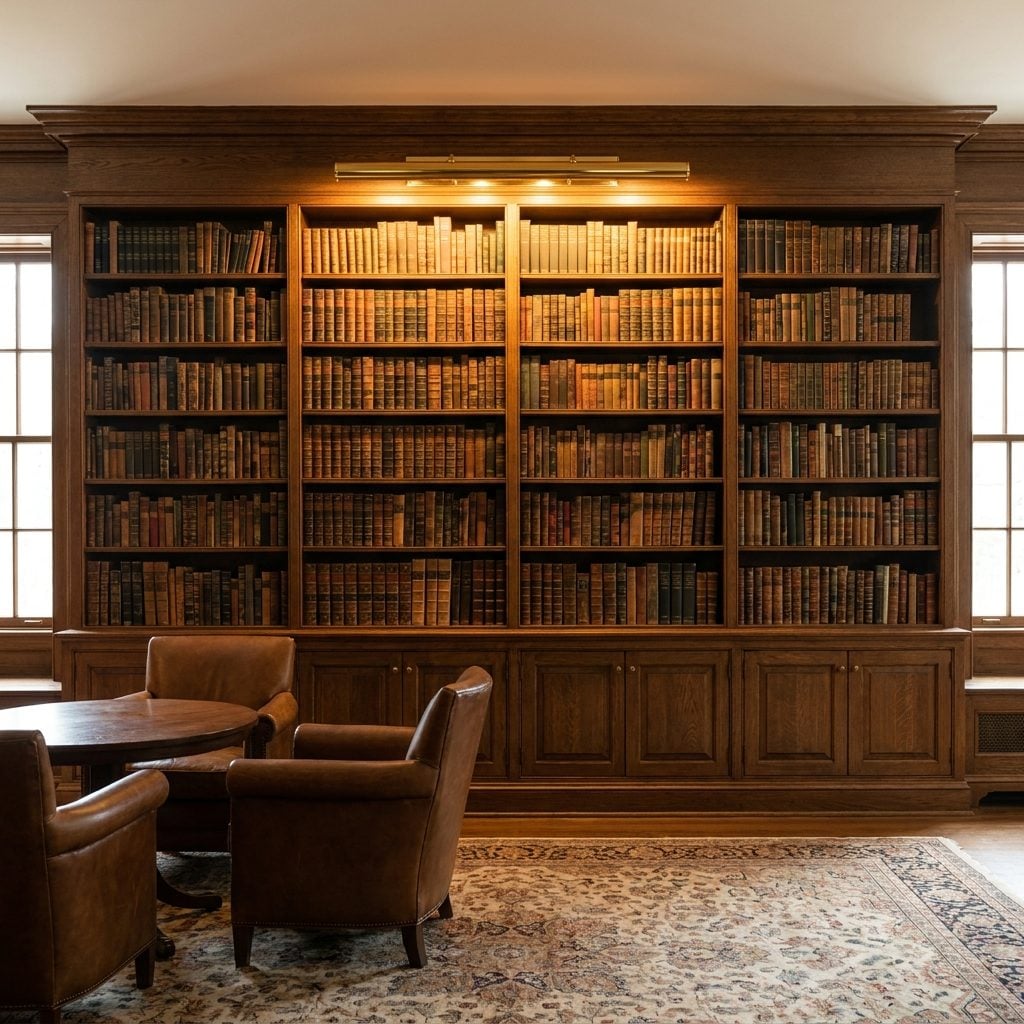
An entire wall of shelves, painted cream or stained oak, running floor to ceiling and holding every hardcover the family owned plus the ones they meant to read. The good ones had a rolling ladder that mostly existed to be climbed by kids.
A wall of books at your back made a room feel held. It gave the space weight, privacy, and the sense that people actually stayed there long enough to accumulate things.
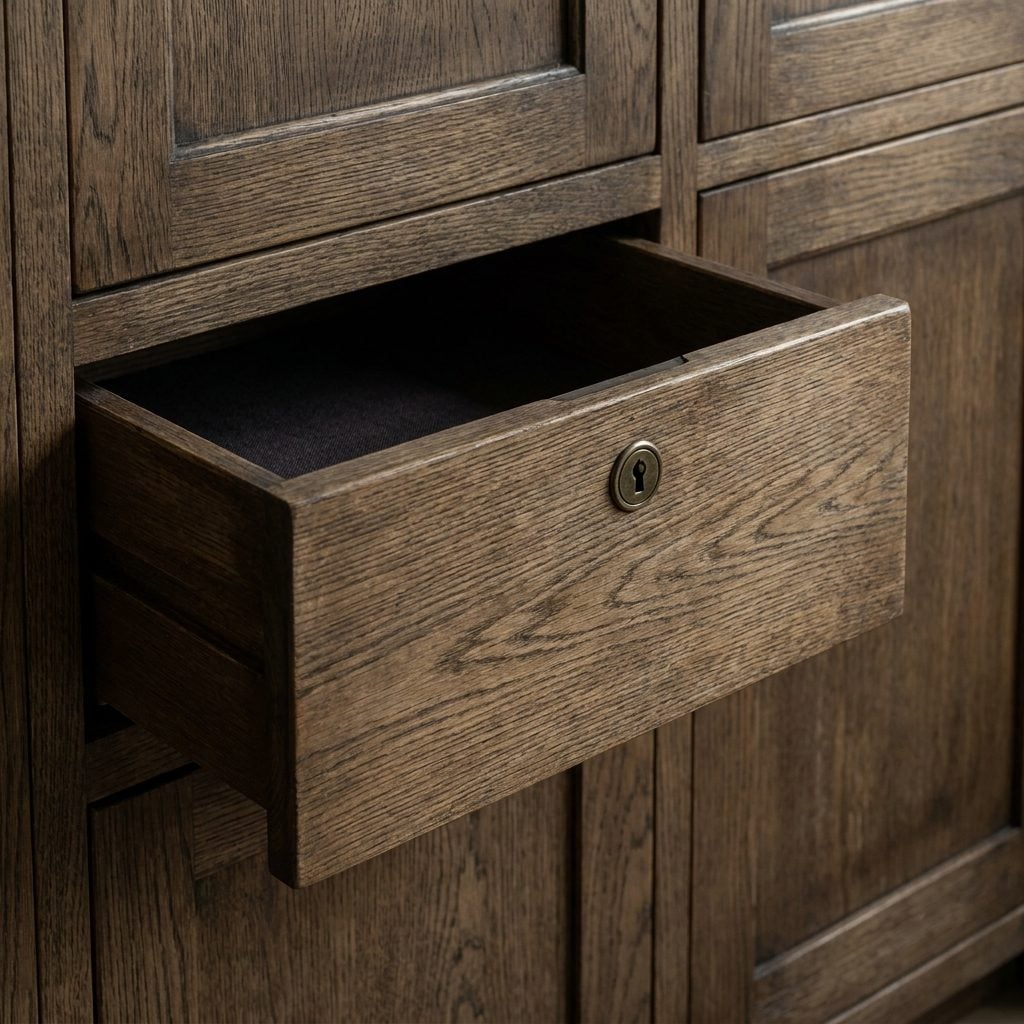
3. The Trash Compactor Nobody Quite Knew What to Do With
🔥 Would you like to save this?
It lived between the dishwasher and the sink, a mysterious drawer with a lock on it, and the first time you heard it running you thought the house was eating itself. That slow mechanical crunch as it packed loose trash into one dense, unliftable brick.
Half the households I knew never used them for garbage. Too heavy to haul out, too weird to trust, so the compactor quietly became a slot for grocery bags or got ignored entirely. And yet, in a world drowning in packaging, the idea of squashing your waste down to a fraction of its size feels almost ahead of its time now.
2. The Laundry Chute That Turned Doing Chores Into a Two-Story Trick
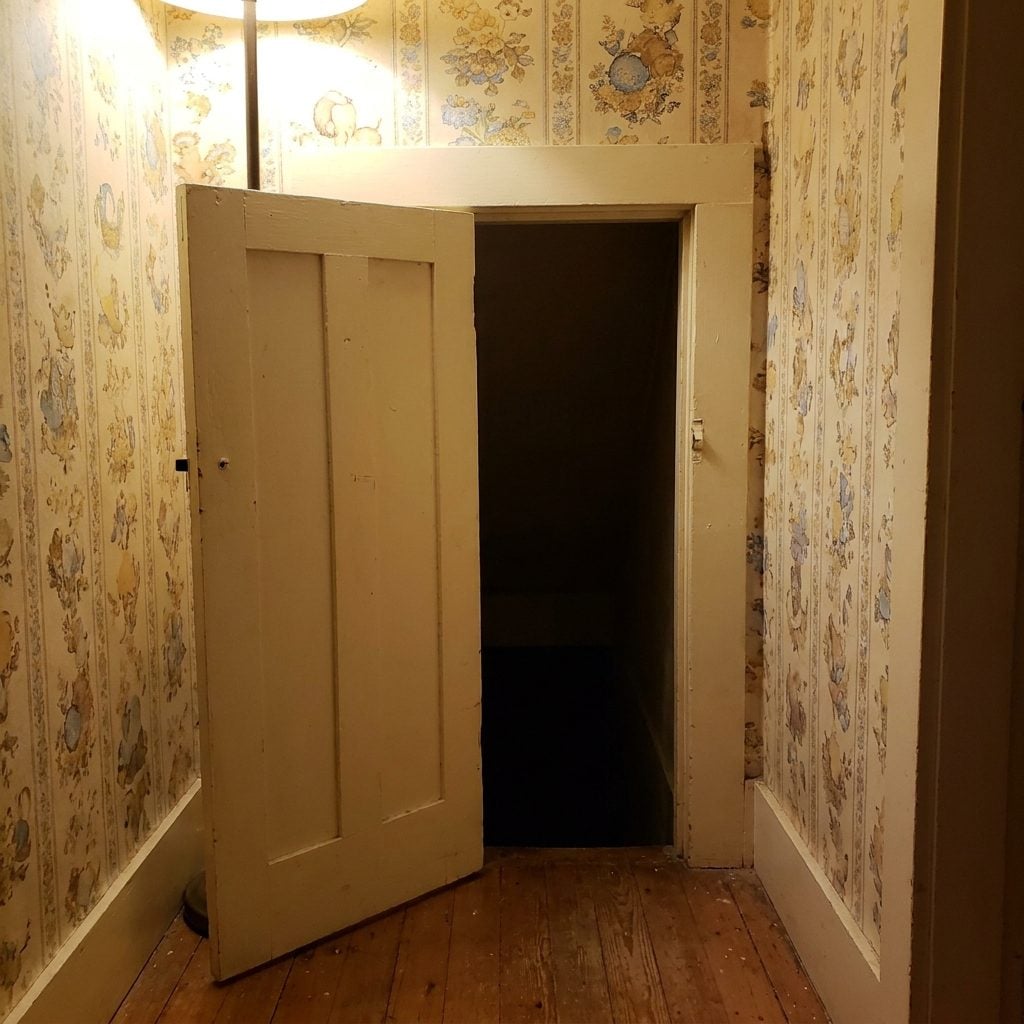
Best design feature any house ever gave a kid. A little hinged door in the upstairs hallway, and you fed dirty clothes into it, then stood there listening to them tumble down inside the wall to a basket in the basement. We tested it with things that were not laundry. Everyone did.
Fire-safety requirements made open vertical chutes more complicated to build, while upstairs laundry rooms gradually removed much of the practical need for them. Practical, sure. But there’s a reason people who grew up with one still bring it up unprompted decades later. It made an ordinary chore feel like a small piece of magic wired into the house.
1. The Central Vacuum System With Outlets Built Right Into the Walls
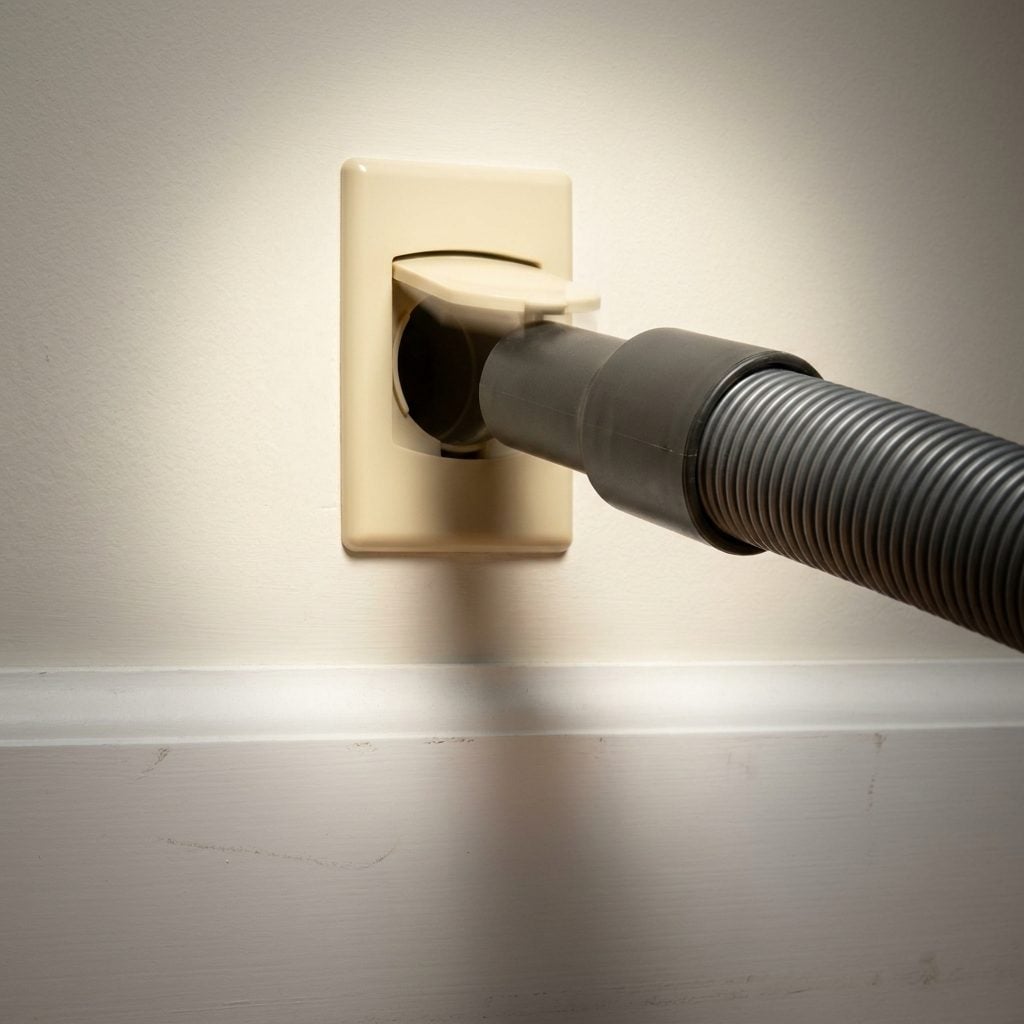
The sound alone was a memory. You plugged the hose into a little port in the wall and heard the motor kick on somewhere far off in the garage or basement, a deep muffled roar that never came from the vacuum in your hand. No canister to drag around. No bag of dust to haul through the house.
Central vac was the height of built-in luxury, wired into the walls like plumbing. Then lighter uprights and, later, cordless sticks made the built-in system feel less essential, and central vac gradually stopped feeling like a must-have upgrade. Anyone who lived with a good one, though, remembers how quiet the actual cleaning was, and how the whole house seemed built to make one chore vanish behind the drywall.