🔥 Would you like to save this?
The screen door had a specific sound. Not a slam, exactly. More like a percussive announcement that you were home, no adult was home, and the next few hours belonged entirely to you.
The key was under the mat, behind the fake rock, or balanced on the ledge above the frame where your parents thought nobody would ever look. You knew where it was. Every kid on the block knew where it was. The whole security system depended on everyone politely pretending otherwise.
In order to come up with the very specific design ideas, we create most designs with the assistance of state-of-the-art AI interior design software. Also, assume links that take you off the site are affiliate links such as links to Amazon. this means we may earn a commission if you buy something.
That was the 1980s front door: part entrance, part checkpoint, part after-school independence test. The storm door, the brass knocker, the porch light, the mail slot, the mat, the fake hiding place — every piece had a job. Some kept the house looking respectable. Some got you inside before your snack melted in your backpack.
29. The Thin Brass Kick Plate Screwed to the Bottom of the Front Door
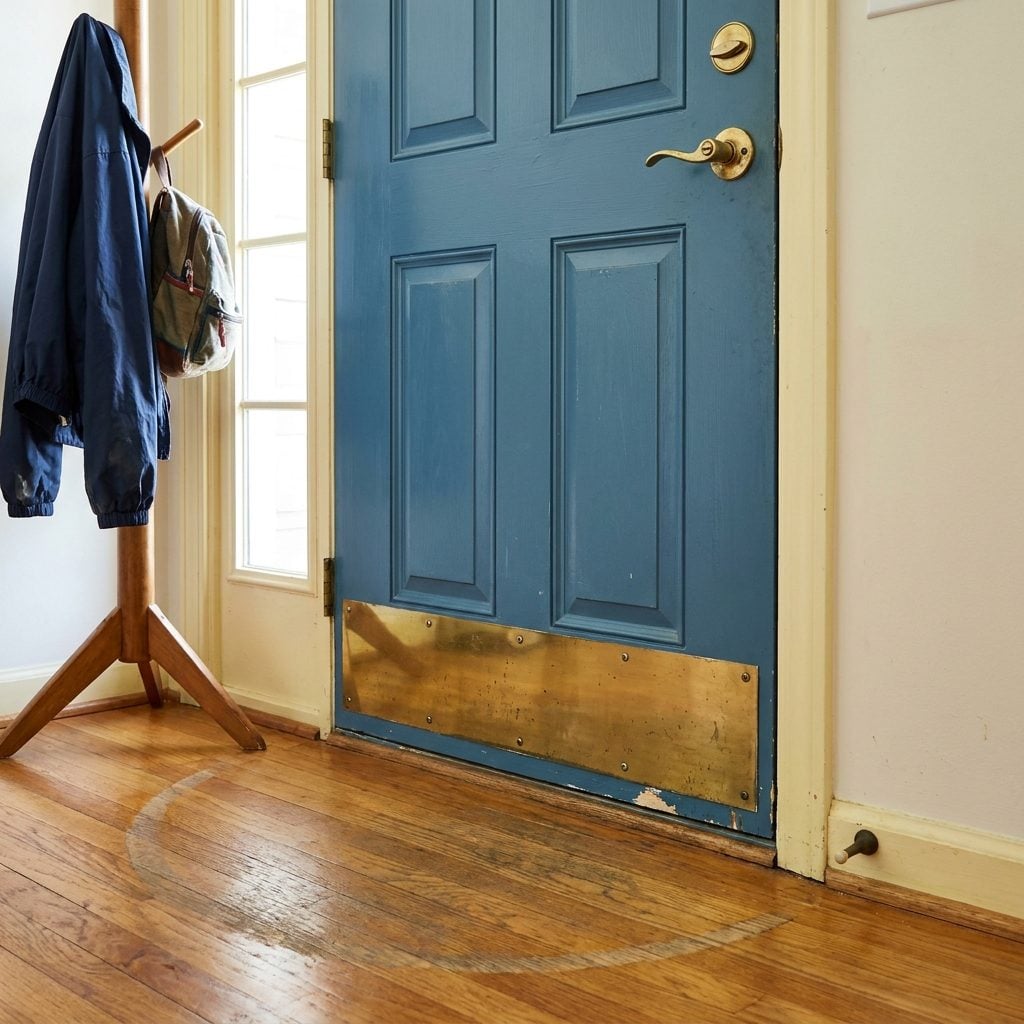
The kick plate existed because doors took a beating. Boot toes, bicycle handlebars, groceries nudged open with a knee. That strip of brass at the bottom was a pragmatic acknowledgment that nobody was coming through the front door with their hands free.
By 1990 most of them had developed a streaky patina across the center and a satisfying dimple from one specific repeated impact nobody could identify. The screws had usually stripped out at least once and been re-driven at a slight angle. It wasn’t decorative. It just worked.
28. The Concrete Planter Shaped Like a Half-Barrel Flanking the Stoop
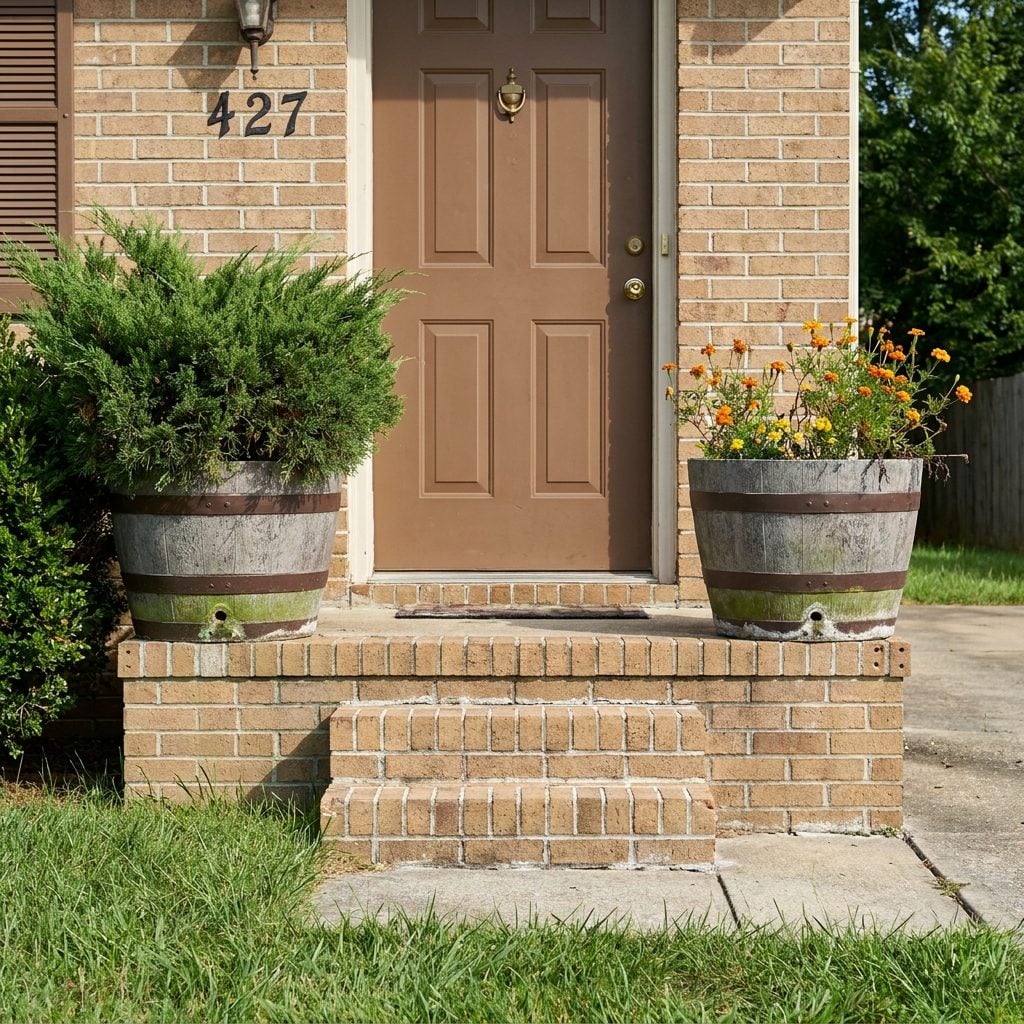
Every subdivision in America had at least one house with these flanking the front door, and it was usually the house that also had a brass eagle door knocker and a decorative goose by the garage. The half-barrel planter sat at the intersection of “low maintenance” and “making an effort,” which was exactly where 1980s curb appeal lived.
They were heavy enough that no one ever moved them once placed. By August the soil was bone-dry two inches down regardless of how often anyone watered, and by October they held dead marigold skeletons and a hardware store mum someone had optimistically dropped in as a seasonal refresh. They outlasted the decade. Some of them are still out there.
27. The Magnetic Key Holder Stuck Inside the Electrical Meter Box
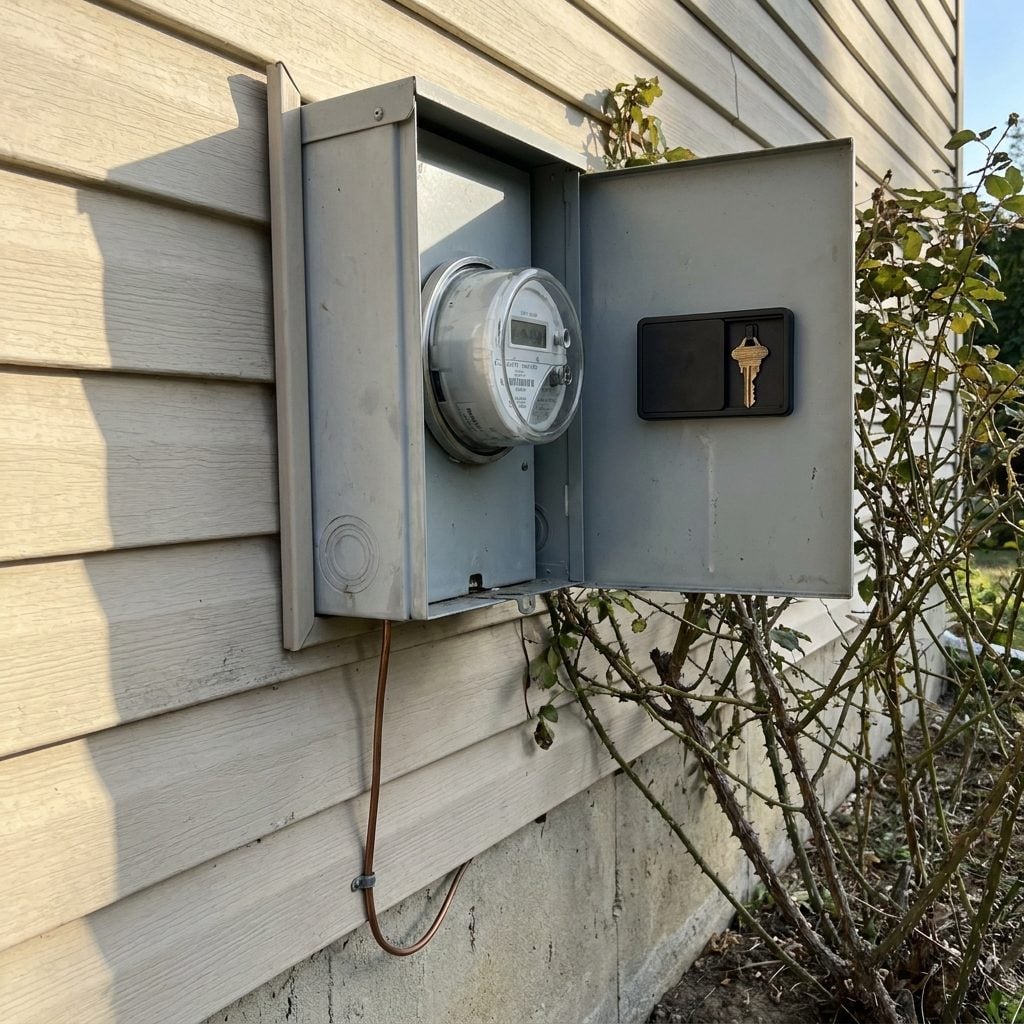
The meter box key spot required inside knowledge. You had to know to lift the latch, know the key was on the door panel and not hanging from the meter itself, and know to shut the box completely so the meter reader wouldn’t leave a note. It felt genuinely secret, which is probably why it was the preferred hiding spot for the parent who had watched too many neighbors use the obvious spots.
The magnetic holder was sold at hardware stores specifically for this purpose. The packaging showed someone attaching it under a car bumper, but every suburban kid knew the real use case. A spare key inside a box that said “DANGER” on it was, somehow, reassuring.
26. The Wrought Iron Railing With the Scrollwork That Wobbled on the Third Post
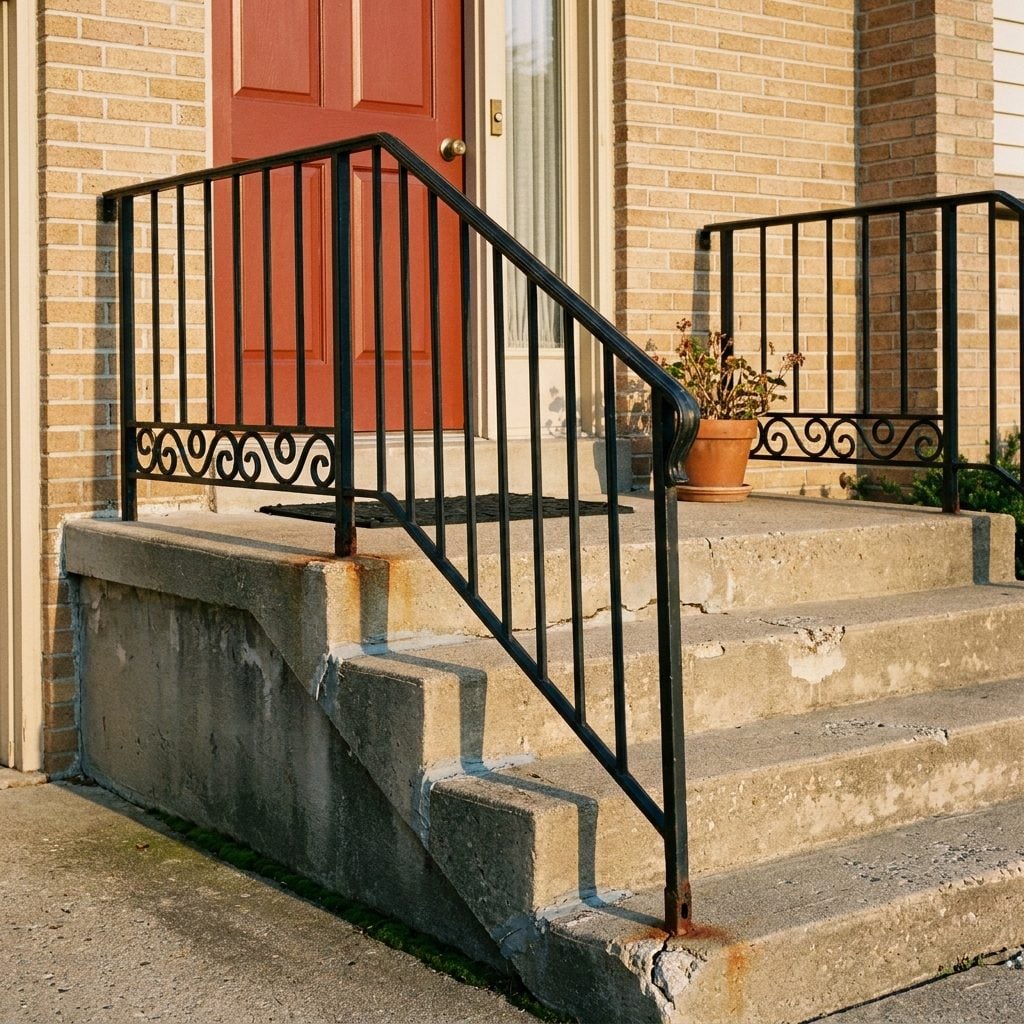
Every house on every block had the wobbly post. Not a different post each time, always the third one, for reasons that suggested either a universal flaw in 1980s railing installation or some law of physics specific to front stoops. You grabbed it coming up the steps without thinking, and it gave just slightly under your hand, a familiar give you’d stopped noticing years ago.
The scroll accent near the base existed to suggest victorian entryway ideas at a subdivision price point, and it mostly succeeded. Nobody called it wrought iron with any particular reverence. It was just the railing. It wobbled. It stayed.
25. The Fake Rock Next to the Azalea Bush That Fooled Absolutely No One
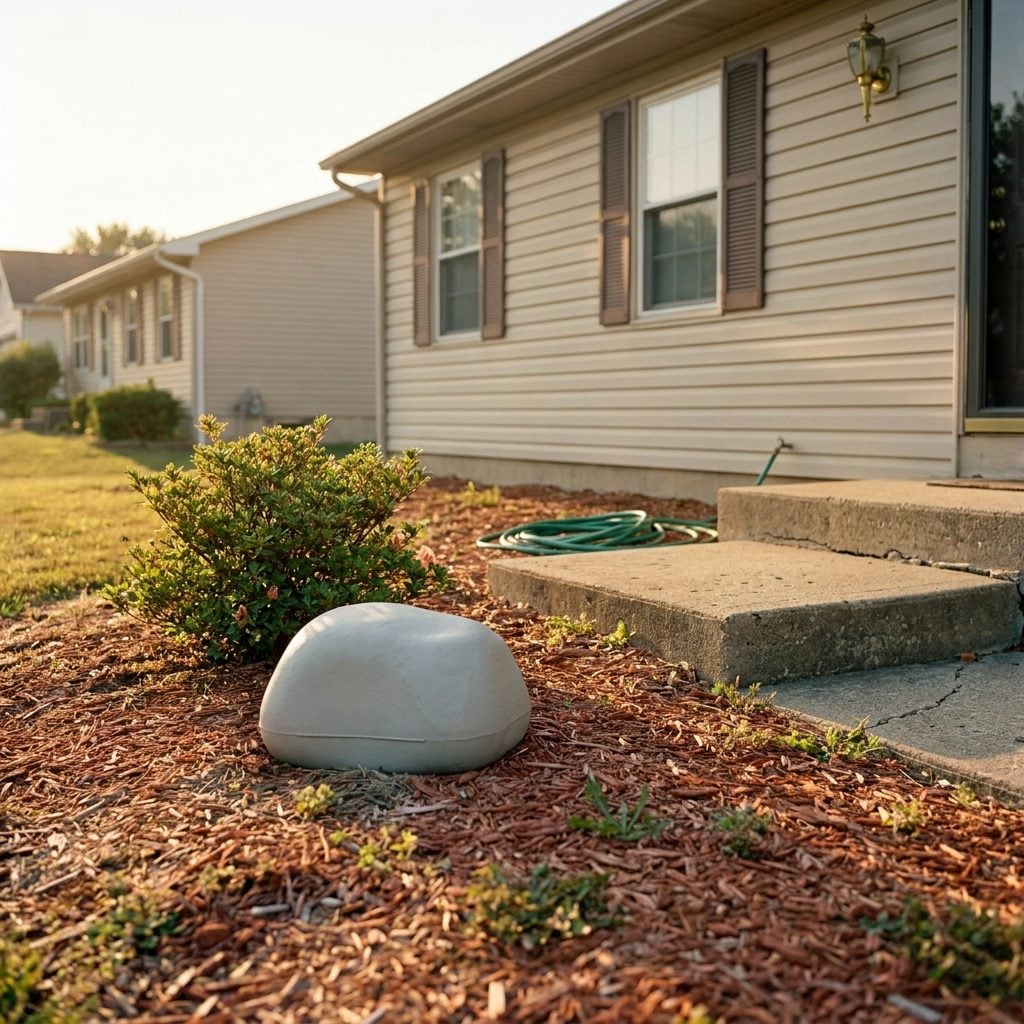
That rock wasn’t fooling the mailman, and it sure wasn’t fooling the neighbor kids. Everybody on the block knew exactly which “rock” next to the decorative garden rock was hollow — always the one that looked like it had been shipped in from a different planet than the actual landscaping stones.
The seam around the bottom gave it away. So did the weight, or total lack of it. You could nudge it with your sneaker and hear the spare key rattle inside like a tiny maraca. Hiding something in plain sight, sure — but plain sight had opinions.
Every family on the cul-de-sac had one anyway. The honor system was the real lock.
24. The Storm Door With the Pneumatic Closer That Hissed Like a Disappointed Parent
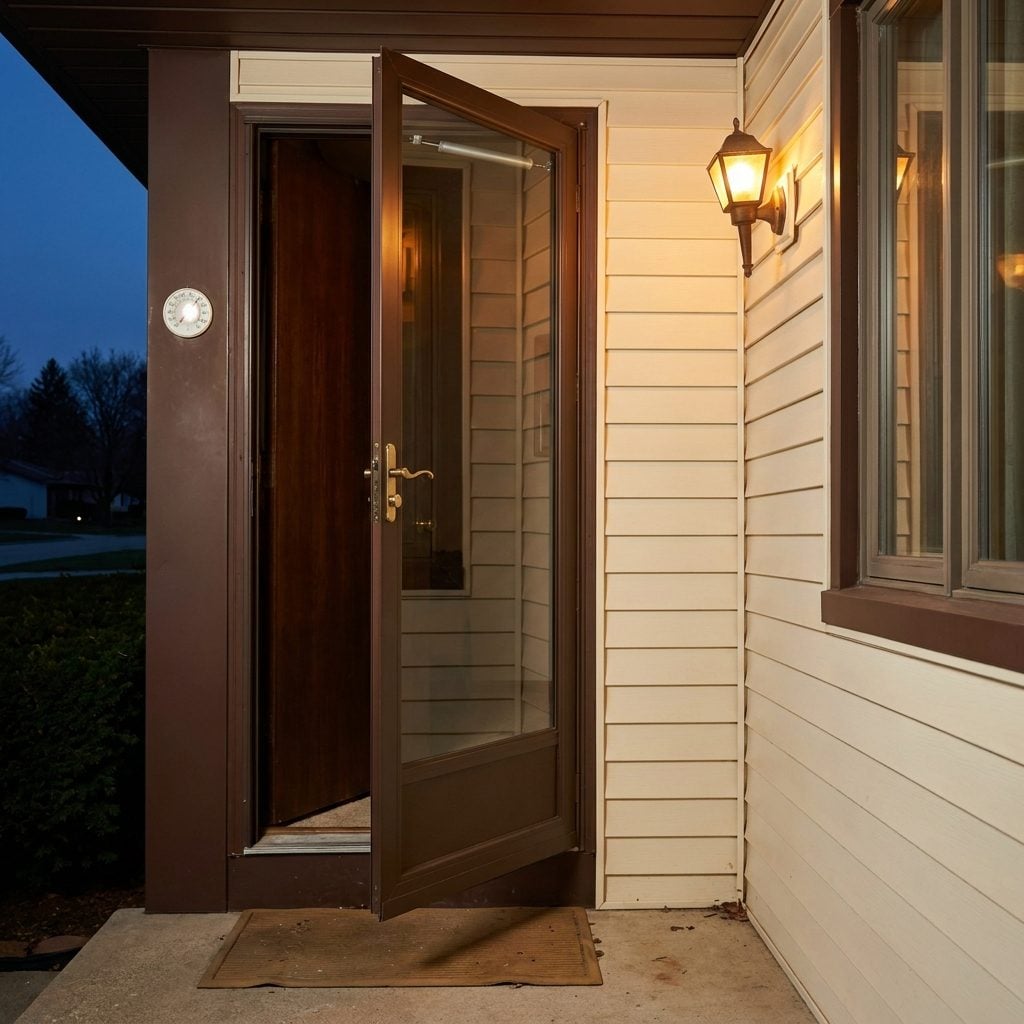
That slow, theatrical hiss. You could hear it from the kitchen — every departure announced with a long pneumatic sigh, followed by a final click that sounded like punctuation nobody asked for.
The closer was a silver cylinder bolted to the frame, and adjusting its speed became a household ritual involving a flathead screwdriver and about fifteen test-slams. Too loose and the door banged open in the wind. Too tight and it caught your heel on the way through. You’d find the sweet spot, celebrate quietly, and then the weather would change and you’d start over.
23. The Doorbell Chime Box Mounted High on the Hallway Wall
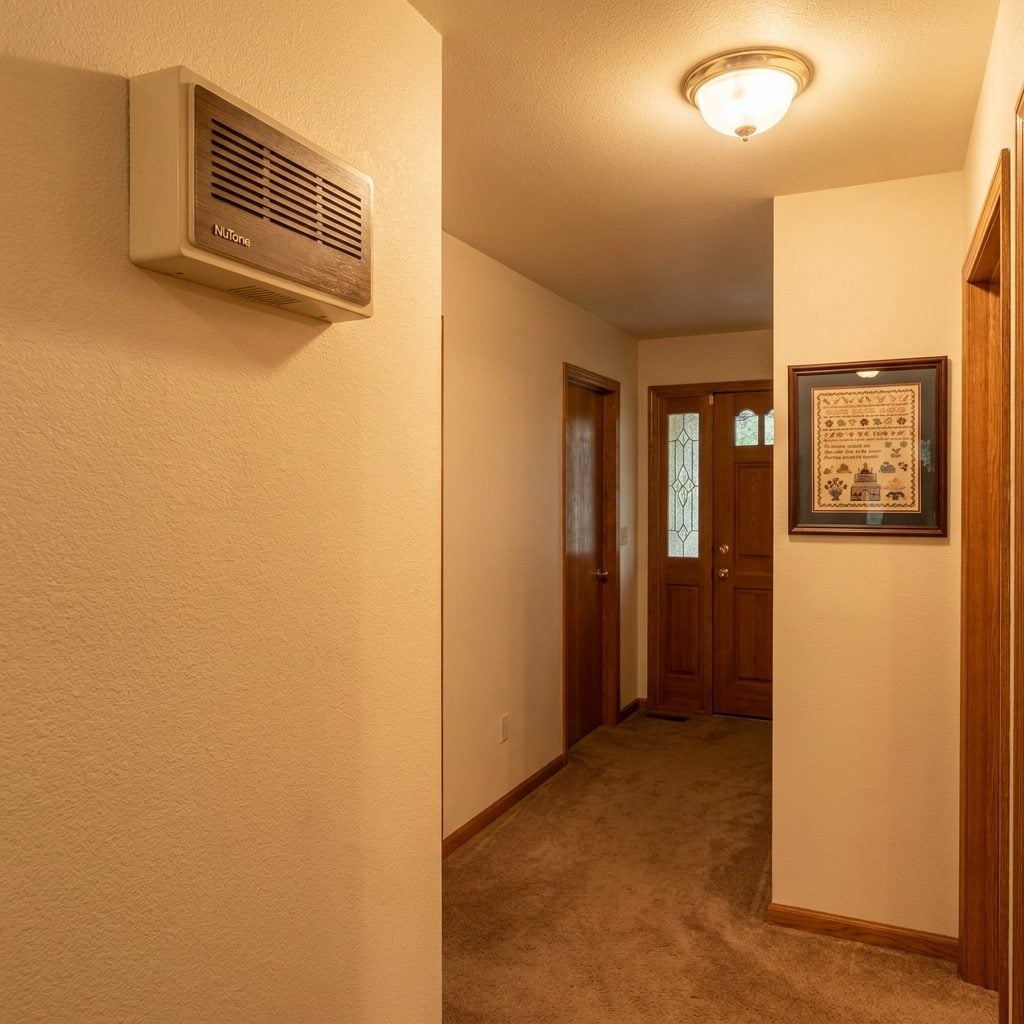
Two tones. Ding-dong. That was the NuTone chime box’s entire repertoire, mounted high on the hallway wall like a smoke detector with better taste, playing exactly one song its whole life.
Behind the faux wood-grain panel sat a pair of metal bars and two small strikers. When somebody pressed the button out front, those two notes cut through whatever was on television with startling clarity — a bright, resonant interruption you felt in your teeth. Front door got two tones. Back door got one. That distinction was the entire security protocol for telling friend from stranger in 1986, and nobody questioned it.
22. The House Numbers in Adhesive-Backed Brass Numerals That Always Lost the Last Digit
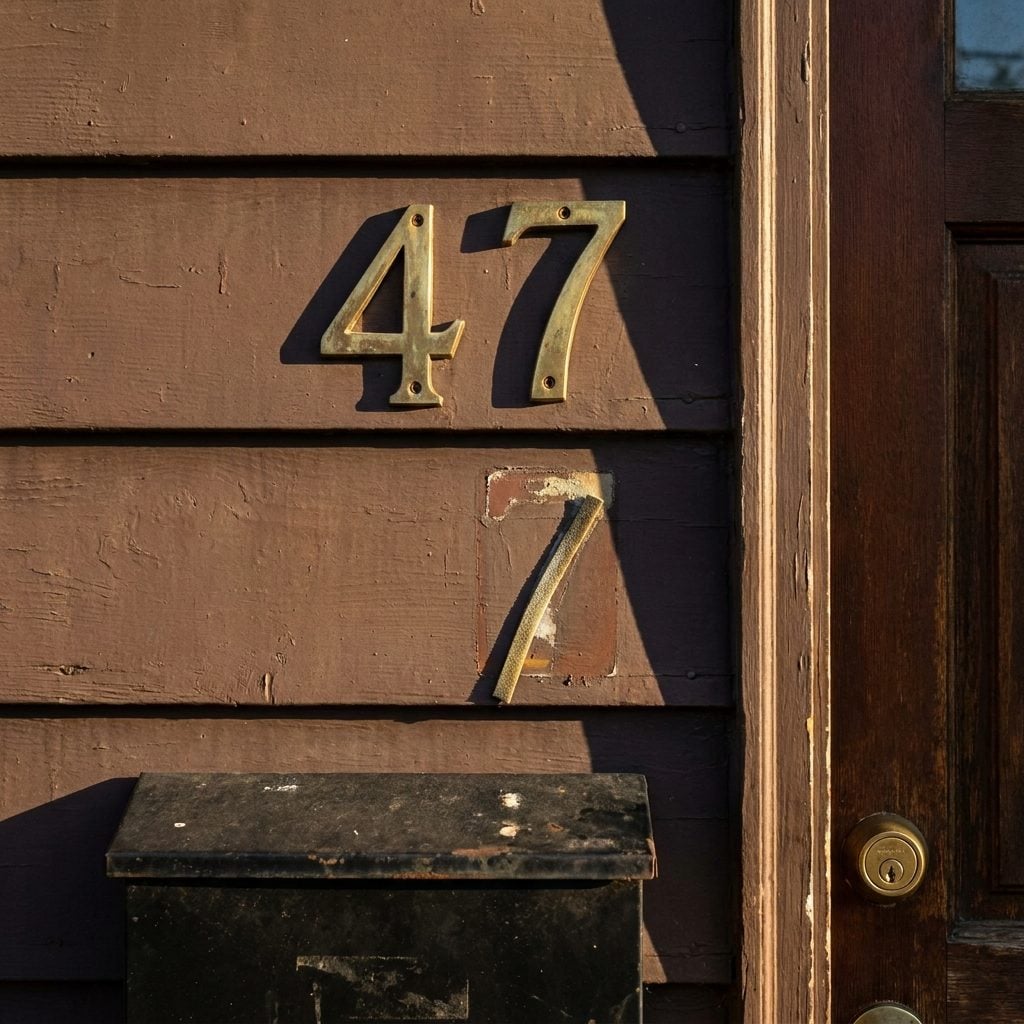
Four-seven-blank.
The adhesive on those brass house numbers was optimistic for about two summers before one digit surrendered — usually during a rainstorm — and landed face-down in the flower bed, where it stayed for a month before anyone noticed. The ghost outline of the missing number lingered on the siding for years. Slightly cleaner than the surrounding wood. A forensic clue to what used to live there.
Delivery drivers figured it out. So did the pizza guy. But every few months someone would ring asking if this was 472 or 478, and somebody would yell from the kitchen that it was 473, and where is that number anyway, it’s probably in the junk drawer, someone should really glue it back on.
21. The Deadbolt With the Thumb Turn That Needed Two Hands and a Running Start
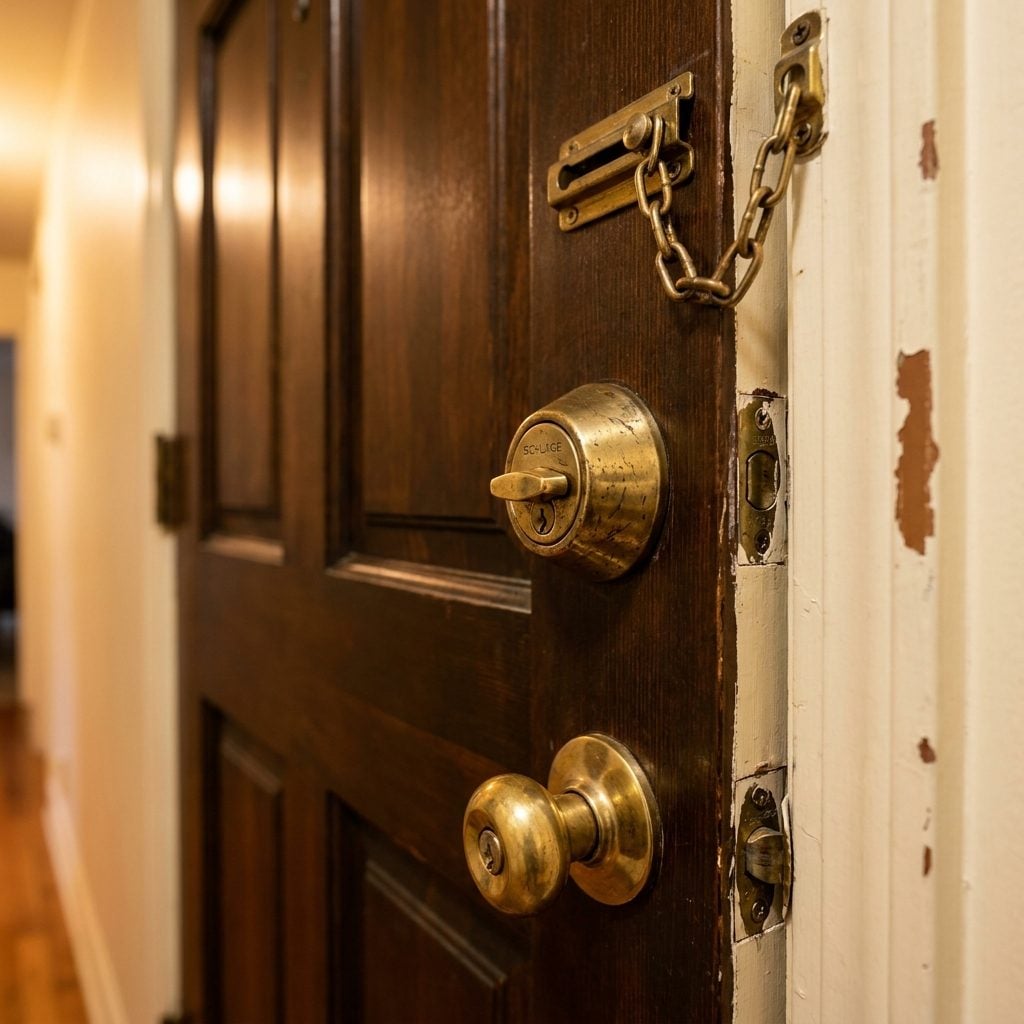
That thumb turn had opinions about whether you were strong enough to leave the house. Stiff from day one, getting stiffer every year, it demanded a pinch grip that would make a physical therapist wince. Kids coming home alone learned the two-handed technique early: one hand bracing the door, the other torquing the brass deadbolt until it surrendered with a reluctant thunk.
Nobody ever replaced the mechanism. WD-40 was the answer. The answer lasted about a week.
20. The Intercom Panel Built Into the Kitchen Wall That Played AM Radio and Nothing Else
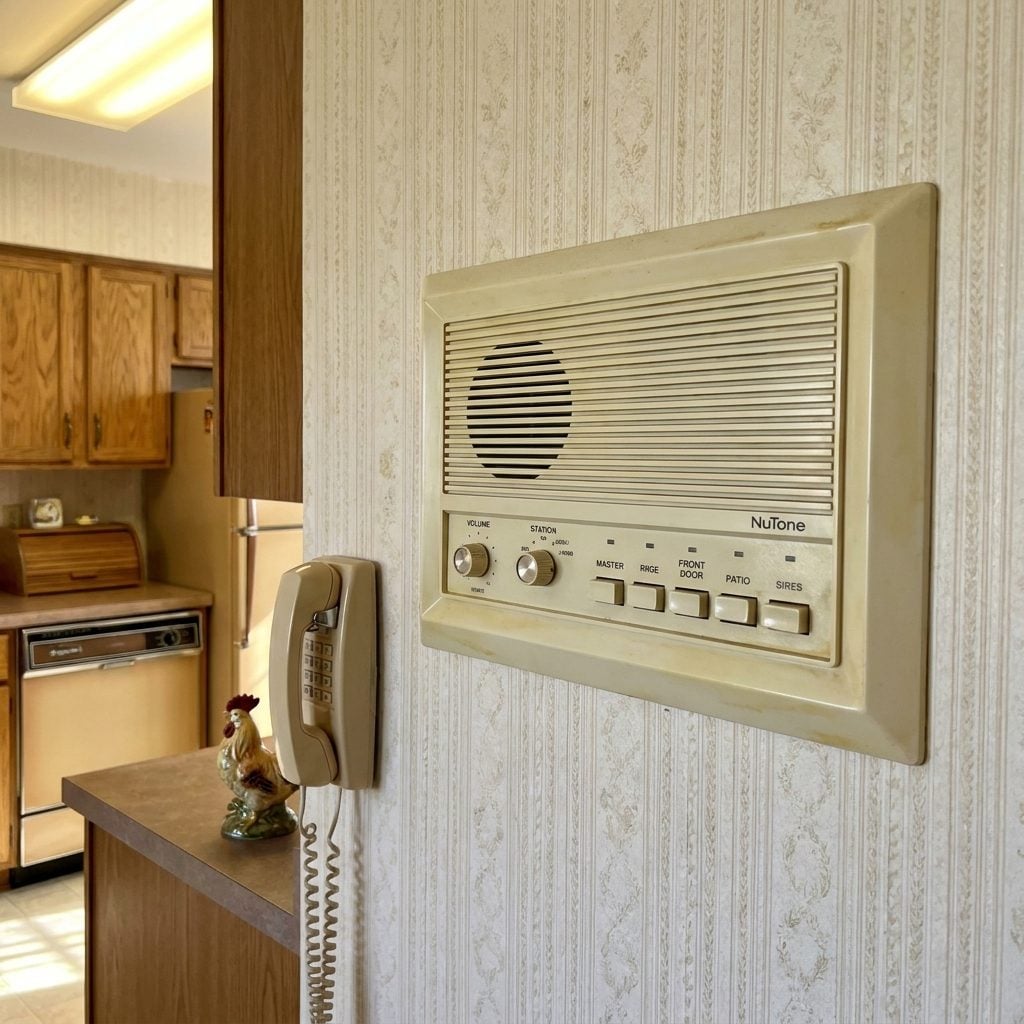
Every room in the house had a little speaker panel. In theory, you could talk to someone in the master bedroom from the kitchen without raising your voice. In practice, the intercom function produced audio roughly equivalent to shouting through a paper towel tube, so nobody bothered with it after the first month — except to accidentally broadcast private conversations to every room simultaneously.
What people actually used was the AM radio. The kitchen panel became a permanent source of talk radio and oldies, tuned to one station and left there for the life of the house. The dial was set. Touching it was not discussed.
19. The Bristle Doormat With Your House Number Stamped Into It
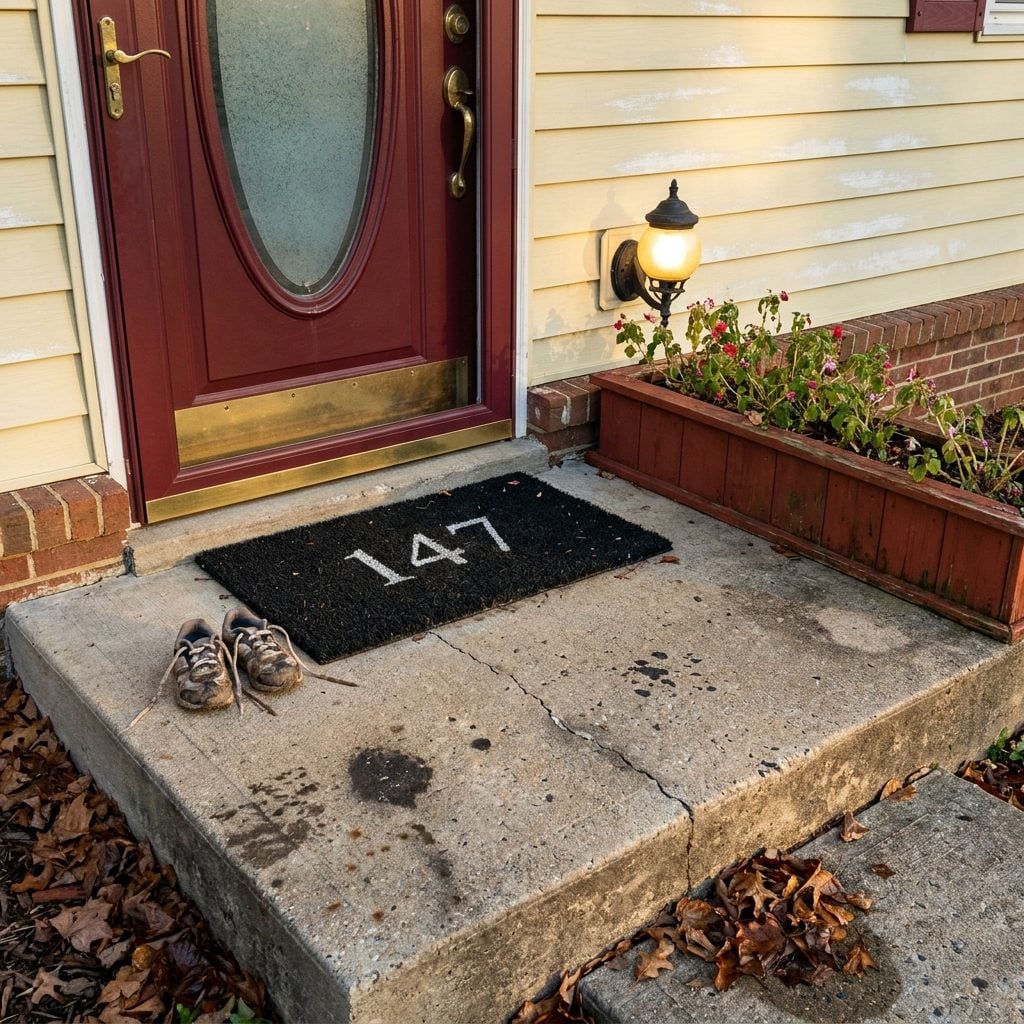
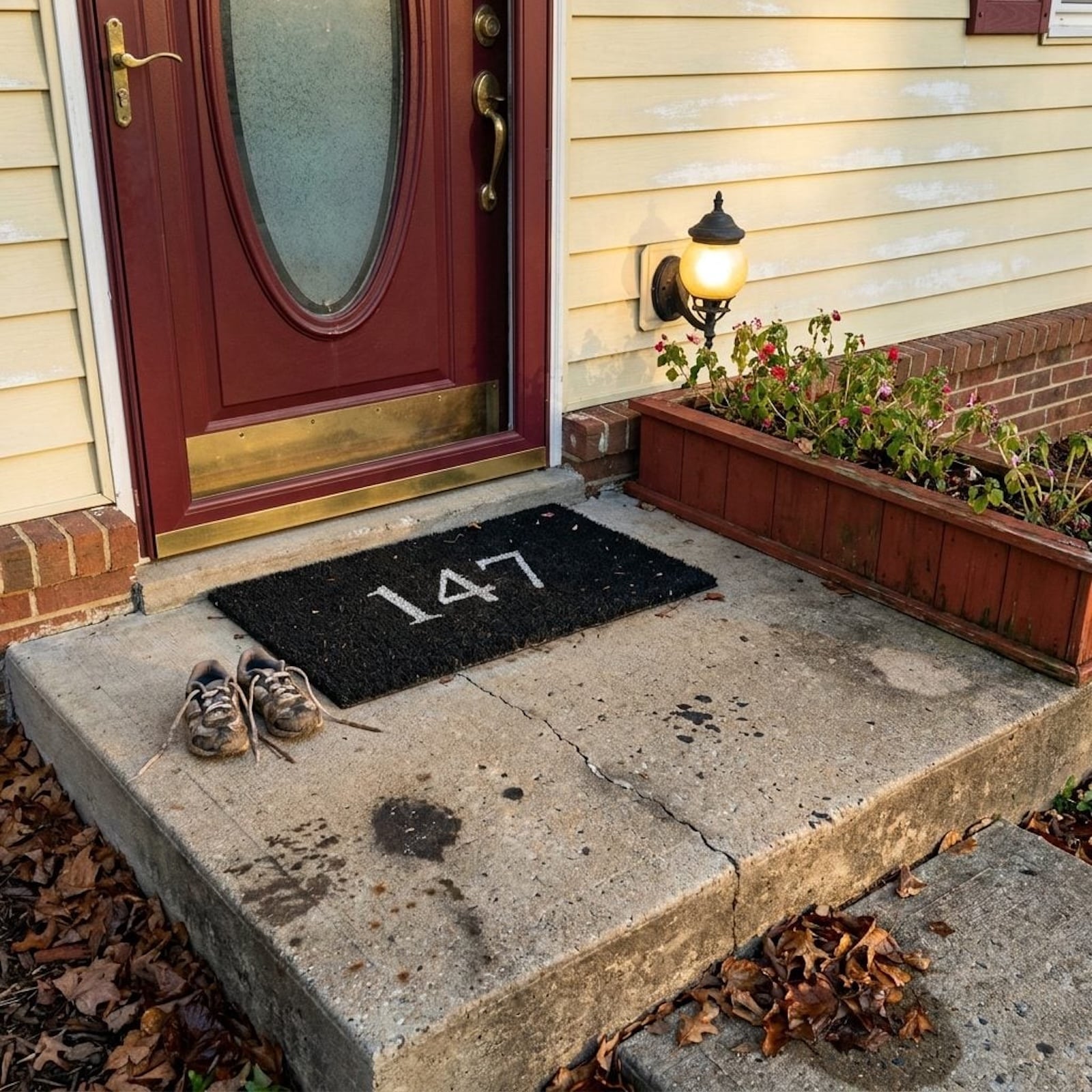
That mat was the first thing every latchkey kid checked before anything else. Not for wiping shoes. For the key that may or may not have been tucked under the back left corner, depending on whether your mom had remembered to leave it. The house number stamped into the bristles had faded to a pale grey ghost of itself, half the fibers worn flat from ten thousand heel-drags.
Nobody questioned it as a security measure. The mat sat there announcing the address to the street while simultaneously hiding the means of entry. It was a very 1980s solution.
18. The Screen Door Spring That Sang One Note Every Time You Pulled It Open
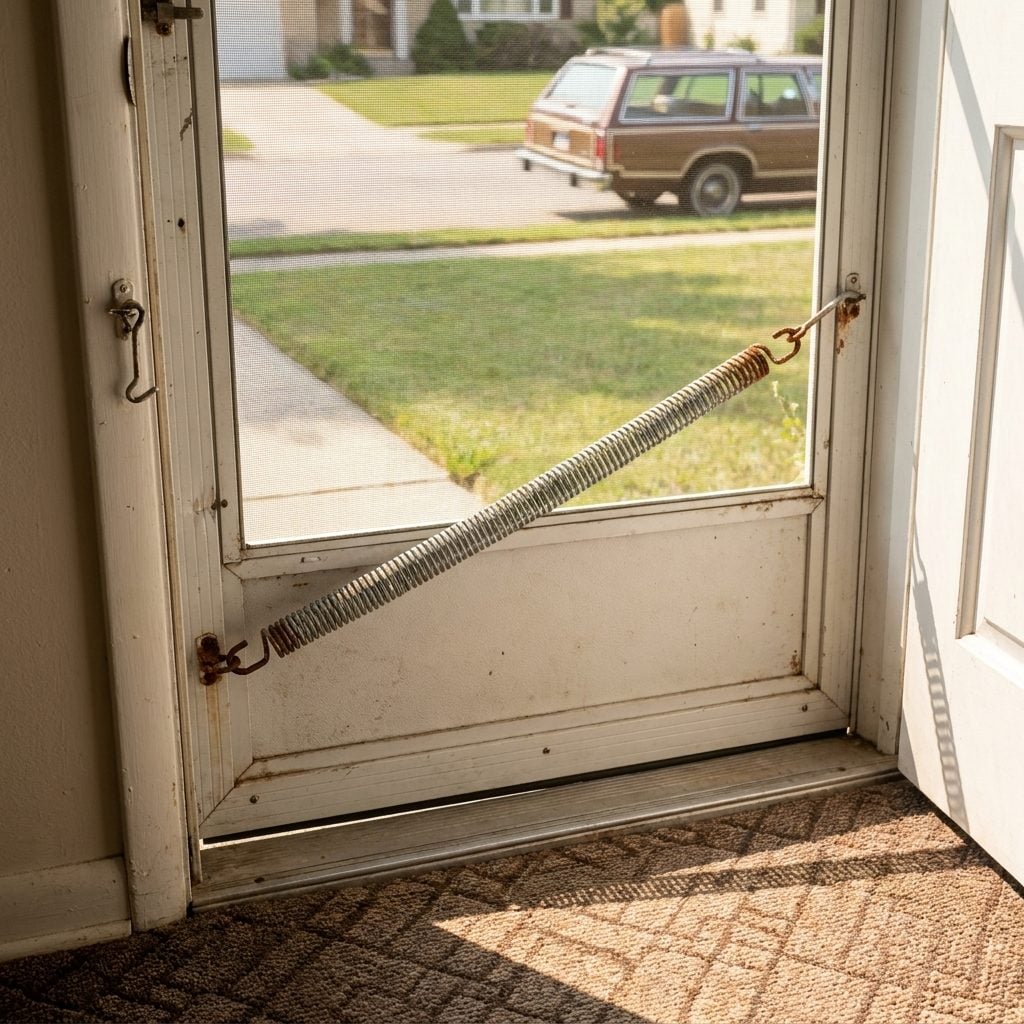
That twang. A coiled steel spring stretched diagonally across the frame, and every time you pulled the screen door open it produced a single metallic note — pitch determined by how far you swung it. Quick exit? Short chirp. Full swing? A long, rising whine that carried across the yard and probably into the neighbor’s kitchen.
Letting go was the second movement. The slam. Spring note, then slam, forty times a day all summer long, a rhythm so constant you stopped hearing it until you visited a friend’s house and realized their screen door sang in a completely different key.
17. The Milk Chute Door in the Brick That Hadn’t Been Opened Since 1971
🔥 Would you like to save this?
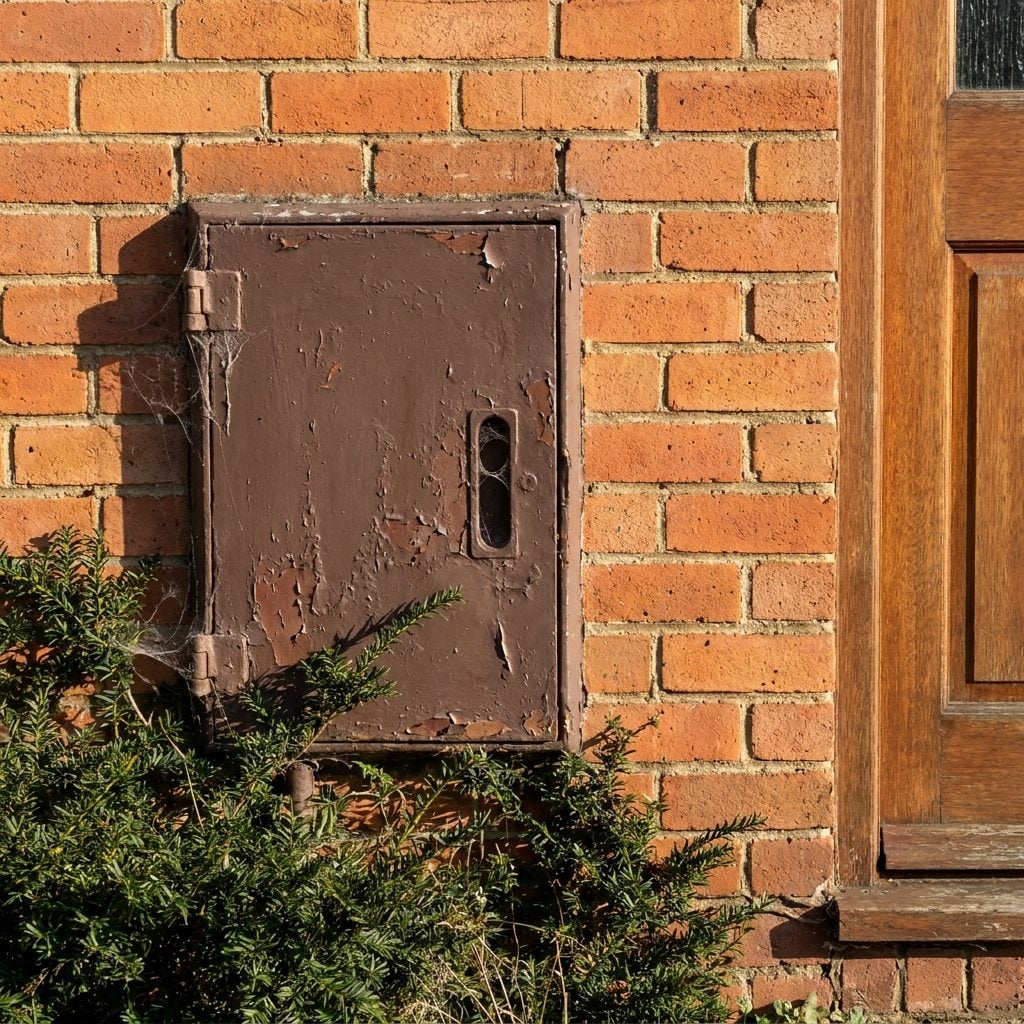
Painted shut. Every kid on the block knew what it was because somebody’s dad had explained it once — the milkman used to open the little door, set the bottles inside, and close it. You opened it from the kitchen side. A tiny airlock for dairy.
By the 1980s it was an artifact. Sealed under four layers of house paint, screwed shut from the inside, possibly stuffed with insulation. But the little metal door remained there in the brick, handle recessed and full of cobwebs, a quiet monument to a delivery system that just stopped one day. No announcement. No farewell. It simply didn’t come anymore.
16. The Porch Light Left On From 3 PM Until Somebody Got Home
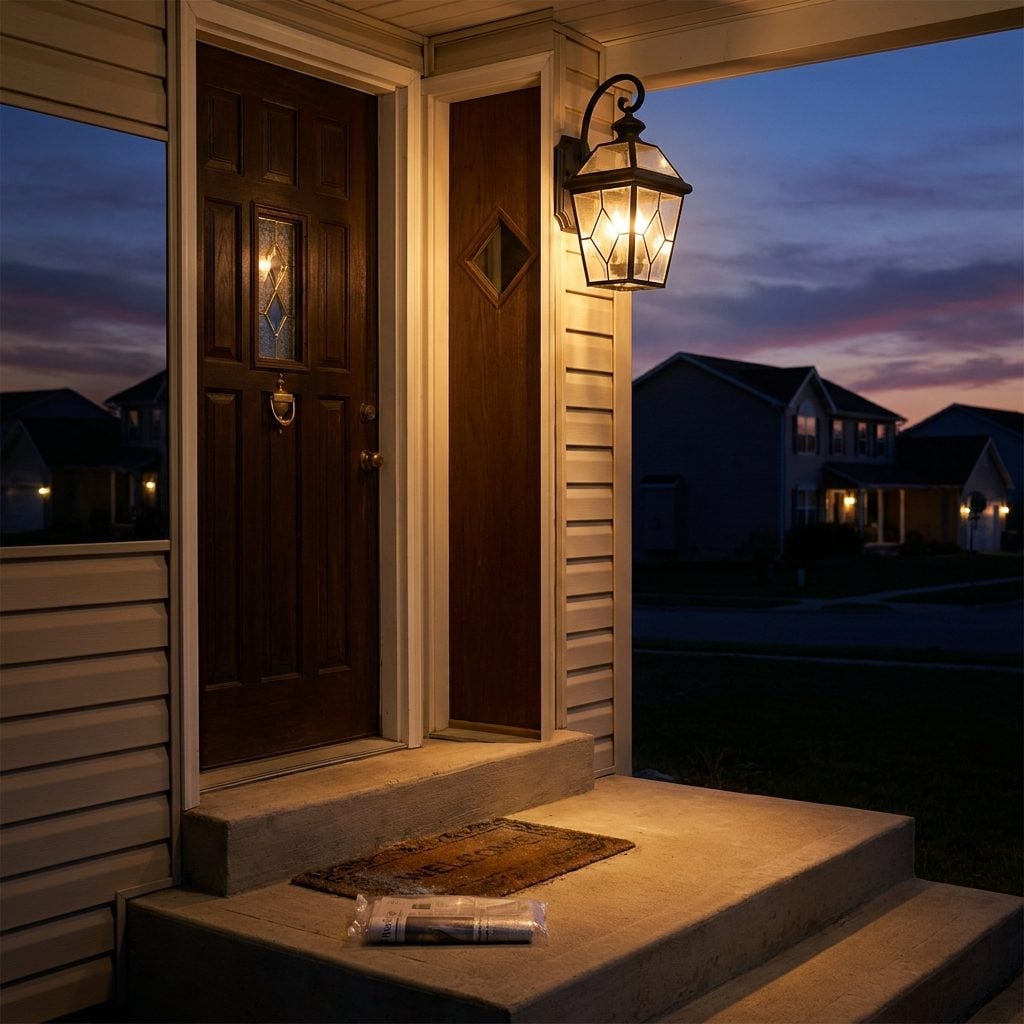
Light on meant someone was expected.
The porch light went on before school let out and stayed on until every kid and every parent was accounted for. Nothing decorative about it — purely operational. A lit front porch was the last thing latchkey kids saw before digging for the key around their neck, and the first thing that told them the house was still the house. Warm yellow incandescent through beveled glass, that particular shade of gold pooling on a concrete stoop. It looked like someone was home even when nobody was.
15. The Mail Slot in the Door That Let In Every Draft and Most of the Neighborhood Gossip
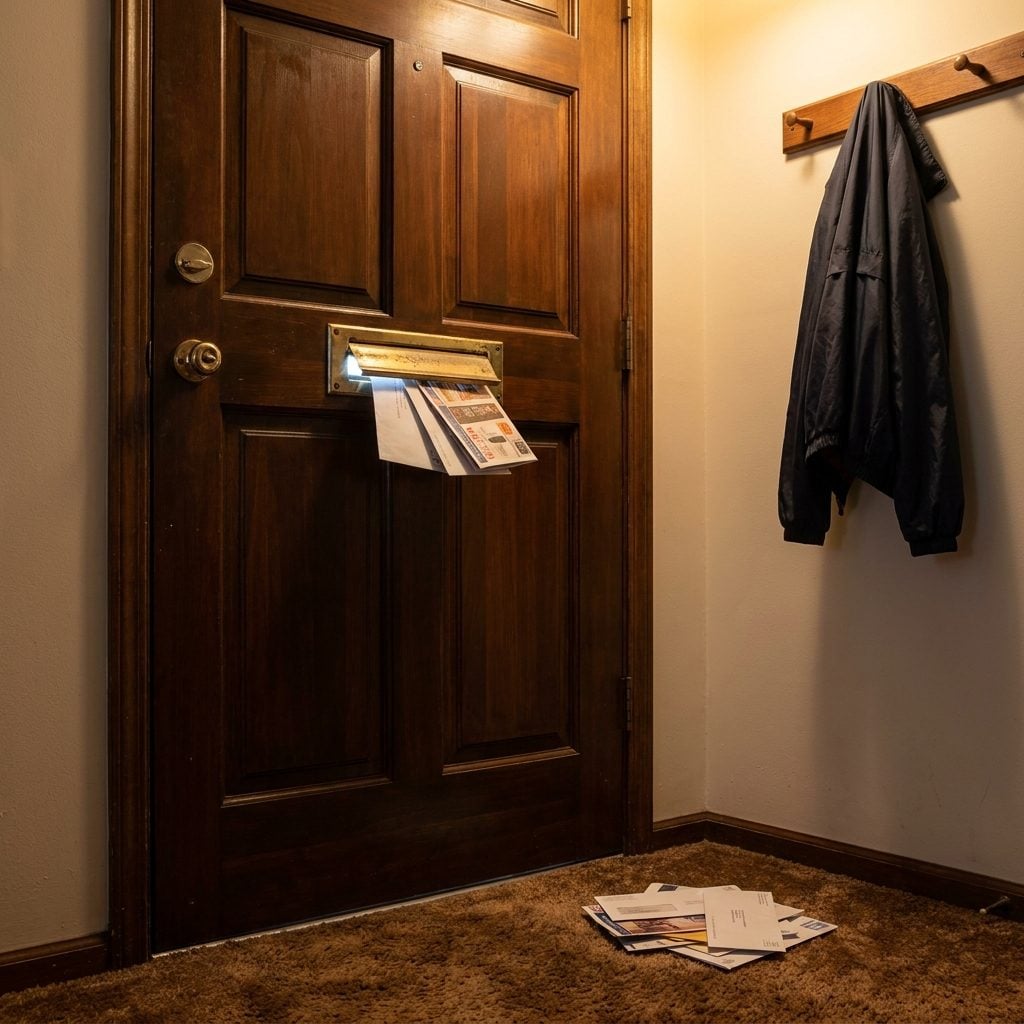
The mail didn’t arrive at this house. It intruded. Letters shoved through the brass slot landed on the carpet with a soft slap, and the flap stayed open just long enough to admit a blade of daylight, a gust of February air, and whatever the neighbors were arguing about on their porch.
That slot was a tiny open wound in the building envelope. The spring-loaded interior flap was supposed to seal it, but the springs gave up early — by the late ’80s the flap just hung there, leaving a permanent half-inch gap between inside and outside. In winter you could feel the cold radiating off it from across the hall. Like standing near an open refrigerator, except the refrigerator was your own front door, and nobody was going to fix it because who replaces a mail slot? You just learned to walk past it faster.
14. The Chain Lock That Could Be Defeated by a Butter Knife and Everybody Knew It
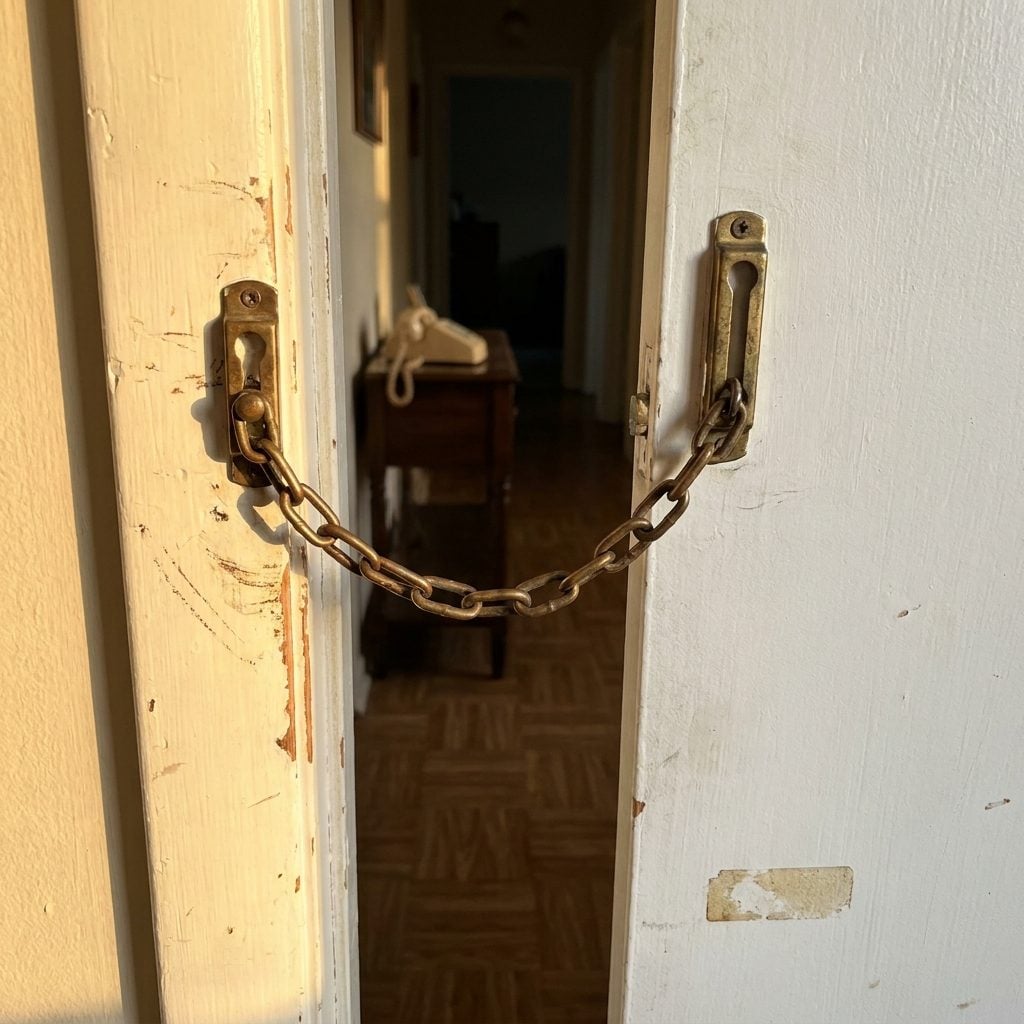
Four screws held it to the doorframe, and two had already loosened by the time you were old enough to notice. The chain lock was a polite suggestion disguised as security hardware. A firm shoulder would pop it. A credit card would pop it. A butter knife slid between the door and the frame? Gone.
Nobody replaced it. Nobody tightened those screws. It stayed for years doing one real job — letting you crack the door three inches to see who was knocking before committing to a full open. That narrow gap, chain pulled tight, was the 1980s doorbell camera.
13. The Peephole Drilled Slightly Too High for Anyone Under Five-Foot-Six
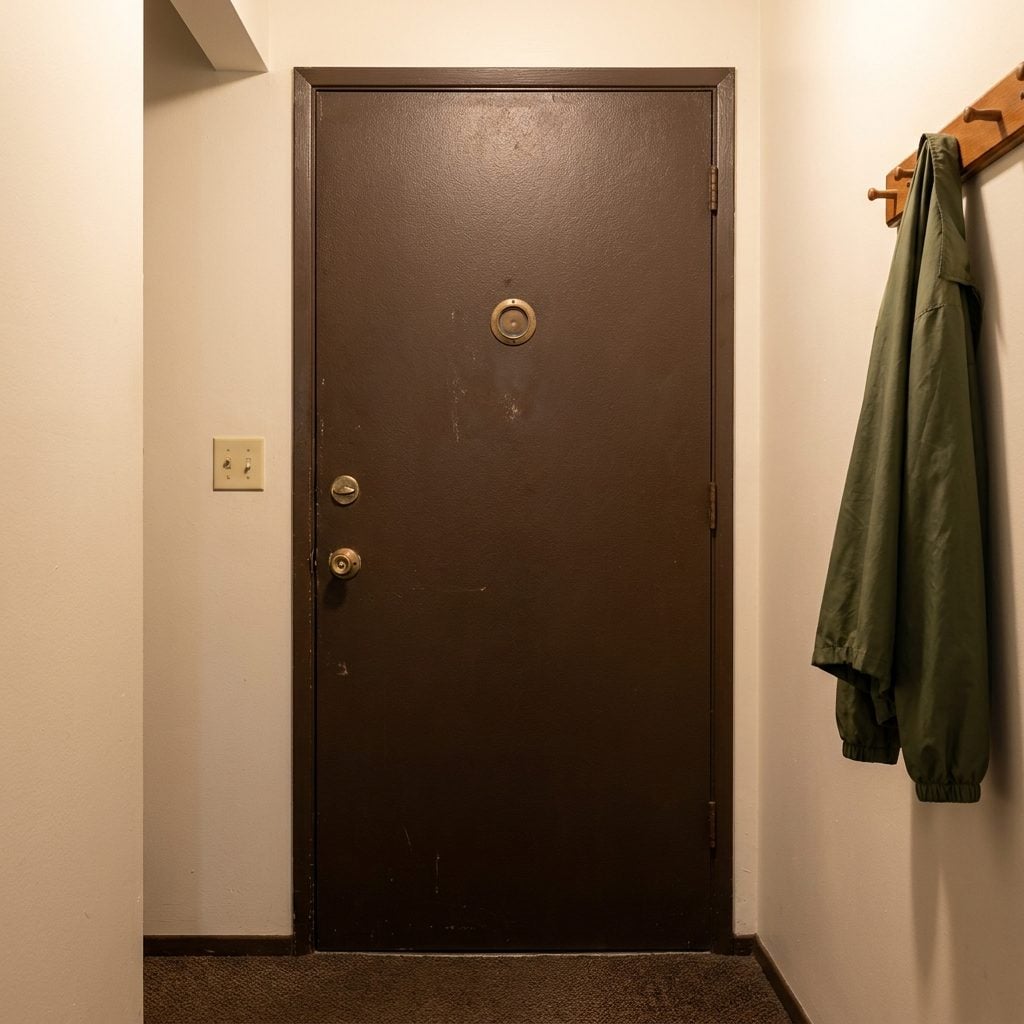
Whoever drilled that hole was tall. Or wildly optimistic about the household’s average height. The peephole sat high enough that half the family had to stand on tiptoes, pressing one eye against that cold brass ring and squinting into a fishbowl view of the porch.
What you got was a warped, yellow-tinted bubble showing a figure that could have been the mailman or a grizzly bear. You opened the door anyway. Every single time.
12. The Rubber-Banded Spare Key Wired to the Downspout Behind the Garage
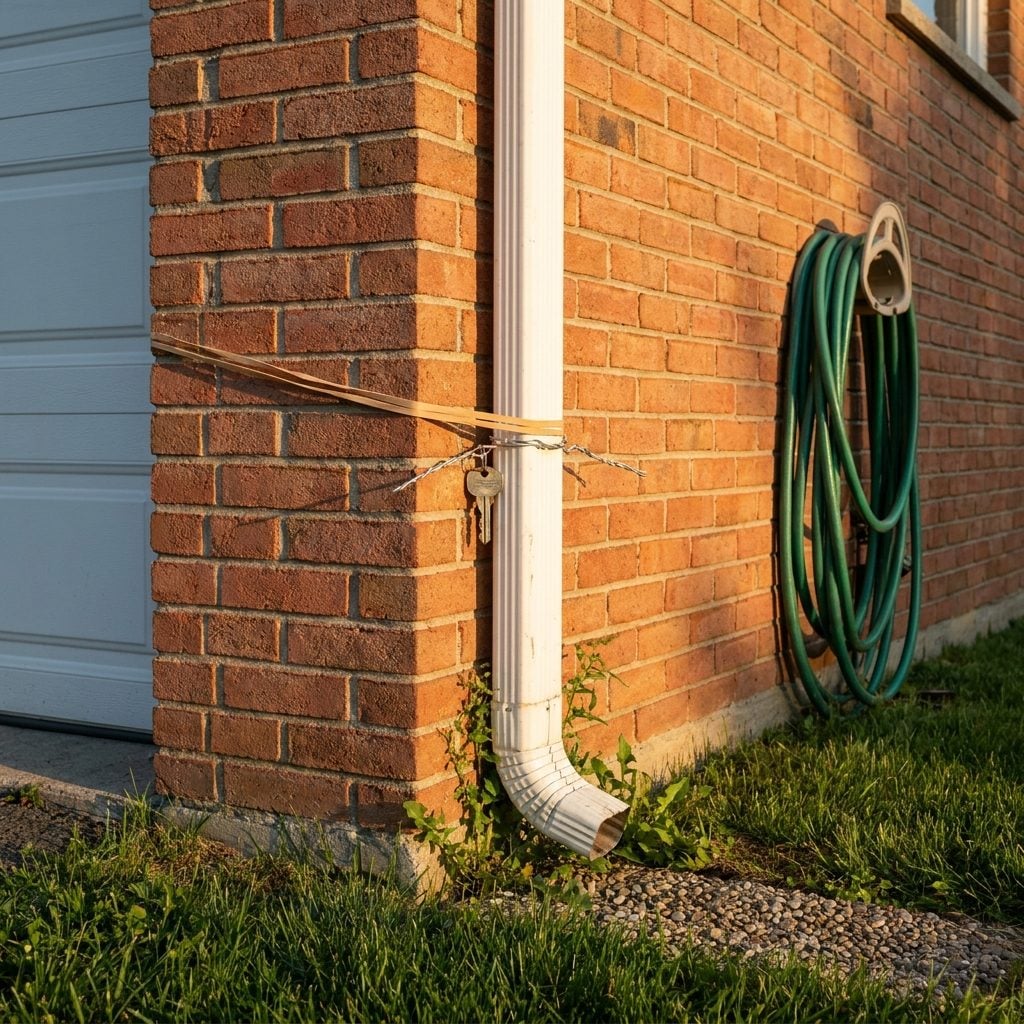
Not under the mat. Not in the fake rock. Behind the garage, about four feet up the downspout, looped with a rubber band that had gone brittle in the sun and a twist of wire a determined seven-year-old could undo in seconds.
This was the latchkey kid’s actual entrance. The front door stayed locked. The spare key on the downspout was the one that mattered — through rain, snow, and the slow disintegration of that rubber band, which someone eventually replaced with a fresher rubber band. Problem solved.
11. The Sidelite Window With the Sheer Curtain That Hid Nothing
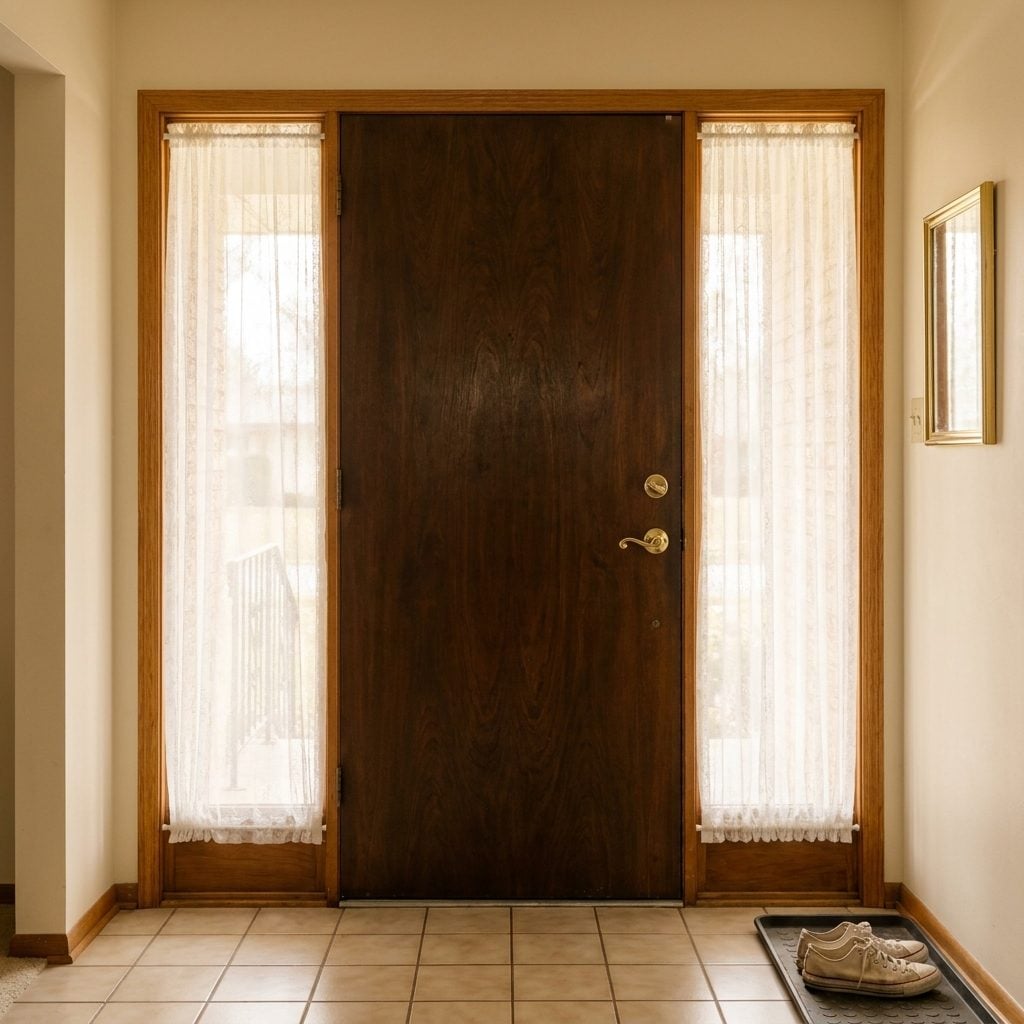
The sheer curtain on the sidelite window was an act of faith. It provided privacy the way a chain-link fence provides shelter — you could see the shape of whoever stood out there, and they could see yours. Both parties pretended otherwise.
Always slightly yellowed from sun exposure, gathered tight on a brass tension rod that slowly lost its grip and slid down half an inch every few months. Nobody adjusted it until it dropped low enough to look absurd. Then somebody pushed it back up. Then the whole cycle restarted.
10. The Umbrella Stand Nobody Used for Umbrellas
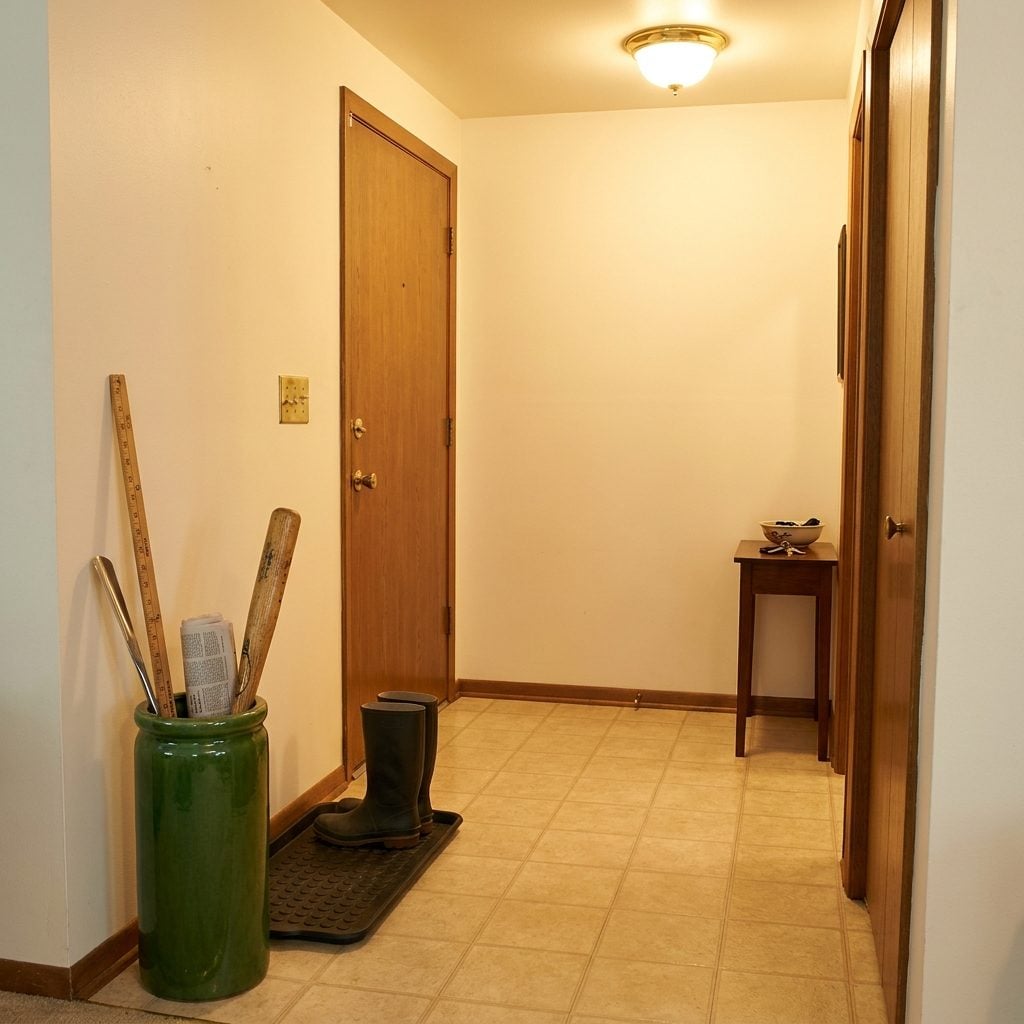
A yardstick. A rolled newspaper from three Sundays ago. One baseball bat. A long-handled shoehorn. Zero umbrellas.
The ceramic umbrella stand lived by the front door and collected everything except its intended contents — a catch-all shaped like a tube, doing honest work as a miscellaneous bin. When it rained, everybody just grabbed a jacket with a hood or ran for the car.
9. The Doorknob Sleeve Made of Needlepoint Someone’s Grandmother Crocheted
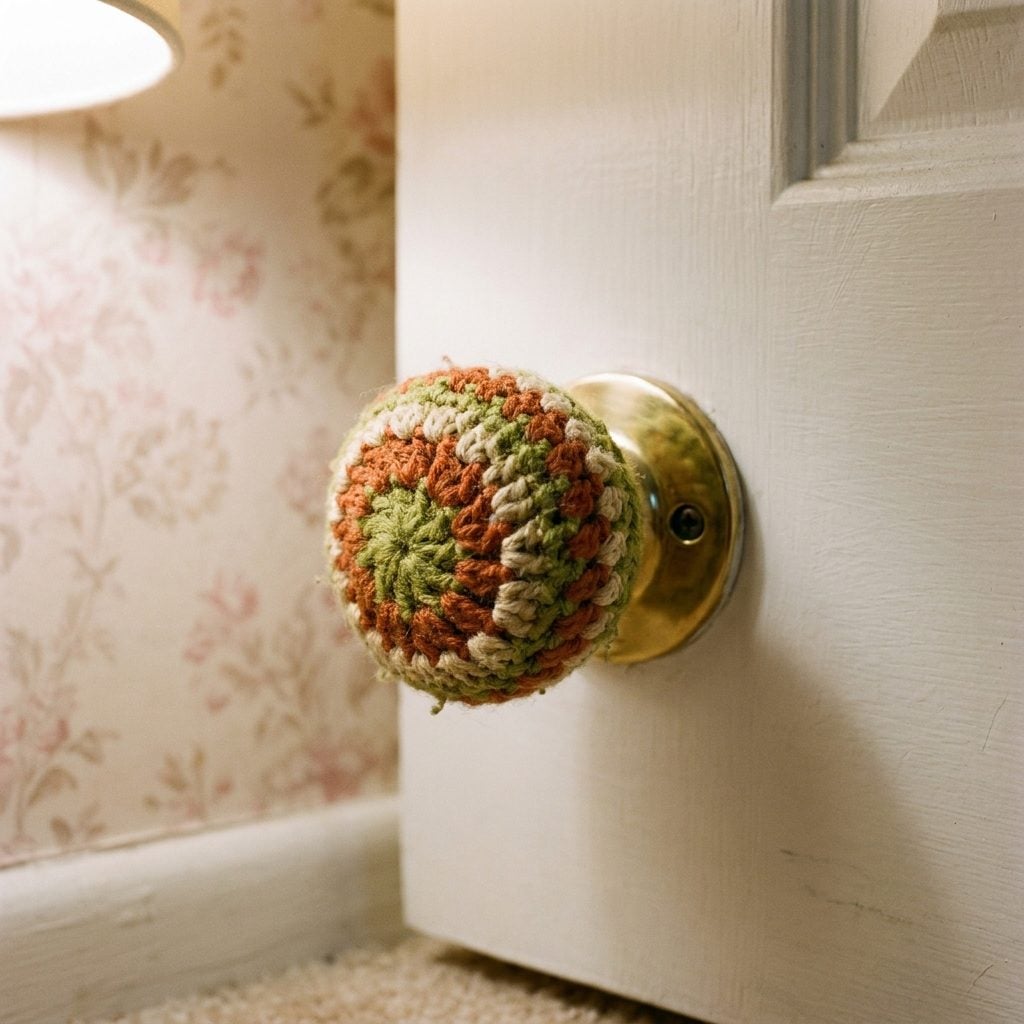
Avocado green and burnt orange yarn, twisted into a little hat for the doorknob. Somebody’s grandmother made it — and likely made several more, one for every knob in the house, because once you master a pattern you apparently cannot stop.
The practical explanation? Metal doorknobs got cold in winter and the cover gave you a warmer grip. The real explanation was that crochet was an unstoppable force in the late 1970s and early 1980s. Nothing sat still long enough to escape. Toilet paper rolls got a cozy. Tissue boxes got a cozy. Doorknobs got a cozy. If it had a surface, yarn was coming for it.
8. The Coat Closet Right Inside the Front Door That Smelled Like Mothballs and Damp Wool
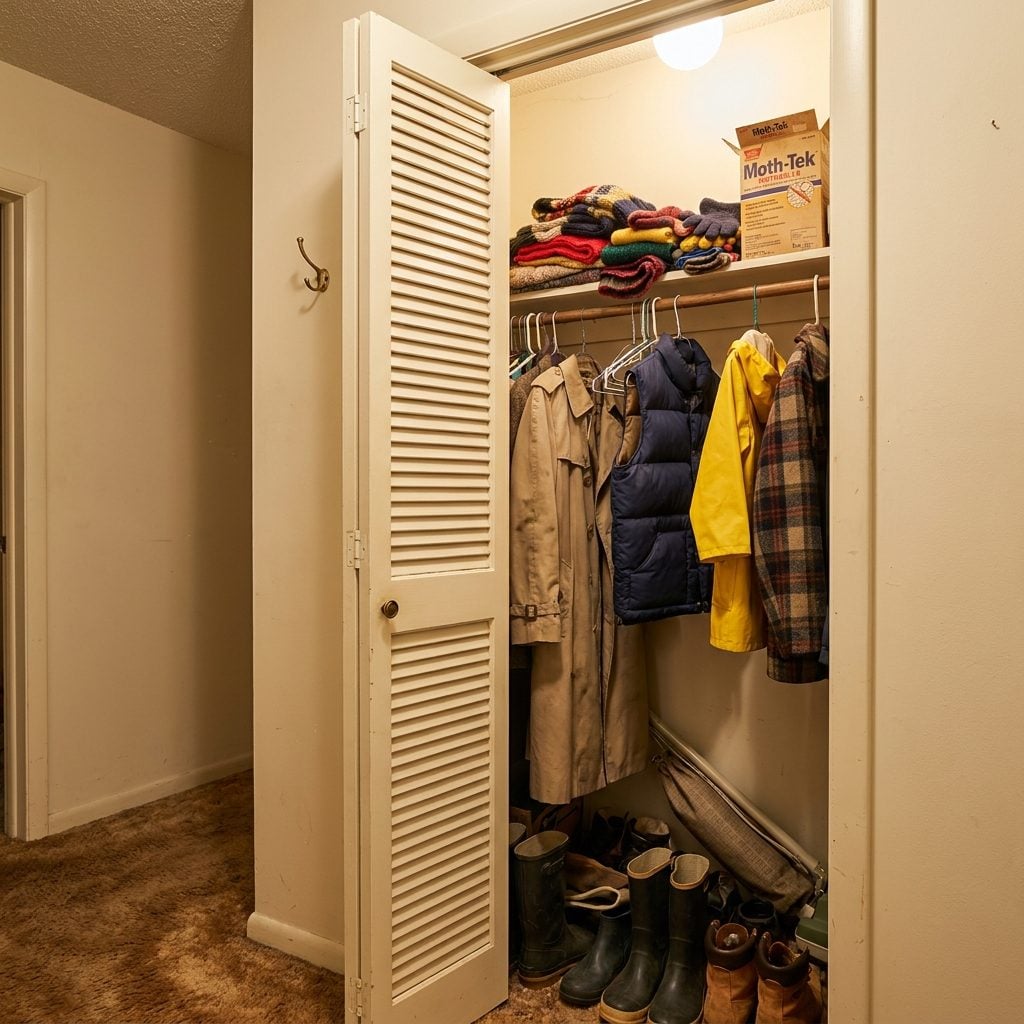
Open that bifold door and a smell hit you — mothballs, damp wool, a faint ghost of someone’s perfume from 1983, and the particular mustiness of a space that never got proper airflow. Three feet deep and crammed floor to ceiling.
Wire hangers. Always wire hangers, jammed so tight they locked together when you tried to pull one out. A vacuum cleaner shoved in the back. Boots nobody had worn in two seasons. One umbrella, broken. Scarves on the top shelf that avalanched the second you reached for anything.
And somewhere in the pocket of the tan trench coat that had hung there since before you were born? A movie ticket stub and some loose change.
7. The Welcome Mat With a Goose on It Wearing a Bow
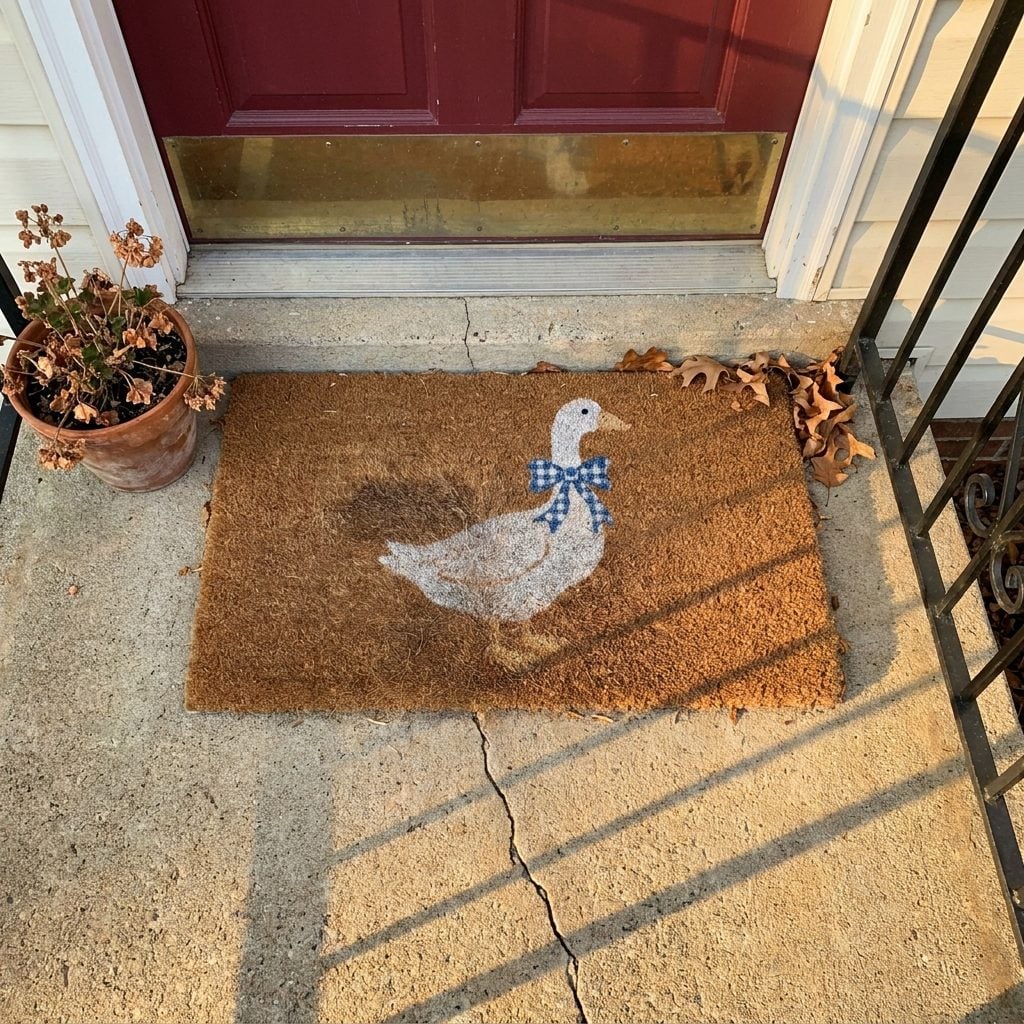
The goose. The bow. Usually blue gingham. Your front stoop’s formal portrait, and it communicated everything about the decade’s decorating instincts without a single word.
Country geese showed up on welcome mats, kitchen towels, wallpaper borders, and ceramic cookie jars simultaneously — a coordinated invasion nobody planned but everyone joined. The goose-with-bow motif peaked around 1985, retreated quietly by the early 1990s, and got replaced by sunflowers and ivy. But for a solid stretch there, that goose owned every suburban front stoop in America, wearing its little bow, welcoming everyone home with zero irony.
6. The Transom Window Above the Door That Was Painted Shut Before You Were Born
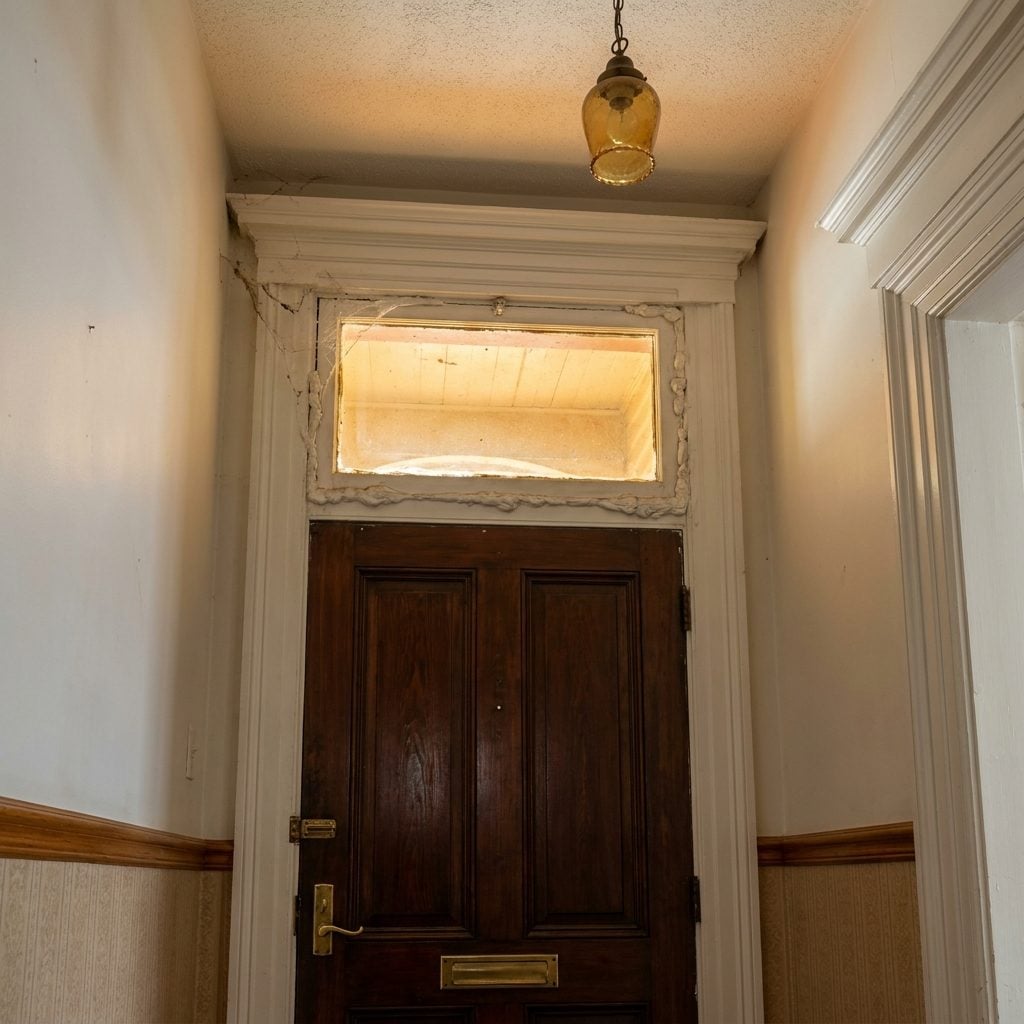
It was supposed to open. Transoms existed to let hot air rise and escape — a ventilation trick from the era before central air made every room the same temperature. By the 1980s, the one above the front door had been painted shut so many times the layers had become structural, a geological record of every repainting since the Eisenhower administration. You could see the seams where cream met white met cream again.
Nobody tried to open it. The idea probably never crossed anyone’s mind. It just sat there — a cloudy amber rectangle letting in weak light, collecting cobwebs in its corners, sealed forever by latex paint and total indifference.
5. The Vinyl House Number Plaque From the Hardware Store in a Font That Screamed 1983
🔥 Would you like to save this?
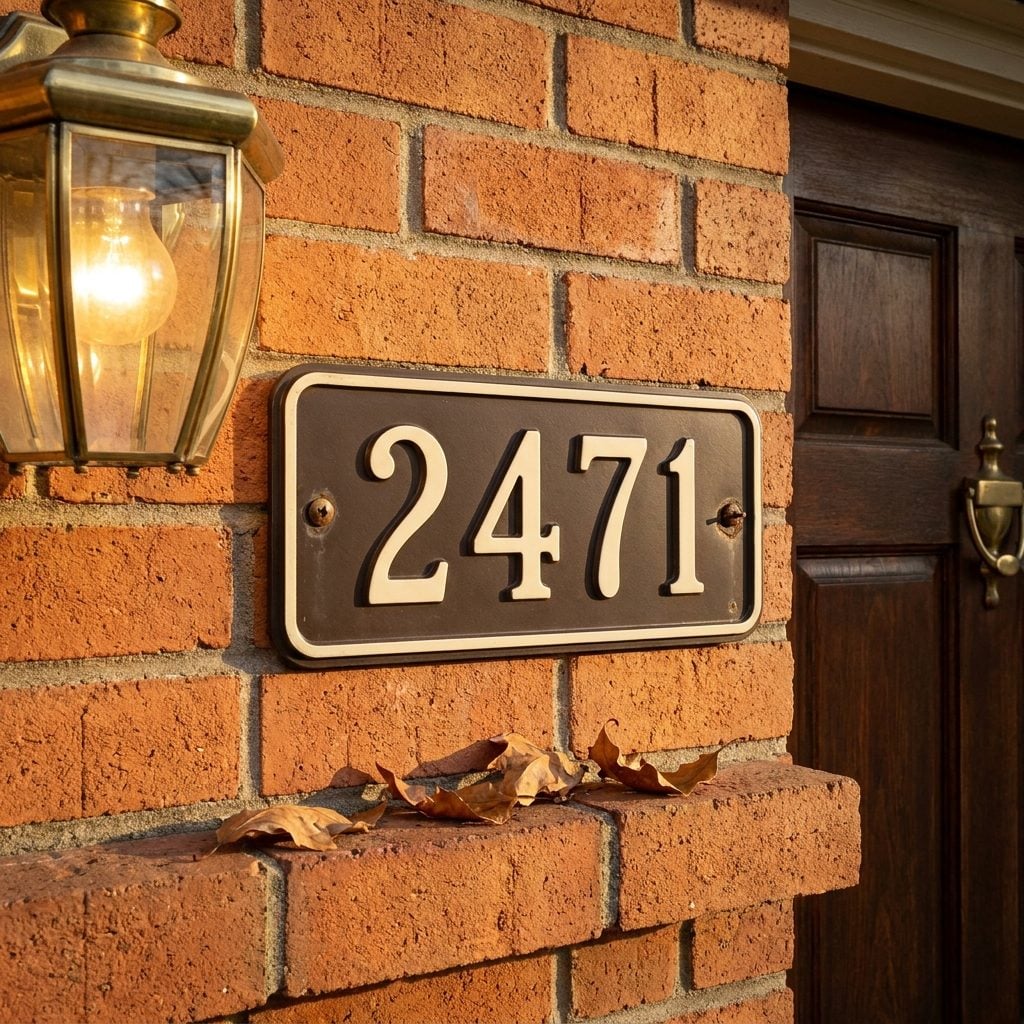
Brown plastic. Cream numbers. A serif font with exaggerated curves that looked like it belonged on a steakhouse menu. Purchased at the hardware store for almost nothing, screwed into the brick or siding with two small screws, and forgotten about for the next two decades.
You could date a house by its address plaque. The chunky, confident serifs of the early 1980s gave way to thinner, more angular looks by the decade’s end — a quiet timeline embedded right next to the front door. A modern entryway design today would use something minimal and clean, but those old plaques had a stubbornness that a brushed-nickel numeral never quite matches.
4. The Aluminum Threshold Strip That Caught Every Shoe and Rolled Suitcase
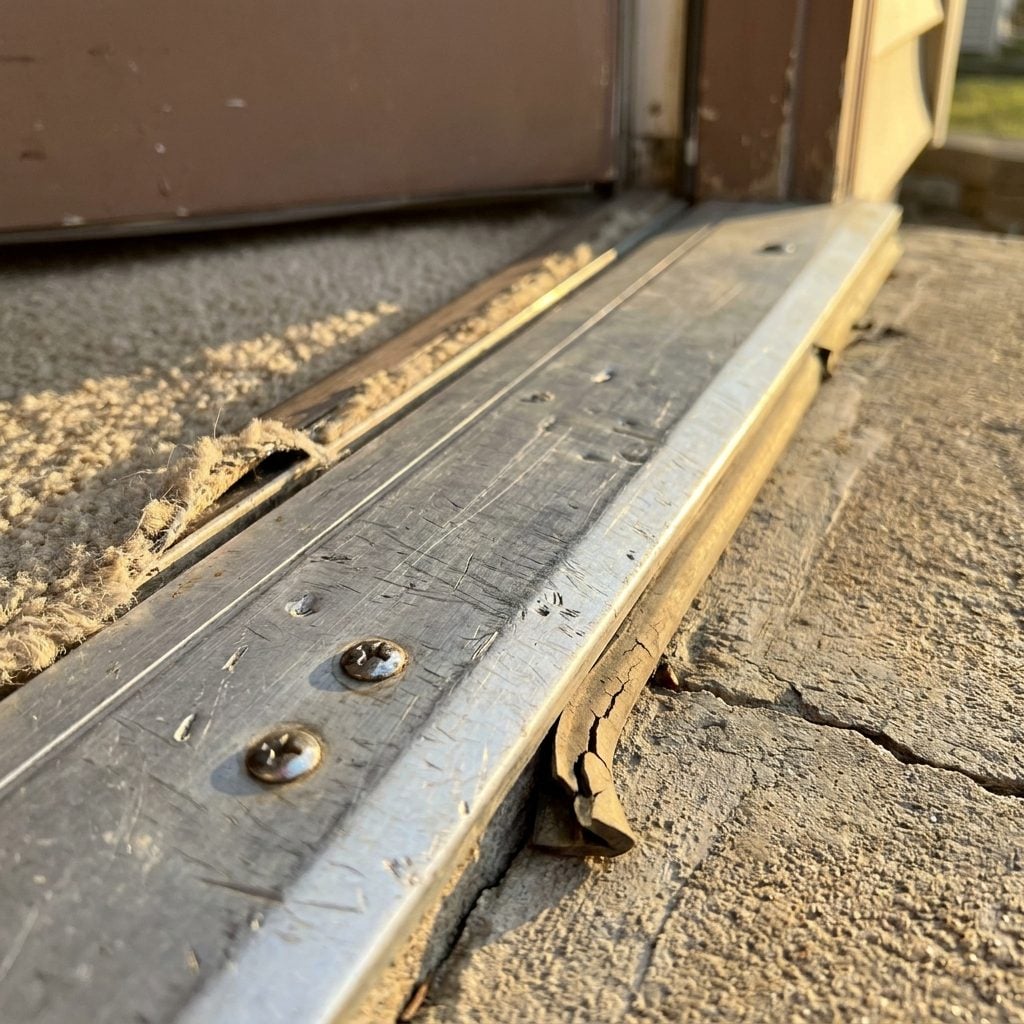
Every front door had one. That raised aluminum strip bolted across the threshold — silver once, now scuffed to a dull pewter from a decade-plus of shoes dragging over it. You tripped on it as a kid, your mom tripped on it hauling in grocery bags, and the pizza delivery guy tripped on it and pretended he didn’t.
It did two jobs: holding the weather seal in place and catching the wheel of every rolling cooler, toy truck, and vacuum cleaner that tried to cross it. The rubber gasket underneath cracked within a year. Nobody replaced it. Replacing it meant removing screws that had basically fused with the aluminum, and nobody had that kind of patience or that particular drill bit.
3. The Sliding Bolt Lock at the Top of the Door Your Parents Installed After the News Got Scary
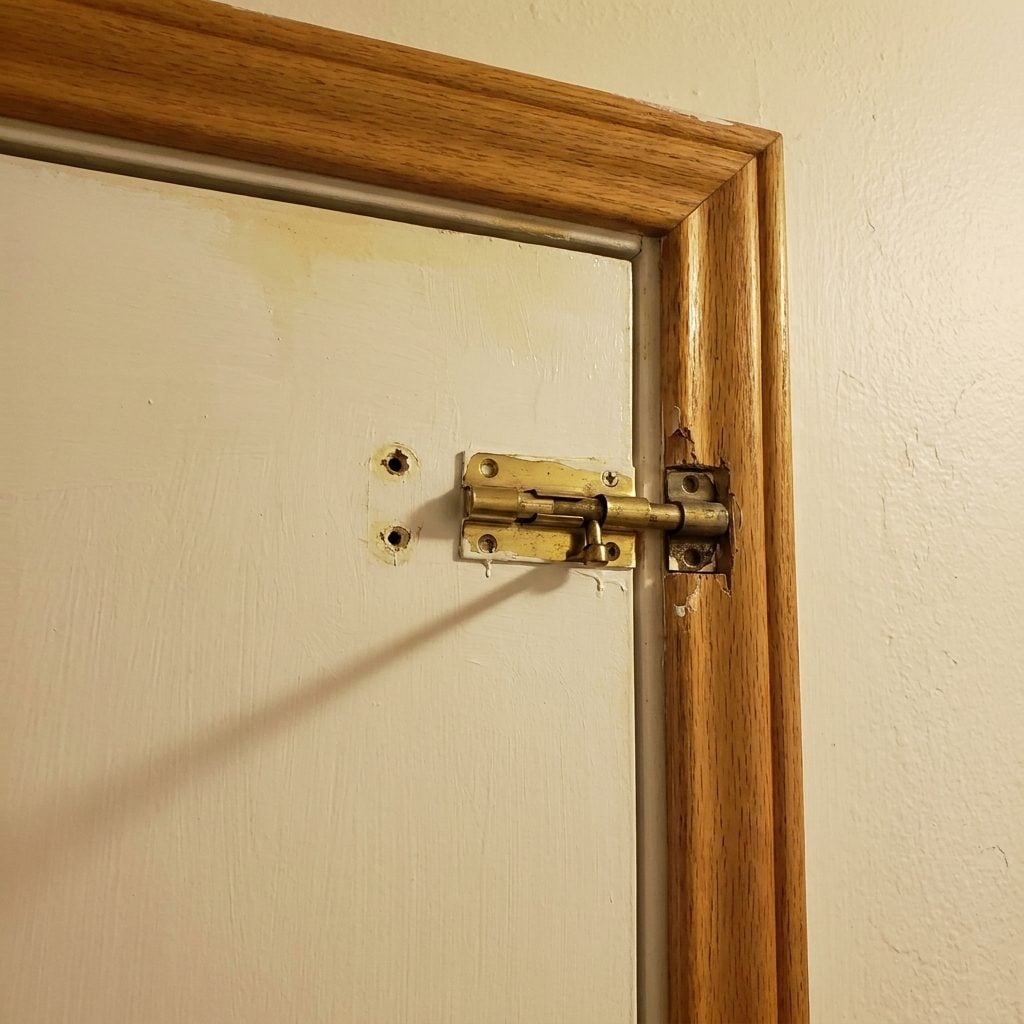
It showed up one weekend. No discussion. Just Dad on a stepladder with a Phillips-head and a brass barrel bolt from the hardware store, drilling two holes too high for any kid to reach — which was half the point.
The other half was something on the evening news nobody talked about at dinner. A break-in down the street, a story from a neighbor, something that made the deadbolt feel insufficient. So a second lock went up. The cheap sliding kind, a few bucks, four minutes to install. Screw holes from the first attempt — the ones that missed the frame — got a dab of wood putty and stayed visible for decades. Nobody removed that bolt. And nobody slid it open in the morning without a small, unconscious ritual of scanning the front yard through the sidelight first.
2. The Address Plaque Lit by a Single Acorn-Shaped Lantern That Turned On at Dusk
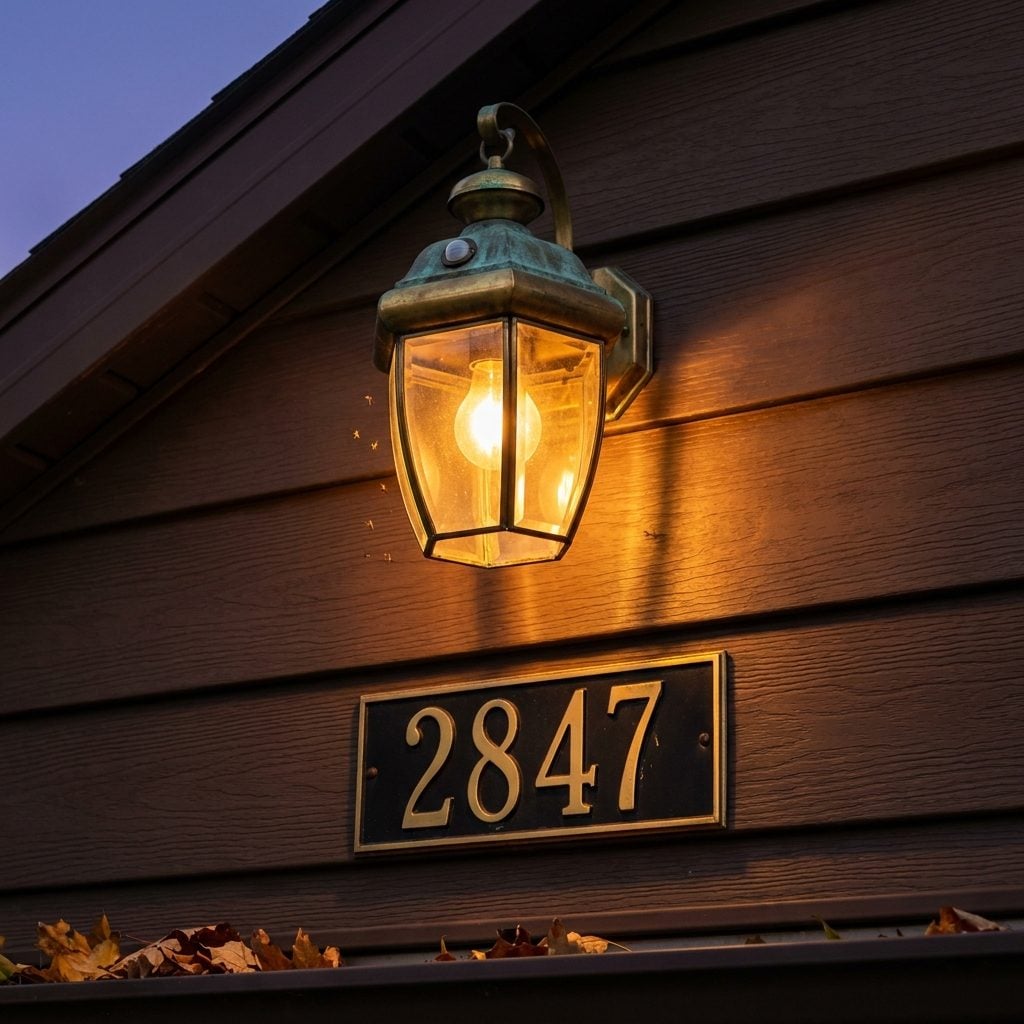
The photocell did all the thinking. Dusk hit, the bulb clicked on, and that one acorn-shaped lantern threw a warm yellow cone across the address numbers. Every light front porch in the neighborhood ran some version of this setup — always colonial style, always brass-toned, always slightly too small for the wall it hung on.
What it actually illuminated was maybe eighteen inches of siding and the top half of the plaque. Paramedics and pizza drivers were guessing after that. But here’s what no modern LED floodlight replicates: it made the house look occupied. Looked after. Like someone inside cared enough to leave a light on. The bulb burned out every few months, of course, and sat dark for weeks until somebody remembered the stepladder existed.
1. The Thumb-Latch Screen Door Handle That Pinched You Every Single Time
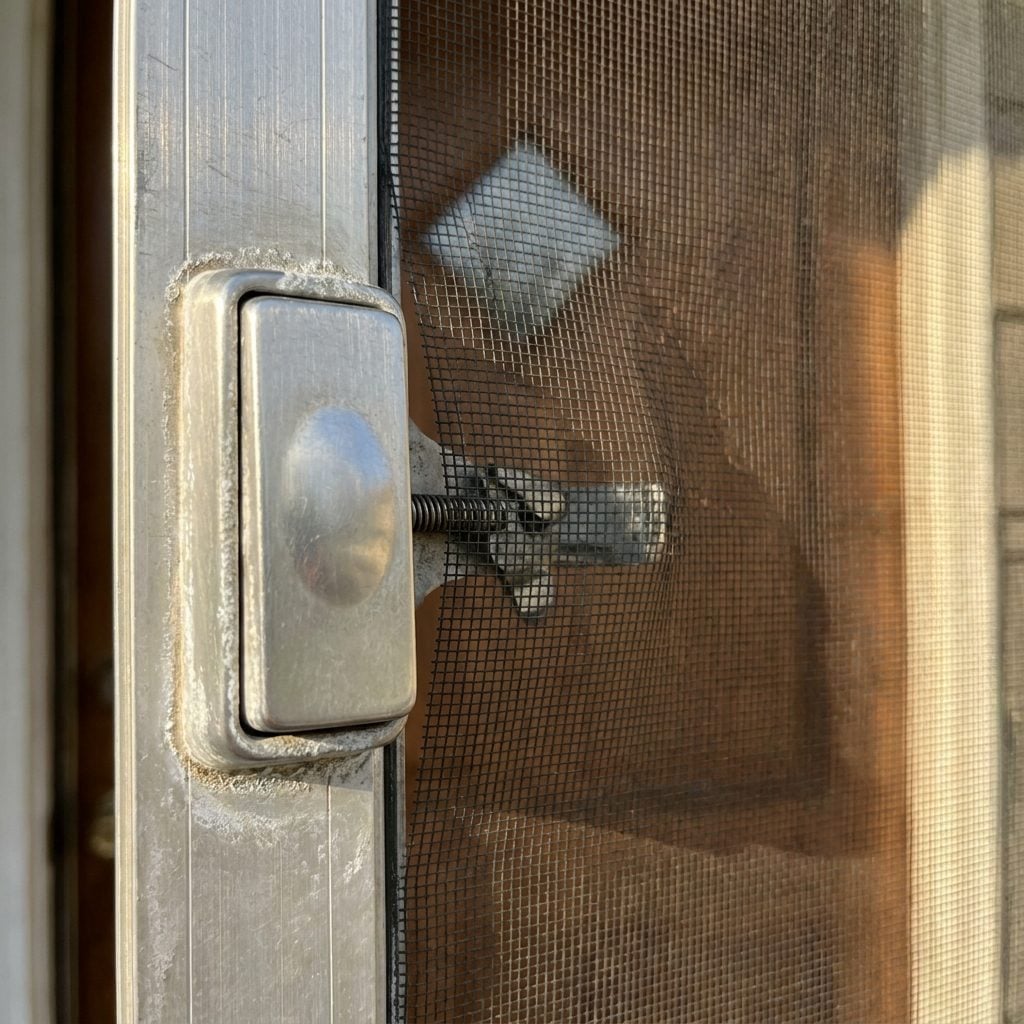
You knew the move. Press the thumb pad, pull the handle, slip through before the pneumatic closer dragged the door shut on your heel. Simple enough — except that thumb latch had a spring-loaded bite to it, a metal-on-metal pinch right at the web of your hand if you grabbed it wrong. And you grabbed it wrong constantly.
The pad wore to a bright silver from countless thumbs while the rest of the handle stayed dull, oxidized, slightly chalky if you ran a finger along the frame. Kids learned to open it palm-flat instead of thumb-first, a workaround that became muscle memory by age eight and never left. Years later you’d walk up to a modern entryway with sleek lever handles, and some deep part of your hand still braced for that pinch.