🔥 Would you like to save this?
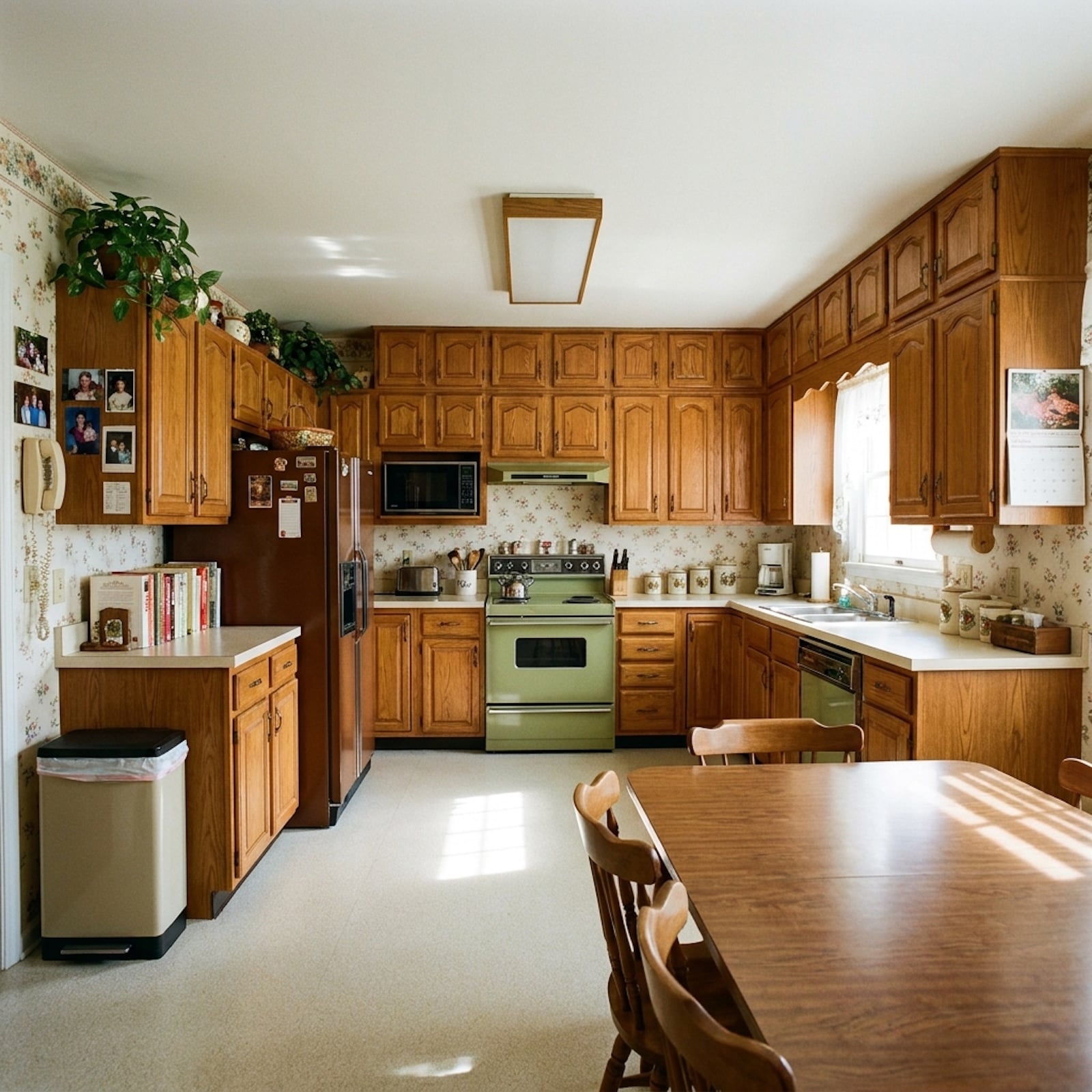
A 1970s kitchen did not know it was a 1970s kitchen. Nobody stood under the harvest-gold cabinets admiring the period authenticity. The refrigerator was avocado because refrigerators came in avocado. The phone had a cord because all phones had cords. A ceramic mushroom on the wall was not kitsch yet. It was apparently something a perfectly reasonable adult had decided the kitchen needed.
And the room worked hard. Coffee gurgled before anybody was properly awake. A pressure cooker hissed like it knew a secret. The electric skillet took over dinner when the stove ran out of territory, wet dishes lived permanently beside the sink, and a paper calendar near the phone somehow kept an entire family from wandering off schedule. Kids knew which cookie-jar lid could be lifted quietly, which burner was still hot, and exactly how far the phone cord would stretch before somebody noticed.
In order to come up with the very specific design ideas, we create most designs with the assistance of state-of-the-art AI interior design software. Also, assume links that take you off the site are affiliate links such as links to Amazon. this means we may earn a commission if you buy something.
None of these 28 things arrived labeled “nostalgia.” They were just there, gathering grease, fingerprints, grocery lists, batter, Green Stamps, and a decade’s worth of ordinary family life. Half disappeared because technology moved on. The other half survived in garages, basement cupboards, and somebody’s kitchen drawer because apparently no one has ever successfully thrown away a perfectly good splatter screen. Here are the things nobody thought twice about then—and can recognize in half a second now.
28. The Wall Phone With the Cord That Stretched to the Next Room
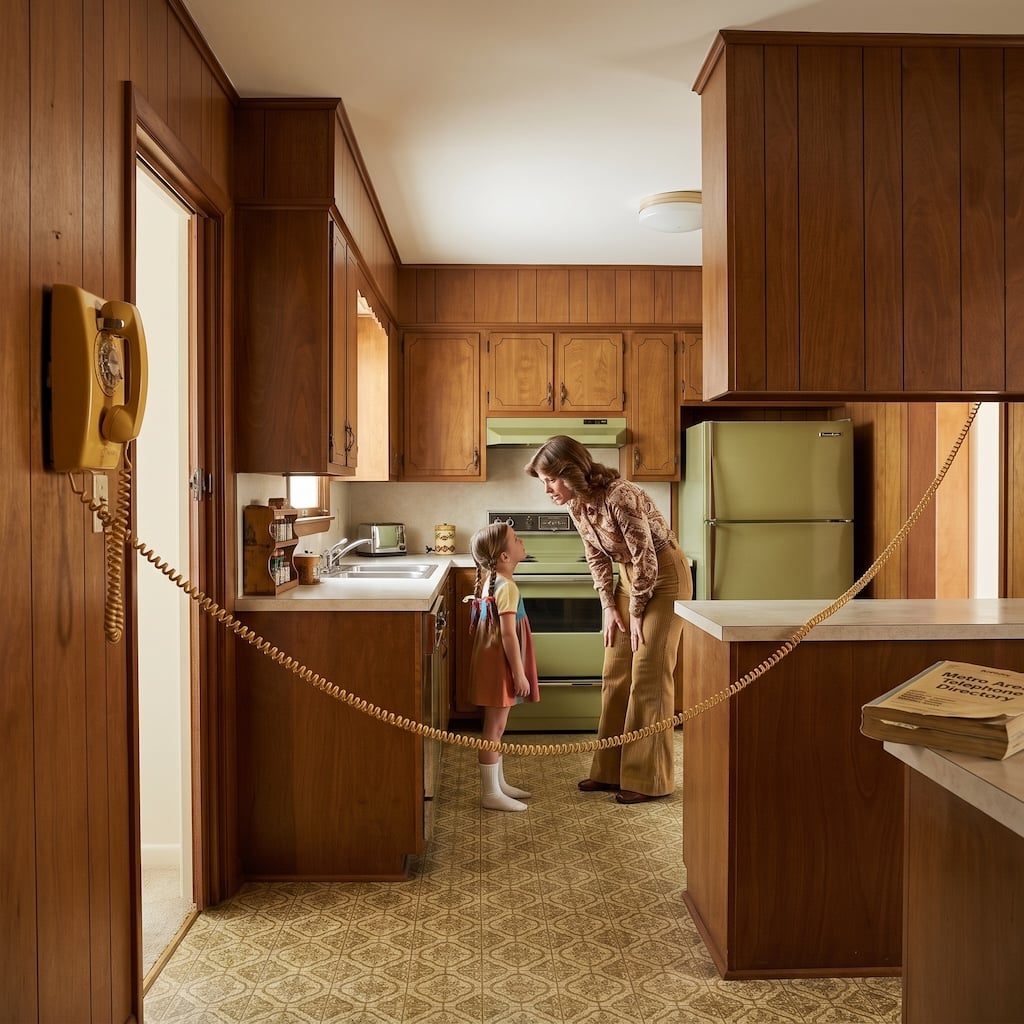
That cord could reach the moon and back.
Mom pinned the receiver between her shoulder and ear and kept moving—stirring the sauce, wiping the counter, checking the oven—while the coiled cord stretched taut across the kitchen like a rubber band waiting for somebody to walk through it.
The taped-up list of numbers beside the phone was its own little document: doctor, school, Grandma, neighbor, dentist, maybe the pizza place if the family was living dangerously. And when a call was for you, you took it right there with everyone pretending not to listen. Privacy was whatever length of cord you could drag around the corner.
27. Mushroom Everything, From the Trivet to the Wall Plaque
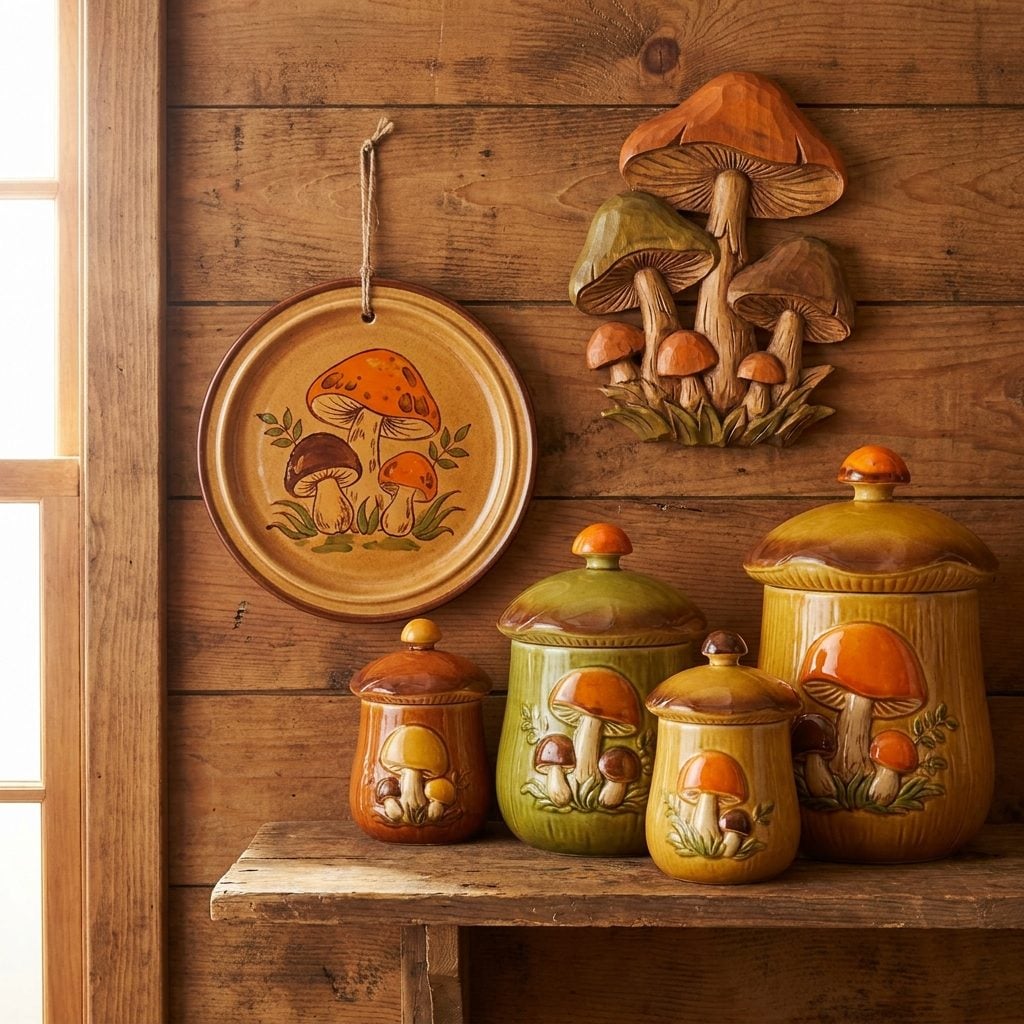
Somewhere in the mid-’70s, mushrooms colonized the American kitchen. Not the eating kind—the decorative kind, rendered in rust, mustard, brown, and cream and printed on absolutely everything.
Trivets, canisters, wall clocks, potholders, little ceramic salt-and-pepper shakers shaped like caps. You didn’t decide to have a mushroom kitchen. You just looked up one day and realized you did. The earthy palette would feel perfectly at home in what we’d now call a country kitchen makeover, but at the time nobody needed a design label for it. The mushrooms had already moved in.
26. The Electric Percolator That Gurgled All Morning
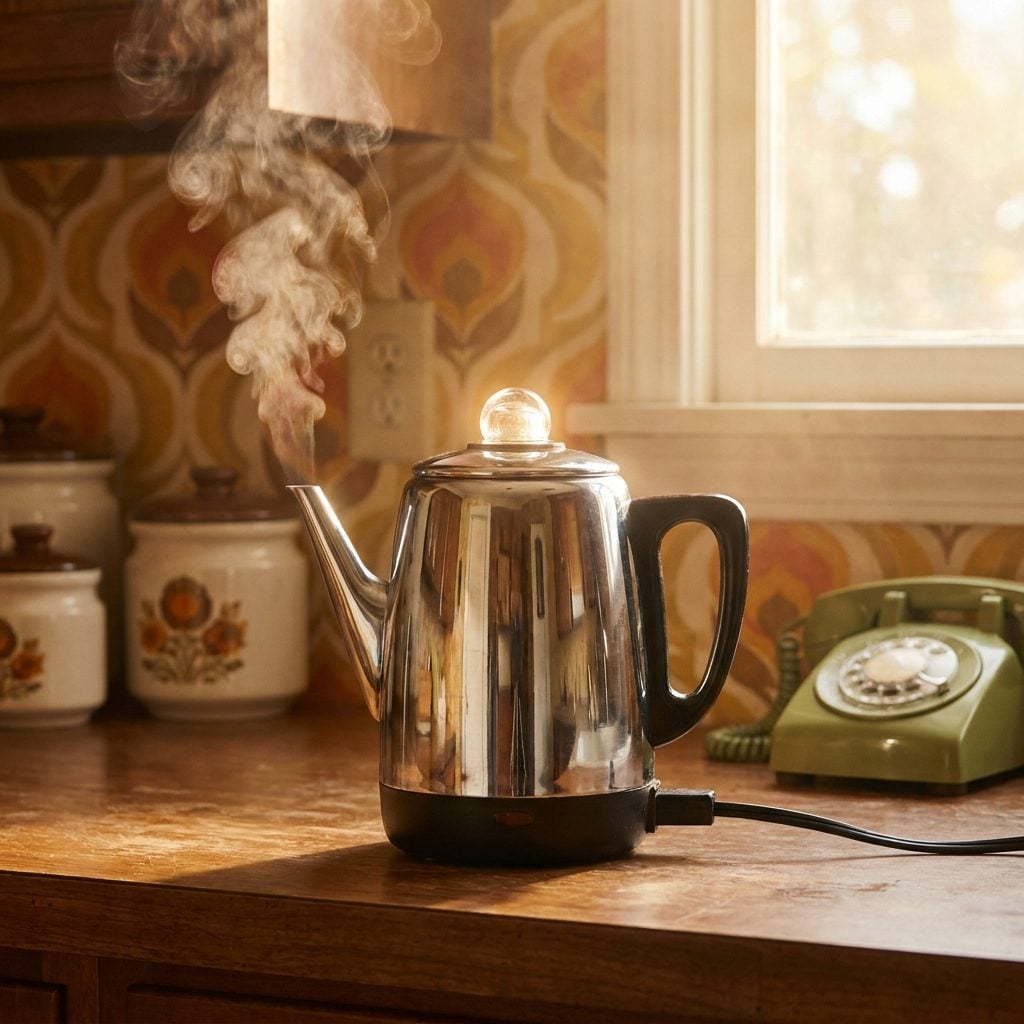
That little glass knob on top went dark, then darker, while the whole kitchen filled with the sound of coffee working its way up the stem. Gurgle, pause, gurgle. First soundtrack of the day.
The percolator seemed to run from dawn until the pot was empty—chrome sides you could see your face in, a black plastic handle, a cord that never quite reached the outlet without stretching. Automatic drip machines eventually took over plenty of counters. Nothing else made quite that sound.
25. The Chrome-and-Vinyl Dinette Set That Squeaked When You Sat
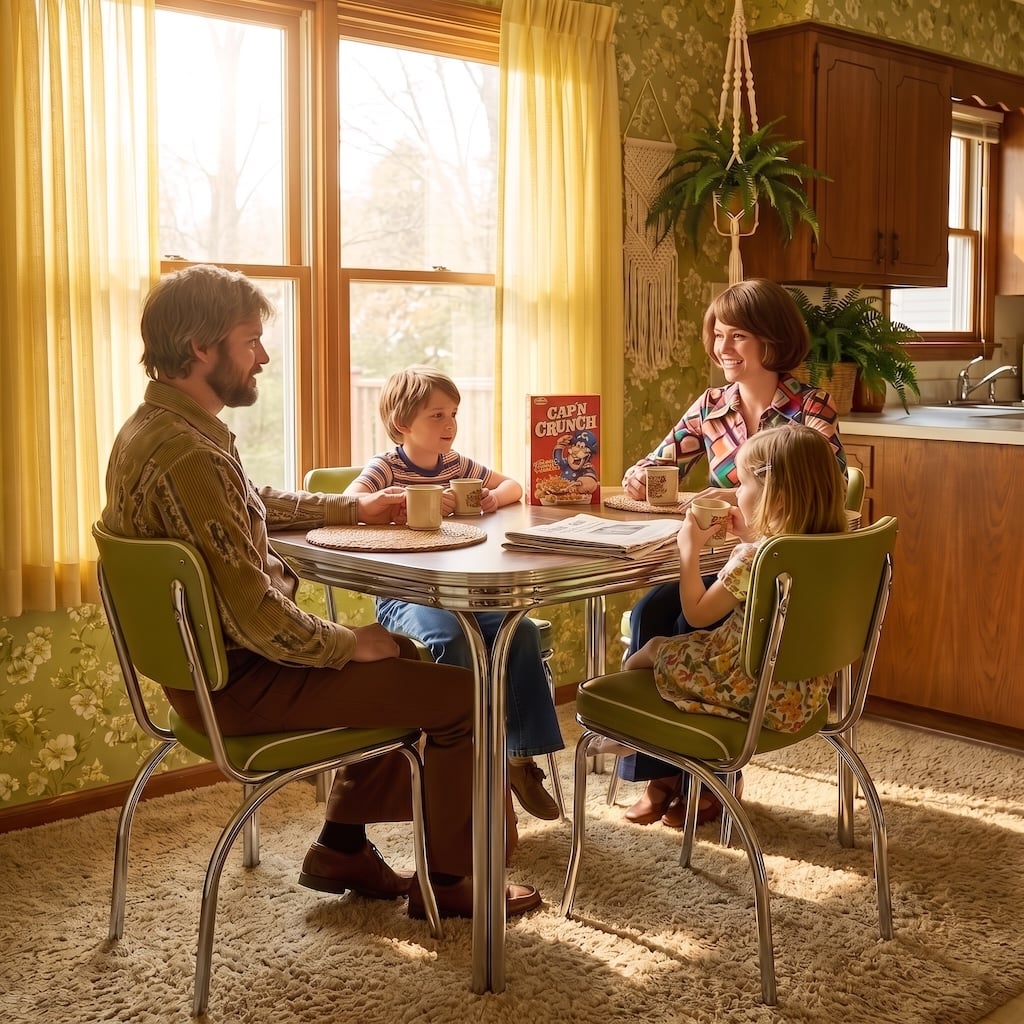
The chrome legs were cold against bare feet in the morning, and the vinyl seats made that exhale-squeak when you dropped into them. Somewhere along the line, the seam split on one chair, a thumbnail of yellow foam poked through, and it stayed that way for years.
This was the table for cereal before school, homework after, birthday cake, bills, card games, and every argument in between. One swipe and it wiped clean. Today a surviving set can bring a shot of unapologetic retro character into a more restrained transitional kitchen. Back then, nobody thought of it as retro. It was simply where dinner happened.
24. The Fondue Pot That Only Came Out for Company
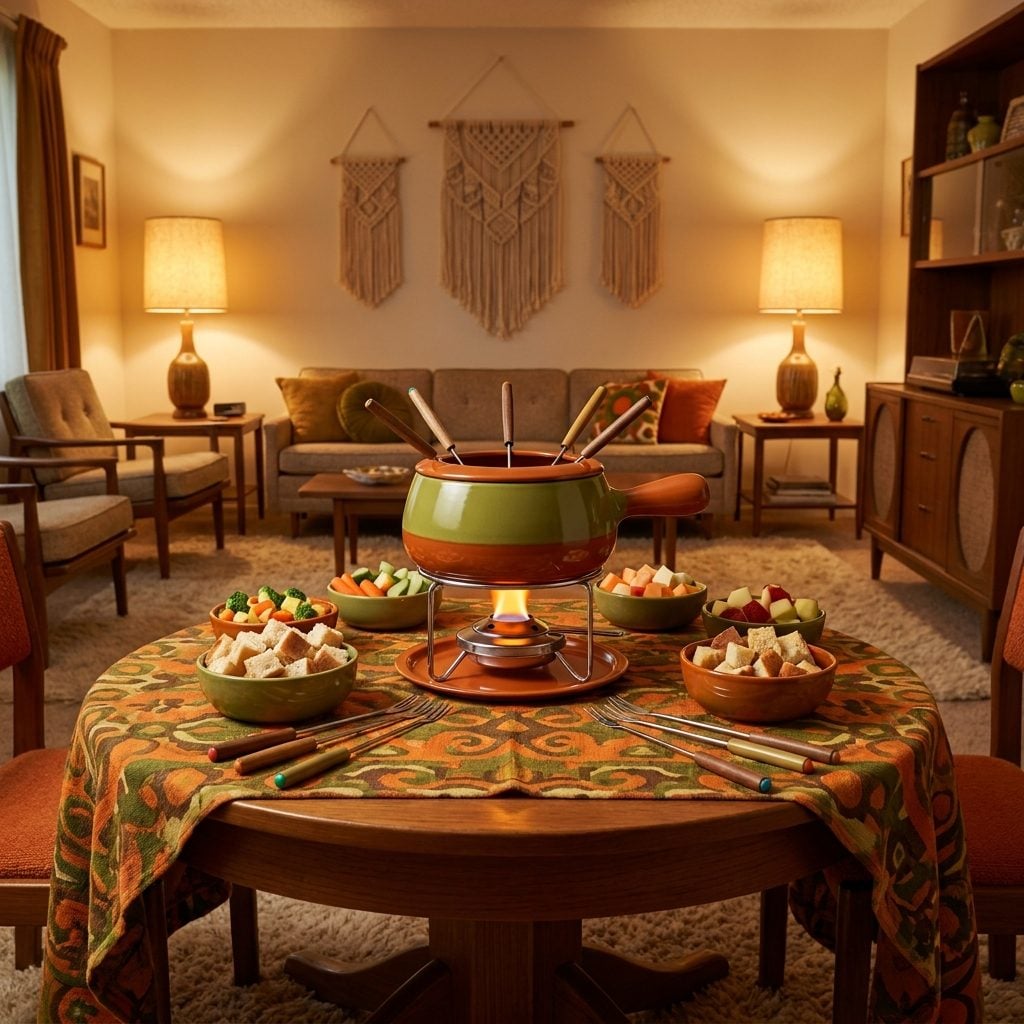
Nothing said the neighbors were coming over like the fondue pot.
It lived in the back of a cabinet most of the year, that heavy enameled bowl in flame orange, avocado, or brown, and came out when the evening needed a little theater. Cheese for bread, oil for meat, chocolate for dessert if the night was really going somewhere.
Everyone got a long fork with a colored tip so you’d know which one was yours. Somebody inevitably lost a bread cube in the pot, and somebody inevitably made the same joke about it. Every single time.
23. The Quilted Fabric Cover Over the Toaster or Mixer
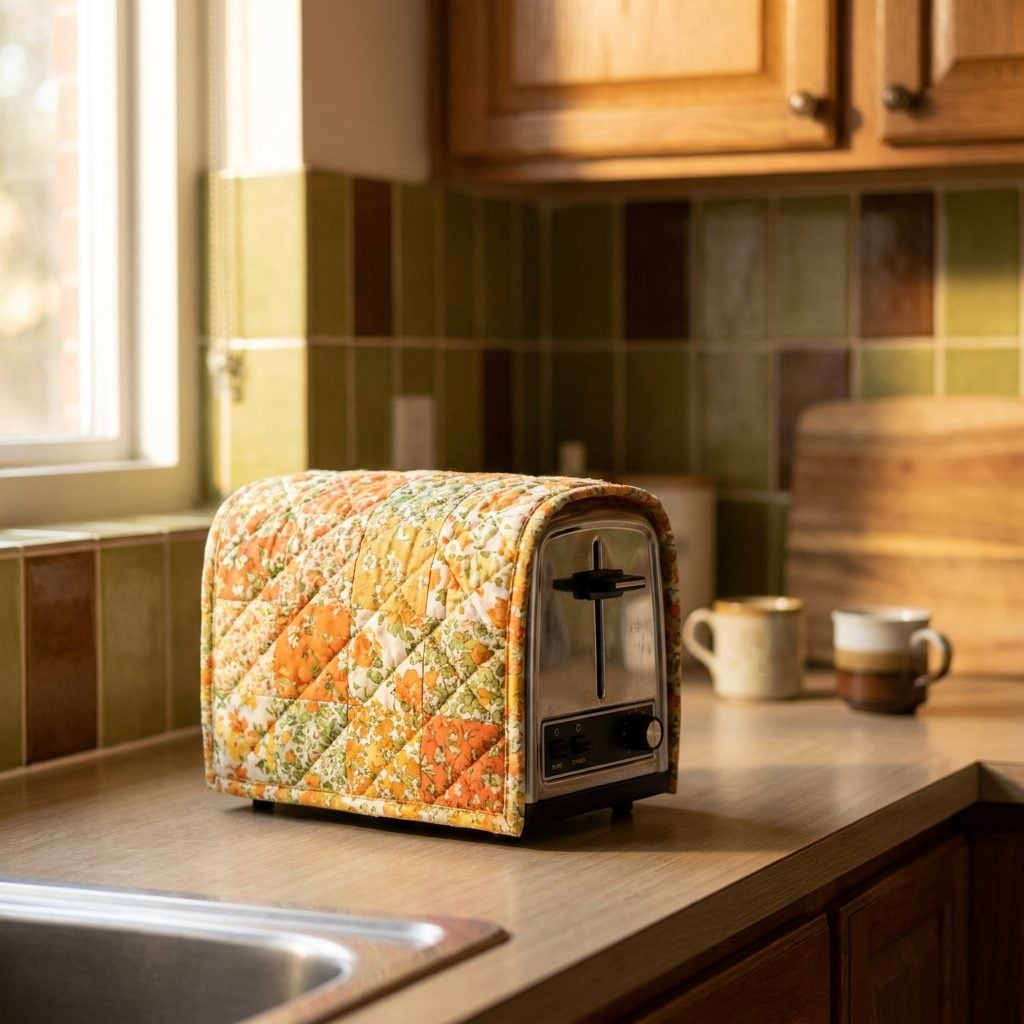
The toaster wore an outfit. So did the blender, and sometimes the mixer too—fitted fabric covers, often floral or quilted, slipped over appliances to keep the dust off and apparently protect bare chrome from being seen unsupervised.
Nobody questioned it. The counter had curtains nearby, a patterned tablecloth, towels, an apron, maybe mushroom potholders. Of course the toaster was dressed. Lifting its little floral coat to make breakfast simply added one more accepted step between wanting toast and getting it.
22. The Harvest-Gold Range With Coil Burners You Could See Glow
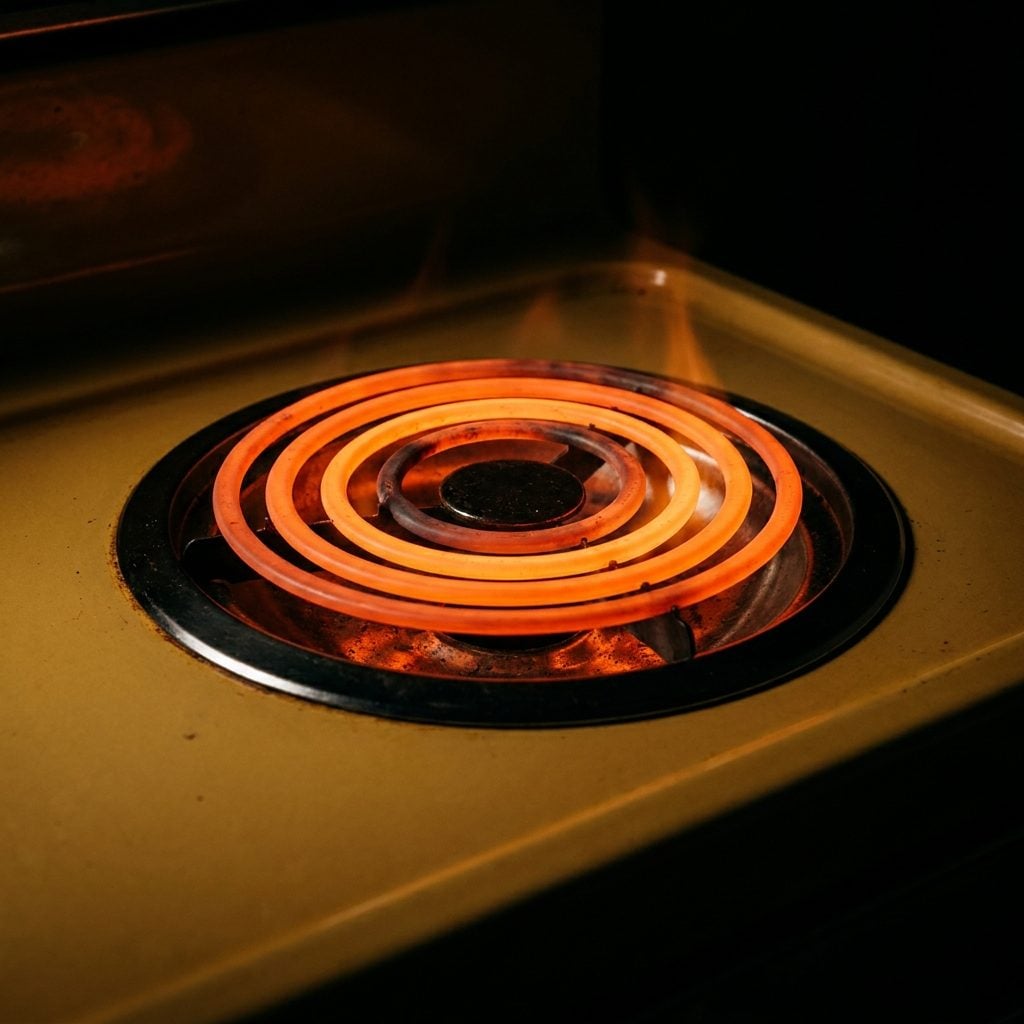
The burner glowed orange as it heated, giving fair warning in the least subtle way possible. Four black coils, harvest gold everywhere else, and knobs you turned with a satisfying click.
Cleaning it was an operation. You lifted out the coils, pulled up the chrome drip pans, and confronted whatever dinner had deposited underneath during the week. Those pans rarely returned to anything resembling factory condition, and nobody expected them to. A little burned-on evidence simply meant the stove had employment.
21. The Big Ceramic Cookie Jar That Lived on the Counter
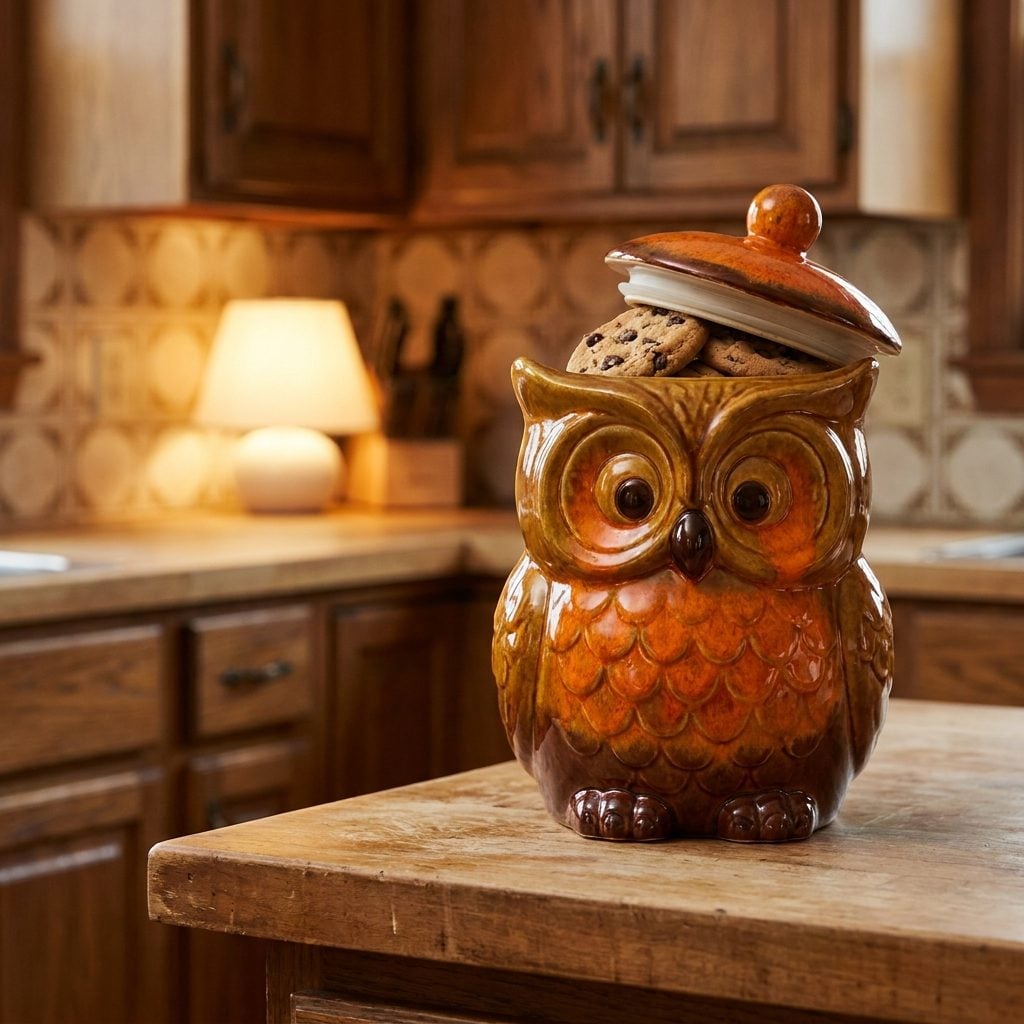
It sat in the same spot year after year, close enough to the edge that a kid could eventually reach it and heavy enough that nobody accidentally sent it flying.
The real security system was the lid. Ceramic against ceramic made one unmistakable clink, and somehow moms could hear it from two rooms away. Some jars held homemade cookies. Plenty held store-bought ones slowly becoming construction material. Either way, getting one before dinner required planning.
20. The S&H Green Stamps Book She Filled Lick by Lick
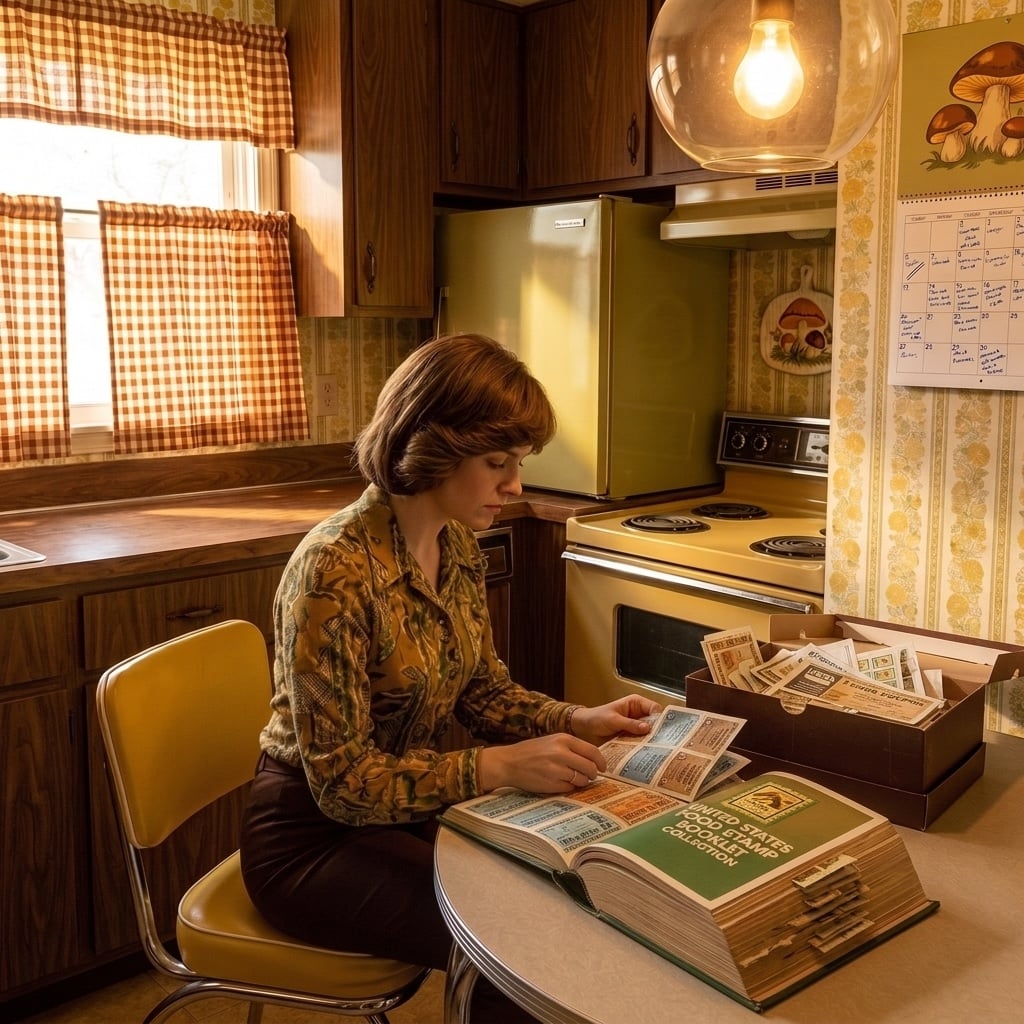
She kept the stamps in a drawer near the toaster, thin sheets handed over with the grocery receipt and saved with the seriousness usually reserved for money. Eventually came the licking—page after page until the saver book bulged and refused to close flat.
Meanwhile the redemption catalog sat nearby, dog-eared long before enough books had accumulated for anything useful. Twelve books for a lamp nobody needed. Sixteen for something everybody suddenly wanted. The arithmetic was ridiculous. The satisfaction was not.
19. The Electric Skillet That Cooked Half the Weeknight Dinners
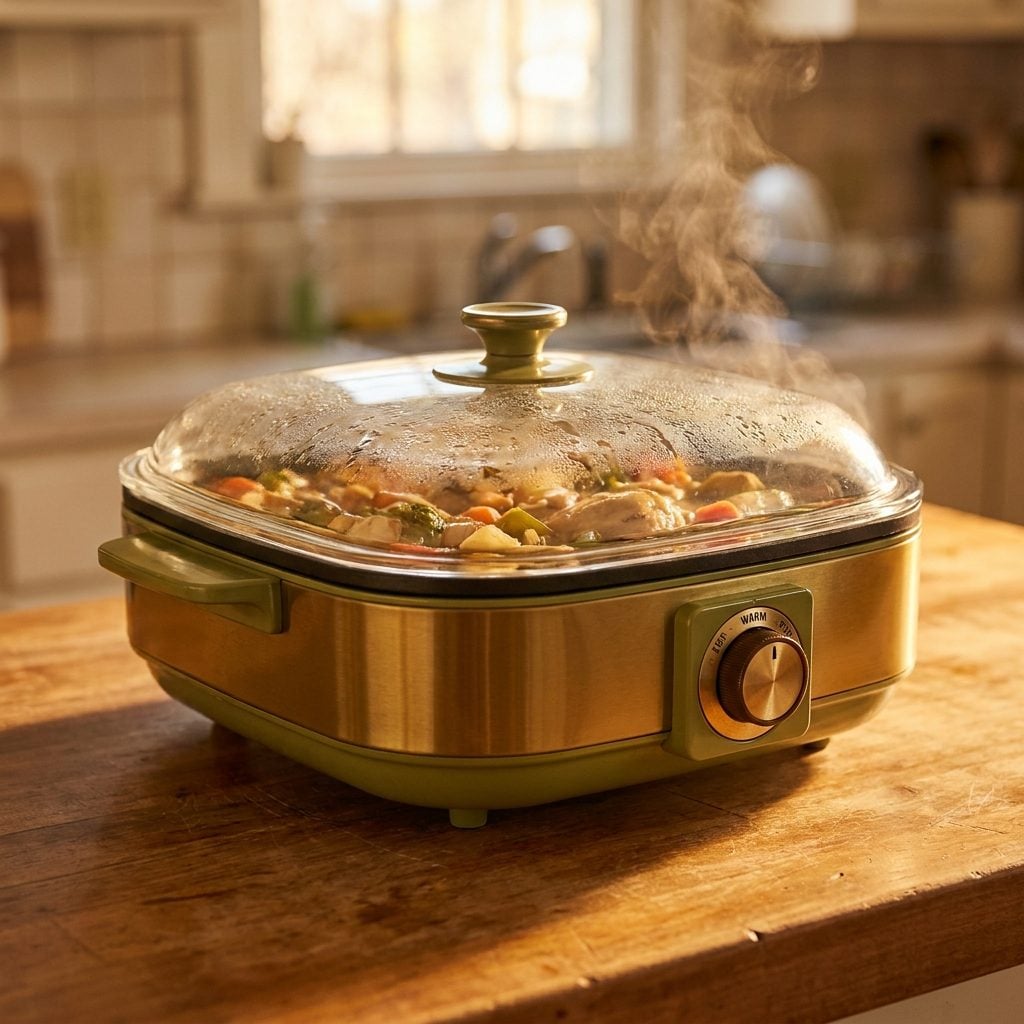
Square, deep, with a domed glass lid and a temperature dial plugged into the side, the electric skillet was essentially another burner with its own postal code.
Fried chicken, Swiss steak, pancakes, chops, entire one-pan dinners simmering under that lid—you could hear the fat crackling and watch steam gather on the glass. It lacked the glamour of the fondue pot but had one considerable advantage: it was useful on an ordinary Tuesday.
18. The Patterned Nesting Bowls That Stacked Inside Each Other
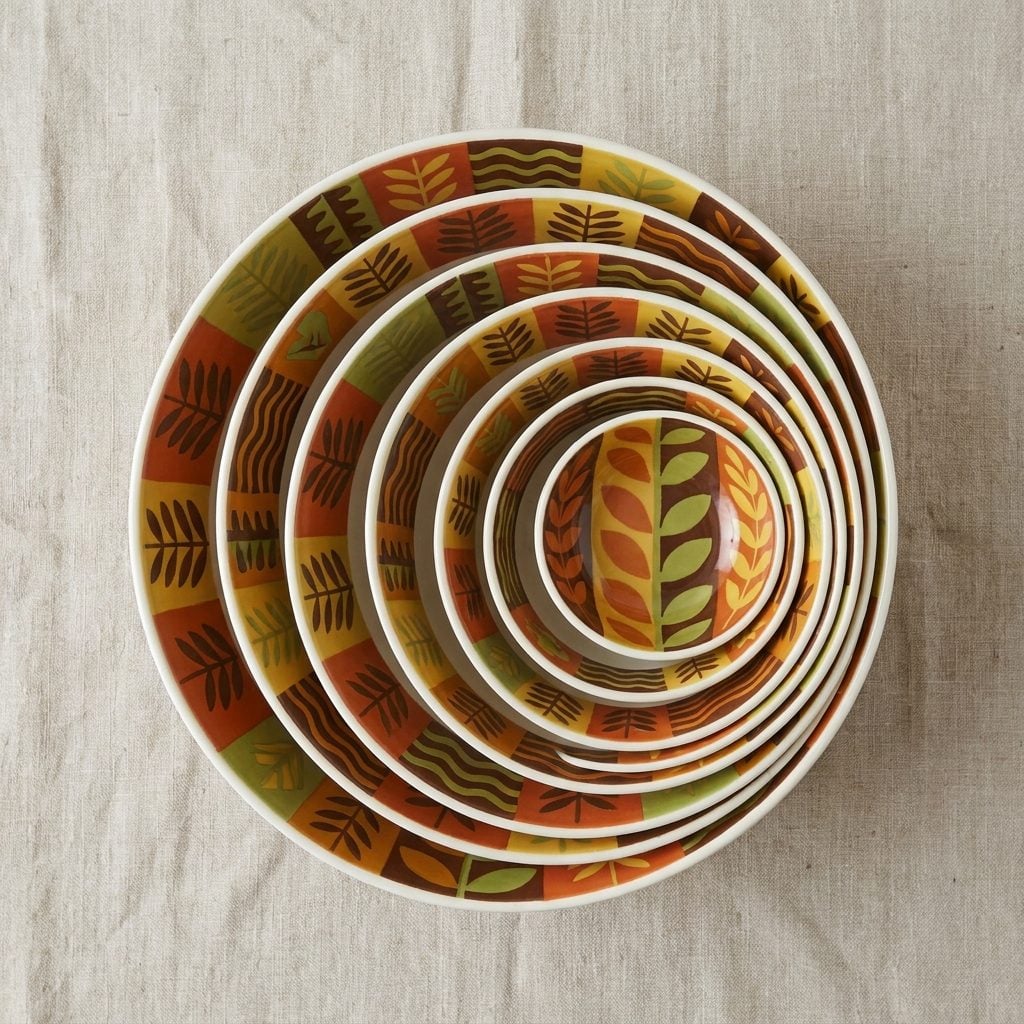
They came in a set, biggest to smallest, and nested so neatly that pulling out the little one felt faintly like a magic trick. Opal glass, usually with some gold, turquoise, floral, or geometric pattern around the edge.
These bowls did everything. Pancake batter, potato salad, cake mix, serving duty when company came. One might wind up beside the stove collecting scraps while another disappeared into the refrigerator beneath foil. Somehow the entire set still occupied the footprint of one bowl. Kitchen engineering at its most satisfying.
17. The Paper Family Calendar Buried in Handwritten Notes
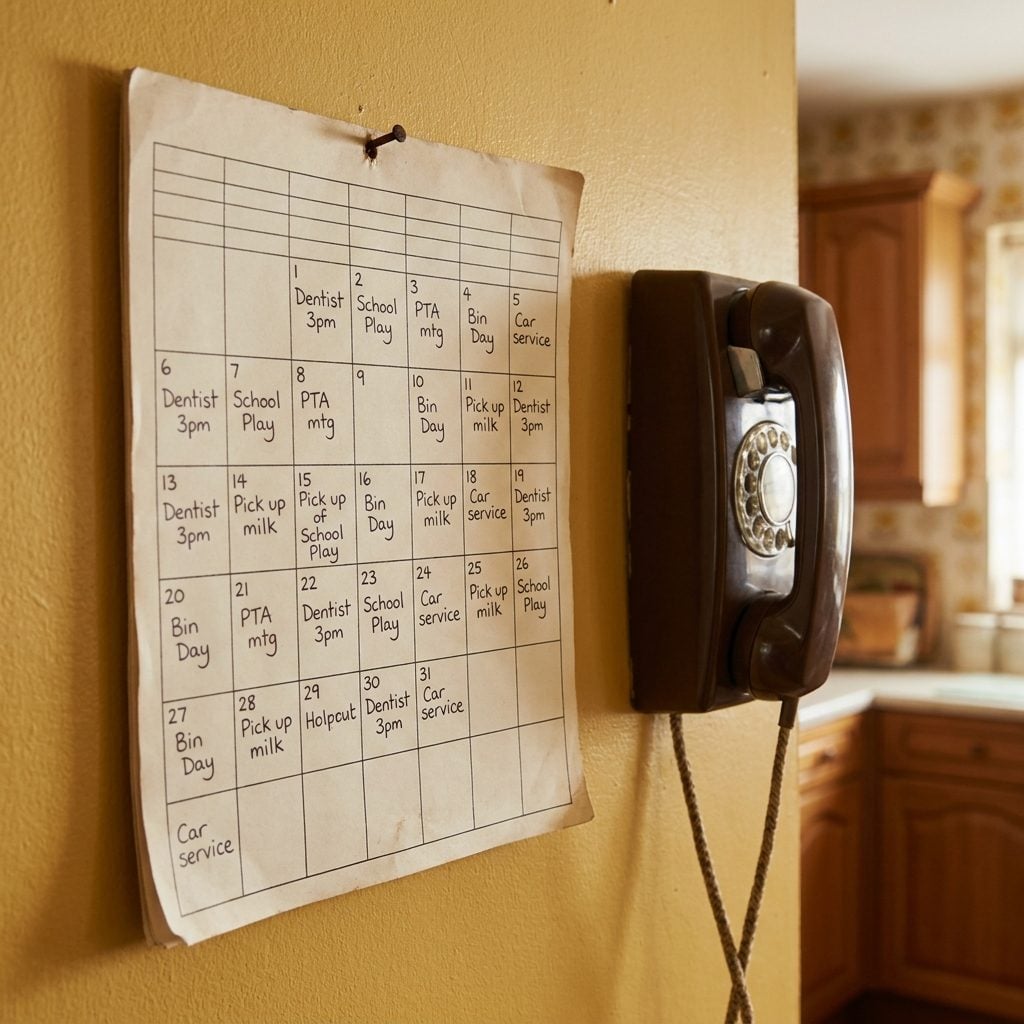
This was the family’s entire operating system, and it hung on one nail near the phone.
Dentist appointments, school half-days, birthdays circled in pen, PTA meetings, sports practices, casserole suppers, and phone numbers scrawled sideways in the margins because somebody needed to put them somewhere immediately.
By the third week of the month, every square had become a negotiation. Handwriting overlapped. Arrows appeared. An appointment got crossed out and moved twice. Lose the calendar and the household had temporarily misplaced the future.
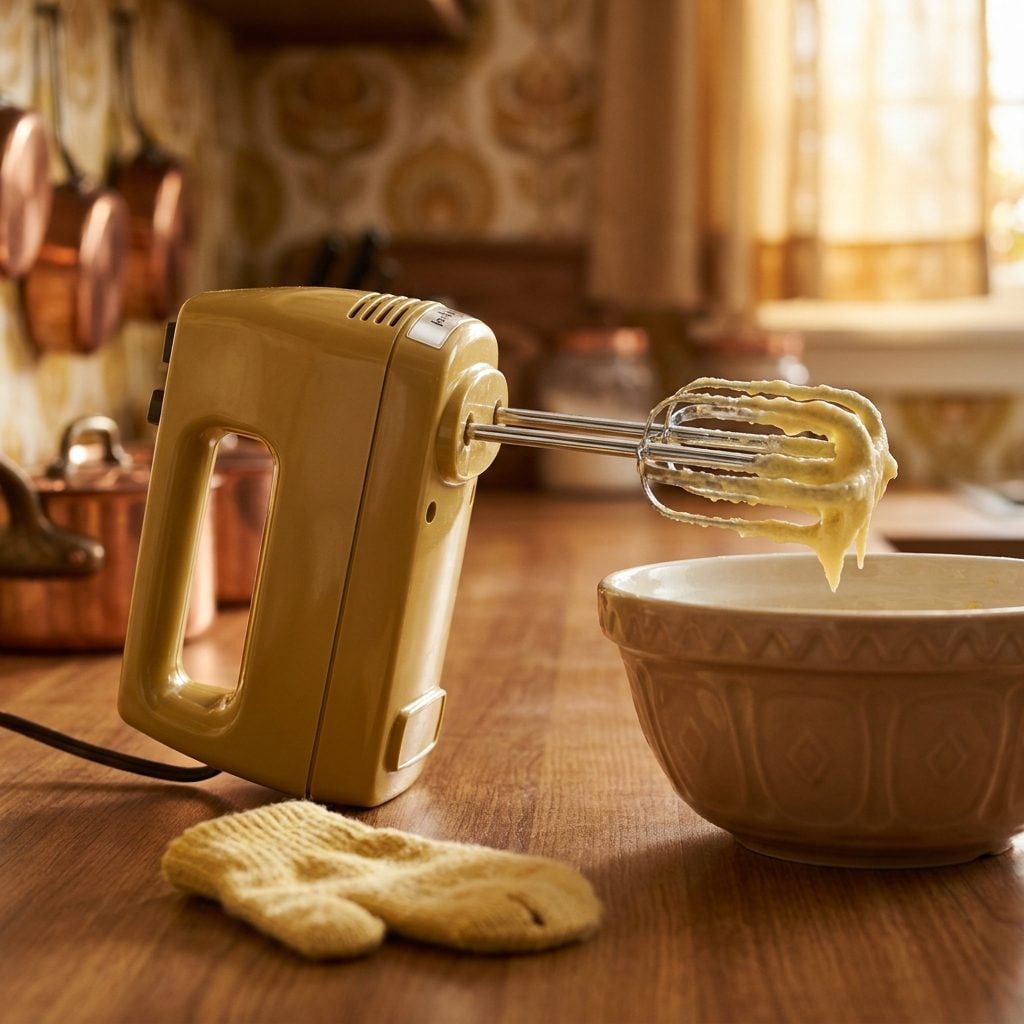
16. The Electric Hand Mixer With Beaters You Got to Lick
🔥 Would you like to save this?
Two chrome beaters, a plastic body in white or gold, and a cord wrapped optimistically around the handle for storage. The loud whir meant cake, frosting, mashed potatoes, whipped cream—something worth appearing in the kitchen for.
But the real event was the eject button. Batter still clinging to both beaters meant the household suddenly had a custody dispute. One for you, one for your sibling, and nobody nearby seemed especially troubled by the raw egg. Half the reason to bake was waiting for the mixer to stop.
15. The Wipe-Clean Vinyl Tablecloth With the Flannel Backing
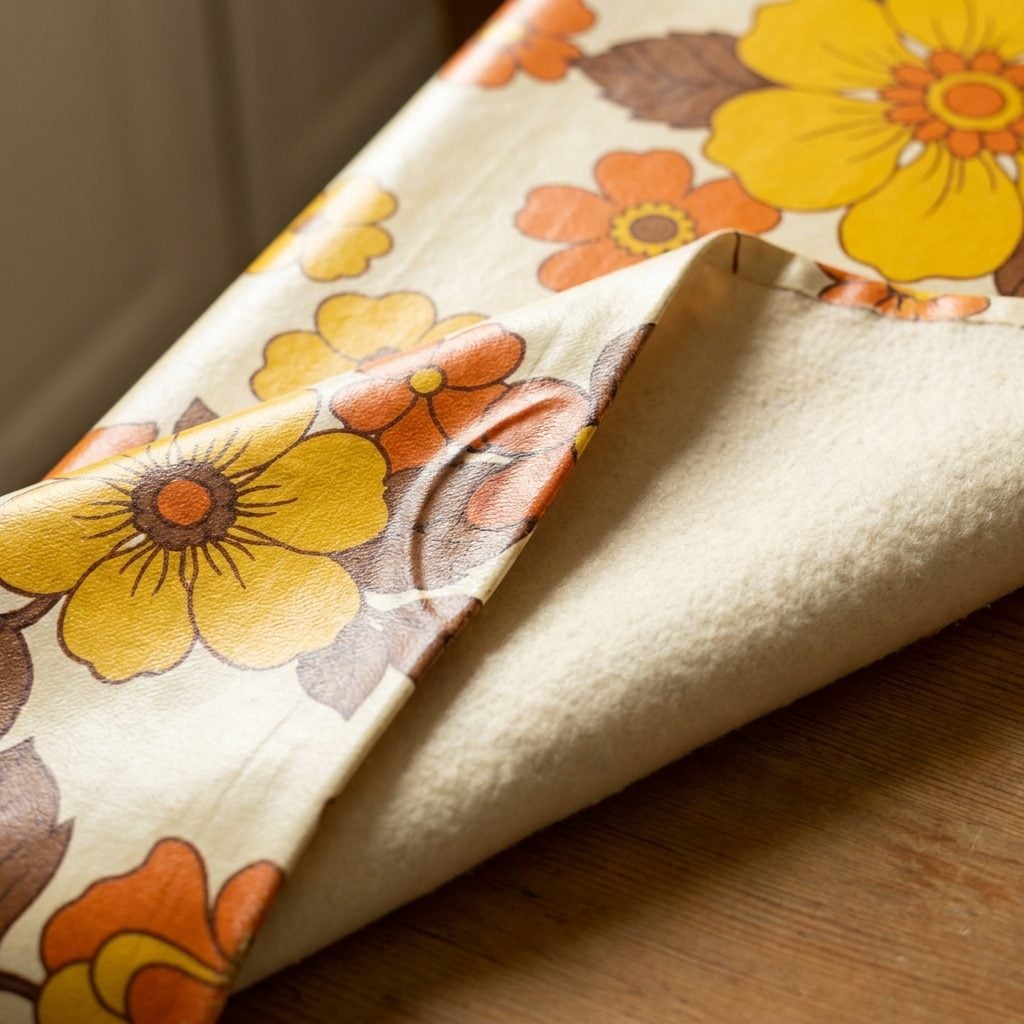
Milk, spaghetti sauce, grape juice, syrup—the vinyl tablecloth regarded all of it as temporary. One pass with a damp rag and breakfast disappeared.
The flannel underside gave it enough weight to stay put, while the top usually offered some cheerful muddle of flowers, fruit, checks, gold, orange, or green. Set a hot pan down too quickly and a faint melted ripple might become permanent. Nobody replaced the whole tablecloth over one scar. That ripple had simply joined the family.
14. The Countertop Electric Can Opener That Claimed Permanent Space
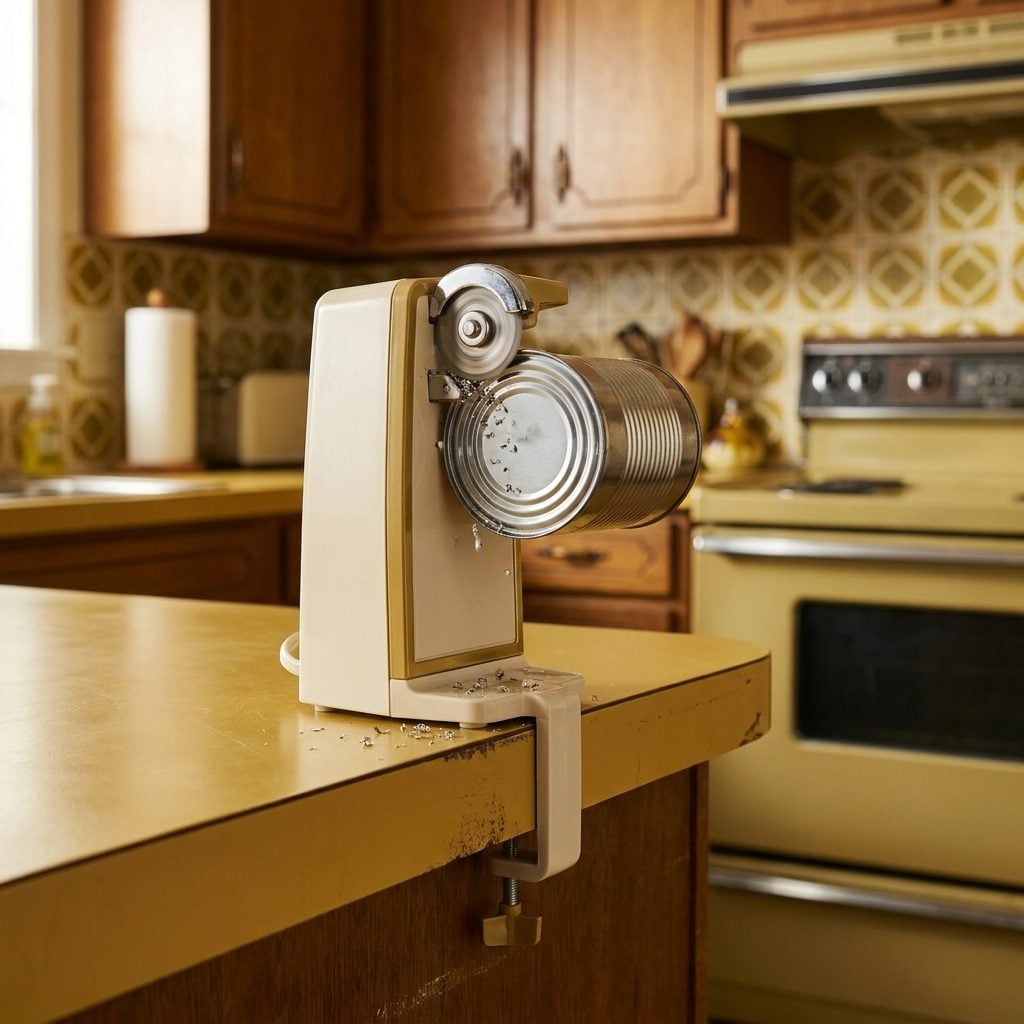
It whirred, it clunked, and it drove certain dogs crazy. You pressed the can against the wheel and watched it rotate while a little magnet caught the lid before it fell into the green beans.
Half the time the hand crank in the drawer might have been faster. Nobody cared. This was the future, and the future was a beige box occupying permanent counter space so nobody had to turn a crank.
13. The White Casserole Dish That Went Straight From Oven to Table
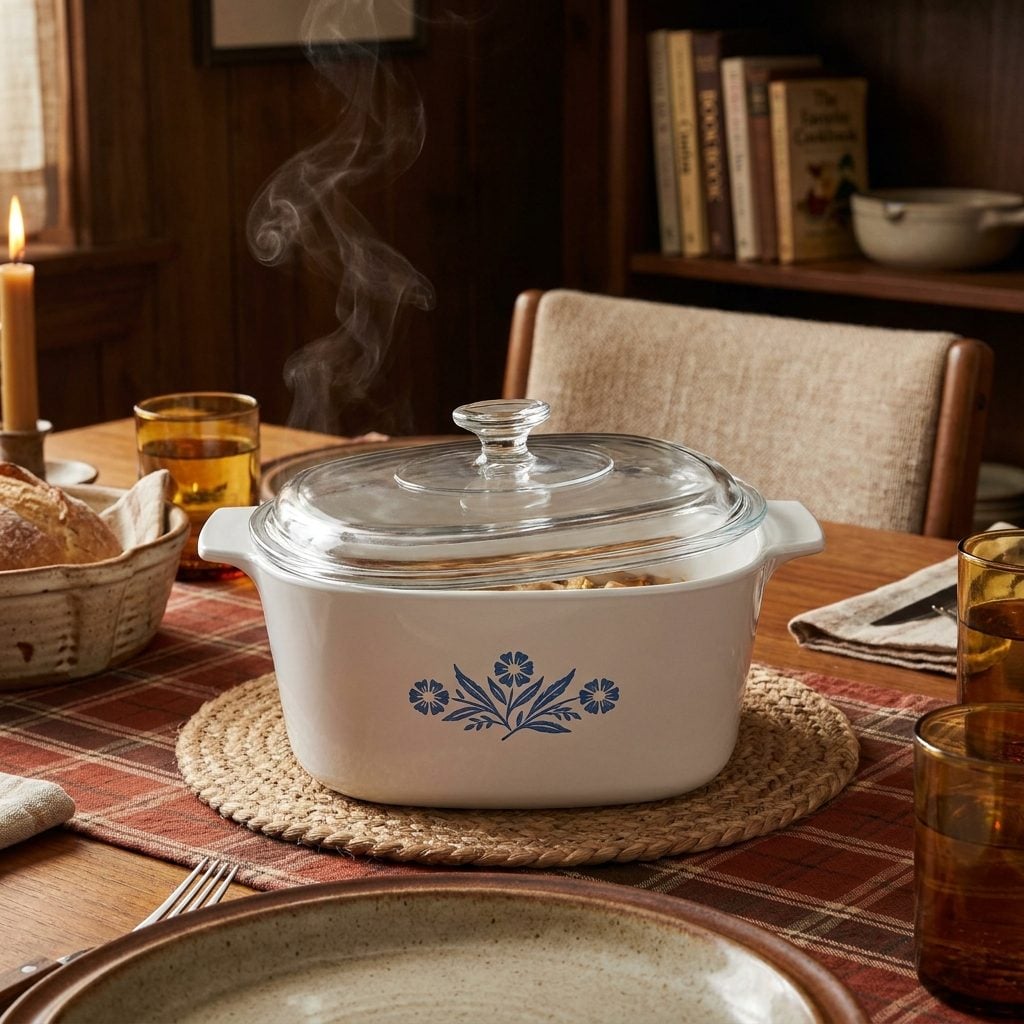
White glass-ceramic, a little blue cornflower motif on the side, a matching lid that clattered when you set it down. This was the workhorse of the potluck era.
It came out of the oven bubbling, sat on a trivet in the middle of the table, and got carried covered to another house when somebody had a baby, lost someone, got sick, or simply needed feeding. The dish was less about presentation than transportation. Food went where words occasionally failed.
12. The Bread Box That Held Down a Whole Corner of Counter
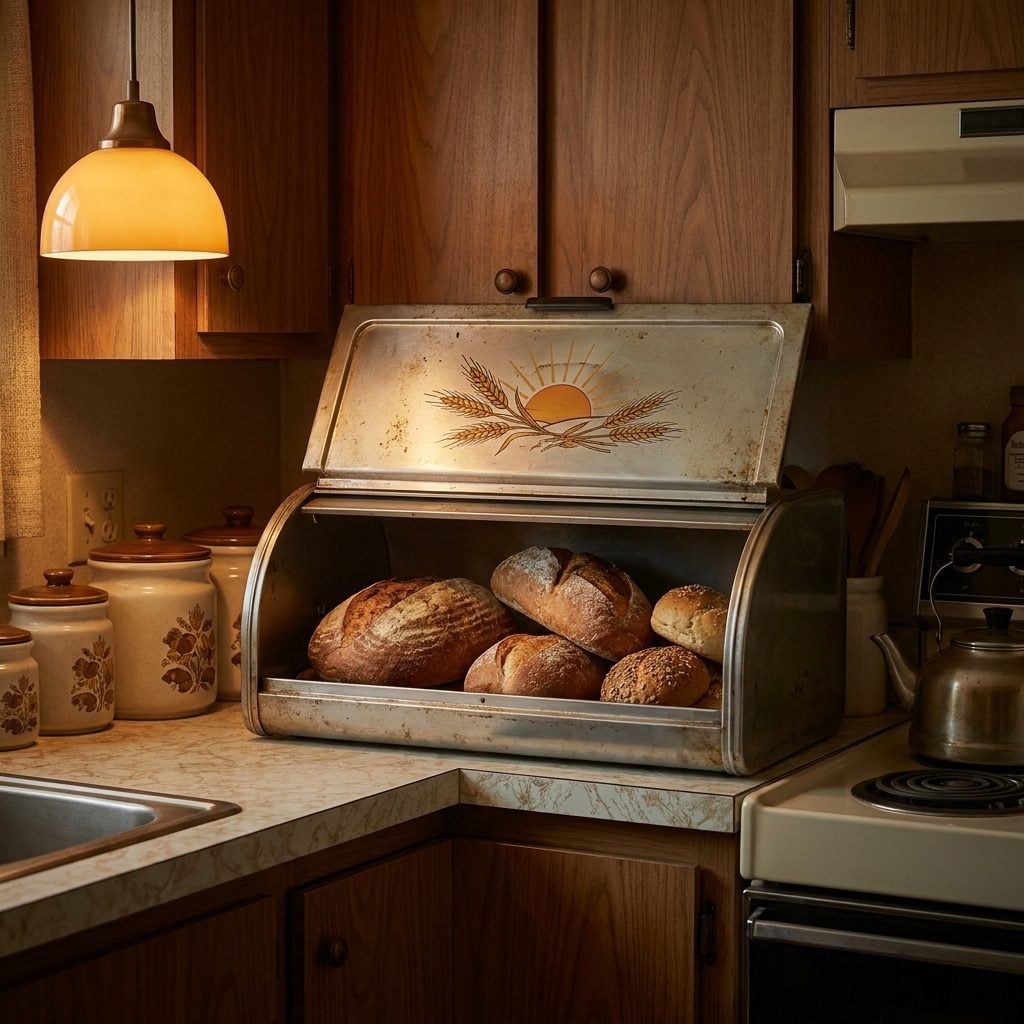
It was practically furniture—a hulking little tin garage that claimed a generous section of counter and swallowed the loaf, rolls, English muffins, and whatever heel nobody wanted to admit had been sitting there too long.
The roll-top made a lovely metallic rattle when you shoved it open. Bread lived on the counter because that was where bread lived. Nobody held a family meeting about whether the box was optimizing the workspace. The bread box had arrived. The counter adjusted.
11. The Wall Clock Everyone Glanced At Twenty Times a Day
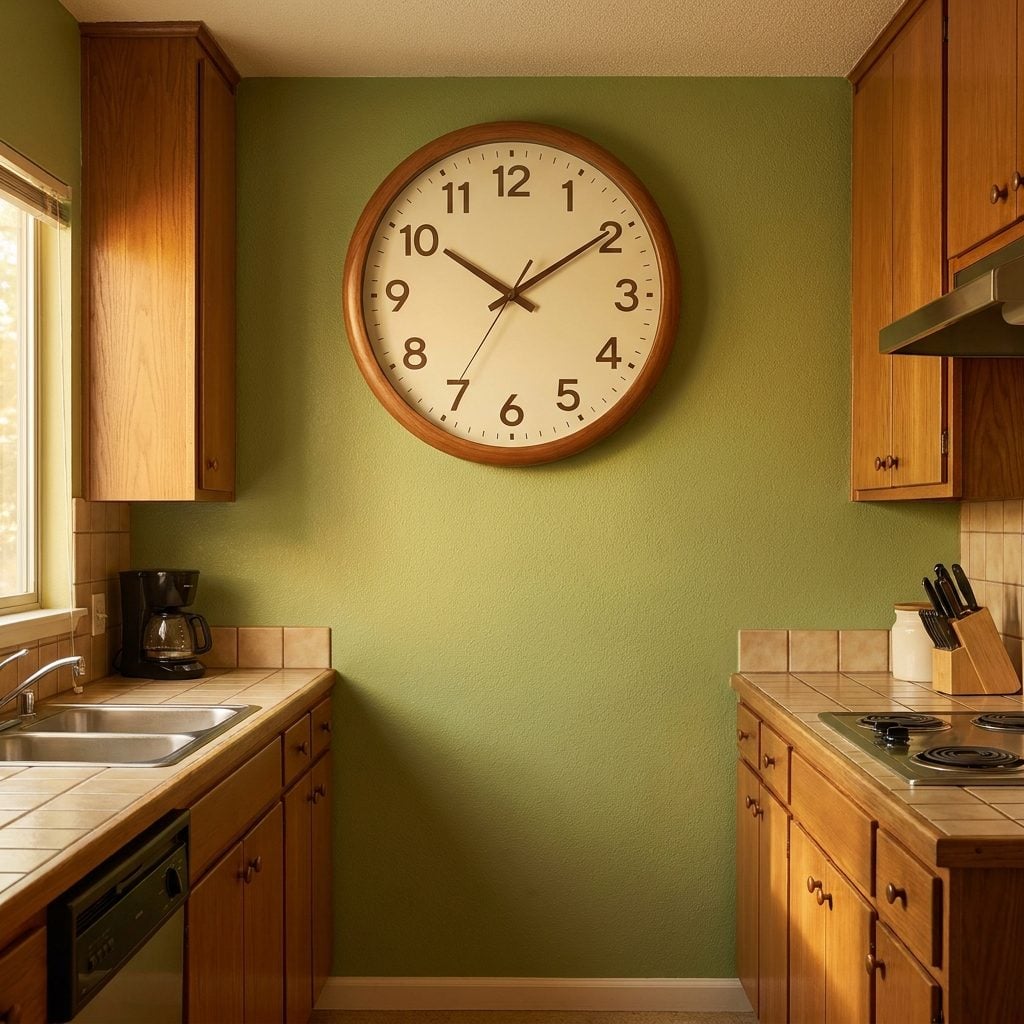
Before the phone in your pocket, this was the timekeeper for the whole house—big, round, readable from across the kitchen, usually hung near the doorway so everybody got one final warning on the way out.
The second hand could occupy a child through an astonishing amount of cereal. And there was always that one relative whose clock ran seven minutes fast on purpose, a lifelong attempt to trick themselves into punctuality. It never worked. They never corrected the clock either.
10. The Slow Cooker That Started Dinner at 9 in the Morning
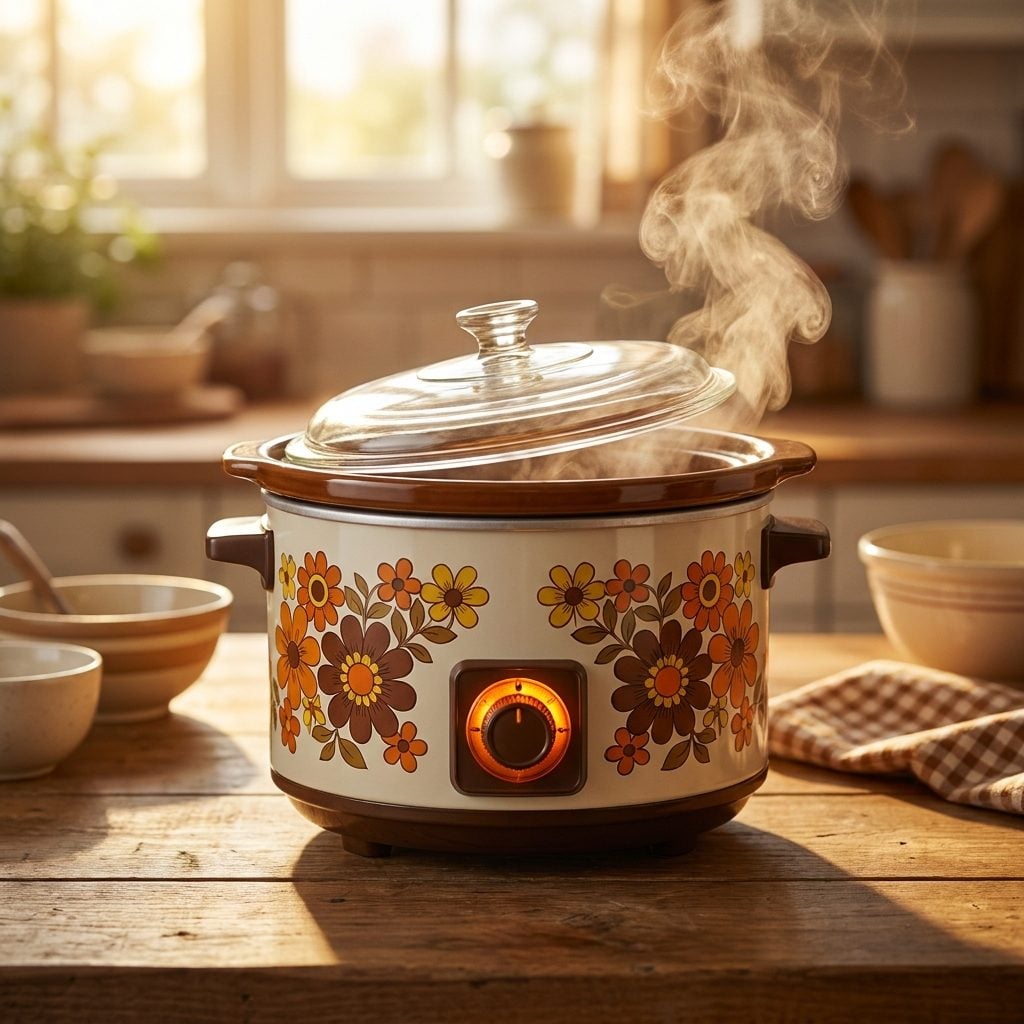
The smell hit you the second you walked in from school. Pot roast, chili, stew, something involving pearl onions—all of it going since morning beneath a lid that had barely moved all day.
Low or high. That was basically the control panel. Load the crock, put on the lid, leave. By six the house smelled as though somebody had been cooking all afternoon when the appliance had actually been doing most of the waiting. For a busy household, that was a very good trick.
9. The Matching Flour, Sugar, Coffee, and Tea Canisters Lined Up by Size
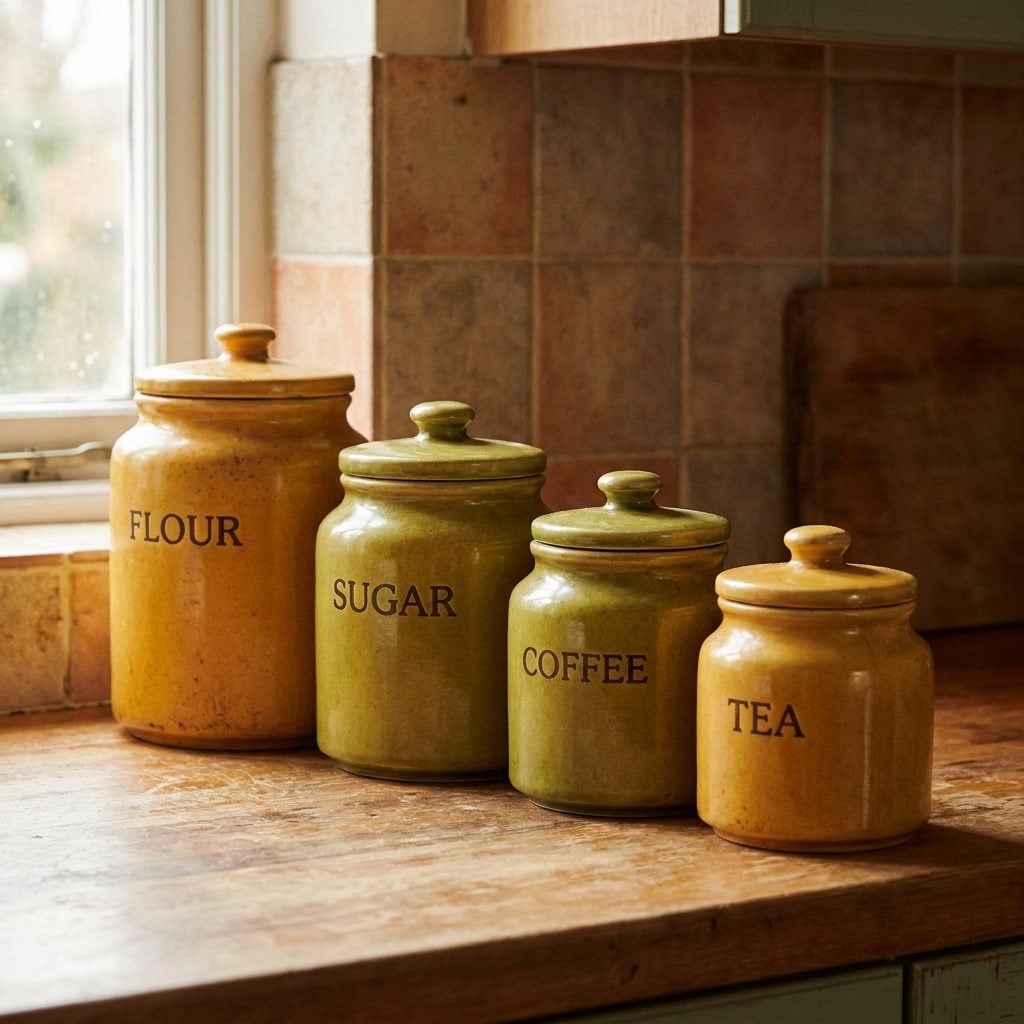
They sat on the counter in a neat little stair-step, biggest to smallest. Flour first, somehow permanently dusted around the base. Sugar next. Coffee was adult territory. Tea brought up the rear and occasionally seemed surprised to have been included.
Harvest gold, avocado, wheat motifs, flowers—whatever the pattern, the point was coordination. The kitchen could contain seventeen unrelated appliances and a mushroom trivet, but these four containers were going to match.
8. The Dish Rack That Never Left the Counter
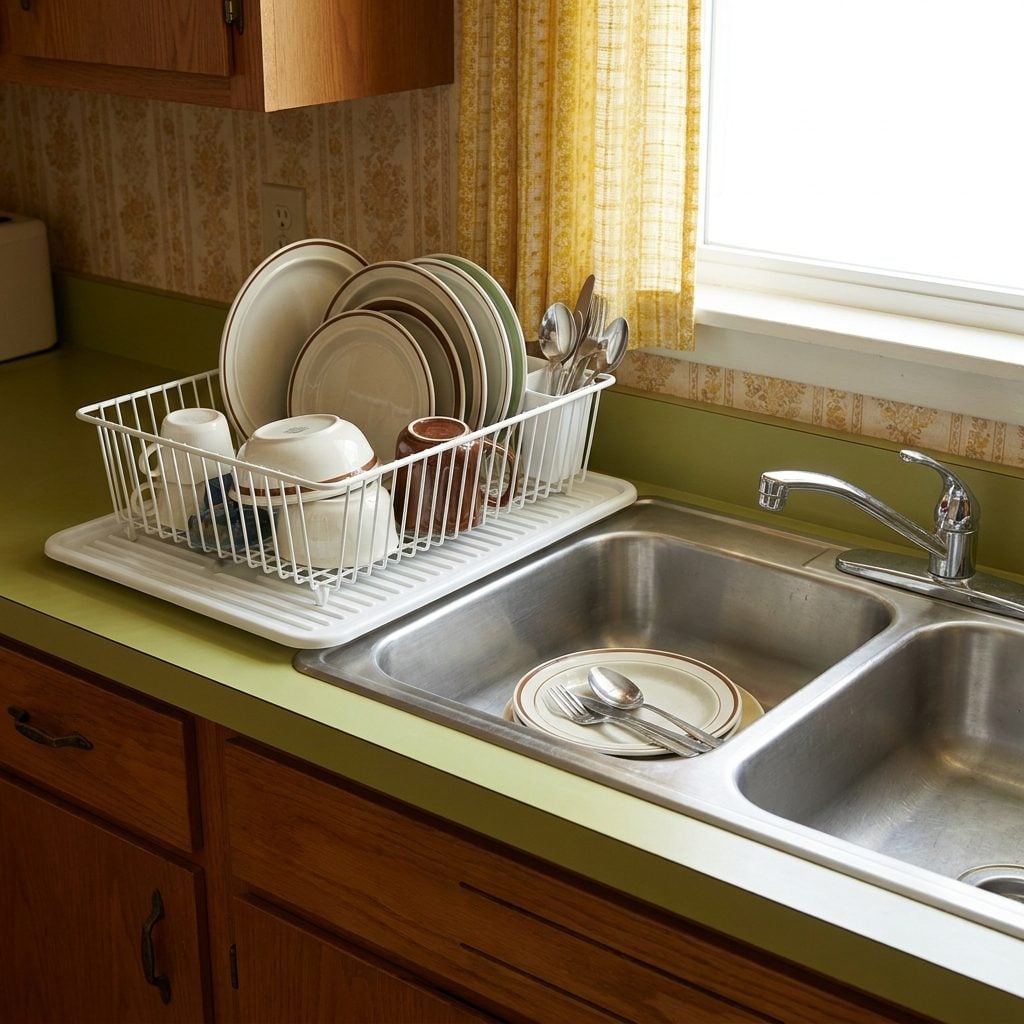
It sat beside the sink permanently, wire-coated in white plastic, with a matching drainboard sending water back toward the basin. Nobody put it away. There was no point. It would be full again before dinner.
Dishes air-dried there or got wiped with a towel that was always slightly too damp to accomplish much. Even homes with dishwashers kept the rack for pots, knives, good glasses, and anything somebody didn’t trust to the machine.
7. The Apron on the Hook by the Back Door
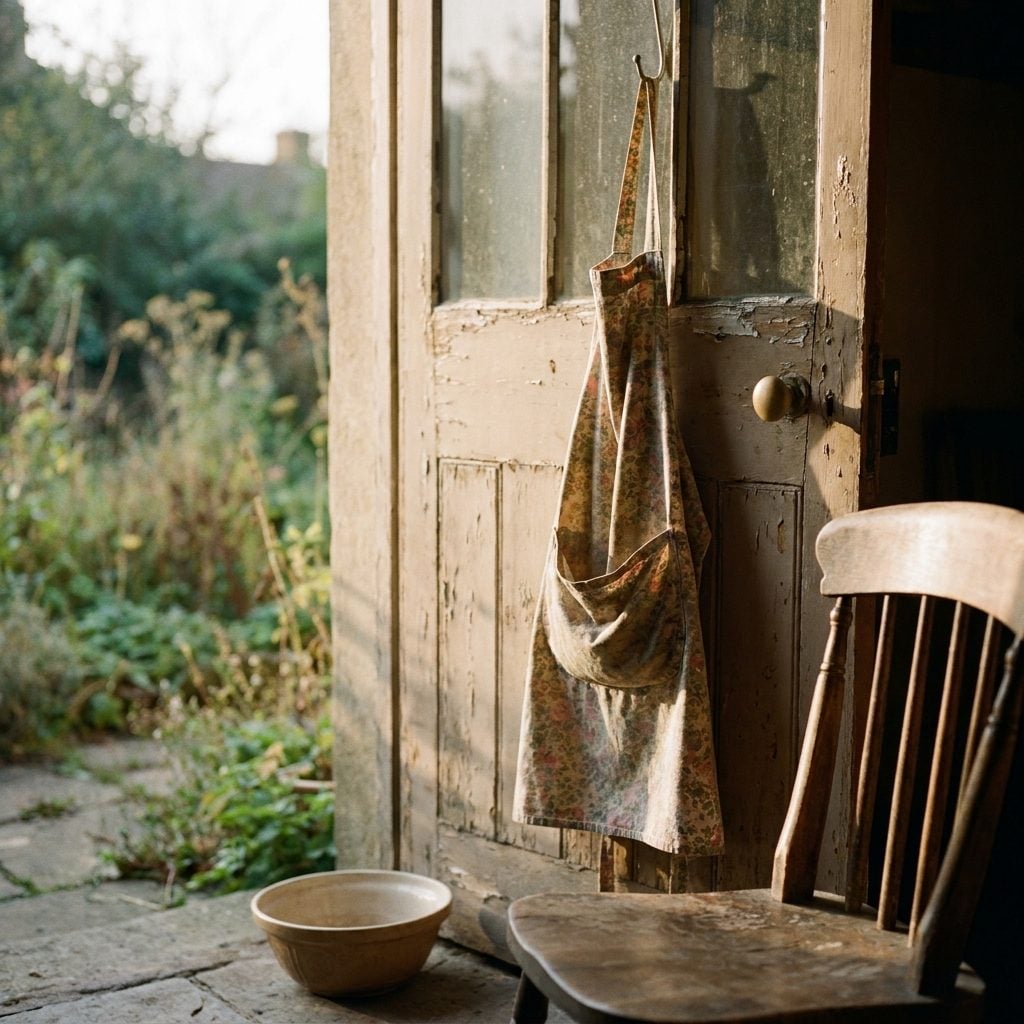
It hung on the same hook for years—floral or gingham, soft from a hundred washes, one pocket slightly stretched from carrying clothespins, a folded grocery list, or whatever needed somewhere to go.
Pulling it on meant cooking was about to begin. Over time the apron collected evidence: flour handprints, a tomato-sauce shadow, a faint grease mark, maybe the lingering suggestion of onions despite every wash. It wasn’t costume. It was work clothing, protecting whatever good blouse happened to be underneath.
6. The Junk Drawer That Held Everything and Explained Nothing
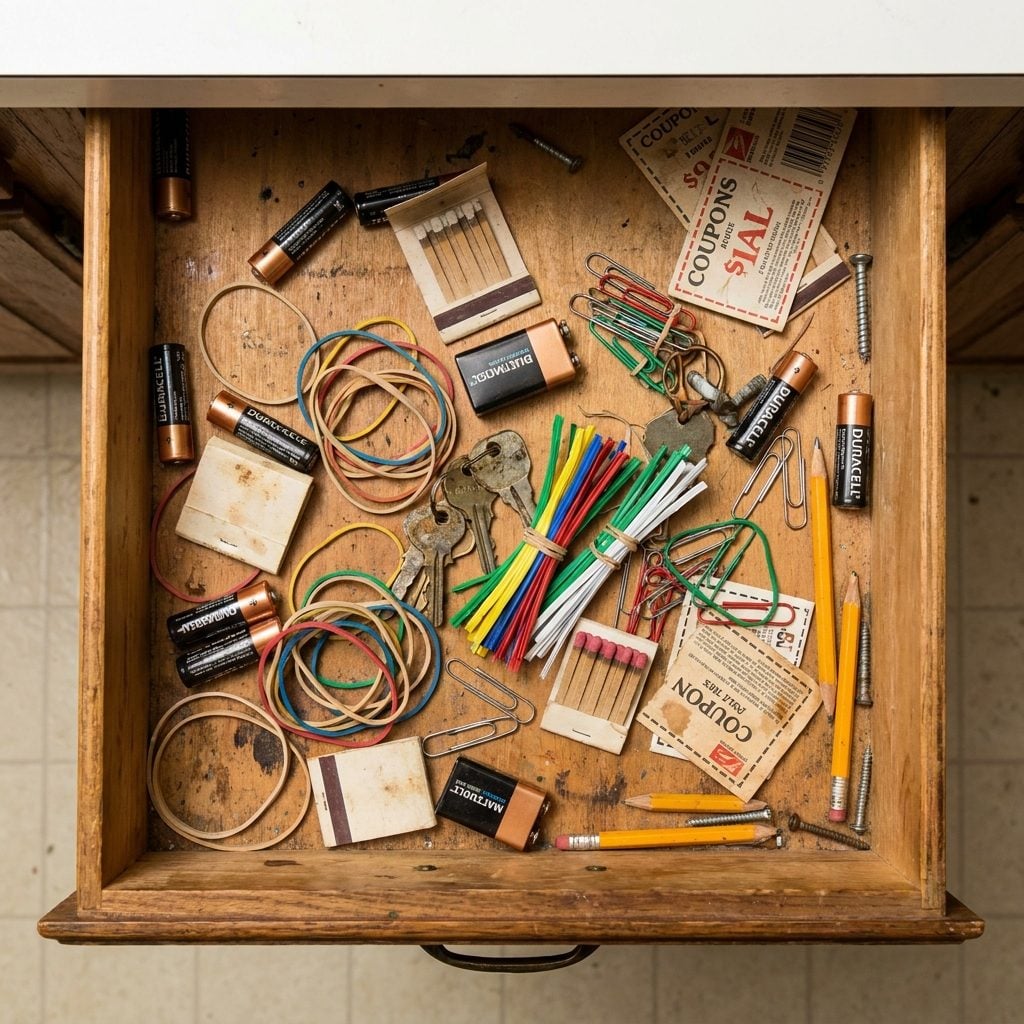
Every kitchen seemed to have one drawer that began with a purpose and gradually abandoned it. Rubber bands, a screwdriver nobody could find when needed, tape, restaurant matchbooks, three pens that didn’t write, batteries of unknown condition, twist ties, mystery keys.
Opening it was archaeology. You went in looking for scissors and came out with a spare key to a lock nobody recognized and a coupon that had expired during the Ford administration. Nobody fully organized it because doing so would have misunderstood the assignment.
5. The Melamine Dishes in That One Unmistakable Autumn Pattern
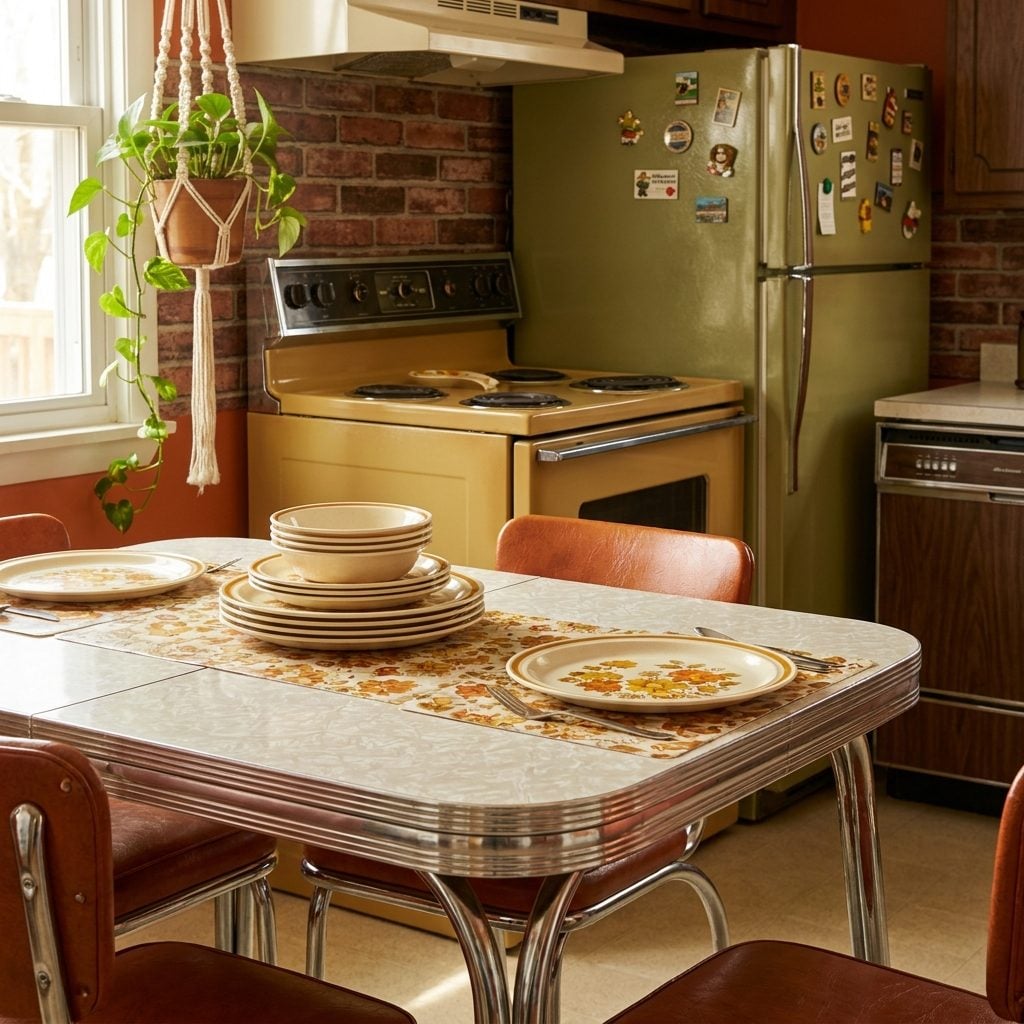
Drop a melamine plate on the linoleum and it might bounce, spin, and settle without anybody reaching for the broom. Kids ate off these, camping trips ran on them, and the good dishes stayed safely out of range.
The pattern understood the decade: amber flowers, wheat sprigs, burnt-orange borders, brown leaves, colors already occupying half the kitchen. Years of forks eventually dulled the surface and coffee left its mark on the cups, but the dishes kept showing up. Modern country kitchen makeover palettes may be quieter, but the appeal of durable everyday dishes hasn’t changed much.
4. The Splatter Screen Hanging Off a Nail Behind the Stove
🔥 Would you like to save this?
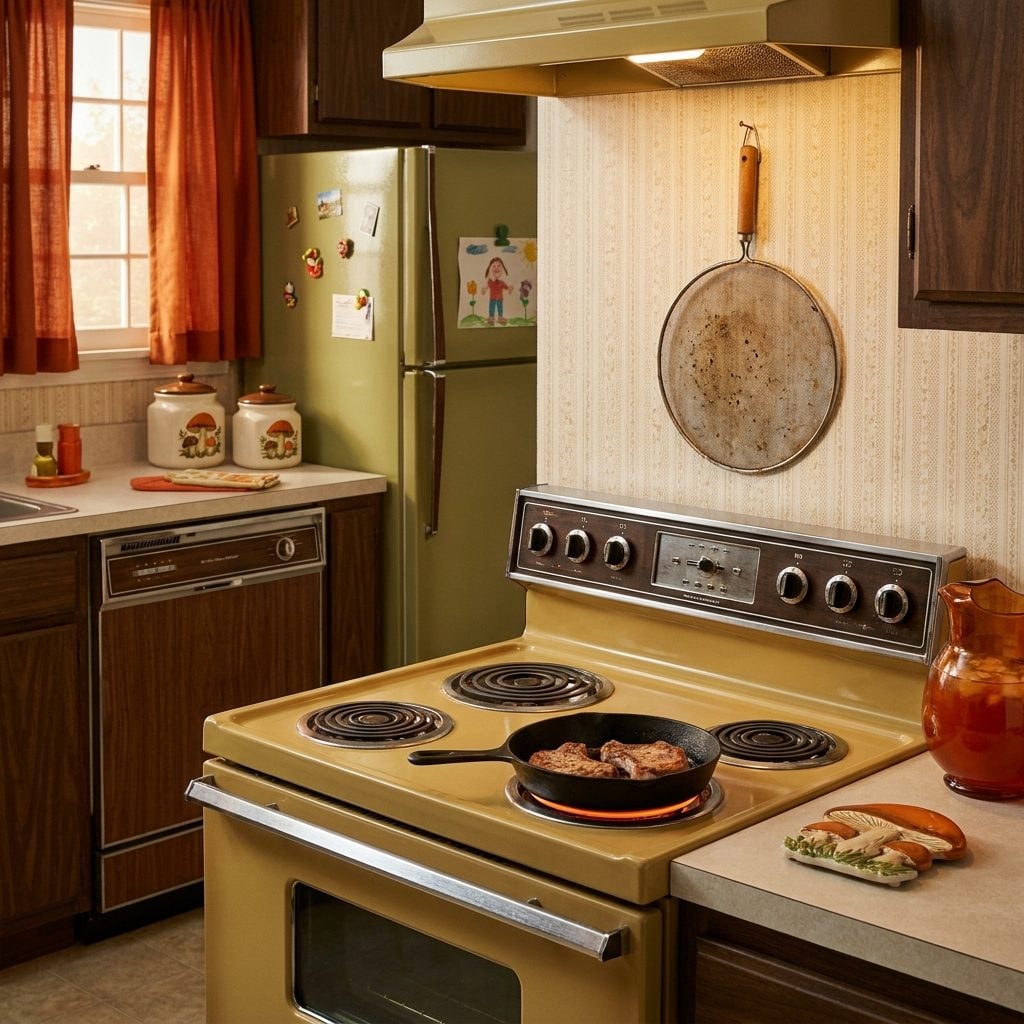
That round mesh disc with the flat handle lived on a nail near the range, slowly taking on the gray-gold color of everything that had ever been fried beneath it.
It never stopped every splatter. Grease still found the backsplash, the drip pans, the hood, and occasionally somewhere physics could not reasonably explain. The screen went over the skillet anyway. Whatever it saved, it saved. That sort of practical usefulness is still at home in a relaxed country kitchen makeover. The mesh may be cleaner now. The job is unchanged.
3. The Pressure Cooker She Watched Like It Might Explode
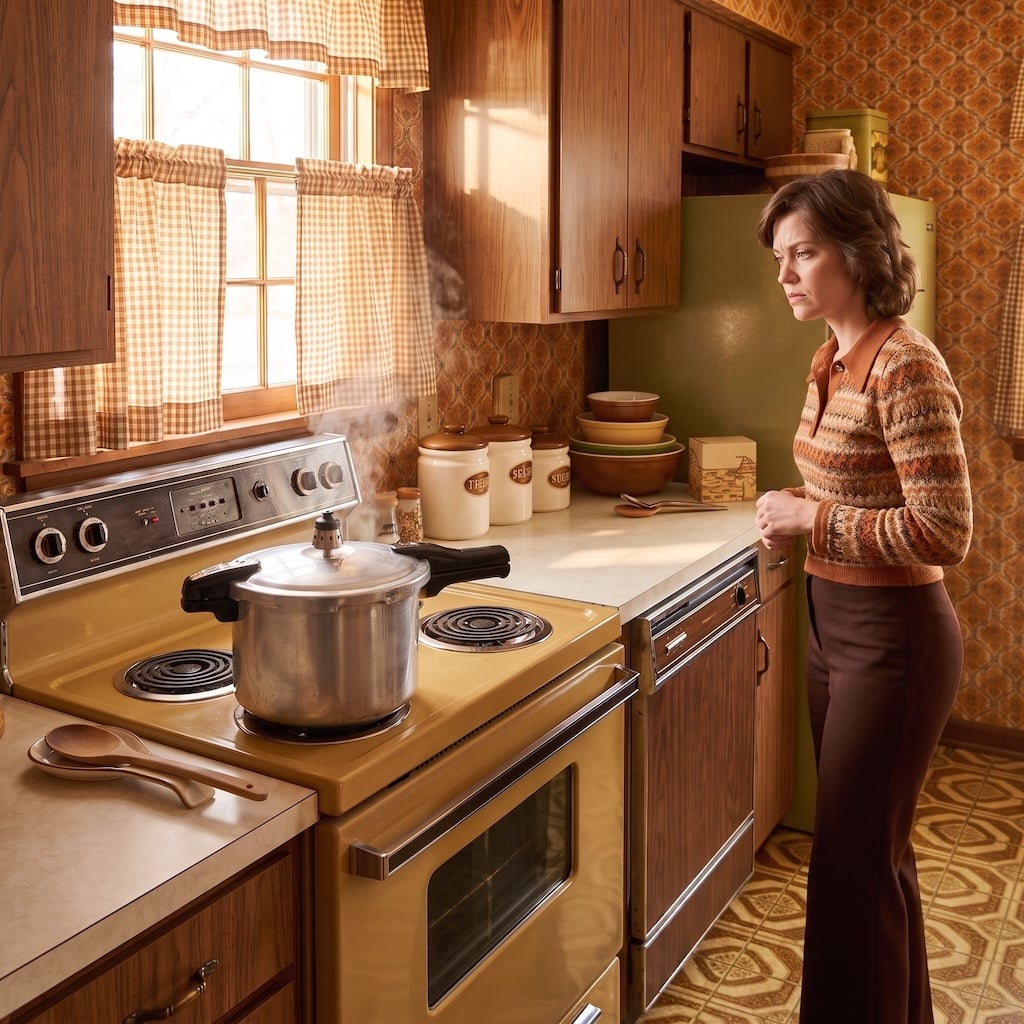
Out came the heavy pot for dried beans, pot roast, stews, and anything else that needed a long cooking time compressed into a weeknight.
Then the weighted valve started rocking. Hiss. Rattle. Hiss. Children learned quickly that this was not the appliance to poke experimentally. Adults knew exactly how it worked and still treated the thing with professional respect.
Pressure cooking shortened long jobs dramatically. That was the practical attraction. The entertainment came from the story everybody seemed to know about somebody else’s pressure cooker and somebody else’s ceiling. The thing sat there hissing like it had opinions.
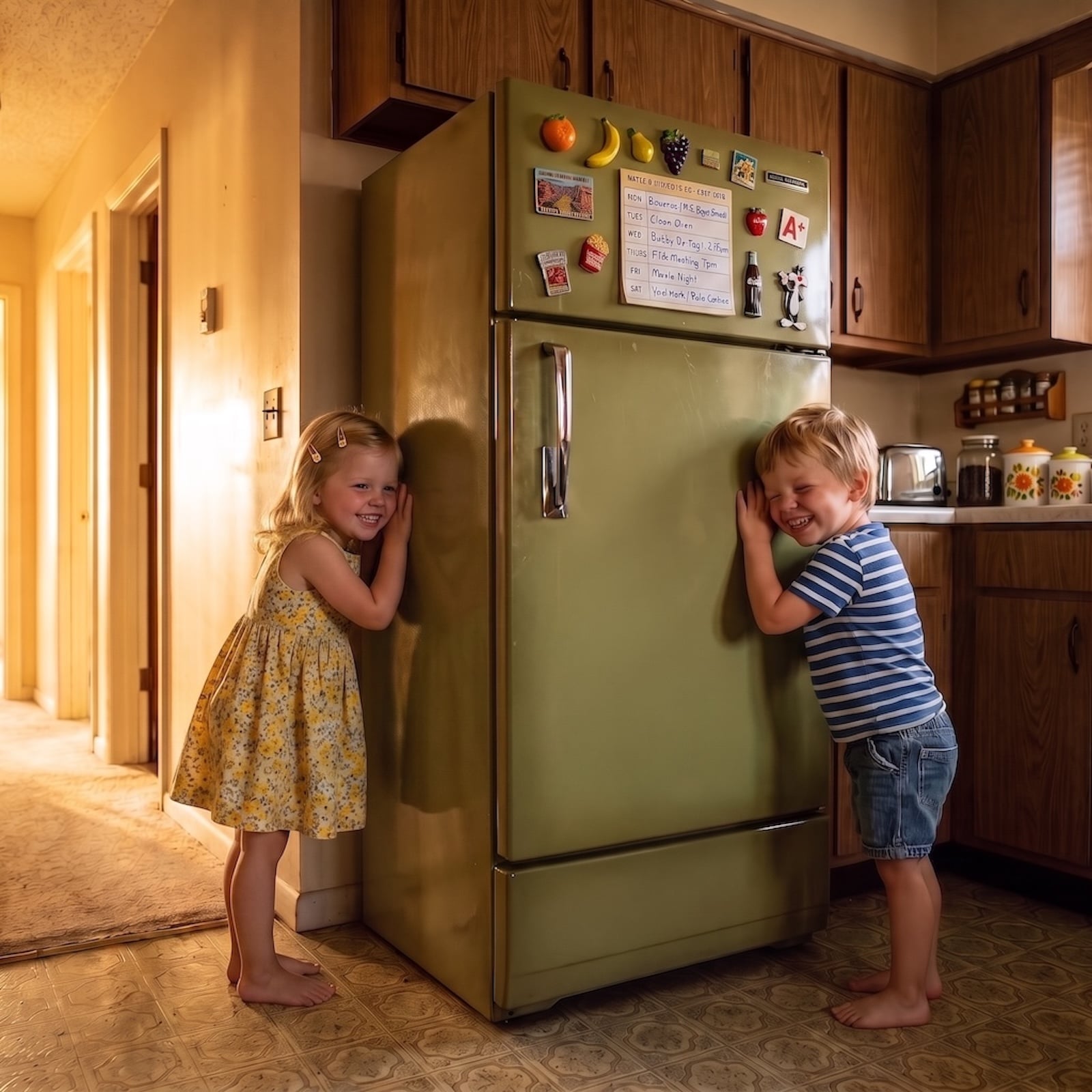
2. The Avocado-Green Refrigerator Humming in the Corner
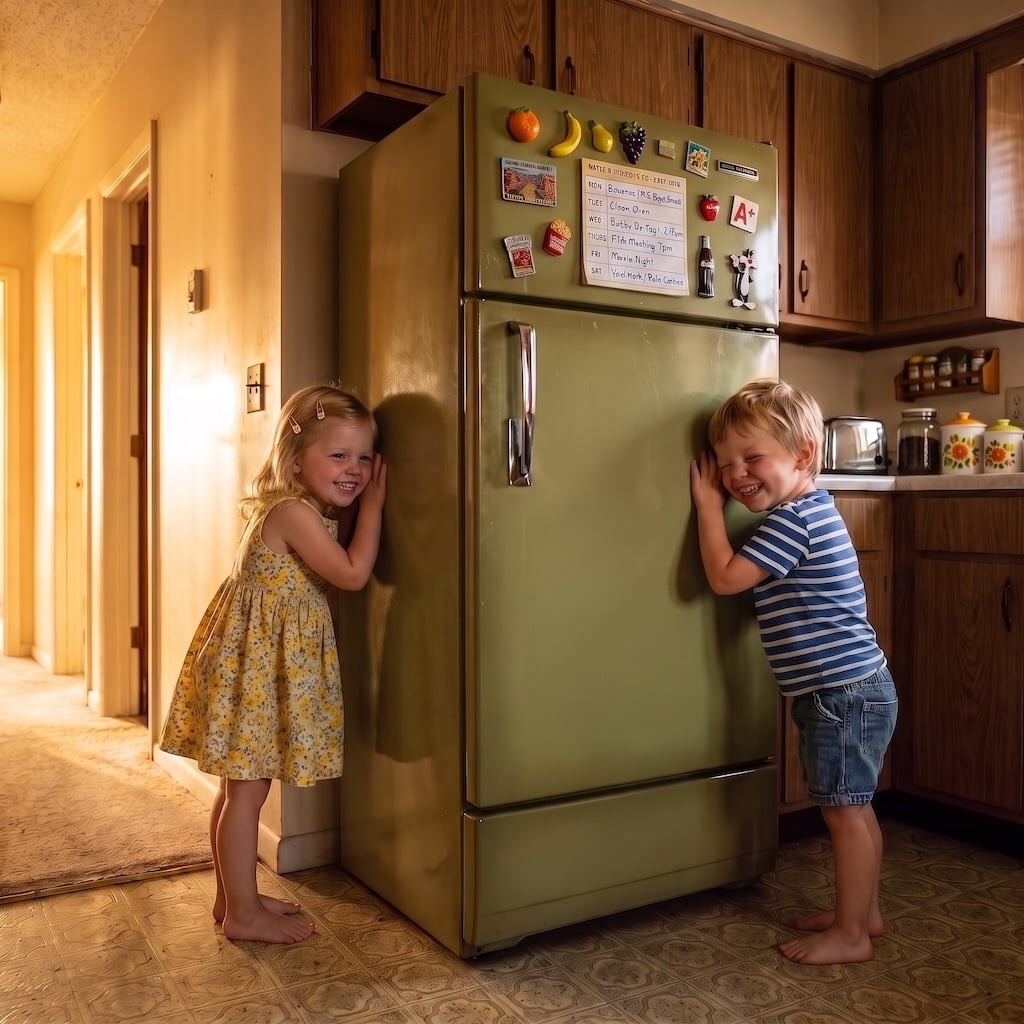
Of course we had to come back to the refrigerator.
You could hear it from the hallway. That low, steady hum meant the house was awake, and it came from a machine roughly the color of guacamole that nobody considered remotely eccentric.
The door was less appliance than family bulletin board—report card, dentist card, school notice, grocery reminder, crayon drawing, photograph, all held up by magnets shaped like fruit or whatever somebody had brought home from somewhere. Avocado sat in appliance showrooms beside harvest gold, brown, and copper-toned finishes that made white seem almost timid.
Plenty of these refrigerators eventually received a second career in the garage, where some appeared prepared to outlive civilization while keeping twelve cans of soda cold. Today’s white kitchen design often tries to make the refrigerator disappear into cabinetry. The 1970s fridge had no interest in disappearing.
1. The Recipe Box Bursting With Grease-Stained Index Cards
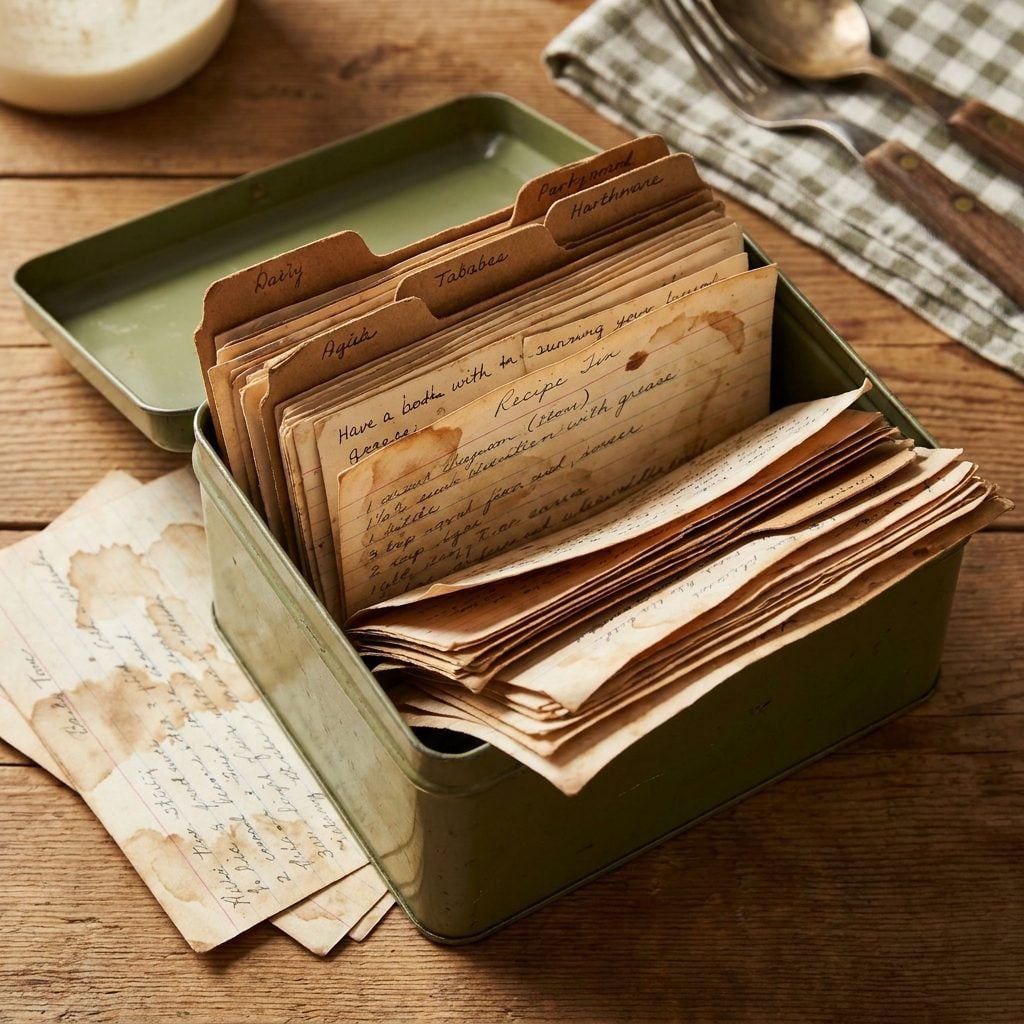
Some of those cards were older than the kids. The really good recipes could be identified without reading them—corners curled, butter turning parts of the card translucent, chocolate on one edge, flour settled permanently into the box seams.
Half the instructions made sense only to the person who wrote them. “Cook till done.” “Add the usual.” “Enough milk.” A quarter cup crossed out and replaced by something written in a different pen ten years later.
And yet the recipes worked because the important parts had never lived entirely on paper. They lived in somebody’s hands: how thick the batter should look, when the onions were ready, which spoon counted as a tablespoon, what “golden” meant in that particular oven.
The fondue pot could disappear. The electric opener could go to a garage sale. Somebody could finally decide the mushroom trivet had completed its service. Nobody wanted to be the person who lost the recipe box.
That may be the thing these 28 objects have in common. None seemed important while they were doing their jobs. The phone rang. The coffee gurgled. The fridge hummed. The mixer whirred. Dinner appeared, dishes dried beside the sink, and another appointment got written on the calendar.
Then the room changed, the appliances changed, the kids grew up, and somehow the clink of a ceramic cookie-jar lid or the sight of one avocado-green refrigerator can rebuild the whole kitchen in your head.