🔥 Would you like to save this?
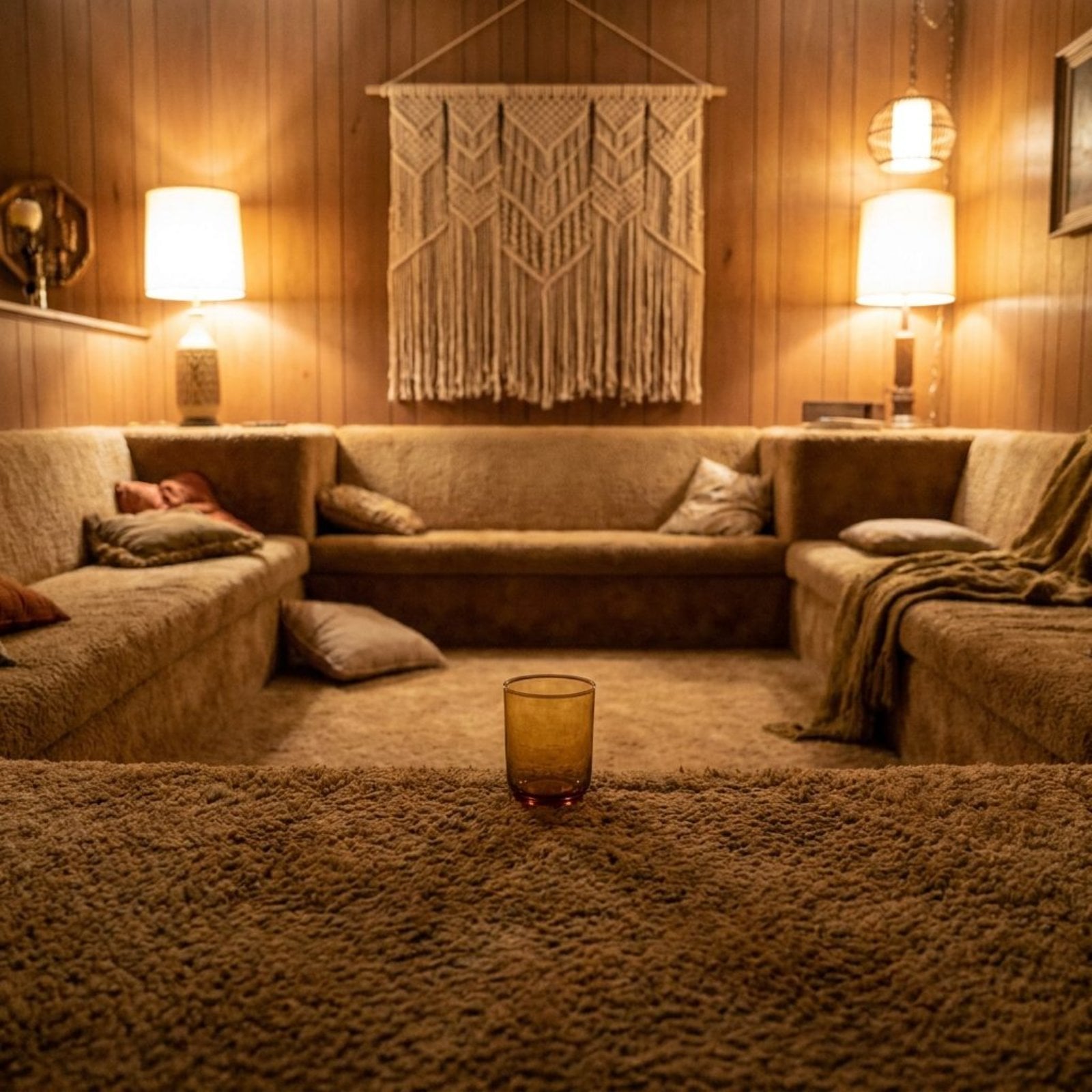
The carpet went down into the floor and the floor kept going. That was the whole idea. Sunken, surrounded, swallowed by shag in colors that had no name yet, the conversation pit was the seventies distilled into architecture: a little theatrical, completely committed, and absolutely convinced that the living room should feel like an event. Some houses had one. Every kid who visited one never forgot it. Here’s what made them unforgettable.
28. The Corner Column That Everyone Rested Their Drink On (And Definitely Shouldn’t Have)
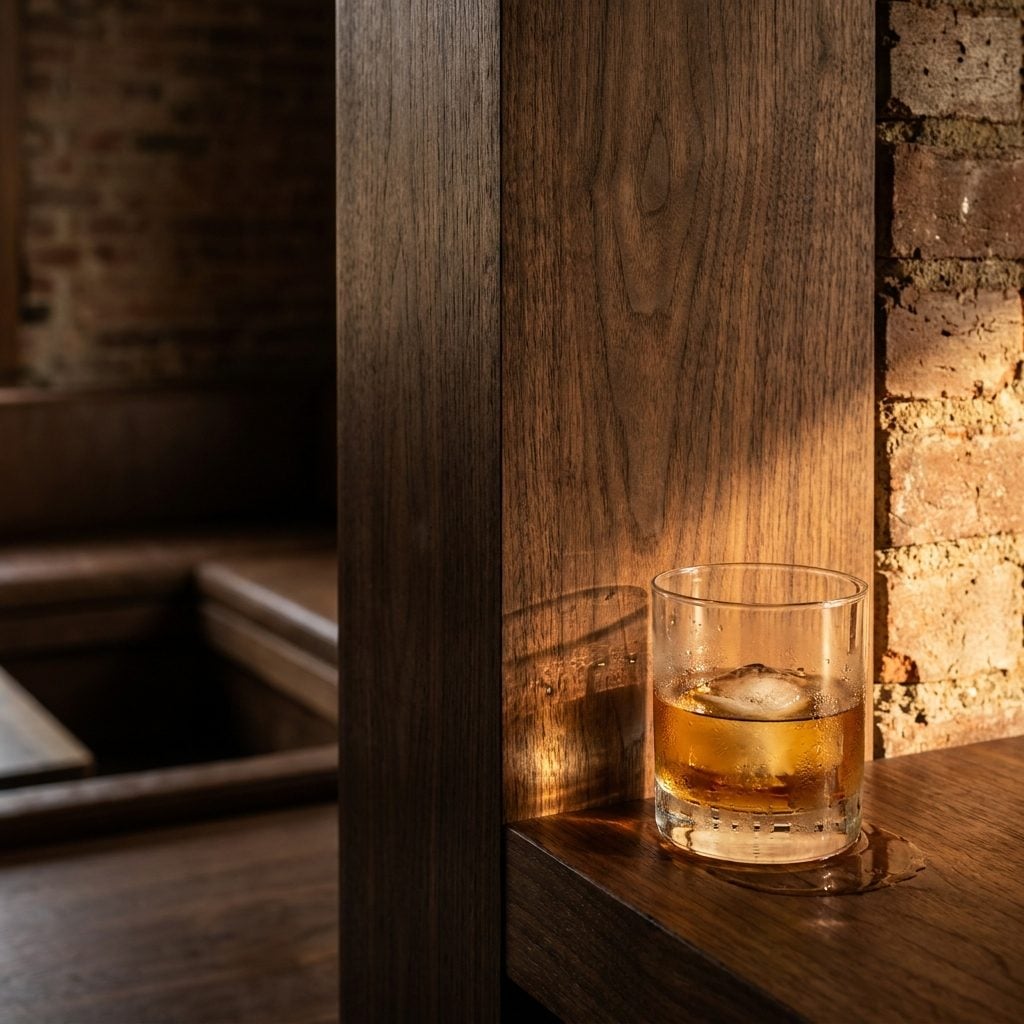
Every conversation pit had one. The corner column, usually structural, usually clad in walnut veneer or brick, usually not designed to hold anything. And yet it held everything: sweating glasses, forgotten coasters, an ashtray, a bowl of mixed nuts that was somehow always empty by 9pm. Nobody planned this corner as a surface. It became one anyway, the way every house develops its own unofficial flat spaces that the architect never drew.
In order to come up with the very specific design ideas, we create most designs with the assistance of state-of-the-art AI interior design software. Also, assume links that take you off the site are affiliate links such as links to Amazon. this means we may earn a commission if you buy something.
The top of that column tells you everything about how the conversation pit actually lived versus how it was photographed for Architectural Digest. In the magazine: empty, sculptural, pristine. In real life: ringed with watermarks and sticky with something that was probably Kahlúa.
27. The Moment It Became the Only Acceptable Place to Watch the Game
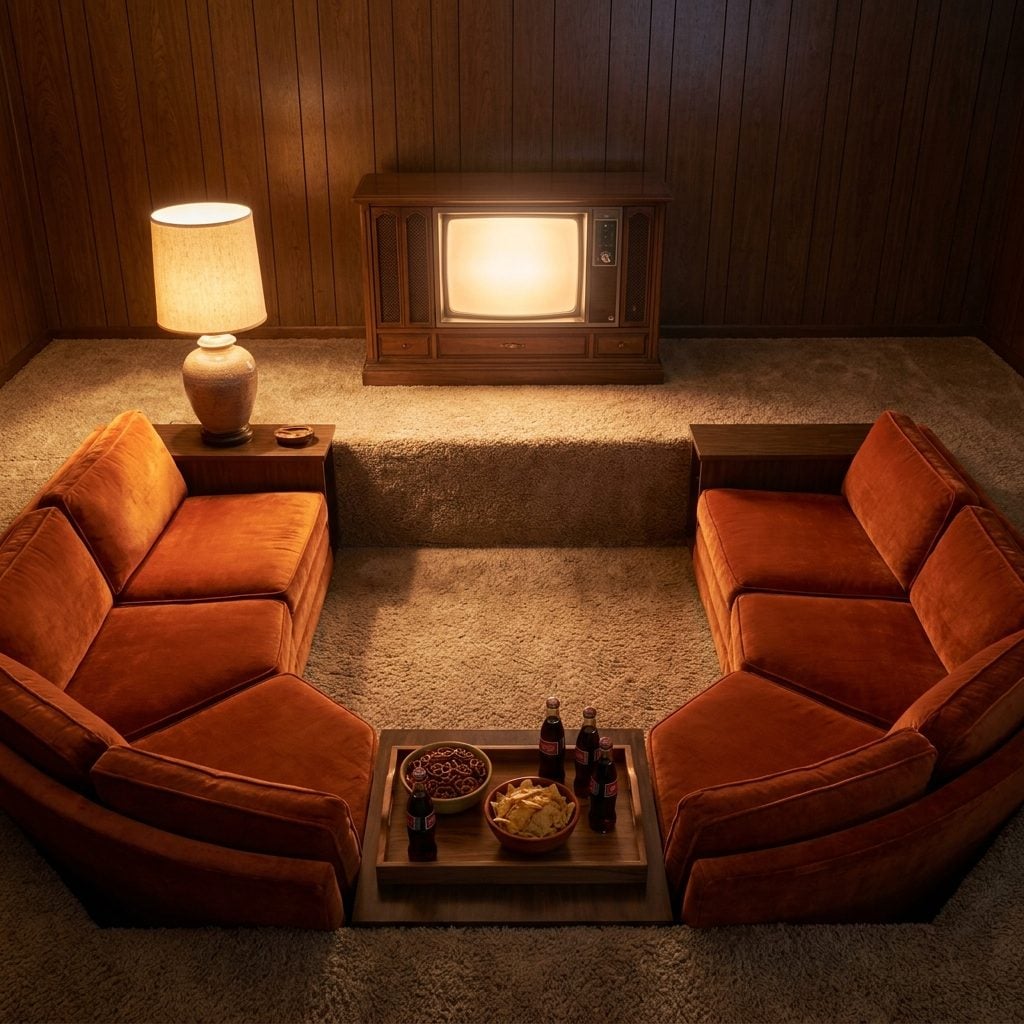
At some point, nobody could tell you exactly when, the conversation pit stopped being a conversation space and became the only place anyone wanted to sit for the game. Something about being below floor level, surrounded on three sides by thick cushions, with the console television at exactly the right sightline from a reclined position. It was accidental home theater design, years before anyone used that phrase.
The cool family room wasn’t the one with the best TV. It was the one with the pit. Everyone understood this. The pit democratized seating in a way a row of chairs never could, no bad seat, no hierarchy, just a circle of people equally sunk into harvest gold shag with equal sightlines and equal access to the snack bowl in the middle.
26. The Carpet That Went All the Way Down, Into the Pit, Up the Walls, and Onto the Ledge Without Apology
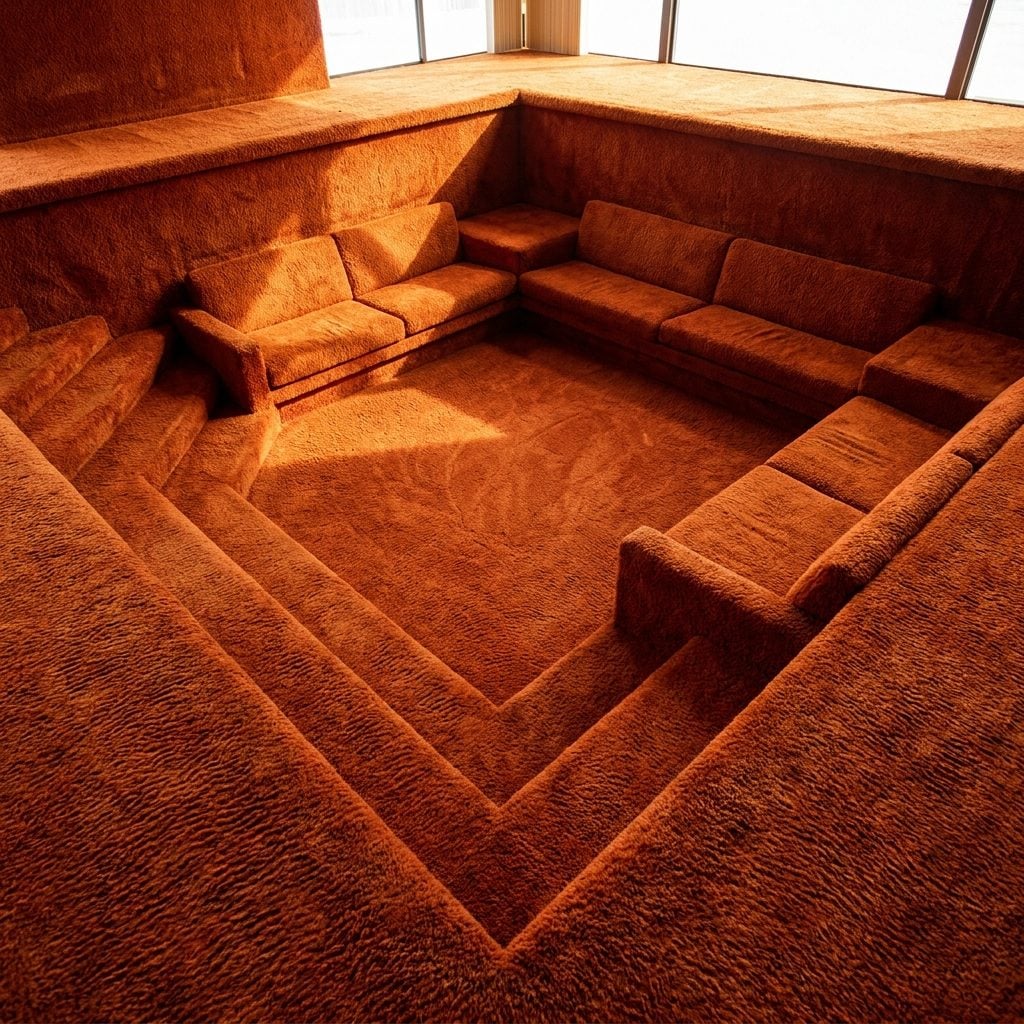
The carpet didn’t stop at the pit’s edge. It went over. Down the riser. Across the floor of the pit. Up the interior walls of the pit, where it met the cushion backs like they’d always been friends. In the most committed installations, it continued onto the ceiling of a nearby soffit. The 1970s drew no distinction between floor and wall when it came to carpet, both were just surfaces that needed coverage.
There’s something genuinely impressive about that level of commitment. The whole point was continuity: no cold tile, no hard edges, no interruption in the softness from the moment you stepped through the front door to the moment you sank three feet below floor level into the pit. Modern design keeps rediscovering texture and warmth as virtues. The conversation pit just got there first, with no half-measures.
25. The Shag Carpet That Started at the Living Room and Kept Going Right Down the Steps
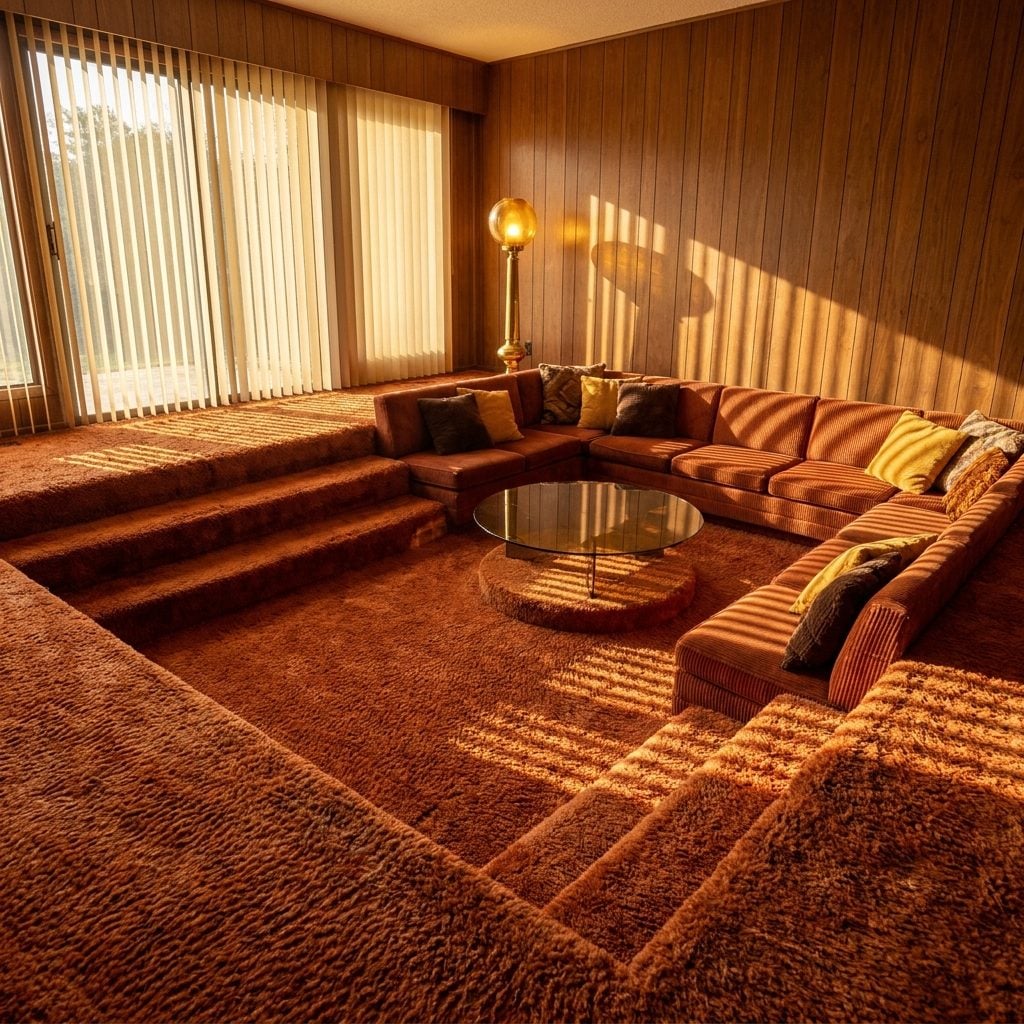
The carpet didn’t stop at the pit. It rolled down the steps like a slow avalanche, kept going across the floor, climbed up over the bench, and sometimes ran right up the wall behind you — one continuous field of shag, uninterrupted, in a color you’d now describe as sunset.
Vacuuming it took a rake. An actual rake, sold in the same aisle as the vacuum. Every earring, every M&M, every stray Lego lived in there forever, filed away for someone’s grandchildren to find during demo day.
24. The Step Down That Nobody Warned You About
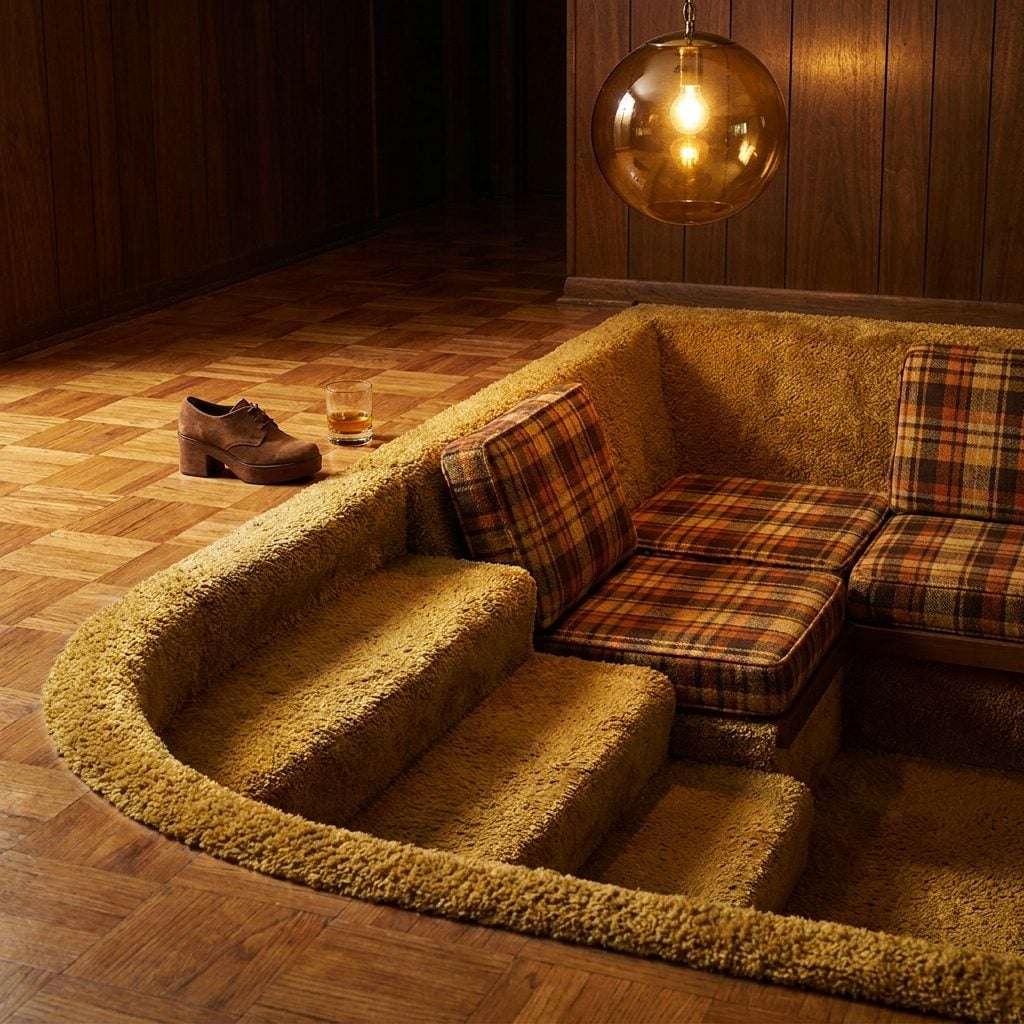
Every pit party had one guest who forgot it was there. Usually after their second drink. The sound was distinctive — a quick shuffle, a small gasp, then the muffled thud of a body meeting shag.
Homeowners learned to warn people at the door. Some added a small brass rail. Most just accepted the risk as part of the vibe. If you’ve ever thought about a cool basement layout with a sunken lounge, this is why modern versions get a rope light around the edge.
23. The Built-In Bench That Wrapped All the Way Around
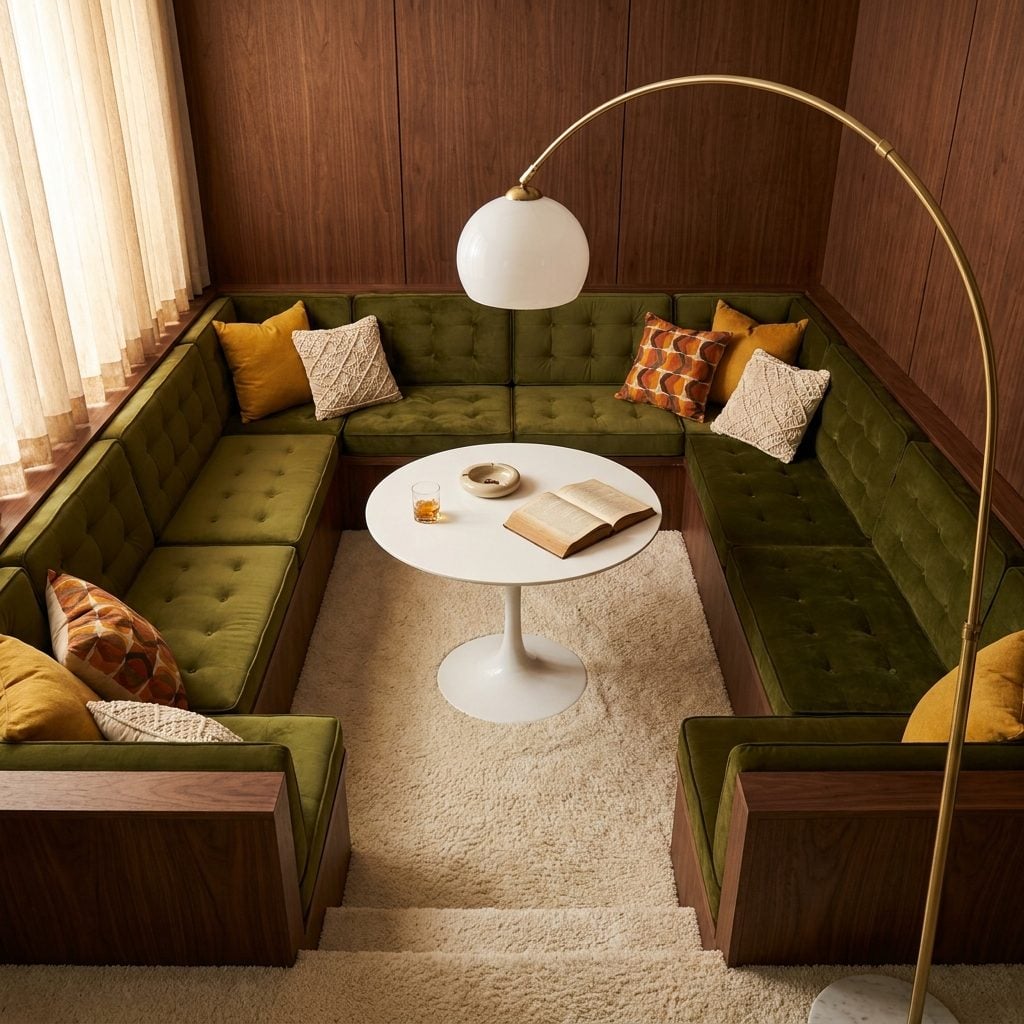
No arms. No corners to defend. Just one long upholstered ribbon going all the way around, so wherever you sat, you were part of the group. The pit forced you to face each other, and that was the whole design theory.
You could seat twelve people without dragging in a folding chair. And because the bench doubled as storage — or hid the heating duct behind it — the room stayed uncluttered in a way modern sectionals never quite manage.
22. The Fondue Pot That Lived in the Middle of Everything
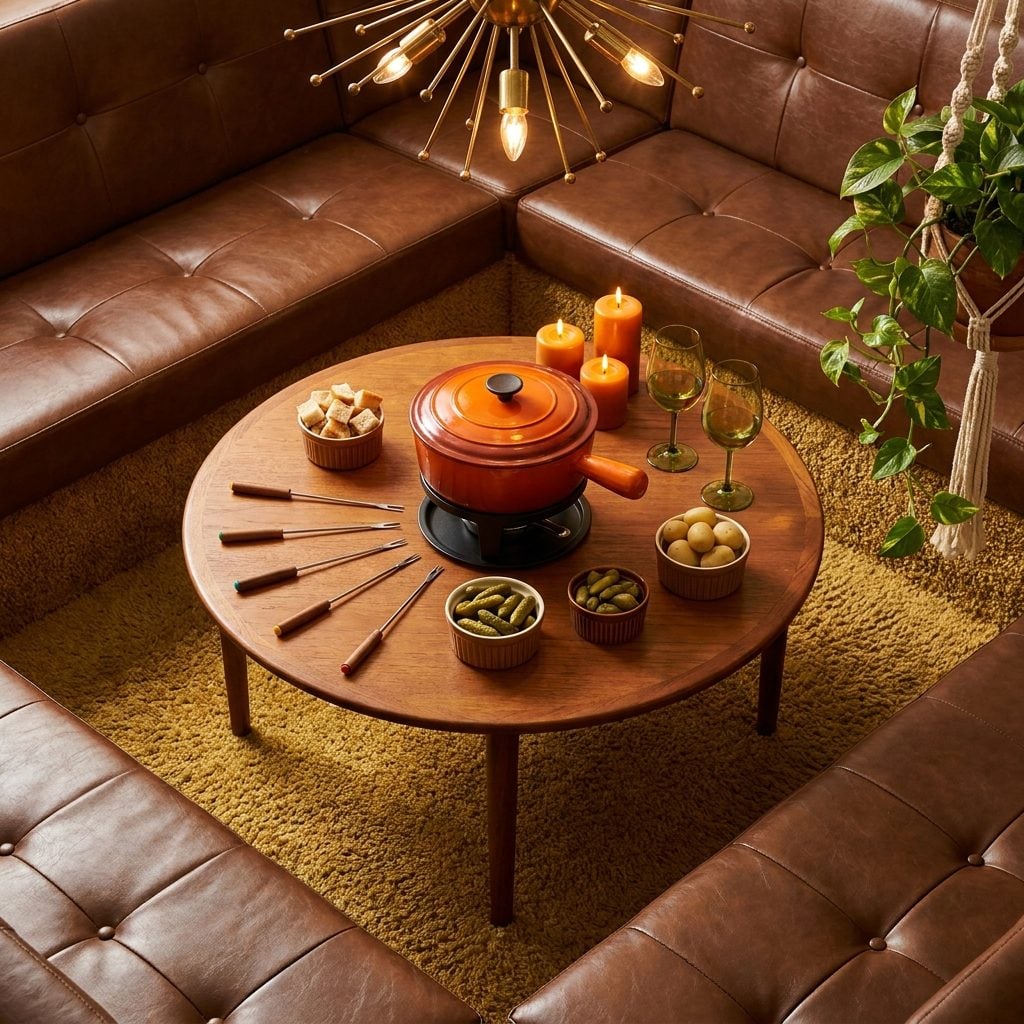
The fondue pot wasn’t a novelty. It was the whole reason you had people over — and the pit was built around it, more or less. That low coffee table in the middle sat at exactly the right height for reaching in, spearing something, and pulling it back without anyone standing up.
Cheese first. Then oil for the beef. Then chocolate. A three-act dinner that took four hours and required nobody to leave the pit for anything except more wine.
21. The Fireplace That Sat at Eye Level When You Were Sitting Down
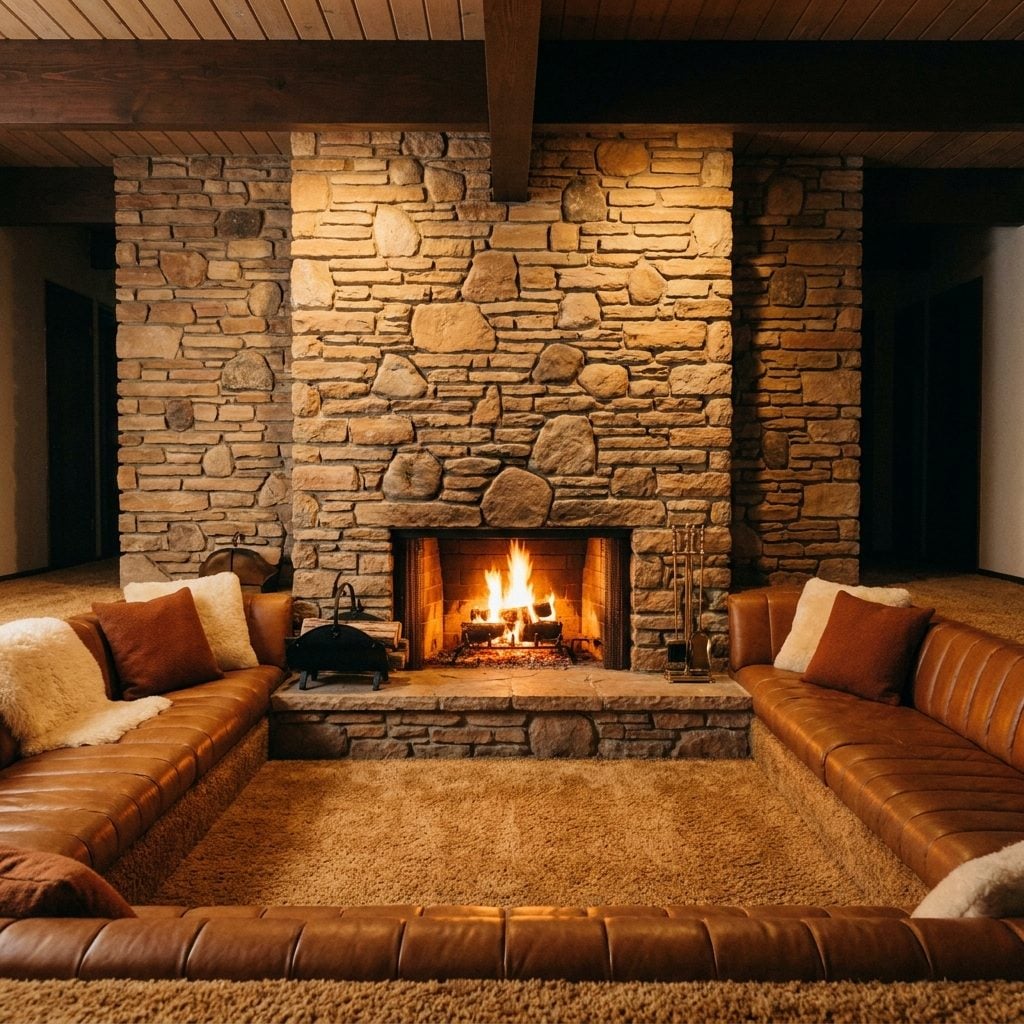
The whole geometry of the room changed once you sat down. The fireplace wasn’t up on a wall anymore. It was right there, level with your face, throwing heat directly at your knees.
Pit design and fireplaces went together because the drop in floor height brought the firebox into your line of sight. You weren’t looking up at a mantel — you were looking straight into flame, at close range, in a way that felt almost like camping. Which was, presumably, the point.
20. The Sputnik Chandelier That Hung Just Low Enough to Duck Under
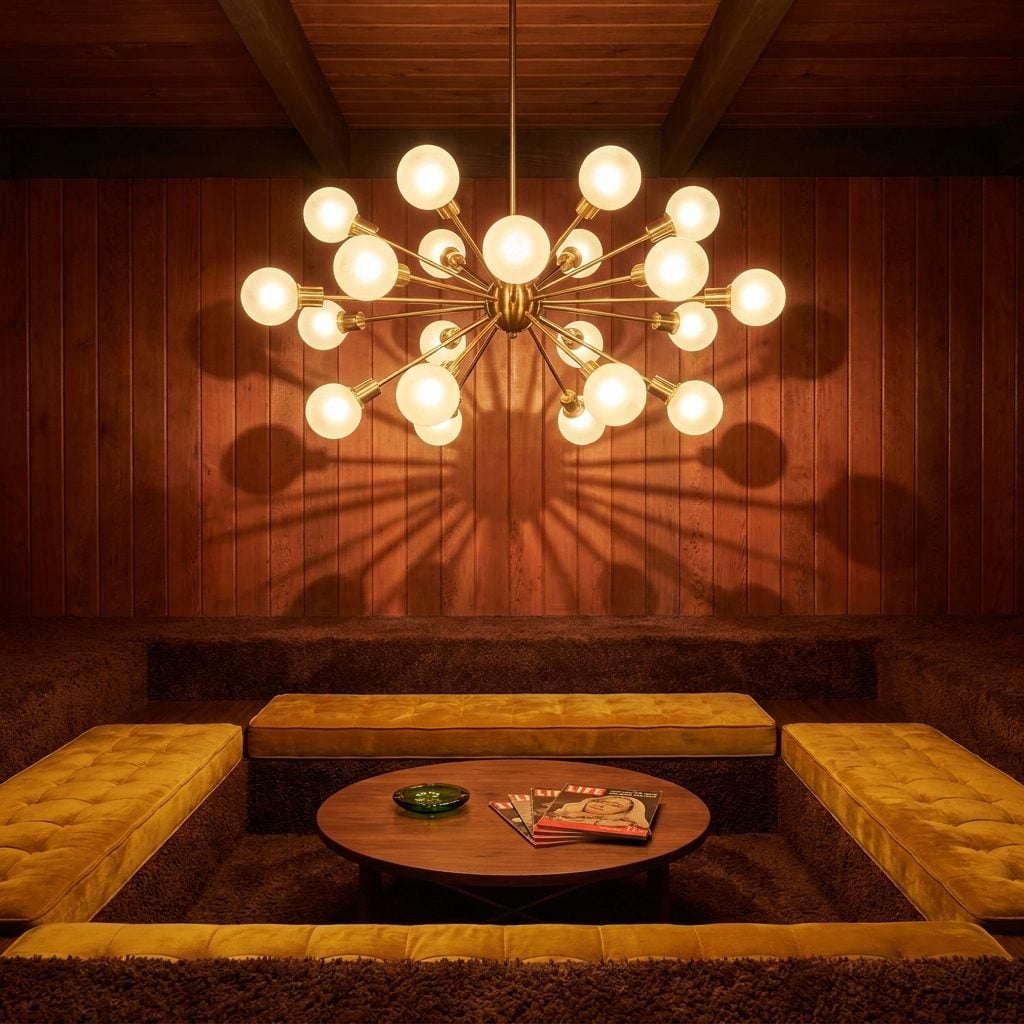
The pit dropped the floor. The chandelier dropped the ceiling. Between them they carved out a pocket of intimacy in the middle of a much larger room, a little chamber inside the house where the light was different and the ceiling felt close.
Standing up in the pit meant remembering the chandelier. Not everyone did. There’s a whole generation of foreheads that still carry a faint memory of a brass Sputnik arm.
19. The Ashtray Situation That Was, Frankly, Everywhere
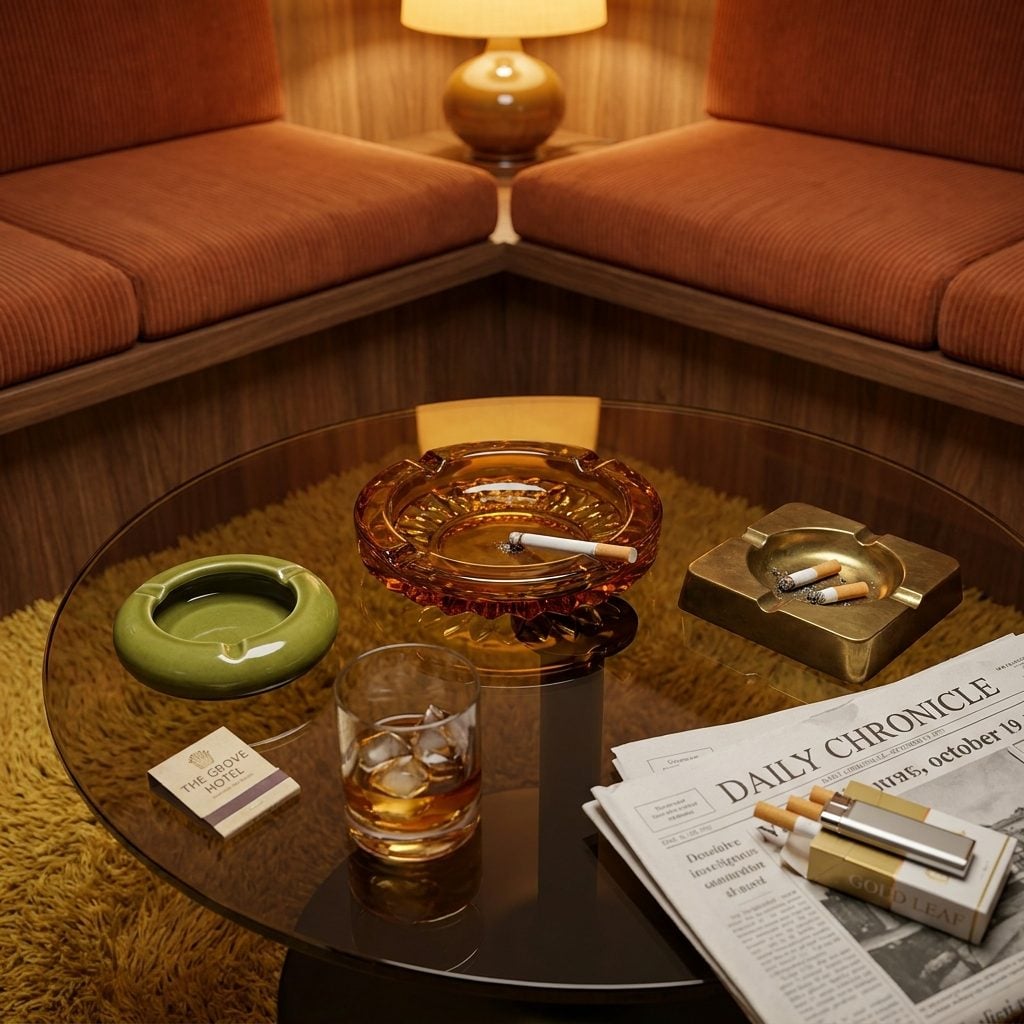
Every flat surface had an ashtray. Coffee table, bench arm, the little side platform built into the pit wall, the floor next to the sofa because someone always put one there. Cut glass, ceramic, brass, occasionally a novelty one shaped like a saddle or a boat.
The pit itself was a smoker’s dream — low ceiling of hovering haze, everyone packed close, nobody escaping to the kitchen. The shag held onto the smell for a solid decade after the last cigarette got put out.
18. The Console Stereo That Took Up an Entire Wall
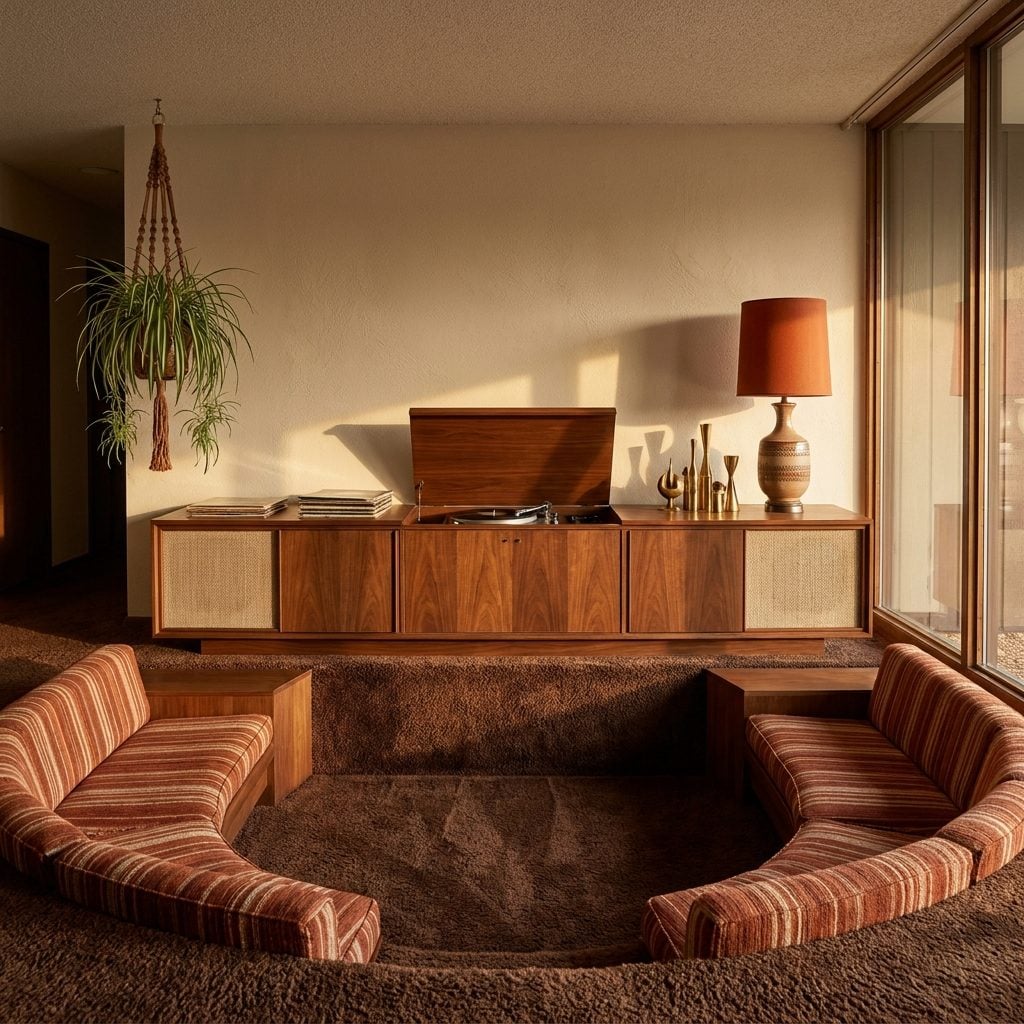
Six feet of walnut cabinetry with a turntable tucked under a lift-up lid and speakers built into the ends. Furniture that played music, and it lived on the wall the pit faced.
The whole pit was, in a sense, an audience. Everyone seated, everyone facing roughly the same direction, everyone within perfect earshot of the same set of speakers. Fleetwood Mac’s Rumours sounded exactly how it was meant to sound in that specific configuration.
17. The Wall of Vertical Blinds That Filtered Every Sunset Into Stripes
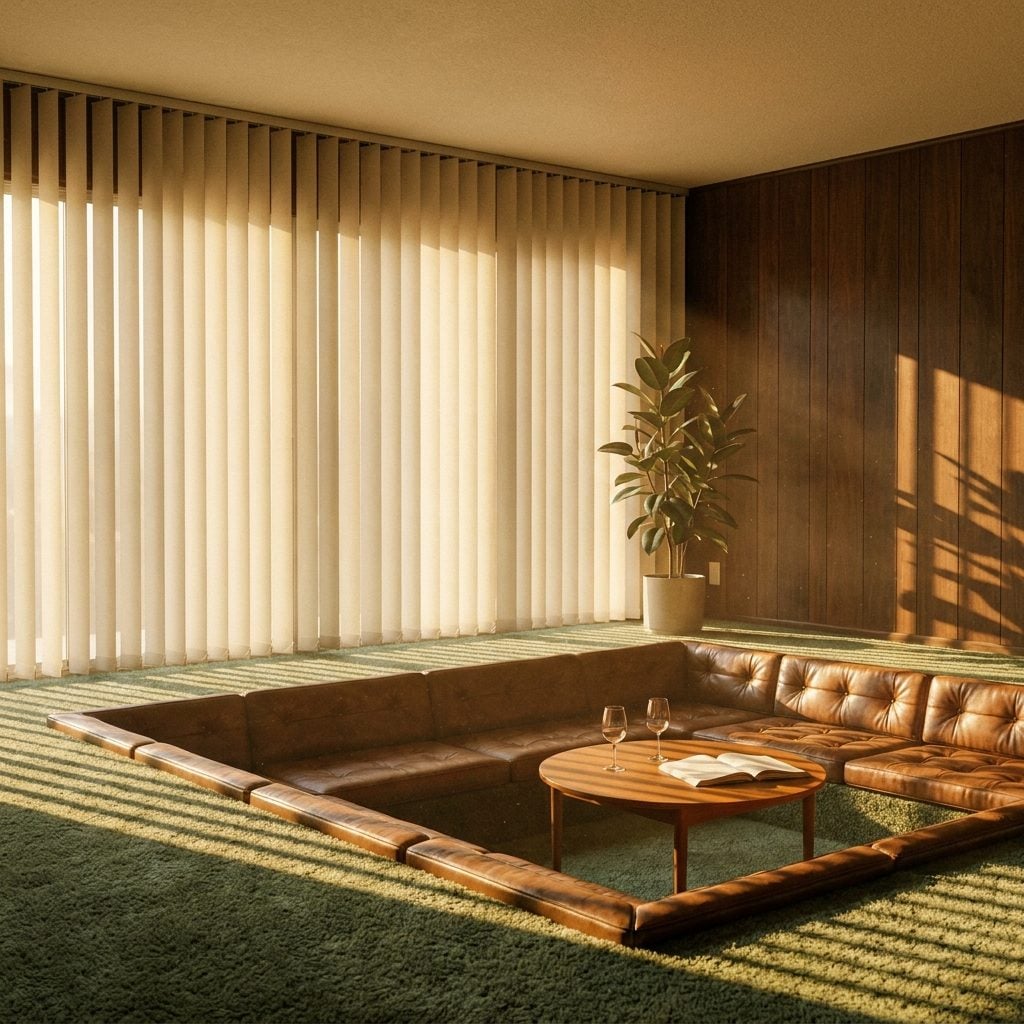
Vertical blinds were the pit’s cousin — same era, same design confidence, same commitment to going all the way. A single wall of windows, floor to ceiling, wrapped in blinds you could twist open in stages.
Sunset in a pit with vertical blinds was its own kind of light show. The room stripped itself into gold bars. Everyone looked cinematic without trying.
16. The Way It Made You Actually Talk to Each Other
🔥 Would you like to save this?
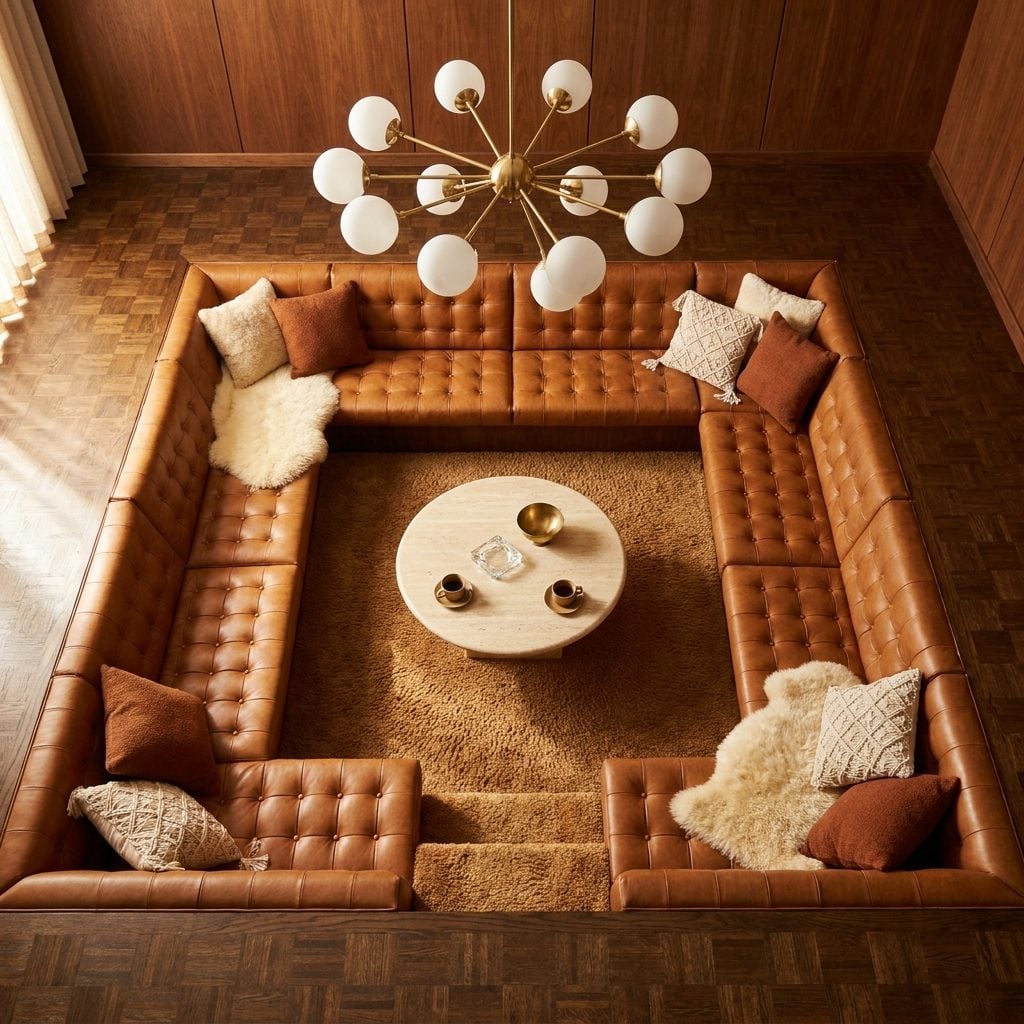
Here’s what nobody planned for and everybody remembers. You could not sit in a pit and look at your phone, because there were no phones. You could not sit in a pit and stare at the TV, because the TV was usually behind you. So you looked at the other people.
The architecture forced eye contact.
It forced a circle, forced the party into one shape, one conversation, one shared bowl of chip dip on the low table between everyone. Nobody drifted off to a corner because there were no corners to drift to. A modern living room, with its sectional aimed at a screen, has almost the opposite geometry — which is maybe why, every few years, someone tries to bring the pit back. It wasn’t only a design trend. It was a room that made people do something they’d otherwise forget to do.
15. The Unspoken Rule That Nobody Sat on the Edge
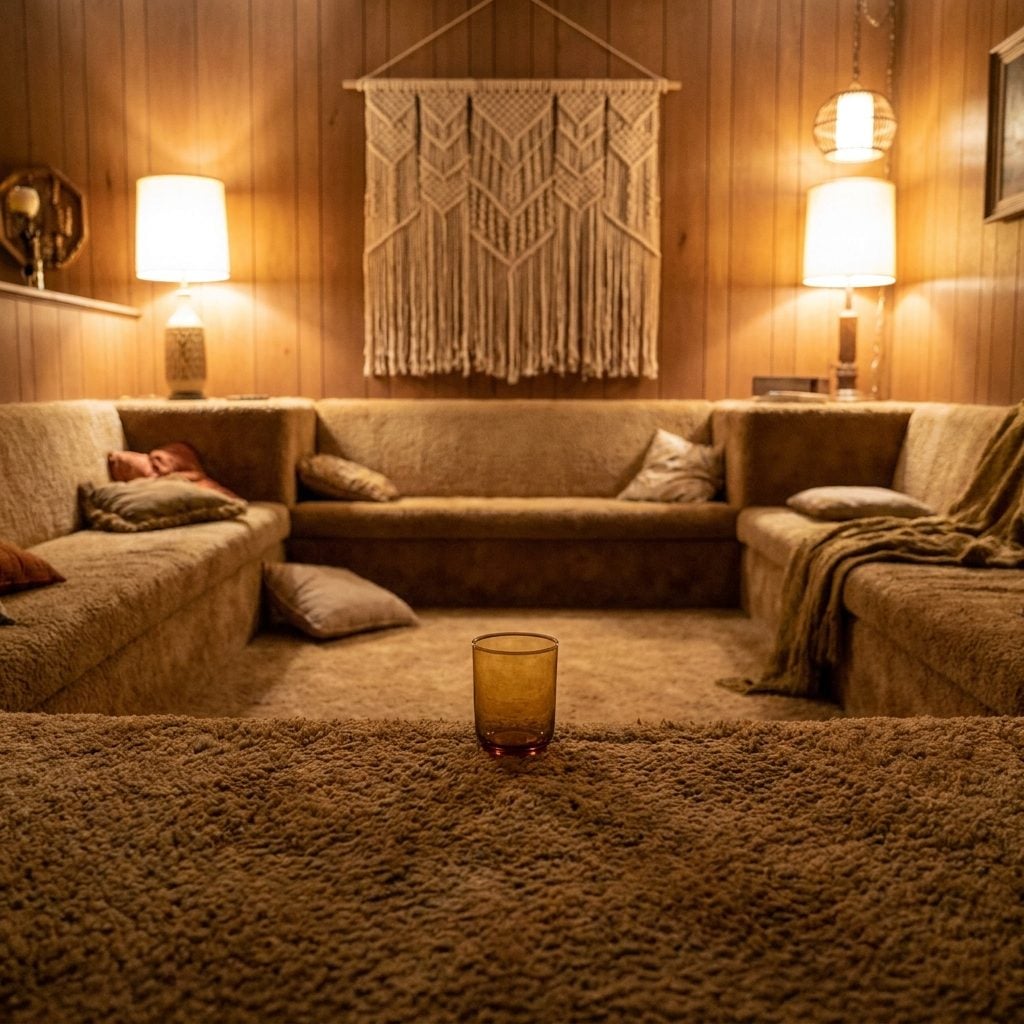
There was always a moment, usually right after someone set down their drink, where they’d settle onto the ledge like they were testing it, half-in and half-out of the pit. And then, without anyone saying a word, they’d slide down the step and commit. Nobody sat on the edge of a conversation pit for long. It felt wrong, like perching on the arm of a chair. The pit had gravity in every sense of the word.
That unspoken social pressure was part of the design’s genius. The step-down forced a choice: you were either in the conversation or you weren’t. No hovering. No polite half-participation from the perimeter. The walls or at least the carpet-wrapped ledge made the boundary physical, and physical boundaries have a way of sorting people out fast.
14. The Orange Corduroy Cushions That Held the Shape of Every Person Who Sat There
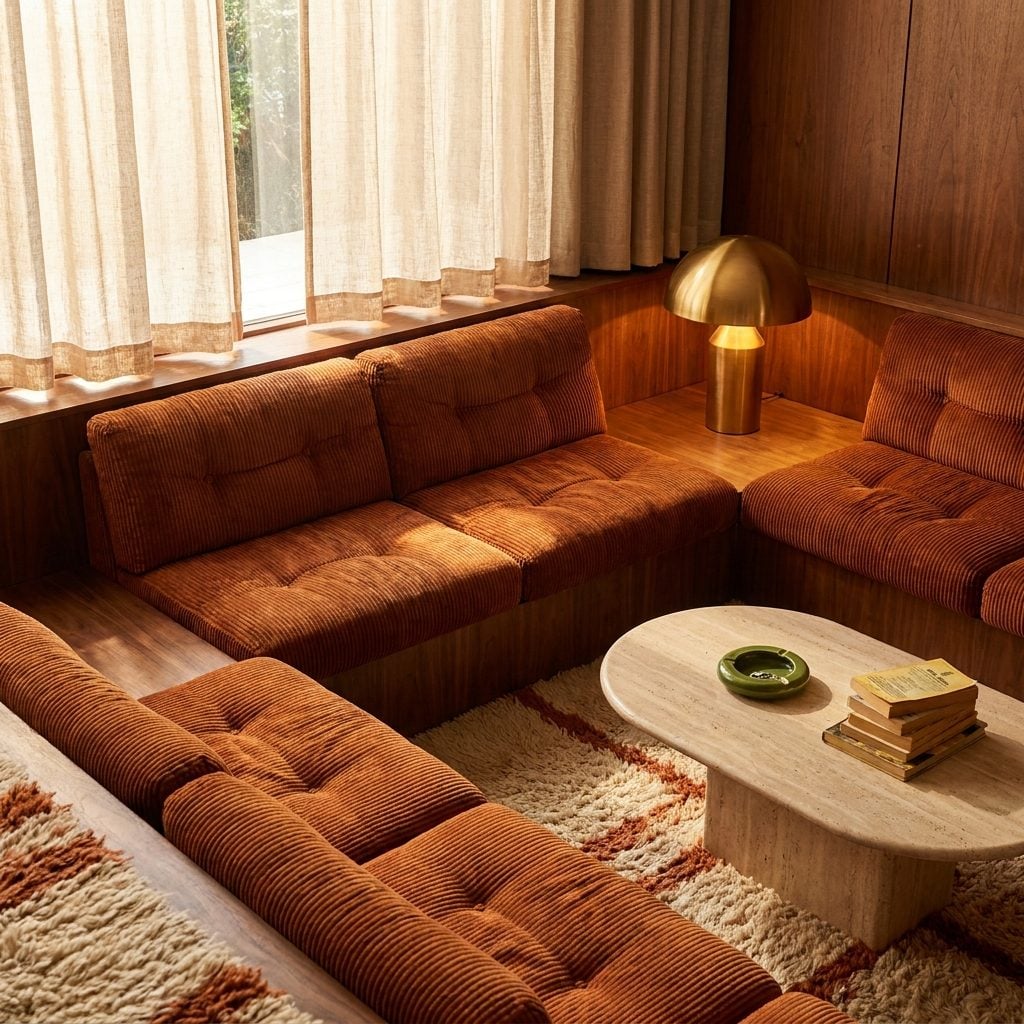
The corduroy remembered you. Every cushion held the exact impression of whoever spent the most time in that corner, and once the fabric committed to a shape, it stayed committed — sometimes for a decade past the point when the person who made the dent had moved out, moved on, or moved to Tucson.
Burnt orange was the color of choice. Rust and mustard made appearances too. The wide-wale ridges caught crumbs, coins, and the occasional earring, and you’d find things down there years later that predated the family dog.
13. The Way It Turned Every Party Into a Two-Tier Social Event
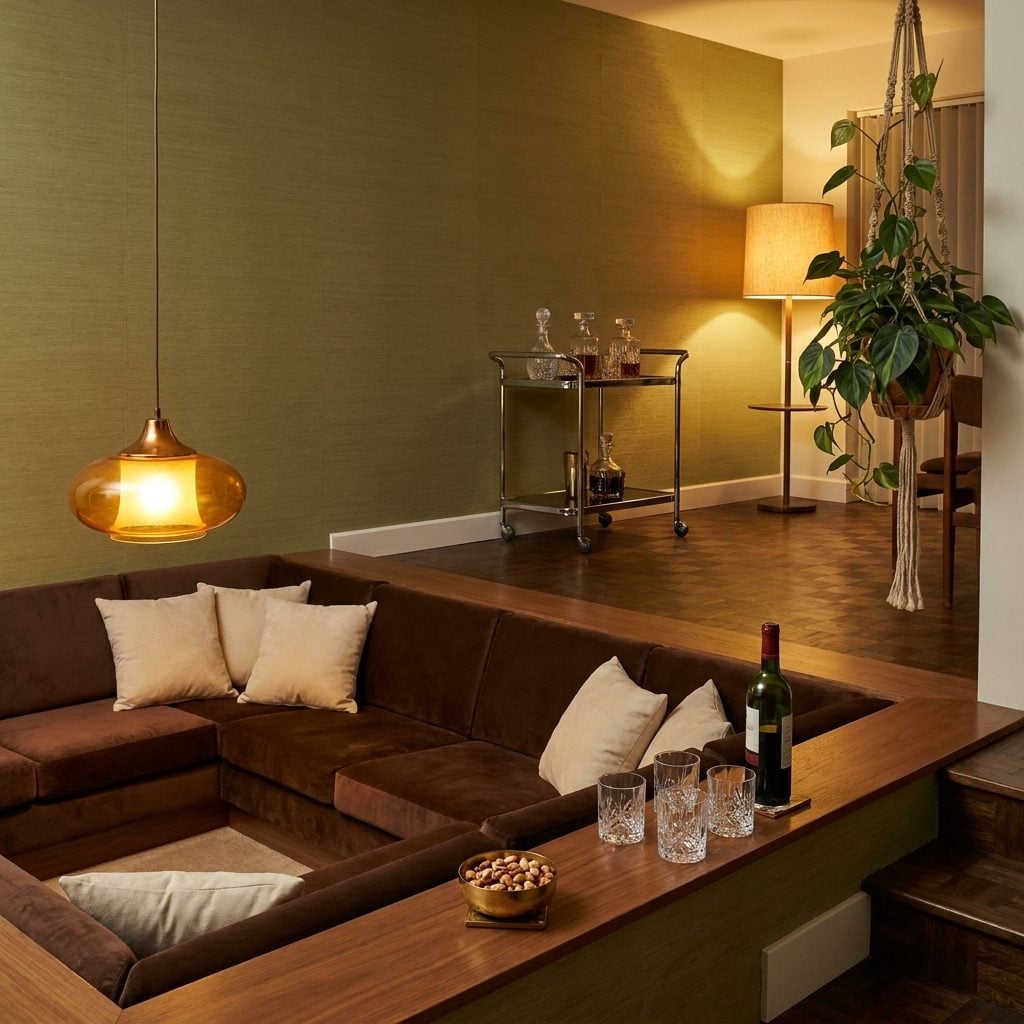
A conversation pit created a natural social geography. There were pit people and there were floor people, and by the second round of drinks everyone had picked a team without meaning to.
The pit was for the deep conversations, the confessions, the arguments about politics that would ruin brunch tomorrow. The floor belonged to the pacers, the smokers, the ones who kept drifting off toward the kitchen because they couldn’t bear to sit still for a whole anecdote.
12. The Ledge That Was Technically Seating But Really a Buffet
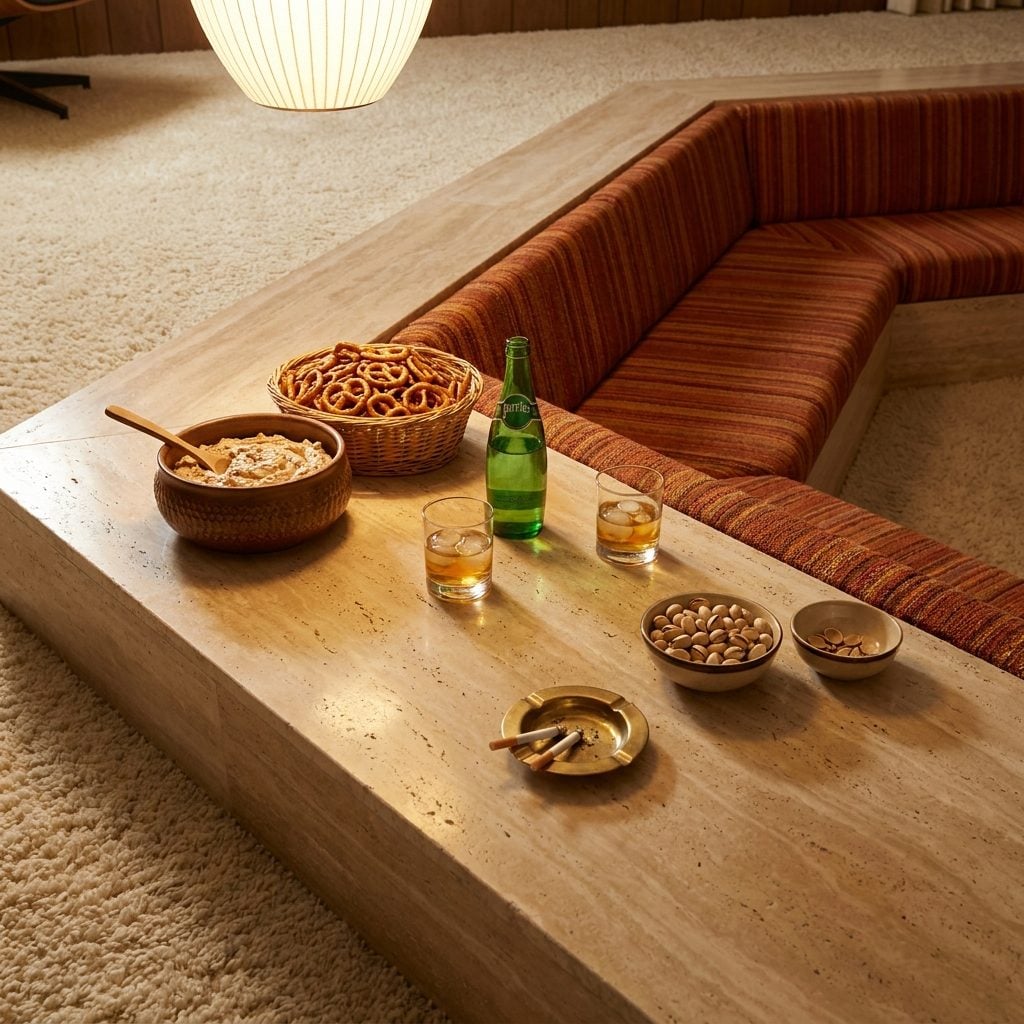
Nobody sat on the ledge. The ledge held drinks, chip bowls, ashtrays, and once an entire cheese ball on a wooden board. It was a shelf running the perimeter of the room, and the whole household treated it as sacred kitchen counter — off-limits to human backsides.
Kids learned this fast. Sit on the ledge, knock over the onion dip, get sent to your room.
11. The Sunken Floor Meant You Could Actually See the Fireplace
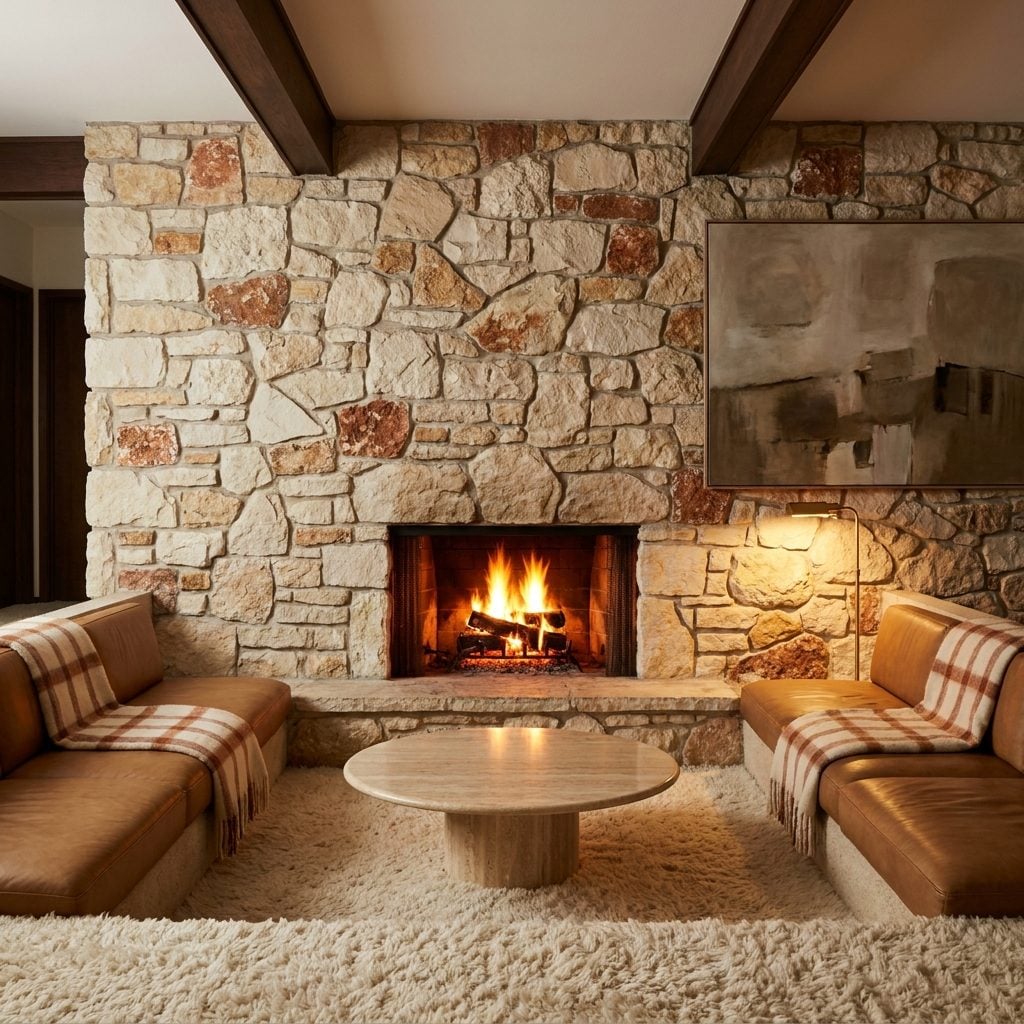
Standing in front of a fireplace, you see mantel. Sitting on a normal couch, you see mostly firebox and a slice of flame. Sinking three feet into the floor put the fire directly at eye level, and the whole room became a hearth.
This was the pit’s secret weapon. Architects figured out that dropping the seating turned the fireplace from a decorative feature into the reason the room existed. Every conversation happened facing the flame.
10. The Slate Floor That Turned Spilled Drinks Into a Non-Event
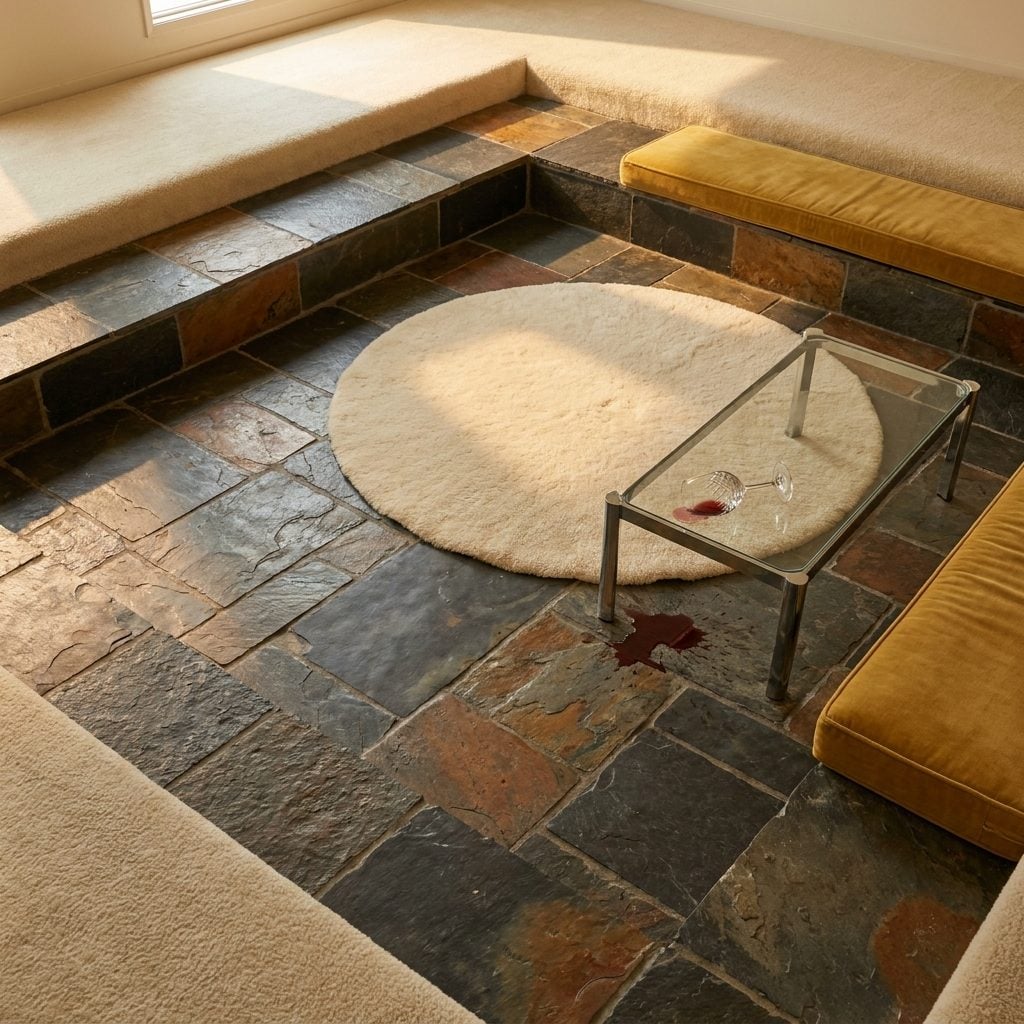
Not every pit was carpeted. The ones with slate or flagstone floors had a certain confidence to them — the confidence of a room designed by someone who assumed people would spill things.
Red wine. Coffee. Fondue drippings. The occasional bourbon. The slate absorbed the news, the grout maybe held onto it, and life went on.
9. The Way Guests Always Underestimated the Drop
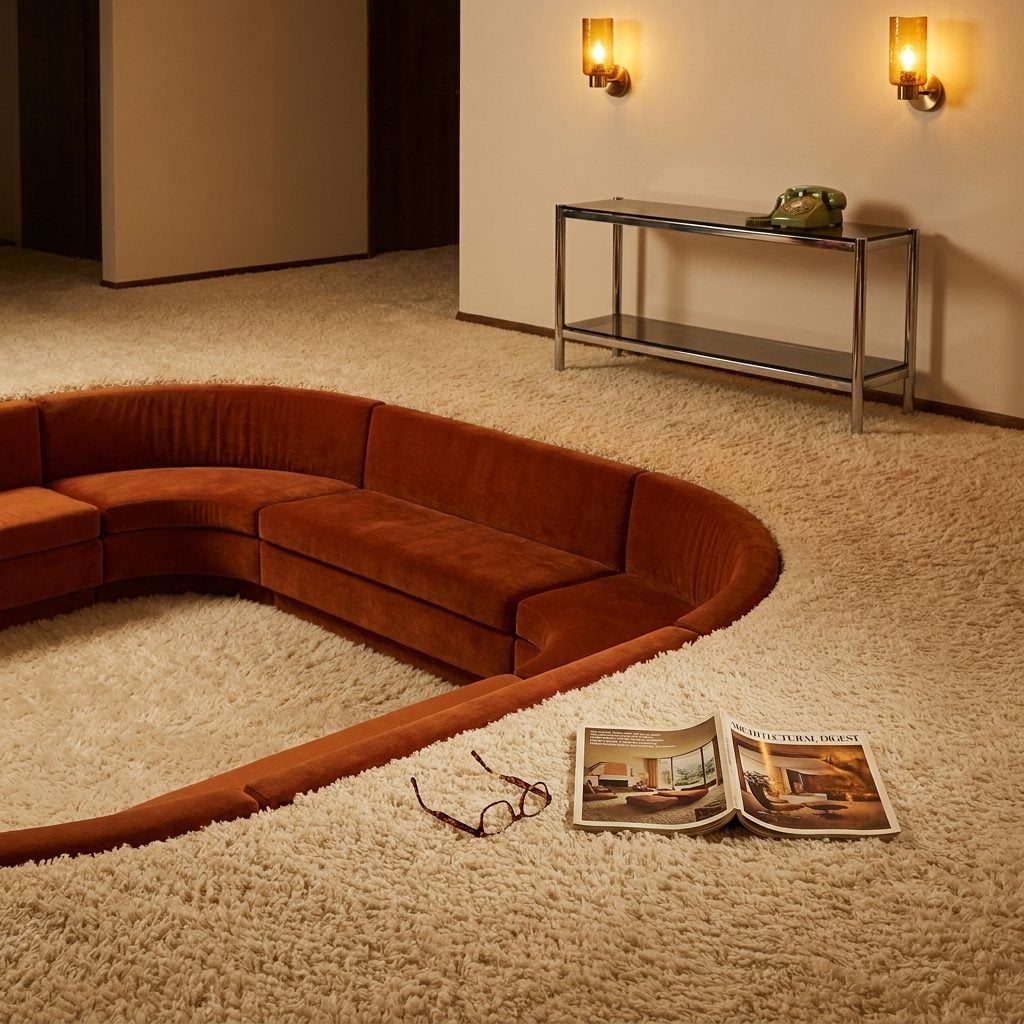
First-time visitors always did the same thing: they walked in, took in the room, kept walking, and then their front foot found air where floor should have been. There was a stagger, a small yelp, sometimes a full commitment to the fall.
Regulars learned to warn people at the door. “Watch the step.” Nobody ever watched the step.
8. The Built-In Speakers That Aimed Straight at Ear Level
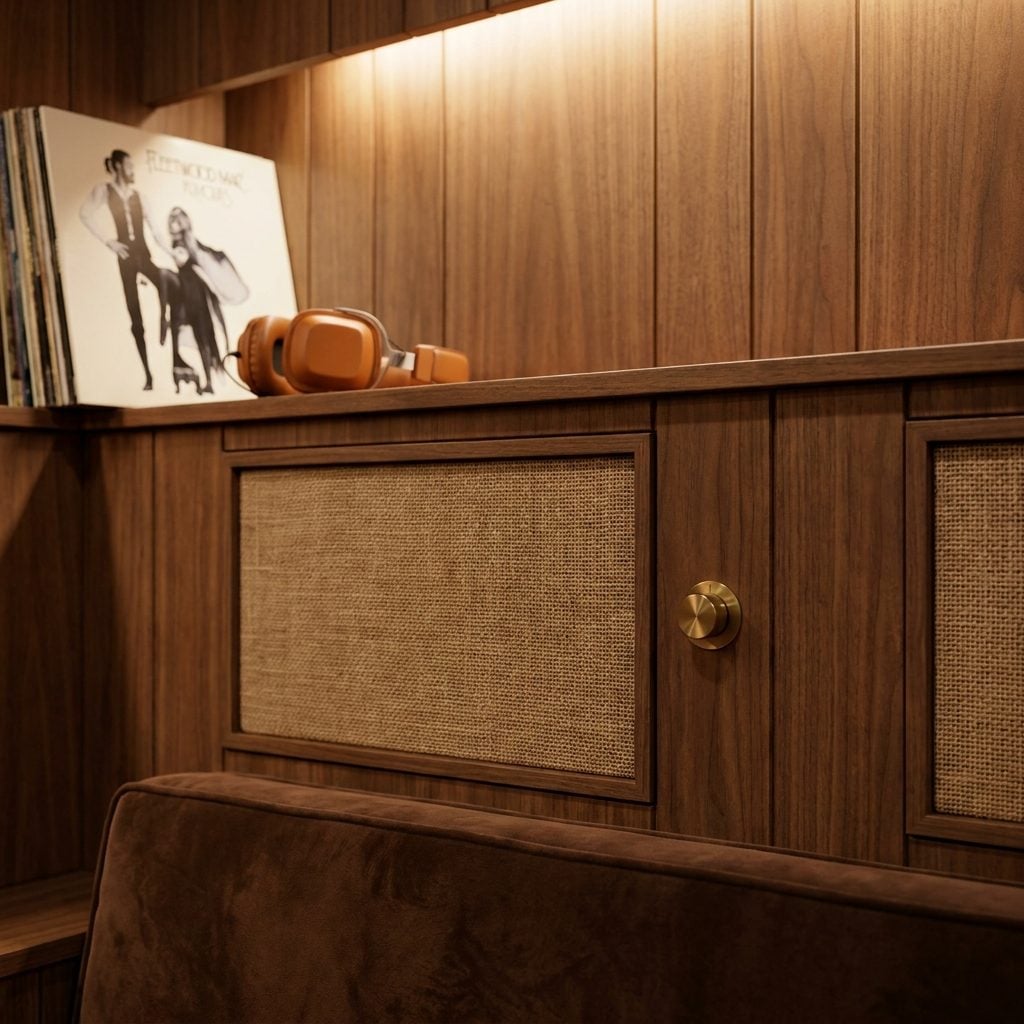
Sit three feet below the main floor and standard speakers point at your forehead. So builders put the speakers inside the pit walls, aimed exactly where your ears were going to be.
The effect was total immersion. A Doobie Brothers record played in a properly wired pit hit you like you’d walked into the band mid-solo. Audiophile design a decade before anyone had a word for it.
7. The Reason It Only Worked in Split-Level Houses
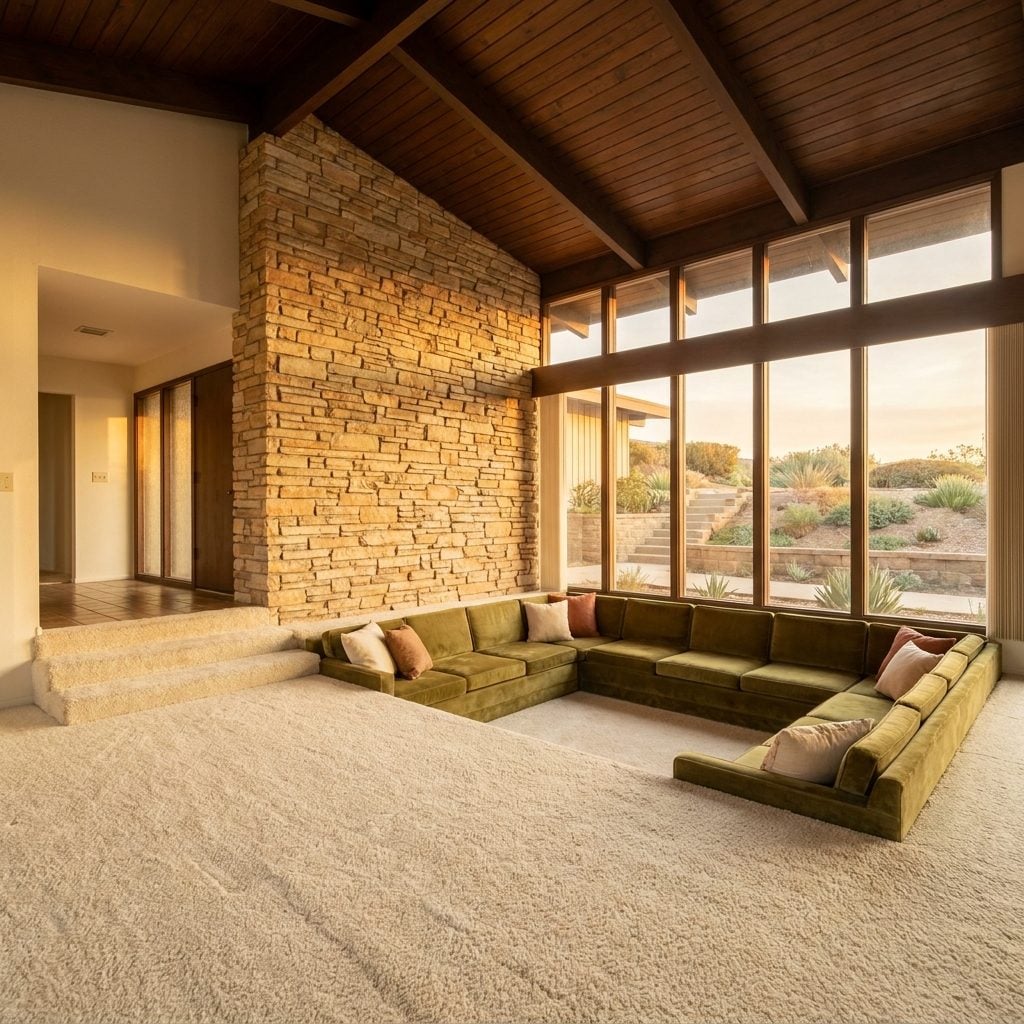
A conversation pit needed floor to sink into. In a ranch or a slab-on-grade house, dropping the floor three feet meant excavating dirt — so it never happened.
Split-level and tri-level houses already had floors at different heights, which made the pit almost free from a construction standpoint. Just another elevation change in a house that already celebrated elevation changes. Part of why so many pits ended up in cool basement rec rooms and lower living levels.
6. The Reason Everyone Started Filling Them In by 1985
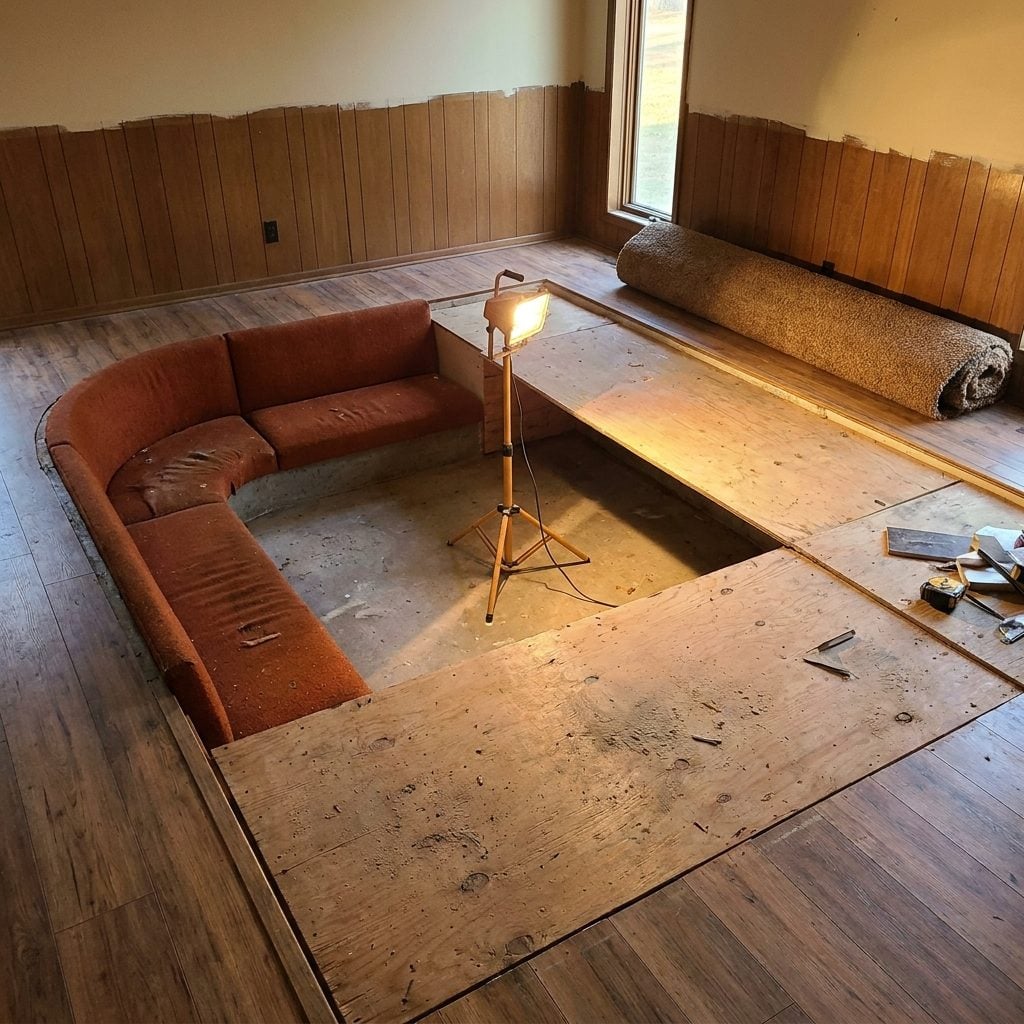
Toddlers happened.
That’s the honest answer. The generation that built pits had kids, those kids started walking, and the pit became an active hazard — a permanent trip zone with no gate, no railing, and no forgiveness for a wobbly two-year-old learning to run indoors.
Real estate agents started marking pits as negatives in listings by the early ’80s. Buyers wanted flexible open floor plans, and a hole in the living room was the opposite of flexible. Plywood went over the top, new carpet went over the plywood, and a whole generation of pits vanished under Berber.
Every pit that survived to 2020 is now worth twice what the whole house sold for in 1978.
5. The Way It Made a Room That Felt Like a Room You Went Down Into
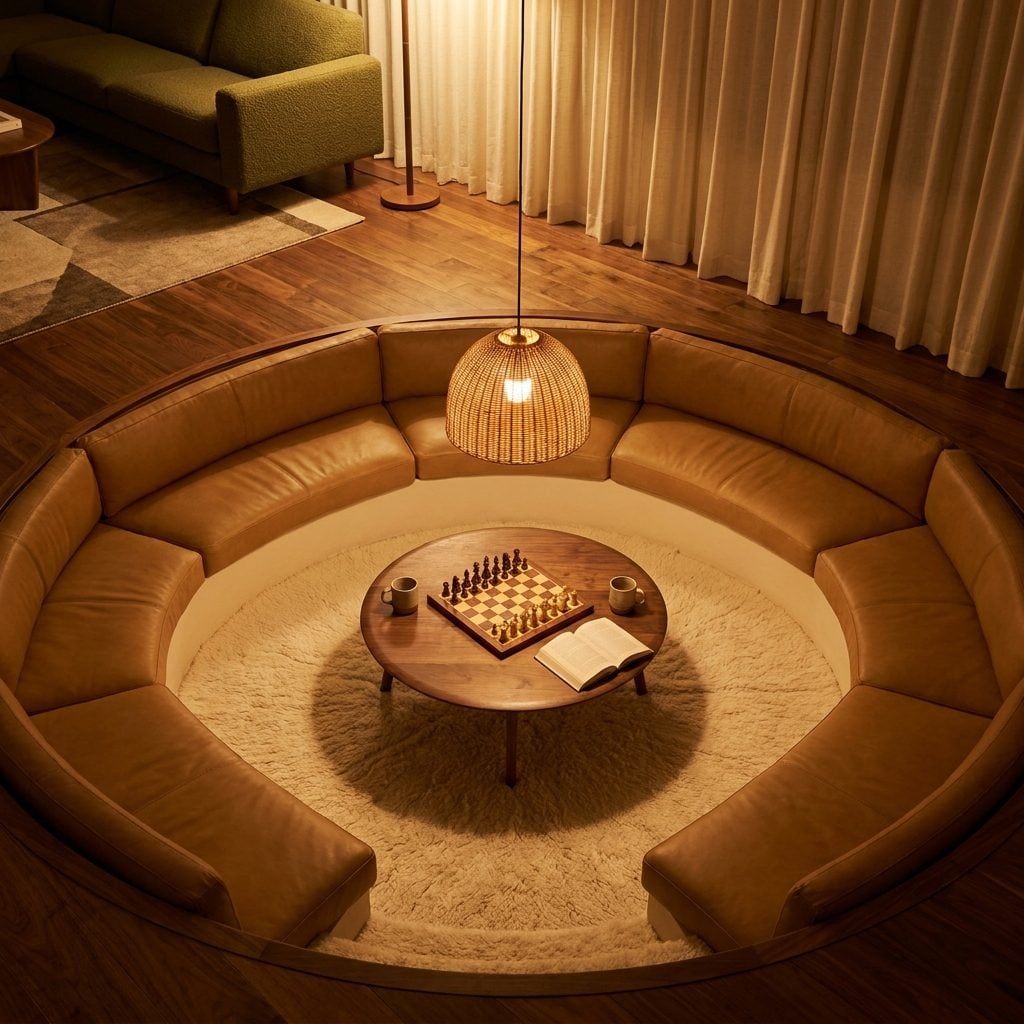
The pit was a room within a room. You went upstairs to a bedroom, you went outside to a yard, and you went down into the pit. That vertical motion made it feel like a destination rather than just another spot on the same floor plan.
Once you were in, you stayed a while. Getting out required standing up, climbing, deciding to be somewhere else — and most people didn’t want to decide. The pit was the one room in the house that made you commit.
4. The Macramé Plant Hanger That Dangled Directly Over the Seating
🔥 Would you like to save this?
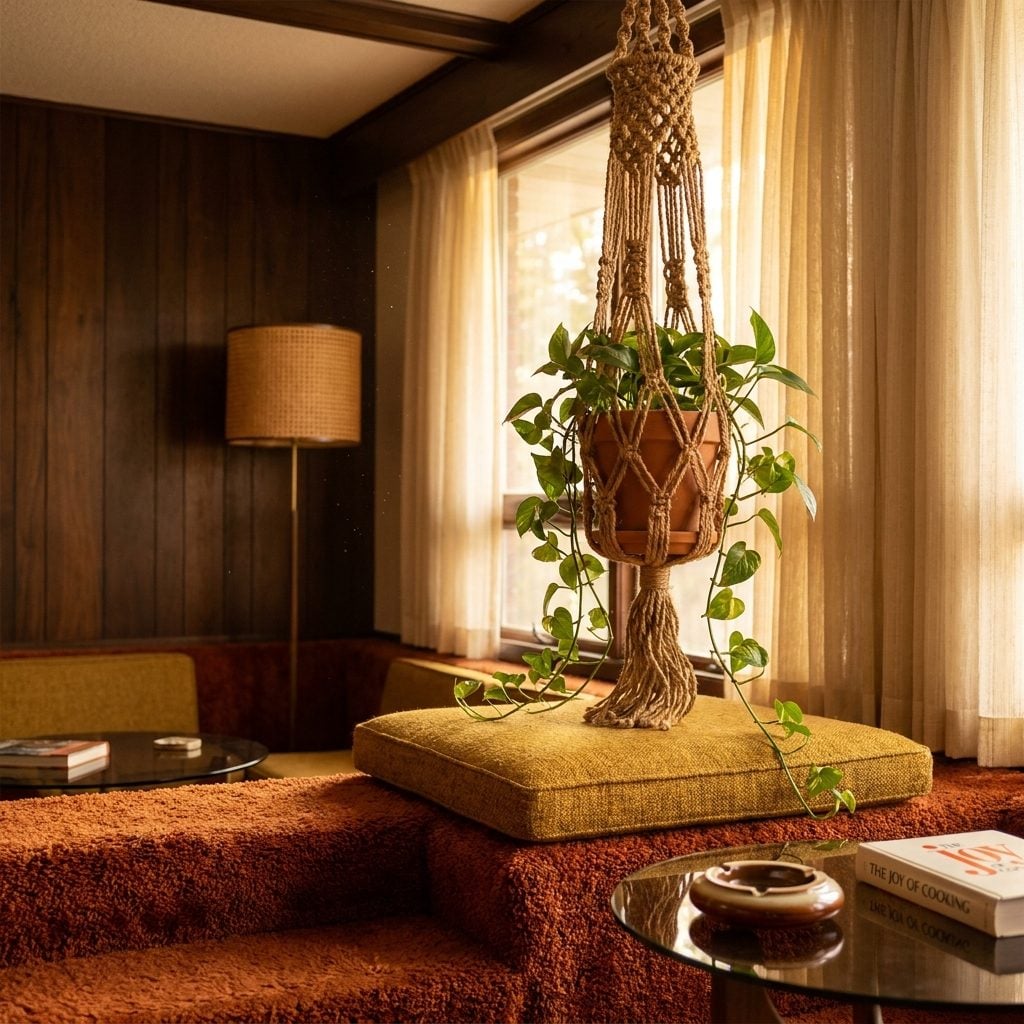
Somewhere along the way, someone decided the pit needed a plant. Then another. Then a whole hanging jungle suspended from the ceiling beams, dangling at exactly the height where the tallest person at the party would eventually stand up too fast and remember gravity the hard way.
The macramé itself was a whole craft economy — jute rope, wooden beads, that specific knot everyone’s aunt learned at a Tuesday night class down at the community center. The pothos or spider plant inside was almost beside the point. You were meant to admire the rope work, swaying gently every time someone flopped down onto the cushions below.
3. The Smoked Glass Coffee Table on a Chrome Base at the Center of It All
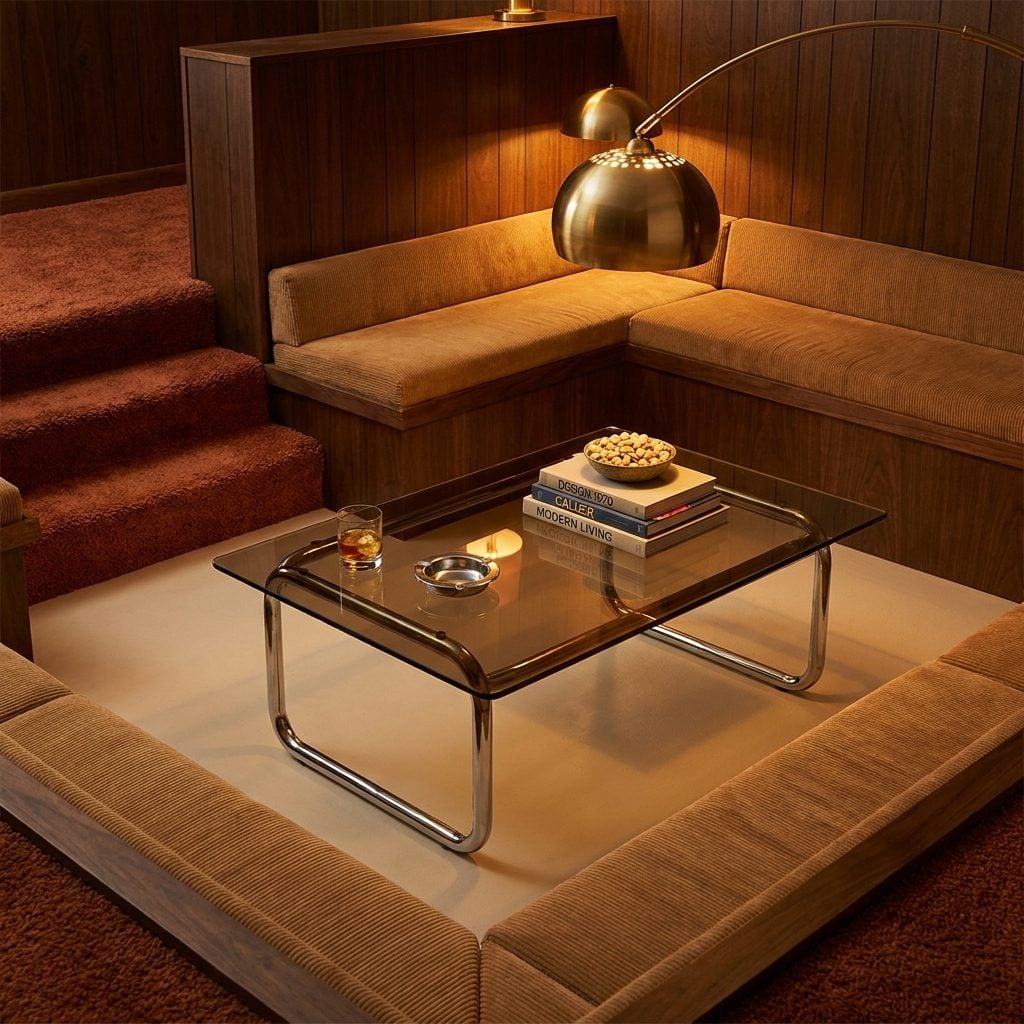
The pit needed a center of gravity, and the smoked glass coffee table was it. Rectangular. Low. Chrome tubular legs, tinted glass thick enough to survive whatever a Saturday night threw at it — drinks, hors d’oeuvres, elbows, the occasional foot when someone got too comfortable.
The smoke tint did something clever, hiding the fingerprints and water rings and crumbs that inevitably rolled into the seams between coasters. From above, everything on the table looked composed. From below, you could see the underside of the ashtray and whatever had been forgotten there since Tuesday.
You can spot the same silhouette turning up now in living rooms in the mid-century revival crowd, though the drinks on top tend to be sparkling water instead of scotch.
2. The Way the Pit Made the Rest of the Living Room Look Like a Hallway
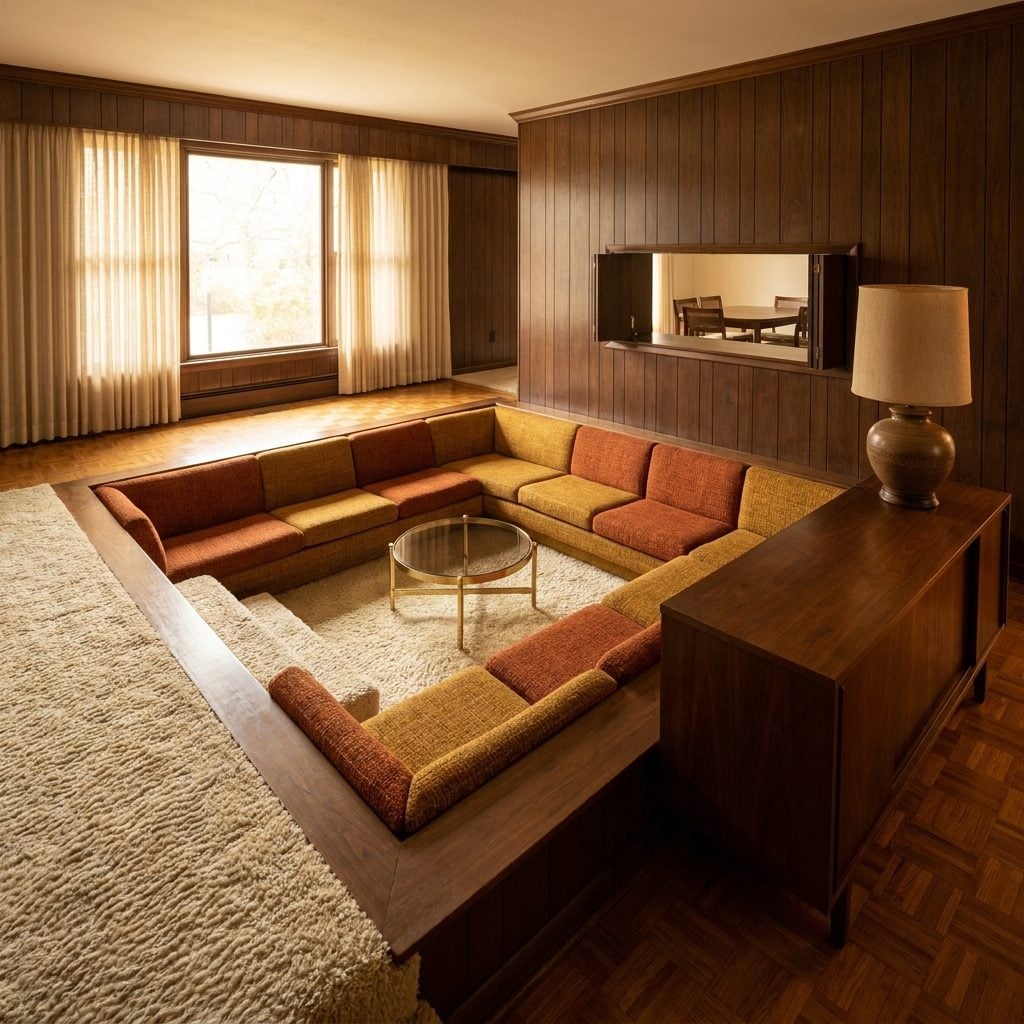
Nobody talks about this part. Once you built the pit, the rest of the living room lost its job — all the actual living happened down in the well, which meant the upper level around it turned into a glorified walkway. A strip of parquet between the front door and the sunken part where people actually existed.
Homeowners tried to compensate with a console table here, a floor lamp there, maybe a decent painting on the paneled wall. But the room had two zones now, and one of them was clearly the good zone. The other was where you took your coat off.
1. The Popcorn Ceiling That Absorbed Every Sound of the Party
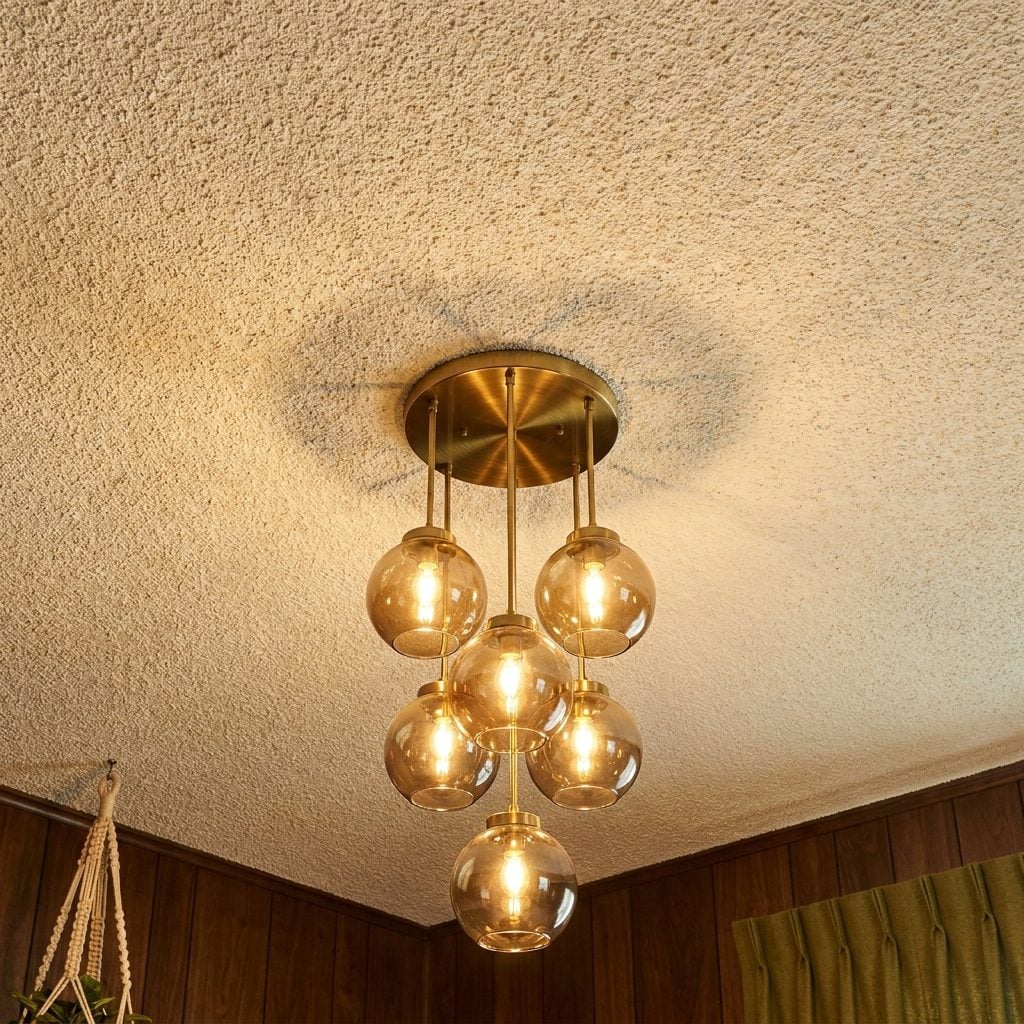
Look up. That’s where a lot of the pit’s magic actually lived, even if nobody thought about it at the time.
The popcorn ceiling was a workhorse. All that sprayed-on texture wasn’t just a style choice — it was doing acoustic labor, muffling the din of eight people talking at once and a Fleetwood Mac record spinning in the console stereo across the room. Without it, the pit would have echoed like a swimming pool at midnight.
People rip it out on sight now, usually during a before and after renovation reveal where the scraper takes center stage. But that ceiling was quietly making the whole social experiment possible.