🔥 Would you like to save this?
You hit a certain age and a mental checklist kicked in. A car in the driveway. A refrigerator humming in the kitchen. A television pulling everybody toward the same room after dinner. In the 1950s, turning 30 without some of these things could feel a little like arriving at adulthood with half the furniture missing.
These weren’t simply purchases. They were visible evidence that the lean starting-out years were giving way to something more settled: matching furniture instead of castoffs, appliances that gave hours back, dishes reserved for company and a yard equipped for Saturday afternoon.
In order to come up with the very specific design ideas, we create most designs with the assistance of state-of-the-art AI interior design software. Also, assume links that take you off the site are affiliate links such as links to Amazon. this means we may earn a commission if you buy something.
Some were necessities, some were aspirations, and a few were gloriously unnecessary. Together they formed the household résumé of postwar America—the objects that made a young couple look around and realize the place was finally beginning to feel like theirs.
39. The Television Set the Whole Family Gathered Around
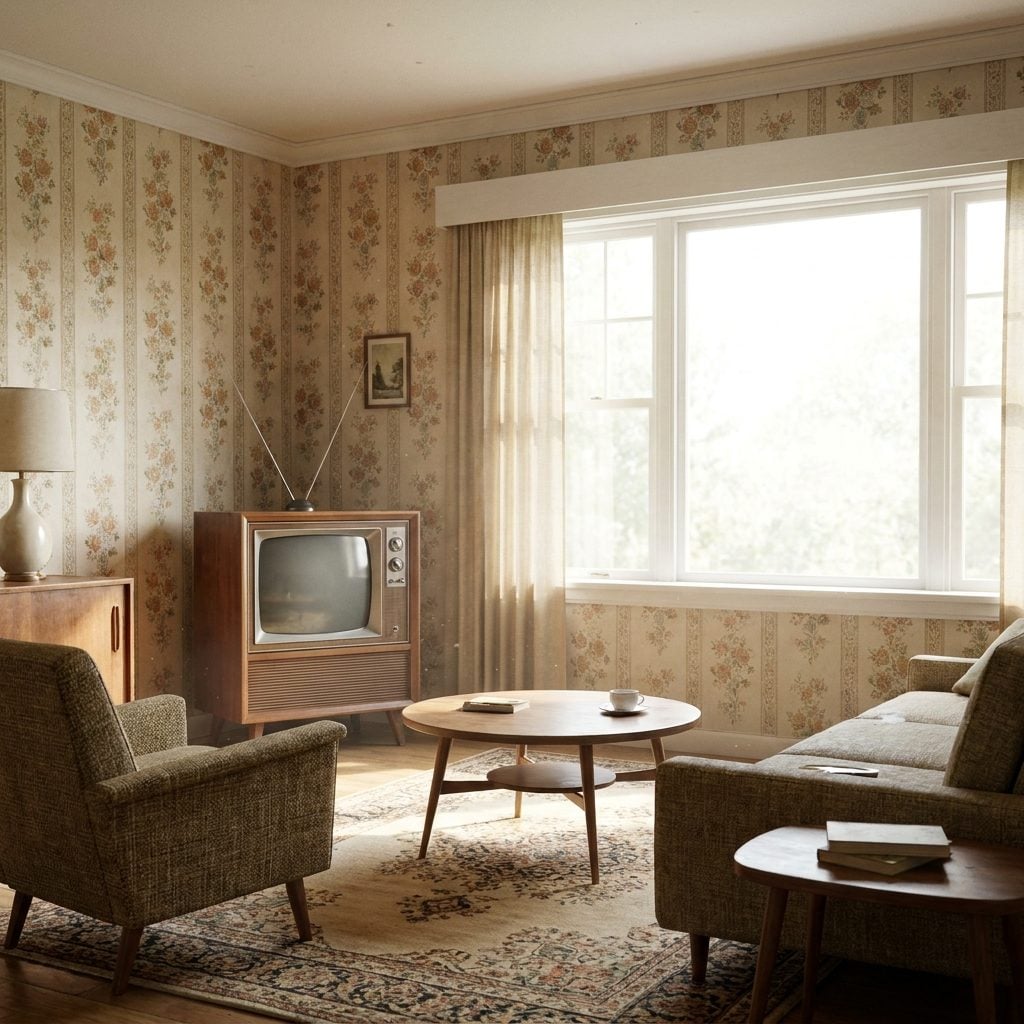
You could hear it warming up from the hallway, that faint electric hum before the picture snapped into focus. The console TV wasn’t a gadget. It was furniture, a serious piece of it, big enough to double as a display surface for the good lamp and the framed wedding photo.
Once one arrived, the living room acquired a center of gravity. After dinner everyone faced the same direction. Dad worked the dial standing up because there was no other way to change the channel, and the kids sat close enough to get told to move back.
38. The Wooden Console Radio That Held Court Before the TV Did
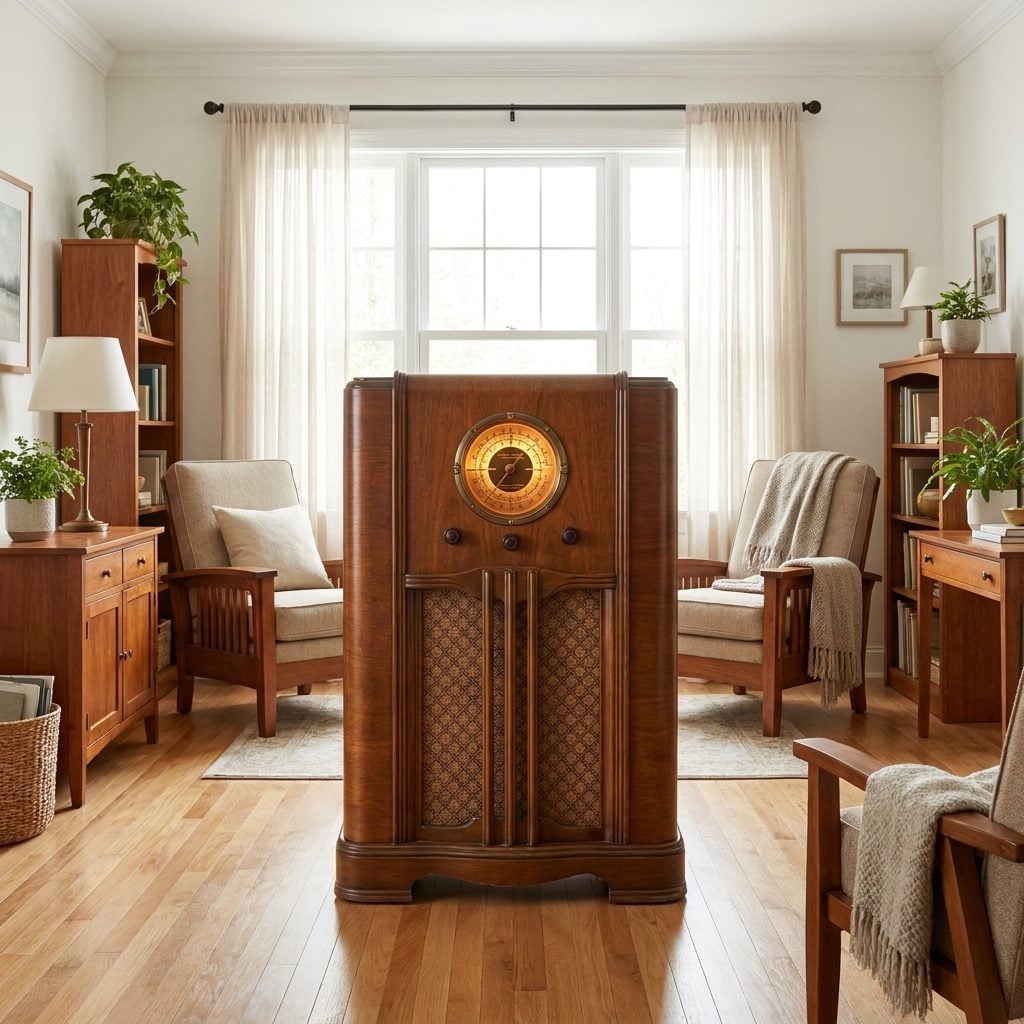
Before television stole the good spot in the living room, radio owned it. Picture a wooden cabinet nearly the size of a small dresser, walnut veneer buffed to a shine, a glowing dial coming alive a beat before the sound. Tubes warmed, hot dust stirred, and suddenly the room had company.
Furniture pointed toward it because listening was still a group activity. Kids stretched out on the rug for evening serials, Dad claimed his chair for the ballgame, and Mom followed a program from the next room while folding laundry. Even after television arrived, plenty of console radios simply migrated to the den or bedroom and kept right on playing.
37. The Hi-Fi Console That Turned One Wall Into a Concert Hall
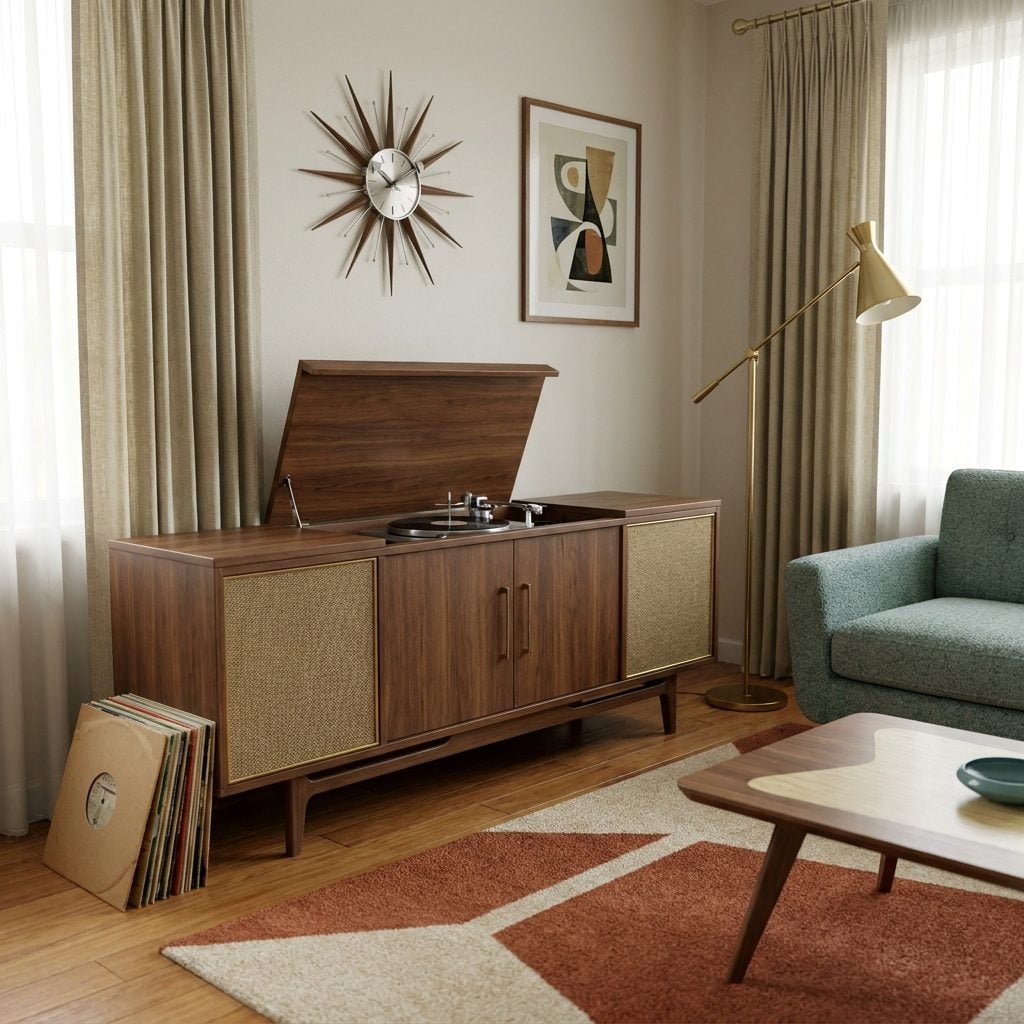
You didn’t just hear the music. You watched somebody lower the needle and hold still until the crackle turned into sound. The hi-fi console was furniture first and machine second—a long slab of walnut that could swallow half a wall and make a stack of LPs look like a cultural achievement.
By the late 1950s, owning one meant music no longer had to arrive on somebody else’s broadcast schedule. These were your records, played your way, as loudly as the neighbors would tolerate. People stacked albums like trophies and buffed speaker grilles with the same seriousness somebody else reserved for polishing a fender.
There was ceremony built into the machine. Blow the dust off the vinyl, line up the tonearm, sit down before the first note. Getting up to change the record was enough of a production that nobody wanted to waste the opening bars.
36. The Telephone With Its Own Little Table
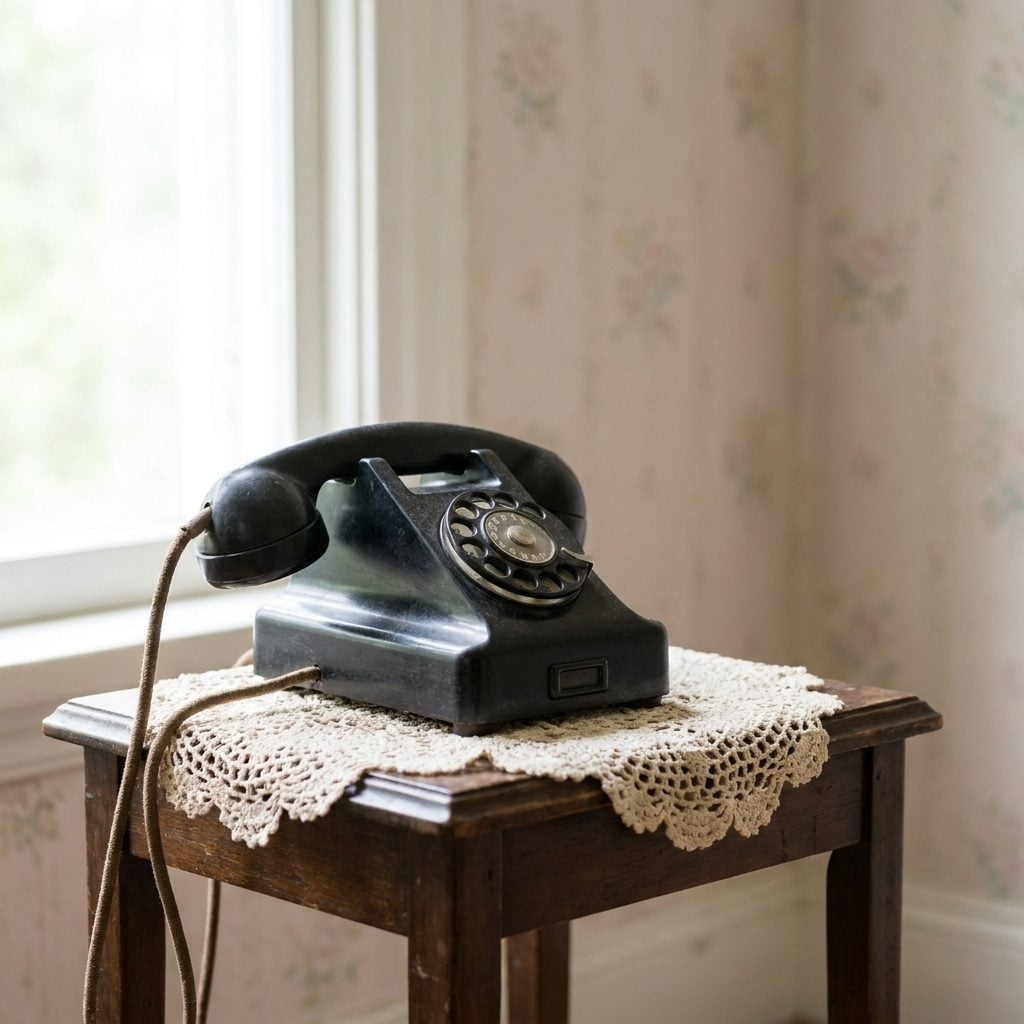
Heavy as a brick, black as a bowling ball and tethered to one spot in the house by a cord that only stretched so far. The rotary telephone got its own little table, sometimes its own little chair, tucked into a hallway or the corner of the living room.
You dialed with your finger and waited for the wheel to spin back. A few numbers you knew by heart; the rest you looked up. And because the phone lived in one place, so did you when you used it. Privacy meant stretching the cord as far as physics allowed and hoping everybody else suddenly developed manners.
35. The Family Automobile Parked Proudly in the Driveway
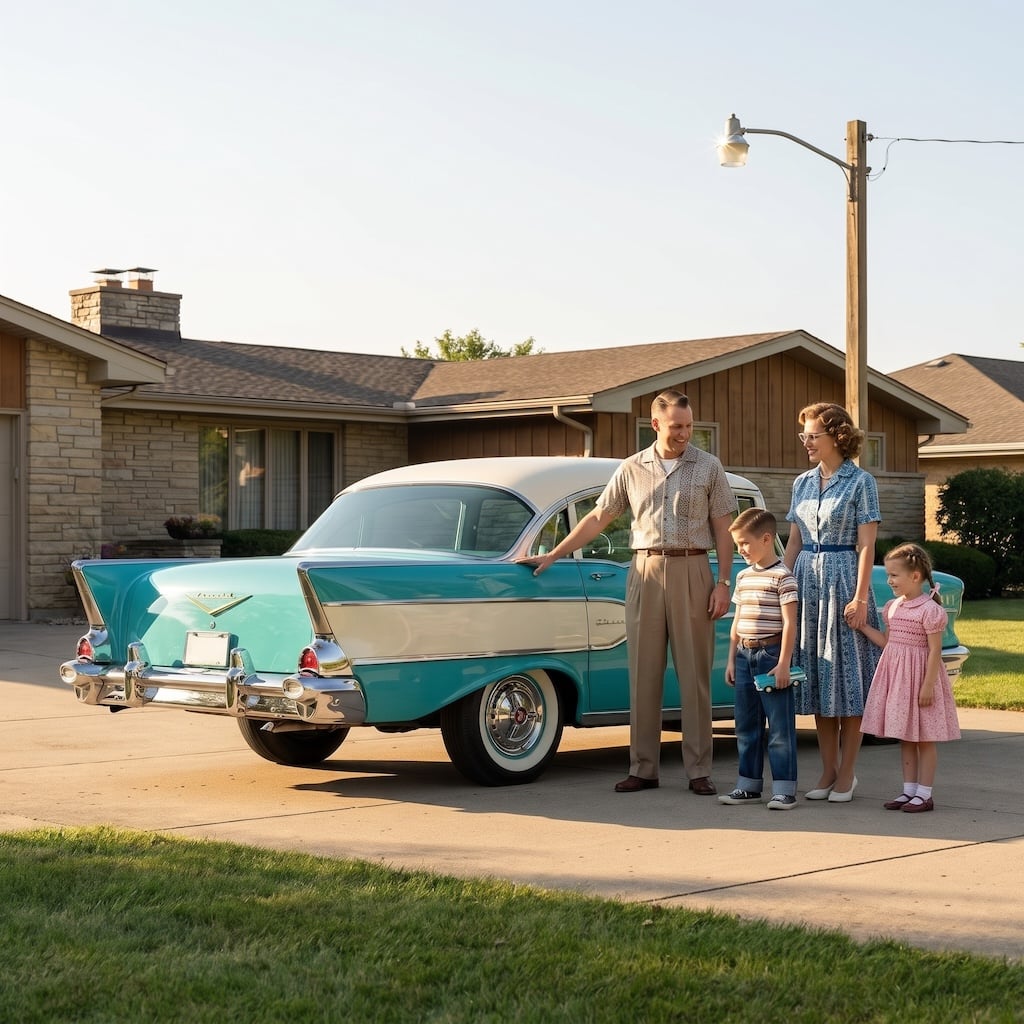
The car said plenty before anybody opened the front door. Chrome caught the streetlight, two-tone paint made the driveway brighter, and the body was long enough that parking felt vaguely nautical. A young couple with a good sedan out front had crossed a line the whole neighborhood understood.
Sunday washing became its own ritual: bucket, chamois, garden hose and a slow walk around the fenders while the neighbor pretended not to notice. The family car was transportation, freedom and calling card rolled into one remarkably shiny object.
34. The Modern Refrigerator That Hummed in the Corner
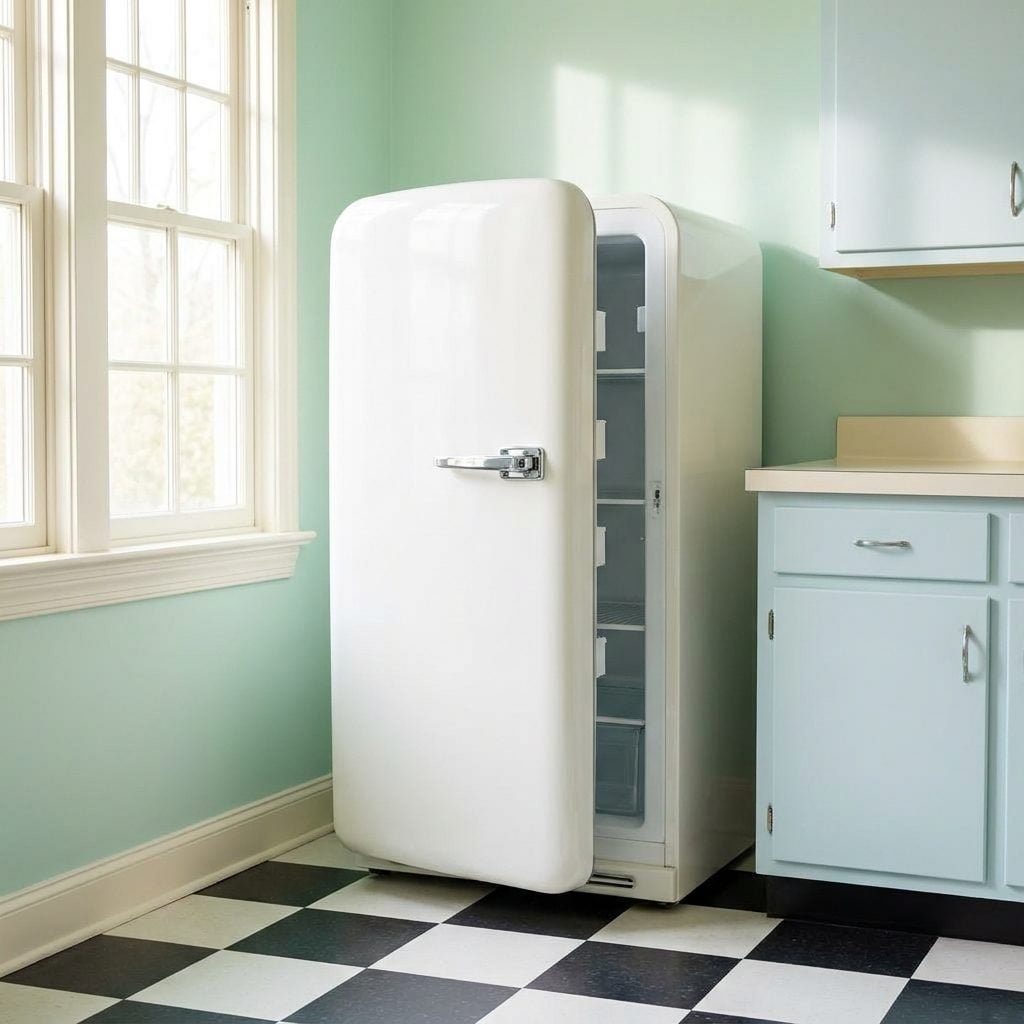
Round-shouldered, white as a wedding cake and heavy enough that it rarely moved after the deliverymen wrestled it into place. By the 1950s the electric refrigerator was already established in millions of American kitchens, but a newer, roomier model still looked like progress standing upright.
It stretched the time between grocery trips, made leftovers less of a gamble and gave frozen food a permanent foothold. That little freezer compartment up top, usually wearing a crust of frost around the edges, was where the ice cream lived and the ice trays fought for territory.
33. The Kitchen Range Where Every Meal Started
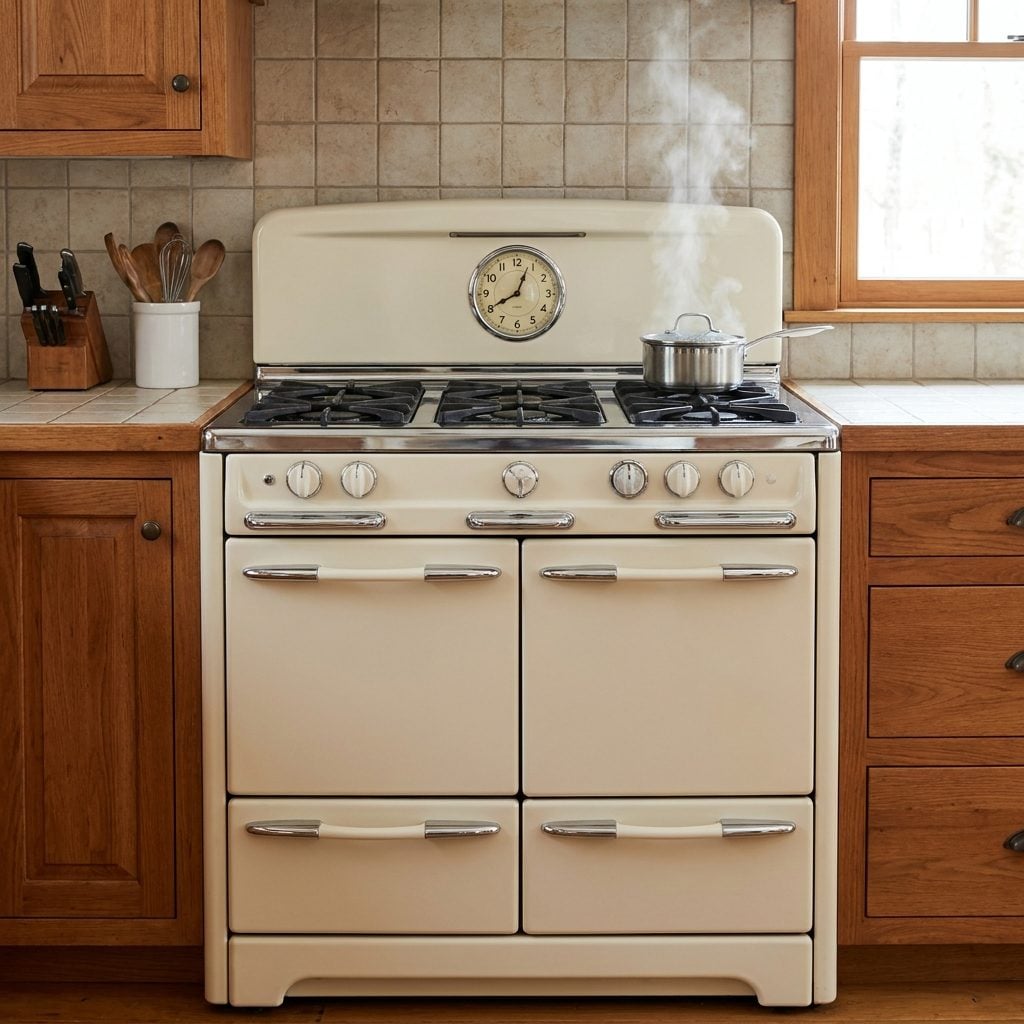
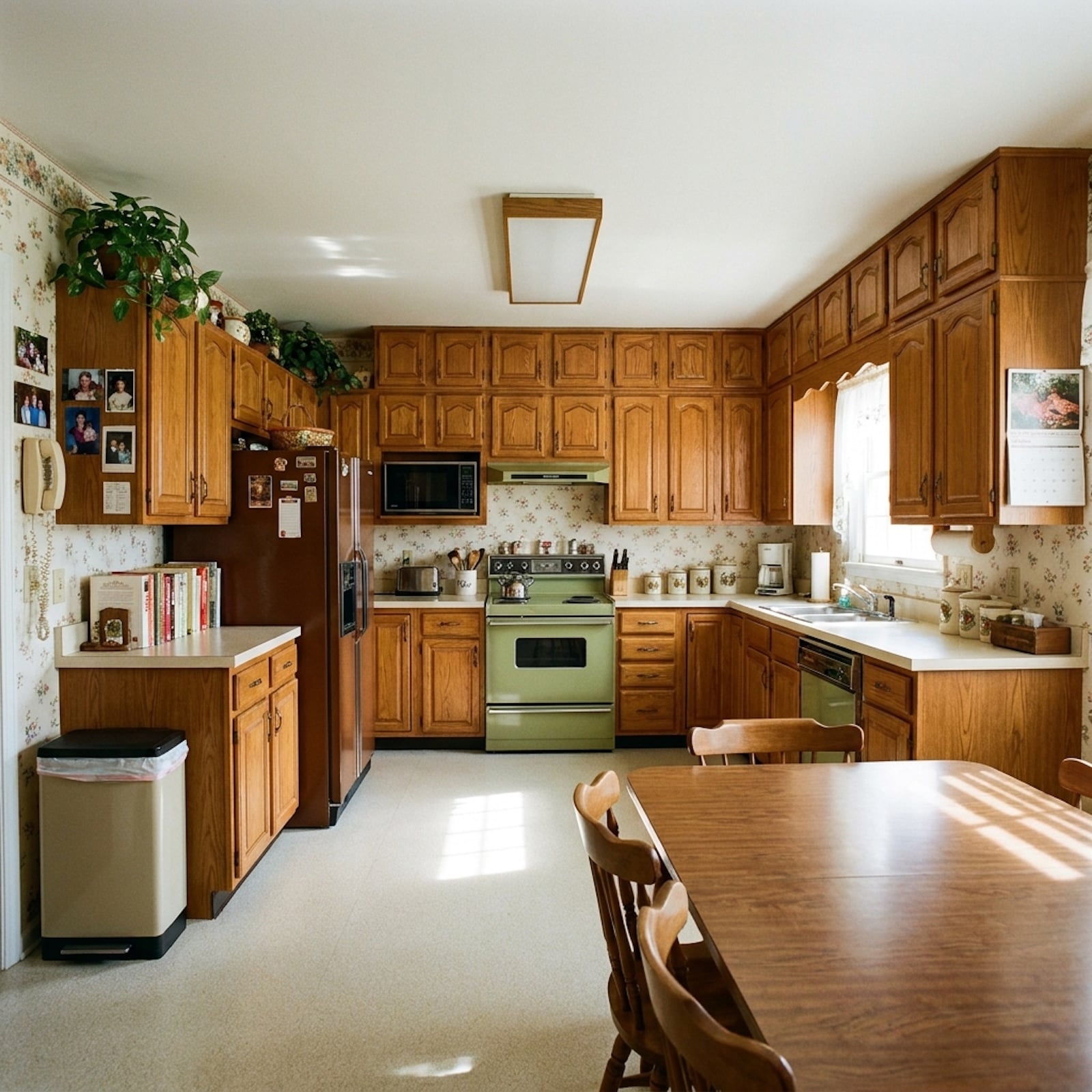
Big, boxy and built like it planned to outlive the house. The freestanding range anchored the kitchen with four burners, a heavy oven door and the little clock-and-timer panel across the back that somehow always ran a few minutes fast.
Sunday roasts began here. So did weeknight potatoes and the coffee percolating on a back burner before sunrise. A decent range wasn’t glamorous for long because it went straight to work, but that was part of the appeal. It turned a kitchen from a room with cabinets into a room that could actually feed people.
32. The Automatic Washing Machine That Gave Wash Day Back
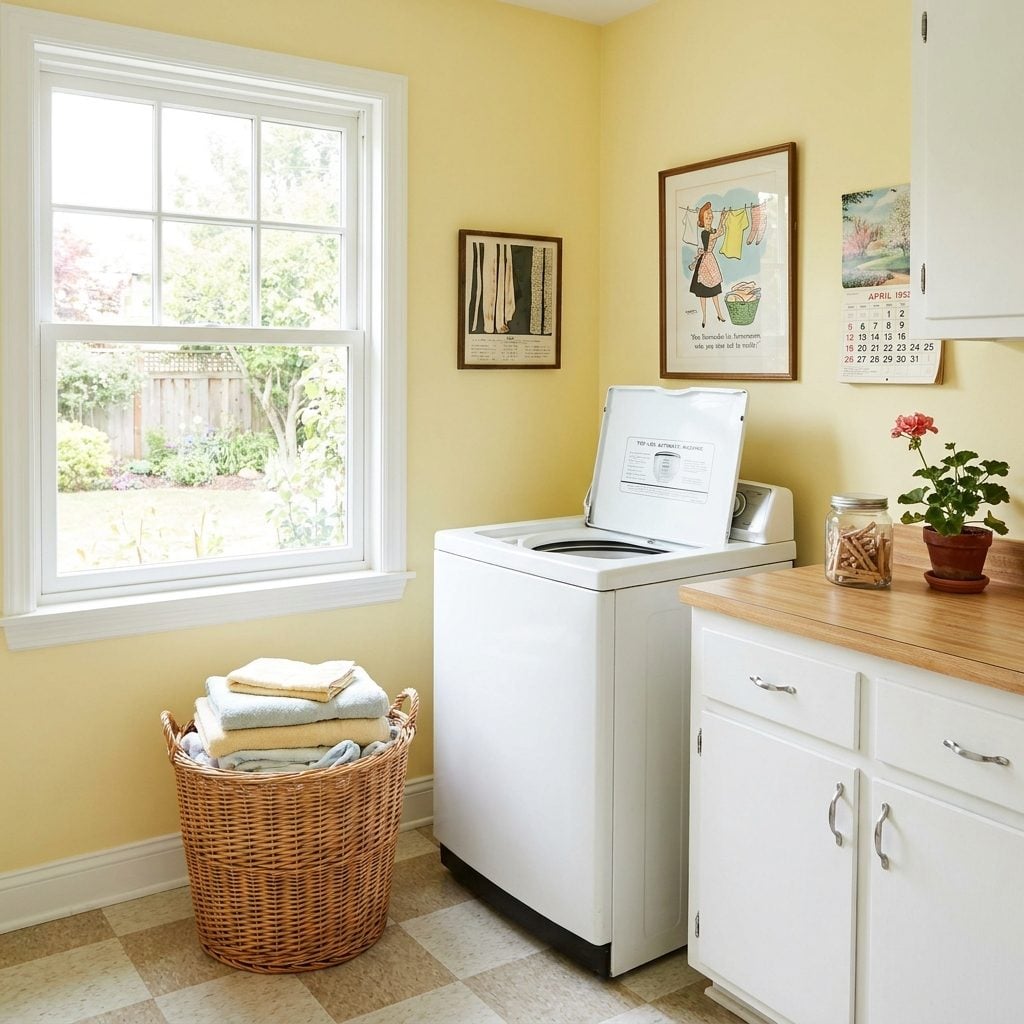
Wash day used to eat an entire day. Hot water, tubs, wringers, lifting, rinsing and hands that knew exactly how much labor was hiding inside a clean sheet. The automatic washer compressed a great deal of that grinding ritual into a dial you turned and a machine you could leave running.
It usually lived in the basement or utility room beside a laundry basket and a box of detergent. For a young household, the real luxury wasn’t the porcelain enamel or chrome trim. It was time returned to the person who had previously spent hours doing the work by hand.
31. The Iron and Ironing Board That Never Stayed Put Away Long
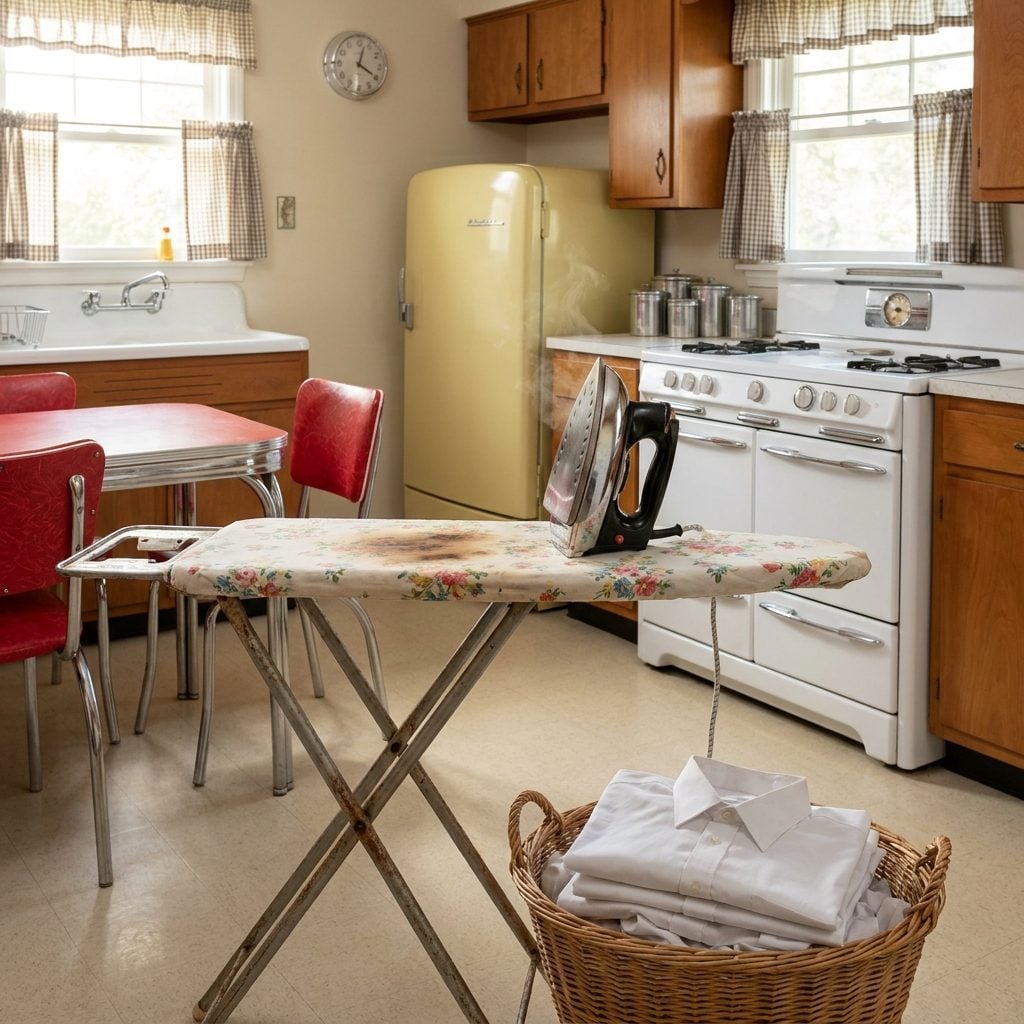
The board went up and sometimes seemed to stay up until the basket was empty. The iron was a serious piece of metal—chrome-plated, heavy in the hand, with a fabric cord that eventually frayed near the plug and a temperature dial you learned to trust or regret.
A decent board needed legs that actually locked, enough padding to keep the mesh pattern out of a good shirt and a cover you finally replaced when the scorch marks became embarrassing. Wash-and-wear fabrics were beginning to promise liberation, but there were still collars, cuffs, dresses, table linens and work shirts waiting in line.
The smell of hot cotton and spray starch was part of the household soundtrack. Monday morning began a day earlier for the person standing behind the iron.
30. The Vacuum Cleaner With the Long Cord and Attachments
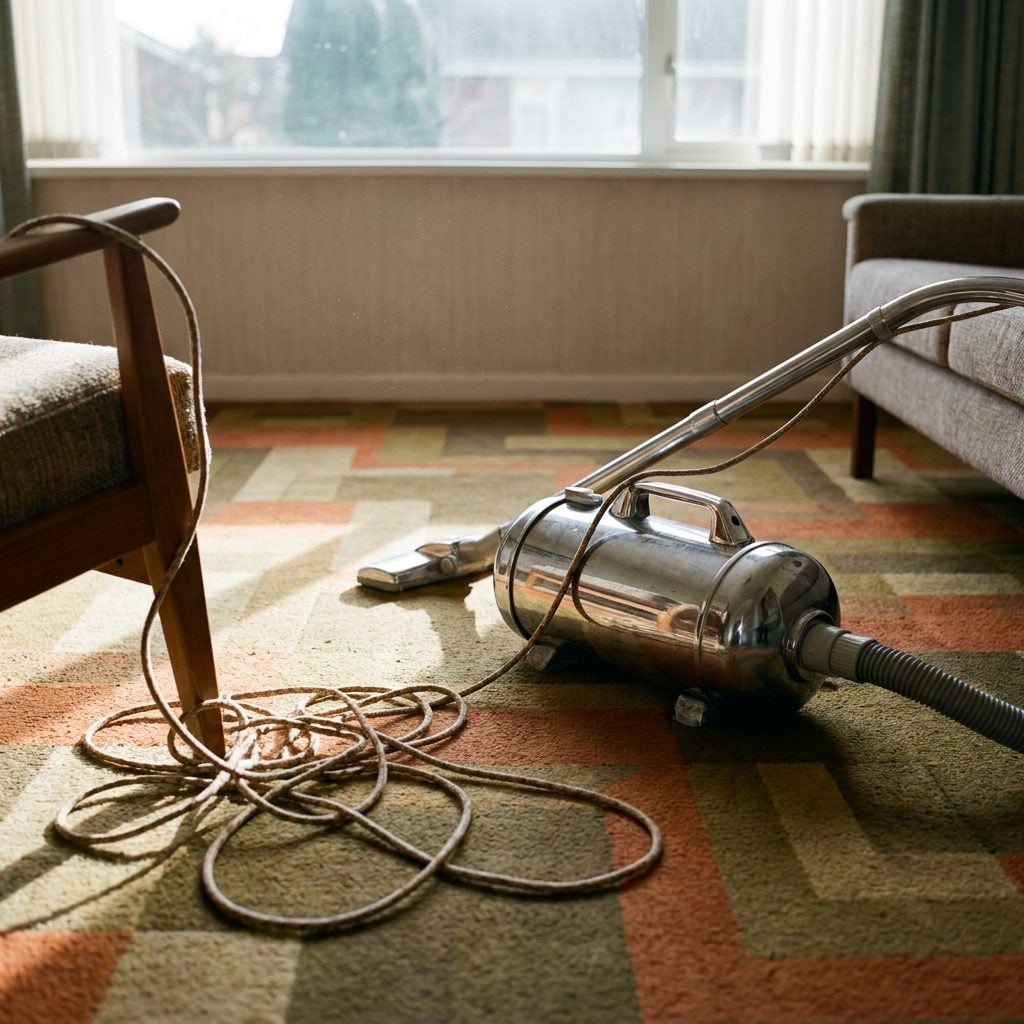
It weighed a ton, growled like a small engine and dragged a cord you were forever unplugging and moving to the next outlet. The vacuum cleaner was the workhorse of a house increasingly filled with wall-to-wall carpet, upholstered furniture and expectations about what “clean” ought to look like.
The attachments were half the fun. Crevice tool. Upholstery brush. That round dusting head whose exact mission remained mysterious in many households. A weekly going-over left the rugs striped, the furniture respectable and the whole place smelling faintly of warm dust bag. Homey, in its own way.
29. The Electric Percolator That Announced Morning Before Anyone Was Awake
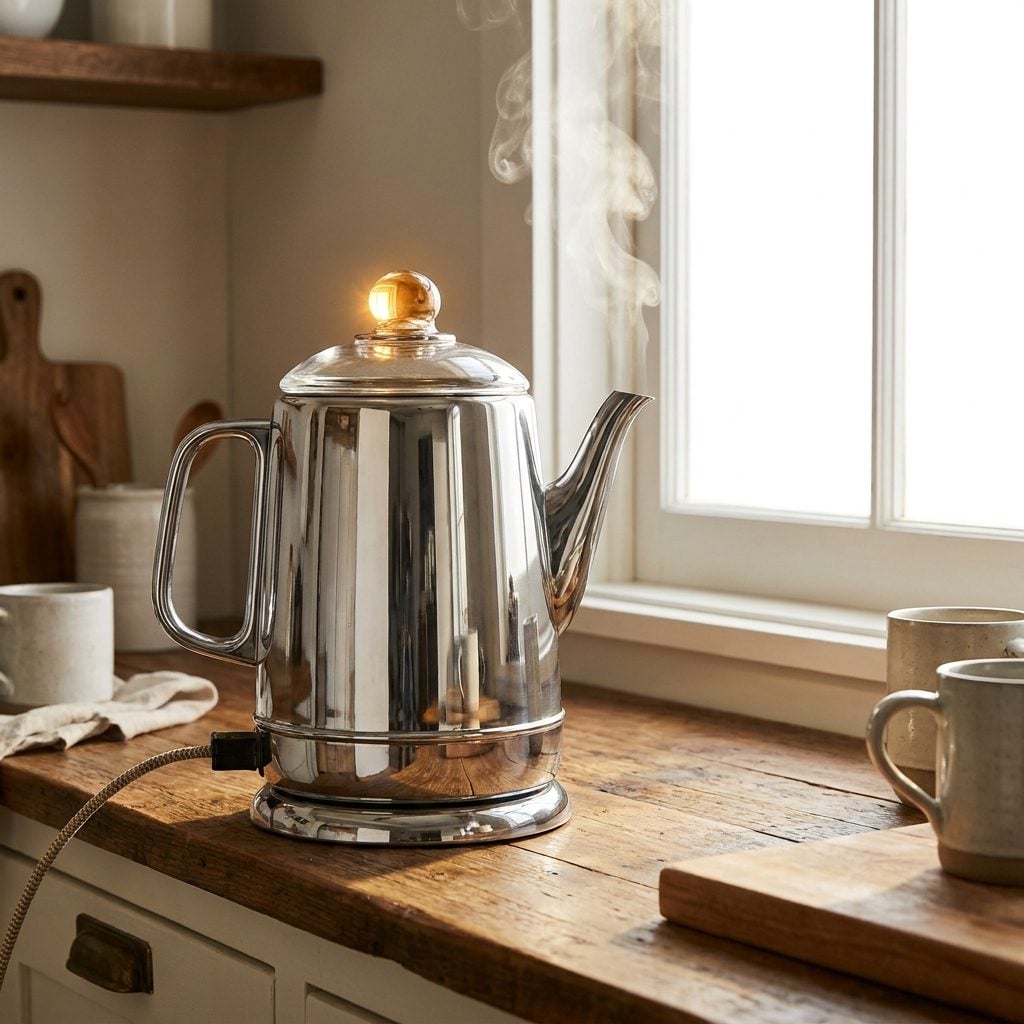
The sound came first. That slow gurgling from the counter, then the quicker sputter as the pot got going, followed by coffee smell rolling down the hall. Who needed an alarm clock once the percolator had begun broadcasting?
Chrome or aluminum, often from Farberware or Sunbeam, with a little glass knob in the lid where you could watch the coffee jump. Plug it in, walk away, come back to breakfast. The coffee might be strong, bitter and increasingly formidable after an hour on the warmer, but nobody could accuse it of lacking commitment.
28. The Chrome Toaster So Shiny You Checked Your Hair In It
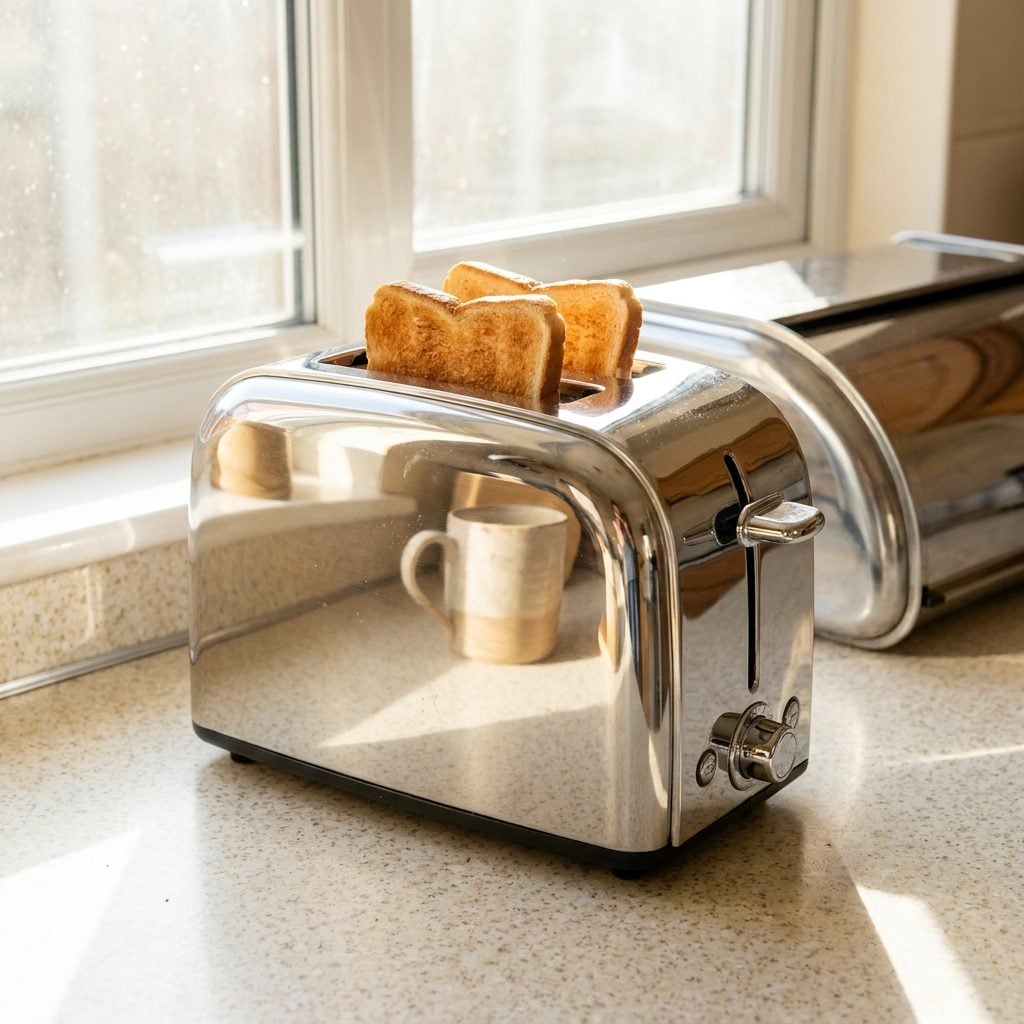
It caught the morning light like a bumper. Sunbeam’s gleaming Radiant Control models sat at the end of the counter polished almost to a mirror, and you really could catch your reflection in the side—warped and grinning while the coffee brewed.
The clever part was what you didn’t have to do. Drop the bread in and the mechanism lowered it automatically as the toaster heated, then raised it again when it was done. No spring-loaded pop was required. People left these machines out because chrome like this wasn’t meant to hide behind a cupboard door.
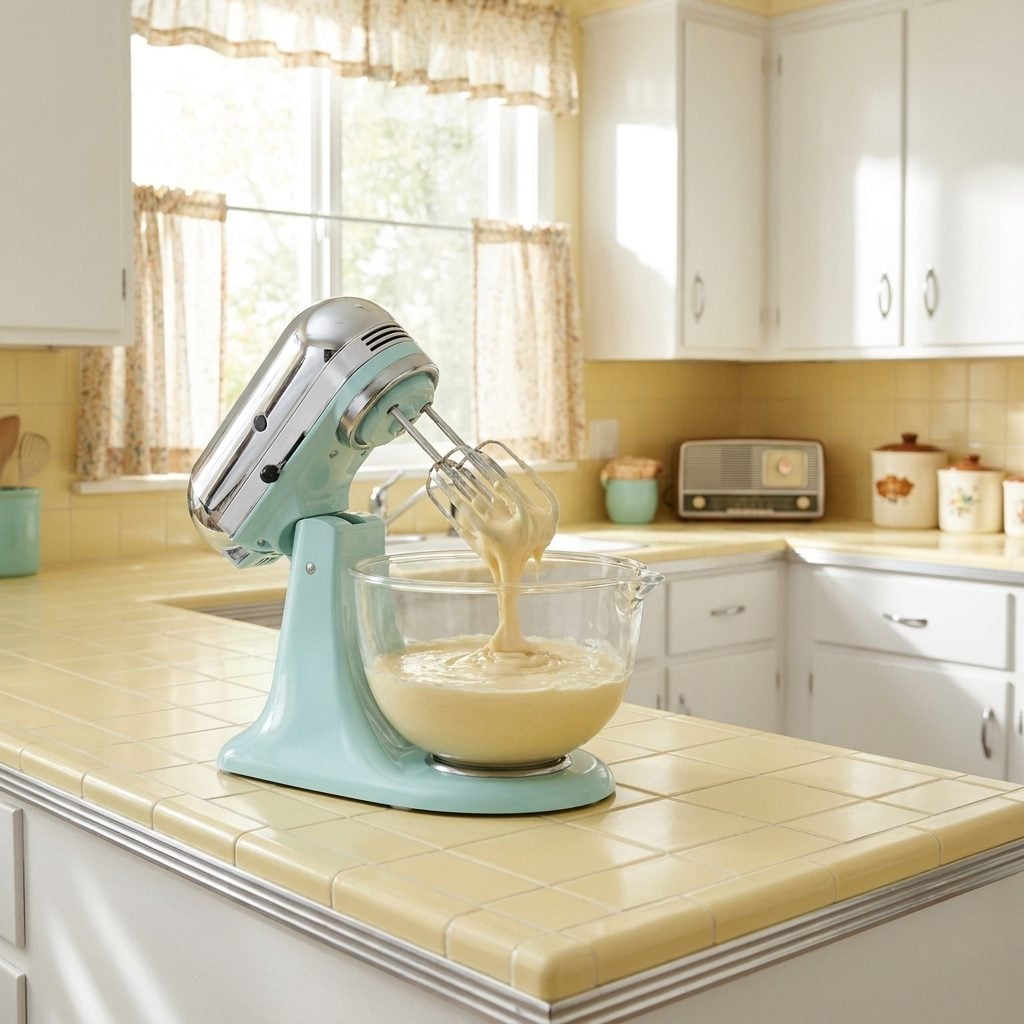
27. The Stand Mixer That Retired the Sore Arm and Wooden Spoon
🔥 Would you like to save this?
It sat on the counter like a small piece of furniture, heavy enough that moving it every morning would have defeated the point. The bowl locked into place, the motor shuddered awake and egg whites became peaks without anybody developing a cramp halfway through.
A cake had once meant prolonged beating by hand. The Sunbeam Mixmaster changed the arithmetic. Baking for company could still consume an afternoon, but at least your shoulder no longer had to personally supply the horsepower.
26. The Pressure Cooker That Made a Cheap Roast Move Faster
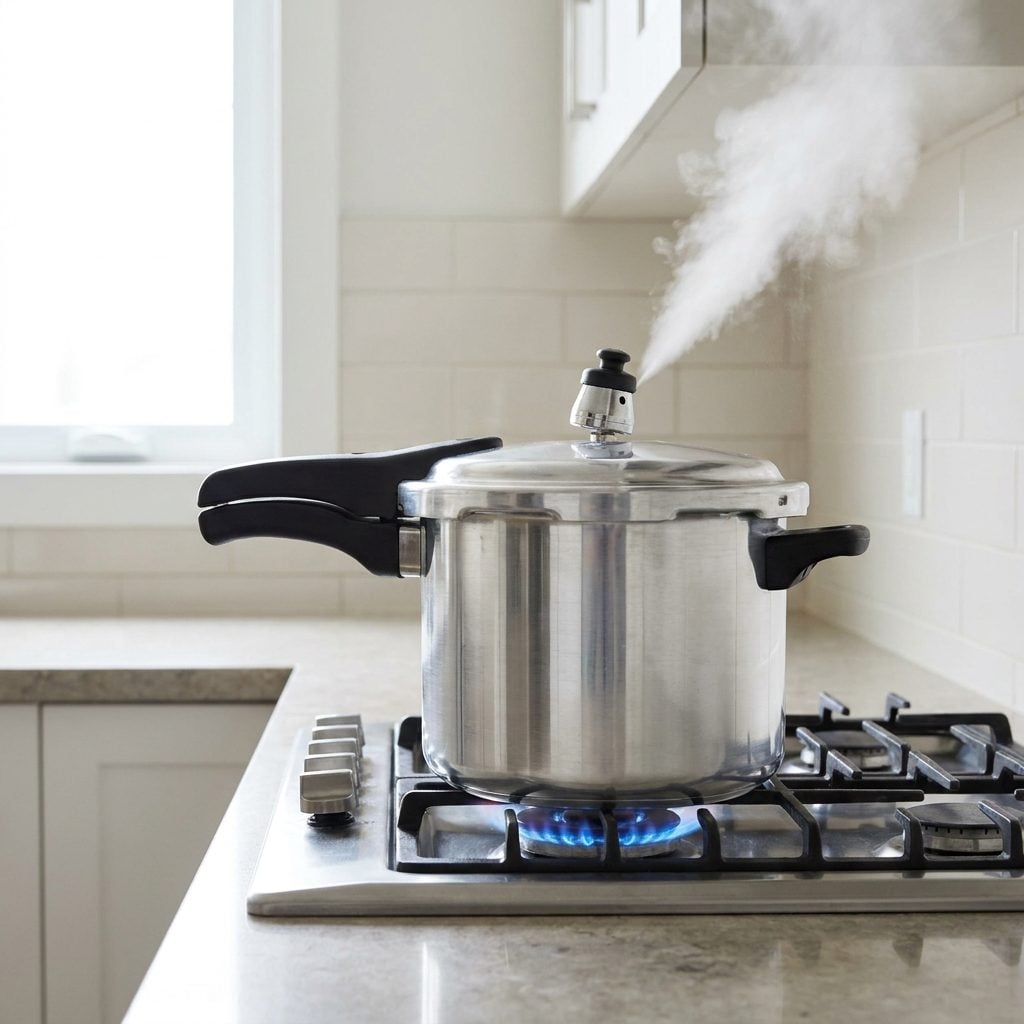
You could hear it before you could smell it. That rhythmic hiss and rock of the little weight on top accelerated as the pressure climbed, a sound that meant supper was getting tender considerably faster than conventional cooking allowed.
For a household watching the grocery budget, that mattered. Tougher cuts of meat softened, beans cooked faster and a Tuesday supper could acquire some of Sunday dinner’s authority. Pressure cookers also inspired a healthy amount of caution. Every family seemed to know somebody who had opened one too soon and introduced dinner to the ceiling.
25. The Electric Waffle Iron That Made Saturday Feel Official
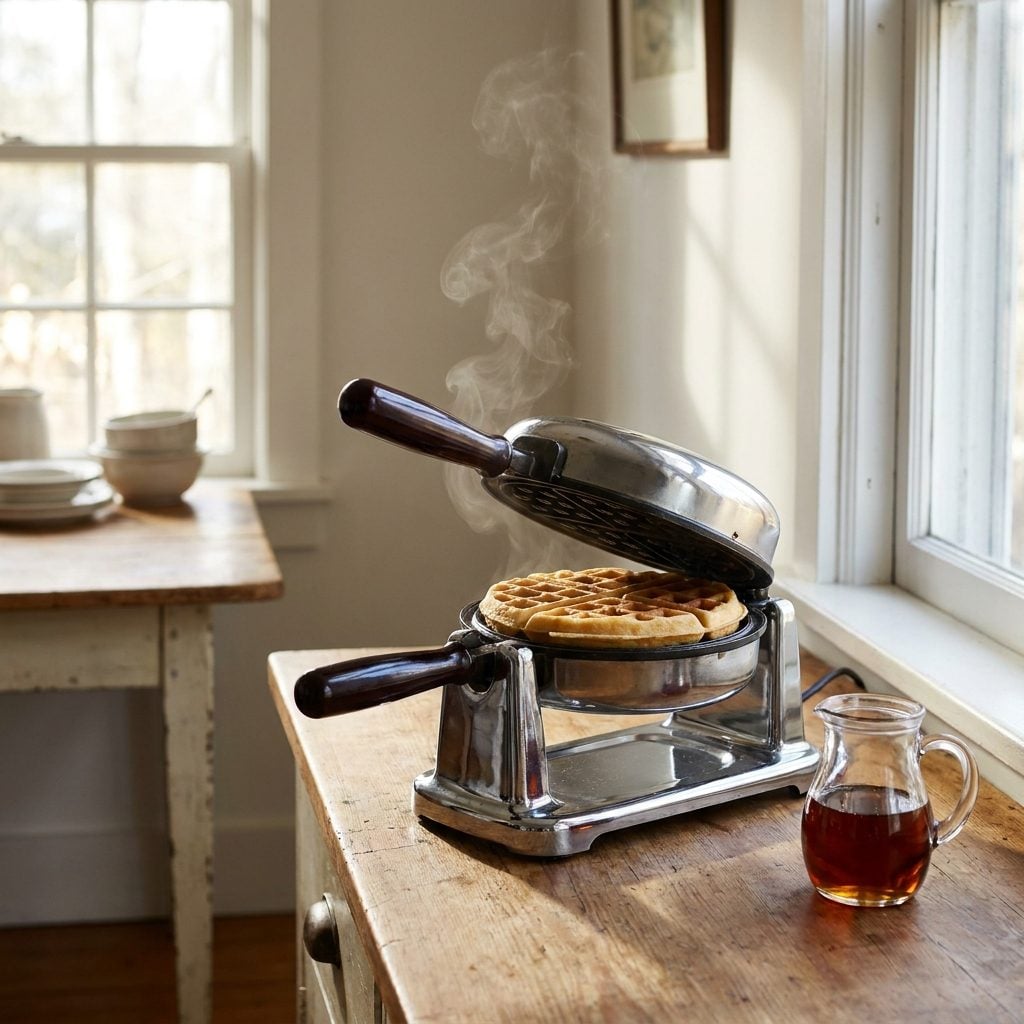
Saturday morning had a smell, and it came out of a chrome box on the counter.
This was aspiration disguised as a small appliance. A young family didn’t need waffles in the same sense it needed a refrigerator. It wanted the kind of kitchen where waffles happened. Cloth-wrapped cord, indicator light, batter hissing against hot grids—the whole production turned breakfast into an event.
It weighed more than seemed reasonable, occupied a heroic amount of cupboard space and might not come out every weekend. Worth every ounce.
24. The Matched Set of Pots That Finally All Belonged Together
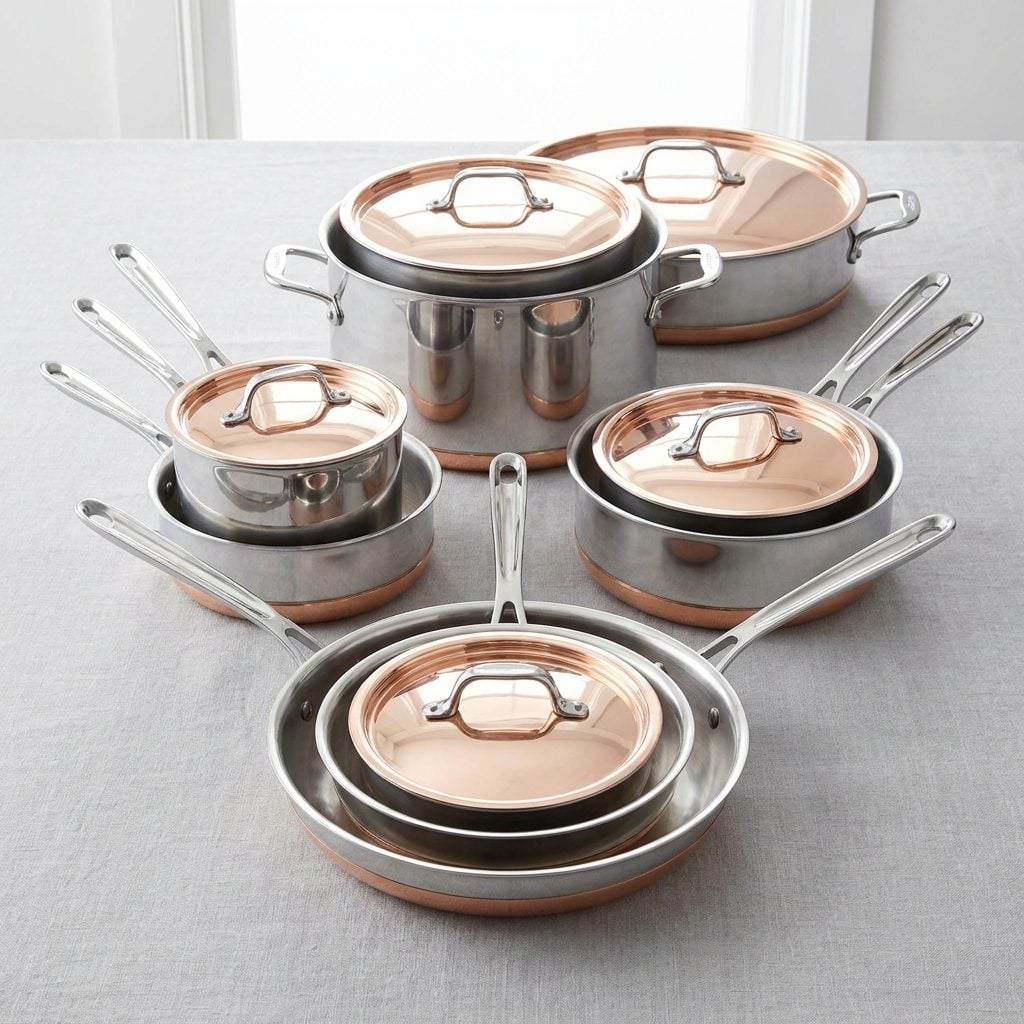
Open the cabinet and there they were, biggest to smallest, nested one inside the next like Russian dolls. Same handles, lids that actually fit and no stray saucepan from somebody’s old apartment lurking in the back.
Wear-Ever aluminum, Revere Ware with its copper-clad stainless-steel bottoms, or another coordinated set did something a random pile of cookware couldn’t: it made the kitchen look planned. You could pull out three pans without conducting a lid-matching investigation first.
That was the pleasure of it. Not luxury so much as order—the quiet satisfaction of realizing somebody had chosen these things on purpose.
23. The Matching Kitchen Canister Set That Put Staples in Formation
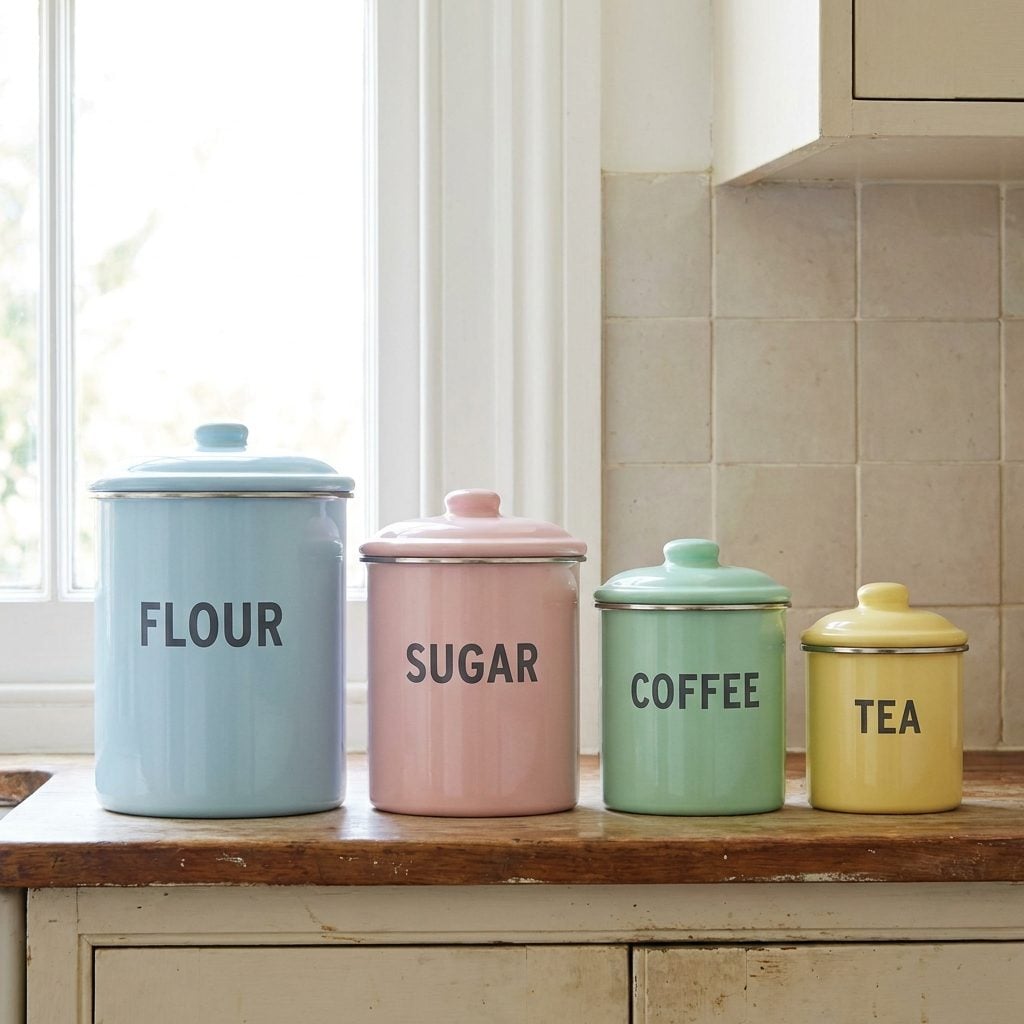
Flour. Sugar. Coffee. Tea. Usually in descending order, usually marching along the backsplash as if somebody had finally imposed discipline on breakfast.
A coordinated canister set was inexpensive compared with the major appliances, but it delivered an enormous amount of visual order for the money. The staples were stocked, the counter had a system and the kitchen looked as though somebody actually knew where everything belonged.
The flour canister inevitably wore a pale dusting around its base. Nobody mistook perfection for the point.
22. The Chrome-and-Formica Dinette Set Where Real Life Happened
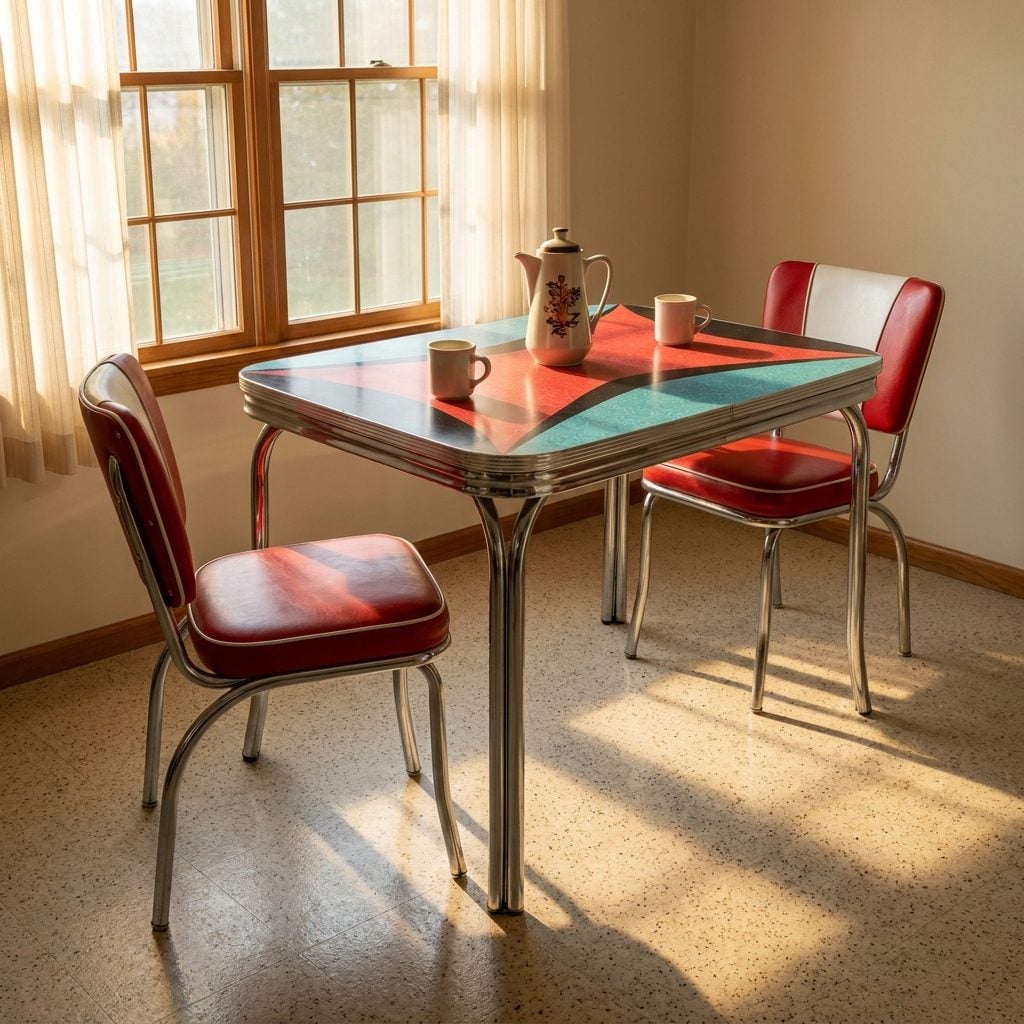
Chrome legs squeaked on linoleum, the Formica top wiped clean in one pass and vinyl chairs stuck to the backs of bare legs in July. The kitchen dinette wasn’t ceremonial furniture. It was where the household actually clocked its hours.
Breakfast happened here. Homework happened here. So did coffee, newspapers and the conversations that stretched long after the kids went to bed. The dining room got holidays; this little set got Tuesday.
21. The Proper Dining Room Table Waiting for Company
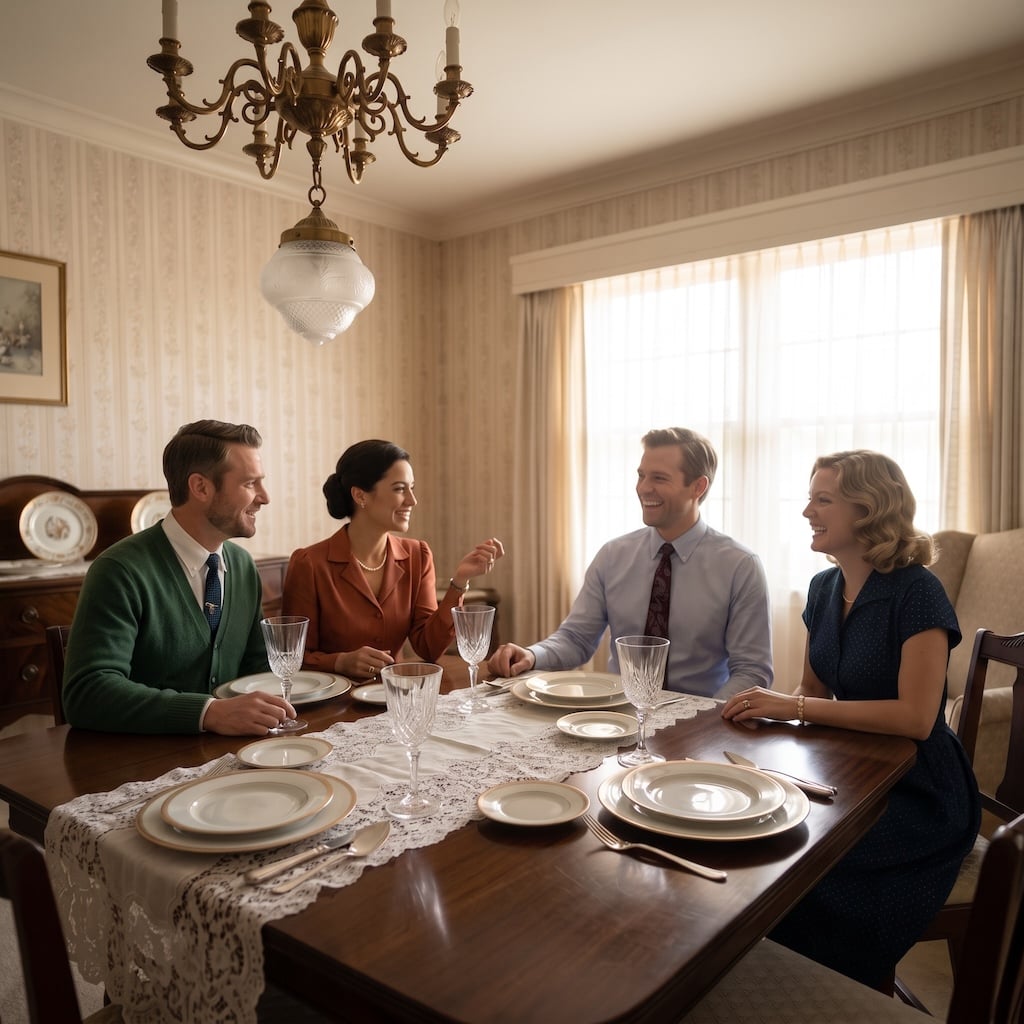
Separate from the kitchen table, and that separation was part of the point. A dedicated dining table meant you had somewhere to seat guests that wasn’t also carrying the cereal box and yesterday’s newspaper.
It spent much of the week quiet under a tablecloth, waiting for holidays and people who called before arriving. Then came the pressed linens, the good china and the chairs matched right down to the seat fabric. Hosting was no longer something somebody else’s parents did.
20. The Living Room Sofa With Its Matching Chair
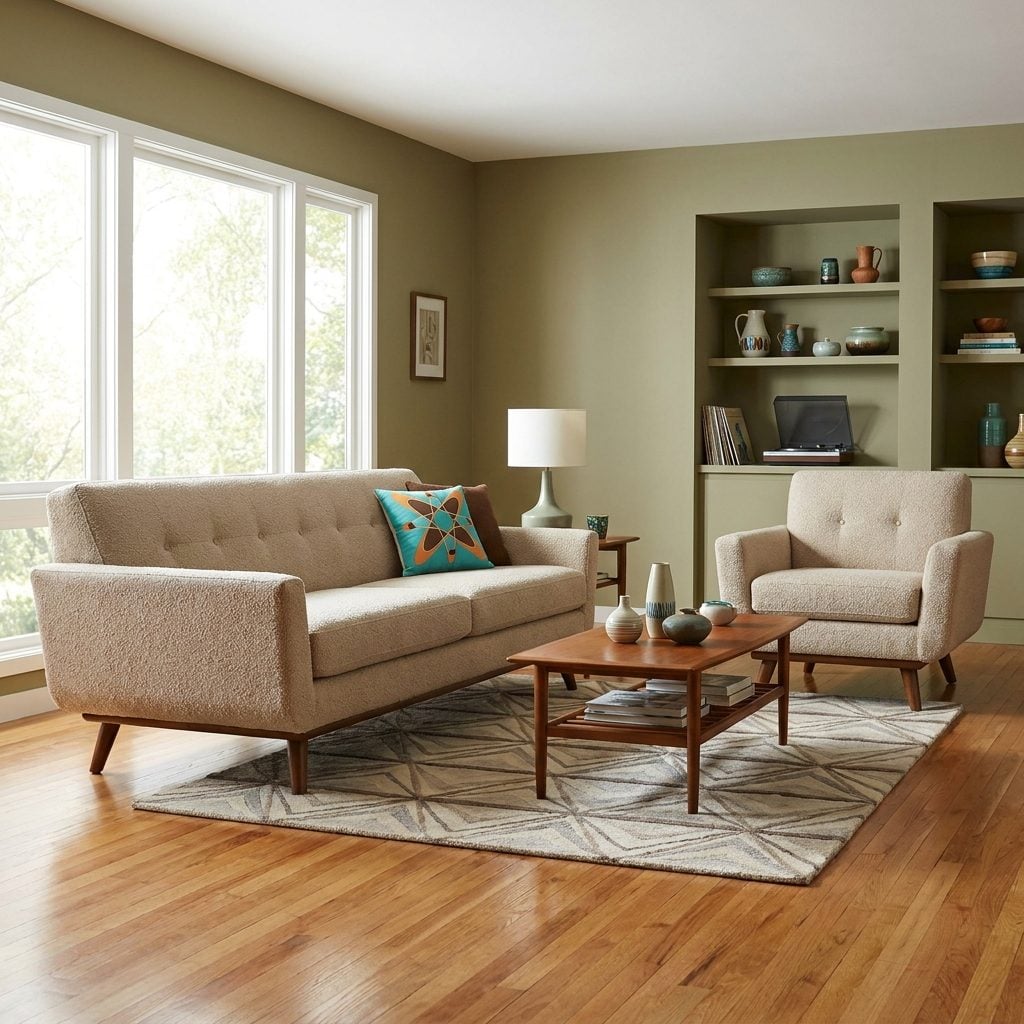
They came as a set, and buying the set was half the thrill. A sofa with its matching chair, upholstered in caramel, dusty rose or some determinedly respectable woven fabric, made the living room look furnished rather than accumulated.
The frames were solid, the arms substantial and the cushions expected to behave themselves for years. Guests got steered toward this arrangement as soon as they crossed the threshold. A coordinated rust upholstered sofa and chair didn’t need to shout. The room suddenly looked as though the castoff era had ended.
19. The Pair of Living Room Table Lamps That Finished the Sofa
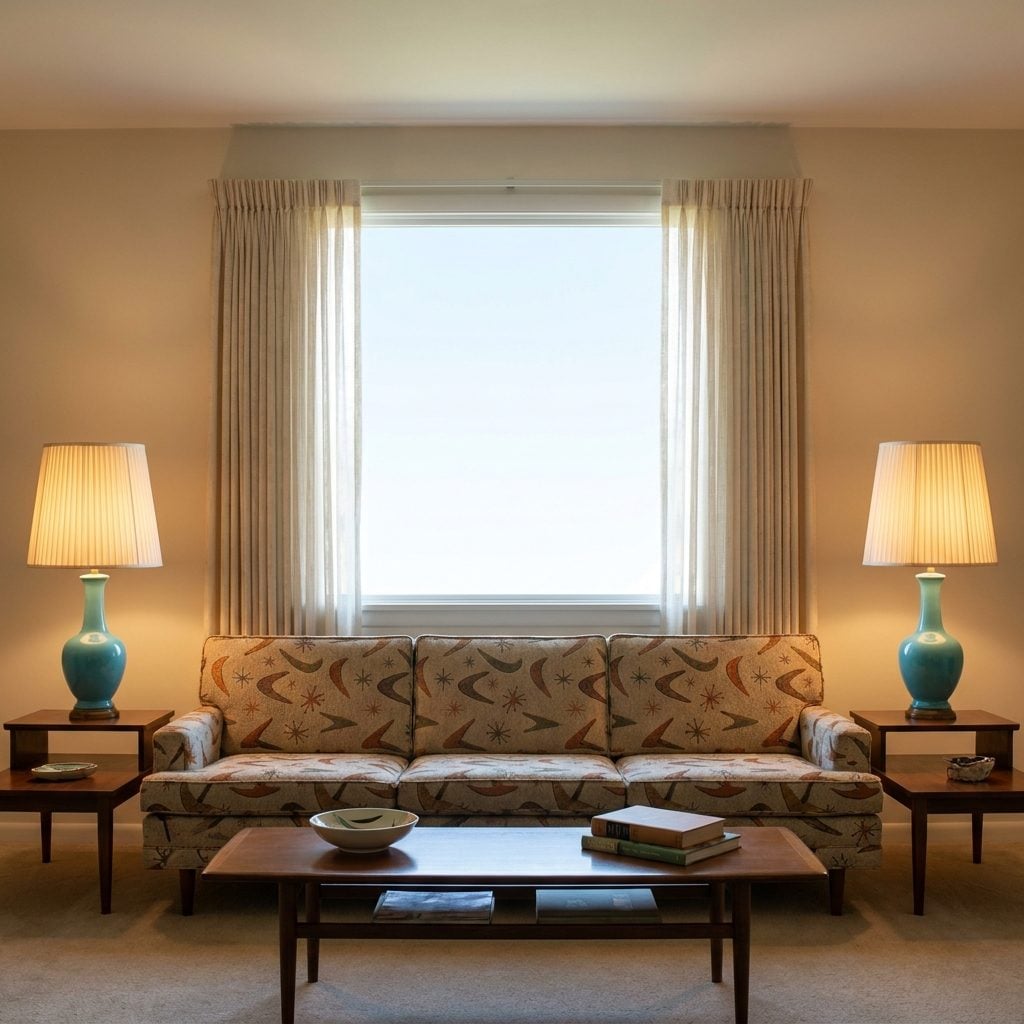
They came in a pair because the pair was the idea. One lamp illuminated a table. Two matching lamps at opposite ends of the sofa made the whole arrangement look intentional.
Wide pleated shades threw amber pools across the upholstery where people actually sat, read and talked. The effect was softer than the ceiling fixture and far more flattering to everybody beneath it. Once the lamps arrived, the room seemed to exhale.
18. The Coffee Table and End Tables That Completed the Seating Group
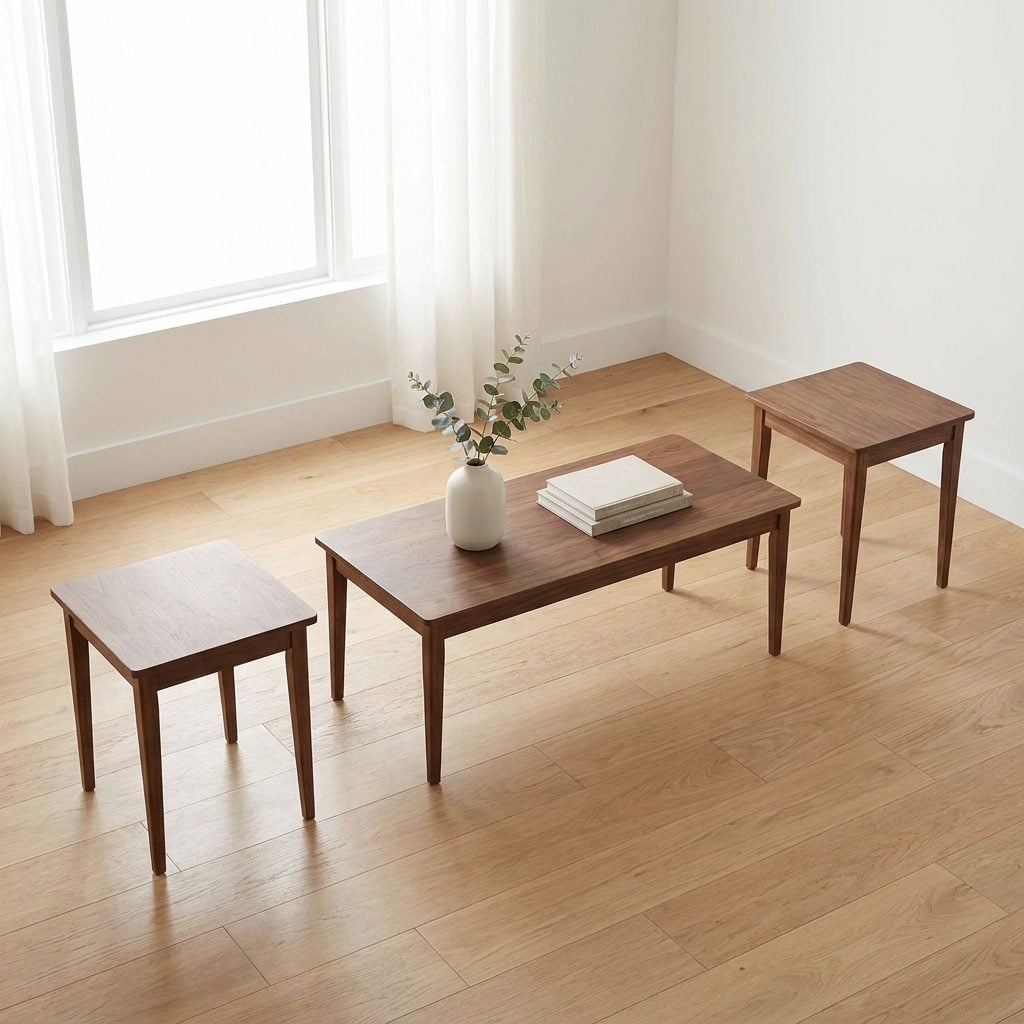
The sofa was the necessity. The tables were the announcement that necessity had company now.
One held the lamp, another held your coffee, and the low table in the middle provided a stage for magazines, ashtrays and decorative fruit nobody seemed particularly interested in eating. Blond maple, tapered legs and matching finishes pulled the entire seating area into one composition.
A complete set wasn’t cheap, which helped explain its appeal. The bare-essentials phase was ending. If you’re planning a home update today, the instinct to coordinate everything around the sofa is hardly new.
17. The Good China That Lived Behind Glass Most of the Year
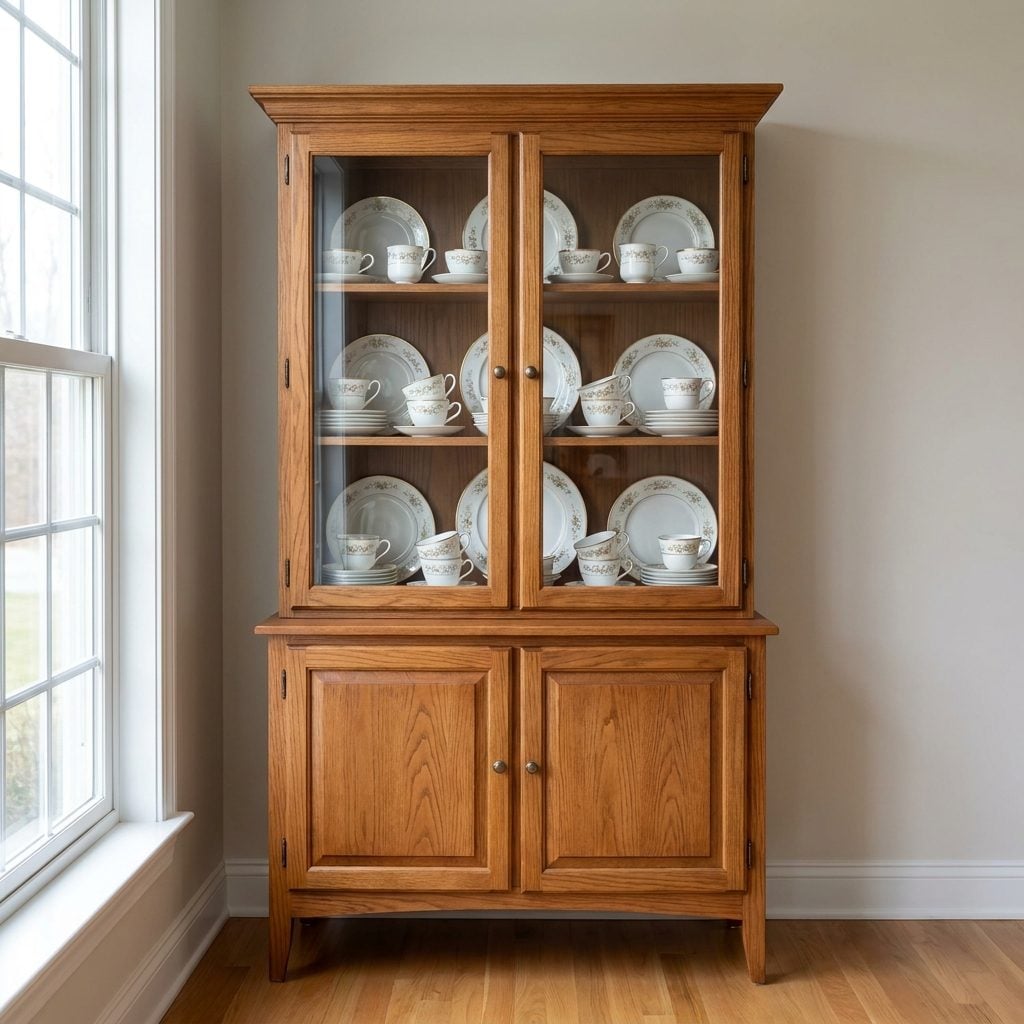
It sat in the cabinet with paper between the plates so the pattern wouldn’t scratch. Roses, perhaps, or a thin gold rim that guaranteed hand-washing in an era when the dishwasher in many homes was still the person standing at the sink.
A complete service represented adulthood in its most ceremonial form. Brides registered for patterns, relatives contributed pieces and eventually enough plates existed to feed a tableful of people nobody trusted near the china.
You knew the good china was coming out because somebody had spent the morning washing plates that were already clean. Wash them, use them once, wash them again, put them back behind glass for another year. Efficiency was not the objective.
16. The Melamine Plates You Could Drop Without Ruining Dinner
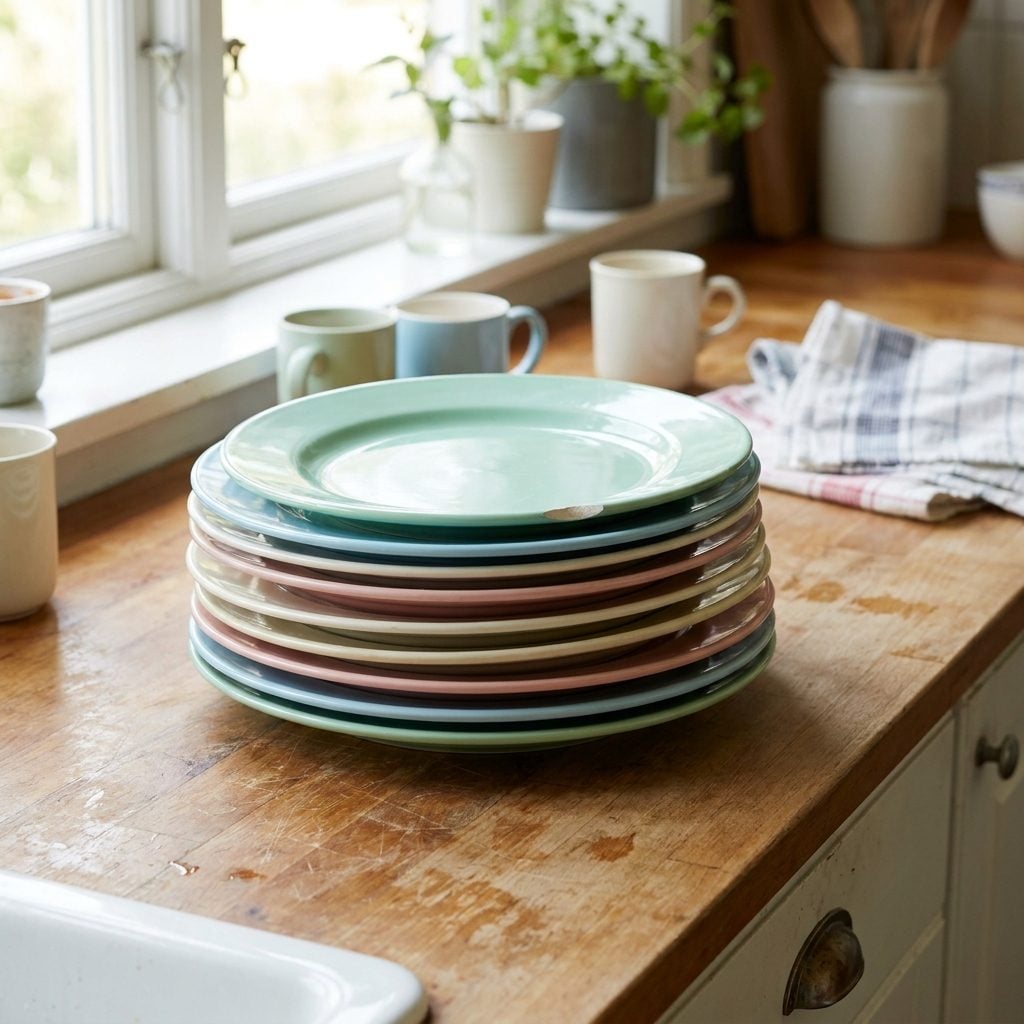
The china sat behind glass while this stuff took the beating. Melmac, Boontonware, Texas Ware—bright plates that tolerated children, linoleum floors and daily use without demanding a family meeting every time something slipped.
Butter yellow, mint green, coral, speckles: the colors were half the fun. Tomato sauce could leave a memory, coffee cups sometimes browned at the bottom and nobody treated the damage like tragedy. That was the contract. Everyday dishes were supposed to survive everyday life.
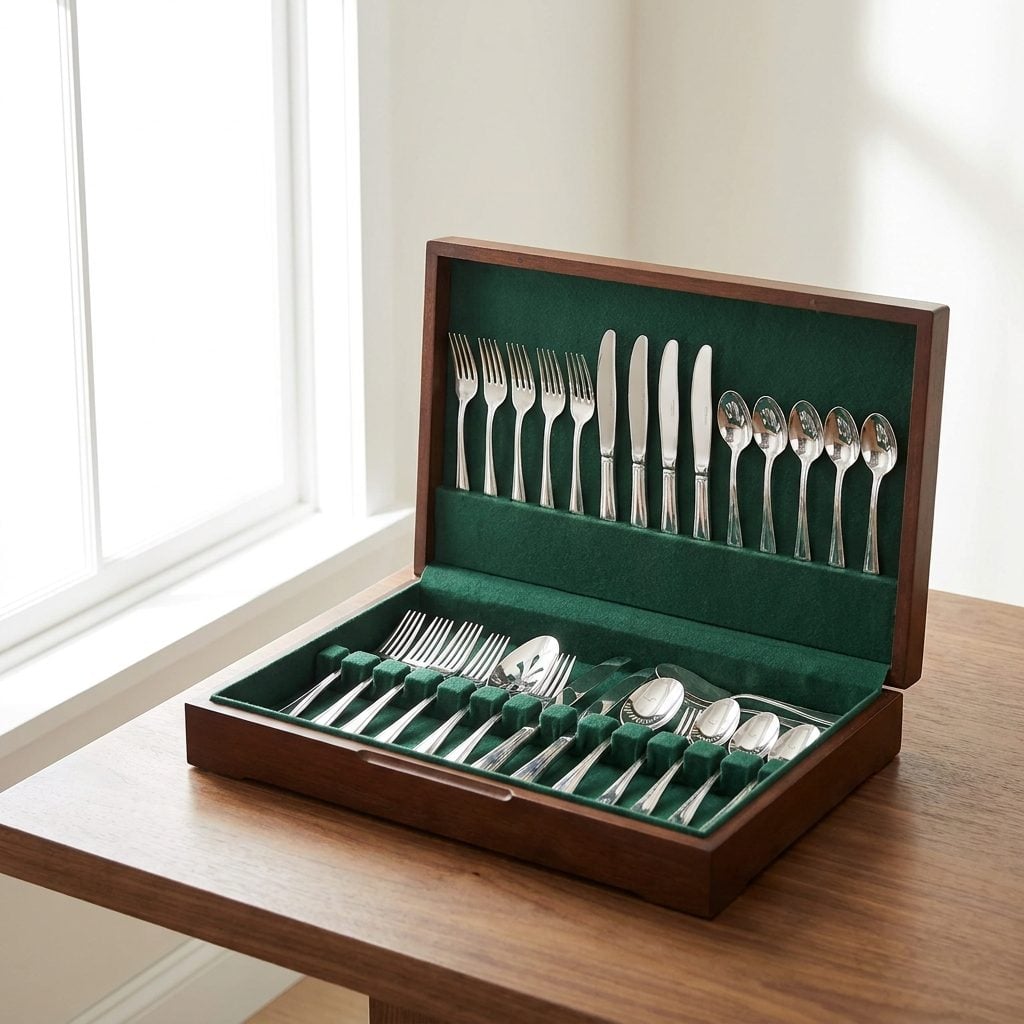
15. The Full Silverware Service That Slept in a Wooden Box
🔥 Would you like to save this?
You knew a house took entertaining seriously if the flatware had furniture of its own. Not the kitchen drawer with the everyday forks. A hinged wooden chest, lined in felt, with a slot for pieces whose exact purpose sometimes required consultation.
Rogers Bros. and Community Plate were familiar names. Sets came sized for eight or twelve, with dinner forks, salad forks, soup spoons, teaspoons and an impressive population of knives. Silverplate was common; sterling belonged to another price bracket entirely.
Holiday preparation included polishing. Hands went gray, the paste smelled peculiar, everything gleamed for dinner and then the whole collection disappeared back into the box.
14. The Glassware Saved for People Who Didn’t Live There
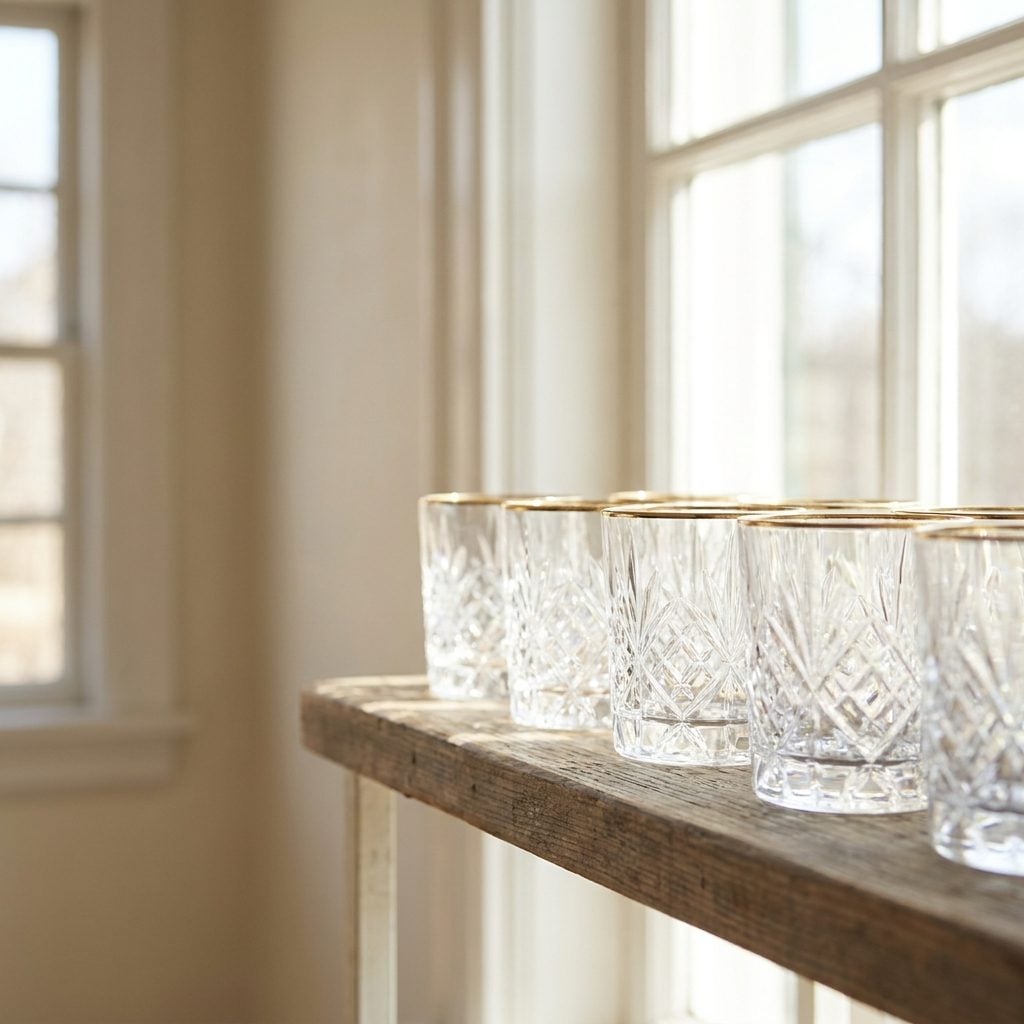
There were everyday glasses, and then there were the glasses. Children learned the distinction early because one set could be grabbed without permission and the other absolutely could not.
Gold bands, frosted patterns, matching shapes—these lived behind a door and emerged when company justified the risk. Coordinated glassware made the table feel dressed in a way the jelly jars in the kitchen cupboard never could.
13. The Sewing Machine Built Into a Piece of Furniture
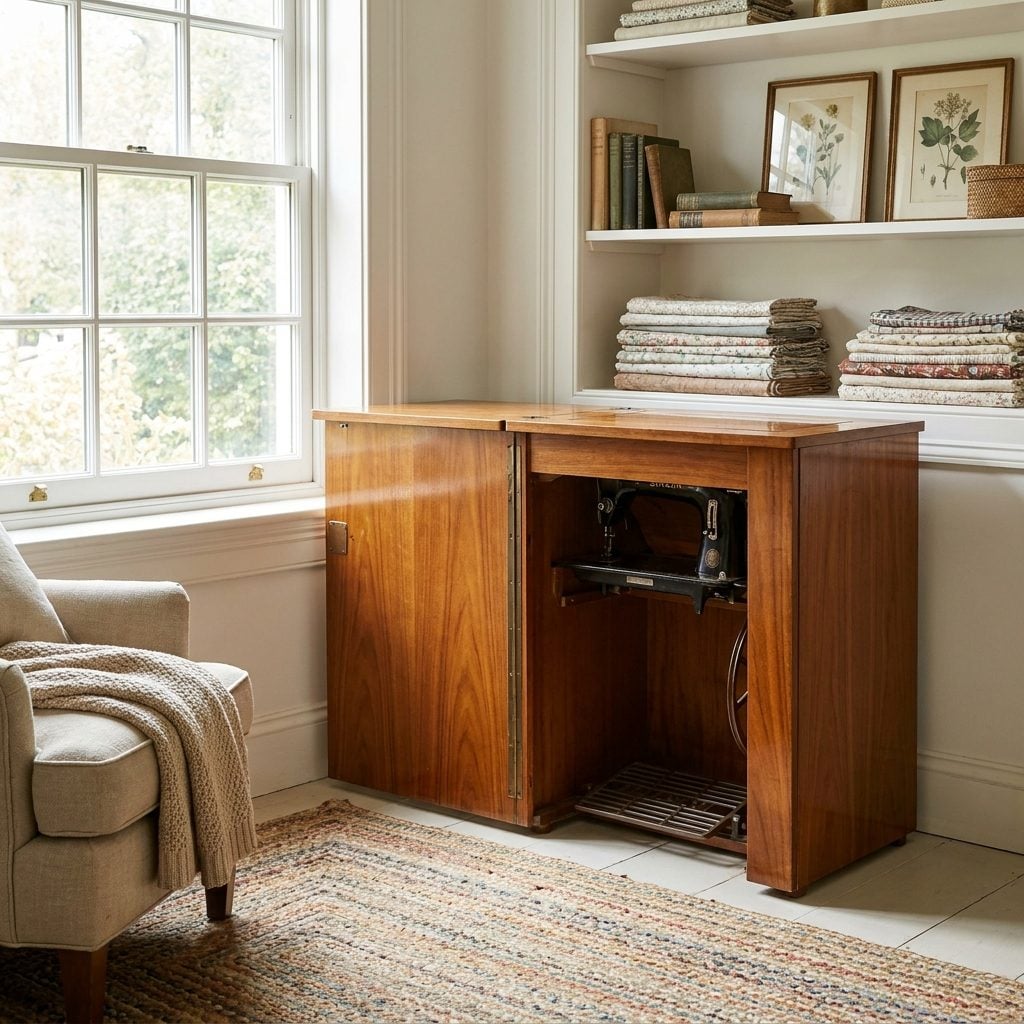
The machine folded down into its own cabinet, which told you everything about how seriously households took it. A thing with furniture built around it was not something you casually replaced.
For many women, sewing wasn’t a hobby so much as household infrastructure. Curtains needed hemming, children’s clothes needed altering, worn garments could be repaired instead of replaced and hand-me-downs could be persuaded into another life. Used often enough, a good machine could save a household substantial money for years.
A thing with a piece of furniture built around it was not a thing you threw out.
12. The Cedar Chest That Smelled Like Plans for the Future
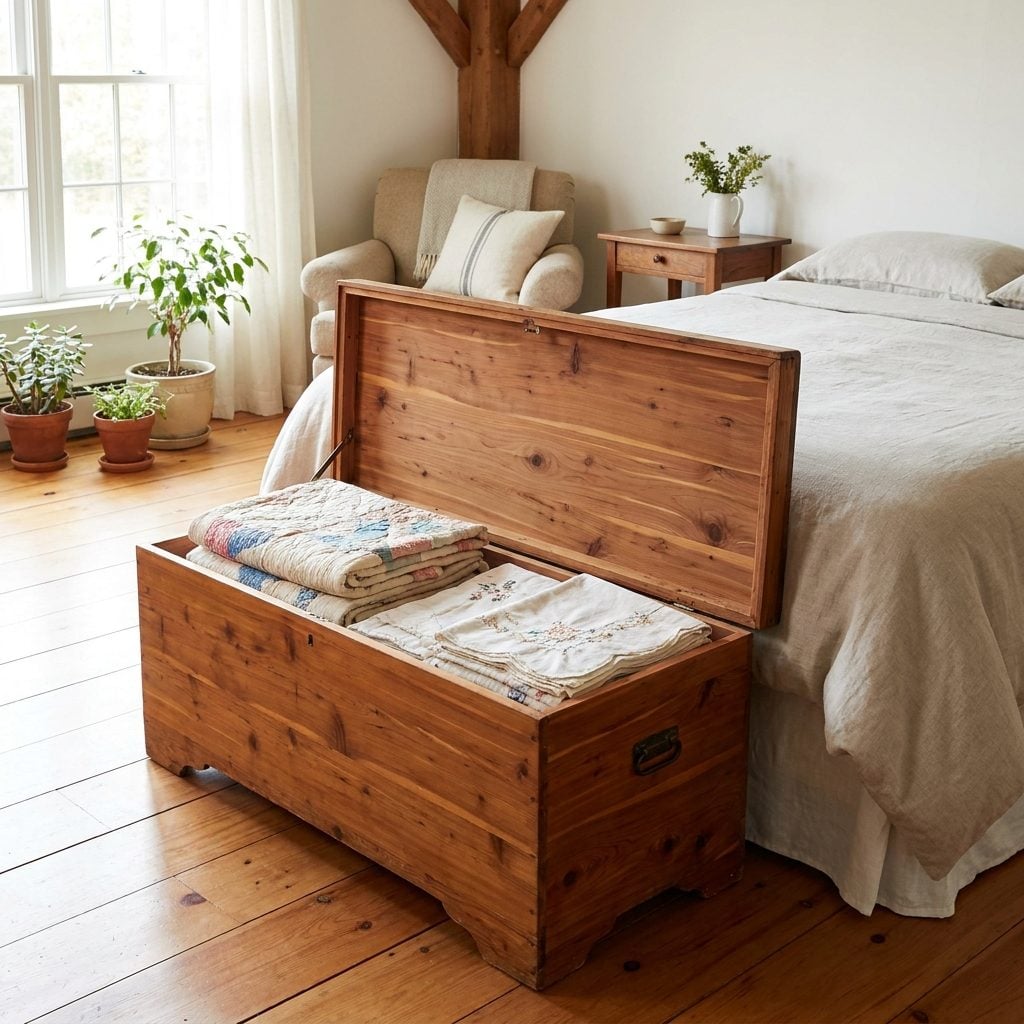
Open the lid and the whole room smelled like a forest that had been shut up for a season. That cedar scent settled into blankets, table linens and quilts packed away for occasions important enough to justify unfolding them.
Sometimes the chest predated the house and even the marriage. Graduation gift, hope chest, first serious piece of furniture—it held linens for a future that was still being assembled. By the time it reached the foot of a married couple’s bed, some of those plans had finally acquired an address.
11. The Matched Bedroom Suite That Replaced Everybody’s Castoffs
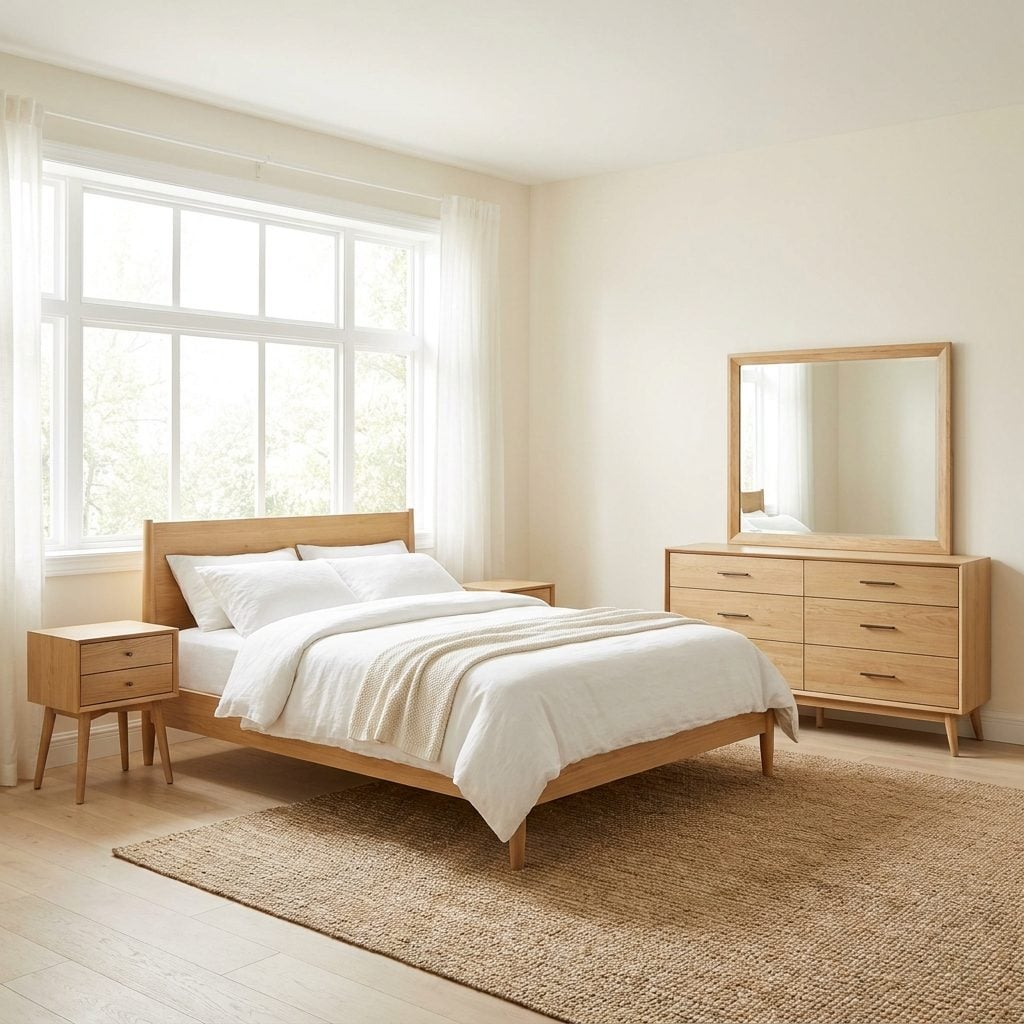
Starter bedrooms had a way of becoming family museums: somebody’s aunt’s dresser, a borrowed nightstand, a bed frame with a mysterious earlier life. Then came the day you walked into a furniture store and considered buying an entire room at once.
Bed, dresser, mirror and nightstands in the same blond wood could make the bedroom look transformed before the deliverymen had finished leaving. Matching wasn’t inherently better furniture, but it was unmistakably deliberate. The room no longer looked temporary.
The same appetite for coherence still runs through any home trends story today. Furniture arranged as a family has always made a room feel more finished.
10. The Matching Bedspread and Curtains That Made the Bedroom Agree
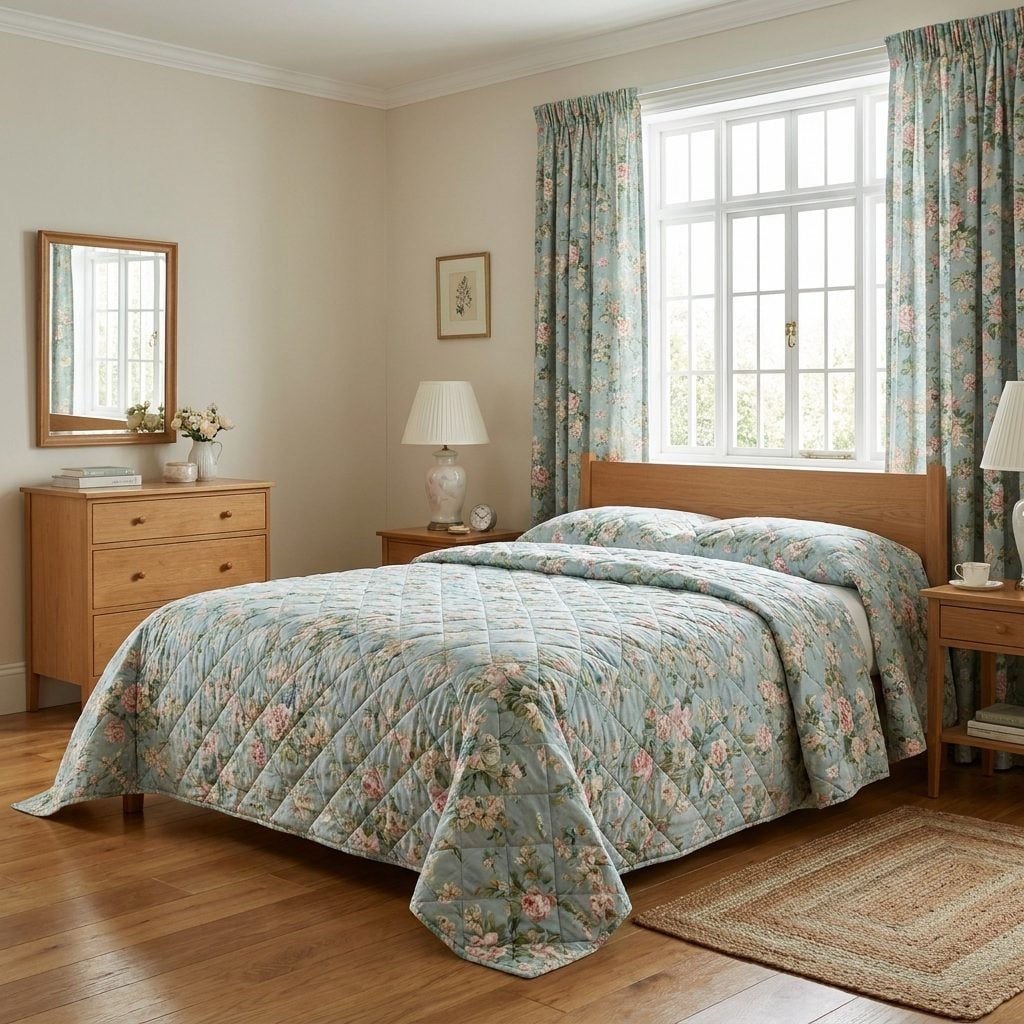
The point wasn’t simply the bedspread. The point was that the bedspread and curtains appeared to know each other.
A coordinated bedroom gave the furniture a backdrop and made even modest rooms look intentional. Small rose-and-sage sprigs, a quilted spread, pinch-pleated panels at the window—the effect wasn’t luxury so much as completion. Somebody had made a decision and followed it all the way around the room.
9. The Kitchen Wall Clock That Ran the Household
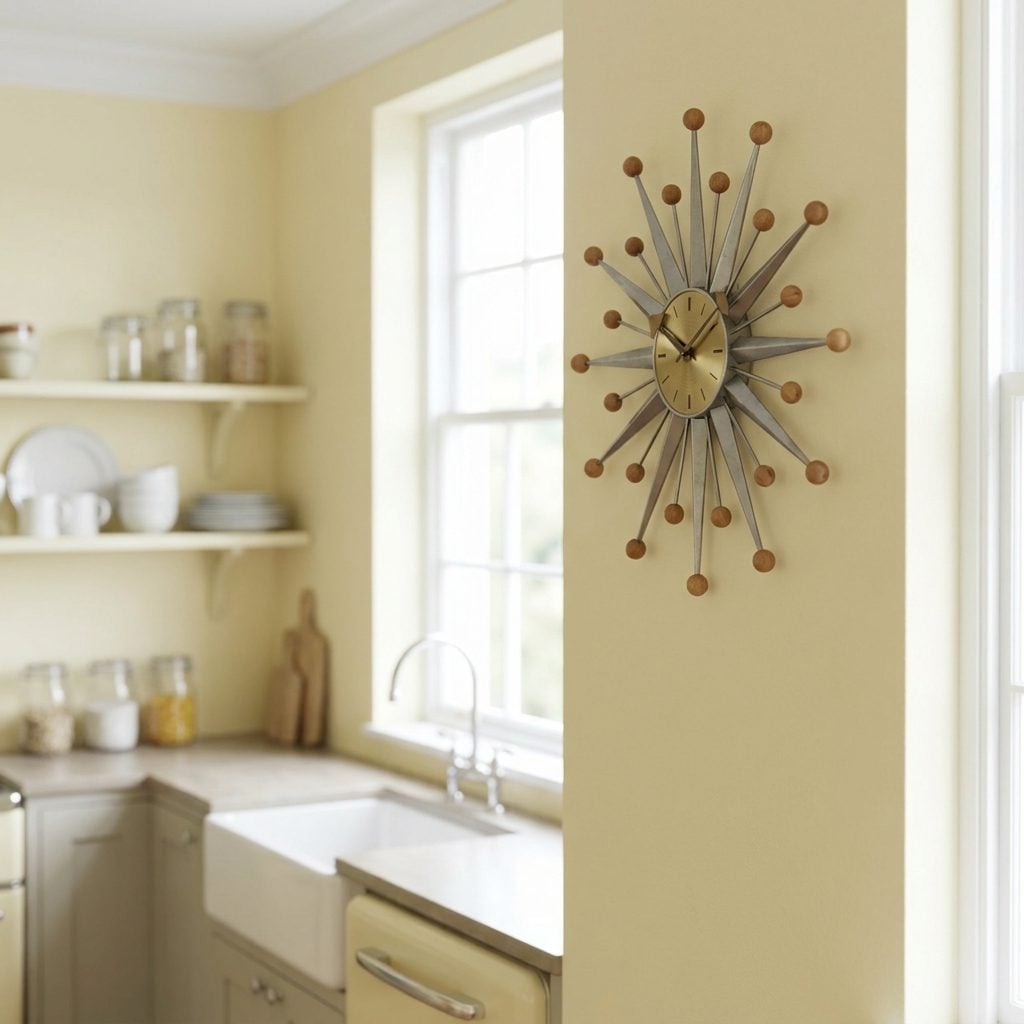
It hung high enough for everybody to see and quietly governed the day. Breakfast by seven. Out the door by eight. Roast in by four if supper was expected at six. Decoration was almost beside the point; the clock was domestic traffic control.
Plain cream casing, black numerals, electric movement and a face readable from across the kitchen. When it stopped, the room felt subtly wrong until somebody finally noticed time itself had been stuck at 3:17 for half the afternoon.
8. The Household Tool Kit and Workbench Nobody Wanted to Admit Defeat Without
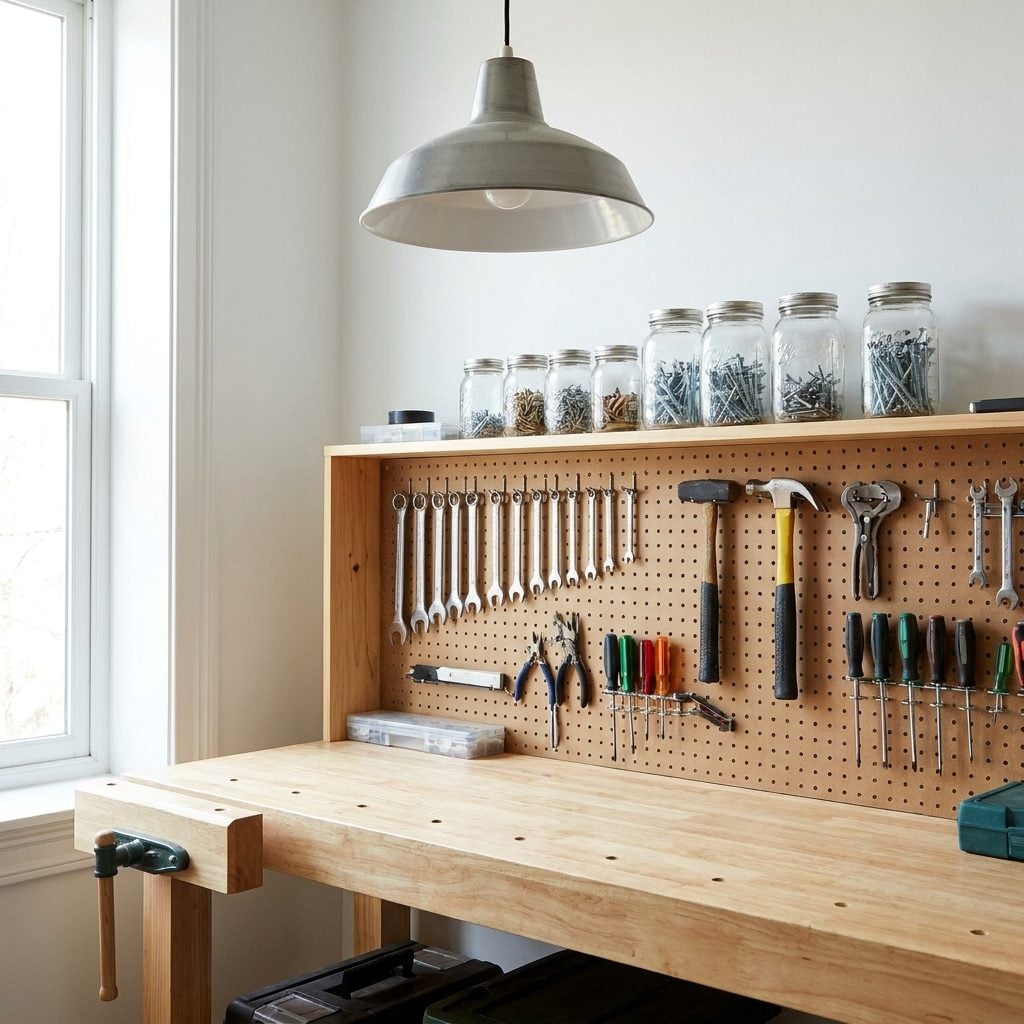
A dripping faucet, sticking door, loose porch step—postwar homeownership arrived with an expectation that the man of the house would at least attempt the repair before surrendering to somebody who knew what he was doing.
The kit could be modest: hammer with a hickory handle, handsaw on nails, screwdrivers in a coffee can, pliers, level and a hand drill that made every hole feel earned. The basement workbench became one more station in the house, part repair shop and part proving ground.
Draw a line from that bench to today’s industrial home gym and garage-shop hybrids and the aesthetics have certainly changed. The underlying impulse has not: surely we can fix this ourselves.
7. The Growing Wall of Framed Photographs That Proved Who Lived Here
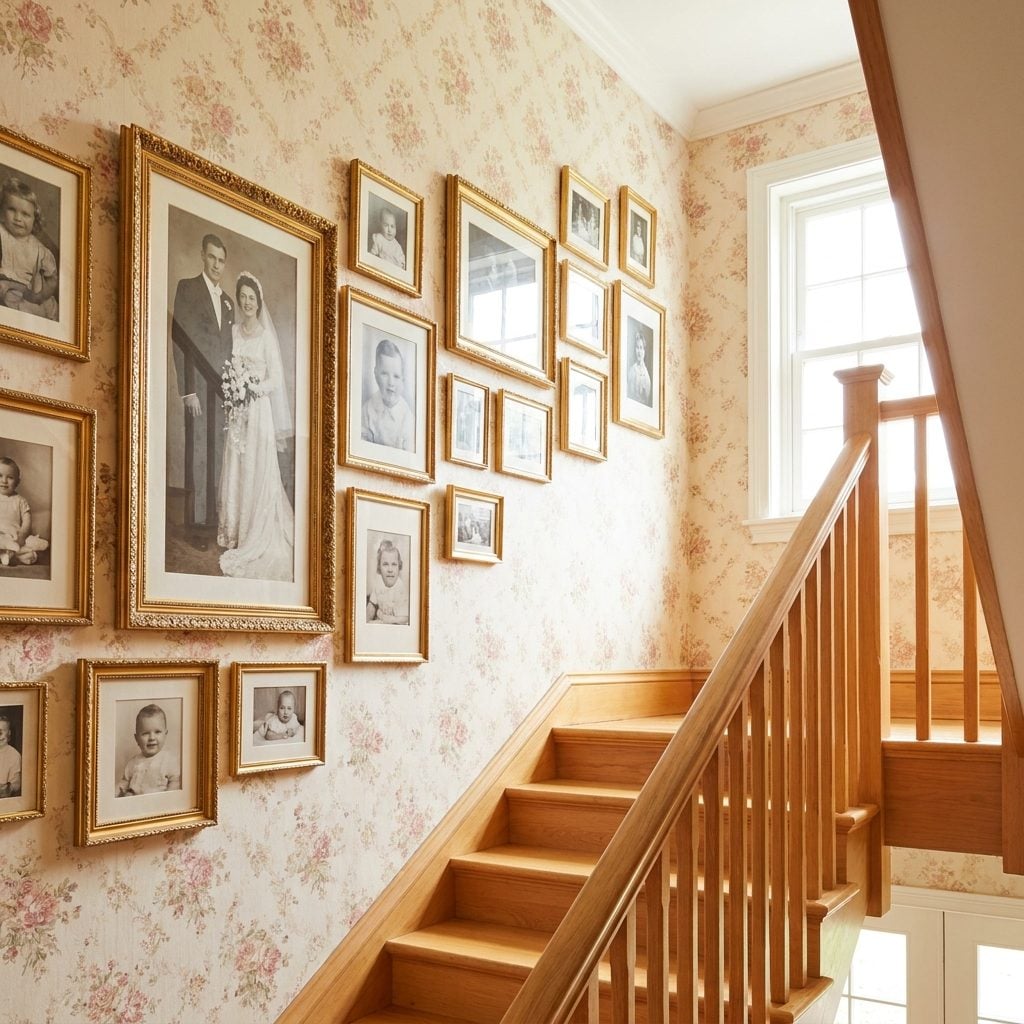
First the wedding portrait. Then the baby. Then the baby again, now sitting up and looking considerably less cooperative. Frames multiplied across the mantel and piano top until the surface ran out and somebody began a second row.
Unlike most of the objects in this gallery, these weren’t proof of buying power. They were proof of accumulation of another kind: years, children, relatives, holidays. Guests drifted toward the pictures and asked who was who. A cluster of frames could make a room feel settled faster than almost anything money bought.
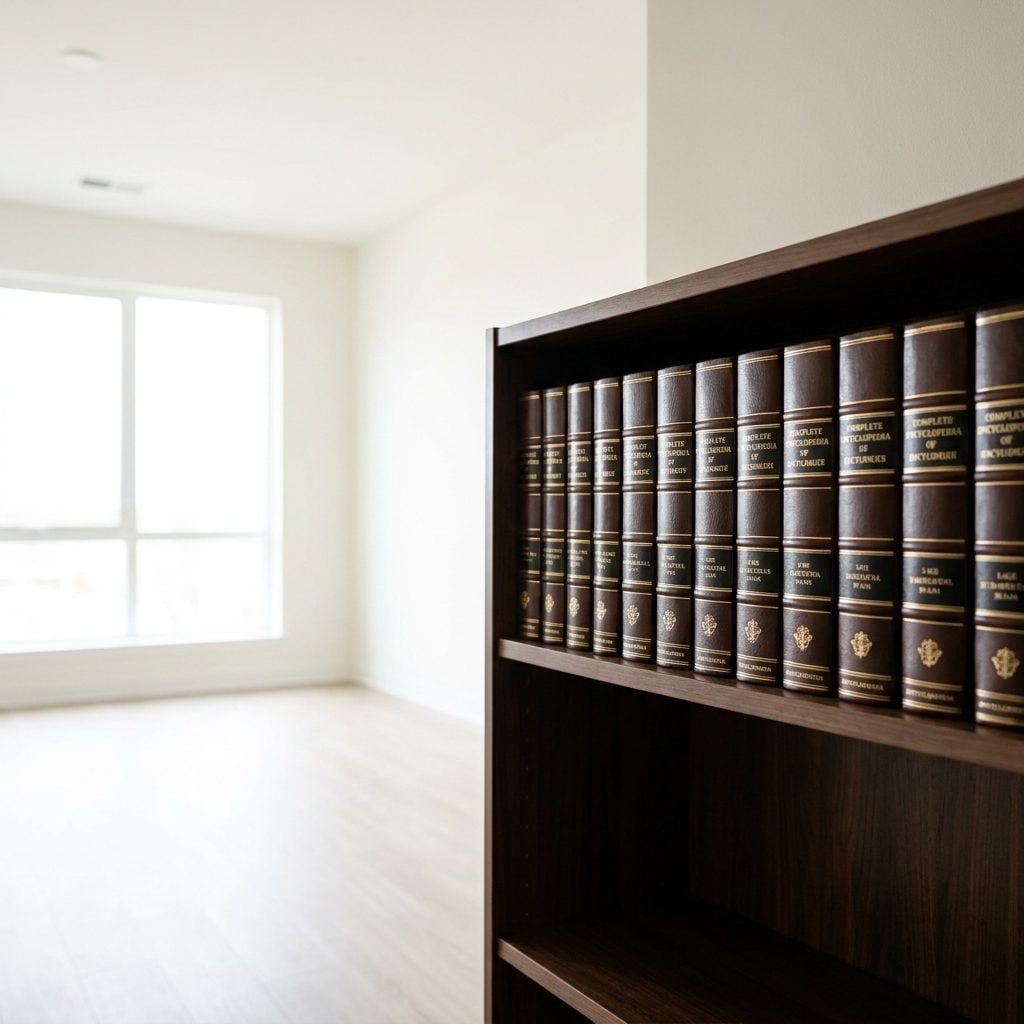
6. The Encyclopedia Set That Put the World on One Shelf
🔥 Would you like to save this?
A salesman came to the door, talked about your children’s future and left behind paperwork. Eventually a matched row of heavy volumes appeared and the household acquired what looked, from across the room, like all of human knowledge alphabetized in matching bindings.
Sets could cost enough to require installment payments, but they also sat beautifully on a shelf and rescued generations of school reports. When somebody needed to know about Paraguay or photosynthesis, the search engine involved standing up and finding the correct letter.
Long before anybody imagined a japandi home office or a search bar, a shelf of encyclopedias could turn one corner of the house into a reference desk.
5. The Push Reel Mower That Made Saturday Morning Official
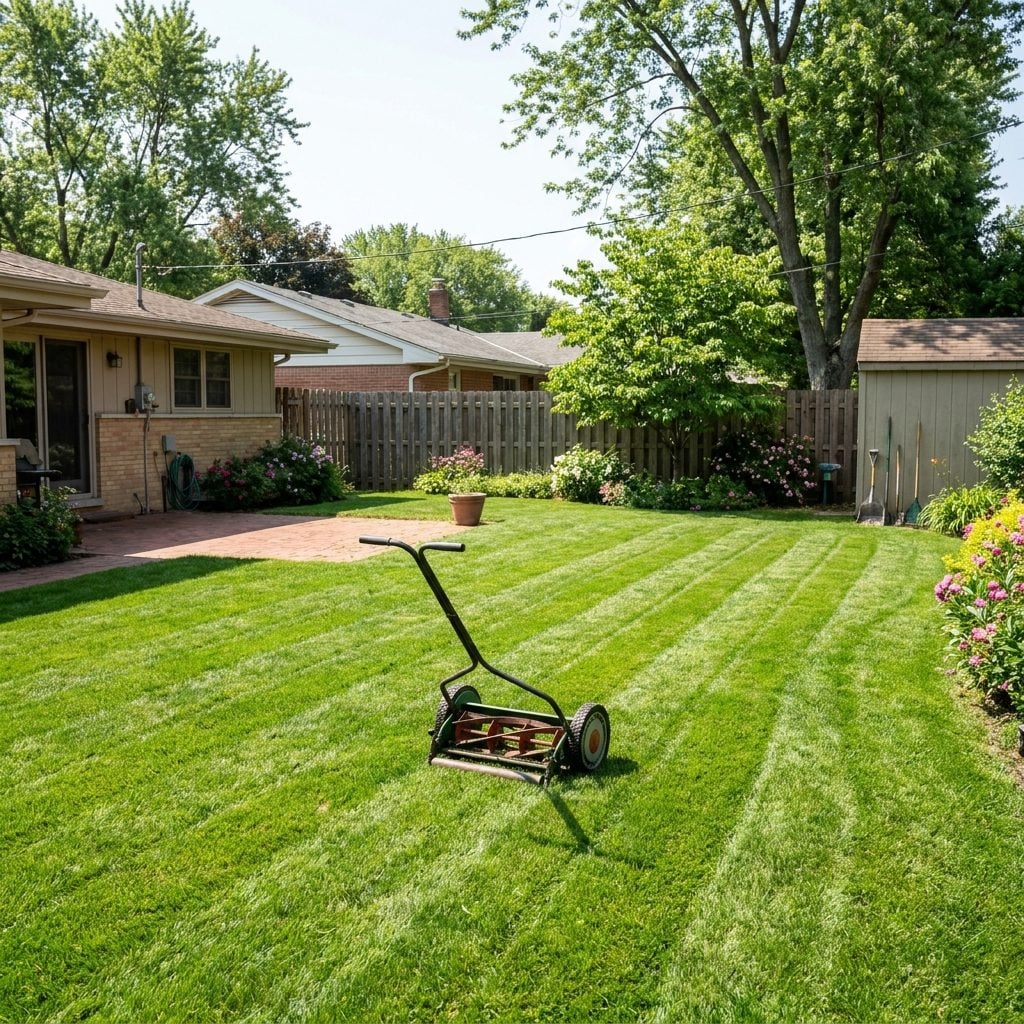
Suburban homeownership came with an unwritten clause: keep the grass short enough that nobody across the fence developed opinions. For many households, a push reel mower remained the affordable answer—no gasoline, no engine, just steel blades and whatever energy you had left on Saturday morning.
It squeaked. Thick clover stopped it dead. Everybody on the block seemed to be out there around the same time, nodding over fence lines like members of a club nobody remembered joining.
4. The Rubber Garden Hose and Sprinkler That Belonged to Everyone

The hose was heavy, green and permanently kinked in the exact same place no matter how lovingly you coiled it. Attach the metal sprinkler, set it in the middle of the yard and let it go tick-tick-tick-tick-WHIRRR across the grass.
Officially, this was lawn care. Unofficially, every child within earshot recognized the noise and appeared in a bathing suit. Watering the yard and cooling off the neighborhood could happen in the same fifteen minutes, and nobody felt compelled to separate the activities.
3. The Painted Metal Patio Chairs That Made the Backyard Livable
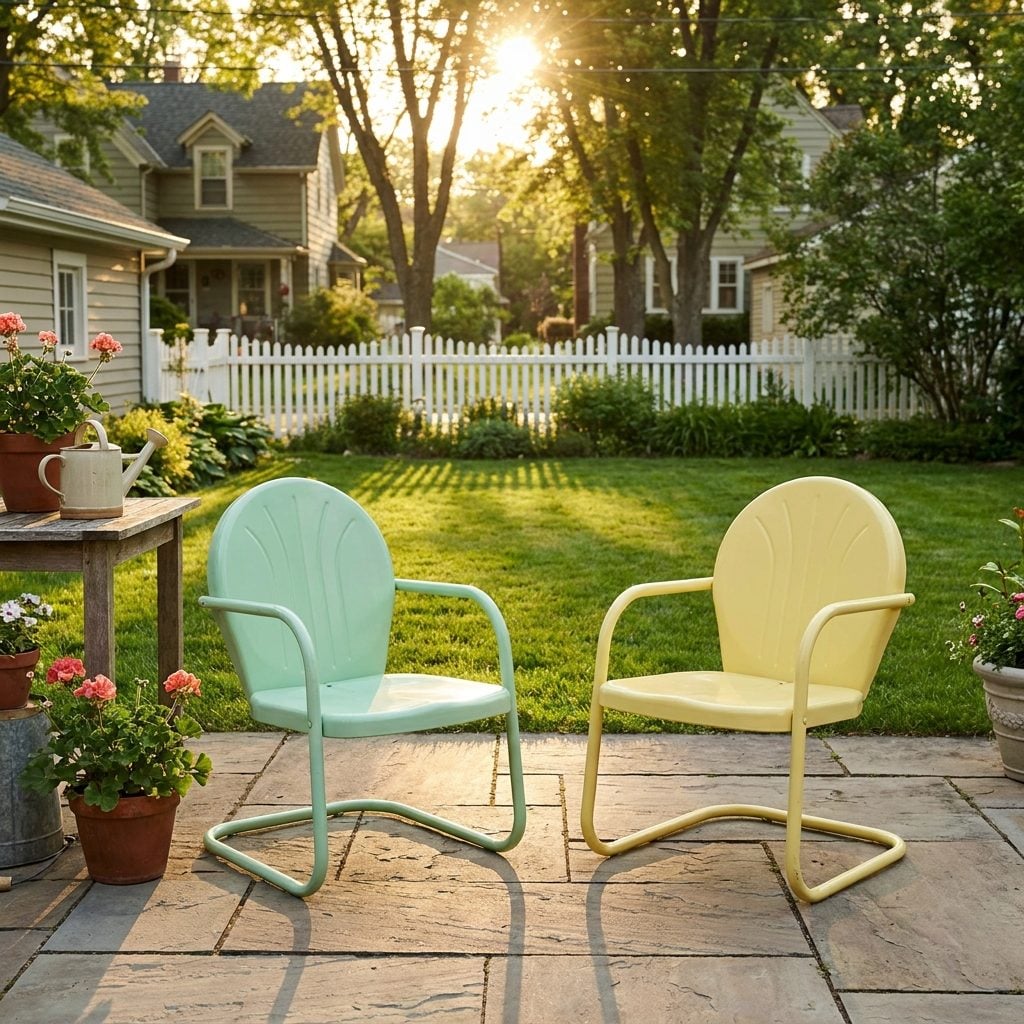
Those stamped-metal shell chairs with springy tubular bases were evidence that the yard had graduated from grass around a house to somewhere people actually sat. Buy a pair, put them near the back door and suddenly after-supper lingering had furniture.
They got scorching in the sun and left patterns on the backs of bare legs. Nobody cared much. The attraction was sitting outside with a cold drink, looking over a lawn you had spent all morning cutting and quietly deciding it had been worth the trouble.
2. The Backyard Charcoal Grill That Turned Dinner Into a Weekend Event
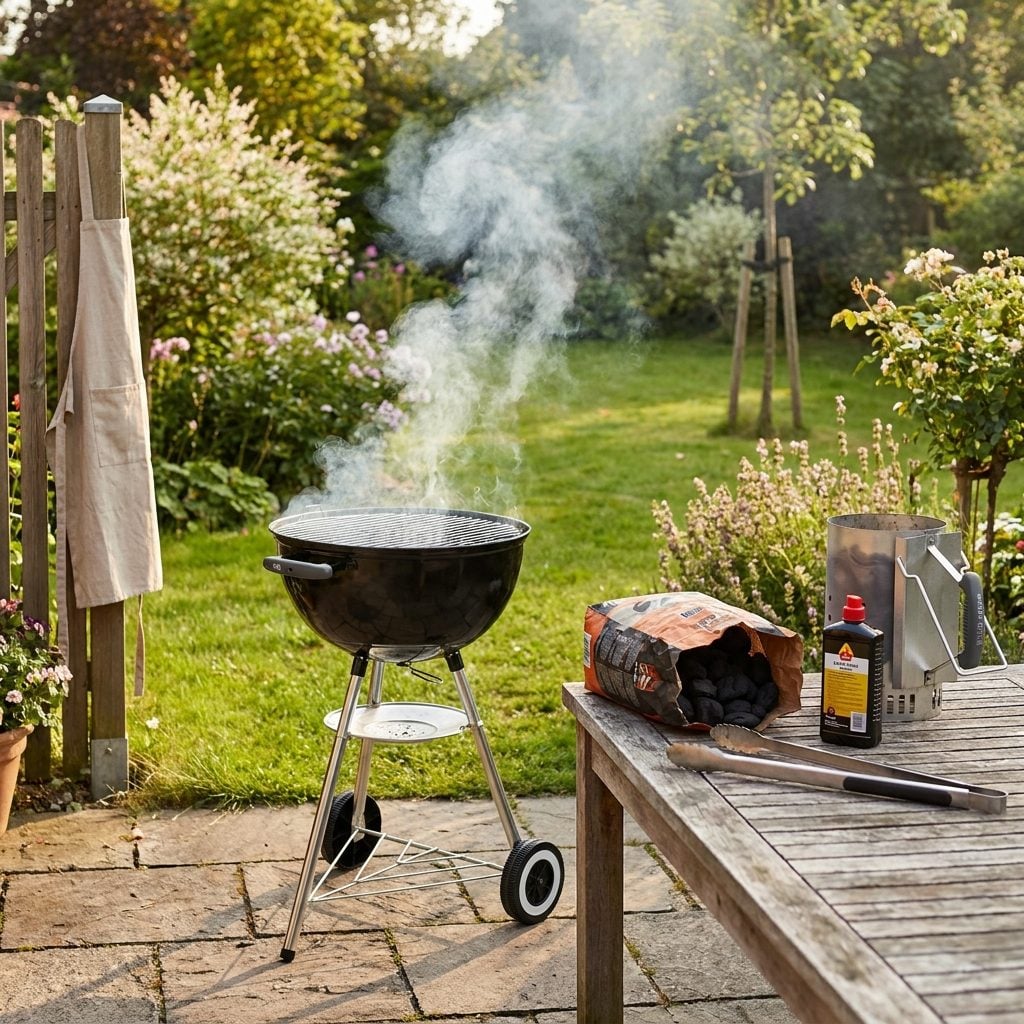
Charcoal briquettes, lighter fluid and a round grill balanced on three optimistic legs. That was enough to turn the backyard into a cooking zone and every man tending it into the self-appointed authority on exactly when the coals were ready. They were never ready as quickly as anybody else wanted.
Suburban backyard barbecue culture exploded after the war. Burgers, hot dogs, potato salad, folding chairs and the unmistakable perfume of lighter fluid turned the yard into a social room without walls. The sprawling outdoor kitchens and modern home bar setups of today are much more elaborate descendants of the same impulse: if the weather cooperates, dinner is moving outside.
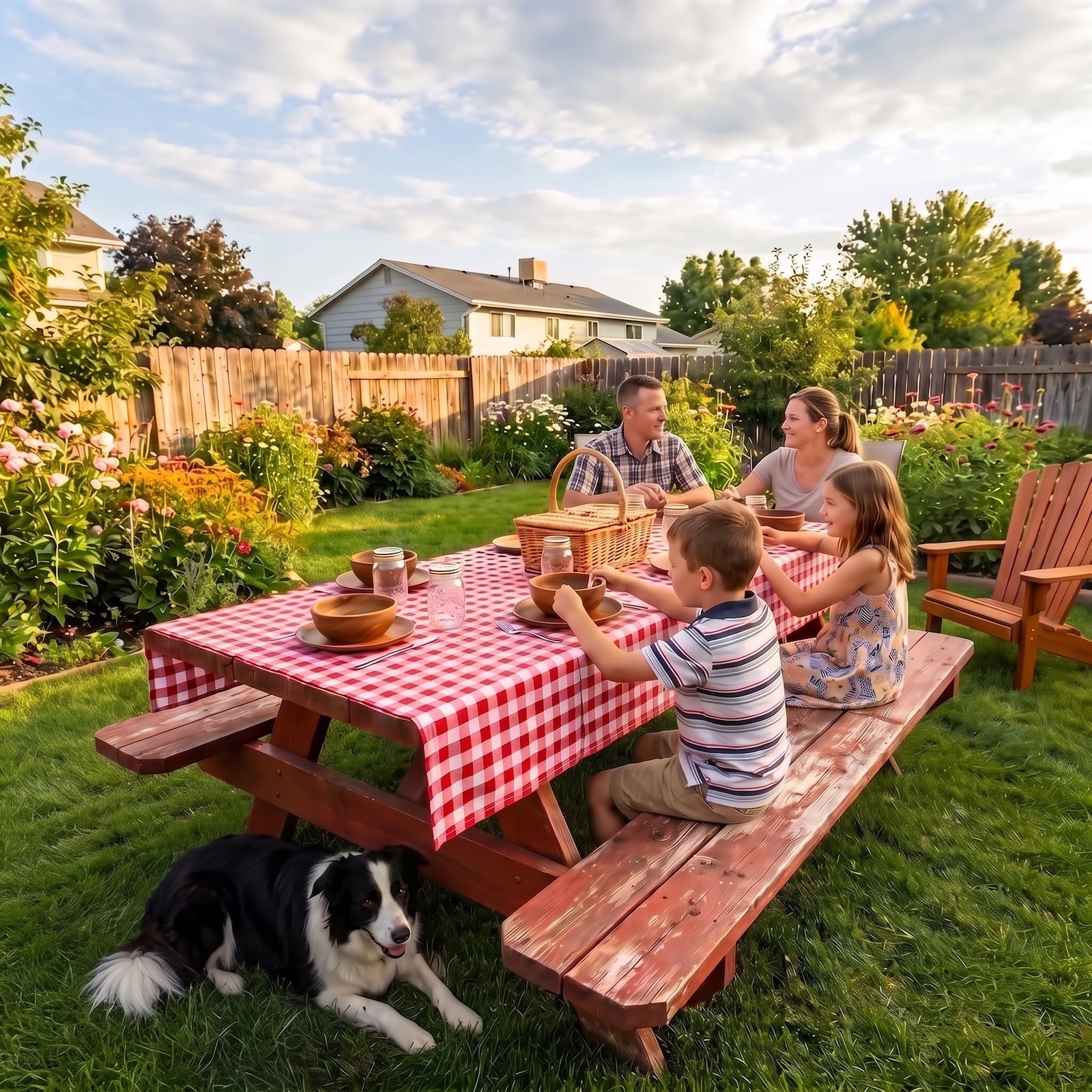
1. The Backyard Picnic Table Where the Whole Dream Finally Sat Down
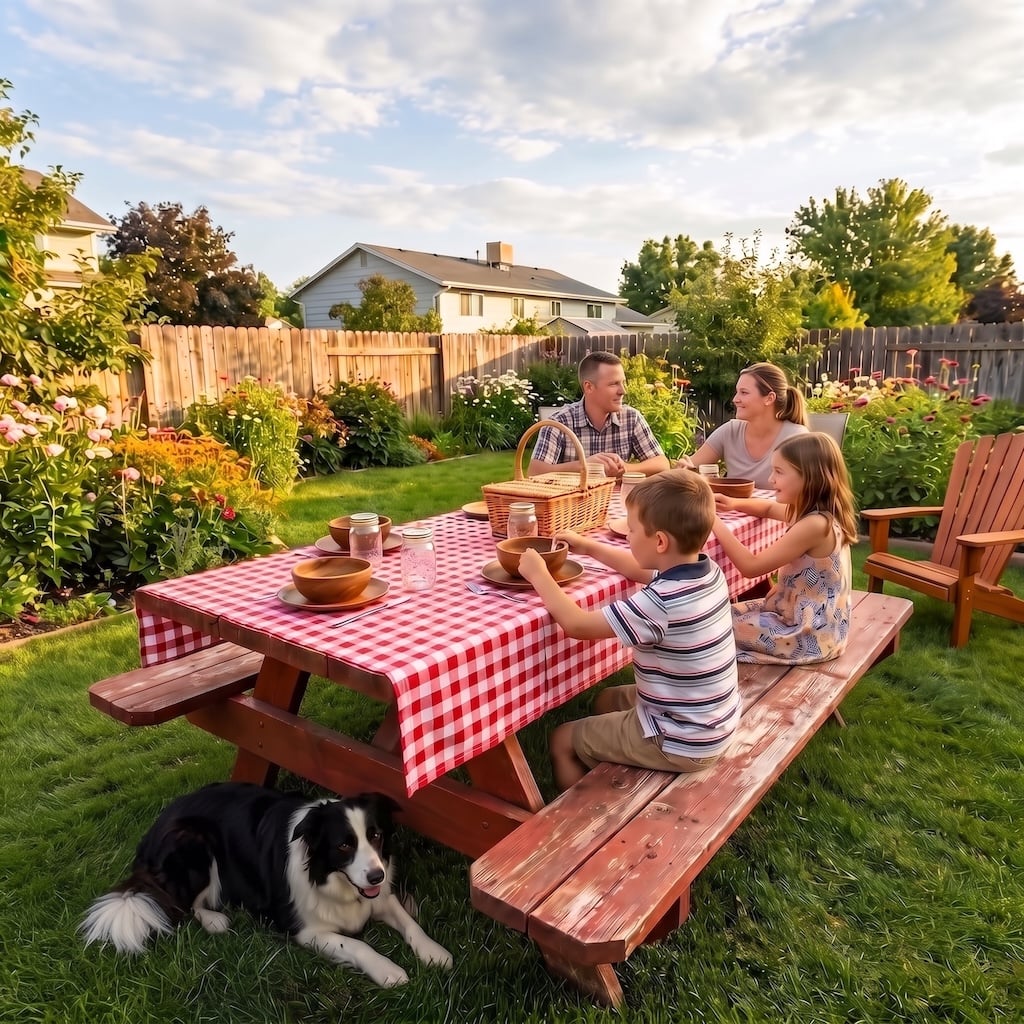
The grill said you could cook outside. The picnic table said the yard had become part of the house. Sit down, pass the bowls, squeeze another child onto the attached bench and suddenly supper had escaped the kitchen entirely.
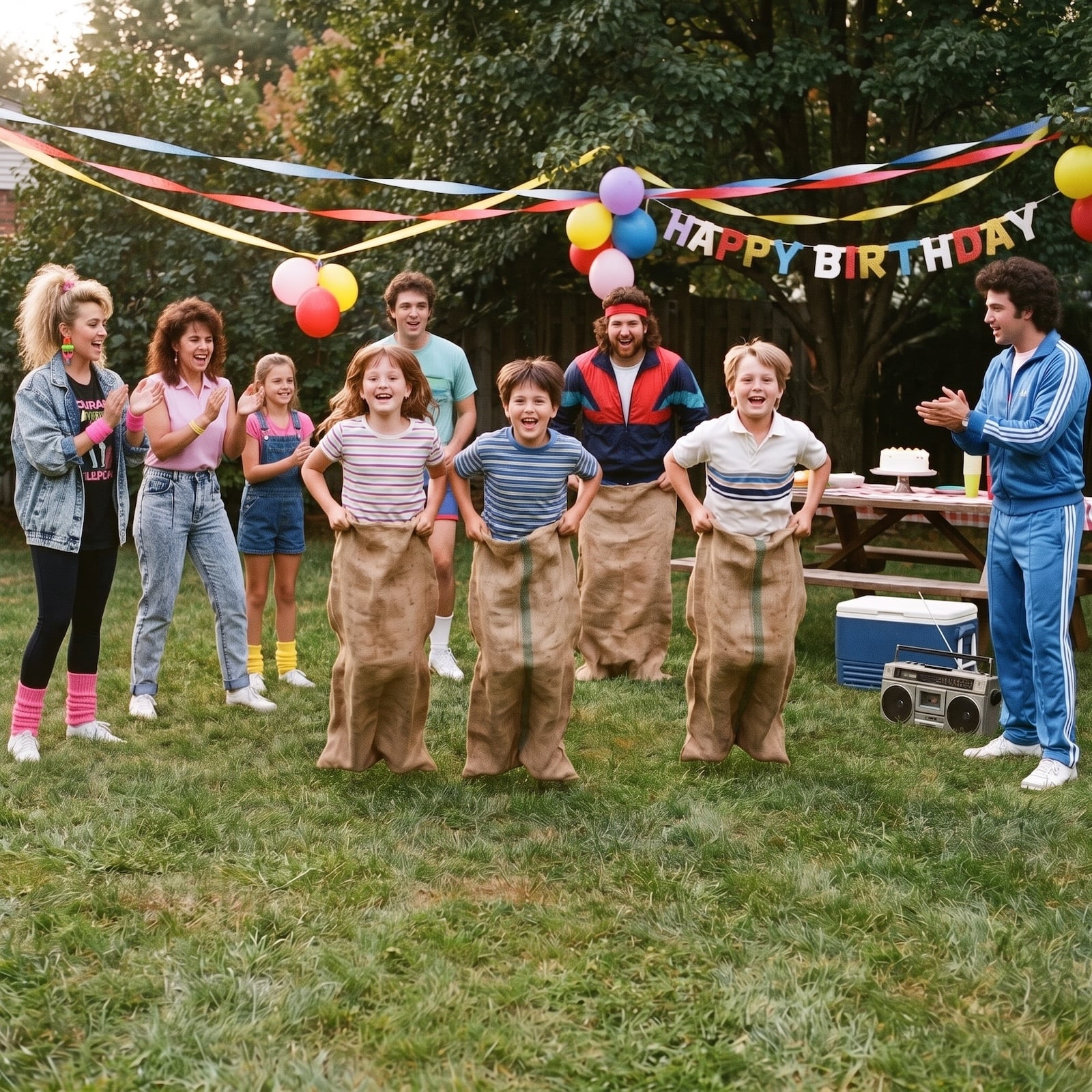
Weekday meals moved out there in summer. So did birthdays, Sunday dinners and the neighbor who only meant to stop by for five minutes. The mower had finished its work, the sprinkler was dragged aside, somebody carried out the potato salad and everybody settled in with their knees knocking under the table.
That may be the clearest picture of what all these purchases were really trying to build. Not a mansion. Not a showroom. A house slowly paid for, a lawn somebody maintained, useful things inside and enough room outside for the family to sit together at the end of the day.