🔥 Would you like to save this?
Sunday morning, the kitchen table was a war room. Scissors worked through the fat newspaper insert while coffee left rings on the placemat and Mom built a small paper arsenal of coupons before anyone else had properly woken up. Nobody called it financial planning. There was no spreadsheet glowing on a laptop, no budgeting app sending warnings. There was just a woman who knew what chicken cost last week, which store doubled coupons on Tuesday, and exactly how far one paycheck — maybe one and a half — had to stretch before the next one arrived.
And that was only the beginning. The thousands weren’t saved with one brilliant trick; they disappeared from the expense column a quarter, a dollar, and a avoided purchase at a time. Dinner became tomorrow’s lunch. Foil got a second life. Coats were bought with room to grow. Lights went off behind you whether you liked it or not. Broken things got fixed before anyone dreamed of replacing them. Here are 31 things 1980s moms did so routinely that most of us didn’t realize until years later just how much money they were keeping in the family.
In order to come up with the very specific design ideas, we create most designs with the assistance of state-of-the-art AI interior design software. Also, assume links that take you off the site are affiliate links such as links to Amazon. this means we may earn a commission if you buy something.
31. The Sunday Coupon Ritual at the Kitchen Table
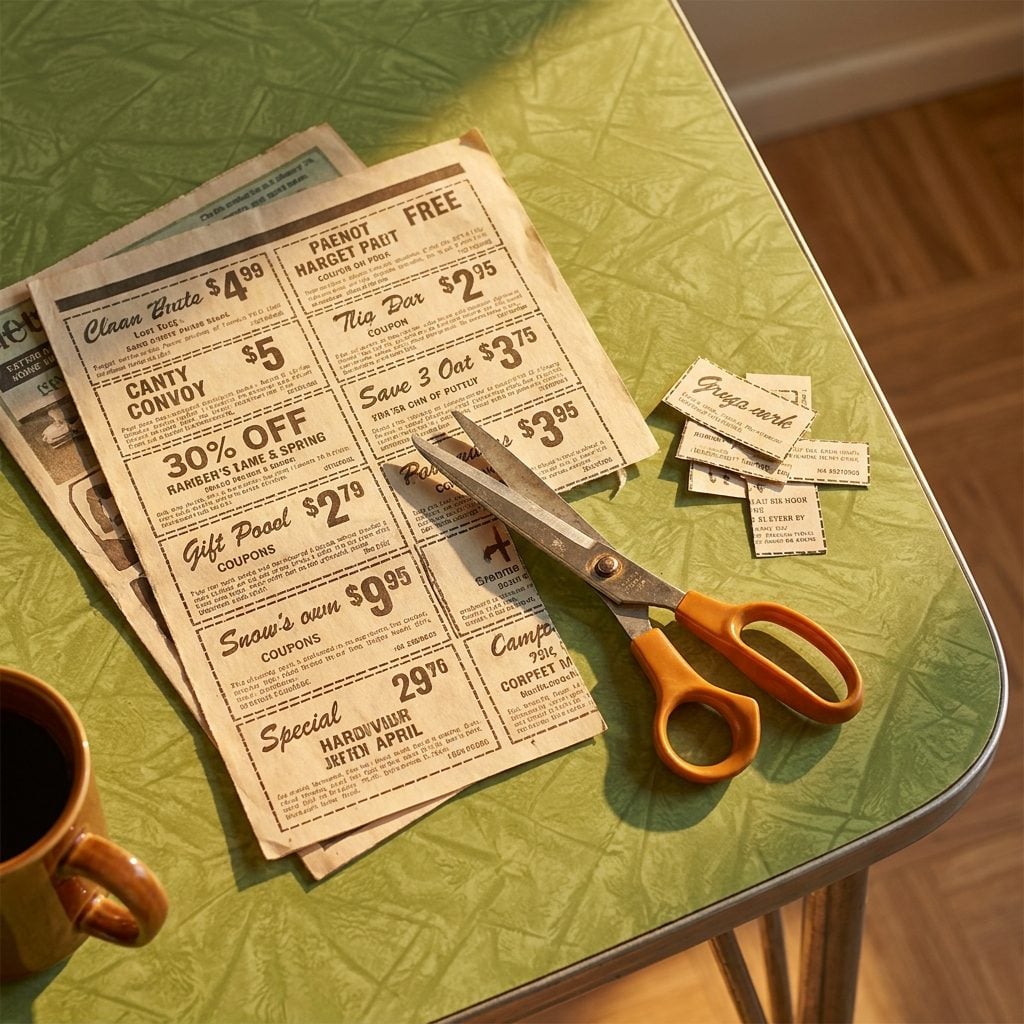
The scissors came out before the church clothes went on. Every Sunday the fat insert got flattened on the table and combed line by line, and a coupon for something you actually used felt like finding a dollar on the sidewalk.
But the real trick was patience. A twenty-five cent coupon meant nothing on its own — you held it until that brand went on sale, then handed both over at once and watched the register drop the price twice. Double-coupon day at the store was practically a holiday.
30. Building the Whole Week’s Menu Around the Grocery Circular
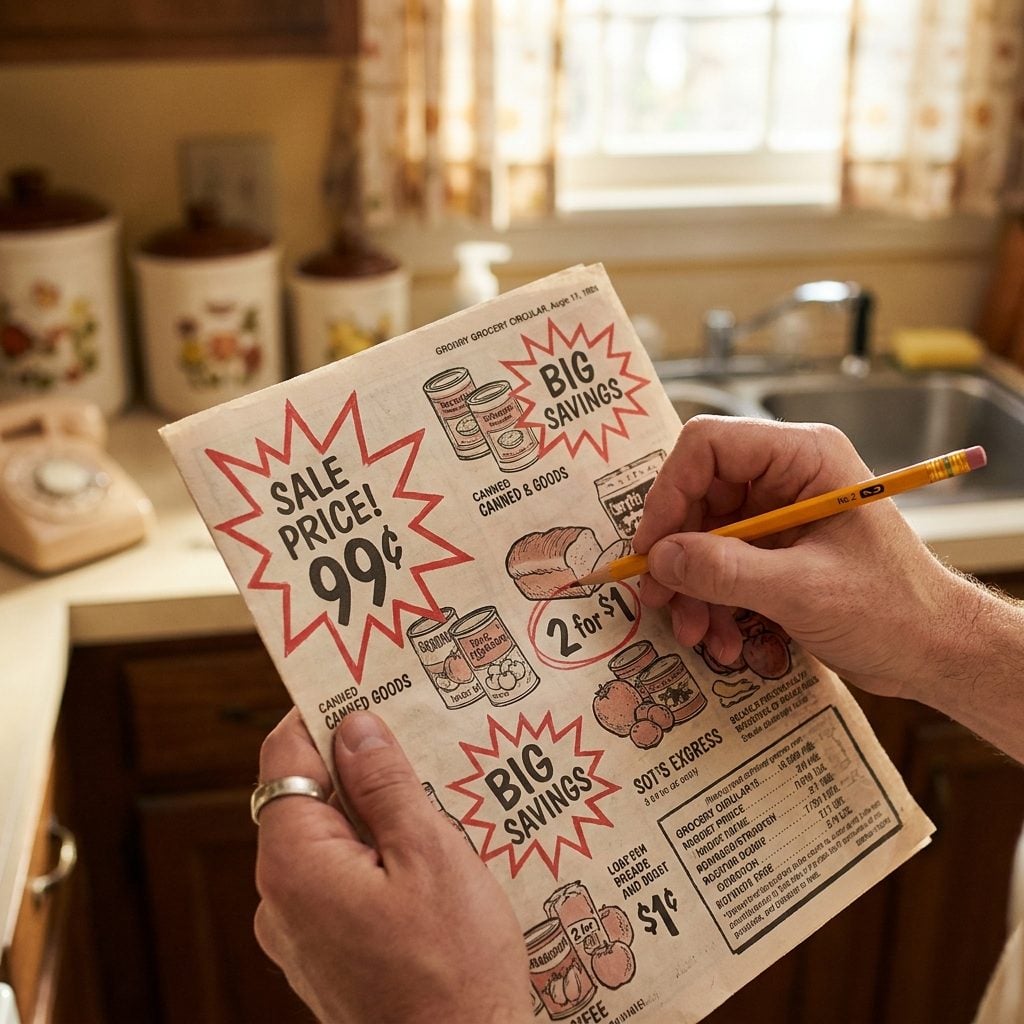
Menus didn’t start with what anyone was craving. They started with whatever the store slapped on the front page of the circular that week. Chicken thighs were the special? Everybody was eating chicken — dressed up five different ways so nobody noticed.
Reverse cooking, really. The sale picked the ingredient, and the ingredient picked which recipe box card came out. Cheap, organized, and the notebook column always added up before a single bag got filled.
29. Chasing the Weekly Specials Down Every Aisle

You didn’t shop one store. You shopped the good part of three. Deeply discounted specials and loss leaders were the entire game, and Mom knew exactly which store had the worthwhile deal and which aisle held it.
The cart was a moving spreadsheet. Every drop-in got a glance and a running mental tally, while the impulse buys her kids lobbied for almost never made it home.
28. Stockpiling Pantry Staples the Second They Hit a Low
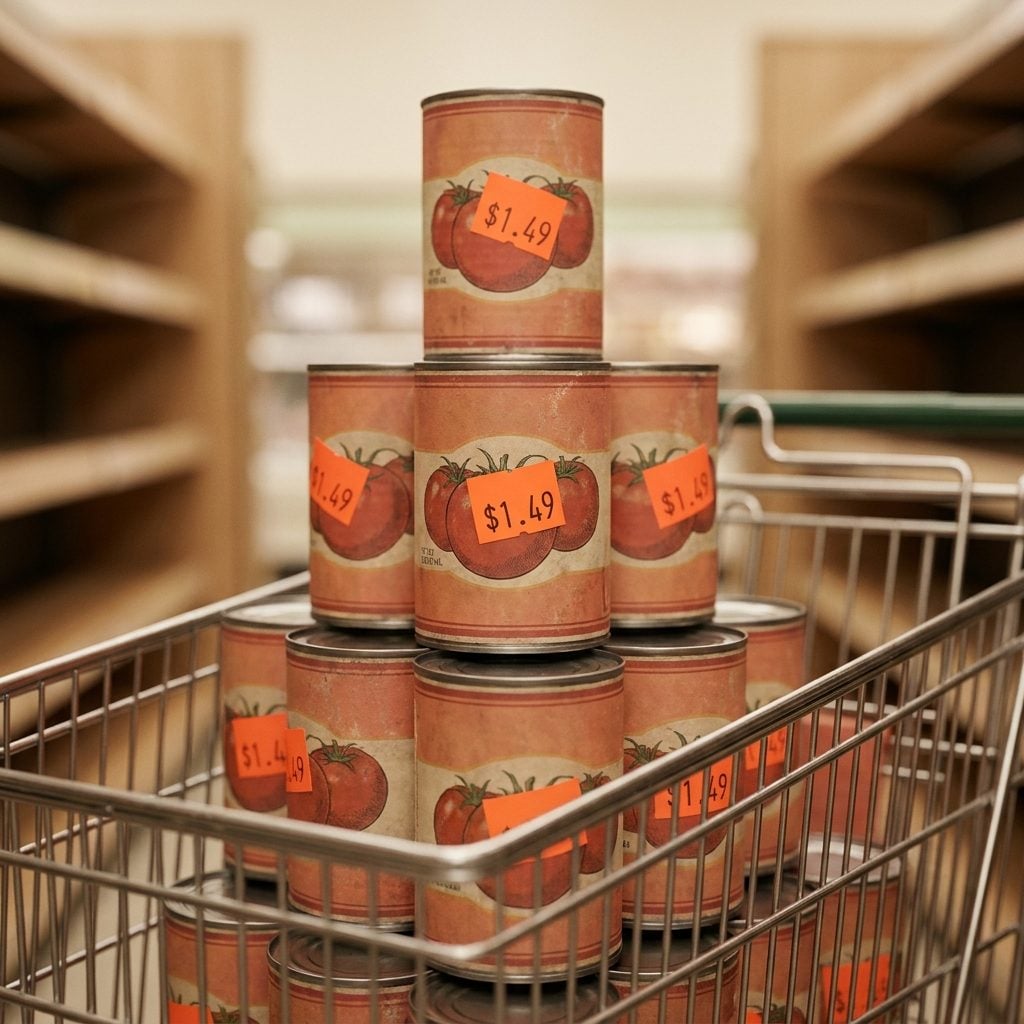
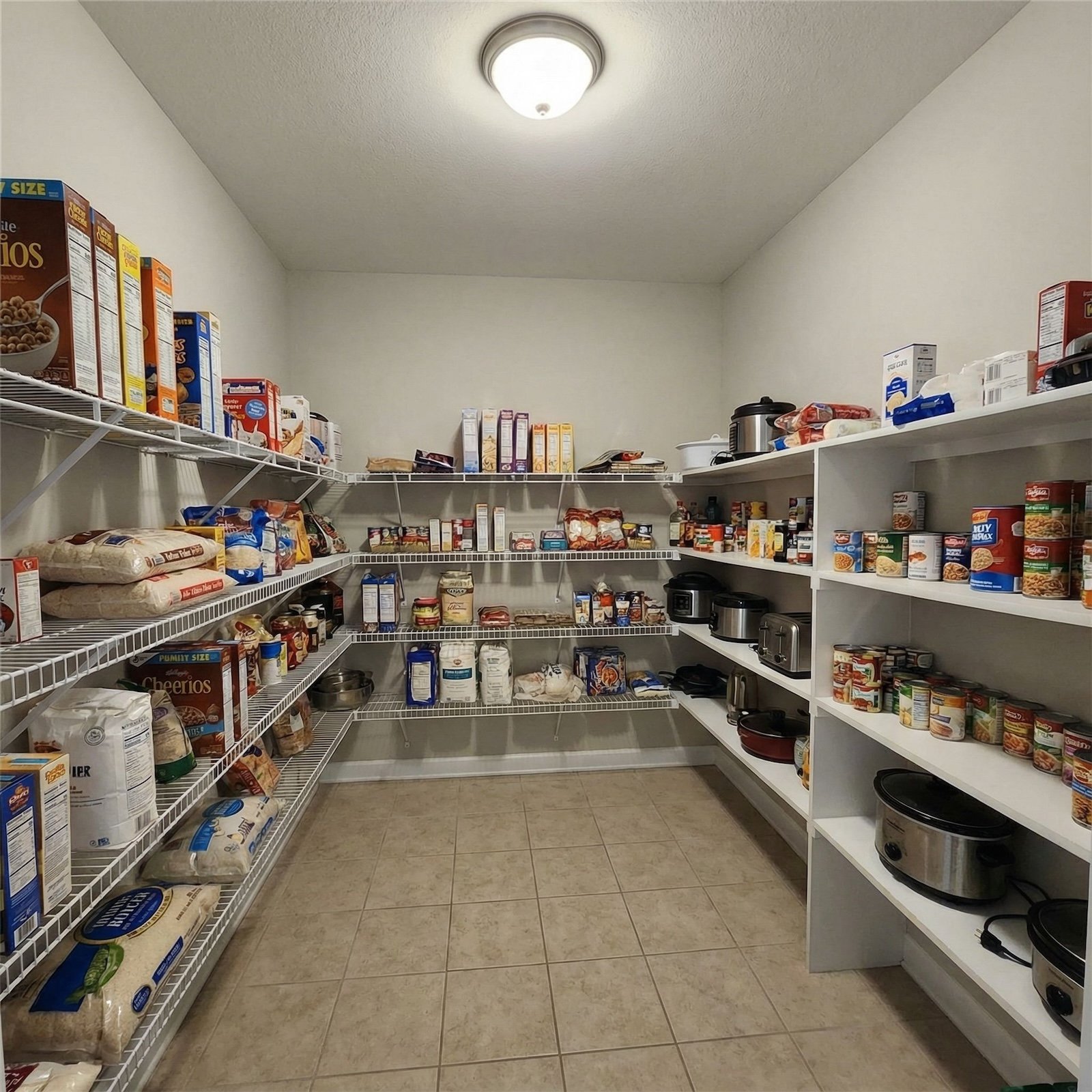
When canned tomatoes dropped to a price that made her raise an eyebrow, she didn’t buy one — she bought twelve. The basement shelf and the pantry were the whole strategy, and both stayed ready.
The logic was simple: prices moved around, but Tuesday dinner kept coming. Buying extra pasta, canned goods, or flour when the price was low meant there was less reason to pay full freight later. Kids figured the packed shelves were just how things were. They were a savings account made of soup cans.
27. Reaching for the Store Brand Without a Second Thought
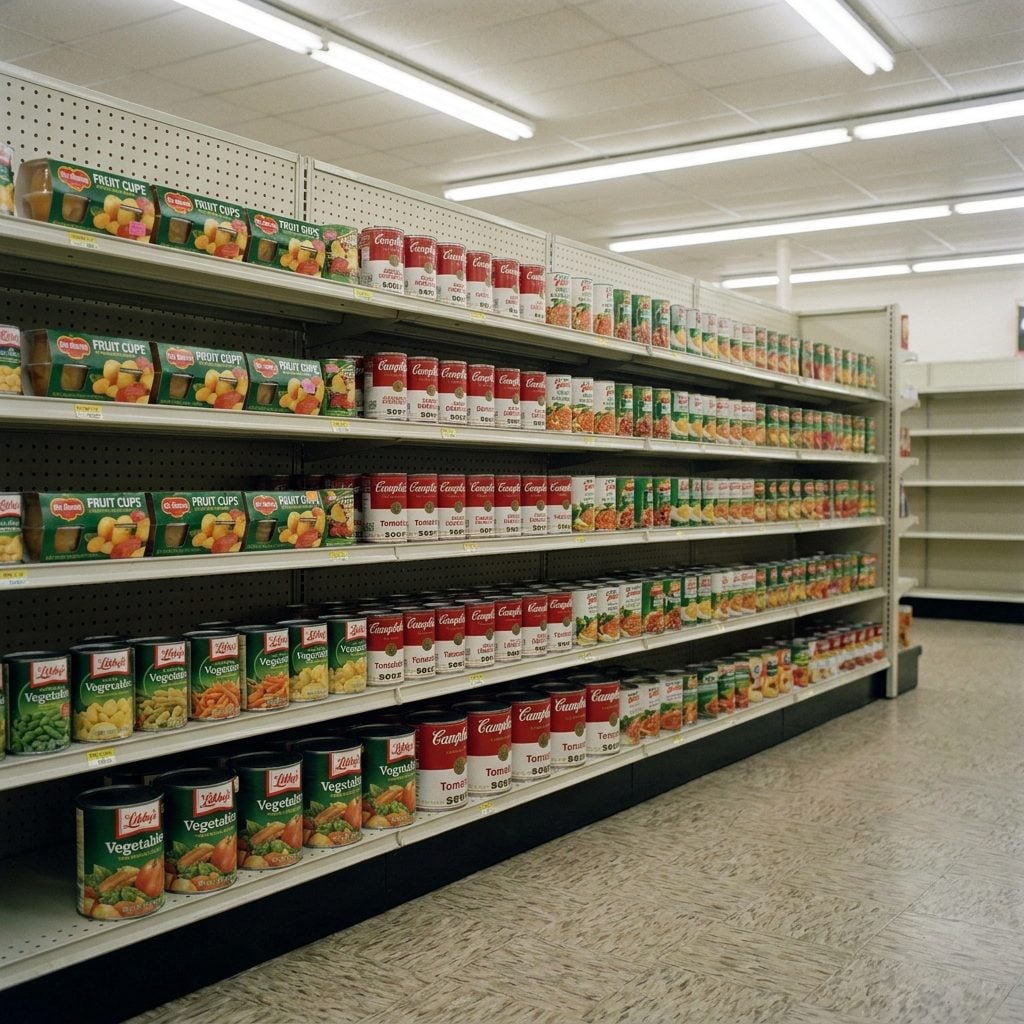
Plain white cans, black block lettering. Generic everything, and Mom stacked them in the cart without a flicker of apology. She’d worked out early that aspirin was aspirin and canned corn did not need a famous last name.
Brand loyalty was a luxury. She was buying groceries, not a logo.
Cereal, canned vegetables, cleaning supplies — store brands often did the same job for noticeably less. Multiply that difference across every grocery trip for years and it turned into real money that quietly went toward shoes, school supplies, and dentist bills instead.
26. One Sunday Roast, Three Dinners Deep
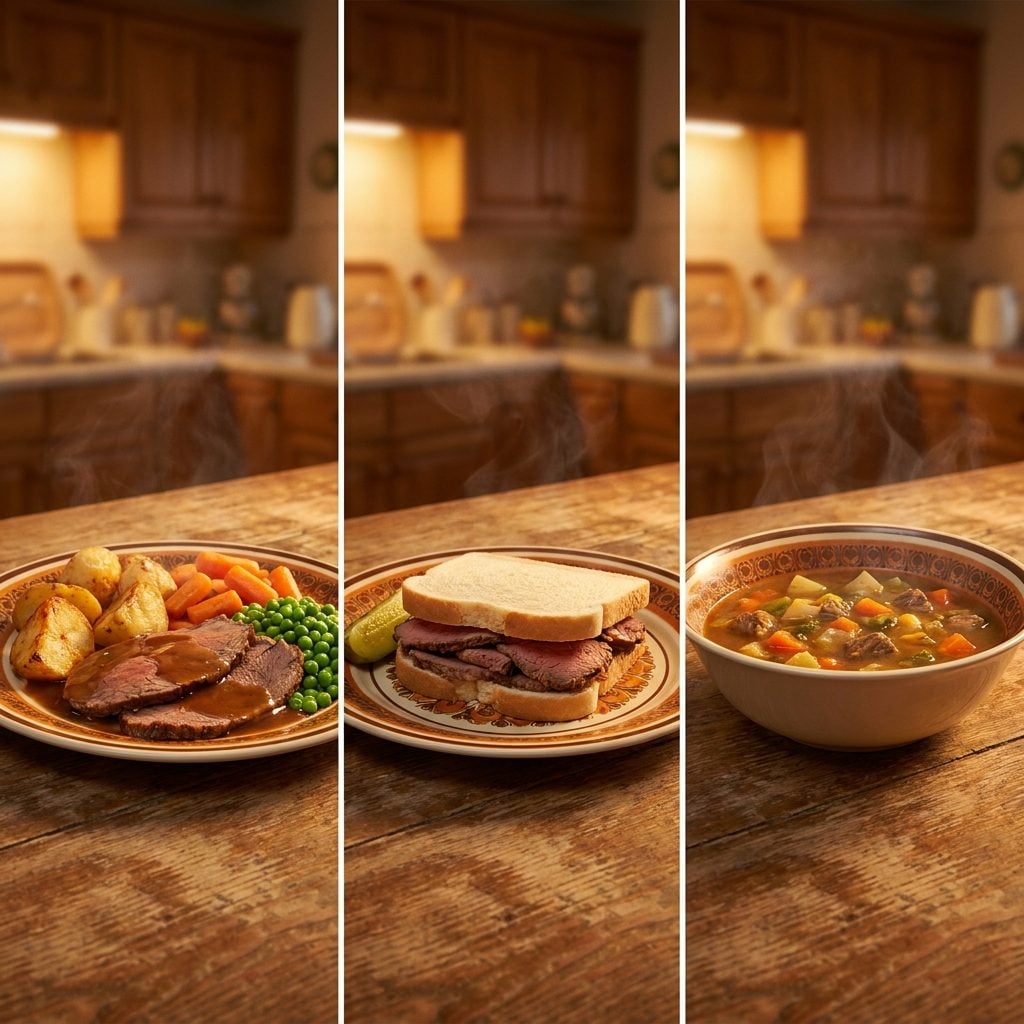
Sunday it was a roast, sliced thick with gravy and potatoes. Monday the ends turned up in sandwiches. And by Wednesday whatever still clung to the bone was simmering in a soup pot with the sad end of a bag of carrots.
Nothing about that animal went to waste, and nobody in the family clocked it as thrift — it just tasted like a normal week. One good cut of meat, bought on special, stretched clear across the calendar.
25. Last Night’s Dinner, Repackaged as Today’s Lunch
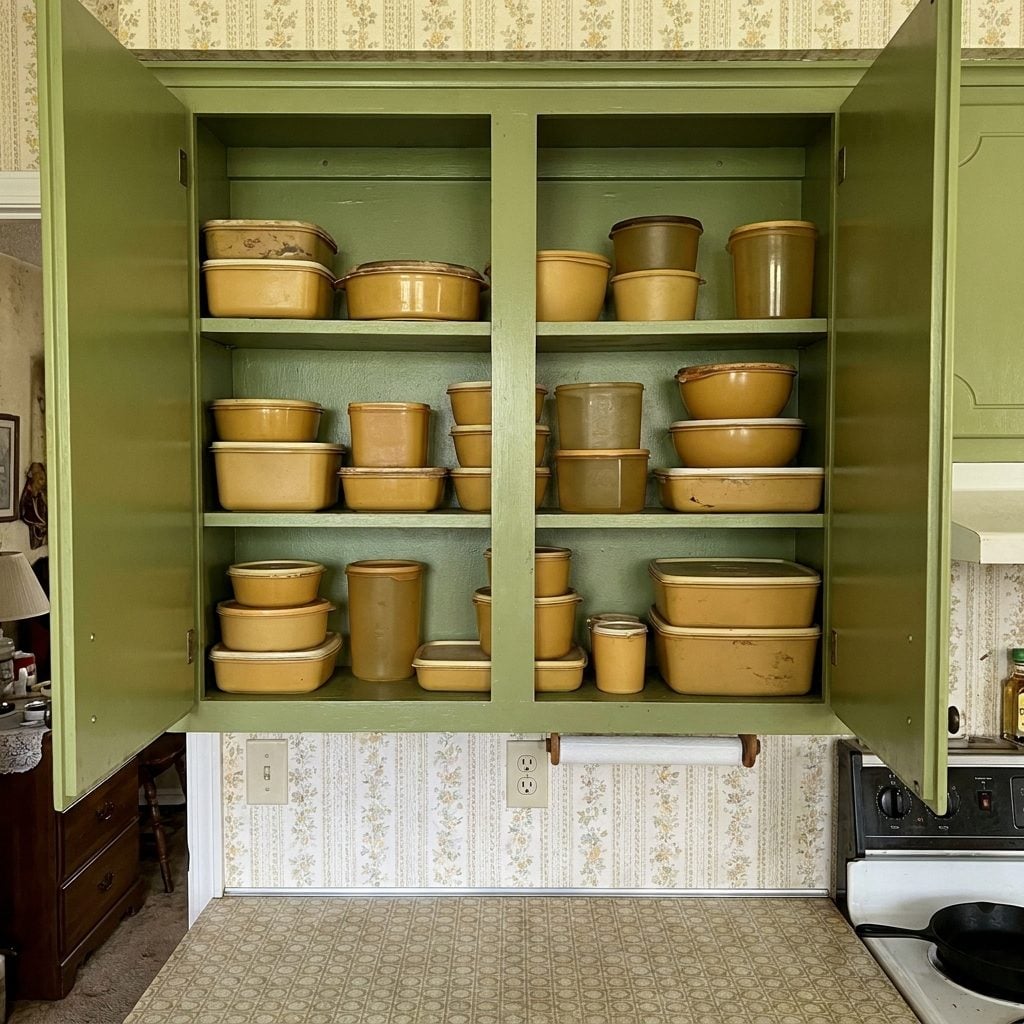
The Tupperware cabinet was chaos, but load-bearing chaos. Every burp of a sealed lid was a small act of economy, because last night’s leftovers were already tomorrow’s packed lunch before the dishes were even done.
Reheated casserole in a thermos. Cold roast between two slices of bread. Dad took it to work, the kids sometimes took it to school, and restaurant lunches simply weren’t a regular line item — too much perfectly good food already paid for sitting in the fridge.
24. The Brown-Bag Lunch That Never Once Came From the Cafeteria
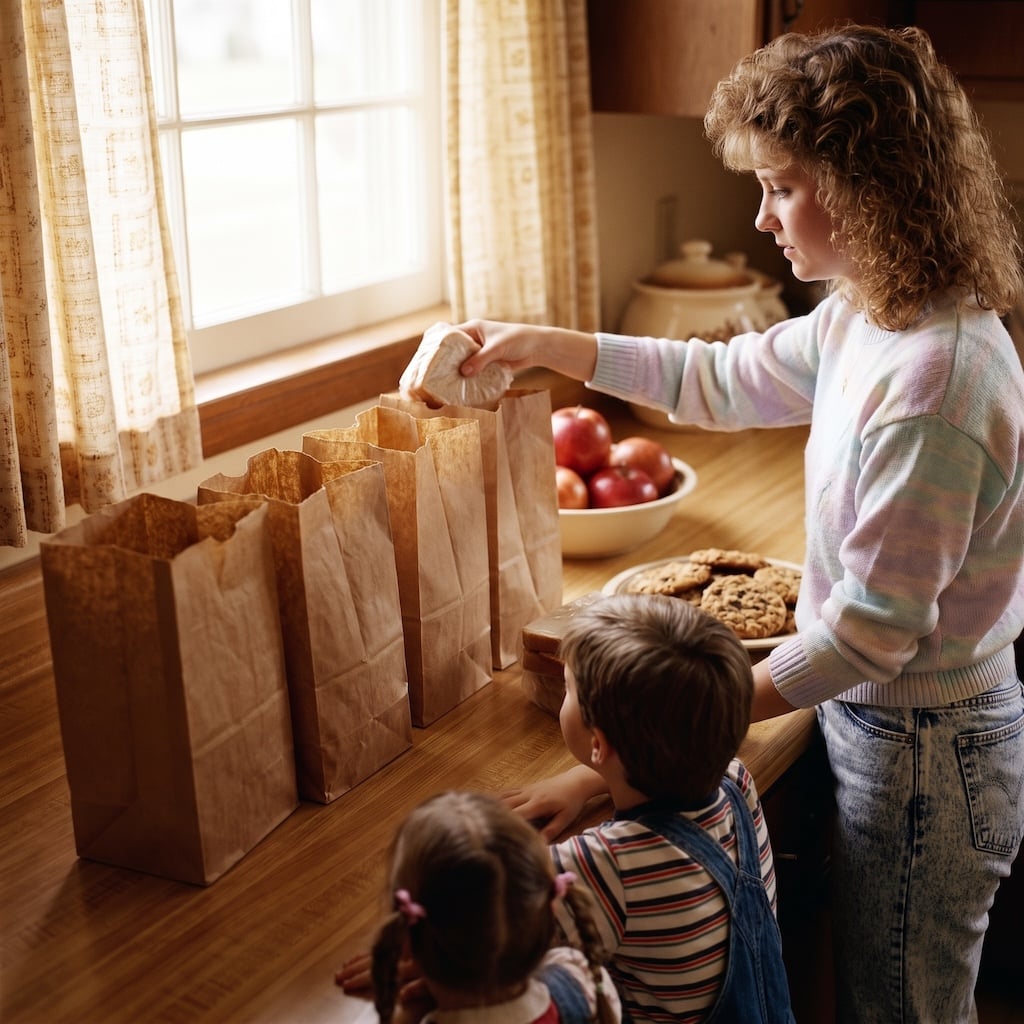
Assembly line at 7 a.m. Bread out, peanut butter dragged across in two swipes, an apple, and a couple of homemade cookies if you were lucky, all of it into the brown bag or the metal lunchbox with the dented corners.
Buying lunch at school was for other kids, the way Mom saw it. A packed lunch was usually much cheaper than paying the cafeteria price every day, and across a school year — especially with more than one child — that difference added up quickly.
23. Dinner on the Table at Home, Nearly Every Single Night
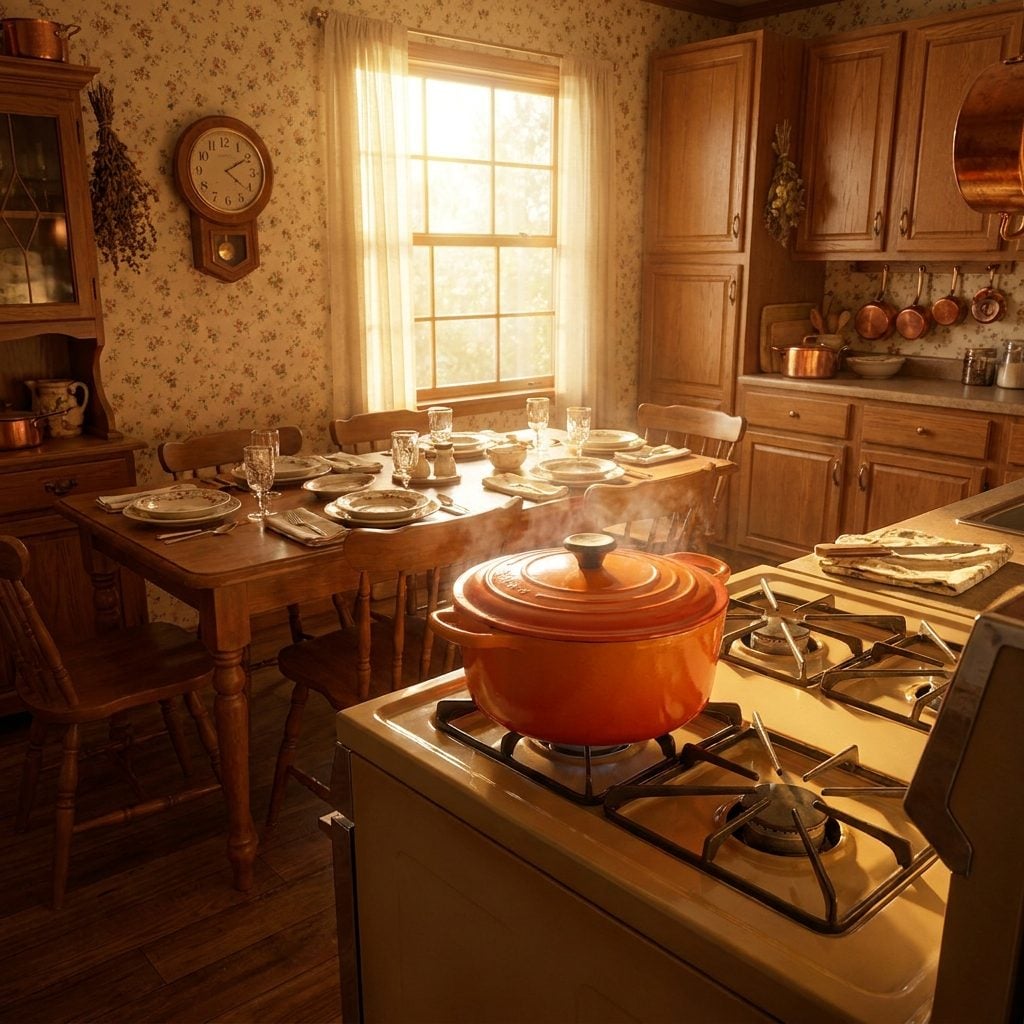
Takeout was for birthdays. Pizza was a Friday event, not a default. Six nights out of seven, something was bubbling on the stove because eating out cost more and nobody needed a calculator to prove it.
Mom’s arithmetic happened in ingredients: freezer meat, sale vegetables, a big pot of something that could handle seconds. Over time, cooking at home most nights left far more room in the household budget than making restaurants and takeout routine.
22. The Casserole That Fed Everyone and Cost Almost Nothing
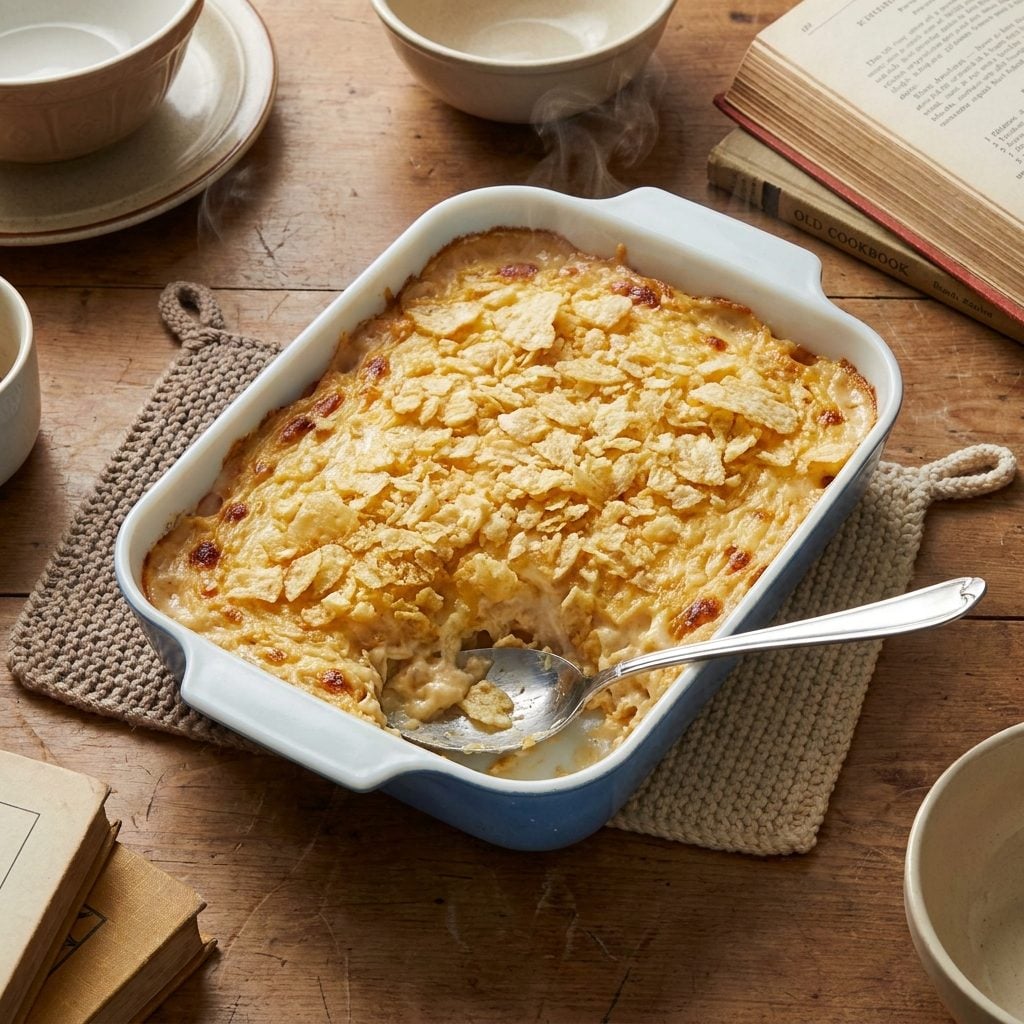
The Pyrex dish did the heavy lifting. A can of cream soup, some noodles, whatever protein was hanging around, a crushed-cracker top — thirty-five minutes later the whole table was fed without demanding much expensive meat.
Casseroles were arithmetic in disguise. They turned scraps into a main course, stretched smaller amounts of ingredients across several plates, and reheated beautifully, which meant lunch was handled too. Honestly, the humble one-dish dinner might’ve been one of the smartest money moves in the whole 1980s kitchen. And it happened to taste like home.
21. The Chest Freezer in the Garage, Stacked Like a Bank Vault
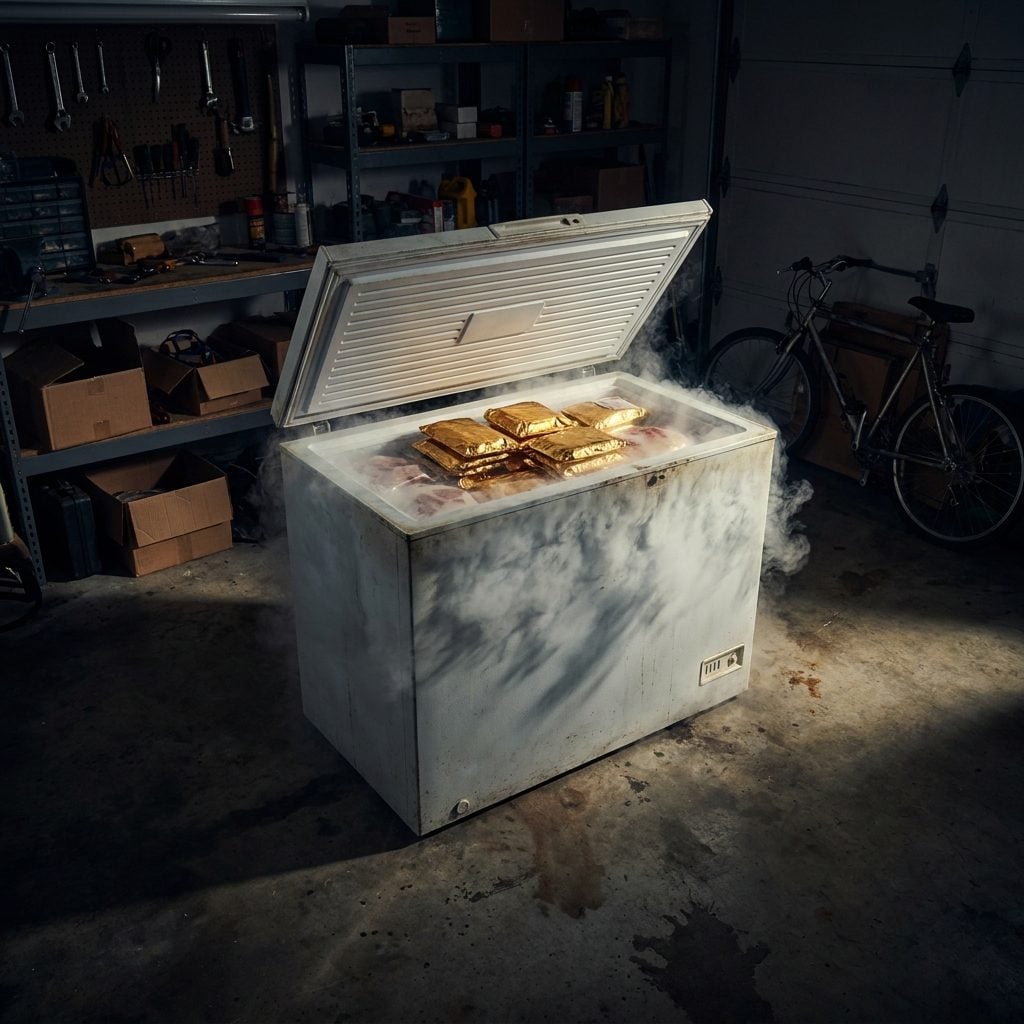
The garage freezer was the family’s insurance policy. When ground beef went on sale Mom bought ten pounds and portioned it into flat freezer bags that stacked like files, and doubling a lasagna recipe meant one for tonight and one wrapped in foil for the week she didn’t feel like cooking.
The real trick lived taped inside the lid: an inventory list updated in felt-tip pen. She knew there were two chicken pot pies and a bag of chili before she ever lifted it. The freezer gave sale-priced food somewhere to wait and homemade dinners somewhere to hide until the week fell apart.
20. The Backyard Vegetable Patch That Fed the Whole Street
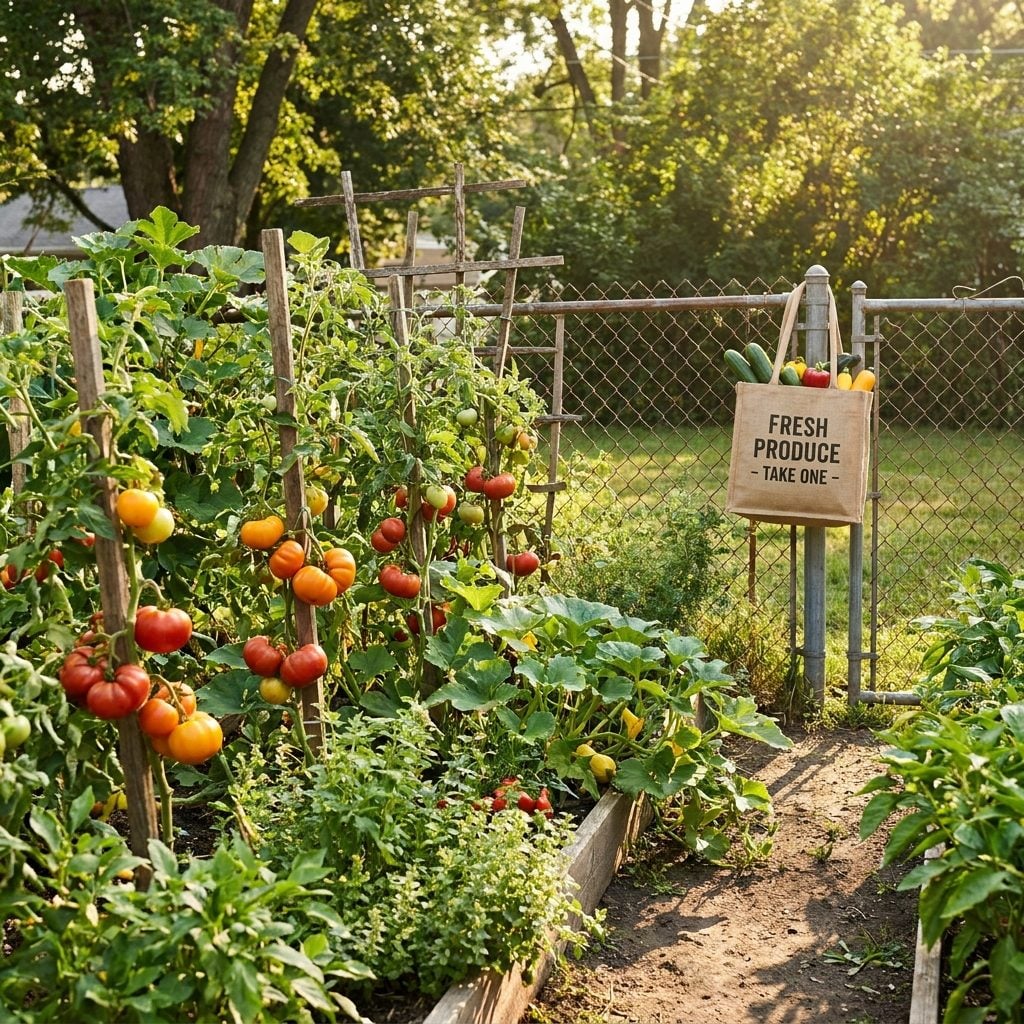
By August the tomatoes came in faster than anyone could eat them, and neighbors started finding paper bags of them left on the porch. A few rows of productive vegetables could turn summer into weeks of beans, tomatoes, zucchini, and whatever else decided to cooperate that year.
Cheaper wasn’t always the only reason to grow them. Fresh-picked produce tasted different. Kids who wouldn’t touch a canned green bean might eat one straight off the vine, dirt and all. Then came the secondary problem every successful gardener recognized: figuring out where on earth to put the overflow.
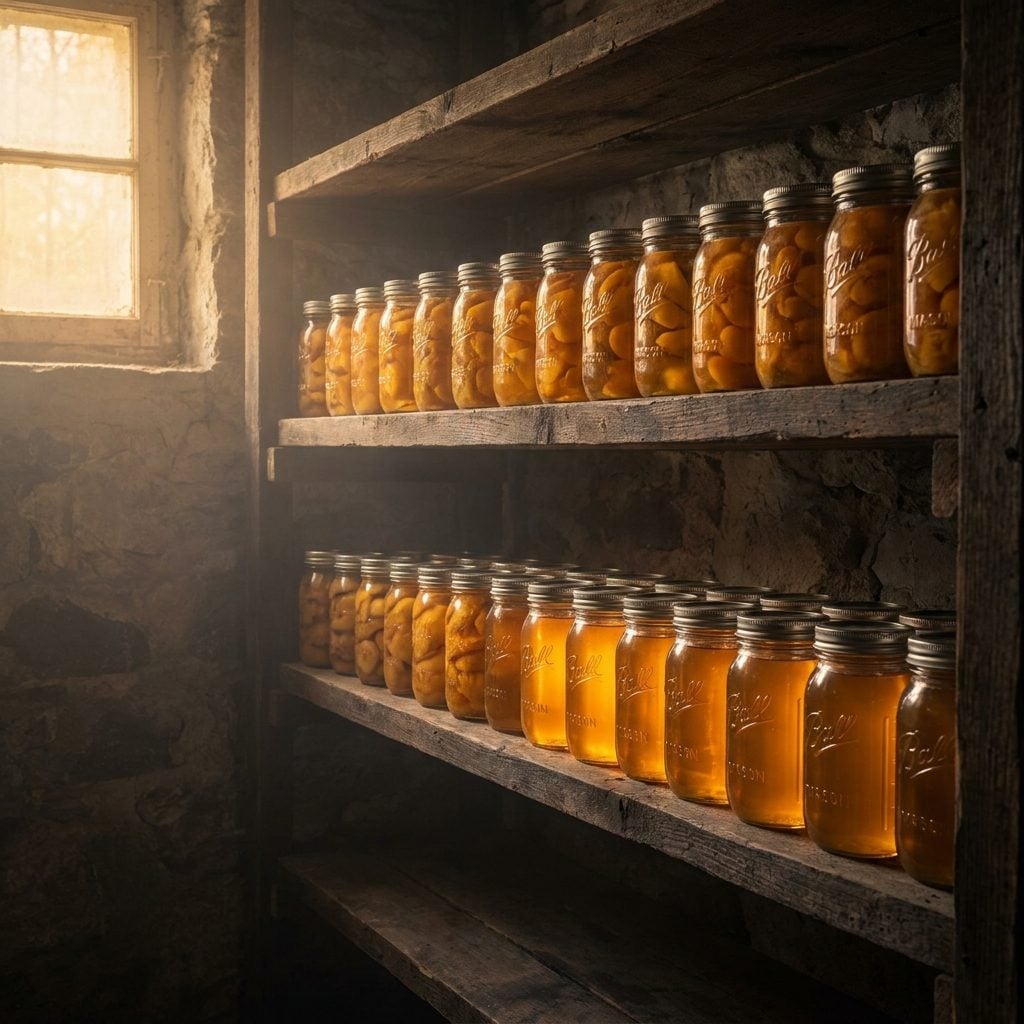
19. Canning Jars Lined Up Like Trophies on the Basement Shelf
🔥 Would you like to save this?
Every August the kitchen turned into a sauna. The canner rumbled on the back burner all afternoon, the windows fogged, and the whole house smelled like simmering tomatoes and vinegar for days.
Then came the payoff sound: that metallic ping of a lid sealing as it cooled. Every ping was one more jar of sauce or pickles waiting for winter. By fall the basement shelves held summer in glass.
18. The Crock-Pot That Turned the Toughest Meat Tender by Dinner
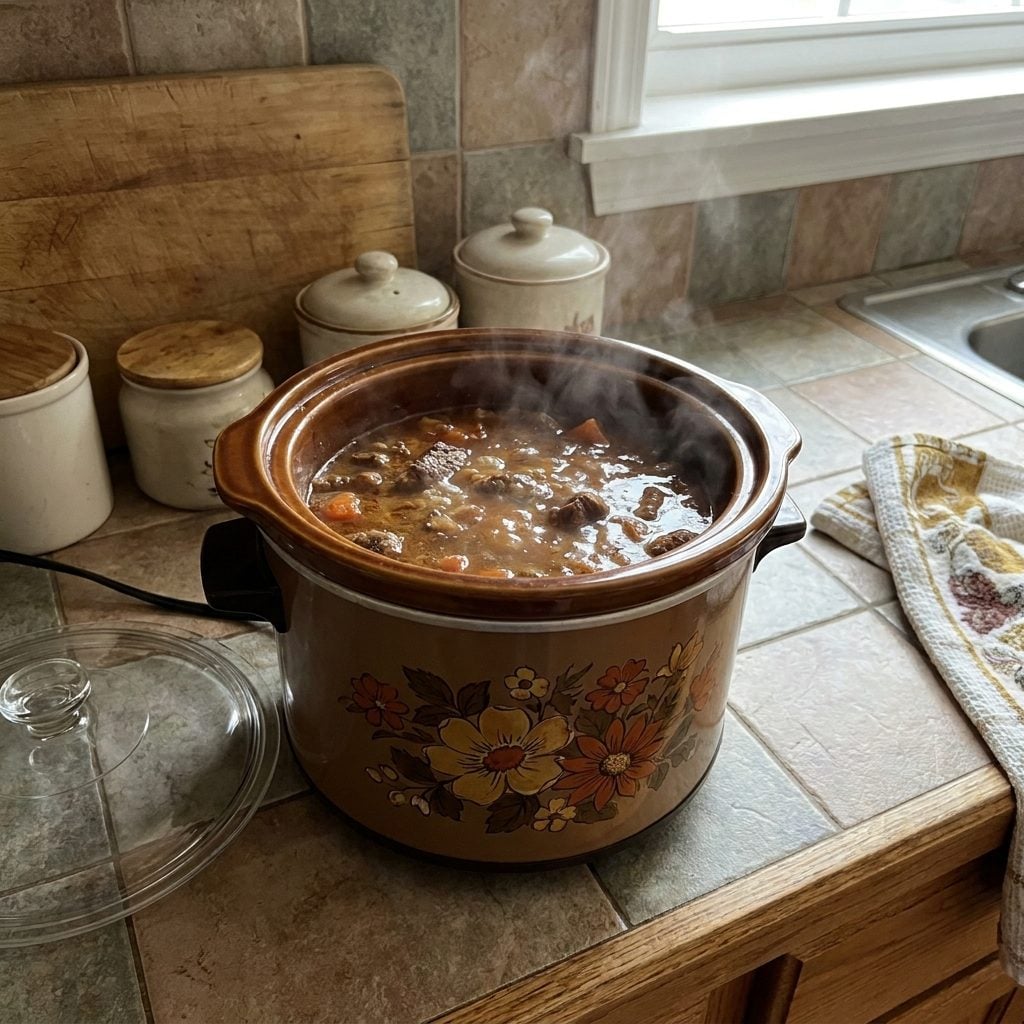
You could smell it the second you walked in from school. Mom had loaded the Crock-Pot before she left that morning, and eight hours later a tougher, less expensive cut had softened into something worth coming home to.
Chuck roast, pork shoulder, chicken thighs — cuts that rewarded time more than fuss. Low, slow, and largely unattended did the work. No standing over a stove, no fancy technique. Just a plug in the wall and the patience to leave dinner alone.
17. The Coffee Can of Bacon Grease That Lived by the Stove
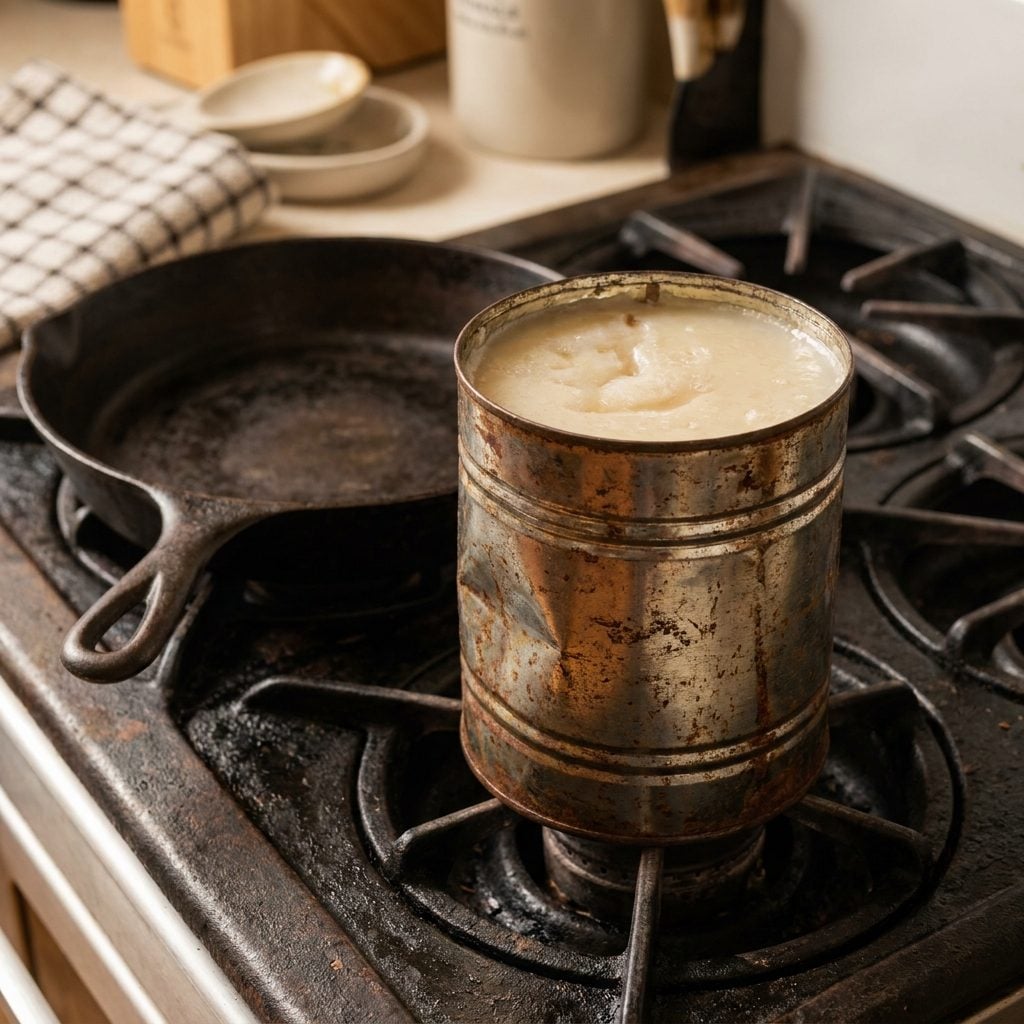
Plenty of kitchens had one. Maybe it was an old coffee can, maybe a ceramic crock, holding bacon drippings that were saved instead of automatically discarded.
That grease fried eggs, flavored beans, and greased pans. It was one more example of using something twice before paying for something else. Sounds strange now, but a spoonful in a pot of green beans is the flavor a whole generation still remembers.
16. The Cabinet Full of Mismatched Margarine Tubs and Jelly Jars
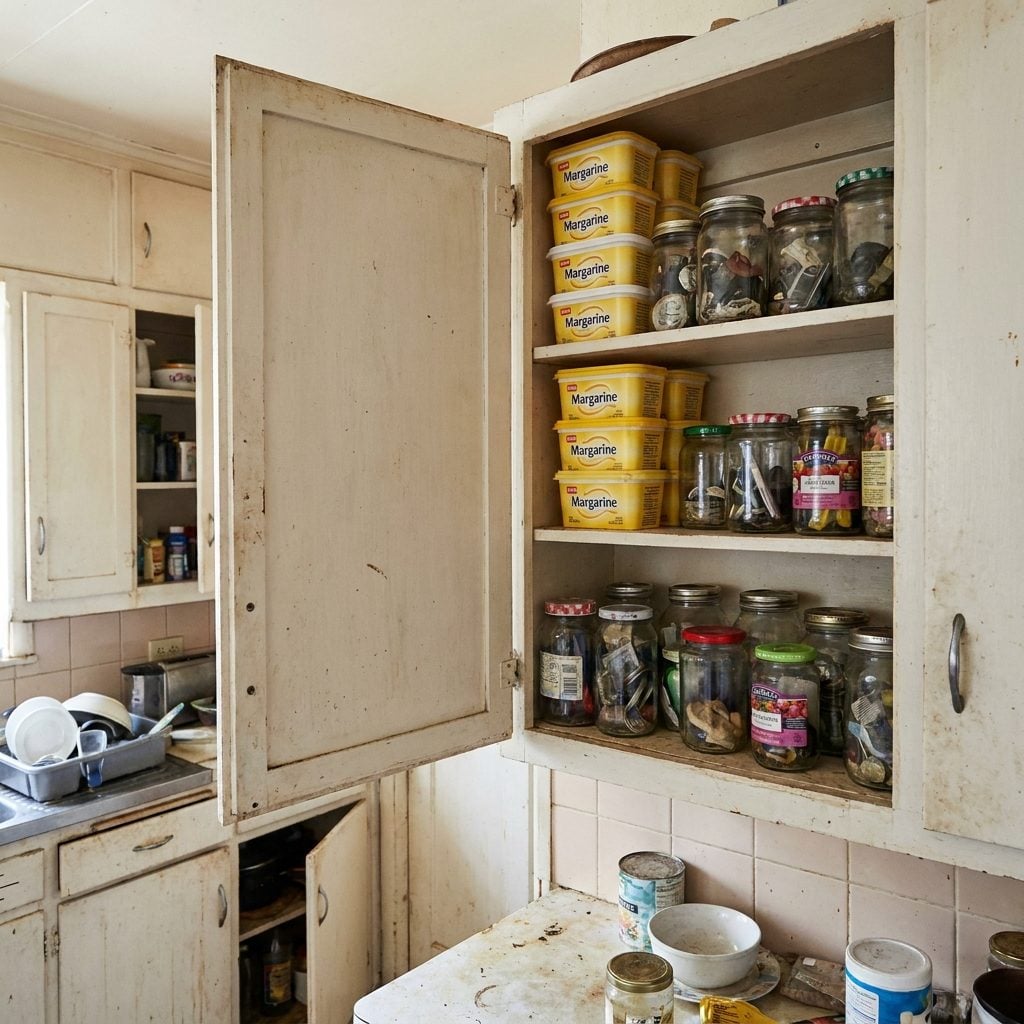
You opened the cabinet hoping for a matching lid and got an avalanche of yellow margarine tubs instead. Half of them held leftovers. The rest held buttons, screws, dry beans, or some mystery you’d rather not open.
And then the great betrayal of childhood: reaching for what the tub promised was ice cream and finding frozen chili staring back. Why buy a container for every little thing when yesterday’s food packaging was sitting right there waiting for another job?
15. The Sheet of Aluminum Foil Washed and Hung to Dry
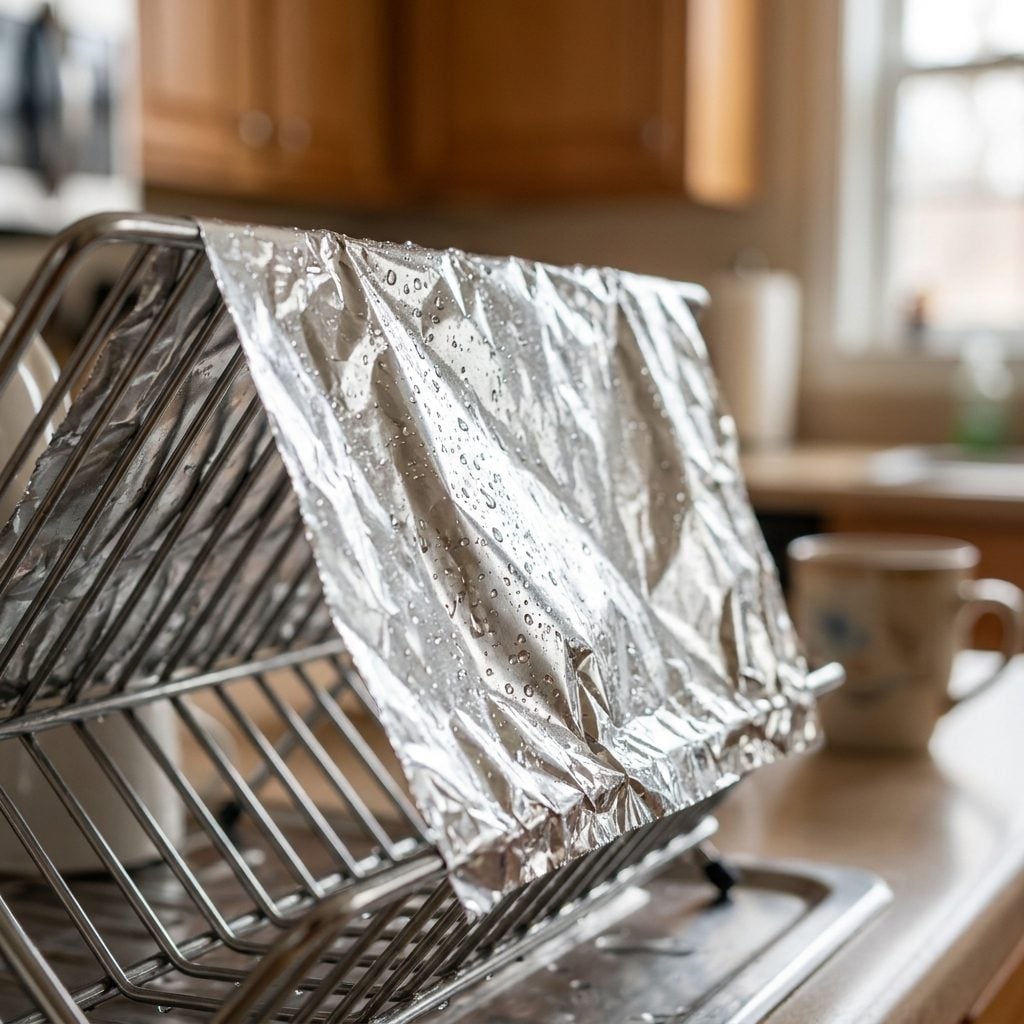
If it wasn’t torn and it wasn’t too greasy, that foil got a rinse under the tap, a gentle smoothing with a flat hand, and a spot draped over the dish rack to dry. Back in the drawer it went, wrinkled but ready for a second tour.
Depression-era thrift habits lingered in plenty of households long after the hardest years were over, often passed from one generation to the next. Foil wasn’t something you tossed automatically if it still had another use in it. I’ll admit I roll my eyes at the memory and then catch myself doing the exact same thing with a barely-used sheet.
14. The Clothesline Strung Across the Backyard on a Sunny Day
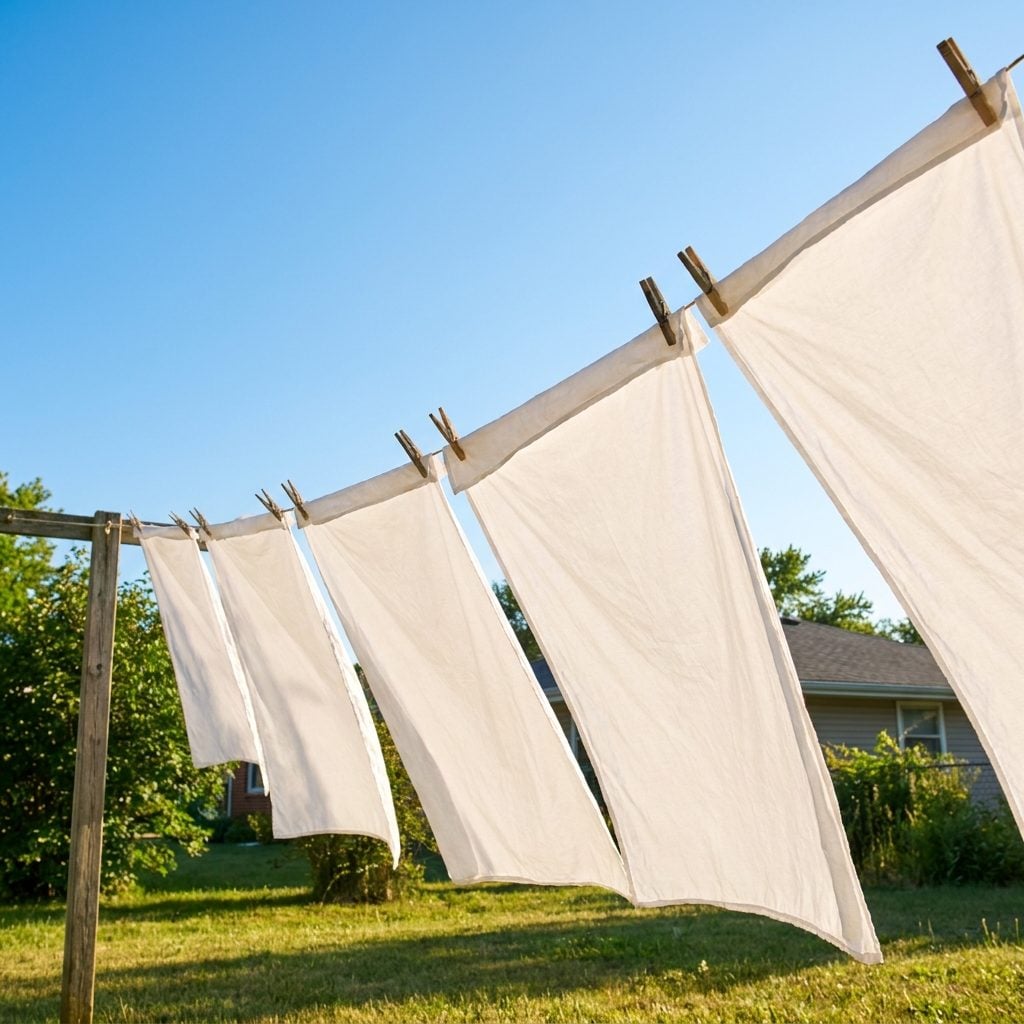
Nothing on earth smells like a bedsheet dried on the line in full sun. Stiff, bright, faintly grassy. You can buy a whole aisle of products trying to fake it and not one of them comes close.
A clothes dryer is one of the more energy-hungry appliances in many homes, so on any halfway decent day the laundry went outside instead. Line drying also spared fabrics some of the heat and mechanical tumbling that gradually wear fibers down. Free heat, free breeze, and no lint trap filling up with bits of the clothes themselves.
13. Turning the Dial to Cold and Cutting the Power Bill
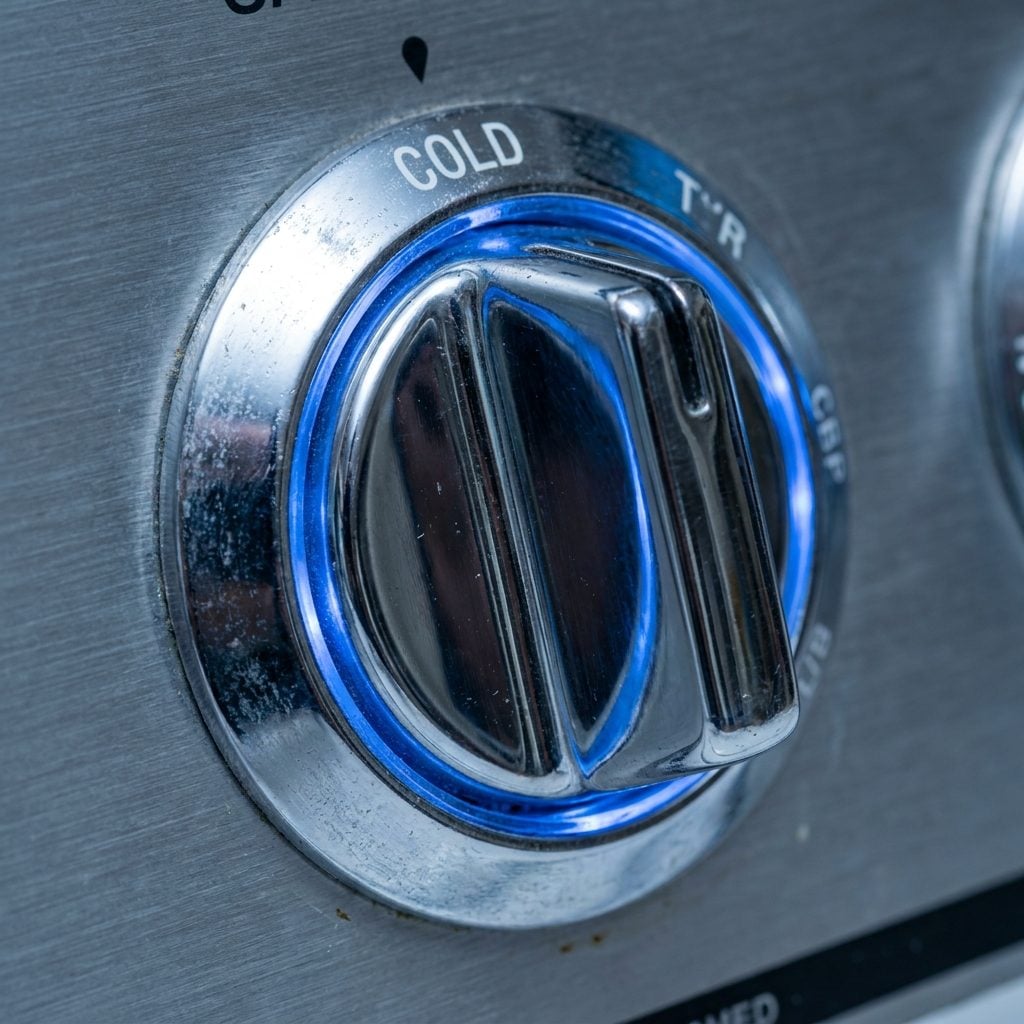
Heating the water accounted for a large share of the energy used by many washing machines. Turn the dial to cold and that portion of the cost dropped dramatically, load after load.
There was a side benefit nobody complained about. Cold water was generally gentler on many fabrics and colors, helping reduce shrinking and dye transfer while keeping dark denim darker longer. Hotter washes got saved for loads that actually needed them.
12. The Sewing Basket That Kept Clothes Alive for Years
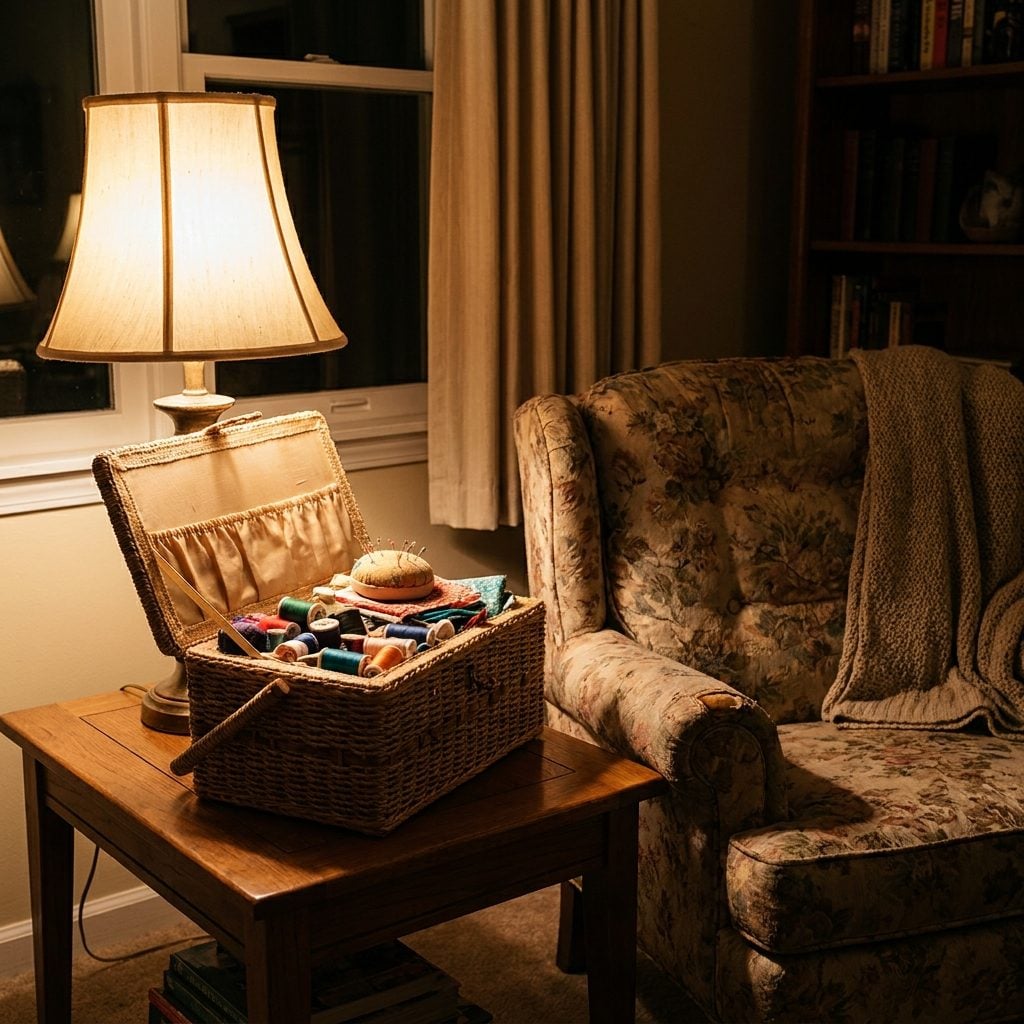
The sewing basket sat by the good chair, and after dinner it came out. A split seam, a knee worn clean through on a pair of Toughskins, a hem that needed another inch as a kid shot up — none of that automatically sent clothing to the trash.
Iron-on patches turned battered jeans into another season of pants. Hems came down. Torn seams closed back up. A hand-me-down could pass through three siblings and still have miles left. That basket quietly saved real money, one stitch at a time, and taught a whole generation that broken and finished are two very different things.
11. The Button Jar That Saved Every Shirt With One Missing Piece
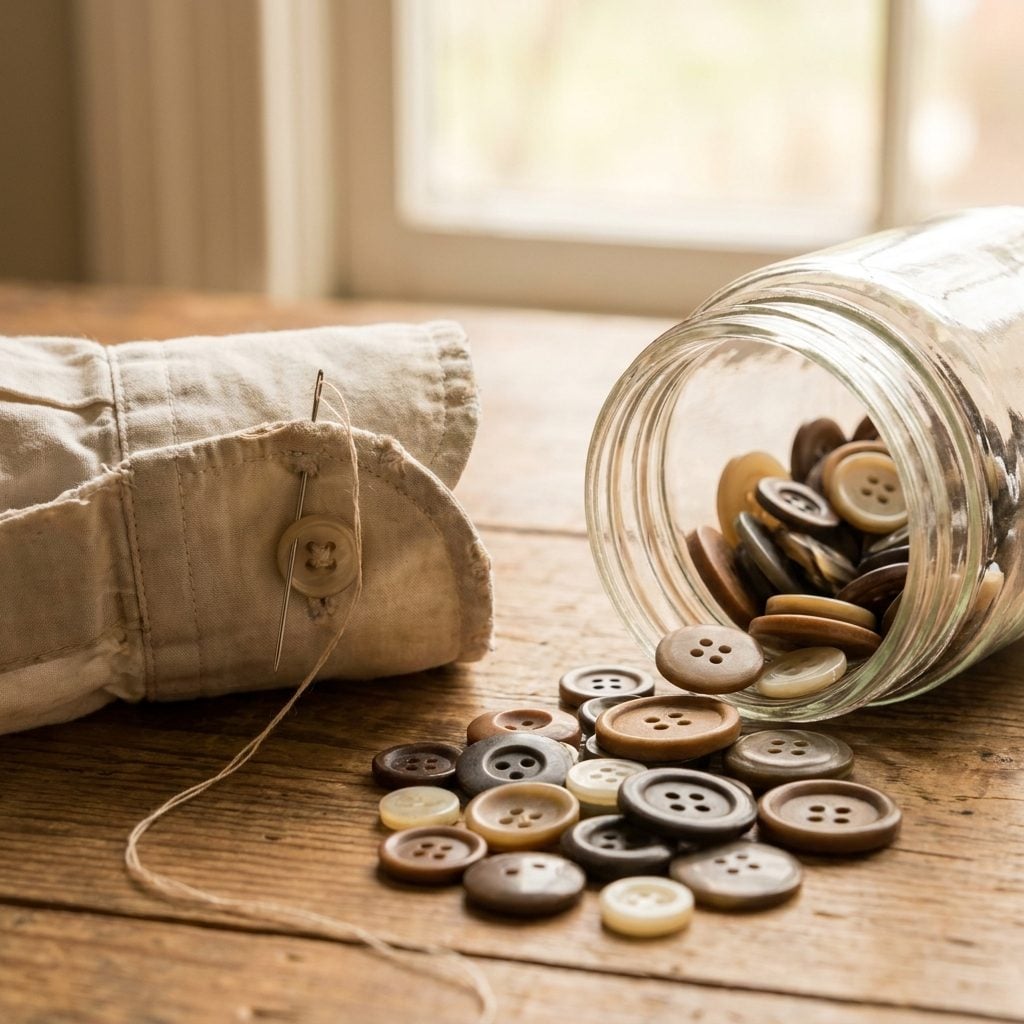
Nobody threw out a shirt over one missing button. The button jar came down off the shelf, rattling with mismatched spares snipped from worn-out clothes before the fabric itself finally disappeared.
That was the part that made the habit different from ordinary mending: even the dead clothes donated parts. Buttons, hooks, snaps, sometimes a usable zipper — anything that might rescue something else got saved.
A replacement didn’t have to match perfectly. It only had to close the shirt.
10. The Hand-Me-Down System, Passed Down One Kid at a Time
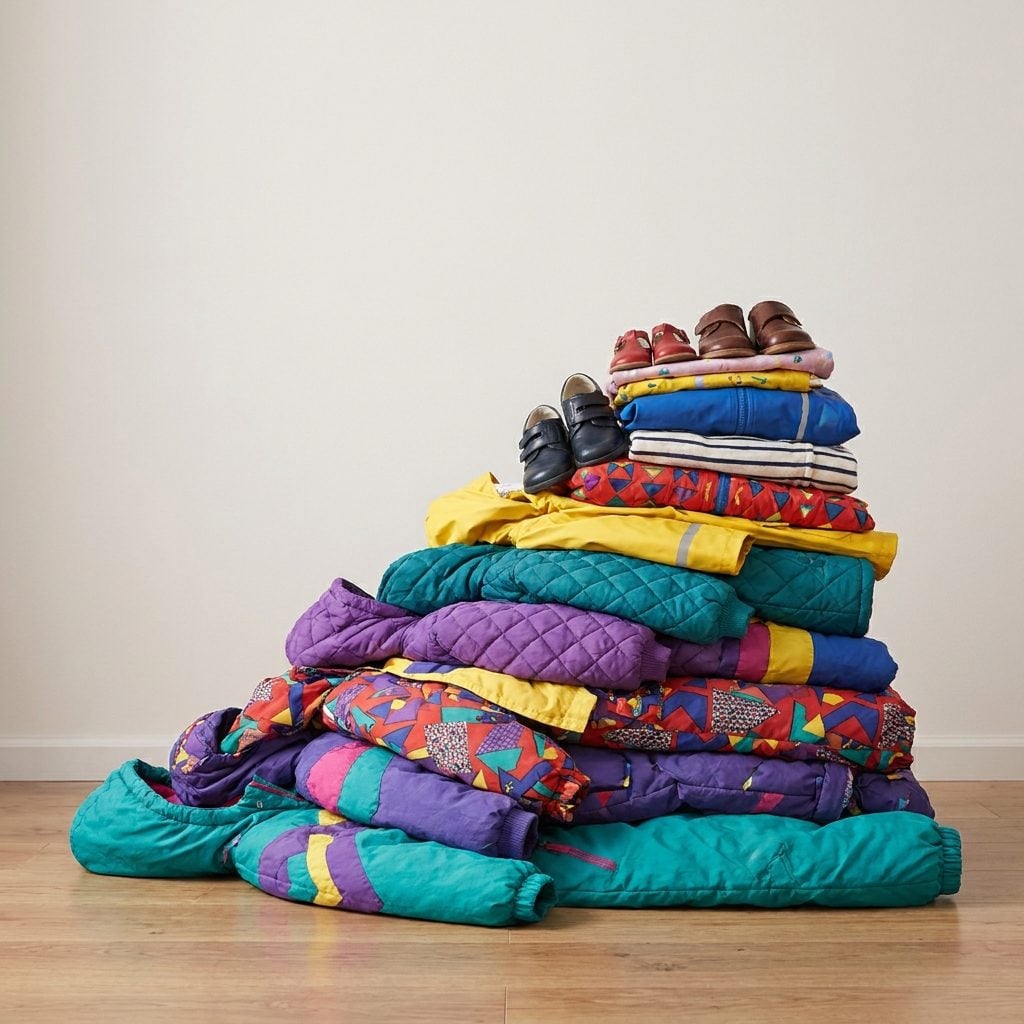
The oldest kid got the new stuff. Everyone after got the archive.
Snowsuits, church shoes, winter coats — they moved down the sibling line like a relay baton, each one softer and more faded than the last. A well-built corduroy jacket could clothe several children before anyone finally gave up on it.
There was a whole economy of basement bins sorted by size and season, waiting for the next kid to grow into them. Frugal, sure. But something else lived in it too: a piece of one child’s history worn by the next.
9. Running the Sewing Machine After the Kids Were Asleep
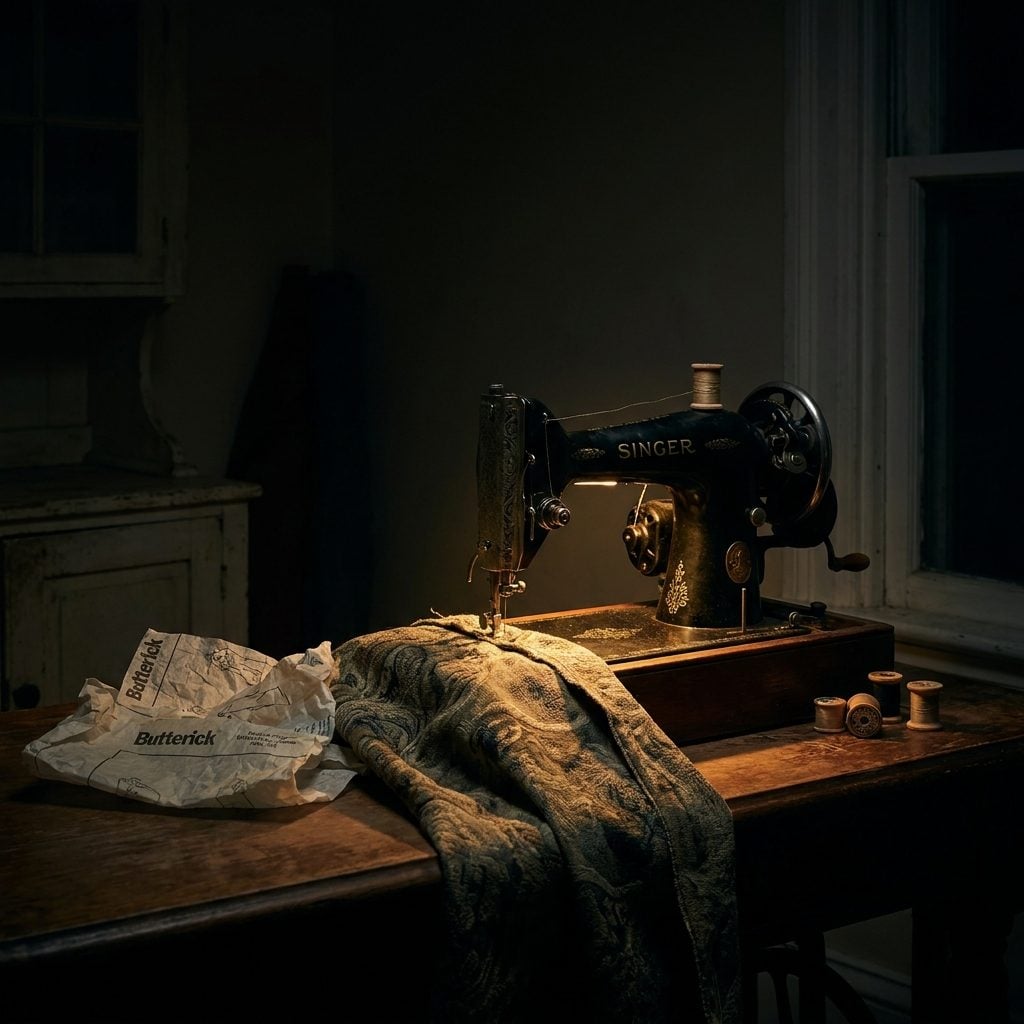
The hum of a Singer at 9 p.m. was the sound of a house making something instead of buying it.
Sometimes home sewing saved money, especially when fabric was inexpensive, a pattern was reused, or the project was something costly to buy ready-made. Other times the real value was getting exactly the size, fabric, or design you wanted.
Curtains, pillowcases, Halloween costumes, that ruffled Easter dress with the matching sash — all of it could emerge from the dining table after bedtime. The same pattern might come out year after year in a larger size or a completely different fabric.
8. Saturday Mornings Working the Garage Sale Circuit

The Saturday paper’s classifieds were a treasure map, circled in pen and routed in the smartest possible loop across town. First stop by 8 a.m., because the good stuff went early.
Church rummage sales were the mother lode. Bags of kids’ clothes, kitchen appliances with plenty of life left, snow boots that would fit next winter. Mom knew what things cost new, so she spotted a deal on sight and hated paying full price for anything a child would outgrow by spring.
Half the furniture in the house arrived this way, and nobody could tell which half.
7. Buying Everything One Size Too Big “To Grow Into”
🔥 Would you like to save this?
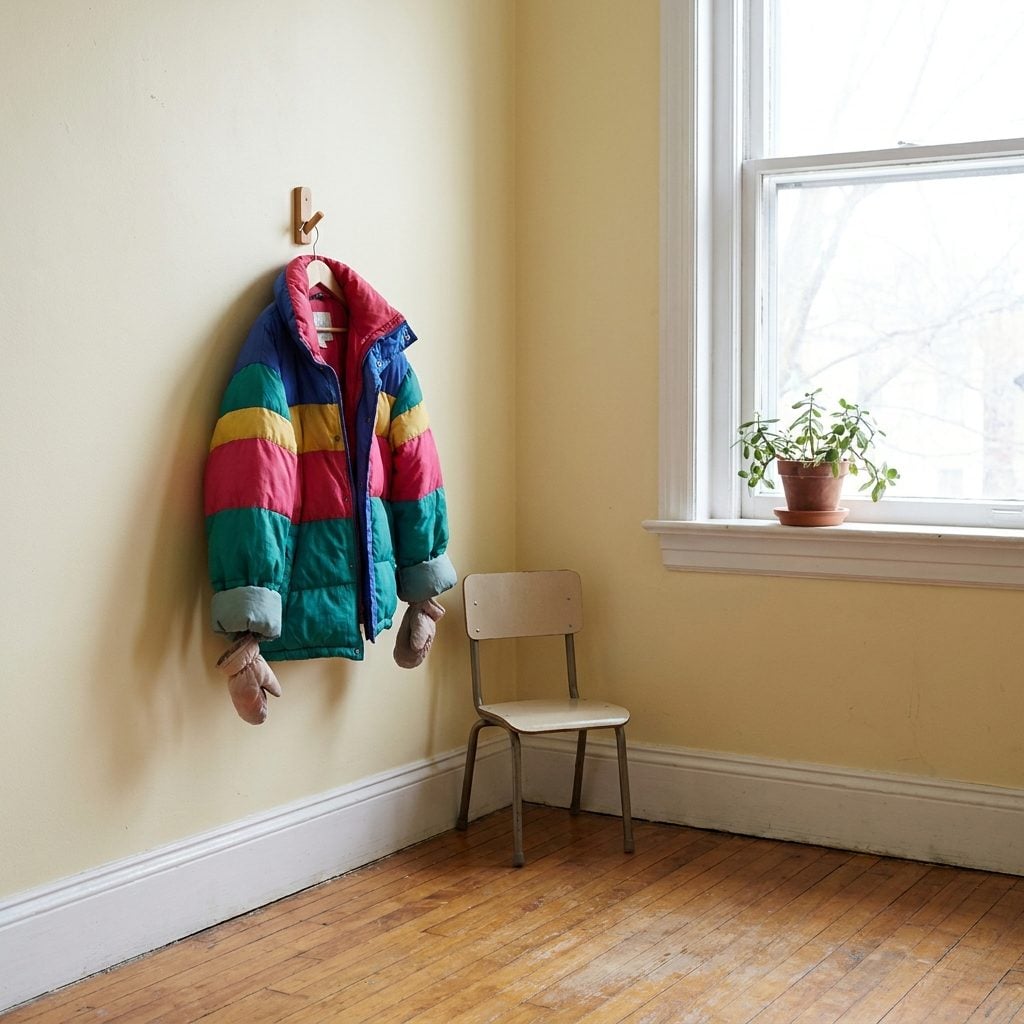
Cuffs rolled twice. Sleeves that swallowed the hands. Every kid spent a few months looking like they’d borrowed the outfit from an older cousin, because Mom bought for the child you’d become, not only the one standing in the aisle.
The logic was obvious. A perfectly fitted coat left no room for the next growth spurt. Buying a little extra space increased the odds that the same coat would survive more than one stretch of the calendar.
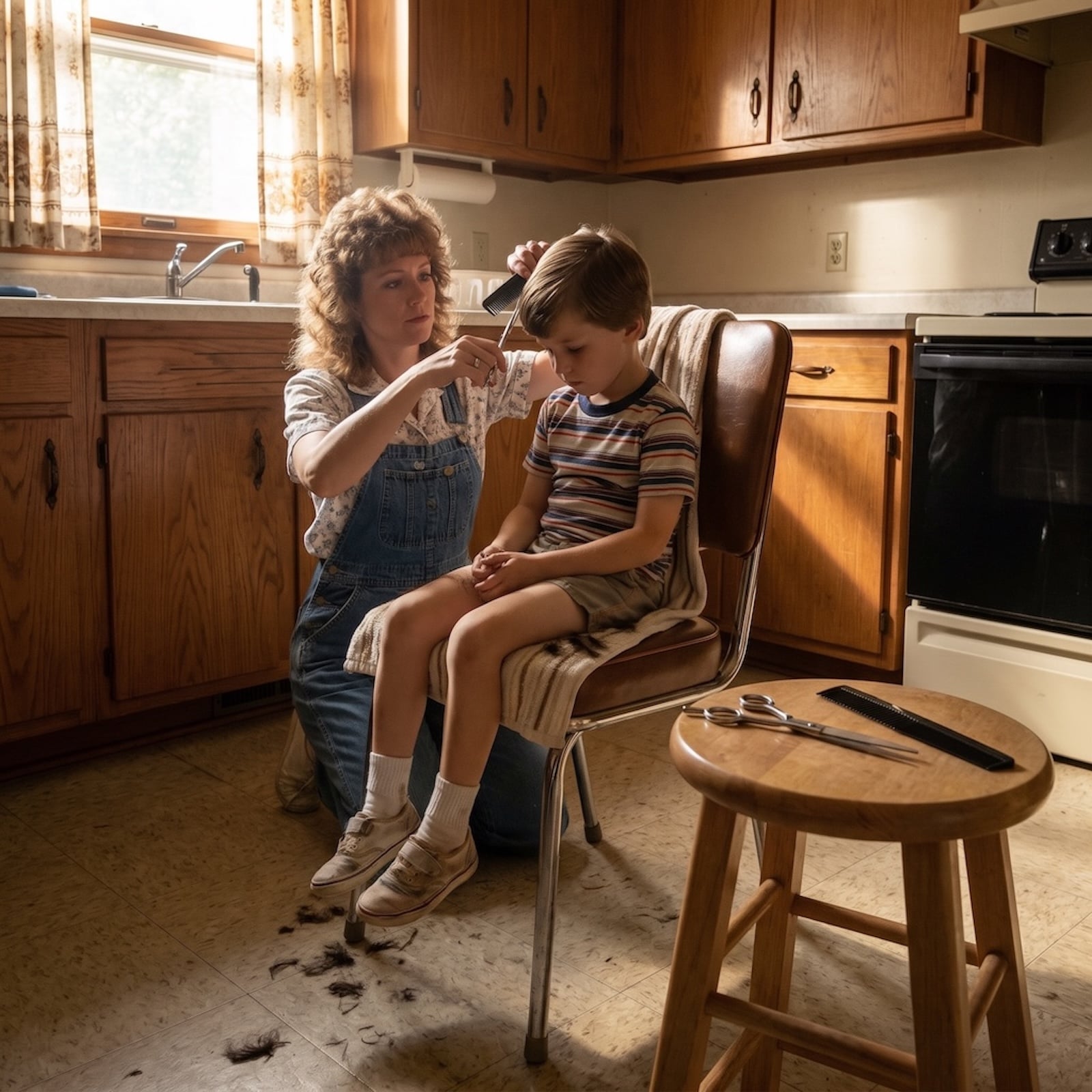
6. The Kitchen-Chair Haircut
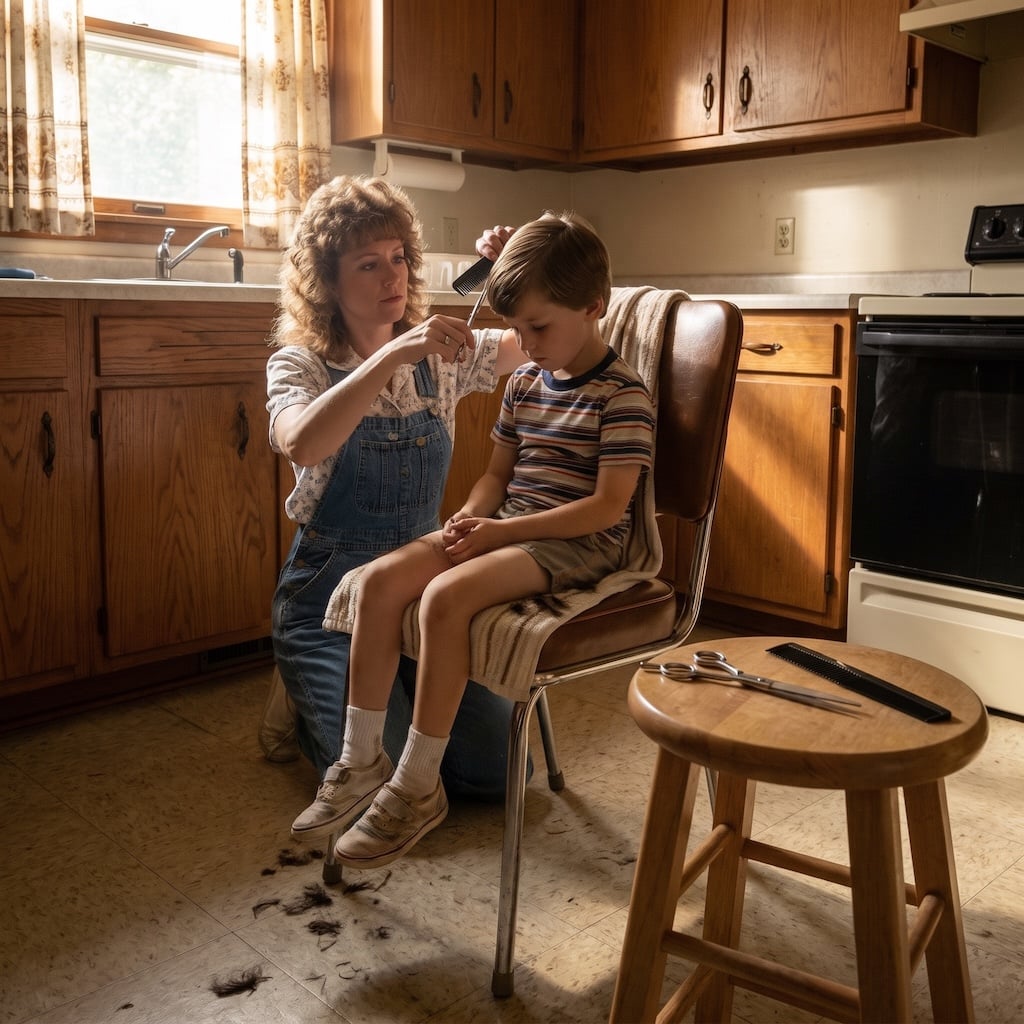
You knew it was haircut day when the towel came out and the kitchen chair got dragged to the middle of the floor.
Mom worked the comb-and-scissors method she’d learned from her own mother, or the buzzing electric clippers for a basic summer cut. A perfect fade? Not a chance. But it was free, and regular trips to the barber added up fast when several heads in the family needed trimming.
Little clippings stuck to the sweaty neck all day. Some things frugality can’t fix.
5. Cleaning the Whole House With Vinegar and Baking Soda
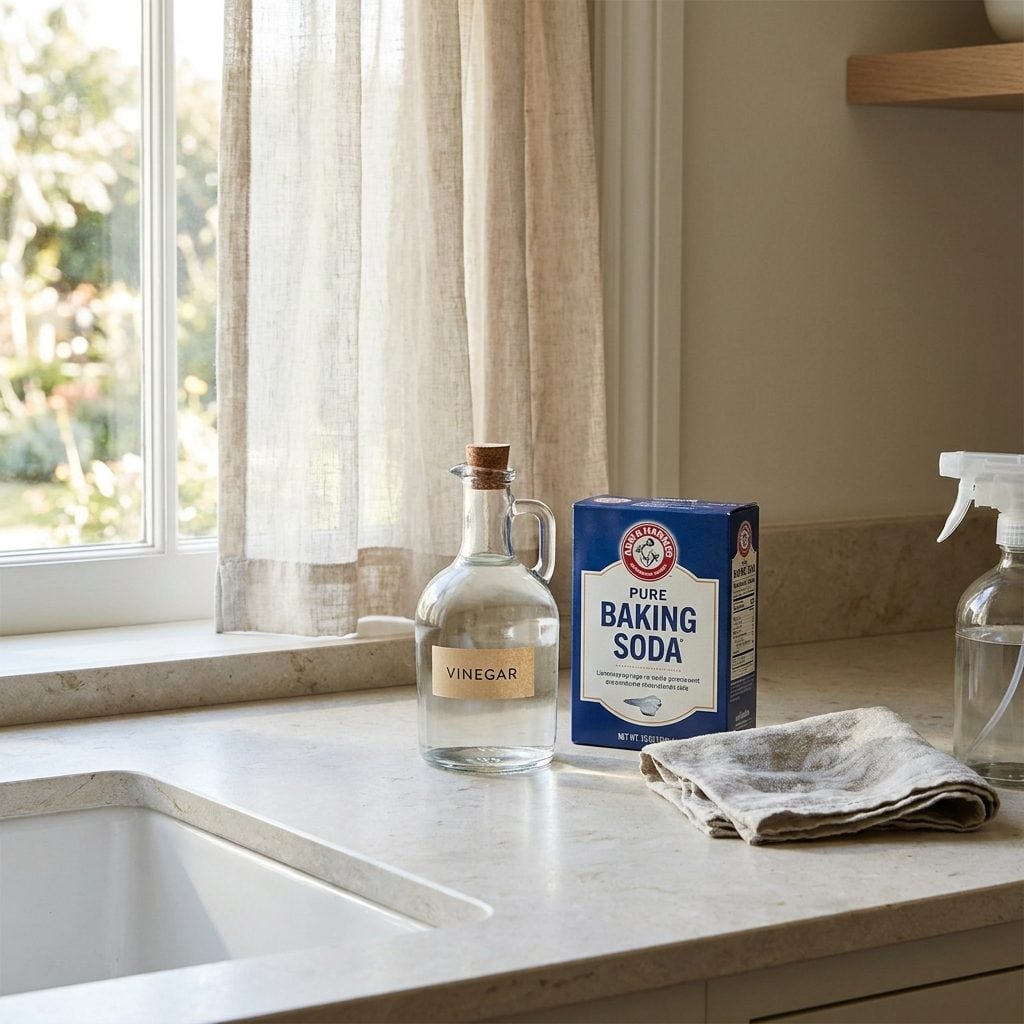
The cleaning cabinet under the sink held maybe four things, and two of them lived in the pantry the rest of the week.
White vinegar handled plenty of glass and mineral buildup. Baking soda scrubbed sinks and tubs and deodorized the fridge. A bar of Fels-Naptha stood ready for stubborn laundry stains. No shelf of specialized sprays, one for glass, one for granite, one for stainless — just a small collection of inexpensive basics with more than one job.
4. Fixing It Before Even Thinking About Replacing It
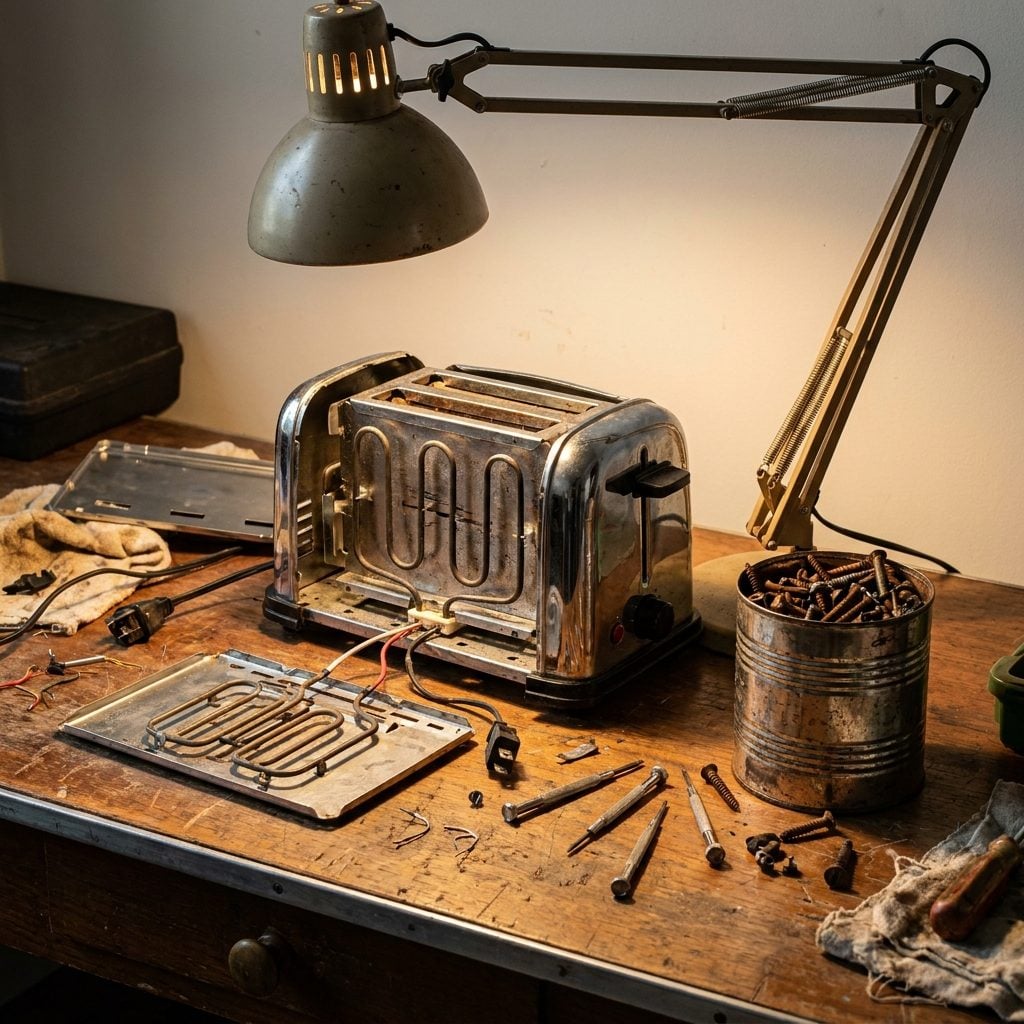
A dead toaster wasn’t trash. It was a project.
Out came the little screwdrivers, the coffee can of orphaned screws, the electrical tape. A chair leg got reglued and clamped overnight. A worn vacuum belt got swapped for a couple of dollars. Plenty of household products were designed in ways that made routine repairs relatively accessible, and somebody at the table usually tried before money got spent on a replacement.
Some modern products are harder or less economical to repair, depending on how they’re built and what replacement parts cost. That only makes the old instinct feel more distinct: first question, “Can we fix it?” Second question, “What does a new one cost?”
3. “Were You Born in a Barn?” and the War on Lights in Empty Rooms

Leave a light on in an empty room and you’d hear about it from three rooms away. “Were you born in a barn?” carried a very specific meaning in that house, and it had nothing to do with the door.
Mom moved through the house like a lighthouse in reverse, snapping off switches behind departing kids. The electric bill was a personal opponent. Every burning bulb in a vacant room was a small surrender she flat-out refused to make.
It seemed like nagging at the time. It was actually a budget being defended one light switch at a time.
2. Turning the Thermostat Down and Handing Out Sweaters
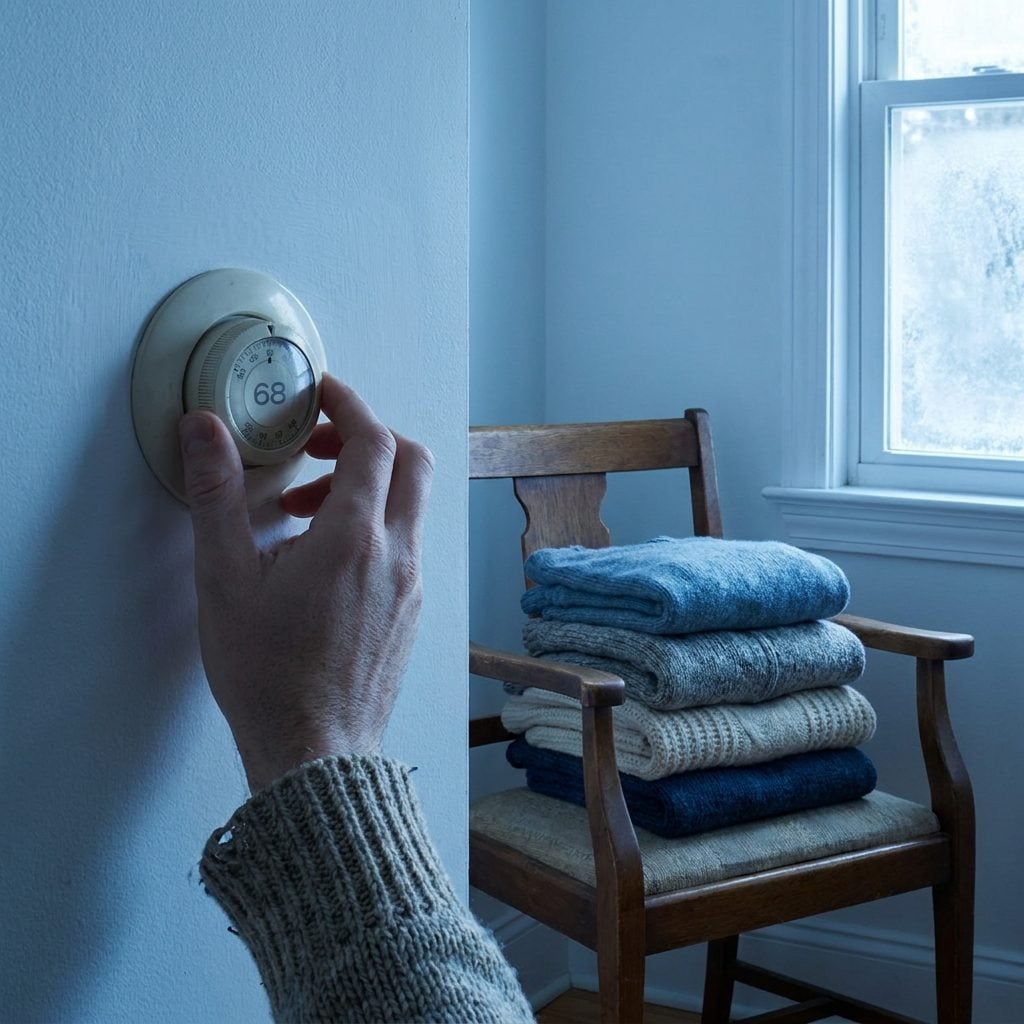
Sixty-eight was the ceiling, and even that got a raised eyebrow.
When the house got cold, the answer was rarely the thermostat. It was a sweater. Then socks. Then the afghan off the back of the couch, the one Grandma crocheted, spread across three kids and a bowl of popcorn during a movie. Heat cost money and money didn’t grow on the tree out back, a fact stated often enough to become family scripture.
The whole family somehow ended up under the same blanket anyway. The thermostat saved money; the crowded couch was the side effect.
1. The Coffee Can of Emergency Cash Hidden at the Back of the Pantry
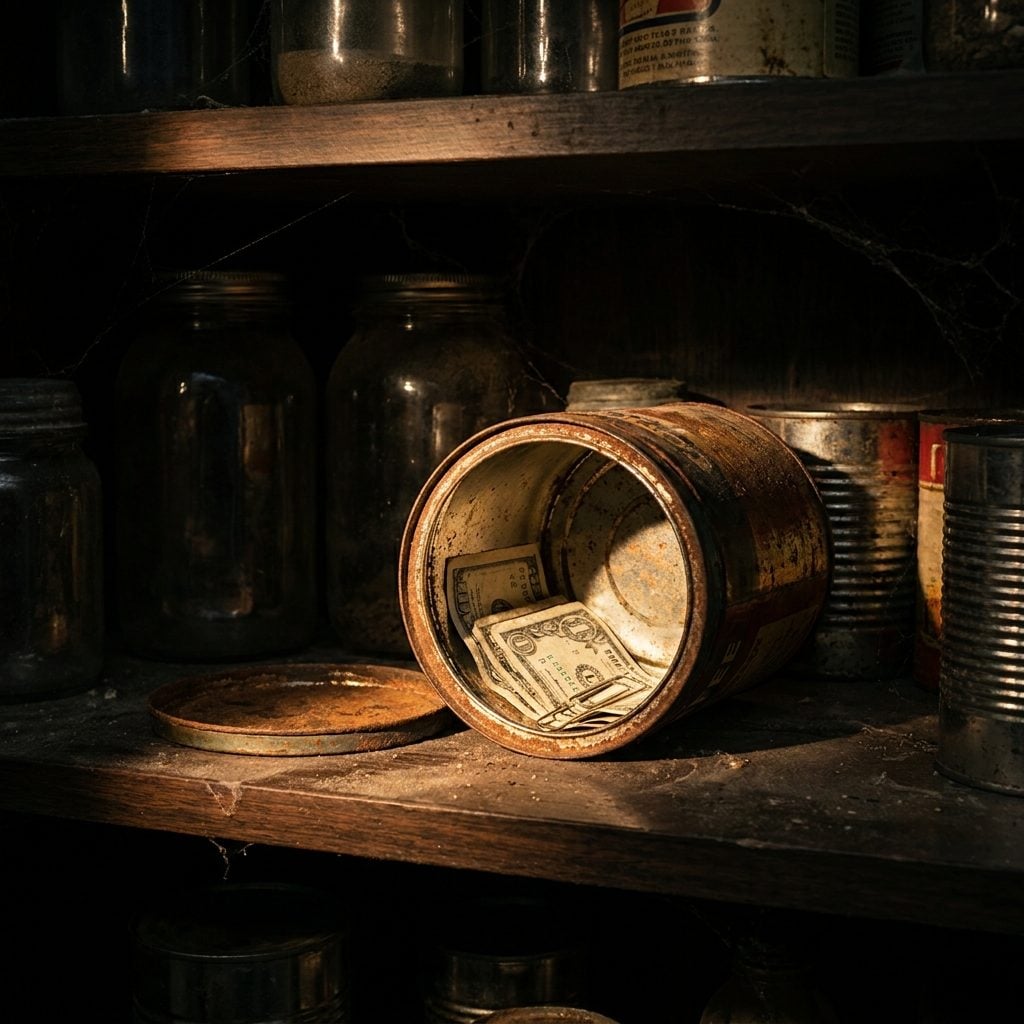
Everyone remembers the can. Maybe yours was a Maxwell House tin, or a butter cookie container that never once held an actual cookie. It lived behind the flour and held whatever was left over after the bills got paid — sometimes twelve dollars, sometimes two.
The rule was unspoken and absolute: you did not touch the can for pizza. That money was for the transmission going out, an unexpected medical bill, or the month somebody’s hours got cut. It wasn’t much of a financial safety net, but it was something, and it fit in one hand.
What made it work was friction. Getting at the money meant dragging over a chair, reaching past the pantry, and wrestling off that stubborn plastic lid. That tiny bit of effort created a pause before an impulse purchase could raid the emergency fund.